The Lumberjack


Students Serving The Cal Poly Humboldt Campus and Community Since 1929

Tag: movie review

  • The Boy and the Heron review: magical on the screen and off

    The Boy and the Heron review: magical on the screen and off

    by Griffin Mancuso

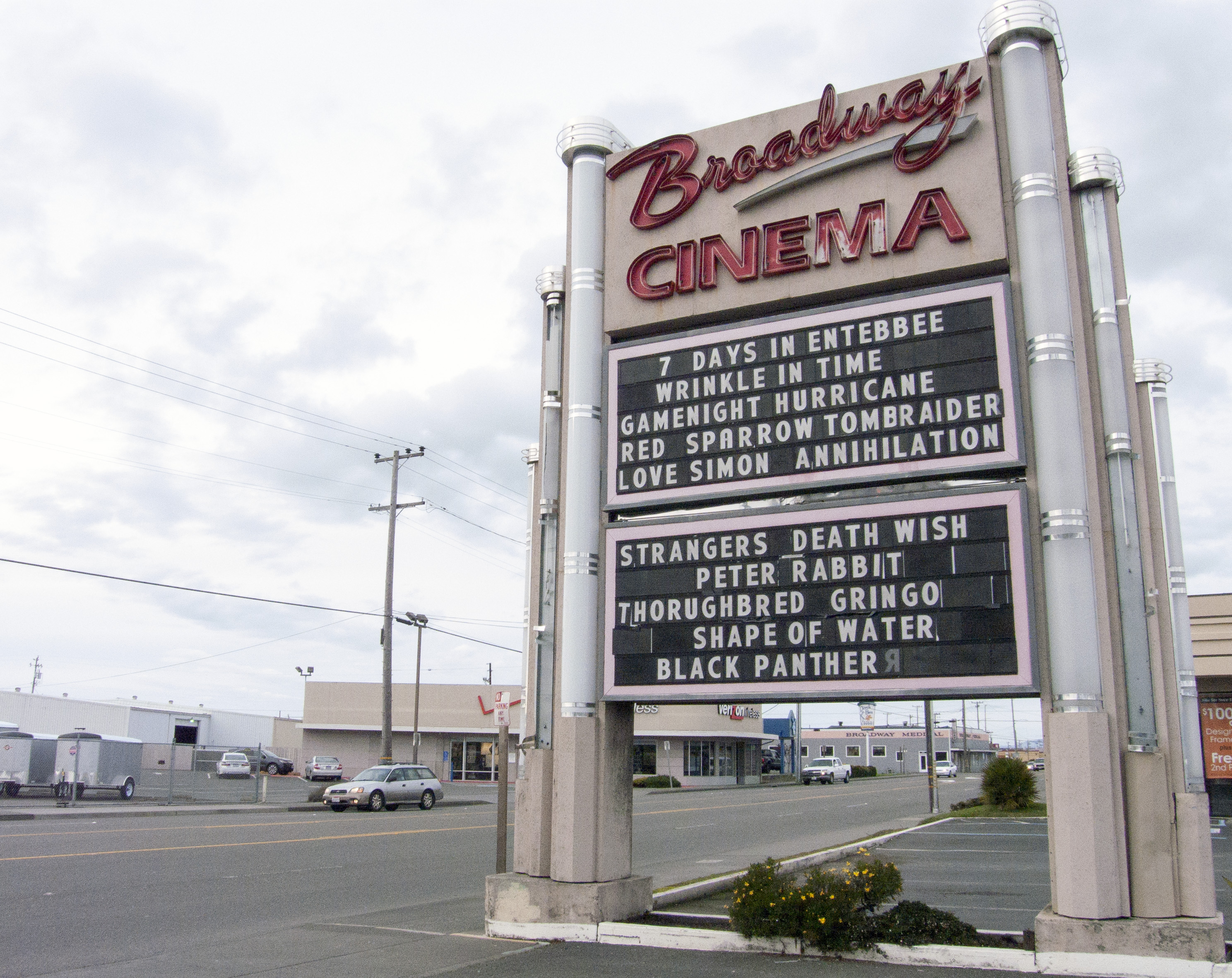
    There is a whimsical quality to seeing a movie in the theater. 2023 was a year with many thought-provoking and conversation-starting films like “Killers of the Flower Moon” and “Barbie.” I rarely go to theaters now, but as an enjoyer of Studio Ghibli films, I had to see “The Boy and the Heron” with the classic theater experience. There is no better place to get the classic theater experience than the Broadway Cinema in Eureka. 

    Like any chain theater, the neon sign on the front had not been replaced in a very long time, leaving only the Y glowing in the dusk. The lobby was filled with the sharp smell of popcorn and the carpets were dull and faded where people had walked. While lacking in staff and attendees, the theater still had its charm in the form of large star lights on the ceiling and orange neon accents around the snack table.

    I settled into my cushy chair just in time for the film to start. “The Boy and the Heron” was enough to bring famed Ghibli director Hayao Miyazaki out of retirement, so I had high expectations.

    Before I continue, a minor spoiler alert for this movie.

    The movie begins with the piercing sound of air raid sirens against a gray backdrop of houses, placing us in World War II-era Japan. We meet our protagonist, a young boy named Mahito living in Tokyo, who loses his mother in a hospital fire on that night. Years later, Mahito’s father marries his late wife’s sister Natsuko and moves them to the countryside.

    While trying to adjust to his new life and the loss of his mother, Mahito encounters a strange talking heron who tells him his mother is alive and needs to be rescued from another world. The heron, a mischievous creature who we soon discover is not a heron at all, also traps Natsuko in this alternate world, forcing Mahito to track down the heron and travel to the other world.

    The film tackles themes of family, loss and escapism that mirror Miyazaki’s own experiences. Like many of his films, it is a coming-of-age story that requires the protagonist to embrace fantasy to grow, then let go of it in order to move forward. The parallel world Mahito travels to acts not as a purgatory, but rather as a gateway to many alternative universes. This world contains wild creatures ranging from giant man-eating parakeets to small white blobs called the warawara, which eventually ascend to the human world to be born as human babies. 

    Along his journey, he meets younger versions of the people in his life, including one of the old women living in the countryside house with him and his family. There are so many layers to the world of “The Boy and the Heron” that it feels like a mix of a child playing pretend and a ƒvivid dream.

    The magical wonder of the film didn’t stop at the screen. I’m not sure how it got into the theater, but a small sparrow briefly joined us. It fluttered around the ceiling, adding a bit of immersive surround sound, and the audience couldn’t help chuckling when it settled in front of the projector, leaving a giant bird-shaped silhouette on the screen. It didn’t linger long, but just enough to make me wonder about the irony of its appearance.

    No matter the quality of the story, a Studio Ghibli film never disappoints in the animation category. The characters, while simple in design, move fluidly against meticulously painted backgrounds. Studio Ghibli is famous for preserving the art of hand-drawn animation and drawing on physical media, which helps preserve the detail in the backgrounds. Any use of 3D animation only enhances the magical effects throughout the film, and it is impossible to tell where the hand-drawn animation starts and the 3D animation ends.

    The story itself is complex and the world doesn’t always make sense, but I think it’s meant to be that way. Like most other Ghibli films, the story moves at a leisurely pace and then rapidly picks up the pace in the final act. It is one of Miyazaki’s more esoteric films, which may not appeal to everyone. The meaning behind some of the recurring motifs like birds and fire are up to interpretation, which impacts what each viewer will take away from the film. 

    “The Boy and the Heron” is an individualized experience that doesn’t fully reveal all its secrets. There are story elements that are never explained and blurs between dreams and reality. To fully enjoy the film, viewers will have to put that aside and inhabit the mind of a curious child.

    While not my favorite Ghibli film, I greatly enjoyed my experience watching it at Broadway. As I left, feeling dazed from the visual explosion at the end of the film, two staff members stood near the exit wondering how the bird got inside and where it flew off to. I like to think the bird wanted to appreciate Miyazaki’s work.

  • Bottoms Review: A raucously punchy queer teen comedy

    Bottoms Review: A raucously punchy queer teen comedy

    by Jake Hyslop

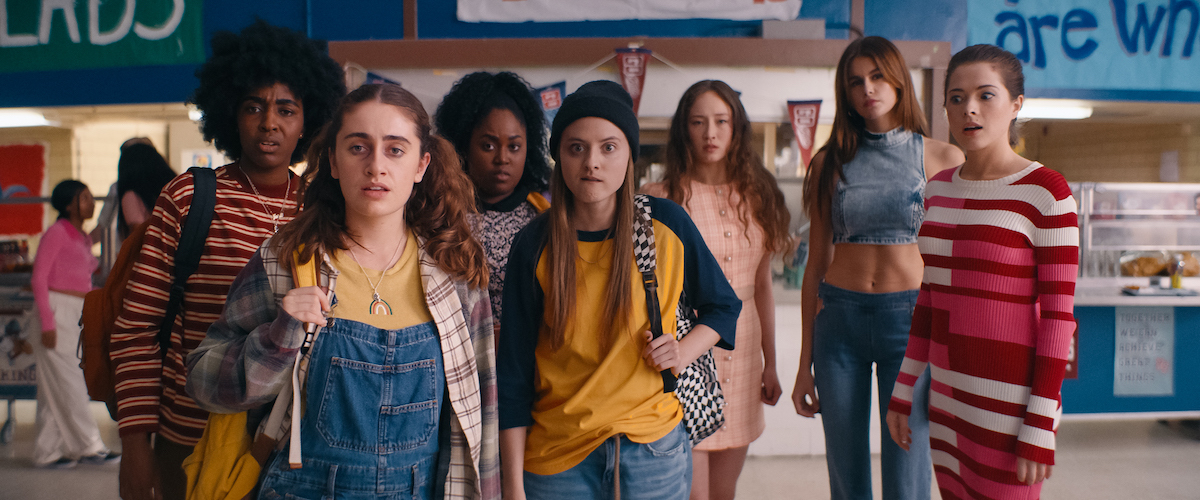
    If I had a nickel for every new movie in 2023 that was an eccentric, campy satire about feminism and gender roles, mocking the blatantly evil patriarchy and boasting a giant choreographed fight scene, I would have two nickels – which, to quote Dr. Doofenshmirtz, isn’t a lot, but it’s weird that it happened twice. 

    Bottoms is the sophomore feature from writer-director Emma Seligman, reuniting with star (and writer) Rachel Sennott (“Bodies Bodies Bodies”) from their previous collaboration, the stressful and hilarious Shiva Baby. Opposite Sennott is Ayo Edibiri, perhaps best known for her voicework in Big Mouth and her performance as Sydney in the hit Hulu show The Bear (watch it if you haven’t). 

    Sennott and Edibiri star as PJ and Josie respectively, two teens at the bottom of their high school’s social ladder. Not only are they losers and gay, but they attend a high school that literally worships its straight himbo star-athlete (there is a giant mural depicting him as the biblical Adam in the cafeteria). Even the principal calls them the “ugly, untalented gays” over the intercom. Through a series of plot contrivances, the two unpopular teens start an all-female fight club in order to have sex before they graduate. 

    If the above doesn’t alert you to the surrealness of the world of Bottoms, allow me to inform you that Jeff (the aforementioned himbo) and his teammates are depicted sitting in the cafeteria like Jesus and his apostles in Da Vinci’s The Last Supper. It’s a comical sight to say the least. Oh, and murder is just shrugged off as a normal occurrence. 

    The teen sex comedy isn’t exactly a new genre, but to have a brief resurgence put a queer spin on the genre keeps it fresh and subversive. It brings the tone of movies like Wet Hot American Summer and Superbad to the Gen Z crowd, borrowing the campy tone of “But I’m a Cheerleader,” a queer cult classic in its own right (it even paid homage in a scene at a diner named “But I’m A Diner”). Bottoms is unapologetically and explicitly gay at nearly all times. We’ve come a long way from the woeful and tokenistic “gay best friend” trope in comedies.  

    I was particularly delighted at the film’s parallels and references to Fight Club, a film famous for its satirical portrayal of toxic masculinity. It’s unfortunate that many men read the film’s message completely wrong, idolizing the dangerous men at the center of the narrative. How refreshing that this movie completely upends and pokes fun at those notions. The football players here are utterly moronic, and actors Nicholas Galitzine and Miles Fowler channel their Ken-ergy into their diva performances. 

    Despite a plot that can be convoluted and predictable at times, the cast and writing carry this movie to victory. Sennott and Edebiri’s palpable chemistry provides the groundwork for some truly impressive improv sequences, interwoven so well with the hilarious script that it’s hard to tell what is improv and what is written. Marshawn Lynch nearly steals the film as the divorced teacher who sponsors their club, misguided in his attempts to embrace feminism (fair weather allies are the worst). In fact, the entire ensemble here puts in the work, and I found my chest hurting from all the funny bits, as there’s hardly a minute that goes by without one. To address the Margot Robbie-sized elephant  in the room: yes, there are a lot of similarities to Barbie, the hit blockbuster of the year. I liked Barbie a lot, but my biggest issue was just how commercial it was, and how I wished every minute of its runtime was as campy as Barbieland; Bottoms scratched that itch for me. It’s acerbic and surreal the entire time, but it’s also surprisingly dark and bloody. Bottoms never compromises its weirdness for even a second to please anyone. It’s brash and unapologetic, and also the funniest movie I’ve seen all year.

  • Barbie Review

    Barbie Review

    She’s everything, he’s just Ken

    By Nina Hufman

    Barbie is everything –everyone and their mother was excited for the movie’s July 21st release, myself included. I was not disappointed. I laughed, I cried and I got “Push” by Matchbox Twenty stuck in my head for weeks. 

    In Barbieland, women can not only be anything; they are everything. The Kens however are simply there; they exist because Barbie exists, only living to get her attention. Ken (Ryan Gosling) himself says that his job is “just beach.” The Barbies believe their existence has solved issues for women, that their ability to be anything and everything in Barbieland extends to women in the real world. 

    Stereotypical Barbie (Margot Robbie), discovers the truth. She is exposed to the reality that women face each day, discovering that even the company that created her is not run by women. Meanwhile, Ken discovers the reality of being a man in the real world. He feels respected and empowered and someone even asks him what time it is. 

    Ken brings his new knowledge of the patriarchy to Barbieland. The Kens take over, turn all of the Barbie Dream Houses into Mojo Dojo Casa Houses, and brainwash all of the Barbies to serve them. To complete the patriarchy picture, the Kens are negatively impacted too. They sacrifice aspects of themselves in an effort to seem masculine and embody the “ideal man.” When Barbie returns, she breaks, feeling defeated after her experience in the real world and having her home taken away. Even worse, she has to suffer through a man playing the guitar and singing on a date. 

    Barbie feels that she isn’t pretty enough, smart enough or accomplished enough. Barbie is supposed to be perfect; always beautiful, always happy and always accomplished. This same standard is applied to women in the real world. We are expected to be beautiful but approachable, talented but humble, well dressed but modest. We’re told we’re too fat, too skinny, too emotional, too cold, too slutty, too uptight, too intimidating, too easy, too loud, too quiet – there is no way to win.

    Despite this, my favorite moment in the movie is not one showing female rage, but female joy. Barbie is sitting on a bus bench, taking in the real world. She notices an old woman sitting on the other end of the bench. Barbie tells the woman that she’s beautiful. The woman responds, “I know it,” and Barbie laughs. This moment feels so special and beautiful to me. It made me ugly cry in the theater. I also liked that it called back to the Barbies all unapologetically owning their accomplishments and praising their own hard work. 

    In addition to the hard hitting themes, Barbie had an iconic wardrobe and soundtrack. “I’m Just Ken,” was obviously a standout, just one of Ken’s incredibly memorable moments. The dynamics of Barbieland were genius; of course the Barbies would float out of their houses, no one walks their Barbies down the stairs. I loved Weird Barbie. Alan was so endearing. It was cathartic to see America Ferrara, an actress who is often typecast, vent her frustrations at a society designed to work against her. 

    I loved Barbie. The movie showed that Barbie is not just a toy, she is a feminist icon and a source of inspiration. I felt seen, like my experiences and the experiences of other women were being validated. The joys and sadnesses of being a woman were perfectly shown in Barbie. I am Kenough and so are you.

  • HSU students discover their own spark with “Soul”

    HSU students discover their own spark with “Soul”

    Pixar’s newest animation “Soul” teaches us multiple lessons that can be applied to our lives daily .

    The movie was released on December 25, 2020 and already has a 95% rating on Rotten Tomatoes. It tells the story of a man named Joe Gardner (Jamie Foxx) who lands his dream gig at the best jazz club in town. On the way, however, he falls into a dark hole that leads him to the “before life.”

    Throughout the movie, themes of compassion, empathy, and self discovery are discussed. Joe is faced with many challenges that help him rediscover his “spark” or purpose in life. The movie is family friendly that people of all ages will enjoy.

    Rachael Kee, is a junior at HSU majoring in psychology and communications who watched “Soul” with her boyfriend Rowan.

    “I loved the movie,” Kee said. “It had so many subtle but relatable themes throughout the film, which really made me think about my own life and my purpose,” she said. “This movie is honestly pretty emotionally intimate for couples to watch together.”

    “Soul” dives deep into the so-called “meaning of life” by teaching us multiple lessons throughout each character’s experiences. When 22 is put on Earth inside of Joe’s body, they become grateful for the little things in life, as small as just the appreciation of living and the ability to breathe fresh air.

    Rowan Feltges is a sophomore, fisheries major and Kee’s boyfriend who also enjoyed the movie.

    “The animation looked almost lifelike and the story was extremely introspective,” Feltges said.

    He not only enjoyed the visual aspects of the movie but also learned multiple lessons that he can use in his daily life.

    “Your passion does not define you as a person,” Feltges said. “What defines you is the pursuit to make oneself feel happy with life.”

    He emphasized that it’s important to not let your passions turn into addictions.

    “As people change and the world changes, so do our passions. It is how you adapt and overcome these changes to find true happiness and self gratitude,” he said.

    Paola Morgado is a senior majoring in chemistry. She enjoyed how “Soul” showed her that the main purpose of life is to simply live it.

    “My main takeaway from the film was, if you’re good to others, good things will come your way such as, second chances and ‘rediscovering’ your purpose,” Morgado said.

    “Soul” was released on Christmas Day, 10 months into a global pandemic. Though intended to be seen in theaters, Disney+ provides us with a thought provoking, heartfelt, and overall positive film we can watch without leaving our house.

    The movie has gained a significant amount of attention on social media in a short amount of time. It first intrigued Kee with its diversity, music, and psychological aspects.

    “Society tells us to grow up, get a job, and pay taxes, and never really allows us to connect to our souls in our individualistic way,” Kee said. “I feel a lesson that we can all learn from ‘Soul’ is that no matter how ‘lost’ or ‘unworthy of life’ one may feel, all it takes is the exposure of a new friendship or interest to pull you out of the darkness. Thus, don’t stop this crazy journey of life and keep going.”

  • Top 9 Horror Movies

    Top 9 Horror Movies

    It’s Halloween month! That means getting scared, terrified, mortified, traumatized and maybe getting a few laughs. There are a lot of horror movies, but only a few get into the spirit of Halloween. Here is a list of movies in no particular order.

    1. “Cabin in the Woods”

    Without giving away too many spoilers, this is a fresh take on horror such as “Scream” was when it debuted. It is a parody and a love letter to horror and slasher films. It’s not just another rehash of “Evil Dead.” Want to watch all the horror films? Check this out.

    2. “Dead Alive” or “Braindead”

    This is a hard-to-find New Zealand gem directed by Peter Jackson, pre-Lord of the Rings. What would you do if your dear mother died and rose from the dead? Lock her in the basement, I guess, until more people rise from the dead and you just gotta take care of the situation at hand. This movie is so bloody, there’s no way there’s that much red syrup in a body.

    3. “Raw”

    Vegans can be scary. One drop of blood can awaken a thirst (for more than one thing) in a young vegan girl in veterinarian school. Sometimes the hunger can consume you. (No animals were been harmed in the making of this film.)

    4. “Hereditary”

    This recent film is a classic in the making. A series of deaths plague a family, which causes a mother to open unsettling family secrets, some better left unearthed. This family drama clicks all the scary movie tropes: creepy children, possession, the occult and lots of beheadings.

    5. “Cube”

    This came in the 90s, predating the “Saw” franchise. When several strangers wake up in a dangerous maze, they’ll do anything to survive the maze and each other. It’s a Kafka-esque horror flick that puts you in a situation that you know nothing about who’s in charge and why you are there. Plus, there are some good bloody deaths.

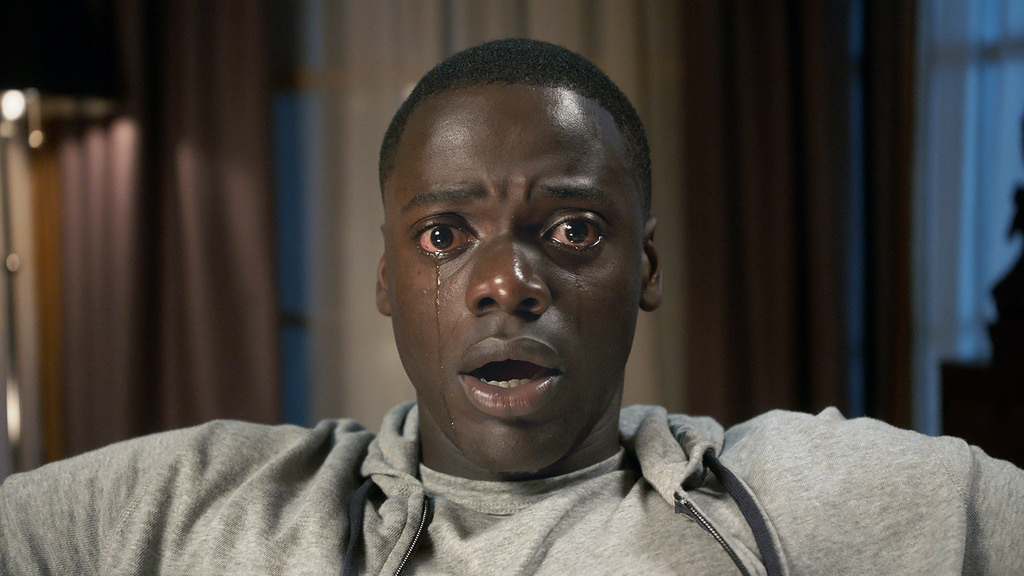
    6. “Get Out”

    This is another recent classic that earned Jordan Peele the award for best original script in the 2018 Oscars. This isn’t another remake of “Guess Who’s Coming to Dinner.” When the main character visits his girlfriend’s family, there seems to be commentary that is more uncomfortable concerning his race. “Get Out” has great imagery and a tense atmosphere with a bloody crescendo.

    7. “What We Do in The Shadows”

    Before “Thor: Ragnarok,” Taika Waititi did this mockumentary about three vampires living together as thirsty roommates. Hilarity ensues.

    8. “Cannibal! The Musical”

    No list is complete without a musical. From the same people that brought together “The Book of Mormon” and “South Park,” this delightfully bloody story is brought to you by Troma Productions. This company is notoriously raunchy, immature, and politically incorrect. Stab it again, with feeling!

    9. “House of 1000 Corpses”

    Rob Zombie filmed this similarly to one of his music videos with rock n’ roll pacing and redneck serial killers. Don’t go searching for urban legends, this one is real.

  • A Quiet Place

    A Quiet Place

    When the guy from “The Office” makes a horror movie.

    What makes a scary horror film is sound production. A jump scare doesn’t make you jump unless there’s a loud “DUN” at the right moment, but it has to be justified for the story. If the jump scare is abused and happens too frequently, it isn’t scary. Sometimes, silence can be used to induce fear.

    That’s what “A Quiet Place” is about, forced silence for the sake of survival.

    A creature of some sort takes over New York and other major cities and kills any living thing that makes noise. A family must survive in this world silently to live another day.

    Living in this post-apocalyptic world isn’t hard for this working farm family, who grows their own food and fishes for the seemingly, only surviving source of meat, since cows mooing would be the first to die by this creature.

    Lee (John Krasinski) and Evelyn (Emily Blunt) are loving parents that are determined to protect their children, including Evelyn’s unborn child.

    The two children, Regan and Marcus, work with their parents for food and household chores in silence. Regan is deaf and doesn’t hear any small sounds. The whole family communicates by sign language, rarely having the chance to speak aloud.

    The creature they hide from doesn’t have an origin or a story.

    The story starts with these creatures roaming the Earth and seeking sound to kill the noise-maker. It’s a fast six-legged beast with sharp claws like a beetle or a spider. Its exoskeleton is black, shiny and bulletproof. The creature’s face doesn’t appear to have eyes, it rather has a face full of ear drums that picks up the faintest sounds from far away, surrounding a mouth full of jagged teeth like broken nails.

    The family knows when the creature is close by its fast clicking sounds and the way it affects electricity, making lights flicker and disrupting T.V. signals.

    It’s a mixture of the aliens in the movie “Alien” and a conglomerate of creepy bugs that shouldn’t be the size of a car or running super fast. It’s appearance is rare, but the looming fear makes these things terrifying.

    What makes the movie effective is the sound production and the world built around the lack of sound.

    The film opens in a quiet empty store where the family is raiding for medicine. The only food left at the store are chips, crackers and other snack foods that have noisy packaging. The family leaves the store on sandy paths to mute their footsteps that follows all the way to their farm. Their farm is soundproof, from the sandy pathways to egg carton walls to even felt pieces for Monopoly.

    The movie is mostly in silence, with an occasional soft piano score, and it makes any noise disturbance sudden and jarring. The jump scares are met with loud music, but not all the time. Some of the sudden scares are completely silent and they are more scary than the screeching violin or loud “DUN.”

    When the story shifts to Regan’s perspective, the movie is completely silent and it’s almost deafening. The most anxiety-ridden scene was when Evelyn goes into labor.

    Earlier, she’s seen doing her own pediatric diagnostics and sound-proofing the baby crib with a soft lid to cover the coffin-like crib. After accidentally stepping on a nail and making a noise, Evelyn is forced to give birth by herself without screaming in agony as the creature lurks blindly in her house. She’s in labor for a long time as the creature slowly searches for a sound, not being able to see her in the bathtub, trying to give a silent birth as she’s still in pain from the nail in her foot.

    Directed by actor John Krasinski, he gives the spotlight to his real-life wife Emily Blunt. Krasinski is the strong father figure who is determined to find the creature’s weakness and fix his daughter’s hearing aid.

    Blunt is the loving and goofy mother, but is giving a chance to show her strength in her birth and fighting off the creature from her children after her birth.

    This is not just a horror movie, but an apocalyptic movie. It’s a family that is trying to move on after a terrifying event.

    It’s not easy living in silence when you can’t express every emotion and live your childhood in silence. It doesn’t offer a solution or a way to return to ‘normal’ life, silence is their lives.

    As long as you have your family, you can live your life.

  • “Thoroughbreds” is a richly dark comedy

    “Thoroughbreds” is a richly dark comedy

    People are terrible and horses will take over the world.

    “Thoroughbreds” is the debut film of writer and director Cory Finley. It is about two rich girls plotting their stepfather’s murder, but there’s more to it. It’s less a murder mystery, but a character study on emotions and impulses.

    The character Amanda is an emotionless girl who hasn’t fully outgrown her horse phase. She speaks her mind and is blunt about it, including her lack of emotions. Lily is an emotionally overwhelmed girl who guards herself from hurting others.

    The two were formerly friends until high school separated them, only to be reunited by studying for the SAT’s.

    After taking down their reservations, they become friends again. Lily hates her health-obsessed stepdad who talks down to her and forced her mom to send her to a different boarding school. Amanda casually suggests killing him and Lily’s impulsive mindset kicks into gear to plotting his murder.

    This film doesn’t focus on the girls’ lavish lives. It’s just a perfect background to plot a murder without getting caught. The mansions look big and beautiful to fill in the background of the actors’ symmetrical framing.

    The sound editing and mixing stand out with it’s unsettling and chic percussion. The rhythmic score gave it a constant edge that could lead to a psychotic breakdown, which compliments the impulsiveness of the characters.

    Little sounds fill the scenes that reflect the emotions of the characters. Lily’s tapping of a pen mimics a clock too well, the rowing of her stepdad’s row machine irritates her and the sliding sound is invasive like Edgar Allan Poe’s “The Tell-Tale Heart.”

    The characters aren’t simply rich brats. Even if Amanda doesn’t understand emotions, she is still expressive and her brutal honesty is refreshing. Lily is sympathetic when she feels helpless not standing up to her stepdad yelling at her mom.

    The rest of the cast is good, but the highlight is Anton Yelchin, which was his last film since his death in 2016.

    Lily and Amanda grow by the end of the film, yet whether if it was for their own good is up to you.

  • “A Wrinkle in Time” is passable

    “A Wrinkle in Time” is passable

    Just because a director makes a small, successful movie, doesn’t mean Disney should give them over a hundred million dollars to make another one. Take Ava DuVernay, director of “Selma” and “13th,” for example. The initial success doesn’t guarantee similar success with a big blockbuster film.

    DuVernay’s adaptation of “A Wrinkle in Time” was a big deal as the first black female director with a $103 million budget. Following a renewed interest in the book, an all-star cast and more actors of color in the movie, including the main character Meg, there was plenty of hype for this movie.

    The film begins with a younger Meg and her father Mr. Murray (Chris Pine) having fun in his office while he teaches her physics. This is the only scene establishing their relationship, which is less than what the book reveals. The film then flashes forward to present time depicting her father’s four-year disappearance.

    As the film moves on, Meg struggles with her classes and shuts people out. This is expressed by Meg throwing a ball at a bully’s face after being teased about her dad’s disappearance.

    Later that day, Meg and her adopted brother Charles Wallace meet Mrs. Whatsit, (Reese Witherspoon), Mrs. Who (Mindy Kaling) and Mrs. Which (Oprah Winfrey), three immortal women from the universe who came to help them find their father. They tell the kids that their father traveled to a different part of the universe using a theory he and their mother had been working on for years. This act is called “tesseract,” where you pinch space to make time travel instantaneous, like wrinkling space and time.

    The three immortal ladies guide Meg, Charles and Meg’s classmate Calvin O’Keefe through the universe to find Mr. Murray.

    Watching the different destinations felt like binging an entire season on Netflix. There was so much going on, and it felt rushed to get to the visuals and the elaborate costume changes of the three Mrs.

    The computer-generated images look obvious and didn’t blend in well with the colorful environments. The different scenes that were filmed to distinguish between the planets looked amazing, notably New Zealand.

    The scene that was filmed in Sequoia Park was brief. If that scene was longer, you could probably guess where in the park they filmed it (Duck Pond? Windstorm Meadow? By the swings?). Also, the ending of the film felt like it came out of nowhere, which shows the overall message of “love defeats evil.” It didn’t make much sense for the story or the characters, except to show Meg’s character arc.

    What DuVernay brought to the movie was good overall, especially with casting the main character as a bi-racial girl interested in physics. Certain scenes appeared more impactful, like when Calvin kept complimenting Meg’s hair, a moment that happens in the book, but felt more heartwarming to see her black curly hair.

    Whether or not this film spawns a franchise to expand on the five-book series, it would be exciting to see a huge Disney franchise with more people of color as the lead.

  • Black Panther pounces on box office expectations

    Black Panther pounces on box office expectations

    The anticipation for this movie has been building since Marvel made its initial announcement. With everything being promoted – the soundtrack, the trailer and the cast – the hype surrounding Black Panther was at stake.

    The opening weekend finally arrives and the movie itself is beautiful and exciting.

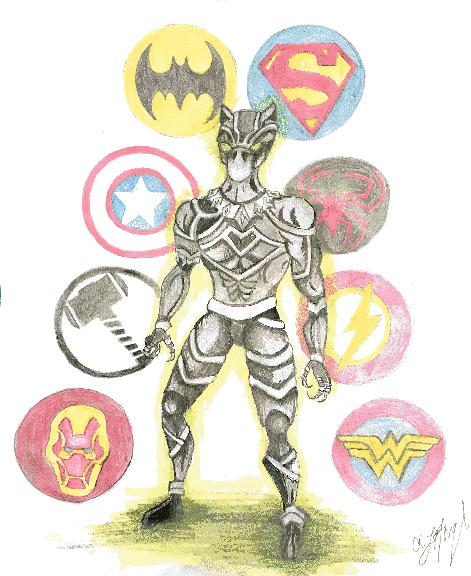
    Black Panther is an exploration of afro-futurism disguised as a superhero movie. Afro-futurism is a genre of science fiction that shows the future of the African people beyond colonialism.

    The fictional nation that takes place in the film, Wakanda, is hidden away from the world to protect its resources. Inside Wakanda is a greatly advanced nation with technology far superior to any other nation on Earth.

    Wakanda is the primary source of vibranium, the strongest fictional metal in the Marvel universe. This metal is the source of all technological advancements in Wakanda and makes up the armor of the main character, King T’Challa, who is the Black Panther.

    Black Panther takes the throne after his father’s death, shown in the previous Marvel installment “Captain America: Civil War.” T’Challa must protect Wakanda from the outside world as villain N’Jadaka, also known as Killmonger, tries to take vibranium in hopes of helping the oppressed people of the world.

    T’Challa has to learn how to be a king on his own terms and not take from his father’s mistakes. An ongoing question as the film develops is if it’s possible to share one’s resources without the threat of a hungry nation trying to take from another country.

    The story is an analogy to colonialism, or outsiders trying to take over a country for its resources and knowledge. This ongoing act has been repeated all over Africa, the Americas, Australia and throughout Asia in the film.

    Afro-futurism is a speculation of what the future would look like if colonization didn’t happen and a country was allowed to progress without outside influences. That is Wakanda. Its residents, army and monarchy have strong influences from various African nations in its costumes and through its technology.

    Black Panther’s suit has subtle African designs. The ships look like traditional African masks and creatures. There are even armored rhinoceros that look intense and awesome.

    Wakanda’s warriors are primarily women, which defies Western ideas of an army. The general, Okoye, is a highly trained warrior who is dedicated to her country. One of Wakanda’s spies, Nakia, is intelligent and empathetic.

    T’Challa’s sister, Shuri, is a tech genius who makes weapons and is constantly improving her technology as she’s cracking jokes. None of the women are sexualized or have their abilities downplayed. All the women are equally badass than their male counterparts, if not more.

    Killmonger is a complex villain, as he is torn between his Wakandan roots and upbringing in Oakland. He is angry about his father’s death and takes it out through murder, hence the name Killmonger. Black Panther and Killmonger represent a battle of colonized ideology versus traditional values.

    There are some tidbits that prevent it from being a great film. There are some inconsistencies with the technological capabilities. The story is a little weak and the villain’s motivations are unclear whether the need for resources is either for selfish reasons or the greater good.

    Although the landscapes are beautiful and imaginative, the cinematography was uninspired and didn’t maximize the beauty of the film. However, the vast amount of work and attention to detail on the appearance of the film and its characters overshadow nitpicking observations.

    The future does not belong to Western civilization. The future can have roots in tradition and can honor ancestors. If this film is influential enough, there could be a multicultural future in science fiction and possibly in real life.