The Lumberjack


Students Serving The Cal Poly Humboldt Campus and Community Since 1929

Tag: politics

  • Prop 22 represents political favoritism of money over workers’ rights

    Prop 22 represents political favoritism of money over workers’ rights

    California’s passing of proposition 22 on Nov. 5 represents a frustrating history of workers’ rights being trampled by the overwhelming influence of greed in politics. 

    This proposition forces app-based workers to be classified as independent contractors, rather than employees. This classification allows companies like Uber, Lyft and Doordash to pay their workers significantly less than California’s guaranteed minimum as well as provide them with worse benefits than would be guaranteed as a full-time employee.

    This proposition was vehemently opposed by labor unions that represented drivers. Unfortunately they were hugely outspent in advertising by the corporations that funded the ballot initiative for prop 22. Advertisements for a yes on prop 22 were incredibly misleading and placed on Amazon, YouTube and even inside of Uber’s app. They misleadingly claimed being an independent contractor provided workers with the freedom to receive benefits while driving on their own schedule. 

    In fact, under prop 22 drivers are only guaranteed benefits after 25 hours of engaged driving time. Engaged driving time is defined by prop 22 as time actively spent with a rider in the car, or a delivery in progress. With drivers reporting that they spend over half of their time waiting for a pickup, this could require workers to put in more than 40 hours a week for less benefits than a full-time California employee.

    The reason that companies like Uber and Lyft are able to continuously influence political campaigns is due to the fact that within the US, companies enjoy and exercise the same level of freedom of speech granted by the First and Fourteenth Amendments that residents due.  

    In a 1886 Supreme Court case, Chief Justice Morrison Waite said that “the Court does not wish to hear argument on the question whether the provision in the Fourteenth Amendment to the Constitution which forbids a state to deny to any person within its jurisdiction the equal protection of the laws applies to these corporations. We are all of opinion that it does.”

    Two years later, the Supreme Court made the ruling official stating, corporations had equal protection under the law as they were merely expressing and acting on behalf of the people that created and ran them.

    These rulings are what set the stage for one of the most important court cases in the history of politics within the US, Citizens United v. FEC. 

    In the rulings of the case, Justice Anthony Andrews, joined by other Justices of the court, wrote that corporations were protected under the First Amendment to freely express their opinions on matters both domestic and political. 

    Furthermore, Justice Andrews wrote in the majority opinion that the US government was not responsible for creating an equal playing field regarding the use of money, changing the rules of campaign financing, leading to the rise of super Political Action Committees. These PACs could acquire an unlimited amount of funds from corporations, individuals and other PACs to use for supporting political candidates and proposals.

    The consideration for corporations did not always extend to laborers. The US has a history of ruling against labor unions, going as far back as 1806, where the first case regarding a labor strike occurred with Commonwealth v. Pullis. The Philadelphia Mayor’s court ruled that leaders of a union strike were guilty of conspiring to raise their wages after labor strikes failed to do so. This established a precedent that labor unions were illegal, something that stood until 1842.

    The consensus in academic literature is that unions shrink income inequality. Union members make, somewhere between 10 and 30 percent, and enjoy more benefits. Unions also drive worker solidarity and income equality across race and gender lines. The recent rise in income inequality in the US is partially attributable to shrinking union membership. The idea of collective bargaining only works if trade unions have the power of large numbers of workers standing in solidarity. 

    The ferocity companies and governments demonstrate when quelling labor organizations should be all the evidence needed that labor organizations are effective. The total number of workers murdered in response to labor organization in the United States is unknown, but the number of workers killed by law enforcement, company militias, and other anti-labor forces during labor disputes numbers in the thousands. If labor organizations did not work, no one would drop bombs on striking workers and, knowing the risk, no one would strike if it did not benefit them.

    The US Government has often been hostile to labor organizations. During the early years of the industrial revolution, the legality of collective bargaining was uncertain, but often led to convictions and fines. Even when collective bargaining was legalized, the National Guard and local law enforcement were responsible for violence against labor organizers. 

    Resistance to collective bargaining should be expected from people who became as powerful as they did by appealing to moneyed interests. No one in a position of wealth and power can be relied upon to betray their source of power. Greed is bipartisan, and workers should not rely on institutions to grant them rights if those same institutions have proved hostile in the past. 

    Though the labor victories of the past still benefit workers immensely, companies are doing everything they can to undermine those victories. Prop 22 is one in a long line of examples. It undermines workers rights and chips away at our hard won standard of living. It should be a warning sign that no labor struggle is ever over. It will be an ongoing fight against corporate greed, but joining a union and standing in solidarity with workers across divisions of nationality, race, gender and economic background will benefit yourself and your community.

  • Jeremiah Finley is Willing to Face Consequences to Create Change

    Jeremiah Finley is Willing to Face Consequences to Create Change

    Associated Students Legislative Vice President Jeremiah Finley runs for the presidency

    Former Vice President of Student Affairs and current Associated Students Legislative Vice President Jeremiah Finely has placed his hat in the race for the 2020-2021 AS presidency.

    Majoring in political science, Finley’s passion for politics can be traced to the last presidential election.

    “When I watched the 2016 race, I think something just awoke within me,” Finley said. “It got nasty, it got dirty, and that’s something that I don’t want to see happen ever again.”

    “When he walked into our first meeting, I knew he was going to be a great leader then.”

    Jourdan Lamar, Resident Hall Association president

    A sophomore in high school at the time, Finley didn’t put his passion into practice until arriving at Humboldt State University. In his first semester, Finley became president of the Cypress Hill Council after attending the info session and receiving encouragement from the council to run. Current Residence Hall Association President Jourdan Lamar first met Finley when he joined the council.

    “When he walked into our first meeting, I knew he was going to be a great leader then,” Lamar said. “He was advocating, asking questions, joining other organizations to learn more about HSU. Since then, I have had the opportunity to work alongside him in many organizations on campus, seeing him become a great student leader.”

    From day one, despite the threat of consequences, Finley said he’s made it his number one priority to place students’ interests first.

    “Due to this I have been penalized a lot, in various different ways,” Finley said. “Whether it be not getting the votes I needed to pass certain legislation, or not receiving the same type of social treatment. Ultimately, I bet on the students consistently. I think that all my students are worth it.”

    Jeremiah is a super bright and motivated student leader, both in AS as the legislative VP and housing as an RA. On multiple occasions, he has combined those roles by educating his residents about current issues on campus as well as bringing his residents to campus events.”

    Jenessa Lund, executive director of Associated Students

    Finley began making regular visits to the AS office in his first semester on campus, familiarizing himself with the organization. He attempted to apply for the position of social justice and equity officer, but was turned down due to lack of a college GPA. He returned the following semester and was appointed to the position of student affairs VP in February of 2019.

    Executive Director of AS Jenessa Lund has worked closely with Finley since he became a part of the board.

    “Jeremiah is a super bright and motivated student leader, both in AS as the legislative VP and housing as an RA,” Lund said. “On multiple occasions, he has combined those roles by educating his residents about current issues on campus as well as bringing his residents to campus events.”

    Finley’s favorite thing about being part of AS is watching students engage with one another and the various programs on campus.

    “When I get the chance to see how my advocacy helped them along the way, those moments are my favorite moments,” Finley said. “I get to interact with folks, I get to hear about their passions, what they’re excited about, what they’re doing.”

    “It’s been tough. It’s been really hard trying to navigate that, especially as a person of color in this predominantly white institution. It’s really difficult to make sure I can still be myself, but at the same time, be professional.”

    Jeremiah Finley

    Beyond the rewarding big-picture projects, Finley finds plenty to be proud of in his daily routine.

    “My day-to-day experience is something special,” Finley said. “It’s always fast-paced, there’s always something new going on—so you have to really adapt quickly to the changing scenarios. One thing you hear in the morning could be totally different from what you hear in the afternoon. And it’s been tough. It’s been really hard trying to navigate that, especially as a person of color in this predominantly white institution. It’s really difficult to make sure I can still be myself, but at the same time, be professional.”

    Despite everything HSU has to offer, including various programs and resources, a sense of community on campus and the attention paid to student voices, Finley sees endless room for improvement.

    “I don’t think anything should really stay the same, and I mean that,” Finley said. “There’s just too much complacency and I think there’s a lot that needs to change.”

    Finley intends to place more emphasis on incorporating student engagement within AS.

    “Yeah, we have the AS board of directors, but that’s really geared towards AS and what AS wants to do,” Finley said. “But I feel like we don’t have a place where all students can come together to talk about what we all want to do and want to see happen. So, if we can make a central hub where we can talk and just listen to each other and hear what we want to do as a collective, then I think we can truly start generating some great ideas to change the way this campus runs.”

    Finley said he understands the struggles college students face, whether it’s coming up with enough money to pay bills or buy groceries, providing for your family or setting aside time for schoolwork.

    “But ultimately you just gotta keep going, you gotta keep fighting. And so I’ll keep fighting, I’ll keep going and I’ll keep being persistent, that way I can make sure I can advocate for students.”

    Jeremiah Finley

    “It’s just this balancing act and I think there’s a lot of things that can be easier for students, things that I currently have no direct control over,” Finley said. “So, if I can put myself in that position to really help, then that’s what I want to do.”

    As legislative VP, Finley referred to his magnum opus, his great work, as the AS Constitution, Codes and Policies. He put together a full constitution revision packet over the course of the 2019-2020 school year, including new bylaws and revisions for out-of-date codes and policies. Presented to the board back in February, the revision wasn’t passed.

    “It hurt,” Finley said. “It really did hurt when the board decided not to think carefully or listen carefully to what I was saying. I think from that moment I knew that if I wanted to bring the change that I want to see in HSU, and I think that we all deserve here, then I can’t continue in this role.”

    Finley said he’s not only prepared, but is determined to take on bigger challenges and face greater consequences in the name of improving the lives of students.

    “Some days are good, some days are better than others,” Finley said. “But ultimately you just gotta keep going, you gotta keep fighting. And so I’ll keep fighting, I’ll keep going and I’ll keep being persistent, that way I can make sure I can advocate for students. And come election time, I have faith that I’ll be elected for AS president for the next academic year.”

  • Dr. Cornel West Headlines Black Liberation Month at HSU

    Dr. Cornel West Headlines Black Liberation Month at HSU

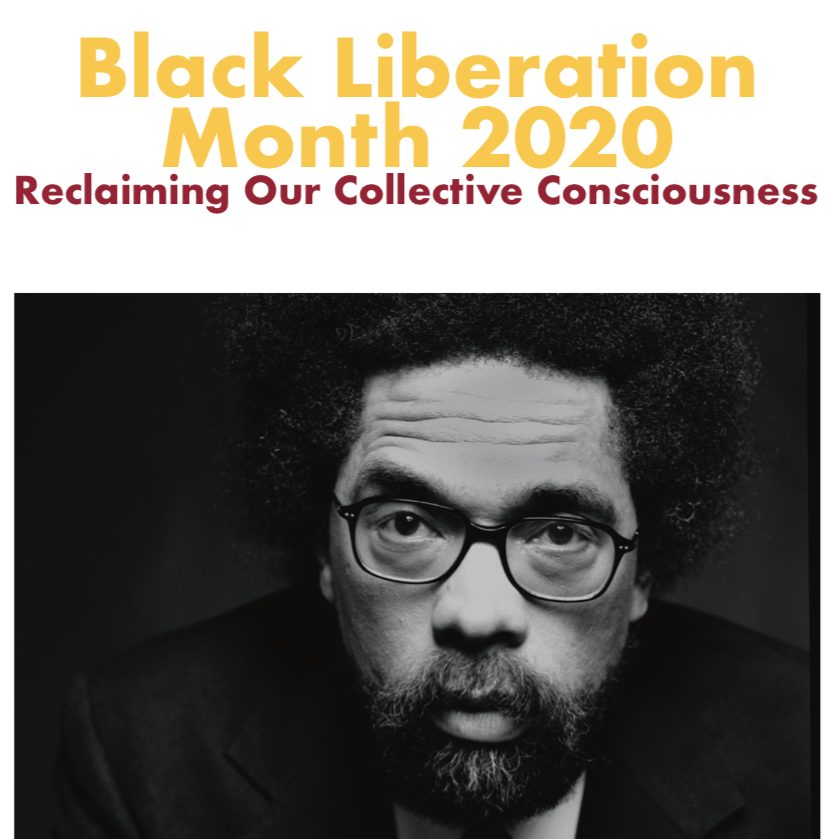
    Philosopher, activist and intellectual Dr. Cornel West visiting Humboldt State University

    Dr. Cornel West will be at Humboldt State University Friday, Feb. 7 to celebrate Black Liberation Month as the keynote speaker of a series of events.

    West advocates for race, gender and class equality. West’s social and political activism goes back to his days at John F. Kennedy high school where he marched for civil rights and protested against the lack of diversity and black studies classes offered at the school.

    West went on to become class president of his high school before attending both Harvard and Princeton Universities. He is known for infusing the world with academic inference, intelligence and philosophical reflection.

    The event is hosted by HSU’s African American Center for Academic Excellence and HSU Brothers United.

    West’s lecture will focus on topics from his 1993 book, “Race Matters.” Doors open at 6:00 p.m. and the lecture begins at 7:00 p.m. in the Kate Buchanan Room.

    The first 100 students through the door with an ID will receive a free copy of “Race Matters.” Additional copies can be found at Northtown Books at 947 H St. in Arcata.

    Tickets are free and available at the University Center Ticket Office at HSU, which can be reached at (707) 826-3928.

  • Double Down on Double Standards

    Double Down on Double Standards

    Katie Hill’s resignation highlights sexual misconduct double standards in politics

    At least 25 women have come forward with allegations against President of the United States Donald Trump, some from as far back as 1970.

    Allegations of at least two improper relationships with former staff were made against Congresswoman Katie Hill.

    Trump remains in office. Meanwhile, conservative media ran explicit photos they received from Hill’s previous competition as part of a smear campaign, resulting in Hill’s resignation on Oct. 27.

    We don’t believe Hill to be a perpetrator. We believe Hill to be a victim of revenge porn and of the double standards of our current political and social climate.

    We are entering an era where the up and coming generation are products of a technologically advanced world. This generation will be the next to represent us in politics.

    The men who remain in office despite their sexual misconduct must step down. The justice system must not fail to reprimand those who spread revenge porn the way they’ve failed the women who have spoken up against them.

    There are men who have been removed from their positions or missed out on opportunities because of actual sexual misconduct.

    The difference between these men and Katie Hill is that they were removed because they were sexual predators. They played an active hand in sexual behavior that was not consensual, legal or both.

    Roy Moore, a republican who wanted to fill the Alabama Senate seat left open by Jeff Sessions, lost to democrat Doug Jones in a 2017 special election.

    Moore had four sexual misconduct allegations against him for soliciting sex from minors per Alabama state law and voters were still conflicted on which way to vote.

    This behavior is worth the lost seat. Moore was not fit to be in a position of power as a predator.

    Hill is dealing with allegations of affairs but not of sexual harassment. Though you might be able to identify those affairs as an act of misconduct, the difference between these actions is the severity of the issue and the difference between a malicious act and impropriety.

    Last year Congress passed a law that prohibits sexual relationships between lawmakers and their employees, putting Capitol Hill on par with the military and the private sector.

    Hill’s resignation is about much more than the potential of affairs. She was forced to leave because a couple disgusting men with malicious intentions decided to air her dirty laundry.

    Hill is 32 and therefore a part of the millennial generation. The generation that grew up with the world at their fingertips in the form of the internet and smartphones.

    Sending a risqué photo to someone you trust does come with consequences. Though you place trust in the person you are sending photos to, they still possess the ability to betray that trust and expose something you sent in an understandable private conversation.

    What it does not mean is that you should be ostracized for sending them. Those who stooped low enough to disrespect someone by leaking nudes should be the ones who are ostracized instead.

    The congressional responsibility of making vital decisions regarding people’s lives and welfare from anything to health care, taxes and governing laws are placed in the hands of simple people.

    Because they are representatives of the people, we expect the individuals voted into office to uphold moral and ethical values and decision making.

    Hill has broken no moral code or ethical principle by privately sending photos to someone. The only thing Hill is guilty of is feeling comfortable enough in her sexuality and her relationship at the time to send provocative photos.

    To treat her as if she has made some treacherous decision that suddenly makes her ill fit to hold office, is ludicrous and childish.

    It’s time to grow up and move past the double standards we place on women in politics.

  • OPINION: More than a wave

    OPINION: More than a wave

    Thanks to fed up women and voters who took action, the Nov. 7 primary election was a night of firsts. The change we are witnessing is groundbreaking and we must sustain this shift in political power and build on it.

    One hundred and twenty three women were elected to the United States House of Representatives, 12 women were elected to the U.S. Senate, 9 women were elected to serve as governor and out of a grand total of 123 women elected, 42 of them were women of color.

    And of those 43, at least three are LGBTQ. These numbers are still rising as results are still being calculated.

    To put these numbers in perspective, one out of five congress members are women.

    Prior to this election, 84 women served in the House out of 435 members, and in the Senate, 23 women served in the Senate out of 100. Six women served as governors, out of 50.

    All of these women in positions of political power represent a beacon of hope during a polarized and dangerous political climate. Election by election, women, women of color and people of color must fill offices of power and influence until we are accurately and fairly represented in our government.

    Let’s rewind to how many women won nominations for state legislatures.

    According to the Los Angeles Times, the amount of women who decided to run for office was also a record high number, “more than any other election in U.S. history.”

    According to the Center for American Women and Politics 3,379 women won nomination for state legislatures across the country, breaking 2016’s record of 2,649.

    Two hundred and thirty five women won nominations in U.S. House races. This broke 2016’s record of 167. In addition, 22 women won major-party nominations for the U.S. Senate. The record previously stood at 18 in 2012.

    The numbers are proof of change that isn’t coming in waves, but rather in tsunami proportions. However, to any young women of color looking toward a future in politics, we still need you.

    Though what women have accomplished this election cycle is substantial, women are still not the majority in congress and we can not lose momentum.

    Do not forget the youngest you can be to run for office, per the constitution, is 35 years old for President or Vice President. California specifically requires a candidate to be at least 18 years of age and registered to vote.

    When the women elected take their well earned seats among the men who have grown comfortable there, we must not forget what it took for them to get there. It’s more than a foot in the door but there is more work to be done.

    Let the storm rage on.

  • HSU professor Kevin Murray exits race for California’s 2nd State Assembly district

    HSU professor Kevin Murray exits race for California’s 2nd State Assembly district

    “Politicians are owned by corporations and businesses.”

    Humboldt State political science professor Kevin Murray announced that he is exiting the race for California’s 2nd State Assembly district on March 18. It’s Murray’s third year of lecturing political science at HSU and his 27th year of teaching in total.

    Campaign donations play a big role in winning an election, and the majority of the people in the 2nd State Assembly district live in Sonoma County. The 2nd State Assembly district stretches from north of Santa Rosa and ends at the Oregon border.

    Murray’s opponent, Jim Wood, lives in Healdsburg, which is a city located in Sonoma County.

    “Politicians cannot afford to run for office unless they raise money,” Murray said. “Politicians raise money from the traditional contributions of [businesses] and corporations.”

    Murray said that the Democratic Party has turned into “Berniecrats” and “Corporatecrats.”

    “Politicians are owned by corporations and businesses,” Murray said.

    Murray chose to only accept private campaign contributions and no corporate or business campaign contributions.

    “If I were to take business contributions, I would be obligated to [vote] for those business contributors’ interests,” Murray said.

    In Murray’s press release about stepping out of the race, he talked about the need for publicly financed campaigns.

    Murray has keen insights into the social, political and capital interests prevailing in America.

    “The marketplace of Ideas is a fallacy and a farce until we have publicly financed campaigns,” Murray said. “It takes any candidate at least two years to raise enough money to run for office, and that is no guarantee the candidate would have raised enough money.”

    Murray believes in single-payer healthcare, where the California State Health Care Commission receives healthcare benefits and the commission would, in turn, pay the doctors. This eliminates the insurance companies with public stock.

    “Health care should never be surrendered to the marketplace,” Murray said.

    Murray is for farmworkers receiving overtime pay, as Murray’s mother was a farmworker.

    Murray is for corporations that don’t hire personnel from overseas at half the salary of an American citizen and those that don’t have a negative impact on the environment. He also measures corporations and businesses on how well they treat their employees.

    “Arcata has no rent control. Every student at Humboldt State will see their rent increase at least once in the time they spend at school,” Murray said. “What if their rent doubled? It could happen without rent control.”

    Murray said that our society is based on special interest groups funded by the wealthy and powerful.

    “We cannot elect progressive members who are not beholden to corporate and business interests to pass policies to provide the majority with more money, time and a higher quality of life,” Murray said.

  • Year of the women 2.0

    Year of the women 2.0

    2018 is looking to be another year for woman in politics. Why stop now?

    1992 has often been declared as the last “Year of the Woman” for politics.

    According to the United States House of Representatives History, Arts & Archives website, “a record 71 California women were nominated to run in the fall elections for federal and state offices” in 1992.

    Now, according to Politico, a whopping 575 women “have declared their intention to run for the House, the Senate or governor.” But why stop there?

    The increase in political interest from women should encourage younger women to step forward more than ever before. Women starting college should even plan to run for government offices.

    Most government offices have age minimum requirements for candidacy.

    According to the U.S Legal website, “in the U.S., a person must be at least 35 years of age to be president or vice president, 30 years to be a senator or 25 years to be a representative, as specified in the U.S. Constitution.”

    The average age of college students is 18-24, and last fall, according to the National Center for Education statistics, an estimated 11.5 million women attended college this academic school year. That’s 11.5 million potential representatives. This doesn’t include women above the 24-year-old mark.

    For even slightly older students, opportunities as a senate, president or vice president, might already be available. Though the number of women declaring their intentions to run for office has increased since 1992, the fire needs to be fueled more.

    “Women make up only about a fifth of Congress, despite comprising half of the population,” Politico reported. “And only six states have women as governors, while 22 states have never had a female chief executive.”

    Change is coming slowly but surely as women see around the political shortcomings.

    In an article in the New York Times, several women decided to become politically involved after seeing, hearing and experiencing these shortcomings.

    “None of the women had seriously contemplated entering politics before,” the article said. “They had no money or organization. But they were dismayed with the direction of the country, they said, starting with the election of President Trump, and finally decided to act.”

    Currently, the youngest member of Congress, Elise Stefanik, is 34 years old. Though 10 years above the minimum, this should be seen as encouragement.

    Young age does not mean ignorance, and experience must start somewhere. Getting involved politically is a way to create change for anyone. Increasing women’s representation in local and federal government has never been more important.

    There’s guidance for you if you’re interested, yet hesitant. She Should Run is a non-partisan group that jump starts women on their path to running for office and directing them toward starting campaigns.

    Even if becoming involved seems a long way off, the time to start is still now, during the year of the woman 2.0.

  • Berning Green

    Berning Green

    Bernie supporters find political similarities with Jill Stein

    By Ali Osgood

    Green Party presidential candidate Jill Stein spoke to an audience of nearly 400 Humboldt County community members on Wednesday night in HSU’s Kate Buchanan room. Among the crowd were human rights activists, environmentalists, future, past, and present politicians, and a large number of young people. Many of these audience members were also former Bernie Sanders supporters who looked toward Stein when Sanders was out of the running for president.

    “There are lots of Berners who are burning green,” Stein said (a Berner is another name for Bernie Sanders supporters). “The important thing here is not to close your eyes to what history is telling us…If you think we have more time to keep beating around the bush, stay in the Democratic Party. If you don’t? Move on, move forward. The more of us the better.”

    A crowd of nearly 400 gathered in the Kate Buchanan room on Wednesday Mar. 8 to watch 2016 Green Party presidential candidate Jill Stein speak. | Photo by Ali Osgood

    Throughout the night Stein, as well as audience members, tied in comparisons to Sanders’ platform. In the beginning of her speech, Stein addressed that she believes Sanders would have won the presidential election against Trump.

    For Humboldt, Sanders was the top democratic pick in the 2016 primary election with a 40% lead over Hillary Clinton according to the Humboldt County elections office. Clinton went on to become the democratic candidate and many Humboldt Berners went on to support Stein over Clinton. Stein had over 3,500 votes locally, a thousand more than she received when she ran for president in 2012. Clinton had a thousand less votes than president Obama received in 2012.

    Audience member Rob Jensen, Eureka, was one of the Berners who voted for Stein.

    “When the Democratic Party forced out Bernie, I felt that the Green Party had a similar platform to his,” Jensen said. “People have told me I wasted my vote, but for me, Clinton wasn’t a viable option.”

    As Stein covered topics including climate change and corrupt economics, she also discussed the problems with a two party system and how voters are more likely to vote against a candidate. Her campaign manager and 2004 Green Party presidential candidate, David Cobb, helped reiterate this concept.

    “[It’s] a voting system that forces people to feel like they have to vote against the candidate that they hate rather than for the one that they want,” Cobb said.

    Cobb, a Eureka local, saw a spike in Stein support after the 2016 Democratic National Convention(DNC) in Philadelphia where Bernie was beat out by Clinton for the nomination.

    “It’s worth pointing out that even with every single dirty trick that they did, Bernie almost won the Democratic nomination. So it’s really a testament to the hunger that so many people had for the kind of platform that Bernie represented,” Cobb said.

    According to both Sanders’ and Stein’s websites, they do have a lot of common ground in their political beliefs. Their policies on education, climate change, and a single payer health care system are nearly identical. This may have played a part in the 1000 percent fundraising increase Stein’s campaign saw after the DNC.

    Jill Stein covered an array of topics including healthcare, economic corruption, demilitarizing American foreign policy, and the flaws with the two party system. | Photo by Ali Osgood

    The spike in support for Stein, hitting as high as 20 percent in August in Colorado, according to MSNBC, helped get the Green Party ticket on 48 ballots of the 50 states.

    The HSU Greens, a student club of Green Party members, helped organize Stein’s event on Wednesday. The president of HSU Greens worked with Stein and Cobb during the 2016 campaign and helped get Stein to Humboldt State. Aaron Zvirman, HSU Greens treasurer, helped organize the grants for Steins visit and coordinated with other groups on campus for the event.

    “Having someone this high profile to the little town of Arcata is an excellent opportunity for people to play a more active role in politics and voice their opinions to someone with actual political standing,” Zvirman said.

    Audience members showed a great diversity of community members including students, activists, and even a city council member. Stein spoke for 50 minutes and answer audience questions for another hour and a half after her speech. | Photo by Ali Osgood

    After a 50 minute speech by Stein, the microphone was open to audience members to ask Stein questions. Stein was able to answer every person’s question, which went on for about an hour and a half. The crowd trickled out throughout the question panel, but about a quarter remained to see the evening through to its conclusion.

    Stein ended her speech to a standing ovation. She closed with a familiar call to action that’s been heard throughout her 2016 campaign trail.

    “We need a government that’s of, by, and for the people,” Stein said. “The power to create that world is not just in our hopes, it’s not just in our dreams. Right here and now, more than ever, it’s in our hands.”

  • Trump watch (Feb. 15 to Feb. 21)

    Trump watch (Feb. 15 to Feb. 21)

    By | Iridian Casarez

    According to the Washington Post, President Trump made comments about Sweden in a rally in Melbourne, Florida on Saturday, Feb. 18.

    “You look at what’s happening last night in Sweden. Sweden, who would believe this?” Trump then mentioned the French cities of Nice and Paris, and the Belgian capital, Brussels. The three European cities were attacked by terrorists over the past two years. The comments were widely perceived in the U.S. as to suggest there was an attack in Sweden Friday night, but there was no attack.


    President Trump named Lieutenant General H.R. McMaster as his new national security advisor on Monday, Feb. 20, replacing Michael Flynn. McMaster is a career Army officer and strategist according to the Los Angeles Times.


    The Trump administration is planning to establish a revised executive order on immigration. The President says will “protect our people” while at the same time pass muster with courts that halted an earlier version, according to CNN. The new executive order will not impact green card holders.


    President Donald Trump announced Thursday, Feb. 16, his plan to nominate Alexander Acosta as Secretary of Labor. Acosta would be the first Hispanic member of Trump’s Cabinet.

  • This week in science Jan. 16

    This week in science Jan. 16

    Graphic Illustrations and Written By: Claire Roth

    Politics – A glimmer of hope

    Perhaps one of the most hopeful developments so far in the world of 2017 science is President-elect Donald Trump and his affiliates’ acknowledgement of climate science. Though the terms ‘Trump,’ ‘science,’ and ‘hopeful’ rarely fit within the same sentence, this recognition stands in stark contrast with much of what President-elect Trump said in the past concerning climate science oftentimes publicly denying its necessity and the existence of climate change in general. BBC News reports that Trump’s “about-face” on these issues came gradually after his election and that he now is softening his opposition to key environmental steps such as the 2016 Paris Agreement.

    Source: BBC News

    Wildlife – Merging territories

    Shifting treelines and warming temperatures as a result of climate change, have created a possibly troublesome overlap of territories between common leopards and snow leopards on the Tibetan plateau. The phenomenon had never beforehand been observed due to the big cats’ differing habitat needs, but wildlife scientists point to a warming climate as the culprit. Common leopards, usually residing in lower elevations than snow leopards, seem to have begun their ascent into snow leopard territory as temperatures continue to rise and treelines recede. This poses an issue to the already endangered snow leopard population.

    Source: BBC News

    Wildlife – Cooling caribou

    Many of us have a friend who’s dead-set on reducing their footprint on the global  climate, but what about a friend who’s reducing their hoofprint? As caribou roam their tundra home and munch on darkly colored shrubs, space is opened up for grasses that are oftentimes more lightly colored and therefore absorb less heat energy than their darkly colored shrub counterparts. Research suggests that the widespread amount of caribou grazing and the resulting decrease in retained heat energy on the earth’s surface has cooling effects on the ecosystem.

    Source: Anthropocene Magazine

    Food – Staying spicy, staying alive

    Researchers at the University of Vermont recently found a correlation between spicy pepper lovers and staying alive longer. A component present in peppers known as capsaicin is thought to be helpful in helping your body maintain a healthy vascular system and overall weight. According to a study by the University of Vermont there is a 13 percent increase in lifespan of those who enjoyed peppers during their lifetime.

    Source: Science Daily

    Language – Swearing by science

    If someone has ever told you that you need a swear jar, they’re probably right. However, science has given those of us who are “swear-happy” a new excuse to say f*** yeah. A team of psychologists at the University of Cambridge found that the more you cuss, the more likely you are to be telling the truth. The study found that the inclusion of swear words in one’s everyday jargon shows that honest beliefs are not being censored. Additionally, the language patterns of frequent swearers were studied and resembled the language patterns having to do with telling the truth.

    Source: Science Daily

    Wildlife – Moody worms

    “Ah, yes, I remember my moody teenage years fondly,” said no one ever. It turns out that humans are not the only animals that experience those ups and downs associated with adolescence. The Salk Institute for Biological Studies found that the brain chemistry of teenage roundworms causes them to act more irrationally than adult roundworms, exhibiting behavior such as taking their sweet time when seeking out food sources or choosing a direction to travel in.