The Lumberjack


Students Serving The Cal Poly Humboldt Campus and Community Since 1929

Tag: President

  • Letter to the Editor: Reflections on 30 Years at HSU

    Letter to the Editor: Reflections on 30 Years at HSU

    Where we were, what went wrong & how we build a brighter future

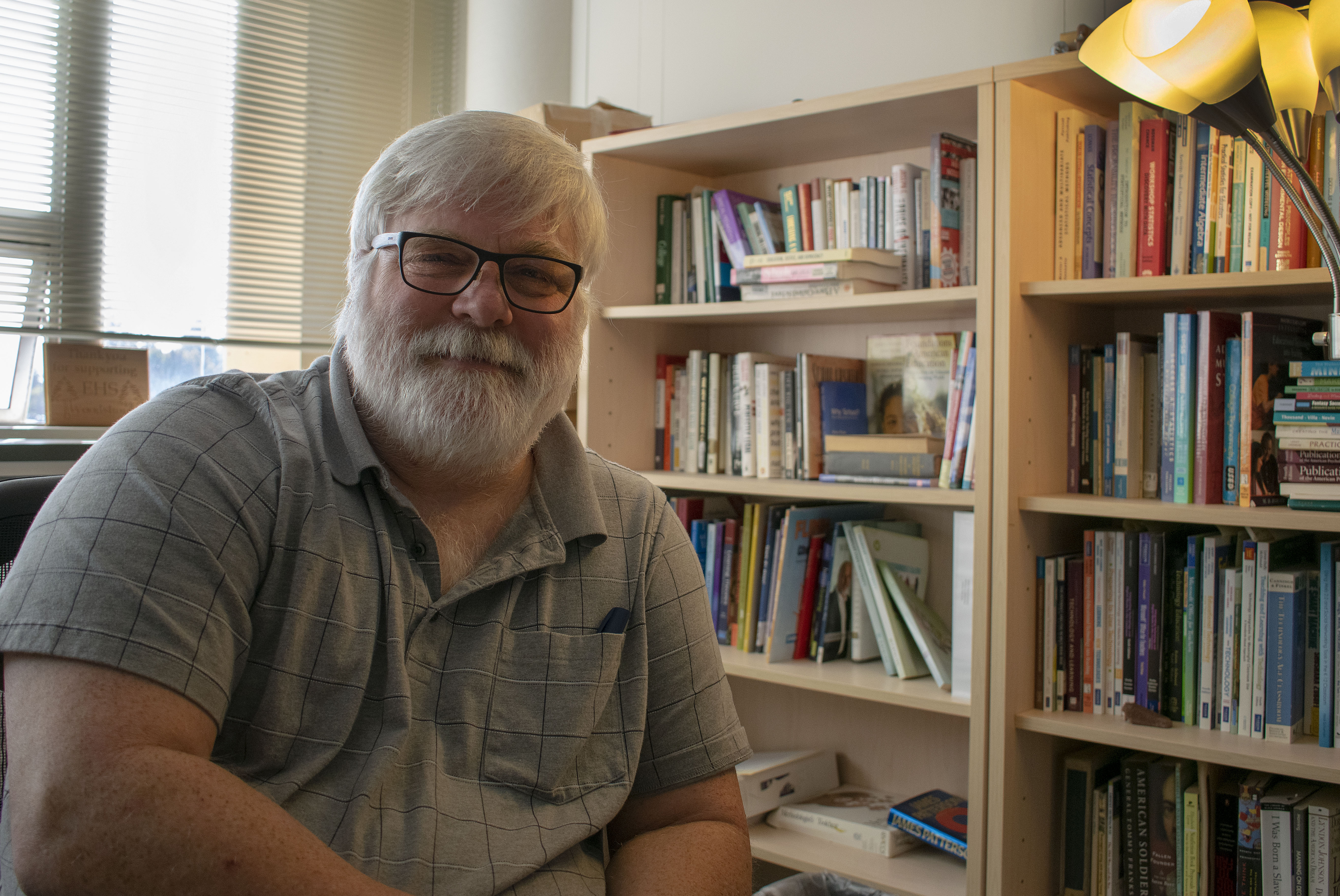
    This is a letter to the editor from Humboldt State University Education Department Chair Eric Van Duzer, Ph.D. It has been edited only for minor punctuation and grammar style preferences.

    As I reflect back on nearly 30 years at Humboldt State University, first as a student and then for the past 20 years as a faculty member, I wanted to share some of the thoughts that I have about HSU’s current situation and where the campus might go from here.  

    As a student I experienced a remarkable education where faculty were fully invested in my intellectual and personal development. There were so many opportunities to explore areas of interest and develop new ones. I have spent many hours trying to encapsulate the nature of the schooling I experienced in a way that would really represent the experience. 

    The best analogy I have been able to come up with was that HSU offered a graduate education to undergraduates. The small classes typical of graduate school encouraged faculty to fully invest in their student’s growth. The university, set so far from the oversight of CSU headquarters in Long Beach, offered a great deal of flexibility to shape our experiences. 

    This would be impossible today. In those days HSU had the third smallest class sizes in the 23 campuses of CSU. But more than that, it had a unique faculty ethos that reflected nearly 100 years as a student-focused institution that exalted excellence in teaching above all else.  

    I was the first student CEO of the Institute of Industrial Technology, a self-supporting club that allowed us to use the skills and knowledge we were developing to grow in business acumen, engage in manufacturing and light construction on campus as well as conduct experiments for local agencies. In its second year, Bill Wilkinson used the institute to earn enough profit making desks for campus offices that it paid for several pieces of expensive equipment for the department.

    This would be impossible today. In those days HSU had the third smallest class sizes in the 23 campuses of CSU. But more than that, it had a unique faculty ethos that reflected nearly 100 years as a student-focused institution that exalted excellence in teaching above all else.  

    Faculty came to campus because this is where they wanted to spend their career. Unlike most universities where faculty play academic hopscotch building their resume through research reputations and earning ever-higher salaries as they bounce from college to college, HSU faculty built their reputations on teaching.  These were inherently local reputations, not very valuable if one wanted to move on, but rather a reflection of the values and attitudes associated with a culture of excellence in the service of students’ intellectual growth.

    As anyone who has worked with university budgets will tell you, graduate education is expensive.  That is why through the first 100 years, the administration and other services were done on a shoestring. It was common for a variety of upper administrative positions to be filled by faculty who served temporarily. Staff was thin and overworked and processes were slow and inconsistent. 

    What happened? In the early 2000s the CSU was facing the onslaught of a Generation X student bulge. Chancellor Charles Reed decided the best strategy to deal with this situation was to homogenize campuses so that if a student could not get into Sacramento State because it was impacted, they could simply go to another campus and get a similar experience. 

    Yet, the campus, with significant leadership from the faculty, focused its significant resources on classroom instruction, and through that dedication, produced exceptional graduates who were deeply committed to HSU when they graduated. 

    I remember an administrator in the early years telling me that he had been in a restaurant on the East Coast and overheard a group of students talking at a nearby table. He was so impressed with their sophistication and the values they held he found out where they came from and immediately applied for a job at HSU. 

    He was the first person hired under then-president Rollin Richmond to manage our enrollments in the early 2000s. The diversity on our campus is a credit to him and Richmond, who reached out across the state to bring in students from urban areas. Sadly he became disillusioned and left. So did most of the faculty leaders. 

    What happened? In the early 2000s the CSU was facing the onslaught of a Generation X student bulge. Chancellor Charles Reed decided the best strategy to deal with this situation was to homogenize campuses so that if a student could not get into Sacramento State because it was impacted, they could simply go to another campus and get a similar experience. 

    Shortly thereafter the upper administration received inflated titles and significant raises in an apparent effort to reduce resistance. Then the attack on the faculty began.

    Naturally, faculty on campuses such as HSU who were proud of their traditions and niche identities resisted. Fiercely. At one point, three campus presidents, including Rollin Richmond, suffered through votes of no confidence by their faculty as they implemented this strategy. 

    To achieve the required changes in the face of faculty resistance, campuses, including Humboldt, began shifting to a corporate structure of top down management. Faculty who had held a privileged position in campus life were systematically reduced to workers with only a symbolic voice in campus decisions. The administration turned its focus inward towards improving the functioning of the bureaucracy. They eliminated administrators such as Rick Vrem, an ethical provost, who refused to implement changes that hurt the traditional focus on instruction.  

    Vrem was replaced with a provost who had no such compunction. Shortly thereafter the upper administration received inflated titles and significant raises in an apparent effort to reduce resistance. Then the attack on the faculty began. Nearly 80 faculty positions were eliminated over several years and during the same time period, a similar number of new staff positions were created and filled to support administrative functions. 

    Over the majority of the intervening 15 years, budget reductions for academic programs have been the norm: reductions in staff, program availability and courses. This year it was a 6% cut, last year another and many like it before. The funds have been shifted to an ever-expanding variety of administrative initiatives. 

    Now we sound more like a parks and recreation office than a university. Come for the redwoods, the beaches, the bike riding—that is wonderful and I love it, but it is not why people pick a university.  

    We spend nearly 68% of our budget on administration and campus facilities. Despite the results of a study commissioned by Rollin Richmond’s administration that showed the two most important factors that cause a student to come to HSU are quality of education and availability of the program they are interested in, both have been repeatedly attacked, sliced and diminished.

    It is surprising that no one seems to notice that every time we cut academic programs, fewer students want to come here. And when fewer students come here, the budget suffers and HSU responds by cutting academic programs even more severely—a cycle the faculty in 2004 described as a “death spiral.” 

    As we address our current crisis and try to figure out what we need to become in order to grow back to a sustainable enrollment, we might want to engage in some soulful reflection. What would cause a 20-year-old to come to a place five hours from major centers of civilization and spend four years with us? What do we have to offer them that is so valuable, so different from what they can get at any of the other CSU campuses which are closer, cheaper and offer a great deal more college life in the community? 

    We stopped selling the small classes and close academic relationships with faculty when the hypocrisy became too much to bear as campus priorities shifted. Now we sound more like a parks and recreation office than a university. Come for the redwoods, the beaches, the bike riding—that is wonderful and I love it, but it is not why people pick a university.  

    When I arrived here as a faculty member in 2000 we had one staff member, John Filce, doing institutional research. He was wonderful and badly overworked. I am sure he still is. Now we have nine staff members listed in the directory in the Office of Institutional Effectiveness, including a vice president. I am sure their work is valuable, but to pay for it we had to cut 64 class sections. 

    Today, we are an organization of inflexible rules and their keepers.

    We have proliferated the bureaucracy, which is unfortunately necessary to achieve top-down control of a professional organization. Had our leadership studied industrial technology with me, they would know what companies in the 1970s learned: that this form of management is ineffective and inefficient in a professional organization. 

    To achieve control requires monitoring, which in turn requires more staff. For a top-down organization, where the vast majority of employees serve at the will of their manager, fear prevents innovation and compliance is key. Before the shift to this model, administrators were problem solvers. In fact, the standing joke in those days was that everything was an exception. Faculty, staff and administrators had the flexibility to serve the needs of students even when it required bending the rules. 

    Today, we are an organization of inflexible rules and their keepers. It has greatly diminished the effectiveness of the organization and its ability to make decisions that best serve our students. The resulting bureaucratic culture has seen a proliferation of forms, rule books and rigid adherence to often dysfunctional orders.

    This is no way to run a university. Perhaps a grocery store, but not an organization of 500 highly educated experts with thousands of years of collective experience. Top-down decision-making, particularly when the president and upper administrators are drawn from institutions that do not share the culture and values of the campus, is inherently poor compared to what would be possible if faculty once again had a meaningful voice in campus affairs.  

    No student has ever come to HSU because we have a wonderful registrar’s office or because the president’s office is fully staffed.  These only matter when they impact the quality of the education a student receives. 

    The proof of this is apparent everywhere at HSU. When Rollin Richmond came, he had no interest in what made HSU special. Like a white suburban principal coming to a school in Watts, he thought he knew what needed to be done to remake the university into his vision of a modern institution. That ignorance has cost us immeasurably. Today we face the consequences. The failure to fundamentally change direction of subsequent presidents has simply deepened the mess. We now have a new president, perhaps we can find a new vision. 

    In my view there are two key concerns that need to be addressed from a rational and values-driven perspective. First, an effective budget model that allows funding to follow enrollment is essential to support growing programs while shifting resources to where they will best serve student needs and interests. This can refocus the campus on providing the service/product students come here for—classroom instruction—and it is essential.  

    There are so many amazing faculty and academic staff here. They are people with a heart for their students, struggling in a system that constrains and conflicts with their efforts. Let their voices guide the future and we may yet have one worth celebrating.

    No student has ever come to HSU because we have a wonderful registrar’s office or because the president’s office is fully staffed.  These only matter when they impact the quality of the education a student receives. 

    Second, we have to decide how we are going to rebuild the excellence we once were known for in our student’s academic programs.  The day Rollin Richmond refused to give the Outstanding Faculty Award to a physics professor (selected by the faculty based on his ability to delight and inspire students) because that professor had not published, is the day we snuffed out the soul of the old HSU campus. 

    Now we need to find out what animates us in ways that provide an experience worth the isolation, cost and struggles required to live in this remote community. Redwoods are not enough; we need a reinvestment in education. 

    I am retiring from HSU at the end of this May. I am sad to see what has happened to my university. There are so many amazing faculty and academic staff here. They are people with a heart for their students, struggling in a system that constrains and conflicts with their efforts. Let their voices guide the future and we may yet have one worth celebrating.

  • Biden’s Recent Slip-up is Not His First

    Biden’s Recent Slip-up is Not His First

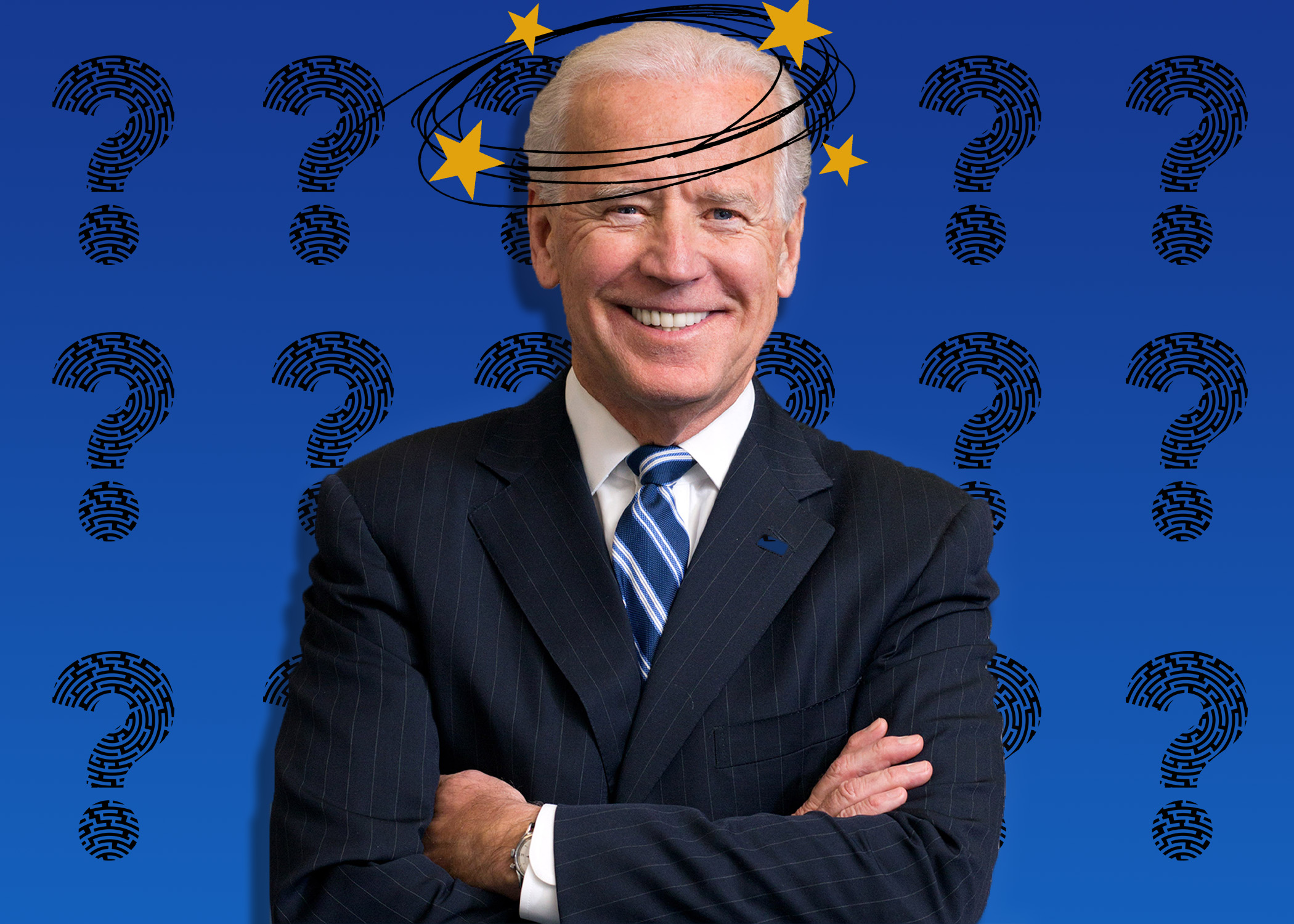
    The South Carolina gaffe is only his most recent in a series of slip-ups

    In a speech given in South Carolina Feb. 24, Joe Biden asked for support in his campaign—but he may have forgotten what exactly he was campaigning for.

    “My name is Joe Biden, I’m a Democratic candidate for the United States Senate,” Biden said, a Democratic candidate for the United States presidency.

    This, however, was not the first time that Biden has slipped-up on the campaign trail. During the Nov. 20 Democratic debate in Atlanta, Georgia, The Guardian reported Biden said he was supported by the only African American woman to be elected to the Senate, Carol Moseley Braun.

    “We have this notion that if you’re poor, you cannot do it. Poor kids are just as bright and just as talented as white kids.”

    Joe Biden

    Senator Kamala Harris, who was on stage with him, had to chime in and remind him she was also an African American woman elected to the Senate.

    One of his most glaring slip-ups was during a town hall meeting in Iowa hosted by the Asian and Latino Coalition. According to a New York Times article, Biden was talking about education and challenging students.

    “We should challenge students in these schools to have advanced placement programs in these schools,” Biden said. “We have this notion that if you’re poor, you cannot do it. Poor kids are just as bright and just as talented as white kids.”

    He did attempt to amend his statement when he continued.

    “Wealthy kids, black kids, Asian kids, no, I really mean it,” Biden said.

    This isn’t the only gaffe that puts into question his views on race. On June 18, 2019, during a fundraiser event in New York, Biden recounted his time in the Senate in the 70s. Specifically, working with Mississippi Senator James Eastland and Georgia Senator Herman Talmadge, two senators who opposed civil rights and desegregation, according to CNN. He was comparing the Senate from that period to the Senate today.

    The big question regarding this most recent slip-up is whether or not it will affect his poll numbers that currently have him sitting in second place behind Bernie Sanders.

    “At least there was some civility. We got things done. We didn’t agree on much of anything. We got things done. We got it finished,” Biden said. “But today, you look at the other side and you’re the enemy. Not the opposition, the enemy. We don’t talk to each other anymore.”

    Kamala Harris spoke out again against Biden.

    “To coddle the reputations of segregationists, of people who, if they had their way, I would literally not be standing here as a member of the United States Senate, is, I think it’s just, it’s misinformed,” Harris said.

    Even before this election cycle, Biden has made questionable remarks regarding race. According to an article by CNN, when he started his 2008 presidential race, he referred to Barack Obama in a way that drew scrutiny from many people.

    “I mean, you got the first mainstream African American who is articulate and bright and clean and a nice-looking guy,” Biden said during an interview with the New York Observer.

    The big question regarding this most recent slip-up is whether or not it will affect his poll numbers that currently have him sitting in second place behind Bernie Sanders.

  • Mike Bloomberg is Democratic Trump

    Mike Bloomberg is Democratic Trump

    Mike Bloomberg is just another billionaire with outdated views looking for attention

    We’ve all seen the campaign ads. “Mike will get it done,” they profess. What exactly has he done? He’s had 64 sexual harassment cases brought against him. He’s expanded the infamously racist stop-and-frisk policy in New York. He’s spied on the Muslim community. And he has bought his way into the primary.

    Not to bring everything back to another bigoted New York billionaire who got bored with having too much money and went into politics, but Mike Bloomberg certainly does remind me of someone.

    Were it not for the mark on the ballot calling him a Democrat, people would assume based on his fiscal policy and social track record that he was at least a centrist-Independent, if not a conservative-Republican.

    Despite being a registered Republican from the beginning of his political career up until 2007, and an Independent until 2018, he chose to run as a Democrat. Presumably, to gain the support of both Republicans and party-line Democrats.

    He’s an authoritarian, plain and simple. Party isn’t the real issue here. He cares about power.

    Bloomberg has a long history of bigotry. While his predecessor, Rudy Giuliani, first implemented stop-and-frisk, it was under his watch that the program grew to the widespread excuse for police brutality and racial profiling.

    When it was brought up by critics that New York police officers were disproportionately targeting black and brown communities, he gave the rationale that, “That’s where all the crime was.” In addition, he justified having undercover officers stalk Muslim New Yorkers as preventative measures against another 9/11.

    “We had just lost 3,000 people at 9/11,” Bloomberg said in an interview with PBS Feb. 27. “Of course we’re supposed to do that.”

    If anything, Bloomberg is a more dangerous version of Trump. He’s smart. He knows that putting up a polished front and playing up the establishment card will make him look like the opposite of the current president.

    Aside from his dubious past, Bloomberg’s current policy proposals are anything but progressive. While his website claims that Bloomberg will defend equal rights for LGBTQ+ Americans, he has stated as recently as 2019 that he considers transgender individuals as just “some guy in a dress,” or “he, she, or it.”

    On his website, aside from a reference to overturning the military ban, he has nothing to say on transgender rights. By considering equal rights for the transgender community to be reaching too far, he betrays the entire LGBTQ+ community.

    Being progressive is about supporting the oppressed and the marginalized. No ally insults the people they claim to stand with behind their backs and considers the value of their identities negotiable.

    According to his website, his plan for climate change is to “restore America’s leadership in fighting the global climate crisis, propel the United States toward a 100% clean energy future, make environmental justice a national priority.” These promises are all incredibly vague, and his campaign has been silent on the specifics of how they’d achieve any those goals.

    General promises of somehow solving climate change aren’t going to help us. If we want this planet to be livable for ourselves, our children and our grandchildren, we need to take serious and quantifiable steps to ensure it. The science says we need ambitious action. All he offers are glossy advertisements.

    If anything, Bloomberg is a more dangerous version of Trump. He’s smart. He knows that putting up a polished front and playing up the establishment card will make him look like the opposite of the current president.

    I’m not afraid that he couldn’t defeat Trump in an election. If Bloomberg wins the Democratic primary, the general election won’t matter. It’s a self-serving billionaire in office either way.

  • Associated Students President Resigns

    Associated Students President Resigns

    AS Administrative Vice President will take over for the spring semester

    Associated Students President Yadira Cruz resigned during the AS Board of Directors meeting on Dec. 3, citing personal reasons.

    “It was a difficult decision I had to make, but it was the best option academically and personally,” Cruz said a few days later.

    Cruz, who fought back tears when interviewed, said the AS Board, composed entirely of Humboldt State students, offered her consolation despite some of them seeming shocked by the decision.

    “They were super supportive. Some people teared up, and a few of them apologized, but I didn’t want them to apologize because politics is politics, and it’s challenging,” Cruz said. “They thought they weren’t there for me, but they were always there.”

    The AS codes provide that the AS Administrative Vice President takes over if the president resigns. In this case, Lizbeth Cano, a sophomore business administration major, will take the reins for the rest of the school year.

    “It’s going to be big shoes to fill in because I got to see how Yadira got everyone involved and was able to always get people to really get their opinion,” Cano said. “One thing I’ll take from her is to make sure to get the whole room involved.”

    “I think I’ll always feel a little bit of guilt, because I knew this was a year-long position.”

    Yadira Cruz

    Cruz was announced as the 2019-2020 academic year AS president last April. A senior criminology and justice studies major, Cruz said she ran despite her lack of political experience to try to do something with her frustration about a lack of support for student needs.

    While Cruz said she’s happy with her decision to resign and with her time as president, she acknowledged a feeling of guilt.

    “I think I’ll always feel a little bit of guilt, because I knew this was a year-long position,” Cruz said.

    As a takeaway message, Cruz urged fellow students to make sure to take care of themselves.

    “The transition will help AS become stronger, I think, moving forward.”

    Yadira Cruz

    “A lot of these students are working and involved and there’s a lot of things that they carry,” Cruz said. “And I think I’m just speaking as first-gen, as a student of color attending here. There’s a lot of things just added to it all, to the whole balance for schedules. But I think my point is just to take care of themselves as well—to find time.”

    Cano agreed and supported Cruz in her decision.

    “I think it’s time she prioritized herself,” Cano said.

    Both Cruz and Cano said they still hoped for more students to get involved on campus with AS or elsewhere.

    “Definitely using all of our different hats and letting people know that this is important and this is something that really matters and that they can have a say in it without it being troubling or problematic,” Cano said. “Because I think a lot of people can think that it’s too much work.”

    Cruz responded to the implication of her resignation on the image of an AS position being a lot of work by saying that how much people do in AS depends on the individual and their goals. Cano agreed and added on Cruz’s point.

    “I think it also has to be kept in mind that the position that’s being resigned is the president position—meaning the top position,” Cano said. “So definitely getting involved as a representative or maybe as an executive like a VP—it can be a different flow. It can really be a learning process.”

    As Cano transitions into the the presidential role, Cruz said she thinks AS can learn and grow following her departure.

    “The transition will help AS become stronger, I think, moving forward,” Cruz said.

  • ‘The Hunt’ is Off

    ‘The Hunt’ is Off

    Universal Pictures cancels release of HBO thriller after Trump slams movie in tweet

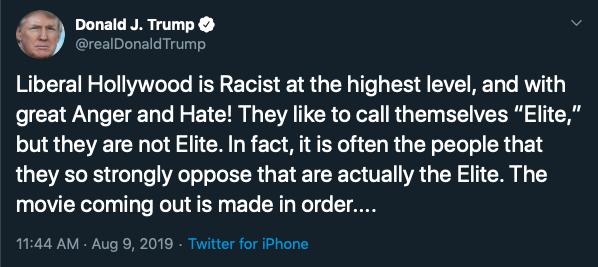
    “Elites” killing “Deplorables” may sound like an extreme interpretation of today’s politics. “Deplorables” is a recognizable term from the 2016 presidential election that Hillary Clinton used to describe Trump supporters; the word alone draws an immediate connection between the plot of the movie and real-life political strife.

    “The Hunt” is a new movie created by Nick Cuse and Damon Lindelof. The movie drew inspiration from real-world politics and the short story “The Most Dangerous Game” by Richard Connell. The thriller quickly morphed into an uncomfortable and realistic take of today’s world.

    Advertising for the satirical thriller was stopped out of respect for the mass shootings. However, even after the cancellation, both the president and public continued to express concern and disapproval over the plot.

    Ultimately, the vocalized disapproval resulted in Universal Studios pulling the plug and releasing a press statement:

    “After thoughtful consideration, the studio has decided to cancel our plans to release the film. We stand by our filmmakers and will continue to distribute films in partnership with bold and visionary creators… but we understand that now is not the right time to release this film.”

    Donald Trump’s tweet that finishes his previous message on Aug. 9.

    The ‘now’ Universal references is modern-day society. Recent events have created a tense and polarized political atmosphere that has resulted in a hypersensitive society. The idea of hunting and killing those who have opposing views, regardless of the satirical message, is too intense for the people of today’s political climate. Violence is quickly becoming a normalized aspect of society, in other words, a reaction to everything.

    The president agreed with the public, tweeting the plot, “Elites” versus “Deplorables”, is bad for the country and, in a classic Trump response, that the creators of the thriller are racist.

    “They like to call themselves “Elite,” but they are not Elite… The movie coming out is made in order to inflame and cause chaos… They are the true Racists, and are very bad for our Country!”

    The following day, Universal released its statement regarding the cancellation of the thriller. While the racist accusation stands unsubstantiated, I agree with Trump in regards to the way the movie encourages chaos and violence.

    Is the fantasy of killing others who oppose our morals that far-fetched from what is on the news today?

    While the thriller seems to be a fully canceled ordeal, Cuse and Lindelof will continue with the release of the thriller through “bold and visionary creators.” Maybe there is hope for those wanting to see the film.

  • Piecing Together the President

    Piecing Together the President

    Introducing Tom Jackson Jr., Ph.D., Humboldt State’s new president

    It’s not everyday you meet a university president who has the tenacious intention of changing their student body’s perspective beyond their educational experience.

    Tom Jackson, Jr., Ph.D. began his incumbency as Humboldt State University’s eighth President in June 2019. In his second university president position, Jackson plans for more than just the future of the university, but also for the success of the current and future students.

    “The students I want to gain are important,” Jackson said. “But the students we have now are more important. They are the ones that we want to see succeed and want to see finish now.”

    With 11 professional positions under his belt, Jackson is far more than familiar with holding an administrative position at a university. From Assistant Director of Residence Life to Dean of Students, Jackson has worked at campuses across the United States, including the University of Southern California, Texas A&M University, University of Louisville and more recently as the president of Black Hills State University.

    Aside from his educational work, Jackson spends his free time riding horses, scuba diving, flying planes and watching college sports. The last 21 years of his life, however, have also been spent raising his now 21-year-old son and 18-year-old daughter with his wife, Mona Jackson.

    President Tom Jackson socializes at the Staff Family Picnic on August 23 in the UC Quad. | Photo by Collin Slavey

    “I can’t have too many expensive hobbies,” Jackson said. “And being a pilot and plane owner is a very expensive hobby, particularly when you add in being a father of two college-aged students.”

    When asked about the number one lesson that could be taken away from his previous presidency position at Black Hills State University, Jackson replied with the idea that he has based every administrative position around providing students with a positive, educational and meaningful experience.

    “It’s the focus on our student body,” Jackson said. “It is really simple. The arguments all go away when we connect the importance of what we’re doing to what students are aspiring to do.”

    Acknowledging the ups and downs of education as a meaningful practice creates for a positive outlook on day to day life. It is this similar thought process that Jackson hopes to bring to light as the new president of HSU. Over the past few semesters, students have been searching for support and protesting about issues that are important to not only the student body but the surrounding community as well.

    “If you had a positive day and you learned something that links to your educational experience, you’ll be just fine the next day.” Jackson said. “If you wake up angry at the world, then you’re not starting off the day in the most positive state of mind.”

    With the murder of David Josiah Lawson and the verdict declining to indict any person a part of his stabbing, students have felt pain and worry as they continue their education at HSU. Feeling safe on campus and in the community is important for students and their parents, and Jackson thinks so too.

    “If you wake up angry at the world, then you’re not starting off the day in the most positive state of mind.”

    Tom Jackson Jr., Ph.D.

    “We have to be able to provide our students a controlled opportunity to figure it out for themselves,” Jackson said. “It is no different than what our parents tried to have us do… if they were that type of parent.”

    In July 2018, an HSU press release stated the final decision made to cut the football program after the end of the season. Students, faculty and community members were outraged and disappointed with the decision.

    “There is no secret that football is expensive,” Jackson said. “To keep a football program usually means you have a student body that is willing to pay a pretty good price to keep it here because that is where the source of funds comes from along with the donors.”

    Jackson talks about the recent knowledge of head injuries in the sport of football and how it can add to the perspective of why so many universities cutting their teams may be a positive change. He asks the question, “Is keeping a football program the most responsible thing we could be doing today?”

    According to Jackson, the Saturday evening excitement that comes with supporting a football team is an emotional experience that most students and community members look forward to.

    Tom Jackson sitting in his new office. | Photo by Skye Kimya

    “We’re missing that excitement on a Saturday that brings people together,” Jackson said. “That is what we have to revisit as a university. What is it that is going to bring us together today?”

    With the loss of football, came the conversation of a potential diversity decrease that may result from losing the program. Although Jackson accepts the intention behind that conversation, he mentions his rejection to the argument.

    “In its simplicity, that is saying that football was about diversity,” Jackson said. “That’s troubling because there are other ways to have diverse conversations.”

    One of Jackson’s many goals for students is to be able to comfortably have diverse conversations on campus without having to go out of the way to do so.

    In the coming years, he hopes to create a community where diversity is not just based upon the color of your skin, opinions on complicated subject matters or what you look like, but the person that you are.

    Jackson is also focused on the improvement of HSU’s retention rate through marketing and outreach, which links to enrollment. He mentions that the cost of off-campus student housing may be the biggest limiting factor the school has involving enrollment.

    “Another goal is to strengthen our relationships in the community and connect our student body to the community as one,” Jackson said. “Tied to that is branding ourselves in a different way.”

    Jackson brings a different perspective to light when he talks about the way HSU portrays itself. He alludes to the idea that hearing all of the negativity and baggage prevents people from wanting to a part of the school’s community and believes showing off strengths is more attractive and promising.

    “I want us to focus on the good,” Jackson said. “I want us to celebrate the good and enjoy the place that we happen to be at today.”

  • Word on the street: Trump’s response to Las Vegas shooting

    Word on the street: Trump’s response to Las Vegas shooting

    Thirty-two floors above the crowd, a shooter opened fire on thousands of people gathered for the Route 91 country festival in Las Vegas, Nevada on Sunday, Oct. 2 Paddock killed approximately 59 people and injured at least 520. Paddock was a Caucasian male and a retired accountant living in Mesquite, Nevada.

    President Donald Trump responded to the casualty on Monday morning. Instead of addressing the reoccurring issue and the nation’s problem with gun laws, Trump said “we are all looking for some light in the darkness. The answers do not come easy.”

    Additionally, Trump has been less than sympathetic towards the United States territory of Puerto Rico, which was severely impacted by Hurricane Maria. Since then, Trump has continuously denied any problems with Puerto Rico relief efforts, as many parts of the island still remain without running water, gasoline or basic necessities. Trump recently visited Puerto Rico on Tuesday.

    In the wake of a crisis, the President’s response is crucial. Whether President Trump responded accordingly is debatable, however. We asked Humboldt State University students what they thought of Trump’s response.

    Question: “What do you think of Trump’s reaction to the Las Vegas shooting on and his plan to visit Las Vegas on Wednesday?”

    “He has left Puerto Rico as they are and put them on the back burner. I don’t think visiting is what he needs to be focusing on, when he has taken as much money from the NRA as he has, that’s where he needs to be looking for a change.” – Macy Suchan, 21, Communication, Senior

    LN_Shooting_MacySuchan.JPG
    Macy Suchan, 23-year-old senior at HSU stands in front of the half-staff flag on Oct.2 2017. Photo credit: Lora Neshovska

    “I don’t like his demagogic use of Twitter instead of another media outlet. The shooter was portrayed as many other white perpetrators in the news, a ‘lone wolf.’” – Quinn Bornemann, 21, English, Senior

    LN_SHooting_Wren_Broekema.jpg
    Wren Broekeama, a 22-year-old graduate student majoring in Academic Research says Trump showed the ability to respond quickly but only in chosen instances. Photo credit: Lora Neshovska

    “This showed his ability to respond with swiftness, he just chooses not to respond to other disasters, which is not presidential at all.” – Wren Broekema, 22, Academic Research, Graduate Student

    “I think he’s so quick to respond because he wants to justify the action, the keep the “American” image. It’s like anyone who isn’t white is bad and whoever is white is justifiable.”- Romero Perez, 20, Environmental Resources Engineering, Sophomore

    “It bothers me that the media is not referring to this white male as a terrorist.” Kammi Loyd, 18, Psychology, Sophomore

    LN_Shooting_FranciscaCrutchfield.JPG
    Education graduate student, Francisca Crutchfield says Trump has lots of financial and corporate power in Las Vegas, a possible reason he was so quick to respond to the Oct. 2 fatality. Photo credit: Lora Neshovska

    “I can assume Trump has a lot of corporate and financial connections and power in Las Vegas. This is a pretty direct issue, unlike the hurricanes that involve a lot of problem-solving so it’s an issue that he can touch on without getting too involved with.” – Francisca Crutchfield, 27, Education, Graduate Student

  • This week in news

    This week in news

    By | Charlotte Rutigliano

    World:

    • Pope Francis urged the United States and North Korea on Saturday to defuse their increasingly tense standoff and avert a potentially horrific conflict. (New York Times Update – 4/29/2017)


    Nation:

    • A federal judge on Tuesday blocked the Trump administration from enforcing a threat to take away funds from sanctuary cities. (CNN Update – 4/25/17)
    • Trump administration still considering how to make it easier to sue the media. (Washington Post Update – 4/30/2017)


    Local:

    • A federal judge dismissed portions of a lawsuit claiming Eureka’s ordinances against camping and storage of personal items in public spaces violates the Constitutional rights of homeless individuals. (North Coast Journal Update – 4/28/2017)
    • Highway 101 is open and traffic is flowing north of Leggett. (Caltrans Update – 4/25/17)
  • Trump watch (April 19 to April 25)

    Trump watch (April 19 to April 25)

    President Donald Trump would like to reduce corporate tax from 35 percent to 15 percent. The president ordered White House aides to draft a tax plan that slashes the corporate tax rate on Monday.

    President Trump and the first lady visited the Walter Reed Medical Center to award the first Purple Heart under his administration to Army Sergeant Alvaro Barrientos.
    During a video conference with NASA astronaut Peggy Whitson, who set a new record for most time spent in outer space, President Trump said to her that he wanted a Mars landing by his second term and that he wanted to speed up that process.

  • Editorial: Promising free education

    Editorial: Promising free education

    By | The Lumberjack Editorial Board

    Hope is in sight. Despite the new Presidential administration’s barrage of legislation that raises the cost of higher education, Sen. Bernie Sanders (I-Vt). re-introduced the College for All Act.

    Sanders’ 2015 dream of tuition-free education came a step closer to reality. Along with Sanders, Elizabeth Warren (D-Mass.) and Representatives Keith Ellison (D-Minn.) and Pramila Jayapal (D-Wash.) presented the bill on April 3.

    Although a glimmer of hope exists, we still have to be wary of the reality of the state of politics. The power has changed hands from Democrats to Republicans. Democrats passing legislation with a Republican House and Congress seems unlikely. Republicans are flexing their power by enacting their educational standards and repealing any policies adopted or created under the Obama administration.

    As promised, the College for All Act makes all community colleges tuition-free and offers free public tuition at four-year colleges and universities for students earning less than $125,000 a year. The bill calls for the federal government to pay 67 percent of tuition subsidies, leaving state and tribal governments to cover the last third of the cost. The bill also looks out for students already struggling with student loan debt.  The bill cuts the government lending rate for new undergraduate borrowers to 1.88 percent and refinances loans for existing borrowers at lower rates as well.

    Republican and Democratic views on our education system are counterproductive. The current GOP’s proposed budget cut of $9 billion to the Department of Education eliminates chances for low-income students to earn a college education. These policies snatch the money away from students while the College for All Act gives it back with interest.

  • Trump Watch (March 22 to March 28)

    Trump Watch (March 22 to March 28)

    By | Bryan Donoghue

    According to a review of court cases, government and legal documents, and an interview with a former federal prosecutor, Donald Trump and his company repeatedly turned to wealthy Russians from former Soviet republics. Trump, his company, and partners have been linked to at least 10 wealthy former Soviet businessmen with alleged ties to criminal organizations or money laundering.

    Source: USA Today

    President Trump signed an executive order on Tuesday that’s intended to unwind most of President Obama’s climate-change legacy, celebrating the move as a way to promote energy independence and to restore thousands of lost coal industry jobs. The order also covers a suite of narrower but significant Obama-era climate and environmental policies, including lifting a short-term ban on new coal mining on public lands.

    Source: The New York Times

    Summer Zervos, a former contestant on Trump’s reality TV show, “The Apprentice” sued Trump last year before his Jan. 20 inauguration for groping and pressing his privates against her in 2007. President Trump wants to derail the defamation suit by claiming immunity through his job as the nation’s commander-in-chief, according to court papers made public Tuesday.

    Source: New York Post

  • Editorial: Where is our President?

    Editorial: Where is our President?

    By | The Lumberjack Editorial Board

    Oh where, oh where, oh where in the world is Humboldt State University President Lisa A. Rossbacher? President Rossbacher has been at best unavailable, and at worst dismissive and non communicative with The Lumberjack. The Lumberjack works to engage with and provide a voice for the HSU community.

    By deciding not to engage with The Lumberjack, Rossbacher is deciding not to engage with her campus community.
    As the president of Humboldt State University, Rossbacher is in charge of supporting the campus community. A key component of delivering that support is communicating with and being available to the campus media.

    Just like any governmental official, Rossbacher is held accountable to the public through the media.

    The Lumberjack has time and time again reached out to Rossbacher for comments on the ongoing athletic deficit, the recent tuition hike, and even parking with not one response.

    The Lumberjack is not only a media outlet but a mandatory class for all Journalism majors. Shutting out The Lumberjack also shuts out the 40 students who take the class every semester from having an opportunity to complete well-sourced, informative stories.

    In doing this, she fails to reinforce HSU’s mission to support its students educational opportunities.
    Failing to communicate with the media distorts the facts, it leaves people confused, and it fails to promote transparency — the chief responsibility of a community’s leader.
    On occasion, we students gather and sing, shout and even march to support the issues that are important to us; however, the one thing that has been missing during all this time is the voice of our university leader President Rossbacher.
    The Lumberjack staff would like to hear from President Rossbacher. The student body deserves a chance to hear from the president within the pages of its own, historic newspaper.
    We need a president that is present.

    One that shows up for the student body not only in making policy, but in communicating what steps, if any, are being taken to protect students and Humboldt State University’s values.

  • Trump watch (Feb. 15 to Feb. 21)

    Trump watch (Feb. 15 to Feb. 21)

    By | Iridian Casarez

    According to the Washington Post, President Trump made comments about Sweden in a rally in Melbourne, Florida on Saturday, Feb. 18.

    “You look at what’s happening last night in Sweden. Sweden, who would believe this?” Trump then mentioned the French cities of Nice and Paris, and the Belgian capital, Brussels. The three European cities were attacked by terrorists over the past two years. The comments were widely perceived in the U.S. as to suggest there was an attack in Sweden Friday night, but there was no attack.


    President Trump named Lieutenant General H.R. McMaster as his new national security advisor on Monday, Feb. 20, replacing Michael Flynn. McMaster is a career Army officer and strategist according to the Los Angeles Times.


    The Trump administration is planning to establish a revised executive order on immigration. The President says will “protect our people” while at the same time pass muster with courts that halted an earlier version, according to CNN. The new executive order will not impact green card holders.


    President Donald Trump announced Thursday, Feb. 16, his plan to nominate Alexander Acosta as Secretary of Labor. Acosta would be the first Hispanic member of Trump’s Cabinet.

  • Trump Watch (Feb. 8 to Feb. 13)

    Trump Watch (Feb. 8 to Feb. 13)

    By | Iridian Casarez

    Virginia Federal District Court Judge Leonie Brinkema issued a preliminary injunction against President Trump’s executive order on immigration on Monday, Feb. 13. The injunctions were issued based on the fact that it discriminates against Muslims, according to the Washington Post.

    According to the New York Times, the Senate confirmed Steven T. Mnuchin,to be Treseary Secretary on Monday February 13, putting in place a key lieutenant to President Trump will help drive the administration’s plans to overhaul the tax code, renegotiate trade deals around the world and remake financial regulations. Mnuchin is a former Goldman Sachs banker and Hollywood film financier.

    President Donald Trump and Canadian Prime Minister Justin Trudeau meet for the first time at the White House to talk about trade, a task force for women, and energy on Monday, Feb. 13.

    Immigration authorities last week arrested 680 people who were in the United States illegally, according to the Washington Post. Fulfilling one of Donald Trump’s long campaign promise to crackdown on immigration.

  • What you need to know about a Trump presidency and the environment

    What you need to know about a Trump presidency and the environment

    By | Emily Owen

    Donald Trump has been president for almost three weeks, and he has begun making his mark on environmental legislation. Here’s what he has already done and what he has promised to do.

    1. Trump appointed Oklahoma Attorney General, Edward Scott Pruitt, as head of the Environmental Protection Agency on Jan. 18. As a vocal and outspoken climate change denier, Pruitt is currently suing the Environmental Protection Agency and has been involved in 14 lawsuits against the organization to lessen environmental regulations.
    2. Rex Tillerson, the former chairman and chief executive of Exxon Mobil, was chosen by Trump to hold the position of Secretary of State on Feb. 1. During his time with Exxon Mobil, Tillerson was known for rejecting the use of renewable energy sources. As Secretary of State, he will serve as the ambassador between the United States and other nations. He is expected to advance drilling throughout the world.
    3. Despite months of protest from water protectors consisting of a combination of tribal members and environmentalists, Trump officially endorsed the Dakota Access Pipeline on Jan. 24. Trump assured the owners of the Keystone XL Pipeline that their proposal will be approved and encouraged them to re-submit their application after it was repeatedly denied during the Obama administration.
    4. An executive order was carried out by Trump on Jan. 20 that ordered the streamlining of environmental reviews for future high-priority infrastructure projects. The action instructs the Chairman of the White House Council on Environmental Quality to fast track approval of these projects.
    5. On Jan. 24, a document written and published by Trump instructed the Secretary of Commerce to promote the use of U.S. made pipelines throughout the country.
    6. Trump has made promises to build a wall on the U.S. / Mexico border. Many environmentalists say it will cut off the flow of water and be detrimental to wildlife in the area. The construction of the proposed wall will also have a huge impact on greenhouse gas emissions and will only serve to further the issue of climate change.
    7. Trump has discussed the possibility of putting an end to the Endangered Species Act on the grounds of hindered economic development. He said that the act has been unsuccessful in preserving wildlife, despite the National Wildlife Federation reporting that it successfully protects almost than 1,400 plants and animals.
    8. Proposals have been submitted by Trump to cut the EPA’s funding by up to one-third. Trump has already confirmed that he has full support of the Republican Party to back his proposals.
    9. Motions have been made by Trump to censor climate scientists and order government employees to cease all communication with the public unless approved by Trump’s political appointees.
    10. Trump plans to end former President Obama’s Climate Action Plan and replace it with the America First Energy Policy Plan. The America First Energy Policy Plan will push for elimination of climate regulations in order to refocus efforts on coal, oil and gas production.
    11. Trump mentioned the withdrawal of the United States from the Paris Climate Agreement, a global pact to cut emissions which was signed by almost 200 nations.
  • The Trump Presidency – KHSU town hall meeting

    The Trump Presidency – KHSU town hall meeting

    By: Iridian Casarez

    Thursday Night Talk, a weekly KHSU radio program, is set to hold an open town hall style forum Jan. 19 in HSU’s Kate Buchanan room. The event will feature local law enforcement members, educational administrators and advocates, and academic professors. 

    The host of Thursday Night Talk, Lorna Bryant, hopes to start a dialogue about the new presidency any ways in which it may impact locals, and how to deal with those impacts.

    Included in the talk will be conversation around potential new laws and regulations under trump, concerns for undocumented citizens, racially motivated crimes, and what the new president should know about our community. 

    “This talk will be the beginning of the discussion,” Bryant said. “We are giving those frustrated by the election a place to air their concerns and feelings.”

    The forum is part of KHSU’s “Race Beat” series; a series that talks about issues of race in the community. 

    Anyone in the public is welcome to join the forum and be part of the audience. Questions from both the audience and radio listeners will be a part of the show. 

    Listeners can email questions before the forum to ThursdayNightTalk@khsu.org or call in that night to 707-826-4805 or send a text message to 707-492-5478