The Lumberjack


Students Serving The Cal Poly Humboldt Campus and Community Since 1929

Tag: public safety

  • Miscommunications and Misdirection

    Miscommunications and Misdirection

    Hold PG&E accountable for its reckless and unprofessional behavior

    During the most recent Public Safety Power Shutoffs, the Pacific Gas & Electric Company’s communication with its customers was awful.

    The first time the utility shutoff power in Humboldt County was on Oct. 9. The county had less than 12 hours of notice for residents to prepare for a possible four-day outage. Humboldt was the only county in California to lose all power and initially wasn’t even on the list of affected counties.

    After the outage, Michael Lewis, PG&E’s senior vice president of electric operations, said that Humboldt County shouldn’t have lost power in the first place. Although extreme weather and fire risk were at play in other counties’ outages, Humboldt went dark because of scheduled maintenance on one of the transmission lines coming into the county.

    On Saturday, Oct. 26, reports from PG&E said only about 2,000 customers in Humboldt would be affected. Several hours later, PG&E corrected itself and acknowledged that all Humboldt residents would be hit with the outage.

    During the most recent PSPS, the utility released news that another outage would likely hit Humboldt early Tuesday morning. Additional updates said that while many residents would regain power, it was possible that residents still without it may continue to be in the dark through to Tuesday’s outage.

    When Tuesday morning came and went, locals wondered when the outage would hit. Those who regained power the day previous still had it, and conflicting reports from PG&E, the Redwood Coast Energy Authority and the Humboldt County Office of Emergency Services led to mass uncertainty about when –and if– the power would go out again.

    For those PG&E customers who tuned in to one of the company’s many streamed press conferences, they were forced to wade through jargon including “operational event,” “incident commander,” and the terribly-named “Public Safety Power Shutoffs.”

    Late Monday night, the Redwood Coast Energy Authority posted on Facebook that PG&E said that power in Northern Humboldt wouldn’t go out until 9 p.m. That same night, OES made its own Facebook post stating that PG&E said power was still planned to go out early in the morning.

    On Tuesday morning, OES continued to stand by what it had learned from PG&E.

    PG&E’s own updates from Tuesday morning listed the outage time for Northern Humboldt as 9 p.m., and as the day went on, that seemed to be likely.

    Humboldt State University had no better idea of when the power would go out, as it noted in its update on Tuesday morning.

    “HSU is seeking clarity from PG&E regarding the timing of a possible power shutdown,” HSU’s update said. “There has been conflicting information from the company, and in local news reports, over the last 24 hours.”

    PG&E later updated its estimated timing to 7 p.m., and then, around 5 p.m., it called off any PSPS for Humboldt at all. On Facebook, OES said PG&E had given it inaccurate information.

    “PG&E has provided the Humboldt County Office of Emergency Services (OES) inaccurate information regarding times of de-energization in our County,” OES said.

    Communication is everything. PG&E changing times of planned outages makes sense, especially since the outages are primarily based around weather patterns. But failing to provide accurate information to emergency services and county officials is ludicrous. The company’s communication strategies are unacceptable.

    As a community and state we need to hold PG&E accountable and remove ourselves from its firm corporate grip. These blackouts should be the push California needs to turn toward alternative energy and municipal utility boards, ridding the state of monopolized power once and for all.

  • How HSU Handled Its Second Blackout

    How HSU Handled Its Second Blackout

    For the second outage to affect Humboldt in less than a month, students and staff were better prepared for the darkness and the subsequent time off

    After Humboldt County’s first Public Safety Power Shutoff, students and staff at Humboldt State University were better prepared when the latest outage hit the county the night of Saturday, Oct. 26.

    Marine biology sophomore Tyler Nagle spent his Sunday at a beach in Trinidad with friends.

    “I went to the beach, got a campfire going, roasted some s’mores and looked at the stars,” Nagle said.

    While Nagle said he’s learned how to prepare for these outages, he did have concerns about the outages’ impact on classes.

    “I definitely think this has taken a hit on my learning,” Nagle said. “But I hope these will be more few and far in between.”

    Vice President for Administration and Finance and HSU Emergency Operations Center Director Douglas Dawes said it’s too early to make any calls about how the outages will affect the semester’s class schedule, but he said HSU will be in touch with its academic accreditor.

    Otherwise, Dawes said he’s proud of the way the campus has handled the outages.

    “There have been some hiccups, but we’re getting through it,” Dawes said.

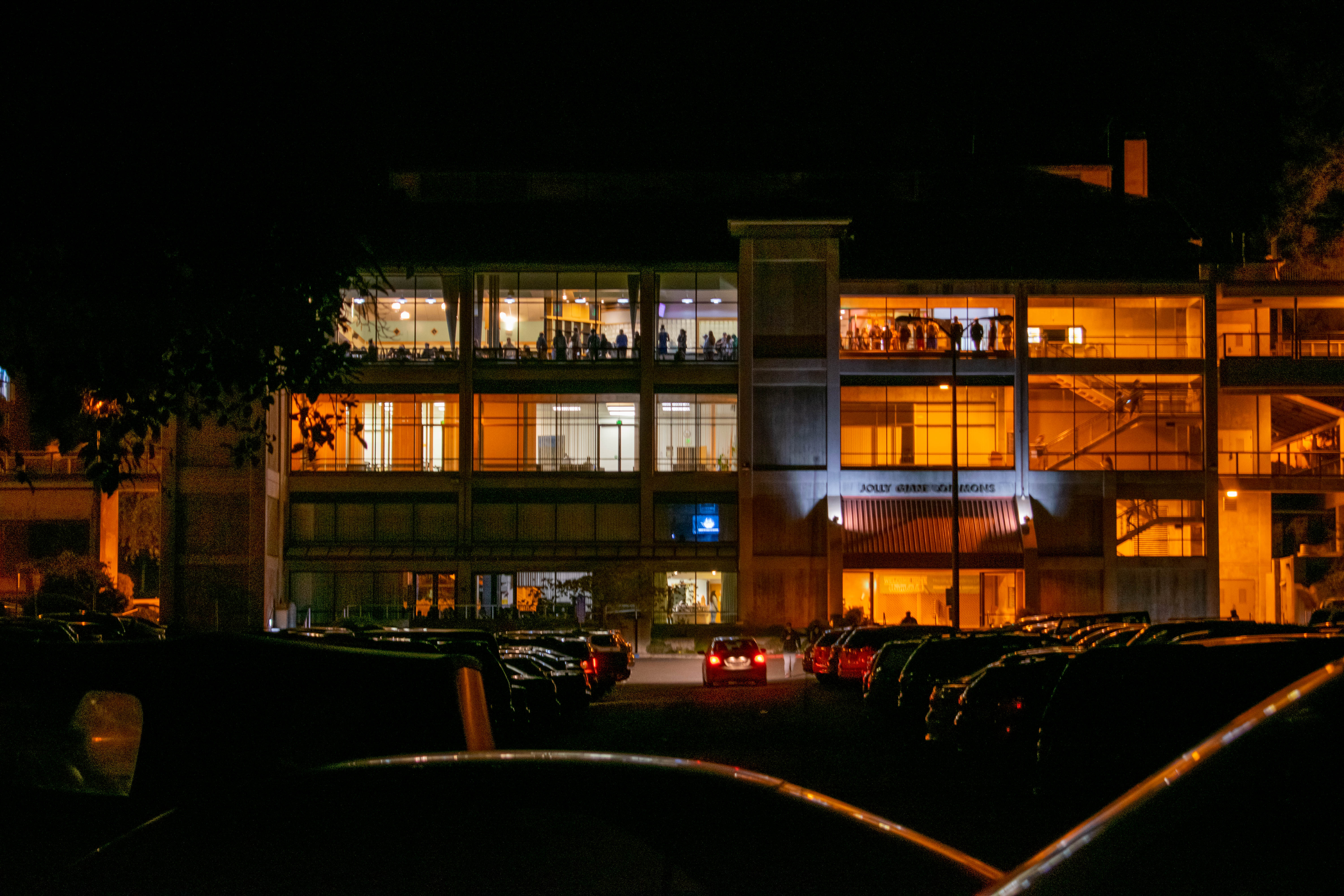
    Dawes said one generator failed over the weekend, but Facilities Management quickly moved around generators to keep providing power to the most essential buildings on campus including the Jolly Giant Commons, Student Recreations Center and residence halls.

    “They’ve been champions,” Dawes said. “Our facilities team has been keeping everything together.”

    Daniel Valencia, a sophomore kinesiology major, normally works at The Depot. During the outage, Valencia helped out at The J. When not working, Valencia said he enjoyed his hobbies.

    “I picked up skating more,” Valencia said. “And I’ve been looking into hobbies like reading and painting.”

    Zane Eddy, a master’s student in the environmental science and management program, came from an undergraduate program at the University of Oregon. Eddy said he was surprised by the outages.

    “It’s really odd having these power outages,” Eddy said.

    Eddy spent his free time going to Clam Beach and picking chanterelle mushrooms. Eddy said he believes the outages will make people understand their dependence on others for power.

    “We’re part of a larger system and we’re part of a larger environment,” Eddy said.

    While preparing for the outages on Friday, Interim Vice President of Enrollment Management Jason Meriwether echoed Dawes and said he was proud of how HSU handled the first outage.

    “That was a positive thing that we responded to the power outage in that way,” Meriwether said. “Now, in my opinion, that’s how it should always be and that’s how it will be. But I think students were happy to know we took that approach.”

    Dawes said HSU served 4,400 meals on Sunday. While he admitted that HSU incurred some significant costs in diesel and food, he said a percentage of those costs can be covered by disaster funds.

    On Tuesday, HSU uploaded a response page for students wondering why classes are cancelled during the outage. The page noted concerns over safety, non-functioning technology and a focus on personal wellbeing. The page also explained why it takes time to reopen campus even once power is restored.

    “It takes a great deal of time to safely re-open the campus, including powering down and disconnecting generators, resetting locks, and ensuring fire suppression systems are working,” HSU’s post said.

    As of Tuesday afternoon, HSU classes are set to resume on Thursday, Oct. 31.

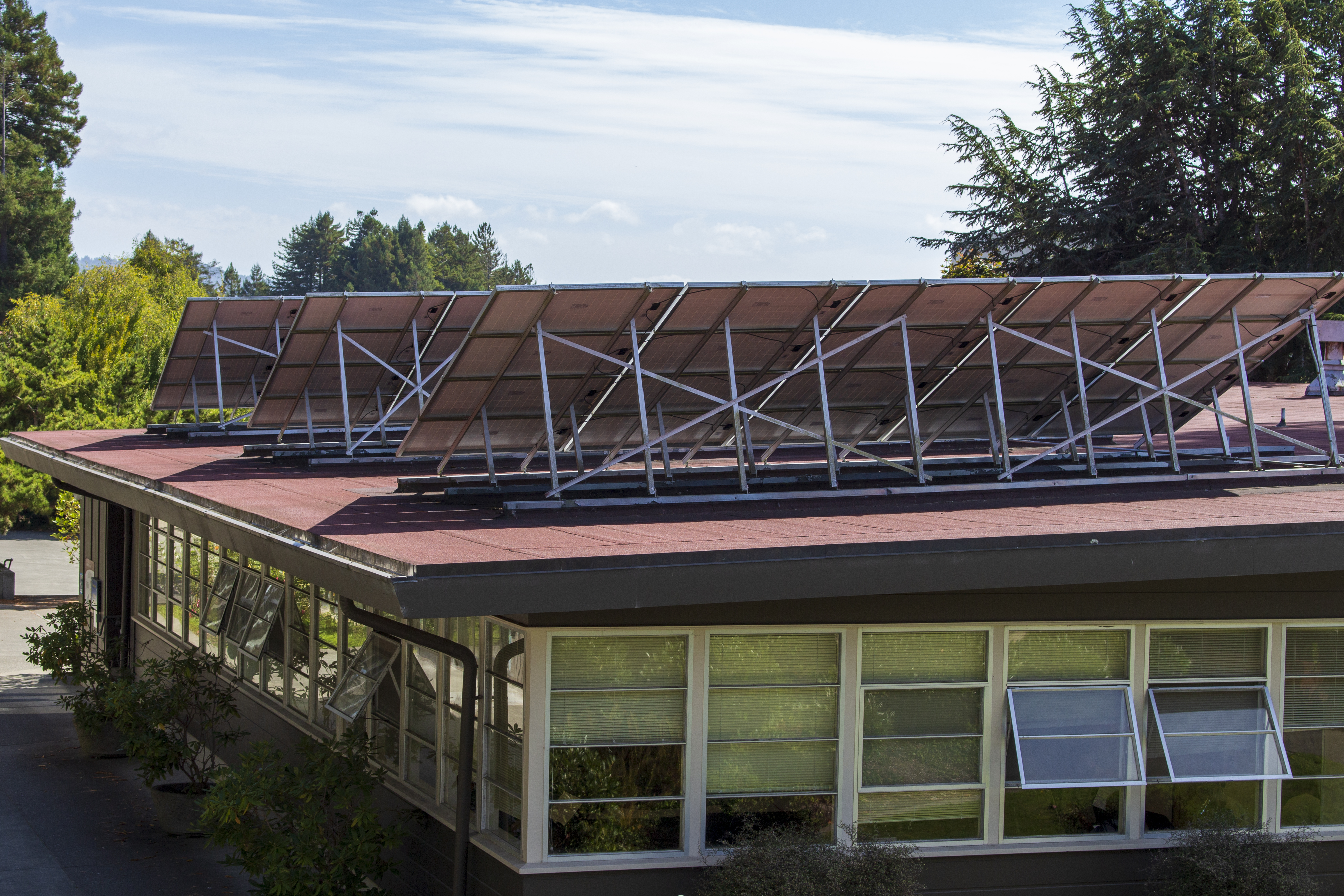
    In the future, Dawes said HSU will likely look toward generating more of its own power.

    “Having more generation for the campus would be a huge help,” Dawes said. “So we’ll be looking into doing that.”

    For now, Dawes wanted to thank staff, faculty and students for restoring his faith and hope in humanity.

    “We’ve got really good students that want to provide for others,” Dawes said. “And staff that really care about providing for students as well.”

  • PSPS Events Showcase Reliance on Fossil Fuels

    PSPS Events Showcase Reliance on Fossil Fuels

    With the recent Public Safety Power Shutoffs, blackouts may be a big push toward renewable energy

    Public Safety Power Shutoff, blackouts could aid the push toward renewable energy. Solar micro-grids, local offshore wind farms or more well maintained power lines could be the answer to back-to-back outages. 

    Pacific Gas and Electric Company’s PSPS events are triggered by environmental conditions that threaten parts of their power grid. For example, a third consecutive power shutoff was originally scheduled for Tuesday morning, but changing weather patterns pushed back the timing. On Tuesday at 5:22 p.m. the county was removed from the PSPS affected counties list.

    PG&E’s PSPS events are triggered by environmental conditions that threaten parts of their power grid.

    “Due to diminished weather conditions, Humboldt County is no longer in the scope for a Public Safety Power Shutoff tonight and power will remain on,” said Humboldt OES in an email alert. “There are still communities without power but PG&E advises they hope to have those areas re-energized tonight.”

    The nature of the power grid in Northern California renders Arcata and Eureka subject to power outages if other areas of the grid are at risk. The energy used in Northern Humboldt is imported through transmission lines to the Eureka Humboldt Bay Generating Plant, where it’s amplified for local use. If energy stops flowing through the lines to Humboldt, there is no source of energy and therefore, no electricity. 

    Terra-Gen, a Manhattan-based wind power company, has proposed a wind generation project for the Monument and Bear River Ridges that could provide nearly half of Humboldt’s energy. A panel discussion on the project will be held Nov. 6 at 5:30 p.m. in Founders Hall 118.

    “Anticipated project features include a significant contribution to North Coast renewable energy generation and to California’s clean energy mandate,” the panel flyer says.

    According to Terra-Gen, benefits of the project could include the creation of local green jobs and Humboldt Bay development. However, some local community members see the project as more consequential than not. 

    As California’s dry and windy seasons become the new normal, power shutoffs will likely become common occurrence.

    The proposed area of development, Monument and Bear River Ridges, sit on Wiyot territory. According to the Wiyot Tribe and the California Department of Fish and Wildlife, the Monument and Bear River Ridges aren’t appropriate for wind development. The turbines could harm or destroy some of the rare and protected species that call the area home.

    “Concerns raised include impacts on bat and bird deaths; tree removal; effects on sites with cultural and ecological significance to Native American Tribes; erosion and sedimentation from sub-river drilling and road expansion; visual impacts; light and noise pollution; and traffic congestion,” the flyer says.

    The upcoming panel lists some of these concerns as additional talking points, but it is unclear if the company or the county have come to a conclusion on how to proceed with this particular option of alternative energy. 

    Alternatively, PG&E maintains that shutoffs are necessary to prevent dangerous wildfires like the Camp Fire of 2018. Any at-risk transmission line can be shut off. As California’s dry and windy seasons become the new normal, power shutoffs will likely become common occurrence. However, some individuals are taking advantage of the winds, rather than suffering from them. 

    Blue Lake Rancheria has tested local energy generation since 2011. The Rancheria has yet to be seriously impacted by the power shutoffs because they have solar electricity and battery storage, forming a microgrid

    Their microgrid works as a system of solar panels which power the Casino and other buildings during the day while also charging up a bank of Tesla batteries for the night. The grid can be connected or disconnected from PG&E’s grid as needed, making them sustainable without any power from the utility.

    The primary barrier to building offshore wind turbines and micro grids or improving PG&E’s transmission lines is cost. Alternative energy projects cost significantly more upfront that traditional fossil fuels. The economic costs of the recent power shutoffs, however, may be enough to kickstart real conversations about alternatives.

  • Humboldt County Won’t Lose Power on Tuesday

    Humboldt County Won’t Lose Power on Tuesday

    Some areas of Humboldt County still don’t have power, however power will potentially be restored by tonight

    UPDATE 10/29/19 5:25 p.m. : According to the Humboldt County Office of Emergency Services alerts, “PG&E has advised that Humboldt County is no longer in teh scope for a Public Safety Power Shutoff tonight and power will remain on.”

    They also said at this time the National Weather Service does not see more weather patterns that would cause another PSPS event in the near future.

    UPDATE 10/29/19 4:24 p.m. : PG&E has now stated Humboldt County will be affected by a third power outage on Oct. 29 at 7 p.m. rather than the previously reported 9 p.m.

    UPDATE 10/2/19 10:00 p.m. : According to a PG&E press release Humboldt county is expected to lose power on Oct. 29 at 9 p.m. This is the most current information as of Oct. 28 at 10 p.m.


    Pacific Gas and Electric Company announced in a press release they will shut power off for a third PSPS event scheduled for Oct. 29.

    The utility said the next weather event responsible for the third PSPS may begin Tuesday at 6 a.m. According to the Humboldt Office of Emergency Services, power will likely be turned off before that time, although the exact time of the shutoff remains unclear.

    The third PSPS event is expected to last until the afternoon of Wednesday, Oct. 30.

    Power was restored at Humboldt State University mid-morning Monday, but the campus remains closed through the duration of Tuesday. There is no update for Wednesday classes as of 5:20 p.m.

    PG&E has reported it could take up to 48 hours to assess the damage from the Oct. 26 PSPS, but said it is attempting to restore power to customers before the next shutoff. According to the utility company, it is possible not all customers will have their power restored before it goes off again.

    Amidst the shutoff, the Student Recreation Center is open temporarily till midnight. HSU is inviting students, staff, faculty and their families to eat for free at the J until campus reopens. Parking permits are not required during the shutdown.

    This story is ongoing and timing is subject to change due to changing weather patterns.

  • Fires Still Burn as PG&E Implements Mass Outages

    Fires Still Burn as PG&E Implements Mass Outages

    Largest intentional blackout in California history keeps millions without power while the state burns

    Over two million people across Northern California were without power on Sunday. Pacific Gas & Electric is working to restore power, but the company has scheduled another Public Power Safety Shutoff, this time for Tuesday morning.

    Despite the shutoffs, fires are burning across the state. The Kincade Fire, a 66,000 acre fire in northern Sonoma County, was only 5% contained as of Monday at 3 p.m. Located just northwest of Santa Rosa, the Kincade Fire has forced more than 180,000 people to evacuate, including the towns of Windsor and Healdsburg. 

    There are no casualties or missing persons reported as of yet, but 80,000 structures are at risk. Firefighters from as far south as Pasadena and as far north as Oregon have reported to the scene to try and stop the fire from pushing west across Highway 101. 

    PG&E’s shutoff is an unprecedented intentional blackout, and is the largest intentional blackout in history, according to the Los Angeles Times. The utility’s goal is to prevent high winds—which have reached upwards of 100 miles per hour in some parts of Sonoma County—from sparking wildfires.

    In a PG&E press conference on Saturday, CEO and President of the utility company—but not the entire corporation—Andy Vesey said the company’s goal is safety. 

    “Right now we have a big, historic event coming at us,” Vesey said. “We have two and a half million customers being impacted. There’s a real threat to public safety and that’s why we’re doing this.”

    Yet, across the nation, media outlets are questioning PG&E’s shutoffs. 

    Articles from Time, The Nation and ProPublica have claimed that PG&E’s shutoffs may not actually reduce wildfire risk. The shutoffs could prevent debris from sparking fires from electrical wires, but that is not the only cause of wildfires. Abraham Lustgarten for ProPublica points to cigarettes, barbecues, generators (which are used extensively during shutoffs) and cars as other common fire starters.

    “The blackouts solved nothing, of course,” Lustgarten wrote. “De-energizing the electrical grid is a bludgeon: imprecise, with enormous potential for collateral damage as people deal with a darkened world. It doesn’t even eliminate fire risk.”

    To Lustgarten’s point, a structure fire on the east side of the Arcata Plaza erupted Sunday afternoon, likely caused by a generator at the Big Blue Cafe, according to reporting by the Times Standard. While firefighters contained the blaze and no injuries were reported, initial estimates for the damages are as high as $2 million.

    “It’s more than just climate change. It’s about the failure of capitalism to address climate change. It’s about decades of mismanagement. It’s a story about greed.”

    Gavin Newsom, California Governor

    In some instances, it seems the shut offs weren’t implemented in time to prevent electrical lines from sparking fires. PG&E admitted that it registered a failed jumper cable at one of its transmission towers near the possible ignition point of the Kincade Fire right before the fire began. The area of the fire was set for a Public Safety Power Shutoff, but it didn’t begin until 28 minutes after the fire started.

    The outages have pressed some government officials to speak out against the corporation and its tactics. California Governor Gavin Newsom called out PG&E for greed and mismanagement in a press conference on Thursday. 

    “It’s more than just climate change,” Newsom said. “It’s about the failure of capitalism to address climate change. It’s about decades of mismanagement. It’s a story about greed.”

    Vermont Senator and presidential candidate Bernie Sanders tweeted that it was time to think about public ownership of utilities.

    Amidst the outages, PG&E’s stock has plummeted to all-time lows. On Saturday, Governor Newsom encouraged Warren Buffet’s Berkshire Hathaway to buy PG&E. 

    In the Saturday press conference, Vesey declined to entertain questions about PG&E’s tainted image. Vesey said those discussions can come later as they will focus on the public’s safety for now. 

    “No matter how much we focus on the past, it will not help us at all today or tomorrow,” Vesey said. “We take lessons learned, we take actions, we put in our programs and we work responsibly.”

    For now, California is under a statewide declaration of emergency by Governor Newsom, who has promised to hold PG&E accountable.

    “We will hold them to an account that they’ve never been held to in the past,” Newsom said in a press conference. “We will do everything in our power to restructure PG&E so it is a completely different entity when they get out of bankruptcy by June 30th of next year.”

  • Next Outage Could Hit Humboldt As Early As Tuesday

    Next Outage Could Hit Humboldt As Early As Tuesday

    Although areas of Humboldt County have the “all clear” for power restoration, another PSPS may be scheduled for Tuesday morning

    Parts of Humboldt have been given the “all clear” to begin line inspections and restorations for the current Public Safety Power Shutoff.

    “PG&E notified Humboldt County Office of Emergency Services (OES) that portions of Humboldt County have been given the “All clear” for the weather event and will begin the restoration process as soon as conditions allow,” the latest update from the Humboldt County Office of Emergency Services said.

    However, PG&E has also notified the county that another PSPS event may affect Humboldt as early as Tuesday morning.

    “PG&E also notified OES that another weather event is scheduled for Tuesday 10-29-19 at 6 a.m. which will also result in a possible Public Safety Power Shutoff (PSPS),” the update said.

    OES says it expects “a small window of time” between the two shutoffs, and urges residents to use the time to once again prepare to have no power.

    “As always, this information from PG&E is subject to change,” the update said. “Updates will be provided as soon as they become available.”

  • Power to Go Out Between 9 and 11 p.m.

    Power to Go Out Between 9 and 11 p.m.

    PSPS update delays outage by 4 hours due to changing weather conditions

    The power will now go out in Humboldt between 9 p.m. and 11 p.m. due to shifts in the weather, according to a Humboldt County Administrative Office update.

    “These delays in the power shut off are in part because PG&E is trying to limit the time that customers are impacted,” the update said.

    PG&E increased the number of accounts within the scope of its latest Public Safety Power Shutoff today from 850,000 to 940,000. Since many accounts provide power to multiple customers, PG&E estimates that over two million people are within the PSPS scope.

    PG&E expects to give the “all clear” for the windy weather event by 4 p.m. Sunday for Humboldt. However, the update clarifies that that is not when power will be restored.

    “The weather “All clear” time is the time when PG&E personnel can begin inspecting the lines,” the update said. “It can take up to 48 daylight hours from the weather “All clear” time until power is restored because any damage found during the inspection will need to be repaired prior to power restoration.”

    In a PG&E press conference at their headquarters in San Francisco, PSPS Incident Commander Mark Quinlan emphasized that the restoration will take different amounts of time for different areas as PG&E works to patrol 31,000 miles of lines. 

    “The restoration time is a sequence as well,” Quinlan said. “It doesn’t mean that every customer is going to be out for 48 hours. It means that we’re going to begin restoration activities at the times that I mentioned, and we believe we will incrementally restore everyone all the way up and not have anyone out past 48 hours.”

  • Blackout Preparation

    Blackout Preparation

    Our first PSPS was a wakeup call, now it’s time to go into the next blackout more ready than ever

    In early October, Humboldt County residents trailed around the block at gas stations hoping to fill up their tanks and stripped local grocery stores of food, water and battery operated lights. The Public Safety Power Shutoff made us realize how often we take electricity for granted, and how we use power for most of our daily activities. Simple tasks like cooking, cleaning, eating, working and watching television all require some form of electricity.

    Some locals were fortunate enough to have gas-operated stoves to make and warm food, but most of the LJ staff didn’t. Many of us rent apartments or live on campus and have electric stoves, so something as simple as warming a can of beans was nearly impossible.

    With the lights out, it felt like we time traveled back to the 1800s. The usual ways of entertainment were off the table, and when we went shopping in preparation most of us didn’t consider buying board games or downloading movies to a laptop. When it came down to sitting in a dark room with nothing to do we made a pact that the next time we would be better prepared.

    Having a bag prepped for extreme situations could be lifesaving, and with a little forward thinking, your bag could be ready in minutes.

    Here some items we think you should grab from the store or make sure you have before the power outage:

    • Flashlights and batteries. An obvious choice, but oil or battery-operated lanterns work great, too.
    • Candles and matches/lighters. This is Humboldt, so we wouldn’t be surprised if most people had a lighter on hand or nearby, but if you don’t you should look into easy means of lighting candles (or that oil lamp) to have some light once the sun goes down.
    • Cash and gasoline. When the electricity is down, systems are down. This generally means that stores –if open– can’t take cards because they have no way of charging them. This can also include gas stations. We recommend filling up and taking out some cash just in case you need to buy something or drive during the blackout.
    • Water. You need a minimum of one gallon of water per day per person. We recommend having even more and making an effort to conserve. During the initial PSPS, the City of Arcata urged residents to minimize sewer use and conserve water to the best of their ability. That’s a good rule of thumb, and especially smart if the power outage last longer than before. 
    • Ice. You’ll need lots of ice if you’re interested in trying to save any of the food that was already in your fridge or freezer. We also recommend moving expensive perishables to the freezer and using gallon baggies filled with water as makeshift ice packs to help keep food cold. A cooler filled with ice is also a great option. If you have the money and the storage space, buying a cooler for emergencies like these and any future camping trips could really come in handy.
    • First Aid kit. You may already have one hanging around. If so, check the the kit to make sure it’s well-stocked and move it to a central place in your home. Communicate the new location with any family or roommates so it’s accessible for any who may need it.
    • Canned goods. Think of foods you wouldn’t mind eating cold. There’s no need to buy something that will make you gag when you’re trying to stay fed.
    • Fruit. Apples, bananas and oranges are just a few options. Fruit doesn’t need to be refrigerated and it can help keep your blood sugar up as well as making sure you have some daily fiber, potassium and vitamin C.
    • Non-perishable snacks. Crackers and chips make an easy snacks but they don’t replace an actual meal. If you have means of warming up water, we recommend grabbing some potato flakes and pasta to keep that stomach from grumbling.
    • A French press and some pre-ground coffee. If you’re a coffee drinker then we would highly recommend grinding some coffee today. Your future self will thank you. Thankfully a French press doesn’t require electricity, but it does require hot water. If you have an electric stove, instant coffee may be your best bet to get that caffeine fix.
    • Beef jerky and granola bars. For all you meat eaters, jerky is a great way to keep your protein levels up if you despise cold beans. Granola bars are also great. They’re convenient and versatile, and depending on the bar, they can be a good source of fiber and protein.
    • Applesauce, puddings and fruit cups. Your pick. But if the power’s out for a while you might get sick of Saltines and canned corn. To keep your mood up, give yourself a treat with a chocolate pudding, or enjoy a sweet, but semi-healthy snack with an applesauce or fruit cup.
    • Playing cards and boardgames. Whether it’s just you or a group, a deck of cards could most definitely come in handy. Playing cards or boardgames is a great way to pass the time. We recommend a regular deck of cards to start before moving into heavier, emotional games like Uno or Monopoly that could take a toll on your relationships.
    • Sleeping bags and blankets. It may not be the coldest time of the year, but if you’re used to having your electric heat on, then you’re in for a wake up call. Sleeping bags and blankets, as well as sweats, long socks, hoodies and beanies will help you stay warm while your heater can’t. It’s also good practice if you’re looking for ways to lower that pesky PG&E bill.
    • An emergency radio. If you’re lucky, you’ll never need to use one, but having a weather radio on hand can be lifesaving. Radios can help you find hot coffee, hot food, shelter or even a place to charge your phone. Some weather radios even double-up as lights and backup chargers.
    • Portable chargers. These are a great investment. We recommend having one fully charged at all times. If anything happens you can make sure your phone doesn’t lose its battery. If cell towers are active or have backup generators during a blackout, having enough phone battery to call family or friends to keep them updated or ask for updates can be essential.

    While all of these items are helpful and important, it’s vital to try and stay calm when the outage hits. Extreme situations can cause mass chaos, and it often becomes more dangerous and stressful than it needs to be. Check our website for updates, sign up for Humboldt County alerts to stay in the know and remember to only call 9-1-1 in emergency situations.

  • Power Outage Update: 850,000 PG&E Customers Could Be Affected

    Power Outage Update: 850,000 PG&E Customers Could Be Affected

    The upcoming blackout is expected to affect 36 counties across Northern California and last longer than before

    The extreme weather at the heart of the upcoming Public Safety Power Shutoff is expected to begin Saturday early evening and last until midday Monday, according to Pacific Gas and Electric.

    Despite original calculations that included only 32 counties and 640,000 PG&E customers, new information from the utility estimates the shutdown could impact 850,000 customers and possibly affect 36 counties across Northern California.

    PG&E Corporate Spokesperson Deanna Contreras confirmed the updated calculations in a phone interview.

    “This time there are some distribution lines that are in the PSPS scope,” Contreras said. “Whereas last time the PSPS was in transmission lines coming from outside of Humboldt that provide power here.”

    Contreras emphasized that she wanted customers to understand the reasoning behind the shut-offs.

    “I want people to understand why we’re doing this,” Contreras said. “It’s not just because it’s windy. I want people to understand that this is because there are serious wildfire risks during these weather events.”

    Contreras’ tone matched that of the latest PG&E press release.

    “The weather event could be the most powerful in California in decades,” PG&E’s statement said. “With widespread dry Northeast winds between 45-60 miles per hour and peak gusts of 60-70 mph in the higher elevations.”

    According to Contreras, PG&E is working to minimize the shutoffs and is already working on a restoration plan for when the weather subsides. Contreras said the utility giant has requested help from other energy companies to speed inspections and repairs.

    “These crews are expected to be staged and briefed on the restoration plan by Sunday evening,” Contreras said. “If weather progresses as expected, restoration could begin in some portions of the affected area as early as Monday afternoon.”

    In response to the likely shutdown, Humboldt State will close campus from 9 a.m. Saturday through the end of Monday, Oct. 28, and encourages faculty and staff to grab belongings from offices and classrooms before buildings lock for the weekend.

    During the outage HSU Dining Services will offer free meals at the J after 5 p.m. Saturday through Monday evening for staff and students that bring their HSU identification. To help prepare residents for the PSPS, Humboldt County Office of Emergency Services also posted a list of nine power outage tips to its Facebook.

    “Have food for 2-3 days on hand that doesn’t require refrigeration and can be cooked on a camp stove or outdoor grill,” OES said in its post. “Remember though, never use a camp stove indoors.”


    The PG&E press release is copied below:

    Pacific Gas and Electric Company (PG&E) today said it continues to monitor a potentially powerful and widespread dry, hot and windy weather event expected to begin impacting the service area Saturday between 6 and 10 p.m. and lasting until midday Monday.

    PG&E will need to turn off power for safety several hours before the potentially damaging winds arrive. It’s important to note that as this weather system sweeps from north to south over a period of two days, PG&E customers across Northern and Central Californiawill feel the effects of hot, dry winds at different times, which means outage times will vary, as well.

    The potential Public Safety Power Shutoff (PSPS) is expected to affect approximately 850,000 customers and may impact portions of 36 counties across portions of Humboldt, the Sierra foothills, Western Sacramento Valley, North Bay, and across the greater Bay area, Monterey Bay and northern Central Coast on Saturday, Oct. 26. Customers in the southern-most portion of PG&E’s service area in Kern County could have power shut off for safety on Sunday, Oct. 27.

    Predictive data models indicate the weather event could be the most powerful in California in decades, with widespread dry Northeast winds between 45-60 miles per hour (mph) and peak gusts of 60-70 mph in the higher elevations.

    Winds of this magnitude pose a higher risk of damage and sparks on the electric system and rapid wildfire spread. The fire risk is even higher because vegetation on the ground has been dried out by recent wind events.

    Given the forecast and conditions, PG&E is advising its customers of the potential for a widespread PSPS lasting several days, intended to prevent a catastrophic wildfire. As this intense weather event approaches the service area in the next 24 hours, PG&E’s forecasts will offer sharper detail, noting that the scope may continue to change on the number of customers who will be affected.

    This article was updated at 5:15 p.m. Friday.

  • Power Outage: Prepare for Up to 4 Days Without Electricity

    Power Outage: Prepare for Up to 4 Days Without Electricity

    Once again, PG&E did not initially include all of Humboldt in its outage prediction. But according to OES, all of Humboldt County will be affected.

    Due to possible extreme weather conditions and fire risk, all of Humboldt County is expected to lose power when Pacific Gas and Electric implements a Public Safety Power Shutoff early Saturday afternoon.

    “The latest information from PG&E is that all of Humboldt County is now in scope for this PSPS power outage,” a Humboldt County Office of Emergency Services Facebook post said on Thursday evening.

    PG&E began notifying specific customers of the possible outage on Thursday evening and will continue to do so. The utility also told OES that their online address look-up tool wasn’t up to date as of Thursday night, but will be updated soon.

    According to a post from the Humboldt County Government’s website, the outage is expected to last longer than the previous, which was only 28-hours, and residents should prepare to be without electricity for up to four days. The county also said the length of the outage and estimated time power could return is completely up to PG&E.

    OES also made a post with nine tips for preparing for the outage. The list is copied below.

    Are you prepared in the event the PSPS affects Humboldt County? There is still time to gather supplies and take steps to be ready if the power shuts off.

    Here are some tips to help you get prepared.

    1. Have food for 2-3 days on hand that doesn’t require refrigeration and can be cooked on a camp stove or outdoor grill. Remember though, never use a camp stove indoors.

    2. Have 1 gallon of water, per day, per person for drinking and cleaning.

    3. Have flashlights, battery operated lanterns or candles in a convenient location. Remember, if you are using candles, never leave them unattended, within reach of children, and keep them away from flammable items.

    4. Keep your refrigerated items cold by freezing water bottles. When the power goes out, transfer the frozen bottles around items in your fridge to help keep them cold. You can also transfer items to the freezer once the power is out to keep them cold. Remember to only open your fridge when absolutely necessary and make it quick. Don’t open your fridge to check to see if it’s cold.

    5. If you are getting close to needing a refill on prescriptions, do it soon.

    6. Fuel up your vehicle.

    7. Have cash on hand. When we lose power retailers may lose the ability to run debit and credit cards.

    8. Remember to check on your neighbors. We are all in this together and we strengthen our community by pulling together.

    9. Sign up for Humboldt Alert, Humboldt county’s emergency notification system. We will send out notification alerting you to any emergency that may affect you, not just a PSPS event. Click our link at the top of our Facebook page or visit Humboldtgov.org/alerts to sign up today.

    For more information on preparedness, visit Ready.gov.

    This story is ongoing and will be updated. For more information go to PG&E’s website or use their address lookup tool.

  • Potential Power Outage, Again

    Potential Power Outage, Again

    From the Humboldt County Sheriff’s Office:

    Due to an expected severe wind event anticipated to occur around 10 pm Saturday night, Pacific Gas & Electric (PG&E) notified the county this afternoon that it will de-energize some power lines in Humboldt County as part of the utility’s Public Safety Power Shutoff (PSPS) program. At this time, PG&E expects that 2,188 customer connections in Humboldt County will be affected. Electricity is expected to be turned off for those PG&E customers Saturday evening, possibly several hours before the wind increases.

    This PSPS event is expected to last longer than the roughly 24-hour event earlier this month, which means residents who are affected may have electricity shut off for a longer period of time. The Humboldt County Sheriff’s Office of Emergency Services (Sheriff’s OES) will provide updated information from the utility as it becomes available.

    The length of the outage and estimated time of restoral [sic] is entirely up to PG&E. For information about PSPS or to sign up for alerts, go to http://www.prepareforpowerdown.com or call 1-877-9000-PGE.

    PG&E expects to issue maps later today that show the anticipated affected areas. The Humboldt County Sheriff’s Office of Emergency Services (Sheriff’s OES) will provide those maps and any information regarding affected areas as it becomes available. If the shutoff is isolated in Humboldt County, or includes distribution lines in our area, ground inspection may take longer than the aerial inspection completed after the Oct. 9th shutoff before restoration can begin.

    The overall PSPS is expected to affect 32 California counties and approximately 640,000 customer connections. As conditions may continue to change and the scope of this event may be expanded, the county recommends that all county residents be prepared for an extended power outage beginning Saturday night.

  • Blackouts Blow

    Blackouts Blow

    Dry vegetation and high winds were a major factor in PG&E shutoff

    The morning of Oct. 8, Humboldt County residents were notified that Pacific Gas & Electric may shut off power county-wide. HSU students and faculty began rapidly preparing for the possible outages, but some wondered what forced the utility giant to turn off the power.

    Leading up to the blackout, rumors spread as people speculated why PG&E decided shutting off power was the best option, and others wondered how long the outage could last. It seemed there was a lack of communication, as only some local professionals seemed to know the details.

    On the night of Oct. 9, HSU Facilities and Management employee Brian Wheeler was responsible for filling up HSU’s generator. The diesel generator was the only thing standing between powerless students and the cold, dark night.

    Wheeler said he had heard about an algorithm PG&E made to inform them when to shut off the power. This was confirmed by Megan McFarland, a spokesperson for the company. McFarland said no single factor drives a Public Safety Power Shutoff since each situation is unique.

    PG&E carefully reviews many criteria when determining if power should be turned off for safety. These factors generally include, but are not limited to:

      • A Red Flag Warning declared by the National Weather Service.
      • Low humidity levels, generally 20% and below.
      • Forecasted sustained winds above 25 mph and wind gusts in excess of approximately 45 mph, depending on location and site-specific conditions such as temperature, terrain and local climate.
      • Condition of dry fuel on the ground and live vegetation (moisture content).
      • On-the-ground, real-time observations from PG&E’s Wildfire Safety Operations Center and observations from PG&E field crews.

    To get a better grasp on the situation and its factors, The Lumberjack contacted the Woodley Island National Oceanic and Aeronautic Administration. Meteorologist Jeff Tonkin understood the specifics and why PG&E could be forced to make such a decision, but believed that Humboldt County wasn’t initially a part of the plan for a reason.

    “PG&E shuts down based on wind speed if it is projected to cause a disruption or a failure,” Tonkin said. “Locally in Eureka, the power wasn’t shut down because of local high winds. We’re just collateral damage.”

    Tonkin said NOAA had meetings with PG&E meteorologists in the past, but PG&E doesn’t consult NOAA for weather information. While getting in contact with one of PG&E’s scientists would likely be key to understanding why the power was shutoff officially, Deanna Contreras, another PG&E spokesperson, answered the call instead.

    Contreras said, for this particular shutoff, the weather patterns were somewhat unique and widespread. Many forecasters compared the conditions to the devastating conditions from October 2017.

    In response to the rapidly changing environmental conditions in our state, beginning with this year’s wildfire season, PG&E expanded its Public Safety Power Shutoff program to include all electric lines that pass through high fire-threat areas – both distribution and transmission.

    Cotreras said there weren’t any PG&E meteorologists available but had plenty of details about PG&E’s weather system.

    “Beyond PSPS information, weather geeks will find a lot to love about the new weather page,” Contreras said. “With PG&E’s weather map at your fingertips you’ll be able to check humidity, precipitation, temperatures, wind speeds and wind gusts across 70,000 square miles of Northern and Central California.”

    Contreras said the page offers a seven-day regional forecast. PG&E’s Wildfire Safety Operations Center team monitors all these conditions and evaluates whether to proactively turn off electric power lines, in the interest of public safety, if extreme fire danger conditions are forecasted.

    McFarland said a lot of PG&E employees live and work in regions that are affected by the shutoff and that she understands how frustrating it is to have the power turned off. She said the decision was not made lightly.

    “We want customers to know that although you may not live or work in a high fire-threat area,” McFarland said, “Your power may be shut off if the line serving your community relies upon a line that runs through an area experiencing extreme fire danger conditions.”

  • Why Humboldt Went Dark

    Why Humboldt Went Dark

    Understanding the Public Power Safety Shutoff

    PG&E cut power to more than 700,000 homes and businesses across Northern California, including Humboldt County, beginning early the morning of Oct. 9.

    State officials have criticized PG&E, including Governor Gavin Newsom.

    “This is not, from my perspective, a climate story as much as a story about greed and mismanagement over the course of decades,” Newsom said in a press conference on Thursday.

    Humboldt County residents had less than 24 hours of notice, as PG&E’s initial warnings did not include Humboldt as an affected county.

    PG&E sent warnings out to customers for some time about possible outages, but few were prepared for such a sudden total power shut down.

    The shutoff came as a new last-resort tactic by PG&E called a “Public Safety Power Shutoff.”

    The California Public Utilities Commission issued a resolution in May, supporting PSPS tactics to prevent wildfires like the Camp Fire, a wildfire that tore through Butte County, Calif. in November of last year.

    “Clearly something needs to be done. There are lines breaking and they’re causing fires.”

    Jeffrey Kane

    The Camp Fire burned over 153 thousand acres, destroyed over 18,000 homes and killed 85 people, making it the deadliest and most destructive wildfire in California history.

    California state investigators determined poorly-maintained electrical lines as the cause of the fire. PG&E was thus made responsible for the fire, and faced potential liabilities of $30 billion dollars. In January, PG&E filed for bankruptcy.

    PG&E and U.S. District Judge William Alsup have since gone back and forth over the details of PG&E’s restructuring plans to repair the aging electrical lines. According to PG&E Spokesperson Megan McFarland, the utility has been working on a variety of operations.

    “Our ongoing and expanded efforts include further enhancing vegetation management around power lines, conducting accelerated safety inspections of electric infrastructure in high fire-threat areas, and hardening our electric system,” McFarland said in an email.

    Businesses around Humboldt reported tens of thousands of dollars in losses in sales and spoiled foods.

    According to a filing to U.S. District Judge William Alsup, PG&E only made it through about a third of the tree trimming work it had planned this year due to an employee shortage.

    Humboldt State University Associate Professor of Fire Ecology and Fuels Management Jeffrey Kane said PG&E and the rest of the state are going to have to learn to manage vegetation to reduce the risk of wildfires.

    “Clearly something needs to be done,” Kane said. “There are lines breaking and they’re causing fires.”

    While Kane did not know the details of PG&E’s lines and practices, he said keeping vegetation away from transmission lines will require continual maintenance.

    In the long-term, one model for PG&E’s future might come from San Diego Gas & Electric, as suggested by reporting in the Los Angeles Times. After a 2007 fire, SDG&E spent over $1 billion burying and insulating lines. SDG&E also sectioned off areas into separate micro-grids, so that shut offs could be more targeted and less widespread.

    However, both of those practices will take time and money. Until then, PG&E will implement outages like the one triggered last week by a National Weather Service Red Flag Warning of high winds and low humidity.

    The outage hit over 700,000 customers across California. In Humboldt, a late notice meant residents had only about 12 hours to prepare for what was predicted to be a three-to-five day outage.

    While the outage only lasted about 24 hours in Humboldt, the outage caused widespread closures and the activation of the Humboldt County Emergency Operations Center.

    Businesses around Humboldt reported tens of thousands of dollars in losses in sales and spoiled foods.

    A news release from the Eureka Police Department noted a 26% increase in dispatches during the outage, but attributed the increase to nearly 40 false alarms. The five traffic collisions and three burglaries both fell within normal ranges, according to the release.

    Office of Emergency Services Administrative Officer Sean Quincey said he was proud of the way the county responded and supported one another through the outage, which he said is essential in any emergency in Humboldt.

    “Humboldt County is isolated,” Quincey said over the phone. “It’ll take time to get resources up here. Until then we need to support each other, and I was happy to see that happened.”

    Arcata City Manager Karen Diemer shared a similar outlook over the phone.

    “Humboldt County is isolated. It’ll take time to get resources up here. Until then we need to support each other…”

    Sean Quincey

    “I saw a lot of residents helping other residents and making sure that their neighbors were safe,” Diemer said. “So the resiliency of our community is strong.”

    Unlike Humboldt, Quincey said some communities farther south received 48 hours notice—which, ideally, Humboldt will have in the future. McFarland echoed that statement.

    “Our goal, dependent on weather, is to send customer alerts at 48 hours, 24 hours and just prior to shutting off power,” McFarland said.

    Just before the outage, there were efforts at the Humboldt Bay Generating Plant to provide electricity for at least part of Humboldt County. But McFarland said HBGS doesn’t have the capabilities to operate when disconnected from the grid.

    However, McFarland suggested that HBGS may be able to provide energy to Humboldt in future emergencies.

    “PG&E does have an engineering study underway to evaluate what plant modifications would be required to add that capability,” McFarland said. “Including changes that may be required to the existing air permit to allow HBGS to operate over the range necessary when disconnected from the grid.”

    The outage ultimately served as a wake-up call for the county.

    “We’ve learned that this is something that we need to be more prepared for,” Quincey said.

    In a press conference held at the PG&E headquarters in San Francisco on Oct. 10, PG&E CEO Bill Johnson apologized for the outage and for failures in their website, maps and call centers.

    “To put it simply, we were not adequately prepared to support the operational event.”

    Bill Johnson, PG&E CEO

    “To put it simply, we were not adequately prepared to support the operational event,” Johnson said.

    As for the future of PSPS events, Johnson said PG&E is working to prevent outages from becoming the new normal. However, Johnson made the statement with a caveat.

    “Given the risk to public safety, there’s a desire to have zero spark during conditions like the ones we had over the last several days,” Johnson said. “We will very likely have to make this kind of decision again in the future.”


    Corrections: A previous version of this article listed the Camp Fire’s acreage in the millions, not the thousands.

  • Outage Hits Local Businesses

    Outage Hits Local Businesses

    Humboldt businesses take stock of losses from county-wide power outage

    Local businesses scrambled to recover from two days of frantic sales and attempts at saving perishable foods on Oct. 10.

    North Coast Co-Op General Manager Melanie Bettenhausen said she had been up for most of the previous 36 hours.

    When the Co-Op learned of the outages, Bettenhausen said they had to choose between trying to store and preserve perishables, or trying to sell them off as quickly as possible.

    They chose the latter and marked down all perishables at 50% off.

    “And that resulted in madness in our stores,” Bettenhausen said.

    Bettenhausen said more customers visited the Co-Op than on even their busiest days. Bettenhausen thanked the community for coming and helping salvage some of their losses. Nevertheless, their losses were significant.

    “My best guess is somewhere between $25,000 and $30,000, because we were able to mark down and sell some products,” Bettenhausen said.

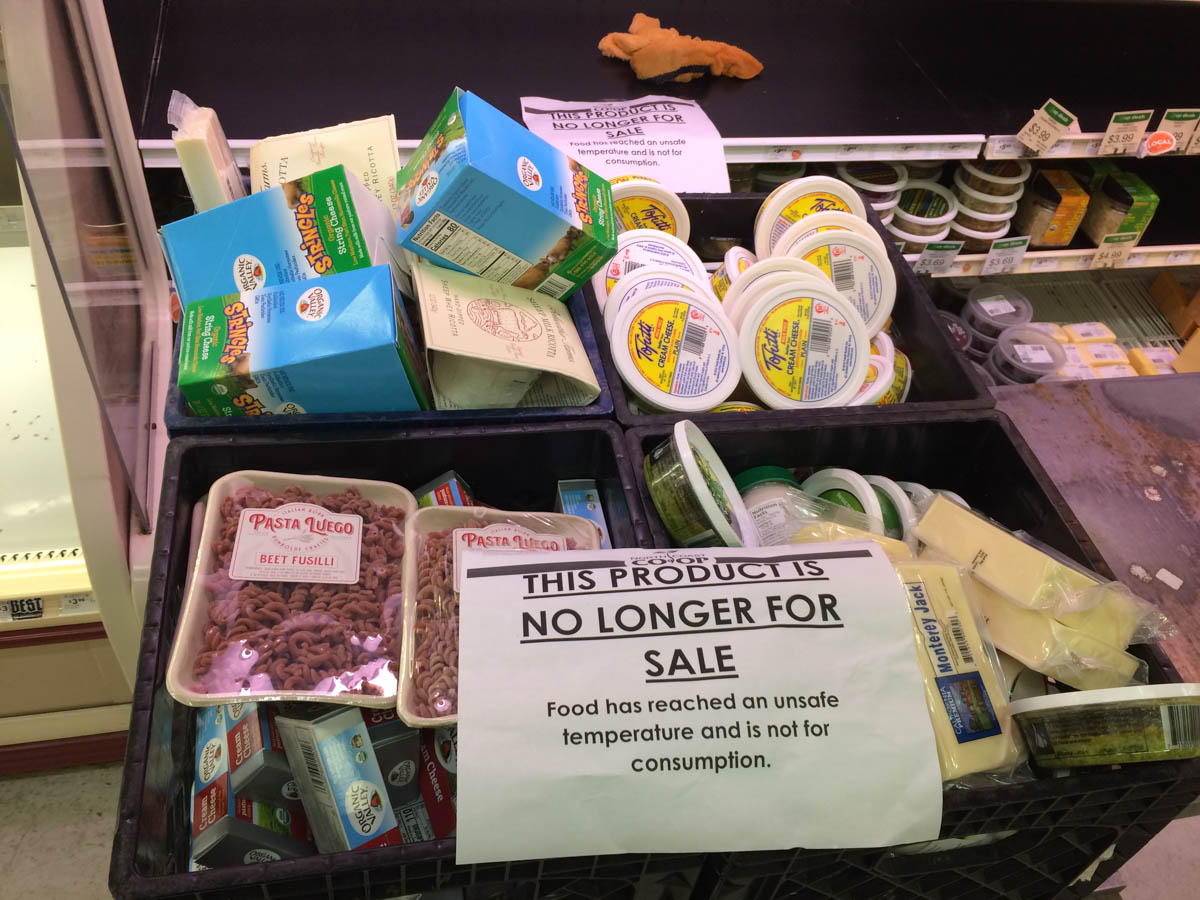
    On Oct. 10 the Co-Op was documenting tens of thousands of dollars of perishable items that had to be thrown away, as temperatures rose outside of legal limits.

    Bettenhausen estimated a dozen shopping carts full of items were tossed just from the dairy section at their Eureka store.

    North Coast General Manager estimates losses between $25,000 and $30,000. | Photo by James Wilde

    Conrad Coelho, the store manager of Murphy’s Market in Westwood, shared similar experiences.

    “It was very busy,” Coelho said. “The busiest we’ve ever been since we opened in 2010.”

    Coelho said lines inside stores stretched down aisles on Wednesday as customers waited 30 to 40 minutes to check out. While Coelho couldn’t give a number on their sales, he predicted significant losses from the frozen section.

    Wildberries Marketplace President and owner Phil Ricord said the store experienced a rush of customers before the outage.

    “Around 5 p.m. on Tuesday we got slammed big-time with customers buying canned foods and candles and stuff like that,” Ricord said.

    Due to aging electrical infrastructure, Wildberries does not have a backup generator, and did not open on Wednesday. Instead, employees stored perishables in cold boxes, where they were able to maintain cold enough temperatures to save most of their foods.

    Ricord did say that some produce was lost, and the sales lost from the Oct. 9 closure would be significant.

    “We probably lost about $40,000 in sales,” Ricord said.

    Gas stations also saw rushes the night of Oct. 8, with several gas stations running out of gas by the next day.

    Any stores with ice quickly sold out as residents tried to keep their perishables cool. When local radio station KHUM broadcast that Murphy’s Markets in Westwood and Sunny Brae had received shipments of ice, customers rushed the stores, creating lines outside at the ice chests.

    Arcata City Manager Karen Diemer echoed the statements by local businesses. Diemer praised “heroic efforts” by community members to purchase and salvage perishable foods, but did acknowledge the overall loss.

    “I think we had a real economic loss in our restaurant and retail establishments throughout the city,” Diemer said over the phone. “But at this point it’s too early to really have any totals or numbers.”

  • PG&E to Shut Off Power for Up to 5 Days

    PG&E to Shut Off Power for Up to 5 Days

    Humboldt County residents prepare for a power outage

    A power outage will hit Humboldt County as soon as midnight, and may last as long as five days according to the Humboldt County Sheriff’s Office of Emergency Services.

    PG&E notified OES today that parts of Humboldt County may see power shutoffs as a result of transmission line shutoffs in California’s Central Valley, due to high winds raising the risk of wildfires.

    OES Public Information Officer Meriah Miracle said Humboldt County residents should prepare for an outage.

    “Humboldt County should expect power outages as soon as midnight,” Miracle said. “PG&E has not given a time frame yet, but it could be as long as five days.”

    Miracle added that PG&E is currently looking into using the local King Salmon power plant to offset any shutoffs. At 4 p.m., Miracle expected an update from PG&E over the following couple hours.

    According to a Humboldt County press release, OES is working with response partners and has notified local health services.

    “Humboldt County should expect power outages as soon as midnight. PG&E has not given a time frame yet, but it could be as long as five days.”

    Meriah Miracle, Office of Emergency Services Public Information Officer

    Humboldt State University has posted a statement on their website promising further information when available, including whether classes will be cancelled. The statement urged students to charge phones and critical electronics.

    Miracle said residents should follow normal emergency preparedness procedures.

    “OES is urging residents to prepare just like they would for any other events,” Miracle said.

    For more information, multiple press released are posted below.

    A message sent out to some PG&E customers today:

    Dear Valued Customer,

    To protect public safety, PG&E may turn off your power overnight. Power will remain off until weather conditions improve and it is safe to restore service. To view a list of your impacted locations visit pgepsps.com.

    Here is what you need to know:


    Please have your emergency plan ready.

    If you have a backup generator, please do a safety check and make sure you have enough fuel to last a few days. Generator safety tips can be found here. Power will remain off until weather conditions improve and it is safe to restore service. We will continue to monitor conditions and will contact you with further updates. In most cases, we would expect to be able to restore power within 24 to 48 hours after weather has passed. Depending on weather conditions or if any repairs are needed, outages (weather event plus restoration time) could last longer than 48 hours. For planning purposes, we suggest preparing for multiple-day outages. If you see a downed power line, assume it is energized and extremely dangerous and report it immediately by calling 911.

    For more information, including regular updates, visit pge.com or call 1-800-743-5002.

    Thank you,


    Pacific Gas and Electric Company


    From the Humboldt County website:

    Humboldt County Sheriff’s Office of Emergency Services (Sheriff’s OES) is preparing for the potential shutdown of PG&E power to areas of Humboldt County. On Tuesday, Oct. 8, PG&E notified the county that it may activate Public Safety Power Shutoff (PSPS) protocols in neighboring counties due to extreme weather. Transmission lines that power Humboldt County could be affected as a result of a shutdown in another county. The shutdown could impact parts of Humboldt County within the next 24 hours.

    Humboldt County is ready to respond to the effects of the power outage; however, the decision to turn off the power and the speed at which it is restored is managed solely by PG&E. The utility is working on a solution to generate power locally at its King Salmon power plant that would help offset the effects of any shutoff.

    Sheriff’s OES has taken steps in preparation for a potential power shutdown after being notified by PG&E of their new PSPS program earlier this year. OES is currently operating the Emergency Operations Center (EOC) and is actively coordinating with our operational area response partners and monitoring the situation.


    Sheriff’s OES has notified community partners including hospitals, skilled nursing facilities, Humboldt Senior Resource Center, PACE, Open Door Community Health Centers and other critical service providers in the county. Adult Protective Services staff are working on contingency plans to protect the most vulnerable. Local emergency services including 911 dispatch have backup power and should remain active in the event of a power shutoff.

    Learn more about PG&E’s Public Safety Power Shutoffs and sign up for PSPS alerts at prepareforpowerdown.com or call 1-877-9000-PGE. PG&E is monitoring weather patterns and will provide updates to customers and Humboldt County when information is available.

    Sign up for Humboldt ALERT at humboldtgov.org/alerts to receive safety information and be informed of imminent threats to personal safety or property, tailored to an address of your choosing.
    To receive updated information from PG&E, update your contact information at prepareforpowerdown.com.
    Talk to your medical provider about a power outage plan for medical devices powered by electricity and refrigerated medicines. Plan for batteries and other alternatives to meet your needs when the power goes out.
    Many medications are still usable for two to three days at room temperature, including insulin, which can keep for 28 to 30 days. However, if you are in doubt, please be sure to check with your medical provider.
    Review the supplies that are available in case of a power outage. Have flashlights with extra batteries for every household member. Have enough nonperishable food and water.
    Use a thermometer in the refrigerator and freezer so you can know the temperature when the power is restored. Throw out food if the temperature is 40 degrees or higher.
    Keep mobile phones and other electric equipment charged and gas tanks full.
    Know how to manually open electric garage doors and gates.

    For more information, including what to do during a power outage, visit prepareforpowerdown.com.

  • Justice for Josiah rally

    Justice for Josiah rally

    On April 5 at 1:30 p.m., students at Humboldt State left class to attend a rally on the UC quad in remembrance of David Josiah Lawson, a student who was stabbed to death at a party in Arcata almost a year ago.

    “It’s been a year, and that is fucking ridiculous,” Barbara Singleton, president of the Black Student Union at HSU said.

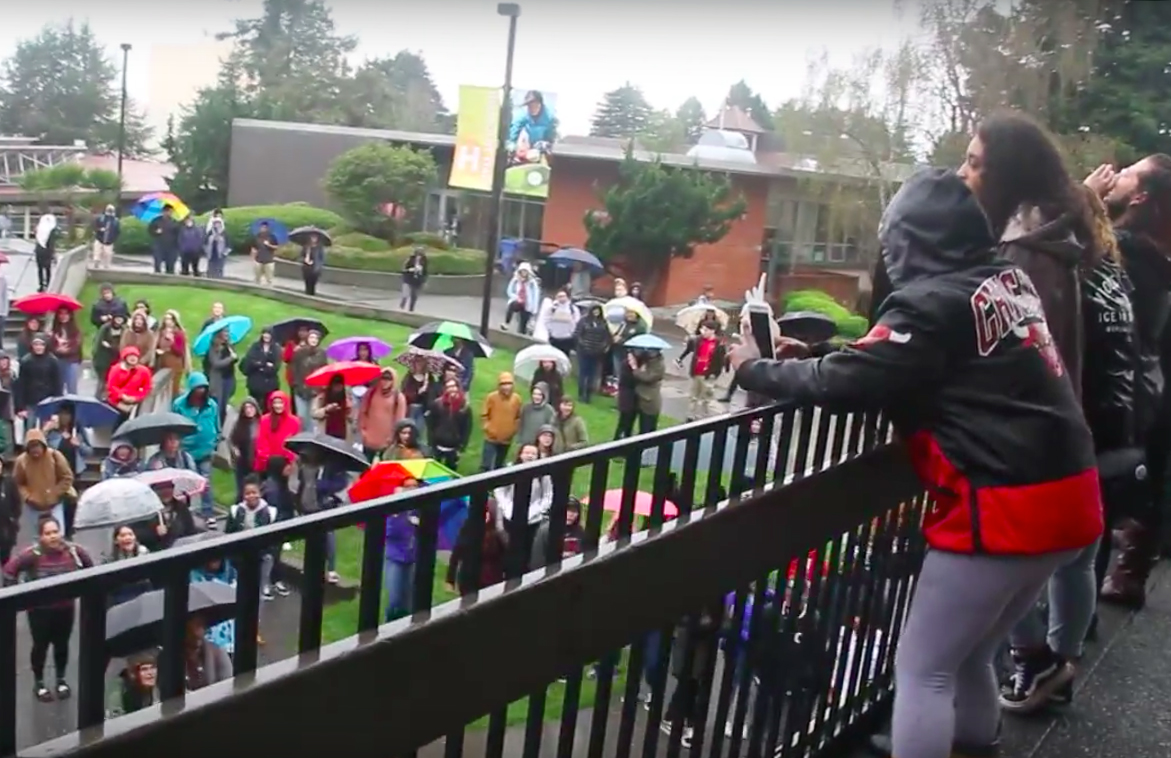
    Singleton stands on the second floor of The Depot, surrounded by a crowd of students who all left class as a part of the student-led walkout for safety in honor of David Josiah Lawson. The rain pounds down relentlessly, seemingly undetturent to all in attendance. The walkout is a part of 12 days of events being hosted in honor of the anniversary of Lawson’s unsolved murder.

    Video by Surya Gopalan.

    A year ago at a party in Arcata, Lawson, a black HSU student, was stabbed to death. There are currently no persons in custody. Students walked out of class at 1:30 p.m. on April 5 to be present at the 2 p.m. rally to bring justice to Josiah and demonstrate for student safety.

    Kalyn Garcia, 18, social work major, left class to be present at the rally.

    “I think that it is way bigger than Josiah,” Garcia said. “Any black, Mexican or children of color should not be concerned to leave their house.”

    As the rally began, two students, Singleton, as well as Daniel Segura, 23, a critical race, gender and sexuality studies major, began leading the rally. They began by explaining there have been rumors about the Justice for Josiah movement being involved in illegal or destructive activities, and that they do not condone any violence or illegal actions.

    Angel Sylva then performed a poem she wrote for Lawson, which will be performed again on the vigil held for Lawson on April 15.

    “If it happened to one of us, it can happen again,” Sylva said.

    With no sound equipment available to students after 1:00 p.m., due to campus policy, Sylva projects her voice as her only tool to spread her message to students.

    Students then began calling out the members of administration in the crowd. Alex Enyedi, the provost of HSU, as well as Wayne Brunfield, the interim vice president of Student Affairs, were two of the members of administration in attendance.

    “They have been silent this whole 12 months,” Singleton said.

    Singleton directly addressed HSU administration, the Arcata city council and the police department.

    “They have blood on their hands,” Singleton said.

    The crowd screamed for administration to speak, one individual saying, “It’s fucked up for you to be here and not say anything.”

    Eventually, Enyedi took the stage after much student call-out. He thanked the crowd for the opportunity to speak, then began.

    “Students are told you need to be patient, but I get it. How long should you be patient for?” Enyedi said. “I share your frustration, I share your impatience. It shouldn’t take this long.”

    Enyedi is not the one the students want to hear from. The question on everybody’s mind is where is Lisa Rossbacher, president of HSU? Students call out to Enyedi, demanding answers.

    “I’ll tell her you’re unhappy she isn’t here,” Enyedi said.

    A voice from the crowd screams, “We aren’t unhappy, we’re angry!”

    President Rossbacher never showed up.

    Brumfield was not getting away with silence either. Singleton and Segura called from the stage, “Wayne, where are you?”

    Brumfield did go up to the stage and approved students to use a megaphone, but never addressed the crowd. Many continued asking why he did not speak.

    When asked, Brumfield spoke of a racial equity plan he says he is currently working closely with students on. He said students deserve a voice in how equity and inclusion are happening in the community.

    “We’re working with the two chiefs of police, students and community members to look at policies of police reacting to students, both on and off campus,” Brumfield said. “I think we are moving in the right direction.”

    As the rally continued, a song written about Josiah was performed and then different chants were yelled throughout the crowd.

    The event coordinators then relayed the message of future events and concluded the event, inviting students to continue their activism and presence in the coming weeks.

    “The Justice for Josiah movement is very peaceful,” Singleton said.

    At one point in the rally, a group of people visiting for spring preview walked past the UC quad.

    “Anything they tell you will not justify his murder,” Segura said to the passersby.

    Segura, being in his 10th semester at HSU, he says he has seen how the administration deceives students. He said HSU goes down south and recruits students of color without disclosing the violence toward people of color that has happened in the area.

    “How are we supposed to welcome students of color when they trick you?” Segura asked.

    This article has been updated from its original version on Monday, April 9 at 5:58 p.m.

  • Lumberjack editors meet with Rossbacher, part II

    Lumberjack editors meet with Rossbacher, part II

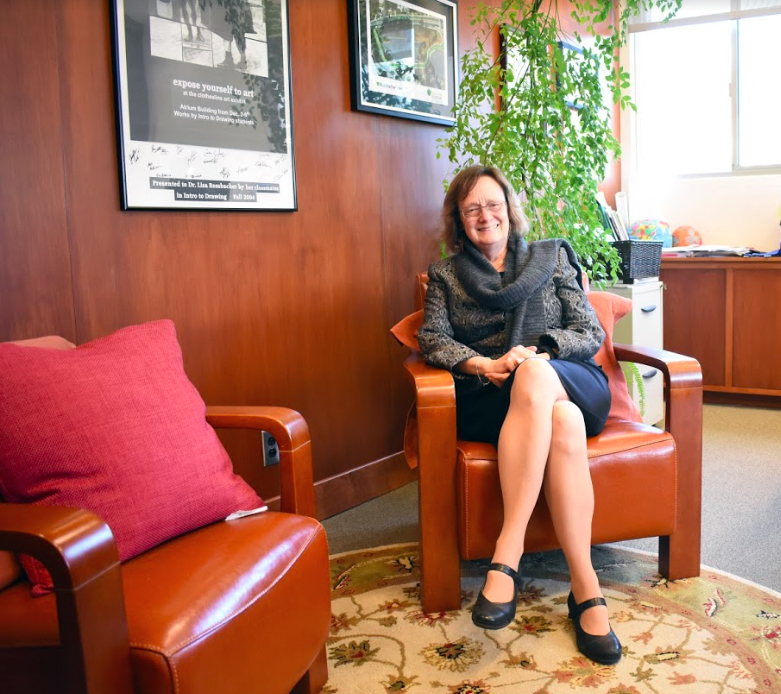
    The Lumberjack editors met with the president of Humboldt State University, Lisa Rossbacher, on March 23. The Q&A was largely centered around budget cuts and social issues that impact the local community, especially HSU students.

    This is part II of the meeting which mostly concerns social issues. Part I, which focuses on HSU budget cuts, can be found HERE.

    On social issues:

    Lora Neshovska (managing editor): “There are students facing homelessness and discrimination. How can we address social justice issues of students beyond our financial worries?”

    Rossbacher: “I think there are a number of things the university is doing to help with those basic needs that are really the underpinning to ensure student success. There’s a whole program happening here, many of them under the umbrella of Oh SNAP! Things like the food pantry that we have [or] students having access to EBT.

    We were one of the first campuses in the country to provide that kind of access. That started in late 2016 [and] over seven million tons of food have been redistributed on campus that would otherwise have gone to waste, so that helps. Some of the community meals that are being prepared – that I know Wayne Brumfield always cooks for – that sort of thing, being able to redirect J-points that are left over to help other people. Those are some examples in terms of food security. We just got some money from the chancellor’s office that will help us do more in terms of just food security on campus.

    In terms of housing, it’s a real issue because [of] where we’re located, the limited houses in stock that we have here. We’re doing some things with that, too. One of them is, I’m sure you know, Chante Catt has been hired as a homeless student advocate. She was involved in that organization of homeless student advocates, but she’s now officially working so that students who are in need of housing can contact her. I know right after she started doing that, immediately she placed four people. So that helps, too.

    We’re looking at the possibility of building new student housing. The university is looking at new residence halls off campus, and then there’s this outside developer who’s looking at The Village. Whatever it takes to get affordable, safe [and] not-too-far-away housing for students is a good thing.

    There’s also a program that we’re starting up in conjunction with some agencies within the area. I think it might be called the ‘nest program’ or ‘silver nest program,’ where there are seniors in the community who have a bedroom [and] extra space who would really like for company, for safety [and] a little bit of help around the house, who are willing to rent those spaces to students. That becomes a real collaboration with the larger community in a way that addresses multiple needs.

    I know it’s incredibly frustrating. I mean, I’m incredibly frustrated by seeing all the basic needs that we have here at Humboldt that are not being met. It’s sort of good news and bad news that we’re ahead of the curve of the system. We get pointed to as a place where we’re doing a really good job of trying to address those needs, which is good that we’re being proactive about it and making change. But if we’re among the leaders, we look at our frustration and the problems we still have, it makes you worry about other campuses.”

    Stella Stokes (life and arts editor): “I am an ITEPP student and my parents, who are HSU alumni, were also ITEPP students. There was an article about you in the Lost Coast Outpost on Feb. 7 that said ‘Rossbacher has been appointed to lead an initiative to increase the number of students from Tribal Nations who enroll and graduate from the California State University system.’ Why were you appointed over someone who is indigenous?”

    Rossbacher: “That roll is for president in the Cal State system. In fact, some people saw that and said, ‘Wait a minute, we thought Leo Canez was doing this, because he’s our new Native Recruiter.’ This is part of an initiative that was an across-the-sea issue, and it has representatives from more than half of the campuses. Adrienne Colegrove-Raymond has been a representative at HSU to this group. I convene the meetings, but I’m not responsible for this alone. It’s with a whole group of people.

    This statewide group will be meeting here on campus on April 4. The people can come to that. [People] from all over the state will be able to participate in the California Indian Conference, which is also here on campus [on April 5 and 6]. What we really hope is they stay until [April 7], which is when Big Time is. We actually have four days of Native American events happening.

    Back to your question of why I was appointed. Ultimately, when the chancellor asked me to do that, it came down to the two presidents at the campuses that have the largest Native [American] communities around them. It was Humboldt State and San Marcus. Humboldt State has the highest percentage of Native American students of any campus in the system. It’s not the largest absolute number, but we have the highest percentage. We have strong connections with the Native [American] community. It came down to the two of us who were presidents of those two campuses. We talked together and both us said to the other, ‘If you want to do, I’ll be happy to help you.’ We were trying not to step on each other’s toes. She said, ‘I’m really overcommitted right now. I will be glad to help you, but I’d appreciate it if you would do it.’ I said, ‘Of course.’

    Also, I didn’t know this before, but Rollin Richmond, who was the president before me, was in the same role for a number of years. So there’s a history of Humboldt State being in this role.”

    Ahmed Al-Sakkaf (news editor): “Rumor has it you live in Kansas. For the record, where do you live?”

    Rossbacher: “I live in McKinleyville.”

    Megan Bender (opinion editor): “Around 2016, you had issued a statement that was taken badly by the HSU community. You also issued an apology statement afterward. How can we address that to [David Josiah Lawson‘s] situation. People are frustrated by the inadequate support of the community, as well as HSU. What are you doing to create change in the right direction, as far as racism is concerned?”

    Rossbacher: “Let me back up just a minute to talk about when Josiah was killed. The university did everything we could to support his friends [and] his family. We worked closely with the police department to be sure that they were having access to witnesses or anyone who could help solve this murder. We’ve all been frustrated by what feels like a lack of progress.

    I ask, and I know I’m not the only one, the people in the city of Arcata about what’s going on, where are we and is there anything we can do to help? It’s a terrible tragedy. It’s something that affects so many of us, myself included every day. I think about wishing there was something we could do. I sat through every preliminary hearing.

    Ultimately, right now, it’s [on] law enforcement. It’s a criminal justice case. It’s something we can’t actually do anything about. It’s not in our hands. I asked as recently as last Friday, ‘When are we going to know something?’ It’s hung up in the process. You have as much information as I do. It’s highest priority for us. It’s not necessarily highest priority for the state to process the evidence, because there’s no one being held waiting for a trial. That’s what gives other cases a higher priority. We’re living with it every day. It’s just the way the process works.

    I want to make another point. I believe deeply in justice for Josiah. I think about it in two different ways. Actually, it’s two forms of the same way.

    One of them is resolving the case, figuring out what happened and just getting closure on that. Until that happens, it’s so hard for the community, for his family and for his friends. So there’s that aspect of justice. But I look at it from a bigger picture, too. I think what justice for Josiah should also mean to us is making sure that we have, as a larger community, a situation that is equitable, just and fair. [A situation that is] devoid of any discrimination – racial, ethnic, gender inequities or injustices. I think a piece of that, which is something I’ve been committed to involves some aspect of working with people on campus or in the city of Arcata. I see that as a long-term, systemic solution to the question of, ‘Where is the justice for Josiah?’

    If we could create a just, equitable [and] fair community in this region together, that would be a fitting tribute to Josiah and what he would’ve done with his life. I see justice for Josiah in a couple of dimensions, but I think there’s a big picture where the world will continue well beyond when the case is actually resolved.”

    Neshovska: “Do you think there’s racism in Humboldt County?”

    Rossbacher: “I think that in any environment where we have such different demographics, it’s inevitable. No, it’s not. I take that back. It’s not inevitable. Yes, and I have seen evidence of that myself. Demographics of the student population of Humboldt mirrors the state of California. The student population of Humboldt is similar to the demographics of this state. The demographics of Arcata and Humboldt County are very different.”

    Neshovska: “Isn’t there more than three percent of black people in California though? There’s only three percent here.”

    Rossbacher: “I know, yes.”

    Neshovska: “So it doesn’t exactly mirror the state of California.”

    Rossbacher: “Yes, I take your point.”

    Stokes: “One of the main problems about Josiah’s death is that students of color fear for their own lives or feel uncomfortable. They stop going to parties, some are just scared. How do you keep students of color safe?”

    Kyra Skylark (science editor): “To add on to that question, you said that affordable and safe housing is one of your main goals. I personally know friends who went to that party [where Josiah was murdered] and left the school afterward. People don’t feel safe, specifically students of color, which is why they fought for the Arcata council meetings to talk about why they don’t feel safe. What do you think we should be doing as Humboldt State to better address this issue? Why haven’t you gone to more of those meetings to hear students?”

    Matthew Hable (editor-in-chief): “The one-year vigil for Josiah is next month. Do you plan on attending?”

    Rossbacher: “Yes. There are two parts – there’s on campus and off campus. What I hear is that students are more likely to feel safe on campus than they do off campus.”

    Skylark: “Personally, as someone who has lived on campus during the last election, I got to hear ‘kill the fags’ and ‘reinstate Jim Crow.’ I did not feel safe on campus.”

    Rossbacher: “I understand. And yet, we’re a campus where we have to protect free speech. You all know that more than most. One of the aspects of creating safer spaces has to do with lighting. I know Wayne Brumfield has been doing walks around campus to identify places that need better lighting. We installed some of those over the winter break. There’s an interesting conversation with the City of Arcata about that, because they have ordinances about – it’s a dark city – as a way to not create light pollution. But the negative affect of that means we have less lighting, therefore areas that feel less safe. The city is working through that.

    There’s also an interesting set of conversations about surveillance cameras. There are a couple of dimensions to that. One of them is that if the police do it, particularly in Arcata, they have to maintain some of that tape for five years. And a lot of the businesses around the plaza, they particularly like to have surveillance cameras. The city sees real value in having the individual businesses, having their own cameras, because they can control them. They only have to keep them for a week or something. That’s enough time for the police to say, ‘We want to see what happened last night or even last week without having to keep the data for five years.’

    Meanwhile, the staff on this campus do not want security cameras, because they think – and this is the unions – they think the surveillance footage is going to be used to see if they’re actually doing their jobs, [as a way] to spy on them. [We have] all of these different dynamics working. That’s not the only solution, but it’s an example of the kind of complexities we get into. That doesn’t fully answer your question?”

    Skylark: “I don’t think that fully answers my question. There are issues on a social level that are making people feel unsafe. What is the school doing to make people feel safe on a social level? What are you doing to create change on an educational level?”

    Hable: “Are you saying there’s a lack of engagement right now?”

    Skylark: “Yeah.”

    Rossbacher: “We’ve had some events that addressed that. We had a day-long session last summer that really got into many of those issues.

    Skylark: “But no one is here during the summer. Those events are missed by the majority of the people.”

    Neshovska: “I think it’s also important to note that, not only as a president of our university, as a university as a whole, how do you make yourself available to these people who genuinely fear for their lives and want to be heard by somebody of power? They want somebody like you to hear them out and for you to say, ‘I’m here for you and I understand.”

    Rossbacher: “I seek out those stories. I listen to them carefully. I’ve been doing a lot of reading. I can share my recent readings with you, both books and articles on it.

    I made sure back in January, the leadership of the university went through micro-aggression workshops. It’s about awareness, how to counteract and keep that from happening. It started out [by] asking faculty and staff. I knew the way to bring credibility to that is to not only say that ‘I’ve done it,’ but that the senior leadership team, vice presidents and all the deans went through that. It was taught by Christine Mata and Roger Wang. It touched on micro-aggressions and white fragility. So I, as Lisa Rossbacher, also participate in the community dialogue on race. I learned a lot from those opportunities, too. I make it a point of going to sessions I know are going to make me feel uncomfortable. They say you should do it at least three times a week. You put yourself in uncomfortable situations.

    In a larger context, we are a place that’s about education. One of the things I value most about the opportunity to work in the university is the chance to learn. I’m around smart people who have a lot to teach me. There’s a lot I can learn. If I’m not putting myself in the kind of position that you as students, where you’re being asked to put stuff out there and being evaluated on it – that’s why I write as much as I do. You write, you’re putting it out there and people are going to criticize it. It’s just a reminder of what students do every day. I’m a student, too.”

    Bender: “Is there anything you think we missed that you would like to share with us?”

    Rossbacher: “We have spent literally years building up to the visit that we had this week.”

    Bender: “So that exit interview is a summary and they’ll be giving you another report later?”

    Rossbacher: “It was an oral summary. They said we’ve got some things we want to – [they provided] accommodations and recommendations. There are some things we’re doing really well and some things that we need to work on. Diversity was one of those [things we need to work on].

    Al-Sakkaf: “People were banging on the door at Siemens Hall during the WASC meeting. How did they feel about that?”

    Rossbacher: “They were a little worried. They are all experienced people, and they work on campuses where student feel strongly about issues as well. They said, ‘We were surprised, but we weren’t surprised.’ They took it in stride.”

    Bender: “Do you think some budget suggestions will come out of this report?”

    Rossbacher: “I think what they will say is the university needs to have a sustainable budget. We need to balance our budget and figure out how we’re going to move forward. I’m sure they’re going to say that.

    Neshovska: “How long can we go with this budget deficit? What happens if we don’t solve the budget?”

    Rossbacher: “We will solve it.”

    Gabe Rivera (sports editor): “Is there a person you normally contact to inquire about Josiah’s case? Who is that person?”

    Rossbacher: “I talk to lots of people. I talk to Tom Chapman, the chief of police of Arcata.”

    Neshovska: “In 20 years, is my degree going to be useless? What’s going to happen if the budgets cuts aren’t resolved?”

    Rossbacher: “We’re going to solve this problem. One of the things we haven’t talked about is the need to increase enrollment. That’s not going to solve all of our problems. It’s going to help with a lot of them. I want to assure you that this is not a limited growth. I’ve done an analysis that’s still being worked on, that’s still very much a draft. I want to know what the carrying capacity is for the campus for enrollment, taking a lot of different dimensions. In the big picture, what that tells us is 8,000 is probably about the right number, [which] is a little bit more than what we have now. Our goal is to grow back up that size, but not way beyond that. The goal is to have 15,000 students, and that is not the case.”

    Neshovska: “That sounds complex. We want to increase enrollment, but we don’t have student housing. We need more money to increase safe and affordable housing, but we need to increase enrollment to solve the budget crisis.”

    Rossbacher: “Increasing retention rate is probably the most important thing you can do for enrollment right now. Partly, it’s bringing in new students. Even more important is keeping the students who are here.”