The Lumberjack


Students Serving The Cal Poly Humboldt Campus and Community Since 1929

Tag: Students

  • Mar’s Gaming Garage : The Legend of Zelda: Tears of the Kingdom

    Mar’s Gaming Garage : The Legend of Zelda: Tears of the Kingdom

    By Mario Orozco

    Welcome back to Mar’s Gaming Garage. This week’s game is “The Legend of Zelda: Tears of the Kingdom,” and was requested by a rangeland resource science major. “Tears of the Kingdom” (TOTK) is the newest entry in a long line of Zelda games and picks up sometime after the events of “The Legend of Zelda: Breath of the Wild.” 

    Going into the game, my expectations were through the roof. Its predecessor was awarded game of the year in 2017, so I expected TOTK to live up to this legacy. Thankfully for me and my wallet, this game exceeded my high expectations.

    TOTK’s story is amazing, from the main quests to the side quests. The game does a great job expanding on the stories of previous characters and creating compelling stories for the new faces. The game stands out as a sequel when compared to others because of the brand new mechanics. Most sequels I have played take similar gameplay and insert them into a new world. TOTK does the opposite, taking a different style of gameplay and putting it into an expanded version of the “Breath of the Wild” world. These mechanics assist in making the game feel completely different than the original, despite sharing many similarities. The expansion to the world is massive; it allows for players to enter the depths of the original map and go underground in what is essentially a second full world. The sequel also introduced islands in the sky that can be explored. 

    While “Tears of the Kingdom” improves on the overall gameplay and provides more for the player to do, there are a couple things that fall short when compared to the precursor. The first of these shortcomings is the storytelling. While I enjoyed the story of TOTK more than “Breath of the Wild,” it was told in such strange ways at times. Multiple different questlines can be completed out of order, which can cause a lot of confusion. For instance, if you find the Master Sword before completing its dedicated questline, it completely ruins what I believe to be the most impactful cutscene in the entire franchise by showing it with none of the required buildup. The other issue is the graphics. The quality is a slight downgrade from “Breath of the Wild” despite being released six years later. This isn’t really a problem for me, as the reasons for the downgrade are the expanded world combined with the limits of the Nintendo Switch. While slightly disappointing, graphics were sacrificed for extra content and extra content is never a bad thing.

    “The Legend of Zelda: Tears of the Kingdom” took a total of 63 hours and 42 minutes to complete and is arguably just as good as, if not better than, “Breath of the Wild.” I rate this game a 4.8/5. If you can afford to invest a considerable amount of time into a game, then I wholeheartedly recommend this one to you. “The Legend of Zelda: Tears of the Kingdom” is worth the purchase.

    If you have any games you would like me to review, you can email marsgaminggarage@gmail.com.

  • Being a part of the fourth estate: The Lumberjack attends the ACP conference in La Jolla

    Being a part of the fourth estate: The Lumberjack attends the ACP conference in La Jolla

    By Griffin Mancuso

    One of the distinctive qualities of a journalist is that they never truly stop working. They may finish working on a story or taking photos, but they are always thinking of their next story, their next assignment, their next grand idea to pitch to their editor. A great journalist can make a story out of almost anything.

    One of my greatest qualities (and downfalls) is my ability to turn what was supposed to be my vacation into another article.

    Every March, just before spring break, a handful of journalism students at Cal Poly Humboldt get the chance to attend the Associated Collegiate Press Conference (ACP), where we get to attend panels on journalistic practices, connect with companies and other students, and submit our work for the chance to win awards. It takes place in a different city in California every year, which gives us the opportunity to travel to new places and see all the local sights.

    This year, the ACP conference was held in La Jolla, a sunny beachside town populated by rich people and entitled seagulls. Journalists travel from all over the country to attend this conference and, hopefully, win some awards for their student media. Apparently, this year had the most attending journalism students out of any ACP conference, according to a fellow journalist who interviewed me for an article. Even with the large number of attendees, there was an unspoken sense of comradery and understanding among us, even if we had never met each other.

    One of the appeals of the conference, besides the opportunity to network and learn new skills at the dozens of panels, is getting to explore the city as a group. I didn’t have the opportunity to stick around and enjoy the city at last year’s conference, so I’m happy I had the chance to spend time with the rest of the Lumberjack team. We had a group breakfast of homemade eggs and potatoes made by our editors. We visited the Birch Aquarium where I stared at the leopard shark tank for a good ten minutes. We browsed downtown La Jolla and I made everyone visit my mother’s yoga teacher’s deli shop. I got to swim at the beach for the first time since high school.

    I make an effort to attend panels with differing topics to broaden my knowledge and gain an appreciation for the other jobs in the newsroom. I learned about the particular but important art of typography, I got a refresher on inclusive design for newspapers and websites, I learned about covering LGBTQ+ communities in San Diego County, and I attended the panel on satire news hosted by our amazing adviser and one of our editors-in-chief. Everyone was laughing for a good half of the presentation, so I consider that a success. I smiled as journalists from other schools ecstatically told me how they planned to pitch a satire issue to their publications. Holding figures of authority accountable is much more fun when you get to be funny about it.

    The biggest part of the conference for our newspaper is the awards. The ACP hosts its own award show, and a separate group called the California College Media Association (CCMA) has its own awards on the last night of the conference. ACP is a national organization, and out of all the schools with less than 15,000 students, we still won 5th place in Best in Show for one of our papers. Not too shabby for a staff of less than 30.

    The CCMAs focuses more on awards for individual journalists and is where we get most of our recognition. We all watch with anticipation as the announcer reads off each category, waiting for our school’s name to appear on the projector.

    Being unable to take a break ever, I took it upon myself to film all of our announced awards for social media. As the announcer read off the top three winners for Best Headline Portfolio, I narrowed my eyes as three familiar headlines rolled across the screen. I soon realized they were my headlines and I had won second place out of all California schools with under 15,000 students. I can now proudly put on my resume that I have the second best headlines in the state, and I have the piece of paper to prove it.

    We embraced one another and cheered as we collected a total of 14 awards for the Lumberjack. We placed in categories like Best Social Justice Coverage, Best Feature Photo, Best Arts and Entertainment Story, and Best in Show. We were struggling to get a photo with all of our awards together on the table, even when I stood on a chair and raised my camera in the air. Our advisor soon approached each of us to get a snippet of our reactions for social media. At the time, I was so overwhelmed with excitement and pride in my team that I couldn’t give the groundbreaking, heartfelt speech I wanted. I can at least give that speech in writing.

    I didn’t originally come to Cal Poly Humboldt as a journalist. I was an English major and I wanted to write novels. I joined the student magazine, Osprey, during my first semester and fell in love with it. I loved learning from people and giving that knowledge to the public. I knew I wanted to write. When I took the Lumberjack workshop, I didn’t expect to be writing for an award-winning paper. I’m grateful to be a part of the process and I am honored that our hard work gets to be recognized on a state and national level. The pressure of working on The Lumberjack is intense, but you take on that pressure as a team. No matter what else is going on in our lives, we get together every Tuesday, hunker down in the newsroom, and make a newspaper for our campus.

  • Proposed state assembly bill gives van lifers hope

    Proposed state assembly bill gives van lifers hope

    By Eli Farrington

    On Oct. 25, 2023, Cal Poly Humboldt sent out an email to the entire student body detailing a list of new parking regulations that were going to be enforced effective immediately. However, none of the new regulations actually pertained to the majority of the on-campus community, but rather to a much smaller and more vulnerable one: the van lifers. 

    Jan. 11, 2024, Assembly member Corey Jackson introduced bill AB 1818 into the state legislature. If passed, all California State Universities and California Community Colleges would be required, and all UC campuses requested, to allow students that live in their vehicles to park on campus overnight as long as they possess a valid parking pass issued from their institution. 

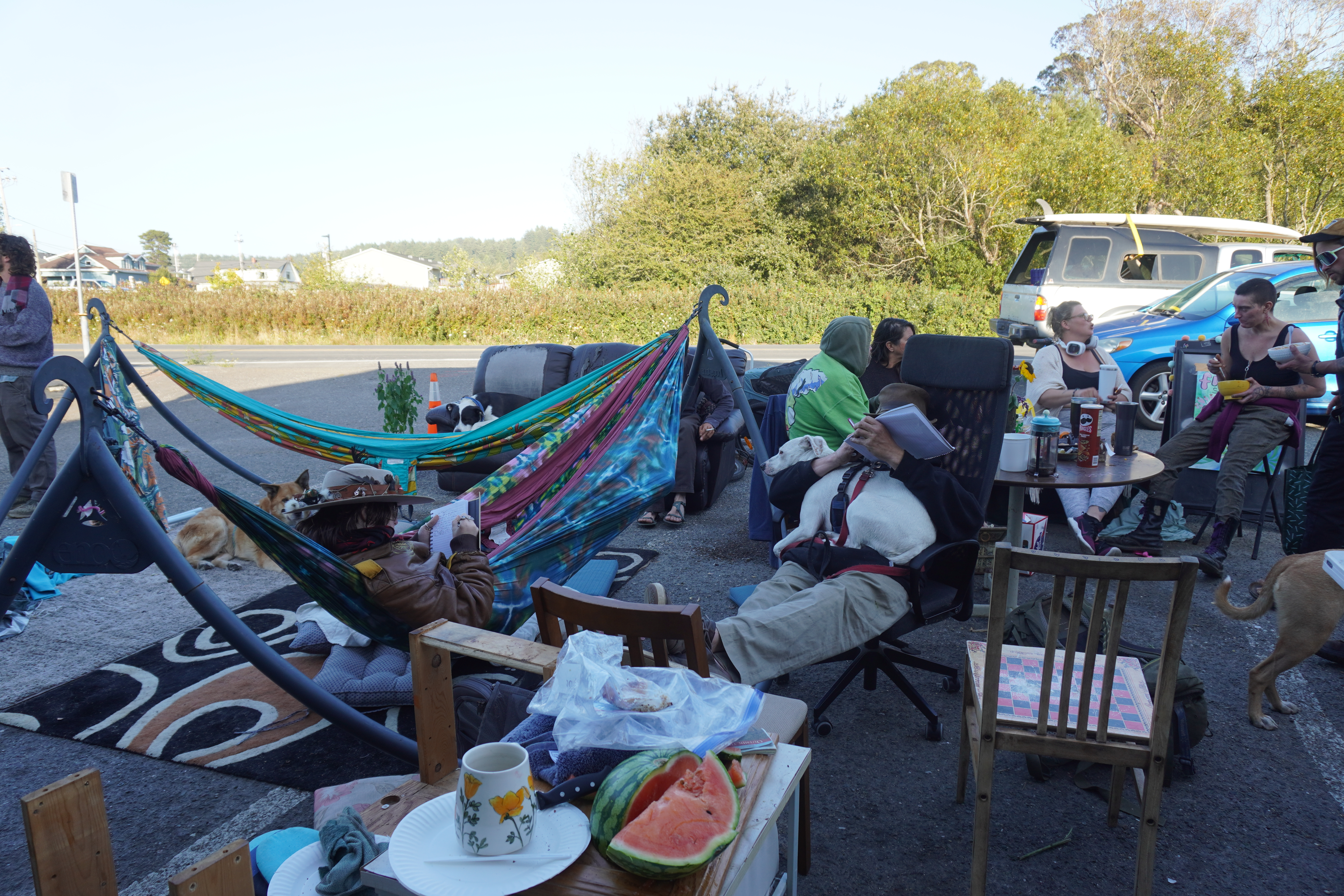
    A humble community of vehicle-dwelling college students, the van lifers lived comfortably and peacefully in the parking lots of Cal Poly Humboldt for many years before the university finally decided to crack down on them. After the university claimed that their presence in the parking lots created ‘unsafe and unsanitary conditions,’ the van lifers were forced to leave the campus and look for overnight parking elsewhere. 

    Caleb Chen, a first-year Cal Poly Humboldt masters student in the public sociology program, was one of the students who were forced to leave. At the time, he was living in his vehicle, and the uncertainty of not knowing where he was going to sleep that night took its toll on him. 

    “In November, when we all had to move, it scattered us all to different places, and some of us ended up at the Arcata Community Center,” Chen said. “It definitely felt less safe there. It caused a lot of [stress] at the end of the semester that got in the way of schoolwork and the research assistantship that I’d come to this school for. Cops locking the gate to the community center at night meant if I needed to drive off all of a sudden in the middle of the night due to a break-in attempt, I’d be stuck in that parking lot. That wasn’t ever a concern at the school parking lot.” 

    At the beginning of 2024, Chen’s vehicle broke down. He couldn’t afford to fix it, so he ditched the van life and moved into an apartment with his significant other. Regardless of his new living situation, Chen was still impressed with the opportune timing of AB 1818’s proposal. 

    “It’s very timely, and whoever introduced it must have had their finger to the pulse, because this isn’t only happening at Cal Poly Humboldt,” Chen said. “It just speaks to the widespreadness of this and the fact that students at Humboldt are really just a drop in the pond, so to speak, of people that are affected by this situation.”

    In contrast to Chen, junior Hannah Barrett and sophomore Joshua Tarman left their overpriced one bedroom apartment at the beginning of the new year and moved into a camper together for a more favorable living situation. Barrett is a psychology major, while Tarman attends College of the Redwoods with a focus on early childhood education. 

    The couple originally planned to park their camper on Cal Poly Humboldt’s campus overnight, but when the Oct. 25 email was sent out they were forced to make other arrangements, including parking in areas of Samoa and Manila Dunes. 

    “I think that secure parking is something that should be a given for students,” Tarman said. “[Students are] paying to be in an environment where they’re supposed to learn, and so if a school wants to be able to provide all the facets for students to learn, they should definitely have a priority over their safety and their emotions. Students can’t learn when they’re just figuring out how to live in the first place.”

    While Barrett and Tarman are doing well enough with their vehicle parked off campus, they would definitely prefer the safety and security of an on-campus parking spot if AB 1818 were to pass. 

    “I just think that if you’re able to park here overnight with a parking pass, it is a little silly that you just can’t physically be inside your vehicle,” Barrett said. “It’s like at that point, [the university] is just trying to make it more difficult for people, because there’s [nobody] – at least I didn’t see – being unsanitary or dumping anything.” 

    The unsafe and unsanitary accusations have rubbed many of the van lifers the wrong way, including junior and mechanical engineering major, Derek Beatty. 

    “That was a smear campaign,” said Beatty. “It was, I guess, the only way that they could find to try to make other students feel like, ‘Oh I guess that’s why they’re getting kicked out.’ It was like they needed to give some reason so that there wasn’t as much outrage, but obviously, I don’t think many people believed those claims, and I think that even made people a little more upset on our behalf. But yeah… it’s kinda bullshit that they said that and then didn’t have any evidence to back it up other than a picture of a rainwater collection bucket.”

    The Lumberjacks request for complaints against van life students resulted in a total of two back-to-back complaints made by two anonymous people. Otherwise, no complaints were found. 

    Beatty is hopeful that AB 1818 will pass soon, so that he and others can park on campus again. He misses the safety net and the sense of community that on-campus parking provided for the van lifers, and having to park off-campus every night has taken that away. 

    One of the primary benefits of on-campus overnight parking is consistency. Having a dependable place to call home, even if it’s just a place to park a van or camper, can make all the difference in the world to the van lifers, one of Cal Poly Humboldt’s most at-risk communities. 

    “I spend all my time in this same parking spot,” Beatty said. “It’s just now for some reason I have to not be here from 10:00 p.m. to 7:00 a.m., when I could just stay parked here, not have to move all the time, and just have a consistent spot.”

    Carrie White, a Cal Poly Humboldt senior and biology major, lived on campus in her camper starting in 2021, but it recently broke down and has been stuck at a mechanic shop for several weeks. Since then, White’s living situation has been volatile, sleeping sometimes with friends, and at other times on the floor at one of her places of work. She hopes that AB 1818 will pass, to give low-income, displaced, immigrant students like herself a safe and secure location for alternative living. 

    “I think that passing the California Assembly Bill AB 1818 is the bare minimum a multi-million dollar institution affiliated with the CSU organization owes to its students,” White said. “In general, folks living in their vehicles are amongst the most vulnerable students. We know from thousands of studies that homelessness is a risk factor for mental and physical health pathologies, increased loneliness and isolation, decreased academic performance, decreased quality of life, and suicide. Passing a bill allowing homeless students to stay on-campus, in their vehicles, with a valid permit shouldn’t be a discussion – it should be a glaringly obvious choice. This is a social crisis, a public health crisis, a humanitarian crisis – and it is here, on our campus.”

    Student homelessness is a problem that plagues practically every college campus in California, and Cal Poly Humboldt is no exception. Cal Poly Humboldt students are still prohibited from sleeping in their vehicles on campus, but if AB 1818 passes, they can come back and the van life community can rebuild in a safe environment. 

    “I felt safer staying on-campus up until I was forced to leave,” White said. “In the act that I believe was an attempt to shame homeless students off campus – cue gross Cal Poly Humboldt email accusing homeless students of being ‘unsafe and unsanitary’ – the trust I have in this institution is null and void. Having said this, I would absolutely move back to campus if Bill AB 1818 passed; proud, in a state of activism, and don’t worry – safe and most definitely sanitary.”

  • Cal Poly Humboldt allegedly breaches contract with the state of California

    Cal Poly Humboldt allegedly breaches contract with the state of California

    by Brad Butterfield

    California’s Division of Boating and Waterways (DBW) alleges that Cal Poly Humboldt has been misusing the Humboldt Bay Aquatic Center (HBAC) for its scenic views and now swanky administrative office space – thanks to a recent $412,000 renovation. The university is not, the breach of contract notice charges, fulfilling its commitment to boating instruction and safety training.

    “[Cal Poly Humboldt] is not using the [HBAC] for the purposes for which the building was funded, or for which the property was leased from the city and approved by the state lands commission,” stated a notice of breach of contract notice sent to Cal Poly Humboldt President Tom Jackson Jr. in Dec. 2023. The notice outlined the key problem – that without notice nor written approval, which is required by the operating agreement, Cal Poly Humboldt transformed boater-funded classrooms, offices and storage spaces into alumni fundraising offices, private club rowing, storage of private club vessels and support for private university fundraising activities.

    In understanding the breach of contract, it is helpful to recognize the complex web of involvement at the HBAC between the city of Eureka, the state of California and Cal Poly Humboldt. In summary, the Department of Boating and Waterways put forth $4.067 million to fund the construction of the facility, as well as $702,000 since 2003 to offset the costs of the university’s ongoing boating instruction and safety training. Cal Poly Humboldt leases the land the facility sits upon from the city of Eureka. Though the HBAC is fully owned and operated by the university, an operating agreement between the DBW and the university, as well as a lease agreement between Eureka and the university, outline specific guidelines for the expected uses of the facility, many of which have not been fulfilled by the university, according to DBW.

    This room, formerly storage space, is one of the rooms that have been converted and expanded to create office space for Center Activities.

    The operating agreement was signed in 2003 and it expires in 2028. While uses of the HBAC have consistently evolved, the university’s costly renovation to create office space for top administrators conflicts with the contracted uses of the HBAC, according to the breach of contract notice. Section 5 of the operating agreement states that the university shall operate the HBAC as a boating instruction and safety center, providing two key functions: (1) boating and water safety instruction for the general public as well as university students, faculty and staff and (2) recreational services, provided that it does not interfere with the boating and waterway safety instruction courses.

    Furthermore, the operating agreement states that any material alterations or improvements to the Humboldt Bay Aquatic Center must have the prior written approval from DBW. The university did not obtain written approval for changes made at the HBAC, however the university did mention the Advancement Division’s move to the Eureka waterfront property on at least two occasions, according to DBW. First, in March 2022, the university told DBW that university fundraising teams had temporarily moved into the HBAC conference rooms, due to the pandemic. In September 2022, the university informed DBW that cubicles had been moved into the second floor classrooms of the HBAC for the Alumni Relations department, while the extended education program, OLLI, had been moved to campus. The DBW alleges that Cal Poly Humboldt has denied their recent request to inspect the building. DBW’s last inspection of the HBAC occurred on Aug. 15, 2018.

     Additionally, the breach of contract notice highlighted the university’s failure to share copies of financial records showing investments and modifications to the HBAC. These records were requested on Sept. 20, 2022 during a conference call with Frank Whitlatch, Cooper Jones, and Tim Downs, according to the DBW. The records had still not been shared with DBW at the time of mailing the breach of contract notice on Dec. 19, 2023. Frank Whitlatch, vice president & executive director of the University Foundation, did not respond to an interview request. 

    Cal Poly Humboldt’s Response

    On Feb. 8, Cal Poly Humboldt sent the requested financial records as well as a letter written by Nick Pettit, executive director of athletics and campus recreation, which directly responded to many of the issues raised by the DBW.

    “While DBW claims that the University provides ‘negligible [HBAC]-offered public access and boating services,’ the numbers and the facts show otherwise,” Pettit said in his response.

    Cal Poly Humboldt shared multiple Aquatic Center Grants Annual Report’s showing the tally of individuals who had enrolled in HBAC provided boating safety courses: 2020 (124 individuals), 2021 (70 individuals), 2022 (800 individuals), and 2023 (465 individuals). 

    In contrast, DBW’s investigation displayed a lack of courses available to the general public. 

    “As of Dec. 2023, the Department of Boating and Waterways’ internet searches did not reveal that courses were, or had been, available to the general public,” Adeline Yee, information officer for California State Parks, said. “Aquatic Center annual reports informed DBW that some private groups, school groups, and non-profit groups used the docks and outdoor areas of the HBAC for boating classes during that time frame.”

    During DBW’s Feb. 1 search for current courses offered to students and the general public, they found that the five sailing courses are currently being offered by the HBAC, with a max capacity of 26 students between the five courses.

    For context, DBW highlighted that a similar DBW investment, Sacramento State University’s Aquatic Center at Lake Natoma, teaches approximately 6,600 students annually.

    In response, the university noted the higher enrollment at Sacramento State as well as the larger population of Sacramento County.

    Aileen Yoo, Director of News and Information for Cal Poly Humboldt, confirmed that boating and outdoor programs have seen a slight decrease in participation in the 2023-24 academic year. 

    Pettit noted that the university has spent over $44,000 on student staffing since July 2021 for equipment rentals, while only bringing in $20,801 in revenue. More broadly, the university disagreed with DBW’s interpretation of the operating guidelines. 

    “To the extent DBW asserts that the agreement requires that the University exclusively use the HBAC for those activities, the agreement has no such language. While it provides that the ‘University shall operate the PROJECT as a Boating Instruction and Safety Center,’ this does not mean that the University cannot utilize portions of the HBAC for other University purposes,” Pettit said in his response. 

    If anything can be agreed upon in the chaos, it is that the university has indeed used the HBAC for a plethora of uses over the last two decades. Eureka City Manager Miles Slattery said that the HBAC had previously taught classes in everything from home economics to cooking when the non-profit University Center managed the facility (currently, the HBAC is managed by Cal Poly Humboldt).

      “[When] the University Center ran it, I would venture to say that there was an equal amount of non-complying uses, if not more,” Slattery said. “I think that somebody could have previously made the same accusations.”

    Acknowledging that the catalyst for the breach of contract notice appeared to be the university Advancement Division’s move to the HBAC, Pettit emphasized that this move had not negatively affected boating and waterway safety instruction. 

    Advancement Division moves into the HBAC

    The Advancement Division now uses 1,906 square feet of cubicle space, two waterfront offices and a renovated 606 square foot first-floor lobby in the HBAC, according to construction documents obtained through public record requests. The university spent $80,849 on furniture and supplies for the new office spaces created for the Advancement Division, including $11,076 on new chairs. The first-floor, waterfront office previously used by Center Activities is now occupied by Stephanie Lane, executive director of Alumni Relations. Lane did not respond to an interview request. An existing storage room on the first floor was modified and expanded to create a new office for Center Activities.

    On five separate visits to the HBAC by a Lumberjack reporter, access was never given to the modifications made to the second floor to accommodate the university Advancement Division. More importantly, no representatives from Center Activities were present during any of these five visits to the HBAC. To schedule a viewing of the new office spaces on the second floor, Lane advised contacting Travis Flemming, director of Facilities Management. Neither Flemming nor Building & Program Coordinator Danielle Muniz responded to a request for an interview. Likewise, none of the 20 Advancement Division employees contacted for an interview granted one. 

    Pettit’s response to DBW concluded by stating that the university is open to an inspection of the HBAC, but emphasized that advanced notice and the presence of representatives from both parties was crucial. Pettit was contacted for an interview, but deferred to the university News and Information department for answers.

    The breach of contract notice gives the university 90 days, until March 29, to remedy the noted breaches.

    “The DBW looks forward to the HBAC being restored to a public access resource and the purposes for which it was constructed and the revitalization of a vibrant publicly accessible boating education program that stimulates boating recreation and safety in the north coast region,” Yee said in an email.

    Read Brad Butterfield’s first article about the Humboldt Bay Aquatic Center here. https://thelumberjack.org/2023/11/29/the-aquatic-centers-412000-facelift/

    View Cal Poly Humboldt’s response to the breach of contract notice here: https://drive.google.com/file/d/1Gffpqn8160L7i9_FRS-zsRTn9tm_KiOh/view?usp=sharing

    The breach of contract notice sent to Cal Poly Humboldt:

    https://drive.google.com/file/d/12WhySGie9_-oeLVoN69WkTXbnrVznpA_/view?usp=drive_link

    The operating agreement between Cal Poly Humboldt and DBW:

    https://drive.google.com/file/d/1zLN2rxxpcYT3t1MWZAZ2GQDFTnGUjOm7/view?usp=drive_link

  • How to interact with a service dog – don’t.

    How to interact with a service dog – don’t.

    By Griffin Mancuso

    On my second day of public access with my service dog in training, I braved the crowded hallways of The Depot in search of brunch. After paying for my food, I found a booth and used the opportunity to practice deep pressure therapy with my service dog, which is his favorite task because it involves him laying on my legs and getting a bunch of treats. The pressure helps decrease my heartrate, and thus, lowers the constant buzz of anxiety any time I go into a public place. 

    A group of men in the booth next to me took notice of my service dog. I didn’t pay them much attention until I heard one of them say, “Hey, there’s a way you can point out a fake service dog, watch this.”

    My blood ran cold as one of the men tried to call my dog over in an excited, high-pitched voice. Even though it was his second day on the job and he was seven months old at the time, my angel of a dog stayed put and watched them with the same amount of bewilderment I had. Apparently, that glance was enough for the men to start gasping and pointing. Feeling embarrassed and defeated, I rushed out of The Depot and hid in my apartment for several hours.
    Thankfully, that was the worst situation I have faced with my service dog. Since then, I gained more confidence in me and my service dog’s abilities and know how to advocate for his space. I also did a little bit of reading on the law.

    According to California Penal Code 365.6, section A, anyone who intentionally interferes with a service dog’s ability to perform their tasks could be charged with misdemeanor. They can face time in jail for up to six months, a fine between $1500 and $2500, or both.

    Two years later, I have realized that many people do not know how to interact with a service dog in public. Generally speaking, the key is to not interact with them at all. In fact, pretend like they aren’t even there.

    The Americans with Disabilities Act defines a service dog as a dog that is trained to perform a task that alleviates the symptoms of a person’s disability. A service dog can be any breed and are not required to be certified or go through a professional training program. They are also not required to wear a vest or identification showing that they are a service dog, but most handlers will identify their dogs in some way to prevent access issues.

    The types of tasks service dogs can perform include retrieving items, deep pressure therapy, acting as a brace if their handler falls down, alerting to rises in cortisol or blood pressure, reminding their handler to take medication, protecting their handler’s head during a seizure, and many more. In a legal sense, service dogs are medical equipment and can be life-saving. They empower their handlers to live independently and improve their quality of life.

    Therefore, it can be detrimental, or deadly, if someone distracts a service dog, no matter what their intentions are. The Depot incident was the only time a person’s intentions were clearly malicious, but most of the time people just really, really want to say hello to my dog. 

    I’ve noticed that many passersby develop what I call doggy tunnel vision. They see the dog and feel intensely compelled to talk to them or approach them, without much thinking in between. I get it, I really do. I love dogs with my whole being. If you are an adult, I promise that you have enough self-control to leave service dogs alone. If you must say something, talk to the handler directly.

    When talking to a handler, some may be more comfortable answering questions about their dog than others. I will put up with a lot of questions and comments. You’d be surprised how many stories I get about people’s dead dogs. Not everyone is as tolerant as I am, so please be respectful of the handler’s comfort level and save your stories for later. Most importantly, do not ask about their disability.

    Some handlers are okay with their dog being pet, and some aren’t. Petting them may interfere with their ability to task or the dog is simply not interested in greeting strangers. Some handlers will have a badge saying something like, “Ask to pet,” but you should always ask before you reach your hand out.

    Most of the time, if a dog is tasking, it is best to let them do their job. You wouldn’t go up to a cashier at a store and ask them if they need help. 

    If you pass by someone having a medical episode and their service dog is tasking, assess the situation before immediately dialing 911. Ambulance rides are expensive and not always necessary.

    I am personally more patient with children when it comes to my service dog. They often don’t know any better and are following their parent’s example. Half of the time, parents will redirect their children away from my dog or take a few minutes to explain that my dog is working. Those are my favorite parents. My least favorite parents are the ones who are either blissfully unaware of their child approaching my dog or actively encourage them talking to or petting my dog.

    Living in Humboldt County, I understand that I live in a pretty dog-centric area. Some people bring their pet dogs everywhere they go, including non-pet friendly stores. Most of the time, these dogs are behaved enough and not bothering anyone, but I have no way to tell if those dogs are a danger to my service dog. Service dogs come with the expectation that they will not lunge, bark, or attack other dogs while working. Pet dogs do not.

    Some dog owners try to bypass this restriction by putting a vest on their pet dog and bringing them anyway. Legally, store employees are only allowed to ask service dog handlers if their dog is, in fact, a service dog, and what tasks they perform. This is meant to prevent employees from asking handlers invasive questions about their disability, but some pet dog owners abuse this system. 

    There is no definitive way to tell a fake service dog from a real one, so you’re doing a disservice to service dog handlers by trying to pass your dog as an essential piece of medical equipment. The best case scenario is that they are an inconvenience we have to avoid while shopping. The worst-case scenario is that your dog injures our service dog and puts them out of work permanently, or kills them.

    Having a disability can be hard. We navigate a world that was not built with us in mind, and if the dog allows me to go to the grocery store and find the minced garlic without panicking, so be it. Please don’t make our outings harder than they need to be. We appreciate those who respect us and our service dog’s space, and we’d love more people to join that crowd.

    Griffin Mancuso is the photo editor and a prolific graphic designer for The Lumberjack. He is also a service dog handler and overall dog enthusiast/nerd. You can contact him at gm249@humboldt.edu.

  • Recasting the narrative at the Latino Film Fest

    Recasting the narrative at the Latino Film Fest

    By Savana Robinson

    Chatter ceased as the house lights dimmed. Hands rustled in bags of popcorn and miniscule pieces dropped to the floor on their way to a mouth as an impressive scene of the Amazon appeared on the massive screen.

    The 25th annual Latino Film Festival at Mill Creek Cinema was held Feb. 27 through Feb. 29. This year’s theme for the festival was environmental issues. The films shown were “Nostalgia de la Luz” (Nostalgia for the Light), “El Abrazo de la Serpiente” (The Embrace of the Serpent), and “A Million Miles Away.”

    “Nostalgia de la Luz” is a documentary that takes place in the Chilean Atacama Desert, where a woman is searching for remains of loved ones whose lives were taken under the regime of Augusto Pinochet. At the same time, astronomers are looking for answers about the past of the cosmos.

    “El Abrazo de la Serpiente” shows a shaman in the Amazon who leads a sick man and his colleague to a flower that may cure him. Years later, a botanist leads him back to the sacred flower, which the shaman had forgotten. The film is set with overtones of the importance of protecting indigenous cultures and sharing knowledge.

    “A Million Miles Away” is a biopic about the life of José Hernández, a migrant farmworker who becomes an astronaut. The film is about hardship, perseverance, and the power of a dream.

    Gabrielle Gopinath, professor of history of cinema and art at college of the Redwoods, was part of the panel discussion after the screening of “Abrazo de la Serpiente.” Gopinath noted the distinct difference between the film and others of its kind.

     “Films about the jungle typically cast the global south as a crucible existing outside time and history,” Gopinath said. “Indigenous characters only come into focus insofar as they play subsidiary roles in a white protagonist’s journey. However, in “Abrazo de la Serpiente,” the white characters and their quest are accessory to Karamakate’s central character arc.”

    José Marin Jarrín, a professor of fisheries biology at Cal Poly Humboldt, gave a speech during the panel after the screening of “A Million Miles Away.” Jarrín said that the movie reminded him of the history and stories of all immigrants.

    “When we arrive, we change who we are to try to assimilate with the majority,” Jarrín said. “We also eventually realize there’s nothing wrong with who we are, and that we should be very proud of where we come from.”

  • Mar’s Gaming Garage; “Dead Space”: a classic worth a playthrough.

    Mar’s Gaming Garage; “Dead Space”: a classic worth a playthrough.

    By Mario Orozco

    Welcome to the debut of Mar’s Gaming Garage. I will be playing video games that our fellow students recommend, good or bad, and give my honest opinions to tell you whether or not it’s worth buying. 

    For the first week of Mar’s Gaming Garage, I was asked by an anthropology major here at Cal Poly Humboldt to review the game “Dead Space,” the original from 2008, not the remastered one from 2023. This is a game that I have always wanted to play, but the survival horror vibe always sort of scared me off. With this request, I finally had a reason to set my fears aside and dive into this game. I am happy to say it was well worth it.

    “Dead Space” thankfully wasn’t as scary as I had feared. Don’t get me wrong, I was still scared, but it was a fun fear. The storyline followed our main character Isaac Clarke fighting his way through a ship that was taken over by these creatures called Necromorphs. The Necromorphs appeared after the former passengers found an artifact called The Marker. The story of this game was fantastic and was honestly one of the best single-player survival games that I have ever experienced. The terrifying creatures were both gross and really cool to look at. It had very fun gameplay, heartbreaking losses, and multiple shocking twists that I genuinely never saw coming. The twist that concluded the game has been a constant in my mind ever since I saw it.

    However, there are a couple issues I had that I’d like to share. First, the camera is at a weird angle, making the creatures rushing at you really difficult to see, especially in such a dim game. As a result of the camera angle, the controls are sort of awkward; when you rotate the camera, your character doesn’t turn in that direction like in other survival games, meaning you have to rotate the character and camera independently of each other. This makes it more difficult to get shots on anything rushing that’s not directly in front of you, this mixed with the weird angle can be slightly frustrating at times. These negatives are really just me nitpicking, this game was an absolute joy and if I could go back in time and play it for the first time again, I would.

    “Dead Space” took me a grand total of  8 hours and 48 minutes to finish and was worth every one of those minutes. I rate this game a 4.6 out of 5. Whether you’re into survival horror or not, I recommend this game to you all. So yes, “Dead Space” is well worth the purchase.

    If you have any games you would like me to review you can email marsgaminggarage@gmail.com.

  • Humboldt student hit by car makes recovery, moves back

    Humboldt student hit by car makes recovery, moves back

    By Jasmin Shirazian

    On a drizzly, cold Humboldt day, Madelyn Vink was getting ready for a first date. With her hair in two braids, she picked some jasmine flowers and placed them in the pleats. She remembers looking down and seeing them still in place when she woke up in the hospital hours later, with blood soaking the flowers.

    On Sept. 1, 2023, Vink, a religious studies major with an art history minor, was in the crosswalk at the intersection of Harpst and Rossow St. when she and her date were struck by a vehicle. 

    “I had a crush on this guy, so we decided to meet up on campus as the seemingly safe place to go on a date,” Vink said. “We were just planning to go on a walk, because I thought that would be better than unsafe sex. Turns out that was wrong.”

    They met outside of College Creek Marketplace, where Vink parked her bike. From there, they began their date. The first part went well, with them taking a stroll in the community forest. Later, Vink decided she was ready to go home, and together they planned to walk back to her bike. When they crossed the street, Vink and her companion were both hit by an oncoming car. 

    “The date was very fun at first,” Vink said. “Then, when I was going to get my bike, in the crosswalk in front of [the] Marketplace, we were both hit. I took most of the damage, having flown 22 feet. I suffered what is known as a traumatic brain injury.”

    After being transported from three different medical centers, Vink ended up at UCSF where she received life saving treatment. For several months, Vink was in intensive care fighting for her life. However, she fought through and is now back in school. Some of her family has since moved up from their home in Turlock to Humboldt county to support her in her recovery.

    Vink, who chose her major to make sense of the world both spiritually and practically, is considering enrolling at Cal Poly Humboldt. She is taking the summer to decide if she wants to continue her education here. 

    “I would’ve graduated this summer,” Vink said. “Given my injuries, it’s going to take another year at least.”

    Despite the traumatic event, Vink is still as hopeful as ever. While the accident may have taken time out of her life, she refuses to allow it to take anymore. 

    “I’m going ok, everyday is a struggle, but I am so happy to be alive,” Vink said. “Most people that suffer my kinds of injuries don’t make it, or they are in a wheelchair the rest of their lives. I got lucky somehow.”

    The lesson Vink wants people to take away from this horrific accident is to be more careful when behind the wheel. 

    “I’d like to encourage people to take more caution when driving, especially on campus,” Vink said. “All could’ve been prevented if care was taken while driving. Instead I got five of the hardest months of my life. So, please be careful.”

    Besides that, Vink wants to remind people to live authentically. This experience has taught her to appreciate those around you and the life you live.

    “Live the life you want to!” Vink said. “Life really is special, and equally fragile. There’s no time to waste. I want people to be happy. Life is a gift. Keep fighting in school and dancing in life. Love is everywhere, even in your darkest moments.” 

  • Jacks end their season in a Blackout

    Jacks end their season in a Blackout

    By Noah Pond and Gabriel Zucker

    Women’s basketball 

    The Lumberjack Arena was electric on Thursday night as the lady Lumberjacks charged into battle against their rivals from Chico State. Junior guard, Emilia Long, dribbled through the Wildcats’ defense executing a perfect spin move before elegantly laying the ball in the basket for two points. 

    Long dropped 22 points, with 8 rebounds and 3 assists. She was a force to be reckoned with, taking over 10 heavily contested shots in the paint and finding almost all of them falling in. Senior guard Sara Ahmadpour was honored before the game for senior night. She had 10 points and 4 assists. Madison Rubino had 8 points with 2 blocks.

    They had 38 points at the half, but down the stretch in the third quarter, Emilia Long seemed to be exhausted and wasn’t finding luck around the rim. It seemed as though when Long faltered, the rest of the team did as well. They let Chico get away with a 8-0 run going into the fourth quarter. 

    The fourth quarter was all Chico. They limited the Jacks to just 12 points in the final quarter of play.

    Final Score: Chico 77, Humboldt 59. 

    Men’s Basketball

    In spite the men’s 6-21 losing season, the night was one of celebration, community and culture. The theme for the game was Blackout Night, celebrating graduating seniors and honoring the end of black history month. The Umoja Center for Pan African Student Excellence hosted a dinner during halftime, celebrating the black staff and students of Cal Poly Humboldt.

    After a rough first half, the fans in the Lumberjack Arena finally had a reason to celebrate. With just under ten minutes left in the game, Sage Wayans, forward for the Cal Poly Humboldt men’s basketball team, scored a layup, taking the lead against rival Chico State, putting the score at 60-59. The crowd roared to life, shaking the stands in excitement.

    Sadly, the joy turned to sadness when Chico State immediately answered back with a steal and transition 3-pointer. This sparked a 7-0 Chico run, ending any hope of a Humboldt comeback. 

    Despite a valiant effort from Ramona Adedigba, who ended the game with 25 points, 4 rebounds and 4 assists, Chico State held on to win 84-77. 

    For his final game as a member of the Lumberjacks, Kareem Clark put on a show. Clark scored 20 points, grabbing 8 rebounds and dishing 3 assists. He received a standing ovation from the fans and his teammates when he was subbed out for the last time.

  • I love bagels, but not these ones

    I love bagels, but not these ones

    By Zack Mink

    I love bagels. Fresh, warm, crispy, chewy, and loaded up with toppings. There’s really nothing like a bagel on a Saturday morning, or a bacon egg and cheese on an everything bagel.

    That being said, I have very strong opinions when it comes to bagels. I don’t like sweet bagels – no cinnamon raisin, no chocolate chips, and especially no blueberry. I also don’t think those flavors should be mixed into cream cheese.

    Recently, I went to a local bagel shop to get my classic order. An everything bagel with cream cheese, lox, tomatoes, capers, and green onions. The perfect blend of savory, salty, squishy, and crunchy, topped with that final half of a freshly toasted bagel. I ordered with difficulty as they looked at me with confused eyes. They questioned my order as if it was a long math equation, wondering how to make my bagel as a sandwich. 

    I waited despite the line being long, only to discover that my bagel was served to me with all of my toppings on one half, and a completely plain, dry, other half. No cream cheese, no butter; nothing. This made me question myself. Was my order complicated? Is a bagel sandwich a crazy thing to order? 

    I ate my unsatisfying bagel with these thoughts running through my head, finally coming to the conclusion that no, I’m not crazy. Bagels are sold all over the country, and the world typically, as a sandwich with both sides encasing the toppings. This open-faced, half-filled with toppings, half-plain bagel was in fact not the status quo. 

    Not only was I not satisfied with this bagel, but the bagels in Humboldt generally do not satisfy me. Coming from Los Angeles and the Bay Area, I’ve had the privilege of eating a truly fantastic bagel. Crunchy on the outside, fluffy and chewy on the inside, light yet filling, served as a sandwich.

    My opinion is that bagels in Humboldt don’t hit the same. Maybe I have high standards, or maybe something is just objectively not as good as it could be. Either way, my search for good bagels continues. Maybe I’ll learn to make them myself and go above and beyond, or maybe I’ll find that one bagel that just really hits the spot.

  • Jasmin’s Corner; body dysmorphia

    Jasmin’s Corner; body dysmorphia

    Jasmin,

    My roommate and all my friends are super skinny. Any advice on how to feel confident when I see no representation for my body type?

    These days, no matter how hard you try, it’s hard to not be bombarded by images and media that’ll make you compare yourself to what you’re seeing. When you’re constantly fed an image of what you’re supposed to look like, how you’re supposed to dress, what you’re supposed to eat, how is a person supposed to avoid feeling a certain type of way about themself? If it makes you feel any better, you’re not alone. A lot of people I know, including myself, struggle with their body image.  

    I’ve always struggled with body dysmorphia. When I was in high school, I was intentionally underweight. I wasn’t diagnosed with anything, but in hindsight, I very clearly had an eating disorder. Even at my thinnest, I wanted to be thinner. Now, I look back and I wonder what the fuck I was talking about.

    Coming to Humboldt, I got older, started to find myself and ultimately, as I was growing, my body was growing too. It’s something I wasn’t used to, and honestly, still struggle with. Having to swap out your favorite jeans for new ones isn’t something they really prepare you for, besides the societal fat-shame known as the freshman 15. Even that, however, is said as a word of warning, as if it’s something you can avoid without becoming overly conscious about your body and eating habits. 

    The only way to be confident in your current body is to accept it and learn to love it. Our bodies are never going to look perfect to us when we’re in the moment. I’ve really had to teach myself to practice not comparing myself to my friends, who often fit the clothes I can’t even squeeze into anymore. I also have to avoid comparing my adult self to my teenage self. I’m turning 22 this year, and I don’t look 16 anymore. That’s okay. 

    You get older, your jeans fit a little tighter and the world keeps turning. 

    xoxo,

    Jasmin

  • Dual enrollment; seeing double on campus

    Dual enrollment; seeing double on campus

    By Carlina Grillo

    Ever seen a classmate who seems to be in two places at once? 

    They could be a track star, master of teleportation, hologram – or more simply, a twin. 

    The chances of being an identical twin are three or four in 1000, but what are the odds of both twins going to the same college, or more specifically, a small university tucked away in the redwood forest of Northern California?

    Without a school-wide survey asking about twins, it’s hard to say, but there are at least a few pairs of identical twins right here on campus. 

    Marley and Wiley Thrift are a pair of sophomore computer science majors who grew up in Humboldt, and didn’t think much about going to the same college. 

    “Both of our parents work here, it was an easy choice to go to Humboldt,” Wiley Thrift said. “Our dad works in computer science, so that’s kind of where we got the inspiration from.”

    According to Wiley, the difference between being twins in highschool and college is mostly the size of campus and the larger population. It doesn’t always come up in conversation at first, so there will always be confusion.

    “If I see somebody that Marley knows on campus and they wave to me, I usually just wave back but I don’t know the person,” Wiley Thrift said. “If they try to talk to me, I’ll say ‘I’m not Marley,’ and it’s a little awkward, but it’s kind of funny too because I know it’s happened before, and I know what’s happening.”

    Hunter and Tanner Circe are seniors majoring in environmental studies who also grew up in Humboldt and went to highschool in Mckinleyville.

    “It’s easy to have a built-in roommate… because neither of us really had the desire to live with other people,” Tanner Circe said. “It just kind of made sense.”

    “We also rent from our parents in Arcata, so It’s a convenient reason to go to Cal Poly [Humboldt],” Hunter Circe said. 

    The Circes have a similar experience to the Thrifts, describing the same situation of people approaching the wrong twin. 

    “It’s like talking to a lot more strangers because he knows them,” Hunter Circe said. “This is our experience, it’s not unique [to us].”

    “You’re walking by and people will just look, and you know you’re getting the look like, ‘Oh, they’re twins,’” Tanner Circe said. 

    In many ways, the media has portrayed twins to be a certain way and check certain boxes. This causes a constant flow of stereotypical questions from peers.

    “I’m tired of, ‘Is one of you evil? Do you feel each other’s pain?’ It’s just so silly to me,” Hunter Circe said. “People like to put us in like ‘box A’ and ‘box B’. Like, ‘he’s the artsy one,’ or ‘he’s the sporty one…’ Why does there have to be ‘the one?’”

    “We’re siblings who look the same,” Tanner Circe said. “Its’ unique but… a little bit mystified on TV and stuff.”

    At the end of the day, twins are just like any other siblings, but the same age.

    “I think it’s a lot more similar to normal siblings than people realize,” Tanner Circe said. “[People think] it’s this mystical thing, but really, I think it’s just from growing up together.”

    For all these siblings, the future is still unwritten. 18 days is the longest time the Thrifts have spent apart, but they plan on extending that time next semester, with many miles in between.

    Both Marley Thrift and Tanner Circe have plans to travel abroad while their twins stay in California. 

    “Being a twin’s great, you should try it,” Marley Thrift said. 

  • Bitch n’ Stitch in the Makerspace

    By Jasmin Shirazian

    Whether it’s due to the rise of fast-fashion or the misogyny surrounding what is traditionally considered “women’s work,” sewing is often overlooked as a valuable life skill. Nonetheless, the opportunities that come with understanding the basics of sewing are endless. 

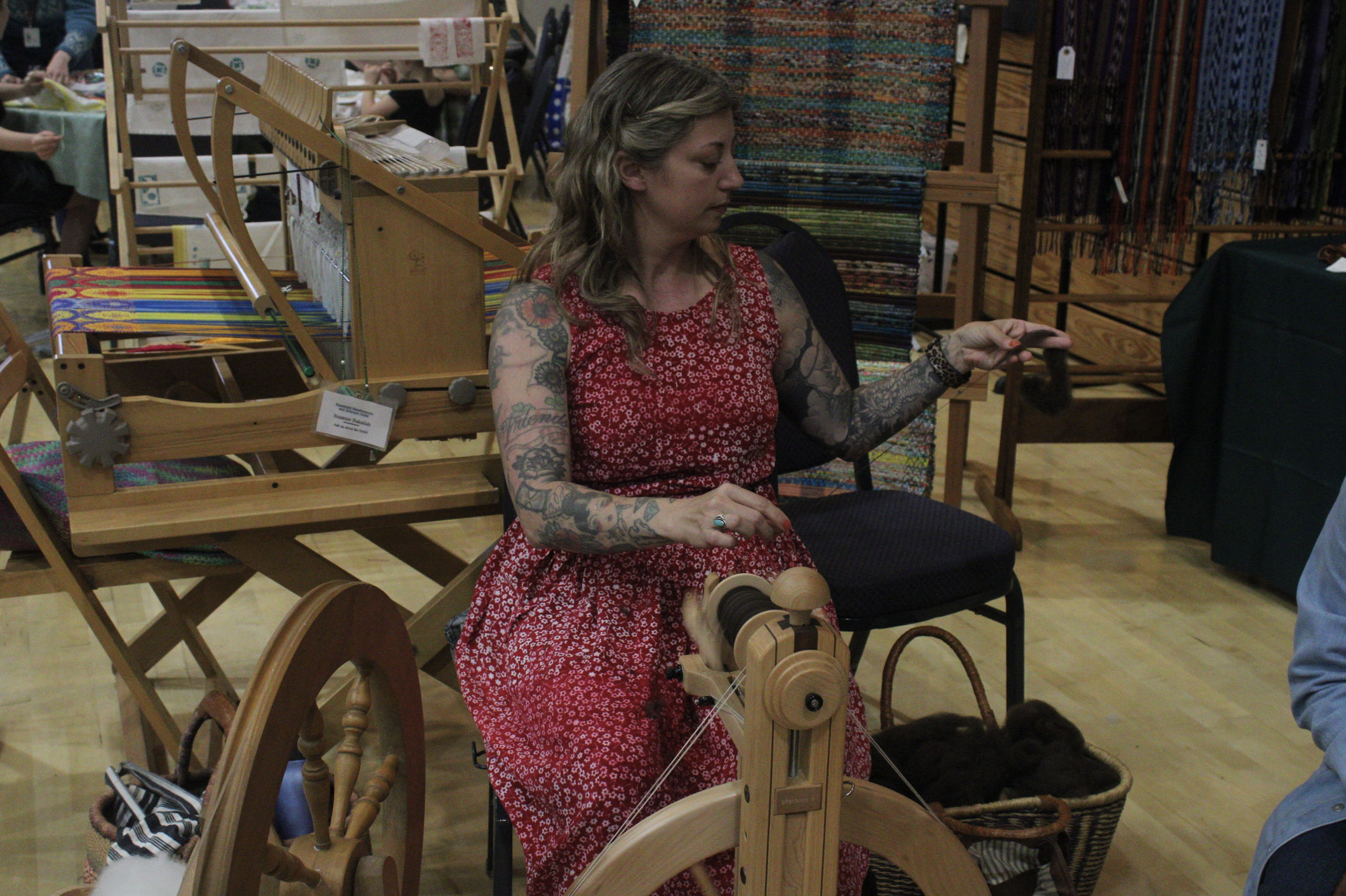
    Studio art major Sawyer Armitage is the host of the Sew Easy event held every Monday at the Makerspace in the library. They walked me through my very first fully finished sewing project: an itty-bitty, stuffed piece of pie. 

    Armitage has been working as a student assistant at the Makerspace since Dec. 2022. They only recently began hosting the sewing circle this semester, having learned the basics over winter break. 

    “I love to make tiny [things],” Armitage said. “I was lucky to have someone throughout my whole life who knew how to sew and was willing to teach me, and I wish I [had] taken them up on it. It’s been super empowering to learn, not only small alterations, but also to teach people how to hand-sew, to use the Singer sewing machine for the first time, hem their clothes, create new designs… it’s genuinely a good, functioning life tool.” 

    Armitage started me off by handing me a piece of felt, a pen and a set of shapes to trace onto the fabric. Afterwards, they handed me a needle and some embroidery thread. The endless struggle of getting the thinnest piece of string through the narrowest eye of the needle followed me throughout the entire sewing process.

    Emerald Dowd, a wildlife major, joined us halfway through the first hour and almost immediately began crocheting a flower with the prettiest yellow yarn. By the time it took me to finish cutting out my pieces out of the felt, she was halfway through the first layer of her flower. I spent some time trying to figure out if she was fast or if I was just slow. 

    As we sat and worked on our projects, we talked about all different aspects of our lives and personalities. Different people joined and left us throughout our two hours together, some coming to work on unrelated projects, others just stopping by to chat or borrow supplies. As Armitage, with the occasional help from Dowd, showed me how to do a blanket stitch, we all shared our favorite musicals, what got us into sewing, Armitage’s new band that they’re songwriting for and everything in between. Sitting and engaging with each other, in what Armitage called parallel play, filled a sense of community that I didn’t know I was missing. 

    Nova Presley is an environmental management major who utilizes the Makerspace not only for resources, but for getting independent work done.

    “I have really bad issues with getting myself to do tasks that I want to do unless somebody else is also doing [something] next to me,” Presley said. “The Makerspace is really helpful because, like, I’m not even here for sewing right now, I’m here for a different thing that’s graphic design. As long as everyone else in the area is working on something creative, it’s a lot easier for me to hangout and do something creative.”

    Presley has found the Makerspace to be a good source of forming friendships on campus.

    “It’s a very like-minded space, it’s fun to meet people outside of the typical avenues,” Presley said. “It’s hard to find people in Humboldt to hang out with.”

    Learning to make and mend clothing is also environmentally and financially sustainable. Instead of having to buy an entirely new garment when something tears or a zipper breaks, you can fix it yourself – or better yet, create something out of quality materials. 

    “When you don’t have a lot of money, whether you’re a person crafting or a higher institution that doesn’t have a huge budget, you have to figure out how to make things work with what you have,” Armitage said. “Being able to change what you have, or make it fit something new, that’s what sewing is a lot of the time.”

    Dowd sews for many reasons, starting with the love of creating and altering clothes. 

    “It’s a creative outlet, that you can then wear around and be like, ‘This is who I am, and this is what I like,’” Dowd said. “It’s this way of expressing yourself.” 

    Dowd comes to the Makerspace at least once a week for the Monday sewing circle. Otherwise, they often make use of the many resources that are offered, such as the communal sewing machine or the 3D printer. 

    “It’s a stitch-n-bitch,” Dowd said. “It’s a place for community; a place for people with similar interests to join together and to help each other out. If you’re just learning, and you’re like, ‘Hey, I don’t know how to do this yet,’ the people who are into sewing and into crafting are like, ‘I will indoctrinate you.’”

  • Humboldt gamer enters the competitive scene

    Humboldt gamer enters the competitive scene

    By Mario Orozco

    Competitive gaming and esports have risen to the mainstream with audiences captivated by the elite gameplay and competitive events. This rise in popularity has birthed thousands of professional gamers all competing for the top spot in their respective games. One of these competitive gamers is here at Cal Poly Humboldt, taking his talents for Super Smash Bros. to the competitive scene. 

    Deven Teixeira, a communication major at Cal Poly Humboldt, recently competed in GENESIS, an annual tournament held in Oakland and San Jose. GENESIS is considered to be one of the premiere tournaments with thousands of players competing for the top spot in the event. Teixeira was driven to compete in the tournament to test his skills after winning some smaller competitions.

    “What inspired me is that I won a decent amount of online [tournaments] and some locals in Central California,” Teixeira said.

    A tournament of this size and importance calls for different types of preparation. Apart from just gameplay, Teixeira typically prepares both his body and mind to ensure he’s at his best.

    “I usually get good sleep and eat very healthy meals, not greasy or saturated in fat meals,” Teixeira said. “Meditation through breathing exercises is a staple to my prep as well.”

    This journey into esports started with a healthy rivalry between Teixeira and his high school best friend. The two began by competing against one another in a modded version of Super Smash Bros. Brawl called “Project M” while in their freshman year of high school. This mod made the game more like the former Super Smash Bros. Melee and after some time they decided to test their skills and compete in some local Project M tournaments. They eventually found they were no longer satisfied with the modded game and wanted the real thing, putting together some money to buy two copies of Melee. This led to them attending their first major tournament, with Teixeira crediting his best friend for being one of the main reasons he competes to this day.

    While not placing first in tournament, being eliminated from the bracket going 3-2 and ranking 513th out of around 2000 participants, Teixeira isn’t upset about his placing in the tournament. He views the experience as beneficial and inspiring.

    “I’m not upset with my placing,” Teixeira said. “I’m more inspired to do more majors and try to do even better each time.”

    Competitive gaming is a difficult task that requires a lot of time and practice. Teixera offers advice to any students who are looking to step foot into the competitive gaming scene.

    “My advice is to challenge yourself,” Teixeira said. “If things bring you discomfort in gaming, use that discomfort as a threshold for learning. Reach out to me. I’m easily accessible and I can help people get to top level quick if they want to do that grind.”

    Teixera hopes that Melee becomes more prominent locally. He wants to revive the game on campus and see the competitive scene flourish once again. 

    “Revive Melee in Humboldt,” Teixeira said.

  • LOGGING THEIR HOURS ‘JACKS SHARPEN THEIR AXES        

    LOGGING THEIR HOURS ‘JACKS SHARPEN THEIR AXES        

    By Alex Anderson

    Over 150 logging competitors will soon descend upon Humboldt swinging axes, climbing trees and firing up their saws. They’re coming to compete at the 84th Annual Association of Western Forestry Clubs (AWFC) competition, a special opportunity to showcase what makes Humboldt logging sports unique. 

    After about a year of planning, Cal Poly Humboldt’s logging sports team is excited to host the AWFC competition for the first time in 10 years, in conjunction with the Redwoods Region Logging Conference (RRLC). The competition is free and open to the public, taking place at Redwood Acres Fairgrounds on March 13 through March 16. Zoey Cardoza, president and captain of Cal Poly Humboldt’s logging sports team, is excited for the team to host the event this year. 

    “We’re expecting over 180 competitors coming from 10 western schools,” Cardoza said. “We’re bringing 31 students to compete, which is wild, and it’s gonna be really fun. I just want them to have the same opportunities that I’ve had and be able to compete in a competition that everybody else has strong passions for, learn something new about themselves and hopefully about the sport too.” 

    Logging sports is far from any typical sports club seen on university campuses. Deeply intertwined into the history of Cal Poly Humboldt and surrounding community, logging sports keeps the tradition alive. The team strives to open their doors to everyone with interest, not limiting themselves to forestry majors. Cardoza aims to create a safe space for people to try something new with logging sports. 

    “I think a lot of people assume that, you know, we’re logging sports, we’re all foresters,” Cardoza said. “We’re not. We have economics majors, psychology majors, and English majors. We welcome any and all walks of life. I think that’s what makes us unique too, is that you don’t have to be a certain shape, size or have a certain passion. If you want to try it, come out and try it.”

    While the club is open to all educational backgrounds, the team does serve a vital role in preparing students who are interested in forestry careers following school. Ed Laskey, a forestry student and second year logging sports competitor, explained how being on the team also provides an essential space for learning safe practices with modern and traditional logging skills. 

    “I would say just practicing valuable working skills using the axes, the cross cuts and chainsaws because I’ve worked with chainsaws before and it’s good to have a big group of people that you can learn from to do safe operation,” Laskey said. “And help others to learn how to use these tools in a safe way.” 

    Cameron Wallace, a forestry student at Cal Poly Humboldt and logging sports competitor, explained what sets logging sports apart from other sports on campus. 

    “It’s more niche,” Wallace said. “There’s a little more inherent risk. It really lets me get involved with my friends in forestry and in a way that I wouldn’t normally be able to… at the end of the week you’re tired, you’re done with sitting in the library all week and you’re just [ready to] go out into the woods with your friends to use chainsaws and axes. Do what we’re learning about in a natural environment with your friends, and it’s a good way to get outdoors, that’s part of the fun.” 

    Humboldt’s logging team is another place where students find a supportive community. Team members look forward to showcasing their skills and comradery at upcoming competitions.

    “I would say it’s special because you meet a lot of cool people,” Laskey said. “The friendships that you make are really cool. Whenever you’re at a competition and you’re competing in an event, you have the whole team, because usually it’s only one thing going on at a time. So the whole team is able to go there and watch you and cheer for you. That’s super special.”

  • UPD BYTES

    UPD BYTES

    Monday, Feb 19, 2024

    1:06 p.m. Welfare Check – First Floor Library Computer Lab

    White male in his 40s with scruffy hair and tan baseball cap, red in the face and rocking back and forth, non-responsive to staff approaching him. He left on arrival of the officers. 

    8:04 p.m. – Investigation at JGC

    Subject believes someone placed an Apple Airtag on her vehicle and is requesting contact. 

    11:42 p.m. – Patrol Check Kinesiology Building

    4 skateboarders at the student recreation center advised of school policy on grinding and tricks. Subjects moved along. 

    Tuesday, Feb 20, 2024

    08:36 a.m. – Vandalism – Humboldt Bay Aquatic Center

    Rowing coach advised via email someone has been untying and tampering with the boats at night. 

    3:52 p.m. – Drug Activity- Alder Hall

    Officers requested to pick up a bong. No marijuana present or resident on scene. 

    11:01 p.m. – Investigation at Mendocino Residence Halls 

    Subject called to report a possible missing person. 

    Wednesday, Feb 21, 2024

    1:03 p.m. – Suspicious Circumstances – Kinesiology and Athletics Building 

    Subject’s car was tagged with #13 on the side mirror with a sharpie. She was able to remove it, but is concerned it may be a marking for someone targeting vehicles or people. She was parked off-campus on 16th and Spring St., but requested documentation in case there are other victims.

    5:42 p.m. – Alder Hall – Grand Theft 

    Subject reported their bike was taken from the bike rack between Alder and Chinquapin.

    7:41 p.m. – Vandalism – 2nd Floor Library

    Custodial staff reported vandalism in the women’s handicap stall.

    Thursday, Feb. 22, 2024

    10:16 p.m. – Drug Activity – Chinquapin Residence Halls

    RA requested the officer for drug paraphernalia.

    Friday, February 23, 2024

    11:09 a.m. – Vandalism – Kinesiology and Athletics Building

    Eternal Heart graffiti found on the stairwell in the Kinesiology building.

    2:53 p.m. – Suspicious Circumstances – 14th Street and Union

    Subject reported male is on top of a moving vehicle. APD was contacted as vehicle was located off-campus.

    5:15 p.m. – Misc. Parking Problem – Sunset Residence Hall 

    The Residence Life Coordinator requested the officer to respond to the garden area for a motorcycle and small jug of gasoline locked to the bike rack. Handled by housing.

    Monday, Feb 26, 2024

    2:45 p.m. – Fire Alarm – Mendocino Residence Hall

    Fire Alarm [went off] as a result of burnt food. False Alarm.

    5:03 p.m. – Welfare Check – Trinity Residence Hall 

    Mother of a student received a call at [3 p.m.] stating her daughter had been kidnapped and they were threatening to kill her if the mother didn’t send money. The daughter was contacted and the call appears to be fraudulent. Subject contacted her mother. 

    8:19 p.m. – Welfare Check – Plaza Circle 

    Subject called to report a 30-year-old white male in a bright blue sweatshirt acting erratically. 

  • Navigating FAFSA 2024

    By Alana Hackman

    The 2024-2025 Free Application for Federal Student Aid (FAFSA) soft-launched in late December of 2023. The application has gone through some changes compared to previous years’ applications. The type and amount of questions will vary based on each student’s circumstances. The FAFSA website has not set a deadline for when the form will close, but mentions that the first round of applications will likely be sent out to universities through the middle of March 2024. 

    Cal Poly Humboldt’s financial aid office says the anticipated due date for FAFSA applications is April 2 but they recommend students fill out the application before March 2 to be eligible for Cal Grants and the Middle Class Scholarship Award. From their understanding, student’s won’t be able to go back into their FAFSA form and make corrections until mid March. The financial aid office urges students to complete the form before March 2 to give them the most time to work with students on the form if complications arise. 

    The scholarship application for Cal Poly Humboldt is also currently available until March 4, although some scholarships may have extended deadlines. 

    The financial aid office is located in the Student Business Services and open on weekdays for in person assistance from 9 a.m. to 4 p.m., and their phone line is available from 8 a.m. to 5 p.m. They have also implemented after-hour assistance twice a month through Zoom. The next dates are March 4 and March 20 from 3-6 p.m. 

  • Proposition 1 – will it hurt or help California?

    By Alexandra Berrocal

    I am a person with mental illness. I have bipolar disorder and take my five medications every night. As a person with mental illness, I have mixed feelings about Prop. 1. I think it’s great that our state is finally doing something about homelessness. According to research done by UC San Francisco, over eight in ten homeless people in California struggle with serious mental illness and nearly two-thirds struggle with addiction. This proposition would increase treatment beds and increase care for people with addictions. I am unhappy that they are expanding involuntary treatment. Involuntary treatment is necessary under certain circumstances. I have been so delusional that I thought I was the Messiah, despite taking my medication. I didn’t think I needed as much care as I ended up getting. I credit involuntary treatment with saving me in certain situations. However, I am concerned that involuntary treatment will be overused.  

    It comes down to a very tricky dilemma. To what degree can a person, whose mind is impaired, make good choices for themselves? It’s a tricky line to walk. Often, we can’t make good choices for ourselves if we are severely ill, so we need to rely on others to do what is best for us. However, this inherently violates the rights of the mentally ill to a degree. Sometimes the current laws assume we can make choices for ourselves when the part of us that makes choices is impaired. Our current system doesn’t really know how to deal with this. Either they give us the freedom to make bad choices, or we have no choices at all.

    It could be argued, though, that the situation really has become dire. I actually walked through Skid Row once, with company, and was shocked by the poverty. This makes me consider that maybe the situation with mental health has become so dire in our state that involuntary measures have become necessary.

  • What is Proposition 1?

    What is Proposition 1?

    Voting on the future of mental health treatment

    By Savana Robinson

    At face value, Proposition 1 amends the Mental Health Services Act to offer more behavioral health services. This requires authorizing $6.38 billion in bonds. Meaning that the state sells this amount in bonds, which is how the government borrows money and repays it, plus interest over time. According to the Legislative Analyst’s Office, it would increase state costs to repay bonds, amounting to $310 million annually for 30 years. This also means that an annual $140 million of existing tax revenue for mental health, alcohol, and drug rehabilitation shifts from counties to the state government.

    So what will Prop. 1 do?  If voted in, it will make counties’ mental health care and substance use treatment services more focused on housing and personalized support. The money could go to building more facilities and housing for people with mental health, drug, or alcohol issues. If it’s not voted in, nothing will change.

    Arguments for Prop. 1 emphasize the importance of finding solutions to the homelessness, mental health, and addiction crises, and Prop. 1 may be a step in the right direction. Arguments against Prop. 1 point out that the proposition is expensive and this is not the time for more government debt. It may also take away funding from current community-based mental health services funded by the Mental Health Services Act, taking almost a third of the annual funding dedicated by the act.

    According to the California Voter guide, those in favor of Proposition 1 include California Professional Firefighters, CA Assoc. of Veteran Service Agencies, and National Alliance on Mental Illness–Ca. Those opposing Prop. 1 include Mental Health America of California, Howard Jarvis Taxpayers Association, and CalVoices.

    Voting day is March 5. To register to vote, visit registertovote.ca.gov/

  • Home for the weekend: a conversation with myself

    Home for the weekend: a conversation with myself

    By Mia Costales

    The flicker of the TV from down the hall lit up my room just enough that I could still see the outline of my bookshelf in the corner. The flashes of light just barely illuminated the spines of books, dried flowers, a nesting doll my mom gifted me for a birthday so many years ago. It’s quiet, aside from the distant murmur of late night TV. Nights like these, I typically stay up pretty late. There isn’t much to do here other than hang out with my dogs or pester my mom while she’s working. And I can’t do either of those things because they’re all asleep. So instead, I conducted an interview with myself. 

    Mia: Hi, it’s been a while since I’ve seen you here.

    Mia: Yeah, I usually don’t come around here too often. It seems I only end up here in moments of crisis. 

    Mia: Do you consider this a moment of crisis? Don’t you think that’s a bit of a reach? I mean, yeah it’s been a rough couple of weeks, but you’re still doing okay. 

    Mia: I guess you’re right. It feels wrong to call this a moment of crisis. I just can’t seem to get out of my own head. That is why I’m talking to you; I’m exhausted. It’s been hard to get out of bed. I’ve been forcing myself to shower, brush my teeth, and eat. I’ve been skipping classes because I can’t leave my house, only to obsessively watch the clock in fits of guilt. I made the drive up to Mom’s in part so that I could get away from Humboldt. But I don’t know if coming up here is helping or hurting. 

    Mia: I get that. It just feels a little self-indulgent to be so complicit in your pain. I know you are in pain, but lingering on it is only going to make it worse.

    Mia: I don’t want to say that I’m complicit in my own pain or sadness, but I think a part of me is. This reminds me of when I first went on antidepressants. I didn’t necessarily feel sad or depressed or suicidal anymore; I didn’t really feel anything. The numbness was a completely new feeling and I wasn’t used to it. I was so used to being in pain that I almost kind of missed it; like, I had felt this for so long that it was a part of me, and without it I wasn’t the same. I hate when people say that their mental illness is what gives them their “sparkle.” I think that it can be really invalidating. There is nothing glamorous about not being able to get out of bed in the morning. When I’ve been wearing the same pajamas going on day six and I haven’t brushed my teeth, washed my hair or eaten a proper meal in days, I am the furthest thing from glamorous. 

    Mia: What will happen when you’re no longer in pain?

    Mia: I’m not really sure. What will happen if the pain never goes away?

    Mia: You’ll continue living. Just as you are doing now. I know it’s not always easy to do that and I don’t know if it’ll ever get easier. But regardless of ease, you’ll go on. It might seem impossible to go on at one point or another, but then you’ll hang out with your friends, or call your mom, or see a cute dog in a car across the street, and for a moment, the pain will subside. 

    Mia: Thanks for that. Same time tomorrow?

    Mia: Always.   

  • Badminton is back at Cal Poly Humboldt

    Badminton is back at Cal Poly Humboldt

    By Carlina Grillo

    Every weekend on campus students make birdies fly. Saturdays from 12 p.m. to 2 p.m., badminton lovers can be found at an open gym hosted by the Humboldt Badminton Club. Located at Forbes Gym, badminton is one of the many recreational sports on campus that host drop-ins. Drop-ins are $2 a session for community members, but for students, it’s completely free.

    Aaron Muscarello is the president of the badminton club and has been slinging shuttlecocks since middle school. As a senior and a physical education major, Muscarello is passionate about bringing badminton back from the dead. 

    “This is the first full semester,” Muscarello said. “To see a whole gym full of people, like this, was initially my goal to start. The next goal is to get more competition. I like to see tournaments. It’d be cool to have an intramural league but we just have to get people that are willing to… progress and want to be more competitive.”

    With big plans for this club’s rebirth, Muscarello’s big time goal is to travel and compete against other schools. In order to achieve his goals, he must start by recruiting more consistent club members. 

    “It was kind of a selfish goal,” Muscarello said. “You can’t play badminton by yourself right? So you need other people… I want to play so I’m going to be the one to get all these people together. And that’s why I started honestly. It’s a great opportunity to come down like if you want some exercise on a Saturday, especially when it’s raining.”

    Either with friends or on your own, the badminton club is beginner friendly and a good place to socialize. Depending on experience, games range from fast paced one-on-one matches, to slow and steady doubles. Most of the time they don’t keep track of points. 

    “If you’re somebody that wants to run around and actually meet people that are really cool, that is what the club is for,” Muscarello said. “That’s why drop ins are a sweet opportunity.” 

    Morgan Lopez, a child development major, was a first-timer on the badminton court. She had hardly played the sport before, and walked away feeling positive about the experience. 

    “It’s actually really fun,” Lopez said. “It’s way harder than I thought it would be, but I think I’ve got a dub coming up here soon. It’s a cute little game, a cute little racket, cute little birdie. Cute little net.”

    More serious about the sport is Clarissa Peyton, a zoology major. Peyton has played badminton since highschool where she competed in the Citrus Belt League and played varsity singles.

    “I love badminton because it’s a really satisfying sport, like when you smash it [the birdie] or trip up your competitor with different moves,” Peyton said. “I also just love competing with people and seeing people really give it their all.”

    Muscarello attributes the success of the club to the people he works with. This includes club officers, his advisor, recreation sports and the office of student life, his family, and most importantly his team and the people who show up to drop ins. 

    “I might be the President – or King, Emperor, Firelord – of the Humboldt Badminton Club, but this is a team game and I couldn’t have gotten this club to where it is without the support of [my team],” Muscarello said. “I couldn’t have done it without y’all.” 

    For more information check out @Humboldt_badminton on Instagram or for the full list of drop in sports see: https://recsports.humboldt.edu/drop-in-recreation 

  • Cows. Good for climate change?

    Cows. Good for climate change?

    By Gabriel Zucker

    The Willits bypass is a stretch of the U.S. Highway 101. After being proposed 60 years ago, it was finally finished less than a decade ago. It serves an important role in decongesting Willits, diverting drivers around the small town. The bypass is also home to the largest public wetlands mitigation project in the state of California, the Willits Bypass Offsite Mitigation Project.

    This mitigation project has been joined by Justin C. Luong, a rangeland resource science professor at Cal Poly Humboldt. Recently he was awarded a $520,000 grant from the California Bountiful Foundation. He is conducting a case study on the impact of cattle grazing on grasslands. This research is important because wetlands help with carbon cycling, host thousands of endemic species, and play a key role in cattle production.

    “Federal government policies don’t allow for any grazing on any top of habitat classified as any kind of wetland at all,” Luong said. “Even though California state laws and science show sometimes grazing can be beneficial for managing natural systems if utilized properly.”

    Luong is doing this study to better understand if cows actually play a vital role in grassland ecosystems. He is using historical data from the Mendocino County Resource Conservation District to look at the impact of removing grazing in the grasslands. Luong is also using aerial images from Google and drone images to better understand the environmental differences between grazed and ungrazed grasslands. While looking at all of these images, Luong is also taking samples at the site, inspecting the biology of the plants, trying to better understand the best traits needed for a changing environment. 

    “My job is to essentially go in and evaluate how the removal of cattle grazing from these areas affected these habitats and their ecosystem properties and services, especially thinking about some of the threatened species we have out there,” Luong said. “The North Coast semaphore grass, the baker’s meadow phone. Both of these species typically require more open habitat and bare ground in order to establish well.”

    Luong is trying to find the perfect combination of native plant species for grasslands to thrive. Plants like Reed Canary grass are taking over most of the space in the habitat, leaving little room for the important species mentioned above. 

    “The managers on the ground have noted that oftentimes, cattle grazing is really important to remove some of that cover, open up some of that space to facilitate some of the recovery or establishment of those kinds of threatened plant species, while still supporting cattle production,” Luong said.

    The reason Luong is focusing on grasslands is to highlight the importance they have. They not only support the entire cattle economy, but they hold a key role in controlling carbon emissions. In a process called carbon sequestration. They hold pockets of carbon in their roots, reducing global carbon emissions. In a study by The Conservation Fund, they discovered that wetlands store 18 to 216 metric tons of carbon per acre. Making grassland restoration an important fixture in climate conservation.

    “Grasslands are really important for carbon storage and sequestration, especially with future climate risks. Because oftentimes when you have mass plant mortality, which happens in grasslands or forests you lose that carbon back to the atmosphere.” Luong said. “In grasslands, a lot of that is fibrous roots underground. We know that some native grasses that we have dug up can go up to 18 feet deep, so that carbon stays stable in the ground and helps with more stable carbon sequestration with climate change.”

    Luong is going to work on this project for the next five years with Mendocino Resource Conservation District. He is hoping to reinvigorate grassland restoration by updating the data and information people have for grassland restoration. He believes that once people have the right tools, grassland restoration will be more informed and focused.

    “My work often is really geared at being applied, and so I’m always trying to find real world issues that need solving now and try to work towards those solutions, those applied solutions,” Luong said.

  • Campus Store, Eureka running deficit of $101,367 in first two years of operation

    Campus Store, Eureka running deficit of $101,367 in first two years of operation

    By Brad Butterfield

    Since opening November of 2021, The Campus Store, Eureka’s revenue stands at $188,596, with expenses totalling $289,936, equating to $101,367 in losses during its first 25 months in operation. The storefront boasts prime location in Eureka’s Old Town and was opened with the aim of increasing the university’s presence in Eureka. Despite consistent financial losses, the university remains steadfast about the importance of the Eureka store for community engagement and accessibility. 

    Although sharing a name with The Campus Store, Arcata, the Eureka location is different in many foundational ways. Whereas the Arcata building space is owned by the Cal Poly Humboldt Foundation, the Eureka location is leased by Cal Poly Humboldt for $2,000 a month. This $2,000 per month excludes utilities, trash services, maintenance, taxes, permit, inspections and license fees, according to the building lease agreement obtained through public record request. While the Arcata location is operated by Follet, a nationwide store operator for colleges, the Eureka location is operated by Humboldt Outfitters, a locally owned company. 

      “They are able to bring in their own approved designs, which may be different than the Arcata Campus Store. They also bring in some of their successful products they feature in their Arcata store,” said Grant Scott-Goforth, communications specialist for Cal Poly Humboldt.

    The deal with Humboldt outfitters arose from a request for proposal (RFP) put out by the University due to the fact that the Eureka location was too small to be operated by Follet, according to Scott-Goforth. Humboldt Outfitters was selected because of their success with their Arcata store, and their local screen printing and engraving capabilities. 

    David Neyra, owner of Humboldt Outfitters, deferred to university marketing and communications when asked for an interview. In his email response, Neyra copy and pasted questions and answers which had been asked directly to marketing and communications regarding the university’s perspective on operations at the store.

    The Eureka location layout also differs substantially from the Arcata storefront. In Eureka, sections of the store are reserved for local school merchandise in addition to offering Arcata, CA and Humboldt County branded clothing items. Additionally, an entire corner of the store is reserved for non-university affiliated trinkets like cutting boards, cutlery, and toiletry items. The store also features Humboldt State branded gear, which is important to the vast majority of current Alumni who studied at the then named Humboldt State University.

    At the Old Town store, Cal Poly Humboldt branded gear costs $89.99 for a zip-up fleece sweater, $69.99 for a plaid blanket with a white ‘H.,’ a pullover hoodie for $49.99, and $49.00 for a polo. However, the gear is name-brand. Nike, Holloway, and Port Authority all make items sold by the store. 

    Unprofitable since opening, The Campus Store, Eureka has run an average deficit of $4,055 a month for the 25 month period between Nov. 2021 to Dec. 2023. In spite of this, the university sees the store as a success in its main objectives of providing visibility and accessibility, expanding the relationship with the city of Eureka, and expanding logo wear offerings, according to Scott-Goforth. Naturally, running a consistent deficit is not ideal for any business, no matter how large the financial backing. This has led to the university’s constant changes to the store’s merchandise and marketing in an effort to attract more customers.

    “The Campus Store, Eureka continues to optimize its inventory selection and online ordering, along with social media marketing to increase sales,” Scott-Goforth said.

    The university’s Senior Director for Enterprise Services Todd Larsen, who oversees the Campus Stores, deferred an interview request to university marketing and communications.  President Tom Jackson Jr., who was credited by Frank Whitlatch in his letter to the editor on Nov. 29,  2023 with the achievement of opening the Campus Stores, did not respond to an interview request.

    From the city of Eureka’s perspective, the store is nothing but a major positive. City Manager Miles Slattery emphasized that any and all presence of the university in Eureka is hugely beneficial – and not only from an economic standpoint. 

    “It’s even more beneficial from a social standpoint of bringing in a younger and especially more diverse community to our area,” Slattery said. “Our emphasis in economic development has been working on BIPOC owned businesses, trying to expand on that and provide opportunities for folks to open up businesses. Having that population of folks in our Eureka commercial district is nothing but beneficial and expands the diversity of our businesses.”