The Lumberjack


Students Serving The Cal Poly Humboldt Campus and Community Since 1929

Tag: theater

  • She Kills Monsters: not a Nat 20

    She Kills Monsters: not a Nat 20

    by August Linton

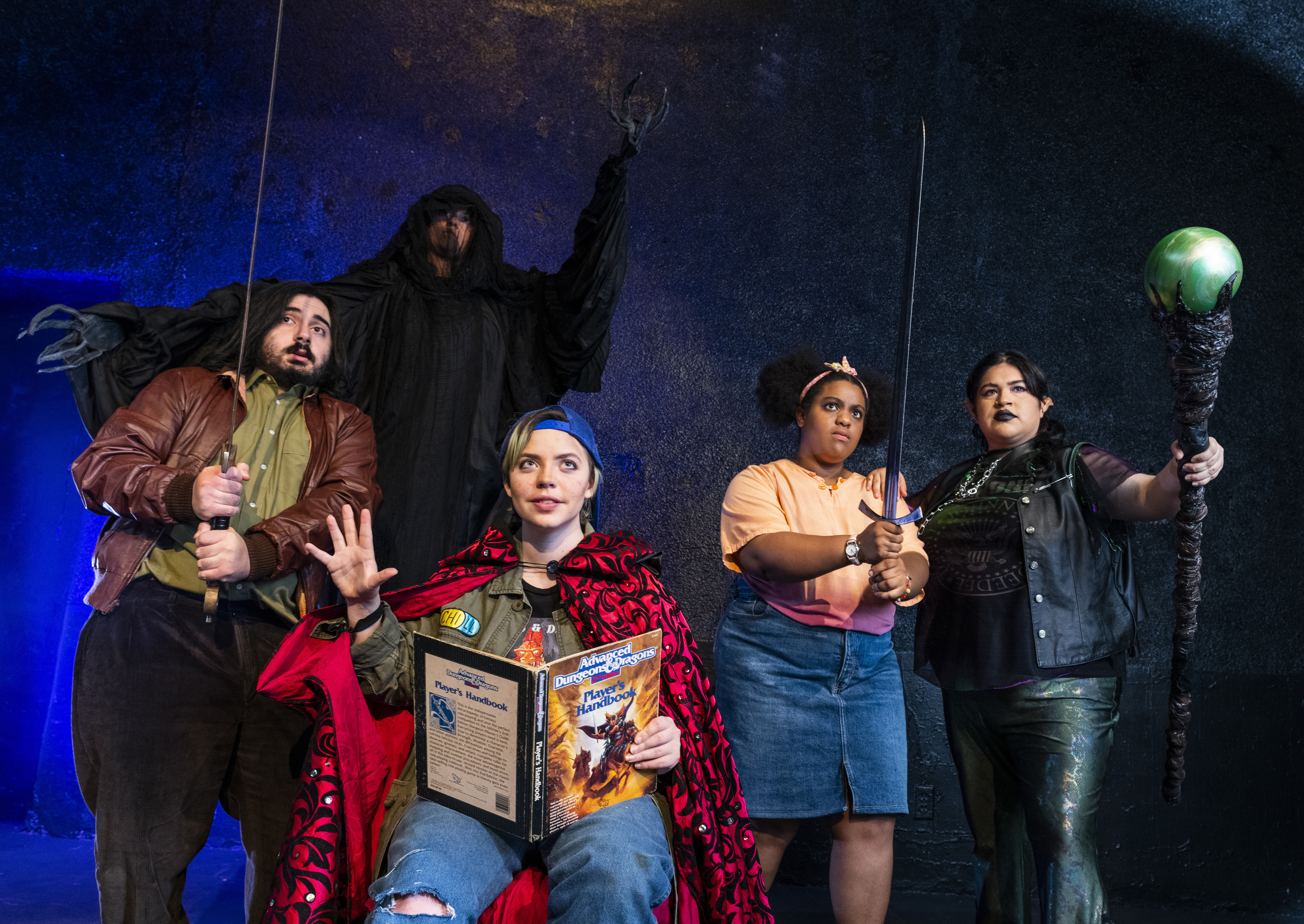
    In the hours before I attended the opening night of She Kills Monsters, I was excited. Live theater has been absent from my life, and the chance to see people perform a play was one I relished. But I didn’t enjoy this production for many reasons, mostly stemming from an amateurish air, and a lack of sensitivity in its queer representation.

    Certain elements of the show’s queerness were successful. The relationship between Tillius the Paladin (Geneva Bell) and Lilith the Demon Queen (Kyrstie Obiso) and their real-world counterparts was surprising and wonderful in its intimacy. As someone who was a nerdy gay teenager, I saw myself in their fear, their yearning. It affected me to see a gay kiss on stage— I hadn’t before. Queerness often intersects with desire to escape into fantasy, and I saw that genuinely represented in She Kills Monsters.

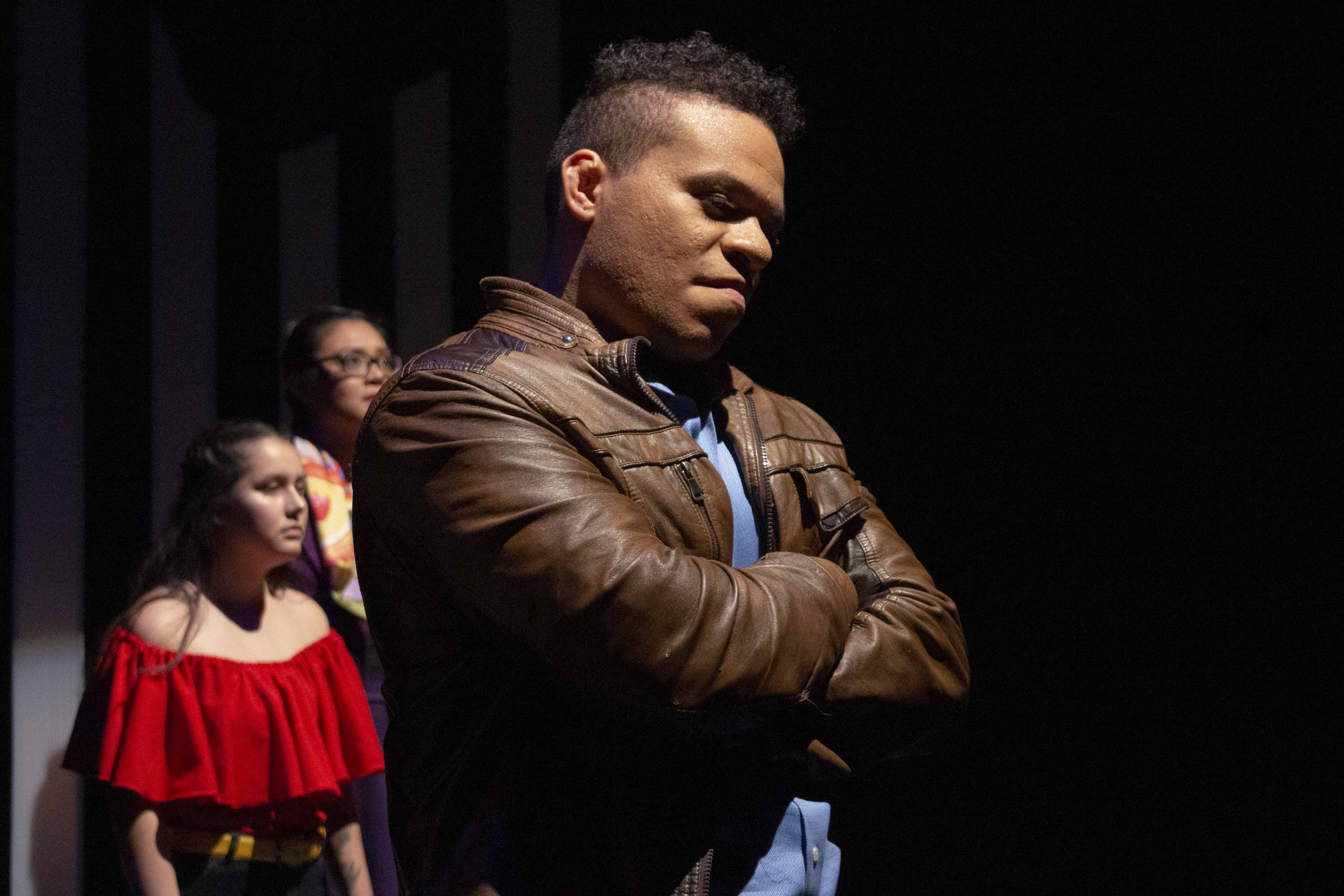
    The decision to cast one of the succubus villains, Evil Tommy (played by Oliver David) as a gay man felt strange considering the role this character occupies. The character is regularly called Evil Tina and played by a female actress. I found myself uncomfortable and struggling with cognitive dissonance as an obviously queer-coded character bullied, screamed slurs at, and borderline sexually harassed another character. 

    The stage combat, too, left me wanting something more. It’s evident that the cast spent blood, sweat, and tears on choreographing and practicing the show’s many fights, but many stretched my suspension of disbelief. Swords swung three feet from their targets, while victims lowered themselves to the ground rather than falling. A show with such a focus on its fights deserved better.

    The production design, however, impressed me and greatly increased my enjoyment of the show. The boss monster props especially charmed and impressed me. The undulating fabric-covered frame of the gelatinous cube, intensely staring papier mache orb of the beholder, and numerous large dragon heads of the final boss fight wow and amaze in cinematic fashion. 

    Other elements of the production seemed unfinished or fell flat, including sometimes jarring sound design and inconsistent costuming. This gave She Kills Monsters a distinctly high school play feel, despite the myriad uses of the word fuck. 

    The age of She Kills Monsters as a script showed in its dialogue and in its ideology. Released in 2011 and set in 1995, it has many elements and jokes which fell flat. Why does the main character Agnes (Miah Carter) treat her sister’s gayness with disbelief and fear? The politics of dating and marriage in Agnes and Miles’ (Stephan Chittenden) relationship also felt dated, and weirdly emphasized. And what was with that joke about Miles touching his girlfriend’s younger sister?

    Despite this, Bell and Obiso as Tilly and Lilith were two standouts, bringing a wide variety of attitudes to their characters in both the real world and the dream world. The character of the Great Mage Steve (Maverick Cheney) deserves a special shout out for being a consistent source of laughs every time he flopped onto the stage to be killed in yet another gruesome way. Vera (Elena German) also very much embodied the role of high school guidance counselor, and drew laughs with her creative use of a rolling chair. However, much of the ensemble’s acting didn’t impress me, lacking physicality and emotion. She Kills Monsters has an emotional core of loss and drama that felt smothered by the production’s issues.

    At the end of the show, about a quarter of the audience stood up, attempting to trigger a standing ovation. It didn’t happen.
  • “Something Rotten” is happening this spring

    “Something Rotten” is happening this spring

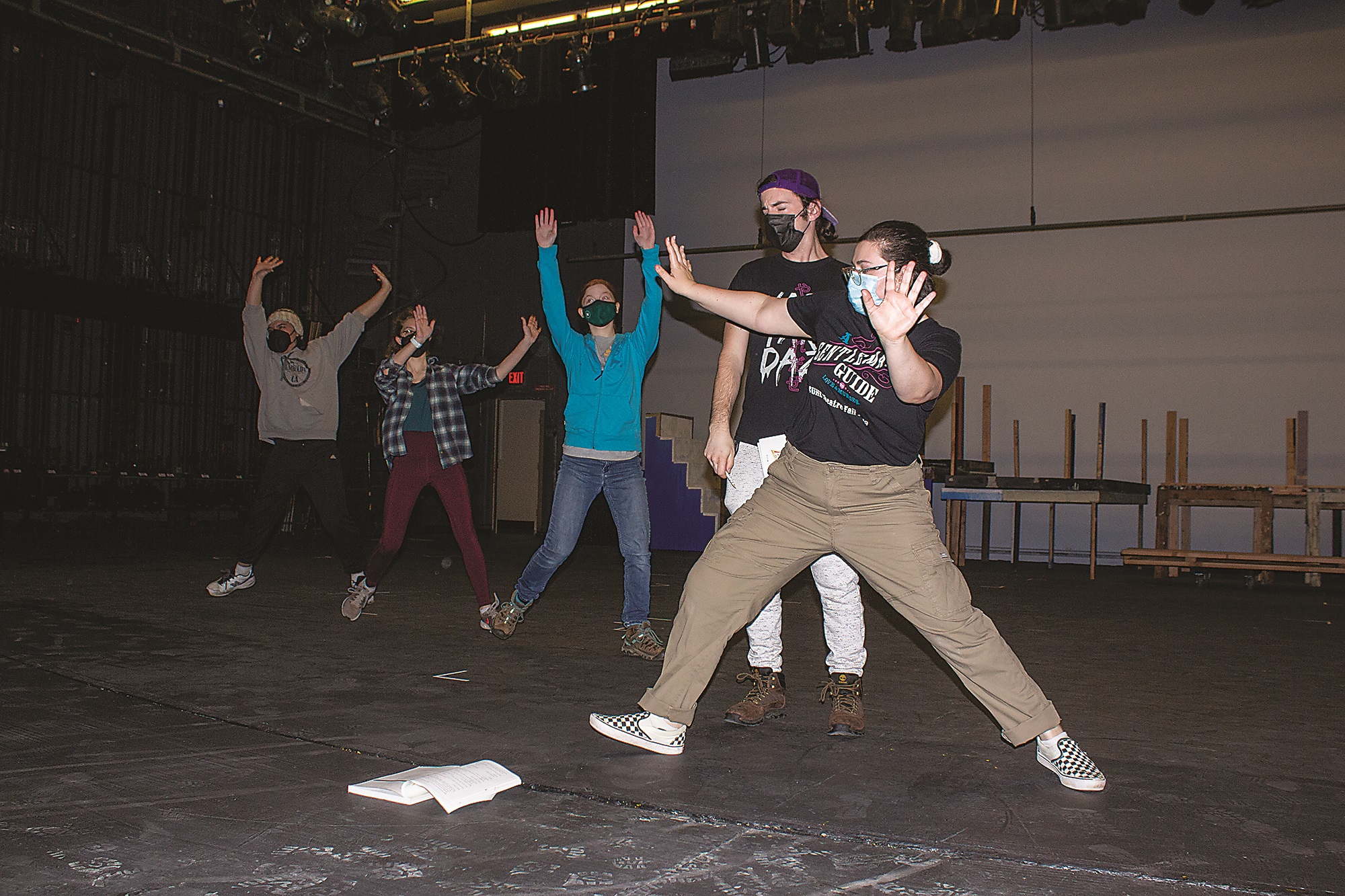
    The cast and crew of Cal Poly Humboldt’s spring musical have been meeting for two weeks now, ever since the start of the semester. Rather than fully polished scenes, their rehearsals consist of bare-bones run-throughs, scripts in hand and tape on the floor where the set will eventually be.

    The show is “Something Rotten,” a farcical comedy set in an anachronistic 16th century. The two main characters, the Bottom brothers, invent the concept of a musical and feud with their rival, Shakespeare. The show re-characterizes The Bard as a rocker, not dissimilar to a Freddie Mercury type charismatic frontman.

    “The show is about love, relationships, ego, and anachronism,” said director Michael Thomas. “You’ll see a cell phone or two, there might be a modern toilet plunger.”

    Although “Something Rotten” is set in the Renaissance, the music and dancing are rooted in Broadway tradition. At this particular rehearsal, choreographer Carrie Walpole was working with the cast on the dancing for the track “A Musical.”

    This number will feature the cast tap-dancing, and is best described as a classic musical theater style composition. Another track, “Will Power,” performed by the character of Shakespeare, is unmistakably rock. The Bard croons out his famous lines “Shall I compare thee to a summer’s day? Thou art more lovely and more temperate,” over a driving bass line.

    “It’s more like a rock musical, it’s a very upbeat score,” said Thomas.

    Cast members and crew alike were required to be at Wednesday’s rehearsal for most of the evening. Stage manager Ian Aguilera and his two assistant stage managers Benji Salisbury and David Fisher spend just as much time as the actors, if not more, preparing for and producing the final musical.

    Before the rehearsal had even started, before the director or most of the cast had arrived, Aguilera was at Van Duzer Theater, preparing.

    “Tech and acting are kinda fifty fifty,” said Aguilera, when asked about how much the crew do behind the scenes. “The director’s not here, I am.”

    With the support of the crew literally behind the scenes, the musical’s cast can do their best work. While the actors go over scenes, Aguilera sits at the front of the stage assisting with minute production details and even helping with direction.

    “Something Rotten” takes advantage of its self-aware premise for comedic effect.

    “It’s a musical about a musical,” said Aguilera. “It’s [the main characters] versus Shakespeare.”

    In one scene, the soothsayer Thomas Nostradamus, played by Sammi Pietanza, looks into the future of theater. He says that the characters will break into song and dance, and a glass of wine at concessions will cost an exorbitant amount of money.

    Pietanza’s character acting is silly, joyful, and extremely animated, even at this early stage of production. They said that it’s easier for the director to scale back an overdone performance than to draw more out of a timid one. They were the center of attention on stage, striking wizardly poses and speaking the script with mystical energy.

    “The character [Thomas Nostradamus] is like a human goblin,” Pietanza said. “Like a Danny DeVito kinda trash rat.”

    This energy that Pietanza brings seems emblematic of the production as a whole. It’s a whole lot of passionate people, coming together to make something silly, dramatic, and distinctly musical theater.

    Director Michael Thomas is looking forward to what will hopefully be a live, in person performance of “Something Rotten” in April.

    “People should come see it because it’s a fun, silly evening,” said Thomas. “It’s full of action, it’s colorful and upbeat.”

  • Humboldt State Students Voice Concerns Over Racial Casting

    Humboldt State Students Voice Concerns Over Racial Casting

    Students come forth after witnessing and experiencing racial typecasting within Humboldt State’s Theater Department.

    While COVID-19 leaves the world silent, Humboldt State University theater students are trying to raise their voices and create change. Reports of racial typecasting and the wrong types of inclusivity began to surface and the students decided to work together to create a better program for future students.

    “We’ve definitely had issues in terms of racial casting,” said senior theatre major Jaiden Clark. Clark is President of Alpha Psi Omega, a theater based fraternity at HSU.

    “The higher ups in the department and the faculty try to be inclusive in the wrong ways,” said Clark.

    Part of the issue was the selection of shows. According to Clark, there is a volunteer committee where students and faculty pick which shows will be done. Although it is voluntary, Clark mentioned in a few cases of shows being catered to people who are in the committee.

    “Anyone needs to be able to have a say,” said Clark. “I think it would cool to have a more democratic system.”

    HSU senior AJ Hempstead, a double major in theatre and religious studies, has faced discrimination when accepting roles for shows.

    “People are trying to be more inclusive, especially at HSU, I get more roles,” said Hempstead. “I was offered a role because of my acting level but also because they needed someone with a specific skin color.”

    “I would really like to see shows where it doesn’t matter the race or gender of the actor playing the role,” said Clark.

    Clark and Hempstead both agreed they wanted to see more shows being chosen that had characters that could be played by anyone, so the audience is sent a more equal message.

    “Colorblind casting is not actually a thing, there’s no such thing as colorblind anything because people are going to see.”

    Jaiden Clark

    “What are they doing, what messages are being sent here and where are those messages coming from,” said Hempstead.

    Hempstead wants the audience to look at what was represented onstage and think about the decisions that were made with casting, rather than produce shows that had to have a certain type of person.

    “Colorblind casting is not actually a thing, there’s no such thing as colorblind anything because people are going to see,” said Clark. He noted the faculty needs to be more color-conscious instead.

    Hempstead’s idea for improvement involved wanting to see a more active teacher assistants program where higher level students could help teach other students along with professors.

    “Teachers aren’t the enemy in any of this that’s happening,” Hempstead said. “We want to work with them as much as possible. We empowered our students, we empowered our community and that didn’t mean taking power from them. I see that power struggle.”

    Clark agrees with Hempstead, believing that open discussion can alleviate feeling uncomfortably and create progress.

    “It’s a really important time for people to talk about what worked and what they liked and what made them uncomfortable and what shouldn’t be done again,” said Clark. “When change is needed in the theatre industry, you have to start in universities. If we are behind Broadway, then we have to catch up because our people are just the people who aren’t there yet.”

    Associate Professor and Theatre Program Leader Troy Lescher responded to the rumored racial typecasting in an email. He asked for clarification if it were about racial representation onstage.

    “These processes are imperfect and are very prone to mistakes. Theatre is also a living art that relies on human storytellers,” Lescher said in an email. “Race, gender, age, physical attributes and vocal qualities are among dozens of casting considerations that impact representation onstage.”

    In response to what HSU is doing to ensure racial typecasting will not continue, Lescher said he would listen to a student if they felt racially typecast and would try to find an alternative learning opportunity for them with the director.

    “Afterward, I would bring this matter to the Season Selection Committee (which is composed of faculty, staff, and students) so that we could collectively work to strengthen our process,” Lescher said in an email.

    Lescher acknowledged the challenge of racial representation in casting and believes the program is guilty of not following through.

    “I believe there have been instances when our program has not exercised the cultural competence necessary to best support our students and their learning,” Lescher said in an email. “Critical awareness of and cultural sensitivity to matters of representation are important to our program and we continue to learn and to strengthen.”

  • Humboldt State’s Theatre Fraternity Tries a Comeback

    Humboldt State’s Theatre Fraternity Tries a Comeback

    Alpha Psi Omega attempts a comeback with new students and adviser

    Humboldt State University’s theatre fraternity is trying a comeback to campus (or it was, prior to the COVID-19 outbreak). Alpha Psi Omega intends to allow students to increase funding for competitions and student-directed shows.

    Rae Robinson, the faculty adviser for APO, said the return of the fraternity excited her.

    “The first chapter was like 1919 or 1920,” Robinson said. “There have been a few different departments as long as there has been Humboldt State.”

    Robinson said APO was reinstated when she arrived at Humboldt State 14 years ago. APO had a few years of club work, but the group of students interested in the fraternity graduated. APO went dormant.

    “We want to pull all of our performing art students together so we can all support each other better.”

    Jaiden Clark, APO president

    “Those kids graduated, the MFA was dissolved by the university, and it went under the radar for a while,” Robinson said. “Last year we had a new group of incoming students and they said, ‘We want a theatre club again,’ and I said, ‘We have Alpha Psi Omega.’”

    APO President Jaiden Clark said they’re passionate about creating change within the theatre department by unifying performing arts students through APO.

    “We want to pull all of our performing art students together so we can all support each other better,” Clark said. “We want to make more connections with more clubs around the school like the improv club and the circus club.”

    APO’s fundraisers will allow students to determine how the money is used instead of the theatre department allocating funds. The fundraiser money will allow for student competitions and student-operated shows.

    “School-wide enrollment is down, and as far as I understand, the school can’t afford to hire another faculty member to the theatre department. We need the students to feel empowered to do more.”

    Jaiden Clark

    “They don’t give us the money that we need in this department,” Clark said. “Neither have any schools in any theatre department that I have ever been to. So the students are going to pick it up.”

    Clark said the theatre department is low in faculty members, and having a more unified body of performing arts students would better support the students.

    “We lost a lot of faculty all at once,” Clark said. “School-wide enrollment is down, and as far as I understand, the school can’t afford to hire another faculty member to the theatre department. We need the students to feel empowered to do more.”

    Professor Patrick Ulrich, assistant adviser for APO, looked forward to working with the students to reach their goals.

    “I would like to work directly with the students,” Ulrich said. “Making money for their goals, serving their community, getting our name out to everybody and really just having an avenue for an honors fraternity.”

    APO would give the students freedom to advertise themselves how they see fit.

    “It really is in the hands of the officers,” Ulrich said, “who are all students.”

  • Dreams in Between

    Dreams in Between

    Cast and crew of “Dreamers: Aquí y Allá” shed light on complexities of immigration

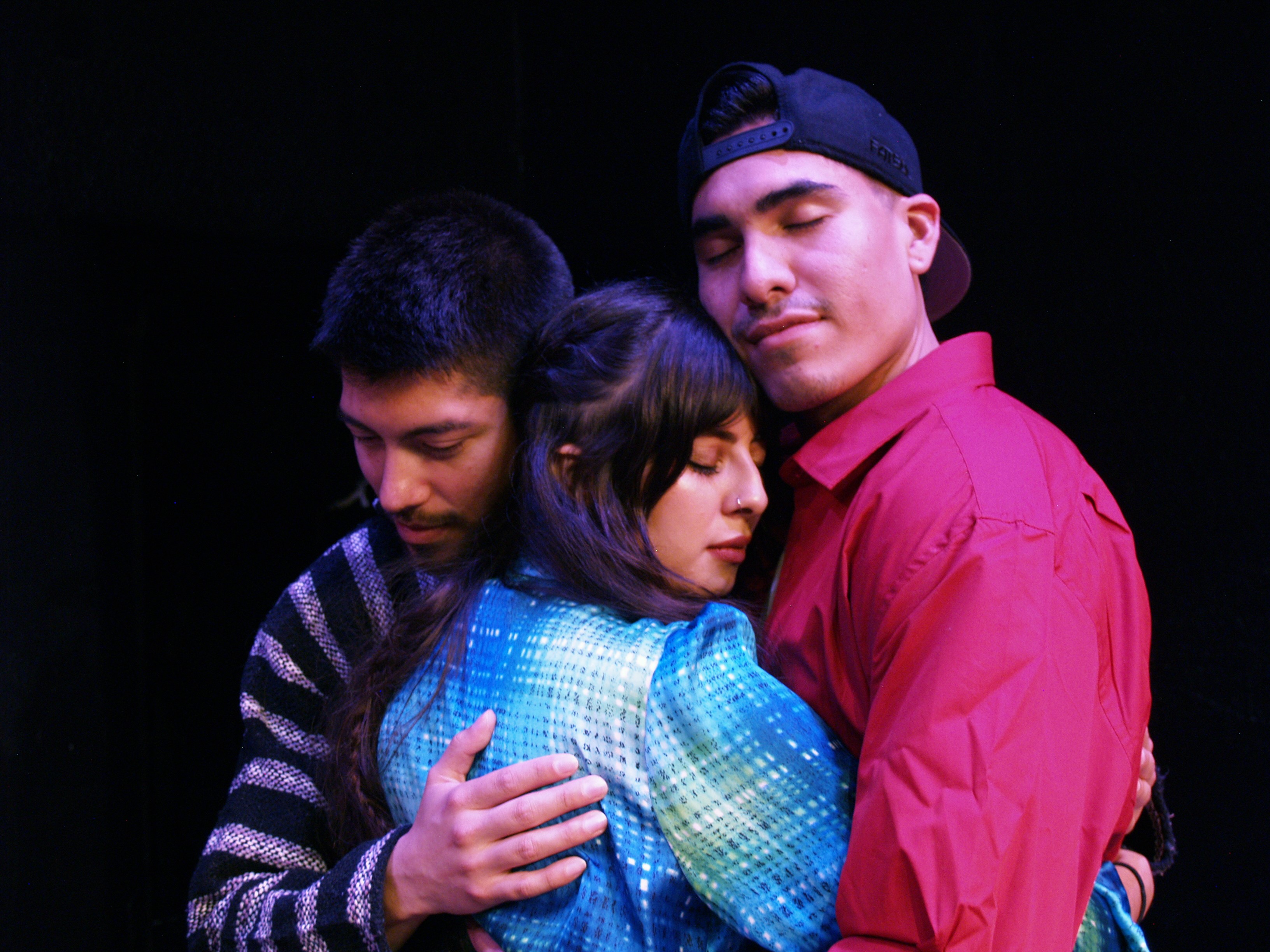
    The story starts in the blue and red lights that bathe a replica-sized model of a wall. Not just any wall, but The Wall, the most southern one that separates country from country, family from family and the hopes of migrants for better opportunities and life.

    In that obscurity, bodies shift and take steps until they’re center stage and in full view. They face you, you face them and under the spotlight, the stories of immigrants and Deferred Action for Childhood Arrival recipients begins.

    “Some of these scenes will break your heart because they show so much humanity,” Co-Director Andrea Carrillo said. “Humanity is such a great big theme within this story. You can’t help but connect and feel compassion for these individuals.”

    The Humboldt State University Theater Arts, Film and Dance Department presents “Dreamers: Aquí y Allá.” The script was written by Andrea Caban, her students, and a collaboration from source material provided by Armando Vazquez-Ramos and the California-Mexican Studies Center.

    Students in the California-Mexico Dreamers Study Abroad Program, DACA recipients and immigrant community members gave testimonials and interviews for the script.

    Troy Lescher, co-director and HSU associate professor, came upon the script in spring 2018 when Caban emailed the script to all 18 California State Universities in hopes they would produce the show.

    “I was blown away by the humanity of the story,” Lescher said. “As soon as I read it I said to myself, ‘We have to do this show at HSU.’ I mean, because of our social justice mission, commitment to minority voices on stage, how timely this issue is and this play had HSU written all over it.”

    The play follows the memories and lived experiences of immigrants and DACA recipients who then obtained advance parole, which gave them opportunity to travel to Mexico and reconnect with their culture and families.

    Carrillo said that they go through time jumps and include the audience as they break the fourth wall in various scenes from start to finish.

    However, circumstances prevented the play from happening until fall 2019. Lescher reached out to theater arts graduate students Carrillo and Amy Beltrán via email. They said that they were overjoyed about directing the play.

    “For me the biggest thing was to evoke empathy within the community because a lot of the community, as well as in Humboldt County, can be either on the middle ground or can be very conservative,” Carillo said. “These are human beings with their own experiences, their own love, their own families, and that was a big thing for me to show that to them.”

    But just as the directors were compelled to tell this story, so too were the actors.

    Business marketing major and theater arts minor Victor Parra, who plays Mateo, said he knew it was important for him to get involved when he heard about the script.

    “As an actor and artist this is the kind of stuff that catches my attention,” Parra said. “This is the kind of work that I want to do personally.”

    Parra said it’s important to remember that the play is a cumulation of many stories, real stories, and that these are real people who struggle everyday. These were stories close to him because he experienced similar struggles back home.

    “We have to keep working to give spaces for minority voices to be heard, especially voices that aren’t heard very often.”

    Troy Lescher
    Co-director

    “I brought a lot of personal past into this and it was my own decision,” Parra said. “Nobody asked it of me, but because I relate to this.”

    Parra plays Mateo, who in the play fears being deported and leaving his child and mother behind. He said that is what happened to him when one of his parents was deported not too long ago, and he brought those feelings into the production.

    “I envision my own family,” Parra said. “That’s what I just had to bring to the table because it’s so important. We need to say this. We need for our voices to be heard and something needs to happen.”

    Lescher knew that he wanted to encourage and open the production to more students, so he reached out to El Centro Académico Cultural Coordinator Fernando Paz, Interim Executive Director of the Office of Diversity, Equity and Inclusion Edelmira Reynoso and Multicultural Center Coordinator Frank Herrera.

    The result was that out of 11 cast members, six of them were non-theater majors and four of them performed for the first time.

    “This story hits differently,” Carrillo said. “It resonates differently with people. It’s such an immediate connection with a lot of Latinx people and people of color. It made sense that we had so many new faces in the theater.”

    Lescher said that the challenges DACA recipients struggle with is a big part of the conversation, because their voices are often unheard or aren’t highlighted in the news.

    “We have to keep working to give spaces for minority voices to be heard, especially voices that aren’t heard very often,” Lescher said.

  • ‘Dreamers: Aquí y Allá’ Preview

    ‘Dreamers: Aquí y Allá’ Preview

    Theater Arts Department presents a production that transcends borders

    The room is dark, the audience silent. On stage, right before your eyes, a story begins to unfold. Actors stride onto the set, and within seconds, they transport their audience into a world that deals with fears of family separation, job loss and deportation.

    But that world is reality, as the actors break the fourth wall and address issues for immigrants and Deferred Action for Childhood Arrivals recipients.

    “I read the script and I thought, ‘Wow, this needs to be told,’” Co-Director Andrea Carrillo said. “I know that there’s a good portion of undocumented people living in Humboldt County as well. It’s a great way to show the community that we see you, we hear you and we want to do what we can to share your experiences and your voices on stage.”

    Humboldt State University’s Theater Arts Department will premiere a production of “Dreamers: Aquí y Allá” this weekend and next. The show features testimonials and interviews from students in the California-Mexico Dreamers Study Abroad Program, DACA recipients and community members.

    “I’d say for people who have heard the story and don’t necessarily connect with the politics, I’d say, stay open minded about it. You never know what you might experience or learn. You might surprise yourself as an individual.”

    Andrea Carrillo

    The production is co-directed by theater art graduate students Amy Beltrán and Carrillo along with Assistant Professor Troy Lescher. “Aquí y Allá,” first produced at California State University, Long Beach, was written by Andrea Caban and presented as a collaboration between Caban, her students, material provided by Professor Armando Vazquez-Ramos and the California-Mexico Studies Center.

    “This is a story that needs to be heard. You need to be here and sit with it and listen intently and openly as well,” Carrillo said. “I’d say for people who have heard the story and don’t necessarily connect with the politics, I’d say, stay open minded about it. You never know what you might experience or learn. You might surprise yourself as an individual.”

    “Aquí y Allá” opens Dec. 6 in Gist Hall Theatre and continues Dec. 7, 12, 13 and 14 at 7:30 p.m. There will be a matinee at 2 p.m. on Dec. 15. Tickets are $10 for general admission and $8 for student and seniors. For tickets, visit the Center Arts website or call 707-826-3928.

    After the show on Dec. 6, representatives from HSU’s Scholars Without Borders and Centro Del Pueblo will present on DACA initiatives. Following the shows from Dec. 12 through 14, Professor Vazques-Ramos will present a 30-minute lecture called “Dreamers 2020: What’s Next?” followed by a Q&A.

  • Charlotte’s Web wins hearts

    Charlotte’s Web wins hearts

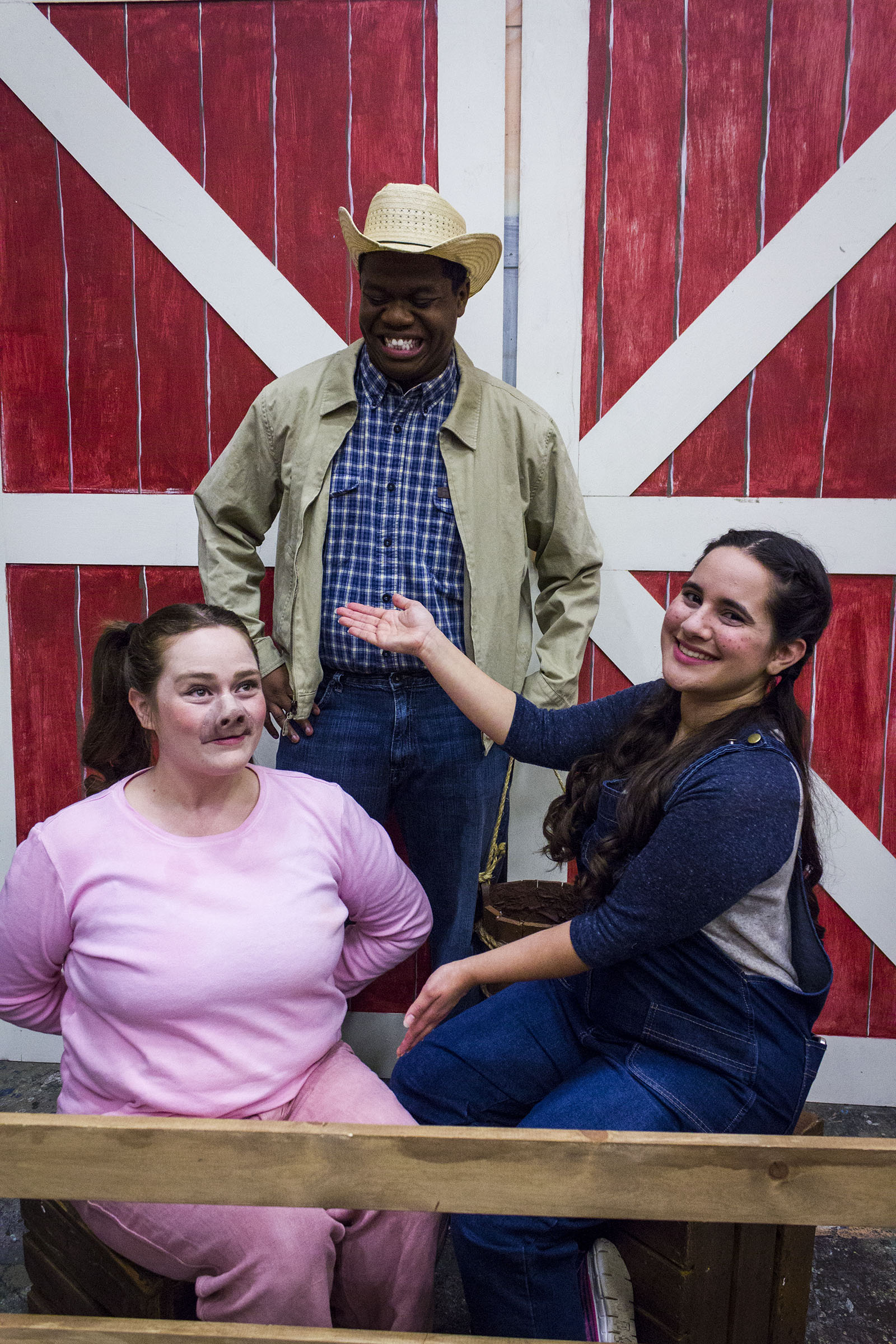
    Chances are you know about Charlotte’s Web, a bestselling children’s novel. Now that we are grown up, we can return to the days of being read to and tap into the inspiration of animals, language and the importance of community.

    Through the immaculate performance of Charlotte’s Web by Humboldt State students and the HSU theater department, this children’s story flows with laughter, touches you with sadness and sweeps you up and out the door in waves of joy. The cast hopes to bring happiness to families and give people the opportunity to take a break from the chaos of life.

    Director Derek Lane, HSU theater arts lecturer, used the play adaptation of Charlotte’s Web by Joseph Robinette and added his own composition from copyright-free music and lyrics.

    Charlotte is played by Camille Borrowdale, an HSU environmental science major.

    “Charlotte’s story is important,” Borrowdale said. “It’s about sticking together and being there for one another in our scary world.”

    During intermission, the lobby of the HSU Van Duzer Theatre was transformed into a carnival midway from the county fair. There were games and chances for children to win prizes.

    HSU theater major Roman Sanchez is the production manager of Charlotte’s Web and an activist for getting arts into education.

    “This might be some children’s first play,” Sanchez said. “We want to inspire them for a lifetime of the arts.”

    Sanchez believes the domino effect can change the world.

    “The togetherness of rehearsing with the cast and crew was really fun,” HSU zoology student and cast member Rachael Robinson said.

    Veronica Brooks is an HSU double major in theater and anthropology, as well as the costume designer for Charlotte’s Web.

    “Come and see Charlotte’s Web,” Brooks said. “It is happy and rewarding. It will knock your socks off!” .

    Charlotte’s Web continues tonight and tomorrow in the Van Duzer Theatre at 7:30 p.m., as well as a matinee show on Sunday at 10 a.m. You can find more information at centerarts.humboldt.edu.