The Lumberjack


Students Serving The Cal Poly Humboldt Campus and Community Since 1929

Tag: Walker B True

  • Corporations buy out propositions

    In a series of general and misleading advertisements, corporate backers of Propositions 22 and 23 show their grubby hands

    If you’ve been on the internet over the past two or three weeks you have seen a Yes on Prop 22 ad. These ads provide vague promises of “guaranteed earnings, healthcare benefits, and personal protections” while also touting the freedom of schedule that being an independent contractor would provide.

    This proposition comes at the perfect time for Uber and Lyft as California’s Assembly Bill 5 in 2019, drivers for those companies will be treated as employees. Uber & Lyft attempted to overturn the bill but it was upheld last Thurs., Oct. 22.

    If Proposition 22 passes, Uber and Lyft will be able to continue to treat their workers as independent contractors rather than employees.

    Before 2019, Uber and Lyft were able to classify their workers as independent contractors by arguing that they were not a transportation company, but merely a tech platform. This means that the drivers for Uber are merely partners with the app and are not required to be classified as employees like they would be if they worked for any other transportation company.

    The healthcare benefits guaranteed by Proposition 22 come under the condition that drivers have 25 hours of “engaged time” a week. “Engaged time” is defined as the period of time from when the driver accepts a ride until they complete the ride.

    At first glance this would provide benefits for a little over 25 hours of work but according to some rideshare drivers, over half of the time they spend using the app is actually spent waiting for a ride. It would be very likely that drivers would have to work more than 40 hours a week for these benefits.

    Advertisements also quote that “If drivers are forced to become employees, up to 90 percent of app-based driving jobs could disappear.” This statistic was not sourced. If a company is not able to provide their employees the minimum wage and benefits, required by California labor laws, then they are not a viable company.

    Proposition 23 requires that a physician, nurse practitioner or physician assistant be on site during dialysis treatment. Additionally, it prohibits clinics from reducing services without state approval, and from refusing to treat patients based on payment source.

    As it currently stands, any complications that come up have to be sent to the ER and handled offsite, lengthening the amount of time it takes for a patient to get care and complicating treatment.

    Advertisements have stated that Prop 23’s enactment would threaten to close many dialysis centers. Written directly into Prop 23 is that clinics cannot reduce services without state approval. There are provisions that allow for clinics to hire nurse practitioners or physicians’ assistants in the event of shortages of doctors. Currently, all dialysis clinics are required to have a doctor on staff to be the medical director, but they do not have to be onsite.

    Dialysis clinics in California boast an annual revenue of more than $3 billion. This booming industry is not one that would be destroyed by higher standards of care and more providers. Rather, this highlights the way that their ad campaigns utilize fear tactics about closing clinics and rising costs to justify putting patient safety at risk to line their own pockets.


  • Indigenous Food Sovereignty

    Indigenous Food Sovereignty

    Local food management practices of the Tolowa Dee-ni, Yurok and other indigenous peoples.

    *Editor’s note: A source in this story, Cynthia Ford, is the aunt of the Lumberjack writer of this story, Walker B. True*

    When colonizers landed on the North American continent, they were greeted with a land of plenty where deer roamed huge open pastures and wild fruits and vegetables grew in plenty. Colonizers viewed this landscape as a wild, untamed, underutilized and untouched landscape of economic opportunity.

    In fact, ecosystems across North America were meticulously managed by Indigenous peoples across the continent. Their traditional resource management practices have come to be known as a stewardship model.

    As defined by the Oglala Sioux Tribe of South Dakota, the Lakota Ecology Stewardship model states that “All beings, both living and nonliving, were related in that all shared and depended on Mother Earth for survival. The Lakota believe that humans were the newest nation on Earth, and as such were instructed to learn from the older nations: the rocks, animals, and plants. Thus, natural laws and relationships were carefully observed and emulated.”

    Locally, the Tolowa Dee-ni nation as well as the Yurok tribe made use of practices like prescribed burning to treat pests and to create better habitats for deer and elk to graze on.

    This form of management was used throughout the continent and began to die out as the land upon which they were practiced was colonized. These colonized lands were stripped of their resources and left in the hands of private landowners or The US government who had little to no understanding or care over the complexity of the ecological systems at play.

    The stewardship model and the food practices of Indigenous people have been limited by land acquisition programs and environmental devastation since the colonizers first set foot in America. Through the fight for their food sovereignty, Indigenous people are also fighting for tribal sovereignty.

    Cynthia Boshell is a program specialist working with the Rights of Mother Earth initiative through the Northern California Tribal Court Coalition. Since 2015, she is continuing to do work advocating for tribal food sovereignty.

    “When we are talking about food sovereignty what we are really doing is saying we are reclaiming our relationship to the foods,” Boshell said. “Not just the foods but if you are going to reclaim your relationship to the food you also have to reclaim your relationship to the land.”

    In the past the The Rights of Mother Earth initiative has helped enact ordinances and other regulations in order to protect the natural resources of the tribes a part of the NCTCC (Yurok Tribe, Hoopa Valley Tribe, Karuk Tribe, Tolowa Dee-ni’ Nation, Trinidad Rancheria and the Bear River Band of the Rohnerville Rancheria).

    Recently, the NCTCC received a grant from the Native American Agricultural Fund to do an assessment of tribal food systems under the stress of COVID-19 and fires. The project will be performed by the Rights of Mother Earth initiative spending the next year surveying tribal communities and their food system in order to understand how tribal food producers can be better supported.

    Boshell sees food sovereignty as a vehicle and process of bringing Indigenous communities where they want to be in regards to their food systems. Whether that be entirely reliant on local Indigenous food systems, or only partially, each tribe should have the agency to choose that for themselves.

    “Food sovereignty is not really a native concept,” Boshell said. “It’s more of a description of how we are reacting to a colonial system.”

    Cynthia Ford is a Habitat and Wildlife Manager for the Tolowa Dee-ni’ Nation in Del Norte County. Ford is responsible for educating community members and advocating for tribal food sovereignty.

    “We work with agencies and partners locally, like the forest service and the parks and local landowners to help come up with strategies to protect and perpetuate our resources.” Ford said.

    Alongside her vocational responsibilities to the tribe, she is also the wife of a Tolowa tribe member and the mother of three Tolowa children. She supports traditional, locally harvested foods like acorns in the fall, berries in the spring, a variety of seafoods like smelt, seaweed and salmon, as well as deer and elk.

    “The Tolowa people were rich, very food rich,” Ford said. “There was a large variety and great diversity of foods year round to eat from.”

    For Ford, food sovereignty means having the ability to access her own healthy, and sustainable foods.

    “That food security is really important for the tribe because that’s the basis for making us a healthy community,” Ford said.

    Without the ability to access these local food sources that, historically speaking, have always been available to them, tribe members are left without access to any healthy foods.

    “Our ancestral territory goes well into Oregon and covers a vast coastal area and into the Applegate watershed,” Ford said. “But here right now in Smith River where our modern day reservation lies, we have the Dollar General and a Fuel Mart, we don’t even have a grocery store.”

    Alongside poor access to healthy foods from local stores, traditional food practices like fishing have been impacted by commercial farming practices that threaten the Smith river’s estuaries with pollution from pesticides.

    According to the California Water Board, “the Regional Water Board’s water quality monitoring documented the presence of several pesticides used in lily bulb cultivation in some of the coastal tributaries of the Smith river during storm events.”

    Ford ends by speaking to the interconnected nature of land and how dependent people have to be one another in order to live in harmonious comfort and success.

    “’You got your 10 acres and your mule and you’re gonna harvest your land right?’” Ford said. “But it doesn’t work that way because what you do on your land affects what I do on my land”

  • Defund HSU’s Police Department

    Defund HSU’s Police Department

    Incidents of racism from the former UPD Chief, past examples of excessive force from current officers and a shrinking university budget.

    In recent months, demonstrations against police brutality and the killing of Black and Brown people have increased. Black Lives Matter protestors have called not only for the demilitarization of police but for a move towards defunding the police and reinvesting those funds to community-centered organizations for public safety.

    On Sept. 4, Humboldt State University students and other community members met at the Arcata Plaza in support of defunding HSU’s campus police department. As of last quarter, HSU’s University Police budget sits at over 3 million dollars a year. The University Library sits just below 3.5 million dollars a year.

    According to the HSU’s Annual Security Report for 2018, 89 percent of law enforcement on campus consists of drug and alcohol referrals. UPD made a single drug-related arrest in 2018. The other 11 percent of cases reported were theft and assault. Referrals are basically reports filed directly to HSU that are not criminal but often result in administrative action. This job is something expected of R.A.’s who report alcohol use as referrals.

    Incidents of racism from the former UPD Chief, past examples of excessive force from current officers and a shrinking university budget

    With the existence of the Arcata City Police, and their own $6 million dollar budget, the necessity of an entire force for these offenses leaves the HSUPD as an utter redundancy.

    HSU student and Check-It staff member, Shelley Magallanes, compiled research about complaints against HSUPD for use of excessive force and shared it on their Instagram. Currently on the payroll is Delmar Tompkins who has been involved in two accusations of police brutality, cases were settled for $135,000 and $43,000. As well as Justin Winkle who was involved in an incident of excessive force that left the victim dead in his jail cell hours later. The City of Eureka settled this case for $4.5 million.

    Former University police Chief Donn Peterson resigned on May 31 while he was on leave and under fire from a multitude of accusations including racist remarks and manipulation of crime statistics. Peterson served as police chief of UPD for six years and to assume that his actions are that of “one bad apple” just doesn’t do this issue justice. His actions exemplify the prevalence of a racist culture that pervades the criminal justice system.

    The nationwide movement for defunding the police has been sparked by the way that force is used and applied recklessly to BIPOC. This comes after a long history of police operating as a militant arm of white supremacy and working to disproportionately incarcerate POC, leading to further widespread racial inequities. Allowing the persistence of unjust systems on campus, while alternatives are proven to work more effectively at promoting public safety is negligent. We have an opportunity to work towards a more just and equitable campus through the many organizations that we already have established.

    HSU is facing widespread budget cuts, losing funding to the array of vital multicultural centers, diverse academic programs and student-led organizations, the UPD budget and existence looks especially obsolete.

  • How Non-Lethal are Less Lethal Weapons

    How Non-Lethal are Less Lethal Weapons

    Protestors injured by non-lethal weapons in Eureka following protests against police brutality.

    On May 31 in Eureka a protest against police injustice ended late into the night with officers using pepper-spray projectiles to assist in the arrest of an individual suspected of vandalism. An additional protestor was arrested for attempting to prevent the first arrest.

    Several protestors attempted to pull the individual out of police custody. This resulted in police firing on the rest of the crowd. Capt Brian Stevens of Eureka PD addressed the incident to the public in a video posted to Lost Coast Outpost.

    “Given the escalating circumstances and the safety risks to the officers … They began firing [pepperball projectiles] into the ground in and around the crowd trying to back the crowd off,” Stevens said.

    Sam Papavasilliou, a 22-year-old Humboldt State University student and former Lumberjack writer, was in attendance that night and was among 30 or so protestors fired on by police. Papavasiliou described how the crowd was cut off in the front and back by several police vehicles while passing by Dutch Bros on the north side of Eureka.

    Officers first addressed the crowd to tell them they would be attempting to arrest an individual suspected of vandalism. At 10:33 p.m. this attempted arrest was met with resistance from several protestors.

    “One protestor got shot in the ear with [a pepperball]. They were bleeding and they were really yelling at the officer that they didn’t do shit and they said ‘I can’t hear right now,’” Papavasiliou said.

    Pepperball rounds are amongst a large host of “non-lethal” weapons used to disperse crowds deemed riotous. Pepperball rounds are designed to explode on impact leaving a cloud of OC (oleoresin capsicum), the same ingredient used in pepper spray. It is advised that they are not aimed at the eyes, face, throat, or spine as death has occured when these inappropriate areas have been fired on.

    Rubber bullets are another method of crowd control that fall under a classification of “non-lethal” weapons known as KIPs (Kinetic Impact Projectiles) along with bean bag rounds, pellet rounds, and sponge rounds. In their assessment of “non-lethal” weapons and their safety The Physicians for Human Rights organization argues that “At close ranges, levels of lethality and patterns of injury of some KIPS become similar to those of live ammunition. At longer ranges, KIPs are inaccurate and indiscriminate. Some KIPs are lethal in close range and ineffective at longer distances which make safe use difficult.”

    The problem really comes down to KIPs being too inaccurate at longer ranges to correctly target individuals and areas of the body they are aiming for, and that the injuries sustained at close range can penetrate the skin, break bones, fracture the skull and explode the eyeball.

    Police also rely on chemical irritants (CIs) for crowd dispersal, namely tear gas and pepper spray. Pepper spray is made of a chemical derived from peppers that inflames the afflicted area on contact causing the burning sensation.

    “Officers and deputies were on scene with more or less paintball guns that shoot a paintball projectile that is filled with a powdered OC,” Stevens said.

    Symptoms after exposure to these agents include temporary blindness, respiratory inflammation, increase in heart rate and blood pressure. People with respiratory or heart conditions are at an increased risk of more serious injury or death.

    Other “non-lethal” weapons include pepper spray, bean bag rounds, tear gas and flash bangs just to name a few. When used correctly, these weapons are a less dangerous alternative to shooting people with actual guns, but mistakes in their applications can leave victims with wide ranges of injury.

  • Our Societal Structure is Slipping

    Our Societal Structure is Slipping

    With the pressures of the pandemic mounting, people are stuck with an impossible choice

    On Friday, May 1, around 100 people gathered in front of the Humboldt County Courthouse to demand the reopening of businesses deemed non-essential by the government. With signs like “Every Business Is Essential,” it is clear that the protesters are not being properly supported during this time of crisis.

    The government’s attempts to mitigate the spread of the virus have been controversial with over a million reported cases so far. Social distancing is the most effective measure we can take to prevent unnecessary deaths since the swab test is inaccurate and limited at the moment. Unfortunately, mandatory lockdowns and halts to employment in order to support social distancing efforts have left many without jobs and a way to earn a steady, livable wage.

    “This crisis is really illustrating both the violence of inequality and also the need for another economic system.”

    Thomas Piketty

    Everyone has a wide range of debts, rents and other expenses to pay for during this time. If we want to prevent the spread of the virus we need to support disenfranchised workers, not force them back into unsafe working conditions. With 59% of Americans living paycheck to paycheck, for those keeping track at home, the percentage cuts for units is not reasonable to expect them to be able to handle all of their expenses with a one-time stimulus check of $1,200. The writer of the book “Capital in the Twenty-First Century” and economist Thomas Piketty believes that a pandemic like this holds the potential to change dominant narratives about how we should organize our society and build our economy.

    “This crisis is really illustrating both the violence of inequality and also the need for another economic system,” said Piketty.

    The Americans most impacted by the pandemic are going to be the poorest, most vulnerable members of our society. For as long as our country has existed, so has the divide in quality of life, poverty, and access to government assistance in times of crisis.

    We need a societal structure that values every life.

    Due to our country’s reliance on employer-based healthcare, every company that is forced to lay off its workers in this necessary time of crisis is creating large swaths of vulnerable, uninsured people. The natural response is to want to go back to work and blame the government for taking away your insurance and employment so you can continue to provide for yourself and your loved ones. The only problem is that we have a virus on our hands, so one is forced to either ignore the dangers of returning to work or slowly drain themselves financially as the dues of existing in our society add up. This is not a fair choice nor a choice we should have to make.

    This is our societal structure functioning as it was designed to. When healthcare is tied to employment and to wealth, we are nudged into believing our right to exist is tied to employment and to wealth. When certain marginalized groups are underemployed or possess less wealth, our system is tacitly stating that those groups are worthless.

    We need a societal structure that values every life. That means universal healthcare, education, job guarantees, housing and access to technology. Without universal healthcare, there isn’t a solid system for distributing care during a pandemic, and the right to one’s own life is decided by socioeconomic status. Without job guarantees, people are set adrift during emergencies, not knowing if they will be able to get back to work after it’s all over. Without universal housing, a pandemic can leave many unsure if they will have a roof over their head in a month’s time. Without access to technology, some will lose education, jobs, communication with the outside world and entertainment to occupy the time.

    But more than all these things, we need a structure that prioritizes us. If everything starts falling apart because of one pandemic, maybe it wasn’t the most stable structure to begin with. An economy that does better when its workers die is like a car that goes up in value when it kills the passenger. The structure should exist to support you. This pandemic is exposing our economic structure for what it has always been. A burden that crushes the marginalized and the vulnerable. A $1,200 check, a rent freeze and a free face mask are only small band-aids on a gushing head wound. Normal, everyday life is why everything is falling apart in the first place.

    All we can do is build a system that protects every person within it and values life from the ground up. A system that lets numbers of people die will die along with them. It is a system bound to fail.

  • Staff Recipe: True Sourdough Starter

    Staff Recipe: True Sourdough Starter

    There’s no time like the pandemic to get a start on a starter

    Sourdough starters are a great project for the apocalypse, as yeast and other baking materials are becoming hard to come by. Hopefully you’ve still got that bag of flour sitting in the back corner of your cupboard, because with just a couple minutes of work a day, you’ve got yourself a sour new addition to the family. After day seven, your starter will be ready for use in bread, pancakes, muffins or any other baked good that includes flour and water.

    Ingredients and supplies:

    • Flour
    • Lukewarm water (around 85 degrees Fahrenheit)
    • A scale
    • A mason jar with a lid
    • Patience

    Directions:

    Day 1 – Beginning the starter

    • Weigh your jar empty, without the lid, and write the weight down
    • Add 100 grams of flour to your jar
    • Add 150 grams of lukewarm water to your jar. Mix thoroughly until combined, making sure you don’t leave any clumps
    • Attach lid loosely to the jar (not too tight, or you will make a bread bomb)
    • Wait 24 hours

    Day 2: Feeding the starter

    • Remove starter from your jar until there is 70 grams of the starter remaining (that’s 70 grams added to the original weight of your jar)
    • Add 100 grams of flour
    • Add 100 grams of water
    • Mix thoroughly until combined without clumps
    • Attach loosely fitting lid to jar

    Day Three: Onwards

    • Repeat instructions from day two until you forget for a couple days and accidentally kill it.

    Tips

    • Your starter can range in smell from yeasty “footy-ness” to a nail polish remover or a boozy smell which changes from day-to-day.
    • Adding a little more water or a little more flour will affect the scent and taste of your dough drastically.
    • Excess starter removed during feeding is perfectly safe to eat after being fried in a bit of oil. It makes wonderful fry bread with a bit of a funnel cake consistency.
    • Keep your starter in a warm place. Warm temperatures encourage fermentation, and cold temperatures can kill your starter.
  • Coach Continues Creating Community

    Coach Continues Creating Community

    Arcata High School’s computer science teacher creates community for video gamers

    Jason Sidell is an Arcata High School teacher responsible for their Makers Program and esports team. The Makers Program is a curriculum written by Sidell, designed to engage computer skills, wood shop tools and various other equipment to make anything the students want to create.

    This year Sidell coached the Arcata High School esports team that played their first season this spring. Fisher Boroughs is one of the team’s League of Legends players who just started playing the game this season.

    “He [Sidell] doesn’t know much about League of Legends,” Boroughs said. “He knew as much as me, which is basically nothing when it started.”

    Sidell says it’s a lot more like an organized sport than people would imagine. It has all of the same stakes of ranking, a team name, regular practices and all of your fellow gamers sitting right next to you.

    “It’s been more intense than I thought it would be,” Sidell said.

    Anthony Womack is a senior on the Rocket League team and is in his second year of the Makers class. He describes the Makers class as an incredibly open environment where Sidell encourages students to follow their own ideas as well as giving those less inspired something to begin with.

    “You’re just making your own independent projects,” Womack said. “That’s pretty much the only assignment, just make something.”

    He recalls building an electric guitar from scratch as being his most impressive project he’s completed in the class.

    “I would spend every single lunch inside the class,” Womack said. “I wouldn’t even eat most of the time because I would just be busy working on stuff.”

    Sidell graduated from Loyola University in Chicago with a degree in biology but wasn’t sure what direction to take it. On a whim, he took a vacation down to Baja with a childhood friend of his, but when he drove his friend up to Humboldt County, he never left.

    “I love the Pacific Northwest and the environment up here,” Sidell said. “I just fell in love with it.”

    Like many others moving to Humboldt, Sidell had trouble finding employment. He first landed a dish washing job at Golden Harvest Cafe, then found work through AmeriCorp for two years.

    “I made a lot of connections in education that way,” Sidell said.

    He would lead backpacking trips on the Lost Coast Trail and can remember the positive impact it had on the youth who had never left the Northern Humboldt metropolis of Arcata and Eureka. Sidell began work on his Master’s in education focusing on curriculum writing. At the same time he began part-time work at another non-profit run by Carol Newetts, called Tiffany’s Garden for Children.

    “I remember one year I would teach in the morning at McKinleyville High, and then a class at Eureka High and then I’d end up at Fortuna High in the afternoon.”

    The program he headed was called CyberTribe. It was set up as a youth-run computer business where teens would teach each other how to use certain programs including graphic design and fixing computers. They would take on paying jobs from the community like graphic design and web design work.

    “It was 20 years ago, but I still remember all those kids’ names,” Sidell said. “It was a really empowering experience.”

    Sidell taught a variety of programs to the youth at CyberTribe, but a program that could be used to make video games became very popular. After seeing the interest, Sidell told his boss that he thought that it could be taught as a high school course. His boss agreed and Sidell created a six week module for the video game development course that he began teaching across the county.

    “I think I’ve taught at just about every high school in Northern Humboldt,” Sidell said. “I remember one year I would teach in the morning at McKinleyville High, and then a class at Eureka High and then I’d end up at Fortuna High in the afternoon.”

    After 15 years of work all around the county, Sidell settled down at Arcata High School where he wrote the curriculum for the Makers program after finding a grant focused on encouraging STEM at the high school level. The funding he secured solidified his own place at Arcata High, assuming that interest remained.

    “It was a great feeling,” Sidell said. “Especially because I had been struggling year-to-year to maintain my job.”

    Sidell believes he was meant to be a teacher and is passionate about creating a space that welcomes and respects his students. He believes that the best way to positively impact the world and leave a good mark on it is through teaching.

    “If you can teach someone an idea and give them skills,” Sidell said, “that knowledge and information can be passed on through history.”

  • Tuition Refund Petition Reflects Student Experience

    Tuition Refund Petition Reflects Student Experience

    With labs, classrooms and most facilities on campus closed, what is being done with student tuition?

    After Humboldt State University canceled in-person classes three weeks ago, students created a change.org petition calling for a reimbursement of tuition. With 2,000 students and supporters rallying behind it, perhaps HSU will bring their concerns into the conversation. Regardless of the administration’s acknowledgement, or lack thereof, HSU students are and will be experiencing a drop in the quality of their education.

    As a journalism major, our classes haven’t been heavily impacted, but our access to the university spaces we all pay for is not as integral as for majors like art, dance, theatre and lab sciences.

    Bryan Gambrel, a kinesiology major at HSU, said the switch to online labs has affected his motivation to learn the material. With an inability to use the lab spaces, the only way to show comprehension of the reading material is through quizzes.

    “My difficult class has become now something that’s based off of reading rather than three hours of experimenting in a lab,” Gambrel said. “I’m not even sure how they can credit it for your GE.”

    Lindsey Miller, an HSU freshman, signed the petition. She is a part of the environmental resources department and is taking a chemistry lab course this semester. With the switch to online classes, lessons consist of videos of the professor completing the experiment. She felt like this semester’s labs were a little more challenging than her first semester.

    “Without having that hands-on experience in the lab, I don’t know when people are gonna learn it again.”

    Raili Makela

    “I was only kinda picking up on it before spring break,” Miller said.

    Raili Makela is a fourth year marine biology major at HSU. This semester she had signed up for two labs and two lectures that have now been transitioned into online courses. Makela noticed the switch to online labs has made understanding the concepts more difficult.

    “It’s because of that hands-on learning that I really start to understand the other material,” Makela said.

    While she has learned a lot from her earlier labs and can work from that knowledge, she is worried about how those getting their first lab experience will be impacted.

    “Without having that hands-on experience in the lab, I don’t know when people are gonna learn it again,” Makela said.

    The situation we are in is reasonable. There isn’t another option that would keep our students, staff and faculty as safe as the current measures we have in place, but it is our money that’s no longer being spent to keep the doors open. Our tuition is not a goodwill donation. It is an exchange for the resources provided by the institution, and if those resources are not being provided, then we are getting shortchanged on our education.

  • A Rundown of All The Emails HSU Has Sent Students

    A Rundown of All The Emails HSU Has Sent Students

    Since March 15 HSU has sent out over a dozen emails on their response to COVID-19

    Here is a summary of emails Humboldt State University has sent out since March 15.

    March 17: HSU informed students of its efforts to supply students with reliable laptops from the library as well as internet access for students without a reliable connection. HSU provided a list of locations where the university’s Eduroam Wi-Fi connection is strongest, as well as a list of services that are providing free Wi-Fi services during the COVID-19 crisis.

    March 19: HSU informed students of Humboldt County’s shelter in place order. HSU confirmed that essential employees would be asked to continue to work on campus, and all others would work by teleconferencing. In a second email on the same day, HSU confirmed rumors that commencement, originally planned for May 16, would be canceled. HSU asked in a now-closed Google form for creative alternatives to celebrate graduation.

    March 21: HSU released a more detailed email regarding its policies related to essential employees and payroll. Positions listed as essential included public safety, information technology, the library, University Center, health center, Oh SNAP!, residence life, dining, facilities management, research continuity, business services, payroll and mail distribution. HSU announced that its payroll department would be working on creating digital timesheets for employees working from home and that emergency pay would not be in effect as it was during the blackouts of the fall 2019 semester.

    March 23: HSU revealed its guidelines on returning to campus. HSU asked students returning to Humboldt from areas with community spread or international destinations to self isolate for at least 14 days before returning to campus. HSU also advised students who are feeling ill to contact the Student Health Center at (707) 826-3146 before visiting the center.

    March 24: HSU asked that students who live in on-campus housing and were on any of these three flights to contact Housing and Residence Life at (707) 826-3451:

    • March 16: United flight #5827 from Los Angeles Airport to Arcata
    • March 18: Delta flight #4124 from Seattle, Washington to Medford, Oregon
    • March 18: United flight #5555 from San Francisco Airport to Arcata

    March 26: HSU announced that the library would close on Friday Mar. 27 in response to the ongoing COVID-19 situation.

    March 27: HSU extended the deadline for changing the grading mode of classes to May 9. HSU said it’s looking into expanding the number of courses that can be switched to credit/no credit, as well as lifting restrictions on the number of courses that can be taken as credit/no credit.

    March 30: HSU announced the closure of Siemens Hall’s computer labs and the University Center to reduce transmission of COVID-19.

  • Updated: Summarizing HSU’s COVID-19 Updates

    Updated: Summarizing HSU’s COVID-19 Updates

    All classes to go online for the rest of the semester and other plans, plus a translation

    Humboldt State University informed its students March 12 through email that classes would be going online following spring break. Concerns of spreading COVID-19 led the California State University system to suspend face-to-face instruction. HSU initially said it would be shifting to online classes March 26 until at least April 17. But in a March 17 message from President Tom Jackson, HSU announced classes would be taught online for the rest of the semester.

    Jackson’s message said all exams, labs, field trips and in-person meetings are canceled. HSU encouraged students living on-campus to return home if possible. However, HSU promised it would not displace students living on campus.

    Other notes from Jackson’s message included: non-essential student employees will work from home. Campus will close to the general public. Most of campus will close, with the exception of the Student Health Center, the University Center and the library, all of which will remain open with reduced staff. Finally, HSU said it will review alternatives to celebrate commencement.

    HSU has also launched a web page with resources for working from home. HSU plans to provide laptops for students without computers and internet hotspots for students with no internet at home. Programs like the Adobe Creative Cloud Suite and SPSS are expected to be available on HSU’s remotely accessible virtual lab and for downloads to personal computers. Multiple phone and internet companies have also agreed to waive late fees, not cutoff service and open up internet hotspots.

    HSU began updating students and staff through emails starting Feb. 24, when it informed them of the single case of COVID-19 confirmed in Humboldt County. They continued to provide updates weekly on how HSU would be handling a potential pandemic. The week before students were meant to head home or hunker down in Humboldt, HSU ramped up its online communications.

    HSU suspended all international and non-essential domestic travel March 10 for the remainder of the spring semester. In a March 11 email, they defined essential domestic travel as travel for academic credits that are necessary for graduation and cannot be postponed or substituted.

    Through several emails on March 11 and March 12, HSU canceled all instruction from March 23-25 to allow faculty to prepare for online classes. HSU then canceled all intercollegiate and club sports.

    HSU canceled non-essential events on and off campus March 13. Essential events—following HSU’s previous definition of essential—are any events done for academic credit necessary to meet a graduation requirement that cannot be postponed or substituted.

    On March 15, HSU noted the closure of local K-12 schools, and how that may affect staff and faculty. HSU later advised faculty aged 65 and older, or those with underlying health issues that make them more vulnerable to COVID-19, do not come to campus. HSU will arrange telecommuting for adaptable positions, but anyone not able to work remotely will be placed on administrative leave at their current rate of pay and for their normally scheduled work hours.

    Find all HSU COVID-19 updates here.


    Humboldt State University President Tom Jackson’s March 17 Message to Campus:

    Message from President Tom Jackson on Plans for the Semester

    Dear Campus Community: Over the last week, I have had the privilege of observing the amazing work of so many people in their efforts to assist others. The work by all of you to not only protect yourself, but to care for your family and our students is beyond remarkable. We are a very caring Lumberjack Family and I thank you.

    Things are changing rapidly and these updates are subject to change based on the fluidity of this situation. Every day, nearly every hour it seems, we are asked to pivot and address a new challenge in our efforts to reduce the spread of COVID-19. Our guiding light remains the health and safety of our Lumberjack Family while also helping our students to progress in their education. At times these efforts may appear in conflict, but they are not. At the root of all we do is our humanity and our underlying willingness to do what must be done.

    The time has come for HSU to implement a number of additional contingency plans and bolster our COVID-19 precautions. While there are no known active COVID-19 cases in our County at this time, and there have been none on campus, these additional precautions are consistent with recent federal and state health directives. In short, we must now do more to protect the health and safety of our campus and local communities.

    HSU will operate virtually through the end of the semester.

    1. Beginning today, we will shift as quickly as possible to virtual operations. Non-essential employees, including student staff, are to work remotely (telecommute) once they have received direction from their supervisor. Please continue to work with your supervisor on your work assignments and technology support needs.
    2. It is important we reduce the number of people on campus. We encourage students who can return to a home off-campus to do so. We will not displace students who are facing housing insecurities or homelessness. More information will follow.
    3. From Monday to Wednesday, March 23-25, the faculty will prepare for a complete shift to virtual instruction by Thursday, March 26. All professional development and preparation activities will now occur remotely. For the remainder of Spring 2020, all instruction is to be virtual and the primary operational state of campus is to be virtual. There will be no face to face meetings, events, instruction, exams, instructional labs, field trips, live performances, or small group seminars.
    4. We have closed all access to campus facilities to the general public.
    5. Most campus facilities will be closed to the campus community, including all sports and recreation facilities. We have also suspended all intramural and recreational activities for students. Any services remaining open for students – such as the library, student health center, and university center – will be operating with reduced staffing and must implement social distancing.
    6. As a campus we must continue to carefully practice social distancing techniques for those essential individuals who remain on campus, including students in our residence halls who truly have no other place to reside, and the food services and other staff who are supporting those students.
    7. Lastly, and sadly, we must review other ways to celebrate degree recipients instead of the traditional Commencement. We are a very creative campus and we will find alternative ways to celebrate our students’ success.

    There are many questions to be answered, and we will do our best to answer them in a timely way. We will share more information soon as we prepare campus to shift to virtual operations.

    We are resilient. From the Marching Lumberjacks doing what they do, to alumni making a difference in the world, to hiking in the Redwoods, to kayaking in the great Pacific ocean, we are Humboldt. This pandemic is challenging us but it will not break us. We are Humboldt, and while we may be socially distant for now we remain close at heart.

    Thank you for all that you are doing. I ask you to be flexible and understanding as we work together to protect the health and safety of the campus community. You are appreciated.

    Respectfully,

    Tom Jackson, Jr.
    President


    El Mensaje en Español:

    Mensaje del Rector Tom Jackson sobre los planes para el semestre

    Estimada comunidad universitaria, durante la última semana he tenido el privilegio de observar el increíble trabajo y esfuerzo de tantas personas que quieren ayudar a otros. El trabajo de todos ustedes, no sólo para protegerse, sino que también para cuidar a su familia y a nuestros estudiantes es notable. Somos una familia muy cariñosa de leñadores y se los agradezco.

    Las cosas están cambiando rápidamente debido a la fluidez de la situación. Todos los días, parece que casi cada hora, se nos pide que viremos y abordemos un nuevo desafío en nuestros esfuerzos para reducir la propagación del COVID-19. Nuestra luz guía sigue siendo la salud y seguridad de nuestra familia de leñadores y, al mismo tiempo, el apoyo necesario para que nuestros estudiantes progresen en su educación. A veces, estos esfuerzos pueden aparecer en conflicto, pero no lo están. La raíz de todo lo que hacemos está nuestra humanidad y en nuestra voluntad fundamental de hacer lo que sea necesario.

    Ha llegado el momento de implementar en HSU una serie de planes de contingencia adicionales para reforzar nuestras precauciones acerca del COVID-19. Si bien no hay casos activos conocidos del COVID-19 en nuestro Condado en este momento, y no ha habido ninguno en el campus, estas precauciones adicionales son consistentes con las recientes políticas de salud de nivel federal y estatal. En resumen, ahora debemos profundizar nuestros esfuerzos para proteger la salud y seguridad de nuestro campus y comunidades locales.

    HSU va a funcionar virtualmente hasta el fin del semestre.

    1. A partir de hoy, pasaremos lo más rápido posible a operar virtualmente. Los empleados no esenciales, incluyendo el personal estudiantil, deben trabajar de forma remota (teletrabajo) una vez que hayan recibido instrucciones de sus supervisores. Por favor continuar trabajando con su supervisor en sus tareas de trabajo y apoyo técnico.
    • Es importante que reduzcamos la cantidad de personas en el campus. Alentamos a los estudiantes que puedan regresar a sus hogares fuera del campus que lo hagan. No desplazaremos a los estudiantes con inseguridad de vivienda o falta de vivienda. Proveeremos más información sobre este tema.
    • Del lunes 23 al miércoles 25 de marzo, los profesores se prepararán para un cambio completo a la instrucción virtual, a comenzar el jueves 26 de marzo. Ahora todas las actividades de capacitación profesional y preparación se realizarán de forma remota. Durante el resto de la primavera del 2020, toda la instrucción será virtual y todo el campus funcionará de forma virtual. No habrá reuniones presenciales, eventos, instrucción, exámenes, laboratorios, excursiones, presentaciones en vivo, o seminarios de grupos pequeños.
    • Hemos suspendido todo acceso público a las instalaciones del campus.
    • La mayoría de las instalaciones del campus estarán cerradas a la comunidad del campus, incluyendo todas las instalaciones deportivas y recreativas. También hemos suspendido todas las actividades extracurriculares y recreativas de los estudiantes. Cualquier servicio que permanezca abierto para los estudiantes, como la biblioteca, el Centro de Salud Estudiantil y el Centro Universitario, funcionará con un personal reducido y se deben implementar distanciamiento social.
    • Como campus, debemos continuar practicando cuidadosamente técnicas de distanciamiento social. Esto se aplica a aquellas personas en roles esenciales que permanecen en el campus, incluyendo a los estudiantes en las residencias universitarias que realmente no tienen otro lugar donde ir, y proveedores de servicios de comida y otro personal que apoya a estos estudiantes.
    • Por último, y lamentablemente, debemos explorar otras formas de celebrar a los nuevos licenciados ya que no podrán tener una ceremonia de graduación tradicional. Somos un campus muy creativo y encontraremos formas alternativas de celebrar el éxito de nuestros estudiantes.

    Hay muchas preguntas por responder y haremos todo lo posible para responderlas de manera oportuna. Compartiremos más información pronto, a medida que preparemos el campus para cambiar a operaciones virtuales.

    Somos resistentes. Desde la banda de los “Marching Lumberjacks” que hacen lo que saben hacer, y los egresados que hacen una diferencia en el mundo, y las caminatas en los bosques de los gigantes rojos, hasta el paseo en kayak en el gran océano Pacífico, somos Humboldt. Esta pandemia nos desafía, pero no nos romperá. Somos Humboldt y aunque es posible que estemos socialmente distantes por ahora, seguimos estando cerca en el corazón.

    Gracias por todo lo que están haciendo. Les pido que sean flexible y comprensivas/os mientras trabajamos juntos para proteger la salud y seguridad de nuestra comunidad universitaria. Todos son apreciados. 

    Respetuosamente,

    Tom Jackson, Jr.
    Rector

  • Humboldt Esports Builds Momentum

    Humboldt Esports Builds Momentum

    Arcata High CyberTigers face off against the Novato High Hornets

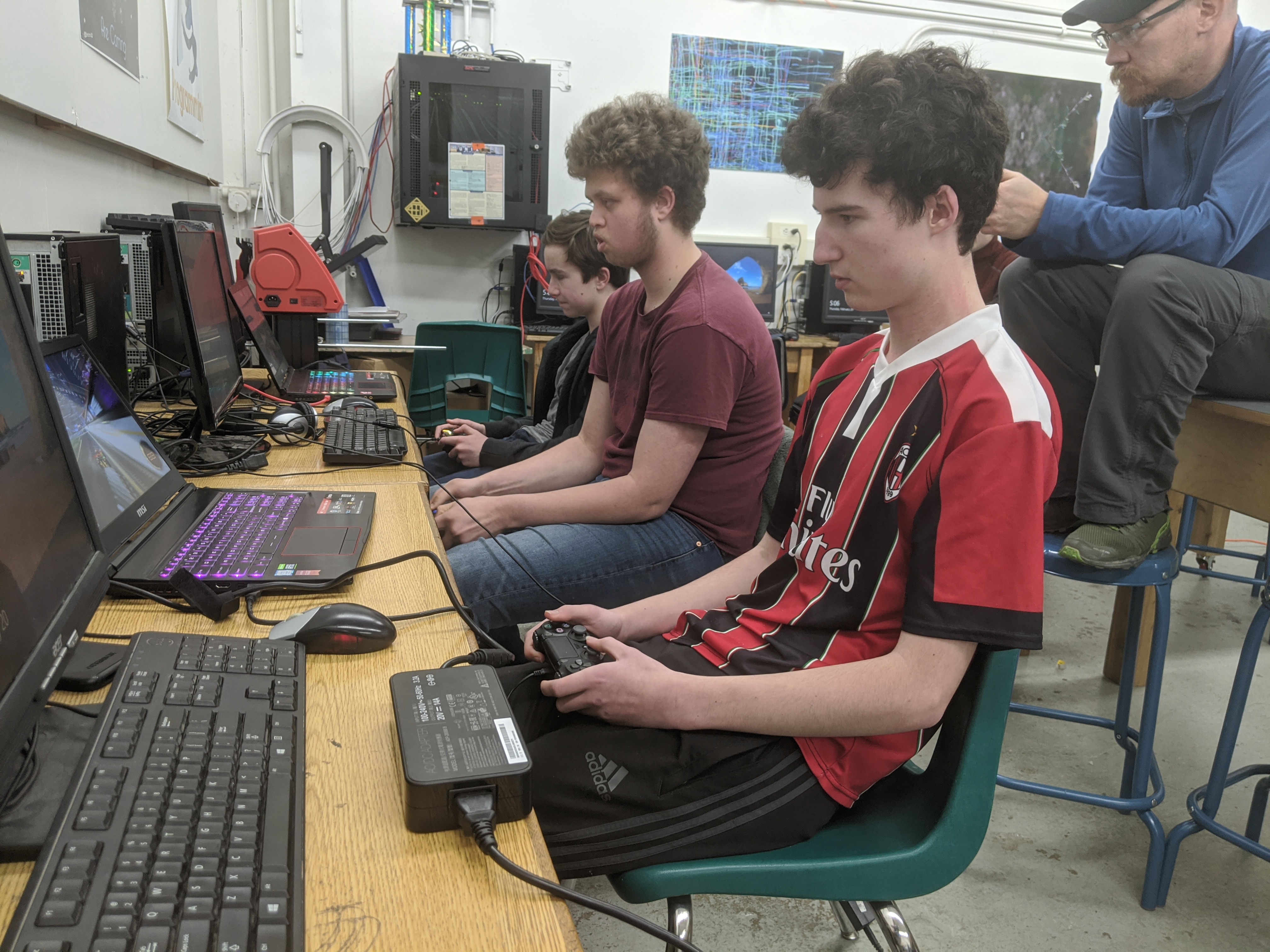
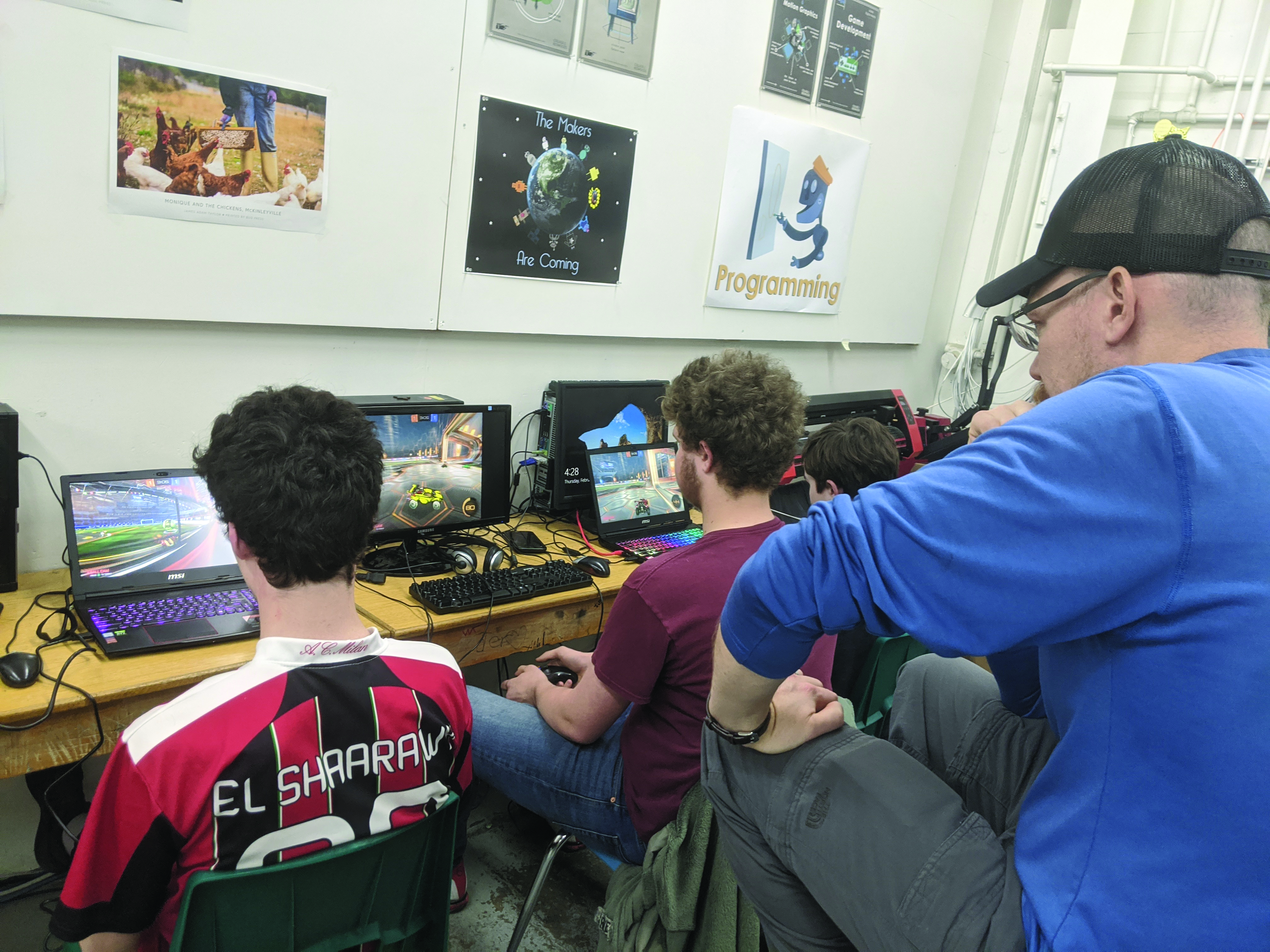
    With 15 minutes until start time, Rocket League players sectioned themselves off into corners of a combined Humboldt State University computer lab and classroom in their respective Arcata High School CyberTiger, CyberTiger B and CyberTiger C teams as their coach Jason Sidell turned on some “get psyched” tunes. Sidell isn’t incredibly well-versed in Rocket League, but he is quick to compare it to other sports.

    “When people think of esports, they think video games, and I think that they would be surprised if they were to observe our practices,” Sidell said. “Esports is to video gaming what a basketball team is to a pick up game.”

    Rocket League players for the CyberTigers faced off against the Novato High School Hornets Feb. 27.

    Rocket League, as described by the California Interscholastic Federation, is a fantastical sport-based video game that can be summed up as soccer with cars. It features a competitive game mode based on teamwork and outmaneuvering opponents.

    The teams are each made up of 3 players, with the CyberTiger team being more like a varsity team and the B and C teams being more like junior varsity. The matches are best-of-five games, with each game lasting a little over five minutes.

    Complete with pizza and La Croix, the HSU Gaming Club hosted a meet and play event for the Arcata High esports team earlier that month that brought an evening full of laughter and good old fashioned competition. The meetup was organized by HSU Gaming Club President Sarah Kanga Livingstone and advisor David Marshall, who reached out to the Arcata High esports team.

    “We’ve been trying to reach out more and more to see if we can get more ways of bringing (high school) students on to campus,” Livingstone said.

    The CyberTigers and their opponents are registered through a service called PlayVS, which is partnered with the CIF to provide the tournament brackets and infrastructure to run a state-wide league.

    The teams are each made up of 3 players, with the CyberTiger team being more like a varsity team and the B and C teams being more like junior varsity. The matches are best-of-five games, with each game lasting a little over five minutes.

    Within 20-30 minutes, both the B and C teams’ games were drawing to a close, but the CyberTigers’ Seth Simmons, Jonah Moore and Marley Thrift continued on in a dynamic match against the Hornets, with their coach cheering them on.

    “Don’t say nice,” Simmons said as Sidell mistakenly complimented a shot that looked like it was going to go in. “Don’t say anything.”

    Remarkably, the C team won while being down a player, and the B team swept their opponents 3-0. The CyberTigers, however, lost their match 3-1.

    Vice President of Enrollment Management Jason Meriwether stopped by to welcome the high schoolers as well. Due to the success of the event, the HSU gaming club is currently in the process of planning a gaming tournament for local high school students in mid-April.

  • HSU Activates Pandemic Planning Committee

    HSU Activates Pandemic Planning Committee

    With COVID-19 spreading, HSU plans post-spring break response

    Humboldt State University is planning for a possible partial or full campus closure in response to the spread of COVID-19.

    HSU has sent multiple emails since March 4 to students and faculty communicating the steps and measures the campus is taking to address the spread of COVID-19. In addition to creating a website with updates on the virus, HSU has organized the Pandemic Planning Committee.

    In the most recent email, sent out March 10, HSU suspended all international and non-essential domestic university-related travel. Communication Specialist Grant Scott-Goforth clarified to The Lumberjack that students are free to travel where they wish outside of school. Scott-Goforth said HSU would send out more messages in the coming days to define essential travel.

    “The idea is that we’re creating a flexible solution, and our main goal is to ensure that we can provide services and instruction.”

    Kris koczera

    The Lumberjack spoke with the emergency coordinator at HSU, Kris Koczera, who sits on the PPC. Koczera said the PPC is meeting weekly, but that is subject to increase if the outbreak becomes more severe locally. She was hesitant to talk specifics due to the committee’s confidential status and the pandemic’s shifting nature.

    “The idea is that we’re creating a flexible solution, and our main goal is to ensure that we can provide services and instruction,” Koczera said.

    Graphic by Jen Kelly

    Representatives from Dining Services, Housing and even the Dean of Students have attended meetings to address concerns about how the pandemic will impact their departments. Much of what the PPC is doing is modeled after other campuses in the California State University system and is advised by direct communication from the Chancellor’s Office of the CSU.

    “We have the benefit of kind of looking at what they are doing, the timing of what they’re doing and using that as almost a case study for us to move off of,” Koczera said.

    As of March 10, several college campuses including the University of California, Berkeley, UC Santa Cruz, San Francisco State and Stanford have suspended most of their in-person classes and will be offering all lecture courses through online instruction services like Zoom and Canvas.

    HSU has advised faculty to create a contingency plan in the event of a full campus closure. Koczera says life is first and foremost for the PPC and that they’re aiming for a fluid-but-reactive approach.

    “It doesn’t matter how great instruction is,” Koczera said,” if we have no students to instruct.”

  • Final Fantasy Music Rendition Fills Fulkerson

    Final Fantasy Music Rendition Fills Fulkerson

    Pianist Ryan McGaughey performs fan-favorite tunes from Final Fantasy VII

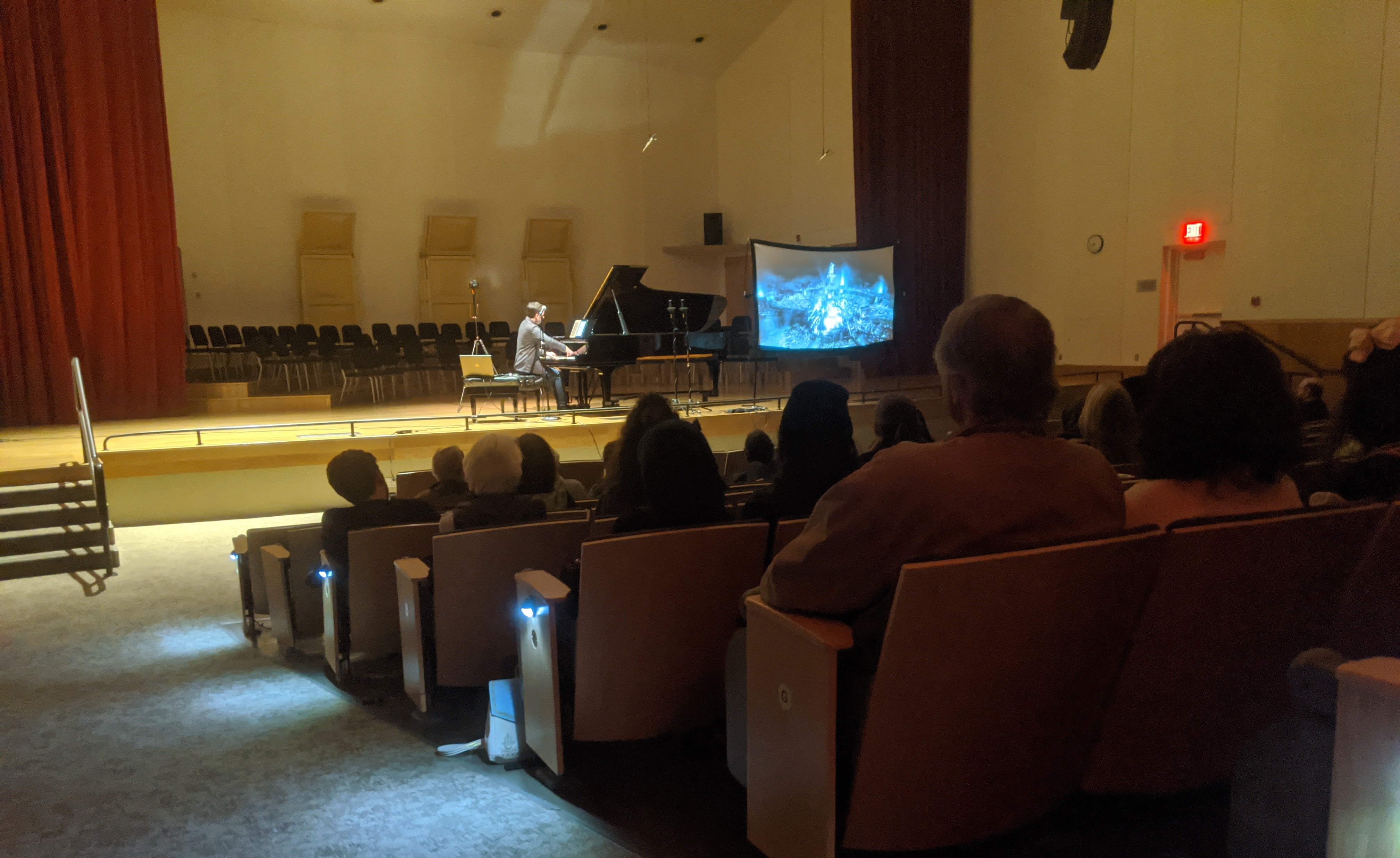
    In the intimate waiting area of Fulkerson Recital Hall, long-time fans of the Final Fantasy games and their parents or children milled around Feb. 21 waiting to hear piano renditions of the iconic music of “Final Fantasy VII” performed by pianist Ryan McGaughey. The game’s original music was written by Nobuo Uematsu, but the particular arrangements for piano were written by Shiro Hamaguchi.

    Mark Castro, an archaeologist for the Cultural Research Center at Humboldt State University, made a habit of attending orchestral concerts at Sonoma State University while he was working on his master’s degree. Castro said he hadn’t played Final Fantasy VII since high school, but he was excited to go to the concert and reminisce on forgotten songs.

    “Those are always the ones I gravitate towards,” Castro said. “The ones with a story.”

    Ushers collected raffle tickets for a giveaway of the new Final Fantasy VII remake set to come out in April. As everyone found their seats, the lights dimmed and silence fell upon the room like a blanket.

    “It’s like watching a really good film or reading a really good book, but you’re actually able to interact in it.”

    Ryan McGaughey

    McGaughey took the stage and dove into the familiar runs of “Prelude,” a song that begins almost every Final Fantasy game. A projector screen beside his piano ran through a compilation of footage from the Final Fantasy games as well as the 2005 animated movie.

    The projector depicted a depressing, industrialized world with pollution and machinery as the piano fluttered along with the hopeful brightness of “Prelude.” “Main Theme” was a more intense, swelling piece accented by intense battle sequences between vigilantes and armed guards of this alternative future city.

    In between songs, McGaughey took to the microphone with a charming, slight stutter, thanking everyone for coming out to see him perform. Using an online survey he created and his own powerpoint slides, he had audience members participate in a contest that mirrored the game’s turn-based combat system.

    McGaughey brought the event to a close with a fan-favorite, “One Winged Angel,” a song accompanied by a battle with the main antagonist played at the end of Final Fantasy VII. It is a technical, epic and anxiety-inducing battle march with twinkling runs interspersed throughout.

    In an exclusive interview with The Lumberjack, McGaughey talked about why he enjoys playing video games and their music.

    “It’s like watching a really good film or reading a really good book, but you’re actually able to interact in it,” McGaughey said.

    Before he left the stage, McGaughey picked out a winner of the raffle for the Final Fantasy VII remake.

    Psalms Palmer, a music major at HSU and longtime fan of the Final Fantasy games, won. She remembered loving the music from the moment she heard it. Throughout the performance, Palmer reflected on playing the game with her sisters when she was a kid.

    “If you can tell the story through music,” Palmer said, “you don’t have to do anything else.”

  • Humboldt County Coronavirus Case Update

    Humboldt County Coronavirus Case Update

    Department of Health and Human Services quells concerns

    The Humboldt County Department of Health and Human Services informed the public Feb. 20 via press release they had received confirmation of one confirmed case of coronavirus in Humboldt County. A close contact of the confirmed patient has symptoms and is also being tested for the disease. 

    Information has come, and will continue to be provided from the California Department of Public Health and the U.S. Centers for Disease Control and Prevention.

    The DHHS has since been fielding questions from the concerned community.

    The Lumberjack spoke with Hava Phillips, the supervising public health nurse at DHHS. If you are concerned that you may have contracted the disease, she asked that you call them before visiting their department.

    For now, the county is not considering this a public outbreak, and the ill individuals are self-isolated and under close watch by the Public Health Communicable Disease Surveillance and Control Unit. This doesn’t mean they’re not prepared for the disease to spread.

    “We are making sure we have the infrastructure in place if this were to become a larger outbreak,” Phillips said.

    Phillips said because it’s also flu season, people should be following basic precautions to prevent the spread of communicable diseases of all varieties, summed up by these tips from the DHHS press release:

    • Stay home when you are sick.

    • If you have a fever, stay home or go home if you are already at work or school, and stay home for at least 24 hours after you no longer have a fever (without the use of fever-reducing medicine).

    • Wash your hands frequently and particularly before eating or drinking.

    • Promote good hand hygiene in your home by educating household members and making sure soap, hand sanitizers and tissues are available.

    • Avoid touching your face, particularly your eyes, nose and mouth.

    • Encourage proper cough etiquette. Cough or sneeze into a tissue, sleeve or arm. Do not use your hands.

    • Perform routine surface cleaning, particularly for items which are frequently touched such as doorknobs, handles, remotes, keyboards and other commonly shared surfaces.