By Mia Costales
On Sept. 27, Professor Rouhollah Aghasaleh received a letter titled “Notice of Investigation Outcome” from Provost Jenn Capps, ending their temporary teaching suspension and allowing them to be on campus for the first time since April 30. The letter recounts the university’s final verdict in the investigation of Aghasaleh, who was present on campus during the pro-Palestine protests last semester, finding them guilty of violating campus encampment rules and regulations.
“The University has received the final investigation report into your alleged misconduct arising out of the protest and building occupation at Cal Poly Humboldt in April 2024,” Capps said via the email sent to Aghasaleh. “The report made the following findings of fact: 1. In April 2024, you knowingly and intentionally violated the hard campus closure directive when you came onto campus without authorization and stayed overnight with the students. 2. On April 29, 2024 you ignored and violated police dispersal orders.”
Despite this outcome, the university made the decision to end Aghasaleh’s suspension effective Sept. 27, the same day the email was sent. This decision came with the stipulation that they would not be teaching any accredited courses for the remainder of the semester and instead be given reassigned time — alternative assignments in lieu of traditional classroom teaching. Aghasaleh plans to use this time to work on projects and research, as well as continue to host teach-ins on campus.
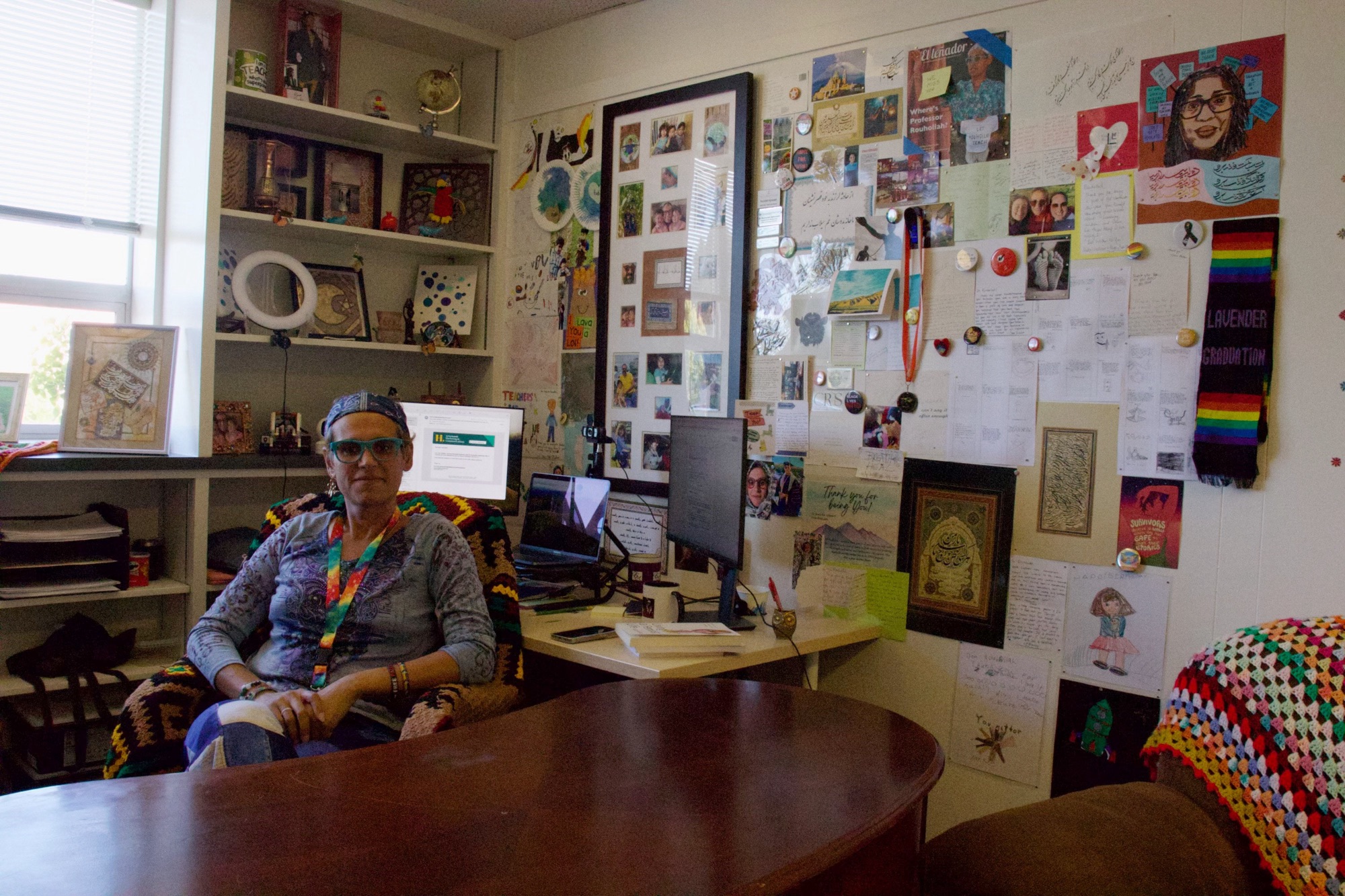
The teach-ins will be held as regularly scheduled, Mondays and Thursdays from 12 p.m. to 2 p.m., and are now located in Aghasaleh’s office in Harry Griffith Hall 223. Teach-ins are subject to moving to the student lounge on the same floor, depending on the turnout of attendees. Much like the community teach-ins Aghasaleh was hosting in the D Street Neighborhood Center parking lot, these too have a similar theme of touching on pressing issues such as gender, race, and class hierarchies. Assigned readings of feminist literature and room for open discussion are prominent components of Aghasaleh’s teaching methods in this environment.
“Over the past four years, I have done plenty to uplift the name of Cal Poly and CSU, despite the critiques that I had,” Aghasaleh said. “I believe public institutions should serve the public for good. Those are not built and funded for the administrators’ convenience. I remain committed to [being] a proud member of this family. My case was — is — not about what I have done; it is about the discomfort my presence causes.”
While Aghasaleh has expressed their gratitude for being back on campus, they have also struggled with certain places, individuals, and environments triggering painful memories from last April. They describe being able to feel the gazes of those unhappy about their return, specifically from Provost Capps and from Academic Affair Admin. Still, many students and faculty have shown them kindness and welcomed them back with open arms.
“Last year, I was celebrated for my research — receiving [the] McCrone Award — and I presented, Silence Breaking: A Story of Forgotten Bodies in the Classroom, where the audience, including deans and administrators, applauded,” Aghasaleh said. “The last line from the transcript of my presentation reads, ‘Schools as state institutions are particularly successful at producing docile bodies, or punishing the bodies that resist.’ But, when I embodied that very research, they turned against me.”
Since being back on campus, Aghasaleh has submitted their application for tenure and promotion. This is a seven-month process and the application must be reviewed by the Department Committee, then the College Committee, Dean, University Committee, and lastly, Provost. Aghasaleh will hear the final decision by June. However, they were informed that their reprimand could negatively affect their ability to receive tenure. In the meantime, they understand that their career is in jeopardy and are working towards healing and remaining human in such a time of uncertainty.
“You may be waiting for the perfect moment to speak up, but that moment will never come,” Aghasaleh said. “You owe it to your students, your colleagues, your kids, and yourself. Otherwise, you are complicit in the dehumanization of this institution. I urge you to ask, ‘does this campus become better when scholars are pushed out? Does it become stronger when dissent is silenced?’ They might be able to remove our bodies from this campus, but they cannot remove the kinship we, as humans, have built. We do not make offspring, but we make kinship. That kinship remains, no matter what they do to us.”
Mia is a junior Journalism major and the Life & Arts editor for The Lumberjack. With an extensive background in music performance, she hopes to combine her love of music and the arts with her passion for localized news and activism to bring thoughtful and informed stories to the public.
Leave a Reply