The Lumberjack


Students Serving The Cal Poly Humboldt Campus and Community Since 1929

Month: November 2024

  • Breaking boundaries for ‘Jacks’ Men’s Basketball

    Breaking boundaries for ‘Jacks’ Men’s Basketball

    By Ariana Wilson

    Men’s Basketball is one week away from their California Collegiate Athletic Association (CCAA) opener with a short preseason at the beginning of November. The team traveled up north for the West Region Crossover in Bellingham, Washington, where they faced Simon Fraser University (B.C.) and Western Washington University, leaving the rainy state with a 1-1 record.

     Diaz has led the charge for the Lumberjacks with impressive stats to start the season but says, “It’s not one person that has got us these wins, it’s everybody. Everybody has a part in us winning.”

    CCAA Watch-list Rob Diaz III is entering his second season with the Jacks and has been determined since day one. Diaz is third in scoring in the CCAA and in the top 25 for blocked shots, steals, and assists. 

     “My role was never really defined [last year]. We were a new team, but I worked hard in practice and I started to start [in games] last year,” Diaz said. “I love basketball. I try to give it my all every time I play. It’s a blessing to play and come to practice every day. We’re trying to win a championship — that should be the goal for any team.”

    Junior Transfer Kalib LaCount leads the CCAA conference in assists and steals, averaging 6 assists and 3.3 steals per game. LaCount played at East Carolina University in North Carolina for two years prior to his transition to Humboldt.

     “I have [basketball] IQ and a feel for the game,” LaCount said. “I’m helping my younger guys that haven’t seen that level yet and bringing them with me.”

    With only four games on the season, the team is setting its sights high. This fall has been an opportunity to work on cohesion and understanding as a new team. 

    “When you believe in your point guard, you’re gonna wanna make that shot for them,” LaCount said. “Whoever I see is open when I break the defense, I get them the ball. I’m going to put you in the best position possible and I’m gonna believe in you one hundred percent to make the shot.”

    Kyle Frelow, a senior who transferred from UT Tyler, understands the importance of team dynamics.

    “I’m an older guy, I’m a senior, a leader. So now, I have to pick up what I’m doing so I can lead the team in different ways,” Frelow said. “We’ve got a long season to go, then we want to go to the postseason too. The earlier we all buy in will be a good outcome, overall.”

    Frelow is this week’s recipient of “Lumberjack of the Week,” and is holding a position in the top 20 for scoring and number one in rebounding in the CCAA.

     “Details matter,” Frelow said. “In college basketball, everything is detail-oriented. Being focused, playing hard, and playing together.”

    The upperclassmen and new athletes to the program are in agreement about the goals going into the next 3 months.

     “Have a winning season,” Frelow said. “Make it to postseason. Compete for a conference championship — just win. I want to be a part of winning”

    Men’s Basketball is at home at the Lumberjack Arena for their first CCAA conference match-up against Chico State on Nov. 30 and again on Dec. 5 versus San Francisco State.

    Ariana Wilson is a junior Journalism major and the Lumberjack Sports Editor. As a member of the Cal Poly Humboldt Women’s Volleyball team she brings an athletes perspective to our rising sports section. She intends to merge her passion for the environment and conservation with her love of journalism as a science writer.

  • Disability and community among the resilient redwoods

    Disability and community among the resilient redwoods

    By Emma Wilson and Gabriel Zucker

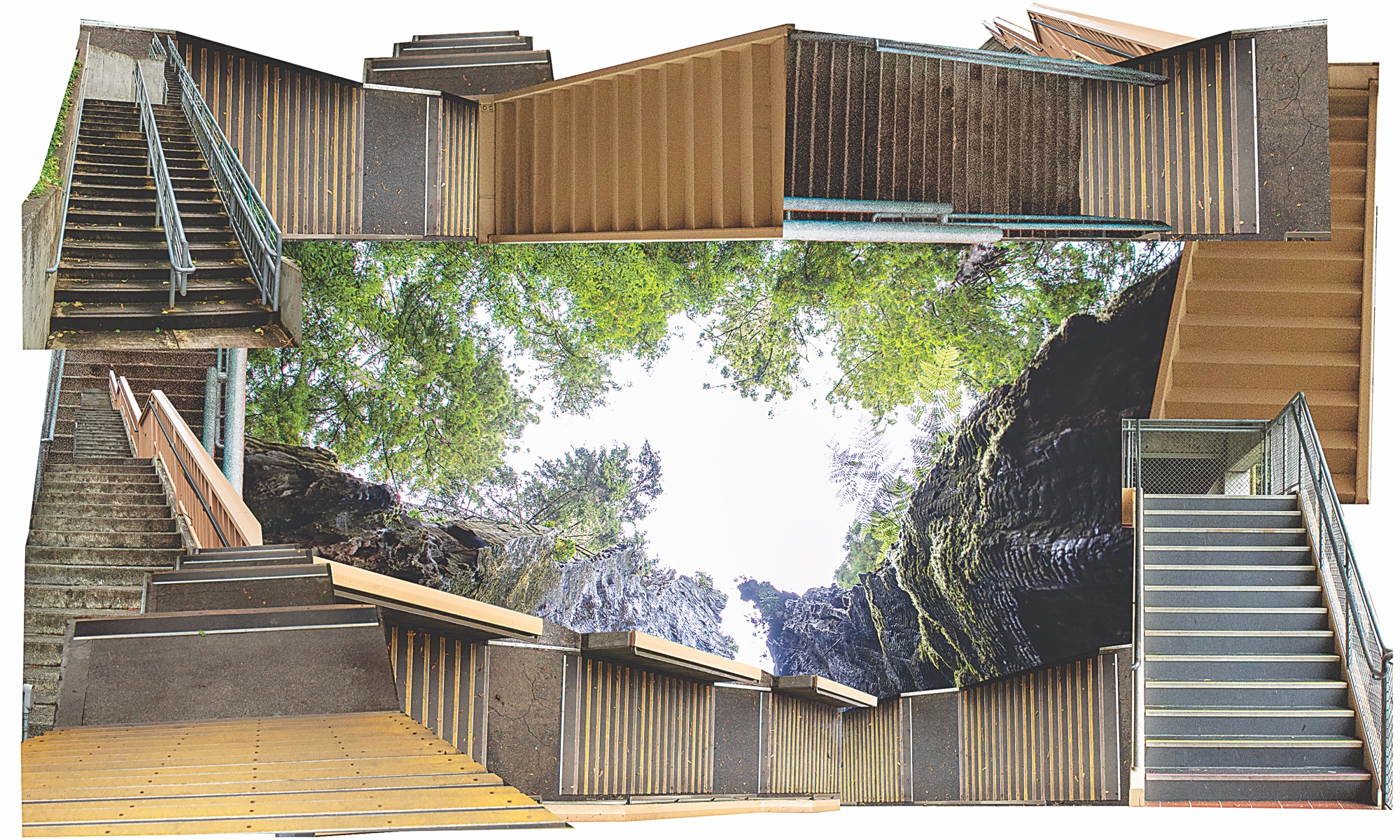
    When Cal Poly Humboldt was built, there was no forethought about accessibility, due to prominent physical and financial challenges to updating campus. The hills and stairs that made the school unique ignored an entire group that are an integral part of the campus community. Today, the school is still lacking in a lot of areas when it comes to accessibility, but there is a lot of support from the school and the community to make this campus an accommodating place.

    Aileen Yoo, the news and information director for the university, acknowledged that a lot needs to be done, but the school is not being complacent.

    “We have a lot of work to do, and we’re committed to having constructive conversations about things that can be done in the short, medium, and long-term to make steady progress,” Yoo said.

    Campus Disability Resource Center (CDRC)

    The CDRC mission statement on their website states, “Humboldt strives to be responsive to the needs of its community through its commitment to providing services that support equitable access and foster equity and inclusion.”

    “The University’s Campus Disability Resource Center (CDRC) was established as the Disabled Student Services over three decades ago to support disabled students and, in the last year, has moved to support the entire campus community,” Yoo said. “The CDRC is a hub of resources and services, which include priority registration assistance, accessible classroom furniture, alternate media, assistive technologies, deaf and hard of hearing services, disability-related advising, equipment available for checkout, exam accommodations, employment application assistance, and accessible office furniture..” 

    Alicia Martin is an alum and academic researcher. Martin has been attending Humboldt since the spring of 2018, receiving her masters in 2020. They founded the club ADAPTABLE, which is dedicated to disabled students and staff and is still a big part of the disabled community on campus.

    “One of the new things that CDRC is doing is making the complaint process more clear and easy to do, which is amazing,” Martin said. “There is now an actual committee that is working to make things better when it comes to complying with ADA regulations. This committee has been out for years. So, these changes are being made.”

    Jim Graham, a geospatial scientist professor at Cal Poly Humboldt, noted there are a lot of positive things happening on campus, but emphasized the need for ADA regulations around campus.

    “Our Academic Technology Initiative folks, they’re doing great work to get the electronics available,” Graham said. “The CDRC [has] made a bunch of changes, improved their website. So there’s good stuff going on. It’s the facilities piece, the existing facilities piece we seem to be stuck on.”

    Student and Community Experience

    For a lot of students coming to college, they have no knowledge or plan to receive accommodations. Martin did not even realize they were eligible until a teacher brought it up.

    “I remember sitting in my classes, looking around [thinking], ‘Who else is here with me?’” Martin said. “There’s more of me here, and people who understand what it’s like to try to go to school and balance all of these extra things that you have to deal with as a person with disabilities. That is when I really started looking around and paying attention to things and noticing things.” 

    Matias Solorzano, a graduate student in the psychology department in the academic research master’s program, highlighted his work with Graham on disability awareness events and plans for future projects. One event included inviting disability-specific resources and having Interim President Michael Spagna speak about his experiences with disabilities. 

    Solorzano is developing a project in his activism class where he invites the California Department of Rehabilitation to help students with disabilities sign up for vocational rehabilitation. Vocational (VOC) rehab is aimed to help disabled individuals find jobs and learn how to maintain that job position. Part of Solorzano’s project is to find funding to help students apply for financial assistance to help pay for tuition outside of the financial aid sources that are traditionally available to them. 

    “I’m trying to fill the gaps through policy to try to model a workshop based on what has been done before, to kind of evolve into a permanent program,” Solorzano said. “What the university has done well is that they really support us in planning the accessibility event. It helped us advertise, helped us get students to come. They are just very supportive and say that they want to do stuff.”

    Solorzano emphasizes the importance of having students with disabilities involved in decision-making processes to ensure their perspectives are considered. He expressed his hope for continued progress and support for students with disabilities at the university.

    “There really needs to be a specific space outside of the CDRC for students, staff, and faculty with disabilities to come together and really be a community,” Solorzano said. “If you want students with disabilities to come to campus and to stay enrolled, you need to be supporting them more. Whether that be through a cultural center, or what I’m doing. I am developing an activist project in my CRGS community.”

    Julie Myers, an ecological restoration major, expressed gratitude for the assistance provided by the Student Health Center, highlighting the role of doctors and nurses in diagnosing her condition. 

    “The Student Health Center has helped me significantly, the doctors there — even the nurses — they helped me get diagnosed,” Myers said. “They’ve helped me with …  I forgot the word [physical therapy] — and I’ve done that for two years. So doctors at Student Health really helped me, and they’ve supported me more than the CDRC, definitely.”

    Myers is also grateful for a number of professors and her advisor with ADA accommodations assistance. Myers explained how professors have been very flexible and supportive, such as Wildland Fire Science and Management Assistant Professor Alan Tapley, who went out of his way to accommodate her needs. 

    “He taught forest ecology, and we would have a lot of labs in the community forest and even off campus,” Myers said. “He would send me directions of where we’re going and he made a map and circled where we were going, and even when we were walking in the field trip, he would be like, ‘How are you doing? Are you okay? Do you need to sit? We can sit and take a break in class.’”

    Myers acknowledges a positive change in the school’s approach to disabilities since the recently appointed administration.

    “With the new administration, the [Interim] President’s more visible and he comes from a special education background, so I think that’ll really help with what’s going on, because he’ll maybe pay attention a bit more,” Myers said.

    There is still a long road ahead, but the building blocks are being set in place. The need for community involvement and collaboration to address these issues is still a pressing issue, but a path is being forged.

    “It’s really the community that builds Cal Poly Humboldt,” Martin said.“It’s the community. We are the resilient redwoods, right? We are attracted to this place for a reason, and that includes people with disabilities.”

    This is the second part of a three part series about accessibility on campus. 

    Emma Wilson is a public relations journalism student at Cal Poly Humboldt minoring in environmental ethics. Wilson is an environmental reporter and science editor for the lumberjack. She is also the president of the Journalism Club of Cal Poly Humboldt. Wilson likes swimming, playing music on the radio, and making collages. 

    Gabriel Zucker is a senior journalism student at Cal Poly Humboldt. He is the photo editor for The Lumberjack. He loves photojournalism and wants to use his platform as a journalist to give a voice to the voiceless.

  • State of Affairs

    State of Affairs

    Familial Bonds and Political Boundaries: Why you should prioritize yourself this holiday season

    By Jordan Huber

    Fall break is almost here. In a few days, many of you will make your way back home, or spend the break with friends, and get some much needed rest. Unfortunately for some of you, that might mean dealing with some family members who are going to loudly and proudly state that their guy won the election. As much as the rest of the family might groan and try to change the subject, Uncle John will keep saying how great the next four years are going to be and how the country is back on track. You could decide that it’s time to stop dealing with years of his incoherent ramblings and that you are ready for holiday festivities to be a shot-for-shot remake of the Christmas episode in the show The Bear. If that situation applies to you, you might be wondering: is it worth it to spend the holidays with people who voted differently than you?

    I am excluding Green Party and Peace and Freedom Party voters in our scenario. I think most of them voted with good intentions, also despised Trump, and had some real criticisms of Harris that we could agree on. So, we can be trusted to not throw carving knives at each other.

    You are valid for feeling like you should distance yourself from people who voted differently than you if you think it is going to be detrimental for your mental and physical well-being. These feelings are even more intense for those who know that a Trump presidency means their rights are now in jeopardy. Reproductive healthcare, mass deportations, and marriage equality are all threatened now. For those who identify with communities that face that level of harm, I do not think that wanting to avoid people who support a man who is going to try to take away your rights is something you should dismiss. You do not need to play nice with the family for the day with folks who support a man found liable of sexual abuse. You have the right to look out for yourself and take the time to digest what has transpired. 

    To give you some background on my extended family, one of my family members has openly been a part of the LGBTQ+ community for decades. They found the love of their life with someone who was the same sexual orientation as them. They spent a lifetime with a partner, who has sadly since passed, in a country that did not allow same-sex marriages nationwide until 2015. Never would I consider voting for someone who has nominated Supreme Court Justices that treat my family member’s marriage as second-rate to straight couples. My great-grandfather flew 73 missions in a B-26 bomber in World War II. To vote for Trump, who exemplifies similar traits and policies as the same authoritarians who my great-grandfather risked his life 73 times to try to stop, is the ultimate dishonor to his memory. I cannot understand why people in my own family have voted for Trump not once, but multiple times. 

    I do my best to try to put aside these feelings of anger, to put on a brave face in spite of all the things I would like to say to them. I do not think it makes you weak or cowardly to choose to distance yourself permanently or to put them on timeout for a few months. If your family cannot understand why you are choosing not to participate in holiday celebrations with them, that speaks far more about them than it ever could about you. 

    Take care of yourselves and be mindful of other people that you think are struggling the next few weeks. If you are in distress and are in need of help or a community, look to some of these on-campus resources: the Umoja Center for Pan African Student Excellence, the Women’s Resource Center, or the Social Justice, Equity, and Inclusion Center or the Counseling and Psychological Services. There is a community of people out here to support you, and sometimes that is the family who truly are worth spending your holidays with. 

    Jordan is a senior political science major and the president of the Politics Club. With a keen interest in current affairs and a passion for informed debate, Jordan brings a well-rounded perspective to their opinion column. Through their studies and leadership, Jordan is dedicated to exploring the complexities of political issues and fostering meaFamilial Bonds and Political Boundaries

  • Mar’s Gaming Garage: a chaotic combination of stealth and superpowers

    Mar’s Gaming Garage: a chaotic combination of stealth and superpowers

    By Mario Orozco

    Using stealth is one of my favorite ways to play and experience a game. Something about sneaking around and taking out enemies one by one has always been appealing. This week, Mar’s Gaming Garage will be looking at Dishonored, a stealth-action game set in the plague ridden city of Dunwall.

    Dishonored follows the Royal Protector, Corvo, who’s been framed for the death of the empress and the kidnapping of her daughter Emily. The story of the game is a simple one — you break out of prison to take revenge on the people responsible and restore Emily to the throne. 

    What brings the story to life is how your actions affect the way your allies perceive you and can change the outcome of the story. Playing the game non-lethally will result in a good ending, but that’s the boring way to play. Personally, I tried to play the most chaotic way possible and took the lethal approach to most situations. The game gives you so many different ways to take out enemies that playing peacefully seemed like a waste of resources.

    The place where Dishonored shines is in its gameplay. Like I said earlier, I love stealth games, so I obviously loved every moment of this experience. The game implements supernatural abilities that Corvo can use to teleport, see through walls, summon plague rats, and even stop time. These features set Dishonored apart from other stealth or assassin games and allow for creative ways to get through missions and take out enemies. 

    Dishonored is hit or miss for me when it comes to its characters. The issue isn’t with the characters themselves or their personalities, but the way they switched up on me. If you cause a lot of chaos throughout the game, the other characters will lose trust in you. I was very offended when my boat driver called me a bad person. I may have taken out hundreds of soldiers unnecessarily, but I have feelings too. 

    This leads into something I didn’t like about the game. Dishonored gives you a clear motivation to want to watch the world burn around you. You are forced to watch the death of the empress that you swore to protect, the kidnapping of her daughter.To top it all off, you’re framed for it all. This to me seems like plenty of reasons to want to tear the system down, so it’s kind of annoying that the game punishes you for it. In my heart, the bad ending is really the good ending. 

    Overall, Dishonored was one of the most fun games I have reviewed so far. While the story doesn’t match up to some of the others I’ve played, the gameplay is phenomenal and carries the experience. Dishonored took me 15 hours and 7 minutes to beat, and I rate it a 4 out of 5. If the game didn’t make me feel so guilty for the way I played it would’ve been higher, but I still recommend it to anyone interested in stealth games. 

    If you have any games you would like me to review or any thoughts on this review, you can email marsgaminggarage@gmail.com.

    Mario Orozco is a writer and assistant social media editor for The Lumberjack. He transferred to Cal Poly Humboldt in 2022 and his favorite game of all time is The Legend of Zelda: Breath of the Wild.

  • Reel Talk With Julia

    Reel Talk With Julia

    The Love Witch: A Technicolor Tale That’s Just Alright

    By Julia Kelm

    The Love Witch is a film directed by Anna Biller. It was released in 2016, but it looks more reminiscent of the 1960s with its technicolor-film flare, which is what made me so intrigued by this film in the first place. The story follows a modern-day witch, Elaine, who uses spells and magic to get men to fall in love with her. However, they all meet a deadly fate.  

    To put it plainly, I did not particularly enjoy this film. However, before I talk about the negatives of this film, which there are many, I wanna talk about the few things that I liked. 

    First off, this film is very visually pleasing and feels like it came out several decades ago. This is due to the costuming, makeup, set design, and the movie being shot on 35 mm film. Film gives it that grainy, nostalgic feel, and it’s pretty expensive to shoot on film nowadays, so I applaud their decision to go the authentic route, instead of just using some post-editing.

    Something else that is very neat about this film is that a considerable portion of the film was shot in locations here in Arcata and Eureka. Some of the most notable spots are Arcata Square and the Bair-Stokes House, also in Arcata. It was definitely fun to say, “Oh, I’ve been there,” while watching Elaine wander around our little college town.

    Now, I’d like to get into what I didn’t enjoy about this film. This film is trying really hard to feel like an old movie, which it mostly succeeds at, even going above and beyond with its use of 35 mm film. However, what immediately took me out while watching was seeing this modern-ass BMW in the first ten minutes. Why put all this effort into having me be engrossed in the past, and then show that ugly contemporary car? What annoys me even more is that the shot could have easily been framed more tightly, keeping the focus on the characters with the house as the backdrop, making the period feel more immersive.

    Going beyond that one detail, the acting in this film is also awful. I don’t think there was one performance in this film that I even remotely enjoyed. It wasn’t even funny-bad either — Elaine is just so boring, which kinda sucks for a movie that’s supposed to be a fun, sexy witch slasher flick. This film’s 2-hour runtime felt more like 4, dragging on far longer than necessary. Scenes are stretched well beyond their limit, weighed down by some of the dullest dialogue I’ve heard in ages.

    Something that also bothered me about this film was its supposed message of feminism with the character of Elaine. Elaine kills men because it’s a way for her to gain empowerment, which she outright explains near the end of the film at the club. This approach is generally ineffective, as it’s always more impactful to show rather than tell the audience why a character behaves the way they do. We never really have a good reason for Elaine killing these men, outside of her explanation and a few comments here and there. 

    I think this film could’ve been a whole lot better, it does have all the pieces of a good cult classic, it’s just missing charm. 

    There are a few changes I’d make if I had the power. No offense to the cast — this could also be more of a directorial issue — but I’d start by hiring more charismatic and genuinely talented actors. I’d consider someone like Mia Goth, Margaret Qualley, or Aubrey Plaza for the role of Elaine, giving her a slightly more unhinged edge. The 35mm film may need to be sacrificed for the budget to get one of these actresses, but that’s just a sacrifice I’m willing to make. 

    Furthermore, the characters could have a little more depth by making the men more hateable and giving Elaine more of a personality. I would also make Elaine’s reason for her motives more clear. A better-explained backstory with her ex-husband could remedy that.

    It’s definitely worth a watch if you only care about cool aesthetics, or seeing some iconic Arcata spots. However, it’s not high on my recommendation list. What is nice is that it’s currently free to stream on Tubi, so you won’t have to pay to watch this mid movie.

    Julia is a journalism major at Cal Poly Humboldt. She loves film and is a regular on Letterboxd. To quote Robin Williams in her all-time favorite movie, Dead Poets Society, “The powerful play goes on and you may contribute a verse. What will your verse be?”

  • A Life of Literary Glamor

    A Life of Literary Glamor

    Brave new author tackles gun violence

    By Alexandra Berrocal

    Ellen Hopkins wrote her take on gun violence, People Kill People, in 2018. I have personally met Ellen Hopkins. I was also her Facebook friend, during the time that I had a Facebook account. During that time, she was a good friend and a good role model.  She was also a conscious researcher. 

    Now, I don’t normally care to read fiction. However, this book was a real page-turner. It was about the lives of six teenagers —who act more like adults than teenagers— who all have a reason to buy a gun, pull the trigger, and shoot someone. Rand and Cami are two married teenagers with a young son. Silas and Ashlyn are members of a white supremacist youth organization. Daniel is an immigrant. Grace is the person that Daniel loves. Noelle was disabled after an accident and has become depressed. 


    I am not certain that this story is meant to be an allegory. That is, I don’t think that the characters symbolize anything in particular. I think they are just people. Married teenagers with children are common enough that I bet a lot of people know one or two. The far right is now prevalent enough in our country that some people may be in close proximity to a white supremacist, or a former white supremacist for that matter. If you are from Southern California like me, you have likely met immigrants. Disabled people can seem invisible in society, but anyone can become disabled at any time, as Noelle’s story reminds us. The question is, which one will shoot the gun? I won’t spoil the end, but I will tell you that it is extremely unexpected and very sad. The plot twist at the end also makes the point at the end of the book that much more salient.  

    Hopkins has always been more of a poet, and she doesn’t disappoint in this book. However, good chunks of this story are in prose as well. Hopkins is just as good at prose as she is at poetry, so fans of good writing won’t be disappointed. However, it is a bit of a departure from her earlier work, especially if you read Crank and liked that. 

    This book is worth reading, but it is also very dark. Read this book, but maybe go easy on yourself for one or two days afterwards. You may need some time to recuperate.  However thick this book may be, it is a relatively quick read. You should be able to get through it in two days.

    If you want a better understanding of what people are capable of — or what life is capable of — read this book. If you want to know what people who are radically different from you are like, read this book. If you want to see how people can be connected, even though they don’t seem to be connected, read this book. If you want an important story, read this book. 

  • How to quit nicotine for dummies

    How to quit nicotine for dummies

    By Eli Farrington

    Are you a bummy little college kid with an addictive personality and zero self control? Do your eyebrows cartoonishly perk up at the thought of a drunk ciggy? Or, perhaps your mouth begins to water as the scent of a Miami Mint Geek Bar wafts into the room. If you answered yes to any of these questions, I’m afraid you may be addicted to nicotine. 

    I know that might be a hard pill for some of you to swallow, but trust me when I say that all hope is not lost. Fear not, fiends, for I once stood in your shoes. I hereby present to you my extremely unorthodox, somewhat fried, highly foolish, and yet surprisingly effective method that helped me to quit nicotine twice. Beware, that does not mean it will work for you.

    Phase one: I had a couple of drinks. I don’t support binge drinking, or abuse of any substance for that matter, but I guess the whole technique sort of depended on this first step. The next day, I woke up with a nasty hangover, and the absolute last thing that I wanted was to consume nicotine in any form. I spent the rest of the day taking it easy, and before I knew it, I’d gone a whole day without nicotine. 

    Phase two: When I woke up on day two, I was feeling pretty good. The thought of nicotine did pop into my head a few times throughout the day, but I used the power of free will and self control to curb my cravings. I stayed home, watched some movies, and avoided hanging out with anyone that I would usually smoke with. I also intentionally avoided putting myself in stressful situations. 

    Phase three: Day three was the real challenge. By this point, I would have bummed a cigarette from a soggy pile of dirt if given the chance. To get through day three, I basically did a lot of research. I always knew how bad smoking was for me, but it was so easy to ignore all the research. I did as much research as possible, to the point where I was able to convince myself how much I hated being addicted to nicotine. I convinced myself how much better my life would be without it, and that’s what got me through day three. 

    Once I got through day four, I got myself to a week. From there, I knew I was over the hump. I’m now writing this after almost two weeks, which is around the same time that my cravings stopped last time I did this, about a year ago. I’m not saying that you should try this method yourself. All I’m saying is that it’s worked for me both of the times that I’ve tried it, and after completing it for a second time, I can confidently say that I’m never looking back. 

    Eli Farrington is a junior journalism student and the news editor for The Lumberjack. He enjoys foiling secret plots, keeping his finger on the pulse, and getting to the bottom of mysteries in his free time.  

  • A Life of Literary Glamor

    A Life of Literary Glamor

    Why artistic endeavors are not a stupid, frivolous pursuit


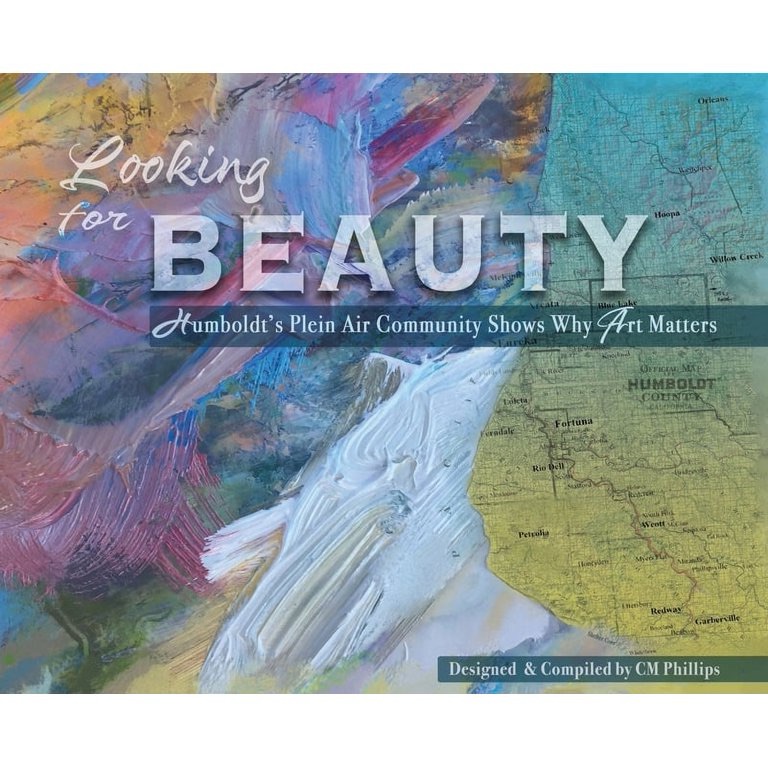
    This week I am reviewing Looking For Beauty: Humboldt’s Plein Air Community Shows Why Art Matters. It was compiled by CM Phillips and was published in 2022. It is difficult to find background information on CM Phillips because — apparently — CM Phillips is a very common name. It consists of short essays from dozens and dozens of artists that are about why art matters to them, why they paint, etcetera etcetera. 

    Plein air painting is the art of painting a landscape outdoors, as the light is shifting in front of you. This can be frustrating because light changes so quickly. However, many artists say it is an incredibly rewarding experience.

    Many artists said that it is a way for them to connect with nature. It is a way for them to appreciate beauty, and a way for them to share that beauty with others. They said the times we are living in makes it more important to practice art, not less. They said that the arts aren’t some stupid, frivolous pursuit. One artist mentioned eight miles of painting on a rock wall that some archaeologists recently found. She said that’s the importance of art. That civilization was no more, but the art remained. Sophisticated art, at that.  

    What I took away from this book is that art isn’t a frivolous pursuit. Art is extremely important to civilization. It may not stop climate change, provide food, or anything like that, but every civilization has had art and we ignore it at our peril. Looking For Beauty is a compilation of essays on why art matters from a variety of local plein air painters. Something that came to my attention — that the author acknowledges — is that there are no painters of color in this book. This is very sad, but I guess no book is perfect. I also wonder if artists’ perspectives on their craft would have been different if artists’ from a wider variety of traditions had been included. How would an abstract artist feel about the importance of their craft in the face of climate change? What about an artist who paints cityscapes, or dogs and cats, or portraits?  

    If you are an artist, and you wonder why your craft is important, read this book. If you wonder in general why art is important, read this book. If you are an artist, and you are feeling like your profession doesn’t matter, read this book. If you are curious about art, you feel like you might want to try it out, pick up this book. This book deals a lot with the “why” of art, and not so much with other aspects, so it’s good in that way. This book is more about plein air than anything else though, so it might not appeal to people who want to paint other things. That said, if plein air is your thing, this book is probably for you. Go for it!

  • Jasmin’s Corner

    Jasmin’s Corner


    This week has been a solemn, hard week for many people. I remember being 14 in an Applebee’s when I witnessed the live results showcasing Trump’s win. I’ve been a Bernie Sanders supporter since I first started getting into politics, and I remember feeling crushed when he wasn’t chosen as the 2016 Democratic nominee. Nonetheless, I had faith that we as a country would prevent a Trump presidency. I’m 22 now, feeling 14 and helpless again. 

    A lot of us know people who voted for Trump this year, but some are in relationships with those people. My question to you is, why? Not only why, but how? How can you stay in a relationship with someone who willingly — happily, even — casted a vote against your rights? Against women’s rights? Someone who has actively called for the removal of birthright citizenship, who has invited speakers onto his platform to trash minorities, whose VP actively supported the claim that Haitians were committing vicious crimes against their neighbors, a claim that was debunked over and over again by various news outlets. 

    I want to clarify that this isn’t a dig at people who are in relationships in which they are dependent on their partner, whether financially or otherwise. This also isn’t for people who voted for Trump; that’s a whole different type of nut that needs a lifetime of self-reflection and cannot be cracked at this time. This is specifically aimed at people who are capable of leaving their relationships, but choose to stay with someone who doesn’t respect them or their rights. 

    There was a trend on TikTok recently, something about canceling out the vote of someone in their life. Many people exposed their partners for voting for Trump, but ultimately stayed in the relationship. To be so aware of the lack of care your partner has for anyone but themselves, just to stay in the end? I need you to look in the mirror and contemplate if the child in you, the one who dreamed of the perfect partner, one that would protect them and defend them through and through — would that child be proud of your choices? Is the person you’re dating — the one that voted for a man who was found liable for sexual abuse — someone you would want around little you?

    I just can’t fathom how you can continue to love someone who so obviously does not love you.  If you voted for Harris to cancel out your partner’s Trump vote, you need to stand by your morals and leave them. You deserve better. You deserve someone who will stand up for you and for others, too.

  • Reel Talk: With Julia

    Reel Talk: With Julia

    Fantastic Mr. Fox, A fantastically fun film for fall

    Fantastic Mr. Fox, released in 2009, is a stop motion animated film directed by Wes Anderson. The content of the film is based on the 1970 children’s novel of the same name by Roald Dahl. The story follows Mr. Fox, voiced by George Cloony, who is bored with his current life. So, he decides to plan a heist against three local farmers. The farmers, tired of Mr. Fox’s stealing, seek revenge against him and his family, causing turmoil for not just Mr. Fox, but all the other woodland critters in the community.

    Anderson’s creative visual style is often associated with the color yellow, and Fantastic Mr. Fox is an excellent example of that. The film is absolutely stunning, down to the cute little animal puppets, the distinct sense of symmetry, and autumnal vibe represented in the colors used, which makes this movie really stand out from most mainstream animated projects.

    Something that is also worth noting about the production of this film is the sound design. To either give the film a more realistic sound, or just for fun, Anderson recorded dialogue for outdoor scenes outside in natural settings. He recorded in places like forests and farms instead of in a studio, which is something you may not necessarily pick up on during a first viewing of the film.

    Anderson is my absolute favorite director. As a photographer, it’s simply pleasing to me that you can pause any of his movies and be met with a perfectly symmetrical shot, which is honestly something I recommend doing if you decide to watch Fantastic Mr. Fox.

    The cast is also great, with a lot of the familiar voices we hear in Anderson films such as Jason Schwartzman, Willem Dafoe, Owen Willson, and Bill Murray, just to name a few.

    Anderson’s films usually don’t perform well at the box office, so the actors involved are often friends who genuinely believe in his vision. I love this approach because it allows him to stay true to his artistic perspective without compromising for commercial success.

    I also genuinely love the story of this film, outside of all aesthetic appeal. Schwartzman’s performance as Ash Fox is particularly entertaining. 

    Ash is the young son of Mr. Fox, and is… different. He starts the film insecure from feeling like he’s always been in his father’s shadow, which is then made worse by his much more athletic and charming cousin, who seems to impress his father. 

    The film concludes with Ash gaining confidence in himself, forming a bond with his cousin by ultimately saving him from the farmers.

    It’s honestly such a whimsical film that everyone should watch at least once. This is just a great film that would perfectly pair with a fuzzy blanket and a warm cup of apple cider. With November already here, I know I want nothing more than to do exactly that.

    Julia is a journalism major at Cal Poly Humboldt. She loves film and is a regular on Letterboxd. To quote Robin Williams in her all-time favorite movie, Dead Poets Society, “The powerful play goes on and you may contribute a verse. What will your verse be?”

  • Let us live más: The people of Humboldt County yearn for a better Taco Bell experience 

    Let us live más: The people of Humboldt County yearn for a better Taco Bell experience 

    By Julia Kelm

    Imagine you and your friends are out on the town — the vibes are chill, that cheap beer you always buy tastes a little better than usual, things are simply going great. 

    Then out of nowhere, someone pipes up.

    “Hey, what if we went to Taco Bell?” 

    You all freeze, and stare in absolute awe at this person who just made one of the most beautiful requests you’ve ever heard.

    So you all pile into the car, blaring music, and make your way to the Taco Bell in Eureka. It’s almost 1 a.m., surely nobody will be there… right?

    Unfortunately, you are then met with a drive-through lane over an hour long. Your night is ruined, morale is at an all-time low, and then someone sitting next to you says, “There’s no line at Burger King.”

    The fact there are only two Taco Bells in the vicinity of Cal Poly Humboldt is a travesty. However, the lack of Taco Bells isn’t the only issue — the wait time at these restaurants is truly insane. 

    I have personally walked into the Eureka Taco Bell, coming in around 6 p.m., ordered my food, and then proceeded to wait a full hour for two chicken quesadillas, two bean burritos, and three Baja Blast Freezes. The worst part is that they didn’t fill the cups all the way, AND they were the wrong size — smaller. It’s safe to say I was losing my mind.

    Don’t believe me? Here are some reviews from Yelp that share my lousy experience:

     “Just don’t come here. Unless you want to wait all day. Spare yourself the disappointment,” Tanner R. said.

    “They’re so slow they should just fire the whole crew and start over. It’s ridiculous in LA where I get Taco Bell you hand them your card they swipe it before you can put your card back in your wallet. You have your food almost in your face. I know it can be faster. These people suck,” Greg C. said.

    “This is the worst Taco Bell on earth. Humboldt County deserves much better! I spent about 40 minutes in the Drive-Thru this evening. No empathy, no apologies,” Marcus R. said.

    These are all one-star reviews, by the way. It is quite evident that I am not alone in my disappointment with the Taco Bells in this area. 

    However, I think it’s important to mention that fast food places like Taco Bell have only one or two employees working late hours. So if anyone should be blamed, it’s the managers and owners that have these poor employees trying to feed the masses. 

    As Marcus R. put it so eloquently, Humboldt County does deserve so much better. So, take this column as a plea to whoever decides where Taco Bells go. Please put one in Arcata, or at least a few more in Eureka. It would make me, and probably a lot of other people very happy. 

    Julia is a journalism major at Cal Poly Humboldt. She loves film and is a regular on Letterboxd. To quote Robin Williams in her all-time favorite movie, Dead Poets Society, “The powerful play goes on and you may contribute a verse. What will your verse be?”

  • From Mourning to Mobilization: How to Prepare for a Second Trump Term

    From Mourning to Mobilization: How to Prepare for a Second Trump Term

    By Jordan Huber.

    Note: Jordan Huber is an election worker. The views and opinions expressed in this column are solely those of the author and do not reflect the official policy or position of the Humboldt County Office of Elections.

    So, the nightmare scenario has begun. Trump’s second successful presidential campaign might not be as much of a surprise as his first. What certainly was shocking was how fast the race was called. Harris’s campaign, built on a positive outlook for America and propelled by Gen-Z social media interns, ultimately was unable to win a single swing state. The Senate has also fallen under control of the Republican party, with the House of Representatives close to being called for Republicans as well. 

    I spoke about hope last week, and I still have that hope after one of the darkest days that I can remember. However, I cannot say that this hope has been unwavering. While laying awake at 3 in the morning on Wednesday, I did something I had never done since I started studying political science. I questioned why I was even learning about political science anymore. Most major polling organizations had Harris in the lead. All the data and indicators pointed towards, at the minimum, a neck and neck race. So, how in the hell was this race an electoral blowout? What is the point in putting your time into a major if it will fail to predict the winner of the most important position in the country? Are there even going to be opportunities in my field in Trump’s America?

    Question after question rang in my ears about what this election means for my future and the future of everyone else. I could not even begin to imagine any answers in the following 48 hours that Trump became the president-elect. I walked onto campus on Wednesday morning and you could feel the air sucked out of school. No one had answers, only grief and sadness. Classrooms became therapy sessions where even professors could not find the words to help people process what happened and what is to come. 

    All of the conversations I have had in the week following the election have shown me that we cannot allow despair to swallow us whole. Students I have spoken with have commented that right now, the study of politics and political mobilization is at its greatest demand in our lifetimes. We need to know why alt-right conservatism, spearheaded by Trump, attained power once again. More importantly than the why, we need to know how to fight back. 

    I do not think this is solely up to any one major or group of students. Journalism majors must rally and fight every day through the media to make sure that free speech is not limited by Trump’s revenge tour against news publications. Environmental science students need to know how to mobilize and educate the public on the dangerous “drill baby drill” strategy of Republicans that is going to devastate our world. Business majors will be forced to explain what a tariff is over Thanksgiving dinner and teach their loved ones just how backwards an economic policy is to claim that tariffs will help everyday people. 

    I urge you all to take the next two months and prepare for the battle that is going to take place. We are going to need each other more than ever if we want to ensure that our democracy and that our loved ones remain unharmed for the next four years. Learning across academic disciplines will only strengthen our voice. Push yourself to take a class in national politics. Explore environmental communications. Learn about media law. Take a course on economic sustainability. You will find that there are so many others at Humboldt who are all working towards a better world, and our combined efforts are what will sustain us through the next Trump presidency. 

    Jordan is a senior political science major and the president of the Politics Club. With a keen interest in current affairs and a passion for informed debate, Jordan brings a well-rounded perspective to their opinion column. Through their studies and leadership, Jordan is dedicated to exploring the complexities of political issues and fostering meaningful discussion.

  • Facing Trump’s America: Students and community members voice their fears and hopes at anti-Trump rally for Palestine

    Facing Trump’s America: Students and community members voice their fears and hopes at anti-Trump rally for Palestine

    By Griffin Mancuso

    Through the usual hum of the Arcata plaza — cars driving by, dogs barking, construction noise — a chorus of passionate voices rang out.

    “No Trump, no KKK, no racist, fascist USA!”

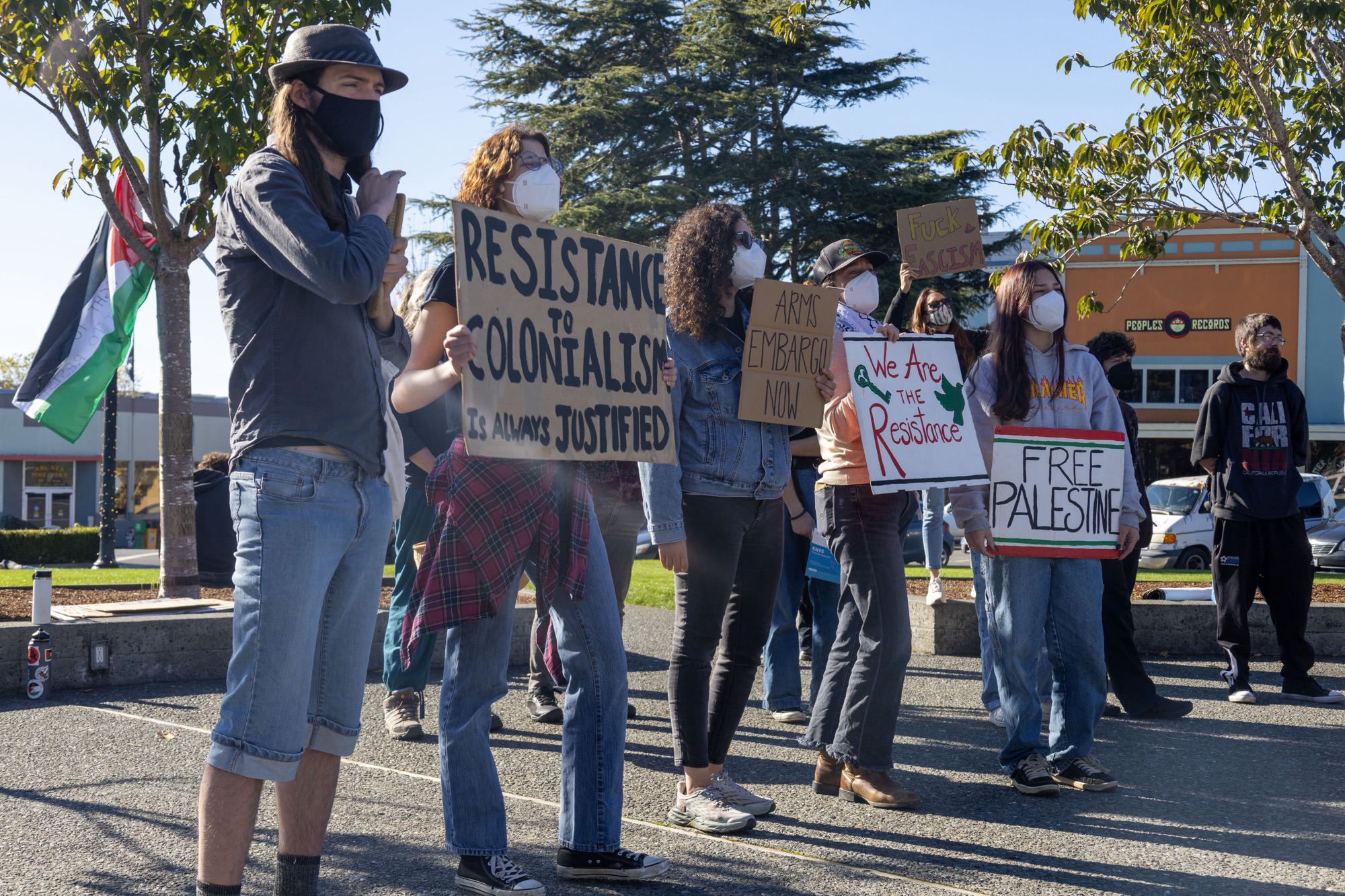
    Dozens of Cal Poly Humboldt students and community members stood in a circle holding signs, about half of them wearing masks. In the center stood Rick Toledo, a member of the Humboldt Chapter of Students for a Democratic Society, who led the chants with a megaphone adorned with Palestinian flag stickers. A Palestinian flag secured in a nearby tree floats in the wind, bearing the message, “Right to exist, right to resist.”

    “Slavery, genocide, and hate,” Toledo yelled into the megaphone.

    “America was never great!” the audience yelled back.

    On the morning of Nov. 6, the United States woke up to see that Donald Trump had won the 2024 presidential election with 295 electoral votes and 50.7% of the popular vote, compared to Kamala Harris’ 226 electoral votes.

    Benny McGee, a zoology major, recalled the desolate atmosphere of campus after the election results.

    “The campus was eerily silent,” McGee said. “I feel like every woman that I passed just gave me the saddest look… no one was saying anything. I thought I’d be eavesdropping, hearing something. It was just people going about their day, just sad, doing nothing, and I was pretty upset.”

    On the same day, SDS Humboldt posted on Instagram advertising an anti-Trump rally. The caption called for their audience to join them in the Arcata plaza at 1 p.m., learn how to fight against fascism and imperialism, and get involved in future activism.

    Toledo led the event, starting with group chants in support of Palestine and criticizing Trumps’ ideologies, then providing an open mic for people to voice their thoughts. People stepped up to the mic calling for everyone to find joy even though, “fascism sucks the soul out of you,” expressing worry for people in the LGBTQ+ community, and their disappointment in both the Republican and Democratic parties for their responses to the war in Palestine.

    In response to people’s fears and frustrations about the election results, the SDS decided to host an emergency national day of action. Some SDS chapters hosted their rallies on Nov. 6, while others — including SDS Humboldt — hosted their rallies on Nov. 7. 

    Toledo wanted to give people a space to vent about the election, connect with one another, and hear each other’s needs and how the election impacts them.

    “I hope to educate more people on some of the faults of the current system — the two-party system — and the way that it’s not entirely democratic to only have a decision between one representative of big capital and another representative of big capital,” Toledo said. “I think in a real democracy, we would be able to directly influence policies, we would be able to directly choose our representatives by popular vote, and we don’t have that.”

    Many attendees had their own critiques of the Democratic party, ranging from their policies around the war in Palestine, to the demographics they catered to, to the way their campaign was run. Jarrett Whitloe, a geology major at the university, attended the rally wearing a keffiyeh around his head and the USSR state flag as a cape. He was disappointed with the election results but was not surprised.

    “The democrats absolutely chose to do this to themselves,” Whitloe said. “They took a candidate who was not chosen by the people, who had no primary that was held to elect her, ran her on the worst campaign possible, told everybody on the left to fuck off and die, and then wonder why they lost.”

    Some attendees highlighted the positive outcomes of the election. Community member Laura Benz participated in the chants while holding a sign reading, “Fuck fascism,” with a watermelon slice on it, meant to represent Palestine. She also spoke during the open mic portion, calling for the “liberal lunch girlies” to join them in their fight. She heard about the event on social media and was excited to see more people standing against fascism.

    “What I saw post-election is there were people that were very quiet throughout the last few months, not really speaking up, not getting very politically motivated,” Benz said. “But, because Trump got elected, they are politically activated and they are excited to get involved in their communities in ways they were not going to do under Kamala.”

    McGee was initially unsure of what steps to take after the election, but felt like she needed to take action, so she was relieved to hear about the rally hosted by SDS Humboldt. She was also frustrated with the school’s approach to students’ concerns leading up to the election. She believed the school hosting events aiming to relieve stress or provide a distraction were muting the anger needed for political activism.

    “I want people to see that they’re not alone in their rage if they feel that they’re the only one angry, because that’s definitely how I felt yesterday,” McGee said. “I looked around to my peers, to my friends, no one seemed to have the anger that I had inside of me. So, I really hoped — for myself, too — coming here, that I would fuel that a little bit in a safe way.”

    Whitloe also emphasized that action needed to be taken despite the feelings of helplessness among students and community members.

    “The important thing is that you do something about it — anything — rather than just sit at home and post shit,” Whitloe said. “As much as this is an event of words, and that has value, rhetoric is weak. You have to go out and do something.”

    Toledo made it clear that Trump’s election was not a dead-end to activism.

    “We want to come out here and show people that we’re out here, we’re ready to oppose Trump,” Toledo said. “We’re not just gonna let this be the end of it, he doesn’t just win the election and now it’s over. It’s just getting started for us.”

    Griffin Mancuso is a journalism major and editor-in-chief of The Lumberjack. He has written stories for every category in the paper, but particularly enjoys writing human-centric stories. He has also freelanced for the North Coast Journal and News Decoder.

  • Campus Store, Eureka shuts down as Arcata location’s deficit approaches $500,000

    Campus Store, Eureka shuts down as Arcata location’s deficit approaches $500,000

    By Brad Butterfield

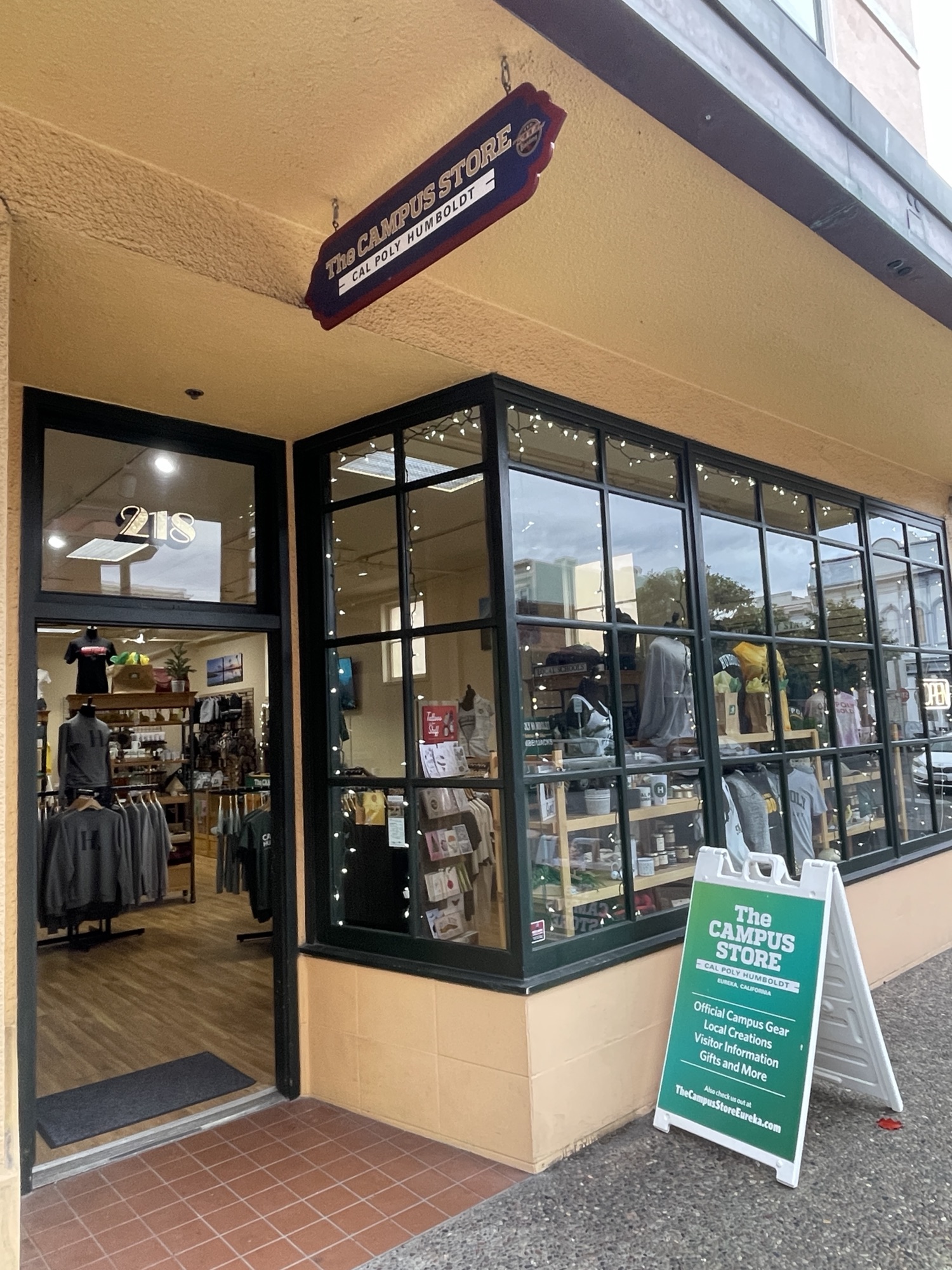
    After three years of business, the Campus Store, Eureka has closed, leaving a mighty six-figure deficit in its wake. Alternatively, the off-campus Campus Store, Arcata, remains open despite a significantly larger deficit and far higher operating costs. The university remains committed to utilizing the off-campus storefront as a bridge between the community and university, and there are no current plans to shut down the Arcata location, according to Aileen Yoo, Director of News and Information for Cal Poly Humboldt. 

    From November 2021 to September of this year, the Campus Store, Eureka accumulated a deficit of $149,745, according to public records. The university did not renew the store’s lease, which expired on Oct. 31. The storefront had been established to increase the university’s economic footprint outside of Arcata, as well as to better serve members of the campus community living in Eureka, according to Yoo. While the store succeeded in expanding the university’s economic footprint, it had failed to turn a profit after three years of business. 

    “That location proved to be a financial liability that outweighed these other considerations, leading to its closure and a renewed focus on the on-campus and Arcata Plaza locations to best serve our students and community,” Yoo said.

    While the Campus Store, Arcata is operated by Follet, a nation-wide store operator for colleges, the Eureka location was operated by the Humboldt Outfitters, a Humboldt County based company. In this business agreement, the university paid the Humboldt Outfitters $3,000 every month to operate the store, according to Grant Scott-GoForth, who was the communications specialist for the university at the time of the interview. Additionally, the Humboldt Outfitters earned 5% off of every sale, according to Scott-Goforth. The agreement with the Humbodlt Outfitters resulted in the Campus Store, Eureka offering a much different inventory from the Campus Store, Arcata. 

    Kianna Znika, a Cal Poly Humboldt alum and former social media manager for the Humboldt Outfitters, said that when she visited the Campus Store, Eureka, the retail environment was far from ideal.

     “It was just very clear that nothing was really being done there,” Znika said. “There were old pizza boxes stacking up, and people were always just on their phones or like, doing homework behind the counter.” 

     The store’s enduring financial woes, however, may have had less to do with its inventory and management, and more to do with the lack of students within the city of Eureka, according to Miles Slattery, city manager of Eureka. 

    Slattery emphasized that the effort to create university-provided student and/or faculty housing in Eureka is ongoing and would likely benefit both the university and the city. Bringing a significant population of the campus community likely should have come prior to a retail store though, according to Slattery. 

    “We’ve tried multiple times on housing projects to get some more students into our city, and I think that would help out a lot,” Slattery said. “It’s kind of a cart before the horse kind of thing … You know, you need to get housing here before you can see [the] benefit from the economy.”

    Conversely, the 10,200 square foot Campus Store, Arcata is located within a mile from campus and is central to the thousands of students and faculty who call Arcata home. Despite its location on the Arcata plaza, however, the Campus Store, Arcata has fared far worse than the Eureka location — at least, financially speaking. From November 2021 to Sep. of this year, the Campus Store, Arcata has accumulated a deficit of $447,655. Rent alone at the downtown Arcata location costs the university $12,240 a month. The primary objectives for the off-campus Campus Store are centered around relationship building, visibility, and accessibility, according to Scott-Goforth, who did not include profitability as a measure of success for the store. Despite the Campus Store, Arcata’s financial difficulties, the university has no current plans to significantly change operations at the off-campus Campus Store, Arcata nor at the on-campus Bookstore, according to Yoo.

    “We are focused on leveraging both locations to provide the services and products that customers want and allowing the Plaza location, in particular, to serve as a connecting point between the campus and community,” said Yoo.

    Todd Larsen, senior director for enterprise services at Cal Poly Humbodlt, did not respond to an interview request.

    Brad Butterfield will graduate Cal Poly Humboldt this December with a degree in journalism. He has worked as a maid, mechanic, butler, bartender, tour guide, server, photographer, and farmhand, [etc] – but is now chasing down the dream of fruitful employment in journalism.

  • New housing requirements leave freshmen confused and a neighborhood optimistic 

    New housing requirements leave freshmen confused and a neighborhood optimistic 

    By Noah Pond

    On Oct. 14, Cal Poly Humboldt published a statement on their website titled, “Launch of On-campus Living Requirement for First and Second-Year Students.” This statement notified incoming freshmen for the Fall 2025 semester that the university would be enforcing a rule in which they have to live in the dorms for their first two years. 

    “With the Cal Poly Humboldt polytechnic transformation and the addition of our new student housing complex opening in Fall 2025, the University is expanding opportunities for our current students to continue living on campus and enhancing the student experience for all,” the university’s statement read.

    The university is also in the process of constructing the Craftsman Mall housing complex — set to open in Fall 2025, which holds nearly 1,000 beds. Enrollment has remained stagnant at about a 1% increase since becoming a polytechnic.

    However, they have some statistics to back up their decision for mandatory on-campus living. 

    In the statement, the university cited a survey conducted by The National Survey of Student Engagement, which showed that first and second-year on-campus students GPA’s outperform their off-campus peer’s by 2%. They also mention that 92% of first-year students who live on-campus return as sophomores, as opposed to the 90% of students who live off-campus that do not return after their first year. However, this was a nationally conducted survey, and was not specific to that of Cal Poly Humboldt.

    However, there will be an exception for students if they meet certain criteria. If incoming students graduated from high schools within Humboldt or Del Norte County, they will be exempt. Other groups who will also be exempt are students who turn 21 prior to the academic year, are currently active or military veterans, are married or have legally dependent children, have independent student status for at least a number of years prior to the academic year as defined by FAFSA, and medical or disability circumstances that cannot be accommodated.

    Not all freshmen were aware of the new requirements or the university’s statement. Luckily for them, this change will only be implemented Fall 2025, thus not applying to them. Three freshman friends Avery, Derek, and Drew, had their own fiery opinions on the matter.

    “I don’t wanna live here,” Drew said.

    “It makes me feel limited,” Derek said.

    “The food makes me want to jump out the window,” Avery said. “from the J, out the window into my car and straight to Chipotle.”

    Holly Jalison, a marine biology major, is annoyed by this change and feels that it does not align with their Humboldt experience. 

    “Part of the reason I came here was because I liked how flexible Humboldt was,” Jalison said. “But now it’s kind of not, so that’s really annoying.” 

    Jalison and Harris are not the only ones annoyed by this change. Jennifer Jones, HSU alum and a resident of Eye Street, is irritated by this development for other reasons. 

    Eye Street lies below the seven story dorms being constructed on the old Craftsman Mall lot. Jones has lived on Eye Street for 12 years and remembers it being quiet before all the construction began. 

    “It’s been really fucking annoying, because people come down here because they’re curious,” Jones said. “I’ve lived here for 12 years. It was really quiet, it was pretty chill. But now, people try to cut through the lot and jump the fence.”

    She remembers living in the dorms in the early 2000s and doesn’t plan on sticking around once the students move in. 

    “I never thought I’d want to move out of here, because I really like this spot, but I lived in the dorms back in ‘04,” Jones said. “I will not be living next to dorms.”

    Not everyone on Eye Street was upset about this dorm project though. Lea Nagy, who has lived in Humboldt for 40 years and lives right next to the lot where the dorms are being built, is optimistic about the development. 

    “Any kind of housing we can get in Arcata is better than nothing,” Nagy said. “These kids were living in their cars. Then, the university decided they couldn’t be in their parking lot, so I would love to see some of this housing be for low-income families and people.”

    It seems like most Arcata residents see this project as a good thing, at least for the housing market. With little housing already available in Arcata and locals competing with students for housing, the new housing requirements are shaping up well for locals. 

    Equipment operator and Eye Street resident James Figas voiced a similar opinion to Nagy. 

    “I’m not bothered by it, I mean I’m already two blocks from the campus, so having dorms down the street doesn’t really change anything for me,” Figas said. 

    After all, Arcata is a college town and the university brings a lot of money to the local economy. Locals like Figas are hopeful all that money will strengthen housing for all of Arcata, not just freshmen and sophomores. 

    “There is so little housing around here,” Figas said. “I am hopeful that if there’s more campus housing, that there will be more availability for the rest of us around town.”

    Noah Pond is a Junior at Cal Poly Humboldt and a reporter and opinion editor for the Lumberjack. During his free time he enjoys cold beer and his skateboard.

  • Clowns and fae at the Humboldt Fairy Cirque

    Clowns and fae at the Humboldt Fairy Cirque

    By Jasmin Shirazian

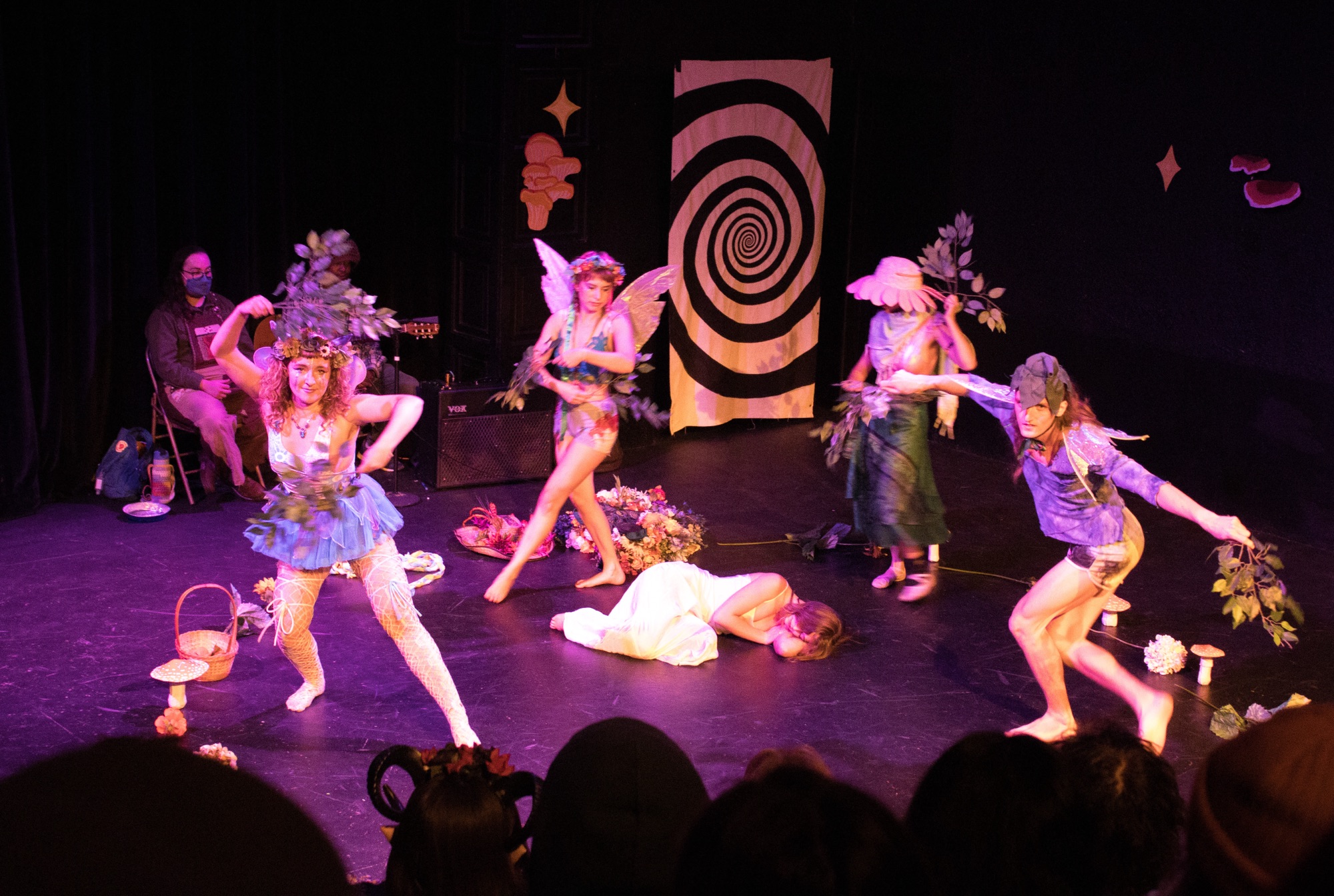
    Under green stage lights, two leading musicians, Rah and Jonah, played lively beats with a guitar and heritage spoons. Fairies, clowns, Maleficent, and a variety of other creatures in costume littered the audience. Voices ricocheted off one another as audience members chatted amongst themselves, bursts of giggles coming from different friend groups in different pockets of the Gist Hall Theatre. One thing’s for sure — you absolutely could not hear a pin drop. Despite the show starting 20 minutes late, guests did not seem to mind the delay and spent the extra time enjoying themselves. Soon enough, a fairy and a merchant began the show by thanking the audience for their patience and enthusiastically pointed out exits and bathrooms, in case we needed to, “pee-pee, poo-poo, or vomit.” 

    And with that, the group of 30 or so clowns and fairies rushed onto the stage. With excessive noise and bright costumes, the chaos came to a sudden halt when someone — a clown planted in the audience — demanded it. After a few funny stumbles and steps, she insisted the clowns and fairies put on a true performance — to which they accepted in exchange for her soul. And so, the show continued. 

    The Fairy Cirque is one of the annual circus performances put on by the Humboldt Circus, a student-run club on campus. The show consisted of a number of acts; fairies dancing in a circle of mushrooms around a fallen maiden, a goose’s story of avenging their father’s death, the story of Hermie the Wormie at a summer bible camp, and so much more. The lighting of the show was spectacular, cuing the audience to shifts in the story, instigating laughter, applause, fear and all the other knee-jerking emotions that come with a performance such as this. 

    From storyline-infused dances, to interactive storytelling, to stand-up comedy, each act had a little bit of clown — or fairy — magic for everyone.

    A crowd favorite act of the night revolved around a sleepaway bible camp, where they sang the song of Hermie the Wormie. The campers were met with a razor-clawed — or rather, metal-tonged — hazard suit-clad creature to deliver Hermie’s true story. Then, out came a group of cloaked actors to surround the bible campers, who were then forced to see a live-action recreation of Hermie the Wormie and its diet of humans. 

    Vaya Ren attended the show to support her friends who were involved in the performance. They, like many others, loved the bible camp skit and regarded it as the funniest act of the evening. Ren recalled non-stop laughing throughout the entire show and reveled in the audience’s matched energy. 

    “It’s been so delightful, so beautiful, so funny,” Ren said. “The crowd energy is so much fun; gosh, so much laughing. There’s been so many beautiful [performances].” 

    Anna Martinez, a former circus member, also attended the show to support her friends still active in the club. 

    “I just love the gay, raunchy vibes,” Martinez said. “I’m actually going to next weekend’s show as well, to see the extra acts that weren’t able to go on this week.”

    Each act was accompanied by music, whether that be a pre-recorded track or the two live musicians. In one skit, condoms fell from the overhead lights and onto the performers, who then tossed them into the crowd. 

    Toby Hetrick, the self-titled Worm Dealer, joined the circus after leaving an abusive relationship, seeking to put those emotions and pain into their art. In doing that, they were led to a community that supports them. 

    “I really like the people,” Hetrick said. “It’s great — everyone is basically just as weird as I am.” 

    While this show is full of laughter, lights, jokes and joy, it can be a bit overwhelming at times for individuals who struggle with sensory issues or just a case of a low social battery. Nonetheless, for $8 tickets for students, it’s worth going and getting to see a community of silly individuals free to be their silly selves. If you missed the Fairy Cirque last week, your last chance until next semester is on Nov. 16 and 17.

  • Fifth annual Día de los Muertos Festival de Altares honors family and tradition 

    Fifth annual Día de los Muertos Festival de Altares honors family and tradition 

    By Mia Costales 

    Golden cempazúchitl petals lined the brick walkway, forming paths to each ofrenda. The smell of tamales and champurrado filled the air and La Llorona could be heard softly beneath the murmur of attendees. Bottles of tequila and pulque, pan de muerto, and dishes of copal were just some of the offerings surrounding photos of loved ones. Other ofrendas included cigars, children’s toys, and photos of pets. 

    Día de Muertos, also called Día de los Muertos, is a two-day Mexican holiday celebrated from Nov. 1 to 2. It is believed that the souls of children visit the altars, or ofrendas, set up by their family on the first and the souls of adults visit on the second. These ofrendas are commonly set up with photos of the deceased and offerings such as food, candles, flowers, and alcohol. Offerings are provided with the intent of remembering and paying tribute to loved ones who have passed. 

    While Día de Muertos is largely a Mesoamerican holiday, many Mexican-Americans and families of immigrants have brought the celebration to the States as a means of cultural preservation and respect for the ones who came before them. Thanks to the city of Eureka, this tradition has transcended borders and is being kept alive every year. 

    Maria Ramirez, a community organizer for the event, showed up early to put her ofrenda together. After adding the finishing touches to the altar, she changed into a witch hat and decorated her face in makeup resembling the markings of a calavera, or sugar skull.  

    “After having my son, I realized the real meaning of family,” Ramirez said. “The whole idea, really, is to bring an offering to important people in our life. We did this for them. I don’t want [them] to be forgotten.” 

    She explained that the photos on her ofrenda were not only of her friends and relatives, but also of prominent Mexican figures such as Frida Kahlo. She also pointed out a photo of a Hoopa woman who she wanted to commemorate on her ofrenda. 

    Blessah Breault strums for guitar next to her ofrinda.

    Most ofrendas were dedicated to family members, friends, pets, and even notable artists and political figures. However, one ofrenda strayed from the traditional sense and instead included photos of martyred Palestinians. Alice Finen and Ellen Pimento, members of the Humboldt for Palestine collective, set up a large ofrenda decorated with over twenty photos of Palestinian children and adults, prayer candles, homemade paper garlands, and Palestinian flags. Sunflowers, roses, and cempazúchitles were nestled in between the offerings.

    At around 4:45 p.m., several groups of all ages from Eureka performed traditional dances in front of the community altar in the Old Town Gazebo. After this, a mariachi group performed Mexican folk songs and classic mariachi arrangements in the street near the festivities. The mariachis invited the audience to sing along as they played Llorar y llorar. The crowd eagerly chanted along to the music as the mariachis swayed with the beat, occasionally letting out high-pitched gritos. 

    “I have been honoring Día de Muertos since I was actually a student at HSU, so probably since 2005. It’s become a really sacred, important part of the year for me,” Blessah Breault, a Eureka community member, said. “This is my daughter’s boyfriend [Pico] and he passed two years ago. He always said, ‘Everyday is a closer day to making it. All the way to the top, slowly but surely.’ I did this for him last year and then again here today. I feel that with this altar, for my family I’m channeling all of the ancestors through Pico.”

    As the sun started to set candles were lit, illuminating the ofrendas and giving the flowers a glowing effect. At 6:30 p.m., Cal Poly Humboldt’s Danza Azteca and Ballet Folklórico performed by candlelight, once again drawing a crowd around the gazebo. Community members dispersed for the final time after the performances were over. Some embarked on a last walk through the circle of altars, and others indulged in carne asada and Jarritos. 

    Eureka High School Danza Folklorico performing “Baile de los Machetes.”

    Mia Costales is a junior journalism major and the Life & Arts Editor for The Lumberjack. With an extensive background in music performance, she hopes to combine her love of music and the arts with her passion for localized news and activism to bring thoughtful and informed stories to the public. 

  • Mar’s Gaming Garage

    Mar’s Gaming Garage


    Black Ops 6 delivers a well-rounded experience worth your time

    By Mario Orozco 

    When you look at the history of gaming, Call of Duty (COD) is one of the most popular franchises of all time, boasting 24 mainline games. Only one of these games is important today, Call of Duty Black Ops 6 (BO6), recommended to me by a communications major.

    Like most COD games, BO6 is essentially three games in one — multiplayer, zombies and the campaign. To be fair to the game, I’m going to be looking at each mode individually and give my overall thoughts at the end.

    The first game mode up is multiplayer; the biggest challenge of this mode is the maps. Aside from a few good ones, the maps you play on kind of suck and encourage camping. This is a bummer, because the new movement system in the game is fantastic. 

    The omni-directional movement system allows players to run, slide, and dive in any direction. Watching someone zigzag through your bullets and dive at you with a baseball bat is hilarious, so it’s a shame so many players sit crouched in corners. Despite all of the campers, I’ve had a lot of fun in the mode and hope future maps fix some of these issues.

    Next up is zombies, which is what I buy COD games for. In my opinion, zombies haven’t been consistently good since Black Ops 3, but I can’t stop playing every new game just hoping for a taste of what once was.

    So far, only two maps are out, Liberty Falls and Terminus. Liberty Falls opens with a fantastic cutscene, unfortunately the map is a little lacking and doesn’t feel like a zombies map. However, it includes multiple small easter eggs — hidden surprises — that make the map more enjoyable to play. The main easter egg of the map is surprisingly easy to complete and only took me two attempts to beat.

    Terminus, on the other hand, is an amazing map. Terminus actually feels like a zombies map and is pretty difficult as well. The map has two different boss fights that can easily end your easter egg attempts and send you back to the lobby. I am still working on completing this easter egg, as I have failed the final boss fight four different times.

    Overall, zombies is the best it has been in a long time, and I’m excited for future maps. However, there are a couple issues that should be addressed. The bullet weapons in zombies are too weak for higher rounds and special zombies spawn so often that they don’t feel special at all.

    The final mode of BO6 is the campaign, which turned out to be one of my favorite COD campaigns ever. This campaign produced two of my favorite missions of all time. Featuring both new and old characters, it delivers a genuinely interesting story filled with deep, sympathetic moments. Oddly enough, the campaign might actually be my favorite part of the game, which is surprising because it’s usually the mode I care about the least.

    Overall, BO6 has a lot of potential and is the best, most well-rounded COD game that has come out in a long time. I have put 34 hours into the game so far and I rate it a 4.2 out of 5. If you’re a COD fan on the fence, or have an Xbox Game Pass subscription, then I highly recommend this game to you.

    If you have any games you would like me to review or any thoughts on this review, you can email marsgaminggarage@gmail.com.

    Mario Orozco is a writer and assistant social media editor for The Lumberjack. He transferred to Cal Poly Humboldt in 2022 and his favorite game of all time is The Legend of Zelda: Breath of the Wild.

  • Reel Talk With Julia

    Reel Talk With Julia


    When good movies get nominated for Razzies

    By Julia Kelm

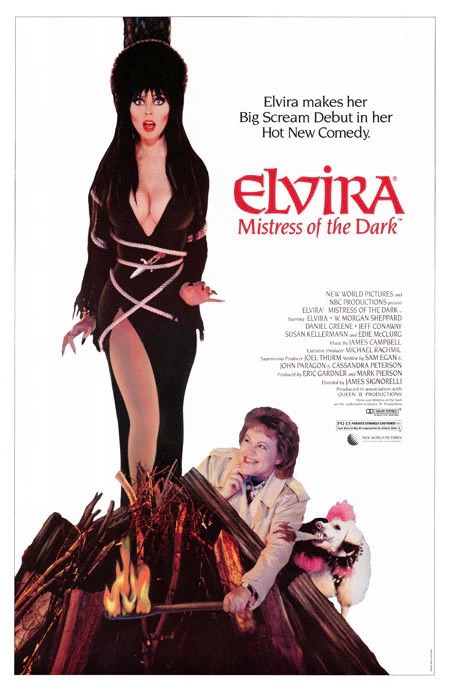
    Elvira Mistress of the Dark was released in 1988 and directed by James Signorelli. The creation of the movie was a direct reaction to Cassandra Peterson’s successful persona as a horror movie TV host, Elvira. 

    The film follows Elvira arriving in the small town of Fallwell, Massachusetts, to claim her inheritance from a great aunt she never knew about. Elvira receives a less-than-enthusiastic reception from the very conservative locals of Fallwell. Amongst these locals is her uncle Vincent, who is probably the most evil villain of all time. In true Kevin Bacon Footloose fashion, Elvira is a helping hand in altering the backward ways of this middle-of-nowhere town.

    This movie is hilarious. I’m probably a little biased, as I generally have a soft spot for cheesy 80s films with spooky vibes. There are a lot of visual gags used in the movie, as evident in Elvira herself, and sexual innuendos that’ll make your dad snort. 

    Nothing about this movie is too offensively bad. The humor in this movie is perfectly comparable to successful male-led comedies of the era like, Bill & Ted’s Excellent Adventure or Airplane! However, Elvira Mistress of the Dark lead actress Peterson was nominated and won a Golden Raspberry Award for her role as Elvira. 

    If you are unaware of the Golden Raspberry Awards, or Razzies for short, it’s a parody award show honoring the worst cinematic failures of the year. However, they have an issue of nominating so-called bad movies that are actually good. 

    Stanley Kubrick’s The Shining and Jennifer’s Body were both nominees for the award. Oddly enough, it was Shelley Duvall’s portrayal as Wendy Torrance and Megan Fox as Jennifer who were nominated for worst actress. I don’t know about you, but I’m sensing a trend here.

    How come the Razzies seem to be labeling women as being the worst? Scott Meslow, a writer for GQ, shares my suspicions in an article entitled Ignore the Razzies. 

    “You can basically divide the Razzies’ most hated movies into three categories: Big mediocre blockbusters, movies starring and targeted at women, and movies made by Tyler Perry,” Meslow wrote. “So the Razzies are, in order: pretty lazy, very sexist, and a little racist.” 

    The Razzies have a few good takes, like naming Jared Leto the worst actor for Morbius, but that doesn’t change the fact that it mostly feels like a point-and-laugh fest at films led by women.

    So take my advice, and watch Elvira Mistress of the Dark, have yourself a chuckle or two. While you’re at it, skim through some of the other winners and nominees for the Golden Raspberry Awards. I bet you they’re probably at least decent, if not amazing, like The Shining — I seriously can’t believe that was among the nominees. 

    This is also a PSA to not listen to film snob critics and film bros who can only name one female director — Greta Gerwig. Watch and talk about movies you like, and you relate to. Life’s too short to only watch Christopher Nolen films.

    Julia is a journalism major at Cal Poly Humboldt. She loves film and is a regular on Letterboxd. To quote Robin Williams in her all-time favorite movie, Dead Poets Society, “The powerful play goes on and you may contribute a verse. What will your verse be?”

  • Administration remains optimistic, despite decreased enrollment, and funding slashes

    Administration remains optimistic, despite decreased enrollment, and funding slashes

    By Brad Butterfield

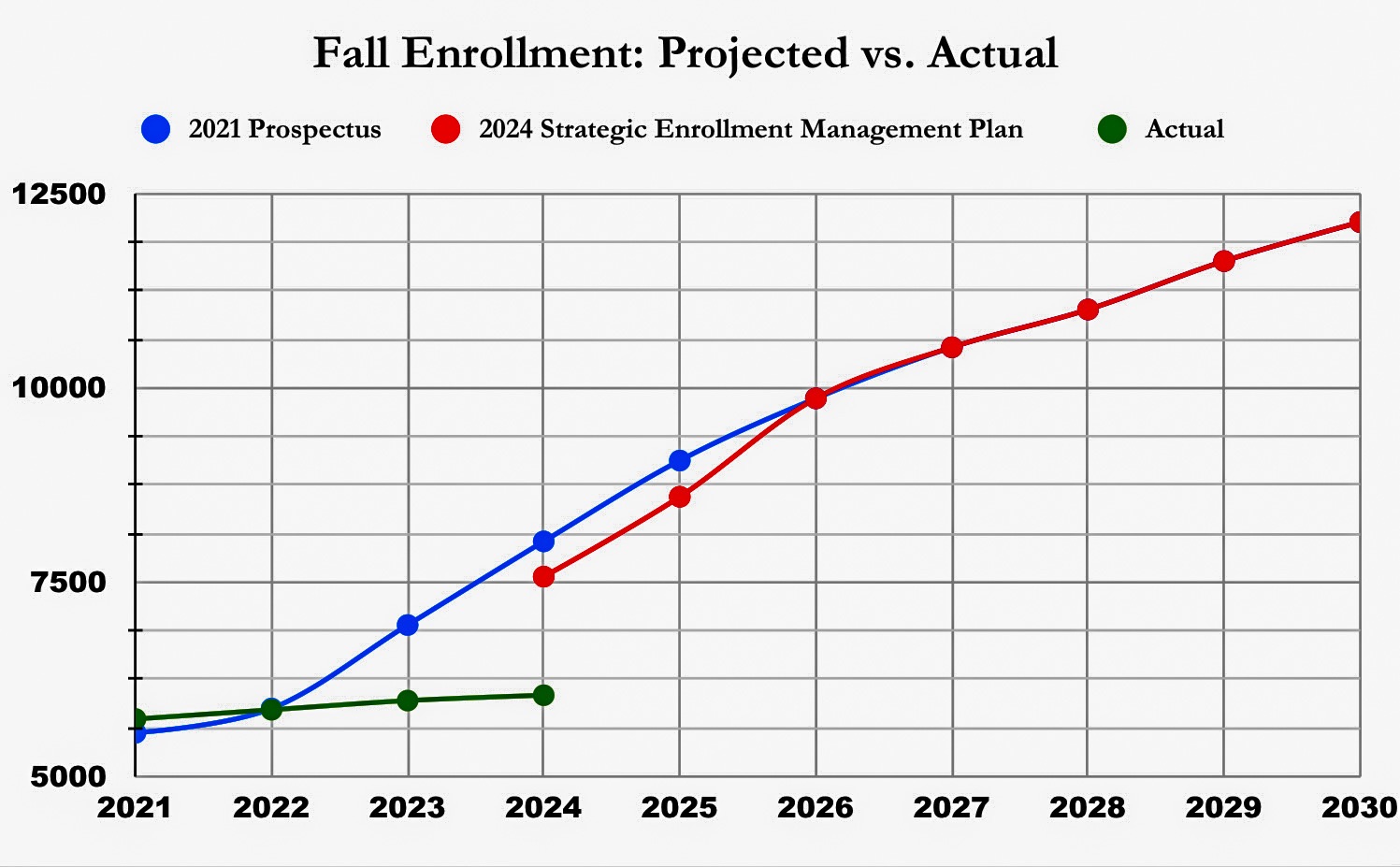
    Cal Poly Humboldt’s projected enrollment of over 8,000 students for Fall 2024 has fallen short by a significant margin. Due to low enrollment, the university will lose millions in state funding for the 2024-25 academic year. Despite the enrollment and financial troubles, officials remain optimistic, citing progress in retention, applications, and transfer enrollment. On top of that, a 225 million dollar housing complex, funded by state polytechnic money, promises to dampen student and faculty housing difficulties.

    The university prospectus, released in September 2021, projected 8,024 students enrolled for the Fall 2024 semester. This fall, however, the university had only 6,045 students enrolled at the time of census. The university aimed for enrollment growth varying between 3% and 13% each year following the polytechnic change. In reality, the university has had an increase of about 1% since becoming a polytechnic. While growth has been slower than projected, the university’s Vice President for Enrollment Management and Student Success Chrissy Holliday has not been surprised. 

    “I knew we had a long road ahead of us to grow in the manner the polytechnic prospectus outlined,” Holliday said. “And that the transition to a polytechnic institution provides an impetus for growth, but that we still must do the heavy lifting to realize the growth.”

    According to the National Student Clearinghouse Research Center — which has researched, reported, and provided information about colleges and universities since 1993 — public 4-year enrollment is up 2.2% nationwide for the Fall 2024 semester. While Cal Poly Humboldt is slightly behind the average enrollment increase nationwide, the university significantly increased its new, upper division transfer enrollment and retention of students, according to Aileen Yoo, director of News and Information at Cal Poly Humboldt.

    “This means we are outperforming many of our peers, thanks to the strategic work that is underway,” Yoo said. 

    The enrollment projections laid out in the 2021 prospectus were based upon previous enrollment patterns, capacity and demand for other polytechnics, and demand in Humboldt County to fill that need, according to Yoo. This ambitious projection did not reflect the time it would take to establish the university as a polytechnic. Moreover, the polytechnic change brought on previously unforeseen application volume growth of more than 80% in a single year. The shift in baseline data meant the university has had to refine its enrollment prediction processes, Yoo said. 

    Losing money by the millions

    Due to the university missing its enrollment target by over the 10% recalibration threshold set by the CSU, state funding will be cut by 5%, equivalent to 3.4 million dollars for the 2024-25 school year. The final effect of the budget cuts is yet to be determined, according to Yoo. According to Jeff Crane, Dean of the College of the Art Humanities, and Social Sciences, the budget cuts will likely have an effect on the number of classes that the university can offer and how majors are supported in the coming academic year. 

    “You have the most flexibility — and it’s terrible to say — in what you offer as classes,” Crane said.

    Ironically, the budget cuts themselves make it more difficult to increase enrollment to meet the CSU target, but budget cuts will only stop when the CSU target is met.

    “Budget cuts make it less likely that we can achieve those targets, as the work to recruit and retain students requires personnel, marketing, and other activities that call for sustained funding,” Yoo said.

    Enrollment to double by 2030?
    A revised enrollment projection was released in Aug. 2024, which adjusted the “onramp” towards the — unchanged — overall goal of 12,000 students by 2030. This revised plan still saw the enrollment over 1500 students shy of the target for the fall 2024 semester.

    “I think the numbers they projected were ambitious,” Crane said. “I think eight or nine thousand is a nice resting place with stable growth after that, I don’t think we’ll hit 12,000 personally. I think if we level off at eight or nine thousand — that’s a good number.”

    Alex Stillman, who has served 18 years on the Arcata City Council, has no doubts that the university can and should reach the enrollment goals.

    “We used to have eight to ten-thousand students attending Humboldt State, and so this has been a decrease for us, but we were able to do very well with that number of students in the past,” Stillman said, also an alum of the university. “I don’t see why there would be an issue with us being able to have that number of students.”

    Why the low enrollment and why the need to grow? 

    Cal Poly Humboldt has its sights locked on the resident full-time student target set by the CSU, which will then trigger a recalibration and put an end to the funding cuts. If the target isn’t met, funding will be cut and the target enrollment number reduced. Currently, the resident full-time student target is 7,375. This will likely be reduced to 7,006 for Fall 2025, according to Yoo.

    The cause of the consistently low enrollment is anything but simple. Yoo, Stillman, Crane, and Holliday all noted various factors outside of the university’s control.

    “We should also never forget external factors — demographic shifts, declining college-going rates, state budget reductions and world events,” Holliday said. 

    On top of the uncontrollable occurrences, Crane pointed out the factors like the widely reported — potential — plan in 2023 to house students on a barge in the Eureka Bay, as well as consistent protests. 

    “We’ve shot ourselves in the foot a little bit,” Crane said. “We’ve attracted some negative attention. That is limiting our ability to grow.”

    Not only is the university below its CSU-set enrollment target, it’s also well below the enrollment of many previous years. 

    “We need people in seats,” Crane said. “Butts in seats. I look at classes that have seven students and 11 students, we need those classes a little more full.”

    The low enrollment and decreasing support from the state both put financial strain on the university, Crane added.

    Some students see enrollment growth as a double-edged sword.

    “I think it’d be amazing for small businesses,” said Henry Grand, a senior studying business administration. “It would help them grow, help them support their families if there was an increase in enrollment. And for some folks, it would drive up the cost of living. It would make commuting really challenging. It would kind of take away from the natural beauty… you know, they would feel like their home was being kind of invaded.”

    Changes, large and small

     In fall of 2021, the CSU system dropped ACT/SAT scores as a requirement to enroll, instead adopting a multi-factor admission scoring process (MFAS). During the Fall 2024 semester, an automated system-wide CSU MFAS process was put in place to further streamline the admissions process. These changes, at least initially, appear to be achieving the goal of increased enrollment. Fall 2024 saw a record number of applicants at 22,690. 47 new faculty have been hired, since the Spring 2022 semester, to areas where the university expects growth, according to Yoo — who also noted the low student to faculty ratio at the university. 

    But, the biggest change, at least visually, comes in the form of a massive housing complex called the Craftsman’s Mall, which is under construction. The building’s completion will come in two stages, according to Yoo. The first tower includes 608 beds and will be ready for occupancy in the fall semester of 2025, according to Yoo. The second tower will be ready for occupancy for the spring 2025 semester. In total, the complex will boast 964 beds and is currently slated to cost 225 million — 125 million over the initial estimate. Following the planned demolition of the Campus Apartments, costing an estimated 2 million and expected to be complete in 2026, the university will offer 2,827 beds.

    As changes to campus come one after the other, Grand questioned whether students’ best interests had been adequately included in the process.

    “I am feeling though, that maybe the students’ perspective isn’t really what the university cares about,” Grand said. “They kind of care more about what their stakeholders see…it kind of feels like the school is being changed for an outside perspective, from an outside perspective.”

    Growing pains aside, Stillman emphasized the undeniable value that the university brings to the Humboldt County community.

    “I know a lot of people that live here are not happy with Cal Poly, or Humboldt, or whatever you want to call it, and I think then possibly they are living in the wrong community,” Stillman said. “Because if we didn’t have Cal Poly, we would not have the richness that we currently have.”

  • Getting bored? Bring back board games

    Getting bored? Bring back board games

    By Alina Ferguson 

    Board games used to be a staple in homes. Game nights were a common phrase in the vernacular. Now, it seems digital games have taken that spot in homes. 

    I remember my first experience playing a board game. It was actually Candyland. I really wanted to be the ice skating princess because she was pretty. The board itself was so beautiful, and since then, there have been many modern variations of it. I was still new to the states and to my family, and this was the perfect time to gauge them as people. 

    I will admit, I was not very good at losing at this time, I was 6 and really wanted to win, so if I did lose, I would either flip the board or huff and puff. My family claims they started cheating to let me win. This may or may not be true — there is no substantial evidence to support their claims. What I know is that I grew out of this habit. I learned that a game is simply that — a game. I did not need to take it so seriously, especially when I had people in my corner. 

    Video games are more immersive and the world building is insane, but board games are meant to keep you in the present. They are meant for you to interact with the people playing with you. Yes, the game is important, but it is more of an intermediary to bring people together, whether it be friends, families, or people in between. 

    Yes, connecting with others online is great, but in our quest to make connections that reach beyond our borders, we have lost the ability to connect right here at home. 


    Cheating in video games is easier; you can have a mod that overpowers your player, which may make it fun for you, but not for others. You can just buy a whole ton of buffs, weapons, coins, or anything else to help you level up. 

    You don’t need wifi to play board games. You can play inside, outside, or anywhere, really. You can pack the game into a bag and play on the go. People can play video games on the go, but again, they are stuck in their phones. While they are living in the world in the game, they are not living in the world they are in now. 

    My all-time favorite board game is Clue. It is a murder mystery, and you play as suspects in the murder. You have little potential murder weapons. Gosh, it is such a fun game. Then, you get to look at other people’s cards to tick off possible rooms of the murder, suspects, and weapons. You have to use deductive reasoning to solve the murder. You can play as the characters, or you can just play as you. 

    I used to do irregular game nights with my family. They apparently only played because I liked playing, but at some point, they stopped. Maybe it is because I got older and they figured I did not need them anymore. 

    No one, it seems, likes board games anymore. They are becoming much like DVDs, VHS, and CDs — a thing that makes you say, “Oh, yeah. I remember that, back in the day.” I feel old. 

    Playing a board game is a good way to pass time, connect with people, and have fun in low-stakes competitions. You don’t have to spend money in-game and you do not have to devote years, hours — unless you’re playing Monopoly or Uno — to still get fulfillment and enjoyment out of it. 

    So, get a glass of wine, a cup of tea, a cheese board, or a snack. Sit down on the floor, pull out your game of choice and gather with your trusted few to solve a murder, buy and trade properties, or whatever you choose to do. Just have fun. 

    Alina Ferguson is a journalism and anthropology major at CalPolyHumboldt. She hopes to be a writer for anthropology to bring science to life in a way that everyone can consume..

  • Hills and Stairs University: Disabled community faces barriers to accessibility at Cal Poly Humboldt

    Hills and Stairs University: Disabled community faces barriers to accessibility at Cal Poly Humboldt

    By Emma Wilson and Gabriel Zucker

    Campus accessibility has been a long, ongoing issue for students and faculty combined. As a campus, there have been concerns for the accessibility of campus buildings and facilities. This led to a push by community members advocating for a change in accommodations on campus, reforming the campus culture around disabilities, and critiquing ableist systems.

    Aileen Yoo, director of News and Information, emphasized the university’s compliance with ADA Title II and its dedication to improving accessibility.

    “The University fully recognizes that there are challenges with accessibility on campus,” Yoo said. “The reality is that there are physical and financial challenges to updating a campus that is more than a century old. We have worked diligently over the years to make programs and resources accessible for all members of our community.” 

    Creation and purpose of accesscph.org

    Access CPH is a website that gives information to students, faculty, and staff with disabilities. It was created by Jim Graham, a natural resource professor who is disabled. Over a year ago, he saw that the school’s disability map of the campus was missing a lot of information.

    “To my horror, it still shows an accessible map going down the stairs in front of the [Natural Resource Building],” said Graham. “I’ve been raising this issue — this specific issue — for over a year now, and it hasn’t been addressed.”

    Over the summer, he decided to collect data around the school and compare it with the data from facilities. First, he tried to get funding from the school to bring on student workers to collect the data. He received no funding from the school and collected all of the data himself, which was very difficult due to his disability.  

    “We had a couple students work on it during one of their classes as part of their class project,” Graham said. “And then, over the summer, I just started going out and measuring, particularly the slopes and cross slopes, and that generated this map of the accessible areas. And then I combined it with the data from facilities, including some other data from facilities to create this map.”

    All of his findings were put into a map with comparisons and notes between his findings and the facilities accessibility map. He found multiple problems across the campus that were legal, but still caused a lot of problems for students with disabilities. 

    “If you’re in a wheelchair and you’re on the fifth floor of BSS, there’s instructions for people to go down the stairs,” Graham said. “There’s no instructions for people in a wheelchair, which scares them, right? There are instructions now on the website, but they’re not in the buildings.” 

    Graham is still fighting for change on this campus. Although it is a slow process, he admits there is some progress. He said that the new ADA/504 Interim Coordinator Crystal Coombes is making a lot of improvements and changes to policy and the website. Graham believes the biggest problem is existing facilities on campus. 

    Stigma built into the foundation

    Rosamel Benavides-Garb, Associate Vice President for Diversity, Equity, and Inclusion & Campus Diversity Officer, sees one thing that has been happening at Cal Poly Humboldt for the last 30 years — an inaccessible campus.

    “Colleagues, students, and staff that have disabilities, whether they’re visible or invisible, have never been part of the design of the university,” Benavides-Garb said. “This is not a nice formulation, but is part of a structural aspect of the institution. So, the historical 30 years or more — I would dare to say, the last 100 years — is the same.”

    According to Benavides-Garb, Cal Poly Humboldt was structurally designed for a walking population, which excludes the people who need accommodations. This prompted him to question what was happening with this particular population of disabled individuals. 

    “Our colleagues are bringing to our attention and saying, ‘Please, let’s do something. Let’s do something about this. We’re a public university with an ethos of services. Let’s be truthful to that call,’” Benavides-Garb said.

    Julie Myers, a student at Cal Poly Humboldt majoring in ecological restoration, feels unsupported by the institution as a whole.

    “I changed my major because I didn’t really see the leniency, like the flexibility from professors that way. And ecological restoration seems to be a little more understandable than forestry, but I’m having a hard time because a lot of the professors, they’re not used to people with disabilities going to outdoor labs and stuff,” Myers said.

    Alicia Martin, a student and advocate at Cal Poly Humboldt, discussed her journey and experiences with disability accommodations. She highlighted the challenges faced by students with disabilities, such as parking issues and the stigma around disclosing needs. Martin emphasized the importance of independence and disclosure in accommodations and criticized the current system for its flaws.

    Martin co-founded the Adaptable Club in 2019 to support students with disabilities and address institutional barriers. 

    “I don’t care if you’re disabled,” Martin said. “We need allies, we need a club; we need a community for people with disabilities. And that’s when we started Adaptable, which was a club for students with disabilities on campus. Unfortunately, it went out of service once we all graduated and moved on, and we’re definitely hoping to get that back.”

    Martin also expressed the need for better data collection and community involvement to improve retention and recruitment of students with disabilities. She expressed hope for the new interim president’s commitment to disability issues.

    “The new president, one thing that I vividly remember him saying from his speech is he’s not only an ally, but he’s an accomplice,” Martin said. “He really cares about these issues surrounding people with disabilities. He has a background in special education, which is what I would like to major in with my PhD. So I’m very hopeful with this interim president. ”

    Impact on students, teachers and staff

    Aaron Donaldson, a lecturer in the Department of Communication Studies at Cal Poly Humboldt, emphasized the need for a campus-wide ADA rebuilding and criticized the university’s slow progress, calling for a cultural shift towards anti-ableism.

    “There is an ableist culture on this campus,” Donaldson said. “People have walked by these problems for decades, and in order to fix that, we need a campus-wide recommitment to anti-ableism. This is infrastructure — every building, every walkway, every elevator. It’s cultural. People should not be walking by Telonicher House in silence.”

    Despite the removal of bushes blocking railings next to the Art A building on B street, Donaldson feels that progress is too slow and not enough is being done to address ADA issues proactively.

    “Other people who can walk should see the railing with the bushes and not say, ‘Those are cute,” but ask the question, “What happens if someone needs to grab those railings? Who do I talk to to get this railing cleared?’” Donaldson said. 

    Myers suggested improvements like better transportation to classrooms, more accessible buildings, and personalized accommodations. 

    “I’ve been complaining for years about the transportation, about the new shuttle, how maybe it could go to actual classrooms, and not just like the BSS or the Kinesiology building, maybe to the NR building or the forestry building,” Myers said. “The disability van could be whenever you need it, and you can call if you need it.”

    “One, anyone can become disabled at any point in their life,” Martin said. “No one is immune. Two, there is what we call terror management theory and psychology. This fear of death, this fear of pain, this fear of becoming disabled, prevents [people] from wanting to address this. We want to avoid it. If we lean into it and we and we look at what that’s like, we have to empathize. We feel sympathy and pain.” 

    This article is the first part of a two-part story about a lack of accessibility for people on campus and the university’s response to these issues.

    Emma Wilson is a senior public relations journalism student at Cal Poly Humboldt minoring in environmental ethics. Wilson is an environmental reporter and the science editor for the lumberjack. She is also the president of the Journalism Club of Cal Poly Humboldt. Wilson likes swimming, exploring the world’s vast environments, playing music on the radio, and making collages. 

    Gabriel Zucker is a senior journalism student at Cal Poly Humboldt. He is the photo editor for The Lumberjack. He loves photojournalism and wants to use his platform as a journalist to give a voice to the voiceless.
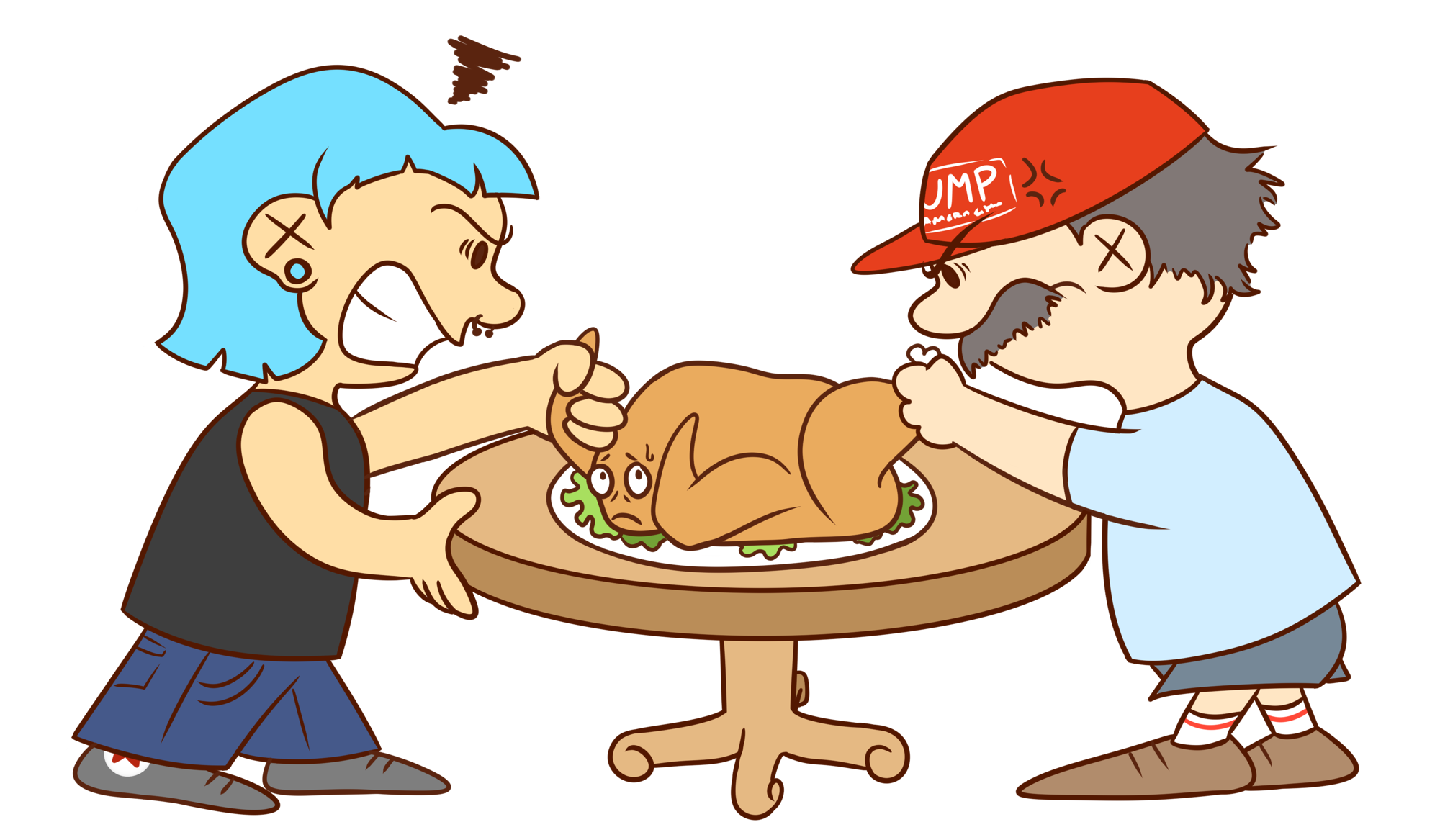
  • State of Affairs

    State of Affairs


    2016 to 2024: Holding on to hope in a divided America

    By Jordan Huber

    Disclaimer: Jordan Huber is an election worker. The views and opinions expressed in this column are solely those of the author and do not reflect the official policy or position of the Humboldt County Office of Elections.

    The 2024 election cycle has been an exhaustive 24/7 news frenzy. Millions upon millions of dollars were spent on advertisements ranging from local issues in Humboldt County all the way to the Oval Office. With the polls closed as of yesterday, I find myself in the peculiar position of writing without knowing the outcome. I will not be trying to write into existence what I think is going to happen. For all I know, the winner has already been announced, or it’s possible we will not know the winner for days after the election. Instead, I want to talk to you all about my first presidential election and how that night still lives with me.

    I was a first-year student at Humboldt State during the fall of 2016. The drama of the election was coming to a close as I sat in my room trying to study for an engineering exam while I had election coverage playing in the background. I had proudly dropped my mail-in ballot off at the post office and was celebrating the fact that I had voted for the first time. Everything I read told me what the outcome was going to be, so I was not too worried about what would happen that night. Many of my friends and family were convinced that the race would be called for Hillary Clinton in the late evening, so we could rejoice, and then sleep peacefully. It ended up being anything but that.

    The race steadily tilted in Trump’s favor as the hours ticked by. As he pulled further and further away from Hillary, I ended up completely ditching my studying to stare in disbelief at my laptop. An electoral map I expected to be covered in blue was instead stained in blood red. I watched as an assured victory turned into stunning defeat. I heard students outside of my dorm room in Sunset Hall gathering in anger and confusion. Further down my hall, students were shouting racial slurs out of their windows. RAs raced to my hall on the third floor to reach those hurling these shameful phrases as the rest of the hall gathered around to figure out who was saying such disgusting things. Suddenly, the shockwave of Trump’s election by voters thousands of miles away from us rippled all the way to our campus.

    My spirit was broken. I was numb. I was scrolling through social media, watching the world come to terms with what just happened. I stumbled upon a video of President Obama that was posted during the midst of all the mayhem. It was filmed before election night. He highlighted how America has always had a wild streak when it comes to our elections, but in the end, we would endure. One line on the outcome of the election stood out to me, and its meaning has changed for me as time goes on.

    “No matter what happens, the sun will rise in the morning,” Obama said.

    At the time, it did not feel that way. I needed reassurance that we’d be alright, that we could move forward. His message did just that.

    Eight years later, I find myself offering a twist to President Obama’s message: “No matter what happens, democracy does not die unless you believe it is dead.” Many of you may feel strongly that if Trump is re-elected, it will result in an effective end to the United States as we know it. They see the democratic processes crumbling and having an authoritarian structure built by Trump upon the rubble. I do not doubt that his actions will put us on the brink of catastrophe, but I have too much faith in all of you to let us be led down a path that we cannot return from. Even if the nightmare scenario you have told yourself could never happen again, I know that there will be those who stand in defiance. Almost half a million people took to the streets of Washington D.C. for the Women’s March the day after Trump’s inauguration in 2017. It will take herculean efforts from those willing to mobilize, showing that people stand with democracy even in our most dire moments. Maybe Vice President Harris wins, and this issue does not come to pass. I do not know. What I know is that even if my candidate loses, you will not see me shell-shocked for the next four years. Whatever this election brings, I am certain of this: democracy endures through us, and I will be right there, pressing forward to keep it alive — and I hope you will, too.

    Jordan is a senior political science major and the president of the Politics Club. With a keen interest in current affairs and a passion for informed debate, Jordan brings a well-rounded perspective to their opinion column. Through their studies and leadership, Jordan is dedicated to exploring the complexities of political issues and fostering meaningful discussion.