By Mia Costales
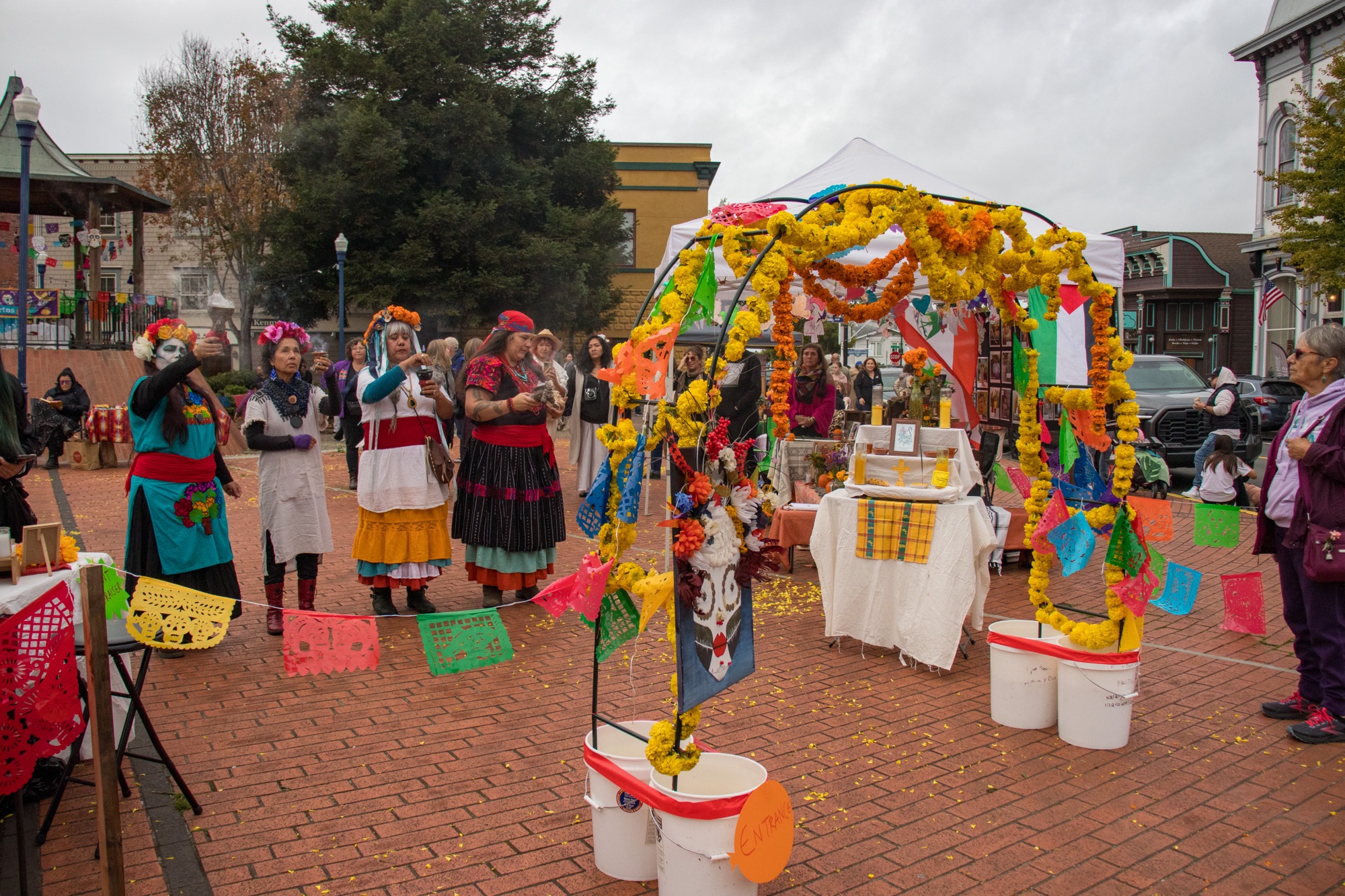
Golden cempazúchitl petals lined the brick walkway, forming paths to each ofrenda. The smell of tamales and champurrado filled the air and La Llorona could be heard softly beneath the murmur of attendees. Bottles of tequila and pulque, pan de muerto, and dishes of copal were just some of the offerings surrounding photos of loved ones. Other ofrendas included cigars, children’s toys, and photos of pets.
Día de Muertos, also called Día de los Muertos, is a two-day Mexican holiday celebrated from Nov. 1 to 2. It is believed that the souls of children visit the altars, or ofrendas, set up by their family on the first and the souls of adults visit on the second. These ofrendas are commonly set up with photos of the deceased and offerings such as food, candles, flowers, and alcohol. Offerings are provided with the intent of remembering and paying tribute to loved ones who have passed.
While Día de Muertos is largely a Mesoamerican holiday, many Mexican-Americans and families of immigrants have brought the celebration to the States as a means of cultural preservation and respect for the ones who came before them. Thanks to the city of Eureka, this tradition has transcended borders and is being kept alive every year.
Maria Ramirez, a community organizer for the event, showed up early to put her ofrenda together. After adding the finishing touches to the altar, she changed into a witch hat and decorated her face in makeup resembling the markings of a calavera, or sugar skull.
“After having my son, I realized the real meaning of family,” Ramirez said. “The whole idea, really, is to bring an offering to important people in our life. We did this for them. I don’t want [them] to be forgotten.”
She explained that the photos on her ofrenda were not only of her friends and relatives, but also of prominent Mexican figures such as Frida Kahlo. She also pointed out a photo of a Hoopa woman who she wanted to commemorate on her ofrenda.

Most ofrendas were dedicated to family members, friends, pets, and even notable artists and political figures. However, one ofrenda strayed from the traditional sense and instead included photos of martyred Palestinians. Alice Finen and Ellen Pimento, members of the Humboldt for Palestine collective, set up a large ofrenda decorated with over twenty photos of Palestinian children and adults, prayer candles, homemade paper garlands, and Palestinian flags. Sunflowers, roses, and cempazúchitles were nestled in between the offerings.
At around 4:45 p.m., several groups of all ages from Eureka performed traditional dances in front of the community altar in the Old Town Gazebo. After this, a mariachi group performed Mexican folk songs and classic mariachi arrangements in the street near the festivities. The mariachis invited the audience to sing along as they played Llorar y llorar. The crowd eagerly chanted along to the music as the mariachis swayed with the beat, occasionally letting out high-pitched gritos.
“I have been honoring Día de Muertos since I was actually a student at HSU, so probably since 2005. It’s become a really sacred, important part of the year for me,” Blessah Breault, a Eureka community member, said. “This is my daughter’s boyfriend [Pico] and he passed two years ago. He always said, ‘Everyday is a closer day to making it. All the way to the top, slowly but surely.’ I did this for him last year and then again here today. I feel that with this altar, for my family I’m channeling all of the ancestors through Pico.”
As the sun started to set candles were lit, illuminating the ofrendas and giving the flowers a glowing effect. At 6:30 p.m., Cal Poly Humboldt’s Danza Azteca and Ballet Folklórico performed by candlelight, once again drawing a crowd around the gazebo. Community members dispersed for the final time after the performances were over. Some embarked on a last walk through the circle of altars, and others indulged in carne asada and Jarritos.

Mia Costales is a junior journalism major and the Life & Arts Editor for The Lumberjack. With an extensive background in music performance, she hopes to combine her love of music and the arts with her passion for localized news and activism to bring thoughtful and informed stories to the public.
Leave a Reply