The Lumberjack


Students Serving The Cal Poly Humboldt Campus and Community Since 1929

Category: News

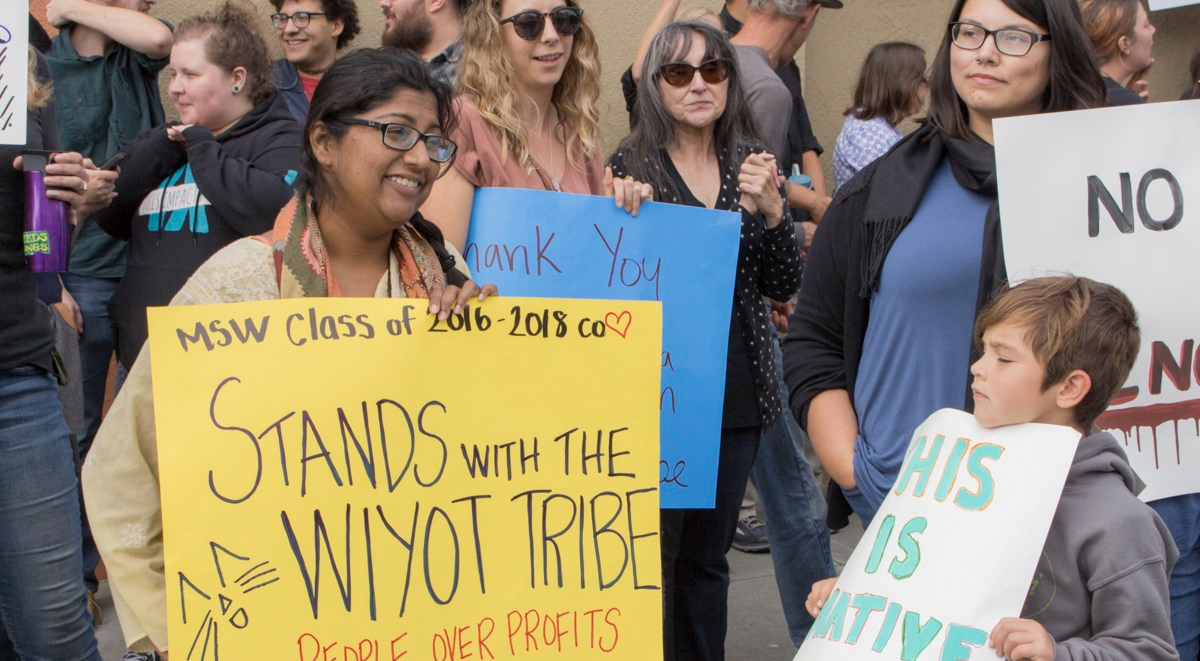
  • Standing in solidarity with the Wiyot Tribe

    Standing in solidarity with the Wiyot Tribe

    By Sarahi Apaez

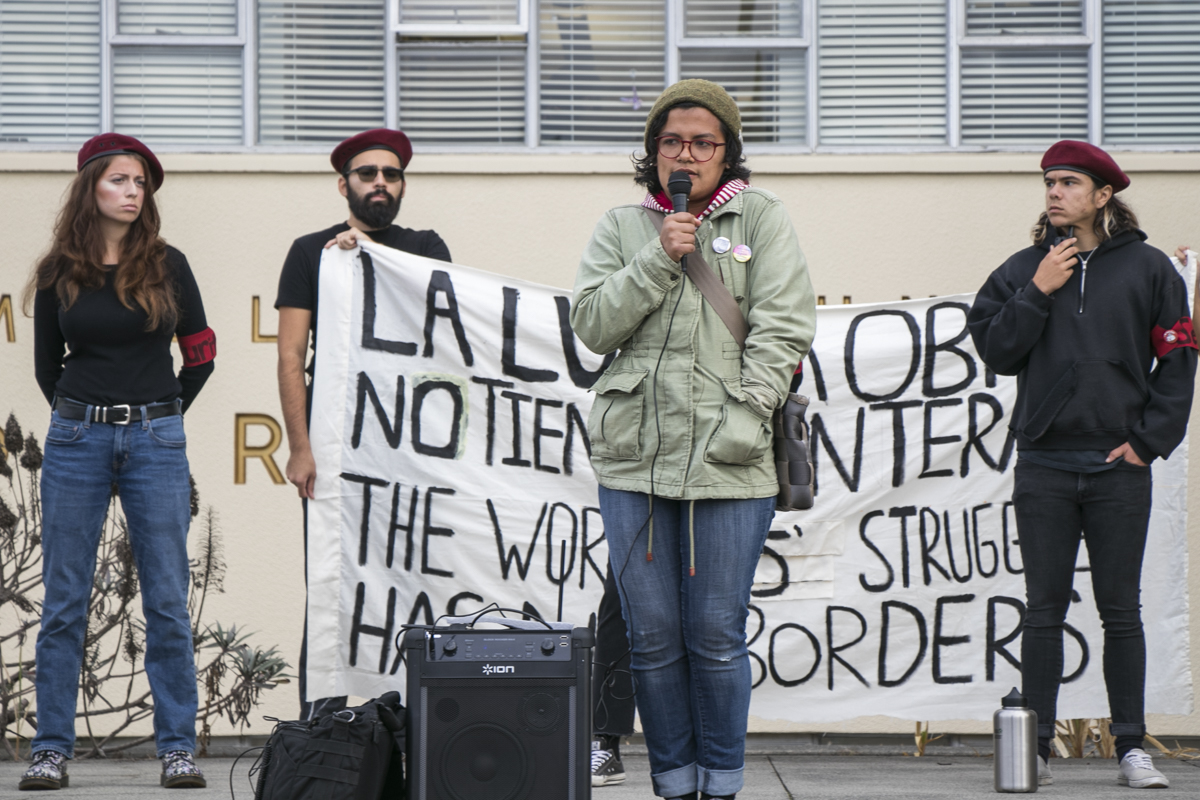
    Ownership of the 270-acre Tuluwat Island, also known as Indian Island is being compromised. More than 100 people gathered in front of Rob Arkley’s place of business in Eureka, to show their support toward the Wiyot tribe’s fight.

    The reason for protest comes from a KINS radio broadcast of Rob Arkley stating his intention to buy the island from the city as opposed to returning it to the Wiyot tribe. This is happening while the Eureka City Council and the Wiyot agreed to a Memorandum of Understanding, an agreement that is not legally binding, that states that the city commits to restoring the island to the tribe.

    Protesters see this issue as a continuation of a battle the Wiyot tribe has been waging since the 1860 Wiyot Massacre in which white settlers murdered several hundred local tribe members. Tuluwat Island holds spiritual and cultural significance to the Wiyot tribe which cannot be replaced.

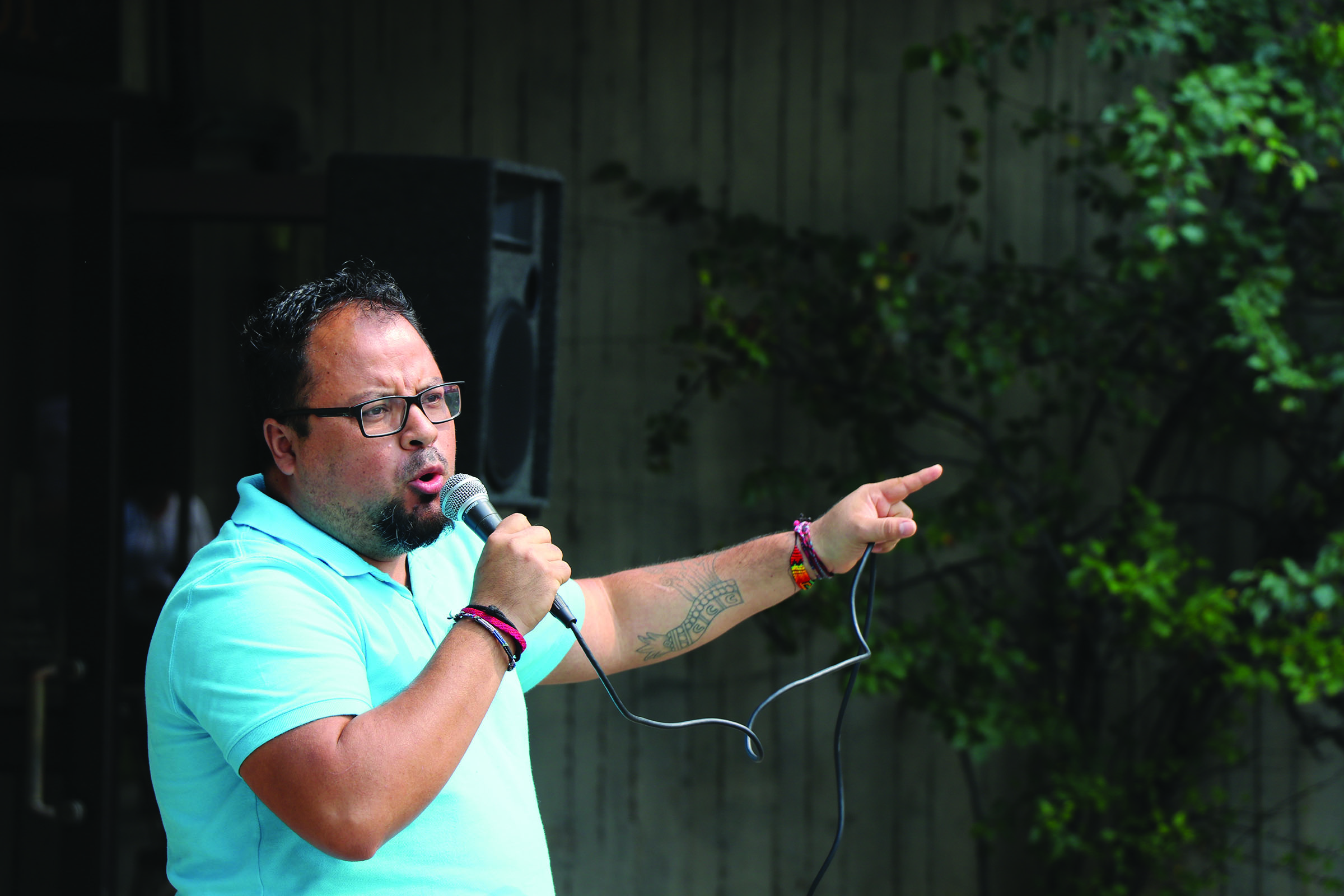
    Assembly Director Allen McCloskey spoke on the microphone at the rally expressing his opinions of Arkley.

    “The bigotry that he has exercised toward indigenous people we will not stand for that, not here in Eureka, not in our community, not in our County,” McCloskey said.

  • A new learning experience

    A new learning experience

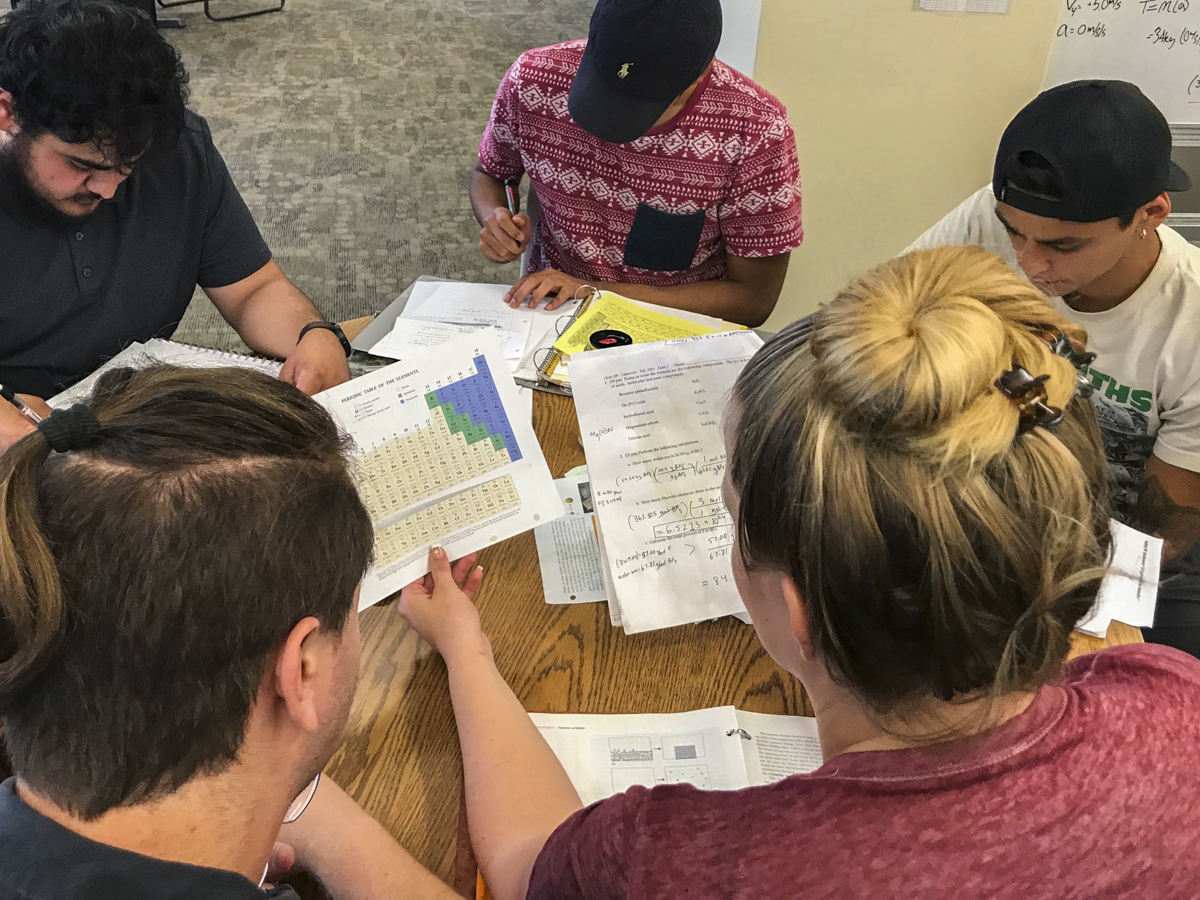
    No more paying for individual tutoring or hiding away in dark basements. Tutoring is now free for all students.

    The HSU Learning Center opened its brand new tutoring hub on the ground floor of the library. Su Karl, Learning Center Director, said the new facility cost $100,000 to build.

    The hub was funded mainly by a $4 million grant by the Hispanic Serving Institution (HSI) STEM grant, which was awarded to HSU last year by the U.S. Department of Education.

    “The new space is a lot more spacious and inviting. It was made possible by the HSI STEM grant,” Karl said. “That grant allowed us to build that up.”

    AAtutoringhub-.jpg
    Students working on computers in the library Photo credit: Ahmed Al-Sakkaf

    Angelica Huerta is a Chemistry major and is a tutor for Chemistry, Math, and Physics. She is one of many students who like the new facility.

    “Now I like it way better than last year it was in the basement,” Huerta said. “It was all weird and lonely.”

    Mia Arnold and Katy Davidson, both majoring in biology, are also happy with the new location and setup of the tutoring center.

    “Now it’s accessible and you can see it,” Arnold said. “Downstairs, it was dark and confusing it was like a maze.”

    “It’s a solid setup, I like how it’s more open and you don’t have to go to the basement,” Davidson said.

    Also thanks to the grant money, the Learning Center started this year with a budget increase of around $12,000. All tutoring services for about 50 subjects including individual tutoring are now free. Last year, students had to pay for tutoring or find their own groups

    .AAtutoringhub--3.jpg

    Finding a small group was difficult for some students, Karl said. Some students schedules didn’t fit with others and some students were shy of reaching out to other students, she said.

    “That just didn’t seem fair, it didn’t seem right,” Karl said. “There were too many hoops for students to jump through.”

    Huerta thinks the fact that all these roadblocks stopped a lot of students from getting tutoring.

    The Learning Center opened in 1998 and was located in house 71, then moved to the library basement in 2009. Though all tutoring services were transferred to the library ground floor, few staff offices remain in the basement.

    In the past tutors had little or no training and were also hired or laid off based on demand. Karl said in the past they would hire many tutors, many of them were getting very few hours and it didn’t make sense to train them.

    “Some of them didn’t get the very best training because we didn’t have the funds to train them well,” Karl said. “The grant allowed us to increase training for our tutors.”

    This year, the center employed 85 tutors, compared to 110 tutors last year. All tutors are a part of the California State University Employees Union – Unit 11.

    “We’ve been trying to be more systematic about not just having quantity in terms of tutors, but having tutors who are well-trained who have enough hours,” said Karl.

    Although the Math, Science and General tutoring labs fall under the umbrella of the Learning Center. In the past, they were located in different locations throughout the library. The Math tutoring lab was on the second floor of the library while the other tutoring was in the basement.

    “The Math tutoring was all the way up on the second floor of the library, not a lot of people knew about the Math tutoring lab,” Davidson said. “It was also a smaller more confined space.”

    Now they’re all situated in the same area, making tutoring more accessible for students. The new tutoring hub has become a one-stop-shop for tutoring.

    “It’s much more helpful and easier to have the two places together,” Huerta said.

    The HSI grant which helped fund the Learning Center’s expansion and reforms were awarded to HSU and divided over five years.

    Though the improvements made are great, they aren’t sustainable over the long term. HSU is only receiving the HSI grant for a five-year period. When asked what will happen after five years, Karl said that’s up to the university or other grants.

  • New year, new resources

    New year, new resources

    By | Charlotte Rutigliano

    As the semester began, the new Dean of the College of Professional Studies (CPS), Manohar Singh, set out to form new resources to help incoming students to HSU feel more at home.

    “I want students to feel welcome, all students, not just those housed in CPS,” Singh said, “we want to make HSU a home away from home.”

    Singh said these resources include setting up an online chat room connected to the CPS website, dedicated office hours for students, a discussion group, and a dedicated phone line and email for students to reach out to the CPS office.

    Kevin Cheli-Colando, the administrative analyst in the CPS office, explained that while the technical specifications for the online chat room are still in the works, the service will most likely be available in real time during the normal office hours of 8 a.m. to 5 p.m.

    Singh and Cheli-Colando both said they wanted to create these new resources to help students in their transition to college.

    “We want students to have their voice heard, and we want to offer support,” Cheli-Colando said, “we can help them with any challenges they face in their academic and social lives.”

    Jessica Rocha, a business administration transfer student, said that because she’s local to the Humboldt area she had a smooth transition into HSU. She also said, however, these new resources could definitely be helpful to the incoming freshman who are new to college life.

    “Any sort of outreach program for students is always helpful,” Rocha said, “I think these services will help students feel more welcome and like someone is looking out for them.”

    The dedicated office hours and discussion groups started on September 19 and will continue throughout the semester every Tuesday and Friday from 12 p.m. to 1:30 p.m.

    To learn more about these services, you can contact the College of Professional Studies at cps@humboldt.edu or at 707-826-3968.

  • Diversity and inclusion through STEM

    Diversity and inclusion through STEM

    Humboldt State University was one of 24 institutions nationwide to be selected for a $1 million STEM grant by the Howard Hughes Medical Institute.

    The grant is part of HHMI’s program, Inclusive Excellence, which is designed to cultivate inclusion and diversity within the STEM community.

    By funding STEM programs throughout the nation, HHMI Inclusive Excellence strives to enable science education capacity in four-year institutions to provide opportunities for all students to succeed in the field.

    At HSU, this means developing better ways to serve incoming STEM students.

    Matt Johnson, Ph.D. and Wildlife professor said this includes development of student involvement programs, as well as faculty training.

    Johnson, along with Biology professor Amy Sprowles founded an integrative, place-based learning community called “Klamath Connection.” The direct field experience is one of the two current STEM place-based learning communities.

    Through these diverse programs, STEM students are integrated into the field through hands-on learning in the local environment.

    “These feelings help students feel a sense of belonging and community.” Johnson said. “With an approximate 6 percent of HSU students coming from Humboldt County, it is important to introduce incoming students to their new geographical, environmental and cultural environment.”

    Additionally, the grant will allow university faculty to participate in workshops and training opportunities to learn and utilize how to create a culturally inclusive environment.

    David Asai, senior director for science education at HHMI, says it is important to acknowledge that good ideas can originate anywhere. Asai said that often, a person’s success in science been a reflection of where they come from, not where they want to go, causing growing disparities in science education.

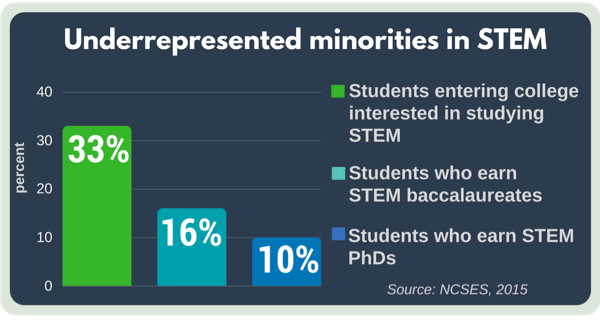
    Underrepresented incoming STEM scholars have significantly lower retention rates than their Caucasian or Asian counterparts.

    According to a 2015 report by the National Center for Science and Engineering Statistics, the percentage of students who receive STEM bachelor’s degrees is nearly half of the students who initially enrolled in science higher education.

    STEMgrantinfo.png


    Laura Carlos, a 22-year-old senior studying Zoology, said she did not feel prepared and included when she first started her science education at HSU. Carlos said that not all students are given the same opportunities in high school, which makes it difficult for students to have the same starting point in college.

    “Without proper resources and tools, underrepresented students can only dream of what it’s actually like to be a STEM student.” Carlos said.

  • McKinleyville Farmers Market

    How the North Coast Growers’ Association gives back

    For the farmers in the North Coast Growers’ Association, Thursday is a big day. For the past two years, between June 1st and mid-October, the McKinleyville Farmers Market takes over a select parking lot on the corner of Central Avenue and Pickett Road. Between 3:30 and 6:00pm, the market provides the community with healthy, sustainable goods, live entertainment and often even local food vendors.

    “The farmers market is a really beautiful group to be a part of,” said Casandra Kelly, a North Coast Growers’ Association (NCGA) volunteer. “On a personal and local level, having this available has been a huge community builder.”

    The NCGA has been helping support local growers, local economy and healthy families since 1979, when they were established. They have slowly expanded over the years to five different markets around Humboldt County, McKinleyville being their newest development.

    Many of the farmers in the NCGA have been involved in the farming community for years now, while others like Tiffany Van Buskirk, owner of Mamma Gerty’s Goat Milk soap, are fairly new to the game. Van Buskirk and her husband own a small farm in McKinleyville, and joined the NCGA five months ago.

    “We started selling soap to pay for our goats’ feed at first,” Van Buskirk said. “Then we started seeing people come back every week.”

    Mamma Gerty’s strives to keep their farm as natural as possible by never using fragrance oils and using pure essential oils in their place. For people with easily irritated skin, this policy is quite beneficial.  

    “While it seems like something simple, a bar of soap can affect someone’s life,” Van Buskirk said. “It makes us feel really good to help those with sensitive skin, and we’ll keep coming [to farmers markets] as long as we keep helping people.”

    The main goal of the North Coast Growers’ Association is to make significant contributions to the health and well being of the community and every one of their farmers contributes in some way. Emily Catherine, a 24 year-old farm partner employee of Brunner Family Farm, has been involved with the NCGA’s “Know Your Farmer” program for two years now. This initiative partners with different schools in Humboldt County to bring second and third grade children into the agriculture environment; showing kids different aspects of farming, such as gardening, harvesting and composting.

    “The kids are at a really great age to be interested and curious,” Catherine said. “They’re more likely to ask questions and participate. You can definitely see kids light up when they dig a carrot out of the ground, wash it off and take a bite.”

    The NCGA has also organized grant funding for individuals with CalFresh EBT cards and those on a supplemental security income (SSI). The association has even enacted an incentive program that offers extra money to CalFresh and SSI recipients who use their benefits at the farmers market.

    “The grant money has made a large impact on people who wouldn’t necessarily have access to healthy food,” Kelly said. “It’s really incredible that we have the ability to offer this program at the farmers market and it’s had an amazing impact on the impoverished members of the community.”

  • Possibility for a sanctuary county

    Possibility for a sanctuary county

    By | Iridian Casarez

    Kevin Martinez watched the crowd tentatively in front of the Humboldt County’s Courthouse waiting for ICE agents to come out of any corner to arrest undocumented people supporting the ordinance to make Humboldt County a sanctuary county.

    DacaRally_Web-1.jpg
    Part of MEChA’s security team standing behind the speakers. Photo credit: Curran Daly

    “We are here to be the separation between the interaction between ICE and any undocumented person,” Martinez said. “We are essentially here to be arrested.”

    Centro de Pueblo organized the event and united community members to rally at City of Eureka’s Courthouse to support the drafted ordinance to make Humboldt County a sanctuary county on Tuesday Sept. 19. The rally was scheduled at the same time the Board of Supervisors were meeting.

    Erik Kirk helped Centro de Pueblo and True North submit a draft of the ordinance to the Human Rights Commission. The Human Rights Commission is a grand jury that focuses on civil liberties that makes recommendations to the Board of Supervisors.

    Kirk entered the Board of Supervisors meeting and spoke about the ordinance.

    “At least two of the Board Supervisors were taking it really seriously,” Kirk said.

    Centro de Pueblo is a local organization that offers a safe space to people of color in the community to advance culturally, politically, and practically on California’s North Coast.

    DacaRally_Web-5.jpg
    People holding signs at the rally. Photo credit: Curran Daly

    Martinez is a senior Political Science major at HSU. He is also head of security for MEChA. Movimiento Estudiantil Chicano de Aztlan is a club on campus that promotes political involvement and change in their society.

    MEChA had security at the rally expecting ICE agents to arrive. Security was also there to stop agitated people from disrupting the rally.

    “It’s very important with me to come show my support for undocumented people,” Martinez said. “I hopefully want to think undocumented immigrants feel supported, empowered and encouraged to speak out.”

    Courtney Blake works with North County People Power, a local grassroots organization started by the American Civil Liberties Union (ACLU). North County People Power is working with Centro de Pueblo to draft and submit an ordinance for a sanctuary county.

    “We are asking the Board of Supervisors to make a county law that equally protects undocumented people and documented people with respect to the justice system,” Blake said.

    Emely Velez also helped organize the rally. Velez is a member of Centro de Pueblo and a senior majoring in Criminology at HSU. She said that now that Bill SB54 (a bill that makes the state of California a sanctuary state) has passed, there is still a possibility that Governor Brown will revoke the bill. If that happens, Centro de Pueblo would like to make Humboldt County a sanctuary county.

    DacaRally_Web-2.jpg
    Security conversing with a rally member. Photo credit: Curran Daly

    “We want to empower undocumented people and D.A.C.A. students,” Velez said. “Our goal is to give a voice them a voice.”

    Both of Velez’s parents are immigrants. She said they came here for the American dream not for themselves but for her.

    “I am not undocumented. I don’t have the fear of people coming after me, but I do have the fear of people coming for my family,” Velez said. “I owe it to my people, if you have the ability to support, why not?”

  • Josiah’s legacy

    Josiah’s legacy

    By Reza Sadeghzadeh and Curran C. Daly

    The Arcata Police Department is still investigating the homicide of Josiah Lawson, five months after his death. Charmaine Lawson, Josiah’s mom, has remained an ever constant presence in Humboldt County while living 14 hours away

    She is currently planning on a fundraiser to open a house for homeless students and community members that she calls, “Josiah Lawson’s house.” Citing Josiah’s desire to help reduce homelessness in Arcata.

    “I wanted to just celebrate DJ’s life,” Charmaine Lawson said. “The fun, energetic person that he was.”

    Charmaine Lawson revealed her fundraising efforts at a five month memorial for Josiah.

    One of the main topics of discussion by those who attended the event was restoring the relationship between the community, the university and students. Especially students of color.

    Barbara Singleton, Sophomore Criminology & Justice major, is the President of the Black Student Union. Singleton is concerned about security in the community.

    Lawson told Singleton to be patient waiting to get justice for Josiah’s case. Lawson said she will not give up on his case.

    “I have to fight for him because he cannot fight for himself, I have to make sure he receives justice,” Singleton said. “If it would have been anyone of us he would have done the same thing.”

    DaMon Thomas, Senior Communications Major, stressed the need for a more accepting community around Humboldt State.

    “The Humboldt State University diversity is growing, but the community is not keeping up,” Thomas said. “There needs to be more awareness, acknowledgement and cooperation.”

    The messages echoed by Josiah’s family and Kenya James, the president of the local NAACP, did not follow on empty ears. The event was attended by City and University officials including Arcata City Council member Sofia Pereira and Humboldt State Provost Alex Enyedi.

    Enyedi and Pereira emphasized some of the ongoing programs that are helping the community and university to achieve that equality in the community. Such programs are GARE (Government Alliance on Race & Equity) and NIOT (Not In Our Town) that are focused on issues of inequality in housing, hiring practices, customer service and first responders.

    The fight is not over. The students and the community have promised Lawson an endeavoring effort to bring justice for Josiah.

    “Josiah’s House is a great wonderful idea to persevere his legacy and help homeless students” said Corliss P. Bennett, Director of Cultural Centers for Academic Excellence. “Students of color can’t find housing, and not because they don’t have money, but because landlords don’t rent to African American students.”

    James said “this horrendous tragedy has been extremely hard on Lawson’s family, but she has proven to be tremendously strong and courageous due to the fact that she has turned this tragic incident into an opportunity to give back to the community.

  • Open house with open arms

    Open house with open arms

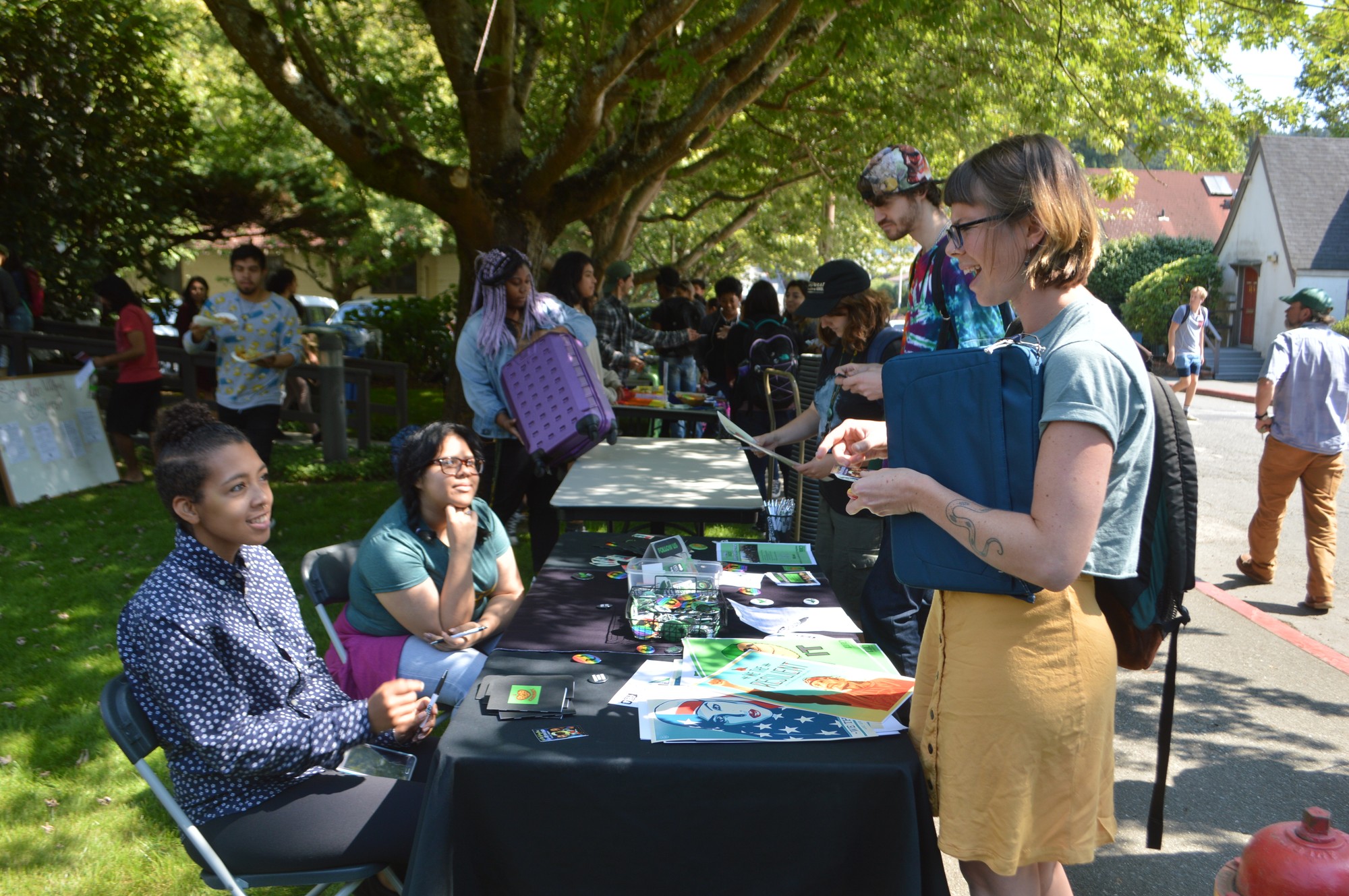
    On a seemingly quiet Friday afternoon on the Humboldt State University campus, the MultiCultural Center was booming with energy, as international music and the savory smell of lumpia filled the air. Dozens of HSU students gathered in front of the center on Sept. 12 for the MCC open house to represent and celebrate the various cultures our campus consists of.

    LN_OpenHouse(3).JPG
    The MCC featured a cultural exchange through cultural cuisine. Photo credit: Lora Neshovska

    The center open house aimed to familiarize students with the numerous cultural centers available on campus and create a comfortable environment for socializing and learning.

    Among the representatives were Scholars without Borders (SWB), Women’s Resource Center (WRC), the Latinx Center, and the Eric Rofes Multicultural Queer Resource Center (ERC). These centers, as well as much more serve as resources to anyone on campus, especially students who may feel marginalized.

    Although these centers and clubs seem to differ, they all share a passion for solidarity and intersectionality. Jonathon Salinas, 20, is majoring in Spanish and currently working as the event coordinator at ERC. Salinas says instead of viewing activism as separate social movements, it’s important to support each other, heal and move forward together.

    LN_OpenHouse(1).JPG
    Criminology and CRGS student Deema Hindwai (right) converses with EOP staff, Rama Rawal (left). Photo credit: Lora Neshovska

    According to a 2013 Humboldt retention report, an average of 25 percent of the first year, full-time undergraduate students were not retained.

    Cesar Abarca, faculty coordinator of SWB and an assistant professor in the Social Work department said this emphasizes the importance of student support centers, such as the MultiCultural Center and SWB.

    “In a small, rural area,” Abarca said. “It’s really important to make students feel welcome and accepted.”

    Abarca also said there needs to be support and advocacy specifically for underrepresented students

    As of late, SWB has shifted their focus towards assisting undocumented students, specifically with the application process for D.A.C.A. renewal. This includes providing information about the U.S. Immigration and Customs Enforcement (ICE) and basic guidelines and civil rights when dealing with law enforcement.

    Angie Muñoz, current editor of the Cultural Times said the MCC caters to what students need and can benefit from the most. This includes representing student voices and opinions in the Cultural Times, as well as opening up staff meetings to students with suggestions for the center.

    The MultiCultural Center on campus is located in the Balabanis House and is open Monday-Thursday from 10 a.m. to 8 p.m. and Fridays from 10 a.m. to 5 p.m.


  • A needed nursing comeback

    A needed nursing comeback

    By | Charlotte Rutigliano

    Early last spring, the University announced a potential partnership between Humboldt State and College of the Redwoods that could bring the Nursing program back to HSU.

    The partnership would create a Registered Nurse to Bachelor of Science in Nursing (RN-to-BSN) program. This would allow nurses living in the community to continue their education.

    Dr. Manohar Singh, Dean of the College of Professional Studies (CPS) said that the classes would be held at the College of the Redwoods campus with HSU faculty, and this program would be housed within the CPS.

    “The two-year program would really only be for College of the Redwoods students,” Singh said. “Or for students who already have their RN license.”

    This will be the first time since 2011 that HSU will have had a BSN program. The program was discontinued due to the costs and challenges of recruiting qualified faculty.

    Singh said that the University is still trying to collect all the necessary resources to make this program happen. The program is looking to decide on curriculum, hire qualified faculty and get enough financial and community support.

    “Any community input and support is welcome,” Singh said.

    Joe Rogers, Executive Director of Hospice of Humboldt, said that nursing is becoming more and more complex, and many organizations are recommending or requiring nurses to have a BSN.

    College of the Redwoods currently graduates around 55 registered nursing students a year. According to the release estimates from California’s Employment Development Department, the North Coast region will need an additional 48 registered nurses per year for the next ten years.

    According to Alex Enyedi, Provost and Vice President of Academic Affairs, this program could generate around 30-50 nurses with a BSN per year which would greatly fill the community need.

    “There is a tremendous demand for nurses in the community,” Enyedi said. “This program is a natural solution for the problem we have here.”

    According to Enyedi, there has been no objection from the California State University Board of Trustees They are eager for this program to happen.

    “This program is HSU doing its part to help make the community a better place,” Enyedi said. “It’s a true win win for everyone.”

    Enyedi said that this new partnership and program could be up and running by the fall semester of 2019.


  • Church doors mysteriously catch fire

    Church doors mysteriously catch fire

    By| Bryan Donoghue

    A fire sparked on the doorstep to the Arcata Presbyterian Church on G Street and 11th last night, and at the moment, it’s a mystery as to how it began.

    “All I can really give you right now is that we’ve had a fire it’s suspicious in nature it is out we have confirmed that the building is no longer in danger, that’s why we’ve been sending resources home and right now we’re coordinating an investigation with Arcata Police,” Chief Rene Campbell, director of Division 1 for the Arcata Fire District said. File_002.jpeg

    According to Campbell, the firefighters on the scene were very aggressive in dealing with the fire and were first on the scene, just in time to contain it.

    “Obviously this is not only a significant historic piece in our community but a very large building could be very dangerous,” Campbell said.

    Thankfully, the Arcata Fire District received plenty of support. Neighboring agencies joined in to help at a crucial moment to contain the fire.

    “We went big on this just because of the building it was,” Campbell said, “We had every department basically around us coming in immediate need.”

    “Great coordination and teamwork by our Fortuna ECC, the command center, the dispatch, units that were listening to the scanner were gearing up, so I mean just everyone did their job tonight and I’m thankful for that,” Campbell said.

    The elders of the church watched from Wells Fargo on the other side of G Street as the fire crew went in and out of the building.

    “We’re elders for the church, we’ve been with the church for years,” said Stephanie Witzel, treasurer for the church. “There’s a few of us down here from the church so we’re just down here to see it, and thinking about how to secure the building.”

    “We’re just thankful that this is all that happened,” said Joan Tempas, the Clerk of Session for the church. “It’s always a concern because of people that sleep in and out, and around the church and stuff, and just always being aware that the church is 100 years old.”

    Undoubtably the doorway into the church has been scorched, but the elders of the church are looking forward to the support they’ll receive from people willing to help.

    “It’s really the pitts.” Witzel said. “But hopefully it’s just gets localized and get it boarded up and call on people we know to help us out.”

    Community efforts to help the church are openly welcomed. There is plenty of clean up needed to bring the church back to it’s normal state.

    “We can probably use help from other people. If people want to help out, call the church and see what they can do,” Tempas said. “But you know, it’s great to have people be concerned, it really is. It’s a landmark here.”

    The church will not be hosting any services tomorrow. According to Tempas, Pastor Daniel Link also preaches out at Bayside Church in Jacoby Creek Road. Tempas, Witzel and the other elders will be going out there today and holding there services at the Bayside Church.


  • The fight for sanctuary

    The fight for sanctuary

    By | Charlotte Rutigliano

    A rally led by Centro del Pueblo (CDP) will be held on Tuesday, September 19 from 8:30 a.m. to 10 a.m. in front of the Humboldt County Correctional Facility in Eureka.

    According to César Abarca, faculty coordinator for Scholars Without Borders (SWB), the purpose of the rally is to advocate for a county-wide Sanctuary Ordinance.

    “This is also to request a support statement from the county board regarding DACA residents in the county,” Abarca said. CRrallypreview

  • HSU Ranked Best in West

    HSU Ranked Best in West

    By | Charlotte Rutigliano

    A recent press release by the University informed students and staff that HSU has been ranked among the best colleges in the West by the Princeton Review.

    The press release said that HSU was one of 127 western schools recommended in the Review’s “2018 Best Colleges: Region by Region” web feature.

    According to the Princeton Review’s website, students say they enjoy Humboldt State’s beautiful and relaxed atmosphere.

    BestWest_Web-4.jpg
    The Redwood Bowl at HSU. Photo by Lauren Shea

    The relaxing space is one reason HSU Alum Mario Torres, a transfer student from Los Angeles who majored in Art Education, said he chose to come to HSU.

    “I wanted a little to no distractions in my last two years of my undergraduate work,” Torres said, “I came to HSU for the opportunity to study under the giant redwoods and get away from it all.”

    According to the press release, HSU students highlighted the tight-knit community the university has as well as the emphasis on learning to live with people of all different lifestyles and doing it in a socially responsible way.

    Torres said that he had never heard of this ranking system or the Princeton Review.

    “Honestly it sounds like click bait,” Torres said. “Or something you’d see in a Buzzfeed article or video.”

    HSU was one of eight California State Universities that made the list out of a total of 23 CSU’s.

    According to the Princeton Review’s website, there is no official ranking of the schools listed that they consider “academically outstanding and well worth consideration in a college search.”

    Other schools that made it onto this list for the West were Oregon State and Stanford University.

  • Fire two miles from HSU

    Fire two miles from HSU


    By | Iridian Casarez and Curran C. Daly

    Updated Thursday 3:30

    A fire started at 12:24 p.m. on private property 200 feet away from the Arcata Community Forrest. Cal fire responded from Mad River Station, according to Captain Alex Manousous. It was a slow deep seated fire on a redwood stump.

    “Right now we are just focusing on extinguishing the fire,” Manousous said. “This was a small fire, typical for the forest.”

    There is active logging in the area that was unrelated to the fire. The cause of the fire is still undetermined until further investigation. The fire was less than a 10th of an acre.

    Cal Fire helicopters were in the air before Arcata Fire district arrived.

    Mike McDowall, City of Arcata’s natural resource technician, came to the scene. He came to determine if the fire was on the City of Arcata’s property and if the Arcata Fire District needed extra help.


    Screen Shot 2017-09-14 at 1.12.52 PM
    Reporter Iridian Casarez  tracked down the fire on private property, two miles east of Humboldt State University.


    This slideshow requires JavaScript.

    Updated Thursday 1:45 P.M.

    A Cal Fire helicopter is currently dropping water on a fire in the Arcata Community Forest. The fire is about 2 miles east of the Humboldt State University campus. The Lumberjack will continue to update this story as we learn more.

    Original Post:

    There is a helicopter circling the Arcata community forest amid reports of a fire in the forest. The Lumberjack will provide additional information when it is made available.


  • Humboldt State University ranked 39th out of 632 Master’s degree-granting universities.

    Humboldt State University ranked 39th out of 632 Master’s degree-granting universities.

    By | Robert Brown

    Humboldt State broke into the top 50 of Washington Monthly’s most recent annual National College Guide for master’s universities. The guide rates universities across the nation and evaluates them based on graduation rate, price of tuition, and other factors.

    BestWest_Web-5.jpg
    The view of Union Street by the Redwood Bowl. Photo credit: Lauren Shea

    The publication is changing the way universities are valued; instead of rewarding colleges for the number of applications they reject, they get credit for enrolling large numbers of low-income and first-generation students. Instead of promoting the most expensive schools, universities that produce research, train next generation scientists and PhDs and instill the importance of public service are acknowledged.

    “We rate schools based on their contribution to the public good in three broad categories,” Washington Monthly magazine said.

    “Social mobility (recruiting and graduating low-income students), research (producing cutting-edge scholarship and PhDs), and service (encouraging students to give something back to their country).”

    Dr. Meredith Williams, Assistant Professor of Sociology, said the faculty and coordinators in the master’s programs are always looking for new and better ways of making programs affordable for all students.

    “That is who we are as a university and as the CSU system,” Williams said.

    BestWest_Web-3.jpg
    The view of Humboldt State University from 14th Street. Photo credit: Lauren Shea

    Dr. Yvonne Everett, Professor of Environmental Science and Management, said that despite the CSU system’s pledge to help low-income students, getting funding for graduate school is challenging.

    “There is financial aid available for students who qualify and there are a few scholarships students can apply for,” Everett said.

    “Students in the natural sciences may also be funded through their faculty members’ research grants.”

    “HSU’s graduate programs are different because HSU is different,” Williams said.

    “We have great relationships with local businesses, nonprofits and community organizations to connect with in classes, as a volunteer, and with required internships and projects.”

    According to Williams, the learning here is hands-on. Many of our graduate programs are focused on applied, real life skills, using the skills and knowledge of our disciplines to create lasting, systemic social change.

    “Many students do their M.A./M.S. research or projects on topics in the public interest or that benefit a community organization,” Everett said.

    “Graduate students in social work do all kinds of projects with local agencies to help them monitor and improve their services. For graduate students in Wildlife and Natural Resources, HSU is located very close to field research sites with many state and federal agency professionals to collaborate with.”

  • TRiO Upward Bound program awarded a $1.3 million grant by the U.S. Department of Education

    TRiO Upward Bound program awarded a $1.3 million grant by the U.S. Department of Education

    TRiO is a federally funded outreach and student services program aimed to provide services for students with a disadvantaged background.

    Upward Bound is one of eight national programs within TRiO. The program is designed for first-generation college students who exhibit the potential and interest to strive in college. As members of this program, students benefit from resources such as financial aid assistance and academic counseling.

    Upward Bound has been serving the Humboldt and Trinity school districts since 1965. Within these counties, the program is affiliated with six local high schools: Hoopa Valley, Arcata, South Fork, Southern Trinity, Hayfork, and Trinity.

    Arcata High senior, Tatyanna Keeling said Upward Bound has been particularly helpful with financial aid counseling, as well as deadline reminders and reinforcement.

    This year, Upward Bound received a five-year $1.25 million extension grant. Each five-year renewal, new advancements are developed into the program to ensure quality improvement, as well as operational funding.

    With the funding, Upward Bound began their new summer “Bridge Year” program. This feature strives to provide participating high school seniors with an immersive college experience.

    Upward Bound Director at HSU, Jen Dyke said the summer is the best time to get students committed to following through with their college plans and there is no better way than to allow participants to become “real college students.”

    For the duration of the five-week summer program, students live in the Cypress Residence Hall and get a head start on college courses, all provided by TRiO.

    For the remainder of the school year, students have access to college and career counseling, as well as academic and financial tutoring. The program also organizes and engages students in local social and cultural events, as well as college campus touring.

    Shayna McCullough, a 21-year-old senior majoring in Social Work is an alum from Upward Bound. She said Upward Bound instilled pride in her. As a first-generation student, she has found a lot of emotional support and inspiration in fellow colleagues who also participate in Upward Bound.

    Upward Bound is just one of the three TRiO programs at HSU. Other federal-funded programs, including Talent Search and Student Support Services, which all aim to ease the transition of disadvantaged students from high school to college.

  • Celebrating a multicultural campus

    Celebrating a multicultural campus

    With the official beginning of the new school year, clubs and organizations on campus are off to a strong start, including the African American Center for Academic Excellence, also known as the AACAE.

    The Center hosted their first event of the semester on Sept. 2, 2017, a Welcome Black Reception, to incoming and returning Humboldt State University students. The event brought together students and faculty of all different ages, genders, and races together to kick off the new school year.

    The AACAE is a student support space on the campus of HSU that aims to celebrate our multicultural campus by providing a guiding resource for students who identify as African American, Black or of African descent, as well as the entire university community. The organization was established in 2015 and since then has been continuously contributing to the efforts of making the Humboldt campus more inclusive and safe.

    LNACAAE_Web-1.jpg
    Games, snacks and music bring together students at “Welcome Black Reception” in the KBR.

    Erin Youngblood-Smith, who is currently pursuing a master’s degree in Social Work and interning at the AACAE says, this semester, the Center’s goals are to continue helping, providing academic support and guidance for the student body of the HSU campus, as well as planning and collaborating with outside services, as well as other campus-based clubs on upcoming events.

    Additionally, the AACAE has a serious agenda this semester, following the murder of David Josiah Lawson in April.

    Jimento Aikhuele, a graduate student majoring in Environmental Engineering and intern at the AACAE said that the event is what brought him into the Center. “I knew the local [population] would be down and they might need support, one way or another.”

    Both Youngblood-Smith and Aikhuele agree there is a gap between the Humboldt University community and the Arcata community that must be bridged.

    “There cannot be a separation between the campus and the local community, there needs to be really structured communication,” Youngblood-Smith said, “stronger ties between the city and the university’ In order for all students to feel safe.”

    Youngblood-Smith advocates education, such as conversations and workshops on safety in communities other than your own.

    “That’s a priority, making sure our students know there are dangers everywhere and you need to be aware of them,” Youngblood-Smith said.

    One student that has benefited from AACAE’s resources and proactivity is 19-year-old senior Psychology major Gabrielle Fox.

    Fox says her transition to HSU would not have been as smooth if it wasn’t for the Center.

    “There are people there who genuinely, truly want to see you succeed, it really makes a difference when you know you have somebody, who has your back and genuinely wants to see you the best that you could be,” Fox said.

    According to Fox, to be willing to open your mind to different experiences and opinion is a significant step to inclusivity on campus and in the community.

  • Being in the know about D.A.C.A.

    Being in the know about D.A.C.A.

    By | Charlotte Rutigliano

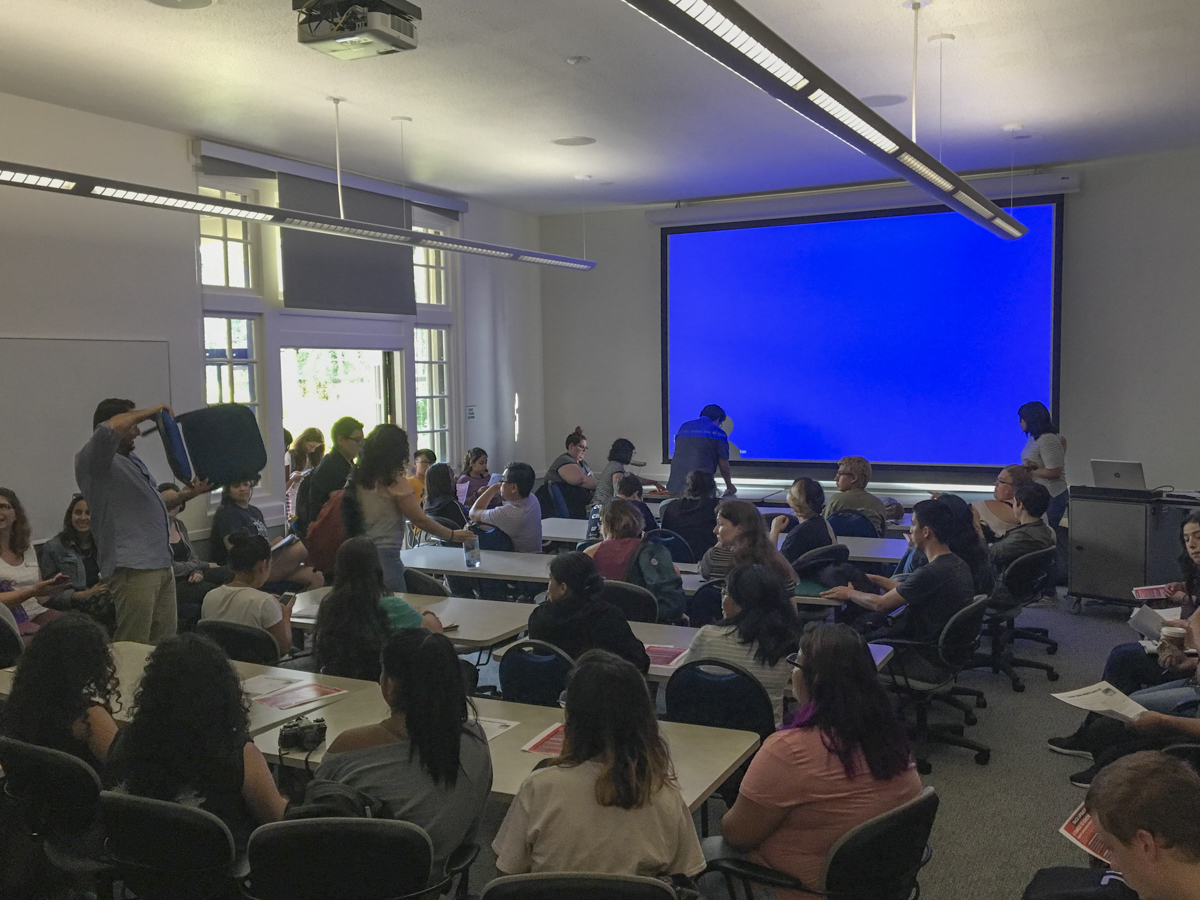
    After an emotional rally for the Deferred Action for Childhood Arrivals (DACA) Programs held in the UC Quad on Tuesday, September 5, students and staff piled into a small conference room in Nelson Hell East, most having to stand or sit in the hallway, to hear a presentation by Student Without Borders.

    IMG_1645.JPG
    Students and staff outside Nelson Hall East room 106 Photo credit: Charlotte Rutigliano
    The presentation covered constitutional rights, the rights people have when dealing with the U.S. Immigration and Customs Enforcement (ICE), and what resources the university has to help and protect DACA students.

    Karla Sanchez, a student coordinator with Student Without Borders and a DREAMer, started off the presentation with the constitutional rights held by people living in the United States. She then talked about what to do if stopped, approached or arrested by an ICE agent.

    IMG_1642.JPG
    Nelson Hall East Room 106 pack with students and staff bringing in more chairs

    “If you are stopped you don’t have to say anything,” Sanchez said. “Just tell them your name and that you do not want to talk to them.”

    Sanchez warned to not show any aggression because it can be used against you.

    “Remain silent, don’t sign anything and ask to speak to a lawyer,” Sanchez said. “Always have a plan, memorize numbers, family members, lawyers or doctors, and always have copies of any documents.”

    According to Sanchez, the last day to apply for DACA renewal is October 5, 2017, but only if the current DACA paperwork expires before March 8, 2018.

    After Students Without Borders concluded the presentation, they opened the floor up to questions and comments.

    Vice President of Student Affairs W. Wayne Brumfield said that we’re in the beginning of this and that there is a lot of uncertainty, but he was putting together a forum for DACA students with an immigration lawyer to help students get more information.

    “The entire campus community is behind you and will do everything within our legal rights to protect you,” Brumfield said.

    Students Without Borders wrapped the forum by letting people know about the march in Fortuna on September 19 at 8 a.m., starting at the Veterans Memorial Building. The march organizers are pushing the City of Fortuna to pass an ordinance making it a sanctuary city. Students Without Borders also hopes to have the entire county pass an ordinance to make it a sanctuary county.

  • Arcata Plaza shooting suspect identified

    ArcataShooting_Web
    Arcata Plaza | Photo by Don Forthuber

    By | Robert Brown

    While investigating a report of a fight in downtown Arcata, Saturday morning at 1:27 a.m., officers from Arcata police and Humboldt State University police approached 26-year-old Erwin Eugene Sweat, Jr., who was sitting in a nearby car.

    A dash camera recorded Sweat getting out of the car and firing two shots at the officers, one hitting University police officer Louis Altic in the right leg. Both officers Altic and Arcata police officer Matthew O’Donovan shot back, firing nine rounds, hitting Sweat.

    Officer’s immediately performed CPR on Sweat, Arcata ambulance took him to Mad River hospital where he died of his wounds. Officer Altic was taken to Mad River Hospital, was treated and released. Both officers have been placed on administrative leave, which is the protocol for officer involved shootings.

    A multi-agency team of local law enforcement agencies known as the Humboldt County Critical Incident Response Team (CIRT) is leading the investigation.

    Anyone with any information about this case, please call the Arcata Police Department at (707) 822-2426.

  • Fighting For D.A.C.A.

    Fighting For D.A.C.A.

    Rally Underway in response to Trump’s Retraction of D.A.C.A


    By|Michelle Meyers

    The smog and ash from the fires finally began to clear, yet it was emotion that hung heavy in the air this afternoon at the UC Quad. After the Trump administration announced this Tuesday that it will formally put an end the Deferred Action for Childhood Arrivals Program, or D.A.C.A. An end date was placed on the legal protections that were granted to approximately 800,000 undocumented people who entered the country as children. In response, M.E.Ch.A (Movimiento Estudiantil Chicano de Aztlan) De Humboldt State held a rally that took place this afternoon in the UC Quad. Students, faculty and members of the community came out in support of the Latinx community and those who may be affected by the recent retraction.

    As Karla Sanchez strolled calmly up to the microphone, the crowd quickly grew silent. Sanchez is an HSU student, member of M.E.Ch.A. De Humboldt State and a DREAMER. When she started to tell her story, her voice shook ever so slightly, and her eyes began to water. Sanchez’s parents brought her to the United States when she was only two years old. This year, she walked across the university graduation stage, but now Sanchez is here in the UC Quad to prepare for the next stage of her life in the face of the retraction. Even under the weight of her situation and with the fate of the Latinx community in clear view, it only took her a moment to strengthen her spine and speak before her local community with power and with pride.

    “Come out of the shadows and don’t be afraid,” Sanchez said. “We are supported in the school.”

    Sanchez said she felt that community support and action is vital, and she kindly turned to the crowd to ask for support.

    “Start speaking in your classroom, bring up the problem, ask what’s going to happen,” Sanchez said. Daca3_Print_Color.jpg

    Anayeli Auza is yet another HSU Student, member of M.E.Ch.A. De Humboldt State and DREAMER that came to the rally to voice her support for the Latinx community and stand in solidarity. Auza came to the United States when she was just one year old. While reflecting on her childhood after moving to the United States, she posed the question, “How do you tell a 12 year old that a paper defines their opportunities?”

    The answer to that question, she couldn’t provide. Both then and now. As of Tuesday, an unshakeable sense of worry and fear hangs over Auza regarding the future and the futures of other DREAMERS in the community.

    “People who are walking around don’t know what’s going to happen. Stay strong out there,” said Auza.

    While spirits were low in the face of a future so uncertain, the support was evident. The concrete seats, lawns and the balconies lining the UC quad were packed with students and members of the local community, some part of the Latinx community and others allies, but they had come to lend ears to listen, express their support and stand in solidarity with the Latinx community.

    In the midst of the rally the crowd began to chant,

    “Defend D.A.C.A, Down with Trump, Down with U.S. imperialism.”

    “This country is built on the blood, sweat and tears of immigrants,” said Cesar G. Abarca, Assistant Professor of the Department of Social Work.

    Abarca came out to speak on behalf of the Latinx community and those who support them, expressing not only a, “need to recognise that fear,” regarding the implications of the retraction within the Latinx community, but a great need for support from those outside of the community.

    “We need you right now, a lot of us are in the shadows,” said Abarca.

    In an email sent Tuesday afternoon to HSU students and staff, President Lisa A. Rossbacher expressed her support for students affected by the retraction, saying that, “Humboldt State University stands with you, and we care about you. We’re going to keep doing all we can to help you succeed in school and become Humboldt alumni.”

    In addition, she also expressed her feelings about the retraction itself.

    “I’m frustrated by this short-sighted thinking of our leadership at the national level. I want America to do better. We need America to do better.” said Rossbacher.

    “By doing so with no alternative solution in place, our government has created uncertainty and fear for hundreds of thousands of people, including thousands of college students.”

    Rossbacher also came to speak at the rally to show her continued support for HSU students affected by the reaction.

    “I was horrified by the announcements today,” said Rossbacher.

    “I join all of you who are part of D.A.C.A., especially our students.”

    “We are human beings, damn it,” said Marisol Ruiz, who came to the rally to stand in solidarity and act as a voice for her community. She spoke from the heart with intensity and integrity. When speaking about how her mother was deported when she was young, she turned to the crowd to offer them a piece of advice

    “Don’t feel alone,” said Ruiz

    When HSU student and Dorm Community Advisor Steph Cardenas found out about the event yesterday, she immediately began filling the walls in her dormitory with flyers for the event.

    “Silence is violence,” said Cardenas

    Cardenas feels that it is pertinent to be a voice in such a time, because to her, “being silent is being on the same side.”DACA.jpg

    Here are a few things you need to know if (Now that) D.A.C.A is repealed:

    • If the DACA program ends students enrollment and tuition will not be affected. In addition, funding under the DREAM Act will not be.
    • Depending on what action the government takes, you may not be able to continue to work on campus or other place of work. Federal law forbids employers from knowingly employing individuals who lack proper authorization to work in the country.
    • For undocumented students traveling abroad, it is likely that they will not be able to re-enter the U.S. upon return.
    • If you are traveling within the U.S., you should be permitted to travel within borders, but you may be asked for identification or about your immigration status.
    • If you you encounter Customs and Border Protection, they are authorized to verify your status. CBP agents can conduct a search if they have, “particularly probable cause.” Motorists are not required to consent to a search. If you have DACA, you can bring a copy of your EAD and your approval notices just in case you are asked questions.
    • If you come in contact with a police or immigration officer, observe your rights granted by the U.S. constitution.
    • If you are concerned about keeping your family safe, you can help them develop a safety plan as well as inform them of their rights. See the Immigrant Legal Resource Center Family Preparedness Plan.

    Scholars Without Borders is located on the second floor of the Multicultural Center.


  • Yes! The Y.E.S. House is open

    Yes! The Y.E.S. House is open

    By|Michelle Meyers

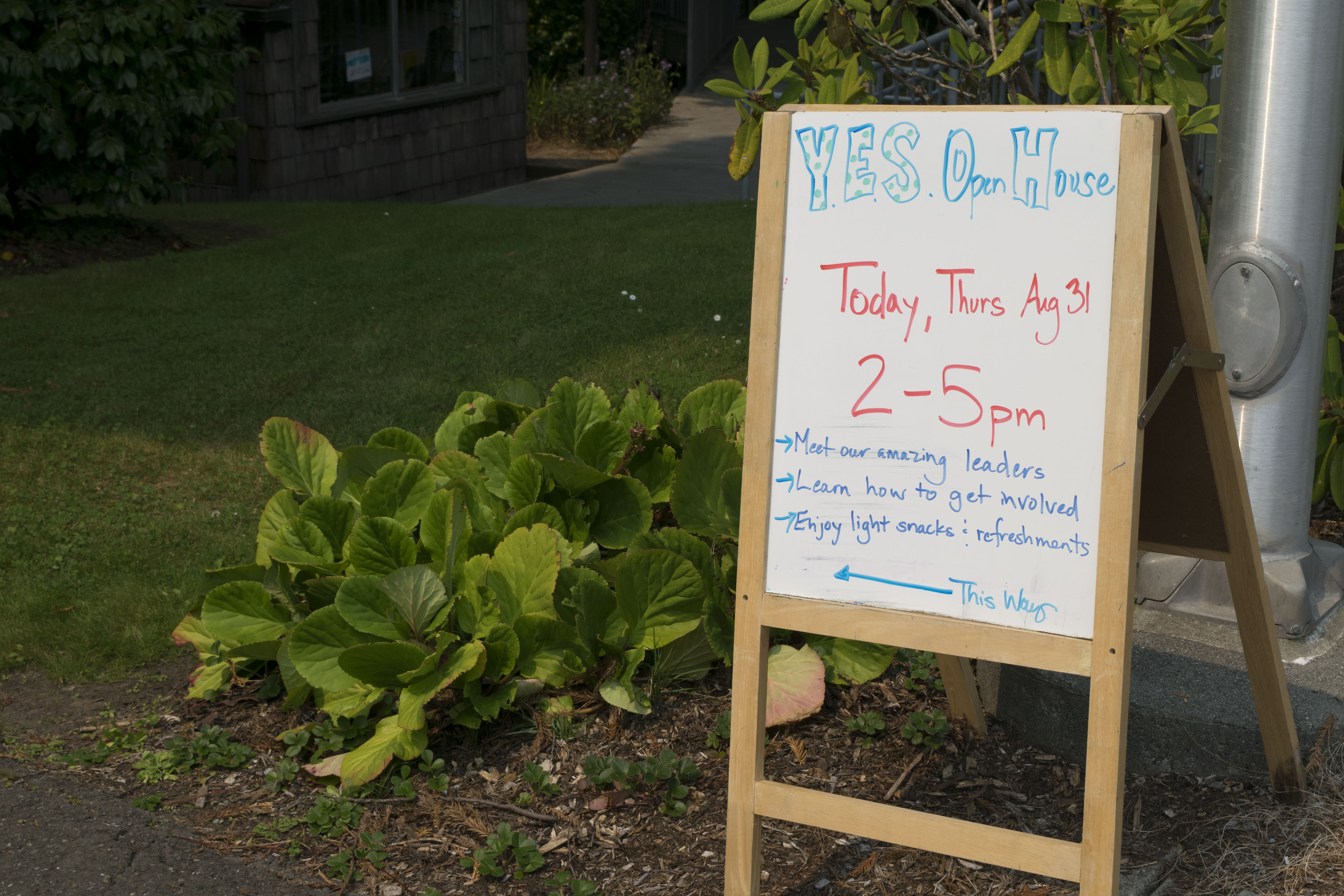
    Thursday, Aug. 31, the Youth Educational Services house on campus, Y.E.S. House, held their open house for students and other members of the community to come and see what the Y.E.S. House has to offer.

    DSC_0094.jpg
    Photo credit: Michelle Meyers

    The Y.E.S. House is a completely student run program of the Associated Students of Humboldt State University and is under the department of Student Affairs. Since 1968, the Y.E.S. House has played a vital role in supporting students in becoming active members in their community and initiating social change by creating and implementing volunteer programs that serve the needs of the community.

    This Way.jpg
    Chalk leading the way to the yes house. Photo credit: Michelle Meyers

    Currently, there are 13 different volunteer programs at Y.E.S. and each of them works with a different population within our local community. Their purpose is to offer support for any kind of needs they may have that arise.

    New Games is one of the programs at The Y.E.S. and has been around since 1991. Cori Simons, a Child Development major at HSU and the newest Program Director of New Games explains that the program was created with the intention to promote “non-violence, non-competitiveness in children, and positive relationships between college students and children” through a wide range of team building games.

    Cori Simons- New Games Program Director.jpg
    Cori Simons, New Games Program Director. Photo credit: Michelle Meyers

    Simons said that New Games is still seeking volunteers and will eventually be hosting rummage sales and games days on the quad.

    “We play a lot of improv games,” Simons said.

    Cindy Xiong, freshman Wildlife major at HSU said that she stopped by the Y.E.S. House during her freshman seminar after her professor instructed her group to ask around and see what the campus has to offer.

    “They told us about all of these different volunteer opportunities, and some of them interested me,” said Xiong, “As a Wildlife major, I wanted to do something that involved being outdoors.”

    Xiong, who signed a volunteer slip, also expressed interest in the Environmental Education Program at the Y.E.S House.

    Critical Race, Gender and Sexuality Studies major Oliver Winfield-Perez is the new Program Consultant at the Y.E.S House. He first joined as a volunteer for the Queer Mentoring and Advocacy Program because he wanted to work with queer youth in the community.

    “Once I joined I found a very close knit sense of community within Y.E.S, I found friends,” said Winfield-Perez.

    During his experience at the Y.E.S House working as a volunteer in the community and within his program, he said that he was able to develop certain professional skills, leadership skills,and social skills, which gave him the motivation to become a director for that program and then eventually apply for a position as Program Consultant.

    “This year our theme is Empowerment and Activate,” said Winfield-Perez.

    Winfield-Perez said his biggest role as the program consultant and the main focus of the Y.E.S. House is to promote community organizing on and off campus. They are also working to make HSU more inclusive.

    “We are also really trying to support our student leaders, foster leadership, foster professional skills and communication skills within our students,” Winfield-Perez said, “and also create a sense of community and a support system for students on campus.”

    According to Winfield-Perez, a good amount of students at HSU who have to fill a certain amount of hours for service learning come to the Y.E.S House to help meet that requirement.

    “We’re really into service learning. Through our work of engagement within the community, we’re experiencing all of these things, so when we come back to the meetings, they reflect on what happened during times when they were in the community, what they enjoyed, what could be worked on, and then we take that knowledge and try to just apply it in different settings and, or apply it in the future,” said Winfield-Perez.

    To submit a volunteer application with the Y.E.S House, you can complete the online volunteer contract located on their website.

    http://www2.humboldt.edu/yes/

    How to Contact The Y.E.S. House

    House 91
    Humboldt State University
    Arcata, California 95521
    Phone: (707) 826-4965
    Fax: (707) 826-5558

    E-mail: yes@humboldt.edu

  • California State University enforces system-wide smoking ban on every campus in California

    California State University enforces system-wide smoking ban on every campus in California

    By|Robert Brown

    Beginning with a letter originally issued by CSU President Mark Yudof in 2012 and ending with an executive order, the university system adopted the new policy. Each campus president is being asked to comply with the system-wide policy and create a smoke-free campus by creating a task force, including a student representative that will serve on the Smoke and Tobacco-Free Policy Task Force to ensure the campus is moving forward. Over 1,500 other colleges and universities nationwide have already gone smoke and tobacco free.

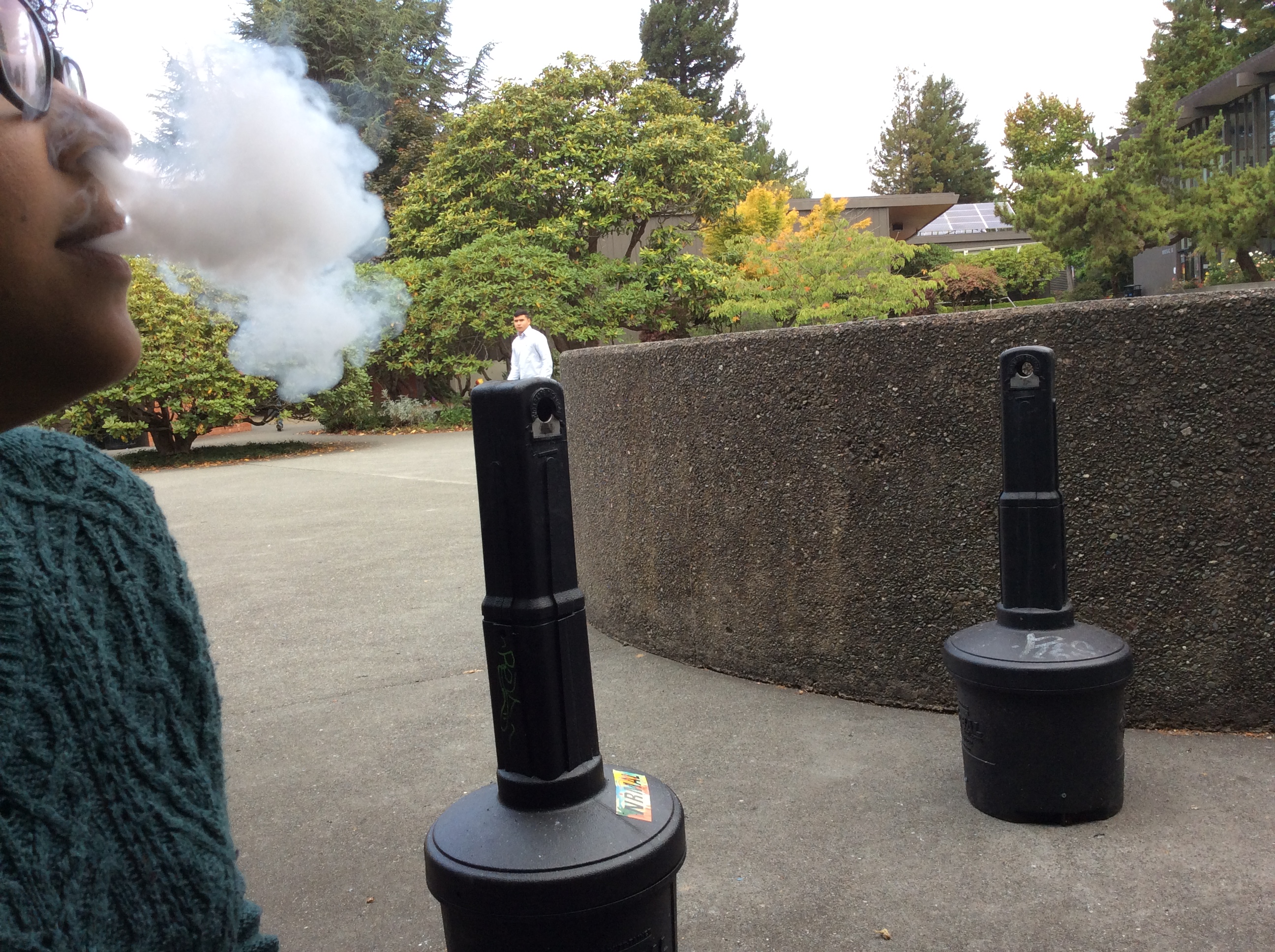
    image.jpeg
    A designated smoking area on HSU campus.

    Kim Comet, HSU Director of Risk Management and Safety Services, said the smoke and tobacco free policy is per executive order from the Chancellor’s Office.

    “It applies to all CSU campuses,” Comet said. “Smoking has to occur off of campus.”

    The U.S. Department of Health and Human Services created the Tobacco-Free College Campus Initiative (TFCCI) to promote and support the adoption and implementation of tobacco-free policies at universities, colleges and other institutions of higher learning across the United States. Enforcement of the new policy will be primarily focused on educational campaigns, outreach programs and the promotion of tobacco treatment options, including resources and referrals for quitting.

    “We will mostly be dealing with the policy in the form of education and monitoring,” Chief of University Police Donn Peterson said.

    “We will not be the smoking police and will likely refer cases to the appropriate authorities for administrative action once the ban takes place after September 1,” Peterson said, “maps located online and all around campus can be quickly referenced to determine campus boundaries.”

    According to the Center for Disease Control, tobacco use is the leading preventable cause of death and is responsible for 443,000 deaths per year in the United States, with an estimated 49,000 deaths annually due to secondhand smoke exposure.

    HSU Director of Housing and Residence Life Steve St. Onge said, in regards to smoking in the residence halls, the school has never allowed smoking in any campus housing facility.

    “What has changed is that the smoking gazebos, which had been designated as smoking areas are no longer available for students, faculty or staff to use as designated campus smoking areas,” St. Onge said.

    Students have voiced concern over the amount of trash and litter that could increase due to the smoking ban, saying students will not quit smoking and will more than likely resort to becoming sneaky, trying to hide and smoke, which will lead to cigarette butts being thrown on the ground instead of in proper receptacles. Also, the lack of a safe environment on campus to smoke may cause students to walk off campus and put themselves at risk of violence or assault.

    HSU student Elena Rios said you can’t force people to stop a habit they have had for awhile.

    “As a smoker, you are bombarded with why smoking is bad. People do it all the time, they try to get you to quit,” Rios said. “They tell you reasons why you should quit. It’s your life and you should be able to make your own choices. It’s a civil liberty. I think it’s funny to ban smoking outside.”

    According to the CSU website, a cornerstone of the California State University and higher education is the principle of one’s individual freedom to learn, teach, work, think, and take part in their intellectual and career endeavors in a fulfilling, rewarding, safe and healthy environment.

    “I can understand banning smoking in certain areas,” HSU student Alex Pickering said, “if they gave us another solution or something. Just give us another area to smoke.”


  • Students’ J-point money washed away

    Students’ J-point money washed away

    As the end of last spring semester approached, sophomore Tonita Johnson, 19, had around $600 of leftover J-points on her meal plan. During the last weeks of the semester, Johnson was trying to spend her remaining points by paying for her friends who had used up all of their J-points.

    “I paid for other people who ran out of J-points,” Johnson said, “I had to get rid of $600, I got it down to $92.”

    Last year alone, $82,513 worth of unused J-points expired. HSU meal plan J-points expire at the end of every spring semester. Every year a number of students lose their leftover points. These already expensive points are nonrefundable and can’t rollover to the summer semester or the following school year.

    IMG_2885.JPG

    Like many other students, Johnson took out a loan to pay for the gold plan she had last year. Students pay $1.96 for every $1 they get on the gold plan. The plan costs $5,544 while students only get $2,832 worth of J-points. $1,416 for each semester. This hidden,

    prepaid cost is known as a fixed cost.

    Johnson lost $92 of J-points, but adding the fixed cost fees she paid for when purchasing the plan brings her total loss to $180.

    “That money would have gone towards my books and other stuff that I needed for this semester,” Johnson said.

    Besides buying things for friends, before heading home to Los Angeles, Johnson spent some of her J-points buying things from the on-campus markets and left them at a friend’s house in Arcata that caught on fire this summer.

    “My friend house caught on fire, a lot of those things that I’ve bought from all around got destroyed in the fire,” Johnson said. “Everything is gone. They lost a lot of stuff, I lost some of my stuff.”

    HSU does not refund students any part of their remaining meal plan balance.

    “They [HSU] should refund the points. I feel they have the ability to refund the points,” Joey Mularky, president of Associated Students, said.

    Sahil Barot, a 19-year-old international student from India, said it’s a waste of money.

    At the end of last spring semester, he had over $280 leftover points on his meal plan. He spent some of his remaining points on things from the on-campus markets, but still lost around $70 worth of J-points that expired. IMG_2909.JPG

    “It was sad. It’s a lot, it’s a big amount,” Barot said. “With that money, I could buy my stuff for a month. My food, groceries, milk or cereal or vegetables and fruits I could buy it for a month.”

    Barot’s family owns a farm in India where they grow cotton, potatoes and tobacco. His father helped him pay for the meal plan with their farm income savings. His father also took a loan to pay for his education.

    “My father saved some money for me,” Barot said. “My father took a loan from a bank and got money from the farm.”

    In a school where over 50 percent of student come from low-income families, there are no plans to consider refunding student for their unused meal plans money. This brings up the question, what does student who needs that money do?

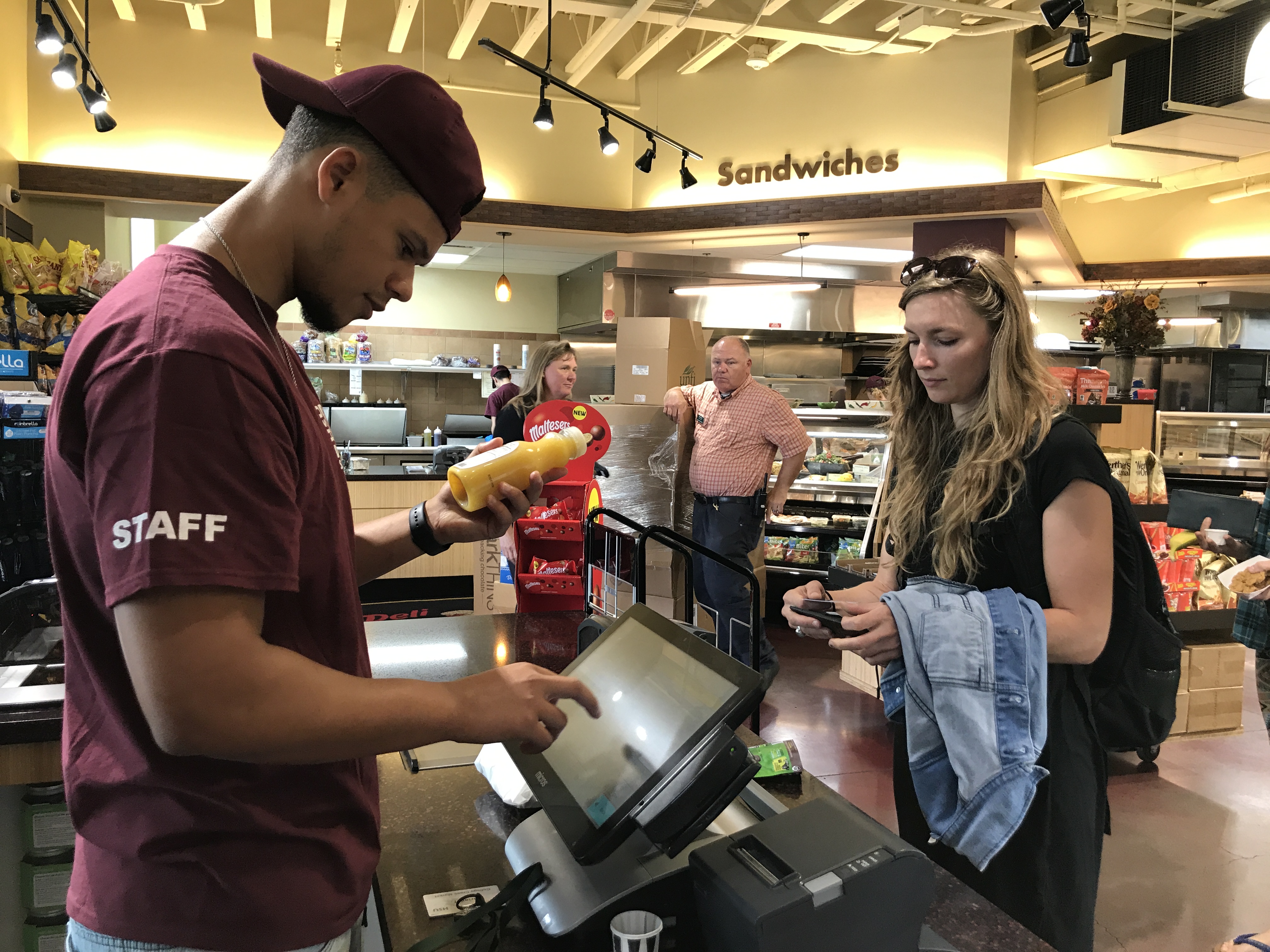
    IMG_2976.JPG
    Brian Thompson (Cashier) checking out items for a student at the college creek marketplace. Photo credit: Ahmed Al-Sakkaf

    “The answer to the question ‘What do student who need that money do?’ I don’t have a good answer for that,” said Ron Rudebock, the director of Dining Services. “Life is not fair sometimes.”

  • Student success in college

    Student success in college

    By|Charlotte Rutigliano

    With the start of the new semester upon us, students like senior Environmental Science major Kelcey Hein, strive for continued success during their time here at HSU without any added stress.

    “This year I want to enjoy the classes and appreciate what knowledge comes out of them without stressing out more than I have to,” said Hein.

    One way she plans to stress less is through her study methods. According to Hein, she only uses a quality pen and notebook because it is more motivating for her to have clean and fluid notes that she knows she’ll review and refer back to later.

    Quality notes are one tip HSU Alum Mary Osteen would give for student success, though that’s not the only one.

    Osteen, who graduated in 2004 with a degree in Political Science, said that it’s important for students to get to know and build a relationship with their professors.

    “Don’t remain a name on a paper, go the distance to build a relationship with each professor because education, to be deeply meaningful, is personal.” said Osteen.

    A statement recent Psychology graduate Dezi Villagomez would agree with.

    Villagomez said it truly pays off to go to your professor’s office hours, even though it may be a little terrifying.

    21215942_1537779426274392_1061477993_o.jpg
    Dezi Villagomez after graduation

    “They are here to help you and your needs,” Villagomez said, “go to them for advice, homework questions, or even academic and career advice.”

    Though professors aren’t the only resources on campus for students, Villagomez was one of many students who took use of the school libraries services.

    The libraries services include research help, checking out books, using computers and printers, reserving a study room and different skills workshops among others.

    It’s library resources like this that can help keep students focused on their classes and study sessions. Whether you are studying with a group or by yourself, our alums advise to not procrastinate, study a little everyday and not wait until Sunday.