The Lumberjack


Students Serving The Cal Poly Humboldt Campus and Community Since 1929

Category: News

  • A needed nursing comeback

    A needed nursing comeback

    By | Charlotte Rutigliano

    Early last spring, the University announced a potential partnership between Humboldt State and College of the Redwoods that could bring the Nursing program back to HSU.

    The partnership would create a Registered Nurse to Bachelor of Science in Nursing (RN-to-BSN) program. This would allow nurses living in the community to continue their education.

    Dr. Manohar Singh, Dean of the College of Professional Studies (CPS) said that the classes would be held at the College of the Redwoods campus with HSU faculty, and this program would be housed within the CPS.

    “The two-year program would really only be for College of the Redwoods students,” Singh said. “Or for students who already have their RN license.”

    This will be the first time since 2011 that HSU will have had a BSN program. The program was discontinued due to the costs and challenges of recruiting qualified faculty.

    Singh said that the University is still trying to collect all the necessary resources to make this program happen. The program is looking to decide on curriculum, hire qualified faculty and get enough financial and community support.

    “Any community input and support is welcome,” Singh said.

    Joe Rogers, Executive Director of Hospice of Humboldt, said that nursing is becoming more and more complex, and many organizations are recommending or requiring nurses to have a BSN.

    College of the Redwoods currently graduates around 55 registered nursing students a year. According to the release estimates from California’s Employment Development Department, the North Coast region will need an additional 48 registered nurses per year for the next ten years.

    According to Alex Enyedi, Provost and Vice President of Academic Affairs, this program could generate around 30-50 nurses with a BSN per year which would greatly fill the community need.

    “There is a tremendous demand for nurses in the community,” Enyedi said. “This program is a natural solution for the problem we have here.”

    According to Enyedi, there has been no objection from the California State University Board of Trustees They are eager for this program to happen.

    “This program is HSU doing its part to help make the community a better place,” Enyedi said. “It’s a true win win for everyone.”

    Enyedi said that this new partnership and program could be up and running by the fall semester of 2019.


  • Church doors mysteriously catch fire

    Church doors mysteriously catch fire

    By| Bryan Donoghue

    A fire sparked on the doorstep to the Arcata Presbyterian Church on G Street and 11th last night, and at the moment, it’s a mystery as to how it began.

    “All I can really give you right now is that we’ve had a fire it’s suspicious in nature it is out we have confirmed that the building is no longer in danger, that’s why we’ve been sending resources home and right now we’re coordinating an investigation with Arcata Police,” Chief Rene Campbell, director of Division 1 for the Arcata Fire District said. File_002.jpeg

    According to Campbell, the firefighters on the scene were very aggressive in dealing with the fire and were first on the scene, just in time to contain it.

    “Obviously this is not only a significant historic piece in our community but a very large building could be very dangerous,” Campbell said.

    Thankfully, the Arcata Fire District received plenty of support. Neighboring agencies joined in to help at a crucial moment to contain the fire.

    “We went big on this just because of the building it was,” Campbell said, “We had every department basically around us coming in immediate need.”

    “Great coordination and teamwork by our Fortuna ECC, the command center, the dispatch, units that were listening to the scanner were gearing up, so I mean just everyone did their job tonight and I’m thankful for that,” Campbell said.

    The elders of the church watched from Wells Fargo on the other side of G Street as the fire crew went in and out of the building.

    “We’re elders for the church, we’ve been with the church for years,” said Stephanie Witzel, treasurer for the church. “There’s a few of us down here from the church so we’re just down here to see it, and thinking about how to secure the building.”

    “We’re just thankful that this is all that happened,” said Joan Tempas, the Clerk of Session for the church. “It’s always a concern because of people that sleep in and out, and around the church and stuff, and just always being aware that the church is 100 years old.”

    Undoubtably the doorway into the church has been scorched, but the elders of the church are looking forward to the support they’ll receive from people willing to help.

    “It’s really the pitts.” Witzel said. “But hopefully it’s just gets localized and get it boarded up and call on people we know to help us out.”

    Community efforts to help the church are openly welcomed. There is plenty of clean up needed to bring the church back to it’s normal state.

    “We can probably use help from other people. If people want to help out, call the church and see what they can do,” Tempas said. “But you know, it’s great to have people be concerned, it really is. It’s a landmark here.”

    The church will not be hosting any services tomorrow. According to Tempas, Pastor Daniel Link also preaches out at Bayside Church in Jacoby Creek Road. Tempas, Witzel and the other elders will be going out there today and holding there services at the Bayside Church.


  • The fight for sanctuary

    The fight for sanctuary

    By | Charlotte Rutigliano

    A rally led by Centro del Pueblo (CDP) will be held on Tuesday, September 19 from 8:30 a.m. to 10 a.m. in front of the Humboldt County Correctional Facility in Eureka.

    According to César Abarca, faculty coordinator for Scholars Without Borders (SWB), the purpose of the rally is to advocate for a county-wide Sanctuary Ordinance.

    “This is also to request a support statement from the county board regarding DACA residents in the county,” Abarca said. CRrallypreview

  • HSU Ranked Best in West

    HSU Ranked Best in West

    By | Charlotte Rutigliano

    A recent press release by the University informed students and staff that HSU has been ranked among the best colleges in the West by the Princeton Review.

    The press release said that HSU was one of 127 western schools recommended in the Review’s “2018 Best Colleges: Region by Region” web feature.

    According to the Princeton Review’s website, students say they enjoy Humboldt State’s beautiful and relaxed atmosphere.

    BestWest_Web-4.jpg
    The Redwood Bowl at HSU. Photo by Lauren Shea

    The relaxing space is one reason HSU Alum Mario Torres, a transfer student from Los Angeles who majored in Art Education, said he chose to come to HSU.

    “I wanted a little to no distractions in my last two years of my undergraduate work,” Torres said, “I came to HSU for the opportunity to study under the giant redwoods and get away from it all.”

    According to the press release, HSU students highlighted the tight-knit community the university has as well as the emphasis on learning to live with people of all different lifestyles and doing it in a socially responsible way.

    Torres said that he had never heard of this ranking system or the Princeton Review.

    “Honestly it sounds like click bait,” Torres said. “Or something you’d see in a Buzzfeed article or video.”

    HSU was one of eight California State Universities that made the list out of a total of 23 CSU’s.

    According to the Princeton Review’s website, there is no official ranking of the schools listed that they consider “academically outstanding and well worth consideration in a college search.”

    Other schools that made it onto this list for the West were Oregon State and Stanford University.

  • Fire two miles from HSU

    Fire two miles from HSU


    By | Iridian Casarez and Curran C. Daly

    Updated Thursday 3:30

    A fire started at 12:24 p.m. on private property 200 feet away from the Arcata Community Forrest. Cal fire responded from Mad River Station, according to Captain Alex Manousous. It was a slow deep seated fire on a redwood stump.

    “Right now we are just focusing on extinguishing the fire,” Manousous said. “This was a small fire, typical for the forest.”

    There is active logging in the area that was unrelated to the fire. The cause of the fire is still undetermined until further investigation. The fire was less than a 10th of an acre.

    Cal Fire helicopters were in the air before Arcata Fire district arrived.

    Mike McDowall, City of Arcata’s natural resource technician, came to the scene. He came to determine if the fire was on the City of Arcata’s property and if the Arcata Fire District needed extra help.


    Screen Shot 2017-09-14 at 1.12.52 PM
    Reporter Iridian Casarez  tracked down the fire on private property, two miles east of Humboldt State University.


    This slideshow requires JavaScript.

    Updated Thursday 1:45 P.M.

    A Cal Fire helicopter is currently dropping water on a fire in the Arcata Community Forest. The fire is about 2 miles east of the Humboldt State University campus. The Lumberjack will continue to update this story as we learn more.

    Original Post:

    There is a helicopter circling the Arcata community forest amid reports of a fire in the forest. The Lumberjack will provide additional information when it is made available.


  • Humboldt State University ranked 39th out of 632 Master’s degree-granting universities.

    Humboldt State University ranked 39th out of 632 Master’s degree-granting universities.

    By | Robert Brown

    Humboldt State broke into the top 50 of Washington Monthly’s most recent annual National College Guide for master’s universities. The guide rates universities across the nation and evaluates them based on graduation rate, price of tuition, and other factors.

    BestWest_Web-5.jpg
    The view of Union Street by the Redwood Bowl. Photo credit: Lauren Shea

    The publication is changing the way universities are valued; instead of rewarding colleges for the number of applications they reject, they get credit for enrolling large numbers of low-income and first-generation students. Instead of promoting the most expensive schools, universities that produce research, train next generation scientists and PhDs and instill the importance of public service are acknowledged.

    “We rate schools based on their contribution to the public good in three broad categories,” Washington Monthly magazine said.

    “Social mobility (recruiting and graduating low-income students), research (producing cutting-edge scholarship and PhDs), and service (encouraging students to give something back to their country).”

    Dr. Meredith Williams, Assistant Professor of Sociology, said the faculty and coordinators in the master’s programs are always looking for new and better ways of making programs affordable for all students.

    “That is who we are as a university and as the CSU system,” Williams said.

    BestWest_Web-3.jpg
    The view of Humboldt State University from 14th Street. Photo credit: Lauren Shea

    Dr. Yvonne Everett, Professor of Environmental Science and Management, said that despite the CSU system’s pledge to help low-income students, getting funding for graduate school is challenging.

    “There is financial aid available for students who qualify and there are a few scholarships students can apply for,” Everett said.

    “Students in the natural sciences may also be funded through their faculty members’ research grants.”

    “HSU’s graduate programs are different because HSU is different,” Williams said.

    “We have great relationships with local businesses, nonprofits and community organizations to connect with in classes, as a volunteer, and with required internships and projects.”

    According to Williams, the learning here is hands-on. Many of our graduate programs are focused on applied, real life skills, using the skills and knowledge of our disciplines to create lasting, systemic social change.

    “Many students do their M.A./M.S. research or projects on topics in the public interest or that benefit a community organization,” Everett said.

    “Graduate students in social work do all kinds of projects with local agencies to help them monitor and improve their services. For graduate students in Wildlife and Natural Resources, HSU is located very close to field research sites with many state and federal agency professionals to collaborate with.”

  • TRiO Upward Bound program awarded a $1.3 million grant by the U.S. Department of Education

    TRiO Upward Bound program awarded a $1.3 million grant by the U.S. Department of Education

    TRiO is a federally funded outreach and student services program aimed to provide services for students with a disadvantaged background.

    Upward Bound is one of eight national programs within TRiO. The program is designed for first-generation college students who exhibit the potential and interest to strive in college. As members of this program, students benefit from resources such as financial aid assistance and academic counseling.

    Upward Bound has been serving the Humboldt and Trinity school districts since 1965. Within these counties, the program is affiliated with six local high schools: Hoopa Valley, Arcata, South Fork, Southern Trinity, Hayfork, and Trinity.

    Arcata High senior, Tatyanna Keeling said Upward Bound has been particularly helpful with financial aid counseling, as well as deadline reminders and reinforcement.

    This year, Upward Bound received a five-year $1.25 million extension grant. Each five-year renewal, new advancements are developed into the program to ensure quality improvement, as well as operational funding.

    With the funding, Upward Bound began their new summer “Bridge Year” program. This feature strives to provide participating high school seniors with an immersive college experience.

    Upward Bound Director at HSU, Jen Dyke said the summer is the best time to get students committed to following through with their college plans and there is no better way than to allow participants to become “real college students.”

    For the duration of the five-week summer program, students live in the Cypress Residence Hall and get a head start on college courses, all provided by TRiO.

    For the remainder of the school year, students have access to college and career counseling, as well as academic and financial tutoring. The program also organizes and engages students in local social and cultural events, as well as college campus touring.

    Shayna McCullough, a 21-year-old senior majoring in Social Work is an alum from Upward Bound. She said Upward Bound instilled pride in her. As a first-generation student, she has found a lot of emotional support and inspiration in fellow colleagues who also participate in Upward Bound.

    Upward Bound is just one of the three TRiO programs at HSU. Other federal-funded programs, including Talent Search and Student Support Services, which all aim to ease the transition of disadvantaged students from high school to college.

  • Celebrating a multicultural campus

    Celebrating a multicultural campus

    With the official beginning of the new school year, clubs and organizations on campus are off to a strong start, including the African American Center for Academic Excellence, also known as the AACAE.

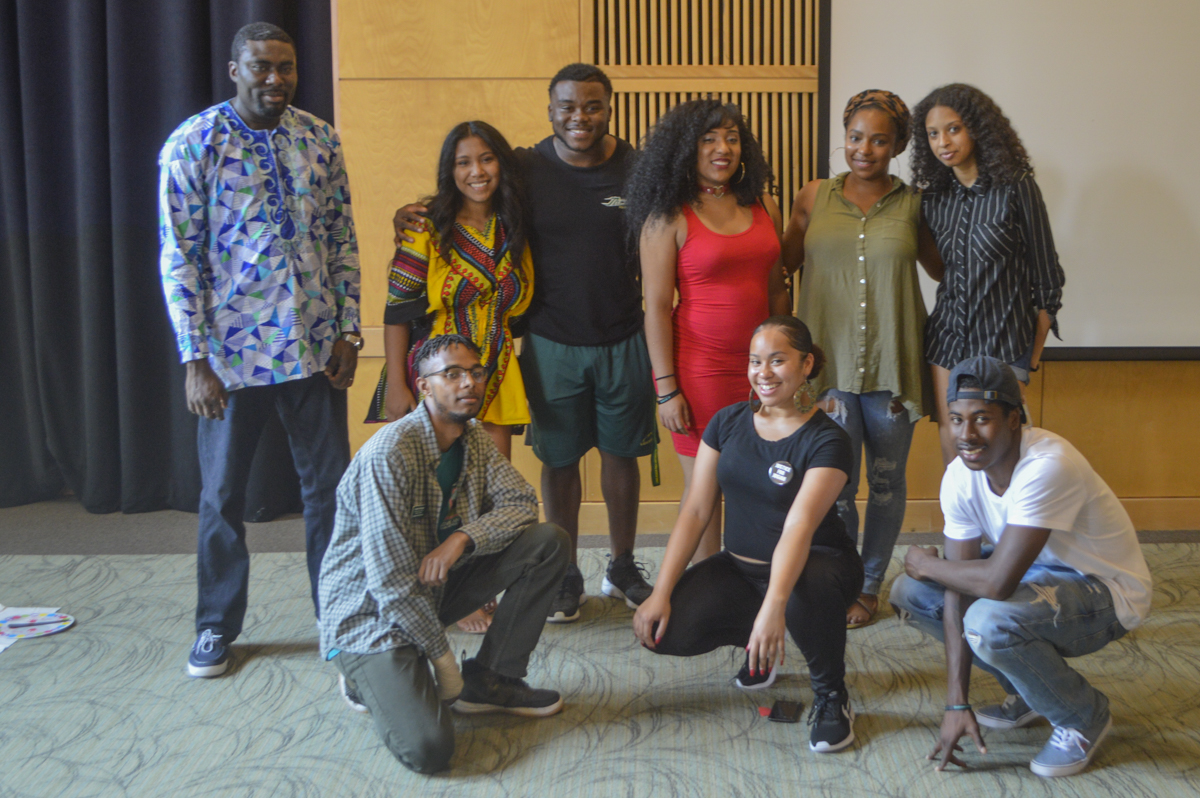
    The Center hosted their first event of the semester on Sept. 2, 2017, a Welcome Black Reception, to incoming and returning Humboldt State University students. The event brought together students and faculty of all different ages, genders, and races together to kick off the new school year.

    The AACAE is a student support space on the campus of HSU that aims to celebrate our multicultural campus by providing a guiding resource for students who identify as African American, Black or of African descent, as well as the entire university community. The organization was established in 2015 and since then has been continuously contributing to the efforts of making the Humboldt campus more inclusive and safe.

    LNACAAE_Web-1.jpg
    Games, snacks and music bring together students at “Welcome Black Reception” in the KBR.

    Erin Youngblood-Smith, who is currently pursuing a master’s degree in Social Work and interning at the AACAE says, this semester, the Center’s goals are to continue helping, providing academic support and guidance for the student body of the HSU campus, as well as planning and collaborating with outside services, as well as other campus-based clubs on upcoming events.

    Additionally, the AACAE has a serious agenda this semester, following the murder of David Josiah Lawson in April.

    Jimento Aikhuele, a graduate student majoring in Environmental Engineering and intern at the AACAE said that the event is what brought him into the Center. “I knew the local [population] would be down and they might need support, one way or another.”

    Both Youngblood-Smith and Aikhuele agree there is a gap between the Humboldt University community and the Arcata community that must be bridged.

    “There cannot be a separation between the campus and the local community, there needs to be really structured communication,” Youngblood-Smith said, “stronger ties between the city and the university’ In order for all students to feel safe.”

    Youngblood-Smith advocates education, such as conversations and workshops on safety in communities other than your own.

    “That’s a priority, making sure our students know there are dangers everywhere and you need to be aware of them,” Youngblood-Smith said.

    One student that has benefited from AACAE’s resources and proactivity is 19-year-old senior Psychology major Gabrielle Fox.

    Fox says her transition to HSU would not have been as smooth if it wasn’t for the Center.

    “There are people there who genuinely, truly want to see you succeed, it really makes a difference when you know you have somebody, who has your back and genuinely wants to see you the best that you could be,” Fox said.

    According to Fox, to be willing to open your mind to different experiences and opinion is a significant step to inclusivity on campus and in the community.

  • Being in the know about D.A.C.A.

    Being in the know about D.A.C.A.

    By | Charlotte Rutigliano

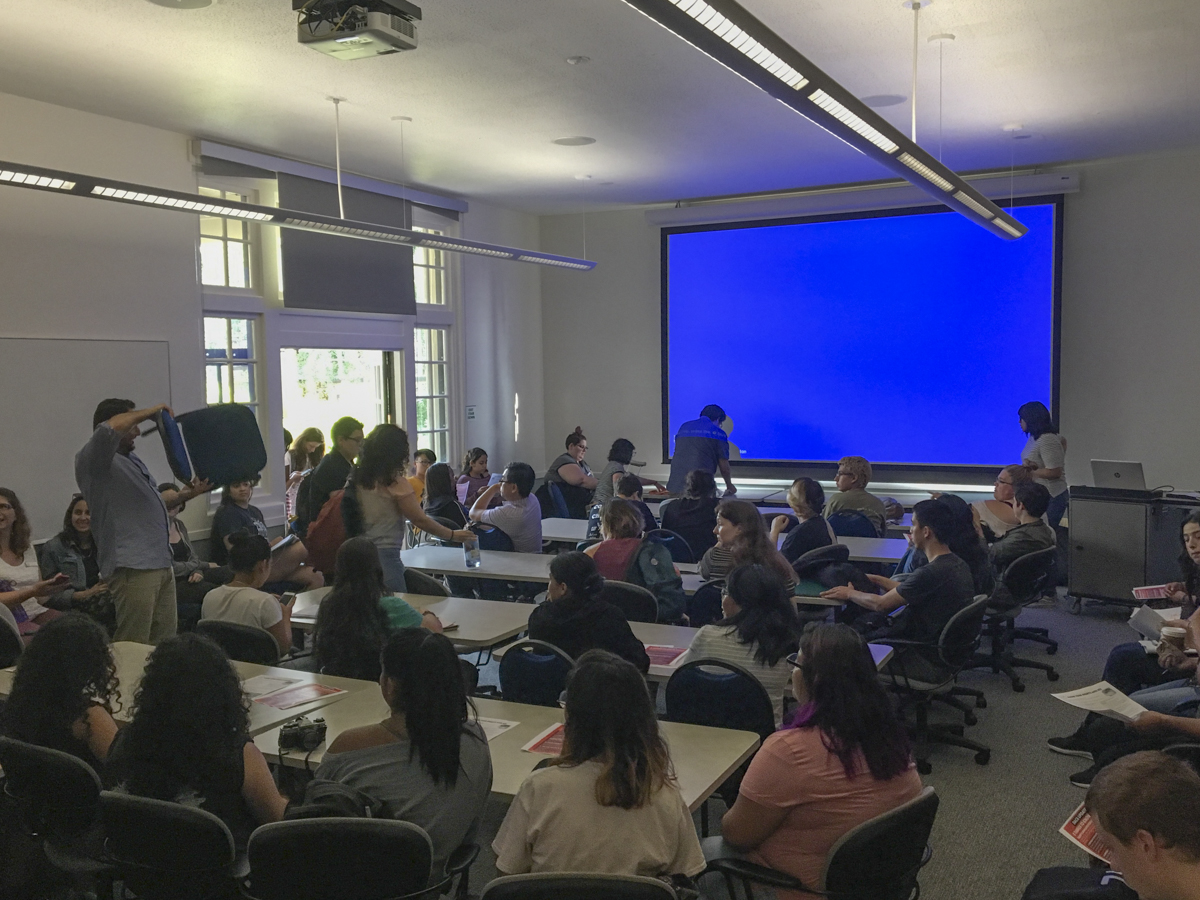
    After an emotional rally for the Deferred Action for Childhood Arrivals (DACA) Programs held in the UC Quad on Tuesday, September 5, students and staff piled into a small conference room in Nelson Hell East, most having to stand or sit in the hallway, to hear a presentation by Student Without Borders.

    IMG_1645.JPG
    Students and staff outside Nelson Hall East room 106 Photo credit: Charlotte Rutigliano
    The presentation covered constitutional rights, the rights people have when dealing with the U.S. Immigration and Customs Enforcement (ICE), and what resources the university has to help and protect DACA students.

    Karla Sanchez, a student coordinator with Student Without Borders and a DREAMer, started off the presentation with the constitutional rights held by people living in the United States. She then talked about what to do if stopped, approached or arrested by an ICE agent.

    IMG_1642.JPG
    Nelson Hall East Room 106 pack with students and staff bringing in more chairs

    “If you are stopped you don’t have to say anything,” Sanchez said. “Just tell them your name and that you do not want to talk to them.”

    Sanchez warned to not show any aggression because it can be used against you.

    “Remain silent, don’t sign anything and ask to speak to a lawyer,” Sanchez said. “Always have a plan, memorize numbers, family members, lawyers or doctors, and always have copies of any documents.”

    According to Sanchez, the last day to apply for DACA renewal is October 5, 2017, but only if the current DACA paperwork expires before March 8, 2018.

    After Students Without Borders concluded the presentation, they opened the floor up to questions and comments.

    Vice President of Student Affairs W. Wayne Brumfield said that we’re in the beginning of this and that there is a lot of uncertainty, but he was putting together a forum for DACA students with an immigration lawyer to help students get more information.

    “The entire campus community is behind you and will do everything within our legal rights to protect you,” Brumfield said.

    Students Without Borders wrapped the forum by letting people know about the march in Fortuna on September 19 at 8 a.m., starting at the Veterans Memorial Building. The march organizers are pushing the City of Fortuna to pass an ordinance making it a sanctuary city. Students Without Borders also hopes to have the entire county pass an ordinance to make it a sanctuary county.

  • Arcata Plaza shooting suspect identified

    ArcataShooting_Web
    Arcata Plaza | Photo by Don Forthuber

    By | Robert Brown

    While investigating a report of a fight in downtown Arcata, Saturday morning at 1:27 a.m., officers from Arcata police and Humboldt State University police approached 26-year-old Erwin Eugene Sweat, Jr., who was sitting in a nearby car.

    A dash camera recorded Sweat getting out of the car and firing two shots at the officers, one hitting University police officer Louis Altic in the right leg. Both officers Altic and Arcata police officer Matthew O’Donovan shot back, firing nine rounds, hitting Sweat.

    Officer’s immediately performed CPR on Sweat, Arcata ambulance took him to Mad River hospital where he died of his wounds. Officer Altic was taken to Mad River Hospital, was treated and released. Both officers have been placed on administrative leave, which is the protocol for officer involved shootings.

    A multi-agency team of local law enforcement agencies known as the Humboldt County Critical Incident Response Team (CIRT) is leading the investigation.

    Anyone with any information about this case, please call the Arcata Police Department at (707) 822-2426.

  • Fighting For D.A.C.A.

    Fighting For D.A.C.A.

    Rally Underway in response to Trump’s Retraction of D.A.C.A


    By|Michelle Meyers

    The smog and ash from the fires finally began to clear, yet it was emotion that hung heavy in the air this afternoon at the UC Quad. After the Trump administration announced this Tuesday that it will formally put an end the Deferred Action for Childhood Arrivals Program, or D.A.C.A. An end date was placed on the legal protections that were granted to approximately 800,000 undocumented people who entered the country as children. In response, M.E.Ch.A (Movimiento Estudiantil Chicano de Aztlan) De Humboldt State held a rally that took place this afternoon in the UC Quad. Students, faculty and members of the community came out in support of the Latinx community and those who may be affected by the recent retraction.

    As Karla Sanchez strolled calmly up to the microphone, the crowd quickly grew silent. Sanchez is an HSU student, member of M.E.Ch.A. De Humboldt State and a DREAMER. When she started to tell her story, her voice shook ever so slightly, and her eyes began to water. Sanchez’s parents brought her to the United States when she was only two years old. This year, she walked across the university graduation stage, but now Sanchez is here in the UC Quad to prepare for the next stage of her life in the face of the retraction. Even under the weight of her situation and with the fate of the Latinx community in clear view, it only took her a moment to strengthen her spine and speak before her local community with power and with pride.

    “Come out of the shadows and don’t be afraid,” Sanchez said. “We are supported in the school.”

    Sanchez said she felt that community support and action is vital, and she kindly turned to the crowd to ask for support.

    “Start speaking in your classroom, bring up the problem, ask what’s going to happen,” Sanchez said. Daca3_Print_Color.jpg

    Anayeli Auza is yet another HSU Student, member of M.E.Ch.A. De Humboldt State and DREAMER that came to the rally to voice her support for the Latinx community and stand in solidarity. Auza came to the United States when she was just one year old. While reflecting on her childhood after moving to the United States, she posed the question, “How do you tell a 12 year old that a paper defines their opportunities?”

    The answer to that question, she couldn’t provide. Both then and now. As of Tuesday, an unshakeable sense of worry and fear hangs over Auza regarding the future and the futures of other DREAMERS in the community.

    “People who are walking around don’t know what’s going to happen. Stay strong out there,” said Auza.

    While spirits were low in the face of a future so uncertain, the support was evident. The concrete seats, lawns and the balconies lining the UC quad were packed with students and members of the local community, some part of the Latinx community and others allies, but they had come to lend ears to listen, express their support and stand in solidarity with the Latinx community.

    In the midst of the rally the crowd began to chant,

    “Defend D.A.C.A, Down with Trump, Down with U.S. imperialism.”

    “This country is built on the blood, sweat and tears of immigrants,” said Cesar G. Abarca, Assistant Professor of the Department of Social Work.

    Abarca came out to speak on behalf of the Latinx community and those who support them, expressing not only a, “need to recognise that fear,” regarding the implications of the retraction within the Latinx community, but a great need for support from those outside of the community.

    “We need you right now, a lot of us are in the shadows,” said Abarca.

    In an email sent Tuesday afternoon to HSU students and staff, President Lisa A. Rossbacher expressed her support for students affected by the retraction, saying that, “Humboldt State University stands with you, and we care about you. We’re going to keep doing all we can to help you succeed in school and become Humboldt alumni.”

    In addition, she also expressed her feelings about the retraction itself.

    “I’m frustrated by this short-sighted thinking of our leadership at the national level. I want America to do better. We need America to do better.” said Rossbacher.

    “By doing so with no alternative solution in place, our government has created uncertainty and fear for hundreds of thousands of people, including thousands of college students.”

    Rossbacher also came to speak at the rally to show her continued support for HSU students affected by the reaction.

    “I was horrified by the announcements today,” said Rossbacher.

    “I join all of you who are part of D.A.C.A., especially our students.”

    “We are human beings, damn it,” said Marisol Ruiz, who came to the rally to stand in solidarity and act as a voice for her community. She spoke from the heart with intensity and integrity. When speaking about how her mother was deported when she was young, she turned to the crowd to offer them a piece of advice

    “Don’t feel alone,” said Ruiz

    When HSU student and Dorm Community Advisor Steph Cardenas found out about the event yesterday, she immediately began filling the walls in her dormitory with flyers for the event.

    “Silence is violence,” said Cardenas

    Cardenas feels that it is pertinent to be a voice in such a time, because to her, “being silent is being on the same side.”DACA.jpg

    Here are a few things you need to know if (Now that) D.A.C.A is repealed:

    • If the DACA program ends students enrollment and tuition will not be affected. In addition, funding under the DREAM Act will not be.
    • Depending on what action the government takes, you may not be able to continue to work on campus or other place of work. Federal law forbids employers from knowingly employing individuals who lack proper authorization to work in the country.
    • For undocumented students traveling abroad, it is likely that they will not be able to re-enter the U.S. upon return.
    • If you are traveling within the U.S., you should be permitted to travel within borders, but you may be asked for identification or about your immigration status.
    • If you you encounter Customs and Border Protection, they are authorized to verify your status. CBP agents can conduct a search if they have, “particularly probable cause.” Motorists are not required to consent to a search. If you have DACA, you can bring a copy of your EAD and your approval notices just in case you are asked questions.
    • If you come in contact with a police or immigration officer, observe your rights granted by the U.S. constitution.
    • If you are concerned about keeping your family safe, you can help them develop a safety plan as well as inform them of their rights. See the Immigrant Legal Resource Center Family Preparedness Plan.

    Scholars Without Borders is located on the second floor of the Multicultural Center.



  • Yes! The Y.E.S. House is open

    Yes! The Y.E.S. House is open

    By|Michelle Meyers

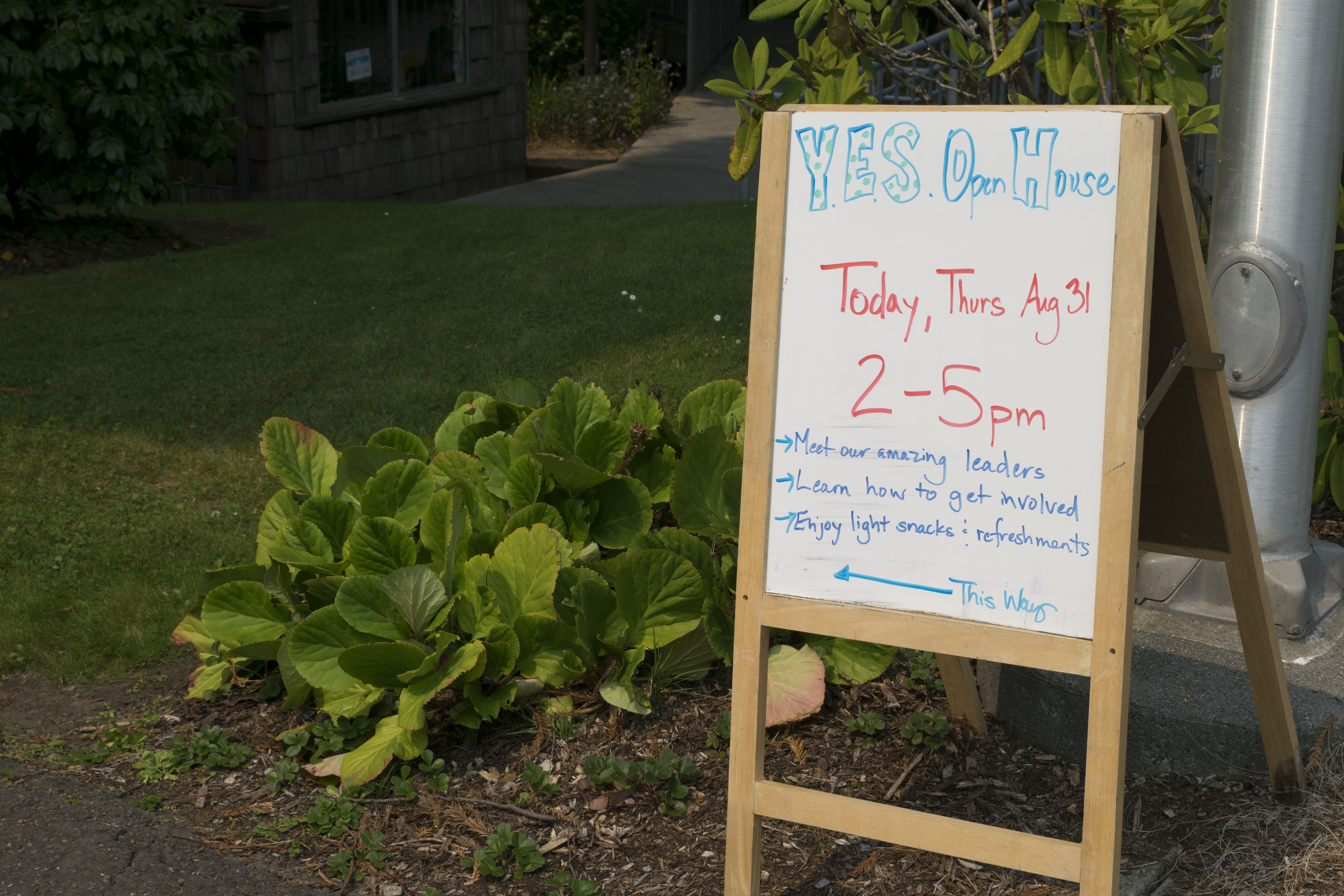
    Thursday, Aug. 31, the Youth Educational Services house on campus, Y.E.S. House, held their open house for students and other members of the community to come and see what the Y.E.S. House has to offer.

    DSC_0094.jpg
    Photo credit: Michelle Meyers

    The Y.E.S. House is a completely student run program of the Associated Students of Humboldt State University and is under the department of Student Affairs. Since 1968, the Y.E.S. House has played a vital role in supporting students in becoming active members in their community and initiating social change by creating and implementing volunteer programs that serve the needs of the community.

    This Way.jpg
    Chalk leading the way to the yes house. Photo credit: Michelle Meyers

    Currently, there are 13 different volunteer programs at Y.E.S. and each of them works with a different population within our local community. Their purpose is to offer support for any kind of needs they may have that arise.

    New Games is one of the programs at The Y.E.S. and has been around since 1991. Cori Simons, a Child Development major at HSU and the newest Program Director of New Games explains that the program was created with the intention to promote “non-violence, non-competitiveness in children, and positive relationships between college students and children” through a wide range of team building games.

    Cori Simons- New Games Program Director.jpg
    Cori Simons, New Games Program Director. Photo credit: Michelle Meyers

    Simons said that New Games is still seeking volunteers and will eventually be hosting rummage sales and games days on the quad.

    “We play a lot of improv games,” Simons said.

    Cindy Xiong, freshman Wildlife major at HSU said that she stopped by the Y.E.S. House during her freshman seminar after her professor instructed her group to ask around and see what the campus has to offer.

    “They told us about all of these different volunteer opportunities, and some of them interested me,” said Xiong, “As a Wildlife major, I wanted to do something that involved being outdoors.”

    Xiong, who signed a volunteer slip, also expressed interest in the Environmental Education Program at the Y.E.S House.

    Critical Race, Gender and Sexuality Studies major Oliver Winfield-Perez is the new Program Consultant at the Y.E.S House. He first joined as a volunteer for the Queer Mentoring and Advocacy Program because he wanted to work with queer youth in the community.

    “Once I joined I found a very close knit sense of community within Y.E.S, I found friends,” said Winfield-Perez.

    During his experience at the Y.E.S House working as a volunteer in the community and within his program, he said that he was able to develop certain professional skills, leadership skills,and social skills, which gave him the motivation to become a director for that program and then eventually apply for a position as Program Consultant.

    “This year our theme is Empowerment and Activate,” said Winfield-Perez.

    Winfield-Perez said his biggest role as the program consultant and the main focus of the Y.E.S. House is to promote community organizing on and off campus. They are also working to make HSU more inclusive.

    “We are also really trying to support our student leaders, foster leadership, foster professional skills and communication skills within our students,” Winfield-Perez said, “and also create a sense of community and a support system for students on campus.”

    According to Winfield-Perez, a good amount of students at HSU who have to fill a certain amount of hours for service learning come to the Y.E.S House to help meet that requirement.

    “We’re really into service learning. Through our work of engagement within the community, we’re experiencing all of these things, so when we come back to the meetings, they reflect on what happened during times when they were in the community, what they enjoyed, what could be worked on, and then we take that knowledge and try to just apply it in different settings and, or apply it in the future,” said Winfield-Perez.

    To submit a volunteer application with the Y.E.S House, you can complete the online volunteer contract located on their website.

    http://www2.humboldt.edu/yes/

    How to Contact The Y.E.S. House

    House 91
    Humboldt State University
    Arcata, California 95521
    Phone: (707) 826-4965
    Fax: (707) 826-5558

    E-mail: yes@humboldt.edu

  • California State University enforces system-wide smoking ban on every campus in California

    California State University enforces system-wide smoking ban on every campus in California

    By|Robert Brown

    Beginning with a letter originally issued by CSU President Mark Yudof in 2012 and ending with an executive order, the university system adopted the new policy. Each campus president is being asked to comply with the system-wide policy and create a smoke-free campus by creating a task force, including a student representative that will serve on the Smoke and Tobacco-Free Policy Task Force to ensure the campus is moving forward. Over 1,500 other colleges and universities nationwide have already gone smoke and tobacco free.

    image.jpeg
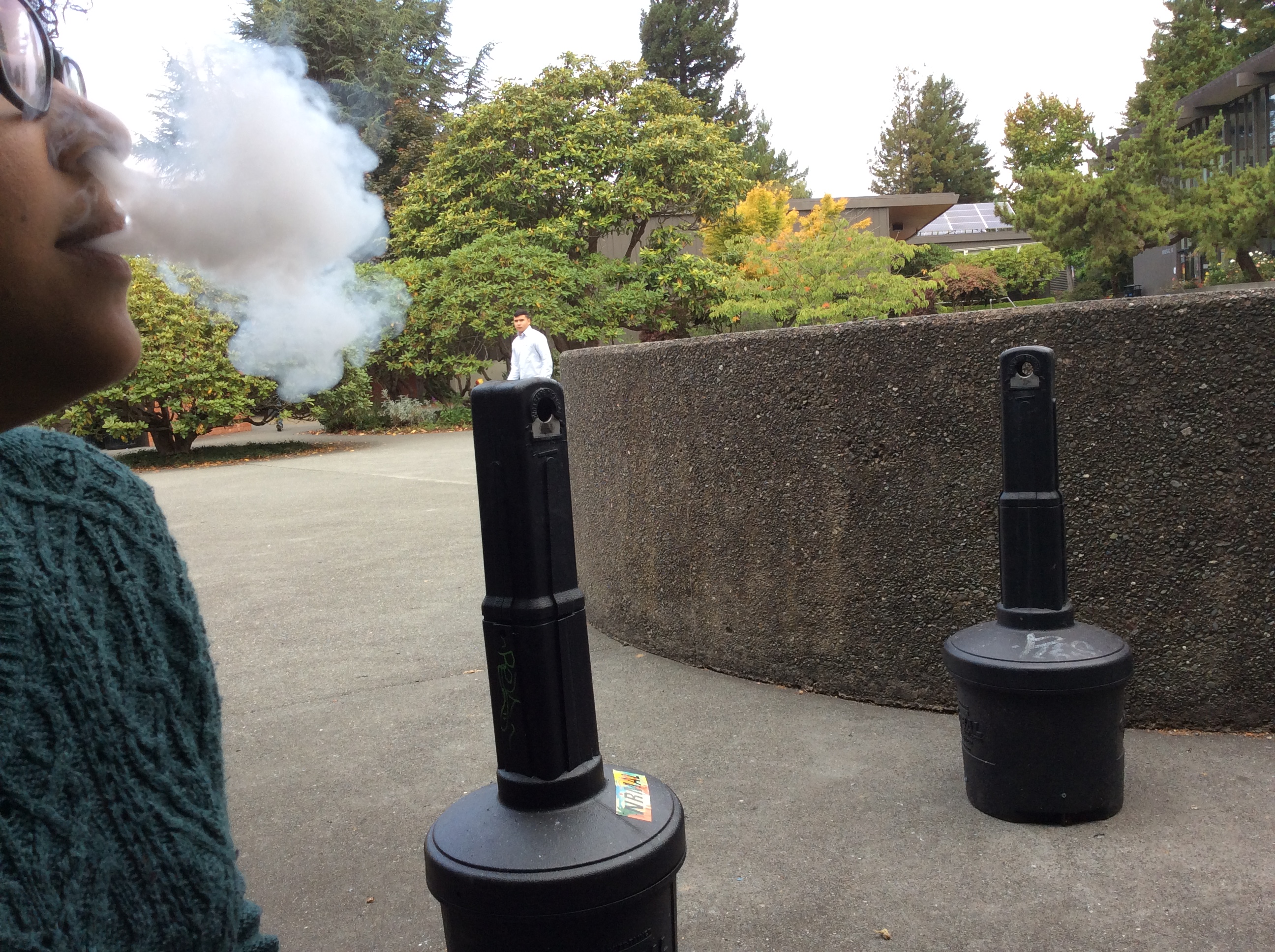
    A designated smoking area on HSU campus.

    Kim Comet, HSU Director of Risk Management and Safety Services, said the smoke and tobacco free policy is per executive order from the Chancellor’s Office.

    “It applies to all CSU campuses,” Comet said. “Smoking has to occur off of campus.”

    The U.S. Department of Health and Human Services created the Tobacco-Free College Campus Initiative (TFCCI) to promote and support the adoption and implementation of tobacco-free policies at universities, colleges and other institutions of higher learning across the United States. Enforcement of the new policy will be primarily focused on educational campaigns, outreach programs and the promotion of tobacco treatment options, including resources and referrals for quitting.

    “We will mostly be dealing with the policy in the form of education and monitoring,” Chief of University Police Donn Peterson said.

    “We will not be the smoking police and will likely refer cases to the appropriate authorities for administrative action once the ban takes place after September 1,” Peterson said, “maps located online and all around campus can be quickly referenced to determine campus boundaries.”

    According to the Center for Disease Control, tobacco use is the leading preventable cause of death and is responsible for 443,000 deaths per year in the United States, with an estimated 49,000 deaths annually due to secondhand smoke exposure.

    HSU Director of Housing and Residence Life Steve St. Onge said, in regards to smoking in the residence halls, the school has never allowed smoking in any campus housing facility.

    “What has changed is that the smoking gazebos, which had been designated as smoking areas are no longer available for students, faculty or staff to use as designated campus smoking areas,” St. Onge said.

    Students have voiced concern over the amount of trash and litter that could increase due to the smoking ban, saying students will not quit smoking and will more than likely resort to becoming sneaky, trying to hide and smoke, which will lead to cigarette butts being thrown on the ground instead of in proper receptacles. Also, the lack of a safe environment on campus to smoke may cause students to walk off campus and put themselves at risk of violence or assault.

    HSU student Elena Rios said you can’t force people to stop a habit they have had for awhile.

    “As a smoker, you are bombarded with why smoking is bad. People do it all the time, they try to get you to quit,” Rios said. “They tell you reasons why you should quit. It’s your life and you should be able to make your own choices. It’s a civil liberty. I think it’s funny to ban smoking outside.”

    According to the CSU website, a cornerstone of the California State University and higher education is the principle of one’s individual freedom to learn, teach, work, think, and take part in their intellectual and career endeavors in a fulfilling, rewarding, safe and healthy environment.

    “I can understand banning smoking in certain areas,” HSU student Alex Pickering said, “if they gave us another solution or something. Just give us another area to smoke.”


  • Students’ J-point money washed away

    Students’ J-point money washed away

    As the end of last spring semester approached, sophomore Tonita Johnson, 19, had around $600 of leftover J-points on her meal plan. During the last weeks of the semester, Johnson was trying to spend her remaining points by paying for her friends who had used up all of their J-points.

    “I paid for other people who ran out of J-points,” Johnson said, “I had to get rid of $600, I got it down to $92.”

    Last year alone, $82,513 worth of unused J-points expired. HSU meal plan J-points expire at the end of every spring semester. Every year a number of students lose their leftover points. These already expensive points are nonrefundable and can’t rollover to the summer semester or the following school year.
    IMG_2885.JPG

    Like many other students, Johnson took out a loan to pay for the gold plan she had last year. Students pay $1.96 for every $1 they get on the gold plan. The plan costs $5,544 while students only get $2,832 worth of J-points. $1,416 for each semester. This hidden,

    prepaid cost is known as a fixed cost.

    Johnson lost $92 of J-points, but adding the fixed cost fees she paid for when purchasing the plan brings her total loss to $180.

    “That money would have gone towards my books and other stuff that I needed for this semester,” Johnson said.

    Besides buying things for friends, before heading home to Los Angeles, Johnson spent some of her J-points buying things from the on-campus markets and left them at a friend’s house in Arcata that caught on fire this summer.

    “My friend house caught on fire, a lot of those things that I’ve bought from all around got destroyed in the fire,” Johnson said. “Everything is gone. They lost a lot of stuff, I lost some of my stuff.”

    HSU does not refund students any part of their remaining meal plan balance.

    “They [HSU] should refund the points. I feel they have the ability to refund the points,” Joey Mularky, president of Associated Students, said.

    Sahil Barot, a 19-year-old international student from India, said it’s a waste of money.

    At the end of last spring semester, he had over $280 leftover points on his meal plan. He spent some of his remaining points on things from the on-campus markets, but still lost around $70 worth of J-points that expired. IMG_2909.JPG

    “It was sad. It’s a lot, it’s a big amount,” Barot said. “With that money, I could buy my stuff for a month. My food, groceries, milk or cereal or vegetables and fruits I could buy it for a month.”

    Barot’s family owns a farm in India where they grow cotton, potatoes and tobacco. His father helped him pay for the meal plan with their farm income savings. His father also took a loan to pay for his education.

    “My father saved some money for me,” Barot said. “My father took a loan from a bank and got money from the farm.”

    In a school where over 50 percent of student come from low-income families, there are no plans to consider refunding student for their unused meal plans money. This brings up the question, what does student who needs that money do?

    IMG_2976.JPG
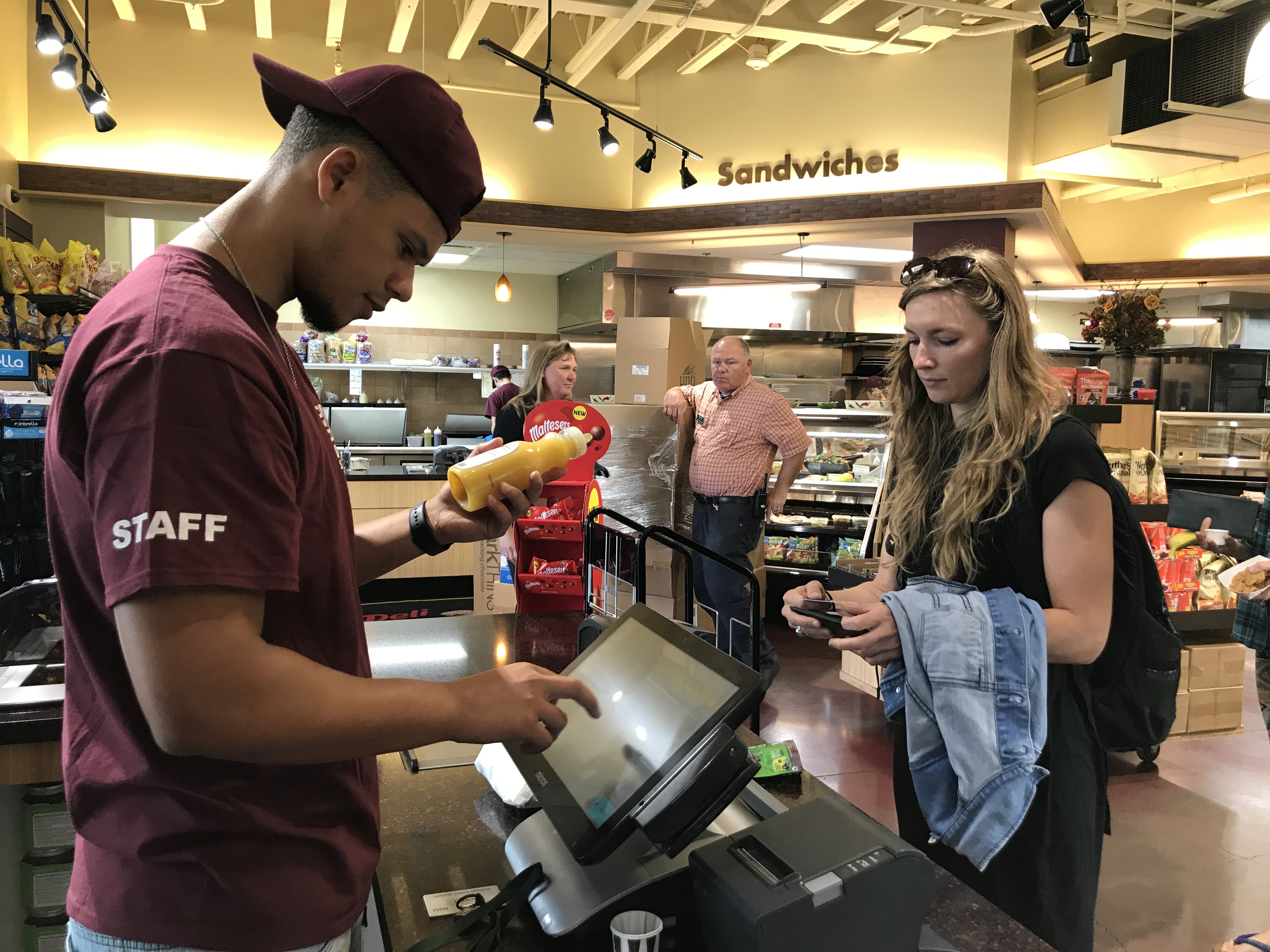
    Brian Thompson (Cashier) checking out items for a student at the college creek marketplace. Photo credit: Ahmed Al-Sakkaf

    “The answer to the question ‘What do student who need that money do?’ I don’t have a good answer for that,” said Ron Rudebock, the director of Dining Services. “Life is not fair sometimes.”

  • Student success in college

    Student success in college

    By|Charlotte Rutigliano

    With the start of the new semester upon us, students like senior Environmental Science major Kelcey Hein, strive for continued success during their time here at HSU without any added stress.

    “This year I want to enjoy the classes and appreciate what knowledge comes out of them without stressing out more than I have to,” said Hein.

    One way she plans to stress less is through her study methods. According to Hein, she only uses a quality pen and notebook because it is more motivating for her to have clean and fluid notes that she knows she’ll review and refer back to later.

    Quality notes are one tip HSU Alum Mary Osteen would give for student success, though that’s not the only one.

    Osteen, who graduated in 2004 with a degree in Political Science, said that it’s important for students to get to know and build a relationship with their professors.

    “Don’t remain a name on a paper, go the distance to build a relationship with each professor because education, to be deeply meaningful, is personal.” said Osteen.

    A statement recent Psychology graduate Dezi Villagomez would agree with.

    Villagomez said it truly pays off to go to your professor’s office hours, even though it may be a little terrifying.

    21215942_1537779426274392_1061477993_o.jpg
    Dezi Villagomez after graduation

    “They are here to help you and your needs,” Villagomez said, “go to them for advice, homework questions, or even academic and career advice.”

    Though professors aren’t the only resources on campus for students, Villagomez was one of many students who took use of the school libraries services.

    The libraries services include research help, checking out books, using computers and printers, reserving a study room and different skills workshops among others.

    It’s library resources like this that can help keep students focused on their classes and study sessions. Whether you are studying with a group or by yourself, our alums advise to not procrastinate, study a little everyday and not wait until Sunday.

  • Osher Lifelong Learning Institute holds fall open house

    Osher Lifelong Learning Institute holds fall open house

    By | Robert Brown

    When California businessman and philanthropist Bernard Osher founded the Bernard Osher Foundation of San Francisco in 1977 he created more than just a place for people to learn, he created a community. During Saturday’s open house, people from all over Humboldt were invited to come see what classes are being offered this semester and meet the teachers and staff at OLLI.image.jpeg

    “After Osher attended his 50 year high school reunion, he said there were two types of people in the room, one type that is waiting to die, and the other type who are learning new things and starting new lives and building new interests.” said Sheila Rocker-Heppe, Director of OLLI.

    With over 120 OLLI’s nationwide, it is the largest continuing education organization in the United States. Every OLLI is created differently based upon its location and the interests of the people in the community. All classes are specially designed short courses with no exams or grades, with subjects varying from religion and genealogy to bridge and dance.

    “We have moved way beyond the expectation that anyone had for continuing education,” Rocker-Heppe said.

    Some classes take place in a traditional classroom setting, but others explore different areas of the community and beyond to teach classes such as kayaking, history or geology. OLLI programs are structured with a learning component in mind. When a person takes a yoga class, they learn the history and vocabulary of yoga as well as the movements.

    image.jpeg

    “When we first started OLLI, the planning grant, which is judged by attendance, didn’t think we would have 500 members to maintain a lifelong learning institute,” Rocker-Heppe said. “We surpassed that number and signed up 1300 members our first year, and have maintained that number for the last 8 years.”

    There is a solid connection between OLLI and their communities, in particular Humboldt State University. The people who attend and teach at OLLI are a vibrant, excited and energetic group of people with an age range of 50 to 95 years old. A number of retired faculty from HSU and the Cal State system teach classes, continuing with their passion to teach and serving the community.

    “I think that really shows the interested and the interesting people that are a part of OLLI,” Rocker-Heppe said.

    OLLI relies on $35 annual membership costs and donations from the Friends of OLLI, who are also members. Donations allow OLLI to stretch into new areas and offer scholarships to offer extended educations to all people in the community, regardless of income.

    “Many of the teachers at OLLI have donated their salaries to provide scholarships for others to attend classes,” Rocker-Heppe said.

    Courses are usually between two and six weeks long and there are over 100 courses to choose from. OLLI members also receive a 20% discount on select Center Arts events. Every Monday OLLI offers a free presentation to anyone in the community that is primarily focused on teaching people some of the local business origin stories, “how to” courses such as how to create a will, or just cut loose and share ghost stories.

    Many members volunteer their time and talents to create an atmosphere that feels truly enriching. OLLI is always looking for volunteers and there are several ways to help, by joining the OLLI advisory committee or the OLLI curriculum committee, by becoming a classroom assistant, or start a Special Interest Group. Call 826-5880 for more information.


  • Humboldt County Fair

    Humboldt County Fair

    By|Ian Benjamin Finnegan Thompson

    August 23rd marks the 121st anniversary of the fair in Ferndale. The fair’s schedule is packed with events. One special event includes the Surf and Turf BBQ contest which features local chefs and celebrity guest judge Guy Fieri. Watch as hundreds enjoy the rides, animals, and shows like the Chicago Boyz aerobatic team.

  • Students make taking an extra semester the new normal

    Students make taking an extra semester the new normal

    By|Charlotte Rutigliano

    For students like senior Criminology and Justice Studies major Emely Velez, taking an extra semester to graduate from college can be beneficial.

    “I came in as a transfer student and met all my requirements within the two-year span,” Velez said. “This extra semester is more so for me to take prerequisites and classes that will better prepare me for graduate school.”

    Velez, who was determined to finish in two years, now says she is okay with taking an extra semester because she started panicking about the next steps in her education.

    While staying can be a beneficial choice for some students, others have to stay out of necessity, like English major Kenneth Rainey, who graduated in the Fall of 2013.

    extra semester_Web (1)
    By Charlotte Rutigliano

    “I transferred as a junior, and didn’t do well my first semester at HSU,” Rainey said, “I was one term behind, so I stayed out of necessity, which came from my own mistakes.”

    According to Clint Rebik, the University Registrar, there are several measures the university has to help students graduate in four years. Measures including the extensive use of four-year Major Academic Plans (MAPs), the u.Direct degree planning tool, and major academic advising.

    Junior Marketing major Ashley Wylander, who is expecting to graduate in the Fall of 2018, said the only reason she is taking an extra semester is to fulfill a minor requirement.

    “If I were not receiving my minor then I would be done in four years,” Wylander said.

    Taking an extra semester or just more than four years may not be the most traditional idea when thinking about graduating college, but as more students take that route, they may make it the new normal.

  • Q&A With HSU Interim Athletic Director

    Q&A With HSU Interim Athletic Director

    By | Keaundrey Clark

    LJ: How are you fitting into your new job?

    DR: I bleed green and gold, and I love using the metaphor of sports to teach, so I couldn’t be happier with the role. However, there are significant challenges that are requiring long hours to research and to plan possible solutions.

    LJ: What are your expectations for the job?

    DR: My role, as the Athletics Director of Humboldt Athletics, is to lead a dedicated team of professionals (coaches, trainers and staff). Together our goals are to align our department with the mission of the university, to provide transformative experiences for our student-athletes, and to offer HSU students, faculty, staff, alumni and our community engaging programs that support the university’s goals.

    LJ: How do you think you can add to the success of HSU sports?

    DR: My hope is that I can help to reinvigorate our programs and re-integrate athletics into the university. My expectation is that Athletics will support the university’s efforts in: improving campus life, increasing outcomes like graduation rates, attracting potential students, building meaningful relationships with our community, and raising funds for the advancement of the university.

    LJ: What are some goals you want to accomplish in the first few semesters here?

    DR: Together with my staff, we will support our student-athletes both on and off the field. We will also offer the President proposals for the future of athletics. And we will execute whichever plan is chosen.

    LJ: What sports are you looking to add or could be suggested in the future?

    DR: That is a good question, but one I can’t answer at the moment.

    LJ: How is the athletics budget looking, it is in debt how is administration handling that?

    DR: Our finances are impacted by decreased enrollment (less revenues) and increasing costs (primarily due to mandated salary and benefit increases) so, despite heroic cost cutting, we continue to face a growing deficit. As a result, the President has asked for long term plans that will address the shortfalls.

    LJ: Some athletes are fearing their sport may be cut, what can you tell them to reassure everything would be okay?

    DR: I am looking forward to a very exciting Fall schedule. I hope that our students, faculty and staff will come out to all of our games, enjoy the events, add to the excitement and show everyone how important our sports teams are to the campus.

    LJ: The softball field has been looking horrible over the past year and was unusable last season. What could be done for it to be fixed for the spring?

    DR: I am working with our facilities management team on potential plans. Everything costs money and time, but I am hopeful.

  • Lumberjacks look to bounce back with veteran leadership

    Lumberjacks look to bounce back with veteran leadership

    By | Skye Hopkins

    Humboldt State’s Head Football Coach Rob Smith said he believes the Lumberjacks are ready to take on the 2017 season after a successful fall camp. Smith is entering his 27th year of coaching and has spent the last 10 years as a Lumberjack.

    Prior to starting his coaching position at Humboldt in 2008, Smith was head football coach at Western Washington University and director of athletics at Grays Harbor Community College. After a 17-year career at Western Washington, Smith received recognition for holding the highest win total and winning percentage the school had ever seen.

    “After 27 years, it is one year at a time,” Smith said. “I still enjoy what I am doing and coaching these young men is a lot of fun.”

    Smith has won two conference championships at Humboldt and has the chance to coach several of his 2015 championship players one more time. He is excited for the potential that comes with the upcoming season and appreciates the team’s accomplishments.

    “It is always tough reclaiming the conference championship,” Smith said. “But that is why you play the games. We are excited to get started.”

    Although the Lumberjacks had a tough 2016 season finishing with a record of 6-5, the team is ready to bounce back to its 2015 season form.

    In a recent preseason poll, Humboldt State football was picked to finish third behind defending champion Azusa Pacific and Central Washington.

    The majority of the team’s high-powered offense is returning, including senior All-Americans Alex Cappa and Ja’Quan Gardner. Chase Krivashei is coming off of a redshirt season, where he only played three games as a senior receiver, will join the 10 returning players on the offensive side of the ball.

    “Beginning of the season, we are just trying to get ready for the year,” Gardner said.

    The defense is led by linebackers Jeff Shott, Curtis Williams and Connor Cox. That unit is returning on six starters from last season.

    “We’re fired up. Getting ready for Azuza Pacific and Cety’s, and the season,” said Williams. “We are trying to go all the way this year.”

    Ja’Quan Gardner is entering his fourth season as the Lumberjacks starting running back, he will be leaving as the career rushing leader at Humboldt. His 4,121 yards are the most in school history by 1,000 yards.

    “It’s my last camp. Its exciting, but kind of sad because it is my last one,” said Gardner.

    With several returning offensive players just a step away from setting records at Humboldt State, Smith is excited to see how well the fairly new defensive side of the ball will perform.

    “On the offensive side Krivashei will be the career receptions leader. Robert Webber is going to be the career passing leader here at Humboldt and Cappa has been lineman of the year in the conference for three straight years, maybe four,” Smith said.

    All of the veteran talent on offense should keep the Lumberjacks in contention for the conference title all year long.

    “On defense it has been almost a complete turnover,” Smith said. “But this team, thus far, has shown me that they have the type of potential to win another championship.”

    With many new additions, Smith sees the work in progress but admires the leadership on offense and developing defensive leadership.

    “It is a lot of work,” Smith said. “It is a grind. We will be ready come September.”

  • Looking for answers

    Looking for answers

    By Curran Daly

    David Josiah Lawson died in the early morning hours of April 15, after a fight and stabbing at an off-campus party. On May 7, Judge Dale Reinholtsen ordered the release of Kyle Zoellner, a Mckinleyville native detained shortly after Lawson’s death, citing the prosecution’s insufficient amount of evidence to proceed to trial.

    Since then Humboldt State students left Humboldt County and four months have passed since Lawson’s death. As students return to the University and the surrounding area, the case is still unsolved and local law enforcement and the Lawson family are still searching for answers.

    A vigil to mark four months since Josiah’s death was held in the Arcata Plaza on August 15. At the Vigil, Arcata City Mayor Susan Ornelas fielded questions from community members about the case and the safety of people of color in the community.

    During the vigil it was revealed that a retired FBI investigator was to arrive in Arcata on August 16, to assist with the case. The investigator was brought to the city’s attention by the Lawson family’s legal representation and a contract had recently been agreed to between him and the City of Arcata.

    Mayor Ornelas also spoke of the role of the Justice Department in the investigation.

    “I hate that this is taking so long,” Ornelas said. “The city and I personally contacted the Department of Justice and they can only help us with the forensics of this case.”

    Forensic evidence was recently returned to the Arcata Police Department from the United States Department of Justice.

    At an Arcata City Council meeting on August 2, Ornelas relayed a message from Arcata Chief of Police, Tom Chapman.

    “The investigation is open and ongoing, additional witnesses have recently come forward,” Ornelas said. “We are beginning to recieve forensic testing results from the Department of Justice.”

    The City Council recently approved a community reward program for information leading to the arrest and conviction of the person responsible. The program was announced in a press release on August 1, from the City of Arcata that also confirmed the involvement of an outside agency.

    “Chief Chapman also confirmed that an outside agency from a large city that did not want to be named has committed two experienced homicide detectives to the Lawson case,” according to the press release. “’It’s not uncommon for agencies to take a look at an investigation from the outside, and looking at the investigative steps, make a determination if there is something more that can be done,’ said Chapman. ‘That is in process.’”

    Anyone with additional information is asked to contact the Arcata Police Department  at (707) 822-2428. The Lumberjack will continue to stay up-to-date on the progress of the investigation into David Josiah Lawson’s death.

  • Out of the clouds into the box

    Out of the clouds into the box


    By Charlotte Rutigliano

    After spending the summer testing different data cloud services such as Dropbox, Box.com, Microsoft Onedrive, and Google Drive, Chief Information Officer for Information Technology Services Anna Kircher has said the university has selected Box.com.

    According to Kircher, the university wanted to have this new system completely rolled out by the Fall 2017 semester. However, while they were conducting pilot tests over the summer, they found they still had questions with Box.com.

    “We still had some questions, like how long would it take students to upload/download files when they’re in a large class,” Kircher said. “Also how will it look for students to access the files from Canvas.”

    This fall, ITS and the university will be doing more pilot tests with Box.com to see if the new system will have functionality in the classroom.

    Kircher said that around 12 classes and five hundred students will participate in this fall’s pilot tests.

    “There will be two basic groups for the fall pilots, geospatial (GSP) courses and courses that will require large video and audio files,” Kircher said,

    Most student concerns surrounded security and storage limitations.

    Students currently have 200 megabytes available to them on the user drive provided by the university, and around 15 gigabytes within their Google accounts, which includes Gmail, Google Drive and Google Photos.

    According to Kircher, security is one of Box.com’s biggest concerns, because they often work with clients who require high levels of security.

    “One thing students won’t have to worry about with Box.com is space, using Box will give students unlimited space for files,” Kircher said.

    Kircher said the university’s new goal for rolling out Box.com school wide is the spring semester of 2018, which will improve file storage for all students.

  • Lost Lumberjacks

    Lost Lumberjacks

    By Curran C. Daly

    Sadly, a few members of the Lumberjack family will not be returning to HSU this fall.

    John Vayo

    John Vayo_Web
    Photo provided by Humboldt Area Center for Harm Reduction Facebook page.

    John Vayo passed away on July 2, 2017. He was entering his last year in the undergraduate Social Work program.

    “John struck me as a ‘would give you the shirt of his back’ kind of person—this is not a phrase I use very often—I found that hopeful and inspiring. John was deeply committed to the values and practices of harm reduction and, though he had already done a lot of good, would have gone on to shape our human service community in seriously positive ways,” said Ronnie Swartz, Social Work department chair and a personal friend of Vayo’s.

    Vayo will be missed around campus and in the community. He was an avid outdoorsman and volunteered with the Humboldt Area Center for Harm Reduction. Vayo is survived by his son Aiden. Vayo was 38 years-old.

    Michelle Lane

    Michelle Lane, Business, professor, portrait,
    Photo provided by Humboldt State Business Department.

    Michelle Lane passed away on August 7, 2017. She was an Associate Professor in the university’s School of Business.

    “Michelle was very pleasant and always smiling. She was always helping students and faculty beyond what was necessary,” said Hari Signh, professor and department chair of the School of Business. “Her most important legacy was helping the students succeed.”

    Lane helped launch the M.B.A. program for the School of Business five years ago. She was a big advocate for sustainability. Lane loved animals and was on the Board of Directors for the Sequoia Humane Society. She is survived by her husband, three children and three grandchildren.