The Lumberjack


Students Serving The Cal Poly Humboldt Campus and Community Since 1929

Category: Opinion

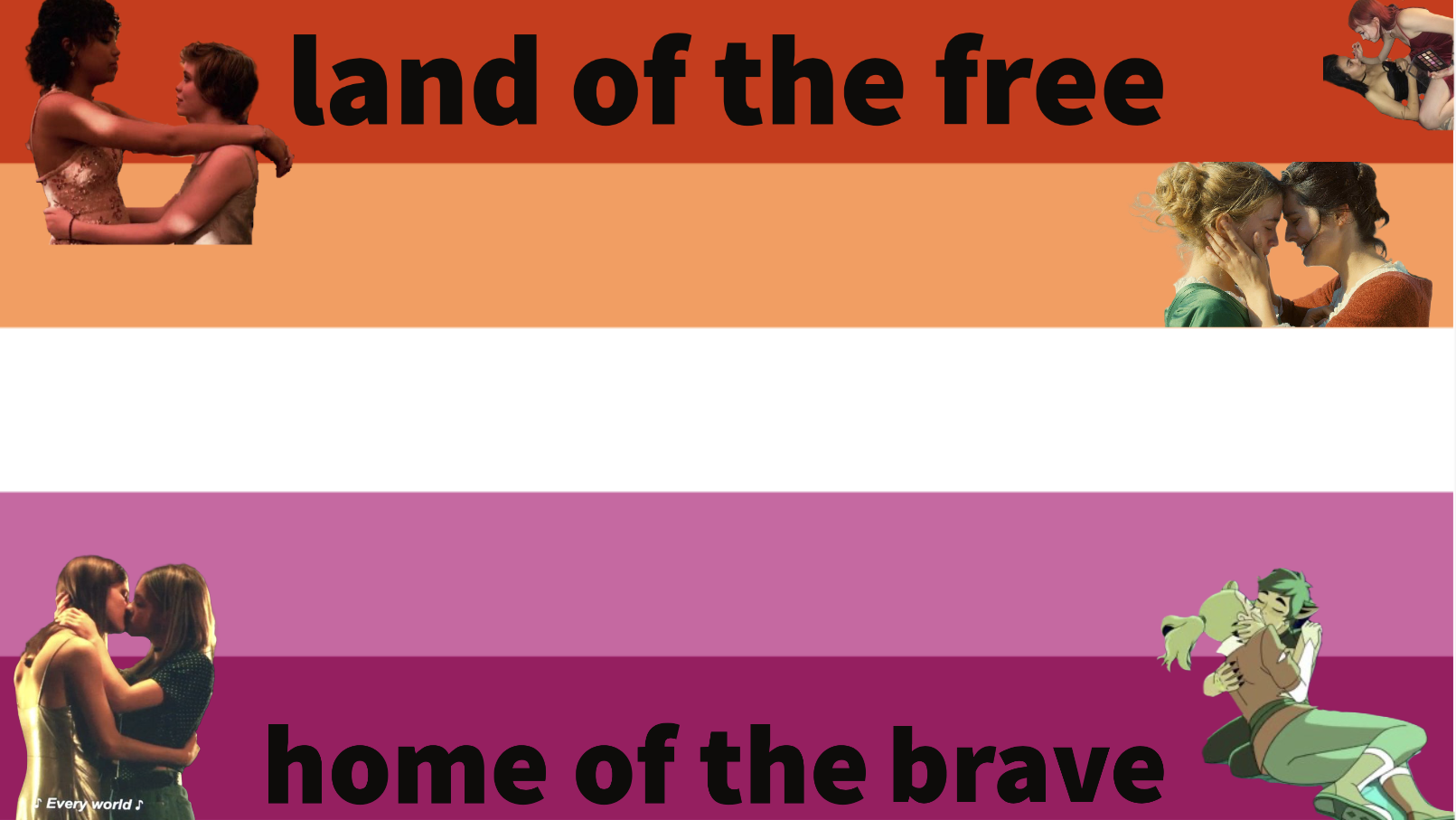
  • What Lesbianism Means to Me

    What Lesbianism Means to Me

    by Ione Dellos

    To me, being a lesbian feels warm, like sunshine. It’s a part of you, more than just who you end up with at the end of the night. It’s in the way you get dressed in the morning, putting on what you want to wear instead of dressing for the male gaze. Maybe it’s wearing something that you would never have worn before, for fear that you wouldn’t be hot or sexy enough in it. It’s when you put a Princess Bubblegum and Marceline sticker on your laptop and start doing your eyeliner in ways that you would never have thought of before. It’s a breath of fresh air, to finally exist for yourself and no one else, free from the constraints of what once weighed you down.

    It can be looking up an “Am I Gay” quiz when you were fourteen and then promptly ignoring the results, or never looking at Victoria’s Secret when you pass it in the mall. It’s also learning to move past these things when you are older and wiser, laughing at the memories with friends who had similar experiences. Lesbianism is an act of resistance, to say no more to the patriarchal systems that run your life and live wholly and unapologetically without men. While it can be challenging, as it seems like you have to fight the heteronormative appropriation of your sexuality left and right, it is very important to resist these inaccurate deceptions of lesbianism. Think of ads, no matter where you’ve seen them, of two women posing suggestively to sell a product or yet another overly sexual lesbian indie film (cough “Blue is the Warmest Color” cough). Doing that can be as easy as waking up every morning, just existing as your authentic lesbian self. Being a lesbian feels like dancing like nobody’s watching, celebrating all the little lesbian traits inscribed on your body.

  • My mental illness makes me a better leader

    My mental illness makes me a better leader

    You sleep too much or too little and neglect your personal hygiene. You’re a ticking time bomb that can’t be defused. You oscillate between extremes like a pendulum. Your own thoughts wage war against you and, in some circumstances, the people around you.

    Being mentally ill is a constant struggle, and that is only the surface of it.

    In my case, I have undiagnosed traits of borderline personality disorder (BPD), specifically a subset of the disorder called quiet BPD, as well as comorbid anxiety and depression.

    To be clear, I am not diagnosed due to being assigned female at birth (AFAB) in a rural county, one with a disproportionately high rate of Adverse Childhood Experiences (ACEs) and inaccessible or understaffed mental healthcare facilities.

    Seeking and getting a diagnosis from a psychiatrist is also protracted and difficult, especially during the ongoing COVID-19 pandemic.

    It must also be said that being branded borderline in our society is not ideal, especially as someone who was is perceived as female. There is a lot of stigma around the four Cluster B personality disorders: narcissistic, borderline, histrionic and antisocial personality disorder.

    I stigmatized narcissism in particular, before I became self-aware and realized that narcissism is merely the inverse of codependency. Both stem from traumatic formative experiences with maladaptive object constancy and abandonment, but they manifest differently. For me, narcissism was a mirror into my own dark traits that I wasn’t able or willing to peer into.

    Most borderlines are stuck in an incredibly alienating and painful catch-22. The people who understand us aren’t necessarily healthy for us, and the people who don’t understand us are usually stabilizing for us. Couple that with the chronic emptiness that borderlines endure daily and you quickly rack up a series of short, toxic relationships that end in violent staccato.

    The Western culture of individualism makes things worse for mentally ill people. In our society, we have a tendency to overlook our ability to affect other peoples’ lives. We also have the tendency to sell ourselves short. We would rather shrink than dare to take up space. The latter is contingent upon us being vulnerable, which includes the risk of failure.

    Because my judgment is skewed by my mental illness, I make a lot of mistakes. I assume the worst of people who don’t deserve it. I misread peoples’ intentions before giving them the benefit of the doubt, or idealize people who haven’t yet earned my trust or respect. These behaviors open me up to exploitation and abuse. I can also be abrasive, intense and even callous, but that doesn’t mean that I don’t have compassion or remorse.

    If anything, I feel too much, more strongly and longer than the average person does. I constantly emotionally regulate myself, to grapple with my volatile moods and intense emotions. Most of these emotions go inward towards myself rather than radiate outward.

    Believe it or not, my mental illness makes me a better leader. Because I am mentally ill, I have put myself in situations where I needed to be held accountable for the sake of myself and people around me.

    I couldn’t play the victim. I had to own up to my behavior, even though it stemmed from something out of my control. At the end of the day, I am fully responsible for my choices and the consequences.

    Owning up to your dark side every time it creeps up and wreaks havoc enables you to build healthy, strong relationships. Relationships are hard work.

    Good leaders have good relationships. Good relationships are contingent on accountability, boundaries, trust and clear communication.

    The first step of realizing your ability to lead others and trying it is hard no matter what, but mentally ill people just have more barriers to overcome.

    I have had to learn how to use the dark side of my mental illness to harness my light and use it to influence others around me. The skills that I’ve developed to cope with my borderline traits, anxiety and depression allow me a self-insight which is extremely useful.

    Every day, we have the choice to be a positive or negative influence in the lives of people we know. Try to go against the grain of your darkest tendencies of your humanity and use your light as a guide.

  • Letter to the Editors

    To our Cal Poly Humboldt Family, 

    Associated Students do not stand nor condone any kind of disrespect. We value everyone’s thoughts, opinions, and presence within AS. 

    We are aware of an unsettling situation that occurred during our Executive cabinet meeting on Feb. 4 concerning members of the Associated Students and members of AS Core Programs at Cal Poly Humboldt. 

    During the meeting, President Jeremiah Finley was uncooperative with fellow board members and had cut the meeting short. During this meeting, the WRRAP’s R.O.S.E branch team was expecting a response from the board, but would not move forward due to solely wanting in-person attendance. 

    In addition to this, President Finley neglected his team by failing to acknowledge the presence of appointed members who joined through Zoom, assuming that, “they only joined through Zoom simply because they didn’t want to be in attendance in person,” though this was not the case. 

    First and foremost, we, the Associated Students do not accept or tolerate the sort of behavior that was presented on that evening. We understand the concern, the anger, and the feelings of disrespect. You are heard and your feelings matter. 

    Next, we find it critical, to be honest with our student body and with each other. Unfortunately, there has been an unhealthy power dynamic within AS. There have been many issues regarding communication, equality, and access to opportunities. These are issues AS members have been dealing with but have managed to persevere through while keeping our student body and AS Core Programs at the top of their priority list. We are actively working towards community building and furthering our relationships with our staff and student leaders. 

    Due to the continuous amounts of disrespect and unacceptable behavior, AS will be moving forward with the impeachment process. 

    Associated Students stands for the purpose to educate, empower, and most importantly elevate all student voices. 

    Signed, 

    Associated Students of Cal Poly Humboldt

  • My mental illness makes me a better leader

    My mental illness makes me a better leader

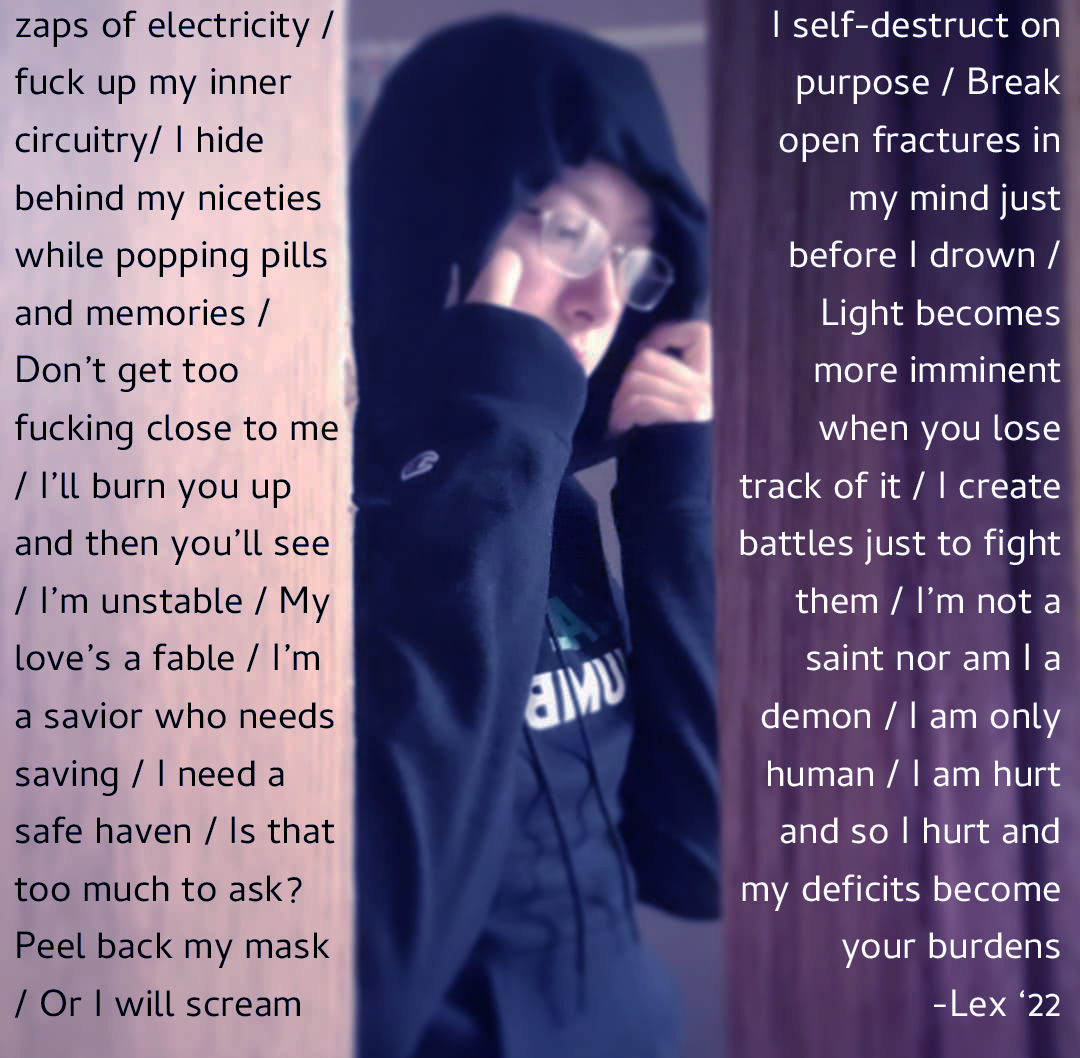
    by Lex Valtenbergs

    You sleep too much or too little and neglect your personal hygiene. You’re a ticking time bomb that can’t be defused. You oscillate between extremes like a pendulum. Your own thoughts wage war against you and, in some circumstances, the people around you.

    Being mentally ill is a constant struggle, and that is only the surface of it.

    In my case, I have undiagnosed traits of borderline personality disorder (BPD), specifically a subset of the disorder called quiet BPD, as well as comorbid anxiety and depression.

    To be clear, I am not diagnosed due to being assigned female at birth (AFAB) in a rural county, one with a disproportionately high rate of Adverse Childhood Experiences (ACEs) and inaccessible or understaffed mental healthcare facilities.

    Seeking and getting a diagnosis from a psychiatrist is also protracted and difficult, especially during the ongoing COVID-19 pandemic.

    It must also be said that being branded borderline in our society is not ideal, especially as someone who was is perceived as female. There is a lot of stigma around the four Cluster B personality disorders: narcissistic, borderline, histrionic and antisocial personality disorder.

    I stigmatized narcissism in particular, before I became self-aware and realized that narcissism is merely the inverse of codependency. Both stem from traumatic formative experiences with maladaptive object constancy and abandonment, but they manifest differently. For me, narcissism was a mirror into my own dark traits that I wasn’t able or willing to peer into.

    Most borderlines are stuck in an incredibly alienating and painful catch-22. The people who understand us aren’t necessarily healthy for us, and the people who don’t understand us are usually stabilizing for us. Couple that with the chronic emptiness that borderlines endure daily and you quickly rack up a series of short, toxic relationships that end in violent staccato.

    The Western culture of individualism makes things worse for mentally ill people. In our society, we have a tendency to overlook our ability to affect other peoples’ lives. We also have the tendency to sell ourselves short. We would rather shrink than dare to take up space. The latter is contingent upon us being vulnerable, which includes the risk of failure.

    Because my judgment is skewed by my mental illness, I make a lot of mistakes. I assume the worst of people who don’t deserve it. I misread peoples’ intentions before giving them the benefit of the doubt, or idealize people who haven’t yet earned my trust or respect. These behaviors open me up to exploitation and abuse. I can also be abrasive, intense and even callous, but that doesn’t mean that I don’t have compassion or remorse.

    If anything, I feel too much, more strongly and longer than the average person does. I constantly emotionally regulate myself, to grapple with my volatile moods and intense emotions. Most of these emotions go inward towards myself rather than radiate outward.

    Believe it or not, my mental illness makes me a better leader. Because I am mentally ill, I have put myself in situations where I needed to be held accountable for the sake of myself and people around me.

    I couldn’t play the victim. I had to own up to my behavior, even though it stemmed from something out of my control. At the end of the day, I am fully responsible for my choices and the consequences.

    Owning up to your dark side every time it creeps up and wreaks havoc enables you to build healthy, strong relationships. Relationships are hard work.

    Good leaders have good relationships. Good relationships are contingent on accountability, boundaries, trust and clear communication.

    The first step of realizing your ability to lead others and trying it is hard no matter what, but mentally ill people just have more barriers to overcome.

    I have had to learn how to use the dark side of my mental illness to harness my light and use it to influence others around me. The skills that I’ve developed to cope with my borderline traits, anxiety and depression allow me a self-insight which is extremely useful.

    Every day, we have the choice to be a positive or negative influence in the lives of people we know. Try to go against the grain of your darkest tendencies of your humanity and use your light as a guide.

  • Disconnected

    by Cheyenne Wise

    These past few years have created this heavy and strange feeling that has found itself settling on my chest. It’s a constant feeling of disconnect—a disconnect from my peers, professors, friends, and even family. I’m staring at a black screen or the muted faces of people I should know, but it feels like I’m watching a TV show.

    I was 21 when COVID-19 hit, and now I’m 24. I’ve already lost most of my early 20s, and I don’t know when I’m ever going to get it back. A lot of people are telling me, “well, you could have gone out and partied with your friends or traveled” as if COVID-19 doesn’t exist or like I’m not terrified of getting sick. I was supposed to be a graduate and living in another state working a dream job, but here I am, sitting in my room in my hometown, waiting for my next class to start while getting ready for work. I’m not unhappy with where my life is, but I’m not exactly delighted with everything. I love my jobs, my coworkers, and the fact that I’m living with my childhood best friend, but some part of me is mourning the loss of what could have been, just like many people.

    I miss having exciting conversations with my peers and being excited about my classes. The disconnect and lack of inspiration are like a smack to the face when I sit down to log onto Zoom for my lecture. I’ve become one of those black screens that remains muted, and I hate it. Even writing has become a struggle for me. I’m a storyteller, but all I have is nothing when I sit down to write. There’s no ‘aha’ moment of what story needs to be told or list of potential events to look to reporting on.

    I know I’m not alone in this feeling because I see it everywhere. Other college students are no longer being inspired by their studies. I just wish I had some great advice on mediating a solution, but I don’t. It’s a dreadful feeling, and I feel a particular type of guilt for not having a remedy.

  • There are no safe options for restaurants during the pandemic

    by Ian Vargas

    While there was only a lockdown for a short period of time in 2020, a lot of restaurants weren’t open for indoor seating. Businesses typically ended up dropping employees they didn’t need. They also had to adjust to significantly less income, and many closed down as a result.

    That’s obviously bad for the restaurant and the people who got fired, but the alternative is that both the employees and customers would have died of COVID-19.

    With the advent of the vaccine most of that has changed; most restaurants are open for both indoor and outdoor seating. They frequently stress social distancing and wearing a mask on your way in, but people are rarely seen sitting very far apart. Cal Poly Humboldt’s dining options have followed the same trajectory. As soon as people could get vaccinated, everything went back to mostly normal.

    Like many students, I’m very poor. When I came up to Humboldt and started looking for work, I did as many do and went to one of the restaurants nearby. This was when everything was still take out only. Businesses had been losing employees like crazy, so getting into something wasn’t too hard.

    Working in any place that has a lot of people coming in and out seems risky, but thankfully I did not typically have to see any customers. I could at least remain mostly isolated, aside from my coworkers. Once people could get vaccinated and everyone started reopening for indoor seating, that changed.

    Now I’m in close contact with unmasked and dubiously vaccinated customers all the time, my job feels very unsafe. Vaccines have given people a lot of inadvisable confidence about their safety. Vaccinated people can still get sick very easily, and even when you don’t get sick there is a danger of spreading disease with an asymptomatic infection.

    Restaurants are particularly dangerous in this regard since there isn’t any way to eat and keep your mask on. Food going down doesn’t push the germs back into your lungs. Walking in with a mask just to take it off as soon as you sit down doesn’t sound like an effective way of limiting the spread of an airborne disease.

    I don’t think restaurants are doing anything wrong, everyone has to get paid somehow after all. Rather, I think that they’re in a position where there isn’t any good options for a response. The initial 2020 lockdown should have been longer and more consistent, and everyone should have received monthly stimulus checks.

    Unfortunately that didn’t happen, which places people in the unfortunate position of risking whatever new strain comes around. At some point, one of them is going to start getting people way sicker than before and there’s no way we’re going to be able to deal with it. More places will close for good and more people will lose their jobs or their health.

  • I traveled and got COVID-19

    by Angel Barker

    Last week I talked about how one of my main fears while traveling during a pandemic is contracting the virus. Well, it happened. To get back to the United States, you have to show a negative COVID-19 test within the last 24 hours. My trip was planned from Thursday to the following Friday. I got tested on Thursday, Jan. 20, and planned to fly out on Friday, Jan. 21. The test came back negative, and I genuinely felt fine.

    I get home Friday night and still feel fine, just tired from traveling. Saturday and Sunday roll around, and I am still okay. On Sunday evening, I feel a trickle in the back of my throat and think nothing of it. On Monday morning, I go to work as usual at 3:45 am, absolutely exhausted with a sore throat. I figured I was dehydrated. It was the same thing on Tuesday, except a cough had developed.

    I called my doctor because it was getting to the point of being sick. Having asthma makes me immunocompromised, and I have never had a cold that was just a cold. It always turns into pneumonia or bronchitis, so I was worried. I really do not have the time to be sick as a full-time student working part-time.

    The nurse comes in and talks to me about my symptoms and wants to test me since it had been five days since my last test. It comes back positive. The doctor sends me home with a quarantine flyer, which is the end.

    Before I went to Mexico, I received my booster shot on Jan. 3. I tested positive 22 days after I got my booster shot. The symptoms I had weren’t mild, but they also weren’t super severe. I had a cough, sore throat, fatigue, headache, runny nose, shortness of breath, body aches, etc. I think my weirdest symptom was that my teeth hurt like it felt like I had braces again, and I had just gotten them tightened. I also had shooting pains in my back.

    Three people so far have blamed it on travel or on me for traveling. It felt very judgmental and almost degrading. I could have gotten it at work, school, the grocery store, or from people I know. I am pretty sure I got it in a restaurant in Mexico, but the same thing could have happened here. Don’t blame me for living my life and having fun.

    I do not think it is fair to judge the ones you love or anyone for that matter on their decisions to travel or whatever they do in their personal time, especially if they are safe. I wore a mask on the plane, the airport, around town, and in the restaurant except when eating. I did my part, and I still got COVID-19.

  • Parking Pain Persists

    Parking Pain Persists

    For me, the start of the spring semester means the return of the eternal struggle to find a parking space. Many Cal Poly Humboldt students, both on and off campus, are finding it difficult to find a parking space. Even those of us who usually walk to campus are impacted by a lack of parking.

    The parking situation on and around campus is absolutely abysmal. Campus parking permits and metered parking are expensive and purchasing a campus permit does not guarantee that you will find an open parking space. $157 a semester is a lot of money to pay to not be guaranteed a spot to park. I know students who live on campus who can’t even park outside of their own dorms. I’ve talked to commuter students who have to move their cars multiple times a day to avoid being ticketed.

    You would think that living in an off campus house within a short walking distance of the school would resolve any parking issues. However, parking is still a huge problem for my roommates and I. One side of our street is 4-hour parking from 7 am to 5 pm, intended for students to be able to park off campus and walk if they don’t have a campus parking permit or if campus parking is full. The other side of the street is reserved for vehicles with residential parking permits. I have four roommates and we all have cars. That’s five vehicles that we have to try and fit in our parking zone, which we also share with our neighbors.

    Photo by Nina Hufman | The parking zone in an off campus neighborhood in Arcata, California.

    We can usually fit four of our cars in front of our house if we park as close to the edges of the residential zone as possible. Because my neighborhood is so close to campus, there are usually several student vehicles parked in the 4-hour zone. I often come home to find that our residential parking is full. I am then forced to parallel park, very poorly might I add, across the street from my house.

    Parking, specifically parking enforcement, is something my roommates and I commiserate about almost daily. We sit in our kitchen, talking about how much we hate the guy who enforces parking on our street. He’s a jerk, he takes his job way too seriously, and I honestly think he has it out for my brother. It feels like he targets our street, and my brother’s car specifically.

    He literally stopped my brother in the street to ask him which car was his and tell him that it’s illegal to remove chalk from the tires of your car. He kept moving his little, three-wheeled car in front of my brother to prevent him from walking away. During this interaction, he was in the way of one of my other roommates who was trying to park. Imagine being a middle aged man having beef with a 21-year-old who’s just trying to park in front of his house. That feels like an inappropriate interaction to have with an “authority” figure. As a college student who is just trying to get an education, the last thing on my mind is fighting with parking enforcement.

    I can’t help but think, if I’m fed up with the parking situation, it must be absolutely enraging to have purchased a campus parking permit, but never be able to park. It’s not the students’ fault that they’re parking in my neighborhood. To be honest, it’s a very convenient distance from campus, especially if you can’t park any closer. The real problem is that campus parking is so scarce.

    Cal Poly Humboldt students pay a lot of money for parking to only be able to park on campus sometimes. The issue doesn’t only impact the campus. Student vehicles overflow into the surrounding neighborhoods, creating a lack of parking for everyone who lives nearby.

  • Traveling as a student during COVID-19

    My whole life I’ve been told to “travel young,” “travel while you still can,” and “travel now because it only gets harder as life goes on.” I gained my love for travel my freshman year of high school when I had the amazing opportunity to go to Mexico with my aunt and uncle. Since then I have gone three more times. I have also been to Dallas, Texas and California’s bordering states. Traveling is one of the things that I love to do most. I was supposed to go to Costa Rica in 2020, but like many other people that year, I had to cancel my trip due to COVID-19 rapidly spreading through our world.

    When I went to Dallas during the summer of 2021 for two weeks, it showed me how much I missed traveling and seeing new places, people and cultures. Right now, the only thing that has been holding me back is school.

    The pandemic has been hard to navigate as a young adult and as a student, but I try to find silver linings in everything. With most courses still online, I have been able to adjust my schedule so that the majority of my classes are on Zoom or are completely asynchronous, which gives me the opportunity to travel this semester.

    Keeping up with school while traveling is a whole monster in itself. Operating in a different time zone has its challenges. You have to figure out what time it is at home versus wherever you are and keep track of what time classes meet. Trying to discover new places while having class also presents a challenge because your time management skills have to be at a peak level, not to mention the fear of contracting the virus in the process and not being able to get back to the US if you leave.

    During this school year, I have been able to go to Mexico twice. Yes, I am privileged to do this since I work for an airline, but what can I say? This is a field where you can mix business and pleasure. The first time was only for two days, so I went to the class that took attendance and was able to do my homework in the airports. This last time, however, was for a week and I was able to attend the first week of classes online. One of the struggles of starting the semester abroad is not having access to textbooks, but I found a way to survive.

    Even as a full-time student, I have managed to find a way to travel and see the world. It is difficult but it is so possible and so worth it. I encourage you to try and see the world. Stop staring at your computer screen in your apartment trying to get an education. Do the same thing on a beach somewhere, or in an Airbnb a few hours away. Just live your life.

  • Stop the surge

    Recently, I saw a petition that advocated for the delay of in-person HSU classes by two to three weeks. Is this too much to ask? Logically, I think that what these advocates stand for deserves careful consideration. Humboldt county’s rates of coronavirus cases are the highest that they have been since the beginning of the pandemic. As of January, the county has averaged 213.9 cases on a weekly basis. Throughout the CSU and UC systems, an abundance of schools have decided to do remote learning for the first month. Why should Humboldt State be an exception to this? This reminds me of any disaster movie ever made. The last group people want to listen to is the scientists. We’re in the middle of a global crisis, yet people and our own institutions want to deny it. It almost feels like the world is on fire, however, I’m one of the few that sees the fire and acknowledges it as an inherent problem with our society. We cannot have another surge! Our local facilities don’t have the capacity to house any more COVID-19 patients. A couple of months ago I was trying to find an appointment for gallbladder surgery. Usually, medical emergencies would have been taken care of at Saint Joseph Hospital in Eureka. Instead, I was scheduled for surgery at Mad River Hospital in Arcata, supposedly because all of the hospital rooms at Saint Joseph Hospital were at full capacity. With rising numbers, I can only imagine how hard it would be to find an appointment for gallbladder surgery now as compared to then.

    The coronavirus has also disproportionately affected Indigenous communities in the inland area. As of January 13, 2022, Public Health Officer Eva Marie Smith has detected an Omicron case in the Hoopa Valley Indian Reservation. With a total of 109 active cases, Smith believes that the tribe is likely experiencing a mix of Delta and Omicron with a predominance of Omicron within the next few weeks. Due to the latest Covid surge, Hoopa Tribal Chairman Joe Davis has authorized a level 4 shutdown of all non-essential operations for at least two weeks. The Omicron surge has also recently caused staff shortages at Saint Joseph Hospital.

    Early studies suggested that the Omicron variant can just as easily infect vaccinated people as it can the unvaccinated population. It can be said with confidence that anyone can be infected by the widespread virus. In addition, it would be wise for Humboldt State to require all students to be tested weekly regardless of their vaccination status. Vaccinated people are just as likely to transmit the Omicron variant as someone who is unvaccinated. If that isn’t enough, it can also reinfect. It seems no matter how much you tell someone to not touch the stove, they have to touch it for themselves in order to figure out what the consequences are. By signing the petition, we can mitigate such catastrophic events from further happening.

  • New roommates and COVID concerns

    New roommates and COVID concerns

    Spring semester has begun, and like many other Humboldt State students living on-campus, the lone twin XL mattress in your room has probably been filled with a randomly selected roommate during your last few weeks of the fall semester.

    Before I get into any details, this is not some big scheme I have to get my three new roommates out of my apartment or to make anyone feel unwelcome here at HSU. If you’re paying tuition, who am I to say you aren’t welcome in my shared apartment, which is technically school property.

    The issue is that I’m scared of my roommates and I think many other students feel the same. I’m not terrified at the fact that three more people in an apartment I already shared between two other girls may cause some bathroom lines, extra dishes in the sink, and more people to be noise-conscious of. I actually am looking forward to the company. I’m terrified of how easy it is to spread COVID-19 or Omicron, or whatever variant has sprung up since this has been published at the rate the virus has been mutating.

    My campus apartment is small. It holds one room for our one toilet and one shower. There are three rooms all shared between six of us with a tiny kitchenette. I don’t know much about my new roommates yet. Where they’ve been, who they’ve seen, if they are immunocompromised, or what. I also don’t think I have the right to ask or know. I just have to cross my fingers and hope to God when I move back that they’ve taken the precaution to get tested before they move in so we all don’t end up in isolation our first two weeks of the semester getting late bagged meals delivered to our door.

    Still, who am I to be wary when the concern goes both ways. They know nothing about me, where I’ve been, who I’ve seen, if I’ve been tested or not, and they probably assume it may be inappropriate to ask as well. We’re all sleeping with one eye open, peering over at the possible positive COVID-19 test our roommates or myself can easily become.

    Soon enough we’ll begin interrogating each other at the door about who we’ve seen and where we’ve been to avoid a repeat of March 2020, where the fateful email to flee our residence halls came because of the lack of isolation rooms on campus and influx of cases.

    Sounds pessimistic but could easily be our reality as it has been before. Humboldt State is not being transparent enough to its student body, especially those paying to live on campus and eagerly moving up to Arcata for their first taste of on-campus classes. These are exciting times and I wish my new roommates could experience them COVID-free but the risk is far too high to do so. HSU needs to implement stricter testing for anyone moving back to campus and rethink the possibility of in-person classes soon to make those living on campus and those entering campus for classes feel safer and to avoid another COVID-19 breakout.

  • Living with lesbians

    I live at the Crashpad with my two best friends, and we are all lesbians. The dynamic of this house rotates around our common interests, which is more than just the ladies, but also carrying heavy furniture, pretending to skateboard, letting our girlfriends move in after two weeks, baggy clothes– typical lesbian stuff.

    Maya DiMaio has been my best friend since kindergarten and has been a resident of the Crashpad for the past two years.

    “The Crashpad is like a lesbian frat house,” DiMaio said.

    This house resembles a frat house, because we are messy and sometimes smelly. But the awesome thing about it being a lesbian frat house, is that it’s actually safe here for women.

    Lexi Rangel is my best friend that I met in college and also resides in the Crashpad.

    “We only really hang out with girls,” Rangel said. “So when all our girl friends come over they feel very safe enough to get drunk and dance, without creepy men hitting on them.”

    Just the other weekend, I looked around the house after a few people had come over from the bar, and it was all girls, gays, and non-binary people. We even had to turn away a straight man at the door that followed us from the bar. Sorry sir. This is a house full of intoxicated women, we do not trust you.

    “Generally, I like to surround myself with girls, and most of the people I know are gay,” Dimaio said. “So that is just where I feel the most comfortable, and having that home environment with only lesbians really just makes me feel loved and supported.”

    This house is very special to us for the safety it provides, and we’ve only been hatecrimed once. Someone once yelled homophobic profanities at us when we were pretending to know how to skate in the front yard. And we have only had like two almost home invasions, but that is just the living with lesbians in Arcata lifestyle.

    When you’re living with all women, you’ve all got to be the muscle. We have had to handle situations that scare us, mainly because we are still vulnerable women. But we would rather sleep next to bats than have any male energy in this household, so it’s definitely a trade off.

    “They [men] smell bad,” Rangel said.

    “I don’t like most of them [men],” DiMaio said. “But I don’t know many of them [men] honestly.”

    Stay safe and stay happy, lesbians. And always protect all of your fellow ladies.

  • The legacy of “Supernatural”

    Supernatural Spoilers, Trigger Warning for queerphobia and mental illness

    I started watching “Supernatural” in my first year of college. My roommate turned it on and told me to watch it, unknowing of the ruin, despair, and hope it would be in some of the worst times of my life.

    This was around the time when I wasn’t exactly questioning my sexuality, but I knew something was off about me. I identified then with Sherlock, and anyone I had a close relationship with was a Watson. BBC’s “Sherlock” is another show that is accused of queer-baiting due to Sherlock’s rejection of women and abnormally close relationship with John Watson. I was aware of this, but vehemently rejected the idea of a Sherlock/Watson ship. “Sherlock” was the only explanation I had for the mess in my brain, and I clung to it for well over a year.

    “Supernatural’s” violent content wasn’t helping my illness and I left school, cutting off my access to it. After a few months, I regained it while living in motels. Every morning I was once again reunited with the Winchesters, unable to process what was happening in this reality and threw myself into another. This other reality, while violent and filled with a misappropriate amount of tall white guys, made sense. A closeted gay angel being rejected by his family, being driven to drink, and killing monsters with his best friend was more rational than this.

    It was cut off again, then regained. I slowed down a bit, and didn’t binge watch as aggressively as I used to. By then I could clearly see that Cas, Dean, and myself were, and are, gay. I started seeing them as my family and their bunker as my home. It’s the most welcoming, comforting, home place I know and had never felt that way about any rundown dwelling I’ve inhabited in this reality.

    After a year in the shelter, I came back to school a few months before the pandemic. I had my cat with me for once, but he became ill and died, leaving me with nothing to live for. I roamed the empty grounds, made a failed attempt to learn the position of the stars, and turned to “Supernatural.”

    Then, on September 5, 2020, Cas came out. He declared his undying love for Dean and died immediately as a direct result. This was devastating. In the 15 years the show was running, they repeatedly tried to cage Cas in uncomfortable heterosexual situations in a vain attempt to make him straight. And when they realized they had to give up, they sent the message that queer people can be miserable or dead.

    People die on this show. But they also come back, or they’re mourned in character of the survivors. The final two episodes did neither. They erased him and his sacrifice, erased the love the other characters had for him. His own son barely reacted.

    Months afterwards, I still obsess. Cas could have survived if this happened, or could have been brought back in this way. Perhaps I’m still trying to fill the void the ending left in me, and it would be this way no matter how it ended. But it told me things I know aren’t true, that these characters don’t love each other and that gay people should die. Contradictions mean that one or both is false, and I choose to believe that the show messed up. It’s not the first show to have done so, and won’t be the last.

  • The last day of school came much faster than expected

    The last day of school came much faster than expected

    I don’t remember my last day of school, because at the time, I didn’t know it was my last day. The COVID-19 pandemic arrived in our lives and the rest is history.

    I never knew as a child what I wanted to be when I grew up, but learning came naturally. When high school came to a close, I chose to attend the local junior college because I didn’t know what to do with my life. Looking back on it now, however, the decision was mainly driven by a fear of the unknown and a compulsive instinct to seek comfort in the only place I’ve ever called home.

    Again, when graduation arrived, I found myself clueless and afraid regarding my future. As I’d done three years before, acting on an instinctual impulse, I changed my college plans and sought comfort in familiar surroundings.

    My first semester at Humboldt State was the most I’ve ever struggled to pass my classes. Living for the first time with roommates who were not in school was enough of a distraction, but our frequent and plentiful house guests that eventually all but moved in ensured I never needed to create a reason to focus away from my studies. The true cause of my struggle, however, was self-inflicted.

    I was fifteen years old when I began smoking marijuana. It didn’t take long for the practice to become a habit with the access even children have in Humboldt County. It pains me to admit that over the years, my relationship with the sticky flower has become one of the strongest in my life.

    After spending the entire summer with my dad’s side of the family in Colorado, sobering up, I returned home to a rude awakening: Mary Jane’s call was just as strong as ever – I had become an addict. In addition, my tolerance had disappeared, which meant every time I smoked, my brain became useless. For almost an entire semester, I treaded water with my head just above the surface, then somehow managed to emerge, escaping any consequences for my poor decision making.

    In life you either sink or swim until you find somewhere you can walk on water. I didn’t know it my first semester at HSU, but I had found my frozen ocean.

    Rolling blackouts and global pandemics aside, for the first time, I genuinely began to enjoy my education. I had chosen to major in journalism on a whim, and it wasn’t until I began to put the tools I’d been learning to use, as a reporter for the Lumberjack, that a switch flipped in my brain. In a single moment, when I first saw my work printed in our newspaper, I knew I’d stumbled upon my purpose.

    By the time my second semester at HSU began, my bloodstream had absorbed enough THC to allow me a reasonable degree of brain function after smoking, and as a result, my consumption increased. Then, the pandemic began.

    Time moves differently inside the walls. Some days, it feels as if the sun will never set, while I struggle to muster every ounce of my energy, to make it through another day without taking a nap. Most days, however, pass in a blur, and when I lay down for bed, I wonder where all the hours went – the mussel shell I use as an ashtray usually answers my question when I empty it in the morning.

    Marijuana is not alcohol or cocaine. The effects of THC are extremely more likely to inspire actions of laziness and snacking than violence. For an everyday user, the effects are dramatically reduced to a state that simply takes the edge off – making generally everything about life a bit more enjoyable. But, this pleasure comes at a cost, beyond the price of a dime bag and the sacrifice of social stigma. For the past year, since shelter-in-place began – or for just about all of college, if I’m being honest with myself – I’ve been sleepwalking through my life.

    Any stoner will tell you the worst part of the habit is the effect it has on your memory and, more importantly, your ability to focus. While under the influence of marijuana, you’re never entirely present in any given moment. It’s completely possible to accomplish a single task in an inebriated state, though many will take longer than they normally would, with wider margins of error. It’s when you begin to attempt multiple tasks at once, however, that these inconveniences become real issues. Unfortunately, this concept applies, on a larger scale, to the management skills of our lives, as well.

    Despite the constant fog in my head, driven purely by a newfound passion, I set my mind to becoming a journalist. I learned to see the world through the lens of a photographer. I learned to perfect my work in the context of videography, where there’s no room for error. I learned to create illustrations, to better represent my ideas. I learned how to package my work as a member of the Lumberjack’s layout gang. And most important of all, I learned how to properly tell a story – all within four unorthodox semesters that took place mostly on a screen full of empty boxes. I became a journalist, but at a cost.

    Ever since joining the Lumberjack, I’ve given the overwhelming majority of my energy to the newspaper, because it has created undeniable purpose in my life for the first time – I’m finally giving something back to the world that I’ve taken so much from. Doing something well often isn’t easy, however, because of the sacrifices required to arrive there. There’s only so much time in a day and as a result, aspects of our lives begin to become neglected or altogether abandoned. While the newspaper provides the oxygen that fills my lungs, in the chaos of this pandemic, a healthy diet and exercise have become concerns for a future Dakota. Meanwhile, with the separation of isolation added to the self-centered lifestyle I’ve adopted since leaving my parent’s home, most of my relationships with friends and family have noticeably deteriorated.

    In a world with seemingly limitless possibilities, most of us gravitate to our comfort zones, and I am no different. With graduation once again looming over the horizon, I’m faced with a familiar fear regarding the uncertainty of the future, but for a completely different reason this time. I’ve lived almost my entire life inside the invisible boundaries of Humboldt County. Now, with my bachelor’s degree practically in hand, I know it’s time to move on.

    In many ways, my early experiences with marijuana inspired growth in my character in ways that can only be understood by someone who’s stood in the shoes. I don’t regret the choices I’ve made. I’m also aware, however, that those days have long since disappeared into distant memories. Every breath of smoke I take into my lungs is an attack on my own potential to become a well-rounded human being. And everyone knows the path of self-destruction is not an honorable one.

    Having grown up in Southern Humboldt with the friends and family I have, free bud is never more than a phone call away. I could spend the rest of my life inside of the fog, and I would if I stayed here. If it means I have to walk away from everything I’ve ever known in order to realize the person I could potentially become, then I suppose that’s the price I have to pay for the choices I’ve made.

    It’s easy to seek comfort, even, and perhaps especially, when life appears to be at its lowest. A life of happiness, however, requires genuine, sustained dedication and sacrifice. It’s never too late to become the person you want to be, if you’re willing to do the work – because, what’s the point of living if you don’t love yourself?

  • Welcome To Death, Dying, & The Afterlife

    Welcome To Death, Dying, & The Afterlife

    “You will die,” Professor Sarah J. Hart said.

    Thus ended a class Zoom of Death, Dying & The Afterlife, a new course offered by the department of religious studies. The weekly assignments are based on questions such as “Would you whisper guidance to a corpse for 49 days?” and “Can we reconcile living in the present with the knowledge that we’ll die?” On Fridays we have optional grave cleaning sessions at the local cemetery, all designed to help students confront and cope with the knowledge that they, too, will die.

    As in Petrarch’s time of the plague, the highly charged air encourages death talk beyond the scope of the readings, as any good discussion-based class should. Deaths in the family are mentioned, as well as the experiences of older people who remember 9/11 and Hurricane Katrina. Cannibalism has been brought up twice to the disgust of the professor. Only one of them was me.

    Prep-wise, students can expect around an hour of reading per class. The class is broken into four sections- The classics, such as Hamlet, The Odyssey, and Keats. It is succeeded by death’s denial, the first stage of grief as penned by Dylan Thomas and Keats. We enter a more modern, gritty take in acceptance and Its injuries with death doctor Elizabeth Kubler-Ross and portrayals of 9/11 and Hurricane Katrina. The final four weeks are perhaps the trippiest as we discuss intimations of immortality. Not necessarily true immortality, but what we leave behind and why our society needs death in spite of our fear of it.

    And do we really fear death? Death is commonly portrayed as humanity’s greatest fear, and yet we see presidents such as Gerald Ford survive two assassination attempts and refuse to be shut in the White House for protection. We fear other things more than our fear of death, but we don’t examine this fear. We don’t challenge it, because death is inevitable. This class allows students a safe space to challenge that irrational fear.

    “Death makes me sad and fearful,” student Jacob Hummel said. “My hope is that by furthering my understanding in any way might help to reduce these feelings or offer an understanding as to why I view death the way I do.”

    Some views of death are more comedic, including takes on the death of religion if we stopped dying without explanation. Jose Saramago’s “Death With Interruptions” was met with enthusiasm from several students wishing to read more of it. In it, Death takes a holiday and human reactions vary, from general happiness, to worry over death and religious industries, and the horror of families with loved ones in comas that can neither wake up nor die.

    More zealous students may be satisfied by the decent amount of poetry analysis. Vincent Milay wrote of an “unhappy planet born to die” decades before Silent Spring. How did she know? What did she see in the man who “shone an hour… And like the sun went down into the sea, Leaving no spark to be remembered by.”

    Eco death returns with Katrina, as we watch a first person account of the terror and death. Our protagonist, Kimberly Rivers Roberts, filmed herself, family, friends and dogs as they waited for and witnessed the storm. It is interspaced with dry news coverage that doesn’t reflect the realities of the people trapped in it, as well as mentions of Bush’s war and his reluctance to pull troops into hurricane aid.

    What will students gain from taking such a class?

    “I have no agenda,” Hart said. “My hope is that students will be a little more comfortable approaching death as part of life, as approaching dying as an inevitability for all of us.”

    With death, there is also the legacy of the dying to consider. Why did those before us die, and what are we going to be known as when we die?

    In the words of student Joan Esquibel, “Death is fascinating not because of the act itself, but the productions that are formulated in its wake. Its anonymity allows for beautiful pieces that we project our own feelings towards. These works are something worth understanding for myself and as an honor of their creators who are long gone, taken by their muse.”

  • The world was a better place when I didn’t take naps

    The world was a better place when I didn’t take naps

    It’s the middle of the day and you’re exhausted. You stayed up entirely too late last night and you’re not going to make it through the rest of the day, so you decided to take a nap. You lay in bed for half an hour with thoughts swirling madly about your mind before you fall asleep. You wake up and it’s dark outside – five hours have passed since you first laid down. You’re too tired to get out of bed, but the swirling thoughts have returned. You lay there for another half-hour, trying to slip back into blissful slumber, but the sweet sensation evades you. Reluctantly, you crawl out of bed and start the second half of your day.

    Fast-forward. It’s three in the morning. You’re not tired, but you’ve got places to be at nine, so, reluctantly, you climb back in bed – only to stare at the ceiling for an hour while the swirling thoughts throw a rager in your brain. Your alarm goes off at eight O’clock and you hate yourself. You hit the snooze button.

    Fast-forward. It’s the middle of the day again. Your mind is an empty fog and your eyelids carry the weight of the world. Every instinct in your being urges you to fight the temptation, but you’re weak, so you climb back in bed. And the vicious cycle continues tomorrow – long gone are the fond memories of preschool nap times.

    The indoor lifestyle forced upon us by the COVID-19 pandemic has presented every opportunity for the weak willed to fall victim to the seducing beckoning of their mattress. Combining a lack of exercise with inconsistent eating habits brought upon by a non-existent sleep schedule, many wake in the morning feeling exhausted. Days quickly blur together as they grow more distant without anything exciting to distinguish one from another, and the monotony of daily life creates a chronic mental fatigue that leads right back to bed.

    While you sleep, everything else melts away – COVID-19 is nothing but a distant memory. You’re greeted by smiling faces as you walk down the street. Children share their toys in the yard. The smell of barbeque fills the air. But eventually, you have to wake up.

    Over a year has passed now with you sleepwalking through life, waiting for things to return to “normal.” You’re not stupid, you can see where this is going – even with a vaccine, the end of the pandemic remains out of sight, and a return to the society you knew before will be separated by years of economic recovery. But, you’re tired. So, you take that nap anyway. Self-care, right?

  • The worst Sunday

    The worst Sunday

    My 1997 Honda Del Sol in the driveway on Feb. 22 after we brought it back from Arcata from it being stolen.

    Waking up early in the morning is already not high on my list of favorite things to do on a Sunday. Waking up to find that my car was not where I left it in front of my house, however, has to be one of the worst ways to spend a Sunday morning.


    The moment I was told that the car quite simply wasn’t there, I could feel my stomach tie itself in a thousand painful knots. There had been plenty of times over the years when I worried randomly that the plucky little Del Sol wouldn’t be where I parked it, but they were always followed by the expected relief of seeing it waiting for me when I rounded the corner. This time though, I was standing on the curb in front of my house giving a police officer the description of my beloved first car in the hopes that somebody, somewhere would find it and wishing that it would be in one piece.


    My car was stolen from right in front of my house where I parked it the night before after work just like I do every evening.


    We spent the next four hours zigzagging through Eureka, hoping to catch a glimpse of the silver two-seater along some side street or alley. Despite our efforts nothing turned up that day and I returned home, utterly exhausted from the morning even before leaving for work that night.


    The next morning I woke up to a call from the Arcata Police Department. They had found it. Immediately, I was buzzing, already ecstatic to go out and retrieve my little tin can as I affectionately refer to it. When we got to the car I was thrilled but also dismayed.


    The interior smelled heavily of alcohol and cigarettes. Inside were piles of just pure junk –– balls of discarded wires, old Playstation discs, driftwood from the beach, among other random garbage that somehow ended up there in the 24 hours or so the car was missing. Piled on top of all of that was a stack of newspapers. Copies of the Lumberjack from back when I delivered the papers. And perched on top of that pile was a box of business cards with my name and email on them. It felt like a fitting metaphor.


    The worst part to deal with was the exterior. The car had not been crashed. It even seemed to start up okay. But marring the silver paint was a sloppy stain of black spray paint plastered across the driver’s side. When I saw that, my stomach sank all over again. It just felt wrong in a way that I couldn’t explain. There was no reason for the paint. It was senseless and utterly frustrating to see.


    The trash was cleaned from the seats and trunk, a stolen shift knob replaced and the spray paint removed by lacquer thinner that probably took a year off of my life from the fumes alone. What struck me most while I cleaned the car was just how helpless it felt. The car was still my own, but it felt as though I had been violated when it was taken.


    The car was stolen on Feb. 21 and it’s only been in the last couple of weeks that I have actually come to terms with the reality that it was swiped from in front of my home. Most of the repairs have been made.The rest will be done for my sister who will be using the car as her own first while she’s in high school after she gets her permit this summer. Oddly, this is what finally put me at peace with the situation.


    While my journey with my little Honda Del Sol is complete for the time being, I can finally look back on the fond memories that I have with the car without worrying about returning it to exactly how it was before that Sunday morning


    I remember the road trips down south to cover the national cross country meet. I remember the Sharks game just a few days after Christmas. And some of my favorite memories are the simple drives just to clear my mind after a long week just going nowhere in particular.


  • An emotional support animal saved my life

    An emotional support animal saved my life

    I have never experienced a so-called “normal” life. I’ve never experienced a brain that wasn’t plagued by anxiety and lacking the proper chemicals to make me entirely happy. I did experience mocking of my mental illnesses. I did experience doctors who didn’t believe me.

    I remember one doctor telling me “you don’t look like you’d be mentally ill” when I first reached out for help. How does one even “look” mentally ill?

    I never experienced truly fitting in with other people. I couldn’t maintain friendships with many. I only really had one person who consistently understood my brain. But I did feel connected to nature and to animals.

    I grew up with dogs and cats, and always the occasional fish, hamster, or currently, a tree frog. Days of mental hardships always led me to them. I would hold my pets close to me when I felt alone.

    I felt afraid of the world often. It scared me. But not as much as my own brain. I became suicidal. I developed body dysmorphia. I struggled from multiple mental disorders. I tried medications and therapy, but sometimes those things didn’t work.

    My two consistent forms of support were my best friend and my pets. When my head was shaking and the world screamed at me, my dog Peanut would sit with me and lick my tears away— a comfort I couldn’t attain from people, a connection that was completely made of love and support, held together with no judgement or hate.

    I moved over 1,000 miles away from everyone I knew to start fresh, away from every person who had ever hurt me and every fear I had in my old town. But this also meant the support of my pets was left behind as well. I felt more alone than I ever had.

    I knew I needed an animal in my life, other than my tree frog, who doesn’t provide the same connection that a dog or cat would. I spoke with people I knew who have mental illnesses and it came to my attention that I could get an emotional support animal. It would give me a reason to wake up, a reason to go outside and a reason to stay alive.

    I felt hopeful, yet hopeless. Was I even ill enough to deserve this form of help?

    I began the process of adopting an ESA, afraid that if it fell through my loneliness would only grow worse and that my nightmare of mental health would continue— not that a single animal would solve all my problems, but it would absolutely help.

    I began meeting cats and kittens, hoping I’d find one that I felt a connection with. It took a few weeks before I met her. She was alone in the shelter in a little room and immediately greeted me as I walked in. Her sweet brilliant blue eyes gazed up at me with hope that she’d finally be going home after being a stray and now a shelter cat.

    Her name was Georgia, likely named after Curious George, because she is immensely curious about everything. She had a unique look, calico and siamese with polka dots on her back and every color of cat on her face, with a little racoon tail and the softest white toes.

    They told me Georgia was quite young, just out of kittenhood and had already given birth. But now sweet Mama Georgia needed a home. I had seen her online before I met her and immediately felt hope. This was the connection I was looking for, and I knew she was going to impact my life.

    Two days later I took her home, and those two days of waiting were the longest of my life.

    While I loved her name, I didn’t feel it belonged to her. Now her last name, as it was part of her past. Winifred Fig Georgia, that would be her name. One that felt full of love and light and gave her a new beginning.

    Because Winnie was so young, she learned quite quickly to fit my emotional needs. She discovered how to help during my breakdowns, how to be there for me in my anxiety, and how to cuddle with me when I need love. She never leaves my side, even joining me on walks and hikes in the forest and on the beach.

    I now have a reason to get up in the morning, instead of sitting in my sorrow, because my Winnie needs food and attention. I have a reason to leave my room because she needs exercise and to go on walks every day. She reminds me of the importance of eating, because if she, a little kitty can eat, I can too.

    Winnie comforts me in ways a human being can’t. I’m able to cuddle with her when I feel most alone. She helps me function. When days feel like anxiety filled years, I have a companion to remind me of the beautiful little things in life, and appreciate them. She motivates me to get up and actually live my life.

    I have never felt so supported as I am now, with Winnie. I truly believe Winnie saved my life by giving me a reason to be here everyday. If you are struggling, I highly recommend getting an ESA. Give yourself a reason to be here, one that can’t just go away. Finding my best friend and biggest supporter in the form of a cat has been more than the world could give me.

    Every day I wake up and remember the face of joy that Winnie is. She has given me a purpose in life, as now my life isn’t the only one I’m caring for. She is my tree, the thing that keeps me rooted to life.

  • Letter from Associated Students President Jeremiah Finley

    Often times elections bring new ideas, new hope for every side of the political spectrum or group you are a part of and as we, 2020-2021 Associated Students Board of Directors, approach the horizon of our end of session it’s important to take a step back and reflect on some of our accomplishments, challenges, and experience navigating the already turbulent scene of university politics. Let’s not forget that famous line of “in the middle of a pandemic.”

    We started the fall term by creating our yearly priorities, which are: ACCESSIBILITY TO STUDENT RESOURCES & EDUCATIONAL NEEDS with the goal being for colleges to provide more research and professional development opportunities that are easily accessed by students through increased communication and up-to-date online presence. Our next priority being AMPLIFYING STUDENT VOICES having our mission outcomes to be creating a feedback form for asynchronous feedback with a button on the AS website. Design social media policy that expands public comment to our official platforms. Finally, TRANSPARENCY, ACCOUNTABILITY, ENGAGEMENT with our goal being to create measurables for AS funding, for instance post-grant surveys and monthly financial reviews. Extend the time allowed for appeals in the budgetary process. Develop and provide more training and information on the AS website. And I’m happy to say that we have made enormous strides in each area. We have been able to hold multiple student resources forums gathering feedback from students. We are utilizing our social media to receive information and communicate with students on a number of hot topics. We have initiated ongoing professional development and are making plans to ensure that all AS employees are fully trained and equipped with the support they need to help improve the student experience. And we are promoting other professional development opportunities that are occurring within each college. All while ensuring that our staff members are recording this data to furnish the incoming Board with ample support.

    The 2020-2021 AS Board of Directors, like many before it, began new things that will leave a blueprint for the next Board to potentially follow. The most notable of those changes are working though our academic breaks. COVID-19 has enabled the Board to be across the town, state, and at times the nation, and still meet whereas before we all had to be in the same room for business to get done. In seeing this and working with the Board Chair, Malluli Cuellar, we developed a summer meeting scheduled that was approved to come forward for a vote and it passed unanimously. During this summer period we were able to appoint a full board before September, pass resolutions in direct response from student calls such as: A Resolution to Call for the Restructuring of the University Police Department, An Act to Formalize the Associated Students Social Justice and Equity Committee, Resolution to support the former Hilltop Marketplace be designated as a Food Sovereignty Lab and Cultural Workspace, Resolution In Support of the student voices that initiated the Change.org petition titled, “Expel 2 Racist Students”, A Resolution In Support of the Creation of a One-Unit Academic Course Fulfilling the F-1 Visa Requirements, An Act to Update the AS Fiscal Code, and A Proclamation titled Associated Students In Solidarity with Black Lives Matter.

    Over Winter break, we encountered issues around the University Center, so AS leadership engaged where it was thought necessary to challenge and probe our Administration to shed the light of transparency onto what seemed like a murky scenario. As we approached spring break we ensured that students were informed of our plans to re-establish core programs which are in essence central services that AS provides to students and we responded to their needs and have altered our plan based on student feedback.

    During the regular academic session we have been able to pass many resolutions and internal legislative pieces such as: A proclamation titled Associated Students to Affirm Student Voices at HSU, Resolution to Create Long-Term Nutrition Alternatives, An Act to Alter the Method of Legislation & Resolution, An Act to Create a Staff Compensation Review Policy, Resolution in Support of SQE Demands, and a Resolution to Support Trans Lives & Prosperity. Still, there are many more resolutions in the pipeline and we hope to get as much done as possible before our transition on May 7th. We have also had the opportunity to be the first Board of Directors to update the campus community in the University Senate on our yearly goals, progress made, and make a call for candidates for our elections. Additionally, we were able to bring an update to some of the student staff in housing and residence life.

    Now, only a week or so away from our potential successors being elected, and in reflection of this past year, I, like many of my board members, would say, are grateful to have advocated for all students here at HSU. While we have had to challenge more than our predecessors, we were still able to collaborate with our campus partners, providing feedback on multiple space recommendations, funding opportunities, campus initiatives like the recent work with the HSU Strategic Planning Committee and now the Polytechnic self study. There will be multiple opportunities for people to get involved next year, through board positions and though committees, so if you’re interested, and want to make an impact come to our AS website and check out all the amazing resources your student government has to offer or bring to our attention what you want to have offered.

  • Ask Evergreen

    Ask Evergreen

    I feel I’ve lost a year of my life to COVID. But I know others have it worse. Am I still allowed to complain?

    Dear reader, I know your pain. I know I’m lucky to have survived this pandemic unscathed (so far), so a part of me feels guilty for hating my circumstances. Why do I have the right to feel so horrible when others feel worse? If you have these nagging feelings of guilt as well, remember that all wounds, no matter how severe, deserve treatment. If there are enough bandages, a cut deserves treatment even if someone else lost their arm.

    You have the right to demand change. The forces that made your life terrible for a year are the same forces that made someone else’s life even worse. So long as you complain in the right direction, your voice can amplify the voices of people who lost even more than you.

    But even beyond that, don’t discount your own experiences. If only the person with the worst situation is allowed to complain, only one person with outlandishly cruel circumstances can speak. Your pain represents a pain that affects almost everyone. You’re one member a group of people that needs to advocate for themselves, not just an individual with a grievance.

    Pain isn’t a quantifiable substance. We can’t just weigh it on a scale. You deserve to not be in pain. Not only should you acknowledge it, you should complain about it.

    Instead of dividing ourselves into stratifications based on our level of pain, we should be acknowledging our shared experiences. We should turn our collective experiences against the institutions that caused this pandemic to be as terrible as it was. Instead of arguing about who felt the worst, we need to make sure no one has to argue about who had the worst pandemic pain again.

    Complain about economic systems. Complain about healthcare. Complain about housing. Complain about inequality. You deserve to express your pain. You lost a year that you’ll never get back. Be angry. You’ll find others who feel the same.

  • There’s no place like home

    There’s no place like home

    The best memories in life involve the people we love most. With the passage of time, simple occasions become extraordinary through the tint of our rose colored goggles. All too often, we fail to appreciate the blessings in our lives until we no longer have them.

    Celebrating Easter with my family on my grandmother’s lawn, on the cliff overlooking the ocean, I think to myself: “what could possibly be better than this?” But we all have our own idea of happiness.

    When I was a freshman in college, I woke up one day to tragic news. The family loaded up in the car and we drove two and a half hours from our house in Ettersburg to pick up my grandmother in Ukiah. Then, we drove back, past our home, to Whale Gulch, where she lived.

    When she was in her twenties, my grandmother moved from the city to Humboldt County, bought a house, and gradually added to it in the years to come. For more than half of her life, she lived off the land, harnessing energy from the sun, growing vegetables in the garden and pumping water from a well. Then, in an instant, it evaporated in a cloud of smoke.

    I didn’t really believe it until I saw it for myself. All that was left of a lifetime of meticulously collected and maintained possession was a smouldering heap of ash, shattered glass and unidentifiable tokens of the past. For hours, we watched helplessly, as the smoke continued to rise from the ground. Then, the sun disappeared behind the trees and we drove back to Ettersburg in silence.

    For nearly two years, my grandmother struggled to motivate herself to research the values and put together a list of everything she lost in the fire, for the insurance company. For nearly two years, she focused all of her energy on a project that constantly reminded her of the loss she suffered – she no longer had a home. For nearly two years, she wasn’t the same joyful grandmother I grew up with.

    Time passed and my grandmother eventually found a new home in Shelter Cove, on the cliff overlooking the ocean. Out of the woods, she no longer has to be concerned with collecting her own water and power. Her new house is not as large, but more than makes up for that fact in elegance. Despite the breathtaking view, however, the land is drastically smaller and less private. The property is amazing, but it’s not home.

    Since beginning college, I’ve lived in five different locations. The place I currently call home is a roomy apartment, centrally located between nature and society, and only a brisk walk away from campus (if it were open). I love where I live, but it’s not home. My home is up the street from my grandmother’s house in Shelter Cove, where I spent the formative years of my youth riding bikes and playing Pokémon.

    Standing now on the ground where my grandmother’s home used to be, weeds have begun to take over, but evidence of the destruction that took place here clearly remains. All I can see, however, is the house where I spent countless hours shooting baskets on my Nerf hoop and riding my big wheel down the driveway. I see the table where we played board games, cards or dominoes each time I would visit. I see the couch where we rewatched the same dozen Disney movies a million times and where my grandmother read me bedtime stories from the Clifford the Big Red Dog collection. I see the outdoor bathtub where I would play with my collection of rubber pirate toys. I see the room my grandmother set aside for me when my mom threw me out of the house.

    Nearly three years have passed, since I or anyone else stepped foot inside my grandmother’s home. Just because it’s gone, however, doesn’t mean that it no longer exists. Home is much more than just a destination on a map. Home is an inescapable connection you share with an environment and its inhabitants – for better or worse. Though there may come a time when you cannot physically return, home will always live on within you and those you’ve shared it with.

  • “Judas and the Black Messiah” delivers powerful message

    “Judas and the Black Messiah” delivers powerful message

    “With Judas and the Black Messiah,” director Shaka King produces the thrilling true story about the radical Illinois Black Panther chairman Fred Hampton and FBI informant William O’Neal. From beautifully shot scenes to the stunning performances of Daniel Kaluuya (Hampton), LaKeith Stanfield (O’Neal), Dominique Fishback as Hampton’s supporting partner, Deborah Johnson, and many more; this exhilarating motion picture left me paralyzed for half an hour trying to process it all. This film carries you along an emotional rollercoaster of hope, love, anger, and utter disappointment with O’Neal’s betrayal that ultimately led to the late Hampton’s tragic end.

    Watching the trailer I knew this was going to be an intense film, but I was not prepared to be as angry and upset as watching the entire film made me. I was familiar with the story of Fred Hampton; a promising leader succeeding in creating a “Rainbow Coalition,” facing a common enemy of brutal police presence in their communities as well as the systemic oppression brought upon by America’s government.

    It crushed my soul knowing what was going to happen as the film approached its climax after witnessing how caring, wholesome, and powerful of a person he was. Someone so inspiring and generating a genuine difference was met with an unjust death due to racism and overall inhumane acts of the FBI. I even shed a few tears in the end.

    The cause of Hampton’s death is no secret, in fact the FBI admitted to his inhumane murder that took place in 1969 — gunned down in a police raid, sleeping in his own home. Even though we know the tragic story of Hampton, the story this film presents will inspire you to believe there must have been a better outcome for the charismatic and sensational leader.

    Something that stuck to me was the overall conflicting feelings that the young FBI informant O’Neal had when he became a part of the organization. You can honestly see a young man fighting with himself on whether he is making the right decision or not. After being welcomed into this party by Hampton, you can truly see that O’Neal is believing that he too is helping with the revolution that Hampton is so determined to make happen; that he believes in the cause that the Black Panthers stand behind.

    In the late 60s, The Black Panthers were deemed as “The greatest threat to the internal security of the country,” according to the FBI director at the time, J. Edgar Hoover who was portrayed in the film by Martin Sheen. The BPP has always been criticized as a terrorist, militant group. Though they promoted open carry, they used this to spread awareness to Black citizens that are constantly threatened with police brutality, have the right to act in self defense. The BPP was a political organization that also provided free after school meals for children, medical funds and education for their neighborhoods, and advocated for class struggle no matter the race.

    Hampton wanted to advocate for all those who were affected due to government corruption and injustice. Hampton’s radical Socialist views on how we can create a better future encouraged many to stand alongside him. When he died, Hampton was in the midst of building a revolution against a racist and classist government, helping people understand that no matter what walk of life you come from, you have the power to come together and make an earth shattering change.

    This film represented the true African American experience in the 1960s. “Judas and the Black Messiah,” showed what could have been and what could still be, as long as there are people willing to fight for change. Throughout this film, Hampton reiterates that “Where there are people, there is power,” much like the voices that have been echoing the words “Black lives matter,” for years. We all must remember that we have power in our voices, we are able to make change happen, and in the words of Chairman Hampton and supporting organizations of a once promising coalition… “I am a revolutionary!”

  • Roommates and quarantine are an inconsistent mix

    Roommates and quarantine are an inconsistent mix

    There are plenty of things to love and plenty of things to hate about college, and roommates are a textbook example of each.

    Having lived with my mother then in a studio apartment while I was attending community college, it wasn’t until my first semester at HSU that I got to experience the wonderful highs and woeful lows of living with roommates.

    My first experience with roommates lasted a grand total of five months. Spoiling a decade-long friendship, my roommate and his girlfriend removed their names from our lease behind my back. I was left with less than a month of break to find new roommates and, because I no longer qualified for my lease, a new apartment. Needless to say, the experience left a sour taste in my mouth.

    By the grace of Ghandi I secured a new roommate and a much nicer apartment, much closer to campus. My new and current roommate is someone I’ve known for the majority of my life, however, the four years standing between us prevented us from ever becoming close friends before moving in together. In contrast to living with my original roommates, whom I’d previously developed much more intimate relationships with, this arrangement has been a significant growing process.

    The difference between living with a close friend and a friendly acquaintance is night and day. When it comes to romantic relationships, commitments of this magnitude are almost never taken lightly, and for good reason: moving in with someone unfailingly leads to confrontation. It’s the little things that get in the way of getting along, like a sink that’s constantly full of dishes or the inevitable awkwardness of an imbalance of wealth – things you’d be more willing to forgive coming from a close friend. In time, however, as we grow to become a more constant presence in one another’s life, the dynamic of our relationship will likely either evolve into a strong bond or you will prove incompatible.

    When COVID-19 made its presence felt in the United States last March, the way we interact as individuals in a society completely changed. As a result, countless relationships have been put to the test in entirely new and intensified ways. This, however, has not been the case for my roommate and I.

    Following the abridged in-person instruction of the spring semester, my roommate opted out of returning to online classes in the fall. While I logged into my classroom each day from within the all-too-familiar walls of our apartment, my roommate split his time and his nights between working in Southern Humboldt and coaching baseball at College of the Redwoods. With my roommate gone more often than not and my family living hours away, I became the boy in the bubble.

    In the months leading up to the pandemic, my roommate and I developed a genuine friendship, reaching beyond the surface level interactions of our past. It has only been in his significant absence, however, that I’ve come to truly appreciate his presence. Naturally, when your time with a person is limited, you become inclined to celebrate the occasions that you’re together. Rather than spending time dragging each other down, participating in more casual activities like watching movies and playing video games as we’d frequently done in the past, we’ve come to use much more of the time we have to lift each other up in our prospective pursuits.

    Ten years from now, when I look back on the times I spent with my college roommates, it won’t be the cold showers I took because all the hot water was used up or the extra trips I took to the grocery store because my milk disappeared again that I’ll remember. Instead, I’ll fondly reminisce upon the final days before I felt the full weight of adulthood – when we created our own adventures and answered to no one.