The Lumberjack


Students Serving The Cal Poly Humboldt Campus and Community Since 1929

Category: Opinion

  • Prop 22 represents political favoritism of money over workers’ rights

    Prop 22 represents political favoritism of money over workers’ rights

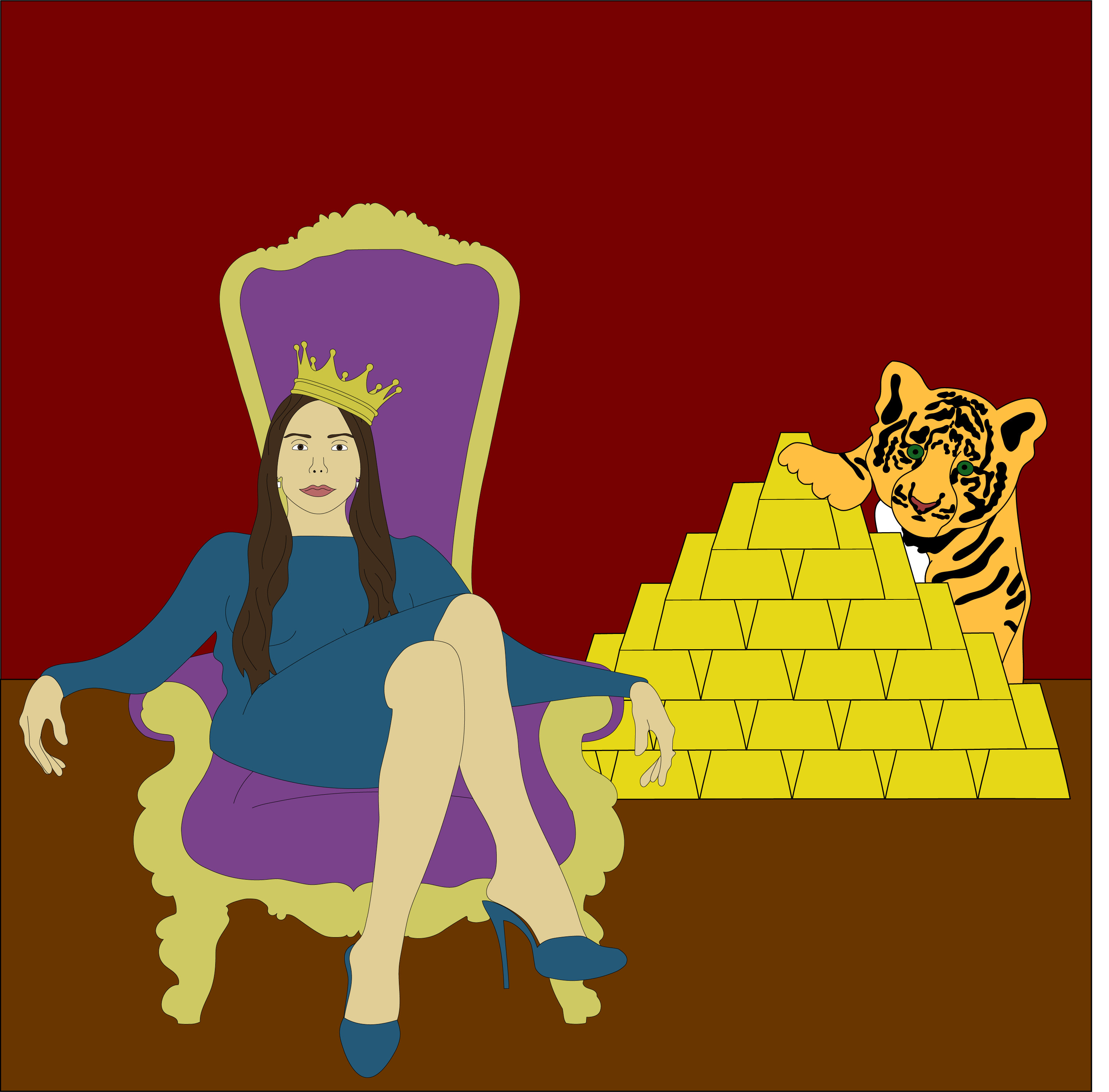
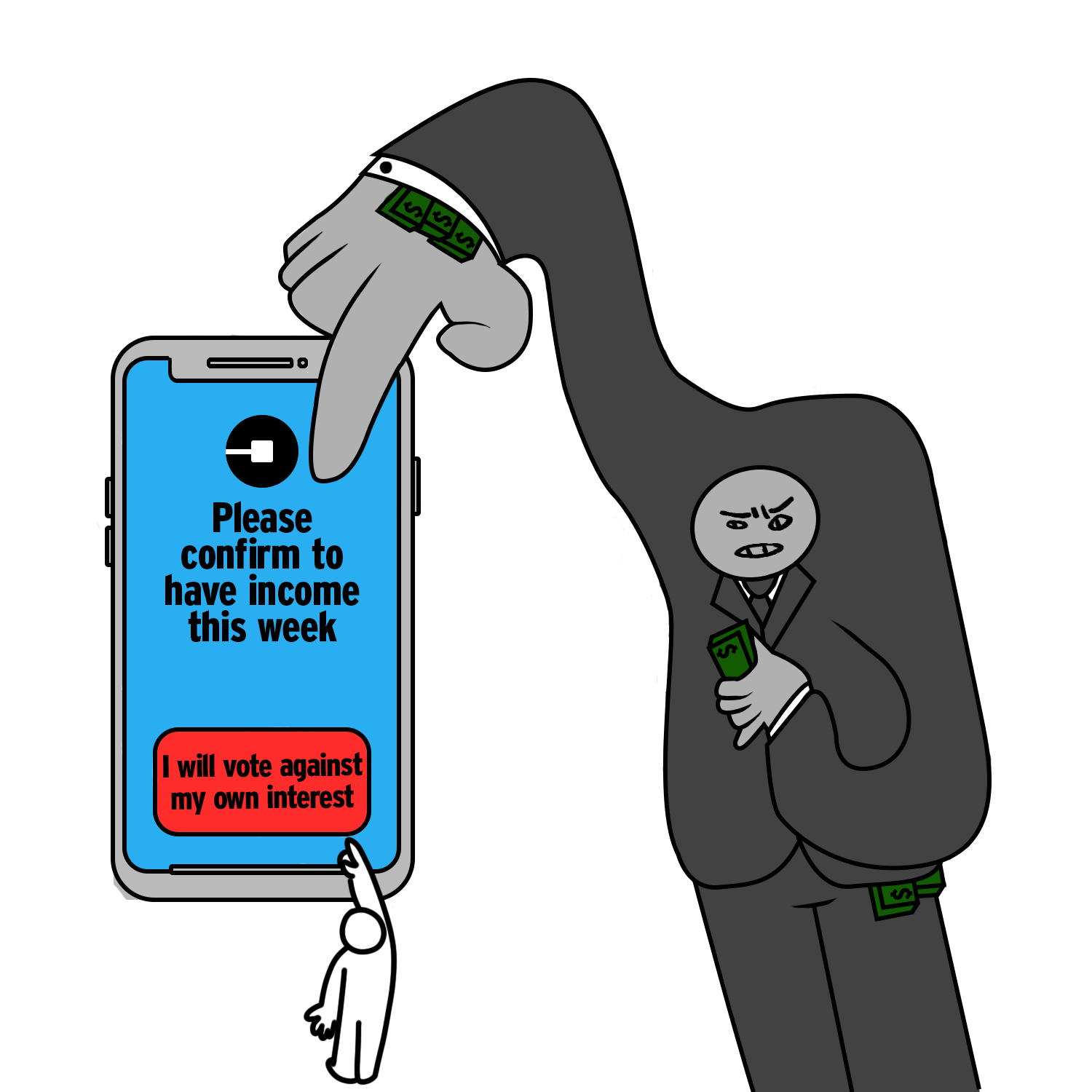
    California’s passing of proposition 22 on Nov. 5 represents a frustrating history of workers’ rights being trampled by the overwhelming influence of greed in politics. 

    This proposition forces app-based workers to be classified as independent contractors, rather than employees. This classification allows companies like Uber, Lyft and Doordash to pay their workers significantly less than California’s guaranteed minimum as well as provide them with worse benefits than would be guaranteed as a full-time employee.

    This proposition was vehemently opposed by labor unions that represented drivers. Unfortunately they were hugely outspent in advertising by the corporations that funded the ballot initiative for prop 22. Advertisements for a yes on prop 22 were incredibly misleading and placed on Amazon, YouTube and even inside of Uber’s app. They misleadingly claimed being an independent contractor provided workers with the freedom to receive benefits while driving on their own schedule. 

    In fact, under prop 22 drivers are only guaranteed benefits after 25 hours of engaged driving time. Engaged driving time is defined by prop 22 as time actively spent with a rider in the car, or a delivery in progress. With drivers reporting that they spend over half of their time waiting for a pickup, this could require workers to put in more than 40 hours a week for less benefits than a full-time California employee.

    The reason that companies like Uber and Lyft are able to continuously influence political campaigns is due to the fact that within the US, companies enjoy and exercise the same level of freedom of speech granted by the First and Fourteenth Amendments that residents due.  

    In a 1886 Supreme Court case, Chief Justice Morrison Waite said that “the Court does not wish to hear argument on the question whether the provision in the Fourteenth Amendment to the Constitution which forbids a state to deny to any person within its jurisdiction the equal protection of the laws applies to these corporations. We are all of opinion that it does.”

    Two years later, the Supreme Court made the ruling official stating, corporations had equal protection under the law as they were merely expressing and acting on behalf of the people that created and ran them.

    These rulings are what set the stage for one of the most important court cases in the history of politics within the US, Citizens United v. FEC. 

    In the rulings of the case, Justice Anthony Andrews, joined by other Justices of the court, wrote that corporations were protected under the First Amendment to freely express their opinions on matters both domestic and political. 

    Furthermore, Justice Andrews wrote in the majority opinion that the US government was not responsible for creating an equal playing field regarding the use of money, changing the rules of campaign financing, leading to the rise of super Political Action Committees. These PACs could acquire an unlimited amount of funds from corporations, individuals and other PACs to use for supporting political candidates and proposals.

    The consideration for corporations did not always extend to laborers. The US has a history of ruling against labor unions, going as far back as 1806, where the first case regarding a labor strike occurred with Commonwealth v. Pullis. The Philadelphia Mayor’s court ruled that leaders of a union strike were guilty of conspiring to raise their wages after labor strikes failed to do so. This established a precedent that labor unions were illegal, something that stood until 1842.

    The consensus in academic literature is that unions shrink income inequality. Union members make, somewhere between 10 and 30 percent, and enjoy more benefits. Unions also drive worker solidarity and income equality across race and gender lines. The recent rise in income inequality in the US is partially attributable to shrinking union membership. The idea of collective bargaining only works if trade unions have the power of large numbers of workers standing in solidarity. 

    The ferocity companies and governments demonstrate when quelling labor organizations should be all the evidence needed that labor organizations are effective. The total number of workers murdered in response to labor organization in the United States is unknown, but the number of workers killed by law enforcement, company militias, and other anti-labor forces during labor disputes numbers in the thousands. If labor organizations did not work, no one would drop bombs on striking workers and, knowing the risk, no one would strike if it did not benefit them.

    The US Government has often been hostile to labor organizations. During the early years of the industrial revolution, the legality of collective bargaining was uncertain, but often led to convictions and fines. Even when collective bargaining was legalized, the National Guard and local law enforcement were responsible for violence against labor organizers. 

    Resistance to collective bargaining should be expected from people who became as powerful as they did by appealing to moneyed interests. No one in a position of wealth and power can be relied upon to betray their source of power. Greed is bipartisan, and workers should not rely on institutions to grant them rights if those same institutions have proved hostile in the past. 

    Though the labor victories of the past still benefit workers immensely, companies are doing everything they can to undermine those victories. Prop 22 is one in a long line of examples. It undermines workers rights and chips away at our hard won standard of living. It should be a warning sign that no labor struggle is ever over. It will be an ongoing fight against corporate greed, but joining a union and standing in solidarity with workers across divisions of nationality, race, gender and economic background will benefit yourself and your community.

  • Affirmative Action Vs. Quotas

    Affirmative Action Vs. Quotas

    There’s a massive difference between affirmative action and quotas

    Reverse discrimination does not exist. Discrimination is discrimination. Now that we got that straight, let’s learn the difference between affirmative action and quotas, also known as tokenism.

    Affirmative action is an effort by institutions to improve educational and economic opportunities for underrepresented groups and communities.

    Quotas force diversity without factoring in actual inclusion. The pathetic attempt to meet numerical goals to appear diverse. This would be considered discrimination. This is actually unconstitutional.

    Affirmative action does not mean that a university or employer is only making their decision based on race, ethnicity or gender. That is also discrimination.

    Affirmative action is taking the necessary steps to improve diversity and inclusion within the institution. This includes dismantling the deeply ingrained discrimination within the educational system and the workplace. Affirmative action takes time. Quotas are a quick fix that fixes absolutely nothing but pretends as if it had.

    We are all aware that proposition 16 did not pass. The proposition would have allowed California’s institutions to consider race, ethnicity, and gender when making decisions on hiring and admission by using affirmative action policies. This prop was attempting to reverse the affirmative action ban that took place in 1996 with proposition 209.

    This was meant to destabilize the lack of inclusion, and figure out ways to attract more members of underrepresented groups such as women and BIPOC. Of course, they need to be qualified. That’s the whole point of affirmative action.

    Let’s say there are two individuals applying for the same position, an example is the marketing director of a company. Imagine their resumes are identical, they have the same level of experience, graduated top of their class, perfect interviews, etc.

    One applicant was a white man from Los Angeles and the other applicant was a black woman from Atlanta. Using affirmative action, the employer should hire the black woman because her voice may be the voice they need at the table to move their company forward. That is affirmative action, it’s taking the necessary steps to be inclusive and open your eyes to expanding to various walks of life, not just one specific group of people.

    Now quotas, which are very different, are very problematic. It’s like a quick fix to diversify the workplace or the institution. Having and keeping a numerical goal is a problem. Saying that their company needs to have at least 10 percent BIPOC and 15 percent women is not okay, under any circumstances. When quotas are put into place, inclusion is not happening.

    When these quotas are not being met, the employer or institution may end up bringing on underqualified individuals just to meet their mark. This helps no one.

    This extends to tokenizing employees as well. An example of this would be Bon Appetit. Employees of color, specifically Sohla El-Waylly, the assistant food editor, went public saying that she was constantly being used as the face of diversity. She was being pulled into random photoshoots and continuously being asked to show up in cooking videos. Yet, she wasn’t paid for any of it. She was being used by the editor, Adam Rapoport, to make the staff look diverse and inclusive when in fact, that was not the case. It was a quick fix.

    Please, do not tokenize photographs, orientation videos, or the institutions or workplaces at all.

    Regarding universities and colleges, there would have been various programs resulting from affirmative action. Thomas Peele, Edsource investigative reporter, wrote a piece explaining what affirmative action was and an explanation on prop 16. Peele touched a bit on CSU’s and how this would impact the colleges.

    “Outgoing CSU Chancellor Timothy P. White said the ability to use affirmative action policies would have let the system address “a fundamental opportunity gap” that Black, Latino, and Native American students face by providing targeted scholarships and programs to help them stay in school and achieve a four-year degree,” Peele said.

    One way that we can put affirmative action into place is by recognizing that there needs to be a change. There needs to be representation present in order to attract people from different backgrounds. Everyone’s culture needs to acknowledged and respected. This includes religion, traditions, language and even holidays. Keep in mind not everyone relates to you.

    Don’t be afraid to receive criticism or feedback on how you can improve.

    Prop 16 not passing in California was a huge mistake. I hope that we can educate others on what this actually means and how it can improve institutions.

  • Getting stuck on the Trump train

    Getting stuck on the Trump train

    Writer Anthony Aragon details his experience of accidentally joining a pro-Trump car rally.

    It all started on Sun., Nov. 1, when hundreds took to the streets of Humboldt County to embark on a political car rally to voice adamant support for current President Donald Trump. The organized caravan of Trump loyalists began the trek in Fortuna around 2 p.m., ending in McKinleyville later that afternoon.

    What came as no I surprise to me with a track record of bad luck, I got stuck in the middle of this parade while out in Eureka doing my normal, weekend errands.

    Once I merged from the corner of Sixth street onto Broadway, I knew I was in trouble.

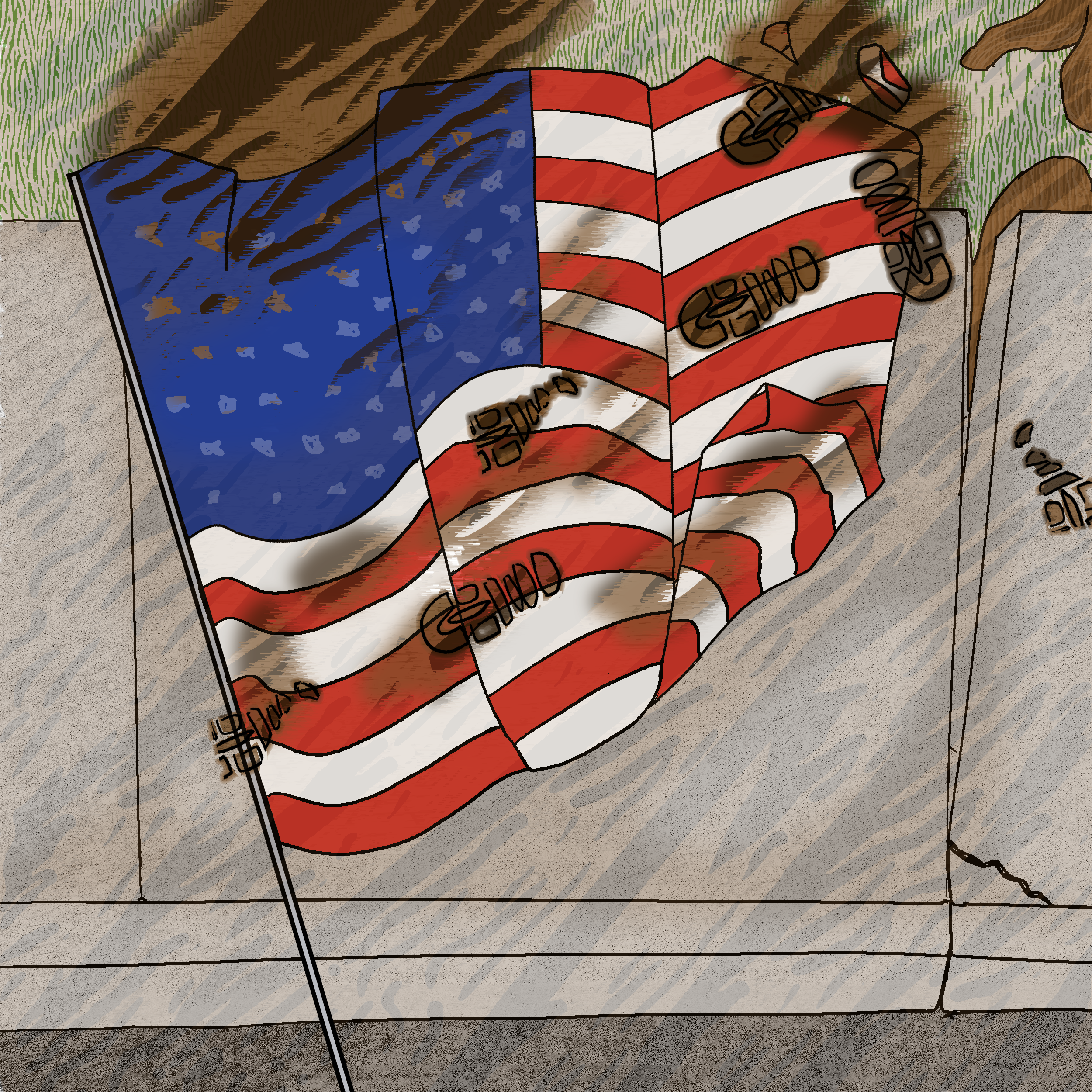
    Surrounding me was a fleet of lifted trucks and muscle cars boasting banners and American flags flooding the majority of the street. The sounds of revved truck engines and chants of USA from vehicles grew louder as we traveled north towards Arcata.

    As we approached the Eureka courthouse I could see protestors lining the sidewalks on both sides of the street. The small restless crowds chanted in disapproval of the arrival of the conservative coalition. Adversaries were clearly at odds with one another, each party growing more aggressive in verbal taunts. At one point while waiting for the street light to turn green I looked to the individuals on the left side of the road and gave a small smile of approval against the other vehicles stuck in traffic. Evidently, this smirk was mistaken as a sign of disrespect and two female protestors began to shout and throw middle fingers at me while I sat in dismay.

    After what seemed like an eternity the light finally turned green. Trying my best to maneuver past the vehicles participating in the rally, I couldn’t help but begin to read the flags plastered with Trump propaganda. Amongst the various banners that waved freely through Highway 101, one struck me in particular:

    “Trump 2020 NO MORE BULLSHIT.”

    The irony of watching the divide between local, sprung a question into my mind that I’m still trying to come to terms with: how did we become this divided as a nation?

    In the last four years since Trump’s administration has taken office, our culture has become separated in which respecting political beliefs that differ from your own is increasingly more difficult. Polarizing topics such as immigration reform, the constant fight for equality amongst BIPOC, climate change and dealing with the repercussions of COVID-19 have added fuel to the already volatile fire that is in America.

    As time grew closer to election day, the uncertainty of what direction the United States would be headed towards became nerve racking. Attending college during a pandemic in a rural area that lacks diversity has been shrouded in lingering doubts. Paying full-priced tuition for an education that feels subpar, while studying an industry that has been bastardized by Donald Trump is hard to reconcile with. The feelings of frivolity I’ve felt as a college student in such an uncertain era have been amplified by the fear of what is to come in Humboldt County since Trump has lost the election.

    Four days after Tuesday’s, Nov. 3, election it has been officially announced democrat candidate, Joseph Robinette Biden Jr., has won the presidential race of 2020. Though the future seems hopeful, the divide in our nation doesn’t dissipate when Biden takes his eventual oath in office.

    On Nov. 7, Biden held a press conference in Wilmington, Delaware to announce his victory. Within minutes of his speech, it felt incredibly refreshing to not be subjected to coded language and devised rhetoric that became the norm in past years.

  • Geeks and Beats challenge social injustices

    How superheroes and hip-hop go hand-in-hand

    There are two forces at work in pop culture right now, two seemingly polar opposite sides pushing the envelope of their respective medium. While on the surface they don’t seem to mix, it is undeniable that hip-hop and comic books go together hand-in hand.

    From the early days of Superman’s appearance in Action Comics #1 back in 1938, comics conveyed messages that were meant to challenge and change the reader. Jerry Siegel and Joe Shuster, sons of Jewish immigrants, created a hero that fought for the downtrodden and the overlooked. Before the United States entered WWII, Siegel and Shuster were having Superman fight Nazis and defending people like them.

    Heroes and villains from various publishing companies started to appear along aside the big blue boy scout. As the decades past, the cast of characters like Doctor Doom, Luke Cage, Batman and Wonder Woman filled pages to the brim with action and tales to astonish.

    Comic books have had highs and lows like any form of media, gaining followers and readers, with a cheap price point. Yet, before breaking out into the big screen in a meaningful way, comics were already influencing the hip-hop scene.

    In 1979, The Sugarhill Gang exploded onto the scene with “Rapper’s Delight,” and brought rap to the masses, and with it, the first of the comic book references. The Gang raps against Superman for the chance to date Lois Lane.

    Just like that, the fire was lit. As the years progressed, artist blurred the lines even taking on personas, writing their own comics and starring in TV shows and films of their favorite heroes.

    Now, we have MF Doom taking on the mask and name of his favorite Fantastic Four villain and Eminem dressing up like Robin, to the integration of comic book artists to create iconic album covers for the likes of Public Enemy hip-hop and comics share a voice.

    Your favorite rapper is a nerd in the best possible way. The obsession with pop culture lead to the marriage of two different mediums of art colliding into a form of self-expression that is hardly seen.

    It’s why Luke Cage listening to “Bring Da Rukus” by the Wu-Tang Clan while fighting drug dealers feels right. Why Run the Jewels used the popularity their song received from being featured in the initial trailer for Marvel’s Black Panther to create a music video talking about the prison system.

    Through the struggles and triumphs from decades of practice, both have been able to capture and amplify the voices of those that feel like they need to be heard. A empowerment that can only be created by the tightest of tights and a good bass line.

  • Four more years of fear

    News Editor Carlos Holguin explains why he is worried about the next four years.

    I remember sitting with my Dad on Nov. 3, 2016, and silently watching the election results come in.

    It was his first election, having just become a United States citizen after years of being a permanent resident. He was always on the outside looking in, encouraging everyone in the house to vote every primary and general election.

    The happiness I saw earlier in the day when he cast his first ballot was drained away with each new state’s results.

    After Michigan’s results were announced I decided to call it, having to go to bed with the knowledge that the country let my father down. He stayed up until the last states were called, going to bed with the belief that the country he loved so much did not love him back.

    For the next four years, that haunting realization would rear its head on more and more frequent occasions. Red hats and flags striking fear, hate speech spray painted on the walls and yelled from passing trucks. Fourth of July celebrations were spent inside in fear of violence.

    With those grim reminders came the terrifying conclusion that nothing was going to change. Every few months a new scandal would come and go, ones that would end ordinary presidencies, and I would become more scared of the responses from his followers locally and nationally.

    No matter who wins the presidency in this current election, I, along with many other Latinx and BIPOC around the country, am still going to be scared. Scared of the possible violence that may come with whatever the results may be.

    Since the announcement of his campaign, President Trump has had an uncanny way of bringing hate and vitriol to the surface. For some it was a wake up call to what America really was, but for the rest of us it was nothing new. The quiet parts were just being spoken out loud.

    It may be an uncomfortable truth for some, but one that many in my place have faced. The United States will also be a land knee deep in the blood of a racist history that still stirs trouble into the modern day.

    A history of scapegoating Latinx people with things like Operation Wetback, where over a million Latinx people were forcibly removed in the largest mass deportations in US history, and its everlasting effects on the immigration system that cages asylum seekers.

    It is reflected in the of killing Indigenous tribes under the guise of Manifest Destiny and the unjust killing of Black people at the hands of police brutality.

    That’s not something that can be put back under the floorboards of this nation.

    Hate that strong never fades away. It won’t under a Biden presidency, it certainly won’t under a Trump presidency. It will continue to fester, divide and instill fear into the marginalized masses across the nation.

    I remember one of the first nights after moving to Arcata and going to the store late at night to buy supplies for a bonfire. The cashier, who was so friendly to my friend turned to me, the warmth from his face fading and said, “what do you want, boy?”

    A few months back a stranger driving by called me a wetback as I stood on the corner waiting to cross the street.

    Both times I continued along as much I could without letting it show, much like I did when I heard those same words and comments at age 8, 15, 18 and every year since.

    It’s the same words that I expect to hear after Nov. 3, as the country once again reveals its true colors. Every year of my life the United States has refused to face the consequences of the past to create a future where I, and others in my position, won’t be scared every four years.

  • Dismal democracy

    Dismal democracy

    The Lumberjack editorial staff comments on America’s flawed electoral system

    As the world watches the United States 2020 election results, waiting for our pseudodemocratic process to churn out a new president, historically unprecedented voting methods misrepresents the reported Election Day results.

    A common misconception surrounding the democratic voting process is that a casted ballot directly counts toward and impacts the presidential election. However, the reality is that every individual’s vote doesn’t hold the same amount of power or equitable value.

    The power and value behind your vote is entirely dependent on where you live. Because the electoral college ultimately chooses the president, not the people, the real value of your vote is determined by the ratio of individual votes to electoral votes in each state. 

    For example, California has a population of about 39.5 million. We have 55 electoral votes, one for each of our congressional representatives. That works out to about 718,000 people per electoral vote. Wyoming has a population of about 579,000. They have three electoral votes. Only one from their representative in the house, but two from their representatives in the senate like every other state. That works out to about 193,000 people per electoral vote. If you’re from California, a Wyoming presidential vote is worth 3.7 times the amount of yours. The story is the same for many of the less populated states.

    The voting process falsely validates casted ballots and ultimately undermines votes through the electoral college’s overriding casted vote. Ultimately, you’re not directly voting for a presidential candidate, you’re informing the decision of the electors who do. 

    Within battleground states, Democrats are sending in more mail-in ballots than their Republican counterparts. The New York Times estimates that 64 million mail in ballots were cast in this election, nearly three times the amount cast in the 2016 election. While COVID-19 played a significant factor in the disparity, pushes came from Democratic candidates across the nation to gain momentum moving into Election Day.

    Due to mail-in ballots accounting anywhere from 20-50 percent of the votes in different states, we may not know actual election results until days after election night. States, such as North Carolina, are planning to accept ballots postmarked on election night until Nov. 12. Some states have relatively small margins of difference, which could result in swing states prolonging the definitive results of the election.

    Additionally, the United States leaves self-declared territories, for example Guam and the Dominican Republic, neglected in the political process and without influence in the choice of US president. The same could be said for the millions of American citizens who have been deprived of their right to vote because of the criminal justice system. This imbalance significantly alters the demographic of voting participants, therefore not valuing or accounting for every community’s perspective. 

    This disparity leads to presidents with less votes defeating their opponents, or candidates never getting a clear majority. 

    While the Lumberjack staff believes the US’s democratic process is deceitful in terms of transparency, we do not agree or echo any of Trump’s sentiments that discredit voting. Instead, we believe his spewing of misinformation contributes to the detriment of the country’s Democratic Republic status. 

    The US glamorizes its democratic facade as legitimate, straight forward and for the people, however, systemic strategies have displaced and deprived American citizens of their Constitutional right to vote. Between systemic imbalance of the electoral college, active voter suppression and unequal voter representation, our democracy is rooted in unequal representation. 

  • Dobby’s proposition opinions

    Haven’t voted yet? Well, you’re running out of time. Here’s a quick rundown of California’s propositions on the ballot this year

    Prop 14

    Proposition 14 would allow the state to sell bonds to fund stem cell research. Stem cells are cells that have not yet chosen an organ to major in. They can be injected into a liver, heart or other organ of your choice. They are regeneration cells, and have the potential to treat diseases including Alzheimer’s, HIV/AIDS, diabetes and cancer. Stem cells are most effective when harvested from fertilized human eggs that are four to five days old, causing some controversy in people who care about that sort of thing. Vote yes to authorize the state to sell bonds to raise money for this research, or no to not fund the research.

    Prop 15

    This is a tax bill that will increase taxes for corporations, cut taxes for home-based business and raise money for schools. Vote yes.

    Prop 16

    Affirmative action is legal in 42 states, but was voted out of California in the 90s. Enrollment of minorities at competitive universities dropped as a result. The recent murders of George Floyd, Breonna Taylor, Atatiana Jefferson and many lost Black lives have brought racial inequalities into a starker light, making affirmative action more appealing. Opponents say California is already doing enough and that it would be “reverse racism,” which is not a thing. Vote yes to approve affirmative action.

    Prop 17

    Restores voting rights for people on parole. Currently, a person who is in jail or has completed their sentence and related parole can vote. Felons in state prison or on parole cannot. People on parole have committed serious crimes, such as murder, rape, robbery, arson, or kidnapping. After their prison term, they are assigned a parole officer and must follow strict rules. This bill will also allow parolees to run for office if they haven’t been convicted of perjury or bribery. Vote yes to restore voting rights or no to keep restrictions.

    Prop 18

    Vote yes to grant 17-year-olds the right to vote in primary elections if they turn 18 in the next general election. This does not mean that a 17-year-old will be able to vote in the general election, but if they turn 18 on or before election day, they can vote in the primary before the general election.

    Prop 19

    A property tax that increases the tax rate on inherited properties if the person inheriting it does not live there. It would also expand moving for seniors by allowing them to transfer the lower tax rate of their old homes into a new place up to three times throughout the state. Currently, they can only move once within the same county to keep the tax rate of the first property when they bought it. It would generate a few million dollars per year, 75 percent of which would go to fund fire protection. Vote yes to increase taxes on wealthy families.

    Prop 20

    This would revive tough-on-crime by reclassifying property crimes as ‘wobblers’ that are either misdemeanors or felonies. It would boost penalties for parole violations, and require DNA samples for misdemeanor property crimes. It would also create a new list of offenses that deny eligibility for early parole, including domestic violence, which isn’t currently classified as a violent crime. That is a problem. I don’t blame you if you skip this one, but vote no to not be tough-on-crime, or yes to be tough-on-crime.

    Prop 21

    This would repeal parts of the Costa-Hawkins Act, which limited local rent control laws across California. A yes vote would allow cities to enact stronger rent control laws on most properties older than 15 years, and cap rent increases for new tenants at 15 percent with no increase for three years. A no vote would maintain current rent control laws.

    Prop 22

    VOTE NO. Proposition 22 would classify app-based drivers as independent contractors, who are only paid while driving, but not while waiting. They do not have full health insurance. Uber, Lyft, DoorDash and Instacart have spent $170 million to back this because they profit from not classifying their employees as such. A no vote would force the state to classify drivers as a special category, neither independent contractors nor regular employees.

    Prop 23

    Would add more requirements for dialysis clinics, including having at least one physician on-site, report infection data, have state approval before closing and prohibit insurance discrimination. Vote yes for more requirements or no to not add requirements.

    Prop 24

    Amends data protection laws and establishes a new state agency to enforce them. Critics say this would keep the current system, where a consumer has to opt out to protect their data. An alternative would be setting ‘don’t sell my data’ as the default, and companies would have to ask them to opt-in. Vote yes to amend the current data protection laws, or no to keep the current data protection system.

    Prop 25

    Vote yes to replace cash bail with risk assessment based on public safety and flight risk. Defendants who can’t pay bail are nine times more likely to plead guilty despite innocence. Opponents say that the risk assessment tool can be overridden by a judge, who may be in favor of locking more people up, especially if they are Black. The Public Policy Institute Of California predicts that 142,000 people per year would spend less time in jail under Prop 25.

    Measure F

    Vote yes to raise fire protection funds. The funds would pay to unfreeze eight firefighting positions and reopen a third fire station. It would address aging equipment as needed. Paid for by renewing the three percent Utility Users Tax.

  • Corporations buy out propositions

    In a series of general and misleading advertisements, corporate backers of Propositions 22 and 23 show their grubby hands

    If you’ve been on the internet over the past two or three weeks you have seen a Yes on Prop 22 ad. These ads provide vague promises of “guaranteed earnings, healthcare benefits, and personal protections” while also touting the freedom of schedule that being an independent contractor would provide.

    This proposition comes at the perfect time for Uber and Lyft as California’s Assembly Bill 5 in 2019, drivers for those companies will be treated as employees. Uber & Lyft attempted to overturn the bill but it was upheld last Thurs., Oct. 22.

    If Proposition 22 passes, Uber and Lyft will be able to continue to treat their workers as independent contractors rather than employees.

    Before 2019, Uber and Lyft were able to classify their workers as independent contractors by arguing that they were not a transportation company, but merely a tech platform. This means that the drivers for Uber are merely partners with the app and are not required to be classified as employees like they would be if they worked for any other transportation company.

    The healthcare benefits guaranteed by Proposition 22 come under the condition that drivers have 25 hours of “engaged time” a week. “Engaged time” is defined as the period of time from when the driver accepts a ride until they complete the ride.

    At first glance this would provide benefits for a little over 25 hours of work but according to some rideshare drivers, over half of the time they spend using the app is actually spent waiting for a ride. It would be very likely that drivers would have to work more than 40 hours a week for these benefits.

    Advertisements also quote that “If drivers are forced to become employees, up to 90 percent of app-based driving jobs could disappear.” This statistic was not sourced. If a company is not able to provide their employees the minimum wage and benefits, required by California labor laws, then they are not a viable company.

    Proposition 23 requires that a physician, nurse practitioner or physician assistant be on site during dialysis treatment. Additionally, it prohibits clinics from reducing services without state approval, and from refusing to treat patients based on payment source.

    As it currently stands, any complications that come up have to be sent to the ER and handled offsite, lengthening the amount of time it takes for a patient to get care and complicating treatment.

    Advertisements have stated that Prop 23’s enactment would threaten to close many dialysis centers. Written directly into Prop 23 is that clinics cannot reduce services without state approval. There are provisions that allow for clinics to hire nurse practitioners or physicians’ assistants in the event of shortages of doctors. Currently, all dialysis clinics are required to have a doctor on staff to be the medical director, but they do not have to be onsite.

    Dialysis clinics in California boast an annual revenue of more than $3 billion. This booming industry is not one that would be destroyed by higher standards of care and more providers. Rather, this highlights the way that their ad campaigns utilize fear tactics about closing clinics and rising costs to justify putting patient safety at risk to line their own pockets.

  • Humboldt State Admin attempts to discredit the Lumberjack

    Humboldt State Admin attempts to discredit the Lumberjack

    ***A Lumberjack editorial represents both the majority opinion of the student newspaper’s editorial board, nine editors, as well as the overwhelming majority of Humboldt State University’s student body. Collectively, an editorial echos, embodies and advocates for community beliefs.***

    Insensitive communications between Humboldt State University administration and student newspaper, the Lumberjack, includes inaccurate accusations and degradation comments directed at the LJ’s reputation. 

    In a letter to the Lumberjack’s editor, Vice President Frank Whitlatch claims the student-paper intentionally printed false information. The letter targets four specific points within the article, “HSU Athletics Department left in dark about SJSU,” by Sports Editor Thomas Lal, published in print on Wed., Oct. 7 and online the following day.

    According to Whitlatch, the four issues within Lal’s article include accuracy, context, claims of purposeful ignorance towards follow-up quotations and headline language. 

    Whitlatch’s claim that Jane Teixeira’s, HSU’s athletic director, was misquoted in regards to the Athletics department’s knowledge of San Jose State University’s arrival is completely inaccurate. The second paragraph of Lal’s article clearly states HSU Athletics was notified late Tues., Sept. 29. 

    “With the notice coming late on Sept. 29, the first chance that the department had to discuss matters was the following day with the Spartans roughly 24 hours away,” Lal wrote in his article.

    The information reported in Lal’s article directly matches the information stated in Whitlatch’s letter to the editor. There is no inaccuracy. Lal, in fact, did not ignore the information as the letter suggests. Whitlatch attempts to use this baseless claim to delegitimize the entire article.

    While the letter states HSU Athletics was not in the dark about the team arriving, our editorial staff does not believe a few hours of advanced notice would significantly impact the department’s ability to prepare for the team’s arrival. 

    Whitlatch attached transcripts from Lal’s meeting with Teixeira in his letter claiming the Lumberjack ignored context surrounding Teixeira’s quote. Cris Jones Koczera, emergency management coordinator, however, further supported the information reported in Lal’s article.

    “It was at the end of the day, on Tuesday [when they found out],” Koczera said in the interview with Lal. “So, by the time we really had an opportunity to get together, start talking about what that meant it was Wednesday first thing, right out the gate.”

    In a Zoom meeting with the Lumberjack editorial staff on Thurs., Oct. 15, Grant Scott-Goforth, HSU’s communications specialist, echoed Koczera’s statements that SJSU’s arrival at HSU was in fact a last-minute affair.

    “The Athletics Directors and our emergency operations team and myself I think found out several hours before the rest of the campus did,” Scott-Goforth said. “So, that was a scramble. I mean, that was a huge scramble.”

    In addition to Scott-Goforth’s confirmation, he claimed the diction used in the Lumberjack’s editorial, “Humboldt State administration cash in at student expense,” was strong, misleading and accusatory language that promoted a Humboldt brand of xenophobic behavior towards students from big cities by stating SJSU was stealing HSU student resources. 

    “I just felt that was a little bit misleading because again you know this is a decision that’s made by the President’s versus the student athletes who are coming here so they could practice but it wasn’t exactly their choice,” Scott-Goforth said. “I grew up in Humboldt County and I feel there’s this weird kind of specific Humboldt County brand of xenophobia that I see over and over again, and often is about HSU students coming from the big cities and it’s a scary thing.”

    Humboldt County Department of Health and Human Services was not advised prior to SJSU’s arrival, the Lumberjack was purely reacting to student and community concern regarding health endangerment in the midst of a pandemic, not due SJSU coming from a more populous county.

    The Lumberjack is an independent news organization. We have enjoyed a healthy, working relationship with the HSU Athletics Department and would never purposefully ignore facts provided in an interview. Implying that we would attempt to mislead our readers is entirely incorrect and harmful to the reputation of this publication and its reporters. 

    Through a very complex set of circumstances, the Lumberjack has aimed to provide the most accurate information available to students and the community while working with Athletics to obtain that information.

    As a part of the California State University system, Humboldt State is subject to the same rules and limitations as other public universities. This includes court cases that set a precedent for the protection of student produced media under the First and Fourteenth Amendments.

    By publishing your letter to the editor, we have maintained our position as a public forum by allowing a fair and open space for all to voice their opinion.

    While the Lumberjack may receive funding from the university, like many student-run programs on this campus, Bazaar v. Fortune, 489 F.2d 225 (5th Cir. 1973) ruled this does not grant the administration the right nor the permission to control the contents of the campus paper. 

    In addition, Tinker v. Des Moines Independent Community School District 393 U.S. 503 (1969) ruled that actions of censorship cannot be taken against a paper for content unless the school can prove the content would “materially and substantially interfere” with operations.

    Like any other publication, the Lumberjack is protected as a member of the free press. Our duty is to serve the interests of our students and surrounding community by informing them with timely and accurately reported information. While the HSU administration may take issue with our editorial, we stand by our position and how it accurately represents the voices of HSU’s student body.

    We will not be retracting our story and will continue to support the efforts our reporters make to ensure the voices of the student press on this campus are not silenced, censored or intimidated.

  • Screens are losing their novelty

    Screens are losing their novelty

    Life and Arts editor, Dakota Cox, speaks on his shifting perspective towards technology.

    2020 has tainted the relationship between humans and screens.

    When I was a child, my favorite thing in the world was my Gameboy. I was only allowed to play on long car trips or the rare occasions when a friend spent the night. My favorite game was Pokémon, of course. I remember the satisfaction I felt after beating the game for the first time. Those were the days before YouTube tutorials when discovery in games meant something.

    When I grew older, I replaced my Gameboy with an out of commission iPhone I found one day in a crack of the couch in our family room. It served me well as an iPod for years until it finally refused to accept a charge and became replaced by my first official iPhone.

    That phone met a violent end far before its time. It wasn’t missed. The replacement that sits in my pocket today has aged noticeably over the years having been through more than most. It will also not be missed.

    Over the years, whether it be a computer, a television or a phone, there’s always been a screen at the center of my life. Though they may not always have received the majority of my time, the ideas attached to screens have almost certainly played a dominant role in my decisions since they were introduced to my life.

    All it took was a taste and I was hooked, now I understand why my mom warned me about drugs. I only wish she’d known the damage a single screen can cause.

    When I was 10 years old and my brother Yoshi was born, my mother more or less granted me the trust to make my own decisions. For me, this meant staying up till 5 a.m. watching Netflix, playing Skyrim and sleeping in until 2 p.m. Those were the days.

    When I started living away from home, I began spending more time than ever in front of screens. They were no longer just an optional escape, they’d also become a regular part of my college education.

    Now with the pandemic and online learning, the time spent in front of screens has crossed the threshold to a place of dread.

    The once exciting prospect of a notification arriving on my phone is ruined by the endless nagging of unfulfilled responsibilities and classes I spend hard-earned money on to attend.

    The little quality time I get to spend with family in the pandemic has become corrupted by the constant presence of screens.

    Aside from hiking, almost every moment I was with Yoshi over the summer was spent playing the latest video games and half-paying attention to the shows playing in the background.

    When I have time to spend the weekends with my Mother, I wake up before 7 a.m. for work and don’t get back until 5 p.m. By then, I’m exhausted and I’ve got a pile of stories to edit, if I don’t have to write one myself, along with whatever homework I couldn’t finish during the week.

    My mom is mostly glued to her phone and outside of an occasional board game or family movie, we retire to our respective rooms. Is this what life has come to?

    Screens can be used to accomplish great achievements as tools or produce great joy as toys, however anything over-used can become unhealthy. So, give your poor brains a break, I know mine needs one!

  • Dobby’s dissection of Donald Trump

    Columnist Dobby Morse shares their take on the presidential candidates

    I tried. I tried to watch it, but like everything else Trump is involved in, it was a farce.

    Within the first 15 minutes, Trump dodged the question as to when the new justice should be nominated by talking about Amy Barrett’s qualifications. He lied about his very public taxes, called the Coronavirus the “China plague,” implied that Biden was stupid for forgetting the name of a place and bragged about football, of all things.

    I am by no means, a fan of Biden. He is a creepy old white guy that has been accused of inappropriately touching several women. Trump has done much worse. Biden has a plan for the Coronavirus, including free testing, Personal Protective Equipment and a nationwide mask mandate.

    He has a plan for the climate crisis that includes the Green New Deal, rejoining the Paris climate accord and an end to fossil fuel subsidies. Trump, as Biden said repeatedly, does not have a plan.

    Trump’s biggest problem is the inability to self-reflect. The media has been largely negative towards him. He is a pathological liar and it is the media’s job to expose lies. He has shown no ability to listen to experts or politicians who do not undeservedly love him.

    Rather than take a minute of his 74 years of life to reflect on why people don’t respect him, he goes on defense.

    Biden, despite Trump’s opinion, is smart. He brings up his experience as a senator and vice president to show he knows how to do the job. He talked about the Coronavirus deaths as people, rather than statistics. He talked about Trump’s history of lies and lack of a plan to showcase his opponent’s incompetence.

    A horrific outcome of the debate is an increase in recruitment for the White supremacist group, Proud Boys. When asked to condemn them, Trump replied, “Proud Boys, stand back and stand by.”

    The hate group has since adopted this quote as a slogan and an endorsement by Trump.

    We live in a world where incredibly dangerous people are world leaders. We live in a world where fundamental and private rights are in danger. We live in a world where a few people can decide the course of history.

    So vote. Check your registration status, and if you aren’t already getting election mail, find out why. History has its eyes on you.

    Dobby Morse is a columnist for The Lumberjack and is an HSU student.

  • Time for yourself is more than okay

    Time for yourself is more than okay

    If you needed a sign to tell you to take a break, this is that sign

    Burnout is among us, for some it hit pretty early on. Whether you’e a student, a worker or both, taking a step back just feels impossible. Why do we justify our exhaustion with more exhaustion?

    While it is important to take responsibility for our lives, we need to be kind to ourselves. Living in this pandemic, we have come across what is called “pandemic fatigue.” According to University of Californi a Los Angeles health, it comes in various forms like the inability to focus, not knowing what day it is, feeling anxious, hopeless and worrisome.

    How do we fight pandemic fatigue? How do we fight burn-out? How can we avoid a downward spiral of intrusive thoughts, fear, irritability and insomnia?

    In an article in General Surgery News, Rachel Goldman, Ph.D., FTOS, a licensed psychologist, talks about healthy selfishness. The phrase explains itself, “knowing what you need to do and allowing yourself to do it.”

    It’s time to be more selfish with our health and recognize that we need to take me-time. It’s a reminder and also heavily recommended that we do take time for ourselves.

    I personally struggle with taking that break and I wouldn’t consider myself selfish. We are living in a very unpredictable time. I’m a planner, not being able to plan for the holidays or the next semester drives me up the wall. However, maybe it’s time that I stop worrying about the future and worry about what I am doing right now.

    “People need to focus on what is in their control, which is behaviors, reactions and how they cope, and not on what is out of their control,” Goldman said.

    Worrying about things you can’t control is unproductive and a playing factor in my pandemic fatigue. The feeling of being lost and confused about what to do next runs through my mind every day. Dwelling on the unknown is out of my control and I need to let it be.

    I know we are all going through it differently, but we are all still going through it.

    So when you are too exhausted to go on, take that nap.

    When your head is spinning, go for that walk.

    When you find yourself reading that one page four times over because you’re just not getting it, take a step back and make some pasta.

    Hit a pillow. Call a loved one. Cry. Watch that cringey holiday rom-com. Draw something, ugly or pretty.

    Talk to yourself using only nice words.

    Learn some breathing techniques on YouTube, meditate with Spotify, watch the news or don’t, and don’t forget to drink water.

  • Humboldt State administration cash in at student expense

    Humboldt State administration cash in at student expense

    San Jose State’s football team steals on-campus resources from student body

    ***Editor’s note: SJSU football program was tested in congruence with Mountain West conference guidelines***

    Humboldt State University’s administration continues to ignore the health and well-being of paying students and surrounding community members by selfishly prioritizing university funding and money opportunities.

    On Oct. 2, San Jose State University’s football team arrived at HSU to utilize the field and training facilities. The team of 141 players, coaches and staff members are expected to social bubble, strictly quarantine with one another, on campus in Redwood Hall. Redwood Hall stands in the middle of campus, between the Student Health Center and the Depot, making it an unavoidable place for students on campus to pass by.

    In addition, HSU students were notified via school wide email of the university deal less than 24 hours prior to SJSU’s arrival.

    First and foremost, this deal did not involve the approval from either county’s public health officers. Since March, HSU has maintained a relatively low COVID-19 case count with only 11 confirmed cases. SJSU falls within Santa Clara County, and as of Oct. 6, has 50 confirmed cases.

    The team is expected to self-patrol and monitor their own health. They will be tested once a week throughout their stay at HSU, which directly violated SJSU’s athletic conference guidelines provided by Mountain West.

    The Mountain West Conference demands athletes be tested three times a week. If a test comes back positive, further testing is done to confirm the positivity. SJSU brought their own testing equipment, however, the heightened risk of contracting the virus extends beyond the student body and permeates into the town of Arcata.

    There has been no confirmation of how long SJSU’s stay will be. Hearsay declares a week, but pictures of arriving Spartan football players holding flatscreen TV’s and luggages of equipment says otherwise.

    Student facilities will cater to SJSU during their stay, closing off access to the Redwood Bowl from HSU athletes and students while also extending the Student Recreation Center hours beyond usual scheduling. A ‘no access’ sign currently hangs outside the gate entrance of the Redwood Bowl, HSU claims the sign is to contain SJSU’s football team and limit cross infection.

    HSU students have been repeatedly denied access to on-campus resources, classes, labs, studios and housing since the beginning of the pandemic. However, SJSU was able to rent out the Redwood bowl, SRC and on-campus housing facilities and resources immediately. HSU is renting out campus resources we either don’t have or refuse to offer to students.

    Administration stated that SJSU will be paying for all facilities, housing and resources being used during their stay. However, current resources occupied by SJSU at this time are paid for by student fees. Students believe the funds should be redistributed back to their accounts for a fair way to compensate for the loss of access.

    It’s clear that this decision to move SJSU to HSU was made last minute and without the permission or acknowledgement of HSU students. HSU administration has proven time and time again that the students’ safety isn’t a top priority. The motivation to cut out students from participating in their own university outweighs the value of students altogether.

    HSU continues to treat our campus like it’s closed or empty, forgetting an entire student body population of 6400 people.

  • Rugby captain frustrated with CSU’s hasty actions

    Rugby captain frustrated with CSU’s hasty actions

    Club sports member expresses disappointment in administration inviting SJSU to campus 

    You know there is a huge lack of communication between the Humboldt State University’s administration and its students when an email is sent only a day before the arrival of an entire football team from San Jose State University. 

    It’s very frustrating there is such a disconnect between our administration and it’s student body and community. As a member of club sports it is disappointing to see another team from another school practice on a field that I can not touch with my teammates. 

    From spending 14 hours a week all of last year, at the Redwood Bowl or College Creek field with my teammates building my skills to now, possibly suspended for even gathering with a small group of teammates is frustrating to say the least. All clubs such as Men’s Baseball and the Mountain biking club can not join together because of the guidelines given from HSU. 

    Last time I checked, you have to already be six feet away in order to shoot a baseball. Also I don’t know if anyone in the Humboldt administration has ever mountain biked, but normally bikers keep distance like cars in order to avoid an accident or sudden stop. 

    I will say that my sport, rugby, brings more challenges to social distancing. I still can not go to the field with non-house members of my team to kick or pass a ball and even train. 

    So this is where I find it ridiculous that a football team, a contact sport to say the least, consisting of 141 players and personnel are able to play on the same field we at club sports cannot. 

    I will not blame or send hate towards the players or coaches of SJSU because I respect them leaving their homes in order to possibly have a chance at playing at the next level. If I was in the same situation, I would do the same thing. 

    But I will turn all my blame and anger towards the administration of both universities and the Chancellor of the CSU system. 

    I do not understand how my rugby team cannot practice because of rules given by the Chancellor and the HSU administration but a large football team can travel across multiple county lines, probably making a stop or two, in order to practice for just a week. 

    To put a whole community at risk is baffling to me. The decision to allow another university to send their football team approximately 360 miles to us is terrible. 

  • Tragic, but not shocking, no justice for Breonna Taylor

    Tragic, but not shocking, no justice for Breonna Taylor

    Opinion Editor Mikayla Moore-Bastide speaks on nationwide injustice

    How do I explain Breonna Taylor to my future daughter?

    A Black woman, in her own home, was shot multiple times by police and it took six months for the officers to be charged with a crime. Only one officer was charged, but it wasn’t even for killing her, it was for endangering the neighbors.

    How do I even explain Atatiana Jefferson to them?

    She was playing video games with her nephew in her own home when the police shot and killed her through her window.

    How could I explain Botham Jean?

    He was watching TV on his couch when an off-duty officer burst through his door and shot him. The officer said she mixed up his apartment with her own.

    How do I explain my fear of the police bursting into my apartment because my neighbor called for a wellness check?

    How do I explain that walls got justice before Taylor did? Or how it took national pressure from social media to keep the city from sweeping this under the rug. Or how any bad thing from your past will be brought up in an attempt to justify your death. Or that women already have to face enough oppression, but adding melanin to the mix just makes our odds worse?

    How do I explain the terror every black person faces on a daily basis?

    The terror of becoming a statistic, a hashtag, or having their last breath recorded for all to see over and over and over again. Having our name and face plastered on a sign with the demonstrators chanting, “No Justice, No Peace.” Riots being named after us. How about the family not having time to grieve because they’re too busy making sure we get justice? Or the worst one, justice not being served because the system doesn’t care about black lives.

    How do I have “the talk” with my future kids?

    Usually, “the talk” is about sex, drugs, drinking, dating, or staying out late. My version of “the talk” was about how to talk to the police without looking like a threat. It was about why that one kid kept calling my little sister “brownie”. It was about avoiding certain cities,bars and malls because the people there have a certain mindset. It was about why I will get treated one way, but my white-passing friends will get treated another. It was about getting followed in stores because I looked suspicious.

    Of all the talks I’ve had, they would have never prepared me for not feeling safe in my own home or neighborhood.

    Our home is meant to be our relaxation spot, our comfort zone, and our safe space.

    Living while black, we don’t get that. We don’t get to go on innocent runs around the neighborhood, we don’t get to sleep, watch tv, or play video games in our home. Tamir Rice didn’t get to play in the park. Elijah McClain didn’t even make it home from the store. My sisters go to a school in a nice area, but they don’t even get to walk to McDonald’s after school without being questioned by police regarding their residency.

    How do I explain that we are not protected?

    Or that we were never protected?

    Breonna Taylor deserved better and the system just treated her life like it was disposable. Her life was not disposable. Black women are not disposable. Black people are not disposable.

    Say her name.

  • Cars collide with protestors at Breonna Taylor demonstration

    Cars collide with protestors at Breonna Taylor demonstration

    News Editor, Carlos Holguin recounts his experience at the Breonna Taylor protest in Eureka on Sept. 24.

    As I parked a block away from the the Humboldt County Courthouse on Sept. 24, watching community members gather with signs in hand, the name Breonna Taylor emblazoned on so many of them, I wondered just how the night would go.

    Over the past months, reports of violence occurring at Black Lives Matter protests from the likes of counter protesters, police and so-called vigilantes have grown, from cities large and small. I would be lying if I said I wasn’t nervous as I watched heads turn as I continued to snap photos.

    It’s hard to cover a protest, and even harder to cover one when trying to stay objective. When protestors ask you questions about your support and why you are there, it’s hard to create an answer that fits all needs and wants.

    No matter how many times the crowd calls for you to say her name, you’re told that replying is compromising to your ethics. God knows I wanted to chant and reply, but I held my tongue.

    Some people don’t want you there at all sometimes, afraid that you just pose another risk.

    As the march started, taking over street corners and sidewalks before advancing to entire lanes and intersections, the chants grew louder. People peaked out of business doorways, sat on apartment balconies and either silently watched or cheered as the crowd passed. Cars blared their horns behind the procession, only to be met with more cheers and protesters stopping to take in the anger and frustration.

    That’s what this was after all, focused and controlled anger at a system that failed not just them, but people like them. Anger at a system that left people in Louisville and around the nation demanding justice.

    The tension climbed higher as the sun set, the protestors circling back to the courthouse to pick up any late comers and grow in number, before continuing to take streets and hold traffic. Through it all I stood aside, camera in hand taking photos of the world around me, trying hard to be a fly on the wall. This is not my story, this is not something I needed to be a part of.

    When the first car drove through the crowd of protestors, I saw it coming. Both sides stood in a stalemate, with protesters refusing to give an inch to the Mustang as its engine stirred and horn deafened the chants.

    Through the lens of the camera I saw bodies get pushed aside and land hard on the concrete, but bounce back just as fast. The anger grew and the few scrapes and bruises

    were just fuel and this fire was not ready to die out.

    The second car, a large truck who’s black paint blended with the night, was more deliberate. It slowly crawled into and then lulled in the intersection, watching as more and more gathered around it. As I approached the truck, the car shifted into park and the tires turned in place, smoke bellowed from the burnout. It was an arrow notched and aimed.

    The car shifted into drive. A few feet in front of me, the car made contact with a protester. There was thud, then a scream.

    For a second I froze in place, watching the crowd rapidly part ways.

    And then I ran with everything I could for a moment after the truck. I needed a plate, a model, something to help. I watched it after a few minutes disappear on to the highway, before turning back. This was not longer something I could choose to remain objective as a journalist in.

    I cannot understand, nor do I want to understand, how hate can grow within a person to the point that they could justify actions like these. A person who willfully chooses to meet progress with aggression is not someone any person should associate with.

    Journalistic integrity be damned, I will not stand idly by.

    Injustice anywhere is still injustice everywhere.

    Breonna Taylor.

    Say her name.

  • Obituary Of A Snake

    Obituary Of A Snake

    Goodbye, Cruel World

    I found you dead this morning. You had a tragic and undignified death. I only hope you were dead, or at least unconscious before being caught in a tire wheel and thrown back onto the road.

    I do not know if you had a name, or even if snakes understand the concept of names. I hope it’s alright if I call you Billy.

    From what the internet tells me, you were either a Northwestern garter snake or a red-sided garter snake. You had bold yellow stripes running down your tail/body/spine, and big, dead eyes that were empty of the spark of life that was so cruelly taken from you. You were a bit over 6 inches, not a big snake but you were not tiny.

    What were your accomplishments? We may never know. Did you eat a lot of slugs, or did you have a preference for amphibians? What was your favorite food, Billy? Did you prefer to coil and strike in defense, or slip into the creek?

    As I was staring into the eye sockets of my skeleton bobblehead, I was reminded that death can be a beautiful thing. Death is a transition into a new life. Mourning is a time to remember who you were, and who you can be in your next life.

    You lived and died in a college, arguably a modern-day Acropolis, much like your ancestor, the sacred snake of Athens. The sacred snake stood guard in Athena’s temple, receiving gifts of honey cakes until they sensed the Persians coming and fled as a warning.

    Are you warning us of something, Billy? That cars will be the death of us all, most certainly by climate change, but also by the crushing wheel of modern society?

    I resolve to make you mean something. Your life was meaningful, perhaps not by human standards. But as a snake, it was your job to consume plant-eating creatures, thus protecting the small plants that make Humboldt beautiful.

    The humans will laugh at my grief. You were a snake, and a large percentage of them feared you without cause. Though your bite was inconvenient at best, you were small, so small that I doubt you were fully grown. I grieve not only for the death of a wild animal but a newly-hatched one.

    You were not a bird, a rabbit, or a deer. You were not what is commonly considered “cute.” Yet, a live snake is exciting. How fast you used to move, how slick you must have felt! That power is gone now.

    Seeing you struck me with the irrelevance of human society. Why do humans drive cars, except for human reasons? Birds fly, rabbits hop, and snakes slither. That’s all the transport you need. Humans can’t make enough money unless they move beyond the capacity of legs. Money doesn’t make sense to anyone who isn’t human!

    Billy, I hope you find peace. But I know you most likely won’t. Cars may become completely electric, but the system that makes driving a daily occurrence continues.

  • Welcome to the Twilight Zone

    Comparisons between episodes of the classic TV show The Twilight Zone and our own dismal reality

    In what may be the greatest understatement of the century, 2020 has been a rather eventful year. Wildfires, a global pandemic, isolation, protests throughout the world, political turmoil, deaths of public figures – you could write a new version of “We Didn’t Start the Fire” for each month of the year. So, why not look to retro television for comfort? Why not explore a simpler time, when the greatest fears we had were looming nuclear war, human short-sightedness, crippling loneliness and the catastrophic realities of climate change?

    Oh wait.

    1. Nightmare at 20,000 Feet (Season 5, Episode 3)

    A man recovering from a nervous breakdown is the only person on his plane who can see the monster just outside the window. He attempts to warn his fellow passengers, only for people to assume he’s lost his mind. The fear of flying is certainly one many people these days are familiar with, as travel becomes a major factor in the spread of COVID-19. With the US government claiming it’s safe to reopen and many people ignoring mask and distancing guidelines, it can be easy to doubt one’s own concerns. Like the man on the plane, we find ourselves questioning if the invisible force of death is actually there. Are we overreacting, or do we really see an imminent threat?

    2. Where is Everybody? (Season 1, Episode 1)

    A man finds himself alone in an abandoned town, with no memory of who he is or how he got there. He finds himself searching empty streets and abandoned shops for any sign of human life, only to be left alone with just his own thoughts for company. This certainly brings back memories of the beginning of shelter in place, when nothing was open and we all thought it would blow over within a week or two. Remember when it was pessimistic to say we wouldn’t be back to normal until fall? Good times.

    3. It’s a Good Life (Season 3, Episode 8)

    The citizens of a small town are cut off from the world at large and kept at the mercy of a six-year-old boy with reality-warping powers. They live in a state of constant anxiety about what fresh horror awaits while pretending everything is fine to avoid angering someone who doesn’t seem to understand that actions have consequences. What a classic American mood? The townspeople, in their defeated acceptance of the new normal, are certainly relatable to the average person in 2020 watching things fall apart while baking bread, submitting assignments, and occasionally looking at the red sky to say, ‘Sure, this might as well happen. What’s next?’

    4. The Midnight Sun (Season 3, Episode 10)

    Two women are in their apartment building, slowly being consumed by unbearable heat as they await the end of the world. They cope with the loneliness by supporting each other as the world outside erodes. While the twist in this episode is certainly not one of the series’ best, the despair of the two women as the radio presenter snaps on air and paint boils on the canvas feels painfully relevant as wildfire season is upon us. Staying inside and distracting ourselves with hobbies is really all we can do, as we smell the smoke and watch the destruction on the news.

    5. Time Enough at Last (Season 1, Episode 8)

    An absentminded, bookish man is left alone in a ruined city after a bomb destroys everything and everyone he once knew. This episode is one of the classics, and it’s easy to see why. The sense of loneliness permeates the entire episode, even before the bomb drops. Our protagonist can only find solace from his abusive wife and belittling employer in the pages of his books, but once he’s lost the interactions he’d taken for granted he finds himself sinking into depression. Unfortunately, like many of us who’d had grand quarantine plans of learning a language or writing a book have discovered, having all the time in the world doesn’t necessarily mean we can finally indulge in our dreams.

    6. The Monsters Are Due on Maple Street (Season 1, Episode 22)

    A small community is torn apart and devolves into a violent blame-game after the electricity goes out. In a time of abundant anti-Asian hate crimes in response to the “Chinese virus” pandemic, this episode is an excellent example of what not to do. Yes, things are bad – there is no denying that. However, we need to remember that we have to look out for each other. We can’t go around blaming others for everything that’s gone wrong – we have to work with them to solve our problems. Wear a mask. Donate to fire relief funds. Call your representatives. Order takeout from local restaurants. Check in on your friends and family. Do whatever you can to support those around you.

  • Plans to study abroad in the Czech Republic during COVID-19

    Plans to study abroad in the Czech Republic during COVID-19

    Journalism student looking to study abroad is questioning her decision

    My study abroad program in Prague, Czech Republic, takes place next semester.

    I speak in the present tense because it has not been canceled or postponed. The program is still set to happen. With this information, I keep asking myself, if the European Union miraculously opens up to the United States by Dec. and I am given the ability to travel to Prague, would I go?

    Well, yeah, most likely.

    However, there’s a lot to take into account.

    The program takes place from Feb. 2, 2021, to May 22, 2021.

    I bought my plane ticket back in April 2020 when it was ridiculously cheap, so there’s that going for me.

    I got my passport in Jan. which was super exciting. I would need to start getting my documents together to obtain my visa by Jan. 2021.

    There’s a lot of planning involved in something that is very uncertain.

    I’ve been having a lot of conflicting thoughts about studying abroad during COVID-19. Would I feel safe flying on a plane for 20 hours to get to Europe? What if there was another global shutdown while I was overseas? Would I be satisfied with my classes and internship being online? If I didn’t go, would this be one of the biggest regrets of my life?

    I’ve been so careful since March. I have been wearing my mask correctly, I’m constantly washing my hands, using hand sanitizer, keeping my distance, and I’m staying at home unless getting groceries or working. I’ve following all the rules here, why would it be any different there?

    Airlines have been taking the extra mile to deeply cleanse and sanitize the cabins, as well as limiting the number of people being put on an airplane. Would this still happen in 2021 for an international flight? I really don’t know.

    Upon arrival, I’m fully aware that I would have to self-quarantine for two weeks. Although self-quarantining sucks and is extremely boring, it would be absolutely necessary and worth it because I’d be living there for four months anyways.

    Now, another question would be, why would I travel across the world just to take some online classes for a few months. The experience! Being in a different country, experiencing the culture and of course eating the food. There wouldn’t be another time in my life that I’d have the chance to temporarily live in another country to go to school. It’s an opportunity unlike any other.

    Why would some students travel back to Humboldt State University just to take online classes? For the town, the environment, to get away from home, or even to just be here.

    If there was another global shutdown, I think I’d be okay being in the Czech Republic considering the U.S., specifically California, hasn’t been doing so great with the shelter in place order anyways. Would I technically be safer? I mean, maybe. The Czech Republic as a country has a smaller population than California and a lower rate of positive cases. So, yeah, it’s a possibility I could be safer.

    The program is being very transparent and answering a lot of questions that students like me had been having for the past four months. The information being provided has to do with the possibility of online internships, whether or not obtaining my visa is still worth it, how refunds would be issued, and even safety protocols for housing and such.

    I feel as though, as long as I am not being irresponsible and acting like an ignorant American tourist, it would be okay.

    I would just be wearing my mask (correctly) and minding my own business.

    However, this is only if the EU lifts the U.S. travel ban, which may not happen anytime soon.

    To je zivot?

  • Lumberjack editor tests positive for senioritis

    Lumberjack editor tests positive for senioritis

    Not the senior year I anticipated or signed up for.

    For the previous three summers, it had been a tradition of mine to spend time in Colorado with my father’s half of the family. My first summer working 50 hours a week in the bow shop, without the time to explore and appreciate the nature of a mostly foreign land. It only took a few weeks before I began to grow homesick and impulsively withdrew my enrollment at San Diego State University and submitted a late application to Humboldt State University.

    My first couple weeks at HSU were typical to that of any new school. New faces and new spaces took warming up to, but it was hardly a choice. Majoring in journalism, I found myself faced with the earth-shattering task of walking up to complete strangers and asking them personal questions in the first week of beginning reporting. This was quickly followed by photo assignments that required me to take pictures of strangers and ask for their names, for print publication. I found myself interviewing professionals in their field, on camera, for video production class.

    First semester opened my eyes to a reality where most strangers are willing and eager to share their experiences with anyone willing to show interest. Those experiences became a newfound passion for sharing the stories of my community.

    Unfortunately, for me especially, the semester was not without a few hiccups. Less than two months into classes, northern California’s largest power-supplier, Pacific Gas & Electric, was forced to shut off their customers’ electricity in efforts to reduce the risk of causing more wildfires. These blackouts not only interrupted HSU instruction and ultimately cost me learning opportunities with scrapped assignments, the first and only full day without power happened to be my 21st birthday. Instead of going out with my friends, having my first legal drink in a bar, I spent the night listening to Kid Cudi in the dark like I was thirteen again.

    The pitfalls of my first semester at HSU didn’t stop there. In one of my rare random acts of kindness, I agreed to give a ride to a stranger. Unfortunately, in life, when you give some people an inch, they’ll take a mile. Non-confrontational by nature, my inability to tell others ‘no’ landed me 30 minutes later with the middle-aged man I’d picked up telling me to ‘hand over the keys.’

    Believing my lack of cooperation would be met with violence and me losing the keys to my car, I complied with his demand. Although my car turned up a few weeks later, all of its contents stripped, I wasn’t able to enjoy winter break because my roommates moved out without notice. I spent most of my time scrambling to find a new place and my new roommate.

    Despite the emotionally taxing events of the fall semester, everything seemed to fall into place for the spring. My first semester reporting for The Lumberjack. The first story I wrote about the HSU Bicycle Learning Center found its way into the hands of administration and the BLC budget was increased. I was immediately hooked.

    By the time California reacted to the COVID-19 pandemic, cancelling in-person instruction at HSU and putting the shelter-in-place policy into effect, writing for The Lumberjack had become my only priority. When assignments in other classes were significantly shrunk and cancelled altogether, I wrote more articles to pass the time.

    Over the summer, my annual Colorado trip to visit the family was cancelled by the pandemic. It’s been over a year now since I’ve seen my little sisters and my brother Travis. As I navigate my life in the pandemic, I’ve come to realize now more than ever, the power of family, the people standing by your side when you need them most. I’ve come to find a second family in the friends I’ve made in my short time with The Lumberjack and despite the disappointment of returning to online instruction in the fall, I’m grateful to be returning home.

  • Self-Care Cuts

    Self-Care Cuts

    Changing your hair to change your life

    It’s unique like a snowflake and it fits like a glove, it’s more important than arriving on time, it’s the defining aspect of our image — it’s hair. Whether we love it or hate it, it’s ours, and we do our best to maintain it.

    With the state of social media in 2020, an overwhelming degree of how we perceive each other has become smothered by appearance. With many of us lacking excess money to afford material possessions like designer clothes and expensive jewelry, hair is the aspect of our appearance where we have the most control.

    In 2015, a “no hair, don’t care” campaign was launched, with young women shaving their heads to get in touch with their true identities. Breaking gender norms, these women are able to grow confidence as they discover their inner beauty and channel it to the surface.

    Whether we do it to stick out or to fit in, by wearing our hair the way we do each day, we communicate to others a glimpse into the possibilities of what could be our lives. An ordinary haircut often insinuates a more serious approach towards life, while unusually long hair on a man communicates a more laid back approach and unusually short hair on a woman creates the perception of authority. No matter which walks of life we choose, each comes with its own expectations that will soon shape our behaviors, eventually our personalities, and oftentimes, our hair.

    Synonymous with her role as Hermione Granger in the Harry Potter series, Emma Watson famously cut off almost all of her hair as soon as the series wrapped. After spending a decade with the same style, she explained in a 2010 interview, she felt it was a necessary change to escape the character.

    At certain times in our lives, we may find we’ve relinquished power to our hair, allowing it to influence our identities rather than the other way around. Whether it be a reluctance to give up the life we’ve grown so accustomed to, or perhaps fear of exploring the unknown that holds us back from moving forward, it is a certainty of life that we will encounter change. Even as we enter the later years of our lives, long after we’ve fallen into our respective routines, we will experience our first gray hairs or perhaps receding hairlines – and we are sure to feel betrayed by our bodies. Whether we’re ready or not, change is always on the way, and the best thing we can do is embrace it. Letting go of your old hair can be a therapeutic release, relieving weight from your shoulders with each severed follicle.

    We love to play with it and we hate to part with it, but for some of us, the perceptions broadcast by our hairstyles don’t match the personalities that lie beneath. Especially now, in the midst of a pandemic as we find ourselves cut off from much of what we considered ordinary life, we should take the opportunity to step back and assess our core values. If for some reason we find ourselves in a place we no longer want to be, or where we feel we don’t belong, something as simple as a haircut can be the first step in a positive new direction.

    As the late, great King of Pop Michael Jackson, put it in his song, “Man in the Mirror,” “if you wanna make the world a better place, take a look at yourself and then make a change.” You are only truly at your best when you feel that way inside and reflect it outwardly. Only then, can you make a difference.

  • The Ethnic Studies Bill is a Blessing

    The Ethnic Studies Bill is a Blessing

    Ethnic Studies will thankfully become mandatory for all California State University students – as it should be.

    College is meant to be the epi-center of uncomfortable conversations, meeting people we normally wouldn’t and learning about the world. How does one go through college and not participate in education regarding the systemic oppression impacting those around you?

    Assemblywoman Shirley Weber proposed Assembly Bill 1460, which requires all enrolled California State University students take a 3-unit ethnic studies course.

    Governor Newsom signed the bill on Aug 17.

    This was a monumental decision to be made because ethnic studies require students to learn about various cultures’ histories, struggles and successes.

    Since we were in grade school, we learned about Christopher Columbus discovering America, that Thanksgiving was when the pilgrims and Native Americans sang kumbaya while eating turkey and potatoes, and that George Washington had wooden teeth. The history we were taught when we were younger was just one point of view, one perspective, and that was the white man’s point of view.

    I didn’t even learn about my own Black history until I attended college and took an African-American History course. That’s when I learned that Christopher Colombus did, in fact, not discover America, because he never made it to what is now considered America. He came across the Caribbean and was rescued by the natives because he was found drowning. I think we all know what he did after that. The first Thanksgiving was pretty much the pilgrims killing the majority of the native Indians, pillaging their land and then having a feast on it. Now George Washington’s teeth? They were actually made of hippo ivory and his own slave’s teeth. Great guy.

    Taking ethnic studies courses will force you to unlearn the lies you were taught growing up and relearn the facts, the stories, the culture and how it all impacts these groups today. It doesn’t take a rocket scientist to know that people of color had a history of oppression that still takes place to this day. Denial of that is pure ignorance.

    We need ethnic studies more than ever. With various protests going on nationwide, there should be no excuse as to why you wouldn’t know what each one stands for. From Black Lives Matter movements to ICE detention centers, and from racist COVID-19 statements to Indigenous lands being destroyed, we need to acknowledge what has been happening and understand that it is not okay. This is where the necessary education comes in.

    Lucky for us, Humboldt State University has an amazing ethnic studies program run by phenomenal professors. From the introductory courses to the Dialogue on Race, having these conversations are extremely important and should have been mandatory a long time ago.

  • Defund HSU’s Police Department

    Defund HSU’s Police Department

    Incidents of racism from the former UPD Chief, past examples of excessive force from current officers and a shrinking university budget.

    In recent months, demonstrations against police brutality and the killing of Black and Brown people have increased. Black Lives Matter protestors have called not only for the demilitarization of police but for a move towards defunding the police and reinvesting those funds to community-centered organizations for public safety.

    On Sept. 4, Humboldt State University students and other community members met at the Arcata Plaza in support of defunding HSU’s campus police department. As of last quarter, HSU’s University Police budget sits at over 3 million dollars a year. The University Library sits just below 3.5 million dollars a year.

    According to the HSU’s Annual Security Report for 2018, 89 percent of law enforcement on campus consists of drug and alcohol referrals. UPD made a single drug-related arrest in 2018. The other 11 percent of cases reported were theft and assault. Referrals are basically reports filed directly to HSU that are not criminal but often result in administrative action. This job is something expected of R.A.’s who report alcohol use as referrals.

    Incidents of racism from the former UPD Chief, past examples of excessive force from current officers and a shrinking university budget

    With the existence of the Arcata City Police, and their own $6 million dollar budget, the necessity of an entire force for these offenses leaves the HSUPD as an utter redundancy.

    HSU student and Check-It staff member, Shelley Magallanes, compiled research about complaints against HSUPD for use of excessive force and shared it on their Instagram. Currently on the payroll is Delmar Tompkins who has been involved in two accusations of police brutality, cases were settled for $135,000 and $43,000. As well as Justin Winkle who was involved in an incident of excessive force that left the victim dead in his jail cell hours later. The City of Eureka settled this case for $4.5 million.

    Former University police Chief Donn Peterson resigned on May 31 while he was on leave and under fire from a multitude of accusations including racist remarks and manipulation of crime statistics. Peterson served as police chief of UPD for six years and to assume that his actions are that of “one bad apple” just doesn’t do this issue justice. His actions exemplify the prevalence of a racist culture that pervades the criminal justice system.

    The nationwide movement for defunding the police has been sparked by the way that force is used and applied recklessly to BIPOC. This comes after a long history of police operating as a militant arm of white supremacy and working to disproportionately incarcerate POC, leading to further widespread racial inequities. Allowing the persistence of unjust systems on campus, while alternatives are proven to work more effectively at promoting public safety is negligent. We have an opportunity to work towards a more just and equitable campus through the many organizations that we already have established.

    HSU is facing widespread budget cuts, losing funding to the array of vital multicultural centers, diverse academic programs and student-led organizations, the UPD budget and existence looks especially obsolete.