The Lumberjack


Students Serving The Cal Poly Humboldt Campus and Community Since 1929

Category: Opinion

  • Raw suffering and misery on two wheels, all the way to paradise

    Raw suffering and misery on two wheels, all the way to paradise

    by Dezmond Remington

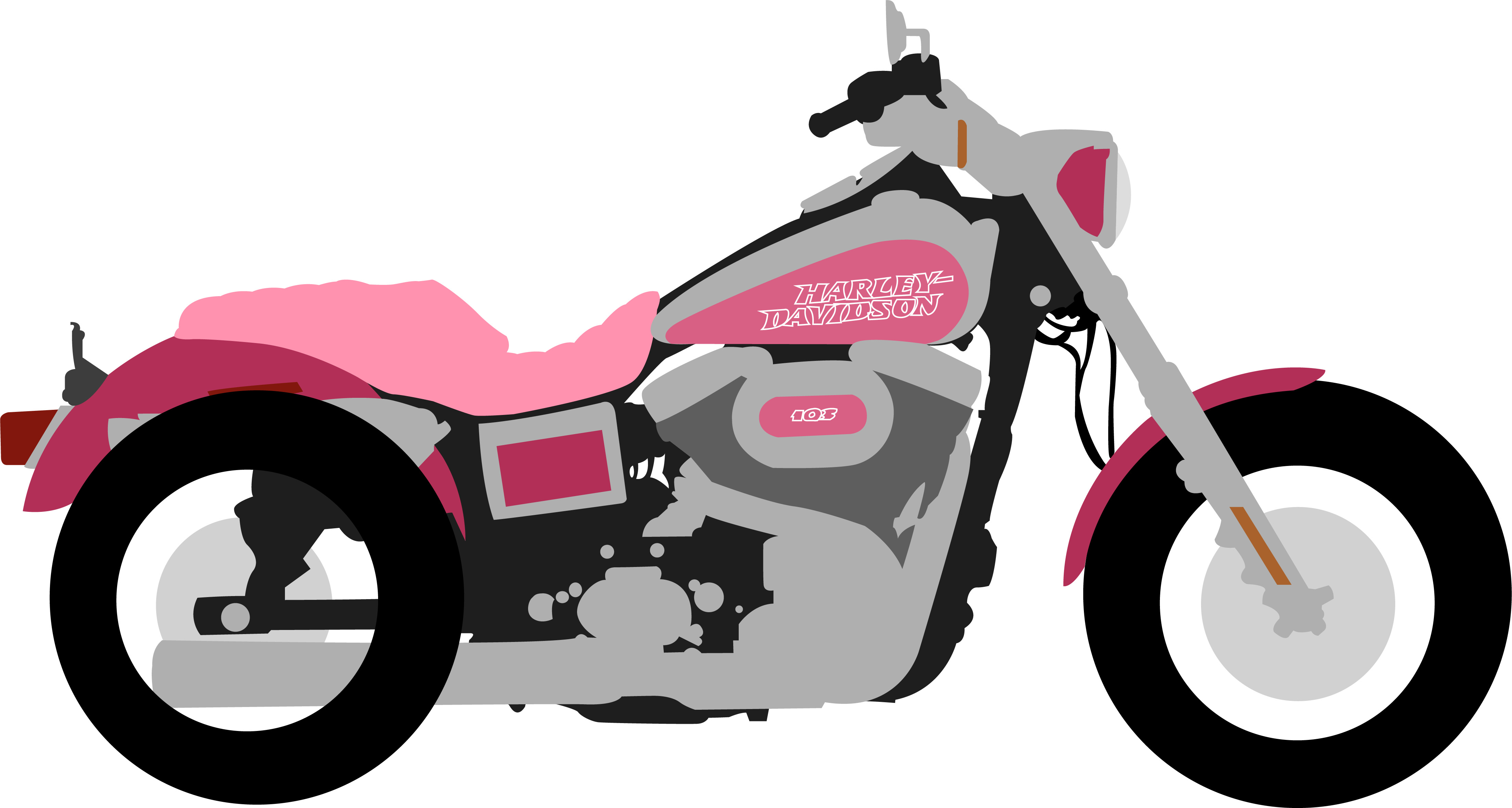
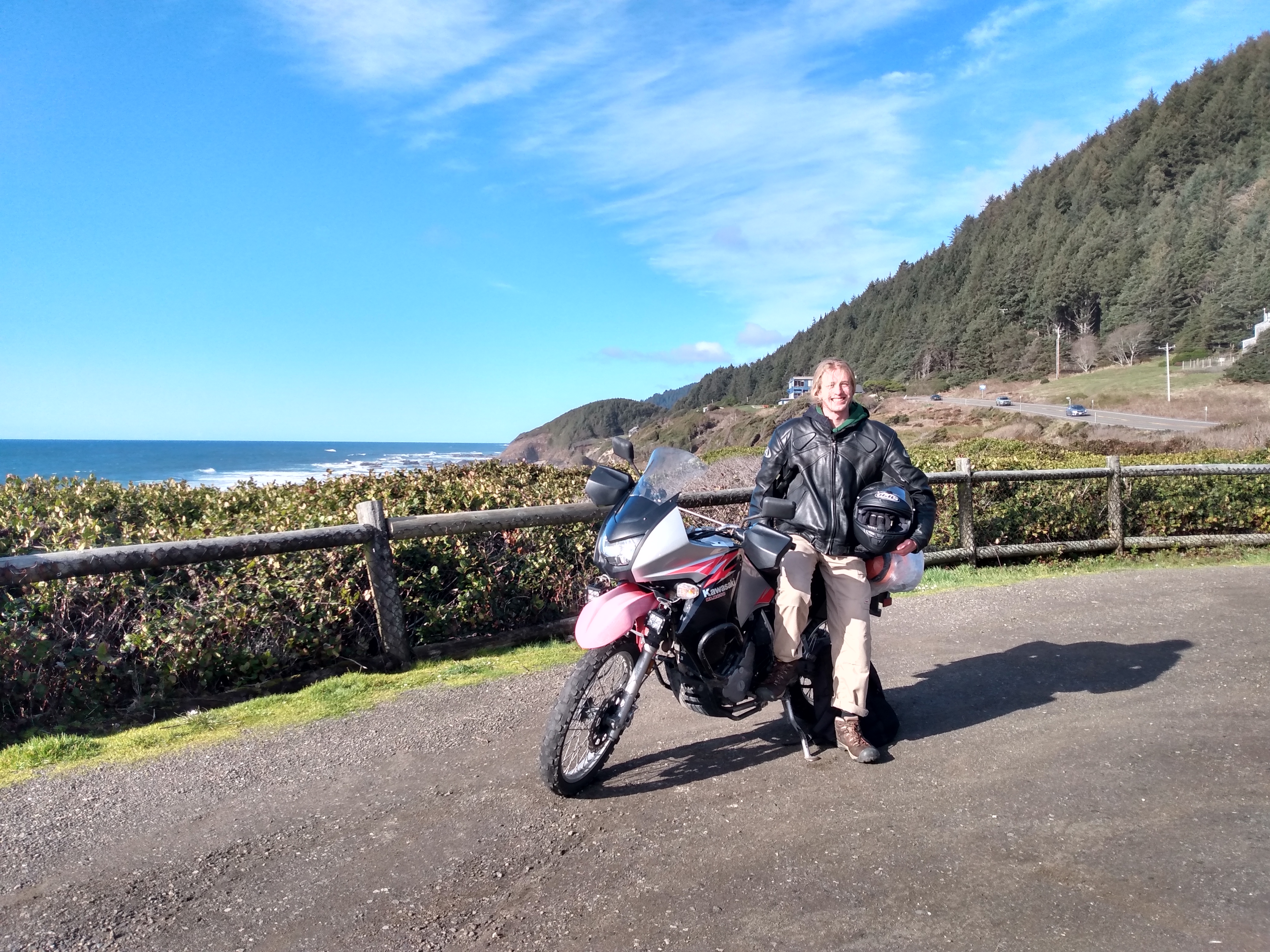
    When the time came to contort myself into a freezing ball of misery in my wet sleeping bag on my trail mix pillow in the shittiest new tent Gold Beach’s finest outdoor store had to offer, I was more than ready to end the whole damn thing and go home. 

    I figured a camping trip on my motorcycle up the Oregon coast would be the best way possible to spend my spring break. Ocean views, cheap campgrounds, and my lust for just getting the hell away from everything for a little while was just about all I needed to convince myself that it would be fun. And it was—for about the first ten minutes I was on the road. It was raining out there, raining like I’d better quit and build an ark instead. 

    Riding motorcycles in the rain is a good time, to be sure, but good god is it dangerous. Not to mention uncomfortable. And soul-draining. Doing something that is dangerous and uncomfortable and soul-draining for any amount of time is hard, let alone for hours on end. By the time I got to Crescent City, I was a wreck, and thanking God I didn’t get into one as well. I drank three cups of coffee and ate a stack of wimpy pancakes at the Denny’s, all the while getting sideyed by the poor waitresses who would have to clean up the ankle deep puddle my leather jacket and jeans left on their polyester chair covers. I dumped out an inch of standing water from both of my boots in the bathroom and almost had an aneurysm trying to force myself to put them back on. They squished every time I took a step and leaked more water than a dollar store fish tank. It took everything I had to swing an anemic leg over the saddle and go north.

    The scenery on the southern Oregon coast is unparalleled—except by the scenery in the middle of the coast and the scenery on the northern part of the coast—and that was the whole reason I had set out on this journey in the first place. It was a killing blow to my morale when I realized I was too cold and sopping to enjoy any of the reasons I was riding the motorcycle in the first place. Very little provided me joy on the desolate and throat-ripping run from Arcata to Humbug mountain—not the cartwheeling delight of tipping a 432 pound machine so close to the ground I could’ve kissed it while blasting around a cliff corner at mach jesus, not a king’s view of the infinite churning sea off to my left, not even the pleasure of being back in my home state for the first time in months. I was in for a very long day. 

    I stopped about 10 miles from Gold Beach on a little turnout with a nice view of the ocean to put some life back into my veins. That’s when I found out that my tent, the one thing I was absolutely depending on, had grown legs and left for someone that would treat it a little better somewhere between there and Crescent City, a whole hour and a half back from whence I came. I gagged and a few tears were pulled from me, but I was numb all over and that was about all I could muster up. I left the bike running and I stripped off my gloves. I put my hands as close to my exhaust as I reasonably could without charring myself, not that I would’ve minded too much if it meant they’d finally be dry. I started calculating how long it would take me to make it back down to Arcata or even all the way to my parent’s place 250 miles up and over. Common sense has never really been my strong suit, however, so I just mounted the machine again and found my way to a store where I could buy a tent. It had mesh walls, and they were paper thin to boot, but it had a rainfly and maybe it’d keep me a little dry. Forcing myself to buy that tent for a ransom of a whole $65 nearly broke me. I was too tired to try strapping it to my bike, especially seeing what had happened to the last tent I tried that with. I used all of my strength and forced it into my backpack, where it stayed until I made it another 20 miles to the nearest campground. 

    I skirted my way past the park rangers and found a site hidden from the road in the hiker-biker section. I was not the kind of biker they were talking about, but I was far, far past caring. I would have done just about anything then for a warm meal and a dry space, any dry space at all. If the opportunity presented itself, I would have pulled a DiCaprio and slept in a horse just because it would’ve been out of the rain. 

    The whole day I had been completely fixated on busting out my brand new stove and fresh new isobutane gas pod and whipping up some oatmeal, something nice, warm, filling, creamy—the adjectives don’t matter. It just had to heat me up. I dug out my lighter and tried to light the stove. The flint wheel–round and round and round she goes! Where the flame is, nobody knows! FUCK! And that was it! I wish someone had just hit me in the head with a sledgehammer and I could’ve passed out for the night instead. I ate trail mix furiously because I could not wait any longer just to get something in me. I headed over to the main campground to see if I could filch a lighter from someone else and maybe get a little fire going, something to dry my clothes out a bit and remind myself why I thought this would be fun in the first place. I found a guy in a giant van with some aliens and other assorted swirly colors on the side who very generously let some rando use his lighter. This was no small act of kindness. My hair had been in the same braid the whole day, more of a breaker box in the basement of a tweaker’s house that’s been raided for copper than a braid. I looked insane.

    I attempted to light a few pieces of the paper I’d brought for tinder. It smoldered and didn’t catch. I tried a few more times. All it did was dissolve. It too had been brutalized by the weather; not wet enough to disintegrate completely, but not dry enough to light. I went through an entire notebook, screaming violently at it while I took gasoline from my tank and sprinkled it on the paper. Not even my reckless bit of environmental degradation would work. I ignored my losses and in a final stand, brought a book and my sleeping bag to the campground shower, where I spent three hours hanging my sleeping bag up and reading in a vain attempt to dry it out. By the time midnight came around, I just gave up and went to bed. My sweatshirt, which had been under my leathers, was more pond than pillow. All I had was a fat sack of trail mix. It was lumpy, but my head was indeed off of the ground and somewhat level with my body. I laid there naked in my sleeping bag. Every inch of sticky, smooth, cushy padding stuck directly to orifices which didn’t need the attention. I shivered and whined my way through the night in my pathetic sleeping bag in my tent without any real walls, trapped in my mind, which offered no escape.

    The park ranger woke me up too early for my tastes and made me pay the fee for staying the night. I was too groggy to argue. All I wanted was out. I packed up my stuff as fast as I could and booked it to a laundromat. 

    LydiAnna’s laundromat was half an hour and an eternity north, but dear god was it worth it. I entered it seeing nothing but black and white, and emerged an hour later floating in vivid pastel. I was finally dry, and I could start having fun. 

    The rest of that day completely made up for the last. It was gorgeous. The sun was out, and I rode through the prettiest stretch of coast in the entire world, the 30 mile strip south of Yachats. Cliffs rise straight from the ocean, looming over clean sand. Every breath there scrubs away the rotted innards inside. It was paradise. No other word would do. Every corner was an opportunity to rejoice. Every ocean vista was prettier than the one before it. Every second there was a new reason for me to smile. I finally felt as if the whole trip was justified, every puking moment from the day before compensated.

    I don’t think long haul motorcycle trips are for everyone. They can be dangerous and brain-shattering. They can hurt. But goddammit if you are tough enough to battle murderous weather and handle the stress and sheer crushing pain of a day’s ride in the homicidal saddle, then you should. It’ll be worth it. 

  • I’m not chill with snow

    I’m not chill with snow

    by Nina Hufman

    Our campus was covered in a thin blanket of glittering white snow. This is obviously rare for the area, and has even more novelty for students who moved to Humboldt from areas that do not receive snow often. Pretty much everyone I know was really excited. They were running around, throwing snowballs, and making snowmen. I, however, was less than thrilled by the ice crystals falling from the sky.

    I grew up in Colorado, where I dealt with snow for up to five months every year for the first 18 years of my life. When I was a kid, I played outside in the snow. When I was in middle school I learned how to snowboard. When I was a teenager, I learned to drive in the snow. 

    I’m used to waking up to find my car frozen and spending twenty minutes defrosting it and scraping the ice off. My usual 20 minute drive to school became a 40 minute drive when the roads were icy; it’s probably safe to say that the novelty of snow has worn off for me. 

    The weather in Humboldt county was a big factor in my decision to move here. I love that it never gets super cold or super hot, and I love the rain. Most of all, I love that I am not inconvenienced by snow. 

    You can call me dramatic – I am and I will continue to be. You can ask me where my childhood sense of wonder is. You can say I don’t appreciate the whimsical things in life. This is blatantly untrue; I am as whimsical as they come. 

    I am not trying to rain, or snow, on anyone else’s parade. Enjoy the snow all you want. Personally, I will be inside, under my heated blanket, trying to keep warm.

  • The snow was joyous, jolly

    The snow was joyous, jolly

    by Harrison Smith

    Wednesday, Feb. 22, was a day of anticipation. Students and professors alike abandoned lectures to fix their noses to frosted window panes, gazing at the snow swirling from the white sky. Some watched the snow with dread, some watched with childlike wonder. Like everyone else, I went to bed that night expecting that the fitful flurries of flakes would falter overnight. After all, it never snows on the coast. 

    On the morning of Thursday the 23rd, I awoke to discover that the spirit of Jack Frost had ejaculated on our sleeping town. I finished my coffee as I watched the white blanket on my lawn grow thicker, then began to bundle up for the ride to class. I chose my outfit with warmth and winter whimsy in mind – from inside to outside, I wore two pairs of socks, long johns, an undershirt, a long sleeve tee, a sweater, a heavy jacket, a shawl, leather gloves, and finally sealed it off with a scarf tied about my head like a babushka.

    The trip to class was like riding my bike through hyperspace. Blowing snow swirled and buffeted me, but I was well dressed for the weather. I smiled a rosy, windblown grin at the huddled silhouettes of students walking to class in hoodies and sneakers.

    Probably from SoCal,’ I thought smugly. 

    There are no snow days for college students, but we find our fun in other ways. Normally, I am not one to linger after class. On Thursday morning, however, I found myself standing in the courtyard of Founder’s Hall, soaking in the tranquility of the scene. My classmate Adam had begun to build a snowman. His bare hands were bright red as he rolled the snowball across the grass. 

    “Mind if I join ya?,” I asked.

    He didn’t. For the next twenty minutes I used my gloves to roll balls of snow across the courtyard, gathering mass like the Prince of all the Cosmos in Katamari Damacy. I would heft the finished ball to Adam, who would then glue it onto the previous ball with handfuls of snow. When we were finished with the primary construction, we began to scour the ground for decorations with which to festoon our frosty friend. Adam dressed him with stone buttons and sculpted his handsome face, and into his mouth I placed a fat joint made of a curl of bark. Humboldt snowmen stay stoned. 

    The snow wouldn’t stick around for long, but Adam and I talk to each other in class now. We’re friendly. Whenever something out of the ordinary happens, humans love to share it with one another. We cannot help but beckon each other outside to play in the snow. 

    As adults we aren’t able to experience the snow like we did as children. It becomes an inconvenience, a hazard through which to drive, moisture in the hair, a cold touch on the neck. But we can still claim the small moments of whimsy and joy that come when the sky turns white. I loved the snow.

  • Feelings on far-away graduation

    by Lidia Grande-Ruiz

    A few weeks ago, I got an email during work asking me to fill out a survey. The survey described how Cal Poly Humboldt is considering a commencement ceremony at a venue in another part of California. If I responded “yes,” I could be graduating closer to home. But Arcata has become my home now. If I were to graduate back in LA, yes, I would be surrounded by my mom, cousin, and childhood friends, but I think I would feel lost and disconnected. I would feel like something is missing, and that would be my peers.

    While another graduation closer to home might sound ideal to those struggling financially, some are not pleased with the idea–myself included. For me, I want to graduate in the place where I attended my classes and made connections to help further my career. Where I formed friendships with my peers and roommates that will last a lifetime, laughed and cried about everyday life occurrences, and crossed paths with people from different backgrounds. I want to be in the place where I had not only a successful college experience, but also an adventure. Graduating in Humboldt county would fulfill my dreams.

    My mom and I have been planning (and saving) for my college graduation and have started telling our loved ones where to go and when it is. When I told my mom about this survey, she was upset with me because she wanted to see me happy on my graduation day. She agreed that if I were to go back to LA I would be depressed because I would not have my peers by my side. 

    I have had my heart set on Humboldt since high school. It was my motivation to strive for the best. Many thought I was crazy, that I would not succeed and have many opportunities being in a rural small town. But Humboldt is where I saw myself smiling very big and wide, walking across that stage. 

    To have this survey sent to me felt like Humboldt stepped on my heart with high heels. It hurt. I was overthinking where graduation was going to happen. Is it actually going to happen? Am I going to walk the stage with my friends and mentors cheering me on to the next chapter of my life? Are me and my mom going to cross ‘Graduating Humboldt’ off my bucket list? 

    All I want is a graduation. But not just any graduation–a graduation proving that this first-gen Latinx student went farther than LA and explored their options in an area where people least expected. 

    I ended up saying that I want to graduate in Humboldt. Not only am I standing up for myself in the present but also to the 17-year-old who wanted just one thing: to attend Humboldt and be able to say, “I went there and came out as a whole new person. Mom, we did it.”

  • Delivery diplomacy: practices in pizza

    by Harrison Smith

    Every job gives you a unique perspective on humanity and the days that we all share. Bakers wake up early and see tired, hungry people come into their shop for coffee and donuts. Gas station cashiers see people only fleetingly as they fuel up on the way to nowhere in particular. Plumbers only come by when your day’s been fucked up by a broken pipe. Pizza drivers spend our time driving in circles and communing diplomatically with the eating public.

    It’s nice to drive around, though. Nice to have your own little sepulcher of music and heated air in which to take refuge from the constant buzz and motion of the shop.

    Driving around Arcata like I do makes me feel like Ralph Waldo Emerson’s transparent eyeball; I see a lot and am mostly ignored by the other cars on the road. We all try to ignore one another just enough to avoid crashing into each other. 

     This is my fourth delivery of the night and I’m ready to take my break. The pizza in the passenger seat is literally steaming out of the bag. It smells so good that it’s unfair. I’m so fucking hungry dude. After this delivery, I’m pulling over for a second to hit my vape and check my phone. 

    And that’s when I hear the freight train coming up, back and to my left. Car parked, I turn in my seat to see the single headlight of the most fucked up Chevy Tahoe you’ve ever seen- and that’s saying a lot, judging from every other Chevy Tahoe. The front passenger side of the car was bent inwards as if by a blow from a giant’s mace. It limps along, half-blinded, screeching as the frame scrapes the mangled wheel. 

    I stared in awe. This car was undrivably fucked, and I wondered if I was witnessing someone fleeing from a hit-and-run. I could not then, and still cannot think of another scenario of how this car was on the road. I didn’t know whether to feel blessed or cursed. As the Tahoe slumped away down the street, screeching its metallic screech, I felt like I had just turned over some obscure automotive tarot, an omen of the road. The Fucked Tahoe

    Driving on the highway so often also gives me a unique window into the nascent drag racing culture of Arcata. People love to race down 101. Usually it’s trucks or dragsters. It’s pretty fucking funny to watch an F150 racing a Miata. Two men competing to see whose dick is smaller. 

    Usually it’s an honor to be a guest, even briefly, at someone’s house. The minute or so I spend waiting for the customer to come to the door is a chance for me to envy their patio setup or their garden boxes. A mound of cigarette butts heaped in a crusty ashtray, a yard scattered with children’s toys. It’s an interesting peek into the lives of our customers. I try not to be a voyeur. 

    As pizza drivers, we are diplomats. Our job is to negotiate with the hungry masses, whose reactions to us range from uncomfortably sweet to frothing at the mouth. It always seems to be older customers who find me a good target for their frustrations, which I honestly find entertaining. Last week, I was a few minutes late to a delivery because my maps app directed me to a house down the street from the customer’s house. I was treated to a three minute rant when I arrived about how every delivery driver goes to her neighbor’s house instead, how she’d called before about this, and how I needed to listen to her instead of some little app on my phone. 

    Sometimes the job is pretty sweet, though. I’ve been tipped in weed more than once; twice, actually, but still pretty cool. My favorite thing about delivery driving is the small, unexpected moment of peace that I find as I walk back to my car after dropping off a pizza. The chorus of frogs grows louder on nights with light rain, and everytime I deliver to the labyrinth of apartments at Hilfiker and Alliance, I get a nice long chance to listen to their song.

  • Humboldt’s heinous healthcare

    Humboldt’s heinous healthcare

    by Valen Lambert

    Humboldt is a quaint place – too quaint to have reliable healthcare. My experience with the healthcare infrastructure here has been ridiculous compared to the more populated places I’ve lived. 

    This isn’t to say that our healthcare workers aren’t working hard. In fact, they’re overworked because there is a shortage of nurse practitioners (NPs) and physicians. Up until 2020, a California state regulation limited one physician to supervise no more than four NPs. With Humboldt’s shortage of physicians, this law directly impacted our health care centers’ ability to hire more NPs, resulting in a lack of health care workers. However, in 2020, AB 890 was passed, allowing NPs to work independently without physician supervision if they meet the required criteria to provide sufficient care. There are people who disagree with AB 890, believing that it will not serve people who need more specialized, significant care. 

    Despite the passing of AB 890, Humboldt is still recovering from its shortage of healthcare providers. It is apparent in the way that I have to wait two months for a doctor’s appointment, and in how I was turned away from urgent care because they had already met max capacity by noon. 

    I am one of the 36% of people in this county who get their health coverage through the government funded Medi-Cal. Another 30% get support through Medi-Care, which is for seniors or people with disabilities. That means over half of Humboldt’s population is vying to be seen by the few primary care clinics that take government issued insurance, most of which often aren’t accepting new patients because they’ve reached capacity. 

    I got lucky and was able to find a provider taking new patients, but it doesn’t surprise me that my appointment for a first visit was scheduled to be two months away. I was hoping to get a referral to a physical therapist for a shoulder injury. What would I do if I had a really pressing issue? The urgent care in Humboldt is a nightmare. If you’re lucky to get there before they’ve reached capacity for the day — in which case you’d have to come back the next day — then you’d be waiting three to four hours to be seen. This in no way reflects the hard-working personnel of these facilities, but is a side-effect of understaffed rural healthcare systems.

     If you look at the reviews for the urgent cares and hospitals in Humboldt, they tend to get a lot of negative reviews and low star ratings, usually for wait times and inaccessibility. I’ve never been one to care much about reviews but when it comes to my local hospital, that’s something I’m sure we’d all prefer to read positive reviews for. Arcata’s local Mad River Hospital unfortunately has two-and-a-half stars on Google reviews, mostly from people waiting several hours for walk-in care at the emergency room, giving up, and eventually driving to St. Joe’s in Eureka, which has even less stars.

    Thankfully, here on campus we have the Student Health Center. It’s decent, cheap, and won’t have you waiting hours on end while your bone is popping out of your skin and you’re bleeding out on the curb. 

    Don’t even get me started on trying to find a dentist in Humboldt that takes Medi-Cal. The only dentist office that does is in Eureka and is usually not accepting new patients. Many folks with Medi-Cal have to go to Redding or Santa Rosa to get the dental care they need. You best believe I’ve been flossing since I’ve moved here. 

    I love Humboldt, but my experience with healthcare here has been disheartening. What does it take to bring more health practitioners to Humboldt? How do we fix this problem? I’m wearing my helmet, seatbelt, taking all my vitamins, being so safe I’d make my mother proud – I sure as heck don’t want to be delusionally waiting around for acute care.

  • Weathering situationships, the right way

    Weathering situationships, the right way

    by Valen Lambert

    Gen Z has been turning tradition on its head. Gender? That is so last season. Sexual preferences? All of it. Partners? Four and we’re all best friends. We’re holding the reins of a cultural revolution that’s redefining intimacy, sex, and identity. It’s beautiful, empowering, expansive – and oh-so confusing when we enter uncharted lands. 

    With polyamory and open relationships becoming the new norm in our alternative communities, we’re finding another gray area of intimacy that some may call the new epidemic: situationships. Love them or hate them, they’re here to fuck up your emotional algorithm if you don’t have the proper interpersonal toolkit. They are not for the faint of heart. 

    Urban Dictionary defines a situationship as, “more than friendship but less than a booty call…it is a romantic relationship that is, and will remain, undefined.” I dunno bout ya’ll but when I was in high school we called this having a “thing” with someone.

    I’ve been in a few myself. They were lovely, occasionally regrettable, fleeting experiences that teetered between friendship and romance. If you’re like me and are afraid of commitment, they’re the perfect dose of attention. Most ended diplomatically on great terms or, quite rarely, through a complete ghosting by me or the other.   

    There’s some finessing to be done if you don’t want you or your cutie’s heart to be pulverized like a butcher’s steak. First, you have to check in with your own emotional capacity. Where is your heart at, how much can you show up right now, and how much do you need the other person to show up? I’ve broken a few hearts in my day because I lacked the emotional maturity to confront my own boundaries, and to communicate that clearly with my partners.    

    Maybe you enter a situationship because neither of you are ready for commitment, but also can’t help having crushes on eachother. That’s fine!! Relationships can be whatever the heck you want them to be. 

    I might be preaching to the choir here, but communication is the most important tool in your belt for these dirty jobs. Upon initial canoodling, discuss your preferences and needs with your cutie. I know it goes against the sacred rule of situationships, to stay “undefined,” but there is no harm in laying down how casual or serious you both need it to be so everybody knows how to move forward. 

    If you want sex with occasional cuddles, cute dates and intermittent cheek kisses, make that clear! If you just want to hook up but study together sometimes, let ‘em know! If they’re down, then fuck yeah! If they’re not, don’t waste your time with anything more or less than what you want, no matter how hot you think they are. You’ll really have to practice some self control (trust me), but you’ll be so happy you did. 

    You deserve to be in a relationship where your partner is on the same page as you, clear about where you stand, and good to your nervous system; even if it’s just a romantic puddle and not the great oceans of love. Communicating where you’re at and what you need is sexy, and helps you feel more autonomous in a situation that would normally leave you feeling powerless.

    If you’re chronically in a situationship and hate it, or are forced into a situationship with someone you’re head over heels for, there’s some boundaries to be made. So pull up your sleeves, listen to some Erykah Badu, and get to feeling your bad self.

     There is an important distinction between intention and attention. Some cutie may be giving you a lot of attention, but lacking in the sort of intention that’s actually worth your time. Intention can exist in a casual dynamic; it’s a presence and attentiveness that makes you feel seen. No matter how loose the situationship, you know the person genuinely enjoys your company and doesn’t take it as something that merely entertains them or distracts them from their homework. Again, there ain’t nothing wrong if both parties are on the same page about just seeking “entertainment,” but if you feel that there is an asymmetry in feelings or intentions, it’s time to jump (situation)ship. 

    Lots of folks love to hate situationships. For some people, they can’t handle that in-between space; either needing just friendship or just a relationship. It’s stressful for folks. And there’s nothing wrong with that! But if this sounds like you, listen to your gut and tread lightly around the experimental zone that is situationships. 

    They’re jam packed with emotional turmoil, but only if you don’t know what you need or how to communicate it. You can create your ideal dynamic with someone who aligns with your needs. The beauty of situationships is that they aren’t going anywhere! They can be a pleasant ephemeral exploration of pleasure and humanity that teach you what you really need when it comes to more serious relationships. They can help you explore your romantic and sexual identity. They can teach you so much about interpersonal communication. We’re young and everything is an experiment! So get out there baddies.

  • Fuck cars

    Fuck cars

    by Harrison Smith

    At any given moment in Arcata, there is a game of frogger being played at a grand scale. Students who walk or ride their bikes to class are familiar with the everyday peril of crossing L.K. Wood Blvd where it meets Sunset Ave. Drivers rolling down the Sunset overpass towards campus regularly blow through the long, winding crosswalk, which is about as useful at protecting pedestrians as is a paper shield against a lance.

    I have lost count of the times I have almost been hit by an unaware driver while riding my bike to campus. The three gauntlets which I run daily are the roundabout at Foster Ave, the intersections of Sunset and H St., and the aforementioned L.K. Wood crossing. At the Foster roundabout, I was nearly paved into the street by a lifted white (and squeaky-clean) F-150. I let out a perfunctory, “Fuck you!” to the prick whose $35,000 dealership-bought manhood nearly killed me. His response was to pull the truck to a screeching halt in the middle of the roundabout, hop down from the cab, and scream, “You got somethin’ to fuckin say?” I, who had a chemistry quiz that morning, did not have anything to say. I turned my happy ass around and rode away. 

    Last Wednesday, my boyfriend witnessed three separate screaming arguments in quick succession between drivers waiting their turn to cross the intersection of Sunset and H St. It even sucks to drive here, let alone walk here. Driving everywhere has made it impossible to walk anywhere. So why do we design our cities like this?

    Because of Robert Moses, baby. The Biblical Moses may have parted the Red Sea, but Robert Moses did something far more impressive–part every street in the United States (and the world) with a stream of cars. Robert Moses was the municipal planner for the city of New York for over forty years, beginning in 1924. He was never elected to office, but nevertheless used his position in city planning to dramatically expand New York City’s automobile infrastructure, and thus structural racism. 

    Moses worked like a factory farmer, plowing up historically Black and low income neighborhoods to sew a crop of asphalt and steel. He connected the boroughs of New York with the ribbons of highway that would come to serve as a shining example of urban design to younger architects all around the country. He designed his infrastructure to exclude public transit—for example, Moses ordered the bridges over the Jones Beach Parkway be built too low for buses to access the beach, ensuring that it was only accessible to those (white) people prosperous enough to own their own automobiles. 

    Robert Moses shrugged away this mortal coil in 1981, but his legacy lives on in the 4.17 million miles of road that stretch across the United States and the 286 million cars that ply them. City planners in the latter half of the twentieth century followed the example set by New York, designing cities to be traveled by private car. 

    The only future for our planet and for our cities is one with streets designed for people, not cars. Ride your bike to class. If you’re unable, take the bus. If you can’t take the bus, carpool with your friends. Agitate with the city council for safer streets. Fight for a car-free future.

  • Body positivity is sexy

    by  Lidia Grande-Ruiz

    For the longest time, sex for larger people was a taboo subject – it wasn’t considered normal and open to talk about like how it is today. Sex should not only be the best experience, but also a time to try new ideas without being put down. It should be an experience in which one not only feels good about themselves but also builds a trusting bridge between themselves and their partner.

    Recently, my friend/co-worker and I were discussing how sex for plus sized women has made many of us super insecure, especially in entering a relationship. We discussed how negative views that society has instilled on larger people has made us insecure of our bodies, how even wearing lingerie was out of the question for us. Porn often labels the videos which do portray plus-sized people as ‘fat girl this and that,’ and it’s disheartening. It’s like society is telling plus sized people that we shouldn’t experience a fucking orgasm.

    Growing up in a Latinx Christian household, sex was only brought up in discussions around preventing unwanted pregnancy. It also did not help that I grew up in the 2000s; during that time, bigger people were rarely ever shown or mentioned in TV, fashion, or sex. Bigger people were brought up with the mindset of, ‘if I gain weight, I will be forever alone and single.’ The only time a plus sized individual was mentioned in media was during a before-and-after diet success story, or as the butt of a joke. That kind of trauma is brought back in bed and when we want to feel free, we feel instead trapped in an endless cycle of body negativity.

    My roommates and I were discussing the other night how sex should make us feel. One of them mentioned how sometimes on a day when they felt bad about their body, sex helped them feel sexy the next day, especially as a non-binary individual. Another of my roommates spoke on how sometimes trauma from a past relationship can make us feel like we are not worthy of anything. That struck a chord with me.

    For the longest time, my ex would make me feel like I was not worthy enough. There would be times that he would look at me with disgust, both in and out of bed. It made me feel like all I am is a score and when that came to my mind, it got me thinking about bets. 

    Growing up, I was relentlessly bullied about my size. When I saw his true side, it broke me into a trillion pieces. It brought me severe flashbacks of my first relationship, and I built a wall. It didn’t help that his friends joined in the laugh, and half of them were plus sized women. It left me feeling humiliated, but also unworthy of ever finding a caring partner and friendships.

    I am in a much better place now, surrounded by individuals who care about me and understand the trauma. We have the right to feel amazing about ourselves, at all times but especially during sexy times. It should be a time in which we can shut the world out, feeling not just fireworks but also a safe haven.

  • White choirs shouldn’t sing spirituals

    by August Linton

    The last time I sang in a choir concert, I felt uncomfortable singing one particular piece of music from the repertoire. The song was “Everybody Rejoice (A Brand New Day)” from the soundtrack of iconic 1970s movie musical “The Wiz.” It wasn’t that the notes stretched my voice, or that the melody was hard to remember. Rather, it was the historical context of the song which made me think twice about performing it; as a white person in a majority-white choir. 

    For those who aren’t familiar with “The Wiz,” it’s a 1978 retelling of “The Wizard of Oz” starring Micheal Jackson, Diana Ross, Nipsey Russel, and Lena Horne. Hailing from Brooklyn rather than Kansas, the Dorothy in this adaptation is whisked away from a Thanksgiving dinner to an Oz more city than rolling field. The musical accompaniment to her adventure is influenced by Disco, Soul, and R&B. 

    The song in question was brought to my choir by the director and upon reading the lyrics I almost immediately had misgivings about singing it, given the lyrics’ explicit allusions to the end of slavery in the U.S. and its connection to spirituals as a musical genre. An excerpt from those lyrics follows.

    Everybody look up

    And feel the hope that we’ve been waiting on

    (Everybody’s glad)

    (Because our silent fear and dread is gone)

    Hello world

    It’s like a different way of living now

    (And thank you world)

    We always knew that we’d be free somehow

    In harmony

    Let’s show the world that we’ve got liberty

    It’s such a change

    For us to live so independently

    Freedom, you see

    Has got our hearts singing so joyfully

    It seems undeniable to me that these lines are an explicit reference to slavery, the deliverance from which I am uncomfortable celebrating via such a personal medium as singing as someone who benefits from its legacy. 

    This isn’t the only time I’ve had these misgivings. Choral singing as a whole seems to me to have a problem with cultural appropriation. There are entire genres of choral music which appropriate the musical traditions of minority groups while tokenizing their non-western styles. 

    As a member of a state-level auditioned choir in 2016, I was asked to sing “Witness,” an arrangement of traditional American spiritual “Who’ll Be a Witness for My Lord,” by white composer Jack Halloran. Various other western choral arrangements of traditional African, Latin American, and Asian songs similarly leave me with an appropriative taste in my mouth. 

    The musical heritage of Black Americans in the wake of slavery, especially, shouldn’t be taken by the choral world for its musical value without first considering what power structures are at play. 

    Everybody look up

    And feel the hope that we’ve been waiting on

    (Everybody’s glad)

    (Because our silent fear and dread is gone)

    Hello world

    It’s like a different way of living now

    (And thank you world)

    We always knew that we’d be free somehow

    In harmony

    Let’s show the world that we’ve got liberty

    It’s such a change

    For us to live so independently

    Freedom, you see

    Has got our hearts singing so joyfully

  • My beef with Humboldt cuisine

    By Jasmin Shirazian

    I love singing Humboldt’s praises, I really do. It took a minute for me to warm up to this little village tucked away so far from my home, but I’ve grown to enjoy almost everything about the area. Besides the food. 

    Humboldt is truly lacking in 2 things: ethnic people and ethnic food. Maybe I’m spoiled, privileged and blessed to have grown up so close to so many different cultures, but it truly disheartens me to see people up here enjoy the white-washed ethnic establishments and even compare it to food down south – that they’ve never even tried. I hate to break it to you, but you haven’t eaten until you’ve eaten food in southern California. I’m talking by the border, southern California. 

    What I’m trying to say is, there is no real, authentic Mexican restaurant that would ever name themselves “Hey Juans.” That’s like going to a burger place called “Hi John.” It’s a weird name and I would question the food. The burger would probably be raw. Not to mention, whatever you order is probably gonna cost your entire life savings and then some. Seriously, who charges an extra $3 for avocado? I will literally just go and buy a full avocado. Let’s not be silly, crazy and goofy now. 

    Food in Humboldt is so insanely overpriced that it genuinely hurts me when I indulge in a little treat and decide to eat out. I just cannot wrap my head around the fact that “Hole in the Wall Great Sandwiches” charges $17 for a turkey sandwich. Like, that makes me physically ill. How do you not feel like a demon charging more for a sandwich than the hourly wage you pay your employees? Personally, I would feel morally corrupt, but to each their own.

    Don’t even get me started on the bagel places up here. Yeah, “Los Bagels,” this one’s for you. An extra $1 for each topping? When the base price of this god forsaken bagel is already like, what, $5? Now you want to charge me an extra $1 for 3 slices of an onion? Criminal behavior. You are robbing me. Thief. 

    Anyway, an hour away from the border, San Diego County is home to the most delicious food you could imagine. There’s Korean BBQ, Thai, traditional Mexican, Persian, Ethiopian, Brazilian and anything else you could ever imagine. Even random mashups of food, like the newly opened “MochiNut,” which is literally like mochi and donuts smushed together. 

    If you drive north a couple hours, you’ll find yourself in LA, where the options are equally endless, but you’re definitely gonna feel it more in your wallet. At least, in LA, the overpriced food is usually worth it. I love LA – if you can ignore the transplants – but there’s nothing like going to Castañeda’s at 5 am with your friends because you couldn’t sleep and then heading to La Jolla to watch the sunrise. 

     That’s another thing; down south there are an unlimited amount of options that stay open late enough for potheads like me to be able to run out and get a munchies meal. If it isn’t open 24 hours, chances are it doesn’t close until at least 2 am. 

    And then there’s the lack of fast food in Humboldt. It is genuinely hard to convince my friends to come visit me up here when there’s a KFC, but not a Popeyes. I get wanting to keep it mom-and-pop shoppy, but who in their right mind picked a KFC over Popeyes? The white man’s fried chicken over cajun-style fried chicken? Inherently racist. 

    That’s pretty much my only beef with Humboldt – the lack of seasoned beef. The air here is nicer, I can drink water from the tap without worrying about hundred-year-old minerals from deteriorating pipes, the foliage is incomparable. At the end of the day, though, I need to not be the only middle eastern person in a hundred mile radius, and I need access to that food to be happy. In my not-so-humble opinion, Humboldt would be perfect if it just had more color to it. 

  • Letter to the editor RE: Faculty union challenges TimelyMD

    Letter to the Editor 

    I am writing in response to the article published on 11/16/22, “Faculty Union Challenges  TimelyMD.” While I was frustrated by the one-sided tone of the article, as well as the  unsubstantiated claims, and inaccuracies, within it, most of all I came away from it feeling sad  and disheartened as I believe that, ultimately, the article is damaging to our students. The article  was published immediately prior to fall break—a time when Counseling & Psychological  Services (CAPS) was closed, and many traumatized, isolated, and struggling students would  have benefitted from seeking help from TimelyCare therapists. The article essentially  discourages students from seeking such support due to its unfair characterization of TimelyCare.  For example, the sub-heading of the article calls it an “online faith based counseling service”  while it is nothing of the sort (strangely, acknowledged late in the article, contradicting the  earlier claim).  

    The University contracted with the company “TimelyMD” in order to expand health services on campus during a period of very high need, through special one-time pandemic funding. This  funding, incidentally, could not be used to hire additional faculty counselors at CAPS. The  CAPS faculty counselors were not replaced or harmed by the contract, instead they gained a  partner in caring for, and expanding additional services to, our students. Contract or no contract,  on-site counseling at CAPS will be expanding in the years to come. 

    It bears repeating, TimelyCare is not a faith-based counseling service. With a client base of about  250 colleges and universities, they have a breadth of providers to appeal to and serve the breadth  of their population base. Their clinicians represent and reflect the diversity of the student  populations served throughout the 38 states where they have contracts. 

    Counseling is just one of many of the health services TimelyCare offers. They provide same-day  and appointment-based medical services, psychiatry, health coaching, and psychoeducational  activities too. We wanted our students to have 24/7 access to these services whether they live  locally or across the country. We wanted our traveling athletes to have access to all of these  services. We wanted our students of color to have access to therapists with similar identities. We  wanted all of our students to have “more”—more access, more choice, services over the winter  and summer breaks. And, of course, as always, access to CAPS therapists when school is in  session. 

    The argument that we should avoid business with companies that have a presence in one of the  23 travel-ban states is misguided and unrealistic. The CSUs, just like universities everywhere,  have many business relationships / contracts across the nation. TimelyMD may have  administrative offices in Texas, but the company and its employees are located across the United  States. Most of the therapists who work with our students live, and are licensed, in California.  

    The article implies that students who come to CAPS are automatically referred to TimelyCare.  This is not accurate and is oversimplified. The truth is that referrals are commonplace in the  health industry and there are some cases where CAPS clinicians do refer to TimelyCare and  other resources. October is always our busiest month of the year and historically we have had to  refer students to other services at this time of year. Like any mental health facility, we must  triage and figure out how to make the best use of all of our resources in order to provide 

    students with the care they need. Typically, at this time of year, we would be referring many  students to off-campus private practitioners where they would need to pay out of pocket or use  their insurance, and it can be hard to find someone with an actual opening. Now, with  TimelyCare, we are able to also offer students a referral that will have no added expense, where  they are guaranteed access, and that will work closely with CAPS to integrate care. With this  contract, we doubled the services that students can access. 

    The idea that this service “puts faculty at a disadvantage” is just not true. The therapists at CAPS  have an extra resource at their disposal. Clients in need have access to immediate support in the  evenings and weekends when CAPS is closed—this gives the providers at Student Health &  Wellbeing Services (SHWS) peace of mind and can be an important part of a treatment plan. 

    The claim that this “poses a new risk to students engaging with TimelyCare” is  unsubstantiated. In fact, the ratings of TimelyCare counseling have been consistently high. For  example, the average provider rating is a 4.97 out of 5. If any student has concerns about the care  that they have received from TimelyCare clinicians, I encourage them to talk to me or a CAPS  clinician to address it. We want to make sure our students are getting high quality and  compassionate care whether it is through CAPS, TimelyCare, or an off-campus referral. 

    The statement that we are “outsourcing responsibility for our students’ wellbeing” is simply  unfair. We have not replaced CAPS clinicians with this service, instead, we have supplemented  the breadth and depth of services available. Our students of color have a greater diversity of  clinicians to choose from; students can seek care in the evenings; and out of state students are not  turned away due to licensing regulations. In my view, the campus is taking responsibility for our  students’ wellbeing by offering expanded services during a national mental health crisis. Students  can get real help—not just a nursing line or a crisis line—24/7—in addition to the substantial  services that our medical and counseling teams provide. 

    As always, we encourage students to be informed participants in their health care, whether with  us, TimelyCare, or outside practitioners or agencies. When students are seeking therapy through  TimelyCare, I encourage them to look through the clinician bios or call the customer support line  to find a therapist that is likely to be a good match. The therapy relationship is an intimate one  and the therapist-client match is important.  

    I sincerely hope that students will take full advantage of all the wellbeing resources available to  them. I have dedicated my career to the health of our students and I would hate for anyone to be  deterred from being their own advocates and getting the support they deserve. In the future, I  hope that Lumberjack reporters will seek comment from SHWS leadership prior to printing an  article that addresses mental health resources for students, and that may negatively impact their health and wellbeing. Neither myself nor the Int. Associate Director of CAPS were consulted  prior to the article’s publication. 

    Sincerely,  

    Jennifer Sanford, PhD, Int. Executive Director, Student Health & Wellbeing Services; Director  of CAPS 

    Cal Poly Humboldt

  • Power does not come from the vote

    by Carlos Pedraza

    Another election and another vote for the soul of the country ends in a practical tie between Democrats and Republicans that hardly feels like a victory. In 2020, I canvassed for Bernie Sanders and was a believer in ‘voting blue no matter who.’ I was an election believer; I wanted to remove Trump and Republicans from power to stop the gutting of the EPA and welfare programs. But now I don’t see the point.

    While media pundits and people in my classes tell me of the dangers of Republican fascism and oppression, the question I want to ask people is, “What do you want?” 

    What I want is better welfare programs, but Democrats won’t pass those. Build Back Better was stopped by two Democratic senators, who went rogue by voting with Republicans. I want the working class to control its own fate. When the ruling rich raise rent and the cost of living while keeping wages low and conditions bad, the workers could challenge them through voting if a party spoke for them. But the Democrats are not and have never been a working class party. 

    Workers need to remember that our power comes not from a vote but in our numbers, words, and ability to strike. We got social security, minimum wage, and medicare not from virtuous moral politicians but from a militant working class movement organized through the parties and unions. 

    Our numbers will always be greater than the rich as capital is consolidated into fewer and fewer hands. We can demand power whenever we choose; we only need organization. In 2011 the Occupy movement was the first time in decades that wealth inequality became a political issue, but the energy died out without an organization to sustain it. Without a charismatic leader like Sanders or an economic crisis, working class issues are ignored. The only way to keep them in the political conversation is to have our own organization independent of the Democrats and Republicans.

    Anything you think you get from a Democratic government was won by a party that does not exist anymore. The party today is passive and only wants stability so capital can continue to profit; how they profit does not matter to Democrats. Democratic leaders like Pelosi and Schumer always advocate for compromise and moderation when we all know it is time for radical change. Just look at the cost of living; rent is high, food and gas prices are soaring. Why would voting for them again change anything? 

    This is why I can’t vote for Democrats anymore. Nothing changes, life gets harder and they don’t care. I had a lot of emotional energy invested in the Sanders campaign, and how that election played out was a big hit to my faith. I have heard people say to get back into the fight again, but I think elections are a dead end. 

    What about propositions? The way that they are written is meant to confuse the general public. How is a normal person supposed to know how to vote? I can’t spend hours reading 40 articles on props and tracking their supporters and funders. Our political system was made for rich landowners who did not have to work, and I think modern props reflect this. They were introduced as a progressive reform for direct democratic participation, but are now so confusing that they alienate working class voters.

    Politics does not have to begin and end at the ballot box. Participate in a union drive, join an organization independent of the two parties, most importantly develop a class consciousness. Class consciousness arises from experiences of working to pay off loans or rent. Think about how your boss and landlord profit from your labor, and who keeps the vast majority of the money you make. Talk to your co-workers and see how your interests align.

  • It’s your responsibility to vote

    by Cash Rion

    With the midterm elections ending and the votes being counted, many people are breathing sighs of relief that it’s over for the time being. It’s exhausting trying to keep up with the 24 hour news cycle and be informed about political candidates, I understand that. We see races that come down to choosing the lesser of two evils, and it feels like our vote doesn’t count. Why spend all this energy trying to be informed if it feels like we can’t make a difference?

    But voting is so incredibly important; the smaller the election, the more power your vote has! While national elections are determined by tens of thousands of votes, local elections sometimes determine the winner by single votes. The smaller the election, the smaller the voting population, and the more control you have over the issues. 

    Voter suppression efforts are alive and in full swing across the country. Use your vote for the disenfranchised; use your voting privilege to make things better. Republicans are so terrified of marginalized people voting that they are doing anything they can to silence their vote. If voting doesn’t matter, why are they trying so hard to stop it? It’s because Republicans know what we can accomplish with our hard-won voting rights. From gerrymandering to flat-out election denial and Jan. 6, Republicans are trying to call into question the validity of the electoral process.

    Voting is one of the most effective ways of making the views of the masses heard by those in power. By voting, you respect history and the sacrifices made by those who came before you, as well as activists today who continue to fight. If you believe ACAB, vote! Felons are another group who can’t vote, and a big reason for a lack of prison reform is that those who have experienced the issues are often banned from voting to change it. 

    Being informed is hard. Looking at four page ballots of names of people you’ve likely never heard of, for positions you don’t understand is daunting. But you don’t have to do it alone! Get your friends, roommates, family together and make an event out of it! Get snacks and some drinks for that salty and sugary brain energy. A word of advice? Always have a copper camel when you vote, but never have more than one copper camel when you vote! (Don’t know what that is? It’s a drink that can make voting more fun!)

    Split up the ballot: each person takes some names to research so as to not get overwhelmed, and the cheery atmosphere makes it not feel like a chore! Who knows, maybe you’ll find some particularly funny tidbits about candidates – my roommates and I discovered that one of the candidates on this past ballot has some choice poetry online! I think more candidates should write poetry, no matter how good or bad it is.

  • Personal Fave Mexican Places in HumCo

    by Steffi Puerto

    Growing up in the East Bay, specifically Oakland, I consider myself a foodie at heart. Food has always been significant to my identity, culture, relationships, and overall experience of enjoying life. My favorite memories have always been the ones where food has been involved. 

    I have lived in Humboldt County for a little over three years. Quickly, I was shocked to find out that the ethnic food here was hit or miss. I have spent a greater part of the last three years trying a variety of Mexican food that I enjoy best through my personal palate. 

    It seems like everyone has a variety of views on the best Mexican food in the area. Arcata residents who have come from every corner of California and even from out of state voice bold opinions of what they think is the best Mexican food. Some are valid, others should be reconsidered. 

    It’s one of my favorite questions to ask when I am hanging out with people, because I feel like I can get a good read on them based on their answers. Without a doubt, you’ll get a response like Rita’s or Hey Juans, which I personally would dismiss. Why would you actively participate in having olives, lettuce, and sour cream on your Mexican food? 

    So you might be wondering what Mexican food places I actually like. I have three excellent Mexican food trucks/restaurants that I would recommend to anyone who wants to enjoy some delicious food. 

    Let’s start off with Los Giles. It’s an Arcata classic. Personally, I hold Los Giles close to my heart because you can find them anywhere and everywhere. They satisfy your craving at local community or on-campus events, and even after a late night of drinking, outside Richard’s Goat. My go-to order usually consists of a California burrito de al pastor which is a burrito filled with sour cream, fries, pico de gallo, beans, rice, and the very sweet and savory al pastor. I also enjoy getting four tacos de carnitas con todo, which consists of diced onions, cilantro, and their green salsa and crispy carnitas. On the other hand, you can also never go wrong with an order of their famous steak fries: crinkle cut fries topped with sour cream, guacamole, pico de gallo, and cheese on top of their steak. Their food and ambiance are what make this place truly good. 

    Tacos del Gallo is a new gem that I discovered last spring. It’s a cute little black taco truck that parks outside of RMI outdoors right across from Eureka’s Broadway Theater. I personally love this place because it reminds me of the taco trucks from home. Thick grilled onions and slices of grilled jalapeños really add to the experience of enjoying my delicious street tacos. They also add a little bag of chips and homemade pico de gallo to really top it off. My go-to order would definitely have to be four tacos de al pastor with a delicious agua de tamarindo. They also have really good tortas, burritos, and a small yet delicious variety of agua frescas. The authenticity and friendliness of this food truck establishment are what truly make me enjoy my food. 

    Cocina Mariposa is another Eureka Mexican restaurant that I really enjoy visiting because they offer savory Michoacan style food and agua frescas of the day. They give you a side of bean dip and chips with your food. This location sits on the Eureka Municipal golf course. There’s the option to dine outdoors or inside as well as a to-go option. 

    I was introduced to this restaurant by my best friends who put me on to the place after hearing their various opinions and they were not wrong. I personally love to get al pastor street taco plate, a torta de carnitas, or a California burrito de al pastor. I enjoy that they offer an agua fresca of the day, because I know no matter which variety it is, it’ll be cold, refreshing, and sweet. I enjoy this place because it reminds me of summer: savory and vibrant flavors as well as enjoying it with the people I love the most. 

    Needless to say, these restaurants are my favorite in the county, because besides offering good food and service they are unique to themselves. I have enjoyed different aspects of food influences and vibe settings these places offer. It is what makes their establishments unique from one another. I would encourage anyone reading to try these restaurants out, by themselves or with a group of friends. Enjoy your food and the ambience of your company. Food is meant to be enjoyed and shared. 

    Los Giles 

    Follow them on Instagram @losgilestaqueria to stay up to date with their events

    Tacos del Gallo  

    1240 Broadway St, Eureka, CA 95501

    Monday – Saturday 10:00 am – 7:30 pm

    Cocina Mariposa 

    4750 Fairway Dr, Eureka, CA 95503

    Tuesday – Sunday 9:00 am – 6:00 pm

  • Humboldt college merch should be affordable for students

    by Alina Ferguson

    Cal Poly Humboldt, while having relatively affordable tuition and options for scholarships and financial aid, is still robbing its students blind with the cost of apparel, food and general items at campus stores.

    One of the ways the school robs its students is apparel. For students it costs an arm and a leg. The hoodies and tees on sale at campus stores are much too expensive for most students’ budgets. Students should be paying discounted prices for their items, as many struggle just to get by. Most students have a heavy course load, debts from tuition and living costs, and not a lot of time for work. 

    The school should be able to offer apparel to students if not for free, then at a much reduced cost. Consider all the other ways they are finding to screw us out of our money, all the options they have taken off the meal plan. Quick side rant, it used to be possible to get two milkshakes on one meal plan. Sounds unbelievable, huh? The school has stopped offering a myriad of items for their meal exchanges, limiting the amount of options students now have for the meals that are covered in the amount that they have already paid. 

    Students wearing merch are a sort of free advertisement for the school, like a sponsorship deal. Typically sponsorships include some sort of incentive, like free apparel to compensate the wearer for representing the brand.

    Since we, the students, are already paying tuition, living costs, and the cost for food, we are not getting anything for free. For representing, or sponsoring the school, we should at least get some free merch as with most sponsorships.

    This is not necessarily exclusive to Cal Poly Humboldt, as many schools charge students for apparel. The fact that students are being charged is not so much the issue, rather how much we are getting charged. It would be more tolerable if Cal Poly Humboldt offered merch for students at a reduced cost. 

    The simple answer or solution to this “non-issue” as many see it: don’t buy apparel. If it is too much money, you don’t have to buy it. But it is nice to be able to rep your school, to walk down the street flaunting that you attend a Cal Poly. I pay to go here, I’m smart enough to. It’s a nice feeling. The school should “pay it forward” and discount merch for students.

  • PSA: Mexican Independence Day does not equal Cinco de Mayo

    PSA: Mexican Independence Day does not equal Cinco de Mayo

    by Victoria Olsen

    Cal Poly Humboldt is an Hispanic Serving institution (HSI), so it is significant for students and faculty to be knowledgeable of these events. Latinx Heritage Month takes place from Sept. 15 to Oct. 15, acknowledging the time frame in which many Latin countries declared and gained independence.

    “Hispanic Heritage Month is a moment to recognize and honor the history of struggle of Latinx people in the United States. To recognize their achievements, their successes and their contributions to this nation,” said El Centro Coordinator Fernando Paz. 

    Former President Lyndon B. Johnson signed this Hispanic Heritage Week into effect that same Sept. of 1968 following Latin heritage being acknowledged in the Civil Rights Movement. Years later, former President Ronald Reagan officially changed it to Hispanic Heritage Month in Aug. of 1988.

    Sept. 15 marks the independence of Costa Rica, El Salvador, Guatemala, Honduras and Nicaragua. Sept. 16 celebrates Mexico, and Chile independence day is Sept. 18. 

    Latinx Heritage is a month of reflection, celebrating culture and growth. It is important to acknowledge one of the biggest questions and debates in the Hispanic/Latinx community right now is between the preference for being called “Latinx” or “Hispanic.” 

    “It’s a part of an ongoing debate, and discussion that’s happening within our community, and currently the debate around Latinx is that it is a term that is elitist, though it strives to be more gender inclusive and more embracing of everybody from Latin American descent…,” said El Centro Coordinator, Fernando Paz. 

    Paz also recognized that the term “Latinx” still fails to be completely inclusive and that the term does not translate well to the other spoken Latin languages.

    José Juan Rodríguez Gutierrez is a student here at Cal Poly Humboldt and works in the El Centro office.

    “I think it’s important for a lot of us Latin people that have been in the U.S. throughout our life and maybe have felt that our people have been ignored in the way history is told, but this is a time for us to let them know we’ve been here,” said Gutierrez. “Aquí hemos estado y aquí estaremos.”

    Melissa Torres Esacalante is a student who enjoys spending time in El Centros office. 

    “It’s not very widely celebrated back home in the motherland, but like here, we kinda need to. We need to celebrate our accomplishments with what we’ve done here,” said Esaclante. 

    According to the U.S. The Department of Education, Hispanic Heritage Month this year is going to focus on the theme of “Building Prosperous and Healthy Communities.” Each week during the month will have a new goal or focus. 

    September 15: Hispanic Heritage Month Kick-Off Day 

    Week of September 19th: Jobs and the Economy  

    Week of September 26th: Climate   

    Week of October 3rd: Education and Investing in HSIs   

    Week of October 10th: Mental Health and Wellness  

    October 15: Last Day of Hispanic Heritage Month

    “We have this term called ‘La Cultura Cura,’ it translates to culture heals, and it’s exactly that principle that there are elements within our cultural matrix that help us heal and become better and stronger, ideals, values, beliefs, those kinds of things,” Paz said.

    People should spend this month recognizing the debates going on in Latin America. It is important to acknowledge the history and trauma of colonialism, and what we can do now to repair the damage.

  • What’s the point of Humboldt confessions?

    What’s the point of Humboldt confessions?

    by Victoria Olsen

    Anonymity: a real-life invisibility cloak. Students at Cal Poly Humboldt enjoy the freedom of online anonymous spaces by creating “confession pages” specifically for CPH students on various social media platforms. Students use these platforms to talk about professors, express frustration with university administration, freely give their opinions on other students, or just share random thoughts about the Humboldt experience. 

    I saw a post recently on an HSU confession page reminding students to go out and talk to people and make friends, because most of us are in the same lonely boat. I wondered why that person felt it needed to be an anonymous post; it was a harmless, even uplifting, statement. In instances like this one, it seems that the poster is using the page for its platform and audience rather than its built-in anonymity. 

    I don’t take any issue with students forming a community on anonymous platforms; posts like this one prove that the bad reputation of anonymous sites is partially undeserved. It becomes problematic when people use these platforms to bring attention to specific individuals without their knowledge or permission. I’ve witnessed this, and in my opinion, it’s where anonymous posting crosses the line.

    Whenever I see a post about someone being weird in the J, my initial thought is always, “was that me?” I’m sure other people think the same thing, and then we walk around campus paranoid and uncomfortable because no one wants to be the next one someone is making fun of behind the protection of anonymity.

    If you search for “HSU confessions” on Twitter, some old tweets dating from 2009 to 2013 come up. At that point an HSU confessions page on Facebook was already active and popular. From the tweets, it doesn’t appear that people were particularly happy with it. Some people felt that they were being personally called out, while others were entertained. Today, students carry on the tradition of confession pages via Instagram. At the moment there are two accounts where students post mostly random “confessions,” opinions, and feelings. Another site that I noticed growing in popularity lately has been YikYak, an anonymous messaging app where users create and view posts within a 5 mile radius.

    I remember in middle school and high school people would use anonymous platforms like  ASKfm to “rate” each other on personality or looks. A popular trend was to solicit a “tbh” (to be honest) or “ngl” (not gonna lie) where commenters would give their honest opinions. Sometimes people were kind and commented on how good looking and nice people were. Other times you’d see people take the opportunity afforded by anonymity to call someone ugly and just generally bully them.

    I’ve noticed that most anonymous posts are related to burning opinions students have about Cal Poly Humboldt, whether they concern the university itself, the faculty, or other students. But the thoughts being voiced online are not ones I think the anonymous posters would own up to in real life–they can be hateful, shameful, or embarrassing. This results in an especially toxic online community on many anonymous platforms. My overall problem with anonymous confessions is that there is a huge lack of social accountability, which encourages antisocial and sometimes downright cruel behavior. We stress the importance of being aware of cyberbullying, but when it comes to anonymous platforms it almost feels like we collectively let it slide to some degree because there is no name to instantly and directly trace those harmful comments back to. 

    Maybe I’m assuming the worst in people. There is some humor in a post every now and then. These sites are not created for the purpose of being harmful, it just comes with the territory of anonymity. But I would encourage students using these sites to really think before they post, and ask themselves why they feel it’s necessary to be anonymous. And to anyone reading them, don’t assume it’s you they’re talking about.

  • Disorganized Canvas pages impede student learning

    Disorganized Canvas pages impede student learning

    by Oden Taylor

    It’s Friday afternoon. Your friends are going out tonight and you want to make sure you’ve completed all of your homework for the week. You check your Canvas “To-Do List” and see you’ve completed everything, so you decide to go out and party.

    The next morning, you get a notification on your phone: “Assignment Graded– 0/100.” The familiar rush of anxiety and dread fills you from your head to your toes, and you sink to the floor wondering, “How could this have happened?”

    If you can relate to this, you’re not alone. Navigating Canvas at Cal Poly Humboldt can be a real nightmare. Because there is no set standard for how professors’ Canvas pages must look, and Canvas training is not mandatory, many class Canvas pages are not designed in an efficient or accessible way.

    When I started my first term as a Cal Poly Humboldt student this semester I was shocked by the state of my various class Canvas pages. At the community college I attended previously, all Canvas pages were required to follow a very specific format that prioritized accessibility. 

    Professors had to complete mandatory training on how to properly use all the functions of Canvas, and had to have all of their lecture materials created before the semester started. Professors were required to ensure that their materials were accessible for students who are deaf, hard-of-hearing, or low vision. The way that Canvas pages are set up can also significantly impact students with learning disabilities or those that lack prior tech experience.

    Fortunately the solution to this problem has a simple fix. Professors should be paid to do mandatory Canvas training, and all Canvas pages should follow a clear set of accessibility guidelines.  

    To start, professors can upload all of their materials directly into Canvas before the semester starts. Students deserve a clear picture of what the semester looks like and should never be waiting on professors to upload their class materials. 

    Professors should be sure that all of their assignments show up in the To-Do List portion of Canvas with due dates. Making sure to use modules for each week’s assignments can also help to clarify expectations for students with regard to course pacing.

    Professors should hold themselves to the same standards that they expect of their students when creating class materials. Students can’t give feedback in the same way a professor can, which puts the impetus on the administration to survey students’ needs and make appropriate changes.

    Standardizing class Canvas pages will not only prevent frustration and missed assignments, it will also minimize the amount of confused emails teachers receive from their students. With a clearer understanding of what is being asked of them, students will do better in classes.

    Implementing these small changes works. I have seen it done, and it saves everyone a lot of trouble in the long run. Cal Poly Humboldt pays thousands of dollars per year for students and faculty to have access to Canvas—shouldn’t we use it properly?

  • Lack of communication between maintenance and students leads to awkward moments in the Cal Poly Humboldt dorms

    by Alina Ferguson

    Submitting a maintenance request is a mysterious process here at Cal Poly Humboldt. The procedure goes something like this: submit a request and two weeks later, someone will bang loudly on your door. Do you get confirmation emails? Not in my experience. 

    Unlike other rent-paying, contracting-holding people, students do not get full tenant rights, which normally stipulate 24 hour notice before repairs. My complaint is not with the maintenance staff, but rather with the lack of a system for notifying students about maintenance in their dorm.

    Last semester, my roommate was coming up the hill to Creekview and saw some man in our room! Naturally, she was freaked out—who was this strange man, and why was he in our room? As it turns out, he was there to fix the window. 

    I worked online from my dorm every Saturday from 9 am to 1 pm, and one day someone barged into my room during a work call to “fix the lights.” I asked if it needed to be done at that exact moment, and the maintenance man responded with “yeah.” So, inconvenienced and with all my other roommates still sleeping, I did an hour of work in my bathroom. My laptop was precariously perched on the toilet, my phone was scrunched against my ear and my shoulder, and I was sitting cross legged for an hour. My feet fell asleep, so I had to crawl back to my room like some horror movie villain, hair in my face and phone in my mouth, grunting from the pinpricks in my feet. 

    This semester, I submitted a request to put a bar across my top bunk. A week later, someone banged on our front door while my roommate was taking a nap and my housemates were out. What could we do? Well, he said he would come back in half an hour, and an hour later, he was back. 

    Though, it’s not always that they take weeks. My roommates and I put in a request for our microwave and electrical outlet to be fixed and that same day, someone arrived. I came home to the door ajar and the microwave disassembled like a butcher had just gone to town on it, tools scattered across the countertop. I tiptoed to my room, and my roommate muttered, “Maintenance is here to fix the microwave and electrical.” I asked if she had gotten an email or call beforehand, and of course the answer was no.

    The maintenance team themselves are not at fault. The staff here do a brilliant job; they work efficiently and are always friendly. They work hard to make sure that all our requests are fulfilled and they do an excellent job of repairing whatever is broken. 

    But I have some ideas to improve the maintenance process. There needs to be a system for alerting students to maintenance work in their living spaces. Normally, as a tenant, someone who pays rent and has a rental contract, you are entitled to 24 hours notice when anyone is entering your unit or room for non-emergencies. Student tenants should be granted the same courtesy. I pay to live here, and I signed a contract; we all did. 

    Sending an email is all it takes. Just send me an email with the name of the maintenance worker, the approximate time they will arrive, and what they will be fixing. While I understand that there are a lot of students here, I believe we need more communication between dorm residents and staff. It is about respect for both the students and maintenance staff. 

  • It’s time to axe the Lumberjack

    It’s time to axe the Lumberjack

    by Oden Taylor

    Pioneer, prospector, lumberjack— what do they all have in common? A significant role in the colonization of North America and a place as a California State University mascot. CSU mascots are rife with cultural insensitivity and, at times, blatant racism— if you don’t believe me, just google the San Diego State University Aztec Warrior

    The names of CSU campus newspapers also nearly always correspond with the school mascot. For example, CSU East Bay’s mascot is Pioneer Pete and the school paper, “The Pioneer.”   

    At Cal Poly Humboldt, “The Lumberjack,” both as a mascot and the name of our paper, symbolizes white supremacy and colonization. It is time for a change, starting with us. The Lumberjack must change its name to continue the removal of white power structures and symbols from indigenous land.

    Lumberjacks worked alongside prospectors during the gold rush, making way for new settlers to build towns and ravage the land for its resources. After the gold rush ended, lumberjacks cleared old-growth redwood forests well into the twentieth century.  

    In fact, only 5% of the original old-growth redwood forest stands from Southern Oregon to Central California, according to the Save the Redwoods League

    There have been many name changes taking place across Humboldt county, from the Gutswurrak Student Activity Center here on campus to the name restoration of Sue-meg State Park. This change comes after nearly 170 years of being called “Patrick’s Point” for Patrick Beegan, a private land owner and accused murderer of Indigenous people, including a Yurok boy. 

    As of 2018, CSU Long Beach abandoned its longtime mascot, Prospector Pete, for Elbee the Shark. Shortly after CSU East Bay claimed to do the same, saying goodbye to Pioneer Pete. Four years later they have yet to choose a new mascot, according to their website

    Unfortunately, despite the example set by other schools and the opportunity presented by an expensive rebrand, Cal Poly Humboldt did not find it necessary to retire the Lumberjack, telling El Leñador in March that there are no current plans to change the mascot.

    Though Long Beach has chosen a new mascot, neither campus changed the name of their newspaper. They remain Long Beach’s Daily Forty-Niner and East Bay’s The Pioneer. This lack of meaningful change promotes white supremacy in newsrooms, including ours. 

    We must move beyond just acknowledging the land we occupy and think critically about the messages we distribute and the symbols we use on it. 

    All CSU campus newspapers should reconsider what they call themselves and why. Does your publication’s name honor and represent your campus community? 

    It’s time we axed the Lumberjack. If the administration isn’t willing to do it, the change must start with us

  • Why am I paying $50 to do my homework?

    by Angel Barker

    When I sign up for classes, I make sure to see if there are required textbooks so I can budget what the post-tuition fees are going to be for each semester. However, one variable I did not take into consideration is instructors who make students pay for software to do their homework.

    For my 100-level Human Biology course, the Student Center said there was no required text. However, once I had enrolled and the course began, to do the homework we had to pay for an “online and interactive homework platform,” a website that randomizes questions and gives you unlimited attempts to get the answer right. 

    Don’t get me wrong, I appreciate the unlimited attempts. However, I don’t love having to pay $50 to do my homework for one class. That $50 had to come out of my budget for food and gas. I had to pay $50 to pass the class, because the homework turned in using the software is 32.6% of the overall grade.

    Why are instructors allowed to do this? Do they benefit from having us pay for that software? Or is it just more convenient for them? Either way, it is more than inconvenient for students. We are the ones having to front the money to literally just access homework questions.

    Why couldn’t the polytechnic money help create a program supporting equitable access for students? Or just buying the necessary software? Why are these costs not disclosed before signing up for the class, like textbooks? These fees hurt students.

    When I attended UC Davis, there was a program called Equitable Access. For $169 each quarter, undergraduate students were guaranteed all of their course materials, like textbooks (printed and digital), online softwares, lab manuals, and more. That program was helpful when planning what I was going to have to spend. There were no hidden class fees like what I’ve experienced this term.

    Instructors like mine do not seem to care about how expensive it is to attend college. This is a basic general education course; a regular textbook and a Canvas multiple choice homework “quiz” would suffice. $50 may not seem like a lot of money. However for students like me who are paying their own way through school, it makes a larger impact that has a domino effect.

  • Labor Day 2022

    Labor Day 2022

    by Camille Delany

    America is nearly unique in our celebration of Labor Day in September. We’re joined on the first Monday in September by Canada alone, while over 80 nations across the world hold their equivalent celebrations on May 1. The distinctive origins of the day were never, to my memory, discussed over the course of my public school education or during the hometown parades I’d attended as a child, leaving me surprised to learn the complicated history of Labor Day.

    If you enjoy weekends, a largely labor-free childhood, or having any free time to speak of, you owe a debt of gratitude to labor organizers of centuries past. Throughout the 1800s, the work day was typically dawn-til-dusk—in trials dating to around the turn of the 19th century, manufacturing laborers were found to be working as many as 18 hours in a day. Early unions focused on raising wages for laborers as well as reducing hours and defending workers’ right to organize. By the close of the century, the international labor movement had coalesced around the fight for the 8-hour workday.

    To this end, labor and trade unions across the nation went on strike on May 1, 1886. No city was more active in the movement than industrialized Chicago, where masses of laborers laid down their tools and exited their workplaces. However, their act of civil disobedience was met with  brutal backlash from bosses, who in the days following the May 1 strike joined forces with the police to violently disband peacefully protesting workers. 

    In the ensuing clashes, which came to be known as the Haymarket Incident, at least four civilians were shot to death by police and many others were injured. Police also suffered casualties, and in a trial that would later be considered a miscarriage of justice, seven union leaders were sentenced to death for a bombing that took place during the fallout, even though only two of those charged had even been present. Four were executed the following year; two had their sentence commuted to life in prison; one died in jail. In 1893, the governor of Illinois would conclude that the trial was not fair, and pardon the surviving defendants.

    The Haymarket Incident was one reason for celebrating International Workers’ Day on May 1, which remains the Labor Day for most of the world. It would also result in the declaration of two holidays in the US: Labor Day, on the first Monday in September, and Loyalty Day (also known as Americanization Day) on May 1. I hadn’t heard of that last one, either, but it turns out that while the rest of the world is rallying for workers’ rights and celebrating the accomplishments of laborers on the anniversary of the Haymarket Incident, US presidents give an annual proclamation extolling loyalty to America. 

    Loyalty Day was proposed during the Red Scare of the 1920s and adopted officially in the ‘50s with 36 U.S. Code § 115, which designates it as, “a special day for the reaffirmation of loyalty to the United States and for the recognition of the heritage of American freedom.” The holiday’s raison d’etre is obvious: to counter any demonstration of solidarity with workers of the world on May Day.

    Nevertheless, this past weekend we celebrated the American worker with parades, camping trips, and retail discounts. In fact, the latter seems to be the most prevalent angle in press coverage of this Labor Day; the majority of headlines claim to aggregate “Labor Day Sales” from big box stores or online retailers. Fittingly, the contemporary legacy of the September Labor Day does not honor production or labor. On this day conceived to quash solidarity between American workers and the international organized labor movement, we celebrate the consumption of goods.