Humboldt State University taking necessary first step by requiring students and faculty to wear face coverings on campus.
Humboldt State University, after being closed since March, has reopened six months after the COVID-19 outbreak in the United States. HSU was approved by the California State University system to offer “limited face-to-face courses this fall,” according to the HSU website. Considering the circumstances, HSU is taking the right precautions to keep both the students and faculty safe.
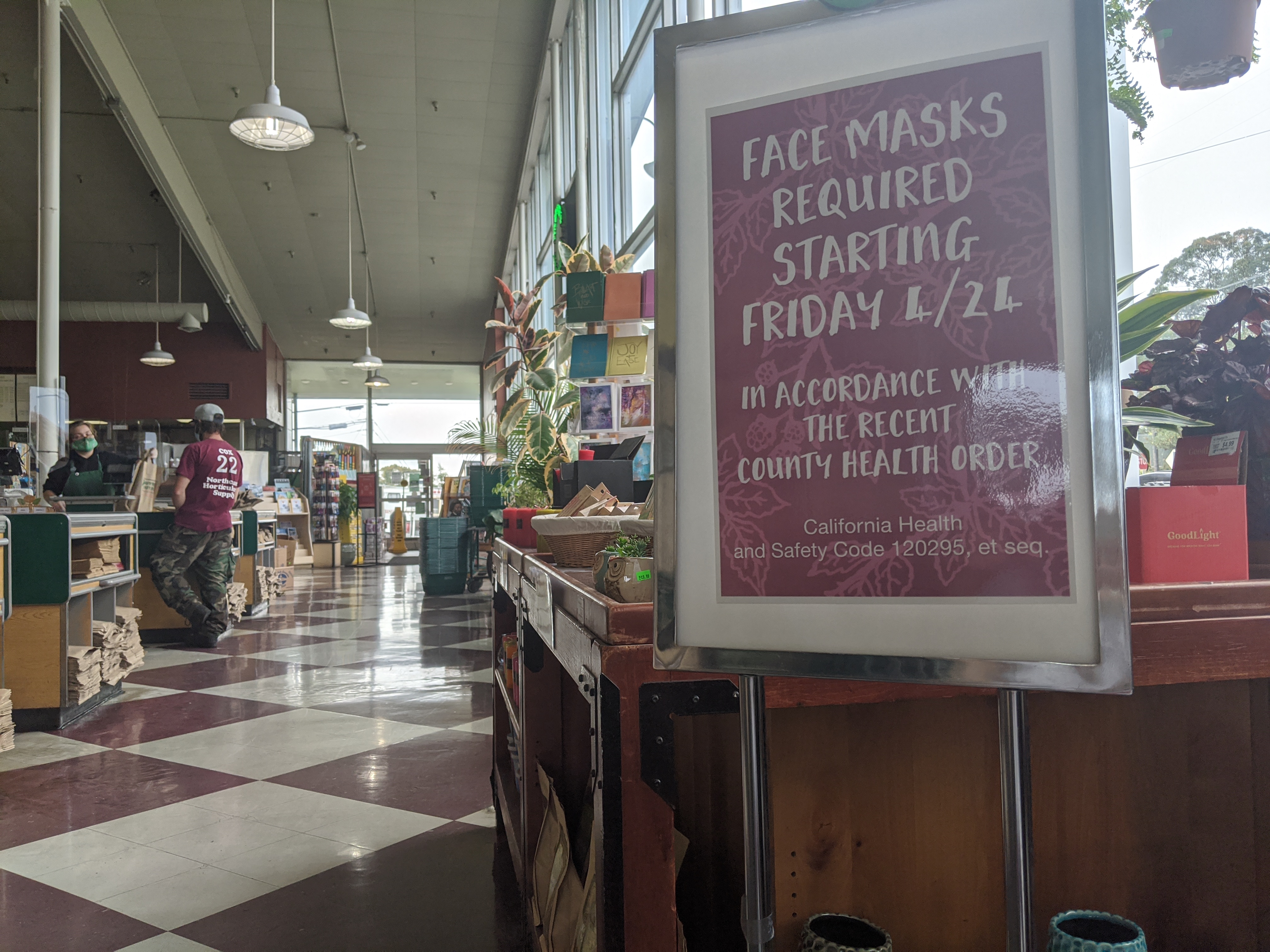
The university announced safety precautions on Aug. 4, which includes wearing face coverings with at least two layers of 100% cotton. These are required on campus at all times, both indoors and outdoors. HSU will provide students with face coverings at the campus Police Department, the first floor of Student and Business Services building, Jolly Giant Commons, College Creek Market and the Parking Kiosk.
Other precautions include practicing social distancing of six feet at all times when possible, refraining from gathering in groups, staying away from crowds, frequent washing of hands with soap and water and using hand sanitizer when soap and water are not available. The commitment to the precautions established by HSU represents a social responsibility that keeps us safe, as long as we follow them.
Although wearing masks is uncomfortable, research has shown that they prevent transmission of coronavirus when worn correctly. The Centers for Disease Control and Prevention states that the spread of COVID-19 mainly results from settings where people are in close contact with each other, so the use of masks are especially effective in environments such as universities.
Different kinds of masks “block [the] virus to a different degree, but they all block the virus from getting in,” said Dr. Monica Gandhi, an infectious disease physician at the University of California, San Francisco, to The New York Times. No matter what type of face coverings people wear, it is still much more protective than not wearing one at all.
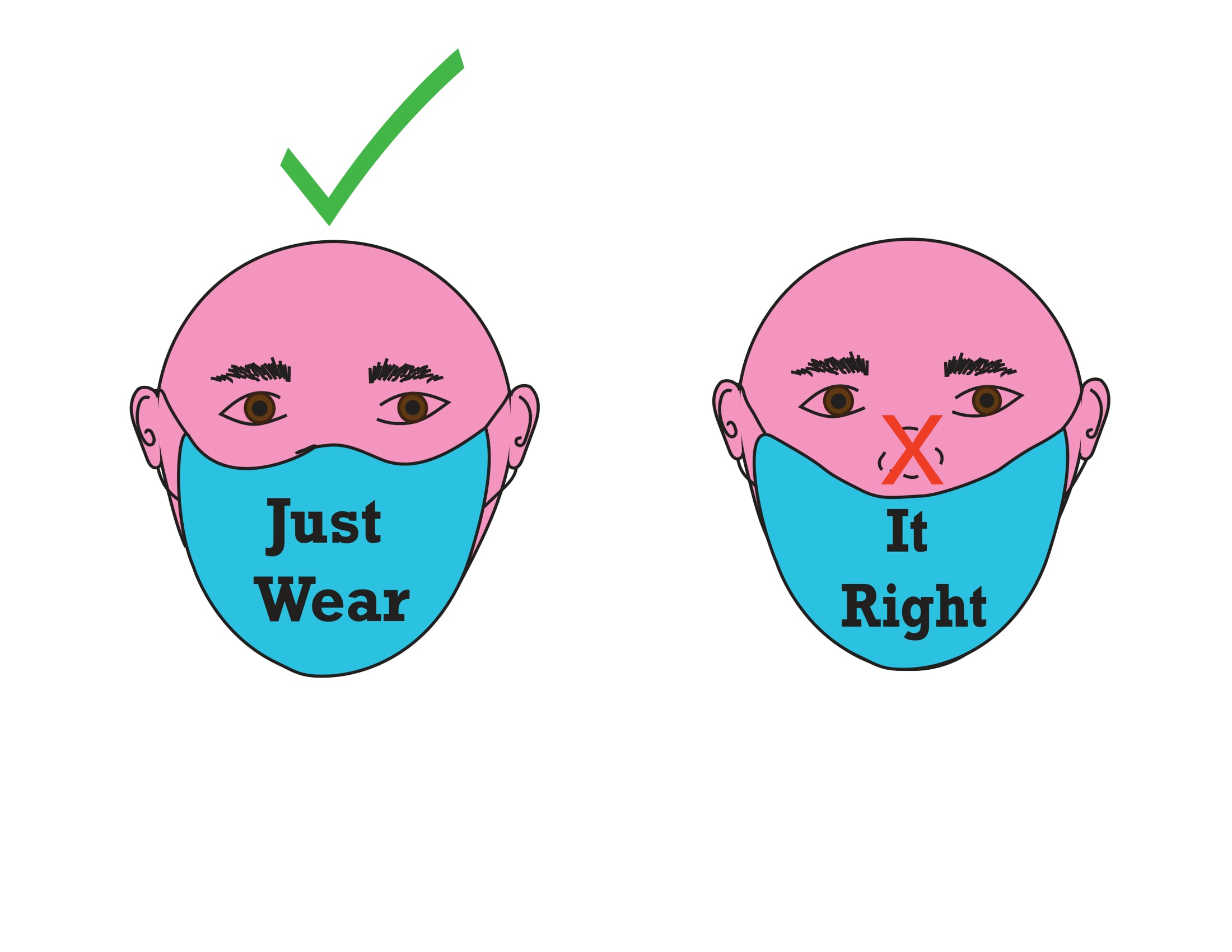
It’s also important to wear masks correctly, covering both one’s mouth and nose at all times. They need to be secured to the face without being too loose or too tight, making sure people are still able to breathe. They also need to be worn hands-free. Working at a grocery store during this pandemic, I’ve seen multiple people’s masks fall to their necks and they try to hold it up to their face, which leads to the spread of particles. Touching masks is unsanitary, so washing hands with soap and water is critical. The risk of spreading respiratory particles is much higher if the mask is not worn correctly.
Masks are only one of many protocols HSU has enforced. Students were instructed to follow safety protocols on Aug. 15 when over 200 of the 800 students moved into on-campus housing. All students were expected to self-quarantine for 14 days following their move-in day. Considering the risks of the spread of COVID-19, the university made the correct decision to reduce the number of students allowed to live in on-campus housing. It was also decided to make all rooms single occupancy.
Following health protocols is crucial, especially during a global pandemic. Wearing masks on campus has been mandated for all students and faculty members, and will be a major part in limiting the transmission of COVID-19. It will be especially important this fall when some students and faculty will be taking part in hybrid learning, which includes limited face-to-face contact.
Reopening the school in any capacity must have been the worst idea possible. There was not enough preparation for letting students come back to Humboldt State University. While it is understandable that every student has their own reasons for living on campus, the risks are high. HSU President Tom Jackson made it clear that suspending move-in dates and face-to-face instruction until a later date was prejudice and not necessary.
With cases spiking in recent days, the community is at risk. In a press release from the Humboldt County Joint Information Center, people between 20 and 29 have the highest percentage of new COVID-19 cases locally. Young adults are becoming the primary carriers of COVID-19 and are spreading it unknowingly.
Humboldt County Health Alert recently rose to a Level 3, which means “High Risk- Many cases with conditions for community spread, with many undetected cases likely. Limit everyday activities to increase safety.”
Opening up the university to a thousand students in a single week is like pouring salt on a fresh wound. Although Arcata is open to tourism for the economic stimulation, the town was not ready for it. When Arcata first opened back up to the locals, the cases were low and stable. Then tourism started to pick up. Travel has put the community in danger and is a contributing factor for the rise in cases.
There is a large elderly and retiree population in Arcata and surrounding communities, like Eureka and McKinleyville. Humboldt County Public Health Officer Dr. Teresa Frankovich stated that the transmission can, in time, contribute to increased exposure for older individuals who are of higher risk of serious disease and even death.
Letting a large amount of students move in during the middle of a pandemic in a small town was not a good judgment call. The protocols and guidelines put in place by HSU can go wrong in various ways.
While the single occupancy rooms for student housing were supposed to be a way to shelter in place, there are common areas that the students will share with their housemates such as the living room, kitchen and bathrooms. On the Humboldt State Campus Ready website, it was vaguely mentioned that these common areas will be limited and if violations persist, they will be restricted. But with student housing employees matching one to every hundred students, the likelihood of knowing these violations are occurring are nearly impossible.
With five students and one faculty member having tested positive, HSU has made COVID-19 testing mandatory for student residents throughout the semester. However, the Student Health Center states on the Campus Ready website that testing will be done “in a limited capacity due to a nationwide shortage of tests.”
Regarding limited face-to-face instruction, the administration is putting the responsibility on the students to ensure they stay healthy. If a student were to test positive for COVID-19 while at HSU, it would be their fault for not following the guidelines to satisfaction, instead of the university’s for being open. The best way to keep students safe is to not have contact with other students. That risk became a reality when a thousand new, incoming students decided to move on campus.
Dr. Frankovich and President Jackson should not have agreed to open the campus in the first place back in June. There had to have been consideration of the possible influx of cases during the summer months with tourism. Not to mention, fall and winter months correspond with the influenza season. Incoming students will not just be battling COVID-19 but also the flu, the symptoms of which are almost identical.
There were a lot of important individuals that conversed in making these decisions. Unfortunately, the people being put at risk obviously weren’t a part of the conversation.
Wearing a mask correctly shouldn’t be a hassle or the worst part of your day.
All I ask is, “Ma’am, can you please put your mask over your nose?” “Sir, your mask needs to be worn at all times. Thank you.” “Yes, masks are required here.”
When a mask is being worn correctly, it has to cover both the mouth and nose. Think of it this way, the mask is meant to prevent any respiratory droplets from spreading to other people and elements around you. These particles come from your mouth and nose.
These face coverings aren’t much, but they are one of the best defenses we have, alongside staying home and social distancing. Now, who would have thought that such a simple and minuscule request can cause such hostility and chaos?
I’m a retail worker in a small business. I wear a mask, over my mouth and nose, for five hours a day and expose myself to locals and tourists. Some days, I’ll be in contact with 20 people and other days, I can be in contact with close to 100 people.
I will never understand why people try so hard to fight against wearing face masks correctly.
I fear for my life and sanity every day. There are crazy stories circulating around the internet of customers harassing and assaulting workers for trying to enforce these health orders. A retail worker in Modesto was brutally attacked, a crazy lady in Trader Joes in North Hollywood making a huge scene and the worst, most extreme case I have heard so far, a security guard being shot and killed.
My co-workers and I always brace ourselves for whatever may happen for calling someone out. We have gotten glares, we’ve been ignored, ridiculed and even belittled just for asking someone to wear a mask or wear it correctly. We have had out-of-state tourists obnoxiously defy the rules we have set for our store, for them to then leave our store and express how much they hate California’s rules.
C’est la vie de 2020.
I will never understand why people try so hard to fight against wearing face masks correctly.
There have been customers that have come in and complained of not being able to breathe with the mask on. My solution is to stay at home. If you cannot breathe with a mask on, you’re already vulnerable and should not be outside. If you’re bothered at the thought of wearing a face covering for 10 minutes in a small gift shop, maybe you shouldn’t be out and shopping for home decor.
In order for many of these small businesses to be open, they needed to be approved by the state. My boss had to fill out a very lengthy form to re-open her business. She had to describe every action we, as employees, would do to ensure we are all safely navigating this pandemic.
If you see any shop with state/county paperwork taped in their front window, they had to apply to re-open as well. If a customer or employee ends up testing positive, the entire shop has to be shut down.
These face coverings are for the safety of yourself and those around you. This isn’t a time to be individualistic, this is a time where you need to put your ego aside and realize that your selfish actions can potentially harm a business, a person next to you or the family they go home to.
Wearing your mask correctly to cover both your nose and mouth won’t kill you, but refusing to do it at all can.
The reality of ‘going through it’ during a time of a pandemic
Being trapped in your house with your mind feels like the worst thing possible, but right now is the time to allow yourself to heal. It is more than okay to not be okay, all the time and even more so now. Although we wish this was just a vacation for us to sit around and do nothing, sometimes sitting around and doing nothing makes us feel out of control. It feels like we have lost whatever stability we had before.
We have been in quarantine for over a month now and things were not going too bad. Well, that’s what I thought until I was left alone with my mind and as a result, my anxiety started acting up. Since quarantine started I have gone back to Humboldt to pack up my stuff and move back to my hometown. I made a long-distance relationship plan with my partner only for us to break up less than a week later. I came back to a house where I do not have my own space since I share a room with my teenage sister. Everyone is always in everyone’s business. There’s just no privacy and rules to follow. Plus, dealing with family stuff has really taken a toll on half of the household.
I will always be grateful for the love I had and for the good times.
Everything was happening all at once, I felt as if I wasn’t getting a chance to catch my breath. With the quarantine, it’s not like I could get out of the house or go out with my friends to talk things out or distract my mind. Not to mention, in Southern California you can only go outside for so long before the heat is suffocating you and you’re dripping in sweat. With all that being said, I would rather be dealing and healing with all of this right now, where I’m forced to sit in my home and deal with my thoughts.
I cried for three days straight after my breakup and still find myself tearing up from time-to-time, even as I write this. However after eating all the ice cream I wanted and receiving some tough love from my loved ones, I decided that my world was not going to end just because a relationship did. I will always be grateful for the love I had and for the good times.
As far as dealing with the family drama, all I can really do is take myself out of it. I make some tea and go outside for as long as I can. My sister and I lock ourselves in our room. I FaceTime my friends at least once a day just to have contact with people that live outside the house. For a while, I let my family pull me into each of their own drama, when it really didn’t have anything to do with me since I just got here. I was taking on their issues as if they were my own and they weren’t. Of course, I will always be there for my family, but I have my own things going on and my own healing to do. My responsibilities right now are my school work and taking care of myself. I mean we’re still in school even though it doesn’t feel like it. That degree is the only thing I have my eyes on right now.
If I was still going to work and face-to-face classes, I would have so many distractions that I would forget what was going on or I was feeling some type of way. This might be ideal for some people but in my experience if I do not deal with or acknowledge my feelings, it builds up. The end result is much worse than what would have happened if I just took the time to heal right then and there. Now, of course, I would love to go get drunk with friends and forget about real life for a second, but we can’t because of quarantine. However, when you’re not drunk or hungover anymore your problems will most likely still be there so you will have to deal with them eventually. This quarantine has allowed me to deal with everything at once which has been hard, but it is reassuring knowing that once we are allowed to roam freely, I’ll have my mental and emotional shit together.
Take the time to focus on your well-being. We will be let out again someday. Also, rest assured that you are not the only one. We would all rather not deal with our feelings alongside a pandemic, but it happens and that’s okay.
With the pressures of the pandemic mounting, people are stuck with an impossible choice
On Friday, May 1, around 100 people gathered in front of the Humboldt County Courthouse to demand the reopening of businesses deemed non-essential by the government. With signs like “Every Business Is Essential,” it is clear that the protesters are not being properly supported during this time of crisis.
The government’s attempts to mitigate the spread of the virus have been controversial with over a million reported cases so far. Social distancing is the most effective measure we can take to prevent unnecessary deaths since the swab test is inaccurate and limited at the moment. Unfortunately, mandatory lockdowns and halts to employment in order to support social distancing efforts have left many without jobs and a way to earn a steady, livable wage.
“This crisis is really illustrating both the violence of inequality and also the need for another economic system.”
Thomas Piketty
Everyone has a wide range of debts, rents and other expenses to pay for during this time. If we want to prevent the spread of the virus we need to support disenfranchised workers, not force them back into unsafe working conditions. With 59% of Americans living paycheck to paycheck, for those keeping track at home, the percentage cuts for units is not reasonable to expect them to be able to handle all of their expenses with a one-time stimulus check of $1,200. The writer of the book “Capital in the Twenty-First Century” and economist Thomas Piketty believes that a pandemic like this holds the potential to change dominant narratives about how we should organize our society and build our economy.
“This crisis is really illustrating both the violence of inequality and also the need for another economic system,” said Piketty.
The Americans most impacted by the pandemic are going to be the poorest, most vulnerable members of our society. For as long as our country has existed, so has the divide in quality of life, poverty, and access to government assistance in times of crisis.
We need a societal structure that values every life.
Due to our country’s reliance on employer-based healthcare, every company that is forced to lay off its workers in this necessary time of crisis is creating large swaths of vulnerable, uninsured people. The natural response is to want to go back to work and blame the government for taking away your insurance and employment so you can continue to provide for yourself and your loved ones. The only problem is that we have a virus on our hands, so one is forced to either ignore the dangers of returning to work or slowly drain themselves financially as the dues of existing in our society add up. This is not a fair choice nor a choice we should have to make.
This is our societal structure functioning as it was designed to. When healthcare is tied to employment and to wealth, we are nudged into believing our right to exist is tied to employment and to wealth. When certain marginalized groups are underemployed or possess less wealth, our system is tacitly stating that those groups are worthless.
We need a societal structure that values every life. That means universal healthcare, education, job guarantees, housing and access to technology. Without universal healthcare, there isn’t a solid system for distributing care during a pandemic, and the right to one’s own life is decided by socioeconomic status. Without job guarantees, people are set adrift during emergencies, not knowing if they will be able to get back to work after it’s all over. Without universal housing, a pandemic can leave many unsure if they will have a roof over their head in a month’s time. Without access to technology, some will lose education, jobs, communication with the outside world and entertainment to occupy the time.
But more than all these things, we need a structure that prioritizes us. If everything starts falling apart because of one pandemic, maybe it wasn’t the most stable structure to begin with. An economy that does better when its workers die is like a car that goes up in value when it kills the passenger. The structure should exist to support you. This pandemic is exposing our economic structure for what it has always been. A burden that crushes the marginalized and the vulnerable. A $1,200 check, a rent freeze and a free face mask are only small band-aids on a gushing head wound. Normal, everyday life is why everything is falling apart in the first place.
All we can do is build a system that protects every person within it and values life from the ground up. A system that lets numbers of people die will die along with them. It is a system bound to fail.
When the entire world is going mad and cities are in disarray and the economy is through the tubes and the government is ordering the people to stay indoors and keep distant from human contact and all the unknowns and uncertainties and precariousness are causing anxieties and confusion and insane isolated thinking, then the only logical solution is to search for the magnificent eternal golden light in Big Sur where Jack Kerouac lost his illumination and was succumbed to mad mad maddening disillusion and deterioration of mind.
Amidst a global pandemic and forced isolation (both for curving the spread of the disease and government say-so) Kerouac’s “Big Sur” may seem like an unlikely companion during cabin fever tendencies but he nails the coffin of loneliness surrounded by madness…and we are swimming in madness in 2020 and social distancing is causing us loneliness…he may be known for traveling on the road but the majority of his writing deals with the personal struggle of the unrevealed and intangible and intrapersonal relationships with exile and aloneness.
It was time to go back to find some sanity while the whole world was ravaging in chaos.
Last week I received a card from my obaasan written in shaky cursive:
“I’m not myself now/can’t think much things now…” Her youngest son died in the middle of all this virus business and the experience of losing her youngest before her own passing into the next existence and not being able to perform a proper Japanese funeral has weighed a heavy heart on my nearly 90-year-old reincarnation of the bodhisattva Quan Yin. The letter is marked from Monterey, my hometown, just a couple dozen miles from Big Sur, which I am currently in the thick of. Whereas Kerouac fell into his madness, I was born into mine…and it was time to go back to find some sanity while the whole world was ravaging in chaos.
Passing San Jose on the 280 at rush hour, or what normally is, and we stop not one time and I am convinced there is a God in heaven and miracles exist and coincidences mean something more than just what they don’t.
A pitter patter of rain began to fall as my partner and I sped away from our Arcata apartment and headed down the curvy empty roads of the 101 en route to console an ailing mother from 6 feet away. My paint-scratched and hood-dented Volkswagen happily ate the white lines through redwood country, wineries, extending bridges and golden rolling hills full of deer and foxes and chirping birds. With everyone staying in doors, the urbanized are becoming again what Gary Snyder calls “wild.” Only 10 cars on the Golden Gate Bridge and all of the city, void of the Tenderloin, which sidewalks are unseen due to the amount of popup tents and stretched out tarps and rucksacks rolling in the gutters. Passing San Jose on the 280 at rush hour, or what normally is, and we stop not one time and I am convinced there is a God in heaven and miracles exist and coincidences mean something more than just what they don’t. Seven hours and not a minute more since we left Humboldt County the magnificent sand dunes of my childhood explode into view as the sun sinks behind cannery row, the fisherman’s wharf and into the pacific.
We knock on the windowpane glass without warning. My obaasan, 4-foot-5 in frame in blue uwabaki and nearly all white thick Hokkaido curls reminiscent of the ancient Ainu people of our ancestors opens the door white as a ghost. We appear as road warriors traveling to find oil but she is happy nonetheless to see her most handsomest grandson and granddaughter in law (I know this because she tells us so in a faint whisper of grief). She is nearly silent and full of half smiles and sad lonely eyes staring off into a point in space I am unable to see. There is nothing more difficult than to deny a Japanese grandmother’s invitation of hot food and conversation… but these are harrowing times and one must put down their foot for the betterment of others… especially kindhearted compassionate grandmothers who want nothing more than to fill bellies and tell stories.
Without being able to hug her or get close enough for her to hear me hurt my soul but the space we shared amidst all the craziness going on filled my heart with such joy that I could feel the sanity I had lost while sheltering in place replenish.
We part for the night with three bows and head to Big Sur first thing in the morning. We were supposed to spread the ashes of my uncle but bureaucracies have slowed down (who would have thought possible they could move even slower) and checks clearing takes longer and so we had no urn and only mandatory intention of flying down the beautifully rugged pacific coast cliffs hugging the Santa Lucia Mountains to the east and infinite deep neon blue waters crashing west. All parks are closed and scattered hikers from who-knows-where park along the highway to hike in. We stop at Bixby Creek of Kerouac’s “Big Sur” but it is not the same for all the turnoffs are filled with parked cars and tourists and selfies… or maybe it is the same because on his last hitchhiking adventure up from Big Sur to Monterey 1,000-2,000 cars passed him by and he was no longer able to relate. We ate lunch beneath the shade of an oak tree 100 feet above the water and 15 miles from the hot springs. We were by ourselves with the lonely wails of the sea and the roaring of the waves and the ghostly spirits of Kerouac and my uncle.
On our way out of town we said goodbye to my grandmother. She stood behind the screen door as we stood in the sun with bandanas and masks wrapped around our faces. She was in a cheerier mood and her energy level was heightened. She wore full smiles behind her grief and talked about the chaos of the world being unbalanced. Without being able to hug her or get close enough for her to hear me hurt my soul but the space we shared amidst all the craziness going on filled my heart with such joy that I could feel the sanity I had lost while sheltering in place replenish. Kerouac pronounces, “The more ups and downs, the more joy I feel. The greater the fear, the greater the happiness I feel,” and I believe it to be important we share the same intimacies while we are submerged in the unknown dangers of threats and hazards.
Where we were, what went wrong & how we build a brighter future
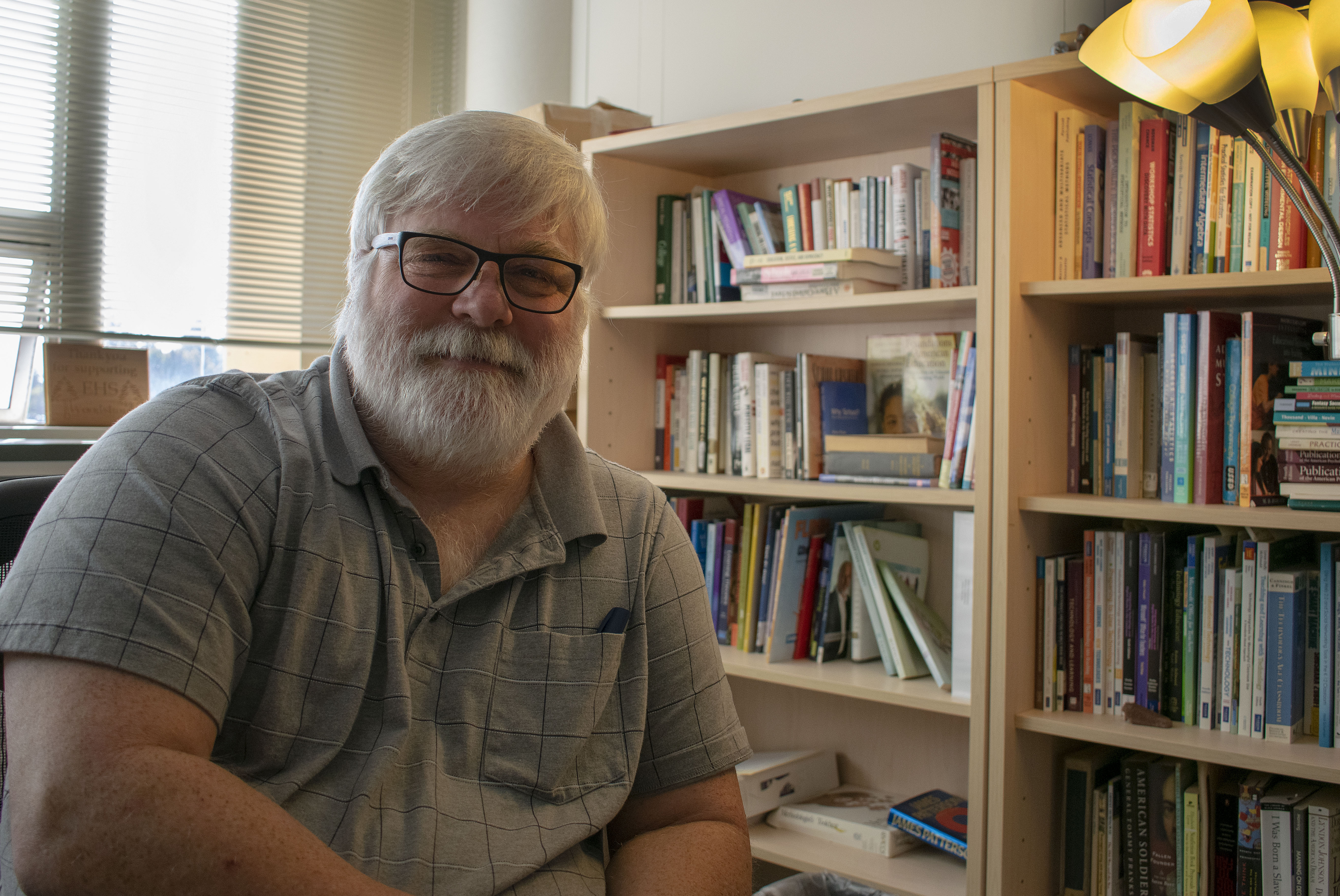
This is a letter to the editor from Humboldt State University Education Department Chair Eric Van Duzer, Ph.D. It has been edited only for minor punctuation and grammar style preferences.
As I reflect back on nearly 30 years at Humboldt State University, first as a student and then for the past 20 years as a faculty member, I wanted to share some of the thoughts that I have about HSU’s current situation and where the campus might go from here.
As a student I experienced a remarkable education where faculty were fully invested in my intellectual and personal development. There were so many opportunities to explore areas of interest and develop new ones. I have spent many hours trying to encapsulate the nature of the schooling I experienced in a way that would really represent the experience.
The best analogy I have been able to come up with was that HSU offered a graduate education to undergraduates. The small classes typical of graduate school encouraged faculty to fully invest in their student’s growth. The university, set so far from the oversight of CSU headquarters in Long Beach, offered a great deal of flexibility to shape our experiences.
This would be impossible today. In those days HSU had the third smallest class sizes in the 23 campuses of CSU. But more than that, it had a unique faculty ethos that reflected nearly 100 years as a student-focused institution that exalted excellence in teaching above all else.
I was the first student CEO of the Institute of Industrial Technology, a self-supporting club that allowed us to use the skills and knowledge we were developing to grow in business acumen, engage in manufacturing and light construction on campus as well as conduct experiments for local agencies. In its second year, Bill Wilkinson used the institute to earn enough profit making desks for campus offices that it paid for several pieces of expensive equipment for the department.
This would be impossible today. In those days HSU had the third smallest class sizes in the 23 campuses of CSU. But more than that, it had a unique faculty ethos that reflected nearly 100 years as a student-focused institution that exalted excellence in teaching above all else.
Faculty came to campus because this is where they wanted to spend their career. Unlike most universities where faculty play academic hopscotch building their resume through research reputations and earning ever-higher salaries as they bounce from college to college, HSU faculty built their reputations on teaching. These were inherently local reputations, not very valuable if one wanted to move on, but rather a reflection of the values and attitudes associated with a culture of excellence in the service of students’ intellectual growth.
As anyone who has worked with university budgets will tell you, graduate education is expensive. That is why through the first 100 years, the administration and other services were done on a shoestring. It was common for a variety of upper administrative positions to be filled by faculty who served temporarily. Staff was thin and overworked and processes were slow and inconsistent.
What happened? In the early 2000s the CSU was facing the onslaught of a Generation X student bulge. Chancellor Charles Reed decided the best strategy to deal with this situation was to homogenize campuses so that if a student could not get into Sacramento State because it was impacted, they could simply go to another campus and get a similar experience.
Yet, the campus, with significant leadership from the faculty, focused its significant resources on classroom instruction, and through that dedication, produced exceptional graduates who were deeply committed to HSU when they graduated.
I remember an administrator in the early years telling me that he had been in a restaurant on the East Coast and overheard a group of students talking at a nearby table. He was so impressed with their sophistication and the values they held he found out where they came from and immediately applied for a job at HSU.
He was the first person hired under then-president Rollin Richmond to manage our enrollments in the early 2000s. The diversity on our campus is a credit to him and Richmond, who reached out across the state to bring in students from urban areas. Sadly he became disillusioned and left. So did most of the faculty leaders.
What happened? In the early 2000s the CSU was facing the onslaught of a Generation X student bulge. Chancellor Charles Reed decided the best strategy to deal with this situation was to homogenize campuses so that if a student could not get into Sacramento State because it was impacted, they could simply go to another campus and get a similar experience.
Shortly thereafter the upper administration received inflated titles and significant raises in an apparent effort to reduce resistance. Then the attack on the faculty began.
Naturally, faculty on campuses such as HSU who were proud of their traditions and niche identities resisted. Fiercely. At one point, three campus presidents, including Rollin Richmond, suffered through votes of no confidence by their faculty as they implemented this strategy.
To achieve the required changes in the face of faculty resistance, campuses, including Humboldt, began shifting to a corporate structure of top down management. Faculty who had held a privileged position in campus life were systematically reduced to workers with only a symbolic voice in campus decisions. The administration turned its focus inward towards improving the functioning of the bureaucracy. They eliminated administrators such as Rick Vrem, an ethical provost, who refused to implement changes that hurt the traditional focus on instruction.
Vrem was replaced with a provost who had no such compunction. Shortly thereafter the upper administration received inflated titles and significant raises in an apparent effort to reduce resistance. Then the attack on the faculty began. Nearly 80 faculty positions were eliminated over several years and during the same time period, a similar number of new staff positions were created and filled to support administrative functions.
Over the majority of the intervening 15 years, budget reductions for academic programs have been the norm: reductions in staff, program availability and courses. This year it was a 6% cut, last year another and many like it before. The funds have been shifted to an ever-expanding variety of administrative initiatives.
Now we sound more like a parks and recreation office than a university. Come for the redwoods, the beaches, the bike riding—that is wonderful and I love it, but it is not why people pick a university.
We spend nearly 68% of our budget on administration and campus facilities. Despite the results of a study commissioned by Rollin Richmond’s administration that showed the two most important factors that cause a student to come to HSU are quality of education and availability of the program they are interested in, both have been repeatedly attacked, sliced and diminished.
It is surprising that no one seems to notice that every time we cut academic programs, fewer students want to come here. And when fewer students come here, the budget suffers and HSU responds by cutting academic programs even more severely—a cycle the faculty in 2004 described as a “death spiral.”
As we address our current crisis and try to figure out what we need to become in order to grow back to a sustainable enrollment, we might want to engage in some soulful reflection. What would cause a 20-year-old to come to a place five hours from major centers of civilization and spend four years with us? What do we have to offer them that is so valuable, so different from what they can get at any of the other CSU campuses which are closer, cheaper and offer a great deal more college life in the community?
We stopped selling the small classes and close academic relationships with faculty when the hypocrisy became too much to bear as campus priorities shifted. Now we sound more like a parks and recreation office than a university. Come for the redwoods, the beaches, the bike riding—that is wonderful and I love it, but it is not why people pick a university.
When I arrived here as a faculty member in 2000 we had one staff member, John Filce, doing institutional research. He was wonderful and badly overworked. I am sure he still is. Now we have nine staff members listed in the directory in the Office of Institutional Effectiveness, including a vice president. I am sure their work is valuable, but to pay for it we had to cut 64 class sections.
Today, we are an organization of inflexible rules and their keepers.
We have proliferated the bureaucracy, which is unfortunately necessary to achieve top-down control of a professional organization. Had our leadership studied industrial technology with me, they would know what companies in the 1970s learned: that this form of management is ineffective and inefficient in a professional organization.
To achieve control requires monitoring, which in turn requires more staff. For a top-down organization, where the vast majority of employees serve at the will of their manager, fear prevents innovation and compliance is key. Before the shift to this model, administrators were problem solvers. In fact, the standing joke in those days was that everything was an exception. Faculty, staff and administrators had the flexibility to serve the needs of students even when it required bending the rules.
Today, we are an organization of inflexible rules and their keepers. It has greatly diminished the effectiveness of the organization and its ability to make decisions that best serve our students. The resulting bureaucratic culture has seen a proliferation of forms, rule books and rigid adherence to often dysfunctional orders.
This is no way to run a university. Perhaps a grocery store, but not an organization of 500 highly educated experts with thousands of years of collective experience. Top-down decision-making, particularly when the president and upper administrators are drawn from institutions that do not share the culture and values of the campus, is inherently poor compared to what would be possible if faculty once again had a meaningful voice in campus affairs.
No student has ever come to HSU because we have a wonderful registrar’s office or because the president’s office is fully staffed. These only matter when they impact the quality of the education a student receives.
The proof of this is apparent everywhere at HSU. When Rollin Richmond came, he had no interest in what made HSU special. Like a white suburban principal coming to a school in Watts, he thought he knew what needed to be done to remake the university into his vision of a modern institution. That ignorance has cost us immeasurably. Today we face the consequences. The failure to fundamentally change direction of subsequent presidents has simply deepened the mess. We now have a new president, perhaps we can find a new vision.
In my view there are two key concerns that need to be addressed from a rational and values-driven perspective. First, an effective budget model that allows funding to follow enrollment is essential to support growing programs while shifting resources to where they will best serve student needs and interests. This can refocus the campus on providing the service/product students come here for—classroom instruction—and it is essential.
There are so many amazing faculty and academic staff here. They are people with a heart for their students, struggling in a system that constrains and conflicts with their efforts. Let their voices guide the future and we may yet have one worth celebrating.
No student has ever come to HSU because we have a wonderful registrar’s office or because the president’s office is fully staffed. These only matter when they impact the quality of the education a student receives.
Second, we have to decide how we are going to rebuild the excellence we once were known for in our student’s academic programs. The day Rollin Richmond refused to give the Outstanding Faculty Award to a physics professor (selected by the faculty based on his ability to delight and inspire students) because that professor had not published, is the day we snuffed out the soul of the old HSU campus.
Now we need to find out what animates us in ways that provide an experience worth the isolation, cost and struggles required to live in this remote community. Redwoods are not enough; we need a reinvestment in education.
I am retiring from HSU at the end of this May. I am sad to see what has happened to my university. There are so many amazing faculty and academic staff here. They are people with a heart for their students, struggling in a system that constrains and conflicts with their efforts. Let their voices guide the future and we may yet have one worth celebrating.
A note from a local bus driver longing for a crowded bus again
This is a letter to The Lumberjack from local bus driver Mark Condes. The letter has been edited only for grammar and punctuation.
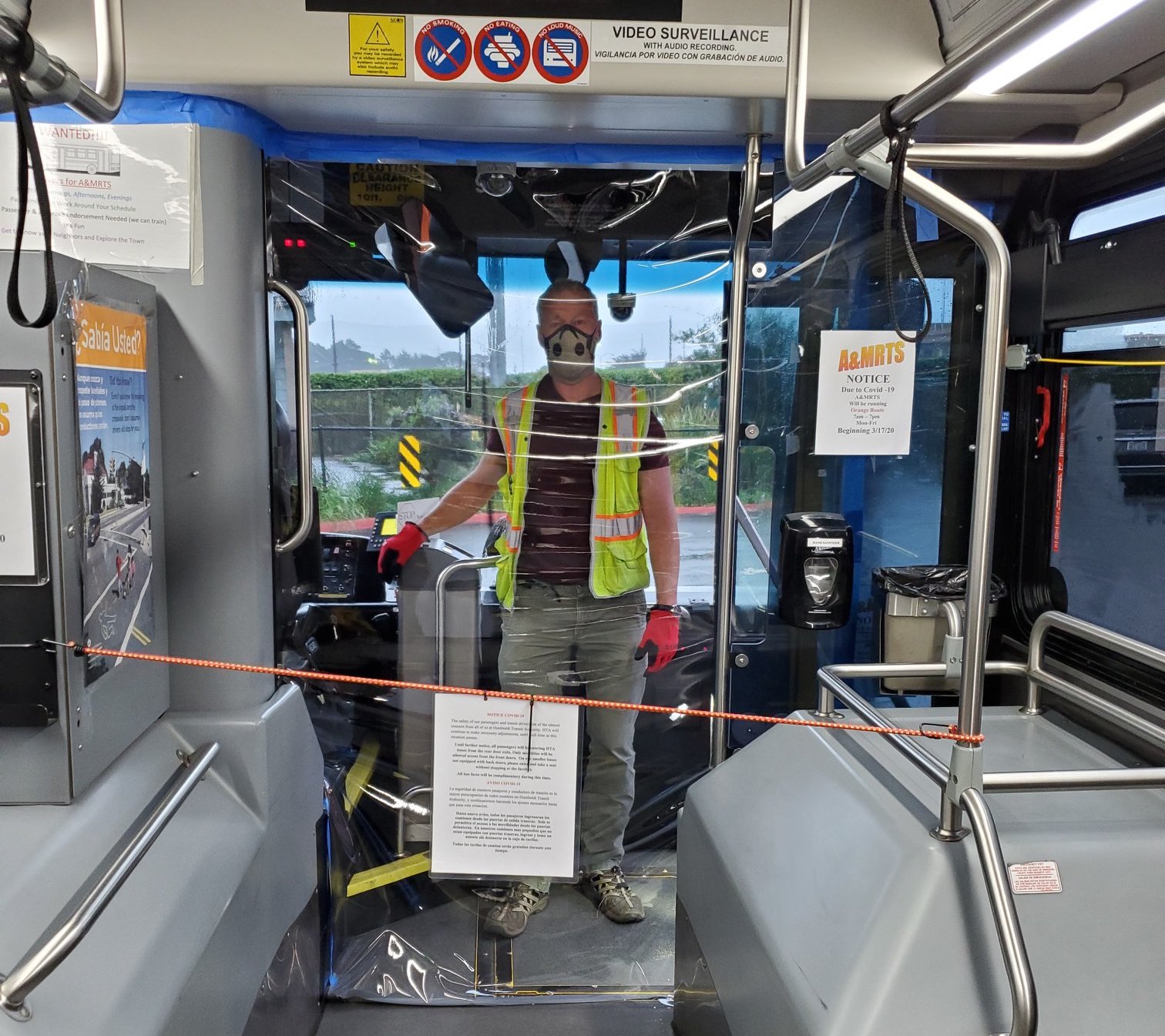
I drive a bus around Arcata, California. I frequent the Library Circle and the 14th Street & B intersection. Lately, on very infrequent occasions, I drop off an HSU student at one or the other. But this has been dwindling down to rare moments. I’m writing this because I just wanted to say that I miss all the students and faculty who have been my passengers for over a year now. . I miss making the rounds on LK Wood down to Camp Curtis, rolling out to Sunny Brae for my three stops there, the long drive down to Greenview Market to pick up the handful of students and a professor in that little corner of Arcata, and out to the Valley West loop where we scoop up the largest busload of students along Alliance and Foster streets, packing them in like sardines, as we like to say, with a call out to the back of the bus, “Do we have room for just ONE more?” . I’m a lucky person lately because I’m still working, still driving all over town. During these times, we only run what’s called the ‘Orange’ route. No more Red, no more Gold, just a mashup of both. . Truth be told, I feel a bit unlucky also. While we still pickup a handful of Townies going about their ‘Essential Needs’ business, nothing replaces all the bustling energy, the fantastic smiles, the mix of voices of my student riders. . I suppose I’m getting to the point, or heart, of the matter… ‘My’ student riders. Maybe I’m just a softie. I know I’m not some old lonely guy grasping at any human interaction, desperate for some validity that I still exist and matter. But yeah, I suppose I’ve formed an attachment at some level. Perhaps it’s a mix of all things that make me who I am, that have allowed me to feel some level of connection with the younger people heading off to HSU and their open road to the future. I have had the pleasure of watching my own kid go through the same process and life experience of college, and that was just a few years ago. I’m sure there’s a relationship here also. . While I ride around, one large circle each hour… hour-after-hour, I will often feel that tinge of loss, that nudge of sadness as I reflect on how alive this lumbering conveyance once felt, and now how hollow and empty it’s become. And then there’s that other factor, an anomaly I hope… the separation of driver from passengers via a vinyl wall. So impersonal, a clear Berlin Wall, if I may. . As I arrive at each stop, in particular the ones where I would pick up students, I still pause while glancing out in the distance. I find myself looking for those waving arms, that transition from a walk to a full-bore run, as a student realizes they may miss their bus ride to school. I grew to know a number of them well enough that I could only grin and patiently wait for them to arrive, panting, fumbling for their student ID to swipe once they clambered up inside. . I realize school will return to business in the future, and students will once again ride the bus. Yet, as with so many derailed aspects of our lives currently, there’s no firm date on when that will take place. . So I drive. I still take in those sweeping views as I top Union Street on my way to the Parkway Apartments, coax the bus up steep grades, and round the circle at the HSU Library. And when I pick up a familiar student, I still take off my sunglasses, pull down my mask, and with a smile call out through my plastic membrane, “Good Morning!” . From time-to-time as I roll through town, I catch a glimpse of a former, frequent student rider or professor, who no longer rides the bus. In those transitory moments, we may glance each other’s way at just the right instant. As recognition unfolds, so do the smiles, the nods, the waving of the hands, and I am granted a brief respite from the isolation imposed upon me by this COVID-19 experience. . While I am grateful to still be working, still driving, I am even more grateful for all the friendly smiles, the greetings, the eye-rolls, headshakes, and laughter over my bad jokes and puns, that I experienced these past semesters. I wonder how ‘My’ students are doing, how they are faring during these trying times… I care. . I look forward to life resuming in a more normal manner, and the days of a busload of students once again bringing their energy, excitement, and friendliness through the doors. I honk and wave whenever I see students in graduation caps and gowns getting their pictures taken by the gates of the university. I shake off that bit of sadness and drive on.
No one person is to blame when millions of people are at risk
A cultural perception of coronavirus has been under scrutiny for people’s repeated insistence on referring to it as “Chinese virus.” This became known when a photographer shared a photo they took of Donald Trump’s script at a press conference March 19, which showed the word “corona” crossed out and replaced with “Chinese” above it.
The World Health Organization has guidelines that diseases should not be named after geographical locations, partially in response to the consequences of disease names such as Spanish flu, Rift Valley fever or Singapore virus.
These guidelines were first announced in 2015, with the reasoning that there are numerous other ways to refer to the name of a disease easily without identifying a specific place. One example is the SARS virus, which “avoided stigmatizing any place or any person. And then because of the acronym SARS, it also gave the media and everybody an easy way to refer to the disease.”
Unfortunately, even outbreaks in recent years are given names such as Ebola, which is the name of a river in Congo, or swine flu, which indirectly blames an entire species of animal.
When we call illnesses Singapore virus, Chinese virus or swine flu, it shifts the focus away from combating the outbreak and toward the myth that some place or group of people must be at fault for a problem that affects millions of people.
Those arguing in favor of naming diseases in this manner will cite its supposed “accuracy,” and push back against the suggestion that it might be racist. Senator John Cornyn defended referring to it as the Chinese virus.
“China has been the source of a lot of these viruses like SARS, like MERS and swine flu,” he said.
“We’re talking about China, where these viruses emanate from,” he later said.
Despite what Cornyn and others might claim, citing other examples of names that refer to people or places does not excuse continuing to use the same practice. Naming diseases like this serves as a means of ostracizing people.
Numerous reports of violent attacks, both verbal and physical, against Asian-Americans occurred in the past few weeks, perpetrated by those who buy into the idea that China has to serve as the scapegoat for this outbreak. Identifying one group of people to blame for a pandemic only serves as a form of fearmongering and reinforces racist ideas among Americans.
When we call illnesses Singapore virus, Chinese virus or swine flu, it shifts the focus away from combating the outbreak and toward the myth that some place or group of people must be at fault for a problem that affects millions of people.
Even if a specific source for this pandemic does exist, dwelling on that serves little purpose when the problem is this widespread. It absolves the U.S. government of much of their responsibility to protect their citizens, which they need to be held accountable for.
Violating World Health Organization policy and reinforcing outdated racist practices that should never have been practiced to begin with will not end this pandemic any sooner, nor make dealing with it any better. The only people that benefit from such ideas are those who do not understand that we are all at risk and need to be taking action, the same as everyone around us.
Ask Evergreen is an advice column by the students of The Lumberjack
It all started with a couple blank posters taped in bathroom stalls. With this advice column as Ask Evergreen I’ve been able to connect with students in a surprising way. I’ve learned their worries and hopes and struggled alongside them as I sought the best advice to respond to each inquiry.
Giving advice isn’t easy. It’s a constant back-and-forth of weighing the options and outcomes. The best advice is that which comes from honesty and reality—that’s the advice that sinks in the most. Things won’t always turn out alright or in your favor, but knowing how to pivot and adapt will allow for opportunities of growth and understanding.
I hope what I’ve had to say has impacted readers, even if I’m not qualified to give advice—no one really is. Only you have the power to tell yourself what to do, I can only wish for the best result with my guiding words.
Each week’s questions taught me more about myself than I would’ve expected. Each question offered me a chance to step into someone else’s shoes and feel the situation they were in.
At times it was difficult to come up with something meaningful to say. Some questions left me stumped for advice. Although other questions were easier to answer than others, each was a learning experience.
No matter how trivial or serious a question was—whether it was a question about fixing a relationship after finding a secret Instagram account, or how to set boundaries with a sexually harassing housemate—I’ve learned the best way to set someone on a clearer path isn’t through belittling or dismissal it’s through consideration and caution.
Sometimes it’s best to have advice come from someone completely not involved in your life, and I’ve been grateful to have this opportunity to lend my thoughts to others.
The U.S. healthcare system isn’t built to handle a pandemic because it’s not built to help everyone
A 17-year-old boy from Lancaster, California died in March due to COVID-19 complications. After having serious respiratory problems the boy went to an urgent care facility. The facility denied care due to lack of insurance. While en route to the closest public hospital, the boy went into cardiac arrest and died hours later.
After the boy passed, doctors confirmed he had COVID-19.
The tragic death of this 17-year-old boy shows the obvious divide and unfair treatment within the U.S. healthcare system. If the boy had been insured or affluent enough to pay upfront for whatever treatment he needed, he would have received care and possibly still be alive.
There are 6,146 hospitals in the United States. Some are community owned, some are owned by the state or government, and some are privately owned.
There is a distinct separation in our healthcare system, but it’s not just about where hospital funding comes from and goes. Hospitals also differ when it comes to if patients actually receive healthcare.
In 1986 Congress passed the Emergency Medical and Treatment Labor Act, which restricts all hospitals from denying care to patients based on a lack of insurance or ability to pay. But this hasn’t stopped privately owned hospitals from denying care to uninsured patients. In a pandemic, this can have deadly consequences.
“We cannot and will not close our eyes to the economic consequences of this crisis.”
Netherlands Prime Minister Mark Rutte
Universal healthcare works to prevent these situations. The Netherlands has universal healthcare and is taking a completely different approach to dealing with COVID-19.
March 16, Netherlands Prime Minister Mark Rutte made an address to the nation.
“The reality is that in the near future a large part of the Dutch population will be infected with the virus,” he said.
He went on to introduce a concept called group immunity.
“Those who have had the virus are usually immune afterwards,” he said. “Just like in the old days with measles. The larger the group that is immune, the less chance that the virus will jump to vulnerable elderly people and people with poor health. With group immunity you build, as it were, a protective wall around them.”
This is similar to what United Kingdom Chief Science Adviser Sir Patrick Vallance calls herd immunity. Herd immunity is the idea of letting the population be exposed and eventually become immune.
Although the Netherlands has closed some facilities like schools and restaurants, that might not be the case for long. Rutte believes a lockdown will not stop COVID-19. He also has much more confidence in the Netherlands’ hospitals and healthcare system than the U.S. has in its own systems.
“We build immunity and ensure that the healthcare system can handle it,” Rutte said. “With the aim that nursing homes, in-home care, hospitals and especially intensive care units are not overloaded. So that there is always sufficient capacity to help the people who are most vulnerable.”
“We cannot and will not close our eyes to the economic consequences of this crisis,” Rutte said near the end of his speech.
Rutte is obviously concerned with the economy of his nation, but he also seems relatively confident that the Netherlands healthcare system could support their entire population if infected by the virus. It’s important to note, the Netherlands pays for their universal healthcare services through taxes as well as a monthly premium payed by individuals.
This is very different from the current situation in the U.S. By all accounts, our healthcare system couldn’t handle the whole population getting infected by the coronavirus. Hence the need to flatten the curve.
Even with social distancing rules in place, cities like New York are struggling to find personal protective equipment or have enough intensive care unit beds for infected patients. Whether or not herd immunity is an effective or morally acceptable approach, the U.S. healthcare system isn’t built to handle it because it’s not built to help everyone.
Quarantine shelter-in-place offers escape for some and anxiety for others—both are damaging
Inhale, pause, exhale. We are living through an unprecedented, intimidating and stressful time, but now is not the time to beat yourself up.
While the world seems at a standstill, many people have taken this time away from their normal daily duties to start new hobbies, lose weight or even learn new languages. These tasks and goals are not a reflection of yourself, nor should they be used to show off your journey through social distancing.
The same, and worse, can be said in regard to many other social media platforms. For example, Instagram can be a mindless escape for some but a shame-inducing harbor for others.
There’s a constant creation of new challenges and trends coming up everyday, whether it’s the pushup challenge, #untiltomorrow or even celebrities singing tone deaf tunes. Or perhaps it’s a stream of self improvement posts and revitalized New Years goals.
Whatever is clouding your social media feed, it doesn’t have to be a standard for you to live up to. This isn’t a productivity competition.
Some of us might have more time on our hands, but that doesn’t make things easier—and some people still working or now taking care of children might not have more time. We are also still dealing with pre-existing mindsets on top of the stress of a viral global outbreak.
Don’t waste this time comparing yourself to someone who’s lost 10 pounds walking in circles in their driveway or to someone who’s learned how to speak Italian while in quarantine.
We need to have compassion for ourselves always, but especially now. The Centers for Disease Control and Prevention’s COVID-19 webpage provides a section for stress and coping information. This page offers insight to stress causes and outcomes all while underscoring the importance of knowing everyone deals with stress differently.
Thus, we escape to viral social media trends for entertainment and relief.
In a recent Vox article, writer Rebecca Jennings supports the flood of Instagram challenges. She argues people should continue this outpour of personal content because it offers connections that will stay in this ephemeral time.
However, instead of cluttering a platform with more dog picture reposts or pictures of people wearing pillows as clothing that only distract from the now, we should contribute to the conversation by being honest and doing something that honors yourself and others. Let your friends on social media know how you really feel—open up, cry, laugh and inspire. If you’re up for it, of course.
Don’t waste this time comparing yourself to someone who’s lost 10 pounds walking in circles in their driveway or to someone who’s learned how to speak Italian while in quarantine. Of course, if walking in circles in your driveway while rambling in broken Italian is your thing, go for it.
Being honest with others allows for accountability. If you continue to keep up a guise of happiness when you’re truly suffering inside, you won’t receive the help you deserve.
Speaking up about how you feel is a challenge more people should face. You don’t need to make immediate changes to improve, but you owe it to yourself to take the time you need.
Social distancing has strained my relationship, so be grateful if you’re still with your partner
Social distancing life isn’t much different from my usual life. I’m not physically going to school or work anymore, but I’m doing my assignments in bed like I normally would. My free time before quarantine would consist of doing homework, eating, watching movies with my roommate and spending time with my partner. There’s only one of those things that I can’t do anymore—spending time with my partner—and it’s the one that hurts the most.
Life was busy before the days of sheltering in place, and I hadn’t seen my partner much. We vowed after spring break we would spend more time together since I was going to be leaving after graduation and they will be staying up here. But now it looks like our long-distance relationship has started a lot sooner.
If you find yourself being in quarantine with your partner, but want to get away from them, there are little things you can do for some space.
Some of my friends have said they were tired of being quarantined with their partner because they were getting on their nerves and they just needed space. When social distancing started, there were a lot of memes going around about how women trapped their partners in their houses with them so that they can talk about their issues and the partners can’t go anywhere. That’s funny, but you shouldn’t need a quarantine to finally talk about your issues. You should be able to do that all the time.
China reported a spike in the divorce rate and the same is expected for the United States. Due to the quarantine, people’s daily lives have changed and they aren’t used to being stuck with their partners all day. Which is understandable, but also sad. I would love to be stuck inside with my partner during this quarantine. We’ve talked a lot more which is nice, but actually having them under the same roof as me would hit differently.
If you find yourself being in quarantine with your partner, but want to get away from them, there are little things you can do for some space. Maybe put yourself in another room if you have another room—but if you don’t, maybe take a nice long shower.
Instead of both of you going to the grocery store together, make a list and have only one of you go. I would hope that you wouldn’t need to distance yourselves and that this time would be enjoyable for you two, but maybe that’s just because I wish I could be watching movies or getting creative with my partner.
If you’re stuck with your partner and are getting annoyed with the way they do the dishes or something small like that, well, get over it. Either tell them it bothers you or take over the task. There are so many people out there, like myself, that would rather be stuck in a room with their partner no matter how much they annoy them, not to mention all the single people that wish they had a partner to be quarantined with.
While you were copied on a series of emails to me, and thus, on my responses, there are still a few important facts that I believe you will find useful in the wake of the April 16thstory. Since my email was the source of the quotes by me in the article, I never had an opportunity to answer a couple of fundamental questions as you prepared for your story. As such, I ask you to please consider the following:
The University did not violate California Law.
When I received the original email, which copied numerous parties, Vice President Dawes and I took immediate action to verify that HSU was not in violation of the law. This included going into consultation with other university stakeholders, including legal counsel. This consultation reassured us that no violation of policy or law was taking place.
In particular, I urge you to please review the actual requirements of the Bagley-Keene Act. First, please review a guidance document provided by the State’s Attorney General which outlines the scope of Bagley-Keene. Most pertinent to this issue, the Bagley-Keene requirements at issue apply only to meetings of a statutorily defined “state body” (Section 11121) that do not apply to the informal meetings hosted by VP Dawes and me. As explained in Section 11121 and in the guide from the State’s Attorney General, the sessions that were hosted do not fall within the scope of Bagley-Keene, which, based on guidance from legal counsel, means this law does not apply and was not broken.
With respect to the Brown Act, which was also referred to in the series of emails and in your article, this statute applies to local government agencies and essentially stands as a counterpart to Bagley-Keene, so to speak. The California State University, in particular Humboldt State, is a state agency, which does not fall under the Brown Act. Because Humboldt State, as a part of the CSU, is not subject to the Brown Act, legal counsel has advised us that the law was not broken.
Why did we add a public link to the originally scheduled presentations?
We did so to eliminate any perceived barriers to participation. As quoted in the story from one of my emails, “the entire point of the meetings was to be transparent.”
While we were fully aware that we were compliant with the law and that no persons were being barred from the meeting, the very notion that we were trying to keep people out, even though it was false and based on an incorrect interpretation of the law, compelled us to add an extra way to view the meeting. In our perspective, if any person felt uncomfortable or interpreted the registration function as a barrier, then adding the extra link made sense. In total, over 300 members of the university, media, and local community attended both meetings, and not a single person was excluded. The zoom webinar function was not sought out as a barrier, but as the best way to allow so many people to receive the information at hand. Registration for this meeting was not like a conference presentation or an event with limited access or hidden behind a paid wall. Many instructors and students are using zoom for class and the majority, if not all, meetings and presentations are held over zoom. We sent the information out to the entire campus, it was posted on the public events website, and we did not deny access to anyone. Simply stated, because we could not have a meeting in the Great Hall or KBR, a zoom meeting appeared to be the best option to make sure that this important information was shared with the campus.
To be candid, the public webinars were not an attempt at secrecy. Any notion to the contrary is simply false. In our belief, these sessions were about being honest with the campus and sharing data that impacts everyone. Making the report and data available online and readily sharing it with the media, students, faculty, and all interested parties was also necessary. Personally, I can assure you that it would have been easier to not conduct public presentations about such a negative set of projections, but in fact, the public presentations were the right thing to do.
The first person to receive a copy of my report was a journalist from the Lumberjack who received the report even before my first public presentation to the University Senate. The Senate presentation was also via zoom and on the same day I met with the student journalist. This information has been presented to Associated Students, the University Senate, the University Planning and Resource Committee, and in two public meetings. The report has also been cited by the media and directly provided to reporters who requested it. These actions do not align with any intention to violate the law or fail in transparency.
In conclusion, I am committed to the voice of students through journalism, which I believe has been demonstrated during my first year at Humboldt State. That commitment will not change. To that end, my commitment to providing facts, information, and access to student journalists has also been demonstrated. Accordingly, I ask that you please review the information and facts above and please weigh against the information that was provided to you and the information that was published in the article.
I woke up on St. Patrick’s day—my birthday—to sobbing. My roommate was curled up on her bed, across the room, crying her eyes out. She cried for half an hour, if not more, because she’d just received the Humboldt State email canceling our graduation and asking students to leave campus if they were able. An achievement she has been working toward for seven years and one I have been busting my ass off for four years was all taken away in seconds.
Instead of celebrating and going to the bars—in true St. Paddy’s day fashion—I spent the day in quarantine having to tell my family to cancel their plane tickets and Airbnb reservations because I wasn’t going to be able to walk.
As one of the students left on campus, it’s strange, to say the least. When my roommate and I go for walks or head to get food from OhSNAP!, the university looks like a nightmarish scene from some dystopian novel. Usually, the only people you’ll find walking around campus are construction workers, nurses or other essential HSU staff. Every once in a while there’s the odd student or two, using what little resources are left available on campus.
In front of the health center, a tent is set up to greet all students where they sanitize their hands and grab a face mask before being allowed to enter the building—even students who just need to pick up medication from the pharmacy.
The only students allowed to be seen at the health center are those who show severe symptoms like a fever, sore throat or difficulty breathing. But for those of us who need regular prescriptions through their pharmacy, be it for anxiety medication, emergency inhalers, birth control pills or other medications they offer, we can still access the pharmacy during their posted hours.
In my opinion, this is one of the most concerning aspects of COVID-19. Students and community members cannot be tested through campus for the illness unless they are extremely sick, which leaves carriers with less severe symptoms to go untested.
Before campus was closed, my roommate and I came down with a cough and fatigue that wouldn’t seem to go away so we decided to visit the health center to see what was wrong, maybe a bit paranoid that we might have contracted the coronavirus somehow. But who isn’t a little paranoid during this pandemic?
We were seated outside and only admitted into the entrance of the health center one-by-one. A blood pressure monitor, thermometer and other equipment were set up in the hallway, with two nurses wearing masks and gloves. We were given masks, examined and told that, unfortunately, if we did not show severe symptoms, they were unable to test us.
In my opinion, this is one of the most concerning aspects of COVID-19. Students and community members cannot be tested through campus for the illness unless they are extremely sick, which leaves carriers with less severe symptoms to go untested.
My roommate and I were told we had post-viral infections and given medicine to treat that, but the truth is, we could very well have had the illness and not known because of arbitrary rules only allowing people very ill to access tests.
I’m still sad that graduation was canceled and I know that it’s a momentous accomplishment that I will never get back. But it’s more important to me that we keep people safe than having the chance to walk across the football field to accept a degree.
There are “asymptomatic” carriers of COVID-19, meaning there might be tons of people in the area infected with the coronavirus without any knowledge they are sick. There might be people who have mild symptoms who are unable to be tested and are unintentionally spreading illness because they think they aren’t that sick. We aren’t only putting the health of students at risk by not testing those concerned they might have the illness, we are endangering the nurses and doctors who are still working through the health center, members of the community that students might come into contact with while grocery shopping or performing essential tasks during quarantine.
But this isn’t only a concern in Arcata. The reason behind such arbitrary testing rules is because, as reported by The New Yorker, there is a critical shortage in medical equipment necessary to perform tests. This is why those who are extremely ill are being prioritized over people who don’t show as many symptoms. We simply do not have the resources to test everyone, so people infected with the illness are falling through the cracks, living their normal lives and potentially spreading the illness because they are unaware they even have it.
While those who are sick, but not sick enough, cannot get tests, celebrities who show no symptoms of COVID-19 are allowed to be tested, leaving medical professionals, sick patients and community members to wonder if their lives are less important than the rich.
I’m sitting in my dorm right now going a bit stir-crazy, still trying to find things to do to occupy my time while I practice social distancing in quarantine. Last week, my roommate and I painted canvases to pass the time. I started learning embroidery because I was that bored and today I went to my Zoom English class, then spent the day writing and watching movies with my roommate. We’ve downloaded TikTok just to pass the time.
I’m still sad that graduation was canceled and I know that it’s a momentous accomplishment that I will never get back. But it’s more important to me that we keep people safe than having the chance to walk across the football field to accept a degree.
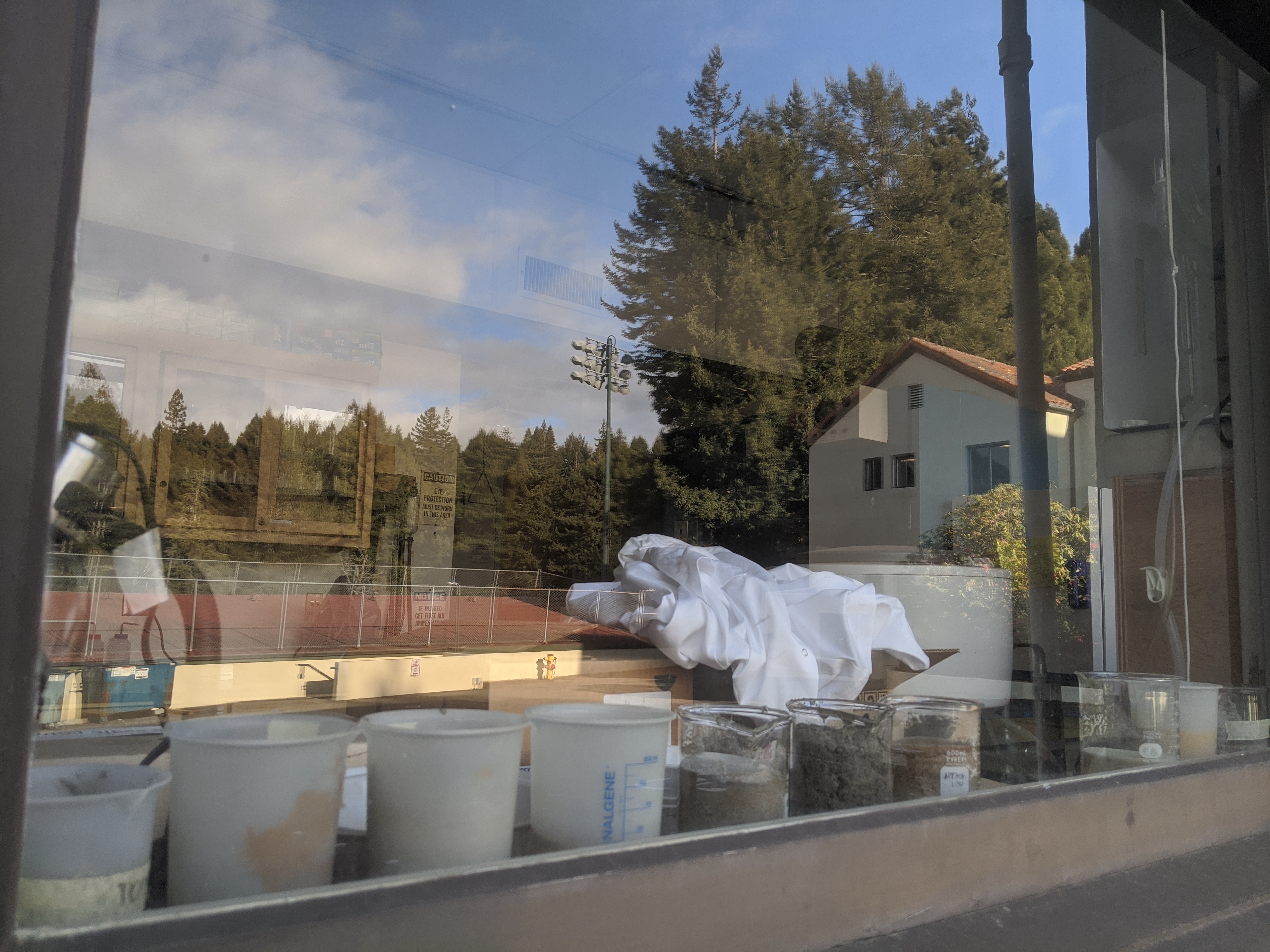
With labs, classrooms and most facilities on campus closed, what is being done with student tuition?
After Humboldt State University canceled in-person classes three weeks ago, students created a change.org petition calling for a reimbursement of tuition. With 2,000 students and supporters rallying behind it, perhaps HSU will bring their concerns into the conversation. Regardless of the administration’s acknowledgement, or lack thereof, HSU students are and will be experiencing a drop in the quality of their education.
As a journalism major, our classes haven’t been heavily impacted, but our access to the university spaces we all pay for is not as integral as for majors like art, dance, theatre and lab sciences.
Bryan Gambrel, a kinesiology major at HSU, said the switch to online labs has affected his motivation to learn the material. With an inability to use the lab spaces, the only way to show comprehension of the reading material is through quizzes.
“My difficult class has become now something that’s based off of reading rather than three hours of experimenting in a lab,” Gambrel said. “I’m not even sure how they can credit it for your GE.”
Lindsey Miller, an HSU freshman, signed the petition. She is a part of the environmental resources department and is taking a chemistry lab course this semester. With the switch to online classes, lessons consist of videos of the professor completing the experiment. She felt like this semester’s labs were a little more challenging than her first semester.
“Without having that hands-on experience in the lab, I don’t know when people are gonna learn it again.”
Raili Makela
“I was only kinda picking up on it before spring break,” Miller said.
Raili Makela is a fourth year marine biology major at HSU. This semester she had signed up for two labs and two lectures that have now been transitioned into online courses. Makela noticed the switch to online labs has made understanding the concepts more difficult.
“It’s because of that hands-on learning that I really start to understand the other material,” Makela said.
While she has learned a lot from her earlier labs and can work from that knowledge, she is worried about how those getting their first lab experience will be impacted.
“Without having that hands-on experience in the lab, I don’t know when people are gonna learn it again,” Makela said.
The situation we are in is reasonable. There isn’t another option that would keep our students, staff and faculty as safe as the current measures we have in place, but it is our money that’s no longer being spent to keep the doors open. Our tuition is not a goodwill donation. It is an exchange for the resources provided by the institution, and if those resources are not being provided, then we are getting shortchanged on our education.
Online classes don’t feel like real learning and stifle student motivation
Spring semester has turned into one of the worst semesters of my life, and online classes aren’t helping.
Don’t get me wrong, online classes are nice to clear up some room in your schedule for work or other classes. They are still classes and shouldn’t be forgotten. I’ve taken at least one—but no more than two—online classes per semester.
But online classes usually have a set schedule. Something like: discussion posts due Monday, comments due Wednesday and a quiz every Friday, plus a project like an essay or media presentation due at some point in the semester. Online classes that start at the beginning of the semester allow both the professor and students to be prepared for the whole semester.
Online classes that start in the middle of the semester? Yeah, those aren’t for me. They’re also not what I paid for.
None of us know what is going on right now and we’re all taking it day by day, but when your professors start to panic, you start to panic. Some professors know what they’re doing and let you know everything right away, while others don’t know what to do or don’t know how to use Zoom or record online lectures.
It took me a minute to learn how to use Zoom, and although I appreciate the service and enjoy seeing my classmates’ faces, it’s awkward. It’s just a big FaceTime where your professor is trying to make the education worth your money. And just like in an everyday classroom, not everyone talks in the Zoom sessions. Zoom sessions always seem to glitch and are mostly only useful for group discussions, critiques and presentations.
We’ve all lost motivation, and quite frankly, it doesn’t even feel as if we’re in school anymore.
I learn better on paper and in person. I realize a lot of work is done on computers and submitted on Canvas, but being in a classroom and taking notes while a professor is lecturing is how something sticks in my head. There are too many distractions at home that I can’t get away from that just make it even harder to learn.
Social media tells me that a lot of people feel the same way. Even though we get to be home and work at our own pace, most of the time being at home just makes us not want to work.
We’ve all lost motivation, and quite frankly, it doesn’t even feel as if we’re in school anymore. Having to remind myself is getting pretty annoying.
With all of this said, I know we should probably be grateful we’re still getting some kind of education. This is my last semester of college, and although I’m not a fan of how it’s ending, I’m grateful I won’t have to take any more online classes.
I wasn’t prepared for the school year to end so abruptly
I’m no good at saying goodbye. Give me no time to prepare, and I think I’m even worse. Amidst the COVID-19 pandemic and the sudden end of the rest of my in-person senior year in college, I’ve had to say goodbye to several friends and colleagues with little warning.
This abrupt ending has thrown me off. I hate to whine, but I wasn’t ready to part ways with so many people. It takes time to reflect on others and consider what I want to say when I might never see them again.
No goodbye is easy, and no goodbye ever feels adequate. But it takes a while for the reality of a goodbye to settle in. The natural buildup of expectation over the course of the last semester of college, which Dan Chiasson wrote about for The New Yorker, helps to ease the transition between college life and post-college life.
Of course, not getting to say a proper goodbye is small potatoes compared to more serious issues people are facing right now, like losing jobs, homes or loved ones. Those things are awful, but they don’t make the little things suck any less.
Of course, not getting to say a proper goodbye is small potatoes compared to more serious issues people are facing right now, like losing jobs, homes or loved ones. Those things are awful, but they don’t make the little things suck any less.
In day-to-day life, it’s easy to let the specifics of what you appreciate about someone go unnoticed. Saying goodbye, for me, requires a bit of excavation into those little things. With some time, I can at least have a couple words to say. Even if what I say is inadequate, something is better than nothing. A couple words can signal a greater appreciation I might be trying to articulate.
In my most recent goodbyes, I’ve tried to give thanks to the person for whatever they’ve done that has made them worth a goodbye in the first place. I try to let them know what I think of them. Then I probably wish them luck. And finally, I might just say “bye,” which is too small a word to encompass all the emotion in a parting of ways.
There’s nothing wrong with any of that. It just hasn’t felt adequate. And it hasn’t helped that we’re supposed to be avoiding getting too close to anyone. Hugs or anything like them are off the table.
Maybe all I’m really getting at is that saying goodbye is one hell of a difficult task, and doing so right now almost feels cruel. Being a true digital age child, I browsed the internet for tips on saying goodbye and got some vague ideas and a suggestion to give the person a memento—which, again, doesn’t seem smart right now.
But no matter how much you prepare, goodbyes are always going to hurt.
If you’ve made it this far, congratulations, you get my cliché takeways: if you have the chance, make your goodbyes worthwhile. Take time. And if you don’t have to say goodbye to someone yet, treasure them, and let them know how much you appreciate them as a friend or colleague or whatever else.
You never know when the world might be struck by a pandemic and you have to say goodbye without warning. Be grateful and appreciative and let those that matter know it. Oh, and wash your hands and stay the hell home as much as possible.
Mirage of safety causes mask supply to plummet and xenophobia to reemerge
The emergence of everyday people using surgical masks amidst the COVID-19 pandemic has caused mass misinformation and the perpetuation of xenophobic ideas.
Myth: Surgical masks make you immune to COVID-19
Typically found on hospital workers and sick personnel as a safety barrier, surgical masks are almost regarded as invincibility devices, protecting the body from outside pollutants and threats. The implied purpose of surgical masks is to protect patients from the secretions of a doctor’s mouth or nose during surgical procedures or to protect doctors and nurses from infected patients. Either way, a basic surgical mask prevents the exchange of bodily fluids, not air particles. Surgical masks are often mistaken as invincible shields against all viruses and bacteria.
Surgical masks show no evidence of prohibiting the inhalation or contraction of the virus that causes COVID-19. The COVID-19 virus particles are too minuscule to be stopped by a surgical mask barrier. According to the Centers for Disease Control and Prevention, “most facemasks do not effectively filter small particles from the air and do not prevent leakage around the edge of the mask when the user inhales.” In no way do surgical masks prevent or obstruct contaminated air.
While surgical face masks are virtually pointless against COVID-19, N95 filtering facepiece respirators are different. These masks are personally fitted to the face and “filter out at least 95% of very small (0.3 micron) particles, capable of filtering out bacteria and virus particles,” according to the CDC. These masks are typically worn by hospital and treatment personnel that come in direct contact with infected patients. N95 masks prevent the inhalation of micro-particles.
Truth: Surgical and N95 masks are running low
Due to the personal fitting of each N95 mask, they begin to degrade overtime depending on their usage, storage and environment. The assigned expiration date and high demand due to the current pandemic has resulted in an unexpected shortage in supply. Doctors are now reusing their masks, but they risk contamination due to degrading components affecting the protection and performance of the mask. Government administrations are requesting N95 donations as well as demanding some occupations to give up their assigned mask for medical workers.
While N95 masks are needed most, surgical masks are running low as well. Infected patients wearing masks benefit surrounding parties by limiting exposure of emitted particles into the air. The pandemic panic has misinformed the public to go buy surgical masks when patients and medical workers need them most.
Myth: DIY masks provide reliable protection
YouTube and social media platforms are advertising do-it-yourself face mask tutorials in response to the shortage in surgical mask supply. The misinformation has continued as people attempt to protect themselves with faulty protection materials. Bras and bonnets to sandals and plain cloths are being cut and trimmed to replicate surgical face masks. But, as previously mentioned, surgical face masks provide no protection against COVID-19 virus particles. Any alteration of store-bought or recycled material will have the same, if not less, protection against COVID-19 than a surgical mask.
Truth: Mask usage has reignited xenophobic ideas
Surgical masks provide zero protection from contracting COVID-19, but they have effectively reignited xenophobia. It’s completely normal for the mind to want to assign a face to an infected COVID-19 individual or picture what a threat would look like out of caution. Assuming someone wearing a face mask has the virus and extending that assumption past the mask, to their race or ethnicity, is disgusting, racist profiling. In a time of crisis, people should be exercising neighborly behavior and picking one another up, not perpetuating racist, profile-based assumptions on others in an attempt to accuse others of the chaos. It’s unproductive and invasive.
Ask Evergreen is an advice column by the students of The Lumberjack
Dear Evergreen,
How do I live in this pandemic?
Dear Concerned Citizen,
We’re living through history right now amidst the COVID-19 pandemic. There are many ways you can prevent potential exposure while still leading a balanced life.
Educate yourself. Learn about the causes, symptoms and preventative measures of this respiratory virus. The California Department of Public Health has pertinent information you should read up on. While Humboldt County is not on the list for community transmissions, it is offering lab testing for suspected cases of the illness. The CDPH news updates page offers consistent updates.
Isolate yourself. Don’t go out unless it’s necessary. While you may want to see your friends during spring break, don’t expose yourself to others who may not be practicing precautionary measures.
If you’ve traveled home for break, be mindful of where you go out. It’s OK to not do normal spring break activities. Avoid going to clubs, restaurants, bars and breweries. It’s unlikely someone diagnosed with COVID-19 will be out in these places, but for the benefit of the doubt, you never know if they’ve been in contact with someone who has.
Protect others. You may not realize how vulnerable certain age groups are to infectious diseases. Young children, the elderly and those with weakened immune systems are more susceptible to become ill. These groups are also less likely to be able to fend off illnesses, so limit interactions with the outside world for the sake of those near you in these populations.
Prepare yourself. It’s going to get worse before it gets better. Practicing all of the former will help you better understand this illness and prevent further spreading. Just like after any natural disaster, awareness is heightened and preparedness begins for the next event. We shouldn’t wait for something to happen to be prepared for it the next time.
Instead, we should always be ready for anything—cautious, but not panicked. Take this time to assess your emergency plans and supplies. Don’t stock up on unnecessary items like toilet paper. Do gather important survival gear to assemble a go-bag if you haven’t already. Ensure you have enough non-perishable food to last a potential quarantine or even a self-isolation period. Make sure you have your prescriptions filled, disinfectant stocked and all other daily necessities.
Advocate for yourself. Perhaps your work has shuttered its doors and you’re worried about your next paycheck. Speak to your boss about what this pandemic means for your employment. Conserve your finances. With the stock market as unstable as it is right now, it’s wise to curb your spending. Don’t waste money on another bottle of hand sanitizer—instead, invest in the necessities.
Relieve yourself. Don’t forget to take your mental health into account during this chaotic time. Reach out to loved ones and check on their well-being while updating them about yours. Find some stress relieving activities for you to do as you practice social distancing. Paint something, start meditating, study a new language or even do your taxes. There are plenty of things to occupy yourself with that are both peaceful and productive.
We’re in this together.
Sincerely,
Evergreen
If you have any questions you’d like to send in, email us at contactthejack@gmail.com. We won’t publish any names and you don’t need to use one.
Businesses capitalize on gender-based price discrimination
Gender-based price gouging often goes unnoticed, even though it affects the most basic items like clothing, menstrual products and toiletries.
The pink tax, also known as the tampon tax, refers to women’s products that frequently cost more than equivalent male products. These taxed items aren’t necessarily centered around female hygienic products, but they often target that audience.
March is dedicated to Women’s History Month, where past actions, sacrifices and challenges advocating for equal rights are respected and celebrated. The pink tax furthers gender discrimination and promotes the patriarchal setup of our society.
Women pay more for products solely based on the product being used on a female body. This contributes to the suppression of female rights by unrealistically charging women more for the same products.
The tax allows companies to take advantage of women’s products and manipulate the pricing to further profit. The New York City Department of Consumer Affairs conducted a study of the price differences between products which had male and female versions. The study found, on average, women’s products cost 7% more than men’s products.
There are only five states which don’t tack on an additional tax for any women’s products—Alaska, Delaware, Montana, New Hampshire and Oregon.
Research shows the female version of products like razors, clothes, shaving cream, facial cleanser and even children’s toys cost more on average than their nearly identical male counterpart products.
Pink taxes still exist in 35 states in the United States. There are only five states which don’t tack on an additional tax for any women’s products—Alaska, Delaware, Montana, New Hampshire and Oregon.
Both New York and California look to join the five states of pink tax exemption by eliminating gender-based pricing discrimination. Governor Andrew Cuomo of New York is leading a campaign against the pink tax with a budget plan to remove all gender-based pricing. California State Senator Hannah-Beth Jackson motioned for the same action and argued for the removal of the tax through a demonstration provided in a press conference. Jackson placed two basically identical soccer balls on a table, one with a pink stripe priced at $8.99 and the other with a blue stripe priced at $6.99. Jackson showed gender-based pricing to be simply ludicrous.
The essence of the pink tax is to further discriminate by gender and sexuality to create immense profit off of the subtle product differences. This makes money for corporate manufacturers and hinders the progression of gender equality.
To participate in the pink tax revolution and help the gender equality cause, we advocate boycotting products that target women or supporting companies who fight against gender-based pricing. We encourage people to purchase from companies that don’t produce gender-specific products. Collectively, this allows us to retaliate against the existence of the pink tax in the first place.
Ask Evergreen is a weekly advice column by the students of The Lumberjack
Dear Evergreen,
How do I productively procrastinate?
Dear productive procrastinator,
It’s about that time in the semester where many of us students hit our wall and feel the need to distract ourselves from our priorities. Don’t get comfortable in this phase—we still have eight more weeks of school left. There are a few things you can try to motivate yourself to work more and to keep you focused while still keeping some time to decompress.
Stay organized and prioritize your work. You can try to create daily to-do lists. If you can visualize what you have to do, you might have more motivation to get the little things done before tackling your bigger assignments.
Set realistic goals for yourself that you know you can complete. Chip away at your work bit by bit. You’re less likely to get overwhelmed. Read the required chapters for your classes one at a time and take breaks when you feel the need, but only after getting through a good chunk first.
Study with a purpose. Set aside your phone or just shut it off completely so you don’t get distracted with notifications. Power through the work you have without putting things off. You’ll feel much more relieved and relaxed in your free time if you get your responsibilities out of the way first.
If you really don’t feel persuaded to work after these tips, you can try productively procrastinating in other ways.
Tidy up your house while you put off contributing to a group project. Do the dishes while you think of how to start a report that’s due in a week. Scrub your toilet bowl and strategize your study plan for an upcoming midterm.
Allow yourself to have some time away from your school responsibilities before you buckle down and get to work. This will help you refresh your brain, giving you a better mindset to work with, while also hopefully kick-starting some brainstorming.
As long as you aren’t staring at a wall watching paint dry, you’re bound to be doing something productive while you put off your priorities.
I believe in you!
Sincerely,
Evergreen
If you have any questions you’d like to send in, email us at contactthejack@gmail.com. We won’t publish any names and you don’t need to use one.
Verbal harassment toward women is about control and the assertion of gender discrimination
Overall, 81% of women have experienced sexual harassment or assault in their life, according to Stop Street Harassment. This comes in the form of unwanted touching, being followed, being hollered or whistled at or vulgar gestures.
People often minimize the effect catcalling has, usually through now-tired and almost memetic clichés.
“What were you wearing?” some might ask. Or, “How late was it?”
As explained by HS Insider of the Los Angeles Times, the downplay of the effects of catcalling reinforces rape culture.
“Although catcalling is street harassment, it can be really difficult to report the perpetrator, which also creates the mindset of getting away with something and trying to see what else one can get away with, which can be more violent forms of sexual harassment,” author Karen Rodriguez wrote.
Even if catcallers claim they’re simply having fun or messing around, they demonstrate disregard for the safety and rights of women.
Men who catcall use the institutional power they hold that protects them from behaviors that should be seen as inappropriate. They reinforce the idea that men should hold a level of control over women and that women should be subservient. They see resistance to such unsolicited advances as a negative reaction to their exercise of that power.
“The issue of catcalling and street harassment isn’t an issue on security and protection,” Rebecca Meluch wrote for The DePaulia, the student newspaper at DePaul University. “It should be an issue on the way society shapes people to view groups of bodies as accessible and degradable.”
“Having to double-check the people walking behind me shouldn’t be routine for me.”
Paula Ortiz Cazaubon
HuffPost published a video in which men attempt to explain why they catcall. Most of their responses can be simplified to a man finding a woman attractive and the man instinctively calling out to her. The same men who defended their behavior instantly said they wouldn’t like if women they personally knew were victims of harassment.
The attitude that men are simply having fun as long as they’re personally and emotionally removed from the victim, reinforces stereotypes of gender inequality and power dynamics. The asserting of one’s power is the real intention behind catcalling, regardless of what perpetrators claim.
These actions are far from harmless, and they are damaging to women in the long run.
“Having to double-check the people walking behind me shouldn’t be routine for me,” Paula Ortiz Cazaubon wrote for The Beacon, the student newspaper at the University of Portland.
This is why education on street harassment is necessary. It starts with holding men accountable for their behavior. Rape culture is not something to be fetishized or taken lightly.
This website uses cookies to improve your experience. We'll assume you're ok with this, but you can opt-out if you wish. Cookie settingsACCEPT
Privacy & Cookies Policy
Privacy Overview
This website uses cookies to improve your experience while you navigate through the website. Out of these cookies, the cookies that are categorized as necessary are stored on your browser as they are essential for the working of basic functionalities of the website. We also use third-party cookies that help us analyze and understand how you use this website. These cookies will be stored in your browser only with your consent. You also have the option to opt-out of these cookies. But opting out of some of these cookies may have an effect on your browsing experience.
Necessary cookies are absolutely essential for the website to function properly. This category only includes cookies that ensures basic functionalities and security features of the website. These cookies do not store any personal information.
Any cookies that may not be particularly necessary for the website to function and is used specifically to collect user personal data via analytics, ads, other embedded contents are termed as non-necessary cookies. It is mandatory to procure user consent prior to running these cookies on your website.