The Lumberjack


Students Serving The Cal Poly Humboldt Campus and Community Since 1929

Category: Opinion

  • Don’t go missing

    Don’t go missing

    By | Reza Sadeghzadeh

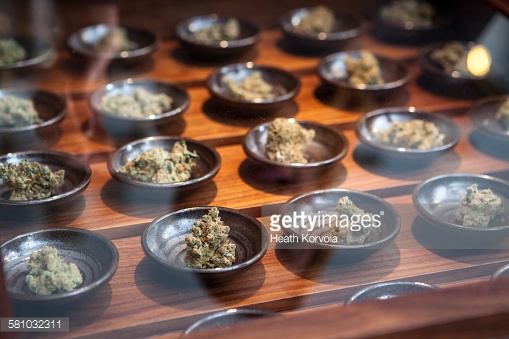
    Humboldt County reported 352 people missing in 2015, and according to ABC News, “That’s more people missing per capita than any other county in California.”

    It would be fair to say that the black market of the cannabis industry is a probable reason behind the high rate of missing people in our county.

    Students and “trimigrants” become vulnerable when they decide to go in the hills to trim, which subsequently makes them dependent on their “employer” without any recourse.

    “Students from the nearest college, Humboldt State University, return from a summer of trimming marijuana buds with takes of being forced to give their boss a blow job to get paid,” said Shoshana Walter of The Huffington Post. “During one harvest season, two growers began having sex with their teenage trimmer. When they feared she would run away, they locked her inside an oversized toolbox with breathing holes.”

    Money is a huge factor for many college students and cash-paying trimming gigs can help tremendously. But you must be aware of the potential outcomes.

    Consider these following things before trimming for a grower:

    First and foremost, who are you going to be trimming for and how well do you know them? It is not wise to trim for a stranger, so make sure you know who you are dealing with.

    “We have Russian mafia up here, we have Mexican mafia up here and we have Asian triad gangs up here, because the marijuana industry is money,” said Humboldt County Sheriff’s deputy Greg O’Rourke.

    Most HSU students are not informed about the involvement of these criminal organizations in Humboldt’s cannabis industry, which is why it is important to know who you are trimming for.

    If you decide to go in the hills for a trimming gig, make sure you know where the farm is located. Also, let a friend or family member know about your plan prior to your departure.

    In all fairness, some growers are law-abiding citizens and treat their trimmers with decency, but that might not always be the case. That’s why you should be cautious before accepting any job offers. If you don’t, there is a chance you might go missing.


  • Hit the road, Jacks

    Hit the road, Jacks

    Finals are upon us, but so is winter break. It’s time to make travel plans again.

    Some people huff at the thought of making travel arrangements, especially since many of us just got back from a long-awaited and well-deserved Thanksgiving break. Needless to say, we’re also readjusting to the home stretch of this semester.

    In spite of that, we encourage you to invest some of your downtime thinking about the places you’ve always wanted to visit and make it happen during winter break. Write down the destinations, pull up Google Maps or TripAdvisor and start researching your fantasy voyage. The simple act of routing that one landmark you must finally check out with the restaurant you need to try could be more fun than you expected. The ultimate goal here is to try new things in new places and maybe meet inspiring people along the way. This can be anywhere between the pub down the street you’ve been meaning to visit or backpacking through Europe. Either way, you’d essentially step outside of your comfort zone and gain new experiences. These are two invaluable components of growing up and expanding your mind in a world full of narrow-minded blockheads.

    A few of us are strapped for cash or don’t drive, but don’t fret. It’s not completely hopeless.

    Humboldt State’s Homeward Bound Bus Charter Program “provides students with discounted round-trip transportation from Arcata directly to San Francisco or Los Angeles.”

    If that doesn’t work for you, consider HSU’s carpool program, JackPass, Zagster, Zimride and Zipcar. Visit parking.humboldt.edu for more details.

    The pressures of finals will surely stress us out, but there is a light at the end of the tunnel. Plan accordingly and don’t forget about the potential road constructions due to winter conditions. Good luck, safe travels and enjoy your upcoming adventures.

  • As American as denial

    As American as denial

    By | Phil Santos

    Donald Trump was a champion of feminism and a hero of civil rights. It’s not hard to imagine that printed in history books 10 years from now. American society has woven plenty of lies into its mythology, so why wouldn’t they enshrine Donald? From complete falsifications to “unintended” misrepresentations, American history comes in many flavors and most of them are built upon an astounding foundation of denial.

    Denial is a primitive and childish defense mechanism that eases things in the short term. But it doesn’t bode well over time, so a country in denial is in trouble if it plans on being around for long. Denial is as American as apple pie and genocide. Whether it be the past, present or future, America has a problem accepting what was, what is and what will be.

    Recently, most of us celebrated Thanksgiving. Thanksgiving is a perfect embodiment of the historic denial which plagues the American memory. You probably grew up thinking that the pilgrims sat down and had a jolly feast with the Wampanoag to celebrate their merry coexistence. This is a lie which denies the genocidal founding of America. Thanksgiving draws its roots from a feast which celebrates the massacre of hundreds of Pequots. If this is the first time you’ve heard that then behold – this is the power of American denial.

    One could say that history has been accurately recognized because there have been several occasions when the government has apologized for historical events. But most of these apologies were insincere – one (addressed to Indigenous nations of the lower 48) was tucked into the 67th page of a congressional spending bill which was signed, but never spoken by former president Obama. The reluctance to apologize is just another symptom of denying what actually happened.

    The problem with denying the past is that it makes it easier to deny the present. You can’t know where you are if you don’t know where you came from. If you turn to various news outlets, you’ll find debates about whether or not racism is systemic. There is no debate. The genocide against Indigenous nations in North America was justified by the Doctorine of Discovery which considered Indigenous Peoples as less than human. The “founding fathers” participated in this genocide and crafted the Constitution which all U.S. law is derived from. So law itself is contaminated by racist sentiments which were originally meant to privilege white settlers. This is the law that governs contemporary society – denial of history is the only way anyone can argue that structural racism doesn’t exist with us today.

    America also has trouble recognizing what’s happening globally as well. Climate denialists reject the insurmountable evidence that the future is grim if climate change isn’t addressed. This is on a public and governmental level, which is astounding. To deny hard science in such a fashion delves into the realm of the psychologically impaired.

    Denial in the fashion I’ve outlined is never a healthy thing. I think that the present chaos which plagues America is the result of two hundred years of it. Denying our genocidal history, denying rampant racism, denying climate change – they all add up to a world wrought with conflict where common ground is sparse. If we were to have reconciliation, we first need truth. But truth and denial are exclusive – the choice is clear.


  • Your first amendment is under assault

    Your first amendment is under assault

    In an effort to crack down on the fast-growing global Boycott, Divestment and Sanctions (BDS) movement, pro-Israel U.S lawmakers across both aisles are trying to pass a bill that criminalizes the boycott of Israel.

    Inspired by the South African anti-apartheid movement, the goal of the BDS movement is to pressure Israel to end its violations of human rights and to comply with international law. According to the United Nations human rights council, Israel is the world’s top human rights violator.

    Israel Anti-Boycott Act bills (S.720/H.R.1697) were introduced in both the House and the Senate earlier this year. Now more than 43 senators and 247 house members support these bills.

    According to the American Civil Liberties Union (ACLU), the law will make it a felony to boycott both Israel and its illegal settlements in occupied West Bank if the bills passed. In addition, U.S persons who boycott Israel can face up to 20 years in prison and fines up to one million dollars.

    Dylan J. Williams of J Street, a pro-Israel advocacy group based out of Washington D.C., wrote a letter to Congress in regards to the Anti-Boycott Act.

    “The penalties associated with these offenses are serious, potentially including substantial fines and prison time of up to 10 years,” Williams wrote. “This bill could give Attorney General Jeff Sessions the power to prosecute any American who chooses not to buy settlement products for a felony offense. That kind of authority should not be given to any administration, let alone one that has engaged in extreme rhetoric against political opponents, including threats to ‘lock [them] up.’”

    The ACLU wrote a letter to members of the Senate urging them to oppose the Israel Anti-Boycott Act.

    “We [ACLU] urge you [senators] to refrain from co-sponsoring the legislation because it would punish individuals for no reason other than their political beliefs… This bill would impose civil and criminal punishment on individuals solely because of their political beliefs about Israel and its policies.”

    This unconstitutional bill represents a serious threat to people’s right to boycott. Freedom to boycott is part and parcel of freedom of speech protected by the first amendment of the U.S. Constitution.

    About 23 states, including California, have already passed laws against boycotting Israel. California Assembly Bill 2844 was signed into law by Governor Jerry Brown. This Califonia law requires those who enter into contracts with state agencies to certify that they are not boycotting Israel as well as not supporting the BDS movement or any of its programs. This straight up goes against freedom of speech.

    I’m not in any way, shape or form implying that I boycott Israel, nor am I encouraging anyone to do so. However, I believe that freedom of speech is a fundamental human right that shouldn’t be undermined. I strongly oppose the Israel Anti-Boycott Act. If you too think that the first amendment and freedom of speech shouldn’t be undermined, then go and write your representatives on Capitol Hill. Ask them to oppose any bill that may jeopardize your freedom of speech.

  • Trump and the Weinstein effect

    Trump and the Weinstein effect

    Now is an appropriate time to have a serious discussion about sexual harassment. Dozens of celebrities have come forward to reveal their stories of sexual harassment, assault and rape. Louis C.K. and Kevin Spacey are just a sample of the latest household names who have been accused. Further, the viral Me Too hashtag has given confidence to millions of victims to follow suit on social media.

    Here’s the thing. Celebrities like C.K. and Spacey quickly lost their jobs and credibility. The same goes for Harvey Weinstein, Terry Richardson and so on. Outside of the Hollywood bubble, Alabama state judge Roy Moore was recently accused of sexual misconduct with multiple minors.

    If the allegations are true, President Donald Trump said Moore “will do the right thing and step aside.”

    That’s a funny thing to say if you happen to recall the numerous accusations of sexual harassment against Trump. Remember the “grab ‘em by the pussy” comment? What a class act. Why hasn’t he lost his job? Why was his “locker room talk” swept under the rug? Why isn’t he doing the right thing and stepping aside?

    To put it another way, Trump said during an interview on The Howard Stern Show that he could “get away with things like that.”

    That’s the thing about privilege. While other high profile figures continue to face the consequences of their action, people like Trump continue to get away with it.

    The truth is, there will be less media coverage of sexual harassment as time goes by. That’s the nature of the new media, it’s fickle. Despite that, it’s important for us to continue this discussion rather turn a blind eye. By doing so, we can create a more welcoming environment for those who feel inclined to share their stories.

  • Reject the smoking ban

    Reject the smoking ban

    By | Phil Santos

    HSU students should take the campus tobacco ban, roll it up and smoke it. The ban prohibits any tobacco products from being used on campus property. This ban intends to promote air quality and general health, but that comes at a cost.

    The ban means that smokers have to travel long distances to be compliant with city and campus policies.

    HSU student Michael Erickson said, “The campus police say to go about a mile into the community forest, because that’s where it becomes city, not university property.”

    Let’s think about the implications of this from a smoker’s perspective in a hypothetical situation.

    It’s late at night and you’re in your dorm craving a smoke. Instead of heading down to the well-lit gazebo to smoke, you now have to traipse a mile into the community forest. So you suit up, pray the charge on your phone will light your way and head out for a late night hike into the forest alone. This sounds like the beginning of a horror movie!

    “Being by yourself can be kind of sketchy with some of the people out there,” said Erickson. “There are definitely safety concerns.”

    A smoking ban that forces smokers into vulnerable situations like solo night hikes must be revised.

    I can just see the headline now, “HSU student assaulted in community forest while smoking.”

    This is only one unintended consequence of the blanket ban on tobacco. And if there is one unintended consequence, there are certainly others.

    Another consequence of the ban is an increase in loose cigarette butts.

    “People are going to smoke no matter what you do,” said HSU student Marek Halaj. “But now there are cigarette butts all over the place, because people no longer give a shit.”

    This is because without designated smoking areas, smokers have resorted to unconventional locations.

    When asked about the impact of loose cigarette butts, Erickson, who is an environmental science and management major, said “the big thing would be water pollution.”

    Cigarette butts contain concentrations of various chemicals like arsenic, lead, acetone, ammonia and so on. They eventually wash into our waterways after they’ve been flicked on the ground. Those chemicals are then leached from the butts into the water. Let’s be real here, Halaj is right when he says that people are going to smoke no matter what you do. So if we don’t want people putting these chemicals in our lungs, why pass a policy that puts them in our water?

    Where else are students putting their butts?

    “In trash cans,” said Erickson. “There’s more of a fire risk now.”

    All it takes is one cigarette left unextinguished for a campus fire to break out. Additionally, if students need to disguise their smoking, chances are they’ll look for well-covered areas, which means places where a fire could be started. When it’s peak fire season, do we really want students sneaking into the trees where a dropped ember could mean a forest fire?

    So what are the alternatives? The CSU policy is a full smoking ban, so there are none. This means all of these issues will continue to be a reality. Erickson and Halaj both agree that designated smoking areas are a must.

    “Properly placed smoking sections away from major areas shouldn’t be a problem” said Erickson.

    This would ensure that asthmatic students or otherwise have greatly reduced their exposure to smoke while satisfying smokers with designated areas. How we can make that happen is a hard call as the CSU is likely firm on the smoking ban. But I’m a fan of civil disobedience, which speaks loudly. My suggestion? To hell with it. Smoke ’em if you got ’em!


  • #metoo

    #metoo

    By | Iridian Casarez

    Victims of sexual assault and sexual harassment need to continue to tell their story. It cannot stop here. It wasn’t until the #metoo movement that people began to acknowledge how sexual assault and sexual harassment was prevalent and happening everywhere. Everyone felt supported enough to tell their stories, including men. Men who, according to society, can’t get raped. Men who are victims of sexual assault don’t report it. The National Sexual Violence Resource center says that about nine percent of men are victims of sexual assault.

    53 thousand people and counting participated in the “#MeToo” movement. The hashtag “me too” was used by victims of sexual assault or harassment. All people did was post the hashtag and that was it. It was known to everyone that they had become a victim. It shed light to the fact that anyone could be a victim of sexual assault.

    We have seen sex scandals happening way before the Harvey Weinstein allegations. This past February, Uber was under scrutiny after a former engineering employer, Susan Fowler, claimed that she was sexually harassed, as previously reported by Bloomberg Technologies.Kesha, the singer/songwriter, sued her music producer, Dr. Luke because of how he sexually, verbally, and physically abused her. We saw a big rape case a year ago at Stanford University in which an unconscious woman was raped behind a dumpster by Brock Turner. She read a letter outloud to her rapist in open court that was reported by Buzzfeed. But it wasn’t until after more than 2 million posts that we started to listen.

    We cannot let this movement die. Rape, Abuse, and Incest Network Statistics (R.A.I.N.N.) says that every 98 seconds, an American is sexually assaulted. R.A.I.N.N says that women who are college-aged are at higher risk for sexual assault.

    I have someone close to me that is a victim of sexual assault. I have listened to their stories and I can see the effects of sexual assault. It’s devastating.

    #metoo is making it clear that sexual assault, abuse, harassment is always happening. #metoo lets us see the reality of sexual abuse and it must come to an end. We need to continue to tell our stories and we need to seek justice for those who have been sexually abused. We must teach everyone that you need to have consent. Yes, means yes.

    If you have been sexually assaulted there is the Campus Advocate Team provided by North Coast Rape CrisisTeam.Support is available for all survivors, no matter when the assault occurred, no matter what age or gender. They can be reached at (707) 445-2881.

  • Fake soldiers and cultural appropriation

    Fake soldiers and cultural appropriation

    By | Phil Santos

    There’s no point in explaining cultural appropriation to the military community. This isn’t because it’s futile, but rather the opposite. I served in the Navy for long enough to say that the military community has an intimate understanding of what cultural appropriation is, particularly when it’s their culture. But there’s a possibility that they don’t know this is the case as the military doesn’t come up in these conversations.

    Cultural appropriation is hard to explain because there’s not really a definitive line where it is or isn’t happening. But in short, it’s when one culture takes elements from another culture without permission. It’s problematic for a number of reasons. Two of them are that cultural appropriation creates a type of cultural reverse engineering. It allows others outside a culture to benefit from the identities that don’t belong to them.

    With cultural appropriation, it’s important to ask who is doing the taking and why. Most of the time, the culture that takes is the dominant culture (mainstream society), while the culture which is taken from is usually a marginalized culture (Indigenous, Black, Asian and so on). The result is a dominant culture that rejects marginalized cultures at large, except for select elements that become attributed to or “reinvented” by the dominant culture. Translation: /rock-n-roll is attributed to white people, but its pioneers were Black.

    A more individualized example of cultural appropriation is easier to understand when we consider a specific kind of imposter. In 2009, under the guidance of James Arthur Ray, three people died during a “sweat lodge ceremony” he held in Sedona, Arizona. Imposters like Ray cherry pick elements of various cultures to sell to others in the form of “spiritual retreats” or “healing ceremonies.” They may call themselves a “medicine woman” or a “certified shaman.” They often go as far as claiming the culture they appropriate.

    This is where the military comes in. Ask someone in the military how they feel when someone pretends to be a veteran or active duty member. The responses you’re likely to get will echo the conversations surrounding the topic of cultural appropriation. The military community even has its own term for this: Stolen valor.

    Stolen valor happens when people pretend to be military members or lie about their military background. If you search “stolen valor” on YouTube, you’ll find plenty of videos showing military members confronting imposters who have appropriated their identities. Putting yourself in the shoes of a soldier who lived through war makes it easy to understand why stolen valor is outright wrong. The imposter didn’t earn the uniform, they didn’t go to war, so they should take it off. They might want to be part of military culture, but they’re not. They have no place pretending like they are.

    If stolen valor is so easy to understand and relate to, what’s the hiccup with cultural appropriation? I think it’s because people understand and respect military culture more than other marginalized cultures. But they are all cultures, and one isn’t better than the other. You can say being Asian isn’t the same as being a soldier. This is the same as saying that cultures are different from one another, which is obvious and redundant. If you can understand why no one should wear a fake Medal of Honor, you understand why no one should wear a fake headdress. They both hold cultural significance that no one else is entitled to. So if you ever find yourself having difficulty explaining cultural appropriation, a comparison to the military might be what you need.

  • Please kneel for our national anthem

    Please kneel for our national anthem

    The meaning of patriotism evolves as our divided nation continues to quarrel about taking a knee.

    Former San Francisco 49ers quarterback Colin Kaepernick gained widespread attention in the past year for kneeling during the national anthem prior to NFL games. His polarization spotlighted the ongoing racism in our country.

    For instance, Donald Trump called Kaepernick a “son of a bitch” for taking a knee, yet he defended white nationalist protesters as “very fine people” following the “Unite the Right” rally in Charlottesville, Virginia.

    In addition to the “son of a bitch” comment, Trump said that “players [should] stop disrespecting our Flag & Country” or risk getting the boot.

    As a result, NFL players locked arms and kneeled during national anthems, which signified a big middle finger to an unfit president while siding with Kaepernick.

    The peaceful gesture of taking a knee represents the suppressed truth of the American flag as a symbol that “oppresses black people and people of color,” said Kaepernick.

    It was also in particular response to police brutality and the criminal justice system against African Americans in the United States. However, not everyone is positively moved by his influential gesture.

    Naysayers believe that kneeling during “The Star-Spangled Banner” is just a slap in the face to our military veterans, but they fail to recognize the bigger picture. Kneeling before the national anthem isn’t targeting the people who fought and died for our country, but rather the hypocrisy of patriotism.

    “It baffles me that our protest is still being misconstrued as disrespectful to the country, flag and military personnel,” said strong safety for the 49ers, Eric Reid. “It has always been my understanding that the brave men and women who fought and died for our country did so to ensure that we could live in a fair and free society, which includes the right to speak out in protest.”

    Patriotism means devotion to one’s country, but it’s much more involved than its conservative, flag-waving point of view. Honoring our troops is one thing, but black homicides by racist white cops prevent me from being a proud American in every respect. U.S. Navy veteran Mohammed Jahanfar was burdened by Trump’s discriminatory travel ban earlier this year, which also stigmatizes the idea of unconditional patriotism. These and a myriad of other problems in our society make me a halfhearted patriot.

    All in all, the prevalent oppression of people of color is embarrassing. They put to shame the customary concept of patriotism when you factor in these contemporary realities.

    The national anthem is still relevant to honoring our soldiers and veterans, but that’s not what taking a knee represents. It’s about refusing to pledge allegiance to racial injustice and persecution of marginalized peoples. Think about the hate-filled rally in Charlottesville, Virginia the next time you decide to express your wholehearted loyalty to the U.S. Think about Eric Garner who repeated “I can’t breathe” as police choked him to death on a sidewalk. Until these enduring social issues come to an end, I can’t fully agree to be a proud American.


  • Standing Rock Reflection

    Standing Rock Reflection

    By | Phil Santos

    We brought prayers to a gunfight, and we won. I’m talking about the water protectors who stood against military, police and mercenary forces last year at Standing Rock. We were there to protect the water, to preserve the future and to stand against those who would see our precious earth destroyed for a dollar. We were there to stop the construction of the Dakota Access Pipeline.

    It was around this time last year that I had been released from jail. I was one of about 150 water protectors arrested on Oct. 27, 2016 during the invasion of Standing Rock. It’s 2017, and the pipeline has been built. So, how did we succeed?

    While I cannot speak for everyone, here is my individual take.

    Standing Rock demonstrates the active presence of a powerful Indigenous community. Historic and contemporary narratives often portray Indigenous culture as a part of the past. I’ve met people who didn’t know Indigenous Peoples still existed. I think Standing Rock has made this much less likely. Thousands of Indigenous protectors from hundreds of Indigenous nations from all over the world came together at Standing Rock. The media coverage of Standing rock sent a loud and clear message that Indigenous nations are not passive and that they are here and now.

    Standing Rock created alliances that might have otherwise never have been forged. The Sacred Fire of the Seven Councils was lit, something that hadn’t happened since the 1800s. Indigenous nations from all parts of the world came to show their solidarity. Groups from every race united under Indigenous leadership. I saw Indigenous and non-Indigenous alike all acting for one cause. This is an image that captures true power. I met like minds from across the world. I found lifelong friendships in a matter of hours. Although I’ve returned from Standing Rock, the reason I went carries forth.

    Standing Rock brought attention to Indigenous issues. Over 300 cities in the U.S. joined in to slow the construction of the pipeline. Newscasters across the world cast light on the continued violation of Indigenous rights, of Treaty rights and of the continued history of violence against Indigenous nations. The issue of environmental racism was explicitly raised and people were engaged. Footage showing the willingness for state and federal governments to utilize violence for the benefit of private companies broadcasted across the world. The U.N. sent human rights investigators. All of these events contributed to raise awareness of Indigenous issues which are typically marginalized.

    Sure, the pipeline was built – so one could say the movement at Standing Rock was actually a failure. But the protectors at Standing Rock who aren’t still in jail continue to forward the call, which brought them there in the first place. Thousands of protectors have been changed forever. You don’t forget something that has made you who you are, and Standing Rock is now a part of who I am. Standing Rock was not a defeat. It was empowering and gave me the courage to challenge the structures around me. I’m not the only one, and that is why I think we won.


  • Pondering on Pizza

    Pondering on Pizza

    By | Phil Santos

    Do it well or don’t do it at all. That’s what I’m thinking everytime I go out for a slice of cheese pizza. This town has a surprising number of pizza joints (six), but they all have one thing in common: their cheese pizza game could use some work. With so many places to get pizza, why can’t my cheesy needs be met?

    It’s my suspicion that this is because Arcata is a rural town. Most HSU students hail from urban areas, be it Los Angeles, San Diego or other metropolitan areas. As someone who has lived in LA and San Diego, I can say that one of the perks of city life is the range of choice you get. Finding a place that bakes a a top-tier slice of cheese pizza is a lot easier if there are more places to choose from. It seems like we have choices in Arcata, but it’s an illusion and you can’t get away from it. In a city, you can go somewhere else if you don’t like what you find. However, if you don’t like what you find in Arcata, you quickly realize that you’re six hours away from any well- established city. This is the rural trap that HSU students are stuck in.

    Sometimes the cynical side of me wonders if this is why the pizza game in Arcata needs improvement. Is the pizza here subpar, because business owners recognize that HSU students have no other options but to buy their pizza? I doubt that’s the sole driver behind the issue in pizza quality, but I’m sure it’s a factor. Regardless, it doesn’t change the reality that we are residents in a rural area who are essentially confined to the limited choices offered by Arcata businesses.

    What I would like to see change in Arcata is much in alignment with my opening statement. With understanding the need for price diversification, I’d like to see less pizza places and better quality pizza. I understand that some establishments wouldn’t be able to “do pizza” at all if they had to do it well. But I don’t think that justifies why several of them get to “do pizza” okay-iish.

    Bill Withers once sang a song that might’ve been about this very issue where he says, “Just do what you do, and do it good.”


  • My culture is NOT a costume!

    My culture is NOT a costume!

    By | Reza Sadeghzadeh

    Some people might think it’s sexy to wear a Pocahontas costume for Halloween or funny to dress up like a Muslim wearing a thawb with a fake bomb strapped to their chest.

    But ask a Native American woman if she thinks it’s sexy to dress up like a subordinate Disney character where Native Americans are portrayed as a second-class citizens. Ask her if she thinks it’s sexy to dress up like Pocahontas when Native American women have the highest rate of rape and assault.

    Ask Mohammad Maleki, a former HSU student from Iran, if it’s funny to dress up like a stereotypical Muslim suicide bomber when he was unable to come back to America during Trump’s travel ban earlier this year.

    Those who like to use other people’s cultures as costumes might claim that they are only choosing to dress as such just for the sake of Halloween. They’ll add that they don’t mean to promote racial stereotypes. But their intention is irrelevant.

    That is why the My Culture is Not a Costume campaign has been brought to our campus with the endeavor of students like Deema Hindaw to raise awareness about this issue.

    “My goal with this campaign is to show people that cultural appropriation is not a joke,” said Hindaw. “The culture of others shouldn’t be a costume that one gets to wear for a night.”

    Hindaw and other students from the MultiCultural Center have also put together a workshop to inform others about the distinction between cultural appreciation and appropriation.

    My Culture is Not a Costume is a nationwide movement. It is not just about a costume, it is also about “putting on other people’s skin for that one night as a prop,” said Elizabeth Phillips, a Communication student at HSU. “And at the end of the night, you get to take it off and maintain your privilege while other people have to deal with their cultural reality… the reality that our society has viewed skin color in a hierarchy.”

    Every culture is beautiful and slightly different from one another. But at the end of the day, we are all humans who want the same things in life. Cultural appropriation is a systematic ideology implemented by those who are advocates of racial segregation and the scandalous rhetoric of “divide and conquer.”

    Cultural appreciation is a framework for solidarity, because it helps us admire our cultural differences that is used as guidance for a healthy dialogue regarding race. Finally, culturally appropriated costumes discourage us from having any type of healthy dialogue about our different cultures.

  • We ain’t afraid of no ghost

    We ain’t afraid of no ghost

    Ghosts are figments of our imagination.

    That strange presence you’ve felt is your mind playing tricks on you. Chances are there is a rational explanation for that mysterious noise you heard in the middle of the night. The prickly feeling on the back of your neck that raises the hairs on your arm is probably due to a minor neck sprain, not a sign of a ghost. But some of us are not willing to engage in a practical analysis of unexplained phenomenons. The unwavering faith in ghosts is too fantastic to rule out.

    When people claim to witness paranormal activities, they either hallucinated during the moment or fabricated the story.

    For instance, the ghostly apparition may have been caused by inhaling black mold or carbon monoxide, which is known to cause hallucinations. Suffice it to say that there is no shortage of mold in Humboldt County. Other causes of hallucination include sleep paralysis, side effects of medication or mental illness.

    Paranormal reality television shows like Ghost Hunters are duping you. Ghost hunters are as qualified as Scooby-Doo and the mystery gang. Hollywood continues to release terrifying movies about ghosts to cater to the impressionable imagination. All in all who knows how many ghost stories are out there?

    Ghosts have captivated people for centuries. The mysticism of spirits walking among the living continues to have a powerful effect on the psyche. After all, the idea of life after death is more comforting than eternal oblivion. However, believing in ghosts is like taking Star Wars or your favorite superheroes literally. The same can be said about the bold certainty of nothingness after we die. The point is, neither science nor religion can prove that ghosts exist.


  • Letter to the editor

    Letter to the editor

    It has been an unfortunate few days for me since the Lumberjack published a distorted article on the state of composting at HSU. Your article has effected more than our campus community – I have been contacted by people from other parts of the country, by HSU administrators and by students, and I have had only limited success in getting the author to correct the misinformation within this article. The article was printed above-the-fold on the front page, and there it is in big, bold print: “HSU compost goes to the landfill.” I can understand how readers see this and think, “Why bother putting my food waste in the compost bin?” Especially if the reader does not continue past the big bold title and the first paragraph, which states “there’s no alternative in sight.” The fact is, even as you read this, our next load of food waste is being prepared for composting at a worm farm. The author overlooked the significant successes in food waste reduction and food recovery. In the food recovery hierarchy, composting is really the last resort before landfilling. The focus is on reducing food prep and recovering leftover food for human consumption, and by working with HSU Dining and the OH SNAP food pantry great strides have been made in this area. Because of these efforts, HSU won a best practices award in Innovative Waste Reduction at the 2017 California Higher Education Sustainability Conference. Additionally, the author did not give any helpful tips or suggestions on what readers can do to reduce food waste and to compost or otherwise assist the campus and their communities in this effort. He mentions there is trash in our food-waste (which has always been far below the threshold acceptable to our worm farmer), so why not make the connection and suggest to readers that they NOT throw trash in the compost bins? This article has set us back, in our relationships with our campus and off-campus partners, and in our efforts to get people to reduce food waste generation and to help us effectively divert food waste to compost.

    Morgan King

    Climate Action Analyst

    Humboldt State University

  • Letter to the editor

    Letter to the editor

    Dear Editor,

    On September 5, 2017 the Lumberjack ran a story about how students who use campus meal plans lose their J-points at the end of the year (“Students’ J-point money washed away”). Students who use meal plans receive about half the value of their plan in j-points, the other half goes toward non-food costs for HSU Dining Services. In this way, j-points are merely a representation of food that the student will consume. By repossessing j-points at the year’s end, the University is reducing the amount of food that a student can buy in the future. Students who don’t have the luxury of having the funds to purchase more j-points mid-semester must be very conscious of their balances, since an early depletion means no more food and a late depletion means they could have had more food. Either way, it’s another stress factor added to student life.

    Then there’s the fact that at the J and the Depot, students using J-points get a discount on the food there, 67% and 25%, respectively. HSU Dining Services gives students this incentive to purchase a meal plan if they aren’t already required to do so by their on-campus housing situation. Incentives are great, but they’re rarely for purely humanitarian reasons (like making sure students stay fed). In our case, the heavily discounted food appeals to our need to preserve our financial aid, loan money, paychecks and college funds and encourages us to ignore the clause that requires us to forfeit unused money at the end of the year. Those of us new to the school aren’t yet privy to the information that allows us to know how much money we need for food for a semester or a year. As was pointed out in the Lumberjack, $82,513 worth of j-points were repossessed by HSU last year. That’s $82,513 of uneaten food that HSU forces students to pay for.

    This aspect of our meal plan system is unacceptable. There’s no reason, beyond Ron’s need to inflate the revenues of HSU’s dining service, to make j-point forfeiture a stipulation of the meal plan contract. Students have enough to worry about when they resettle in Humboldt after summer break or settle here for the first time, so many choose the convenience of on-campus housing over the stress of finding housing in Arcata, Eureka, McKinleyville, etc. We expect that the services provided by the University will be on fair terms; the HSU seal lulls us into a false sense of security over what we are agreeing to. The terms aren’t negotiable, but if you don’t like them, you don’t have to buy meal plans or on-campus housing. Just go hungry and homeless.

    -Breydon Beshore

  • Make the most of it

    Make the most of it

    Businesses in Arcata close up shop too early, leaving some of us bored and frustrated with the same limited options when we’re done for the day. Affordable dining and entertainment options are especially slim pickings.

    A good deal of local businesses should consider staying open longer. This would not only satisfy the demands of a revolving demographic, namely HSU students, but closing early is missed opportunity for more sales. In addition, the extended hours would ultimately do its part by enhancing the quality of life in our small college town.

    Let’s be honest, though. The most positive reaction this editorial will get out of readers is a nod of approval. Further, business owners will not go out of their way to accommodate a marginalized complaint, nor will businesses pop up to supply a relatively weak demand. This is not reverse psychology; this is the reality of where we live.

    Here’s the thing, we’re all on the same boat. In some respects, you knew what you were signing up for when you decided to be a Lumberjack. Humboldt is not known for a bustling nightlife, cultural diversity or a wide variety of cheap eats to name a few. We clearly don’t have a wealth of options compared to Los Angeles or New York City.

    However, the LoCo Lowdown is a good source of local events. HSU hosts big acts on campus year-round, sometimes for free. If you don’t feel like cooking, Stars Hamburgers or La Chiquita Taqueria offers hearty, delicious and affordable meals within reasonable hours of operation throughout the week. Don’t take granted of Humboldt’s abundance of hiking trails, swimming holes and other outdoor activities. The point is, there are ways around the limitations of what Humboldt has to offer. Make the most of what’s in front of you.

  • My beef with killing the meat industry

    My beef with killing the meat industry

    Eliminating the meat industry would do more harm than good to our planet. The idea that animal agriculture is completely unethical and impractical is false.

    The media does a fine job of antagonizing the meat industry, and we all know about the documentaries that reveal the ugly truth behind factory farming, such as Food, Inc. But have you ever thought about what would happen if we put an end to animal agriculture all together?

    “Agriculture cannot be sustainable without animal agriculture,” said Dr. Frank Mitloehner, Animal Science professor at UC Davis. “That is something I’m sure of.”

    For instance, livestock grazing is used as a tool to stimulate soil production, which in turn removes carbon dioxide from the atmosphere. When herds trample through pastures, they oxygenate soil while pushing down seeds that ultimately promote healthy land restoration. Also, excrement produced along the way fertilizes soil. If managed correctly, livestock distribution can be beneficial to the environment.

    “Soils of the world must be part of any agenda to address climate change, as well as food and water security,” said Dr. Rattan Lal, professor of Soil Science at The Ohio State University.

    Animal parts that are not consumed, such as bones or fat, do not get wasted in the Netherlands. Renewable products from soaps to heart valve replacements are sourced from slaughtered pigs.

    The Dutch eat about a third of the pig “and the rest is exported to all kinds of countries in Europe and the rest of the world,” said Christien Meindertsma, a Dutch artist who is known for using raw materials in her work.

    The truth is that we need to reduce our inherited carbon footprint habits: transportation, dieting and consumerism. The global food production and consumption, namely beef, produce more greenhouse emissions than all of transportation combined. In addition, eating less meat could reduce the risk of heart disease and other health-related issues.

    In extreme cases of either a world full of meat eaters or vegetarians, moderation is the middle ground. Following one extreme over the other will not reduce global warming. We can start by agreeing that livestock is a crucial part of the agricultural system.

  • Arkley I call bullshit

    Arkley I call bullshit

    By | Phil Santos

    Only a sick mind believes you can give something that you have stolen. To give something, it must be yours in the first place. When you steal something, the status of your possession is always illegitimate. You can’t give something you’ve stolen because it was never yours, to begin with. This elementary concept is one that many fail to grasp or disregard completely.

    One of those people is Rob Arkley. He has recently pledged to “buy” Tuluwat, the site of the 1860 massacre of Wiyot women, children and men from the city of Eureka. This is in direct conflict with Eureka’s plan to transfer the land back to the Wiyot tribe.

    Regarding the outcry against Arkley’s proposal, Arkley said, “I am stunned by this whole thing. I don’t get it.”

    Tuluwat is stolen land, but it’s in the process of being returned. Why would anyone pay money to stop that process? My answer is as stated above: their mind is sick.

    However, Arkley says that he’s “concerned about what public access to the island will be like if the land transfer goes through.” He also says that “if [my] offer is taken up, [I] will set up a charity, similar to how Friends of the Dunes operates, [which is] to provide stewardship to the land [and that] it will remain open for public use like it is today.”

    I call bullshit. In 2005, Friends of the Dunes tried to purchase land to preserve and Arkley pulled the same move on them!

    An article in the North Coast Journal wrote, “‘they got in second place,’ Arkley said, making no effort to conceal his glee. ‘And it’ll never, ever, ever, ever, ever be sold to them. I’m not going to give it to the government agencies. I believe there’s far too much government land.’ Arkley has no specific plans for the parcel, which also includes a house. But he made it clear the land would be fenced off and not open to the public.”

    Wiyot tribal administrator Michelle Vassel wrote in an email regarding the transfer of Tuluwat, “The Wiyot Tribe is a government which by nature is a public, not a private entity… the tribe has no intention of excluding people. We have worked long and hard with the city of Eureka and other government agencies, local native and non-native, people and organizations in this community to come together to work toward these goals.”

    It seems like Arkley is afraid that the Wiyot would bar anyone from stepping foot on Tuluwat after it is returned to them. Where does that fear come from? It sounds like something that he would do. It’s an irrational fear of being subject to his own practices. By disregarding the statements of Michelle Vassel, Arkley is practicing the historic American tradition of distorting Indigenous practices. The Indigenous nations on this continent are historically stereotyped as “savage,” “uncivilized” and “unsophisticated.” The list goes on. The common element is that it’s all fabricated for the sake of telling a story to justify the genocide and theft which founded the settler society called The United States of America.

    Arkley’s unfounded concerns promote an irrational fear of exclusion. This mobilizes the public to buy into his perspective – to believe the Wiyot will exclude the public from Tuluwat. He invokes classic tropes that are used to justify the theft of Indigenous land such as giving things back to Indigenous communities, or how Indigenous peoples aren’t using Tuluwat. This is representative of a deep divide in the way that American settler society sees history and the modern reality of contemporary life. As polarized as these viewpoints may be, there is hope because there might be one place where Arkley and the Wiyot see eye to eye.

    This is best said by Arkley himself “I don’t get how they can take one of our assets and give it.”


  • DVAM is now

    DVAM is now

    From O.J. Simpson to Ray Rice, domestic violence in the United States is an issue that has been perpetuated for too long. It is often swept under the rug due to its complexity.

    In honor of recognizing October as Domestic Violence Awareness Month (DVAM), it is worth taking the time to talk about this issue that still requires public awareness, education and involvement.

    Domestic violence is a broad term for a complex issue. The term refers to any form of physical, emotional, psychological, economic or sexual abuse that exists in a household. These include family, non-family and romantic relationships. The underlying issue and its scope expand far beyond the definition of the term.

    It is important to understand that domestic violence is a prevalent issue in many communities. Persons affected by domestic abuse can be of any age, gender, race, sexual orientation or socio-economic status. Forms of domestic violence can differ in individual relationships, but are often conceived as a vicious cycle that is hard to escape.

    Domestic violence victims are often perceived as weak or incapable of leaving the situation, but the solution is almost never easy. As allies, we must recognize the complexity of relationships and show compassion for those affected. Family and romantic relationships are complex on their own, especially when loved ones intentionally disrespect and abuse each other.

    Emotional or financial dependence can trap the victim in a toxic relationship with an even more dangerous outcome. 75 percent of domestic violence murders in the U.S. occur while victims attempt to leave the perpetrator. It is a scary situation, but certainly not hopeless. Support and resources are out there.

    infographic_violence
    Graphic by Lora Neshovska

    The Humboldt Domestic Violence Services is a non-profit organization that provides free and confidential support to victims. Their services include legal, medical and financial support. They also offer referrals to outside services, such as support groups.

    The North Coast Rape Crisis Team is another non-profit organization that offers a variety of education and community-based programs on prevention and self-defense.

    HSU’s Check It is an extension of the North Coast Rape Crisis that provides tailored services to students, staff and faculty on campus. The club holds workshops and events to raise awareness about dating violence and consent culture.

    Many perpetrators were witnesses or victims of domestic violence as children, which illustrates the importance of proper prevention education in both children and adults.

    Community Outreach coordinator at the North Coast Rape Crisis Team, Paula Arrowsmith-Jones, says DVAM serves to “bring [domestic violence] out of the shadows [and] raise awareness so the community can see it happens to everyone.”

    The 31 days of observance focuses on instilling strength and supporting survivors through advocacy. Domestic abuse prevention is a community effort that involves education and support. It also calls for building healthy relationships with our family, friends and peers.

    If you or someone you know needs help, free and confidential support is available to you.

    • 24/7 LOCAL HOTLINE: (707) 445- 2881 – North Coast Crisis Team
    • 24/7 LOCAL HOTLINE: (707) 443-6042 – Humboldt Domestic Violence Services


  • More like higher training!

    More like higher training!

    By | Reza Sadeghzadeh

    Let’s be honest and tell it like it is.

    Screen Shot 2017-10-14 at 2.23.51 PM.png

    The big corporations want the politicians to turn higher education into a factory that produces blue and white collar workers because the corporations need individuals that are trainable. But there is more to it!

    Programs like Humanities and Social Sciences are under attack by politicians like Marco Rubio, the person that said: “we need more welders and less philosophers.”

    The underlining message is that public schools should teach us less about the world and more about the working world.

    Donald Trump’s most recent presidential memorandum to the Secretary of Education will also reassure you that “it is critical that we educate and train our future workforce to compete and excel in lucrative and important STEM fields.”

    Read between the lines! Trump is trying to manage public school programs that teach students how to be obedient workers.

    In other words, the Trump administration is steering the working people away from courses that focus on critically thinking. They want to make sure that the 1% does all the thinking for us.

    To be fair, STEM students do have more career opportunities than students in other programs. But that should not make the other programs inferior to science, technology, engineering and math. It would be like comparing apples to oranges.

    These “soft” or interdisciplinary programs are just as important because they cultivate leaders with ethical decision-making abilities. But this notion would bring empowerment to the working class that would threaten the 1%.

    Knowledge is power. When the people become educated, they are more inclined to be critical of their surroundings, the public discourse and their history. As a result, the people start making impressive egalitarian changes in society.

    A perfect example of that is the current transformation of Columbus Day to Indigenous Peoples’ Day.

    Hopefully, you can see why the few people at the top would want to make sure that our education does not get out of line. Emphasizing STEM programs is a smart tactic on their part to deter us from gaining social consciousness.

    There is more to Trump’s job growth rhetoric and it is not just about increasing our nation’s gross domestic product. It is harder for politicians to manipulate the people when the people start thinking outside the box. With that said, I leave you with this question: Is Trump’s education plan undermining your intellectual autonomy?


  • The next great quake is coming

    The next great quake is coming

    It’s only a matter of time before nature blindsides us with a catastrophic earthquake. Geologists predict that the next big one could happen within our lifetime and we are ill-prepared for it.

    According to the Uniform California Earthquake Rupture Forecast (UCERF3), there is a 76 percent chance of an earthquake greater than a magnitude of 7.0 striking Northern California within the next the 30 years.

    We are situated along the Cascadia Subduction Zone (CSZ), a major plate boundary that stretches from Vancouver Island in Canada down to the Lost Coast in Humboldt County. It is capable of triggering “megathrusts” that can exceed 9.0 on the seismograph. Such an earthquake can set off tsunamis capable of wiping out our coastal communities. Buildings will collapse, our utilities will be cut and all hell will break loose. We need to know how to manage ourselves if and when the big one hits.

    It’s easy to forget that we live in Earthquake Country. Also, some of us are emotionally distanced from natural disasters that occur outside of our bubble, because they don’t directly affect us. Unless it hits home, we pay little mind to disasters that happen in other parts of the world. Let’s not get too comfortable, though.

    “Disaster, if we let it, can teach us that we who have not yet suffered are not untouchable; we are not special; we are lucky,” wrote Melissa Batchelor Warnke of the Los Angeles Times. “And luck runs out.”

    Living on Shaky Ground is a free magazine prepared by Humboldt Earthquake Education Center at HSU in cooperation with several relevant organizations. They offer valuable advice to prepare, protect and recover from earthquakes and tsunamis. Download and read the PDF magazine on their website today.

    Finally, we would like to remind you that the annual ShakeOut is happening on campus this Thursday, October 19 at 10:19 a.m.

    The Great California ShakeOut is an opportunity to practice how to be safer during big earthquakes. Remember to Drop, Cover and Hold On.


  • A nuanced way of grading

    A nuanced way of grading

    By | Reza Sadeghzadeh

    Settling for a lower grade is frustrating when you’re trying to get the grade you want. It’s time to get rid of our old, outdated grading structure!

    There is a new way of grading that allows students to get the grade they deserve. It‘s called specification grading. The “specs” grading system has no ambiguities because students will know from the first day of class exactly what grade they will be getting. It sounds too good to be true, but this is how it works.

    The professor will tell their students the first day of class that they must successfully meet a set of specification proposed in the syllabus. For instance, to get an A, the student must write four essays, pass three exams, finish two projects and provide the class with one presentation. If a student could settle for a B, they will have to complete and pass fewer tasks. You get the idea.

    The professor will also give a token to every student so they can use it to redo an incomplete assignment. Additionally, the instructor will provide more assignments and exams than the amount required to get an A. Therefore; students have a chance to redeem themselves if they fail an assignment or test.

    Dr. John Meyer, a Politics professor at Humboldt State University, has experimented with this method of grading.

    “[I] very much liked it,” said Meyer. “It encouraged the class to focus on the things that matter.”

    Further, the students are inclined to apply themselves more in class since they know exactly what it takes to get the grade they want.

    “There’s something wrong with the way we’re grading that isn’t being talked about nearly enough,” said Dr. Linda Nielson, director of the Office of Teaching Effectiveness and Innovation at Clemson University. “Grades [only] account for 2.4% variance of career success.”

    Our current grading structure does not fully correlate with how much we learn. Sometimes the difference between a B+ and an A- comes down to the discretion of a professor. In other words, their final decision may be dogmatic and unfair.

    It is important for a learning institution to acknowledge all of its options. Now is the time to start talking about a new way of grading that will boost our education so we can focus more on learning than worrying about the uncertainty of our grades.

  • Drive right, pass left

    Drive right, pass left

    By | Phil Santos

    If you’re afraid to break the law, then get out of the way so I can. This is what usually runs through my head as I drive on the 101 from Arcata to Eureka. Most of that highway stretch is designated as a “safety corridor” with a speed limit of 50 mph. On any given day, I wouldn’t ever drive that slow, but most of the time I don’t have a choice. This is because drivers on the safety corridor tend to drive side by side the whole way, which makes passing impossible. I call this “double driving.” If they’re not doing that, they hang out in the left lane with no intention of passing anyone. Both of these driving habits are not only agitating, but they also make the safety corridor even more dangerous. (If you haven’t driven on the safety corridor, prepare to be confused – if you have, read on.)

    669A8426
    Cars make their way North through the Eureka Safety Corridor. | Tyler Boydstun

    The 50 mph speed limit is intended to make crossing the highway at any one of the six intersections a bit easier. Slower cars make for easier crossing. It’s pretty intuitive. But there are two problems the speed limit doesn’t fix: poor judgment and a high-pressure 0-50 test. These two issues are compounded by the poor habits I mentioned earlier.

    Crossing the 101 comes with a lot of pressure. You have to wait for a significant break in traffic to truly be safe and this wait can be too much for some drivers. I’ve seen many drivers dart across the 101 as if they had their eyes closed, counting on the reflexes and braking ability of oncoming drivers. If you aren’t sure you’ll make it across safely, just wait. It will be a lot faster than getting into an accident. You can reboot a game of Frogger, but the reality isn’t as resettable.

    Additionally, you sometimes have to cross one side of the highway and are forced to merge into the fast lane. This is primarily a mandated 0-50 test where you don’t get enough space to get up to speed. This creates a situation where drivers merge into the fast lane at inferior speeds. The result is rapid hard-braking and rapid lane- changing, which encourages accident conditions.

    Poorly judged crossings and inadequate mergers can be made safer by following the golden rule of driving: drive right, pass left. When people “double drive,” they block visibility for drivers who are trying to cross the highway because you can’t see down either lane. Poor visibility facilitates a poor judgment. This is alleviated when the left lane is clear, giving a crosser an avenue to look down at the oncoming traffic. Additionally, if the left lane is left open, oncoming drivers can use it to allow other vehicles to enter the highway. As for inadequate mergers into the left lane, the same sentiment applies. When drivers leave the left lane open, crossing a highway and merging into the left lane at inferior speeds becomes easier and safer, because there are fewer cars to compete with.

    The golden rule also lets idiots like me break the law by the mph without having to juke left and right. But more importantly, it reduces the potential for road rage. The most dangerous driver isn’t a fast driver, it’s an angry driver. Road rage continues to become more common and more fatal. “Double driving” and left lane loitering trigger road rage like no other. This is from observation, not experience. Merging over could legitimately keep you from becoming a victim of violence.

    I recognize that I’m complaining about not being able to speed on a stretch of highway where countless people have died in fatal accidents. But ultimately, I am always thinking about the safety of the people around me. I’m not the only one who has spoken out against the safety corridor or the drivers on it. The safety corridor was meant to be a temporary measure. Most of the intersections are going to be closed off. The ones that remain open will utilize on ramps or traffic lights. But funding for this project is now in question and we might be stuck with the six-mile sloth lanes for a while. In the meantime, if you’re not going to move over so I can speed by, at least do so to cool the head of a stranger. Say it with me: “Drive right, pass left.”