The Lumberjack


Students Serving The Cal Poly Humboldt Campus and Community Since 1929

Category: Opinion

  • Keep the dream alive

    Keep the dream alive

    Immigrants are the backbone of the United States, but anti-DACA protesters think they could do without them entirely.

    The Deferred Action for Childhood Arrivals, a polarizing immigration policy that allows certain individuals to enter or remain in the United States, was established by the Obama administration on June 15, 2012.

    Those who meet the guidelines for DACA receive a renewable deferred action, or immunity from deportation, for a period of two years and a work permit.

    According to a Sept. 4, 2017 report by the U.S. Citizenship and Immigration Services, there are approximately 690,000 active DACA recipients, or Dreamers, of which about 548,000 are from Mexico. Trump repealed the DACA policy on Sept. 5, 2017, announcing the termination of the policy on March 5.

    However, the Supreme Court announced on Monday that they refuse to take up the case, leaving the fate of Dreamers in limbo once again.

    Center of American Progress said our country is estimated to lose $434 billion annually in gross domestic product if Congress decides to put a fork in DACA. What this means is the cost of goods and services would eventually rise with the success of mass deportation of immigrants. Inflation would further burden lower and middle class Americans who make up the better part of the U.S., while wealthy elites remain virtually immune to financial setbacks. In other words, economic inequality would worsen as a result of deporting Dreamers.

    Deporting Dreamers would diminish diversity, which would favor white nationalists who wish to establish cultural dominance. Further, the lack of culture in the United States would ruin the overall character of our country, replacing our melting pot for something less palatable.

    Despite the widespread fallacy that immigrants take away jobs from American citizens, or overindulge in government benefits, the truth is immigrants contribute to economic growth.

    “Immigrants contribute mightily to the economy, by paying billions in annual taxes, by filling low-wage jobs that keep domestic industry competitive and by spurring investment and job-creation, revitalizing once-decaying communities,” Douglas P. Shuit and Patrick McDonnel of the L.A. Times said. “Many social scientists conclude that the newcomers, rather than drain government treasuries, contribute overall far more than they utilize in services.”

    But intolerance carries on as the Trump administration and anti-DACA hardliners push to bring an end to the DACA policy, which would result in the wrongful deportation of people who enhance the wellbeing of Americans. Undocumented immigrants who commit heinous crimes do exist, but that is far from the majority of law-abiding immigrants who are trying to make better lives for themselves in the land of the free.

    While the fate of Dreamers remains uncertain, pro-DACA supporters are urged to get involved. Reliable resources to protect Dreamers are available online, including American Civil Liberties Union and National Immigration Law Center. United We Dream is the largest immigrant youth-led network in the country. They offer tools and strategies to take action, such as launching grassroots campaigns or signing a petition to Congress that endorses DACA.

    Power in numbers can make a difference, as we recently witnessed on a local level with the removal of the McKinley statue. Educate yourselves with immigration policies, pertaining specifically to DACA, so you can stand up for what is right if you run into anti-DACA supporters.

    The U.S. Immigration and Customs Enforcement, or ICE, has been raiding immigrants under the dominance of federal law, including Dreamers in sanctuary cities. Another way of supporting Dreamers is assisting them in the event of a raid, such as translation or explaining their rights. Understanding immigration policies during such a confrontation could make a world of a difference.

  • Oh, your party lied to you?

    Oh, your party lied to you?

    The “opinion” piece mainstream news will never run.

    The Foreign Intelligence Surveillance Court memo was released by the United States government on Feb. 2.

    The memo details how the FBI applied for a warrant from the FISA court to electronically survey Carter Page, a campaign advisor to President Donald Trump’s 2016 election. To apply for this memo, the FBI submitted a “dossier” compiled by Christopher Steele, who was secretly bribed by the Democratic National Committee to do so. Eventually, the warrant was granted by the FISA court.

    The FBI and CIA operate in secrecy to ensure their actions will not be discovered by the “enemies of the United States,” to be effective as an intelligence agency. There is a large amount of trust placed in these organizations, because of this secrecy.

    Steele, the Clinton campaign and the Democratic National Committee broke this trust.

    Steele was supposed to give the FBI this information as a trusted, reliable and unbiased source to use against U.S. enemies. In time, the true nature of this dossier was revealed.

    “Neither the initial application or any of the warrant removals reference the fact that Steele was on the Democratic National Committees and the Clinton Campaign’s payroll,” Devin Nunes, Chairman of House Permanent Select Committee on Intelligence, said. “Steele was a longtime FBI source who was paid over $160,000 by the DNC and Clinton campaign to obtain derogatory information on Donald Trump’s ties to Russia.”

    Did you read that right? The person who gave the FBI “reliable” information, which indicated President Trump was connected to Russia, was on the payroll of the people who ran against Trump: the Clintons and the Democratic Party.

    Steele was proven to be a biased informant who took bribes to give “derogatory” or falsified information. Is that a conflict of interest? Apparently, not to Hillary Clinton.

    Before Steele was fired for lying, he maintained contact with former Associate Deputy Attorney General Bruce Ohr, a senior Department of Justice official. Steele admitted his biased views about Trump in 2016 when Trump was still a presidential candidate.

    “He was desperate that Donald Trump not get elected and was passionate about him not being president,” Nunes said in his private testimony.

    This clear evidence of his conflict of interest was recorded by Ohr, but not reflected in the FISA dossier that he submitted to the FISA courts under direction of the Clinton Campaign and the Democratic National Committee.

    On Feb. 20 in a political news analysis article, Stephen Collinson from CNN reported, “While the president’s constant assault on the FBI is obviously motivated by his anger at the Russia investigation and doesn’t necessarily indicate that he has something to hide, it comes with a bonus for Moscow.”

    Even though this FISA memo was released, which shows the Democrats meddled in the U.S. elections by fabricating evidence about Trump. 18 days prior to this, CNN is still hypocritically declaring Trump was the one that meddled in the election. The Democrats are condemning the exact thing they did to their political opponents. This is a great example of the Democrat’s infatuation with their own hypocrisy.

    Here is what I think this means:

    1. The FBI investigation regarding Trump’s ties to Russia was forced by his political opponents: the democrats and the Clinton Campaign.
    2. The Clinton Campaign and Democratic National Committee bought out a clearly biased source to lie about Trump to the FBI for $160,000.
    3. The Democrats funded the entire Russia-Trump conspiracy using the FBI. This level of corruption is not only common, but everywhere. Also, there are likely other sources of fake information our politicians have used to smear others.
    4. All of this information was classified. Viewing it is one of our rare opportunities to see inside the beast and witness just how corrupt our politics have become.

    The corporate news entities like CNN, MSNBC, New York Times and many people in power attempted to trick us all into thinking that President Trump has fake connections to Russia.

    Do you fear your government or political party yet? I do.

  • Screaming into deaf ears

    Screaming into deaf ears

    Take victims seriously.

    The phrase “breaking the silence” is often heard when discussing the waves of victims using the #MeToo movement to finally be heard. To victims, the phrase “breaking the silence” feels like an unwelcome pat on the back. As if someone is saying, “Wow, good job for finally learning how to communicate. If only you had used a hashtag before, none of this would have happened.”

    Breaking the silence implies there was silence all along. It also implies that it was the victim’s job to communicate better or people unaware of the violence all around them simply did not know of it, because no one told them.

    There was never silence. Victims have been expressing themselves throughout history. #MeToo is not a triumphant announcement that some bad things have been going on and they need to stop. The step forward is not in breaking the silence, but in finally screaming loud enough that the rest of the world cannot pretend the screaming does not exist.

    The most painful part of this has been to watch men come forward and say, “Wow, this is great. Now that us men know this has been going on, we can all stop. It’s now time for healing between the sexes,” as if victims just pointed a flashlight upon a great injustice lurking in the shadows that will scurry away upon noticing it has been discovered.

    Violence begins with the concerns of a group not being taken seriously, but it will not end because we can now talk about it on Twitter.


  • Keep your thoughts and prayers

    Keep your thoughts and prayers

    We call b.s. too.

    Your thoughts and prayers are not enough to encourage gun law reform. By getting involved in local politics and deciding what shape you want gun reform to take, you can make a difference.

    Nikolas Cruz was arrested by police as he walked through a residential street on the afternoon of Feb. 14. According to the New York Times, Cruz had ample time to visit a Walmart, buy a drink from Subway and visit a McDonalds before he was apprehended for shooting 17 high school students at a school he was expelled from. The Marjory Stoneman Douglas High School shooting has placed eighth among the top 10 deadliest shootings in United States history, according to the L.A. Times.

    MSD High School student Emma Gonzalez gave a speech on Feb. 17 at a gun reform rally where she addressed lawmakers and politicians. In her speech featured on CNN, Gonzalez claims that she and her fellow students are done dealing with the government, there will be change.

    “We call b.s.,” she said.

    “And maybe the adults have gotten used to saying, ‘It is what it is,’ but if us students have learned anything, it’s that if you don’t study, you will fail,” Gonzalez said. “And in this case, if you actively do nothing, people will continually end up dead, so it’s time to start doing something.”

    We claim the individuals who commit these mass shootings are mentally ill, suffer from extenuating circumstances or troubled upbringings. We claim and discuss how easy it is to obtain guns in different areas. Then we take to social media in masses and we send out our anger, our rage, our thoughts and prayers in a Tweet, a Facebook or Instagram post. But what does sending out our thoughts and prayers do but perpetuate the problem?

    The hypocrisy in response from bystanders, politicians and lawmakers is staggering. Even the President of the United States Donald Trump has done nothing but express his sentiments and find a way to make this issue about his agenda, simply to avoid taking action. The president is also responsible for signing a bill last year that removed an Obama administration order to allow the Social Security Administration to release mental health information that would be included in background checks, prohibiting those with some mental illnesses from purchasing guns.

    The same way Gonzalez and the other children of MSD High School are furious and want results, so should you.

    The first step to promoting gun reform as a citizen is to decide what shape and direction you want your efforts to take. Understanding what kind of reform you’re looking for can shape where or how you get involved locally. Establishing some focus on reform can also come from where you end up donating your time or money.

    Start by donating or volunteering your time with organizations that advocate for gun control, such as the Coalition to Stop Gun Violence, Moms Demand Action, Giffords Law Center to Prevent Gun Violence or the Brady Campaign to Prevent Gun Violence. Do not donate blindly, and use discretion when choosing where you want your time and effort to go.

    Next, contact those who influence legislation on gun reform. By reaching out to your state representatives or members of congress, you can voice your take on gun reform and how you wish for your representatives to make their decisions.

    The representative for Humboldt County is Jared Huffman. Go to his website for contact information and reach out. Formatting a letter is easy, especially with multiple online templates. Write your own letter, find an advocacy site or contact his office directly via phone.

    If you are not sure of who your representative is, use a simple website like whoismyrepresentative.com to find out who you should contact on a local or congressional level. Register to vote in your area and pay attention to local legislation.

    The reality of the fallout of these shootings is that no matter how often they happen, the motivation to act is lost soon after. We must stop waiting for the next shooting.

    Action and reform must happen for change to happen. Conversations about gun reform are no longer enough.

  • Patriots dynasty a ticking time bomb

    Patriots dynasty a ticking time bomb

    The New England Patriots have established a dynasty unlike any other team in the National Football League over the past 20 years.

    However, all great things must come to and end.

    For the Patriots, the end means kicking down the door.

    We have all seen the numbers: five Super Bowl wins, seven Super Bowl appearances, 12 American Football Conference titles and 15 divisional titles.

    Dominance like this in professional football is unheard of. The Patriots got extremely lucky back in 2001 when Drew Bledsoe’s injury made way for an unknown quarterback from the University of Michigan to step onto the field.

    The NFL was changed forever.

    Tom Brady’s legacy as the best quarterback in football history cannot be mentioned without saying the name Bill Belichick, a strategic genius who always knows the perfect counter to an opponent’s game plan. Bellchick is the peanut butter to Brady’s jelly.

    Brady and Belichick hoarded wins, championships and individual honors together, including Most Valuable Player awards for Brady and Coach of the Year honors for Belichick. If you look closely, though, the Patriots’ recent loss to the Philadelphia Eagles in Super Bowl LII marks the beginning of the end of the dynasty for a number of reasons.

    Brady is getting old. According to an opinion written in the Boston Globe, quarterbacks usually peak in their 20’s. If this is correct, that was 20 years ago for Tom Brady. So the likelihood of injuries becoming a factor increases exponentially with each passing week.

    Brady has already suffered a major knee injury in 2008 to go along with the normal trauma suffered in the NFL. Seventeen years is a long time to get hit by giant humans trained in the art of sacking quarterbacks. Father Time is still undefeated, no matter how many life-changing TB12 shakes Brady drinks.

    Secondly, it seems that the equilibrium established inside the Patriots organization has been thrown out of whack. An infamously private team, the Patriots have only let two scandals distract them from putting the NFL in a sleeper-hold: Deflategate and Spygate.

    As reported by Seth Wickersham, Belichick and Brady have been in a silent power struggle for who will be the man taking the credit for their unprecedented triumphs.

    The cracks in the relationship show mostly when looking at the Jimmy Garoppolo trade. Brady went over Belichick’s head directly to owner Robert Kraft about trading his successor.

    This means that Belichick didn’t want to let go of Garoppolo and Brady was threatened by this. Kraft choosing to side with Brady shows that the tug of war between the two titans has ended in another victory for number 12. Coach Belichick doesn’t get to share this one.

    Belichick will run to the green pastures of retirement as soon as Brady stops leading the Patriots to big games in the post-season. Marking the end to a true dynasty, one unlikely to be repeated in our lifetime.

  • All journalists go to hell

    All journalists go to hell

    It’s 9 a.m. outside Gist Hall, the mecca for journalism activities at Humboldt State. All the students that typically fill the hallways are still in bed, unable to be bothered until at least 11 a.m.

    Meanwhile, the only ones awake are those who woke up to hit the bong once or twice before they stumble into their sweats and yawn their way to campus somehow.

    Yet, these are the elites. The ones who will go on to be some of the most brilliant voices in news, because, frankly, there are no brilliant voices in news anymore.

    The persona of the tortured artistic type has morphed into a really obnoxious pissing contest not only between news stations, but among individual journalists as well.

    In an era where news outlets and their worker bees are being discredited at every turn, we must face our fears and beat the elephant in the room to death… journalists are all terrible people.

    It takes a certifiably insane human being to want to write news. It’s an impossible job for a level-headed person, and to recommend such a thing to a young and prospering academic is nothing short of treason.

    The late Hunter S. Thompson, well-respected journalist and noted troublemaker, once said, “Sacrificing good men to journalism is like sending William Faulkner to work for Time magazine.”

    Thompson, William Burroughs, Ken Kesey, Tom Wolfe, Tomi Lahren and more are known far and wide for rampant drug use, domestic abuse, drunken and boorish behavior.

    All of these names belong to well-respected and famous journalists, who were all made famous not only by their work, but by the sleaze and trouble that came with it.

    “Journalists have just operated under a veil of superiority, because our role was to call out B.S. and find truth,” said Nick Garcia, Humboldt State graduate with a bachelor’s in journalism. “Now everybody wants to be a personality and has an agenda.”

    A newsroom in full swing is comparable only to the trading floor of the Wall Street Exchange.

    Fingers senselessly tap-dance across the keyboard, beads of sweat trickle off any given forehead, phones buzzing every few seconds. Everybody swears like sailors and the coffee machine heat combines with cigarette stench to create the feeling of a sweat shop in the belly of an antique whaling ship.

    If there’s a hell, journalists are going to be the first in line. They drink, they smoke, they weasel their way into stories and take photographs without asking.

    Every national tragedy to ever befall this country, journalists earned a salary by showing up to annoy the victims.

    Journalists could have ignored Donald Trump, but they wanted ratings and now there’s a tangerine with a neck running the White House.

    The hell of it all is that the only journalists worth their salt aren’t paid nearly enough to be doing what they do.

    Those who strive for objectivity even in the face of a world where small fish get hooked and transferred to a small pond with toxic runoff to slowly die while the big fish get botox and work for CNN.

    Hats off to those chosen few who toil and sweat for little to no reward.

    To be fair, it’s not like journalists would be good at their jobs if they weren’t capable of getting a little sleazy for the cause. It’s kind of a sleazy job. Writing in general is a bit greasy. It’s an inherently impossible job which might be why so many journalists find themselves at a news agency, addictive tendencies and an ego the size of a house.


  • Swipe right on self-love

    Swipe right on self-love

    Don’t cheat yourself, treat yourself.

    Whether you’re dating or single, you should actively practice self-love for healthy relationships and interaction with others.

    Dating is complicated. If you’re swiping, texting, snapping or sliding into the DMs, navigating the dating culture requires a lot of time, energy and self-love.

    Single and ready to mingle, sort of…

    Dating without the integration of social media was bad enough. Now you’re connected and available on multiple platforms.

    As a single individual looking for the companionship of others, apps like Tinder or Bumble can place extra pressure on your dating timeline. These apps allow access to a wide range of people with different personality types and preferences. Not everyone is kind or understanding. This often leads to strangers lashing out at you, because your interests or schedule don’t align.

    Take some time to remember that you are allowed to say, “No, I can’t hang out this day,” or “I had some obligations and was not able to respond right away.”

    Do not ever feel compelled to apologize for being busy or not responding before you’re ready, unless you mean it. Social media has created a demand for immediacy that is not always reasonable.

    Self-love can also be very physical and intimate. Masturbation, often a taboo subject, can be considered fulfilling needs and confidence. This means taking the term “self-love” literally and exploring safe options on pleasuring yourself. For the inexperienced or shy, the beginning stages of this could be a research stage for what works. As an article on This Body Is Not an Apology states, just orgasming from masturbation is like “scratching an itch.” Explore other options to pleasuring yourself, and open your mind to considering this method as a form of self-love.

    Another option to explore is exercising. Exercising can blow off steam and increase self-confidence. It is also a great way to combat depression and relieve dating frustrations. Incidentally, don’t do anything you’re not comfortable with and take it easy. After all, this is about making yourself feel better.

    What’s also available on a local level are workshops designed to promote communication skills between friends and couples.

    Humboldt State Health Educator Ravin Craig, who created and runs the Peer Health Education program, said there are several workshops put on through the library that are designed to do just this.

    She said one of these is focused on relationships and communications with friends as well as sexual partners.

    Taken and confident, kind of…

    Even in a relationship, self-love is necessary and promotes positivity in a relationship. Maintaining individuality is important towards promoting self-love and a healthy relationship. This doesn’t mean isolating yourself, but it does mean knowing your boundaries.

    Craig said it’s hard to be in an effective relationship where you can give something to someone else, but can’t give it to yourself first.

    Self-love is often proven to benefit relationships. According to an article on goodthereapy.org, research has shown that practicing self-love is likely to improve well-being in the context of interpersonal relationships.

    Developing positive habits and relationship communication between you and your partner can also lead to self-love. Taking time to be your own person and understand what makes you happy can also promote self-love and in turn strengthen your relationship.

    In between and fluid, maybe…

    Maybe you’ve mastered the dating scene, but your confidence still gets low. Taking similar breaks and efforts to improve your self-love is important.

    Craig said students looking for help with self-love practices should consider Community Care Workshops on campus. During these workshops, students are encouraged to “build their board of directors.”

    Craig describes this board as the people you can trust to help guide your relationship when suffering from the dating scene or relationship blues. Finding trusted peers who are able to lift you up and think are important.

    At the end of the day, choosing healthy and positive practices of self-love is up to you. Sometimes it takes understanding that you need the help of others, a break or space. Be aware of when dating might be too much and recognize when you need to make some time for yourself.

    Utilize on campus resources or turn to your most trusted friends. More importantly, swipe right on self-love.

  • Opinion: A man’s perspective on healing between the sexes

    Opinion: A man’s perspective on healing between the sexes

    I believe love is on the horizon.

    The voice of the #MeToo movement exposes sexual predation in the workplace. This dark force of man has been preying upon and shattering the lives of innocent women for a long time.

    The testimonies of rape and sexual misconduct will hopefully encourage others who are wronged to come forward and right the wrongs inflicted upon them.

    No one has the right to disrespect anyone else.

    The act of sharing oneself intimately is sacred. The emotions and sensations that arise are spontaneous. There could be infinite uncertainties and misgivings for both mates. At no other time in our culture have we begun to consider, address and follow the requests of a mate in a sexual interaction.

    The consent movement has given us the ability to acknowledge ourselves and vocalize intimate needs.

    The intrigue and mystique of women is a form of enlightenment for some of us men. The chemical signals and euphoric feelings elicited by women linger on long after the actual encounter. Even if the encounter was brief and lacking physical contact, the wonderings and fanciful dreams playfully await a reunion with such a figure of passion.

    The time has come to look beyond the dreams and realities hinging upon the opposite sex. Now there is an opportunity of healing between the sexes. Strong support for women advancement and control of society is needed. Women’s hard work and struggle is how we all got here.

    If women are happy, then men will be happy, too. Give women the honor they deserve, always be a gentleman and respectful of others. When we move toward the greater good together, our world is a better place.

  • EDITORIAL: Lend a helping hand

    EDITORIAL: Lend a helping hand

    It’s Monday morning and you have class at 9 a.m. You get out of bed and hop in the shower, get dressed, do your hair in the bathroom and brush your teeth. You get ready in the comfort of your home and go to school, hopefully grabbing breakfast along the way.

    Whether you live on or off campus, you’re able to get to school without having to think twice about where you got ready, if you got to shower or where you woke up. For homeless students, these are luxuries that come with having a stable living situation. These students are your friends you see in class every day as a someone with a stable living situation, and there are ways to help your peers and colleagues even when you feel you don’t have too much to offer.

    President of the Humboldt State University Homeless Student Advocate Alliance, Chant’e Catt, gave some bigger picture suggestions on how students can help their fellow students.

    1. Get political

    One of the ways a student can help is by being involved with and voting for local legislature that promotes help for homelessness.

    To do this, students should update their voter registration address so they are eligible to vote in Humboldt County. To do this, you can register online at the Department of Motor Vehicles website or in person at the DMV as well.

    Catt said after changing voter addresses, students should “vote on local policies that restrain housing development and other student issues so we can create legacy for students to come.”

    Attending city council meetings and sharing opinions at these meetings is another way to influence change. Arcata city council meetings happen several times a month. You can find the next one at the city of Arcata’s website.

    2. Get involved on campus

    Homeless students are encouraged, at their own discretion, to participate in any research studies on campus by sharing their stories and experiences. Catt said by participating, suggestions based off these stories can be made to the CSU system to help others in the future.

    For example, Oh SNAP! is a student food program run by students that provides help for food insecure students. Visit their website at http://hsuohsnap.org to discover more of their resources and find out how you can help.

    Students can also spend two hours a week participating in clubs and programs like the HSAA, the Youth Educational Services or becoming a part of the Associated Students executive board to promote change and support for homeless students. Y.E.S. also facilitates a homelessness network that offers resources to homeless families in Humboldt.

    3. Get involved in the community

    Looking for local shelters and finding a way to volunteer time and support to these shelters could potentially give back to students utilizing them. You can find a list of shelters in the area at https://www.shelterlistings.org and by searching for Humboldt County.

    Catt suggested students get involved in the Raven Project Street Outreach Program. The Raven Project is put on by the Redwood Community Action Agency which owns rentals as housing options, offers connection to crisis assistance, home repair assistance, some transportation options and other resources for homeless families.

    The Affordable Homeless Housing Alternatives said they work with the community on both long and short term goals to help find housing for the homeless in the area. They accept multiple forms of help and donations.

    Even if these local options don’t seem student oriented, remember that most students are above the age of 18 and are technically adults. This means local homeless adult resources might be their only option.

    4. Check in with each other

    One of the best ways a student can support other students who might be homeless is to ask them how they are doing. Checking in with each other could make a world of a difference.

    Catt said students should ask each other how they are and share resources and information more often.

    “Be more open to sharing just a few hours helping each other,” Catt said. “Absolutely every study I find on resiliency says mentors, council, friends are the key to success. Networking creates a safety net in the community.”

    In some cases, the ability to admit you need help might be the hardest thing to do. By looking out for your fellow students, you might discover someone who needs your help.


  • Art for students’ sake

    Art for students’ sake

    Humboldt State University must not pull funding and close the Third Street Gallery in Old Town Eureka, which has provided local art to the community for 20 years.

    As reported in the Lumberjack, by Ahmed Al-Sakkaf on Jan. 16, Humboldt State must perform budget cuts that require slashing a third of the budget used to keep the gallery open.

    The art gallery has been open and providing Humboldt State students with hands-on career experience on multiple levels. The gallery allows students the opportunity to curate exhibitions and work in professional settings, as well as organize and present art to the community.

    The space is vital to giving students an idea of the business relationship they must facilitate early in their artistic or curating careers.

    For a professional-in-training seeking to promote their works and talents into the community, galleries like Third Street Gallery are a vital stepping stone to professional work.

    As stated on the HSU Art Galleries web page, this art gallery provides “students at all levels and disciplines” the opportunity to contribute “through internships, work-study jobs, student exhibitions, and interactions with featured international, national, and regional artists.”

    Finishing school leaves students searching for jobs that hire based off previously acquired experience.

    Unfortunately, studying for the career you want is almost never considered to meet the required experience standards. Without these opportunities, the budding Third Street Gallery art and exhibition curators must work even harder to land their first job or show.

    According to The Working Artist, promoting art in a gallery is about who you know. Developing a relationship with a gallery is important to getting your foot in the door as an artist. Allowing the gallery to be lost as a resource to students would be the equivalent of ending a 20-year relationship with the community.

    The university should explore and strongly consider other options on how to cut funds or seek budget cuts in other places. Even cutting back on what is provided on campus and putting more resources toward the Third Street Gallery would be more beneficial to aspiring artists and curators.

    It can be argued that removing this gallery will just move the opportunity on campus, and there is no loss of hands-on work. However, removing student work from a venue accessible to the local community instead of the college community would be a giant disservice to artists and curators.

    Subjecting this important, career-motivating venue to budget cuts and its inevitable closure is unacceptable.

    As gallery director Jack Bentley said to the Lumberjack newspaper, the proposal to close the gallery would be “very short-sighted.”

  • Justice isn’t complete with Nassar

    Justice isn’t complete with Nassar

    The Michigan State University board of trustees must follow suit of the USA Gymnastics Board and all resign.

    Investigations into how Larry Nassar was allowed to prey on women at MSU for so long are being discussed.

    In an epic and strong gesture of disregard for a sexual predator, the nation watched as Judge Rosemarie Aquilina looked Nassar in the eyes and tossed his letter to the side.

    “And I want you to know, as much as it was my honor and privilege to hear the survivors, it is my honor and privilege to sentence you,” Aquilina said to Nassar at his hearing on Jan. 24.

    However, Nassar is not the only perpetrator in this disgusting story.

    Not soon after Nassar’s sentencing, MSU President Lou Anna Simon resigned. In her resignation letter on MSU’s website, she addresses the public’s need to find blame and knew the public would come for her. Though this is a small step, it is not enough.

    In the hours following Simon’s resignation, U.S. senator from Michigan, Gary Peters, released a press release calling on Congress to start a formal investigation into MSU. On a state level, an investigation has begun. Bill Schuette is the attorney general for Michigan. In the NPR article, Schuette promised no individual at MSU is “off-limits.”

    According to an NPR article discussing a MSU investigation, two days after Simon’s resignation, “the school’s athletic director announced his retirement. That same day, the entire board of USA Gymnastics said they too would resign.”

    It should not matter if the board was not aware of his sexual harassment beforehand. Those responsible for running the college allowed this man to traumatize women for so long. The school’s Title IX complaint processes and procedures need to be re-evaluated. Those responsible for allowing this predator to exist and prey for so long should be weeded out from the school system, and Schuette must not stop until every one of those weeds are pulled.

    Without further action against the school and those responsible, absolute justice for these 160 or more women is not fulfilled. Having full justice should come in two parts: lock up the predator and then go after his accessories to the crime.

    MSU has done their students a great disservice and should be made an example of. There are likely students at other colleges suffering from rape culture that promotes silence and fear. An example should be made of MSU so other colleges follow suit in fixing a system that favors the predator and not the victim.

  • Alternative road to recovery

    Alternative road to recovery

    Humboldt County should reconsider establishing supervised injection facilities (SIFs).

    The subject matter is polarizing. The simplified idea of a SIF is to administer drugs with clean needles and controlled dosages. Counseling and other services are offered throughout the process. The objective is to wean users off drugs. You’re essentially fighting fire with fire, but under careful supervision.

    Philadelphia is becoming the first in the nation to open facilities that will allow drug users to inject under supervision. City officials approved the controversial proposition on Jan. 23, but supporters face further challenges to turn the idea into a reality. These include ordinance approvals, carefully selected operating sites and funding. Seattle and San Francisco are among other cities in the United States striving to open safe spaces.

    There are approximately 100 sanctioned SIFs located around the world, including countries in Europe. Concluding from more than a decade of studies, the European Monitoring Centre for Drugs and Drug Addiction (EMCDDA) said SIFs reduced the rate of addiction, overdose deaths and HIV transmission caused by sharing needles.

    The agency references an evaluation study in Barcelona, Spain.

    “A fourfold reduction was reported in the number of unsafely disposed syringes being collected in the vicinity from a monthly average of over 13,000 in 2004 to around 3,000 in 2012.”

    Contrary to years of quantitative research, naysayers argue that opening SIFs will lure more addicts into cities, normalize drug usage and increase crime. Further, some opponents of the idea perceive drug addiction as an immoral weakness, rather than a pervasive medical issue.

    We can’t begin to eradicate the problem unless a shift in perspective is made about the complexities of addiction, including outside factors such as economic inequality.

    It does not take long for new Humboldt residents to realize there is a drug problem in this area. On the other hand, locals are very much aware.

    Treatment centers and services help to a degree, but the truth is the rate of overdose deaths in Humboldt is still above average in California.

    “Of the nearly 340 accidental deaths recorded by the county between 2010 and 2015,” Will Houston of Eureka Times-Standard said, “nearly two-thirds were caused by overdoses, according to [Humboldt County] Coroner’s Office data.”

    A reevaluation of the costs and benefits of supervised injection sites may prove to be a worthwhile investment for the future of Humboldt.

  • Letter to the editor from the family of Erin Henry

    Letter to the editor from the family of Erin Henry

    To the people of Humboldt County,

    The family of Erin Henry would like to relay our thanks to all who assisted in the search for Erin. To the Arcata Police Department and all assisting law enforcement agencies, the faculty and students of HSU, local media, The Lost Coast Trackers, the people of Arcata, Eureka and all surrounding communities who mobilized and helped search for our precious Erin, we would like to express our deepest gratitude.

    Although Erin was found deceased, she was at least found. This was as a result of the information shared by thousands in Humboldt County. Thank you to the Caltrans employee who diligently reported finding a knee scooter, after being made aware of Erin’s disappearance and description.

    We would also like to encourage others suffering from depression, or related ailments, to seek help. Please help to eliminate any stigma associated with needing medication or treatment in order to function as a happy, healthy human being.

    National Suicide Prevention Lifeline 1-800-273-8255.

    A very deep, heartfelt THANK YOU!

    From the family of Erin Henry.

  • OPINION: Invest in your work so it stays yours

    OPINION: Invest in your work so it stays yours

    Filing for copyrights as a student

    Creative brains in colleges have it easy. Musicians, photographers, artists and writers are reaping the benefits of infringing on copyright laws. They’re also at risk of being taken advantage of because of it.

    Famous creators making money off their works have bigger fish to fry than college students, but this does not make infringing on copyright laws okay.

    Through federal law, copyright allows protection for authors and users of original pieces of intellectual property. Creative students of any sort must understand copyright laws to respect their inspiration, as well as protecting themselves.

    According to the U.S. Copyright Office, copyright infringement happens when “a copyrighted work is reproduced, distributed, performed, publicly displayed or made into a derivative work without the permission of the copyright owner.”

    Even if it doesn’t mean much in the way of following this rule, it is important to at least clarify when sharing or using creative work that is not your property. Understanding why should also encourage students to protect their own work.

    The second an idea is created in a tangible form, it is protected by copyright law. However, anyone hoping to start a lawsuit must have their work registered with the the government in order to enforce or fight for that protection.

    In the age of social media where anything can be instantly reproduced, distributed, perform or be publicly displayed, copyright protection is vital. Protecting intellectual property could be in the best interest of students. The catch is that it costs money.

    The good news is, to copyright one piece of original work costs as much as a week of coffee, a full tank of gas or a good night out.

    Intellectual property lawyer Nicholas Wells, who lays out the price of registering your work with Congress, said to register one piece of work should cost a simple filing fee of $35 dollars. This fee applies to one piece of original works, as opposed to a collection of works. As easy as that sounds, filling out the paperwork may require research and can be difficult if attempted for the first time. In this case, hiring help from a lawyer could cost way more than a college student budget will allow.

    More good news is, resources like a school library or willing professors are easily accessible to a college student. With some proper research or help from an experienced professor or advisor, the cost of a lawyer can be avoided.

    Students wondering why they should go through the trouble should take a look at how easy it can be for someone to rip off someone else.

    Take the issues forming between Radiohead and Lana Del Rey. The music industry makes a lot of money through owning the rights to intellectual property. At first listen of Del Rey’s song “Get Free,” it appears she has clearly taken a heavy melody influence from Radiohead’s “Creep.” Legal conversations between Del Rey’s people and Radiohead’s people are centered around giving credit to the writers of “Creep,” rather than suing for profit. Though Del Rey tweeted otherwise, as reported in the Guardian, a lawsuit has still not been initiated.

    Upon further investigation to the song “Creep,” Radiohead had to pay for the rights to their own song after being sued by a band from the 1960s known as The Hollies. The similarities between melodies in “Creep” and The Hollies song, “The Air That I Breathe,” granted The Hollies grounds to suit.

    There are plenty of other examples of copyright lawsuits of music, art, photography and more. This proves that it can be increasingly difficult to fight for these rights without taking the proper legal actions to protect them. The earlier you start, the better, and possibly richer, you will be as a professional.

    There is arguably room to be inspired from others and their works, but social media makes it difficult to keep track of how much something is shared or re-purposed.

    Protecting the work created during this time of learning could benefit a student’s actual career. Understanding the legal limitations of the platform is equally as important.

    Further, understanding copyright protection means maintaining ownership of intellectual property. The creative foundation any artist, author or creator who needs to make something of themselves is worth protecting.

  • EDITORIAL: Understanding consent first

    EDITORIAL: Understanding consent first

    Sexual harassment can be difficult to understand and process on any level: as a victim, as an offender and even as a bystander. Treating sexual harassment allegations with discretion and well-researched judgment is vital. However, they must begin with an understanding that there is no clear interpretation for what defines consent.

    Movements such as #MeToo and #TimesUp that highlight sexual assault, misconduct and harassment in the entertainment industry are proving that awful behavior does not just happen to private citizens, but to public figures as well.

    What these movements should do is make conversations about sexual harassment and assault easier, as well as give victims the confidence and empowerment to speak up.

    What these movements should not do is create an opportunity for the media or the general public to interpret the definition of the word consent. Full consent is one big, sober y-e-s. The second any hesitation, discomfort or change of mind occurs, consent is lost. This should be the only way consent is observed in the face of any story, no matter how large or small. The most important thing to consider when assessing these situations at any level is that affirmative consent is not up for debate.

    After grasping this point, we can attempt to break down a situation and understand what happened. In the instance of comedian Aziz Ansari and his encounter with a woman anonymized as Grace, this is extremely important to understand. The feminist site Babe.net reported on Grace’s date with Ansari in a way that lumped him in with repeat offenders such as Harvey Weinstein and Roy Moore. Though his behavior was wrong, it is still worth noting that this man, unlike that of Weinstein or Moore, was allegedly unaware of his aggressive behavior. Ansari was not fully aware of his alleged wrongdoings after she had expressed it via text the next day. Readers can hate him, believe him, not believe him or react how they please. What they should not do is attack Grace for her decision to speak up. Her decision to speak up was warranted, because she felt that the date was terrible and therefore changed her mind. Nothing can change her firsthand experience that night.

    What can be done after understanding consent is to process Ansari’s decisions and pay attention to what he decides to do next as a self-proclaimed male feminist. What can also be done as a bystander is to know the difference between assault and harassment without believing that one is more okay than the other. Instead, try to find ways to minimize the opportunities of both offenses.

    Understanding the problem with Ansari’s behavior towards Grace involves his disregard for his celebrity status and the kind of influence he may have on others. The problem was that he needed a better understanding of affirmative consent. This is where there are clear differences between Ansari and Weinstein.

    Most of us are bystanders to these movements and celebrity allegations. As such, we have an obligation to seek out and recognize affirmative consent. Further, we need to intervene when others fail to acknowledge it. Practice good judgment when examining these situations only after understanding consent.

  • Smoker discretion advised

    Smoker discretion advised

    Smoking marijuana recreationally is now legal in California. However, before you take your stash with you as you head out the door, take caution. Changes to marijuana legislature is happening on a state level, not a federal level. When it comes to which laws carry more weight, federal trumps state.

    California voters passed Proposition 64, also known as the Adult Use of Marijuana Act, to begin the process of governing the drug on Nov. 9, 2016. The legal sale and taxation of recreational weed took effect on Jan. 1, 2018.

    Smokers who believe they can just light up wherever they please should slow down and consider legal limitations.

    Smoking At School

    Public colleges are state-funded and federally funded. This means you’ll get into trouble if you bring your legal weed with you to school grounds, according to USA Today. In fact, most students are receiving frantic e-Memos from their school’s administration ensuring students who come back from winter break that weed is still not allowed on campus. How diligent campus safety is is another story. Try not to be to angry with your college campus as it needs money to function and runs the risk of having federal funding pulled completely. This is especially true if they allow their students to smoke marijuana freely and not abide by federal law.

    Smoking at Work

    In a nutshell, if you can’t show up to work drunk, you also can’t show up to work high. Whether one is safer than the other is not the question here. Both are considered the same level of being under the influence. Your boss still has every right to fire you if you show up under the influence, even if it is for medicinal purposes. A company can still deny you employment if you decide to fail their mandatory drug test, because you did not want to stop smoking. There is no legislation stating businesses should follow suit with state law and federal jobs will definitely not allow recreational use of marijuana.

    Smoking in Public Places or While Driving

    This is a similar story to work and school. Medical marijuana cards may have granted some freedom here, but smoking in public or while driving has always been a risk weed smokers take when they travel. Even though weed is open to all to smoke recreationally, not just those with a medical marijuana card, it should be kept at home for recreational use. According to Politifact, taking it on the road under the new law is like having an open bottle in your car. If you can’t drink in public, you shouldn’t be high in public. Both are disturbances of the peace or driving under the influence, violations that warrant a police citation. Just like driving with an open container, you’ll face probably face some trouble if you get pulled over if your weed is not sealed. Legal weed must be in a sealed container. If that container is not sealed, it must be locked away somewhere, such as the trunk of your car. With the legalization of marijuana comes extra attention. Law enforcement will be looking for marijuana violations to a greater extent, especially when it comes to driving under the influence, according to Shouse Law Group and California Vehicle Code.

    The law itself will change and adapt as the state and federal law differences sort themselves out over time. Practice smoking discretion before smoking as you please.

  • Persevere in education

    Persevere in education

    Take it from a two-time Humboldt State University drop out: do not give up. One of the greatest disservices college will do for you is force you to choose a major at an age you’re not even positive what your dating preferences are yet. At an age when you’ve had under a quarter of a century of life experience and maybe two jobs, if any, having to choose a major that will dictate your career for the rest of your life is downright unfair.

    So if you find yourself at the age of 21 or 22 still working through college courses, on your third major switch or not decalred, do not freak out.

    “Education is a journey, not a race,” is an adage students should familiarize themselves with sooner than later.

    Some will graduate high school, jump right into choosing an academic focus with no problems and move on in four to five years. They will achieve exactly what they expected, and this is perfectly okay. On the other end of the spectrum, it is perfectly okay to take six to eight years for students to find out what they excel at or are passionate about before finally achieving the grades that reflect that passion.

    I had to fail out of HSU twice to land myself at Citrus College in Glendora with the blank slate I needed to discover what I was good at. I had tried choosing business administration as a major. I had switched to communications and, for multiple outlying and personal reasons, still found myself moving home to Southern California in 2013 as a declared failure.

    Four years later, I am returning to HSU with two associate transfer degrees in communications and journalism and a passion. I have peers and colleagues who are way farther ahead on their academic journey than I am. But with my return, I bring recognition, expertise and a work ethic that took four extra years than the average student to develop. I am back, and I come with pride for the extra time and work I had to put in to get here at the ripe age of 26.

    My advice to other students struggling to find their way is to ask for help, utilize school resources and above all, know when you may need to take a break and do some soul searching. When you’re ready, jump back into college and let your studies help you find your way.

  • Talking about my snowflake generation

    Talking about my snowflake generation

    Right wingers love to call liberals “snowflakes,” a popular slang used to describe self-absorbed, thin-skinned millennials.

    For instance, you might be labeled a snowflake if you are easily offended by someone calling another person “gay” or “retarded.” This is true even if the words were not intended to be a direct slur against the LGBT community or people with disabilities, but rather an alternative way to describe someone or something as being stupid.

    “They’re only words,” comedian George Carlin said. “It’s the context that counts. It’s the user. It’s the intention behind the words that makes them good or bad. The words are completely neutral. The words are innocent. I get tired of people talking about bad words and bad language. Bullshit! It’s the context that makes them good or bad.”

    In his 1990 HBO special “Doin’ It Again,” Carlin continues his rational bit about euphemisms, or “words that conceal reality.”

    Though Carlin attempts to make sense about sugarcoating language to the point of total political correctness, derogatory expressions have been normalized for too long. This is especially true and accentuated in the days of the Trump administration.

    Herds of hateful Americans have come out of the woodwork to protest against leftist values since Donald Trump took office. Many of them reckon it is their time to shine following the presidency of Obama, especially Richard Spencer. They also feel empowered to be blatant assholes, which are validated by mutually intolerant values.

    It’s easy to call someone a snowflake, a narrow-minded redneck or what have you. We hear what we want to hear and impulsively strike with insults. It’s also easy to leave snide remarks about an entire community rather than understand why an individual is sticking up for marginalized people.

    While it’s not necessary to be constantly politically correct, try to understand why it’s not appropriate to undermine those defending marginalized people by just labeling them snowflakes. It’s a case-by-case issue that demands good judgement and respect.

  • Big Brother is still watching you

    Big Brother is still watching you

    Personalized ads, location tracking services and obsessive use of social media. Technology is on track to outgrow human intelligence as it continues to ingrain and spread itself throughout our increasingly globalized society. In recent years, George Orwell’s “1984” about a dystopian world of mass surveillance has become our reality. What feeds Big Brother’s insatiable desire for global brainwashing and espionage is our growing dependence on technology.

    The current world population of 7.6 billion is expected to grow to 9.8 billion by 2050. Consequently, the growing population ensures that there will be future consumers to continue the dependence on technology. Overpopulation in combination with more smart phones, computers and other surveillance devices means that there will be more documentation of our private lives.

    Digital technologies are woven into our classrooms, offices and personal lives. We rely on it for communication, GPS and a myriad of other apps that make our lives easier. But Big Brother is tracing everything we do on these devices. Information is mined, processed and sent to ad agencies to seduce us with products we don’t need. Moreover, consumerism distracts us from the issues happening all around us every single day. A population of latent minds is exactly what Big Brother wants.

    “We are governed, our minds are molded, our tastes formed, our ideas suggested, largely by men we have never heard of,” said propaganda expert Edward Bernays.

    This is happening without our consent and with little concern to us. Civilization is full of sheeple conforming to Big Brother’s values, agenda and desires. The future isn’t looking so bright either. Some futurists predict artificial intelligence dominating the human race. Unless tenacious, drastic and global measures are taken, we will inevitably succumb to its irresistible powers. Until then, Big Brother is still watching you.

  • Universities should model accountability

    Universities should model accountability

    The sudden retirement of HSU Athletics Director Daniel Collen raises unanswered questions of accountability. How did administrative oversight fail to anticipate and mitigate Athletics’ budget crisis threatening the football program? Did Mr. Collen’s political campaign and election to the Northern Humboldt School District Board interfere with directing the athletics department? Did Mr. Collen hold appropriate academic credentials for a top university post? (Does his replacement?).

    Did Collen negotiate a secret settlement to immediately retire after facing lawsuits alleging misappropriation of donations for his fishing trips to Ketchikan, Alaska with two other HSU executives; or, the lawsuit by long-term HSU athletics employee Dan Pambianco alleging he was demoted for exposing Collen’s extravagant university-funded travel; or, Collen’s termination of 25-year track coach Dave Wells resulting in a $250,000 settlement?

    Apparently, no reforms were enacted since the infamous $15 million fraud committed by HSU executive John Sterns in 2001, and the secret settlement from the class-action lawsuit filed by Education Department professors. Following these scandals, former HSU President Alistair McCrone negotiated a retirement settlement by accepting a temporary “consultant” position at his full president’s salary. Sterns’ immediate supervisor, Vice President Don Christensen, became a university administrator in Oregon. (CSU auditors concluded that HSU’s fearful workplace enabled Stern’s financial fraud and embezzlement to continue for 3 years!).

    Humboldt County has extraordinary recreational resources: rivers, forests, shoreline, parks, trails, lagoons, harbor and wetlands, yet, McCrone and former HSU president Rollin Richmond authorized hundreds of millions of dollars over 2 decades on new and remodeled facilities for recreation, leisure, entertainment and sports, requiring more staff, faculty, management and maintenance while simultaneously cutting academics. Expanded leisure activities attracted wealthier students despite high participation fees… until a declining economy persuaded families to rediscover the value of academics closer to home, leaving HSU today with fewer students and a fully funded “resort.”

    Divesting in HSU academics produced overcrowded classrooms; elimination of numerous courses and entire degrees in nursing, industrial technology and German language; early retirement of the most experienced professors; the highest athletics fees in the CSU system; and three decades of relentless tuition increases culminating in debilitating debt for graduates. HSU’s high-security “campus resort” with pretentious locked-gate housing, rock climbing walls and library lattes are the LAST things needed by hundreds of homeless students (and thousands more working-class) who rely on administrative leadership to focus on relevant academic resources required to succeed.

    The public deserved to hear responses to unasked questions of accountability from Collen, Richmond, McCrone, Christensen and many others.

    Prioritizing accessible academics over a class-centered resort is essential in preparing graduates for the looming realities of environmental, economic and social crises from climate change and perpetual wars for foreign oil, minerals and oppressed labor. Achieving carbon reduction and full employment from a green, U.S.-made economy would require prerequisites in urban planning and social, political, economic and environmental activism tailored to every degree. These include prerequisites in citizenship, labor history, contract law, diplomacy and negotiation that are fundamental in developing confidence and assertiveness within student’s chosen career; in demanding accountability at work, school, community and personal relationships, or in signing countless contracts for housing, employment, transportation, credit cards and healthcare.

    Accountability at HSU requires transparency. For example, administrator’s academic credentials, compensation and pensions are not being reported. In fact, HSU cancelled publication of its annual directory listing everyone working on campus and their titles. Incompetence, nepotism, favoritism, fraud and corruption, like mycelium, thrive in darkness and costs millions!

    The Bay Area firm Strategic Edge Consulting, hired by HSU last year, noted communication problems between former HSU Athletics director Collen and other departments raising broader questions about campus leadership and professionalism. Few ironies are more astonishing than a public university led by administrators lacking advanced degrees in public administration or communication who are charged with promoting and governing “academic excellence” for teachers and students. A credible vision for academic excellence could come from administrators recruited from hundreds of adults graduating with honors on U.C. campuses each year with advanced degrees in public administration, public finance and human resources; individuals more capable in avoiding budget chaos and recurring failures to integrate due-process employment rights into personnel practices. Until then, HSU’s lack of vision and its history of unaccountable multi-million dollar scandals, lawsuits and secret settlements will continue.

    Without basic skills, experiences, and responsibility in demanding accountability where we live, work and learn, every community’s local government, university and media will continue to cooperate, legitimize and empower this nation’s fascist drift that Donald Trump’s reelection and “Alt-Right” policies rely on.


    Sincerely,

    George Clark

    HSU Liberal Arts graduate 1982,

    (My debt-free education met the requirement for an “accessible public education” guaranteed under the U.S. Education Act of 1965).

    HSU Center Accounting Technician 1979-1989


  • Surviving and thriving in a post-internet world

    Surviving and thriving in a post-internet world

    By|Ian Thompson

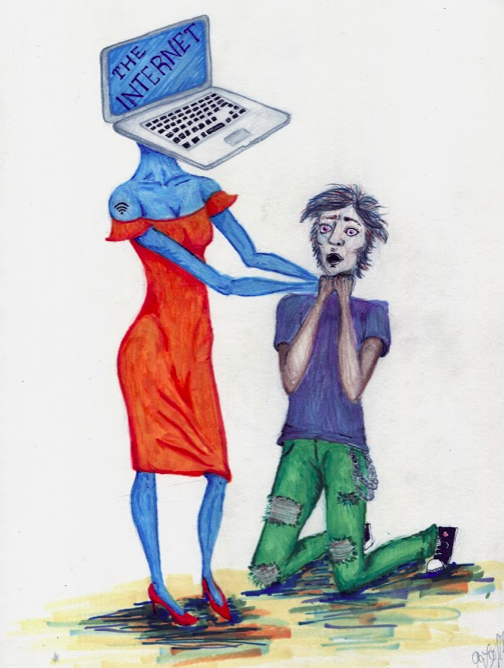
    In preparation for the worst case scenario that net neutrality is reversed and the internet simply becomes a massively censored shitpile of corporate mind control and political propaganda, I have made a list of how to survive and enjoy life in a post-internet world. Don’t worry, it will be like living in the 1980s.

    1. Learn how to rent a movie at a video store. Now that you can’t binge watch hours of your favorite shows online, it’s time to brave the outside world and somehow get to the video store without using your GPS. You’re going to have to learn how to pick movies for yourself. You could ask the clerk to place a Certified Fresh label or Rotten Tomatoes ratings next to the the DVDs if it helps with the transition. You could also ask the clerk to yell a percentage at you when you pick up a movie, if that’s easier. But it’s best if you learn how to choose movies through trial and error. Yes, you will end up getting movies that suck, and you won’t be able to quit watching immediately and switch to a different movie.
    2. Invest in arcades. Your days of “pwning” 12-year-old South Korean kids on Call of Duty is over. Now that you can’t play online games, it’s time to go to your local arcade and challenge kids face to face in the arena. Arcades are awesome. You actually have to socialize with people when you’re there. You’re also standing up and walking around so you won’t be an immobile blob who never leaves the couch.
    3. Learn how to ask people out in person and go on awkward dates. Yes, you will have to learn how to meet people by actually going out and being part of society. You will have to learn how to get to know people beyond a snapshot they put on Tinder. You can’t rely on the algorithms of online dating sites or the superficiality of hookup sites. You’re going to have to learn how to ask someone out face to face. It won’t always be great. Sometimes you will be denied, other times you will realize that the person is too much like your annoying aunt or uncle. You may actually have to get to know the person by spending time with them before you decide if you like them or not. It’s okay, that is normal. Yes, you are more vulnerable than just scrolling through pics on an online dating site, but being vulnerable is a vital part of love. And sometimes it pays off.
    4. Cultivate your own opinions. Don’t be scared to try the Indian food place that people think is sketchy or the new taco truck that isn’t as good as the one that got a five-star rating on Yelp. Remember, you are living in a post-Yelp world. Like so much of life now, you will have to live through trial and error. Would it really kill you to try a new restaurant that you may not know has insanely good reviews? Just eat the food and figure it out for yourself! Not everyone has the same taste buds or tastes in food, music, art and fashion. There is no such thing as an objectively good restaurant, so eat whatever the fuck you want! Don’t be scared to honestly ask yourself how you feel about a certain cafe, movie or business. You will need to use critical thinking which may have been weakened by relying on online reviews and others’ opinions for too long.
    5. Say goodbye to fake Facebook friends and old high school acquaintances. This may be one of the best parts of living in a post-internet world. No, I don’t care that a girl I had a crush on in junior year of high school now has three kids and just got promoted to senior sales associate at Forever 21. I don’t care that one of my old drinking buddies is now an ultra evangelical Christian who married his pastor’s daughter. And that’s ok. Just because you don’t want to keep up with people who are no longer a part of your life doesn’t mean you’re a bad person or that you hate them. It means life is short and you should invest time in people who are in your lives now who you love and care about.
  • 7 ways to de-stress while studying

    7 ways to de-stress while studying

    By|Phil Santos

    Finals are here and it’s time to do something about it. The biggest obstacle at this point is the sense of overwhelming dread you feel when looking at the work cut out for you. Major projects are daunting at first, but it gets better when you make a structured plan. So take the time to structure how and when you’ll study. Breaking things down into smaller sections and having a generic plan reduces the overwhelming feeling of defeat when looking at a stack of unstudied material. Here are 7 things you can incorporate into your study plan.

    1. Study Break

    An integral part of studying is not studying. Some of us understand this a bit too well. But for the last minute crammers, remember that the mind needs an occasional break – or it will break. Stepping away from study work lets you reset a bit and lets the material soak in. I find that a 10-15 minute break every hour works well for me.

    2. Smoke a bowl

    We should all follow state and federal laws (wink!). Cannabis affects different people in different ways, but smoking a bowl is one way for some of us to de-stress. Those of us who know we don’t study well when high will not be finding that out for the first time this fall. So if cannabis works for you, then go for it. If not, don’t blame this article for helping you forget that cannabis and college don’t blend well when it comes to tests.

    3. Take a short walk to the community forest

    Taking a walk in our forests is something people travel the world to do. So if you’re one of the few who haven’t done so, interrupting your study sesh to change that is a great idea! Exposure to what we define as nature (parks, ocean and non-human built stuff) can change you by: decreasing stress, increasing focus and your sense of vitality and it can even boost creativity.

    Just remember that mountain lions are most active at dawn and dusk. Although a mountain lion attack is a pretty good excuse to miss a final…

    4. Study at the community forest or local beach

    The weather this week is slated to be rather rain-free. This is a nice window to take your study gear to the outdoors, allowing you to do your work without missing the nice weather. You can reap all the above mentioned benefits of exposure to nature while studying! If you can make it out to the beach with your study gear, you should. There aren’t many colleges where you can drive 15 minutes to study on an empty gem of a beach. This gives you a two for one experience – you get a beach day and a study day.

    5. Find your jam

    I am bothered by the slightest of noises and I feel crazy for it. The person next to you needs to turn their page more quietly. Someone behind you is hitting their keyboard with hammer hands. You can hear someone breathing and it’s almost in harmony with the sniffle across the room. All of these noises are very normal, but also very agitating, so I carry headphones with me wherever I go. If it’s too noisy to focus, I find my jams and enter a wonderful world of music. I favor various YouTube mixes of an hour or more.

    Here are a few different mixes that I study to:

    Makes you feel like you’re holding Simba over the safari:

    I feel like I’m at a rave:

    Philosophizing:

    Reggae:

    Trap Rap:

    6. Talk to your professor

    It’s easy to build a persona around our professors, but believe it or not, professors are people too. If there’s an aspect of your final that freaks you out, try talking to your professor about it. They may be able to clarify something for you and alleviate some of your worries. They might also tell you you’re a complete failure, but wouldn’t you rather hear it from the source?

    7. Check your perspective

    What is most immediate often seems most pressing. But don’t fall prey to this logic, it’s not true. The finals before you might seem like they will determine your future, but that’s like saying you went to HSU, because your mom ate a burrito exactly 10 years before you were born. It doesn’t make sense. Finals are a small step in your infinite future. Although you might not pass a class if you fail, and even not graduate as a result – what happens next is anyone’s guess. A closed door is permission to tear down the walls – that’s something to be excited and optimistic about.


  • WTF is net neutrality?

    WTF is net neutrality?

    By|Phil Santos

    Most of us are probably asking, “what the hell is net neutrality anyway?” Here is a short breakdown of what it means and why it matters.

    The internet is made possible by ISPs (internet service providers) and content companies. Netflix and Hulu are content companies. In their case, the content is video. ISPs pave the road of the internet and content companies use them to truck their services across the web.

    Currently, ISPs treat all content providers equally. YouTube videos stream just as fast as Hulu videos. Every content provider is bound to the same speed limit. This speed limit is the foundation of net neutrality.

    Net neutrality demands that all content is bound by the same speed limit.

    Opposers of net neutrality believe that they should be given preferential treatment. They want the ISPs to make a private high speed toll road to deliver their content faster.

    The toll for these high-speed lanes will not be cheap and an increased cost at the top will result in an increased price at the bottom. This means that if net neutrality is abolished, you’ll be paying more for the same services you already receive. If net neutrality is removed, you pay the price.

    Aside from individuals, small businesses will suffer too. If a business can’t pay for a fast lane, it has to function at a slower speed. While Netflix is gliding down the fast lane, these small businesses will be choking in the gridlocked web traffic with everyone else who can’t afford to pay for preferential treatment. When Netflix streams a TV show twice as fast as Hulu, nobody is going to wait twice as long as they have to. This will create a mass exodus to the content providers using this fast lane.

    By restricting small businesses with this two-tiered system, we are putting our internet content in the hands of a select few.

    A world without net neutrality is a world where the natural democracy of the internet is up for purchase. Internet traffic will be concentrated into a handful of companies that can afford to do business in the fast lane. Imagine the implications if three companies dominated everything on the internet.

    The internet is a rarity in that it’s a decentralized technology. We all have relatively equal access to it and no one owns it, yet. For the freedom of the internet to be preserved, neutrality is a must.