The Lumberjack


Students Serving The Cal Poly Humboldt Campus and Community Since 1929

Category: Opinion

  • State of Affairs

    State of Affairs

    Bridging the Gap: Networking in Humboldt Politics

    By Jordan Huber

    Bio: Jordan is a senior political science major and the president of the Politics Club. With a keen interest in current affairs and a passion for informed debate, Jordan brings a well-rounded perspective to their opinion column. Through their studies and leadership, Jordan is dedicated to exploring the complexities of political issues and fostering meaningful discussion.

    Caption for photo: From left to right: Jordan Huber, Interim President Michael Spagna, County Supervisor Steve Madrone at the Career in Politics Night in Founders Hall 166 on October 3rd. Photo credit to Lana Nizhoni.

    Last Thursday, the Politics Club held a Career in Politics Night in Founders Hall to give students a chance to talk to professionals in the field of politics. The event ended up having guests whose careers ranged from a future judge, lawyers, heads of political parties, someone running for congress, and a person who was a party’s nominee for President of the United States. We had been planning this event since early August, when our officer team got together at Cafe Mokka and hashed out everything we wanted to accomplish this semester. As the president of the club, I can tell you that I had been dreading everything and worrying for the last two months about if we would even be able to pull it off. 

    So how do you get 16 people, ranging from anti-establishment political activists to the interim president of the university, to show up to an event run by students? It starts with a barrage of emails. We contacted every single person that held any sort of position of power or was running for office that we had any kind of relationship with. Whether we had only been in the same room as them one time or had known them for a year, our officers crafted emails and sent them off into the world hoping we would get just a couple of people to say yes. 

    We went with the, “worst they can say is no,” approach — we got a lot of no’s. We got some who did not want to show up unless they knew other people were going to show up. Then we got a yes. A few more yes’s piled in after that, and by the end of it, we had over sixteen people coming to talk with students. Getting students to show up resulted in us purchasing a Costco flatbed cart of pizza, muffins and drinks, and the promise that there would be people who are in the field that they are looking to break into. 

    This article may seem like a brag, but it is meant to show that even in a place as small as Humboldt, there are channels for students to network. Is it harder than other places? In some ways, yes. In other ways, the smaller community means that people who live here care, and are willing to show up for students. So many of our community members are alumni, and would love to pass on their knowledge to the next generation of students. There is a gap that exists between the university and community. The community feels that in some ways, the campus is a castle on the hill that looms over Arcata and the surrounding community. They do not know how to reach us. This puts more pressure on students. If you can, reach out. You’ll be just as surprised as the Politics Club was that there are people who want to donate their time and give you the break that each student is looking for. 

  • State of Affairs: Students Can’t Afford Measure F: Protect Affordable Housing

    State of Affairs: Students Can’t Afford Measure F: Protect Affordable Housing

    By Jordan Huber

    Jordan Huber is an election worker. The views and opinions expressed in this column are solely those of the author and do not reflect the official policy or position of the Humboldt County Office of Elections.

    Students at Humboldt struggle with housing insecurities at a staggering rate. A study done by the California State University (CSU) Basic Needs Initiative in 2018 showed that 20% of our fellow students will experience homelessness at some point in their time at our school. The university is building the Craftsman Mall complex across the highway, adding another 1,000 beds to the around 2,000 students currently housed in campus dorms. 

    That still leaves around half of our student body to find housing off-campus. So, what are the options? Obviously, Arcata is the choice right? The average price to rent a one-bedroom apartment is $1,200. Anything more than a one-bedroom can take months of searching and application fees. McKinleyville? It is cheaper to rent there, but a lack of job opportunities for students in the area and transportation makes it difficult for students to live there, especially if they are unfamiliar to the area. McKinleyville struggles with a troubled past that leaves students hesitant to live there, particularly those that are non-white. It is the most removed from campus, and students struggle to find a community of people that they can identify with.

    How about Eureka? The rent for a one-bedroom apartment is $300 cheaper than Arcata, the transportation system is better than McKinleyville, and there are plenty more jobs that work for student’s irregular schedules. The university boasts that it is the low-cost alternative to Arcata, and has even placed a campus store in downtown Eureka.

    Eureka is designated as a pro-housing city by the state, allowing it access to special funds to fast-track housing. There are currently plans to build several new buildings specifically for low-income individuals in Old Town Eureka, with tens of millions of dollars secured in funding for these projects. 

    Low-income housing always seems popular, until someone decides they do not want it next to their house or business. 

    See the supporters for Measure F, the Housing for All Initiative.

    Housing for All — that’s a good thing, right? Not this one. This is the best way to explain Measure F. Imagine there was a plan to ban plastic bags, but the company that makes the plastic bags is supporting it and will make a ton of money off of it. That’s this joke of a measure. Measures like this are why people hate politics. This measure has been allowed to have the name Housing for All, even though it will stop just under 200 units of affordable housing from being created. Eureka has already secured around $45 million dollars worth of funding for these projects. Passing Measure F means that Eureka will lose access to some of that money. 

    Now why did I just throw a bunch of information and numbers at you about a ballot measure in Eureka? These types of shady dealings and misleading information on ballots are plaguing local communities. Professional landowners are trying to trick us by including phrases that they know students are in support of to get votes for fraudulent measures and propositions. If Eureka loses out on this housing, the price and pressure of housing will be passed on to us as well as vulnerable community members. The repercussions will be felt throughout the county. Students cannot afford to be priced out of even more housing. If you live in Eureka, consider re-registering to vote in Humboldt County so you can vote against Measure F and help protect housing for the next generation of students. 

    Here are some even more horrifying reasons why we need to defeat Measure F. The reason that the Housing for All name has been allowed to stick is that Measure F will allegedly designate a piece of land, dubbed the Jacobs site, as a zone where the city can build housing. Supporters claim that they can take the housing projects that are projected to be built in Old Town and move it to this site that is further away from businesses. By passing this measure, it interferes with the city’s ability to decide how they want to use the space. The Jacobs site was already the subject of a mysterious deal this summer, where an unknown group of investors tried to swap other properties and over $5 million dollars for the property.

    Measure F argues that parking spaces for businesses in Eureka are more important than providing housing. The company backing this project, Security National Master Holding Company, LLC, has spent over a $1 million dollars trying to get this passed, making it the most expensive measure in Eureka’s history. Almost every dollar spent in support of this measure has come from Security National. Security National also purchased the parking lot in front of Eureka City Hall and put up barricades so that no one can park in front of the building. Local business tycoon Rob Arkley is the one behind this company and has been on record disparaging the city manager of Eureka. Arkley has claimed that low income housing brings crime. Arkley was named in a scandal involving Supreme Court Justice Samuel Alito and a vacation stay that Arkley gifted Alito, which the Supreme Court Justice did not originally disclose in 2008. There is no way that Arkley has Eureka’s best interest at heart. He seeks to only serve himself and his associates by passing this measure.

    The Rob Arkley’s of the world are counting on us to not be informed. Prove them wrong.

    Jordan is a senior political science major and the president of the Politics Club. With a keen interest in current affairs and a passion for informed debate, Jordan brings a well-rounded perspective to their opinion column. Through their studies and leadership, Jordan is dedicated to exploring the complexities of political issues and fostering meaningful discussion.

  • Existential Dread

    Existential Dread

    By Emma Wilson

    When I was younger, perhaps 10 or 11, I remember staying awake at night crying, thinking about the realities of life and the wackiness that comes with it, and I couldn’t sleep. I stood up and walked into my dads office space and told him that I was having an existential crisis, and he looked at me in amusement and questioned what I meant. Then, I explained I didn’t understand where life goes after we all die, and he acknowledged that he also deals with those feelings and that I need to get used to those feelings, because they won’t go away.

    Going into existential conversations can be so grueling and depressing, but I want to get away from that feeling. Feeling existentialism, and thinking about the circle of life and how on earth, humans simply started existing; these are conversations that do not need to harbor negative feelings.

    The big reason why I wanted to write about existentialism is because of the variety of things that can lead to going down this path, and frankly I find it pretty easy to open up about the amazingly terrifying aspects life holds. 

    On KRFH 105.1, Cal Poly Humboldt’s student-run radio station, I have had many show names dedicated to this very topic. Some examples are, Music to Make You Think, Let’s Get Existential, and now this semester, Pondering in the P.M. On my radio shows, I tend to play songs that express deep meanings.

    I have chosen to pursue journalism, and with that, I find a lot of things to think about all the time. Everywhere I look, I can see an impactful story coming to life, and with that, I find life to be such a beautiful thing to discover.

    But then, I look to Instagram — which, since having this thought, I have deleted instagram to take a mental break. Instagram gives me so much existential dread because of the mindless scrolling through thousands of different concepts, creators, professionals, human beings simply doing all this stuff. I often find myself needing to step away from the constant blur of content that people make, because there is sooooo much to see on social media and the Internet as a whole. 

    This brings me to what gives me the most existential freedom; Mother Earth, the environment, all that is alive within Earth and its complex features that make up our soil and soil being the foundation of the world. Climate, how temperature, precipitation and wind impact the ecosystem of our very planet. The circle of life. Bugs.

    I will continue to hear the earth brew with ideas and concepts that face me, and every human. Not just humans either, the whole environment and what works in between. 

    Like I said in the beginning, existential dread is a really heavy concept. It is hard-hitting, mind-grueling, and you can end up drooling over the complex way life is and what comes afterwards. And that comes with the whole religious conversation and I choose not to go into that heavy conversation right now. That part of existentialism is not a part of this article.

    Either way, that moment woke me up in understanding the full complexity life brings to anyone, and we all live a different one, experiencing those feelings differently of course, but this is just my interpretation of existential complexities. I’m finally trying to embrace those feelings, because they are so valid. Life is hard, and it really isn’t all sunshine and rainbows. 

    What really got me thinking existentially, I believe, was growing up non-religious, without going to church or having a community of people in that way. I consider myself an atheist-agnostic, pretty much. I put the agnostic in there cause I really have no idea why we are here, but I would like to believe we are out here just being animals, working together with other animals within our ecosystem to keep it healthy and lively. At least, that’s what I hope we do. 

    Not growing up in a religious household, I’ve really delved into the existentialist thought bubble more than I can count. Having these thoughts has opened a lot of doors and perspectives into my life and how to go about things in the world. Whenever I think too much, I definitely do get pretty anxious about things, and I try to accept that there are some things we can never understand. 

    I get really stuck in the dread of life, but sometimes thinking about being alive actually does get me far. Seeing the beauty in things like clean rivers falling down a big ass mountain — that shit is so mind blowing to me. 

    Over time though, I wonder if these existential thoughts and big extreme awakings will slow down, and I will accept the complexities of life. I would like to think they will be so far into my life, I already know how to calm those feelings through meditation, grounding in the grass and doing yoga, and connecting with being alive. But, death and dying are very real things, very hard things to feel. Loss will never be easy, but knowing everyone feels and knows that too, makes it all a little easier. 

    Emma Wilson is a public relations journalism student at Cal Poly Humboldt minoring in envioronmental ethics. Wilson is an environmental reporter and science editor for the lumberjack. She is also the president of the Journalism Club of Cal Poly Humboldt. Wilson likes swimming, playing music on the raido, and making collages.

  • Finding my own path as an advocate to honor my father’s legacy

    Finding my own path as an advocate to honor my father’s legacy

    Growing up, I never dreamed I would become a journalist. My parents were very active in social rights movements, and I always believed that the best way to make a difference was by being active in the solution. My father was a public defender and an active member of changing the system. He talked at three-strike protests, took me and my siblings to peace rallies, and worked with different groups to actively change the system for the better.  

    Sadly, he passed away when I was ten years old from brain cancer. Before he passed away, he received an award for all of his work in social justice. He was unable to attend due to his health at the time, but he made an acceptance video that I still listen to today. In it, he talks about his relationship with facts. He gave the three-strike law a face by talking about his client who was sentenced to 25 to life for joyriding. He talked about his love of fighting the good fight and all the people he has met along the way. He also said a quote from Martin Luther King that really hit home when my dad explained its effect on him.

    “‘Everyone can be great, because everyone can serve,’” he said while staring into the camera. “That’s certainly been true with my involvement in facts. Come serve with me.”

    For me, journalism is a way to fight the good fight. It gives me a platform to show what is really happening. There are so many ways to serve and be a conduit of facts. For some, it is protesting to get the message out. For others, like my dad, it was working to free the people oppressed by a system that is not on their side. As for myself, I want to use journalism as a way to give people a platform to be heard.

    Gabriel Zucker is a senior journalism student at Cal Poly Humboldt. He is the photo editor for The Lumberjack. He loves photojournalism and wants to use his platform as a journalist to give a voice to the voiceless.

  • Girlbossing to the moon is backfiring

    Girlbossing to the moon is backfiring

    By Savana Robinson

    I’m getting older, I think I’m aging well / I wish someone had told me I’d be doing this by myself 

    Life can get in the way of the grind. Working with minimal days off is unsustainable and, eventually, something happens to throw everything off balance. Doctors appointments, endless laundry, and dealing with the fleas on my cat while going to school and work — plus trying to remember to take care of basic human needs is overwhelming. 

    Getting Older by Billie Eilish is close to my heart. I also wish I had been informed that, eventually, I’d be on my own. Sometimes, it can feel like something greater is conspiring against me and I’m drowning in a never-ending fever dream of instant noodles and knots in my neck, and it sucks. It makes me not even want to try some days.

    Things I once enjoyed / Just keep me employed now

    I grew up making videos of my adventures with friends. Now, I work in TV as a multimedia journalist while finishing my degree. I’m in an awesome spot right now, and I have everything I wanted growing up; the boyfriend, the motorcycle, and the job… so why am I so stressed out? Does the exhaustion of the long hours and nagging deadlines outweigh the satisfaction of doing what I love? It doesn’t. I’m doing everything all at once, trying to get to a point where I can say I made it, that I fulfilled my dreams. But I forgot who was underneath it all — a little girl filming fairy rings in a field with an iPod touch.

    I’m getting older, I’ve got more on my shoulders / But I’m getting better at admitting when I’m wrong

    I try to remind myself that things will only get better from here. I’ve made my share of mistakes, but it’s all part of the learning experience, and hands-on is the best approach in my opinion. I thoroughly enjoy what I do, and I’m getting great experience reporting and producing at work while also working on this paper. It’s a lot, but it feels worth it. I have faith that time and opportunity will align to push me forward on my path. I need to trust myself and remember why I’m taking on so much responsibility — for that kid who wanted to explore, film videos, and share stories.

    Savana Robinson is a senior journalism major and film minor at Cal Poly Humboldt. She is the managing editor for The Lumberjack and a multimedia journalist at Redwood News. She enjoys riding her Harley-Davidson and playing video games, and her favorite color is pink.

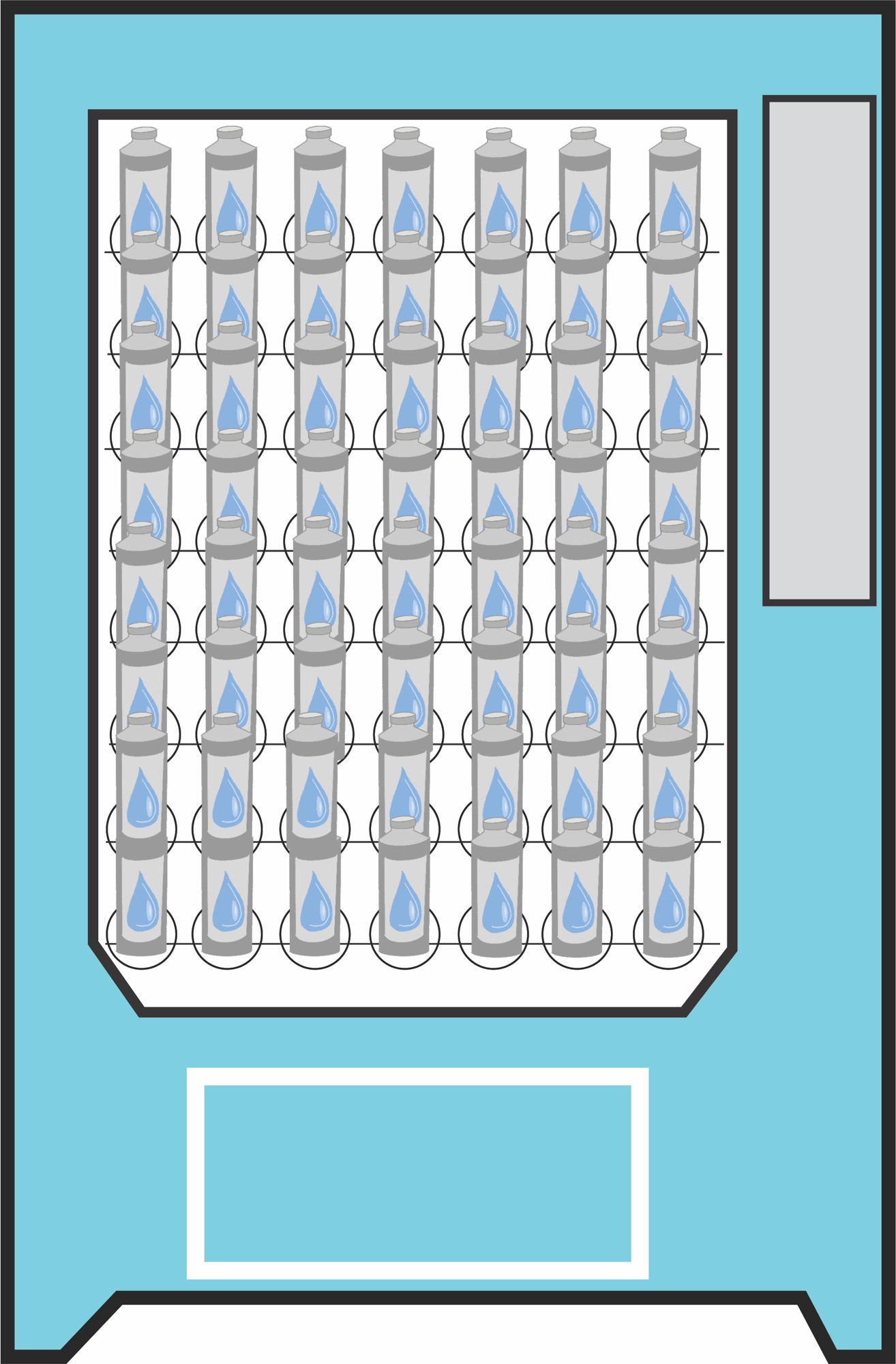
  • Please put water in our vending machines, some of us are thirsty 

    Please put water in our vending machines, some of us are thirsty 

    By Emma Wilson

    Imagine walking into an office, classroom, a park, feeling very parched, knowing well that sugary drink won’t suffice your thirst and will make you more dehydrated. In a society striving for healthier lifestyles and greater sustainability, it is time we rethink our vending machine offerings. Making water readily available in these machines isn’t just a convenience, it’s a necessity that can drive positive change for our health, our environment and our communities.

    Water is an essential part of our survival as humans on earth. One simple yet impactful change we can make is to ensure that water is available in vending machines. It’s a straightforward solution with far-reaching benefits for both individuals and the community. 

    Vending machines continue to be stocked primarily with sugary, artificial sugar, and energy drinks. While I understand the importance of these drinks within moderation, they do not replace the fundamental need for hydration. Providing water in vending machines acknowledges that clean, accessible drinking water is a basic human necessity.

    Incorporating water options into vending machines promotes healthier lifestyle choices. With rising rates of health issues, encouraging water consumption can play a crucial role in combating these trends.

    I’ve seen studies show that when water is easily available, people are more likely to choose it over sugary beverages. By making water accessible, we empower individuals to make healthier decisions. 

    I also emphasize the importance of aluminum bottled water instead of plastic water bottles, because they are easier to reuse. The environmental benefits of providing water in vending machines cannot be overstated.

    I’ve noticed the marketplace and the depot both sell aluminum bottled water instead of plastic bottles, yet there are sugary plastic sodas readily available at every location with vending machines. 

    In the United States alone, approximately 50 billion plastic water bottles are used each year. By offering water in vending machines, we can reduce the reliance of single-use plastic bottles. Moreover, this initiative can encourage the use of refillable water bottles, significantly reducing waste.

    From an economic perspective, adding water options to vending machines is a no-brainer. Bottled water can be a profitable item, often selling for more than sugary drinks. Schools and businesses that embrace this change could see a boost in revenue while also supporting public health. Though I love the idea of free water in vending machines, this doesn’t seem economically sustainable in the long run.  

    It is time for decision-makers on campus, in schools, workplaces, and public venues to prioritize water in vending machines. This change is not just about convenience, it’s about prioritizing public health, promoting environmental sustainability, and supporting economic growth. 

    As a community, we must advocate for these changes and push for policies that reflect our collective commitment to health and sustainability. Let’s quench our thirst for change by making clean, accessible water a priority in every vending machine. After all, in a world where we are increasingly aware of the importance of what we consume, water should be at the forefront.

    Emma Wilson is a public relations journalism student at Cal Poly Humboldt minoring in environmental ethics. Wilson is an environmental reporter and science editor for the lumberjack. She is also the president of the Journalism Club of Cal Poly Humboldt. Wilson likes swimming, playing music on the radio, and making abstract collages.

  • Water has meaning

    Water has meaning

    By Emma Wilson

    Peaceful destructive wild calming serene force

    Helps me dance and flow 

    Through any traumatic remorse

    One small move that can change mountains and shores

    Lost and open keeping me aware of every movement 

    Small flows that soften my skin 

    Allowing me to dive into hydration

    Forming the land in any direction

    Helping my back stand with elevation

  • Bugs are in our candy, might as well eat ‘em

    Bugs are in our candy, might as well eat ‘em

    By Noah Pond

    Bugs — why are they so damn annoying? You’re trying to fall asleep at night and that pesky mosquito keeps eeeeeeeeee-ming around your head and in your ear. Or, you order a burger and choose outdoor dining and you literally watch a fly rub his grubby little hands together, spit on them, and then start rubbing down your meal. Either way, you’re infuriated by such a little creature and its little actions.

    Well, what if I told you, eating those nasty buggers could solve your problems. 

    Me and my oldest friend used to pluck ants out of their marching line and toss them in our mouths for a little zip of spice while we were running around the backyard. 

    Before you start freaking out, let me just say, you already eat bugs. 

    The Kerria Llacca is a bug that dwells in the far east. Specifically, Thailand, China, and India. They live as a parasite in the Ber tree, (Ziziphus mauritiana) feeding off of its branches and secreting a sticky nest to protect themselves while they feast. Their nest is then harvested, precariously, and melted down into shellac.

    Shellac is on so much shit, dude; most citrus fruits, apples, candy, chocolate, jelly beans, and even coffee beans. That’s why lemons from the grocery store are so much more waxy than those you would grow at home. 

    But, I’m okay with that, and I’m gonna convince you why you should be okay with it, too. 

    When I first heard of Kerria Lacca and shellac, I was low-key appalled. I was like, ‘“How are we just okay with eating these secretions?’ But, I have given it more thought and decided it is no different from eating honey. Bees collect pollen and bring it back to the hive to secrete wax and honey. Sometimes, I’ll go to Wildberries and just cop a honey stick when I get to the register. Once I realized that eating honey and being — bee-ing, lol — grossed out by shellac was hypocritical, I decided I’m pro bug-eating. 

    Why don’t we eat more bugs?

    They are high in protein, better for the environment than meat, and lower in cost. In addition, more than 2 billion people eat bugs on a daily basis. Popular bugs to eat are ants, mealworms, grasshoppers, and butterfly larvae. 

    If you are eating meat but feel guilty about the environment, maybe you should switch to bugs. The National Library of Medicine did a study looking at the protein content of bugs (crickets, honeybees, silkworms, and mealworms) compared to meat. The study found that when compared to chicken, pork, and beef, these bugs have 9.9 to -35g of protein per 100 grams, whereas meat only has 16.8 to -20g of protein per 100 grams.

    I know all the gym bruhs who have been wasting their money on their Chipotle bowls and meal prep are mad giddy reading that protein value. Realistically, I see bugs being part of a balanced meal in the future, whether it be because the cows farted their last farts, or 5 billion people take a page out of 2 billion peoples books. The bug revolution is coming.   

    Noah Pond is a reporter and opinion editor for the Lumberjack. During his free time he enjoys cold beer and his skateboard. 

  • State of Affairs

    State of Affairs

    Time’s Up, Mark Johnson: he does not belong at Humboldt

    By Jordan Huber

    Over the last week, I spent many hours watching and rewatching the recently released bodycam footage from the Pro-Palestine protest that took place on April 22 on campus. The anger. The fear. The desperation in the voices of my fellow students, as what was supposed to be a sit-in protest erupted into national-headline clashes with police, still leaves me in shock 4 months later. 

    My mind started to go even further back. I recalled how last fall, the university endangered students who were living out of vehicles by forcing them off of school parking lots at night, further exposing an already vulnerable segment of the student population. 

    There is a pattern of dehumanization of students that has taken place this past year. This culture of mistreatment and harm of students coincides with the hire of the Chief of Staff for the President’s office.

    Mark Johnson.

    Many folks at this university and beyond placed most, if not all, the blame regarding the failures of the school in April on former President Tom Jackson. The bodycam footage from police officers that were at the protest that night tells a different story. Johnson was the one floundering the school’s response to student activism. Johnson was the one directing police on behalf of the university. Johnson was the one who decided property value was worth more than the safety of students that night and in the days that followed. 

    Over the summer, the chief of police of Eureka had to stand in front of Eureka City Council and hear how an independent investigation showed that there were no threats to students, or anyone else, from the protest. The report detailed how there was a complete lack of a plan from administration. The ineptitude of school leadership, spearheaded by Johnson, ended up endangering not only the students, but every emergency responder that night. 

    But wait — Johnson is not only the Chief of Staff, he got a promotion over the summer to the tune of just under $250,000 a year. Johnson is the new interim Vice President for University Advancement. This promotion includes becoming the Executive Director of the Cal Poly Humboldt Foundation, which leaves Johnson in charge of a fund that reported over $50 million dollars in assets last year. It is insulting to every person on this campus that he put people’s lives at risk, showed his lack of planning and professionalism, and he was given more responsibility and power. 

    Where is the same level of accountability for Johnson and every other university decision maker for their actions? Mitch Mitchell, our Dean of Students, called former Associated Students President Ethan Levering unfit to be a representative of our university. Our administrators need to look in the mirror and at their fellow administrators. They will find people like Johnson, who not only do not deserve to represent Cal Poly Humboldt, but should be as far away as possible from being in charge of the safety and well-being of anybody. 

    Since the administration won’t do it, let’s judge Johnson’s performance by the value statement posted on the University Advancement’s page that he is supposed to uphold.

    RESPONSIBILITY – Went on record saying that they did everything they could to deescalate the situation on campus. He followed this up by stating that the outcomes would have been the same no matter what the university did. 

    INTEGRITY – Said that the vote of no confidence from the general faculty that was nearly unanimous was just an inter-family conflict.

    TEAMWORK – Left faculty, staff, students, their parents and the community at large in the dark as the university coordinated to bring in hundreds of police officers to campus to stomp out the protest. 

    QUALITY –  Bullied faculty members through email for their concern for students and the criticisms the faculty had regarding the university’s response. 

    ENTHUSIASM – Regarded the makeshift graduation ceremonies as preferable to the larger ceremonies held at the university in the Redwood Bowl. This shift, caused by administration’s decision to close campus, led to many students to not be able to attend each other’s graduation ceremonies and families to not be able to set foot on the campus where their children spent years of their lives — as well as thousands of dollars — working to earn their degrees.

    INITIATIVE – Became the de facto leader of the university in the absence of President Tom Jackson, resulting in irreparable damage to the community and the student body.

    LEADERSHIP – Abused power that he should not have had in the first place to further his own agenda of prioritizing buildings over the lives of the students.

    By these standards, Johnson should never be allowed on our campus again. Humboldt is no longer a place you should have the honor to represent, and the fact you are still employed is an embarrassment and disrespectful to all past and present members of the university. You do not hold the qualities needed to represent Humboldt. Your decisions have done nothing but amplify the community’s dislike for the school, and cause students to lose their pride in our institution. 

    We know you do not have an ounce of humility and shame, because someone with the ability to feel such things would have resigned already. I now call upon the nearly 200 faculty members who agreed how incompetent you are at your job and the student body to not allow your transgressions to be swept aside. Do not allow this person to sully our home. Email the CSU chancellor’s office, email our new president, contact the California State Student Association, attend University Senate meetings. He will not go away willingly. We must use these channels to let those above him know that he cannot continue being a part of our campus community. Explain to them how much he has done to hurt the place we love.

    I am electing for the shit-show Mark, and I will never forgive you nor forget what you have done. 

    Jordan is a senior political science major and the president of the Politics Club. With a keen interest in current affairs and a passion for informed debate, Jordan brings a well-rounded perspective to their opinion column. Through their studies and leadership, Jordan is dedicated to exploring the complexities of political issues and fostering meaningful discussion.

  • Mar’s Gaming Garage

    Mar’s Gaming Garage

    Mario explores a journey beyond the Mushroom Kingdom

    By Mario Orozco

    Super Mario has been a staple of the gaming world for decades, with over 200 games spanning across a multitude of genres. This week’s edition of Mar’s Gaming Garage will focus on Super Mario Odyssey (SMO), a 3D exploration game following Mario as he journeys through lands outside of the Mushroom Kingdom. SMO was recommended to me by a forestry major, and as we share the same name, I couldn’t pass up the opportunity to review a Super Mario game.

    SMO is vastly different from the traditional 2D-style Super Mario games that the franchise has become known for. While the main plot follows the usual trope of fighting bad guys and saving Princess Peach, the customization, gameplay, and world design set this game apart from others within the franchise.

    Customization is something that Super Mario games have been missing throughout the years. SMO changes this trend by introducing 40 outfits that can be mixed and matched to give Mario a fresh new feel. Whether you want to play as a Samurai or run around in your boxers, there is something for everyone to enjoy. Mismatching Mario’s clothing was a lot of fun, and I created tons of chaotic outfits throughout my playthrough.

    Super Mario games tend to follow a similar gameplay style with differences mainly lying in the powerups. However, this formula is completely thrown out the window for SMO. Instead, much of the gameplay involves using Cappy, Mario’s sentient hat, to progress through the levels. Cappy allows for Mario to do things that wouldn’t be possible otherwise, you can bounce on him to cross long gaps and use him to control enemies. Being able to control Goombas, Chain Chomps, Bullet Bills and even Dinosaurs was a fun, creative way to progress through levels and keep them engaging.

    The world design in SMO is another area where the game excels. The game has a total of 18 unique kingdoms that you can explore, each having their own boss fights to round off the worlds. The kingdoms in SMO are diverse and help keep the game from feeling repetitive. There is a lot of contrast between the different kingdoms. It was fun getting to see Mario in different environments from what I’m used to. Exploring a kingdom that is essentially New York City in nothing but boxers and a hat was a fun experience. 

    I want to give an honorable mention to the bosses in SMO. Similar to the kingdoms, there was also a lot of contrast in the different boss fights. Going from fighting a goofy looking bird to a dark and intimidating dragon kept me on my toes and made the game interesting.

    There aren’t very many things I dislike about SMO. However there is one issue: to progress to a new kingdom, the game requires you to collect a certain amount of moons that are scattered around the worlds. This wouldn’t normally be something I dislike, other Super Mario Games have hidden star coins, and I think finding those are fun. The difference is those star coins aren’t required for progression. This paired with the absurd 880 unique moons throughout the kingdoms can make parts of the game feel tedious to play through.

    Despite this, SMO is still an amazing game and a creative take on the Super Mario formula. It took me a total of 17 hours and 3 minutes to complete, and I rate the game a 4.5 out of 5. If you are a fan of the franchise and enjoy open-world sandbox style gameplay, then I recommend Super Mario Odyssey to you.

    If you have any games you would like me to review, you can email marsgaminggarage@gmail.com.

    Mario Orozco is a writer and assistant social media editor for The Lumberjack. He transferred to Cal Poly Humboldt in 2022 and his favorite game of all time is The Legend of Zelda: Breath of the Wild.

  • Letter to the Editor: 

    Interim President Michael Spagna recently called for us to, “come together as a community.” But what does community mean to you, Dr. Spagna? Is it just a place, a logo, or something more? 

    True community is rooted in compassion, respect, and mutual support. It involves standing up for each other, not merely engaging in, “courageous conversations.” I do not feel welcomed by this empty call for unity while voices speaking out against the oppression of Palestinians are suppressed. Silence in the face of such injustices is complicity. The real community at Cal Poly Humboldt consists of those who speak out, even in the face of repression, for the dignity and humanity of the Palestinian people. As long as your version of community includes the dehumanization of others, I cannot be part of it. My community is with those who fight for justice. 

    To my fellow humans: the time to stand against oppression is now. True community is built on shared joy and struggle for liberation. Free Palestine.

    Sincerely, 

    Jack McCann

  • Dog parks are dirty, dangerous, detrimental, dysfunctional, and downright deadly

    Dog parks are dirty, dangerous, detrimental, dysfunctional, and downright deadly

    By Griffin Mancuso

    One day, your close friend offers to invite you to a fun party. You spend more time with this person than anyone else, so you trust them and follow along. You gladly hop in the car and your friend drives you to a house you’re not familiar with.
    Once you’re brought inside, the house is filled with dozens of people who you have never seen before. As soon as you step through the door, a group of partygoers swarm you, staring you down and blocking you from every angle. One of the people next to you open-mouth coughs on your face, and several others start shoving you and tugging at your shirt.
    You frantically look around for your friend, and you find them sitting in the kitchen scrolling through their phone. They look up and smile, shouting, ‘I’m glad you’re making some new friends!’

    This would already be overwhelming for a person, so imagine how it would feel if you were a few feet tall and had the mental capacity of a toddler. Dog parks are a cesspool of chaos, disease, uneducated owners, and stress for you and your dog.
    People bring their dogs to the park for a variety of reasons. They may want to socialize their dog, help them overcome fear of other dogs, get their dog some exercise, or find community with other dog owners. All of these can be achieved without a dog park, and any benefits of going to one are outweighed by the cons.

    Just like people, not all dogs are extroverted and want to befriend every dog they meet. It’s like they are stuck in a party where they can’t choose to leave. If your dog is nervous around other dogs, dog parks only exacerbate the problem. Introverts do not magically become extroverts, and you cannot expect your dog to befriend every dog they see. 

    If your dog goes into the dog park well behaved and friendly, they may pick up some rude behaviors during their visits. Dog parks are overstimulating environments where most dogs cannot make good choices, and in some cases the line between playing and fighting is crossed.

    I have lost count of how many fights I had to break up at dog parks. It’s all fun and games until you’re trying to break apart two 100-pound dogs by yourself and one of their collars snaps. Usually, one of the dogs involved was a repeat offender and the owner couldn’t get past their own ego and stop bringing their dog back to the park. This isn’t the fault of the dog — we don’t expect every human to get along, so we can’t expect dogs to do the same. You may trust your dog to play with others politely, but the other dogs there could turn on a dime at any moment. No matter who starts it, they will get involved in a fight at some point. In rare cases, your dog may not walk out of that fight alive.

    If another dog doesn’t injure your dog, the park itself will. Each of the dog parks in Humboldt County present their own unique hazards. Eureka Dog Park has plenty of gravel to crack your dog’s nails and a river bed of still water brimming with parasites. Del Norte Street Dog Park is overgrown with thorny blackberry bushes. Hiller Park is a minefield of gopher holes waiting to break your dog’s ankles.
    I used to regularly take my dog to dog parks. He was a relentlessly hyper puppy, I was desperate, and I didn’t know any better. He played well and had no incidents up until he was around one and a half years old. Suddenly, he became too overstimulated to listen to commands or recall around large groups of dogs. He was older and stronger, and he decided that chasing after dogs and tackling them was fun. Most dogs and their owners did not. 

    It took me a few months to realize I wasn’t setting him up for success and I needed to find another way for him to get physical and mental enrichment. He is now fulfilled by dog sports, regular training, and occasional one-on-one playdates.
    We like to treat our dogs like human children, but at the end of the day, they are unpredictable animals. No matter how badly you think your dog needs lots of friends, taking them to a Russian roulette dog fight club is not going to do them any favors. Socialization can be done safely in many different places — pet-friendly stores, hiking trails, parking lots, or at supervised playdates with trusted dogs. Be involved in your dog’s exercise and use it to increase your bond with them. Be your dog’s own party.

    Griffin Mancuso is a journalism major and editor-in-chief for The Lumberjack. He is involved in multiple dog sport groups in Humboldt County and teaches local training classes. His dog-child athlete Oscar Meyer can run up to 27.5 mph, has titles in Fast CAT and AKC Fetch, and really likes cheese.

  • The forest is greener in Humboldt County

    The forest is greener in Humboldt County

    By Julia Kern

    I remember it like it was yesterday. It was a random weekday, a little over a year ago, I was in my room aimlessly scrolling on my computer through what felt like an endless list of California colleges. 

    I’m from Fresno, California. If you didn’t know already, Fresno is a city of over half a million people crammed in between dilapidated infrastructure and smelly farmland. So, you may not be surprised that I have been itching to leave Fresno for as long as I can remember. 

    To me, Fresno never felt like home. Sure, my parents are there, my friends, and all the sites are familiar and nostalgic to me. I’ve just gotten to the point where I felt like I needed a change of scenery.

    So naturally, Fresno State was totally out of the question. I wanted to go somewhere far, somewhere I wasn’t familiar with, somewhere nothing like the place I grew up, which is how I landed on Cal Poly Humboldt.

    The pictures of the campus immediately caught my attention. I imagined living on a campus in the middle of the forest. If Humboldt isn’t the opposite of Fresno, I don’t know what is. The trees and plants are actually green. The sky is pure blue, instead of that hazy kind of blue I’ve become so accustomed to. It also rains more than twice a year — which is something I still need to adjust to. 

    That all may sound strange to get excited over, but when you’re from a place that feels like you’re living in a perpetual dust bowl, you would probably like the rain, too. 

    Now that I’ve been living here for about a month, I’d say I’m liking it here. The change in pace from a concrete jungle to a serene rainforest is something I am more grateful for than I can express in words. 

    In the beginning, I sorta felt like a background character in a popular TV show, where everyone else seemed like they had everything figured out and I was just some girl trying to fit the mold. I feel fortunate that this community has ended up being so welcoming and friendly. There has always been someone to assure me that I’m doing fine and that I’ll eventually find my place in all this.

    So, I’m deciding not to be worried about what these next two years will have in store for me. I will just have to take it day by day, and it will all work out. 

  • Meditations on Life and Loss Along the Road

    Meditations on Life and Loss Along the Road

    By Mia Costales

    I saw you for a split-second on the side of the 101,

    a blur of soft doe fur and bloodied innards trailing behind you.

    What beauty you possessed, your body laid out with such stillness.

    I wondered if your woodland friends were waiting for you on the other side of the road,

    puzzled as to why you hadn’t come home yet. 

    Watching the clock tick on and on pensively,

    praying to a god with ornate antlers and a speckled coat. 

    The hot summer sun shone down on your blood,

    turning it black as the asphalt beneath it. 

    What cruelty that you know what cold metal and plastic feels like,

    that such a foreign object would be the last thing you touched. 

    I thought of the car that couldn’t change lanes quick enough, 

    forced to paint the road behind them with red streaks of you. 

    How could such a gentle creature know such pain? 

    I wished to turn back around, 

    to move you off of the highway shoulder to a place more peaceful. 

    I yearned to cradle you in my arms and nuzzle my face 

    in the velvety spot between your neck and ear. 

    I would put you to rest in a bed of red flowers

    and weep over your stiff figure, mourning the forest’s loss.

  • Coffee brews a sense of nostalgia

    Coffee brews a sense of nostalgia

    By Alexandra Berrocal

    I was a regular tea-drinker. My aunt kept boxes of tea in her kitchen, and I visited my aunt often, so I wound up drinking tea often — I tasted chai for the first time in her house. I also grew to love gingerbread tea, which was something she always had around the holidays. If you add just the right amount of sugar, it tasted like a gingerbread cookie. I always loved that. I got to drink tea more often than coffee as a kid, so naturally, I was a devout tea drinker. 

    When I was a young girl, my mom always made me coffee on my birthday. It was the only time of the year where I was allowed to drink coffee, so it was always a special treat. She would make an extremely weak brew, so that it would not taste bitter. She would always put melted chocolate at the bottom, so that it would suffuse the rest of the coffee and make it taste somewhat chocolatey. I always looked forward to this.

    Somehow, the switch turned. When I got older, my mom stopped making my special birthday brew. I don’t remember how or why. However, I grew to love the bitter flavor of straight-up coffee. I didn’t need to have chocolate in it, just some milk and sugar. There were even exceptions to that. I still love a good cafe de olla, a type of Mexican coffee that does not taste bitter. I don’t remember the first time I tried it, but from the first sip, I was enchanted. Also, I am a unitarian universalist, and shared church social life revolves pretty heavily around coffee. Every Sunday, after service, coffee is always served in most congregations.

    I grew to enjoy the bitter flavor of coffee. I also came to appreciate Vietnamese coffee. It’s sweeter than your average coffee. This may be controversial, but I love the Frappacino bottles of coffee that they sell in most grocery stores. Yes, the Starbucks ones, although I love the Peet’s Coffee ones too. A lot of people think it tastes gross.  What is gross is the Dunkin Donuts version. I don’t know what Dunkin Donuts does to its bottled coffee, so to speak, but it tastes like medicine.

    I would say that the reason I prefer coffee to tea these days is that coffee simply has more body to it. Tea basically feels like glorified water to me, unless it has milk and sugar in it. Chai tea is also based on milk, so it doesn’t feel like glorified water. But even with milk and sugar, tea simply feels watery to me. Coffee doesn’t feel quite that way to me. I might feel differently if I drank my coffee black. Black coffee is similar to tea in a lot of ways, it just has more flavor, and more punch. Now, would I rather drink black coffee, or tea? Honestly, I would prefer tea. But would I prefer tea or coffee with milk and sugar? I’d take the coffee any day.

  • Tea needs more love

    Tea needs more love

    By Alina Ferguson

    What I am about to say is really a hot take, pun intended. I think, wholeheartedly, that tea is better than coffee. 

    Tea is relaxing.You sip tea and people watch outside your window, or you simply watch the rain. You can have tea cold, you can have it hot, but never lukewarm. That is simply wrong. 

    Tea is perfect if you are sick. It is the perfect medicine and can potentially provide positive benefits. Just think about it—there are detoxing teas, but you do not hear about detox coffee, because coffee does not detox and no doctor recommends a cup of coffee when you are sick. 

    There are teas for stomach issues, for headaches, and a myriad of other issues. Many teas have infusions or essesenses of floral elements that have a variety of benefits, not to mention the lovely scent. 

    Even caffeinated tea can bring tranquility. I think tea and I think calm, peace, and just relaxation, even with the highly caffeinated ones. Black tea is my chore drink. It’s relaxing enough that I can do chores at a leisurely pace, but caffeinated enough that I will not fall asleep during the laundry folding portion of my chore rotation. Coffee, on the other hand, is usually for those who are on their feet and on the go.

    Tea also smells amazing. Some may argue it smells like nothing, but I simply disagree. If a tea says that it has hints or essence of strawberry, then it means that the tea smells like strawberries. Surprisingly, floral teas have a strong smell and often can taste like that flower. 

    Tea tastes great without anything added into it. You can have hazelnut tea, but it’s not a syrup like with coffee. Coffee drinkers often add syrups, sugars and other things to make it a fun— or even a palatable—drink.  Some may argue tea just tastes like nothing. I’ve heard it be called lightly flavored water. Well, I say that tasting nothing still tastes better than tasting just plain bitter coffee.
    Yes, tea can be bitter. Very bitter. However, you can sometimes control the bitterness by how long you steep the tea. This gives you more control than coffee, which relies on the bean. 

    Tea is a gateway drug to mug collection. I have about 25 mugs and counting, and that is just here in Arcata. I have no idea what about collecting a mug gives me tingles and a sense of euphoria, but oh, does it! They do have coffee mugs, but it’s not the same as getting a mug for tea. A tea mug. 

    And don’t even get me started on tea parties…

  • How to survive a psychosis episode

    How to survive a psychosis episode

    By Savana Robinson

    My psychosis

    My father carried me to his duty vehicle with my feet bloody and raw. I had run almost two miles from home — barefoot at night, in winter. This wasn’t even the peak of my psychotic episode. A few days later, I woke up being taken out of an ambulance after being given a shot by a nurse, which I was later told was most likely Haldol, an antipsychotic.

    Leading up to this, I had known something wasn’t right for weeks. It was a weird feeling — like everything was wrong. Food had started to taste bland, my handwriting was getting worse and it was harder for others to understand, and I wasn’t sleeping well. Then, I started having visual and auditory hallucinations that made me paranoid, but I thought they were real at the time. I thought people were surveilling me and out to get me. My behavior was erratic and I was talking nonsense. 

    My family brought me home and I had a break. I thought there were explosives everywhere and I had to run for my life. I left my house late at night and ran onto the freeway and jumped the fence to the road adjacent. Someone pulled over and I begged them to let me hide in their car and they said the cops were coming to help me. My dad said that was the most fucked-up call he had ever responded to as a first responder. A few days later, I was admitted to a psychiatric facility after having horrible hallucinations in the hospital. I thought my family had been tortured and mutilated. I stayed there for nine days and was diagnosed with schizophrenia and bipolar I.

    What is psychosis?

    This was a psychotic episode, which was also the onset of my schizophrenia. According to the National Institute of Mental Health, psychosis happens most often to young adults in their late teens to mid-20s. I was 22 when mine happened. The Institute also lists behavior changes, such as difficulty telling fantasy from reality, paranoid ideas, sleeping less and trouble communicating.

    Getting help

    I had help from the Cal Poly Humboldt University Police, my motorcycle girlies, and my family. I had two hospital stays before I got mental health treatment in a facility that had social workers, therapists, and nurses. Afterwards, I got a therapist, a psychiatrist and started medication. Besides the trauma my own brain put me through, I got pretty lucky with my journey to the center of the Northern California mental health system.

    If you believe you or someone you know may be experiencing psychosis, call the 24/7 county crisis line. Humboldt County’s number is 707-445-7715. Sempervirens Psychiatric Health Facility in Eureka is the only mental health facility in a 300-mile radius. I was taken from Ukiah to Red Bluff — 160 miles — for my treatment.

    Moving forward

    A year and a half after my episode, I’m the most successful I’ve ever been. My symptoms are manageable with medication and I can recognize when things start to get weird and I need to change something. Psychosis feels like the end of the world, but it’s not.

    Savana Robinson is a senior journalism and film student who also works at Redwood News as a multimedia journalist. She likes cats, video games, and motorcycles.

  • Letter to the editor

    By Ethan LeVering

    To the students of the university of Cal Poly Humboldt, 

    It is my regret to inform you that over the summer I was recalled by our campus’ administration from the Panetta Institute for Public Policy, I was disavowed by our dean of students Dr. Mitch Mitchell for being “unfit to represent” our university, and ultimately I was impeached and removed from the office of A.S. president on meeting number 2.5 of the board of directors. It is my understanding that this is unprecedented, as all of this occurred before the typical orientation/training that occurs for the position and before the semester even began. After being interviewed by Brad Butterfield, I was thinking about how he asked a question along the lines of, “If you were still president, then what policies would you be supporting on campus?” Afterwards, I wrote a list of seventeen policies that I would support if I were still the A.S. president. This list is not comprehensive and is in no particular order. It is focused around policies that I would support, rather than focus on policies that I oppose, although the two can often get intertwined. I would like to clarify that several points were written in reference to the lockdown of campus that took place over the summer. Since then, a new Time, Place, and Manner policy has been put into effect which officially closes off campus at night and removes the one-hour of sound amplification that was previously permitted on the SAC Quad each day. It is yet to be seen what impact this will have on the activism that takes place on our campus. 

    Keep it up out there, 

    Ethan LeVering 

    Seventeen Policies 

    1. I support the expansion of waste reduction techniques and our campus’ zero waste initiatives.

    2. I support an end to the ticketing of students living in their vehicles and the implementation of a safe parking program on our campus for these students. 

    3. I support increased access to menstrual products to all public restrooms on our campus.

    4. I support increasing the number of gender-neutral restrooms on our campus.

    5. A Bachelors of Arts in Communications is currently the only degree our university offers to the prisoners of Pelican Bay State Prison. I support increasing the number of degrees the Incarcerated Schoolers Program offers. 

    6. I support increasing collaboration between the Associated Students and the cultural centers & collectives, such as ADPIC, El Centro, and Umoja on our campus.

    7. I support the pro-ceasefire resolutions regarding the ongoing genocide in Palestine passed by the Associated Students and University Senate last semester (Spring 2024). 

    8. I support reopening campus to the wider community of Arcata. I oppose the new surveillance systems being put in place after the pro-Palestinian occupation of Siemens Hall.

    9. During the occupation of Siemens Hall, access to Nelson Hall West (alongside that of the rest of our campus) was shut down. I support the Associated Student’s acquisition/purchase of a new building which is to be student-operated separate from the overarching key-card system on our campus. 

    10. I was very fortunate to have had the experience of taking the Yurok language class at Eureka Senior High School. I support the implementation of local indigenous language classes, such as Yurok, Wyiot, and/or Hupa, into the curriculum that our university offers. 

    11. I support our university reimplementing its currently defunct Industrial Technology program as a part of polytechnic rollout.

    12. I support increasing the number of field courses, such as the Klamath Basin field course, Mattole River field course, and Costa Rica field course, offered by our university. 

    13. I support our university purposefully preserving several historic houses around campus. This includes guaranteeing the SJEIC’s continued residence in the Balabanis House and CCAT’s continued residence in the Buck House for as long as those organizations see fit. 

    14. I support the Campus Center for Appropriate Technology using the footprint of the now demolished Jensen House for the purpose of constructing a greenhouse attachment to the community garden. 

    15. I support, when also supported by respective departments, the implementation of new masters level degree programs. 

    16. I support the expansion of employment opportunities on campus, particularly within the core programs of the Associated Students. 

    17. I support implementation of more genuine student-lead democratic processes, and less systems of bureaucracy, within the general operations of the Associated Students board of directors.

  • Staying in the moment and being mindful with meditation

    By Gabriel Zucker

    The thought of sitting down, doing nothing, just breathing, sounds very pointless. This was my view of meditation for a long time. Why spend time getting my mind right when there is so much stuff to do right here and now? It made sense to me for a long time, but the more I avoided the deeper issues, the harder it became to function. Since I started my meditative journey, these issues have been more manageable and easier to process. The two forms of meditations that have had the most impact on me are mindfulness and somatic meditation. Both are different but help with different aspects of my day-to-day life. 

    A little background first – I am diagnosed with ADHD and have dealt with really bad anxiety most of my life. My mind moving a million miles a minute is something I deal with every day, but it can become overwhelming within a blink of an eye. Thankfully I have found different ways to deal with the chaos of my mind.

    My first introduction to spirituality and meditation was mindfulness. This is a form of meditation focused on understanding what is going on in the mind. This is done through training your mind to process thoughts in the present moment through breathing exercises and mantras focused on love and acceptance. 

    My mantra is usually, “I breathe in, I am one. I breathe out, I am whole.” This keeps me grounded on my breathing instead of my mind wandering.

     The hardest part for me was removing myself from the thoughts and emotions that came up during my meditation. What helped me the most was projecting these thoughts outward. I sit with the emotions as if they were a friend, instead of letting them run rampant throughout my mind. The biggest thing about mindfulness is staying in the moment. This was confusing for a little, but the best way I can explain it is understanding the difference between past, present and future. The moment is understanding that anxiety is coming from past trauma and an unknown future. Healing the past and preparing for the future is the best way to explain the moment. 

    Another form of meditation that has helped me a lot with past trauma is somatic meditation. This is something that I learned from therapy and has helped me process my past from a point of healing instead of acceptance. This is very different from mindfulness; instead of analyzing and processing the mind, it instead focuses on the body’s reaction to different emotions and situations. For instance, when an anxiety attack comes up, there usually isn’t one thing that activates it. My body becomes overstimulated, causing my mind to explode with every worst possible scenario no matter the situation. Mindfulness never helps me when this happens, controlling my mind is impossible in these moments. Focusing on the feelings, not thoughts, going through my body helps ground me back to reality. I am anchored back to what is real and what is made up in my mind. I used to always overanalyze this, putting words to feeling. My therapist helped me realize that I don’t have to think during this. Instead, focusing on my body, noticing where it tenses up, is a great step in calming down my whole body. 

    I am not saying this is a foolproof way to overcome mental health issues; I fall short every day. I forget to meditate, I deal with anxiety most days, but that is okay. If I have learned anything from meditation it is that I can’t be too hard on myself. Life is hard and that is okay. It is how we approach each moment, with understanding and love. That is how one can find their best self.

  • Worrying about graduation? Don’t bother. You have no choice.

    By Dezmond Remington

    Graduation is fast arriving, and there are less than two weeks remaining until I am an honest-to-god adult. Soon, I will leave the warm womb of the university and the financial forces that have allowed me to focus on nothing but school for the last three years – I am terrified. 

    What worries me is the uncertainty. I knew what I’d be doing for the last 21 years. Now, I do not know what I will do with my life. I do not know where I will be in a month, let alone a year from now. If an interviewer asks me where I think I’ll be in five years, I think I’ll laugh and vomit a bit. 

    But hey, I’m also excited. I can do anything I like for the next 50 years. ANYTHING. I’ve been fantasizing about working on some rich dude’s yacht and crossing the Atlantic. I suppose I can do that now. I could throw my life away if I wanted to, or I could make it as awesome as I want to. Anything goes. 

    Everyone else older than me has gone through this before, so I’m not fretting too much. I’m also super lucky. Worst comes to worst, I can always move back into my parent’s house. 

    Really, there’s no point in sweating about the rest of my life. It’ll happen if I want it to or not. Might as well enjoy it. 

  • Writing while wrestling with a busy college schedule

    By Alexandra Berrocal

    I will be graduating next semester if all goes well.  I believe that makes me a senior. When I was here, I wrote four books. I am currently working on a fifth, which should be out by this summer.

    These books are BLOODY ROYALE (a book of essays), BOY FROM TALLINN (chronicling a really weird friendship that I had the summer after my first semester here), IRIS (about the more dysfunctional aspects of my family), and I AM THE DARKNESS (a cookbook about living with depression and bipolar disorder). 

    The book I am currently working on is called AGNES DEI, and it is my first novella. It is also my first work of fiction. Many of my books are very short. This isn’t intentional, it’s just my style.

    Being a writer at Cal Poly Humboldt is like being a writer anywhere else. You have your day job, which is what you came to study. Then, you have your spare time. You can either write when you are done with all of your homework for the day, or you can get up extra early so that you can write before your classes begin. 

    When I was working on AGNES DEI, I took both approaches. Sometimes, I’d get up extra early to write, and sometimes I’d write after completing my homework. However, sometimes I’d write before starting my homework for the day. 

    Writing fiction is a wonderful stress reliever. It also gave me a boost of confidence that I could get all of my homework done and my writing in one day. It also helped me academically for this reason. When you are writing a thousand words a day for your novella, anything your teachers throw at you seems really easy.

    Creative Writing Club was also an excellent resource this year. I am not certain if I wrote any of my novella during their hours – blame my bad memory. However, they gave me time to work on editing, write if need be, or just talk to my friends on Discord or in the club. More often than not, I wound up talking to my friends on Discord. 

    That doesn’t mean it wasn’t useful, however. I have been exposed to poetry and poetic forms, and I have met people I wouldn’t have met otherwise.  In fact, if they met more often than once a week, it would be great. I also like to paint, and I have fond memories of bringing my painting supplies, and painting a picture of my friend. I also tried to get into crocheting during Fall semester, and the president of the Club helped me with crocheting in the round. That hobby didn’t last long (crocheting is hard!) but it was still a good experience.  

    Ultimately, writing is a solitary experience. It is a team effort too. Place affects it. You’re alone with your computer in a room. When you are done writing your piece (which is the solitary part), you show it to your critique website, or your friends, or whoever looks over your work for you. That’s the team effort part. 

    I am not sure that the books I wrote during the time I’ve been here would have been the same if I had written them at, say, Chico State. In this way, these works are unique to Cal Poly Humboldt and portray the way this place has become a part of me, for better or for worse.

  • Why you should give WWE a chance

    By Mario Orozco

    As a child, I was a huge fan of WWE. I had all of the action figures, posters, and attended as many live shows as my family could afford. As I grew up, I fell out of love with the WWE; it had become pretty stale. In recent years, professional wrestling has gone through a resurgence in popularity reminiscent of the 1990s. Gone are the days of Vince McMahon as WWE has entered a new era. In this new era, I have found myself fully back in love with professional wrestling. For those of you who used to love WWE and those who are just curious, you should give it a chance.

    WWE’s storytelling is unlike anything I have seen in other forms of entertainment. These storylines are told both on the mic and in the ring. It is truly athletic theater at its core. WWE has told so many genuinely amazing narratives throughout its time, and in the last two or three years, this quality has been so consistent, it has become the expectation. WWE has adopted a form of long-term storytelling that has allowed for fully fleshed out multidimensional stories. While the plots are typically simple, good vs. bad, they are able to be told in a way that is incredibly unique and something only professional wrestling can do. 

    Apart from the stories, the actual matches themselves are another reason to give it a chance. It is like watching an action scene unfold live in front of your very eyes. It is breathtaking, seeing these people put their bodies on the lines, week-in and week-out for our entertainment. Professional wrestlers are both the actors and the stunt people in their matches. Understanding the difficulty of pulling off these incredible moves, which are live with no redos, adds to the spectacle that is professional wrestling.

    The best part to me is the talent themselves. There are so many different characters with different motivations and journeys. As you see a character rising up the ranks and struggling to become a star, you know the person behind the character is facing a struggle as they try to make a name for themselves and connect with the audience. I can almost guarantee there is a person you can relate to and root for. WWE today is so much more diverse than it was 10 years ago, the roster is filled with different body types and racial backgrounds. The women’s division is also the best that it has ever been for all of professional wrestling, with WWE having arguably the strongest and most talented roster of women, capable of putting on fantastic matches and main eventing shows.

    It doesn’t matter who you are or where you come from, there is surely something in it for you. Even if you don’t like the WWE style, there are so many amazing companies out there that will have something you’ll like. We live in a time where professional wrestling is better than it ever has been. There is no better time than now to hop on the train and enjoy the ride. 

  • Navigating my ADHD

    By Mia Costales

    If someone had asked me four years ago if I thought there was a possibility I had ADHD, I probably would’ve laughed in their face. Not to toot my own horn, but throughout my childhood and teenage years, I was an exceptionally good student and excelled in both academic and extracurricular activities. I was a straight-A student, played in the symphony and chamber orchestras, wrote for my school’s paper, and graduated with honors. I’ve also always been an extremely quiet and reserved person which, in turn, usually granted me the “old soul” title by the many teachers and adults in my life.

    By no means did I display the classic ADHD symptoms that most people think of when they hear those four letters; constant fidgeting and excessive movement, impulsivity or general hyperactivity. 

    So you can imagine my surprise when I failed out of college in the spring semester of my freshman year and was soon after diagnosed with inattentive ADHD. According to the Diagnostic and Statistical Manual of Mental Disorders, there are two types of ADHD: inattention and hyperactivity.

    In my case, symptoms of inattentive ADHD looked like having difficulty sustaining attention in tasks, difficulty listening when being spoken to directly, forgetfulness and disorganization. Hyperactivity is generally the more well-known type, consisting of symptoms such as not being able to sit still or being described as constantly on the go. It is also important to note that some people can display symptoms of both types of ADHD, effectively having a combination of inattention and hyperactivity. 

    After getting this diagnosis, I was able to look back on my past behaviors and come to terms with this new knowledge. I was also lucky enough to have a great support system of people who were willing to help me get back on track and continue my schooling. Leaving Humboldt after my freshman year was one of the hardest things I’ve had to do. I ended up moving back home, where I got a full time job waiting tables and took online classes at the local community college.

    Per my mom’s request, I also started focusing on bettering my mental health, which meant attending therapy sessions and starting on medications. Learning that I have ADHD definitely came with its setbacks, but it was ultimately the catalyst for getting me back up to Humboldt and adopting a healthier and more productive mindset. Growing up, I couldn’t help but notice feeling weird or different from a lot of my peers, and this feeling really alienated me.

    Now that I am older and better able to understand why I felt this way, I am one step closer to processing these feelings for what they truly were. While getting a proper diagnosis is obviously not the end-all be-all for many, it can definitely give comfort to people who have felt some sort of otherness their whole lives, and maybe even help them realize that they aren’t alone in their feelings.