The Lumberjack


Students Serving The Cal Poly Humboldt Campus and Community Since 1929

Tag: Arcata

  • Photographing for Impact 

    Photographing for Impact 

    By Sadie Shields 

    In the world of wildlife photography, Krisztina Scheef approaches the art with the mindset of patience, ethics and education over the pursuit of aiming for the perfect shot.

    Appearing as the Keynote Speaker for Godwit Days on Saturday April 18, Scheef discussed how she built her career in wildlife photography across the globe while also mentoring and encouraging young photographers to advocate for conservation. 

    Her interest in photography began with a broader love of nature. Over time, her passion evolved into a career centered around sharing these photography experiences with others.

    “I want to share with people who might or might not be able to see it themselves,” Scheef said.

    Scheef believes that wildlife photography has the power to shape the way people view the environment and encourage them to protect it. 

    “The more you see and fall in love with nature, the more protective you’re gonna get,” Scheef said.

    In addition to having her photos featured in many magazines, Scheef mentors young women through Girls Who Click, a nonprofit focused on increasing representation in nature photography. 

    Through workshops and the mentorship program, Scheef works with students to develop both the technical skills and understanding of ethical practices required to be a wildlife photographer.

    Ethics play a critical role in the work Scheef creates. She serves on the ethics committee for the North American Nature Photography Association, where she promotes responsible wildlife photography.

    “We are playing in their home, in their world, “Scheef said. “We need to be ethical and nice to them.”

    One of the most common mistakes beginners make is expecting immediate results. New photographers often assume they will capture multiple high quality images without understanding animal behavior or the time required to hone their skills. Scheef points out how important it is to learn how animals behave, and how to approach without disturbing the wildlife they are photographing. Scheef discourages chasing animals, disturbing nests or using repeated playback calls to attract birds.

    “These are things that can stress the animal,” Scheef said, noting that such behavior can disrupt feeding patterns and leave young birds vulnerable.

    While capturing a strong image can take days or hours, the process itself is part of the reward.

    For Scheef, some of the most meaningful moments come not from her work, but from teaching others. Watching young photographers become successful and develop an appreciation for wildlife is one of the most rewarding parts of her career.

    “Seeing in their eyes… ‘I got a good photo,’” Scheef said. “Those are rewarding moments.”

    Sadie is a junior communications major, journalism minor at Cal Poly Humboldt who has an interest in covering and taking photos for sports and wildlife journalism, and a slight interest in breaking news. She can be reached at sls331@humboldt.edu.

  • Printing a new Perspective: A Nicole Kita Feature Story

    Printing a new Perspective: A Nicole Kita Feature Story

    By Bodhi Haugen

    Engulfed by layers of ink and the symbolic storytelling of audiobooks, Nicole Kita creates her prints one press at a time. Kita is a lecturer at both Cal Poly Humboldt and College of the Redwoods.

    She expresses herself across a wide range of media, including ceramics, drawing, painting, installation and, her favorite: Printmaking. For her, art is both a process of learning and a way of connecting with others and herself.

    Kita was born in Ontario, Canada, but later moved to Florida around the age of eight where she spent the remainder of her youth. As a child, she wanted to be an artist, but faced resistance at home.

    “My parents really don’t appreciate the arts and didn’t want me to go into any kind of art field. They’re just very worried, of course, about financial stability for their children, and I wasn’t allowed to take any art classes until I was a senior in high school,” Kita said. “I feel like I got a late start in a lot of ways, but I think it helped change their mind a little bit after doing a portfolio review with a local college that essentially offered me a full scholarship.”

    Kita completed her Bachelor of Fine Arts degree in Florida in 2004. She worked as an elementary school art teacher before moving to Boston, landing a job as a printmaking technician at the School of the Museum of Fine Arts.

    “I’ve been really fortunate with a lot of opportunities,” Kita said. “But, things got pretty rocky after grad school.”

    Making a career-defining decision, Kita chose to leave her teaching job and move to Chicago during the Great Recession in 2009, a time when it was more difficult than ever to find work.

    “I was in a really good job at the time, but I had left because I wanted to move to Chicago,” Kita said. “It was just in the transition where I was not aware of what was fully happening in just the financial world.” 

    She eventually found work in a commercial screen-printing studio called Crosshair Chicago, where she developed skills that would later shape her artistic practice. But, after a snowy April in Chicago, Kita was ready for a change and moved to Humboldt County in 2013.

    In Humboldt, Kita spent nine years working at The Studio, a nonprofit organization in Eureka that supports artists with disabilities. Her experience at The Studio played a crucial role in how she approaches art.

    “I think artwork is very hard work, but working with all the artists at The Studio helped re-establish and reinvigorate that people are finding joy and therapy in making art, and it doesn’t have to be so mentally taxing at every juncture,” Kita said. 

    Kita later transitioned toward a community-based arts and cultural organization, the Ink People in Eureka.

    Kita’s style has been ever-changing. She previously worked more figuratively and with geometric shapes, but has recently focused on animal portraits. While working on a pig portrait, she listened to audiobooks such as Lord of the Flies and Animal Farm, drawing literary connections to her work. Audiobooks play a vital role in her process, allowing her to focus and learn while she creates.

    A recurring design in Kita’s portfolio is a bear paw shape, inspired by an artist residency she attended in Ohio. She enjoys creating work with a visual language that holds meaning.

    Kylie Anderson, an environmental studies major and art minor at Cal Poly Humboldt, has taken Kita’s classes before.

    “Kita has been an incredible instructor and guide for me throughout my years in the printmaking studio,” Anderson said. “She is such a wealth of knowledge, and I’m very grateful to have had her as a teacher for as long as I have.”

    Sadi Finch, a studio art major at Humboldt, has had the opportunity to work as a teacher’s assistant for Kita.

    “I’ve gotten to work with and get to know Kita over the past few semesters. Her passion and keen attention to this fine art practice is contagious,” Finch said. “It’s inspiring to have an instructor who encourages compositional thought, is energetic about learning new processes, and is unabashed to share and show what they are excited about.”

    Kita encourages students to take advantage of art classes at Humboldt, regardless of their major.

    “I think it’s such an important part of your educational development to start thinking with these creative practices,” Kita said.

    For Kita, art is not just a career; it’s been a journey shaped by risks, valuable lessons and community. Through her work and teaching, she invites others to discover that same sense of possibility.

    Bodhi Haugen is a journalism major and writer for the Lumberjack at CalPoly Humboldt. Bodhis on KRFH and enjoys reading, writing, photography, and art. You can reach him at bgh27@humboldt.edu.

  • The Power of Passion

    The Power of Passion

    By: Kaylon Coleman

    If there’s one thing that incites happiness within me and inspires me to be a better person, it’s witnessing passion flowing through someone else. Passion is beautiful; it’s so raw and true, you can’t fake it — you know it when you see it. It shows up in a myriad of ways: the homie that’s so geeked about their favorite show that they’ll talk your ear off about it any chance they get, or the friend that loves their craft so much that you can see them light up when asked about it.

    I’m talking about that spark — that’s what I love; someone caring so deeply and so enthusiastically about something in a society that constantly pushes nonchalant and apathetic attitudes. Which is why I say, please persist. Do what you love — do what you’re passionate about. This world is so unrelenting; it’s unforgiving and it feeds off of tarnishing your love for something. As we grow older, the weight of life’s responsibilities become more and more prevalent. With that, we may not have as much time to rock climb or make beats or knit, especially if there’s no money being made in the process. But, doing what you love is what fuels your soul.

    They say if you do what you love, you’ll never work a day in your life, but I think there’s more to that. I love journalism. It’s a passion of mine that I’ve decided to pursue it as my career. But, there’s definitely work involved. I have to deal with a lot of doubt, especially self-doubt. I have to deal with the naysayers who say journalism is a dying industry. I’ve faced constant heartbreaking rejections, and I haven’t even graduated yet. But, I’m confident in my decision because I believe passion equals purpose.

    My whole life, I’ve been told to do what makes me happy, not what makes me money — and I hold that message dear. Living in a capitalistic society, I get it; people want security, they want a wage that’s livable. It might spawn from my optimistic nature, but I believe the money will come. Maybe not right away, but I’d rather scrape by doing what I love than be trapped doing what I don’t. That is why I implore you to keep your passions alive. Even if your passion isn’t what you want to do career wise, it’ll be the thing that keeps you going and keeps you grounded. Never forget: you were born to win!

    Kaylon Coleman is a senior journalism major with a concentration in news and a minor in communications. He is the Life & Arts editor for LJ, Marketing and Communications lead for the Umoja Center and a part-time radio DJ and merch manager for KRFH. If you have a topic you want him to discuss, email him at kc403@humboldt.edu.

  • Tracking down record breaking performances 

    Tracking down record breaking performances 

    By Alexis Blue

    At the conclusion of Cal Poly Humboldt’s indoor track and field season, three Lumberjacks received U.S. Track & Field and Cross Country Coaches Association All-West Region honors. The three honorees include women’s track and field athlete Isabel Perez-Zoghbi in the 800-meter and mile, as well as two men’s track and field athletes, Joseph Gonzalez for shot put and Michael Payan for pole vault.

    In addition to receiving All-West Region honors, Payan and Gonzalez have carved their names into Humboldt’s record books by breaking school records in their distinguished events.

    Sophomore Payan broke his own school record in pole vault with a winning clearance of 5.35 meters at the Wildcat Invitational, hosted by California State University, Chico, on March 14.


    “I broke [the school record] at Chico Invitational, and it was a very exciting moment,’” Payan said. “Going into that meet, I knew that I was going to be on bigger sticks. I ended up getting on this fat pole… [thinking], ‘okay, my form is going to be rancid, because I do not trust this pole — it’s way too big for me.’ The first time I planted on it, I just kept clearing bars, and it felt insane.”

    Payan said that while breaking the school record again felt surreal, he remains focused on pushing himself and is excited to see what else he can do.

    “My biggest accomplishment this season has not been [setting personal records]… I think my biggest accomplishment is getting on bigger poles,” Payan said. “I’m pushing my biggest pole from last year, and I’m pushing it really easy.” 

    Coming off a record-breaking freshman season and a strong start to his sophomore year, Payan hopes to continue getting on bigger poles and challenging himself in new ways.

    “I think my mindset has been focused on just improving the little things in my form and technique,” Payan said. “I really want to be better at channeling pressure and adrenaline.” 

    Junior Gonzalez smashed a 33-year-old standing school record with a winning shot put event of 16.35 meters at the Humboldt Invitational on March 28. Gonzalez elaborated on the accomplishment and explained that recording his personal record (PR) while breaking the school record has been his favorite moment of the season so far.  

    “[My] biggest accomplishment from this season thus far is [breaking] the school record. I also hit the National Provisional Mark for shot put,” Gonzalez said. “I threw 17.01 [meters], which was a big PR for me. It was almost a two-foot PR, and it was my last throw. It was insane.”

    Gonzalez delivered a winning shot put mark of 17.01 meters and also placed second in the discus at 47.18 meters, nearly the eighth-best throw in program history. His shot put mark was not only the new program record, but a Division II qualifying provisional mark. 

    Gonzalez added that though their track and field season is long, his eyes are set on nationals. 

    “We have a long season — as soon as we get back from summer, we’re already going. We’re training because we have an indoor season and an outdoor season. So, just managing those little injuries has been difficult,” Gonzalez said. “I’d say nationals is my biggest goal… but besides that, PR-ing is a very nice feeling. I can’t really compare it to anything else.”

    Men’s track and field will compete at the California Collegiate Athletic Association Championships April 30-May 2 at California State University, San Marcos. Those who qualify for nationals will compete at the National Collegiate Athletic Association Division II Outdoor Championships on May 21- 23.  

    Alexis Blue is a senior at Cal Poly Humboldt, majoring in journalism – public relations and minoring in writing. In her free time, you’ll probably find her drinking coffee, watching sunsets, collecting shells on the beach and playing soccer.

  • Where the water bottles at?

    Where the water bottles at?

    By Jacqueline Zuniga

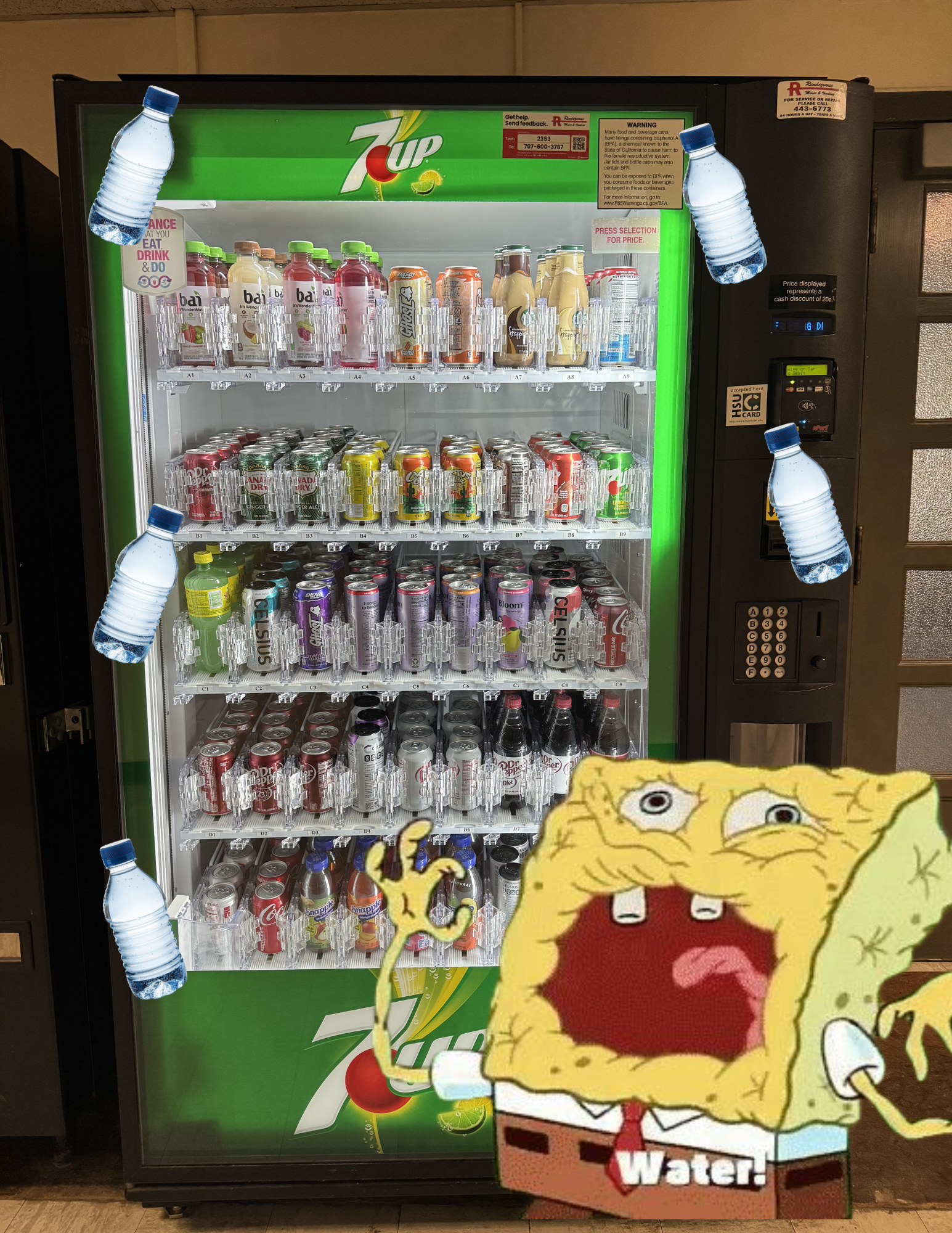
    Students who have ever purchased anything from the vending machines on campus may have noticed that there are no water bottles being sold.

     The university began phasing out plastic water bottles in 2011 after students ran a successful environmental campaign. According to Melissa Hutsell, Communications Specialist for Marketing and Communications at Cal Poly Humboldt, students participated in a grassroots initiative called Take Back the Tap, which pushed campus leaders to eliminate the use of plastic water bottles. This made Cal Poly Humboldt one of the first public universities in the nation to do so. In 2018, the California State University system adopted a policy to eliminate the sale of plastic bottles, straws and bags across all of its campuses. With the phasing out of bottles, the installation of water bottle filling stations increased.

    “Before this, the university sold as many as 80,000 single-use plastic water bottles annually,” Hutsell said. “The goal was always to make water more accessible to students by encouraging reusable containers for free water filling.” 

    The university has received recognition for reducing plastic use and was awarded a Plastics Reduction Partner certification from the National Wildlife Federation in 2024. Additionally, the Post Landfill Action Network recognized the university with a bronze Zero Waste Certification, ranking it third out of the top 10 Zero-Waste campuses in 2023. 

    Waterfill stations are located throughout campus, and more are being added as facilities staff work to upgrade drinking fountains over the next two years. For students without reusable bottles, free water bottles are sometimes given away at campus events by teams such as Housing and Residential Life and Dining Services. Reusable bottles are also sold at campus retail locations. The university’s new water bottle policy seems to be receiving positive feedback from the campus community. 

    “Generally, we’ve found that most people have expressed gratitude and inspiration, stating that they appreciate this effort and are excited by these kinds of initiatives from the university,” Hutsell said. 

    While the university reports positive feedback, some students don’t have many positive things to say about the policy. Ava Hernandez, a second year student, states that the lack of bottled water can be frustrating.

    “I think it’s kind of annoying that they’re not in the vending machines, especially when I used to live on campus,” Hernandez said. “I know that water from the fountains isn’t always the cleanest, and buying something like a Brita isn’t the most affordable option for some people. I wish water were available to buy in vending machines.” 

    Katelyn Lemos, a second-year psychology student, thinks that because of how much she has to walk, there should be more water.

    “I feel like there should be vending machines with water on campus, especially with the amount of stairs and hills everywhere,” Lemos said.

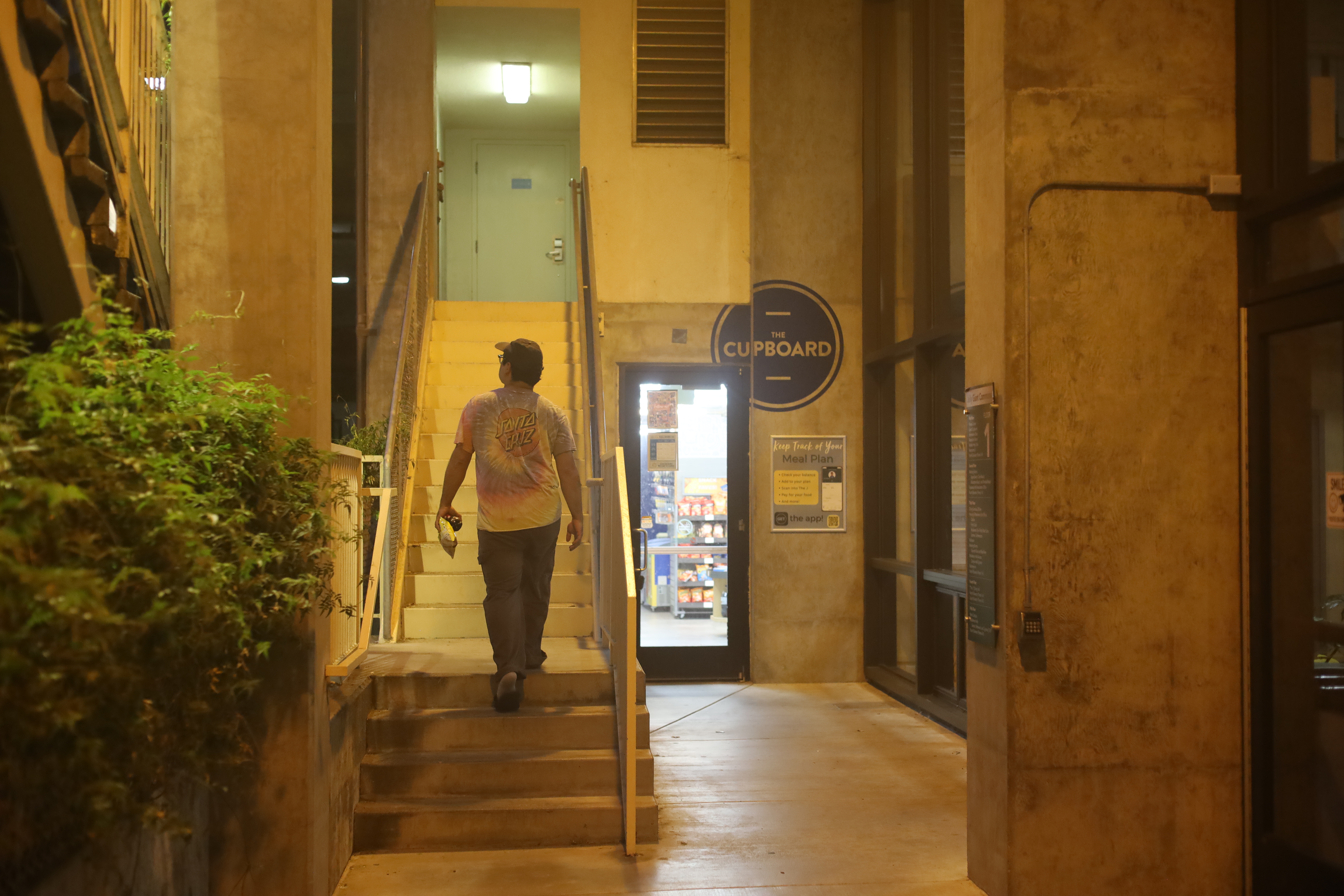
    Stores on campus, like The Depot, College Creek Market Place and The Cupboard do have aluminum and glass bottles as options, though they can be out of the way for some students.

    “I do think metal water bottles are a good alternative,” Hernandez said.

    Lemos, on the other hand, believes the restriction to reusables is still a step too far.

    “I think the aluminum waters are okay. I understand it’s for recycling, but they make the water taste like pennies,” Lemos said. 

    As the university continues to emphasize sustainability and reduce plastic use, the absence of water bottles in vending machines remains a topic of debate among students. 

    Jacqueline is a journalism major, a news manager for KRFH and she aspires to be a sports journalist one day

  • Instagram Submissions

    Instagram Submissions

    Compiled by Jasmin Shirazian

    Jacob Christopher 

    Political Science Junior

    I’ve been going a bit crazy during the second half of this semester, so I found a particular kind of relief in making these images. RETROSPECT ON INTELLECT is a mixed-media series using digital photography that engages with seemingly obsolete technologies and methods to resurrect an early 2000s nostalgia into a post-postmodern expression of emotional accumulation online. I shot with a camera from 2002, worked with a small crew of friends, went to a party, layered in recycled colored plastics and moved files through different software and two phones. The workflow was deliberately impractical, an act of resistance against frictionless and disposable image-making. I think of the project as a kind of proclamation on the state of elysium, about memory, and how it entangles with whoever is in front of the subject. Drawing on the texture and layering inspired by the aesthetics of frutiger aero, I hope to have turned what could have been a photo of a stranger into a figure of imagination and projection. In that sense, the collection is as much about how we remember images as it is about the subject in them.

    Sage Fowler

    Psychology 

    Junior

    @imgonnadigahole on instagram 

    I often find myself enjoying the process: entering a dissociative state that allows me to entirely devote my attention to each element of the piece. I’ve been focusing on developing my technical skills and becoming more familiar with various mediums before I try and explore a more consistent theme in my work.

    That being said, I’ve noticed that I’m particularly drawn to portraying everyday moments and using color to take the tone in a different direction. I love painting those who aren’t what first come to mind as the conventional subject. I’ve been delighted to find out that I can create something that people emotionally resonate with!

    Roland Asch

    21

    Psychology with a minor in fine arts and Indigenous Studies

    I make art that, in a way, reflects my life. I think I can’t really make art without being sorta autobiographical. It’s really kind of like a visual diary in a way and therapy; if I don’t do it, I get kind-of ornery. It just feels like something I need to do. I love making art, and if you wanna see more, follow me on Instagram @Found_a_job.

    Hayden Hilscher

    Theatre Arts

    Senior

    I’ve been drawing and doodling since I was a kid, and it’s just stuck with me after all these years. I create because I just have to sometimes, even if it just leaves me with a bunch of unfinished projects. It has to get out somehow, and I’m glad when I’m able to use that to create something for my loved ones.

    Mia Kelm

    She/hers

    Art History 

    Senior

    The Blue Heron was for a class assignment for my Drawing 2 class with a focus on drawing animals and the natural world. 

    The Blue Herons sometimes represent the concept of being “resilient,” thus the bird represents me and the internal turmoil I’ve faced with personal issues concerning my mental health. I am becoming not just better despite my issues, but also finding resilience within them. The ribbon is still there, it just doesn’t define me…

    Crowe Connolly

    Wildlife major

    Freshman

    I don’t really have much to say about this piece other than I really hate losing my lighters, and I thought this would be a cool way to stop that from happening.

    Jasmin Shirazian is the award-winning, curly-headed copy editor of The Lumberjack. Her beats range from breaking news to covering local performances. In her free time, she enjoys leaving the country and spending time with her cat. Inquiries can be sent to js760@humboldt.edu.

  • DA Pursuing 3 Misdemeanors Against Student Organizer

    DA Pursuing 3 Misdemeanors Against Student Organizer

    By Barley Lewis-McCabe

    The tan hallway of the Eureka Courthouse was filled to near-maximum capacity. The air was warm from breath and the benches filled with people in Keffiyahs or newly printed shirts detailing Cal Poly Humboldt’s (CPH) investments related to Israeli military. Some held signs in their laps or leaned against the wall, anxious to get into the court. 

    “There are a lot of us who know Rick and support Rick because we care about him as a friend, and there are a lot of people who are experiencing the same thing, either themselves or their friends across the country.” Humboldt 5051 chapter president and College of the Redwoods political science student AJ said. 

    Because of the sizable crowd, entry was limited to 25 people, and the bailiff warned people that signs, hats and phones were not permitted inside.

    Final semester graduate student at CPH, and the subject facing trial, Rick Toledo stood expressionless by the door. He was nearly unrecognizable with a short haircut and dapper suit as opposed to a tan jacket, jeans and shaggy hair. He idly talked to supporters, but spoke much softer than usual. 

    David Loy, legal director of the First Amendment Coalition, a non-profit organization focused on education around First Amendment rights, commented on the nature of Toledo’s arrest.

    “Sit-ins and occupations are time-honored means of protest and I respect that,” Loy said. “The whole theory of civil disobedience is that one disobeys the law for a higher moral purpose, but there’s not necessarily a right to do so without any legal consequence whatsoever.”

    On Monday, April 20, the Humboldt County District Attorney (DA) announced that they would be pursuing charges of assault, battery and false imprisonment on Toledo over an altercation with Associate Director of the Student Activities Center Michael Moore during the Feb. 27 sit-in at Goodwin Forum. 

    During the sit-in, administrators were asked to guard the entrances to limit further entry into Nelson Hall West. Around 1:20 p.m., Toledo approached Moore and made a ‘T’ with his arms, backing Moore against a wall to allow for protestors to bring food and water into the building. Moore was uninjured but the petition for a workplace restraining order against Toledo details that Moore felt fearful and anxious. 

    The Lumberjack reached out to Marketing and Communications, as well as Moore, for comment. Communications Specialist Melissa Hutsell said they were unable to facilitate an interview, and Moore did not respond to our email as of publication. 

    Toledo was arrested for felony charges of assault, battery, false imprisonment and conspiracy on March 6, but the DA did not file conspiracy charges and is not pursuing felony charges. In a declaration written in support of Toledo’ s restraining order filed on March 3, Interim Dean of Students Ravin Craig said the university is seeking to expel him. Toledo has an ongoing conduct case to determine his future at the university. Though he is able to appeal Toledo feels like the odds could be stacked against him.

    Moore’s workplace restraining order against Rick Toledo was dismissed 3 weeks after it was filed. Legal representatives were able to come to an agreement that Toledo would continue to stay away from Moore, and wouldn’t pursue legal action over the altercation directly.

    “I’ve said this before, I don’t know Michael Moore,” Toledo said. “I don’t have this man’s phone number, I don’t bear any resentment towards him, I don’t know his address. So it was very easy for me to say, ‘Yes, I’m not gonna go near him.’” 

    After about 10 minutes in the courtroom, Toledo and his supporters filed out back into the hallway and descended the stairs. Toledo, avoiding the crowd, stepped into a cramped elevator.

    “They definitely felt the pressure,” Toledo said. “They won’t drop the charges without pressure. The fact that they didn’t let signs in and the fact that they freaked out about the amount of people shows that they’re feeling the pressure.”

    Barley is the good-timing Editor In Chief of The Lumberjack, as well as a jack of all trades news writer. Contact him for any reason at bl258@humboldt.edu

  • Albas’ Aguachiles 

    Albas’ Aguachiles 

    By Alba Galvan 

    I was craving aguachiles, a beloved Mexican seafood dish. But, after looking all over Humboldt, I gave up. Then, I got the grand idea to just make it myself — so, I dragged my roommate, who hates seafood, to the grocery store to look for the ingredients. 

    This dish is easy to make, with only eight ingredients that can be found in any grocery store. Once I started learning how to cook, I added this to my food rotation. 

    Ingredients: 

    Raw shrimp 2lb (32 oz) — I recommend getting a bag of pre-peeled, deveined, tail-off shrimp 

    2 cups fresh Lime juice, equivalent to 20-25 limes 

    2 onions 

    2 cucumbers 

    5 jalapeno — add more if you like spice or switch it out to serranos, it’s the same taste just spicier  

    1 tbsp salt 

    1 tbsp pepper (optional) 

    1 1/2 tbsp Maggi Jugo Seasoning Sauce 

    1 bag tortilla chips to eat with   

    Step 1: 

    Wash shrimp under water to clean the shrimp. If they’re unprepared shrimp, remember to peel, devein and take the tail off your shrimp before placing them in a large bowl.

    Step 2: 

    Pour 1 cup of lime juice over the raw shrimp, the acid in the juice will cook the shrimp. Save 1 cup of lime juice for later, then refrigerate it while prepping other ingredients. The shrimp will be cured after 15 to 20 minutes. 

    Step 3:

    Julienne 2 onions, then peel and cut 2 cucumbers into thin rounds. 

    Step 4:

    Blend half the onion and cucumber with the jalapenos, the other cup of lime juice, salt, pepper and Maggi Jugoa until it’s evenly blended. 

    Step 5:

    Pour the liquid from the blender into the bowl of shrimp and marinate in the fridge for 20 minutes. 

    Enjoy with a side of tortilla chips!

    Alba is a journalism major and reporter for The LumberJack and El Lenador. She’s very passionate about sharing and listening to different opinions and loves self-expression. Contact her at: agg83@humboldt.edu

  • Alumna soars cultivating career in journalism and aviation

    Alumna soars cultivating career in journalism and aviation

    By Ariana Wilson

    Sitting in the cockpit of the flight simulator, staring down the tarmac of Arcata Airport, the engine roars to life. We lift off, soaring thousands of feet above the Humboldt skyline, all from the confines of the library’s second floor. Meg Godlewski, Humboldt class of 1987 and journalism major, carved out a career and found the elusive balance between passion and profession as a writer and editor for Flying magazine.

    Writing and aviation may not intersect on paper, but when “Death by Timebuilder” was published in Oct. 2023, her words circulated across the country and inspired change that is evident in today’s flying safety standards. “Death by Timebuilder” was a controversial article published in Flying magazine by Godlewski following the unprofessional conduct of an instructor, shaming a student and knowingly flying into severe weather cataloged on Snapchat resulting in two preventable fatalities.

    “That story is now up in frames around the country, in different flight schools. It’s required reading because I said things that other people were afraid to say,” Godlewski said. “I threw it out there and said, ‘We have a broken system. We have these time builders who don’t want to be there, they pass the test, but they don’t have teaching skills that just come with time.”

    Beneath the canopy of the Redwood Bowl, Godlewski recalls her days with the Marching Lumberjacks and the sense of found family that shaped her years at Humboldt. 

    “Close your eyes for a minute,” she said. “Think of your best birthday, the thrill of your team’s big win, the pride of your graduation — that’s what solo flight feels like. It’s incredible. You feel 15-feet-tall, walking on a cloud.”

    Godlewski remembers a time before information was just a click away. 

    “[Artificial Intelligence]  slows me down. It just gets in the way,” Godlewski said. “It’s a tool, but like anything else, it can be misused. I compare it to a Swiss army knife. My father, before giving me one, made me learn what each tool was for — because you shouldn’t use a fish scaler to cut wood. AI is the same way: you have to know how to use it properly.”

    Godlewski has always believed that humans are creators.

    Surrendering the process and mental frameworks of creation to machines threatens humanity’s imagination and wonder.

    Continuous learning has always defined her approach, even before her aviation career took off. 

    “I study pretty much every night,” Godlewski said. “Once a year, I read the manuals for each airplane I fly to refresh my knowledge.”

    Mentors from her early career shaped the leadership style she now brings to teaching. She walks her students through every inch of a flight pattern as they prepare for their first solo flights. 

    “I give all my students call signs, even though not everyone finishes. I want them to remember the experience,” Godlewski said. “I am helping someone do something they’ve wanted to do their whole life, because someone will come to me, and [say] I’ve always wanted to be a pilot and I ask, ‘Why not?’ [And they say] ‘well, I’m 40.’ It’s doable. If you can find your butt in the dark, with both hands, a map and a flashlight, I can probably teach you how to fly. And if I’m not the right instructor for you, I’ll find you one.”

    Reciprocity has defined her career, serving as a catalyst for a life of meaning. “Honestly, I don’t see myself at the end of my career, because I turned two hobbies into careers,” Godlewski said. “If I can help someone, I want to. Sometimes I’m not the right instructor or mentor, and that’s okay — there are others who are a joy to work with, and I hear from them later.”

    Godlewski believes there’s a beautiful emptiness as we walk through life as wayfinders, charting our own course of self-discovery. “Recognize that you are leaving a bubble,” Godlewski said. “[Humboldt] is insular, but when you move on, nobody’s going to care where you came from. It’s about what you can do.” 

    Ari is a senior journalism major and the science editor this semester with an adoration for the environment and conservation. She is currently pursing her scientific diving certification and plans to meld her journalistic passions with scientific research in the future. For any inquiries please contact ajw167@humboldt.edu.

  • Work in progress

    Work in progress

    By Kaylon Coleman

    Within the confines of Cal Poly Humboldt, many a-student choose to express themselves in a multitude of ways. For senior ceramics major, philosophy minor and clay club president Socks Lucas, ceramics is their expressive outlet of choice. 

    Lucas got into ceramics around the time of the pandemic at age 16.

    “I was taking classes at a community college instead of going to a traditional high school. I just wanted to do something at home that used my hands, and that wasn’t staring at a screen,” Lucas said. “So, I signed up for a hand building ceramics class.”

    At first, Lucas hated the class — but after another attempt in-person the following semester, they grew to love the medium and have stuck with ceramics ever since.

    “I’ve done [ceramics] every semester since I was 16,” Lucas said. “I think I had one semester off, but I snuck into the ceramics studio here-and-there to touch clay.”

    Lucas is heading to the California Conference for the Advancement of Ceramic Arts (CCACA) this weekend, April 24 and 25 in Davis, Calif.. Lucas plans on bringing three pieces to showcase as a triptych — a term that refers to a three piece work of art showcasing a specific theme or concept.

    “One of them is a cat with two apples on its head. It’s kind of reminiscent of my childhood cat who passed away last semester,” Lucas said. “And then a giant pile of apples with a little mouse in it. And then a pile of mice with an apple core.”

    Lucas delved into the significance of the pieces. Naming the cat piece, “keeper,” the apples, “hold them close, pile them high” and the mice, “surrender.” 

    “My work explores themes of childhood memories, comfort, grief and nostalgia. Personal experience, the emotions of my past, and my ongoing consideration of who I am drive the ideas I materialize into clay,” Lucas said. “These sculptures are a monument to all memories I have held onto: the good, the bad and the rotting.”

    Lucas explained their creative process and how they get inspiration for their pieces. 

    “Probably laying in bed, having an idea pop in my head and not being able to sleep for a few hours,” Lucas said. “And then, scribbling down a few circles on a page, coming in the next day and just having this extreme urge to just make something… the 3D nature of clay for me really allows me to just fully manifest it physically into reality.”

    This process isn’t without its caveats though. Lucas explained the tribulations of ceramics and what inspires them to keep with it.

    “It’s a tough-ass medium to stay in. There’s constant failings and disappointment,” Lucas said. “I crashed out about my pile of apples last week because they were too dark of a color than I wanted them to be… what keeps me going every day in the studio, though, is my friends in it. It’s a community.”

    Lucas has no concrete plans for after graduation and remains a bit weary of having no studio space next semester, but wishes to go to grad school in either Alfred, New York or Boulder, Colorado with long term goals of teaching.

    “I want to go to grad school, do some residencies and eventually teach at a four-year, just so I can sustain my art practice,” Lucas said.

    Lucas also shared where their drive of teaching originates from. 

    “I love sharing what I know about ceramics with other people,” Lucas said. “I think that process of sharing information is so beautiful, and I would love to share that with the broader world and also get paid for it. I think that’d be really sweet.” 

    Lucas’ main passion around ceramics, however, is how it allows them to express emotion.

    “I make my work to share the joys of my life with others and provide a space to hold their sorrows,” Lucas said. “Much of what I create is not intended to affect others directly, but to help me understand myself and how I move through life’s peaks and valleys. Through my work, I show you my old bruises that refuse to disappear, alongside the sweet reality I have built.”

    Kaylon Coleman is a senior journalism major with a concentration in news and a minor in communications. He is the Life & Arts editor for LJ, Marketing and Communications lead for the Umoja Center and a part-time radio DJ and merch manager for KRFH. If you have a topic you want him to discuss, email him at kc403@humboldt.edu.

  • Cultural Connections Without Community

    Cultural Connections Without Community

    By Jasmin Shirazian

    A dish served to distinguished lecturer Maral Attallah of the department of critical race, gender and sexuality studies at a Palestinian restaurant in the Bay Area, and a conversation with the owner in Arabic, brought her to tears. When community is limited, sudden access to cultural connections, like a meal and communication, can be incredibly emotional. The constant feeling of isolation that is so abundant in Humboldt County is amplified for minority communities. 

    “My father passed away in June of 2024, so I don’t speak Arabic to people — I don’t hear Arabic, people don’t speak Arabic up here. It’s not a part of my daily life anymore, and that makes me really sad,” Attallah said. “[The owner] basically told me in Arabic, to enjoy your meal — and I lost it, because the last time I heard someone say that to me was my dad. My dad used to say it every time he’d bring me my meal.” 

    Students of color who choose Cal Poly Humboldt often leave behind communities more diverse and supportive than what can be found in Humboldt County. According to 2025 U.S. Census Data, out of 131,647 residents in Humboldt County, 82% were white, with the second largest demographic being Hispanic or Latino at 14.6%. As of now, there is no categorization available for those of North African or Middle Eastern descent to differentiate from or collect data on, which can make it even more difficult to connect and form communities. Though some minority groups are able to find a semblance of similarity to what may feel like home through established groups and organizations, for students with Middle Eastern, North African and West Asian ancestry, cultural connections can be much harder to find. 

    Attallah is of Armenian and Assyrian descent on her father’s side. She has made it her life’s work to tell the facts and stories of the victims of the Armenian Genocide, which includes her grandfather. Through her work, she connects with her heritage; she keeps her father and grandfather’s experiences alive, refusing to let their stories be told for them.

    Food in many cultures serves as a pillar of community; it can provide an opportunity to sit, relax and take time to connect with loved ones. For Attallah, language and food are key components of her connection to her roots. However, enjoying a West Asian, Middle Eastern or North African dish, like the Kafta bil Saniyeh that brought Attallah to tears, often means venturing outside of Humboldt County. Though there are a handful of establishments that serve Mediterranean foods and inspired dishes, the selection is limited. Attallah, when able, will leave Humboldt County specifically to get back in touch with diversity. 

    “Any opportunity I get to leave Humboldt, I do,” Attallah said. “I have to leave — I need the food, I need the language, I need to see people who look like me. Not even like me, but just different.” 

    The simple act of shared words over a dish can have unexpected impacts on minority communities that have limited access to their culture. When going out is not an option, learning to cook at home is something many diaspora, like fisheries biology major Neshwa Rabie, must  do to reconnect with their roots. Rabie, of Jordanian descent on her father’s side, lived in Jordan until she was six years old. Like Attallah, she finds that speaking Arabic, especially with her family, is what helps her feel most at home. 

    “I have my old pictures from Jordan that I have in my room,” Rabie said. “But, mostly, it’s just speaking to my family, because that gives me a chance to speak Arabic and that makes me feel really connected to my roots.”


    Rabie also stays connected with her roots through her pride of being Arab. The comfort and joy she has in her identity are undeniable aspects of her person. 

    “I like to think that every room I go into, I want people to know I’m Arab, I’m Jordanian,” Rabie said. “This is who I am. This is a very big part of my identity. This affects how I do everything, and everybody should know that that is who I am.”

    While food and language can serve as the connection for many, other students like Leyla Craven use art and art history to reconnect with their heritage. 

    Craven, a double major in art history and art education, is Iranian on her father’s side and has based her thesis on Iranian artist Shirin Neshat. Craven also incorporates traditional Iranian motifs into her art as a way to reclaim and reconnect with her heritage. One of her main reasons behind her art is her insistence that Iranian voices must be heard. She believes that through art, Iranian voices can be amplified to show the nuances that are often pushed aside due to distance, misinformation or propaganda. 

    “Obviously, especially here in Humboldt, but just in the whole Western world in general, there’s not a lot of Iranian representation,” Craven said. “So, we should make as much stuff and get our voices out there as much as possible, especially to avoid [being] turned into a monolith.” 

    For Craven, creating Iranian-inspired art also further connects her to other Iranian diaspora. The act of creation can feel like the connection that has been fractured from both civil wars and foreign intervention. For diaspora, it can be one of the few ways to form community. The disconnect felt being removed from a home that housed generations of a person’s family can be slightly remedied through the connection found within the diaspora. Through these connections, Middle Eastern, West Asian and North African diaspora are able to rebuild their community.

    “I think a lot of Iranian artists are about being a part of the diaspora, about being disconnected from their cultures and from their families,” Craven said. “We’re all connected internationally through the act of making art and communicating with each other as a way for us to sort of reclaim a sense of heritage or belonging. Because for so many of us, our families are so fractured and traumatized, it’s a way to find connection.”

    Jasmin Shirazian is the award-winning, curly-headed copy editor of The Lumberjack. Her beats range from breaking news to complaining about minor inconveniences. In her free time, she enjoys leaving the country and spending time with her cat. Inquiries can be sent to js760@humboldt.edu.

  • UPD BYTE

    Compiled by Ariana Wilson and Nico Patakidis

    Tuesday, April 7

    12:44 p.m. – Animal Call

    The reporting party stated that a large dog bit the reporting party’s coworker about 20 minutes prior to the call. Medical assistance was declined by the subject.

    Wednesday April 8

    11:36 a.m. – Emergency Elevator Button

    A 911 call was reported from the elevator at the natural resources building.

    2:31 p.m. – Patrol Check 

    A male subject was reported walking around the Jolly Giant Commons parking lot with a large metal pole. An officer patrolled the area and found the subject locking his vehicle on CCTV, not as reported.

    Thursday April 9

    10:31 a.m. – Welfare Check

    Subject climbing a tree near the Art fire lane. The reporting party is concerned for their safety and requests an officer to check.

    Saturday, April 11

    12:11 a.m. – Outside Assist – APD

    Officers enroute to assist Arcata Police Department (APD) at the Arcata Theater Lounge with the subject being detained by security after attempting to rush the entrance of the building.

    3:17 p.m. – Outside assist – APD

    A farmers market vendor locked their keys in their vehicle and the vehicle was blocking the roadway. APD requested assistance unlocking the vehicle and was unable to provide assistance. 

    Sunday, April 12

    6:42 a.m. – Miscellaneous Service

    A reporting party called to request assistance from Facilities Management to get a key card reader on the door at college creek fixed so the coaches can access the coach locker room. The reporting party stated he requested assistance on April 10 and it does not appear to have been handled.

    Monday, April 13

    10:12 a.m. – Drug Activity

    Report of a black bag filled with drug paraphernalia was left at Sun Valley Bulb Farms by a transient who was escorted off the property approximately 45 minutes ago.

    2:00 p.m. – Trespassing

    Reporting party reports that an unauthorized subject was on the Sun Valley Bulb Farm property, inside the fence closer to the gate by the solar panels. Subjects were advised that they were in violation of criminal trespassing.

  • The Drama is akin to laughing at a funeral 

    The Drama is akin to laughing at a funeral 

    By Julia Kelm

    The Drama follows a happily engaged couple, Emma and Charlie — played by Zendaya and Robert Pattinson — as they prepare for their upcoming wedding. However, their relationship is put to the test when an unexpected detail of Emma’s past is revealed during a conversation between friends. The question, “What is the worst thing you’ve ever done?” sends their relationship and wedding week completely off-track.

    The Drama is the latest addition to the repertoire of the emerging Norwegian director, Krisoffer Borgli. You may be familiar with his last A24 collaboration, Dream Scenario (2023), which starred Nicolas Cage. For me, however, The Drama was my first introduction to his work.

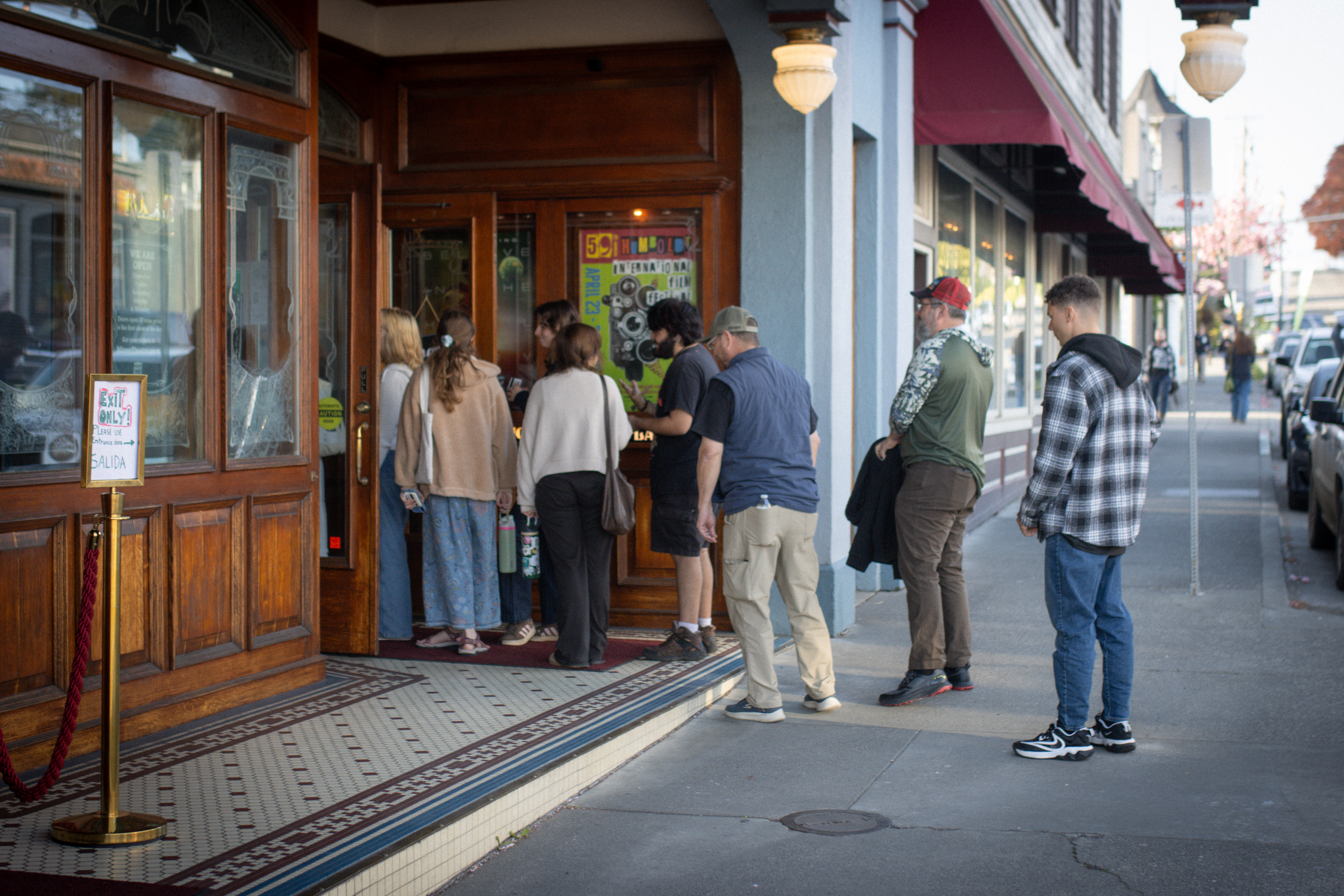
    I highly recommend going into this film blind, as the twist Emma reveals hits best when unexpected. I luckily — somehow — avoided spoilers before seeing this film Easter Sunday at the Minor Theatre in Arcata. 

    It takes a while for this film to get the ball rolling. However, once it does, it just leaves you in the wake of this massive twist. It places you in an achingly awkward and anxious state that is shared by both Emma and Charlie’s post twist. This feeling is heightened by Borgli’s surrealist auteurship, which is just a fancy way of saying a filmmaker’s style. Scenes where Emma’s ear bleeds while at dinner with Charlie, or when Charlie reflects on memories with Emma, seeing as her high school self; both act as excellent scenes in making the viewer feel the anxious stress and distrust Charlie feels for Emma.

    The aforementioned detail that Emma reveals is a hot piece of gossip and an even hotter topic within American society. The subject is handled in a mildly humorous way, which has already created mixed responses within online debates, with many who call the approach distasteful. I, for one, enjoyed the approach, finding it bold and unafraid to make audiences uncomfortable and encourage self-reflection.

    Zendaya and Pattinson were perfectly cast in their respective roles. Zendaya plays this seemingly idealized woman in the beginning — spunky and charismatic — who then becomes reserved, overtly anxious and paranoid. Pattinson plays an endearing, dorky British guy that turns into a man completely absorbed by delusion. Their performances are truly what made this film come alive for me.

    Another character worth mentioning is Rachel — Alana Haim — who is Emma’s bridesmaid and friend — honestly though, if that’s the kind of friend you like to keep, you should do some second guessing. Rachel is the embodiment of an entitled mean girl who can’t forgive Emma for the dark secret she reveals during the climatic conversation. Rachel is a primary factor in worsening things for Emma and Charlie, even though the secret Rachel reveals is debatably worse, or at least similar to Emma’s. To me, this represents the double standards we hold ourselves compared to others. 

    It’s often simpler to forgive ourselves because we can more easily rationalize our own actions and thoughts. I think the film acts as a reminder to pull the plank out of our eye, before criticizing the sawdust in our friends — or however the metaphor goes.

    Overall, I thought this was a solid film and I look forward to watching more Borgli in the future. 7/10 Julia’s.

    Julia is a journalism major and the co-Editor in Chief of the paper. She loves film and is a regular on Letterboxd. She also enjoys going on walks in the forest and taking pictures to relax. If you have a movie you’d like her to review, please email her at jk328@humboldt.edu.

  • Bat Boy: The Musical

    Bat Boy: The Musical

    By Kaylon Coleman

    Over the weekend, I attended the last show for Bat Boy: The Musical hosted by the Cal Poly Humboldt Department of Dance, Music and Theatre. To fully immerse myself in the experience, I decided to channel my inner bat and walk in blind. I know it’s in the name, but it wasn’t until I was smack-dab in front of the Van Duzer that I realized I was attending a musical. 

    Now, it’s been a minute since I’ve basked in the theater arts, ironically six or seven years probably — but I believe this is the first time I’ve ever witnessed a musical live. The play itself lasted about two-and-a-half hours, with an intermission included. For those unaware, Bat Boy is about… well, a bat-boy. Bat Boy, later dubbed Edgar, is stumbled upon by some cave explorers while spelunking. After getting captured and brought to the surface, Edgar is caged as the townspeople decide whether to string him up as entertainment or to put him down via the town doctor, Dr. Parker.

    The first act of the musical consisted of Edgar getting accustomed to human life, learning how to walk the walk, talk the talk, so on and so forth. This presented itself through 13 different songs sprinkled throughout the first act. I know musicals get a bad wrap a lot of the time, but I think the fact that I was watching this live immersed me more than a traditional movie-musical. I need to give props to Rylan McClain, a.k.a Dr. Parker. Everybody who sang did a great job, but McClain’s vocals stuck with me. He was belting up there like his rent was due. 

    The play, while more serious leaning, did indulge in some bouts of comedy. One moment that made me laugh was when Edgar was showing off his progression as a civilized individual, and replied to someone with the term, “indubitably.”

      It took me some getting used to, but by the end of act one, I was fairly brought on board the Bat Boy train. All this changed during act two however. After a brief intermission, the play resumed with Edgar attending the revival service they chose to hard launch his progression at. After some snafu’s, Edgar flees into the wilderness, with the townsfolk hot on his tail. This is where the play started to lose me, to no fault of the performers. It just seemed as though the story completely flipped from where I thought it was going. There was a plot twist that I assumed would be the case, but did not end how I thought it would. 

    Bat Boy: The Musical is one of few productions I’ve seen that have left me speechless for the most part, which might just be a symptom of live theater, who knows. I applaud the performances of each cast member, and extend my applause to the band as well, which did an amazing job of immersing the audience. Keep live theater alive!

    Kaylon Coleman is a senior journalism major with a concentration in news and a minor in communications. He is the Life & Arts editor for LJ, Marketing and Communications lead for the Umoja Center and  and a part-time radio DJ and merch manager for KRFH. If you have a topic you want him to discuss, email him at kc403@humboldt.edu.

  • Bird Nerd: A starting guide

    Bird Nerd: A starting guide

    By Sadie Shields 

    Whether you’re walking through the Arcata forest with its lush trees and greenery, or surfing in the bay, you may hear or notice a feathered friend moving by you. Birds come in many shapes, colors and sizes, and here in Humboldt County, we get a lot more species than your typical city environment. 

    For many birders, the interest begins long before they pick up a field guide or scope.

    “I’ve always been proud to identify whales and red-tailed hawks when I was younger. There was one time a red-tailed hawk flew over and I’m like ‘that’s a red-tail hawk because it’s got a red tail.’ I was so excited about it,” said Cedrik Von Briel, a senior wildlife and communications major and president of the birding club. “I wasn’t really a birder until my brother started getting into it, and eventually dragged me onto something called a Christmas bird count. I was just fascinated by the amount of cool named birds that were out there.” 

    Humboldt county offers an amazing environment for birding, one of the many places close by to campus being the Arcata Marsh or the South Jetty. For beginners, the advice is simple: start where you are. 

    “There’s no right way to do it. Just go and do it, find your favorite spot, there’s absolutely no rush,” Von Briel said.

    Wildlife photographer Kristinza Scheef resonated with the idea that aspiring birders need patience and awareness when entering natural spaces.

    “You have to remember: we are playing in their home, in their world, so we need to be ethical and nice to them,” Scheef said.

    Scheef also notes that expectations can sometimes get in the way for beginners.

    “A lot of times, wildlife will reward you with a beautiful photo — but, you have to be patient,” Scheef said.

    As new birders head out into the Humboldt forests, marshes and coastlines, or decide to go to the Godwit Days birding event Friday, Saturday and Sunday, learning to slow down, take your time to breathe and observe is enough to make a difference. 

    “The more you see and fall in love with nature, the more protective you’re going to get of it,” Scheef said.

    Sadie is a reporter who has an interest in covering and taking photos for sports and science. She can be reached at sls331@humboldt.edu.

  • Dorm dwellers stake in the SAC for Casino Night

    Dorm dwellers stake in the SAC for Casino Night

    by Nick Escalada

    Cal Poly Humboldt’s highest rollers, many of whom were under 21, arrived at the Student Activities Center (SAC) lounge dressed to the nines for an evening of non-monetary gambling. Student employees at the center appeared as the house’s dealers, hosting games of poker, roulette and blackjack across a U-shaped arrangement of tables in the familiar hall bathed in red light.

    The event drew swaths of students living in the on-campus dorms to what many saw as a flicker of night life at a university with a usual nine-o-clock bedtime. Amanda Kachevas, programming coordinator of the SAC, was excited to provide residents with the opportunity for after-hours recreation for the fourth year in a row.

    “There’s so many people who live on campus and don’t necessarily have things to do in town. Not everyone’s 21 or has a party to go to on the weekend,” Kachevas said. “This event kind of fulfills that party atmosphere. And we used to always get requests to stay open late for events, and we found that this event specifically has like the big draw all the way into the night, almost more so than concerts sometimes.”

    As fun as it would be, the SAC does not have a gambling license under the State of California, so its tables were open to all ages and dealt in imaginary cash. Guests were each given a Santi book, named after Operations Coordinator Santiago Menjivar, which granted them a starting total of $10,000 to play with throughout the night.

    “It’s really low stakes, and we just teach people how to play so that they can have poker nights at their house and stuff like that,” Kachevas said. “At the end of the night, whoever has the most chips at the end can win a poker set.”

    The idea for Casino Night came about when staff looked at events held in the student centers of other universities, and some version of a dapper gambling function seemed to always pop up.

    Professional dealers were hired for its first outing, but after slashes to funding and requests from SAC student workers, attendees now receive their hands from decks shuffled by their peers.

    “There’s a lot of tiny, nitty gritty things, like getting our student staff together and asking them, ‘Okay, do we want student dealers this time? Do we want to bring in a professional dealing company?’” said Events and Media Lead Riley Hemenober. “But, the students always want to just deal themselves, because it makes it more fun. You can go sit at a table and your friend is the dealer, and I think it makes it fun.”

    Guests were encouraged to dress their best to match the lounge’s glitzy atmosphere, and a ‘best couple’ fashion contest was held at the end of the night and decided by the cheers of the surrounding crowd. Clad in black and red blazers and dresses, the congregation of high rollers seemed worlds apart from their casual daytime appearances.

    “Students love the opportunity to dress up and dress fancy, because there’s not really events [like this] that happen on campus,” Hemenober said. “Students also love some free giveaways, and so we always try to do that too. We hand out little gifts and [hold] different competitions. So, that way, students have that opportunity to get something on their way out.”

    Student workers are eager to bring more opportunities for late night fun to the SAC in the future. The Kate Buchanan Room in the lounge was formerly a venue for frequent musical performances, which included student bands. The room has since become a reservable space for on-campus organizations, but the push for the return of live concerts continues.

    Nick is the news editor at The Lumberjack, and studies wildlife and journalism with the goal of spreading his love of nature through media. Chat with him at ne53@humboldt.edu!

  • AI vs student creativity

    AI vs student creativity

    By Jacqueline Zuniga

    As artificial intelligence (AI) becomes more present across different majors, students in art, journalism and English share similar thoughts about how it will affect creativity. While some may see AI as a helpful tool for brainstorming or drafting, some think it could weaken the originality of people’s creativity. On April 10, Journalism Professor Yumi Wilson at San Francisco State University led a discussion at Humboldt’s 2026 Media Day where local high school students could learn from fellow journalists about the field. Wilson explained how she sees AI used in her daily life and work, and that it should be utilized rather than ignored. “AI is being used, whether we talk about it or not,” Wilson said. “We need to talk about it… and maybe even set guardrails in place.” 

    Rather than replacing core reporting skills journalists have, AI is being used as a tool in the newsroom. Wilson explained that journalists can use AI to help generate story ideas, proofread drafts and analyze information they have gathered. But, she does emphasize that it shouldn’t be replacing core skills journalists have. She emphasizes that journalists still have to use AI responsibly and not allow it to do all the work. 

    “I think we need to be open about the usage, and maybe even set guardrails in place,” Wilson said.

    Wilson thinks that the process of using AI tools is like being in a newsroom. You’re not working alone, you’re getting help from editors, photographers and others to help improve your story. They provide feedback and fix errors they might see. She made the argument that AI could help support some of those processes. 

    “If we could think about AI tools doing some of that work, but not replacing what we do, might it be a good application?” Wilson said.


    The conversation and concern surrounding AI impacts many fields. Another area where AI usage is heavily debated is within the arts. Adrian Conner, a studio arts major, feels that because AI isn’t part of their coursework at Humboldt, it hasn’t had an impact on their education or artistic practice. He feels that art students’ work is more physical and requires hands-on activities, whereas AI is all digital. Within that, Conner worries about people using AI for creative work.

    “Art, for me, is the human mind and the human experience, and if you’re using a chatbot to come up with ideas for you, maybe your ideas aren’t good enough to be shared,” Conner said.

    Some art students see AI as a tool that must be used carefully.

    Studio arts major Jennifer Flores said that AI can be helpful in certain situations, but it can’t replace human work. Flores added that while AI may continue to grow and have its useful moments, it cannot replace the value of human expression. The AI conversation continues to impact a wide range of students and fields, with varying stances. Junior English major Riley Torres feels that AI can actually hurt people’s writing creativity and voice. 

    “It may reduce a person’s creativity and make them rely on technology instead of developing their own ideas and voice over time,” Torres said. 

    Fellow English major Nathan Casey shared his  perspective on AI. He acknowledges that there are risks when it comes to using AI for writing, but he also sees the potential in using tools to help generate ideas. He still thinks students should be responsible for what they write and not let AI do all the work. 

    “AI can help students explore ideas more easily, but it’s often used inappropriately,” Casey said. “If you give all your writing to AI, you’re not improving — and you won’t get better.”

    Jacqueline is a journalism major, a news manager for KRFH and she aspires to be a sports journalist one day.

  • The Beauty of Hope

    The Beauty of Hope

    By Kaylon Coleman

    For as long as I can remember, I’ve always looked at life through the lens of a glass half full. A guiding mantra I’ve carried with me since inception is that everything will work out. I love being an optimist. But as I’ve gotten older, I’ve realized that optimists are few and far between in a world full of pessimists and pragmatists — which unfortunately, is extremely valid given the current state of our world. 

    Why should I expect a better and brighter future when everything that I see online and in my day to day and online such a lifestyle? I’ll tell you, I didn’t become an optimist purely because of my cheerful disposition on life, but because I recognize the beauty of hope.

    Just like other metaphysical concepts throughout life, such as love or faith, hope is a double-edged sword. On the one hand, hope provides you with aspiration. It fills you with a fire and desire for a better future like Drake; but on the other hand, it can lead to insurmountable disappointment and heartbreak, like Drake.

     When you allow yourself to be vulnerable and to feel something so personal like your raw unadulterated feelings, you open the door to letting those same feelings tear you up. If you’ve watched the newer Spider-man movies you may have heard MJ say, “If you expect disappointment, then you can never really get disappointed.” While she has a point, I just can’t co-sign this way of thinking.

    Living your life on a half measure is no way to live. In a relationship, you can’t half-love to walk out half-hurt. It’s not fair to either side. You must burn brightly the whole way through. If things don’t work out, c’est la vie. At least you can say you went full throttle the whole way and never sold yourself short of your emotions — which is the exact sentiment you should hold when it comes to optimism.

    Everyone wants to live a better life, everyone prays for better days. So, why not embrace it all gas no brakes, regardless of how it may turn out? Yes, not everything is gonna work out, but when does it ever? It’s like Princess Leia says in The Last Jedi, “Hope is like the sun. If you only believe in it when you see it, you’ll never make it through the night.”

    And, for those who may be struggling to find their optimism — I get it. Even I don’t wake up bright and cheery everyday; it’s impossible. There will be just as many bad days as good ones. I’d love to have the answers, but I don’t. Although, I can tell you about some of the things that have gotten me through tough times: Friendship. Community. Music. Food. Movies. Video games. The Sun. The outside. Aimless drives. Weed. 

    Find your support system. It’s easy to scroll and to rot and to wallow in your misery, thinking “this is the worst,” but know that this too shall pass. Frank Ocean said it best, “Every night fucks every day up. Every day patches the night up.”

    Hope is beautiful. It’s inspiring. It spawns resilience in all those who embrace it. As someone on the verge of graduating, with no prospects but plenty of  dreams, I can’t help but be excited for the future laid out for me, because I know everything will work out — I have to believe that. Not only does it make life worth living, but it adds a kick of spice to everything. Am I gonna make it big one day? Damn right. Do I know how I’m gonna get there? Absolutely not. But that’s where the fun comes in. Life is Roblox; I have no idea what’s in store for me and neither does anyone else. So, why let negative attitudes steer your direction? In a world of pessimists and pragmatists, be an optimist. I promise you, it’s much more fun that way.

    Kaylon Coleman is a senior journalism major with a concentration in news and a minor in communications. He is the Life & Arts editor for LJ, Marketing and Communications lead for the Umoja Center and a part-time radio DJ and merch manager for KRFH. If you have a topic you want him to discuss, email him at kc403@humboldt.edu.

  • Softball Recap

    Softball Recap

    By Sadie Shields

    After two weeks of playing on the Cal Poly Humboldt home field, Cal Poly Humboldt Softball heads down to Cal State San Marcos this week and then will be back at home against Chico State on April 24th for Strikeout Cancer day. 

    While at home on April 3, softball put up a 3-1 game win against Cal State Monterey Bay from -4 and then a one win and one loss record against Cal State San Bernardino last Thursday, April 9. Two of the games that were meant to be last Friday April 10 were canceled due to weather.

    Across the four games against Cal State Monterey Bay, Humboldt averaged five runs, nine hits and five strikeouts. 

    The Lumberjacks averaged five hits, five runs and four strikeouts against San Bernardino.

    In their two week home stint, the Jacks walked away with four wins and two losses at home leaving the team with a 10-8 conference standing. 

    Sadie is a reporter who has an interest in covering and taking photos for sports and science. She can be reached at sls331@humboldt.edu.

  • Wren’s Whimsical Window: Pest Control

    By Wren Salazar

    I received the strangest call earlier today from an unknown number. I was told to peer out my window tonight and if I did, I’d see something unlike what I have ever seen before. Afterwards, there was some stifled giggling and they hung up. What a strange proposal. Obviously, I’m not quick to trust the random caller. As I decided I would look to see what’s going on, my phone buzzed once more. Unknown number again, but I picked up.

    “A little birdie told me you might need some pest control,” a different voice said. “I will take care of them for you. Surely, it will be a spectacle.”

    Pest control? For what? Could it be unlike what I’ve seen before? Sensing my hesitation, the voice continued.

    “The fae will arrive for you tonight,” he said. “Best to be safe, don’t look outside, no matter what you’ve heard or seen.”

    Then, he hung up. This has to be a coordinated prank. Fae don’t exist. Why would it be bad to look outside tonight? I doubt anything will happen, but I’m closing my blinds anyway.

    I lounged in my room, as it got closer to evening — a creeping anxiety grew stronger with each passing minute. I heard a knock at my door, but a spark from behind my blinds caught my attention. Then, another spark, blink after blink, numbers rapidly increasing. Flittering and flickering light poured through the blinds in bursts of orange, purple and blue, floating as though they were refracted through water. I felt as though I’d been placed inside a kaleidoscope. I had to look. Banging on my door and muffled yelling made me hesitate, but I had to look. It’s beautiful. No matter the cost.

    Wren is an artist and story writer looking to add some whimsy and curiosity to those around her. A lover of all things, Wren seeks to help others around her with advice or humor. She can be reached at ws81@humboldt.edu.

  • Taxidermy is a dying art kept alive inside the walls of Cal Poly Humboldt

    Taxidermy is a dying art kept alive inside the walls of Cal Poly Humboldt

    By Julia Kelm

    While the sight of an animal carcass might make some people queasy, for Wildlife Museum Curator Anna E. Goldman, it is an area of fascination. 

    “I’ve always been interested in dead things,” Goldman said as she ripped the skin from the body of a recently thawed squirrel for a taxidermy demonstration. “In 3rd grade, for show and tell, I brought in a severed deer leg that still had fur on it. I was really excited, and then the principal called my mom… they thought I was a serial killer.” 

    This love of death led Goldman to an unconventional career as a taxidermist and museum curator for the Cal Poly Humboldt wildlife department.

    Goldman explained that since she’s the only one who maintains it, the museum is hers to manage as well as take care of.

    “All of the collections, duties, the databasing, the cataloging, setting up and taking down for classes… everything that happens here is on me,” Goldman said.

    Goldman’s day-to-day work weeks can vary greatly. From simply cataloging specimens for the museum to racing off to the shoreline when a whale washes up, things are constantly in flux for Goldman.

    When it comes to directly working as a taxidermist, Goldman described a process called museum prep. A procedure in which the skin of an animal is dried out and preserved emphasizing its anatomical structure. It then is placed inside drawers and cabinets at the museum, accessible for students and researchers to take measurements.

    “I’m most classically trained in how to prepare specimens for the museum collection, which takes up the least amount of space possible, but also allows you to see all of the notable features of this animal,” Goldman said.

    The museum is in the fisheries and wildlife building, only accessible with supervision. Those with access will find drawers and cabinets filled with furs, skins and stuffed critters like chipmunks, mice and beavers lying peacefully as if tucked into bed.

    Goldman admitted that taxidermy and museology work is a difficult career field to break into. If it weren’t for her stubborn determination to make taxidermy a career, she would not be where she is today. 

    Goldman’s journey began in 2006 after finishing her undergraduate degree in biology, with a focus in entomology, at the College of the Atlantic in Bar Harbor, Maine. She moved back to her birthplace of Chicago, Ill., to work at the Field Museum of Natural History. 

    There, she spent her early career working primarily with insects. However, when museum positions temporarily dried up due to the lack of immediate long-term work position, Goldman had to take up various retail jobs to make ends meet.

    “[I was] still volunteering for the insect division, and then the mammals preparator job at the Field Museum opened up,” Goldman said. “I got so lucky to get [that] job, and it kind of just snowballed.” 

    Although working with mammals began as a pivot of Goldman’s original love of insects, she has enjoyed this new direction. 

    In 2015, Goldman desired to go after her PhD in biological science. Unfortunately, she was first met with a massive roadblock. To apply for grad school, she would need to take a standardized test. Goldman said she was never a good tester.

    “I was told by the dean of one of these universities that I applied to that, ‘there are museum people, and there’s academics. You’re just a museum person,’” Goldman said. “Give up, basically.” 

    Every U.S. school that Goldman applied to denied her based solely on her test scores, despite the experience she gained during her time at the Field Museum. 

    Fortunately, there was a loophole that allowed Goldman to pursue her dreams. 

    “I figured out that international programs don’t do standardized tests to get in, and a lot of your experience actually is very beneficial,” Goldman said. “So, I was able to get into the University of Hong Kong.” 

    After Goldman graduated from the University of Hong Kong in 2021, she looked for work back in the States and ended up in Humboldt County.

    Now retired, the previous museum curator, Tamar Danufsky, said Humboldt’s collection, though small, boasts many regional specimens. 

    “Nobody from [University of California], Berkeley is driving up here to pick [roadkill] up and take them back to their collection,” Danufsky said. “It’s an impressive collection for this little university… it’s not what you would expect.”

    Goldman explained that the 16,000 specimens housed in the wildlife building provide an excellent resource for study to students and researchers alike for years and years to come. 

    Junior wildlife major Josh Gellens said the museum is an incredible resource for wildlife majors.

    “The specimens curated from the wildlife museum — as well as the zoology department’s vertebrate museum — play such a huge role throughout your courses and interests when it comes to studying anatomy, adaptations and diversity of all the different taxa,” Gellens said. “It’s truly an integral part of being able to get that unique hands-on learning.”

    In addition to the museum being a resource for students, it acts as an archive to record history. 

    “We kind of view natural history museum collections as these libraries of empty books that have yet to be written. There are numerous questions that can be asked and can be discovered just by looking at specimens.” Goldman said.

    Goldman said that her position here at Humboldt was a rare blessing; both taxidermy and museum jobs like hers are hard to come by and hardly ever make a lot of money. Despite these factors, Goldman never gave up on her love of dead things and turned her passion into a career.

    “I always find it really beautiful that we’re able to give life and preserve this dead animal for so long,” Goldman said. “And that there’s actually scientific value to this otherwise decomposing mess.”

    Julia is a journalism major and the co-Editor in Chief of the paper. She loves film and is a regular on Letterboxd. She also enjoys going on walks in the forest and taking pictures to relax. If you have a movie you’d like her to review, please email her at jk328@humboldt.edu.

  • AstroloTea for the Week of April 6th

    AstroloTea for the Week of April 6th

    By Serah Blackstone-Fredericks

    This week, the sun is squaring Saturn and Jupiter and we are offered a gauge on if we overdo things or are too cautious. We are feeling the impacts of the world, so connect with your community for some gentle and consensual co-regulation. How can we be present with ourselves and others?

    For fire signs Aries, Leo and Sagittarius (sun, moon, rising):

    This is your season; the energy of fire is rising, and the warmth of the sun offers you hope for a more encouraging tomorrow. Avoid burnout by ensuring you are not saying yes to everything that comes your way. Spring is here, and there is so much to see, share and do. This is a year to ensure you are not missing connections with those you want to spend time with. Invite in joy by saying yes to whatever feels like a hell yes and save the rest for later. Good teas for this week would be jasmine, and to combat those terrible allergies, try nettle.

    For water signs Cancer, Scorpio and Pisces (sun, moon, rising):

    Despite how disorienting the world feels right now, watch how much you are latching onto bad news. Have some awareness around your sensitivity this week and reach out to friends for support if you find yourself caught in emotional turbulence. Be mindful of your emotional state and if you feel stuck, remember if you can’t take care of yourself, you can’t extend it to others, so be considerate of your own needs too. For the energy of this season, make sure your lungs are supported with mullein, elecampane and licorice.

    For air signs Gemini, Libra and Aquarius (sun, moon, rising):

    Are you present right now in your body? Do you know how you are feeling right now? If you don’t have clarity on where you are at right now, find a time on your calendar to schedule a pause. I find it takes a moment to pause, so it can help to schedule it in. A pause can look like putting your phone down, sitting on a bench and watching a bee pollinate a flower. It can look like taking a walk and searching for five blue things for each sense, starting with one you see, one you smell, etc. Supportive teas for this week will be anything that has a root in the ground such as ashwagandha, dandelion and astragalus.

    For earth signs Taurus, Virgo and Capricorn (sun, moon, rising):

    Sometimes, we lean into collapse when we are overloaded. Sometimes we shut everyone out when life feels hard. Where do you feel struggle and where do you feel joy? In this season of emergence and growth, I want you to be aware of your thinking patterns. Reflect on your self talk and how you feel mirrored by those around you. Remember, you see things differently and you can hold two truths and accept this. Now is a good season to clarify if you see yourself how you actually are showing up in the world. Ground and be present with rose, thyme and sage.

    However you use this week’s guidance, remember where your boundaries are. Have reverence for the walls which keep you safe and comfortable and be open to the stretching that is available to you in the spring time

     Serah Blackstone-Fredericks is a cross-disciplinary anthropology major, minoring in arts in health and narrative medicine. A multidisciplinary artist, mother, and multilingual global citizen, you can find her prancing in her garden or in her kitchen baking, fermenting, and exploring natural dye via experiments. Her work explores storytelling from a perspective of cultural humility, ever curious on  shaped connections and how we live and heal. Feel free to connect with her at sb625@humboldt.edu.

  • Campus Q center emerges after decades in the making

    Campus Q center emerges after decades in the making

    By Sadie Shields

    An idea formed by clubs and organizations 25 years ago has finally come into fruition as the LGBTQ+ center opens its doors. The Q Center aims to provide coordinated support, resources and advocacy which was originally unable to be provided.

    It all began with one man, Eric Rofes, an openly gay professor at Humboldt who tragically passed in 2006 of a heart attack. Before he passed, Rofes served as director of the Los Angeles LGBT center and as executive director of the Shanti Project, a non profit AIDS service organization.

    For many queer representing students, faculty and staff at this institution, his loss was heavy.

    “He passed away unexpectedly… and he was a pretty strong presence here,” said Loren Cannon, a professor and author at Cal Poly Humboldt.

    In remembrance of Rofes’ work and contribution to the university in 2006, one of the first queer spaces created on campus was named the Eric Rofes Center (ERC) in his honor. After its creation, the ERC became a foundation for queer community-building on campus — but while meaningful, the space was confined.

    Efforts to establish a fully funded Queer Center have been ongoing, but repeatedly stalled over the years.

    “There have been more than a few attempts to have an actual queer center,” Cannon said. “Most schools have had queer centers for 20 to 30 years.”

    Constant administrative turnover was believed to be the main obstacle preventing the center from opening. 

    “Typically, they stay around for three to six years…and then you’re kind of back to the starting place,” Cannon said.

    Another roadblock was the lack of clear data on LGBTQIA students, due to long standing stigma around identity disclosure.

    “When I was here in ‘06, I was the only out trans faculty member,” Cannon said. “Now, we have many more students identifying.”

    Elias Pence, coordinator at the Q center, also noticed the shift and how more students are openly identifying as LGBTQIA members today.

    “People are identifying openly, which helps us get an idea of our population,” Pence said.

    Since then, Cal Poly Humboldt has taken steps towards inclusion, including gender-inclusive housing, restrooms and tracking of LGBTQIA student data.

    “I think we certainly have a more accepting place,” Cannon said. “But, it’s kind of mixed. Sometimes it feels like the tide’s coming in, sometimes it feels like the tide’s going out.”

    Despite this progress, it is very evident that the rising political tensions, especially around transgender rights, have created a major concern within the community. One of these ways is scapegoating, which is a process of blaming a person or group for problems they did not cause.

    “What we’ve seen now looks like classic scapegoating,” Cannon said. “You have a relatively small group, and then, you conjure the monster of trans people.”

    This type of scapegoating has not decreased the queer population that is now coming out, but has created signs of anxiety. 

    “I have not seen any decrease; what I have seen is a lot of fear and a lot of distress,” Pence said.

    Still, no matter the environment, students will continue to be who they desire to be.

    “We’re still gonna transition, we’re still gonna change our names,” Pence said. “We’re gonna do all of it.” 

    The Queer Center marks the first step on a long journey, and the work is still ongoing.

    “We have to realize this is a marathon, it’s not a sprint,” Cannon said. “We might have to be involved in this work for a long time.” 

    After 25 years of advocacy, setbacks and most importantly persistence, the Queer Center does not just stand as one of the newest resources available for Queer students on this campus, but also as a symbol of a community that, now more than ever, refuses to be invisible. 

    “Let’s fight back, let’s resist dehumanization, let’s protect each other,” Pence said. “Let’s build beautiful things.”

    Sadie is a junior communications major, journalism minor at Cal Poly Humboldt who has an interest in covering and taking photos for sports and wildlife journalism, and a slight interest in breaking news. She can be reached at sls331@humboldt.edu.