The Lumberjack


Students Serving The Cal Poly Humboldt Campus and Community Since 1929

Tag: Arcata

  • Humboldt rowers paddle fast and fight back!

    Humboldt rowers paddle fast and fight back!

    By Barley Lewis-McCabe

    A rowing fan only needs two things to appreciate the sport: a good jacket and a better imagination. Early in the morning, a hefty crowd gathered at the finish line to await the bombastic conclusion to an action packed race they’d only heard about up to this point. Dozens of people stood locked in suspense, comforted by an assumption that their beloved Lumberjacks were at the front of the brigade. 

    “It’s a really great way to start my morning every single day,” sophomore Lily Storseth said. “I love going out and getting to see the sunrise. There’s something just super cool about being out here with the strongest group of women I know and pushing ourselves together.”  

    At 8 a.m., under a blanket of thick cloud cover and above cold water, the men’s varsity rowing club took to the bay for the first race in the Blue Heron Regatta. Early on, the Jacks held a strong lead as they stayed true to their namesake and chopped through the water four oars at a time, cutting through the competition until they won in an unsurprising — but no less enjoyable — finish. 

    Afterwards, the Jacks women’s NCAA (National Collegiate Athletic Association) Division 2 varsity team faced Division 1 team Saint Mary’s College out of Moraga, Calif., in a match that would not be forgotten. As the boats crested into view, the audience could see a Saint Mary’s boat begin to swerve into other lanes. 

    “It was a little bit chaotic, because we had six boats and some of them were kind of drifting into our lane,” sophomore and second semester rower Emily O’Keefe said. “That kind of messed us up a little bit, and it wasn’t perfect. But, I think our rowing was the best it could be and I feel really good about that.”

    Nevertheless, the Jacks zig-zag across the water brought them a victory in a close race. The crowd was especially unified and had a consistent routine when it came to cheering. When the race began 2000 feet down the bay, people were obviously energized, but commotion turned to scattered claps until they eventually returned to ambient conversation — but suddenly,  everyone went silent. The crowd could see them. Rapidly approaching the finish line, a green and gold torpedo glided through the water with a precision that can only come from exuberant passion and the skill to back it up. 

    The Jacks delivered strong performances throughout the regatta. While they may not have been at the top of the podium, they were the snarky puppy biting the heels of a D1 school, never letting any of the other racers get too comfortable. 

    “We were able to build a gap to the boat behind us and stick as close as we can to the boat in the front,” junior coxswain Elise Evans said. “And I didn’t crash, so I call that a success. Especially considering the competition here and how hard we competed in each and every race, I think we did amazing.”

    Barley is the opinion editor and an untraditional reporter who focuses on social change and stories with a real human impact. If you’d like to reach him for whatever reason email bl258@humboldt.edu.

  • University steering towards community resilience 

    University steering towards community resilience 

    By Nico Patakidis

    Formed in the fall 2025 semester, Community Resilience Steering Group (CRSG) has provided presentations across campus to inform students, faculty and staff about what procedures the university will follow if Immigration and Customs Enforcement (ICE) were to come onto campus.

    What is CRSG?

    CRSG was formulated at the request of the University Senate to have a larger team that could prepare for, and respond accordingly to, potential ICE activity on campus. In a special Associated Students (A.S.) meeting held on April 1, Division of Enrollment Management & Student Success Vice President and CRSG member Chrissy Holliday discussed in detail what the University response to ICE presence would look like in different scenarios and how students can respond themselves. 

    In the presentation to A.S., Holliday discussed two kinds of responses that CRSG would take, formal and informal. Formal responses to ICE activity include actions that are based in California State University (CSU) policy and California law. 

    “The university self-selected to create a group to help build a larger scaffold of initiatives to bolster our work,” Acting Vice President for Administration & Finance and CRSG member Mike Fisher said. “[CRSG works] particularly around preparation and response, but during an event is really what’s part of CSU policy, state law and some other things.”

    Informal responses are the actions CRSG will take to connect with the community, and make others aware of what procedures would be followed. CRSG has been meeting with groups such as university housing staff, the Dreamer Center and A.S. in order to get feedback from the campus community. 

    “We’re trying to capture the audiences that are very different across campus and pull them into this important work in a more cohesive way,” Fisher said. 

    What if ICE comes on campus?

    ICE is not permitted entry to any buildings on campus as they are considered private, which Holliday said includes residence halls and the library. ICE may only enter private spaces on campus if they have the correct judicial warrant — not an administrative warrant. A judicial warrant that would allow entry must be signed by a judge, whereas an administrative warrant is signed by an employee of the federal government. CRSG has staff who are trained to verify these warrants before ICE can take any further action. Should ICE enter any private spaces, Holliday said that members of CRSG and UPD would arrive to remove them, although it may not be immediate and could take time. Additionally, any action that ICE takes in a private space without the correct JUMP warrant is illegal. While ICE does not have access to private spaces such as buildings on campus, they may still walk around campus pathways, sidewalks, the main quad and art quad. 

    “We’re notified, we respond immediately, we intercept, we create time and space,” Fisher said. “We need to follow the law as an institution in the state of California… to create time and space is to allow for our community to react appropriately, to allow them time to make an informed decision about what they would need to do to protect themselves.” 

    Holliday said that there are other scenarios in which ICE may come to campus for reasons other than immigration enforcement. This can include activity related to the Student and Exchange Visitor Program, administrative matters such as reviewing visas or career fairs. In this case, the university would notify the campus ahead of time. Holliday also said that in the unlikely event that ICE attends a career fair the university is not allowed to prohibit them, but would notify campus ahead of time. In any other case that ICE is on campus, planned or not, the university would first verify ICE presence and then send notifications via text and email. 

    Should anyone on campus be approached by ICE or see them on campus, CRSG encourages that person to call Interim AVP and Chief Human Resources Officer Michelle Caisse at (707) 826-4501 or UPD at (707) 826-5555 immediately and not engage. Holliday said that CRSG does not want anyone to worry about facing charges and to allow the designated staff from CRSG handle any interactions with ICE.

    “Our intent is to follow the law and to do what needs to be done…” Holliday said. “I don’t think we have any way of knowing what would happen in the moment. What we can do is try to limit who on campus feels the weight of that by saying, ‘Here are the people who are interacting’.”

    Warrants and Subpoenas

    CRSG has staff that are trained to understand warrants and verify whether or not it is the correct warrant that would grant ICE entry into private spaces. Staff are also trained to verify subpoenas that would provide access to student or staff records. However, even if ICE provides a correct warrant, they will not be granted immediate access to private spaces or records. Following verification, CRSG would notify the campus community of this information. 

    Will UPD enforce immigration law?

    Under California State Code SB-54, state, local and school law enforcement may not enforce immigration law or assist in enforcement. University Police Department (UPD), as well as Arcata Police Department, can not investigate, detain or arrest any person due to their immigration status. Anyone approached by ICE is encouraged by CRSG to contact UPD and Human Resources and let them handle any further interactions. 

    What if a campus community member needs legal aid?

    Currently, CRSG does not offer any legal resources. Holliday instead said that the CSU has been in partnership since 2019 with The Coalition for Humane Immigrant Rights (CHIRLA), an organization that provides a variety of immigration related legal services and support for undocumented students. Holliday said that in the case someone in the campus community is involved in immigration activity, CHIRLA is a resource that can provide legal support.

    “There are state and CSU-sponsored resources that we can tap into because of our affiliations, and that is where I think the power lies with our students, faculty and staff being supported by the university directly,” Fisher said.

    Addressing demands for a sanctuary campus

    During the two occupations on campus this semester, protestors demanded that the university implement a sanctuary campus policy. Since 2017, Arcata has been declared a sanctuary city. Fisher said that the university and CRSG have been following the generally-accepted guidelines for what sanctuary cities are despite the university not being officially declared a sanctuary campus. 

    “The use of the term ‘sanctuary’ in this political climate can have adverse affects,” Fisher said. “But we’re doing all the protections that the sanctuary title would carry with it… that’s why sanctuary is, in this political climate, problematic for our vulnerable communities, not the university.”

    Holliday said that she feels the work CRSG is doing is bigger than what a sanctuary campus would be, because the university would not be acting individually and would instead be backed by state law and CSU policy, which she believes offers a broader depth of protection. Along with demands for a sanctuary campus, protestors advocated for the university to offer legal resources to members of campus that may need it.  

    “I think all of the things people are wanting us to say we will and won’t do are exactly what we’ve said,” Holliday said. “We want to make sure that anything we’re doing is adding value and not duplicating.”

    El Centro Coordinator and CRSG member Brenda Perez, one of the advocates and leaders of the sanctuary county campaign, said she will always defend the importance of declaring spaces as safe sanctuaries for Indigenous migrant communities. However, she still respects the perspectives of other CRSG members and believes it’s important to listen to experiences from those who have been on other universities campuses where ICE has been present. Perez said she believes that when the campus is ready to become a sanctuary, the community will know — but it is a process. 

    “Students should know that through their everyday actions, they are the ones who create sanctuary,” Perez said. “There is a difference between a title or a legal designation, and daily practice. Sanctuary must be something we live collectively, every day.”

    How will CRSG continue?

    At the moment, CRSG is only a steering group, which is a group meant to oversee a specific project or initiative, without plans to solidify the group as its own committee. However, Fisher said that the group has been discussing potential professional development opportunities through training student mentors in CRSG procedures. CRSG is still developing and seeking feedback on how to better support the community from groups across campus.

    “We hope that this initial momentum will be operationalized for a long run,” Fisher said. “This will always be something that we want to do as a university.”

    Nico is the photo editor with an interest in covering local government and political affairs. In his free time he enjoys hanging out and having fun with his friends. Reach him at np211@humboldt.edu.


  • West Gym Showcases the rich tapestry of Indigenous traditions

    West Gym Showcases the rich tapestry of Indigenous traditions

    By  Sadie Shields

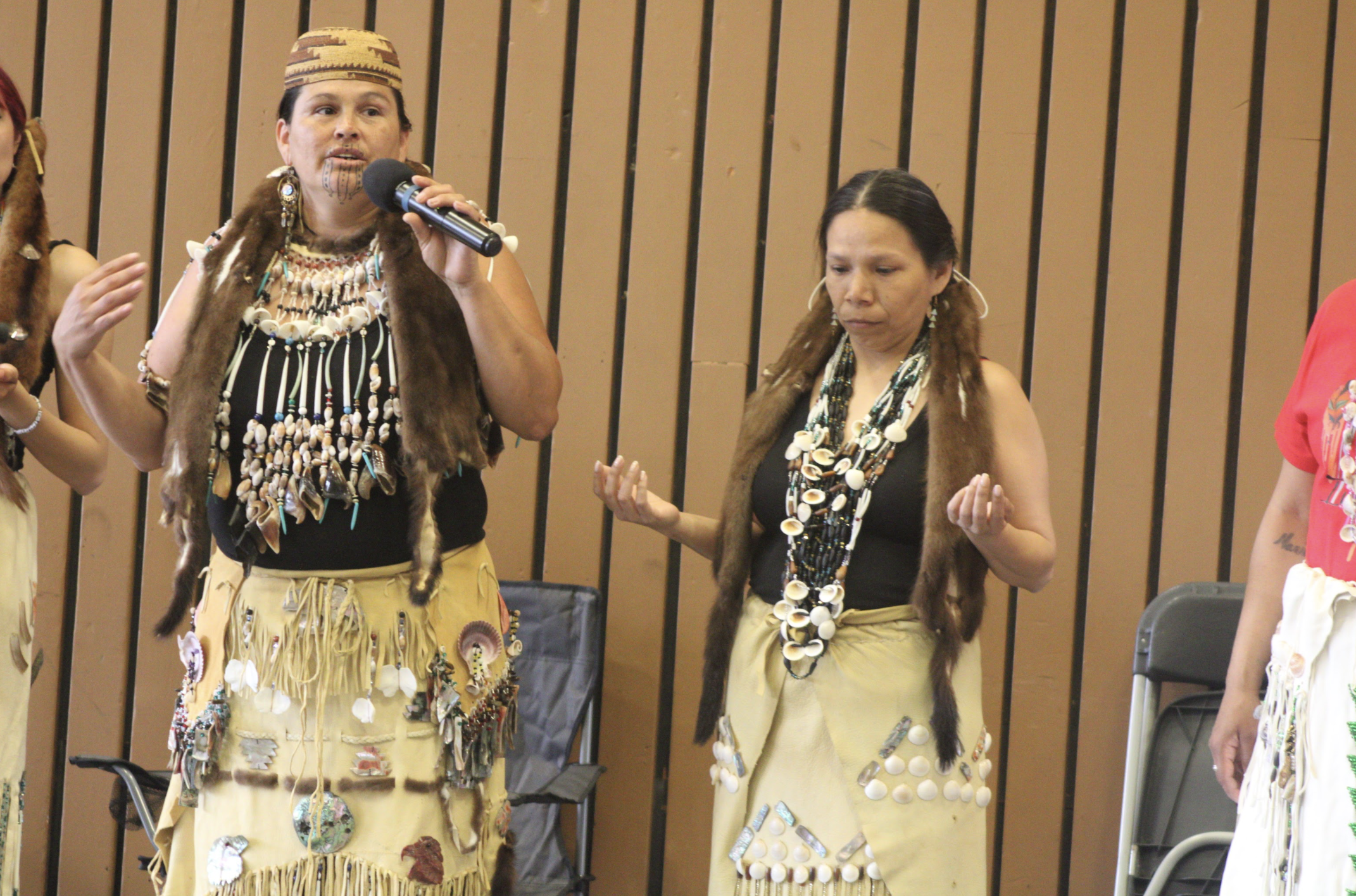
    As the sun rose high in the sky and the wind carried a gentle breeze, students, staff, family and Humboldt locals gathered in the West Gym to celebrate Indigenous culture. 

    California Big Time, organized by the Indian Tribal and Educational Personnel Program (ITEPP), gave students, alumni and family members a space to perform traditional dances and songs to form community connections.

    Lead singer Tim Snow of the Xa Batin Feather Dancers from Lake County, Calif., and member of the Habematolel Pomo of Upper Lake California, shared the cultural importance of the dances.

    “We call them feather dances – shakehead dances – and they date back 100 years,” Snow said. “They all have different meanings, for the plants, for the wind, rain, earth; it’s an important thing for us to be able to carry this on.” 

    The event itself was designed to support Indigenous students and act as an Indigenous campus preview, as well as an opportunity for students to relax and recuperate for the rest of the semester.

    This sense of renewal reflects a change that occurred with the creation of the American Indian Religious Freedom Act in 1978 that allows indigenous tribes the right to believe, express and exercise their traditional religions. The act aimed to end government suppression of ceremonies, protect access to sacred sites and allow the use of sacred objects.  

    Coordinator of ITEPP, Sasheen Raymond, explains how indigenous communities were unable to practice their beliefs before this act was instated. 

    “For a long time, there was a loss in culture due to laws and policies from the U.S. Government… The American Indian Religious Freedom Act changed a lot of the policies where previously people weren’t able to participate in their ceremonies… it’s really phenomenal that we are able to revive this next group and continue for many generations to come,” Raymond said. 

    The gathering has also changed and evolved over time; what was once a more powwow style gathering changed to become Big Time through student ideas.

    Former ITEPP Coordinator and current special assistant to the President for Tribal Relations and Community Engagement Adrienne Colgrove-Raymond recalls how the idea came about.

    “It doesn’t have to be a powwow, it could be something different… a Big Time, which focuses on California Indian culture and dances.” Colgrove-Raymond said.

    California Big Time stands as a source not only for community, but also to provide a sense of balance for Indigenous students in their life and culture. 

    “Your cultural balance is the most important thing in your life; understanding where you come from and the places that you’re from,” Colgrove-Raymond said. “And so, I think that’s what those dances are about.” 

    Sadie is a junior communications major, journalism minor at Cal Poly Humboldt who has an interest in covering and taking photos for sports and wildlife journalism, and a slight interest in breaking news. She can be reached at sls331@humboldt.edu.

  • Cannabis redefines runner’s high 

    Cannabis redefines runner’s high 

    By Marielle Winuk

    In 2024, the National Collegiate Athletic Association removed marijuana from its banned drug list because it was considered a downer that does not improve one’s performance. However, the World Anti-Doping Agency (WADA) classifies it differently.

    The WADA develops policies regarding drug use internationally for athletes. They follow three standards to determine whether a substance is legal or not. For a drug to be legal by their definitions, the drug cannot improve an athlete’s performance, potentially harm the athlete or violate the spirit of sport. Whitney Ogle is the co-director of the Humboldt Institute of Interdisciplinary Marijuana Research and an associate professor at Cal Poly Humboldt. 

    “Cannabis, or THC, specifically meets all three criteria, which is interesting, because it’s saying that it can improve performance and also be harmful,” Ogle said.

    Cannabis can improve an athlete’s performance by potentially decreasing stress while improving sleep and recovery. Cannabis can also harm the athlete through smoking, which damages the lungs. However, some athletes choose to partake when they exercise to simulate a runner’s high through their endocannabinoid system. The endocannabinoid system helps your body maintain homeostasis by regulating sleep, mood, appetite, memory, reproduction and fertility, immune function and pain control. The system produces molecules called endocannabinoids that bind to receptors in your brain. Specifically, the Cannabinoid Receptor 1 (CB1) which is found in the brain and nervous system, and the Cannabinoid Receptor 2 (CB2)  which is found within the immune system receptors. Once they have performed their function of regulating the body, they are broken down by enzymes. 

    “That runner’s high feeling? That’s actually stimulation of your endocannabinoid system,” Ogle said. “We have receptors inside of our body that pick up cannabis molecules or receive cannabis molecules. And then, we also have a system that releases [naturally occurring] cannabinoid molecules with exercise.”

    Runner’s high is commonly falsely attributed to dopamine or endorphins being thought of as the cause of the high-like feeling. While dopamine is released as part of the reward system during exercise, it’s actually the naturally occurring endocannabinoids promoting a feeling of euphoria, peace and reduced pain. Exercise increases the levels of endocannabinoids going into the bloodstream and, unlike endorphins, endocannabinoids can move easily through the cellular barrier from the blood to the brain.

    If you consume cannabis when you exercise, you get the runner’s high feeling earlier on. However, it actually decreases your natural endocannabinoid response. 

    “If you are consuming cannabis, then it makes your own internal system of releasing cannabinoids lower and not as effective,” Ogle said. Through a survey, Ogle found out people are using cannabis before, during and after workouts. 

    “Name a type of exercise people are doing, and someone’s getting high and doing it,” Ogle said. 

    Even though science shows your natural endocannabinoid release is lowered, people who use cannabis then exercise see benefits ranging from improving recovery and overall enjoyment of the workout. 

    “The research typically shows that people enjoy the exercise experience a lot more when they’re under the influence and exercising,” Ogle said.

    Many athletes prefer to not be under the influence while they’re training and will use it later on to help with recovery. As stated previously, endocannabinoids — both natural and from cannabis consumption — can help regulate inflammation and pain by bonding to the CB2 receptors. 

    Cannabis can be ingested in many forms and can have a variety of different effects on people. In Ogle’s survey, she learned that smoking was the most common way people would consume cannabis when they exercised. 

    “One of the benefits of smoking as a method of administration is you can self titrate, which means that you can just take one hit or two, and you can just stop when you feel like a certain level,” Ogle said. “Versus an edible, you take it, and then you kind of have to wait for a little while and see. And so, once you’re [starting to feel] stoned, you have no idea how stoned you’re gonna get.”

    Different cannabis products can also make you more associative or dissociative while you’re exercising. 

    “There can be some products that make you more aware of your body, and some people see that as a positive thing,” Ogle said. ”If you’ve been on a run and you’re thinking about, like, ‘Oh, do I have even weight in both of my feet? What’s going on with my arms right now?’ You’re kind of in your body, more thinking about your body. But then, some other products can make you dissociate.” Dissociative products make you focus less on what your body feels. 

    “You’re just paying attention to the music, and you’re just running and you’re not paying attention to your body at all,” Ogle said. To safely consume cannabis and also have it benefit your workouts, it’s important to track your own data. 

    “There’s an app called tetragram, and that’s a place where you can put in all the information about the cannabis product that you’re consuming,” Ogle said. 

    The app will check in with you 15 minutes after your consumption, and will collect information like how high you got and how fast your run felt. This data is crucial to studies such as the one Ogle is continuing to research. 

    Researchers are continuing to learn more about your endocannabinoid system and how it regulates your body. The natural production of cannabis has shown that it can benefit athlete’s recovery and make their workout more enjoyable. 

    Marielle is a junior journalism major with an interest in politics and sports. She can be contacted at mmw146@humboldt.edu

  • CPH Foundation ignores its policy by indirectly investing in oil and defense

    CPH Foundation ignores its policy by indirectly investing in oil and defense

    By Barley Lewis-McCabe

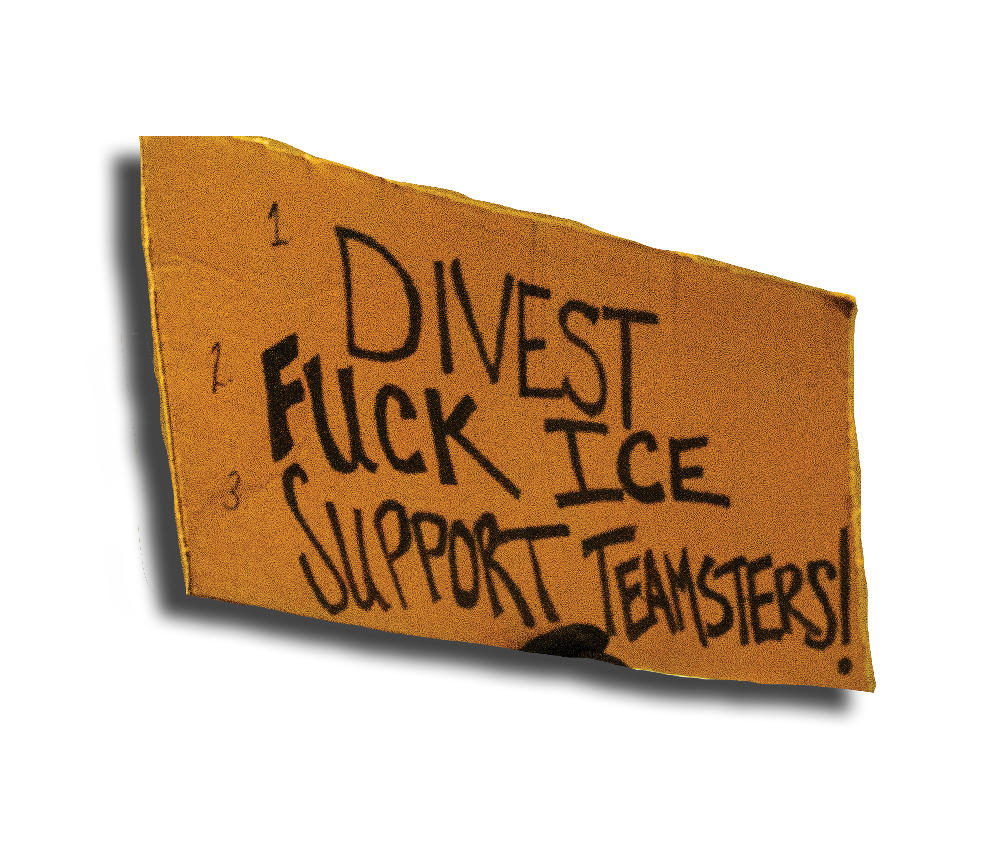
    This semester, student protestors occupied two different buildings on two separate occasions with an identical trio of demands each time. The first was for the Cal Poly Humboldt Foundation to fully divest from companies associated with Israel, or the U.S. military industrial complex. The Foundation is a board of fiduciaries who invest donations they receive on behalf of donors for the sake of funding student services, primarily scholarships. 

    The Cal Poly Humboldt website details the university’s Socially and Environmentally Responsible Investment Offset Policy (SEROP) and how the Foundation tries to follow it.

    “The Cal Poly Humboldt Foundation continues to abstain from any direct investment in Concerning Sectors (including fossil fuels) and to cut indirect mutual fund investments in Concerning Sectors…,” the policy reads. “Furthermore, the Foundation has expanded its definition of socially concerning sectors to include aerospace and defense…” 

    The Foundation follows an Environmentally and Socially Responsible (ESR) investment policy, meaning it prioritizes investments in companies that follow their ESR guidelines and intends to reach 100% ESR investment. The Foundation is currently invested in 3 mutual funds with ESR policies that also hold stock in companies with defense contracts: Calvert International Equity,  Kennedy Capital and Touchstone Non-Us Equity – which also has stock in fossil fuel company Shell Plc. 

    The Foundation doesn’t invest in stocks directly, but rather in 10 mutual funds, which are bundles of stocks sold as one package. The Foundation receives guidance from the Portland-based investment advice firm RVK. Similar to the Foundation’s ESR metric, RVK also has environmentally-responsible investment criteria, but declined to comment when Lumberjack reporters asked how they define a socially-responsible investment.

    “There’s not a standard that companies have to meet to call themselves ESR mutual funds. They have their own philosophy on that piece of it,” said Cal Poly Humboldt Foundation Executive Director Steve Karp.

    Karp elaborated on how out of over 6000 mutual funds, roughly 280 have ESR policies. 

    “It is absolutely impossible, right?” Karp said. “So, if some have Shell in there — I’m not saying that’s not true — then they try their best to keep no oil stocks in there.” 

    The Cal Poly Humboldt Foundation is unable to buy individual stocks, due to the time commitment and expertise required to manage stocks. Mutual fund managers manage each stock individually and adjust what stocks they own, and how much daily to ensure a high return on investment for their customers. Because mutual funds are so large, no individual investor can tell the fund not to buy a certain stock — the foundation either buys the package or they don’t. 

    Currently 72% of the Foundation’s investments are accepted by its ESR policy, with a possible maximum of 83%. The remaining 17% are placed in organizations that are not ESR eligible, such as real estate or government bonds. 

    “We are trying to close that gap. I promise you that, but we also have to return on investment,” Karp said. “And so we’re now down to where we’re doing little increments, but we look at it constantly.” 

    Some students feel frustrated with the Foundation’s slow pace in divesting. 

    “They say that they’re going to divest from [defense companies]. It still hasn’t happened yet,” said Humboldt Youth Democratic Socialists of America Vice-President James Menendez.  “I want to give them the benefit of the doubt. I want to trust their word because in the end, I don’t hate anyone. We’re all here together… so, if they say they’re going to divest, I believe that they’re going to, but it hasn’t happened yet.”

    Barley is the opinionated opinion editor and an untraditional reporter who focuses on social change and stories with a real human impact. If you’d like to reach him for whatever reason email bl258@humboldt.edu.

  • Resident Evil Reviewquiem

    Resident Evil Reviewquiem

    By Will Bishop

    It’s been 30 years since the T-virus outbreak in Raccoon City. During the events of Resident Evil Requiem (RER), survivor, Leon S. Kennedy, must return to the crucible in which he was made in hopes of finding answers about The Umbrella Corporation’s curse. Forged in a trial by fire which rapidly mutated him from a remarkably brave rookie cop — who’s really, really hot — into a ludicrously badass superhero who can roundhouse kick someone’s jaw off of their face — who’s still really, really hot. But, Leon’s is not the only story being told here.

    Enter Grace Ashcroft, a new addition to the Resident Evil (RE) roster. The series has long made its name by functioning as an inversion of the usual horror formula. In most horror media, ordinary individuals are placed in extraordinary circumstances and forced to then become extraordinary or face the penalty of death. In RE, you are playing as elite counterterror operatives, the president’s bodyguard — individuals uniquely and highly suited to deal with the extraordinary circumstances they find themselves in, yet still become entrenched in fear. In keeping with the last couple installments, Resident Evil 7: Biohazard and Resident Evil Village — both helmed by stubborn and perpetually bewildered everyman Ethan Winters — our new hero in RER is a regular person. Albeit an FBI agent, but a sedentary one surrounded by towers of files threatening to fall off her desk. Unlike Ethan, Grace is smart enough to be afraid.

    The game is split between these two vastly different perspectives, both embodying unique design philosophies which permeate all aspects of their gameplay and the scenarios they face. Leon can stylishly obliterate an entire room full of zombies, and is highly incentivized to do so. Grace, on the other hand, must be careful, methodical, patient, seizing every advantage she can and avoiding conflict whenever possible. 

    In the game’s first half, the back and forth provided by a dual protagonist setup is absolutely ingenious. It essentially condenses the progression of an RE title to level sized loops of fear and catharsis. The series has always operated according to this paradigm, in the early game resources are scarce, your combat capabilities are limited, and even a small number of assailants can be an enormous threat. By the third act, you become a wrecking ball, armed to the teeth and massacring every grotesque abomination that comes your way. You are rewarded for your suffering and your fear. This often leads to the downfall of many RE games; as by the final act, all tension is out the window and you are simply cruising to the finish line, waiting to count the amount of eyeballs possessed by whatever G-virus flesh ball you’re squaring up with in the big showdown.

    RER subverts this by shifting its power dynamic on a constant basis. Spend an hour making panicked runs back to the item box with Grace, chipping away at a level one hastily obtained item at a time in the vein of Resident Evil 2, then spend ten minutes with Leon, running through the same environment decapitating everything in sight with a hatchet in Resident Evil 4 fashion.

    Rather than working against itself, this implementation of the fear and catharsis paradigm works brilliantly. Highlighting the strengths of its level design, resource economy and enemy placements while it’s in survival horror mode, then allowing itself to flex its best in class combat and myriad execution animations in action mode. 

    If there is one area where the game falters, it is in its failure to fully commit to this tag team approach for the entirety of the game. It never fully abandons it, but it never does it quite as well or with as much consistency in its second half. It continues to be a great game, but it stops feeling so clever. In a surprising turn, the main strength of the game over its back half is actually the narrative itself, which successfully weaves Grace and Leon’s stories together while telling a poignant story of regret, hope and motorcycle duels.

    Will Bishop is a Cal Poly Humboldt journalism major. He is prone to writing essays about things that bother him, and fictional works about things that also bother him but in different ways. A highly bothered individual, and a lover of cinema, music, and large trees/rocks. He can often be found in the woods, dancing to bring down the sky.

  • Women’s Rowing Team

    Women’s Rowing Team

    By Barley Lewis-McCabe


    “We had won a national championship my freshman year and it felt like nobody really knew about it I guess, everyone was like, ‘oh, rowing’s a thing?” senior rower Ellie Walters said. 

    Members of Humboldt’s highly decorated women’s rowing team have felt frustrated with how the Cal Poly Humboldt Athletics department advertises the rowing team, compared to some of the other sports. 

    Senior coxswain Giania Bogacki felt the rowing team received an unexpected drop in attention after the initial hype of their National Collegiate Athletic Association championship in 2023 slowed down compared to other teams.

    “I see a lot more promotion for some of the other teams who maybe haven’t won titles like we have,” Bogacki said. “They’re all doing great work — I think a lot of our teams have improved over the past years in how far they’re getting in their conferences. [Women’s rowing isn’t] seeing that same sort of promotion as we’re making those same accomplishments, if not going even further.”

    A few team members got access to women’s rowing Instagram and began posting about their games themselves since the account hadn’t been actively advertising games or promoting the team as much as they’d like.

    “I think maybe some of it has to do that we’re like a women’s team, and so we don’t get as much attention as some of the other teams. But I think the major component is the lack of understanding and familiarity with rowing from this region,” said Bogacki.

     Rowers on the team also had to create some of the promotional materials themselves, “[Members of the team would] create a race day boat line up or a roster and they’ll have the accurate names posted,” former coxswain and 2025 CPH graduate Emily Daniels said. “The students have to do a lot more stuff and even when they are trying to do things to get the word out for the time, it just doesn’t get used.”

    “We’re constantly working to improve what we do to support our athletes as best we can given the resources that we have,” said Deputy Athletics Director and 2012 rowing team captain Amanda Nelson. “Athletics is an ever changing environment, obviously, which has different pressures and we have an extremely limited staff… we’re always looking for feedback from our student athletes and ways that we can improve.”

    In the past, the athletics department has shuttled people from campus to the Eureka waterfront for the open boathouse event. Daniels suggested the university could start shuttling people to the waterfront for home races, as well. 

    “[The Athletics department does] do so much so it’s the little things and the nitty-gritty that we see and take away from it. It feels to us and the team like we’re not asking for that much more, we’re just asking for the same thing,” Daniels said. “If the track team gets posts consistently about their races, with their names spelled correctly, then we should get the same.” 

    Barley is the opinionated opinion editor and an untraditional reporter who focuses on social change and stories with a real human impact. If you’d like to reach him for whatever reason email bl258@humboldt.edu.

  • After four years, BTS creates a new album 

    After four years, BTS creates a new album 

    By Alba Galvan 

    The internationally renowned K-pop band Bangtan Sonyeondon (BTS), known for top song’s Dynamite and Butter, released Arirang, their first album in four years.

    The seven members of BTS have been on a hiatus while they finished their mandatory South Korean military service, which they completed in June 2025. During their time serving, the band members were also working on their own solo projects.  

    Arirang released on March 20 — BTS’ comeback was widely celebrated by millions of fans, resulting in the song Swim becoming their seventh number one song on the Billboard Hot 100.

    The album has a total of 14 tracks — and let me just say, each song hits. 

    Body to Body starts with lyrics telling ‘Army’ — the fandom name — to live in the present and enjoy life.‘Put your phone down, let’s get all the fun.’  

    At the end of the song, you feel the blend of hip-hop and Korean folk music in a way that draws the listener in, wanting to hear more of the song. 

    Hooligan is the song you go with if you miss their earlier work. This was peak trap-pop, and I think the clashing of knives was interesting and added character to the song. 

    Aliens is really interesting, ‘The nerve on you, shameless. Show some respect, we aliens.’ I interpret that as their way of saying they paved the way for other Korean artists in western media. 

    2.0 was also neat, you can just feel their well-deserved egos in this song with lyrics like, ‘came back for what’s mine.’ Fun fact: Mike WiLL Made-it produced both songs. 

    FYA is a song I hope to listen to in a club. This is a new style for them, it’s definitely unlike anything I have listened to by BTS and it’s very catchy. 

    No.29 is not a song, but the sound of the sacred bell of the great King Seongdeok, which is an important part of Korean history.

    SWIM — UGHHHHHH, this shit was so good. As someone who was previously a big supporter of the group, this reminds me so much of their older albums when I first fell into the whole fangirl era of my life. 

    Merry Go Round was very emotional, with English translated lyrics that brought tears to my eyes, “Feel like I’m grown up now, but my worries are just the same. Every day the same routine, merry-go-round.” 

    Normal is beautifully written — it highlights the struggles of how normal looks different for others and how fame has become a challenge when it comes to wanting a normal life. 

    Like Animals feels more R&B and is fully in English. This song, once again, is beautifully written, and I have had it on repeat. I won’t be surprised if it’s on my top five Wrapped Spotify songs. 

    They Don’t Know ‘Bout Us feels like a message towards critics — they do this in a cool, dark trap and hip-hop style. 

    One More Night has an interesting house style music mix with synths, and Into the Sun has a more robotic-rock feel to it. Both songs are experimental for the group and I think they were a good addition to the album. 

    Please has an R&B style with intimate lyrics and an easy-going beat, and I know younger me would be squealing like such a fangirl because it’s a love song. 

    I truly believe this is a very well-written and beautiful album. It almost makes me wish I had succeeded in getting their concert tickets, as I would call this the comeback of the year. 

    Alba, she/her, Lumberjack reporter. Journalism major who loves to read and write. She’s very passionate about sharing and listening to different opinions and loves self-expression. Contact email: agg83@humboldt.edu 

  • Hawthorn Gathering

    Hawthorn Gathering

    By Ursula Newman


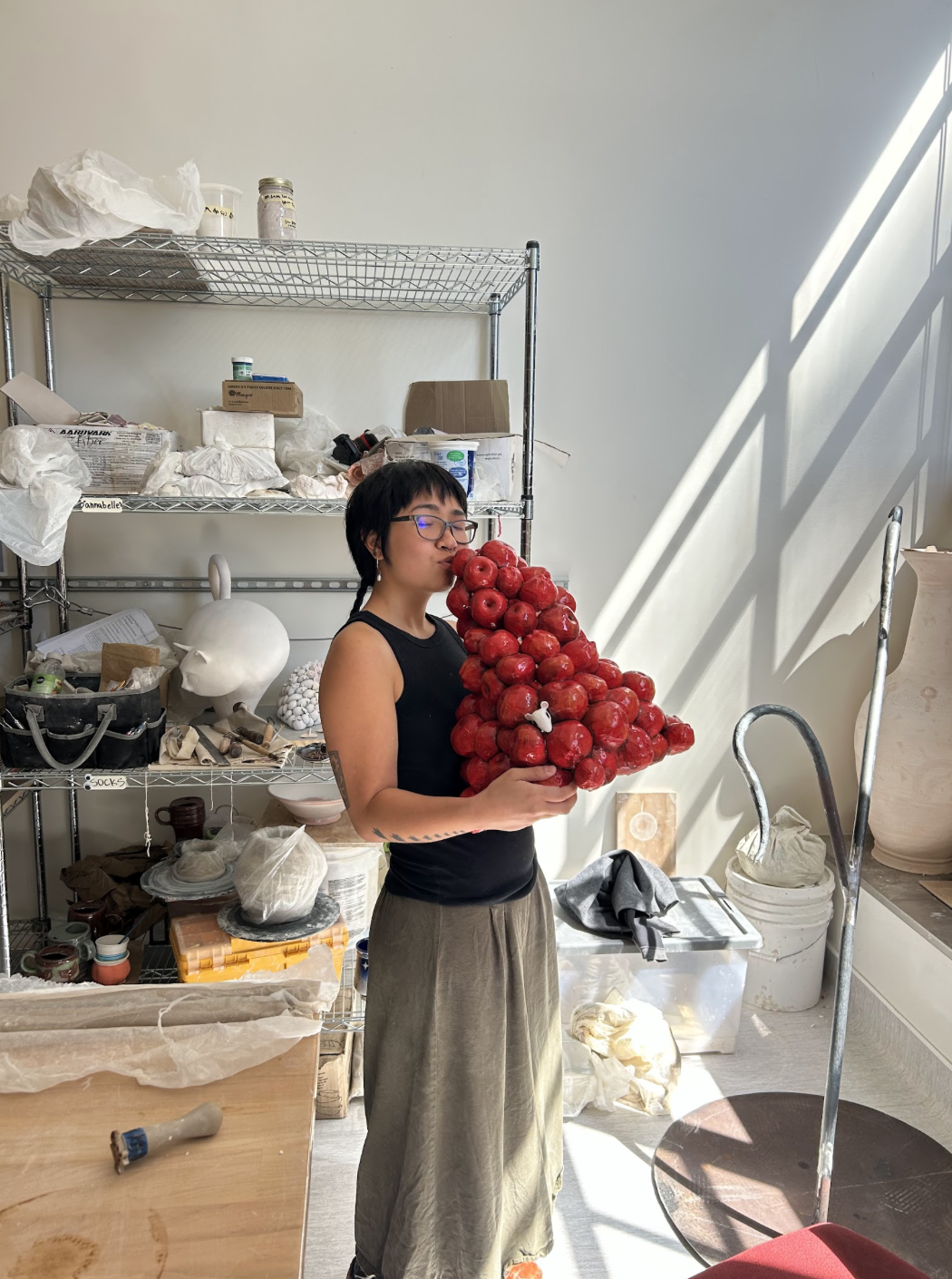
    On a warm, sunny afternoon on Foster Avenue in Arcata, eager helpers gathered at the newly-purchased university farm plot for a volunteer work day. The March 27 event brought together some of the Humboldt community to support the Critical Agriculture Studies & Agroecology program (CASA). The day consisted of an unofficial launch of the student farm’s Healing Justice Garden with the planting of a black hawthorn tree alongside other medicinal herbs and flowers.

    The program — housed in the College of Arts, Humanities & Social Sciences within the Department of Environmental Studies — aims to educate students about agricultural practices through a social justice lens. 

    Throughout the day, conversations focused on the importance of planting for protection and healing in the context of interpersonal and state violence. The intimate group of volunteers primarily consisted of social work students and faculty — many connected to Project Rebound and justice system–impacted research — a handful of university staff and faculty in sustainability, environmental studies and critical race and gender studies, as well as a few graduate students in anthropology and environmental studies. 

    Although the event was public — in the sense that it was posted to the new CASA instagram account — many of the attendees were already acquainted with program leader and Environmental Studies Professor Renée Byrd.

    “I don’t know that we’ve advertised a work party for the whole farm yet, but, we’re kind of trying to build up in a sustainable way, and manage the flow of all the different people that want to be involved,” Byrd said. “It’s slower, maybe than all of us would want, but I feel like we’re kind of [still] building up capacity and infrastructure.”

    When asked about how attendees heard about the Healing Justice Garden workday, Byrd referenced the need to develop a network of working groups to manage interest. 

    “[Its] people who I know have particular expertise, or were excited about various aspects that are out here working,” Byrd said. “We’re developing a network of working groups underneath the land collective that will focus on various areas, [or ways] people can plug in. Like a pond and hydrology working group, a compost working group ect.”

    As volunteers arrived, Byrd expressed her interest in leading abolition and re-entry focused, land-based healing work, and using this space as part of that vision.

    “There are a lot of answers that we as humans don’t have right now. But, if we look to the more-than-human world, there’s so many ways that we can be guided,” Byrd said. “I’m interested in thinking about plants as [a bridge] to help us in that transition between the world we have now and the world we’re building.” 

    The gathering focused on the design and development of the Healing Justice Garden, one of many projects starting up on the 2-acre section of land that’s currently in use. Modeled after a medicine wheel, the garden will have a central space with a stone altar and four paths leading to garden rooms, each featuring different plants and benches for visitors. On the southern edge, volunteers planted the native black hawthorn tree, known for its heart health benefits and significance in various cultures throughout history.

    Other projects on the property include a planned student gathering space with medicinal herbs, a space for the Rou Dalagurr Food Sovereignty Lab to farm and a Black Ecology space at the end of the plot with a greenhouse designated for student-led projects. In the coming months, they will be allowed to expand farther into the approximately 20-acre plot and begin to work the soil on 8 acres total. 

    Another project in the space is hosted by the Milpa club on campus, where students and community members part of the Aquilli Metzli group work to bring people together to discuss cultural identity and agriculture practices. They plan to host monthly events on the land and grow traditional crops like corn, beans and squash.

    Adrianna Salgado, a cooperative member with Aquilli Metzli, described the importance of making space for cultural reconnection. 

    “We’re thinking a lot about Indigenous peoples of the Americas as our ancestors, and how do we make space for that within this new agriculture department?” Salgado said. “How do we make space for traditional agriculture and reclaim that? So much of the food we consume comes from exploited Latinos, our culture, our traditions. So, how do we create a space to bring students to reconnect with that on a different level, especially with so many Latino students coming to Cal Poly [Humboldt]?”

    This sentiment reflects a key goal of the student farm space: to bring together diverse knowledge systems into a shared space for learning and rehabilitation.

    That interdisciplinary collaboration is also taking form in building infrastructure. Engineering students are currently designing a handwashing station to support future workdays on the farm.

    First-year engineering student Addison Gartenlong is part of a team working on the project through her Engineering 205 class. She explained that currently, all water use is coming from a tank that must be filled with water for them to then use.

    “The [new handwashing] system is going to work with the rain catchment system that’s out here, that a previous [Engineering 205] class had built last semester.” Gartenlong said.

    The goal is to complete construction of the handwashing station by the end of this semester. In the case that the rainwater catchment were to run dry, the station will have the ability to use the tank as backup. However, Gartenlong explained so far the rainwater catchment seems to be sufficient.

    Plans for a nearby greenhouse will allow water from both the handwashing station and rainwater catchment to be used for irrigation, supporting sustainable water use.

    Byrd emphasized that the student farm’s strength lies in its ability to bring together different forms of knowledge and apply lived experience to the agricultural approach.

    “Part of our Polytech vision, right, is that it’s about being place-based. It’s about being hands-on,” Byrd said. “Right now we have a long, long legacy of environmental justice and ecological justice-centered programming. This [project] very much makes sense for who we are. Part of the argument that I’ve made is that the North Coast has a very distinctive food system with a lot to teach the rest of California.”

    While projects on the new land begin to start up, Byrd expressed that this event is an important step towards more community engagement.

    As the semester comes to a close, organizers are working to develop systems that will allow more students and faculty to participate in the space. With more volunteer days and possibly an opening ceremony hosted on the farm in the fall, those interested in getting involved have much to look forward to.

    “We’re developing the forms for faculty to fill out to decide to bring a class here; a research proposal process, so the graduate students, undergrads and faculty can propose the research they want to do out here,” Byrd said. “There’ll be lots of different ways to plug in and contribute. We’re just still developing the infrastructure processes to manage the number of people who are excited about it.” 

    Ursula Newman is a journalism major, Lumberjack science editor and Humboldt local. You can find her all over the county doing all kinds of things. Contact her at uon1@humboldt.edu.

  • KyleGPT: What it means to be human

    KyleGPT: What it means to be human

    By Jasmin Shirazian 

    At the crossroads of human connection and technological development sits an app on the app store that comments on the ever-evolving reliance on artificial intelligence (AI): KyleGPT. Over a span of three nights, Kyle Roshan Namgostar developed KyleGPT out of frustration with how humans have interacted with AI — and partially because he thought it would be funny. Namgostar graduated from Cal Poly Humboldt in 2025 with a degree in computer science, and has been developing software since he was 10 years old. 

    “KyleGPT is a human-to-Kyle communication channel,” Namgostar said. “That answers the artificial intelligence problem of people transitioning from relying on one another to relying on a machine, which inherently removes us from what it means to be human.”

    Namgostar is a first generation college student of Iranian and white descent. As a child, he used Youtube to learn how to create different worlds online as he played games like Five Nights at Freddy’s and Minecraft. Namgostar’s background in tech gives him ample opportunities to blend digital realms with artistic commentary on his field. While his qualms with AI usage fuel his art, his main frustration lies with the lack of ethics poised by tech companies that push the software out. Namgostar understands and sympathizes with the masses who are being told that if they don’t learn to incorporate AI into their work, they will become redundant. 

    “I think that human beings are special because of their ability to adapt and cooperate with one another and socialize,” Namgostar said. “It is very scary to be told over and over again in your classes, by potential employers, the Internet and influencers online, CEOs and the executives that run this world, that if you don’t learn how to use artificial intelligence to your benefit, eat it for breakfast, lunch and dinner, that you are going to fall behind and you are going to fail.”

    In turn, he created KyleGPT: an app with a similar interface to that of ChatGPT, where anyone can ask questions that Namgostar can answer directly himself — and there’s a chance one of his responses will be to Google it yourself. But, nevertheless, he created an app to get people to text him instead of using AI; an app that holds a mirror to the human connection lost in AI conversations. Namgostar also worries about the risks that come with unstructured AI use, such as underage access to character AI apps. 

    “Kids are forming parasocial relationships with fictional characters and people,” Namgostar said. “Kids who cannot fully grasp the fact that what they’re talking to is not a real person.”

    Traditional machine learning and generative AI are two separate beasts, according to Namgostar. Generative AI is generally built on massive foundation models, such as large language models, that then runs through massive datacenters that deplete communities of local resources, such as water. Smaller scale models, on the other hand, can be run with much less energy. 

    “Generative AI is a whole monster, and it uses a lot of energy,” Namgostar said. “It’s the kind of thing that’s running constantly on those data centers that are using a shit ton of water, and then there’s smaller models, because I think it’s more of a spectrum. [For smaller models], there’s data in and there’s data out, and it doesn’t try to expand on that, interpolate or extrapolate that. It’s usually really quick and can usually run locally on [a personal] machine, rather than on some data somewhere.”

    Through concern, frustration, anger and angst, Namgostar retaliates against big tech by using ethically sourced, locally hosted AI to create software that can be mutually beneficial for both the user and the creator without using excessive amounts of energy.

    “I still believe that, because a group of people are so set on using AI to collect our data, train it and commit all these atrocities, make us economically and socially and culturally and educationally rely on them,” Namgostar said. “It is important for us to fight back, and for me, that means prioritizing human connections and prioritizing human intelligence, while recognizing that they are going to move a lot faster with their tools.”

    While KyleGPT is Namgostar’s first development, it is far from his last — he is currently working on a social media platform where users can interact with one another, rather than just him. For now, KyleGPT is available on the App Store for human-to-Kyle connection. 

    Jasmin Shirazian is the award-winning, curly-headed copy editor of The Lumberjack. Her beats range from breaking news to covering local performances. In her free time, she enjoys leaving the country and spending time with her cat. Inquiries can be sent to js760@humboldt.edu.

  • Did you know?

    Did you know?

    By Sadie Shields

    Due to the donation of 2.5 million dollars in funding from the California Department of Fish and Wildlife’s (CDFW) Cannabis Program, the United States Geological Survey California Cooperative Fish and Wildlife Research Unit (USGS) partnered with Cal Poly Humboldt professors have been able to add 30 new biodiversity monitoring sites across the county — two of which are run by Cal Poly Humboldt. Wildlife Professor and Project Lead Micaela Szykman Gunther works with co-Project Lead and Adjunct Professor  Nicholas Son to facilitate learning experiences for wildlife students as they view camera footage from the sites located around Humboldt County, which allows for a better survey of what wildlife lives around the area.

     “Each of our  sites is associated with a California State University partner campus, and we are very excited to have one of our Humboldt sites located at the L.W. Schatz Demonstration tree farm,” Szykman Gunther said. “We see this as a great opportunity to track biodiversity data in our unique forest ecosystem while also promoting educational and training opportunities for students to learn a variety of data collection techniques, practice analysis of the resulting data, and take advantage of research opportunities.

    The two partner campuses run by Cal Poly Humboldt are the Schatz Experimental Tree Farm and the Lamphere Dunes, which is part of the Sentinel Sites for Nature Project. Student involvement is currently through graduate wildlife classes that students can take at the school and are active this semester.  

    Sadie is a reporter who has an interest in covering and taking photos for sports and science. She can be reached at sls331@humboldt.edu.

  • Sports Highlight for the week of 3/11-3/25

    Sports Highlight for the week of 3/11-3/25

    By Alexis Blue

    Men’s Basketball

    Men’s basketball played California State University, East Bay in the National Collegiate Athletic Association Division II Men’s Basketball Championship in Hayward, Calif. on March 13. Despite falling 83-64 to the No.2 ranked, undefeated top-seed, the Jacks competed on a national level for the first time in a decade, marking their historic season.

    Men’s Track & Field

    At the Wildcat Invitational at California State University, Chico on March 14, Michael Payan won first and broke the school record again in the pole vault with a 5.35m mark, which earned him FloCollege/California Collegiate Athletic Association Men’s Field Athlete of the Week. The 4×400 relay team ran a No.2 in program history time of 3:15.99. 

    Women’s Rowing 

    Women’s rowing raced at the Falcon Regatta on March 21 on the Lake Washington Ship Canal in Seattle, Wash. The Jacks received several first-place finishes in Varsity 4+ and Varsity 8+ races. Humboldt’s Varsity 4+ received the Great Northwest Athletic Conference (GNAC) Crew of the Week award for their performance. 

    Women’s Softball 

    Softball played against California State University, Dominguez Hills Friday March 20 and Saturday March 21 at Humboldt Softball field. The Jacks went 3-1 against the Toros. In the final match of the weekend, the Jacks trailed 4-1 at the bottom of the sixth, until Katlyn Gifford helped bring it home with a three-run home run and a 5-4 victory. 

    Women’s Track & Field

    Women’s track and field athlete Isabel Perez-Zoghbi was Humboldt’s only indoor national qualifier and competed at the National Collegiate Athletic Association Division II Indoor Track & Field Championships in Virginia on March 13. Perez-Zoghbi earned First Team All-America honors with a program record-breaking, third-place finish in the 800 meter.

  • Sell your iPhone

    Sell your iPhone

    By Bodhi Haugen

    For the past several years, innovation has been the last thing I’ve seen when I look at Apple and its products. The new features are becoming predictable: another camera, a different color phone, or maybe a better battery life that inevitably depletes within a year. 

    I owned an iPhone around six years ago, and it did its job just fine. It took photos, sent messages and the battery life was okay for a couple years. Fast forward and things don’t seem much different; the shape and design have been practically the same since the iPhone X, which came out in 2017. The software update that changed the app icons was the biggest milestone to note since Face ID. All my close friends and family still have iPhones, so maybe I was missing something. Could it be that the newest phone is now orange instead of silver? 

    Any new iPhone that comes to the market is either just shy of — or miles above — the $1000 mark. If there’s only one or two little changes every time, why spend so much money to make an upgrade? It’s an easy way for big companies to keep reselling you the same thing while trying to convince you it’s somehow different. 

    The truth is, you’re probably due to get off your high horse and consider other options. The new flashy iPhone isn’t doing anything for you or others around you. The novelty of an iPhone being trendy died a long time ago; nobody cares that the back of your phone now has an aluminum frame instead of titanium. 

    iPhone users shouldn’t be afraid to experiment with other brands. I used to hear my dad complain all the time about his shitty iPhone. I would ask why he didn’t switch brands and he always said he didn’t know how to work anything else. I used to think this was because he was just old, but I’m seeing this same behavior with friends and college students alike. 

    If you’re dissatisfied with Apple’s innovations, look into what other brands may offer. Companies like Samsung, Motorola and Razer have been creative, with design innovations that users can see. You can fold a Samsung Z Flip7 in half, and it has a touchscreen on the back of the phone for the same price as an iPhone. Even my flip phone, made by a tractor company, can literally have DUO Mobile installed. 

    It’s time for Apple to step down as the king of phones — and it’s time for you to wake up. Plenty of other phones are on the market, but consumers are looking the other way. If we want to see innovation in products, we need to show companies we actually care by supporting brands that are doing it.

    Selling your iPhone won’t only save you some money, but it might send a message.

    Bodhi Haugen is a journalism major and writer for the Lumberjack at Cal Poly Humboldt. Bodhi is on KRFH and enjoys reading, writing, photography, and art. You can reach him at bgh27@humboldt.edu.

  • Melanitta Perspicillata: The Black Spectacled Duck

    Melanitta Perspicillata: The Black Spectacled Duck

    By Sadie Shields

    Along the wind-lashed shoreline of Humboldt County, where gray Pacific swells roll toward rocky headlands and fog drapes the coastline, flocks of dark sea ducks rise and fall with the rhythm of the ocean. Among them, the surf scoter is unmistakable. The male, with its bold white head patches and brightly patterned bill standing out against its otherwise black plumage. Moving bravely through the salty breaking waves, this dark-as-night sea duck is one of the many signs of winter’s presence along Northern California’s coast.

    In Humboldt County, surf scoters are most commonly found during the fall, winter and early spring. They gather in large numbers along the open coast and in protected waters such as Humboldt Bay and the Arcata Marsh. Preferred habitats include shallow marine environments, such as bays, estuaries and nearshore surf zones, where they can dive for food. Their diet consists mainly of mollusks like mussels and clams, along with crustaceans. These birds are strong divers, often plunging several meters below the surface — even in rough surf, to reach prey on the ocean floor.

    Surf scoters are migratory birds; they do not breed in Humboldt County, but instead travel long distances to nest. During late spring and summer, they migrate north to freshwater lakes and wetlands in Alaska and Northern Canada, particularly in boreal forest regions. There, they build nests on the ground near water. As temperatures drop in the fall, they migrate south again to coastal wintering areas like those in Humboldt County. This seasonal migration is a well-documented and essential part of their life cycle.

    Physically, the surf scoter is a medium-sized sea duck, measuring about 17 to 21 inches in length, with a wingspan of approximately 29 to 30 inches. In size, it is comparable to or slightly larger than a mallard, though more heavily built. Its compact wings are adapted for fast, direct flight during migration, while its dense body and strong legs make it highly efficient underwater.

    In terms of lifespan, surf scoters can live over a decade in the wild. Banding records indicate that individuals may reach at least 12 years of age, though numbers are likely lower due to natural mortality factors such as predation, pollution and climate change.

    Unlike some bird species, there are no widely recognized or documented local legends or traditional myths in Humboldt County specifically centered on the surf scoter. However, coastal residents and birdwatchers often view their seasonal arrival as a sign of winter. Their presence in large offshore flocks is a familiar and reliable feature of the region’s colder months and contributes to the ecological character of the coastline, which means they will be moving soon for their migration.

    The surf scoter is a highly adapted marine bird whose migratory patterns connect Humboldt County to distant northern ecosystems. Its seasonal presence highlights the importance of healthy coastal habitats and offers a striking example of how wildlife depends on multiple regions across a vast geographic range — and even the Humboldt cold.

    Sadie is a junior communications major, journalism minor at Cal Poly Humboldt who has an interest in covering and taking photos for sports and wildlife journalism, and a slight interest in breaking news. She can be reached at sls331@humboldt.edu.

  • Legalize dueling 

    Legalize dueling 

    By Barley Lewis-McCabe

    “Some of the rules that still apply to [US Senate], for instance dueling between two consenting adults, is still there,” Department of Homeland Security Secretary and nutjob Fascist Crybaby Markwayne Mullin said during a tense senate hearing to decide whether he would take control of our country’s least reputable department.

    “It’s been illegal for over 170 years,” Rand Paul, the lowly homeland security commission chief interrupted. 

    This isn’t an article about Mullins’ disastrous senate hearing, nor his recent appointment. No, I’m not here to harp about how a short tempered chud with anger issues that likes to play army-man is the worst person to be in charge of our country’s barely-regulated wholly unnecessary ultraviolent white-supremacist militia. I’m not even gonna talk about the despicable caning of Charles Sumner back in 1856. Mullins’ hearing reignited one of the longest standing debates in American history; what’s so bad about dueling? 

    For those who aren’t familiar with the hit musical Hamilton, a duel is a battle between two people when conventional conflict mediation techniques have been exhausted and someone’s honor offended in such a way that they would kill  to reclaim it.


    As a weed-smoking, bandana-wearing, Grateful Dead-listening Cal Poly Humboldt journalism student, I am, of course, against violence. But, despite everything, I’d have to agree with Marky-boy that dueling between two consenting adults is perfectly reasonable. 

    Yes, people can die, but duels were never just an easy way to kill someone; they were a way for two people, who are awful at communicating and don’t know the meaning of ‘forgive and forget,’ to fairly settle a dispute and reclaim lost honor. 

    Since people wanted a game of life or death to be as fair as possible, dueling followed a strict code. The most popular of which — Code Duello — was written in Ireland in 1777 and spread throughout the Western world. After the invitation to duel is accepted, both parties select a second, someone to ensure the duel is fair, attempt reconciliation on their friends behalf and hopefully prevent an unnecessary death. The challenger decides where they meet, and the challenged picks the weapons. Former Newspaper Columnist and — better known — President Abraham Lincoln once avoided a duel by exploiting his seven inch height advantage and choosing cavalry broadswords of the largest kind frightening his opponent, Newspaper Editor James Shields enough to reconcile. It’s not known if Abe apologized for the distasteful poems he published about Shields. 

    The duelers discuss their issues one more time; if no one apologizes, they battle. They each fire two shots at their opponent and if neither of them are injured, the duelists try to talk out their issues one more time. If that doesn’t work, they fight until someone is injured, killed or begged for mercy. A person could also apologize  during a duel to avoid death, which was also considered highly honorable whether you started it or not.

    Dueling isn’t just bloodsport, there’s no shortage of clauses in Code Duello that exist to prevent death. It’s simply a way to settle the classic immovable object vs unstoppable force dilemma. In the late 1800s, dueling lost popularity to the sport of fisticuffs — AKA, boxing — or mutual combat — all of which are, for the most part, legal. 

    Yes, duels are a relic of the past, and before you ask, no, our senators probably shouldn’t duel each other live on Kick. Violence is awful when exerted unnecessarily and on an innocent person, such as caning — which is still bad. If two people just can’t agree with each other, then they should be allowed to respectfully duel it out in accordance with Code Duello, with a mutual understanding that an apology would always be preferable to a kid without a parent. 

    Barley is the opinionated opinion editor and an untraditional reporter who focuses on social change and stories with a real human impact. If you’d like to reach him for whatever reason email bl258@humboldt.edu.

  • Wrens Whimsical Window: Mycelia Merchant

    Wrens Whimsical Window: Mycelia Merchant

    By Wren Salazar

    Another day, another dollar. The afternoon drags on as the sun grows dim. The clouds in the sky are cast with pink gold as the sun sinks into the horizon. Today was a rough day. I find no better respite for my day than at the cart at the end of a long road in the forest. A road that’s ever changing. Sometimes I can only go left; other times, right; and sometimes the road forks. There is only one thing I hope to see at the end of the road — the Mycelia Merchant. I haven’t seen their face yet, and they never talk. Somehow, I can always understand what I need to hear. 

    The cart grows near and a strong petrichor fills my nostrils. The smell of earth is indicative that you are nearing your destination. At last, their cart reveals itself to me. It is as long as an RV and as rustic as an overgrown cabin. Ferns spur from the top of the cart, pointing glancing eyes to the warm, yellow glow of the rounded door. At the base of the door, a hand carved and moss-covered set of steps invites me further. Everytime I see it, the cart never fails to draw me in. As I reach for the door, I admire the knob once again. It’s beautifully engraved with the shape of the forest, and curled downwards into an elegant curl that mimics that of the fiddlehead fern.

    Finally opening the door, I am greeted with warm air and calm lighting. A dark green carpet sprawled across the floor. It’s accented with shimmering gold and deep maroon interwoven into a beautiful rooting pattern throughout the carpet. The walls are lined with shelves filled with various tinctures, books and knick-knacks; prizes of a life long lived. Scattered around me are the sacks of mushroom: powdered, dried and whole. They are never in short supply. In the center of the wall sits the merchant. They’re clad in an elegant robe, sitting atop a grand wooden chair. The hood of their robe shrouds their face in darkness.

    They sit me down at the table and hand me some tea. The brew is true, much better for clarity. Every sip I take, I become a bit more in tune. Maybe life’s not all bad, this mushroom brew rules. The Mycelia Merchants roots sure have a hold on me, and I think today I will bring home some Lions Mane.

    Wren is an artist and story writer looking to add some whimsy and curiosity to those around her. A lover of all things, Wren seeks to help others around her with advice or humor. She can be reached at ws81@humboldt.edu

  • Lumber snack; Alba’s new sweet potato obsessions 

    Lumber snack; Alba’s new sweet potato obsessions 

    By Alba Galvan 

    As someone who’s been trying to reach their fitness and food goals in 2026, I have been doom-scrolling TikTok trying to find healthy snacks that don’t hurt my pockets as a broke college student — that’s why sweet potatoes are a delicious, inexpensive snack. 

    These two sweet potato recipes can be stored in the fridge for up to three days. What I really like about these is how easy they are to customize by adding more toppings or eating them as a meal instead of a snack. 

    Here are two easy, yummy ways to prepare sweet potatoes. 

    Roasted caramelized sweet potato

    When I first tried this sweet potato recipe, I was in heaven — and it wasn’t because of the cannabis I consumed beforehand, it was because of how easy it was to make. I am usually more of a savory or spicy person, but this sweet potato was to die for. It also pairs wonderfully with other foods and doesn’t have to just be a snack. 

    Sweet potato has a sugar called maltose that is released when heated up, causing it to caramelize and have an interesting texture. 

    Ingredients: 

    1 large sweet potato

    1 to 2 tbsp olive oil 

    Salt and pepper to taste 

    Step 1:

    Preheat the oven to 370 degrees

    Step 2:

    Rinse the sweet potato until clean,  dry it, and cut in half lengthwise. 

    Step 3:

    Coat the cut sides with olive oil, salt and pepper. Then, in an oven-safe pan, place the sweet potato cut side down and place in the oven for 50 minutes. 

    Step 4: 

    Once the sweet potatoes are done, let them cool down so the cut side can finish caramelizing.

    Step 5:

    Enjoy! 

    Cheesy Caramelized sweet potato

    Additional ingredients: 

    Cheese of choice, recommendations: Sharp Cheddar, Gruyere, Pepper Jack, Goat Cheese, Feta Cheese, or Butterkäse. 

    Optional: hot honey, chilli flakes

    Step 1

    Follow steps 1-4 above. 

    Step 2 

    On the cut side of the sweet potato, add cheese to your preference.

    Step 3 

    Add to the oven for 3-5 minutes until melted. 

    Step 4 

    Enjoy! 

    Alba is a journalism major and reporter for The LumberJack and El Lenador. She’s very passionate about sharing and listening to different opinions and loves self-expression. Contact her at: agg83@humboldt.edu 

  • A Memorable Moment: Love, Music, Unity at the 32nd Annual Social Justice Summit 

    A Memorable Moment: Love, Music, Unity at the 32nd Annual Social Justice Summit 

    By Serah Blackstone-Fredericks

    The 32nd Social Justice Summit is a week-long event that hosts a forum for humility to reside on campus via workshops, knowledge sharing and dancing. This year’s theme, “Moving Together: Expression in Action,” was felt, heard, and seen deeply. When I walked into Dandha Da Hora’s workshop, I did not know what to expect. As I sat recovering from the flu, I could not shake that I wanted to be well enough to attend Da Hora’s talk midweek. Something about the messaging whispered I needed to be in her presence.

    Marjie Wolfe, a graduate student in the Environment and Community program, was heavily involved in Da Hora coming to Humboldt. “When I heard the theme, I thought Da Hora’s body of work would be perfect for this event,” Wolfe said.

    Upon arriving, I was grateful to be seated near the speaker herself. A warm presence enveloped the room as Da Hora dove right into the connection between community and liberation within the Afro-Brazilian community in Salvador, Bahia, Brazil, where she is from. She invited attendees to move in closer to spend time together collectively and to embrace connection. Da Hora shared about Ilê Aiyê (Ee-leh Ah-ee-yah), a community that created a space and movement to empower youth to dream bigger and explore outside of their hometown. Her talk wove a beautiful tapestry of oral history, from the oppression and exclusion of Black and Brown bodies in Brazil at Carnival, to the work her community has invited with Ilê Aiyê, and closed with a beautiful crescendo of rhythms with a vibrant music presentation. She paid respects to everyone who taught her and supported her to be where she is today, and by the end of her talk, I felt so captivated I wasn’t ready for it to be over.

    “Samba keeps us alive and maintains our tradition,” Da Hora said.

    At the end of the presentation, organizers of the summit provided lunch for the attendees. The food did not disappoint — tenderly prepared by Pupuseria San Miguel, we enjoyed delicious pupusas with bean and cheese, accompanied by two salsa choices: mild and spicy, along with curtido, a delicious tangy side of veggies to top the pupusas. After having one, I realized I needed to save the other or I’d be too full to dance.

    I then migrated outside, a bit tardy for a dancing component. The participatory movement brought me to life; I felt the rhythm starting to move and lift me. The drums beckoned my hips to sway, my feet to spin and my arms to open. As a generous group of us all moved together, the rain oscillated from pouring to misting, yet no one seemed to feel cold. Bystanders were invited to join as the group continued to grow. The audience enjoyed watching the brave humans that decided to take up dancing in the rain. The beat of the rum, rumpi, lê (room-room-pee-lei) in our hearts and within us. As the dancing portion finished, Danda invited us to sing a song together. At the end, we closed out with appreciation and aché (ah-shay) to the heavens. We shared how we felt, and we connected eyes with strangers in a way that brings a stillness of nostalgia to the page as I think about the moment.

    I returned later that evening for Da Hora’s dance class, which was filled with students, dancers, her accompanist, Annie and community members alike. After one of the best dance warmups of my life, we jumped right into a flowing routine of movement that connected each dance phrase to the next with intense passion and care.

    Danda made the eight hour trek from Santa Cruz, California with some of her musicians, to grace us with her lively presence, dynamic speaking, and community connective song and dance.

    There is something about embodying authenticity that draws community to you; in turn, the community will replenish your cup. In arriving with an open heart, I learned more about myself and about how I can support my individuality within blossoming. With the beat of the rum, rumpi, lê reverberating in my heart, the wisdom of Da Hora’s words linger many days later. I can’t wait until she returns to Humboldt.

    Serah Blackstone-Fredericks is a cross-disciplinary anthropology major, minoring in arts in health and narrative medicine. A multidisciplinary artist, mother, and multilingual global citizen, you can find her prancing in her garden or in her kitchen baking, fermenting, and exploring natural dye via experiments. Her work explores storytelling from a perspective of cultural humility, ever curious on  shaped connections and how we live and heal. Feel free to connect with her at sb625@humboldt.edu.

  • Ardea Alba: the white heron

    Ardea Alba: the white heron

    By Sadie Shields

    When you walk around the Arcata Marsh, you might come across a bird standing ever-so-casually near the water as it spreads its wings, practically begging to have its photo taken. Meet the white heron, commonly known as the great egret (Ardea alba). The white heron’s striking presence in Humboldt’s wetlands makes it instantly recognizable for its elegance and calm demeanor. Its graceful stance and slow, deliberate movements make it a favorite among visitors, photographers and nature enthusiasts exploring the wonders of the marsh.

    The great egret is one of North America’s most beautiful wading birds. It stands nearly three-feet-tall with a wingspan that exceeds four feet, giving it an impressive and commanding presence even while standing still. It has pure white feathers, a yellow beak and black legs, features that allow it to stand out against the green and brown tones of the marsh and estuary ecosystems where it resides. These habitats, the closest being the Arcata Marsh and Humboldt Bay, provide this bird with abundant food sources and safe areas for resting and nesting. The sight of a white heron gliding across shallow water or carefully stalking prey has become a defining image of Humboldt’s coastal environment.

    This bird’s diet consists of fish, frogs and crustaceans, and it relies on slow, precise movements to catch its prey. Herons often pause for long moments; carefully scanning the water before striking with lightning speed and precision. This hunting method allows them to thrive in estuarine environments, like the Arcata Marsh, where tidal fluctuations can make prey more difficult to capture. Watching a white heron feed is a quiet, almost meditative experience, highlighting the patient and deliberate behavior that has allowed the species to survive across North America for thousands of years.

    White herons are considered indicator species, meaning their population health reflects the overall condition of local ecosystems. Because they feed at the top of aquatic food chains, changes in their numbers can reveal shifts in water quality, fish availability and the impact of human activity. In Humboldt, maintaining healthy wetland habitats is crucial for supporting white herons and the wider community of birds, mammals and aquatic life that share the same environment. The presence of these birds signals a well-functioning ecosystem and reinforces the importance of ongoing conservation efforts in the area. For example, the Marsh itself is a waste water treatment facility that works in harmony with the wildlife that take home there. 

    The spring breeding season brings an especially visible presence of white herons. They construct large stick nests in tall trees or dense shrubs near water and often return to the same nesting sites year after year. Their careful nesting and foraging routines attract nature enthusiasts and photographers to Humboldt’s marshes, emphasizing the ongoing connection between humans and wildlife. These seasonal behaviors provide an important opportunity for observation and study, allowing residents and students to witness the life cycles of a species closely tied to their local environment.

    Preserving the marsh and other habitats supports not only the white heron, but also the broader network of life that depends on healthy estuaries–from migratory birds to native fish and plant species. The white heron is currently not in danger of being extinct; they can live up to 15 years, and their continued presence in Humboldt reflects the success of local conservation efforts as well as the resilience of these ecosystems over time.

    Bio: Sadie is a junior communications major, journalism minor at Cal Poly Humboldt who has an interest in covering and taking photos for sports and wildlife journalism, and a slight interest in breaking news. She can be reached at sls331@humboldt.edu.

  • Can the resident LJ film enjoyers predict the Oscar’s winners?

    Can the resident LJ film enjoyers predict the Oscar’s winners?

    Kaylon Coleman and Julia Kelm

    The 98th annual Academy Awards are just around the corner. Whether you care about the awards or not, you definitely know some film nerd who does. You know, that guy who backed you into the corner at a party and told you against your will why Timothée Chalamet’s balls are orange. This article is for him to complain about, and for you to use as rage bait when you see him again.

    To avoid boring you to death, we’ll focus on the more “major” categories. Such as best actor and actress, best original song, best animated film, directing and best picture.

    I think it’s a safe bet to expect One Battle after Another and Sinners to be the MVPs of the night. Both films have consistently won awards leading up to the Oscars and will likely sweep most of the categories.


    Best Actor:

    Julia: The likelihood of Michael B. Jordan winning best actor has greatly increased. Chalamet, the previous academy favorite, ruined his chances after basically calling opera and ballet pointless in an interview. Theater kids try not to piss me off challenge: impossible.

    Kaylon: Honestly, I think Michael B. Jordan has it in the bag. Chalamet claims Marty Supreme is his magnum opus, which may be true for the time, but he needs some more experience under his belt. I could see it potentially going his way, but Jordan is my favorite to win.

    Best Actress:

    Julia: Best actress is 100% going to be Jessie Buckley. She has swept every previous award cer

    emony. I love Emma Stone, but she doesn’t need another Oscar. 

    Kaylon: I can’t lie, I haven’t seen Hamnet yet, but from what I have seen, it looks like Jessie Buckley is the favorite to take it home.

    Best Animated film:

    Julia: KPop Demon Hunters, I think, has a good chance at winning the best animated film category. Although it’s kinda mid, I’d be happy to see Disney lose again for the fourth time in a row since Encanto

    Kaylon: I’m stuck between KPop Demon Hunters and Zootopia 2. Zootopia 2 is the only piece of media Disney has dropped in recent years that could contend with best animated film, but the cultural significance of KPop Demon Hunters can’t be beat I think. Zootopia 2 just didn’t have enough time to ruminate while KPop Demon Hunters had all of Gen Alpha in a chokehold. I say 60-40 KPop Demon Hunters.

    Best original song:

    Julia: If KPop Demon Hunters wins, that means Golden is probably going to win best original song. I Lied to You in the Sinners soundtrack is the winner in my heart, no matter what — but if money’s on the line, I’m betting on Golden.

    Kaylon: I agree entirely. Once again KPop Demon Hunters is so culturally significant, but Sinners is just as notable. When we look back on 2025, we’re gonna remember the spirits scene from Sinners while KPop Demon Hunters fades into the blur that is animation. Yes, I’m biased. But, I feel like I Lied to You has it.

    Best Directing:

    Julia: Paul Thomas Anderson is likely to take the cake on this one. He has been nominated 14 times, but never won. I don’t know what it is, but I have a gut feeling it’s about time the academy finally throws him a well-deserved bone.

    Kaylon: I have the same gut feeling as Julia, except mine is for Ryan Coogler. Yes, Anderson has yet to win an Oscar, and is seasoned in his field — and the Oscars love to give out honorary Oscars — but I think Coogler deserves it. The Oscars also love to play in the face of Black people, but I think the significance of Sinners just can’t be denied.

    Best Picture:

    Julia: Best picture wins are often linked with directing wins. However, I think things could be different this year and Sinners will take the best picture spot. In all honesty, I’m feeling pretty 50-50 between Sinners and One Battle after Another. So, if this is the one you’re betting on, perhaps reconsider in favor of one of the more predictable categories.

    Kaylon: Now for the Crème de la Crème the real magnum opus — Best Picture. There’s a good plethora of films to choose from, ranging from the future cult classic F1 to the unforgettable Marty Supreme. Yet, I think we all know it’s down to the two titans for Best Picture – Sinners and One Battle After Another. And I think it comes as no surprise that my choice is 100% Sinners. Yes, it’s my personal favorite to win, but I just can’t not see it as the actual winner. Sinners sweep is in bound. Mark my words, folks.

    Kaylon Coleman is a senior journalism major with a concentration in news and a minor in communications. He is the Life & Arts editor for LJ, Marketing and Communications lead for the Umoja Center and and a part-time radio DJ and merch manager for KRFH. If you have a topic you want him to discuss, email him at kc403@humboldt.edu.

    Julia is a journalism major and the co-EIC of the paper. She loves film and is a regular on Letterboxd. She also enjoys going on walks in the forest and taking pictures to relax. If you have a movie you’d like her to review, please email her at jk328@humboldt.edu.

  • Student Organizer Rick Toledo Released on $25,000 bail

    Student Organizer Rick Toledo Released on $25,000 bail

    By Barley Lewis-McCabe

    It was 1:00 a.m. on March 6 of his final semester at Cal Poly Humboldt, and graduate student Rick Toledo was sleeping calmly in bed with his cats.

    “There were really loud bangs on my door, and I just knew right away,” Toledo said. “It’s gonna be University Police, isn’t it?” 

    Toledo walked to the stairs of his apartment and asked the University Police Department (UPD) officers if they had a warrant. They did, and Toledo subsequently walked outside and surrendered.

    “They ended up grabbing me and treating me like I was some kind of terrorist at first,” Toledo said.
“They ripped my clothes and handcuffed me, all [that] fun stuff.” 

    He was taken to the UPD station, then to the Humboldt County Correctional Facility on four felony charges: criminal conspiracy, false imprisonment, battery and assault. He was arrested on a Ramey warrant, which can be used by the police to hold someone for up to 48 hours before charges have been issued from the district attorney’s office. The 48-hour holding period does not apply to weekends.

    On Sunday morning, Toledo was released after posting $25,000 bail. That afternoon, he exited the jail to a small group of friends and colleagues who took him home. Before he left jail an employee asked him for a favor. 

     ‘Can you tell everyone that you’re free now? We haven’t been able to use our phones for days,’ Toledo said. He then explained that the call in campaign to advocate for his release was so widespread that it clogged the jail’s phone lines.

    After his arrest, Toledo’s mother and sister reached out to community activists and worked on a large outreach campaign to raise money for his legal fund, as well as awareness for his arrest. 

    “My brother is not a bad person. He does a lot to help and it really caught me off guard that he was in there,” Nicole Toledo, said. “We love him so much. He is such an amazing brother and an amazing person in general. All he cares about is helping people and doing good in this world. We’re very supportive of him.”

    The Cal Poly Humboldt chapter of Students For a Democratic Society worked with other SDS national, and the other chapters across America to garner public support for Toledo and to get people to call into the DA’s office to demand his immediate release. 

    “All of the national SDS stands in solidarity with Rick. We helped get him out of jail in the first case and we’ll continue to advocate to get these bogus charges dropped.” National SDS President Erin Boyle said.

    “Jail’s jail, you know,” Toledo said. “I watched the paint dry, I found some books that I could read. You know, it’s jail, you eat the slop. When I was in there, I was just thinking about what I was gonna do when I got out, to kind of fight against the school for what they had done to me.” 

    When asked for comment, CPH Communications Specialist Iridian Casarez  said that the university is unable to comment on specific student conduct cases. Toledo is still suspended from the university.

    Toledo told a Lumberjack reporter that in spite of the arrest he has no plans to change course with his activism. Additionally he speculated on the root cause of the extensive charges levied against him.

    “It’s not from a place of strength that they’ve attacked me.
It’s from a place of weakness,” Toledo said. “This is their attempt to finally silence the dissent, and any time that you have this kind of harsh response, it actually tends to create more unrest, and it tends to create more people opposed to you, and more support for the people you’re trying to crush. And I think that they’ve made just a terrible decision here.”

    Barley is the good-timing Editor In Chief of The Lumberjack, as well as a jack of all trades news writer. Contact him for any reason at bl258@humboldt.edu