Associated Students takes over remains of the clubs budget
The Associated Students Programs Grants budget has been cut by more than half of the previous academic year’s budget to $25,000 from $52,000. With student enrollment on the decline since 2016, student fees. which make up the entire AS budget, have taken a significant hit.
As a result of the cuts, it was decided the control of the budgets would be kept within the Associated Students Board of Finance for this academic year. All student clubs are allowed to apply for AS grants, either for events or travel.
Grant requests are brought to the Associated Students Board of Finance for evaluation before being handed off to the Associated Students Board of Directors, made up of 15 voting and three non-voting members, for final approval.
In the past five years, between about 10-18% of the AS Programs Grants budget has gone to AS category two programs like CCAT and the MultiCultural Center, which receive separate funding through different outlets. This year, AS decided clubs will receive the entire AS Programs Grants budget in the 2019-2020 academic year.
The AS Board is currently in the process of their third and final grant allocation for the 2019-2020 academic year. So far, the Board of Directors has approved grants to all 29 clubs that requested—however, not all requests have been entirely met.
As a result of the budget reduction, AS put in place a cap of $500 per event, $800 per cultural event and $100 per person for travel. The Board of Directors will hold their final vote on March 13 to decide the 11 remaining grant requests for the academic year.
AS Legislative Vice President Jeremiah Finley is working to provide a fair opportunity for all clubs to receive funding.
“AS is doing the best with the situation that they’re having to navigate through.”
Molly Kresl
“I think clubs always need more access to more funds across the board,” Finley said. “I think the goal of AS here is to really try to make sure that they do have access to funds. And so, in trying to do that, we’re trying on our part, to find ways in our budget to make sure they have access.”
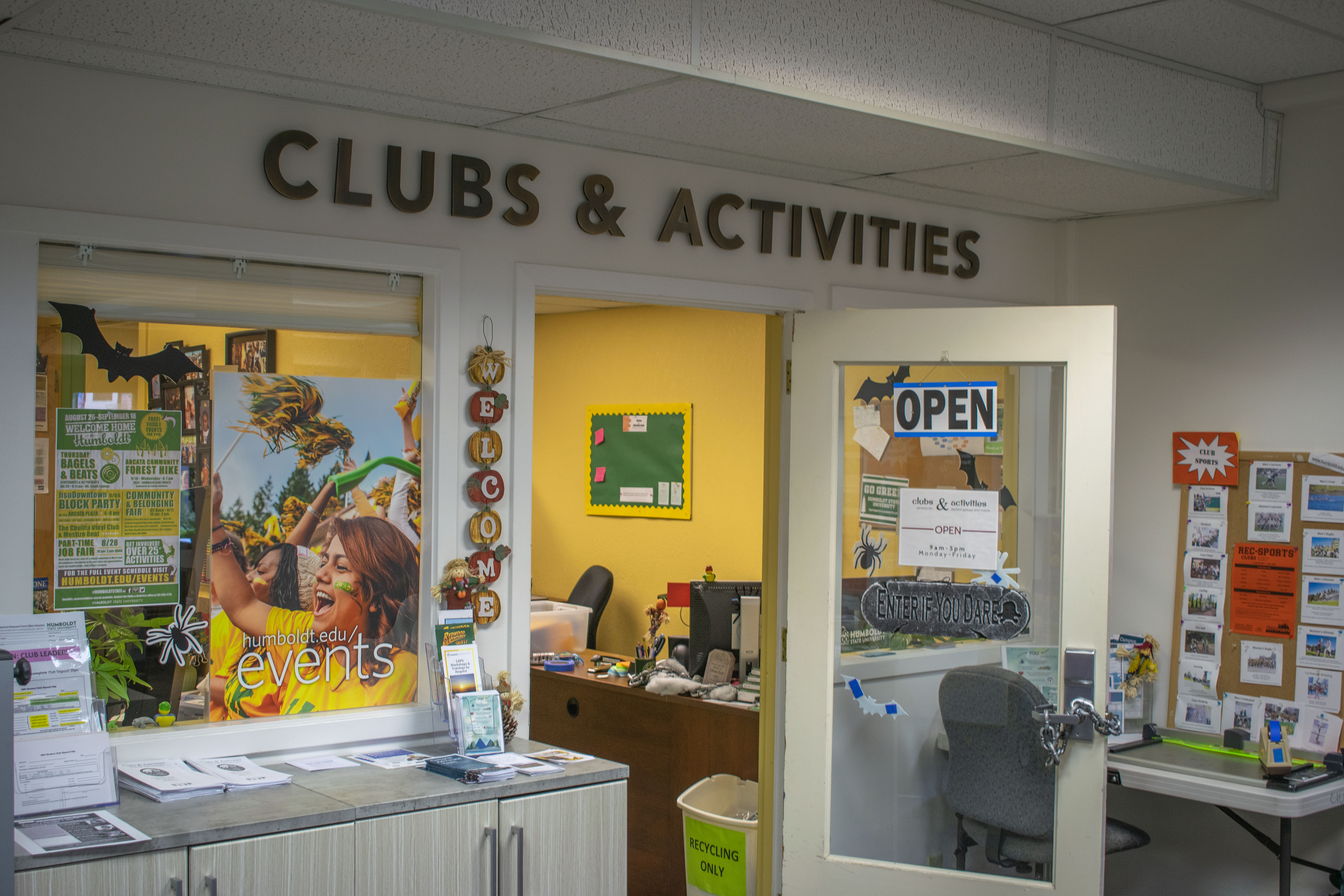
The clubs budget reduction has forced everyone involved to be more responsible with their spending, according to Clubs and Activities Coordinator Molly Kresl.
“That’s something that’s been really cool that’s come out of this unfortunate situation,” Kresl said. “Even though we have a decrease in funding, there’s an increase in collaboration with student-initiated programs.”
However, there’s still much improvement to be made. AS wants to hear the voices of students that are affected by these decisions. For students who want to take matters into their own hands, they can sign up as a candidate for the AS Board.
“AS is doing the best with the situation that they’re having to navigate through,” Kresl said. “It’s important to recognize the complexity of the situation, and that there are ways that we can help our students be successful and do what they wanna do on campus.”
Mock election prepares HSU students for local issues on ballot
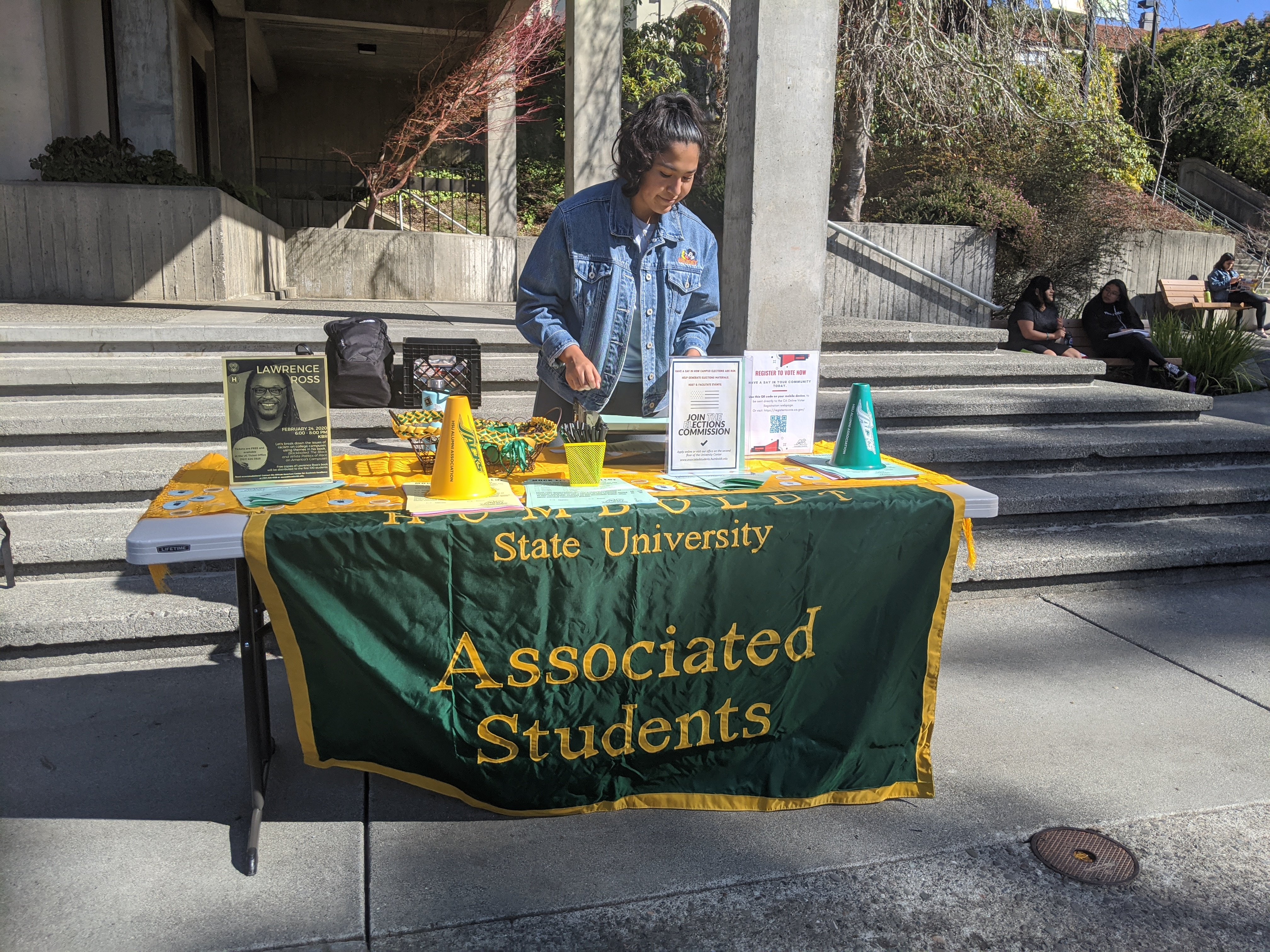
Humboldt State University’s Associated Students held a mock election with the help of the Politics Club Feb. 24 in the University Center Quad. On the ballot were candidates for both the Democratic and Republican primaries, as well as local election measures.
“We’re gathering data from the student population about what would happen if we held the election today,” Legislative Vice President of Associated Students Jeremiah Finley said.
The mock election gave students the opportunity to take a closer look at which candidates were on the ballot. When the results are released, students can gain a new insight into the perspectives of other students.
“Some of the measures that were posted—I was like, ‘What is this?’”
Tashenea Young
“We’re trying to make sure our students at HSU are more educated about the decisions that they’re making,” Finley said. “This will give the students the opportunity to go back in and really investigate.”
Tashenea Young is a computer science and math education major who felt more informed about the upcoming election because she participated in the mock elections.
“Some of the measures that were posted—I was like, ‘What is this?’” Young said.
Young said mock elections like the one on Monday are a step in the right direction for helping to inform the student body, but events like the mock election need more publicity to reach more people.
“It’s better than nothing,” Young said.
Real measures weren’t the only questions on the ballot. It also included a mock referendum on fluoridated water.
Paul Hilton, an HSU politics major and member of the Politics Club, helped organize the mock election. He was curious about how students would vote concerning fluoride. He said that although there wouldn’t be a referendum on fluoridated water on the ballot in March, it was close to being on the ballot in November.
“It was a step away from Arcata putting it on the Arcata ballot,” Hilton said. “After a whole lot of community city hall meetings and discussions, it was a 3-2 vote to not put it on the ballot.”
Hilton hoped the mock election would help professors as well as students.
“One of the questions was, ‘What day of the week is worst for you when it comes to nighttime deadlines?’” Hilton said. “So, one of those actually has informative results that we’ll tally up that might be able to go to professors.”
Although Hilton was glad for the mock election, he thought there was room for improvement. The ballots were printed on colored paper and didn’t resemble voting material. Hilton said this may have discouraged potential voters.
“People are more likely to pick up a pamphlet,” Hilton said. “If I was just going by, I’d be like, ‘What’s this kid’s construction paper kind of stuff just hanging out? I’m not interested in this.’”
California votes Tuesday, March 3. Associated Students are now more experienced for their real elections, and students can take more knowledge on local issues to the polls.
AS Administrative Vice President will take over for the spring semester
Associated Students President Yadira Cruz resigned during the AS Board of Directors meeting on Dec. 3, citing personal reasons.
“It was a difficult decision I had to make, but it was the best option academically and personally,” Cruz said a few days later.
Cruz, who fought back tears when interviewed, said the AS Board, composed entirely of Humboldt State students, offered her consolation despite some of them seeming shocked by the decision.
“They were super supportive. Some people teared up, and a few of them apologized, but I didn’t want them to apologize because politics is politics, and it’s challenging,” Cruz said. “They thought they weren’t there for me, but they were always there.”
The AS codes provide that the AS Administrative Vice President takes over if the president resigns. In this case, Lizbeth Cano, a sophomore business administration major, will take the reins for the rest of the school year.
“It’s going to be big shoes to fill in because I got to see how Yadira got everyone involved and was able to always get people to really get their opinion,” Cano said. “One thing I’ll take from her is to make sure to get the whole room involved.”
“I think I’ll always feel a little bit of guilt, because I knew this was a year-long position.”
Yadira Cruz
Cruz was announced as the 2019-2020 academic year AS president last April. A senior criminology and justice studies major, Cruz said she ran despite her lack of political experience to try to do something with her frustration about a lack of support for student needs.
While Cruz said she’s happy with her decision to resign and with her time as president, she acknowledged a feeling of guilt.
“I think I’ll always feel a little bit of guilt, because I knew this was a year-long position,” Cruz said.
As a takeaway message, Cruz urged fellow students to make sure to take care of themselves.
“The transition will help AS become stronger, I think, moving forward.”
Yadira Cruz
“A lot of these students are working and involved and there’s a lot of things that they carry,” Cruz said. “And I think I’m just speaking as first-gen, as a student of color attending here. There’s a lot of things just added to it all, to the whole balance for schedules. But I think my point is just to take care of themselves as well—to find time.”
Cano agreed and supported Cruz in her decision.
“I think it’s time she prioritized herself,” Cano said.
Both Cruz and Cano said they still hoped for more students to get involved on campus with AS or elsewhere.
“Definitely using all of our different hats and letting people know that this is important and this is something that really matters and that they can have a say in it without it being troubling or problematic,” Cano said. “Because I think a lot of people can think that it’s too much work.”
Cruz responded to the implication of her resignation on the image of an AS position being a lot of work by saying that how much people do in AS depends on the individual and their goals. Cano agreed and added on Cruz’s point.
“I think it also has to be kept in mind that the position that’s being resigned is the president position—meaning the top position,” Cano said. “So definitely getting involved as a representative or maybe as an executive like a VP—it can be a different flow. It can really be a learning process.”
As Cano transitions into the the presidential role, Cruz said she thinks AS can learn and grow following her departure.
“The transition will help AS become stronger, I think, moving forward,” Cruz said.
Only four students attended the first University Resources and Planning Committee’s public budget forum, according to Associated Students President Yadira Cruz.
Around 50 faculty, staff and community members were in attendance as well, according to Art Education Assistant Professor and URPC Co-Chair James Woglom.
Woglom said the URPC’s presentation, which can be found online at budget.humboldt.edu, focused on the URPC’s work toward creating a scalable budget model, or a budget that can be altered periodically to represent changing values.
“It ends up bringing more people into the process of decision-making, and thus hopefully reflecting more people’s feeling of what we want this organism to do,” Woglom said of the URPC’s new model.
James Woglom, art education assistant professor and University Resources and Planning Committee co-chair, checking his laptop in the Humboldt State Univeristy library on Nov. 14. Woglom said the URPC has created a new scalable budget model that allows for more flexibilty and input from the HSU community. | Photo by James Wilde
URPC has been meeting over the course of the semester to form a three-year budget for Humboldt State. Woglom said the first step for deciding where to allocate funds is to clarify which values HSU should prioritize.
Besides the forum, the URPC is taking feedback online through an online submission form, a Google survey designed to scale which campus values are most important and a pie chart budget simulator that allows proposals of how HSU should divide funds. Woglom said he’d also be happy to take suggestions through direct emails.
While Cruz said she appreciated the existence of the online feedback forms, she said they can be obscure due to budgetary jargon.
“Although it’s available, it might not be accessible in that way,” Cruz said.
The Google survey, which is not yet released, lists a series of California State University values and asks the respondent to rate how much they agree with each one.
“It’s not saying that we want to devalue any of them, but it’s trying to get a quantitative sense of where the University’s priorities are in terms of allocation of resources based across a series of ideas,” Woglom said. “And then hopefully with that quantification we can make decisions based on where we can make things happen.”
The URPC’s current projections show a $5.4 million budget gap by the 2021-2022 school year, which reflects the impact of reduced tuition due to declining enrollment. According to the presentation, every 100 students generate about $560,000 in tuition.
The University Resources and Planning Committee pointed to declining tuition numbers as the cause of HSU’s current projected $5.4 million budget gap.
Joseph Reed, a political science and economics double major and a student representative on the URPC, said the key challenge has been ramping down the budget with the declining student body.
“It’s kind of been hard to keep this budget for about 8,000 students when we don’t have 8,000 students anymore,” Reed said.
Cruz said the budget should focus on the students HSU has now, and not the students it had in the past.
“Being in that cutting mindset is potentially jarring for morale. I mean, you’re coming from a space where you’re like, ‘Alright, what do we have to not do this year?’”
James Woglom
“I think every campus goes through these sorts of financial challenges, but I think how we move forward is centering students,” Cruz said.
Reed said the URPC has no plans to cut whole departments. Instead, Reed said cuts are more likely to be smaller and broader across the board.
“Every department is being affected, but each one has its own budget, so each one has its own certain amount that it’s being reduced by,” Reed said.
Over the past three years, URPC reduced the budget by $11.5 million. However, Woglom emphasized a difference between past and future cuts due to the new scalable budget model.
“[In the past] we’ve cut what we’ve determined to be at the fringe of the project of the University—so maybe not in direct agreement with the strategic plan of the University or the general values of the University,” Woglom said. “Being in that cutting mindset is potentially jarring for morale. I mean, you’re coming from a space where you’re like, ‘Alright, what do we have to not do this year?’”
The University Resources and Planning Committee showed three possible enrollment and budget scenarios in its Nov. 7 public forum presentation.
With the new model, Woglom said HSU can start with a specific budget number and then distribute it to the things HSU values most. Woglom said the budget can be continually changed, which allows HSU to scale back up or down if monetary realities change.
“We don’t want to make hurried and necessary decisions every year,” Woglom said.
The URPC uses Financial Information Reporting Management System codes, which are used in higher education to categorize expenses by their function, to compare HSU’s spending to other CSUs.
FIRMS codes break down HSU’s spending into five categories: instruction ($56.6 million in the current budget), institutional support ($21.6 million), operations and maintenance of plant ($16.3 million), academic support ($15.6 million) and student services ($12 million). Each of these categories represent a FIRMS program, and the budget determines what percent of the total amount of funding goes to each category.
Using these categories, the URPC also compares HSU’s spending to other CSUs. According to the presentation, spending at HSU in comparison to similar-sized campuses for the 2017-2018 school year was 17% higher at HSU for instruction, 24% higher for academic support, 3% higher for student services, 10% higher for institutional support and 1% higher for operations and maintenance of plant.
The presentation also showed three possible scenarios for the future of enrollment and its effects on the budget. The best case scenario, called the growth scenario, shows a leveling off of the enrollment decline and a budget gap in the $4 million range by the 2021-2022 school year.
The current scenario, upon which URPC’s projections are based, shows a continued decline that leads to the budget gap of $5.4 million. The worst-case scenario shows further decline and a budget gap of up to $7 million by the 2021-2022 school year.
The URPC’s current budget plans are based on the middle scenario of a $5.4 million gap.
Woglom said the URPC still has to figure out how to allocate its funding to keep current programs intact.
Budget projections from the University Resources and Planning Committee’s Nov. 7 public forum presentation show a $5.4 million budget gap by the 2021-2022 school year.
“It raises interesting questions about where you can move within that,” Woglom said.
Just one day after the URPC’s public forum, HSU released a campus announcement detailing the process for filling staff vacancies during the current enrollment decline and budget deficit. The announcement said that while current staff positions will not be eliminated, positions deemed “non-critical” by the vice president of the relevant division won’t be backfilled when a person leaves that position.
Woglom confirmed that announcement.
“The intention of the University at this point is to work to determine where attrition will happen and backfill positions in that manner,” Woglom said.
This backfiring process does not apply to faculty, according to the announcement.
The URPC’s next and final public forum is scheduled for Dec. 3 at 11:30 a.m. in the Goodwin Forum, during which the public can review the URPC’s draft plan before it is sent to the University president for review. Woglom urges everyone to give their input.
“Any ideas that people have that they’d like to share with us, the better our decision-making process can be,” Woglom said.
“I think [student input is] a challenge in itself,” Cruz said. “But I think that just because it’s challenging doesn’t mean it shouldn’t be pursued.”
Yadira Cruz
Reed and Cruz said they don’t think two public forums are enough to gather sufficient student input.
“I think overall we should be making a stronger effort to connect with students and get their overall opinions,” Reed said.
Reed suggested that the URPC should seek to get input not just from some students, but from the majority of students. Cruz agreed.
“I think that’s a challenge in itself,” Cruz said. “But I think that just because it’s challenging doesn’t mean it shouldn’t be pursued.”
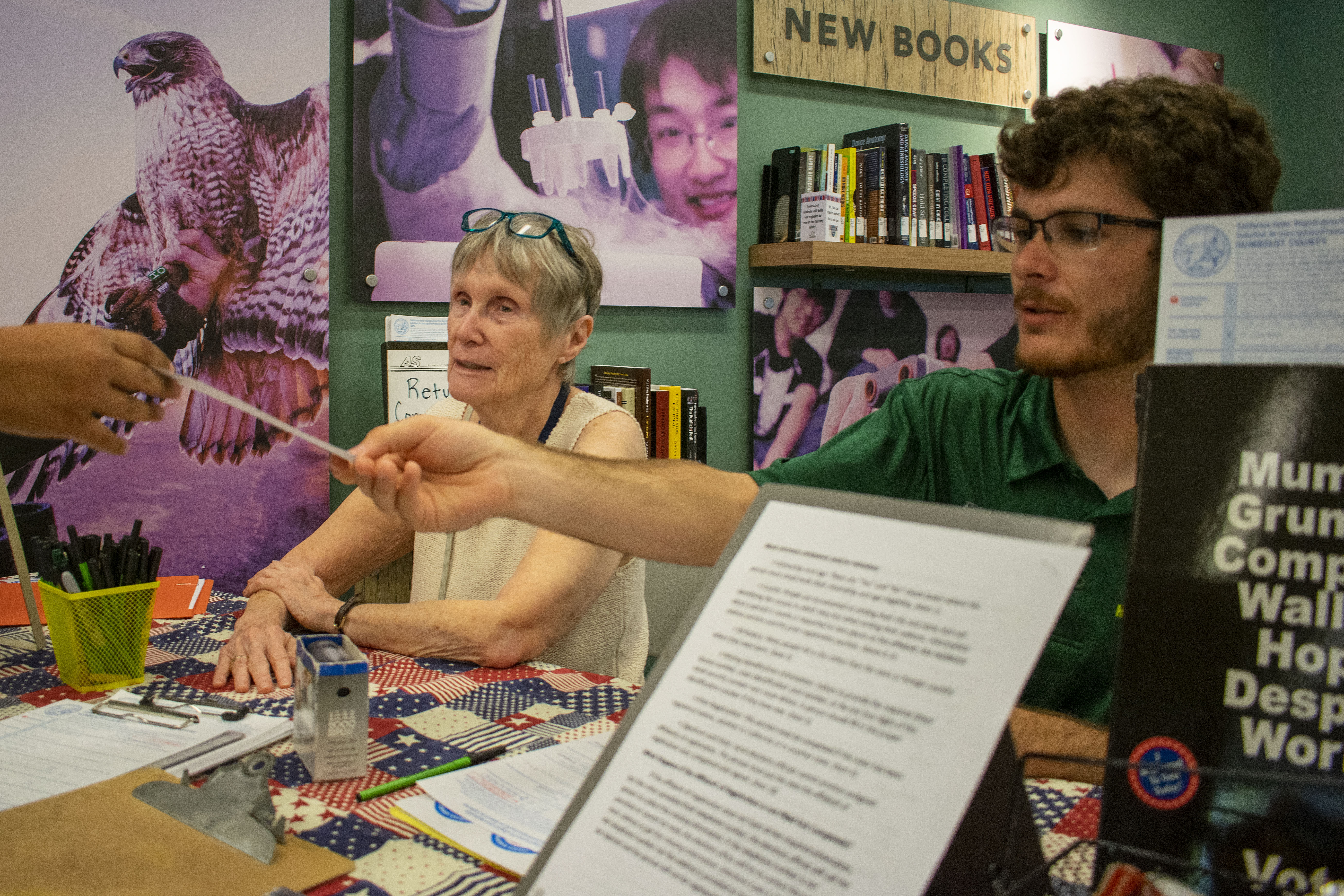
Representatives working with Humboldt’s League of Women Voters tabled at the Humboldt State University library on Tuesday for National Voter Registration Day.
With national elections just around the corner, Vincent Thomas, environmental resources engineering senior and receptionist for Associated Students, urged library visitors to register.
“Voting gives you the right to complain about what’s going on,” Thomas said. “If you don’t vote, you can’t complain.”
Beside Thomas sat Margaret Augustine, a 20-year-old Eureka resident and member of the League of Women Voters. Augustine simply wanted to provide students with information on how to vote.
“It’s non-partisan,” Augustine said. “We just get people to vote and express their opinion.”
According to National Voter Registration Day’s website, the holiday has been held on the fourth Tuesday of every September since 2012. The holiday’s goal is simple: get people to vote. According to the site, 800,000 people registered to vote on the holiday in 2018.
The U.S. Census’ website also reports that 61.3% of U.S. citizens registered to vote in 2018, and 49% actually did so.
The lowest voter turnout in 2018 came from citizens between the ages of 18 and 24, at 30.1%. Voter turnout increased with age, with the highest voter turnout from citizens between 65 and 74, at 65.6%.
Thomas emphasized that voting gives citizens a voice.
“Just getting people to register to vote so they have that option to vote if they need to is very important,” Thomas said. “We want to get as many people to have their voices heard as possible.”
At midday on Tuesday, Thomas said around a dozen individuals had registered.
“Most of the students who have come by said, ‘yeah, they’ve already got it done,’ which is pretty good,” Thomas said.
Thomas said registering only takes about five minutes. Outside of National Voter Registration Day, a prospective voter can register at their local election office or online at Vote.gov, an official website of the U.S. government that helps people figure out how to register. The nearest election office to HSU resides in Eureka at 2426 6th St.
Free tacos, a climbing wall and a zip line took over Arcata
The Arcata Plaza was a site of fun and live entertainment over the weekend. On Sept. 6, the 2nd annual HSU Downtown Block Party shut down the streets surrounding the Arcata Plaza.
Music from Chulita Vinyl Club, Mesizto Beat and HSU’s notoriously loud Marching Lumberjacks provided live entertainment and kept the crowd on their feet. The block party was also home to other activities including a 200-foot zip-line and a rock-climbing wall.
HSU students, including seniors Mark Bernan and Adrian Haro, were recipients of an e-mail attachment containing entry credentials to the block party and vouchers for free food. After conquering the zip-line I spoke with Bernan, who is a music major. His main concern was his appetite and not the adrenaline.
Mesizto Beat getting down on the home stage at the 2nd Annual HSU Downtown Block Party. | Photo by Alberto Muro
“I’m looking forward to the tacos, I’m not going to lie,” Bernan said.
For some, zip-lining is on their bucket list. Bernan was already acquainted with going airborne.
“I tried zip-lining in Costa Rica before, but this was fun too,” Bernan said.
With a massive line that stretched from 9th Street towards the center plaza, Bernan and Haro were happy they arrived early.
HSU students and alumni were not the only ones enjoying themselves at the block party. HSU seniors and Native American Studies majors Gabby Encias and Christian Solorio brought their roommate Corey Jankowski along for the experience.
HSU Marching Lumberjacks keeping the crowd energized at the Arcata Block Party on Sept. 6. | Photo by Alberto Muro
Encias and Solorio have lived in the area since they began their studies and were delighted to see the large crowd in attendance.
“It’s nice to see everyone turn out for the event,” Enicas said.
Mass emails were not the only source of invitation distribution. HSU senior Solorio was informed by other means.
“I heard about this event through social media,” Solorio said.
Jankowski heard about the event through Encias and Solorio, but one main contribution to his attendance was the good weather.
HSU booths were present to distribute information about campus services. HSU students Alejandro Ochoa, Makito Takahashi and Alex Bravo represented the Multicultural Center and wasted no time welcoming people to their table.
From right to left: HSU Multicultural Center representatives Alejandro Ochoa, Makito Takahashi and Alex Bravo. | Photo by Alberto Muro
“There’s nice weather out right now and it’s going to start raining in a month so get out there while you still can,”Jankowski said.
The weather is currently a toss-up between overcast and sunshine, and thankfully the block party experienced pleasant conditions.
The Multicultural Center is notable for establishing services such as Scholars Without Borders, a women’s resource center and a kitchen to cook your food. HSU Senior and Biology major Ochoa talked about a new service for students.
“This year we will be introducing a non-binary closet which is open to anyone,” Ochoa said.
The new service offered by the Multicultural Center shows that the objective of campus resources is to improve student lives.
The 2nd Annual Humboldt State Downtown Block Party has come and gone, but don’t fret because the Arcata Plaza is home to a variety of entertainment.
The UC Quad was alive with music and dancing at noon on Tuesday as Zion I performed for students. An Associated Students Presents event, the free show featured Zion I’s Baba Zumbi, also known as MC Zion, R&B and Reggae artist Winstrong, and DJ Twelvz.
Winstrong freestyles in front of a packed UC Quad at Zion I’s show on Sept. 26. | Curran C. Daly
R&B and Reggae artist Winstrong (right) performed alongside Zion I’s Baba Zumbi (left) in the UC Quad on Sept. 26. | Curran C. Daly
Winstrong freestyles in front of a packed UC Quad at Zion I’s show on Sept. 26. | Curran C. Daly
Baba Zumbi reacts to a beat drop during his performance in the UC Quad on Sept. 26. | Curran C. Daly
Zion I’s Baba Zumbi performs at the UC Quad on Sept. 26. | Curran C. Daly
This website uses cookies to improve your experience. We'll assume you're ok with this, but you can opt-out if you wish. Cookie settingsACCEPT
Privacy & Cookies Policy
Privacy Overview
This website uses cookies to improve your experience while you navigate through the website. Out of these cookies, the cookies that are categorized as necessary are stored on your browser as they are essential for the working of basic functionalities of the website. We also use third-party cookies that help us analyze and understand how you use this website. These cookies will be stored in your browser only with your consent. You also have the option to opt-out of these cookies. But opting out of some of these cookies may have an effect on your browsing experience.
Necessary cookies are absolutely essential for the website to function properly. This category only includes cookies that ensures basic functionalities and security features of the website. These cookies do not store any personal information.
Any cookies that may not be particularly necessary for the website to function and is used specifically to collect user personal data via analytics, ads, other embedded contents are termed as non-necessary cookies. It is mandatory to procure user consent prior to running these cookies on your website.