Students lined the Redwood Bowl Plaza for food, music, games and a performance on Feb. 24 for the Black Out Basketball pre-game rally. Organized by the Umoja Center for Pan African Student Excellence, it was a celebration of Cal Poly Humboldt’s Black faculty and staff.
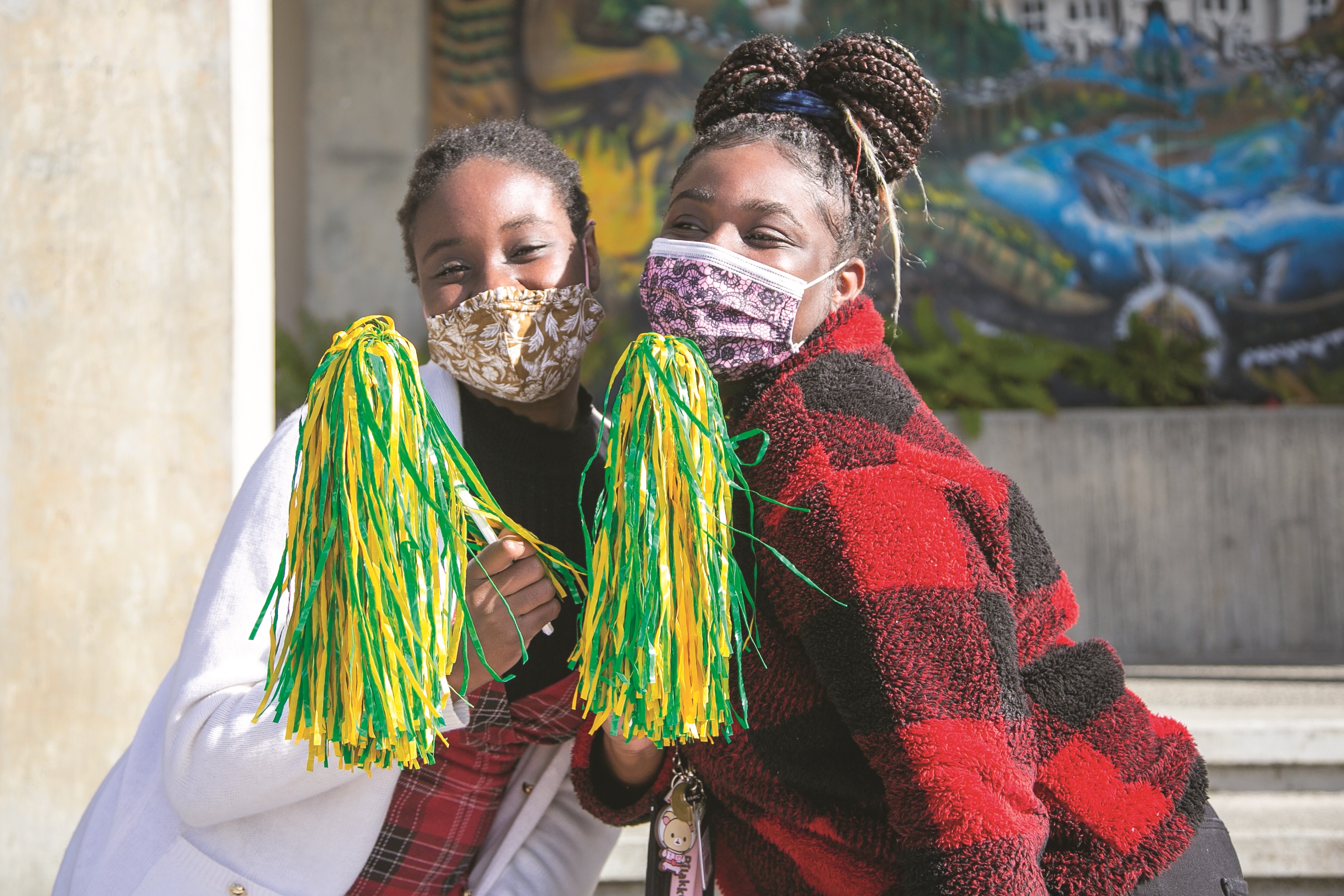
Photo by Angel Barker | From left: students Demi Ogunwo, Joy Mehn, Douglas Smith, and Gloria Thompson at the Black Out Rally on Feb. 24 that took place at the Redwood Bowl Plaza.
The celebration was not just for the faculty and staff, but for the black student community. Douglas Smith, coordinator of the Umoja Center and masters student in English, was a critical part in making the event successful.
“It means a chance to have community,” Smith said. “A chance for Cal Poly Humboldt to support our Black student community like we would in society.”
The Umoja Center’s mission is to support the pan-African student community. Lots of students were in attendance for the pre-game tailgate, to support and celebrate community and the campus.
“I came out to support the game and the celebration that’s going on right now,” said Joy Mehn, a political science major.
The center is very important to Mehn.
“To me the center means family,” Mehn said. “So many good friends are in the Umoja Center. It is a place to just relax and come together.”
Gloria Thompson, a child development major, was attending the rally to celebrate Black excellence. Thompson found her people at the Umoja Center.
“I was a student at home dealing with a toxic family,” Thompson said. “I found my community and family there [the center].”
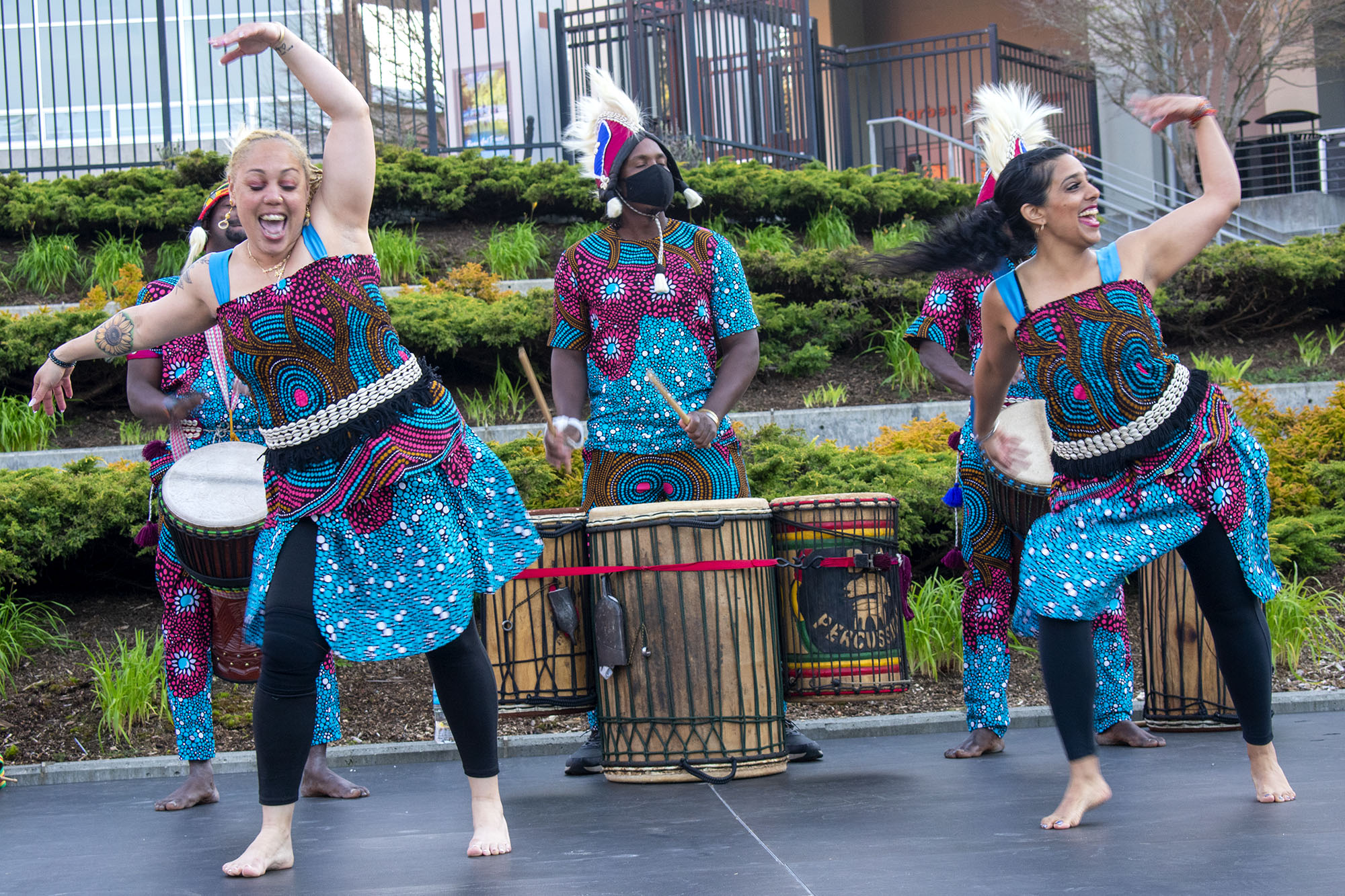
Photo by Angel Barker | Drummer Bongo Sidibe and dancer Joti Singh perform at Blackout Rally on Feb 24.
The rally featured Southern food and a drum and dance performance by the Duniya Dance and Drum Company. The San Francisco-based company was formed in 2007 to create dance and music.
Before the men’s basketball game, a video was played in honor of Black History Month and featured student athletes and what the month means to them and who they look up to.
All throughout the men’s game, free t-shirts were given to every person featuring the hashtag #LoveIsTheNewBlack and Black Out Game 2022. During half time of the men’s game, many of Cal Poly Humboldt’s Black faculty and staff were honored with flowers and a gift bag. The drummers from Duniya Dance and Drum Company were also in attendance and helped hype up the crowd with their music.
Thursday Feb. 24 was just one of the days to celebrate the Black community on the Cal Poly Humboldt campus.
“It is to celebrate school spirit, hang out and enjoy each other,” Smith said. “To enjoy good food and Black culture.”
Photo by Angel Barker | Dancers for Duniya Dance and Drum Company at the Redwood Bowl Plaza on Feb. 24Bongo Sidibe, artistic director for Duniya Dance and Drum Company, plays drum in performance at the Redwood Bowl Plaza on Feb. 24 for Blackout Tailgate
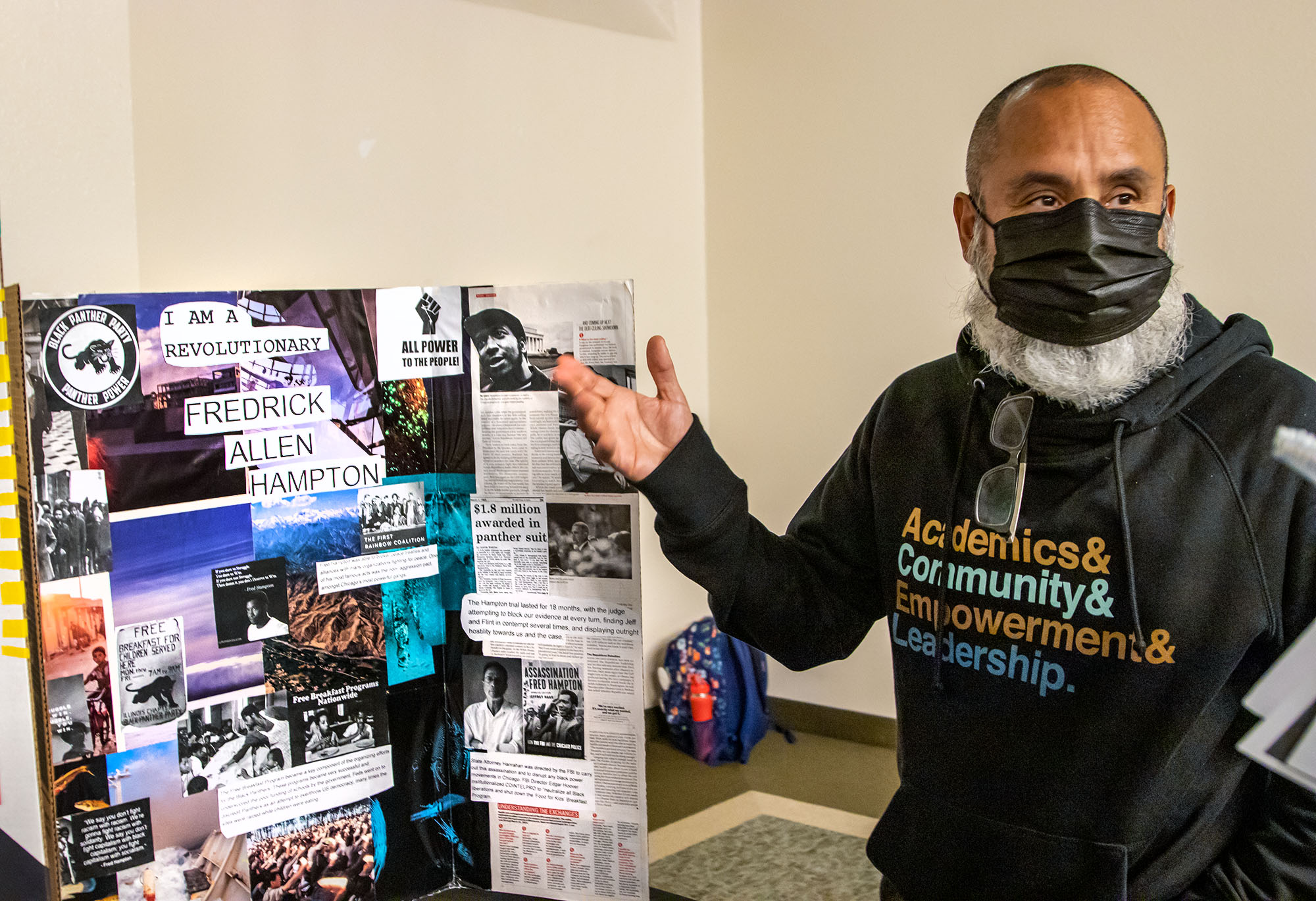
Student-made poster boards detailing the lives and legacies of Black artists and activists filled the Gold and Green Room in Founders Hall during the Black History Month Art Exhibit hosted by the Umoja Center on Feb. 17.
The exhibit was an opportunity for Cal Poly Humboldt’s Black students to express themselves and celebrate their African heritage, much as their forebears did before them in a self-determined push to resist the injustices of slavery, segregation and ongoing oppression.
“It is a creative way to show our unity and stand for everyone who identifies as Black,” said Demi Ogunwo, a Masters student at Cal Poly Humboldt and Charter President of the National Society of Black Engineers. “It’s a lot of activists, a lot of people who broke out of the norm of oppression to make a name for themselves.”
Photo by Abraham Navarro | Asia Anderson, a Cal Poly Humboldt chemistry senior stands next to a photo of her great aunt Marion Anderson.
Biochemistry senior Asia Anderson comes from a line of radical Black women who defied the norm during their lifetimes. She made a poster board about her late great aunt Marian Anderson, a renowned Black opera singer. It was a popular exhibit among the attending students.
“I don’t sing worth beans, but I do chemistry,” Anderson said. “I still think about her strength and not letting a ‘no’ close doors. That was passed down through the line of women in my family.”
Jovie Garcia-Diaz, a senior majoring in Environmental Engineering, was a student attendee at the exhibit. Her favorite poster board detailed the appropriation of Black culture in popular social media culture.
“That’s something that I see a lot on social media that stands out to me,” Garcia-Diaz said. “People who aren’t Black get praised and get popular for [appropriated elements from Black culture.]”
Cal Poly Humboldt students and faculty alike visited the exhibit as the evening went on. Frank Herrera happens to be both. He is a student pursuing a Masters degree in Business Administration and the Coordinator of the Social Justice, Equity, and Inclusion Center on campus.
A collage poster board about the life of Fredrick Allen Hampton, former Chairman of the Black Panthers, stood out to Herrera. Herrera was alive in the final years of the Black Panthers’ existence before it dissolved.
“I had met folks who were involved, I just remember the guys in leather jackets and the energy,” Herrera said. ”It’s amazing what they were doing, the bravery and courage they had during the time.”
Photo by Abraham Navarro | Students look at posters of black leaders and events in history during the Black History Expo in the Green and Gold room in Founder’s Hall on Feb. 17.
According to Ogunwo, the art exhibit in general characterized three of the seven guiding principles of the Nguzu Saba, or African heritage, that the Umoja Center stands They are Kuumba (creativity), Umoja (unity) and Kujichagulia (self-determination).
“The pillars reinforce what we stand for and how we want people to see us,” Ogunwo said.
Anderson feels a deep connection to her great aunt and to her heritage that empowers her. To her, the exhibit was a chance for Black students to see themselves in the trailblazers before them.
“They weren’t the first,” Anderson said. “You’re not going to be the last. It feels good because one day, those boards are going to be about you.”
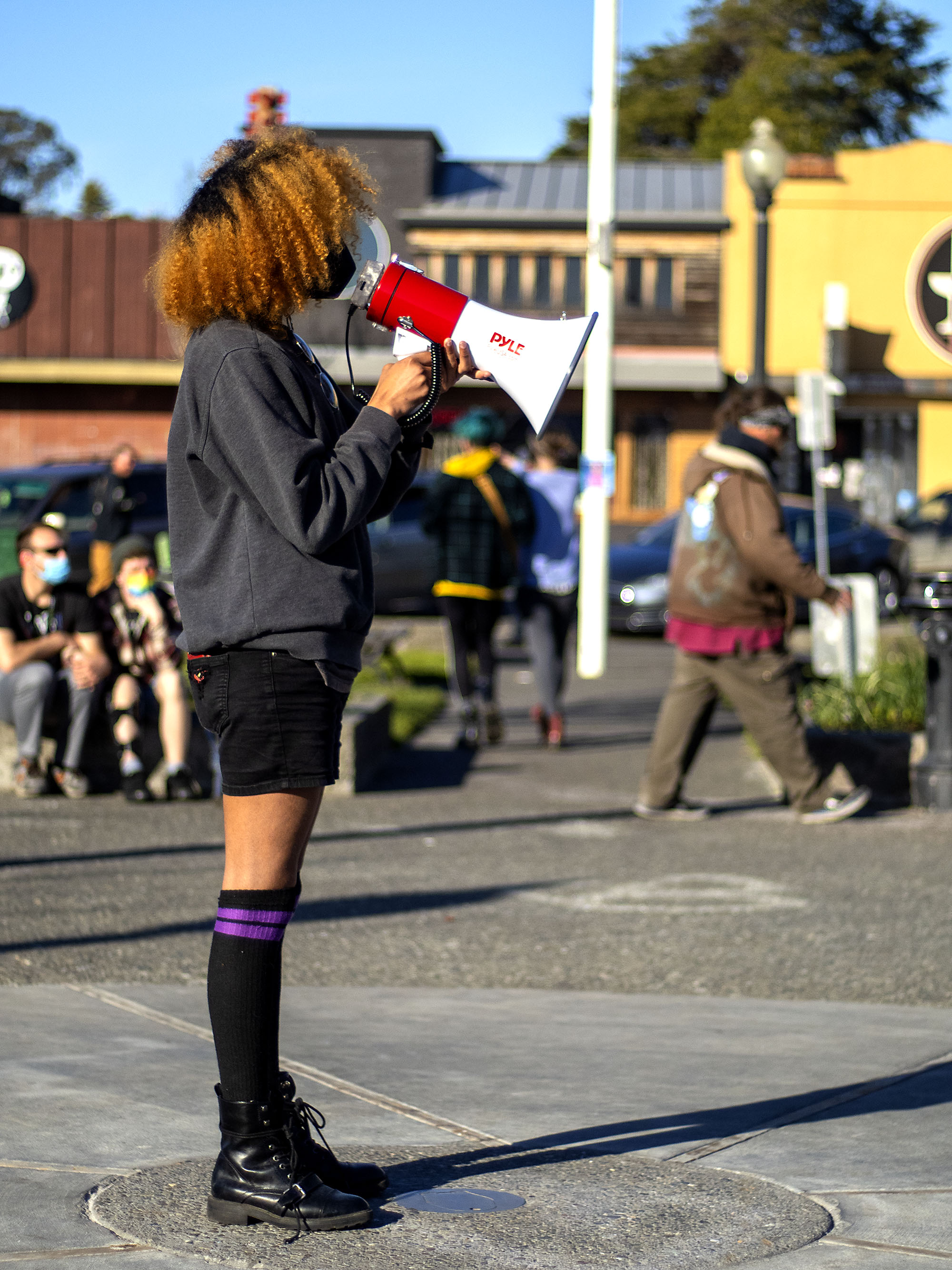
35 to 40 community members gathered in the Arcata Plaza to speak about Black History Month on Feb. 17. A flyer, created by community organizer and artist Nikki Valencia, urged people to come out and show that their allyship wasn’t seasonal or conditional. When Valencia spoke in the plaza, they noted they did not feel that support.
“This is the perfect time to center Black marginalized folks, but that energy is not here,” Valencia said. “Black History Month is about more than educating. It means nothing if you know Black people are struggling and do nothing about it.”
Photo by Morgan Hancock | Steve Bell leads protesters in a chant at the Black History Month protest on the Arcata Plaza Feb. 17.
Marlon Andrew Jones II, who works at Cal Poly Humboldt, spoke at the gathering. He said the voices supporting Black communities are never loud enough. Jones said that students, faculty, and admin need to listen to their communities if they want to support Black people.
“If you’re a white person and you’re listening to this and it’s making you uncomfortable, it’s supposed to,” Jones said. “You’re not supposed to be comfortable, because there is a community that has lived in discomfort for so long.”
In Jones’ speech, he urged empathy from white members of the community. The lived experience of Black Americans can be traumatic. Jones believes that white people need to do more than be accountable, they need to love their Black neighbors.
“Love is an action, and that’s what the Black community needs,” Jones said. “We need people to love us enough to take action and make a difference. Sometimes you don’t know what someone is going through, but you can hold their hand through it.”
Photo by Morgan Hancock | Raquel Bell speaks about the importance of valuing Black women at the Black History Month protest held on Feb. 17 in the Arcata, Ca. plaza.
Raquel Bell is a local student who spoke on the importance of valuing Black women. Black women exist at intersections of systemic struggles and deserve love and support. Bell said that when Black women are uplifted, so is the society around them.
“If you want change, first you need to love the Black woman,” Bell said. “Once her needs are met, you know everyone’s needs are met. Once you love a Black woman you change the world. The Black woman is strong, she is beautiful, she is me.”
Claps and cheers echoed through Founders Hall 118 during the Umoja Center’s Black Excellence in STEM event, probably far more than had graced the room in quite a while. Many HSU community members filled out the seats, just as their enthusiasm and passion filled the room.
Dr. Kim White, Cal Poly Humboldt professor of chemistry, hosted the event at the request of Umoja Center for Pan African Academic Excellence.
After an indigenous land acknowledgement, she began by paying homage to several Black scientists under whom she studied. One of these was Dr. Loyd Noel Ferguson, the first Black person to earn a PhD in chemistry from UC Berkeley.
“He was the original backyard chemist, he synthesized moth repellent and stain removers in his backyard in Oakland when he was growing up,” White said. “He also used his academic talent not only to propel his own career but also to create opportunities for others.”
She also spoke fondly about Dr. Phillip Crews, a UC Santa Cruz professor of chemistry known for his involvement in diversity programs.
“Phil instilled in me a strong desire to use my privilege for the benefit of others… seeing him use his strengths to lift up others was pretty fundamental in the trajectory of my career,” White said.
Dr. Chris Harmon, another member of Cal Poly Humboldt’s chemistry department, spoke next. He spoke on the importance of acknowledging and celebrating the growing diversity within science.
“It matters where you come from, it matters what language you grew up speaking, and absolutely the color of your skin matters, Harmon said. “When I got into chemistry, one of the things that I loved was all of these rich, beautiful colors that you would see in the lab… if we celebrate the colors of the chemicals why can’t we celebrate the colors of the chemists?”
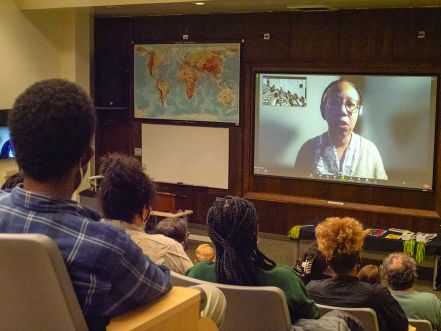
Photo by Morgan Hancock | Dr. Kensha Clark speaks to students of her work in chemistry via Zoom at Founders Hall on Feb 11
Harmon introduced Dr. Kensha Clark, a highly celebrated and accomplished Black chemist currently teaching at the University of Memphis.
After brief technical problems, she appeared on the projector screen, Zooming in to the event.
Clark discussed her work, both as a private sector chemist with Chevron and as an academic. Her current fields of interest include molecular electronics, solar energy conversion, and small molecule activation, among others.
In her lab, she makes sure that students of all backgrounds feel welcome.
“I think [our diversity] makes our science all the better,” Clark said.
When she was a student, however, Clark felt that her interest in science was quashed. She described only being encouraged to become a writer or an artist, all the while never wavering from her passion for science.
Even though strong familial support allowed her to achieve her dream, Clark is still faced with a shocking lack of diversity in her field.
“By default, you are the representative of your people,” Clark said. “It makes it exciting when one sees up-and-coming scientists of color.”
Photo by Morgan Hancock | Asia Anderson explains her research into membrane protein isolation on Feb 11.
Cal Poly Humboldt student Asia Anderson took the stage after Clark, to a joyous round of applause from the audience. A transfer student from College of the Redwoods, Anderson is obviously beloved to the campus community.
She spoke about the community and support that she has found while studying chemistry at Cal Poly Humboldt, and how her mother’s going back to school to study English inspired her.
“I feel like every step of the way I’ve had this ushering of peers around me… I will also be the first person in my family to graduate from college,” Anderson said.
Anderson’s research during her undergraduate degree at Cal Poly Humboldt has been in the targeted extraction of membrane proteins. She said that the proteins’ sensitivity to light means that further study could illuminate ways to use these proteins for targeted medication delivery.
After graduation, Anderson will study to receive a graduate degree at UC Santa Cruz.
The Umoja center hosted this event in collaboration with NSBE, the National Society of Black Engineers. Demi Ogunwo is a masters student in Cal Poly Humboldt’s Energy Technology and Policy Program, and spoke at the event as the president of the school’s NSBE chapter.
“NSBE offers a platform for students to network and get mentored by … Black professionals,” Ogunwo said. “It’s not for engineers alone, it’s for all STEM students.”
NSBE is a community focused on supporting Black scientists, whether academically or professionally. They will be hosting a social hangout for students potentially interested in joining this Friday Feb. 18, from 1 pm to 3 pm in the University Upper Quad.
To Zephie Harvey, Black History Month is an acknowledgment of the depth and value of Black heritage and culture.
“Black History month means looking back at my heritage and knowing where we came from,” said Harvey.
Photo by Abraham Navarro | Cal Poly Humboldt student Zephie Harvey
However, they also say that it should serve as a reminder of the inequities that Black people still face. Black History Month is also about the history being made right now. Harvey points out that there are many areas in which Black people have only recently been allowed to exist.
“It’s 2022 and we’re still having firsts for things,” they said.
Like many people of color and especially Black people living in Humboldt County, Harvey felt a bit isolated before finding community resources like the Umoja Center.
“I’m from an area that’s very heavily populated with Black people so it’s hard finding that community here,” Harvey said.
Harvey is a dance major here at CPH, and will be performing in the “Evening of Dance” show later this semester.
To Nicole Rahman-Garnier, Black History Month means celebrating the accomplishments of Black people.
Photo by Abraham Navarro | Cal Poly Humboldt graduate student Nicole Rahman-Garnier
“In the last couple of years, that script has kind of flipped and we’ve been able to more celebrate the triumphs rather than focus on the tribulations that we’ve faced,” Rahman-Garnier said. “It’s a little more of a positive notation of what it means to be Black, what things that we’ve done.”
As for her experience in Humboldt, Rahman-Garnier says that becoming a student has connected her to the Black community here. “It’s changed over time, when I first moved here it was hard to find a place,” she said.
“It’s weird being [a Black person] in the sciences because that’s not something that you see a lot here. That’s something that I’m kind of working on changing right now too, not only for the campus culture but for Humboldt culture in general,” said Rahman-Garnier.
Rahman-Garnier is a grad student at CPH studying the morphology of fish olfactory organs.
Gloria Thompson and Joi Mehn table in the Quad for CPH’s Umoja Center for Pan African Student Excellence.
To Mehn, Black History Month means simply “celebrating Black people.”
The events that the center is holding over the course of this month represent different facets of that celebration. Among others, these include an event highlighting Black achievements in STEM, a Black history expo, an African diaspora celebration, and regular “Kuumba: Dance for Creativity” classes every Saturday.
Photo by Abraham Navarro | Cal Poly Humboldt student Gloria Thompson
Everyone is welcome and encouraged to attend.
“Not holding a Pan African identity does not disqualify anyone from participation in any events or programs, we value cultural exchange and invite people from other backgrounds to ground with us,” said the Center’s website.
Thompson said that her experience being Black in Humboldt has been “Interesting, but I’ve been finding my people, and that connection is really important.”
The importance of Black History Month just goes without saying. This month is dedicated to the many struggles, movements, and achievements Black figures have experienced that have gone on to shape our country to where it is now. I believe, however that rather than celebrating Black culture in America for a single month out of the year, it should be taken into consideration that Black history should be recognized year round.
Now, I’m not criticizing Black History Month for being the shortest month; February was actually chosen by Carter G. Woodson, known as the “Father of Black History” because of the significant birthdays of Frederick Douglas and Abraham Lincoln. I’m saying that Black history has decades of events and figures that can open the eyes of future generations and modern individuals that lead us to where this country is going or will go, if informed correctly.
Woodson pushed for Black history to be integrated into public schooling systems in hopes that Americans could learn about the many achievements and hardships of Black Americans in this country; as well as provided the opportunity for Black Americans to learn more about their past and to be proud of their heritage. At first, Black History was only recognized as a week-long remembrance after Woodson reached out to the general public in which he established, “Negro History Week” in 1926. The shift from a week to a month started to take hold during the coming decades before Woodson’s death in the 1950’s as a few cities in the country began to acknowledge this celebration. After the revolutionary movements in the 60’s, in 1976 President Gerald Ford recognized that the month of February was dedicated to Black history. However, according to the Association for the Study of African American Life and History, founded by Woodson in 1915, “Woodson believed that Black history was too important to America and the world to be crammed into a limited time frame.”
It is great to know that Black History is actually being celebrated, but as a country we cannot even begin to unpack all that history into a single short month. Black history should be taught in schools year round. All that I can remember about Black history from my middle school and high school history classes is learning about the Civil War, the Civil Rights movement, which yes, did go over a brief introduction to Jim Crow laws, but that was basically a week and half coverage of that history. I never developed a deep understanding of Black history from public education until I took it upon myself to research and learn on my own time, and when I got into college. The same can be said for a number of people in this country. Some people even think that racism doesn’t exist in America, and we all know that is just a blatant lie.
If schools are to talk about Black history, they need to get into the meat of that history. I understand that the gruesome history of our country may be a lot for younger children to handle, but we can at least introduce them early on with detailed descriptions of heroic Black figures and accomplishments; like writers, athletes, scientists, inventors, musicians, historical attributors, etc. When schools start to talk more about American settlement, the Civil War, Civil Rights movements, etc. that is when students should be introduced to the deeper sides of our history. We cannot continue glorifying the Founding Fathers and other American historical figures who were actually terrible people. Who were slaveowners, abusers, and racists. Instead we should be learning about the heroic tales of Black historical figures; like Harriet Tubman (1822-1913) who not only freed hundreds of men, women, and children from slavery as a conductor for the Underground Railroad, but also became a spy and the first woman to lead combat expeditions for the Union Army when the Civil War started in 1861. Tubman later freed 700 more slaves in 1863 while she led 150 soldiers in the Union Army.
Talk about Frederick Douglass (1818-1885) who had been a slave for nearly 20 years then escaped and fought to end the practice of slavery. Douglass was a national leader in the Abolitionist movement in Massachusetts and New York. Douglass was firm on the equality of all races and genders. He was a renowned orator, activist, and writer.
Speaking of writers, a great feat in Black History was the power of the Black Press after the Civil War had ended. One of my favorite journalists is Ida B. Wells (1862-1931), who was also one of the founders of NAACP. Wells was a well known investigative journalist who covered the tens of thousands of lynchings that were happening in the south. Her book “The Red Record” (1895) went over the horrors happening to Black Americans around the country and the struggles they had faced in the south after the civil war. Wells was a writer, investigative journalist, editor, educator, and an early Civil Rights activist.
I’m sure most, if not all, know about Martin Luther King Jr. (1929-68). He was one of the leading forces in the Civil Rights movement in the 60’s. The impacts he made through his speech and peaceful protests made a huge difference in our society. Take the Montgomery Bus Boycott, a protest in which activists alongside MLK boycotted public transport to take a stand on segregated seating Black Americans were facing on public buses. This boycott made a severe economic impact on the public transit system that ultimately led to the decision by the Supreme Court that segregated seating was unconstitutional in 1956. MLK also inspired many peaceful marches, protests, and sit-ins around the country, including the March on Washington during the Summer of 1963, where he held his famous “I Have A Dream” speech. Around 200,000 to 300,000 people joined MLK and later it became the driving factor of the Civil Rights Act of 1964.
Someone who had a different perspective than MLK’s nonviolent approach was Malcolm X (1925-65). Malcolm X was also an incredible speaker and civil rights activist. X encouraged Black Americans to protect themselves when it comes to white aggression, especially when it comes to law enforcement. His powerful messages gave fellow Black Americans the courage to stand against racism and police brutality. Soon after his assassination in 1965, the Black Panther Party was formed by Huey Newton and Bobby Seale. One of the Black Panther Party leaders who made a phenomenal impact in the Chicago, IL community was deputy chairman, Fred Hampton (1948-69).
Hampton was a revolutionary socialist who established free breakfast programs for young children, organized rallies, and brought together rival gangs and organized parties to create a “Rainbow Coalition.” Hampton was an extremely powerful leader and speaker; however, Hampton and the Black Panthers were deemed by FBI director J. Edgar Hoover at the time as “One of the greatest threats to the nation’s internal security.” Hampton was murdered, sleeping in his own home by the FBI in 1969 at the age of only 21. You can witness his story in the movie “Judas and the Black Messiah” that’s streaming on HBO.
There are countless figures and numerous movements in our history that I can mention, like Marsha P. Johnson (1945-92); an American gay liberation activist; or even what is happening right now with the BLM movements. But, since it would become an entire book if I did, I suggest you take it upon yourself to do more research, because this knowledge is essential to our history and how we view our country even to this day.
Just recently, I read in a CBS news article that in Northern Utah, parents dropped a request to a charter school wanting to opt out of Black history in the school’s curriculum. Black history should never be an option to “opt out” of, our children need to understand the obstacles and struggles that Black Americans have and continue to face to this day. If we neglect our responsibility to teach the younger generations about Black history, we’re creating an even bigger problem: raising sheltered and ignorant individuals around our country.
America has a deeply embedded dark past, we know this. This is why we can’t selectively overlook it and claim to be the “greatest” country in the world. What we can do is continue to educate those who simply don’t know. We need to show the accomplishments behind Civil Rights activists, The Black Panthers, BLM activists and more. We need to continue to call out racism, oppression, and discrimination when we see it. We need to recognize the achievements our Black figures have accomplished in order to show this country that Black and POC voices matter and have mattered. That is why instead of just making it a month, we need to push beyond the boundaries that have been set in our system and acknowledge Black and brown excellence, whenever and however we can.
February 4 marked the first of five events meant to celebrate Black History Month. Due to Covid-19 restrictions, the speakers cannot be on campus but each Zoom meeting is open for registration. Coordinator Douglas Smith and the students at the African American Center for Academic Excellence (AACAE) have brought together the speakers this Black History Month with the theme of different methods of liberation.
“The theme is mapping routes of liberation with the idea that there are different routes for us individually or as a community,” Smith said.
The AACAE, in conjunction with Center Arts, puts together their monthly speakers each year largely through the efforts of members of their student staff, like Imari Washington.
“When we initially chose our guest speakers, we tried to choose individuals who we thought Black/African American students would benefit most from,” Washington said. “We are very big on supporting our students in personal development, mental well-being, and academic success at the center.”
The first of the month’s speakers was Dr. Safiya Noble, Associate professor at UCLA and author of the book “Algorithms of Oppression: How Search Engines Reinforce Racism.” Information technologies open worlds of information to people that may otherwise be out of reach, but as Noble states, these technologies do not develop in a vacuum, they contain the same biases as the people who created them. While they seem impartial and mathematical and separate from the personal bias of individual people, technology is still designed by people who themselves may have racist bias, or in the cases of algorithms like Google will begin to take on the racial bias that exists in society and in doing so reinforce it. As this technology has advanced, it has created new avenues for discrimination rather than providing liberation.
“We have more data and technology than ever,” Noble said. “And with it more social, political, and economic inequality and injustice to go with it.”
Along with containing all of their own biases, Noble says the over-focus on technology creates a situation where what would otherwise be public goods like libraries, open meeting places, or other public institutions are replaced by technology-based solutions, which are privately controlled by a single company and so are subject to any kind of change they see fit without any real avenue for public complaint other than speaking out against the service itself.
Noble says this tech can’t really fix social inequality on its own it’s just a tool, but they occupy so much of our world that they seem to leave no room for other avenues for finding solutions to social problems. Worse, they force people to work within their confines and therefore limit what people can actually do and instead funnel people into the profit-driven patterns of the medium itself.
“Social inequality will not be solved by an app,” Noble said. “What we see are these technologies displacing our ability to adjudicate our lives without them.”
Other speakers for the month include; Director of Campus Life at GVSU Dr. Kyle Boone presenting “The Grey Area: Creating a Space for the Engagement of Black Students”, Farm Manager at Soul Fire Farm and food sovereignty activist Leah Pennimen with “Liberation on the Land” about Black land reclamation, Author and CEO Ja’Net Adams with “Going Deeper than Google: How the History of Black Wealth Can Help Close the Racial Wealth Gap of Today” and Psychology Professor and mental health expert Dr. Nina Ellis Hervey. The events will be going on until February 27, and are available for registration on the Virtual Quad or on the AACAE web page.
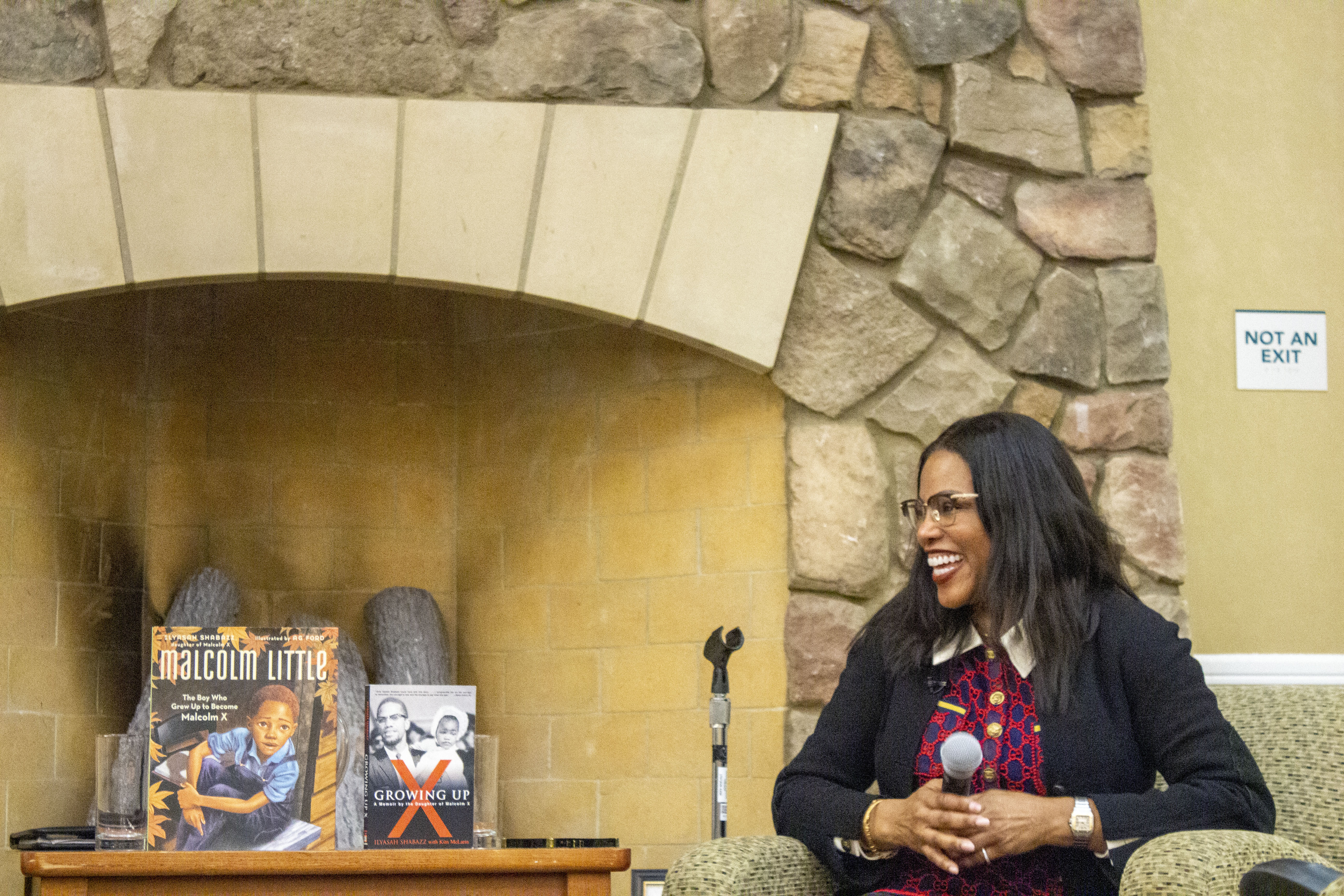
Ilyasah Shabazz discussed her background with loving energy on Feb. 12
Ilyasah Shabazz, one of six daughters of Betty Shabazz and Malcolm X, came to Humboldt State University Feb. 12 to discuss her book, “Growing Up X.”
Despite the title, the book is not about Malcolm X. Rather, it surrounds the lessons and experiences that of Shabazz as she grew up living in her father’s radical legacy.
“One of the benefits of being my parents’ child is that I grew up with a lot of love,” Shabazz said. “It’s really what drives my work because I realized there are a lot of young people who realize they are not worthy of love, or worthy of a quality education, or worthy of all of these things that life is supposed to provide us.”
Shabazz dedicated her career to sharing the importance behind love and support being provided at a young age.
In an exclusive interview with The Lumberjack, Shabazz emphasized the importance of love and humanity and the awareness that people are a reflection of one another.
“In high school, I was at a prep school and not too far down the street was a group home, so we would go and tutor these young people,” Shabazz said. “I was tutoring them in math and then I started realizing that they didn’t have love—that there was no self love.”
Shabazz dedicated her career to sharing the importance behind love and support being provided at a young age. She began advocating for the younger generation and their educational opportunities.
“As I got older, I started realizing that it was really important for me that young people understood that they were worthy of love—that they were worthy of a quality education,” Shabazz said. “Because our education curriculum is not inclusive of historical facts, it makes young people feel that they are not worthy.”
Shabazz felt inspired to write books because she wanted to change how children saw themselves portrayed in history. She specifically wanted to change the narrative of Black history and liberation for children.
“That’s why I write my books,” Shabazz said. “So that children could open up a book, learn some history—learn good history—and then see a reflection of themselves in the story.”
Her family’s legacy and the lessons shaped Shabazz into the person she has become today. An activist who has dedicated her life to working and representing the younger generations.
“It’s about recognizing the humanity in everyone,” Shabazz said. “That we’re all brothers and sisters in the fatherhood or family of God or the creator. That we’re interconnected just because we’re human beings. Just imagine how much better life could be if we didn’t have to fight for someone to stop pressing us or, you know, committing these criminal acts on us and seeing them for as they are.”
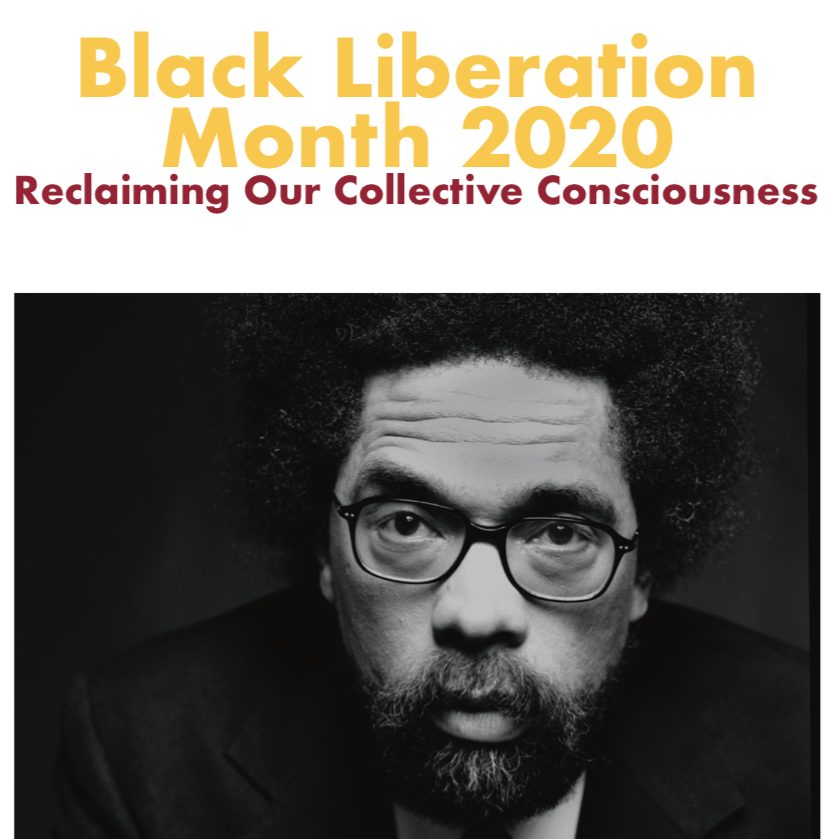
Philosopher, activist and intellectual Dr. Cornel West visiting Humboldt State University
Dr. Cornel West will be at Humboldt State University Friday, Feb. 7 to celebrate Black Liberation Month as the keynote speaker of a series of events.
West advocates for race, gender and class equality. West’s social and political activism goes back to his days at John F. Kennedy high school where he marched for civil rights and protested against the lack of diversity and black studies classes offered at the school.
West went on to become class president of his high school before attending both Harvard and Princeton Universities. He is known for infusing the world with academic inference, intelligence and philosophical reflection.
The event is hosted by HSU’s African American Center for Academic Excellence and HSU Brothers United.
West’s lecture will focus on topics from his 1993 book, “Race Matters.” Doors open at 6:00 p.m. and the lecture begins at 7:00 p.m. in the Kate Buchanan Room.
The first 100 students through the door with an ID will receive a free copy of “Race Matters.” Additional copies can be found at Northtown Books at 947 H St. in Arcata.
Tickets are free and available at the University Center Ticket Office at HSU, which can be reached at (707) 826-3928.
A press release from the HSU Formerly Incarcerated Students Club
Full press release:
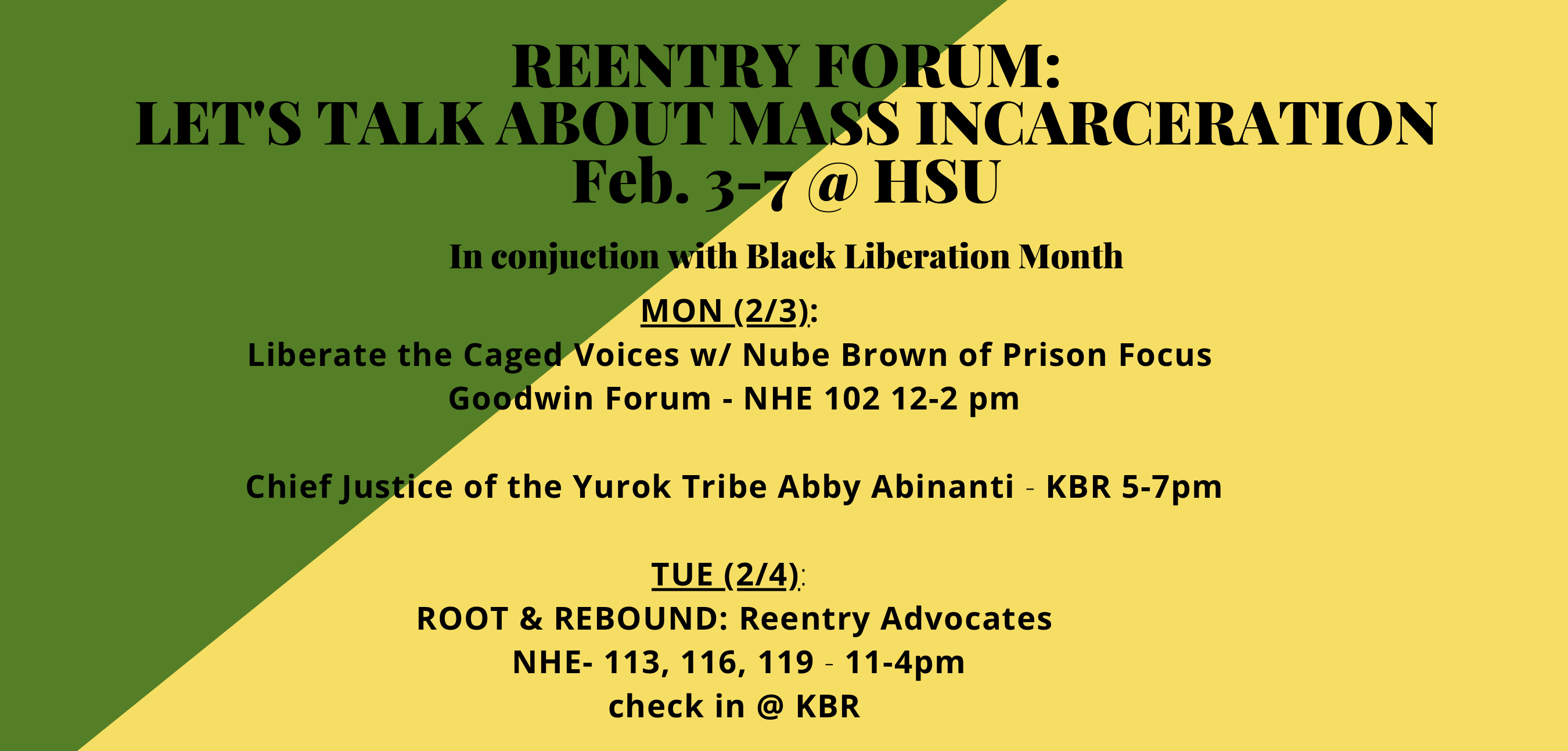
Humboldt State University’s Formerly Incarcerated Student’s Club and Student Legal Lounge in conjunction with Clubs and Activities, Black Liberation Month and Associated Students will host a week long event titled Reentry Forum: Let’s Talk About Mass Incarceration. The event will be from Feb. 3-7 at Humboldt State University with nearly two events a day. Our goal is to provide support for students and community members who have been impacted by the criminal justice system. This event will provide education around transforming the system, inform our university and community on the pervasiveness of the criminal punishment system in our everyday lives, and build support in reversing the school to prison pipeline. Attendees will receive resources pertaining to record expungement, child custody, licensing, and other tools that help folks with the re-entry process.
Schedule: Feb.3-7
Day 1: February 3, 2020 [Monday]
❏ Nube Brown, Liberate the Caged Voices; 12-2 p.m. @Goodwin Forum (NHE 102) ❏ Judge Abby Abinanti, Chief Justice of the Yurok Tribe; 5-7 p.m. @KBR
Day 2: February 4, 2020 [Tuesday]
❏ Root and Rebound (Training/Clinic); 11-1 a.m./p.m., 2-4 p.m. @KBR
Day 3: February 5, 2020 [Wednesday]
❏ Tory Eagles, Pelican Bay Scholars Program Director/ William Feather, Ukiah Inmate
Scholars Program Director talk about scholars programs in locked facilities; 12-2 p.m.
@Goodwin Forum (NHE 102)
❏ Jimmy Santiago Baca, Chicano-American Poet & Writer from New Mexico; 5-7 p.m.
@KBR
Day 4: February 6, 2020 [Thursday]
PANEL DISCUSSION: @Green and Gold Room (FH 166)
❏ Andrew Winn (Project Rebound Sacramento), Joseph Osario (Anti-Recidivism Coalition), Mike Bishop (Children and Family Services Counselor), Mark Taylor (Anti-Recidivism Coalition), Jason Bell ( Project Rebound Director San Francisco), Mike Bishop (Children and Family Services Counselor) Working in Re-Entry Panel Discussion; 5-7 p.m.
❏ Joshua Meisel, (Moderator) Working in Re-Entry Panel Discussion; 5-7 p.m.
Day 5: February 6, 2020 [Friday]
❏ Movie: 13th; 11 a.m. @ Siemens Hall 108
❏ Collaboration; AACAE Presents: Cornel West @ KBR
For more information or concerns contact fisc@humboldt.edu
Don’t let Jussie Smollet’s actions ruin what Black History Month can accomplish
Jussie Smollett is an American actor on the popular tv show “Empire” who staged a racially and homophobic attack on himself to boost his career. Smollett alleged attack has mountains of evidence that it was staged.
The case has left Smollett’s fans and colleagues stunned. This scandal comes out on the tail end of Black History Month, which hurts more. We should not leave Black History Month on a bad note, so we want to highlight some black individuals who left their mark in history.
Claudette Colvin was a teen in 1955 living in Montgomery, Alabama as an African American. While inside a bus, she refused to move from her seat for a white passenger, saying that it was a violation of her constitutional rights. She was arrested for the action and labeled a troublemaker by her community, leading her to drop out of school. Despite Colvin’s actions preceding Rosa Parks by nine months, little is known about what she did. She went on to be part of one of the four plaintiffs in Browder v. Gayle, where Montgomery’s segregation laws were found to be unconstitutional.
Henrietta Lacks was an African American woman who passed away due to cervical cancer. Her cells were collected, and in a rare case they doubled every 24 hours. The aptly named HeLa cells are now used to study the effects of radiation and poisons without using human subjects, and were used for the development of the polio virus. Although there is controversy in the use of the HeLa cells, as Lacks’ family never received any recognition or compensation for the discovery. Despite this, the HeLa cells were pivotal in their medical uses.
Bessie Coleman was the first African American woman to stage a public flight in America. Coleman lived in Atlanta, Texas in 1892 until moving to Chicago at age 23. She wanted to explore aviation, but due to being black and a woman she faced racial and gender discrimination. Despite challenges, she broke through those barriers and received her pilot’s license after moving to France. She had a dream of starting an African American flight school in the US, but tragically died during an aerial flight rehearsal at the age of 34. Coleman was a pioneer for other African Americans who aspired to become a pilot, and was inducted in the National Aviation Hall of Fame in 2006.
The Harlem Hellfighters were the 369th Infantry Regiment and mainly consisted of African Americans. The Harlem Hellfighters fought in the trenches of Germany during World War I for six months, the longest any American infantry regiment fought during World War I. Two of their bravest soldiers were privates Henry Johnson and Needham Roberts, who fought off 24 German soldiers killing four during a surprise attack. Both Johnson and Roberts were awarded the French Croix de Guerre and were the first Americans ever to receive the award. This is one of many awards that the Harlem Hellfighters received.
We wanted to move away from the negativity that came from this year’s Black History Month. Instead we want to highlight these African American individuals that had a pivotal role in shaping history and inspiring others.
Beersheba Kirksey shares how her lifelong dream is becoming a reality
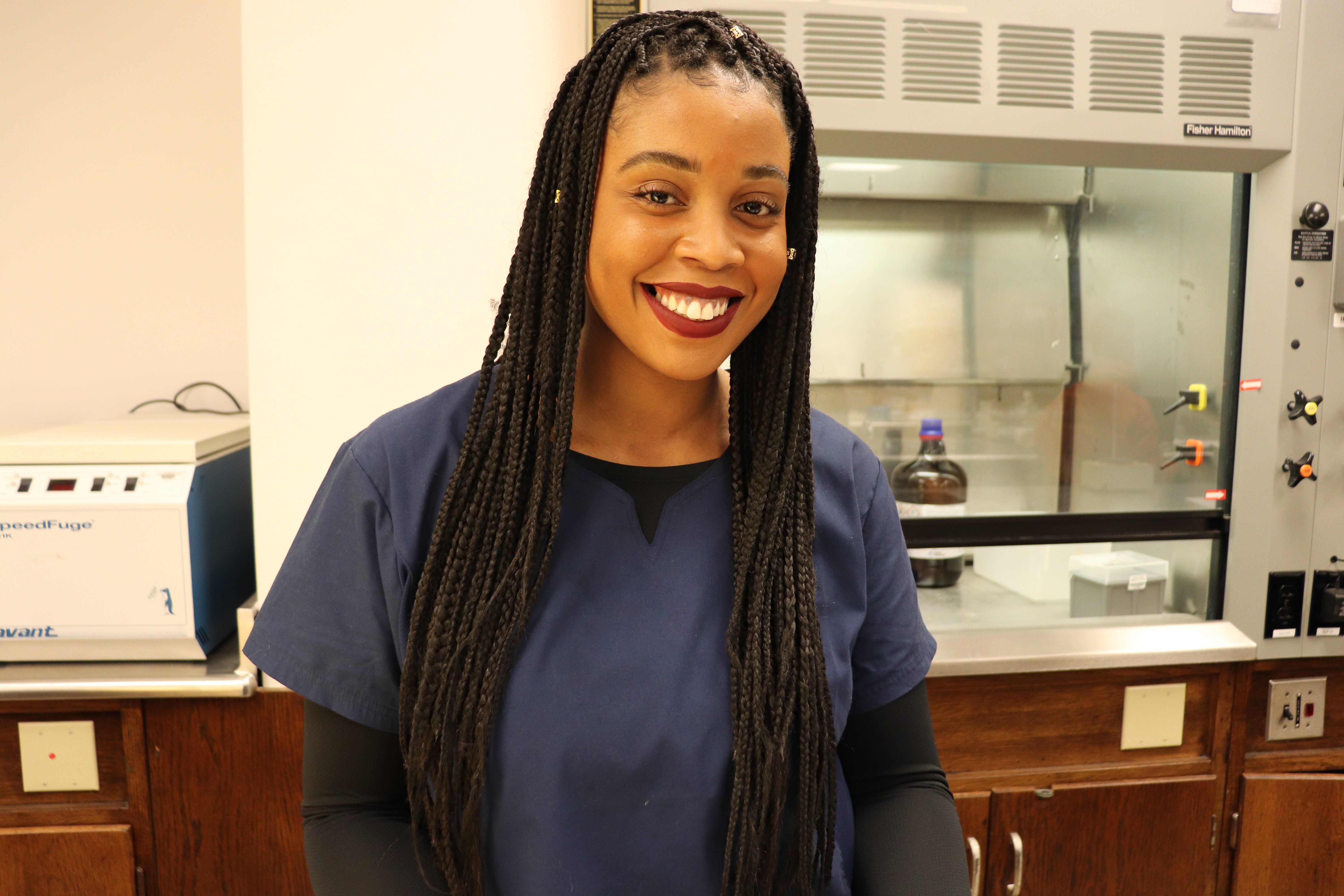
Ever since high school, biochemistry graduate Beersheba Kirksey has had a knack for the sciences. With multiple obstacles, and an outstanding sense of determination and hard work Kirksey is now on her way to pharmacy school after graduating from HSU this year. As a woman of color she hopes to go against the odds and follow her dreams by staying true to herself.
Kirksey chose to follow the pharmaceutical route when she was picking up her older sister’s medication. As she bought the medication she noticed a young black female technician at the pharmacy. This was a bit unusual for Kirksey. She had never seen a woman of color working at a pharmacy, especially a black woman.
“She was really pretty and young, she had a white coat,” Kirksey said. “And I was like, ‘How did you get this job?’ It was different. I’ve never seen any women of color work in the pharmacy before.”
Kirksey decided to approach the pharmacist to ask her how she got her job, and how she herself could get in the same position. The young pharmacist gave Kirksey helpful advice on how to plan out her future. However, Kirksey was warned about the hard work and challenges that would soon face her.
“She was like, ‘Well when you go to school you want to major in either biology or chemistry and it’s going to be hard. It’s going to be a lot of work, once you do that you apply to pharmacy school, get experience you know the whole shabang,’” Kirksey said.
[perfectpullquote align=”right” bordertop=”false” cite=”Beersheba Kirksey” link=”” color=”” class=”” size=”19″]”[The] biology department is a little more diverse but chemistry… It’s not diverse.”[/perfectpullquote]
Kirksey has been determined to achieve her goal since 2010, after receiving her acceptance to HSU. She majored in chemistry with a focus in biochemistry during her freshman year.
“It’s been a long, hard, tough journey,” Kirksey said.
Although she was gaining experience with her job and labs, Kirksey noticed the lack of diversity in the chemistry department and all around Humboldt county.
“It was a culture shock,” Kirksey said. “Not having anybody to reach out to, it just really felt like you’re out of place, like you don’t belong. Especially in the chemistry department, it’s really not diverse. Biology department is a little more diverse but chemistry, it’s not diverse.”
Kirksey is used to the SoCal environment. Moving to Humboldt was a drastic change, and she knew that the process was not going to be easy. Against all odds Kirksey managed to stay strong and continued to be true to herself. She found support in herself, and Kirksey said that it benefited her in becoming stronger.
Kirksey glowing outside in the sun. Feb. 21. | Photo by Skylar Gaven
“I’m from SoCal. Just because I’m in the sciences, I still like to dress, I still like do the things that I grew up on,” Kirksey said. “I like to wear lipsticks, change my hair and things like that. It sucks sometimes because it makes you stand out and it brings pressure but at the same time that’s me, if I were to go to school in SoCal it wouldn’t be a problem so why should I change up here?”
Even though the department is not as diverse as one would hope, HSU still provided Kirksey with a variety of hands-on experience in the labs on campus.
“One thing that I do appreciate about Humboldt is that it’s a lot of hands on experience that you don’t find on a lot of campuses especially CSUs,” Kirksey said. “We did a lot of hands on things in the lab that I feel really strengthened me. The amount of work and that we do in the labs really prepares, so I give them that.”
Kimberly White, a biochemistry professor who has been teaching for two years at HSU, has witnessed Kirksey’s strong determination to succeed. Because biochemistry is not the easiest subject for most, White takes into consideration that students have different education methods and tries to incorporate different delivery methods. She does this through detailed lectures that are easy to follow and fun extra credit projects that are the students favorite.
Beersheba Kirksey prepares to dilute a 50x solution TAE buffer to a 1x solution for an electrophoresis agarose gel. | Photo by Dajonea Robinson
White said the Kirksey’s extra credit assignment was “mind blowing”. Kirksey went to White’s office hours more than any student of hers, she had “meticulous” notes and she was prepared for every lab.
White said that Kirksey’s motivation and attitude were always something that stood out and despite all the many things that were going on in Kirksey’s life she was always cheerful and ready to learn. White wrote Kirksey a letter of recommendation because she believes she can accomplish her goal.
“She is ready to go, I know that she is,” White said. “Not everybody has had an equal amount of opportunities, she has worked hard. Her success makes it that more sweet.”
Kirksey has already gotten her degree in biochemistry and is now working on the requirements needed for pharmacy school. She has applied to multiple schools and is looking forward for what the future has in store.
“I’m looking at Washington, Oregon State, and Midwestern in Arizona. I also had in interest in Roseman (University of Health Sciences) and I also applied to Howard, so we’ll see,” Kirksey said.
As she continues with her path into pharmacy school, Kirksey is working to use alternative medicines to give to others.
“I really see a problem when it comes to the pharmaceutical business in general,” Kirksey said. “I think it’s ridiculous. I feel like there are alternative ways to heal and treat people, not just based on harsh chemicals.”
Beersheba Kirksey dilutes a 50x solution TAE buffer to a 1x solution for an electrophoresis agarose gel. | Photo by Dajonea Robinson
Kirksey has many plans set up for herself. Her ultimate goal is to provide healthy, natural-based medicines that can help benefit a person’s health, instead of giving them a prescription that will make them worse.
“My ultimate goal is to become a pharmacist, get into business, learn everything there is about the body and how it reacts to medication,” Kirksey said. “I eventually want to open my own pharmacy and practice alternative medicine, just to give patients that option to lean off of strong chemicals.”
Kirksey has an amazing outlook on life and is a hard worker determined to pursue her goals. She now has to wait for an acceptance letter which is sure to be soon. Until then she will walk the HSU campus with radiant confidence and strength that she has built for herself for so long. She believes that every student of color should embrace themselves and not let anything get in the way of following their dreams.
“I stay true to myself and that’s my advice to anyone here of color, whatever major you’re in just stay true to yourself,” Kirksey said.”Don’t feel like you have to change or dumb down who you are, your culture, or where you’re from.”
Afrocentric yoga that teaches that movements have purpose
Most people think that yoga comes from Asia. Kemetic yoga, however, is one of the original practices of yoga. It originates from ancient Egypt, the proper name being Kemet. What differentiates Kemetic yoga from other types is that it’s a series of geometric postures, almost like there’s math in every movement.
Humboldt State had a Kemetic yoga class taught by Dionna Fletcher as part of Black History Month. This was Fletcher’s first time directing a Kemetic yoga class after completing her training in Jamaica last month.
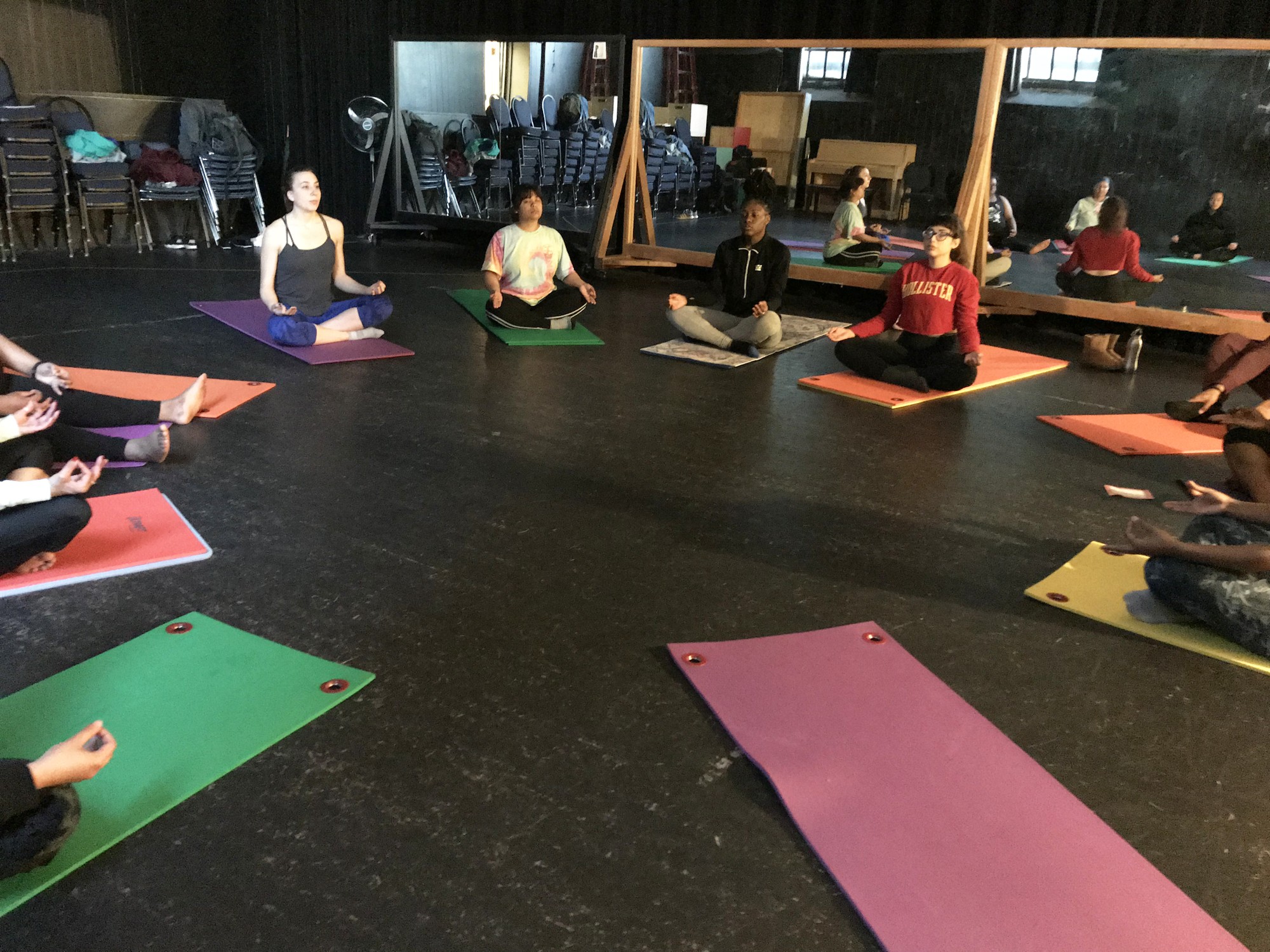
We sat in a circle as she directed us through each posture. All were welcome, and students trickled in and joined the circle. Kemetic yoga has a breathing pattern to implement purposeful breathing: inhale, pause, exhale, pause. Each of the movements were done three times, following the geometric theme of the activity. Many of the names of the poses were slightly different from what we’re used to hearing. For example, the normal sitting pose is called ‘sesh.’
“It’s a black practice that needs to be spread,” Fletcher said. “It offers something to the POC community that Asian or Indian yoga does not.”
Dionna Fletcher directed the class through movement and breathing techniques. | Photo by Silvia Alfonso
Fletcher has been part of a series of fitness sessions going on around campus and town. The series was compiled by Chryste Johnson, interim coordinator for the African American Center of Excellence (AACE). Johnson named the series Soul Fitness as a way of representing people of color during Black History month, and intended to bring in new forms of movement that people haven’t heard of.
[perfectpullquote align=”right” bordertop=”false” cite=”Dionna Fletcher” link=”” color=”” class=”” size=”17″]“It’s a black practice that needs to be spread. It offers something to the POC community that Asian or Indian yoga does not.”[/perfectpullquote]
It is a three-week compilation of different forms of movement. Johnson explained that there’s been hip-hop cardio, there will be a steppin’ class and it’s the same series that made Love Ya’ Self Queen.
HSU student DiOria Woods was one of the students who attended the series.
“I’m a dancer, I’ve never heard of this kind of yoga and I like to try new things,” Woods said. “I’m part of the culture center and I wanted to actually interact with these kinds of events.”
Though it was a small class, it was a relaxing thing to get into after the stress of the day. Fletcher made everyone feel welcomed and comfortable. Even at the intermediate level the people in the class felt comfortable to do the poses no matter how hard it seemed.
Students sat back on their heels, ready for the next movement. | Photo by Silvia Alfonso
Nicole Lamperti was another student that joined in on the Kemetic yoga class.
“I’m in a world cultures class and was curious about this kind of yoga,”Lamperti said.
The lights were off, letting the natural light come in from the sun setting through the windows. This created a more relaxed feel to the class. In the background, Fletcher played music by people of color, supporting the idea of loving yourself and putting yourself first.
Kemetic yoga brings a new form of movement to a common type of activity. Yoga is done all over the world but can be done in different forms. Kemetic yoga reminds us to be purposeful in our movements and reminds us about the different places we come from.
It’s time for the Humboldt community to start supporting black-owned businesses
Humboldt County is a predominantly white community. According to Data USA 75.4 percent of the population is made up of white residents. When it comes to the business ownership aspect the numbers are even lower. While they exist, there is a lack of black-owned businesses. According to the United States Census Bureau, as of 2012 only 1,853 minority owned businesses around Humboldt County, meanwhile non-minority businesses make up 10,333 in Humboldt County.
It’s important for us as students to highlight a lack of diverse groups around the Arcata community, as we strive to be a university that prides itself in having a diverse group of students.
There are some black-owned businesses that are around Humboldt County. Over at Eureka there is Dewy’s Beauty Boutique that stocks ethnic hair care products. However, their products are on the expensive side for students who are already on a tight budget. If there were more business that provided this need, it’d be a different reality for many students.
Last month, the Eureka NAACP chapter spoke about how important it is to support black businesses around Humboldt County, as it shows love and support to the black Humboldt communities. There are black-owned businesses like A Taste of Bim, Sistah’s Vegan and Shine Aesthetic just to name a few.
In the first episode of Michael Santiago Render’s Netflix series “Killer Mike’s Trigger Warning,” Render lives three days supporting only black businesses in Atlanta, Georgia. However this proves to be difficult for Render, as there are no black-owned hotels or even foods in some cases, leaving him hungry and sleeping on public benches. The take-away from this episode is to highlight how sparse black businesses are in the USA.
Luckily, there are some clubs, organizations and events to help with diversifying our community. The Multicultural Center at HSU is a student-led organization that helps the diverse student population, while also being open to everyone who is interested. They work closely with the D street community center to hold their events, such as the Home Away From Home Potluck. Also, there’s the African American Center, the Latinx center and the Native American center (ITEPP). All these organizations offer services and plan events for students and the community.
The next locally black-owned businesses coming to campus is Shine Aesthetic and Dewy’s Pop Up. They’ll be on campus Wednesday Feb.13 from 2-5 p.m. at the African American Center for Academic Excellence in Nelson Hall 206. It’s up to us as a community to support them and other black-owned businesses as they come to Humboldt.
While Black History Month is in full swing, students who found themselves in Nelson Hall on Feb.15 discovered something a little different.
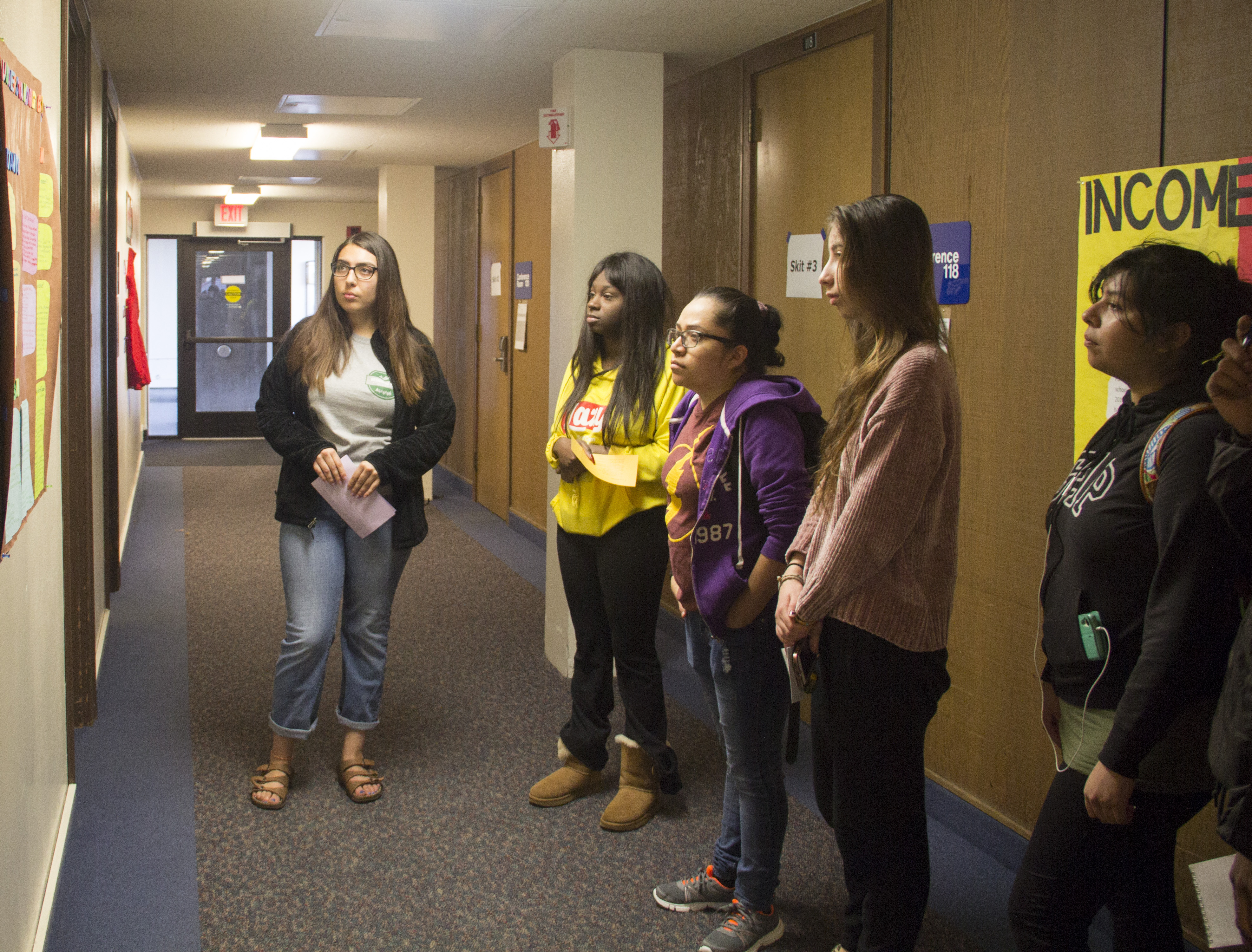
The Tunnel of Oppression was a demonstration put on by Housing & Residence Life. The tunnel consisted of a series of skits that were meant to spread awareness of different forms of oppression, some that we see every day.
Sasha Wallace, an area coordinator for Housing and Residence is one of the facilitators of this project.
“We try to do this every year, but we were unable for the past two years,” Wallace said. “I’m really excited to get it going again.”
At the start of the tunnel, you are given a guide to lead you through the demonstration and help ensure that anyone who feels uncomfortable can be escorted out.
The first skit depicted two students walking and conversing in Spanish. A bystander approaches and barrages them with a wall of insults and racial slurs. The interaction ended with the attacker telling the pair to go back to Mexico. The skit was short, but it was something that most people have seen in their lives.
The second skit was something more relatable for Humboldt State students. Two students were on a computer looking for potential housing options. They get an opportunity to speak to a landlord who sounds assuring that they will get the place. When they arrive to see it, the landlord notices they are a lesbian couple. Immediately, the situation changes when she tells them the place is no longer available.
Elizabeth Alvarez, an HSU student and the landlord in the previous skit, felt being part of this project would be a good idea.
“I know there’s a problem with housing discrimination in Humboldt County,” Alvarez said. “I think it plays a huge part as to why HSU students have trouble finding housing.”
Between the skits, you can look at the various posters on the walls that contain information about different kinds of oppression.
Another skit showed a young woman at a bar by herself. She is approached by a man who persistently buys her drinks and makes her drink them. Another woman at the bar sees this happening and quickly takes the drunk girl from this man. She sits her down and helps her find a way to get back to her own house. This situation at HSU is often known as a “Check-It” situation.
Samantha Mariscal, an HSU student and a guide for the tunnel, was excited to be part of this project.
“It challenges you out of your comfort zone and it makes you think differently,” Mariscal said. “I witness some of these things every day and I just want people to be more aware.”
The final skit portrayed a student going to a meeting with his career advisor. The student shares his plans to go to UC Santa Cruz to be closer to his single father. He also discloses that English is his second language and he is having some trouble communicating. The career advisor refuses to even make eye contact with the student. Throughout the meeting the advisor is constantly putting him down and telling him to think about more “realistic” options. It gets to the point that the student feels so uncomfortable he asks to see another advisor, to which his request is denied. This skit was unique, as it showed faculty-to-student oppression, which is something a lot of people would not think of.
The event was in honor of Black History Month, a time designated to recognize the oppression black people face in our country, but was not specifically tailored to the topic.
At the end of the tunnel, you are taken to a debriefing room where you sit down with another person who lets you unpack everything you just saw.
Tyler Ramsey, an HSU student, was one of the people helping with debriefing.
“I’m always talking about social justice and I wanted to debrief so I can hear what other people thought of their experience here,” Ramsey said. “We want to show this to spread awareness. All we can do is educate people and hope they learn.”
This website uses cookies to improve your experience. We'll assume you're ok with this, but you can opt-out if you wish. Cookie settingsACCEPT
Privacy & Cookies Policy
Privacy Overview
This website uses cookies to improve your experience while you navigate through the website. Out of these cookies, the cookies that are categorized as necessary are stored on your browser as they are essential for the working of basic functionalities of the website. We also use third-party cookies that help us analyze and understand how you use this website. These cookies will be stored in your browser only with your consent. You also have the option to opt-out of these cookies. But opting out of some of these cookies may have an effect on your browsing experience.
Necessary cookies are absolutely essential for the website to function properly. This category only includes cookies that ensures basic functionalities and security features of the website. These cookies do not store any personal information.
Any cookies that may not be particularly necessary for the website to function and is used specifically to collect user personal data via analytics, ads, other embedded contents are termed as non-necessary cookies. It is mandatory to procure user consent prior to running these cookies on your website.