The Lumberjack


Students Serving The Cal Poly Humboldt Campus and Community Since 1929

Tag: Collin Slavey

  • Humboldt State Geologists Research Faults

    Humboldt State Geologists Research Faults

    Faults give clues to the history of the earth’s crust and how it impacts our future

    Earthquakes are more than just shaking. Turns out the rumbling is sound vibrations from the massive snap caused by slipping, bending and breaking rock.

    Deep below Earth’s crust, a mantle of plastic-behaving rock bends and twists under immense pressure. Its mass is 67% of the Earth’s mass. Its temperature ranges from 392 degrees Fahrenheit at the upper boundary of the crust to an incendiary 7,230 degrees Fahrenheit at the core-mantle boundary. Sometimes the overlying, thin 50 to 20 kilometer thick crust cracks.

    “The earthquake is the sound waves moving through the rock, elastic waves propagating through it,” said Dr. Mark Hemphill-Haley, a Humboldt State University neotectonics professor and the co-chair of the geology department. “People who have seen the ground moving are seeing the surface waves of rock bending back and forth.”

    According to Hemphill-Haley, imagining the scale of the mantle is challenging both in size and as a metric of time. Some people have compared the movement in the mantle to lava lamps or boiling water, a force called convection, where hot liquid bubbles up through cooler liquid, but Hemphill-Haley said that can be misleading.

    “We’ve had these old models of the mantle convecting but it’s probably less like that- we’re talking about solid rocks,” Hemphill-Haley said. “They’re solid but they are plastic too. Tectonic plates, which consist of the crust and the upper mantle are in motion and can move faster than four to five centimeters per year. Mantle convection is likely a more slow process than that.”

    Like the snap one hears when a pencil breaks, the sound vibrations from the snapping rock shake the ground all around the breaking point, quaking the earth.

    Giragos Derderian, a fourth year geology student, explained the nuance between elastic, plastic and brittle rock. Generally, a rock seems solid but if enough force is applied, the rock can change shape. Derderian said the change in a rock is called deformation.

    “Plastic deformation is when structures change shape due to a force and the rock stays deformed when the force dissipates,” Derderian said. “After elastic deformation, the rock returns to its original shape when the force is removed.”

    Brittle deformation, Hemphill-Haley said, is when forces are so great, the stress exceeds the rock’s elastic limit and snaps it, like a pencil bent too far. An earthquake is when massive bodies of rock experience so much force that they become brittle and break. Like the snap one hears when a pencil breaks, the sound vibrations from the snapping rock shake the ground all around the breaking point, quaking the earth.

    The earth’s crust is made up of massive plates that fit together like an ill-constructed puzzle with some plates pushed too hard into each other and some plates pulling away from each other. Force builds up where these plates meet and can deform each other in elastic, plastic and brittle ways.

    Hemphill-Haley said the big thing that causes plate motion is the weight of oceanic plates. In this example, oceanic plates have converged with continental plates. he denser oceanic plates are diving below the less dense oceanic or continental plate.

    These convergent plates cause a few things to happen on the surface. The leading edge of the less dense plate can crumple into massive mountain ranges like the Klamath Mountains. The oceanic plate descends deep into the mantle at submarine trenches referred to as subduction zones like off our coast—the Cascadia subduction zone. Geologists research the effects of plate tectonics here on the northern California coast in a variety of ways.

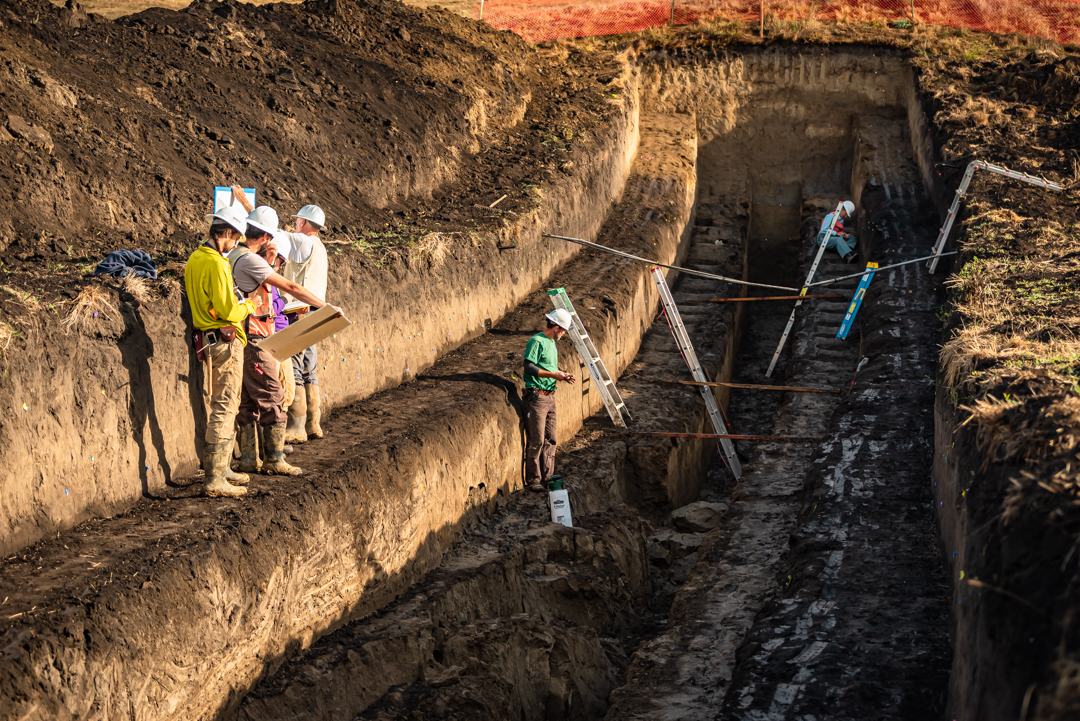
    Hemphill-Haley’s colleague Dr. Melanie Michalak researches the Klamath Mountains in northern California and Oregon, and the Coast Range closer to HSU. In one research effort, she and her team trench the ground and look at rock layers that have been changed by faults. They seek material that can be used to estimate the age of the rock. Some of her research is also on recently active faults.

    “As a geologist I care about all faults, the ancient ones, the active ones, I don’t discriminate,” Michalak said. “But people though, from a risk perspective, they’re more concerned about which ones will cause an earthquake and damage their house.”


  • Inside the Immune System

    Inside the Immune System

    How the body uses multiple levels of defense against foreign intruders

    With the coronavirus craze going on right now, it may be nice to know our bodies are working hard to protect us.

    When a foreign bacteria or a virus enters the body, it goes into full defensive mode. A complex relationship of cells evolved over hundreds of thousands of years, the human immune system is our reliable defense from sickness and death. The body has developed a battalion of guards, soldiers, intelligence, weapons factories and communication stations to defend us from attackers.

    The Kurzgesagt – In a Nutshell YouTube channel published an easy-to-watch video on the immune system. They broke down the immune system’s jobs into 12 jobs including to communicate, kill enemies, cause inflammation, remember enemies and make strategic decisions.

    There’s more to the process too. Russel Wheatley is a family practitioner at the HSU Student Health Center. Wheatley said that, even though he doesn’t study immunology, he has a working knowledge of the immune system. He referenced an immunologist colleague named Huang Bo for his explanation.

    Wheatley said there are five levels of immunity, and all of these levels work together as a multi-faceted defense.

    The first level is a physical barrier, the skin. He said the skin is bacteria and virus-proof. Between the skin and the mucous in your nose and mouth, combined with coughing and sneezing, the body is pretty good at fending off invaders.

    If the skin is broken, then the immune system really starts working. When the skin is cut, nearby bacteria take advantage of the break and enter the blood stream, risking infection. First to the plate is the macrophage, a large, abundant cell.

    “Most of the time, they alone can suffocate an attack because they can devour up to 100 intruders each,” Kurzegsagt says. “They swallow the intruder whole and trap it inside a membrane. Then the enemy gets broken down by enzymes and is killed.”

    If the macrophage is overwhelmed, it begins to call for help from the garrison. Neutrophils are hype- aggressive, destructive cells that appear at the site of the battle to destroy any cell near the cut, including healthy ones. If this isn’t enough, the macrophage calls the dendritic cell to the battlefield.

    “You have to rest the body when the immune system is trying to work.”

    Russel Wheatley

    The dendritic cell is the brains of the operation. When hailed by the macrophage, the dendritic cell starts to collect samples of the intruders and presents them on the outer membrane.

    “Now, the dendritic cell makes a crucial decision,” Kurzgesagt says. “Should they call for anti-virus forces that eradicate infected body cells or an army of bacteria killers?”

    If a virus has entered the body, Wheatley says a protein in the blood stream called a complement protein identifies the virus and destroys them. Eventually, after the body has torn apart the virus, white blood cells produce antibodies.

    In the case of the coronavirus, it’s a little more sinister. The virus tries to hide itself from the immune system by burying itself in lung cells. In a video about the virus, Kurzegesagt says the virus attaches itself to a specific receptor on lung cells and inserts a new DNA command: copy and reassemble. It fills up with more and more cells until it’s full, and then the cell receives a final order: self-destruct.

    “At this point, the virus hasn’t done too much damage,” Kurzgesagt says. “After millions of body cells have been infected and billions of viruses swarm the lungs, the virus releases a real beast on you, your own immune system.”

    While the immune system pours into the lungs, the virus infects them and confuses the system. The coronavirus causes immune cells to overreact and yell, “Bloody murder.” The immune system wastes a lot more resources than it should to fight the reaction, exhausting the body’s energy.

    Wheatley encouraged anybody who is feeling sick to rest. He explained when a person wakes up, the body has a limited bowl of energy. Thinking, exercising and immune-responding all need that energy to do their thing, and expending energy can make the body less effective at fighting invaders.

    “You have to rest the body when the immune system is trying to work,” Wheatley says. “Some people have different immune systems and some aren’t nearly as strong as others, especially to these viral type invaders. You have to rest. You have to give it the right kind of energy.”

  • 2020 Census: Raise Your Hand If You’re Here

    2020 Census: Raise Your Hand If You’re Here

    Everything you might want to know about the 2020 census

    The United States Census Bureau has fulfilled the constitutional obligation to count every human in the country since 1790. Every home in the United States should have received an invitation to participate in the 24th United States census by April 1.

    “The census tells us who we are and where we are going as a nation,” the Bureau’s website said.

    The census is a measure of what’s going on in American communities. The data collected from the census helps communities determine where to build infrastructure, from schools and supermarkets to homes and hospitals. Beyond that, California District One (Humboldt County included) House Representative Jared Huffman said it’s a fundamental element of the United States.

    “The significance of everyone participating goes so far beyond that,” Huffman said in an email through his spokesperson. “Having a complete picture of the people in communities across the country determines how folks are represented and makes sure everyone has a voice in the decisions their government makes. That’s the foundation of our democracy.”

    In the past couple of years, the Trump administration tried to politicize the census as they pursued the addition of a citizenship question, but they failed. To be clear, there is no citizenship question on the 2020 census.

    John Meyer, chair of the Humboldt State politics department, explained how an accurate census requires trust between the federal government and residents.

    “The goal of the census was an accurate count of who residents are and where they live,” Meyer said. “The citizenship question discouraged that.”

    “Students today are the most diverse demographic, and if you’re not counted, other resources will not follow.”

    Nicola Walters

    Meyer said answering the census should have no personal impact on respondent’s lives, and that there should be no arrests nor barriers to voting following a response. Meyer said immigrants from other countries, especially those with authoritarian, surveillance-heavy governments were often wary of answering the questions for fear of retaliation.

    The U.S. Census Bureau has been politicized in the last few years, but the law prevents the Census Bureau from sharing information with law enforcement. The information is supposed to be kept strictly confidential.

    “It is in the interest of powerless people to answer the census,” HSU American government lecturer Nicola Walters said. “Students today are the most diverse demographic, and if you’re not counted, other resources will not follow.”

    Walters said she would have liked to see the citizenship question on the census. The census is a rare opportunity for scientists like her to collect data on the entire population, rather than just the samples she’s used to. Nonetheless, she is looking forward to the results of the 2020 census.

    According to the Census Bureau’s website, many of the planned elements of getting a full count, including door to door interviews, will be postponed.

    “The 2020 Census is underway and the most important thing you can do is respond online, by phone, or by mail when you receive your invitation,” the Census press kit said. “Responding now will minimize the need for the Census Bureau to send census takers out into communities to follow up.”

  • The Lumberjack Takes Home 14 Media Awards

    The Lumberjack Takes Home 14 Media Awards

    Humboldt State student newspaper wins four first place California College Media Association awards

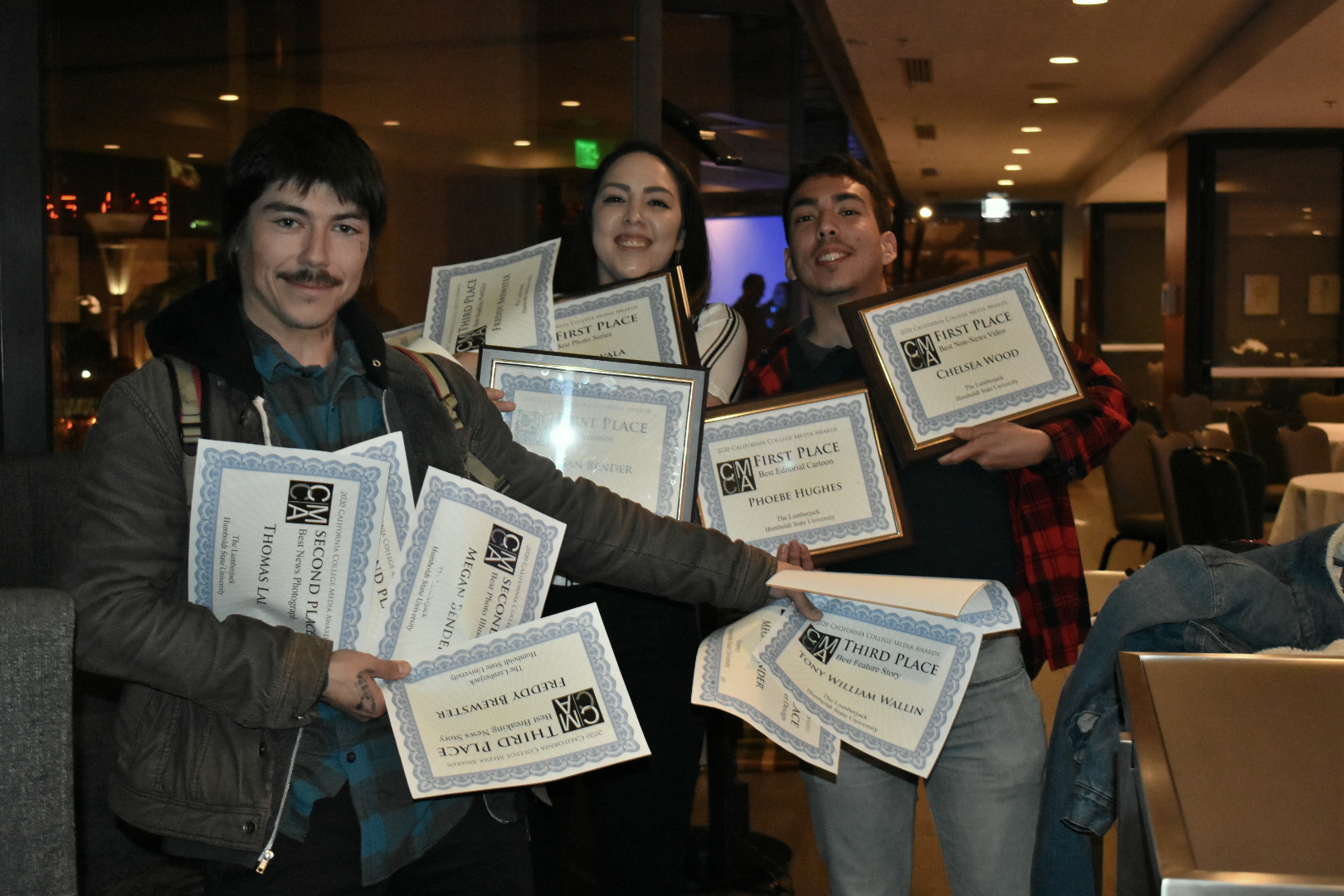
    The Lumberjack won 14 California College Media Association Excellence in Student Media awards for a variety of work in 2019. The Lumberjack took home four first place awards, seven second place awards and three third place awards at the CCMA awards banquet Feb. 29 in San Francisco.

    Deija Zavala won Best Photo Series, Phoebe Hughes won Best Cartoon Illustration, Megan Bender won Best Illustration and Chelsea Wood won Best Non-News Video.

    Megan Bender took second in Best Newspaper Front Page Design and Best Photo Illustration, Jose Herrera took second in Best Arts and Entertainment Story, Jett Williams took second in Best Newspaper Column, Liam Warner took second in Best Sports Story and Thomas Lal took second in Best News Photograph. James Wilde, Chelsea Wood and Collin Slavey took second in Best News Video.

    Freddy Brewster came third in Best Headline Portfolio for three different headlines and third in Best Breaking News Story, while Tony Wallin took third in Best Feature Story.

    HSU’s bilingual, monthly student-run newspaper, El Leñador, won 12 awards, including three first place awards. HSU’s student-run semesterly magazine, Osprey, won three awards, with a first place award to Megan Bender for Best Magazine Inside Page/Spread Design.

    The Lumberjack is the independent, student-run online media publication and newspaper established in 1929 at Humboldt State University.


    View the full list of HSU student award winners below:

    CCMA Winners 2020:
    FIRST PLACEPUBLICATIONSTUDENT(S)
    Best Photo SeriesThe LumberjackDeija Zavala
    Best Editorial CartoonThe LumberjackPhoebe Hughes
    Best IllustrationThe LumberjackMegan Bender
    Best Non-News VideoThe LumberjackChelsea Wood
    Best Newspaper Inside Page/Spread DesignEl Leñador Celeste Alvarez, Jose Herrera
    Best Newspaper Front Page DesignEl Leñador Kylee Conriquez, Jose Herrera
    Best Non-Breaking News StoryEl Leñador Jose Herrera
    Best Magazine Inside Page/Spread DesignOspreyMegan Bender
    SECOND PLACE
    Best Newspaper Front Page DesignThe LumberjackMegan Bender
    Best Arts and Entertainment StoryThe LumberjackJose Herrera
    Best Photo IllustrationThe LumberjackMegan Bender
    Best News VideoThe LumberjackJames Wilde, Chelsea Wood, Collin Slavey
    Best Newspaper ColumnThe LumberjackJett Williams
    Best Sports StoryThe LumberjackLiam Warner
    Best News PhotographThe LumberjackThomas Lal
    Best IllustrationEl LeñadorKylee Conriquez
    Best EditorialEl LeñadorBrenda Estrella
    Best Special Issue/SectionEl LeñadorJose Herrera, Vanessa Flores
    Best Overall Newspaper DesignEl LeñadorJose Herrera, Celeste Alvarez, Cara Peters, Ash Ramirez
    Best Social Media ReportingEl LeñadorVanessa Flores
    Best Magazine Cover DesignOspreyMegan Bender
    THIRD PLACE
    Best Headline PortfolioThe LumberjackFreddy Brewster
    Best Feature StoryThe LumberjackTony William Wallin
    Best Breaking News StoryThe LumberjackFreddy Brewster
    Best NewspaperEl LeñadorStaff
    Best Interactive GraphicEl LeñadorCeleste Alvarez
    Best InfographicEl LeñadorCara Peters
    Best Arts and Entertainment StoryEl LeñadorLora Neshovska
    Best Magazine Photo SeriesOspreyJett Williams, Megan Bender
  • Sprinkles Expected for Spring Break

    Sprinkles Expected for Spring Break

    Rains look to rush in this upcoming weekend

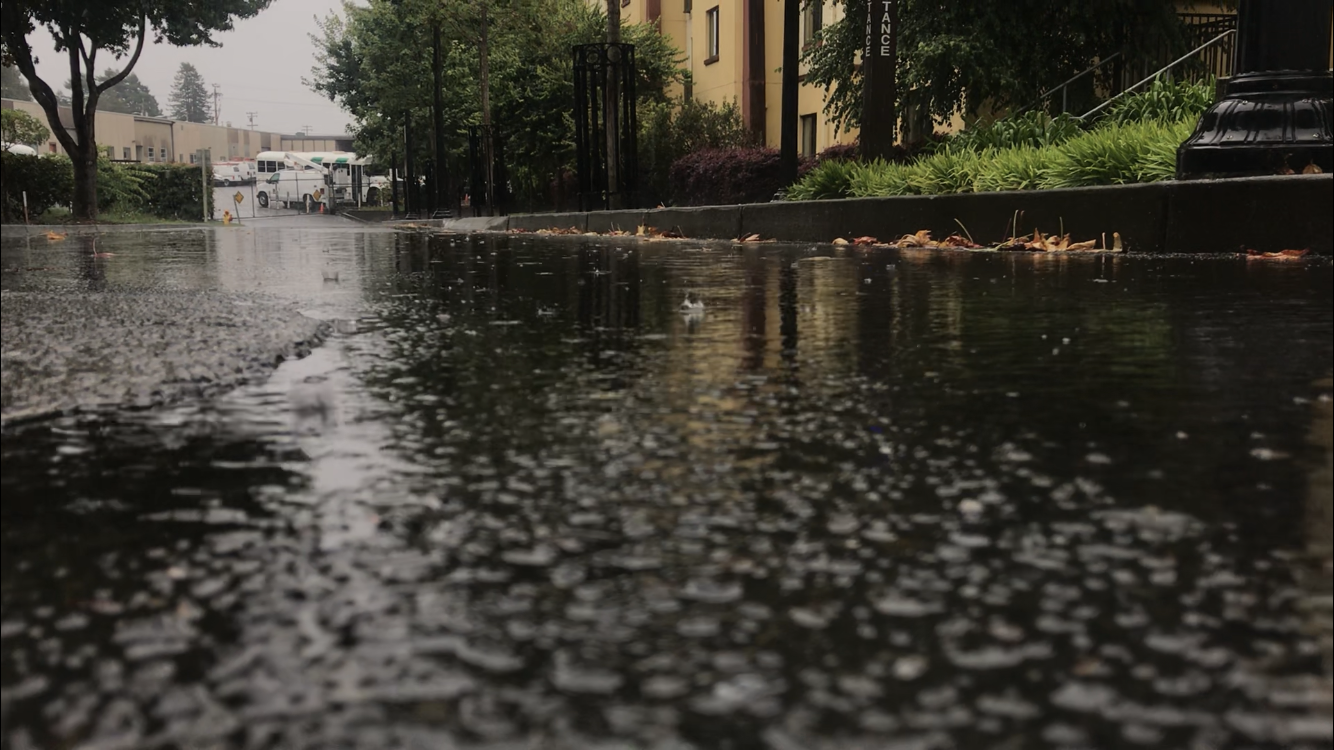
    Cold clouds creep on the horizon, waiting for students to flee Arcata before dumping rain on the city. The days of sunny skies and warm weather may come to a damp halt at the beginning of spring break.

    Spring is here, and it’s wet. This coming weekend, rain is forecasted to fall on Humboldt State. Break is just around the corner and inclement weather may be a downer for partying students, so be sure to check the weather before the rager starts.

    This helpful graph, built by weatherspark.com, shows the average daily chance of rain in Arcata throughout the year. | Graph by Weatherspark

    To prepare for the break, The Lumberjack science section reached out to the National Oceanic and Aeronautic Administration office and asked a meteorologist what we can expect. It may get cold.

    According to Brad Charboneau, one of those NOAA meteorologists, we’ve still got a couple more cold months ahead of us. We’re not out of the chill yet, even though the spring season is when temperatures start warming up.

    “I check the weather often either with the NOAA weather app or by looking at the sky. If it looks questionable or if the sky is darker than usual, check it.”

    Mattea Roberts

    For curious weather geeks, the NOAA station uses a number of sensors and measuring devices to record weather events. For example, they use a tipping bucket rain gauge that measures hundredths of an inch. Each time the bucket fills, the bucket tips over and records a tic. The more tics, the more water. Easy as that.

    Mattea Roberts probably appreciates meteorological instruments like the tipping bucket. A freshman studio artist at HSU, Roberts takes advantage of NOAA science by using their weather app. She said it was a good idea to check the weather if the sky looked questionable.

    “I check the weather often either with the NOAA weather app or by looking at the sky,” Roberts said. “If it looks questionable or if the sky is darker than usual, check it.”

    Roberts also said she brings a rain jacket or an umbrella to school every day, just in case it does rain. She’s probably going to be prepared for whatever the climate has to throw at her this weekend.

    “I can tell you right now, it’s gonna be nice and warm up until Friday,” Charboneau said. “On Saturday, believe it or not, we’re gonna have a shift to cooler, more showery weather that will last through the weekend.”

    Charboneau said the rain isn’t going to be very intense from the perspective of the rivers, but the conditions may make the weekend less than ideal if students have outdoor plans.

    One of Charboneau’s colleagues, Meteorologist Ryan Alyward, explained how NOAA forecasts weather. He said as a meteorologist, his job is to pay attention to what’s going on in the sky and diagnose the conditions. Understanding what’s happening now allows him to make a prognosis of what weather conditions will be.

    Using a program he called Ensemble, meteorologists input real-time data and get a large number of weather predictions. The predictions are future weather patterns that may or may not happen, and it is his job to use these to make a forecast of the weather. The trick is to look at the similarities in each model, because together, those similarities make the most likely prediction.

    The current models, beyond the wet weather forecasted in Arcata, include snow in the mountains east of the city. Charboneau said although snow is more common in January and February, it’s not unheard-of in March.

    “We’re looking for the potential of snow—low-level snow—which will impact the passes going east,” Charboneau said. “It is likely to see some snow over the weekend. Those are the main threats over the weekend.”

  • Filling in the Fossil Record with Fungi

    Filling in the Fossil Record with Fungi

    Madison Lalica cracks open 400-million-year-old fossils

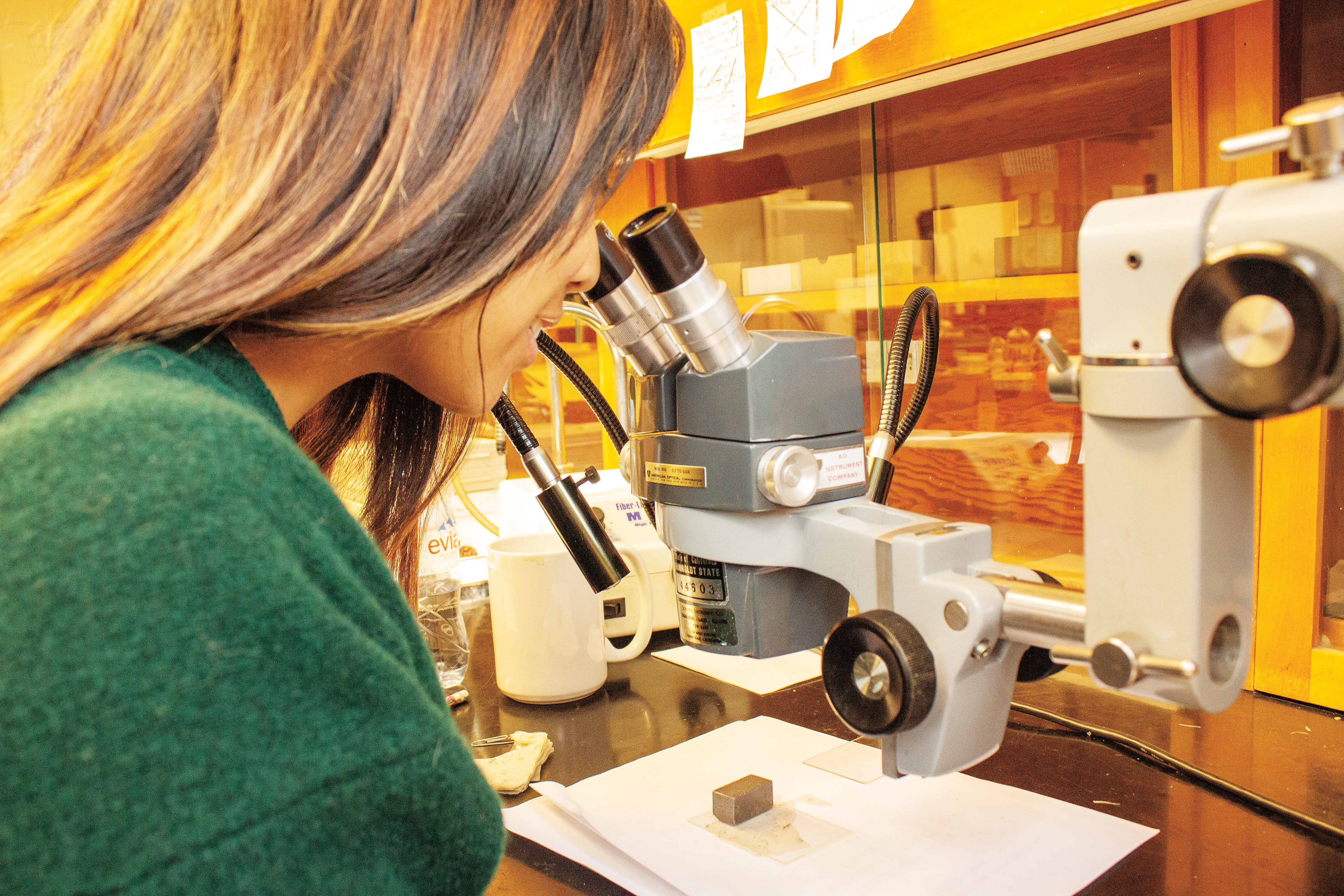
    Madison Lalica is a junior botany major researching ancient fungi in fossilized plants over 400 million years old. She is filling in the blanks of the fungi fossil record with her unique research.

    “Given their importance in current ecosystems, I support [that fungi] must have had such a fundamental role in ancient ecosystems,” Lalica said. “And that is what I’m trying to prove with fossil research.”

    Lalica said she had the privilege to work with a huge box of rocks on loan from the Smithsonian Museum filled with fossilized plants. The fossils came to Humboldt State University by way of the Smithsonian, but they were collected in the 1960s by a paleo botanist named Francis Huber at a rock formation called Battery Point in Canada.

    “We look at a bunch of plant fossils that are 400 million years old,” Lalica said. “They are preserved very beautifully and you can see all of their anatomical features.”

    Graduate botanist Megan Nibbellink works alongside Lalica. She is focusing on the anatomy and relationships of the host plants, called zosterophylls. The Battery Point fossils are preserved in a unique geologic formation that serves to make really good fossils.

    “It is a fluvial deposit,” Nibbellink said. “It was a bunch of pieces of fragments caught up in fine sediment at the end of a river. The reason why I like these fossils is because you can see the individual cells. And that’s also why Maddy is able to do what she does.”

    When the host plants were buried by fine river sediments all those millennia ago, their form was preserved as the sediment solidified over millions of years. The fine particles, though, essentially printed the fossils in high resolution with so much detail that Lalica found what she was looking for: ancient fungi.

    Lalica is scanning and investigating these plant fossils for any evidence of fungal material. Spores, fungal tendrils called hyphae and scars from fungal infection are some indicators she has found. Specifically, Lalica is working on identifying the fungi glomeromycota, a fungal group intimately symbiotic with plants today. She wants to learn how similar the ancient fungi are to modern fungi.

    “Why do you want to know about extinct life, then, one might ask. And to be honest, it is a pretty philosophical pursuit I guess. In the most direct sense, learning about extinct lifeforms helps us understand how the living lifeforms that we see around today evolved.”

    Alexandru “Mihai” Tomescu

    “The plant and animal fossil record is really well understood,” Lalica said. “Like they have a pretty clear timeline of ‘This happened and then this happened,’ but for fungi it is so sparse and incomplete that they have no idea what goes before what.”

    Lalica’s faculty advisor Alexandru “Mihai” Tomescu has made it his life’s work to figure out what goes before what. Tomescu explained that exploring the fossil record is important because fossils offer us the only way to look directly into life in the past.

    Tomescu was Lalica’s botany professor before she had switched majors, but she said she fell in love with the world of paleobotany after his instruction. Showing interest in the subject, Lalica took the opportunity to begin her own research as soon as Tomescu offered her the chance.

    “Why do you want to know about extinct life, then, one might ask,” Tomescu said. “And to be honest, it is a pretty philosophical pursuit I guess. In the most direct sense, learning about extinct lifeforms helps us understand how the living lifeforms that we see around today evolved.”

    The 400 million year old specimens are interesting to Tomescu and his team of researchers because the plants themselves represent the first wave of vascular plants, or plants that move water through special tissues, that evolved on Earth. Vascular plants constitute nearly every modern land plant, so these ancestors are significant. Fungi, too, are significant to life on Earth and may have been part of its foundation.

    “Fungi are probably, almost certainly I think, older than actual plants,” Tomescu said. “Fungi are a lot older. But because they’re just hyphae, since they’re flimsy, their fossil record is not that great.”

    Tomescu has been recruiting undergraduate students to research these fossils in his lab. Tomescu explained that HSU hosts a botany program that attracts a lot of students, but also that the students are enthusiastic to participate in research. He said HSU has students who are interested in the grey areas. Lalica was one of those students.

    Moving forward, Tomescu and Lalica are preparing to publish a paper about her year-long investigation into the fossils. This summer, she is presenting her research at the Botanical Society of America’s annual conference.

    “It seems like in Humboldt opportunities are like, if you talk to the right person or if you become friends with the right person, it just kinda happens,” Lalica said, “And it just so happened that I fell into the world of paleobotany.”

  • The Lumberjack in Print: Feb. 26, 2020

    The Lumberjack in Print: Feb. 26, 2020

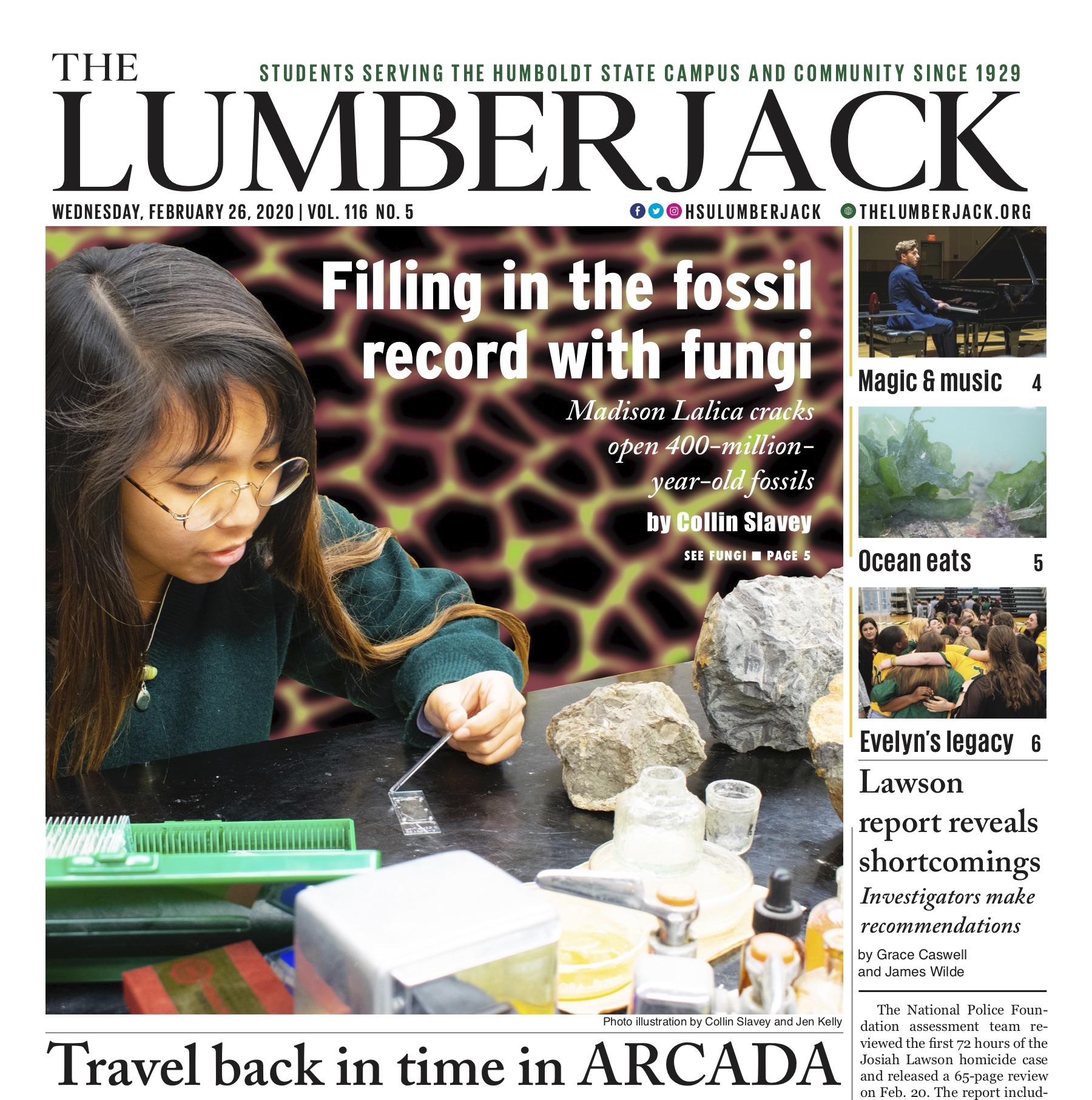
    The fifth issue of The Lumberjack for the spring 2020 semester

  • Sweet Songs, Fancy Feathers, Birds Bang

    Sweet Songs, Fancy Feathers, Birds Bang

    The sex life of a bird is no simple thing

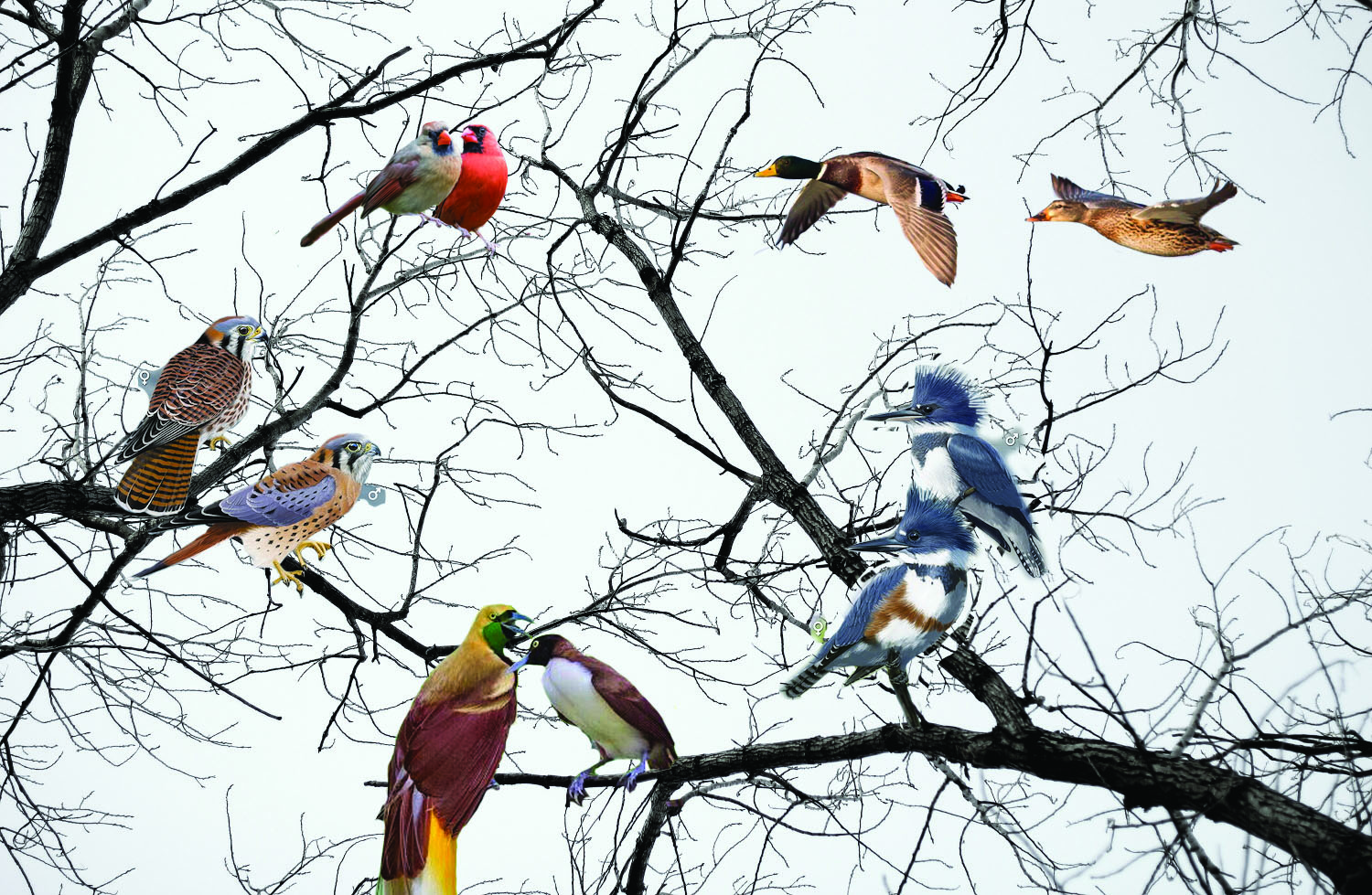
    Sex is a heck of a thing in the animal kingdom. Species of birds, insects, mammals and fish have developed a whole bunch of strategies to get laid. From mating dances to beautiful plumage to carefully engineered bachelor pads, the birds have come up with all sorts ways to strut their stuff.

    Wildlife junior Hannah LeWinter commented on how much effort birds put into reproducing. She remarked on the McGregor bowerbird’s tower—a three-foot-tall structure made of carefully placed twigs, attesting to the bird’s dedication.

    “When we think of animals, we assume they do the basic things like mate and get food and make shelter, but they really do have complex [behaviors] too,” LeWinter said. “They make these intricate structures to impress females to say that they are the best suitors but those structures serve no purpose besides attracting a mate.”

    “We think of animalistic sex of doing it only because you need to reproduce, but there are these animals that create these gestures like a pebble or a structure or a dance.”

    Hannah LeWinter

    Commitment to the craft is just the first step of courtship. The picky female bowerbird inspects her suitor’s structure, carefully judging sturdiness of the construction before joining the male on the forest floor. Then, the show really starts.

    The male bowerbird possesses the ability to imitate sounds and begins a showcase of what he’s learned. His voice can emulate everything from birds and animals in the forest to the sounds of human civilization.

    Once she’s satisfied with his performance, the male begins his dance. A chaotic shuffle from one side of his tower to the other, darting towards the female while flashing a bright orange haircut at her. Once he’s done with his groove, she submits and they do their thing.

    “We like to think we’re the only people or the only species who do that,” LeWinter said. “We think of animalistic sex of doing it only because you need to reproduce, but there are these animals that create these gestures like a pebble or a structure or a dance.”

    The McGregor bowerbird works every year to maintain his tower, but there is no expectation in the species to mate with the same female every year. Jeff Black, a wildlife professor at HSU who studies birds, published a collaborative book with 20 other ornithologists titled “Partnerships in Birds: A Study in Monogamy.”

    “We asked the question, ‘How special are bird partnerships or pair bond?’” Black said. “We asked, ‘How long do mates stay together?’ ‘Are they really faithful?’ ‘Do the faithful ones fare better than the ones that alternate and are less monogamous?’”

    The answer: it depends. Black and his fellow ornithologists quantified bird fidelity on a sliding scale ranging to very faithful to not at all faithful. They also investigated the behaviors between social pairs—pairs who spend their time together raising the young, foraging and nesting together—and genetic, or mating pairs.

    “Birds lay their eggs in a basket,” Black said. “When you look at all the 10,000 different types of birds, some birds even though they’re monogamous, when you look at their babies, the genes come from someone else.”

    “When you look at all the different studies, you can plot out how faithful they are. Swans are 100% faithful, the jays would be about in the middle and other species are just having sex everywhere.”
    Jeff Black

    Faithfulness or lack there of may have a couple of purposes, although the hypotheses are not totally fleshed out. One hypothesis is that, if a female searches for a new male mate, she may be looking for a more fit male than her social partner, and engage in what Black called extra-pair copulation.

    HSU River Ecologist Alison O’Dowd explained fitness is a measure of the ability for an individual to pass on their genes. Similar to natural selection, sexual selection is when a female looks for certain characteristics in their male partner, ranging from vibrant feathers to well constructed towers to perfectly executed dances.

    Black endorsed fidelity in birds. He said in geese and swans for example, more faithful pairs are more likely to successfully reproduce. Their offspring are also more fit for when they’re looking for a mate of their own. There may be a case for faith yet.

    “When you look at all the different studies, you can plot out how faithful they are,” Black said. “Swans are 100% faithful, the jays would be about in the middle and other species are just having sex everywhere.”

  • Chopping Genes and Growing Brains

    Chopping Genes and Growing Brains

    Innovative research and a discovery in HSU’s molecular biology lab

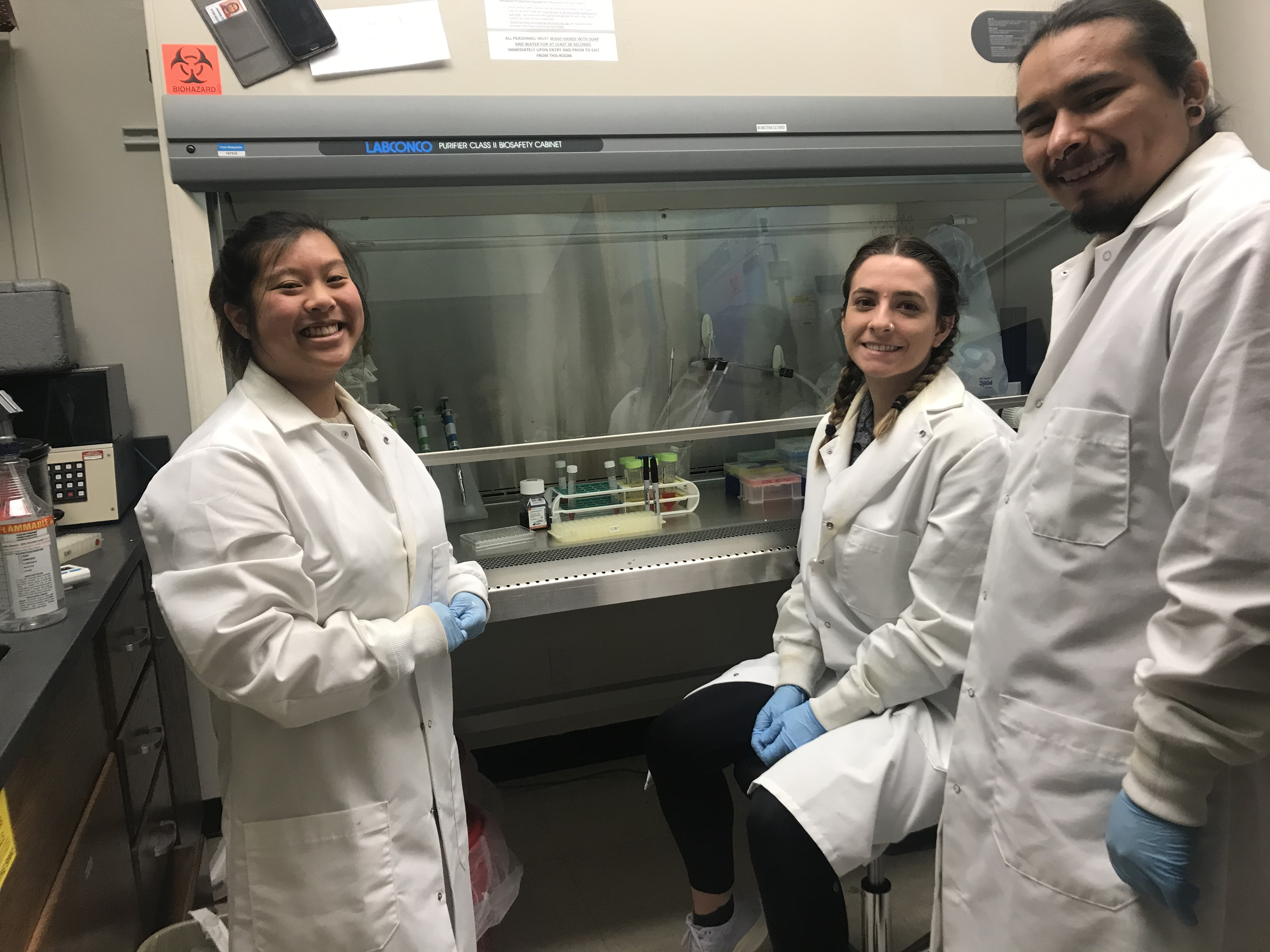
    Biology professor John Steele guided a cell biology lab his first year at HSU wherein he wanted to teach students that cells need nutrients to survive. After 48 hours, the lab discovered quite the opposite. James Gomez, a current student in the lab, had the opportunity to research more into the groundbreaking discovery.

    “In science, you’re kinda looking for that unexpected stuff,” Gomez said. “Right after I came in, I was really excited to be a part of that. There was this thing that was happening that we particularly can’t fully explain, and I’m actually in the lab doing that science.”
    Steele’s experiment for his class involved students starving the cells of nutrients to trigger a state of autophagy, which is when the cell starts to consume itself. Steele meant to emphasize that cells needed nutrients like amino acids and lipids to survive. It was assumed that starving cells of key nutrients eventually killed them.

    Steele said the experiment was common, and was usually shut down after six to eight hours. Steele decided to run it for 48 hours instead, since that was the time between lab sections. When his class returned returned to the lab, rather than seeing a bunch of dead cells, they were decidedly more alive. The lab had made a discovery.

    Despite the cells being in autophagy in Steele’s experiment, they had stopped dividing and took on a strange morphology. Their metabolic rate was high—they were very much not dead.

    Now the lab, including Gomez, are deep in research. The lab is introducing pathway inhibitors, or drugs, to block basic cell functions, narrowing down the essential and non-essential. The project is open-ended, as students methodically look at every cellular pathway to determine the needs of cells.

    “What I love about this project is that it was born here,” Steele said. “Nobody else that I know of is working on this, outside of HSU. That’s an awesome process to be a part of, where students get hands-on training in phenotypic genetic screening and drug screening, and we get to learn about the basic biology of cells in doing this.”

    Steele encourages the students in his lab to explore the boundaries of their knowledge. CRISPR, Cas9 and stem cell cultures are unique tools available to these students, and they offer an opportunity to think outside the box and do creative science.

    Steele’s lab combines bio-technologies using unique stem cell cultures and genome editing techniques. The lab cultures stem cells—cells which can grow into any cell type—and chops up DNA using CRISPR, a revolutionary gene-clipping tool, to learn how rare neurodegenerative diseases develop in the brain.

    “There have been some really cool applications of CRISPR out there. And they’re just because somebody said, ‘I wonder if we could do that?’ and they did.”

    John Steele

    Steele’s graduate student Kyle Anthoney, on the other hand, is working on making a model of a rare disease called progressive supernucleogical palsy, which looks like a combination of Parkinson’s and Alzheimer’s diseases. The disease is a tauopathic disease because a main characteristic of the disease is a buildup of the tau protein, which blocks some necessary cell functions. To understand the finer details of the disease, Anthoney developed a new method for growing neurosphere cell types into what is, effectively, a miniature brain.

    Scientifically named 3D neural sphere cultures, these miniature brains offer a platform for researchers to study three types of brain cells at the same time. Anthoney’s method allowed him to organically grow neurons, oligodendrocytes and astrocytes, three dominant cell types in the brain, from human stem cells, so they would develop naturally like they would in a growing brain.

    Anthoney’s research is up for review in a number of scientific publications and his name is on some breakthrough scientific papers. He is contributing to research about progressive supernucleogical palsy and other tauopathic diseases. His research concentrates the tau protein in a miniature brain to simulate the symptoms of progressive supernucleogical palsy, and he is exploring how the protein and disease impact his lab-grown brain cells.

    “There have been some really cool applications of CRISPR out there,” Steele said. “And they’re just because somebody said, ‘I wonder if we could do that?’ and they did.”

  • An Update on HSU’s Climate Action Plan

    An Update on HSU’s Climate Action Plan

    The Humboldt Office of Sustainability reports good news for HSU’s Climate Action Plan

    Humboldt State University’s 2019 Climate Action Plan Progress Report revealed positive impacts for the Climate Action Plan.

    Morgan King, HSU’s Climate Action Analyst, explained how the Climate Action Plan divides campus emissions into three scopes, each categorized by how much control HSU has over reducing them.

    “We’re striving towards reducing our scopes one and two,” King said. “Scope one, the majority of that is natural gas so what we need to do is start weaning ourselves off natural gas.”

    “We’ve completed almost half of our strategies. But the most expensive ones that also have the greatest impact are the ones that we’re still lagging a little bit behind on.”

    Morgan king, HSU’s climate action analyst

    Scope one emissions are from burning natural gas on campus and the fuels fleet vehicles use. Scope two emissions are from electricity use. Scope three emissions are from commuting, business air travel and solid waste management.

    The report said we are on track to meet the 2020 emissions reduction goal. The Climate Action Plan set a course for the campus to reduce greenhouse gas emissions to 1990 levels by 2020, to 80% below 1990 levels by 2040, and to become carbon neutral by 2050.

    To accomplish these emissions goals, the CAP includes 55 strategies that lay out the short and long-term goals necessary to achieve these goals. According to the progress report, 45% of the strategies have been completed.

    “We’ve completed almost half of our strategies,” King said. “But the most expensive ones that also have the greatest impact are the ones that we’re still lagging a little bit behind on.”

    There are three projects in the works for 2020. First is a faculty learning program intended to teach professors how to incorporate sustainability in their lesson plans. Second, over spring break, King is co-facilitating a student leadership institute in climate resilience. King is also developing a sustainability minor to enable students to better understand the methods behind creating a sustainable environment.

    “Within our initial climate action plan we saw it was critical to have an engaged campus population that are making decisions and engaged in actions to improve sustainability for the campus,” King said. “That’s potentially as important as changing out all the lights.”

  • Trees are Here to Help

    Trees are Here to Help

    How planting trees can serve as one branch of a climate action plan

    In the face of climate change, all scales of society, from government to corporations to individuals, are looking for ways to emit less and sink more carbon. The internet latched onto the tree-planting solution, but it’s important the right trees are planted in the right place at the right time.

    The climate crisis is the dominant issue of this decade. According to Robert H. Socolow and Stephen W. Pacala, who wrote the article “A Plan to Keep Carbon in Check” in 2006, the world must avoid emitting about 200 billion tons of carbon over the next 50 years.

    To make the problem manageable, Socolow and Pacala turned the required reduction into one-billion-ton “wedges.” The paper contained strategies that could be scaled up by 2050 to reduce carbon emissions by one million tons per year. For example, a wedge would be achieved if the number of miles traveled by the world’s cars was cut in half or if global deforestation was halted within 50 years.

    Tree planting has become one of the most popular solutions in popular culture. Ecosia and Team Trees are two internet campaigns working to plant millions of trees.

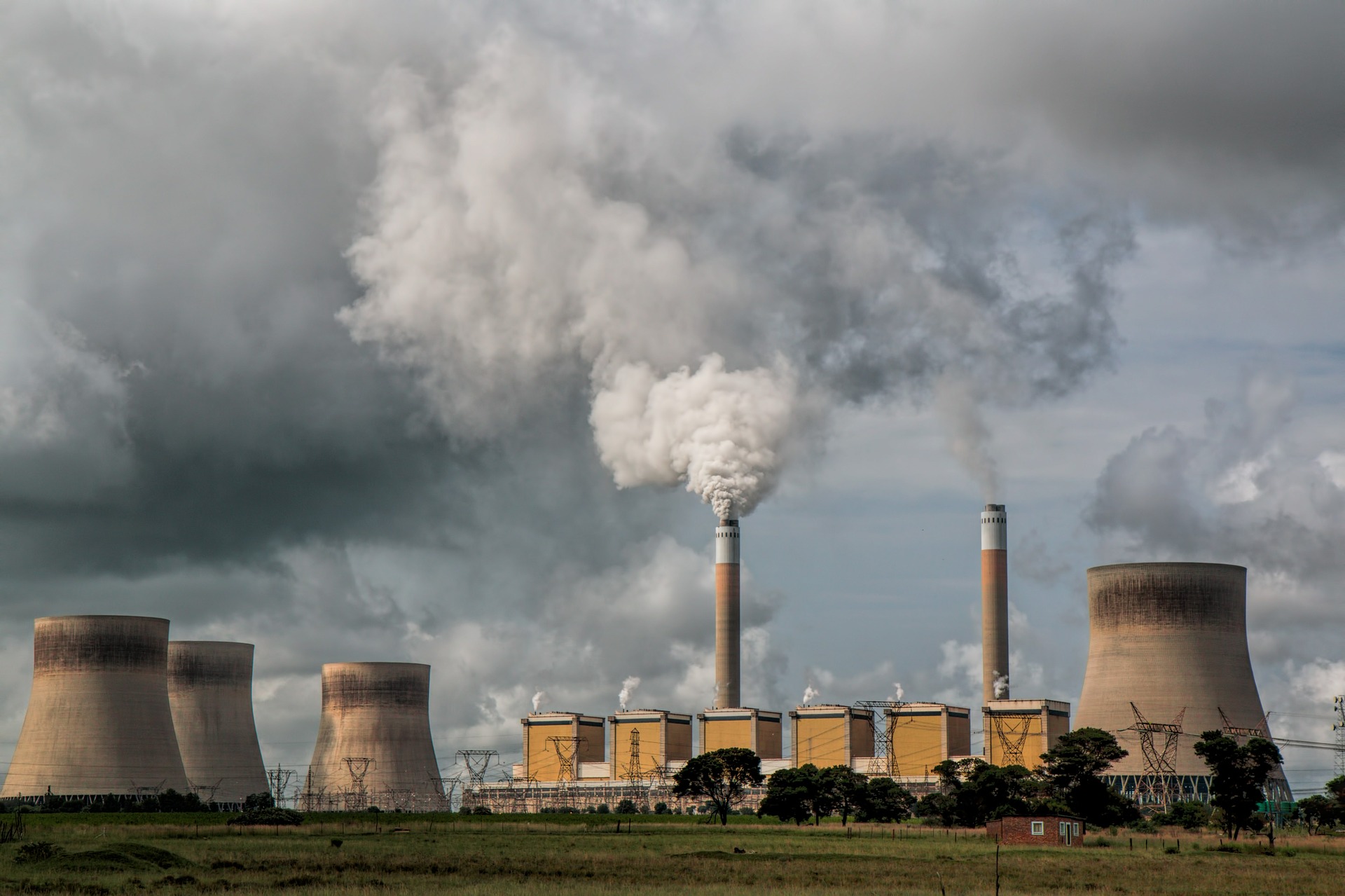
    A consistent goal in climate science is net zero emissions. In other words, the volume of greenhouse gasses going into the atmosphere needs to equal the volume coming out. With a record 37 billion tons of carbon dioxide emitted in 2018, that’s a daunting task. To achieve this goal, society needs to emit less carbon and increase nature’s carbon sinking, or the natural process of turning carbon dioxide gas into solid matter.

    Top minds of the world are putting their heads together to come up with solutions, ranging from modernized public transportation to alternative energy technology to lifestyle changes toward less consumption. Beyond that, policy makers and scientists are working closely with everyday people to educate, inspire and solve the crisis.

    Locally, Humboldt State University, the City of Arcata and Humboldt County have prepared climate action plans. In the spring of 2019, five public workshops were hosted by the county to get ideas from community members on an action plan. The primary goal of these plans is to reduce emissions to pre-1990 levels by 2030.

    2030 is the nearest milestone in climate policy. According to the Intergovernmental Panel on Climate Change Special Report on Global Warming, global emissions will need to fall 45% from 2010 levels by then to be on track for the net zero emissions goal for 2050. This ideal timeline would limit global warming to the best-case 1.5 degree Celsius increase in average temperature, a goal which still brings with it real climate change.

    Tree planting has become one of the most popular solutions in popular culture. Ecosia and Team Trees are two internet campaigns working to plant millions of trees. A number of science-based YouTubers have published videos explaining the project, including SmarterEveryDay, Mr.Beast and Aspect Science.

    Trees are a valuable ally in the battle against climate change because they sequester carbon. A tree’s bark is made out of carbon. During photosynthesis, plants turn sunlight, water and carbon dioxide into glucose. The glucose molecule, along with other essential nutrients, turns into plant matter like leaves, branches and roots, effectively storing carbon in a solid state.

    For this ordeal to be successful, it’s essential the people planting trees understand the silvics of those trees. Silvics is the study of the life history and characteristics of forest trees, and without understanding it, the newly-planted trees are more likely to die.

    With the Earth at a critical time in its life history, the top minds of the world are opting for some deep breaths, planning and deliberate, well-informed environmental action.

  • HSU Adapts to Low Enrollment

    HSU Adapts to Low Enrollment

    Inside the multi-pronged battle against declining enrollment

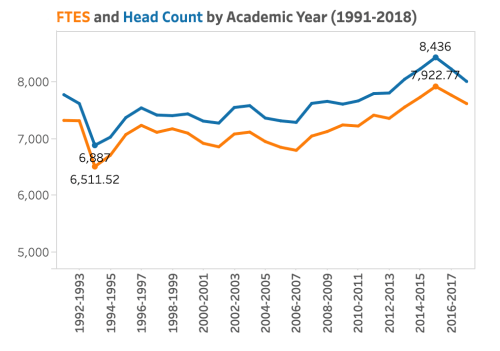
    Enrollment numbers are down and Humboldt State University is looking for ways to keep them stable. With just 6,900 students enrolled in 2019, administration and faculty are exploring recruitment strategies and program changes to stimulate growth on campus.

    Vice President of Enrollment Management Jason Meriwether is on the front lines of the enrollment situation.

    “We’ve lost well over 2,000 students in the last four or five years,” Meriwether said. “It’s a symptom of a few things. We’re graduating larger classes and our graduation rate has gone up. So that does have an impact. Part two is from a recruitment standpoint. There have been a number of things in place that have changed this year to get us to be a viable recruiting option.”

    Meriwether divided the recruitment efforts into three elements. First, the school got rid of barriers to campus visitors like fees for preview day, parking and lunch. Second, the Division of Enrollment Management is focusing its efforts to draw students from local communities to the campus. Third, the school is using data-driven strategies to make enrollment and engagement decisions.

    “We’re using data analytics to mine our top feeders and where we’re getting most of our applications,” Meriwether said. “And we’re using that type of data to make decisions about where we put our time and our energy for the maximum benefit for HSU. We want the community to know HSU is a first-choice university.”

    “I think that budget component has overshadowed the fact that we still have students here to serve.”

    Casey Park
    Former chair of the University Center Board of Directors

    Historically, HSU regarded low enrollment in a more negative light. A decrease in student enrollment was correlated with a decrease in campus revenue, and campus policies reflected the budget deficit. Casey Park, former chair of the University Center Board of Directors, offered some insight.

    “I think that budget component has overshadowed the fact that we still have students here to serve,” Park said. “And the narrative for the last two years was that we just didn’t have enough.”

    To help staff make decisions based in reality rather than through hypothesis and conjecture, the Office of Institutional Effectiveness provides data and information to faculty and staff. Lisa Castellino, the associate vice president of the Office of Institutional Effectiveness, acknowledged student resources being out-of-date with the current demographic.

    “We have a student demographic that has changed over the last five to seven years,” Castellino said. “It has become more diverse. There are more first generation students. It’s more low income. It’s the institution’s responsibility and priority, and it has been the last five to seven years, to help students, because going to college is complicated.”

    Thus, on-campus resources are evolving. With low enrollment, Molly Kresl and the Clubs and Activities office said they are being more deliberate and intentional with campus programming by engaging students in a way they prefer.

    Meriwether and Enrollment Management said they are promoting HSU’s educational experience to potential students in Humboldt, Siskiyou and Trinity Counties as a first choice rather than a backup. Beyond administration, academic departments are attempting to provide quality education for their students, regardless of enrollment numbers.

    “Often during times of change is also our greatest opportunity for growth,” Kresl said. “We stop doing things that really aren’t working that we’ve just done forever because we’ve always done it that way, and we start saying, ‘Okay, then why are we doing this?’”

  • So You Want to Compost

    So You Want to Compost

    Composting can be one of the most beneficial ways to handle waste

    Learn the steps to compost.

    Every Wednesday, the trash bin, filled with whatever waste was tossed during the week, goes to the curb to be picked up by Recology and shipped off to a landfill.

    Forty percent of the waste that ends up in landfills is food waste, according to Recology. This can include raw scraps from food preparation, old sandwiches left to rot and unwanted leftovers. When food scraps end up in a landfill, the material is not just waste, it’s being wasted.

    “The average American generates 4.4 pounds of garbage a day,” the Recology site says. “Don’t let your food scraps go to waste.”

    Illustration by Collin Slavey

    It’s a big deal if food waste gets tossed into landfills. Besides taking up space in our already overwhelmed landfills, food waste doesn’t decompose properly in such settings. For example, an apple that falls above ground breaks down into useful nutrients like nitrogen, which enriches the soil. Underground the apple isn’t able to break down.

    Buried in a landfill, the apple is in an anaerobic environment, meaning that it is starved of oxygen. Anaerobic decomposition creates some nasty byproducts. The most malicious of these byproducts are methane and liquid leachate. Both of these are pollutants with consequences.

    “Fortunately, avoiding these pollutants is simple. Just compost it,” international waste management firm ToWaSo said. “Food and yard waste can be reused and turned into nutrient rich compost. Composting exposes the green waste to oxygen, allowing it to decompose as it would in nature.”

    Humboldt State does compost food waste. According to an email from TallChief Comet, the director of sustainability, energy and grounds keeping with Facilities Management, HSU compost is managed in two ways. The Waste Reduction and Resource Awareness Program manages the composting bins on campus, while food waste is diverted from dining services.

    “The on-campus composting process is handled by WRRAP and is using the material from the public compost bins scattered around campus,” Comet said in an email. “This material goes into an Earthtub composting vessel, located at Facilities Management and processes about 10,000 lbs (5 tons) of material per year.”

    “The average American generates 4.4 pounds of garbage a day. Don’t let your food scraps go to waste.”

    Recology

    “The food-waste diverted from all the dining locations on campus is collected by FM waste and recycling staff into a large pre-composting container,” Comet said. “About every three weeks it is transported by Recology (a local waste hauler) to a vermicomposting facility in Dows Prairie run by The Local Worm Guy.”

    Comet emphasized that it is important to keep contamination out of the materials’ stream, and if someone is in doubt about whether or not to compost, trash it.

    “The best effort students can make is to not generate waste in any form to begin with,” Comet said. “For compostable waste they can achieve this by not purchasing more than they will use/consume during the anticipated period.”

    But composting may very well be appropriate. Composting may seem like an intimidating, tedious and smelly thing to do, but with a bit of practice it becomes second nature. Working with local resources like the Campus Center for Appropriate Technologies can help prepare a student for their own compost bin.

    Jacob Gellatly, an active member of CCAT, recommended that students learn about composting.

    “Before a student starts composting they should learn a few things,” Gellatly said. “It is critical to get educated on the process of composting. Learn the recipe.”

  • HSU Mycology Club Identifies Mushrooms for National Research Project

    HSU Mycology Club Identifies Mushrooms for National Research Project

    Students at HSU participated in the iNaturalist-sponsored Mycoblitz to contribute to the North American Mycoflora project

    Humboldt State University’s Mycology Club is collecting samples of mushrooms and sending them to Purdue University for DNA testing.

    In association with iNaturalist, the Humboldt Bay Mycological Society and the North American Mycoflora Project, the Mycology Club is helping a national team of scientists record the location and species of as many fungi as possible.

    The North American Mycoflora Project will allow the scientific community to compile and use a huge amount of knowledge and data about the identity and location of macrofungi in the United States.

    “The sheer quantity of data getting piled in will give [scientists] a better idea of where species grow in the world. Sometimes people find species in a place where they were thought to be gone thousands of years ago.”

    Lucas Burton

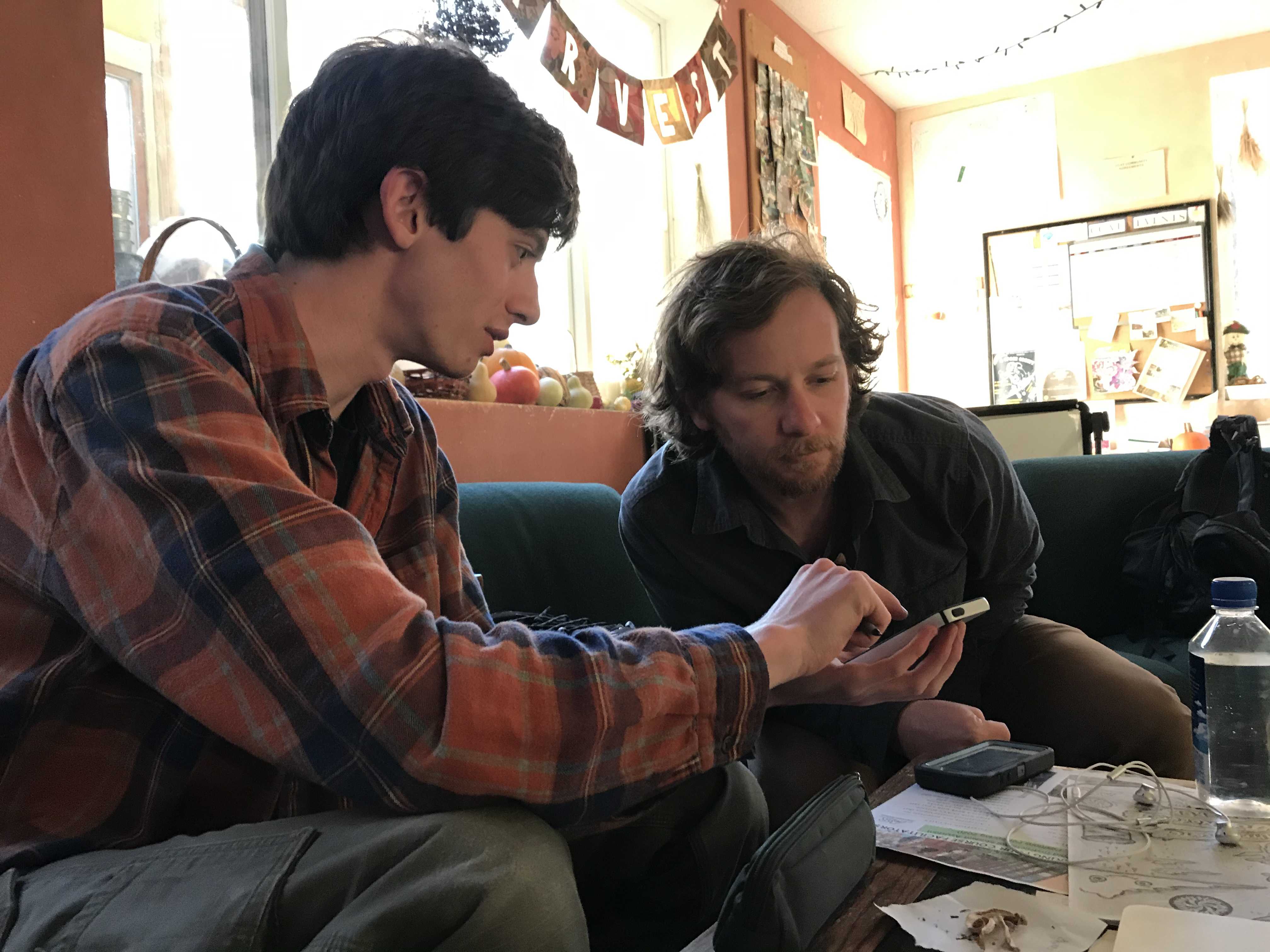
    Mycology Club members Lucas Burton and Caleb Von Rossum spent a cold Monday afternoon documenting their mushroom samples in the bottom of the Campus Center for Appropriate Technologies. Burton and Von Rossum recorded their amateur identifications of the mushroom and the date and location where it was found on a little slip of paper that would travel with their specimen.

    “We are using iNaturalist,” Burton said. “We upload a photo and GPS location, and people from all over the world can come together and help us positively ID it.”

    iNaturalist is a popular tool for biologists and botanists who want to take advantage of citizen science for data collection. Von Rossum mentioned a lot of people in the club record their mushroom finds on iNaturalist, but Burton and Von Rossum were taking it to the next level by mailing in their samples.

    “The sheer quantity of data getting piled in will give [scientists] a better idea of where species grow in the world,” Burton said. “Sometimes people find species in a place where they were thought to be gone thousands of years ago.”

    Mycology Club President Austen Thibault worked with the Humboldt Bay Mycological Society to get the Mycology Club participating in the Mycoblitz, the official iNaturalist mushroom-recording event.

    “Contributing to the Mycoblitz, you could easily be one of really just a few thousands of DNA specimens ever taken in the history of the globe. And for the rare specimens, your name will be saved with the specimen forevermore.”

    Austen Thibault

    The Mycoblitz was a national week long mushroom foraging event which challenged citizen scientists to record the location of as many mushrooms as they could. Participants rummaged through undergrowth for mushrooms and submitted pictures of their finds on iNaturalist. Locally, the Mycology Club was encouraged by the Humboldt Bay Mycological Society to participate.

    The Mycological Society offered a thorough training on iNaturalist and mushroom identification to prepare participants for the Mycoblitz challenge. The data and specimens that were gathered will be sent to Purdue University for DNA testing so they can be incorporated into the North American Mycoflora Project.

    “Contributing to the Mycoblitz, you could easily be one of really just a few thousands of DNA specimens ever taken in the history of the globe,” Thibault said. “And for the rare specimens, your name will be saved with the specimen forevermore.”

    The Mycology Club meets every other Wednesday in the Campus Center for Appropriate Technologies at 5:00 p.m.

  • HSU’s 4th Annual Zero Waste Conference Recap

    HSU’s 4th Annual Zero Waste Conference Recap

    Waste Reduction & Resource Awareness Program hosts environmental event and educates community

    The Humboldt State Zero Waste Conference, hosted by the campus’ Waste Reduction Resource Awareness Program, taught students and community members how to reduce the amount of waste they produce in their daily lives. The week ended in a city proclamation that Nov. 15 would forever be Zero Waste Day.

    “WRAPP is all about serving students and providing students resources to make lifestyle changes,” Program Manager Amanda McDonald said. “It’s a slow and gradual process where it’s not like you can get rid of every plastic thing in your house at once, but you have to be committed to doing this over time.”

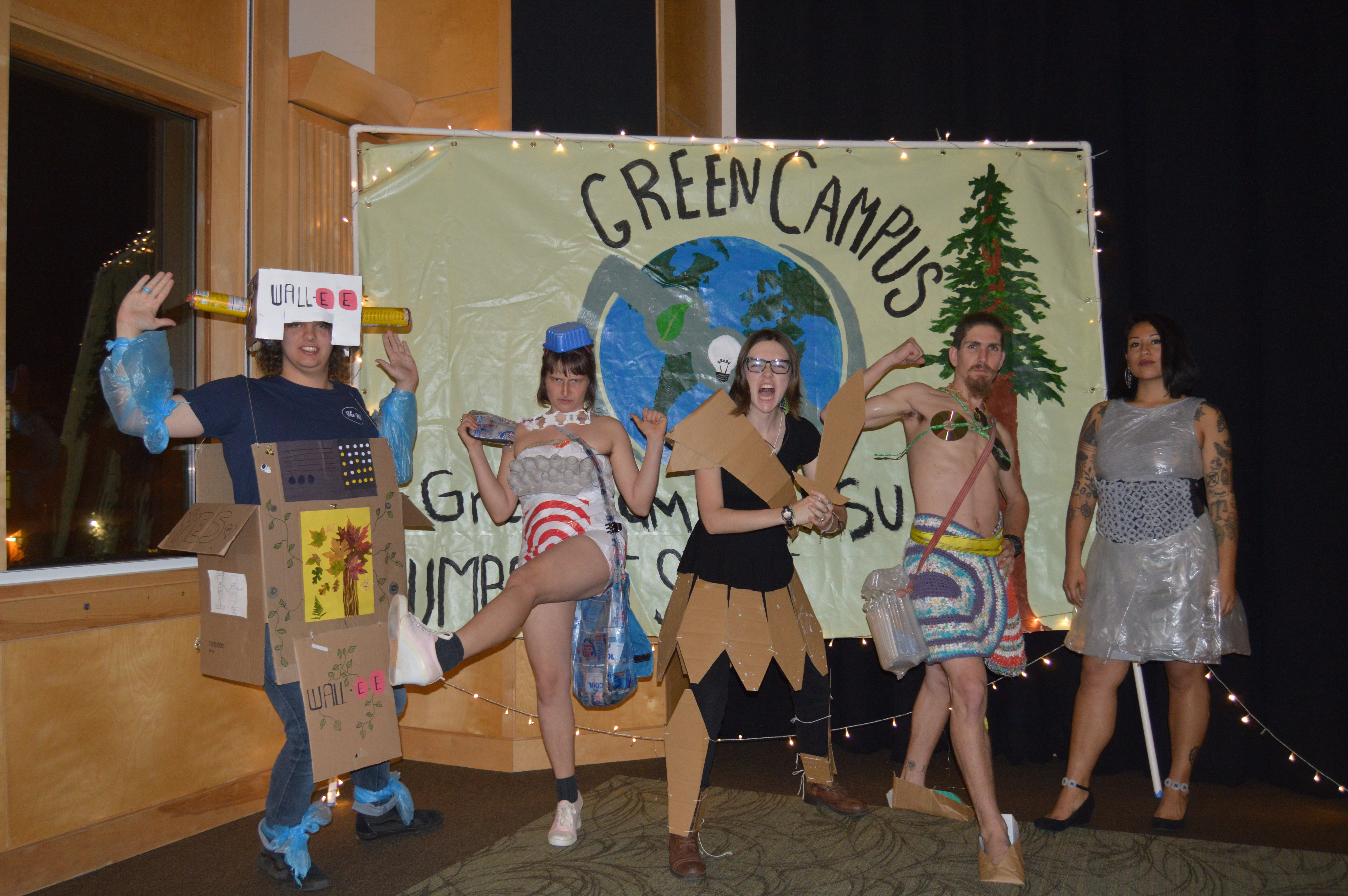
    A week of influential guest speakers, engaging activities and exciting happenings kept students active and engaged in reducing waste. These included a moving speech by Tedd Ward, the authority on Del Norte solid waste, Tinkertime on the quad and the extravagant Green Campus Trashion Show.

    The clothing industry is so detrimental. Fast fashion, in my opinion, is one of the worst industries for the environment. It not only deteriorates sense of commitment, but it also withholds your own sense of style. It’s good to upcycle clothes for a new purpose instead of sending them straight to the landfill.

    The Zero Waste Conference began with a banquet which set the tone for the rest of the week. A keynote speech by Alec Cooley shared the story about the origins of the Humboldt Campus Recycling Program, following closely by the Trashion Show.

    Eight students built magnificent costumes out of household waste. There was a Rob-box, sword wielding cardboard centurion, and the CD bikini-rocking Julian Palmisano. They each strut their stuff across the stage to show off what they made.

    “I think my grandma would be proud,” Palmisano said. “I did it for fun. It’s kind of a joke, really, and it’s a way to bring attention to the unprecedented degree of waste that is in this world.”

    In pursuit of constructive solutions, the following day was Tinker Time. WRRAP, CCAT and Green Campus showed students how to reduce their waste by upcycling recyclable items. Upcycling is the “reuse” part of the reduce, reuse, recycle phrase.

    During Tinker Time, WRRAP showed students how to upcycle their clothes into mason jar coozies and grocery bags. The Campus Center for Appropriate Technologies upcycled wood waste and oyster shells into wind chimes. At the coozie table, WRAPP Compost Site Intern Krissi Fiebig taught students how to cut up old clothes and sew them together for a more beneficial use.

    “The clothing industry is so detrimental,” Fiebig said. “Fast fashion, in my opinion, is one of the worst industries for the environment. It not only deteriorates sense of commitment, but it also withholds your own sense of style. It’s good to upcycle clothes for a new purpose instead of sending them straight to the landfill.”

    In 1964 the first plastic bag was made, and it was the beginning of this. One half of all of all plastic produced has been produced in the last thirteen years. Recycling is ineffective… It was not our decision which led to this. It was fractional distillation and oil refining.

    Finally, Ted Ward’s speech was a somber reminder of the modern state of the world. He said he felt as though he had failed as a waste manager. He reminisced about the day the first plastic bag was created and commented on how we ought to rename our modern era the “Plastocene,” cynically addressing the volume of plastic waste we produce.

    “We should coin this era the Plastocene instead of the Holocene because that is our legacy,” Ward said. “In 1964 the first plastic bag was made, and it was the beginning of this. One half of all of all plastic produced has been produced in the last thirteen years. Recycling is ineffective… It was not our decision which led to this. It was fractional distillation and oil refining.”

    The Zero Waste Conference finished up with Humboldt officially declaring Nov. 15 Zero Waste Day. The official proclamation reflects Humboldt County, the City of Arcata and our local community’s progress towards zero waste.

    “Now be it resolved that the Humboldt County Board of Supervisors joins Humboldt cities and business groups to recognize November 15, 2019 as Zero Waste Day,” the proclamation said. “A day each year we acknowledge the County’s waste reduction progress and urge residents to recommit efforts toward Zero Waste.”

  • Inspiring the Next Generation of Anthropologists

    Inspiring the Next Generation of Anthropologists

    Assistant Professor Gordon Ulmer, Ph.D draws from his real world research experience to inspire students

    As human hands built roads hundreds of miles long, erected cities covering hundreds of square miles and developed rich, diverse cultures, the experience of human beings has changed and morphed. The evolution of our experiences is researched and studied by the scientific discipline called anthropology.

    The world in which humans live seems regular. It’s easy to believe our towns and cities are areas humans have always been, but that’s not the case. Our roads, transportation, electricity generation and super markets are easily taken for granted.

    For generations, humans have worked hard to turn the world into the convenient form it is today.

    Understanding the scope and scale of humanity is a vast task that requires cooperation between anthropologists and a great number of other scientific and social disciplines.

    In an effort to explore questions about how humans interact with their landscape, Humboldt State Anthropology Professor Gordon Ulmer has committed his academic life to the study of environmental anthropology.

    Anthropologists are generalists. We’re like ecologists. We borrow and we pull and draw upon all kinds of other fields. That’s part of what makes anthropology, I think, one of the best disciplines.

    Gordon Ulmer

    “I look at the relationship between precarity and pollution,” Ulmer said. “[It’s] people’s insecurities and instability in life, contingent labor and how that relates to living and working in a polluted waterscape. The anthropological discipline is about human’s variation, bio-cultural variation across all times and all places.”

    Ulmer typically works with communities who live near polluted water. He investigates coastal areas, rivers and surface waters which are contaminated with everything from sewage to gold mining byproducts. His primary research takes place in the Peruvian Amazon and Costa Rica beaches where he researches how humans contribute to and interact with polluted waters.

    Ulmer’s duty, like most scientists, is to answer questions. The questions that he’s asking, however, are not questions that any one discipline can answer.

    More recently, Ulmer has worked with biologists in Costa Rica as he learns at what extent locals are impacted by polluted runoff on their beaches. Ulmer uses methods ranging from on-the-ground surveys to biological analyses of water samples to answer that question. His use of an array of methods equips him and his colleagues to do good science.

    “Anthropologists are generalists,” Ulmer said. “We’re like ecologists. We borrow and we pull and draw upon all kinds of other fields. That’s part of what makes anthropology, I think, one of the best disciplines. We can collaborate with and also build upon the work of other people.”

    Ulmer is teaching this mindset to his students. At HSU, Ulmer teaches a number of cultural anthropology classes that, according to his students, are really awesome.

    Sophie Maga and Rhiannon Cattaneo are both enrolled in one of Ulmer’s classes: Living in the Anthropocene. Maga shared why she thought Ulmer is such a benefit to HSU’s anthropology department.

    Sophie Maga and Rhiannon Cattaneo are both cultural anthropologists enrolled in Ulmer’s class “Living in the Anthropocene.” | Photo by Collin Slavey

    “I think it’s Gordon’s content in general,” Maga said. “He’s one of the first professors here really diving deep into the Anthropocene and environmental crises and structures that we really need to be looking at that anthropology has lacked.”

    Maga and Cattaneo both said that Ulmer has brought something new to the anthropology department. His teaching methods encourage students to think critically about class readings to prepare them for in-depth conversations.

    “He’s very socratic,” Cattaneo said. “His class is very discussion based. It forces you to use the class time to really think about and process the readings you do.“

    Preparing his students to think and process knowledge is preparing his students to be anthropologists. According to Ulmer, by encouraging deep critical thought, he is equipping his students to contribute to anthropology’s task of understanding the scope and scale of humanity. His students appreciate it.

    “For me, he is a symbol of hope because I see him as an advocate for the next generation of students,” Cattaneo said. “The way he’s approaching [teaching] is very democratic, open and informed, so I think he’s having a very positive impact.”

  • Science Behind Brewing Beer

    Science Behind Brewing Beer

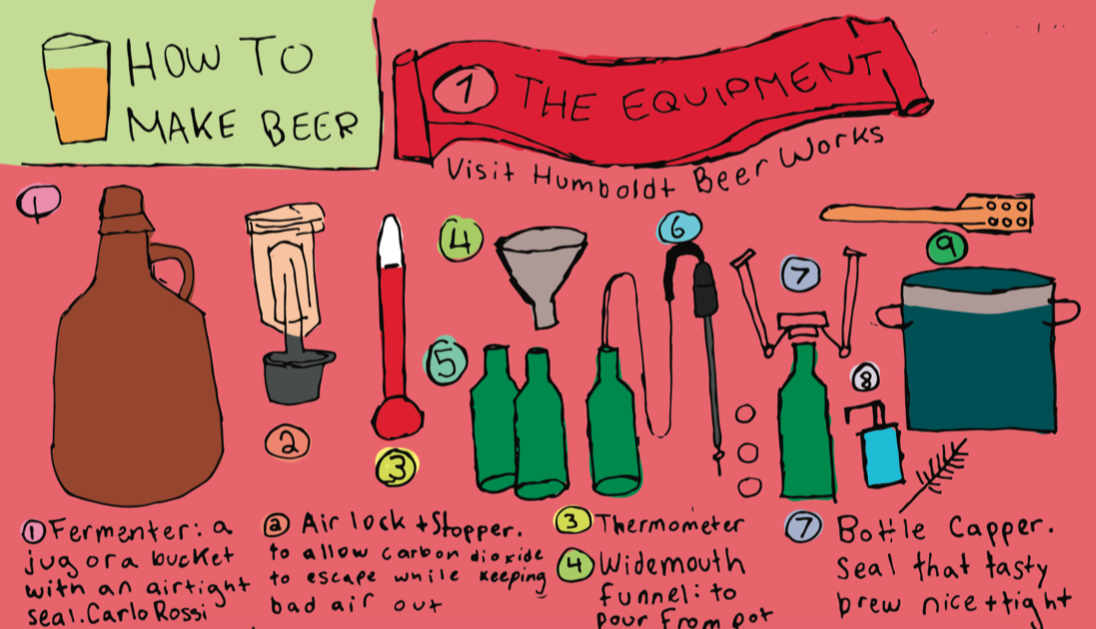
    Crowded in a warmly lit apartment, I sat huddled over a great big steaming silver pot with my friends, Seamus Begley and Sam Kirby, as we waited in anticipation to brew another batch of beer.

    Since the brewing process takes a few hours, we started early in the evening. Begley had gathered the four basic ingredients: malted barley, hops, yeast and water.

    According to the the Youtube channel It’s Okay to Be Smart, the basic beer is any alcoholic beverage made from fermented cereal grains, usually preserved and flavored with hops. It was a good guide to start, but Begley and Kirby recommend reading books to master the process.

    To begin, we mixed up a batch of wheat and barley, threw it into a giant tea-bag like grain pouch and set it to steep. This is mash. We were activating enzymes in the grain, which turn the grain starches into fermentable sugars. Within a piece of grain, enzymes are proteins which, when activated, accelerate the deconstruction of starch. A starch is a complex molecule which, when divided into its component bits, becomes a sugar called glucose. The glucose will turn into alcohol later.

    beerrrrr

    The product of the steeped (not boiled) mash is a tea-like liquid called wort. Wort is essentially sugar water which will be the home and food for yeast. It also tastes delicious. We rinsed the grain sack to collect any residual glucose, drained the thing into our cooking pot and set it aside. We were left with a pot full of wort.

    Wort, immediately after rinsing the grain pouch, was not as concentrated as we would like it. Ideally a wort is super saturated with sugar, meaning there is a really high ratio of sugar to water. Concentrating the sugars will make the wort tastier and nutritious for the yeast. To achieve this concentration, boil the wort between 15 to 90 minutes. Excess water evaporates and leaves behind concentrated sugar water. Boiling also provides an essential service to the beer making process, sanitation.

    Sanitation is an essential part of brewing. The grain itself is covered in different bacteria and other yeast that eat sugar, but their byproducts taint the flavor of beer. We sanitized everything from the pots to the bottles to the stirring sticks with a chemical called Starsun, but diluted bleach works as well. Beyond that, boiling the wort kills off these other organisms. Sanitize, sanitize, sanitize.

    During the boil, we add hops. If you drink beer, you’ve probably heard of hops, and if you drink IPA’s, you’ve definitely tasted hops. They’re the bitter, flowery, citrusy flavors in beer. Hops contribute to the flavor of beer, the shelf life of beer and the scent of beer. We had many options to choose from, but this particular batch of hops was grown by Begley’s grandmother.

    Next, the beer needs cooled as quickly as possible so we could add the yeast without killing them. Yeast is a critical ingredient because it is a fermenter. Fermentation is the process when yeast converts to glucose in the wort to ethyl alcohol and carbon dioxide gas — giving the beer both its alcohol content and its carbonation. When the yeast are first added to the wort, Begley took a sample and measured its specific gravity using a hydrometer. The tool told Begley the density of sugar in the water, and how much alcohol would be created by yeast.

    The yeast and wort mixture is then poured into a sanitized fermenter or carboy. An airlock is attached to the top of the fermenter to allow CO2 to escape from the bottle. The fermenter is then stored in a dark spot where the temperature is desirable for the yeast to do its thing. We left it there for a couple of weeks before bottling.

    Once the fermentation was completely finished, we prepared to bottle. We poured the beer into a second sanitized jug, added a small amount of sugar and yeast for carbonation, and then siphoned the final beer mixture into bottles. The siphon is important because we didn’t want too much air in our beer. Finally, we crimped a sanitized cap on the bottles and let them sit for a couple more weeks.

    After that tediously long wait, we popped them open and enjoyed the sweet, sweet product of our labor. It was definitely worth it.

  • Coming Home: Sacred Land Returned to Wiyot Tribe

    Coming Home: Sacred Land Returned to Wiyot Tribe

    After nearly 160 years in the hands of Eureka, Tuluwat, briefly known as Indian Island, returns to its rightful owners

    Wiyot Tribal members and Eureka community members were joyful, yet solemn, at the Eureka City Council meeting to officially return Tuluwat Island to the Wiyot people.

    Wiyot tribal elder Cheryl A. Seidner blessed the room in a prayer of welcome. In the prayer, Seidner welcomed people from the East and from all directions as she turned in a circle, speaking in her native language. The crowd was silent and respectful, and tribal members let out emotional “ho’s.” Seidner thanked everybody in the audience and asked them to rise.

    Wiyot tribal elder Cheryl A. Seidner speaks during the public comment section of the city meeting to return Tuluwat Island to the Wiyot Tribe while she is surrounded by supporters and tribe members at the Adorni Center in Eureka on Oct. 21. | Photo by Thomas Lal

    “This is something I’ve always wanted since I was a kid,” Seidner said. “I thought the island was always ours, not anybody else’s. So we came together and said, ‘Let’s do this, let’s make it ours.’ So I decided to be bold and ask the new mayor to give us the island they owned.”

    In 2004, 40 acres of Tuluwat were returned to the Wiyot Tribe. Oct. 21 marked the return of the remaining 202 acres. The tribe has been working with the City of Eureka for the last five years to make this happen, and this action marks the first step to repairing the damage caused to the tribe that began 100 years ago.

    Cutcha Risling Baldy, Ph.D, the Native American Studies department chair at Humboldt State University, delivered one of many moving speeches to the hundreds of assembled community members. Baldy talked about the future of the Wiyot people and how she knew, one day, they would come back.

    “I realized that native people were always making plans for our future and that we never gave up on our land or where we came from,” Baldy said. “That is the story I want people to know. I know that the story of Tuluwat, which people often refer to as Indian Island, has been one of a massacre for most people, but for me it has only been a place for world renewal.”

    Baldy once read a book about stories gathered from people about Tuluwat. One particular story was about a woman who was stuck in the mud after the violence on the island. While it may be a story of sadness, Baldy said it was a moment of strength and hope. The woman sang a mourning song because she knew she had to send her tribe off properly. Her strength showed she knew her kin would one day return to Tuluwat.

    HSU anthropology professor Gordon Ulmer acknowledged the significance of the day. Ulmer said the day should be a celebration of time immemorial, and that it displayed the vibrancy of the Wiyot tribe, despite the dark history.

    “What we see here is a very vibrant thriving community that lives in the shadow of genocide,” Ulmer said. “People remember the genocide, but what is rarely acknowledged -or at least to a much lesser extent- is that people are still here, the Wiyot are thriving. There’s a lot to celebrate here.”

    Eureka Mayor Susan Seaman began official proceedings by declaring the day as a moment in time that should forge strong bonds going into the future to create a long sought-after vision. Seaman prepared to take a vote from the council people while tension in the air grew as the crowd waited.

    “I move to authorize the transfer of Tuluwat Island to the Wiyot Tribe and I authorize the vote,” Seaman said.

    The Eureka City Council spoke on behalf of the motion, each member contributing a unique perspective to the magnanimity of the event. HSU Lecturer and Eureka City Council Member Natalie Arroyo wasn’t physically present, but she FaceTimed in and a representative shared a letter penned by her about Tuluwat.

    “This is the first known transfer of land from a city to a tribe of this kind,” Arroyo said. “We are all responsible to do what we can to actively participate in healing. I will be so bold to say under current conditions Eureka owns the land, but it was never truly ours.”

    The tension began to ease as Seaman’s voice fell over the crowd.

    “The vote to return the Tuluwat island to the Wiyot Tribe was unanimous and the motion passed,” Seaman said.

    Applause erupted from the audience. The crowd stood on their feet to clap and shout in joy.

    Seidner invited her family to the front of the auditorium to sing a song to the people gathered in the room. Seidner welcomed everyone in the audience and invited them to sing the song “Coming Home.”

    “I know that our ancestors knew this day would come,” Baldy said. “I think that we need to consider it an opportunity to think about our next steps in the future. People stand up and ask me, ‘What can I do?’ And I have one answer for them: you can start by giving all the land back. And now we know it’s possible.”

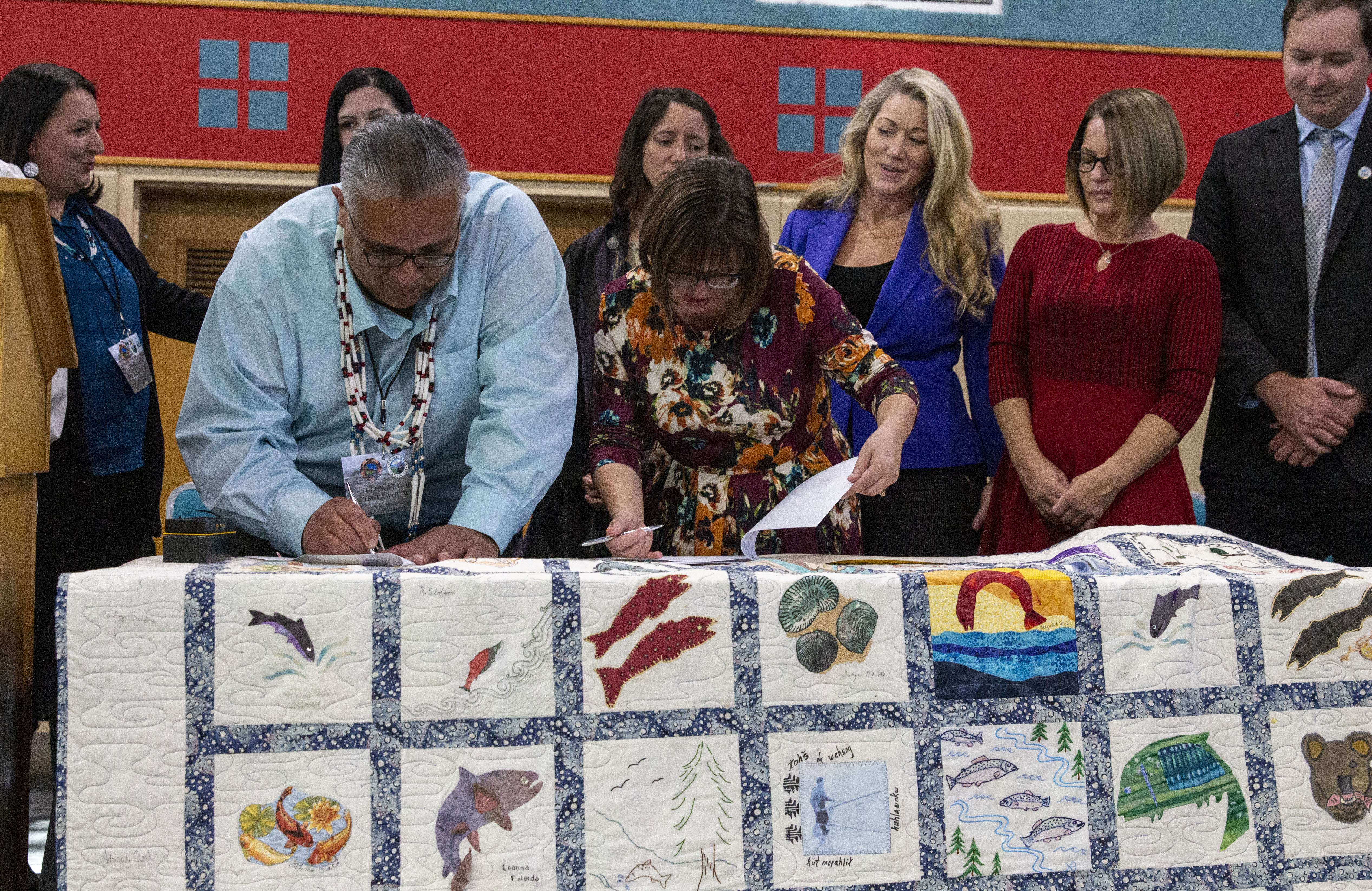
    The signing of the deed marked the end of the meeting. Seidner placed a quilt representing all who could not be present on the table, and the council people huddled around to officially return Tuluwat to its ancient owners.

    Wiyot Tribal Chairman Ted Hernandez and Eureka Mayor Susan Seaman embrace after signing the papers to officially return Tuluwat Island to the Wiyot Tribe at the Adorni Center on Oct. 21. | Photo by Thomas Lal

    Baldy concluded her address with honest praise. With the Wiyot land reparation, the people in the room could now envision a radical future.

    “A future with no dams, a future with salmon that are healthy, a future with our children that are singing, a future where we are dancing all the time,” Baldy said. “I know we’ve seen it and I know we’ve felt it, and I look forward to how amazing that is going to be. And I know that we can do it, and I look forward to how everyone in this room is going to make that happen.”

  • Blackouts Blow

    Blackouts Blow

    Dry vegetation and high winds were a major factor in PG&E shutoff

    The morning of Oct. 8, Humboldt County residents were notified that Pacific Gas & Electric may shut off power county-wide. HSU students and faculty began rapidly preparing for the possible outages, but some wondered what forced the utility giant to turn off the power.

    Leading up to the blackout, rumors spread as people speculated why PG&E decided shutting off power was the best option, and others wondered how long the outage could last. It seemed there was a lack of communication, as only some local professionals seemed to know the details.

    On the night of Oct. 9, HSU Facilities and Management employee Brian Wheeler was responsible for filling up HSU’s generator. The diesel generator was the only thing standing between powerless students and the cold, dark night.

    Wheeler said he had heard about an algorithm PG&E made to inform them when to shut off the power. This was confirmed by Megan McFarland, a spokesperson for the company. McFarland said no single factor drives a Public Safety Power Shutoff since each situation is unique.

    PG&E carefully reviews many criteria when determining if power should be turned off for safety. These factors generally include, but are not limited to:

      • A Red Flag Warning declared by the National Weather Service.
      • Low humidity levels, generally 20% and below.
      • Forecasted sustained winds above 25 mph and wind gusts in excess of approximately 45 mph, depending on location and site-specific conditions such as temperature, terrain and local climate.
      • Condition of dry fuel on the ground and live vegetation (moisture content).
      • On-the-ground, real-time observations from PG&E’s Wildfire Safety Operations Center and observations from PG&E field crews.

    To get a better grasp on the situation and its factors, The Lumberjack contacted the Woodley Island National Oceanic and Aeronautic Administration. Meteorologist Jeff Tonkin understood the specifics and why PG&E could be forced to make such a decision, but believed that Humboldt County wasn’t initially a part of the plan for a reason.

    “PG&E shuts down based on wind speed if it is projected to cause a disruption or a failure,” Tonkin said. “Locally in Eureka, the power wasn’t shut down because of local high winds. We’re just collateral damage.”

    Tonkin said NOAA had meetings with PG&E meteorologists in the past, but PG&E doesn’t consult NOAA for weather information. While getting in contact with one of PG&E’s scientists would likely be key to understanding why the power was shutoff officially, Deanna Contreras, another PG&E spokesperson, answered the call instead.

    Contreras said, for this particular shutoff, the weather patterns were somewhat unique and widespread. Many forecasters compared the conditions to the devastating conditions from October 2017.

    In response to the rapidly changing environmental conditions in our state, beginning with this year’s wildfire season, PG&E expanded its Public Safety Power Shutoff program to include all electric lines that pass through high fire-threat areas – both distribution and transmission.

    Cotreras said there weren’t any PG&E meteorologists available but had plenty of details about PG&E’s weather system.

    “Beyond PSPS information, weather geeks will find a lot to love about the new weather page,” Contreras said. “With PG&E’s weather map at your fingertips you’ll be able to check humidity, precipitation, temperatures, wind speeds and wind gusts across 70,000 square miles of Northern and Central California.”

    Contreras said the page offers a seven-day regional forecast. PG&E’s Wildfire Safety Operations Center team monitors all these conditions and evaluates whether to proactively turn off electric power lines, in the interest of public safety, if extreme fire danger conditions are forecasted.

    McFarland said a lot of PG&E employees live and work in regions that are affected by the shutoff and that she understands how frustrating it is to have the power turned off. She said the decision was not made lightly.

    “We want customers to know that although you may not live or work in a high fire-threat area,” McFarland said, “Your power may be shut off if the line serving your community relies upon a line that runs through an area experiencing extreme fire danger conditions.”

  • Sea Level Raises Risks in Humboldt Bay

    Sea Level Raises Risks in Humboldt Bay

    Humboldt is experiencing the fastest rate of water elevation on the West Coast

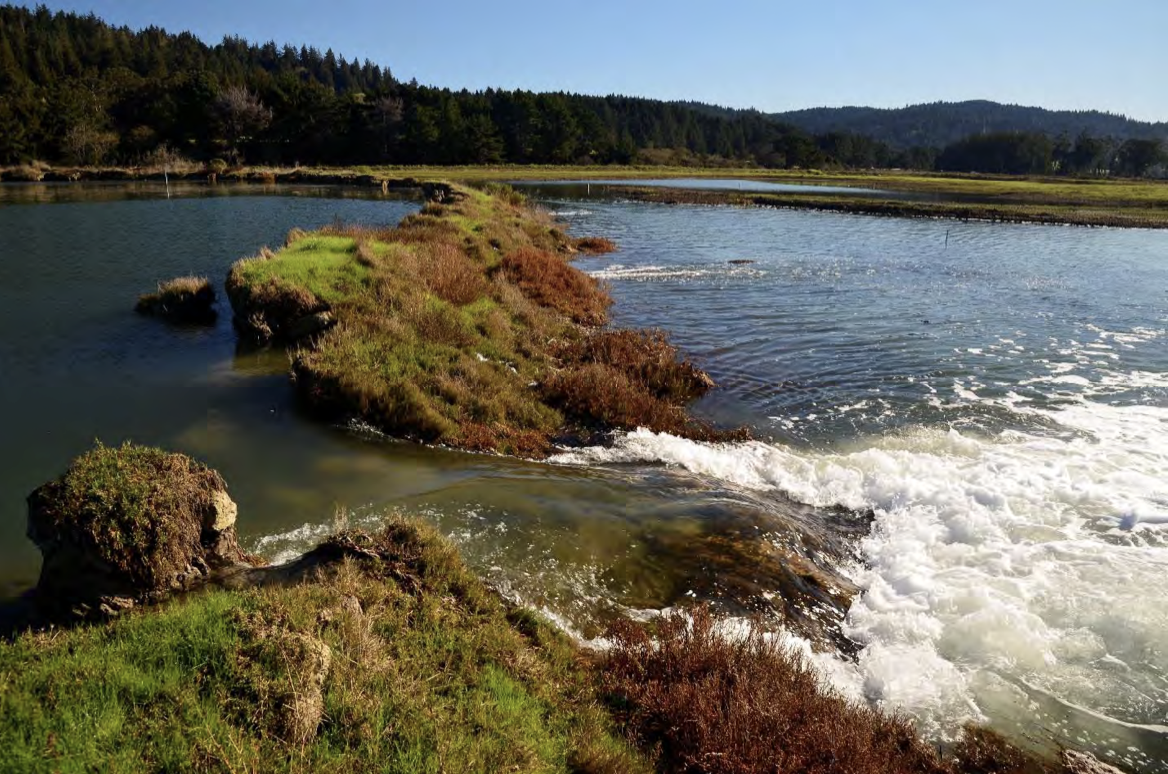
    Humboldt Bay is ground zero for sea level rise. In the last 100 years, the sea level rose 18 inches. This the most rapid rate of sea level rise on the West Coast.

    Humboldt County Environmental planner Aldaron Laird has 30 years of experience and spent ten years mapping and analyzing Humboldt Bay through a series of vulnerability assessments to help prepare our community for the inevitable impacts of sea level rise.

    “All the damage is going to occur with two and three feet of sea level rise,” Laird said. “It doesn’t really matter when that’s going to occur. We basically have to prepare for that now.”

    Laird reported that the rate of rise will continue to increase. A two or three foot increase in the average elevation of high water will breach the miles of diked shoreline as early as 2030.

    “All the damage is going to occur with two and three feet of sea level rise. It doesn’t really matter when that’s going to occur. We basically have to prepare for that now.”

    Aldaron Laird, Humboldt County Environmental Planner

    “When we go from two feet to three feet of water elevation change, it’s the tipping point in Humboldt Bay,” Laird said. “The 23 diked hydro logic units that we have on the Bay, all of them will be over topped when we go from 2 to 3 feet. So everything behind that will be impacted.”

    The land behind the dikes is privately owned agriculture, residential areas, business parks and industrial assets, not to mention municipal water lines, PG&E gas lines, waste-water treatment lines and electrical transmission towers. The threat is legitimate and significant.

    “The major urban areas that are most at risk are King Salmon and Fields Landing,” Laird said. “They are at risk straight from sea level rise. Half a meter to a meter, and those areas will be underwater. They aren’t behind dikes.”

    Linda Gill is the manager of Gill’s by the Bay, a restaurant located on the King Salmon waterfront. Gill said she hadn’t thought too much about the threat her restaurant faced as sea levels continue to rise.

    Projected Inundation Area (Stillwater) on Humboldt Bay for Mean Monthly Maximum Tide with 6.6 feet (2.0 meters) of Sea Level Rise. | Photo from Humboldt Bay Area Sea Level Rise Vulnerability Assessment

    “Right now we are just going with the flow,” she said in a phone interview.

    Wave energy had been diverted by the north and south jetties to an area called Booner Point, the site of an old PG&E nuclear power plant. There are still nuclear fuel rods stored there.

    “They decommissioned it, and they stored all the nuclear fuel rods 115 feet back from the bluff on their property with all that wave energy focused on that bluff,” Laird said. “It’s experiencing the highest rate of erosion anywhere on Humboldt Bay, and those nuclear fuel rods are going to be there forever. It’s probably the stupidest place on Humboldt Bay to locate a nuclear fuel storage site.”

    Jennifer Kalt, the director of Humboldt Baykeeper, said the county needs to be prioritizing protection rather than considering potential hazards.

    “Instead of fighting, local governments and state agencies need to work together to make a plan,” Kalt said.

    “Instead of fighting, local governments and state agencies need to work together to make a plan.”

    Jennifer Kalt, Director of Humboldt Baykeeper

    Kalt said the planning process seems to have reached a stalemate as local and state jurisdictions fail to agree on a comprehensive plan. The unique issue about Humboldt Bay is that the California Coastal Commission has first and final say on improvements to the shoreline.

    “So we have this conundrum on Humboldt Bay that I think the Coastal Commission has really never faced anywhere else in California,” Laird said. “The entire shoreline of Humboldt Bay is in state jurisdiction. If the county said they wanted to rebuild all the dikes, they couldn’t. They would have to ask the Coastal Commission and the Coastal Commission could say no.”

    Laird has submitted the final sea level vulnerability assessments. Now the individual actors need to come together in unison to take action and move beyond the planning phase and into the action phase.

    “Anything that can be moved should be moved,” Laird said. “Anything that can be hardened, redone or redesigned so that it can accommodate being submerged in saltwater should happen.”

  • No Confidence in UPD Chief

    No Confidence in UPD Chief

    By Collin Slavey and James Wilde

    HSU officers cast an almost unanimous vote of no confidence in police chief

    The Statewide University Police Association published a press release on Monday stating that officers of the Humboldt State University Police Department submitted an almost unanimous vote of no confidence in Police Chief Donn Peterson.

    Nine of the ten officers in the department cast a “no confidence” vote while one abstained. Peterson has allegedly manipulated crime reports, frequently left the office to go out of state, created a hostile discriminatory work environment and violated labor laws.

    In a phone interview with Peterson, he said he does not agree with the allegations. However, he enthusiastically supported the association’s examination.

    “I have a profound respect for the seriousness of the allegations and the people who made them,” Peterson said. “So I want to respect that.”

    Peterson said he wants to be as transparent as possible, but he hopes to continue to be the UPD Chief.

    Associated Students President Yadira Cruz said she was surprised when she learned about the vote on Monday.

    “I was genuinely shocked,” Cruz said. “Like what the fuck?”

    After thinking about it more, Cruz said she wasn’t all that surprised. Cruz said UPD’s problems probably go beyond the chief.

    HSU’s Vice President for Administration and Finance Douglas Dawes sent out a campus memo at 4:50 p.m. on Monday, Sept. 30. Dawes said he has high expectations for all employees within UPD and remains committed to helping them be effective.

    “Chief Peterson and his team have enhanced outreach to students through the Chief’s Advisory Panel, created the safety escort program, and worked closely with Equity Arcata,” the memo said. “We will thoroughly investigate all of the allegations brought to our attention.”

    While the Justice for Josiah movement previously worked closely with UPD, they also inspired the Chief’s Advisory Panel. On Monday the Justice for David Josiah Lawson Facebook page posted a call to action in regards to the news.

    “Who is going to protect our students, because it is obvious Humboldt State does not give a damn about their safety?” the post read. “It’s time to start cleaning house President Tom Jackson, get rid of the slackers. Put OUR students first.”

    The press release noted that the vote does not automatically oust Peterson. However, UPD Officer Billy Kijsriopas hopes a new chief will take Peterson’s place.

    “The damage to morale and the risk to campus safety is too great,” Kijsriopas said in the memo. “It’s past time we had a new chief.”


    The full press release from Statewide University Police Association:

    Arcata, CA. — According to officials with the Statewide University Police Association (SUPA), its officers at the Humboldt State University Police Department have cast a vote of no confidence in the Department’s police chief, Donn Peterson. Nine of 10 officers who completed the survey voted against the Chief, while the remaining voter abstained.


    SUPA conducts annual leadership surveys at each CSU campus. The most recent nearly unanimous vote of no confidence in Police Chief Donn Peterson is in line with previous year’s results. Chief Peterson took the job at HSU after leaving his former post with Florida’s Broward County Sheriff’s Department amid scandal. Peterson still regularly spends time out of state with his family in Florida.


    According to HSU Officer Billy Kijsriopas, “Chief Peterson’s frequent, extended bouts of time out of state leave the department in the hands of a Lieutenant who also spends an unusual amount of time away from campus. Our officers look to the Chief for guidance and leadership, but he has fallen short of the standards they and the University community deserve.”


    According to Officer Kijsriopas, absenteeism is only a fraction of the failure in leadership the Department has seen since Peterson came to HSU in January 2015. Among the Chief’s other offenses, Kijsriopas cites manipulation of crime statistics reporting, creating a hostile work environment including making racial slurs aimed at minority officers, multiple violations of the Public Safety Officer’s Procedural Bill of Rights Act and blatant violations of labor laws that include a derogatory, anti-labor letter which Peterson authored and posted publically [sic].


    Says SUPA president Jeff Solomon, “Our members in the Humboldt State University Police Department have consistently reported absenteeism, mismanagement and more in departmental leadership. When you have a department united like this, clearly there is a problem.”


    When asked what steps he and other HSU officers would like to see, Kijsriopas replied, “The damage to morale and the risk to campus safety is too great – it’s past time we had a new chief.”

  • Protesting Climate Change

    Protesting Climate Change

    AHS and HSU students strike to advocate for climate action

    Video by James Wilde & Collin Slavey | Editing by Chelsea Wood

    Anxious and irritated with the lack of governmental action against climate change, masses of young people and students from Arcata High School and Humboldt State University took to the streets surrounding the Arcata Plaza on Friday as part of the Global Climate Strike.

    Inspired by the International Youth for Climate Action, the Humboldt Sunrise Movement in association with the Extinction Rebellion and students of AHS organized and executed the local school strike protesting climate change.

    Students were excited to show how strong their voices could be when used in unison. Maddie Marriott, a member of Extinction Rebellion, said the organization was aimed at gathering people for peaceful protest and that is what they hoped to achieve.

    “We dance, yell, sing and chant to show our energy,” Marriott said. “This shows we are cheerful and hopeful and happy in the face of this threat. It is rejuvenating and these friends are empowering. Now we have to wait and see if our voice is being heard.”

    Marriott ended up agreeing to hold a sign that said “Protect Rainbow Ridge, our forests and our climate.” Ecological protection is one of the main goals of the movement, but Extinction Rebellion as a national organization demands governments tell the truth about climate change and act now to prevent species loss and lower greenhouse gas emissions.

    Vanessa Argonza, a Humboldt State student and member of the Extinction Rebellion, said speaking out and advocating for action is important. Change requires people to care and be passionate about an issue, while also realizing we can come together to create change.

    “In moments of injustice you must speak out because if you do not, you are part of the problem,” Argonza said. “The youth is well aware and willing to be part of the change because it affects them. We can come together and make change. You just have to be aware of your footprint and educate yourself before you speak out.”

    The protest did run into some technical issues as it spilled out into the Arcata Plaza. Unfortunately, the strike organizers failed to bring a speaker system that was loud enough for all of the attendees to hear, causing the message to fall flat. Joanne McGarry, a local supporter of the Environmental Advocacy and self-prescribed ‘gadfly’ suggested better planning in the future for a more impactful demonstration.

    Jene L. McCovey delivers a powerful, emotional speech about the threats to the Earth faces. | Photo by Collin Slavey

    “I am more than happy to let young people lead, they just have to lead well,” McGarry said. “Having music is important when you’re walking into the plaza, during the demonstration and as you exit the plaza. Having a speaker that is loud enough for the entire crowd to hear is unbelievably important.”

    The Sunrise movement was originally created as a youth advocacy group to show support for the Green New Deal, a stimulus package proposed by politician and activist Alexandria Ocasio-Cortez in February of this year. The Sunrise Movement intends to work within ‘the system’ while actively changing the system, in pursuit of environmental and social justice through nonviolent and direct action. They are building an army of young people to stop climate change and create millions of good jobs in the process.

    Tribal elder Jene L. McCovey began the rally in the plaza with a song called “Feeling Sorry for My Womenfolk,” a somber tune that spoke of hate and woe. She went on to tell stories and sing more songs to give purpose to the actions of the demonstrators.

    “The stumps are really big- that is all we have left of the old forest,” McCovey said. “Clear cutters, defilers, denude the land down to the earth and they burn it. Wherever you find your trials, be that healer. Be that person that walks with people in that good way. Be the water protectors.”

  • Alaska Wildlife Refuge Vulnerable to Drilling

    Alaska Wildlife Refuge Vulnerable to Drilling

    The Department of the Interior finalizes the plan for leasing out the Arctic National Wildlife Refuge’s Coastal Plain

    The Federal Government has finalized the Environmental Impact Statement to open Alaska’s Arctic National Wildlife Reserve for oil drilling.

    The hands of industry and development have clawed at wilderness since pioneers began pushing westward. Oil has tempted landowners for decades, but the Arctic National Wildlife Reserve denied the resource to industry interests in order to preserve its unique, ancient landscape.

    gwichin_streering_committe-07

    That landscape is threatened. In the perpetual words of writer and wilderness activist Robert Marshall, “And so the path of empire proceeded to substitute for the undisturbed seclusion of nature the conquering accomplishments of man.”

    “[The Oil and Gas] Leasing Program will help meet the long-term energy needs of the nation, support job creation and economic growth of rural Alaskan communities,” The Department of the Interior, acting through the Bureau of Land Management, announced on September 12. “The [Tax Cuts and Jobs] Act directs the Secretary of the Interior, through the Bureau of Land Management (BLM), to establish two area-wide leasing sales, not less than 400,000 acres each, along the Coastal Plain of the Arctic National Wildlife Refuge.”

    The legal authority for the Oil and Gas Program is found in Public Law 115-97, otherwise known as the Tax Cuts and Jobs Act. Written into Title II, section 20001(page 184) are simple yet powerful exemptions for the oil industry’s special interests. For example, “Section 1003 of the Alaska National Interest Lands Conservation Act (16 U.S.C. 3143) shall not apply to the Coastal Plain.”

    The intent of the Tax Cuts and Jobs Act is clearly to honeypot Alaska into opening up the refuge to industrial interests. The Act sets aside standards in the Mineral Leasing Act as the Federal Government plans on claiming royalties at a rate of 16.67%, when standard royalties are 10%.

    While the Mineral Leasing Act Section 35 gives 37.5% of money made from sales, bonuses, royalties and rentals of public lands to the State, the Tax Cuts and Jobs Act declares 50% of the money made will go to the State Treasury.

    The Trump Administration declared $1.8 billion dollars of oil could be mined, essentially promising Alaska $900 million in revenue. The latest federal report suggests the potential income is half of that, approximately $905 million in revenue for the government and significantly less for Alaska.

    The pristine wilderness within the Alaskan Arctic Wildlife Refuge. | Photo by Greg Wiler, U.S. Fish and Wildlife Service

    The projections continue to fall as independent studies conclude significantly lower revenue opportunities based on other local lease sales. How low can you go? Alaska’s governor is prepared to open up the wildlife refuge no matter the cost.

    “Forty years after Congress selected the Arctic Coastal Plain for potential energy development, the Trump Administration is making good on that decades old potential,” Alaska Governor Mike Dunleavy said. “I join with all Alaska Governors since 1980 in assuring the nation and the world that we develop our natural resources responsibly. I look forward to the lease sale scheduled for later this year.”

    In 1929, a 28-year-old forester named Robert Marshall visited the landscape which would eventually become Alaska’s Arctic National Wildlife Refuge on summer vacation. He chose that area because it was the most remote section of Alaska.

    Marshall published an essay titled The Problem of the Wilderness where he describes the extraordinary benefits of the wilderness, considers the drawbacks of preserving wild lands and calls wilderness allies to action in the face of society’s aggressive advance into nature.

    “Within the next few years the fate of the wilderness must be decided,” Marshall wrote. “This is a problem to be settled by deliberate rationality and not by personal prejudice. Fundamentally, the question is one of balancing the total happiness which will be obtainable if the few undesecrated areas are perpetuated against that which will prevail if they are destroyed.”

    Alaska Governor Mike Dunlevy is prepared to open up the wildlife refuge no matter the cost.

    The U.S. Fish and Wildlife Service manages the network of protected lands in the United State’s National Wildlife Refuge System. The mission of the National Wildlife Refuge System is “to administer a national network of lands and waters for the conservation, management and, where appropriate, restoration of the fish, wildlife and plant resources and their habitats within the United States for the benefit of present and future generations of Americans.”

    The Arctic National Wildlife Refuge has been referred to as “The American Serengeti” for its rich biodiversity and untouched landscape. The ANWR is home to a caribou herd nearly 170,000 strong and other beasts including polar and grizzly bears, snow hares, mink and beavers. None of the revenue from Oil and Gas sales will go toward reserve restoration efforts.

    The Coastal Plain is “Iizhik Gwats’an Gwandaii Goodlit,” the sacred place where life begins, to the native Gwich’in people. Both the Gwich’in and Inupuat people have depended on caribou and the land for food, clothing and resources to support their way of life. Gwich’in Elder Jonathon Soloman acknowledged his people’s connection to the land.

    “It is our belief that the future of the Gwich’in and the future of the Caribou are the same.” Solomon said. “Harm to the Porcupine Caribou Herd is harm to the Gwich’in culture and millennia-old way of life.”

    It seems, despite the 89 year difference, Robert Marshall’s word still ring true.

    “There is just one hope of repulsing the tyrannical ambition of civilization to conquer every niche on the whole earth,” Marshall wrote. “That hope is the organization of spirited people who will fight for the freedom of the wilderness.”