The Lumberjack


Students Serving The Cal Poly Humboldt Campus and Community Since 1929

Tag: grace caswell

  • Racist Social Media Post Leads to Student Suspensions

    Racist Social Media Post Leads to Student Suspensions

    Two Humboldt State University Students are Suspended from Campus Organizations

    A video depicting three Humboldt State University students using the N-word multiple times and bullying a student’s skin was posted to Instagram. HSU’s administration released an official statement suspending two of the students from participating in their campus organizations.

    The video was posted to an Instagram account run by HSU student, Victoria,“Vicky,” Ah-You. She posted the video June 3, the day it was sent to her from a friend, who preferred to remain anonymous. Ah-You stated that the video was recorded prior to her post and hesitated when originally sent it.

    “I can’t reveal my source but a friend of mine sent it[the video] to me to use my platform to speak. She was too afraid to use her own platform,” Ah-You said. “I believe the video was made at the end of 2019 but it was never spoke on because people felt uncomfortable.”

    Ah-You’s intention behind posting the video was to expose the behavior occurring towards people of color in Humboldt County.

    “I released the video because I am tired of being silent myself and I know a lot of my brothers and sisters, Black and of color, out here at Humboldt University are afraid as well,” Ah-You said. “So I released the video to make a solid statement that we won’t stand for it no longer.”

    Marley Peri, William Blohm and Vincenzo Jardino were the students shown in the racist video. Peri and Blohm participated in extracurricular activities, such as HSU Spirit Squad and the Chi Phi fraternity. Both were suspended from further participation.

    After the video was posted, Peri and Blohm deleted their social media accounts after being tagged and identified as the people responsible for the racist behavior.

    “If I’m being honest, I understand why the students took down their social media accounts. It caused a lot of outrage,” Ah-You said. “They received a lot of threats and I didn’t put that out there for them to receive threats. I put that out there for them to be checked. I think it was very cowardly to take down their accounts because if you’re going to make a creative video stating those racial slurs, you should be willing to stand behind it and stand on it.”

    Ah-You stated that Peri posted an apology on Twitter but believes that’s not enough. Ah-You and her friends have also reached out to HSU Spirit Squad and Chi Phi fraternity but got no response from them either.

    The current consequences for the students is suspension from campus activities. Ah-You believes the students deserve harsher punishment. She feels that HSU needs to do more to show their support to their students of color.

    “Their actions send a statement out loud whether they know it or not. They do not stand with us in solidarity and they do not support my Black brothers and sisters out here.”

    Victoria Ah-You

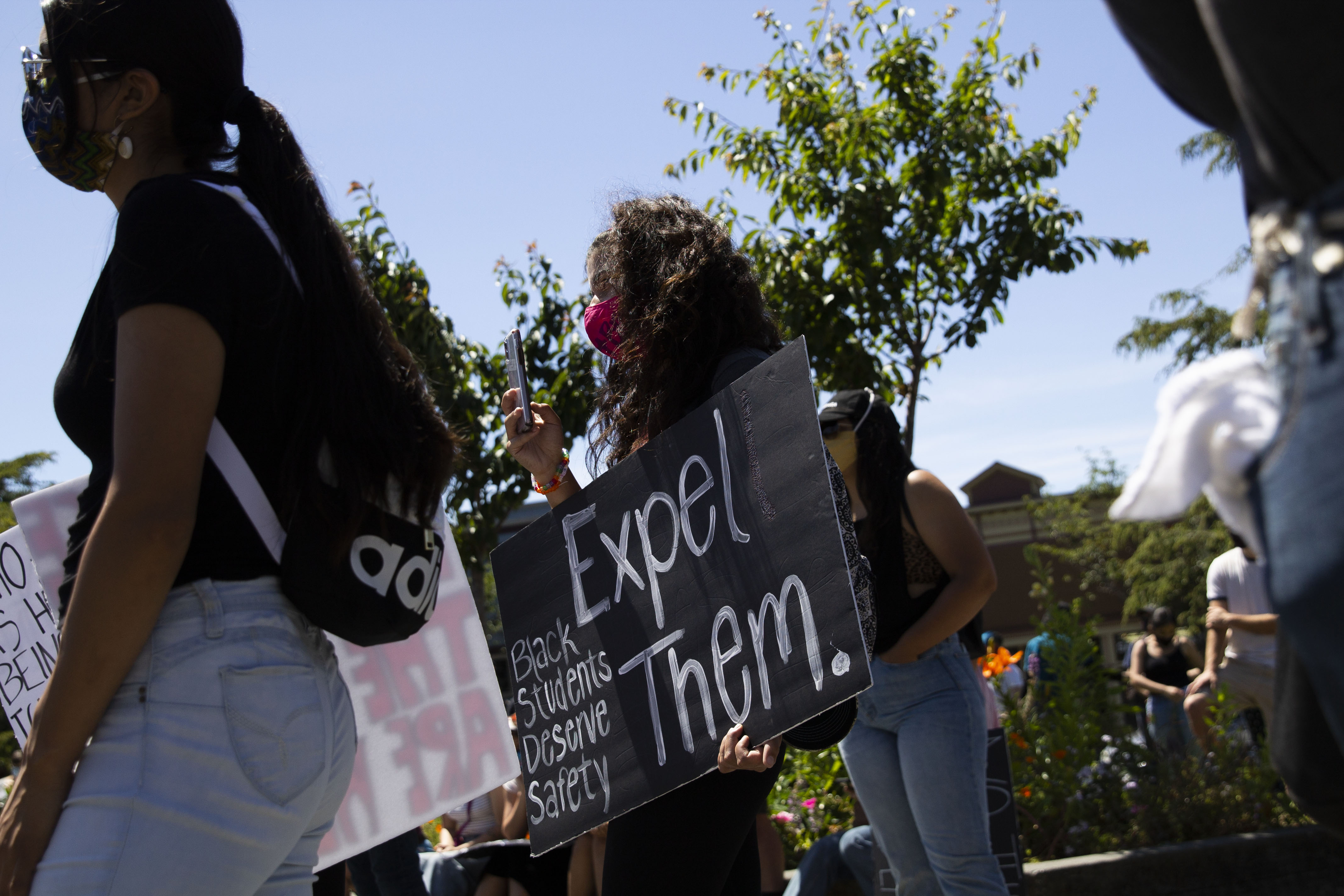
    “If you’re asking me if I think the students should be expelled, I do,” Ah-You said. “This is not the first rodeo. I don’t know these students but I can understand a mistake but just as my Brown brothers and sisters and my Black community has to stand behind our mistakes, they need to stand behind theirs too.”

    Ah-You is disappointed in HSU administration’s efforts to combat the social media post. She believes the current handling of the situation is not enough and doesn’t justify the severity of pain this video has caused the community.

    “Their actions send a statement out loud whether they know it or not. They do not stand with us in solidarity and they do not support my Black brothers and sisters out here,” Ah-You said. “It’s been an ongoing issue. This video is just part of it. It’s been going on forever. I’ve been out here going on seven years and it’s just been going.”

    HSU Vice President of Enrollment Management Dr. Jason Meriwether commented on the issue stating that the recent response from the student body and Arcata community is acknowledged by administration especially due to the current Black Lives Matter movement happening within our country. However with the investigation still ongoing, not much can be said.

    “I understand the deep sense of hurt and pain caused by racist systems, language, and behaviors,” Meriwether said in an email. “Our students and campus community feels this right now due to the current national landscape, the very real history of racism, and even more from having this happen within our campus community. I cannot address the specifics of the current investigation or ongoing conduct process beyond the statement.”

    Currently, the two students remain suspended from campus organizations. Micaela Harris, an HSU student athlete, unhappy with the current consequences, organized a petition on Change.org demanding the students be expelled from school. A week after the petition was created, more than 21,000 people have signed. That’s more than double the size of HSU’s student body.

    “The goal behind it[the petition] is to show HSU that this type of behavior should not ever be tolerated,” Harris said in an email. “High schools are expelling their students for doing the same thing, yet a university isn’t? Humboldt is one of the cheaper universities to go to so this means it is extremely diverse. It should be a safe place for students of color and this type of behavior should not be tolerated.”

    Meriwether has confirmed that HSU administrators are aware of the petition and are taking it into account with the ongoing investigation.

    HSU AS President Jeremiah Finley responded to the recent incident, acknowledging the petition and expressing his outrage and sympathy with fellow HSU students who feel the suspension is not enough of a consequence.

    “I would say I’m outraged as well, and their outrage is valid,” Finley said in an email. “As the Leader of the Student union, I often try to understand the diverse opinions of our students before inserting my own, but so for me, it is clear from the outcry and petition going around that the vast majority of students will not tolerate this type of behavior here at HSU.”

    Finley elaborated on the enhanced responsibility and duty of students who partake in extracurricular campus activities and organizations, stating that students are held to high standards when they choose to participate.

    “Students in organizations around campus are held to a higher standard,” Finley said in an email. “From clubs to our Greek Orgs, sports teams and Associated Students. Still, these students and their situation exceed the internal workings of their organization, and the final outcome needs to be resolved at the HSU level.”

    Finley believes that the responsibility of the Spirit Squad and Chi Phi fraternity is to keep their participants and members in check. Such as monitoring their behavior and attitude towards others, as it not only represents their organization and its values but HSU’s as well, both on and off campus.

    “The responsibility that falls on them[HSU organizations] is not condoning it in any way, as well as ensuring that the atmosphere they have doesn’t make it possible for that type of behavior to occur,” Finley said in an email. “Finally calling out any type of microaggressions and racist remarks where they can.”

    Both HSU Spirit Squad and the Chi Phi fraternity failed to respond to requests to make a comment.

    The recent social media frenzy has also stirred up racial tensions happening within HSU and the Arcata community, specifically the memory of the Josiah Lawson case. Protests, public demonstrations and marches have been the community’s response to the exposure of the racist behavior.


  • COVID-19 Cancels Fall 2020 Face-to-Face Instruction

    COVID-19 Cancels Fall 2020 Face-to-Face Instruction

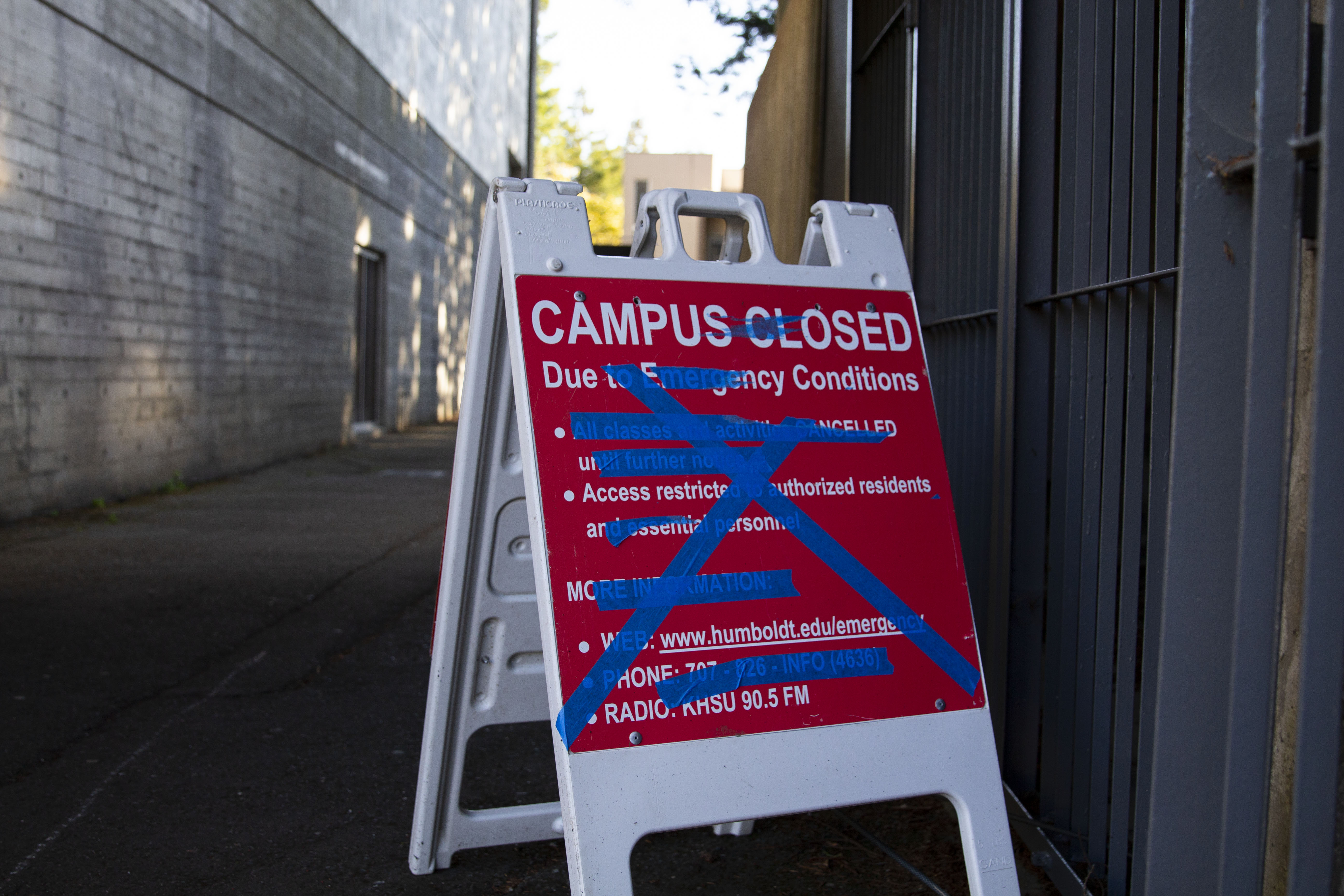
    Face-to-face instruction for Humboldt State’s fall 2020 semester has been canceled due to COVID-19. California State University Chancellor Timothy White announced Tues. May 12 that instruction will primarily be offered online. A virtual plan is expected to be implemented into the entire CSU system as the possibility of a second COVID-19 wave of cases is predicted.

    “Our planning approach will result in CSU courses primarily being delivered virtually for the fall 2020 term,” Chancellor White writes in a CSU press release. “With limited exceptions for in-person teaching, learning and research activities that cannot be delivered virtually, are indispensable to the university’s core mission and can be conducted within rigorous standards of safety and welfare.”

    Academics that can not make the direct translation to an online format, such as artistry and laboratory classes, will be conducted through a hybrid approach which limits in-person contact as much as possible and continues to emphasize online instruction. 

    HSU, along with other CSU systems, are subjected to differing class standards based on the level of necessity placed behind face-to-face instruction. The fall semester is projected to primarily remain online, however, updates and further information will be announced later in the week.

  • HSU is Holding Administrative Meetings Online and You Can Attend Them

    HSU is Holding Administrative Meetings Online and You Can Attend Them

    How and when to watch HSU administrators make big decisions

    University Senate Meetings: 

    Meetings are available online via Zoom from 3-5 p.m. Email senate@humboldt.edu to receive a Zoom link.

    Senate meetings will be held Tuesdays on April 21, May 5 and May 19 (if needed—undecided at the moment).

    University Senate Meetings are open to the public. If members of the campus wish to speak during the senate’s open forum period from 3:15-3:30 p.m., sign-ups are available on their website. 

    University Senate Executive Committee Meetings:

    Meetings are available online via Zoom from 3-5 p.m. Email senate@humboldt.edu to receive a Zoom link.

    Executive Committee meetings will be held on alternate Tuesdays from regular University Senate meetings on April 28 and May 12 (if needed—undecided at the moment).

    Associated Students Board of Finance Meetings:

    Meetings are available online via Zoom from 2:30-3:30 p.m. Zoom link (unless changed).

    Thursdays on April 23, April 30 and May 7.

    Weekly schedule of administrative meetings:

    MondaysTuesdaysWednesdaysThursdaysFridays
    4/21: University Senate Meeting
    3-5 p.m.
    4/23: CAHSS Council of Chairs Meeting
    TBD
    AS Board of Finance Meeting
    2:30-3:30 p.m.
    4/28: Executive Committee Meeting
    3-5 p.m.
    4/30: CAHSS Council of Chairs Meeting
    9-11 a.m. 
    AS Board of Finance Meeting
    2:30-3:30 p.m.
    5/5: Associated- Residential-Athletic Council
    1-2:30 p.m.
    University Senate Meeting
    3-5 p.m.
    5/7: CAHSS Council of Chairs Meeting
    9-11 a.m.
    A.S. Board of Finance Meeting
    2:30-3:30 p.m.
    5/12: Executive Committee Meeting (“if needed” – undecided at moment)
    3-5 p.m.
    5/14: CAHSS Council of Chairs Meeting
    9-11 a.m.
    5/19: University Senate Meeting (“if needed” – undecided at moment)
    3-5 p.m.
  • Humboldt State Violated California Law by Requiring Registration for a Public Meeting

    Humboldt State Violated California Law by Requiring Registration for a Public Meeting

    HSU briefly required registration for two public webinars as a security measure

    Update, April 22: Humboldt State Vice President of Enrollment Management Jason Meriwether penned a letter to The Lumberjack, making the case that HSU did not violate California law. Read it here.

    Editor’s note: Grace Caswell is a student in Journalism Department Chair Vicky Sama’s media law course. Almost the entire staff of The Lumberjack has also had Sama as an instructor in journalism courses.

    Humboldt State University hosted public meetings via Zoom to inform the public about its projected enrollment decline and budget cuts April 13 and 15. However, as a security measure protecting the university from “Zoom bombings,” HSU enacted mandatory registration requirements prior to entering the meetings in violation of California state law.

    “Zoom bombings” describe a new term for an infiltration or hijacking of a Zoom session with the intent to harass and disrupt the session. With an increase in Zoom users, from 10 million in December 2019 to more than 200 million in March of 2020, Zoom CEO Eric S. Yuan released a statement April 1 detailing additional measures being taken to enhance Zoom security over the next 90 days.

    HSU Vice President of Enrollment Jason Meriwether claimed HSU has experienced Zoom bombings and enacted the registration as an additional security measure. The additional measures required the public to respond twice via Google forms before being sent the Zoom meeting invitations, basically giving the administration, a government body, the power to sift through and deny public access.

    An approved registration screen for one of HSU’s enrollment and budget webinars held April 13 and 15.

    HSU Chair of the Department of Journalism and Mass Communication and media law professor Vicky Sama alerted and engaged with HSU administration, specifically Meriwether, on the violations being committed.

    “Using ‘security’ reasons to require the public additional registration to access a public meeting on the people’s business does not satisfy the openness and liberties that our Constitution provides,” Sama said in an email. “In addition to violating state law that I explained in my earlier email.”

    “The unintentional message is that some people are not welcome and/or we at HSU don’t want the public to know what is going on.”

    Vicky Sama, HSU journalism chair

    Sama said the additional requirement for the public to register prior to receiving an invitation was tantamount to reviewing their qualifications.

    “The email did not justify the registration nor did it outline its purpose, raising suspicions that the university doesn’t want certain people to attend or know what is going on,” Sama wrote. “The unintentional message is that some people are not welcome and/or we at HSU don’t want the public to know what is going on.”

    Specifically, HSU’s actions against the public violated the Brown Act and Bagley-Keene Act. Both California state acts provide assurance of rights to the public. Sommer Ingram Dean, staff attorney for the Student Press Law Center, explained how these security measures directly conflict with both acts.

    “Section 54953.3 of Brown says ‘A member of the public shall not be required, as a condition to attendance at a meeting of a legislative body of a local agency, to register his or her name, to provide other information, to complete a questionnaire, or otherwise to fulfill any condition precedent to his or her attendance,’” Dean explained in an email.

    “Section 11124 of Bagley Keene says ‘No person shall be required, as a condition to attendance at a meeting of a state body, to register his or her name, to provide other information, to complete a questionnaire, or otherwise to fulfill any condition precedent to his or her attendance.’”

    Sommer Ingram Dean, staff attorney for Student Press Law Center

    Additionally, Dean cited the Bagley-Keene Act and the measures it provides ensuring the public’s rights.

    “Section 11124 of Bagley Keene says ‘No person shall be required, as a condition to attendance at a meeting of a state body, to register his or her name, to provide other information, to complete a questionnaire, or otherwise to fulfill any condition precedent to his or her attendance,’” Dean wrote.

    Sama informed Meriwether of the illegal activity violating both the Brown and Bagley-Keene Acts April 13, citing the specific sections mentioned above. In response, Meriwether continued with the registration in place and adjusted the meetings by offering public links.

    “Since this issue was just raised today, it appears to me that the best thing to do is to move forward with today as planned,” Meriwether said in an email. “We will also explore hosting a third event. We will provide both the option for registration and the public link for the already scheduled event on Wednesday. The entire point of having these events was to be transparent.”

    Since then, the links to the April 13 and 15 meetings went public. However, the concern more surrounds HSU’s decision to filter through the public’s right to access a public meeting regarding matters directly impacting them.

    The registration requirement, Sama wrote, amounts to intimidation and goes against the spirit of openness and transparency, and “reeks of sneakiness.” In a time of crisis, government bodies can use the mirage of security to deny the public their right to voice their opinions. Ultimately, it can amount to an abuse of power against the public.

  • Here’s What The Lumberjack is Watching, Reading, Playing and Doing

    Here’s What The Lumberjack is Watching, Reading, Playing and Doing

    Some unedited recommendations and brief reviews from some of our staff


    Life and Arts Editor Grace Caswell

    What I’m watching:

    Just finished “Tiger King.” It’s the most ridiculous and unbelievable show I’ve seen yet with a surprising amount of depth.

    What I’m reading:

    “Noam Chomsky” by John Lyons.

    What I’m playing:

    None :/

    What I’m listening to:

    Lots of new music is being released but right now Toro y Moi and Jhene Aiko.

    What else I’m doing:

    Yoga and meditation has been a go to as well as cooking healthy foods. Anything to keep my mind at ease and health immunity high.


    Managing Editor Chelsea Wood

    What I’m watching:

    I’ve been watching the final season of “Schitt’s Creek” which has been a bittersweet reflection of the last five seasons.

    What I’m reading:

    I’ve been reading more of a book I started last summer. It’s called “The Spaceship Next Door” and it about a teenager who grew up in a small town where a spacecraft crashed years ago but never left.

    What I’m playing:

    Minecraft. I trash talked this game as a teen, but it’s amazing and I love creating things on it. It’s extremely entertaining and relaxing.

    What I’m listening to:

    I’m listening to lots of downbeat songs—music that soothes the soul with catchy beats. Just stuff to satisfy this melancholy phase I’m swimming through.

    What else I’m doing:

    I picked up an old hobby, basket weaving. It’s a relaxing and simple task that yields a useful item. And no that’s not a BS excuse, basket weaving is the shit.


    Editor-in-Chief James Wilde

    What I’m watching:

    I just finished season three of “Ozark.” It’s a crime drama with superb characters and writing that had an unexpected depiction of mental illness that probably hit a little too close to home and (full disclosure) made me tear up.

    What I’m reading:

    I just finished “Why Time Flies,” by Alan Burdick, a fun little foray into the way we think about time. Next up: “The Glass Hotel,” by Emily St. John Mandel.

    What I’m playing:

    Call of Duty: Warzone with my brother and some friends. I hate the premise of Call of Duty and, you know, shooting people, but as long as I ignore that it’s lots of fun.

    What I’m listening to:

    Kind of all over the place, which isn’t out of the ordinary. Indie stuff to hip hop to alt rock to electronic stuff to jazz to whatever else. Oh, and random Tiny Desk Concerts.

    What else I’m doing:

    Walking or going on runs to get out of the house. Drowning in schoolwork. Lying on the floor.


    Opinion Editor Alexis Parra

    What I’m watching:

    “Gentrified”- A show that hits home for people of color. “Tiger King”- A cult war in the world of big cats.

    What I’m reading:

    “Z: The Beginning of Everything”- the untold story of Zelda Fitzgerald and beautifying her life.

    What I’m playing:

    None.

    What I’m listening to:

    My playlist on LJ- All of my favorites songs and energy that I carry into one playlist. “La Platica”- A bilingual podcast where the host is funny and talks about dumb shit and real shit.

    What else I’m doing:

    Painting. Make-up. Face masks. Talking to my family. Getting creative while also taking care of my skin and keeping in touch with my loved ones.


    Sports Editor Thomas Lal

    What I’m watching:

    “Drive To Survive,” a super fun look into the 2019 F1 season with the dramatic thrills and spills to match!

    What I’m reading:

    “Permanent Record” by Edward Snowden. An intriguing and somewhat terrifying read.

    What I’m playing:

    The Witcher 3. This game has consumed my life. Loving the story and exploring the world.

    What I’m listening to:

    So much music, mostly ska, punk and jazz along with the “Every Little Thing” podcast.

    What else I’m doing:

    Being sad without any sports to watch.


    Web Editor Seth Finnegan

    What I’m watching:

    “Community.” The always funny comedy about students at a community college.

    What I’m reading:

    None.

    What I’m playing:

    Dead Rising and MLB The Show 19. Filling the sports void with hitting baseballs and zombies with baseball bats.

    What I’m listening to:

    The “Adventure Zone” podcast. Three brothers and their dad play D&D together.

    What else I’m doing:

    Learning to play darts. It’s very frustrating but very fun!


    Video Editor Benjamin Zawilski

    What I’m watching:

    The filmography of David Fincher and Hayao Miyazaki, and “The Good Place” on Netflix.

    What I’m reading:

    Rereading “Peter and the Starcatchers” by Dave Barry and Ridley Pearson, which was one of my favorite book series as a child

    What I’m playing:

    Overhearing my sister play Animal Crossing.

    What I’m listening to:

    The film scores of Mark Mancina, Alexandre Desplat, and James Newton Howard.

    What else I’m doing:

    Hiking at least five miles a day, sometimes up to seven, and have done a considerable amount of housecleaning.


    Reporter Deion Alston

    What I’m watching:

    “Coffee & Kareem.” Cop dates kid’s mother and him and kid (Kareem) uncover a conspiracy of dirty cops.

    What I’m reading:

    Haven’t been reading books tbh, but a lot of news article pertinent to sports, COVID-19, crimes etc.

    What I’m playing:

    Fortnite and NBA 2K 20. Fortnite is a shooting game and 2K is professional basketball at your finger tips.

    What I’m listening to:

    For podcasts, I listen to “Up in Smoke” hosted by two former NBA players, Matt Barnes and Stephen Jackson. It’s very interesting—great interviews and guests as well. For music I’m listening to a lot of Lil Uzi, G Herbo, Tory Lanez. So basically rap, hip-hop and R&B.

    What else I’m doing:

    I’m cooking a lot more—takes time up in the day. Do my 250 push-ups everyday and step-ups for some cardio. And occasionally throw the football in the drive way.


    Reporter Dakota Cox

    What I’m watching:

    “Seinfeld” & “Empire.” “Seinfeld” is a wonderful waste of time. “Empire” is a must-binge, cutthroat musical.

    What I’m reading:

    “Hurricanes” by Rick Ross is a fairly generic success story in terms of rapper autobiographies. “The Alchemist” is an extraordinary journey of the body, mind and soul.

    What I’m playing:

    Animal Crossing; don’t ask questions, go pick up the game!

    What I’m listening to:

    Going back and forth between oldies and hip-hop, gotta keep the serotonin up. Michael Jackson, Bob Marley and The Beatles are timeless, go listen! Gambino got the best album of 2020, @ me!

    What else I’m doing:

    Slipping out of sanity; would not recommend. Get a mask-on walk in when the sun shows it’s face; I like to play a little game called guess the gang members.


    Reporter Sarah Blunt

    What I’m watching:

    I just finished “I am not okay with this.” It was a really good show with short episodes that have a lot going on in them. 10/10. I also just recently watched “Freedom Writers.” That one was really good and empowering, also took place in Long Beach (where I’m from) so that was relatable (kind of).

    What I’m reading:

    “Looking for Alaska.” I’ve already seen the show on Hulu but I realized I had the book. So far it’s really good and John Green (the author) writes really descriptively so I never feel bored when I’m reading it.

    What I’m playing:

    None.

    What I’m listening to:

    Tons of music. Nothing in particular just going through my music apps and looking for things I haven’t heard before, or even music from shows i’ve watched that I liked the soundtrack. That’s most of what I spend my free time doing.

    What else I’m doing:

    Lately I’ve been taking bike rides alone just to get fresh air and not be stuck in the same surroundings. I never ride bikes but lately it’s just been a really nice way to get out the house but also keep my social distance from others. 10/10


    Reporter Ivan Ramirez

    What I’m watching:

    “Castlevania,” the show. “Mewtwo Strikes Back: EVOLUTION,” the movie.

    What I’m reading:

    Marcy Burstiner’s Investigative Reporting Book.

    What I’m playing:

    None.

    What I’m listening to:

    Psytrance, Electronic Dance Music, Drum & Bass, Electronic Rock.

    What else I’m doing:

    Meditating, talking to people on Discord, Instagram.


    Reporter Alberto Muro

    What I’m watching:

    I have started watching the Amazon Prime series “The Boys.” It has an interesting take on superheroes proving that not all of them are super. It’s a world where super heroes exist, now imagine their lack of empathy for saving people.

    What I’m reading:

    Currently reading through my textbooks so that I don’t fall behind on homework.

    What I’m playing:

    I am currently playing the remake of Resident Evil 3 which has updated graphics and character development.

    What I’m listening to:

    I am listening to the “Tinfoil Hat” podcasts since conspiracies take my mind on a wild ride

    What else I’m doing:

    I have transitioned from a student using critical thinking to an essential asset during a global pandemic thus turning me into a critical drinker.

  • Myths and Truths of Surgical Face Masks

    Myths and Truths of Surgical Face Masks

    Mirage of safety causes mask supply to plummet and xenophobia to reemerge

    The emergence of everyday people using surgical masks amidst the COVID-19 pandemic has caused mass misinformation and the perpetuation of xenophobic ideas.

    Myth: Surgical masks make you immune to COVID-19

    Typically found on hospital workers and sick personnel as a safety barrier, surgical masks are almost regarded as invincibility devices, protecting the body from outside pollutants and threats. The implied purpose of surgical masks is to protect patients from the secretions of a doctor’s mouth or nose during surgical procedures or to protect doctors and nurses from infected patients. Either way, a basic surgical mask prevents the exchange of bodily fluids, not air particles. Surgical masks are often mistaken as invincible shields against all viruses and bacteria.

    Surgical masks show no evidence of prohibiting the inhalation or contraction of the virus that causes COVID-19. The COVID-19 virus particles are too minuscule to be stopped by a surgical mask barrier. According to the Centers for Disease Control and Prevention, “most facemasks do not effectively filter small particles from the air and do not prevent leakage around the edge of the mask when the user inhales.” In no way do surgical masks prevent or obstruct contaminated air.

    While surgical face masks are virtually pointless against COVID-19, N95 filtering facepiece respirators are different. These masks are personally fitted to the face and “filter out at least 95% of very small (0.3 micron) particles, capable of filtering out bacteria and virus particles,” according to the CDC. These masks are typically worn by hospital and treatment personnel that come in direct contact with infected patients. N95 masks prevent the inhalation of micro-particles.

    Truth: Surgical and N95 masks are running low

    Due to the personal fitting of each N95 mask, they begin to degrade overtime depending on their usage, storage and environment. The assigned expiration date and high demand due to the current pandemic has resulted in an unexpected shortage in supply. Doctors are now reusing their masks, but they risk contamination due to degrading components affecting the protection and performance of the mask. Government administrations are requesting N95 donations as well as demanding some occupations to give up their assigned mask for medical workers.

    While N95 masks are needed most, surgical masks are running low as well. Infected patients wearing masks benefit surrounding parties by limiting exposure of emitted particles into the air. The pandemic panic has misinformed the public to go buy surgical masks when patients and medical workers need them most.

    Myth: DIY masks provide reliable protection

    YouTube and social media platforms are advertising do-it-yourself face mask tutorials in response to the shortage in surgical mask supply. The misinformation has continued as people attempt to protect themselves with faulty protection materials. Bras and bonnets to sandals and plain cloths are being cut and trimmed to replicate surgical face masks. But, as previously mentioned, surgical face masks provide no protection against COVID-19 virus particles. Any alteration of store-bought or recycled material will have the same, if not less, protection against COVID-19 than a surgical mask.

    Truth: Mask usage has reignited xenophobic ideas

    Surgical masks provide zero protection from contracting COVID-19, but they have effectively reignited xenophobia. It’s completely normal for the mind to want to assign a face to an infected COVID-19 individual or picture what a threat would look like out of caution. Assuming someone wearing a face mask has the virus and extending that assumption past the mask, to their race or ethnicity, is disgusting, racist profiling. In a time of crisis, people should be exercising neighborly behavior and picking one another up, not perpetuating racist, profile-based assumptions on others in an attempt to accuse others of the chaos. It’s unproductive and invasive.

  • Dr. Cornel West Talks Truth

    Dr. Cornel West Talks Truth

    Selling out in less than a week, Dr. Cornel West commanded the stage with emotion and power

    Around 800 people formed a line wrapping around campus, anxiously awaiting Dr. Cornel West’s lecture. In high demand, tickets sold out in less than a week. Community members desperate for tickets resorted to bribery.

    Brothers United took the John Van Duzer Theatre stage first with the introduction of Humboldt State University Vice President of Enrollment Management Jason Meriwether. After a quick selfie snap and a booming introduction, Meriwether invited West to the stage where a standing ovation followed.

    West was the powerhouse speaker of Black Liberation Month and began his lecture with the recognition of the meaning of the month of February to reflect on the history of our ancestors and to recognize and pay respect to their sacrifices.

    “When you’re talking black history, you’re talking the best of history,” West said. “February is for the brown, red, yellow and black peoples to dig deep into their r-o-o-t-s so their r-o-u-t-e-s can become international.”

    The lecture surrounded West’s book, “Race Matters.” Originally published in 1993 during a time of tense racial turmoil following the trial of Rodney King—a survivor-turned-activist of Los Angeles Police Department police brutality—and the Los Angeles riots—which broke out in response to the trial and heightened racial tensions—the book brings morality into question when analyzing racial disputes. Resurfacing in the modern day, West believes the same issues that arose 27 years ago remain today.

    “We live in a highly polarized society,” West said. “It’s polarized by race, it’s polarized by class, it’s polarized by preaching, it’s polarized by politics and I think I was trying to get at some of the ways in which we can understand the polarization and try to create a higher moral, spiritual ground to keep alight the best of our democracy. That’s what I was doing then and it becomes relevant now, all over again.”

    Highlighting the best of our democracy and of any situation was a recurring message from West. When asked about polarized education systems, West attacked it with the same approach.

    “All institutions are ambiguous and ambivalent in having the best and the worst,” West said. “It depends on the particular features being highlighted. Must be very candid about the ups and the downs, the bests and the worsts.”

    “Disabilities aren’t necessarily sad or scary, but just another way to live life.”

    Crystal Pasztor

    A Q&A session followed his lecture where members of the audience had the opportunity to grab the mic and connect with West. As hands shot up, West emphasized the importance of selecting participants of diversity within the crowd and hearing those voices.

    Crystal Pasztor is a sociology major at HSU. She asked West for a favor of recognition, rather than a question.

    “My favor was to talk about disability and people as a group because you can’t ignore that every group has a disability,” Pasztor said. “Disabilities aren’t necessarily sad or scary, but just another way to live life.”

    Pasztor brought HSU’s own lack of disability recognition into question, describing feeling abandoned by the school and its services.

    “When you’re fighting for something as precious, you never give up because the love too deeply and the commitment too real.”

    Dr. Cornel west

    West ordered the entire theatre to applaud Pasztor in recognition of her feeling of campus abandonment.

    “I felt so much better,” Pasztor said. “I was very nervous to say anything because the president is here.”

    After a standing ovation for West, the audience flooded to the stage for an opportunity to interact and shake West’s hand. One student handed West their cell phone with Charmaine Lawson on the line. An emotional conversation led to West commending Lawson’s love and fight for her son, Josiah Lawson.

    “When you’re fighting for something as precious, you never give up because the love too deeply and the commitment too real,” West said. “So when I was talking to sister Lawson I could just see in her eyes and feel in her heart oh so much love for her precious son and she’ll never give up. That’s what love is—it’s never giving up.”

    Justice remains lacking for the Josiah Lawson case. For community healing, West emphasized morality and spirituality as a light in the search for truth and justice.

    “You got to re-energize people in a moral and spiritual way,” West said. “So that you can create the kind of awakening that brings people together. That want to fight for truth and justice. But, every generation is re-energized in some way.”

    West placed extreme importance on the new generation and their ability to model, lead and revitalize the ongoing dispute over conflicting dialogues and conversations that divide our country. In an exclusive interview with The Lumberjack following West’s lecture, he commended HSU and its administration for their role in developing the new generation by leading by example.

    “By example,” West said. “That’s why I salute what president here doing and dear brother Jason Meriwether. Leadership makes a difference in an institution of higher learning.”

    West remained humble and credited much of his character and success to the leaders, activists and icons of the past. He spoke highly of notable black leaders like Martin Luther King Jr. and Malcolm X, but more importantly, he credited an intangible spirit of truth and justice.

    “I tell them don’t look up to me, look up to truth and justice,” West said. “Truth and justice bigger than all of us, bigger than all of us. We all want to try and be exemplars of living truly and fighting for justice in a moral and spiritual way.”

  • Supreme Releases New Collection with Art from HSU Alumnus

    Supreme Releases New Collection with Art from HSU Alumnus

    Martin Wong’s lost art reemerges to bring awareness to a new generation

    Designer street style brand Supreme’s new collection highlights the life and art of Martin Wong.

    Wong, who embodied creativity, empathy and empowerment, lost his battle against an AIDS diagnosis in August of 1999, but his artwork continues to inspire and act as socio-political commentary after his death.

    Wong attended Humboldt State University in 1964, enrolling himself in every available art class before focusing his studies in ceramics. After graduating, Wong left the comfortable walls of university-life to influence the art scene and bring widespread awareness to minority groups often overshadowed by society.

    Wong’s family, friends and supporters partnered together on a collaborative collection with Supreme showcasing Wong’s lost works.

    Anneliis Beadnell, Senior Director and Director of Estates at P.P.O.W Gallery, a contemporary art gallery in New York that represents Wong and his work, explains Wong’s appeal to Supreme.

    “Over a year ago the artist KAWS, who is a good collector and friend of P.P.O.W, approached us to see if the Estate of Martin Wong would be interested in supporting a collaboration between Martin Wong’s work and Supreme,” Beadnell said. “The Estate was supportive, Martin’s circle of friends were encouraging and the collaboration felt right on many levels.”

    The collaboration, as well as the overwhelming support towards the partnership of artist and brand, reinforces the importance of Wong’s legacy, advocacy and support represented through his artwork.

    “Since Martin was interested in cultures that lived on the fringe of society, or outside the realm of the ‘art world,’ we felt that this collaboration would be successful in bringing his imagery into a new demographic.”

    Anneliis Beadnell

    “Through Supreme’s platform, a new generation who may not have had access to the works through visiting galleries or museums, will have a new way to enter into his work,” Beadnell said. “Since Martin was interested in cultures that lived on the fringe of society, or outside the realm of the ‘art world,’ we felt that this collaboration would be successful in bringing his imagery into a new demographic.”

    Like most of Wong’s art, the graphics showcase political and sometimes controversial subjects. Elements of poverty, misfortune and ruin bring attention to the unfair and inhumane treatment of minority groups. Encapsulating inclusion and representation was Wong’s strong suit.

    The ability to take those underrepresented into the spotlight ripples throughout his work. Idolizing the “unprofessional” and disrespected street artists allowed for new perspectives to emerge not only in Wong’s works, but in the art world in general.

    “In his lifetime, Martin gathered one of the largest graffiti collections in the world,” Beadnell said. “Martin turned to his friendship with the graffiti [artists] for collaboration and inspiration in his own works, which often took them as the subjects of various paintings.”

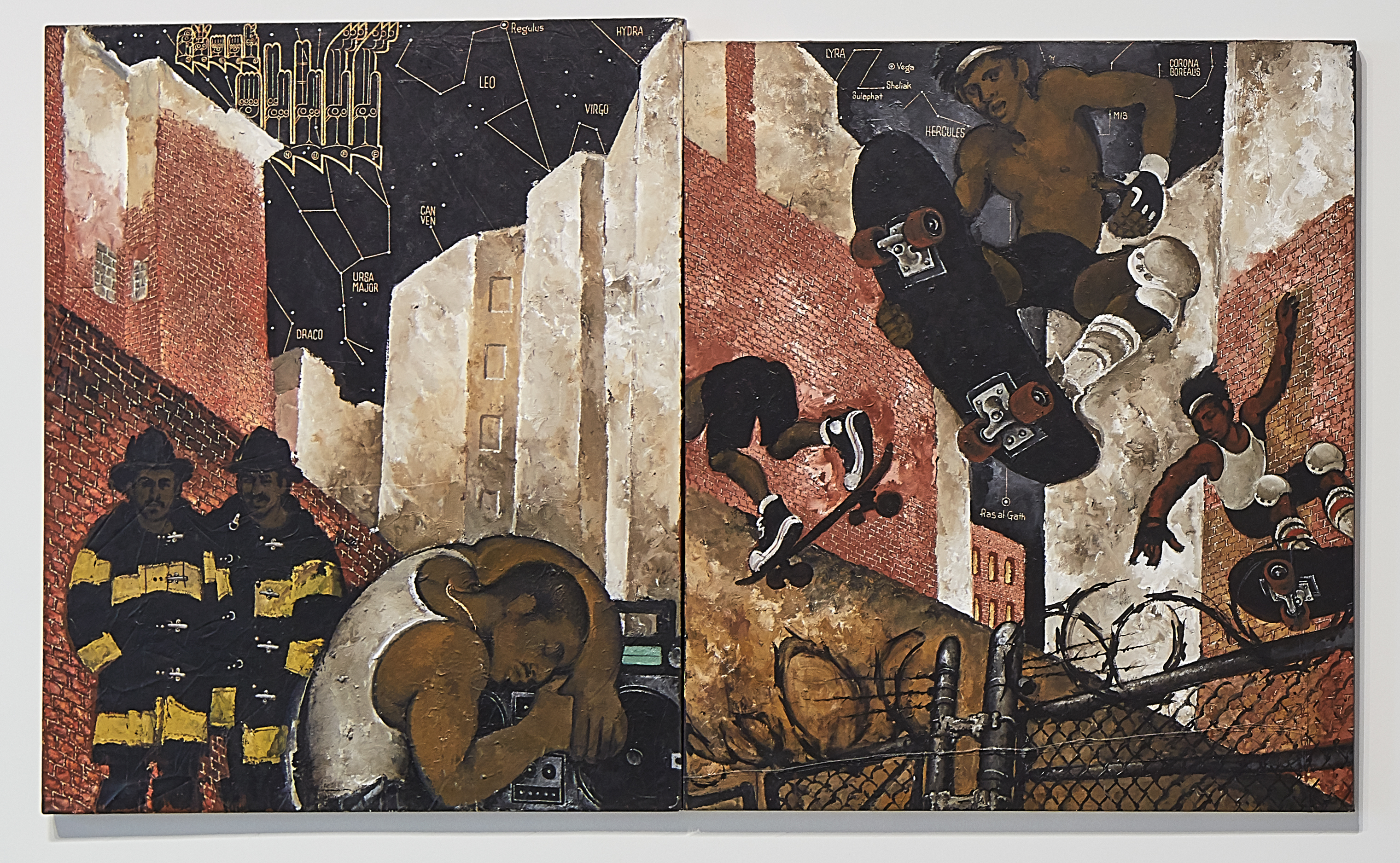
    According to Beadnell, Wong also created several paintings with skateboarders as the primary subjects, like “Sweet ‘Enuff,” a 1987 painting which is in the collection of the de Young Museum in San Francisco.

    Capturing moments ignored by mainstream society gifted Wong the ability to cast a new light on the struggles and discrepancies in subcultures, raising widespread awareness in the art world.

    This type of socio-political activism is still growing today, but there is a need for inclusion of identity and culture regardless of differences. Beadnell emphasized this and said the goal of the collaboration with Supreme was to reinforce those ideals with younger generations.

    “Wanting to extend his demographic outside of the ‘art world’ speaks to wanting to continue his legacy of influence and inspiration as an artist,” Beadnell said. “There is a strong youth culture that follows Supreme and the collaboration with Martin’s work may open a door for those that purchase the items and want to learn about Martin Wong’s contribution to our visual history and culture.”

    Wong’s work revolutionized the stigmas that dismissed groups from society, specifically focusing on the disadvantaged and underrepresented. From sexual orientation and economic standing to uncontrollable impairments, capturing the essence of groups often labeled insignificant or unworthy earned Wong his title of an activist and a visionary.

    “Being that Martin was a gay Asian American, we hope this level of visibility will inspire others, that may have shared histories and identities, to look to Martin as a point of inspiration.”

    Anneliis Beadnell

    “Martin’s paintings connect to the denizens of the Loisaida, the crumbling tenement bricks and urban landscapes, the places where creative subculture thrived and since has been erased by gentrification,” Beadnell said. “The iconography that emerged through Martin’s depiction of the Lower East Side, of closed storefronts, firemen, ASL symbols, constellations and flaming eight balls became graphic points of interest for the line.”

    Although Wong died over 20 years ago. His life and death are ever significant. More than 36 million people are currently suffering from HIV related illnesses.

    The re-emergence of previously destroyed creative outlets allows the newer generation access to the extinguished memories and documentation of the past. The revamped accessibility stems with the hope of generating more activism for the future.

    December 1 is World AIDS Day, recognizing and bringing awareness to the pandemic caused by HIV and mourning those who have died from the disease.

    “Being that Martin was a gay Asian American, we hope this level of visibility will inspire others, that may have shared histories and identities, to look to Martin as a point of inspiration,” Beadnell said.

  • Commercial Costumes Can Be Problematic

    Commercial Costumes Can Be Problematic

    Many costumes portray culture and lifestyle in an insensitive manner

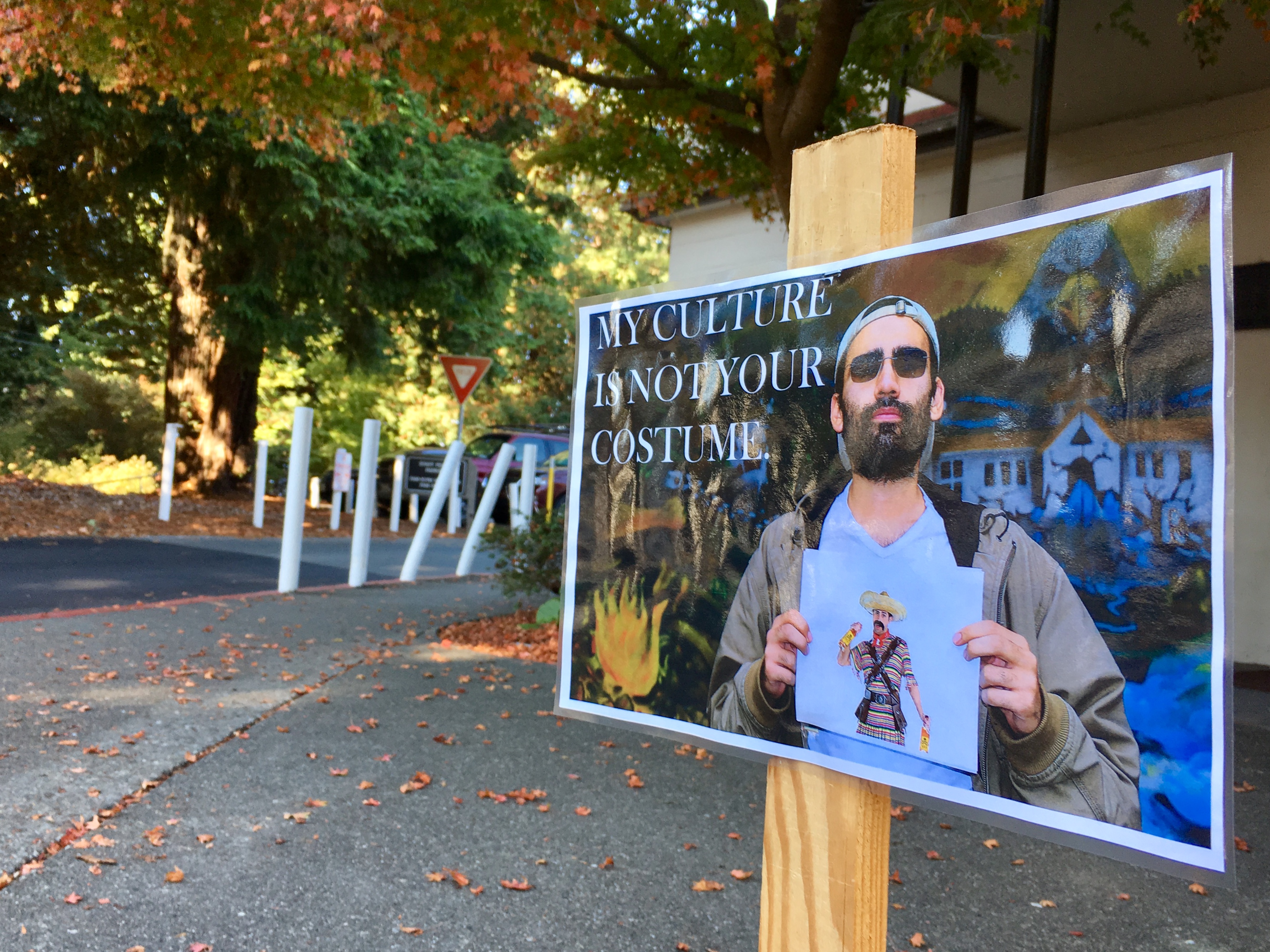
    Humboldt State students hurry last minute to piece their Halloween costumes together but find no comfort in commercial Halloween stores as the stores will often have sections full of costumes that are ignorant or insensitive.

    Sierra Cosper, a forestry major, expressed her discontent in the commercial Halloween store, Spirit Halloween.

    “I went through Spirit Halloween and they had a whole aisle of Pocahontas and it’s not cool,” Cosper said. “It’s 2019, can we move on from that now?”

    Students agreed that Pocahontas and Native American themed costumes were disrespectful and unacceptable to wear. Haley Fedalizo, a liberal studies elementary education major, found another commercial Halloween store, Party City, to be disrespectful toward culture and body weight.

    “Obviously the [costumes] that are in your face like the Native American one is not okay,” Fedalizo said. “I was literally at Party City yesterday and I saw a “fat costume” and that’s not cool.”

    Jose Moreno, a social work major, also found fault in the commercial chain Party City. Moreno practices an ironically ‘fun’ tradition at the store every year. Often losing count of the inappropriate costumes.

    “I went through Spirit Halloween and they had a whole aisle of Pocahontas and it’s not cool. It’s 2019, can we move on from that now?”

    Sierra Cosper

    “When I go to Party City or anything like that, I count how many cultural appropriation outfits there are,” Moreno said. “I’m like ‘there’s one right there, and right there! I lost track.”

    Beyond the recognizable commercial chains, the internet continues to advertise culturally insensitive and inappropriate Halloween costumes and accessories.

    HSU student Gabrielle Sturm, an environmental studies major, went online to browse for the Halloween season and couldn’t believe what was advertised.

    “I was looking up costumes online and I was a little surprised to see how many [inappropriate costumes] there still are,” Sturm says. “I think they’re bad but a lot of people still do it.”

    While cultural appropriation continues to popularize social media with cultural awareness movements, HSU promotes a safe and respectful Halloween season. Of course, the message on campus has no influence on commercial chains.

  • Vaping Epidemic Overshadows Opioid Crisis

    Vaping Epidemic Overshadows Opioid Crisis

    Opioid crisis overlooked as ‘vaping epidemic’ is brought to the foreground

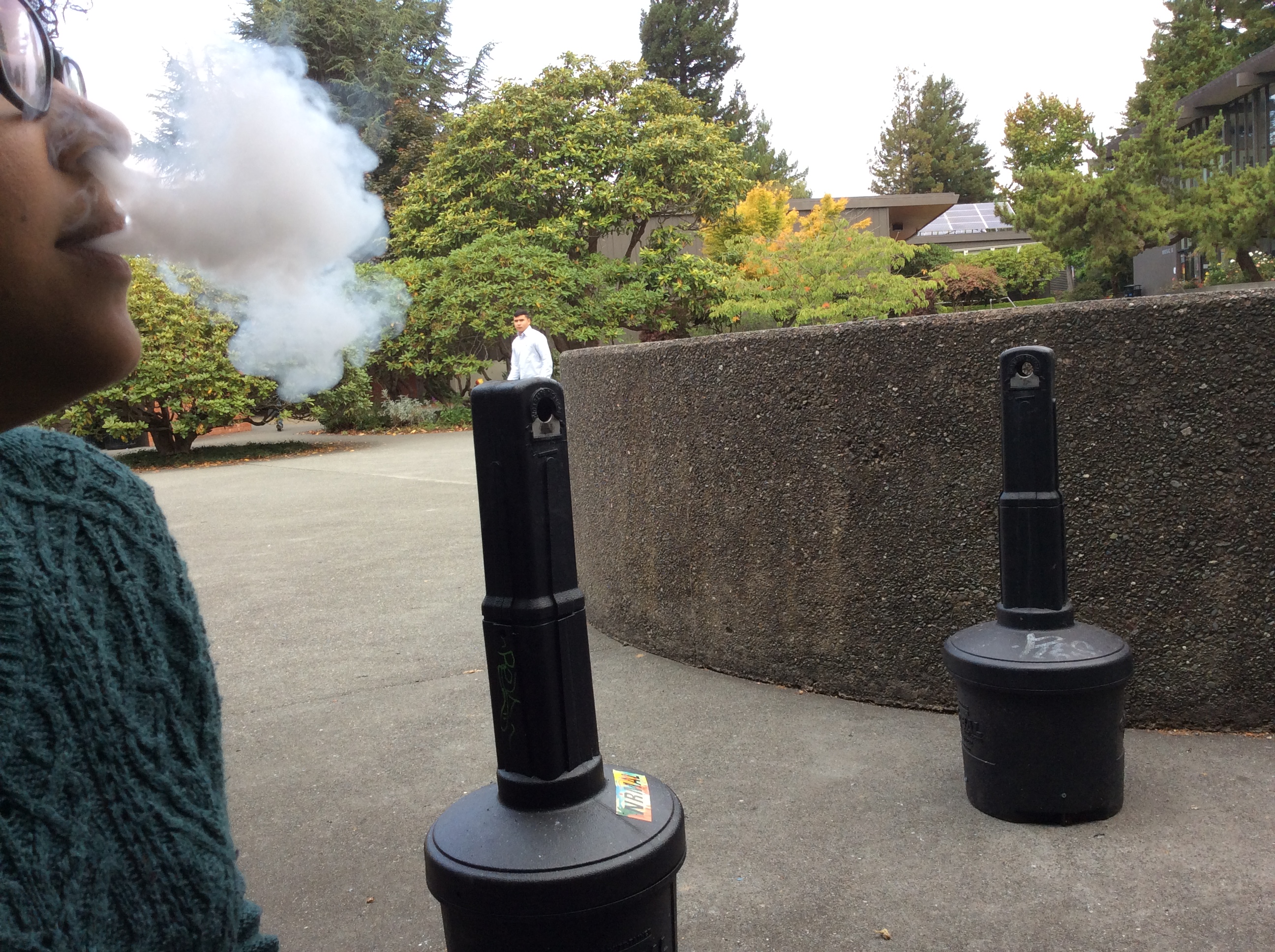
    With Hollywood actors and prominent public figures accessorizing day-to-day life with a JUUL in hand, vaping was quick to enter the teenage party scene and develop a reputation amongst the younger crowd.

    Years ago, public disapproval was primarily aimed at the advertisements vaping companies released. The younger crowd became the target audience with the promotion of sweet, tempting flavors, and the original audience, adults who were looking to quit cigarettes, quickly became a secondary target.

    In late August, seven deaths in relation to vaping were confirmed. Beyond that, 530 cases of lung illness found in young adults have been attached to vaping with the numbers on the rise. Regardless of whether marijuana or nicotine cartridges are being used, an unrelated chemical substance is being singled out. Vitamin E acetate, a common diluent used in vaping cartridges to cut the product and increase shelf longevity, appears to be the cause.

    Vitamin E comes in many forms and is most commonly known for its moisturizing and adhering quality. Physicians are dumbfounded by the idea of smoking it. Medical officials compare smoking Vitamin E acetate to “[s]aran wrap around your lungs” as the tocopherol element adheres to the lungs liner fluid, blocking oxygen travel.

    The light on vaping has cast a shadow on a much older and somehow less prominent issue affecting our country, the opioid epidemic. Since the ’90s, medical officials began distributing pain relievers at a higher rate after pharmaceutical companies assured them of their non-addictive quality. Proven to be false, this ultimately resulted in over 700,000 people dying from a drug overdose within the 1999 to 2017 time period. And according to the CDC, 400,000 of the deaths were due to overdose involving opioids, prescription and illicit.

    Since then, an estimated 130 people die daily from opioid-related drug overdoses. Unlike the vaping “epidemic,” officials are aware that 40% of opioid overdose deaths are connected to a prescription but refuse to take action and put restrictions on pharmaceutical companies.

    Focus continues to surround vaping. Measures are being introduced to limit access to vaping devices. Meanwhile, the country has been at war with drugs since the ’70s with little to no improvement.

    It took less than two months for legislators to begin discussions on vaping issues and introduce more than 200 bills to combat it. In almost half a century the opioid epidemic has claimed more than 400,000 lives, with 47,000 in 2017 alone, and leaves 1.7 million people suffering from substance disorders relating to prescription opioid pain relievers.

    The more urgent issue is somehow the least prominent thought in any officials mind.

    Before jumping into the next news-worthy drug epidemic, let’s overcome the current opioid battle we’ve been struggling with for almost 50 years and relieve the pain of over a million people before forgetting them altogether.

  • Marijuana Breathalyzer Coming 2020

    Marijuana Breathalyzer Coming 2020

    No pee, hair or spit. One blow is all it takes to show marijuana intoxication levels with new breathalyzer.

    Marijuana has been a touchy topic since Colorado and Washington made their first moves to legalize recreational use in 2012. Since then, 29 states have followed and declared marijuana legal for medicinal and/or recreational use.

    Tension forms at the discrepancy between state and federal opinion on where marijuana falls legally as a drug. The lack of legal confirmation from the federal government makes it difficult for government employers, especially police officers, to execute and process circumstances surrounding marijuana intoxication. Recent developments in marijuana detection technology suggest a breathalyzer is in the works.

    Current marijuana testing requires a hair, urine or blood sample. The test results detect past use up to six months and reports the current THC level in the body. This testing proves to be unreliable as past use of marijuana will distort a current reading of bodily intoxication, which is what law officials care about.

    The two technology companies racing to release their version of a more accurate breathalyzer are Hound Labs and SannTek.

    Hound Labs was established five years ago and is leading the race with an expected release of late 2020. The Hound Labs breathalyzer operates on a specified time basis. It can detect marijuana if it’s been used in the last three hours. The three-hour window comes from two findings; one, marijuana is only detectable for the first three hours. Afterward, THC levels drop so low and so fast that it becomes virtually undetectable. Second, the initial three hours of intoxication are the most impaired and therefore the most crucial.

    The breathalyzer method proves to be more accurate and better suited for law and medical officials, as alternative testing can take hours to produce results. In addition, this method is also beneficial to the participant, as the regulated three hour time interval doesn’t hold participants liable for past usage beyond that time frame.

    If this new testing method becomes normalized, the three hours prior to testing will be the most critical, but anything before those three hours is merely tangential. Ideally, someone tested for their marijuana use could not be held liable for their marijuana use prior to the that three-hour window because the breathalyzer would not be able to detect it.

    The opposing company, SannTek, and their breathalyzer the SannTek 315 will operate similarly to the Hound Labs breathalyzer. SannTek 315 is still in early development so the company is not providing much information. Like Hound Labs, their product will utilize a time interval to reveal the last ingestion of marijuana and current intoxication.

    Hound Labs conducted clinical testing in 2017 in cooperation with University of California, San Francisco. However, no findings have been concluded publicly due to the small sample size. SannTek 315 lacks any formal testing or trials at this time.

  • ‘The Hunt’ is Off

    ‘The Hunt’ is Off

    Universal Pictures cancels release of HBO thriller after Trump slams movie in tweet

    “Elites” killing “Deplorables” may sound like an extreme interpretation of today’s politics. “Deplorables” is a recognizable term from the 2016 presidential election that Hillary Clinton used to describe Trump supporters; the word alone draws an immediate connection between the plot of the movie and real-life political strife.

    “The Hunt” is a new movie created by Nick Cuse and Damon Lindelof. The movie drew inspiration from real-world politics and the short story “The Most Dangerous Game” by Richard Connell. The thriller quickly morphed into an uncomfortable and realistic take of today’s world.

    Advertising for the satirical thriller was stopped out of respect for the mass shootings. However, even after the cancellation, both the president and public continued to express concern and disapproval over the plot.

    Ultimately, the vocalized disapproval resulted in Universal Studios pulling the plug and releasing a press statement:

    “After thoughtful consideration, the studio has decided to cancel our plans to release the film. We stand by our filmmakers and will continue to distribute films in partnership with bold and visionary creators… but we understand that now is not the right time to release this film.”

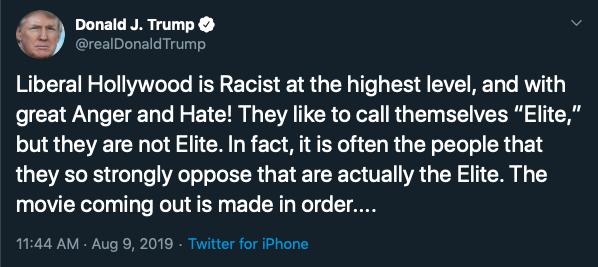
    Donald Trump’s tweet that finishes his previous message on Aug. 9.

    The ‘now’ Universal references is modern-day society. Recent events have created a tense and polarized political atmosphere that has resulted in a hypersensitive society. The idea of hunting and killing those who have opposing views, regardless of the satirical message, is too intense for the people of today’s political climate. Violence is quickly becoming a normalized aspect of society, in other words, a reaction to everything.

    The president agreed with the public, tweeting the plot, “Elites” versus “Deplorables”, is bad for the country and, in a classic Trump response, that the creators of the thriller are racist.

    “They like to call themselves “Elite,” but they are not Elite… The movie coming out is made in order to inflame and cause chaos… They are the true Racists, and are very bad for our Country!”

    The following day, Universal released its statement regarding the cancellation of the thriller. While the racist accusation stands unsubstantiated, I agree with Trump in regards to the way the movie encourages chaos and violence.

    Is the fantasy of killing others who oppose our morals that far-fetched from what is on the news today?

    While the thriller seems to be a fully canceled ordeal, Cuse and Lindelof will continue with the release of the thriller through “bold and visionary creators.” Maybe there is hope for those wanting to see the film.

  • Students Seeking Friendship

    Students Seeking Friendship

    According to students, a better college experience comes with connection

    Humboldt State maintains its unique character through its rural location and off-grid environment. This tight-knit community holds a rare and refreshing authenticity that can take some time to fully recognize.

    With a small student body and independent style that defies mainstream media and trends, the HSU community tends to be accepting towards all students and individuals in general.

    However, this experience doesn’t come without effort. Advice both to and from college students is to reach out and make connections, as it is said to be beneficial to a college experience. Second-year psychology major Analiise Calderon thinks the best way to connect in a college environment is in the classroom.

    “Try and make at least one friend in every class,” Calderon said. “Always try and reach out because people are so open here.”

    But not all connections and relationships work at first and college is a transformative period. Marlena McVey, a second-year art major, believes some things are meant to be temporary.

    “Don’t think the very first person you meet is going to be your forever friend,” McVey said.

    Maybe that is the case though, maybe the first person you meet on campus becomes your best friend forever. It happens, but McVey is simply sharing the recognition that not every connection is going to work out and that’s okay.

    “It’s down down to earth. It’s definitely not the normal, stereotypical party scene. It’s more like whoever can come out, comes out and is getting together to genuinely have fun.”

    Shelby Cabral

    College cliques aren’t instantaneous and the reality is far from the clichéd Hollywood depiction. Individuality is valued in Humboldt and friendship, along with acceptance, comes easy with that.

    “Humboldt is unique and open,” Maddie McCluskey, a second-year student, said. “I’ve never experienced and felt such genuine acceptance before.”

    College is meant to be an experience, whether good or bad, and it is a place to learn lessons and continue to grow as an individual. Business major Shelby Cabral comments on what it is like during a night out in Humboldt.

    “It’s down down to earth,” Cabral said. “It is definitely not the normal, stereotypical party scene. It’s more like whoever can come out, comes out and is getting together to genuinely have fun.”

    Nightlife in Humboldt holds a more personal setting with house shows and live music as a popular weekend activity. It may not be the stereotypical college-night-out but it is get-togethers like these that help carry Humboldt’s character and charm.

  • Hills and Stairs University

    Hills and Stairs University

    Everyday is leg day for HSU students

    As I wrap up my first year at Humboldt State and reflect on the past semester, one thing I know I will not miss about campus is the stairs. Coming into HSU I quickly learned the meaning of the school’s acronym “Hills, Stairs and Umbrellas.” I discovered the daily cardio a Lumberjack really goes through just to get to class.

    Curiously, I mapped one of my busiest work days and calculated the steps I climbed. I wanted to see what kind of workout I was getting on the way to class.

    Living on campus meant tackling a daily unavoidable obstacle, the Jolly Giants staircase. Consisting of 82 stairs from the second floor to the top of the hill, I climb that beast at least four times a day.

    Due to conveniently timed retrofitting construction happening mid-school year, accessibility to the library is somewhat restricted. This requires me to get in more steps by walking up and around the Van Duzer Theatre, into the art quad and eventually towards the library.

    Luckily, I avoid the main Founders’ Hall staircase by taking a shortcut behind The Depot. By walking up and around the loading dock a “secret” staircase sticks out of the greenery on the west side of Founders’. The shortcut comes in clutch by cutting 110 stairs down to 36, a lung and leg saver!

    Caswell’s Monday, Wednesday, Friday schedule tracked for the entire day. | Map courtesy HSU

    My cardio ends with a midnight trip to the Cupboard, scaling 64 stairs or seven floors for a snack and some caffeine.

    While I often complain over the difficulty of my schedule and the exhaustion of walking to class, I’m fortunate enough to avoid some of HSU’s worst campus obstacles, such as the Campus Events Field hill or the Behavioral Social Sciences hill. Both are by far the worst and most complained about in terms of walking to class. Additionally, my schedule covers only half of HSU’s entire campus.

    I acknowledge the fact that I am more than capable of maneuvering around campus. While complaining about the walk itself is half the conversation on the way to class, complaints undermine the legitimate struggle HSU students can face. By remaining conscience of this behavior we can limit complaints and be more respectful to fellow students.

    Lastly, because HSU is stationed in the middle of the redwoods, copious amounts of stairs and uneven land is the campus norm. However, it’s far from being inclusive to all students and stands as more of a restriction. While we can’t always choose the land we build on we can choose how we build something and who it caters to, something HSU should be reminded of.

    Expose my weak schedule by commenting your own cardio class workout! Who has the worst leg day schedule of all?