The Lumberjack


Students Serving The Cal Poly Humboldt Campus and Community Since 1929

Tag: HSU

  • Updated: Summarizing HSU’s COVID-19 Updates

    Updated: Summarizing HSU’s COVID-19 Updates

    All classes to go online for the rest of the semester and other plans, plus a translation

    Humboldt State University informed its students March 12 through email that classes would be going online following spring break. Concerns of spreading COVID-19 led the California State University system to suspend face-to-face instruction. HSU initially said it would be shifting to online classes March 26 until at least April 17. But in a March 17 message from President Tom Jackson, HSU announced classes would be taught online for the rest of the semester.

    Jackson’s message said all exams, labs, field trips and in-person meetings are canceled. HSU encouraged students living on-campus to return home if possible. However, HSU promised it would not displace students living on campus.

    Other notes from Jackson’s message included: non-essential student employees will work from home. Campus will close to the general public. Most of campus will close, with the exception of the Student Health Center, the University Center and the library, all of which will remain open with reduced staff. Finally, HSU said it will review alternatives to celebrate commencement.

    HSU has also launched a web page with resources for working from home. HSU plans to provide laptops for students without computers and internet hotspots for students with no internet at home. Programs like the Adobe Creative Cloud Suite and SPSS are expected to be available on HSU’s remotely accessible virtual lab and for downloads to personal computers. Multiple phone and internet companies have also agreed to waive late fees, not cutoff service and open up internet hotspots.

    HSU began updating students and staff through emails starting Feb. 24, when it informed them of the single case of COVID-19 confirmed in Humboldt County. They continued to provide updates weekly on how HSU would be handling a potential pandemic. The week before students were meant to head home or hunker down in Humboldt, HSU ramped up its online communications.

    HSU suspended all international and non-essential domestic travel March 10 for the remainder of the spring semester. In a March 11 email, they defined essential domestic travel as travel for academic credits that are necessary for graduation and cannot be postponed or substituted.

    Through several emails on March 11 and March 12, HSU canceled all instruction from March 23-25 to allow faculty to prepare for online classes. HSU then canceled all intercollegiate and club sports.

    HSU canceled non-essential events on and off campus March 13. Essential events—following HSU’s previous definition of essential—are any events done for academic credit necessary to meet a graduation requirement that cannot be postponed or substituted.

    On March 15, HSU noted the closure of local K-12 schools, and how that may affect staff and faculty. HSU later advised faculty aged 65 and older, or those with underlying health issues that make them more vulnerable to COVID-19, do not come to campus. HSU will arrange telecommuting for adaptable positions, but anyone not able to work remotely will be placed on administrative leave at their current rate of pay and for their normally scheduled work hours.

    Find all HSU COVID-19 updates here.


    Humboldt State University President Tom Jackson’s March 17 Message to Campus:

    Message from President Tom Jackson on Plans for the Semester

    Dear Campus Community: Over the last week, I have had the privilege of observing the amazing work of so many people in their efforts to assist others. The work by all of you to not only protect yourself, but to care for your family and our students is beyond remarkable. We are a very caring Lumberjack Family and I thank you.

    Things are changing rapidly and these updates are subject to change based on the fluidity of this situation. Every day, nearly every hour it seems, we are asked to pivot and address a new challenge in our efforts to reduce the spread of COVID-19. Our guiding light remains the health and safety of our Lumberjack Family while also helping our students to progress in their education. At times these efforts may appear in conflict, but they are not. At the root of all we do is our humanity and our underlying willingness to do what must be done.

    The time has come for HSU to implement a number of additional contingency plans and bolster our COVID-19 precautions. While there are no known active COVID-19 cases in our County at this time, and there have been none on campus, these additional precautions are consistent with recent federal and state health directives. In short, we must now do more to protect the health and safety of our campus and local communities.

    HSU will operate virtually through the end of the semester.

    1. Beginning today, we will shift as quickly as possible to virtual operations. Non-essential employees, including student staff, are to work remotely (telecommute) once they have received direction from their supervisor. Please continue to work with your supervisor on your work assignments and technology support needs.
    2. It is important we reduce the number of people on campus. We encourage students who can return to a home off-campus to do so. We will not displace students who are facing housing insecurities or homelessness. More information will follow.
    3. From Monday to Wednesday, March 23-25, the faculty will prepare for a complete shift to virtual instruction by Thursday, March 26. All professional development and preparation activities will now occur remotely. For the remainder of Spring 2020, all instruction is to be virtual and the primary operational state of campus is to be virtual. There will be no face to face meetings, events, instruction, exams, instructional labs, field trips, live performances, or small group seminars.
    4. We have closed all access to campus facilities to the general public.
    5. Most campus facilities will be closed to the campus community, including all sports and recreation facilities. We have also suspended all intramural and recreational activities for students. Any services remaining open for students – such as the library, student health center, and university center – will be operating with reduced staffing and must implement social distancing.
    6. As a campus we must continue to carefully practice social distancing techniques for those essential individuals who remain on campus, including students in our residence halls who truly have no other place to reside, and the food services and other staff who are supporting those students.
    7. Lastly, and sadly, we must review other ways to celebrate degree recipients instead of the traditional Commencement. We are a very creative campus and we will find alternative ways to celebrate our students’ success.

    There are many questions to be answered, and we will do our best to answer them in a timely way. We will share more information soon as we prepare campus to shift to virtual operations.

    We are resilient. From the Marching Lumberjacks doing what they do, to alumni making a difference in the world, to hiking in the Redwoods, to kayaking in the great Pacific ocean, we are Humboldt. This pandemic is challenging us but it will not break us. We are Humboldt, and while we may be socially distant for now we remain close at heart.

    Thank you for all that you are doing. I ask you to be flexible and understanding as we work together to protect the health and safety of the campus community. You are appreciated.

    Respectfully,

    Tom Jackson, Jr.
    President


    El Mensaje en Español:

    Mensaje del Rector Tom Jackson sobre los planes para el semestre

    Estimada comunidad universitaria, durante la última semana he tenido el privilegio de observar el increíble trabajo y esfuerzo de tantas personas que quieren ayudar a otros. El trabajo de todos ustedes, no sólo para protegerse, sino que también para cuidar a su familia y a nuestros estudiantes es notable. Somos una familia muy cariñosa de leñadores y se los agradezco.

    Las cosas están cambiando rápidamente debido a la fluidez de la situación. Todos los días, parece que casi cada hora, se nos pide que viremos y abordemos un nuevo desafío en nuestros esfuerzos para reducir la propagación del COVID-19. Nuestra luz guía sigue siendo la salud y seguridad de nuestra familia de leñadores y, al mismo tiempo, el apoyo necesario para que nuestros estudiantes progresen en su educación. A veces, estos esfuerzos pueden aparecer en conflicto, pero no lo están. La raíz de todo lo que hacemos está nuestra humanidad y en nuestra voluntad fundamental de hacer lo que sea necesario.

    Ha llegado el momento de implementar en HSU una serie de planes de contingencia adicionales para reforzar nuestras precauciones acerca del COVID-19. Si bien no hay casos activos conocidos del COVID-19 en nuestro Condado en este momento, y no ha habido ninguno en el campus, estas precauciones adicionales son consistentes con las recientes políticas de salud de nivel federal y estatal. En resumen, ahora debemos profundizar nuestros esfuerzos para proteger la salud y seguridad de nuestro campus y comunidades locales.

    HSU va a funcionar virtualmente hasta el fin del semestre.

    1. A partir de hoy, pasaremos lo más rápido posible a operar virtualmente. Los empleados no esenciales, incluyendo el personal estudiantil, deben trabajar de forma remota (teletrabajo) una vez que hayan recibido instrucciones de sus supervisores. Por favor continuar trabajando con su supervisor en sus tareas de trabajo y apoyo técnico.
    • Es importante que reduzcamos la cantidad de personas en el campus. Alentamos a los estudiantes que puedan regresar a sus hogares fuera del campus que lo hagan. No desplazaremos a los estudiantes con inseguridad de vivienda o falta de vivienda. Proveeremos más información sobre este tema.
    • Del lunes 23 al miércoles 25 de marzo, los profesores se prepararán para un cambio completo a la instrucción virtual, a comenzar el jueves 26 de marzo. Ahora todas las actividades de capacitación profesional y preparación se realizarán de forma remota. Durante el resto de la primavera del 2020, toda la instrucción será virtual y todo el campus funcionará de forma virtual. No habrá reuniones presenciales, eventos, instrucción, exámenes, laboratorios, excursiones, presentaciones en vivo, o seminarios de grupos pequeños.
    • Hemos suspendido todo acceso público a las instalaciones del campus.
    • La mayoría de las instalaciones del campus estarán cerradas a la comunidad del campus, incluyendo todas las instalaciones deportivas y recreativas. También hemos suspendido todas las actividades extracurriculares y recreativas de los estudiantes. Cualquier servicio que permanezca abierto para los estudiantes, como la biblioteca, el Centro de Salud Estudiantil y el Centro Universitario, funcionará con un personal reducido y se deben implementar distanciamiento social.
    • Como campus, debemos continuar practicando cuidadosamente técnicas de distanciamiento social. Esto se aplica a aquellas personas en roles esenciales que permanecen en el campus, incluyendo a los estudiantes en las residencias universitarias que realmente no tienen otro lugar donde ir, y proveedores de servicios de comida y otro personal que apoya a estos estudiantes.
    • Por último, y lamentablemente, debemos explorar otras formas de celebrar a los nuevos licenciados ya que no podrán tener una ceremonia de graduación tradicional. Somos un campus muy creativo y encontraremos formas alternativas de celebrar el éxito de nuestros estudiantes.

    Hay muchas preguntas por responder y haremos todo lo posible para responderlas de manera oportuna. Compartiremos más información pronto, a medida que preparemos el campus para cambiar a operaciones virtuales.

    Somos resistentes. Desde la banda de los “Marching Lumberjacks” que hacen lo que saben hacer, y los egresados que hacen una diferencia en el mundo, y las caminatas en los bosques de los gigantes rojos, hasta el paseo en kayak en el gran océano Pacífico, somos Humboldt. Esta pandemia nos desafía, pero no nos romperá. Somos Humboldt y aunque es posible que estemos socialmente distantes por ahora, seguimos estando cerca en el corazón.

    Gracias por todo lo que están haciendo. Les pido que sean flexible y comprensivas/os mientras trabajamos juntos para proteger la salud y seguridad de nuestra comunidad universitaria. Todos son apreciados. 

    Respetuosamente,

    Tom Jackson, Jr.
    Rector

  • Ask Evergreen: Concerned Citizen

    Ask Evergreen: Concerned Citizen

    How to live through a pandemic

    Ask Evergreen is an advice column by the students of The Lumberjack


    Dear Evergreen,

    How do I live in this pandemic?

    Dear Concerned Citizen,

    We’re living through history right now amidst the COVID-19 pandemic. There are many ways you can prevent potential exposure while still leading a balanced life.

    Educate yourself. Learn about the causes, symptoms and preventative measures of this respiratory virus. The California Department of Public Health has pertinent information you should read up on. While Humboldt County is not on the list for community transmissions, it is offering lab testing for suspected cases of the illness. The CDPH news updates page offers consistent updates.

    Isolate yourself. Don’t go out unless it’s necessary. While you may want to see your friends during spring break, don’t expose yourself to others who may not be practicing precautionary measures.

    If you’ve traveled home for break, be mindful of where you go out. It’s OK to not do normal spring break activities. Avoid going to clubs, restaurants, bars and breweries. It’s unlikely someone diagnosed with COVID-19 will be out in these places, but for the benefit of the doubt, you never know if they’ve been in contact with someone who has.

    Protect others. You may not realize how vulnerable certain age groups are to infectious diseases. Young children, the elderly and those with weakened immune systems are more susceptible to become ill. These groups are also less likely to be able to fend off illnesses, so limit interactions with the outside world for the sake of those near you in these populations.

    Prepare yourself. It’s going to get worse before it gets better. Practicing all of the former will help you better understand this illness and prevent further spreading. Just like after any natural disaster, awareness is heightened and preparedness begins for the next event. We shouldn’t wait for something to happen to be prepared for it the next time.

    Instead, we should always be ready for anything—cautious, but not panicked. Take this time to assess your emergency plans and supplies. Don’t stock up on unnecessary items like toilet paper. Do gather important survival gear to assemble a go-bag if you haven’t already. Ensure you have enough non-perishable food to last a potential quarantine or even a self-isolation period. Make sure you have your prescriptions filled, disinfectant stocked and all other daily necessities.

    Advocate for yourself. Perhaps your work has shuttered its doors and you’re worried about your next paycheck. Speak to your boss about what this pandemic means for your employment. Conserve your finances. With the stock market as unstable as it is right now, it’s wise to curb your spending. Don’t waste money on another bottle of hand sanitizer—instead, invest in the necessities.

    Relieve yourself. Don’t forget to take your mental health into account during this chaotic time. Reach out to loved ones and check on their well-being while updating them about yours. Find some stress relieving activities for you to do as you practice social distancing. Paint something, start meditating, study a new language or even do your taxes. There are plenty of things to occupy yourself with that are both peaceful and productive.

    We’re in this together.

    Sincerely,

    Evergreen


    If you have any questions you’d like to send in, email us at contactthejack@gmail.com. We won’t publish any names and you don’t need to use one.

  • Students Stressed and Frustrated Going into Somber Spring Break

    Students Stressed and Frustrated Going into Somber Spring Break

    Students react to in-person class cancellations due to global pandemic

    As spring break arrived and the COVID-19 pandemic continued its tear across the globe, many Humboldt State University students wondered what to do as HSU canceled face-to-face instruction until at least April 17. Some students stuck around while others went home. The pandemic, directly or not, has affected all students.

    “I feel like it’s a very serious outbreak and people need to take it seriously. I do think it’s getting blown out of proportion in some ways and people are panicking before they need to, but it’s just something I’m kind of trying to roll with, essentially.”

    Ashley Bailey, molecular biology major

    Ashley Bailey, a junior molecular biology major, planned to travel home. She admitted feeling stressed.

    “I feel like it’s a very serious outbreak and people need to take it seriously,” Bailey said. “I do think it’s getting blown out of proportion in some ways and people are panicking before they need to, but it’s just something I’m kind of trying to roll with, essentially.”

    Kiera Price, a junior journalism major, also said she would travel home. She thought both academic and national leaders should be more vigilant.

    “I feel like instead of limiting social interaction, they should do more to prepare for it,” Price said. “Like, for example, the fact that there isn’t more of a stricter way to limit survivors from coming in.”

    Price recognized there isn’t a lot to be done, but still expressed a longing for something more.

    Tim Arceneaux, a senior English major, looked forward to staying in Humboldt. With a sigh, Arceneaux said he understood the measures taken by HSU.

    “I think the precautions that the University is taking here and all around the country make sense, but at the same time, I find them to be really frustrating,” Arceneaux said. “I hope that this issue will bring the global community together and allow people to realize the importance of universal healthcare.”

    Arceneaux said there was one key thing HSU could do to mitigate the spread of the novel coronavirus.

    “They could try to alert students more about the health resources on campus,” Arceneaux said. “Because I feel like at this point, it’s almost an inevitability that someone is going to contract the coronavirus, and I’m not sure exactly what health resources are going to be available to students that contract the disease.”

    Norbert Rodriguez, a junior film major, had planned to travel to Southern California to visit family, but decided to stick around once the coronavirus broke out. He said he thought HSU took too long to respond to the pandemic compared to other universities.

    “At the moment, there aren’t any test kits [in Humboldt], so there’s really no way of knowing that there are any confirmed cases,” Rodriguez said. “I feel like it should’ve been a bit more proactive.”

    Editor’s note: St. Joseph and Redwood Memorial Hospitals have set up screening tents for patients with COVID-19 symptoms.

  • No Facts Justify the Pink Tax

    No Facts Justify the Pink Tax

    Businesses capitalize on gender-based price discrimination

    Gender-based price gouging often goes unnoticed, even though it affects the most basic items like clothing, menstrual products and toiletries.

    The pink tax, also known as the tampon tax, refers to women’s products that frequently cost more than equivalent male products. These taxed items aren’t necessarily centered around female hygienic products, but they often target that audience.

    March is dedicated to Women’s History Month, where past actions, sacrifices and challenges advocating for equal rights are respected and celebrated. The pink tax furthers gender discrimination and promotes the patriarchal setup of our society.

    Women pay more for products solely based on the product being used on a female body. This contributes to the suppression of female rights by unrealistically charging women more for the same products.

    The tax allows companies to take advantage of women’s products and manipulate the pricing to further profit. The New York City Department of Consumer Affairs conducted a study of the price differences between products which had male and female versions. The study found, on average, women’s products cost 7% more than men’s products.

    There are only five states which don’t tack on an additional tax for any women’s products—Alaska, Delaware, Montana, New Hampshire and Oregon.

    Research shows the female version of products like razors, clothes, shaving cream, facial cleanser and even children’s toys cost more on average than their nearly identical male counterpart products.

    Take a trip to the Target website and you can see the pink tax in action. A quick browse of Target brand razors will show the different pricing for men and women. A four-pack of women’s razors costs $2.99, while an eight-pack of men’s razors costs $4.89. That’s about 75 cents per women’s razor and about 60 cents per men’s razor.

    Pink taxes still exist in 35 states in the United States. There are only five states which don’t tack on an additional tax for any women’s products—Alaska, Delaware, Montana, New Hampshire and Oregon.

    Both New York and California look to join the five states of pink tax exemption by eliminating gender-based pricing discrimination. Governor Andrew Cuomo of New York is leading a campaign against the pink tax with a budget plan to remove all gender-based pricing. California State Senator Hannah-Beth Jackson motioned for the same action and argued for the removal of the tax through a demonstration provided in a press conference. Jackson placed two basically identical soccer balls on a table, one with a pink stripe priced at $8.99 and the other with a blue stripe priced at $6.99. Jackson showed gender-based pricing to be simply ludicrous.

    As of June 2019, 13 states made female hygiene products tax exempt, including Utah, Ohio, California, Connecticut, Florida, Illinois, Maryland, Massachusetts, Minnesota, New Jersey, New York, Nevada, Pennsylvania and Rhode Island.

    The essence of the pink tax is to further discriminate by gender and sexuality to create immense profit off of the subtle product differences. This makes money for corporate manufacturers and hinders the progression of gender equality.

    To participate in the pink tax revolution and help the gender equality cause, we advocate boycotting products that target women or supporting companies who fight against gender-based pricing. We encourage people to purchase from companies that don’t produce gender-specific products. Collectively, this allows us to retaliate against the existence of the pink tax in the first place.

  • Ask Evergreen: Productive Procrastinator

    Ask Evergreen: Productive Procrastinator

    Ask Evergreen is a weekly advice column by the students of The Lumberjack


    Dear Evergreen,

    How do I productively procrastinate?

    Dear productive procrastinator,

    It’s about that time in the semester where many of us students hit our wall and feel the need to distract ourselves from our priorities. Don’t get comfortable in this phase—we still have eight more weeks of school left. There are a few things you can try to motivate yourself to work more and to keep you focused while still keeping some time to decompress.

    Stay organized and prioritize your work. You can try to create daily to-do lists. If you can visualize what you have to do, you might have more motivation to get the little things done before tackling your bigger assignments.

    Set realistic goals for yourself that you know you can complete. Chip away at your work bit by bit. You’re less likely to get overwhelmed. Read the required chapters for your classes one at a time and take breaks when you feel the need, but only after getting through a good chunk first.

    Study with a purpose. Set aside your phone or just shut it off completely so you don’t get distracted with notifications. Power through the work you have without putting things off. You’ll feel much more relieved and relaxed in your free time if you get your responsibilities out of the way first.

    If you really don’t feel persuaded to work after these tips, you can try productively procrastinating in other ways.

    Tidy up your house while you put off contributing to a group project. Do the dishes while you think of how to start a report that’s due in a week. Scrub your toilet bowl and strategize your study plan for an upcoming midterm.

    Allow yourself to have some time away from your school responsibilities before you buckle down and get to work. This will help you refresh your brain, giving you a better mindset to work with, while also hopefully kick-starting some brainstorming.

    As long as you aren’t staring at a wall watching paint dry, you’re bound to be doing something productive while you put off your priorities.

    I believe in you!

    Sincerely,

    Evergreen


    If you have any questions you’d like to send in, email us at contactthejack@gmail.com. We won’t publish any names and you don’t need to use one.

  • Catcalling Can’t Continue

    Catcalling Can’t Continue

    Verbal harassment toward women is about control and the assertion of gender discrimination

    Overall, 81% of women have experienced sexual harassment or assault in their life, according to Stop Street Harassment. This comes in the form of unwanted touching, being followed, being hollered or whistled at or vulgar gestures.

    People often minimize the effect catcalling has, usually through now-tired and almost memetic clichés.

    “What were you wearing?” some might ask. Or, “How late was it?”

    Some may attempt to advise the recipients of such advances to simply ignore them. Such advice ignores cases of women being killed for doing just that.

    As explained by HS Insider of the Los Angeles Times, the downplay of the effects of catcalling reinforces rape culture.

    “Although catcalling is street harassment, it can be really difficult to report the perpetrator, which also creates the mindset of getting away with something and trying to see what else one can get away with, which can be more violent forms of sexual harassment,” author Karen Rodriguez wrote.

    Even if catcallers claim they’re simply having fun or messing around, they demonstrate disregard for the safety and rights of women.

    Men who catcall use the institutional power they hold that protects them from behaviors that should be seen as inappropriate. They reinforce the idea that men should hold a level of control over women and that women should be subservient. They see resistance to such unsolicited advances as a negative reaction to their exercise of that power.

    “The issue of catcalling and street harassment isn’t an issue on security and protection,” Rebecca Meluch wrote for The DePaulia, the student newspaper at DePaul University. “It should be an issue on the way society shapes people to view groups of bodies as accessible and degradable.”

    “Having to double-check the people walking behind me shouldn’t be routine for me.”

    Paula Ortiz Cazaubon

    HuffPost published a video in which men attempt to explain why they catcall. Most of their responses can be simplified to a man finding a woman attractive and the man instinctively calling out to her. The same men who defended their behavior instantly said they wouldn’t like if women they personally knew were victims of harassment.

    The attitude that men are simply having fun as long as they’re personally and emotionally removed from the victim, reinforces stereotypes of gender inequality and power dynamics. The asserting of one’s power is the real intention behind catcalling, regardless of what perpetrators claim.

    These actions are far from harmless, and they are damaging to women in the long run.

    “Having to double-check the people walking behind me shouldn’t be routine for me,” Paula Ortiz Cazaubon wrote for The Beacon, the student newspaper at the University of Portland.

    This is why education on street harassment is necessary. It starts with holding men accountable for their behavior. Rape culture is not something to be fetishized or taken lightly.

  • Humboldt Esports Builds Momentum

    Humboldt Esports Builds Momentum

    Arcata High CyberTigers face off against the Novato High Hornets

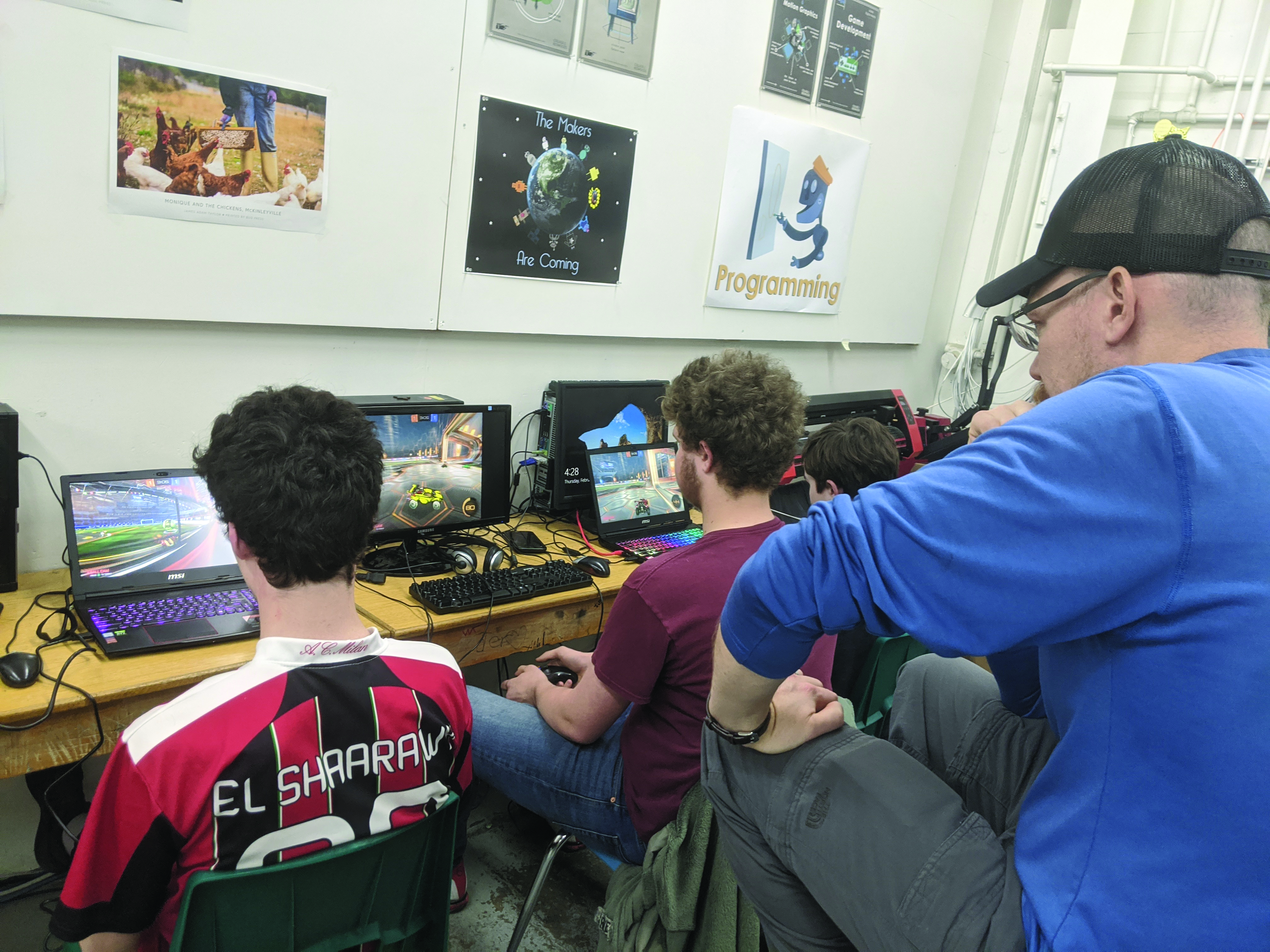
    With 15 minutes until start time, Rocket League players sectioned themselves off into corners of a combined Humboldt State University computer lab and classroom in their respective Arcata High School CyberTiger, CyberTiger B and CyberTiger C teams as their coach Jason Sidell turned on some “get psyched” tunes. Sidell isn’t incredibly well-versed in Rocket League, but he is quick to compare it to other sports.

    “When people think of esports, they think video games, and I think that they would be surprised if they were to observe our practices,” Sidell said. “Esports is to video gaming what a basketball team is to a pick up game.”

    Rocket League players for the CyberTigers faced off against the Novato High School Hornets Feb. 27.

    Rocket League, as described by the California Interscholastic Federation, is a fantastical sport-based video game that can be summed up as soccer with cars. It features a competitive game mode based on teamwork and outmaneuvering opponents.

    The teams are each made up of 3 players, with the CyberTiger team being more like a varsity team and the B and C teams being more like junior varsity. The matches are best-of-five games, with each game lasting a little over five minutes.

    Complete with pizza and La Croix, the HSU Gaming Club hosted a meet and play event for the Arcata High esports team earlier that month that brought an evening full of laughter and good old fashioned competition. The meetup was organized by HSU Gaming Club President Sarah Kanga Livingstone and advisor David Marshall, who reached out to the Arcata High esports team.

    “We’ve been trying to reach out more and more to see if we can get more ways of bringing (high school) students on to campus,” Livingstone said.

    The CyberTigers and their opponents are registered through a service called PlayVS, which is partnered with the CIF to provide the tournament brackets and infrastructure to run a state-wide league.

    The teams are each made up of 3 players, with the CyberTiger team being more like a varsity team and the B and C teams being more like junior varsity. The matches are best-of-five games, with each game lasting a little over five minutes.

    Within 20-30 minutes, both the B and C teams’ games were drawing to a close, but the CyberTigers’ Seth Simmons, Jonah Moore and Marley Thrift continued on in a dynamic match against the Hornets, with their coach cheering them on.

    “Don’t say nice,” Simmons said as Sidell mistakenly complimented a shot that looked like it was going to go in. “Don’t say anything.”

    Remarkably, the C team won while being down a player, and the B team swept their opponents 3-0. The CyberTigers, however, lost their match 3-1.

    Vice President of Enrollment Management Jason Meriwether stopped by to welcome the high schoolers as well. Due to the success of the event, the HSU gaming club is currently in the process of planning a gaming tournament for local high school students in mid-April.

  • Dr. Asao Inoue Looks to Lead Academic Revolution

    Dr. Asao Inoue Looks to Lead Academic Revolution

    Inoue confronts the supremacist ideas within American academia

    From unkind flyers to nasty messages written on bathroom walls, Humboldt State University has dealt with its fair share of acts of hatred and racism.

    Asao B. Inoue, a professor and associate dean at Arizona State University, studies student writing assessment, race and racism. In a Social Justice Summit talk and an exclusive interview with The Lumberjack, Inoue pondered how a university can be anti-racist and address white supremacy.

    “I was asked to come here and give a talk at a workshop, and I love doing that—it feels like an important part of the public work that I do in the academy,” Inoue said. “I help teachers think about ways to do social justice projects in their class, particularly around literacy classrooms and the grading evaluation and feedback of student literacy projects or writing.”

    Inoue’s objective is to change the ways professors think about language and white language supremacy, and to start a revolution within the American grading system.

    “My scholarship and research is in writing assessment and racism studies and the intersection of those two things,” Inoue said. “This [workshop] is an extension of that by trying to engage with writing faculty, English faculty and the curriculum.”

    Inoue described white supremacy as a condition in which a particular group’s dialogue dominates others.

    Inoue said white supremacists are often middle to upper-class people from the East Coast that attended an elite school. Inoue said these conditions collectively make up the identities of white supremacist perpetrators.

    “It’s rarely, if ever, anybody else but that group of people from their particular material conditions in life that produce a certain language, which we tend to call standard or proper English,” Inoue said.

    Inoue called out academia for actively perpetuating racist standards. He said the American grading system reaffirms racist ideals and practices through assigned curriculum.

    Inoue said proper English can be especially problematic in academic settings.

    “There’s lots of research that shows that we don’t actually agree about what that standard looks like,” Inoue said. “But I’m talking about when the rubber meets the road and you have to grade a paper based off of this, or decide whether something is consumable for the public. That’s where we start to have a lot of disagreements.”

    Inoue called out academia for actively perpetuating racist standards. He said the American grading system reaffirms racist ideals and practices through assigned curriculum.

    “I don’t want one to confuse me calling the system racist, with me calling people racist,” Inoue said. “[Professors] are thinking about the disciplines they have to teach and they’re not always thinking about, ‘How do I teach this?’”

    One of the structural flaws within the educational system that Inoue noted was that professors fail to question the academic system and how it reaffirms practices of white language supremacy.

    “It’s difficult to be critical of a system that has really benefited you,” Inoue said. “It seems like everything is working.”

    Inoue said the façade of the education system being equally supportive can be convincing enough that people don’t see the flaws. Inoue said many professors inherit the practices that were inflicted upon them, and because those practices worked for them, they assume they work for others.

    “It’s a fairly narrow economic and social bandwidth of people, so that means that all those practices are fairly narrow and the language practices are fairly narrow,” Inoue said. “So it doesn’t really leave a lot of room for considering differences or changes or being critical about those things.”

  • Students Speak on Professor’s Use of N-Word

    Students Speak on Professor’s Use of N-Word

    Editor’s note: members of The Lumberjack staff have been and are currently part of KRFH, including the current KRFH student station manager. The author of this story had no previous affiliation with KRFH, but our coverage is inevitably biased by this crossover.

    Students expressed a range of emotions in response to a recent slip-up from their radio production teacher, Cliff Berkowitz.

    In a conversation that followed an interview with the Times Standard for his then-upcoming election for the First District Board of Supervisors, Berkowitz said the N-word in a comment he thought was off the record.

    When asked to chime in on the conversation surrounding a racist joke that had been made by his opponent in the election, Berkowitz did a Richard Pryor impersonation using the N-word—but he said the complete N-word. Berkowitz requested the reporters not print his slip-up, but they were well within their rights to do so.

    In the wake of the interview, Berkowitz lost his primary election by a landslide, although it’s not clear what impact the interview had. Berkowitz issued a public apology to the press that he also read to his students.

    “There are words that are so steeped in hate and racism, that they inflame our community when uttered; I am grateful to live somewhere that holds people accountable for what they say and do,” Berkowitz said. “While I did not wield that word as a weapon nor did I direct it at anyone, it does not remove the harm of saying the word. Nothing excuses what I said. There are people who have trusted me and for them this is a betrayal.”

    Mikayla Moore-Bastide, first-semester KRFH student, described her experience at the station leading up to Berkowitz’s remark as a welcoming family environment.

    “Whether he was on record or not, I still don’t understand why he felt he even had the right to say it anyways,” Moore-Bastide said. “Like, I’m a black person. I don’t even say it. I don’t even say the word at all. Anybody who knows me knows I don’t even say it, ’cause of the history behind it.”

    Moore-Bastide intends to return for another semester of KRFH in the fall, not because she forgives Berkowitz, but because of her passion for radio.

    “I don’t think I really forgive him yet,” Moore-Bastide said. “It’s gonna take a long while for me to forgive anyone who would just say the N-word around people who feel comfortable to say it.”

    “If I’m being totally honest, I was super hurt.”

    Delaney Duarte

    Moving forward, Moore-Bastide believed Berkowitz has done all he can to repair the damage his statement caused.

    “He knows what he did wrong, he knows that he hurt people, he’s not oblivious to that fact—he’s very aware,” said Moore-Bastide. “It’s one of those things where you kind of have to just put it behind you and then just kind of realize that people are probably gonna remember you for that, and you kinda have to accept it.”

    Delaney Duarte, manager of KRFH’s TALX program, has been at the station for three semesters.

    “If I’m being totally honest, I was super hurt,” Duarte said. “The whole day when I found out I was just like, I don’t know, I couldn’t wrap my mind around someone who I look up to so much to say that.”

    Duarte wanted it to be made clear that KRFH is a student-run radio program, and that Berkowitz’s role does not go beyond instruction in the classroom.

    “His apology in my opinion was just complete crap, if I’m being totally honest,” Duarte said. “It just seemed like he’s just saying sorry cause he has to. He got caught. You have to say sorry.”

    Duarte expressed sympathy and concern for the African-American students in class, feeling a great deal of pain, herself, as a Latinx student.

    “I wouldn’t blame them if they didn’t want to join because of that,” Duarte said. “Because, I mean, who wants to be taught by someone who doesn’t respect their students?”

    It’s not just the students of color that feel uncomfortable in the classroom.

    “People in our group, they’re just like really uncomfortable even going to the booth, like knowing that he’s either upstairs teaching his class, or like, his office is literally in the radio station,” Duarte said. “So it’s kinda hard to not run into him.”

    “You have to take into account the perspective of the people that would potentially be offended by these kinds of statements in that regard.”

    Elliott Portillo

    Elliott Portillo has been a part of KRFH for three semesters, and doesn’t think this single incident should overshadow the good Berkowitz has done for students and the community.

    “I think the joke was in bad taste,” Portillo said. “I think it came from more of a position of ignorance rather than of blatant hatred. I don’t think Cliff is a racist in any way, just based on the interactions he’s had with students and his passion for students.”

    Portillo pointed out that his perspective should be taken with a grain of salt, as a self-described “white-washed” Mexican.

    “You have to take into account the perspective of the people that would potentially be offended by these kinds of statements in that regard,” Portillo said. “But in my personal preference, I think he’s done so much that it’s hard for me to warrant lasting damage or lasting punishment.”

    Duarte said students have come forward to request Berkowitz’s replacement because of an unsafe learning environment.

    “As much as it hurts to say—I’ve always looked up to Cliff—but now at this point I’m kinda just bummed out and really hurt,” Duarte said. “So, I’d probably want to see a replacement. Someone who’s more respectable to our students of color.”


    Entire Statement from Cliff Berkowitz:

    I am writing this to formally apologize. I am truly contrite that my words caused pain or anyone to feel less than. I was wrong, it was stupid, and I should not have done it. We all commit harm, and when we do, it is only right to both apologize and work to make things better. I know I harmed people. I am sorry.

    I have been asked over and over again about my opponent’s racist comment, which he has attributed to a Cheech and Chong joke. While that may be true, it is still unacceptable. I foolishly compared that to quoting Richard Pryor, trying to make the point that even quoting someone saying the wrong thing is unacceptable, and in making my example, I too said the unacceptable.

    There are words that are so steeped in hate and racism, that they enflame our community when uttered; I am grateful to live somewhere that holds people accountable for what they say and do. While I did not wield that word as a weapon nor did I direct it at anyone, it does not remove the harm of saying the word. Nothing excuses what I said. There are people who have trusted me and for them this is a betrayal.

    I have spent the past decades of my life trying to facilitate conversations that include rather than exclude. I have used my position to try to give voice to those who often don’t get to talk about their lived experiences. However, that is not enough. I formally, and contritely apologize. I apologize to all those hurt by my words, my friends, my family, the community, and my students. My past actions to help People of Color do not absolve me for the harm I committed. I still said that word. It is still not okay.

    As I continue to reflect on how I have harmed people by saying that word, I will work towards a more just society. I will not stop activism or working to dismantle racism, and I will continue to interrogate how racist ideology has worked its way into my own mind. I will continue to work to make things better. I will uphold my promise to make sure all voices are heard and that there will be a place at the table for everyone, especially People of Color.

    I am deeply grateful to those people in my life who have held me accountable and shared their personal experiences and knowledge about racism. Thank you to the community for also holding me accountable.

  • Indigenous Environmentalists Connect Environment and People

    Indigenous Environmentalists Connect Environment and People

    Campus discussion touches on importance of traditional knowledge

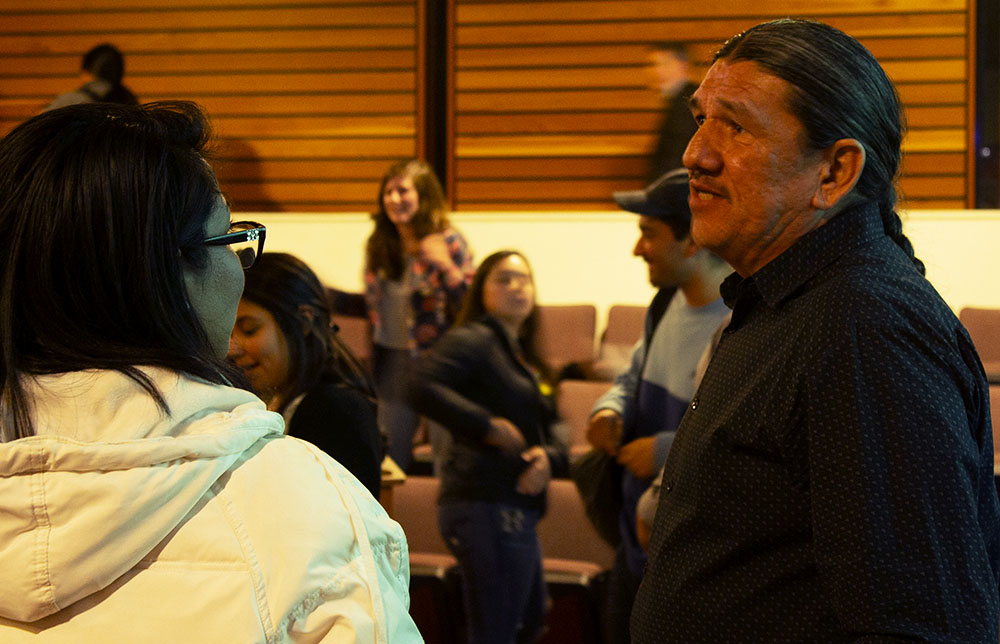
    Students, faculty, friends and family packed the Native American Forum March 5 to listen to author Kari Norgaard and Karuk environmentalist Ron Reed discuss Norgaard’s most recent book, “Salmon and Acorns Feed our People: Colonialism, Nature, and Social Action.”

    Before the speakers began, Cutcha Risling Baldy, assistant professor of Native American studies, announced the NAS department’s 25th anniversary at Humboldt State University.

    An introduction followed, led by Reed’s son, Charlie. Charlie Reed, a recent alumni from HSU’s NAS program, has continued as an environmentalist to help battle climate change. Before the talk began, Reed said it was important to give proper acknowledgement to the lands of Indigenous peoples. HSU sits on ancestral Wiyot land, and recognizing the land’s history is of utmost importance.

    “There is a symbiotic relationship between our environment and our people.”

    Charlie Reed

    “Whether you are a faculty member or student or just a community member, it starts with a conversation,” Charlie Reed said. “You never know who is in the room who has something to offer or give back the things that have been taken from Indigenous people.”

    Growing up with his father, Reed learned about his culture and the traditional ceremonies that tied in not just physically, but spiritually with the environment.

    “There is a symbiotic relationship between our environment and our people,” Charlie Reed said.

    With a warm thank you to the Reed family and the community, the floor was given to author Norgaard and Ron Reed. Reed introduced himself and what he learned as a child. Reed said learning the traditional ways of his people at a young age taught him how to sustain the environment.

    “That’s where it all begins, ladies and gentlemen, when you have the ability to be taught things that you don’t even know you’re being taught,” Ron Reed said. “That will stay with you the rest of your life.”

    In one of Norgaard’s chapters, she mentions an Indigenous tradition of using fire to cleanse or manage the land. Western science has given us the narrative that fire is dangerous and destructive. Thanks to “Smokey the Bear” and other forms of wildfire prevention advertisements, fire is seen as something to fear.

    Even though fire can be seen as scary, Norgaard argued it’s also a way to help manage landscapes by getting rid of invasive species and even enhancing plant growth. Indigenous peoples used fire to help the environments they lived on, not to destroy or cause damage. Reed stressed the importance of bringing that narrative to our attention.

    “We’re trying to get back to an intact world. Climate change can be a vehicle for that because of the awareness it brings to so many.”

    Kari Norgaard

    “We Native Americans—we the family—cannot let that narrative go,” Ron Reed said. “I don’t need some lone ranger to tell me the way. I know the way.”

    With Indigenous knowledge and science being pushed to the side when it comes to environmental issues, Norgaard said settler colonialism is still causing misinformation about the knowledge base of Indigenous peoples. Norgaard said this is changing.

    “Indigenous concepts and ideas have been making their way into academic spaces,” Norgaard said.

    Climate change is perhaps the most pressing modern issue, but Norgaard and Ron Reed agreed it would help bring more awareness in our communities.

    “We’re trying to get back to an intact world,” Norgaard said. “Climate change can be a vehicle for that because of the awareness it brings to so many.”

    The consensus of the talk was that combining Indigenous knowledge with western science can change the way we view the world as well as how we take care of it. Coming together and working with each other on both sides of science can also help combat climate change. From the ways of the rivers to the fires of the forests, Indigenous knowledge can teach us more about our world.

    “We need all the community on the river, but don’t forget us,” Ron Reed said. “Don’t forget the first people on this nation, on this ground that has created the environment that we’re trying to reestablish in this world today.”

  • Trackside Tales with Elliott Portillo

    Trackside Tales with Elliott Portillo

    First-hand account from Humboldt State distance runner Elliott Portillo

    For track and field athletes like myself, March usually means a return to early season competition after a long, cold winter of preparation and training. On March 6 and 7, Humboldt State University’s Track and Field team traveled to Turlock, California to participate at the 2020 Kim Duyst Invitational at Stanislaus State University.

    Traditionally, this meet brings together programs from across Northern and Central California to post early season times and marks. For myself and other track-based Lumberjacks, it means a long and winding drive down Highway 101 on a large and cumbersome charter bus with very little leg room and one bathroom for around 40 runners, jumpers and throwers.

    As the trip progressed, the foggy redwood canopy gave way to neat rows and columns of orchards and, eventually, the urban jungle on both sides of the I-5 through Stockton, Modesto and Turlock.

    As a whole, my race, a morning event, was uneventful. I found myself heading to the front of a large pack of runners after a few laps, and wound up leading the race for a good two miles in a very strong headwind. The racers must have enjoyed my wind-breaking, as nobody made a move to pass me until a few laps to go. Three runners passed me in the last few laps, leaving my decrepit body in their wake after all of my heavy lifting.

    One advantage of racing early in the morning is the opportunity to watch teammates compete, and boy was I in for a show. I got to see senior Jaye Washington finish second in the long jump, while Brailee VandenBoom tied for first place in the high jump. These were just a handful of the performances I was able to view during my downtime after my race. Even if an athlete didn’t make it to the podium, there was plenty to celebrate—a new personal best, or out-leaning someone at the line to gain one more spot.

    Things only heated up as the day progressed. The weather alternated between sunny and overcast, with swaths of clouds blanketing the vast expanse of the Central Valley. In the evening, eight Humboldt State women toed the line for the fastest race of the 5,000 meter run, made up of 12 and a half laps and just over three circular miles of Stanislaus’s faded red oval.

    Of those eight Humboldt runners, six women ran fast enough to qualify for the California Collegiate Athletic Association championships in May. Junior Cessair McKinney ran with the top group for most of the race, at one point running to the front and pushing the pace, showing no regard for how bad she might feel later. Her teammate, freshman Lucy Atkinson, hung back in the next pack of runners.

    Eventually, the two groups strung out and splintered, as the dense pack turned into a single file parade around the track. McKinney finished six, while Atkinson finished fourth.

    It was just our luck that just as we began packing up to leave, the skies, which had been threatening rain all day, finally opened up and unleashed a downpour.

    I guess we brought a bit of Humboldt with us after all.

  • Clubs Budget Crunched in Wake of Declining Enrollment

    Clubs Budget Crunched in Wake of Declining Enrollment

    Associated Students takes over remains of the clubs budget

    The Associated Students Programs Grants budget has been cut by more than half of the previous academic year’s budget to $25,000 from $52,000. With student enrollment on the decline since 2016, student fees. which make up the entire AS budget, have taken a significant hit.

    As a result of the cuts, it was decided the control of the budgets would be kept within the Associated Students Board of Finance for this academic year. All student clubs are allowed to apply for AS grants, either for events or travel.

    Grant requests are brought to the Associated Students Board of Finance for evaluation before being handed off to the Associated Students Board of Directors, made up of 15 voting and three non-voting members, for final approval.

    In the past five years, between about 10-18% of the AS Programs Grants budget has gone to AS category two programs like CCAT and the MultiCultural Center, which receive separate funding through different outlets. This year, AS decided clubs will receive the entire AS Programs Grants budget in the 2019-2020 academic year.

    The AS Board is currently in the process of their third and final grant allocation for the 2019-2020 academic year. So far, the Board of Directors has approved grants to all 29 clubs that requested—however, not all requests have been entirely met.

    As a result of the budget reduction, AS put in place a cap of $500 per event, $800 per cultural event and $100 per person for travel. The Board of Directors will hold their final vote on March 13 to decide the 11 remaining grant requests for the academic year.

    AS Legislative Vice President Jeremiah Finley is working to provide a fair opportunity for all clubs to receive funding.

    “AS is doing the best with the situation that they’re having to navigate through.”

    Molly Kresl

    “I think clubs always need more access to more funds across the board,” Finley said. “I think the goal of AS here is to really try to make sure that they do have access to funds. And so, in trying to do that, we’re trying on our part, to find ways in our budget to make sure they have access.”

    The clubs budget reduction has forced everyone involved to be more responsible with their spending, according to Clubs and Activities Coordinator Molly Kresl.

    “That’s something that’s been really cool that’s come out of this unfortunate situation,” Kresl said. “Even though we have a decrease in funding, there’s an increase in collaboration with student-initiated programs.”

    However, there’s still much improvement to be made. AS wants to hear the voices of students that are affected by these decisions. For students who want to take matters into their own hands, they can sign up as a candidate for the AS Board.

    “AS is doing the best with the situation that they’re having to navigate through,” Kresl said. “It’s important to recognize the complexity of the situation, and that there are ways that we can help our students be successful and do what they wanna do on campus.”

  • Sprinkles Expected for Spring Break

    Sprinkles Expected for Spring Break

    Rains look to rush in this upcoming weekend

    Cold clouds creep on the horizon, waiting for students to flee Arcata before dumping rain on the city. The days of sunny skies and warm weather may come to a damp halt at the beginning of spring break.

    Spring is here, and it’s wet. This coming weekend, rain is forecasted to fall on Humboldt State. Break is just around the corner and inclement weather may be a downer for partying students, so be sure to check the weather before the rager starts.

    This helpful graph, built by weatherspark.com, shows the average daily chance of rain in Arcata throughout the year. | Graph by Weatherspark

    To prepare for the break, The Lumberjack science section reached out to the National Oceanic and Aeronautic Administration office and asked a meteorologist what we can expect. It may get cold.

    According to Brad Charboneau, one of those NOAA meteorologists, we’ve still got a couple more cold months ahead of us. We’re not out of the chill yet, even though the spring season is when temperatures start warming up.

    “I check the weather often either with the NOAA weather app or by looking at the sky. If it looks questionable or if the sky is darker than usual, check it.”

    Mattea Roberts

    For curious weather geeks, the NOAA station uses a number of sensors and measuring devices to record weather events. For example, they use a tipping bucket rain gauge that measures hundredths of an inch. Each time the bucket fills, the bucket tips over and records a tic. The more tics, the more water. Easy as that.

    Mattea Roberts probably appreciates meteorological instruments like the tipping bucket. A freshman studio artist at HSU, Roberts takes advantage of NOAA science by using their weather app. She said it was a good idea to check the weather if the sky looked questionable.

    “I check the weather often either with the NOAA weather app or by looking at the sky,” Roberts said. “If it looks questionable or if the sky is darker than usual, check it.”

    Roberts also said she brings a rain jacket or an umbrella to school every day, just in case it does rain. She’s probably going to be prepared for whatever the climate has to throw at her this weekend.

    “I can tell you right now, it’s gonna be nice and warm up until Friday,” Charboneau said. “On Saturday, believe it or not, we’re gonna have a shift to cooler, more showery weather that will last through the weekend.”

    Charboneau said the rain isn’t going to be very intense from the perspective of the rivers, but the conditions may make the weekend less than ideal if students have outdoor plans.

    One of Charboneau’s colleagues, Meteorologist Ryan Alyward, explained how NOAA forecasts weather. He said as a meteorologist, his job is to pay attention to what’s going on in the sky and diagnose the conditions. Understanding what’s happening now allows him to make a prognosis of what weather conditions will be.

    Using a program he called Ensemble, meteorologists input real-time data and get a large number of weather predictions. The predictions are future weather patterns that may or may not happen, and it is his job to use these to make a forecast of the weather. The trick is to look at the similarities in each model, because together, those similarities make the most likely prediction.

    The current models, beyond the wet weather forecasted in Arcata, include snow in the mountains east of the city. Charboneau said although snow is more common in January and February, it’s not unheard-of in March.

    “We’re looking for the potential of snow—low-level snow—which will impact the passes going east,” Charboneau said. “It is likely to see some snow over the weekend. Those are the main threats over the weekend.”

  • Chemistry Professor Picks Up $100,000 Award

    Chemistry Professor Picks Up $100,000 Award

    Claire Till of HSU receives lucrative award to aid her research and academics

    Humboldt State University’s top-ranked chemistry program is home to a professor researching how plankton in the ocean interacts with heavy metals in the water.

    “There are lots of people who are doing fantastic research and have awesome awards and grants on campus. So I’m glad for the opportunity to highlight some of the work that we’re doing at HSU and lots of people are doing lots of great work at HSU.”

    Claire Till

    Assistant Professor of Chemistry Claire Till recently won the Cottrell Scholar Award, a $100,000 award honoring trailblazing science professors or researchers who have made large strides in their respective fields.

    “There are lots of people who are doing fantastic research and have awesome awards and grants on campus,” Till said. “So I’m glad for the opportunity to highlight some of the work that we’re doing at HSU and lots of people are doing lots of great work at HSU.”

    Till looks forward to allocating the funds toward her personal research and her classroom. She’s using the funds to support field trips to gather more data and to hire student researchers.

    “We’re going to go sample some rivers this summer,” Till said. “And then we’re going to do a couple of day trips on the research vessel, the Coral Sea, next summer, and some students will be hired throughout that.”

    Till’s research is about iron, a vital nutrient for humans and phytoplankton in the ocean. Unfortunately, in the ocean, there are extremely low concentrations of iron, and as a result, phytoplankton are not growing as much.

    “It’s really interesting—I think at least—to study how the iron gets there and how the phytoplankton uses it,” Till said. “What I proposed, and the work that we’re going to be working on, is to study iron using a new tool, which is another element called scandium.”

    Till elaborated on the relationship between scandium and iron and what she hopes will come out of her research in relation to that.

    “Scandium and iron have some parallels in chemical reactivity,” Till said. “There’s no real reason to expect them to behave similarly based on their chemical properties, and so I’m really interested in figuring out exactly in what ways are they similar and in what ways are they different.”

    The second area Till will be putting funding toward is academics, specifically in her own classroom.

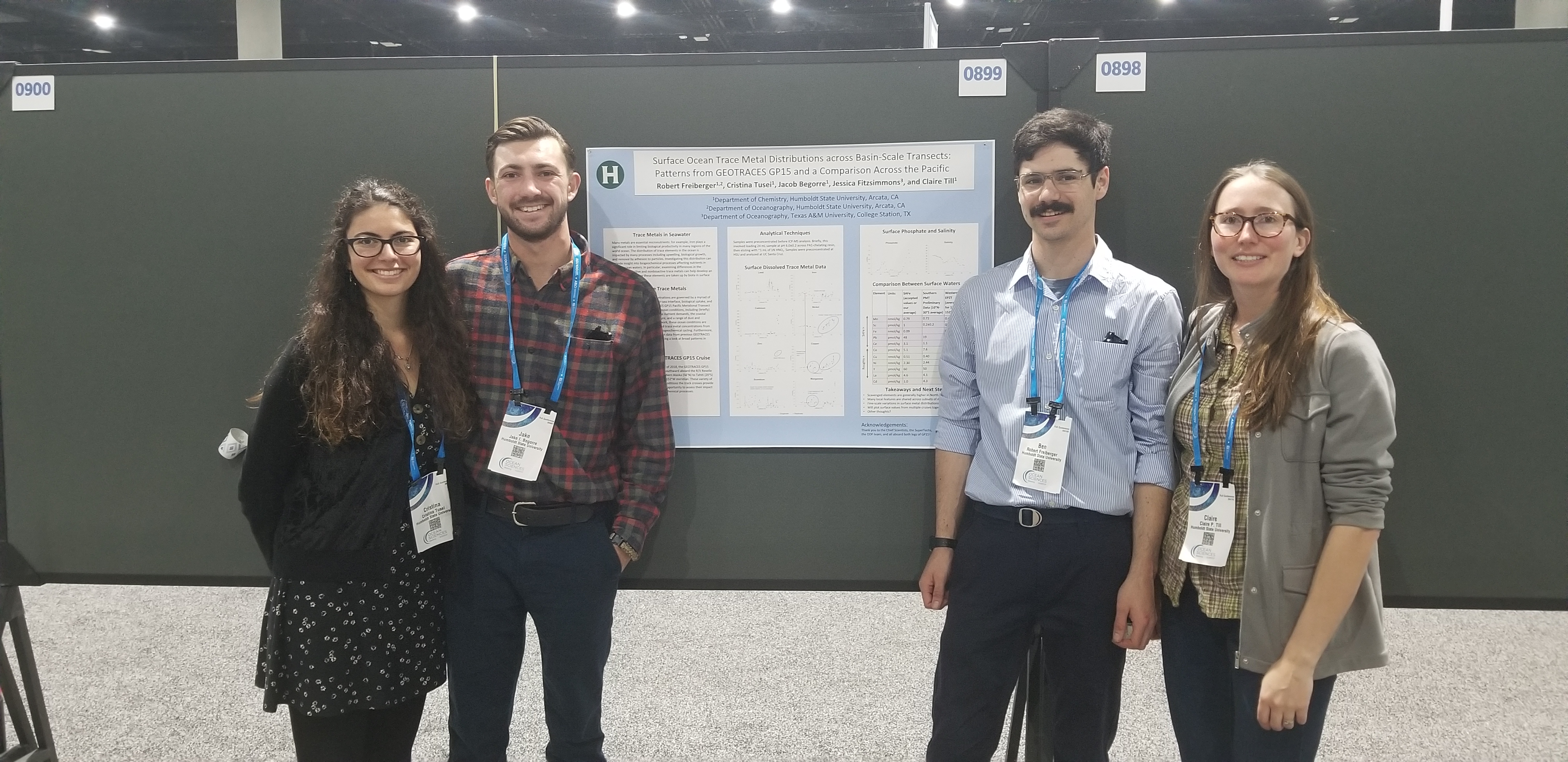
    Ben Freiberger, a senior research student for Claire Till, has worked under her for a considerable amount of time.

    “The money is now helping us to be able to get more accurate numbers and be able to determine more about scandium.”

    Yasmin Zambrano

    “We collect seawater samples, pre-concentrate them, and then measure them,” Freiberger said. “We just finished measuring all these samples from a cruise that went from Alaska to Tahiti. I started measuring those samples at the beginning of summer and I’m just getting finished with a couple hundred of those.”

    He also went on a cruise last summer and is measuring samples he collected on the trip. His research may benefit from Till’s award.

    “It’s good for the research group and it’s great that Claire can get money to keep doing this,” he said.

    Yasmin Zambrano, a junior undergraduate research student for Till, was recently hired to work with her on her iron research.

    “Right now, we’re just reading a lot of articles and trying to find how the treatments change within the different temperatures to see when it’s the best time to do the experiments and stuff,” Zambrano said.

    Zambrano, too, is hopeful for the outlook of the chemistry program with the arrival of the award and subsequent funding.

    “The money is now helping us to be able to get more accurate numbers and be able to determine more about scandium,” Zambrano said. “And again it’s going to be for at least three more years, so that’s three more years that she can do stuff, especially during the summer when students want to work in this field —and it looks good.”

  • Mia Mingus Advocates for Accountability

    Mia Mingus Advocates for Accountability

    Personal accountability paves way for future of transformative justice

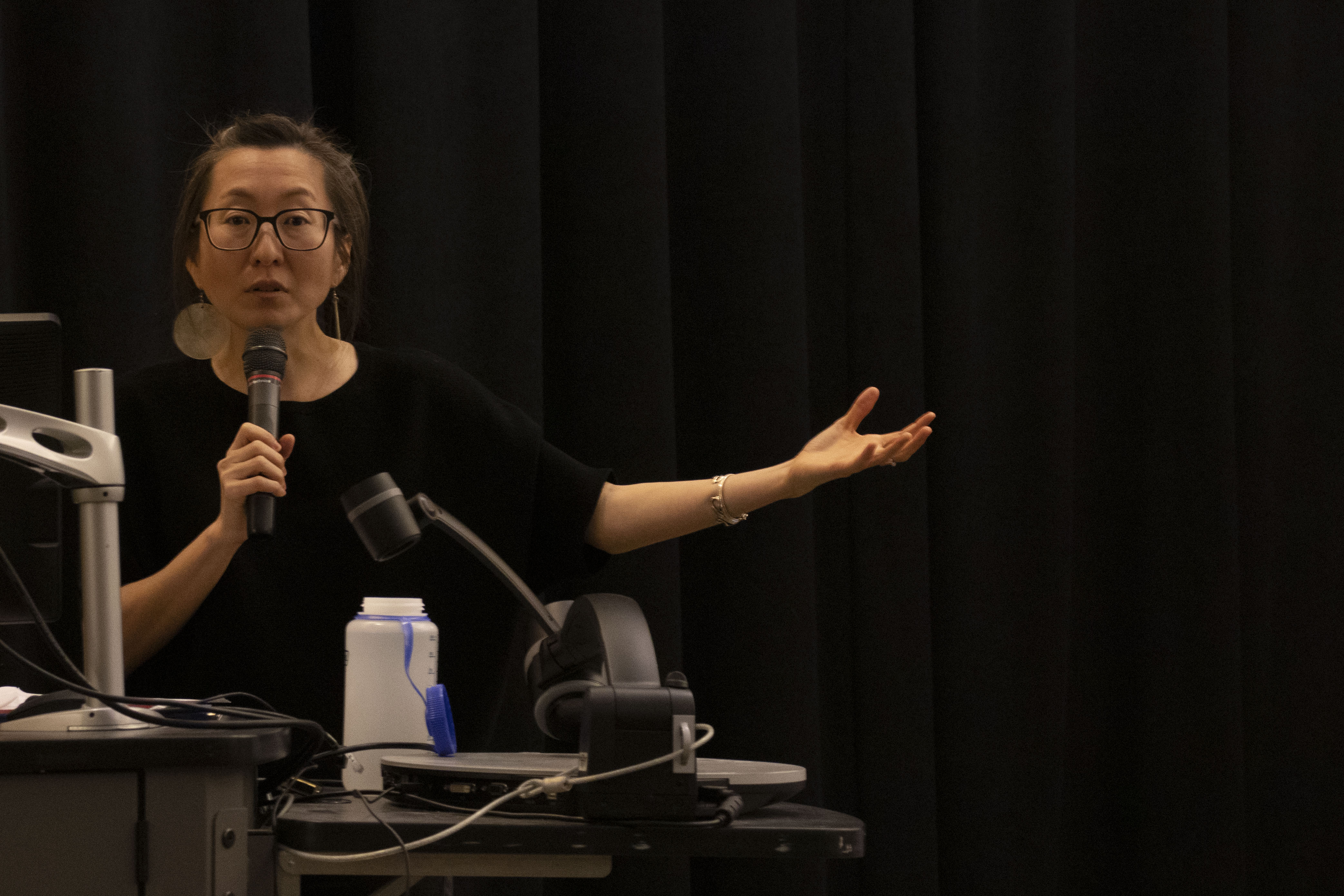
    Writer, educator and community organizer for disability and transformative justice Mia Mingus attended Humboldt State University March 6 as the keynote speaker for the Social Justice Summit. As a queer, physically disabled, Korean, transracial, transnational adoptee, Mingus faces adversity in all major facets of life and advocates for dignity and the end of violence, harm and abuse.

    Mingus took the stage for an hour, discussing everyday transformative justice and how to achieve transformative justice on a societal level. Transformative justice is about finding alternative solutions to violence, harm and abuse outside of our punitive system.

    “The system that we have is so based in, ‘You’re a bad person, so bad things deserve to happen to you,’” Mingus said. “Rather than, ‘We are all human, and human beings make mistakes, and we are all flawed, and we are all living in incredibly violent conditions.’”

    “If you’re not proactively building accountable relationships in your life, you’re proactively building an unaccountable life.”

    Mia Mingus

    Instead of focusing on big picture questions, like what will replace our current system and how to end violence, Mingus insisted to focus on the ways that transformative justice can improve our own lives, and in return, impact the world.

    “We can start small, because it’s just like building a muscle,” Mingus said. “You don’t go into the gym and start bench pressing 400 pounds immediately, or if you do, you’re gonna get really hurt.”

    Mingus walked the audience through her four steps of accountability.

    “If you’re not proactively building accountable relationships in your life, you’re proactively building an unaccountable life,” Mingus said.

    “It doesn’t matter how good of an apology you gave or how well you repaired the relationship. If you keep doing the harm, what does it matter?”

    Mia Mingus

    For the first step of accountability, Mingus said we must possess self-reflection, without which you can’t achieve any transformative justice.

    Second, we must be capable of genuine apology, demonstrating our remorse and understanding of our improper actions.

    Third, we must be willing to repair and mend broken relationships and earn back trust.

    Finally, we must change our behavior.

    “It doesn’t matter how good of an apology you gave or how well you repaired the relationship,” Mingus said. “If you keep doing the harm, what does it matter?”

    Transformative justice operates under the belief that acts of violence are deeply connected to the conditions that helped create and perpetuate those incidences of violence.

    “That violence doesn’t happen in a vacuum,” Mingus said. “They are connected to the conditions that we live in, and we all participate in creating those conditions, and we all have a collective responsibility for ending violence, harm and abuse.”

    “It’s not enough just to change the systems that we’re up against. We also have to change ourselves, and I really appreciate that.”

    Mia Mingus

    As a society, Mingus said we need to practice preventative actions, rather than respond with punishment.

    “When we publicly shame people, or when we shame and blame people in general, it doesn’t actually get the violence to stop,” Mingus said. “It usually just teaches people how to hide the violence or harm better. It doesn’t actually make the kind of deep fundamental change that we actually want.”

    After her lecture, Mingus elaborated on fundamental change in an exclusive interview with The Lumberjack.

    “It’s not enough just to change the systems that we’re up against. We also have to change ourselves, and I really appreciate that,” Mingus said. “And vice versa, you know, it’s not enough just to change yourself. You have to also help change the world too because I think that’s where the magic lives.”

    Mingus said transformative justice focuses on the fundamental improvements that must be made along the way.

    “We’re working on a micro level but we’re doing it with a macro perspective because we’re actually trying to interrupt generational cycles of violence and harm,” Mingus said. “That’s the goal.”

    Mingus gave a final piece of advice for helping with world progression.

    “Learn as much as you can, give as much as you can,” Mingus said. “But like, generally, just start from where you are, with what you have, and don’t get overwhelmed by trying to change the whole world.”

  • HSU Activates Pandemic Planning Committee

    HSU Activates Pandemic Planning Committee

    With COVID-19 spreading, HSU plans post-spring break response

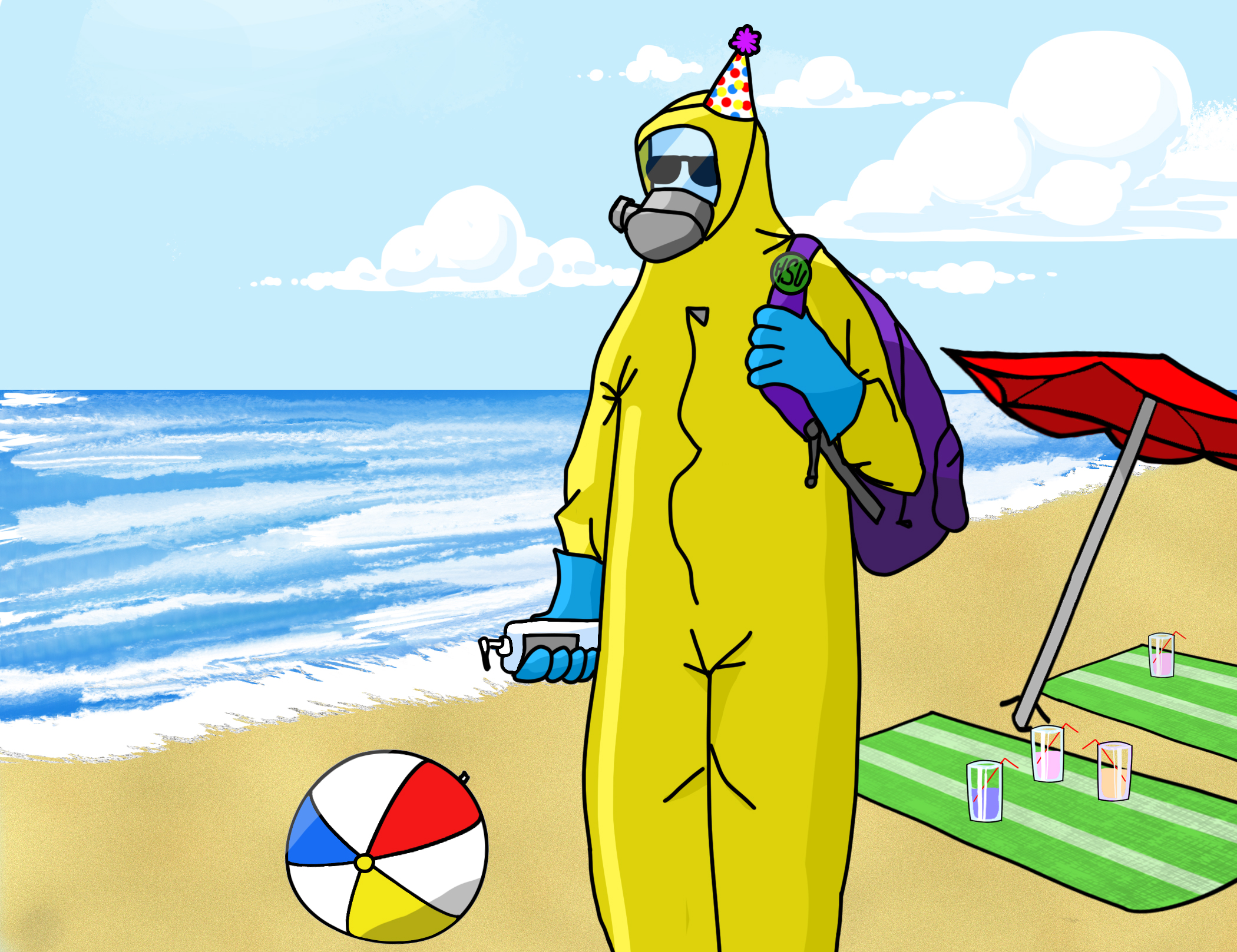
    Humboldt State University is planning for a possible partial or full campus closure in response to the spread of COVID-19.

    HSU has sent multiple emails since March 4 to students and faculty communicating the steps and measures the campus is taking to address the spread of COVID-19. In addition to creating a website with updates on the virus, HSU has organized the Pandemic Planning Committee.

    In the most recent email, sent out March 10, HSU suspended all international and non-essential domestic university-related travel. Communication Specialist Grant Scott-Goforth clarified to The Lumberjack that students are free to travel where they wish outside of school. Scott-Goforth said HSU would send out more messages in the coming days to define essential travel.

    “The idea is that we’re creating a flexible solution, and our main goal is to ensure that we can provide services and instruction.”

    Kris koczera

    The Lumberjack spoke with the emergency coordinator at HSU, Kris Koczera, who sits on the PPC. Koczera said the PPC is meeting weekly, but that is subject to increase if the outbreak becomes more severe locally. She was hesitant to talk specifics due to the committee’s confidential status and the pandemic’s shifting nature.

    “The idea is that we’re creating a flexible solution, and our main goal is to ensure that we can provide services and instruction,” Koczera said.

    Graphic by Jen Kelly

    Representatives from Dining Services, Housing and even the Dean of Students have attended meetings to address concerns about how the pandemic will impact their departments. Much of what the PPC is doing is modeled after other campuses in the California State University system and is advised by direct communication from the Chancellor’s Office of the CSU.

    “We have the benefit of kind of looking at what they are doing, the timing of what they’re doing and using that as almost a case study for us to move off of,” Koczera said.

    As of March 10, several college campuses including the University of California, Berkeley, UC Santa Cruz, San Francisco State and Stanford have suspended most of their in-person classes and will be offering all lecture courses through online instruction services like Zoom and Canvas.

    HSU has advised faculty to create a contingency plan in the event of a full campus closure. Koczera says life is first and foremost for the PPC and that they’re aiming for a fluid-but-reactive approach.

    “It doesn’t matter how great instruction is,” Koczera said,” if we have no students to instruct.”

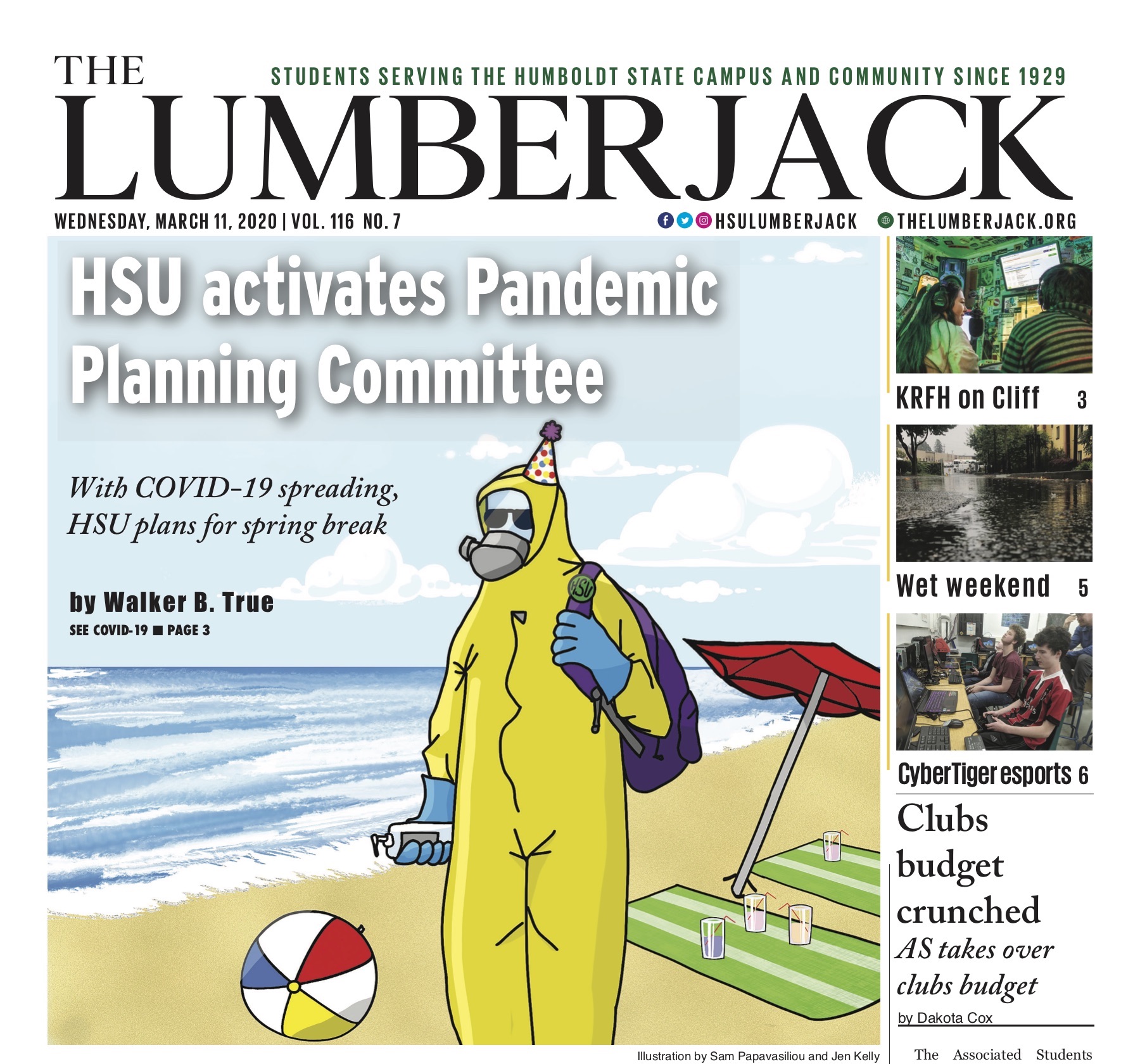
  • The Lumberjack in Print: March 11, 2020

    The Lumberjack in Print: March 11, 2020

    The seventh issue of The Lumberjack for the spring 2020 semester

  • New In-N-Out in Eureka

    New In-N-Out in Eureka

    “Quality You Can Taste” in Humboldt County

    In 2018, In-N-Out Burger announced the start of construction for a new location in Eureka. Now at the beginning of March, the new restaurant located at 2616 Broadway Street nears completion.

    The upcoming restaurant currently seeks job applicants for entry-level positions, suggesting the location will be opening soon, but an exact date is currently unavailable. They plan to interview applicants on March 2 and 3.

    The first customer at the new store will receive a free meal and a T-shirt as well.

    Eureka continues to expand its collection of restaurants as new locations for Chipotle and Mod Pizza are also under development nearby.

  • Major League Marijuana

    Major League Marijuana

    Why I don’t think marijuana is everything it’s cracked up to be in baseball

    Major League Baseball is an organization that prides itself on having great talent on and off the field. Players are drug-tested fairly regularly and subject to different levels of punishment if caught with opioids or other banned substances. That is all changing with the legalization of marijuana in baseball.

    Marijuana graces the covers of magazines and virtually everything in sight in modern culture like a groundbreaking scientific discovery. Seemingly everyone will go to great lengths to defend the devil lettuce’s honor if one attacks it. In general, marijuana is looked at like a god. Sure, people have benefited from it, but its usage has gotten out of control and the relaxed restrictions of marijuana in baseball are just more nails in the coffin.

    With the increase in American marijuana users comes the increase of ramifications. While there are many compelling arguments for normalizing marijuana usage, there are also legitimate health concerns around it.

    As a matter of fact, marijuana-induced emergency room visits have jumped up, particularly in more left-leaning states.

    According to the Colorado Hospital Association, a collection of more than 100 hospitals in the state of Colorado, “the prevalence of hospitalizations for marijuana exposure in patients aged nine years and older doubled after the legalization of medical marijuana,” and “emergency department visits nearly doubled after the legalization of recreational marijuana.”

    That is scary stuff. Maybe marijuana can wash away anxiety or depression temporarily, but to risk the added side effects is foolish.

    Returning to the realm of Major League Baseball, we find ourselves in the midst of an organization that is trying to appeal to a younger audience by making games more enjoyable and watchable. After all, the kids are the future of the sport.

    Yet the idea that loosening the grip on marijuana in baseball will do no harm couldn’t be more wrong. It is common knowledge that youth look up to ballplayers as role models in many different facets.

    If marijuana is more debilitating to one’s health than beneficial, we should be making it clear that any, and I mean any, drug or substance will not be tolerated in baseball no matter how harmless it may be marketed as. I certainly wouldn’t want my kids to form the idea that they can get away with smoking weed like it’s no big deal. Marijuana and e-cigarettes are already being passed around like packs of gum in middle and high schools and it’s only getting worse.

    “Drugs work very well, at first, for mentally ill people. If you’re anxious, it’ll go away with a couple of hits, a beer. It’s like magic. But then, the tolerance sets in. So, not only do they need to drink more to relieve the anxiety, but every single time they try to stop, the underlying anxiety comes back worse.”

    Dr. Alex Stalcup

    Beyond setting a bad example for the younger generation, people are using marijuana for non-medical purposes and leaning on it like another shoulder. Especially in Humboldt County, people are socially smoking marijuana and claiming it’s saving their lives.

    I recognize there are some individuals who actually need it to function, but nonetheless, it’s spread like a wildfire and now it’s hard to find someone who doesn’t smoke it or consume edibles.

    Mental health issues affect the extent to which people get addicted to marijuana or other substances, according to Dr. Alex Stalcup, medical director of the New Leaf Treatment Center in a 2016 interview with Healthline Magazine.

    “Drugs work very well, at first, for mentally ill people,” Stalcup said. “If you’re anxious, it’ll go away with a couple of hits, a beer. It’s like magic. But then, the tolerance sets in. So, not only do they need to drink more to relieve the anxiety, but every single time they try to stop, the underlying anxiety comes back worse.”

    Stalcup went on:

    “Fifty to sixty percent of the people with an addiction to marijuana whom [my] clinic treats have some sort of underlying mental health condition,” he said.

    Granted, it is only one clinic, but the point is an overwhelming amount of people across the country who abuse weed are dealing with a mental health crisis of some kind.

    I will admit that I am in the same boat with a lot of these folks, but I will never use weed as a solution to my problems. There is an abundance of other remedies and treatments available to cure internal issues.

    I can’t control what you do. I can’t control what Major League Baseball does. But I hope that baseball will go back to looking at marijuana as a banned substance that could incur fines and treatment.

  • Ask Evergreen: Sensitive Sleeper

    Ask Evergreen: Sensitive Sleeper

    Ask Evergreen is a weekly advice column by the students of The Lumberjack


    Dear Evergreen,

    I’m a sensitive sleeper. How do I stay asleep all night?

    Dear Sensitive Sleeper,

    Falling asleep and staying asleep can be challenging, especially if you live in a community environment like dorms or apartments. There are a few things you can try before heading to bed that may help you sleep through the night.

    Use earplugs or other noise-cancelling items. Earplugs are a blessing when you have noisy neighbors. Pop a pair in your ears and listen to your heartbeat and breathing. The rhythmic melody of these two sounds may help distract you from outside noise.

    Use white noise to help you sleep. The Pulmonary, Critical Care and Sleep Medicine Division of Rhode Island conducted a study on the effects of white noise on patients’ sleep in intensive care unit environments that are a cacophony of noise. The study found white noise facilitates less sleep disruption. You can conduct a similar study on yourself. Try turning on a fan or downloading a white noise app and see how it affects your sleep.

    Have a warm drink. Old wives’ tales suggest having a warm glass of milk to help you sleep. For those who don’t drink milk, try having a hot cup of non-caffeinated tea. There are even specific tea blends to aid restful sleep. I recommend a tea blend with chamomile, mint or lavender elements.

    Get all your priorities out of the way so you don’t worry about them. If you don’t have assignments to worry about, you might sleep better and skip those crazy school panic dreams. Try completing as much work as you can to put your mind at ease. Give yourself some time before bed to relax away from your work to let your brain have a chance to disconnect.

    Don’t use your phone before bed and avoid screens. A study by the Lighting Research Institute in New York found blue light from phone screens and other digital devices can disrupt your body’s natural melatonin release habits. Give your body and mind a decompression period away from screens before trying to fall asleep.

    Get a heart monitoring device. Fitbits and Apple Watches can record your sleep patterns and resting heart rate. While these devices can be pricey, they also offer other life applications that can make them worth it. If you already have one, start paying attention to that sleep data.

    Sweet dreams!

    Sincerely,

    Evergreen


    If you have any questions you’d like to send in, email us at contactthejack@gmail.com. We won’t publish any names and you don’t need to use one.

  • We’re All Lonely But It’s Not Our Fault

    We’re All Lonely But It’s Not Our Fault

    Shifting the blame of loneliness from individuals to institutions

    There’s an epidemic of loneliness in modern America. It’s a trauma encompassing political, economic and social realms. We’re all alone, but it’s not any one person’s fault.

    Imagine the stereotypical millennial: they moved home after college, unable to find a job or afford a home of their own. It may sound pathetic. But maybe they’ve found the home they need.

    The alternative for the millennial generation is living alone in an overpriced closet. It leaves them fragile and alone. A 2018 national survey by the healthcare provider Cigna found 46% of Americans felt alone some or all of the time. Adults aged 18-22 responded as the loneliest age group. A 2010 AARP survey had similar findings.

    Lonely people are vulnerable. Alone, a small problem becomes a crisis. That crisis festers and becomes a trauma that stays with a person for life. Without a support network, a minor issue can snowball into an avalanche. Studies have linked loneliness to depression, distress, suffering, poor sleep, high blood pressure and death.

    Loneliness almost feels normal in a society that sees the world in terms of the individual. Privacy can feel like success. Appearing independent is an achievement. And we see weakness in a cry for help.

    We weren’t always this way. Prior to modern industry, humans often lived in close-knit communities, whether related by blood or not. Fast-forward to the 1950s, and the nuclear family emerges. There’s the working husband, the stay-at-home wife and the two or three kids. It might have been romantic then, but a 2020 article from The Atlantic by David Brooks shows this small, private family wreaked havoc on our social lives.

    Jump forward 60 more years and you get the loneliness epidemic. One could criticize nuclear families for pages—read Brooks’ piece for a full account. But as they relate to loneliness, they popularized small families and mistrust of anyone outside of those families.

    Small families can produce lonely individuals. Imagine a single child. Imagine their parents pass away. That child then has to live on their own, without the support of a family around them. Financial, personal or professional stresses can lead to a free-fall when you have no safety net.

    Small, nuclear families disintegrate, and children are left on their own.

    Youth are finding new ways to survive the aftermath of a nuclear family disaster.

    The good news is we seem to be adapting. We are, in some sense, valuing extended families again. Pew Research Center found a record 64 million Americans living in multigenerational households in 2018. In 2016, Pew found the most common living arrangement for the 18-34 age group to be living with parents.

    We’re also expanding families beyond biological boundaries through shared housing units and groups for single parents. These new arrangments provide a way forward that doesn’t necessitate stay-at-home wives or gender discrimination. We’re finding ways to balance our want for individual freedom with our need for a family.

    Living together doesn’t necessarily make for less lonely people. We should be cautious about praising housing arrangements that can be born out of economic necessity, but research suggests many are choosing less lonely housing by choice. Living together is a good first step toward a more stable society.

    Youth are finding new ways to survive the aftermath of a nuclear family disaster. Make fun of the millennial in their parents’ garage if you want. But it looks to us like they might have found shelter from modern loneliness. They’re going to be OK.

  • Vegan Cannabis-Infused Brownie Recipe

    Vegan Cannabis-Infused Brownie Recipe

    Learn how to bake and get baked

    This cannabis-infused brownie recipe uses coconut oil as a butter substitution and base for a vegan cannabis butter.

    Coconut oil is a great replacement for butter and absorbs cannabinoids in the same manner.

    The first step is to make the “cannabutter.”

    Depending on how much marijuana you use, your brownies can have a higher or lower dosage of THC. When making cannabis-infused products, always be cautious of your dosage and measurements.

    Start by decarboxylating the marijuana.

    The decarboxylation process is simple: spread marijuana out on a tray and place it in an oven preheated to 245 degrees for 30 minutes.

    This is an essential step. Decarboxylation heats up the cannabis flower and allows the body to absorb the cannabinoids, essentially activating the cannabis. This process happens instantly when marijuana is smoked, but when making edibles it must happen slowly to preserve the product and not burn it.

    The next and longest step is to infuse the coconut oil with the decarboxylated marijuana.

    Throw the coconut oil and decarboxylated marijuana in a sauce pan and let it simmer on the lowest heat setting for three hours.

    Heat on the lowest heat setting ensures your oil will be fully infused and that the baked marijuana will not burn.

    Don’t leave the house or kitchen when you are infusing your oil. Three hours is a long time, but leaving your stove unattended is dangerous and could potentially start a fire.

    After three hours your coconut oil will no longer be clear and will have a deep green color to it.

    The next step is to separate the cannabis-infused oil from the actual cannabis. To do this, use a cheesecloth.

    A regular strainer’s holes are too big and will leave you with little bits of marijuana in your oil. Using cheesecloth on top of a strainer is the best course of action and will ensure your oil is as pure as possible.

    Next, measure out however much oil you need for your brownie recipe.

    It’s important that the coconut oil does not sit out for too long or the oil will become dense and harder to incorporate into the mix. No worries if your oil does set up. Just reheat it.

    As for eggs, almost every brownie recipe out there calls for them, but just like butter, there are some great substitutes you can use. Applesauce is a good substitute, which is what this recipe uses, but you can also use mashed-up bananas or yogurt.

    Finally, mix all of your ingredients together, pour it out into a pan and put it into the oven.

    When your brownies come out of the oven, they may look soft or even underdone, but let them rest in a cool space for 10-15 minutes and they will set. Fresh out of the oven, the coconut oil will be very apparent on the top of the brownies and make them look oily, but as they cool the oil will absorb and become denser.

    Again, be careful of your dosage when consuming any cannabis-infused product.

  • Stoners Bake Snacks with Scientific Hacks

    Stoners Bake Snacks with Scientific Hacks

    Finding more creative ways to use cannabis

    Edibles or cannabis-infused foods are a common way to consume marijuana. The process of making edibles, just like baking brownies, is a science. The primary psychoactive compound in marijuana is called cannabinoids. When making edibles, you infuse a fat with cannabinoids to activate the chemical.

    Mark Wilson, a Humboldt State University professor with a Ph.D. in microbiology, genetics and toxicology explained that cannabinoids are fat soluble and don’t break down in water.

    “Some substances are water soluble and some substances are fat soluble,” Wilson said. “THC is primarily composed of carbon-carbon bonds and carbon-hydrogen bonds, so it can’t interact well with water, but it can interact well with fats and oils.”

    This characteristic of THC, tetrahydrocannabinol, limits what can be turned into an edible. THC can’t steep in hot water for weed tea. Marijuana would need to be steeped in hot milk instead, where the THC would break down and bond with the milk fats.

    “Things that dissolve into our fat tend to remain in our system much longer. That is, they slowly diffuse into fat, and slowly diffuse out. The fat acts as a sort of absorption compartment. That makes it detectable in drug tests for weeks.”

    Joseph Szewczak

    Many people use butter as the main fatty ingredient in edibles. Dairy-based fats are a good option for infusing cannabinoids, but lactose-free alternatives are also solid options, including coconut and olive oil. Bacon fat can absorb cannabinoid infusions too, if you’re looking for a savory option.

    Joseph Szewczak, an HSU professor who studies and teaches comparative physiology and physiological ecology explained the physical changes to the body when people eat cannabis-infused fats rather than smoking cannabis plants.

    “Things that dissolve into our fat tend to remain in our system much longer,” Szewcxak said. “That is, they slowly diffuse into fat, and slowly diffuse out. The fat acts as a sort of absorption compartment. That makes it detectable in drug tests for weeks.”

    Whether inhaled or eaten, the THC enters the blood stream and messes with brain-cell functions in a unique way. Since THC is shaped like a chemical in the brain, the brain recognizes the chemical and allows to alter normal brain function. That chemical usually tells brain neurons to rest, but THC forces the brain to keep firing, which leads to deep thoughts, increased creativity and anxiety.

    In light of these effects, it’s important to understand what’s going to happen after eating an edible. First, since the body takes some time to digest edibles and since their THC is stored in fat, the high lasts longer. Second, the nature of THC and marijuana may lead to discomfort or anxiety, or may lead to creativity and fun, but that’s dependent on many factors.

    Co-Director of the Humboldt Institute for Interdisciplinary Marijuana Research Josh Meisel is researching the significance of set and setting, or who you’re with and where you are, and how those things impact a high.

    “People’s negative experiences may be influenced by edible use,” Meisel said. “But set and setting may be as influential or more influential than the psychoactive properties of the substance itself.”