The Lumberjack


Students Serving The Cal Poly Humboldt Campus and Community Since 1929

Tag: HSU

  • Before You Forage: Mussels

    Before You Forage: Mussels

    Everything you need to know to forage for mussels

    Blue mussels are a type of edible bivalve found in cold coastal waters. These orange-fleshed, blue-shelled mollusks are high in vitamin B and iron. Mussels and other bivalves feed by filtering water throughout their body. Bivalves, including mussels, can be deadly if consumed during red tide conditions.

    You can forage for mussels along the California coast legally with a California fishing license. The legal daily limit for mussels is 10 pounds and you must carry a scale with you. Do not use tools to scrape mussels off rocks. This damages the mussel beds and is prohibited for mussel collecting. Instead, get a sturdy pair of gloves to twist and yank the mussel free from its byssal thread attachments (also known as beards) that secure it onto rocks.

    Mussel gathering is prohibited in Humboldt County every year from May 1 to October 31 due to the warmer climate during this time, which facilitates the proper conditions for toxic algae blooms. Mussel quarantine may vary year to year. Always call the shellfish bio-toxin hotline before you plan on foraging.

    Bio-toxin information line: (800) 553-4133 shellfish toxins/quarantine information

    Editors note: This article previously stated an incorrect limit on mussel harvesting and has been corrected. We have updated information about mussel quarantine. Updated January 21, 2021

  • Joyner Drops Disappointing Debut

    Joyner Drops Disappointing Debut

    Grammy-nominated rapper Joyner Lucas shares his debut album, “ADHD,” with the world

    Joyner Lucas, the 31-year-old rapper, first caught traction with his 2015 music video, “Ross Capicchioni.” In the video, Lucas reimagined the true story of a gang initiation gone wrong that nearly claimed the life of a high school student.

    The video’s success can be attributed to the unique strategy Lucas chose, taking on both the perspective of the victim and the criminal. Lucas has managed to keep his name relevant over the years with a string of viral music videos, including the critically praised “I’m Not Racist” and the polarizing “Devil’s Work.”

    Humboldt State University alumnus De’Aundray Gooden has been a fan of Lucas since “Ross Capicchioni.”

    “I think he brings a lot of awareness to certain subjects people don’t feel comfortable talking about,” Gooden said.

    Gooden’s favorite Joyner Lucas songs are “I’m Sorry” and “Devil’s Work.” The first track follows a suicide note as it’s being written into the hands of the victim’s brother or cousin. In the latter song, Lucas calls out to God, questioning his choices in the young men and women he’s chosen to take.

    “We don’t pay attention to people until they die,” Gooden said. “We need to pay attention to the people who are alive, and appreciate them for what they’re doing now.”

    Lucas also racked up hundreds of millions of views on YouTube over a short series of remixes, between 2016 and 2018, and eventually caught the attention of rap god Eminem. Lucas secured a spot on the highest performing song from 2018’s “Kamikaze,” “Lucky You.” The high-tier rapping ability that earned Lucas the legendary co-sign has also contributed to beef with platinum-selling rapper Logic and R&B singer Tory Lanez. The beefs have since been squashed, both resulting in gained exposure and new content, including the third single from “ADHD,” “ISIS,” featuring Logic.

    HSU’s soccer goalkeeper, Tab Heinz, is a fan of old school hip-hop, and appreciated Lucas’ meaningful lyrics and authentic sound.

    “I appreciate the older stuff a little bit more than the newer stuff,” Heinz said. “I like the older style of making music. He has a super cool flow and rhyme scheme. I like the way he doesn’t sound too mainstream. He kinda has more of the underground style.”

    Lucas followed up “ISIS” with the rags to riches track, “Broke and Stupid.” The song paints a picture of all the hard work that has paid off for Lucas. With no chorus, it still competes for best song on the album. Apparently unready to release the project, Lucas proceeded to drop five more singles over the next nine months, at least three of which would’ve been better off left for the album.

    Just two days before the release of “ADHD,” Lucas dropped his ninth single, “Will,” along with another viral music video paying homage to Will Smith. With four skits on the album, including voicemails from Chris Tucker and Kevin Hart, Lucas left fans with a total of five new songs out of 18 on the album.

    Fans were given hope, with features from R&B legend, Chris Brown, industry favorite, Young Thug, and veteran-rapper, Fabolous, that “ADHD” would deliver. Unfortunately, out of the five new songs, only the “I Lied” intro track lives up to the hype. Brown and Thug’s features on “Finally” and “The War” are the most memorable moments of the remaining new tracks.

    After two years of waiting, as Tucker points out in his skit, and with how much of the project we had already been teased leading up to the official release, the anticipation for “ADHD” worked to its detriment. Despite Lucas arguably not producing a bad single, anything less than greatness from all of his new efforts on the album would’ve been a letdown. With most of the new content generating nothing to write home about, fans will be disappointed. Those just now discovering Lucas are much more likely to enjoy what “ADHD” has to offer.

  • Here’s How You Can Drown Your Sports Sorrows

    Here’s How You Can Drown Your Sports Sorrows

    While sports may be at a standstill, you can still relish and relive your favorite game moments

    Every major sports league, from the UEFA Champions League to the NBA, has canceled or postponed their league for the remainder of the year to help slow the spread of the coronavirus. This is a very tough pill to swallow for sports fans around the world, but there are still opportunities for fans to relive past games and watch sports shows and documentaries while practicing social distancing.

    One way these professional leagues are accommodating their fans is by offering free league passes to watch any past game you could think of. Leagues like the NBA, NFL, NHL and MLB are offering these free league passes until May 31.

    If you have a cable provider like Spectrum or AT&T, channels like ESPN, FOX Sports, TUDN and CBS sports are showing daily replays of old football, basketball, baseball, hockey and soccer both at the professional and college levels.

    In addition to all these replays, ESPN has pushed up the release of one of their most anticipated documentaries, “The Last Dance,” to April 19. The documentary is based on Michael Jordan and the 1990s Chicago Bulls, who won six NBA championships and are generally considered the greatest basketball dynasty of all time. The documentary is a 10-part series of never-before-seen behind-the-scenes.

    From movies to shows, sports are being given to us at an all-time high rate through many mediums.

    Netflix is also doing its part in getting more sports to us through shows and documentaries. Some of the more popular documentaries include three must-sees. First, “I Am Bolt,” detailing the athletic legacy of the greatest Olympic sprinter in history, Usain Bolt. Second, “Q-Ball,” a documentary about the basketball league in San Quentin prison. Third, “Notorious,” the documentary on UFC’s bad boy, Conor McGregor, and his rise to fame in the sport.

    Sports TV shows can also help entertain you through social distancing. One of the more popular shows right now is “All-American.” The show is based around Spencer, one of the best high school football players in the country from Crenshaw in Los Angeles, who transfers to Beverly Hills High School. The TV drama is basically “90210” meets “Friday Night Lights.”

    If you’re a wrestling fan, you’re in luck. Hulu has every episode of WWE’s “Raw” and “Smackdown” so you can relive the best fights. The same goes for the “Ultimate Fighter,” which produced some of the best UFC fighters such as TJ Dillashaw, Rashad Evans and Tony Ferguson.

    YouTube can also help with sports withdrawals. It has any kind of highlight you can think of, from France’s run toward the 2018 World Cup, to Lebron James’ first championship in 2012 with the Heat, to highlights from Super Bowl LII when the Eagles upset Tom Brady and the Patriots. The list goes on. Any sporting memory you have is almost guaranteed to be on YouTube.

    These are just a few options we have during social distancing to stay in touch with our inner fan. From movies to shows, sports are being given to us at an all-time high rate through many mediums. So stay home, stay healthy and drown your sorrows of social distancing with your favorite sports.

  • With Future Unknown Amid Pandemic, HSU Plans for Enrollment Drops and Budget Cuts

    With Future Unknown Amid Pandemic, HSU Plans for Enrollment Drops and Budget Cuts

    HSU, like all colleges, prepares for tough times and serious measures

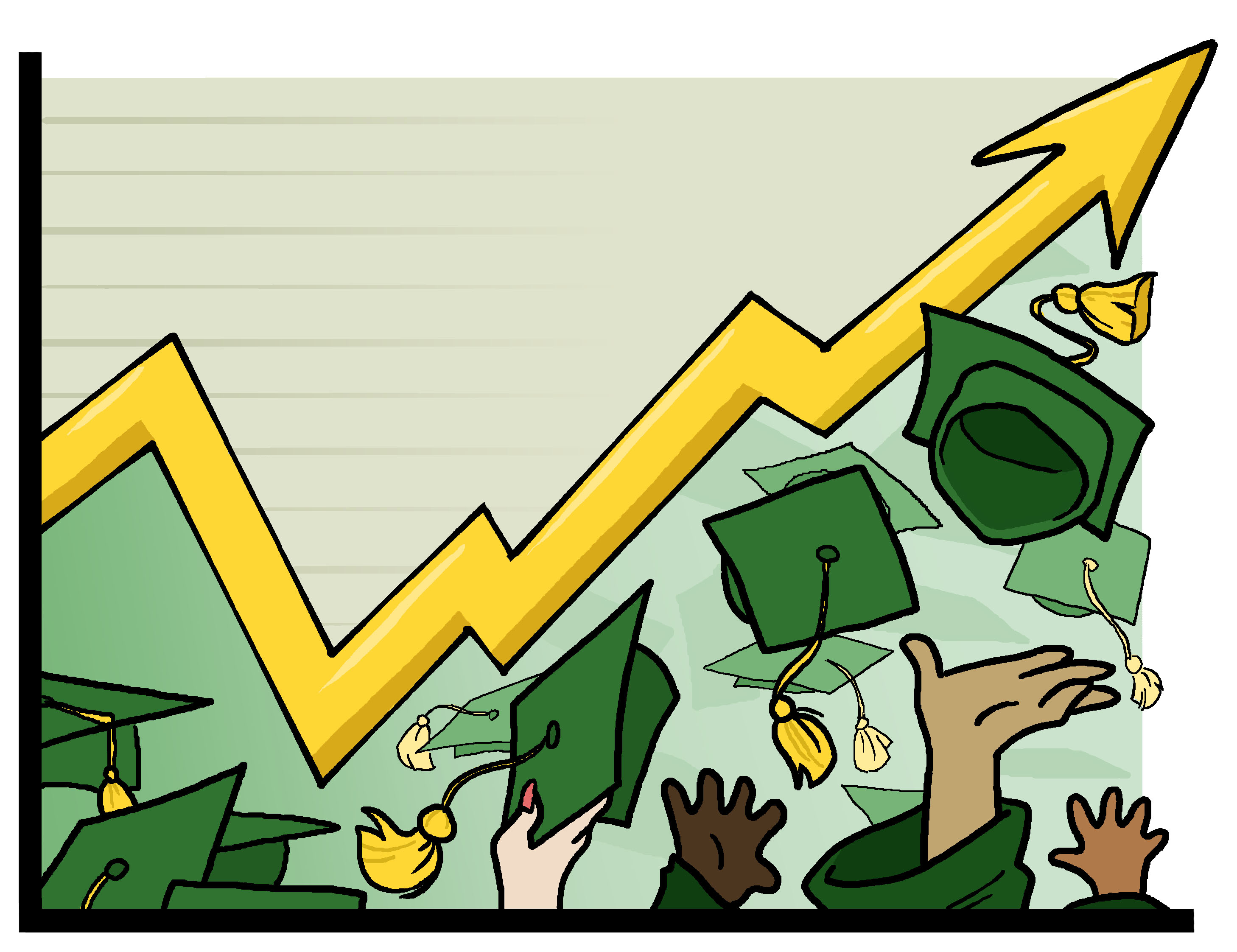
    Humboldt State University is preparing for an enrollment drop of around 20% for the fall and a budget cut of around $20 million by the 2022 fiscal year, according to a joint press release from HSU and College of the Redwoods.

    Before the COVID-19 pandemic, HSU projected an enrollment drop for total students of around 14% for the fall and had proposed a budget cut of around $5.4 million by the 2022 fiscal year. 

    Given the uncertainty of the next year, HSU is planning for an even larger enrollment decline and budget cut. HSU currently projects new student enrollment to drop by 30%. The specifics of what the budget cuts will mean are still being worked out.

    “Many options are being looked at, including combinations of a hiring chill, spending freeze, operational changes, incentives for retirements, travel reductions, and more,” the press release said.

    In a Zoom interview, HSU Vice President of Enrollment Management Jason Meriwether said a worst case scenario projection might be only 500 new students and 500 transfer students admitted to HSU in the fall. 

    These numbers, to be clear, are projections. No one knows exactly how the next year will play out. Meriwether hoped HSU could keep enrollment and retention as high as possible.

    “The sad part is, I don’t know,” Meriwether said. “There’s no benchmark. There’s nothing to project against. We could be doing all this and, you know, 1400 students show up—which would be wonderful.”

    HSU is not alone. As noted in Meriwether’s Tuesday enrollment management report to the HSU Senate, colleges everywhere are facing enrollment drops amid the pandemic. The report cited articles from Forbes and the Associated Press along with some early data suggesting one out of every six college-bound students won’t attend college in the fall.

    With education expected to shift to a more local focus, Meriwether pointed out that HSU already shifted to local recruitment in the last year with measures like the Humboldt First Scholarship.

    Compared to an average of about 32 local students attending HSU per year in the last three years, HSU currently has 208 local students confirmed to attend HSU in the fall with the Humboldt First Scholarship. 

    “The good news is we’re not starting local recruitment today because there’s a problem,” Meriwether said. “That’s the best part of all this—is that we already have a really solid foundation that we built in the community over the last eight or nine months.” 

    The enrollment management report includes a graph of enrollment scenarios, with red lines for lower enrollment scenarios and a blue line for a growth scenario. Meriwether hoped for HSU to remain close to the blue line.

    “Essentially, pray we get as close to the blue line as possible,” he said. 

    Meriwether pointed out that, since COVID-19 has hit everywhere, current students might not have much reason to transfer. If classes are still online in the fall at HSU, they will presumably be online everywhere. 

    “Let’s say a student says, ‘OK, well, you know, I want to transfer because I didn’t want this experience,’” he said. “OK. Well, the question will be, ‘What school are you going to transfer to?’ Because every school is stuck in this scenario right now.”

    Nevertheless, the pandemic will likely temporarily derail HSU’s efforts to improve enrollment. 

    “Long term, you know, prior to COVID-19, prior to this hit, we had a plan of getting to an FTE of 7600 students [full-time students] in about four years,” he said. “So now, what if the COVID-19 environment says, well, gosh, it can make us take eight years to get there.”

    Meriwether was optimistic that eventually, HSU would get through this.

    “I believe that we will bounce back, and I believe we will bounce back strong if the hit is really bad,” he said. “This is a marathon. Enrollment is a marathon.”

  • HSU Projecting Grave Hit to Enrollment for Fall Semester

    HSU Projecting Grave Hit to Enrollment for Fall Semester

    Freshman class projected to shrink, number of academic departments to be reduced

    For the latest information, see our story here.

    Update 11:10 a.m.: a second email sent yesterday from College of Natural Resources Dean Dale Oliver and obtained by The Lumberjack makes similar points but does not give a specific number to the expected enrollment drop for fall beyond noting that a 15-20% drop was expected prior to the COVID-19 outbreak. We will update this story when we have confirmed the numbers below. The second email is pasted below.

    Humboldt State University has issued a budget directive to take immediate action to prepare for the fall semester, including the freezing of open staff positions and the reduction of the number of academic departments, according to an email sent to faculty and staff of the College of Arts, Humanities and Social Sciences Tuesday morning.

    The email, sent by Interim Dean of CAHSS Rosamel Benavides-Garb, projected a freshmen class for fall 2020 of around 500 students, down from around 1,400 students five years ago and down from around 1,000 students for fall 2019.

    “The scale and impact of our current predicament is grave and as a result our budgetary practice has to be reconsidered and reformulated based on the simple equation of demand and resources,” the email said. “We have become, de facto, a much smaller institution, which compels us to undertake a comprehensive reset at HSU.”

    The email listed six directives, including requests to freeze all vacant staff positions, reduce the number of academic departments and develop online programs for current and transfer students to complete their degrees.

    The email promised to make the process consultative and sustainable.

    “We remain committed to “the student first” approach,” the email said, “and are extremely aware of the critical importance, now more than ever, of issues of social justice, equity, and inclusion in all we do.”


    The full email is copied below:

    Dear CAHSS Colleagues,

    On April 2, the deans of all three academic colleges received new administrative directives from Interim Provost Lisa Bond-Maupin regarding the coming academic year. The directives are a call to action, issued in response to the budget and recruitment/retention reality at HSU. The Interim Provost reiterated these directives yesterday, Monday, April 6 in her Provost/VPAA Report to the senate.

    As we all know, our student enrollment has been declining for several years and the institutional budget has been negatively impacted. The administration’s efforts to address the problem must now be reframed in light of new and profound challenges the current COVID-19 pandemic poses for HSU, and the CSU system in general.

    We are projecting a freshmen class of 500~ students across all three colleges. Five years ago, the freshmen class numbered 1,400+ students. The scale and impact of our current predicament is grave and as a result our budgetary practice has to be reconsidered and reformulated based on the simple equation of demand and resources. We have become, de facto, a much smaller institution, which compels us to undertake a comprehensive reset at HSU.

    The Interim Provost has directed the three academic deans to reduce spending and grow retention/recruitment. Her directives require our college to implement the following action areas immediately:

    1. Freeze all vacant staff positions: This is indefinite or until each college develops a plan to organize staff support within colleges and across colleges.

    2. Reduce the number of academic administrative units (departments): This needs to be planned immediately and be in place for this next fiscal year so we are reorganized starting fall 2020.

    3. Develop online degree completion opportunities for certain existing majors in the last two semesters of their programs.

    4. Develop two-year degree online completion opportunities for transfer students of certain majors beginning fall 2020.

    5. Develop a partnership with CEEGE related to workforce development, responding particularly to a post COVID-19 context.

    6. Integrate the Center for Teaching and Learning (CTL) in the development and implementation of new teaching capacity.The Interim Provost has also indicated that she expects this process to be:

    The Interim Provost has also indicated that she expects this process to be:

    · Consultative with unit leadership.

    · Consultative and collaborative across colleges.

    · Sustainable by creating new retention and recruitment opportunities.

    The deans of the three colleges have already begun discussing the directives. I have also initiated planning within CAHSS, in collaboration with the three associate dean fellows, and will continue to discuss budget with the chairs. We will move forward together, exploring multiple budget management opportunities to make our colleges strong and resilient in the face of present and future challenges. We can also regard these adjustments as unique opportunities to explore new and exciting programs to attract and serve our ever-diverse student population in a shifting and challenging workforce environment. We remain committed to “the student first” approach and are extremely aware of the critical importance, now more than ever, of issues of social justice, equity, and inclusion in all we do.

    Sincerely and in solidarity,

    Rosamel


    Email from CNRS Dean Dale Oliver:

    April 6, 2020

    CNRS Faculty and Staff

    Dear Colleagues,

    Earlier today Interim Provost Lisa Bond-Maupin sent out her report to the HSU University Senate in preparation for Tuesday’s meeting.  Included in her report was a call for collective action to prepare for fewer students and fewer resources in the next academic year.  I’ve pasted the relevant section of the Provost’s report below my signature.

    Current estimates indicate we could have 20% fewer students in Fall 2020 that we had in Fall 2019.  This reduction is significant, and we must plan over the next weeks and months so that those students who start or continue with us in the fall experience high quality, engaged learning that will prepare them well for STEM professions and advanced study.

    Three items from the Provost’s report that I want to highlight are personnel, administrative re-structuring, and online education.

    Personnel: Although we will be finishing out the two faculty searches currently underway, and ensuring we have sufficient temporary faculty to deliver our curriculum, all other hiring is frozen for the moment, including those which are currently vacant and those which will soon be vacant due to expected retirements. Through improving business processes, realigning and reorganizing staff positions, and targeting professional development we will find a way to support our educational enterprise without hiring additional personnel.  This work will be both necessary and challenging, and require collaboration with relevant unions and careful consideration of multiple factors.

    Administrative restructuring: At the Dean’s level we were already planning a partial re-assignment for Associate Dean Rick Zechman to manage the marine lab while marine lab director Brian Tissot transitions from full-time director to FERP faculty.  We are also being asked to reduce the number of administrative units in the college, meaning that some departments will be merged or reformed.  This work will be done in close collaboration with the CNRS Council of Chairs and the other two academic deans.

    Online Education: There are some programs in CNRS for which one of the following scenarios might make sense:  provide an online degree-completion option for a group of students who have a year or less left to complete their degree; provide a degree-starter program for a group of first year (or transfer) students to get started with HSU from home during the fall 2020 semester, and then begin on campus in Spring 2021; provide more online sections of general education courses for undeclared students or majors from outside CNRS.  For the moment, I recommend that faculty discuss within their departments whether one or more of these scenarios might be appropriate for their program.

    For this week I am collaborating with the Provost’s office, with the other academic deans, and with a working group of CNRS Chairs to create possible models for administrative restructuring that can then be discussed among all of the CNRS chairs the following week.  Relatively soon I will also set up a mechanism by which input can be given from across the college.

    We face a significant challenge as a college and university over the next few months and years, but I am confident that we will find solutions that serve our students and the citizens of California well.  My confidence rests solidly on the incredible talent, dedication, and creativity of our faculty and staff, whom I am proud to serve.

    Best wishes, safety, and health to you and your families,

    Dale R. Oliver, Dean

    College of Natural Resources and Sciences

    From Interim Provost Lisa Bond-Maupin’s report to HSU’s University Senate, April 6, 2020

    Realignment of Spending with Reduced Revenue

    In addition to supporting instructional continuity and Academic Master Planning, our division leadership is turning our attention to budget planning for next fiscal year and beyond. Prior to COVID-19, our enrollment picture for next academic year was apparently trending toward a 15-20% fall-to-fall (one year) student headcount decline. We were likely headed toward a reduction to the HSU budget for next fiscal year that was double that anticipated when the URPC created its annual budget recommendations to President Jackson.  While the college-going enrollment impact of the pandemic is unknown for all in higher education across the nation, it is clear that the CSU and HSU will experience further decline in student enrollment. Given the enrollment challenges felt across the state, it is likely that impaction at our southern campuses will be lifted. It is highly likely that more students will choose for financial and other reasons, in the shorter term at least, to remain at home or closer to home to study. 

    While we await the release of up-to-date enrollment projections and budget information, Academic Affairs is implementing a few immediate strategies toward student retention and recruitment on the heels of the pandemic and toward further reducing our spending. As we do so, we are guided by the URPC principles and our own commitments to meeting the instructional needs of our students and protecting employment. In addition to continuing to adjust our academic offerings for Fall, immediate strategies also include: 

    • Working with each dean and director to reduce budget allocations for FY 21 

    • Freezing hiring in all open staff positions for now and planning to absorb staff attrition

    • Working collaboratively with staff within and across colleges and budget units in Academic Affairs to reimagine and reorganize our staff support 

    • Working collaboratively with department chairs and faculty to condense the number of separate academic administrative units in the colleges 

    • Working within the Office of the Provost to realign and reorganize staffing

    • Identifying academic programs ready to continue to offer upper division major courses online into next year and beyond to: a) help students in their final semesters to study from home and complete their degrees, and b) offer new transfer students an opportunity to complete their degrees online 

    • Identifying a COVID-era retention specialist in Academic Affairs who will support the continued offering of all existing retention efforts in a virtual format and will work in collaboration with ODEI to implement inclusive retention practices at a distance. 

    Each one of us will be implicated in and needed for this work. It is tough and unavoidable at this time. Each one of us has a very important role to play, now, more than ever in maintaining close connections with our students, helping them to problem-solve their educational needs and connect to resources and to stay connected to HSU. We need our students. And I think we are finding in their response to our transformed instruction – they need us. This powerful connection will ultimately move HSU through and beyond this tough moment in our collective history to the future we envision. Thank you.


  • Student Athletes Suffer Amid COVID-19 Cancellations

    Student Athletes Suffer Amid COVID-19 Cancellations

    HSU student athletes share grief at abrupt endings

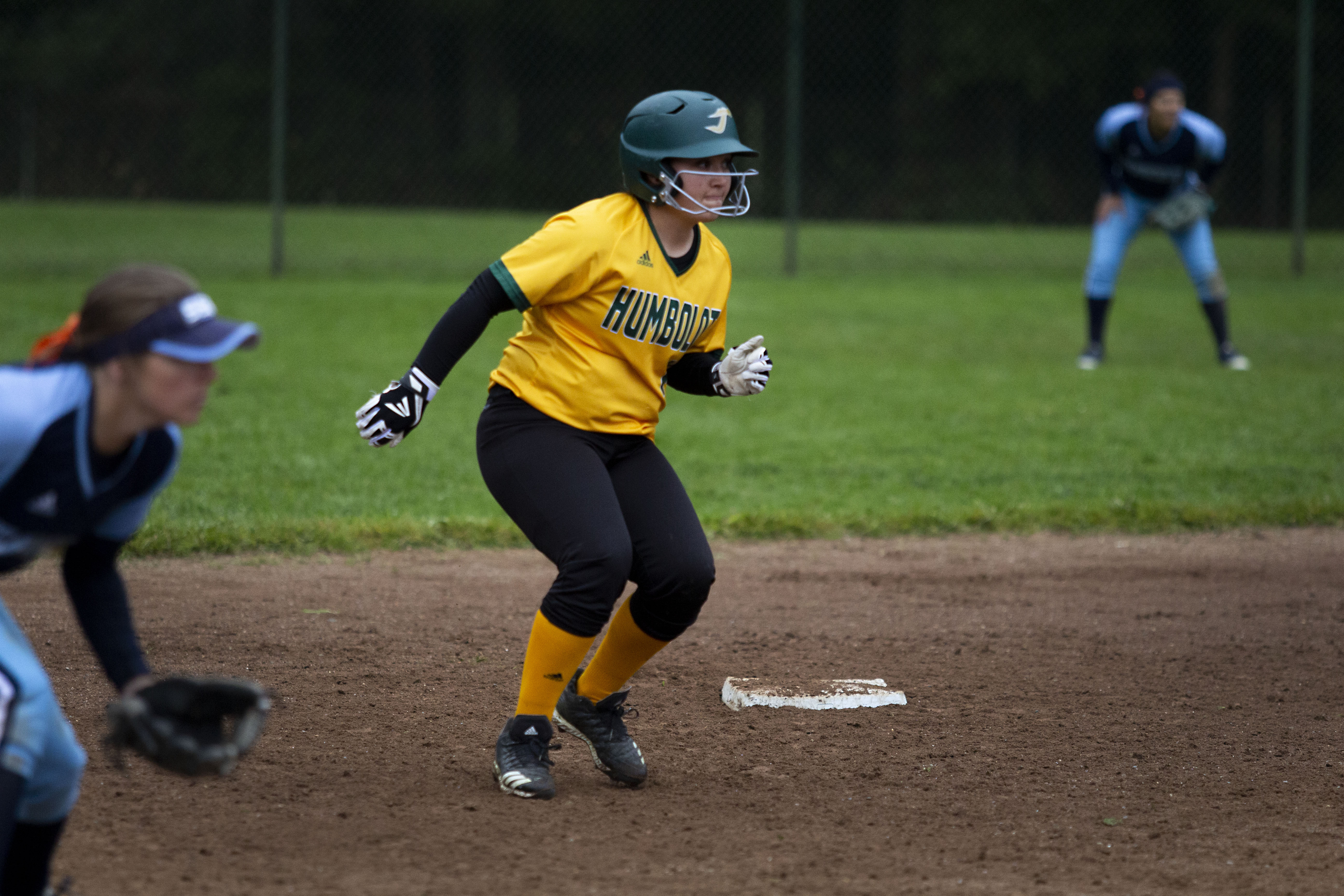
    Humboldt State University and the California Collegiate Athletic Association canceled sports for the spring semester back in March due to COVID-19. Student athletes have been left to deal with the aftermath.

    Mariah Kalamaras is a graduating senior and a member of the HSU softball team. The softball season came to an end less than halfway through.

    “This was my last season playing a sport that I truly love, and to have it cut short so abruptly is devastating,” Kalamaras said. “I felt like the world was ending.”

    Following the NCAA’s decision to cancel winter and spring championships, the current sports landscape has been flat, with professional sports also forced to come to a halt. Fortunately for spring athletes, the NCAA will be granting eligibility relief, provided students remain enrolled while participating in athletics.

    Sydney Oliver is a senior and captain of the HSU club cheer team. Although the basketball season had already wrapped, the cheer club would have continued to meet for practice through the end of the academic year.

    “I have dreamt of walking across that graduation stage since I was a little kid.”

    Sydney Oliver

    “It’s kind of sad that I can’t see my teammates and help influence them to do better, as well for them to push me,” Oliver said. “Because we did a lot of working out together.”

    Senior athletes were in for another disappointment when HSU also canceled the 2020 commencement ceremony. Kalamaras said she felt like she’s missing out on a rite of passage.

    “I have dreamt of walking across that graduation stage since I was a little kid,” Kalamaras said. “To hear the song, wear the gown, to hear your name and to hold that diploma high into the air and say, ‘I did it! I made it.’ It makes all the sleepless nights, all the hard work on the long road trips, all the class time, and all the stress worth it.”

    The shutdown has also had significant impacts on the daily lives of student athletes. Students have gone without school and sports—and work, for some—but they’re also encouraged to avoid gathering with friends to comply with social distancing.

    “Now that it’s not an option to see them, it’s kinda like you wanna see them,” Oliver said. “As opposed to when it was an option and you could see them anytime, and you’re like, ‘Oh, I’ll see them tomorrow.’”

    “Since all of the classes are online, it’s basically on us, the students.”

    Gabrys Sadaunykas

    Students are also now forced to finish their semesters online. As a kinesiology major, Oliver wasn’t stressing the change.

    “I like my subject, so it’s not hard for me to still be passionate about it,” Oliver said.

    Other students are less enthusiastic about the shift online. Gabrys Sadaunykas is an international student from Lithuania and a basketball player at HSU.

    “Since all of the classes are online, it’s basically on us, the students,” Sadaunykas said.

    Although Sadaunykas’ season was already finished, he’s stuck here until the end of May.

    “Of course, it’s hard, because all of my friends are back with their families and I’m here by myself basically,” Sadaunykas said. “But it’s a nice place. I like Humboldt—it’s got a lot of nature.”

    Not for the reasons athletes were expecting, COVID-19 has created an unforgettable 2020 spring season.

    “It has taken so much away and although I understand that this global shutdown is necessary, it doesn’t make it hurt any less,” Kalamaras said. “I won’t be able to play my sport at this high level ever again. I won’t get to walk across a stage to show the world I got my diploma. I don’t get to go out and experience all [of] this great place I have had the privilege to call home the past two years.”

  • Gambino Goes Out with a Banger

    Gambino Goes Out with a Banger

    Childish Gambino releases fourth and final album

    The Swiss Army knife of creative minds, Donald Glover, also known by his musical alias Childish Gambino, has returned with his fourth and final studio album, “3.15.20.”

    Glover announced the planned retirement of his Gambino alias at the 2017 Governors Ball Music Festival.

    “I’ll see you for the last Gambino album,” Glover said.

    He later doubled down on the retirement of the Gambino name, announcing on his 2018 This is America Tour that it would be the last Gambino tour.

    Glover, meanwhile, has kept himself extremely busy between musical releases, starring as Lando Calrissian in 2018’s “Solo: A Star Wars Story” and voicing Simba in 2019’s rendition of “The Lion King.” Glover also writes, directs, produces and stars in his own television show, “Atlanta,” which is currently green lit for two more seasons.

    Karen Castañeda, a Humboldt State University environmental studies major, discovered Glover through his show, “Atlanta.”

    “I love him as an actor and I blew through the whole show really fast,” Castañeda said. “He’s super talented and I really support everything he puts out.”

    3.15.20” saw its official release on March 21, after briefly appearing on donaldgloverpresents.com before it was removed and replaced with a countdown clock.

    The album is peppered with conscious messages that apply now more than ever, in the current pandemic circumstances. The first real song of the album, “Algorhthym,” was unofficially released to fans that attended the This is America Tour in 2018. On the track, Glover addresses brainwashing of humans by social media to make them feel inadequate.

    Particia Pettit-Blair, an HSU psychology major, discovered Glover’s music through friends, and has listened ever since. Despite the unique sounds he creates by layering instruments and combining styles, Pettit-Blair finds Glover’s lyrics to be extremely meaningful and relatable.

    “I like that he kinda takes a different approach to music,” Pettit-Blair said.

    On the previously released “Feels Like Summer,” now titled “42.26,” Glover confronts the climate crisis with a global warming public service announcement.

    Glover reinforces the same message on the track, “Time.” The song sounds like a remix to “Feels Like Summer,” and stresses the obvious truth that “We’re running out of time.” Glover is able to address serious issues without compromising the quality of his music because they come off as organic with the brand he’s built.

    Glover carries his unorthodox approach to the release of “3.15.20” into the album itself. Out of the 12 tracks, 10 on the LP are simply named after their linear location on the album. The project also has two tracks with hidden features, including pop-star Ariana Grande on the song, “Time,” and Grammy-award-winner 21 Savage on the next track, “12.38.”

    On top of a cinematic intro track, each song has its own intro or outro, providing a transition between each one. This gives the album the cinematic experience Glover was after with his 2013 album, “Because the Internet.”

    3.15.20” is packed with Glover’s versatile singing and the unique sounds he’s developed over the span of his career. He largely leaves rap behind, as he did on “Awaken, My Love” and his “Kauai” EP, with the exception of his distorted verses on the song “Algorhythm” and the highly aggressive flow on the outro track. Glover takes the hardcore fans of his music on a trip down memory lane, incorporating sounds from all of his previous projects into the album.

    Glover brings back the chaotic energy of his debut single, “Bonfire,” on his weirdest song to date, “32.22.” Glover continues to push the boundaries of his audience with the mostly incomprehensible track that can only be described as a war chant. Glover gives fans more deja vu on the track, “19.10,” with a heavy dance vibe resembling Glover’s 2014 single, “Sober,” along with several other tracks from “Kauai.”

    The project with the most influence on “3.15.20” is the most recent and most unique, “Awaken, My Love.” The album’s presence can be felt on multiple tracks, including the heartwarming love song, “24.19,” sung in the same style as his biggest hit, “Redbone.”

    Paired with some of Glover’s most meaningful messages, the experimental sounds Glover has flirted with since he first came on the scene have come together in spectacular fashion for the ultimate payoff on the last Childish Gambino album.

  • Happy Thoughts and Hot Liquids Won’t Save Us

    Happy Thoughts and Hot Liquids Won’t Save Us

    A reminder of the few things we know that help prevent the spread of COVID-19

    I received a text from a housemate recently recommending we all drink hot liquids and think happy thoughts to get us through the COVID-19 pandemic. Sadly, happy thoughts and hot liquids won’t save us.

    In the midst of a pandemic, it makes sense that people will seek home remedies—they can give you actionable measures to take to try to inoculate yourself against COVID-19. But peddling bunk medicine like a medieval plague doctor only makes things worse.

    Random herbs, hot liquids and happy thoughts do nothing against COVID-19 (neither does weed). What can help stop the spread of COVID-19 are these much less sexy things you’ve probably already heard, adapted from the Centers for Disease Control and Prevention:

    • Social distancing. Hang out with yourself for a while. The crushing introspection may seem scary, but who knows, maybe you could learn something about yourself. The CDC gives suggestions on how to cope in this stressful time.
    • Frequent hygiene. Wash your hands with soap and water for at least 20 seconds. Sanitize doorknobs in your home. Sanitize your debit or credit card if you’re grocery shopping. You might even go so far as to ask to scan your own groceries at the checkout stand.
    • Don’t touch your face. According to disease expert Michael Osterholm, the virus behind COVID-19 chills out in the throat and lungs, and it likes to get in your body through your eyes, nose and mouth. Your hands provide an Uber ride for the virus straight into your system.
    • Also, cover your face. The CDC have shifted course and now recommend people cover their face with a cloth mask in public, especially in high-risk areas like grocery stores or pharmacies. If you have a sewing machine, here’s how to make your own mask. If you don’t have a sewing machine, the CDC provides a video on its site on how to make a mask out of any old cloth and a couple rubber bands.
    • Keep your body healthy. Eating a well-balanced diet, getting enough sleep and exercising all maintain a healthy immune system.
    • Find a new hobby. Don’t allow depression to set in from all the time spent indoors. Netflix is nice, but it’s not a hobby. Try reading, painting, knot-tying or bread-making. Blogger Matt Gilligan compiled a list of 19 inexpensive hobbies for self-quarantining.
    • Connect with your friends and family. Don’t gather with people in person. (No group hugs.) Instead, take advantage of your phone and call up your friends and family. For a more socially stimulating experience, use FaceTime or Zoom to have a video chat. Invite all your pals and make it a virtual party. If you happen to be posted up in a house with a friend, try to hang out with them rather than hiding away in your room.

    We have no cure for COVID-19. A vaccine, by all accounts, remains a long way off. If you end up with the coronavirus, we only have treatments that can relieve symptoms as suggested by the Mayo Clinic, like Tylenol, cough syrups, rest and fluid intake.

    I’m no stranger to distrusting authority or being suspicious of science—I grew up in Southern Humboldt and wasn’t vaccinated until I was a teenager. But for the sake of yourself and the rest of the world, put your suspicions aside and have a little faith in the only proven measures we know against COVID-19.

  • Humboldt State’s Theatre Fraternity Tries a Comeback

    Humboldt State’s Theatre Fraternity Tries a Comeback

    Alpha Psi Omega attempts a comeback with new students and adviser

    Humboldt State University’s theatre fraternity is trying a comeback to campus (or it was, prior to the COVID-19 outbreak). Alpha Psi Omega intends to allow students to increase funding for competitions and student-directed shows.

    Rae Robinson, the faculty adviser for APO, said the return of the fraternity excited her.

    “The first chapter was like 1919 or 1920,” Robinson said. “There have been a few different departments as long as there has been Humboldt State.”

    Robinson said APO was reinstated when she arrived at Humboldt State 14 years ago. APO had a few years of club work, but the group of students interested in the fraternity graduated. APO went dormant.

    “We want to pull all of our performing art students together so we can all support each other better.”

    Jaiden Clark, APO president

    “Those kids graduated, the MFA was dissolved by the university, and it went under the radar for a while,” Robinson said. “Last year we had a new group of incoming students and they said, ‘We want a theatre club again,’ and I said, ‘We have Alpha Psi Omega.’”

    APO President Jaiden Clark said they’re passionate about creating change within the theatre department by unifying performing arts students through APO.

    “We want to pull all of our performing art students together so we can all support each other better,” Clark said. “We want to make more connections with more clubs around the school like the improv club and the circus club.”

    APO’s fundraisers will allow students to determine how the money is used instead of the theatre department allocating funds. The fundraiser money will allow for student competitions and student-operated shows.

    “School-wide enrollment is down, and as far as I understand, the school can’t afford to hire another faculty member to the theatre department. We need the students to feel empowered to do more.”

    Jaiden Clark

    “They don’t give us the money that we need in this department,” Clark said. “Neither have any schools in any theatre department that I have ever been to. So the students are going to pick it up.”

    Clark said the theatre department is low in faculty members, and having a more unified body of performing arts students would better support the students.

    “We lost a lot of faculty all at once,” Clark said. “School-wide enrollment is down, and as far as I understand, the school can’t afford to hire another faculty member to the theatre department. We need the students to feel empowered to do more.”

    Professor Patrick Ulrich, assistant adviser for APO, looked forward to working with the students to reach their goals.

    “I would like to work directly with the students,” Ulrich said. “Making money for their goals, serving their community, getting our name out to everybody and really just having an avenue for an honors fraternity.”

    APO would give the students freedom to advertise themselves how they see fit.

    “It really is in the hands of the officers,” Ulrich said, “who are all students.”

  • Online Learning Isn’t for Me

    Online Learning Isn’t for Me

    Online classes don’t feel like real learning and stifle student motivation

    Spring semester has turned into one of the worst semesters of my life, and online classes aren’t helping.

    Don’t get me wrong, online classes are nice to clear up some room in your schedule for work or other classes. They are still classes and shouldn’t be forgotten. I’ve taken at least one—but no more than two—online classes per semester.

    But online classes usually have a set schedule. Something like: discussion posts due Monday, comments due Wednesday and a quiz every Friday, plus a project like an essay or media presentation due at some point in the semester. Online classes that start at the beginning of the semester allow both the professor and students to be prepared for the whole semester.

    Online classes that start in the middle of the semester? Yeah, those aren’t for me. They’re also not what I paid for.

    None of us know what is going on right now and we’re all taking it day by day, but when your professors start to panic, you start to panic. Some professors know what they’re doing and let you know everything right away, while others don’t know what to do or don’t know how to use Zoom or record online lectures.

    It took me a minute to learn how to use Zoom, and although I appreciate the service and enjoy seeing my classmates’ faces, it’s awkward. It’s just a big FaceTime where your professor is trying to make the education worth your money. And just like in an everyday classroom, not everyone talks in the Zoom sessions. Zoom sessions always seem to glitch and are mostly only useful for group discussions, critiques and presentations.

    We’ve all lost motivation, and quite frankly, it doesn’t even feel as if we’re in school anymore.

    I learn better on paper and in person. I realize a lot of work is done on computers and submitted on Canvas, but being in a classroom and taking notes while a professor is lecturing is how something sticks in my head. There are too many distractions at home that I can’t get away from that just make it even harder to learn.

    Social media tells me that a lot of people feel the same way. Even though we get to be home and work at our own pace, most of the time being at home just makes us not want to work.

    We’ve all lost motivation, and quite frankly, it doesn’t even feel as if we’re in school anymore. Having to remind myself is getting pretty annoying.

    With all of this said, I know we should probably be grateful we’re still getting some kind of education. This is my last semester of college, and although I’m not a fan of how it’s ending, I’m grateful I won’t have to take any more online classes.

  • Rain Returns to Humboldt This Weekend

    Rain Returns to Humboldt This Weekend

    A moderate rainstorm will make its way through Humboldt County

    A storm is hitting Humboldt this weekend will bring a considerable amount of rain.

    Jonathan Garner, a meteorologist for the National Weather Service in Eureka, gave us a preview of what to expect.

    “All in all, maybe up to two inches of rain over the weekend,” Garner said. “I’m also expecting accumulated snow across the mountains for elevations mainly above 3500 feet. We could get a little bit of small hail and stronger showers and perhaps a thunderstorm as well.”

    The rain is mainly forecasted to fall on Saturday but will linger in showers on Sunday. Expect high temperatures to be in the low to mid 50s with lows in the lower 40s.

    “It will put a very small dent into our deficit. We’re about 10 or 11 inches below normal right now.”

    Jonathan Garner, meteorologist for National Weather Service in Eureka

    Garner said the storm won’t resolve our rain deficit for the year.

    “It will put a very small dent into our deficit,” he said. “We’re about 10 or 11 inches below normal right now.”

    Emily Read, a junior environmental studies major, is still around in Humboldt amidst the coronavirus outbreak. With the rain looming, she planned on not doing much this weekend beyond trying to learn a new program for an engineering class.

    “I typically am fine with rain,” Read said. “I like it most of the time—but right now, since we’re stuck at home anyway, I kind of just am tired of it and I just want it to stop raining so it can be nice and warm.”

    Jared English, a junior film major, also planned to remain indoors this weekend even though he was initially looking forward to getting outside and doing the one thing he can do in Manila—frisbee golf.

    “It does kind of make me a little sad,” English said. “Because that means even more time inside and even more time isolated in this quarantine, and the rainstorm kind of takes that one thing away.”

  • Humboldt Mold Manifests in Moisture

    Humboldt Mold Manifests in Moisture

    HSU students are under-informed and unprepared for the beast that is mold

    It accumulates like there’s no tomorrow, unleashing its inner animal at every turn. No damp area is safe from the monster of mold. What can students do to fight it?

    The rainy season is still around in Humboldt. Lurking amidst the hundreds of buildings students live in—and may be stuck in—is a hidden and nasty phenomenon—mold.

    Mary Gaviglio, a freshman business administration major, has had first-hand experiences with mold, from seeing it grow on a bowl of cereal she left out overnight to meeting someone who was severely affected by it.

    “He’s actually allergic to the mold spores here, so he gets really excited because they’re in the air,” Gaviglio said.

    Gaviglio also remarked on how it’s easier to breathe in Humboldt than where she is from in Southern California.

    “I usually get sinus infections when the Santa Ana winds come in because of all the pollutants, and now that I’ve moved here, I actually breathe a lot better,” Gaviglio said.

    Dr. Miriam Peachy, an accredited practicing naturopath in McKinleyville and a mold expert, gave a breakdown of the ins and outs of mold and mold illnesses.

    There are five different kinds of mold and the mold that humans can see is called active mold. Mold reproduces through spores, which get in the air, fly around, settle on surfaces and eventually begin to grow as moisture emerges.

    Mold toxins, the waste products of mold, are what can get people sick. Most people aren’t affected by most kinds of mold, but for those with weakened immune systems or allergies, extended exposure to some mold can cause nausea, headaches and cold sweats.

    “I’ve had people literally sleep outside because they didn’t have anywhere else to live.”

    Dr. Miriam Peachy

    Colton Trent, an environmental science senior, talked about how he’s dealt with mold in his apartment. His bathroom is in the middle of his apartment and has no window and an old ventilation fan, which makes for a messy situation in the winter when humidity is high.

    “Whenever me or my roommates take showers or if we leave the door closed for too long, the condensation collects on the ceiling and the walls,” Trent said. “And we have to clean the walls and the ceiling pretty frequently because mold spots will start to grow.”

    No matter where you stand in the mold illness spectrum, there are steps that can be taken to treat it.

    The first step is distancing yourself from the mold, which means permanently leaving the environment in which the mold is taking over.

    Unfortunately, in Humboldt, the lack of housing is a known factor that is doing the mold illness treatment process no favors.

    “Too many people are afraid to rock the boat or lose their rental and they don’t have anywhere to go and they don’t know if the next place they go will be moldy,” Peachy said. “It’s almost impossible to find a place that’s not moldy here.”

    The next step in treating mold and mold illness is remediation. That is to say, removing and replacing anything and everything that might’ve contracted mold from kitchen wooden cabinets all the way to furniture.

    “I’ve had people literally sleep outside because they didn’t have anywhere else to live,” Peachy said.

    The final step in the process is washing and cleaning everything that can be wiped down or otherwise cleaned like clothes and metal surfaces.

    Above all, Peachy stressed the importance of getting a dehumidifier, as it can work wonders and is the most basic way of combating the spread of mold.

  • A Rundown of All The Emails HSU Has Sent Students

    A Rundown of All The Emails HSU Has Sent Students

    Since March 15 HSU has sent out over a dozen emails on their response to COVID-19

    Here is a summary of emails Humboldt State University has sent out since March 15.

    March 17: HSU informed students of its efforts to supply students with reliable laptops from the library as well as internet access for students without a reliable connection. HSU provided a list of locations where the university’s Eduroam Wi-Fi connection is strongest, as well as a list of services that are providing free Wi-Fi services during the COVID-19 crisis.

    March 19: HSU informed students of Humboldt County’s shelter in place order. HSU confirmed that essential employees would be asked to continue to work on campus, and all others would work by teleconferencing. In a second email on the same day, HSU confirmed rumors that commencement, originally planned for May 16, would be canceled. HSU asked in a now-closed Google form for creative alternatives to celebrate graduation.

    March 21: HSU released a more detailed email regarding its policies related to essential employees and payroll. Positions listed as essential included public safety, information technology, the library, University Center, health center, Oh SNAP!, residence life, dining, facilities management, research continuity, business services, payroll and mail distribution. HSU announced that its payroll department would be working on creating digital timesheets for employees working from home and that emergency pay would not be in effect as it was during the blackouts of the fall 2019 semester.

    March 23: HSU revealed its guidelines on returning to campus. HSU asked students returning to Humboldt from areas with community spread or international destinations to self isolate for at least 14 days before returning to campus. HSU also advised students who are feeling ill to contact the Student Health Center at (707) 826-3146 before visiting the center.

    March 24: HSU asked that students who live in on-campus housing and were on any of these three flights to contact Housing and Residence Life at (707) 826-3451:

    • March 16: United flight #5827 from Los Angeles Airport to Arcata
    • March 18: Delta flight #4124 from Seattle, Washington to Medford, Oregon
    • March 18: United flight #5555 from San Francisco Airport to Arcata

    March 26: HSU announced that the library would close on Friday Mar. 27 in response to the ongoing COVID-19 situation.

    March 27: HSU extended the deadline for changing the grading mode of classes to May 9. HSU said it’s looking into expanding the number of courses that can be switched to credit/no credit, as well as lifting restrictions on the number of courses that can be taken as credit/no credit.

    March 30: HSU announced the closure of Siemens Hall’s computer labs and the University Center to reduce transmission of COVID-19.

  • How to Sew Your Own Face Mask

    How to Sew Your Own Face Mask

    A step-by-step guide to making face masks

    Although N95 face masks are the only masks proven to protect against COVID-19, companies and people across the nation are rushing to their sewing machines to help produce protection for frontline healthcare workers.

    New York City Governor Andrew Cuomo asked companies to shift their operations to make face masks and ventilators at a press briefing March 20.

    “I’ll fund a new business if you can make these products,” Cuomo said. “I’m trying to make these products. If you are in this line of work, we need masks. If you are making clothing, figure out if you can make masks. I’ll fund it.”

    Deaconess, an Indiana healthcare provider, has also asked the public for help to produce masks. They released a video tutorial in which they show how to sew a surgical face mask that complies with the Centers for Disease Controls and Prevention guidelines.

    Hand-sewn masks compliant with CDC guidelines are permitted to be used by healthcare workers, but the masks are still considered a last resort by the CDC.

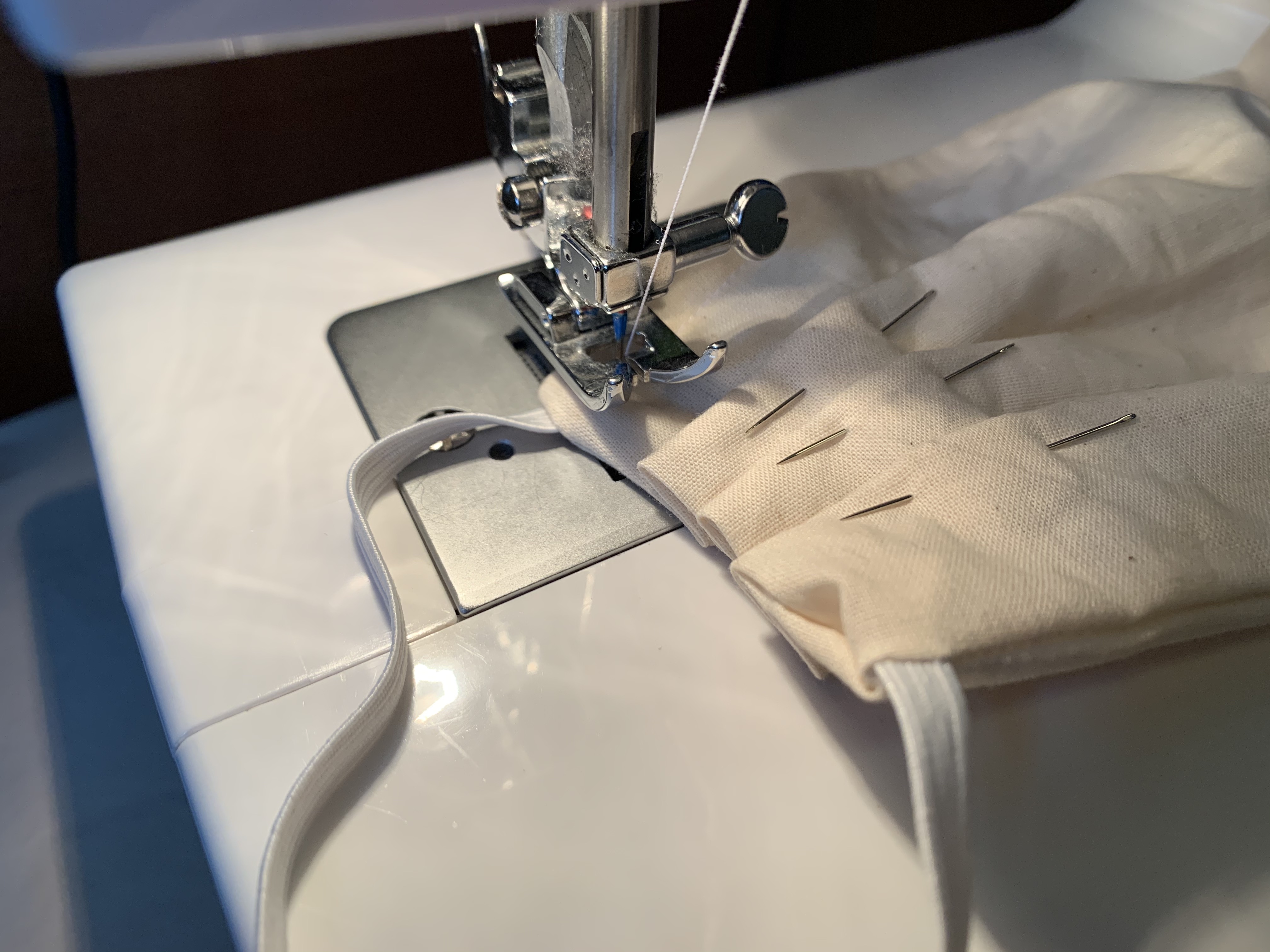
    Considering the dire circumstances, a homemade mask is better than no protection at all. Here’s how to hand sew a face mask (all photos by Rachel Marty):

    Materials needed:

    • Two pieces of 7-inch elastic
    • Two sheets of 9-inch by 6-inch tightly woven and recently-purchased cotton
    • A sewing machine
    1. Pin the two sheets of cotton fabric together and start sewing around the perimeter, leaving a quarter of an inch for the edge.
    2. At every corner, stop and place the end of the elastic in between the seam, making sure you place the straps horizontally on the 6-inch sides. The straps should go behind the ears, not vertically, or the straps will rest above your mouth and chin.
    3. Make sure to leave your perimeter undone. Leave an inch or two so you can turn it inside out.
    4. Turn inside out.
    5. Make three tucks on each side of the mask and pin them in place. Make sure they are going in the same direction on each side.
    6. Again, sew around the perimeter of the mask, leaving a quarter of an inch on the edge. Repeat twice to make sure it’s secure.
    7. And you’re done!
  • Photos Show Life Around Arcata in the Time of COVID-19

    Photos Show Life Around Arcata in the Time of COVID-19

    A photo series from the end of spring break

    Photographer and Sports Editor Thomas Lal captured these scenes from around Arcata on March 21 at the end of spring break at the beginning of Humboldt County’s shelter in place order.

    The storefronts on the Arcata Plaza look out on mostly empty streets.
    An employee sits at a computer while a sign advertises that the business is still open during the first week of a shelter in place order.
    The shelves in the Arcata Safeway.
    The Humboldt State Library.
    A lone person walks through the mostly empty parking lots at Humboldt State University.
    The Humboldt State Library.
    The Humboldt State Library.
    A single person works at the Humboldt State Library.
    A carton of eggs sits on the shelves at the Arcata Safeway.
    A lone person stands just off of the Arcata Plaza.
    An employee puts up a sign in the door of the Jitter Bean on the Arcata Plaza.

  • Associated Students Elections Delayed Due to COVID-19

    Associated Students Elections Delayed Due to COVID-19

    Associated Students Board of Directors redesigns spring elections

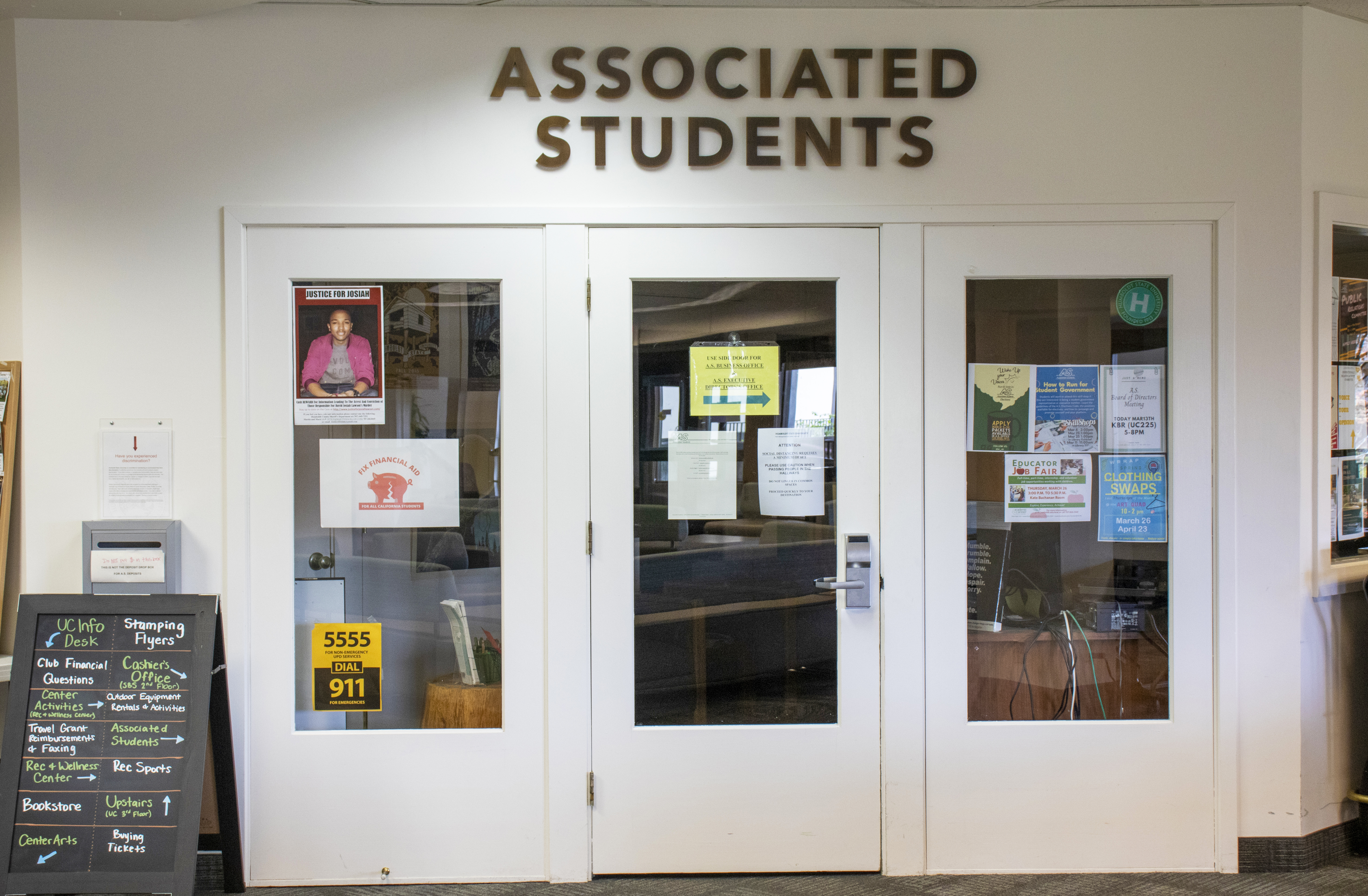
    The Associated Students Board of Directors motioned to push their voting period for their upcoming elections back two weeks and expand the period from three to five days, now April 27 through May 1.

    The March 27 AS Board meeting held through Zoom included the extension of the filing period for AS candidates to April 16 and several other amendments to the upcoming elections. Elections Commissioner Cassaundra Caudillo said postponing the election could be beneficial.

    “It allows for professional staff and the Elections Commission to promote elections a bit longer, so that way we raise our chances of having candidates for each position,” Caudillo said. “Because at the moment, we don’t have a candidate for every position. Not only that, but it also allows students themselves to have an additional two weeks to apply for candidacy.”

    “In general, postponing elections for two weeks allows everyone to have a fair and equitable chance at running.”

    Cassaundra Caudillo, AS Elections Commissioner and Public Relations Officer

    AS Executive Director Jenessa Lund said students expressed interest running in this election who haven’t had the opportunity to take the necessary steps to sign up before the office closed.

    “In general, postponing elections for two weeks allows everyone to have a fair and equitable chance at running—keeping in mind the situation we’re all in and how much added stress we’ve all been faced with as students and as human beings,” Caudillo said.

    While minimum residency and unit load qualifications are still in place, candidates are no longer required to appear in person to obtain their nomination materials, as the AS office has closed its doors. Students can find everything they need under the “Elections!” tab on the AS website.

    Students are also no longer required to supply petitions with 150 student signatures. The candidate quad talk will be replaced with one-minute videos of candidates reading their speeches that will be shared on AS social media. Requirements of wet signatures from candidates will be swapped with a Google forum, and the candidate orientations will now be held over Zoom on April 16 and 17.

    The AS Board is willing to review and consider reimbursing any campaign supplies that can no longer be distributed.

    AS President Lizbeth Cano-Sanchez described the value of joining AS in a separate interview with The Lumberjack.

    “Education is power, and in AS you can put your education to practice, because there’s a lot of things that correlate with it,” Cano-Sanchez said. “It helps you develop yourself, and at the same time, we’re students serving students and that’s really important.”

  • Here Are the Refunds Students Can Expect from HSU

    Here Are the Refunds Students Can Expect from HSU

    Refunds for various fees are available for Humboldt State students in the midst of the COVID-19 outbreak

    With closures and cancellations occurring left and right, many Humboldt State University students are wondering what kinds of refunds they can receive from the university. Here’s a list of them.

    Tuition and Fees:

    • Tuition and campus-based fees will continue on as normal for students that are taking courses from their professors to receive grades that factor into graduation.
    • If a student wants to withdraw from all spring semester courses, they must act by April 5 to be eligible for a prorated refund of tuition and fees.
    • Classes that students with financial aid are withdrawing from will be looked over and potentially adjusted based on the amount of days enrolled.

    Housing and Parking:

    • If students leave on-campus housing, they will get prorated refunds for both housing and dining fees once they check out.
    • Student parking permits will be automatically refunded back to student accounts to the tune of $78.75, 25% of the initial permit cost.

    Commencement:

    • Automatic refunds will be doled out to students graduating in spring or summer 2020. For more information, email HSU-cash@humboldt.edu
    • For unopened and unused regalia, refunds will be issued using the same method the order was placed with.
    • For the Graduation Writing Proficiency Exams on March 28 at 9 and 11 a.m. and April 11 at 9 and 11 a.m., all charges will be returned to the students’ accounts and refunds will follow if the student doesn’t have outstanding charges. Keep in mind that the GWPE is still required to graduate, and will be held online for the time being.
  • Students Bused Back to HSU Met with Mixed Messages

    Students Bused Back to HSU Met with Mixed Messages

    Locals react to HSU students bused back to Humboldt from coronavirus-afflicted areas

    A bus chartered by the Humboldt State Homeward Bound program picked up 31 HSU students March 21 from San Francisco and Los Angeles—two cities where the coronavirus has become more and more prominent—and brought the students back to Humboldt.

    Lost Coast Outpost posted an article about the bus March 24. The Facebook post for the story has 433 comments as of March 29, many of which are critical of HSU.

    “This is beyond irresponsible of HSU,” one comment reads.

    “And one more reason we feel GREAT about not sending our kids to HSU,” reads another.

    Sarah Ray, an environmental studies professor, defended the students.

    “Quite a few of our students live here and have moved here and have their lives here and they were visiting family,” Ray said. “So, just like we would expect and hope that kids and students who are from Arcata and the area—we would fully respect and appreciate that they would want to come home and be home with their families once their classes got cancelled in this really frightening moment—it’s reasonable that students would want to go where they’re most comfortable and feel at home.”

    She went on:

    “There’s also a lot of research out there about how many students across the nation going through this exact problem are not safe at home, and this might be a safer place for them,” Ray said.

    “I feel like it’s not a simple solution to just say, ‘Go back there,’ because many of these students live here.”

    Xochitl Andrade, HSU English and biology major

    Grant Scott-Goforth, communications specialist for HSU, explained the precautions implemented on the buses returning to HSU.

    “The buses were partially full so that people could have social distancing on the buses while they rode,” Scott-Goforth said. “And then, obviously when they return, we’re asking everyone to shelter-in-place, to quarantine if you’ve been exposed or been to an area with exposure, and to contact the Student Health Center or hospitals with concerns about health.”

    As much as HSU wished it could’ve been in command over which students came and which students left Humboldt, there was no way to do that. Of course, as Scott-Goforth asserted, the coronavirus situation is nothing to sneeze at.

    “I think it’s terribly unfortunate and I’m very sad for them and I feel very protective of students because it’s what I do.”

    Sarah Ray, HSU environmental studies professor

    Xochitl Andrade, an HSU senior majoring in English and biology, said the situation is complicated.

    “I feel like it’s not a simple solution to just say, ‘Go back there,’ because many of these students live here,” Andrade said. “They may have no where else to go if they were told to go back. We don’t know if they were just visiting friends or family. And for those who don’t have any family to go back to, what are they supposed to do?”

    While Andrade agrees that the students should be quarantined, she said she thought HSU knows what it’s doing.

    Ray hoped the harsh words toward HSU students from the Lost Coast Outpost article weren’t representative of the Arcata community.

    “I think it’s terribly unfortunate and I’m very sad for them and I feel very protective of students because it’s what I do,” Ray said. “I would like to think that it’s only an extreme, fringed, vocal, internet types of social media people who are saying those kinds of things. The vast majority of the university, especially the community and many people in the community—that’s not the kind of sentiment I see.”

  • Pop-Star Weeknd is Here to Stay

    Pop-Star Weeknd is Here to Stay

    The Weeknd’s fourth album, “After Hours,” has arrived

    The R&B villain, better known as The Weeknd, has returned with his fourth studio album, “After Hours.” In this album, The Weeknd revisits the same themes of drugs, lust and heartbreak found in previous releases, but this time, with a different approach. In the past, his music has come off generally unapologetic, but “After Hours” brings a mix of emotions on his lifestyle.

    After nearly a decade of partying and coming onto the scene in 2011, The Weeknd reveals on track eight, “Faith,” that he’s spent the last year sober. Still battling the urge to return to the fast life, The Weeknd comes to terms with the choices he’s made in “After Hours” and the mental war he’s fighting to avoid making those same mistakes.

    Coming into this project, The Weeknd set the tone by dropping two pop singles at the end of November, claiming the top position on the Billboard Hot 100 chart with his lead single, “Heartless.” His follow up, “Blinding Lights,” is currently peaking at number two on the Hot 100 chart in the wake of the album release. He followed up in the second half of February with the title track, “After Hours,” as an unofficial single. The song is slow to build, but is equal parts patience and pop, making it clear that the pop-star style is here to stay.

    “I will always prefer his earlier stuff. It’s just a sound you couldn’t have found anywhere else at the time.”

    Alexa Noperi, HSU film major

    Alexa Noperi is a film major at Humboldt State University, and she hasn’t been happy with The Weeknd’s direction since he dropped “Starboy.”

    “I will always prefer his earlier stuff,” Noperi said. “It’s just a sound you couldn’t have found anywhere else at the time.”

    The Weeknd’s gradual transition to pop music has left some of his day-one fans behind in the darkness of his mixtapes. Made official by his 2016 album “Starboy,” the style shift can be attributed to the success of his biggest single, “Can’t Feel My Face,” along with other pop efforts on “Beauty Behind the Madness,” including “Earned It” and “Angel.”

    When he released his first EP, “My Dear Melancholy,” in 2018, the day-one fans that were left behind were delighted by the return of a dark Weeknd. With his latest release, The Weeknd is likely to disappoint hardcore fans again, as he mostly leaves behind the dark, moody atmosphere of his earlier music to make room for the pop sound that generated so much success with “Starboy.”

    After Hours” is a rollercoaster of indecisiveness. The Weeknd’s desires constantly clash with one another on his quest for true happiness.

    The album begins with chilly instrumentals that build into their own pop section. The Weeknd flaunts his typical unremorseful attitude, claiming, “It’s too late to save our souls,” on the song “Too Late.”

    “After Hours” is the most consistently solid project The Weeknd has dropped so far.

    Track four, “Scared To Live,” marks the first shift in his approach. He begins to express remorse for his actions, as well as an authentic desire to leave the fast life behind on the stand-out track “Snowchild,” reinforced on the next song, “Escape From LA.”

    Unfortunately, The Weeknd relapses, back to the fast life on his song, “Heartless.” This marks the beginning of the pop-star section that dominated the sound of “Starboy,” this time, with a heavy ’80s electro-dance influence.

    After Hours” then enters its final section, returning to the slower, chilly instrumentals that opened the album on the “Repeat After Me” interlude. The Weeknd concludes his fourth album, echoing a desire to leave the fast life behind and asking for one last chance at a normal life.

    Though it may be missing the unique, dark sound of The Weeknd’s early music, found on songs like “D.D.” and “The Hills,” as well as the beauty and optimism found on “True Colors” and “I Feel It Coming” from “Starboy,” “After Hours” is the most consistently solid project The Weeknd has dropped so far.

    “It’s not bad background music to try on jeans to. But I don’t think I will be playing it again.”

    Isabelle Eddisford, HSU political science and dance major

    This album marks a growth in his discipline, but also in experimentation. Following the massive success of “Starboy” and the widely-positive reception of “My Dear Melancholy,” the less-than-spectacular “After Hours” might just leave all of his fans a little disappointed.

    Isabelle Eddisford, an HSU student studying political science and dance, felt disappointed that the new songs sounded the same. She described the album as something that would be playing in an Abercrombie and Fitch store.

    “It’s not bad background music to try on jeans to,” Eddisford said. “But I don’t think I will be playing it again.”

    With predicted first-week sales of 400,000 units for “After Hours,” The Weeknd’s continued success in the pop genre may mean the death of his dark times.

  • Retention Rate on the Rise at HSU

    Retention Rate on the Rise at HSU

    More Humboldt State students are electing to stick around, but there’s still work to be done

    Corrections: a previous version of this story incorrectly quoted Casey Park as saying “We’re absent as an institution.” The quote should have said “We were absent as an institution.” The story also wrongly included “interim” in Jason Meriwether’s title.

    Humboldt State revealed more students were staying on its campus rather than taking off for other schools or ventures in a Jan. 31 press release.

    Tracy Smith, the director of the HSU Retention through Academic Mentoring Program, said she was proud of the work she and her peer mentors have accomplished over the years.

    “I think Humboldt sincerely believes that whether students decide to stay at Humboldt or not is really a product of our entire campus community and off-campus community,” Smith said. “RAMP really is designed to support incoming students and them finding a place where they feel a connection.”

    “85 percent of new first-year students said if they were given the option to choose a college again, they ‘probably’ or ‘definitely’ would attend HSU again.”

    National Survey of Student Engagement, spring 2019

    A study done in conjunction with HSU by the National Survey of Student Engagement in spring 2019 provided some data on student perceptions of HSU.

    “85 percent of new first-year students said if they were given the option to choose a college again, they ‘probably’ or ‘definitely’ would attend HSU again,” the study said. “And 89 percent of first-year students said their overall experience was ‘good’ or ‘excellent’, compared to an overall CSU system rate of 84 percent.”

    Jason Meriwether, Ph.D., vice president for Enrollment Management, said a few things have contributed to the increased retention rates, including Enrollment Management staff and related faculty streamlining the registration process and connecting students with support services—all in an attempt to create a sense of belonging for students.

    “It’s the experience but it’s also the listening and packaging it into one,” Meriwether said. “So, all of that is about looking at the students and giving them what they’re asking for first, and using the resources that we have to create an experience for the student.”

    Meriwether said his staff’s hard work has paid off by meeting student needs.

    “We have to be aligned with what students are expressing that they need and putting ourselves in a position to support students,” Meriwether said.

    “There wasn’t attention given to the most affected and traumatized students. And those are the students who went back to where we recruit from and said ‘Humboldt is not a place for me,’ and ‘Humboldt is not a place for you.’”

    Casey Park, HSU alumna

    He noted a growing trend at HSU of transfer students outnumbering first-time freshmen. HSU has needed to move around campus resources to accommodate the influx of transfer students.

    “It’s about being nimble and seeing where the student population is going and meeting those needs,” Meriwether said.

    Meriwether added that in recent months, the Student Disability Resource Center and cultural centers have received major face-lifts, which, in turn, have opened up more doors for students.

    Casey Park, an HSU alumna, was glad for the rising number of retained students, but said the campus administration’s past actions around retention shouldn’t be ignored as a new wave of measures are enacted. Park is an Associated Students coordinator, but gave her perspective only as an alumna.

    “We are still going to need to reconcile the years where we were neglectful of students,” Park said. “It’s going to take a lot of really good decisions to hold ourselves accountable for that and kind of be like, ‘We were absent as an institution.’”

    Park said the HSU administration’s inaction regarding the Josiah Lawson case and other events affected previous student perceptions of HSU.

    “There wasn’t attention given to the most affected and traumatized students,” Park said. “And those are the students who went back to where we recruit from and said ‘Humboldt is not a place for me,’ and ‘Humboldt is not a place for you.’”

  • Learning from These Sudden Senior Year Goodbyes

    Learning from These Sudden Senior Year Goodbyes

    I wasn’t prepared for the school year to end so abruptly

    I’m no good at saying goodbye. Give me no time to prepare, and I think I’m even worse. Amidst the COVID-19 pandemic and the sudden end of the rest of my in-person senior year in college, I’ve had to say goodbye to several friends and colleagues with little warning.

    This abrupt ending has thrown me off. I hate to whine, but I wasn’t ready to part ways with so many people. It takes time to reflect on others and consider what I want to say when I might never see them again.

    No goodbye is easy, and no goodbye ever feels adequate. But it takes a while for the reality of a goodbye to settle in. The natural buildup of expectation over the course of the last semester of college, which Dan Chiasson wrote about for The New Yorker, helps to ease the transition between college life and post-college life.

    Of course, not getting to say a proper goodbye is small potatoes compared to more serious issues people are facing right now, like losing jobs, homes or loved ones. Those things are awful, but they don’t make the little things suck any less.

    Of course, not getting to say a proper goodbye is small potatoes compared to more serious issues people are facing right now, like losing jobs, homes or loved ones. Those things are awful, but they don’t make the little things suck any less.

    In day-to-day life, it’s easy to let the specifics of what you appreciate about someone go unnoticed. Saying goodbye, for me, requires a bit of excavation into those little things. With some time, I can at least have a couple words to say. Even if what I say is inadequate, something is better than nothing. A couple words can signal a greater appreciation I might be trying to articulate.

    In my most recent goodbyes, I’ve tried to give thanks to the person for whatever they’ve done that has made them worth a goodbye in the first place. I try to let them know what I think of them. Then I probably wish them luck. And finally, I might just say “bye,” which is too small a word to encompass all the emotion in a parting of ways.

    There’s nothing wrong with any of that. It just hasn’t felt adequate. And it hasn’t helped that we’re supposed to be avoiding getting too close to anyone. Hugs or anything like them are off the table.

    Maybe all I’m really getting at is that saying goodbye is one hell of a difficult task, and doing so right now almost feels cruel. Being a true digital age child, I browsed the internet for tips on saying goodbye and got some vague ideas and a suggestion to give the person a memento—which, again, doesn’t seem smart right now.

    But no matter how much you prepare, goodbyes are always going to hurt.

    If you’ve made it this far, congratulations, you get my cliché takeways: if you have the chance, make your goodbyes worthwhile. Take time. And if you don’t have to say goodbye to someone yet, treasure them, and let them know how much you appreciate them as a friend or colleague or whatever else.

    You never know when the world might be struck by a pandemic and you have to say goodbye without warning. Be grateful and appreciative and let those that matter know it. Oh, and wash your hands and stay the hell home as much as possible.

  • The Lumberjack Takes Home 14 Media Awards

    The Lumberjack Takes Home 14 Media Awards

    Humboldt State student newspaper wins four first place California College Media Association awards

    The Lumberjack won 14 California College Media Association Excellence in Student Media awards for a variety of work in 2019. The Lumberjack took home four first place awards, seven second place awards and three third place awards at the CCMA awards banquet Feb. 29 in San Francisco.

    Deija Zavala won Best Photo Series, Phoebe Hughes won Best Cartoon Illustration, Megan Bender won Best Illustration and Chelsea Wood won Best Non-News Video.

    Megan Bender took second in Best Newspaper Front Page Design and Best Photo Illustration, Jose Herrera took second in Best Arts and Entertainment Story, Jett Williams took second in Best Newspaper Column, Liam Warner took second in Best Sports Story and Thomas Lal took second in Best News Photograph. James Wilde, Chelsea Wood and Collin Slavey took second in Best News Video.

    Freddy Brewster came third in Best Headline Portfolio for three different headlines and third in Best Breaking News Story, while Tony Wallin took third in Best Feature Story.

    HSU’s bilingual, monthly student-run newspaper, El Leñador, won 12 awards, including three first place awards. HSU’s student-run semesterly magazine, Osprey, won three awards, with a first place award to Megan Bender for Best Magazine Inside Page/Spread Design.

    The Lumberjack is the independent, student-run online media publication and newspaper established in 1929 at Humboldt State University.


    View the full list of HSU student award winners below:

    CCMA Winners 2020:
    FIRST PLACEPUBLICATIONSTUDENT(S)
    Best Photo SeriesThe LumberjackDeija Zavala
    Best Editorial CartoonThe LumberjackPhoebe Hughes
    Best IllustrationThe LumberjackMegan Bender
    Best Non-News VideoThe LumberjackChelsea Wood
    Best Newspaper Inside Page/Spread DesignEl Leñador Celeste Alvarez, Jose Herrera
    Best Newspaper Front Page DesignEl Leñador Kylee Conriquez, Jose Herrera
    Best Non-Breaking News StoryEl Leñador Jose Herrera
    Best Magazine Inside Page/Spread DesignOspreyMegan Bender
    SECOND PLACE
    Best Newspaper Front Page DesignThe LumberjackMegan Bender
    Best Arts and Entertainment StoryThe LumberjackJose Herrera
    Best Photo IllustrationThe LumberjackMegan Bender
    Best News VideoThe LumberjackJames Wilde, Chelsea Wood, Collin Slavey
    Best Newspaper ColumnThe LumberjackJett Williams
    Best Sports StoryThe LumberjackLiam Warner
    Best News PhotographThe LumberjackThomas Lal
    Best IllustrationEl LeñadorKylee Conriquez
    Best EditorialEl LeñadorBrenda Estrella
    Best Special Issue/SectionEl LeñadorJose Herrera, Vanessa Flores
    Best Overall Newspaper DesignEl LeñadorJose Herrera, Celeste Alvarez, Cara Peters, Ash Ramirez
    Best Social Media ReportingEl LeñadorVanessa Flores
    Best Magazine Cover DesignOspreyMegan Bender
    THIRD PLACE
    Best Headline PortfolioThe LumberjackFreddy Brewster
    Best Feature StoryThe LumberjackTony William Wallin
    Best Breaking News StoryThe LumberjackFreddy Brewster
    Best NewspaperEl LeñadorStaff
    Best Interactive GraphicEl LeñadorCeleste Alvarez
    Best InfographicEl LeñadorCara Peters
    Best Arts and Entertainment StoryEl LeñadorLora Neshovska
    Best Magazine Photo SeriesOspreyJett Williams, Megan Bender
  • Myths and Truths of Surgical Face Masks

    Myths and Truths of Surgical Face Masks

    Mirage of safety causes mask supply to plummet and xenophobia to reemerge

    The emergence of everyday people using surgical masks amidst the COVID-19 pandemic has caused mass misinformation and the perpetuation of xenophobic ideas.

    Myth: Surgical masks make you immune to COVID-19

    Typically found on hospital workers and sick personnel as a safety barrier, surgical masks are almost regarded as invincibility devices, protecting the body from outside pollutants and threats. The implied purpose of surgical masks is to protect patients from the secretions of a doctor’s mouth or nose during surgical procedures or to protect doctors and nurses from infected patients. Either way, a basic surgical mask prevents the exchange of bodily fluids, not air particles. Surgical masks are often mistaken as invincible shields against all viruses and bacteria.

    Surgical masks show no evidence of prohibiting the inhalation or contraction of the virus that causes COVID-19. The COVID-19 virus particles are too minuscule to be stopped by a surgical mask barrier. According to the Centers for Disease Control and Prevention, “most facemasks do not effectively filter small particles from the air and do not prevent leakage around the edge of the mask when the user inhales.” In no way do surgical masks prevent or obstruct contaminated air.

    While surgical face masks are virtually pointless against COVID-19, N95 filtering facepiece respirators are different. These masks are personally fitted to the face and “filter out at least 95% of very small (0.3 micron) particles, capable of filtering out bacteria and virus particles,” according to the CDC. These masks are typically worn by hospital and treatment personnel that come in direct contact with infected patients. N95 masks prevent the inhalation of micro-particles.

    Truth: Surgical and N95 masks are running low

    Due to the personal fitting of each N95 mask, they begin to degrade overtime depending on their usage, storage and environment. The assigned expiration date and high demand due to the current pandemic has resulted in an unexpected shortage in supply. Doctors are now reusing their masks, but they risk contamination due to degrading components affecting the protection and performance of the mask. Government administrations are requesting N95 donations as well as demanding some occupations to give up their assigned mask for medical workers.

    While N95 masks are needed most, surgical masks are running low as well. Infected patients wearing masks benefit surrounding parties by limiting exposure of emitted particles into the air. The pandemic panic has misinformed the public to go buy surgical masks when patients and medical workers need them most.

    Myth: DIY masks provide reliable protection

    YouTube and social media platforms are advertising do-it-yourself face mask tutorials in response to the shortage in surgical mask supply. The misinformation has continued as people attempt to protect themselves with faulty protection materials. Bras and bonnets to sandals and plain cloths are being cut and trimmed to replicate surgical face masks. But, as previously mentioned, surgical face masks provide no protection against COVID-19 virus particles. Any alteration of store-bought or recycled material will have the same, if not less, protection against COVID-19 than a surgical mask.

    Truth: Mask usage has reignited xenophobic ideas

    Surgical masks provide zero protection from contracting COVID-19, but they have effectively reignited xenophobia. It’s completely normal for the mind to want to assign a face to an infected COVID-19 individual or picture what a threat would look like out of caution. Assuming someone wearing a face mask has the virus and extending that assumption past the mask, to their race or ethnicity, is disgusting, racist profiling. In a time of crisis, people should be exercising neighborly behavior and picking one another up, not perpetuating racist, profile-based assumptions on others in an attempt to accuse others of the chaos. It’s unproductive and invasive.