The Lumberjack


Students Serving The Cal Poly Humboldt Campus and Community Since 1929

Tag: Humboldt State

  • Homelessness awareness

    Homelessness awareness

    By | Juan Herrera

    Being homeless is a spot where not many people would like to be but if the situation appears you always need to be prepared.

    The Homeless Student Advocate Alliance (H.S.A.A), a club at Humboldt State, put on a three day event to inform, share and educate the students and community about the severity of homelessness in Humboldt County.

    Chant’e Catt, president of the club, said for this being their first annual three day event it was educational and they got their message across.

    “Our main purpose of the event is to let other homeless students know they’re not alone,” Catt said. “And I believe we achieved a majority of that.”

    Catt said the first day of the event was more personal for others by students and members of the community sharing their own stories of past and present times of homelessness in their life. Catt herself even spoke about her own times being homeless when she and her family first moved to Humboldt County.

    “I first hand know the struggles of moving from place to place,” Catt said.” For my first 14 weeks in Humboldt County I was constantly trying to find a secure place for me and my two children.”

    Catt said majority of the students that are homeless at HSU are not because they do not have the money. but purely because the lack of housing Humboldt State and the County provides.

    Daniela Parada, another member of the club, said the second night of the event was the most eye-opening night. The night went into the meaning of what being “homeless” actually is.

    “We wanted to talk about the stigma and labeling that gets put on the homeless community,” Parada said. “Most people assume that anybody who is homeless is dirty, smelly and just plain ole gross.”

    Parada said most of the time that is hardly ever the case. According to her, a person who goes from couch to couch but still showers daily, dresses nice, etc., is still considered homeless. Would you still call that person smelly and gross?

    Parada said the last night of the event was the most hands-on activities they put on. They showed students and members of the community how to put together and take down a tent and also how to start a fire almost anywhere.

    “Personally this was the most educational night for people who attended our event,” Parada said. “Even though we could not start a real fire, people definitely got the hang of how to start one.”

    Arri Sanders, a senior at HSU, said how the event was personal and a huge eye-opener for her.

    “I remember when one of my best friends was going through a similar situation,” Sanders said. “I honestly did’t realize some of the embarrassments or things homeless people had to go through until hearing it first hand.”

    Sanders said even though her friend wasn’t nearly in as bad as a spot as some she still realized part of what she went through. Sanders said now looking back at it she wishes she would have tried to offer her friend more then what she did.

    Sanders had one last message for people who have friends who are homeless.

    “Please! Please! Even if they don’t ask for it, offer any help you can, because they do need it.” Sanders said.


  • Online Social Work ranked best in the nation

    Online Social Work ranked best in the nation

    By | Charlotte Rutigliano

    The Online Social Work Bachelors program and the Master’s program have been ranked 13th and 12th by College Choice, an online source dedicated to helping students find the best schools for their academic and career goals.

    Alyssa Koh, managing editor from College Choice said that the team she works with often says that figuring out what college to attend can be like drinking from a fire hose.

    “We have all been through the process of researching, applying and choosing a school,” Koh said, “we really are coming at this from experience.”

    According to Koh, the ranking criterion is a question that they got a lot, and one that is very important to them and that they feel confident about.

    “Our methodology is always data-driven and as scientific as possible,” Koh said. “We collect data points from trustworthy sources.”

    Sources that include university and college websites, PayScale, U.S. News & World Report, and the National Center for Education Statistics Integrated Postsecondary Education Data System (IPEDS).

    Koh said that what they’ve done is come up with a way to measure quality, reputation, affordability, value, and satisfaction.

    “Going to college isn’t just books and tests,” Koh said, “it’s a whole host of factors, and we take that into account.”

    According to Koh, the methodology College Choice uses first looks at what students want, what they are looking for and what they can help them with. The data gathered is aggregated into different criteria that composite scores.

    “Most of our lists use three composite scores for determining the ranking,” Koh said, “institutional excellence, student satisfaction and return on investment.”

    Jamie Jensen, assistant professor and director of distributed learning programs for the online Bachelor’s and Master’s, said while she’s less concerned about the ranking of the programs, and that it feels good to see the department and the university out there.

    According to Jensen, the social work programs are generalist programs that teach students to work on issues, populations and system levels. The online Bachelor’s program is set up just like the on-campus program, and the online Master’s program is a part-time year round option that has a new cohort starting every January.

    “The Master’s program model is targeted at providing educational opportunities to those already living and working in rural or Indigenous Communities,” Jensen said.

    Geneva Shaw, lecturer and the Master of Social Work director, said that the online programs allow students who work full time, have families or are currently working in the field to stay rooted where they are and continue their education.

    According to Jensen, these online programs first got started because of an expressed need to bring a pathway to education for people in the surrounding rural and tribal communities who were already doing great work but didn’t have the privilege to attend the program on campus.

    “We graduated our first Bachelor’s in social work distributed learning (BASW DL) in 2013,” Jensen said, “and the first Master’s in social work distributed learned (MSW DL) in 2016.”

    Jensen said that as of May 2017 the program had graduated 68 new BASW and 38 new MSW into underserved rural areas of Northern California, as well as 54 students in both the BASW and MSW scattered across California, Idaho, Oregon, Washington state, Rhode Island and Alaska.

    Shaw said that though she’s also unsure of the ranking process, it gives acknowledgment to programs both on campus and online, and the connections made not only in our own community, but also in the students’ home communities.

  • Raising the bar

    Raising the bar

    In the National Survey of Student Engagement, zero percent of faculty think seniors devote “Very Much” or “Quite a bit” of their time doing community service or volunteer work. Six percent of seniors said they devote “Very Much” or “Quite a bit” of their time for community service or volunteer work.

    The National Survey of Student Engagement was sent out to seniors last spring at the same time the Faculty Survey of Student Engagement was sent out.

    In these surveys, 298 seniors and 226 faculties participated. Percentage-wise, that’s around 31 percent of seniors and 40 percent of the faculty. A part of the results from both surveys for the 2016-17 academic year shows how upper division faculty thinks seniors spend their time versus how senior say they spend their time.

    Upper division faculty were asked how much time do they think seniors devote to participating in co-curricular activities. Faculty answered only one percent of students devote “Very Much” or “Quite a bit” of their time participating in co-curricular activities. On the other hand, seniors answered seven percent.

    According to the same surveys, upper division faculty thinks 41 percent of seniors devote “Very Much” or “Quite a bit” of their time relaxing and socializing, while seniors answered only 23 percent.

    Almost half of all seniors in the survey said they devote “Very Much” or “Quite a bit” of their time to prepare for class, on the other hand, Upper division faculty think only 13 percent of seniors do so.

    It’s not the first time HSU students participate in the National Survey of Student Engagement. The first time was back in 2002, according to NSSE website, though last spring was the first time HSU conducted the Faculty Survey of Student Engagement on HSU faculty.

    According to the Office of Institutional Effectiveness, the Faculty Survey of Student Engagement costs $2,008 and the National Survey of Student Engagement cost $5,550.

    Such surveys are important as they help the university administration understand students and how do they spend their time and how both student and faculty are seeing and perceiving things.

  • Jacks Sports

    Jacks Sports

    By | Keaundrey Clark

    _MG_4057.JPG

    Football

    After a season that saw Humboldt State Football go 6-5, the Jacks have rebounded and are sitting in second place in the Great Northwest Athletic Conference and 4-1 overall. Even with a recent loss to Central Washington, the Jacks boast the conference’s best offense averaging close to 47 points per game and over 500-yards a game.

    In the backfield All-American, running back Ja’Quan Murphy is having another strong season with 664-yards and seven touchdowns. His 132-yards a game is top 10 in Division Two.

    Quarterback Robert Webber leads the conference in passing with 17 touchdowns and 70 percent completion percentage.

    It’s been a season of greatness for the Jacks. Players like sophomore Davaeon Johnson have a night to remember with a three interception game versus Chadron State. He took one back for a touchdown. Johnson’s three interceptions tied a Great Northwest Athletic Conference single-game record. Wide receiver John Todd had a 225-yard performance against Western Oregon. He has a 90-yard catch and run which is the second longest play in school history.

    LSMensSoccer1.jpg

    Men’s Soccer

    After starting 6-1 and scoring at a torrant pace, the Jacks have gone on a four game losing streak.

    Leading this team in points is Junior, Francisco Caldron. He has 4 goals on the year. Junior Christopher Cherms has done well in the net with 46 saves

    Women’s Soccer

    Humboldt State women’s soccer has bounced back from last season where they won four games total. Sitting at 6-5-1 and 2-4-1 in conference, the Jacks have been led by Junior Alex Jenkins who has six goals on the year. Sophomore, Katelin Talbert has done a great job in the net with 51 saves so far this year.

    This week the Jacks host UC San Diego at 12:30 p.m. on Friday and Cal State San Marcos at 11:30 a.m.

    Cross Country

    The Humboldt State men’s and women’s cross country teams have been dominating so far this year.

    The men’s team finishing in second place in the Humboldt State Invitational. A trip to San Francisco for the Gator Invite saw the Jacks get a top five finish. In Salem, Oregon for the Charles Bowles/Willamette Invite the Jacks got a 10th place finish. Down south in San Diego the Jacks got a fourth place finish at the Triton Classic.

    The women’s team is one of the best in the west coast. They started the season with a first place win in the Humboldt State Invitational. A trip to San Francisco for the Gator Invite saw the Jacks get a second place finish. In Salem, Oregon for the Charles Bowles/Willamette Invite the Jacks got a first place victory. Down South in San Diego the Jacks got a fourth place finish at the Triton Classic.

    The Jacks have been led by Annie Roberts. She was named the California Collegiate Athletic Association’s Runner of the Week earlier in the season.

    They have received national attention for its success this season. The Lumberjacks are currently ranked seventh in the U.S. Track & Field and Cross Country Coaches Association West Region Rankings and are receiving votes in the national poll.

    Volleyball

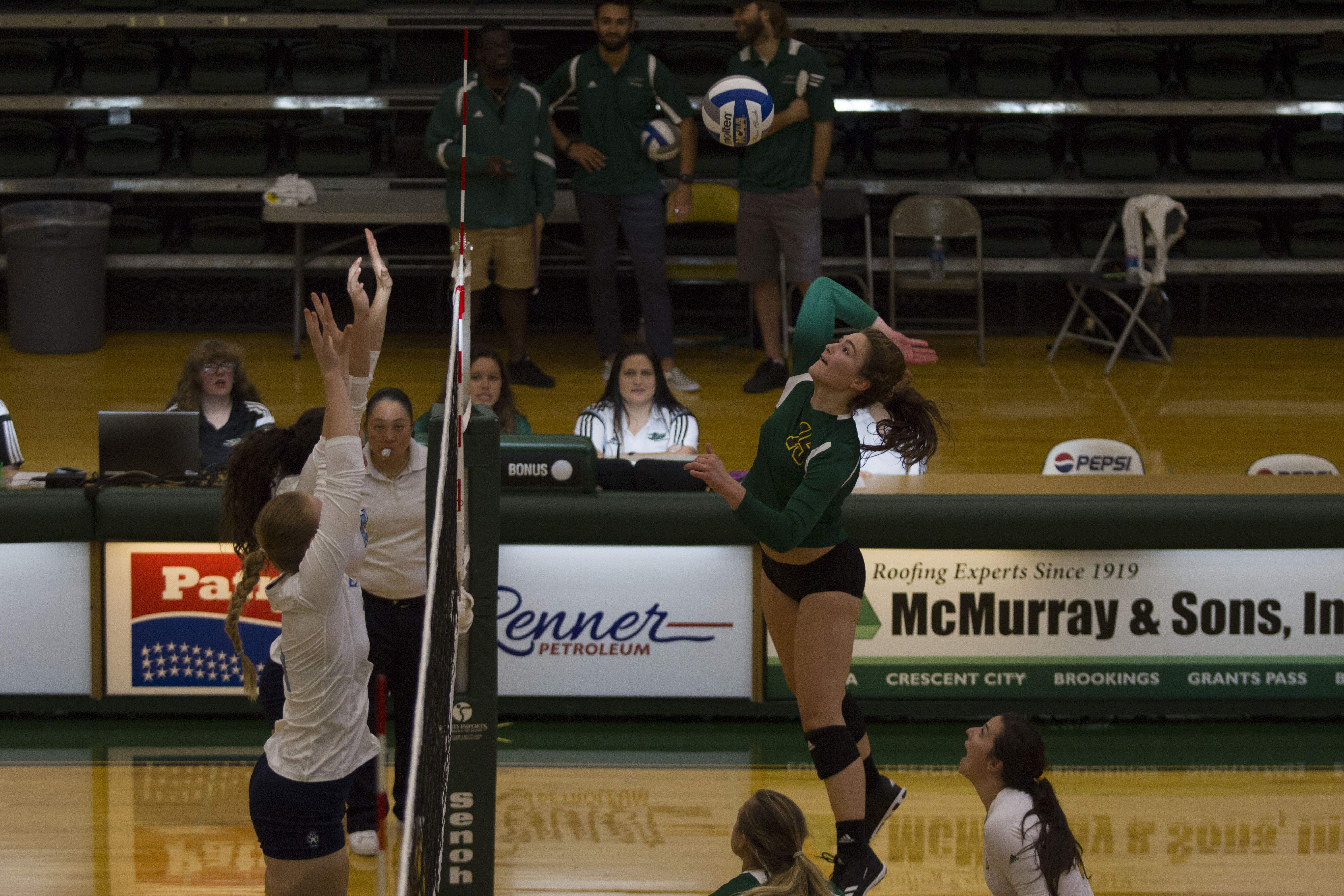
    When a team is on a losing streak, team cohesion and chemistry can be lost. The Lumberjacks volleyball squad is not one of those teams.

    Sophomore, outside hitter, Lauren Reid has been incredible for the Jacks. With 175 kills, that lands her in the top 10 in the conference. She averages almost three kills per set. Senior Alex Lolland has 155 kills second on the team for the Jacks.

    Senior middle blocker Janelle Ayala is top 10 in the conference in blocks with 55.

  • Tools for student wellbeing

    Tools for student wellbeing

    By | Charlotte Rutigliano

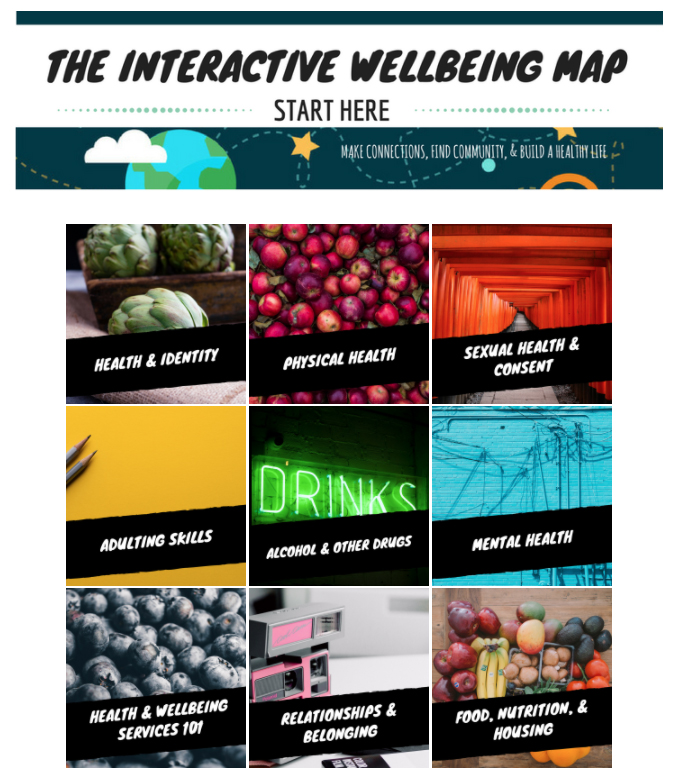
    After being in development for over a year, Executive Director of Student Health & Wellbeing Services Dr. Brian Mistler, Health Educator Ravin Craig, and a team of peer health educators have created an interactive online tool to guide students toward a healthier lifestyle and habits as well as campus support services.

    Mistler said that the interactive wellbeing map is to help students make connections, find a community and start building a healthier lifestyle at Humboldt State.

    “Health is not a linear process, there is no start or end on our journey to build positive relationships with our body and community,” Mistler said.

    According to Mistler, the team intentionally designed the introductory quiz to target the primary health and wellbeing-related obstacles in a way that was approachable and helpful to students from top to bottom.

    “The BuzzFeed-style quiz is an easy entry point that most students are comfortable with,” Mistler said.

    The wellbeing map is broken down into nine different topic areas; health and identity, physical health, sexual health and consent, adulting skills, alcohol and other drugs, mental health, health and wellbeing services 101, relationships and belonging, and food, nutrition, and housing.

    According to Mistler, the modules focus on frequently identified health concerns, such as a sense of belonging, sexual health, friendships and romantic relationships, nutrition and food, trouble relaxing, financial wellness and much more.

    “Each topic area is a map to get students connected to the resources they need to be successful at HSU, though it isn’t designed to list all of the student support services on campus,” Mistler said.

    Students can access the online tool by visiting wellbeing.humboldt.edu

  • Divesting for a sustainable future

    Divesting for a sustainable future

    Years ago, the movement to move away from fossil fuels was at the forefront of the public eye. Marchers organized and protests took headlines, screaming for change citizens demanded organizations eliminate their support for unsustainable energy practices.

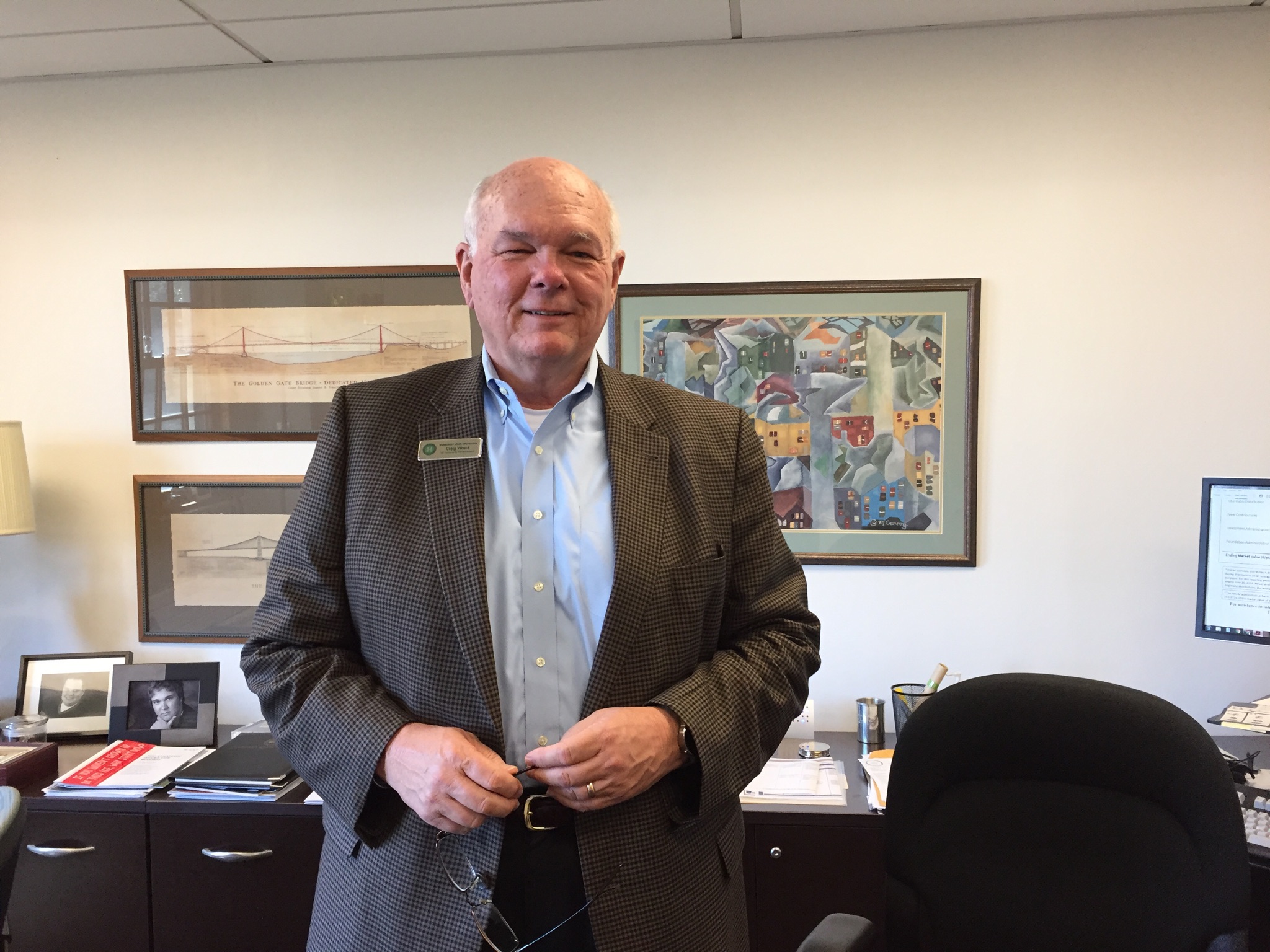
    In the spring of 2013, a group of Humboldt State students approached Craig Wruck, the Vice President of the HSU Advancement Foundation, to discuss eliminating the university’s investments within the fossil fuel industry and other concerning sectors.

    “Four years ago, the students came to us, and it was during the whole run up to the fossil fuels divestment movement,” said Craig Wruck. “Humboldt State has been very good about socially responsible investing since the foundation was reconstituted, so we never had separate investments and we had never owned separate stocks. It would have been easy for us to say, ‘Good news, we’ve already divested, we don’t own any Texaco stock, because that was literally true.”

    Yes, HSU was not directly invested in fossil fuels. However, indirect mutual funds held ties to the fossil fuel industry. This is what the students wanted to change.

    “Our endowments as of the end of last year totaled about 30 to 31 million, and those are contributions over the last thirty years or so. They are then invested, and they are invested in what are called institutional funds, but are actually mutual funds. That’s not unusual for an endowment of our size. We just aren’t big enough to pick individual stocks, we get better diversification and lower costs if we invest in these institutional funds.”

    Sorting through the details of the institutional funds was not an easy decision at first.

    “It was a real risk for the foundation board, because they’re programed to get the best return they can,” said Wruck.

    It took over a year to compromise and for the board to begin the process of divesting from the mutual fund investments that had ties to fossil fuels. The Advancement Foundation and the students worked to find the best compromise environmentally and financially.

    “It’s an interesting argument. Whether the best way to force change in the corporate world, in terms of utilities and energy production, is to stop investing in it,” said HSU President Lisa Rossbacher.

    Rossbacher was also a member of the Foundation board, and debated the next step in divesting from fossil fuels.

    “Do we stay invested and use the fact that we are shareholders to argue from within, or do we make an even more dramatic statement and divest,” said Rossbacher. “We are in the process of divesting.

    The board decided, at the encouragement of the students, to look into the indirect mutual funds and their ties to fossil fuels.

    “We, [the Advancement Foundation] decided to take on the more complicated work of looking into the investments that the mutual funds own and trying to figure out how to green those up,” said Wruck. “Nobody had done that before.”

    According to an article written by Annette J. Penny, a HSU grad and one of the students who originally approached the foundation about divesting, they were finally able to agree on the next steps towards divesting in late 2014:

    1. “To create a new SEROP fund in which donors can rest assured knowing their donation is being invested only in portfolios that align with their own personal Environmental and Social Governance Criteria views.
    2. To move 10% of the existing $26 million portfolio (so $2.6 million) within 12 months of SEROP fund implementation into funds guaranteed to not have holdings in any of our concerning sectors. (HSU’s definition of “concerning sectors” was expanded to include all energy and utility stocks rather than just fossil fuels in order to steer clear of any unintentional fossil fuel investments. Under this definition, 7.5% of HSU’s portfolio is invested in concerning sectors.)
    3. To create a SEROP Investment Challenge which involved massive fundraising for increasing divestment capacity. For every $500,000 that is raised into the SEROP fund, another 10% will be moved. And once we’ve raised $5 million, HSU may be able to go completely Fossil Free!”

    From there, things began to move faster and the Humboldt State Investment pledge was created. Below are the ten agreements stated in the pledge, provided by the 2014 press release on the HSU Investment pledge:

    The Humboldt State University Advancement Foundation will:

    1. Define Socially or Environmentally Concerning Sectors (“Concerning Sectors”) in a broad, bold way so as to include:

    • Energy – extraction, distribution, refining and marketing (i.e. Oil, natural gas, coal and related/supporting industries);
    • Utilities – electricity generation (i.e. Utilities utilizing carbon-based fuels);
    • Aerospace/Defense, Alcohol, Tobacco, Gaming and Casino industries. Revisit definition and revise as appropriate over time.

    2. Continue to abstain from any direct investment in Concerning Sectors.

    3. Monitor and report on the value of indirect investments in Concerning Sectors.

    4. Make reasonable attempts to reduce the size of indirect investments in Concerning Sectors, provided any divestments are consistent with the Foundation’s fiduciary requirements.

    5. Define Socially or Environmentally Responsible (“SER”) organizations, projects or assets initially as ones which are environmentally friendly (i.e. reduce the levels of atmospheric C02) or improve the health and well-being of our community members. Revisit definition and revise as appropriate over time.

    6. Actively seek offsetting investment opportunities in SER organizations, projects or assets.

    7. Invest directly in SER organizations, projects or assets provided that:

    • Investments meet the Foundation’s fiduciary requirements and policies.
    • Investments support the stated HSU mission, vision and values.

    8. Monitor and report on the value of direct investments in SER assets and active investments in SER organizations or projects.

    9. Monitor and report on the value of obvious indirect investments in SER organizations, projects or assets.

    10. Create a SEROP Fund (with appropriate policies) and actively seek donations of funds and assets that could be used to support Humboldt’s SEROP Pledge.

    Since the Humboldt Investment pledge was created, HSU has taken actions to be more sustainable and environmentally responsible.

    “The Humboldt Investment pledge does a couple things,” said Wruck. “We define socially concerning sectors much more broadly than anyone else. So we have always tried to minimize our investments in alcohol, tobacco, firearms, gaming, that sort of thing. We decided to add the entire energy sector and the entire utilities sector.”

    Eliminating investments in both the energy and utility sectors was a huge step for the university.

    “As we debated it we realized, ‘What’s the point of divesting in fossil fuels if you still own utility stocks that have power plants that burn coal,’” said Wruck. “So we decided to just eliminate both of those sectors. That has an impact on investment return, although we are three years in now and our investment return is as good as it’s ever been.

    Deciding to divest from the energy and utilities sectors was not the easiest decision, but it was the next step in the university’s commitment to environmental accountability.

    “A lot of schools have said, ‘Well you know, we’d love to step away from investing in petroleum and other fossil fuels, but we’re worried about what the impact of that would have on our endowment holdings,” said Rossbacher. “Our job is to increase those resources, that then can help the university. We divested and [still] have a really strong return on investment.”

    The endowments the university receives funds numerous programs on campus, in addition to providing individual scholarship funds to students.

    “Endowments are created by donors who give us money, and their direction to us is that we are to invest it and distribute the investment profits, but try to maintain it as a permanent fund,” said Craig Wruck. “So we try to maintain a little bit for inflation each year and then make distributions off of that.”

    There was the possibility of having a much weaker investment return after divesting.

    “They (financial advisors to the foundation) advised us that we would probably suffer about a 10th of a percent loss because we were going to pay attention to these sectors,” said Wruck. “It didn’t work that way, we have had our second best year ever as of June 30th.”

    Since this process began in 2013, the foundation has made significant progress in divesting from concerning sectors.

    “The portfolio itself is totally divested, the equity portfolio has totally divested about a fifth of it. It’s a balance, you don’t get as good investment return if you exclude utilities and energy, so we want to protect the investment return and continue to green up the portfolio.”

    Another main focus for Wruck and the Advancement Foundation is to invest more in environmentally sustainable practices and programs.

    “About a year ago the board members decided to raise money for what they called a ‘Go Green fund,’ to support students working on projects that contribute to a sustainable environment, and they just met their goals,” said Rossbacher.

    During the first few weeks of the semester, the Go Green fund’s reached its goal, and the fund was considered successful enough to continue.

    “We are just this year launching the Go Green interns,” said Wruck. “That’s money that the foundation raised, it’s a little over $100,000, and it’s being used to employ students to do sustainability work on campus.”

    The Climate Action Plan was also fully completed last year, planning out the next steps to create a more sustainable campus. A group of students have been chosen to work on the project alongside the newly formed campus-wide Sustainability Committee.

    “Working through the Office of Sustainability, [the students] are getting paid for their work and their job is to implement the campus’s sustainability plan, [also known as the Climate Action Plan,]” said Wruck.

    Students took the initiative, first bringing the question of divesting to the foundation in 2013. Since then, numerous actions have been taken to carry out the ideas originally

    “We wouldn’t have done this if the students hadn’t brought it to our attention. We were doing good, we were doing socially responsible investing the right way, but we wouldn’t have taken this extra step had the students not encouraged us to do that,” said Wruck.

    Students are the ones who prompted this change, and they did so simply because they cared about the environment and the university. In the article Annette J. Penny released back in 2014, she explains why she needed to fight to divest.

    “So why did I push so hard,” wrote Penny. “Because prioritizing the people and planet over profits is always the right thing to do. Because “Green Funds” are up and coming, allowing for quick growth in fund diversity. And because I can’t stand the thought of one day telling my daughter that I didn’t do everything I could to keep the planet healthy and alive for her to enjoy like we are lucky enough to do today.”

    She was right to push. Since the issue was first discussed we have begun the process of divesting, the Climate Action Plan was created, the Sustainability Committee was formed, and the target for the Go Green Fund was met.

    “We can do both, we can support the green efforts that are so aligned with the values of this institution and still increase the rate of return on our investments,” said Rossbacher.

  • Humboldt State, we are still in

    Humboldt State, we are still in

    On June 1, President Trump announced his intent to withdraw the U.S. from the Paris Climate Agreement. Individuals all across the U.S. were left to determine how to respond to such an impactful decision.

    Humboldt State President Lisa Rossbacher considered the potential impacts of the decision on the university.

    “One of my immediate reactions was how inconsistent that decision was with the values we have as a university,” said Rossbacher. “The values of Humboldt State and our commitment to environmental responsibility and sustainability, just realizing that disconnect between that decision and who we are as an institution.”

    Four days after Trump’s announcement, a coalition of mayors, governors, college and university leaders, as well as smaller businesses and investors, banded together and released a statement expressing their support for the climate action goals in the Paris Agreement.

    According to press release by “We Are Still In” the community will work to “…remain actively engaged with the international community as part of the global effort to hold warming to well below 2℃ and to accelerate the transition to a clean energy economy that will benefit our security, prosperity, and health.”

    Since its creation, Humboldt State has joined the “We Are Still In” community as one of the universities working to reduce our carbon emissions and decrease our environmental impact.

    President Rossbacher added Humboldt State University to the statement list soon after its inception. She began hearing about the We Are Still In community statement soon after President Trump’s announcement.

    Pres.R2.jpg
    President Lisa Rossbacher

    “I immediately started hearing rumblings about the combination of businesses, governments and universities forming a coalition to say, We Are Still In,” said Rossbacher. “It was probably through a publication called the Chronicle of Higher Education, that I saw something about how colleges and universities were starting to individually sign on to this. I found a link online and I went for it.”

    Rossbacher added the university to the list without a second thought, easily deciding that Humboldt State should belong to such a community.

    “The California State University system is incredibly supportive of sustainability and environmental responsibility,” said Rossbacher. “I didn’t hesitate for a second. I didn’t feel like I had to ask permission.”

    Of those listed on the statement, some believe Humboldt State University is doing more to improve their energy efficiency and sustainability than other universities listed.

    Brian Rossignol, a transfer student here at HSU, provides his perspective on our school’s environmental impact.

    “I went to San Diego State, City College, Grossmont, and Cuyamaca College, and this school by far is the most environmentally conscious campus, by far,” said Rossignol. “It’s not even close.”

    The Climate Action Plan proposes numerous advancements and adjustments meant to reduce the school’s environmental impact and reduce the HSU’s emissions.

    To view the complete Climate Action Plan go here:

    https://www2.humboldt.edu/sustainability/sites/default/files/climateActionPlan.pdf

    Another project that Humboldt State is currently involved in that aligns with the goals in the We Are Still In statement is the school’s collaboration with the Blue Lake Rancheria.

    “It’s got a solar microgrid and there are also biofuel backups. So that if the Blue Lake Rancheria were to be completely cut off from any other any energy source, the combination of alternative sources that they have would completely power, the facilities there,” said Rossbacher. “More importantly it’s a red cross emergency site and so it could be incredibly important if we had some regional disaster, like an earthquake.

    Students at Humboldt State are going outside into the community to work with the Schatz Research Center on the Blue Lake Rancheria collaboration.

    “The Schatz Research Center is doing a lot of amazing things that move us forward in renewable energy sources and away from fossil fuels, and of course there are opportunities for students to become involved in those projects,” said Rossbacher.

    The Humboldt State students are all informed of the school’s commitment to social and environmental awareness. Daniel Erb, a student in his fourth year at HSU has been able to watch the progress the school is making.

    “I think that HSU has definitely been doing a great job working toward reducing their carbon emissions and just overall environmental productivity has been really great,” said Erb. “Overall I think the environmental impact that HSU has been going for has really been landsliding, which is great.”

    With all of the new policies and plans the school is creating and implementing, those on campus should expect to see changes over the next few years.

    “I’ve talked to president Rossbacher about it and everything and she seems really into it,” said Erb. “So, hopefully everyone on the HSU campus can get into it.”

    “Hopefully,” said Erb.


  • Jacks Pass

    Jacks Pass

    By Keaundrey Clark

    Jacks Pass

    Men’s Basketball

    Humboldt State men’s basketball team saw its three-game winning streak snapped this past weekend as they lost 88-67 to UC San Diego Saturday Night.

    Sophomore Nikhil Lizotte led the Jacks in scoring. He scored 19 points. Hitting four 3-pointers. Currently sitting in the California Collegiate Athletic Association, the Jacks would earn a spot in the conference playoffs if the season ended today. Home games against two of the CCAA’s top three programs await the Green and Gold. Sonoma State visits Lumberjack Arena Thursday, and HSU hosts San Francisco State for Senior Day Saturday. Fans are encouraged to wear black for Thursday’s Black Out Night promotion. Both games tip off at 7:30 p.m.

    Women’s Basketball

    Humboldt State women’s basketball fell to UC San Diego, 64-55 on Saturday in La Jolla. The Lumberjacks traded baskets with the Tritons early, and the teams were tied 15-15 at the end of the first quarter. San Diego closed the first half on a 10-2 run, and had a 31-24 lead at the break. The Tritons took advantage of their free-throw opportunities, and they converted 13-of-15 first half attempts

    Tyra Turner scored 12 of her team-high 15 points in the second half, but it wasn’t enough for the Green and Gold. The Tritons led by 10 points through three quarters and by as many as 15 points with 5:11 left in regulation.

    The Tritons shot 39.1 percent from the field and 50 percent from outside the arc. Dalayna Sampton was San Diego’s top performer with 19 points, nine rebounds, four assists and two blocks. She was 7-of-9 shooting and went 5-of-5 at the free-throw line.

    Three Jacks scored in double figures, and Catharine Rees and Kindall Murie chipped in 10 points apiece.  Turner dished out a team-best six assists.

    HSU closes out the regular season in Lumberjack Arena with the first of two home games coming against Sonoma State Thursday. Fans are encouraged to wear black for the Black Out Night promotion.

    Softball

    Humboldt State softball took the No. 1 spot in this week’s National Fastpitch Coaches Association Top 25 released last week.

    The Lumberjacks are off to a 5-0 start after traveling to Las Vegas for the Desert Stinger Tournament. HSU holds the top spot for the first time since the 2014 Week 1 poll.