The Lumberjack


Students Serving The Cal Poly Humboldt Campus and Community Since 1929

Tag: Humboldt State

  • A Look Into HSU’s Annual Crime Report

    A Look Into HSU’s Annual Crime Report

    Clery Act reveals numerous sexual assault cases within the last 3 years at HSU

    Humboldt State University’s 2019 Clery Act Annual Security Report reveals more than three sexual assault cases at HSU in each of the past three years.

    Amelia Wagoner, a victim rights advocate and kinesiology major at HSU, said the problem goes deeper than the statistics suggest.

    “The amount of reported cases here and throughout the nation do not reflect campus safety,” Wagoner said. “The reporting process is traumatic and most survivors don’t want to deal with it.”

    The Clery Act federally requires all higher education institutions to disclose campus crime statistics. The newest report for HSU, released in September, covers crimes from January 2016 to December 2018. All Clery Act reports for California State Universities are available on the California State University webpage.

    HSU’s report notes five rapes in 2016, five in 2017 and four in 2018. HSU doesn’t have the most rape or sexual assault instances within the CSU system, but it did have one of the largest percentages compared to its relatively low student population. Sexual assault victims made up .05% of HSU students.

    HSU requires students to go through a consent course before attending, and all members of clubs or sports teams attend a Title IX seminar once per year. Title IX is a federal law prohibiting discrimination on the basis of sex in federally-funded education institutions, and the seminar focuses on teaching consent culture and anti-hazing.

    Geography major Allie Jones expressed concerns about the faculty behind HSU’s Title IX seminar.

    “At HSU, nobody on the Title IX team is a woman,” said Jones. “I’m sure the coordinator is qualified for his job, but as a woman I’d feel more comfortable having another woman to talk to.”

    For now, Wagoner urged students to play their part in improving campus safety.

    “Make sure everything is okay,” Wagoner said. “If you see or hear something that doesn’t seem right, do your part to make a difference.”

  • Artist Feature: Carolina Gonzalez

    Artist Feature: Carolina Gonzalez

    Life may seem black and white, but enter this creativity zone to be illuminated in fluorescent colors


    Carolina Gonzalez, a marketing major at Humboldt State University, is a self-taught artist who dabbles in painting, drawing and jewelry making.

    Gonzalez enjoys painting with acrylics and oils, drawing with paint pens and ink, as well as crafting unique earrings with charms and beads.

    Some of Carolina Gonzalez’s work in her room/studio. | Photo by Chelsea Wood

    She describes her art style as “daydream dripping” because many of her designs are colorfully psychedelic.

    Her Latinx culture and Mexican background strongly influence her artwork. Natural elements influence her creativity and she credits moving to Northern California for sparking even more inspiration.

    She’s always dreaming up new designs for earrings and paintings and often works up ideas for new artwork through sketches and graphic design.

  • HSU Athletics Press Conference Breakdown 9/24

    HSU Athletics Press Conference Breakdown 9/24

    Women’s and men’s soccer win big, cross country performs well in Oregon and volleyball faces some tough competition at home

    This past week was successful for Humboldt State Athletics. The women’s soccer team soundly defeated the visiting William Jessup Warriors 4-0 in the friendly confines of College Creek Field. Men’s soccer traveled to Redding and kept their goal scoring barrage going with a 5-1 win over Simpson University. Cross Country traveled to Monmouth, Oregon and reached excellent individual numbers with both the men’s and women’s teams finishing in fourth place. Volleyball started their CCAA conference schedule at home in Lumberjack Arena, winning the first match and then losing the next two to some very tough competition.

    Tuesday’s press conference at Lumberjack Arena featured comments from all of the head coaches and selected athletes from each sport.

    Women’s Soccer

    The Jacks played their home opener on Saturday and played effectively against the visiting William Jessup Warriors. The tone was set early in the match when senior midfielder Lindsay Stoner scored just three minutes in. From there, the Jacks never relinquished control of the game.

    Even though, to the untrained eye, there was not much fault in the game for the Jacks, Head Coach Paul Karver noticed that after scoring the first goal his players were losing a bit of focus.

    “We had a conversation at halftime about we need to play our style, and we need to have a real identity and we need to get back to that,” Karver said. “And that was a challenge because everyone is trying to do more and get on the scoreboard.”

    Men’s Soccer

    Right now, the Jacks seem like an offensive force that is going to be very hard to stop. In the last two games the Jacks have outscored their opponents 10-2 and overall this season they are already averaging almost four goals per game. Head Coach Fred Jungemann was happy with the results of his team thus far. He feels that his team is ready for the tough CCAA conference which begins on Friday as the Jacks take on Sonoma State in Rohnert Park.

    “Certainly the preseason has helped and brought us to a level of confidence,” Jungemann said. “We’re going to this game on Friday with a self-belief that we can step on the field and compete with anybody we play against whether we score five goals or not.”

    Cross Country

    In addition to both cross country teams finishing in fourth place, the Jacks had some standout performances. For the men, it was Daniel Tull who finished second in the race and earned himself an all CCAA award for the second time this season. For the women it was Cessair McKinney who had the standout performance for the Jacks, finishing seventh and earning herself student-athlete of the week.

    The men’s team also earned an 8th place NCAA regional ranking based on their recent performances and for freshman runner Finn Tyvoll the ranking is a validation of the team’s success.

    “It’s fantastic because it shows how much work we’re putting in,” Tyvoll said. “It’s worth it because of the grind and putting Humboldt on the map.”

    Volleyball

    The Jacks volleyball team went 1-2 on their opening homestand at Lumberjack Arena last week. They won their home opener 3-1 against Cal State Monterey Bay in front of a packed crowd. The next night, the Jacks lost 1-3 to the nationally ranked Cal Poly Pamona Bronco’s. A significant challenge was presented to the Jacks on Saturday as the No. 1 team in the nation, Cal State San Bernardino, played at Lumberjack Arena and swept the Jacks 3-0.

    Despite the daunting task, Head Coach Kelly Wood was not phased by the level of competition that CSU San Bernardino presented.

    “Overall we went into it very loose, understanding that the pressure is always on the team that’s expected to win,” Wood said. “I think we could have competed harder than we did and maybe we could have played a little better and taken a few more points off of them, but there’s always room for improvement.”

  • PC Gaming Club Installs Flight Simulator

    PC Gaming Club Installs Flight Simulator

    Bing! Flight attendants, please prepare for take-off

    We are now departing from the Humboldt State University library.

    Since fall 2018, Humboldt State University’s PC Gaming Club planned, fundraised and constructed a flight simulator for anyone to use. Students, faculty, staff and community members can learn how to fly an airplane by practicing in the simulator on the third floor of the library.

    “The amazing thing about simulations is that it’s designed to simulate real life,” Sarah Livingstone, president of the PC Gaming Club, said. “You are still having the same neural connections and the same wavelengths in your brain to replicate that. So then when you do step inside a real airplane, you are doing all the exact same things; you know how to do everything correctly.”

    The control wheel or “yoke,” juts out from the instrument panel of the flight simulator. | Photo by Michael Weber

    The simulator features all the levers, buttons, instruments, windows and pedals that one would see in a real-life cockpit. Library pilots can choose their airplane model, airport location, flight conditions and other variables within the software, Microsoft Flight Simulator X.

    Step-by-step instructions are posted nearby so that anyone may start the simulation solo. Livingstone said the club wants to hire a trained student to teach the public to operate the simulator and hire a flight instructor to allow anyone to obtain a real pilot license.

    “We’re looking into working with extended education to bring forward this flat ground school program that would help students get their pilot’s license at HSU.”

    Sarah Livingstone

    “We’re looking into working with extended education to bring forward this flat ground school program that would help students get their pilot’s license at HSU,” Livingstone said.

    Just like getting a license to drive a car, the two requirements for a pilot’s license—as defined by the Federal Aviation Administration—are to pass a written test and record 40 hours of flight practice with a professional.

    David Marshall, the advisor to the PC Gaming Club, said a pilot-in-training may save a significant amount of money for the 40 hours of practice by using a simulator rather than a real, gasoline-consuming airplane.

    A nearby supplemental book for pleasure reading rests on the flight simulator desk at the Humboldt State University Library on Sept. 23. | Photo by Michael Weber

    “The cheapest airplane is right around $100 an hour. On top of that, you get another $30 an hour for your instructor,” Marshall said. “So every hour, an airplane costs $130. In the simulator, if somebody else builds it for you, it’s just an instructor and it’s $30 an hour to put book time.”

    The club is searching for more funding to provide a classroom to study the written test and a professional instructor for the simulator.

    Livingstone said they are looking into purchasing the final flight instruments, headphones, a new cover for the chair and a pillow for younger pilots-in-training to access the simulator.

    The project started one year ago when Marshall said he required the club to create a project with a positive, meaningful and educational experience.

    “I suggested gently that gaming is really simulation,” Marshall said. “And there’s a lot of stuff we can do in simulation.”

    The club then raised $10,000 for the furniture, chairs, equipment, computer and software by writing grants, fundraising and working with community members that provided some equipment and furniture.

    Livingstone said the simulator caught the attention of HSU President Tom Jackson, Jr. and Provost Alex Enyedi, who are both aviators. Livingstone encountered unexpected enthusiasm when she met with Jackson.

    “It was supposed to only be a 40-minute meeting, but it ended up being an hour and a half,” Livingstone said. “He was having so much fun.”

  • Arcata Committee Hears Parking Complaints

    Arcata Committee Hears Parking Complaints

    It’s not just Humboldt State that has a parking issue

    Arcata’s Transportation Safety Committee held its monthly meeting on Tuesday, in which they opened up for public comment on city parking restrictions.

    Netra Khatri, staff liaison of the committee and Arcata assistant city engineer, thanked the small crowd of about ten locals gathered in the City Council Chamber of Arcata City Hall.

    “We decided to make this meeting annual three years ago, where we can take public comments and hopefully make changes from input,” Khatri said.

    After discussing minutes from a previous meeting, the committee of eleven opened the meeting for public comment.

    The comments varied in severity and scale, but revolved around one central theme: the city of Arcata lacks sufficient parking.

    Arcata resident Vernon Price proposed a plan to allow some Arcata citizens to park their cars freely from dusk til dawn. Price said he was unhoused for 15 years, and wanted the committee to keep the homeless in their hearts and minds.

    “There are people who have lost their homes, and their only tangible property is their homes—and they live in those,” Price said.

    parking_map-avenza12-10-2015

    The committee noted Price’s suggestion and promised to look into designating overnight parking spaces.

    Arcata resident Collin Wingfield brought to attention a parking overflow resulting from the recent construction of the 142-apartment Sunset Terrace complex located between Sunset and Foster Avenues.

    Wingfield, who said he lives on Wilson St., just off of Sunset, has noticed an influx of Sunset Terrace residents parking their vehicles along Sunset Ave. and even on his street.

    Even though Sunset Terrace residents are allotted one parking space in their complex, Wingfield said residents often park their cars along Sunset Ave., leaving other homes with insufficient parking.

    “They will leave their cars parked for weeks at a time,” Wingfield said.

    The committee sympathized with Wingfield and discussed possibly issuing parking permits for Sunset Ave. residents.

    Arcata Library Branch Manager Susan Parsons brought to attention a lack of parking for library visitors. Parsons said parents with children often have to walk through a lot marked by uneven terrain and frequent drug users.

    “Parking for visitors of the library is an issue of safety,” Parsons said.

    In response, the committee suggested designating specific parking spots for the library or enforcing time limits on the spaces outside of the library to prevent them from filling with non-library visitors.

    Tisha Farrer, an employee of the North Coast Co-Op, urged the committee to get rid of parking meters and two-hour spaces. The Co-Op, Farrrer said, reserves its lot for customers only and employees often have to park far away.

    “I just want them to feel safe and have parking where they work,” Farrer said.

    The committee noted Farrer’s concerns while making clear that Arcata’s parking shortage comes at a tricky time as the city tries to encourage the reduction of personal vehicular use to reduce greenhouse gas emissions.

    TSC will now take the public comments and bring their recommendations to the Arcata City Council on Oct. 16. TSC meets the third Tuesday of every month at the City Council Chamber.

  • The New Face of Nursing

    The New Face of Nursing

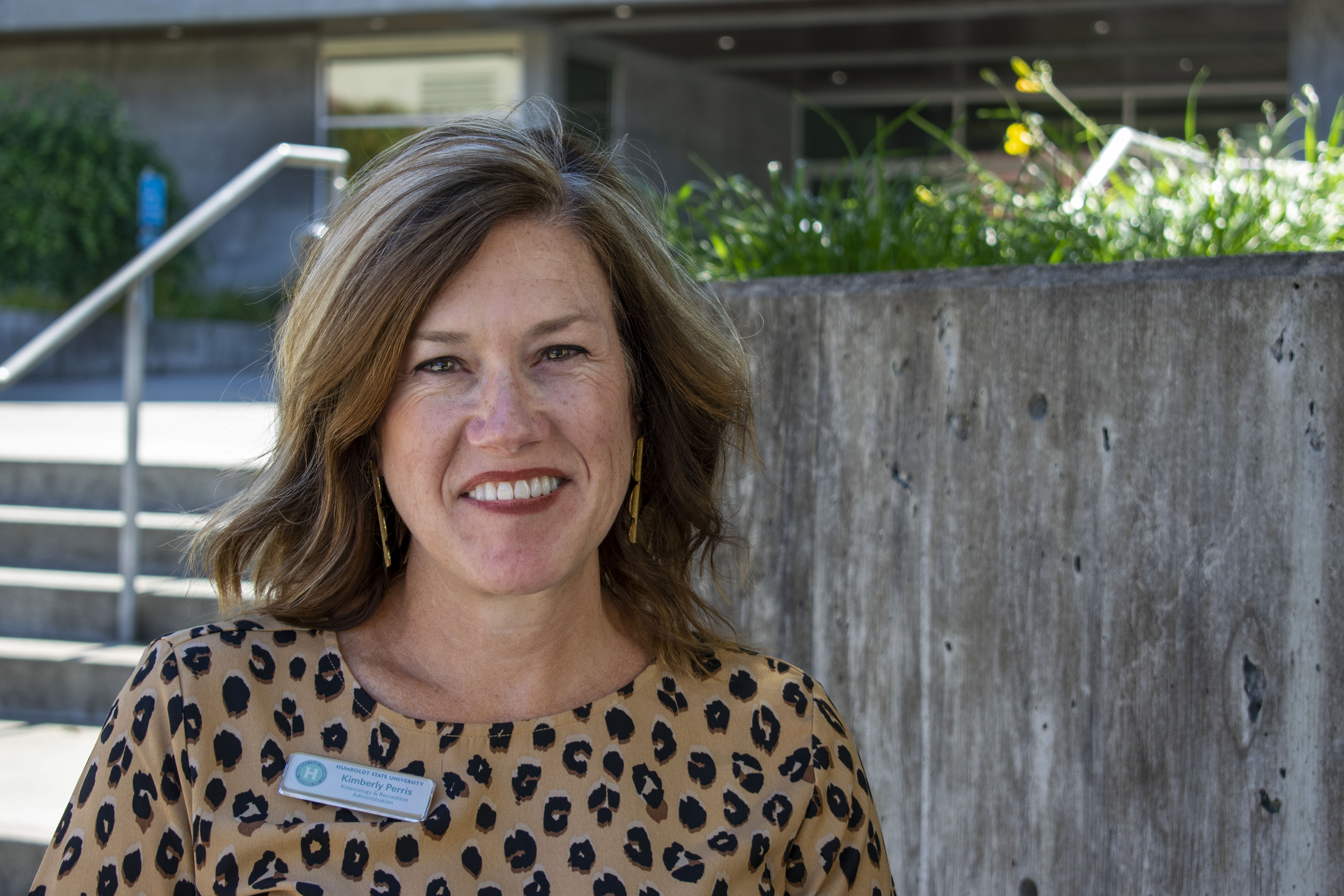
    Dr. Kimberly Perris leads the reestablishment of HSU’s bachelor of science in nursing program

    Four weeks into the job, Humboldt State University’s nursing program Director Kimberly Perris has started putting the pieces in place to reform HSU’s bachelor of science in nursing program.

    Perris said she wants to empower local nurses to fill empty leadership roles in local health services.

    “My excitement, what I’m hopeful for and why I’m grateful to be here is because I really envision a role for nurses where they can go beyond the hospital walls, work in team-based care models and just take on more autonomous roles,” Perris said.

    Director of Special Projects and Executive Director of HSU’s California Center for Rural Policy Connie Stewart at HSU on Sept. 14. Stewart, an HSU graduate and former Arcata mayor, believes HSU’s BSN program will be essential for Humboldt County’s future. Photo by James Wilde.

    HSU canceled its BSN program in 2011, citing a lack of funding and qualified faculty. After years of a lack of BSN-educated nurses, HSU is relaunching the BSN program with the help of a $2 million dollar grant from St. Joseph Health.

    Director of Special Projects Connie Stewart leads the California Center for Rural Policy, an HSU program designed to improve rural communities. Stewart currently oversees fundraising for the BSN program, and she hinted the receiving of more than just the St. Joseph Health grant.

    Stewart, a former Arcata mayor who has served the community for more than thirty years, said that Perris is perfect for the job.

    “She’s got really great, fresh ideas about how to improve health care in Humboldt County,” Stewart said. “I couldn’t be more excited to be working with her.”

    Stewart emphasized the importance of the BSN program not just for Humboldt County, but for HSU. HSU students and faculty, Stewart noted, need healthcare too.

    “I’m grateful that we can provide the opportunity for nurses to expand on their education—I know for me it was life-changing to do that.”

    Kimberly Perris

    “This program has to be successful in order for HSU to thrive,” Stewart said.

    Perris dabbled in health-related fields in her youth, where she said she picked up a passion for helping and educating patients.

    Perris graduated with an Associate of Science in Nursing in 1991. She worked in family planning before she worked at the HSU Student Health Center from 2004 to 2016 as a nurse, a job Perris said she loved.

    “I loved the education piece of it,” Perris said. “Working there is where I really decided to go back to school, and I saw a role for nurses that could be a little bit more fulfilling and autonomous and help improve access to care.”

    Perris earned a Doctor of Nursing Practice Executive Leadership from the University of San Francisco in 2018. Perris said she’s driven to give other nurses the same educational opportunities she had.

    “I’m grateful that we can provide the opportunity for nurses to expand on their education—I know for me it was life-changing to do that,” Perris said.

    HSU’s BSN program is designed for already-registered nurses who want to further their education. Perris said this will allow nurses to become more involved with the community and work outside of hospitals.

    HSU’s new BSN nursing program director, Kimberly Perris. Perris is working towards a goal of graduating 50 nurses from the BSN program by 2022. | Photo by James Wilde.

    The program’s goal is to graduate 50 nurses in 2022, with 25 students entering a part-time, two-year program in 2020, and another 25 entering a full-time, one-year program in 2021.

    Perris said she’s developing relationships with local health centers for BSN nurse roles. She’s also working to make the transfer process from College of the Redwood’s RN program seamless.

    CR’s Director of Nursing and Health Operations Roberta Farrar echoed Perris’ hopes.

    “My hopes and goals would be to see each class filled to capacity with a waitlist of those wanting to enter the program,” Farrar said in an email. “That the registered nurses who choose Humboldt State are satisfied with their education and use knowledge gained to make necessary changes in any healthcare setting they are employed.”

    Both Farrar and Perris said the program won’t bring more nurses to the community, but will instead give more opportunities to nurses in the area, enticing them to stay in Humboldt.

    “We have a struggling health care system right now and I think nurses are one of the missing pieces that can help to improve that… The missing links.”

    Kimberly Perris

    “A lot of nurses leave the area because they want to continue their education or there aren’t the kind of positions that they’re looking for,” Perris said. “So this role will provide more nurse leaders for the community and nurses to have more of a systemic look at the population.”

    While Perris said she has felt overwhelmingly supported in her first few weeks, she did acknowledge the pressure of her position.

    “I feel pressure because I want this to be successful,” Perris said. “And I want to make sure I have all the details in place to keep moving it forward and not let anything fall in through the cracks.”

    Despite the pressure, Perris said she doesn’t have any significant fears.

    “There will be likely a little series of things that don’t work, and that’s normal in a new project,” Perris said. “I’m sure there will be some hopefully-just-mini failures because this is a brand-new program, but that’s okay.”

    Long-term, Perris said the BSN program will help nurses have a broader understanding of the community and its healthcare needs.

    “We have a struggling health care system right now and I think nurses are one of the missing pieces that can help to improve that,” Perris said. “The missing links.”

  • Fall’s 1st Athletic Press Conference

    Fall’s 1st Athletic Press Conference

    Coaches and players from HSU’s volleyball, cross country and soccer teams spoke about the upcoming season

    The fall sports season is almost underway here on the North Coast and head coaches and select players from Humboldt State’s volleyball, cross-country and soccer teams were in the press room at Lumberjack Arena to discuss their upcoming season.

    They talked about their previous season of play, along with their expectations and strategy against their opponents. The mood in the room was hopeful and optimistic as each sport has its entire upcoming season around the corner.

    Volleyball

    Lumberjack volleyball started their 2019 season on September 6th at the Toro Classic in Carson, CA on the campus of Cal State Dominguez Hills. After a winless 2018 conference play season, the volleyball team finished with an overall record of 3-23. Head Coach Kelly Wood is determined to change the dynamic going into this season.

    “We don’t want to go through that again, we don’t want to end on another losing streak,” Wood said. “They worked really hard on the basics again, serving and passing and all that, but also are having a lot of tough and difficult conversations.”

    Despite past struggles, Wood seemed hopeful with the group of players that she has going into the 2019 season.

    “I just think we’re all on the same page, and we all have a little more faith and a little more trust in one another,” Wood said.

    Cross-Country

    While all other sports start out on the road, the men’s and women’s cross country teams start their season at home. The Humboldt Invitational was on September 6th Baywood Golf and Country Club in Arcata.

    Head Coach Jamey Harris talked about the advantage of being at home and knowing the course better than the visiting competitors.

    “Knowing how to run fast on some of the more difficult parts and how to measure your effort through it should be helpful both this weekend and through the season,” Harris said. “We love getting out there and knowing our first meet is going to be at home on our own course,”

    “We’re looking forward to showcasing what we’ve got, and hopefully the Arcata running community will get excited,” Harris said.

    Senior runner Joseph Shanahan also went up to the podium and talked about his experience running the Baywood course.

    “For me, it was a relatively difficult course,” Shanahan said. “There’s a big hill and a pretty gradual uphill, and you’re either going up or going down.”

    Women’s Soccer

    The HSU women’s soccer team finished with a record of 6-9-2 last season, but the record was mostly attributed to playing in the very competitive CCAA conference. Head Coach Paul Karver knows what the team needs to do to win, but he also understands what the team is up against in CCAA play.

    “They’re really dedicated to making that push, and we have the players that can get it done,” Karver said. “Unfortunately, everyone else in the conference does, and we play in the best conference in the country.”

    Karver talked about the preseason practices being very competitive, and with a smaller roster than usual more players will get a chance to play during the season.

    “We have a lot of high soccer-IQ kids, and that’s going to allow us to move things around,” Karver said. “It has made training every single day competitive, it made it really fun and it’s a really fun group to be around.”

    Men’s Soccer

    The HSU men’s soccer team came off a 2018 season finishing 7-8-2, but the good news is they return with a good core group of players from last year, along with some bright new prospects. One of the experienced returners, senior goalkeeper Robert Quintero, mentioned how a skilled and fast team made him hopeful.

    “I think we’re strong both offensively and defensively,” Quintero said. “Offensively we have some of the fastest guys on top, and they can put the ball in the back of the net.”

    Head Coach Fred Jungemann talked about the team’s goals. For example, trying to make the CCAA conference tournament and win more games than last year. Building a strong culture for HSU soccer and having guys who mesh well together was another big emphasis.

    “There’s a really good group of guys, not just on the field but their personalities fit together very well,” Jungemann said. “One of our biggest strengths is that we have a close-knit group of guys that enjoy being together, not just on the field but off the field.”

  • Leading the Transition for Athletics

    Leading the Transition for Athletics

    A Q&A with HSU interim Athletic Director Jill Willson

    The athletic department at Humboldt State is in a transition phase under the new administration of President Tom Jackson Jr. Previous interim Athletic Director Duncan Robins left his position in June.

    While searching for a permanent Athletic Director, President Jackson recruited Jill Willson and her company Double L Consulting for the position. Willson received her degree in biology from West Texas A&M University, then went on to coach the women’s basketball team and later run the athletic department for the university. Willson specializes in Division II athletics, more specifically in community outreach and recruiting and she serves on an NCAA committee for Division II athletics. Willson created Double L consulting to help Division II schools run their athletic department during times of transition.

    Could you tell me about your personal background and the company you are with?

    I’m a longtime women’s basketball coach and former athletic director at Texas A&M- Kingsville, which is where I spent the majority of my career. In 2007 I started my own company, which is called Double L consulting, two L’s in Jill and two L’s in Willson is how I came up with the name. I really founded the company to help Division II schools across the country. I help schools with the membership process and the transition from NAIA or Division III to Division II programs. I arrange all of the community engagement events for the Division II National Championship events. Three years ago I diversified Double-L consulting to help schools hire athletic directors, and what we do is help fill the seat while the athletic department is doing the search, so they are not down a staff member.

    What are your goals, within the athletic department, for the upcoming academic year?

    Our job is to help build a quality pool of candidates for the search committee to help find the next Humboldt State Athletic Director. It’s my goal to do a bit of a program review and evaluate what kinds of things we are going well and what things we need to work on so that when the permanent athletic director is hired in January, they can take off and run.

    What is your current evaluation of the athletic department and where do you want it to be when you turn the reigns to the next athletic director?

    Honestly, what makes Humboldt such an amazing institution is the people, and the athletic department staff is no different. They do a tremendous job at recruiting student-athletes and getting them to be great athletes, helping them do well academically and getting them to graduate. I think this is a great opportunity to help the athletic department to do an even better job at what they already do well.

    What qualities are you looking for in the next athletic director for Humboldt State?

    You need to have someone come in that is committed to making a difference in Humboldt County and on-campus at HSU. We need to have someone who can help fundraise, and the responsibility of the next athletic director will be to find new revenue streams and open up the athletic department to new boosters and new donors. Being a great leader and leading by example on campus for the student-athletes is crucial, and we need to be able to hold coaches accountable for academic success as well.

  • Radio silence

    Radio silence

    Abrupt firings at KHSU send shockwaves, not sound waves, throughout the community

    In a blow to the local community, administrators at Humboldt State decided to fire all volunteers and terminate all but two paid positions at the local NPR affiliate, KHSU, on April 11. The firings, and other reorganizations, came after months of tense back and forths with the administration and the KHSU Community Advisory Board. Some in the community felt that the hostile tensions were behind and that future broadcasting was no longer in jeopardy.

    “This is fraud. KHSU is community radio. You just don’t knock the community out like that.”

    Joyce Houston

    Last week Joyce Houston volunteered during the KHSU fund drive and donated money to the future of the station. Houston said she has volunteered and donated money to the station for the last 30 years and felt that she was scammed given the administration’s decision for the firings.

    “This is fraud,” Houston said. “KHSU is community radio. You just don’t knock the community out like that.”

    According to a press release from HSU, changes to station include the elimination of five staff positions, the General Manager and Chief Engineer positions and an “indefinite suspension of volunteer-run programs.”

    The press release mentions the administration will look into allowing students to take on a more active role at KHSU, however there is already a student-run radio program at HSU. Amy Berkowitz, KRFH radio news faculty advisor, said she has been contacted numerous times by the administration asking for students to be more involved at KHSU but said that was not necessary because of the student run station.

    “KRFH is for students, by students,” Berkowitz said. “KHSU is for the community. Our area relies on the radio for emergencies. Having this gone is a loss to the safety of our community.”

    Berkowitz said that the loss of the community programs is why it is such a blow. Some of the programs that were broadcast on KHSU had been on air for over 30 years, according to Berkowitz.

    “Right now, they are just rebroadcasting out of Chico,” Berkowitz said. “We can all just ask our smartphones to play NPR, but that is not why we listen to KHSU.”

    Some of the programs currently cut from the air are the KHSU magazine, The Race Beat hosted by Lorna Bryant, the Thursday Night Talk with Eric Kirk, and Immigrant Voices hosted by James Floss.

    Lisa Rossbacher, president of Humboldt State University, said the reasoning for the abrupt firings was because of budget reasons, a realignment of the mission between KHSU and the university, and an advisory review from the CSU chancellor’s office that she received on “Monday or Tuesday of this week.”

    “People think of volunteers of not costing anything, but in fact it takes two to three hours of paid staff time to support every hour of programming that is generated by volunteers,” Rossbacher said.

    When questioned on how much oversight and time that paid staff have to give to volunteers who have been part of KHSU for over 30 years, Rossbacher acknowledged she didn’t know the exact details of the matter.

    “I can’t speak to the details of how that programming gets produced, but it requires staff involvement to support them,” Rossbacher said.

    On the future of KHSU, Rossbacher said the university is looking for partners to collaborate with and could not speak of the details of what that collaboration would look like or who it would involve.

    [perfectpullquote align=”right” bordertop=”false” cite=”Cliff Berkowitz” link=”” color=”” class=”” size=”17″]“I understand budget concerns, but one of the main jobs of being president is trying to strike a balance. Cutting a vital part of the community is foolish.”[/perfectpullquote]

    “We still want to have local programming,” Rossbacher said. “We still have to cover it within our budget and so I can’t tell you right now exactly what that looks like. If any of the volunteers ask to be able to take any of the programs that they have already produced with them, we are absolutely cool with that. Some of what has appeared in the past may show up again through other media, but I don’t know exactly what the future is going to hold.”

    During Rossbacher’s five-year term at HSU she has oversaw the closing of the HSU Third Street Art Gallery, the cutting of the football program, and now the massive firing and change of direction at KHSU—all integral components of the Humboldt community. When asked about the reasoning on why she made these decisions Rossbacher said it had to deal with shortfalls in money.

    “My goal is to get to a balanced budget,” Rossbacher said. “There have been some difficult choices in the process of getting there. Over the last two years the university overall has managed to reduce spending by about $9 million, with another million dollars we need to find in the next year.”

    Cliff Berkowitz, husband of Amy Berkowitz and fellow KRFH faculty member, felt that the abrupt firings were a betrayal of the community and noted that KHSU has been an integral part of the Humboldt community for over 50 years.

    “I understand budget concerns, but one of the main jobs of being president is trying to strike a balance,” Cliff Berkowitz said. “Cutting a vital part of the community is foolish.”

    Cliff Berkowitz has been teaching at HSU for 11 years and said that the announcement of the KHSU firings was a “gut punch.”

    “The most telling example of how sinister this is, is evident in the letting go of the volunteers,” Cliff Berkowitz said. “Their shows and their connection to the community are the reason why the underwriters have contributed. And it is gone.”

  • EDITORIAL: Overcoming this final stretch of stress

    EDITORIAL: Overcoming this final stretch of stress

    Breathe in. Breathe out.

    Stress and anxiety are an everyday part of student life. But with the final weeks of school upon us, there are more triggers than ever to make students feel stressed. The Lumberjack knows several tips to ensure that you perform your best in the last days of the semester.

    It’s easy to neglect the self and only focus on the tasks you’ve been assigned. Although your projects and homework are important, it’s critical to consider your physical and mental health as you finish up the semester.

    Many CSU students struggle with getting enough sleep. Exhaustion makes it harder to maintain a low level of stress, and higher levels of stress make it difficult to sleep, so the cycle continues.

    Make sure to get enough sleep during the final weeks, as insufficient amounts will affect your performance on final projects and exams. It’s counter-intuitive to sleep less while trying to get more done, as the quality and speed of work will be lower than if you had enough sleep.

    If you’re having trouble relaxing your mind and body to sleep, an effective, healthy method to calm yourself is drinking a mug of hot herbal tea. Not all teas will help you sleep, though. The best teas for relaxation and sleep are herbal teas like lavender, chamomile, peppermint and Valerian root.

    Caffeine is a popular choice for college students when it comes to finals week studying. While a cup or two of coffee can definitely enhance focus and drive to complete a tedious task, it can also have unpleasant side effects, especially when too much is taken quickly. It’s especially important to moderate your caffeine levels during these busy times.

    Think for a second, is that fourth cup of coffee or second yerba mate tea really worth it? Too much caffeine can cause extreme anxiety and restlessness, making it even harder to stay mentally healthy during these last weeks. Drinking caffeine too late in the night can also make it difficult to get quality sleep, making challenging finals even more intense.

    Just because finals are here doesn’t mean school is all you should focus on. It’s smart to take breaks and have time to yourself, where your studies aren’t the priority. It’s unrealistic to think we can devote all our time and energy into academia. Treat yourself to something nice and relaxing, especially if your anxiety levels are soaring through the roof.

    Remember folks, it’s not the end of the world and you can get through this. Moderate your caffeine consumption, do something nice for yourself and don’t forget to breathe. It will be over before you know it!

    For additional stress relief, in the coming week HSU will be hosting a few different events throughout campus including a game night, the annual pancake dinner and therapy dogs visiting the library.

  • The Educated Landlord and Tenant Program has been brought to the table

    The Educated Landlord and Tenant Program has been brought to the table

    Tenants, landlords and community members were invited to discuss the development of the ELT Program during town hall meeting

    A study done by the CSU office of the chancellor found that one in five Humboldt State students reported being without housing one or more times last year.

    Humboldt State’s off-campus housing coordinator, Chant’e Catt hosted a meeting on Nov. 30 in the Great Hall on campus to discuss this major concern of housing and other potential issues that lay ahead for student renters and landlords in Humboldt County.

    “We’re looking to get feedback and create connections in the community,” Catt said.

    Catt has been collecting data since Aug. to develop a program called the Tenant and Landlord Education Program. This program is centered around educating local landlords and student tenants. Catt’s goal is to raise awareness about equitable practices and cohesion between the two sides.

    “We want to create open communication and bridge the gap between the community and campus,” Catt said.

    SB.TOWN.HALL.IMG_9254.JPG
    A frustrated community member goes on about privatization in housing while event organizers Ashley Bradshaw and Chant’e Catt listen in the back. Photo by Sean Bendon

    Sasheen Raymond, a support administrator in the social work department on campus, explained the need for good communication between tenants and landlords. Raymond also called attention to the issue of finances in some cases.

    “The goal is coming to some sort of agreement between students and landlords,” Raymond said. “ We want to know where the middle ground is for both sides.”

    Raymond and Catt have been working to create a donor supported stipend that could be applied to student housing deposits in the future. This could help create a better system for student housing and alleviate some of the pressures students face when looking to find off campus housing.

    Humboldt State’s associate director of housing, Todd Larsen supports the idea of the program.

    “They’re trying to create a better future for the students,” Larsen said.

    SB.TOWN.HALL.
    Ashley Bradshaw listens as a community member voices their concerns at the landlord and tenant town hall meeting held in the Great Hall. Photo by Sean Bendon

    Catt and her associates have been working to reach out to students about their concerns by emailing well over a 1000 students and holding open meetings in the UC Quad. Students and landlords alike have come forward to express their fears in hopes of finding a balance.

    “Today’s meeting was a synthesis of all the concerns students and landlords presented us with,” Catt said. “We asked them what they didn’t like and now we’re working on it.”


  • Students present the Margaret Kelso short play festival

    Students present the Margaret Kelso short play festival

    Six original 10 minute plays directed and written by Humboldt State students

    A student based team of six directors, six playwrights, 15 actors and a crew of 12 people backstage, launched the preview of the Margaret Kelso play festival on Nov. 28.

    Production manager Michael Thomas said the Margaret Kelso Play Festival has been around for decades but only happens occasionally.

    “The festival is named after Margaret Kelso who taught playwriting,” Thomas said. “We wanted to thank her for many years of service and contribution to dramatic writing.”

    "Contrary"
    Actors Rosemary Allison-Brown, and Victor D. Para acting out a scene from the play”Contrary.” Photo courtesy by Michael Thomas.

    The festival consists of six 10 minute plays that are written and directed by HSU students. The director of the play “Contrary” is theatre arts senior Sammi Stowe. Stowe said the job of the director is to create the world of the play. She is also excited to see new faces in crowd during opening night on Nov. 29.

    “It’s always exciting to see someone’s first reaction,” Stowe said. “There’s nothing quite like watching someone’s first time seeing your art.”

    "Injection"
    Actors Brianna Fergus, and Katie Lem acting out a scene from the play “Injection.” Photo courtesy by Michael Thomas.

    Freshman biology major Katie Lem played the role of Juliet in the play “Injection.” Lem feels very excited for opening night. She’s happy that everyone is doing their best and looks forward to see how everything turns out.

    “I want there to be a big energy coming out into this show, and I want everyone to accept it with open arms,” Lem said.

    Theatre arts senior, Madison Glee, was apart of the play “Adjustments.” She was nervous in front of the preview crowd but she said the nerves washed away. Glee is looking forward to working with her co-actor during opening night and gauging the reactions and energy with a different audience.

    “It’s different every night but it’s beautiful every night,” Glee said.

    The opening show will be on Nov. 29 at 7:30 pm in the Gist Theater.

    Short play festival dates and times
    Screen grab of dates and times of the Margaret Kelso short Play Festival.

  • Defense dominates the spring

    Defense dominates the spring

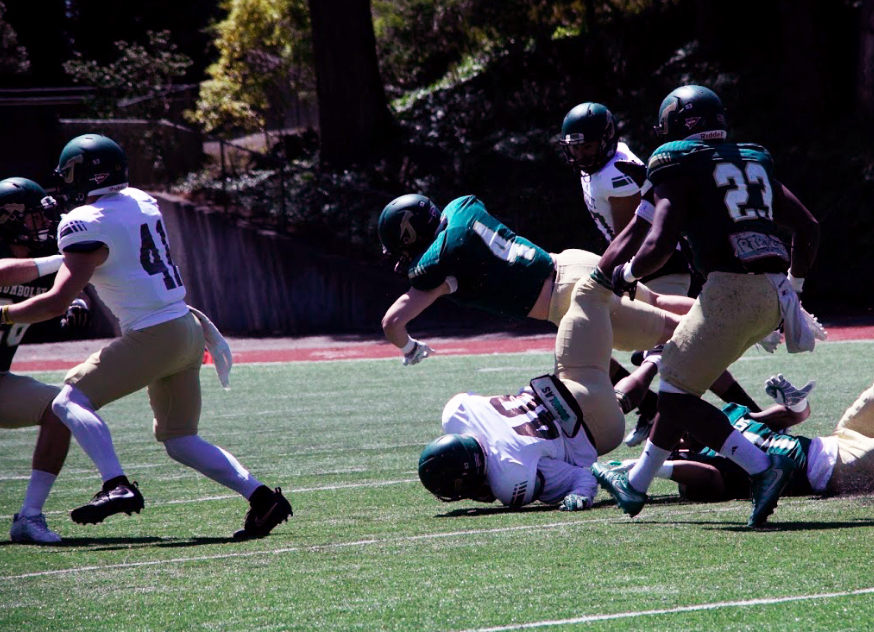
    The Lumberjacks and their fans took over the Redwood Bowl April 21 for their annual intersquad Green & Gold Scrimmage. Defense suited up in their green home jerseys while offense suited up in their away white jerseys.

    “I thought [defense] was successful,” coach Wheeler said. “They were fundamentally sound, which caused all of the turnovers.”

    Defense finished the scrimmage with a total of four interceptions and one fumble recovery. They only let offense score two touchdowns and won the scrimmage 35-14.

    “I knew the ball was in my hands,” defensive back Alonzo Davis said. “Once I got tackled, I got up hyped and knew this was my game.”

    Davis had the first interception of the scrimmage and as a Lumberjack. Davis is a freshman and will be joining the Jacks for his first official collegiate season in fall 2018.

    Defensive back Herman Ochoa picked up another interception, along with linebacker Demetrick Watts who walked away with two interceptions and the most stops on defense.

    “The whole game I just knew that wherever the ball was was where I had to be,” Watts said.

    Watts is a redshirt sophomore who is looking forward to the fall season and watching all of their hard work in the weight room and during practice pay off.

    Although offense struggled to finish in the end zone, running backs Jonathan Branch and Tyree Marzetta helped put some points on the board.

    “Offense is coming along,” coach Wheeler said. “They had a few big plays and I thought it was a competitive game on both sides.”

    The stands of the Redwood Bowl held enough fans on Saturday to create an encouraging and supportive atmosphere for the Jacks. They get a little vacation before things kick off for their first season game at Midwestern State on Sept. 1.

    “Our energy was good,” coach Wheeler said, “and these [young men] had fun, but most importantly, we came out healthy.”

    This slideshow requires JavaScript.

    Photos by Garrett Goodnight.
  • Records rule again

    Records rule again

    The tables have turned in favor of vinyl records. While CDs and cassettes reigned king in the 1980s and 1990s, it was the rise of digital downloads and online streaming services in the 2000s that inexplicably aided in the resurgence of records. Today, records are outselling digital downloads for the first time since 2011.

    “Vinyl sales were up 10 percent to $395 million — a ‘bright spot among physical formats,’ the [Recording Industry Association of America] noted [in a 2017 year-end revenue report],” Derek Hawkins of The Washington Post said. “The outlook for digital downloads is bleak. This is the third year in a row they’ve posted double-digit declines, according to the RIAA.”

    As Apple commercialized MP3 downloads in the early 2000s, CD sales began to drop. Though cassettes are making a comeback in some areas now, thanks to record labels like Burger Records, they lost their popularity more significantly by that time as well.

    Making our way into the 2010s, millennials caught on to the joys of listening to records as download and streaming services continued to revitalize the music industry. In fact, a great deal of new records these days include free download cards — a good incentive to get the best of both worlds, that is, a tangible medium and a digital download of an album.

    Record Store Day is a global event that has happened every April since 2008. Independent record shops from all over the world participate by selling limited edition records made exclusively for Record Store Day.

    “This is a day for the people who make up the world of the record store—the staff, the customers and the artists—to come together and celebrate the unique culture of a record store and the special role these independently owned stores play in their communities,” the Record Store Day website wrote.

    While it’s slim pickings in Humboldt County, People’s Records in Arcata carries a wide selection of outstanding records year-round. From 11 a.m. to 6 p.m. on Saturday, April 21, People’s Records will offer this year’s exclusive Record Store Day selections, and they’ve made extra room for more records.

    “We will have many of the limited edition Record Store Day items, plus we have expanded and knocked down a couple walls in the store to accommodate 1,000 new records in our stacks,” People’s Records wrote on their Facebook page.

    People’s Records in Arcata. Photo by Matthew Hable.

    Generally speaking, there is nothing wrong with digitalized music. The average human ear can’t detect the sample rates of professionally processed digital audio, nor can they make out the subtle differences in sound of analog waves, aside from the record’s “warmth” people commonly claim to hear in contrast to MP3s or WAV format.

    However, what sets records apart from other formats is their level of interactivity and the way they appeal to the senses. The process of taking a record out from its sleeve, placing it on a turntable, carefully dropping the needle on the record and even the smell of records makes it that more special.

  • Goodbye to last round of Intensive English students

    Goodbye to last round of Intensive English students

    One staff member was let go from their position, two more members soon to follow.

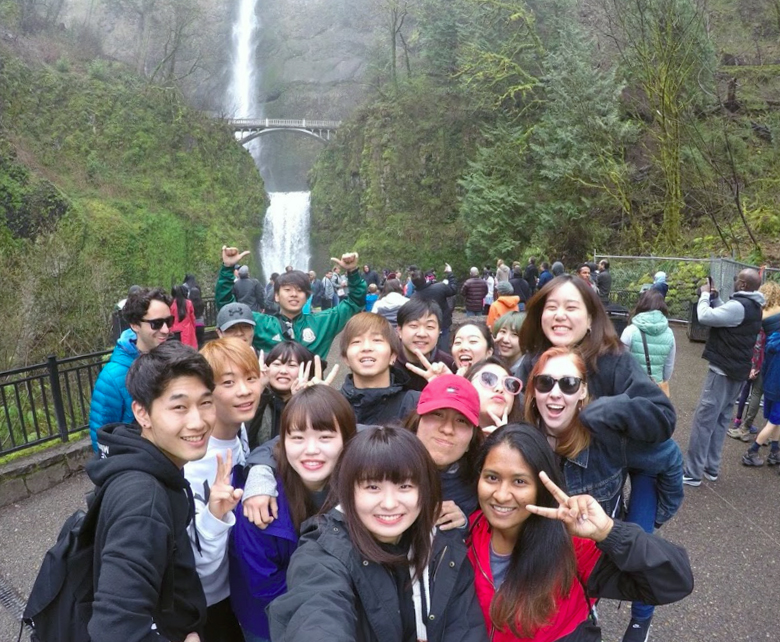
    Kotaro Kawakubo​ is an international student from Tokyo, Japan who will lose his friend when a second language program shuts down in July.

    “A friend I met here from China is leaving and going to a university in Seattle to study English. I will miss him,” Kawakubo said.

    The International English Language Institute has been open for 30 years. The Center for International Programs that houses the IELI program is downsizing, resulting in a lack of funds. Humboldt State’s financial crisis is the cause.

    “Without this program I will lose my friends I made here that came from other countries to learn English,” Kawakubo said. “They want to stay here, and keep studying English, but they have to go to other universities where there are English language programs.”

    This year Kawakubo returned to the IELI program for a second round. He returned to Humboldt County on March 9.

    Kawakubo plans to go to College of the Redwoods to study English after the program ends, and then transfer back to Humboldt State University.

    He heard about the program closing from his host mother who works at the center.

    “One day, she looked so sad,” Kawakubo said. “She told me the program is closing. Her coworker can’t get next year’s job at the office. She had to move to a different job because of the budget cuts.”

    Tyl​er Bradbury​, academic program coordinator of IELI, emailed host families on April 3 to inform them about the program closing.

    “This was a somewhat sudden and surprising decision I was informed of late last week. I cannot thank you enough for opening your homes and your hearts to the students,” Bradbury said in an email. “It breaks my heart to have to deliver this news.”

    ​Mikayla Kia is an international studies major who ​works closely with the IELI students. Kia is also vice president of the Global Connections Club.

    “Not having the international students would leave an empty space, because when the IELI students come to the club meetings, that is like half the room,” Kia said. “I don’t know what it’s going to be like without them.”

    An employee at the center connects the IELI students to the club. At the club IELI, students play board games, sports and go on sightseeing trips around Humboldt.

    “I’m sad and confused. They bring such joy here. It’s crazy to know they won’t be here,” Kia said. “I feel like they pay so much to come to this school. It doesn’t make sense to me how cutting the program can save money?”

    Angelica Huerta is a chemistry major who works at the center. She is a coordinator for Takachiho University, a Japanese school in Tokyo.

    Huerta plans activities every day for three weeks for the students, and helps integrate the students into American life.

    “A lot of the IELI student recommend the program to other student in their country,” Huerta said. “The students make a presentation in their school about their experiences, and what they learned. They promote for us.”

    Ge-Yao Liu, director of the center, lost his job. A second staff member accepted a job at a different department on campus. A third staff member will transfer to another department when IELI closes.

    Huerta said that Ge-Yao Liu made the students a priority.

    “Ge-Yao Liu was super nice. He would constantly say hi to students. He would ask the students their name, ask where they were from and why they came here. He was like a cheerleader,” Huerta said.

    Carl Hansen, the dean of Extended Education, met with the provost Alexander Enyedi last month.

    “When I looked at the numbers, it was very clear that they did not have the student population to support the program,” Hansen said. “I made a recommendation to the provost looking at the financial report. Once I laid things out for the provost, we had conversations and he agreed that this would be the best thing to do.”

    Hansen said he struggled with creating a sustainable program. A large part of the budget was strictly for recruiting, which meant sending staff abroad to visit partners.

    “We eliminated positions that the general fund was paying for,” Hansen said. “In some ways, it made the budget situation worse because the recruitment effort had not delivered. The budget gave us the incentive to make the program changes.”

    The center is relocating from the Feuerwerker House to the Student and Business Services building. The center will be inside the office of the College of Extended Education.

    “We are still interested in attracting international students, particularly exchange students,” Hansen said. “The difference is those students have the language skills. They would take English in their home university where they are at a level to speak, and then come here.”

  • Trust in police weakens as Chapman resigns

    Trust in police weakens as Chapman resigns

    As students, we have reasonable expectations of safety so we can focus on academic success without fear. This is not the reality for Humboldt State University students of color, both on campus and in the community. Both the Arcata Police Department and HSU have a long way to go to gain the trust of students of color.

    The recent resignation of APD police chief Tom Chapman only worsens public confidence in local law enforcement.

    A good deal of community members, including HSU students, are aware that 19-year-old HSU student David Josiah Lawson was murdered at an off-campus party in Arcata on April 15, 2017.

    McKinleyville resident Kyle Zoellner was arrested at the scene of the crime, but released on May 5, 2017, due to lack of evidence connecting him to the murder.

    There is a clear and serious disconnect within our community regarding racial diversity. Because Lawson is black and Zoellner is white, racial tensions tightened in the community. And as one group tries to engage with the community about race and public safety, others view such meetings as a way to promote white guilt.

    To this day, no one is in custody of Lawson’s open homicide case.

    Former FBI agent Tom Parker, who offered his investigative services on the Lawson case for free, resigned on April 9. According to the North Coast Journal, Parker said a lack of trust and cooperation by the APD led to his decision to resign.

    “It was clear they were holding back things and not telling me the truth,” Parker said. “They had things going on and they wouldn’t tell me what they were.”

    Chapman announced his resignation the following day without reason.

    Following a press release by the City of Arcata announcing Chapman’s resignation, Arcata City manager Karen Diemer followed up with local media concerning both departures.

    “[Chapman’s] decision does not stem from any one single thing,” Diemer said. “It is a combination of personal reasons and professional judgement on what he believes is best for the department and himself.”

    In regards to the Lawson case, Diemer said the APD continues the investigation without Chapman.

    “The investigative team for the David Josiah Lawson case is solidified with members of both the Arcata Police Department and District Attorney Investigators office,” Diemer said. “This team will stay in place and focused on the case through its completion.”

    Parker’s claim that the APD withheld information raises major concerns. While it’s reasonable to conceal information from the public during an open investigation, why wasn’t the APD willing to cooperate with Parker?

    Also suspicious is the timing of Chapman’s resignation. Why did Chapman resign the day after Parker terminated his contract with the APD and just five days before the one-year mark of Lawson’s death? Coincidence would be an unbelievable excuse.

    While there’s only so much we can do in a case like this, we can demand more from from our law enforcement and other officials. Check with the City of Arcata, the Arcata Police Department and the Division of Student Affairs at HSU about the investigation. Don’t just do it once, but follow up as well.

    We must stand in solidarity of not just the Lawson case, but for students of color. By remaining quiet, local law enforcement will prioritize less pressing issues and no progress will be made. We need to stand up for ourselves because the ones who should protect and serve us are stepping down.

  • Out of the darkness comes light

    Out of the darkness comes light

    Survivors of sexual violence share their experiences through the events of Take Back the Night

    Take Back the Night delivers the message that domestic partner violence, intimate partner violence and other types of violence will not be tolerated.

    Xochitl Cabrera runs the Humboldt State’s Women’s Resource Center, which hosts Take Back the Night every year.

    “Sometimes people don’t need you to help them, you may need to take a step back. Some people just need to heal themselves,” Cabrera said.

    The Women’s Resource Center is a campus resource for people who need a safe place to study or find the help you need for survivors of sexual violence experiences.

    “The Women’s Resource Center knows that sexual violence and domestic violence happen all of the time, but it is up to the survivor to reach out to the Women’s Resource Center,” Cabrera said. “Take Back the Night is not for everyone. People tend to avoid the trauma it brings up.”

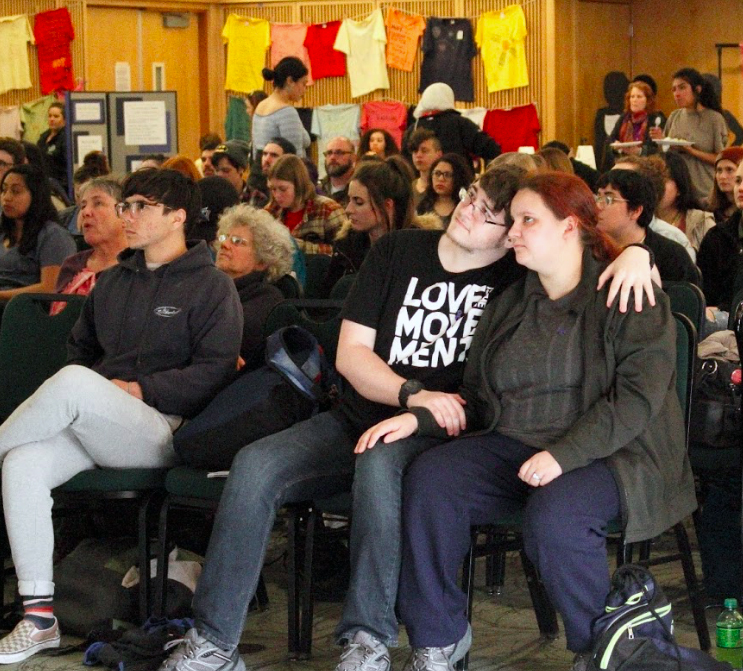
    Hanging on the walls of the Kate Buchanan Room are T-shirts from survivors of sexualized violence and friends of people who died from sexualized or domestic violence. The T-shirts had messages written telling of horrible acts of sexualized violence from family members, friends and others.

    “The T-shirts are difficult to look at, but their story needs to be heard. They are not nice. It is painful but necessary,” Jodie Huerta, HSU sociology major, said.

    Messages written on T-shirts decorating the walls of the KBR. Photo by Ahmed Al-Sakkaf.

    Assistant professor of Native American studies Cutcha Risling-Baldy was the guest speaker for Take Back the Night. Risling-Baldy’s talk was based on systemic violence toward people of color. Before her talk on missing and murdered indigenous women, Risling-Baldy acknowledged the death of HSU student David Josiah Lawson.

    “If David Josiah Lawson were not a person of color, his death would be on the news every day,” Risling-Baldy said.

    The Native Americans view domestic violence differently.

    “In an interview with a Wiyot woman, the anthropologist asks what happens if a man rapes a woman,” Risling-Baldy said. “The Wiyot woman replies, ‘That never happens.’ Asked why it never happens, the Wiyot woman said, ‘Because that person would be killed.’”

    Speaking out can trigger traumatic experiences for people.

    “People choose to come if they feel comfortable speaking on their testimony, and they choose not to come because they don’t feel comfortable speaking on their testimony,” Cabrera said.

    Some of the speak-out testimonies were about sexual violence that occurred during childhood and adolescence, while some of the testimonies were about sexual violence that happened at HSU. Sexual violence happens to HSU students, for which most of us are unaware.

    “Everybody knows that sexual violence is happening, but nobody is doing anything about it. It is just getting swept under the rug,” Grace Lamanna, HSU recreation major, said.

    People tend to restrain themselves from being in these spaces, because of the trauma it brings to them.

    “Some folks don’t feel safe in this space, because they don’t identify with domestic violence and sexual assault. People feel like they are taking up space and say, maybe this isn’t the space for me, I’ll take a step back,” Cabrera said. “That’s totally fine, because we want to prioritize those individuals that have experienced sexual assault and sexual violence at some point in their lives. That is what this space is mainly for.”

    Students hold hands in a circle behind the McKinley statue on the Plaza. Photo by Ahmed Al-Sakkaf.

    HSU sociology major Omar Miranda helped as a monitor for the Take Back the Night march as part of his class.

    “I feel like I made a difference. Big or small. Something small to me could make the biggest difference to the survivors,” Miranda said.

    The survivors gathered after the speak-out for the Take Back the Night march. Marchers wore orange safety vests, gathered in groups of five and were assigned a monitor. Monitors had received tactical training for this march and could protect the group if some danger presented itself.

    The marchers left school chanting, “Hey! Ho! The patriarchy has got to go!”

    The marchers went from school to the plaza downtown and were heckled by a few passersby in cars, as well as people along the route.

    On the plaza, the Take Back the Night members and public in attendance gathered in a memorial for the people who have died from sexualized and domestic violence. In silence, the less fortunate victims of this violence were honored.

    As the Take Back the Night march left the plaza, the declarative chanting could be heard echoing off buildings and down alleyways.

    “Take back the moon, take back the stars, take back the night because the night is ours!”

  • Big Time inspires youth in big ways

    Big Time inspires youth in big ways

    The Indian Tribal and Educational Personnel Program (ITEPP) hosted their 11th Annual California Indian Big Time and Social Gathering event on April 7.

    Hundreds of people gathered from across California to celebrate and express their cultural heritage inside Humboldt State University’s West Gym.

    Out of those hundreds of people, in particular, were a lot of youth in attendance.

    One of the youth who attended the event was Harmony Taylor. Taylor is 8 years old, and has been dancing for four years.

    Taylor looks forward to attending Big Time every year.

    “I like to dance with the girls I grew up with,” Taylor said. “I only get to see those friends about two or three times a year.”

    Harmony Taylor smiles near the West gym at Humboldt State on April 7. Photo by Garrett Goodnight.

    Cutcha Risling Baldy, Ph.D. is an assistant professor of Native American Studies at HSU, and discussed how Big Time helps inform and empower the youth.

    “It is important because we get to show our next generations that their culture is real and a part of their everyday lives,” Risling Baldy said.

    Arya Mettier, Ph.D., Risling Baldy’s daughter, was also in attendance, and partook in the Women’s Coming of Age demonstration that her mom and many others have been working to revitalize.

    “There’s a lot of people, and you can get a lot of stuff,” Mettier said. “I get to see a lot of different cultures.”

    Sammy and Jon Luke Gensaw are two brothers who have also been inspired by this event ever since they can remember.

    “When I was younger, this was a go-to thing,” Jon Luke said. “I would see people that I haven’t seen all year.”

    The Gensaw brothers created their own non-profit organization, the Ancestral Guard. Through the Ancestral Guard, the Gensaw brothers are able to make direct action on a local and global scale. They recently returned from visiting and speaking at Yale University.

    There were over 60 vendors in attendance along with live demonstrations, a food stand and a catering food truck Los Giles.

    One of the highlights was by far the food. The popular choices were fry bread and Indian tacos, with a line wrapping around the building all day long.

    A restorative vendor at the event was the Indigenous California Language Survival booth. One of the organizers of this booth was HSU assistant professor in Native American Studies, Kayla Begay, Ph.D.

    At this booth, kids were encouraged to share a word in a native language to win a prize.

    “Even if you’ve never heard a native language before, we encourage the children to learn today,” Begay said.

    Humboldt State ITEPP alum Briannon Fraley explained that Big Time gives her children the opportunity to see other cultural representations.

    “Living in a multicultural society, your identity gets lost, and it’s hard to engage,” Fraley said. “This event instills pride and promotes cultural identity.”


  • Rallies at the State Capitol for sufficient CSU funding

    Rallies at the State Capitol for sufficient CSU funding

    Students, faculty and allies of the California State University system from all 23 campuses made the journey to the State Capitol to send Gov. Jerry Brown a message, it is time to fully fund the CSU.

    Video by Dajonea Robinson.

    Allison Rafferty is a biology major and was one of many students who came down on a bus from Humboldt State to join the demonstrations on April 4. Rafferty rode down to represent HSU and to call for funding for the CSU system.

    “I request Gov. Brown to consider opening the fund that he’s allocated for CSU,” Rafferty said. “The CSU requested money and Gov. Jerry Brown approved a third of that. Right now, they’re in revisions. In May, they’re going to post their revisions and in June, they’re going to propose the final budget that goes to a vote.”

    Rafferty hopes more funding will come through so people in her major and others will be able to get classes and graduate on time.

    HSU student warns others of the potential outcome of funding crisis. Photo by Dajonea Robinson.

    Jacqueline Delgado is also an HSU student. Delgado decided to come to the Capitol to stand in solidarity with everyone and to get justice for Josiah Lawson.

    “I’m also here to get [Justice for Josiah] and this unsolved murder to be recognized. It is an unsolved murder of a fellow student that was murdered a year ago in Humboldt County,” Delgado said. “The school and the county does not recognize that this happened. It has been an entire year that nothing has been happening and we’re trying to get this movement to be heard. We will no longer be silenced.”

    David Bradfield is the California Faculty Association representation chair and board of directors member who now lives in Humboldt County. Bradfield spent 34 years teaching music and digital media arts at CSU Dominguez Hills. Bradfield decided to take the trip down to the Capitol.

    “I care very deeply. I spent 34 years teaching at Dominguez Hills and I care very deeply about the mission that we do, the people that do that mission and the people that we serve,” Bradfield said.

    Reza Sadeghzadeh is a communications major at HSU. Sadeghzadeh traveled with his peers to the Capitol from HSU to express concern of the insufficient funds of the budget.

    “Since they cut the whole CSU budget, we’re going to see a tremendous negative effect on our campus. A lot of professors are being laid off, activities and cultural centers are being defunded, so it’s a very serious issue,” Sadeghzadeh said. “The governor really needs to understand that the students here and the students in the CSU are the future of the welfare of California. In order to thrive as a state, we need to take care of the foundation, which is the students.”

    HSU students not only stand in solidarity with fellow CSU peers during the rally, but demand justice for their fellow student. Photo by Dajonea Robinson.

    Elizabeth Phillips is a student on campus who also came down on the bus from HSU.

    “Students like me who need an education are about to be priced out of our education. Education is not for the people, it’s not supposed to be free. They don’t want us to get an education so we’re stuck working the remedial jobs,” Phillips said. “We need to see more people of color being a part of the faculty. The only way we’re going to get there is if we can afford to get in the door. I’m $25,000 in debt just from two years at HSU. That’s a lot of money, and for other students, I don’t want them to take on that burden. So I’m here for the future, and I’m here for me, now.”

    Phillips works for the Multicultural Center as the social justice summit co-coordinator. Phillips is also a part of a loose coalition of students who started the walkout for WASC to protest the budget cuts.

    “I worry that if we give the CSU full funding for free tuition, the students will get it for the first couple of years, but then after, people get greedy and start skimming the surfaces,” Phillips said. “I’m happy that we’re here, but I want people to keep a watch and understand we don’t need as many administrators as we have. We need more students and faculty, counselors–there’s other stuff that we need that we’re just not allocating our resources correctly. Everyone needs to watch out for the future.”

  • Humboldt State students are in need of ODEI

    Humboldt State students are in need of ODEI

    Humboldt State’s current budget crisis has been on everyone’s mind since the gravity of our school’s financial situation was brought to light. Besides the obvious, inevitable budget cuts and downsizing, our budget crisis has and will affect much more than our education.

    Humboldt State’s own Office of Diversity, Equity & Inclusion, or ODEI, was supposed to host a collaborative community roundtable in the Jolly Giant Common’s recreation room on March 21.

    This meeting was meant to prompt discussions among students as well as the local community regarding possible strategies to make our community safer and more welcoming for students of color.

    However, the event didn’t take place and hasn’t in some time.

    HSU sophomore Davina Hernandez, 20, attempted to attend the latest meeting. The previous two meetings have been canceled or poorly attended, forcing it to be rescheduled.

    “I went on a whim, but I was kind of disappointed when I showed up and literally only one other person was there,” Hernandez said. “It was literally just me, one other person and the person who was supposed to talk to us. I ended up leaving early.”

    The event Equity Arcata is listed on HSU’s event page every week. It’s supposed to be a conglomerate of local business and community members uniting with the student body and faculty. They discuss ways to ensure that the area surrounding the school, as well as the campus itself, become more inclusive and safe for our large population of students of color.

    HSU hired a new executive director of ODEI, Dr. Cheryl Johnson, to oversee the branch and coordinate for Title IX. This was the sole change to the department made by the school administration.

    ODEI was created in order to ensure that every marginalized student is represented and advocated for on campus.

    In lieu of our current political and societal climate, it seems that our school should prioritize the safety and well-being of our students of color by allocating more funds to ODEI. This is especially true following the death of HSU student David Josiah Lawson last April.

    Our school’s administration disproportionately benefits from the presence of students of color on campus. However, they are not prepared to support them, especially in such a rural and isolated area.

    ODEI student representative and HSU senior Elijah Chandler said it is clear that, while the passion and motivation to meet with students and advocate for our rights is there, the group lacks the funding and resources needed to meet the demands of our student body.

    “We’ve had three successful meetings with over 50 people showing up,” Chandler said. “As of right now, we only have a few people really working through the school, and our schedules don’t always work out.”

    Chandler has worked with ODEI since last October. He remarked on the importance of grassroots organizations such as ODEI.

    “There’s currently a tier or hierarchy for our collective right now” Chandler said. “With admin[s] being our organizational guides [and] student leaders getting the word out, we have been talking to other community leaders as well, like former senators, the mayor of Arcata and members of the local NAACP chapter.”

    It’s clear that, while our school may be in a dire financial crisis, our student body seems determined to not allow this situation to jeopardize their resources.

  • Track and field dominates in Humboldt Invite

    Track and field dominates in Humboldt Invite

    The Humboldt State track and field team shined at the annual Humboldt Invite on March 24, despite harsh weather conditions and a day where the seniors were honored in their last home meet at HSU.

    Six different universities, including Sonoma State, Cal State East Bay, Southern Oregon, Oregon Tech, De Anza and College of the Redwoods competed at the Redwood Bowl in the midst of a cold and wet day. The temperature was cold, accompanied by harsh winds and heavy rain.

    “It’s pretty miserable,” head coach Sarah Ingram said. “[Our team’s] marks might not be where they want them to be today, but there’s only so much you can do in weather like this.”

    The women were led by senior standouts Tatiana Gillick and Annie Roberts, who finished in the top three of the 800m and 1500m. Gillick took the top spot in both, however, with an impressive time of 2:17.36 in the 800 meter. In the 1500 meter, Gillick passed Roberts on the final lap. She gave her teammate a little credit, too.

    “I feel pretty confident,” Gillick said. “I really focused on the third lap, and Annie really helped with that.”

    Sophomore Brailee VandenBoom continued her excellent season with another stellar performance. VandenBoom, who is just two weeks from winning the California Collegiate Athletic Association Field Athlete of the Week honors, tied for first in the 100 meter (12.61) and took sole possession of first place in the high jump with a mark of 1.64 meters.

    Lily Bankas continued to lead the women’s throwing team as she set the highest mark of the meet at shot put (11.00 meters). Bankas also finished first in discus, as well as a mark of 38.19 meters.

    For the men, senior Dylan Roberts paced the triple jump with a mark of 13.64 meters. Roberts also placed second in the long jump at 6.80 meters.

    Fellow senior Dustyn Salomon had success in the 400 meter and 800 meter races, as Humboldt State held the top four spots in the 400 meter. Salomon also won the 1500 meter with a time of 3:59.00, outrunning his teammate Adam Grimmitt by less than a second (3:59.66).

    “For the season opener, I’m faster than last year,” Salomon said. “But I think the adverse conditions today really affected my speed.”

    The Jacks travel to Chico State to compete at the Chico Distance Carnival and Twilight Invitational on April 6 and 7.


  • Sarah Ray keeps emotions and knowledge together in her teachings

    Sarah Ray keeps emotions and knowledge together in her teachings

    Sarah Ray inspires students and faculty at Humboldt State. During her lecture, “Coming of Age at the End of the World: Eco-Grief, College Students, and Teaching Climate Change,” she inspires community members as well.

    Sarah Ray, environmental studies professor at Humboldt State, spoke as part of the “My Favorite Lecture” series at the Plaza Grill in Arcata on March 8.

    The lecture discussed ways to be empathetic to students’ emotions and the methods Ray uses to inspire her students, all while acknowledging the grim realities of past environmental decisions.

    “Emotions take on a life of their own in the classroom,” Ray said.

    When Ray took the position to lead the environmental studies program at HSU in 2013, there were 11 environmental studies majors in her program. As of 2018, there are 150 environmental studies majors at HSU.

    Ray says that humans emotions play a big role in environmental studies.

    “Not surprisingly, guilt, despair and negative news do not inspire students to [take] action,” Ray said. “It creates apathy and nihilism. There is a lot of research that shows this is not an effective tool.”

    Over time, students’ emotional responses became overwhelming for Ray herself. Out of self-preservation, and for the success of her students, Ray has come up with new teaching strategies for environmental studies.

    Ray believes these strategies will be beneficial to everyone who questions the importance of their own environmental role.

    “Teaching students environmental content is going to have a negative affect on them,” Ray said. “If the affects can be anticipated, the more effective the curriculum will be.”

    As a professor, Ray has watched many environmental studies students learn that their college journey is not what they expected.

    Faced with intractable, unsolvable problems, students become incapacitated. Ray calls this “getting the rug pulled out from underneath you.”

    After watching students repeatedly get the rug pulled out from underneath them, Ray realized these students need emotional support to deal with the curriculum.

    Brooke Holdren, a biology major at HSU, attended Ray’s talk and thinks ethics should be part of science.

    “There needs to be more critical scientists,” Holdren said. “Science is political as fuck.”

    Ray utilizes inclusive pedagogy to promote not only a students academic success, but their social, cultural and physical success.

    Inclusive pedagogy is a way of teaching that uses varying learning techniques, multicultural content and multiple means of assessment.

    Going off of Bell Hooks teachings, Ray said, “We have to make the personal political and we have to make content relevant to students.”

    Ray also uses social movement theory in her teaching.

    “The outcome of social movement theory is to give students a sense of belonging in a larger community. They are not isolated against the tidal wave of society,” Ray said. “Students are involved in a bigger group of people working towards the same goals.”

    Ecopsychology uses both ecological and psychological ideas to study the relationship between human beings and the natural world. Ecopsychology includes theories about emotional responses to climate change and has become useful in Ray’s teaching, showing how environmental change causes emotional distress.

    Last semester, Ray tried a change-vision-action workshop with her students. Ray had students list how they would like to see changes in the world, and make a personal action plan. Students have put these ideas into actions. This has given Ray inspiration to improve and instill greater lessons onto her students.

    Ray doesn’t simply tell her students how to fix the current environmental issues. Instead, she gives them the information and emotional support they need to come to their own conclusions.

    “Efficacy is better than hope,” Ray said.

    Efficacy is the ability to produce a desired result. Students envision new ways of living with their outcomes.

    “Sometimes the outcomes are hopeful and lead to resiliency, while other times outcomes are negative,” Ray said. “These workshops are not monolithic. They can go in many different directions.”

    HSU alumnus Larry Goldberg, who started the Campus Center for Appropriate Technologies at HSU in 1978, attended Ray’s lecture.

    “You can’t get incapacitated by fear and depression. Get off your ass. You got to do something,” Goldberg, said.

    The changes and theories Ray has implemented in her classroom have inspired her to write a book on emotions in the classroom. Ray’s book will look at different aspects to the emotional consequences of climate change. She plans to write the book on her sabbatical next year.

    “You have to come up with your own reasons and solutions to our problems, because self-righteousness is not enough,” Ray said.
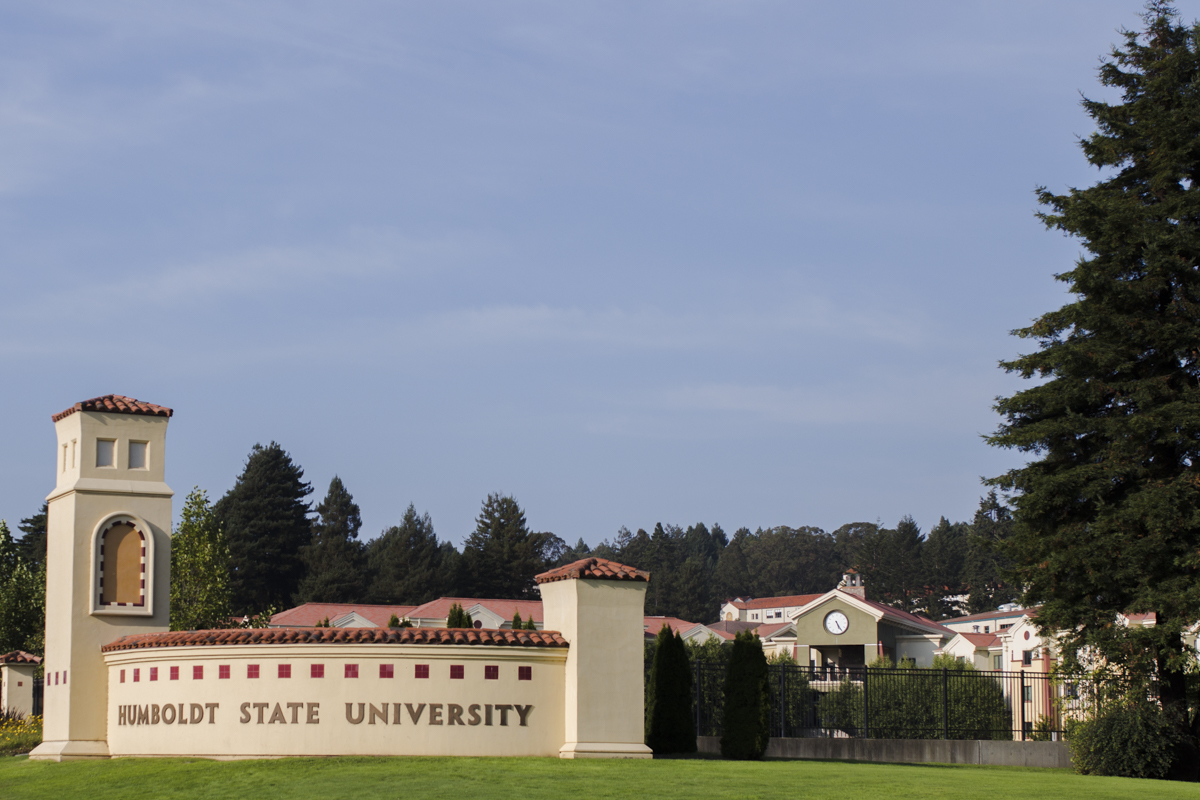
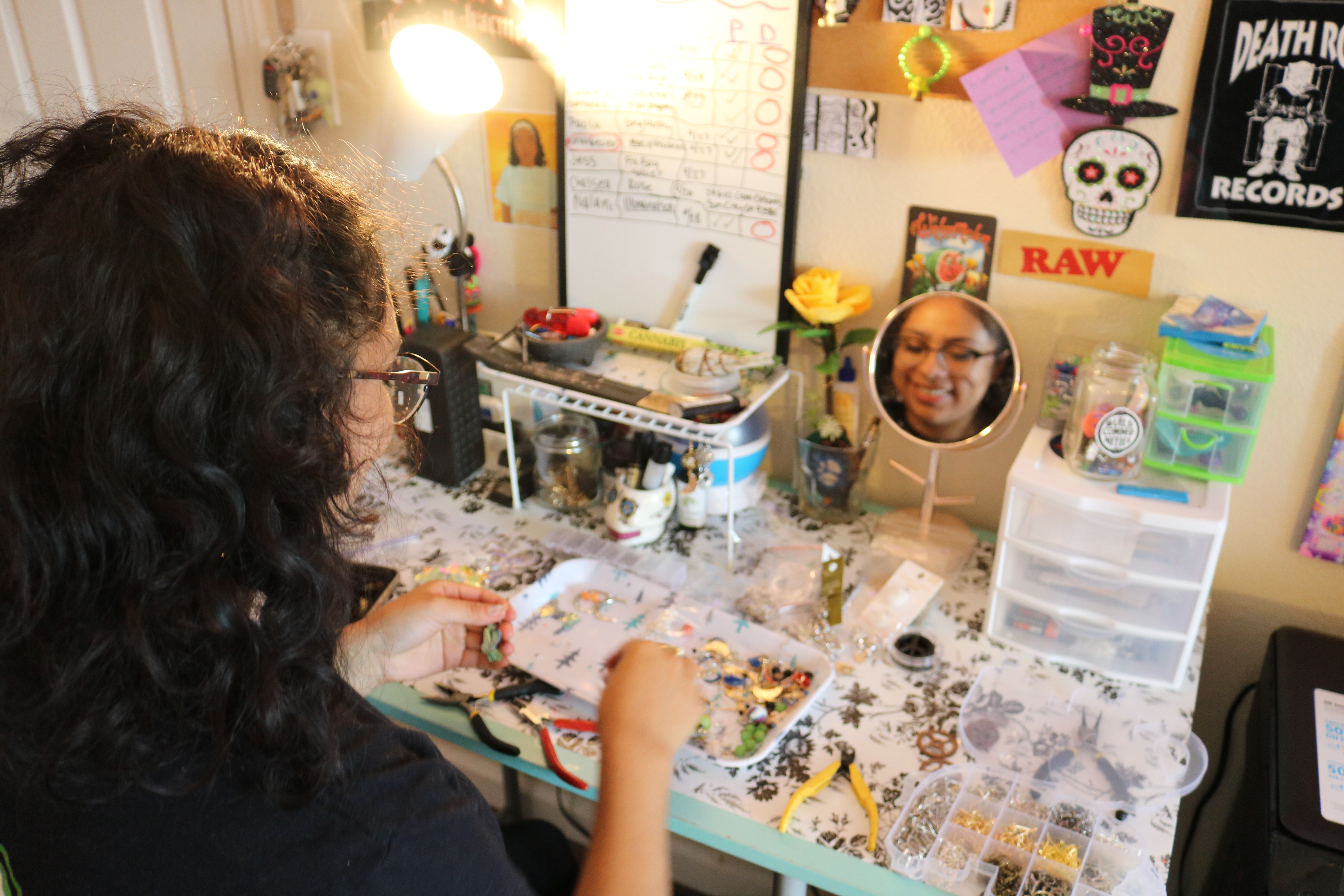
  • Community gathers for David Josiah Lawson vigil

    Community gathers for David Josiah Lawson vigil

    Lawson’s homicide case is still open.

    Mother of David Josiah Lawson, Charmaine Lawson, drove eight hours to the Arcata Plaza to speak at her son’s vigil to remember, honor and celebrate his life. The African American Center for Academic Excellence organized Lawson’s vigil on Feb. 15.

    “For those of you who are mothers, I drove my baby to school and he came back in a box,” Charmaine said. “It’s not okay, I am not going to apologize for my tears. I am trying to be strong, but it’s hard.”

    Josiah’s homicide case remains open and active. The investigation interviewed 46 individuals that are believed to include all the witnesses who could have seen the fight and events leading up to the homicide.

    The initial review of all the evidence has been finalized with assistance from a retired FBI investigator, Tom Parker.

    Majority of forensic evidence has come back from the Department of Justice. Police are now awaiting a completion of DNA and specialty evidence testing.

    Humboldt State University student Erianna Blackwell said it’s important to come out for support.

    “Not only your people, but the cause,” Blackwell said. “Especially since they still haven’t found the killer.”
    Josiah was murdered 10 months ago at an off-campus house party. The city council held four meetings in 2017 to update the community on the investigation and present strategies on how to improve student safety.

    Michael Fennell, a Lawson supporter, said he’s been wearing his “Justice for Josiah” button for almost 10 months.

    “I didn’t think I would be wearing it for this long,” Fennell said. “I thought it would be solved long ago.”

    With two other children at home, Josiah’s mother told the crowd she was willing to move to Humboldt County to seek justice for her son.

    “If it takes me moving for the police to do their job, I will,” Lawson said. “I don’t care about materialistic things if I have to sell my car [or] my house. I’ll do it for my son.”
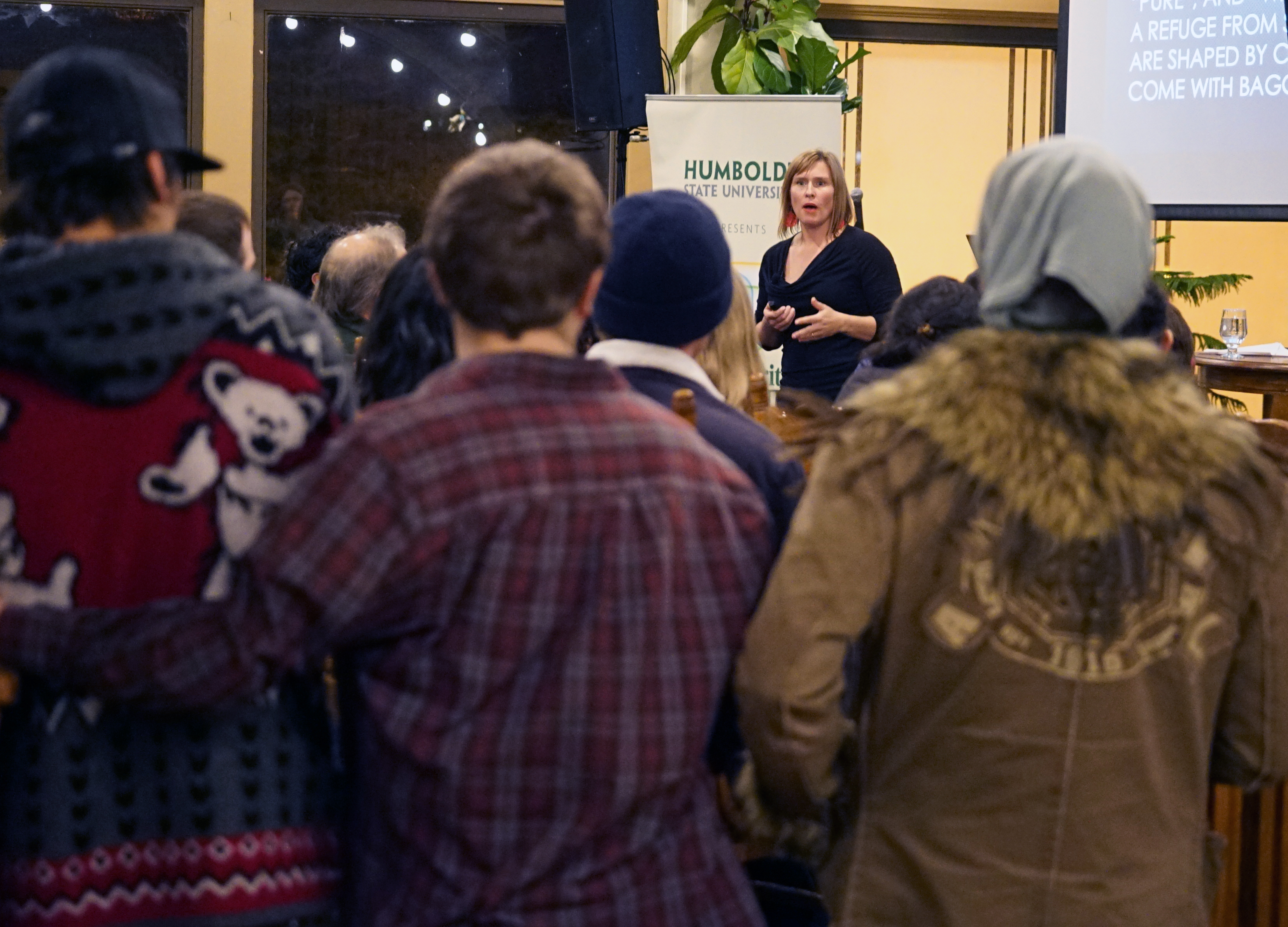
    Chairman of the Wiyot tribe, Ted Hernandez, showed up for the vigil and extended a prayer even though he had never met Josiah’s mother.

    “I came to support Charmaine as a parent. I have five children and some have gone to HSU,” Hernandez said. “It is all about the community and supporting the mother. It is a healing process.”
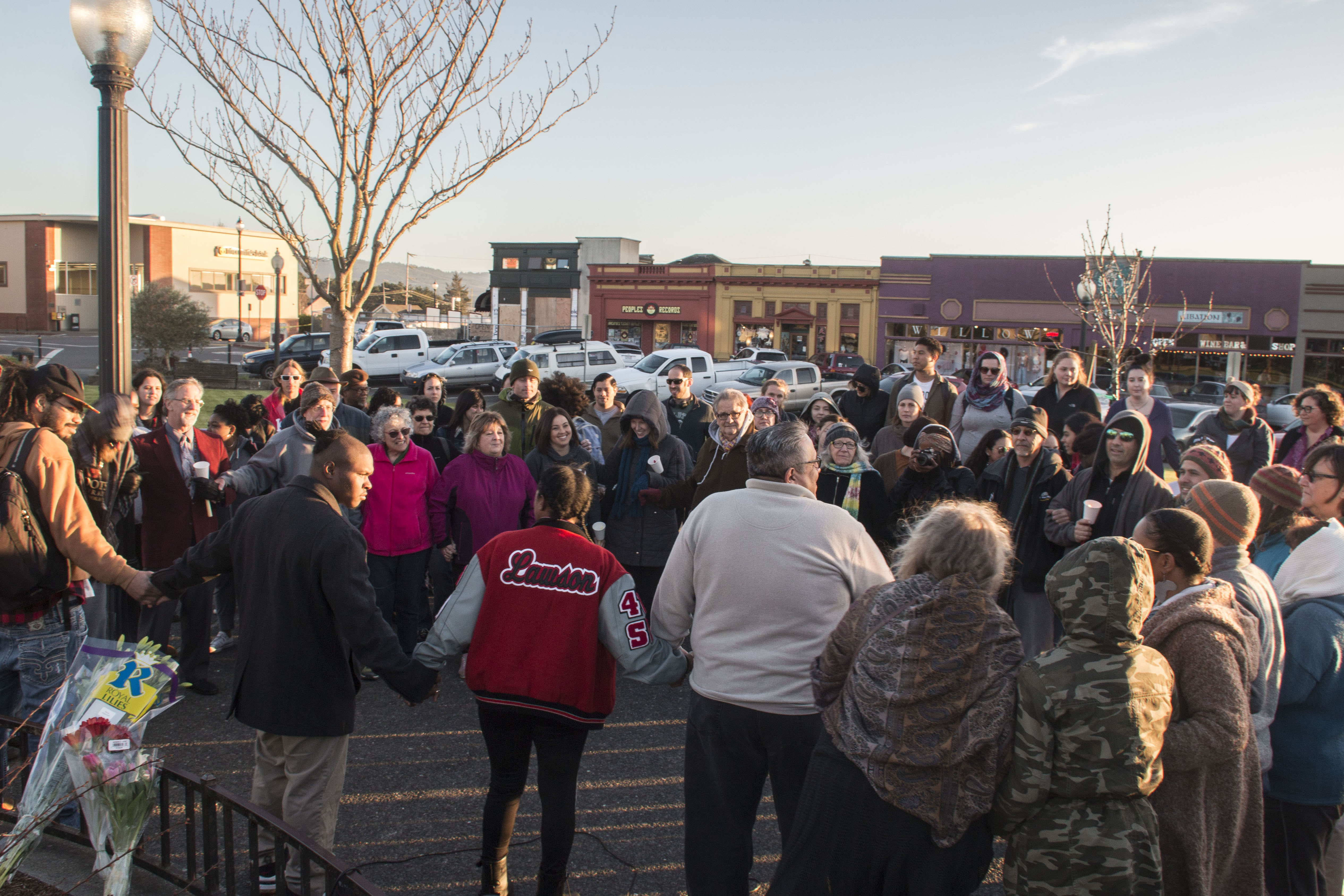
    Each month since Josiah’s death, a vigil has been organized in order to remember his memory and to put pressure on the ongoing investigation to find the murderer.

    HSU journalism major Angel Sylva said she comes every month.

    “I feel tired of having to come out every month,” Sylva said. “I feel like I’m coming out and nothing is being done. I come out regardless.”

    A reward of $40,000 has been offered to anyone with new information leading to the arrest and conviction of Josiah’s murderer.

    Mayor of the City of Arcata, Sofia Pereira, said when the AACAE asked her to come speak at the vigil, she agreed. But Pereira was uncertain on what she was going to say.

    Pereira said to Josiah’s mother, “You have given so much to the community. This is a community you owe nothing to.”

    “As a leader, I am going to fall short at times. I’d rather show up and fall short than to not show up at all,” Pereira said. “If we want true peace, we have to listen to our neighbors and take the situations seriously. I am engaging even though I feel uncomfortable.”

    Pereira has been mayor of Arcata for two months. Her first meeting as mayor was on Dec. 20. The council alternates the position on an annual basis.

    “I felt the gravity of the situation,” Pereira said. “It is not easy to speak in front of people who are grieving and want answers.”

    After the last meeting in October, students requested investigation updates be separated from the student safety discussion and that student safety meetings be held on campus following the October meeting.

    Student safety meetings in November and December were facilitated by students and held on campus. Meetings will continue to be held through the Student Diversity Committee with support from many campus club leaders.

    “My life will never be the same,” Charmaine said. “I can’t even mourn my child, because I have to fight for him. It is taking too long to get results.”