The Lumberjack


Students Serving The Cal Poly Humboldt Campus and Community Since 1929

Tag: Humboldt

  • Q-Fest celebrates queer and trans people of color in the arts

    Q-Fest celebrates queer and trans people of color in the arts

    Humboldt State senior Jonathan Salinas is no stranger to discrimination in this community. Salinas was even told once to move out of Humboldt by a community member. Though moments like this dishearten Salinas, helping organize events like Q-Fest inspires him.

    “It lights the fire in me again,” events director for the Eric Rofes Multicultural Queer Resource Center Salinas said.

    Students of the Eric Rofes Center and the Multicultural Center organized Q-Fest at Humboldt State University from April 16-20. This year’s celebration focused on queer and trans people of color in the visual and performing arts.

    “Because of a lot of the tension that’s been going on in the community around issues of race, we wanted to focus on people of color,” Salinas said.

    Q-Fest started out nine years ago as a queer film festival. It has now expanded into a series of events including a film showing of “Pick Up the Mic,” workshops with Arisa White, a QTPOC panel, QTPOC self-care and zine making workshop, a student showcase and more.

    Eric Rofes Center fiscal director, Neesh Wells, became involved in Q-Fest for the first time this year. Wells said they wanted to expand to include queer artists and students this year, because there is not always a lot of respect paid to them.

    Wells helped organized the self-care and zine making workshops as a space for queer folks to help develop their words and identities.

    “A lot of our allies don’t acknowledge that there are many facets of our identity,” Wells said.

    Wells defined self-care as “providing the time for one’s self and engaging in activities that help prevent exhaustion,” and said it can be as simple as checking in with yourself, making sure you eat and drink enough water.

    Wells finds creating spaces like this to be especially important, not only at Humboldt State, but in the community as a whole where there aren’t as many resources for queer folks and people of color as there are in big cities.

    Photo by Megan Bender.

    “The biggest difference for me, being in Humboldt, is a lot of the spaces have been spaces I’ve had to make on my own. It can be very difficult. There’s not only a lack of resources, but a lack of funding,” Wells said. “I don’t feel compelled to seek out a community outside of HSU and I think that’s very telling.”

    Wells is not the only person who feels there is a lack of resources for queer folks in the community. The Eric Rofes Center and Q-Fest aim to provide that needed support.

    “We just want to put out resources for students who feel like they don’t have anything,” volunteer and resources director for ERC Belen Flores said. “We don’t want them to be scared. We want to show them that it’s going to be ok and that we’re here to help.”

    Flores contacted this year’s keynote speaker for Q-Fest, poet and writer Arisa White. White and fellow poet Europa Grace hosted a workshop on Thursday afternoon and a poetry reading and talk on Thursday night.

    Q-Fest ended with the student showcase, a gallery and performance featuring work by queer artists. The event included tables with queer literature, information on safe sex and an array of student art.

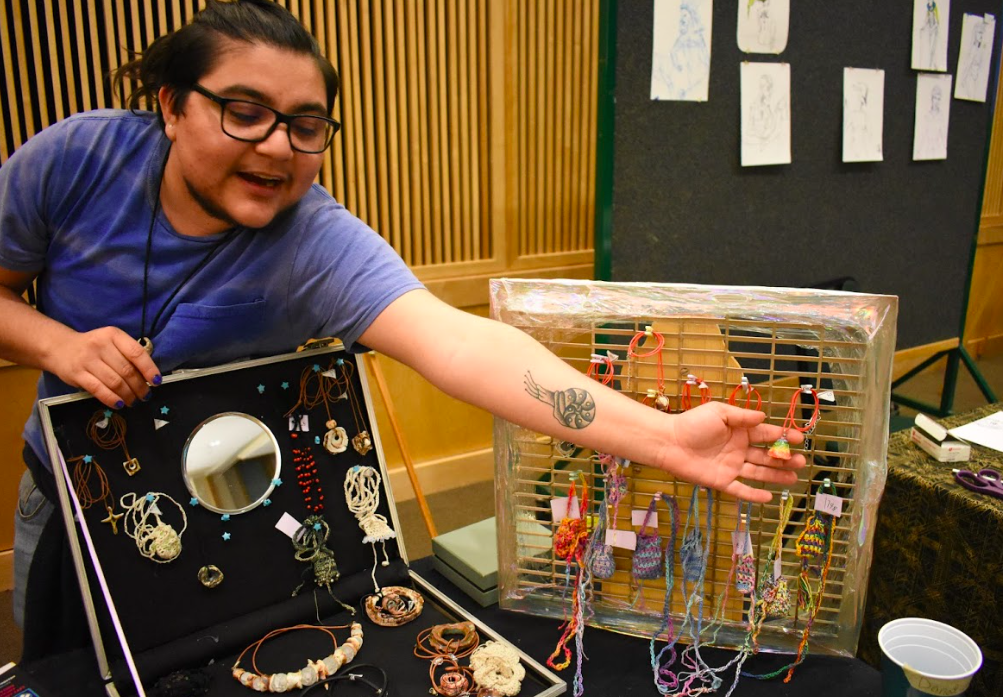
    Luciano Duran, a 23-year-old HSU art major, displayed portrait photographs and an original zine.

    “[It’s] to address the theme of being gay and coming out and owning your identity,” Duran said. “Art is a coping mechanism for a lot of us.”

    Salinas was please with the turnout of Q-Fest, which increased since last year. Salinas said it is the hard work and passion of the students that make events like this possible.

    “These are some of the most dedicated students you will ever see,” Salinas said. “Fuck administrators. Because they’re not going to do it. So we’re going to do it.”

  • Celebrating five years of El Leñador

    Celebrating five years of El Leñador

    El Leñador has been publishing monthly bilingual stories for Humboldt State University since 2013. El Leñador has given a voice for the people whose voices are never heard, and its staff has been carrying on that drive to serve the community for five years.

    Diana Borman and Caroline Moira are students at HSU and read El Leñador in their spare time.

    “It gives a platform for Latino and Hispanic voices to be heard,” Moira said. “It also gives voices to people of color in general, which is something that is needed in this time we are living,” Borman said.

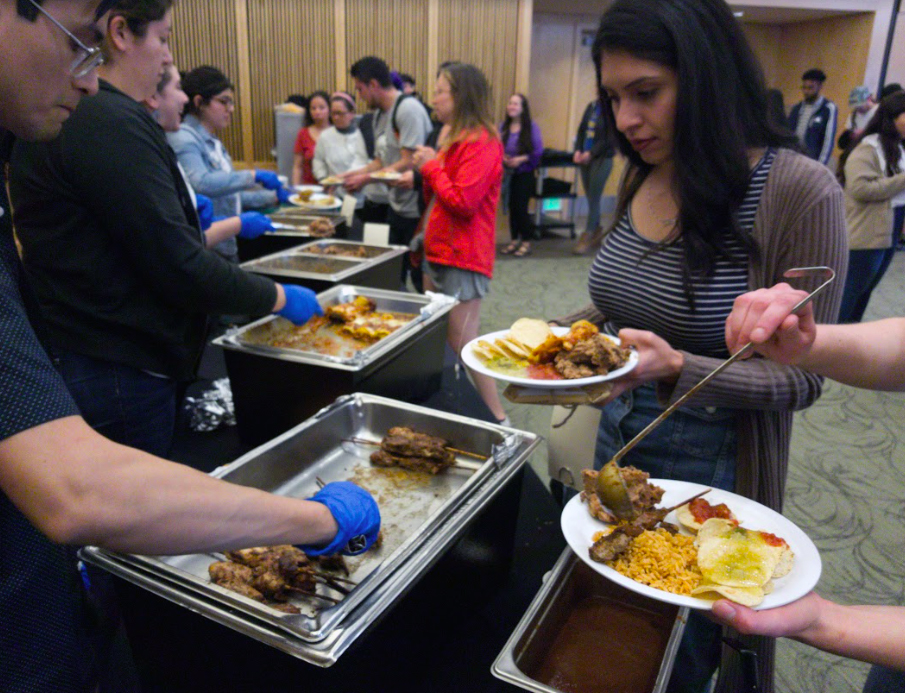
    April 19 marked El Leñador’s fifth anniversary. To celebrate, they offered free food and a place to hang out and learn the progress that El Leñador has made over the years.

    Hector Arzate is the current editor-in-chief.

    “I never imagined being involved in El Leñador,” Arzate said. “I went into the publication voluntarily, but it led to me overseeing the bilingual newspaper.”

    Many were in attendance of the celebration. Some were even former editors of El Leñador.

    Sam Armanino was a photo editor for El Leñador in 2016. He is now working as social media coordinator for the North Coast Journal.

    “There is a lot of room for creativity in a student-run publication,” Armanino said. “Working for El Leñador was a great experience.”

    Another editor from El Leñador who attended the event was Carmen Peña-Gutiérrez. She was editor-in-chief of the newspaper in fall 2017 and is now working as workshop organizer for the Check-It program.

    “I’m very happy to see that El Leñador has grown to become a news source for people,” Peña-Gutiérrez said. “What helped me write stories for El Leñador was helping the community that is underrepresented be heard.”

    Meg Bezak was announced to be the next editor-in-chief of El Leñador for fall 2018.

    “I’ve had two years of involvement in El Leñador,” Bezak said. “I fell in love with El Leñador. The staff has been exceptional and supporting.”

    El Leñador’s advisor, Andrea Juarez, has been involved with the newspaper since 2015.

    “The goal of this newspaper is to allow students to tell the stories they want to share,” Juarez said. “The students who write for El Leñador are getting experience for their careers.”

    In the future, one of the changes El Leñador wants to make is to create more multimedia content for their website, as well as expanding their staff. One thing that won’t change for El Leñador is providing stories for the community.

    “This job has a lot of big shoes to fill,” Arzate said.


  • Defense dominates the spring

    Defense dominates the spring

    The Lumberjacks and their fans took over the Redwood Bowl April 21 for their annual intersquad Green & Gold Scrimmage. Defense suited up in their green home jerseys while offense suited up in their away white jerseys.

    “I thought [defense] was successful,” coach Wheeler said. “They were fundamentally sound, which caused all of the turnovers.”

    Defense finished the scrimmage with a total of four interceptions and one fumble recovery. They only let offense score two touchdowns and won the scrimmage 35-14.

    “I knew the ball was in my hands,” defensive back Alonzo Davis said. “Once I got tackled, I got up hyped and knew this was my game.”

    Davis had the first interception of the scrimmage and as a Lumberjack. Davis is a freshman and will be joining the Jacks for his first official collegiate season in fall 2018.

    Defensive back Herman Ochoa picked up another interception, along with linebacker Demetrick Watts who walked away with two interceptions and the most stops on defense.

    “The whole game I just knew that wherever the ball was was where I had to be,” Watts said.

    Watts is a redshirt sophomore who is looking forward to the fall season and watching all of their hard work in the weight room and during practice pay off.

    Although offense struggled to finish in the end zone, running backs Jonathan Branch and Tyree Marzetta helped put some points on the board.

    “Offense is coming along,” coach Wheeler said. “They had a few big plays and I thought it was a competitive game on both sides.”

    The stands of the Redwood Bowl held enough fans on Saturday to create an encouraging and supportive atmosphere for the Jacks. They get a little vacation before things kick off for their first season game at Midwestern State on Sept. 1.

    “Our energy was good,” coach Wheeler said, “and these [young men] had fun, but most importantly, we came out healthy.”

    This slideshow requires JavaScript.

    Photos by Garrett Goodnight.
  • Records rule again

    Records rule again

    The tables have turned in favor of vinyl records. While CDs and cassettes reigned king in the 1980s and 1990s, it was the rise of digital downloads and online streaming services in the 2000s that inexplicably aided in the resurgence of records. Today, records are outselling digital downloads for the first time since 2011.

    “Vinyl sales were up 10 percent to $395 million — a ‘bright spot among physical formats,’ the [Recording Industry Association of America] noted [in a 2017 year-end revenue report],” Derek Hawkins of The Washington Post said. “The outlook for digital downloads is bleak. This is the third year in a row they’ve posted double-digit declines, according to the RIAA.”

    As Apple commercialized MP3 downloads in the early 2000s, CD sales began to drop. Though cassettes are making a comeback in some areas now, thanks to record labels like Burger Records, they lost their popularity more significantly by that time as well.

    Making our way into the 2010s, millennials caught on to the joys of listening to records as download and streaming services continued to revitalize the music industry. In fact, a great deal of new records these days include free download cards — a good incentive to get the best of both worlds, that is, a tangible medium and a digital download of an album.

    Record Store Day is a global event that has happened every April since 2008. Independent record shops from all over the world participate by selling limited edition records made exclusively for Record Store Day.

    “This is a day for the people who make up the world of the record store—the staff, the customers and the artists—to come together and celebrate the unique culture of a record store and the special role these independently owned stores play in their communities,” the Record Store Day website wrote.

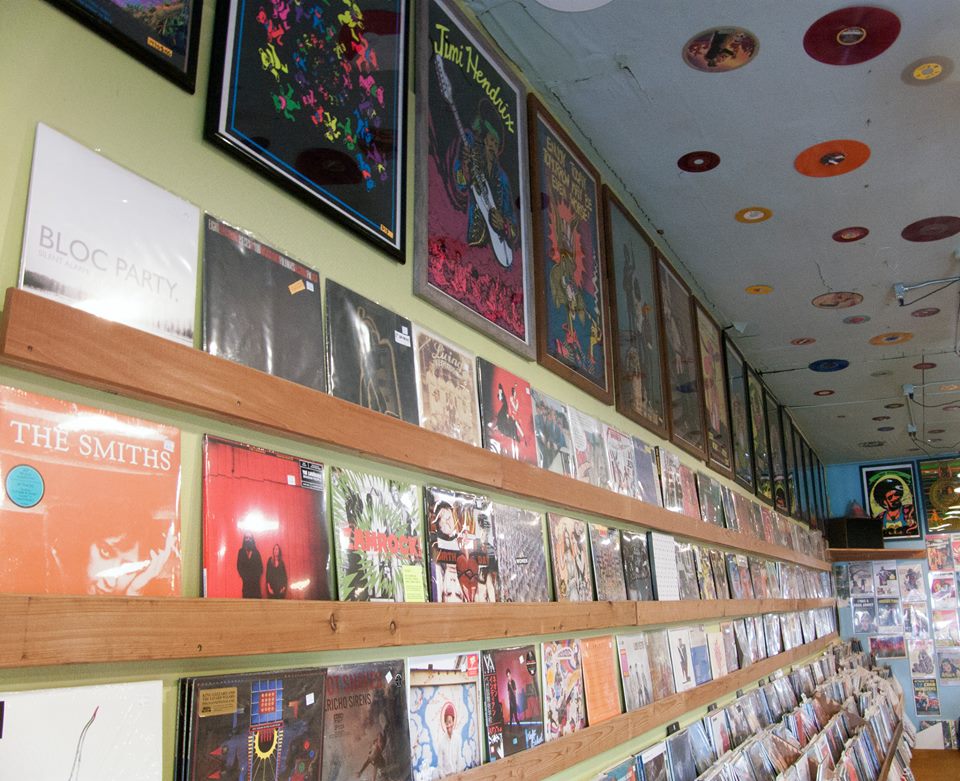
    While it’s slim pickings in Humboldt County, People’s Records in Arcata carries a wide selection of outstanding records year-round. From 11 a.m. to 6 p.m. on Saturday, April 21, People’s Records will offer this year’s exclusive Record Store Day selections, and they’ve made extra room for more records.

    “We will have many of the limited edition Record Store Day items, plus we have expanded and knocked down a couple walls in the store to accommodate 1,000 new records in our stacks,” People’s Records wrote on their Facebook page.

    People’s Records in Arcata. Photo by Matthew Hable.

    Generally speaking, there is nothing wrong with digitalized music. The average human ear can’t detect the sample rates of professionally processed digital audio, nor can they make out the subtle differences in sound of analog waves, aside from the record’s “warmth” people commonly claim to hear in contrast to MP3s or WAV format.

    However, what sets records apart from other formats is their level of interactivity and the way they appeal to the senses. The process of taking a record out from its sleeve, placing it on a turntable, carefully dropping the needle on the record and even the smell of records makes it that more special.

  • A joint opinion: spark it up!

    A joint opinion: spark it up!

    Humboldt County’s reputation around the United States reeks of marijuana.

    As part of the Emerald Triangle, along with the counties Mendocino and Trinity, Humboldt makes most of its green from the seasonal crop.

    Rumor has it that the celebration of April 20 started in Marin County, California, not too far from Humboldt with a group of San Rafael High School students who called themselves The Waldos. These pothead pioneers gathered on campus after school at 4:20 p.m. to spark up and look for a rumored, abandoned pot farm.

    One of the original Waldos said that the term originally meant “Do you have some?” or “Do I look stoned?”

    Eventually, the psychedelic rock band Grateful Dead picked up on the term when they moved blocks away from San Rafael High School and frequently smoked with one of the Waldos’ older brothers.

    Years later, April 20 is a nationwide holiday when stoners smoke copious amounts of weed and spend the day trying not to miss 4:20 p.m.

    Celebrating April 20 in Humboldt County is almost as pointless as the British declaring a national day for beer (which they have, mind you). But the beginning of 2018 marked a monumental time in California history.

    Marijuana advocates have been fighting for legalization of cannabis since the 1960s.

    Finally, on Jan. 1, California Proposition 64 became effective, allowing legal recreational use and taxation of marijuana statewide. Nearly 60 years later, the seed is cultivated into reality.

    Since then, there has been little qualitative information about the impact on Humboldt economy, but tourism and sales tax revenues are likely to increase.

    Now more than ever, April 20 is a holiday to celebrate the progress California has made in decriminalizing the medicinal plant and allowing anyone to enjoy its benefits. For the first time, anyone above the age of 21 can safely spark up a legal, recreational blunt in the comfort of their home.

    If you are partaking in 4/20 this year, please remember that any dank celebration should be in moderation. Spark responsibly.

  • A joint opinion: put it out

    A joint opinion: put it out

    Before the Gold Rush there was a Green Rush, with some gold in there. Settlers came from the East in the 19th century looking for gold and found some big trees to cut down and sell. It was a prosperous time for white people who made money from lumber sales, but it sucked for every person of color who worked low wages in the industry or barred from work. Now, it’s time for a new area of selling green stuff for money once again.

    There are many parallels from the Gold Rush to the Green Rush as legalization came about. Marijuana legalization is just as racist and elitist as the lumber industry. 81 percent of cannabis business owners are white. Three-quarters of the industry are owned by men.

    However, this is more than the environment, it’s about its medicinal value. Sure, there are some studies that tell of marijuana’s healing abilities and some Facebook memes that exaggerate those claims and say weed cures cancer. But those studies seem to be used to justify lazy people to smoke all day and do nothing.

    Just because something is supposedly healthy for you, doesn’t mean you should consume it to excess if it’s unnecessary. Apples are healthy, but eating a whole bushel won’t keep the doctor away and nor would smoking a pound a day, or whatever amount people actually smoke.

    There are a lot more things to do in Humboldt than smoke. Cannabis can be a part of Humboldt, but it shouldn’t be exclusive to its identity. Not everyone smokes weed. There are quite a bit of people who look down on weed due to its culture. No one should be forced to smoke, but cannabis shouldn’t be looked down upon either. The cannabis industry needs to be improved.

  • International festival reels universal film into Humboldt

    International festival reels universal film into Humboldt

    Student-run Humboldt International Film Festival hosts film from across the globe for 51 years.

    The longest running film festival entirely managed by students is hosted in the heart of Humboldt every spring.

    Humboldt International Film Fest is open to any film submissions from around the world and combines international film with local film lovers and artists.

    Screenings will begin Wednesday, April 18 and will continue for four days with the Best of the Fest screening on Saturday, April 21. Four final categories include experimental, narrative, documentary and animation.

    A reappearing character in the animation category has been The Bum Collective’s 10-foot, one-eyed, orange monster, Lilly. Lilly Monster was originally drawn up in Calgary, Canada by Xstine Cook’s kids and has developed into a family-run series.

    Cook’s three children, along with her sister’s three daughters, have been making animated shorts since 2010 and have participated in the festival for seven years. The first animated short of the series, Lilly’s Big Day, was drawn and voiced by Cook’s 3-year-old at the time.

    This year, they submitted the film Lilly and the Baby, the most recent adventure of the monster babysitting a human child.

    Cook said she was pleased by the reaction to the previous films by the Humboldt audience.

    “There were all these stoned people and they all got the jokes,” Cook said. “It’s for kids, but they all were laughing.”

    Aside from a class in the film department at Humboldt State, the festival is a campus club that anyone can join and contribute to. Students in the FILM 260 class and club participate in pre-screenings of festival submissions, judge each one and decide on which ones make the final cut.

    Over its 51 years, the Humboldt International Film Festival has moved venues. Held for the first time in 1967 at the Sequoia Theater (currently the John Van Duzer Theatre), the festival has expanded to a yearly, four-day celebration of international film at Minor Theatre.

    Maddy Harvey is a senior film major at HSU. Harvey has been involved in the International Film Fest since 2016 and this year, she is the co-director of entries.

    Harvey says this year, the festival received more than 195 films from 22 countries around the globe.

    “It’s really interesting to see how different countries and cultures express themselves through film, how different stories are told,” Harvey said.

    French exchange student Joanna Cottel is part of the film class at Humboldt State and has loved her experience planning the festival.

    “I have been part of organizing other film festivals in France, so I when I saw this one, I was like, hell yeah!” Cottel said.

    Cottel says as an exchange student, she is proud to be participating in the festival.

    Screenings will be divided into four days based on categories, and will begin at 5 p.m. and again at 7:30 p.m. Tickets are $5 for each day and $10 for the Best of the Fest screening on Saturday, April 21.

    “Even though the festival is international, the heart of it is in the Humboldt community,” Harvey said.

  • Warriors of Rainbow Ridge

    Warriors of Rainbow Ridge

    In between the Humboldt Redwoods State Park and the King Range National Conservation Area lies Rainbow Ridge, a hidden treasure connecting the redwoods to the sea. 

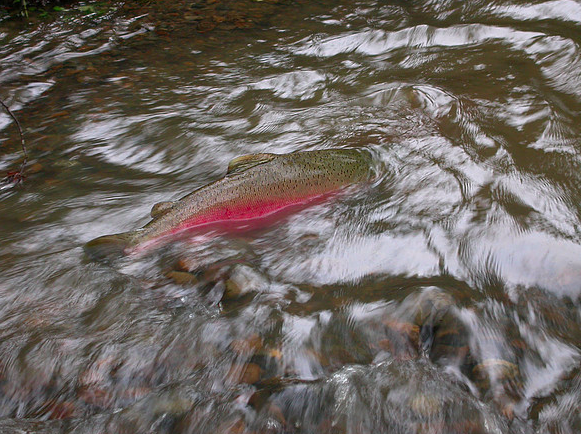
    About an hour south from Humboldt State University lies Rainbow Ridge, a fairy tale forest with 300-foot tall trees covered in lichen and moss. Fungi grows in all shapes, sizes and colors. Rare and endangered animals lurk; the agarikon, the pine marten, the Pacific fisher, the spotted owl, Coho salmon and Sonoma tree vole. The endangered Coho salmon return here to spawn.

    “It is really important that we save the remainder of old growth. It is all that we have left,” conservation consultant for the Lost Coast League, Gabrielle Ward said. “We need to look at how we can help preserve and maintain landscape connectivity so that animals can continue to move across landscapes and not be isolated.”

    Rainbow Ridge is a combination of coastal Douglas fir trees and mixed-hardwood forest along the north fork of the Mattole River. Inside of Rainbow Ridge’s 18,000 acres of forest and meadows lies 1,100 acres of old growth coastal Douglas fir trees.

    Rainbow Ridge is “one of only two old growth Douglas fir forests that have been unentered and untouched, and the only one in California,” Joe Seney, a HSU lecturer in forestry and wildland soils, said.

    “There are very few remaining tracks of old growth Douglas fir anywhere along this part of the California coast,” Seney said.

    The Lost Coast League is a group of citizens from the Mattole watershed and they have been in land acquisition, litigation and conservancy since the early 1970s. The Lost Coast League has acquired and protected thousands of acres of forest since their inception.

    “The goals of the Lost Coast League are to study, survey, understand and preserve and restore this forest,” Ward said.

    The Lost Coast League hopes to acquire and restore Rainbow Ridge. The Rainbow Ridge is privately owned by the Fisher family, who is known for their GAP clothing stores. The Lost Coast League intends to purchase Rainbow Ridge from the Fisher family.

    The east border of Rainbow Ridge is adjacent to Humboldt Redwoods State Park, which holds Rockefeller Forest within it that has the largest contiguous old growth redwood forest in the world.

    The west border of Rainbow Ridge is the King Range National Conservation Area. The purchase and preservation of Rainbow Ridge would connect the world’s largest redwood forest with the ocean, creating a wildlife corridor to remain throughout time.

    “If the Fisher family would recognize the treasure value of Rainbow Ridge and what kind of legacy they could leave, they could create a Fisher Forest standing adjacent to Rockefeller Forest. This is something that could last throughout time,” Michael Evenson, vice president of the Lost Coast League, said.

    The advantages of this biodiverse forest close to HSU provides unique opportunities. The Lost Coast League would like to see the University of California’s nature preserve program or Humboldt State’s College of Natural Resources utilize Rainbow Ridge for research.

    “By looking at what is left we can understand what the rest is supposed to look like,” Ward said.

    There is the potential for new discoveries on Rainbow Ridge, especially in fungi. Agarikon is a fungus found growing on Rainbow Ridge with medicinal properties that can treat antibiotic resistant tuberculosis.

    “There is a vast opportunity for students to be a part of the solution. Looking at fire regimes and restoring portions of the landscape that have been [logged] in the past, and it does have some deep carbon sinks,” Ward said.

    The Cascadia Temperate Rainforest spans from Southern Alaska to Southern Humboldt and is the largest carbon sink on the planet.

    “The only deep carbon sinks left in the United States are along the coastline of this Cascadian Temperate Rainforest,” Ward said. “It’s all that we have left, we can’t continue to fragment this endangered ecosystem.”

    Paulo Sweeney, a forest defender, addresses Humboldt Redwood Company’s inconsistencies in forest practices.

    “Humboldt Redwood Company sets aside high conservation areas that they are not going to log at that time. They aren’t going to log the area now but that does not mean that it is protected from being logged in the future,” Paulo said. “These are key places for restoration.”

    During Earth Week from April 16-22, HSU will be having talks, films, demonstrations and workshops on environmentally sound practices and sustainability.

    Paulo will be having a question and answer period on April 19 after the film “If a Tree Falls” in Forestry Room 201 from 3-4:30 p.m., as part of the documentary day hosted by the Climate Crisis club for Earth Week. Come and learn more on forest defense in the community, climate change, ecological collapse and student involvement in direct action.

  • Auction raises over 200K

    Auction raises over 200K

    The who’s who of Humboldt County were in attendance for the 33rd Annual Celebrity Dinner and Sports Auction in Eureka, and they raised over $200,000 for the night.

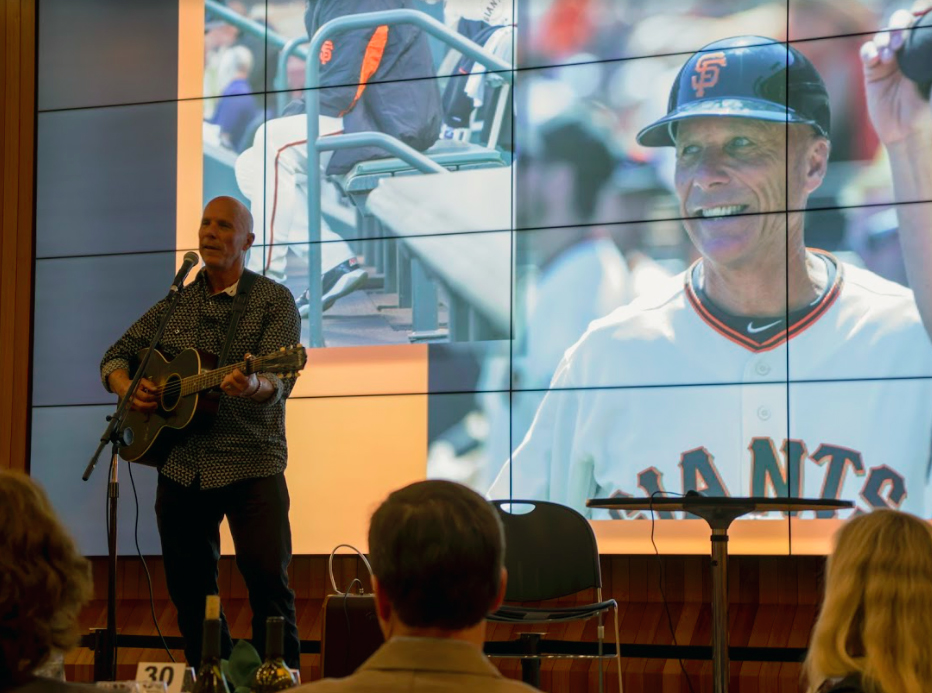
    The auction is put together every year as a benefit for the Humboldt State University athletics program and athletic scholarships. Tim Flannery is a former three-time MLB World Series championship coach for the San Francisco Giants and player for the San Diego Padres. He was the special celebrity guest this year, and had an unlikely connection to the local area.

    “In 1976 I was in Boulder, Colorado for the NBC College World Series,” Flannery said. “And the Humboldt Crabs – the Humboldt Eureka Crabs – beat us, and I’m still looking for those guys.”

    As the event was getting started and catering was being set out, the Lumberjack athletes were in the parking lot in the back, wearing tuxedos and dresses while eating cold pizza.

    Junior Kameron Curl is a guard on the men’s basketball team who was a table runner along with his fellow athletes. The runner’s responsibility is to promote themselves and the team to the community at their tables.

    “It’s nice to interact with people,” Curl said. “They get a better idea as to who we are as people, and not just on the court.”

    Coaches, administrators, boosters and members of the Humboldt community wined and dined on fine catering while student-athletes rushed around tables to look for some help for the university’s depleted funds.

    Jovannah Arrington is a junior guard on the women’s basketball team who hit the game-winning shot for the Jacks in the conference final earlier this year against University of California, San Diego.

    “We know the boosters are going to be there,” Arrington said. “To be able to serve them is a great opportunity for us, and getting to meet them is really nice.”

    Flannery kept the crowd engaged with two singing performances, and stories from his more than 25 years in the MLB.

    “This was an amazing evening made possible by our exceptional community,” Interim Athletic Director Duncan Robins said. “The community demonstrated its overwhelming support last fall, and continues to show its green and gold spirit in support of student-athlete scholarships.”

    From shooting machines to new sports bags, this money will come in handy for the athletics program now and in the future.

  • Salmon and us, tied to the health of the Klamath River

    Salmon and us, tied to the health of the Klamath River

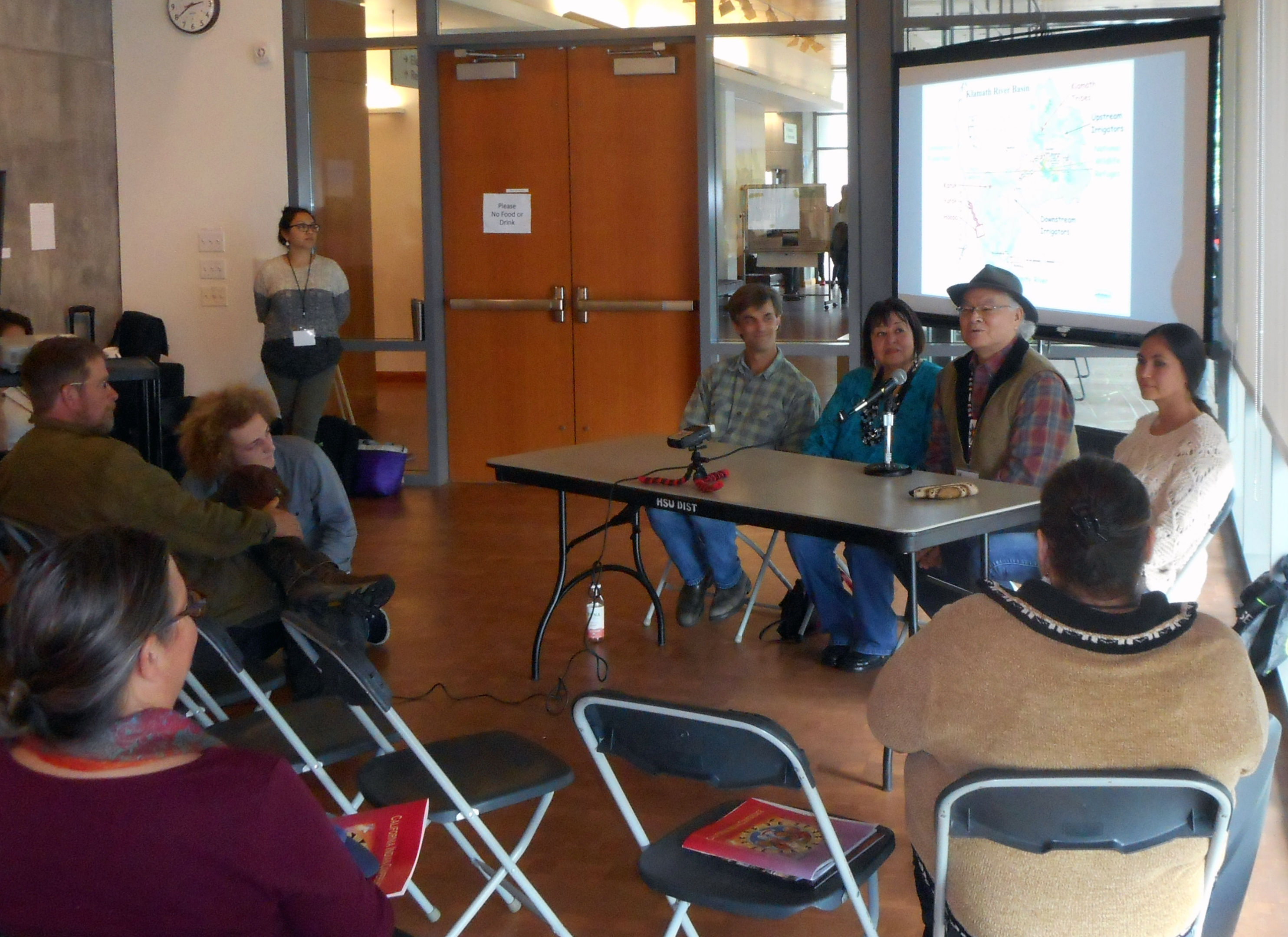
    The We Are the River: Connecting River Health to Community Health panel met to discuss the state of the Klamath River, and the communities whose lives are tied to the health of the river.

    The discussion was held in the Goudi’ni Gallery at Humboldt State during the 32nd Annual California Indian Conference on April 6.

    Dale Ann Sherman, a Yurok Tribe member and retired HSU professor of Native American Studies, was one of the four panelists.

    “I come from the Klamath and Smith Rivers. I belong to those rivers,” Dale Ann Sherman said. “In our blood runs the rivers and with that blood runs the salmon. We were born to go through time together. The salmon and us.”

    There were four panelists for the We Are the River: Connecting River Health to Community Health discussion: Dale Ann Sherman, Louise McCovey, Marlon Sherman and Konrad Fisher.

    Marlon Sherman is a Lakota tribal member, as well as the HSU department chair of Native American Studies.

    “The people on the Klamath River depend upon the salmon, and other fish,” Marlon Sherman said. “That’s their sustenance and their livelihood. That’s their spirituality. It is what their ceremonies are based on. Everything flows around the salmon, and if those salmon don’t have sufficient water, they will not come back any more. It is fairly obvious.”

    The salmon are at their lowest all time in returns due to problems with the river itself.

    “Dams, diversions and pollution sums up what is wrong with the river,” Fisher said.

    Fisher is a water protector who described the factors plaguing the Klamath River.

    “Dams are the biggest source of blue-green toxic algae build up, nasty stuff that will make humans very sick,” Fisher said. “Naturally occurring toxic blue-green algae production is dramatically elevated by dam water restriction. Some of the highest levels [of blue-green algae toxicity] ever recorded on Earth were collected behind the dams on the Klamath River.”

    A few years ago, a decades-long lawsuit by the Klamath tribes of the upper Klamath River went to the United States Supreme Court.

    “They finally were able to get the U.S. Supreme Court to realize that they had water rights to the Klamath River based on as far back as what they called time immemorial,” Marlon Sherman said.

    “Something exciting is happening very soon,” Fisher said. “We are on track for dam removal. Maybe not quite 2020, but 2021. Let’s continue to be hopeful.”

    “The [Klamath River Renewal Corporation] is the entity that will essentially take ownership of the dams, and take them out. Go to one of their meetings if you can. It is on their website,” Fisher said.

    “The salmon right now are at their bottom ebb. What they need now is plenty of clean, cold water,” Marlon Sherman said. “Water allocation is what the salmon need right now. This needs to be approached right now before the salmon are all gone. When the salmon go, who knows what’s next?”

    Water allocation rights and diversions are Fisher’s specialty, and water in the Trinity River that would run into the Klamath River is currently being diverted.

    “Water laws say there is a certain amount of water that should be left in the streams to meet certain needs,” Fisher said. “By and large they [the government] don’t [do their job] unless they are being forced, especially when it comes to telling people to use less water,” Fisher said.

    The needs of the communities most affected by the destruction of the Klamath have gone unheard.

    “The local laws of the people who have always lived there, and know the river, are never acknowledged,” Marlon Sherman said.

    “Ceremony is law. Culture is law. Very few people recognize that fact,” Marlon Sherman said. “The tribal attorneys need to be paying more attention to the tribal imperatives of spirituality, culture and tribal knowledges of their indigenous localities.”

    “Our people are fix-the-world people, that is what we do in our ceremonies,” McCovey said.

    McCovey is the Yurok Tribe environmental director and HSU environmental science alumnus who was on the panel.

    “There has been a rash of suicides in our community,” McCovey said. “For me in my job, I try to eliminate the environmental threats so that people can maintain their identity as river people, and feel safe in it.”

  • Justice for Josiah rally

    Justice for Josiah rally

    On April 5 at 1:30 p.m., students at Humboldt State left class to attend a rally on the UC quad in remembrance of David Josiah Lawson, a student who was stabbed to death at a party in Arcata almost a year ago.

    “It’s been a year, and that is fucking ridiculous,” Barbara Singleton, president of the Black Student Union at HSU said.

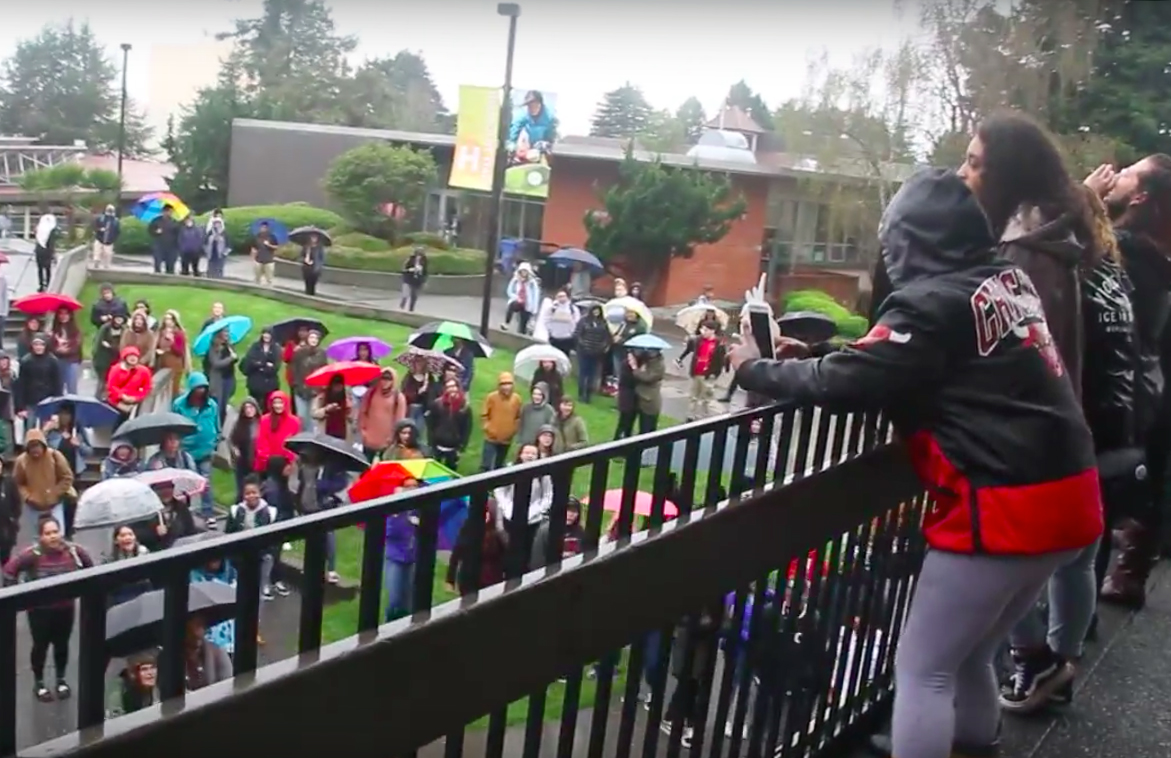
    Singleton stands on the second floor of The Depot, surrounded by a crowd of students who all left class as a part of the student-led walkout for safety in honor of David Josiah Lawson. The rain pounds down relentlessly, seemingly undetturent to all in attendance. The walkout is a part of 12 days of events being hosted in honor of the anniversary of Lawson’s unsolved murder.

    Video by Surya Gopalan.

    A year ago at a party in Arcata, Lawson, a black HSU student, was stabbed to death. There are currently no persons in custody. Students walked out of class at 1:30 p.m. on April 5 to be present at the 2 p.m. rally to bring justice to Josiah and demonstrate for student safety.

    Kalyn Garcia, 18, social work major, left class to be present at the rally.

    “I think that it is way bigger than Josiah,” Garcia said. “Any black, Mexican or children of color should not be concerned to leave their house.”

    As the rally began, two students, Singleton, as well as Daniel Segura, 23, a critical race, gender and sexuality studies major, began leading the rally. They began by explaining there have been rumors about the Justice for Josiah movement being involved in illegal or destructive activities, and that they do not condone any violence or illegal actions.

    Angel Sylva then performed a poem she wrote for Lawson, which will be performed again on the vigil held for Lawson on April 15.

    “If it happened to one of us, it can happen again,” Sylva said.

    With no sound equipment available to students after 1:00 p.m., due to campus policy, Sylva projects her voice as her only tool to spread her message to students.

    Students then began calling out the members of administration in the crowd. Alex Enyedi, the provost of HSU, as well as Wayne Brunfield, the interim vice president of Student Affairs, were two of the members of administration in attendance.

    “They have been silent this whole 12 months,” Singleton said.

    Singleton directly addressed HSU administration, the Arcata city council and the police department.

    “They have blood on their hands,” Singleton said.

    The crowd screamed for administration to speak, one individual saying, “It’s fucked up for you to be here and not say anything.”

    Eventually, Enyedi took the stage after much student call-out. He thanked the crowd for the opportunity to speak, then began.

    “Students are told you need to be patient, but I get it. How long should you be patient for?” Enyedi said. “I share your frustration, I share your impatience. It shouldn’t take this long.”

    Enyedi is not the one the students want to hear from. The question on everybody’s mind is where is Lisa Rossbacher, president of HSU? Students call out to Enyedi, demanding answers.

    “I’ll tell her you’re unhappy she isn’t here,” Enyedi said.

    A voice from the crowd screams, “We aren’t unhappy, we’re angry!”

    President Rossbacher never showed up.

    Brumfield was not getting away with silence either. Singleton and Segura called from the stage, “Wayne, where are you?”

    Brumfield did go up to the stage and approved students to use a megaphone, but never addressed the crowd. Many continued asking why he did not speak.

    When asked, Brumfield spoke of a racial equity plan he says he is currently working closely with students on. He said students deserve a voice in how equity and inclusion are happening in the community.

    “We’re working with the two chiefs of police, students and community members to look at policies of police reacting to students, both on and off campus,” Brumfield said. “I think we are moving in the right direction.”

    As the rally continued, a song written about Josiah was performed and then different chants were yelled throughout the crowd.

    The event coordinators then relayed the message of future events and concluded the event, inviting students to continue their activism and presence in the coming weeks.

    “The Justice for Josiah movement is very peaceful,” Singleton said.

    At one point in the rally, a group of people visiting for spring preview walked past the UC quad.

    “Anything they tell you will not justify his murder,” Segura said to the passersby.

    Segura, being in his 10th semester at HSU, he says he has seen how the administration deceives students. He said HSU goes down south and recruits students of color without disclosing the violence toward people of color that has happened in the area.

    “How are we supposed to welcome students of color when they trick you?” Segura asked.

    This article has been updated from its original version on Monday, April 9 at 5:58 p.m.

  • Lumberjack editors meet with Rossbacher, part II

    Lumberjack editors meet with Rossbacher, part II

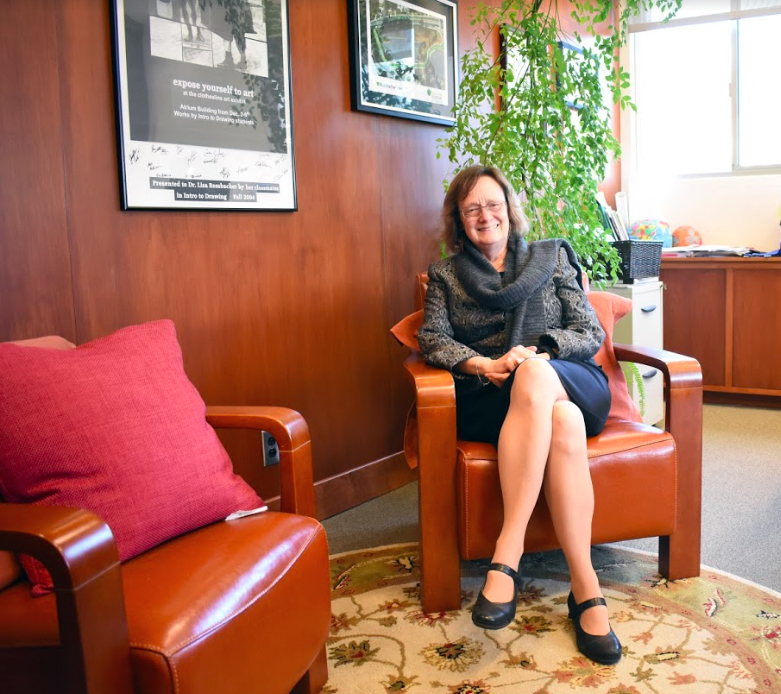
    The Lumberjack editors met with the president of Humboldt State University, Lisa Rossbacher, on March 23. The Q&A was largely centered around budget cuts and social issues that impact the local community, especially HSU students.

    This is part II of the meeting which mostly concerns social issues. Part I, which focuses on HSU budget cuts, can be found HERE.

    On social issues:

    Lora Neshovska (managing editor): “There are students facing homelessness and discrimination. How can we address social justice issues of students beyond our financial worries?”

    Rossbacher: “I think there are a number of things the university is doing to help with those basic needs that are really the underpinning to ensure student success. There’s a whole program happening here, many of them under the umbrella of Oh SNAP! Things like the food pantry that we have [or] students having access to EBT.

    We were one of the first campuses in the country to provide that kind of access. That started in late 2016 [and] over seven million tons of food have been redistributed on campus that would otherwise have gone to waste, so that helps. Some of the community meals that are being prepared – that I know Wayne Brumfield always cooks for – that sort of thing, being able to redirect J-points that are left over to help other people. Those are some examples in terms of food security. We just got some money from the chancellor’s office that will help us do more in terms of just food security on campus.

    In terms of housing, it’s a real issue because [of] where we’re located, the limited houses in stock that we have here. We’re doing some things with that, too. One of them is, I’m sure you know, Chante Catt has been hired as a homeless student advocate. She was involved in that organization of homeless student advocates, but she’s now officially working so that students who are in need of housing can contact her. I know right after she started doing that, immediately she placed four people. So that helps, too.

    We’re looking at the possibility of building new student housing. The university is looking at new residence halls off campus, and then there’s this outside developer who’s looking at The Village. Whatever it takes to get affordable, safe [and] not-too-far-away housing for students is a good thing.

    There’s also a program that we’re starting up in conjunction with some agencies within the area. I think it might be called the ‘nest program’ or ‘silver nest program,’ where there are seniors in the community who have a bedroom [and] extra space who would really like for company, for safety [and] a little bit of help around the house, who are willing to rent those spaces to students. That becomes a real collaboration with the larger community in a way that addresses multiple needs.

    I know it’s incredibly frustrating. I mean, I’m incredibly frustrated by seeing all the basic needs that we have here at Humboldt that are not being met. It’s sort of good news and bad news that we’re ahead of the curve of the system. We get pointed to as a place where we’re doing a really good job of trying to address those needs, which is good that we’re being proactive about it and making change. But if we’re among the leaders, we look at our frustration and the problems we still have, it makes you worry about other campuses.”

    Stella Stokes (life and arts editor): “I am an ITEPP student and my parents, who are HSU alumni, were also ITEPP students. There was an article about you in the Lost Coast Outpost on Feb. 7 that said ‘Rossbacher has been appointed to lead an initiative to increase the number of students from Tribal Nations who enroll and graduate from the California State University system.’ Why were you appointed over someone who is indigenous?”

    Rossbacher: “That roll is for president in the Cal State system. In fact, some people saw that and said, ‘Wait a minute, we thought Leo Canez was doing this, because he’s our new Native Recruiter.’ This is part of an initiative that was an across-the-sea issue, and it has representatives from more than half of the campuses. Adrienne Colegrove-Raymond has been a representative at HSU to this group. I convene the meetings, but I’m not responsible for this alone. It’s with a whole group of people.

    This statewide group will be meeting here on campus on April 4. The people can come to that. [People] from all over the state will be able to participate in the California Indian Conference, which is also here on campus [on April 5 and 6]. What we really hope is they stay until [April 7], which is when Big Time is. We actually have four days of Native American events happening.

    Back to your question of why I was appointed. Ultimately, when the chancellor asked me to do that, it came down to the two presidents at the campuses that have the largest Native [American] communities around them. It was Humboldt State and San Marcus. Humboldt State has the highest percentage of Native American students of any campus in the system. It’s not the largest absolute number, but we have the highest percentage. We have strong connections with the Native [American] community. It came down to the two of us who were presidents of those two campuses. We talked together and both us said to the other, ‘If you want to do, I’ll be happy to help you.’ We were trying not to step on each other’s toes. She said, ‘I’m really overcommitted right now. I will be glad to help you, but I’d appreciate it if you would do it.’ I said, ‘Of course.’

    Also, I didn’t know this before, but Rollin Richmond, who was the president before me, was in the same role for a number of years. So there’s a history of Humboldt State being in this role.”

    Ahmed Al-Sakkaf (news editor): “Rumor has it you live in Kansas. For the record, where do you live?”

    Rossbacher: “I live in McKinleyville.”

    Megan Bender (opinion editor): “Around 2016, you had issued a statement that was taken badly by the HSU community. You also issued an apology statement afterward. How can we address that to [David Josiah Lawson‘s] situation. People are frustrated by the inadequate support of the community, as well as HSU. What are you doing to create change in the right direction, as far as racism is concerned?”

    Rossbacher: “Let me back up just a minute to talk about when Josiah was killed. The university did everything we could to support his friends [and] his family. We worked closely with the police department to be sure that they were having access to witnesses or anyone who could help solve this murder. We’ve all been frustrated by what feels like a lack of progress.

    I ask, and I know I’m not the only one, the people in the city of Arcata about what’s going on, where are we and is there anything we can do to help? It’s a terrible tragedy. It’s something that affects so many of us, myself included every day. I think about wishing there was something we could do. I sat through every preliminary hearing.

    Ultimately, right now, it’s [on] law enforcement. It’s a criminal justice case. It’s something we can’t actually do anything about. It’s not in our hands. I asked as recently as last Friday, ‘When are we going to know something?’ It’s hung up in the process. You have as much information as I do. It’s highest priority for us. It’s not necessarily highest priority for the state to process the evidence, because there’s no one being held waiting for a trial. That’s what gives other cases a higher priority. We’re living with it every day. It’s just the way the process works.

    I want to make another point. I believe deeply in justice for Josiah. I think about it in two different ways. Actually, it’s two forms of the same way.

    One of them is resolving the case, figuring out what happened and just getting closure on that. Until that happens, it’s so hard for the community, for his family and for his friends. So there’s that aspect of justice. But I look at it from a bigger picture, too. I think what justice for Josiah should also mean to us is making sure that we have, as a larger community, a situation that is equitable, just and fair. [A situation that is] devoid of any discrimination – racial, ethnic, gender inequities or injustices. I think a piece of that, which is something I’ve been committed to involves some aspect of working with people on campus or in the city of Arcata. I see that as a long-term, systemic solution to the question of, ‘Where is the justice for Josiah?’

    If we could create a just, equitable [and] fair community in this region together, that would be a fitting tribute to Josiah and what he would’ve done with his life. I see justice for Josiah in a couple of dimensions, but I think there’s a big picture where the world will continue well beyond when the case is actually resolved.”

    Neshovska: “Do you think there’s racism in Humboldt County?”

    Rossbacher: “I think that in any environment where we have such different demographics, it’s inevitable. No, it’s not. I take that back. It’s not inevitable. Yes, and I have seen evidence of that myself. Demographics of the student population of Humboldt mirrors the state of California. The student population of Humboldt is similar to the demographics of this state. The demographics of Arcata and Humboldt County are very different.”

    Neshovska: “Isn’t there more than three percent of black people in California though? There’s only three percent here.”

    Rossbacher: “I know, yes.”

    Neshovska: “So it doesn’t exactly mirror the state of California.”

    Rossbacher: “Yes, I take your point.”

    Stokes: “One of the main problems about Josiah’s death is that students of color fear for their own lives or feel uncomfortable. They stop going to parties, some are just scared. How do you keep students of color safe?”

    Kyra Skylark (science editor): “To add on to that question, you said that affordable and safe housing is one of your main goals. I personally know friends who went to that party [where Josiah was murdered] and left the school afterward. People don’t feel safe, specifically students of color, which is why they fought for the Arcata council meetings to talk about why they don’t feel safe. What do you think we should be doing as Humboldt State to better address this issue? Why haven’t you gone to more of those meetings to hear students?”

    Matthew Hable (editor-in-chief): “The one-year vigil for Josiah is next month. Do you plan on attending?”

    Rossbacher: “Yes. There are two parts – there’s on campus and off campus. What I hear is that students are more likely to feel safe on campus than they do off campus.”

    Skylark: “Personally, as someone who has lived on campus during the last election, I got to hear ‘kill the fags’ and ‘reinstate Jim Crow.’ I did not feel safe on campus.”

    Rossbacher: “I understand. And yet, we’re a campus where we have to protect free speech. You all know that more than most. One of the aspects of creating safer spaces has to do with lighting. I know Wayne Brumfield has been doing walks around campus to identify places that need better lighting. We installed some of those over the winter break. There’s an interesting conversation with the City of Arcata about that, because they have ordinances about – it’s a dark city – as a way to not create light pollution. But the negative affect of that means we have less lighting, therefore areas that feel less safe. The city is working through that.

    There’s also an interesting set of conversations about surveillance cameras. There are a couple of dimensions to that. One of them is that if the police do it, particularly in Arcata, they have to maintain some of that tape for five years. And a lot of the businesses around the plaza, they particularly like to have surveillance cameras. The city sees real value in having the individual businesses, having their own cameras, because they can control them. They only have to keep them for a week or something. That’s enough time for the police to say, ‘We want to see what happened last night or even last week without having to keep the data for five years.’

    Meanwhile, the staff on this campus do not want security cameras, because they think – and this is the unions – they think the surveillance footage is going to be used to see if they’re actually doing their jobs, [as a way] to spy on them. [We have] all of these different dynamics working. That’s not the only solution, but it’s an example of the kind of complexities we get into. That doesn’t fully answer your question?”

    Skylark: “I don’t think that fully answers my question. There are issues on a social level that are making people feel unsafe. What is the school doing to make people feel safe on a social level? What are you doing to create change on an educational level?”

    Hable: “Are you saying there’s a lack of engagement right now?”

    Skylark: “Yeah.”

    Rossbacher: “We’ve had some events that addressed that. We had a day-long session last summer that really got into many of those issues.

    Skylark: “But no one is here during the summer. Those events are missed by the majority of the people.”

    Neshovska: “I think it’s also important to note that, not only as a president of our university, as a university as a whole, how do you make yourself available to these people who genuinely fear for their lives and want to be heard by somebody of power? They want somebody like you to hear them out and for you to say, ‘I’m here for you and I understand.”

    Rossbacher: “I seek out those stories. I listen to them carefully. I’ve been doing a lot of reading. I can share my recent readings with you, both books and articles on it.

    I made sure back in January, the leadership of the university went through micro-aggression workshops. It’s about awareness, how to counteract and keep that from happening. It started out [by] asking faculty and staff. I knew the way to bring credibility to that is to not only say that ‘I’ve done it,’ but that the senior leadership team, vice presidents and all the deans went through that. It was taught by Christine Mata and Roger Wang. It touched on micro-aggressions and white fragility. So I, as Lisa Rossbacher, also participate in the community dialogue on race. I learned a lot from those opportunities, too. I make it a point of going to sessions I know are going to make me feel uncomfortable. They say you should do it at least three times a week. You put yourself in uncomfortable situations.

    In a larger context, we are a place that’s about education. One of the things I value most about the opportunity to work in the university is the chance to learn. I’m around smart people who have a lot to teach me. There’s a lot I can learn. If I’m not putting myself in the kind of position that you as students, where you’re being asked to put stuff out there and being evaluated on it – that’s why I write as much as I do. You write, you’re putting it out there and people are going to criticize it. It’s just a reminder of what students do every day. I’m a student, too.”

    Bender: “Is there anything you think we missed that you would like to share with us?”

    Rossbacher: “We have spent literally years building up to the visit that we had this week.”

    Bender: “So that exit interview is a summary and they’ll be giving you another report later?”

    Rossbacher: “It was an oral summary. They said we’ve got some things we want to – [they provided] accommodations and recommendations. There are some things we’re doing really well and some things that we need to work on. Diversity was one of those [things we need to work on].

    Al-Sakkaf: “People were banging on the door at Siemens Hall during the WASC meeting. How did they feel about that?”

    Rossbacher: “They were a little worried. They are all experienced people, and they work on campuses where student feel strongly about issues as well. They said, ‘We were surprised, but we weren’t surprised.’ They took it in stride.”

    Bender: “Do you think some budget suggestions will come out of this report?”

    Rossbacher: “I think what they will say is the university needs to have a sustainable budget. We need to balance our budget and figure out how we’re going to move forward. I’m sure they’re going to say that.

    Neshovska: “How long can we go with this budget deficit? What happens if we don’t solve the budget?”

    Rossbacher: “We will solve it.”

    Gabe Rivera (sports editor): “Is there a person you normally contact to inquire about Josiah’s case? Who is that person?”

    Rossbacher: “I talk to lots of people. I talk to Tom Chapman, the chief of police of Arcata.”

    Neshovska: “In 20 years, is my degree going to be useless? What’s going to happen if the budgets cuts aren’t resolved?”

    Rossbacher: “We’re going to solve this problem. One of the things we haven’t talked about is the need to increase enrollment. That’s not going to solve all of our problems. It’s going to help with a lot of them. I want to assure you that this is not a limited growth. I’ve done an analysis that’s still being worked on, that’s still very much a draft. I want to know what the carrying capacity is for the campus for enrollment, taking a lot of different dimensions. In the big picture, what that tells us is 8,000 is probably about the right number, [which] is a little bit more than what we have now. Our goal is to grow back up that size, but not way beyond that. The goal is to have 15,000 students, and that is not the case.”

    Neshovska: “That sounds complex. We want to increase enrollment, but we don’t have student housing. We need more money to increase safe and affordable housing, but we need to increase enrollment to solve the budget crisis.”

    Rossbacher: “Increasing retention rate is probably the most important thing you can do for enrollment right now. Partly, it’s bringing in new students. Even more important is keeping the students who are here.”
  • 11 months and no justice for Josiah

    11 months and no justice for Josiah

    David Josiah Lawson was a victim of a hate crime and has become the poster child of the racism that exists in Humboldt County. Though the Arcata Police Department has been working through the investigation using physical evidence and witness statements, the trail remains cold in the pursuit to bring justice to Lawson.

    Lawson was a black 19-year-old criminal justice student at Humboldt State when he was stabbed to death at a house party in Arcata on April 15, 2017. The efforts of local authorities attempting to solve the case of his death fall short to this day. Those who spoke up after the incident hold little water in the eyes of the law due to conflicting reports of hearsay and lack of evidence. So much is against Lawson under these unfortunate circumstances.

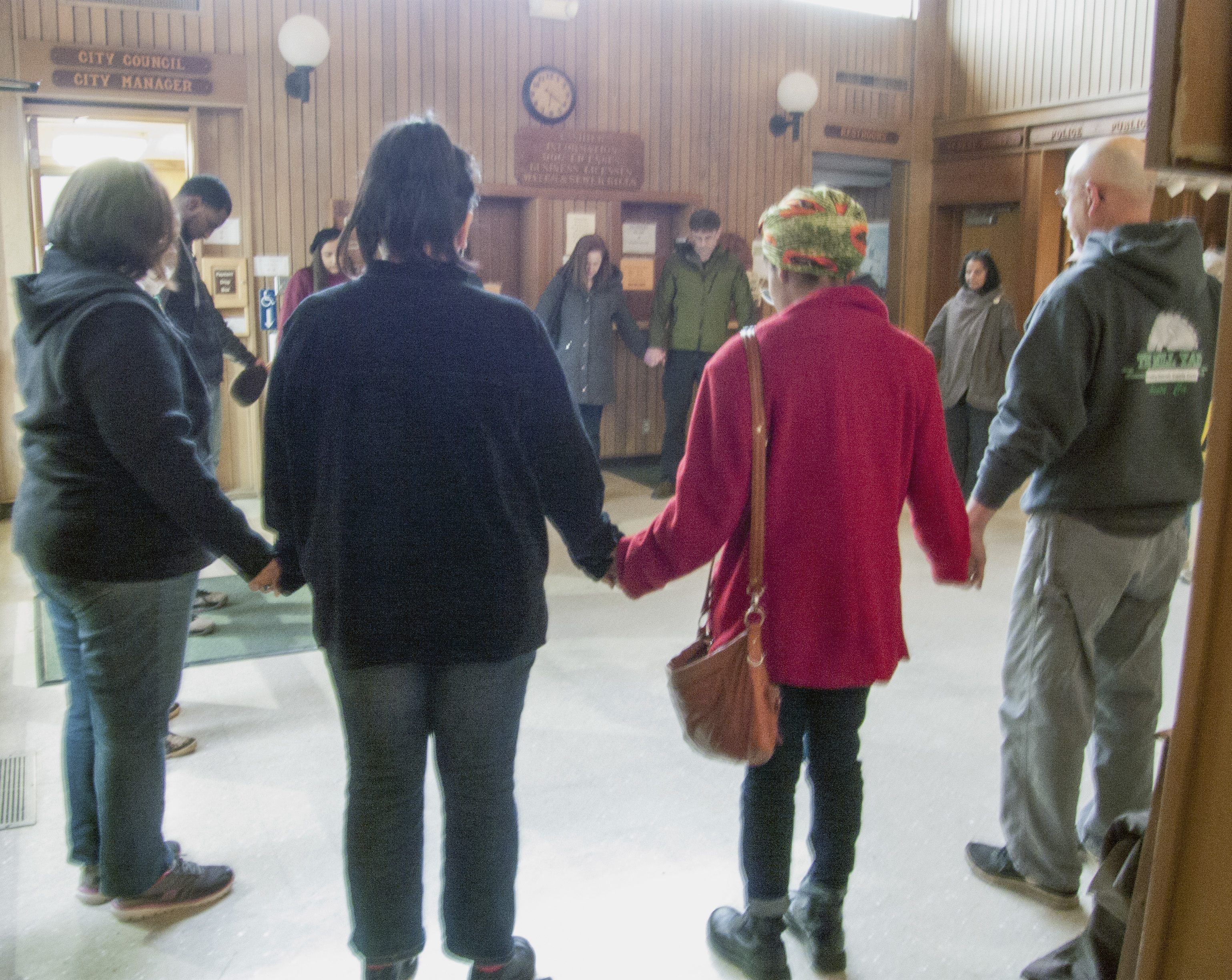
    A vigil has been held for Lawson every month since his untimely death last April. The turnout of the 11th vigil on March 15 at Arcata City Hall was lower than usual due to spring break and heavy rain, but over a dozen people participated in solidarity of Lawson nonetheless.

    During the vigil, Alex Foster, a leading force in finding justice for and preserving the memory of Lawson, said mixed messages aired by the media continue to hamper with the development of the murder case.

    “There’s a lot of rumors and false narratives, especially from newspapers,” Foster said. “It’s just different perspectives.”

    McKinleyville resident Kyle Zoellner was arrested for allegedly stabbing Lawson, but was released by Judge Dale Reinholtsen for lack of evidence. During the preliminary hearings, contradicting testimonials by eyewitnesses include Zoellner’s physical condition when Lawson was murdered.

    In a report by Mad River Union, Zoellner’s family said Lawson was stabbed to death while Kyle was unconscious due to a brutal assault. However, the Lost Coast Outpost reported Elijah Chandler, a friend of Lawson who was at the scene of the crime, witnessed Zoellner “drop something shiny on the ground” a moment after discovering someone had been stabbed. Conflicting reports such as these only muddy the waters of the case.

    What students, police officers, politicians and other community members need to understand is that the murder of Lawson brings up broader issues of social injustice and public safety.

    If people continue to downgrade the importance of this case or stay disinterested, then we are doing ourselves a huge disservice. We are allowing criminals to get away with hate crimes in a town that brings in innocent students year after year.

    Despite some of the challenges Foster and other tenacious supporters face, the search for justice carries on.

    Though the case remains open, relentless efforts are made to not only keep Lawson’s memory alive, but to spread awareness about the injustices that people of color still face in the area.

    April 15 will mark the one-year anniversary of Lawson’s death. Though details for the next vigil are in the works, tentative plans include a community gathering at the Arcata Plaza and a march to the D Street Neighborhood Center. Full details will be announced on the Justice For David Josiah Lawson Facebook page.

    In addition, the City of Arcata is supporting a safe space for a Community Dialogue on Race on March 22 at the D Street Neighborhood Center, located at 1301 D St. in Arcata. The meeting starts at 5:30 p.m.

  • How to stay dry in Humboldt

    How to stay dry in Humboldt

    The spring semester means rain season and it is likely to stay that way the whole semester. Here are some tips from my local prespective to stay dry in Humboldt.

    1. Get proper rain gear. It’s not fun walking from class to class sopping wet. There are many local stores that carry rain coats and shoes. Even the hardware store has cheap boots. Umbrellas are useful against horizontal rain, but don’t spend too much money on one if you’re prone to losing them.
    2. Keep extra socks in your backpack. Trust me, I regretted not doing this on my way to work when street puddles grew to ponds.
    3. Waterproof. If you don’t have the time or money for new shoes, you can buy a waterproofing spray at shoe stores to spray your old shoes and backpack.
    4. DampRid. Everything gets wet, even when it’s not raining. To prevent mold from growing in your residence, buy DampRid bins to absorb moisture. Put them in the closet, under the bed or in the bathroom. This can be purchased at the hardware store, Bed Bath & Beyond or online.
    5. Plan walkways creatively. It is possible to walk to classes without getting wet. Many buildings have awnings and some trails have trees with enough coverage from the rain. With creative planning, you can walk through buildings and the right pathways to get across campus without getting drenched.
    6. Don’t let the rain trap you inside. The benefit of rain, other than to water plant life, is an excuse to stay inside and lay under 20 blankets to stream the new season of The Magicians on Netflix like me. The outside world doesn’t cease to be as beautiful when it’s cold and wet out. Parks and trails are actually just as fun during the winter as they are in the summer. Rivers flow more and nature looks a little greener. So put on waterproof clothes you don’t mind getting muddy and go outside.


  • Surfing giants in Humboldt

    Surfing giants in Humboldt

    Waves upwards of 20 feet tossed and turned against the Humboldt coastline this week.

    According to the National Weather Service Marine Forecast, a small craft advisory is also in effect until Sunday afternoon. While the first big swells of the season are already arriving, the winter swell season has merely just begun.

    With more swells and even bigger waves on the way this season, it begs the question:

    How do such massive waves come to be?

    According to the National Oceanic and Atmospheric Administration (NOAA), water does not actually travel in waves. Waves are merely the transfer of energy, moving from one neighboring water molecule to the next.

    The NOAA says that waves are most commonly generated by wind. Wind-driven waves, or surface waves, start out when changes in temperature produce a change in air pressure. Air then follows its natural path, moving from an area of high pressure to an area of low pressure. This movement is referred to as wind.

    As the wind blows across the ocean’s surface, it generates ripples. This happens in a similar way to how ripples are created when you blow over the surface of a cup of water. These ripples increase in intensity to eventually become waves.

    What determines the size of a wave?

    The NOAA says that the size of these waves are determined by three main factors:

    Wind Speed: How fast the wind is blowing.

    Wind Duration: How long the wind blows.

    Fetch: Distance over water that the wind blows in a single direction.

    The biggest waves occur when wind speed is at its highest, wind duration is at its longest and when fetch is long or unlimited.

    There are several other factors that can affect wave size in a certain area, some of those factors include:

    Swell Direction: The direction in which the swell originated from.

    Ocean Floor Topography: Forms or physical features on the ocean floor.

    Tide: Rising and falling tides are caused by a gravitational attraction between the earth, moon and the sun.

    Why are these big waves in Humboldt?

    “It is because the storms that come out of the North Pacific are incredibly powerful,” said Dr. Jeffry Borgeld, Oceanography professor at HSU who specializes in Geological Oceanography. These storms “can be as energetic as a tropical storm, typhoon or a hurricane.”

    Despite the cold, powerful and often unforgiving conditions, there are a few individuals that can be seen bobbing amidst the chaos and gliding over the massive surf.

    HSU psychology student William Doudna is one of them.

    “There’s something very cleansing about surfing that if i don’t do it, i just don’t feel comfortable in my own skin,” said Doudna. “I feel like a better person every time I come out of the water.”

    Video by Michelle Meyers.
  • Sí Se Puede!

    Sí Se Puede!

    By | Robert Brown

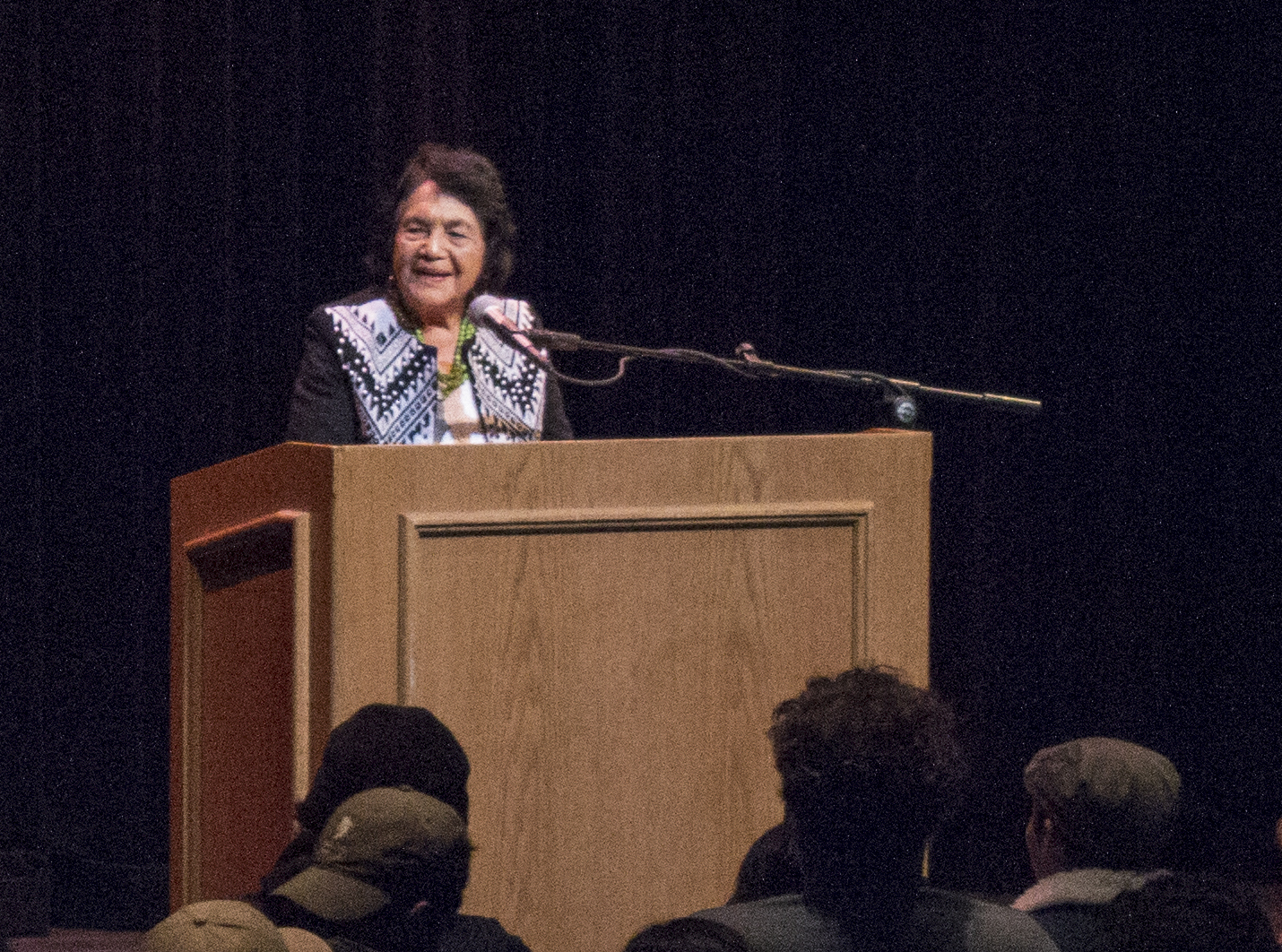
    Dolores Huerta spoke to an audience at The Van Duzer Theater at Humboldt State University on Monday, Nov. 13 during her new video documentary tour, celebrating her life’s work entitled, “Dolores.”

    Huerta is legendary for her ability to organize protests and boycotts. She co-founded the United Farm Workers Union with Cesar Chavez and helped to pass the Immigration Reform and Control Act of 1986, giving legal residency status to more than one million farm workers.


    She has won numerous awards throughout her career, including The Eleanor Roosevelt Human Right’s Award, The Ohtli Award from the Mexican Government, The U.S. Presidential Medal of Freedom, and nine Honorary Doctorates from different universities, just to name a few. She was inducted into the California Hall of Fame in March of 2013.

    In her talk, she discussed human rights, which she considers to be a woven tapestry made up of several separate issues including race, gender inequality, and sexual preference. She stressed the importance of being able to live and let live, and not be concerned with others’ identities.

    Another point she made is that it’s not a crime to cross the border, it’s a civil offense. By crossing the border, no one is hurting anyone else. Legalization has always been part of the immigration system in the United States since the country was founded by immigrants centuries ago. She applauded Senator Diane Feinstein, who proposed a bill for a blue card, which would allow undocumented farm workers to stay in the United States as long as they are working.

    Huerta has been actively involved organizing for over 60 years, starting with the Stockton Community Service Organization. At that time, farm workers were only earning 70 cents per hour working from sunup to sundown, they didn’t have toilets or drinking water in the fields, and were not given any breaks.

    She was part of California’s enactment of the Agricultural Labor Relations Act of 1975, granting farm workers the right to organize and bargain for better wages and working conditions. She eventually became one of the UFW’s most visible spokespersons, campaigning with Robert F. Kennedy, Bill and Hillary Clinton, and Barack Obama.

    The slogan she uses, “Sí se puede,” which translates to, “Yes we can,” was used by Barack Obama during his 2008 Presidential campaign. It originated from a law in Arizona stating that if someone said, “boycott,” or, “strike,” they could go to prison. Huerta organized protests against that law. The people in Arizona said, “no se puede, you can’t do that here.” She responded, “No, in Arizona, sí se puede!”

    Huerta directed the first national boycott of California table grapes which caused 17 million people to stop eating grapes, along with a march on Sacramento. During this time, she met Gloria Steinem, one of the leaders of the feminist movement. Women played a major role in the boycott because the women took over the strike and run the picket lines while the men marched.

    In 1988, during a protest of George Bush in San Francisco, she was assaulted by police. She ended up with seven broken ribs and a punctured spleen. The beating was caught on videotape and broadcast on television, allowing Huerta to win a large judgment against the SFPD and the City of San Francisco.

    As she described the many events that she experienced throughout history, the conversation evolved into events happening now at the Standing Rock protests. It’s clear to see that corporate greed, and dirty “politricks” continue to plague society.

    At 83 years old, there is no slowing down for Huerta, who continues organizing movements and expanding her focus from workers rights to women’s rights, indigenous rights, civil rights, and gay rights.

    With the dichotomy of empire looming overhead, it makes it all the more sweet to see a woman who has endured so much, and fought so hard, as she continues to persevere with the vitality and spirit that has become an inspiration for thousands of people.

    Anyone wanting to become active or show support can join the Vecinos Unidos (United Neighbors). The Dolores Huerta Foundation provides organizing, training, and resources to rural, and low-income communities, and also provides a platform to advocate for change. Go to http://doloreshuerta.org for more information.

  • Jacks comeback to chop down rival Azusa

    Jacks comeback to chop down rival Azusa

    The Lumberjacks kept a packed Redwood Bowl on the edge of their seats during Homecoming after the teams thrilling come from behind victory over conference rival Azusa Pacific, 52-49.

    The nearly 6,000 roaring fans in attendance had the air taken from their sails early on when the Jacks fell behind 14-0 in the first quarter.

    Thompson.Ian.Feature-3834
    Ja’Quan Gardner breaking through a defensive line. | Ian Benjamin Finnegan Thompson

    Jacks senior wide out, Chase Krivashei, eased the crowds pain a bit when he scored the Jacks first touchdown of the night on a pass from senior quarterback Robert Webber making the score 14-7.

    APU would get the next two scores on the legs of its star running back, junior Kurt Scoby, putting Azusa up 28-7. This set the stage for a performance for the ages.

    The game would be decided in the trenches as Scoby was nearly unstoppable but he met his match on this night in Jacks All-American running back Ja’Quan Gardner. Whatever Scoby did, Gardner did better.

    “It brings out your competitive spirit,” Gardner said. “You wanna do your best and you wanna play up to par.”

    After another APU touchdown, the situation was looking grim with only 36 seconds left in the first half and the Jacks down three scores, the team needed a boost.

    They got it in a huge way when Gardner broke off the Azusa defense for a dazzling 92-yard kickoff return for a touchdown to close the half and give the Jacks the momentum bringing the score to 35-21.

    Gardner finished the first half with 148-yards rushing, two scores and almost 300 total yards while his counterpart Scoby finished with 105-yards and three scores.

    Thompson.Ian.Feature-3558
    Ja’Quan Gardner running into the end zone. | Ian Benjamin Finnegan Thompson

    The Jacks picked up right where they left off in the second half and scored quickly in just two plays finishing it off with a 20-yard Gardner run to make it a one score game.

    After another Azusa touchdown, the Jacks made their move. Thanks to back-to-back interceptions by the Jacks secondary and just a few more Gardner touchdowns, the Jacks took the lead 49-42.

    Azusa quarterback Andrew Elffers kept the game tied by connecting with his favorite target, receiver Darrell Adams to set up a touchdown.

    With 4:30 left in the fourth quarter, the Jacks moved methodically down the field to set up a gut wrenching go-ahead 47-yard field goal attempt by junior kicker Jose “Pepe” Morales.

    “Going out there I had a lot of thoughts in my head,” Morales said. “As soon as the snap came, it just all went away and once I saw it come off my foot and looked up at it, I knew it was good.”

    Thompson.Ian.Feature-3914-Edit_Print_Color
    Ja’Quan Gardner running past defensive line. | Ian Benjamin Finnegan Thompson

    The crowd erupted as the kick sailed through the uprights to put the Jacks up for good despite a final push by Azusa in the games final seconds.

    Gardner broke almost all of the Great Northwest Athletic Conference records with his Hall of Fame performance Saturday night. He broke the GNAC’s all-time career records for touchdowns (67), scoring (402), all-purpose yards (6,366), and rushing yards (5,124).

    The senior star also set a new GNAC single-game record for scoring with six touchdowns for 36 points and total yards with 446 (293 rushing, 3 receiving and 150 kick return).

    HSU remains at home to host Western Oregon next Saturday Oct. 21 at the Redwood Bowl. Kickoff is scheduled for 6 p.m.

    The Jacks were the veteran group against Azusa and have leaders at all the right spots who were willing to do whatever it took to get that win.

    “It says a great deal about the character of our kids,” Coach Smith said. “It’s a never give up group. They get down and they still believe.”

  • HSU compost goes to landfill

    HSU compost goes to landfill

    UPDATED: 6:00 p.m. on Oct. 16

    More than six weeks worth of compost went to a landfill. That’s after the composting contract HSU had with the Local Worm Guy ended and wasn’t renewed. All compost materials which ends up in the compost BiobiN vessel will be sent to landfill, as there is no alternative in sight.

    IMG_9809
    HSU bio bin located near the Jolly Giants Commons. | Ahmed Al-Sakkaf

    Last year, the university signed a $14 thousand contract with The Local Worm Guy farm to divert all the food waste the campus generates. All campus-generated compostable material is deposited to the 20-cubic-yard composting bio bin that was installed a year ago near the Jolly Giant Commons. When the bin is close to full, it’s then hauled away by Recology Arcata to be dumped at the worm farm. The university pays Recology around $80 per haul.

    Last August, the owner of the worm farm Lloyd Barker informed HSU that he wouldn’t renew the contract with the university.

    “It’s probably one of the harder decisions that we’ve had to make as a business,” Barker said. “With the challenges we faced last year we’ve had to take a step back and look at exactly what we need in terms of our business development to be able to offer that service again.”

    The volume and the type of material that is generated on campus is challenging from a composting perspective. The challenges his business was facing from the university’s material didn’t leave him an option.

    IMG_9819
    Organic food wastes inside the bio bin. | Ahmed Al-Sakkaf

    “HSU is really a big feather in someone’s cap, it’s a really important customer for us, but right now it’s really hard to offer them the service we want to be able to offer them,” Barker said.

    The university has a small scale composting facility called the Earth Tub. The Earth Tub is run by Waste-Reduction & Resource Awareness Program. WRRAP compost food waste they collect from student-run coffee tables, departmental break rooms and zero waste events, food waste that is not sent to the biobin where the majority of the organic waste ends up.

    For organic waste to compost, it requires a consistent balance of carbon to nitrogen ratio. The ratio is around 25 to 30 parts of carbon to every one part of nitrogen. The compost material generated on campus mainly consists of heavily water saturated food type materials with very little carbon. Besides the imbalanced ratio of carbon to nitrogen, the university’s compost material tends to have a lot of garbage in it, such as F’real milkshake cubs and other noncompostable plastic bags from dining kitchens.

    IMG_9815
    Organic food wastes inside the bio bin. | Ahmed Al-Sakkaf

    “We end up with a lot of those pre-made milkshakes in a little plastic cups. We end up with probably 50 of those milkshake containers, and up to 150 pieces of recycles and garbage from the cafeteria per load,” Barker said. “We’ll also end up with big bags of stuff from the back of the house. It caused us a lot of problems and issues along the way.”

    Last year alone, the worm farm composted over 200 cubic yards of HSU’s material that weighed about 97 tons. The university paid a total of $64 per cubic yard to divert this food waste from landfill to compost.

    HSU is mandated by California’s AB 1826 law to compost. The law currently requires businesses that generate four cubic yards or more of organic waste per week to arrange for organic waste recycling services. Organic waste includes green waste, landscape pruning and wood waste. The university generates over seven cubic yards of organic waste per week.

    “We are a state agency. We need to be compliant with this law,” said Morgan King HSU’s Sustainability and Climate Action Analyst.

    Neither the university nor the county has the infrastructure or the appropriate facilities to compost large amounts of organic waste. Until the county builds a facility that can accept HSU’s food wastes, the university has no option but to try to work with the local worm farmer to resume their agreement.

    IMG_9793
    Katherine Rodriguez scraping off leftover food into a compost bucket. | Ahmed Al-Sakkaf

    “We’re kinda stuck. We need to haul it out to someone else who is a professional and can compost it,” said King. “He [Barker] can’t take our stuff and there’s no one locally besides him that would take this amount of food waste.”

    Both the university and The Local Worm Guy view this as a temporary setback until they are all ready to resume their cooperation and resume their work.

    “The Local Worm Guy is working on his side to be in a better position to take our food waste, and on our side, we are working on making our material more acceptable,” said King.

    Prior to signing this contract with the local worm farmer, HSU didn’t have a large-scale composting program in place. Madi Whaley, the WRRAP program manager, said that before last year parts of the food waste generated on campus was diverted to a local hog farmer for pigs to eat.

    “It is unfortunate,” said Whaley. “It’s a real shame that the compost is going to the landfill instead of being diverted to a composting facility.”

    HSU prides itself on having a great food recovery system. This past summer, HSU won the Innovative Waste Reduction Award at the California Higher Education Sustainability Conference. The composting program HSU had in place partnering with Barker was a significant factor in winning the award. A factor that isn’t in place now.


  • Voices of students in science

    Voices of students in science

    By | Kyra Skylark

    Margaret Peck
    Margaret Peck, a Biology major with an emphasis in ecology and evolution, moved to Humboldt this past June. Photo credit: Kyra Skylark

    Margaret Peck, a Biology major with an emphasis in Ecology and Evolution, moved to Humboldt this past June. While drawn to the school’s Science department, Peck found great value in a class outside her major.

    “My Native American Studies course, I want to go into land management and a lot of that is working with the tribes of an area to get them back on the land,” said Peck. “To give the land back to them and have a kind of co-management. So I’m learning a lot of techniques to better understand where they are coming from and learn more about their history. So much of their history is not actually taught to us in our education or if it is taught to us, it is not anything remotely true or factual about what actually happened to them.”

    Learning history and communication skills in addition to her core science classes helps prepare Peck for possible career opportunities in the future.

    “I wanna help get people on the land and I really just want to be outside, that’s where I’m happiest,” said Peck.

    Darrian Francki
    Darrian Francki, a second year Forestry major with a concentration in Wildfire has changed his original goal since taking a variety of classes here at HSU. Photo credit: Kyra Skylark

    Darrian Francki, a second-year Forestry major with a concentration in Wildfire has changed his original goal since taking a variety of classes here at HSU.

    “When I first started at HSU I was thinking more of [a career in] national parks, but now that I’ve learned more, I’m open to anything within my major,” said Darrian Francki. “Whatever comes my way.”

    Cindy Luke
    Cindy Luke, an Environmental Science and Management major just started her second semester. Photo credit: Kyra Skylark

    Cindy Luke, an Environmental Science and Management major just started her second semester.

    “What brought me here was knowing that this was such a good place to be for environmental studies,” said Cindy Luke.

    Focusing specifically on Environmental Education and Interpretation, Luke hopes to teach individuals of all ages the value of being outside in nature.

    “Teaching all people in general, it’s important to start when they are younger, but it’s also important to know that they don’t stop learning,” said Luke.

    Luke is excited to be apart of the HSU community,

    “I have always loved the outdoors,” said Luke. “I was a single mom, so I went into accounting and business, payroll, because I already had an associate’s there. But I’ve always wanted to be outdoors and I’ve always wanted to share that love.”

    Conrad Stielau
    Conrad Stielau, a Forestry major in his second year is stoked to be going to school in the redwoods. Photo credit: Kyra Skylark

    Conrad Stielau, a Forestry major in his second year is stoked to be going to school in the redwoods.

    “It’s the Harvard of Forestry colleges,” said Conrad Stielau. “I’m a Forestry nerd, I deeply care about the trees, and there’s not a better place to learn.”

    Focusing on Wildland Fire Management within the Forestry concentration, Stielau is loving learning tools applicable for his future career.

    “In my Fire Ecology class, we’re understanding fire regimes,” said Stielau. “Basically how fire suppression in the United States has led us to the problem that we are in now, which is why we have more expensive wildfires and more severe wildfires every year.

    Stielau is enjoying all of his classes more than he anticipated.

    “Natural Resource Conservation is very cool, J. Dunks the man,” said Stielau.

    Stielau hopes to use what he leans at HSU to improve the current system.

    “I want to fix the US Forest Service,” said Stielau. “Basically fix America’s forests. I’m a younger generation of educated people in Natural Resource Science, all the people who have been making decisions in the last hundred years are old men. They don’t understand, they don’t think the same way. They still use plastic water bottles or they still drive their car half a block to work, they just don’t understand our sustainability mission.”

    Humboldt State’s commitment to environmental awareness and sustainability is what draws many students to the university, and they carry that after they graduate.

    “To bring a young fresh idea to it, a person like me who gives a shit– I give a lot of shits–it’s something I care about, I’m deeply passionate about Forestry,” said Stielau.

  • The challenge is ON

    The challenge is ON

    By | Robert Brown

    “Outdoor Nation is a fun way to get outside and be active,” Bridgette Hanson of Center Activities said. “That’s different for everyone, it’s why Humboldt won last year.”

    Open to students and anyone in the community, all you have to do is download the app, get out and take pictures of yourself, then post them to win prizes. The challenge is sponsored by REI, The North Face, eno, and Hydro Flask, and local businesses Adventures Edge, Minor Theatre, and Muddy Waters.

    “It’s so inspiring to live in this community,” Scott McCrary, student representative for ON said. “We have some of the most amazing nature spots here in Humboldt.”

    Some examples of ON Challenge events are guided walks, tidepool exploration, restoration projects, crafting, and volunteer events, also workshops on hiking, bike maintenance and birding.

    ON flyer.jpg

    “Our biggest event is Paddlefest,” Hanson said. “Around 200 people come to that event, some people get to try kayaking for the first time.”

    Each event accomplished earns a certain amount of points, for instance, backpacking, camping, and biking earn 10 points. Skateboarding, slacklining, and yoga earn 5 points. Birdwatching, gardening and stargazing earn 2 points. Add up points by completing as many events as you can and use them to redeem prizes.

    “A really fun event is the scavenger hunt,” McCrary said. “People follow clues through the week hidden in different places. Then take a picture with the clue once they’ve found them and post them in the app. to win a North Face backpack.”

    Along with an individual winner, schools are also competing to have the most number of people participating in their communities challenge. Last year HSU won the title of number one outdoorsiest school.

    “Winning was exhilarating,” one of last years winners, Ruby Garcia said. “Especially because we did it as a community and we won a $3,000 gear library that is available to students free of cost.”

    To find out more go to hsuoutdoors.humboldt.edu or www.oncampuschallenge.org

    “A big thank you to the Humboldt community,” McCrary said. “This wouldn’t be possible without the local radio and local sponsors.”

  • A beard trend

    A beard trend

    By Juan Herrera

    Imagine having to go through the process of searching for products just to grow facial hair, or having to beg to your barber to create a beard that isn’t there. All of that, just to fit in. Many men do this constantly to have a beard like their friends.

    Jesus Hernandez, an HSU student and a barber for the last four years has noticed an immense amount of his clientele switch from a clean shaven beard to a full grown out beard.

    Jesus Hernandez
    Jesus Hernandez, HSU student and barber, cutting up one of his clients.

    “Those who couldn’t grow out a beard seeked for a product that would give them the beard they want.” Hernandez said. “I started noticing clients who have always been clean shaving even try to have me line up their stubble.”

    Hernandez said that ever since the big boxing match between Floyd Mayweather and Connor McGregor, some of his clients started to come in and ask for the “McGregor” hairstyle. The “McGregor” hairstyle consists of a clean short hair cut with a big bushy beard.

    More often than not you can walk into any room and half of the men, if not more, have some sort of beard. Is this a coincidence? Or is it just a trend?

    Humboldt State senior, Tony Robinson, said how he has noticed the drastic changes of his peers with beards over the past two years.

    “First I’ll start off by saying that I ain’t hating because I myself have a beard, but damn man! Everyone and there mom has a beard now, literally!” Robinson said. “I remember back in freshman year no one but ME had a beard, now everyone just wanna copy me man.”

    Robinson said he believes everyone is trying grow a beard to be more likable and look more intimidating.

    Diego Gonzalez, 28, says that his beard makes life easier. He doesn’t have to waste time shaving.

    “When I’m in a rush I just kinda let it go however,” Gonzalez said. “Usually when I have a presentation I put like beard oil or stuff like that.”

    Products such as beard wax or oil are often used to style beards. A beard is a part of a person’s identity and can grow and be trimmed along with their changing interests and needs.

    “I had it thinner, I had a really long beard too,” Gonzalez said. “I’m a wrestler so it would always get in my way, so unfortunately I’d have to trim it.”

    Elizabeth Laney, a Eureka local, said she is use to more men having beards than not but still has noticed it’s been more then usual in the past couple years.

    “Personally I love a man with a nice thick beard, so I think there’s nothing wrong with a beard trend happening,” Laney said. “And for all you guys out there trying to grow beards over the years, just stop, you probably look way cuter shaved.”

    Laney said that because she has grown up in Humboldt County she will always have a soft spot for beards.

    According to the New York Times article “Are Men More Desirable With Beards”, Laney isn’t the only person who loves men with beards. In the article it shows a university in Australia did a study asking 8,520 women if they preferred men with a beard and more than 70 percent said yes.

    Tony Robinson had one last thing to say to men out there with beards.

    “If it ain’t there don’t force something to happen, but if it is rock that fresh beard like there’s no tomorrow.” Robinson said.

  • We are still in

    We are still in

    Mayor, governors, college and university leaders, businesses and investors are coming together to declare that they will still support the Paris Climate Agreement to combat climate change. President Trump’s announcement to withdraw the U.S. from the Paris Climate Agreement was met with widespread criticism, and local and state governments are taking responsibility to decrease greenhouse gas emissions in response. Susan Ornelas, the mayor of the City of Arcata, gives her thoughts on this growing international community known as We Are Still In. BDSusanOrnelas.jpeg

    Q: When did you first hear of We Are Still In? Was there an envelope in the mail?

    A: No, I came across it on Facebook or the internet. I just saw that, and saw that mayors were signing on and I thought while looking at the Paris Accord, “Well the city of Arcata has internal documents that direct us to do these things already!” So it wasn’t a big decision to have to make, it was kind of like, “we’re in!” We’re already in, and I just thought about the citizens and that they would like to see the city of Arcata on this list. So I just contacted the city manager and Mark Andre (Director of Environmental Services) and said, “yeah, lets sign up, let’s get our name in there.”
    Q: How was it implemented? How did you get your name signed on?

    A: Well we just wrote a letter based on, we have kind of a legislative platform that if things come up that fit the platform that we already approved, the mayor could just send a letter. So I just sent a letter saying the City of Arcata is still in on the accord, and like I said, and internally I knew that our policies were already working towards these things so wasn’t too difficult to do.

    Q: What has the city and university done to contribute to the “We Are Still In” agreement?

    A: The city and the university are working well together right now which is a contribution in itself. We have a lot of good coordination and the university has made some strides I feel like. The city has made strides like years ago and we’re still making further strides into zero waste and understanding that…The university did the whole sustainability analysis of themselves…that whole effort of reducing waste, more sustainable systems, less carbon use, you know. I think as a society many of us are trying to reduce our carbon use. Transportation is one of the biggest challenges for this county.

    Q: Like moving to the autonomous car?

    A: Yeah that will help, although you really have to look at where you’re getting your electricity and is that a good source. Is that a carbon free source, is that non-polluting as much as possible. It’s good that solar has gotten as inexpensive as it has.

    Q: Is that probably going to become the norm at some point?

    A: “Yeah, and then do you know about the Community Choice Energy Program? That’s another thing the city of Arcata is involved in. The whole county is actually involved in this…. So the Community Choice Energy Program is that Humboldt County now runs or purchases its own energy. It’s still run through PG&E but it’s called Community Choice Energy…. But this also goes in with the whole Paris Climate Accord because the county now is choosing more renewable sources of energy and investing in local solar arrays and things like that. So that’s what called a Joint Powers Agreement, a J.P.A., which means the county and the cities have joined together and we all sit on a board, and we’re overseeing this Redwood Coast Energy authority purchasing now energy for the county, and we’re getting it a little cheaper, and we’re emphasizing renewables. So that’s another way that we’re working to sort of you know weave ourselves out of carbon. And then another thing that I would say that the City of Arcata does is we study some carbon sequestation in like marsh lands because that’s another good source of carbon sink. So the City of Arcata is investing in marsh lands now, working with the university, with students doing studies and things of carbon sequestration in marsh lands. That’s another thing that we’re interested in that we work towards. We see the value of them. I mean there used to be people would just drain marsh lands and farmed it, but we see the value in them for bird habitats for ecosystem diversity and…

    Q: Kind of like estuaries?

    A: Yeah kind of like estuaries. You know a marsh land, yeah.

    Q: In your opinion why do you think We Are Still In holds such significance for our community?

    A: Well you know I think because Arcatans really take pride in their environmental stances and they wanted to feel like they supported this. They didn’t want to just give this up after the whole country had, you know, promised to join and then we pulled out, and I think there’s something powerful about all these mayors getting together because the mayors are closer to the people and they’re joining forces and saying whatever is going on at this level we’re still doing this. We still believe that we want to make sure we leave something for our children and things like that. So I think the mayors are speaking more for the people and that’s also kind of heart warming but also powerful stance. I think people liked that too. I think it’s important and people want to feel that we’re not going backwards, you know, I think that would be depressing for people. There’s ways we’re feeling like were watching our society and we are going backwards. But with this particular thing with the mayors coming forward and you know, saying “no, we’re still in”, that at least didn’t go backwards for people.

  • Hair Extensions at your Convenience!

    Hair Extensions at your Convenience!

    By Onaja Waki

    In town, there aren’t really any big beauty supply warehouses like in Los Angeles or the Bay Area, where people can go to purchase hair extensions to style their hair. However, cosmetologist and owner of Lash Out lash extensions Starsha Marquez buys and sells weave and braiding hair out outside of her stylist job at The Trim on Samoa Boulevard. As a provider of these hair products, Marquez has been providing a service to individuals in Arcata who need and like to wear hair extensions.

    As someone who gets their hair braided Marquez, understands how it may be a hassle to find a place where you can purchase hair extensions or even a place to install the hair.

    “I remember having those bad hair days and the struggle to get my hair done how I wanted,” said Marquez. “I used to drive all the way to Vallejo just for my hair appointments at the braiding hair shop, because their wasn’t one out here.”

    Once Marquez stopped braiding hair herself, she decided to start selling the hair instead.

    “I was like the only one in Arcata who people knew to call for it.” Said Marquez. “Plus my hair isn’t expensive. I only sell it for a dollar more than what you would buy in a regular beauty supply.”  

    With her eyelash extension business and hair extension providing services, Marquez is looking forward to expanding to a bigger space to provide more cosmetic services.

    “I’m thinking about expanding my business and combining it with cuts, waxing, and manicures and pedicures,” said Martinez. “I’m also looking for braiders because I’m not interested in braiding myself, I will also provide the hair, still.”

    Marquez has already built up a good client base consisting of HSU students and Arcata locals. After speaking with two of her HSU clients who have previously bought braiding hair from her they mentioned how well her customer service was.

    HSU student Arri sanchez mentioned how well Marquez informed her about the different types of braiding hair.

    “She had a big selection already,” said Sanchez. “She had red packs of hair, black, brown, multicolored, she just had it all.”

    Mariah Sulton also a HSU student and a client of Marquez buys braiding hair on a regular bases.
    “I couldn’t even begin to tell you how convenient it is to have her out here,” said Sulton. “Usually I would have to order my hair online or have my mom buy it and send it up to me, but ever since I found out about Starsha last semester I just go to her now.