The Lumberjack


Students Serving The Cal Poly Humboldt Campus and Community Since 1929

Tag: Ivan Ramirez

  • Resident Advisors struggle to keep dorm life normal

    Resident Advisors struggle to keep dorm life normal

    Due to the transition to online, campus life is lonelier than ever this semester

    Social distancing policies forces Resident Advisors to rely on tools like social media and video-chatting to stay in touch with students. To make up for the lack of in-person events, housing is putting on several Grab-N-Go programs this semester, where students pick up supplies and participate in door decorating competitions from the safety of their dorms.

    Generally speaking, RA responsibilities include daily room and floor rounds, enforce housing policies and provide connections to resources for students in their building.

    Stephen St. Onge is the associate vice president for student success at HSU. According to Onge, the RA job responsibilities have not changed, besides the move to online.

    The most notable impact of the pandemic on RAs has been on the ability to encourage students to engage with the campus community.

    “They are still doing outreach to their residents virtually,” Onge said. “They are still doing duty rounds, the programming, they are just doing it a little bit differently.”

    Victor Garcia Balderas is a second year RA. Balderas feels the blackouts of last fall and the transition to online in the spring has prepared him as an RA.

    “Because it is my second year as an RA, I feel I have a grasp of how things work,” Balderas said. “I’m flexible and have been hit with so many random events like last year when we had the blackouts.”

    Last semester, Balderas worked with new students. In contrast, this semester he works with returning and transfer students. Balderas says these students tend to already have established their own communities, making engagement much more challenging.

    Director of Residence Life Donyet King believes engaging with students during a pandemic just requires some outside of the box thinking.

    “We have to get really creative about it,” King said. “Initially when programs were held online, people were still adjusting to the pandemic.”

    Despite the efforts of housing to fabricate a sense of normality, the single occupancy policy, while necessary, generates an unavoidable sense of isolation for dorm students.

    “I’ve gotten lonely and a little bit sad,” Balderas said. “I feel like I am alone.”

  • HSU offers housing to forest service firefighters

    HSU offers housing to forest service firefighters

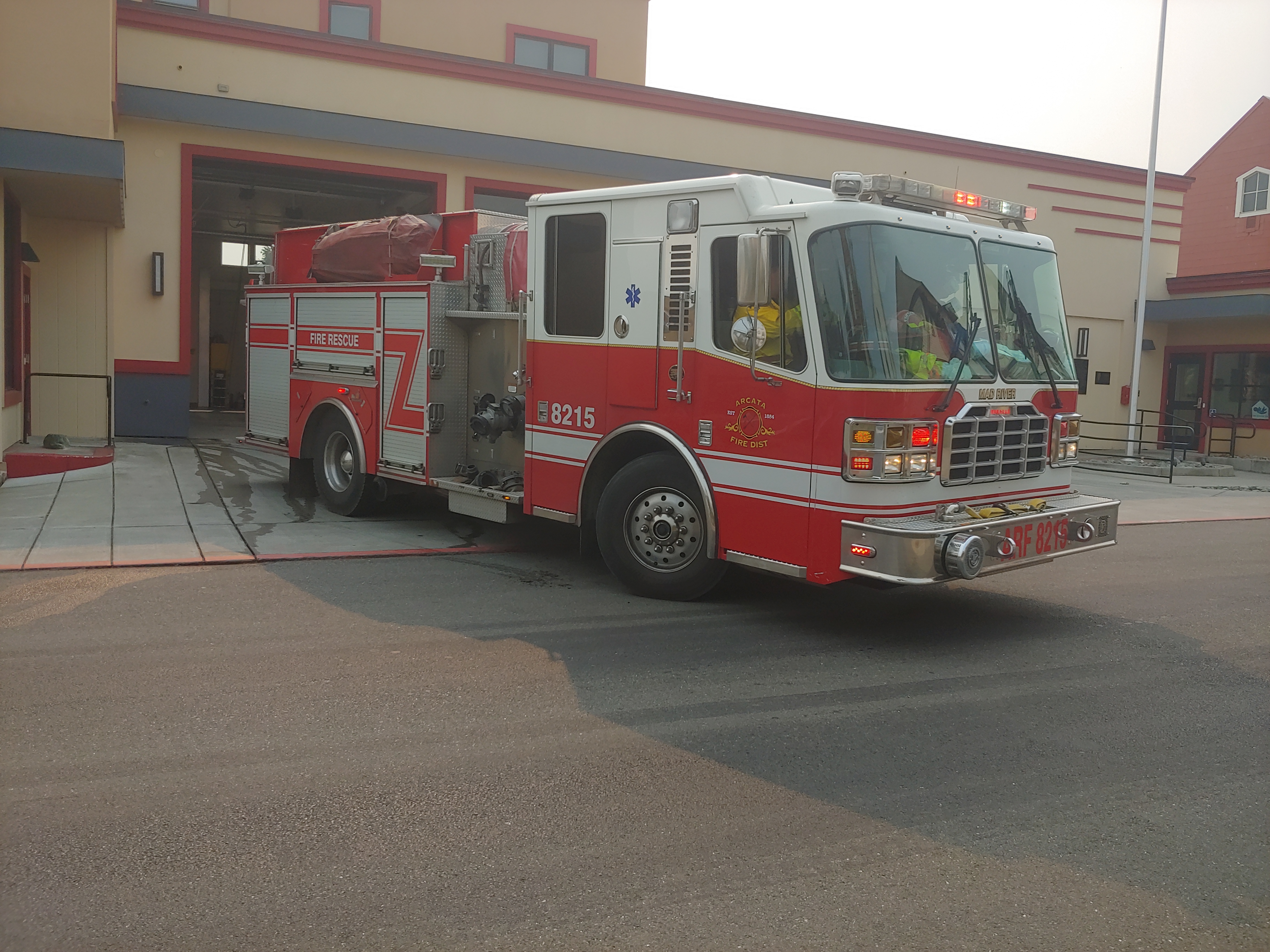
    Firefighters who test positive for COVID-19 will be housed on campus to complete their quarantine period.

    Humboldt State University will provide quarantine housing to United States Forest Service firefighters in the event that someone on their teams tests positive for COVID-19. Housing will be for the individuals who were potentially exposed to positive COVID-19 individuals.

    HSU has set aside two dormitory buildings, Maple and Hemlock, which can house up to 20 firefighters each.

    Firefighters are expected to avoid the dining halls and not share spaces with students. The US Forest Service is requiring employees to adhere to quarantine orders, limiting them to individual rooms. Rooms are located in the same building, separate from housing residents.

    HSU has not been requested to provide meal delivery. The US Forest Service has contracts with vendors for meal delivery.

    All of the protocols were developed by the CDC, California Public Health and Humboldt County Public Health. Similar to the isolation rooms that have been set aside for HSU students who’ve tested positive, rooms will be sterilized prior to forest service stays and again after they’ve left.

    Aside from COVID-19, Forest Service firefighters have stayed overnight for transition housing during the fire season.

    Stephen St. Onge, associate vice president for student success at HSU, is impressed with the university’s speedy response towards CAL Fire’s request.

    “There was a group that was moving from one fire to another and couldn’t find a place to stay,” Onge said. “We mobilized and we’re able to support that, I am proud of HSU for being able to do that.”

    The group that stayed on campus slept for a few hours until transitioning to the next fire. None of the firefighters that stayed overnight were tested positive for COVID-19. A contract is currently in the works to see if CAL Fire needs more transition housing from HSU.

    Typically, fire agencies try to keep hotel rooms open for fire evacuees by finding alternative housing. During COVID-19, it is extremely important that they find non-congregate living for quarantine.

    As a state entity with lots of amenities in a rural region, HSU often partners with state, local, and federal agencies, nonprofit organizations and others to provide support.

  • HSU music department breaks national accreditation standards

    HSU music department breaks national accreditation standards

    Students majoring in music suffer from education standards

    According to the National Association of Schools of Music, the Humboldt State University music department is acting out of line with national accreditation standards.

    Section 8B of the NASM handbook requires that students are provided sufficient time on tasks. HSU music buildings are closed half of the week, leaving students without access to their instruments during allotted class-time.

    Cindy Moyer, music department chair, advocated for her students to have access to the building’s practice rooms.

    “I was able to assign every student to their own room that no one else would enter,” Moyer said. “Now more people are in a building at a given time and students are sharing rooms which isn’t nearly as safe.”

    Without access to the music buildings, percussion students can’t practice, which was a huge problem last spring. Buildings were simply shut down and students have no way to play.

    “When you stop learning, it’s not like you stop, you actually get worse,” Moyer said. “No matter how hard I begged or cried, they wouldn’t give percussion students access to the buildings.”

    Students should have access to practice spaces at least 110 days in a semester, though they get more if they stick around over breaks. This semester students get only 28 days.

    “Definitely not getting the education [music students] are paying for,” Moyer said.

    Eugene Novotney, a music professor at HSU, sees the closed facilities as an enormous obstacle for his students. HSU students rely on university instruments to practice because they can’t afford to purchase their own.

    “No student owns instruments like Timpani, Xylophones, Marimbas, Vibraphones, Steelpans, Grand Pianos,” Novotny said. “Very few own their own drum sets.”

    Seth Mattingly is a fourth-year student in the music program. A percussion student, Mattingly finds that it is challenging for him to improve his performance using his professor’s feedback.

    “Normally I would be trying to get three to four hours every day of the week,” Mattingly said.

    Mattingly pre-records his musical pieces and performance with the limited instruments at his home. He doesn’t feel like he has enough time to act or improve on the feedback his professor gives him.

    “I am not learning nearly as much as in a traditional semester,” Mattingly said.

    Music students need facility access for the final eight weeks of the semester in order to continue practicing and improving as musicians. During finals week, every student who is taking lessons has a jury, which is essentially a final exam.

    Each student performs the music they have been working on this semester for five to 15 minutes in front of a jury of faculty. This semester, juries will be done over Zoom or through recordings.

    At the end of the semester auditions are held for students who wish to move into the performance or music education tracks. Students must be able to practice consistently to prepare for the auditions.

    Heather Madar is a representative on the Fall Instructional Transition Team (FITT) which is in charge of operationalizing the campus. FITT runs logistics to see if a request can be made given the COVID-19 circumstances. Any information or requests get processed through Madar, it’s sort of a hierarchical type of communication.

    “Because of the pandemic environment, simple decisions have ramifications for safety and trigger different things,” Madar said.

    Logistics that need to be weighed may have to consider listening to guidelines imposed by the county, the chancellor’s office, sustaining academics for students, listening to safety people on campus and custodial and facilities on cleaning and sanitization. To make matters more complex, guidance standards have been changing along this.

    Jenn Capps is provost and vice president for academic affairs, the highest level of academic administrator at HSU. Capps is aware of the problem that the music department is facing with facility accessibility.

    “Unless we are supporting our custodial and facilities working 24/7, there comes a barrier with the number of folks to support and operate under the cleaning protocols,” Capp said.

    HSU doesn’t have the capacity or resources to bring enough custodians on campus and can be a difficult position to hire.

    “Word is getting out, folks are frustrated,” said Capp, “We are applauding the people that are making the stuff happen.”

  • Students advocate for award-winning food sovereignty lab.

    Students advocate for award-winning food sovereignty lab.

    Awaiting approval from President Jackson, the food sovereignty lab is the first of its kind

    After facing rejection multiple times from administration, the request to use the former Hilltop Marketplace as the location for an entirely student-lead food sovereignty lab is finally getting attention from the higher-ups.

    Last semester, on the first day of class, professor of Indigenous Natural Resource Management Practices Cutcha Risling Baldy, posed students with two questions they would have the entire term to answer: first, what do you think HSU needs? Second, what do you think we can accomplish as a class in the semester?

    The idea students came up with is a food sovereignty lab that could be used for academics, events and gatherings and it would be connected directly to food security. The food-lab would be the first of its kind available in all California Universities, possibly all colleges in the country.

    Amanda McDonald is a leader of the Waste Reduction Resource Awareness Program at HSU and one of the student participants in the food-lab project. According to McDonald, food security is the number one student need across all CSU campuses. She feels our current food security program, OhSNAP! is a huge help, but students need more.

    “The OhSNAP! student food pantry has done an outstanding job at helping meet basic student needs in the past two years, however, it is simply not enough,” McDonald said. “The Food Sovereignty Lab will work in tandem with organizations like OhSNAP! to address innovative solutions to food security, food sovereignty and sustainability. Through conducting research, writing grants and collaborating with community gardens in our region, the potential of this Lab has yet to even scratch the surface.”

    The student-led project is backed by award-winning research. Carrie Tully is a graduate student in the environmental and community program at HSU and also one of the students that participated in the food sovereignty project.

    “My classmate presented this research to the CSU research competition and our classes’ research was selected by the University to participate in the competition,” Tully said. “They won second place in the graduate level behavioral and social sciences field.”

    The University’s initial decision to deny the space was especially frustrating after their achievement, considering they were selected by the University to participate in the competition.

    “Our request was denied by the committee in a very casual email,” McDonald said.”

    The University’s Space and Advisory committee’s response stated they believe the former Hilltop Marketplace would better serve as a general student space, accessible to all.

    “The Coronavirus pandemic has highlighted the need for local sustainability, food security and food sovereignty.”

    Ted Hernandez

    McDonald couldn’t make sense of the committee’s decision. The last use of the location was a marketplace, designed specifically for the purpose of putting food in the hands of students. McDonald and the others also envisioned the food-lab as a place that would be available to everyone – the diverse student-population, surrounding communities, tribal nations and national and international scholars. It would be a kitchen space that could be used for academics, events and gatherings.

    “If they’re thinking it is better suited as a lounge, there is a lounge on every floor of the BSS,” McDonald said. “Or they can build a lounge on any part on campus.”

    In response to the committee’s decision to deny the space request, there was a significant outcry of community support for the food sovereignty project, including over 80 letters received from students, staff, faculty, local organizations and members of tribal nations in a single week.

    Wiyot Tribe Chairman, Ted Hernandez, is one of the many to have sent a letter supporting the project. In his letter, Hernandez explains how the food-lab would be especially beneficial to us now, given the pandemic.

    “The Coronavirus pandemic has highlighted the need for local sustainability, food security and food sovereignty,” Hernandez said.

    Hernandez supports the food lab because it will benefit HSU, the local community and local tribes.

    “The end result would be an interdisciplinary learning lab worthy of HSU that would both attract Indigenous people and students from out of the area,” Hernandez said. “While also serving the local Indigenous peoples by helping to preserve their food sovereignty and native food security.”

    Students from NAS 331 presented their proposal to the Associated Students board of directors and the University Senate this summer. The former Hilltop Marketplace was approved to be used for the food sovereignty lab, May 28, by the University Space and Facilities Advisory Committee. Then again on July 19, by AS President Jeremiah Finley – suggesting it be adopted into the next HSU academic master plan.

    The project is still currently awaiting approval from the President’s office, the Academic Master Plan group and Facilities Management. For now, it seems the COVID-19 pandemic has caused another roadblock in the project and the grand-opening of the food-lab is yet to be determined.

  • HSU Student Resources to Get Through the Pandemic

    HSU Student Resources to Get Through the Pandemic

    Student resources for school, finances, food, housing and counseling

    Here is a list of resources Humboldt State is offering for students. Click here for a student-created site of community resources. Click here for the site in Spanish.

    Educational advice:

    Enoch Hale is the director of the Center for Teaching and Learning at Humboldt State University. He provided five tips to help students with online learning during the shelter in place order. His tips revolved around being kind and flexible.

    “Kindness is having the patience and the benefit of the doubt to know that everyone else is struggling,” Hale said. “Be flexible—no one signed up for this and we are going to have to be agile in our expectations in the changing patterns.”

    Five tips to help with online school from Hale:

    1. Don’t ignore feelings—reflect on them so they don’t manage us.
    2. Communicate with professors more, not less.
    3. Log on more frequently. Check your emails and canvas more often. Not all courses will be on Zoom.
    4. Set a schedule, use a study calendar and stick to a routine.
    5. Check the Keep Learning website.

    Finances:

    HSU Coordinator of Student Services for the financial aid office Morgan McBroom provided financial advice to students. McBroom suggested students in a crisis contact the financial aid office.

    For students who are hard-pressed for money, there is a student emergency loan that ranges from $500 to $1000. It is a short-term loan and can come within a few days. Financial services will work to help students pay it back. Students who have not used all of their student loans from the previous semester may also still have access to them.

    Due to the COVID-19 crisis, students’ loan interests are being waived, but the estimated date that it will stop is in June. As of now, the end date hasn’t been established. If you are an HSU graduate, you can have your loans waived for a year with no interest.

    Contact: finaid@humboldt.edu or (707) 826-4321.

    Housing:

    In addition to her advice on financial matters, McBroom also provided housing advice. There is emergency housing available on campus. The off-campus liaison is a resource if you’re struggling with rent.

    Contact: housingliaison@humboldt.edu

    Food:

    1. The recreation room on the first floor of the Jolly Giant Commons offers pre-made bags with food items. This happens twice a week on Wednesday from 10 a.m. until 12 p.m. and Thursday from 1 to 3 p.m. Vegan and vegetarian meal bags are also available.

    If you cannot make those times due to isolation or quarantine, contact mira@humboldt.edu and she can set up a delivery time.

    2. Oh SNAP! can also help you load your student ID card with J points. You need to express a financial need for food support. If you have over $40 in J points, you need to wait until your card is under $40. You can receive $60 every four weeks, but this is subject to change. If there is an increase of funds there could be an increase in the amount given to students. You can also donate your J points to help students in need.

    Contact: ravin.craig@humboldt.edu.

    3. For extra help, try applying for CalFresh, a state-funded program to help pay for food. Students not working 20 hours a week can apply for CalFresh, except for students in the Educational Opportunity Program program, students with specialized grants and work-study students. You can qualify for up to $200 a month for groceries.

    Contact ravin.craig@humboldt.edu if you need help with the application process or would like to see if you qualify.

    Counseling:

    Mira B. Friedman is the lead for health education and clinic support services. She provided information about counseling for students.

    HSU Counseling and Psychological Services is offering virtual appointments.

    Students can call (707) 826-3236 to make an appointment. There’s also a 24/7 hotline for immediate crisis outreach for students to speak with a therapist by phone at (707) 826-3236.

  • Here’s What The Lumberjack is Watching, Reading, Playing and Doing

    Here’s What The Lumberjack is Watching, Reading, Playing and Doing

    Some unedited recommendations and brief reviews from some of our staff


    Life and Arts Editor Grace Caswell

    What I’m watching:

    Just finished “Tiger King.” It’s the most ridiculous and unbelievable show I’ve seen yet with a surprising amount of depth.

    What I’m reading:

    “Noam Chomsky” by John Lyons.

    What I’m playing:

    None :/

    What I’m listening to:

    Lots of new music is being released but right now Toro y Moi and Jhene Aiko.

    What else I’m doing:

    Yoga and meditation has been a go to as well as cooking healthy foods. Anything to keep my mind at ease and health immunity high.


    Managing Editor Chelsea Wood

    What I’m watching:

    I’ve been watching the final season of “Schitt’s Creek” which has been a bittersweet reflection of the last five seasons.

    What I’m reading:

    I’ve been reading more of a book I started last summer. It’s called “The Spaceship Next Door” and it about a teenager who grew up in a small town where a spacecraft crashed years ago but never left.

    What I’m playing:

    Minecraft. I trash talked this game as a teen, but it’s amazing and I love creating things on it. It’s extremely entertaining and relaxing.

    What I’m listening to:

    I’m listening to lots of downbeat songs—music that soothes the soul with catchy beats. Just stuff to satisfy this melancholy phase I’m swimming through.

    What else I’m doing:

    I picked up an old hobby, basket weaving. It’s a relaxing and simple task that yields a useful item. And no that’s not a BS excuse, basket weaving is the shit.


    Editor-in-Chief James Wilde

    What I’m watching:

    I just finished season three of “Ozark.” It’s a crime drama with superb characters and writing that had an unexpected depiction of mental illness that probably hit a little too close to home and (full disclosure) made me tear up.

    What I’m reading:

    I just finished “Why Time Flies,” by Alan Burdick, a fun little foray into the way we think about time. Next up: “The Glass Hotel,” by Emily St. John Mandel.

    What I’m playing:

    Call of Duty: Warzone with my brother and some friends. I hate the premise of Call of Duty and, you know, shooting people, but as long as I ignore that it’s lots of fun.

    What I’m listening to:

    Kind of all over the place, which isn’t out of the ordinary. Indie stuff to hip hop to alt rock to electronic stuff to jazz to whatever else. Oh, and random Tiny Desk Concerts.

    What else I’m doing:

    Walking or going on runs to get out of the house. Drowning in schoolwork. Lying on the floor.


    Opinion Editor Alexis Parra

    What I’m watching:

    “Gentrified”- A show that hits home for people of color. “Tiger King”- A cult war in the world of big cats.

    What I’m reading:

    “Z: The Beginning of Everything”- the untold story of Zelda Fitzgerald and beautifying her life.

    What I’m playing:

    None.

    What I’m listening to:

    My playlist on LJ- All of my favorites songs and energy that I carry into one playlist. “La Platica”- A bilingual podcast where the host is funny and talks about dumb shit and real shit.

    What else I’m doing:

    Painting. Make-up. Face masks. Talking to my family. Getting creative while also taking care of my skin and keeping in touch with my loved ones.


    Sports Editor Thomas Lal

    What I’m watching:

    “Drive To Survive,” a super fun look into the 2019 F1 season with the dramatic thrills and spills to match!

    What I’m reading:

    “Permanent Record” by Edward Snowden. An intriguing and somewhat terrifying read.

    What I’m playing:

    The Witcher 3. This game has consumed my life. Loving the story and exploring the world.

    What I’m listening to:

    So much music, mostly ska, punk and jazz along with the “Every Little Thing” podcast.

    What else I’m doing:

    Being sad without any sports to watch.


    Web Editor Seth Finnegan

    What I’m watching:

    “Community.” The always funny comedy about students at a community college.

    What I’m reading:

    None.

    What I’m playing:

    Dead Rising and MLB The Show 19. Filling the sports void with hitting baseballs and zombies with baseball bats.

    What I’m listening to:

    The “Adventure Zone” podcast. Three brothers and their dad play D&D together.

    What else I’m doing:

    Learning to play darts. It’s very frustrating but very fun!


    Video Editor Benjamin Zawilski

    What I’m watching:

    The filmography of David Fincher and Hayao Miyazaki, and “The Good Place” on Netflix.

    What I’m reading:

    Rereading “Peter and the Starcatchers” by Dave Barry and Ridley Pearson, which was one of my favorite book series as a child

    What I’m playing:

    Overhearing my sister play Animal Crossing.

    What I’m listening to:

    The film scores of Mark Mancina, Alexandre Desplat, and James Newton Howard.

    What else I’m doing:

    Hiking at least five miles a day, sometimes up to seven, and have done a considerable amount of housecleaning.


    Reporter Deion Alston

    What I’m watching:

    “Coffee & Kareem.” Cop dates kid’s mother and him and kid (Kareem) uncover a conspiracy of dirty cops.

    What I’m reading:

    Haven’t been reading books tbh, but a lot of news article pertinent to sports, COVID-19, crimes etc.

    What I’m playing:

    Fortnite and NBA 2K 20. Fortnite is a shooting game and 2K is professional basketball at your finger tips.

    What I’m listening to:

    For podcasts, I listen to “Up in Smoke” hosted by two former NBA players, Matt Barnes and Stephen Jackson. It’s very interesting—great interviews and guests as well. For music I’m listening to a lot of Lil Uzi, G Herbo, Tory Lanez. So basically rap, hip-hop and R&B.

    What else I’m doing:

    I’m cooking a lot more—takes time up in the day. Do my 250 push-ups everyday and step-ups for some cardio. And occasionally throw the football in the drive way.


    Reporter Dakota Cox

    What I’m watching:

    “Seinfeld” & “Empire.” “Seinfeld” is a wonderful waste of time. “Empire” is a must-binge, cutthroat musical.

    What I’m reading:

    “Hurricanes” by Rick Ross is a fairly generic success story in terms of rapper autobiographies. “The Alchemist” is an extraordinary journey of the body, mind and soul.

    What I’m playing:

    Animal Crossing; don’t ask questions, go pick up the game!

    What I’m listening to:

    Going back and forth between oldies and hip-hop, gotta keep the serotonin up. Michael Jackson, Bob Marley and The Beatles are timeless, go listen! Gambino got the best album of 2020, @ me!

    What else I’m doing:

    Slipping out of sanity; would not recommend. Get a mask-on walk in when the sun shows it’s face; I like to play a little game called guess the gang members.


    Reporter Sarah Blunt

    What I’m watching:

    I just finished “I am not okay with this.” It was a really good show with short episodes that have a lot going on in them. 10/10. I also just recently watched “Freedom Writers.” That one was really good and empowering, also took place in Long Beach (where I’m from) so that was relatable (kind of).

    What I’m reading:

    “Looking for Alaska.” I’ve already seen the show on Hulu but I realized I had the book. So far it’s really good and John Green (the author) writes really descriptively so I never feel bored when I’m reading it.

    What I’m playing:

    None.

    What I’m listening to:

    Tons of music. Nothing in particular just going through my music apps and looking for things I haven’t heard before, or even music from shows i’ve watched that I liked the soundtrack. That’s most of what I spend my free time doing.

    What else I’m doing:

    Lately I’ve been taking bike rides alone just to get fresh air and not be stuck in the same surroundings. I never ride bikes but lately it’s just been a really nice way to get out the house but also keep my social distance from others. 10/10


    Reporter Ivan Ramirez

    What I’m watching:

    “Castlevania,” the show. “Mewtwo Strikes Back: EVOLUTION,” the movie.

    What I’m reading:

    Marcy Burstiner’s Investigative Reporting Book.

    What I’m playing:

    None.

    What I’m listening to:

    Psytrance, Electronic Dance Music, Drum & Bass, Electronic Rock.

    What else I’m doing:

    Meditating, talking to people on Discord, Instagram.


    Reporter Alberto Muro

    What I’m watching:

    I have started watching the Amazon Prime series “The Boys.” It has an interesting take on superheroes proving that not all of them are super. It’s a world where super heroes exist, now imagine their lack of empathy for saving people.

    What I’m reading:

    Currently reading through my textbooks so that I don’t fall behind on homework.

    What I’m playing:

    I am currently playing the remake of Resident Evil 3 which has updated graphics and character development.

    What I’m listening to:

    I am listening to the “Tinfoil Hat” podcasts since conspiracies take my mind on a wild ride

    What else I’m doing:

    I have transitioned from a student using critical thinking to an essential asset during a global pandemic thus turning me into a critical drinker.
  • Humboldt State’s Theatre Fraternity Tries a Comeback

    Humboldt State’s Theatre Fraternity Tries a Comeback

    Alpha Psi Omega attempts a comeback with new students and adviser

    Humboldt State University’s theatre fraternity is trying a comeback to campus (or it was, prior to the COVID-19 outbreak). Alpha Psi Omega intends to allow students to increase funding for competitions and student-directed shows.

    Rae Robinson, the faculty adviser for APO, said the return of the fraternity excited her.

    “The first chapter was like 1919 or 1920,” Robinson said. “There have been a few different departments as long as there has been Humboldt State.”

    Robinson said APO was reinstated when she arrived at Humboldt State 14 years ago. APO had a few years of club work, but the group of students interested in the fraternity graduated. APO went dormant.

    “We want to pull all of our performing art students together so we can all support each other better.”

    Jaiden Clark, APO president

    “Those kids graduated, the MFA was dissolved by the university, and it went under the radar for a while,” Robinson said. “Last year we had a new group of incoming students and they said, ‘We want a theatre club again,’ and I said, ‘We have Alpha Psi Omega.’”

    APO President Jaiden Clark said they’re passionate about creating change within the theatre department by unifying performing arts students through APO.

    “We want to pull all of our performing art students together so we can all support each other better,” Clark said. “We want to make more connections with more clubs around the school like the improv club and the circus club.”

    APO’s fundraisers will allow students to determine how the money is used instead of the theatre department allocating funds. The fundraiser money will allow for student competitions and student-operated shows.

    “School-wide enrollment is down, and as far as I understand, the school can’t afford to hire another faculty member to the theatre department. We need the students to feel empowered to do more.”

    Jaiden Clark

    “They don’t give us the money that we need in this department,” Clark said. “Neither have any schools in any theatre department that I have ever been to. So the students are going to pick it up.”

    Clark said the theatre department is low in faculty members, and having a more unified body of performing arts students would better support the students.

    “We lost a lot of faculty all at once,” Clark said. “School-wide enrollment is down, and as far as I understand, the school can’t afford to hire another faculty member to the theatre department. We need the students to feel empowered to do more.”

    Professor Patrick Ulrich, assistant adviser for APO, looked forward to working with the students to reach their goals.

    “I would like to work directly with the students,” Ulrich said. “Making money for their goals, serving their community, getting our name out to everybody and really just having an avenue for an honors fraternity.”

    APO would give the students freedom to advertise themselves how they see fit.

    “It really is in the hands of the officers,” Ulrich said, “who are all students.”

  • Just One More Hour of Breakfast Burritos

    Just One More Hour of Breakfast Burritos

    Demand extends breakfast burrito availability to 11 a.m. at The Depot

    Popular demand for breakfast burritos has extended the serving time at The Depot by an hour. In previous semesters, breakfast burrito service stopped at 10 a.m. Now, it stops at 11 a.m. We asked The Depot’s staff and regular customers how the time extension affected them.

    Aileen Dominguez works at the breakfast bar in The Depot, and worked there every day for the last semester. This semester, Dominguez has to close the breakfast bar and open the rice bowl station at the same time, alone.

    “Overall it’s positive—the late students can get their burrito.”

    Aileen Dominguez

    “It is more hectic,” Dominguez said. “I have to be faster since there is only one person working the shift.”

    Dominguez said opening and closing two stations at once is a challenge, as there’s no room for both to be done simultaneously.

    Despite her challenges, Dominguez said she feels the extension has had a positive effect. For Dominguez, she noticed that students are able to get their burritos at a later time.

    “Overall it’s positive—the late students can get their burrito,” Dominguez said.

    Adriana Peck is a floor trainer, and oversees different zones at The Depot. This means she helps at the breakfast bar if needed. Peck agreed with Dominguez—she felt the time extension has had a positive impact.

    “It is excellent. I am able to get off my shift and still grab a burrito,” Peck said. “It’s nice to know that it’s there.”

    Leslie Rodriguez is a regular customer at The Depot. Rodriguez looks forward to eating breakfast burritos.

    “It’s really good with Tapatio,” Rodriguez said.

    However, Rodriguez didn’t feel like the time extension had much of an effect for her.

    “It sucks,” Rodriguez said. “They’re all out by the time I get there.”