This year I turn 21, and I’ve never been drunk in my entire life.
Looking back on that sentence, it seems counterintuitive. Legally I wouldn’t be allowed to drink anyway, so the night’s still young – right? Well, I don’t know, maybe the night is starting to get old.
In March, it will be six years since I was diagnosed with epilepsy. I was a freshman in high school with a couple of alcoholic parents, and I wasn’t interested in drinking anyway. In fact, when the doctors told me I shouldn’t drink because of my epilepsy, I felt relieved to have an excuse not to drink. An excuse other than not wanting to – or because my dad died from alcoholism, that is.
The relief didn’t last though. Throughout highschool, I made friends with the stoners. It was easy because they wouldn’t drink like other teenagers, and I saw myself as a patient using marijuana medicinally – or at least that’s what I told my neurologist. Truth is, I’ve never had a medical problem with smoking weed or the occasional mushroom trip. I was California sober, as they say.
When I moved to Humboldt for college, to no one’s surprise, I kept up with my “medicinal” lifestyle. In high school and throughout college, I’ve stayed close with people who aren’t heavy drinkers. No frat bros and no fake IDs. Just deadheads, med cards and many tours of our local herbal facilities. That’s why I chose Humboldt over other schools. The party scene is mostly BYOBs (bring your own bong) and forest shindigs.
All that being said, it’s impossible to avoid FOMO around alcohol. Whether it’s at parties, concerts, house dinners, first dates… even in pop culture – movies, music, books – it’s everywhere. It’s as if people think college students can’t be alcoholics.
The problem I’ve always had with being California sober is the fact it never felt like I had an option. While everyone was drinking at parties, I needed to feel included in social settings. If I couldn’t pass a bottle at least I could pass a joint. I started smoking weed for fun, I kept smoking weed to feel like a normal college student. I thought because I didn’t drink I was sober, but I wasn’t. I was stuck in an in-between.
I wasn’t consciously choosing to be California sober. I couldn’t drink alcohol because of my epilepsy, and I couldn’t stop smoking weed because of Humboldt’s societal standards. After smoking weed for six years, it only made me anxious. I didn’t enjoy being high anymore, I just liked smoking in a circle with my friends. Smoking weed is a way of socializing. I don’t smoke cigarettes and I don’t vape, so how else was I supposed to fit in?
At the end of last year, I made a choice. I’m already halfway there, why not embrace it? Lean into the discomfort. I guess at parties I’ll have to rely on my natural charm. Feel my emotions, feel the social anxiety, and ride out that feeling. When I’m sober I am in complete control. Epilepsy doesn’t rule me, my surroundings don’t rule me, my inner monologue is under control… like I said, just me and my natural charm.
Now when people offer me drugs, because let’s be honest it oddly happens all the time, I tell them I’m sober. This time I mean it. Nothing to justify, no specifying what sober means, just sober by definition. It’s even got a ring to it.
“Yeah, I’m sober.”
Spending time with friends, laughing until I’m crying, journaling before bed, it’s all got a new ring to it.
I still have my vices though. Ice cream by the quart, getting way too invested in board games, trauma dumping in the newspaper…
You could say it’s a different kind of high, but I’d rather not. I’m sober.
The environmental impacts of legal and illegal growing operations are not well understood by many of the residents of Humboldt County, however, it is important that we are aware of how extractive industries impact the environment and all its relatives.
“The rush mentality is what founded Humboldt County…people act like that was a long time ago and we have definitely moved on, [that] we’re this very green friendly place, we’re liberals, we’re leftists,” said Department Chair of Native American Studies, Cutcha Risling Baldy (Yurok/Hupa/Karuk). “This is how people think of Humboldt County, but what founded us is this Gold Rush and we have been rushing ever since…so after the Gold Rush ‘well, gold didn’t make us enough money, lets rush any kind of minerals that we can get’ and then after that ‘well that didn’t make us enough, let’s rush timber’…and I think we’ve been rushing since 1849.”
Assistant professor of Native American Studies Kaitlin Reed (Yurok/Hupa/Oneida) is the author of “From Gold Rush to Green Rush.” In the book, she illustrates the correlation between the destructiveness of the Gold Rush period and the marijuana industry in Humboldt County (Green Rush).
Reed’s presentation “Cannabis & Environmental Justice in Humboldt County,” explains that environmental injustice comes into play when settler-colonial infrastructures further dispossess and exploit Indigenous lands for capital gain.
The marijuana industry perpetuates settler-colonial harm by damaging sensitive ecosystems and cultural areas that Indigenous peoples rely on for survival and health. Just like the Gold Rush, marijuana cultivation poses many threats to Native peoples who rely on the land and rivers for their livelihoods.
According to Reed, trespass cultivation, in which growers illegally occupy public or tribal land to cultivate their grow sites, is the most harmful type of growing operation.
“These types of grows are most frequently associated with the most severe environmental impacts,” Reed said.
Trespass growers hike into the mountains and hills to clear-cut a crop site, which has a devastating impact on the sensitive biodiversity of that natural place. These growing sites are chosen for cover and secrecy, so it’s more likely that a grow sites will disturb highly sensitive bio-diverse ecosystems.
In addition to clear-cutting, growers use and bring certain supplies that are horrible for the environment. These include soil that contains noxious chemicals, herbicides, and insecticides that are released into the earth as well as garbage, plastics, batteries, homemade invasive structures, vehicles, petroleum products, etc.
Additionally, chemicals and other contaminants left by growers poison wildlife species like the West Coast Fisher. Reed explained that rodenticide is an over-the-counter rat poison which causes animals to bleed out internally after consumption.
Research wildlife ecologist Mourad Gabriel led a study in 2015 that examined rodenticide poisoning in the West Coast Fisher population. It was concluded that between 2012 and 2015 the federally threatened species faced an increased number of deaths due to exposure to rodenticide poisoning from illegal pot farms.
Reed explained that rodenticide is usually a slow death, and causes animals to be easy prey for predators. This creates a vicious cycle where the poison gets passed from animal to animal. It’s easier for predators to catch an animal that is slow and weak, and so the contamination process continues through the predator who consumed the poisoned prey.
Indigenous communities are also heavily impacted by trespass grows. During our interview, Reed relayed a story that she heard from the Yurok tribe in which they located several abandoned trespass cultivation sites on their land.
One site had a shocking one hundred five-gallon buckets,overflowing with human feces. Growers will often defecate in rivers, streams, and tributaries. Because marijuana cultivation requires a significant amount of water, the water levels become extremely low, magnifying the effect of those contaminates. Tribal members who consumed the contaminated water were struck with E.coli, including a Yurok Tribal Chairman.
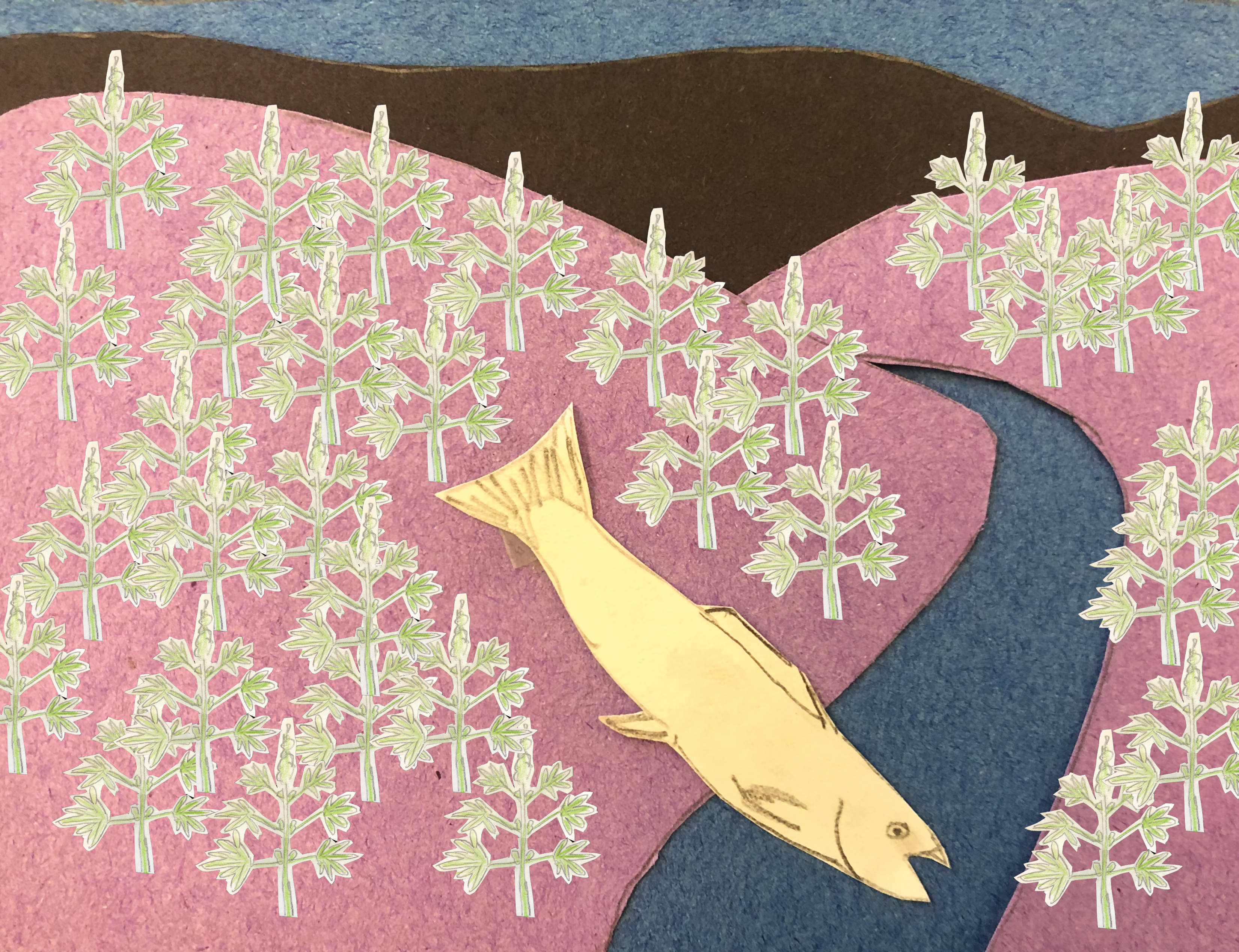
“We ingest the water from our rivers. We’re salmon people, we depend on the fish in those rivers,” said Reed. “In a western framework, there’s a distinction between human beings and nature … settler colonial resource extraction perpetuates violence not only against the landscape but it also perpetuates violence against Indigenous bodies because we depend on that landscape.”
Yurok tribal members are afraid to go out on the land to gather food and other cultural resources in fear of accidentally walking into a grow site, according to Reed. Typically, grow operations are dangerous and harbor some threatening people who will do what they must to protect their crops, including acting violently.
“From a trespass cultivator’s perspective, your goal is to remain undetected. You don’t want anyone to find out what you’re doing or where you are,” Reed said. “It makes little difference if there’s an FBI agent approaching your grow or if it’s an eighty-year-old woman looking for hazelnut sticks.”
She expounded that Indigenous peoples have many reasons to access their ancestral territory: to gather, practice ceremonies, pray and manage landscapes. However, doing so has led to tribal members being subjected to violence from trespass growers.
“There have been stories of tribal members being held at gunpoint because they’ve accidentally stumbled upon a grow,” she continued, “I’ve had people tell me they are scared to go down certain roads in broad daylight because of trespass cultivation.”
Today, around 60% of the marijuana grown in California is grown on public or tribal lands, and the responsibility of cleaning up environmental degradation left by growers falls to Indigenous communities.
Why I don’t think marijuana is everything it’s cracked up to be in baseball
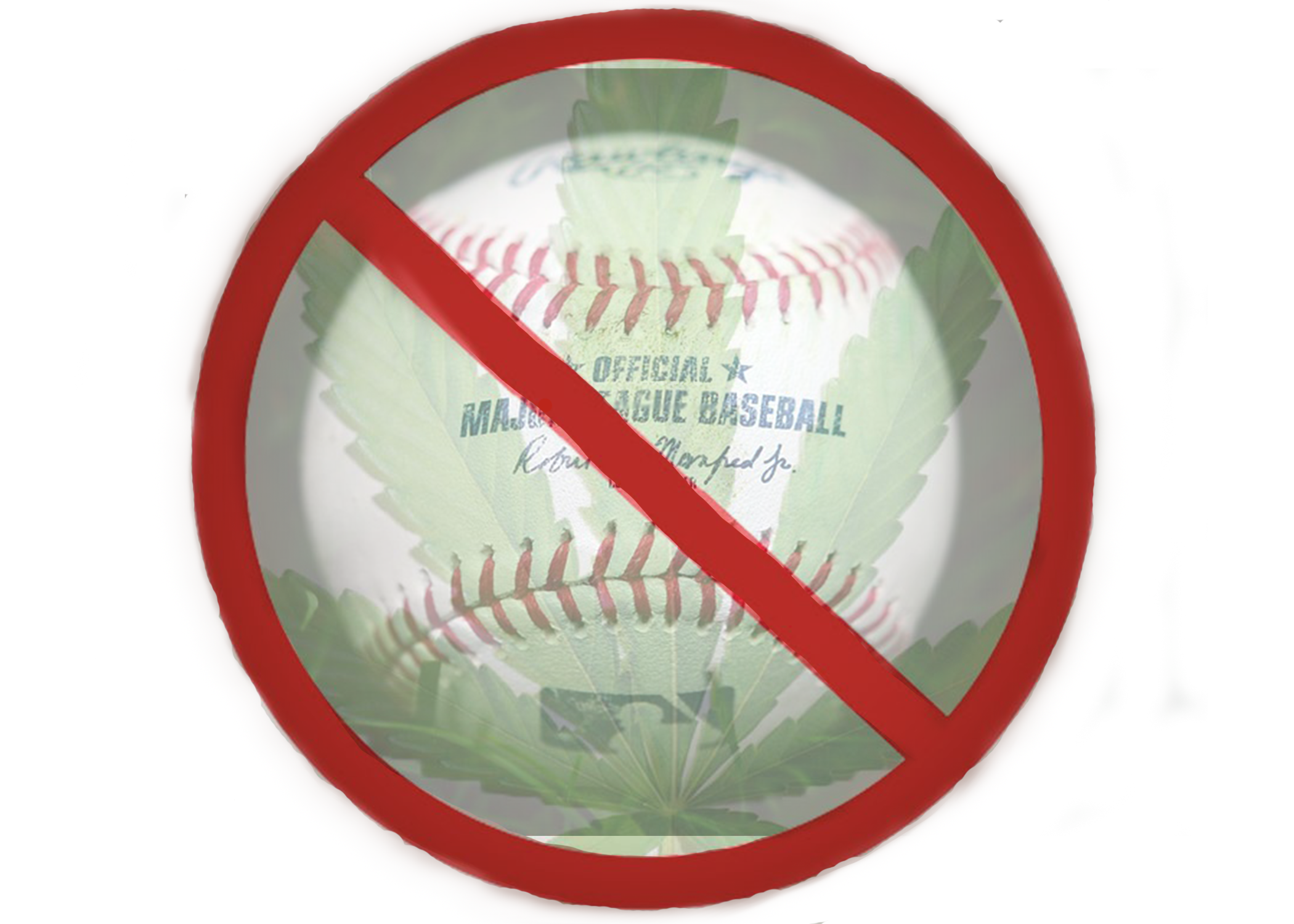
Major League Baseball is an organization that prides itself on having great talent on and off the field. Players are drug-tested fairly regularly and subject to different levels of punishment if caught with opioids or other banned substances. That is all changing with the legalization of marijuana in baseball.
Marijuana graces the covers of magazines and virtually everything in sight in modern culture like a groundbreaking scientific discovery. Seemingly everyone will go to great lengths to defend the devil lettuce’s honor if one attacks it. In general, marijuana is looked at like a god. Sure, people have benefited from it, but its usage has gotten out of control and the relaxed restrictions of marijuana in baseball are just more nails in the coffin.
With the increase in American marijuana users comes the increase of ramifications. While there are many compelling arguments for normalizing marijuana usage, there are also legitimate health concerns around it.
As a matter of fact, marijuana-induced emergency room visits have jumped up, particularly in more left-leaning states.
According to the Colorado Hospital Association, a collection of more than 100 hospitals in the state of Colorado, “the prevalence of hospitalizations for marijuana exposure in patients aged nine years and older doubled after the legalization of medical marijuana,” and “emergency department visits nearly doubled after the legalization of recreational marijuana.”
That is scary stuff. Maybe marijuana can wash away anxiety or depression temporarily, but to risk the added side effects is foolish.
Returning to the realm of Major League Baseball, we find ourselves in the midst of an organization that is trying to appeal to a younger audience by making games more enjoyable and watchable. After all, the kids are the future of the sport.
Yet the idea that loosening the grip on marijuana in baseball will do no harm couldn’t be more wrong. It is common knowledge that youth look up to ballplayers as role models in many different facets.
If marijuana is more debilitating to one’s health than beneficial, we should be making it clear that any, and I mean any, drug or substance will not be tolerated in baseball no matter how harmless it may be marketed as. I certainly wouldn’t want my kids to form the idea that they can get away with smoking weed like it’s no big deal. Marijuana and e-cigarettes are already being passed around like packs of gum in middle and high schools and it’s only getting worse.
“Drugs work very well, at first, for mentally ill people. If you’re anxious, it’ll go away with a couple of hits, a beer. It’s like magic. But then, the tolerance sets in. So, not only do they need to drink more to relieve the anxiety, but every single time they try to stop, the underlying anxiety comes back worse.”
Dr. Alex Stalcup
Beyond setting a bad example for the younger generation, people are using marijuana for non-medical purposes and leaning on it like another shoulder. Especially in Humboldt County, people are socially smoking marijuana and claiming it’s saving their lives.
I recognize there are some individuals who actually need it to function, but nonetheless, it’s spread like a wildfire and now it’s hard to find someone who doesn’t smoke it or consume edibles.
Mental health issues affect the extent to which people get addicted to marijuana or other substances, according to Dr. Alex Stalcup, medical director of the New Leaf Treatment Center in a 2016 interview with Healthline Magazine.
“Drugs work very well, at first, for mentally ill people,” Stalcup said. “If you’re anxious, it’ll go away with a couple of hits, a beer. It’s like magic. But then, the tolerance sets in. So, not only do they need to drink more to relieve the anxiety, but every single time they try to stop, the underlying anxiety comes back worse.”
Stalcup went on:
“Fifty to sixty percent of the people with an addiction to marijuana whom [my] clinic treats have some sort of underlying mental health condition,” he said.
Granted, it is only one clinic, but the point is an overwhelming amount of people across the country who abuse weed are dealing with a mental health crisis of some kind.
I will admit that I am in the same boat with a lot of these folks, but I will never use weed as a solution to my problems. There is an abundance of other remedies and treatments available to cure internal issues.
I can’t control what you do. I can’t control what Major League Baseball does. But I hope that baseball will go back to looking at marijuana as a banned substance that could incur fines and treatment.
This cannabis-infused brownie recipe uses coconut oil as a butter substitution and base for a vegan cannabis butter.
Photo by Rachel Marty
Coconut oil is a great replacement for butter and absorbs cannabinoids in the same manner.
The first step is to make the “cannabutter.”
Depending on how much marijuana you use, your brownies can have a higher or lower dosage of THC. When making cannabis-infused products, always be cautious of your dosage and measurements.
Start by decarboxylating the marijuana.
Photo by Rachel Marty
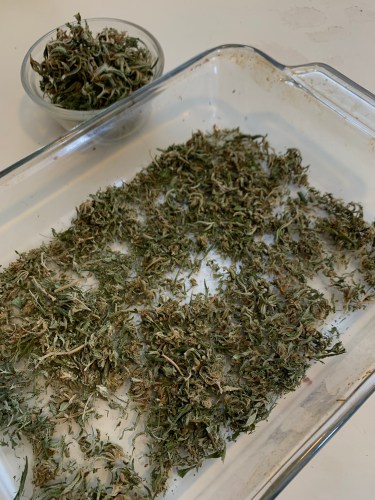
The decarboxylation process is simple: spread marijuana out on a tray and place it in an oven preheated to 245 degrees for 30 minutes.
Photo by Rachel Marty
Photo by Rachel Marty
This is an essential step. Decarboxylation heats up the cannabis flower and allows the body to absorb the cannabinoids, essentially activating the cannabis. This process happens instantly when marijuana is smoked, but when making edibles it must happen slowly to preserve the product and not burn it.
The next and longest step is to infuse the coconut oil with the decarboxylated marijuana.
Throw the coconut oil and decarboxylated marijuana in a sauce pan and let it simmer on the lowest heat setting for three hours.
Photo by Rachel Marty
Photo by Rachel Marty
Heat on the lowest heat setting ensures your oil will be fully infused and that the baked marijuana will not burn.
Don’t leave the house or kitchen when you are infusing your oil. Three hours is a long time, but leaving your stove unattended is dangerous and could potentially start a fire.
After three hours your coconut oil will no longer be clear and will have a deep green color to it.
Photo by Rachel Marty
The next step is to separate the cannabis-infused oil from the actual cannabis. To do this, use a cheesecloth.
Photo by Rachel Marty
A regular strainer’s holes are too big and will leave you with little bits of marijuana in your oil. Using cheesecloth on top of a strainer is the best course of action and will ensure your oil is as pure as possible.
Photo by Rachel Marty
Next, measure out however much oil you need for your brownie recipe.
Photo by Rachel Marty
It’s important that the coconut oil does not sit out for too long or the oil will become dense and harder to incorporate into the mix. No worries if your oil does set up. Just reheat it.
As for eggs, almost every brownie recipe out there calls for them, but just like butter, there are some great substitutes you can use. Applesauce is a good substitute, which is what this recipe uses, but you can also use mashed-up bananas or yogurt.
Photo by Rachel Marty
Finally, mix all of your ingredients together, pour it out into a pan and put it into the oven.
Photo by Rachel Marty
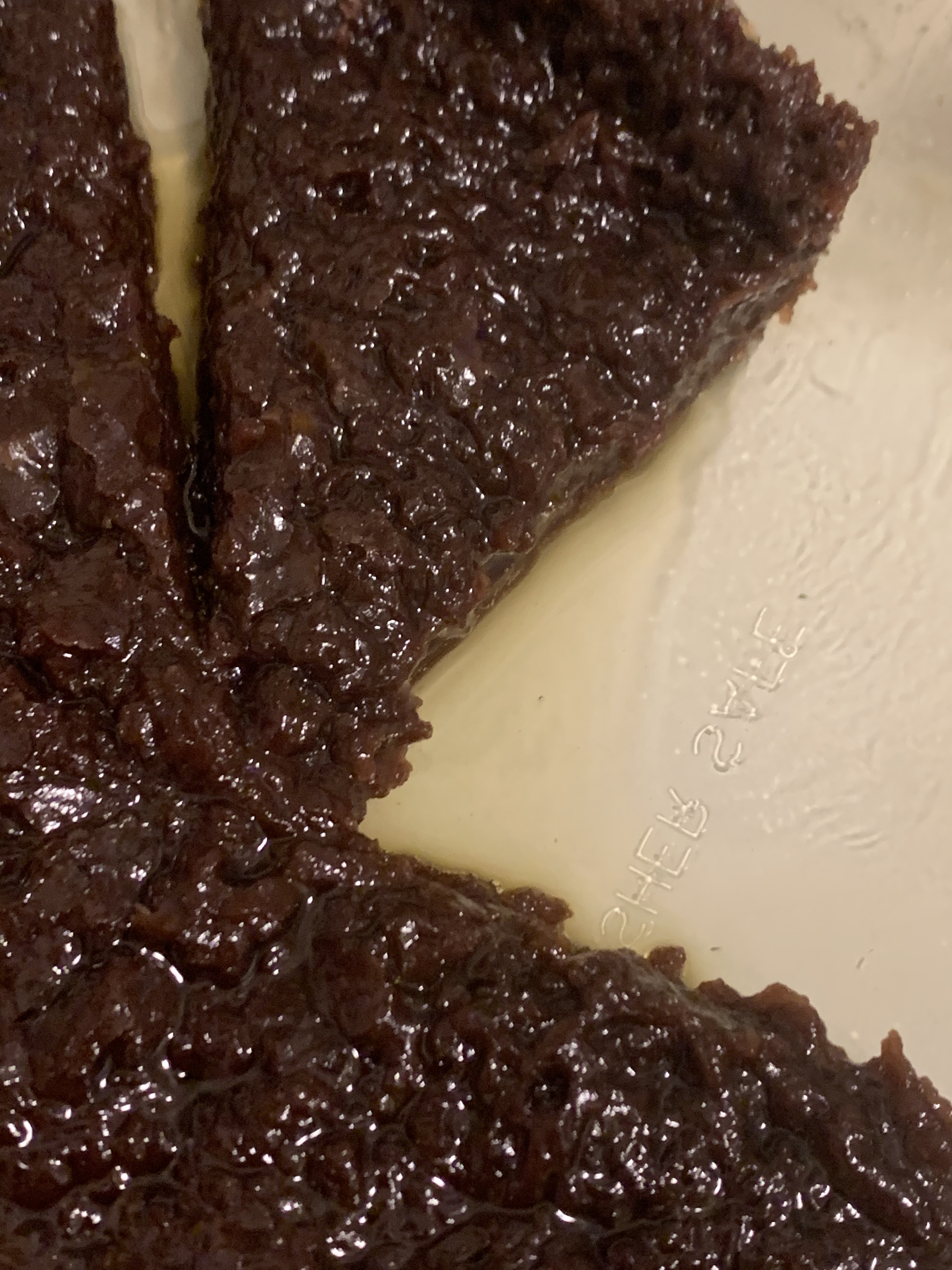
When your brownies come out of the oven, they may look soft or even underdone, but let them rest in a cool space for 10-15 minutes and they will set. Fresh out of the oven, the coconut oil will be very apparent on the top of the brownies and make them look oily, but as they cool the oil will absorb and become denser.
Photo by Rachel Marty
Again, be careful of your dosage when consuming any cannabis-infused product.
Edibles or cannabis-infused foods are a common way to consume marijuana. The process of making edibles, just like baking brownies, is a science. The primary psychoactive compound in marijuana is called cannabinoids. When making edibles, you infuse a fat with cannabinoids to activate the chemical.
Mark Wilson, a Humboldt State University professor with a Ph.D. in microbiology, genetics and toxicology explained that cannabinoids are fat soluble and don’t break down in water.
“Some substances are water soluble and some substances are fat soluble,” Wilson said. “THC is primarily composed of carbon-carbon bonds and carbon-hydrogen bonds, so it can’t interact well with water, but it can interact well with fats and oils.”
This characteristic of THC, tetrahydrocannabinol, limits what can be turned into an edible. THC can’t steep in hot water for weed tea. Marijuana would need to be steeped in hot milk instead, where the THC would break down and bond with the milk fats.
“Things that dissolve into our fat tend to remain in our system much longer. That is, they slowly diffuse into fat, and slowly diffuse out. The fat acts as a sort of absorption compartment. That makes it detectable in drug tests for weeks.”
Joseph Szewczak
Many people use butter as the main fatty ingredient in edibles. Dairy-based fats are a good option for infusing cannabinoids, but lactose-free alternatives are also solid options, including coconut and olive oil. Bacon fat can absorb cannabinoid infusions too, if you’re looking for a savory option.
Joseph Szewczak, an HSU professor who studies and teaches comparative physiology and physiological ecology explained the physical changes to the body when people eat cannabis-infused fats rather than smoking cannabis plants.
“Things that dissolve into our fat tend to remain in our system much longer,” Szewcxak said. “That is, they slowly diffuse into fat, and slowly diffuse out. The fat acts as a sort of absorption compartment. That makes it detectable in drug tests for weeks.”
Whether inhaled or eaten, the THC enters the blood stream and messes with brain-cell functions in a unique way. Since THC is shaped like a chemical in the brain, the brain recognizes the chemical and allows to alter normal brain function. That chemical usually tells brain neurons to rest, but THC forces the brain to keep firing, which leads to deep thoughts, increased creativity and anxiety.
In light of these effects, it’s important to understand what’s going to happen after eating an edible. First, since the body takes some time to digest edibles and since their THC is stored in fat, the high lasts longer. Second, the nature of THC and marijuana may lead to discomfort or anxiety, or may lead to creativity and fun, but that’s dependent on many factors.
Co-Director of the Humboldt Institute for Interdisciplinary Marijuana Research Josh Meisel is researching the significance of set and setting, or who you’re with and where you are, and how those things impact a high.
“People’s negative experiences may be influenced by edible use,” Meisel said. “But set and setting may be as influential or more influential than the psychoactive properties of the substance itself.”
New study links smoking cannabis with testicular cancer
Those attending Humboldt State University who smoke marijuana regularly may want to rethink their habit.
Marijuana is the most widely used drug in the United States, and a large part of its popularity as a recreational narcotic comes from the perception that it has very few, if any, long-term health effects. There are, in fact, several positives that are associated with the drug, such as help with depression or anxiety, easing of muscle soreness and a reducing of the number of seizures experienced by people with epilepsy.
“When you combust any plant, you’re creating significantly more carcinogens.”
Dr. Jeffrey Chen
However, despite its positive effects, a recent study conducted by the Journal of the American Medical Association has identified a link between marijuana use in people with male reproductive organs and an increased risk of testicular cancer. The study explained that burning marijuana (which is necessary to smoke it), like burning any plant, triggers the release of carcinogens, which, in this case, may lead to testicular germ cell tumor.
The study also analyzed potential connections between recreational marijuana use and lung cancer, oral cancer and head and neck cancer. However, JAMA did not find any connections to any of those cancers.
The meta-analysis in the data collected by JAMA is specific to white men, leaving out a large part of the global population. Many of their findings also date back as far as 1973.
There also isn’t a direct causality from marijuana to cancer over a wide range of the population. The American Association for Cancer Research has identified many of the victims of cancer as having used marijuana heavily. However, there is still no evidence of other variables, who else might be at risk or other drugs that might increase or minimize said risk.
These studies so far are limited in the information they provide, and should not be taken as the final word on any and all links between cannabis and cancer. However, it does contribute to the ongoing discussion of the health effects of the drug, and those who do use it may want to sit up a little straighter and take some notice.
Marijuana laws are enforced unequally and minority communities bear the brunt of the consequences
Many states have voted on the legalization of marijuana, a schedule one drug, and 11 states have legalized recreational cannabis. Weed is now a large source of legal income in the U.S.
Forbes shows that the top three states where recreational marijuana is legal profited over $4 billion in 2018 on cannabis sales. But according to a 2010 study by the American Civil Liberties Union, states waste over $3 billion a year in weed-related arrests.
We believe states waste more time and taxpayer money by not legalizing and decriminalizing weed. Law enforcement often enforce weed laws unequally, with more arrests in underprivileged neighborhoods, which are often filled with people of color. According to the ACLU, black people are four times as likely than white people to be arrested for marijuana possession despite similar usage rates.
We are fed up with blatant inequality and discrimination.
In July 2016, a Minnesota police officer shot and killed black 32-year-old Philando Castile in his vehicle. The Minnesota Bureau of Criminal Apprehension investigated the case, and was told by the officer that he “feared for his life” due to the smell of marijuana and Castile’s lack of concern for the child in the vehicle. This ended in the officer’s acquittal.
While most states don’t keep data for marijuana possession by Latinx individuals, New York City’s data shows that the Latinx community has the same rate of use as black and white individuals, but recent data shows that marijuana possession is the fourth most common cause of deportation.
It’s obvious that many of those affected by these ludicrous laws are from black and brown communities. And it may be relevant to note that there is political gain to keep it this way, as many people who have been arrested for marijuana can no longer vote.
This war on drugs, specifically the war on marijuana, is a war on communities of color. Children are left without parents and people are locked up for years on minor counts. And yet, even when white people commit similar crimes the punishments are all too different.
Opioid addiction is at an all time highs in the states. It has largely affected white communities, but the amount of arrests is no where near that of other cultural communities when marijuana is involved.
If treatment and repercussions are unequal, we need to understand that the system is flawed. When one group is given more freedom to make mistakes than another, it seems that there is a hidden agenda at work to keep white communities more prosperous.
Drug laws are just one example of discriminatory regulations within the United States. Data shows that law enforcement agencies often treat people of color differently, our laws only add tension to the problem.
As of now, 10 states plus Washington D.C. have legalized recreation marijuana and an additional 20 allow medicinal use. These states should quickly look into decriminalizing the drug fully. If we take steps to free individuals locked up for minor drug possession charges and use the money saved to focus on bigger issues, then we take one major step toward reforming the country’s unjust system.
It may be a slow process, but it’s one that needs to happen now.
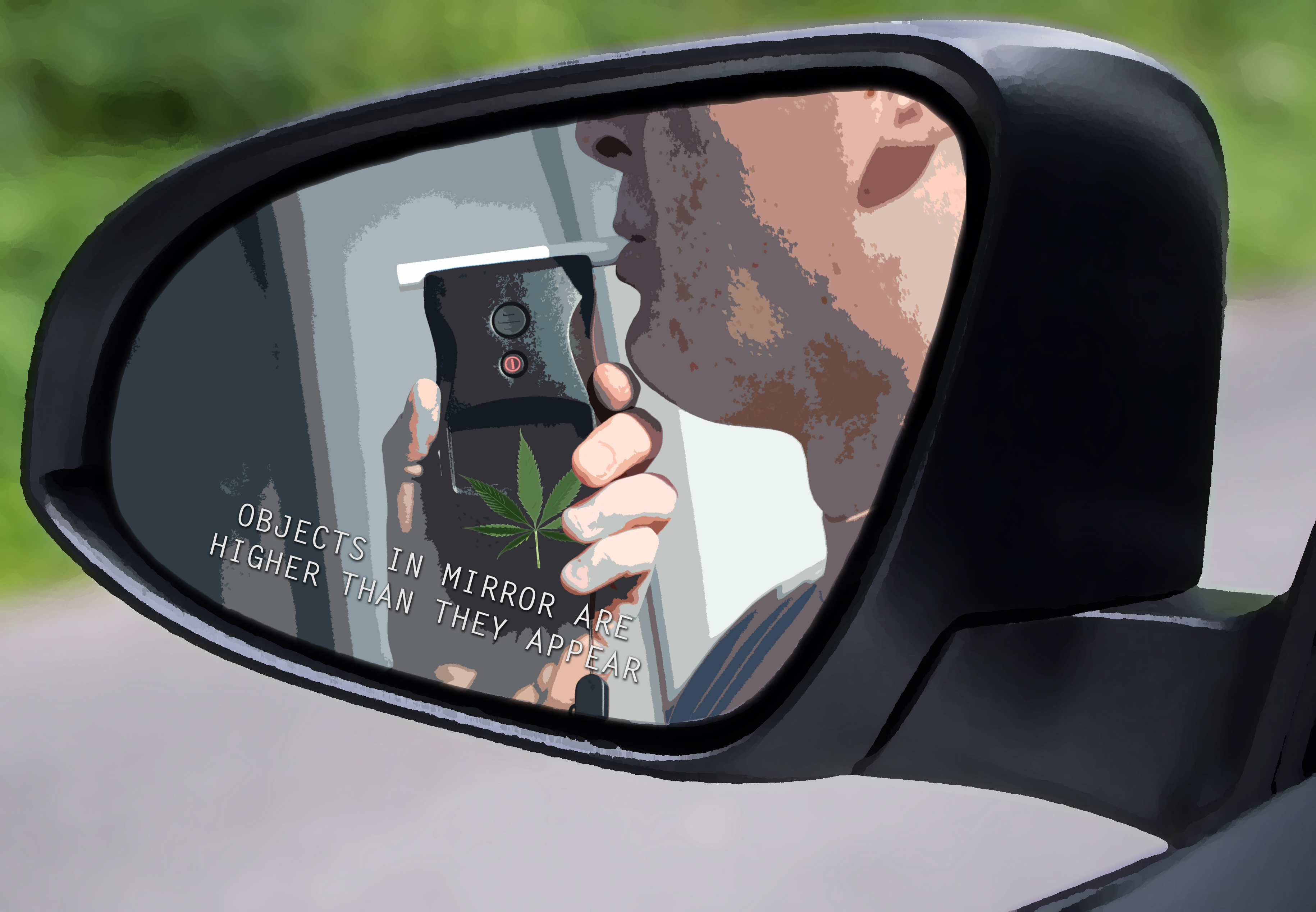
No pee, hair or spit. One blow is all it takes to show marijuana intoxication levels with new breathalyzer.
Marijuana has been a touchy topic since Colorado and Washington made their first moves to legalize recreational use in 2012. Since then, 29 states have followed and declared marijuana legal for medicinal and/or recreational use.
Tension forms at the discrepancy between state and federal opinion on where marijuana falls legally as a drug. The lack of legal confirmation from the federal government makes it difficult for government employers, especially police officers, to execute and process circumstances surrounding marijuana intoxication. Recent developments in marijuana detection technology suggest a breathalyzer is in the works.
Current marijuana testing requires a hair, urine or blood sample. The test results detect past use up to six months and reports the current THC level in the body. This testing proves to be unreliable as past use of marijuana will distort a current reading of bodily intoxication, which is what law officials care about.
The two technology companies racing to release their version of a more accurate breathalyzer are Hound Labs and SannTek.
Hound Labs was established five years ago and is leading the race with an expected release of late 2020. The Hound Labs breathalyzer operates on a specified time basis. It can detect marijuana if it’s been used in the last three hours. The three-hour window comes from two findings; one, marijuana is only detectable for the first three hours. Afterward, THC levels drop so low and so fast that it becomes virtually undetectable. Second, the initial three hours of intoxication are the most impaired and therefore the most crucial.
The breathalyzer method proves to be more accurate and better suited for law and medical officials, as alternative testing can take hours to produce results. In addition, this method is also beneficial to the participant, as the regulated three hour time interval doesn’t hold participants liable for past usage beyond that time frame.
If this new testing method becomes normalized, the three hours prior to testing will be the most critical, but anything before those three hours is merely tangential. Ideally, someone tested for their marijuana use could not be held liable for their marijuana use prior to the that three-hour window because the breathalyzer would not be able to detect it.
The opposing company, SannTek, and their breathalyzer the SannTek 315 will operate similarly to the Hound Labs breathalyzer. SannTek 315 is still in early development so the company is not providing much information. Like Hound Labs, their product will utilize a time interval to reveal the last ingestion of marijuana and current intoxication.
Hound Labs conducted clinical testing in 2017 in cooperation with University of California, San Francisco. However, no findings have been concluded publicly due to the small sample size. SannTek 315 lacks any formal testing or trials at this time.
The more I reveal my situation to other cannabis consumers, the more I realize most stoners have the same thing
The heave of a sore stomach and the splat of foamy, green sludge is how I start most of my days.
Throughout the last year, morning puking became an unwanted habit I couldn’t avoid. I dismissed nausea and vomiting as another anxiety symptom, but I soon discovered the near-daily episodes I had were caused by something unsuspecting.
Chances are if you’re a consistent consumer of cannabis, you’ve developed an intolerance to the drug that so many claim heals all.
Cannabinoid hyperemesis syndrome is a condition that entails constant vomiting brought on by long-term cannabis use. There are multiple phases of CHS in which symptoms may intensify, if preventative measures aren’t taken.
The first phase is called the prodromal phase, which can last from months to years depending on the frequency of your cannabis use. In this first, neutral phase people with CHS experience nausea and occasional vomiting.
Before discovering what CHS was I thought I could remedy my nausea by self-medicating with marijuana, but doing so undoubtedly increased my intolerance to the drug.
“I stopped eating breakfast because I could never keep anything down and lunches disappeared as I was too busy with classes to have time to eat.”
The second phase is called the hyperemetic phase. It’s reached when users continue to treat their symptoms with more marijuana use. Some people with CHS often find relief from their symptoms by taking hot showers.
In my experience with this phase, my morning nausea trailed throughout the day which led me to alter my eating habits to avoid the chance of puking.
Due to my new eating schedule, I noticed changes in my weight. I stopped eating breakfast because I could never keep anything down and lunches disappeared as I was too busy with classes to have time to eat. However, I felt ravenous by dinnertime. Which, understandably, is not the best way to maintain a healthy body.
Within the second phase of CHS, symptoms do not dissipate if actions aren’t taken. This phase can last years if one doesn’t decrease cannabis use or completely drop the drug. According to a report on cannabinoid hyperemesis syndrome by Ceadars-Sinai, only after a CHS sufferer ends their use of cannabis will they experience relief from all symptoms.
This isn’t a plea for those who smoke to stop, nor am I advocating for the use of marijuana. I want to warn you that a plant that seems beneficial to numerous health issues can still cause damage to your body, especially if used daily for years.
CHS and its symptoms aside, you can definitely be allergic to cannabis, and you can get sick from it depending on its quality. No matter the quality of your cannabis or if you think you aren’t allergic, CHS can still be in your near future if you aren’t mindful of your habits.
The more I reveal my situation to other cannabis consumers, the more I realize most self-labeled stoners are dealing with CHS too.
While nausea and vomiting can be symptoms of several other conditions, CHS can be diagnosed through the process of elimination of other conditions and through testings suggested by your physician.
Humboldt County’s reputation around the United States reeks of marijuana.
As part of the Emerald Triangle, along with the counties Mendocino and Trinity, Humboldt makes most of its green from the seasonal crop.
Rumor has it that the celebration of April 20 started in Marin County, California, not too far from Humboldt with a group of San Rafael High School students who called themselves The Waldos. These pothead pioneers gathered on campus after school at 4:20 p.m. to spark up and look for a rumored, abandoned pot farm.
One of the original Waldos said that the term originally meant “Do you have some?” or “Do I look stoned?”
Eventually, the psychedelic rock band Grateful Dead picked up on the term when they moved blocks away from San Rafael High School and frequently smoked with one of the Waldos’ older brothers.
Years later, April 20 is a nationwide holiday when stoners smoke copious amounts of weed and spend the day trying not to miss 4:20 p.m.
Celebrating April 20 in Humboldt County is almost as pointless as the British declaring a national day for beer (which they have, mind you). But the beginning of 2018 marked a monumental time in California history.
Marijuana advocates have been fighting for legalization of cannabis since the 1960s.
Finally, on Jan. 1, California Proposition 64 became effective, allowing legal recreational use and taxation of marijuana statewide. Nearly 60 years later, the seed is cultivated into reality.
Since then, there has been little qualitative information about the impact on Humboldt economy, but tourism and sales tax revenues are likely to increase.
Now more than ever, April 20 is a holiday to celebrate the progress California has made in decriminalizing the medicinal plant and allowing anyone to enjoy its benefits. For the first time, anyone above the age of 21 can safely spark up a legal, recreational blunt in the comfort of their home.
If you are partaking in 4/20 this year, please remember that any dank celebration should be in moderation. Spark responsibly.
Before the Gold Rush there was a Green Rush, with some gold in there. Settlers came from the East in the 19th century looking for gold and found some big trees to cut down and sell. It was a prosperous time for white people who made money from lumber sales, but it sucked for every person of color who worked low wages in the industry or barred from work. Now, it’s time for a new area of selling green stuff for money once again.
There are many parallels from the Gold Rush to the Green Rush as legalization came about. Marijuana legalization is just as racist and elitist as the lumber industry. 81 percent of cannabis business owners are white. Three-quarters of the industry are owned by men.
However, this is more than the environment, it’s about its medicinal value. Sure, there are some studies that tell of marijuana’s healing abilities and some Facebook memes that exaggerate those claims and say weed cures cancer. But those studies seem to be used to justify lazy people to smoke all day and do nothing.
Just because something is supposedly healthy for you, doesn’t mean you should consume it to excess if it’s unnecessary. Apples are healthy, but eating a whole bushel won’t keep the doctor away and nor would smoking a pound a day, or whatever amount people actually smoke.
There are a lot more things to do in Humboldt than smoke. Cannabis can be a part of Humboldt, but it shouldn’t be exclusive to its identity. Not everyone smokes weed. There are quite a bit of people who look down on weed due to its culture. No one should be forced to smoke, but cannabis shouldn’t be looked down upon either. The cannabis industry needs to be improved.
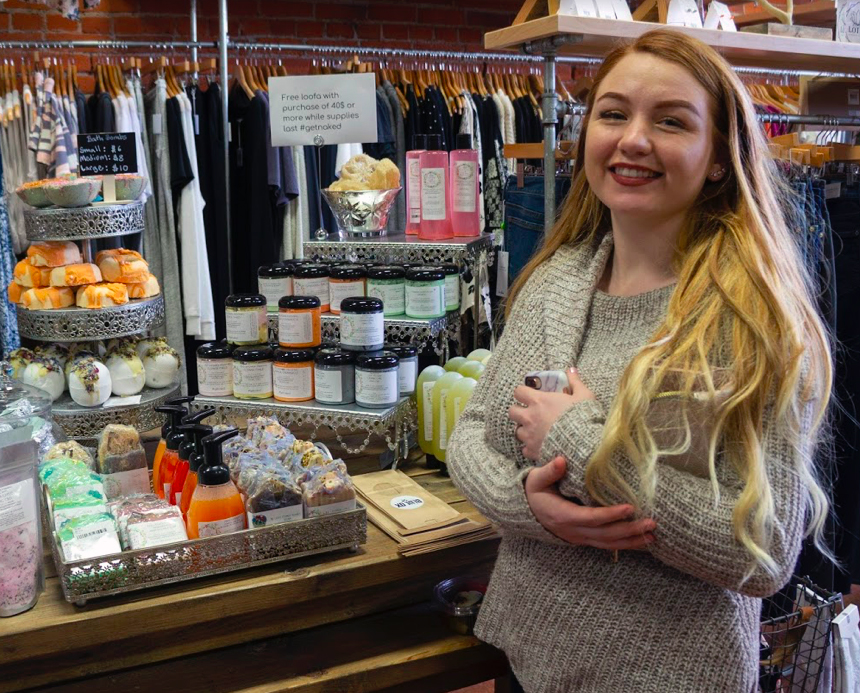
Natural soap line Queen Bee Naturals’ biggest fan is Shannon Kraucyk. Kraucyk met the creator of Queen Bee in high school, where the two became friends and have kept in touch ever since. When she learned her friend was starting a soap line, she was one of the first to try the soaps and she loved them.
“I’m personally in love with her bath bombs,” Kraucyk said. “It hasn’t affected my eczema, unlike those with harsh fragrance.”
Violet Crane, 23, started making soap and a plethora of other body products in 2016.
Crane uses natural materials and fragrances, but her line is known for its CBD oil. Cannabidiol, according to Project CBD, “is a cannabis compound that has significant medical benefits […] and can actually counteract the psychoactivity of THC.” Crane heard and read of its many benefits and healing abilities, and wanted to try it in her products.
Starting with soap, Crane’s products expanded to bath bombs, shower gel, bubble bars, massage oil, lip balm and other fun products like shower frosting (a fluffy moisturizing shower soap) and “sugar daddy,” which is a body scrub.
“I think that’s it,” Crane said, speculating the vast varied line of products she has made over the past two years.
Crane then remembered her face and hair masks, nearly all products made with CBD oil from Humble Roots Medicinal.
Currently, she sells Queen Bee Naturals at Zen in Arcata, Blue Ox Boutique and Otto + Olive in Eureka. She also has a Facebook page with over 1,100 fans and a group with 1,750 members, where she can directly sell her products, as well as share sneak peaks of her upcoming products. In addition, her fans can post their hauls of her items and bathtub pictures of her bubbly colorful products.
Having a lot of fans takes dedication and help. Crane not only has a successful small business, she also has two children. Her partner, Danny Corrales, helps her balance her work and family life.
“I make everything,” Crane said. “He delivers everything and helps with the kids.”
Their 3-year-old daughter, Ariel, is used to sitting in the car on their weekly ride from Ruth Lake to Humboldt for product delivery. Crane recently had her son, Benjamin, two months ago, and quickly went back to making new products.
This included a collaboration with Lost Coast Roast, a local coffee roasting business known for their cold brew coffee that she loves. She contacted them, and after talking, she started making soap with their coffee grounds.
One of the obstacles Crane faced when making her products was copycats. She brought her items into a former friend’s shop to sell. Later, that person started making nearly identical items with CBD oil and using the name Crane put on her items, “CBDQUEEN,” as the name of her product line.
Crane was then accused of not using legal CBD oil in her products by that person. To prove to that person and her customers, Crane took the CBD oil she uses to the Leaf Detective, a Eureka business that tests cannabis potency. She learned that it contained less than 3 percent THC, and a second test proved to be nearly 0 percent THC.
“I was hurt at first,” Crane said, “but I’m focusing on bigger things for myself.”
Crane wants Queen Bee Naturals to grow, not just in Humboldt, but possibly beyond Northern California.
She wants to have a warehouse with employees to make her products so she could spend more time with her family.
With the legalization and acceptance of cannabis in California, Crane would like to expand her line to legally put THC in her products and put them in her future dispensary. Queen Bee Naturals is only growing from here.
The Humboldt State Department of Politics hosted the 14th annual Schaub Memorial Lecture on local politics titled “The Transition to Legal Cannabis,” on March 26. John Meyer, the chair of the HSU politics department, presided the panel discussion.
The four panelists were Hezekiah Allen, executive director of California Growers Association; John Ford, Humboldt County director of planning; Mariellen Jurkovich, director of Humboldt Patient Resource Center and Linda Stansberry, a journalist at the North Coast Journal.
Tony Silvaggio, HSU sociology professor and Humboldt Institute for Interdisciplinary Marijuana Research contributor, served as the moderator.
The California voters approved the Adult Use of Marijuana Act on Nov. 8, 2016. The California state legislature approved the Medical and Adult Use of Cannabis Regulation and Safety Act in 2017. However, local and city governments can ban cannabis business within their jurisdictions. In Jan. 2018, the state of California licensed marijuana facilities sold state licensed, distributed and produced marijuana.
“Certainly the transition from illegal, unregulated to regulated, legal cannabis in the state of California is a very complex one that is riddled with all sorts of political considerations,” Allen said.
Three California state departments are in charge of licensing and regulating cannabis commerce. The California Department of Consumer Affairs regulates and licenses retail sales, distribution and testing. The California Department of Public Health oversees manufacturing and the California Department of Food and Agriculture is responsible for cultivation.
“First and foremost, California grows way more cannabis than we consume here. The state’s estimate is that we produce 15 million pounds and that we consume 2.5 million pounds. That is a huge disparity,” Allen said.
John Ford is an HSU alumnus. Ford talks about cannabis farmers expectations being part of the legal system.
“I think [the farmers] expectations were that ‘It shouldn’t be too hard to permit what I have already been doing,’” Ford said.
Cannabis farmers found out about local taxes, state and county permits.
“2,300 applications that were submitted to the county almost simultaneously, literally choked the system,” Ford said.
The local community and economy are reliant upon cannabis.
“Then, there’s Humboldt County, who has an economy to protect, a reputation and an identity to protect. This industry is important for jobs, for economic growth and yes, taxes,” Ford said.
Ford spoke about other places in California being better suited for cannabis cultivation with flatter land, pre-existing greenhouses and better weather, places close to markets and transportation with abundant access to investment capital.
Mariellen Jurkovich talked about working together as a community.
“Arcata is willing to work with you. Eureka is willing to work with you. We need to work together as a community. This is our industry,” Jurkovich said.
Stansberry is concerned about the economic ramifications that were not anticipated.
“We are going through a really painful growth period,” Stansberry said.
Nick Thomas is a political science major at HSU and thinks slowing big business down will help the local economy.
“We need to make sure that a lot of the major industrial-sized grows get pushed back for five years. That is step number one,” Thomas said.
Thomas referred to Allen’s statements on the importance of small farmers and how it is about the community.
Allen spoke about policy, cultural and financial barriers.
“Honestly, folks don’t have the means to move forward,” Allen said.
Allen pointed out that the market incentive is not there.
“Of 2.5 million pounds of cannabis consumed in state in California, only 600,000 pounds are sold by regulated retailers. The other 1.9 million pounds of cannabis consumed in state is sold on the unregulated market. There is no point in getting a license now. The market isn’t there,” Allen said.
Jenny Williams, a professor at the University of Melbourne, spoke with Humboldt State economics students on Feb. 19 about her findings in a 15-year study of the effects of cannabis users and their choice of job professions.
“In today’s age, cannabis use is something that is socially acceptable,” Williams said. “Today, more of the population who start using cannabis are young, between the ages of 14-18.”
In Williams’s study, 49 percent of 1,000 male high school seniors used cannabis. Within that 49 percent, most of them either stayed in low-wage jobs after graduation or continued their academic career.
Williams’s study also shows theories that cannabis users have a present mindset.
“Users of cannabis are more willing to go into lower wage jobs,” Williams said. “This potentially leads to users being less likely to complete their education.”
Brea Smith, a student at Humboldt State, said marijuana use is likely going to increase due to the recent legalization in California.
“I won’t be surprised if the number of younger users increases in a couple of years.” Smith said.
Eureka resident Jacob Rice has been a cannabis user for years.
“I wanted a job for the sake of getting money,” Rice said. “I guess the study is accurate in some way, but I would take it with a grain of salt.”
Williams plans on conducting a similar study to look into female high school seniors.
“Socially, cannabis has become more acceptable than it was years ago,” Williams said. “I think it’s important to look at a students’ financial wellbeing in the long term when it comes to long-term cannabis use.”
Humboldt County reported 352 people missing in 2015, and according to ABC News, “That’s more people missing per capita than any other county in California.”
It would be fair to say that the black market of the cannabis industry is a probable reason behind the high rate of missing people in our county.
Students and “trimigrants” become vulnerable when they decide to go in the hills to trim, which subsequently makes them dependent on their “employer” without any recourse.
“Students from the nearest college, Humboldt State University, return from a summer of trimming marijuana buds with takes of being forced to give their boss a blow job to get paid,” said Shoshana Walter of The Huffington Post. “During one harvest season, two growers began having sex with their teenage trimmer. When they feared she would run away, they locked her inside an oversized toolbox with breathing holes.”
Money is a huge factor for many college students and cash-paying trimming gigs can help tremendously. But you must be aware of the potential outcomes.
Consider these following things before trimming for a grower:
First and foremost, who are you going to be trimming for and how well do you know them? It is not wise to trim for a stranger, so make sure you know who you are dealing with.
“We have Russian mafia up here, we have Mexican mafia up here and we have Asian triad gangs up here, because the marijuana industry is money,” said Humboldt County Sheriff’s deputy Greg O’Rourke.
Most HSU students are not informed about the involvement of these criminal organizations in Humboldt’s cannabis industry, which is why it is important to know who you are trimming for.
If you decide to go in the hills for a trimming gig, make sure you know where the farm is located. Also, let a friend or family member know about your plan prior to your departure.
In all fairness, some growers are law-abiding citizens and treat their trimmers with decency, but that might not always be the case. That’s why you should be cautious before accepting any job offers. If you don’t, there is a chance you might go missing.
Grow marijuana from the comfort of your home with the Green Box
By Andre Hascall
There is a way to grow marijuana easily while keeping costs relatively low. Greenbox Grow is a company that sells the necessary tools for marijuana cultivation for the average consumer. Dylan Osborn, a graduate in business administration at the University of Southern California, is the founder of GreenBox Grow. He currently lives and grows in Monterey, CA. “Our mission is to teach people how to easily grow medical cannabis at home,” Osborn said. “It’s easy enough for beginners and takes less than ten minutes per day.”
Dylan Osborn with the Green Box Grow | Green Box Grow
Initially, Osborn grew marijuana for his own personal use. Osborn as well as his father have both suffered from sports related injuries, and Osborn turned to medical marijuana to ease the pain.
“I found an opportunity to help people who use marijuana for its medical benefits.” Osborn said, “Once I got into it, I saw all these things about it [growing] being difficult, but my first grow was close to dispensary quality.”
You can find tutorials on their website, www.greenboxgrown.com, to help with the growing process along with the products you’ll need to get started. Osborn also works with clients at their homes helping set up their grow, as well as walking them through the different steps of growing quality cannabis. Once the greenhouse is set up, more steps follow such as getting the proper air circulation, how to properly pH your water, the correct amount of water to use, wiring your greenhouse, as well as how to grow while gone on vacation or during winter.
GreenBox Grow is currently sold through Amazon. Though Osborn would like to have a store for GreenBox Grow in the future.
Dylan Osborn and his greenhouse | Green Box Grow
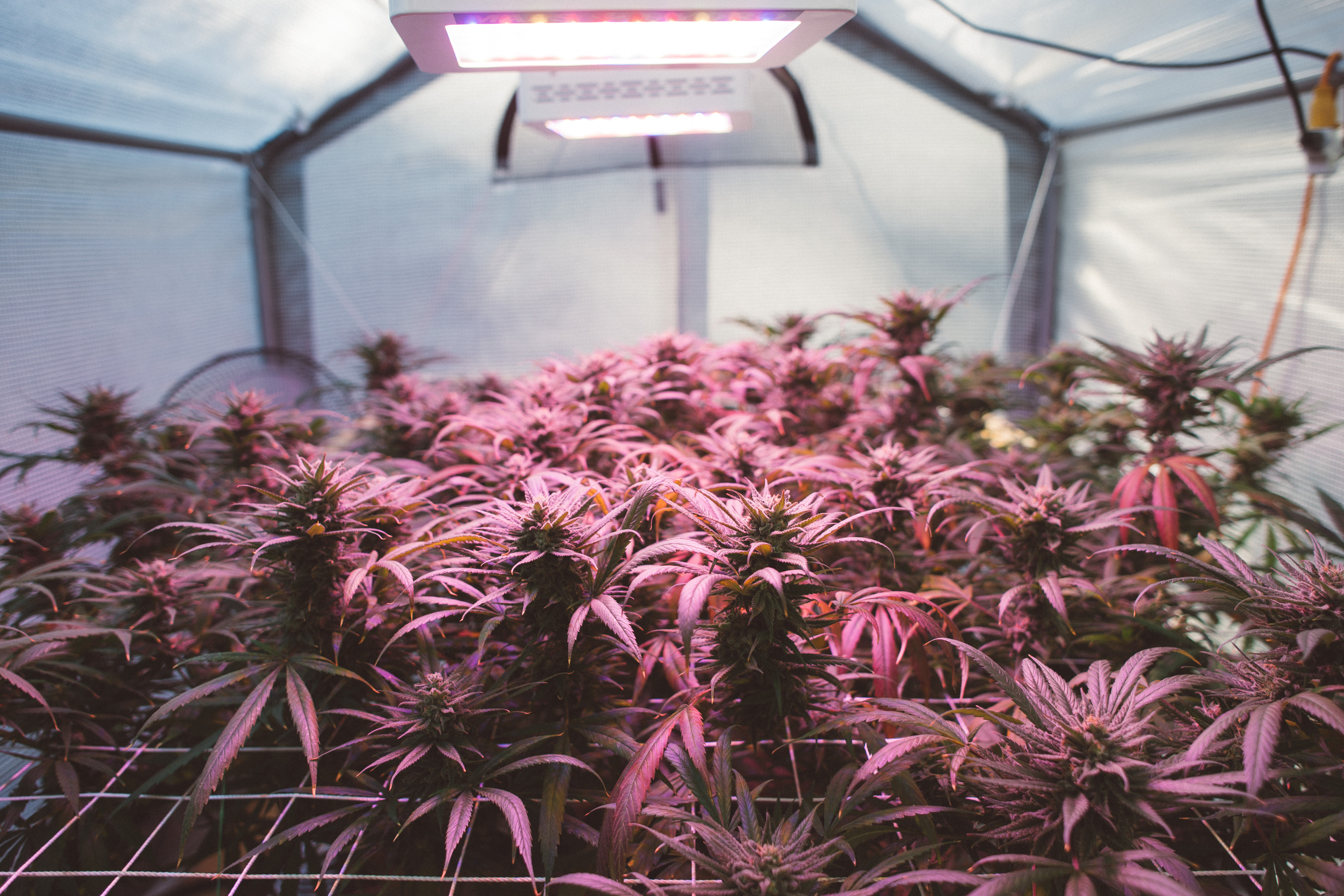
Using GreenBox is as simple as setting up your greenhouse, watching weekly tutorials and growing your marijuana. There are two different types of growing tents and various sizes for both. Greenhouses are for outdoor grow and for indoor you’d need a hydroponic grow tent. Of course the indoor option will cost more money for both equipment and your monthly electricity bill.
Osborn favors outdoor growing as it is more environmentally friendly, and provides the grow with fresh air and natural sunlight. “Depending on the size of a greenhouse the costs could be as low a $30 a month, but indoor would be $100 a month at least,” Osborn said. “The bigger size of grow can bring the cost to hundreds even thousands more than outdoor because of electricity.”
Marijuana plants growing in the greenhouse | Green Box Grow
An average greenhouse grow of two plants will put you at a start-up cost of $450, adding around $30 extra on the electric bill for the month. The average time from start to harvest is nine weeks to four months. By harvest you would have a pound of marijuana from the two plants.
With marijuana being legalized in California, it’s looking like it is easier now than ever to grow marijuana at home.
Humboldt County has a reputation for accepting the widespread use of cannabis. While Humboldt State gives a stern warning to students that weed is not allowed in the dorms upon orientation, it is still present. One freshman smokes almost everyday and believes that one of the hardest parts of getting high discreetly is that weed can be very potent.
“Depending on your CA it can be pretty hard sometimes, the smell can give you away,” they said. “It depends on what you’re smoking. If its wax, it doesn’t necessarily smell as bad as if you are smoking actual bud.”
For this particular student, the fear of being caught has subsided since the beginning of the year.
“At first there was a nervousness, but then you realize that everyone smokes and everyone is used it so you’re not worried about being caught,” they said.
Being caught comes with severe punishment. The Humboldt State housing handbook outlines the potential outcomes of being caught while in possession or under the influence of any drug or controlled substance.
According to the housing handbook, “Outcomes may include educational administrative sanctions, a student’s removal from Housing, and referral to Student Affairs, and possible legal charges (including arrest and fines).”
These harsh penalties cause some people living in campus housing to not risk smoking in their rooms. One resident in campus apartments admits to smoking, but never in their room.
“I have never been caught,” they said. “I honestly never smoke in the dorms, always outside.”
These types of measures are necessary to not get caught with a very strict and observant CA.
They believe that the school does not care about students smoking.
“No [they don’t care] but, they are still a school, and have to function as such,” they said. “Smoking weed openly in dorms would discredit the school I believe.”
In Creekview, there is only one CA per building. One resident has only ever met their CA three times. To stop from being caught smoking in their dorm, the Creekview resident has their smoke detector covered and window open.
“It is very very easy to smoke in Creekview,” they said, “It is also very easy to hide, we don’t really have to do it, but we do it as a precaution.”
Marijuana is a known occurrence in Humboldt County and while the school preaches that it does not allow marijuana on campus, it is readily available and people smoke it openly in the dorms.
Water diversion for illegal grow operations has significant environmental impact
Fish need water, and so does marijuana, but people may not realize we’re approaching a point where it’s between one or the other. Many illegal grow operations divert water from streams, which is the most common environmental crime committed, according to Sergeant Kerry Ireland of the Humboldt County Sheriff’s Office.
Time lapse photography of the Mad River taken from Google Earth. This Google Earth image was taken in 2004. | Photo by Bryan Donoghue (using Google Earth)
Google Earth image of the Mad River in 2014. Notice the drastic difference in water level. | Photo by Bryan Donoghue (using Google Earth)
Ireland is in charge of the Special Services Division of the Humboldt County Sheriff’s Office. He said that there are currently no investigations going on having to do with environmental crimes, but they have seized 135 thousand plants from over 100 marijuana grows, and issued 51 search warrants in 2016.
“That’s just a drop in the bucket for the number of marijuana plants that are in Humboldt County,” Ireland said. “There’s also at least 20 thousand cultivation sites in Humboldt.”
The adverse effects of marijuana cultivation are presently more than just an environmental crime, it’s harming our wildlife too.
Darren Ward is a fisheries biology associate professor and researcher of freshwater ecology at Humboldt State.
“There’s a real direct reason we should care,” Ward said. “There’s endangered salmon and steelhead that live in those streams. There are cases where they’ve been documented to die when stream flows are reduced because of water withdrawals.”
According to the Environmental Protection Agency, when stream flows are reduced, they are categorized as a low-flow. Summer low-flows are particularly extreme because higher heats cause water to evaporate a quicker rate.
Marijuana plant discovered at an illegal grow site near Shelter Cove. The land was torn, with plastic littering the ground. | Photo from Eureka Sheriff’s Department
“If for no other reason, it’s important to care about that because it’s a violation of federal law,” Ward said.
Sergeant Ireland works with the California Department of Fish and Wildlife conducting investigations on environmental regulations that are broken. If there is a water violation, he contacts the State Water Resources Control Board, where they assist each other by investigating independently and then sharing their findings. Ireland finds that more marijuana grows continue to appear, and now they’re widespread throughout all of Humboldt County.
“It is everywhere,” Ireland said. “It’s literally in all parts of the county.”
Plenty of research is in progress to map how widespread grows are. Redwood Creek is a major contributing stream flowing into the Eel River. It is also one of the areas where major property subdivisions and land-use changes have taken place in the last 50 years, according to geography alumna Cristina Bauss.
Bauss took a look at the heavily impacted watershed of Redwood Creek in her bachelor’s thesis. Coincidentally, Redwood Creek was one of four watersheds studied by Senior Environmental Scientist Supervisor Scott Bauer associated with the California Department of Fish and Wildlife. Bauss used Google Earth imagery from 2014, whereas the Bauer used imagery from 2012. Bauss duplicated Bauer’s study to examine the difference in greenhouse capacity and found an 18 percent increase in two years. That’s an exceptional amount of land being used for marijuana.
Simplified map of marijuana cultivation sites in the Redwood Creek watershed. Light-gray circles represent clusters of greenhouses, by number; outdoor growing sites are mapped individually. Sites outside the boundaries of the watershed are on parcels that straddle two watersheds, and were recorded because they may draw water from Redwood Creek and/or its tributaries. | Map Cristina Bauss. Sources: USGS Earth Explorer, County of Humboldt, CAL FIRE.
The trend in growing greenhouse capacity is a growing concern. Ward voices concern as to what will happen come next season.
“When next summer rolls around, and the flows start to drop and the temperature starts to come up,” Ward said. “If there’s an additional water withdrawal in the stream, that’s when it’s going to be really hard on the fish.”
Ward said that historically, when people weren’t withdrawing water, then those streams were still connected and the salmon and steelhead could move to a lower spot in the stream to avoid overheating. Currently, due to water withdrawals, these pools aren’t connected anymore so there’s not as much area to swim for cover.
Andrew Stubblefield, a hydrology and watershed management professor at Humboldt State University finds that the salmon and steelhead are facing a crisis, but marijuana is not the most significant contributor to water deprivation in Humboldt’s watersheds.
Stubblefield explained that thousands of giant trees drive the water use of a watershed, and a small change in the amount of water those trees get would create a dramatic difference in summer low-flows for these watersheds by shrinking water levels further.
“It’s not really going to be affected by a tiny greenhouse with a bunch of plants in it,” Stubblefield said. “I’m not saying there’s no effect of the marijuana industry, but forest management is also a big part of the issue with water right now.”
Stubblefield finds that water diversion for marijuana grows can still have consequences. “When the rivers get down to the summer low-flow, particularly during our drought years, there’s enough left in those rivers to be like the amount you run in your shower; it’s a tiny amount,” Stubblefield said. “So it’s very vulnerable to having that remaining amount be pumped out.”
Not all Humboldt growers contribute to low-flow. One of Humboldt’s self-proclaimed “mom-and-pop” growers for 38 years, who goes by the alias Terry Giaci, uses sustainable practices and eco-friendly methods of cultivation that do not contribute to low-flow.
She moved up to Humboldt County in 1980 from San Francisco as a horticulture student because a friend she had met in SF wanted her to come up and help with the crop he was growing. With no cellphones, and only a citizen’s band radio to talk with others, she worked her way up Southern Humboldt by herself and became integrated as an active member of the community, supporting local restoration projects.
“We’re the back-to-the-land people who grew marijuana to live this life,” Giaci said.
“If you grew weed, you didn’t live in town. We lived in the hills. There were the town people, and the hill people. We were people that cared about the land, the land got a chance to heal.”
On Giaci’s property, water flows from three springs through pipes and spring boxes. Giaci also has assistance from a hydrologist she knows personally. Access to water is steady, and since the streams are on her property, Giaci doesn’t illegally siphon water. Giaci also uses all natural organic materials; this infers materials that are not petroleum based or are made from petrochemicals.
“It’s the difference between chicken shit, and nitrous oxide that’s created in a chemical plant,” Giaci said.
According to Giaci, you have to be aware of who you’re buying from.
“There are people, especially now, who just don’t care. They’re just in it to make money,” Giaci said. “They think they’re cool, and that they’re great growers, but they spray all kinds of crap on the plant.”
Giaci explains that the greedy growers are stealing all the water, and trying to become to majority of the population, and they might succeed.
“Greed is on the rise here, people are coming here now thinking they can get rich,” Giaci said. “Humboldt County is going to be in a huge transition mode. There are now a lot of people, what they call the ‘green rush’, who are coming up here and paying exorbitant prices for pieces of land.”
Humboldt State hydrology professor, Andrew Stubblefield, finds that marijuana contributes to water diversion but the issue is much larger than weed.
“The issue is larger than the marijuana. That’s part of it but it’s something else. I think it’s climate change, I think it’s forest management.” Stubblefield said.“I think of the coho and steelhead that are using those habitats in the summer. Those are the fish that are already struggling to survive, and having the river run dry is like their final coup de grace.”
Humboldt County’s Cannifest brought local cannabis culture to Redwood Acres Fairground on April 15 & 16
Reporting by Ali Osgood
Photos by Marcos Villarreal and Devyn Session
Visitors check out local vendors in Area 215 at Cannifest. Area 215 required a medical card for admission and featured local cannabis growers products available for sampling, purchasing, and inspection. | Photo by Marcos Villarreal
A visitor inspects a bud. Visitors with medical marijuana cards were able to enter Area 215 where a wide variety of harvested cannabis was on display. Cannifest also hosted medical consultants so that visitors without cards could apply for one and be admitted to Area 215 to check out the local goods. | Photo by Devyn Sessions
Stephen Gieder, Cannifest organizer and “ideas man” spent the two day festival hosting the Humboldt Grow Games. “This is my favorite part. I love being apart of it!” Gieder said. | Photo by Marcos Villarreal
A team carries bags of soil through the obstacle course during the Humboldt Grow Games. The six teams competed in a variety of activities from repotting plants to setting up an irrigation system. | Photo by Marcos Villarreal
Team The Sungrowers pull a 150 gallon pot of soil 65 feet during the Humboldt Grow Games. Six different teams competed for the fastest overall time. The Sungrowers walked away with first place on Sunday, April 16. | Photo by Marcos Villarreal
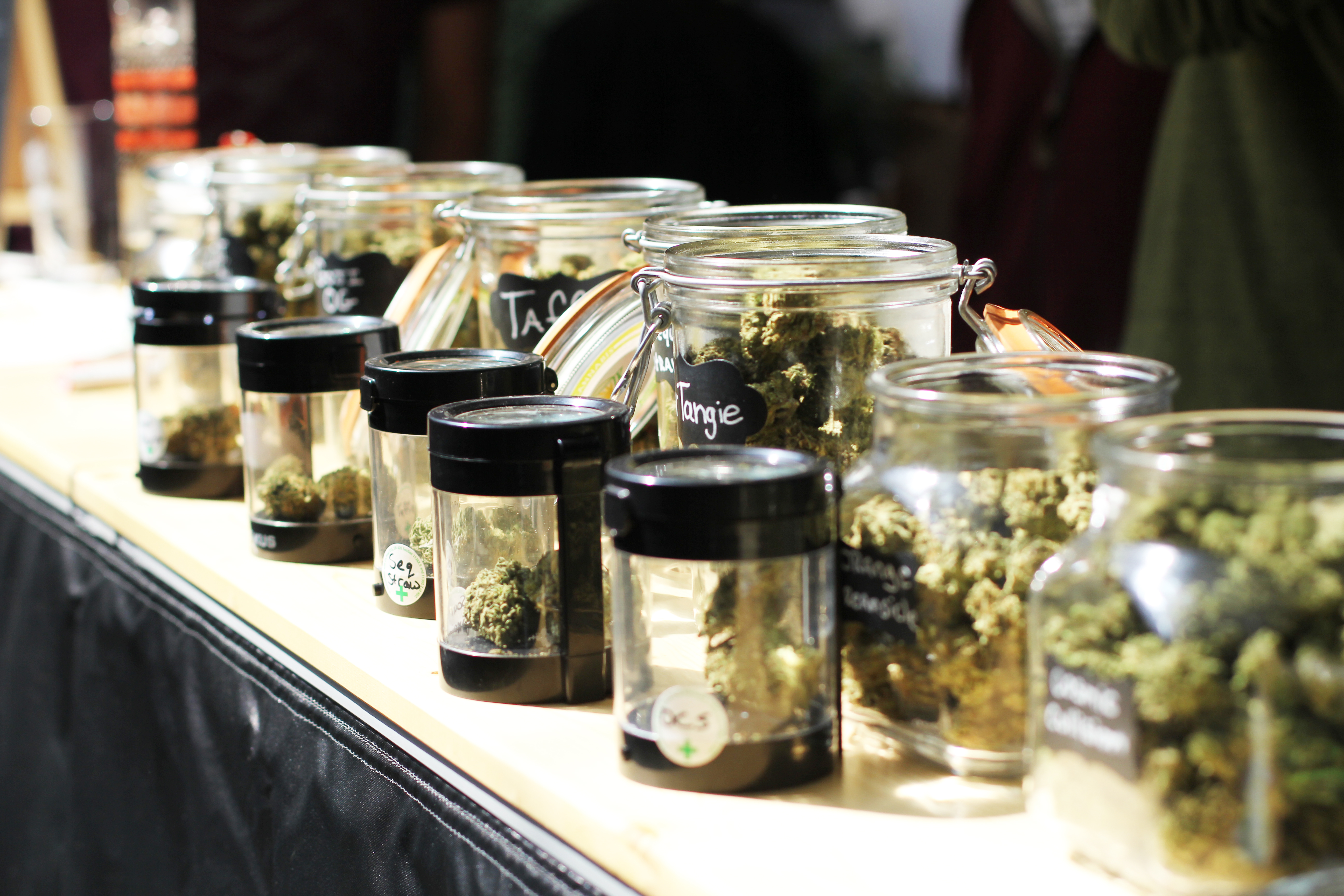
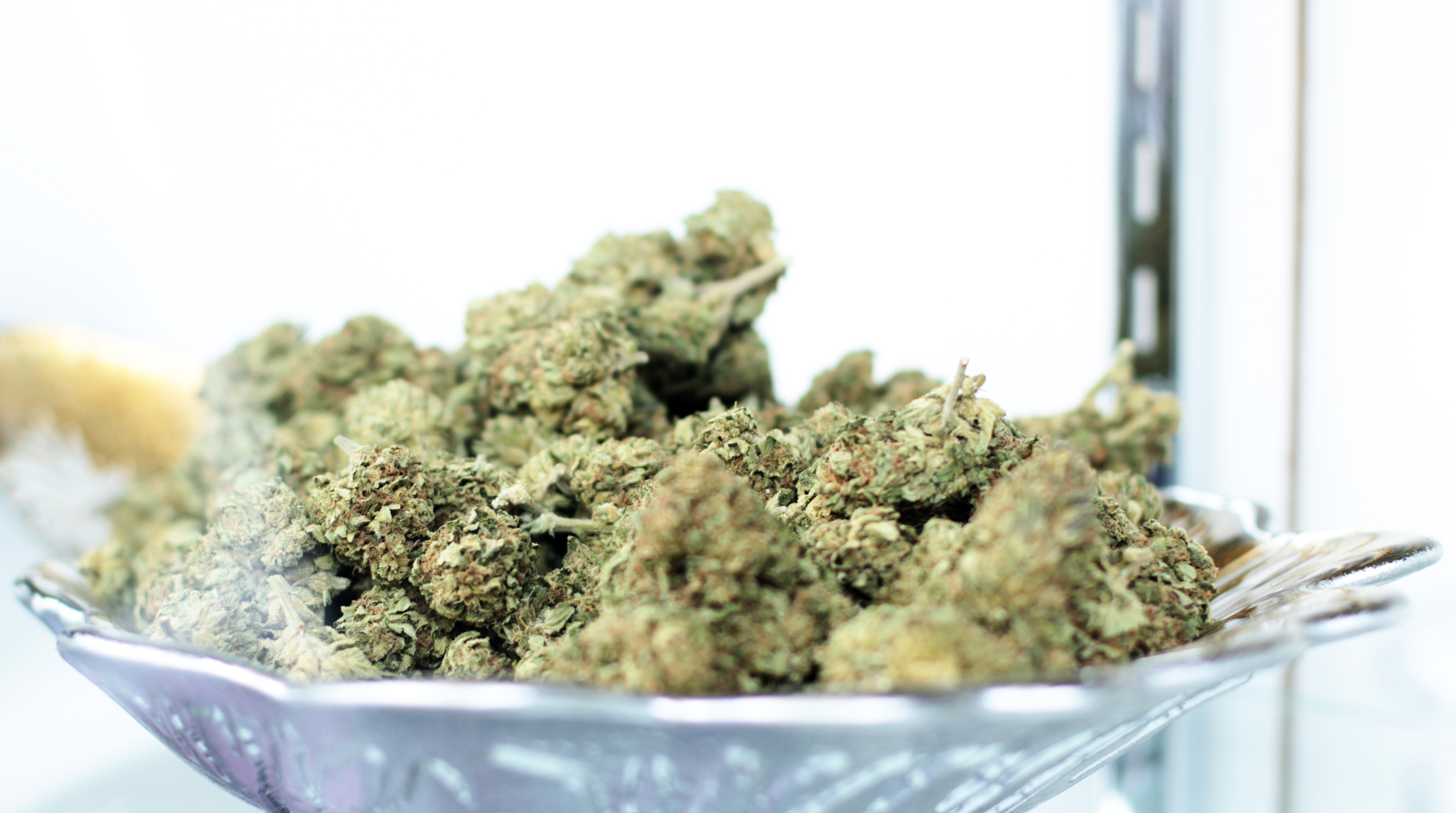
A variety of strains of marijuana are lined up for visitors to inspect. Cannifest attendees holding medical marijuana cards were able to vote on their favorite strains featured throughout the weekend. | Photo by Marcos Villarreal
Cannifest hosted over 23 musical acts with four different stages and a silent disco. Headliners included Prezident Brown, The Polish Ambassador, Sassafras Belly Dancers and local bands including the Dubbadubs and Kingfoot. | Photo by Marcos Villarreal
The Sungrowers receive their trophy on Sunday afternoon after winning the Humboldt Grow Games. Cannifest held the Cannifest Bowl, a competition for the best buds at the event, as well as awards for best live art and best glass. | Photo by Marcos Villarreal
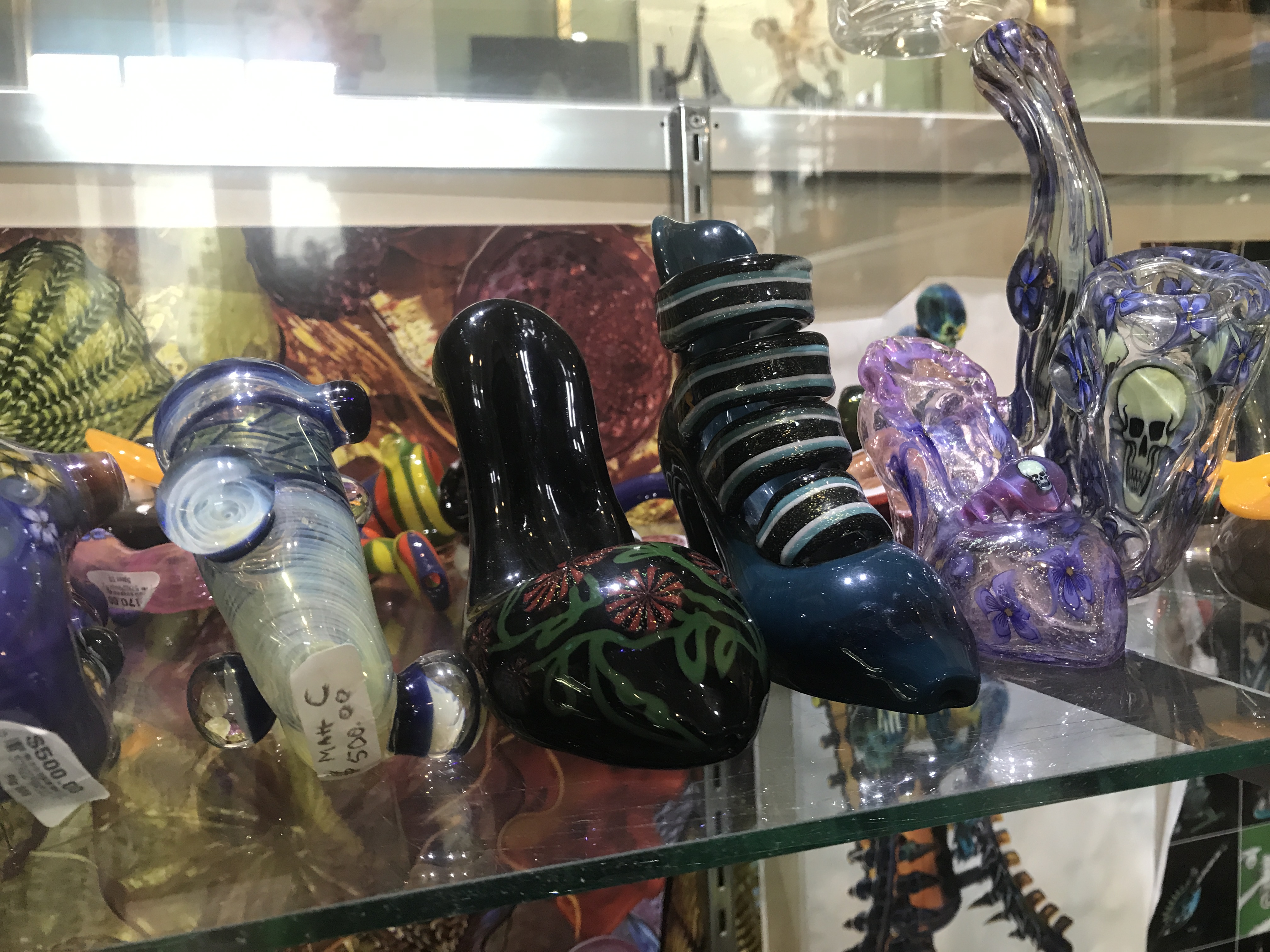
On display and for sale at Humboldt Glassblowers, is a $75,000 bong. You can find psychedelic and intricate glassworks of nearly a hundred local artists at the bong and pipe store located in downtown Arcata.
Two of the most expensive bongs. On the right is Banjo Glass $75,000 bong. | Photo by Andre Hascall
Arthur Ecker works at Humboldt Glassblowers. He said the asking price for the bong, made by local glassblower Banjo Glass, is appropriate due to the intricacy and precision of the bong.
“The amount of time and energy that was put into that piece shows just how hungry that artist was,” Ecker said.
Ecker said the amount of hours these Humboldt County artists put into their artistry is unfathomable. An artist can spend anywhere from 300-400 hours creating just a single piece, which equates to four to six months of hard work and craftsmanship.
“These people have families, and children they need to put food on the table for,” Ecker said. “These artists are incredibly hardworking people.”
This new breed of contemporary artistry sprouted new beginnings for Banjo Glass. Ecker said Bango Glass is a devoted father who was driven in his earlier years to make his best quality work in efforts of supporting his children.
Utilizing his past experience in art school, the aspiring artist was committed to creating iridescent, three-dimensional, and functional glass pieces.
Humboldt Glassblowers was in awe when they obtained one of his most extravagant pieces which is on sale for $75,000.
Customers are also impressed by the quality of the work when they walk into Humboldt Glassblowers.
Isaiah Harris was visiting a friend in Arcata for the week and made a point to visit Humboldt Glassblowers on his trip.
Animal Rigs | Photo by Andre Hascall
“I was impressed by the intricate artwork,” Harris said.“The quality of the glass is what sets them apart from other glass shops in different areas.”
Located at 815 Ninth St. the Arcata Plaza, Humboldt Glassblowers has the works of numerous local artists for sale and on display. Artists from all over Humboldt County bring their artwork to Humboldt Glassblowers. The shop holds pieces from 80 to 100 different artists, many of them local.
For efficiency, the shop is divided in half. On the left side of the store, customers will find small, multicolored glass pipes where prices ranges based on the complexity of the glass patterns.
Then there is the right side of the store, where Humboldt Glassblowers puts its finest glass pieces on display. Prices can run through the thousands depending on the intricacy and size of the bong.
Glass bongs and pipes have become not just a functional aspect of weed culture, but also an artistic element.
Papa Smurf Pipe | Photo by Andre Hascall
What use to be an online-only market for glassblowers has now become a state-of-the-art level of craftsmanship. Nowadays, the public is able to walk into a store and visually experience the glasswork.
As customers walk in and experience these inspiring pieces of art, they gain appreciation for the artistry.
“People are now respecting the art by being exposed to it,” said Dan Belo, who works with Ecker at the shop.
Belo and Ecker agreed that with legalization, glassblowers should gain more recognition for their craft with time because there is no longer a reason to be secretive about their artistry.
“With legalization you will start to see artists become more public about their work,” said Ecker.
What is the first words that come to mind when you think of Humboldt State University? While it should be environmentally-conscience, often HSU is associated with marijuana culture.
Don’t let this issue’s dedication to 4/20, the nationally celebrated marijuana day, fool you. Although Humboldt county is a main hub of cannabis production, HSU isn’t as accepting of marijuana culture as our reputation suggests.
HSU may not actively promote this image — But HSU doesn’t do a thing to stop it either. Students come here thinking that the cannabis culture of Humboldt County will extend to HSU’s campus. Students are shocked when they get fined, suspended or even expelled for possession of cannabis.
Sure the HSU Student Rights and Responsibilities policy states that under federal law the sale or possession of marijuana are felonies carrying prison terms of seven years or more, but hey… HSU is located in the Emerald Triangle- the largest cannabis-producing region in the U.S. HSU collects on the persona of an accepting weed culture; a culture that attracts new students.
HSU’s conflicting views on marijuana was witnessed with the treatment of Christina DeGiovanni, a former HSU student and founder of Emerald magazine. In 2012, DeGiovanni was arrested for possession of marijuana sales, and being armed in the commission of a felony.
De Giovanni states in her first letter from the editor that the negative and ostracizing treatment she faced from HSU and the community during her trials encouraged her to start the magazine that embraces the stereotypes associated with cannabis users.
Not all look to weed culture as positively as Humboldt residents. Critics reject HSU as a serious academic university because of the casually flaunted 4/20 culture. While we are known for our Green initiatives, we are still mocked for being influenced by the marijuana industry that throttles Humboldt County.
If we want to be taken more seriously as a top University to potential students, we have to do more to address the stereotype that HSU is only about the weed. It attracts students to an area where they feel they will be welcomed into the throws of Humboldt Counties cannabis culture, often a risky and even dangerous endeavour.
Yes, Humboldt County heavily thrives on the Marijuana industry but HSU is more than just a community of growers, trimmigrants, and stoners. It is irresponsible and flat wrong for a university to benefit from a generalization about its campus, while simultaneously ignoring and demonizing that generalization. Weed: Either love it or hate it HSU.
Blueberry Yum Yum, Strawberry Kush, Pineapple Express, and Girl Scout cookies. What’s your favorite flavor? The University of British Columbia researched 30 different molecules that give cannabis plants their flavor. These molecules are called terpene synthases genes and they create the pungent smells and tastes behind cannabis. The study likens terpene synthases genes to the genes found in grapevines that give wine its taste.
Title: Marijuana meets yoga
Graphic by Joe DeVoogd
Grab your yoga pants, your pipe, and a pal! Certified yoga guru, Dee Dussault, combines the ancient methodologies of yoga with marijuana. According to her website, combining marijuana and yoga is an enhanced practice for relaxation, well-being, and the cultivation of inner peace. In her new book titled “Ganja Yoga”, Dussault breaks down the techniques for the everyday yogi.
Memory on marijuana
Graphic by Joe Devoogd
Wait, what just happened? Marijuana affects both your long term and short term memory. According to a 2008 study conducted by the American Medical Association, the main culprit is tetrahydrocannabinol (THC). Research found that THC affects your ability to make short-term memories that would eventually become long-term memories. THC reduces the hippocampal and amygdala volumes, affecting brain activity. THC clings to cannabinoid receptors in the brain, which can change your normal brain functions. According to a 25-year-long study published by JAMA Internal Medicine, long-term use can be harmful to verbal recollection over time.
Lobbying for marijuana research
Graphic by Joe DeVoogd
Doors may begin to open for marijuana research with the passing of new legislation that moves cannabis from being listed as a Schedule I substance to being listed as a Schedule III substance. Due to marijuana’s current Schedule I substance status, researchers are restricted in exploring the clinical benefits or concerns behind marijuana use. The bill was proposed to the house last week by House of Representatives members Matt Gaetz (R-Fl.) and Darren Soto (D-Fl.).
Travis Poe is racing against countless others in Humboldt County to build a cannabis business under the recently passed Proposition 64, a bill that legalized marijuana in California. And much like his competitors, there is a lot of uncertainty as the policies change the landscape for cannabis farming throughout the state.
“Right now it’s super exciting,” Poe said. “I’m glad we’re doing it and I’m glad it happened but it’s also fucking terrifying.”
Poe spends his day building his business. As CEO of his startup company, most of his day involves market research, website development, company branding, and problem solving. If you looked at his to-do list, you might think he is your average young businessman, but he is not in the average business. He operates a legal cannabis nursery.
Poe has been involved in the cannabis industry for several years and actually voted against Prop. 64. But since it’s passing he has fully embraced the changes and teamed up with four others to create a cloning and genetics company where they provide plant starts for full-term cannabis growers.
Currently, the five are operating business under an affidavit which allows them to continue cultivation as they wait for their permit to be approved. The county is still working out the details on local legislature regarding the cannabis industry, which has caused a hold-up on Poe’s permit.
“The process has been interesting, slow, and somewhat unclear,” Poe said. “What’s happening right now is that the county is feeling that too, realizing it’s not the right formulation and going back to the drawing board.”
For Poe and many other longtime growers, the passing of Prop. 64 has been a confusing time. While they are excited to come out of the shadows the confusion and lack of clarity regarding county policies have given reason for caution.
“It’s just a lot. A lot of moving parts and a lot of changes moving really really fast,” said Chris Anderson, the cofounder and president of Redwood Roots. “I think there are going to be a lot of people that don’t make it through the process and that breaks my heart. It’s a really hard pill to swallow.”
Redwood Roots is a collective that oversees 25 different outdoor greenhouse marijuana farms in Southern Humboldt. Anderson created the collective in hopes of helping the smaller farm operations in his community have a chance at breaking through the expensive and competitive process of becoming a profitable farm under the new regulations.
Currently, all cannabis businesses are required to obtain a permit. There are 17 different licenses available, according to Cal Growers Association, ranging from large-scale outdoor cultivation to transporting licenses.
For those looking to cultivate marijuana outdoors they not only need to apply for a permit but they must go through extraneous lengths to come into compliance with Humboldt County regulations. These growers are hiring environmental, legal, and structural consultants so that they are within the specific codes the county requires for permitted cultivation. This includes soil testing, erosion surveying, environmental impact reports and, for many, regrading and rebuilding infrastructure. It gets expensive quickly which is separating the small farmers from the corporate farmers who are new to the scene.
Anderson is currently waiting for approval on three different permits: dispensary, nursery, and transportation. Although he is eager to get his permits finalized, he has been patient with the county in recognizing the complicated scenario.
“[It’s been] a huge challenge. The county has been helpful on our part, it’s just a really complicated process,” Anderson said. “We just wanted to step out and be ourselves and represent where we are from and make sure that our culture survives through the change.”
Until the county confirms their policies and clearly defines the components of the local market, growers will hang in limbo. Many are hoping to keep a boutique approach to Humboldt grown marijuana in order to isolate themselves from the corporate structure forming in county’s like Monterey and Los Angeles.
The biggest concerns expressed by Humboldt growers surrounding the new law are that the small grow operations won’t be able to compete with the larger corporate farms throughout California. Poe and his partners remain positive that the existence of big business will leave room for smaller well branded business.
“We’re investing in the brand. You have to be building value in other areas of your business to compete with the big guys,” Poe said. “There’s always an evil empire, but that leaves a place for the rebel alliance.” The county is sensitive to these concerns as they reform their policies to help small farmers break through the startup costs and into the market.
This website uses cookies to improve your experience. We'll assume you're ok with this, but you can opt-out if you wish. Cookie settingsACCEPT
Privacy & Cookies Policy
Privacy Overview
This website uses cookies to improve your experience while you navigate through the website. Out of these cookies, the cookies that are categorized as necessary are stored on your browser as they are essential for the working of basic functionalities of the website. We also use third-party cookies that help us analyze and understand how you use this website. These cookies will be stored in your browser only with your consent. You also have the option to opt-out of these cookies. But opting out of some of these cookies may have an effect on your browsing experience.
Necessary cookies are absolutely essential for the website to function properly. This category only includes cookies that ensures basic functionalities and security features of the website. These cookies do not store any personal information.
Any cookies that may not be particularly necessary for the website to function and is used specifically to collect user personal data via analytics, ads, other embedded contents are termed as non-necessary cookies. It is mandatory to procure user consent prior to running these cookies on your website.






















 Currently, the five are operating business under an affidavit which allows them to continue cultivation as they wait for their permit to be approved. The county is still working out the details on local legislature regarding the cannabis industry, which has caused a hold-up on Poe’s permit.