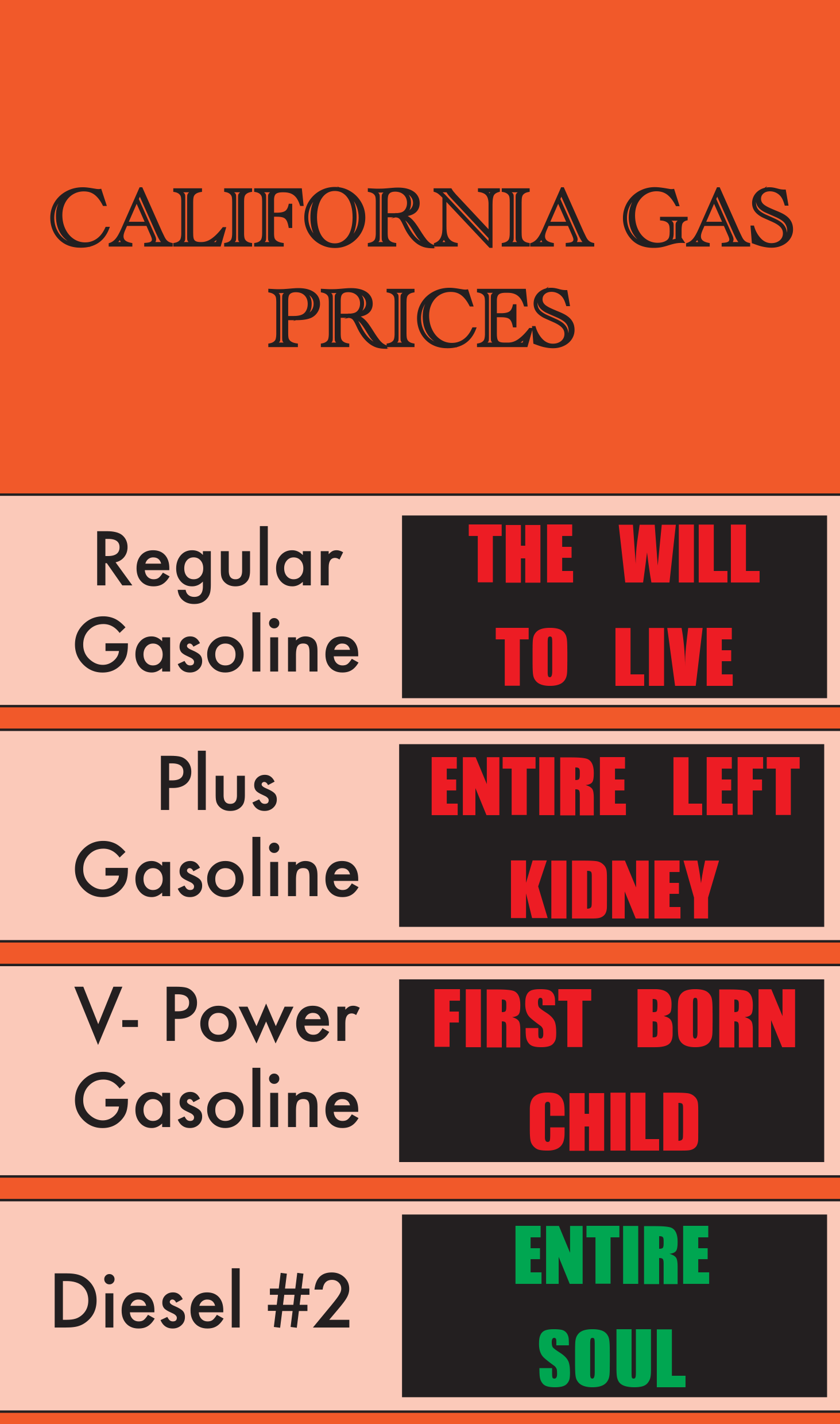
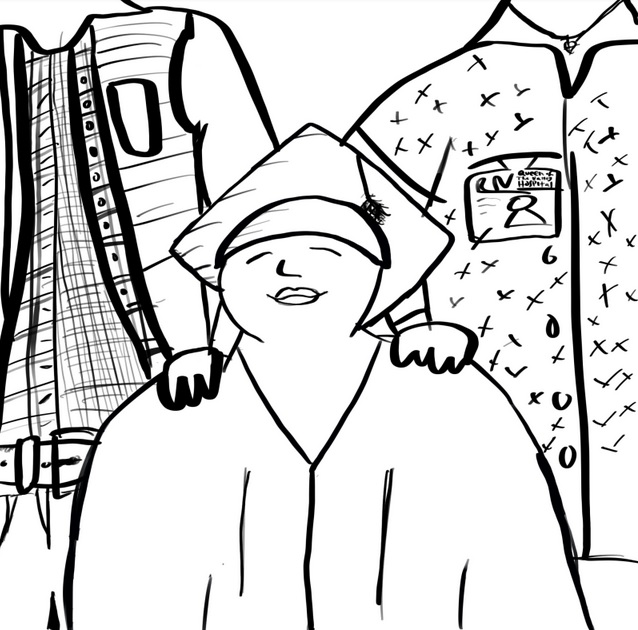
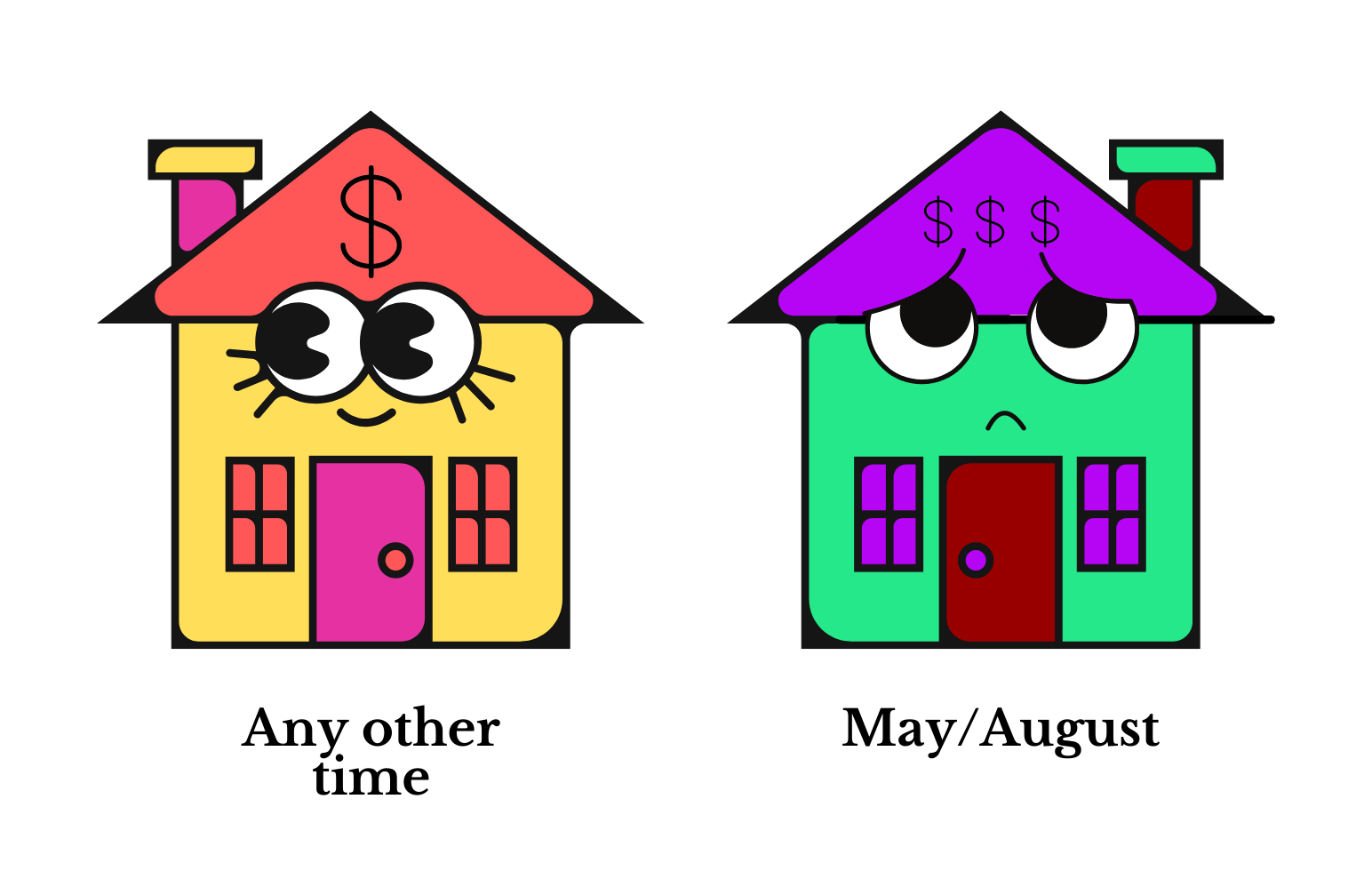
As May is fast approaching, so is the dreaded inflation of renting in Humboldt. During the year you can get a hotel room or rent an Airbnb for a couple of bucks. On spring graduation weekend, hotel rates double and even triple in price.
It’s not something uncommon in Humboldt but usually, high prices make it hard to find a place to rent. It’s an opportunistic extortion to get college students to overpay for rundown places. Housing is first-come, first-serve but to take advantage of people who don’t have money is gross.
For some people, this is the first and only time they can make the trip to Arcata, and it’s to see their family member graduate which is an incredible opportunity that shouldn’t be missed. Just checking the hotels near campus the usual cost of a hotel room for two people is at most $150 at any point during the year. But when you look at the same exact hotels during the week of graduation is $600 for two people a night.
At Cal Poly Humboldt, about 78% of full-time undergraduates receive some kind of need-based financial aid. That’s 78% of people whose families might not have the ability to see them walk across the stage and be handed their diplomas. Hotels and Airbnb hosts take advantage of people who want to support their loved ones.
Forget peoples’ families for a second. What about the people who are graduating and haven’t lived in the area for some time because of the pandemic, who are trying to find a place to stay so they can be there for their own graduation? It’s not just the issue of finding a place to stay. The prices of buying a cap and gown are so high for something you will only wear once and not for a long time. I guess you could say the same thing about a wedding dress, but even those are absurd.
Maybe I’m just someone who likes to count pennies and is a bit of a pessimist, but the price of graduating is excessive. We’ve already shoveled a bunch of money into the burning money pit of college so it would be lovely to be able to step away from the flames and not have to worry.
If you’re anything like me, there’s no way you can afford to pay for college on your own: you’ve probably got student debt. While you’re still taking classes, it feels like you don’t have to worry about it because graduation could be years away. It’s always looming on the horizon, far enough away that it seems like you’ll probably have it under control by the time you’ve actually got to deal with it.
I am in my last semester as an undergraduate, so that horizon is closing in real quick for me and it’s scary as hell. My current debt is just shy of $20,000, which is slightly lower than the national average, but still by far more money than I than I’ve ever made at a job.
Ideally college would help with that, but considering the job market, that’s no guarantee.That leaves me and many others with crushing debt in the position of having both a huge amount of uncertainty about what we’re going to do after college and a huge amount of certainty that whatever it is won’t be sufficient to not be living on the bare minimum.
I appreciate my education. I plan on continuing it into graduate school, but this system feels as if it’s built more to place you into a position of permanent debt than to provide an education to people.
Even if you’re lucky and don’t end up missing payments, you’re still paying about 10% of your income, and if you aren’t then you can rack up extra fees and put yourself even further back. On top of that are the countless other ways that you end up gouged for money while still enrolled like expensive but mandatory meal plans or fees for services that, depending on the current level of COVID lockdown, may not even be available to the students using them.
According to educationdata.org, the average monthly payment for someone with a mid-paying job and in the same category of debt as myself is $393 over the course of six years, which is currently more than I even get per paycheck at work.
These debts are what keeps people from buying homes or starting any kind of family. Ideally this whole thing should be free and improve peoples’ lives instead of operating off of a profit motive at all. But that’s a fight that seems like it will take way longer than any of us will be able to see through to the end.
As students, we need to press for more scholarships and grants for students. Ones that don’t incur years of debt, and push back harder against tuition hikes that force students to either abandon their education or take out more loans. Otherwise, college becomes the exclusive domain of people who already have money, even more so than it already is.
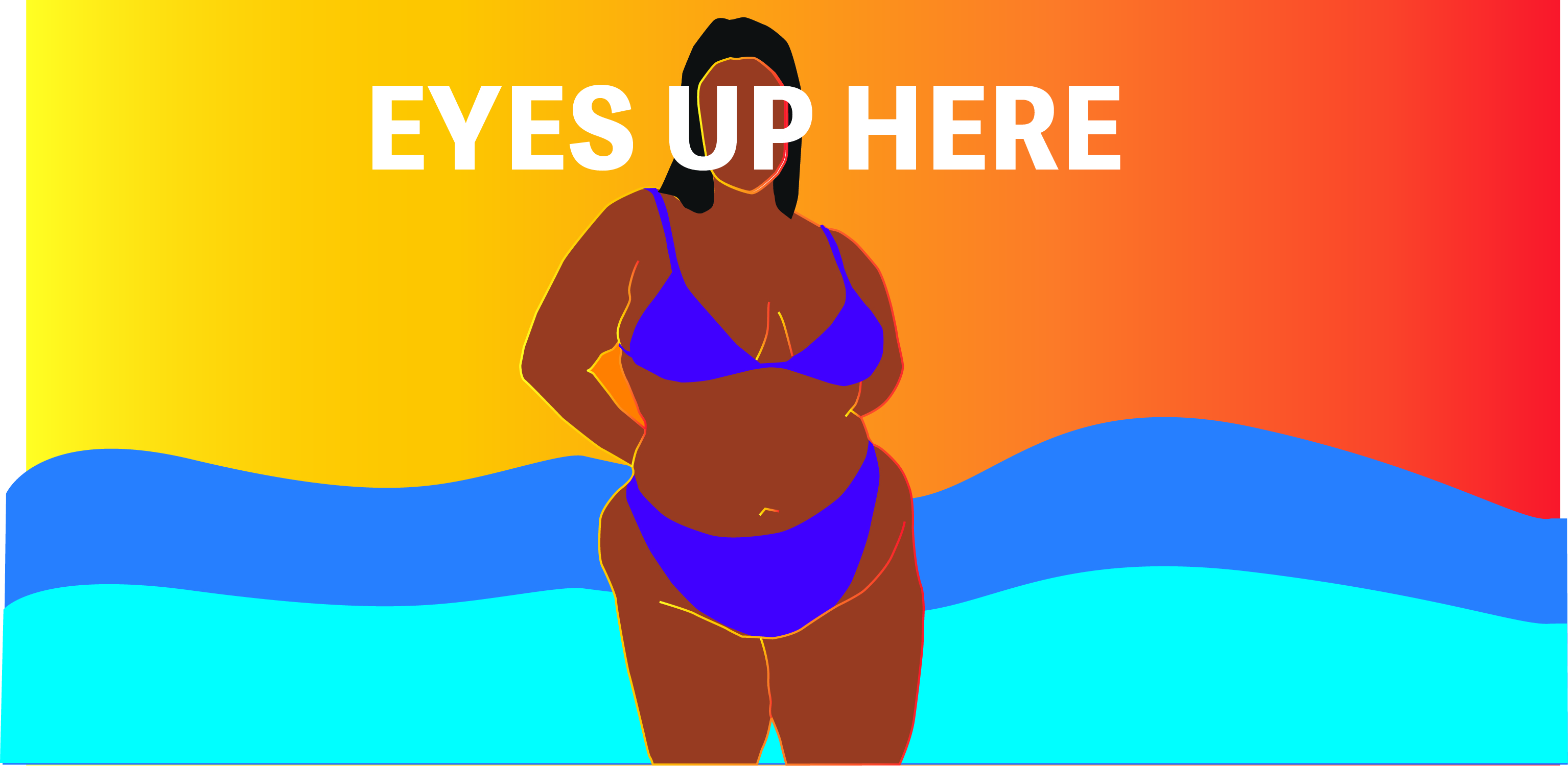
Here’s how getting stared at on the beach usually happens for me: I’ll be minding my business at the beach, neither having a good time or a bad time, just a time. I get the familiar feeling that I’m being stared at, and after a quick look around, there it is, an ogling pair of eyes looking me over. Just because I’m wearing a bikini to the beach does not mean that I am inviting any sort of negative attention. I am wearing this bikini to the beach because I thought it was cute when I bought it. Now, I am no longer having a time, but a bad time, all because some man couldn’t keep his eyes anywhere else but my body.
I shouldn’t have to flip off and swear at men just to get them to leave me alone at the beach. I will not fight for scraps of respect but expect it paid in full. My body and gender don’t make me less than, and they don’t make me an object either.
Not counting the fact that ogling random strangers is incredibly rude, you never know what’s going on in someone’s mind. This could be their first time wearing a bikini on the beach in a long time, or they could simply be wearing it because they bought it and want to get their money’s worth. They could have insecurities about their body that can be exaggerated by excessive staring, or maybe they just don’t like getting stared at (like most sane individuals).
Despite being attracted to women, I can comfortably go to the beach without ogling women with no effort on my part. Believe it or not, not staring at women on the beach is incredibly easy! As a gay woman who grew up with gym locker rooms and camp changing rooms, I snapped my eyes away every time my friends would get changed, and I was terrified to even go in a Victoria’s Secret for the longest time. I know I have a different relationship with how I view women than your typical straight man with male pattern baldness. Also, as someone who possesses a body that gets stared at frequently, I know what it’s like to be stared at. I don’t like to do it to other people.
When spring break rolls around this semester, straight men, find it in your hearts to not obviously stare at every woman wearing a bikini at the beach (eyes on the road, please). There is a whole world of gender identity behind the pair of boobs you’re ogling, and every feminine-presenting person isn’t necessarily feeling feminine on the inside. If you find that you just have to choose objectifying women over all other activities, then do the women in your life a favor and don’t hit the beaches this spring.
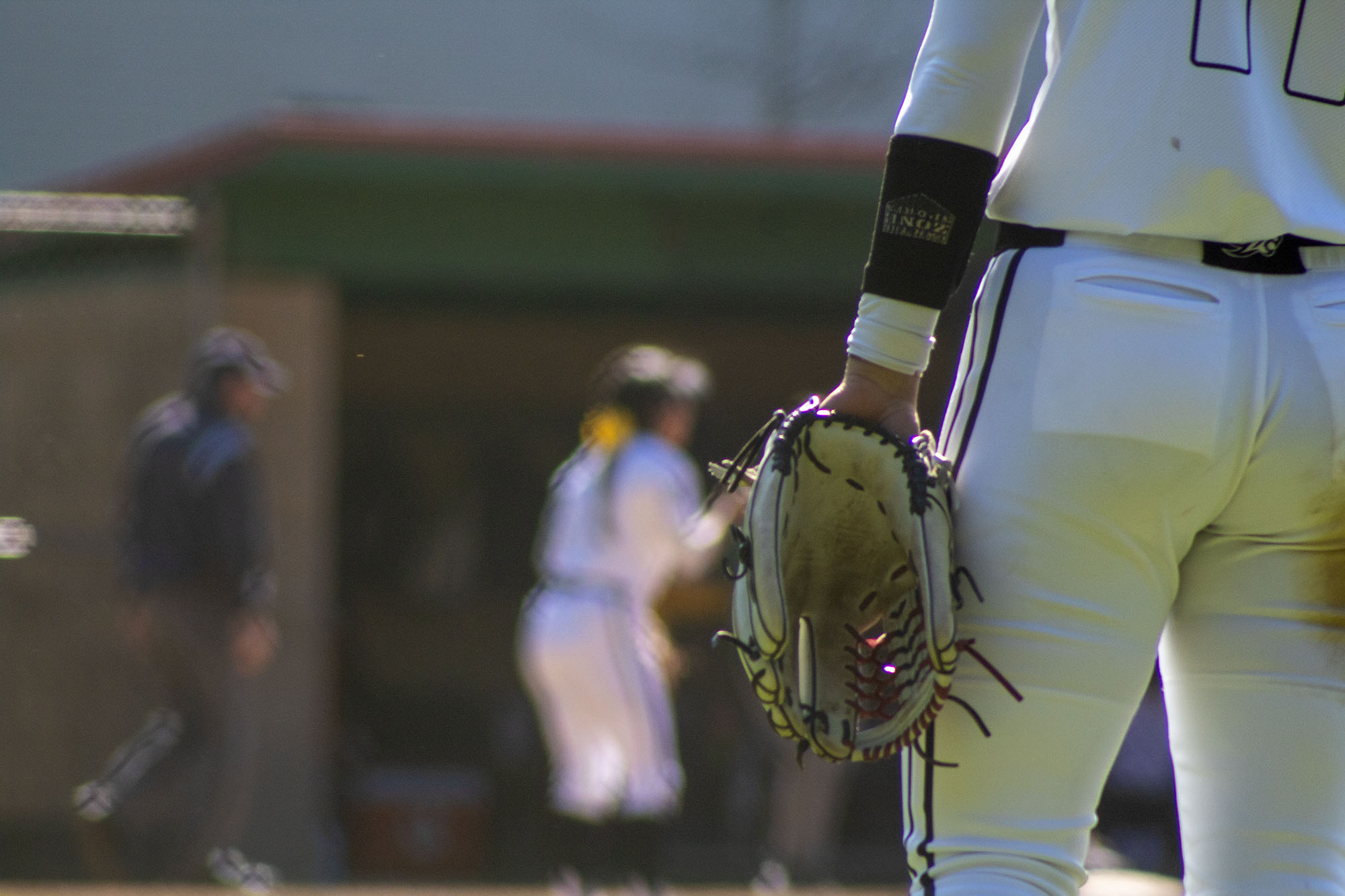
On March 5, the Cal Poly Humboldt softball team held their first home game this year. I was reminded of an easier time, where relaxing to live sports was an everyday escape from the rigor of school and work. During the next couple of hours, I experienced camaraderie, screaming fans and most importantly, tailgate food.
Photo by Gabriel Zucker | Junior Pitcher, Megan Escobar pitches against Chico State on Saturday
Walking around the softball diamond, my eyes fell on a group of parents huddled around a BBQ, waiting on the drumsticks to finish cooking. Walking closer and closer to the food I tried to avoid eye contact, instead focusing on taking photographs of the game. Almost immediately, one of the parents called me over.
Richard Guevara, the father of one of the freshman softball players, yelled out, “Do you like ceviche?”
Looking over I saw a stocky gentleman, decked out in Humboldt softball gear, a giant smile stretched across his face. He beckoned me over with the promise of ceviche and chicken. Next thing I knew I was talking and laughing with the parents, enjoying their food, and praising the beauty of Humboldt.
Taking a bite of ceviche now, I’m transported to a time where sports was a shared experience. A time when sports was more than just the game, it was about the connections you made. After taking a moment to relish in the memories, I opened my eyes to a giant smile and a chicken drumstick.
Sports is never just about the game; it is about the shared experience. At the softball game, a feeling I hadn’t experienced in year swept over me. Screaming fans, a sound I only recently heard in my dreams, washed over me like a wave. My heart flittered and danced, and as the smell of food and freshly cut grass hit me in the face. I stopped to smile.
Everyone has an impact on someone’s perspective of the world. Almost anything we do or say affects someone in some way. The same holds true for the things we post on social media. We are all influenced by the people around us. When the subject of our virtual discourse is something as poignant as international conflict, our sympathies can be weaponized without us even knowing it.
Roughly half of Americans regularly get their news from social media, according to a 2021 study from the Pew Research Center. The information we share online can challenge our belief system but oftentimes reinforces it. Al Tompkins, a journalist with the Poynter Institute, says that truth gets little consideration when the content we share aligns with our worldview.
“We tend to support those things that agree with your position on anything,” Tompkins said. “Whether it’s the designated hitter in baseball or invading Ukraine, we tend to repeat and share things that we agree with.”
The internet has changed the way information is spread through society. It’s easier than ever to produce fake information.
“The other piece of it is this,” Tompkins said. “Disinformation is a very powerful weapon. The Russians know it but, let’s face it, the Americans know it too. The American government, particularly through the CIA, has done lots of disinformation over the years. You would expect that they do, it’s kind of part of what they do.”
Understanding that misleading content is built into our news feed requires us to take a critical look at what we share before we share it. Tompkins’ approach asks four questions:
What do I know?
What do I need to know?
How does that source know what that source claims to know?
And is there any other way to look at this other than the way that source is telling me?
Vicky Sama saw the real-time effects of media coverage and propaganda in the several wars she covered during her career at CNN. Sama is now the department chair for Cal Poly Humboldt’s journalism and mass communications program.
“So there’s two parts of war, usually,” Sama said. “You have the war, the actual war with fighting and then you have the information war, the propaganda war, and that is an essential part of what happens in war as well.”
When we see things happening live, there isn’t an editing process that we can rely on to verify what we see. Live television, live broadcasting, and live streaming allow for that to happen. Now that consumers are a part of the distribution process, Sama argues they also need to be part of the editing process.
“If everybody’s going to start considering themselves a journalist just because they have a cell phone, then they need to start doing the work of a journalist and start verifying the information before they put it out there as well,” Sama said.
However, verifying everything we see is seldom an intuitive process. Kirby Moss, a Cal Poly Humboldt professor in the journalism department, teaches a range of media analysis classes. Moss said that the fundamental way to verify information is to look for other sources reporting on the subject.
“I tell students, if you find some information that you’re researching on, try to cross-check it with at least three sources if you can,” Moss said. “And then they find out sometimes like, ‘Well I went to one source but the other source says something else, the other says something else,’ and so then they begin to question that message.”
It takes familiarity to be confident that the information you get is credible. That is not to say that there aren’t tools we can use to check the things we share. Vicky Sama is working on adding a media literacy course for freshmen to the department catalog. In the meantime, JMC 309: Analyzing Mass Media Messages will be open for registration near the end of the semester. Online courses on media literacy are also available to everyone through the Poynter Institute.
[DISCLAIMER: The Lumberjack rarely uses journalism department faculty as sources for stories. However, an exception was made for this story due to the expertise our professors have on this particular subject. Vicky Sama and Kirby Moss do not exercise editorial oversight on the content The Lumberjack publishes.]
In March 2020, Gal Gadot released the infamous “Imagine” video on her Instagram page, an asinine attempt to convey solidarity with a world being ravaged by COVID-19. The rich and famous banded together to imagine a world with “no possessions” while people around the country suffered a social, health and economic crisis wasn’t what the world needed at the time.
The whole thing was cringy and overall tone-deaf. Step aside, Gal Gadot, because a new savior is here to stop the Ukraine crisis. Actress AnnaLynne McCord, self-proclaimed human rights activist and anti-human trafficking ambassador, released a slam poem video in an attempt to make Russian President Vladimir Putin stop and feel the love. McCord’s over 2-minute long video implies she might have been able to change the Russian leader had she had been his mother.
Don’t worry Ukraine and everyone else, another white American has once again stepped up to the plate to put a stop to this devastation.
“Dear President Vladimir Putin: I’m so sorry that I was not your mother. If I was your mother, you would have been so loved,” chanted McCord.
Putin should be on his knees sobbing at the realization that all he needed was love, right? McCord continued, lamenting that if she was his mother, she would have died to make him warm, to protect him from the unjust, violence, terror, and uncertainty, and to “give you life.”
If you aren’t convinced that American influencers can save the day, you need to look again. John ‘You Can’t See Me!’ Cena tweeted out, “If I could somehow summon the powers of a real life #Peacemaker I think this would be a great time to do so.” Cena wished upon a star that his DC character Peacemaker was real so he can help, making sure to tag the marketing account for the show.
All that’s missing from this A-Team is our girl Kendall Jenner with her can of Pepsi to take the front lines.
Watching the atrocities in Ukraine unfold on top of dealing with the savior complex of these influencers is just disgusting. These influencers are so sincere in thinking that they are uplifting the masses, when in reality they are doing the absolute least. The last time a group of influencers gathered together and actually created change was in the 80s, when “We Are the World” raised millions of dollars in aid of Africa.
The performative activism of celebrities during these times is unneeded and repugnant. To them I say: keep your slam poetry and songs to yourself. The world doesn’t need cheering up, especially from people like you.
My entire existence is a tightrope balancing act between two facets of myself, that are constantly told they cannot exist together. Yet these facets can not be divided from me nor from one another. I am queer. I’m a person of faith. I am a trans and bisexual Christian.
As Lent rolls in, I often find myself having to reflect upon these two identities. I take this time of the year to re-orientate myself back to my spiritual core. It is a beautiful process that reminds me of my humanity and the love I receive everyday from my Creator, but it is a side that I often feel compelled to hide, just as I am often compelled to hide my queer side from the greater Christian community.
It is a fine line. I’m constantly aware of my fellow queer peers’ religious trauma, something I’d never want to make them relive. It hurts, though, to know that my faith comes with so many automatic assumptions of my character.
Some have ideas that I’m conservative in my politics or that I don’t affirm my own queer identity. I am neither of those, and neither are many other queer people of faith. So, I stay silent. Yet in this very silence I only continue to feed into the false narrative that all religious persons or persons of faith are non-affirming of queer identities, bigoted, or close minded.
Growing up, I was extremely lucky to live in both a queer affirming and religious household. I was raised predominantly in a Christian denomination that had already begun to take the steps towards full LGBT+ inclusion by the time I was born.
It is a huge privilege, one I constantly try to stay aware of. I also believe it is a statement of hope. I am living proof that one can grow up as Christian, as a religious person, and still fully affirm their own queer existence. It is because of this very truth that I continue to live knowing these two identities are not mutually exclusive.
I don’t wish to proselytize or to convert any person to my own faith, nor to any religion in general. There is truth, validity and importance to be found in both agnosticism and atheism. All I wish is to break the narrative that all people of faith are non-affirming.
This perception erases the amazing work that queer people of faith all around the world are doing to create rightful places for us in these sacred spaces. More frightfully, it gives more power to those of faith who may wish to silence us, oppress us or destroy us both within these religious spaces and out of them.
I want to extend my love and validation to any fellow LGBT+ people out there who also desire to stay in or are currently part of any certain religion, whether you be Christian, Jewish, Muslim or belong to any other faith. There are people out there just like you, and there are resources out there that can allow you to flourish fully and wholly as you are.
This Lent, as many like me take this moment to pause and self-reflect on ourselves, I hope to show through my actions and pure existence that religion and spiritual expression are as much a right to LGBT+ people as they are to others.
Today, I was sitting at the bus stop with a significantly more male friend of mine when a man I had never seen before approached us and asked when the next northbound bus was coming. My friend didn’t know, but I pulled up the bus schedule on my phone and informed the stranger that he had another three minutes to wait.
“Thank you,” the man said with a smile. “You know, I thought you were a huge bitch at first, but you’re actually really nice.”
I am not a woman, but by accident of my birth, I am often perceived as such. I have experienced the casual misogyny and willingness of strange men to just say things that probably didn’t need to be said since at least the age of ten, when a man first leaned out of a car window and shouted the specifics of what he would like to do to me, and while he’s at it, to the small dog I was walking, in my general direction.
I speak with experience when I say that men on the street will really say the most bizarre things and go about their day, while the person they shouted at just has to live with the garbage that they spewed without a second thought.
What really gets me about this man specifically was his sincerity. He truly believed that he was paying me a compliment, and likely went about the rest of his day believing he’d had a pleasant talk at the bus stop.
It is important to note that I had never seen this man before in my life. What was it that convinced him so thoroughly that I, a stranger at the bus stop minding my own business, was indeed a massive bitch? Was it my short, butchy hairstyle? My Captain Marvel t-shirt? The fact that my friend and I had just been discussing sexism in women’s sports when he got here? If so, why was I the only bitch? Shouldn’t the person agreeing with me be a bitch as well, if that was the case? While I know that when a man is a bitch he is weak and when a woman is a bitch she is a rabid animal, wouldn’t he be a bitch (masculine, derogatory) for cowing to my radical feminist notion that women should not be forced to expose more skin than they are comfortable with, even though he had brought that point up in the first place? Although, the man only told me, not him, that I was really nice and not a huge bitch. Perhaps he meant to suggest through omission that my friend was the huge bitch here?
I wish I had said, “Oh no, I actually am a massive bitch. You were right the first time.”
I am a feminist and a lesbian, and if this man’s general vibe was an accurate reflection of who he is, then I imagine both of those words are threats to him. Yet, if I had declared myself a bitch, would he have realized that maybe calling a stranger a bitch for no clear reason is a super weird thing to do? Or would he have laughed at my attempt to assert myself, before going home and complaining online that biologically, women can’t be funny?
I refer to myself using all kinds of things people have hurled at me —dyke, bitch, man-hater and the like— and have reached the point where I embrace them. I’m a bitchy man-hating dyke on purpose, and I’m proud of it.
I can certainly reclaim this for myself, but would this man on the street even register that I was subverting the patriarchy by refusing his words their intent? Would he care? Is this even about me?
Unfortunately, I was too stunned by the fact that a person would just walk up to a stranger, congratulate them on not being as bitchy as anticipated, and think they did something to express all this in the three minutes before his bus got here. I could only say, “…okay?” in a voice I hope adequately expressed how much he was embarrassing himself, and resumed talking with my friend where we had left the conversation.To all the men who are thinking of saying something to a stranger in public, I say only this— don’t. In fact, don’t say anything to anyone, no matter where you are. Just don’t talk. To anyone. Please shut up forever, thank you.
Associated Students do not stand nor condone any kind of disrespect. We value everyone’s thoughts, opinions, and presence within AS.
We are aware of an unsettling situation that occurred during our Executive cabinet meeting on Feb. 4 concerning members of the Associated Students and members of AS Core Programs at Cal Poly Humboldt.
During the meeting, President Jeremiah Finley was uncooperative with fellow board members and had cut the meeting short. During this meeting, the WRRAP’s R.O.S.E branch team was expecting a response from the board, but would not move forward due to solely wanting in-person attendance.
In addition to this, President Finley neglected his team by failing to acknowledge the presence of appointed members who joined through Zoom, assuming that, “they only joined through Zoom simply because they didn’t want to be in attendance in person,” though this was not the case.
First and foremost, we, the Associated Students do not accept or tolerate the sort of behavior that was presented on that evening. We understand the concern, the anger, and the feelings of disrespect. You are heard and your feelings matter.
Next, we find it critical, to be honest with our student body and with each other. Unfortunately, there has been an unhealthy power dynamic within AS. There have been many issues regarding communication, equality, and access to opportunities. These are issues AS members have been dealing with but have managed to persevere through while keeping our student body and AS Core Programs at the top of their priority list. We are actively working towards community building and furthering our relationships with our staff and student leaders.
Due to the continuous amounts of disrespect and unacceptable behavior, AS will be moving forward with the impeachment process.
Associated Students stands for the purpose to educate, empower, and most importantly elevate all student voices.
You sleep too much or too little and neglect your personal hygiene. You’re a ticking time bomb that can’t be defused. You oscillate between extremes like a pendulum. Your own thoughts wage war against you and, in some circumstances, the people around you.
Being mentally ill is a constant struggle, and that is only the surface of it.
In my case, I have undiagnosed traits of borderline personality disorder (BPD), specifically a subset of the disorder called quiet BPD, as well as comorbid anxiety and depression.
To be clear, I am not diagnosed due to being assigned female at birth (AFAB) in a rural county, one with a disproportionately high rate of Adverse Childhood Experiences (ACEs) and inaccessible or understaffed mental healthcare facilities.
Seeking and getting a diagnosis from a psychiatrist is also protracted and difficult, especially during the ongoing COVID-19 pandemic.
It must also be said that being branded borderline in our society is not ideal, especially as someone who was is perceived as female. There is a lot of stigma around the four Cluster B personality disorders: narcissistic, borderline, histrionic and antisocial personality disorder.
I stigmatized narcissism in particular, before I became self-aware and realized that narcissism is merely the inverse of codependency. Both stem from traumatic formative experiences with maladaptive object constancy and abandonment, but they manifest differently. For me, narcissism was a mirror into my own dark traits that I wasn’t able or willing to peer into.
Most borderlines are stuck in an incredibly alienating and painful catch-22. The people who understand us aren’t necessarily healthy for us, and the people who don’t understand us are usually stabilizing for us. Couple that with the chronic emptiness that borderlines endure daily and you quickly rack up a series of short, toxic relationships that end in violent staccato.
The Western culture of individualism makes things worse for mentally ill people. In our society, we have a tendency to overlook our ability to affect other peoples’ lives. We also have the tendency to sell ourselves short. We would rather shrink than dare to take up space. The latter is contingent upon us being vulnerable, which includes the risk of failure.
Because my judgment is skewed by my mental illness, I make a lot of mistakes. I assume the worst of people who don’t deserve it. I misread peoples’ intentions before giving them the benefit of the doubt, or idealize people who haven’t yet earned my trust or respect. These behaviors open me up to exploitation and abuse. I can also be abrasive, intense and even callous, but that doesn’t mean that I don’t have compassion or remorse.
If anything, I feel too much, more strongly and longer than the average person does. I constantly emotionally regulate myself, to grapple with my volatile moods and intense emotions. Most of these emotions go inward towards myself rather than radiate outward.
Believe it or not, my mental illness makes me a better leader. Because I am mentally ill, I have put myself in situations where I needed to be held accountable for the sake of myself and people around me.
I couldn’t play the victim. I had to own up to my behavior, even though it stemmed from something out of my control. At the end of the day, I am fully responsible for my choices and the consequences.
Owning up to your dark side every time it creeps up and wreaks havoc enables you to build healthy, strong relationships. Relationships are hard work.
Good leaders have good relationships. Good relationships are contingent on accountability, boundaries, trust and clear communication.
The first step of realizing your ability to lead others and trying it is hard no matter what, but mentally ill people just have more barriers to overcome.
I have had to learn how to use the dark side of my mental illness to harness my light and use it to influence others around me. The skills that I’ve developed to cope with my borderline traits, anxiety and depression allow me a self-insight which is extremely useful.
Every day, we have the choice to be a positive or negative influence in the lives of people we know. Try to go against the grain of your darkest tendencies of your humanity and use your light as a guide.
These past few years have created this heavy and strange feeling that has found itself settling on my chest. It’s a constant feeling of disconnect—a disconnect from my peers, professors, friends, and even family. I’m staring at a black screen or the muted faces of people I should know, but it feels like I’m watching a TV show.
I was 21 when COVID-19 hit, and now I’m 24. I’ve already lost most of my early 20s, and I don’t know when I’m ever going to get it back. A lot of people are telling me, “well, you could have gone out and partied with your friends or traveled” as if COVID-19 doesn’t exist or like I’m not terrified of getting sick. I was supposed to be a graduate and living in another state working a dream job, but here I am, sitting in my room in my hometown, waiting for my next class to start while getting ready for work. I’m not unhappy with where my life is, but I’m not exactly delighted with everything. I love my jobs, my coworkers, and the fact that I’m living with my childhood best friend, but some part of me is mourning the loss of what could have been, just like many people.
I miss having exciting conversations with my peers and being excited about my classes. The disconnect and lack of inspiration are like a smack to the face when I sit down to log onto Zoom for my lecture. I’ve become one of those black screens that remains muted, and I hate it. Even writing has become a struggle for me. I’m a storyteller, but all I have is nothing when I sit down to write. There’s no ‘aha’ moment of what story needs to be told or list of potential events to look to reporting on.
I know I’m not alone in this feeling because I see it everywhere. Other college students are no longer being inspired by their studies. I just wish I had some great advice on mediating a solution, but I don’t. It’s a dreadful feeling, and I feel a particular type of guilt for not having a remedy.
My whole life I’ve been told to “travel young,” “travel while you still can,” and “travel now because it only gets harder as life goes on.” I gained my love for travel my freshman year of high school when I had the amazing opportunity to go to Mexico with my aunt and uncle. Since then I have gone three more times. I have also been to Dallas, Texas and California’s bordering states. Traveling is one of the things that I love to do most. I was supposed to go to Costa Rica in 2020, but like many other people that year, I had to cancel my trip due to COVID-19 rapidly spreading through our world.
When I went to Dallas during the summer of 2021 for two weeks, it showed me how much I missed traveling and seeing new places, people and cultures. Right now, the only thing that has been holding me back is school.
The pandemic has been hard to navigate as a young adult and as a student, but I try to find silver linings in everything. With most courses still online, I have been able to adjust my schedule so that the majority of my classes are on Zoom or are completely asynchronous, which gives me the opportunity to travel this semester.
Keeping up with school while traveling is a whole monster in itself. Operating in a different time zone has its challenges. You have to figure out what time it is at home versus wherever you are and keep track of what time classes meet. Trying to discover new places while having class also presents a challenge because your time management skills have to be at a peak level, not to mention the fear of contracting the virus in the process and not being able to get back to the US if you leave.
During this school year, I have been able to go to Mexico twice. Yes, I am privileged to do this since I work for an airline, but what can I say? This is a field where you can mix business and pleasure. The first time was only for two days, so I went to the class that took attendance and was able to do my homework in the airports. This last time, however, was for a week and I was able to attend the first week of classes online. One of the struggles of starting the semester abroad is not having access to textbooks, but I found a way to survive.
Even as a full-time student, I have managed to find a way to travel and see the world. It is difficult but it is so possible and so worth it. I encourage you to try and see the world. Stop staring at your computer screen in your apartment trying to get an education. Do the same thing on a beach somewhere, or in an Airbnb a few hours away. Just live your life.
Recently, I saw a petition that advocated for the delay of in-person HSU classes by two to three weeks. Is this too much to ask? Logically, I think that what these advocates stand for deserves careful consideration. Humboldt county’s rates of coronavirus cases are the highest that they have been since the beginning of the pandemic. As of January, the county has averaged 213.9 cases on a weekly basis. Throughout the CSU and UC systems, an abundance of schools have decided to do remote learning for the first month. Why should Humboldt State be an exception to this? This reminds me of any disaster movie ever made. The last group people want to listen to is the scientists. We’re in the middle of a global crisis, yet people and our own institutions want to deny it. It almost feels like the world is on fire, however, I’m one of the few that sees the fire and acknowledges it as an inherent problem with our society. We cannot have another surge! Our local facilities don’t have the capacity to house any more COVID-19 patients. A couple of months ago I was trying to find an appointment for gallbladder surgery. Usually, medical emergencies would have been taken care of at Saint Joseph Hospital in Eureka. Instead, I was scheduled for surgery at Mad River Hospital in Arcata, supposedly because all of the hospital rooms at Saint Joseph Hospital were at full capacity. With rising numbers, I can only imagine how hard it would be to find an appointment for gallbladder surgery now as compared to then.
The coronavirus has also disproportionately affected Indigenous communities in the inland area. As of January 13, 2022, Public Health Officer Eva Marie Smith has detected an Omicron case in the Hoopa Valley Indian Reservation. With a total of 109 active cases, Smith believes that the tribe is likely experiencing a mix of Delta and Omicron with a predominance of Omicron within the next few weeks. Due to the latest Covid surge, Hoopa Tribal Chairman Joe Davis has authorized a level 4 shutdown of all non-essential operations for at least two weeks. The Omicron surge has also recently caused staff shortages at Saint Joseph Hospital.
Early studies suggested that the Omicron variant can just as easily infect vaccinated people as it can the unvaccinated population. It can be said with confidence that anyone can be infected by the widespread virus. In addition, it would be wise for Humboldt State to require all students to be tested weekly regardless of their vaccination status. Vaccinated people are just as likely to transmit the Omicron variant as someone who is unvaccinated. If that isn’t enough, it can also reinfect. It seems no matter how much you tell someone to not touch the stove, they have to touch it for themselves in order to figure out what the consequences are. By signing the petition, we can mitigate such catastrophic events from further happening.
The merging of departments within the College of Arts Humanities & Social Sciences will lead to the detriment of distinct programs and the appeal of Humboldt State as a unique university.
As smaller departments are pressured to combine in order to meet the demands of budget cuts that add up relentlessly in the face of the COVID-19 pandemic, we run the risk of losing the focused, intimate education that drew students to campus in the first place.
Due to low enrollment the journalism and communication departments have submitted a proposal to Dean Roseamel S. Benavides-Garb, suggesting they be combined, for fear of losing the departments altogether – a fear that is shared among many of the smaller departments on campus.
One practical benefit of combining the journalism department with the communication department is the opportunity it would allow for courses to be offered more often with more students in the department. On the flip side, combining departments presents the potential to strip each major of its individual identity. While the increased size of the combined department could potentially attract more attention to each discipline, the lack of distinction between the two could also prove confusing and drive prospective students away.
Higher education is a step away from the general, scattershot education of grade school. We learn what we’ll focus on, and begin developing specific skills. We also begin to add to the greater pool of knowledge for our chosen field of study. The less our education hones in on a specific field, the more it feels like a shallow high school class – lacking the depth that student’s pay for when they attend a university.
While the emphasis of the study of communication is on the underlying meaning of how we communicate, the primary concern for most journalism students is the application of skills to make media of our own. Journalists are already required to take communication classes which prepare them for their chosen focus. Communication classes are valuable to journalists. Every member of our editorial board has taken a communication class which has shaped our perspective, just as our other general education classes impart valuable lessons.
Combining departments also comes with grave concerns that the departments will lose lecturers and potentially some of the classes they teach as former chairs are forced to move into teaching positions. This would cost journalism students opportunities to interact with more media professionals and those lecturers would be placed in danger of losing pay and the health insurance they have come to rely upon for themselves and their families.
The proposed plan not only throws the student experience in the department into question but ultimately, the merger’s promise to cut $180,000 in expenses annually feels almost like chump change in comparison to the monster deficit the university currently faces. At the end of the day, administrators, students and faculty have to ask themselves whether or not all this restructuring will benefit the university in the long term. Cuts save some money in the short run, but they represent a greater loss to the university and the Humboldt community.
Some good will come of department mergers. We all have a lot to learn from each other. As journalism students, we will welcome our peers from the communication department and the value their program will add to ours in regards to the developing fields of ethics and theory of communication. Understanding how we interact with the world through language and the culture of communication is critical to operating as an effective journalist.
We hope that we can offer greater knowledge of media literacy. Today especially, media literacy is an essential skill any student with a university education should have, and it is crucial that students across all disciplines are armed with the tools to critically assess, analyze and critique media so that they can be more mindful of the media they consume.
We also hope to impart our own personal experience writing about our university. All of us hear stories of poorly run programs, incompetence at the top of the HSU ladder, haphazard cuts, and a lack of forward thinking. We speak to staff who are afraid of the repercussions for simply telling us their stories. If we want to make HSU a better place, where else might $180,000 per year be saved?
As a true crime junkie, I will and have consumed all things released that I can. That includes documentaries, podcasts, books— basically label anything true crime and I am there.
In the true crime community, there is ongoing discussion as to whether or not retelling these stories is glorifying criminals and exploiting survivors for views and reads, which ultimately equate to dollars. You can tune in to any crime program and walk away whenever you find yourself getting bored, without the cognitive realization that the reality still stands. Survivors and victims’ families must live with this day in and day out.
Recently, Netflix released a new documentary, “Night Stalker: The Hunt for a Serial Killer,” based on the crimes of Richard Ramirez, an elusive and controversial serial killer active in the mid ’80s. Netflix is no stranger to true crime docuseries, they have a slew of them in their catalog, but now with the Night Stalker we’re seeing a deviation from the traditional storytelling.
Shifting the narrative is crucial for true crime. The new style is not as controversial or shocking because we’re not seeing the nitty-gritty, dirty details, but, the stories of survivors and victims are still able to be told. True crime is built on shock value, but it’s vital to remember that there are real people behind the headlines.
Television writer Kayla Cobb explains in an interview with “Decider,” “They’re all too focused on providing some sort of explanation about how this monster came to be that the reason they’re monsters — the very people whose lives they ruined become sidelined. These survivors become secondary characters in the story about the worst moment of their lives.”
One of the most popular true crime documentaries released last year, “Seduced: Inside The Nxivm Cult,” was based on Keith Raniere who profited off of people in a multi-level marketing scheme turned cult. Show creator Cecilia Peck chose to focus and let the story be told by survivors.
“One of the reasons that people will speak about traumatic subjects is because they believe that others can learn from their experience,” Peck said in an interview with “Decider.” “They want to turn that trauma into activism.”
Recognizing true crime as more than entertainment allows for uncomfortable conversations to take place about reform – how we approach and prosecute predators, how to support survivors and how we can continue to keep our communities and loved ones safe.
True crime journalist, Billy Jensen, has highly publicized the idea of crowdsolving, “utilizing the eyes, ears, and expertise of individuals, both locally and across the globe via social media, to aid in the solving of crimes”, and citizen detectives, “an individual who devotes his or her time and expertise to aid in the solving of crime, without compensation or expectation of reward.”
Through Jensen’s podcast with Paul Holes, the notorious cold case detective who solved the Golden State Killer case 40 years later, they utilize their standing with law enforcement to vet the tips and suggestions from “citizen detectives” to pass on to detectives on active cold cases.
Take a look at how cases are being handled now. Cases from decades ago are being solved through DNA submitted in public databases, through tips after reintroducing the cases, through real and honest conversation between media and their audience.
And that is what true crime should be, a lesson, a warning, advocacy. The shift has, and will, continue to create a space for empathy and reflection, healing for survivors and families of victims.
Following the tireless debate that we began to witness in March over wearing masks and the continued misuse of the social distancing mandates, we should not be surprised that continuing to adhere to these guidelines post-vaccination is questionable to some.
Yes, according to the Center for Disease Control, the Pfizer-BioNTech vaccine is 95% effective, but that doesn’t mean you should throw away social distancing measures just yet. Although it is highly effective, the vaccine is not perfect and health care professionals remain uncomfortable with “returning to normal” after the first couple rounds of vaccines have been distributed. Dr. Michael Saag, professor of medicine at the University of Alabama, compared the pandemic to a wildfire, saying the vaccines take fuel out of the fire.
The small chance of getting COVID-19 after receiving the vaccination continues to grow as cases are still on the surge within many counties, especially Humboldt. On Jan. 26, in a virtual meeting of the Humboldt County Board of Supervisors, they indicated that although the state has lifted stay-at-home orders, Humboldt County is still in the purple tier and is expected to stay there for several weeks.
In a new model released by the CDC, we see that around 60% of new COVID-19 cases have been linked to asymptomatic spread. The concern of scientists is that those who have been vaccinated could potentially still have the ability to spread the virus, even if they are not likely to get sick themselves. The common misconception is that once you are vaccinated, you are immune to the virus, but there is not enough evidence that suggests this to be true.
“If they were asymptomatic but equally contagious, then that’s going to have quite an impact on the epidemic,” said Richard Menzies, an epidemiologist who directs the McGill International TB Centre in light of the new CDC model addressing asymptomatic spread. Dr. David Ho, a virologist working on developing monoclonal antibody therapies for COVID-19 at Columbia University added that it sometimes takes up to one month, or slightly longer, for protective immunity to set in after vaccination.
It is especially important during this time that those who’ve been vaccinated continue to wear a mask and adhere to social distancing guidelines. As we move through the following weeks, to ensure the effectiveness of newer vaccinations, those who are already vaccinated have an important role.
Since vaccine distribution began in the U.S. on Dec. 4, the CDC’s daily data tracker shows that we have administered more than 30 million doses as of Monday, Feb. 1. In order to achieve herd immunity through vaccinations, experts believe 75-80% of the population or more would have to be vaccinated.
Vaccinations are massively important in combating COVID-19, but simply administering doses to the public is not going to be enough in ending the pandemic. The best way to ensure that we are doing our part for our community is to continue adhering to mandatory state guidelines: wear a mask, wash your hands and keep your distance.
Local destinations around HSU to get your adventure on during the pandemic
(Photos by Elise Fero)
Trust me as someone who has had COVID-19, it’s better to be in quarantine than to catch the virus and be isolated alone. So what do you do with your spare time? If you have any sort of adventurous spirit, this is the list for you. In no particular order, here is eight of the best places to go to while attending Humboldt State University.
1. Redwood National and State Parks
On a cold day in Redwood National Park, the forest is filled with sounds of rain hitting leaves of every individual plant
While this is a farther location 29 miles north of campus, it’s absolutely worth the drive. This is one of the coolest and most beautiful places I’ve ever been. The area has multiple hiking trails, beaches, a canyon of ferns, and of course, the world’s tallest tree, Hyperion. If you like National Parks, go scratch this one off your list. Not only is it breathtaking, but it’s also where parts of Jurassic Park and Star Wars were filmed. It crosses between Humboldt and Del Norte Counties and protects 45 percent of the remaining coastal redwood trees. This location is an endless adventure that you can return to and still find something new.
2. College Cove
Waves crash against rocks where anemone and starfish live at College Cove as people walk dogs and throw frisbees in September
College Cove is located in Trinidad about 13 miles away from campus. This location has brilliant blue water surrounded by forested boulders. Visitors walk on the beach, and some surf. You’ll also find a plethora of dogs! There are tiny pools of water where anemone and starfish live. Lots of studying to do? Bring your work here. Homework with a view while listening to the sound of waves is unmatched.
Melanie Guillen is a freshman film major who finds serenity at College Cove.
“I’m not really a beach person but it’s more secluded than the others,” said Guillen. “I like it.”
3. Clam Beach
The sun sets and the tide leaves seafoam scattered across Clam beach on Sept. 24
This beach is closest to campus and only a short drive headed north, toward McKinleyville. The sand is soft and warm, perfect for finding sand dollars. Watch for jellyfish washed on the shore, that goes for most beaches. While it’s not surrounded by trees, looking back behind you is the forest and beautiful fog. This area is also phenomenal for sunsets and changes in the tide.
Freshman wildlife major James Lara said he loves Clam Beach for the picturesque views.
“I like the little dunes it has, it’s pretty cool. It’s very pretty for stargazing,” said Lara. “The water’s pretty low so you can go pretty far into the waves and be safe.”
4. Arcata Community Forest
If you want to explore the forest, this location is a lovely place to start. You can find loads of mushrooms. I even found a mushroom in the shape of a heart! Remember to always research and double check when foraging. The forest hosts large trees, tall and wide. There are multiple paths to take, great areas to jog or bike. There’s often people around, but you can find a little oasis within your path. At the top is Redwood Park with a friendly playground and picnic area.
5. Moonstone Beach
This beach looks straight out of a fairytale. Located in Trinidad, this beach is on the scenic coast and has a boardwalk. The beach is the perfect local vacation spot. The views are breathtaking, and a large stream of water flows through the sand, leaving a perfect wading area and play space for children. The beach is dog friendly, as well. Sunsets are magical, the waves are great for surfing and there are restaurants nearby. A perfect combination!
6. Agate Beach
Waves bring new stones in as people search for the perfect agate at Agate Beach
Another location in Trinidad, Agate beach is located at Patrick’s Point State Park and has a campground for those interested. You do have to pay $8 for day-use but it’s well worth the expense. This beach is exactly what the name says. You’ll find people looking through all the pebbles on the beach, and you should, too! It’s also a spot to watch wildlife and be completely engulfed by nature. You shouldn’t swim here, but you can take long walks on the beach. It’s a beautiful area, and not too crazy busy. Take some time for yourself, bring a picnic basket and have a good beach day.
7. Avenue of the Giants
Of all of the listed locations, this is the farthest from campus at 40 miles north in Humboldt Redwoods State Park. If the name didn’t intrigue you, the description will. Imagine every post you see on Instagram or Pinterest with a van in the middle of the road surrounded by extremely tall trees, I know you know the ones I’m talking about. Those are here. The redwoods surround the road, looking like a magical pathway through 31 miles of epic perfection. Some of the trees are over 300 feet tall, and one tree is almost 1,000 years old!
8. Forest paths around HSU
Plants hang over a cliff to show their roots and reach for the sun underneath redwood trees allow the paths around HSU
If you don’t drive, no worry! Stick to the paths that are connected to campus. You can find all sorts of mushrooms, ferns and creeks. This area is easy to access and absolutely beautiful. Students are usually the only people exploring, but sometimes you’ll see someone else jogging. The area is perfect for walking your pet, biking, running, or just enjoying the views. This is also the spot where I have been able to find the most banana slugs. They love blackberry bushes!
Undeclared freshman Natalie Barber laughed with her friends, Guillen and Nicole Velazquez, about going on spontaneous adventures on the paths around HSU.
“One day you’ll be like you guys wanna go hiking? Yeah okay! Let me get my bag ready,” said Barber.
There’s a massive difference between affirmative action and quotas
Reverse discrimination does not exist. Discrimination is discrimination. Now that we got that straight, let’s learn the difference between affirmative action and quotas, also known as tokenism.
Affirmative action is an effort by institutions to improve educational and economic opportunities for underrepresented groups and communities.
Quotas force diversity without factoring in actual inclusion. The pathetic attempt to meet numerical goals to appear diverse. This would be considered discrimination. This is actually unconstitutional.
Affirmative action does not mean that a university or employer is only making their decision based on race, ethnicity or gender. That is also discrimination.
Affirmative action is taking the necessary steps to improve diversity and inclusion within the institution. This includes dismantling the deeply ingrained discrimination within the educational system and the workplace. Affirmative action takes time. Quotas are a quick fix that fixes absolutely nothing but pretends as if it had.
We are all aware that proposition 16 did not pass. The proposition would have allowed California’s institutions to consider race, ethnicity, and gender when making decisions on hiring and admission by using affirmative action policies. This prop was attempting to reverse the affirmative action ban that took place in 1996 with proposition 209.
This was meant to destabilize the lack of inclusion, and figure out ways to attract more members of underrepresented groups such as women and BIPOC. Of course, they need to be qualified. That’s the whole point of affirmative action.
Let’s say there are two individuals applying for the same position, an example is the marketing director of a company. Imagine their resumes are identical, they have the same level of experience, graduated top of their class, perfect interviews, etc.
One applicant was a white man from Los Angeles and the other applicant was a black woman from Atlanta. Using affirmative action, the employer should hire the black woman because her voice may be the voice they need at the table to move their company forward. That is affirmative action, it’s taking the necessary steps to be inclusive and open your eyes to expanding to various walks of life, not just one specific group of people.
Now quotas, which are very different, are very problematic. It’s like a quick fix to diversify the workplace or the institution. Having and keeping a numerical goal is a problem. Saying that their company needs to have at least 10 percent BIPOC and 15 percent women is not okay, under any circumstances. When quotas are put into place, inclusion is not happening.
When these quotas are not being met, the employer or institution may end up bringing on underqualified individuals just to meet their mark. This helps no one.
This extends to tokenizing employees as well. An example of this would be Bon Appetit. Employees of color, specifically Sohla El-Waylly, the assistant food editor, went public saying that she was constantly being used as the face of diversity. She was being pulled into random photoshoots and continuously being asked to show up in cooking videos. Yet, she wasn’t paid for any of it. She was being used by the editor, Adam Rapoport, to make the staff look diverse and inclusive when in fact, that was not the case. It was a quick fix.
Please, do not tokenize photographs, orientation videos, or the institutions or workplaces at all.
Regarding universities and colleges, there would have been various programs resulting from affirmative action. Thomas Peele, Edsource investigative reporter, wrote a piece explaining what affirmative action was and an explanation on prop 16. Peele touched a bit on CSU’s and how this would impact the colleges.
“Outgoing CSU Chancellor Timothy P. White said the ability to use affirmative action policies would have let the system address “a fundamental opportunity gap” that Black, Latino, and Native American students face by providing targeted scholarships and programs to help them stay in school and achieve a four-year degree,” Peele said.
One way that we can put affirmative action into place is by recognizing that there needs to be a change. There needs to be representation present in order to attract people from different backgrounds. Everyone’s culture needs to acknowledged and respected. This includes religion, traditions, language and even holidays. Keep in mind not everyone relates to you.
Don’t be afraid to receive criticism or feedback on how you can improve.
Prop 16 not passing in California was a huge mistake. I hope that we can educate others on what this actually means and how it can improve institutions.
Writer Anthony Aragon details his experience of accidentally joining a pro-Trump car rally.
It all started on Sun., Nov. 1, when hundreds took to the streets of Humboldt County to embark on a political car rally to voice adamant support for current President Donald Trump. The organized caravan of Trump loyalists began the trek in Fortuna around 2 p.m., ending in McKinleyville later that afternoon.
What came as no I surprise to me with a track record of bad luck, I got stuck in the middle of this parade while out in Eureka doing my normal, weekend errands.
Once I merged from the corner of Sixth street onto Broadway, I knew I was in trouble.
Surrounding me was a fleet of lifted trucks and muscle cars boasting banners and American flags flooding the majority of the street. The sounds of revved truck engines and chants of USA from vehicles grew louder as we traveled north towards Arcata.
As we approached the Eureka courthouse I could see protestors lining the sidewalks on both sides of the street. The small restless crowds chanted in disapproval of the arrival of the conservative coalition. Adversaries were clearly at odds with one another, each party growing more aggressive in verbal taunts. At one point while waiting for the street light to turn green I looked to the individuals on the left side of the road and gave a small smile of approval against the other vehicles stuck in traffic. Evidently, this smirk was mistaken as a sign of disrespect and two female protestors began to shout and throw middle fingers at me while I sat in dismay.
After what seemed like an eternity the light finally turned green. Trying my best to maneuver past the vehicles participating in the rally, I couldn’t help but begin to read the flags plastered with Trump propaganda. Amongst the various banners that waved freely through Highway 101, one struck me in particular:
“Trump 2020 NO MORE BULLSHIT.”
The irony of watching the divide between local, sprung a question into my mind that I’m still trying to come to terms with: how did we become this divided as a nation?
In the last four years since Trump’s administration has taken office, our culture has become separated in which respecting political beliefs that differ from your own is increasingly more difficult. Polarizing topics such as immigration reform, the constant fight for equality amongst BIPOC, climate change and dealing with the repercussions of COVID-19 have added fuel to the already volatile fire that is in America.
As time grew closer to election day, the uncertainty of what direction the United States would be headed towards became nerve racking. Attending college during a pandemic in a rural area that lacks diversity has been shrouded in lingering doubts. Paying full-priced tuition for an education that feels subpar, while studying an industry that has been bastardized by Donald Trump is hard to reconcile with. The feelings of frivolity I’ve felt as a college student in such an uncertain era have been amplified by the fear of what is to come in Humboldt County since Trump has lost the election.
Four days after Tuesday’s, Nov. 3, election it has been officially announced democrat candidate, Joseph Robinette Biden Jr., has won the presidential race of 2020. Though the future seems hopeful, the divide in our nation doesn’t dissipate when Biden takes his eventual oath in office.
On Nov. 7, Biden held a press conference in Wilmington, Delaware to announce his victory. Within minutes of his speech, it felt incredibly refreshing to not be subjected to coded language and devised rhetoric that became the norm in past years.
There are two forces at work in pop culture right now, two seemingly polar opposite sides pushing the envelope of their respective medium. While on the surface they don’t seem to mix, it is undeniable that hip-hop and comic books go together hand-in hand.
From the early days of Superman’s appearance in Action Comics #1 back in 1938, comics conveyed messages that were meant to challenge and change the reader. Jerry Siegel and Joe Shuster, sons of Jewish immigrants, created a hero that fought for the downtrodden and the overlooked. Before the United States entered WWII, Siegel and Shuster were having Superman fight Nazis and defending people like them.
Heroes and villains from various publishing companies started to appear along aside the big blue boy scout. As the decades past, the cast of characters like Doctor Doom, Luke Cage, Batman and Wonder Woman filled pages to the brim with action and tales to astonish.
Comic books have had highs and lows like any form of media, gaining followers and readers, with a cheap price point. Yet, before breaking out into the big screen in a meaningful way, comics were already influencing the hip-hop scene.
In 1979, The Sugarhill Gang exploded onto the scene with “Rapper’s Delight,” and brought rap to the masses, and with it, the first of the comic book references. The Gang raps against Superman for the chance to date Lois Lane.
Just like that, the fire was lit. As the years progressed, artist blurred the lines even taking on personas, writing their own comics and starring in TV shows and films of their favorite heroes.
Now, we have MF Doom taking on the mask and name of his favorite Fantastic Four villain and Eminem dressing up like Robin, to the integration of comic book artists to create iconic album covers for the likes of Public Enemy hip-hop and comics share a voice.
Your favorite rapper is a nerd in the best possible way. The obsession with pop culture lead to the marriage of two different mediums of art colliding into a form of self-expression that is hardly seen.
It’s why Luke Cage listening to “Bring Da Rukus” by the Wu-Tang Clan while fighting drug dealers feels right. Why Run the Jewels used the popularity their song received from being featured in the initial trailer for Marvel’s Black Panther to create a music video talking about the prison system.
Through the struggles and triumphs from decades of practice, both have been able to capture and amplify the voices of those that feel like they need to be heard. A empowerment that can only be created by the tightest of tights and a good bass line.
News Editor Carlos Holguin explains why he is worried about the next four years.
I remember sitting with my Dad on Nov. 3, 2016, and silently watching the election results come in.
It was his first election, having just become a United States citizen after years of being a permanent resident. He was always on the outside looking in, encouraging everyone in the house to vote every primary and general election.
The happiness I saw earlier in the day when he cast his first ballot was drained away with each new state’s results.
After Michigan’s results were announced I decided to call it, having to go to bed with the knowledge that the country let my father down. He stayed up until the last states were called, going to bed with the belief that the country he loved so much did not love him back.
For the next four years, that haunting realization would rear its head on more and more frequent occasions. Red hats and flags striking fear, hate speech spray painted on the walls and yelled from passing trucks. Fourth of July celebrations were spent inside in fear of violence.
With those grim reminders came the terrifying conclusion that nothing was going to change. Every few months a new scandal would come and go, ones that would end ordinary presidencies, and I would become more scared of the responses from his followers locally and nationally.
No matter who wins the presidency in this current election, I, along with many other Latinx and BIPOC around the country, am still going to be scared. Scared of the possible violence that may come with whatever the results may be.
Since the announcement of his campaign, President Trump has had an uncanny way of bringing hate and vitriol to the surface. For some it was a wake up call to what America really was, but for the rest of us it was nothing new. The quiet parts were just being spoken out loud.
It may be an uncomfortable truth for some, but one that many in my place have faced. The United States will also be a land knee deep in the blood of a racist history that still stirs trouble into the modern day.
A history of scapegoating Latinx people with things like Operation Wetback, where over a million Latinx people were forcibly removed in the largest mass deportations in US history, and its everlasting effects on the immigration system that cages asylum seekers.
It is reflected in the of killing Indigenous tribes under the guise of Manifest Destiny and the unjust killing of Black people at the hands of police brutality.
That’s not something that can be put back under the floorboards of this nation.
Hate that strong never fades away. It won’t under a Biden presidency, it certainly won’t under a Trump presidency. It will continue to fester, divide and instill fear into the marginalized masses across the nation.
I remember one of the first nights after moving to Arcata and going to the store late at night to buy supplies for a bonfire. The cashier, who was so friendly to my friend turned to me, the warmth from his face fading and said, “what do you want, boy?”
A few months back a stranger driving by called me a wetback as I stood on the corner waiting to cross the street.
Both times I continued along as much I could without letting it show, much like I did when I heard those same words and comments at age 8, 15, 18 and every year since.
It’s the same words that I expect to hear after Nov. 3, as the country once again reveals its true colors. Every year of my life the United States has refused to face the consequences of the past to create a future where I, and others in my position, won’t be scared every four years.
Haven’t voted yet? Well, you’re running out of time. Here’s a quick rundown of California’s propositions on the ballot this year
Prop 14
Proposition 14 would allow the state to sell bonds to fund stem cell research. Stem cells are cells that have not yet chosen an organ to major in. They can be injected into a liver, heart or other organ of your choice. They are regeneration cells, and have the potential to treat diseases including Alzheimer’s, HIV/AIDS, diabetes and cancer. Stem cells are most effective when harvested from fertilized human eggs that are four to five days old, causing some controversy in people who care about that sort of thing. Vote yes to authorize the state to sell bonds to raise money for this research, or no to not fund the research.
Prop 15
This is a tax bill that will increase taxes for corporations, cut taxes for home-based business and raise money for schools. Vote yes.
Prop 16
Affirmative action is legal in 42 states, but was voted out of California in the 90s. Enrollment of minorities at competitive universities dropped as a result. The recent murders of George Floyd, Breonna Taylor, Atatiana Jefferson and many lost Black lives have brought racial inequalities into a starker light, making affirmative action more appealing. Opponents say California is already doing enough and that it would be “reverse racism,” which is not a thing. Vote yes to approve affirmative action.
Prop 17
Restores voting rights for people on parole. Currently, a person who is in jail or has completed their sentence and related parole can vote. Felons in state prison or on parole cannot. People on parole have committed serious crimes, such as murder, rape, robbery, arson, or kidnapping. After their prison term, they are assigned a parole officer and must follow strict rules. This bill will also allow parolees to run for office if they haven’t been convicted of perjury or bribery. Vote yes to restore voting rights or no to keep restrictions.
Prop 18
Vote yes to grant 17-year-olds the right to vote in primary elections if they turn 18 in the next general election. This does not mean that a 17-year-old will be able to vote in the general election, but if they turn 18 on or before election day, they can vote in the primary before the general election.
Prop 19
A property tax that increases the tax rate on inherited properties if the person inheriting it does not live there. It would also expand moving for seniors by allowing them to transfer the lower tax rate of their old homes into a new place up to three times throughout the state. Currently, they can only move once within the same county to keep the tax rate of the first property when they bought it. It would generate a few million dollars per year, 75 percent of which would go to fund fire protection. Vote yes to increase taxes on wealthy families.
Prop 20
This would revive tough-on-crime by reclassifying property crimes as ‘wobblers’ that are either misdemeanors or felonies. It would boost penalties for parole violations, and require DNA samples for misdemeanor property crimes. It would also create a new list of offenses that deny eligibility for early parole, including domestic violence, which isn’t currently classified as a violent crime. That is a problem. I don’t blame you if you skip this one, but vote no to not be tough-on-crime, or yes to be tough-on-crime.
Prop 21
This would repeal parts of the Costa-Hawkins Act, which limited local rent control laws across California. A yes vote would allow cities to enact stronger rent control laws on most properties older than 15 years, and cap rent increases for new tenants at 15 percent with no increase for three years. A no vote would maintain current rent control laws.
Prop 22
VOTE NO. Proposition 22 would classify app-based drivers as independent contractors, who are only paid while driving, but not while waiting. They do not have full health insurance. Uber, Lyft, DoorDash and Instacart have spent $170 million to back this because they profit from not classifying their employees as such. A no vote would force the state to classify drivers as a special category, neither independent contractors nor regular employees.
Prop 23
Would add more requirements for dialysis clinics, including having at least one physician on-site, report infection data, have state approval before closing and prohibit insurance discrimination. Vote yes for more requirements or no to not add requirements.
Prop 24
Amends data protection laws and establishes a new state agency to enforce them. Critics say this would keep the current system, where a consumer has to opt out to protect their data. An alternative would be setting ‘don’t sell my data’ as the default, and companies would have to ask them to opt-in. Vote yes to amend the current data protection laws, or no to keep the current data protection system.
Prop 25
Vote yes to replace cash bail with risk assessment based on public safety and flight risk. Defendants who can’t pay bail are nine times more likely to plead guilty despite innocence. Opponents say that the risk assessment tool can be overridden by a judge, who may be in favor of locking more people up, especially if they are Black. The Public Policy Institute Of California predicts that 142,000 people per year would spend less time in jail under Prop 25.
Measure F
Vote yes to raise fire protection funds. The funds would pay to unfreeze eight firefighting positions and reopen a third fire station. It would address aging equipment as needed. Paid for by renewing the three percent Utility Users Tax.
This website uses cookies to improve your experience. We'll assume you're ok with this, but you can opt-out if you wish. Cookie settingsACCEPT
Privacy & Cookies Policy
Privacy Overview
This website uses cookies to improve your experience while you navigate through the website. Out of these cookies, the cookies that are categorized as necessary are stored on your browser as they are essential for the working of basic functionalities of the website. We also use third-party cookies that help us analyze and understand how you use this website. These cookies will be stored in your browser only with your consent. You also have the option to opt-out of these cookies. But opting out of some of these cookies may have an effect on your browsing experience.
Necessary cookies are absolutely essential for the website to function properly. This category only includes cookies that ensures basic functionalities and security features of the website. These cookies do not store any personal information.
Any cookies that may not be particularly necessary for the website to function and is used specifically to collect user personal data via analytics, ads, other embedded contents are termed as non-necessary cookies. It is mandatory to procure user consent prior to running these cookies on your website.