The Lumberjack


Students Serving The Cal Poly Humboldt Campus and Community Since 1929

Tag: Opinion

  • Parking Pisses Me Off

    Parking Pisses Me Off

    The trials and tribulations of finding parking on campus

    Parking on campus sucks. And I’m not the only one that thinks so.

    I try my best to walk or take the bus whenever I can. Sometimes I’m just too slow in the morning and have to drive to avoid being late. The problem is that between the hours of 9 a.m. and 3 p.m. it’s ridiculously hard to find an open parking spot on campus.

    Usually I end up parking on a residential street nearby. To put that into perspective, my apartment is a 21-minute walk from campus according to Google Maps. From where I usually end up parking, it’s an 11-minute walk to get to class. When I add the four minutes it takes to drive there, I only end up getting to class six minutes faster. Sometimes, that’s exactly what I need to make it to class on time.

    “If people have to pay even more for parking permits there HAVE TO BE SPOTS AVAILABLE FOR THEM TO PARK IN.”

    Parking Survey Response

    A 2018 study by Walker Consultants included an anonymous survey on the state of parking on campus. The full results of this study are available, and boy, a lot of people were mad about parking.

    “Prices as they are, are already ridiculous. One should not have to pay $315 a year to only find parking between 7:00-8:00 a.m and after 5:00 p.m.,” one person wrote.

    The survey had multiple respondents to the parking issue.

    “If people have to pay even more for parking permits there HAVE TO BE SPOTS AVAILABLE FOR THEM TO PARK IN,” another person wrote.

    In addition to the sentiments behind these two comments, a large number of the comments suggested building both on-campus parking structures and off-campus parking with shuttles to campus.

    One question on the survey struck a nerve with many respondents when it suggested the cost of parking passes may have to be raised in order to meet the demand. Many of the answers to this question were filled with colorful language.

    “What in the world do you do with all the money that you are unable to sustain the program without raising prices again?” one of the less expletive-prone respondents wrote.

    Another respondent offered to try and get the extra funds themselves.

    “Perhaps we can lobby the state for funds? I’ll go to talk to Jerry on behalf of HSU. Dunno if he’ll see me, but I’ll go,” wrote the hopeful respondent.

    Unfortunately, Jerry Brown is no longer our governor, so if this respondent had it in with Jerry Brown, that won’t work anymore. Even more unfortunate is that this is an issue that is going to take a lot of work from the school if it’s going to be fixed. It’s also likely that even if it is fixed, it’ll take longer than many of our students will be here. In the meantime, it’s still a great excuse for being late to class.

  • Mountain Biking Has a Sustainability Problem

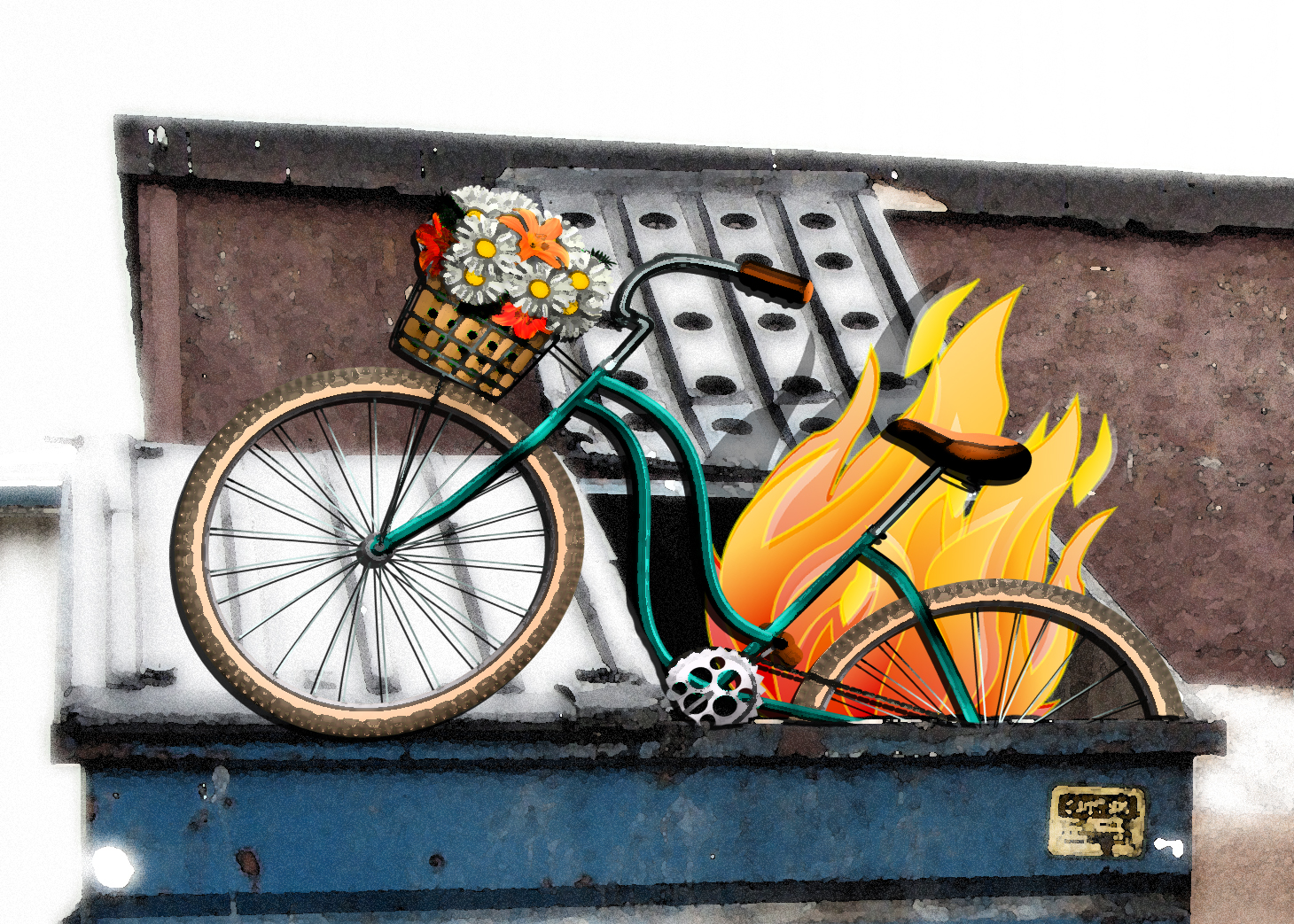
    Mountain Biking Has a Sustainability Problem

    With all the gear and gadgets, mountain biking isn’t as sustainable as it may seem

    For a sport that usually occurs in natural settings, and whose participants generally value the ecosystem and the world around us, mountain biking has a serious sustainability problem.

    Everything has an expiration date. No matter the maintenance, nothing is ever ‘for life,’ and nowhere is this truer than in the mountain bike industry. Chains stretch, tires bald or blow out, brake pads get worn down and bearings become crunchy and rough.

    Issues arise when one attempts to revive or service a bike. Many of the functions are delicate and precise, requiring fresh parts to operate smoothly. This means something as simple as a tune-up often results in cables, housing, tubes and tires being thrown away.

    Improper installation or use means that these parts break before they should and get replaced prematurely. Some people replace prematurely simply because they want improved performance.

    It’s hard to process this waste on an individual level, but walk into your local bike shop and look in the trash cans. Often, they’re filled with very un-recyclable items that are used, removed and replaced.

    Of course, the nature of the sport is that parts get worn down or broken and must be swapped. That so many of these parts get replaced prematurely or destroyed early due to user error is only part of the problem.

    With the way our world is headed, mountain biking is due for a rude awakening on the ways that it creates unnecessary waste.

    Other issues arise when we look at the bike industry and the way they market their high-end products. Often, these brands will swaddle their expensive parts in multiple layers of processed cardboard and plastics.

    Recently, I purchased a new shifter for my bike. The shifter is a small plastic pod, about the size of a mandarin orange. It arrived in a box that I could’ve fit my shoes into.

    Just because you can get away with selling drivetrain parts that cost as much as high-end electronics, doesn’t mean you need to package them like iPhones.

    If these parts were packaged in plastic bags rather than bulky cardboard, you could fit 10 times the items in a similar space, drastically cutting down on shipping material and resources.

    Usually, I give corporations a bit of lee-way with the way they package expensive items. It makes sense that they’d want to provide the customer with a sense of exclusivity for choosing to spend their hard-earned dollars on these parts. But with the news about our world’s climate becoming grimmer with every passing day, the mountain bike industry needs to step up and restructure their priorities to make the sport more sustainable.

    I’ve never met a mountain biker who didn’t care about the environment and the future of our planet. Unfortunately, when something breaks usually the whole bike is unrideable until the issue is corrected. Most of us just accept the impact of our sport as there aren’t many other options.

    With the way our world is headed, mountain biking is due for a rude awakening on the ways that it creates unnecessary waste.

  • Vaping Epidemic Overshadows Opioid Crisis

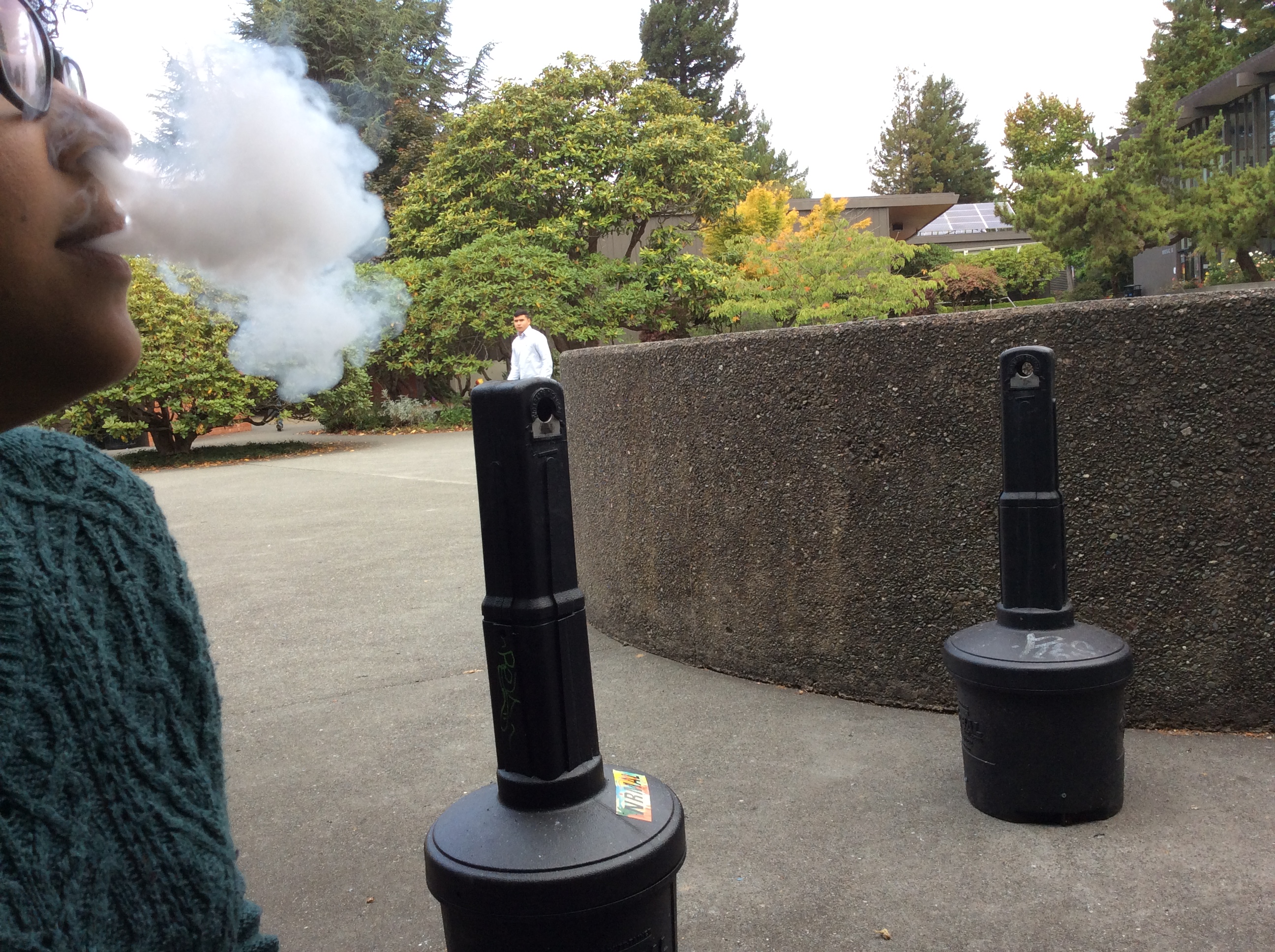
    Vaping Epidemic Overshadows Opioid Crisis

    Opioid crisis overlooked as ‘vaping epidemic’ is brought to the foreground

    With Hollywood actors and prominent public figures accessorizing day-to-day life with a JUUL in hand, vaping was quick to enter the teenage party scene and develop a reputation amongst the younger crowd.

    Years ago, public disapproval was primarily aimed at the advertisements vaping companies released. The younger crowd became the target audience with the promotion of sweet, tempting flavors, and the original audience, adults who were looking to quit cigarettes, quickly became a secondary target.

    In late August, seven deaths in relation to vaping were confirmed. Beyond that, 530 cases of lung illness found in young adults have been attached to vaping with the numbers on the rise. Regardless of whether marijuana or nicotine cartridges are being used, an unrelated chemical substance is being singled out. Vitamin E acetate, a common diluent used in vaping cartridges to cut the product and increase shelf longevity, appears to be the cause.

    Vitamin E comes in many forms and is most commonly known for its moisturizing and adhering quality. Physicians are dumbfounded by the idea of smoking it. Medical officials compare smoking Vitamin E acetate to “[s]aran wrap around your lungs” as the tocopherol element adheres to the lungs liner fluid, blocking oxygen travel.

    The light on vaping has cast a shadow on a much older and somehow less prominent issue affecting our country, the opioid epidemic. Since the ’90s, medical officials began distributing pain relievers at a higher rate after pharmaceutical companies assured them of their non-addictive quality. Proven to be false, this ultimately resulted in over 700,000 people dying from a drug overdose within the 1999 to 2017 time period. And according to the CDC, 400,000 of the deaths were due to overdose involving opioids, prescription and illicit.

    Since then, an estimated 130 people die daily from opioid-related drug overdoses. Unlike the vaping “epidemic,” officials are aware that 40% of opioid overdose deaths are connected to a prescription but refuse to take action and put restrictions on pharmaceutical companies.

    Focus continues to surround vaping. Measures are being introduced to limit access to vaping devices. Meanwhile, the country has been at war with drugs since the ’70s with little to no improvement.

    It took less than two months for legislators to begin discussions on vaping issues and introduce more than 200 bills to combat it. In almost half a century the opioid epidemic has claimed more than 400,000 lives, with 47,000 in 2017 alone, and leaves 1.7 million people suffering from substance disorders relating to prescription opioid pain relievers.

    The more urgent issue is somehow the least prominent thought in any officials mind.

    Before jumping into the next news-worthy drug epidemic, let’s overcome the current opioid battle we’ve been struggling with for almost 50 years and relieve the pain of over a million people before forgetting them altogether.

  • Athletes Are People Too

    Athletes Are People Too

    Pro sports is a two-sided business in need of a power redistribution 

    Owners of professional sports teams have made headlines the last few years for all the wrong reasons. The primary issue regards team owners treating players as property instead of as people, and a good amount of this coverage surrounds the National Basketball Association and the National Football League.

    Since 2014 there have been numerous situations where owners of sports teams made racially-toned remarks concerning their athletes, who are predominately black. Simply referring to whomever controls the majority of the team as ‘owner’ can have its own racial implications in leagues where most players are people of color.

    According to the NBA’s 2015 Racial and Gender Report Card and a 2014 NFL Census, 75% of NBA players and 68% of NFL athletes are black. The NBA also has the largest percentage of people of color in its fan base, whereas NFL fans are primarily white.

    In 2014, The NBA forced former LA Clippers’ shareholder Donald Sterling to sell his team after a tape of him spouting racist remarks was released to TMZ. But in the NFL it seems like their majority shareholders are able to get away with more. NFL team owners were more vocal than ever this past season due to the outrage from many fans about players kneeling during the National Anthem.

    While NFL contracts may seem ridiculous compared to other high-grossing sports, professional football players receive the lowest percentage of guaranteed money in their contracts. In contrast, NBA athletes make every cent of their contracts and are often considered to be involved in the daily running of the league as opposed to just their respective teams’ shareholders making all the decisions.

    When it comes to the relationship between owners and their athletes, a large factor in the athlete’s treatment is how fans act. Rhetoric during the kneeling protests relayed many of the players who took a knee as unpatriotic, spoiled and privileged, with fans telling players to “shut up and play.”

    Fans treat players as if they are toys for amusement instead of human beings. And team owners treat players like property that can be replaced at any moment. But when there is a media storm of fans and others calling for change like with the Clippers in 2014, progress can be made. Fans hold more power than they know and can directly affect how teams are handled and how athletes are treated.

  • A Local’s Perspective on HSU Football

    A Local’s Perspective on HSU Football

    HSU football brought two communities together and now we’re at a loss

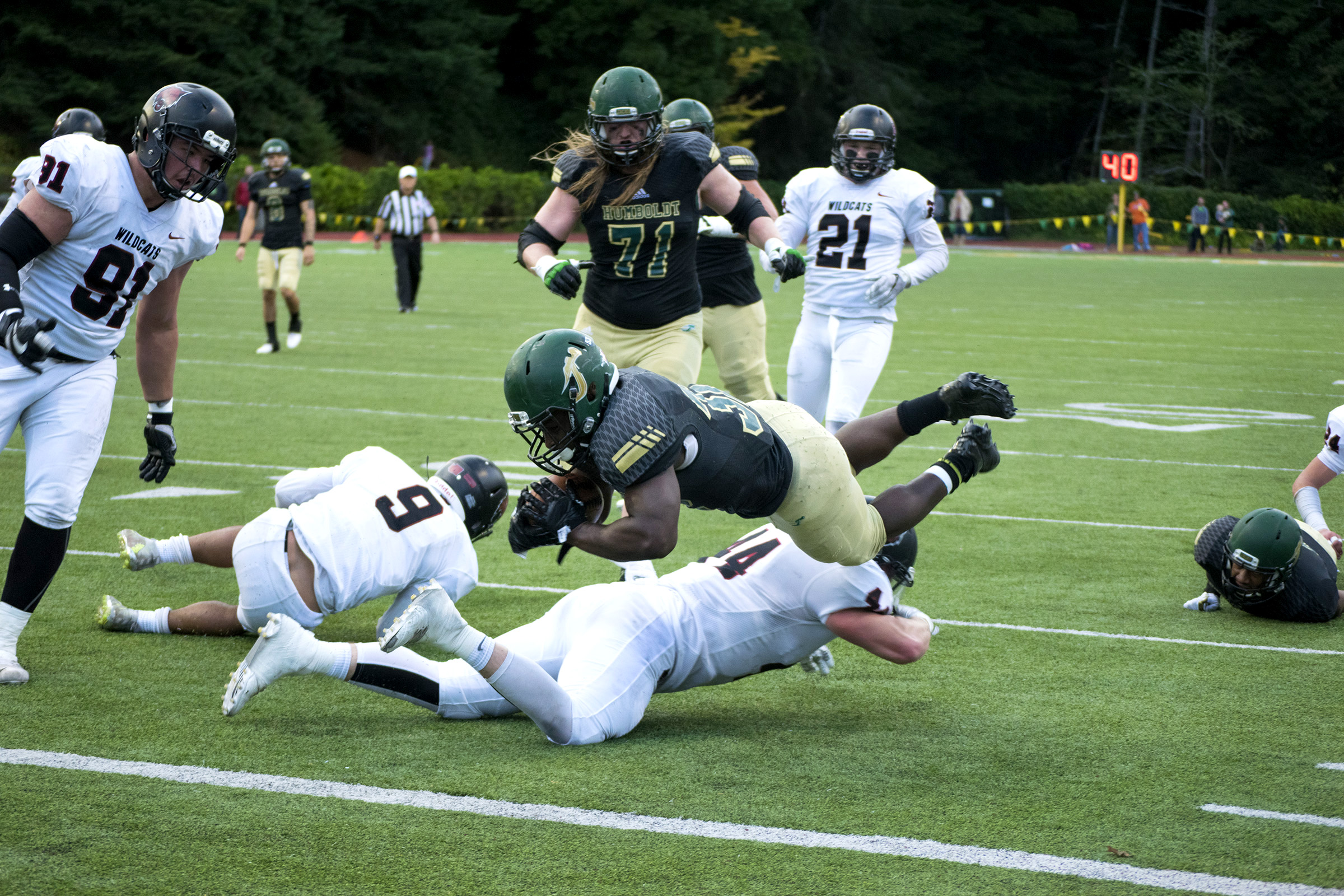
    In July of 2018, with most of the student population home for the summer, former Humboldt State President Lisa Rossbacher and former Athletic Director Duncan Robins made the announcement that the HSU football team would be cut following the conclusion of the 2018 season.

    The efforts of many community members to raise money for the football program earlier in the year were seemingly for nothing. Many community members, including myself, were outraged about the decision to cut the football team, but some applauded the move, saying that a football program was unnecessary and a drain on academics. Either side you may be on, it was a polarizing move for the university to make.

    I am part of the small percentage of HSU students that grew up in Humboldt County. In fact, I grew up right here in Arcata about a mile away from the HSU campus. I am as local as a local student can get. I spent a good portion of my life going to HSU football games and it became a significant source of pride that my small town had a Division II college football team. When I started attending HSU, this was not just my school’s football team, this was my hometown team as well.

    When I transferred to HSU from College of the Redwoods, the first thing that caught me off guard about HSU was how separate it seemed from the rest of Arcata. Even though I was going to school in my hometown, HSU felt like a world of its own, far from the Arcata I grew up in. I felt that my identity as a native of Arcata and a student at HSU were two separate worlds, even though in a geographic sense I was in the same place.

    HSU football games were one of the only times that these two worlds felt one and the same. The games became some of the only times where I saw both students and local community members in the same place, at the same time, rooting for the same team. People from Arcata and Los Angeles alike, all rooting for the Jacks.

    It wasn’t just about the football team itself, but it was how football brought the entire community together. Getting rid of the football team felt like severing one of the last ties between the campus community and the local community.

    The only good news I can gather from this is that the Redwood Bowl is actually seeing more football this season than when the HSU football team was active. My alma mater, College of the Redwoods will be playing their football games at the Redwood Bowl starting on October 5, and both Arcata High and McKinleyville High are playing their football games on campus as well.

    I hope that someday HSU football will be brought back, but in the meantime, all of the other HSU athletes that are still here deserve our full support. Go Jacks!

  • OPINION: What’s in the black hole?

    OPINION: What’s in the black hole?

    Will you be ready for whatever is to come with, or even out of black holes?

    Earlier this month the science community exploded when the first images of a black hole were taken. This new development got me thinking, what’s in the black hole?

    Until this photo no one knew what an actual black hole looked like. Scientists weren’t even completely sure they existed, it was all a theory.

    Some people think if we go into a black hole we’ll just die. Others believe that going into a black hole will take us into another dimension in time or space.

    I want to have some fun and make some guesses to what I think is the black hole. One guess is that when we go into the black hole, we’ll end up on a new foreign land filled with aliens who all look like Beyoncé.

    Another theory is maybe after getting sucked into a black hole, we could all come out like Looney Toon characters or deformed in some way.

    What I truly believe is that there is nothing on the other side of black holes. Maybe, if you fall into a black hole you just never come out. What if there is no end point to a black hole? The universe is always expanding and growing, what if black holes just keep growing?

    What is also interesting about this discovery is how spot-on the pictures of digitized or drawn black holes are. I mean, the movie “Interstellar” was spot on compared to the real image of the black hole. This is not the first time Hollywood has eerily predicted future events before they happen. Which is a whole other opinion, for a different day.

    Whatever ends up being in the black hole will be a question that I may or may not be alive to see answered. I think while we’re doing all this exploring in space people should be ready for whatever comes our way.

  • New Netflix series ‘Thirteen Reasons Why” sparks controversy

    New Netflix series ‘Thirteen Reasons Why” sparks controversy

    By Erin Chessin

    Last month, Netflix turned Jay Asher’s New York Times Bestseller, “Thirteen Reasons Why, into a popular new series, but not everyone is excited about the outcome. The show has received high ratings and critical acclaim for its cinematography, but people are having different interpretations based on whether they read the books prior to watching the series. Those who have only watched the series are not grasping the brutal struggle with mental illness compared to those who read the books–the extreme differences between the series and Asher’s 2007 novel are apparent.

    The biggest changes are within the main character’s portrayal, Hannah Baker, something fans of the book are displeased with. Netflix’s “Thirteen Reasons Why” tells the story of a high school teenager, Clay Jensen, who finds a box of tapes mysteriously on his doorstep one day. He listens to the tapes, which turn out to be a recorded suicide confession from Baker, who committed suicide two weeks prior. There are thirteen tapes, each are meant for a specific person who contributed to her decision to take her own life.

    Grace Hall, a freshman environmental science major at HSU, is disappointed to see various differences between the series and the novel she admires.

    “The series portrayed the story a lot differently,” said Hall. “People are watching it and are not having the right discussions about it later.”

    Hall believes Baker is depicted as “whiny” and “a drama queen” in the series, which is not the same character she remembered from the book.

    “It doesn’t highlight the fact that she has a mental illness,” said Hall. “In fact, it’s never even mentioned that she was depressed.”

    Some argue Netflix changed too much within the plots, characters and storytelling. For example, the story is told by Jensen in the TV series, whereas Baker narrates all thirteen episodes in the novel. Also, Jensen and Baker are not close in the book, but they are undeniably friends in the series.

    Taylor Walters, a freshman business major at HSU, did not read the novel and said she did have a good impression of Baker’s character.

    “What I gathered from the show was that she blamed everyone else for her problems when she was the one who caused them,” said Walters.

    Walters said the issues that Baker dealt with are common and happen to a lot of teenagers.

    “Watching this made me angry,” said Walters. “These are things that happen to a lot of high school kids.”

    HSU senior and environmental science major, Andie LeDesma, is upset with how Baker is portrayed on the show.

    “Because they didn’t mention that the girl had a mental illness, I wouldn’t be surprised if people said she was whiny or overdramatic,” said LeDesma. “A person who has depression is going to react differently to bullying versus a person who doesn’t have depression.”

    LeDesma believes it is important for Netflix viewers to be aware of the main character’s mental illness, otherwise the story gets misconstrued.

  • Perception, bias, division and expression  

    Perception, bias, division and expression  

    By|Joe DeVoogd

    Hippy.  Redneck.  Sheltered.  Blow-hard.  Egg-headed.  Bat-shit.  One word can say it all:  Perception: how one views itself in relation to the other.  Labels inform our reality and that fact all too often goes unconsidered in our day to day.  It’s about time we revisited the whole subject in a time of such political inhospitality.  

    I can’t speak for everyone, but I don’t leave my front door thinking everything I know is wrong.  I like to think that my assertions are adequately rationalized.  Yet, presented with information that stands to challenge those assertions, it becomes far easier to dismiss than to discuss.  Perhaps this because we never want to be wrong, or maybe it’s the product of our binary sense of morality.  Let’s try not to get wrapped up in an epistemological quandary.  What we believe informs greatly our identity, how we express ourselves, how we present ourselves, and more importantly who we place our confidence in.

    We humans are creatures of curiosity.  When we don’t understand something, we seek to understand.  Man’s need to root out the truth, whatever the cost; to build upon a body of knowledge passed down for generations is how humanity moved out of the Dark Ages and into enlightenment.  There are those, however, who merely seek validation and not truth.  The types of people who will defend a demonstrably wrong idea just because it aligns with their philosophy. One will come up with a hypothesis, and run with it without testing it because the conclusion feels good.  This is called bias, and of this crime we’re all guilty.

    While we dispense arguments that don’t fit our world view, we can also discount the people that pose such arguments based on how they present themselves.  Is it just a coincidence that people in cliques tend to dress similarly?  You may see a die-hard conservative wearing Birkenstocks, but would that align with his identity?  Probably not.  In fact such a choice would likely estrange him from those who think like him, and lump him in with the “incorrect” thinking people.

    We all work from the bias of our perceptions.  It doesn’t matter what political stance you may take.  Prejudice can be applied socially as well as racially.  It’s happens when we stop perceiving others as complex sentient beings and start thinking of them as manifest attitudes, expressions and practices that run contrary to our personal point of view.

    We do it with our media as well. At least 35 percent of adult Americans say they get their news feed from social media. And Facebook and Twitter are perfectly designed for the cherry-picker in everyone.  The algorithm behind these sites learns what you pages you should subscribe to for the “news” you like, the people you will want to follow, and dismiss everything else.  This positive feedback effect, a by-product of our comfortability within our info-spheres, is further galvanizing the political ideologies further apart from each other, narrowing our perceptions.

    You may say that distancing yourself from people and news outlet that don’t fit your view is a win win.  The problem is that while this improves our ability to defend the ideas we agree with, it appears to dull the human instinct of healthy skepticism, and this has led to fanaticism on both sides of the aisle.  Find me a moderate politician that people can get excited enough about to win the White House today.  I’ll wait.

    The perfect storm hits when our perceptions of one another and our biases lead us to express our division from each other.  I don’t think I need to tell you that freedom of expression is increasingly becoming a touchy subject.  With violent protest breaking out between the far-right, and the far-left, snafus like the XL pipeline, Republican lawmakers are drafting anti-protesting legislation in 18 different states; abridging the liberty to express oneself freely and peacefully.  Our own president, has condemned protesters and equated news outlets like CNN and the Washington Post to tabloids.  You may argue that they’re trying to enact those laws to limit general disruption and destruction of property.  I get that.  Here’s the rub.  After these states enact these laws, what will happen when the political pendulum swings the other direction?  The right will want to express themselves peacefully, and they won’t be able to.  It’s not leveling the playing field, it’s repressing dissent, and that is an exercise in thought control.

    Ultimately we need reach out to one another, and indulge in other points of view occasionally.  Where we cannot reconcile our differences we must still seek to respect one another as people.  It benefits nobody to berate and lambaste people for the way they identify or how they express themselves.  If you ever catch yourself saying ‘Liberals are ____’ or ‘Conservatives are ____’ remind yourself that these are biased perspectives .  (Besides you haven’t met them all, have you?)

  • A letter to the non-racist people

    A letter to the non-racist people

    by Alexandria Hasenstab

    Congratulations on not being racist! We know resisting your natural instinct to be racist is no easy task. You deserve to be acknowledged for all the non-racist things you do.

    Do like Drake, Beyonce, Kendrick Lamar? Everyone knows that if you enjoy black performers you can’t possibly be racist. You might even try becoming knowledgeable about black culture. Everyone is copying style, dance, words and music from black culture anyways. If you’re able to name all four aspects of hip hop culture, but you’ve never shown support for the black community, it’s okay, mimicry is the sincerest form of flattery.

    Maybe you eat tacos or even venture out and try mexican candy, you know, the spicy kind. Afterall, if you enjoy aspects of another race’s culture, then you’re not racist.

    And if you went so far as to acquire a friend that is a different race than you, then you get double points. They might not be your best friend, maybe they’re a friend of a friend who you would never hang out with one-on-one, but hey, it counts.

    Have you ever told an Asian person they should be better at math or piano or karate? I mean come on, that’s not racist, those are positive stereotypes.

    Maybe you’ve walked by a Muslim person and didn’t put your head down in an extremely awkward manner, maybe you even managed a smile. Well pat yourself on the back cause you deserve it.

    Do you like to make negative comments about white people? That’s okay because reverse racism doesn’t exist, so we can forget about individual people’s feelings.

    You’ve used the hashtag #alllivesmatter? Of course it wasn’t to take the focus off an oppressed group and make it about yourself, it’s because you truly so not racist that you care about everyone equally. It’s so unfair to focus on one problem at a time. I mean how can we ethically have a breast cancer awareness month when all illnesses matter.

    You slept with a person of color? You are definitely not racist. Everyone knows that having sex with someone and then telling everyone about it is the ultimate sign of respect.

    So once again, congratulations on not being racist. Go on and tell the world, because nothing says “I’m not racist” like repeatedly telling people that you’re not racist.


    Sincerely,

    Your conscience


    P.S.

    You might not be racist because racism is a social system, not an individual’s characteristic, but you are most likely prejudice. All sarcasm aside, we have to acknowledge our own prejudice in order to become more open-minded and accepting people. You should not be congratulating yourself for not being blatantly racist. Becoming defensive when prejudice is brought up will not make you less prejudice. Claiming that you are not racist will not make you less prejudice. Admitting that you are prejudice and being conscious of what factors have caused you to be prejudice is the first step to change.


  • Letters from Pelican Bay

    Letters from Pelican Bay

    When I first got interested in the criminal justice system, I began following community leaders throughout the nation who were involved in the reform movement. One person I began following was Glenn E. Martin, founder and president of JustLeadershipUSA and a formerly incarcerated individual. JustLeadershipUSA is an organization committed to cutting the U.S. correctional population in half by 2030. Their mission is to empower the people most affected by incarceration to drive policy reform. One of their biggest campaigns was #closeRikers, which was a battle to close Rikers Island, New York City’s main jail complex. It is a facility notoriously known for its brutal treatment and violation of human rights. As Kerry Kennedy, president of Robert F. Kennedy Human Rights, stated, “Rikers Island is a whirlpool of poverty, incarceration, and injustice.”

    Throughout Rikers Island history, there have been many cases and controversies regarding conditions and treatment. One case involved Kalief Browder who was arrested for stealing a backpack. Since he was underage during his arrest he was placed in solitary confinement for his ‘protection.’ After serving 3 years, he was released without charge, but it was clear his incarceration had took a toll on his overall well being. He failed his first suicide attempt shortly after his release. Unfortunately, after a second attempt he ended his life.

    While his case is not reflective of all cases, it does serve as an example of the faults at Rikers Island and in our criminal justice system as a whole.

    After years of advocating, organizing, and protesting JustLeadershipUSA celebrated a victory this past Friday, March 21, when New York City’s mayor Bill de Blasio vowed to close the facility.

    “It will take many years. It will take many tough decisions along the way, but it will happen,” de Blasio said at a City Hall press conference.

    While no specifics were given, Mayor de Blasio did say it would take roughly 10 years to close the detention facility and it would require reducing the jail population.

    So why does something that happened across the country matter to us?

    Personally, it serves as inspiration and on a larger scale it provides a model for us to follow. California currently has 123 county jails which are used to house inmates awaiting trial or those who are sentenced to one year or less. Our jails like many across the nation are overcrowded with mentally ill inmates or people awaiting trial simply because they cannot afford bail or solid legal representation. Over 12 million people funnel through our jails annually and if California is rethinking prisons, it must rethink jails.

    Right now, the goal of majority of criminal justice reform advocates along with JustLeadershipUSA is to cut the incarcerated population in half by 2030. That is going to take some serious coalition building and community organizing which the citizens of New York engaged in. Reducing incarceration in jails and prisons requires addressing homelessness, education, public benefits, employment, and the stigmatization of formerly incarcerated individuals. If New York can successfully close down its largest jail, then California can begin to close down its local jails.

  • Act like a man

    Act like a man

    Reinforcing negative gender roles
    by|Domanique Crawford


    During Women’s History Month, there always seems to be a resurgence of  phrases circulating that hold the theme “act like a man.” These phrases express that woman should work to be more aggressive and rude rather than their usual sweet selves. These type of quotes are a disservice to both man and women.
    This kind of quote reinforces typical stereotypes facing males and females. That women are not as smart and as strong as men, that we are emotional homebodies. For men, these quotes install the idea that they always have to be in charge and always need to maintain strict control of their emotions.
    One of the popular quotes circulating the web is “look like a girl, act like a lady, think like a man, work like a boss.” I have no idea when this quote started popping up. However, when I first read it, it instantly made me angry. One of those moments when blood rushes to your eyes and your heart starts beating to such dizzying speeds that if you don’t calm down, you are likely to pass out. It took me a while to dissect every single reason this particular phrase irritated me. 
    I’m not even going to touch on the little girl remark because the heart attack would be imminent. As to the rest, act how you want to act and think for yourself. If someone hates you for it, then they are not worth your time. These type of negative comparisons reinforce the idea that you have to adhere to certain gender roles and ultimately defeats the point such phrases are trying to inspire; to encourage women to feel free to be themselves no matter the judgment we face. 
    Each decade, women seem to do more and more to become more “manly”. Back in the day, the focus was on obtaining the status man held not conforming or adhering to specific gender roles. For the generations of women, this meant different things. In the 1920’s, women worked for the right to vote. In WWII, women were sent to work in factories. Shortly after this time, women allowed to be enlisted personnel in the military and never have we, in any of these situations, allowed ourselves to be seen as anything other than women.
    Women changed how the world looks at work relations, family relations, reproductive rights, and human rights. Women have brought about stability in a world that seems to be forever changing. We should celebrate our past and present achievements and not get caught up in false equivalencies that are counterintuitive to our goals. 


  • Editorial: Cutting College

    Editorial: Cutting College

    The Trump budget rejects low-income students

    By The Lumberjack Editorial Board

    The 2018 Trump administration budget is an utter catastrophe for college students. If you thought a 5 percent tuition fee increase was worrisome, well, look out. The cuts to the Department of Education alone will have you rethinking the decision to attend college altogether. 
    While the White House is holding up the promise to increase defense funding, the budget slashes programs that help college students. When you analyze the full impact of these cuts, things aren’t looking pretty for the low-income students.
    The budget slashes funds for the Federal Pell Grant, also known as FAFSA, by $3.9 billion. FASFA is the largest federal grant program according to the National Center for Education Statistics. The FAFSA program helps students and families making less than $40,000 a year. Because the FAFSA is a grant, students don’t have to repay the money or incur student loan debt. 
    Students count on the FAFSA to not only help with educational costs but also for their livelihood. For some, the Pell grant can mean anything from affording school supplies or food, to housing. Without the aid of FAFSA low-income students aren’t left with many options to fund their education and seek a better life. 
    If you were hoping to find help through the other programs within the educational system, unfortunately, the cuts don’t stop with FAFSA. In the Trump budget, the Department of Education stands to lose a total of $9 billion. The reductions concentrate on all of the programs intended to support low-income students. The budget eliminates the Federal Supplemental Educational Opportunity Grant Program – another federally funded grant programs meant to help low-income students. The budget also reduces funding for the Federal Work-Study Program allocation and various college scholarship programs for both STEM and humanities majors.  These aren’t even the cuts that are going to cut funding to primary education. 
    College students with children are most impacted by the proposed cuts to federally funded after-school programs. The cut eliminates $1.2 billion from the budget allotted to the 21st century Community Learning Centers program which is responsible for before-and-after school programs. 
    On top of all of these cuts, the passing will mean that Secretary of Education Betsy DeVos will succeed in getting taxpayers to fund charter schools and private school vouchers. The budget adds a $168 million for charter schools and puts away $250 million for “new private school choice program.” 
    If this Trump budget proposal is an initial outline for what could be, students and future generations should worry about the affordability of higher education. Without education, the low-income are left to rot in the bottom of the barrel. America was and is made great by the ability for those without money to become educated and seek the same life as those born into privilege. Taking away the only way many low-income students are able to attain education is paramount to erasing the American dream and replacing it with chains. 

  •  Attempts at a ‘Fake’ out

     Attempts at a ‘Fake’ out

    The new administration feuds with the media

    By| Domanique Crawford 


    You know Larry, right?
    Larry is the man you decide to take a chance on even though his past is sketchy. Larry says he respects woman but cheats on every woman he’s had a relationship with. Larry says he’s not racist but all immigrants are criminals here to steal jobs from hard-working Americans. Larry professes to be one of those hardworking Americans, and yet he’s never worked a hard day in his life. You don’t believe Larry but he sings his own praises with such frequency that you compare his actions to his words and find him lacking. You begin to question Larry. So Larry decides to break it off and tell everyone that you are just a crazy ex-girlfriend.
    President Donald J. Trump is the news media’s Larry except, this Larry is the Head of State, chief executive, and the legislative leader. 

    Every president’s approach in how they try to handle the media is unique. However, there has never been such a determined effort from the white house to discredit news organizations.
    Delegitimizing the media doesn’t stop the watchers from watching. It just makes us more suspicious. The media is considered the watchdog of the government and a tool to keep the public informed. The new administration’s consistent and unwarranted assaults on the media just make journalist more motivated to fact check every accusation they make and encourages the people to be more vigilant in watching both the press and the white house alike. 
    The new administration’s ploy is to make the media outlets that don’t favor them just another crazy ex- girlfriend, to discredit them in having some kind of crazy conspiracy to sabotage the president. 

    The media outlets that don’t fall in line with promoting the new administration’s agenda is classified as fake. The Media’s job is to report fairly and accurately on the facts. 
    Fake news used to be defined as purposely distributing knowingly false information. However, with every appearance of the Trump administration the term “fake news” is any negative news coverage on the presidency and the new administration. 
    The term is thrown around casually in a deliberate attempt to confuse the public. However, it is not the word of the media that has to be constantly checked for propagating false information. 

    From day one with his proclamations of the biggest inauguration crowds ever, to Kellyanne Conway’s criticisms of poor reporting on the non-existent Bowling Green Massacre, Trump and his administration contradict themselves on a regular basis.
    Larry may be able to confuse his short circle of friends that is dazzled by his performance but he is not able to hide the facts- alternative or otherwise. 

  • Letters from Pelican Bay

    Letters from Pelican Bay

    By| Tania Mejia

    In August of 2016, the Department of Justice [DOJ] made an announcement claiming it would begin phasing out the use of private prisons. I clearly remember coming back to school and a number of people sharing their excitement and asking my personal thoughts on it.

    I would start off by saying yeah it was a great thing, but our number of private prisons was miniscule to the total amount of state and federal prisons in our nation. So while it seemed like a great accomplishment, federal private prisons only made up about 8% of our incarcerated population and in the end of December 2015 only housed 22,660 inmates according to an inspector general report. Also, this did not include state private prisons, which similar to our federal government are in the low percentages. I personally thought it would be a greater accomplishment had it been in regards to immigration detention centers, considering about two-thirds of them are privately owned. This is where it is worth mentioning, simply because it is called “detention center” does not mean it is not a prison. 

    Following the DOJ statement, stocks for private corporations such as Corrections Corporation of America, now Core Civic, and GEO Group, formerly Wackenhut,  plummeted. It seemed those who prioritize profits over people were concerned about the future of their investment. But this was not a clear win, and with such companies donating to Trump’s campaign it was expected that the fight was not over. Most recently, the Trump administration announced it will not uphold former Former Deputy Attorney General Sally Q. Yates’ memo and that we will continue and increase our use of private prisons.

    The reason this is so concerning starts with looking at the models in which companies as CCA and GEO operate in. To ensure maximum capacity and profits, contracts are introduced where states are required to keep a certain percentage of beds full.  What are the problems with private prisons? Culture of violence, poor unsanitary conditions, health care, food, operational conditions, sexual abuse, If crime rates have been down in the past decade, how do we account for such usage of these facilities?

    Some contracts require 90 to 100% occupancy, which means if states don’t provide those numbers, they have to pay these companies for the unused beds. If not, increase the criminalization of everyday life. 

    Private prisons did not exist before the early 1980s when U.S. states and the federal government needed a solution to overcrowding in public prisons. But between 1990-2009 the number of people in private prisons increased by a massive 1600 percent. The business model of these companies essentially depends on locking up more and more people up.

    In its 2010 annual report to shareholders, CCA stated, “The demand of our facilities and services could be adversely affected by the relaxation of law enforcement efforts, leniency in conviction or parole standards and sentencing practices or through the decriminalization of certain activities that are currently proscribed by our criminal laws.” Because of these concerns, private companies spend a lot of money lobbying for policies which will benefit their pockets.

    How can we stop the use of private prisons? Unfortunately, we now have a president who is going to make any effort nearly impossible. But we know private prisons spend a lot of money on lobbying politicians there is hope. They all support governors, state legislators, and judges, which we all have a say in. This requires digging into local and state politics.

    I would encourage everybody to read “My Four Months as a Private Prison Guard” by Shane Bauer for Mother Jones. We have vulnerable populations in these facilities including juvenile and immigrant detainees. The problem spreads beyond America into countries like Africa, Australia, and more.  Our nation’s prison system is a failure on its own. Prioritizing profits over people does not serve community, families, and society, but only those who are invested.

    Any Orange is the New Black fans will be somewhat familiar with the problems that follow when public institutions turn to for profit companies. Fun fact, Management Correction Corporation (MCC) piggybacks off the real private prison company Management Training Corporation (MTC).