The Lumberjack


Students Serving The Cal Poly Humboldt Campus and Community Since 1929

Tag: Opinion

  • Corporations buy out propositions

    In a series of general and misleading advertisements, corporate backers of Propositions 22 and 23 show their grubby hands

    If you’ve been on the internet over the past two or three weeks you have seen a Yes on Prop 22 ad. These ads provide vague promises of “guaranteed earnings, healthcare benefits, and personal protections” while also touting the freedom of schedule that being an independent contractor would provide.

    This proposition comes at the perfect time for Uber and Lyft as California’s Assembly Bill 5 in 2019, drivers for those companies will be treated as employees. Uber & Lyft attempted to overturn the bill but it was upheld last Thurs., Oct. 22.

    If Proposition 22 passes, Uber and Lyft will be able to continue to treat their workers as independent contractors rather than employees.

    Before 2019, Uber and Lyft were able to classify their workers as independent contractors by arguing that they were not a transportation company, but merely a tech platform. This means that the drivers for Uber are merely partners with the app and are not required to be classified as employees like they would be if they worked for any other transportation company.

    The healthcare benefits guaranteed by Proposition 22 come under the condition that drivers have 25 hours of “engaged time” a week. “Engaged time” is defined as the period of time from when the driver accepts a ride until they complete the ride.

    At first glance this would provide benefits for a little over 25 hours of work but according to some rideshare drivers, over half of the time they spend using the app is actually spent waiting for a ride. It would be very likely that drivers would have to work more than 40 hours a week for these benefits.

    Advertisements also quote that “If drivers are forced to become employees, up to 90 percent of app-based driving jobs could disappear.” This statistic was not sourced. If a company is not able to provide their employees the minimum wage and benefits, required by California labor laws, then they are not a viable company.

    Proposition 23 requires that a physician, nurse practitioner or physician assistant be on site during dialysis treatment. Additionally, it prohibits clinics from reducing services without state approval, and from refusing to treat patients based on payment source.

    As it currently stands, any complications that come up have to be sent to the ER and handled offsite, lengthening the amount of time it takes for a patient to get care and complicating treatment.

    Advertisements have stated that Prop 23’s enactment would threaten to close many dialysis centers. Written directly into Prop 23 is that clinics cannot reduce services without state approval. There are provisions that allow for clinics to hire nurse practitioners or physicians’ assistants in the event of shortages of doctors. Currently, all dialysis clinics are required to have a doctor on staff to be the medical director, but they do not have to be onsite.

    Dialysis clinics in California boast an annual revenue of more than $3 billion. This booming industry is not one that would be destroyed by higher standards of care and more providers. Rather, this highlights the way that their ad campaigns utilize fear tactics about closing clinics and rising costs to justify putting patient safety at risk to line their own pockets.

  • Screens are losing their novelty

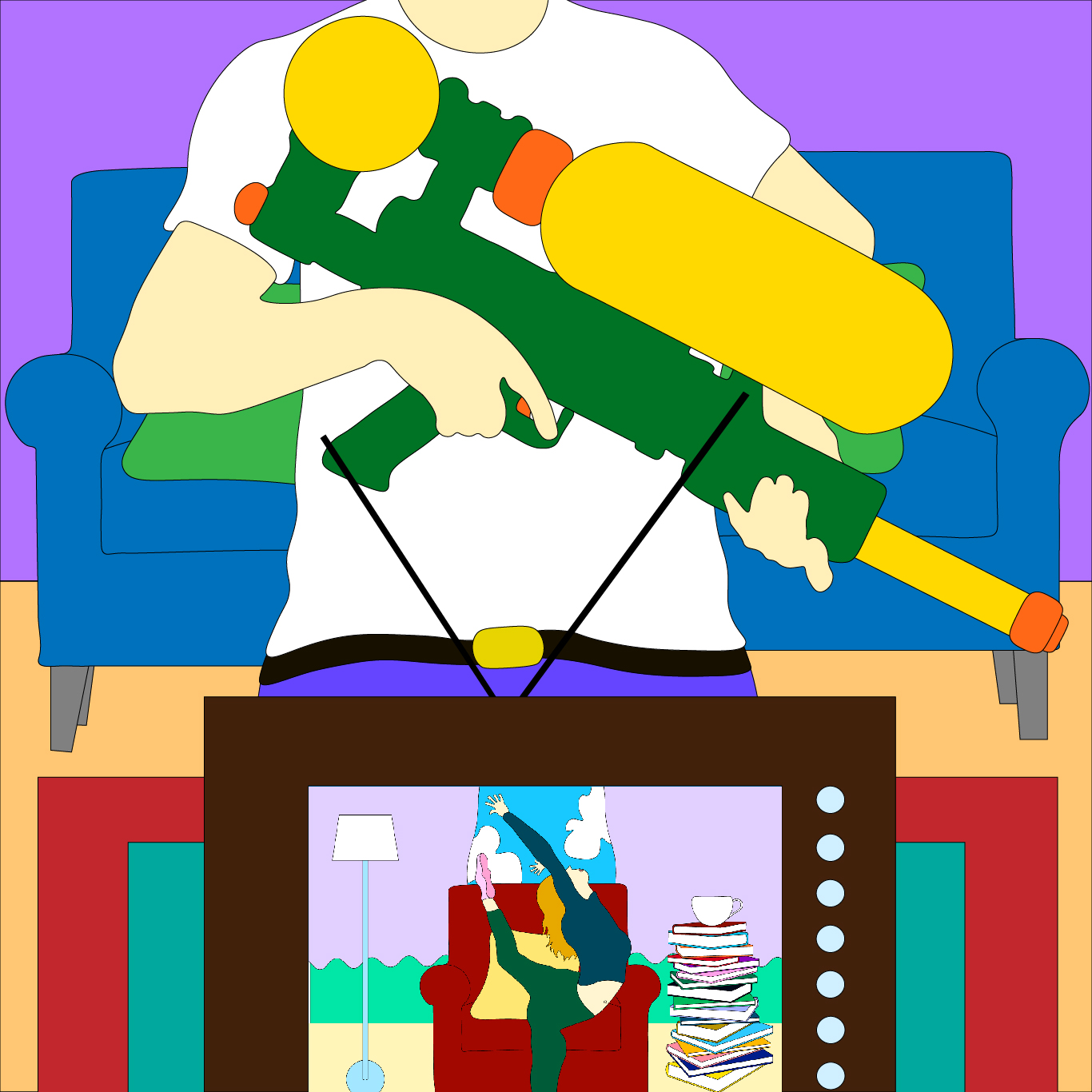
    Screens are losing their novelty

    Life and Arts editor, Dakota Cox, speaks on his shifting perspective towards technology.

    2020 has tainted the relationship between humans and screens.

    When I was a child, my favorite thing in the world was my Gameboy. I was only allowed to play on long car trips or the rare occasions when a friend spent the night. My favorite game was Pokémon, of course. I remember the satisfaction I felt after beating the game for the first time. Those were the days before YouTube tutorials when discovery in games meant something.

    When I grew older, I replaced my Gameboy with an out of commission iPhone I found one day in a crack of the couch in our family room. It served me well as an iPod for years until it finally refused to accept a charge and became replaced by my first official iPhone.

    That phone met a violent end far before its time. It wasn’t missed. The replacement that sits in my pocket today has aged noticeably over the years having been through more than most. It will also not be missed.

    Over the years, whether it be a computer, a television or a phone, there’s always been a screen at the center of my life. Though they may not always have received the majority of my time, the ideas attached to screens have almost certainly played a dominant role in my decisions since they were introduced to my life.

    All it took was a taste and I was hooked, now I understand why my mom warned me about drugs. I only wish she’d known the damage a single screen can cause.

    When I was 10 years old and my brother Yoshi was born, my mother more or less granted me the trust to make my own decisions. For me, this meant staying up till 5 a.m. watching Netflix, playing Skyrim and sleeping in until 2 p.m. Those were the days.

    When I started living away from home, I began spending more time than ever in front of screens. They were no longer just an optional escape, they’d also become a regular part of my college education.

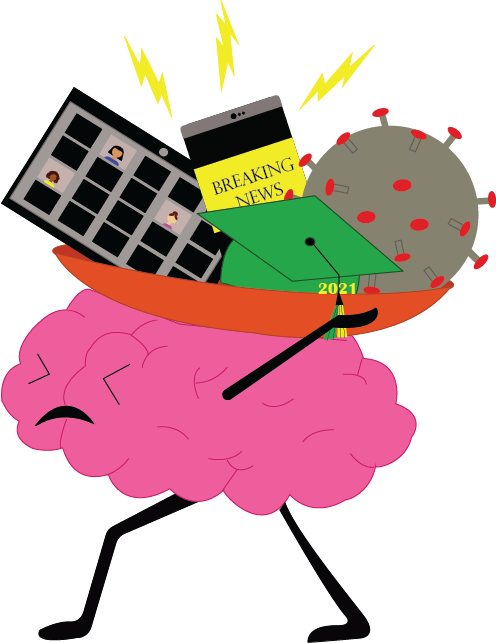
    Now with the pandemic and online learning, the time spent in front of screens has crossed the threshold to a place of dread.

    The once exciting prospect of a notification arriving on my phone is ruined by the endless nagging of unfulfilled responsibilities and classes I spend hard-earned money on to attend.

    The little quality time I get to spend with family in the pandemic has become corrupted by the constant presence of screens.

    Aside from hiking, almost every moment I was with Yoshi over the summer was spent playing the latest video games and half-paying attention to the shows playing in the background.

    When I have time to spend the weekends with my Mother, I wake up before 7 a.m. for work and don’t get back until 5 p.m. By then, I’m exhausted and I’ve got a pile of stories to edit, if I don’t have to write one myself, along with whatever homework I couldn’t finish during the week.

    My mom is mostly glued to her phone and outside of an occasional board game or family movie, we retire to our respective rooms. Is this what life has come to?

    Screens can be used to accomplish great achievements as tools or produce great joy as toys, however anything over-used can become unhealthy. So, give your poor brains a break, I know mine needs one!

  • Dobby’s dissection of Donald Trump

    Columnist Dobby Morse shares their take on the presidential candidates

    I tried. I tried to watch it, but like everything else Trump is involved in, it was a farce.

    Within the first 15 minutes, Trump dodged the question as to when the new justice should be nominated by talking about Amy Barrett’s qualifications. He lied about his very public taxes, called the Coronavirus the “China plague,” implied that Biden was stupid for forgetting the name of a place and bragged about football, of all things.

    I am by no means, a fan of Biden. He is a creepy old white guy that has been accused of inappropriately touching several women. Trump has done much worse. Biden has a plan for the Coronavirus, including free testing, Personal Protective Equipment and a nationwide mask mandate.

    He has a plan for the climate crisis that includes the Green New Deal, rejoining the Paris climate accord and an end to fossil fuel subsidies. Trump, as Biden said repeatedly, does not have a plan.

    Trump’s biggest problem is the inability to self-reflect. The media has been largely negative towards him. He is a pathological liar and it is the media’s job to expose lies. He has shown no ability to listen to experts or politicians who do not undeservedly love him.

    Rather than take a minute of his 74 years of life to reflect on why people don’t respect him, he goes on defense.

    Biden, despite Trump’s opinion, is smart. He brings up his experience as a senator and vice president to show he knows how to do the job. He talked about the Coronavirus deaths as people, rather than statistics. He talked about Trump’s history of lies and lack of a plan to showcase his opponent’s incompetence.

    A horrific outcome of the debate is an increase in recruitment for the White supremacist group, Proud Boys. When asked to condemn them, Trump replied, “Proud Boys, stand back and stand by.”

    The hate group has since adopted this quote as a slogan and an endorsement by Trump.

    We live in a world where incredibly dangerous people are world leaders. We live in a world where fundamental and private rights are in danger. We live in a world where a few people can decide the course of history.

    So vote. Check your registration status, and if you aren’t already getting election mail, find out why. History has its eyes on you.

    Dobby Morse is a columnist for The Lumberjack and is an HSU student.

  • Time for yourself is more than okay

    Time for yourself is more than okay

    If you needed a sign to tell you to take a break, this is that sign

    Burnout is among us, for some it hit pretty early on. Whether you’e a student, a worker or both, taking a step back just feels impossible. Why do we justify our exhaustion with more exhaustion?

    While it is important to take responsibility for our lives, we need to be kind to ourselves. Living in this pandemic, we have come across what is called “pandemic fatigue.” According to University of Californi a Los Angeles health, it comes in various forms like the inability to focus, not knowing what day it is, feeling anxious, hopeless and worrisome.

    How do we fight pandemic fatigue? How do we fight burn-out? How can we avoid a downward spiral of intrusive thoughts, fear, irritability and insomnia?

    In an article in General Surgery News, Rachel Goldman, Ph.D., FTOS, a licensed psychologist, talks about healthy selfishness. The phrase explains itself, “knowing what you need to do and allowing yourself to do it.”

    It’s time to be more selfish with our health and recognize that we need to take me-time. It’s a reminder and also heavily recommended that we do take time for ourselves.

    I personally struggle with taking that break and I wouldn’t consider myself selfish. We are living in a very unpredictable time. I’m a planner, not being able to plan for the holidays or the next semester drives me up the wall. However, maybe it’s time that I stop worrying about the future and worry about what I am doing right now.

    “People need to focus on what is in their control, which is behaviors, reactions and how they cope, and not on what is out of their control,” Goldman said.

    Worrying about things you can’t control is unproductive and a playing factor in my pandemic fatigue. The feeling of being lost and confused about what to do next runs through my mind every day. Dwelling on the unknown is out of my control and I need to let it be.

    I know we are all going through it differently, but we are all still going through it.

    So when you are too exhausted to go on, take that nap.

    When your head is spinning, go for that walk.

    When you find yourself reading that one page four times over because you’re just not getting it, take a step back and make some pasta.

    Hit a pillow. Call a loved one. Cry. Watch that cringey holiday rom-com. Draw something, ugly or pretty.

    Talk to yourself using only nice words.

    Learn some breathing techniques on YouTube, meditate with Spotify, watch the news or don’t, and don’t forget to drink water.

  • Tragic, but not shocking, no justice for Breonna Taylor

    Tragic, but not shocking, no justice for Breonna Taylor

    Opinion Editor Mikayla Moore-Bastide speaks on nationwide injustice

    How do I explain Breonna Taylor to my future daughter?

    A Black woman, in her own home, was shot multiple times by police and it took six months for the officers to be charged with a crime. Only one officer was charged, but it wasn’t even for killing her, it was for endangering the neighbors.

    How do I even explain Atatiana Jefferson to them?

    She was playing video games with her nephew in her own home when the police shot and killed her through her window.

    How could I explain Botham Jean?

    He was watching TV on his couch when an off-duty officer burst through his door and shot him. The officer said she mixed up his apartment with her own.

    How do I explain my fear of the police bursting into my apartment because my neighbor called for a wellness check?

    How do I explain that walls got justice before Taylor did? Or how it took national pressure from social media to keep the city from sweeping this under the rug. Or how any bad thing from your past will be brought up in an attempt to justify your death. Or that women already have to face enough oppression, but adding melanin to the mix just makes our odds worse?

    How do I explain the terror every black person faces on a daily basis?

    The terror of becoming a statistic, a hashtag, or having their last breath recorded for all to see over and over and over again. Having our name and face plastered on a sign with the demonstrators chanting, “No Justice, No Peace.” Riots being named after us. How about the family not having time to grieve because they’re too busy making sure we get justice? Or the worst one, justice not being served because the system doesn’t care about black lives.

    How do I have “the talk” with my future kids?

    Usually, “the talk” is about sex, drugs, drinking, dating, or staying out late. My version of “the talk” was about how to talk to the police without looking like a threat. It was about why that one kid kept calling my little sister “brownie”. It was about avoiding certain cities,bars and malls because the people there have a certain mindset. It was about why I will get treated one way, but my white-passing friends will get treated another. It was about getting followed in stores because I looked suspicious.

    Of all the talks I’ve had, they would have never prepared me for not feeling safe in my own home or neighborhood.

    Our home is meant to be our relaxation spot, our comfort zone, and our safe space.

    Living while black, we don’t get that. We don’t get to go on innocent runs around the neighborhood, we don’t get to sleep, watch tv, or play video games in our home. Tamir Rice didn’t get to play in the park. Elijah McClain didn’t even make it home from the store. My sisters go to a school in a nice area, but they don’t even get to walk to McDonald’s after school without being questioned by police regarding their residency.

    How do I explain that we are not protected?

    Or that we were never protected?

    Breonna Taylor deserved better and the system just treated her life like it was disposable. Her life was not disposable. Black women are not disposable. Black people are not disposable.

    Say her name.

  • Cars collide with protestors at Breonna Taylor demonstration

    Cars collide with protestors at Breonna Taylor demonstration

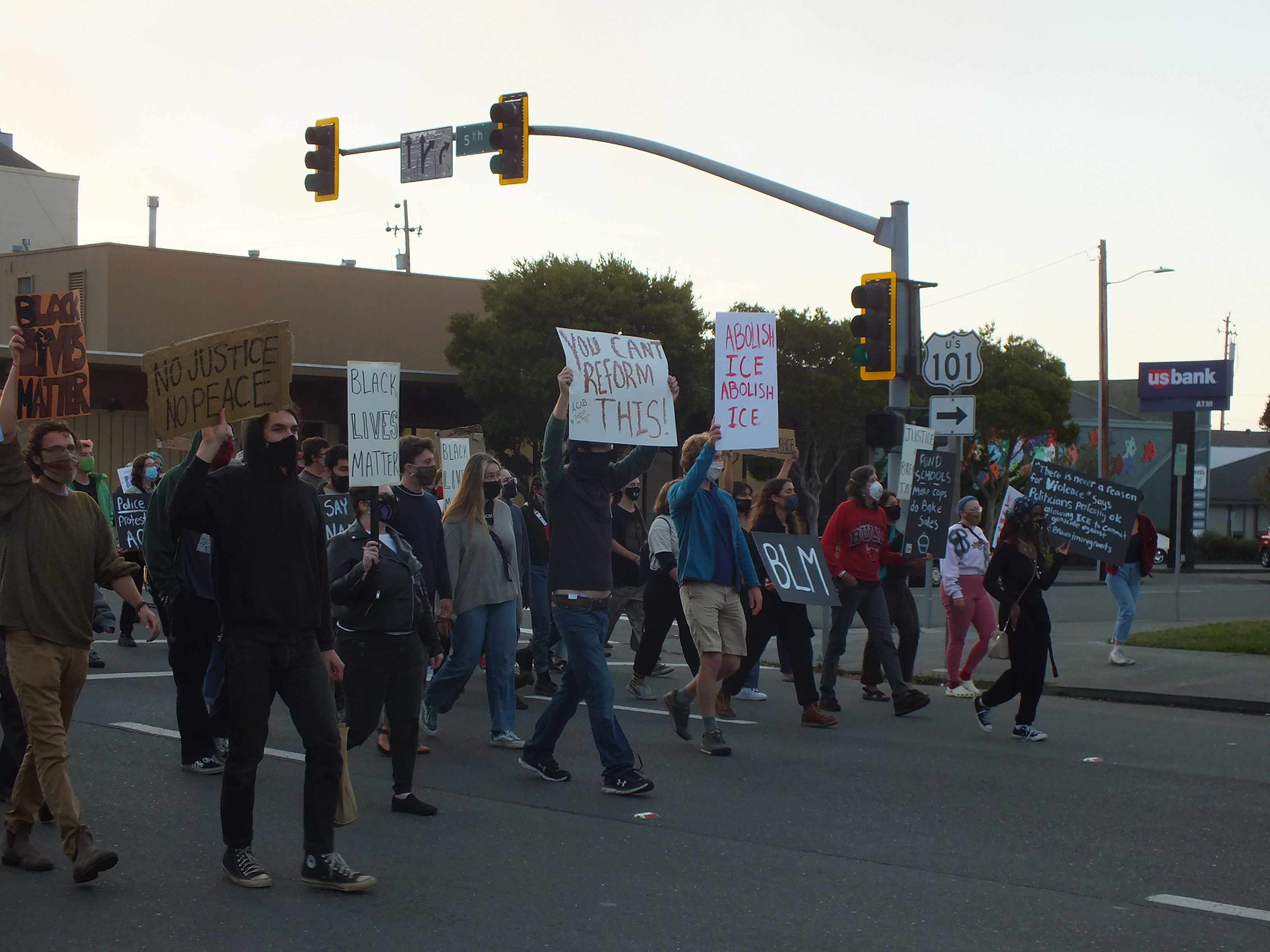
    News Editor, Carlos Holguin recounts his experience at the Breonna Taylor protest in Eureka on Sept. 24.

    As I parked a block away from the the Humboldt County Courthouse on Sept. 24, watching community members gather with signs in hand, the name Breonna Taylor emblazoned on so many of them, I wondered just how the night would go.

    Over the past months, reports of violence occurring at Black Lives Matter protests from the likes of counter protesters, police and so-called vigilantes have grown, from cities large and small. I would be lying if I said I wasn’t nervous as I watched heads turn as I continued to snap photos.

    It’s hard to cover a protest, and even harder to cover one when trying to stay objective. When protestors ask you questions about your support and why you are there, it’s hard to create an answer that fits all needs and wants.

    No matter how many times the crowd calls for you to say her name, you’re told that replying is compromising to your ethics. God knows I wanted to chant and reply, but I held my tongue.

    Some people don’t want you there at all sometimes, afraid that you just pose another risk.

    As the march started, taking over street corners and sidewalks before advancing to entire lanes and intersections, the chants grew louder. People peaked out of business doorways, sat on apartment balconies and either silently watched or cheered as the crowd passed. Cars blared their horns behind the procession, only to be met with more cheers and protesters stopping to take in the anger and frustration.

    That’s what this was after all, focused and controlled anger at a system that failed not just them, but people like them. Anger at a system that left people in Louisville and around the nation demanding justice.

    The tension climbed higher as the sun set, the protestors circling back to the courthouse to pick up any late comers and grow in number, before continuing to take streets and hold traffic. Through it all I stood aside, camera in hand taking photos of the world around me, trying hard to be a fly on the wall. This is not my story, this is not something I needed to be a part of.

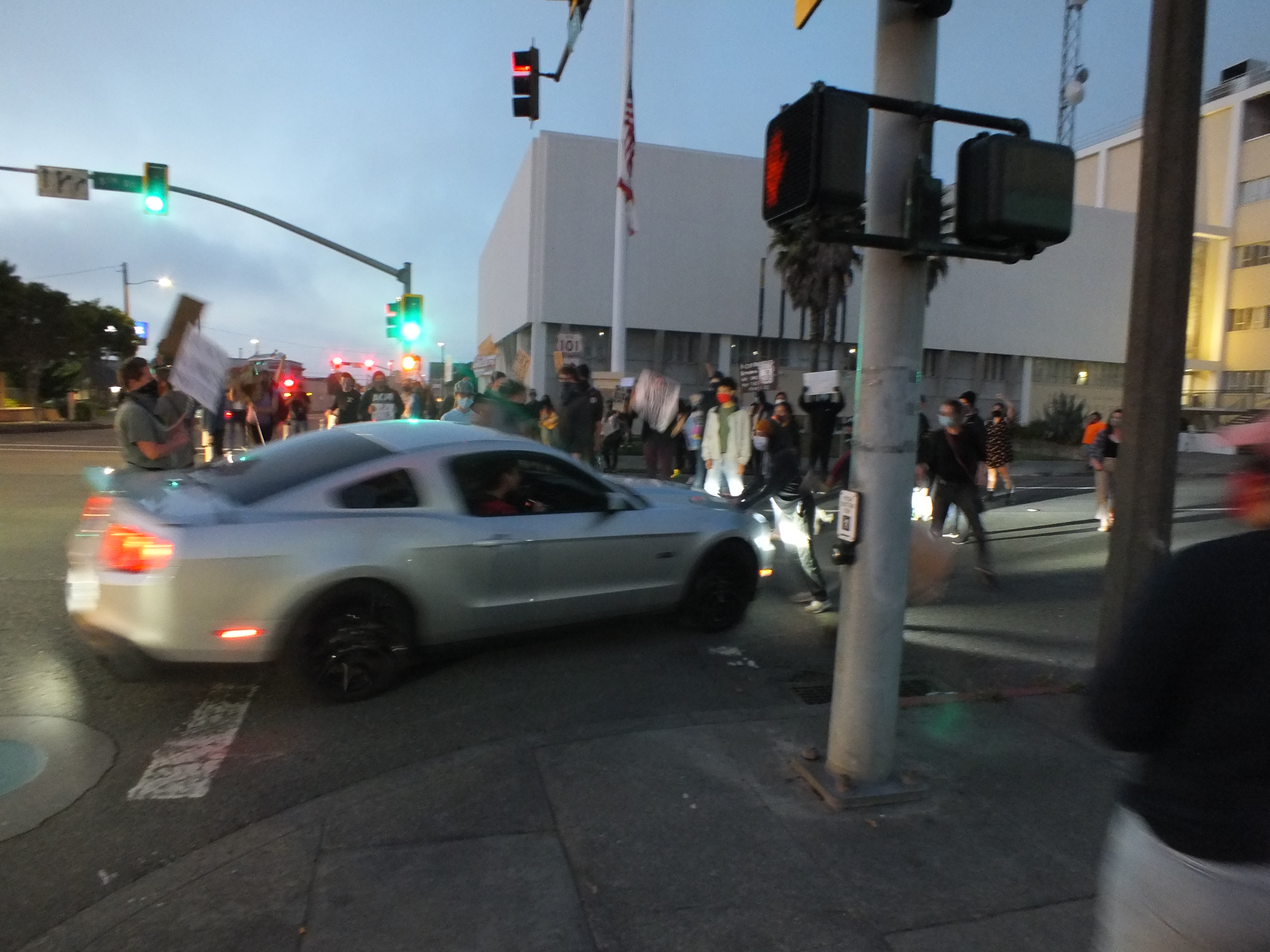
    When the first car drove through the crowd of protestors, I saw it coming. Both sides stood in a stalemate, with protesters refusing to give an inch to the Mustang as its engine stirred and horn deafened the chants.

    Through the lens of the camera I saw bodies get pushed aside and land hard on the concrete, but bounce back just as fast. The anger grew and the few scrapes and bruises

    were just fuel and this fire was not ready to die out.

    The second car, a large truck who’s black paint blended with the night, was more deliberate. It slowly crawled into and then lulled in the intersection, watching as more and more gathered around it. As I approached the truck, the car shifted into park and the tires turned in place, smoke bellowed from the burnout. It was an arrow notched and aimed.

    The car shifted into drive. A few feet in front of me, the car made contact with a protester. There was thud, then a scream.

    For a second I froze in place, watching the crowd rapidly part ways.

    And then I ran with everything I could for a moment after the truck. I needed a plate, a model, something to help. I watched it after a few minutes disappear on to the highway, before turning back. This was not longer something I could choose to remain objective as a journalist in.

    I cannot understand, nor do I want to understand, how hate can grow within a person to the point that they could justify actions like these. A person who willfully chooses to meet progress with aggression is not someone any person should associate with.

    Journalistic integrity be damned, I will not stand idly by.

    Injustice anywhere is still injustice everywhere.

    Breonna Taylor.

    Say her name.

  • Obituary Of A Snake

    Obituary Of A Snake

    Goodbye, Cruel World

    I found you dead this morning. You had a tragic and undignified death. I only hope you were dead, or at least unconscious before being caught in a tire wheel and thrown back onto the road.

    I do not know if you had a name, or even if snakes understand the concept of names. I hope it’s alright if I call you Billy.

    From what the internet tells me, you were either a Northwestern garter snake or a red-sided garter snake. You had bold yellow stripes running down your tail/body/spine, and big, dead eyes that were empty of the spark of life that was so cruelly taken from you. You were a bit over 6 inches, not a big snake but you were not tiny.

    What were your accomplishments? We may never know. Did you eat a lot of slugs, or did you have a preference for amphibians? What was your favorite food, Billy? Did you prefer to coil and strike in defense, or slip into the creek?

    As I was staring into the eye sockets of my skeleton bobblehead, I was reminded that death can be a beautiful thing. Death is a transition into a new life. Mourning is a time to remember who you were, and who you can be in your next life.

    You lived and died in a college, arguably a modern-day Acropolis, much like your ancestor, the sacred snake of Athens. The sacred snake stood guard in Athena’s temple, receiving gifts of honey cakes until they sensed the Persians coming and fled as a warning.

    Are you warning us of something, Billy? That cars will be the death of us all, most certainly by climate change, but also by the crushing wheel of modern society?

    I resolve to make you mean something. Your life was meaningful, perhaps not by human standards. But as a snake, it was your job to consume plant-eating creatures, thus protecting the small plants that make Humboldt beautiful.

    The humans will laugh at my grief. You were a snake, and a large percentage of them feared you without cause. Though your bite was inconvenient at best, you were small, so small that I doubt you were fully grown. I grieve not only for the death of a wild animal but a newly-hatched one.

    You were not a bird, a rabbit, or a deer. You were not what is commonly considered “cute.” Yet, a live snake is exciting. How fast you used to move, how slick you must have felt! That power is gone now.

    Seeing you struck me with the irrelevance of human society. Why do humans drive cars, except for human reasons? Birds fly, rabbits hop, and snakes slither. That’s all the transport you need. Humans can’t make enough money unless they move beyond the capacity of legs. Money doesn’t make sense to anyone who isn’t human!

    Billy, I hope you find peace. But I know you most likely won’t. Cars may become completely electric, but the system that makes driving a daily occurrence continues.

  • Welcome to the Twilight Zone

    Comparisons between episodes of the classic TV show The Twilight Zone and our own dismal reality

    In what may be the greatest understatement of the century, 2020 has been a rather eventful year. Wildfires, a global pandemic, isolation, protests throughout the world, political turmoil, deaths of public figures – you could write a new version of “We Didn’t Start the Fire” for each month of the year. So, why not look to retro television for comfort? Why not explore a simpler time, when the greatest fears we had were looming nuclear war, human short-sightedness, crippling loneliness and the catastrophic realities of climate change?

    Oh wait.

    1. Nightmare at 20,000 Feet (Season 5, Episode 3)

    A man recovering from a nervous breakdown is the only person on his plane who can see the monster just outside the window. He attempts to warn his fellow passengers, only for people to assume he’s lost his mind. The fear of flying is certainly one many people these days are familiar with, as travel becomes a major factor in the spread of COVID-19. With the US government claiming it’s safe to reopen and many people ignoring mask and distancing guidelines, it can be easy to doubt one’s own concerns. Like the man on the plane, we find ourselves questioning if the invisible force of death is actually there. Are we overreacting, or do we really see an imminent threat?

    2. Where is Everybody? (Season 1, Episode 1)

    A man finds himself alone in an abandoned town, with no memory of who he is or how he got there. He finds himself searching empty streets and abandoned shops for any sign of human life, only to be left alone with just his own thoughts for company. This certainly brings back memories of the beginning of shelter in place, when nothing was open and we all thought it would blow over within a week or two. Remember when it was pessimistic to say we wouldn’t be back to normal until fall? Good times.

    3. It’s a Good Life (Season 3, Episode 8)

    The citizens of a small town are cut off from the world at large and kept at the mercy of a six-year-old boy with reality-warping powers. They live in a state of constant anxiety about what fresh horror awaits while pretending everything is fine to avoid angering someone who doesn’t seem to understand that actions have consequences. What a classic American mood? The townspeople, in their defeated acceptance of the new normal, are certainly relatable to the average person in 2020 watching things fall apart while baking bread, submitting assignments, and occasionally looking at the red sky to say, ‘Sure, this might as well happen. What’s next?’

    4. The Midnight Sun (Season 3, Episode 10)

    Two women are in their apartment building, slowly being consumed by unbearable heat as they await the end of the world. They cope with the loneliness by supporting each other as the world outside erodes. While the twist in this episode is certainly not one of the series’ best, the despair of the two women as the radio presenter snaps on air and paint boils on the canvas feels painfully relevant as wildfire season is upon us. Staying inside and distracting ourselves with hobbies is really all we can do, as we smell the smoke and watch the destruction on the news.

    5. Time Enough at Last (Season 1, Episode 8)

    An absentminded, bookish man is left alone in a ruined city after a bomb destroys everything and everyone he once knew. This episode is one of the classics, and it’s easy to see why. The sense of loneliness permeates the entire episode, even before the bomb drops. Our protagonist can only find solace from his abusive wife and belittling employer in the pages of his books, but once he’s lost the interactions he’d taken for granted he finds himself sinking into depression. Unfortunately, like many of us who’d had grand quarantine plans of learning a language or writing a book have discovered, having all the time in the world doesn’t necessarily mean we can finally indulge in our dreams.

    6. The Monsters Are Due on Maple Street (Season 1, Episode 22)

    A small community is torn apart and devolves into a violent blame-game after the electricity goes out. In a time of abundant anti-Asian hate crimes in response to the “Chinese virus” pandemic, this episode is an excellent example of what not to do. Yes, things are bad – there is no denying that. However, we need to remember that we have to look out for each other. We can’t go around blaming others for everything that’s gone wrong – we have to work with them to solve our problems. Wear a mask. Donate to fire relief funds. Call your representatives. Order takeout from local restaurants. Check in on your friends and family. Do whatever you can to support those around you.

  • Plans to study abroad in the Czech Republic during COVID-19

    Plans to study abroad in the Czech Republic during COVID-19

    Journalism student looking to study abroad is questioning her decision

    My study abroad program in Prague, Czech Republic, takes place next semester.

    I speak in the present tense because it has not been canceled or postponed. The program is still set to happen. With this information, I keep asking myself, if the European Union miraculously opens up to the United States by Dec. and I am given the ability to travel to Prague, would I go?

    Well, yeah, most likely.

    However, there’s a lot to take into account.

    The program takes place from Feb. 2, 2021, to May 22, 2021.

    I bought my plane ticket back in April 2020 when it was ridiculously cheap, so there’s that going for me.

    I got my passport in Jan. which was super exciting. I would need to start getting my documents together to obtain my visa by Jan. 2021.

    There’s a lot of planning involved in something that is very uncertain.

    I’ve been having a lot of conflicting thoughts about studying abroad during COVID-19. Would I feel safe flying on a plane for 20 hours to get to Europe? What if there was another global shutdown while I was overseas? Would I be satisfied with my classes and internship being online? If I didn’t go, would this be one of the biggest regrets of my life?

    I’ve been so careful since March. I have been wearing my mask correctly, I’m constantly washing my hands, using hand sanitizer, keeping my distance, and I’m staying at home unless getting groceries or working. I’ve following all the rules here, why would it be any different there?

    Airlines have been taking the extra mile to deeply cleanse and sanitize the cabins, as well as limiting the number of people being put on an airplane. Would this still happen in 2021 for an international flight? I really don’t know.

    Upon arrival, I’m fully aware that I would have to self-quarantine for two weeks. Although self-quarantining sucks and is extremely boring, it would be absolutely necessary and worth it because I’d be living there for four months anyways.

    Now, another question would be, why would I travel across the world just to take some online classes for a few months. The experience! Being in a different country, experiencing the culture and of course eating the food. There wouldn’t be another time in my life that I’d have the chance to temporarily live in another country to go to school. It’s an opportunity unlike any other.

    Why would some students travel back to Humboldt State University just to take online classes? For the town, the environment, to get away from home, or even to just be here.

    If there was another global shutdown, I think I’d be okay being in the Czech Republic considering the U.S., specifically California, hasn’t been doing so great with the shelter in place order anyways. Would I technically be safer? I mean, maybe. The Czech Republic as a country has a smaller population than California and a lower rate of positive cases. So, yeah, it’s a possibility I could be safer.

    The program is being very transparent and answering a lot of questions that students like me had been having for the past four months. The information being provided has to do with the possibility of online internships, whether or not obtaining my visa is still worth it, how refunds would be issued, and even safety protocols for housing and such.

    I feel as though, as long as I am not being irresponsible and acting like an ignorant American tourist, it would be okay.

    I would just be wearing my mask (correctly) and minding my own business.

    However, this is only if the EU lifts the U.S. travel ban, which may not happen anytime soon.

    To je zivot?

  • Lumberjack editor tests positive for senioritis

    Lumberjack editor tests positive for senioritis

    Not the senior year I anticipated or signed up for.

    For the previous three summers, it had been a tradition of mine to spend time in Colorado with my father’s half of the family. My first summer working 50 hours a week in the bow shop, without the time to explore and appreciate the nature of a mostly foreign land. It only took a few weeks before I began to grow homesick and impulsively withdrew my enrollment at San Diego State University and submitted a late application to Humboldt State University.

    My first couple weeks at HSU were typical to that of any new school. New faces and new spaces took warming up to, but it was hardly a choice. Majoring in journalism, I found myself faced with the earth-shattering task of walking up to complete strangers and asking them personal questions in the first week of beginning reporting. This was quickly followed by photo assignments that required me to take pictures of strangers and ask for their names, for print publication. I found myself interviewing professionals in their field, on camera, for video production class.

    First semester opened my eyes to a reality where most strangers are willing and eager to share their experiences with anyone willing to show interest. Those experiences became a newfound passion for sharing the stories of my community.

    Unfortunately, for me especially, the semester was not without a few hiccups. Less than two months into classes, northern California’s largest power-supplier, Pacific Gas & Electric, was forced to shut off their customers’ electricity in efforts to reduce the risk of causing more wildfires. These blackouts not only interrupted HSU instruction and ultimately cost me learning opportunities with scrapped assignments, the first and only full day without power happened to be my 21st birthday. Instead of going out with my friends, having my first legal drink in a bar, I spent the night listening to Kid Cudi in the dark like I was thirteen again.

    The pitfalls of my first semester at HSU didn’t stop there. In one of my rare random acts of kindness, I agreed to give a ride to a stranger. Unfortunately, in life, when you give some people an inch, they’ll take a mile. Non-confrontational by nature, my inability to tell others ‘no’ landed me 30 minutes later with the middle-aged man I’d picked up telling me to ‘hand over the keys.’

    Believing my lack of cooperation would be met with violence and me losing the keys to my car, I complied with his demand. Although my car turned up a few weeks later, all of its contents stripped, I wasn’t able to enjoy winter break because my roommates moved out without notice. I spent most of my time scrambling to find a new place and my new roommate.

    Despite the emotionally taxing events of the fall semester, everything seemed to fall into place for the spring. My first semester reporting for The Lumberjack. The first story I wrote about the HSU Bicycle Learning Center found its way into the hands of administration and the BLC budget was increased. I was immediately hooked.

    By the time California reacted to the COVID-19 pandemic, cancelling in-person instruction at HSU and putting the shelter-in-place policy into effect, writing for The Lumberjack had become my only priority. When assignments in other classes were significantly shrunk and cancelled altogether, I wrote more articles to pass the time.

    Over the summer, my annual Colorado trip to visit the family was cancelled by the pandemic. It’s been over a year now since I’ve seen my little sisters and my brother Travis. As I navigate my life in the pandemic, I’ve come to realize now more than ever, the power of family, the people standing by your side when you need them most. I’ve come to find a second family in the friends I’ve made in my short time with The Lumberjack and despite the disappointment of returning to online instruction in the fall, I’m grateful to be returning home.

  • Self-Care Cuts

    Self-Care Cuts

    Changing your hair to change your life

    It’s unique like a snowflake and it fits like a glove, it’s more important than arriving on time, it’s the defining aspect of our image — it’s hair. Whether we love it or hate it, it’s ours, and we do our best to maintain it.

    With the state of social media in 2020, an overwhelming degree of how we perceive each other has become smothered by appearance. With many of us lacking excess money to afford material possessions like designer clothes and expensive jewelry, hair is the aspect of our appearance where we have the most control.

    In 2015, a “no hair, don’t care” campaign was launched, with young women shaving their heads to get in touch with their true identities. Breaking gender norms, these women are able to grow confidence as they discover their inner beauty and channel it to the surface.

    Whether we do it to stick out or to fit in, by wearing our hair the way we do each day, we communicate to others a glimpse into the possibilities of what could be our lives. An ordinary haircut often insinuates a more serious approach towards life, while unusually long hair on a man communicates a more laid back approach and unusually short hair on a woman creates the perception of authority. No matter which walks of life we choose, each comes with its own expectations that will soon shape our behaviors, eventually our personalities, and oftentimes, our hair.

    Synonymous with her role as Hermione Granger in the Harry Potter series, Emma Watson famously cut off almost all of her hair as soon as the series wrapped. After spending a decade with the same style, she explained in a 2010 interview, she felt it was a necessary change to escape the character.

    At certain times in our lives, we may find we’ve relinquished power to our hair, allowing it to influence our identities rather than the other way around. Whether it be a reluctance to give up the life we’ve grown so accustomed to, or perhaps fear of exploring the unknown that holds us back from moving forward, it is a certainty of life that we will encounter change. Even as we enter the later years of our lives, long after we’ve fallen into our respective routines, we will experience our first gray hairs or perhaps receding hairlines – and we are sure to feel betrayed by our bodies. Whether we’re ready or not, change is always on the way, and the best thing we can do is embrace it. Letting go of your old hair can be a therapeutic release, relieving weight from your shoulders with each severed follicle.

    We love to play with it and we hate to part with it, but for some of us, the perceptions broadcast by our hairstyles don’t match the personalities that lie beneath. Especially now, in the midst of a pandemic as we find ourselves cut off from much of what we considered ordinary life, we should take the opportunity to step back and assess our core values. If for some reason we find ourselves in a place we no longer want to be, or where we feel we don’t belong, something as simple as a haircut can be the first step in a positive new direction.

    As the late, great King of Pop Michael Jackson, put it in his song, “Man in the Mirror,” “if you wanna make the world a better place, take a look at yourself and then make a change.” You are only truly at your best when you feel that way inside and reflect it outwardly. Only then, can you make a difference.

  • The Ethnic Studies Bill is a Blessing

    The Ethnic Studies Bill is a Blessing

    Ethnic Studies will thankfully become mandatory for all California State University students – as it should be.

    College is meant to be the epi-center of uncomfortable conversations, meeting people we normally wouldn’t and learning about the world. How does one go through college and not participate in education regarding the systemic oppression impacting those around you?

    Assemblywoman Shirley Weber proposed Assembly Bill 1460, which requires all enrolled California State University students take a 3-unit ethnic studies course.

    Governor Newsom signed the bill on Aug 17.

    This was a monumental decision to be made because ethnic studies require students to learn about various cultures’ histories, struggles and successes.

    Since we were in grade school, we learned about Christopher Columbus discovering America, that Thanksgiving was when the pilgrims and Native Americans sang kumbaya while eating turkey and potatoes, and that George Washington had wooden teeth. The history we were taught when we were younger was just one point of view, one perspective, and that was the white man’s point of view.

    I didn’t even learn about my own Black history until I attended college and took an African-American History course. That’s when I learned that Christopher Colombus did, in fact, not discover America, because he never made it to what is now considered America. He came across the Caribbean and was rescued by the natives because he was found drowning. I think we all know what he did after that. The first Thanksgiving was pretty much the pilgrims killing the majority of the native Indians, pillaging their land and then having a feast on it. Now George Washington’s teeth? They were actually made of hippo ivory and his own slave’s teeth. Great guy.

    Taking ethnic studies courses will force you to unlearn the lies you were taught growing up and relearn the facts, the stories, the culture and how it all impacts these groups today. It doesn’t take a rocket scientist to know that people of color had a history of oppression that still takes place to this day. Denial of that is pure ignorance.

    We need ethnic studies more than ever. With various protests going on nationwide, there should be no excuse as to why you wouldn’t know what each one stands for. From Black Lives Matter movements to ICE detention centers, and from racist COVID-19 statements to Indigenous lands being destroyed, we need to acknowledge what has been happening and understand that it is not okay. This is where the necessary education comes in.

    Lucky for us, Humboldt State University has an amazing ethnic studies program run by phenomenal professors. From the introductory courses to the Dialogue on Race, having these conversations are extremely important and should have been mandatory a long time ago.

  • Defund HSU’s Police Department

    Defund HSU’s Police Department

    Incidents of racism from the former UPD Chief, past examples of excessive force from current officers and a shrinking university budget.

    In recent months, demonstrations against police brutality and the killing of Black and Brown people have increased. Black Lives Matter protestors have called not only for the demilitarization of police but for a move towards defunding the police and reinvesting those funds to community-centered organizations for public safety.

    On Sept. 4, Humboldt State University students and other community members met at the Arcata Plaza in support of defunding HSU’s campus police department. As of last quarter, HSU’s University Police budget sits at over 3 million dollars a year. The University Library sits just below 3.5 million dollars a year.

    According to the HSU’s Annual Security Report for 2018, 89 percent of law enforcement on campus consists of drug and alcohol referrals. UPD made a single drug-related arrest in 2018. The other 11 percent of cases reported were theft and assault. Referrals are basically reports filed directly to HSU that are not criminal but often result in administrative action. This job is something expected of R.A.’s who report alcohol use as referrals.

    Incidents of racism from the former UPD Chief, past examples of excessive force from current officers and a shrinking university budget

    With the existence of the Arcata City Police, and their own $6 million dollar budget, the necessity of an entire force for these offenses leaves the HSUPD as an utter redundancy.

    HSU student and Check-It staff member, Shelley Magallanes, compiled research about complaints against HSUPD for use of excessive force and shared it on their Instagram. Currently on the payroll is Delmar Tompkins who has been involved in two accusations of police brutality, cases were settled for $135,000 and $43,000. As well as Justin Winkle who was involved in an incident of excessive force that left the victim dead in his jail cell hours later. The City of Eureka settled this case for $4.5 million.

    Former University police Chief Donn Peterson resigned on May 31 while he was on leave and under fire from a multitude of accusations including racist remarks and manipulation of crime statistics. Peterson served as police chief of UPD for six years and to assume that his actions are that of “one bad apple” just doesn’t do this issue justice. His actions exemplify the prevalence of a racist culture that pervades the criminal justice system.

    The nationwide movement for defunding the police has been sparked by the way that force is used and applied recklessly to BIPOC. This comes after a long history of police operating as a militant arm of white supremacy and working to disproportionately incarcerate POC, leading to further widespread racial inequities. Allowing the persistence of unjust systems on campus, while alternatives are proven to work more effectively at promoting public safety is negligent. We have an opportunity to work towards a more just and equitable campus through the many organizations that we already have established.

    HSU is facing widespread budget cuts, losing funding to the array of vital multicultural centers, diverse academic programs and student-led organizations, the UPD budget and existence looks especially obsolete.

  • How Not To Be Bitten By A Kitten

    How Not To Be Bitten By A Kitten

    Please prepare to be prey

    Congratulations, a baby feline has recently come into your life. If they’re anywhere from 2-18 months, they bite. They see you as prey. Because you are prey. You always have been. You always will be. Yet, you are also their servant and being bitten can interfere with your duties. After a lifetime of servitude, I have learnt to minimize these attacks and I am willing to divulge my secrets to you.

    Squeak: I have no idea how to do this, but according to the internet, it works.Tell them that you are hurt by their actions. Cry loudly in a high-pitched voice. Leave them in your room while you go over to your neighbors’ yard and let their cat rub your legs. Go back home and shower in shame.

    Diversions: If you have an old scarf, tie or ribbon lying around, wave it to your kitty. Move in a jerky pattern but stay in the same spot. This will attract their attention and give them a location to pounce. You can also get toys on a string attached to a stick, but they’re easily chewed through. The ferrets are nice and sturdy, but might not always appeal to your kitty aesthetically. Ask your overlord what their favorite color is. Cats can see shades of blue, grey and green, and perceive some other colors as purple.

    Wear armor: Thick socks, hoodies and blankets will soften the blows, especially when warm from the dryer. When armored, wiggle your toes until they pounce. Now you are free to perform your duties with your supreme royal attached to your feet.

    Play dead: Do not try this on a dog, but it seems to work well with cats. Let your limbs go limp and hide under the covers. Ensure that there are no gaps their majesty can squeeze into and wait until they settle on top of you and fall asleep. If for some tragic reason you are not in bed, hide your arms behind your back. Depending on their mood, this comes with the risk of getting your face pounced on. If you sense this is about to happen, make a sudden, full body move. This will startle them long enough for you to grab the nearest toy and throw it far away.

    When all else fails, resign yourself to a life of being the cat’s quarry. You are a chew toy and you will get chewed on. You chose this, because you know that life without an apex predator in it is not a life worth living.

  • A Simple Favor, Wear Your Mask Correctly … Please

    A Simple Favor, Wear Your Mask Correctly … Please

    Wearing a mask correctly shouldn’t be a hassle or the worst part of your day.

    All I ask is, “Ma’am, can you please put your mask over your nose?” “Sir, your mask needs to be worn at all times. Thank you.” “Yes, masks are required here.”

    When a mask is being worn correctly, it has to cover both the mouth and nose. Think of it this way, the mask is meant to prevent any respiratory droplets from spreading to other people and elements around you. These particles come from your mouth and nose.

    These face coverings aren’t much, but they are one of the best defenses we have, alongside staying home and social distancing. Now, who would have thought that such a simple and minuscule request can cause such hostility and chaos?

    I’m a retail worker in a small business. I wear a mask, over my mouth and nose, for five hours a day and expose myself to locals and tourists. Some days, I’ll be in contact with 20 people and other days, I can be in contact with close to 100 people.

    I will never understand why people try so hard to fight against wearing face masks correctly.

    I fear for my life and sanity every day. There are crazy stories circulating around the internet of customers harassing and assaulting workers for trying to enforce these health orders. A retail worker in Modesto was brutally attacked, a crazy lady in Trader Joes in North Hollywood making a huge scene and the worst, most extreme case I have heard so far, a security guard being shot and killed.

    My co-workers and I always brace ourselves for whatever may happen for calling someone out. We have gotten glares, we’ve been ignored, ridiculed and even belittled just for asking someone to wear a mask or wear it correctly. We have had out-of-state tourists obnoxiously defy the rules we have set for our store, for them to then leave our store and express how much they hate California’s rules.

    C’est la vie de 2020.

    I will never understand why people try so hard to fight against wearing face masks correctly.

    There have been customers that have come in and complained of not being able to breathe with the mask on. My solution is to stay at home. If you cannot breathe with a mask on, you’re already vulnerable and should not be outside. If you’re bothered at the thought of wearing a face covering for 10 minutes in a small gift shop, maybe you shouldn’t be out and shopping for home decor.

    In order for many of these small businesses to be open, they needed to be approved by the state. My boss had to fill out a very lengthy form to re-open her business. She had to describe every action we, as employees, would do to ensure we are all safely navigating this pandemic.

    If you see any shop with state/county paperwork taped in their front window, they had to apply to re-open as well. If a customer or employee ends up testing positive, the entire shop has to be shut down.

    These face coverings are for the safety of yourself and those around you. This isn’t a time to be individualistic, this is a time where you need to put your ego aside and realize that your selfish actions can potentially harm a business, a person next to you or the family they go home to.

    Wearing your mask correctly to cover both your nose and mouth won’t kill you, but refusing to do it at all can.

  • Our Societal Structure is Slipping

    Our Societal Structure is Slipping

    With the pressures of the pandemic mounting, people are stuck with an impossible choice

    On Friday, May 1, around 100 people gathered in front of the Humboldt County Courthouse to demand the reopening of businesses deemed non-essential by the government. With signs like “Every Business Is Essential,” it is clear that the protesters are not being properly supported during this time of crisis.

    The government’s attempts to mitigate the spread of the virus have been controversial with over a million reported cases so far. Social distancing is the most effective measure we can take to prevent unnecessary deaths since the swab test is inaccurate and limited at the moment. Unfortunately, mandatory lockdowns and halts to employment in order to support social distancing efforts have left many without jobs and a way to earn a steady, livable wage.

    “This crisis is really illustrating both the violence of inequality and also the need for another economic system.”

    Thomas Piketty

    Everyone has a wide range of debts, rents and other expenses to pay for during this time. If we want to prevent the spread of the virus we need to support disenfranchised workers, not force them back into unsafe working conditions. With 59% of Americans living paycheck to paycheck, for those keeping track at home, the percentage cuts for units is not reasonable to expect them to be able to handle all of their expenses with a one-time stimulus check of $1,200. The writer of the book “Capital in the Twenty-First Century” and economist Thomas Piketty believes that a pandemic like this holds the potential to change dominant narratives about how we should organize our society and build our economy.

    “This crisis is really illustrating both the violence of inequality and also the need for another economic system,” said Piketty.

    The Americans most impacted by the pandemic are going to be the poorest, most vulnerable members of our society. For as long as our country has existed, so has the divide in quality of life, poverty, and access to government assistance in times of crisis.

    We need a societal structure that values every life.

    Due to our country’s reliance on employer-based healthcare, every company that is forced to lay off its workers in this necessary time of crisis is creating large swaths of vulnerable, uninsured people. The natural response is to want to go back to work and blame the government for taking away your insurance and employment so you can continue to provide for yourself and your loved ones. The only problem is that we have a virus on our hands, so one is forced to either ignore the dangers of returning to work or slowly drain themselves financially as the dues of existing in our society add up. This is not a fair choice nor a choice we should have to make.

    This is our societal structure functioning as it was designed to. When healthcare is tied to employment and to wealth, we are nudged into believing our right to exist is tied to employment and to wealth. When certain marginalized groups are underemployed or possess less wealth, our system is tacitly stating that those groups are worthless.

    We need a societal structure that values every life. That means universal healthcare, education, job guarantees, housing and access to technology. Without universal healthcare, there isn’t a solid system for distributing care during a pandemic, and the right to one’s own life is decided by socioeconomic status. Without job guarantees, people are set adrift during emergencies, not knowing if they will be able to get back to work after it’s all over. Without universal housing, a pandemic can leave many unsure if they will have a roof over their head in a month’s time. Without access to technology, some will lose education, jobs, communication with the outside world and entertainment to occupy the time.

    But more than all these things, we need a structure that prioritizes us. If everything starts falling apart because of one pandemic, maybe it wasn’t the most stable structure to begin with. An economy that does better when its workers die is like a car that goes up in value when it kills the passenger. The structure should exist to support you. This pandemic is exposing our economic structure for what it has always been. A burden that crushes the marginalized and the vulnerable. A $1,200 check, a rent freeze and a free face mask are only small band-aids on a gushing head wound. Normal, everyday life is why everything is falling apart in the first place.

    All we can do is build a system that protects every person within it and values life from the ground up. A system that lets numbers of people die will die along with them. It is a system bound to fail.

  • The “Chinese Virus” and the Social Disease

    The “Chinese Virus” and the Social Disease

    No one person is to blame when millions of people are at risk

    A cultural perception of coronavirus has been under scrutiny for people’s repeated insistence on referring to it as “Chinese virus.” This became known when a photographer shared a photo they took of Donald Trump’s script at a press conference March 19, which showed the word “corona” crossed out and replaced with “Chinese” above it.

    The World Health Organization has guidelines that diseases should not be named after geographical locations, partially in response to the consequences of disease names such as Spanish flu, Rift Valley fever or Singapore virus.

    These guidelines were first announced in 2015, with the reasoning that there are numerous other ways to refer to the name of a disease easily without identifying a specific place. One example is the SARS virus, which “avoided stigmatizing any place or any person. And then because of the acronym SARS, it also gave the media and everybody an easy way to refer to the disease.”

    Unfortunately, even outbreaks in recent years are given names such as Ebola, which is the name of a river in Congo, or swine flu, which indirectly blames an entire species of animal.

    When we call illnesses Singapore virus, Chinese virus or swine flu, it shifts the focus away from combating the outbreak and toward the myth that some place or group of people must be at fault for a problem that affects millions of people.

    Those arguing in favor of naming diseases in this manner will cite its supposed “accuracy,” and push back against the suggestion that it might be racist. Senator John Cornyn defended referring to it as the Chinese virus.

    “China has been the source of a lot of these viruses like SARS, like MERS and swine flu,” he said.

    “We’re talking about China, where these viruses emanate from,” he later said.

    Despite what Cornyn and others might claim, citing other examples of names that refer to people or places does not excuse continuing to use the same practice. Naming diseases like this serves as a means of ostracizing people.

    Numerous reports of violent attacks, both verbal and physical, against Asian-Americans occurred in the past few weeks, perpetrated by those who buy into the idea that China has to serve as the scapegoat for this outbreak. Identifying one group of people to blame for a pandemic only serves as a form of fearmongering and reinforces racist ideas among Americans.

    When we call illnesses Singapore virus, Chinese virus or swine flu, it shifts the focus away from combating the outbreak and toward the myth that some place or group of people must be at fault for a problem that affects millions of people.

    Even if a specific source for this pandemic does exist, dwelling on that serves little purpose when the problem is this widespread. It absolves the U.S. government of much of their responsibility to protect their citizens, which they need to be held accountable for.

    Violating World Health Organization policy and reinforcing outdated racist practices that should never have been practiced to begin with will not end this pandemic any sooner, nor make dealing with it any better. The only people that benefit from such ideas are those who do not understand that we are all at risk and need to be taking action, the same as everyone around us.

  • If It Wasn’t Already Obvious, We Need Universal Healthcare

    If It Wasn’t Already Obvious, We Need Universal Healthcare

    The U.S. healthcare system isn’t built to handle a pandemic because it’s not built to help everyone

    A 17-year-old boy from Lancaster, California died in March due to COVID-19 complications. After having serious respiratory problems the boy went to an urgent care facility. The facility denied care due to lack of insurance. While en route to the closest public hospital, the boy went into cardiac arrest and died hours later.

    “But by the time he got there [the local public hospital], it was too late,” Lancaster Mayor R. Rex Parris said.

    After the boy passed, doctors confirmed he had COVID-19.

    The tragic death of this 17-year-old boy shows the obvious divide and unfair treatment within the U.S. healthcare system. If the boy had been insured or affluent enough to pay upfront for whatever treatment he needed, he would have received care and possibly still be alive.

    There are 6,146 hospitals in the United States. Some are community owned, some are owned by the state or government, and some are privately owned.

    According to 2018 data from the American Hospital Association, 58% of community-owned hospitals in the U.S. are non-profit. Out of all U.S. hospitals, 21% are for-profit.

    There is a distinct separation in our healthcare system, but it’s not just about where hospital funding comes from and goes. Hospitals also differ when it comes to if patients actually receive healthcare.

    In 1986 Congress passed the Emergency Medical and Treatment Labor Act, which restricts all hospitals from denying care to patients based on a lack of insurance or ability to pay. But this hasn’t stopped privately owned hospitals from denying care to uninsured patients. In a pandemic, this can have deadly consequences.

    “We cannot and will not close our eyes to the economic consequences of this crisis.”

    Netherlands Prime Minister Mark Rutte

    Universal healthcare works to prevent these situations. The Netherlands has universal healthcare and is taking a completely different approach to dealing with COVID-19.

    March 16, Netherlands Prime Minister Mark Rutte made an address to the nation.

    “The reality is that in the near future a large part of the Dutch population will be infected with the virus,” he said.

    He went on to introduce a concept called group immunity.

    “Those who have had the virus are usually immune afterwards,” he said. “Just like in the old days with measles. The larger the group that is immune, the less chance that the virus will jump to vulnerable elderly people and people with poor health. With group immunity you build, as it were, a protective wall around them.”

    This is similar to what United Kingdom Chief Science Adviser Sir Patrick Vallance calls herd immunity. Herd immunity is the idea of letting the population be exposed and eventually become immune.

    Although the Netherlands has closed some facilities like schools and restaurants, that might not be the case for long. Rutte believes a lockdown will not stop COVID-19. He also has much more confidence in the Netherlands’ hospitals and healthcare system than the U.S. has in its own systems.

    “We build immunity and ensure that the healthcare system can handle it,” Rutte said. “With the aim that nursing homes, in-home care, hospitals and especially intensive care units are not overloaded. So that there is always sufficient capacity to help the people who are most vulnerable.”

    “We cannot and will not close our eyes to the economic consequences of this crisis,” Rutte said near the end of his speech.

    Rutte is obviously concerned with the economy of his nation, but he also seems relatively confident that the Netherlands healthcare system could support their entire population if infected by the virus. It’s important to note, the Netherlands pays for their universal healthcare services through taxes as well as a monthly premium payed by individuals.

    This is very different from the current situation in the U.S. By all accounts, our healthcare system couldn’t handle the whole population getting infected by the coronavirus. Hence the need to flatten the curve.

    Even with social distancing rules in place, cities like New York are struggling to find personal protective equipment or have enough intensive care unit beds for infected patients. Whether or not herd immunity is an effective or morally acceptable approach, the U.S. healthcare system isn’t built to handle it because it’s not built to help everyone.

  • Even if You’re Sick of Them, Don’t Take Your Partner for Granted

    Even if You’re Sick of Them, Don’t Take Your Partner for Granted

    Social distancing has strained my relationship, so be grateful if you’re still with your partner

    Social distancing life isn’t much different from my usual life. I’m not physically going to school or work anymore, but I’m doing my assignments in bed like I normally would. My free time before quarantine would consist of doing homework, eating, watching movies with my roommate and spending time with my partner. There’s only one of those things that I can’t do anymore—spending time with my partner—and it’s the one that hurts the most.

    Life was busy before the days of sheltering in place, and I hadn’t seen my partner much. We vowed after spring break we would spend more time together since I was going to be leaving after graduation and they will be staying up here. But now it looks like our long-distance relationship has started a lot sooner.

    If you find yourself being in quarantine with your partner, but want to get away from them, there are little things you can do for some space.

    Some of my friends have said they were tired of being quarantined with their partner because they were getting on their nerves and they just needed space. When social distancing started, there were a lot of memes going around about how women trapped their partners in their houses with them so that they can talk about their issues and the partners can’t go anywhere. That’s funny, but you shouldn’t need a quarantine to finally talk about your issues. You should be able to do that all the time.

    China reported a spike in the divorce rate and the same is expected for the United States. Due to the quarantine, people’s daily lives have changed and they aren’t used to being stuck with their partners all day. Which is understandable, but also sad. I would love to be stuck inside with my partner during this quarantine. We’ve talked a lot more which is nice, but actually having them under the same roof as me would hit differently.

    If you find yourself being in quarantine with your partner, but want to get away from them, there are little things you can do for some space. Maybe put yourself in another room if you have another room—but if you don’t, maybe take a nice long shower.

    Instead of both of you going to the grocery store together, make a list and have only one of you go. I would hope that you wouldn’t need to distance yourselves and that this time would be enjoyable for you two, but maybe that’s just because I wish I could be watching movies or getting creative with my partner.

    If you’re stuck with your partner and are getting annoyed with the way they do the dishes or something small like that, well, get over it. Either tell them it bothers you or take over the task. There are so many people out there, like myself, that would rather be stuck in a room with their partner no matter how much they annoy them, not to mention all the single people that wish they had a partner to be quarantined with.

  • Tuition Refund Petition Reflects Student Experience

    Tuition Refund Petition Reflects Student Experience

    With labs, classrooms and most facilities on campus closed, what is being done with student tuition?

    After Humboldt State University canceled in-person classes three weeks ago, students created a change.org petition calling for a reimbursement of tuition. With 2,000 students and supporters rallying behind it, perhaps HSU will bring their concerns into the conversation. Regardless of the administration’s acknowledgement, or lack thereof, HSU students are and will be experiencing a drop in the quality of their education.

    As a journalism major, our classes haven’t been heavily impacted, but our access to the university spaces we all pay for is not as integral as for majors like art, dance, theatre and lab sciences.

    Bryan Gambrel, a kinesiology major at HSU, said the switch to online labs has affected his motivation to learn the material. With an inability to use the lab spaces, the only way to show comprehension of the reading material is through quizzes.

    “My difficult class has become now something that’s based off of reading rather than three hours of experimenting in a lab,” Gambrel said. “I’m not even sure how they can credit it for your GE.”

    Lindsey Miller, an HSU freshman, signed the petition. She is a part of the environmental resources department and is taking a chemistry lab course this semester. With the switch to online classes, lessons consist of videos of the professor completing the experiment. She felt like this semester’s labs were a little more challenging than her first semester.

    “Without having that hands-on experience in the lab, I don’t know when people are gonna learn it again.”

    Raili Makela

    “I was only kinda picking up on it before spring break,” Miller said.

    Raili Makela is a fourth year marine biology major at HSU. This semester she had signed up for two labs and two lectures that have now been transitioned into online courses. Makela noticed the switch to online labs has made understanding the concepts more difficult.

    “It’s because of that hands-on learning that I really start to understand the other material,” Makela said.

    While she has learned a lot from her earlier labs and can work from that knowledge, she is worried about how those getting their first lab experience will be impacted.

    “Without having that hands-on experience in the lab, I don’t know when people are gonna learn it again,” Makela said.

    The situation we are in is reasonable. There isn’t another option that would keep our students, staff and faculty as safe as the current measures we have in place, but it is our money that’s no longer being spent to keep the doors open. Our tuition is not a goodwill donation. It is an exchange for the resources provided by the institution, and if those resources are not being provided, then we are getting shortchanged on our education.

  • Major League Marijuana

    Major League Marijuana

    Why I don’t think marijuana is everything it’s cracked up to be in baseball

    Major League Baseball is an organization that prides itself on having great talent on and off the field. Players are drug-tested fairly regularly and subject to different levels of punishment if caught with opioids or other banned substances. That is all changing with the legalization of marijuana in baseball.

    Marijuana graces the covers of magazines and virtually everything in sight in modern culture like a groundbreaking scientific discovery. Seemingly everyone will go to great lengths to defend the devil lettuce’s honor if one attacks it. In general, marijuana is looked at like a god. Sure, people have benefited from it, but its usage has gotten out of control and the relaxed restrictions of marijuana in baseball are just more nails in the coffin.

    With the increase in American marijuana users comes the increase of ramifications. While there are many compelling arguments for normalizing marijuana usage, there are also legitimate health concerns around it.

    As a matter of fact, marijuana-induced emergency room visits have jumped up, particularly in more left-leaning states.

    According to the Colorado Hospital Association, a collection of more than 100 hospitals in the state of Colorado, “the prevalence of hospitalizations for marijuana exposure in patients aged nine years and older doubled after the legalization of medical marijuana,” and “emergency department visits nearly doubled after the legalization of recreational marijuana.”

    That is scary stuff. Maybe marijuana can wash away anxiety or depression temporarily, but to risk the added side effects is foolish.

    Returning to the realm of Major League Baseball, we find ourselves in the midst of an organization that is trying to appeal to a younger audience by making games more enjoyable and watchable. After all, the kids are the future of the sport.

    Yet the idea that loosening the grip on marijuana in baseball will do no harm couldn’t be more wrong. It is common knowledge that youth look up to ballplayers as role models in many different facets.

    If marijuana is more debilitating to one’s health than beneficial, we should be making it clear that any, and I mean any, drug or substance will not be tolerated in baseball no matter how harmless it may be marketed as. I certainly wouldn’t want my kids to form the idea that they can get away with smoking weed like it’s no big deal. Marijuana and e-cigarettes are already being passed around like packs of gum in middle and high schools and it’s only getting worse.

    “Drugs work very well, at first, for mentally ill people. If you’re anxious, it’ll go away with a couple of hits, a beer. It’s like magic. But then, the tolerance sets in. So, not only do they need to drink more to relieve the anxiety, but every single time they try to stop, the underlying anxiety comes back worse.”

    Dr. Alex Stalcup

    Beyond setting a bad example for the younger generation, people are using marijuana for non-medical purposes and leaning on it like another shoulder. Especially in Humboldt County, people are socially smoking marijuana and claiming it’s saving their lives.

    I recognize there are some individuals who actually need it to function, but nonetheless, it’s spread like a wildfire and now it’s hard to find someone who doesn’t smoke it or consume edibles.

    Mental health issues affect the extent to which people get addicted to marijuana or other substances, according to Dr. Alex Stalcup, medical director of the New Leaf Treatment Center in a 2016 interview with Healthline Magazine.

    “Drugs work very well, at first, for mentally ill people,” Stalcup said. “If you’re anxious, it’ll go away with a couple of hits, a beer. It’s like magic. But then, the tolerance sets in. So, not only do they need to drink more to relieve the anxiety, but every single time they try to stop, the underlying anxiety comes back worse.”

    Stalcup went on:

    “Fifty to sixty percent of the people with an addiction to marijuana whom [my] clinic treats have some sort of underlying mental health condition,” he said.

    Granted, it is only one clinic, but the point is an overwhelming amount of people across the country who abuse weed are dealing with a mental health crisis of some kind.

    I will admit that I am in the same boat with a lot of these folks, but I will never use weed as a solution to my problems. There is an abundance of other remedies and treatments available to cure internal issues.

    I can’t control what you do. I can’t control what Major League Baseball does. But I hope that baseball will go back to looking at marijuana as a banned substance that could incur fines and treatment.

  • The Light at the End of the Speeding Metal Death-Box

    The Light at the End of the Speeding Metal Death-Box

    The United States needs better regulations on rear car lights

    There is a frightening flaw in American car design clearly visible during every trip to the grocery store. United States auto regulation does not require brake lights to be a different color than turn signals. They should be.

    The colors and positions of rear lights may seem like a small detail, but it has deadly consequences. According to the U.S. Department of Transportation, 36,560 people died in motor vehicle crashes in the United States in 2018. Given this statistic, one would hope we are doing everything possible to ensure the safety of drivers and their passengers.

    Tight and statistically informed regulations on the auto manufacturing industry are important when making something so necessary but so dangerous for the modern worker’s everyday life.

    The lights on the rear of a car are designed to do a lot of jobs, the most important of which are to indicate when the driver is braking, when they’re turning and when they’re reversing. Seeing as communication between drivers is one of the most important requirements of safe driving, these signals must be as clear as possible. A simple system designed to effectively communicate these three actions already exists.

    A three-color system makes driver intent clear. Red brake lights indicate a driver is slowing, white back-up lights indicate a driver is reversing and amber turn signals indicate a driver will be mixing up their position a bit. This is where America stumbles. Back-up lights are required to be white and brake lights must be red, but turn signals can be either amber or red. Worse, they do not have to be separate from the brake lights.

    Turn signal color and separation may seem trivial, but the National Highway Traffic Safety Administration found in a 2008 study that cars with amber turn signals may be up to 28% less likely to be struck while maneuvering in a way that involves the turn signal.

    A 1995 study by the same agency found reaction time to brake signals decreases significantly when the braking driver possess amber turn signals. This remained true even when the braking driver wasn’t using their turn signals.

    Even using the most conservative estimates in safety increase, there is no doubt amber turn signals would save lives.

    We’ve known for at least 50 years red lights aren’t the best choice for communication. Red light can appear to be further in the distance than it really is. It is also difficult for the human eye to see differences in red light intensity. A blinking red light is less noticeable than a blinking amber light, which is something that should be taken into consideration when creating fast, metal death-boxes.

    There are more studies with similar results. The weight of the evidence for better turn signals is overwhelming. Most other countries require amber turn signals. Cars sold in the United States without amber turn signals have them in other countries. The United States and Canada stand virtually alone on this. The question is clear: why are American cars not required to have amber turn signals?

    Is it cost? It’s tempting to think this is yet another example of the auto industry cutting corners. In this case, it’s probably not. Amber turn signals are not significantly more or less expensive than red turn signals.

    Even using the most conservative estimates in safety increase, there is no doubt amber turn signals would save lives.

    It could also be aesthetics. Nothing says boring like safety. The fear of death is just part of what makes driving exciting, apparently. We want sleek, sexy cars. Our most expensive cars look angry and aggressive. They aren’t designed to pick up kids or run to the store. They are accessories or fashion statements, not tools.

    Maybe Americans just enjoy the freedom to refrain from changing simple things that would increase the quality of life for everyone around them. The rest of the world may do something in a way that’s objectively better and uses the same amount of effort, but we’re Americans and we’ll be damned if we let the United Nations tell us what to do.

    Maybe it doesn’t matter. Driving around Humboldt County, one wouldn’t know turn signals are mandated at all. If we do away with turn signals altogether, this isn’t an issue. American ingenuity triumphs again.

  • My Hair is Not a Dress Code Violation

    My Hair is Not a Dress Code Violation

    Natural hairstyles are often shunned, but these hairstyles keep hair healthy while representing cultures

    “You would look so pretty if you straightened your hair,” is something I heard a lot growing up. So much so that for two years I straightened my hair everyday. It took three years of haircuts and deep conditioning treatments to get my hair back to normal.

    That comment along with others like, “Your hair gets in the way,” seem small but take a toll on an individual’s self esteem. A lot of care goes into textured hair. Someone tearing it down hurts.

    “It’s discouraging to know that there are not a lot of people that like or can handle your hair,” Humboldt State University student Dimitri Mark said.

    There are still some schools in the United States that ban natural hairstyles such as braids or dreadlocks because they violate dress codes. I’m not sure how they violate dress codes—these hairstyles keep your hair back and can even keep your hair healthy.

    In 2018, a video surfaced on the internet of a 16-year-old boy crying as his dreadlocks were cut off for him to participate in his wrestling match—it was either that or forfeit.

    Hair comes in many different textures, lengths and colors, and should always be taken care of and accepted. Hair doesn’t get in the way. Get over it and stop trying to pick on people of color.

    Girls have also been suspended, sent home or given detention in Boston, Atlanta and Terrytown, Louisiana for their hairstyles.

    At the 2015 Oscars, Zendaya sported dreadlocks to go with her hairstyle. Giuliana Rancic, a host on “Fashion Police,” wasn’t a fan of Zendaya’s locks, which she said smelled “like patchouli oil and weed.” This comment almost led to the end of Rancic’s career. Rancic’s prejudiced words hurt, and they caused a riot against her.

    The reason natural hairstyles such as big curly hair, afros, dreadlocks, braids and twists are a problem is because they’re considered dirty. Things like accents are considered dirty too, unless they’re coming from a blue-eyed, white boy. Many places in Africa, Italy, and Greece once considered braids to be a sign of wealth. Braid-making hairdressers were worshiped and highly trusted.

    It’s understandable why schools have certain dress codes, but hair shouldn’t be part of them. If a school said I had to have my hair in a ponytail everyday, I’d probably fight it everyday and then get kicked out. Hair comes in many different textures, lengths and colors, and should always be taken care of and accepted. Hair doesn’t get in the way. Get over it and stop trying to pick on people of color.