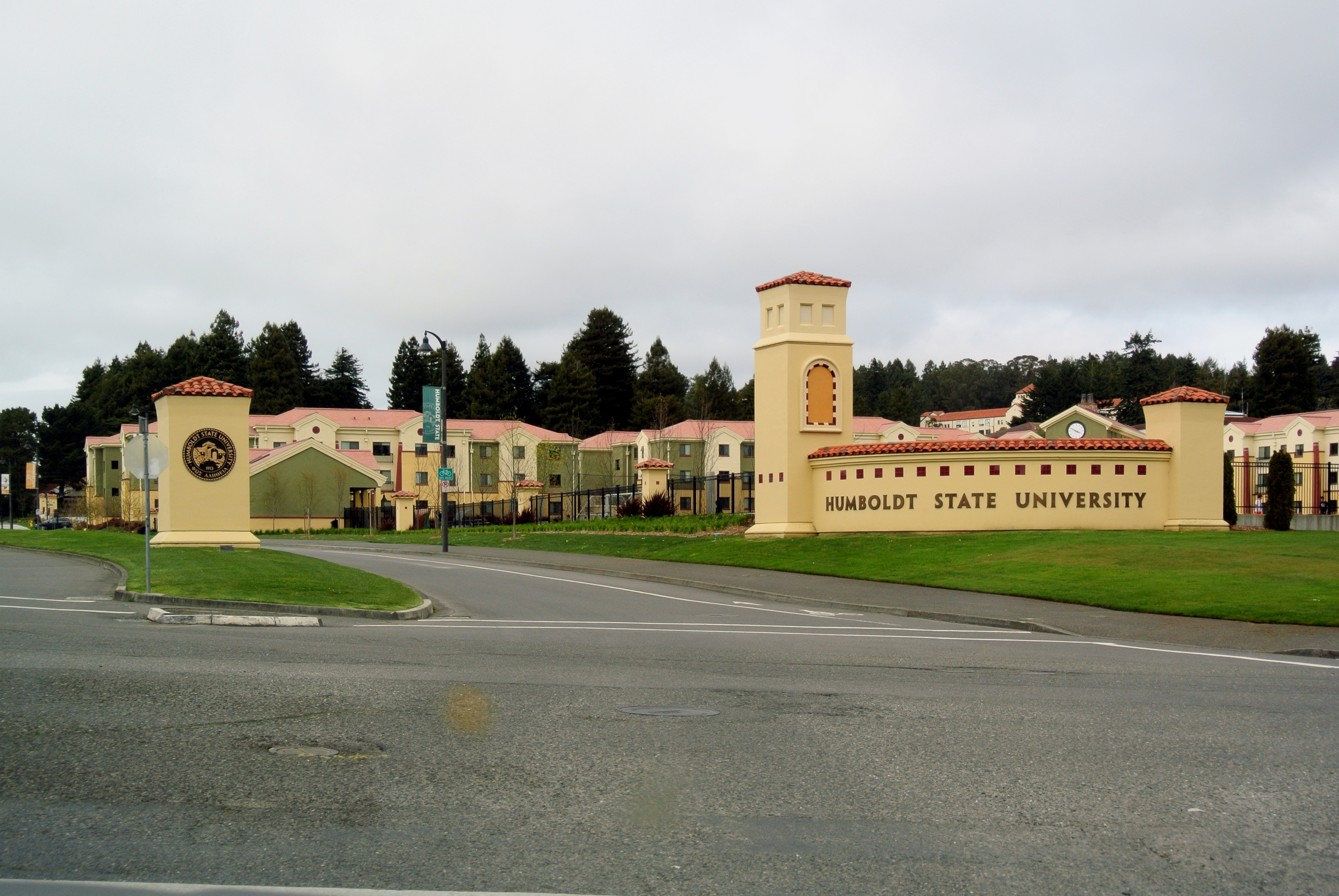
College can be a challenging time for everyone, but one way to make it easier is by utilizing the resources offered at the Academic Career and Advising Center (ACAC). Academic Advisors help students with myriad academic-related matters: creating a DARS plan, creating a schedule, staying on track to meet degree requirements and graduating within their desired time frame.
Kelda Quintana is an academic advisor at the Academic Advising Center. She would like to encourage all students to meet with an academic advisor at least once.
“All students could benefit from meeting with an academic advisor,” Quintana said.
Having an advisor to help navigate all aspects of college can help students succeed rather than stumble through challenges, such as course selection and even deciding on a major. Loren Collings is the interim director. He explained the mission of the Academic Advising Center.
“Our goal is really to help people approach college holistically,” Collins said.
Amy Martin is the interim associate director. She discussed the ways that academic advisors can help support students.
“Our professional advisors are really amazing at connecting students with the resources on campus,” Martin said.
Students can receive support in several ways by meeting with an academic advisor. Advisors care about more than academics. They want to ensure that all students have the resources necessary to succeed in and out of the classroom. This ranges from housing to food security to mental health. Advisors can help students with such needs by putting them in touch with the proper organizations, such as housing liaisons, Oh SNAP and the CARES team.
All students are encouraged to meet with an advisor at the Academic Advising Center, located in lower library room 27, is open for drop-ins Monday through Friday, 10 a.m. to 3 p.m., in-person and online.
Where we were, what went wrong & how we build a brighter future
This is a letter to the editor from Humboldt State University Education Department Chair Eric Van Duzer, Ph.D. It has been edited only for minor punctuation and grammar style preferences.
As I reflect back on nearly 30 years at Humboldt State University, first as a student and then for the past 20 years as a faculty member, I wanted to share some of the thoughts that I have about HSU’s current situation and where the campus might go from here.
As a student I experienced a remarkable education where faculty were fully invested in my intellectual and personal development. There were so many opportunities to explore areas of interest and develop new ones. I have spent many hours trying to encapsulate the nature of the schooling I experienced in a way that would really represent the experience.
The best analogy I have been able to come up with was that HSU offered a graduate education to undergraduates. The small classes typical of graduate school encouraged faculty to fully invest in their student’s growth. The university, set so far from the oversight of CSU headquarters in Long Beach, offered a great deal of flexibility to shape our experiences.
This would be impossible today. In those days HSU had the third smallest class sizes in the 23 campuses of CSU. But more than that, it had a unique faculty ethos that reflected nearly 100 years as a student-focused institution that exalted excellence in teaching above all else.
I was the first student CEO of the Institute of Industrial Technology, a self-supporting club that allowed us to use the skills and knowledge we were developing to grow in business acumen, engage in manufacturing and light construction on campus as well as conduct experiments for local agencies. In its second year, Bill Wilkinson used the institute to earn enough profit making desks for campus offices that it paid for several pieces of expensive equipment for the department.
This would be impossible today. In those days HSU had the third smallest class sizes in the 23 campuses of CSU. But more than that, it had a unique faculty ethos that reflected nearly 100 years as a student-focused institution that exalted excellence in teaching above all else.
Faculty came to campus because this is where they wanted to spend their career. Unlike most universities where faculty play academic hopscotch building their resume through research reputations and earning ever-higher salaries as they bounce from college to college, HSU faculty built their reputations on teaching. These were inherently local reputations, not very valuable if one wanted to move on, but rather a reflection of the values and attitudes associated with a culture of excellence in the service of students’ intellectual growth.
As anyone who has worked with university budgets will tell you, graduate education is expensive. That is why through the first 100 years, the administration and other services were done on a shoestring. It was common for a variety of upper administrative positions to be filled by faculty who served temporarily. Staff was thin and overworked and processes were slow and inconsistent.
What happened? In the early 2000s the CSU was facing the onslaught of a Generation X student bulge. Chancellor Charles Reed decided the best strategy to deal with this situation was to homogenize campuses so that if a student could not get into Sacramento State because it was impacted, they could simply go to another campus and get a similar experience.
Yet, the campus, with significant leadership from the faculty, focused its significant resources on classroom instruction, and through that dedication, produced exceptional graduates who were deeply committed to HSU when they graduated.
I remember an administrator in the early years telling me that he had been in a restaurant on the East Coast and overheard a group of students talking at a nearby table. He was so impressed with their sophistication and the values they held he found out where they came from and immediately applied for a job at HSU.
He was the first person hired under then-president Rollin Richmond to manage our enrollments in the early 2000s. The diversity on our campus is a credit to him and Richmond, who reached out across the state to bring in students from urban areas. Sadly he became disillusioned and left. So did most of the faculty leaders.
What happened? In the early 2000s the CSU was facing the onslaught of a Generation X student bulge. Chancellor Charles Reed decided the best strategy to deal with this situation was to homogenize campuses so that if a student could not get into Sacramento State because it was impacted, they could simply go to another campus and get a similar experience.
Shortly thereafter the upper administration received inflated titles and significant raises in an apparent effort to reduce resistance. Then the attack on the faculty began.
Naturally, faculty on campuses such as HSU who were proud of their traditions and niche identities resisted. Fiercely. At one point, three campus presidents, including Rollin Richmond, suffered through votes of no confidence by their faculty as they implemented this strategy.
To achieve the required changes in the face of faculty resistance, campuses, including Humboldt, began shifting to a corporate structure of top down management. Faculty who had held a privileged position in campus life were systematically reduced to workers with only a symbolic voice in campus decisions. The administration turned its focus inward towards improving the functioning of the bureaucracy. They eliminated administrators such as Rick Vrem, an ethical provost, who refused to implement changes that hurt the traditional focus on instruction.
Vrem was replaced with a provost who had no such compunction. Shortly thereafter the upper administration received inflated titles and significant raises in an apparent effort to reduce resistance. Then the attack on the faculty began. Nearly 80 faculty positions were eliminated over several years and during the same time period, a similar number of new staff positions were created and filled to support administrative functions.
Over the majority of the intervening 15 years, budget reductions for academic programs have been the norm: reductions in staff, program availability and courses. This year it was a 6% cut, last year another and many like it before. The funds have been shifted to an ever-expanding variety of administrative initiatives.
Now we sound more like a parks and recreation office than a university. Come for the redwoods, the beaches, the bike riding—that is wonderful and I love it, but it is not why people pick a university.
We spend nearly 68% of our budget on administration and campus facilities. Despite the results of a study commissioned by Rollin Richmond’s administration that showed the two most important factors that cause a student to come to HSU are quality of education and availability of the program they are interested in, both have been repeatedly attacked, sliced and diminished.
It is surprising that no one seems to notice that every time we cut academic programs, fewer students want to come here. And when fewer students come here, the budget suffers and HSU responds by cutting academic programs even more severely—a cycle the faculty in 2004 described as a “death spiral.”
As we address our current crisis and try to figure out what we need to become in order to grow back to a sustainable enrollment, we might want to engage in some soulful reflection. What would cause a 20-year-old to come to a place five hours from major centers of civilization and spend four years with us? What do we have to offer them that is so valuable, so different from what they can get at any of the other CSU campuses which are closer, cheaper and offer a great deal more college life in the community?
We stopped selling the small classes and close academic relationships with faculty when the hypocrisy became too much to bear as campus priorities shifted. Now we sound more like a parks and recreation office than a university. Come for the redwoods, the beaches, the bike riding—that is wonderful and I love it, but it is not why people pick a university.
When I arrived here as a faculty member in 2000 we had one staff member, John Filce, doing institutional research. He was wonderful and badly overworked. I am sure he still is. Now we have nine staff members listed in the directory in the Office of Institutional Effectiveness, including a vice president. I am sure their work is valuable, but to pay for it we had to cut 64 class sections.
Today, we are an organization of inflexible rules and their keepers.
We have proliferated the bureaucracy, which is unfortunately necessary to achieve top-down control of a professional organization. Had our leadership studied industrial technology with me, they would know what companies in the 1970s learned: that this form of management is ineffective and inefficient in a professional organization.
To achieve control requires monitoring, which in turn requires more staff. For a top-down organization, where the vast majority of employees serve at the will of their manager, fear prevents innovation and compliance is key. Before the shift to this model, administrators were problem solvers. In fact, the standing joke in those days was that everything was an exception. Faculty, staff and administrators had the flexibility to serve the needs of students even when it required bending the rules.
Today, we are an organization of inflexible rules and their keepers. It has greatly diminished the effectiveness of the organization and its ability to make decisions that best serve our students. The resulting bureaucratic culture has seen a proliferation of forms, rule books and rigid adherence to often dysfunctional orders.
This is no way to run a university. Perhaps a grocery store, but not an organization of 500 highly educated experts with thousands of years of collective experience. Top-down decision-making, particularly when the president and upper administrators are drawn from institutions that do not share the culture and values of the campus, is inherently poor compared to what would be possible if faculty once again had a meaningful voice in campus affairs.
No student has ever come to HSU because we have a wonderful registrar’s office or because the president’s office is fully staffed. These only matter when they impact the quality of the education a student receives.
The proof of this is apparent everywhere at HSU. When Rollin Richmond came, he had no interest in what made HSU special. Like a white suburban principal coming to a school in Watts, he thought he knew what needed to be done to remake the university into his vision of a modern institution. That ignorance has cost us immeasurably. Today we face the consequences. The failure to fundamentally change direction of subsequent presidents has simply deepened the mess. We now have a new president, perhaps we can find a new vision.
In my view there are two key concerns that need to be addressed from a rational and values-driven perspective. First, an effective budget model that allows funding to follow enrollment is essential to support growing programs while shifting resources to where they will best serve student needs and interests. This can refocus the campus on providing the service/product students come here for—classroom instruction—and it is essential.
There are so many amazing faculty and academic staff here. They are people with a heart for their students, struggling in a system that constrains and conflicts with their efforts. Let their voices guide the future and we may yet have one worth celebrating.
No student has ever come to HSU because we have a wonderful registrar’s office or because the president’s office is fully staffed. These only matter when they impact the quality of the education a student receives.
Second, we have to decide how we are going to rebuild the excellence we once were known for in our student’s academic programs. The day Rollin Richmond refused to give the Outstanding Faculty Award to a physics professor (selected by the faculty based on his ability to delight and inspire students) because that professor had not published, is the day we snuffed out the soul of the old HSU campus.
Now we need to find out what animates us in ways that provide an experience worth the isolation, cost and struggles required to live in this remote community. Redwoods are not enough; we need a reinvestment in education.
I am retiring from HSU at the end of this May. I am sad to see what has happened to my university. There are so many amazing faculty and academic staff here. They are people with a heart for their students, struggling in a system that constrains and conflicts with their efforts. Let their voices guide the future and we may yet have one worth celebrating.
Classes will be taught in alternative modes starting March 26 to April 17.
The campus will remain open and all student services will be available.
Humboldt State University will suspend face-to-face instruction and move to alternative modes of instruction on March 26. This will follow the regularly scheduled Spring Break and an extended three-day faculty preparation and development period (March 23-25) during which instruction is canceled. Based on the parameters set forth by the CSU system, this suspension of face-to-face instruction is temporary and currently scheduled to remain in place through April 17.
The schedule and agendas for three days (March 23-25) of mandatory faculty preparation and development is forthcoming. Lecturer faculty will receive a stipend for participation.
The schedule and agendas for three days (March 23-25) of mandatory faculty preparation and development is forthcoming. Lecturer faculty will receive a stipend for participation.
Alternative modes of instruction will include use of Canvas, Zoom, and other instructional technologies. For more information on preparing to use alternative modes of instruction please see the Keep Teaching website.
Students: Please look for email and Canvas-based communications from your instructors about plans for individual courses. Please also see the FAQ page on the HSU COVID-19 web page: https://covid19.humboldt.edu/faqs for general information.
The decision is intended to mitigate spread of coronavirus (COVID-19), and is based on current guidelines from the CSU system, Office of the Governor, as well as local and state health officials. It was made following consultation and meetings of the academic department Chairs, Deans, Provost and Chair of the University Senate.
The decision was not made lightly. The goal of these changes is to minimize the need to gather in large groups or spend prolonged time in close proximity in spaces such as classrooms.
The University remains open. Residence halls, dining, student support services, health, counseling, disability services and other related offices remain fully available in support of all students. Students who need computers, Wi-Fi, or other technological support can continue to use the Library and computer lab spaces on campus. A social distancing policy is likely to be in place on campus following Spring Break. More information on HSU’s social distancing policy is forthcoming. All staff are expected to report to work. Student employees should return to their normal work as scheduled following Spring Break unless alternative arrangements are made with their supervisors.
There is currently no community spread of COVID-19 in Humboldt County. There have been no cases of COVID-19 on campus. Because information about the virus is changing rapidly, please check your humboldt.edu email and HSU’s COVID-19 websitefrequently during the break for announcements from HSU and California State University system.
Wash your hands frequently and avoid touching your face and eyes, nose, mouth.
Routinely clean your home, particularly high touch surfaces like doorknobs.
Consider limiting attendance at optional large gatherings because this is where colds, flu, and other respiratory viral infections are spread.
It’s important to remember to treat each other with care, respect, and empathy as the virus continues to disrupt daily life.
Please know that support and health and wellbeing services are available on campus. Students who would like to talk with a counselor can contact Counseling & Psychological Services in Student Health & Counseling at 707.826.3236 anytime. Staff or faculty seeking additional support may call the Employee Assistance Program at 707.443.7358.
Humboldt State University acknowledges its important role in the North Coast in bringing thought-leaders, visitors, artists, musicians, and entertainers to campus and the local community. In an effort to mitigate the possible spread of COVID-19, HSU continues to assess the impact of hosting large events on campus.
There is no one response that works for all events. HSU understands that each event is different.
HSU leadership, consistent with CSU guidelines and guidance from local health officials, continues to assess events and their relationship to HSU’s core mission. This ongoing assessment looks at event outcomes and whether postponement or other alternative modalities (such as virtual) can be used, participants’ ability to travel, participants’ relationship to high-risk areas or populations, local health standards, size of the event, fiscal and opportunity costs related to the event, and any other unique campus contexts that warrant consideration.
Subject to change, effective Saturday, March 14 until Friday, April 17 all on-campus large events (greater than 150 attendees) are suspended. Event planners will be asked to cancel, postpone, or use an alternative modality (virtual). Events after April 17 will continue to be assessed on a case-by-case basis, with additional information and campus decisions made as more information becomes available.
All HSU-sponsored athletic events are scheduled to continue. However, based on strong guidance from CCAA, events will now be “fan-less,” meaning there should be no fans at the events and only essential personnel are permitted for the event.
The campus continues to assess the most appropriate guidelines for smaller events, and will communicate new guidelines when available.
This is a difficult decision, but the University asks the community and event planners to support these efforts in trying to reduce the spread of COVID-19.
Please consider staying in Humboldt during Spring Break.
Ask Evergreen is a weekly advice column by the students of the Lumberjack.
Each week we’ll answer anonymous questions sent in by readers about anything and everything.
Dear Evergreen
How do you deal with a group member who’s refusing to do their part of the project?
Dear Peeved Project Participant,
Group projects can be excruciating enough, but even more so when you have a member who is not contributing. There are a few things you can do before throwing in the towel or taking on the slacker’s work. You can reach out to this group member, ask the other group members what they think or contact your professor.
Before doing anything drastic you should ask the slacking group member if there is something confusing about the project. They might not understand their specific role in it and may be too ashamed to speak up. Maybe this group member is dealing with personal issues and isn’t focused on school as much as they could be, so be cordia. If they’re just plain lazy, you should politely call them out in person or through an email.
Reach out to the any other project group members and mention the stalemate. Your peers might be experiencing the same frustrations as you. Ask them for advice on how to proceed with the project. You all might have to take on the incomplete work to submit a whole project, and you may still have to bring the problem up to the professor. Ideally, since your fellow partners are in the same situation, they will be able to back you up when it comes to explaining the issue.
If you’ve exhausted all efforts of trying to wrangle in the straggler, you should definitely contact your professor to cue them in. This can be especially helpful if you aren’t getting an individual grade for the project.
Thankfully, some professors allow for group feedback at the end of projects. Peer reviews can be a cathartic release after a stressful report. Make sure you get the positives and the negatives of all group members to not solely ridicule the lazy member. But don’t forget to emphasize the things that were harder to complete because of their lack of participation and communication. Remember that this is a group project and you’re not alone in this temporary headache.
Teamwork makes the dream work!
Sincerely,
Evergreen
If you have any questions you’d like to send in, email us at contactthejack@gmail.com. We won’t publish any names and you don’t need to use one.
A father and son managed to escape a fire that quickly engulfed their home on March 24. The fire started in a closet and spread into a bedroom. Both of them managed to escape from the backyard.
Source: North Coast News
-Arcata School of Massage closes for good
The Arcata School of Massage closes after receiving “pending denial” from the California Massage Therapy Council.Arcata School of Massage Director Tobin Rangdrol said he discussed closing the school with the 15 students who are enrolled in the program. The council designates whether the school’s graduates are eligible for certification to work within the state.
Source: Times Standard
-Klamath management zone closed this season
The commercial and recreational ocean Chinook salmon fishing seasons in the Klamath Management Zone from southern Oregon to north of Shelter Cove will be closed this season. Climate change caused parasites and disease in the Klamath that affected the salmon. The Pacific Fishery Management Council, is considering a statewide closure of the commercial Chinook salmon season.
Source: Mad River Union
U.S.
-Cincinnati club shooting
A gunfight broke out outside of a nightclub in Cincinnati leaving one dead and 16 others injured on Sunday night. There were no links to the shooting being a terrorist attack. Police are still looking for suspects.
Source: Chicago Tribune
-33 reptiles dead at zoo
33 reptiles were found dead at a zoo in Knoxville, Tennessee. The herpetology team at the zoo couldn’t find an explanation as to how the reptiles died. The zoo housed 52 reptiles.
Source: CNN
-Las Vegas shooting
A gunman was arrested and charged with murder and attempted murder after he started shooting on a Las Vegas bus. The gunman was identified as Rolando Cardenas, 55. Authorities said when Cardenas started shooting he appeared delusional.
Source: NBC News
World
-London Attack
A man drove a car onto the sidewalk of the Westminster Bridge by the House of Parliament hitting pedestrians and killing three on March 22. The man was identified by authorities as Khalid Masood. Masood stabbed and killed a police inside the Palace of Westminster. There was no evidence that the attack was linked to so-called Islamic State or al-Qaeda.
Source: BBC News
-Russian Protest
Sixty thousand demonstrators took part in more than 80 anti-corruption protests across Russia. Boycotting the government of President Vladimir Putin. More than 700 people were arrested and detained.
Source: Now This
-Cyclone Debbie
A powerful cyclone hit Queensland Australia Tuesday afternoon. The storm’s winds gusted to 160 mph. Reports suggested that 30 inches of rain fell 0ver the course of the storm’s duration.
Monday morning hits and you are dreading rolling out of bed. The alarm has already gone off twice and you know your days of sleeping in, free afternoons with no back-to-back hours of homework, and evenings when you actually have time to cook a decent meal is over. A one week break hardly feels like enough.
However, playtime is over. It’s time to scrape your eye boogers, lace up your boot straps and hike hardcore obstacle course that is disguised as the Humboldt State campus and get back to work.
There are only have seven solid weeks of work left. Then you can go back to relaxing and hanging out with friends. Forget about the first half of the semester. Forget about whether you were crushing it or just hanging on by a thread. Look at spring break as a reset button. Here are some tips on how to refresh after spring break and finish with a successful semester.
Get Back on a Sleep Routine – Make sure you get the full eight hours of sleep but don’t overdo it. Oversleeping is just as bad as not getting enough sleep. Besides a whole host of physical illnesses, oversleeping can cause depression and anxiety. Be sure to get the proper amount of hours so that you can function properly.
Hydrate and Energize – Keep a clear head and make sure you are fueling your body with enough water and foods that give you energy so that you can make it throughout the day. Try eating a healthy breakfast packed with fruit.
Plan It Out – Don’t lose sight of your goals. If you want to succeed make sure you have a clear destination. It would be good to write out your goals and create a schedule. You don’t have to micromanage your schedule. However, glance back at it at the end of every month and make sure you are staying on point.
Have Some Fun – If you are feeling burnt out this semester, that’s because you didn’t take time to have fun. Fun doesn’t have to only come around with school allotted breaks. Schedule time, at least one day of the week, to relax and de-stress. Do something as simple as going to tea with the your homies, plan a game night, or even Netflix and chill. Do something that gets you relaxed and refreshed so you can continue your work without feeling depressed and overwhelmed.
Review – Bonus points for the A+ student who review their notes before school starts again. Refresh your knowledge. If you don’t use information everyday, you tend to forget about. Just do a quick breeze through of your class notes so that you remember were the class left off.
A map showing where compost bins, water refill stations, electronics recycling and the WRRAP office are located on campus. Data from Humboldt State University and WRRAP, Map by Kelly Bessem.
School can be a mental and monetary struggle, but doing your part to reduce waste on campus doesn’t have to be. If you haven’t yet happened upon it, WRRAP is Humboldt State’s student-run Waste Reduction and Resource Awareness Program that’s been in operation for almost 30 years.
The campus services they maintain are free to all students. These services include campus compost bins, water refill stations, zero waste supplies, events such as the clothing swap and the ROSE [Reuseable Office Supply Exchange] House, where students can find 100 percent free school supplies such as notebooks and writing utensils.
Environmental science major Crystal Singletari was glad to find out that the ROSE House was there to provide an option other than paying expensive prices for new school supplies.
“The first two weeks of school I didn’t have enough binders to reuse and was super unorganized so I went to the bookstore, but they’re so expensive,” Singletari said.
Rangeland resources major Ishmael Guerrero believes helping to reduce waste is good but it is often difficult to keep track of waste reduction programs on campus.
“I’m usually focused on school, work or sports,” Guerrero said.
WRRAP is set up to direct students toward reducing waste on campus, and in the rest of their lives, in simple ways rather than having to figure it out alone. Isabel Sanchez, a business major and natural resources minor who has been working for WRRAP for more than two years, explained how WRRAP can make waste reduction easier for students to understand.
“It’s a network that allows for exchanges of waste reduction methods,” Sanchez said.
Need some encouragement to live a less-wasteful campus lifestyle? According to a 2015 estimation, Humboldt State University students collectively dispose of 266,314 pounds of waste on campus each year. That’s about the mass of four humpback whales. Though HSU students always seem to strive for improvement, there is still a whale of a problem.
Humboldt State University student waste disposal totals. Data from CalRecycle, Graph by Kelly Bessem.
Check out WRRAP’s website at http://www.humboldt.edu/wrrap or email their student staff at wrrap@humboldt.edu. The program is there so that reducing waste doesn’t become another daunting school task on your checklist.
The study, “Student Watch: Attitudes and Behaviors toward Course Materials: 2015-2016 Report,” reports that campus stores remain the top source for course materials purchases, with 80 percent of students in the fall and 73 percent in the spring acquiring units from the on-campus retailer.
Students are willing to pay the exuberant bookstore prices for the sake of convenience of a one stop shop for all scholastic supplies and saving time on receiving the text.
According to HSU’s cost calculator the average cost for books and supplies is $1,660. With a little bit of extra planning these alternative methods of purchasing scholastic texts are just as convenient as ordering from the Bookstore and offer more affordable prices.
Online Rentals- Renting a book online textbook providers are often cheaper than bookstore prices. You might be cautious about the cost of shipping, but most sites provide free return shipping. An added benefit for online rentals are that some of these websites offer access to e-book version while you’re hard copy is being delivered. Websites like Bigwords.com let you enter the text’s ISBN number and generates a comparative price list with various online sellers. Some of the most popular textbook ordering sites include: Amazon.com, Chegg.com, and Half.com.
Book Swaps- HSU is a small community and you will inevitably share classes with the people in your major. Form a bookswap. Maybe a friend already has the textbook that you need just collecting dust. Offer a trade off.
Ask your professor- Professors understand that students can’t always afford the high cost of the required text and will sometimes have extra copies they can loan. Also, be sure to ask your professor if the most current issue of the text is necessary. You can save a lot of money buying an earlier model of the book.
Info Boards- Check the info boards near the class in which the text is required. Students who no longer need their book might post flyers selling their old copies for reasonable prices.
Check the Library- If you are really pinching pennies you might just want to check if the library has a copy of the text and photocopy the sections you need. As the cost of the copies can get expensive depending on the number of pages, you might want to try scanning the book and emailing the pages to yourself. Mind copyright laws!
This website uses cookies to improve your experience. We'll assume you're ok with this, but you can opt-out if you wish. Cookie settingsACCEPT
Privacy & Cookies Policy
Privacy Overview
This website uses cookies to improve your experience while you navigate through the website. Out of these cookies, the cookies that are categorized as necessary are stored on your browser as they are essential for the working of basic functionalities of the website. We also use third-party cookies that help us analyze and understand how you use this website. These cookies will be stored in your browser only with your consent. You also have the option to opt-out of these cookies. But opting out of some of these cookies may have an effect on your browsing experience.
Necessary cookies are absolutely essential for the website to function properly. This category only includes cookies that ensures basic functionalities and security features of the website. These cookies do not store any personal information.
Any cookies that may not be particularly necessary for the website to function and is used specifically to collect user personal data via analytics, ads, other embedded contents are termed as non-necessary cookies. It is mandatory to procure user consent prior to running these cookies on your website.