Students with science and nature-based majors are motivated to make change
Sabiha Bentanzos Freshman Forestry Major
Tori Bernal Freshman Forestry Major
Lake McLeod Freshman Political Science Major
Photos provided by sources
First-year students at Humboldt State University made it a goal to continue learning in an online environment. Each of the following students are pursuing a science-based major with determination to impact the future.
Sabiha Bentanzos is majoring in forestry with an emphasis on wildland fire management.
“I actually want to become a wildland firefighter,” Bentanzos wrote in an email. “I want to persevere in the forest as much as I can and save lives while I’m at it.”
While becoming a wildland firefighter doesn’t require a degree, Bentanzos wanted to attend HSU to prove female capability in a male dominated field.
“I also want to prove to myself and others that a female can get a degree in a male-dominated field like forestry,” Bentanzos said.
In science class, Bentanzo was assigned a poster group project. The project restored her passion for forestry and has been her favorite assignment of the semester.
“I have a passion for fire awareness and safety and doing the project reignited my passion,” said Bentanzos.
Tori Bernal was a wildlife major when she first attended HSU. She’s completed multiple projects both interactive and hands-on, despite being 100 percent online. Despite her love for veterinary work and rehabilitation, she switched to be a forestry major after taking a botany course and spending time in the forest here in Arcata.
“I grew and tested cyanobacteria in water from the Klamath River from the safety of my dorm,” Bernal said over email. “I realized majoring in forestry would be a better fit for my long term interests… I actually fell in love with it.”
In the midst of a pandemic, Bernal discovered her true interest and what she truly wanted to get her degree in.
“I am not 100 percent sure what I am looking to get out of my degree. I am not even sure what I want to do career-wise,” said Bernal. “But I know that the forestry program will help me to explore my interests and options in the coming years.”
After originally being a wildlife major, Lake McLeod made the switch to a political science major. Lake McLeod is majoring in political science to create change. He wants to become a civil rights attorney and go to Berkley for law school after HSU.
“The science would kind of be the psychology of people, kind of learning how people identify with their own political views and how people act and react to certain things,” McLeod said. “Especially with everything going on right now, I decided to switch to political science because I want to kind of be more in that realm and help people with civil rights and equal rights especially.”
Regardless of the instruction state utilized at HSU, 2020 has motivated students to hone their skills and interests in hopes of making an impact in the future.
Vice Mayor alerts City Council to Arcata Bay Shoreline dioxin threat
City Council Vice Mayor Paul Patino said he intends to pull the approval of the Wastewater Treatment Facility Plan and Plant Improvement Project from the items scheduled to be rubber stamped by the city council.
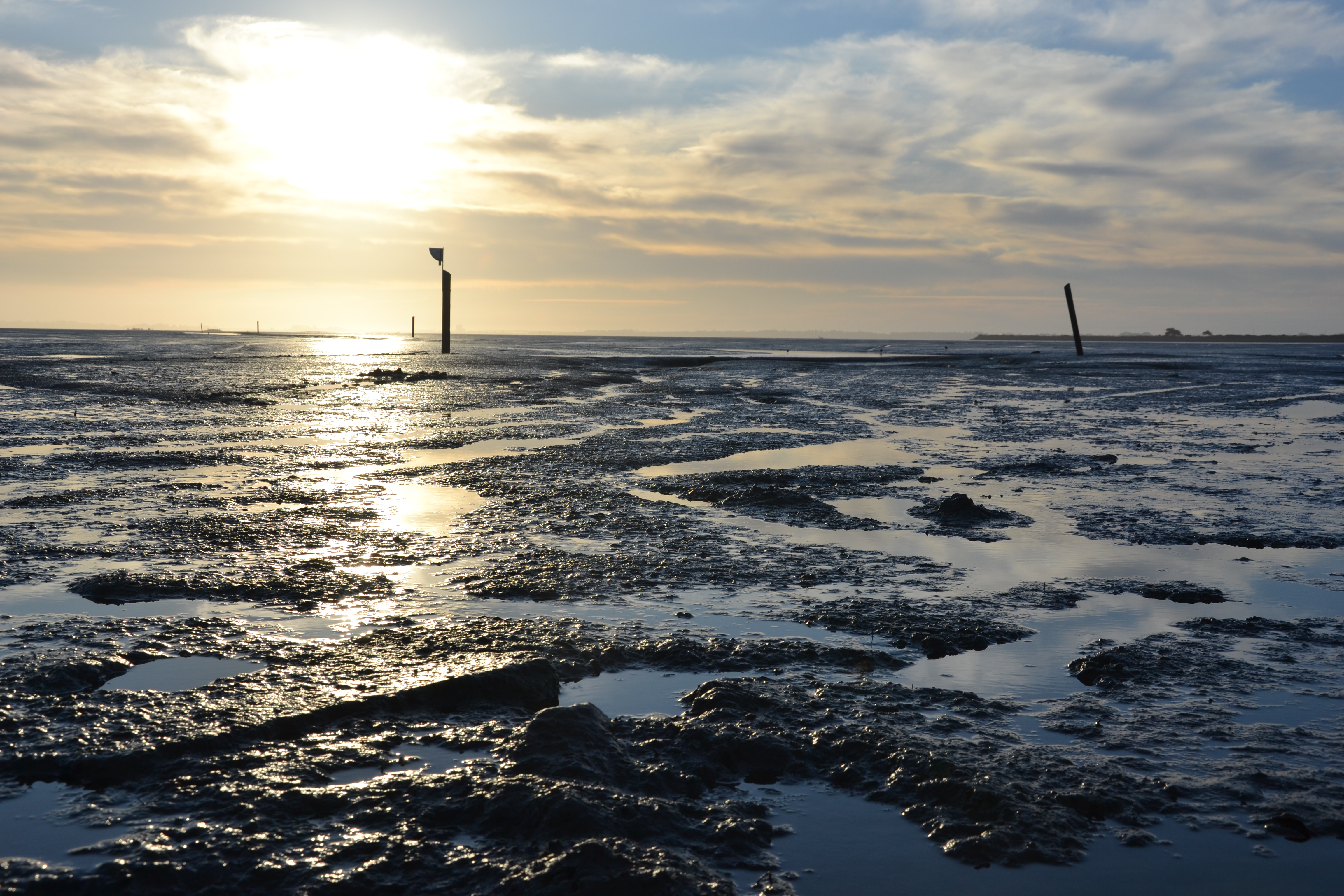
The $60 million investment is a response to the threat of sea level rise which involves enlarging levees around the Arcata Wastewater Treatment Facility. Patino is calling on the council to further discuss the project after he learned the mud around the bay shoreline of the wastewater facility has the highest levels of dioxin ever discovered in Humboldt Bay sediments.
“I don’t see how you could mess with that area without it affecting that dioxin,” Patino said. “I think we need to get clear here.”
Dioxin can cause birth defects, cancer and organ failure. It is known to undergo bioaccumulation, meaning it increases in toxicity as it moves up the food chain from plants to predators. It was widely used from the 1940s to the 1980s before the EPA started regulating its use.
Patino raised particular concern with the staff report in the council packet where it states, “This project would involve enlarging the levee surrounding the majority of the outer perimeter of the Arcata Wastewater Treatment Facility (AWTF) by increasing the levee’s height and volume.”
The Arcata City Council is faced with the choice to approve the final application for the project, or first investigate the dangers of the dioxin believed to be largely the result of pentachlorophenol used during historic lumber mill operations up Jolly Giant Creek several blocks south of the town square.
The city is only now beginning to grapple with the impact the very high levels of dioxin have on plans to increase the height and volume of dikes around the marsh wastewater treatment facility and prepare for rising sea level already beginning as a result of climate change, and sea-level rise could complicate cleaning the dioxin.
“Disturbingly, the site near the Arcata Marsh was found to have the highest levels of dioxin ever documented in Humboldt Bay sediments to date (38 parts per trillion),” wrote Jennifer Kalt, director of Humboldt Baykeeper in the report New Dioxin Data: Good News, Bad News.
Kalt said she learned of the high dioxin levels from the report 2015 Feasibility Study: Beneficial Reuse of Dredged Materials for Tidal Marsh Restoration and Sea Level Rise Adaptation in Humboldt Bay, California.
The dioxin hotspot extends from the end of Butcher’s Slough, where Jolly Giant Creek hits the bay several blocks south of the plaza, to over 2,000 feet on either side along the bay shoreline: around the wastewater treatment facility on one side, and around the main Arcata Marsh parking lot and boat launch on the other side.
While Kalt acknowledged that many mills have existed along Jolly Giant Creek, she said, “We do know that Little Lake Industries was one source [of the contamination] because the city got a Brownfield grant…and found it around where the mill used to be.”
The council signed off on a grant application in October for $300,000 to clean up the Little Lake Industries property 17 years after pentachlorophenol was first discovered in levels exceeding federal benchmarks. The Environmental Protection Agency identified high levels of pentachlorophenol onsite in their 2003 report South I Street Mill Reuse Project, Arcata, California, Targeted Brownfields Site Assessment Phase II Investigation, Final Report.
Aldaron Laird is an environmental planner that specializes in sea level rise vulnerability assessments for Humboldt Bay.
“With rising water elevations [the dikes] could be overtopped maybe as early as 2050…on a monthly basis…We really only have 20 to 40 years to relocate all of that utility and transportation infrastructure to higher ground before it is inundated,” Laird said.
Local food management practices of the Tolowa Dee-ni, Yurok and other indigenous peoples.
*Editor’s note: A source in this story, Cynthia Ford, is the aunt of the Lumberjack writer of this story, Walker B. True*
When colonizers landed on the North American continent, they were greeted with a land of plenty where deer roamed huge open pastures and wild fruits and vegetables grew in plenty. Colonizers viewed this landscape as a wild, untamed, underutilized and untouched landscape of economic opportunity.
In fact, ecosystems across North America were meticulously managed by Indigenous peoples across the continent. Their traditional resource management practices have come to be known as a stewardship model.
As defined by the Oglala Sioux Tribe of South Dakota, the Lakota Ecology Stewardship model states that “All beings, both living and nonliving, were related in that all shared and depended on Mother Earth for survival. The Lakota believe that humans were the newest nation on Earth, and as such were instructed to learn from the older nations: the rocks, animals, and plants. Thus, natural laws and relationships were carefully observed and emulated.”
Locally, the Tolowa Dee-ni nation as well as the Yurok tribe made use of practices like prescribed burning to treat pests and to create better habitats for deer and elk to graze on.
This form of management was used throughout the continent and began to die out as the land upon which they were practiced was colonized. These colonized lands were stripped of their resources and left in the hands of private landowners or The US government who had little to no understanding or care over the complexity of the ecological systems at play.
The stewardship model and the food practices of Indigenous people have been limited by land acquisition programs and environmental devastation since the colonizers first set foot in America. Through the fight for their food sovereignty, Indigenous people are also fighting for tribal sovereignty.
Cynthia Boshell is a program specialist working with the Rights of Mother Earth initiative through the Northern California Tribal Court Coalition. Since 2015, she is continuing to do work advocating for tribal food sovereignty.
“When we are talking about food sovereignty what we are really doing is saying we are reclaiming our relationship to the foods,” Boshell said. “Not just the foods but if you are going to reclaim your relationship to the food you also have to reclaim your relationship to the land.”
In the past the The Rights of Mother Earth initiative has helped enact ordinances and other regulations in order to protect the natural resources of the tribes a part of the NCTCC (Yurok Tribe, Hoopa Valley Tribe, Karuk Tribe, Tolowa Dee-ni’ Nation, Trinidad Rancheria and the Bear River Band of the Rohnerville Rancheria).
Recently, the NCTCC received a grant from the Native American Agricultural Fund to do an assessment of tribal food systems under the stress of COVID-19 and fires. The project will be performed by the Rights of Mother Earth initiative spending the next year surveying tribal communities and their food system in order to understand how tribal food producers can be better supported.
Boshell sees food sovereignty as a vehicle and process of bringing Indigenous communities where they want to be in regards to their food systems. Whether that be entirely reliant on local Indigenous food systems, or only partially, each tribe should have the agency to choose that for themselves.
“Food sovereignty is not really a native concept,” Boshell said. “It’s more of a description of how we are reacting to a colonial system.”
Cynthia Ford is a Habitat and Wildlife Manager for the Tolowa Dee-ni’ Nation in Del Norte County. Ford is responsible for educating community members and advocating for tribal food sovereignty.
“We work with agencies and partners locally, like the forest service and the parks and local landowners to help come up with strategies to protect and perpetuate our resources.” Ford said.
Alongside her vocational responsibilities to the tribe, she is also the wife of a Tolowa tribe member and the mother of three Tolowa children. She supports traditional, locally harvested foods like acorns in the fall, berries in the spring, a variety of seafoods like smelt, seaweed and salmon, as well as deer and elk.
“The Tolowa people were rich, very food rich,” Ford said. “There was a large variety and great diversity of foods year round to eat from.”
For Ford, food sovereignty means having the ability to access her own healthy, and sustainable foods.
“That food security is really important for the tribe because that’s the basis for making us a healthy community,” Ford said.
Without the ability to access these local food sources that, historically speaking, have always been available to them, tribe members are left without access to any healthy foods.
“Our ancestral territory goes well into Oregon and covers a vast coastal area and into the Applegate watershed,” Ford said. “But here right now in Smith River where our modern day reservation lies, we have the Dollar General and a Fuel Mart, we don’t even have a grocery store.”
Alongside poor access to healthy foods from local stores, traditional food practices like fishing have been impacted by commercial farming practices that threaten the Smith river’s estuaries with pollution from pesticides.
According to the California Water Board, “the Regional Water Board’s water quality monitoring documented the presence of several pesticides used in lily bulb cultivation in some of the coastal tributaries of the Smith river during storm events.”
Ford ends by speaking to the interconnected nature of land and how dependent people have to be one another in order to live in harmonious comfort and success.
“’You got your 10 acres and your mule and you’re gonna harvest your land right?’” Ford said. “But it doesn’t work that way because what you do on your land affects what I do on my land”
Increased periods of isolation can lead to depression, and how to combat it
March signaled the beginning of quarantine in the United States, with various states asking residents to refrain from unnecessary social contact with shelter-in-place orders.
For those staying with family and friends, the burden of staying at home for the last nine months was reduced by the ability to talk to and interact with others.
According to Paula Nedelcoff, a psychotherapist and community outreach coordinator for Humboldt State University’s Counseling and Psychological Services department, the task is significantly more taxing. Changes in living organization, such as online instruction, brings unwanted physical and mental changes.
“Long term social isolation for most people is very difficult,” Nedelcoff said in an email interview.
COVID-19 restricts face-to-face interaction, prohibiting the ability for people to physically and socially interact with each other. This prolonged isolation intensifies with time.
“Humans are social animals and we count on interactions with others. When we do not have someone to bounce off ideas and feelings with we can move within and isolate even more,” Nedelcoff said. “While during this virus we have a virtual world, we humans need contact with each other, we need and thrive with touch.”
A 2016 study published in the European Journal of Clinical Microbiology & Infectious Diseases suggested that isolation precautions may lead to anxiety. A group of doctors and professors looked at the ways social isolation affected patients who were recovering from various bacterial infections. These infections (like scabies, measles or tuberculosis) often required patients to reside in single rooms to minimize the exposure to other patients.
A separate 2016 twin study the journal of Social Psychiatry and Psychiatric Epidemiology suggested that social isolation could trigger an increase in mental stress. The data found that depression was significantly correlated with both social isolation and loneliness.
For those living alone, combined with a lack of available social interactions, the association with depression is even greater.
A 2011 research article in the International of Geriatric Psychiatry found that social connections were factors in determining depression.
“Living alone and living with at least one child (no spouse), and weak social networks were associated with higher depressive symptom scores in both genders,” the study stated. “Men living alone with weak social networks outside the household had higher depressive symptom scores than those with strong networks.”
In order to combat these feeling, Nedelcoff recommended finding ways to reach out to others within your social circle, in addition to seeking professional help.
“I encourage all folks to stay engaged with life via on line groups and virtual happenings,” Nedelcoff said. “This can be a great time to try therapy or a therapy group. Going to counseling does not mean there is something wrong with you. Think of it like having a copilot while looking more deeply into your life and the meaning of it.”
She suggested finding ways to properly vent emotions and feelings so that individuals may not feel like they are cooped up physically and mentally.
“Learn and become aware of what works for you,” Nedelcoff said. “What might work for me may not work for my friend. Some people meditate, some people use music to calm them or ease their soul, while others may journal or get into a book. Often times we are not sure or don’t know what works for us.”
Most of all, Nedelcoff encouraged students to continue trying to find ways of expression in any positive way.
“COVID-19 and sheltering in place has taught us how little control we have over so many things,” Nedelcoff said. “This can be scary but we do have control of how we respond.”
A bilingual HSU program encourages students to pursue the STEM field
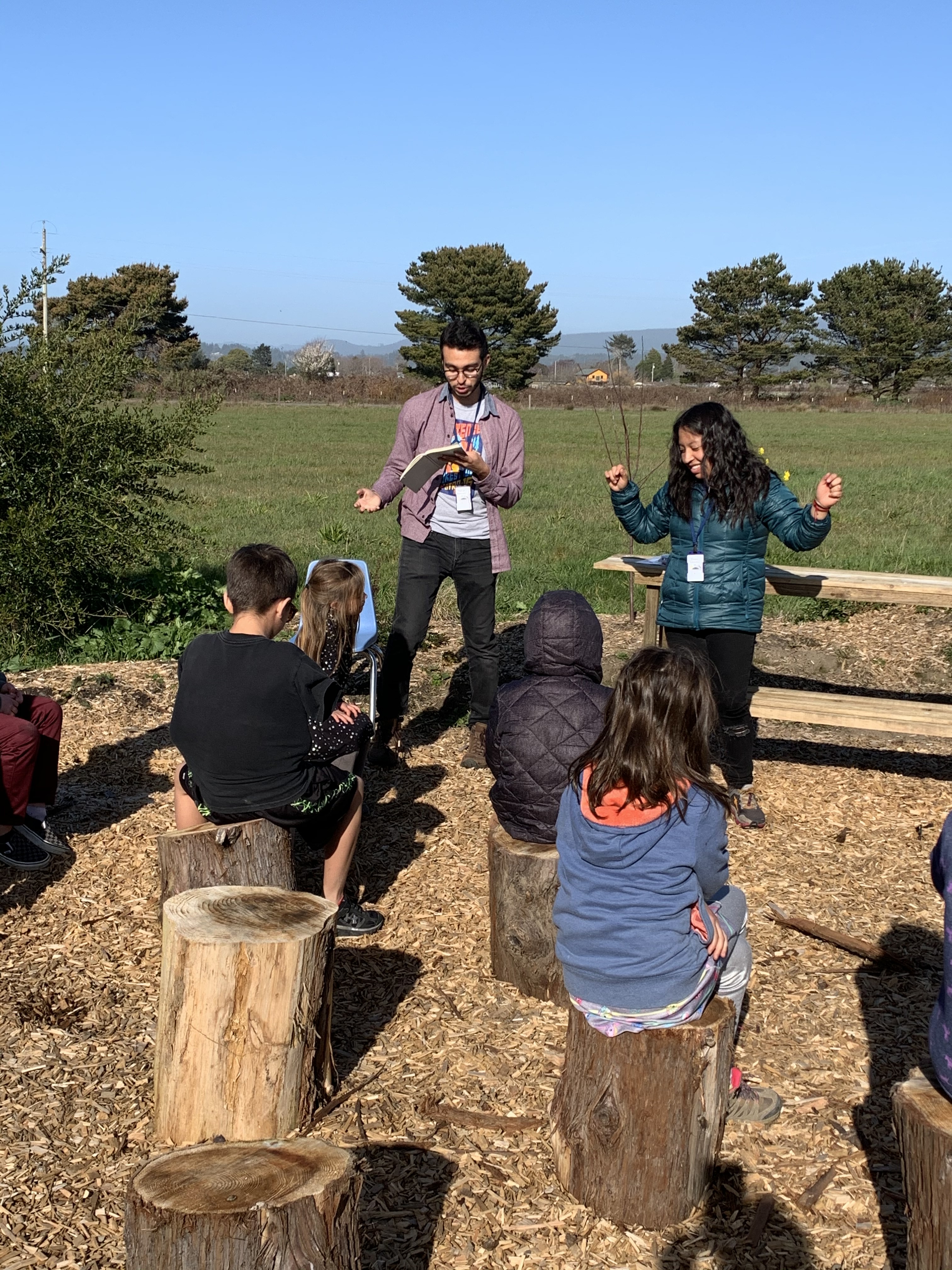
Ciencia Para Todos, known as “Science for All,” is a Humboldt State University program that hopes to bridge the gap between younger, grade-school students and Science, Technology, Engineering and Mathematics careers through teaching English and Spanish in conjunction with local elementary schools like Fuente Nueva Charter School.
Christian Trujillo, a senior environmental science and management major, is the founder of Ciencia Para Todos. He strives to elevate youth whose first language is Spanish.
“We’re trying to destigmatize that idea,” Trujillo said. “Be like, ‘We are people who are bilingual, we’re in STEM, we want you to do that when you grow older, and hopefully you could become a scientist and also use your abilities and cultural lens to really help the science community.’”
Ciencia Para Todos came from a desire to create an environment for budding Latinx STEM students. Feeling ostracized from many of the spaces on campus, Trujillo and his fellow Latinx classmates communicate in Spanish as a means of escape.
An already-established refuge named Indian Natural Resource Science and Engineering Program for marginalized science students on campus, inspired them to create a refuge of their own.
“We need to make our own space on campus since no one else is really going to do it for us, so we have to do it for ourselves,” Trujillo said. “And we’re like, ‘Oh, now that we’re doing this for ourselves, why don’t we do it for our communities.’”
Different cultural centers at HSU have gotten their budgets slashed, Trujillo worked to combat the problem with student retention.
“The stuff we do I think is very important to keeping student retention,” Trujillo said. “Because I’m one of those students that stayed here because of the centers and if it wasn’t because of centers, I would have been gone.”
Odalis Avalos is an environmental science and management major and senior. She works as the liaison for Ciencia Para Todos and conducts outreach. Avalos is glad to have a space where she can flourish alongside Latinx STEM students, an opportunity she didn’t have growing up.
“I’m really grateful that there is a program out there that’s able to provide this resource specifically for sciences,” Avalos said. “It’s a very lax subject within the Latinx community, so it’s not really normalized to pursue these types of careers.”
Building off that, Avalos is glad to be able to feel a sense of community not only with the students she teaches, but also with her colleagues like Trujillo.
“It means a lot that they’ve created the sense of community for me,” Avalos said. “So we sit together and we come together and we collaborate and we have a common mission and even with that, we also have common experiences together.”
Diana Martinez recently graduated from HSU but continues to work for Ciencia Para Todos. Responsible for translating entire lessons between English and Spanish and managing the Instagram account for the program, Martinez has become more confident and optimistic in her future endeavors.
“And I used to do English and Spanish, but then when I go up in Humboldt, it was just English,” Martinez said. “So I almost feel like my Spanish was just blocked, and having met this group of people, it was just like ‘Oh, I could just talk in Spanglish or I could talk in English and in Spanish fifty-fifty.’”
Martinez is inspired by the children she’s worked with for Ciencia Para Todos and feels accomplished with what she has done for them.
“Once you see the kids, especially the native kids that only speak Spanish, when you speak in the same language, there’s a huge happy face in their face and it’s hard to describe,” Martinez said. “But knowing that they’re able to communicate just fine and the fact that you know that you’re helping them and supporting them and empowering them, that makes me feel great as an educator, too.”
Science behind social bubbling casts doubt on the security behind implemented safety practices
How many Superbowl parties have you been to? Drunk bodies stacked on top of each other. Frantic embraces. Hollering and crying. Sports, both play and spectation, is all about physical expression. And each one of those mass expression events carries the potential for an outbreak of COVID-19.
The danger doesn’t just come from the stadium, but also all the orbiting viewing locations. Simply social bubbling by quarantining the team, coaches, staff and media doesn’t cut it when major transmission events may happen as a result of independent viewings of sports broadcasts in addition to attendance of official events.
Transmission through close contact may be more likely than airborne transmission. Contact sports may be more dangerous than sports with significant distance between players. Baseball has faced bumps in the road, with an outbreak in the Miami Marlins, but football requires more contact, and therefore more risk. The NFL recently suffered its first major outbreak in the Tennessee Titans, signaling a failure of their non-bubble model.
Realistically, models of disease spread must consider a wide range of variables. Changing numbers of susceptible individuals, changing likelihood that a susceptible person will encounter a sick person, increasing numbers of recovered individuals, the implementation of safety measures, and frequency of social gatherings like sporting events are all variables that matter when mapping disease transmission. But simple exponential growth is the basic reason why uncontrolled disease can overwhelm local healthcare at the beginning of an outbreak.
One person has it, they give it to two people in a day. Those people give it to two more people each then next day. That’s four new people who can give it to two more people each. That’s eight new people and in a few weeks many more have it. It doesn’t realistically work that way on a large scale due to a wide range of important factors, but it’s a useful model for how outbreaks can begin in previously uninfected communities.
Now say one person on a football the team contracts COVID-19. Then that one person gives it to 14 people through close physical contact. So, 15 people have it. They go out into the community and give it to 2 people each in a day. Our starting number is higher, so the growth is faster. Those 15 give it to 30 people, those 30 give it to 60, those 60 give it to 120, and so on.
That’s where the bubble solution comes in. The team and everyone who supports them cuts themselves off from the rest of a community. No one leaves, everyone gets tested constantly. It’s a bubble.
In practice, it’s difficult. That’s hundreds of people quarantining together, with further levels of quarantine within the bubble. The people with the most contact, such as the players and coaches, must stay away from the other staff as much as possible, effectively forming bubbles within bubbles. Then the staff with the most contact to the players stays away from the staff undergoing the least risk.
Graphic by Jen Kelly
All of those bubbles on the edge of popping, delicate planning, and vigilant testing for only a chance to keep the team safe. There are severe consequences if all those measures fail. And none of those intense measures accounts for what happens outside. It can’t account for people huddling around their TV, packing into bars, or embracing when victory is declared.
COVID-19 hampered the communication of logging plans between the city of Arcata and new members of the community
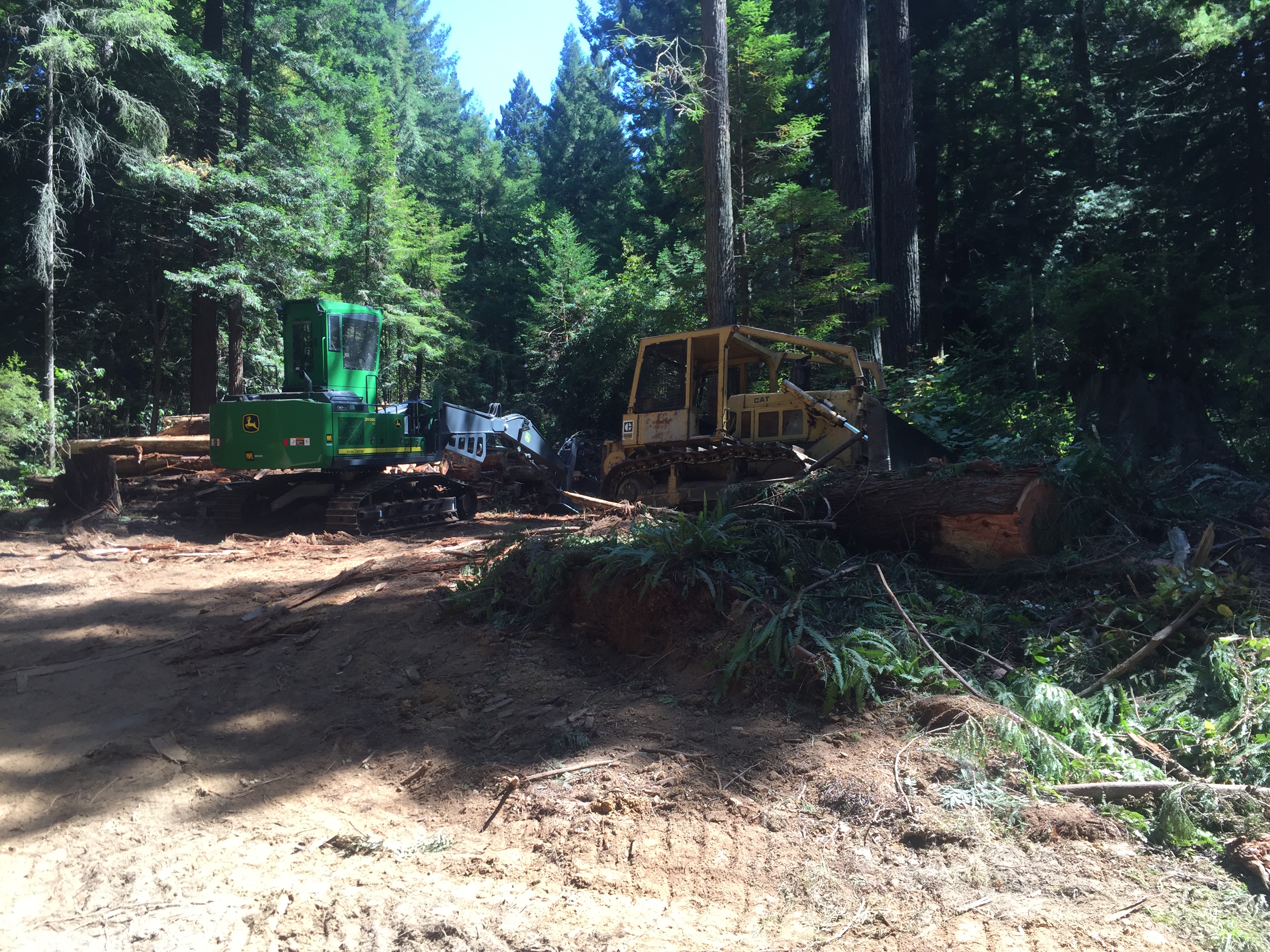
Lumberjacks with heavy equipment felled redwood trees in the Arcata Community Forest during the last two months, shocking some Humboldt State University students who regularly use the park. The City of Arcata uses timber harvest money to fund the management of the park and purchase additional park land in the area.
HSU senior Isaac West downhill bicycles the trails most days. He was disappointed when he came across the heavy equipment in the park near Fickle Hill Road, and a friend told him a section of the bicycle “jump trail” had been ruined.
“We have trees burning down everywhere,” West said. “It just seems like a really bad time to be cutting them down.”
Karlee Jackson, an HSU transfer student majoring in environmental studies, said many students she talked to hadn’t heard the tree cutting was happening, and were shocked by it.
“I am so mad they are cutting down these trees when so many trees have already been cut down,” Jackson said. “Why wasn’t it discussed with the community?”
Jackson acknowledged that COVID-19 may have made it more difficult to consult with the community, but said she would have liked the city to have found another way to engage the community before cutting.
Mark Andre, Arcata City director of environmental services and former HSU watershed management graduate student, said community engagement in the forest’s management was greatly impacted this year due to COVID-19.
“The biggest challenge to us is to explain to new people who are moving here,” Andre said. “During this COVID-19 year [community consultation] has not been as perfect as it could have been.”
Andre prepared the current Non-Industrial Timber Management Plan which allows some logging in local community forests. It was approved in 1999 and therefore public comment is not required each time the city wishes to cut, but the city is required to submit a Notice of Timber Operations (NTO). The city did issue a press release and convened the city Forest Management Committee, made up of appointed experts, although some regular meetings were canceled this year due to COVID-19.
The NTO includes an impact analysis on spotted owl populations, and the steepness of the grade to ensure the cuts do meet environmental regulations.
Greg King, executive director of the Siskiyou Land Conservancy and one of the first-ever Redwood tree-sitters, said he supports the efforts of Andre and the city.
“I’m pretty skeptical when it comes to most logging,” King said. “It almost surprises me to say I support this.”
King said he was far more concerned about the practices of logging companies owned by the billionaire family, Fisher, and Green Diamond Resource Company. Together these companies own roughly half of all redwoods in existence and regularly get “incidental take permits” which are essentially licenses to kill endangered species found while cutting.
“What you see is a lot of faux [or fake] sustainable logging, but that’s not what you see here,” King said.
He hasn’t read the forest management plan, but King encouraged students and community members to keep a close eye on the city. He is impressed at the “light touch” of the operations, and how the city has been able to purchase additional land in the area for conservation with the money from the park’s timber harvest. But King does believe public notice could be improved.
Andre said he has been working for the city since 1984 and since then the size of the forest has doubled. In the past decade about 30% less is cut annually compared to the 1980s. The city originally purchased the park and instituted the arrangement to use timber harvest money to purchase additional land for conservation after a city bond measure passed in 1979. Andre said since then the city has set standards in sustainable forestry and community based forestry even winning an award from the Forest Stewards Guild.
Regarding the recent destruction of a section of the downhill bike trail Andre said, “If we damaged the jump trails it’s going to be rebuilt this fall anyway.”
The Redwood Forest Defenders demand Yurok tribal land be returned
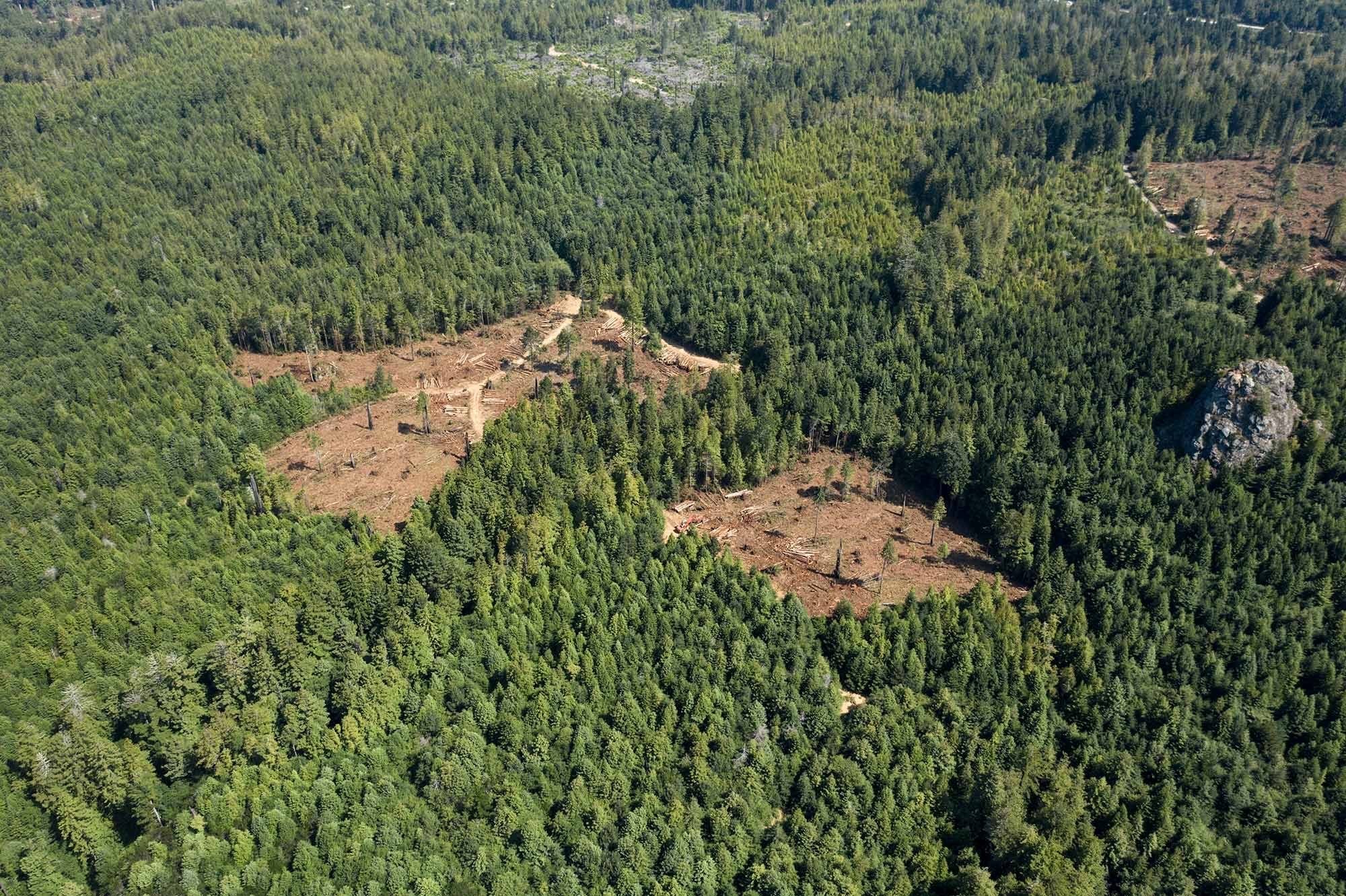
Green Diamond Resource Company, (GD), an Humboldt State University research partner and local logging company, made two clear cuts near Strawberry Rock in Trinidad this summer. Redwood Forest Defense partially blocked the logging by creating a tree sit village in the forest canopy.
A Redwood Forest Defense tree sitter risking arrest asked to remain anonymous, but provided the alias Lupine. Lupine said the tree sits were erected April 1 immediately after Humboldt County imposed the COVID-19 isolation order.
The company stopped about 20 acres, or 20 football fields, short of logging the whole area they originally intended. Roughly 100 acres between two timber harvest plans, Lupine said.
Karen Pickett from the Bay Area Coalition for Headwaters and an Earth First!er since the early 1980s believes protecting the forest is crucial.
“I guess forest defense is an essential job too,” Pickett said. “I find it really inspiring that people are up there doing this.”
Lupine and the tree sitters have defended a five acre area this year. In previous years the sitter protected the remaining untouched 20 acres of the timber harvest plan. Green Diamond and the Trinidad Coastal Land Trust are in active discussion over the 20 acres, wanting to preserve a strip of forest for trail access to Strawberry Rock.
Sarah Lindgren-Akana, Yurok tribe member and secretary of the Tsurai Ancestral Society, an organization advocating for the Indigenous of the area whose land was stolen, said she supports the tree sitters.
“I really admire their dedication and I hope people are listening to their message,” Lindgren-Akana said. “While some may argue that this is just a small area, or that it is not an old growth forest, we need to keep in mind that over the past 500 years America has lost about 95 percent of its forest due to development and logging.”
Gary Rynearson, GD chief communications officer, claims the company stopped logging the clear cuts near Strawberry Rock more than three weeks ago.
“We think it’s dubious for them to say that [since] they have refused to file the completion paperwork [for the timber harvest plan],” Lupine said. “We are staying here since they are still legally entitled, within the timber harvest plan, to come here and cut.”
Lindgren-Akana disapproves of the management practices of GD advocating for the land to be returned to the tribe.
“The Strawberry Rock property is within the Tsurai village and should be returned to the tribe for proper management and care,” Lindfgren-Akana said. “The Yurok tribe can bring the land back into balance and ensure the plants and forest, animals and people all have something to enjoy for generations to come.”
Lupine supports Lindgren-Akana and the idea of the land being returned to its rightful protectors.
“The goal for this land is not to be held by an entity like the land trust, but to be returned to the Indigenous people it belongs to, the people it was stolen from,” Lupine said. “Whether that be the tribal council or groups like the Tsurai Ancestral Society.”
Lindgren-Akana stated that the GD was starting to move towards a streambed that directly impacts the surrounding ecosystem.
GD declined to comment on stream encroachment and sustainable forestry practices.
Lupine said very little is done to ensure the company complies with sustainable forestry practices.
“I think there is very little oversight whether it is from those types of third party certifiers or whether it is from the state and federal agencies who are tasked with overseeing these things,” Lupine said. “I often wonder if [third party] certifiers are doing more harm than good.”
While the rest of the planet suffers, what will become of the Redwood Forests?
While climate change continues to cause destruction around the globe, scientists are finding hope in a local tree: The Giant Redwood, or Sequoiadendron giganteum.
The trees are currently in the midst of a growth spurt, producing more wood in the past century than any other time in their lives, according to Save The Redwoods League, a nonprofit organization who protect and restore the California redwood forests. Researchers from Humboldt State University, UC Berkeley, Natureserve, United States Geological Survey and Colorado State University are working alongside Save The Redwoods League to understand the growing trees and how they will continue to respond to climate change.
The Save The Redwoods League and HSU published findings concerning the impact of climate change in the recent research paper Aboveground biomass dynamics and growth efficiency of Sequoia sempervirens forests. They found that within the redwood forests, there are massive amounts of carbon sequestration. “Sequoia forests may be the most effective to [sequester carbon], because they accumulate more above ground biomass than any other vegetation, sustain higher rates of productivity than any other forest, and protect biomass produced via superlative fire- and decay-resistance.”
Carbon sequestration is “the capture and secure storage of carbon that would otherwise be emitted to, or remain, in the atmosphere,” according to Encyclopedia of Energy, 2004. This means carbon is trapped in forests, soil, or oceans for long periods of time instead of entering the atmosphere. It can be done naturally or artificially, and is becoming a researched effort to delay global warming which is caused by increase of greenhouse gases, such as carbon dioxide.
This is why scientists are so interested in the natural carbon sequestration of the redwood forests. While this seems to be good news, there is still much research to be done.
NASA scientists have started to create a global map of where carbon is being stored, and how much carbon is being released through deforestation. The redwood forest is only a tiny part of that map.
Humboldt State University Professor Steve Sillett has worked on the research with Save the Redwoods League.
“Redwoods can do little to fight climate change as they occupy a TINY proportion of the landscape,” Sillett said in an email. “Even though they are impressive in many respects, too little of the landscape is covered by them to make much difference at the global scale.”
While the redwoods alone cannot create a global change, scientists are continuing to research the storage of carbon in forests and what this means for the future of the planet.
What life is like as climate change begins to worsen
Waking up in Arcata, CA on Sept. 9, 2020 was similar to an apocalyptic movie. The sky was as orange as street lamps. Cars had their brights on and were dusted in ash. Air quality numbers began to rise.
Air quality states how polluted the air is to the public, measured by the air quality index, or AQI.
AQI levels range from good to hazardous, based on numbers from 0-500. As the number rises, the health risks worsen. Any number above 500 is considered beyond hazardous.
As wildfires continue to rage across California, the air quality has been majorly impacted. California has seen AQI’s above 500 during this wildfire season. In Arcata, despite being 100+ miles away from the nearest wildfire, the skies that were once full of fog are now full of smoke.
According to AirNow, a site that tracks AQI around the globe, by 12 a.m. on Sept. 11 Arcata had hit a peak AQI of 269.
The AQI states that air quality above 201 is considered very unhealthy and above 301 is considered hazardous: “Health warnings of emergency conditions. The entire population is more likely to be affected.”
The HSU campus closed due to the condition of the air. Students were told outdoor activities could not be moved inside due to COVID-19. “Air quality has worsened to very unhealthy levels since Thursday,” said Humboldt State University in an email to its students. “Please note those levels may fluctuate throughout the day.”
They also warned students to stay indoors with closed windows, use a portable air purifier if possible and wear a mask that filters air rather than just cloth if they must go outside.
Despite being advised to wear a mask for filtration, most students are wearing cloth masks. HSU freshman, Dev Lebhar, wore a gas mask when they went outside. They had two other gas masks and two respiratory masks in their dorm.
“The combination of the respiratory disease and the smoke outside means if your lungs get damaged by the smoke and you get COVID, you’re in big trouble,” Lebhar said.
They claimed they haven’t felt any effects from the smoke, but do struggle to breathe while wearing the gas mask due to its layered filtration.
According to the CDC, going out in such unsafe conditions can result in similar symptoms to COVID-19, like cough and difficulty breathing. It can be especially bad for those in high risk groups. Other side effects can result in stinging eyes and throat, increased heartbeat, chest pain, irritate respiratory systems and worsen existing heart and lung diseases. Wildfire smoke can even make you more prone to catching the virus COVID-19.
According to Berkeley Earth, a nonprofit organization on environmental science, China experiences some of the worst air quality, claiming “on bad days the health effects of air pollution are comparable to the harm done smoking three packs per day (60 cigarettes) by every man, woman, and child.” A typical day in China is equivalent to 2.4 cigarettes. “1 cigarette is equivalent to an air pollution of 22 μg/m3 for one day.”
On September 11 Arcata’s average AQI was 243, according to AirNow. That means the average air quality if you were breathing it all day was about equal to smoking 8.7 cigarettes. These hazardous conditions exist all across California, including areas like Arcata that aren’t necessarily close to a fire.
The best way to protect yourself is to stay inside. Any exposure to the smoke can damage your health, especially if large amounts of time are spent outside or if you have other existing health conditions.
The first commercially-approved seaweed farm in California will be on the map.
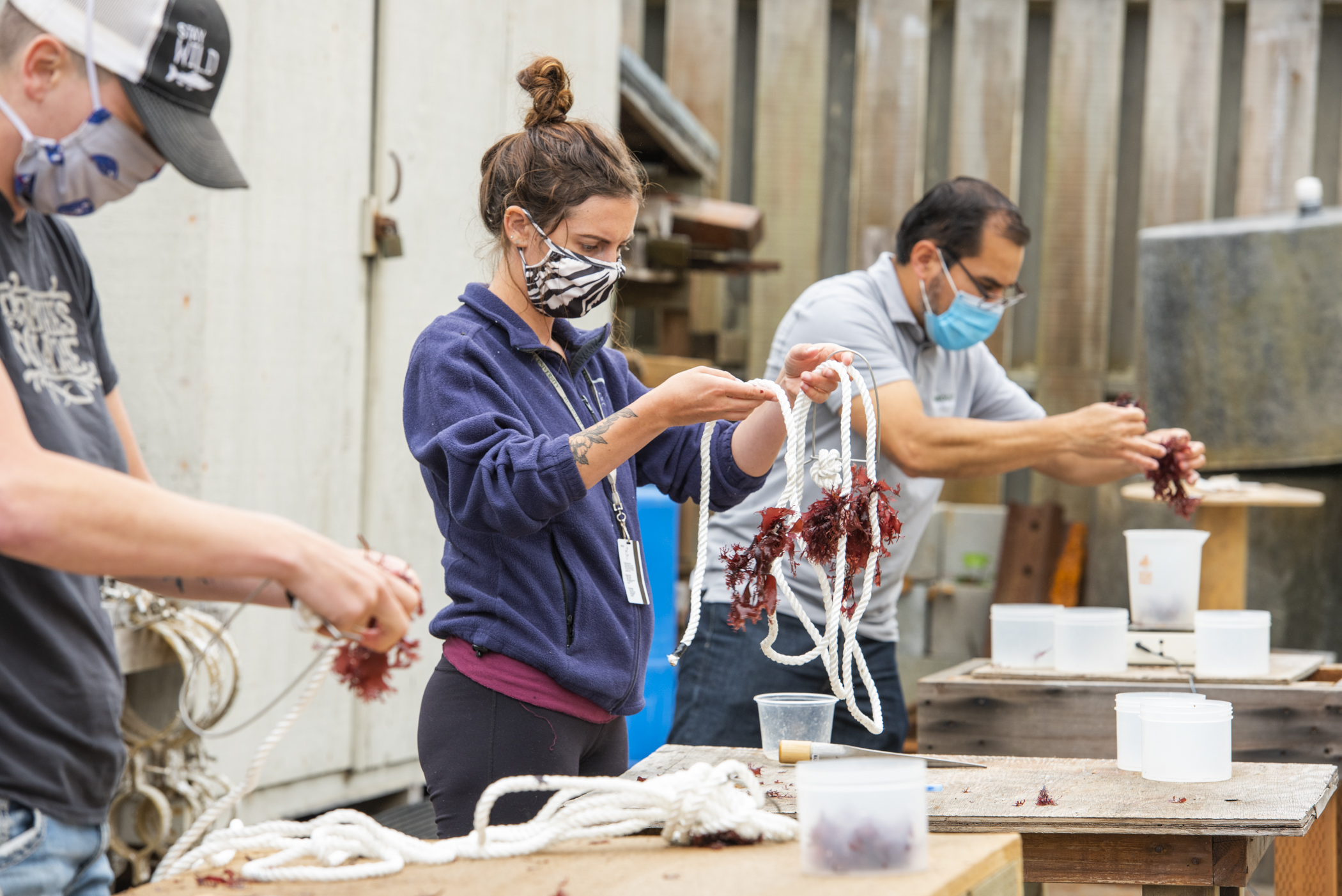
Humboldt State University is known for its cutting-edge science projects. One of these projects is an upcoming commercial seaweed farm in Humboldt Bay. A trailblazer in its own right, this project was spearheaded by HSU natural resource grad student Erika Thalman.
“I went into grad school originally wanting to do fish pathology, so this was something different for me, but I also really love algae,” Thalman said. “I was like ‘I also really kind of want a farm of my own someday.’ And I was like ‘Oh! Algae! Farm!’ so I was excited to be able to say ‘I’m a seaweed farmer.’”
Thalman has been growing seaweed at the HSU Marine Lab in Trinidad for the past year. This seaweed incubation process begins with sablefish, at the top of the food chain. The sablefish eat food from lower on the food chain and then produce feces that act as nutrients for the seaweed, which absorb them in turn.
“The seaweeds act as part of a bio-filter, which then sends less nutrient-dense water back to the fish,” Thalman said.
This bio-filter acts as kind of a recycling system with different levels of the food chain helping each other out.
Bren Smith is the executive director of Greenwave, a nonprofit that assists with training environmentally-focused farmers, and is a big proponent of the seaweed farm. Smith is excited about the future of regenerative agriculture among the oceans in a world already seeing the effects of climate change.
“There needs to be a transition in the oceans,” Smith said. “But what’s exciting about that is we get these opportunities to learn from the mistakes of land-based farming and the mistakes of industrial agriculture and really do it the right away. It’s all hands on deck.”
Thalman would like to put her seaweed to good use, whether that be food for consumption or fertilizer for gardens. The grade of seaweed dictates what it will be used for. If the seaweed is a lower grade, it can only be used for fertilizer and fodder, but if it has a high enough grade where it is deemed edible for humans, then it can be commercially sold.
Unfortunately, due to permitting issues, the seaweed is currently unable to be sold in any capacity, but when the time comes to sell the seaweed, Thalman plans to donate all the profits.
Smith is mindful of the extent to which the farm is financially sustainable.
“And the key from a farming perspective is how much grows — what volume do you get per meter,” Smith. “Because if you don’t get enough volume, then it is not a profitable farm.”
Before anyone could even worry about making money from the project, they had to worry about finding the money to fund it first.
Dr. Rafael Cuevas Uribe, an assistant professor in the fisheries biology department at Humboldt State, is another driving force behind the seaweed farm as he was the one that wrote the grant that helped fund the project. As Uribe explained, within the California State University system, there are a number of campuses that do agricultural research and subsequently get grants called the Agricultural Research Institute Grants to fund agricultural-related projects. Because HSU is one of the CSU campuses that is in that boat, it receives said grants, which are managed by Sponsored Programs.
Uribe tried to get one of these grants but ran into a major roadblock along the way. As it turns out, he had to monetarily match 50 percent of the requested amount of funding.
“And that was kind of an issue in our project and we thought that we had everything figured out and at the last day when the project was due, we found out that we did not have the match to do this project,” Uribe said. “And we were almost dropping the ball right there.”
Also stepping in are a growing number of people and agencies interested in getting into the seaweed farming industry. However, as Thalman noted, there are a lot of heads being scratched.
“People don’t know what to do,” Thalman said. “They don’t know how to get permit regulations, so we’re kind of the guinea pigs. They’re watching what we do and then they’re going to use what we learned to set up their farms in the future.”
Humboldt State demands double masking on campus, does more layers equal more protection?
You’ve probably read the headlines: Wearing a Mask Prevents the Spread of COVID-19. But which mask you choose could affect how protected you and others really are.
Masks were first mandated in Humboldt County on April 24 when Health Officer Dr. Teresa Frankovich introduced an order requiring all members of the public wear facial coverings while inside a facility other than their residence. Since Humboldt State University was required to close campus prior to that, the university announced safety precautions on Aug. 4, which included wearing face coverings with at least two layers of 100% cotton. This was done in conjunction with the reopening of campus for the fall semester.
The Centers for Disease Control and Prevention (CDC) urges people to wear masks with at least two or more layers of washable, breathable fabric. Masks need to be worn covering both your mouth and nose at all times.
Director of News and Information Aileen Yoo stated, “HSU is following recommendations from the CDC. Its website is also a great resource for information on different types of protective gear.”
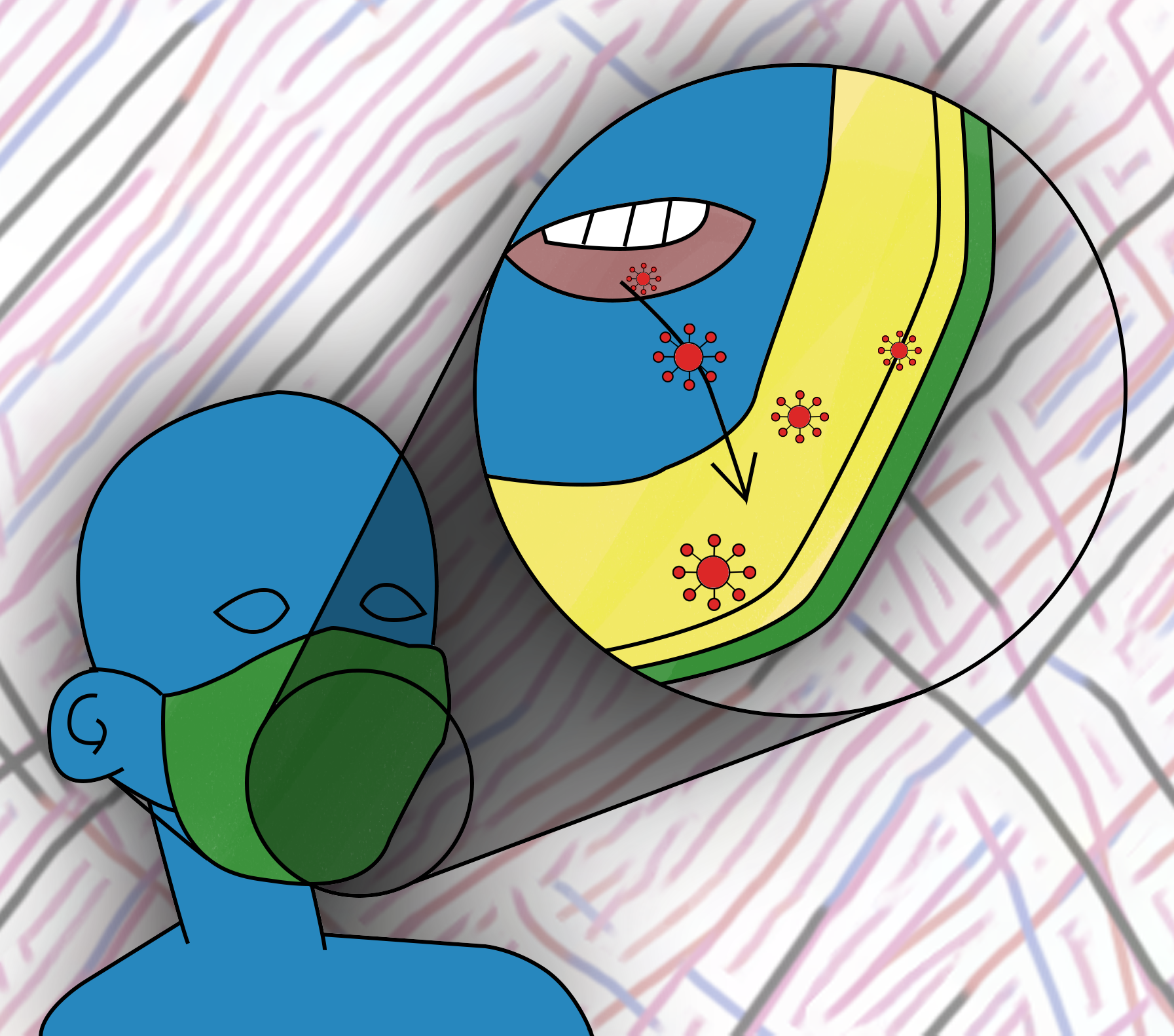
According to the Association of American Medical Colleges (AAMC), “studies have shown a double-layer cloth face covering was significantly better at reducing the droplet spread caused by coughing and sneezing, as compared to a single-layer one.”
Mark Wilson, a microbiology professor at HSU believes that “the main goal of mask wearing is to reduce the emission of droplets and aerosols from a person infected with the coronavirus, by trapping emitted droplets in the fabric. Mask-wearing can reduce the transmission of airborne diseases like coronavirus.”
Wilson added that when deciding on the type of masks, “the tighter the weave of the material, and the more layers it has, the more effective it will be at filtering out particles.”
May Chu, an epidemiologist at the Colorado School of Public Health, as quoted by NPR said, “a good option is a mask made of two layers of a tight-weave fabric with a built-in pocket where you can place a filter.”
A University of California, San Francisco article reported that based on a simulation, researchers predicted that 80 percent of a population who wear masks would reduce the spread of COVID-19 more than being on lockdown. Further, the Institute for Health Metrics and Evaluation projected that 33,000 deaths could be prevented by October 1 if 95 percent of the population wore masks in public.
Many researchers have looked into N95 masks which are made out of many layers of fine polypropylene fibers. They are able to block at least 95% of small airborne particles but only when worn correctly. Though they are proven to be effective, the short supply should be reserved for medical professionals and first responders.
A recent Duke study rated a fitted N95 and a three-layer surgical mask as the top two protectors, followed by two layer cotton masks.
According to an article by Science Daily in July, a team of Australian researchers did a study comparing the effectiveness of single and double layer cloth face coverings. They used LED lighting to film the airborne droplets. Their results showed that double layer face coverings prevented more droplets from spreading.
HSU students can be provided with double layer masks at the campus Police Department, the first floor of Student and Business Services building, Jolly Giant Commons, College Creek Market and the Parking Kiosk.
How fire suppression is a mixed bag in Humboldt County
Every fire season, blankets of smoke roll over Humboldt County. Here on the coast, that’s as close to wildfires as some of us get. But our practice of fire suppression is a relatively new state for our woodlands and the lack of fire is taking its toll on the county.
“Humboldt county’s interesting. Most of the county really hasn’t experienced much fire over the last few decades,” said Jeffery Kane, associate professor of fire ecology and fuels management at Humboldt State University.
High levels of rainfall and a more temperate climate contribute to a lower risk of fire, but that doesn’t mean fire isn’t a natural part of Humboldt’s environment.
“When there are ignitions, and there are ignitions here from lightning and humans from time to time, they are usually fairly easy to put out,” Kane said. “That nice fog layer, that’s going to moderate fire behavior.”
Inland Humboldt county is not as protected by our temperate, coastal environment. But Kane said that quick fire suppression may not be the safest or most environmentally friendly way to manage wildfire in the long term.
“The thing that we know is most effective is to treat areas with a combination of thinning and burning,” Kane said.
The suppression of small wildfires can make future fires more difficult to control. Dense canopies and the buildup of dry fuel makes fire more dangerous. By thinning the forest, the trees become less tightly packed. When the canopy has more gaps, fires spread slower. Then after the canopy is thinned, a prescribed burn can take care of the natural dry fuels and remaining debris created from thinning. Thinning and burning can make an area less vulnerable to uncontrolled wildfires.
Although Humboldt is relatively protected, this area still would see wildfire activity every few years if not for the relatively recent introduction of American colonizers. Due to the danger of wildfire to settlers and property, wildfire is almost completely suppressed.
Disturbance Ecology Professor Rosemary Sherriff studies the impact fire suppression has on local woodlands. She thinks there can be a balance between protecting settled areas and letting wildfires run their course.
Lightning strikes and Indigenous burning would have introduced fire to local oak woodlands. These woodland areas suffer without the fire that shaped the ecosystem.
“In the past few years we’ve had fires that have gone into more urban areas, a lot of it stemming from more wildland areas,” Sherriff said. “There’s been a substantial amount of urban-woodland interface and these are really extremely hazardous places to live.”
In addition to providing more fuel to fires, the removal of wildfire has come at the cost of native biodiversity. Removing a natural phenomenon that was encouraged by local Indigenous tribes has consequently impacted our landscape. Local ecosystems are adapted to wildfire and removing fire allows fire sensitive species to grow without natural inhibitors.
“Inland we have oak woodlands, for example, that historically would have had a lot of fire,” said Sherriff.
Lightning strikes and Indigenous burning would have introduced fire to local oak woodlands. These woodland areas suffer without the fire that shaped the ecosystem.
“What we’ve seen is a lot of encroachment of native douglas fir into these oak woodlands,” Sherriff said. “So there’s been a loss of the oak woodland open areas.”
This loss of oak woodlands can be seen throughout Humboldt County. This destroys native biodiversity. But fire suppression is not the only consideration.
“Fire suppression has certainly shaped the landscape,” Sherriff said. “We can’t disregard the fact that settlements and communities and ranches and homeownership and the cannabis that’s happening also shapes and reshapes the landscape and can contribute significantly to shifts in fire behavior.”
The balance between human settlement and fire suppression is a difficult medium to reach.
“It becomes extremely tricky when it’s someone’s livelihood,” Sherriff said. “It’s very easy to sit at the university and say ‘yeah, more fire on the landscape’ but it’s extremely hard to make it happen with all the structures and policies in place.”
Lenya Quinn-Davidson is an advisor for the University of California Cooperative Extension. One of her projects is the Humboldt County Prescribed Burn Association. It’s a loose cooperative of land owners and community members that implement prescribed burns. While structures and policy is slow to change, they’ve proactively decided to put fire back into their land themselves.
“A lot of people want to use prescribed fire,” Quinn-Davidson said. “By the time we’re actually there lighting the fire, there’s already been a ton of work making sure that it’s safe, effective and that it won’t get out of control. It’s not like we’re just going out and lighting things off.”
Prescribed burning is a tool that landowners can use for fuels management, invasive species control and habitat restoration. The encroaching firs that Sherriff studies are a main target of controlled burn.
“We’re losing our oaks at a pretty astonishing rate,” Quinn-Davidson said. “So a lot of the landowners that have oak woodlands really want to use prescribed fire to get in there while those firs are small and kill the firs. The oaks survive just fine because they’re very fire adapted.”
Though douglas firs are native, there are some invasive species that landowners can keep back with prescribed burns. There are invasive species of grass like the medusa head that smother local grasslands. Ranchers want to make sure their cattle grazing lands are free of medusa head.
“It creates this thick thatch that prevents other plants from growing, so it turns into this homogeneous field of grass that nothing can eat.” Quinn-Davidson said.
Fire is necessary for keeping our natural landscape healthy and biodiverse. Where forest and human settlements meet, controlled burning can help maintain a healthy habitat with less danger to human life. With those buffer zones established, wildfire can be allowed to burn in a controlled manner, establishing a careful balance between fire and safety.
Quinn-Davidson thinks getting to a meaningful scale of fire management will take a combination of state intervention and owners taking control of their land.
“It’s a real community thing.” Quinn-Davidson said. “People just love it.”
Protestors injured by non-lethal weapons in Eureka following protests against police brutality.
On May 31 in Eureka a protest against police injustice ended late into the night with officers using pepper-spray projectiles to assist in the arrest of an individual suspected of vandalism. An additional protestor was arrested for attempting to prevent the first arrest.
Several protestors attempted to pull the individual out of police custody. This resulted in police firing on the rest of the crowd. Capt Brian Stevens of Eureka PD addressed the incident to the public in a video posted to Lost Coast Outpost.
“Given the escalating circumstances and the safety risks to the officers … They began firing [pepperball projectiles] into the ground in and around the crowd trying to back the crowd off,” Stevens said.
Sam Papavasilliou, a 22-year-old Humboldt State University student and former Lumberjack writer, was in attendance that night and was among 30 or so protestors fired on by police. Papavasiliou described how the crowd was cut off in the front and back by several police vehicles while passing by Dutch Bros on the north side of Eureka.
Officers first addressed the crowd to tell them they would be attempting to arrest an individual suspected of vandalism. At 10:33 p.m. this attempted arrest was met with resistance from several protestors.
“One protestor got shot in the ear with [a pepperball]. They were bleeding and they were really yelling at the officer that they didn’t do shit and they said ‘I can’t hear right now,’” Papavasiliou said.
Pepperball rounds are amongst a large host of “non-lethal” weapons used to disperse crowds deemed riotous. Pepperball rounds are designed to explode on impact leaving a cloud of OC (oleoresin capsicum), the same ingredient used in pepper spray. It is advised that they are not aimed at the eyes, face, throat, or spine as death has occured when these inappropriate areas have been fired on.
Rubber bullets are another method of crowd control that fall under a classification of “non-lethal” weapons known as KIPs (Kinetic Impact Projectiles) along with bean bag rounds, pellet rounds, and sponge rounds. In their assessment of “non-lethal” weapons and their safety The Physicians for Human Rights organization argues that “At close ranges, levels of lethality and patterns of injury of some KIPS become similar to those of live ammunition. At longer ranges, KIPs are inaccurate and indiscriminate. Some KIPs are lethal in close range and ineffective at longer distances which make safe use difficult.”
The problem really comes down to KIPs being too inaccurate at longer ranges to correctly target individuals and areas of the body they are aiming for, and that the injuries sustained at close range can penetrate the skin, break bones, fracture the skull and explode the eyeball.
Police also rely on chemical irritants (CIs) for crowd dispersal, namely tear gas and pepper spray. Pepper spray is made of a chemical derived from peppers that inflames the afflicted area on contact causing the burning sensation.
“Officers and deputies were on scene with more or less paintball guns that shoot a paintball projectile that is filled with a powdered OC,” Stevens said.
Symptoms after exposure to these agents include temporary blindness, respiratory inflammation, increase in heart rate and blood pressure. People with respiratory or heart conditions are at an increased risk of more serious injury or death.
Other “non-lethal” weapons include pepper spray, bean bag rounds, tear gas and flash bangs just to name a few. When used correctly, these weapons are a less dangerous alternative to shooting people with actual guns, but mistakes in their applications can leave victims with wide ranges of injury.
Faults give clues to the history of the earth’s crust and how it impacts our future
Earthquakes are more than just shaking. Turns out the rumbling is sound vibrations from the massive snap caused by slipping, bending and breaking rock.
Deep below Earth’s crust, a mantle of plastic-behaving rock bends and twists under immense pressure. Its mass is 67% of the Earth’s mass. Its temperature ranges from 392 degrees Fahrenheit at the upper boundary of the crust to an incendiary 7,230 degrees Fahrenheit at the core-mantle boundary. Sometimes the overlying, thin 50 to 20 kilometer thick crust cracks.
“The earthquake is the sound waves moving through the rock, elastic waves propagating through it,” said Dr. Mark Hemphill-Haley, a Humboldt State University neotectonics professor and the co-chair of the geology department. “People who have seen the ground moving are seeing the surface waves of rock bending back and forth.”
According to Hemphill-Haley, imagining the scale of the mantle is challenging both in size and as a metric of time. Some people have compared the movement in the mantle to lava lamps or boiling water, a force called convection, where hot liquid bubbles up through cooler liquid, but Hemphill-Haley said that can be misleading.
“We’ve had these old models of the mantle convecting but it’s probably less like that- we’re talking about solid rocks,” Hemphill-Haley said. “They’re solid but they are plastic too. Tectonic plates, which consist of the crust and the upper mantle are in motion and can move faster than four to five centimeters per year. Mantle convection is likely a more slow process than that.”
Like the snap one hears when a pencil breaks, the sound vibrations from the snapping rock shake the ground all around the breaking point, quaking the earth.
Giragos Derderian, a fourth year geology student, explained the nuance between elastic, plastic and brittle rock. Generally, a rock seems solid but if enough force is applied, the rock can change shape. Derderian said the change in a rock is called deformation.
“Plastic deformation is when structures change shape due to a force and the rock stays deformed when the force dissipates,” Derderian said. “After elastic deformation, the rock returns to its original shape when the force is removed.”
Brittle deformation, Hemphill-Haley said, is when forces are so great, the stress exceeds the rock’s elastic limit and snaps it, like a pencil bent too far. An earthquake is when massive bodies of rock experience so much force that they become brittle and break. Like the snap one hears when a pencil breaks, the sound vibrations from the snapping rock shake the ground all around the breaking point, quaking the earth.
The earth’s crust is made up of massive plates that fit together like an ill-constructed puzzle with some plates pushed too hard into each other and some plates pulling away from each other. Force builds up where these plates meet and can deform each other in elastic, plastic and brittle ways.
Hemphill-Haley said the big thing that causes plate motion is the weight of oceanic plates. In this example, oceanic plates have converged with continental plates. he denser oceanic plates are diving below the less dense oceanic or continental plate.
These convergent plates cause a few things to happen on the surface. The leading edge of the less dense plate can crumple into massive mountain ranges like the Klamath Mountains. The oceanic plate descends deep into the mantle at submarine trenches referred to as subduction zones like off our coast—the Cascadia subduction zone. Geologists research the effects of plate tectonics here on the northern California coast in a variety of ways.
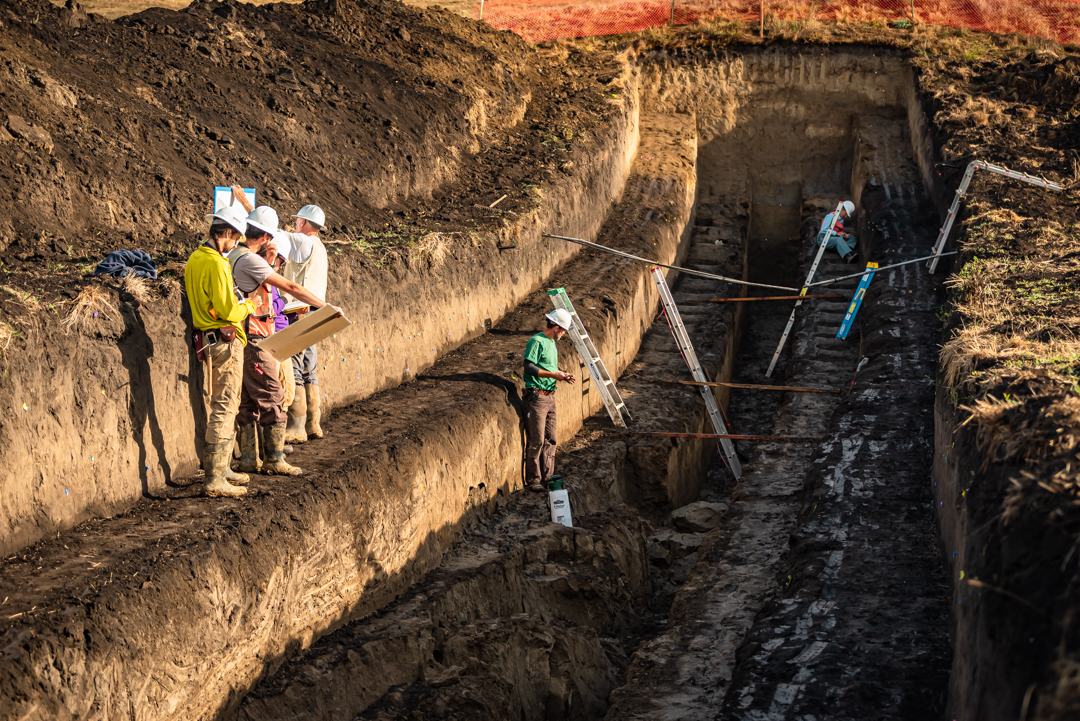
Hemphill-Haley’s colleague Dr. Melanie Michalak researches the Klamath Mountains in northern California and Oregon, and the Coast Range closer to HSU. In one research effort, she and her team trench the ground and look at rock layers that have been changed by faults. They seek material that can be used to estimate the age of the rock. Some of her research is also on recently active faults.
“As a geologist I care about all faults, the ancient ones, the active ones, I don’t discriminate,” Michalak said. “But people though, from a risk perspective, they’re more concerned about which ones will cause an earthquake and damage their house.”
Pretty flowers offer a punch packed with nutrition
Foraging for your own sustenance is both rewarding and enjoyable. With grocery store shelves low on most necessities like fruits and vegetables, you can still find satisfying snacks out in nature.
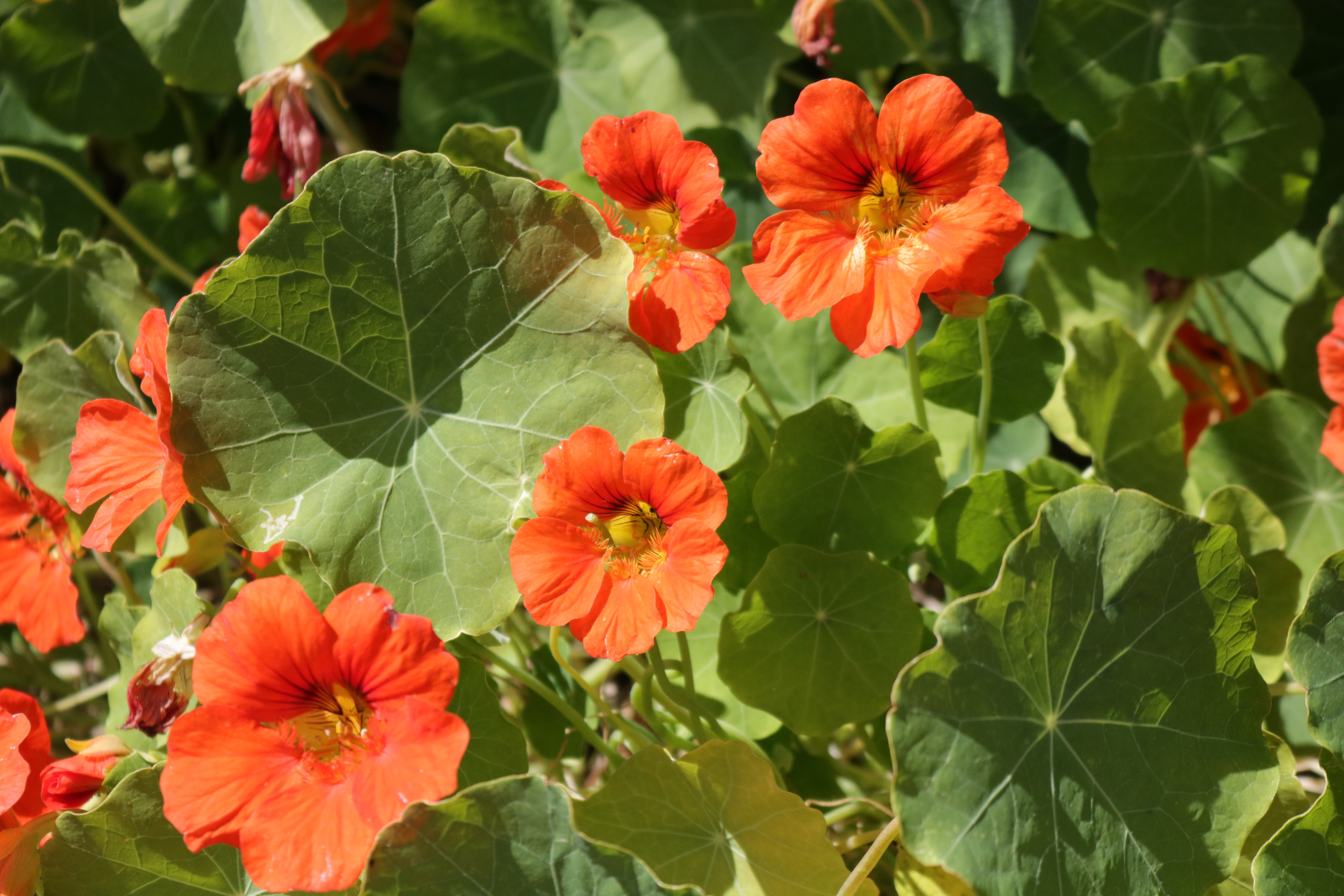
According to Encyclopedia Britannica, nasturtiums are a type of flowering herbaceous plant in the tropaeolaceae family. These green, circular-leaved and orange, red or yellow-petaled plants are edible flowers and foliage.
While nasturtiums may be hard to find in the wild as they’re native to Central and South America, they can easily grow in home gardens just about anywhere.
Early spring is the perfect time to start cultivating your own nasturtiums, and you can simply order seeds online to get started. Nasturtium seeds, when dry, look like tiny, brown walnut shells with wrinkled surfaces. When fresh, they are pale green and have a slightly smoother texture. Fresh seeds are edible as well and often pickled and used as caper substitutes.
A great way to prepare nasturtium for your first taste is in a salad with cucumbers, mandarin oranges and spinach with a light vinaigrette dressing.
Once fully grown and blossomed, the sprawling, vine-like nasturtium plant offers a bounty of vitamin C if consumed. Not only are these plants aesthetically pleasing, the amount of nutritional value packed into the entire nasturtium is astounding, as they contain vitamins B1, B2, B3, and magnesium, iron and calcium.
This plant has a peppery, mustard-like taste and can be used as an alternative to potent arugula leaves or mustard greens in salads. You can eat the whole plant, which is said to be similar to the taste of watercress.
A great way to prepare nasturtium for your first taste is in a salad with cucumbers, mandarin oranges and spinach with a light vinaigrette dressing. Or if you’re bold enough, try the leaves and petals on their own after a thorough rinse.
Beyond the beauty and nutrition of nasturtiums, this plant also offers antibiotic and antibacterial properties. These plants are by no means a way to cure colds, the flu or COVID-19, but can offer slight relief. Nevertheless, according to a study published in the Open Microbiology Journal, these plants were found to contain antimicrobial effects and can be safely used in the food industry as an antibacterial oil on foodborne bacteria.
So get your hands on some nasturtium seeds and get to planting. Soon you’ll have a garden full of the edible and nutritional plant.
How the body uses multiple levels of defense against foreign intruders
With the coronavirus craze going on right now, it may be nice to know our bodies are working hard to protect us.
When a foreign bacteria or a virus enters the body, it goes into full defensive mode. A complex relationship of cells evolved over hundreds of thousands of years, the human immune system is our reliable defense from sickness and death. The body has developed a battalion of guards, soldiers, intelligence, weapons factories and communication stations to defend us from attackers.
The Kurzgesagt – In a Nutshell YouTube channel published an easy-to-watch video on the immune system. They broke down the immune system’s jobs into 12 jobs including to communicate, kill enemies, cause inflammation, remember enemies and make strategic decisions.
There’s more to the process too. Russel Wheatley is a family practitioner at the HSU Student Health Center. Wheatley said that, even though he doesn’t study immunology, he has a working knowledge of the immune system. He referenced an immunologist colleague named Huang Bo for his explanation.
Wheatley said there are five levels of immunity, and all of these levels work together as a multi-faceted defense.
The first level is a physical barrier, the skin. He said the skin is bacteria and virus-proof. Between the skin and the mucous in your nose and mouth, combined with coughing and sneezing, the body is pretty good at fending off invaders.
If the skin is broken, then the immune system really starts working. When the skin is cut, nearby bacteria take advantage of the break and enter the blood stream, risking infection. First to the plate is the macrophage, a large, abundant cell.
“Most of the time, they alone can suffocate an attack because they can devour up to 100 intruders each,” Kurzegsagt says. “They swallow the intruder whole and trap it inside a membrane. Then the enemy gets broken down by enzymes and is killed.”
If the macrophage is overwhelmed, it begins to call for help from the garrison. Neutrophils are hype- aggressive, destructive cells that appear at the site of the battle to destroy any cell near the cut, including healthy ones. If this isn’t enough, the macrophage calls the dendritic cell to the battlefield.
“You have to rest the body when the immune system is trying to work.”
Russel Wheatley
The dendritic cell is the brains of the operation. When hailed by the macrophage, the dendritic cell starts to collect samples of the intruders and presents them on the outer membrane.
“Now, the dendritic cell makes a crucial decision,” Kurzgesagt says. “Should they call for anti-virus forces that eradicate infected body cells or an army of bacteria killers?”
If a virus has entered the body, Wheatley says a protein in the blood stream called a complement protein identifies the virus and destroys them. Eventually, after the body has torn apart the virus, white blood cells produce antibodies.
In the case of the coronavirus, it’s a little more sinister. The virus tries to hide itself from the immune system by burying itself in lung cells. In a video about the virus, Kurzegesagt says the virus attaches itself to a specific receptor on lung cells and inserts a new DNA command: copy and reassemble. It fills up with more and more cells until it’s full, and then the cell receives a final order: self-destruct.
“At this point, the virus hasn’t done too much damage,” Kurzgesagt says. “After millions of body cells have been infected and billions of viruses swarm the lungs, the virus releases a real beast on you, your own immune system.”
While the immune system pours into the lungs, the virus infects them and confuses the system. The coronavirus causes immune cells to overreact and yell, “Bloody murder.” The immune system wastes a lot more resources than it should to fight the reaction, exhausting the body’s energy.
Wheatley encouraged anybody who is feeling sick to rest. He explained when a person wakes up, the body has a limited bowl of energy. Thinking, exercising and immune-responding all need that energy to do their thing, and expending energy can make the body less effective at fighting invaders.
“You have to rest the body when the immune system is trying to work,” Wheatley says. “Some people have different immune systems and some aren’t nearly as strong as others, especially to these viral type invaders. You have to rest. You have to give it the right kind of energy.”
Though the actual fatality rate is unknown, it is much higher than past pandemics such as H1N1 (swine flu). Even if it was low, a small percentage of the total global population is still a staggering amount of people.
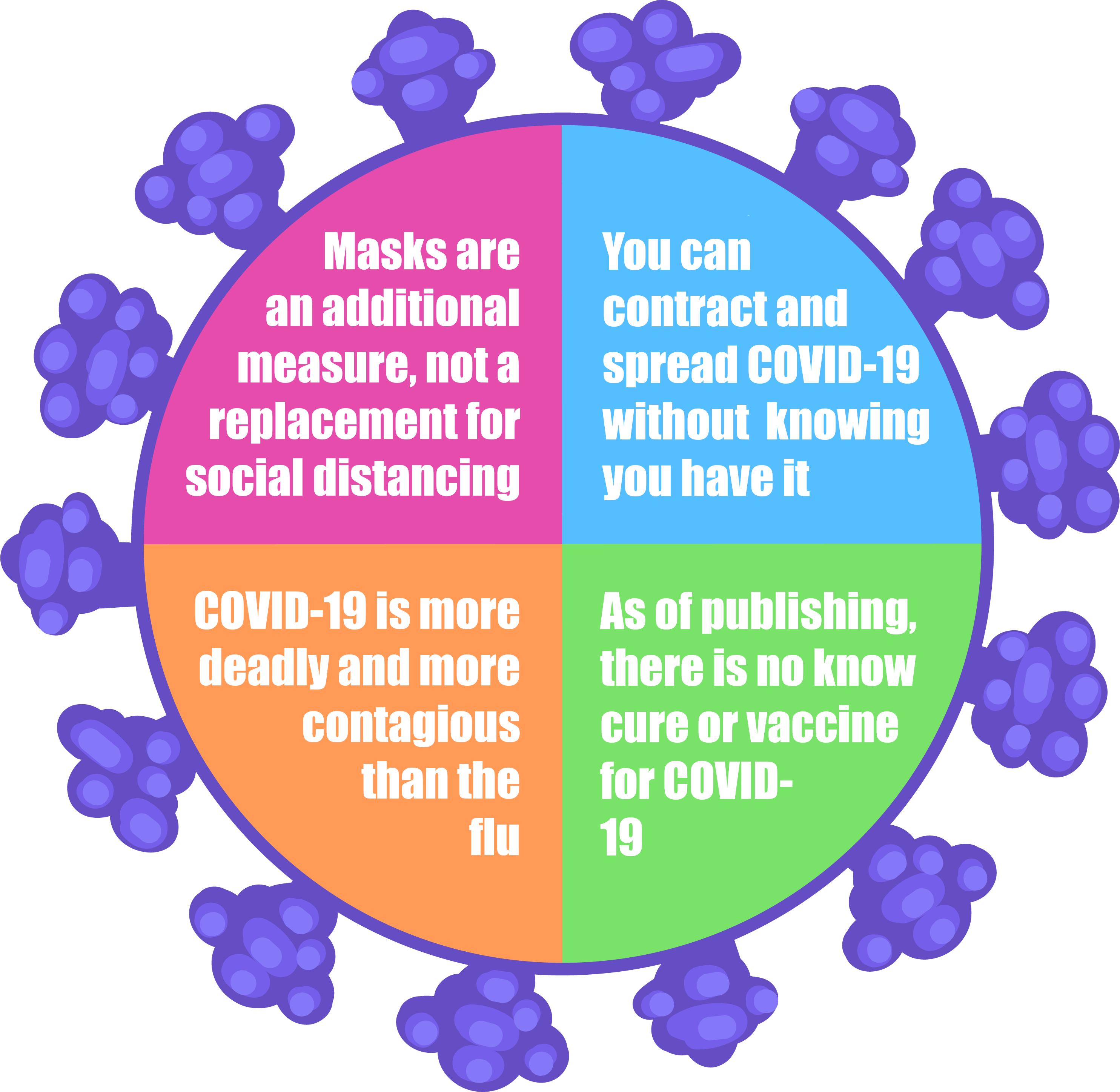
Misconception: I don’t have symptoms like fever, cough or difficulty breathing, so I must not have it and I can’t spread it.
Misconception: If I wear a mask, I don’t have to practice social distancing.
Reality: Simple masks for people without symptoms and people not in high-risk groups are recommended by the Centers for Disease Control and Prevention more to protect others from you while in public. Since many cases are asymptomatic, it may help prevent people unaware of their own infection from spreading it. Masks are an additional measure, not a replacement measure. The CDC recommend social distancing along with a mask.
Misconception: There is a cure for COVID-19.
Reality: As of April 2020, there is no specific medicine or cure for COVID-19. Antibiotics are not effective against the viral illness, and there is no evidence of any effective home remedy. There are ongoing trials and possible vaccines being considered, so that may change soon.
Cold clouds creep on the horizon, waiting for students to flee Arcata before dumping rain on the city. The days of sunny skies and warm weather may come to a damp halt at the beginning of spring break.
Spring is here, and it’s wet. This coming weekend, rain is forecasted to fall on Humboldt State. Break is just around the corner and inclement weather may be a downer for partying students, so be sure to check the weather before the rager starts.
This helpful graph, built by weatherspark.com, shows the average daily chance of rain in Arcata throughout the year. | Graph by Weatherspark
To prepare for the break, The Lumberjack science section reached out to the National Oceanic and Aeronautic Administration office and asked a meteorologist what we can expect. It may get cold.
According to Brad Charboneau, one of those NOAA meteorologists, we’ve still got a couple more cold months ahead of us. We’re not out of the chill yet, even though the spring season is when temperatures start warming up.
“I check the weather often either with the NOAA weather app or by looking at the sky. If it looks questionable or if the sky is darker than usual, check it.”
Mattea Roberts
For curious weather geeks, the NOAA station uses a number of sensors and measuring devices to record weather events. For example, they use a tipping bucket rain gauge that measures hundredths of an inch. Each time the bucket fills, the bucket tips over and records a tic. The more tics, the more water. Easy as that.
Mattea Roberts probably appreciates meteorological instruments like the tipping bucket. A freshman studio artist at HSU, Roberts takes advantage of NOAA science by using their weather app. She said it was a good idea to check the weather if the sky looked questionable.
“I check the weather often either with the NOAA weather app or by looking at the sky,” Roberts said. “If it looks questionable or if the sky is darker than usual, check it.”
Roberts also said she brings a rain jacket or an umbrella to school every day, just in case it does rain. She’s probably going to be prepared for whatever the climate has to throw at her this weekend.
“I can tell you right now, it’s gonna be nice and warm up until Friday,” Charboneau said. “On Saturday, believe it or not, we’re gonna have a shift to cooler, more showery weather that will last through the weekend.”
Charboneau said the rain isn’t going to be very intense from the perspective of the rivers, but the conditions may make the weekend less than ideal if students have outdoor plans.
One of Charboneau’s colleagues, Meteorologist Ryan Alyward, explained how NOAA forecasts weather. He said as a meteorologist, his job is to pay attention to what’s going on in the sky and diagnose the conditions. Understanding what’s happening now allows him to make a prognosis of what weather conditions will be.
Using a program he called Ensemble, meteorologists input real-time data and get a large number of weather predictions. The predictions are future weather patterns that may or may not happen, and it is his job to use these to make a forecast of the weather. The trick is to look at the similarities in each model, because together, those similarities make the most likely prediction.
The current models, beyond the wet weather forecasted in Arcata, include snow in the mountains east of the city. Charboneau said although snow is more common in January and February, it’s not unheard-of in March.
“We’re looking for the potential of snow—low-level snow—which will impact the passes going east,” Charboneau said. “It is likely to see some snow over the weekend. Those are the main threats over the weekend.”
Claire Till of HSU receives lucrative award to aid her research and academics
Humboldt State University’s top-ranked chemistry program is home to a professor researching how plankton in the ocean interacts with heavy metals in the water.
“There are lots of people who are doing fantastic research and have awesome awards and grants on campus. So I’m glad for the opportunity to highlight some of the work that we’re doing at HSU and lots of people are doing lots of great work at HSU.”
Claire Till
Assistant Professor of Chemistry Claire Till recently won the Cottrell Scholar Award, a $100,000 award honoring trailblazing science professors or researchers who have made large strides in their respective fields.
“There are lots of people who are doing fantastic research and have awesome awards and grants on campus,” Till said. “So I’m glad for the opportunity to highlight some of the work that we’re doing at HSU and lots of people are doing lots of great work at HSU.”
Till looks forward to allocating the funds toward her personal research and her classroom. She’s using the funds to support field trips to gather more data and to hire student researchers.
“We’re going to go sample some rivers this summer,” Till said. “And then we’re going to do a couple of day trips on the research vessel, the Coral Sea, next summer, and some students will be hired throughout that.”
Till’s research is about iron, a vital nutrient for humans and phytoplankton in the ocean. Unfortunately, in the ocean, there are extremely low concentrations of iron, and as a result, phytoplankton are not growing as much.
“It’s really interesting—I think at least—to study how the iron gets there and how the phytoplankton uses it,” Till said. “What I proposed, and the work that we’re going to be working on, is to study iron using a new tool, which is another element called scandium.”
Till elaborated on the relationship between scandium and iron and what she hopes will come out of her research in relation to that.
“Scandium and iron have some parallels in chemical reactivity,” Till said. “There’s no real reason to expect them to behave similarly based on their chemical properties, and so I’m really interested in figuring out exactly in what ways are they similar and in what ways are they different.”
The second area Till will be putting funding toward is academics, specifically in her own classroom.
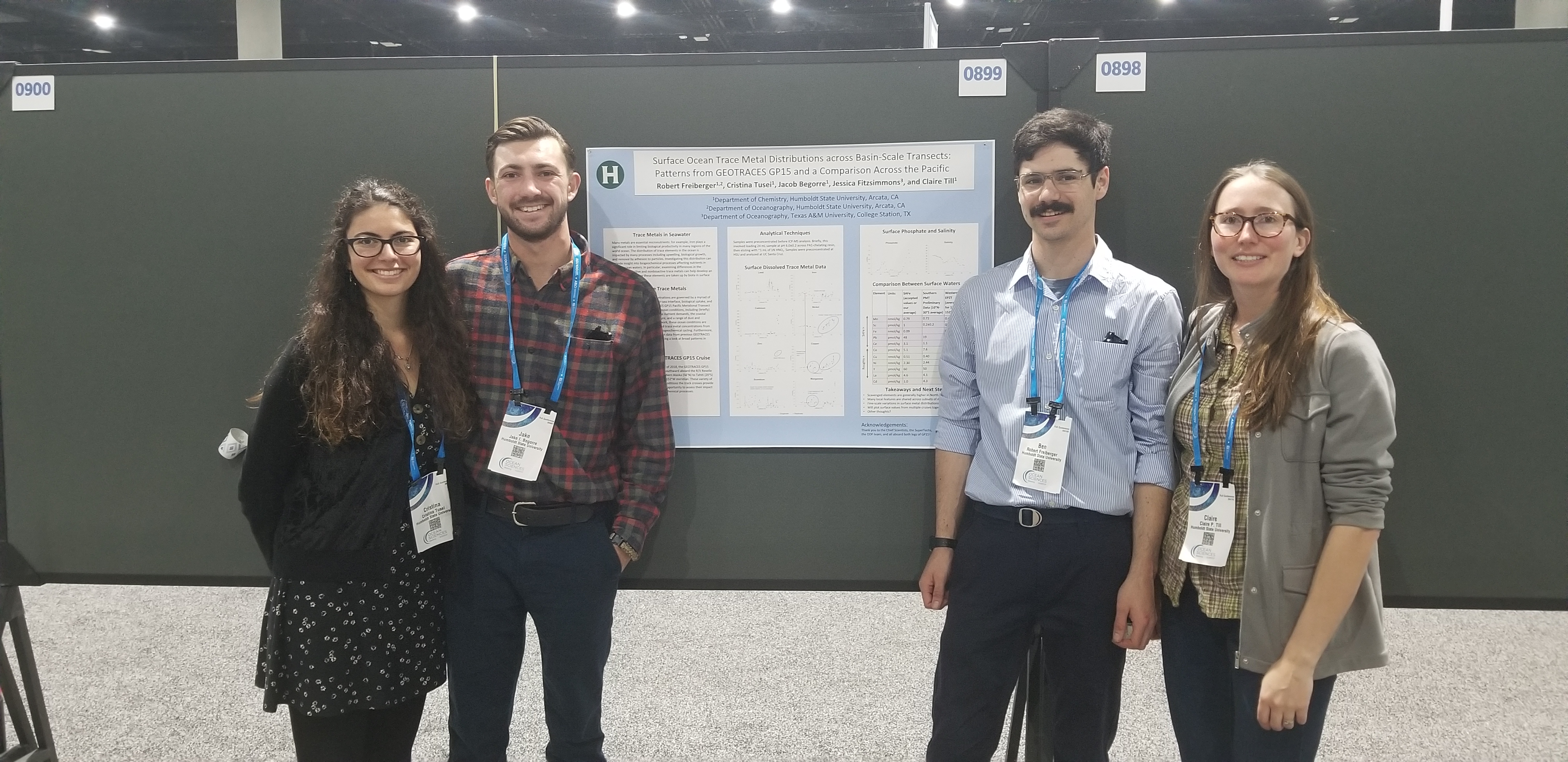
Ben Freiberger, a senior research student for Claire Till, has worked under her for a considerable amount of time.
“The money is now helping us to be able to get more accurate numbers and be able to determine more about scandium.”
Yasmin Zambrano
“We collect seawater samples, pre-concentrate them, and then measure them,” Freiberger said. “We just finished measuring all these samples from a cruise that went from Alaska to Tahiti. I started measuring those samples at the beginning of summer and I’m just getting finished with a couple hundred of those.”
He also went on a cruise last summer and is measuring samples he collected on the trip. His research may benefit from Till’s award.
“It’s good for the research group and it’s great that Claire can get money to keep doing this,” he said.
Yasmin Zambrano, a junior undergraduate research student for Till, was recently hired to work with her on her iron research.
“Right now, we’re just reading a lot of articles and trying to find how the treatments change within the different temperatures to see when it’s the best time to do the experiments and stuff,” Zambrano said.
Zambrano, too, is hopeful for the outlook of the chemistry program with the arrival of the award and subsequent funding.
“The money is now helping us to be able to get more accurate numbers and be able to determine more about scandium,” Zambrano said. “And again it’s going to be for at least three more years, so that’s three more years that she can do stuff, especially during the summer when students want to work in this field —and it looks good.”
Madison Lalica cracks open 400-million-year-old fossils
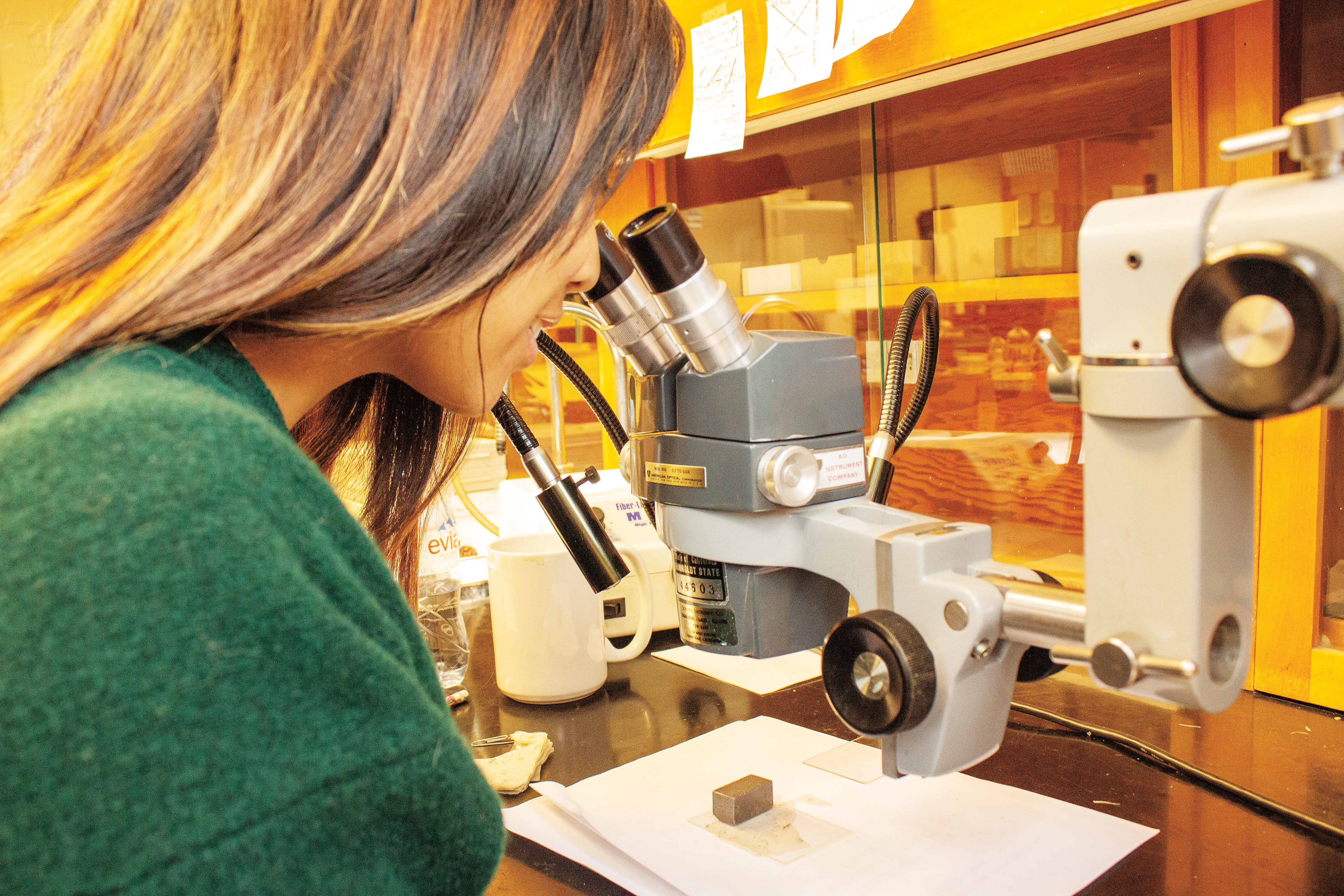
Madison Lalica is a junior botany major researching ancient fungi in fossilized plants over 400 million years old. She is filling in the blanks of the fungi fossil record with her unique research.
“Given their importance in current ecosystems, I support [that fungi] must have had such a fundamental role in ancient ecosystems,” Lalica said. “And that is what I’m trying to prove with fossil research.”
Lalica said she had the privilege to work with a huge box of rocks on loan from the Smithsonian Museum filled with fossilized plants. The fossils came to Humboldt State University by way of the Smithsonian, but they were collected in the 1960s by a paleo botanist named Francis Huber at a rock formation called Battery Point in Canada.
“We look at a bunch of plant fossils that are 400 million years old,” Lalica said. “They are preserved very beautifully and you can see all of their anatomical features.”
Graduate botanist Megan Nibbellink works alongside Lalica. She is focusing on the anatomy and relationships of the host plants, called zosterophylls. The Battery Point fossils are preserved in a unique geologic formation that serves to make really good fossils.
“It is a fluvial deposit,” Nibbellink said. “It was a bunch of pieces of fragments caught up in fine sediment at the end of a river. The reason why I like these fossils is because you can see the individual cells. And that’s also why Maddy is able to do what she does.”
When the host plants were buried by fine river sediments all those millennia ago, their form was preserved as the sediment solidified over millions of years. The fine particles, though, essentially printed the fossils in high resolution with so much detail that Lalica found what she was looking for: ancient fungi.
Lalica is scanning and investigating these plant fossils for any evidence of fungal material. Spores, fungal tendrils called hyphae and scars from fungal infection are some indicators she has found. Specifically, Lalica is working on identifying the fungi glomeromycota, a fungal group intimately symbiotic with plants today. She wants to learn how similar the ancient fungi are to modern fungi.
“Why do you want to know about extinct life, then, one might ask. And to be honest, it is a pretty philosophical pursuit I guess. In the most direct sense, learning about extinct lifeforms helps us understand how the living lifeforms that we see around today evolved.”
Alexandru “Mihai” Tomescu
“The plant and animal fossil record is really well understood,” Lalica said. “Like they have a pretty clear timeline of ‘This happened and then this happened,’ but for fungi it is so sparse and incomplete that they have no idea what goes before what.”
Lalica’s faculty advisor Alexandru “Mihai” Tomescu has made it his life’s work to figure out what goes before what. Tomescu explained that exploring the fossil record is important because fossils offer us the only way to look directly into life in the past.
Tomescu was Lalica’s botany professor before she had switched majors, but she said she fell in love with the world of paleobotany after his instruction. Showing interest in the subject, Lalica took the opportunity to begin her own research as soon as Tomescu offered her the chance.
“Why do you want to know about extinct life, then, one might ask,” Tomescu said. “And to be honest, it is a pretty philosophical pursuit I guess. In the most direct sense, learning about extinct lifeforms helps us understand how the living lifeforms that we see around today evolved.”
The 400 million year old specimens are interesting to Tomescu and his team of researchers because the plants themselves represent the first wave of vascular plants, or plants that move water through special tissues, that evolved on Earth. Vascular plants constitute nearly every modern land plant, so these ancestors are significant. Fungi, too, are significant to life on Earth and may have been part of its foundation.
“Fungi are probably, almost certainly I think, older than actual plants,” Tomescu said. “Fungi are a lot older. But because they’re just hyphae, since they’re flimsy, their fossil record is not that great.”
Tomescu has been recruiting undergraduate students to research these fossils in his lab. Tomescu explained that HSU hosts a botany program that attracts a lot of students, but also that the students are enthusiastic to participate in research. He said HSU has students who are interested in the grey areas. Lalica was one of those students.
Moving forward, Tomescu and Lalica are preparing to publish a paper about her year-long investigation into the fossils. This summer, she is presenting her research at the Botanical Society of America’s annual conference.
“It seems like in Humboldt opportunities are like, if you talk to the right person or if you become friends with the right person, it just kinda happens,” Lalica said, “And it just so happened that I fell into the world of paleobotany.”
Wikipedia shows collaboration is crucial for accuracy
We’ve all been there. You’re sitting in a class. Your professor wants you to write a paper on the different types of asexual reproduction of the Sanderia malayensis jellyfish or some other arcane drivel. Your first reaction is to hit up Wikipedia. Then comes the kicker. You can’t cite Wikipedia. You scowl and snarl under your breath.
Wikipedia deserves more credit than we give it. Turning a blind eye to Wikipedia as a reliable source is shortsighted and has implications beyond the realm of encyclopedias. Distrusting Wikipedia represents academia’s unwillingness to open the gates of collaborative truth-seeking.
Scientific papers, meanwhile, are far from perfect.
Contrary to what your professors may tell you, Wikipedia, as a source, is statistically just as accurate as published encyclopedias for most of its content. A 2005 study by the Nature research journal, “Internet encyclopaedias go head to head,” found errors in both encyclopedias, but among the entries tested, the difference in accuracy was small.
Wikipedia, in their signature self-aware style, has reported on their own reliability as well. Wikipedia does not guarantee validity, but it is an invaluable research resource.
Inaccurate information on Wikipedia is usually corrected quickly. Hyperlinked citations back up nearly every claim made on an entry. The Sanderia malayensis jellyfish’s page hosts six sources from international professionals, biologists and a handbook on poisonous jellies.
Scientific papers, meanwhile, are far from perfect. Soft sciences have suggested cures to unhappiness or boosts to confidence through simple behavioral change, but as other researchers try to replicate the experiments, their conclusions are significantly different. This indicates a serious error in the scientific method. If science isn’t replicable, science is null.
In the last few years, a plethora of papers have fallen under criticism after researchers have failed to reproduce their results—it’s been called the replication crisis. The crisis may have a few sources.
Mistakes happen on Wikipedia too and it is always essential to be critical of anything read.
First, it’s not hard to get published. The University of World News said in 2018 that too much scientific research is being published. It estimated nearly 30,000 scientific journals are in circulation, publishing approximately two million articles each year. They said the volume burdens the peer review system and makes it dysfunctional.
Second, the media likes to be the first to report on news, including science news. Journalists can be wrong and often are when it comes to reporting on science, especially when they’re grasping to be the first to report on new findings. These bad practices report inaccurate, unconfirmed, flawed science to their audience before the study can be replicated.
Mistakes happen on Wikipedia too and it is always essential to be critical of anything read. Search around, find supporting articles for any claim made and be aware that there may be flaws. But be able to recognize valid and sound knowledge.
Critical review by the editors of Wikipedia—who can be any person—is what makes Wikipedia so powerful and so accurate. It’s the world’s largest encyclopedia—about 50 times larger than Britannica—with over six million entries and over 200,000 contributors. Wikipedia should serve as a banner for collaboration—especially between diverse groups.
In “The wisdom of polarized crowds,” a 2019 study from Nature Human Behavior, researchers found politically-diverse teams created more accurate entries than teams with less political diversity.
Wikipedia comes in clutch, often. Using it as a source may be frowned upon by professors, but a short chat with most of them and they’ll say Wikipedia is an excellent place to start. The website is a tool, not a cheat code. It would be ignorant to ignore it, but if it’s used appropriately, maybe, just maybe, we could learn something about jellyfish.
Sex is a heck of a thing in the animal kingdom. Species of birds, insects, mammals and fish have developed a whole bunch of strategies to get laid. From mating dances to beautiful plumage to carefully engineered bachelor pads, the birds have come up with all sorts ways to strut their stuff.
Wildlife junior Hannah LeWinter commented on how much effort birds put into reproducing. She remarked on the McGregor bowerbird’s tower—a three-foot-tall structure made of carefully placed twigs, attesting to the bird’s dedication.
“When we think of animals, we assume they do the basic things like mate and get food and make shelter, but they really do have complex [behaviors] too,” LeWinter said. “They make these intricate structures to impress females to say that they are the best suitors but those structures serve no purpose besides attracting a mate.”
“We think of animalistic sex of doing it only because you need to reproduce, but there are these animals that create these gestures like a pebble or a structure or a dance.”
Hannah LeWinter
Commitment to the craft is just the first step of courtship. The picky female bowerbird inspects her suitor’s structure, carefully judging sturdiness of the construction before joining the male on the forest floor. Then, the show really starts.
The male bowerbird possesses the ability to imitate sounds and begins a showcase of what he’s learned. His voice can emulate everything from birds and animals in the forest to the sounds of human civilization.
Once she’s satisfied with his performance, the male begins his dance. A chaotic shuffle from one side of his tower to the other, darting towards the female while flashing a bright orange haircut at her. Once he’s done with his groove, she submits and they do their thing.
“We like to think we’re the only people or the only species who do that,” LeWinter said. “We think of animalistic sex of doing it only because you need to reproduce, but there are these animals that create these gestures like a pebble or a structure or a dance.”
The McGregor bowerbird works every year to maintain his tower, but there is no expectation in the species to mate with the same female every year. Jeff Black, a wildlife professor at HSU who studies birds, published a collaborative book with 20 other ornithologists titled “Partnerships in Birds: A Study in Monogamy.”
“We asked the question, ‘How special are bird partnerships or pair bond?’” Black said. “We asked, ‘How long do mates stay together?’ ‘Are they really faithful?’ ‘Do the faithful ones fare better than the ones that alternate and are less monogamous?’”
The answer: it depends. Black and his fellow ornithologists quantified bird fidelity on a sliding scale ranging to very faithful to not at all faithful. They also investigated the behaviors between social pairs—pairs who spend their time together raising the young, foraging and nesting together—and genetic, or mating pairs.
“Birds lay their eggs in a basket,” Black said. “When you look at all the 10,000 different types of birds, some birds even though they’re monogamous, when you look at their babies, the genes come from someone else.”
“When you look at all the different studies, you can plot out how faithful they are. Swans are 100% faithful, the jays would be about in the middle and other species are just having sex everywhere.”
Jeff Black
Faithfulness or lack there of may have a couple of purposes, although the hypotheses are not totally fleshed out. One hypothesis is that, if a female searches for a new male mate, she may be looking for a more fit male than her social partner, and engage in what Black called extra-pair copulation.
HSU River Ecologist Alison O’Dowd explained fitness is a measure of the ability for an individual to pass on their genes. Similar to natural selection, sexual selection is when a female looks for certain characteristics in their male partner, ranging from vibrant feathers to well constructed towers to perfectly executed dances.
Black endorsed fidelity in birds. He said in geese and swans for example, more faithful pairs are more likely to successfully reproduce. Their offspring are also more fit for when they’re looking for a mate of their own. There may be a case for faith yet.
“When you look at all the different studies, you can plot out how faithful they are,” Black said. “Swans are 100% faithful, the jays would be about in the middle and other species are just having sex everywhere.”
This website uses cookies to improve your experience. We'll assume you're ok with this, but you can opt-out if you wish. Cookie settingsACCEPT
Privacy & Cookies Policy
Privacy Overview
This website uses cookies to improve your experience while you navigate through the website. Out of these cookies, the cookies that are categorized as necessary are stored on your browser as they are essential for the working of basic functionalities of the website. We also use third-party cookies that help us analyze and understand how you use this website. These cookies will be stored in your browser only with your consent. You also have the option to opt-out of these cookies. But opting out of some of these cookies may have an effect on your browsing experience.
Necessary cookies are absolutely essential for the website to function properly. This category only includes cookies that ensures basic functionalities and security features of the website. These cookies do not store any personal information.
Any cookies that may not be particularly necessary for the website to function and is used specifically to collect user personal data via analytics, ads, other embedded contents are termed as non-necessary cookies. It is mandatory to procure user consent prior to running these cookies on your website.