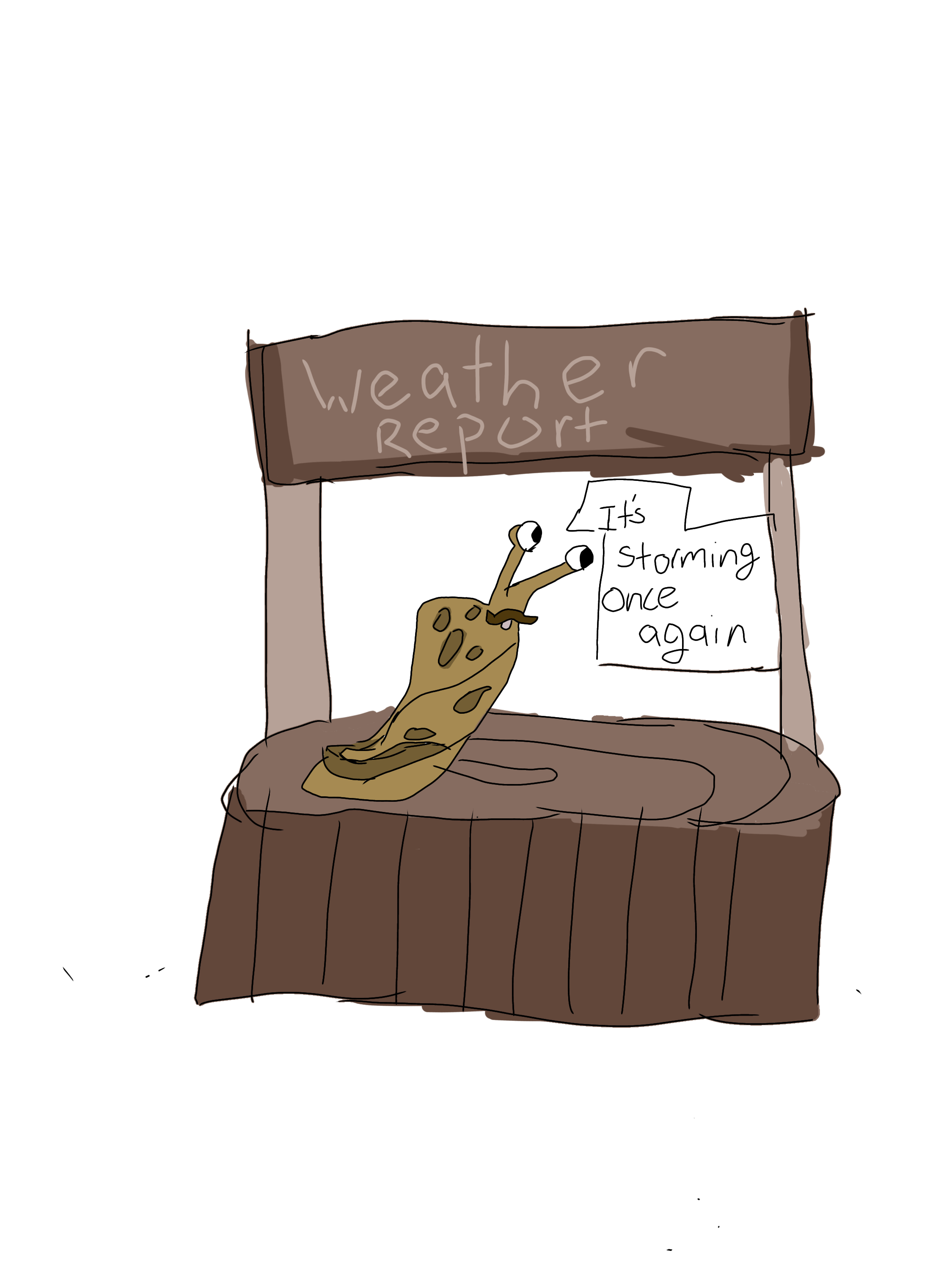
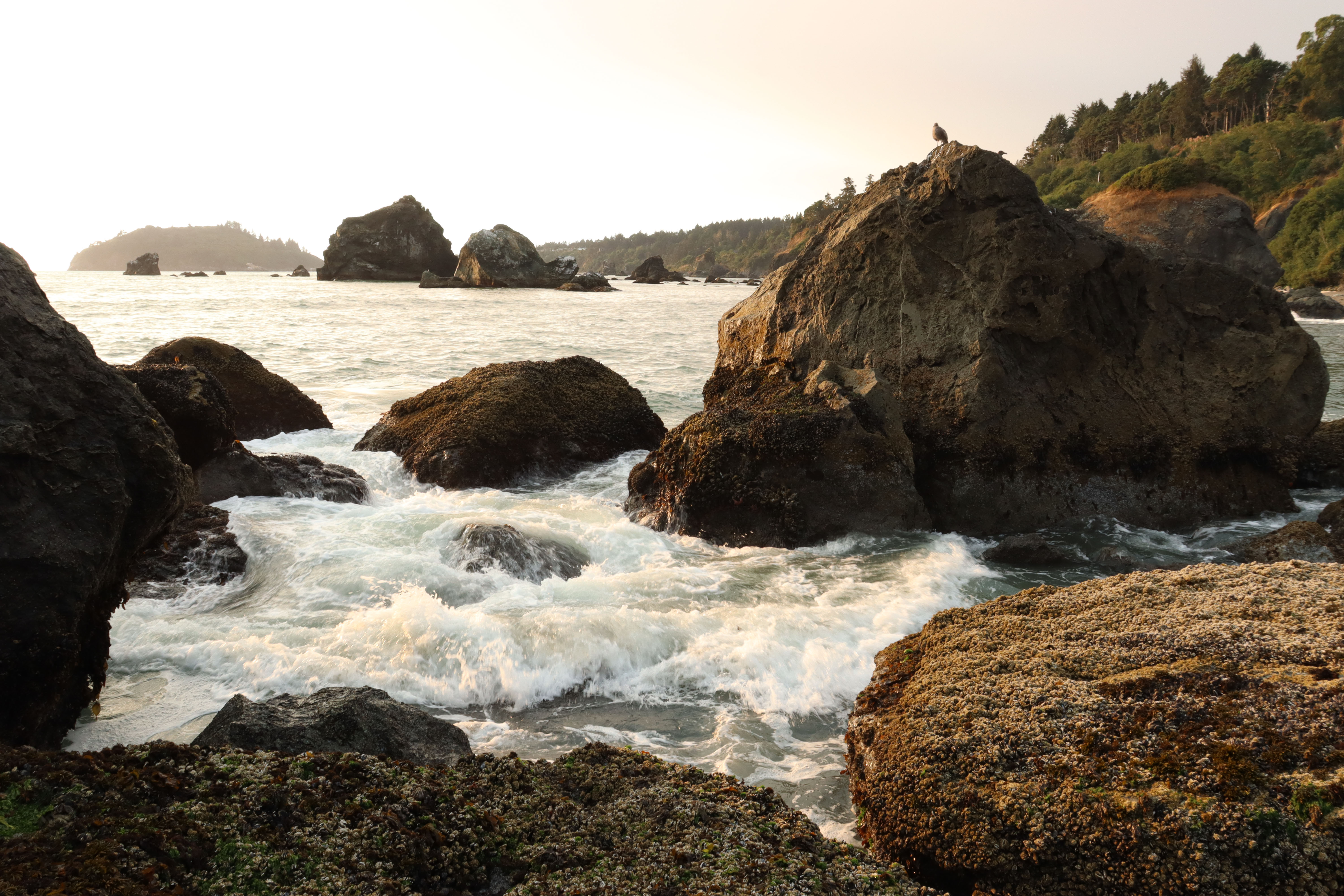
El Niño may mean little boy, but it’s anything but a tiny weather occurrence. El Niño occurs when the temperature of the pacific ocean becomes warmer than average, adding more precipitation into the air creating larger storms. El Niño can happen year round but it’s more noticeable in the later seasons.
While Humboldt County is known for rain, these storms are quite strong and create safety concerns, especially since we live so close to the coast. Safety is one of the most important aspects people should consider before and when the storms do hit. Being prepared can help people know what to do during dangerous weather and also prevent people from putting themselves in unsafe situations.
Humboldt Weather Station Lead Meteorologist Matthew Kidwel said El Niño’s happens when, “A specific area in the equatorial Pacific warms up and then changes the weather patterns out in the central pacific, which also translates to a changing weather pattern in Northern America, ” Kidwel said. “Instead of the normal, more typical storm track that goes through Northern California or the Pacific Northwest, it will push the storm track farther south, which can bring warmer storms.”
Sasha Tcholakov, a senior in psychology, feels highly unprepared for what to do if the storms were to hit.
“Honestly I have no idea what to do during a major storm, I haven’t gotten much information, from what I’ve seen about resources or local emergency procedures I am not sure what would make me feel more prepared. It’s not like they can gather everyone to do an announcement but at least an email would be nice”.
Klarissa Uribe, a marine biology senior, suggests ways in which Cal Poly Humboldt can improve on giving information to students.
Uribe Suggests, “Possibly a what to do/bug out bag or a storm skit guide. This would help not only myself but students who don’t know exactly what to take in an emergency. Evacuation sites could be explained more on where to go in case of a tsunami or major floods.”
Kidwell also stated some safety tips as El Niño approaches. He advised students to pay attention to the forecast and avoid walking under trees during the windiest parts of the day. He also warns about driving through flood zone areas such as the Arcata Bottoms and near King Salmon.
“If the water is coming from the ocean during flooding, it can be really bad to drive your car through it,” Kidwell said. “You never want to drive through flooded roads unless you know how deep the water is, and usually you don’t.”
Sadie is a reporter who has an interest in covering and taking photos for sports and science. She can be reached at sls331@humboldt.edu.
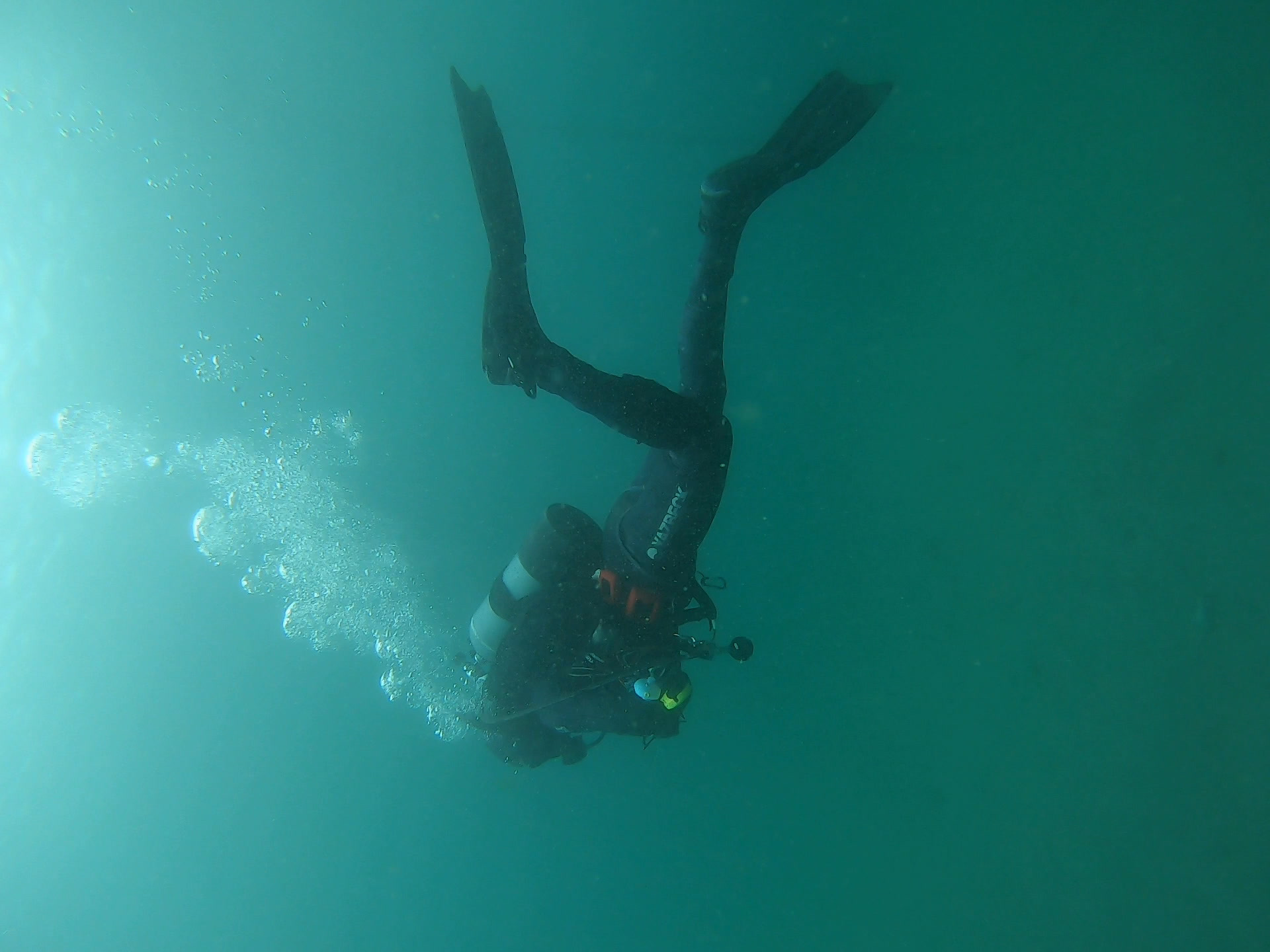
If you look closely, you may see bubbles underneath the dark, murky water in the Jetty. Chances are, they belong to members of the small but mighty free-diving and spearfishing community off our North Coast.
Jiovanni Flores, senior wildlife major with an emphasis in fisheries, ecology and scientific diving, was inspired by the scientific diving program. Humboldt equips students with every skill needed to go from never dipping a toe in the ocean to identifying species on a transect.
Flores’ understanding of the ocean and its ecosystem has propelled him toward becoming a California Department of Fish and Wildlife game warden.
“[Spearfishing is] very ethical; we’re not fishing and actively putting microfilament in the ocean, you’re physically down there getting a fish,” Flores said. “We do have a lot of rivers, estuaries, the big Humboldt Bay, a lot of outflowing from freshwater, [which] ruins the visibility instantly, especially with the currents. It’s pretty unpredictable.”
For aspiring freedivers, holding their breath is an essential skill and a muscle that must be exercised to dive deeper and stay underwater longer. Before turning blue in the face, divers need to know how to read the forecast and determine when to go out, so their chances of seeing anything are good when they’re suited up and ready.
James Cooper, a junior recreational administration major and scientific diver has turned his general fascination with spearfishing into a lifestyle and a source of sustenance.
“I didn’t think about the lifestyle when I started; it was kind of just like a side hobby,” Cooper said. “I’ll go out camping and bring my gun and, hopefully, I eat dinner that night. You got to be able to push yourself to get meals.”
In addition to his scientific diver certification, Cooper earned his dive master certification this spring and is pursuing his instructor certification this summer on Catalina Island, where master divers and scientific divers receive their official certifications.
“They talk about in the dive program all the time, you learn how to dive here, you could dive anywhere,” Cooper said. “You’re not going to find visibility this bad constantly anywhere else.”
Having an emergency action plan could be the difference between life and death. Identifying an emergency contact and a baseline protocol in case something goes wrong can eliminate unnecessary injuries and unsafe practices in an unforgiving environment like the Lost Coast.
“Don’t dive by yourself,” Flores said. “Know the area, know the people that are in that area. For instance, in Trinidad, get to know like the boaters, the people who fish.”
When spring rolls around and the swell is calm, the freedivers emerge. JUMP There is a steep barrier to entry into freediving and spearfishing for a reason. Divers carry a spear gun or pole spear while managing buddy awareness, air consumption and patient pursuit of their prey. Conditions on the North Coast are inconsistent, and even veteran divers find it difficult to predict Trinidad visibility.
“You also get extremely close with people because of how uncomfortable it is to get into it,” Cooper said. “Crawling into a wetsuit that’s freezing cold, it’s super early and your buddies are right next to you going through the same bullshit — but you guys are both doing it together, just embracing the suck of it, for the love of the game.”
Ari is a senior journalism major and co-EIC this semester, with a deep passion for the environment and conservation. As a scientific diver, she plans to combine journalism with research and conservation work. For inquiries, contact ajw167@humboldt.edu.
Whether you’re walking through the Arcata forest with its lush trees and greenery, or surfing in the bay, you may hear or notice a feathered friend moving by you. Birds come in many shapes, colors and sizes, and here in Humboldt County, we get a lot more species than your typical city environment.
For many birders, the interest begins long before they pick up a field guide or scope.
“I’ve always been proud to identify whales and red-tailed hawks when I was younger. There was one time a red-tailed hawk flew over and I’m like ‘that’s a red-tail hawk because it’s got a red tail.’ I was so excited about it,” said Cedrik Von Briel, a senior wildlife and communications major and president of the birding club. “I wasn’t really a birder until my brother started getting into it, and eventually dragged me onto something called a Christmas bird count. I was just fascinated by the amount of cool named birds that were out there.”
Humboldt county offers an amazing environment for birding, one of the many places close by to campus being the Arcata Marsh or the South Jetty. For beginners, the advice is simple: start where you are.
“There’s no right way to do it. Just go and do it, find your favorite spot, there’s absolutely no rush,” Von Briel said.
Wildlife photographer Kristinza Scheef resonated with the idea that aspiring birders need patience and awareness when entering natural spaces.
“You have to remember: we are playing in their home, in their world, so we need to be ethical and nice to them,” Scheef said.
Scheef also notes that expectations can sometimes get in the way for beginners.
“A lot of times, wildlife will reward you with a beautiful photo — but, you have to be patient,” Scheef said.
As new birders head out into the Humboldt forests, marshes and coastlines, or decide to go to the Godwit Days birding event Friday, Saturday and Sunday, learning to slow down, take your time to breathe and observe is enough to make a difference.
“The more you see and fall in love with nature, the more protective you’re going to get of it,” Scheef said.
Sadie is a reporter who has an interest in covering and taking photos for sports and science. She can be reached at sls331@humboldt.edu.
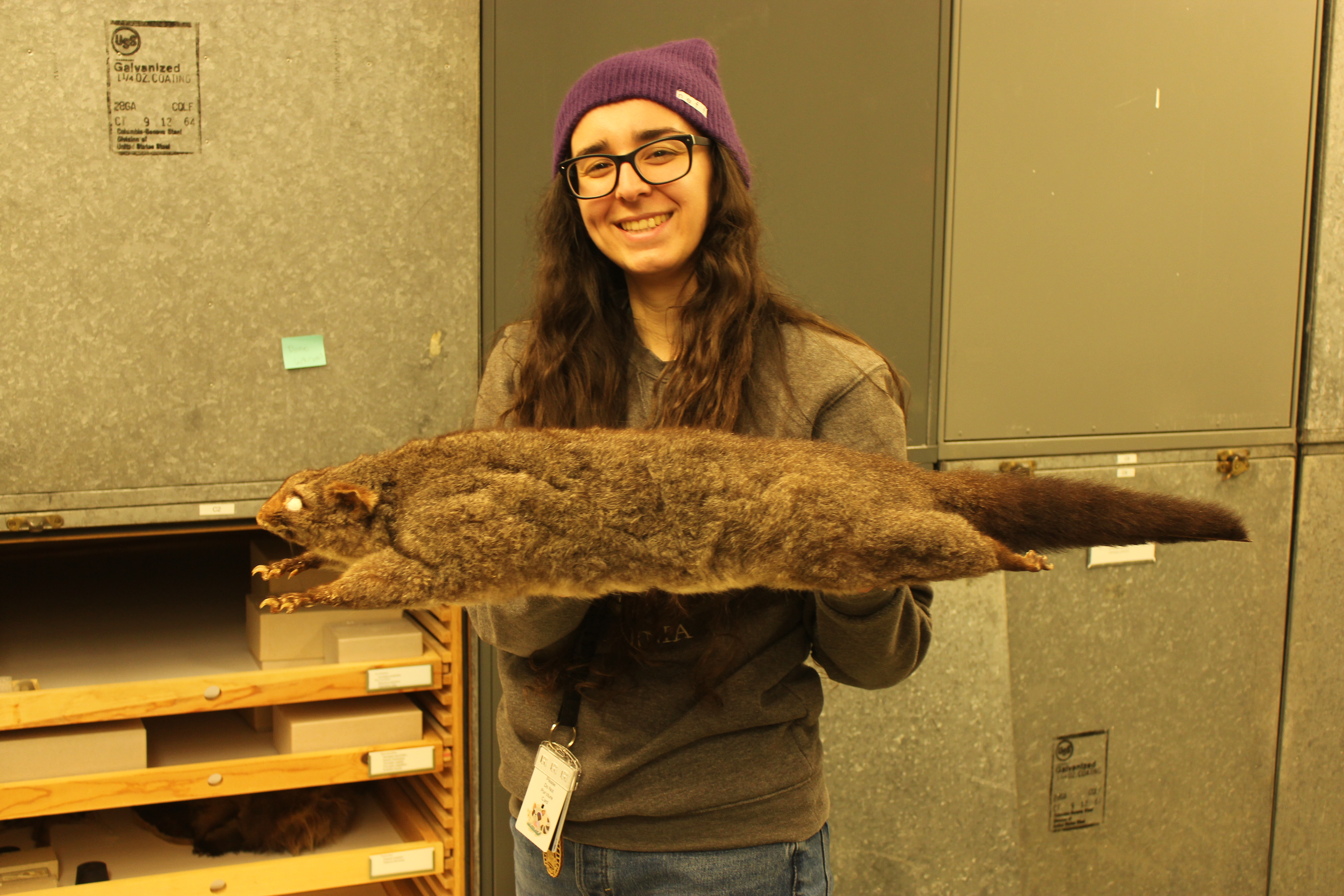
While the sight of an animal carcass might make some people queasy, for Wildlife Museum Curator Anna E. Goldman, it is an area of fascination.
“I’ve always been interested in dead things,” Goldman said as she ripped the skin from the body of a recently thawed squirrel for a taxidermy demonstration. “In 3rd grade, for show and tell, I brought in a severed deer leg that still had fur on it. I was really excited, and then the principal called my mom… they thought I was a serial killer.”
This love of death led Goldman to an unconventional career as a taxidermist and museum curator for the Cal Poly Humboldt wildlife department.
Goldman explained that since she’s the only one who maintains it, the museum is hers to manage as well as take care of.
“All of the collections, duties, the databasing, the cataloging, setting up and taking down for classes… everything that happens here is on me,” Goldman said.
Goldman’s day-to-day work weeks can vary greatly. From simply cataloging specimens for the museum to racing off to the shoreline when a whale washes up, things are constantly in flux for Goldman.
When it comes to directly working as a taxidermist, Goldman described a process called museum prep. A procedure in which the skin of an animal is dried out and preserved emphasizing its anatomical structure. It then is placed inside drawers and cabinets at the museum, accessible for students and researchers to take measurements.
“I’m most classically trained in how to prepare specimens for the museum collection, which takes up the least amount of space possible, but also allows you to see all of the notable features of this animal,” Goldman said.
The museum is in the fisheries and wildlife building, only accessible with supervision. Those with access will find drawers and cabinets filled with furs, skins and stuffed critters like chipmunks, mice and beavers lying peacefully as if tucked into bed.
Goldman admitted that taxidermy and museology work is a difficult career field to break into. If it weren’t for her stubborn determination to make taxidermy a career, she would not be where she is today.
Goldman’s journey began in 2006 after finishing her undergraduate degree in biology, with a focus in entomology, at the College of the Atlantic in Bar Harbor, Maine. She moved back to her birthplace of Chicago, Ill., to work at the Field Museum of Natural History.
There, she spent her early career working primarily with insects. However, when museum positions temporarily dried up due to the lack of immediate long-term work position, Goldman had to take up various retail jobs to make ends meet.
“[I was] still volunteering for the insect division, and then the mammals preparator job at the Field Museum opened up,” Goldman said. “I got so lucky to get [that] job, and it kind of just snowballed.”
Although working with mammals began as a pivot of Goldman’s original love of insects, she has enjoyed this new direction.
In 2015, Goldman desired to go after her PhD in biological science. Unfortunately, she was first met with a massive roadblock. To apply for grad school, she would need to take a standardized test. Goldman said she was never a good tester.
“I was told by the dean of one of these universities that I applied to that, ‘there are museum people, and there’s academics. You’re just a museum person,’” Goldman said. “Give up, basically.”
Every U.S. school that Goldman applied to denied her based solely on her test scores, despite the experience she gained during her time at the Field Museum.
Fortunately, there was a loophole that allowed Goldman to pursue her dreams.
“I figured out that international programs don’t do standardized tests to get in, and a lot of your experience actually is very beneficial,” Goldman said. “So, I was able to get into the University of Hong Kong.”
After Goldman graduated from the University of Hong Kong in 2021, she looked for work back in the States and ended up in Humboldt County.
Now retired, the previous museum curator, Tamar Danufsky, said Humboldt’s collection, though small, boasts many regional specimens.
“Nobody from [University of California], Berkeley is driving up here to pick [roadkill] up and take them back to their collection,” Danufsky said. “It’s an impressive collection for this little university… it’s not what you would expect.”
Goldman explained that the 16,000 specimens housed in the wildlife building provide an excellent resource for study to students and researchers alike for years and years to come.
Junior wildlife major Josh Gellens said the museum is an incredible resource for wildlife majors.
“The specimens curated from the wildlife museum — as well as the zoology department’s vertebrate museum — play such a huge role throughout your courses and interests when it comes to studying anatomy, adaptations and diversity of all the different taxa,” Gellens said. “It’s truly an integral part of being able to get that unique hands-on learning.”
In addition to the museum being a resource for students, it acts as an archive to record history.
“We kind of view natural history museum collections as these libraries of empty books that have yet to be written. There are numerous questions that can be asked and can be discovered just by looking at specimens.” Goldman said.
Goldman said that her position here at Humboldt was a rare blessing; both taxidermy and museum jobs like hers are hard to come by and hardly ever make a lot of money. Despite these factors, Goldman never gave up on her love of dead things and turned her passion into a career.
“I always find it really beautiful that we’re able to give life and preserve this dead animal for so long,” Goldman said. “And that there’s actually scientific value to this otherwise decomposing mess.”
Julia is a journalism major and the co-Editor in Chief of the paper. She loves film and is a regular on Letterboxd. She also enjoys going on walks in the forest and taking pictures to relax. If you have a movie you’d like her to review, please email her atjk328@humboldt.edu.
Due to the donation of 2.5 million dollars in funding from the California Department of Fish and Wildlife’s (CDFW) Cannabis Program, the United States Geological Survey California Cooperative Fish and Wildlife Research Unit (USGS) partnered with Cal Poly Humboldt professors have been able to add 30 new biodiversity monitoring sites across the county — two of which are run by Cal Poly Humboldt. Wildlife Professor and Project Lead Micaela Szykman Gunther works with co-Project Lead and Adjunct Professor Nicholas Son to facilitate learning experiences for wildlife students as they view camera footage from the sites located around Humboldt County, which allows for a better survey of what wildlife lives around the area.
“Each of our sites is associated with a California State University partner campus, and we are very excited to have one of our Humboldt sites located at the L.W. Schatz Demonstration tree farm,” Szykman Gunther said. “We see this as a great opportunity to track biodiversity data in our unique forest ecosystem while also promoting educational and training opportunities for students to learn a variety of data collection techniques, practice analysis of the resulting data, and take advantage of research opportunities.
The two partner campuses run by Cal Poly Humboldt are the Schatz Experimental Tree Farm and the Lamphere Dunes, which is part of the Sentinel Sites for Nature Project. Student involvement is currently through graduate wildlife classes that students can take at the school and are active this semester.
Sadie is a reporter who has an interest in covering and taking photos for sports and science. She can be reached at sls331@humboldt.edu.
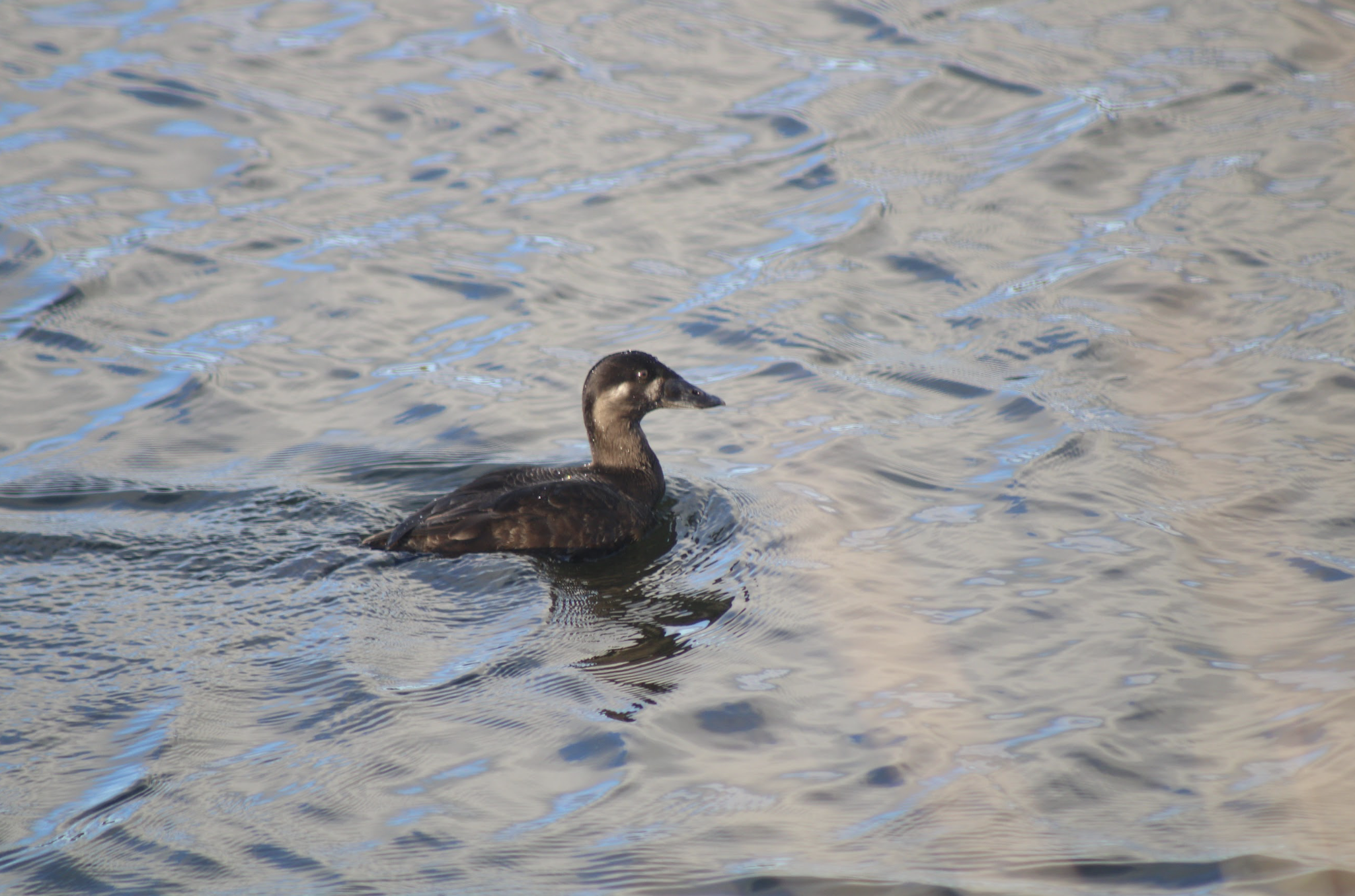
Along the wind-lashed shoreline of Humboldt County, where gray Pacific swells roll toward rocky headlands and fog drapes the coastline, flocks of dark sea ducks rise and fall with the rhythm of the ocean. Among them, the surf scoter is unmistakable. The male, with its bold white head patches and brightly patterned bill standing out against its otherwise black plumage. Moving bravely through the salty breaking waves, this dark-as-night sea duck is one of the many signs of winter’s presence along Northern California’s coast.
In Humboldt County, surf scoters are most commonly found during the fall, winter and early spring. They gather in large numbers along the open coast and in protected waters such as Humboldt Bay and the Arcata Marsh. Preferred habitats include shallow marine environments, such as bays, estuaries and nearshore surf zones, where they can dive for food. Their diet consists mainly of mollusks like mussels and clams, along with crustaceans. These birds are strong divers, often plunging several meters below the surface — even in rough surf, to reach prey on the ocean floor.
Surf scoters are migratory birds; they do not breed in Humboldt County, but instead travel long distances to nest. During late spring and summer, they migrate north to freshwater lakes and wetlands in Alaska and Northern Canada, particularly in boreal forest regions. There, they build nests on the ground near water. As temperatures drop in the fall, they migrate south again to coastal wintering areas like those in Humboldt County. This seasonal migration is a well-documented and essential part of their life cycle.
Physically, the surf scoter is a medium-sized sea duck, measuring about 17 to 21 inches in length, with a wingspan of approximately 29 to 30 inches. In size, it is comparable to or slightly larger than a mallard, though more heavily built. Its compact wings are adapted for fast, direct flight during migration, while its dense body and strong legs make it highly efficient underwater.
In terms of lifespan, surf scoters can live over a decade in the wild. Banding records indicate that individuals may reach at least 12 years of age, though numbers are likely lower due to natural mortality factors such as predation, pollution and climate change.
Unlike some bird species, there are no widely recognized or documented local legends or traditional myths in Humboldt County specifically centered on the surf scoter. However, coastal residents and birdwatchers often view their seasonal arrival as a sign of winter. Their presence in large offshore flocks is a familiar and reliable feature of the region’s colder months and contributes to the ecological character of the coastline, which means they will be moving soon for their migration.
The surf scoter is a highly adapted marine bird whose migratory patterns connect Humboldt County to distant northern ecosystems. Its seasonal presence highlights the importance of healthy coastal habitats and offers a striking example of how wildlife depends on multiple regions across a vast geographic range — and even the Humboldt cold.
Sadie is a junior communications major, journalism minor at Cal Poly Humboldt who has an interest in covering and taking photos for sports and wildlife journalism, and a slight interest in breaking news. She can be reached at sls331@humboldt.edu.
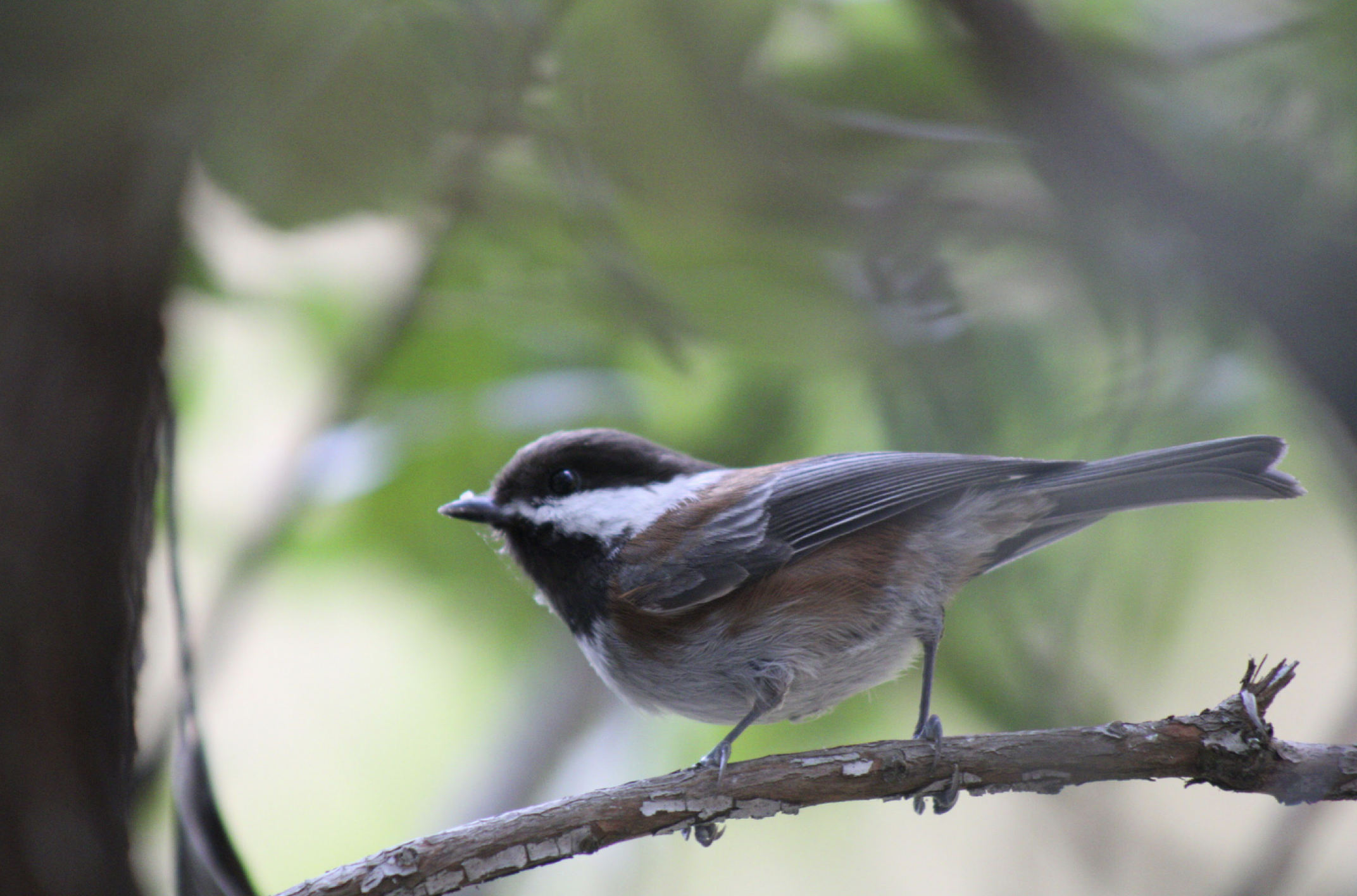
The chestnut backed chickadee is a small songbird distinguished by its striking coloration and energetic behavior. According to the Audubon field guide, it measures about 12.5 centimeters in length, with a large tail that seems bigger than its body. Unlike other chickadee species, it displays a rich chestnut-brown back and flanks that contrasts with its black head feathers and bib as well as its white feathered cheeks. It is considered one of the most colorful members of the chickadee family and easy to identify.
Native to the Pacific Northwest, it can be found in Alaska, British Columbia, Oregon, Washington and parts of Northern California. It usually lives in coniferous forests, but has adapted to living in suburban neighborhoods, parks and college campuses. In fact, it can be seen on the grounds of Cal Poly Humboldt where the larger and older trees, as well as bushes provide food and shelter. This is a very common bird and there are no significant conservation efforts for this species at this time.
The chestnut backed chickadee is a cavity nester, often excavating their own holes for nests in decaying wood or using abandoned woodpecker cavities. It lines its nest with softer materials such as animal fur, feathers, moss and other items found in the forests. This helps to create well insulated environments for the eggs and nestlings. During this season the chickadee forms strong bonds with its partner and actively protects and defends their nesting territories. Its diet consists of insects, caterpillars and spiders. They also eat seeds and have been seen storing food in crevices for later. These birds tend to be curious and have been seen flying with other foraging flocks. Just head down to the marketplace and you are bound to hear its small chirps along with a few crows judging caws.
Sadie is a junior communications major, journalism minor at Cal Poly Humboldt who has an interest in covering and taking photos for sports and wildlife journalism, and a slight interest in breaking news. She can be reached at sls331@humboldt.edu.
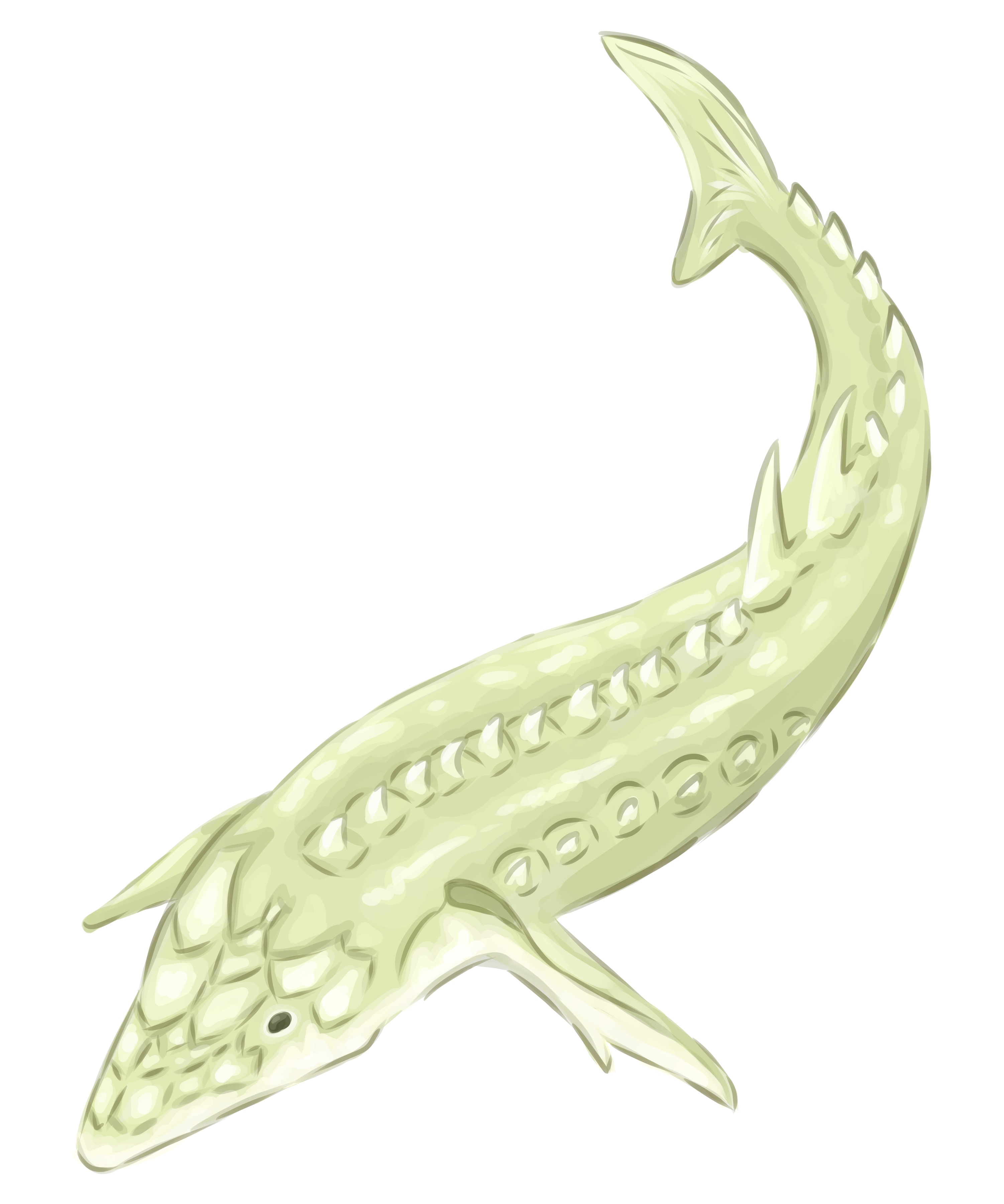
326 million years ago, Arkansas was underwater and teeming with an unusual, gill-covered shark, a shark that is now called Cosmoselachus mehlingi after a years-long project led by Dr. Allison Bronson, a Cal Poly Humboldt professor. The unique conditions in the Fayetteville Shale preserved the precious cartilage that was critical in digitally reconstructing an accurate image of the ancient shark, which was named to honor Carl Mehling, a senior museum specialist for the American Museum of Natural History (AMNH). The shark’s ancient origins and recent identification have been made possible by CT scans, digital reconstruction, and years of careful work carried out by Bronson alongside Alan Pradel, John Denton, and John Maisey. The findings were recently published by the journal Geodiversitas.
Cosmoselachus mehlingi is distinctly important, according to Bronson, due to the fact that its ancestors survived a catastrophic mass extinction that killed 95% of the fish population in the Devonian period.
“In the wake of these extinctions, we often have what we call an adaptive radiation where the groups that make it through can then diversify into all these niches that were left open,” Bronson said.
The acidic and anoxic environment of Arkansas’ Fayetteville Shale preserved the shark’s delicate cartilage for millions of years until the 1970’s, when Royal and Gene Mapes, the husband and wife duo, discovered the fossil. The Mapes would eventually donate the specimen to the AMNH.
“Cartilage is really rare in the fossil record, because it’s soft and squishy, and usually microbes break it down before it can fossilize,” Bronson said.
The rare preservation of the shark’s cartilage allowed Bronson and her collaborators to use CT scanning to digitally reconstruct the ancient shark’s biological structure and identify one of its most unique attributes, gill covers.
“It’s made of little rays of cartilage that grow off of its gill arches,” Bronson said. “In our shark, unlike anything that’s been described in any cartilaginous fish, they’re all fused together.”
The gill covers may have functioned to help close the gill openings, according to Bronson. Though gill covers are found today in ratfish, Bronson and her colleagues’ statistical testing showed that it is unlikely that ratfish are descendents of the group of fishes that includes Cosmoselachus mehlingi. Additionally, the digital reconstruction revealed that the ancient shark had widely spaced teeth with tooth-like scales in between.
Bronson and her colleagues’ work to identify Cosmoselachus mehlingi gives scientists a valuable glimpse into our ancient world and another datapoint that aids in our understanding of evolution over time.
“Once you have an understanding of the long branching pattern of evolution, you can reconstruct the way that traits evolved over time with a group like cartilaginous fishes that’s been successful for more than 400 million years, and made it through multiple mass extinction events to now be the dominant predators of the ocean,” Bronson said. “A lot of evolution is just like, if it ain’t broke, don’t fix it.”
Cal Poly Humboldt fisheries professor is working with local tribes to create better fishing stewardship practices.
By Gabriel Zucker
Jose Marin Jarrin is a new assistant professor in the department of fisheries biology at Cal Poly Humboldt. He is leading a new form of fishery science in Northern California, using empathy and understanding when talking with impoverished communities. He is originally from South America and he never forgets where he came from.
“Being Latinx, I’m also from a historically excluded community,” Marin Jarrin said. “So I saw a lot of similarities.”
Marin Jarrin was recently awarded a little over $1.1 million from the California Climate Action Seed Grant to research climate change resilience by looking at tribal fishery practices. His goal is to reinvigorate Northern California fishery research, while also building a center that will last for years.
He is working with the California Department of Fish and Wildlife and multiple local tribes, such as The Blue Lake Rancheria, Resighini Rancheria, Tolowa Dee-Ni’ Nation, and other smaller indigenous communities. Each native group was able to pick a fish that has historical and cultural value to their tribe. The fish that are being mainly researched are green sturgeon and smelt. Five grad students are working with Marin Jarrin, acting as liaisons for the different Rancherias. On top of doing research all over Northern California, the tribes and researchers have a monthly meeting where they go over the progress and find where they can improve.
Creating a trusting relationship with the Indigenous communities is important. To solidify this relationship, Marin Jarrin signed a data sharing agreement with all of the tribes, giving them final say on what information is published. Historically this has not been the case, and some even admitted they had never been asked to do this before.
“The researchers would go in, ask the tribes to participate, and then the tribes don’t get a say on how the data is used,” Marin Jarrin said. “And so, one of the things we wanted to ensure is that the tribes had complete ownership of that data. For the most part, they’re not too concerned about fishery species, they’re more interested in preserving their cultural data and history. What they don’t want is for people to just take information from them and disseminate in ways that are sometimes not correct or hurtful to the tribe.”
Laurie Richmond is an environmental science and management professor at Cal Poly Humboldt. She has worked with the tribes for years, working a quarter time for California Sea Grant as an extension specialist. Where she connects local communities with coastal science knowledge. Her role for the study is in a partner advisory role, where she offers advice and direction when grad students need a new perspective. She has been working with Marin Jarrin since the beginning of the grant and is elated at the way he is going about his research.
“I think it’s a really new way to be a scientist that I think [Marin Jarrin] is pursuing,” Richmond said. “It’s really exciting and it requires a lot of skills that scientists don’t always have, like building partnerships and facilitating and thinking about ethics. He’s done a great job of trying to learn those things, and he has some of those because of his unique background that he brings as a scientist.”
To record the biodiversity of the fish in different areas, grad students are using environmental DNA metabarcoding techniques, giving them data about all of the animals that have come into that area.
“If a fish swims by, it’ll leave its DNA in the water column,” Marin Jarrin said. “If you were to collect a sample and filter out the DNA from that, you can identify what species of fish was there. The idea is that if you then go around taking samples throughout the whole coast, you can identify all the fish – actually, not just fish. From bacteria all the way to mammals.”
Before conducting this research, they had to work with the California Fish and Wildlife department. The advisor on the grant is Kenneth Oda, a former Humboldt State University student, who is with the Marine Region and works on the State Managed Finfish Research and Management Project. Oda gives advice and helps review the proposals before they are submitted.
“I was just asked to be an advisor… we approve protocols, if they’re gonna be taking fish, we need to have that spelled out, and the methodologies as well,” Oda said. “We review their permit application and then approve it. I also help them with protocols regarding surf perch and red tail.”
Olivia Boeberitz, one of the graduate students on the team, just moved to Humboldt. She chose Humboldt partly because of this research project, and the opportunity to work closely with Indigenous tribes. She has been studying fisheries since 2020, focusing on fish that inhabit both freshwater and green water. This made the transition from inland to coastal easier.
“I’m working specifically with Blue Lake Rancheria on green sturgeon… I’m designing a project to get some baseline information on how green sturgeon are using Humboldt Bay,” she said. “There hasn’t been much of any research, at all, of green sturgeons in this area.”
Boeberitz is in the methods phase of her research project. She is running through a couple ideas for data collection. She wants to use acoustic receivers, alerting if any previously tagged fish are using these areas. She is also planning to use satellite tags on fish off the coast. None of the actual research will be conducted until the summer.
Right now, she is most excited about working and meeting with the tribes. She has worked with tribes before, but never one on one.
“I see and talk to them very frequently,” Boeberitz said. “As soon as I produce any drafts for my proposal, as soon as I come up with a schedule, they’re going to be incorporated every step of the way. Their feedback is both incredible and extremely valuable. I’m working on this project for them, they’re the center of this project. They’re guiding me – giving the guidance they need to start putting together what our goals are.”
Marin Jarrin is changing how people view the scientific process. He is finding paths of communication that are not usually seen in western science. He is not just doing research, he is creating positive social change.
“I want to help communities that have been historically excluded, to be better – better informed and the different techniques and methods they could be using to manage their fisheries,” Marin Jarrin said. “We want to empower people right. Our community to tribal communities, but to the community at large in the far north of California, so that they feel they are more capable of being stewards of their resources. But also, the students that we bring, we want to prepare the best students we can because they can go out… and bring this idea of diversity, equity, and inclusion to the next job that they take.”
The Willits bypass is a stretch of the U.S. Highway 101. After being proposed 60 years ago, it was finally finished less than a decade ago. It serves an important role in decongesting Willits, diverting drivers around the small town. The bypass is also home to the largest public wetlands mitigation project in the state of California, the Willits Bypass Offsite Mitigation Project.
This mitigation project has been joined by Justin C. Luong, a rangeland resource science professor at Cal Poly Humboldt. Recently he was awarded a $520,000 grant from the California Bountiful Foundation. He is conducting a case study on the impact of cattle grazing on grasslands. This research is important because wetlands help with carbon cycling, host thousands of endemic species, and play a key role in cattle production.
“Federal government policies don’t allow for any grazing on any top of habitat classified as any kind of wetland at all,” Luong said. “Even though California state laws and science show sometimes grazing can be beneficial for managing natural systems if utilized properly.”
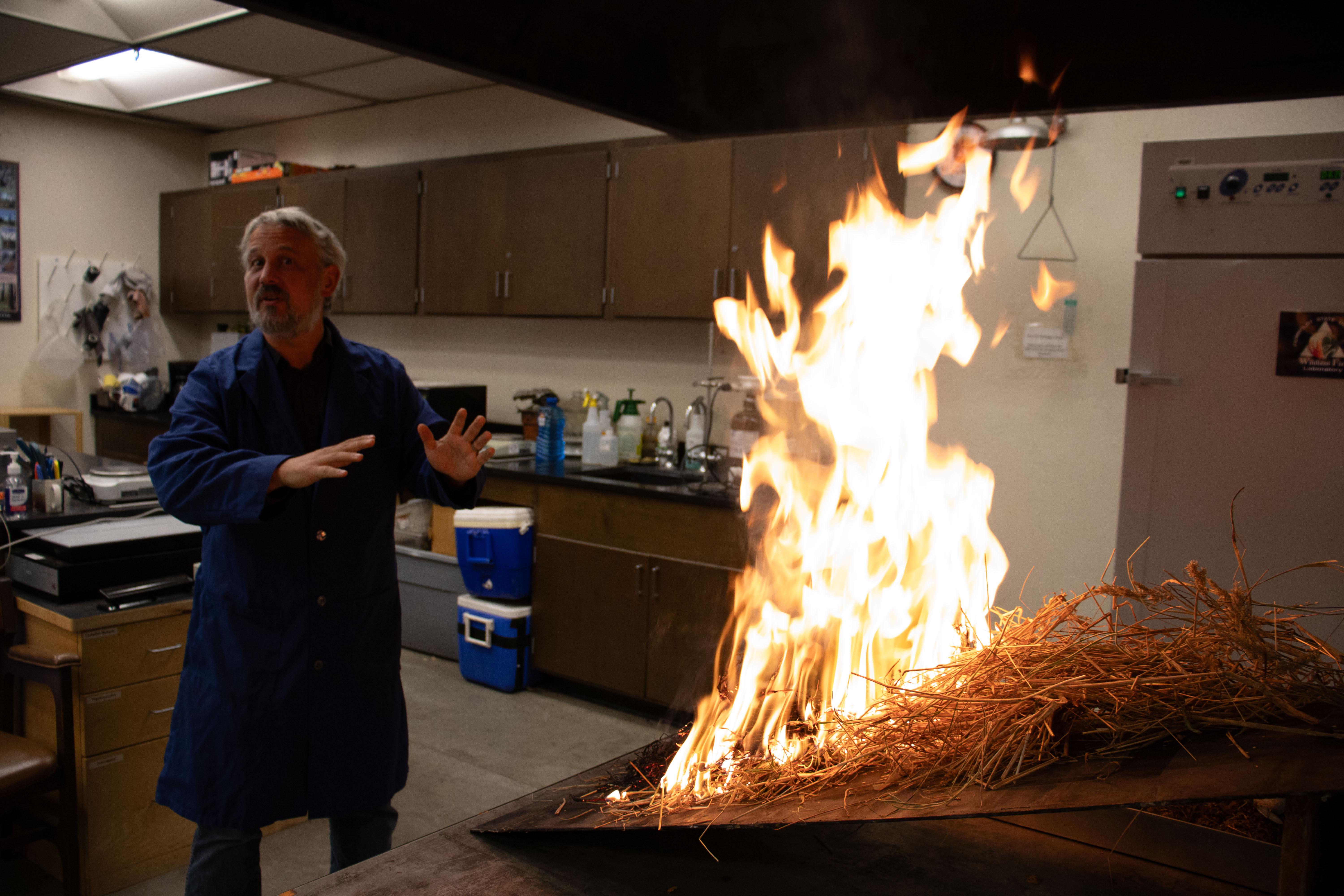
Luong is doing this study to better understand if cows actually play a vital role in grassland ecosystems. He is using historical data from the Mendocino County Resource Conservation District to look at the impact of removing grazing in the grasslands. Luong is also using aerial images from Google and drone images to better understand the environmental differences between grazed and ungrazed grasslands. While looking at all of these images, Luong is also taking samples at the site, inspecting the biology of the plants, trying to better understand the best traits needed for a changing environment.
“My job is to essentially go in and evaluate how the removal of cattle grazing from these areas affected these habitats and their ecosystem properties and services, especially thinking about some of the threatened species we have out there,” Luong said. “The North Coast semaphore grass, the baker’s meadow phone. Both of these species typically require more open habitat and bare ground in order to establish well.”
Luong is trying to find the perfect combination of native plant species for grasslands to thrive. Plants like Reed Canary grass are taking over most of the space in the habitat, leaving little room for the important species mentioned above.
“The managers on the ground have noted that oftentimes, cattle grazing is really important to remove some of that cover, open up some of that space to facilitate some of the recovery or establishment of those kinds of threatened plant species, while still supporting cattle production,” Luong said.
The reason Luong is focusing on grasslands is to highlight the importance they have. They not only support the entire cattle economy, but they hold a key role in controlling carbon emissions. In a process called carbon sequestration. They hold pockets of carbon in their roots, reducing global carbon emissions. In a study by The Conservation Fund, they discovered that wetlands store 18 to 216 metric tons of carbon per acre. Making grassland restoration an important fixture in climate conservation.
“Grasslands are really important for carbon storage and sequestration, especially with future climate risks. Because oftentimes when you have mass plant mortality, which happens in grasslands or forests you lose that carbon back to the atmosphere.” Luong said. “In grasslands, a lot of that is fibrous roots underground. We know that some native grasses that we have dug up can go up to 18 feet deep, so that carbon stays stable in the ground and helps with more stable carbon sequestration with climate change.”
Luong is going to work on this project for the next five years with Mendocino Resource Conservation District. He is hoping to reinvigorate grassland restoration by updating the data and information people have for grassland restoration. He believes that once people have the right tools, grassland restoration will be more informed and focused.
“My work often is really geared at being applied, and so I’m always trying to find real world issues that need solving now and try to work towards those solutions, those applied solutions,” Luong said.
On Aug. 23, 2023, the University of California and the state of California announced they would be awarding over $80 million in climate action grants. These grants will find solutions that directly address state climate problems. In total, the grant is funding 38 projects across California, involving over 130 communities, California Universities and industries, while also taking perspectives from local tribes.
Justin C. Luong, is a new forestry, fire, and rangeland professor at Cal Poly Humboldt. He previously worked as a restoration coordinator at the Cheadle Center for Biodiversity and Ecological Restoration, where he is still currently a research affiliate. He is also a leader in the conservation community, working in key leadership positions in the California Native Grassland Associated, Big Sur Land Trust, and the Ecological Society of America’s Restoration Ecology Section. He was awarded a $1.5 million California Climate Action Seed Grant. He named his grant proposal, “Establishing drought resilient grassland restoration networks in California.”
According to Luong’s grant proposal, biodiverse grasslands are a key part of California’s ecosystem and economy. These habitats take up 25% of California, offering services like flood mitigation, ecotourism and forage production, while also being the foundation of the ranching economy. Currently, most grassland restoration projects use easily cultivated species that are known to work, but do not give any future benefits. This not only creates biodiversity loss, but also ignores the need for adaptation in a changing climate.
“We find that practitioners across the entire state tend to be using the same seven species, even though California Grasslands support thousands of native species,” Luong said. “The reason people use these same seven species is because they know they’ll do well and that they’ll be successful… they have to use those species because there’s no other information about these less common species.”
Luong is taking a three pronged approach to his research. First he is creating an online database called, The Grassland Restoration Action, Science, and Stewardship Network (GRASS-Net) focused on seed sharing and education. He is also studying three different grassland sights around California, taking data from the soils, looking at climate adaptive characteristics, and finding out what the best combination of plants are for the location. Lastly, he is conducting greenhouse studies by looking at samples from the sights, and is conducting research on different grassland species’ ability to survive a changing climate. His goal is to create a climate aware toolbox to help future projects with drought resilient plant selection and site assessment.
“Those three things all go together to help inform restoration projects across the state,” Luong said. “To better understand when we should use climate adaptive plant sourcing or when we should use locally sourced plants.”
Luong is working in collaboration with the Bureau of Land Management, Cal Poly San Luis Obispo, CSU Chico, California Department of Fish and Wildlife, Hedgerow Farms, Mattole Restoration Council, Pepperwood Preserve and California Native Grassland Association, Point Blue Conservation Science, UC Irvine, UC Santa Barbara, Watsonville Wetlands Watch and the Wiyot Tribe. He is also working with another Cal Poly Humboldt professor Kerry Byrne, and is taking on five graduate and undergraduate students to help him with his research.
Graphic by Griffin Mancuso
Field study
Luong is conducting field studies across three sites in California. Focusing on lesser known species that are currently not used in grassland restoration.
“I am working with my grad student to evaluate site characteristics, the climate, the soil, and all the plants that occur at those different sites at three different Grasslands across the state,” Luong said.
Byrne, an associate professor in applied ecology at Cal Poly Humboldt is working closely with Luong on his field research.
“We’re going to be collecting information or characterizing both plants and roots and soils at three sites,” Byrne said. “The Coastal prairie from up here in Humboldt, our central site is going to be in Sonoma County, and then our southern site is down near San Luis Obispo.”
Ernesto Chavez-Velasco is a national resources graduate student at Cal Poly Humboldt. He has worked with Luong before when they both attended UC Santa Cruz and is working on his graduate thesis while working with his old mentor.
“We’re looking at soil and climate and their neighboring plants essentially. We’re seeing how all of those three things affect the plants we’re studying,” Chavez-Velasco said. “The goal of this is to generate a lot more information for plants that aren’t really used in restoration.”
Byrne’s said that they will be using a standardized protocol across all three sights.
“We’ll collect some soils that we bring back to the lab for analysis,” Byrne said. “We’re going to look at root production or root biomass across all those sights.”
The goal of this research, according to Chavez-Velasco, is to understand how the species react in different environments across a giant gradient.
Greenhouse study
Luong is also doing greenhouse research on campus. By focusing on environmentally resistant species, he is finding the best species for an ever changing climate and environment. Specifically, he is conducting a Lethal Drought 50 (LD50) Experiment.
“Essentially, when 50% of the plants in a pot die from drought, we measure their soil moisture levels and we see at what level do these plants experience death?” Luong said.
Byrne is a big part of the greenhouse study, focusing on plant traits and culturally relevant plants to the local tribes.
“We’ll collect some soils that we bring back to the lab for analysis,” Byrne said. “Then we’re going to look at root production or root biomass across all those sights, using a standardized protocol.”
The Grassland Restoration Action, Science, and Stewardship Network (GRASS-Net)
GRASS-Net is the final step in Justin Luong’s project. He wants to create a website with information that all grassland restoration projects can use, no matter the location. The website will include climate-smart protocols, information and tools to help with drought-resilient plant selection, and an increased access to rarer plants, native to the area.
“We’re working with that Grassland Restoration Network to do essentially interdisciplinary work,” Luong said. “We’re first starting with conducting interviews and surveys with practitioners from across the state to best understand engagement methods to engage people in a network, and how to get people to actively participate for the network to continue to persist over time. We also talked to them about how we could share knowledge and about species selection; about what species do well.”
A problem a lot of scientists have is how to communicate their findings to the masses, while also collaborating with multiple agencies and people.
For Chavez-Velasco, this is the first time he is engaging with people in the field as a graduate student, not just conducting research.
“I feel more involved with engaging practitioners and communicating and sharing,” Chavez-Velasco said.
The idea of communication in the field is not new to Luong. He understands the shortcomings of scientific communication and teaches his students how to communicate their ideas.
“When you get into the workforce, you can’t choose who you’re interacting with,” Luong said. “You have to know how and learn how to interact with everyone to be effective in your position. Ecology is [the] absence of people, and we can’t understand ecological responses without understanding human responses.”
University expects the new microgrid will provide about 25-30% of current annual campus electricity needs
by Brad Butterfield
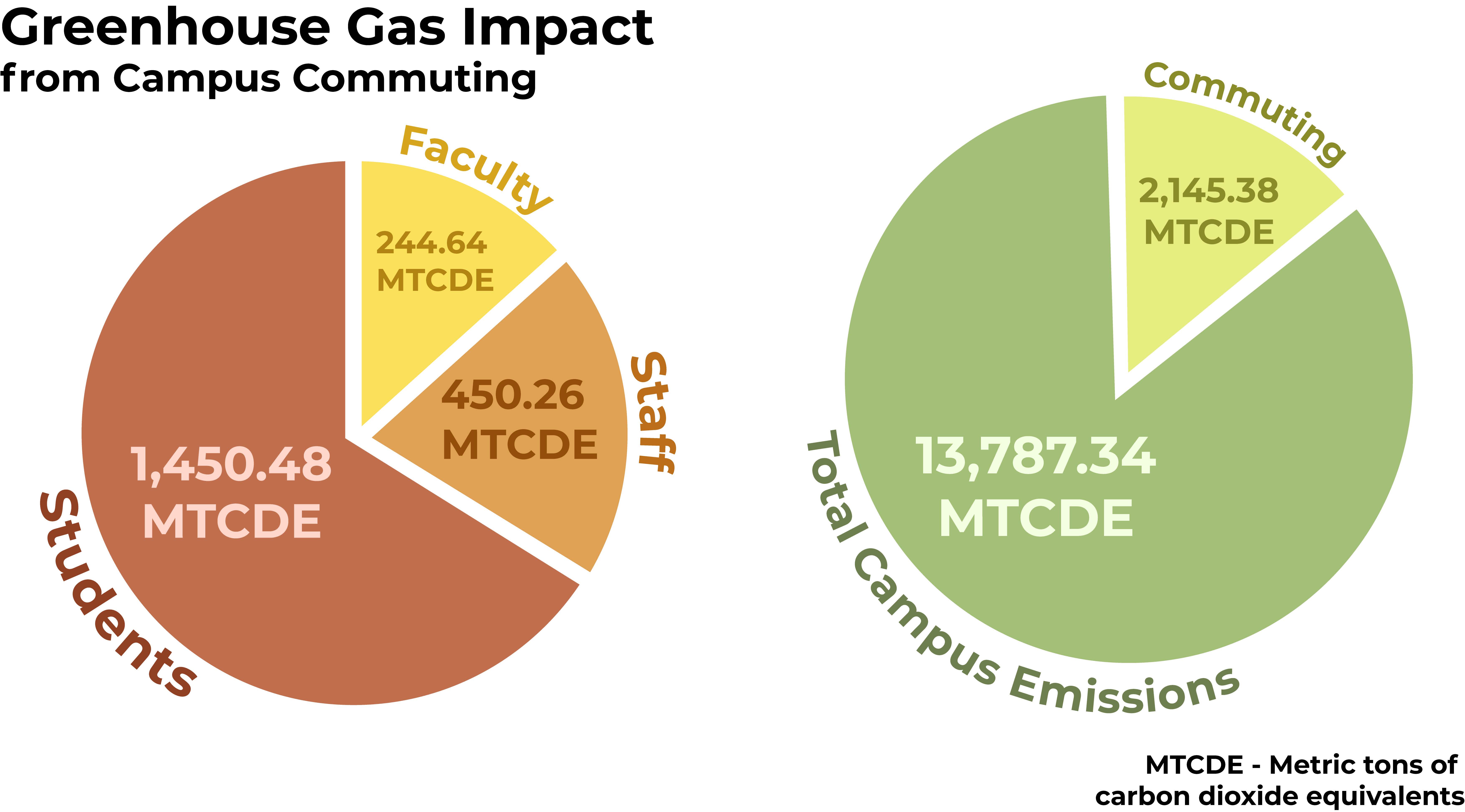
Striving for sustainability and nestled in among the indomitable redwood giants of Northern California, California’s new polytechnic signed a contract on Feb. 2 for two megawatts of solar and three Tesla megapack batteries, which are expected to supply 25-30% of the university’s current annual electricity usage. Not yet immune from fossil fuel energy dependence, the university used 13,723,403 kWh of electricity and 922,559 Therms of natural gas, resulting in a combined 8,215.37 metric tons of carbon dioxide equivalent (MTCDE) of emissions during the 2022-23 academic year. The new microgrid/solar project is a tremendous step towards the university’s goal to become carbon neutral by 2045 and will change Cal Poly Humboldt’s energy portfolio for decades to come.
Where does Cal Poly Humboldt currently get its electricity?
Where a significant portion of Humboldt County purchases its energy from Redwood Coast Energy Association, Cal Poly Humboldt has opted to purchase electricity from Shell Energy, North America. This choice in energy procurement by the university is made possible by Cal Poly Humboldt’s direct access (DA) purchase of electricity, in congruence with 13 other DA CSU’s. “DA provides retail choice to customers by allowing them to purchase electricity directly from an Electric Service Provider (ESP),” according to the California Public Utilities Commission website. With DA, Shell, North America provides the energy, then that energy is transported by PG&E to Cal Poly Humboldt campus. DA is lottery based and allows universities to choose the most cost efficient energy option, rather than the county supplied utility in any given area. The negotiation of this DA energy procurement is handled by the chancellor’s office and allows Cal Poly Humboldt to access electricity at a competitive rate thanks to the aggregated 13-campus negotiation carried out by the CSU. While renewable energy sourcing is important, it has to be carefully balanced against the university’s broad range of financial needs, according to Cal Poly Humboldt’s Energy Manager Andrea Alstone. “As the Energy Manager, obviously, I want to use as little energy as possible and make it as renewable as possible. But, I also realize that costs are real and it’s kind of a zero sum game,” Alstone said. “What we’re spending on electricity means that we’re not spending on other things that the campus needs; we really want to be conscientious of that fact.”Importantly, CA Senate Bill 100 will require renewable energy and zero-carbon resources to supply 100 percent of electric retail sales to end-use customers by 2045. Californian’s are on a one-way road to renewable energy.“[Energy] use in California has to be 100% renewable by 2045. So, as a direct access customer, we will meet those standards, but there are other entities that are doing that sooner. “The choice to purchase from Shell, North America comes, primarily, down to cost – a fact not surprising nor impressive to environmental science and management senior Rain Lopez. “This school is a government institution, which is basically a business that is clearly more interested in maximizing its profits and reducing meaningful spending… so, it’s not surprising that the school made this choice,” Lopez said. Environmental science and management Junior Brooke Douglass put things more bluntly. “Shell is an evil company that has committed many environmental injustices,” Douglass said.
The Carbon Cost of Purchasing Energy from Shell
The university’s choice to purchase from Shell, North America has real world impact, as they do not source as much of their energy from renewables as Redwood Coast Energy Authority. Shell, North America sources its electricity from 34% renewables, (Biomass & Biowaste, Geothermal, Eligible Hydroelectric, Solar, Wind) whereas RCEA sources from 50% renewables. This gap is in large part due to the differing goals of each energy provider. Shell, North America looks to obtain the cheapest electricity possible for its customers, while still meeting California’s current renewable energy requirements, according to Alstone.“Whereas RCEA is more community focused and it’s like, ‘what does our community want and how can we meet that?’” Alstone said. “Cost is important, but it’s not the only factor in their decision.”
A (natural) gas need
Importantly, when talking about total campus energy consumption, electricity is only half the equation – actually, it’s exactly 35% of the equation, with the majority of energy consumption on campus coming from natural gas. The university’s main account for natural gas is with the Department of General Services, a branch of the CA government. Perhaps surprisingly, campus use and cost of electricityis a near perfect mirror image of its natural gas use and cost in 2022-2023, where electricity accounted for 35% of total energy usage on campus, but 61% of total energy cost. Natural gas accounted for 65% of total energy used but only 39% of overall energy cost. Cal Poly Humboldt, being the northernmost CSU, has a much greater need to heat its buildings as compared to other CSU’s. The necessity of heating its buildings nearly year round contributes to Cal Poly Humboldt’s ranking as 2nd highest in ‘campus gas purchased’ out of the 23 CSU’s, for the ‘22-’23 academic year, (when natural gas usage is normalized per-square-foot) according to the CSU energy dashboard. This equates to 0.46 therms/SF natural gas usage at Cal Poly Humboldt, only out-gassed by Cal State Fullerton. When thinking about MTCDE emissions, it’s incredibly important to factor energy efficiency into the equation. “If someone told me I had an infinite amount of money to spend on things, before I started spending them on more renewable energy, I would make things more efficient,” Alstone said. Meaning, the best way to obtain sustainability is to not require said energy in the first place. A better insulated building with triple pane windows requires less overall energy to heat and is thus more energy efficient, which of course leads to the dilemma of whether to allocate money towards infrastructure efficiency projects or towards renewable energy generation, i.e. solar panels. In 2022-23, Cal Poly Humboldt used 6.8kwh of electricity per square foot at a rate of $1.49/SF. Totalcampus emission for ‘22-’23 was 13,787.34 MTCDE, equivalent to 31,889 barrels of oil, according to university Climate Action Analyst Morgan King.That’s a substantial consumption of fossil fuels, no matter how one looks at it. For some students, this speaks to a disconnect between the university’s green-marketing and the campus’ actions. “Humboldt likes to claim it’s green though and it’s superficial… I think that being ‘green’ is a political buzzword,” Lopez said. “An institution of this size, regardless of having a relatively ‘small student body’ should have more resources to support its ‘green programs.’”
Solar energy on the horizon
The contract signed with EDP Renewables North America Distributed Energy on Feb. 2 means the university will not own, maintain nor pay for the installation of the solar system, however there will still be initial costs. Roof replacements are necessary for buildings that will be receiving solar panels, and sites on campus receiving the microgrid components will need to be prepared. The facilities yard, for example, is going to house three Tesla shipping-container-sized batteries. In total, the campus will have two megawatts of solar when the project is complete, which is about the max number of panels the university can physically support, currently.“I want as much as [solar] we can have, and that’s kind of the max given the roofs in the parking lots and the fact that we’re kind of physically constrained,” said Alstone.The battery will provide a peak power of 5.8MW and a total energy of 11.5MWh. Battery capacity is crucial to the systems function as a reliable microgrid.“If everything went out, we’d need a battery which can start our energy system from zero, so we’ve oversized the battery,” Alstone said.Annually, the solar system is expected to produce 3,300MWh of solar – with a guaranteed production of 2,866MWh. This equates to about 25-30% of the university’s current annual electricity usage. In addition to making strides to lower campus greenhouse gas emission, the solar is also expected to save the university money, in multiple ways. As per the contract with EDPR, the university will pay the company for the electricity generated by the solar, but at a much lower rate than the university currently pays for electricity from Shell, North America.“It will end up lowering our bill,” Alstone said.Additionally, thanks to the Inflation Reduction Act, the solar system will also save the university money through hand-me-down tax benefits.“The [tax] benefit will be passed on to the owners of the solar, EDPR, and they in turn pass it on to us in the form of lower electricity costs,” Alstone said. Another positive aspect to the contract with EDPR is a guaranteed minimum amount of electricity. If they don’t meet the minimum, then EDPR will pay the difference to the university, according to Alstone.Due to the need to install the solar arrays in multiple parking lots across campus, the installation will likely need to take place during the summer break, so as not to irritate the difficult parking situation on campus any further.“We anticipate the canopies will be installed over existing parking spaces Summer 2025 when classes aren’t in session with temporary, minimal impact to parking, “ said Aileen Yoo, Director of News and Information for the university.Cost savings, reduced reliance on fossil fuels for energy, no installation or maintenance cost – this is sounding like a killer deal. Naturally, there are two ways of looking at things.“In an ideal, ethical world, the university would invest in these solar panels as owners, [then] source and promote local unionized workforce for photovoltaic product repair, which would boost your local economy and probably reduce overall maintenance costs…” Lopez said. “But again, universities are businesses and will not operate from a place of long-term vision, just immediate costs.”In any case, the contract signing and soon-to-come microgrid and solar system seem a justified time for Cal Poly Humboldt to raise arms in victory – and that they are. “The microgrid project not only showcases Cal Poly Humboldt’s longstanding commitment and investment into sustainability, but it captures the spirit of what we do here: educate students who can help solve the world’s most pressing problems by providing a real-world example of the benefits of microgrids and how they work,” Yoo said.
Last Thursday, on the third floor of Cal Poly Humboldt’s library, a very important first birthday was celebrated. Students, faculty and community members gathered to enjoy cake, pizza, pie and refreshments to celebrate the launch of the world’s first 3D herbarium.
Hosted at 3dherbarium.org, the 3D herbarium has digitized 3D models of various plants with information on each species. At time of publication, 39 models are available to view. From the seaside daisy, Erigeron glaucus, to the coast redwood, Sequoia sempervirens, each plant’s page has a classification breakdown, profile and information on the model itself.
Library Dean Cyril Oberlander started the opening speech for the event, thanking everyone for attending and emphasizing the project’s testament to hard work, dedication and collaborative efforts.
“We chose 3D modeling of plants because, well, not really anybody was doing it,” Oberlander said. “You can imagine how hard it is to do a three-dimensional shape of a two-dimensional leaf. While creating the 3D digital herbarium has never been done — and because plants are so crucial to life on Earth, and for our understanding of plants — this was incredibly important.”
The project has been in development for over a year and students have been anticipating its release, including botany major Juniper Beke.
“Last semester, I believe it was teased at the end of a session on satellite information using satellite data,” Beke said. “[The teaser] had appeared there at the end and so I was hyped up for it.”
Many students, like engineering and community practices major Filip Amborski, had ideas for what the program could accomplish. Amborski thinks the herbarium will be a great resource.
“I’m hoping that they have notes on anything that’s been identified as culturally significant to Native tribes,” Amborski said.
The seeds of inspiration
The 3D herbarium was created by Team Flora, which is comprised of computer science and botany students. Botany graduate student Heather Davis, undergraduate botany student Grayson Prater and computer science major David Yaranon helped create the website under the management of computer science graduate AJ Bealum.
AJ Bealum, computer science graduate and manager of Team Flora, credited the idea for the 3D herbarium to Oberlander. The university library was the sole sponsor for this project.
“His main source of inspiration was the anatomage table downstairs and he thought, ‘Why isn’t anyone doing this with plants?’” Bealum said.
Located on the second floor of the library, the anatomage table is a 3D human anatomy system where users can simulate cadaver dissection.
Prater wanted to join Team Flora to bring botany to those unfamiliar with the topic and introduce them to scientific language. Through this project, he has learned about programming and the difficulties that come with scanning plants.
“I really love writing about plants. This was a great job to start doing that and practicing that skill, especially science communication, making botany accessible to other non-botanists,” Prater said.
Davis accepted the position on Team Flora to satiate her passion for bringing the joy of botany to others. Her decision to join the team was inspired by Oscar Vargas of the botany department. Vargas is an assistant professor at Cal Poly Humboldt and director of the university’s Vascular Plant Herbarium.
“Dr. Oscar Vargas has been my professor, mentor and boss for the last couple of years,” Davis said. “Over the summer last year, the job got posted and he had been talking to AJ, so he reached out to me and sent me the link for the herbarium. I applied for it after that and joined the team.”
Current growth
The 3D herbarium website currently has a collection of 3D plant models, plant photos contributed from around the world and a plant identification component.
Each 3D model was created using a process called photogrammetry. Photogrammetry requires around 100 to 300 photos of a single plant from many different angles in order to convert it into a 3D model. Yaranon created many of the plant models for the 3D herbarium.
“As you take more photos, the processing time increases exponentially,” Yaranon said. “In the beginning, we were running these off of rented laptops from the library, so we would have to wait a couple of days per model. Now we’re on a server, so we can put these out a lot quicker.”
Davis collaborated with the computer scientists on Team Flora to annotate each plant model. She collected plant specimens for Bealum and Yaranon to photograph and create a model from. Then, she annotated different parts of the plant model with information for people with all levels of experience.
“It’s a really challenging subject for many people when they’re first introduced to it, especially with the names and all of the different scientific terms you have to learn,” Davis said. “So this project has been [a] really fun [way] to be able to give access to that knowledge and to make it a fun, engaging activity, instead of challenging and being afraid of a new topic.”
The herbarium also adds to its database with photos from iNaturalist, a website that allows users to upload photos of plants and animals to create a public database. Visitors can search up the common or scientific name of a plant and peruse a gallery with hundreds of photos taken around the world.
Additionally, the website has a plant identification program. Once a photo of a plant is uploaded, the program will provide a list of possible species and a short description. The program pulls from websites like Wikipedia, iNaturalist and the Global Biodiversity Information Facility.
From left to right, Team Flora members Grayson Prater, Heater Davis, David Yaranon and AJ Bealum stand in front of a touchscreen monitor displaying the 3D herbarium in the Cal Poly Humboldt library on Jan. 25. Photo by Savana Robinson.
Plan(ts) for the future
During the opening speech, Oberlander announced a planned second version of the 3D herbarium. The day before the ceremony, Team Flora got approval to start a full grant proposal to the Institute for Museum Library Services to get funding for further development of the program. Version two will include models that are applicable for other majors like anthropology or zoology. Oberlander mentioned that Team Flora hopes to receive the funding this summer.
“Our next version is going to be something that is anything that wants to be a 3D model, whether it’s art or something else. People can do all sorts of things with this 3D exhibit tool,” Oberlander said. “It’s either intended for students with projects or a classroom that wants to use this as a lab notebook, as opposed to the print version.”
Team Flora also hopes for other groups on campus to contribute to the 3D herbarium. They plan to make the process of photogrammetry more accessible so that clubs or classes can add to the website’s model collection. Bealum described meeting with the mycology club to help them learn how to use photogrammetry software so they could produce a fungus model for the website.
“Our ultimate goal with this [website] is to make it a school-incorporated tool,” Bealum said. “So that instead of us sitting in our office trying to pump out these 3D models and working with the botany students as assistants, the botany department can ultimately kind of take this over. [They can] make it a part of their classes, make it so that students can submit models as part of a class.”
An unusual new guest was spotted on the northern end of Brackish Pond in the Arcata Bird Sanctuary last Friday. Brandishing purple, blue, and green feathers with chicken-like feet, an adult purple gallinule had somehow made its way to the marsh from its native territory in the southeast U.S. There had been no prior documented sightings in northern California, so birders flocked from all different counties to catch a glimpse. Among those birders was Cal Poly Humboldt’s brand-new birding club.
Photo courtesy of Cedrik von Briel. An adult purple gallinule walking among the reeds at Brackish Pond.
Cedrik von Briel, the president of the birding club, arrived at Brackish Pond around 7:30 a.m. last Sunday, in the hopes of spotting the purple gallinule. Describing the bird as a standard chicken on LSD, this was an opportunity he couldn’t miss. Much to his luck, he was the first person to spot it.
“The first thing I spotted was that you know, you see a bunch of reeds, a bunch of green,” von Briel said. “And then, a glint of purple and blue and green — it just all hits you at once. And then you’re like, ‘Yep, that’s the bird.’”
Von Briel recalled the audible gasps from the crowd of around 20 to 30 people as the purple gallinule came into view. The bird emerged from the reeds into an open clearing, then went up into the nearby willows to feed. It was a spectacle in more ways than one.
“It was up in the reeds, the willows, and the leaves, and it just fell at one point,” von Briel said. “You could hear the giggles and the audible gasps as people looked on, horrified. It’s a funny bird. It’s a stupid, stupid, funny bird.”
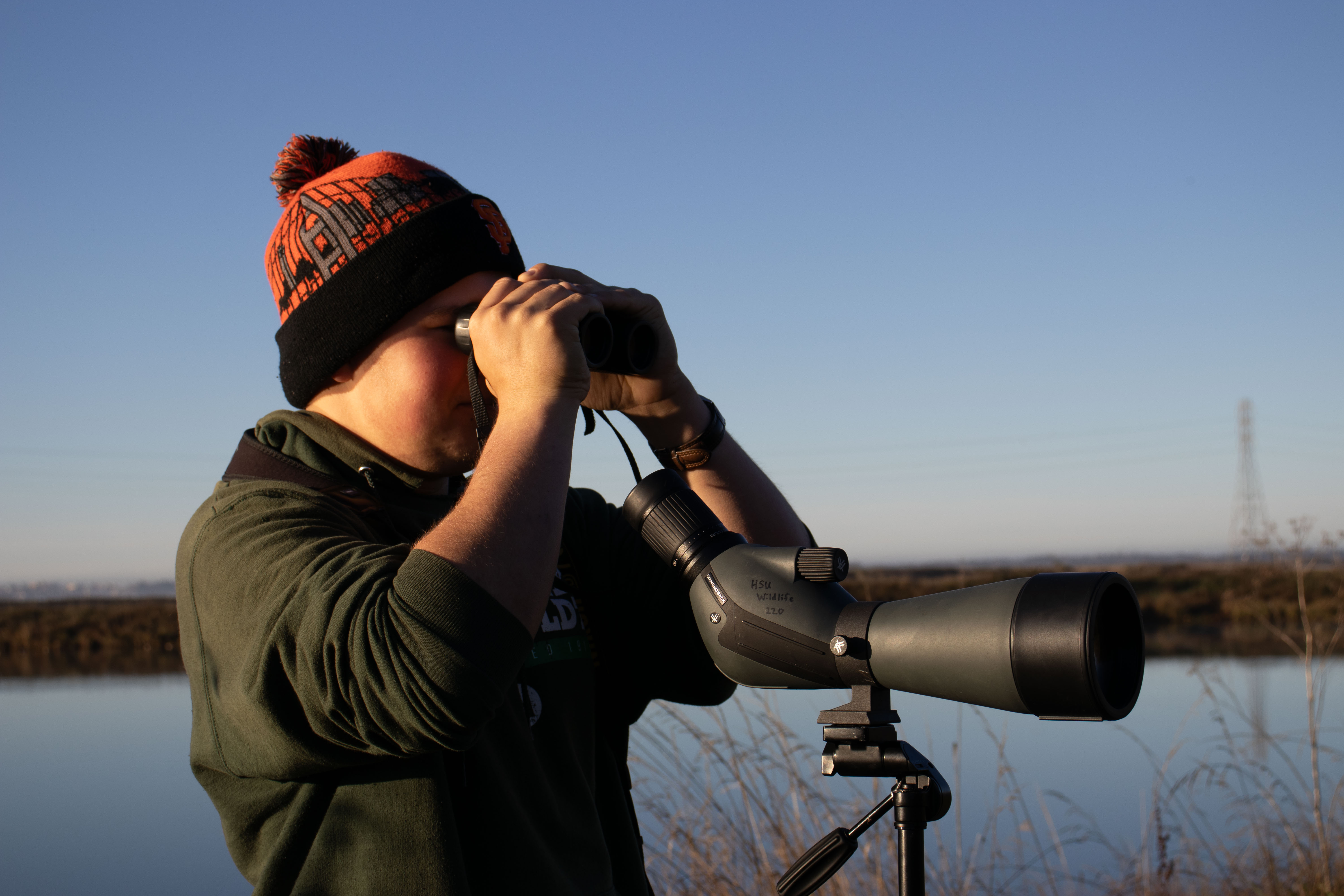
Photo by Griffin Mancuso. Birding Club President Cedrik von Briel watching for birds near Brackish Pond with John Marchwick.
The Origin Story
The birding club, not even two months old, was started out of a pre-established passion for birding. Birders use a variety of tools to spot and document birds, including binoculars, telescopes, cameras, and the naked eye. They also learn to identify and track birds by their calls. Birding is both a hobby and a form of citizen science.
The treasurer of the birding club, Kellen Apuna started his birding journey at a McDonald’s.
“There was a stream that ran kind of adjacent to the parking lot, and I was looking in and I recognized a bird in there. I was like, ‘Hey, that’s one of the birds from the class.’” Apuna said. “I guess from there, it was just a matter of getting a field guide and kind of going through that, and learning what was in the area and then it just snowballed from there.”
Vice President Sasha Cahill’s birding journey started with a western tanager at the Vista Vinita Park in Orange County. He went to his father’s birding book for answers, and his father helped him identify the bird. After that, he couldn’t help noticing the variety of bird species during his trips to the park.
“My dad tried to look up the rare bird hotline, which was a thing in the 90s, but by this point, it had shifted to eBird,” Cahill said. “And using eBird, you can see rare sightings from your area and any area you want. So then we were able to chase rare birds and you know, just spirals from there. You notice things, you see interesting things, and it’s continued to this day for sure.”
All three of the club’s officers were aware of each other through eBird in their freshman year. The popular birding app allows birders to upload their photographs to document sightings, creating a public database for researchers and fellow birders. Von Briel initially messaged Apuna through Facebook and invited him to go look for Allen’s hummingbirds in the bottlebrush plants near Founders Hall. They start pursuing a western flycatcher and try to coax the bird out with pishing.
“Pishing is like a sound you make to imitate an angry call from a bird,” von Briel said. “It kinda locks birds in because they’re attracted to that stuff. And then, down the steps comes Sasha with his friends. He’s like, ‘Did I just hear pishing?’”
Apuna recalled the moment when the two birders recognized each other.
“[Cahill said] ‘Are you Cedrik?’… and Cedrick went, ‘No way, I just pished out a birder,’” Apuna said.
Birding Tools
Along with pishing, there are various tools a birder can use to lure birds into the open. Some birders use playback, where they play a recording of a bird’s call from a speaker to entice the specific bird they’re seeking. However, it is considered unethical to use playback for vagrant birds, birds in their breeding season, or both. Some birders resort to flushing to get a good view, where they make just enough noise (usually by clapping) to drive a bird out of the brush or reeds.
Photo by Griffin Mancuso. A marsh wren resting in the trees near Brackish Pond.
“We’ve definitely had our ethical discussions [for flushing],” Apuna said. “Is it worth it for us to basically disturb the bird into showing itself? And I don’t really think we’ve ever reached a solid resolution.”
“It’s true that a bird doesn’t have an iron trap memory,” Cahill said. “It’s going to hear a slight disturbance, and then it’s going to go back to its busy-birding, but there’s a line you don’t wanna cross.”
The club officers hope to discuss the ethics of birding along with other topics at future club meetings.
“We want to host occasional meetings. We have people present on photography, ethical birding, trying to go out and find stuff, birding by ear — guest speakers or something like that,” von Briel said. “We can definitely make it what our eventual members want it to be, and that’s the beauty of it. We’re just starting; we have a future ahead.”
Birding Trips
The birding club goes looking for new birds almost every weekend. They spend most of their outings at the Arcata marsh or on campus, but they have also traveled to the lagoons, Ferndale, and the Jetty to complete their lists. They have also been lucky enough to go on several pelagic birding trips, where birders get on a boat and travel out to the open sea in search of that needle in a haystack.
“This is the first year in — I think — about 20 years that Humboldt has had regularly scheduled pelagic trips for birding,” Cahill said. “Thanks to Rob Fowler, our local birding legend, and a boat that another fellow birder was able to find, he’s chartered many trips off of there this fall.”
Cahill and Apuna witnessed the fifth documented sighting of Cory’s shearwater in the Pacific region on one of these trips.
“Lots of screaming, lots of freaking out because it was this huge,” Apuna said.
Cahill showed a world map of all documented sightings of Cory’s shearwater on eBird, where almost all sightings were in the Atlantic Ocean, so a sighting in the Pacific was a notable event.
“A lot of people who are usually soft-spoken were losing their minds,” Cahill said.
The officers emphasized the accessibility of birding to beginners. Even if an aspiring birder doesn’t have access to a diverse population of birds in their area or a professional long lens, all they need to start is curiosity and a good eye. Patience and motivation are rewarded in birding.
“It’s like what Ratatouille always said, ‘Anyone can bird,’” von Briel said. “You just gotta get out there and put your own spin on it and see some birds.”
In the depths of The Science C building, the Vertebrae Museum is home to carefully preserved specimens to help students understand the diversity and evolution of mammals.
Dr. Silvia Pavan, a professor at Cal Poly Humboldt and museum curator for the Vertebrae Museum, moved to Humboldt County in Jan. 2022.
“I teach mammalogy, which is a popular course a lot of students take in the natural science programs,” Pavan said. “Mammalogy is a class offered that covers lectures and labs. In the lectures, we cover general aspects of mammals, starting with the characteristics of mammals, origin and evolution of mammals. That’s the first part of the three main blocks along the semester.”
The second block is functional morphology, a branch of biology that deals with the form and structure of organisms and their features. These include integument (hairs, glands and nerves), movement, acquiring and processing food, environmental adaptations mammals have to live in different habitats and communication.
Finally, in the third part of mammalogy, the lecture covers more ecology, social systems and living in groups. In the mammalogy class, Pavan also talks about conservation and museum science. This includes what they do with museum specimens, and how museum specimens can inform us about diversity, evolution, conservation, ecology and aspects of mammals.
Photo by Emma Wilson | Ovis canadens also known as a bighorn sheep skull located in the vertebrate museum.Photo by Emma Wilson | Preserved monkey in a jar of alcohol.
Digitalization and making data available online is one goal curators like Pavan are organizing. At the museum, guests can look at which species they have a tissue sample of that could be used to assess DNA sequence and what tissue collections they have. This is going to be part of the database as well so the scientific community can use the museum’s collection.
“That’s what we are doing now. I think that’s the main thing for the museum, we are trying to make our collections broadly used for everybody,” Pavan said.
The vertebrae museum is also home to a colony of dermestid beetles. These are tiny little insects that feed on dead animal tissue and clean flesh to the core of the bone.
“When we prepare a specimen, and you get the flesh, it’s a way of getting the flesh out; they eat the flesh and they leave the bones,” Pavan said. “The beetle’s way of living off the bones and having the skeleton ready for being analyzed.”
Alyssa Semerdjian, the collections manager for the Vertebrae Museum, maintains the specimens and helps volunteers get their foot in the door.
Anyone can volunteer at the Vertebrae Museum on Friday, from 12 p.m. to 5 p.m. If someone wants to come work on something, Semerdjian can show them how to apply.
“If someone wants to come work on something, I’ll be the person that’s here to get them started and stuff,” Semerdjian said. “If they’ve never done it before, I’ll be the person to walk them through it. My job is general upkeep and database work,”
Semerdjian explains why mammalogy (study of mammals) and ornithology (study of birds) classes are important. Classes like these teach students about looking at details in a way that you don’t think about. This is true for anything where you’re looking at really fine-scale features.
“For birds, specifically, going into that class, the birds are brown, and they fly around. Then as you start to see them, you see that there’s so much more, there’s so much diversity and you can’t go back to thinking that they’re all the same once you’ve seen that they’re different,” Semerdjian said. “Even within that, there’s a couple of things when you look at a bird, you want to look for — big wing, bar, size, shape, whatever — there’s like a list of features and it really taught me to zoom in on those features. You can see the bird for a second and it flies away, and just from having glanced at it, you can figure it out.”
Having the skill of knowing what features to look for and how to apply them is useful in a lot of different contexts. If you can do that for one category, you can do that for any category. You just need to learn what features to focus on. There are some transferable skills like paying attention to the small details.
Knowing about the diversity that’s out there is important. There are people who didn’t know about some of the local species the university had until they checked out mammalogy. The really difficult mammals to find are some rare or endangered ones that people just don’t know about until they’re taught through these courses.
“If you want to do research or go into wildlife, taxonomy is important and is a big deal. In a lot of research fields, it ties into evolution and branches off into so many different niche fields that people can go into,” Semerdjian said.
Pricilla Ceja, a graduate student at the university, is in the biological science graduate program and is a TA for the mammalogy class with Silvia Pavan for the first time this semester.
One goal Ceja hopes for in the future of mammalogy classes is to have more animal fieldwork. In zoology, there isn’t much to do with animals other than invertebrates. For bigger mammals, there isn’t really any way to see these mammals up close and alive.
“People in my class say, ‘Oh, how come there aren’t live specimens?’ And I’m like, well, there’s no one to take care of them, there is no one to catch them and then there’s nowhere to put them,” Ceja said. “There’s just no room for people to bring in space. There’s just not enough resources for live mammals.”
Ceja wants the Vertebrae Museum to be recognized more at the university because they constantly need volunteers.
Anyone who finds dead animals that were hit by cars or found deceased can bring them into the museum for research and volunteers.
“You’re going to see all the weird little stuff we have. I’m surprised by every lab too. Like I didn’t know we had a fucking wolf!,” Ceja said. “I was like what the heck is this? That is so cool.”
Diving can take you to magical, strange places that can be beneficial to science, research and our understanding of the oceanic unknown. There are still many mysteries to be discovered in the deep sea.
“Humans are not meant to be submerged underwater,” Cal Poly Humboldt diving student Rory Bourdage said. “We are aliens in that world.”
At Cal Poly Humboldt, students can enter that alien world through the scientific diving courses offered. This can lead to them getting certified in scientific diving, along with hands-on experience in conducting underwater research and preparing them for a career in marine science.
Richard Alvarez, the university’s Diving Safety Officer since 2005, has been diving since 1994. He consults and oversees the diving classes, making sure everyone is staying safe and equipped with diving equipment that is properly maintained.
When you go through the scientific diving process, you can get your certificate in American Academy and Underwater Sciences — also known as AAUS — for free through Cal Poly Humboldt. It will take about four semesters, as the classes are not always offered each term.
“To get that certification as a scientific diver, you have to do 12 open water dives,” said Alvarez. “What we traditionally do is we learn a scientific protocol, we have people go out and they learn that protocol, they show me that they can do it in the ocean, [that] they can do the extra scientific stuff in addition to being safe scuba divers.”
Photo by Angie Edmunds. Master diver students completing a navigation dive under the supervision of leadership diving students and instructors.
Scientific diving is an important skill to have for conducting underwater research, but is also physically and mentally challenging. Common barriers for aspiring divers are the expense, access to training and gear required for getting the AAUS certification.
“[There’s] a lot of things that you have to learn so that you can do it safely. Diving in Northern California waters is a couple of notches higher than most other places because our ocean is just a little bit more demanding,” Alvarez said. “We are exposed to a lot of open ocean swells, we see a lot of ocean energy. Our visibility is pretty limited by world standards. You know, we’re pretty happy with five to 10-foot visibility.”
Marine biology student Rory Bourdage has been in the scientific diving class for almost three years. He is currently a teaching assistant for the scientific diving class. Bourdage is certified as a beginner diver and as a master diver.
One of the projects the class conducts is measuring sea creatures, sometimes down to the nearest millimeter, depending on their rarity. For example, a red abalone, an underwater sea snail, will need to be measured as accurately as possible.
“In our protocol for the class, we want to measure abalone, for example, since they have been struggling for years, so we want to track not only how many there are in a location, but how big they are getting to get a better idea of their recovery – or decline if that’s the trend that is found,” said Bourdage.
Bourdage mentioned that it is easier to conduct research in certain areas since the animals are less likely to be afraid of humans. An example of one such place is Catalina Island situated southwest of Los Angeles, a marine protected area.
Photo by Angie Edmunds. Student diver and the California state fish called a Garibaldi.
This means they heavily restrict what can go in and out of it. Due to these restrictions, the animals are a lot more comfortable with people, compared to other places and sometimes they will come right up to you.
“Many of these animals have gone generations without having the fear of humans,” said Bourdgae. “They can get right up in your face.”
Rebecca Colyar is a transfer student who started in the scientific program two years ago. She is originally from Fresno, CA, and when she was looking for schools to apply to, Cal Poly Humboldt was the only one to have a scientific diving program, which caught her eye.
Colyar’s interest in diving began the summer before her freshman year in high school after her mom took her snorkeling in the Bahamas.
“That was the one big thing that got me really into ocean life and documentaries,” Colyar said. “I kind of realized if I wanted to do that, if I wanted to tag animals, that I have to scuba dive, like there’s no other way than to start learning how to dive and be comfortable in the water. So, I found out about the scientific diving minor.”
Colyar is, in a way, a superhero. A large obstacle that may normally scare off some divers, does not deter her.
“I have a superpower — I can breathe underwater,” Colyar said. “It’s just that, like, feeling of being in a place where your body knows you’re not supposed to be, and being able to overcome those obstacles that your body and fighting your body to. I feel like there’s a lot of accomplishing hard things.”
While it may seem like the only people in the diving program are science majors, it is not a requirement. You can have any major or other interest, just as long as you are willing to put in the work for the AAUS certification.
“You don’t have to be a STEM major or Marine Science major, you can be anybody,” Bourdage said. “As long as you have the willingness to, you know, take the plunge into the unknown.”
Anti-fire policies and climate change have resulted in wildfires running widespread in Northern California. Forests are in need of experts who can understand the power of fire and its beneficial effects, and channel them into sustainable practices. Cal Poly Humboldt’s polytechnic transformation has resulted in a new addition to the Forestry, Fire and Rangeland Department to meet this need: applied fire science and management, B.S.
The major explores multiple disciplines and perspectives of fire management, including local Indigenous knowledge and practices. Students will learn about prescribed burnings, how fire exclusion policies have impacted forests and how to use fire to promote biodiversity.
This major can lead to careers in fire ecology, fire departments, prescribed burning organizations and more. Students in fire science can also expect a plethora of summer jobs and internships to be available to them.
However, students who are applied fire science majors do not qualify to take the Registered Professional Forester exam in the state of California.
Erin Kelly has been the department chair of Cal Poly Humboldt’s Forestry Fire and Range Land Management since the start of the 2023 fall semester. She emphasized the high demand for foresters and fire ecologists in California.
“Employers are looking for natural resource managers, people who can apply their scientific knowledge to the ground and also people who can educate others about things like fire management,” Kelly said. “So, we are really in the position of meeting California’s needs in terms of land management, and I think that’s a really cool thing.”
Fundamentals of Fuel and Fire and Fire Ecology existed prior to the new fire science major, but Fire Behavior and Effects and Fire Weather have been made into their own classes this semester. Additionally, an applied fire internship class will be available.
Jeffery Kane is a faculty member in the forestry department and has been working as a professor at Cal Poly Humboldt for 12 years. He described the possible careers students can explore with the internship program.
“Most folks will work for the Forest Service, either fighting fires or doing prescribed burning fuels management stuff, or some will work for CalFire,” Kane said. “Others have worked for nonprofit organizations that are involved with fuels management or prescribed burning…it’s basically, ‘Go out, get experience.’”
David Greene, a professor who has researched plant regeneration for several decades, teaches the fire ecology class. Students in fire science classes can expect to go on field trips that allow for hands-on learning and explore the different aspects of the field. Students in Applied Fire Use and Policy will have the opportunity to participate in prescribed burnings.
Photo by Griffin Mancuso. David Greene describing an oak germinate’s ability to reach mineral soil beneath layers of leaves.
“There’s lots of tribes around here that don’t have the capacity to run their own burn. Some like the Karuk and the Yurok can, but others like Bear River – they just don’t have anybody, so they’re often inviting us to go up and do one for them,” Greene said. “Jeff [Kane’s] happy to go do it because he wants the students to get as much training as possible, because California’s embarking on a prescribed burning campaign.”
Mykie Root, a freshman and forestry major with a concentration in wildland fire management, has enjoyed the practical learning approach and field trips in their fire science courses, compared to reading textbooks in high school.
“Coming out here and being able to go on these field trips and be able to actually, you know, get into the stuff and be hands on and actually be able to see the trees, you know, take the bark apart, be able to look at all of the rings individually and count them,” Root said. “It’s a lot easier to learn when you’re actually out in it than in a classroom, which is what I prefer. I don’t like being in a classroom. It makes me antsy.”
Recently, students in Fire Ecology visited the 2022 Six Rivers Forest fire site to document conifer germinates and pine cones in the area that had appeared since the fire. Grayson Voorhees, a freshman majoring in forestry with a minor in fire ecology, took on the task of climbing a steep slope to gather data.
“Initially we were trying to document the distance from the road to the first green tree to measure the density of the fire, like how far it spread uphill, and that was roughly 150 meters,” Voorhees said. “And that also spread along a transect line, and along the transect we were counting germinate gray pine species.”
Faculty and students in applied fire science are hoping to destigmatize fire, promote sustainable fire management practices, and combat anti-fire sentiments and policies.
Root explained how banning prescribed burns entirely allows for leaves to build up and ruin seed beds, resulting in deforestation.
“When fires come through and actively get rid of all the bad, dead leaves and things that just pile and pile up, leaving for, you know, plants to be able to grow,” Root said. “The fires will come through, burn everything and there’ll be wonderful plant beds for seeds to just be able to pop up and come back. So, fires are really good for us. They’re actually, they’re really good for the forests, and we need them.”
Data science debuted as one of the eight new science majors that Cal Poly Humboldt is offering this semester.
Data science is the blend of math, statistics and coding where data scientists examine which questions need to be answered and where to find the related data. Data science is a major with many career opportunities in a variety of fields including mathematics, computer science, coding and research. This major is ideal for students who want to apply their talents in different areas and want to have a practical use for their math skills.
Currently, one data science class is being offered this semester: Data 111, Intro to Programming and Computational Thinking for DS. In the spring, Data 271, Data Wrangling and Visualization, will be available.
Kamila Larripa is an associate professor and is currently leading the new data science major. Larripa has been working at Cal Poly Humboldt since 2008 and is currently doing a research project with her students on a type of immune cell in the brain called microglia. She is interested in looking at cells; how they integrate and make decisions in the human body.
Larripa previously did some training and started offering her students workshops in data science in 2017, like machine learning and methods or how to clean a data set.
“People were really interested, and I just feel like there was kind of this need that students were wanting this,” Larripa said. “And then over time, with a bunch of other people on campus and then the transition to polytech, now we have this new major in the math department.”
Photo by Griffin Mancuso. Bethany Johnson, an associate professor, describes the first project students are working on in Data 111.
Bethany Johnson, an associate professor, is teaching the first available data science class this semester. Students taking her class learn the definition of data science, its fundamentals and the skills needed to succeed in their industry of choice.
“We spent the first part of the class basically learning how to program in Python, so this is kind of like basic programming stuff including how to write a for loop, how to do conditional statements, if-else statements and how to simulate some things,” Johnson said. “And then we start moving into statistics, where we’re trying to figure out, like, how can we use data to make a conclusion about the population. And then toward the end of the class, we’re going to get into a little bit of prediction.”
Johnson also emphasized data science as a broad spectrum of skills that anyone can benefit from.
“I think that it’s important for people to view data science as, as not like a strict scientific discipline. You don’t have to be a computer whiz or something like that,” Johnson said. “I think that sometimes when people hear data science, they maybe don’t even know exactly what it entails… I would think about it as just like, sort of a discipline to help you solve problems and make decisions, work with the data and the information that’s out there.”
Elio Piccagli is pursuing a major in computer science and data science along with two minors in biology and art. Currently, Piccagli is in the Data 111 class doing a project on the world population’s relationship to poverty levels. He explained the commonalities and differences between computer science and data science.
“Computer science deals with like a lot of, ‘how do we code this,’” Piccagli said. “And data science is like, ‘we have this data, how do we make a table visualizing that data?’ So it’s just like the application of computer science.”
Emad Syed is a junior majoring in data science who pursued the major out of an interest in manipulating data rather than creating it. He also emphasized the flexibility of possible career paths students can pursue with a data science major.
“I’m looking for something that can be applied in all, in all parts of life,” Syed said, “Be it forestry, economics, statistics, computers, anywhere where the skill set can be used. I don’t want to necessarily choose a specialized field.”
Larripa has hope for the future of the data science program at Cal Poly Humboldt
“So the overall theme of our program is really data for good. Like how can we, you know, capture, analyze data and make decisions so that we’re making the world a better place?” Larripa said. “And I mean, I think that really is in line with the Cal Poly vision. And we’re really excited about that.”
The new marine biology major provides students the opportunity to gain practical, hands-on experience in ocean and marine habitats. They will study different organisms and a diverse selection of marine ecosystems, such as salt marshlands and beaches.
First-year, first-time students will also be enrolled in Rising Tides, a year-long program of science and general education courses and activities specializing in the Humboldt and Trinidad bays.
Photo by Griffin Mancuso. A collection of microscope slides.
Sean Craig, a professor at the university for 23 years, explains the need for marine biology professors and lecturers.
Currently, there are only three professors teaching marine biology classes, according to Craig.
“We asked for a new faculty member for our new marine biology major but we didn’t get it,” Craig said. “We only got a chance to replace one of our faculty who retired and left.”
“Starting in the spring there will be four because we are able to replace the one who left,” Craig said.
According to Craig, the university always had a marine biology program, but after becoming a California polytechnic now with the transition you can now declare in marine biology as a major.
“The fact that [marine biology] is now a major it rings more bells and connects with more people, especially people applying to Humboldt,” said Craig.
“Our marine biology major already borrows heavily from other marine majors, especially oceanography and fisheries,” said Craig. “I think it would be good in the future to have all us marine scientists to pull together and decide on things together to make an impact.”
“I think there are a lot of misunderstandings of the ‘marine biology major’ because really, at least at the moment, firmly in the biology department there are only 3 faculty at the moment teaching marine biology,” said Craig. “Like saying we got the best restaurant in the world off the highway, but we don’t have a sign.”
Craig expresses great discernment and feelings about the lack of professors teaching marine biology.
“Our biggest problem, which is a long term problem, we have been clambering for years for faculty,” Craig said. “All students benefit better from support systems, tutors and writing center help. All of that is better with more numbers.”
It is not unusual for a professor in marine biology to have 55 students. 55 students that need those professors help to figure out what classes to take, or what to retake, especially during registration. This is frankly a lot of students for one professor.
“It’s a problem, we don’t have enough faculty to do a good job of advising and providing opportunities for students,” says Craig. “We are handicapped, we can’t keep up with students increasing and with the faculty decreasing.”
“We were promised a new faculty member and we haven’t gotten that, yet,” said Craig. “We’re all going to have to work together to get exposure and make connections.”
A really cool and fun thing that you can do as a marine bio major is go on the Coral Sea, which is a research vessel and is 91 feet long. It’s parked on the docks in Eureka in the Woodley Island Marina, and is a wonderful platform for learning. It is the only vessel of its kind in size in California that is devoted to undergraduate education.
“The vessel itself is in pretty good shape, but the engines not up to standards in terms of output of different particulates in the air, so there is a major problem there, and to solve that problem so many of our faculty and Associate Dean are working together to, as part of the poly tech transformation, purchase a new brand new vessel that would be better in multiple ways. Eventually I hope there will be a new version of the Coral Sea,” said Craig.
“Now we have a major, we have a 91 foot research vessel that students can go on cruises for, we have a marine laboratory where students can learn about live animals like crabs and octopus under a dish in a microscope,” said Craig. “Thanks to Cal poly tech, we got new microscopes for the marine lab. Many before dated back to the 1950s, so the new facilities after the Cal poly transformation makes our marine biology department even better.”
Photo by Griffin Mancuso. Several bay pipefish swimming through seaweed.
Kaci Dodd, a junior who changed her major to marine biology this fall, aspires to work in marine conservation or scientific diving instruction. She expressed excitement about marine biology having its own program at CPH.
“Now that they’ve added it more as a major, there’s definitely been more classes and more opportunities — which is super exciting — instead of just having biology with a marine concentration, “ Dodd said. “But I feel like what really attracts people to the marine biology program at this school is how hands-on it is with the equipment that they use and the professional element.”
Dodd recalls her experiences learning how to use new technology and gear on the Coral Sea.
“One of my favorite things in the biological oceanography cruise… It was an otter trawl, “ Dodd said. “And it pretty much was a huge net that went along the water column and collected all the fish or whatever was in that water column. And so we saw a lot of fish, some squid, that was really cool.”
Dodd also recommends that any student, marine biology major or not, should try the field techniques class taught by Daniel O’Shea.
“It was just like, so fun — fun to be on the boat and meeting the crew that works on the boat, how to work on the boat, and be a cruise assistant,” Dodd said. “And after that class, when you pass, you’re able to actually become a cruise assistant and work on the boat with cruises and classes, like that is really cool.”
Marine biology students, along with other majors, analyze marine organisms at the Telonicher Marine Lab, located in Trinidad and home to various marine species and preserved specimens. The lab is open to the public on weekdays, and students also travel there for class labs and research.
Photo by Griffin Mancuso. Zoology major Kyle Bailey looking at a cross section of a flatworm.
Kyle Bailey, a junior and zoology major who wants to pursue a career in animal husbandry, described his experience with the marine biology classes at Telonicher Marine Lab.
“I’m taking invertebrate zoology right now… the class we’re taking is a crossroads for several different majors,” Bailey said. “I’d say the majority are marine bio, but there’s a couple of us who are just general zoology, wildlife, there’s a few others in there.”
Bailey elaborated on what sets classes at the marine lab apart from other biology classes.
“The main difference between the lab now and from intro zoo is looking at live specimens,” Bailey said. “It’s super cool to see how these animals would actually look living and we have the sea table to look at stuff. It’s a big difference to see what these animals would look like living as opposed to mush in a jar, which I think is a super fun experience.”
It is a sunny afternoon, and Cal Poly Humboldt student Camryn Hanf is standing in front of the Student Activities Center with a stack of petitions for potential supporters to sign and send to the Eureka City Council in support of decriminalizing the use of specific entheogens within city limits.
Hanf moved to Arcata a little over two years ago to pursue a degree in psychology. Quickly after moving to the area, Hanf expressed she felt an innate curiosity towards psychedelics. One afternoon while at the Arcata Farmers Market, she saw a table for Decriminalize Nature Humboldt. Although she says she felt nervous about approaching due to anxiety she had at the time, she felt compelled to approach the table and quickly joined the cause.
“I feel entheogens are not the answer for everybody,but they are absolutely life changing for some people,” said Hanf. “I feel strongly that people should have the choice whether to use them or not.”
Photo by Maranda Vargas | Camryn Hanf sits with a stack of petitions in front of the Gutswurrak.
A California State bill that will decriminalize the usage and possession of entheogenic substances, plants and fungi was passed by the state assembly and has moved along to Governor Newsom’s desk. Newsom has until Oct. 14, to veto or approve the bill.
The bill was sponsored by Senator Scott Weiner and will decriminalize the possession and use of a list of approved psychedelics for adults 21 years of age or older. If Governor Newsom approves the bill, it will go into effect on Jan. 1, 2025, making California the third state to decriminalize entheogens for personal and medical use. Orgeon legalized the use of entheogens in 2020, while in 2023, Colorado legalized the usage of certain psychedelics, including psilocybin containing mushrooms.
The usage of naturally occurring psychedelics known as entheogens are being studied for their potential in treating and alleviating anxiety, depression, PTSD, addictions and cluster headaches. Psilocybin containing mushrooms are one of the proposed entheogenic substances on the list that has been gaining the attention of research hospitals and institutions for its treatment of mental and physical health issues. The bill, SB 58, would end the practice of criminalizing access to entheogenic substances despite their potential benefits.
“Veterans and anyone suffering from PTSD and depression should not face criminal penalties for seeking relief,” said Senator Wiener in a press release. “Plant-based psychedelics are non-addictive and show tremendous promise at treating some of the most intractable drivers of our nation’s mental health crisis.”
The Department of Veterans affairs has advocated for the need to study the therapeutic usage of entheogens such as psilocybin containing mushrooms for the treatment of PTSD, depression and substance abuse disorders.
The usage of naturally occurring psychedelics found in entheogens as a therapeutic treatment for mental and physical health issues is being studied at a rapid pace by research hospitals as well. Johns Hopkins Hospital is a non-profit academic and research medical facility that has a Center for Psychedelic and Consciousness Research that has been conducting studies exploring the medical usage of psilocybin for over twenty years.
Those who live in the cities of Arcata, Oakland, San Francisco or Santa Cruz where entheogens have been decriminalized can use the approved psychedelics. Entheogens have been decriminalized in Arcata since the city council approved the measure almost two years ago.
“I have only used it a couple times myself. I think it’s really helped me feel more of a connection to all living things,” said Hanf. “I had this one experience that was really helpful for me. I used to struggle with being alone quite a bit and didn’t really feel capable of helping myself out of my rut or like, my bad feelings… and during that experience, I was opened up to, you know, like the voice in your head. That’s kind of just stuck with me. I would call it like an older Cameron, kind of guiding me through.”
Cal Poly Alumnus Danielle Daniel of Decriminalize Nature Humboldt presented the Eureka City Council with 105 letters from the community in support of decriminalizing entheogens for personal use at the first council meeting of September.
Decriminalization would make the possession and usage of entheogens a low priority for law enforcement. It will allow for those over the age of 21, the ability to grow, gift and gather entheogens. If the measure is approved to decriminalize the usage of entheogens within city limits, the law prohibits entheogens on school grounds, the sale of entheogens, impaired driving or being a public nuisance.
“The decriminalization model is needed so people feel safer to heal with these medicines and have safe access to these medicines,” said Daniel. “The freedom to grow, gift and gather without having a fear that they are stepping over the line to some regulation which is going to turn them into a criminal.”
The Eureka City Council can decide on the proposed decriminalization measure to allow the usage of the approved entheogenic plants and fungi within city limits. On Thursday, Sept. 28, there will be a community roundtable open to the public from 6 to 8 p.m. at the Labor Temple community center to discuss the decriminalization of entheogens in the city of Eureka.
“I think in this climate with mental health issues being so prominent and profound, it’s important that we look at all avenues of treatment,” said Bergel.
Eureka Mayor Kim Bergel said the Eureka City Council sent a letter to the state in support of State Bill 58, which will decriminalize entheogens in California. If the Eureka city council approves the proposal, they will be following in the footsteps of Arcata.
“On a personal level, I do support this coming forward,” said Bergel. “I know so many people with PTSD and different trauma problems that this has helped.”
One of the perks of living in Humboldt County is access to the lush, sprawling redwoods and the coast, both of which are teeming with wildlife and great photo opportunities. With multiple beaches and rivers nearby, it may be tempting to brave the chilly waters with friends. If this is something you are interested in, do so at your own risk.
BLUE-GREEN ALGAE
The most prominent risks you will face in Humboldt’s waters are the blue-green algae in lakes and rivers, and rough currents and sneaker waves in the ocean. Blue-green algae, also known as cyanobacteria, is something to watch out for during warmer weather in Humboldt. Its growth is fostered by nitrogen or phosphorus, which can be spread by runoff from cities during rainstorms. It can turn the water into a variety of colors and is more likely to bloom in slow-moving or still water at warmer temperatures, but it can also grow in the ocean with the right conditions.
It can also be incredibly toxic to you and your pets if ingested. The Associate Dean of Marine Operations at Cal Poly Humboldt, Rick Zechman, says that even eating clams, oysters or mussels that have ingested toxic blue-green algae can have serious consequences.
“If you eat something that’s been concentrating Alexandrium or another toxic [genus of algae], your tongue starts to go numb, and your throat can become somewhat paralyzed, and it can cause you to stop breathing,” Zechman said. “ It can make you really sick, like vomiting and diarrhea. It can cause short-term memory loss. That’s where this idea of amnesic shellfish poisoning comes from.”
While blue-green algae isn’t always toxic, there is no way to identify when it is or isn’t. Stay away from the water if it has a bad smell, is discolored, has green foam or mats on the surface, or there are many dead fish or animals nearby.
SNEAKER WAVES
While Humboldt’s beaches offer plenty to explore, it is critical to keep a close eye on the waves. Sneaker waves, which appear suddenly and move very fast, are only seen in Northern California, Canada and Australia. Bridget Nichols, the Associate Director for Campus Recreation, emphasizes the importance of having awareness of your surroundings at the beach.
“If people aren’t keeping their eye on the ocean, they don’t really know the power and the impact,” Nichols said. “Trying to run away from a sneaker wave on a really steep beach – such as a place where you might go agate hunting or something like that – it’s going to be very different than at Moonstone Beach, where it’s a flat beach and you’re able to move a lot quicker through the sand.”
Photo by Griffin Mancuso. A sign warning visitors of the risks they face by standing on the jetty at the Samoa Dunes Recreation Area.
Tamara Barriquand, an assistant professor in oceanography and physics, explains the science behind sneaker waves and why they are more of a concern at steeper beaches.
“As a wave is coming into shore, it behaves as what we call a deep water wave. And then as it gets below, half the wave, like the depth… it’s now a transitional wave that’s starting to feel the bottom,” Barriquad said. “And so if that gets really shallow, really fast, all that energy is getting pushed up into the wave. And so you can get this wave that can get generated very, very big very, very quickly.”
Sneaker waves are strong enough to knock you over and pull you into the ocean. These can occur no matter how calm the ocean appears.
COLD WATER AND RIP CURRENTS
The immediate concerns while swimming are the cold temperatures and rip currents. When the body is suddenly submerged in cold water, it can go into cold shock, which causes temporary muscle paralysis. Nichols strongly recommends wearing a life jacket when going kayaking or rafting in rivers.
“When you first fall in the water your immediate reaction is to do a big inhale of breath and if you’re underwater, you can easily choke. So [the life jacket] is buying you time to get over and cough… it’s buying you time to orient yourself to your boat and get back to it. And if you can’t get back inside of the boat, it’s buying you time when your muscles stop working for a second.”
Grace Oliva, the Assistant Outdoor Program Coordinator and US Sailing Instructor for Center Activities, explains how rip currents are formed.
“There will be a small divot in the beach right where the shoreline is, right where the water meets the sandy part. Over time, that can actually cause a deeper section in the beach… So when the water comes up on the beach from a wave, water always likes to go the path of least resistance and if it can go faster [or] farther, it will.”
Thankfully, it is possible to identify rip currents from the beach. Barriquand describes the visual signs to look out for, including white foamy water that builds up and is pulled out beyond the breaking waves, resulting in a noticeable difference in coloration between sections of water.
“The other thing you’ll see is right where the rip current is going, there won’t be any waves breaking in that location,” Barriquand said.
Rip currents are often dangerous not because of their strength, but because swimmers don’t know what to do in a rip current. If you find yourself caught in a rip current, Gracie Oliva strongly discourages students from trying to escape or swim against it.
“You kind of just ride it like a lazy river,” Oliva said. “And then once you’re out of it, you’ll feel it. You’ll pretty much stop moving as much and then you can swim parallel to shore, and then you can swim into shore.”
If your friend or pet is caught in a rip current, attempting to rescue them can also put you in danger.
TSUNAMIS
The least common but most dangerous beach hazard is tsunamis. While living in earthquake country puts Humboldt at a higher risk of experiencing tsunamis, they can sometimes be caused by other events, including landslides and storms. While tsunamis can travel from far across the ocean, they are easier to spot as they approach the shore.
“If the water got really, really low really, really fast, then you’re seeing the trough of the tsunami,” Barriquand said. “And behind that is going to be a big wall of water.”
If you notice these signs at the beach, head to high ground immediately.
When planning a trip to the beach, take the tide into account to prevent yourself from getting stranded, and read the surf report if you plan on going swimming. Be aware of cliffs and sudden drops while hiking near the beach and never turn your back on the waves once you’re on the shore.
If you are traveling somewhere with no reception, tell someone where you will be. In the water, a wetsuit or life jacket is recommended even for experienced swimmers. Most beaches in Humboldt will have blue signs detailing the potential hazards there and how to handle them. In the rare case of a tsunami, learn your local evacuation routes.
Two diesel engines churn out over 1000 horsepower into the frigid waters of the Humboldt Bay just after 8am on April 22. On-board, a small team of students, professors and crew members enjoy the calm waters of the Woodley Island Marina before entering the rolling Pacific. Though 49 years old, Cal Poly Humboldt’s science vessel, The Coral Sea, has gone through many rounds of facelifts over the years and is nearly unrecognizable from her original form of 1974. With the 2008 refitting of two new diesel engines letting out a steady hum into the misty Pacific air and a recent paint job displaying ‘Cal Poly Humboldt’ in perfect white text on the forward bow of the ship, the old girl looks and sounds like a much younger yacht.
Before exiting Humboldt Bay’s enterprising mess of wave-dissipating concrete blocks, Captain Jim Long kills the engines. Oceanography students donning hard hats carefully deploy a long fishnet and heavy metal trawling doors.
The Coral Sea’s wild years have been long left in her wake. She was bought by the then-named ‘Humboldt State University’ in 1998. Though obediently committed to science now, echoes of her wild years can be found around the boat. Kept behind a metal door on the port side of the deck, a paper copy of a 2017 article in the North Coast Journal titled: Past Lives of the Coral Sea details the vessel’s younger and more wild years.
One time owner of the boat, Ronald Markowski, used the boat in the 1980’s as a, “floating headquarters from which he radioed instructions to a team of pilots coming in from the Bahamas,” Sam Armanino writes in The North Coast Journal. Those pilots were pawns in a much larger scheme which smuggled cocaine and marijuana from Colombia into Florida and eventually, the greater United States. Eventually, these unlawful escapades would lead to a 45 year sentence for Markowski and the seizure of the CoralSea by The DEA. The long arm of the law would later use the Coral Sea in an operation coined: The Albatross Sting, which saw the yacht rigged with audio and video recording equipment. The operation hinged on the cooperation of former Markowski associate, Frank Brady, who would lead to the downfall of the sting when the DEA discovered he had, “continued to smuggle cocaine under their noses,” Armanino writes in the NCJ.
Decades beyond her drug-days, now associated with Trinidad’s Telonicher Marine Lab, the Coral Sea’s massive a-frame arm, with a capacity for 5,000lbs, guides in the students’ systematically laid out fishnet released ten minutes prior. Today, Oceanography 260 students are out on the last of their cruises for the spring semester, focused on marine biology.
Adjacent to modern flat screen navigation monitors, student Maddy Ho is filling out a worksheet tallying the living organism totals (hand counted by the students) that were caught in the first trawl of the day. Top of the list shows: 138 Dungeness crab, 147 shrimp, 27 ctenophores, or comb jellies.
Photo by Alex Anderson | Oceanography student Miriam Cima holds up squid that was caught using one of the R/V Coral Sea sampling nets.
“We do four cruises per semester,” Ho explains. “Biological, geological, chemical and physical.”
Powering three miles out into the open ocean, the Coral Sea was finally home again, riding growing waves. Those not quite at-home made good on Captain Jim Long’s advice given at 8:00 a.m. before leaving the marina.
“If you’re going to get sick – it goes over the side. Try to do it on the downwind side,” Long said.
As a couple of students stood queasy on the starboard side of the sturdy yacht, Trinity Abercrombie explained the critical role the Coral Sea plays in education.
“I don’t think that I would be into this major as much as I am if it weren’t so hands-on. The Coral Sea is definitely a hands-on experience and you get to be in the field working as soon as you join the major.” Abercrobie said before adding, “ It gives you a perspective on your future – like what you’re actually going to be doing in the field later on.”
In between exercises carried out by students of oceanography 260, a small team of students conducted the first series of measurements as part of their year-long senior project. One member of this team, Simon Kurciski, served six years in the Navy, completing many long submarine missions. His longest stint below the surface, Kurciski said, was 51 days. Now though, Kurciski’s time at sea serves a much different purpose.
Photo by Alex Anderson
Photo by Alex Anderson
Photo by Alex Anderson
Photo by Alex Anderson
Photo by Alex Anderson | Dr. Christine Cass handing over a Sculpin that was retreived from a sampling net to oceanography student Dayana Yuolho-Garcia (left).
Photo by Alex Anderson |CPH Oceanography professor Dr. Christine Cass counting and identifying species with students on the deck.
Photo by Alex Anderson | A group of OCN495 student’s gather samples for an ongoing capstone project that will be continuing through Fall 2023.
Photo by Alex Anderson
“We are comparing the effect of different photosynthesizers in the water on the chemistry of the water surrounding them,” said Kurciski. “Specifically we are looking at the effects that eelgrass in Humboldt Bay and kelp up in Trinidad have on perimeters like acidity, dissolved oxygen, total carbons, CO2.”
Kurciski and his team methodically gather water samples from two meters below the surface, then transfer the water into empty beer bottles. The amber tint of the bottles coupled with mercuric chloride added by Marcos Moreno gives the researchers a time capsule of sorts. The tint blocks light from further affecting the biological material.
“The reason we are adding these chemicals is to essentially stop the biological processes,” Moreno explains.
While the sampling is conducted exclusively off of the California coastline, Kurciski emphasizes that the results will reflect the real world implications of human-caused climate change. One test result that specifically interests Kurciski is the samples’ pH.
“Since the industrial revolution the ocean has increased in acidity by around 30%. That’s huge. We’re already living in an ecosystem that has been dramatically altered by humans in every way,” says Kurciski. “We’re trying to catch up and understand the effect of the changes that we’ve already brought.”
“The sad thing about climate change -and broadly, human-caused changes- is that a lot of the change is already locked in… deep ocean water circulates very slowly,” said Kurciski. “The oldest deep ocean water can be up to 1000 years old – in the Pacific. That extra carbon that we’ve put in there – that isn’t going anywhere.”
The future of the Coral Sea will again be determined in-part by an arm of the US government – though this time it’s not the DEA. Instead, hawk-eyed regulators in California will play a large role in the Coral Sea’s future.
“The CA air quality resources board is mandating that we replace all of our engines – we have five engines,” Long explains from the ornate bridge of the ship. He’s been working on the Coral Sea for fifteen years, serving as captain for three. “We’re looking at a half million to a million just for new engines by 2025. And then we still have an old boat. So we are trying to decide what to do to go forward. There’s going to be some big changes coming.” Importantly, Long assured, “The Coral Sea is not going anywhere.”
This website uses cookies to improve your experience. We'll assume you're ok with this, but you can opt-out if you wish. Cookie settingsACCEPT
Privacy & Cookies Policy
Privacy Overview
This website uses cookies to improve your experience while you navigate through the website. Out of these cookies, the cookies that are categorized as necessary are stored on your browser as they are essential for the working of basic functionalities of the website. We also use third-party cookies that help us analyze and understand how you use this website. These cookies will be stored in your browser only with your consent. You also have the option to opt-out of these cookies. But opting out of some of these cookies may have an effect on your browsing experience.
Necessary cookies are absolutely essential for the website to function properly. This category only includes cookies that ensures basic functionalities and security features of the website. These cookies do not store any personal information.
Any cookies that may not be particularly necessary for the website to function and is used specifically to collect user personal data via analytics, ads, other embedded contents are termed as non-necessary cookies. It is mandatory to procure user consent prior to running these cookies on your website.