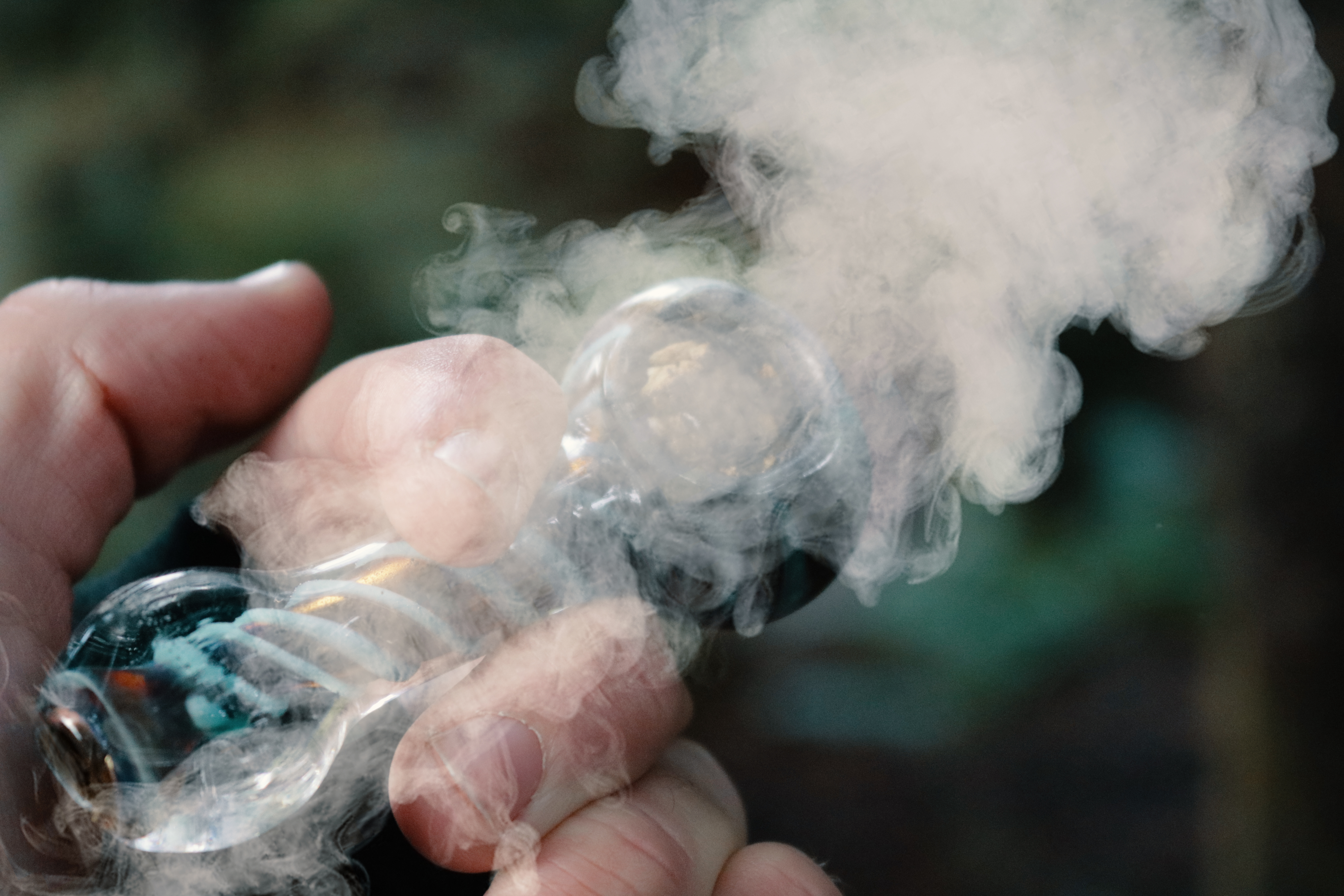
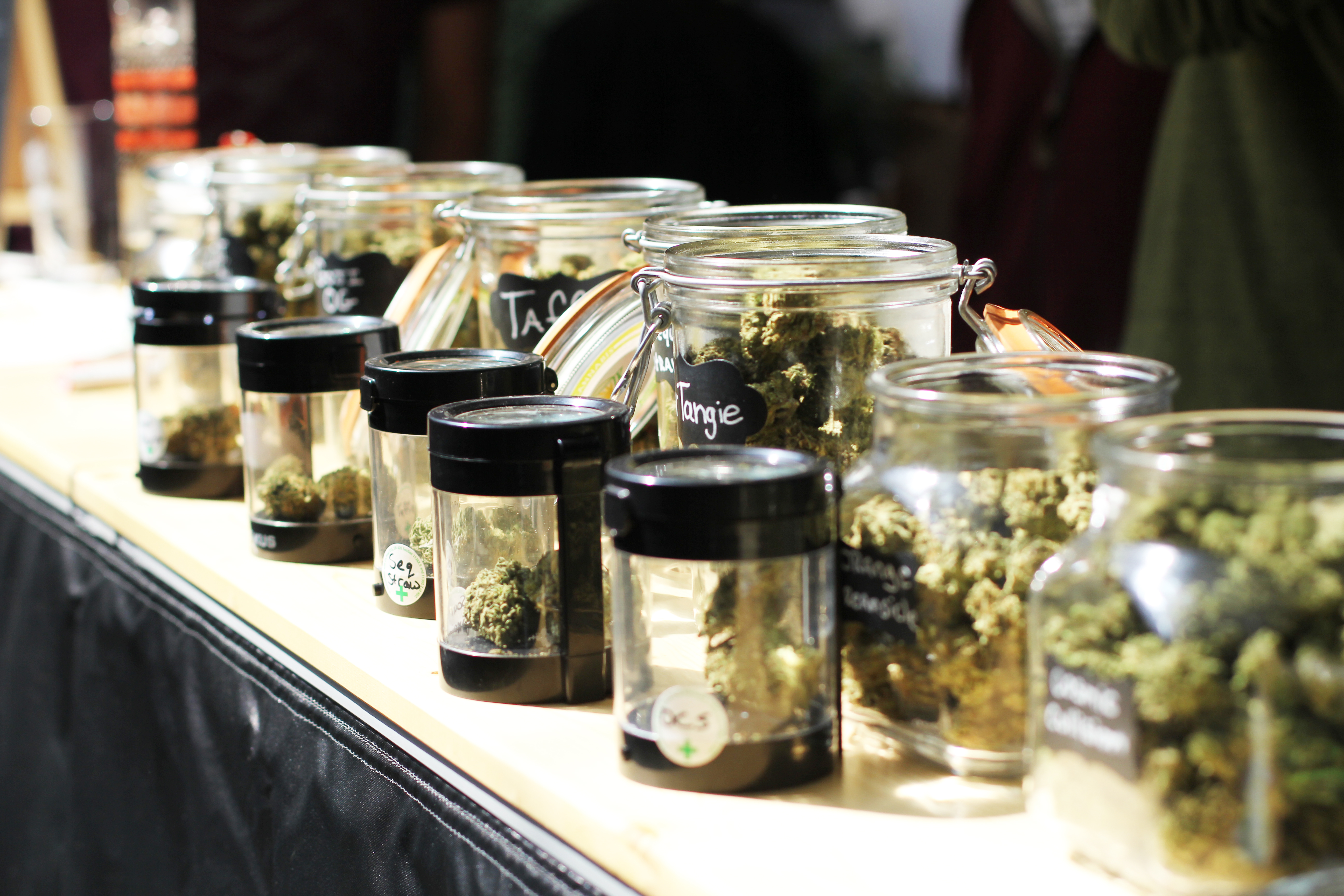
Edibles or cannabis-infused foods are a common way to consume marijuana. The process of making edibles, just like baking brownies, is a science. The primary psychoactive compound in marijuana is called cannabinoids. When making edibles, you infuse a fat with cannabinoids to activate the chemical.
Mark Wilson, a Humboldt State University professor with a Ph.D. in microbiology, genetics and toxicology explained that cannabinoids are fat soluble and don’t break down in water.
“Some substances are water soluble and some substances are fat soluble,” Wilson said. “THC is primarily composed of carbon-carbon bonds and carbon-hydrogen bonds, so it can’t interact well with water, but it can interact well with fats and oils.”
This characteristic of THC, tetrahydrocannabinol, limits what can be turned into an edible. THC can’t steep in hot water for weed tea. Marijuana would need to be steeped in hot milk instead, where the THC would break down and bond with the milk fats.
“Things that dissolve into our fat tend to remain in our system much longer. That is, they slowly diffuse into fat, and slowly diffuse out. The fat acts as a sort of absorption compartment. That makes it detectable in drug tests for weeks.”
Joseph Szewczak
Many people use butter as the main fatty ingredient in edibles. Dairy-based fats are a good option for infusing cannabinoids, but lactose-free alternatives are also solid options, including coconut and olive oil. Bacon fat can absorb cannabinoid infusions too, if you’re looking for a savory option.
Joseph Szewczak, an HSU professor who studies and teaches comparative physiology and physiological ecology explained the physical changes to the body when people eat cannabis-infused fats rather than smoking cannabis plants.
“Things that dissolve into our fat tend to remain in our system much longer,” Szewcxak said. “That is, they slowly diffuse into fat, and slowly diffuse out. The fat acts as a sort of absorption compartment. That makes it detectable in drug tests for weeks.”
Whether inhaled or eaten, the THC enters the blood stream and messes with brain-cell functions in a unique way. Since THC is shaped like a chemical in the brain, the brain recognizes the chemical and allows to alter normal brain function. That chemical usually tells brain neurons to rest, but THC forces the brain to keep firing, which leads to deep thoughts, increased creativity and anxiety.
In light of these effects, it’s important to understand what’s going to happen after eating an edible. First, since the body takes some time to digest edibles and since their THC is stored in fat, the high lasts longer. Second, the nature of THC and marijuana may lead to discomfort or anxiety, or may lead to creativity and fun, but that’s dependent on many factors.
Co-Director of the Humboldt Institute for Interdisciplinary Marijuana Research Josh Meisel is researching the significance of set and setting, or who you’re with and where you are, and how those things impact a high.
“People’s negative experiences may be influenced by edible use,” Meisel said. “But set and setting may be as influential or more influential than the psychoactive properties of the substance itself.”
New study links smoking cannabis with testicular cancer
Those attending Humboldt State University who smoke marijuana regularly may want to rethink their habit.
Marijuana is the most widely used drug in the United States, and a large part of its popularity as a recreational narcotic comes from the perception that it has very few, if any, long-term health effects. There are, in fact, several positives that are associated with the drug, such as help with depression or anxiety, easing of muscle soreness and a reducing of the number of seizures experienced by people with epilepsy.
“When you combust any plant, you’re creating significantly more carcinogens.”
Dr. Jeffrey Chen
However, despite its positive effects, a recent study conducted by the Journal of the American Medical Association has identified a link between marijuana use in people with male reproductive organs and an increased risk of testicular cancer. The study explained that burning marijuana (which is necessary to smoke it), like burning any plant, triggers the release of carcinogens, which, in this case, may lead to testicular germ cell tumor.
The study also analyzed potential connections between recreational marijuana use and lung cancer, oral cancer and head and neck cancer. However, JAMA did not find any connections to any of those cancers.
The meta-analysis in the data collected by JAMA is specific to white men, leaving out a large part of the global population. Many of their findings also date back as far as 1973.
There also isn’t a direct causality from marijuana to cancer over a wide range of the population. The American Association for Cancer Research has identified many of the victims of cancer as having used marijuana heavily. However, there is still no evidence of other variables, who else might be at risk or other drugs that might increase or minimize said risk.
These studies so far are limited in the information they provide, and should not be taken as the final word on any and all links between cannabis and cancer. However, it does contribute to the ongoing discussion of the health effects of the drug, and those who do use it may want to sit up a little straighter and take some notice.
Marijuana laws are enforced unequally and minority communities bear the brunt of the consequences
Many states have voted on the legalization of marijuana, a schedule one drug, and 11 states have legalized recreational cannabis. Weed is now a large source of legal income in the U.S.
Forbes shows that the top three states where recreational marijuana is legal profited over $4 billion in 2018 on cannabis sales. But according to a 2010 study by the American Civil Liberties Union, states waste over $3 billion a year in weed-related arrests.
We believe states waste more time and taxpayer money by not legalizing and decriminalizing weed. Law enforcement often enforce weed laws unequally, with more arrests in underprivileged neighborhoods, which are often filled with people of color. According to the ACLU, black people are four times as likely than white people to be arrested for marijuana possession despite similar usage rates.
We are fed up with blatant inequality and discrimination.
In July 2016, a Minnesota police officer shot and killed black 32-year-old Philando Castile in his vehicle. The Minnesota Bureau of Criminal Apprehension investigated the case, and was told by the officer that he “feared for his life” due to the smell of marijuana and Castile’s lack of concern for the child in the vehicle. This ended in the officer’s acquittal.
While most states don’t keep data for marijuana possession by Latinx individuals, New York City’s data shows that the Latinx community has the same rate of use as black and white individuals, but recent data shows that marijuana possession is the fourth most common cause of deportation.
It’s obvious that many of those affected by these ludicrous laws are from black and brown communities. And it may be relevant to note that there is political gain to keep it this way, as many people who have been arrested for marijuana can no longer vote.
This war on drugs, specifically the war on marijuana, is a war on communities of color. Children are left without parents and people are locked up for years on minor counts. And yet, even when white people commit similar crimes the punishments are all too different.
Opioid addiction is at an all time highs in the states. It has largely affected white communities, but the amount of arrests is no where near that of other cultural communities when marijuana is involved.
If treatment and repercussions are unequal, we need to understand that the system is flawed. When one group is given more freedom to make mistakes than another, it seems that there is a hidden agenda at work to keep white communities more prosperous.
Drug laws are just one example of discriminatory regulations within the United States. Data shows that law enforcement agencies often treat people of color differently, our laws only add tension to the problem.
As of now, 10 states plus Washington D.C. have legalized recreation marijuana and an additional 20 allow medicinal use. These states should quickly look into decriminalizing the drug fully. If we take steps to free individuals locked up for minor drug possession charges and use the money saved to focus on bigger issues, then we take one major step toward reforming the country’s unjust system.
It may be a slow process, but it’s one that needs to happen now.
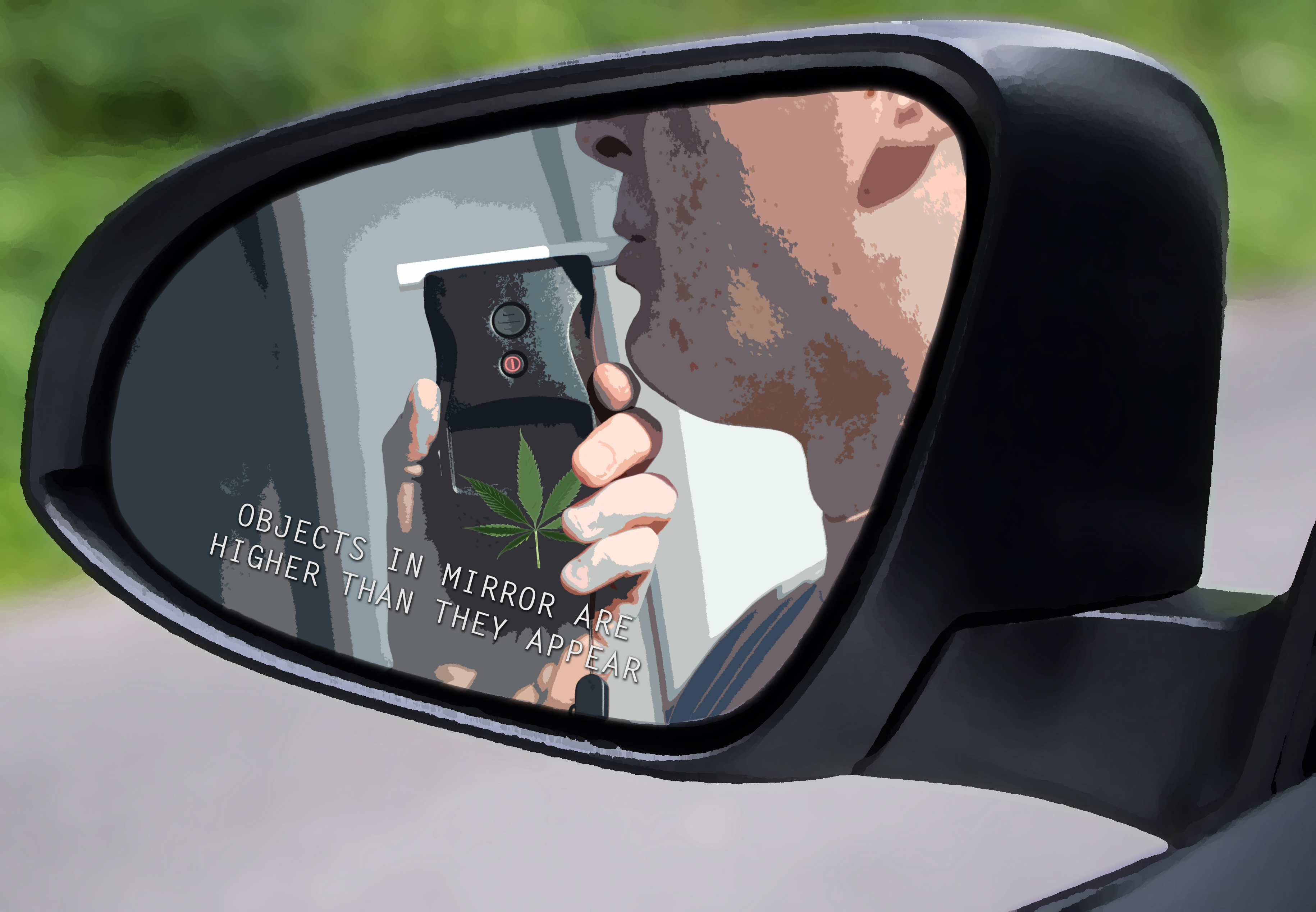
No pee, hair or spit. One blow is all it takes to show marijuana intoxication levels with new breathalyzer.
Marijuana has been a touchy topic since Colorado and Washington made their first moves to legalize recreational use in 2012. Since then, 29 states have followed and declared marijuana legal for medicinal and/or recreational use.
Tension forms at the discrepancy between state and federal opinion on where marijuana falls legally as a drug. The lack of legal confirmation from the federal government makes it difficult for government employers, especially police officers, to execute and process circumstances surrounding marijuana intoxication. Recent developments in marijuana detection technology suggest a breathalyzer is in the works.
Current marijuana testing requires a hair, urine or blood sample. The test results detect past use up to six months and reports the current THC level in the body. This testing proves to be unreliable as past use of marijuana will distort a current reading of bodily intoxication, which is what law officials care about.
The two technology companies racing to release their version of a more accurate breathalyzer are Hound Labs and SannTek.
Hound Labs was established five years ago and is leading the race with an expected release of late 2020. The Hound Labs breathalyzer operates on a specified time basis. It can detect marijuana if it’s been used in the last three hours. The three-hour window comes from two findings; one, marijuana is only detectable for the first three hours. Afterward, THC levels drop so low and so fast that it becomes virtually undetectable. Second, the initial three hours of intoxication are the most impaired and therefore the most crucial.
The breathalyzer method proves to be more accurate and better suited for law and medical officials, as alternative testing can take hours to produce results. In addition, this method is also beneficial to the participant, as the regulated three hour time interval doesn’t hold participants liable for past usage beyond that time frame.
If this new testing method becomes normalized, the three hours prior to testing will be the most critical, but anything before those three hours is merely tangential. Ideally, someone tested for their marijuana use could not be held liable for their marijuana use prior to the that three-hour window because the breathalyzer would not be able to detect it.
The opposing company, SannTek, and their breathalyzer the SannTek 315 will operate similarly to the Hound Labs breathalyzer. SannTek 315 is still in early development so the company is not providing much information. Like Hound Labs, their product will utilize a time interval to reveal the last ingestion of marijuana and current intoxication.
Hound Labs conducted clinical testing in 2017 in cooperation with University of California, San Francisco. However, no findings have been concluded publicly due to the small sample size. SannTek 315 lacks any formal testing or trials at this time.
The more I reveal my situation to other cannabis consumers, the more I realize most stoners have the same thing
The heave of a sore stomach and the splat of foamy, green sludge is how I start most of my days.
Throughout the last year, morning puking became an unwanted habit I couldn’t avoid. I dismissed nausea and vomiting as another anxiety symptom, but I soon discovered the near-daily episodes I had were caused by something unsuspecting.
Chances are if you’re a consistent consumer of cannabis, you’ve developed an intolerance to the drug that so many claim heals all.
Cannabinoid hyperemesis syndrome is a condition that entails constant vomiting brought on by long-term cannabis use. There are multiple phases of CHS in which symptoms may intensify, if preventative measures aren’t taken.
The first phase is called the prodromal phase, which can last from months to years depending on the frequency of your cannabis use. In this first, neutral phase people with CHS experience nausea and occasional vomiting.
Before discovering what CHS was I thought I could remedy my nausea by self-medicating with marijuana, but doing so undoubtedly increased my intolerance to the drug.
“I stopped eating breakfast because I could never keep anything down and lunches disappeared as I was too busy with classes to have time to eat.”
The second phase is called the hyperemetic phase. It’s reached when users continue to treat their symptoms with more marijuana use. Some people with CHS often find relief from their symptoms by taking hot showers.
In my experience with this phase, my morning nausea trailed throughout the day which led me to alter my eating habits to avoid the chance of puking.
Due to my new eating schedule, I noticed changes in my weight. I stopped eating breakfast because I could never keep anything down and lunches disappeared as I was too busy with classes to have time to eat. However, I felt ravenous by dinnertime. Which, understandably, is not the best way to maintain a healthy body.
Within the second phase of CHS, symptoms do not dissipate if actions aren’t taken. This phase can last years if one doesn’t decrease cannabis use or completely drop the drug. According to a report on cannabinoid hyperemesis syndrome by Ceadars-Sinai, only after a CHS sufferer ends their use of cannabis will they experience relief from all symptoms.
This isn’t a plea for those who smoke to stop, nor am I advocating for the use of marijuana. I want to warn you that a plant that seems beneficial to numerous health issues can still cause damage to your body, especially if used daily for years.
CHS and its symptoms aside, you can definitely be allergic to cannabis, and you can get sick from it depending on its quality. No matter the quality of your cannabis or if you think you aren’t allergic, CHS can still be in your near future if you aren’t mindful of your habits.
The more I reveal my situation to other cannabis consumers, the more I realize most self-labeled stoners are dealing with CHS too.
While nausea and vomiting can be symptoms of several other conditions, CHS can be diagnosed through the process of elimination of other conditions and through testings suggested by your physician.
Humboldt County’s reputation around the United States reeks of marijuana.
As part of the Emerald Triangle, along with the counties Mendocino and Trinity, Humboldt makes most of its green from the seasonal crop.
Rumor has it that the celebration of April 20 started in Marin County, California, not too far from Humboldt with a group of San Rafael High School students who called themselves The Waldos. These pothead pioneers gathered on campus after school at 4:20 p.m. to spark up and look for a rumored, abandoned pot farm.
One of the original Waldos said that the term originally meant “Do you have some?” or “Do I look stoned?”
Eventually, the psychedelic rock band Grateful Dead picked up on the term when they moved blocks away from San Rafael High School and frequently smoked with one of the Waldos’ older brothers.
Years later, April 20 is a nationwide holiday when stoners smoke copious amounts of weed and spend the day trying not to miss 4:20 p.m.
Celebrating April 20 in Humboldt County is almost as pointless as the British declaring a national day for beer (which they have, mind you). But the beginning of 2018 marked a monumental time in California history.
Marijuana advocates have been fighting for legalization of cannabis since the 1960s.
Finally, on Jan. 1, California Proposition 64 became effective, allowing legal recreational use and taxation of marijuana statewide. Nearly 60 years later, the seed is cultivated into reality.
Since then, there has been little qualitative information about the impact on Humboldt economy, but tourism and sales tax revenues are likely to increase.
Now more than ever, April 20 is a holiday to celebrate the progress California has made in decriminalizing the medicinal plant and allowing anyone to enjoy its benefits. For the first time, anyone above the age of 21 can safely spark up a legal, recreational blunt in the comfort of their home.
If you are partaking in 4/20 this year, please remember that any dank celebration should be in moderation. Spark responsibly.
Before the Gold Rush there was a Green Rush, with some gold in there. Settlers came from the East in the 19th century looking for gold and found some big trees to cut down and sell. It was a prosperous time for white people who made money from lumber sales, but it sucked for every person of color who worked low wages in the industry or barred from work. Now, it’s time for a new area of selling green stuff for money once again.
There are many parallels from the Gold Rush to the Green Rush as legalization came about. Marijuana legalization is just as racist and elitist as the lumber industry. 81 percent of cannabis business owners are white. Three-quarters of the industry are owned by men.
However, this is more than the environment, it’s about its medicinal value. Sure, there are some studies that tell of marijuana’s healing abilities and some Facebook memes that exaggerate those claims and say weed cures cancer. But those studies seem to be used to justify lazy people to smoke all day and do nothing.
Just because something is supposedly healthy for you, doesn’t mean you should consume it to excess if it’s unnecessary. Apples are healthy, but eating a whole bushel won’t keep the doctor away and nor would smoking a pound a day, or whatever amount people actually smoke.
There are a lot more things to do in Humboldt than smoke. Cannabis can be a part of Humboldt, but it shouldn’t be exclusive to its identity. Not everyone smokes weed. There are quite a bit of people who look down on weed due to its culture. No one should be forced to smoke, but cannabis shouldn’t be looked down upon either. The cannabis industry needs to be improved.
The Humboldt State Department of Politics hosted the 14th annual Schaub Memorial Lecture on local politics titled “The Transition to Legal Cannabis,” on March 26. John Meyer, the chair of the HSU politics department, presided the panel discussion.
The four panelists were Hezekiah Allen, executive director of California Growers Association; John Ford, Humboldt County director of planning; Mariellen Jurkovich, director of Humboldt Patient Resource Center and Linda Stansberry, a journalist at the North Coast Journal.
Tony Silvaggio, HSU sociology professor and Humboldt Institute for Interdisciplinary Marijuana Research contributor, served as the moderator.
The California voters approved the Adult Use of Marijuana Act on Nov. 8, 2016. The California state legislature approved the Medical and Adult Use of Cannabis Regulation and Safety Act in 2017. However, local and city governments can ban cannabis business within their jurisdictions. In Jan. 2018, the state of California licensed marijuana facilities sold state licensed, distributed and produced marijuana.
“Certainly the transition from illegal, unregulated to regulated, legal cannabis in the state of California is a very complex one that is riddled with all sorts of political considerations,” Allen said.
Three California state departments are in charge of licensing and regulating cannabis commerce. The California Department of Consumer Affairs regulates and licenses retail sales, distribution and testing. The California Department of Public Health oversees manufacturing and the California Department of Food and Agriculture is responsible for cultivation.
“First and foremost, California grows way more cannabis than we consume here. The state’s estimate is that we produce 15 million pounds and that we consume 2.5 million pounds. That is a huge disparity,” Allen said.
John Ford is an HSU alumnus. Ford talks about cannabis farmers expectations being part of the legal system.
“I think [the farmers] expectations were that ‘It shouldn’t be too hard to permit what I have already been doing,’” Ford said.
Cannabis farmers found out about local taxes, state and county permits.
“2,300 applications that were submitted to the county almost simultaneously, literally choked the system,” Ford said.
The local community and economy are reliant upon cannabis.
“Then, there’s Humboldt County, who has an economy to protect, a reputation and an identity to protect. This industry is important for jobs, for economic growth and yes, taxes,” Ford said.
Ford spoke about other places in California being better suited for cannabis cultivation with flatter land, pre-existing greenhouses and better weather, places close to markets and transportation with abundant access to investment capital.
Mariellen Jurkovich talked about working together as a community.
“Arcata is willing to work with you. Eureka is willing to work with you. We need to work together as a community. This is our industry,” Jurkovich said.
Stansberry is concerned about the economic ramifications that were not anticipated.
“We are going through a really painful growth period,” Stansberry said.
Nick Thomas is a political science major at HSU and thinks slowing big business down will help the local economy.
“We need to make sure that a lot of the major industrial-sized grows get pushed back for five years. That is step number one,” Thomas said.
Thomas referred to Allen’s statements on the importance of small farmers and how it is about the community.
Allen spoke about policy, cultural and financial barriers.
“Honestly, folks don’t have the means to move forward,” Allen said.
Allen pointed out that the market incentive is not there.
“Of 2.5 million pounds of cannabis consumed in state in California, only 600,000 pounds are sold by regulated retailers. The other 1.9 million pounds of cannabis consumed in state is sold on the unregulated market. There is no point in getting a license now. The market isn’t there,” Allen said.
Grow marijuana from the comfort of your home with the Green Box
By Andre Hascall
There is a way to grow marijuana easily while keeping costs relatively low. Greenbox Grow is a company that sells the necessary tools for marijuana cultivation for the average consumer. Dylan Osborn, a graduate in business administration at the University of Southern California, is the founder of GreenBox Grow. He currently lives and grows in Monterey, CA. “Our mission is to teach people how to easily grow medical cannabis at home,” Osborn said. “It’s easy enough for beginners and takes less than ten minutes per day.”
Dylan Osborn with the Green Box Grow | Green Box Grow
Initially, Osborn grew marijuana for his own personal use. Osborn as well as his father have both suffered from sports related injuries, and Osborn turned to medical marijuana to ease the pain.
“I found an opportunity to help people who use marijuana for its medical benefits.” Osborn said, “Once I got into it, I saw all these things about it [growing] being difficult, but my first grow was close to dispensary quality.”
You can find tutorials on their website, www.greenboxgrown.com, to help with the growing process along with the products you’ll need to get started. Osborn also works with clients at their homes helping set up their grow, as well as walking them through the different steps of growing quality cannabis. Once the greenhouse is set up, more steps follow such as getting the proper air circulation, how to properly pH your water, the correct amount of water to use, wiring your greenhouse, as well as how to grow while gone on vacation or during winter.
GreenBox Grow is currently sold through Amazon. Though Osborn would like to have a store for GreenBox Grow in the future.
Dylan Osborn and his greenhouse | Green Box Grow
Using GreenBox is as simple as setting up your greenhouse, watching weekly tutorials and growing your marijuana. There are two different types of growing tents and various sizes for both. Greenhouses are for outdoor grow and for indoor you’d need a hydroponic grow tent. Of course the indoor option will cost more money for both equipment and your monthly electricity bill.
Osborn favors outdoor growing as it is more environmentally friendly, and provides the grow with fresh air and natural sunlight. “Depending on the size of a greenhouse the costs could be as low a $30 a month, but indoor would be $100 a month at least,” Osborn said. “The bigger size of grow can bring the cost to hundreds even thousands more than outdoor because of electricity.”
Marijuana plants growing in the greenhouse | Green Box Grow
An average greenhouse grow of two plants will put you at a start-up cost of $450, adding around $30 extra on the electric bill for the month. The average time from start to harvest is nine weeks to four months. By harvest you would have a pound of marijuana from the two plants.
With marijuana being legalized in California, it’s looking like it is easier now than ever to grow marijuana at home.
Humboldt County has a reputation for accepting the widespread use of cannabis. While Humboldt State gives a stern warning to students that weed is not allowed in the dorms upon orientation, it is still present. One freshman smokes almost everyday and believes that one of the hardest parts of getting high discreetly is that weed can be very potent.
“Depending on your CA it can be pretty hard sometimes, the smell can give you away,” they said. “It depends on what you’re smoking. If its wax, it doesn’t necessarily smell as bad as if you are smoking actual bud.”
For this particular student, the fear of being caught has subsided since the beginning of the year.
“At first there was a nervousness, but then you realize that everyone smokes and everyone is used it so you’re not worried about being caught,” they said.
Being caught comes with severe punishment. The Humboldt State housing handbook outlines the potential outcomes of being caught while in possession or under the influence of any drug or controlled substance.
According to the housing handbook, “Outcomes may include educational administrative sanctions, a student’s removal from Housing, and referral to Student Affairs, and possible legal charges (including arrest and fines).”
These harsh penalties cause some people living in campus housing to not risk smoking in their rooms. One resident in campus apartments admits to smoking, but never in their room.
“I have never been caught,” they said. “I honestly never smoke in the dorms, always outside.”
These types of measures are necessary to not get caught with a very strict and observant CA.
They believe that the school does not care about students smoking.
“No [they don’t care] but, they are still a school, and have to function as such,” they said. “Smoking weed openly in dorms would discredit the school I believe.”
In Creekview, there is only one CA per building. One resident has only ever met their CA three times. To stop from being caught smoking in their dorm, the Creekview resident has their smoke detector covered and window open.
“It is very very easy to smoke in Creekview,” they said, “It is also very easy to hide, we don’t really have to do it, but we do it as a precaution.”
Marijuana is a known occurrence in Humboldt County and while the school preaches that it does not allow marijuana on campus, it is readily available and people smoke it openly in the dorms.
After the passing of Proposition 64 last November, there has been a lot of talk about what it will mean for the legalization of marijuana. We asked some students on campus their thoughts on what it might mean.
Jelo Ramirez – Visiting Student from Norco Community College
“I think the more it becomes legal the more we have to respect other people’s boundaries.”
Clay Smeback – Junior Communications Major
“I personally am not that affected by it because I don’t smoke, but I think it might help in local environment, since illegal grows have no regulations.”
Anna Kowalczyk – Senior Wildlife Major
“I don’t think it means a lot as long as people are people respectful about it.”
Ariel Nelson – Junior Environmental Science Major
“For me it’s an opportunity for more regulation of the weed industry, so the cultivation practices will be better for the land. Also it makes it more accessible.”
Water diversion for illegal grow operations has significant environmental impact
Fish need water, and so does marijuana, but people may not realize we’re approaching a point where it’s between one or the other. Many illegal grow operations divert water from streams, which is the most common environmental crime committed, according to Sergeant Kerry Ireland of the Humboldt County Sheriff’s Office.
Time lapse photography of the Mad River taken from Google Earth. This Google Earth image was taken in 2004. | Photo by Bryan Donoghue (using Google Earth)
Google Earth image of the Mad River in 2014. Notice the drastic difference in water level. | Photo by Bryan Donoghue (using Google Earth)
Ireland is in charge of the Special Services Division of the Humboldt County Sheriff’s Office. He said that there are currently no investigations going on having to do with environmental crimes, but they have seized 135 thousand plants from over 100 marijuana grows, and issued 51 search warrants in 2016.
“That’s just a drop in the bucket for the number of marijuana plants that are in Humboldt County,” Ireland said. “There’s also at least 20 thousand cultivation sites in Humboldt.”
The adverse effects of marijuana cultivation are presently more than just an environmental crime, it’s harming our wildlife too.
Darren Ward is a fisheries biology associate professor and researcher of freshwater ecology at Humboldt State.
“There’s a real direct reason we should care,” Ward said. “There’s endangered salmon and steelhead that live in those streams. There are cases where they’ve been documented to die when stream flows are reduced because of water withdrawals.”
According to the Environmental Protection Agency, when stream flows are reduced, they are categorized as a low-flow. Summer low-flows are particularly extreme because higher heats cause water to evaporate a quicker rate.
Marijuana plant discovered at an illegal grow site near Shelter Cove. The land was torn, with plastic littering the ground. | Photo from Eureka Sheriff’s Department
“If for no other reason, it’s important to care about that because it’s a violation of federal law,” Ward said.
Sergeant Ireland works with the California Department of Fish and Wildlife conducting investigations on environmental regulations that are broken. If there is a water violation, he contacts the State Water Resources Control Board, where they assist each other by investigating independently and then sharing their findings. Ireland finds that more marijuana grows continue to appear, and now they’re widespread throughout all of Humboldt County.
“It is everywhere,” Ireland said. “It’s literally in all parts of the county.”
Plenty of research is in progress to map how widespread grows are. Redwood Creek is a major contributing stream flowing into the Eel River. It is also one of the areas where major property subdivisions and land-use changes have taken place in the last 50 years, according to geography alumna Cristina Bauss.
Bauss took a look at the heavily impacted watershed of Redwood Creek in her bachelor’s thesis. Coincidentally, Redwood Creek was one of four watersheds studied by Senior Environmental Scientist Supervisor Scott Bauer associated with the California Department of Fish and Wildlife. Bauss used Google Earth imagery from 2014, whereas the Bauer used imagery from 2012. Bauss duplicated Bauer’s study to examine the difference in greenhouse capacity and found an 18 percent increase in two years. That’s an exceptional amount of land being used for marijuana.
Simplified map of marijuana cultivation sites in the Redwood Creek watershed. Light-gray circles represent clusters of greenhouses, by number; outdoor growing sites are mapped individually. Sites outside the boundaries of the watershed are on parcels that straddle two watersheds, and were recorded because they may draw water from Redwood Creek and/or its tributaries. | Map Cristina Bauss. Sources: USGS Earth Explorer, County of Humboldt, CAL FIRE.
The trend in growing greenhouse capacity is a growing concern. Ward voices concern as to what will happen come next season.
“When next summer rolls around, and the flows start to drop and the temperature starts to come up,” Ward said. “If there’s an additional water withdrawal in the stream, that’s when it’s going to be really hard on the fish.”
Ward said that historically, when people weren’t withdrawing water, then those streams were still connected and the salmon and steelhead could move to a lower spot in the stream to avoid overheating. Currently, due to water withdrawals, these pools aren’t connected anymore so there’s not as much area to swim for cover.
Andrew Stubblefield, a hydrology and watershed management professor at Humboldt State University finds that the salmon and steelhead are facing a crisis, but marijuana is not the most significant contributor to water deprivation in Humboldt’s watersheds.
Stubblefield explained that thousands of giant trees drive the water use of a watershed, and a small change in the amount of water those trees get would create a dramatic difference in summer low-flows for these watersheds by shrinking water levels further.
“It’s not really going to be affected by a tiny greenhouse with a bunch of plants in it,” Stubblefield said. “I’m not saying there’s no effect of the marijuana industry, but forest management is also a big part of the issue with water right now.”
Stubblefield finds that water diversion for marijuana grows can still have consequences. “When the rivers get down to the summer low-flow, particularly during our drought years, there’s enough left in those rivers to be like the amount you run in your shower; it’s a tiny amount,” Stubblefield said. “So it’s very vulnerable to having that remaining amount be pumped out.”
Not all Humboldt growers contribute to low-flow. One of Humboldt’s self-proclaimed “mom-and-pop” growers for 38 years, who goes by the alias Terry Giaci, uses sustainable practices and eco-friendly methods of cultivation that do not contribute to low-flow.
She moved up to Humboldt County in 1980 from San Francisco as a horticulture student because a friend she had met in SF wanted her to come up and help with the crop he was growing. With no cellphones, and only a citizen’s band radio to talk with others, she worked her way up Southern Humboldt by herself and became integrated as an active member of the community, supporting local restoration projects.
“We’re the back-to-the-land people who grew marijuana to live this life,” Giaci said.
“If you grew weed, you didn’t live in town. We lived in the hills. There were the town people, and the hill people. We were people that cared about the land, the land got a chance to heal.”
On Giaci’s property, water flows from three springs through pipes and spring boxes. Giaci also has assistance from a hydrologist she knows personally. Access to water is steady, and since the streams are on her property, Giaci doesn’t illegally siphon water. Giaci also uses all natural organic materials; this infers materials that are not petroleum based or are made from petrochemicals.
“It’s the difference between chicken shit, and nitrous oxide that’s created in a chemical plant,” Giaci said.
According to Giaci, you have to be aware of who you’re buying from.
“There are people, especially now, who just don’t care. They’re just in it to make money,” Giaci said. “They think they’re cool, and that they’re great growers, but they spray all kinds of crap on the plant.”
Giaci explains that the greedy growers are stealing all the water, and trying to become to majority of the population, and they might succeed.
“Greed is on the rise here, people are coming here now thinking they can get rich,” Giaci said. “Humboldt County is going to be in a huge transition mode. There are now a lot of people, what they call the ‘green rush’, who are coming up here and paying exorbitant prices for pieces of land.”
Humboldt State hydrology professor, Andrew Stubblefield, finds that marijuana contributes to water diversion but the issue is much larger than weed.
“The issue is larger than the marijuana. That’s part of it but it’s something else. I think it’s climate change, I think it’s forest management.” Stubblefield said.“I think of the coho and steelhead that are using those habitats in the summer. Those are the fish that are already struggling to survive, and having the river run dry is like their final coup de grace.”
Humboldt County’s Cannifest brought local cannabis culture to Redwood Acres Fairground on April 15 & 16
Reporting by Ali Osgood
Photos by Marcos Villarreal and Devyn Session
Visitors check out local vendors in Area 215 at Cannifest. Area 215 required a medical card for admission and featured local cannabis growers products available for sampling, purchasing, and inspection. | Photo by Marcos Villarreal
A visitor inspects a bud. Visitors with medical marijuana cards were able to enter Area 215 where a wide variety of harvested cannabis was on display. Cannifest also hosted medical consultants so that visitors without cards could apply for one and be admitted to Area 215 to check out the local goods. | Photo by Devyn Sessions
Stephen Gieder, Cannifest organizer and “ideas man” spent the two day festival hosting the Humboldt Grow Games. “This is my favorite part. I love being apart of it!” Gieder said. | Photo by Marcos Villarreal
A team carries bags of soil through the obstacle course during the Humboldt Grow Games. The six teams competed in a variety of activities from repotting plants to setting up an irrigation system. | Photo by Marcos Villarreal
Team The Sungrowers pull a 150 gallon pot of soil 65 feet during the Humboldt Grow Games. Six different teams competed for the fastest overall time. The Sungrowers walked away with first place on Sunday, April 16. | Photo by Marcos Villarreal
A variety of strains of marijuana are lined up for visitors to inspect. Cannifest attendees holding medical marijuana cards were able to vote on their favorite strains featured throughout the weekend. | Photo by Marcos Villarreal
Cannifest hosted over 23 musical acts with four different stages and a silent disco. Headliners included Prezident Brown, The Polish Ambassador, Sassafras Belly Dancers and local bands including the Dubbadubs and Kingfoot. | Photo by Marcos Villarreal
The Sungrowers receive their trophy on Sunday afternoon after winning the Humboldt Grow Games. Cannifest held the Cannifest Bowl, a competition for the best buds at the event, as well as awards for best live art and best glass. | Photo by Marcos Villarreal
Proposition 64 legalized the recreational use of Marijuana by people 21 years of age or older. The passing of Prop 64 also created new taxes to help generate state tax increases. These taxes are meant to make Marijuana profitable for the state.
Humboldt County is home to illegal marijuana grow operations. With the legalization of Marijuana it is expected that some illegal growers will begin to make the transition to legal operations.
Joshua Zender, assistant professor in the School of Business at Humboldt State, is an active certified public accountant in California. Professor Zender warns illegal growers who attempt to go legal with their operation of the problems they will face when filing taxes.
“Regardless of whether your business is licensed, you still need to disclose all sources of income to the IRS,” Zender said. “Including illegal sources of revenue from CSA – Class I banned substances like marijuana.”
Failure to comply with tax regulations can put grow operations in serious danger of incurring tax penalties.
“I highly doubt that the State of California will attempt to recapture previously under-reported monies,” Zender said. “They want to encourage the industry to come clean, by offering incentives to accurately report in current and future periods.”
While the state may not be looking to recoup some of the past money, that does not stop the IRS from looking for what it believes it is owed. A grower that previously under reported could be subject to an audit in which case the IRS could assess the additional tax, plus penalties and interest.
Growers hoping to start going legal will be faced with declaring their income accurately, something they may not have been doing while operating outside the law. To avoid these types of issues it is important that marijuana dispensaries and growers need to become familiar with Internal Revenue Code Section 280E which states, “No deduction or credit shall be allowed for any amount paid or incurred during the taxable year in carrying on any trade or business if such trade or business consists of trafficking in controlled substances which is prohibited by federal law or the law of any state in which such trade or business is conducted.”
The rules and regulations can be very complex and confusing once you begin to delve into them. Finding a qualified tax attorney or Certified Public Accountant would be highly beneficial in trying to navigate the uncertain tax ground that exists surrounding marijuana businesses.
“Individuals who make a good faith effort to comply are unlikely to be severely penalized,” Professor Zender said. “However, people who elect to disregard these requirements are likely to pay a price.”
This website uses cookies to improve your experience. We'll assume you're ok with this, but you can opt-out if you wish. Cookie settingsACCEPT
Privacy & Cookies Policy
Privacy Overview
This website uses cookies to improve your experience while you navigate through the website. Out of these cookies, the cookies that are categorized as necessary are stored on your browser as they are essential for the working of basic functionalities of the website. We also use third-party cookies that help us analyze and understand how you use this website. These cookies will be stored in your browser only with your consent. You also have the option to opt-out of these cookies. But opting out of some of these cookies may have an effect on your browsing experience.
Necessary cookies are absolutely essential for the website to function properly. This category only includes cookies that ensures basic functionalities and security features of the website. These cookies do not store any personal information.
Any cookies that may not be particularly necessary for the website to function and is used specifically to collect user personal data via analytics, ads, other embedded contents are termed as non-necessary cookies. It is mandatory to procure user consent prior to running these cookies on your website.