The Lumberjack


Students Serving The Cal Poly Humboldt Campus and Community Since 1929

Year: 2018

  • A Quiet Place

    A Quiet Place

    When the guy from “The Office” makes a horror movie.

    What makes a scary horror film is sound production. A jump scare doesn’t make you jump unless there’s a loud “DUN” at the right moment, but it has to be justified for the story. If the jump scare is abused and happens too frequently, it isn’t scary. Sometimes, silence can be used to induce fear.

    That’s what “A Quiet Place” is about, forced silence for the sake of survival.

    A creature of some sort takes over New York and other major cities and kills any living thing that makes noise. A family must survive in this world silently to live another day.

    Living in this post-apocalyptic world isn’t hard for this working farm family, who grows their own food and fishes for the seemingly, only surviving source of meat, since cows mooing would be the first to die by this creature.

    Lee (John Krasinski) and Evelyn (Emily Blunt) are loving parents that are determined to protect their children, including Evelyn’s unborn child.

    The two children, Regan and Marcus, work with their parents for food and household chores in silence. Regan is deaf and doesn’t hear any small sounds. The whole family communicates by sign language, rarely having the chance to speak aloud.

    The creature they hide from doesn’t have an origin or a story.

    The story starts with these creatures roaming the Earth and seeking sound to kill the noise-maker. It’s a fast six-legged beast with sharp claws like a beetle or a spider. Its exoskeleton is black, shiny and bulletproof. The creature’s face doesn’t appear to have eyes, it rather has a face full of ear drums that picks up the faintest sounds from far away, surrounding a mouth full of jagged teeth like broken nails.

    The family knows when the creature is close by its fast clicking sounds and the way it affects electricity, making lights flicker and disrupting T.V. signals.

    It’s a mixture of the aliens in the movie “Alien” and a conglomerate of creepy bugs that shouldn’t be the size of a car or running super fast. It’s appearance is rare, but the looming fear makes these things terrifying.

    What makes the movie effective is the sound production and the world built around the lack of sound.

    The film opens in a quiet empty store where the family is raiding for medicine. The only food left at the store are chips, crackers and other snack foods that have noisy packaging. The family leaves the store on sandy paths to mute their footsteps that follows all the way to their farm. Their farm is soundproof, from the sandy pathways to egg carton walls to even felt pieces for Monopoly.

    The movie is mostly in silence, with an occasional soft piano score, and it makes any noise disturbance sudden and jarring. The jump scares are met with loud music, but not all the time. Some of the sudden scares are completely silent and they are more scary than the screeching violin or loud “DUN.”

    When the story shifts to Regan’s perspective, the movie is completely silent and it’s almost deafening. The most anxiety-ridden scene was when Evelyn goes into labor.

    Earlier, she’s seen doing her own pediatric diagnostics and sound-proofing the baby crib with a soft lid to cover the coffin-like crib. After accidentally stepping on a nail and making a noise, Evelyn is forced to give birth by herself without screaming in agony as the creature lurks blindly in her house. She’s in labor for a long time as the creature slowly searches for a sound, not being able to see her in the bathtub, trying to give a silent birth as she’s still in pain from the nail in her foot.

    Directed by actor John Krasinski, he gives the spotlight to his real-life wife Emily Blunt. Krasinski is the strong father figure who is determined to find the creature’s weakness and fix his daughter’s hearing aid.

    Blunt is the loving and goofy mother, but is giving a chance to show her strength in her birth and fighting off the creature from her children after her birth.

    This is not just a horror movie, but an apocalyptic movie. It’s a family that is trying to move on after a terrifying event.

    It’s not easy living in silence when you can’t express every emotion and live your childhood in silence. It doesn’t offer a solution or a way to return to ‘normal’ life, silence is their lives.

    As long as you have your family, you can live your life.
  • Alchemy Distillery holds its monthly Saturday open house

    Alchemy Distillery holds its monthly Saturday open house

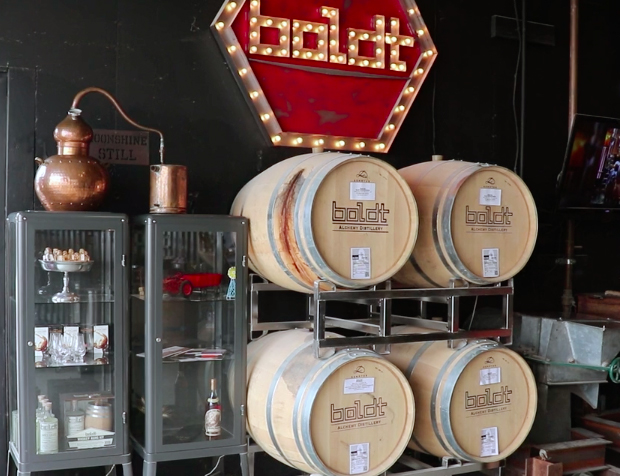
    Alchemy Distillery is located at 330 South G St. in Arcata, across from the Arcata Marsh.

    On March 31, owners Amy and Steve Bohner held their monthly Saturday open house tour of their distillery. This open house includes free tours every hour from 2-6 p.m., along with complimentary drinks for visitors 21 years or older.

    The typical tour shows visitors how their signature BOLDT spirits are made, as well as the distillery process starting from grain section to bottling and labeling.

    The Lumberjack reporter Dajonea Robinson takes you behind the scenes.

    Video by Dajonea Robinson.
  • Consuming news safely

    Consuming news safely

    Sorting through the mainstream, and now local media

    When you turn on your local news TV station, you expect a solid mix of local and national news, and a variety of messages between stations.

    The news coverage from one area to the next will differ based on location.

    What you don’t expect is to be able to watch hundreds of news anchors, ironically reading the same script, on hundreds of different channels, about the importance of varied news sources and supported communities, like the companies owned by Sinclair Broadcast Group.

    Recognizing and understanding how to sort through the news, and have a well-rounded idea of what is happening, is important to processing the information you consume. Here are two important parts of journalism and fake news you should understand when consuming information.

    Understanding journalism objectivity

    Before diving into how to fact check and navigate the media, it is important to understand that objective journalism is incredibly hard, if not impossible, to achieve.

    People are inherently biased and influenced by the world around them. Journalists do their best, however, to inform the public, simply for the sake of the public.

    However, it is equally as important to understand that when it comes specifically to the news facet of journalism, journalists study, and are taught, to present the facts of a story from either side.

    This does not mean journalists agree with the information they have been given, but instead are presenting this information to the reader or viewer with as much objectivity as they can manage.

    The Society of Professional Journalists code of ethics is one of the most prominent professional ethics guidelines journalists follow, and sets the tone for what real journalism is supposed to be. These ethical principles exist to promote clear and concise reporting with four main facets: to seek the truth and report it, act independently, minimize harm and be accountable and transparent.

    For example, mainstream media outlets being owned by giant companies allows an argument to be made that these outlets are not independent, though they should work this way.

    Consider the case of Sinclair pushing right-based opinions and scripts to their newscasters across multiple local news stations. Sinclair also released a video in an attempted act of transparency, trying to inform the public why this script was given out. Deadspin, who released the compiled video footage of news anchors reading from their script, also provides this video in order to provide more detail to their story. This style of reporting leans toward writer bias, and is a little less formal than other outlets.

    In order to rise above the many messages media on all formats is designed to present to you, start with skepticism, and then some careful consideration. Make sure you’re digesting factual information, as opposed to fake news or misinformation.

    There are websites that specifically try to sort through political fact and fiction like the website Politifact.com. Politifact aims to provide fact-checking based journalism with principles based on “independence, transparency and fairness through reporting and clear writing.”

    Fake news in itself could be considered an oxymoron. News must be factual to be news. However, as the word of the year, and the biggest threat to our democracy today, knowing when you’re being fooled is vital.

    Skepticism and careful consideration

    As declared watchdogs of those in power, and also those who abuse their power, journalism is easily considered to be shady. The idea that journalists are out to dig up dirt and expose powerful or public figures for joy is an easy mistaken thought process to fall into.

    When you hear something on the news you find to be negative or shocking, understand there are news determinants that allow journalists to consider what is noteworthy and important for the general public to know.

    We take it upon ourselves as journalists to study these determinants seriously and with practiced objectivity. Knowing trust in the media is at an all time low, we encourage you to refer to other news sources when this happens.

    Use your skepticism of what you’ve heard reported and consider other articles or broadcasts on the same subject. Different reporting might present different facts. Even after studying a variety of sources, you as a reader or viewer may only have a small piece of the picture still. We as journalists have also considered multiple sources before presenting information so we are not failing our public by reporting on rumors or false information.

    Some websites exist to make this easier for you, such as Media Bias/Fact Check. This website lists specific sites and news sources that are either politically left-biased, centralized, right-biased or left-center and right-center-biased. You can find a list of questionable sources here as well. If you see a source on this list, they may not be the most trustworthy news outlet to refer to.

    Politifact, an outlet centered around fact checking, provides a truth-o-meter that follows the specific decisions and promises of politicians by following their actions and reporting back to inform the public whether their actions align with their words.

    The sources provided here are merely suggestions and are not an end all to fact-checking sources.

    Practicing the ability to step outside your own bias and recognize that of some media outlets to compare and contrast information is important to democracy.

    Always double check where your information is coming from and who might be influencing the message.

  • Letter to the editor

    Letter to the editor

    New Student Housing Community in the Works for Lumberjacks!

    Dear Editor:

    I’m pleased to announce that The Village, a new housing choice, is in the works for students attending Humboldt State University. As you probably know, HSU currently has room on campus for only about 25 percent of the students enrolled, which has made it difficult for HSU students to find housing year after year.

    According to a report funded by HSU, the Arcata housing market is so constrained, some students sleep in their cars or camp in the woods while they look for housing. There is currently demand for roughly 800 new student housing beds in order to address students’ housing insecurity and to support their academic pursuits.

    After various inadequate attempts to increase housing options, the city is now on the verge of having the most viable new housing choice for students in many years.

    The Village isn’t just another apartment building, it is planned as a purpose-built student housing community only half a mile from campus that specifically meets students’ needs with academic amenities such as spacious study rooms, computer lab and presentation room for individual or group study and collaboration, a fitness center with on-demand fitness programs, outdoor community space and secure covered bicycle parking. The Village will also have 24-hour professional on-site management, as well as peer mentorship from resident assistants that will be responsive to students’ needs. This property will also include many sustainable features including solar power, a bicycle-share program and electric vehicle charging stations, and will be built to environmentally conscious Leadership in Energy and Environmental Design (LEED) Silver standards.

    The Village will help improve the reputation of the Arcata community by creating more healthy competition in the housing market and energizing the local economy that is largely fueled by HSU and its students, and will introduce more diversity into the housing mix to reflect the diversity of today’s students and their needs.

    Despite the many positive benefits The Village will bring to the community, there are those who are actively trying to prevent current and future Lumberjacks from making The Village their home while attending HSU.

    If you are in support of the positive housing choice The Village will offer to HSU students and the community of Arcata and want to find out more, please visit this website: https://www.thevillagearcata.com/. You can also contact the Arcata City Council and let them know you support more student housing in Arcata, especially purpose-built student housing communities like The Village.

    It’s all about choices. Your support of this project can help ensure The Village is able to offer HSU students an exciting, new place to call home, and one that HSU students deserve.

    Percival Vaz
    Chief Executive Officer
    AMCAL Equities, LLC

  • Seeing is not believing: hidden disabilities in science students

    Seeing is not believing: hidden disabilities in science students

    Every morning, Humboldt State University senior and cellular molecular biology student Shazi Saboori wakes up next to a stack of pill bottles.

    “Depending on the day, I take between 8-10 pills, including Adderall when I wake up,” Saboori said. “I then eat something small, lay in bed for 30-40 minutes and wait for the Adderall to kick in, and allow me to have access to my brain.”

    Six months ago, Saboori was diagnosed with postural orthostatic tachycardia syndrome, or POTS.

    “There’s a part of my brain that cannot regulate blood flow,” Saboori said. “This causes me to get blood pooling, have a sudden drop in blood pressure and almost faint.”

    Saboori’s body attempts to increase the pressure drop through tachycardia, an extremely fast pumping of the heart while it’s at rest.

    “At one point, my resting heart rate was 214 [beats per minute],” Saboori said.

    In addition to tachycardia, POTS inhibits the left side of Saboori’s brain from communicating with the right side.

    “In my classes, I can’t just read the book and understand the material,” Saboori said. “I take a long time to make a master study guide, and to write and rewrite the material. I still get mediocre scores on tests.”

    POTS also causes Saboori to have anemia, or red blood cell deficiency, and gastric distress, which makes eating difficult. Saboori feels frustrated when people do not acknowledge her disorder, because it isn’t visible.

    “Many people have told me, ‘You don’t look like you’re sick,’” Saboori said. “I’m not looking for pity, or for people to lower their expectations for me. I’m looking for people to understand that [POTS] is not something I can control.”

    Michelle Goldberg, another HSU senior cell/molecular biology student, has ankylosing spondilitis (AS).

    AS is a form of rheumatoid arthritis (RA), which leads to joint degradation and inflammation of the surrounding membrane. Goldberg was first diagnosed at 12.

    “For awhile, I went to a support group for people with RA,” Goldberg said. “Most of the people there were adults. I was there with my dad.”

    RA causes Goldberg to experience pain in her lower body, center of spine, hips and joints.

    “When I feel good, I go to the gym, and do a little bit of elliptical and weight,” Goldberg said. “If it’s bad, I take some Aleve and put a smile on my face. Some days, I can’t stand up straight. Luckily, this has only happened twice since I’ve been at HSU.”

    Similar to Saboori, Goldberg recognizes that an invisible disability is not taken seriously.

    “Sometimes, I can encounter people who say, ‘You’re fine.’ But really, I’m not,” Goldberg said. “You can’t see what I have until my knees are really inflamed, and turned red.”

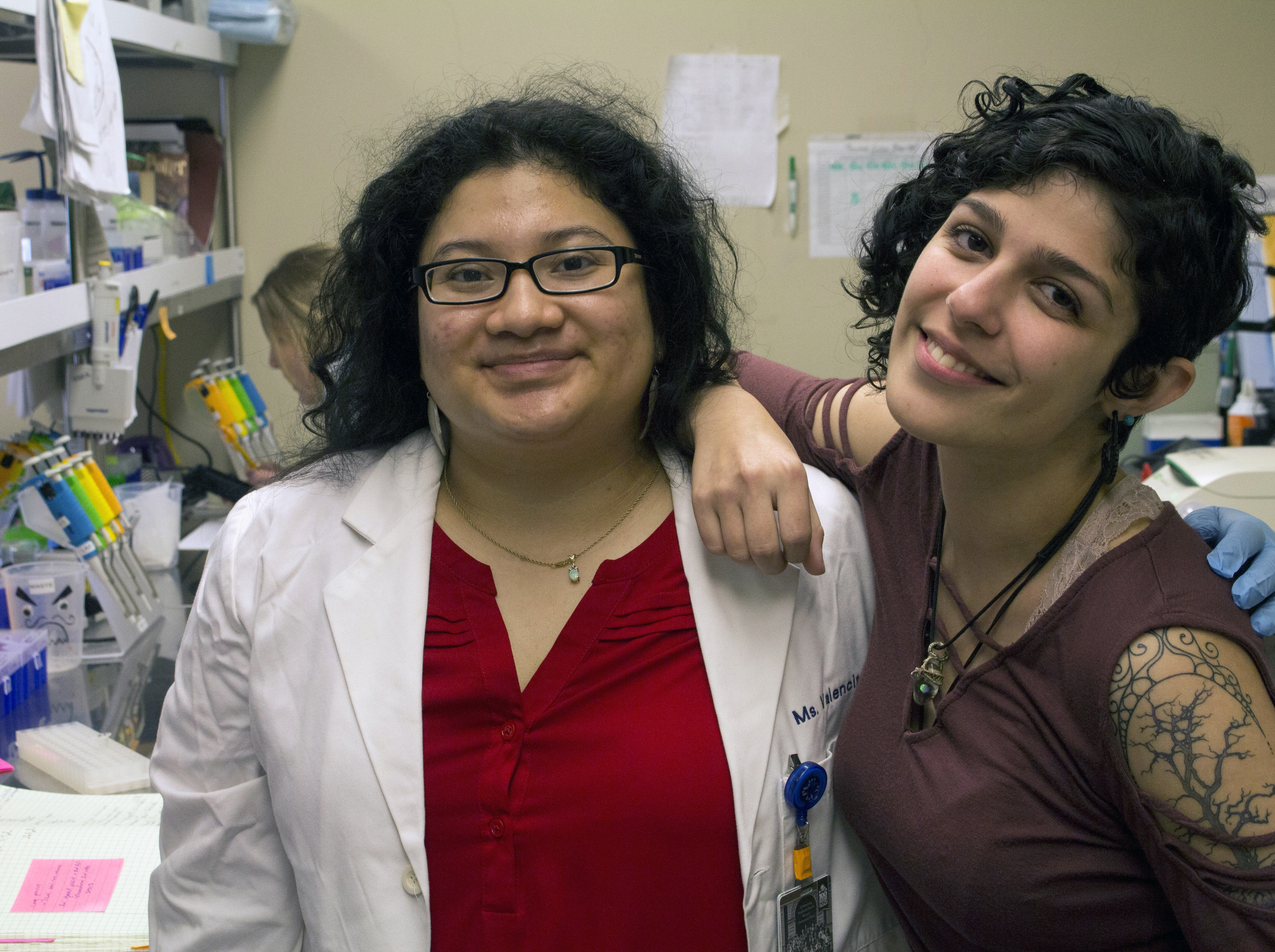
    Stephanie Valencia, also an HSU senior cell/molecular biology student, took eight years to finish a bachelor’s degree due to her hidden disorders.

    “I became friends with my microbiology teacher at my community college,” Valencia said. “She told me to get tested for a learning disability. I didn’t always have the best grade, but she believed I was a good scientist.”

    Valencia was diagnosed with a processing disorder, similar to autism and dyslexia. For people with processing disorders, learning new things takes a lot more time.

    “I wanted to know why I didn’t figure this out when I was younger,” Valencia said. “[My psychologist] said that a lot of people who are brown, like me, don’t get diagnosed until they’re in college. Elementary school teachers assume that brown students are dumb. They don’t push for students to go get tested.”

    When Valencia transferred to HSU, she began to suffer from anxiety attacks that caused her to miss classes. She was eventually diagnosed with generalized anxiety disorder, or GAD.

    “There’s a stigma about anxiety and depression in the sciences,” Valencia said. “People think that you don’t have the mental capacity to complete a rigorous program in STEM.”

    Valencia hopes to eventually become a physician-scientist in the field of neuroscience, even though the stigma around GAD could cause her some difficulty in pursuing her dream.

    “Unfortunately, people may not give you the opportunity to show that you could do it when they know of your disability,” Valencia said. “People think, ‘Oh, maybe she can’t.’ It’s the maybe that gets in the way of me being able to prove myself.”

    For more information on individuals with disability in the sciences, check out Dr. Mahadeo Sukhai and his book Creating a Culture of Accessibility in the Sciences.

  • HSU hosts CSU Native American Initiative council

    HSU hosts CSU Native American Initiative council

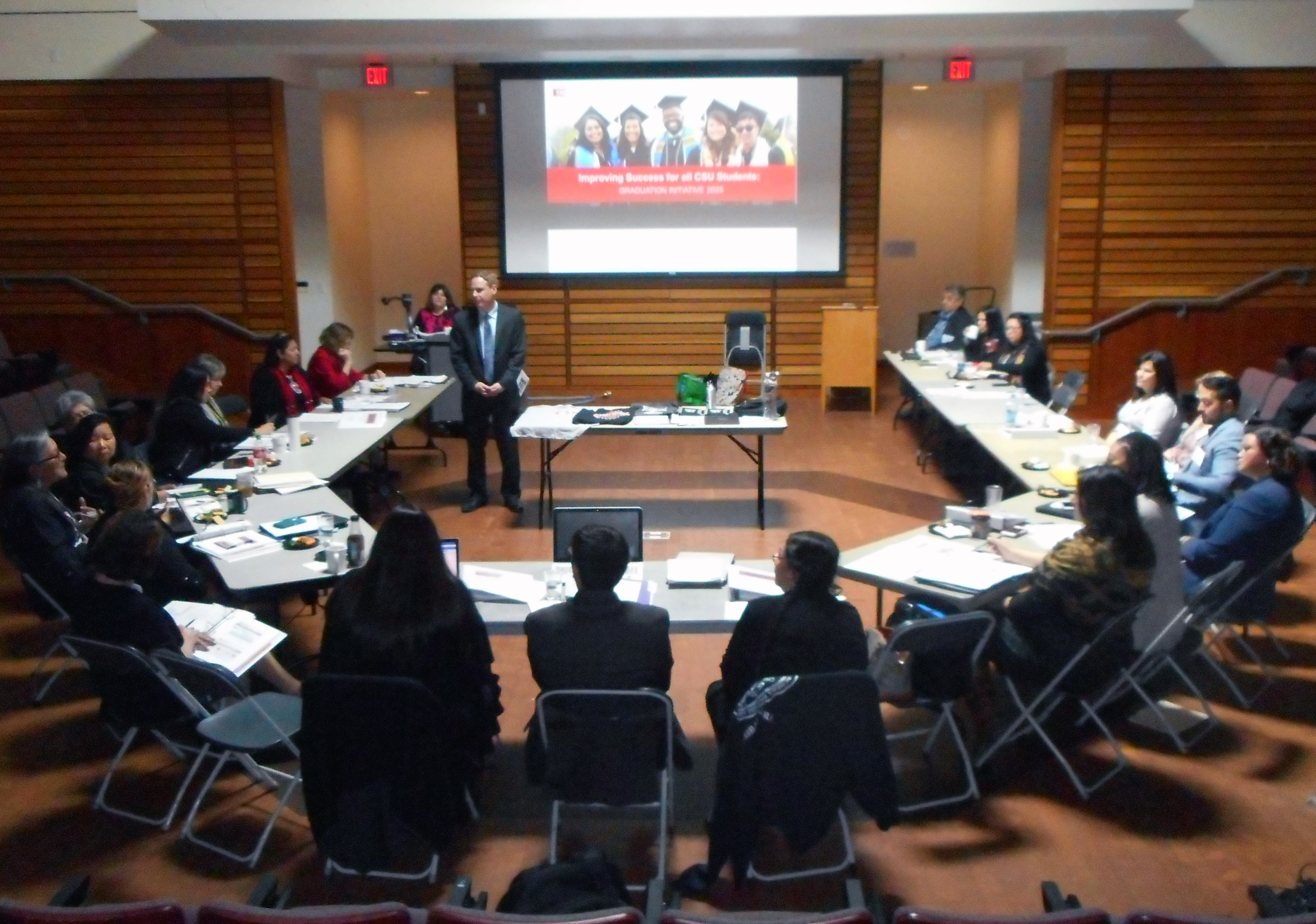
    The California State University Native American Initiative began in March 2006 as the result of a CSU summit with the representing leaders of 40 California Tribes discussing strategies to instill a pathway to higher education for Native American families. Humboldt State President Lisa Rossbacher will lead the Native American Initiative council.

    Last week, HSU hosted the California State University Native American Initiative statewide meeting in the Native American Forum on campus. Representatives from the California State University Chancellor’s Office, along with representatives from 19 of the 23 California State Universities, met with Rossbacher.

    Former HSU president Rollin Richmond was chair of the initiative, too. During that time, there were two summit meetings.

    Rossbacher was appointed by CSU Chancellor Timothy White to lead this initiative in February.

    “I am truly honored to be asked to serve as the presidential liaison with this council,” Rossbacher said.

    During the summit, Rossbacher laid out the overall goals of the Native American Initiative council.

    “One of our overall goals is to identify, share and support strategies that will help the graduation initiative [of 2025] and [Native American] student success. Strategies that will help us recruit students, retain students and graduate Native American students, and help them be successful beyond their time in the CSU,” Rossbacher said.

    Item two on the agenda was to support Native American studies research.

    “One of our goals is to engage and support faculty, staff and student research into the wide variety of fields related to Native Americans in the state and national Native American studies,” Rossbacher said.

    Another subject Rossbacher wanted to focus on was sharing information.

    “How can we share information that we are discussing and coming up with to support [Native American] student success? How do we share that with the tribal leaders throughout the state and the tribal communities? How do we share that critical information with the chancellor, his staff and the presidents throughout the CSU system?” Rossbacher said.

    The goals of the April 4 meeting were different than the overall goals of the Native American Initiative.

    The first goal of the April 4 meeting was to learn about updates and current CSU data on Native American student success, including recruitment, retention and graduation.

    “Look at the achievement gap or the opportunity gap that may be affecting Native American students on our campuses,” Rossbacher said.

    The third goal on the agenda was learning about some of the trends, practices and successes of the K-12 level and how that assists Native American students moving on to the California State system.

    The fourth goal of the meeting is developing strength.

    “Because I am the campus president, I want to be sure that you all know that there is something we are doing here at Humboldt State to accomplish those goals,” Rossbacher said.

    There are funds available from the Chancellor’s Office to support academic programming.

    “We do have funds that were established through the president’s council for underserved communities. It is a grant to the campus for academic preparation to strengthen the graduation initiative,” Maryann Jackmon of the CSU Chancellor’s Office said.

    “Funds can help students travel and see what is out in the world waiting for them after graduation,” Theresa Gregor, CSU Long Beach faculty said.

    The Tribal Liaison from the California State University of San Marcos, Tishmall Turner, is also the vice-chair of the Rincon Tribe.

    “President Rossbacher seems really genuine and sincere and she will do a good job of leading the Initiative,” Turner said.

    “President Rossbacher has been very supportive of Native American studies since she came to HSU,” Dale Ann Sherman, retired HSU Native American studies faculty said.

    The initiative will provide support to Native American faculty and students.

    “It gives you that lift to do the work. You don’t have to fight just to get to the point where someone will say go ahead,” Leece Lee-Oliver, CSU Fresno director of American Indian studies program and department of women’s studies said.

  • Struttin’ the walkway internationally

    Struttin’ the walkway internationally

    An international fashion show

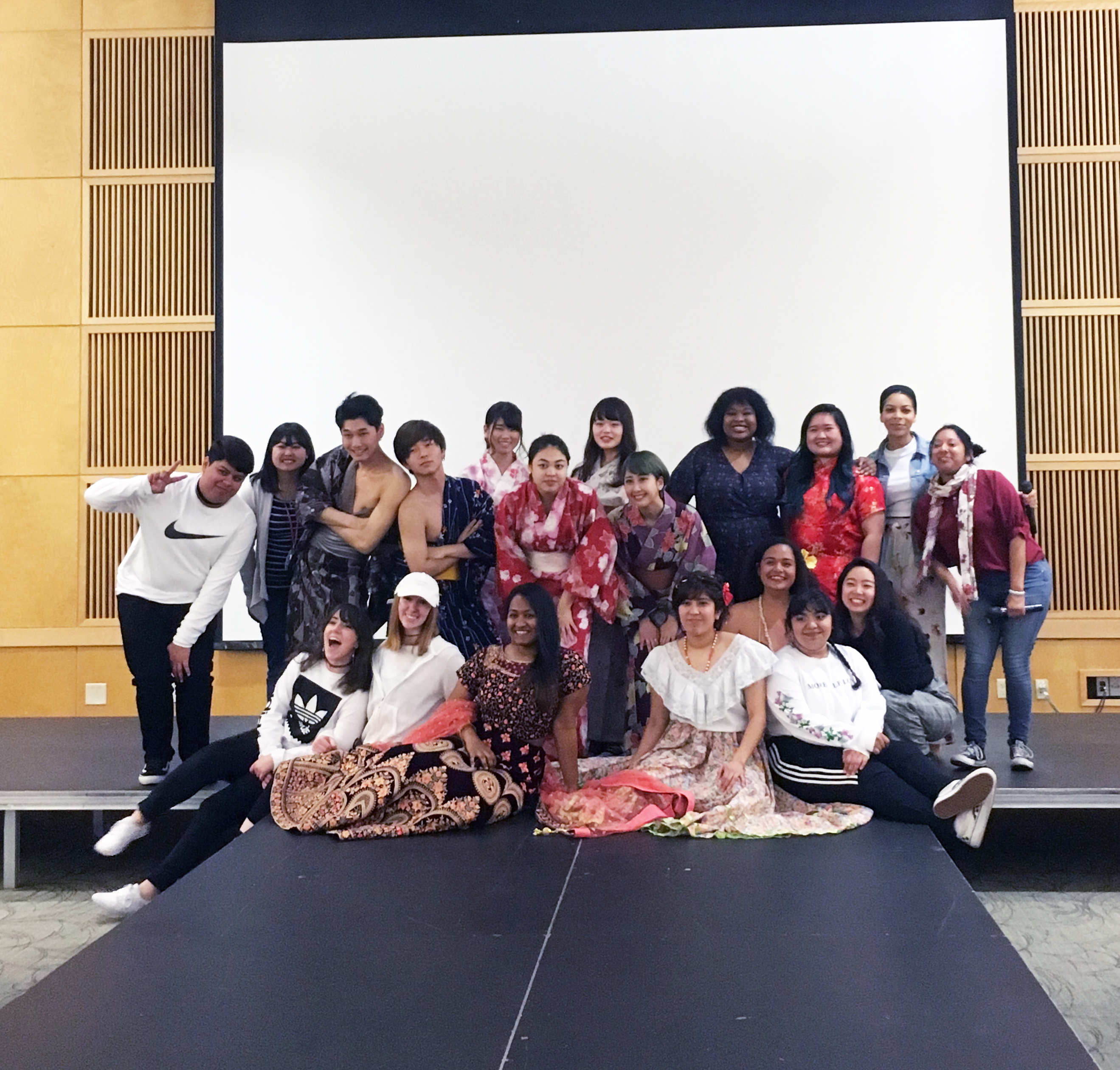
    Participants were invited to come dressed to represent their own cultural background or other cultures that interested them. Seven countries and cultures were represented with attire from China, India, Japan, Mexico, West Africa and Hawaii, as well as culturally significant and traditional dances from Mexico, Hawaii and Korea.

    Guests were greeted by Global Connections Club member and secretary Amanda Madden for the International Fashion Show at the Kate Buchanan Room on April 4. Her introductory speech highlighted the importance of inclusion and disregarding preconceived notions.

    “It is important that we sit here and keep in mind that this is a safe space,” Madden said. “We need to ignore cultural assumptions and preconceived notions regarding culture and tradition.”

    Representing her culture in dance and fashion was Humboldt State sophomore and Global Connections Club member Mikayla Kia, 20, dancing Hula ‘Aauna from Hawaii.

    “We just really wanted to put on another big event from the Global Connections Club for all the students involved, just before everyone leaves to go back home,” Kia said. “A lot of students are here with the IELI program from Japan, but it’s really sad because we just found out the program is getting cut after 30 years, and so this is the last group of students we get to host.”

    The IELI, or Intensive English Language Institute, was a foreign exchange program aimed to assist exchange students from 11 countries in acclimating to American culture and education, as well as becoming proficient in the English language. After HSU’s financial crisis was brought to light, the administration decided that defunding this program would help allocate funds to other exchange and international programs.

    “Even though it is really sad that this is the last group of IELI students, I feel like we are going out with a bang and they are all representing Japan today on the runway,” Kia said.

    Models on the runway strutted their stuff to the beat of legendary drag queen RuPaul’s hit single “Supermodel,” before stopping to talk about the cultural and familial significance behind their dress and presenting a brief powerpoint about the history.

    In addition to the fashion show, some models also took the opportunity to perform traditional or traditionally-inspired dances representative of their cultures.

    Anastina Steiber, Danny Flores, Caroline Mora and Dom Richards, members of the Global Connections Club, performed K-Pop-themed choreography to the song “As if It’s Your Last” by Korean girl group BLACKPINK. The group spent several weeks cultivating and rehearsing the choreography, which they debuted at HSU’s Lunar New Year celebration. They were inspired to do so by their love for dance and Korean culture.

    “We actually first performed this at this year’s Lunar New Year celebration on Feb. 16,” Steiber said, “and there weren’t too many people there so it wasn’t that intimidating, but today there were more people and the runway was pretty unnerving to dance on.”

    “I’m so sweaty, but that was awesome!” Richards said. “We all did so great, no obvious mistakes.”

    Mexico was also represented in dance by Daniel Gomez, 22, who performed an incredible rendition of the Jarabe in his fifth time at the International Fashion show.

    “I’ve been doing this since I’ve gotten here in 2013,” Gomez said. “I’m a dance minor here at Humboldt, and it’s pretty cool that Folklorico is taught here, but the program is definitely underfunded even though a lot of people are passionate about it.”

  • Women’s basketball reflects on CCAA title, NCAA tourney appearance

    Women’s basketball reflects on CCAA title, NCAA tourney appearance

    Fresh off a conference tournament victory and a NCAA tournament birth, it’s safe to say the Humboldt State women’s basketball team had a successful season.

    Before the season kicked off in early November, a lot of people could not have predicted such a successful year for the Jacks, much less a conference title.

    The players understood the expectations, but looked to make a statement and defy them. The team had formed a polarizing bond ever since they started practicing together, and they never looked back from there.

    “We all felt that we were a special group from the first time we met,” sophomore Tyra Turner said.

    Throughout the season, the Lady Jacks displayed a perfect match of comradery throughout the squad, and a burning desire to win. The team also had a great knowledge of their own limitations.

    “We’re a small team, so we spread the floor and try to get people to guard us outside,” junior Jovanah Arrington said.

    “I’m 5’10 trying to guard girls that are 6’3,” junior forward Isamar Conde said.

    This was on full display after they lost their first conference game to Chico State, but they responded by winning their next seven conference games.

    “Our offense struggled in the first couple of games, so we had to win games with our defense,” Conde said.

    Over that seven-game win streak, the team held opponents to just 57 points per game.

    This seven-game win streak was snapped by UC San Diego, who beat the Lady Jacks twice before facing off in the conference title game.

    After the loss to the UCSD Tritons, the Lady Jacks went 7-6 to end the regular season. This left the team’s fate for the tournament in question after such a strong start.

    However, the Lady Jacks still found themselves asking the same question over and over: why not us?

    “[Head coach Michelle Bento-Jackson] said to us before the tournament started, ‘Why not us?’” Arrington said. “We couldn’t find a reason why we couldn’t beat every team in [the tournament].”

    After beating Cal State East Bay and Cal Poly Pomona in the first two rounds of the tournament, HSU faced their toughest foe of the season in UCSD.

    The Jacks lost their first two games of the season to the Tritons, and the second game was decided by 15 points. As always, the team’s confidence did not waiver.

    “We almost beat them the first time,” Arrington said. “So why can’t we beat them again?”

    HSU went on to win the title game 76-75 in a game that came down to an Arrington buzzer beater.

    “I didn’t think too much before the shot,” Arrington said. “If I had, then I probably wouldn’t have made the shot.”

    The win helped HSU qualify for the eight seed in the NCAA tournament, which matched them up with the number one seed, Azusa Pacific Cougars. The Lady Jacks upset the Cougars 66-60 before losing to Alaska Anchorage, 81-73.

    For everyone on the team, besides Turner (who played last season for Long Beach State), this was their first appearance in the NCAA tournament. While they did not get the result they ultimately wanted, HSU gained some very valuable experience.

    “I think we surprised a lot of people,” Conde said. “It’s a great feeling.”

    With many key players returning next season, the Lady Jacks will look to build on what they accomplished this season.

    “We came so far together as a team,” Turner said. “I just think that some of us are taking this as a learning experience for those of us who are going to be back for next year.”

  • A labor of love

    A labor of love

    Humboldt Homebrew Festival

    Kristina Watson served a lot more than just beer at the eighth Humboldt Homebrew Festival on April 7 at the Arcata Community Center.

    Watson was one of seven brewers from Triple Junction Brewing, who were one of 69 groups and individuals who served their best homemade and unique beer, cider and kombucha recipes.

    For Watson’s first time pouring at the festival, she showcased a juniper based Sahti-Graha beer based off a Finnish recipe.

    “Sahti recipes are traditionally passed down from Scandinavian mothers to their daughters,” Watson said. “So this is kind of like a women empowerment beer.”

    Watson said the juniper she used to make this beer came from her grandmother’s tree, who passed away recently. She said being at this festival is always awesome and it’s neat to to get the opportunity to showcase beers and talk with other brewers.

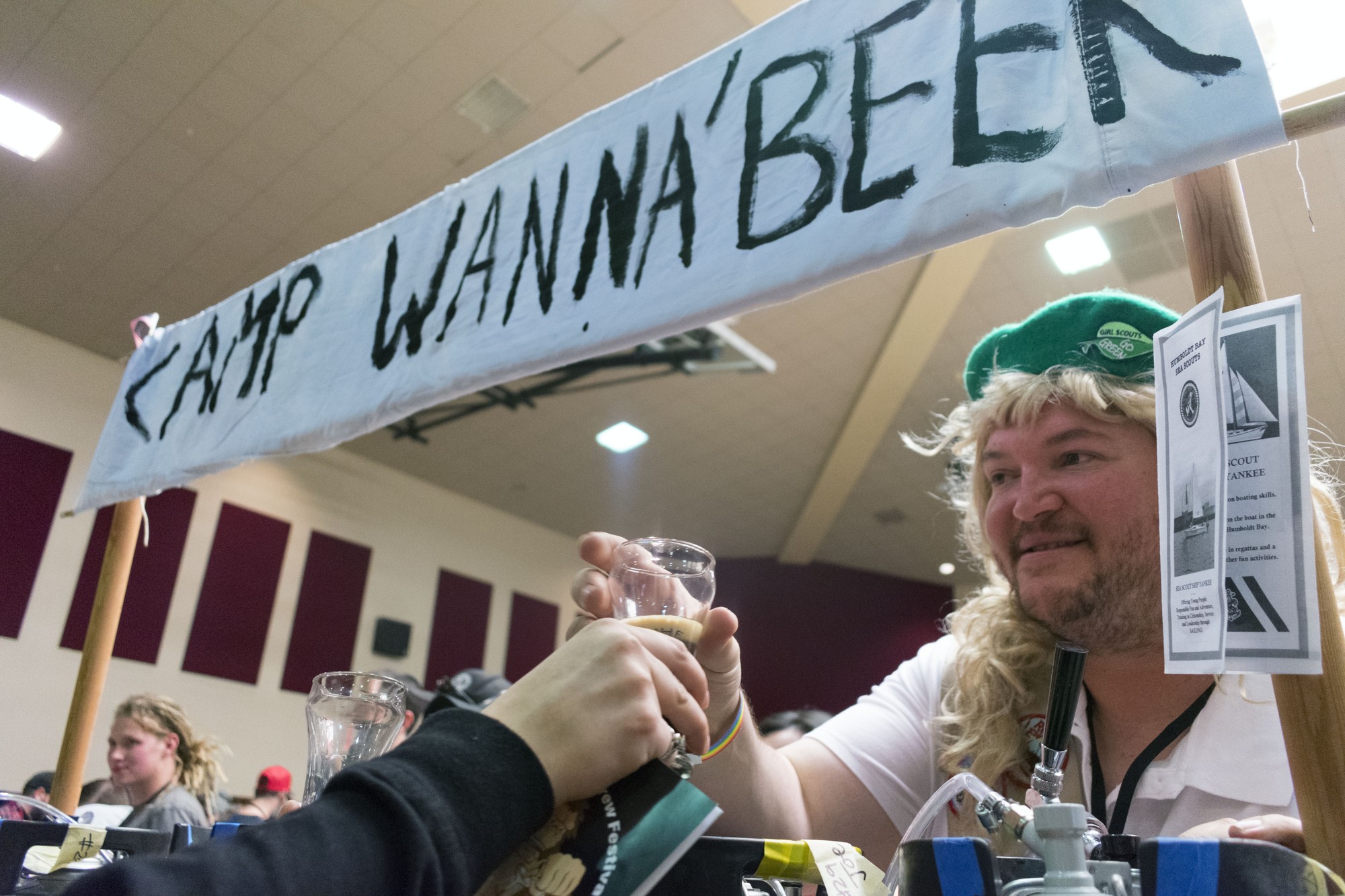
    Brewer Joseph McKinzie brought three beers based off Girl Scout cookies, and he and his crew played the part. Each pourer, including McKinzie himself, was dressed as a Girl Scout at a booth titled “Camp WannaBeer.”

    The festival serves as a benefit for the North Coast Professional Chapter of Engineers Without Borders organization in the Humboldt area. They also work directly with the Humboldt State University EWB chapter and sometimes hire students.

    EWB’s mission is to partner with developing communities to try and improve their way of life. EWB volunteer Patrick Sullivan said the festival came about as a result of a lot engineers who are also brewers combining their passions.

    “I like to tell my friends that we are turning beer into water,” Sullivan said.

    Sullivan said he is grateful for the support of the brewers and volunteers who make the benefit possible.

    Meanwhile, brewers and attendees alike enjoy the variety found at the Humboldt Homebrew Festival. Brewer Pete Carlson said the festival showcases rare beers that you’ll never find again.

    “This is my favorite festival in the area,” Carlson said. “Period.”

    Attendees like Britney Newby and Shannon Mondor dubbed this their favorite festival respectively.

    “It is a real privilege to try a homebrewer’s labor of love,” Newby said.

    Every attendee receives a meal ticket, a tasting glass and bottle caps for voting at the door. Brewers received playing cards to vote with as well. At the festival’s close, three recipes were named Best Damn Beer, Brewer’s Choice and Best Damn Cider.

    Brewer Dave Breyer and the Oh My Goodness Rye Whiskey Brown Ale won Brewer’s Choice. Brewer Ira Salmon with a Mango Sticky Rice won Best Damn Beer and Joshua Holland and John Tremblay and their New Pilgrim Pineapple Cider won Best Damn Cider.

    You can find more information about the Humboldt Homebrew Festival at http://www.humboldthomebrewfest.com.

  • Big Time inspires youth in big ways

    Big Time inspires youth in big ways

    The Indian Tribal and Educational Personnel Program (ITEPP) hosted their 11th Annual California Indian Big Time and Social Gathering event on April 7.

    Hundreds of people gathered from across California to celebrate and express their cultural heritage inside Humboldt State University’s West Gym.

    Out of those hundreds of people, in particular, were a lot of youth in attendance.

    One of the youth who attended the event was Harmony Taylor. Taylor is 8 years old, and has been dancing for four years.

    Taylor looks forward to attending Big Time every year.

    “I like to dance with the girls I grew up with,” Taylor said. “I only get to see those friends about two or three times a year.”

    Harmony Taylor smiles near the West gym at Humboldt State on April 7. Photo by Garrett Goodnight.

    Cutcha Risling Baldy, Ph.D. is an assistant professor of Native American Studies at HSU, and discussed how Big Time helps inform and empower the youth.

    “It is important because we get to show our next generations that their culture is real and a part of their everyday lives,” Risling Baldy said.

    Arya Mettier, Ph.D., Risling Baldy’s daughter, was also in attendance, and partook in the Women’s Coming of Age demonstration that her mom and many others have been working to revitalize.

    “There’s a lot of people, and you can get a lot of stuff,” Mettier said. “I get to see a lot of different cultures.”

    Sammy and Jon Luke Gensaw are two brothers who have also been inspired by this event ever since they can remember.

    “When I was younger, this was a go-to thing,” Jon Luke said. “I would see people that I haven’t seen all year.”

    The Gensaw brothers created their own non-profit organization, the Ancestral Guard. Through the Ancestral Guard, the Gensaw brothers are able to make direct action on a local and global scale. They recently returned from visiting and speaking at Yale University.

    There were over 60 vendors in attendance along with live demonstrations, a food stand and a catering food truck Los Giles.

    One of the highlights was by far the food. The popular choices were fry bread and Indian tacos, with a line wrapping around the building all day long.

    A restorative vendor at the event was the Indigenous California Language Survival booth. One of the organizers of this booth was HSU assistant professor in Native American Studies, Kayla Begay, Ph.D.

    At this booth, kids were encouraged to share a word in a native language to win a prize.

    “Even if you’ve never heard a native language before, we encourage the children to learn today,” Begay said.

    Humboldt State ITEPP alum Briannon Fraley explained that Big Time gives her children the opportunity to see other cultural representations.

    “Living in a multicultural society, your identity gets lost, and it’s hard to engage,” Fraley said. “This event instills pride and promotes cultural identity.”


  • Rallies at the State Capitol for sufficient CSU funding

    Rallies at the State Capitol for sufficient CSU funding

    Students, faculty and allies of the California State University system from all 23 campuses made the journey to the State Capitol to send Gov. Jerry Brown a message, it is time to fully fund the CSU.

    Video by Dajonea Robinson.

    Allison Rafferty is a biology major and was one of many students who came down on a bus from Humboldt State to join the demonstrations on April 4. Rafferty rode down to represent HSU and to call for funding for the CSU system.

    “I request Gov. Brown to consider opening the fund that he’s allocated for CSU,” Rafferty said. “The CSU requested money and Gov. Jerry Brown approved a third of that. Right now, they’re in revisions. In May, they’re going to post their revisions and in June, they’re going to propose the final budget that goes to a vote.”

    Rafferty hopes more funding will come through so people in her major and others will be able to get classes and graduate on time.

    HSU student warns others of the potential outcome of funding crisis. Photo by Dajonea Robinson.

    Jacqueline Delgado is also an HSU student. Delgado decided to come to the Capitol to stand in solidarity with everyone and to get justice for Josiah Lawson.

    “I’m also here to get [Justice for Josiah] and this unsolved murder to be recognized. It is an unsolved murder of a fellow student that was murdered a year ago in Humboldt County,” Delgado said. “The school and the county does not recognize that this happened. It has been an entire year that nothing has been happening and we’re trying to get this movement to be heard. We will no longer be silenced.”

    David Bradfield is the California Faculty Association representation chair and board of directors member who now lives in Humboldt County. Bradfield spent 34 years teaching music and digital media arts at CSU Dominguez Hills. Bradfield decided to take the trip down to the Capitol.

    “I care very deeply. I spent 34 years teaching at Dominguez Hills and I care very deeply about the mission that we do, the people that do that mission and the people that we serve,” Bradfield said.

    Reza Sadeghzadeh is a communications major at HSU. Sadeghzadeh traveled with his peers to the Capitol from HSU to express concern of the insufficient funds of the budget.

    “Since they cut the whole CSU budget, we’re going to see a tremendous negative effect on our campus. A lot of professors are being laid off, activities and cultural centers are being defunded, so it’s a very serious issue,” Sadeghzadeh said. “The governor really needs to understand that the students here and the students in the CSU are the future of the welfare of California. In order to thrive as a state, we need to take care of the foundation, which is the students.”

    HSU students not only stand in solidarity with fellow CSU peers during the rally, but demand justice for their fellow student. Photo by Dajonea Robinson.

    Elizabeth Phillips is a student on campus who also came down on the bus from HSU.

    “Students like me who need an education are about to be priced out of our education. Education is not for the people, it’s not supposed to be free. They don’t want us to get an education so we’re stuck working the remedial jobs,” Phillips said. “We need to see more people of color being a part of the faculty. The only way we’re going to get there is if we can afford to get in the door. I’m $25,000 in debt just from two years at HSU. That’s a lot of money, and for other students, I don’t want them to take on that burden. So I’m here for the future, and I’m here for me, now.”

    Phillips works for the Multicultural Center as the social justice summit co-coordinator. Phillips is also a part of a loose coalition of students who started the walkout for WASC to protest the budget cuts.

    “I worry that if we give the CSU full funding for free tuition, the students will get it for the first couple of years, but then after, people get greedy and start skimming the surfaces,” Phillips said. “I’m happy that we’re here, but I want people to keep a watch and understand we don’t need as many administrators as we have. We need more students and faculty, counselors–there’s other stuff that we need that we’re just not allocating our resources correctly. Everyone needs to watch out for the future.”

  • Justice for Josiah rally

    Justice for Josiah rally

    On April 5 at 1:30 p.m., students at Humboldt State left class to attend a rally on the UC quad in remembrance of David Josiah Lawson, a student who was stabbed to death at a party in Arcata almost a year ago.

    “It’s been a year, and that is fucking ridiculous,” Barbara Singleton, president of the Black Student Union at HSU said.

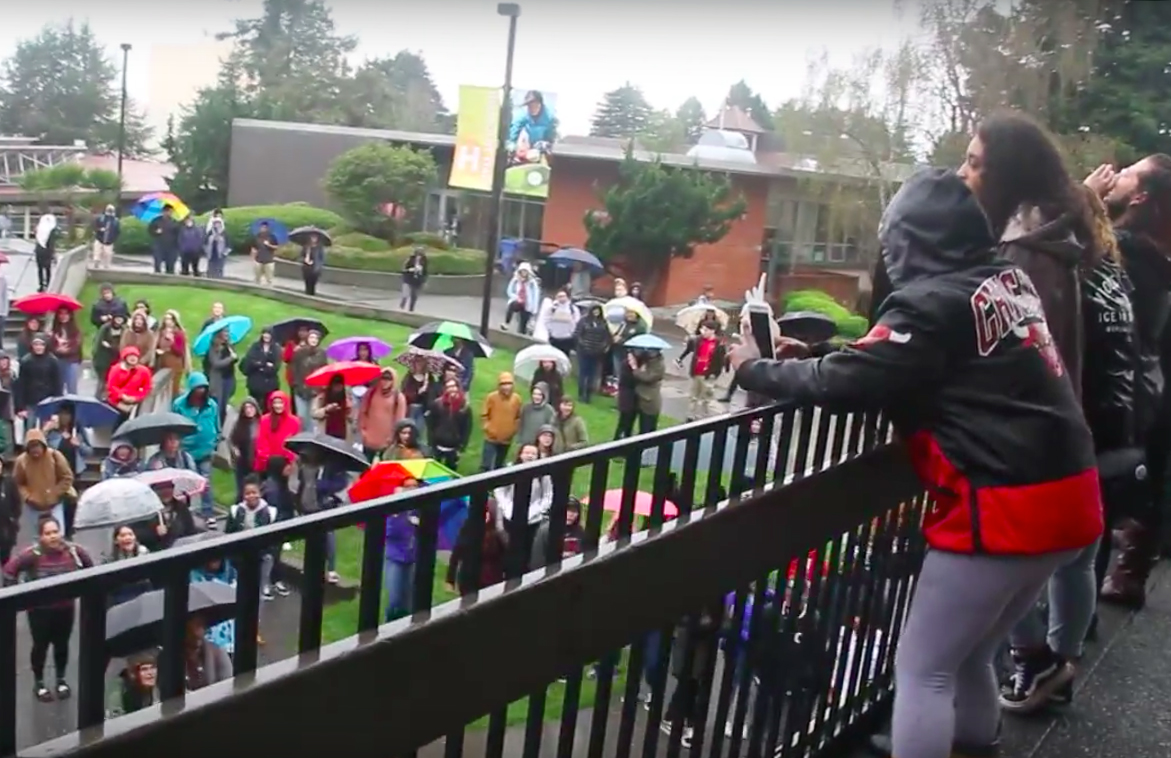
    Singleton stands on the second floor of The Depot, surrounded by a crowd of students who all left class as a part of the student-led walkout for safety in honor of David Josiah Lawson. The rain pounds down relentlessly, seemingly undetturent to all in attendance. The walkout is a part of 12 days of events being hosted in honor of the anniversary of Lawson’s unsolved murder.

    Video by Surya Gopalan.

    A year ago at a party in Arcata, Lawson, a black HSU student, was stabbed to death. There are currently no persons in custody. Students walked out of class at 1:30 p.m. on April 5 to be present at the 2 p.m. rally to bring justice to Josiah and demonstrate for student safety.

    Kalyn Garcia, 18, social work major, left class to be present at the rally.

    “I think that it is way bigger than Josiah,” Garcia said. “Any black, Mexican or children of color should not be concerned to leave their house.”

    As the rally began, two students, Singleton, as well as Daniel Segura, 23, a critical race, gender and sexuality studies major, began leading the rally. They began by explaining there have been rumors about the Justice for Josiah movement being involved in illegal or destructive activities, and that they do not condone any violence or illegal actions.

    Angel Sylva then performed a poem she wrote for Lawson, which will be performed again on the vigil held for Lawson on April 15.

    “If it happened to one of us, it can happen again,” Sylva said.

    With no sound equipment available to students after 1:00 p.m., due to campus policy, Sylva projects her voice as her only tool to spread her message to students.

    Students then began calling out the members of administration in the crowd. Alex Enyedi, the provost of HSU, as well as Wayne Brunfield, the interim vice president of Student Affairs, were two of the members of administration in attendance.

    “They have been silent this whole 12 months,” Singleton said.

    Singleton directly addressed HSU administration, the Arcata city council and the police department.

    “They have blood on their hands,” Singleton said.

    The crowd screamed for administration to speak, one individual saying, “It’s fucked up for you to be here and not say anything.”

    Eventually, Enyedi took the stage after much student call-out. He thanked the crowd for the opportunity to speak, then began.

    “Students are told you need to be patient, but I get it. How long should you be patient for?” Enyedi said. “I share your frustration, I share your impatience. It shouldn’t take this long.”

    Enyedi is not the one the students want to hear from. The question on everybody’s mind is where is Lisa Rossbacher, president of HSU? Students call out to Enyedi, demanding answers.

    “I’ll tell her you’re unhappy she isn’t here,” Enyedi said.

    A voice from the crowd screams, “We aren’t unhappy, we’re angry!”

    President Rossbacher never showed up.

    Brumfield was not getting away with silence either. Singleton and Segura called from the stage, “Wayne, where are you?”

    Brumfield did go up to the stage and approved students to use a megaphone, but never addressed the crowd. Many continued asking why he did not speak.

    When asked, Brumfield spoke of a racial equity plan he says he is currently working closely with students on. He said students deserve a voice in how equity and inclusion are happening in the community.

    “We’re working with the two chiefs of police, students and community members to look at policies of police reacting to students, both on and off campus,” Brumfield said. “I think we are moving in the right direction.”

    As the rally continued, a song written about Josiah was performed and then different chants were yelled throughout the crowd.

    The event coordinators then relayed the message of future events and concluded the event, inviting students to continue their activism and presence in the coming weeks.

    “The Justice for Josiah movement is very peaceful,” Singleton said.

    At one point in the rally, a group of people visiting for spring preview walked past the UC quad.

    “Anything they tell you will not justify his murder,” Segura said to the passersby.

    Segura, being in his 10th semester at HSU, he says he has seen how the administration deceives students. He said HSU goes down south and recruits students of color without disclosing the violence toward people of color that has happened in the area.

    “How are we supposed to welcome students of color when they trick you?” Segura asked.

    This article has been updated from its original version on Monday, April 9 at 5:58 p.m.

  • Humboldt State alum Lynette Zelezny becomes first female president of CSU Bakersfield

    Humboldt State alum Lynette Zelezny becomes first female president of CSU Bakersfield

    Humboldt State University alumna Lynette Zelezny was recently appointed as the first female president of California State University, Bakersfield.

    Zelezny will be the 12th woman added to the current list of 23 CSU presidents, officially making female presidents the majority.

    “It’s an amazing honor,” Zelezny said. “This is a really big deal for such a large system. I am modeling to women that there is no ceiling. We just smashed it.”

    Zelezny earned both her bachelor’s degree in psychology in 1979 and her master’s in 1981 from HSU. Zelezny remembers her time at HSU fondly. Not only is it where she met her husband, but also she was mentored and nurtured academically.

    Zelezny said it was her time studying with psychology professor Mary Gruber, Ph. D. that changed her life. Zelezny took statistics with Gruber, and eventually became her teacher’s assistant.

    “She was kind and encouraging in helping the students develop their skills,” Gruber said. “The students expressed great appreciation for her guidance and inspiration.”

    Gruber worked at HSU from 1974 to 2008, and recalls how much she enjoyed working with Zelezny as a student, as an advisee and as her teacher’s assistant. Gruber said that Zelezny helped tutor a group of international students, and worked very closely with a blind student, coming up with creative ways to graph and manipulate data.

    “Lynnette’s positive energy, dedication, expertise, insight, caring and collegiality are clearly beneficial for those she works with, and serves,” Gruber said. “The students and faculty at California State University at Bakersfield will be very fortunate to have her guiding and inspiring them as their president.”

    Kauyumari Sanchez is an assistant professor of psychology at HSU who attended California State University, Fresno to finish her undergraduate degree, and has known Zelezny since 2003.

    Sanchez said that Zelezny served as a mentor, helping guide her through applying to grad schools and providing tips for success. Sanchez said Zelezny’s ability to work with others, and her adaptability, set her apart in her field.

    “I would say I owe a lot to her,” Sanchez said. “She was really quite honest about some realities of being a woman in this field. She prepared me mentally for that expectation.”

    Chris Aberson is a professor of psychology who said that he thinks Zelezny helped him get his job at HSU.

    “When I was scheduled to interview at HSU in 2000, I reached out to Lynnette, as I knew she was an alum. She immediately emails one of the professors on the search committee to provide an informal reference,” Aberson said. “I have a feeling that her kind words have something to do with me being here.”

    Zelezny’s position as president will commence on June 30.

    Zelezny currently serves as the provost and vice president for academic affairs at Fresno State. This means she is in charge of faculty hires and development of new academic programs, among other things.

    Zelezny said that she feels it is her consistent involvement with her students that makes her a unique leader.

    “It’s a privilege to serve students in a bigger way,” Zelezny said.

    Zelezny said an important part of her role is to understand diversified funds. These are multiple ways a university can make revenue, through grants, self-support, such as extended education, and gifts from alumni and friends.

    When asked about Humboldt State’s budget crisis, Zelezny said that while the entire CSU system is facing budget cuts, understanding the different ways to obtain funding is more important than ever.

    Zelezny said that she supports students’ rights to protest, and encourages them not to lose optimism, or hope.

    “We hold each other up in times like these,” Zelezny said. “Your voice should be heard, and that should be encouraged.”


  • Power of protest in pursuit of peace

    Power of protest in pursuit of peace

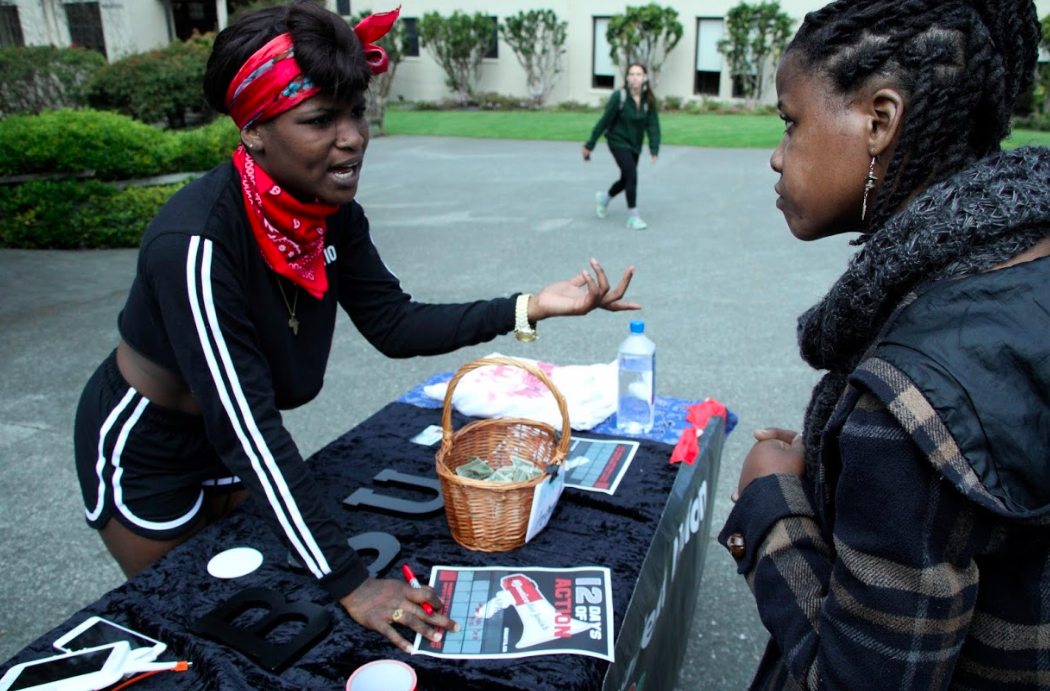
    With the song, “JUSTICE FOR JOSIAH (RIP)” by Oboy Flocka playing in the background, sophomore criminology student Barbara Singleton stood near the front of Siemens Hall with pamphlets, spreading awareness on the events planned for the following 12 Days of Action.

    “The university needs to commemorate the death of Josiah so we can get a mural or a plaque with his face,” Singleton said. “We’re asking the university to put up a legal fund to help out his mom.”

    Humboldt State University students are organizing a 12-day plan of action to gain national attention and investigative help to assist the process of bringing justice for the murder of 19-year-old, David Josiah Lawson.

    As the one-year anniversary of Lawson’s death approaches, students, family and friends continue to grieve over the lack of acknowledgment and support from surrounding members of the community, and most importantly the university.

    Humboldt State students stand together to bring awareness to the case of David Josiah Lawson on April 4, 2018. 
    Video by Garrett Goodnight. 

    Do not confuse the university’s scripted statements with signs of actual progress.

    The lack of support and desirability to create change within the university’s setting reflects the mere comfort within the administration and presidential office. The lack of motivation to bring awareness to Lawson’s case demonstrates that the university may not actually support the students’ movement at all.

    Current race relations surrounding our campus environment is met with “optional” racial awareness training for students.

    By making this type of training optional, the campus is refusing to take responsibility for the perpetuation of racist behavior, and by refusing to mandate this training in every department.

    The ability to brush over racial tensions on and around our campus, staging it as an optional training, makes it easy for the university to trap new students of color in its institution, making them believe that our campus is a perfect, safe-haven for incoming freshmen and transfer students.

    Even though the campus may claim that the university is inclusive, they do not inform students about the murder of Lawson before recruiting them here.

    Freshman student, Marianna Baines, was frustrated with the university. She was not informed about the murder of Lawson before she transferred to HSU.

    “I wasn’t told the truth,” Baines said. “If I knew about this, it would have given me more clarity.”

    When it comes to voicing their opinions, students do not shy away from expressing their true feelings about the institution and what it is lacking.

    Student organizer, Vanessa Cota explained that protests are extremely powerful in the sense that they are inspirational movements.

    “It matters that people get their voice out there,” Cota said. “Protests can mobilize people, that’s where the power of protest is!”

  • 2018 MLB season preview

    2018 MLB season preview

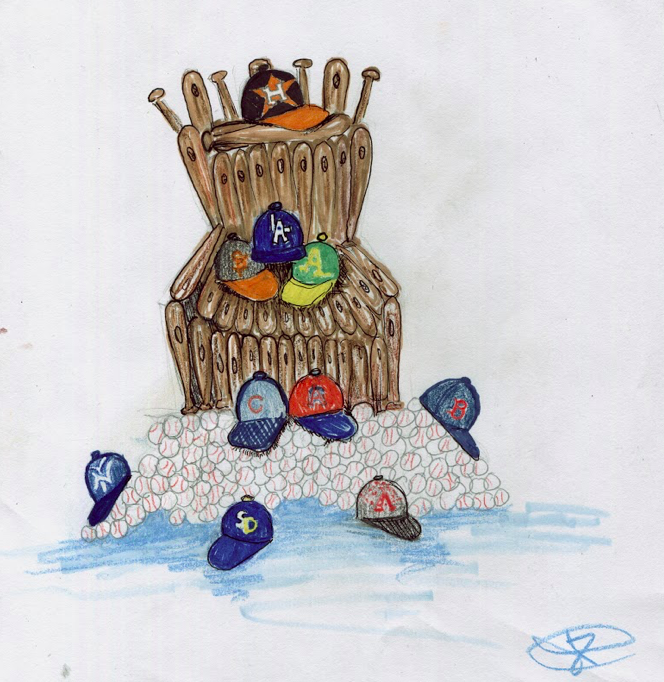
    The wait is finally over as the 2018 Major League Baseball regular season kicked off on March 29 after one of the most busy off-seasons in recent memory.

    Key Additions:

    1. Shohei Ohtani – Starting Pitcher/Designated Hitter (Angels)

    2. Giancarlo Stanton – Outfielder (Yankees)

    3. Marcell Ozuna – Outfielder (Cardinals)

    4. Christian Yelich – Outfielder (Brewers)

    5. Jake Arrieta – Starting Pitcher (Phillies)

    6. J.D. Martinez – Outfielder/Designated Hitter (Red Sox)

    7. Andrew McCutchen – Outfielder (Giants)

    8. Evan Longoria – Third Baseman (Giants)

    9. Yu Darvish – Starting Pitcher (Cubs)

    10. Eric Hosmer – First Baseman (Padres)

    Most Improved Teams:

    1. Minnesota Twins – The Twins were considered about a year or two ahead of schedule when they snuck into the second wilcard spot in the American League last year and finished with an 85-77 record. Minnesota is flooded with young talent, which is led by centerfielder Byron Buxton (.253 16 hr 29 sb) and third baseman Miguel Sano (.264 28 hr 77 RBI). They also have some good veteran presence in Brian Dozier and Joe Mauer to help even the lineup out.In addition, they added pitchers Lance Lynn and Jake Odorizzi to a rotation that already included Ervin Santana and budding star Jose Berrios. A division title seems unrealistic this season due to the talent of the Cleveland Indians, but look for the Twins to fight for a wildcard spot once again.
    2. New York Yankees – The Yankees added National League Most Valuable Player Giancarlo Stanton (59 hr), third baseman Brandon Drury and second baseman Neil Walker to a team that took the World Series champion Houston Astros to seven games in the ALCS.Their lineup was already dangerous, and adding Stanton to the middle of the lineup with the reigning American League rookie of the year Aaron Judge (52 hr 114 RBI) and catcher Gary Sanchez (33 hr 90 RBI) could be deadly. They will certainly be in the hunt for an American League East title and will likely battle it out with the Boston Red Sox for the entire season.
    3. Philadelphia Phillies – The Phillies made a last second headline in March by signing Jake Arrieta to be the ace of an already talented rotation. Arrieta is one of the top right-handed pitchers in the league and will be accompanied by Aaron Nola (3.54 ERA, 184 strikeouts), Jerad Eickhoff and Vince Velasquez.Nola is obviously the headliner there, but don’t sleep on the other two. They are both in their mid-20’s, and have the stuff to be great complimentary pieces in a major league rotation. Their lineup is full of prospects that are either ready to burst onto the scene or already have: Rhys Hoskins (18 hr in 170 at-bats last year), J.P. Crawford, Scott Kingery. Newly-signed first baseman Carlos Santana, Odubel Herrera and Maikel Franco will fill out the lineup, making Philly a dark-horse playoff contender this season.

    Sleepers:

    1. Jose Berrios – Starting Pitcher (Twins): The right-hander has a devastating combination of a running fastball that touches 100 mph and a slider that hitters cannot seem to touch when they are on. Berrios has the potential to be one of the top pitchers in the game and it is only a matter of time before he puts it all together for a full season.

    2. Ronald Acuña – Outfielder (Braves): The only reason Acuña isn’t on the big league roster to begin the season is that the Braves are waiting 13 days in order to push his impending free agency back one season, just as the Cubs did with Kris Bryant during his rookie season. Acuña is considered a five-tool player and is expected to have the same impact that Mike Trout, Bryce Harper and Bryant have had on their respective teams in recent years.

    3. Gleyber Torres – Infielder (Yankees): The Yankees added a couple of infielders in the offseason in order to bridge the gap for the impending call up of Torres, but if he can continue to produce at a high level in the minor leagues, then he will definitely force the Yankees hand. Torres is another five-tool player that can do it all, and his bat is tremendous. Don’t be surprised if he is a key part of the Yankee’s playoff run by the end of this season.

    The teams to beat this season are surely the Dodgers and the Astros in their respective leagues, as neither lost any key players this offseason (and the Astros actually added a potential all-star in Gerrit Cole).

    In the NL, the Cubs and Nationals seem like the only other championship contenders as of now. They are both in win now mode and have the same cores in place as last season.

    The AL playoff race should be more interesting, however, as the Yankees, Red Sox and Indians all have the talent to take down the Astros.

    However, it is a 162-game season and a lot can happen. Don’t be surprised to see some of those sleeper teams sneak into the playoff race.

  • Protect your profile

    Protect your profile

    In light of data breaches, maintain some privacy.

    Facebook gives away your information. Twitter, Instagram and Google do it too. So do most of your other social media apps and websites.

    Everything you search, click or talk about ends up being sent somewhere to someone and it’s usually to advertisers, sometimes it is to a political research company like Cambridge Analytica.

    After the Cambridge Analytica breach of Facebook information of over 50 million users, the time to understand your Facebook settings is now. Social media is a giant presence in our daily lives and though taking back some privacy seems difficult, it is not impossible.

    According to the Guardian, Facebook used to be able to ask for your information, but it really has access to all of your friends’ information as well, just by taking a quiz. They no longer allow this to happen, but you can still make sure you’re not sharing more than you want with others.

    “That means that around 300,000 people could sign up for a personality test quiz, and in the process hand over information of 150 times that number,” The Guardian article said.

    The Guardian goes on to explain that you’re probably handing over more information than you bargained for, even though they no longer mine you for your friends’ information.

    When you sign into your Facebook account, go up to the top right of your screen and hit the drop-down arrow. In that drop-down menu, click on settings and find your “Apps and Advertising” pages on the left hand side.

    This is where you can control some of what you share with advertisers and pages that are data mining your info, and still find out which Gilmore Girls character you’re most likely to fall in love with.

    On the apps page, sort through the lists of apps accessing your info and change permissions or delete access entirely. On this page you can also change how you interact with these apps, pages and games that ask for you information as well as change privacy settings on older versions of Facebook. You can also deny pesky game request notifications here as well.

    Accessing the ads page will neatly lay out the information ads are using to cater to you, what business you’ve interacted with and what ads you do or don’t want to see. Spend some time checking out these settings, and figuring out what does and does not bother you.

    If you’ve got extra time, Facebook also has an informational page on why advertising is important and what advertisers are looking for when they get your information. There are more options here to adjust your advertising experience.

    The reality is, escaping social media data mining is difficult for a generation who is always tuned in and constantly sharing. These are some options on how to combat your information from being too available on Facebook, and protecting what Facebook does and does not offer to third parties.

    Just like writing something on paper, the internet is permanent. You can remove your information from your profile as well, but these social media apps and programs will still have this information on file.

    A more extreme and definite alternative? Delete Facebook and your other social media apps. We as journalists do not fully stand behind deleting social medias in order to stay informed.

    However, we believe there are benefits to maintaining privacy or removing yourself from social media. We also understand it is difficult to remain informed in today’s digital era when you make these decisions.

    Explore the settings in other social media apps, and discover how much of you they are giving to outside companies and take back some of your privacy.

  • Cannabis industry faces new era

    Cannabis industry faces new era

    Cannabis town hall.

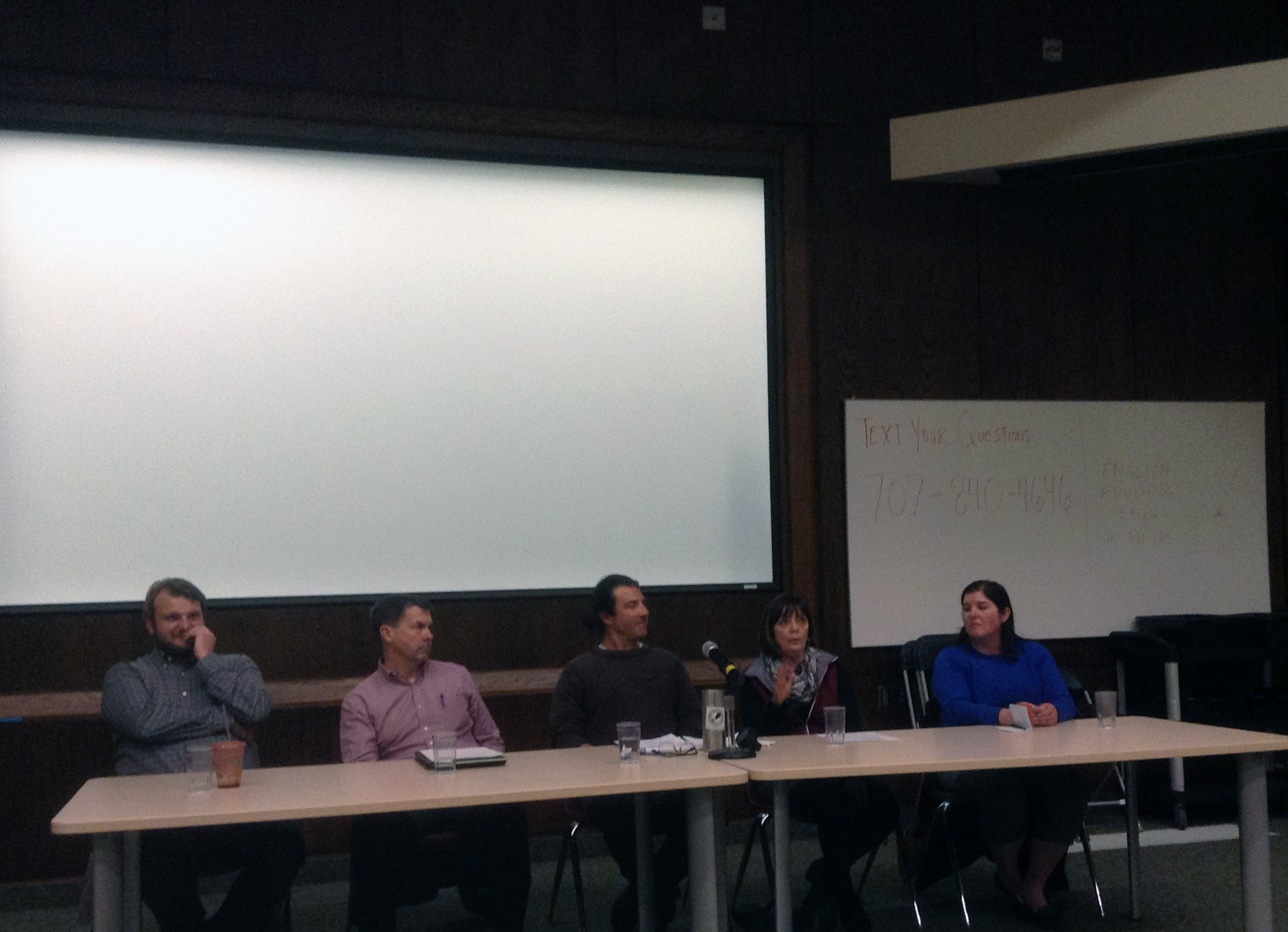
    The Humboldt State Department of Politics hosted the 14th annual Schaub Memorial Lecture on local politics titled “The Transition to Legal Cannabis,” on March 26. John Meyer, the chair of the HSU politics department, presided the panel discussion.

    The four panelists were Hezekiah Allen, executive director of California Growers Association; John Ford, Humboldt County director of planning; Mariellen Jurkovich, director of Humboldt Patient Resource Center and Linda Stansberry, a journalist at the North Coast Journal.

    Tony Silvaggio, HSU sociology professor and Humboldt Institute for Interdisciplinary Marijuana Research contributor, served as the moderator.

    The California voters approved the Adult Use of Marijuana Act on Nov. 8, 2016. The California state legislature approved the Medical and Adult Use of Cannabis Regulation and Safety Act in 2017. However, local and city governments can ban cannabis business within their jurisdictions. In Jan. 2018, the state of California licensed marijuana facilities sold state licensed, distributed and produced marijuana.

    “Certainly the transition from illegal, unregulated to regulated, legal cannabis in the state of California is a very complex one that is riddled with all sorts of political considerations,” Allen said.

    Three California state departments are in charge of licensing and regulating cannabis commerce. The California Department of Consumer Affairs regulates and licenses retail sales, distribution and testing. The California Department of Public Health oversees manufacturing and the California Department of Food and Agriculture is responsible for cultivation.

    “First and foremost, California grows way more cannabis than we consume here. The state’s estimate is that we produce 15 million pounds and that we consume 2.5 million pounds. That is a huge disparity,” Allen said.

    John Ford is an HSU alumnus. Ford talks about cannabis farmers expectations being part of the legal system.

    “I think [the farmers] expectations were that ‘It shouldn’t be too hard to permit what I have already been doing,’” Ford said.

    Cannabis farmers found out about local taxes, state and county permits.

    “2,300 applications that were submitted to the county almost simultaneously, literally choked the system,” Ford said.

    The local community and economy are reliant upon cannabis.

    “Then, there’s Humboldt County, who has an economy to protect, a reputation and an identity to protect. This industry is important for jobs, for economic growth and yes, taxes,” Ford said.

    Ford spoke about other places in California being better suited for cannabis cultivation with flatter land, pre-existing greenhouses and better weather, places close to markets and transportation with abundant access to investment capital.

    Mariellen Jurkovich talked about working together as a community.

    “Arcata is willing to work with you. Eureka is willing to work with you. We need to work together as a community. This is our industry,” Jurkovich said.

    Stansberry is concerned about the economic ramifications that were not anticipated.

    “We are going through a really painful growth period,” Stansberry said.

    Nick Thomas is a political science major at HSU and thinks slowing big business down will help the local economy.

    “We need to make sure that a lot of the major industrial-sized grows get pushed back for five years. That is step number one,” Thomas said.

    Thomas referred to Allen’s statements on the importance of small farmers and how it is about the community.

    Allen spoke about policy, cultural and financial barriers.

    “Honestly, folks don’t have the means to move forward,” Allen said.

    Allen pointed out that the market incentive is not there.

    “Of 2.5 million pounds of cannabis consumed in state in California, only 600,000 pounds are sold by regulated retailers. The other 1.9 million pounds of cannabis consumed in state is sold on the unregulated market. There is no point in getting a license now. The market isn’t there,” Allen said.

  • This week in sports history

    This week in sports history

    April 6, 1973 – The Pittsburgh Pirates retired outfielder Roberto Clemente’s number 21 jersey. Just months after collecting his milestone 3,000th hit, Clemente boarded a plane from his native Puerto Rico to deliver relief aid to earthquake-stricken victims in Nicaragua.

    Tragically, Clemente passed away when his plane crashed into the Atlantic Ocean soon after takeoff. The Baseball Writer’s Association of America voted to waive the five-year waiting period to get into the Hall of Fame for Clemente and posthumously elected him for induction March 20, 1973.

    April 8, 1974 – Atlanta Braves outfielder “Hammerin” Hank Aaron hits his 715 home run off the Dodgers’ Al Downing to break Babe Ruth’s longstanding home run record. Aaron would hit 40 more home runs over the course of his baseball career, leaving him with 755.

    The record was broken by the San Francisco Giants’ Barry Bonds in 2007, but Aaron is still considered the home run king by many people, due to allegations of Bonds’ use of performance-enhancing drugs.

    April 10, 2005 – Tiger Woods wins the 69th annual Masters Tournament in Augusta by shooting a total of 276. Woods has not won a masters title since then, but looks to win another green jacket this weekend at Augusta as he attempts his comeback from multiple back surgeries.

  • Internet killed the rock star

    Internet killed the rock star

    Rock music has had an identity crisis since the turn of the century, and the internet has much to do with it. A good place to start is Napster, a revolutionary online music-sharing site that had its day between 1999 and 2002. This was a time when downloading songs online was frowned upon in the music industry, which is fascinating now since downloading MP3s and streaming music is the norm these days. That era was also the high point of CD sales, which has lost its popularity not only to digital music, but the resurgence of vinyl records.

    The late ’90s brimmed with awful grunge rock spinoffs and rap metal, which spun in heavy rotation on the air. Throughout the ’90s, mainstream music was more subject to quantity in sales than distributing quality music, as controlled by a conglomerate of major record companies like Sony and EMI.

    To a large extent, the public embraced the ability to share music online for free, following the successful launch of Napster. However, the music industry, as well as major label artists like Metallica and Dr. Dre, weren’t having it. Courts ruling against Napster in copyright infringement lawsuits facilitated the swift decline of the peer-to-peer file sharing service. But with every ending comes a new beginning.

    Shortly after Napster ceased operations in 2002, corporations like Apple embraced downloading music and capitalized on it at full tilt. What’s also important to note is that audio recording equipment became affordable and obscure sounds of the past became more accessible, thanks to the rise of internet in the 2000s. Combine these elements with the convenient ability to upload music online and anyone can be an artist. In other words, the audience became the producer.

    Before diving further into the digital music revolution, let’s discuss the origins of rock ’n’ rolI.

    Prior to rock pioneers like Chuck Berry or Elvis Presley in the ’50s, there was blues, country and folk music. Overlooked musicians such as Charley Patton, Robert Johnson and Big Mama Thornton planted the seeds to rock ’n’ roll that ultimately produced the classic ’50s rock sound we all know now.

    The ’60s ushered in the hippie era, including evolutionary sounds of The Beatles, Jimi Hendrix and Grateful Dead. The ’70s largely consisted of glam (T. Rex, David Bowie), punk (Sex Pistols, Patti Smith) and space rock (Pink Floyd, Hawkwind). The ’80s popularized hair metal (Mötley Crüe, Van Halen) and new wave (Talking Heads, Depeche Mode).

    The ’80s also launched an era of music videos to accompany hit singles, which replaced radio as a means to support artists. The invention of CDs during this time changed the game in terms of how people listened to music as well. Finally, the ’90s incorporated grunge (Nirvana, Pearl Jam) and rap metal (Limp Bizkit, Korn). Following Y2K, rock ’n’ roll embarked on a renaissance period that extends to this day.

    These days, a vast majority of rock bands are reminiscent of the sounds of the past, no matter how much they attempt to fuse other genres into their music. Whether or not this is a drag is in the ears of the beholder, but it’s worth pointing out that there are some outstanding rock songs being shared now.

    Gone are the days of rock icons like Led Zeppelin or Queen. Gifted musicians are drowned out by the mass quantity of music posted on the internet, leaving so many of the good ones to plateau. Just as the “Video Killed the Radio Star” in the ’80s and ’90s, the internet killed the rock star by offering too many choices.

    Lastly, younger millennials have embraced the sounds and styles of the ’90s. Since the 2000s were a time of revival, what’s the next formative generation of rock fans going to embrace?

  • The community speaks at town hall  opioid meeting

    The community speaks at town hall opioid meeting

    California state senator Mike McGuire and County Supervisor Virginia Bass hosted a town hall meeting on March 29 to discuss the opioid crisis in Eureka. Panels of statewide experts, health professionals, local leaders and addiction specialists were present.

    Social work major at Humboldt State, Ana Guerrero said, “I have seen teens shooting up in alternative schools. The thing is that in TV they show drugs as cool.”

    Mike McGuire who is currently representing California’s second congressional district began the meeting speaking behind the podium.

    “Our job is to clean up the streets of syringe land, and to deliver as many resources as possible,” McGuire said. “Our job is to better manage syringe distribution, and to go after pharmaceutical committees and hold them accountable. The unfortunate thing about this crisis is that there won’t be an easy solution.”

    Aegis Treatment received a $4.8 million investment for a medication-assisted treatment center and needle collection program, which was announced last November at the first opioid town hall meeting.

    “The grant is designed to do a few things,” Alex Dodd, Aegis CEO said. “It is designed to extend addiction treatment into primary care, to extend and expand medication treatment. It is also used to help people pay for treatment.”

    Before Dodd talked about the new center that will be open in the former Eureka Pediatrics. He wanted to clear up a misconception about the funding Aegis received.

    “This $4.8 million federal funding is coming through us to give to the communities. It isn’t being given to us to do what we want with it,” Dodd said. “The funding is not being given to Aegis to open the clinic. We don’t see one dollar of that money ourselves.”

    Technical difficulties arose with planned video conferences with outside experts. Director of technology for Humboldt County Office of Education, Doug Lee, worked behind the scenes to fix the problem as well. The problem was fixed, and the video conference ran smoothly.

    “We had 10 microphones going into one microphone jack, and one mixer. Our system didn’t understand it,” Lee said. “We muted all the mics from the control panel. Once I did that, it was fine. All things considered, I think it went well.”

    A man walking into the Sequoia Conference Center for the opioid town hall meeting. The meeting was hosted on March 29 by Senator Mike McGuire and County Supervisor Virginia Bass. Photo by Bailey Tennery.

    Lesley Hunt, project manager for the Hoopa Valley Tribe planning department, said there is a huge taboo on substance abuse.

    “In my community, we are dealing with adolescents from a heartbreak age of 10 dealing with some of the stuff talked about tonight,” Hunt said. “It is how we address it from here and how we move forward.”

    Hunt said the Aegis funding is a step in the right direction, and believes it gives us a hope and some breathing room.

    “It’s a set if money you don’t want to talk about, but it has strings attached,” Hunt said. “Sometime those strings don’t match up to what our community needs, which is infrastructure money, the facilities are outdated and overcrowded.”

    John McManus, executive director of Waterfront Recovery Services, addressed a comment about empty beds in recovery programs.

    “For the beds you are concerned with, it would be about more measures Z funding,” McManus said.

    Crossroads, a drug and alcohol rehabilitation center, and Waterfront Recovery Services are all working on being drug Medi-Cal certified, to be able to treat people who have Medi-Cal.

    “We have submitted our application. Hopefully it will take less than nine months to a year,” McManus said. “The certification standards will raise the level of Medi-Cal care we are providing for the rest of the residents.”

    In the midst of the question and answer portion, Trish Cottrel, a social work major at HSU was given the microphone.

    “I also want to encourage you to have a tribal representation at the next meeting, because I think that community really needs to be served, they are disproportionately affected.”

    Blue Lake resident Alex Bodie works for a non-profit attended the meeting. She said she liked how experts who were outside of the region commented on the problem.

    “Our numbers are high with it, but this is happening all across the country. There are root things that are underlying the problem that happens within this,” Bodie said.

    Bodie said the hosts of the meeting didn’t realize there was no tribal representation until the community members brought it up.

    “They needed to include other folks. There definitely needs to be more inclusion for the people who are doing the work on the ground,” Bodie said.


  • Spring nourishes new growth

    Spring nourishes new growth

    Spring time is here. The days are longer, the weather has warmed up and the sun is shinning. Everything is growing.

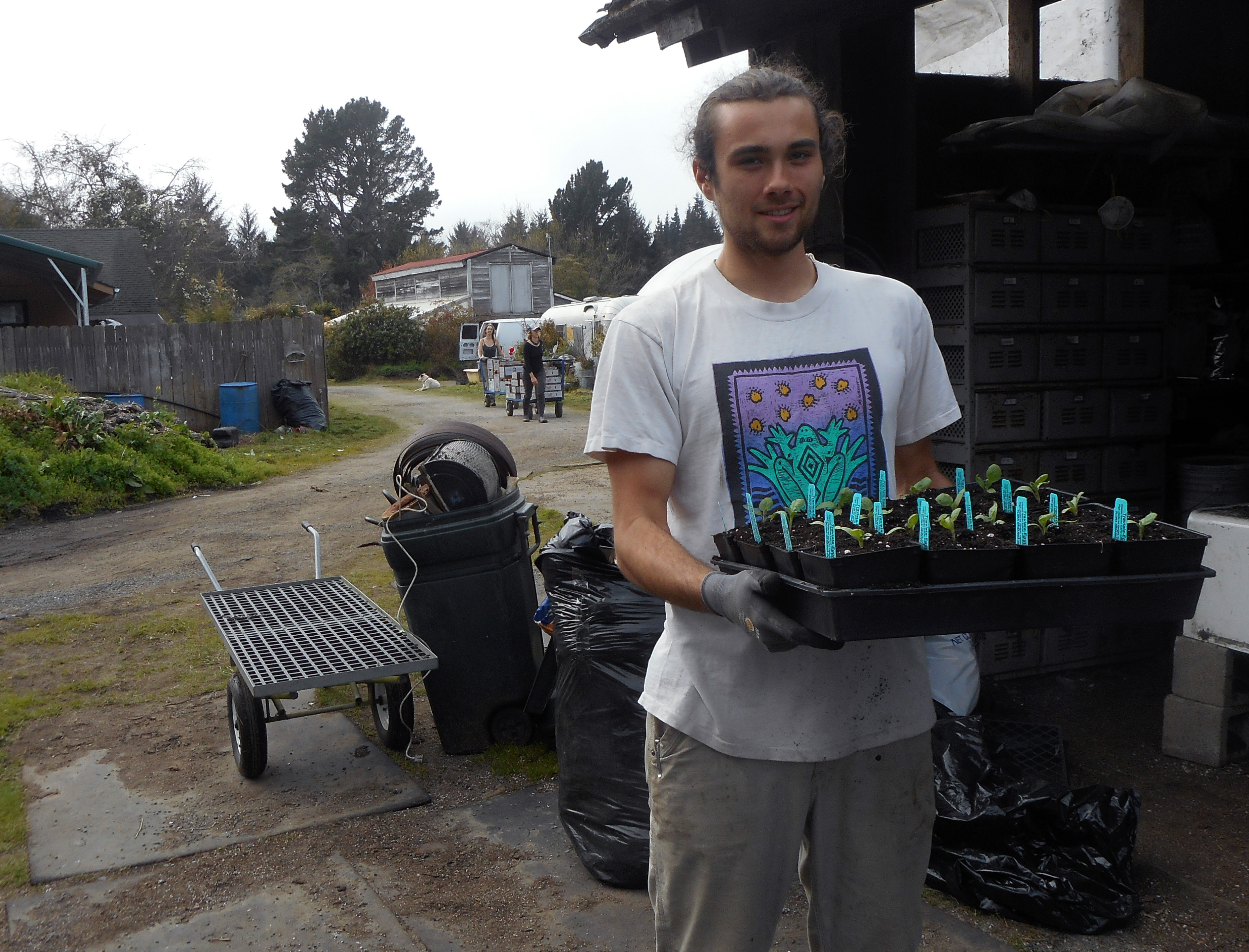
    At Flora Organica farm and nursery the greenhouses are getting full. Fields are being weeded and prepared for planting.

    “This is the beginning of the busy season,” Andy Zierer

    Andy and his wife Lisa Zierer own and manage Flora Organica in McKinleyville. Flora Organica starts for your garden are sold at Wildberries, the North Coast Co-op and Ace Hardware in Arcata.

    “Greenhouses are needed on the coast if you are going to grow peppers, tomatoes and basil,” Andy Zierer said.

    The plants in the greenhouse are going to be transplanted into the fields. Peppers that will be planted in the greenhouse now will be ready in June.

    The Zierer’s believe the economical and nutritional benefits of growing your own food are extremely rewarding. Andy Zierer’s goal is to grow healthy plants that taste good.

    “It’s beyond economical. The taste and the food has much more nutrition than stored food,” Zierer said.

    While owner and manager Lisa Zierer has many people to direct and jobs to do, she still has time to say hello and check in to see if anyone needs anything.

    The Zierer’s have employed Humboldt State students over the years. Zierer has noticed there have been more rangeland resource science soil majors working for him than students in any other field.

    “I have two soil science majors working here now,” Andy Zierer said. “The soil science majors are into learning how things work.”

    Jack Horvitz works at Flora Organica and is a soil science major at HSU.

    “I have a big passion for food and agriculture. It is pretty fundamental to our society,” Horvitz said.

    Horvitz explains the policy decisions in agriculture vary widely according to location, apologizing the benefits and struggles of smaller agriculture farms.

    “If we want to have change, we better have more buy-in,” Horvitz said. “Farms in the midwest are thousands of acres. Flora Organica is just four acres. Living in Arcata is nice, but it is living in a bubble inside of a bubble.”

    Horvitz would like to see communities getting together and having potlucks at community gardens. Horvitz calls it, “getting the full cycle.”

    “Getting your hands in the soil and then sitting down and sharing a meal with everyone at the end of the day, with music,” Horvitz said.

    Haley Schmidt is a HSU alumna who really likes her job at Flora Organica.

    “These are great people to work for and I really enjoy the farm,” Schmidt said. “They have a great product and they really care about what they do.”

    Jarrod Lumley is an anthropology major at HSU who works at Flora Organica. On Saturday nights on the Arcata Plaza, Lumley likes to serve food he and his friends make with leftovers from the farmers market earlier that day.

    “There is a lot of upping going on [at Flora Organica],” Lumley said.

    Upping is moving the seedling from the seed house and planting it in a four-inch container. Then the four-inch container goes into a bigger greenhouse. From there, some are planted on the farm and some go to the farmers market to be sold as starters.

    “Springtime at Flora Organica is a time of cleaning,” Lumley said. “This involves making space for more and more plants through deconstruction, reconstruction and organizing the available space.”

    Farmer Eno Riley planting onions at the I and I farm. Photo by Tyrone McDonald.

    Flora Organica is bustling with activity, trying to keep up with spring and their customers at the farmers market.

    Another local farm, I and I farm in McKinleyville, is a regular booth at the farmers market, owned and managed by Eno and Lauren Riley. Planning, according to Eno Riley, is essential when building a garden.

    “There are snails and slugs and birds and pests and bad things you don’t want to have happen,” Eno Riley said.

    I and I farm hires students to pick strawberries as a short-term summer job. Students interested are encouraged to ask Eno or Lauren Riley at their stand during the farmers market.

    Riley explained a garden layering technique called lasgnage that is possible for anyone to create and maintain.

    “You can layer right over your grass on your lawn,” Riley said. “Lay down cardboard, then dirt, and then wood and some more soil, cardboard and soil and you are ready to plant a garden anywhere.”

  • Spring ball in full effect

    Spring ball in full effect

    Eleven coaches and 66 student athletes gather every Tuesday, Thursday and Saturday morning in preparation for their spring game later this month.

    “Our energy is already feeding off of each other,” backup sophomore quarterback Cheyenne Keith said. “We are doing very well so far.”

    The Lumberjacks took to the Redwood Bowl again as they jumped into spring ball at their first 6 a.m. practice on March 27.

    Lumberjacks head coach Damaro Wheeler currently holds the interim position for the Jacks. He has been with the team since spring of 2017 and coached defensive backs and special teams during the 2017 season.

    “We have hired some coaches,” coach Wheeler said. “And a bunch of former players and alumni have come to help us out.”

    Along with practice during the week, the Jacks are required a certain amount of completed lifts done in the recreation center weight room. With some new and already familiar drills, the Jacks are taking everything on and going all in at practice.

    “We are ready,” Keith said. “We are ready to put the pads on and hit each other.”

    The Jacks will get a small break after the their spring game, and will return late summer for the start of the fall season.

    “We’re taking it day by day,” junior Sefa Tauanu’u said. “As a captain, I’m also focused on bettering the team.”

  • Community potluck for Humboldt State students

    Community potluck for Humboldt State students

    A potluck was held in the D Street Community Center on April 1. The theme of the event was for the Arcata community to bring Latin American food in honor of Cesar Chavez Day.

    This is the fourth community potluck that the community has held for Humboldt State University students and the Arcata community. Pauli Bachemin is one of the event organizers.

    “The purpose of holding this event is to not only have students meet with the community,” Bachemin said. “I want [students] to be able to network with city officials from the community.”

    There were various city officials who were present at the potluck, including Karen Diemer, the city manager of Arcata.

    “We want students to know that they are a part of the community,” Diemer said. “I was a former student of HSU, and the support I felt from the community made me want to stay in Arcata. I hope that students today will feel the same way.”

    Isabel Quintaro is an HSU student who praised the university’s efforts.

    “With the issue that has been going on lately, I think that the city has been doing a great job in listening to student’s voices,” Quintaro said.

    Nacirema Johnson is another HSU student.

    “With the city officials being present in this event, it shows that there is [a] genuine interest with what is going on with students,” Johnson said.

    The food wasn’t the only thing that the event gave out, there was a “free stuff” table where students could pick up donated items.

    “I really appreciate the help that the community gives with the free stuff they give out,” Kelly Garcia, a first-year HSU student, said.

    While help is given from the community event, some have expressed how they truly felt about how the community has dealt with ongoing problems in the community.

    Tina Sampay is a former student of HSU. She majored in critical race, gender and sexuality studies.

    “It is important events like these are happening, but you can’t cover up the pain with fake progress,” Sampay said.

    With the ongoing issues that affect HSU, the D Street Community Center has been making an effort by holding events for students like the community potluck.

    Anne Hartline attended the event. She is a professor at HSU teaching English 124, and attended the event to support students.

    “This event is a way for building a community,” Hartline said. “It’s important for students to be a part of the community.”

    This article was changed from its original version on at 11:08 a.m. on April 5, 2018.