The Lumberjack


Students Serving The Cal Poly Humboldt Campus and Community Since 1929

Month: February 2019

  • Me Too comes to Humboldt

    Me Too comes to Humboldt

    Tarana Burke, civil rights leader and Me Too icon, gives a lecture to HSU

    Tarana Burke, one of the leading and founding voices of the Me Too movement, came to speak at HSU on Sunday Feb. 3. There was a sold-out crowd and Maya Williams, a senior majoring in psychology, took the stage to introduce the civil rights icon and activist.

    “Having Tarana Burke come here is important because we are on a college campus where sexual violence occurs,” Williams said. “This got me into thinking about more activism. I don’t know what step to take but I am definitely considering something.”

    1b2b89bc-cba4-4b05-a75b-42f3412f6762.jpg
    Maya Williams stands in front of the stage after introducing Tarana Burke on Sunday Feb. 3 | Photo by Freddy Brewster

    Burke has been a part of the social justice movement for over 25 years, having started her activism in her hometown of the Bronx. She was first drawn to activism by the infamous Central Park Five case, where five young men were wrongfully accused of sexually assaulting a woman jogging through the New York City Central Park. Media coverage of the case painted the young men in a grossly negative light and Burke felt that she could no longer sit aside and watch.

    “We were protesting the way the newspaper portrayed them,” Burke said to the crowd. “I knew then that I wanted to be an organizer.”

    IMG_9829.jpg
    Tanara Burke, founder of the #metoo movement, shares her story at HSU on Sunday Feb. 3. | Photo by Tony Wallin
    [perfectpullquote align=”right” bordertop=”false” cite=”Tarana Burke” link=”” color=”” class=”” size=”20″]”How do I explain to a seventh-grader, that ‘baby this isn’t love, this is a crime’?”[/perfectpullquote]

    The roots of Me Too come from Burke’s own experiences with sexual violence, as well as the stories she heard when she was working as a camp counselor in her early 20s. At this time Burke said that when she would have one-on-one conversations with the young girls of the camp, stories of sexual violence would come out.

    “The stories of sexual violence were so normalized,” Burke said. “There are so many layers of oppression that people built protections around them. How do I explain to a seventh-grader, that ‘baby this isn’t love, this is a crime’?”

    Around 2005 Burke said that she started a Myspace page for the movement because it was a place where it could live and where others around the country could access information. She also used AOL chat forums and found the response from other survivors of sexual violence to be numerous and growing.

    “There would be no Me Too movement if literally 19 million people didn’t go to their computers and type Me Too,” Burke said. “This is not my movement. That is not how a movement works.”

    Burke went on to voice her concerns about how there’s a lack of proper leadership in this country. She said that young people have the power to make change. She expressed how there is a collective power in a movement and how we’re currently in a unique historical moment and people must work together to see the future they want. This message of collective action and activism struck a chord with Flow Lemus, a criminology and justice studies junior.

    “It is important to have Tarana Burke here because of what is going on with Title IX,” Lemus said. “They are trying to make it on an even playing field for both parties. Tarana Burke being here is allowing me to push back on the administration.”

    24706020-2b9e-490e-ba3a-ec4ec5eed4b4.jpg
    Flow Lemus, Associated Students Presents member and criminology studies major, attended the discussion by Tarana Burke on Sunday Feb. 3 | Photo by Freddy Brewster

    Lemus said she is currently having problems with her own Title IX case and blames the administration for a lack of support. Lemus said that she wants to work with survivors of domestic and sexual assault in the future and is considering sticking around Humboldt after she graduates to fight for the rights of indigenous people as well as other people of color.

    [perfectpullquote align=”left” bordertop=”false” cite=”Tarana Burke” link=”” color=”” class=”” size=”17″]”It is important to take what you have, to make what you need. It is hard work and heart work. This is about sowing seeds.”[/perfectpullquote]

    “I switched to be a criminology major and I am happier because I can help my community,” Lemus said.

    After Burke’s lecture, there was a round of questions and answers from the audience. A few women stood up and spoke about their history of being a survivor of sexual assault. Burke listened intently and offered advice when she could. She said that there is still a lot of work to do in regard to the Me Too movement and that there will be a set of public service announcements released later this year. For a parting piece of advice, Burke quoted an old saying from a civil rights leader.

    “It is important to take what you have, to make what you need,” Burke said. “It is hard work and heart work. This is about sowing seeds.”
  • MCC Celebrates 25th Anniversary amid relocation concerns

    MCC Celebrates 25th Anniversary amid relocation concerns

    The Humboldt State Multicultural Center has been supporting students for years, but its days in Balabanis House are numbered

    Humboldt State’s Multicultural Center celebrated its 25th year of existence with a open house Monday, amid growing concerns from regulars about the future of the building itself, and the programs and resources found within. The center has been suffering from budget cuts and quick leadership turnover, and resides in one of several old buildings on campus slated to be demolished.

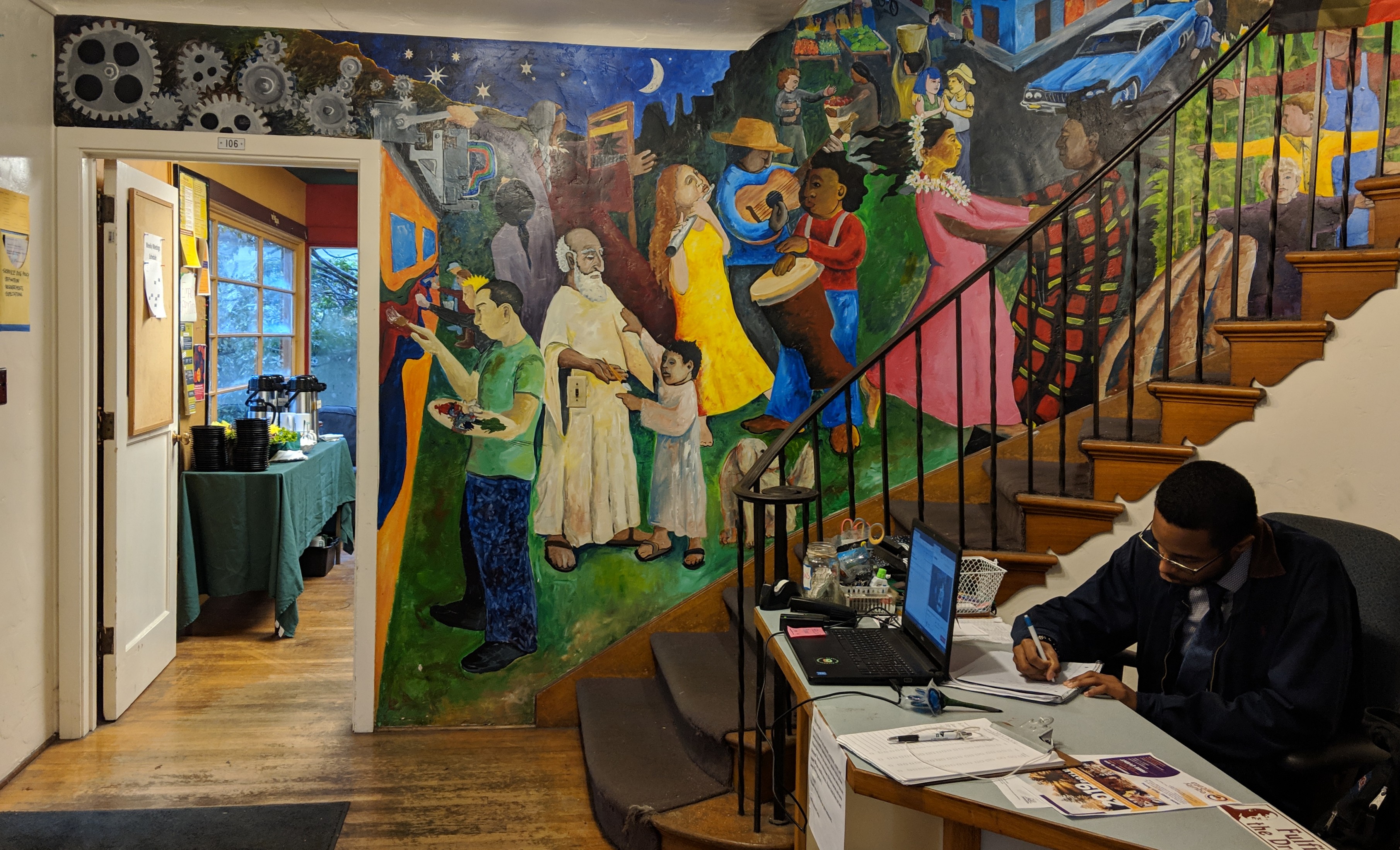
    The MCC was founded in 1994, and serves as a hub for student activists and a home-away-from-home for many students. The house has tons of resources for students, including free printing up to 10 pages, a full kitchen with microwave and refrigerator, a prayer room, and several quiet spaces where students can work. Colorful murals, posters and couches galore create a warm, friendly vibe.

    [perfectpullquote align=”left” bordertop=”false” cite=”” link=”” color=”” class=”” size=””]They don’t help us…we’re underfunded.[/perfectpullquote]

    Frank Herrera officially assumed the role of MCC Coordinator 12 days before the open house, and describes his position as a mentor to the students employed to work at the MCC. The MCC had been shuffling through interns and temporary hires for about two and a half years before settling on Herrera for their coordinator position.

    “It’s all about helping the student employees manage everything, become leaders and have them look at ways of doing things and point out things that we haven’t done yet…I’m just part of the team,” Herrera said.

    Herrera thinks that employing students is important, and the work they do at the MCC provides valuable learning experience.

    “I would have loved to do that when I was younger. It would’ve helped me today,” Herrera said.

    Unfortunately, the future of the MCC in its current state is in jeopardy. Deema Hindawi is a co-coordinator of the yearly Social Justice Summit, and said the center suffers from underfunding, and is located in one of the buildings currently slated to be demolished.

    “HSU tokenizes this house a lot. They don’t help us, we’re underfunded, and they took a very long time to find us a new coordinator,” Hindawi said. “We lose power in half the building if you use the microwave and the toaster oven at the same time. We also have really bad asbestos in the basement.”

    Relocation would mean a drastic loss in volume of the programs and resources offered by the MCC. The building as it currently stands is expansive, with a meeting room, multiple offices, study rooms, a prayer room, a woman’s resource center, an expansive foyer and front desk area, a full kitchen and two gender-neutral bathrooms. Trying to cram all that into a single room would be an exercise in futility, and valuable programs would have to be cut. And, the number of students employed to work in the building would be cut drastically.

    Daniel Segura is a regular who’s been coming to the center for the past year, and said he wishes he found out about it sooner. As his friend Rahkiv Lewis strummed an acoustic guitar, Segura said there aren’t any places on campus like this building.

    MVIMG_20190204_120315.jpg
    This room houses the meetings of several different school clubs, as well as students in need of a comfy place to study or decompress. | Photo by Jett Williams

    “It deserves so much more,” Segura said. “This place has helped me gain a part of myself back that I felt I had lost living in this community. I think places like this center, the LatinX center and the African-American center for Academic Success are important, but I am worried about the future of these places.”

    During the open house, students filtered in and out, grabbing food and chatting with other visitors or working on assignments. Music was playing and the energy in the house was positive and warm. The center’s future may be shaky, but the resolve of students who have made the house their home will ensure that no lack of funds or relocation will crush their spirit.

    The MCC is open Monday through Thursday from 10-6 p.m. and Friday from 10-5 p.m. They’re located south of the library, in Balabanis house and will be throwing a 25th Anniversary Gala on April 25, in the Kate Buchanan Room.

  • OPINION: Why Bob Dylan is still relevant today

    OPINION: Why Bob Dylan is still relevant today

    Recently I attended a Bob Dylan concert at the Beacon Theater in New York, his adopted hometown. It was my third and by far the best. Five shows in a row and every one of them sold out. No Frank Sinatra covers during these shows only a raw energetic performance that ranged from old favorite anthems to gritty forlorn melodies of his later years. I will be the first to tell you the mysterious troubadour did not disappoint.

    Dylan, who has been on a never ending tour since July 7 1988, is believe it or not 77 years old and doesn’t look like he’s letting up anytime soon.

    More than ever with where our fascist leaning country is at politically, economically and socially we need Dylan. We need a figure that can speak of marginalized voices, that can articulate death and life in the same sentence, someone that can tell the government “you ain’t worth the blood that runs in your veins” and “I’ll stand over your grave ‘til I’m sure that you’re dead”. Most importantly we need something that Dylan symbolizes but appears to have faded away completely: The American Dream.

    Dylan, a middle class Jewish kid from the middle of nowhere Minnesota, became the world’s most popular figure in not only music and popular culture but beyond any category that can be conceptualized. He is the first singer-songwriter to win the Nobel Prize for Literature, (he defines himself as a song and dance man), and first American to win the prize in over two decades. If you have any doubts of the Nobel Prize Committee’s decision to choose Dylan just listen to his speech (bob-dylan-nobel-lecture).

    Dylan continues to break the barriers of what it means to write a song that digs deep in the listeners psyche and examine the state of the world around them. Instead of his contemporaries at the time, Dylan was singing about racial tension and divide in America with songs like The Death Of Emmett Till, When The Ship Comes In, Oxford Town, and Hurricane, a song about the famous boxer Rubin “Hurricane” Carter who was falsely accused and imprisoned for murder and eventually set free. Together with Joan Baez he sang during the opening act of Martin Luther King Jr’s “I Have a Dream Speech” during 1963’s March on Washington. Need I even say more?

    We have Dylan to thank for bridging a gap between young white suburban college kids and the civil rights movement. We have him to thank for spreading along messages of hope above despair, of listening for answers that blow in areas where we don’t normally pay attention to, to defy the establishment and question all those with authority.

    I am well aware that there was a whole generation before Dylan that influenced him and those around him, but Dylan took what Kerouac wrote and Pollock painted and Guthrie experienced and reached an audience well beyond what anyone thought possible in the decades before him and influenced the generation of his time to fight alongside justice, compassion and empathy.

    As a writer he puts himself in other people’s shoes widening his perspective on the world. Jeremy Sherman, writer for Psychology Today and professor of rhetoric and language at the university of San Francisco said a first rate capacity for empathy is the ability to hold two opposed positions in mind at the same time and still retain the ability to think for yourself. He calls this “shoe-shifting”, a fundamental skill of extraordinary power caused by the ability to put yourself in someone else’s shoes.

    Dylan explores the idea of timelessness and changing viewpoints to get feelings across that allow the listener to transport their own consciousness. By doing this it opens up their world and allows for a fluid movement of looking at people in a more similar fashion, in short “I” am “you” and “you” are “me”.

    With his rhetoric devices and stream of poetic magniloquence he fought against conforming what is arguably as relevant today than when Dylan began; the military industrial complex. America’s war in Afghanistan is now at its 16th year and the longest foreign war in American History. Dylan’s Master of War still echoes through the movements of today, whether it be Occupy or Black Lives Matter, and everything in between. Dylan said of the song ‘a sort of striking out…a feeling of what can you do?”

    It’s time we all ask ourselves the same question.

  • The search is on

    The search is on

    CSU Board of Trustees lists demands for new Humboldt State President

    The search is on for HSU’s new president with a public forum to be held on Monday, Feb. 4 from 1 p.m. to 3 p.m. in the Kate Buchanan Room. On Thursday night, there was a pre-forum set in place to brainstorm demands that the public would like to be included for the California State Board of Trustees to consider when selecting a replacement for current president Lisa Rossbacher.

    Some of the demands listed for the Board to consider are for the incoming president to be more engaged with the student population as well as the community; to support efforts to fund diverse communities; to be more engaged with conversation about climate change; and to have a strong “demonstrated history of social justice,” among other issues. Tay Triggs, Student Engagement and Leadership Dean, was in attendance at the meeting and felt that the new president will have to do more when it comes to cultural and racial equity at HSU.

    “I hope our new president is more vocal about their support of what the Office of Diversity, Equity, and Inclusion is trying to do,” Triggs said.

    During the nearly two-hour long meeting there were six different tables set up that discussed a variety of topics for 20 to 30 minutes at a time. Some of the topics discussed included: Budget and Fundraising; Campus and Community Engagement; Diversity, Inclusion, and Equity; Recruit and Retention; and Vision and Leadership.

    Although the meeting was open to the public as well as to the student body, most of those in attendance were non-students. However, Jazmin Sandoval, a senior majoring in film and current president of the Associated Students, was in attendance voicing her concerns for what she would like from the next president.

    “I would love to see the next president have more of an equitable lens when it comes to the indigenous community and to be cognizant of the racial tensions,” Sandoval said. “I also want them to be excited and to want to be here for the long term.”

    The shortcomings of the current administration were also discussed during the meeting with many people feeling that current president Rossbacher did not do enough outreach and lacked transparency.

    “I am a transfer student and had no idea about the racial tensions on this campus,” Sandoval said. “I think what fell short is the lack of communication and the sensitivity around a lot of things that have happened on this campus in the last couple of years.”

    The university will be sending out an email with the minutes and full list of proposed demands on Friday.