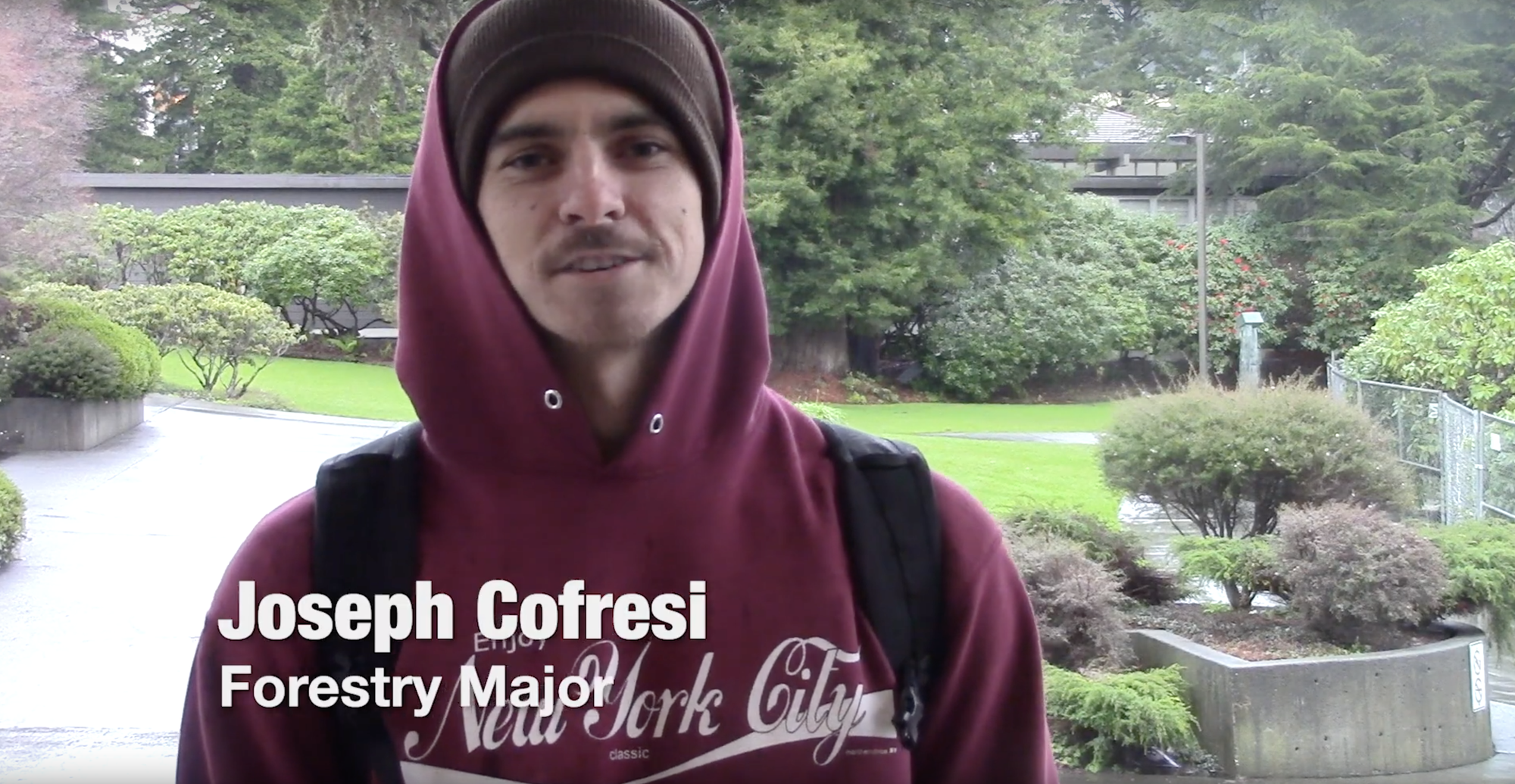
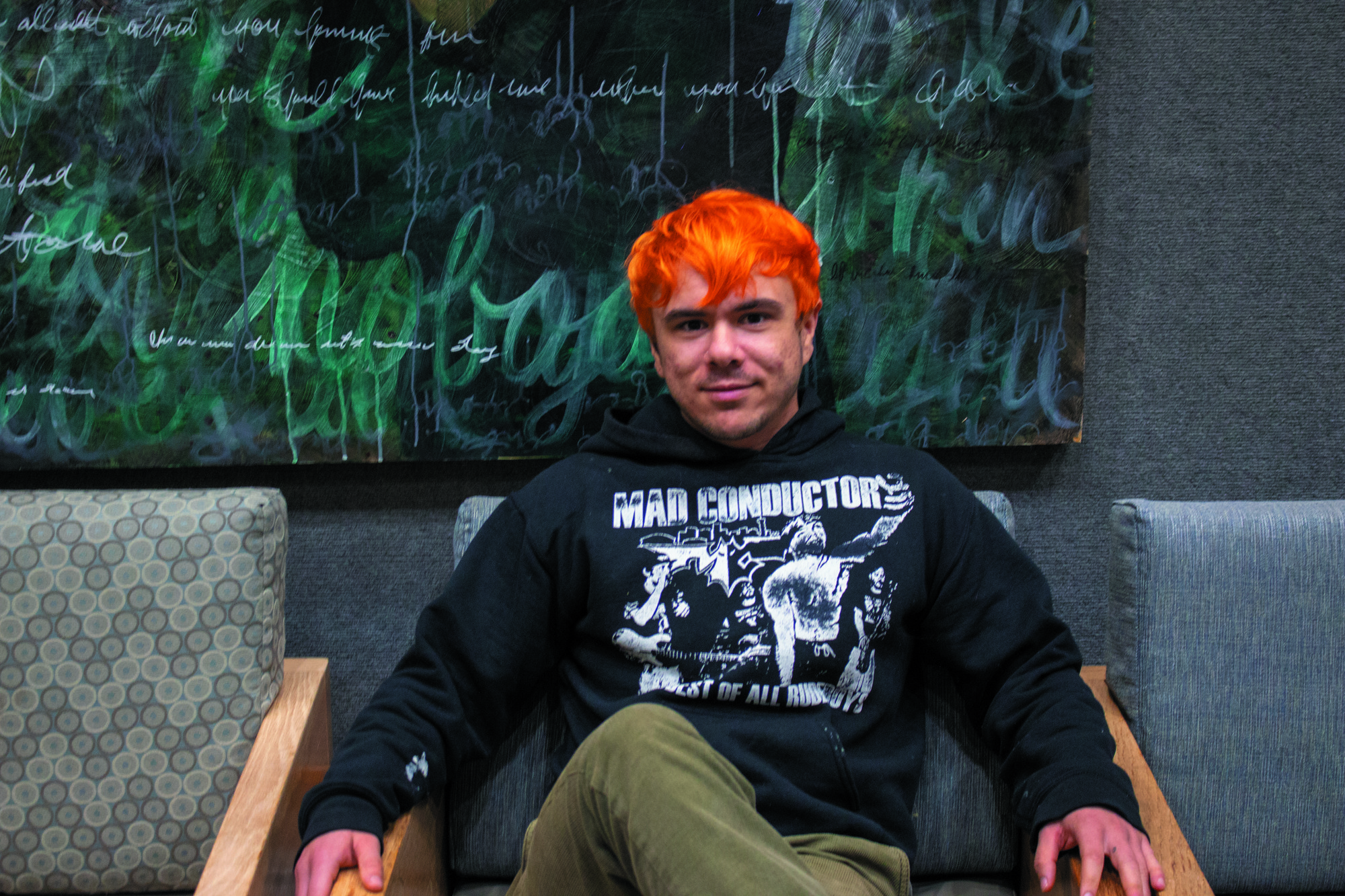
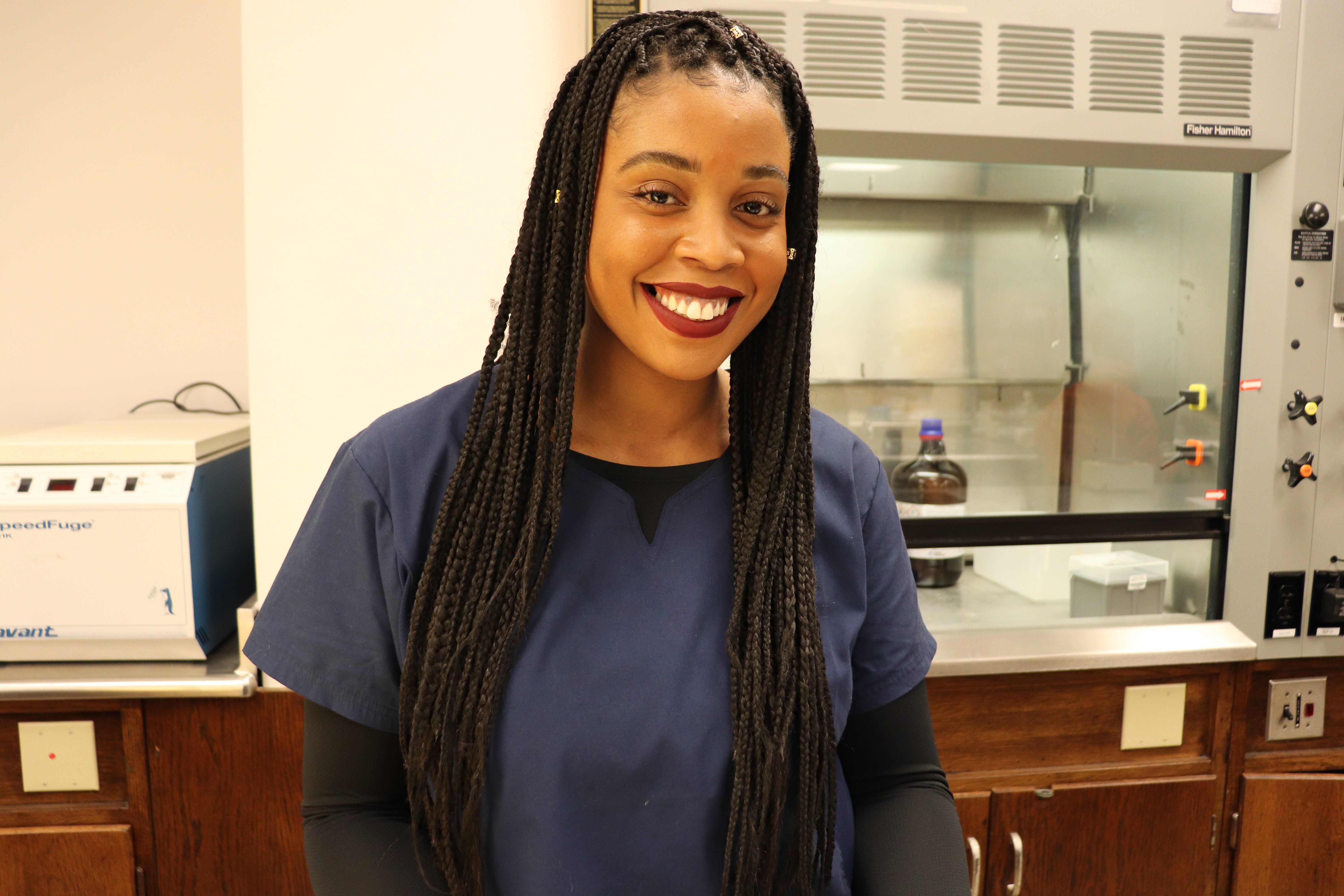
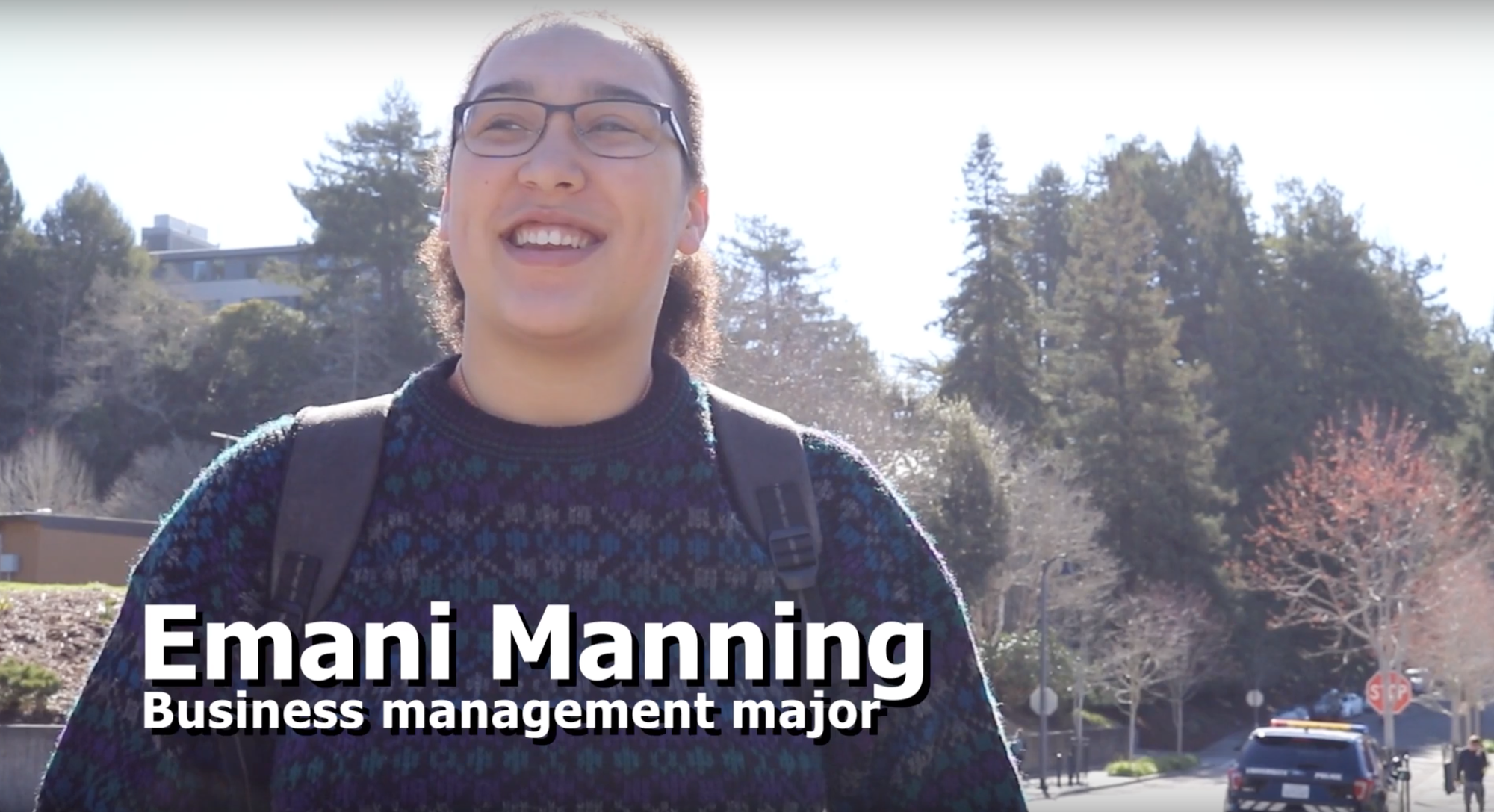
As Black History Month comes to a close, we asked HSU students who they’re most inspired by during this month. From activists to athletes, students share why they look up to these public figures. Share who you’re most inspired by during Black History Month in the comments below!
Don’t let Jussie Smollet’s actions ruin what Black History Month can accomplish
Jussie Smollett is an American actor on the popular tv show “Empire” who staged a racially and homophobic attack on himself to boost his career. Smollett alleged attack has mountains of evidence that it was staged.
The case has left Smollett’s fans and colleagues stunned. This scandal comes out on the tail end of Black History Month, which hurts more. We should not leave Black History Month on a bad note, so we want to highlight some black individuals who left their mark in history.
Claudette Colvin was a teen in 1955 living in Montgomery, Alabama as an African American. While inside a bus, she refused to move from her seat for a white passenger, saying that it was a violation of her constitutional rights. She was arrested for the action and labeled a troublemaker by her community, leading her to drop out of school. Despite Colvin’s actions preceding Rosa Parks by nine months, little is known about what she did. She went on to be part of one of the four plaintiffs in Browder v. Gayle, where Montgomery’s segregation laws were found to be unconstitutional.
Henrietta Lacks was an African American woman who passed away due to cervical cancer. Her cells were collected, and in a rare case they doubled every 24 hours. The aptly named HeLa cells are now used to study the effects of radiation and poisons without using human subjects, and were used for the development of the polio virus. Although there is controversy in the use of the HeLa cells, as Lacks’ family never received any recognition or compensation for the discovery. Despite this, the HeLa cells were pivotal in their medical uses.
Bessie Coleman was the first African American woman to stage a public flight in America. Coleman lived in Atlanta, Texas in 1892 until moving to Chicago at age 23. She wanted to explore aviation, but due to being black and a woman she faced racial and gender discrimination. Despite challenges, she broke through those barriers and received her pilot’s license after moving to France. She had a dream of starting an African American flight school in the US, but tragically died during an aerial flight rehearsal at the age of 34. Coleman was a pioneer for other African Americans who aspired to become a pilot, and was inducted in the National Aviation Hall of Fame in 2006.
The Harlem Hellfighters were the 369th Infantry Regiment and mainly consisted of African Americans. The Harlem Hellfighters fought in the trenches of Germany during World War I for six months, the longest any American infantry regiment fought during World War I. Two of their bravest soldiers were privates Henry Johnson and Needham Roberts, who fought off 24 German soldiers killing four during a surprise attack. Both Johnson and Roberts were awarded the French Croix de Guerre and were the first Americans ever to receive the award. This is one of many awards that the Harlem Hellfighters received.
We wanted to move away from the negativity that came from this year’s Black History Month. Instead we want to highlight these African American individuals that had a pivotal role in shaping history and inspiring others.
The other side of the mountain gets a turn to share its story
The latest documentary to depict Humboldt County investigates a murder within the cannabis culture atop the infamous Murder Mountain. But Murder Mountain, named after the actions of the Carson serial killers in the Rancho Sequoia area of Alderpoint, is only a small piece in Humboldt County’s cannabis culture. On Wednesday evening in the Kate Buchanan Room a group panelist of media practitioners and active members in the cannabis community discussed the other side of that mountain.
[perfectpullquote align=”right” bordertop=”false” cite=”Chrystal Ortiz” link=”” color=”” class=”” size=”17″]”Instead of finding a way to bridge our likeness, it has built on the fact that we are different… Local press should recognize they do shape culture.”[/perfectpullquote]
The event, The Other Side of Murder Mountain, was part of HSU’s 25th annual week long Social Justice Summit. Panelist Chrystal Ortiz, a board member of the International Cannabis Farmers Association, said as a resident of Humboldt County she is impacted by the local press on cannabis.
“Local opinions and local press has shaped the world view of the people who live here in the ability to continue to create discord,” Ortiz said. “A cannabis leaf on the cover sold newspapers. The representation in the press was negative because cannabis was in the crime section. If we went back 20 years we would be hard press to find any positive press of cannabis.”
Ortiz believes local press has a responsibility and perspective with covering cannabis and has an effect on how we relate with one side or the other. She said local press has had an impact on how our community relates with the cannabis culture within Humboldt County and plays a part in shaping it.
“Instead of finding a way to bridge our likeness it has built on the fact that we are different,” Ortiz said. “Such as what we do for our kids is different than what they do for their kids or what our jobs are like with what their jobs are like. But I am glad to see that changing and it has been changing. Local press should recognize they do shape culture.”
Hank Sims, Dr. Deidre Pike, Chrystal Ortiz, and Rio Anderson made up the panel of media practitioners and active cannabis community members at the event “The Other Side of Murder Mountain” during HSU’s 25 annual social justice summit. | Photo by T.William Wallin
Panelist Rio Anders, Co-founder of SoHum Guild, agreed with Ortiz and said it’s hard to live in a bubble in Southern Humboldt and hear a story like Murder Mountain because it has no real reality based on his life. Anders said recently there’s been a constant feedback of negativity but recognizes that crimes like that in Murder Mountain are real.
“It’s real and I’m not saying it isn’t but it didn’t bring people into conversation,” Anders said. “It only allowed people to cast judgment on each other. This shapes the discourse between the cannabis community which is a part of this community.”
[perfectpullquote align=”left” bordertop=”false” cite=”” link=”” color=”” class=”” size=”15″]Not all stories of Humboldt County are that of vigilantes and missing persons that happen in places like Murder Mountain.[/perfectpullquote]
Moderator Dominic Corva of the Center for the Study of Cannabis Policy, asked the panelists what does it even matter what people outside of Humboldt County think of people in Humboldt County in media representations. Editor for the Lost Coast Outpost Hank Sims said stories like that of Murder Mountain are the stories people hear outside of Humboldt County and have ramifications.
“People in the Marijuana industry in particular are sometimes facing backlash and competition in the industry who say growing in Humboldt County is unsafe,” Sims said. “Murder Mountain and stories like it has shaped perception of Humboldt County from those outside of Humboldt County.”
Sociology professor and co-director of Humboldt Institute for Interdisciplinary Marijuana Research Josh Meisel reads questions from the audience at the event The Other Side of The Mountain during HSU’s 25 annual social justice summit. | Photo by T.William Wallin
Not all stories of Humboldt County are that of vigilantes and missing persons that happen in places like Murder Mountain. Chrystal Ortiz was quick to respond with positive representations she’s experienced when in 2016 a journalist for NPR camped on her property in the Avenue of the Giants because he couldn’t find open camping.
“When he [NPR reporter] came through he camped on my farm and the California Report then became his experience on my farm and how different it was than he expected,” Ortiz said. “When that aired I got call after call after call…about how my friends wanted to come visit and how proud they were.”
Panelist Deidre Pike, department chair of the HSU Department of journalism and mass communication, said the NPR California Report on Ortiz’s farm was a great example of how culture is shaping our story telling and there’s a feedback loop of shaping going on. Pike suggested a positive spin on Murder Mountain in which a theme park is built with a memorial for Garret Rodriguez.
“Maybe you can make Murder Mountain a tourist attraction,” Pike said. “You already have in place farms with farm tours. You can do an educational tour with permaculture and train folks to do permaculture and then they show others. It’s an idea that may demystify that culture of the scary outlaw culture and maybe honor the good outlaw culture.”
This week’s student spotlight shines on Deema Hindawi and Oliver Winfield-Perez
Deema Hindawi and Oliver Winfield-Perez are critical race, gender and sexuality students who advocate for student safety and equality. They’re both from the Bay Area and are community organizers and volunteers. They look at local and campus issues and work together to resolve problems that affect students. You can usually see them at community meetings or social justice events.
Deema Hindawi, Criminal Justice Studies and CRGS major, was co-coordinater for HSU’s 25th annual social justice summit as well as participant in local social justice issues. | Photo by T. WIlliam Wallin
What are you studying at HSU?
Hindawi: I am double majoring in criminology and justice studies, CRGS (ethnic studies) and minoring in communications student advocacy.
Winfield-Perez: Critical race gender and sexuality studies.
Why did you pick these areas of study?
Hindawi: I picked these majors because I have always been fascinated with law and ethnic studies has always tugged on me and I want to learn more.
Winfield-Perez: I was originally was a child development major when I came to HSU, but I came to CRGS after taking a community organizing class with Dr. Marisol Ruiz Gonzalez in the education department. I came to CRGS from my own experience as a trans queer person of color in the world. My experiences with homophobia and transphobia, being othered and disrespected have lead me to know that something isn’t right, that we deserve a better world, that a better world is possible. CRGS has given me that, has given me a space to analyze, critique, dismantle and create alternatives.
Where are you originally from?
Hindawi: San Francisco.
Winfield-Perez: I was born in Hayward, Calif. in the East Bay, but my family moved around a lot for work. I spent most of my childhood in Riverside, the Central Valley and Santa Barbara county, then I moved back to the East Bay for high school.
What is your role in Associated Students and why did you want to join?
Winfield-Perez: I’m the external affairs representative. I act as a link of communication with other CSUs, state and federal policy/legislation and Humboldt State. I serve as Humboldt’s representative for the California State Student Association, (Student Government for all the CSUs, with 23 representatives) and attend monthly plenary meetings where we discuss legislation, policy and advocacy for students in higher education. I currently have a resolution on the floor at CSSA for Justice for Josiah/Students of Color Safety, hopefully it’ll pass in March. I also chair, the Lobby Corps committee, which as it sounds, is a lobbying committee.
I originally joined because I see student government as an institution which holds many contradictions and faults, but holds space for potential support for meeting the immediate needs and supporting the wellbeing of students across campus.
What clubs are you involved with on campus and what do you with them?
Hindawi: WRC (Women’s Resource Center) anti-racism coordinator, MCC (MultiCultural Center), SQE (Students for Quality Education), and MEChA (Movimiento Estudiantil Chicano de Aztlán).
How do you juggle your workload?
Winfield-Perez: Honestly I am very controlling and particular about my schedule. I work best early in the morning, so often I’ll wake up around 5 or 6 a.m. to get readings done for classes. I have a detailed planner for the semester where I schedule out what I’m going to do every waking hour. It’s quite exhausting and stifling, but it has helped me stay accountable for my commitments and keep up with classwork.
Being an outspoken and involved student, what would you like to see at HSU change that would benefit students?
Hindawi: Tuition, racism, ignorance against race, removing the mascot, stop recruiting students of color without informing them about the racism, J4J.
What’s the plan after graduating?
Hindawi: Grad School.
Winfield-Perez: I’m looking to intern at an organization in the bay which organizes around prison abolition, prisoner support, anti-policing work, such as Critical Resistance, Legal Services for Prisoners with Children, or one of the many others, so hopefully that works out. Other than that, I plan to take a year or two off before applying to some California Ph.D programs in Women and Gender studies, American Studies or Ethnic Studies. I really just want to give myself space to grow and learn, and not rush into grad school or force myself to go. I want it to be a semi-enjoyable experience if possible.
What has been your favorite experience in Humboldt?
Hindawi: Going outdoors.
Winfield-Perez: Community. I’ve met so many amazing, dedicated students, faculty, staff and community members who are so passionate about creating safe, accountable and loving communities. I see people busting their asses on the daily building campaigns for justice, holding elected officials accountable, creating networks of community solidarity and support, working to end racism, sexism, colonialism and oppression in our areas. To be a part of that has been so rewarding and I will always cherish my time here.
What are you most passionate about?
Hindawi: Justice.
Winfield-Perez: I’m extremely drawn towards critical prison studies, abolitionist work and anti-policing work. I see this effort as central in the emancipation of queer and trans people across the globe, who are specifically targeted, attacked, exploited and othered by carceral violence. As a queer and trans person of color, ending the prison industrial complex means not only can my communities be free, but I will be free as well, even as a person outside the material confines of prison walls.
I haven’t had much experience organizing around abolition, but am definitely moving towards it, and feel it is necessary for me to do.
I’m also honestly very passionate about writing. I love the feeling of starting with one subject with a piece of pen and paper, letting go and ending up in a space you didn’t even know was inside you. I’ve made amazing self-discovery through writing, processed grief, internalized racism and sexism, my own self doubt and confusion.
Who is an inspiration for you and why?
Hindawi: Marisol Ruiz because she always pushes students to be more than we have ever thought.
Winfield-Perez: All the people out there fighting for an end to white supremacy, settler colonialism, heterosexism and capitalism in their communities on a daily basis. All the people out there committing their lives to making a better world for the next generation. This is inspiring to me because I know first-hand that organizing is difficult, it is draining and you’re always coming up against people who don’t see you, who want to dehumanize you, silence you. And some of the people doing the hardest work are trans and queer women of color, who face some of the most gross and dehumanizing treatment. I have so much respect for organizers.
Who has been your favorite professor at HSU?
Hindawi: Marisol Ruiz
Winfield-Perez: The CRGS department is full of amazing, caring and intellectual professors, who will break down dense theory like Foucault to you, and who really see you, and listen to you when you share your struggles as a student, and show it in their actions. If I have to pick one though, I have to say Dr. Kim Berry. She teaches courses like Theory and Methods, Sex, Gender and Globalization and “Queer” Across Cultures. The most impactful knowledge I’ve gained from Kim is a strong critique and understanding of global capitalism, its intricacies, the big institutions which extract wealth and dehumanize people. She’s really able to take huge complex ideas and communicate them in a digestible, entertaining fashion. In her classes I can’t help but be 100 percent focused.
What volunteer work or outside organizations have you been apart of? How has it changed you?
Hindawi: Everything I mentioned earlier has changed how I view organizing and justice.
Winfield-Perez: I’ve been a part of Youth Educational Services since my freshman year. I directed and volunteered for the Queer Mentoring and Advocacy Program, which works with queer youth in the community to organize around their needs, provide support, and train educators on how they can better support queer youth in classrooms. I’ve also been a member of MEChA since my sophomore year, and recently joined Students for Quality Education in the fall of 2018.
I’ve also worked with organizing groups off campus intermittently, such as with Justice for Josiah and the campaign to remove the statue of William McKinley.
What advice do you have for incoming students?
Hindawi: Keep your eyes open and if you are a person of color please keep your eyes open a bit wider because Humboldt is not as safe as we are made to believe.
Winfield-Perez: I really hope incoming students are able to just give themself space to be and take care of their own needs. If you’re struggling with motivation and mental health, don’t be afraid to take some time off, don’t be afraid to listen to what you need and act on it. The university is always talking about four year graduation rates, which I do think can be important financially. But the reality is that college is difficult as hell and sometimes you just can’t keep pushing, you can’t suck it up and keep going, and that’s okay. I wish I would have given myself that space in times when I was really struggling. I feel like I would have had time to heal, grow and accept myself.
HSU students reveal their experiences on dating apps
A variety of Humboldt State students are registered on dating apps. Normally people who are on dating apps are single. Some residents who are within the radius of Humboldt County are actually on dating apps while simultaneously married. The most common dating apps students use are Bumble, Grindr and especially Tinder.
Second year Psychology major Andrea Wilson used the dating app Bumble, which she said she regretted using instantly after a situation she encountered.
“He was this perfect guy, he had literally everything I have ever wanted,” Wilson said. “When we first met, it was a chill first date, he was such a gentleman. I don’t think I have ever remembered the last time I was treated that well.”
Andrea Wilson, an HSU student, majoring in psychology, looking at her options. | Photo by Delaney Duarte
Wilson hoped she would find “the one” going on dates with the guys she matches with on these dating apps.
[perfectpullquote align=”right” bordertop=”false” cite=”Andrea Wilson” link=”” color=”” class=”” size=”18″]“It turns out he just forgot to take off his ring before going on this one date.”[/perfectpullquote]
“I went on a fifth date with this guy, and as we were eating, I noticed he had a ring on his finger…specifically on his left-hand ring finger,” Wilson said. “I asked him about it, and of course they try justifying it. It turns out he just forgot to take off his ring before going on this one date.”
Wilson isn’t alone in her experience. There are other students who have encountered this kind of situation. Maritza Herrera, a second year HSU student, uses Tinder as her to-go dating app to find the “perfect someone.”
“I have encountered multiple times where I have seen people on Tinder just straight up put in their bio that they are married,” Herrera said.
Martiza Herrera, an HSU student, majoring in psychology, swiping left and right on her phone. | Photo by Delaney Duarte
Herrera appreciates that some men do that, so they don’t waste her time. She just doesn’t understand why people get married in the first place if they aren’t going to commit to that one person.
“I was about to go on a date with a guy and for my safety, I always let my friends know who it is and what they look like before getting in a car of a stranger,” Herrera said. “Turns out, one of my friends had already went on a date with the same guy and she found out he was married. I have never unmatched with someone so quickly.”
[perfectpullquote align=”left” bordertop=”false” cite=”Kameron Lopez” link=”” color=”” class=”” size=”17″]“After that night, I had blocked him off of everything and found his wife on Facebook to tell her what had happened…”[/perfectpullquote]
Many people on dating apps lie or just over-exaggerate about themselves. Whether it be their age, being single or in general what type of person they might be. HSU English major Kameron Lopez uses the dating app Grindr to find people his age to date or to even be friends with.
“It is very limited for the LGBTQ community to find people that they can date and build connections with, since it is basically just the HSU students in the community and older men in the Humboldt county area,” Lopez said.
Kameron Lopez, an HSU student, majoring in English, on his phone. | Photo by Delaney Duarte
Lopez tries to find guys that don’t have the mindset of just wanting to hook up.
“I got this message from a random guy and his age had said 24,” Lopez said. “So I decided to meet up with him because 24 is honestly the oldest I would go to dating a guy. I never would have gone if I knew all the lies he was hiding from me.”
Lopez wants people on dating apps to just tell the truth. There is no reason to go on these apps if you’re going to act like someone you aren’t.
“It turns out this guy was 40 years old, married and had three kids with his wife,” Lopez said. “After that night, I had blocked him off of everything and found his wife on Facebook to tell her what had happened that night.”
HSU softball lost three games on Friday to strong Gators offense
The Humboldt State softball team struggled to score runs and couldn’t keep the bats of the San Francisco State Gators quiet as the Jacks were swept Friday at McKinleyville High School. The threat of impending rain on Saturday forced the Jacks to play three straight games on Friday, totaling 21 innings of softball and stretching from nine in the morning until five in the evening.
Illa Haley sprints for a shallow pop fly, snagging the snow cone catch in left field. | Photo by Matt Shiffler
Playing three straight games in one day might seem like a daunting task, but it didn’t change how the Jacks approached the three games. “It doesn’t change how we play the game,” Outfielder Illa Haley said. “We have to be strong and be tough.”
Game one was a pitcher’s duel as the Jacks fell to the Gators 2-1. HSU pitcher Lexee Sheiring put up a shutout on the board until the top of the 6th inning, when the Gators were able to deposit two solo home runs over the fence. Sheiring was able to put up good numbers despite having the loss on her record, allowing only two runs on seven hits and only one walk.
Freshman right handed pitcher Megan Holt settled in during game three. Pitching three innings and only allowing one run against SF State Friday at McKinleyville High School. | Photo by Matt Shiffler
Sheiring’s effort in the pitcher’s circle was unfortunately bested by SF State pitcher Emily Mitchell, who pitched a complete game and allowed one run on eight hits and struck out five while letting four runners get a free base via the walk. The only offense came from HSU’s power source and designated hitter Rylie Carlier, who crushed a solo home run in her first at-bat of the day.
Unfortunately for the Jacks, the sleeping beast awoke for the Gators as they beat the Jacks in game two by a score of 13-2. Jacks pitcher Megan Holt struggled in the first inning, only getting one out and allowing seven runs to score on five hits before she was taken out of the game. However, there was a defensive highlight by HSU Right Fielder Lauren Lipe as she snagged a line drive just before it hit the ground and fired the ball to First Baseman Mariah Tovar to double up the baserunner at first.
Junior outfielder Lauren Lipe singled to right field Friday against SF State Gators. | Photo by Matt Shiffler
Game three got off to a promising start for the Jacks. Megan Holt started in the circle again and faired much better than her earlier outing, going three innings and allowing one run on two hits. The Jacks would jump out to a 3-1 lead in the third inning as Illa Haley hit a hard line drive triple that would net her two RBI’s. However, Lumberjack pitching would not hold the Gators for long as they scored five runs in the last two innings to win the game 6-3 and complete the sweep.
Carlier said that since the batters saw the pitchers three times in a row should’ve helped the batter out.
“But we struggled today,” Earlier said.
Redshirt freshman Taylor Proctor went 2 innings giving up 6 runs for the Lumberjacks on Friday in McKinleyville. | Photo by Matt Shiffler
The struggle to score runs also put a damper on the team’s mood at the end of the day.
Head coach Shelli Sarchett said having only five runs in three days is unacceptable. “We’re a better hitting team than that, but it’s early and I hope this lights a fire under everyone’s behinds,” Sarchett said.
The Jacks will make the long trek down to La Jolla, Calif. to play the 17th ranked UC San Diego Tritons on Friday and Saturday. The next home series is March 8 and 9 against Cal State Dominguez Hills.
Beersheba Kirksey shares how her lifelong dream is becoming a reality
Ever since high school, biochemistry graduate Beersheba Kirksey has had a knack for the sciences. With multiple obstacles, and an outstanding sense of determination and hard work Kirksey is now on her way to pharmacy school after graduating from HSU this year. As a woman of color she hopes to go against the odds and follow her dreams by staying true to herself.
Kirksey chose to follow the pharmaceutical route when she was picking up her older sister’s medication. As she bought the medication she noticed a young black female technician at the pharmacy. This was a bit unusual for Kirksey. She had never seen a woman of color working at a pharmacy, especially a black woman.
“She was really pretty and young, she had a white coat,” Kirksey said. “And I was like, ‘How did you get this job?’ It was different. I’ve never seen any women of color work in the pharmacy before.”
Kirksey decided to approach the pharmacist to ask her how she got her job, and how she herself could get in the same position. The young pharmacist gave Kirksey helpful advice on how to plan out her future. However, Kirksey was warned about the hard work and challenges that would soon face her.
“She was like, ‘Well when you go to school you want to major in either biology or chemistry and it’s going to be hard. It’s going to be a lot of work, once you do that you apply to pharmacy school, get experience you know the whole shabang,’” Kirksey said.
[perfectpullquote align=”right” bordertop=”false” cite=”Beersheba Kirksey” link=”” color=”” class=”” size=”19″]”[The] biology department is a little more diverse but chemistry… It’s not diverse.”[/perfectpullquote]
Kirksey has been determined to achieve her goal since 2010, after receiving her acceptance to HSU. She majored in chemistry with a focus in biochemistry during her freshman year.
“It’s been a long, hard, tough journey,” Kirksey said.
Although she was gaining experience with her job and labs, Kirksey noticed the lack of diversity in the chemistry department and all around Humboldt county.
“It was a culture shock,” Kirksey said. “Not having anybody to reach out to, it just really felt like you’re out of place, like you don’t belong. Especially in the chemistry department, it’s really not diverse. Biology department is a little more diverse but chemistry, it’s not diverse.”
Kirksey is used to the SoCal environment. Moving to Humboldt was a drastic change, and she knew that the process was not going to be easy. Against all odds Kirksey managed to stay strong and continued to be true to herself. She found support in herself, and Kirksey said that it benefited her in becoming stronger.
Kirksey glowing outside in the sun. Feb. 21. | Photo by Skylar Gaven
“I’m from SoCal. Just because I’m in the sciences, I still like to dress, I still like do the things that I grew up on,” Kirksey said. “I like to wear lipsticks, change my hair and things like that. It sucks sometimes because it makes you stand out and it brings pressure but at the same time that’s me, if I were to go to school in SoCal it wouldn’t be a problem so why should I change up here?”
Even though the department is not as diverse as one would hope, HSU still provided Kirksey with a variety of hands-on experience in the labs on campus.
“One thing that I do appreciate about Humboldt is that it’s a lot of hands on experience that you don’t find on a lot of campuses especially CSUs,” Kirksey said. “We did a lot of hands on things in the lab that I feel really strengthened me. The amount of work and that we do in the labs really prepares, so I give them that.”
Kimberly White, a biochemistry professor who has been teaching for two years at HSU, has witnessed Kirksey’s strong determination to succeed. Because biochemistry is not the easiest subject for most, White takes into consideration that students have different education methods and tries to incorporate different delivery methods. She does this through detailed lectures that are easy to follow and fun extra credit projects that are the students favorite.
Beersheba Kirksey prepares to dilute a 50x solution TAE buffer to a 1x solution for an electrophoresis agarose gel. | Photo by Dajonea Robinson
White said the Kirksey’s extra credit assignment was “mind blowing”. Kirksey went to White’s office hours more than any student of hers, she had “meticulous” notes and she was prepared for every lab.
White said that Kirksey’s motivation and attitude were always something that stood out and despite all the many things that were going on in Kirksey’s life she was always cheerful and ready to learn. White wrote Kirksey a letter of recommendation because she believes she can accomplish her goal.
“She is ready to go, I know that she is,” White said. “Not everybody has had an equal amount of opportunities, she has worked hard. Her success makes it that more sweet.”
Kirksey has already gotten her degree in biochemistry and is now working on the requirements needed for pharmacy school. She has applied to multiple schools and is looking forward for what the future has in store.
“I’m looking at Washington, Oregon State, and Midwestern in Arizona. I also had in interest in Roseman (University of Health Sciences) and I also applied to Howard, so we’ll see,” Kirksey said.
As she continues with her path into pharmacy school, Kirksey is working to use alternative medicines to give to others.
“I really see a problem when it comes to the pharmaceutical business in general,” Kirksey said. “I think it’s ridiculous. I feel like there are alternative ways to heal and treat people, not just based on harsh chemicals.”
Beersheba Kirksey dilutes a 50x solution TAE buffer to a 1x solution for an electrophoresis agarose gel. | Photo by Dajonea Robinson
Kirksey has many plans set up for herself. Her ultimate goal is to provide healthy, natural-based medicines that can help benefit a person’s health, instead of giving them a prescription that will make them worse.
“My ultimate goal is to become a pharmacist, get into business, learn everything there is about the body and how it reacts to medication,” Kirksey said. “I eventually want to open my own pharmacy and practice alternative medicine, just to give patients that option to lean off of strong chemicals.”
Kirksey has an amazing outlook on life and is a hard worker determined to pursue her goals. She now has to wait for an acceptance letter which is sure to be soon. Until then she will walk the HSU campus with radiant confidence and strength that she has built for herself for so long. She believes that every student of color should embrace themselves and not let anything get in the way of following their dreams.
“I stay true to myself and that’s my advice to anyone here of color, whatever major you’re in just stay true to yourself,” Kirksey said.”Don’t feel like you have to change or dumb down who you are, your culture, or where you’re from.”
Badminton and pickleball clubs meet on Sundays for exercise and conversation
Ben Bouchard’s love of badminton drove him to start the badminton club last semester. This past Sunday nearly 20 members of his club showed up to smack birdies from one side of the net to the other.
Bouchard said he hopes to compete with other schools one day, but acknowledged HSU’s rural location. He mentioned reaching out to other schools, but for now wants to focus on the fundamentals.
[perfectpullquote align=”right” bordertop=”false” cite=”Olivia Chang” link=”” color=”” class=”” size=”16″]“I like how casual it is and relaxed, it is not super competitive… Everyone, no matter their skill level, can drop in and play.”[/perfectpullquote]
“I just want to hone our skills and get better,” Bouchard said. “I know the Bay Area has a lot of tournaments so we’ll see.”
Bouchard said he originally started the club to meet other players and to allow people to better their skills. He said that what draws him to badminton are the strategic and mental aspects of the game. It is something that he found more passion in than other traditional sports.
“I was training to be on the track team, but I always ended up coming back to badminton,” Bouchard said. “It is more fun and it’s a nice break from school.”
Zoology senior Olivia Chang went to the gym to get a break from her studies and to play a few games with friends.
“I really need the exercise,” Chang said. “I usually sit around and study, so it is great to get a good workout.”
Ben Bouchard hits the birdie back to Olivia Chang during a game of badminton on Sunday Feb. 24 in the West Gymnasium. | Photo by Freddy Brewster
Chang is a member of the club and has been going to the meetups every Sunday since October. Chang also takes dance lessons at Redwood Raks in Arcata, but particularly looks forward to badminton every week.
“I like how casual it is and relaxed, it is not super competitive,” Chang said. “Everyone, no matter their skill level, can drop in and play.”
Psychology senior Giselle Velasquez also played this past Sunday. Velasquez said she likes to compete and enjoys playing people who are better than her.
“There are so many people that are good and they teach you all sorts of skills,” Velasquez said.
[perfectpullquote align=”left” bordertop=”false” cite=”Ben Bouchard” link=”” color=”” class=”” size=”18″]“It allows me to disengage… When I’m playing badminton, that’s all I’m doing.”[/perfectpullquote]
The pickleball club was also at the gym. Karen Soiker is an avid pickleball player, as well as an HSU alumnus who grew up in Sunny Brae. Soiker is retired and in her free time travels the world with her paddle, always ready for a game. Next month she is headed to Amsterdam with six local pickleballers for a clinic hosted by a professional.
“It keeps me active,” Soiker said. “I like to compete, but for some folks who don’t it is a very social sport. You meet, you play, you go out to lunch. It is pretty fun.”
Soiker said that the pickleball meetups have been happening for about six years at HSU. Soiker also said the sport is growing.
“There is also a meet-up at the Adorni Center in Eureka,” Soiker said “We are bursting at the seams.”
Soiker and Bouchard’s passion for their pastimes show. For Bouchard, his love of the sport stems from summer times with his family and the state of mind he enters when playing.
“It allows me to disengage, when I play it just fully takes over,” Bouchard said. “When I’m playing badminton, that’s all I’m doing.”
“…stopped them, slashed their tires, and then drove away.”
Honks, speed, and middle fingers. We asked Humboldt State students their worst road rage experiences. Share your horror stories in the comments to be featured in future videos.
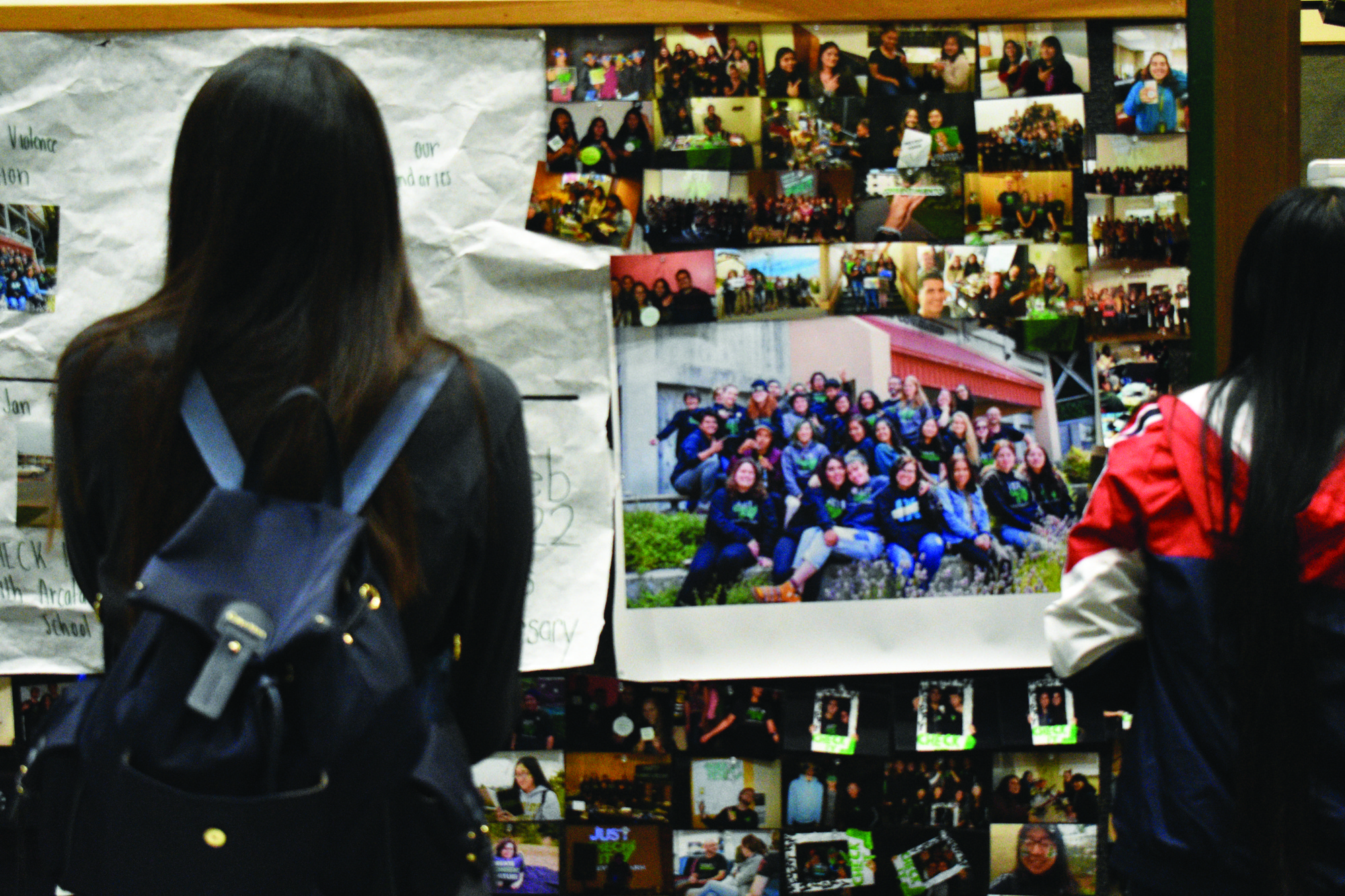
More than 300 HSU students crowded into the Kate Buchanan room to celebrate the fifth anniversary of Check It. For three hours, the Check It party raged on, filled with good food, karaoke fun and positive protecting vibes.
Photo courtesy from Check It
Check It’s head coordinator Mary Sue Savage took the stage early to congratulate the progress made by the organization in its five years of activity. As a HSU alumna herself, Savage has followed not only Check It’s progression, but HSU’s and the community’s as a whole.
“When I was a student, a very small percentage of folks were involved in violence prevention work, it was really just a solid group of social justice activists,” Savage said. “But we weren’t reaching the people we needed to reach or engaging them. But with Check It, I can see how possible it is to engage everyone on campus in violence prevention work.”
Photo courtesy from Check It
As co-founder to Check It, tonight’s celebration meant many things to Savage, as she stood in front of more than 300 supporters of the Check It movement.
“Tonight celebrates the incredible community support and compassion that makes up this movement,” Savage said. “It’s honoring the amazing consent centered activities students have been doing on campus and just celebrating how much progress has been made over the past five years!”
Volunteer students participate in the Karaoke showdown. Singing to Bruno Mars's song "Count on Me". Feb. 23. Photo by: Grace Caswell
With two hours of karaoke, the room filled with performances from student and staff hand-picked classics. Shelby Gilfuss, a second year psychology major, was one among the 300 plus who attended the Check It’s party in support.
“I came to support my friend on the Check It team,” Gilfuss said. “I also enjoy the idea of a safe community and have met so many new people, people I would never have had a conversation with before.”
With free food, hilarious entertainment, and Check It merch, it wasn’t just the guests having a great time. Shelley Magallanesa, a third year psychology major and Check It team member shared her personal relationship to Check It.
“It’s the best,” Magallanesa said. “I spend all my time here and have a lot of fun. People are so devoted to growing the cause and working hard every day. We’ve had so much success and that makes me feel so good!”
Photo courtesy Check It
Back in October, Check It gained the attention of the U.S. Justice Department, which resulted in a $300,000 grant. With new funding, the future of Check It looks bright and promising. Plans to expand and spread the movement, along with upgrade the organizational outreach, displays a promising future for violence prevention.
“This semester we are working with Arcata High School to launch Check It,” Savage said. “We’re also getting ready to launch our “Love Knows Boundaries” campaign later on this semester with specialized access cards. We really just want to continue to embed Check It within our campus culture.”
Members of the Check Item posing for their fifth anniversary. | Photo courtsey of Check It
The first 5 years of Check It can be summarized into a success, with an established office space, tons of students activist volunteers, and a new grant allowing upgraded target outreach. The next 5 years show signs of a promising future to the prevention of violence and the Check It organization as a whole.
The 25th Annual Social Justice Summit aims to shine light on oppression and problematic narratives
Students Adrienne Bahn and Deema Hindawi want to “break that wall,” which is the title for this year’s Social Justice Summit. The summit starts on Monday, Feb. 25 and will continue throughout the week.
“We were thinking about how the world is so fragile and about the Berlin wall, the Mexican wall, the wall with Palestine and the walls within us and within our societies,” Hindawi said.
Hindawi and Bahn are the coordinators of the summit and have been planning the event since August. The summit will feature a number of speakers and workshops all aimed at bringing awareness to social justice. The keynote speaker this year is Kim Davalos. Davalos will be leading a discussion on Feb. 25 about the book “Alice in Wonderland” and the “intersections of her identity and life,” as well as hosting a workshop titled “Heartwork: love letters and languages.” Bahn attended a previous speech by Davalos and was so moved by it that she decided to invite her to this year’s summit.
“I was inspired and intrigued by her powerful rhetoric,” Bahn said. “It was about embracing our own identity despite the hardships that we have to endure. With every hardship, there is beauty too.”
Adrienne Bahn, student organizer and psychology major, organized the 25th annual Social Justice Summit alongside Deema Hindawi. | Photo by Freddy Brewster
Growing up, Bahn said that she always had the intention to volunteer, but didn’t know what that meant until she got to HSU.
“I became more aware of our political climate, so I decided to actually do something,” Bahn said. “I started to volunteer and joined the Multi-cultural center and the Asian, Desi and Pacific Islander club.”
One of the anticipated events during this year’s summit is “The Other Side of Murder Mountain.” The event will feature a panel discussion about the 2018 Netflix docu-drama that took place primarily in southern Humboldt. The series paints an image of Humboldt county as a place where “vigilante justice and outlaw culture” reign. Deidre Pike, journalism professor at HSU, will be one of the panelists.
[perfectpullquote align=”right” bordertop=”false” cite=”Adrienne Bahn” link=”” color=”” class=”” size=”18″]“We are here to dismantle all forms of oppression. We can’t end sexism without ending racism as well.”[/perfectpullquote]
“‘The other side of Murder Mountain’ is about telling a different narrative about the series on Netflix,” Pike said. “People have been calling us and asking if it’s real. As storytellers, we have the ability to change the world, and the folks at Netflix have wide reaching opportunities.”
Pike said that the series pushed out a narrative that doesn’t fit reality in Humboldt, especially when it came to missing people. She pointed out that Humboldt county has one of the highest rates for missing people, but a lot of those cases end up being resolved. Pike also felt that the narrative being pushed in the Murder Mountain series is problematic.
“I have been thinking about the narrative and how it almost celebrates violence,” Pike said. “One of the counter narratives is, if you shine a light on Murder Mountain, people realize that the things they do can end up on Netflix. People thought southern Humboldt was this outlaw, backwoods place and now it is not.”
Pike went on to say that Humboldt has a brand when it comes to the marijuana industry and that Humboldt’s future parallels marijuana’s.
“If we want to be the Napa of the marijuana industry, then we need to cultivate that brand,” Pike said. “Murder Mountain contributes to that narrative, but as an ‘edgy Napa.’”
The summit will conclude on Friday, March 1 with Barbara Curiel giving a presentation titled “Border Walls and Borderland Identities.” Bahn said that she was excited for the final presentation and that the main message of the summit is to bring awareness to injustice.
“We are here to dismantle all forms of oppression,” Bahn said. “We can’t end sexism without ending racism as well.”
Afrocentric yoga that teaches that movements have purpose
Most people think that yoga comes from Asia. Kemetic yoga, however, is one of the original practices of yoga. It originates from ancient Egypt, the proper name being Kemet. What differentiates Kemetic yoga from other types is that it’s a series of geometric postures, almost like there’s math in every movement.
Humboldt State had a Kemetic yoga class taught by Dionna Fletcher as part of Black History Month. This was Fletcher’s first time directing a Kemetic yoga class after completing her training in Jamaica last month.
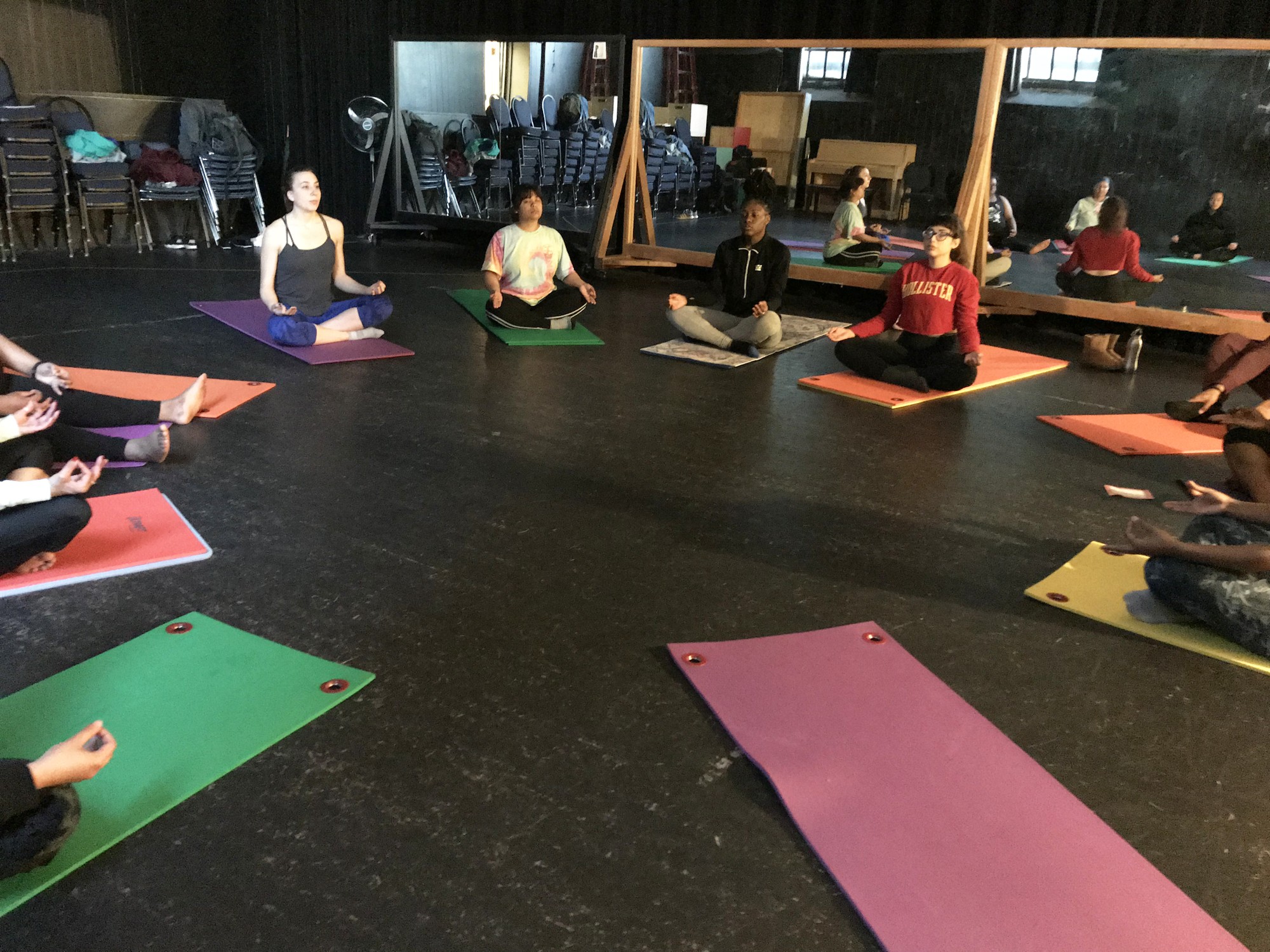
We sat in a circle as she directed us through each posture. All were welcome, and students trickled in and joined the circle. Kemetic yoga has a breathing pattern to implement purposeful breathing: inhale, pause, exhale, pause. Each of the movements were done three times, following the geometric theme of the activity. Many of the names of the poses were slightly different from what we’re used to hearing. For example, the normal sitting pose is called ‘sesh.’
“It’s a black practice that needs to be spread,” Fletcher said. “It offers something to the POC community that Asian or Indian yoga does not.”
Dionna Fletcher directed the class through movement and breathing techniques. | Photo by Silvia Alfonso
Fletcher has been part of a series of fitness sessions going on around campus and town. The series was compiled by Chryste Johnson, interim coordinator for the African American Center of Excellence (AACE). Johnson named the series Soul Fitness as a way of representing people of color during Black History month, and intended to bring in new forms of movement that people haven’t heard of.
[perfectpullquote align=”right” bordertop=”false” cite=”Dionna Fletcher” link=”” color=”” class=”” size=”17″]“It’s a black practice that needs to be spread. It offers something to the POC community that Asian or Indian yoga does not.”[/perfectpullquote]
It is a three-week compilation of different forms of movement. Johnson explained that there’s been hip-hop cardio, there will be a steppin’ class and it’s the same series that made Love Ya’ Self Queen.
HSU student DiOria Woods was one of the students who attended the series.
“I’m a dancer, I’ve never heard of this kind of yoga and I like to try new things,” Woods said. “I’m part of the culture center and I wanted to actually interact with these kinds of events.”
Though it was a small class, it was a relaxing thing to get into after the stress of the day. Fletcher made everyone feel welcomed and comfortable. Even at the intermediate level the people in the class felt comfortable to do the poses no matter how hard it seemed.
Students sat back on their heels, ready for the next movement. | Photo by Silvia Alfonso
Nicole Lamperti was another student that joined in on the Kemetic yoga class.
“I’m in a world cultures class and was curious about this kind of yoga,”Lamperti said.
The lights were off, letting the natural light come in from the sun setting through the windows. This created a more relaxed feel to the class. In the background, Fletcher played music by people of color, supporting the idea of loving yourself and putting yourself first.
Kemetic yoga brings a new form of movement to a common type of activity. Yoga is done all over the world but can be done in different forms. Kemetic yoga reminds us to be purposeful in our movements and reminds us about the different places we come from.
How HSU and Graduation Initiative 2025 are attacking low graduation rates
Freshman Isabel Duplantier, is planning to graduate in four years, but the odds are stacked against her. According to a recent report, Humboldt State currently has a four year graduation rate of 22 percent. Duplantier, a journalism major, is determined to beat the odds.
“My first semester was hard, because it took a lot of time adjusting,” Duplantier said. “But this semester I feel like I have figured out how I perceive myself and how others perceive me. I made it my home.”
Duplantier’s troubles adjusting to HSU are not uncommon. They are the reason why such a low number of students graduate within four years. However, those numbers are not unique to HSU. The California State University system started Graduation Initiative 2025 in 2009 with the intent to “increase graduation rates for all CSU students while eliminating opportunity and achievement gaps.” It didn’t go into effect until 2016, but in that short amount of time progress has been made.
“When we started GI 2025, our four-year graduation rate was 14 percent,” Lisa Castellino, Associate Vice President of Institutional Effectiveness at HSU, said. “So, we have gone from 14 to 22 percent.”
By 2025, HSU is hoping to have a four-year graduation rate of 30 percent and a six year graduation rate of 56 percent. Castellino said that HSU had a six year graduation rate of 46 percent when the initiative started, but raised it to 52 percent two years ahead of schedule.
“That’s a success story that the university should hold up,” Castellino said.
Some of the contributing factors behind why students either tend to drop out or graduate in a longer amount of time can be complex. Students face a myriad of issues that range from housing and mental health to food insecurity.
“I know a few freshmen that are having trouble with housing and financial aid,” Duplantier said. “I feel like the school could be better at giving them resources to figure that stuff out.”
That is where GI 2025 comes in. There are six pillars to GI 2025 and all are aimed at breaking down barriers. The six pillars include: academic preparation, enrollment management, student engagement and well-being, financial support, data-driven decision making and removing academic barriers.
[perfectpullquote align=”right” bordertop=”false” cite=”Lisa Castellino” link=”” color=”” class=”” size=”18″]“Peer mentoring is very effective, and it is a best practice in higher education.”[/perfectpullquote]
In the 2017-2018 and 2018-2019 budget cycles, the state spent nearly $75 million a year on GI 2025. This year’s Governor Gavin Newsom announced the California budget would allocate $45 million for GI 2025. A cut of nearly $30 million, but the first time that it was officially a part of the California Budget Proposal. A part of the student engagement and well-being pillar is to “[foster] a strong sense of belonging on campus.” To do that Castellino said HSU is planning on expanding the “Oh SNAP!” program as well as others that have been successful.
“Peer mentoring is very effective, and it is a best practice in higher education,” Castellino said. “We are looking to expand cultural pedagogy as well.”
Part of the GI 2025 report points out achievement gaps for underrepresented minorities (URM) and Pell Grant recipients. URMs are defined as those who identify as Black, Latinx or American Indian. Pell Grant recipients are those who come from low-income backgrounds. The URM equity gap rate is 14 percent lower and the Pell Grant equity gap is 11 percent lower than their white, financially secure counterparts, meaning that individuals from these two groups graduated at lower rates than their peers.
To help bridge that gap HSU announced they would be adding $435,000 for student jobs starting in fall 2019 and hiring a number of new tenure-track faculty members. The boost in student jobs is being implemented to “help students pay for college, enhance their skills to build their resume and engage with campus in new ways,” according to a recent announcement from the HSU news and information department.
To reach her goal of graduating in four years, Duplantier said she will utilize some of the resources here on campus. So far she has used the writing center and a bit of of counseling from her advisor. Duplantier wants to waste little time in reaching her dreams.
“Once I graduate, I’m hoping to design and write for some sort of magazine,” Duplantier said. “Maybe start up my own at some point.”
This past week had some serious crime. Someone was caught with a “weapon” while selling weed and a “casing” was found on the soccer field Sunday morning. Someone tried to fight somebody in the library and there may or may not be meth in the water. This week saw some contraband confiscations in the Jolly Giant Commons and a suspicious baby. Check it out!
The Rolling Count:
Possession charges = 5
Contraband/paraphernalia seizures = 4
Blotter bytes
Monday Feb. 18
· BIKERS, YA GOTTA STOP —Five bicyclists were stopped and warned for blowing through stop signs.
· Good guy alert x5—UPD helped five people with jumpstarts. They are here to serve and protect, that’s for sure.
· Suspicious baby—There was a report of a man “[wandering] aimlessly, perhaps lost” with a small child. Must have been a sketchy looking baby.
· A problem worth addressing—UPD warned a “male non-student” for camping on campus. The housing problem here is ridiculous and needs to be addressed. City council meetings are every first and third Wednesday at 6 p.m. Show up and demand change.
Tuesday Feb. 19
· DRUG ACTIVITY—Someone in the Jolly Giant mailroom got their piece seized. Bummer bruh, keep that shish on the D.L. next time.
· GUNS AND DRUGS—Someone was arrested for “possession of a weapon on campus,” and for selling weed around the Rossow and Harpst Street area. That’s some real crime.
· Smokin’ ciggies—Someone was busted smoking in the art quad. Smoking on campus anywhere is against the university tobacco policy. Head off campus or just start chewin’ ‘tabacka’. Dip spit is sexy in some parts of America.
· Good guy alert x4—UPD helped with two jumpstarts, locked car doors and a late-night escort. Thanks fellas!
Wednesday Feb. 20
· I hope you’re alright—“The welfare of a student was checked at the request of faculty.” It is that time of the year when the sun leaves and the clouds drop their emotions upon us in the form of rain. If you’re experiencing tough times and need someone to talk to, check out the mental health services at the Student Health Center.
· That’s gonna hurt—Someone twisted their ankle near the Campus Apartments and requested medical aid. Best wishes for a speedy recovery pal.
· Good guy alert x5—Man UPD has been crushing it this week with helping people out. Two jumpstarts and three late-night escorts!
Thursday Feb. 21
· Fight club—“Second hand information of a fight on the third floor” of the library. This weather is really getting to people. The library is for studying, not fighting.
· That is NOT your spot—Someone parked in a handicap spot without a placard near Redwood Hall. The driver was warned and let go without a ticket. I know parking is tight on campus but youshould not park in a handicap spot!!
· “Any type of contraband”—This just sounds cool. Talk about a cool band name, right?!?! Actually, what happened was some RA requested a pick up of “confiscated marijuana” and UPD collected it “for destruction.” I wonder if the cops smoke weed? Hmm, maybe I should follow this up for a story…
Friday Feb. 22
· Grand theft bicycle—There was a report of a stolen bike near B Street. It is a bummer that it was stolen, but at least it is one less person blowing through stop signs, right?
· “Vehicle investigation”—“Subjects parked and walked down to the duck pond.” That’s literally word for word what the report says. WTF happened? Did they kill a duck? Smoke some weed? Partake in some deviant acts? You’re leaving us hanging here UPD!!
· There’s meth in the water!!—Someone called 911 and reported that they were having a heart attack because “someone put meth in his water.” I’ve never done meth before, but I don’t think that is how it works. I could be wrong. The guy survived the night and doctors told him that there was no meth in his water.
Saturday Feb. 23
· It’s two in the morning… go home—At 2:38 a.m., two people went into a room in Nelson Hall East, “closed the doors and shut off the lights.” “They lit candles and started summoning demons,” officer Joe Schmoe said. “It was dope as hell.”
Sunday Feb. 24
· Suspicious circumstances—A casing was found on the soccer field by a coach around 11 in the morning. What the eff?
· They can track you—Someone called 911 and when the operators called back they just hung up, multiple times. So, they used the cell towers to locate the phone. Creepyyyy.
Government representatives hold town hall meeting to discuss issues that affect both sides of the political divide
Congressman Jared Huffman and California State Representative Jim Wood held a town hall meeting at St. Bernard’s Academy to talk about subjects like veterans, the Green New Deal and healthcare, among others.
“It isn’t very often you get a state representative and a congressman in the same room together,” Huffman said. “It’s valuable, so many issues have a federal and state element.”
There was a lot of ground to cover but only a couple hours to talk. Huffman and Wood began the event by updating the crowd on some of the things going on with State and Federal politics. The event was somewhat political but Huffman made it clear he wanted to have a civil conversation with people who have different ideas than him.
Many community members attended the town hall to listen to congressman Jarred Huffman and state representative Jim Wood speak and answer questions. | Photo by Amanda Schultz
U.S. army veteran Jeremy Campbell, a student at College of the Redwoods, asked a serious question to Huffman and Wood. Campbell asked the representatives for more support for veterans. The United States has a knack for asking a lot from their soldiers but providing little for their veterans. According to the U.S. Department of Veterans Affairs there were 20.4 million veterans in the country. Our veterans need support in the face of a number of challenges including homelessness, substance abuse and PTSD.
Huffman said he would try to support veterans. The spending on the border wall is being realized through an emergency declaration by the president, allowing him to reallocate money from the U.S. defense budget towards the construction of the border wall.
“We are going to stop Trump from clawing away money from veterans,” Huffman said.
A number of people brought up the issue of healthcare in Northern Calif. A serious understaffing problem is plaguing Humboldt County according to the National Union of Healthcare Workers. Citizens in the county are feeling the pressure. In light of the failure of the Calif. high speed rail, one of the people said they would like to see the funds put into better hospital infrastructure.
“I have to drive for hours to get anything more than a CT scan,” a community member said. “We need a better hospital up here.”
The Green New Deal was another hot topic. A couple of Humboldt State students had the opportunity to ask questions about the subject. David Grover, an ESM student on campus, had prepared a question for Huffman before he arrived at the event. Grover was excited for the opportunity to address his congressman directly. Grover intended to get Huffman’s opinion on whether he supported Alexandria Ocasio-Cortez’s proposed Green New Deal, currently being reviewed by House subcommittees, or if he supported the Green Party’s Green New Deal.
Kelsey Reedy asking state representative Jim Wood and congressman Jared Huffman a question during the event. | Photo by Amanda Schultz
Lily Price, an HSU junior studying botany, represented the Sunrise Movement at the town hall. Price asked Huffman to address the U.S. Speaker of the House on the subject.
“I think we can bring the smartest minds to the conversation and move the needle,” Huffman said. “I think we’re going to do good stuff with this subcommittee.”
Updated 03/05/19: A previous version of this article misquoted Jeremy Campbell.
Everyday ailments and problems often have herbal alternatives
Plants and herbs have been used for centuries to treat different ailments. With big pharmaceutical companies handing opioids out like candy, many are turning to alternative treatments for different problems.
Sophia Laverdiere is a local herbologist at Moonrise Herbs in Arcata. Laverdiere received her education at The Southwest institute of Healing Art in Phoenix, Arizona, she has extensive knowledge of over 140 plants.
“Before pharmaceuticals how did humans survive?” Laverdiere said. “We have all these plants that do everything we need.”
Sophia Laverdiere is a local herbologist at Moonrise Herbs in Arcata. | Photo by Maia Wood
She described what the term ‘disease’ means in her line of work.
“Disease literally is dis-ease in your body,” Laverdiere said.
When you have health problems, that means your body is not in balance with the environment around you.
Pharmaceutical drugs and medicine are often derived from plants. Scientists isolate the chemicals in plants that help treat ailments in humans, so going to plants to treat illness is not so far off. Using the whole plant, instead of part, can provide benefits for illness and disease. Before going to a pill, try some of these herbal alternatives.
Asthma
Mullin:
· Description: “Leaves look like lungs”
· Use: Soothes the bronchioles
· Origination: Used by the Native Americans
· How to Consume: Tincture
Local Organic Honey and Pollen:
· Use/ Benefits: For asthma and allergies
· Builds immune system by exposing you to local allergens
· How to Consume: Eat a spoonful
Anxiety & Stress
Ashwaghanda:
· Use/ Benefits: Sleep and pain
· Origination: Chinese herb, means “strength of a horse.” The medicine comes from the root of the plant.
· Lowers your cortisol levels, which get overloaded during stress.
· How to Consume: Tincture
Holy Basil:
· Use/Benefits: For extreme and severe anxiety and panic attacks.
· Origination: India, used in almost every home in India. Considered to be a sacred plant. The whole plant is used for medicine.
· Lowers your blood pressure and eases your heart muscles.
· How to Consume: Tea and tincture. You can just pick the leaves of the plant to consume.
Oats/Oatmeal:
· Use/ Benefits: Natural nervous system relaxant because there are some many vitamins and nutrients in oatmeal. These factors come together to create a natural calming effect in your body.
· Cheap and accessible at most grocery stores.
· “Food Medicine”
Insomnia
Rubious (Rhobilea, Rosea) In the Rose family:
· Uses/Benefits: This herb gives you a natural boost of energy and vitality.
· Calms down the central nervous system. Helps increase the moods in your brain
· How to Consume: Tea or tincture. A little goes a long way.
Passion Flower/ Passion Fruit:
· Uses/Benefits: When you wake up at any time at night
· Works to help reset the brain cycles
· How to Consume: Eat before bed
California Poppy:
· Uses/ Benefits: For deep sleep and to stay asleep
· Hypnotic herb which means to induce sleep
· How to Consume: Tea or tincture
· Uses the whole plant for medicine
Next time, before you reach for something in your medicine cabinet, pick up a whole plant or herb instead.
“Plants are here to help us, instead of just taking a pill derived from plants. Go the source and use the whole plant,” Laviedere said.
Sociology peer mentors shine with Youth Educational Services and help students
News editor, T. William Wallin sat down with Ashleigh DeFraga and Belen Gutierrez during separate interviews for a Q&A.
DeFraga and Gutierrez are seniors in the criminology and justice studies program at HSU. They are peer mentors for the sociology department and can usually be seen helping out a student in the business of social sciences building. They volunteer with YES and are very involved with the community. They both are pursuing law degrees and want to become lawyers after graduation.
WHAT ARE YOU STUDYING AT HSU?
DeFraga: I am studying Criminology and Justice studies major, with a double minor in psychology and Philosophy
Gutierrez: Criminology and Justice studies with the minor in comparative ethnic studies
WHY DID YOU PICK THE MAJOR AND DOUBLE MINORS?
DeFraga: I love all aspects of the criminal justice system. Our school has a unique program and since day one I knew I wanted to be a lawyer. I chose psychology because I am interested in how the brain works. I am minoring in the philosophy of ethics, which we talk a lot about ethical dilemmas that get brought up in criminal justice such as rape, or voluntary suicide. Taking philosophy will help me with questions that will be on the bar exam and the LSAT.
Gutierrez: I interned at a law firm in high school and I knew I wanted to do law when I graduated but I didn’t want to do the traditional political science. Not that there’s anything wrong with that but I was more interested in the criminal justice aspect of it. I started learning about intersexuality in high school and that drew me in having a minor in comparative ethnic studies.
WHERE DID YOU MOVE FROM?
DeFraga: I came from Sacramento. I came straight from high school and enrolled at HSU in August of 2016. I have been taking 20-22 units each semester to graduate sooner because I don’t get financial aid. I did get some scholarships but I wanted to get done as fast as possible.
Gutierrez: Orange County, Santa Ana, in particular, Southern California. I came straight from high school. I graduated in 2015.
HOW DO YOU JUGGLE THE WORKLOAD AND VOLUNTEER WORK YOU DO?
DeFraga: I go day by day. You can’t go each day and think past that because then it’ll be overwhelming. I have a google calendar, a wall calendar and a million sticky notes everywhere. I’m really organized.
Gutierrez: My mom is really good with time-management and I really just inherited her skills a little bit. I really try to think about what I’m taking on and how that is going to fit in with my schedule. I know my limits and I try to stick to them. But google calendar and a planner is your friend.
WHAT’S THE PLAN AFTER YOU GRADUATE?
DeFraga: Straight to Law School. I’m going to go to Pepperdine in LA. It’s a private school with lots of scholarships and I love the area its in. It’s smaller than Harvard and I think it’s best for me to thrive.
Gutierrez: I’m taking a year off and then going to law school. My top schools right now are Berkeley and I got a full-time offer for Chapman Law. I’m debating that because I want to go to the bay so I’m not sure if I’m willing to relocate to So-Cal but we’ll see. Berkeley is number 1. They have a Ph.D. program on social well-being so you can do a program to get your Ph.D. in social justice and also your law degree which is what I’m really interested in doing.
WHAT ARE YOU MOST PASSIONATE ABOUT?
DeFraga: I am most passionate about juvenile kids. They need help, it’s not their fault when they get in trouble. I want to make a difference in the juvenile justice system. Kids are important and not enough people are making an effort with them.
Gutierrez: I think definitely collaborating with communities that are oppressed and striving for social justice.
WHAT HAS BEEN YOUR FAVORITE EXPERIENCE IN HUMBOLDT?
DeFraga: My favorite experience is all in all the environment. I think the environment has shaped every aspect of my experience. Everyone is super genuine. The JRVP program has been one of my favorite experience up here.
Gutierrez: Definitely volunteering with YES. I started volunteering as a freshman through the step-up program which is HSU’s alternative spring break. That’s where we went to San Francisco to volunteer for spring break, and then when I was a sophomore I directed the program myself and planned the Sacramento trip. My junior trip I applied to be one of the five paid staff positions and I got it. This year I applied to be the lead program consultant and I love it. I love YES and I think if it weren’t for YES I would have transferred out of HSU because it’s so isolated. I think finding a community is really important and I found it at YES. That has definitely been my favorite part so far at HSU.
WHAT ADVICE DO YOU HAVE FOR INCOMING STUDENTS?
DeFraga: Be brave. Don’t be afraid to ask questions. Don’t be scared to not know something, just ask and be comfortable in your own skin.
Gutierrez: Definitely, get involved. Maybe not your first semester if you want to get a taste of college and what classes are like as a full-time student and how you fit in because that’s the time to dip in your toes and see what you want to be involved with.
WHO IS YOUR FAVORITE PROFESSOR AT HSU?
DeFraga: Michihiro Clark Sugata.
Gutierrez: Wow, I’ve had so many. I think so far it’s been Nancy Perez. She just got hired through the CRGS department and I took Chicana/Latinx with her last semester. I really like the structure of the class and how she gave us assignments I never had before and so she was really relaxed with what we could do. One of the assignments was to write a children’s book and what stood out for me was to write a children’s book that you wish you had when growing up. I really liked it and I wrote a book about my experiences growing with a message I would have liked to see growing up. That really stood out for me and that has made her one of my favorite professors. She really thinks outside the box and giving us assignments that were challenging because you think you can write a children’s book no problem but really it’s a lot more than that. It’s a lot deeper than that and there’s a lot of thinking that goes into it like ‘how can I put a message into it in a way that a 5-year-old or whoever is reading it will understand it.’ That’s why she’s my favorite professor.
HOW LONG HAVE YOU WORKED WITH THE JUVENILE CENTER AND WHAT IS IT LIKE? WHAT HAVE YOU GAINED MOST WITH WORKING THERE?
DeFraga: It’s pretty awesome getting to go into the Juvenile hall and work with the kids there. They are honestly just normal kids we have just labeled them as bad or delinquent! I think that the best part is being able to see that they are just kids, not criminals! To be able to just hang out with them and show them a positive example is a small way in which each and every one of us can help them. I’ve been working with them since my freshman year! It also makes you feel like your life isn’t so bad in retrospective to theirs. Putting yourself in their shoes and looking at the intersectionality that goes along with it!
WHAT IS WORKING AT YES LIKE?
Gutierrez: It’s really rewarding in several aspects. It’s not just going out into the community that’s rewarding, it’s also all the skills I have learned that I didn’t even know I had, such as facilitating meetings and learning people’s first language and how there’s a savior complex when volunteering and how YES is striving more towards collaborating with communities instead of really just going in and serving them. It’s more like we’re here if you need us and what is it you would like from us instead of going in and being like we’re here to do this for you. So I think that’s what I really fell in love with YES, there really striving to make those changes.
Remember to take time for yourself and stay mindful of stress factors
Here at Humboldt State University, we’re in week five of the semester. We understand that for some this semester will be stressful and we want to encourage you to love yourself by promoting a healthy body and mind.
The most important thing you can do is sleep for eight hours or more, don’t fret on getting assignments done and absolutely do not cram assignments. According to the National Center for Biotechnology Information, the number of students who are lacking sleep or are sleep deprived are at an all time high. Not only can this lead to poorer work quality, but it can also lead to mood swings and higher potentials for motor accidents.
Here are some things that can help you get a good night’s sleep. Drink Chamomile tea before bed; chamomile is known to have properties that induce sleep and it’s a mild effect so it won’t completely knock you out. Another thing that can help you sleep is to exercise often, go on walks or do a full cardio workout. What matters is exerting enough energy to make yourself tired so you knock out when you hit the bed.
Speaking of exercising, it’s very important keep your body active when in college. The NCBI has said that students in university are lacking in physical activity; that is not surprising since we are juggling classes each semester that we don’t have time to even take care of our bodies.
If you are one of those people who don’t have time then walking to class is a good enough exercise, doing stretches is also a good way to exercise. If you do have time and energy to exercise, HSU students are able to use the HSU Student Recreation Center, you just need to bring your student ID to sign up for a membership. It beats having to spend hundreds for a gym membership.
It’s also important to budget your money wisely. Instead of eating out, cook something instead. It’s not only cheaper, it’s also healthy. Another plus side is that it’s also very rewarding to make something delicious. HSU also has the Oh SNAP! pantry that offers HSU students with food, spices and recipes, it’s a good alternative for those who are on a tight budget.
Last but certainly not least, step away from assignments for a little bit and do something that’s fun for yourself. Play a video game, read a book, watch a movie, talk with friends…whatever keeps your mind away from all your stresses.
Stress is a dangerous baggage to carry, which is why you should keep a level head. Some students come from far away locations, HSU has its own Counseling and Psychological Services Resource if you are dealing with stressful events.
Anyone who has to deal with high-headed college students is going to have the occasional ill-mannered day. But is taking advantage of a college student’s vulnerability in renting a home justifiable because one is having that ill-mannered day? Or is it just your way of demeaning my lack of knowledge about a topic you excel at? Just because I’m 20 and I’m attempting to learn how the real world works, doesn’t give you the right to belittle my understanding on a matter I’m trying to grasp.
If you’re a college student living in Arcata, you know exactly what I am talking about. Property management around Humboldt State University is extremely poor, from the landlords “helping” to rent the space to the space itself.
Young adults are leaving on-campus housing in hopes of finding a comfortable home in town and a safe place to reside for the remainder of their time in college. Several students have not only had problems with finding housing, but have found substances like mold in their homes, including myself.
I recently moved from a studio apartment to a two-bedroom because my boyfriend and I needed more space to live comfortably. Aside from the property managers being extremely rude throughout the moving process, I found black mold in my shower the very first time I used it. I should not find mold in my home after moving into a space that the property management stated on paper, had been thoroughly cleaned.
It is only fair that properties are kept up in terms of maintenance, and do not have substances like black mold at all! It’s as if these housing management companies around here just don’t care. They are in the office at eight in the morning, and out by five in the afternoon with no other concern.
I mean, maybe I have this imaginary standard of how professional property managers should be and how clean new homes should look, or maybe I am simply addressing an issue that many don’t have the time to.
If the property managements are not going to enhance their customer service or even their properties, I feel that Humboldt State should take the initiative in helping students find adequate housing as they move off-campus.
Chant’e Catt has recently become HSU’s Off-Campus Housing Coordinator, in hopes of helping homeless students find a home as well as teaching students the do’s and don’ts of dealing with property managements with a new program called the Educated Landlord-Tenant Program. I think this project start-up is a great solution to college students figuring out their off-campus housing, but not enough of us know about it. The housing project has already held several discussions that have been open to all students and community members.
One way or another, college students should not have to choose between living homeless or living in a dirty home with substances like mold. If a property manager is going to take money from a college student’s very tight budget, the least they can do is ensure that the home they provide is safe and clean.
Unfortunately, this is an issue in more college towns than just Arcata. It’s a national problem and it’s something I feel should be addressed sooner than later.
Accomplished track star, Romel Robinson, is a triple-threat
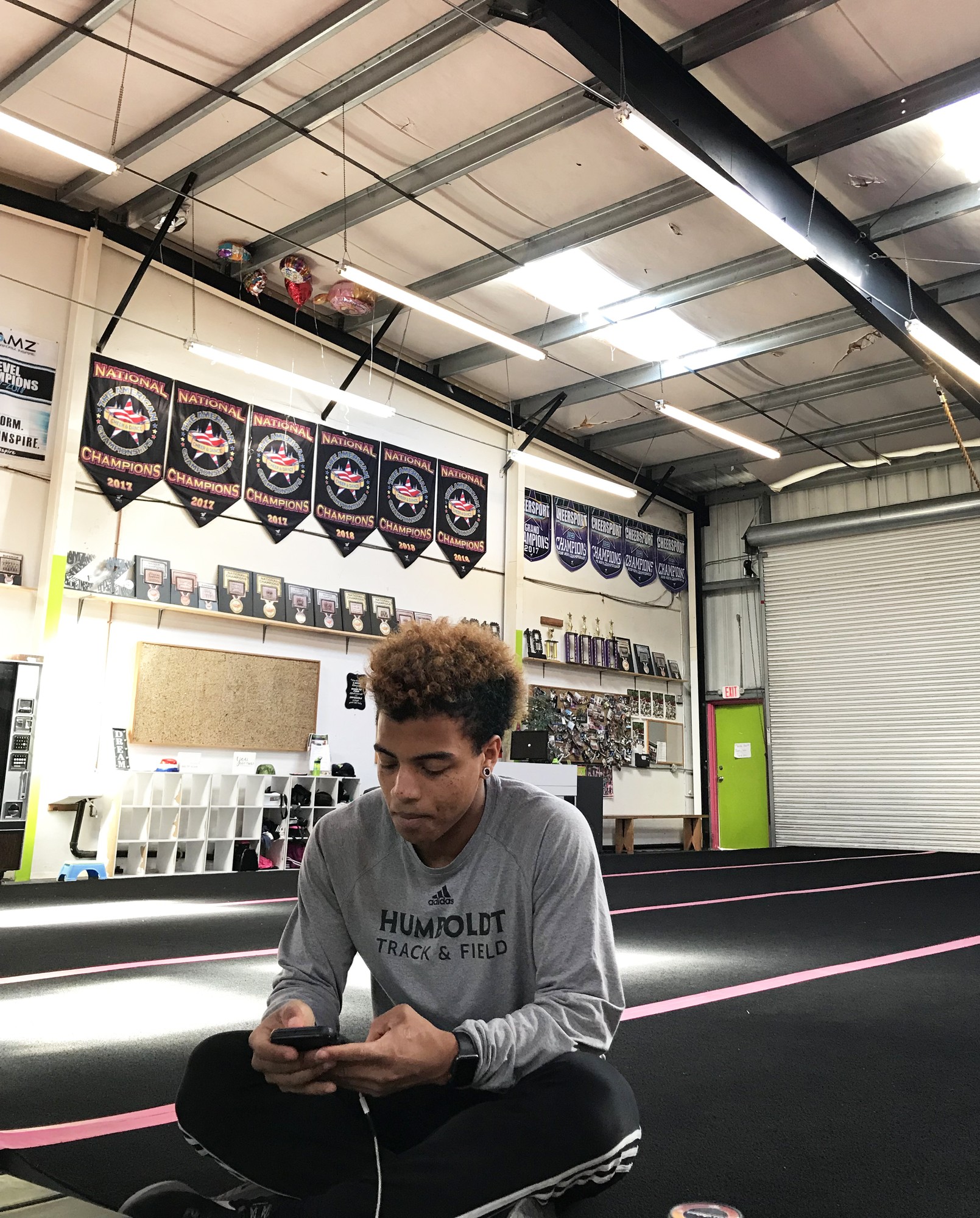
As a starting sprinter for HSU’s track team, and recipient to over a hundred awarded medals, Romel Robinson, is familiar with identifying himself as a runner. However, beyond the many medals, is a self-taught gymnast and break-dancer.
“I taught myself [to tumble] in middle school,” Robinson said. “My friend knew how to back flip and tried to teach me, we were just messing around.”
Finding a new interest in the gymnastics world, Robinson continued to teach himself new tumbling tricks.
“My favorite is a double back flip,” Robinson said. “It’s a work in progress, I don’t have the right equipment to perform it without hurting myself.”
The right side of the Dream Athletics gym is painted with bright, neon colors and lines of championship banners. Feb. 18. | Photo by Grace Caswell
Robinson is extremely careful when practicing tumbling, as he’s already out for the season with two pulled hamstrings.
“It’s a lot of strain, very similar to running,” Robinson said. “You tumble until your body can’t, which is about an hour, to an hour and a half in. After that, you’re sloppy and too weak.”
While finding a commonality between the physical excursions of tumbling and track, Robinson views the two sports very differently.
“Tumbling is just for fun,” Robinson said. “I got pushed into track, it’s more competitive, and I take it seriously. It’s a lifestyle.”
Fellow teammate, roommate, and competitor, Stefan John, supports Robinson both on and off the track.
“We’re straight up family, we gel,” John said. “We have a lot in common, and run the same events. He wants my stride and I want his quickness! We’re great friends and competitors.”
Stefan John, HSU track athlete poses in the library post interview. Feb. 19. | Photo by Grace Caswell
With athletic support, Robinson pursues an environmental engineering major as a first generation college student. Idolizing his first engineering professor, Sintana Vergara, Robinson refers to her as his “Humboldt Mom”.
“She’s always been there to help,” Robinson said. “She helped me through starvation freshman year, buying me groceries. She’s constantly encouraging me in and out of the classroom.”
Sintana Vergara shares a very similar attitude toward Robinson. Vergara said that Robinson was the first student she met at HSU.
“It was a very friendly start,” Vergara said. “I remember he casually mentioned eating one meal a day, it broke my heart, I wanted to advocate for him. It was crazy and exceptionally frustrating. He’s such an amazing athlete and student, full of potential.”
Robinson pursues a masters and doctorate degree, with a goal of becoming the first doctor in his family. Vergara fully supports and believes in Robinson’s dream.
[perfectpullquote align=”left” bordertop=”false” cite=”Romel Robinson” link=”” color=”” class=”” size=”17″]“I grew up in a difficult area. I remember we didn’t always have food and my mom was working multiple jobs. She’s my biggest inspiration and is totally killing it now…”[/perfectpullquote]
“There’s no doubt he can do it,” Vergara said. “Everyone struggles regardless, no matter who you are. It’s a tough major, but, he will be successful.”
Focused on following a strict plan for the next ten years of his life, Robinson has an interesting goal for his more distant future.
“After getting my masters and doctorate degree, I want to change my name,” Robinson said. “Romel Fresh Robinson, so when I’m a professor, I can be called Dr. Fresh or Professor Fresh.”
Coming from the tough area of Visalia, California Robinson emphasizes opportunity and dedication.
“I grew up in a difficult area,” Robinson said. “I remember we didn’t always have food and my mom was working multiple jobs. She’s my biggest inspiration and is totally killing it now, doing accounting at a firm.”
Watching a powerful and successful transition in his family, encourages Robinson to achieve and accomplish more.
“My mom taught me everything I know,” Robison said. “She helps me with whatever I need, even if she doesn’t know how, she’s my favorite.”
With serious goals and aspirations for the future, track becomes nearly invisible on the long list of objectives. However, it gave Robinson an opportunity in the first place, and will remain his life indefinitely.
“I like running, it’s something I will always do, until I die!” Robinson said. “I mean, it got me here.”
Homeless Student Advocate Alliance aims to avoid homelessness
The housing situation at Humboldt State University has been a huge problem since 2016. In the last year, about 19 percent of HSU students were homeless, according to a recent study done by CSU Chancellor’s office social work professor Jennifer Maguire and CSU Long Beach social work professor Rashida Crutchfield.
Many students demand more housing. Fernanda Estrada, a junior in psychology, has lived on campus her entire student career and said her biggest fear is not being able to find housing within the next few years she has left here.
“I am still unsure whether I will even have granted housing next year, to live on campus,” Estrada said. “This school has a huge problem on not having a lot of housing for on campus living. For someone who doesn’t have a car, it is very hard to live off campus as well. I feel like a lot of students aren’t taking action into this situation, and they only will unless they are in this situation.”
HSU student, Fernanda Estrada reaches for a book. | Photo by Delaney Duarte
We are mostly unaware of the students that are homeless. We see them on campus and don’t even know they’re having housing insecurity. We see these students in our classes, walking out on the quad, or even in the Depot without knowing they have nowhere to sleep. Christopher Regalado is a junior in marine biology who was homeless for a semester and knows how it feels to be homeless.
“It was really tough, I had to sleep from one friend’s place to another and I even had a tent, so sometimes I slept in the forest,” Regalado said. “I didn’t want to bother my friends all the time because that is their place and not mine.”
HSU student, Christopher Regalado stands in College Creek’s soccer field. | Photo by Delany Duarte
Regalado couldn’t find any housing available on campus or off campus. When he applied for housing on campus he’d gotten a waitlist number, which was 272. That number was far from a single digit number to even have a slight chance on getting a place to live.
[perfectpullquote align=”right” bordertop=”false” cite=”Christopher Regalado” link=”” color=”” class=”” size=”19″]“I really hope those students who are homeless currently know they aren’t alone…”[/perfectpullquote]
“I was really disappointed with how the system of on campus was set up,” Regalado said. “It is very unfair. I wouldn’t wish being homeless on anyone, it is such a stressful time.”
Regalado said he had a hard enough time being homeless for one semester and couldn’t imagine the students who are homeless for a year or more. Regalado hopes that housing changes very soon for those students suffering without a safe place to live.
“I really hope those students who are homeless currently know they aren’t alone, Regalado said. “And I hope they have supportive friends like I did at a time where I needed them the most.
On campus, there’s supportive advocates to help those students who can’t find homes.The Homeless Student Advocate Alliance, is a club that creates dialogue services and awareness of housing issues are overlooked. This club was started by Chant’e Catt, who is also the Off-Campus Housing Coordinator. Chant’e Catt assists students who are homeless to find homes off campus and helps support them.
“There is a lot of awareness now on campus, so professors and faculty staff know what to look for when they see a student in need so they do refer those students to me,” Catt said. “Also when students are brave enough to come out and find help, they are immediately directed to me.”
Many students want these housing issues to be improved and get better as time goes on. Catt said that the housing situation has improved throughout the years she’s been working on the issue.
“HSU, while people like to think we aren’t doing a lot, are actually the leader in solving and supporting the students around this need,” Catt said.
There has been a lot of people who blame the school itself, and the people that work within housing. Catt said that there is emergency housing on campus in the woodworks for next semester that can house one or two students. This
“I see a lot of progress going on for student basic need,” Catt said. “A lot of people like to blame a specific area or one person but in reality it is just a system failure in the institution.”
If you are currently going through a similar situation, you can contact Chant’e Catt at cmc1776@humboldt.edu.
Black Humboldt hosted a self love workshop on Feb. 16
Black Humboldt founders Dionna Fletcher and Mo Desir provided a safe space for women of color to join and have fun with each other. “Love Ya’ Self Queen” was an event that allowed guests to enjoy themselves as they took part in yoga practices, dancing lessons, hair care tips, essential oils, music and laughs Saturday night, Feb. 16.
Sangria, chocolate and other treats displayed on a table for guests to have. Feb.16. | Photo by Skylar Gaven.
The night started off with a short yoga practice instructed by Fletcher. Yoga mats were placed in a small circle, inviting all the guests to come together and share the space. Fletcher is an instructor-in-training, with a focus in teaching Afrocentric-based yoga. She led the session beautifully; taking deep breaths and loosening up the muscles proved to be an excellent way to begin the event.
After relaxed guests finished one more deep breath, a workshop with essential oils was next on the list. The air quickly smelled of citrus and peppermint as Rosemary Grady, longtime friend of both Fletcher and Desir, shared the benefits of natural medicines and oils in a short workshop. Grady has had an interest in essential oils for a while. After discovering what different smells can do to a person’s sensory memory, she dove in deeper with her research.
Essential oils scattered around the room for all guests to see and smell the different scents. Feb. 16. | Photo by Skylar Gaven.
Grady said citrus reminds her of the times she would visit the orange trees with her family in Riverside. She also mentioned that lavender has helped her many times with anxiety and stress. Natural resources also help benefit your health, instead of using products that contain harmful chemicals that can affect your body.
Rosemary Grady leading a workshop with essential oils and other natural medicines. Feb. 16. | Photo by Skylar Gaven.
Later, after a choreographed dance lesson uplifted the room with many smiles, Desir and Fletcher shared helpful tips for those struggling with different hair types such as thick, curly hair. As participants created hair masks, they suggested using coconut oil in your hair last rather than first, because it blocks out other products from entering your hair, and, for curls, it’s best to wash it once a week to prevent it from getting dry and brittle.
Desir presented an easy recipe for a hair mask consisting of Mayonnaise (vegan mayonnaise is an option), honey, extra virgin olive oil and coconut oil. An avocado or banana can be added to make it thicker. Everybody was given a sample to use at home along with a homemade sugar scrub.
Ingredients being used to create a homemade hair mask. Feb. 16. | Photo by Skylar Gaven.
After that, the circle opened up about their experiences with their hair and other difficulties that they’ve gone through being women of color.
“I straightened my hair for a really long time throughout middle school and high school,” Grady said. “It wasn’t until I went to college… it was actually black women telling me what to use for my hair; it wasn’t until I lived in that environment where I was supported by women of color, I started to embrace myself and love myself a lot more.”
With an entire county that lacks in diversity, Fletcher and Desir wanted to establish reliable and entertaining spaces for people of color to express themselves without having to feel restricted because of an uncomfortable or unfamiliar environment.
“Every month we try to find new themes and innovative ways to be together,” Fletcher said.
Body High Pole Dance studio sign. “Love Ya’ Self Queen” was held at a POC local owned business. Feb. 16. | Photo by Skylar Gaven.
Black Humboldt normally holds events in black-owned businesses, to promote and give the black community a variety of places to visit and so people of color can explore new spaces and find more diversity in this county. “Love Ya’ Self Queen” was held at the Body High Pole Dance Studio, owned by Naomi Leitu and Natalie Abeja, both women of color.
“We specifically chose this space because it is black-owned,” Fletcher said.
Desir said that they hold events in black-owned businesses to support and display a positive place for people of color to attend.
“This is a POC owned facility,” Desir said. “I think a big emphasis we are trying to do is to create that safe space.”
Mo Desir and other women taking a break in between workshops. Feb. 16. | Photo by Skylar Gaven.
Fletcher and Desir both knew that having a group that works toward building a strong black community in a largely white population would be great for Humboldt. They want to share inviting environments as well as values and support for local people of color.
“We are hoping to create a strong black community, create black economic empowerment for black businesses the most that we can,” Desir said.
Look for more events from Black Humboldt by checking out their official website.
Humans can learn from dinosaurs’ experiences with climate change
Humans can learn from dinosaurs’ experience with global warming. Elliot Dabill, president of the board of directors for Friends of the Arcata Marsh, gave a lecture on Friday Feb. 15 on the topic, “What Could Dinosaurs Teach Us About Global Warming?”
“Of course the answer is a lot,” Dabill said.
Elliot said that during this time, the continents were crashing into one another to create Pangea. Volcanoes then began erupting. The lava produced was enough to cover Europe.
Elliot said the heat from the lava cooked limestone and coal which then threw carbon dioxide and sulfur into the atmosphere. The large amount of gases, carbon dioxide and methane specifically, absorbed heat from the sun. Permafrost would then melt, which threw more methane into the atmosphere. During this time, oxygen was being sucked out of the air.
Dabill referenced statistics that there was only 12 percent to 16 percent oxygen in the air, compared to 21 percent today. This lack of air would make it very difficult to breath at higher elevations.
“You couldn’t go to Willow Creek,” Dabill said.
According to Dabill, this is when dinosaurs began to evolve. This is also when Pangea began to break apart. Oxygen levels had just started to recover only to crash again. Volcanoes and poison gas again began to spew into the air.
“Huge volumes of lava coming out,” Dabill said.
The Earth started to heat up and oxygen levels were crashing quickly.
“Volcanoes had to be a factor,” Dabill said.
Many of the animals during these eras went extinct due to the low oxygen. Thankfully, dinosaurs have special lungs with air sacs. This type of lung system allowed the dinosaurs to absorb more oxygen than the other animals. The air sacs also helped absorb and exhale heat from the air. This allowed dinosaurs to survive while other animals suffered and went extinct.
[perfectpullquote align=”right” bordertop=”false” cite=”Bill Prescott” link=”” color=”” class=”” size=”17″]“The more you hear about global warming, the more you understand it. The human influence is irrefutable.”[/perfectpullquote]
Katy Allen, secretary for Friends of the Arcata Marsh board of directors, attended the lecture on Friday.
“I never knew the reason dinosaurs survived,” Allen said.
That is when it shifted into the Jurassic era. The dinosaurs began to take over.
“Dinosaurs end up running the world,” Dabill said.
Today, the Earth is heating up faster than ever. This is due to the mass of carbon dioxide being emitted across the planet by humans.
The melting of glaciers and sea level rise are two issues of concern. People across the planet are counting on glaciers to provide water for their rivers. Sea level rise will affect people all across the planet. This will destroy homes and infrastructure for millions of people.
Bill Prescott is a retired businessman who attended the lecture on Friday.
“The more you hear about global warming, the more you understand it,” Prescott said. “The human influence is irrefutable.”
Humans also have a trick to combat these issues. Humans can put their brains together to solve climate change once and for all.
“This is only the beginning,” Dabill said.
This website uses cookies to improve your experience. We'll assume you're ok with this, but you can opt-out if you wish. Cookie settingsACCEPT
Privacy & Cookies Policy
Privacy Overview
This website uses cookies to improve your experience while you navigate through the website. Out of these cookies, the cookies that are categorized as necessary are stored on your browser as they are essential for the working of basic functionalities of the website. We also use third-party cookies that help us analyze and understand how you use this website. These cookies will be stored in your browser only with your consent. You also have the option to opt-out of these cookies. But opting out of some of these cookies may have an effect on your browsing experience.
Necessary cookies are absolutely essential for the website to function properly. This category only includes cookies that ensures basic functionalities and security features of the website. These cookies do not store any personal information.
Any cookies that may not be particularly necessary for the website to function and is used specifically to collect user personal data via analytics, ads, other embedded contents are termed as non-necessary cookies. It is mandatory to procure user consent prior to running these cookies on your website.