The Lumberjack


Students Serving The Cal Poly Humboldt Campus and Community Since 1929

Month: February 2019

  • Under the gun

    Under the gun

    The pros and cons for artists at tattoo expos

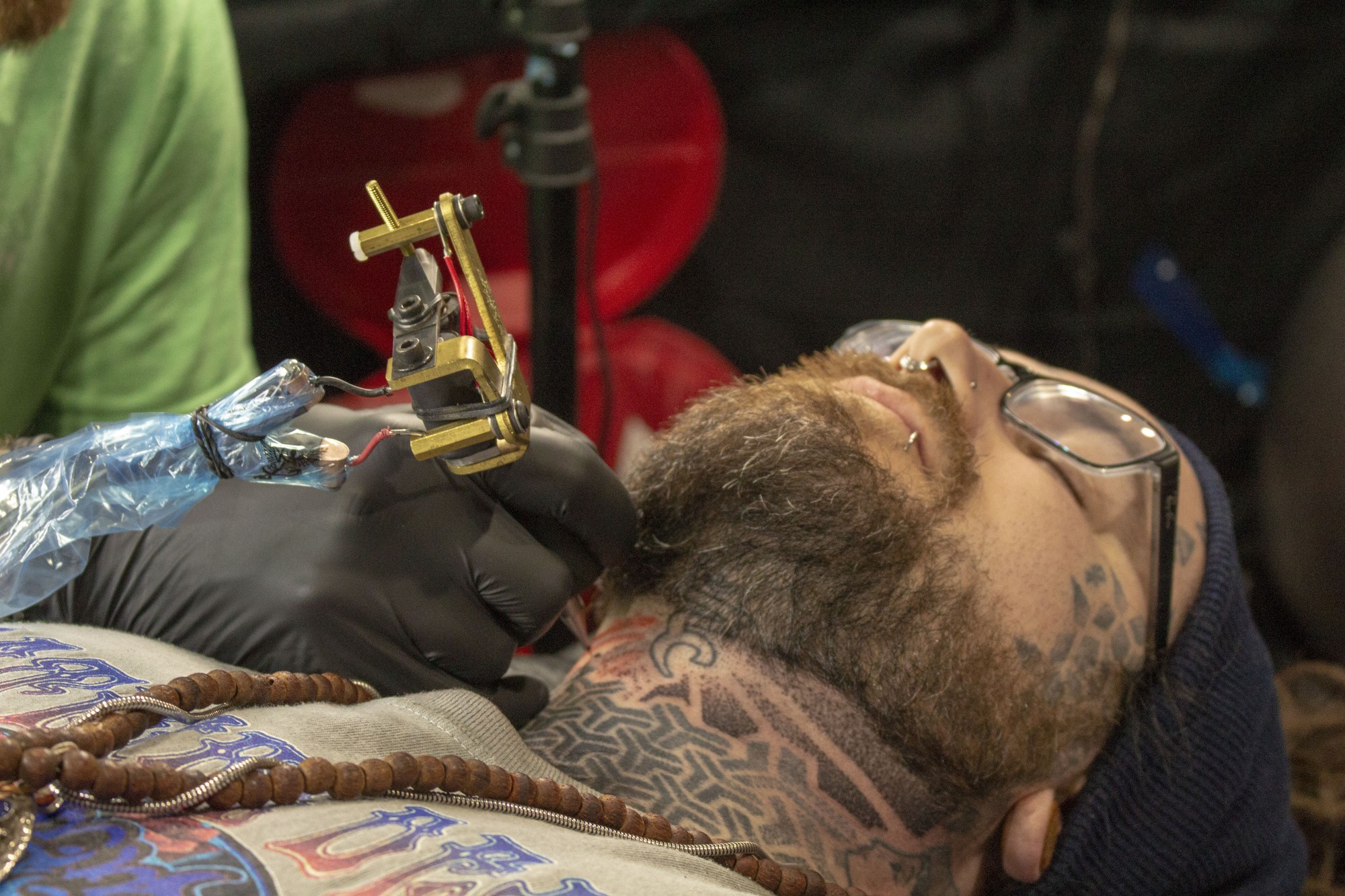
    Tattoo guns were whirring and the Blue Lake Casino was jam packed with tattoo artists from around the country attending the 10th annual Inked Hearts tattoo expo. This past weekend they opened up their doors to roughly 50 artists who all specialize in various styles and techniques of their art.

    Riley Smith is the owner of two tattoo shops, Lifetime Tattoo and Queen Bee, both located in Oregon. He is no stranger to expos, attending an average of 20 expos per year as well as being the founder of three expos himself. These expos are the Evergreen Tattoo Invitational, Evergreen Tattoo Champions and the 208 Boise Tattoo Fest.

    “Actually it was a bit of a fluke, me and my business partner Josh McCarlton, he’s the master of realism tattoos, got together and decided we wanted to make tattoo shows better,” Smith said.

    CAUDILLO.TATT (18).EXPO20190208.jpg Being tattooed by Jared Glassburn from Vancouver, WA. | Photo by Cassaundra Caudillo
    [perfectpullquote align=”left” bordertop=”false” cite=”Riley Smith” link=”” color=”” class=”” size=””]”Of all the shows I do around the world this is my favorite show.”[/perfectpullquote]

    Having a long history with expos, he said that the best part of these expos is being able to see artists do what they’re best at, but did mention that expos aren’t the most ideal place to tattoo a person. However, he does have a high appreciation for Inked Hearts.

    “I’m honored to be here,” Smith said. “Of all the shows I do around the world this is my favorite show.”

    Nico Herring, an artist at Inkfatuation located in Port Hueneme, California, shared a lengthy list of both pros and cons, in which he agrees with Smith on some. Having attended expos in the past and specifically Inked Hearts twice, he had a few things to share.

    “You get new clientele, you get to meet new artists from around the world, you get to see artists tattoo that you’ve been wanting to see,” Herring said. “Cons…traveling and having to fish for appointments, but normally there’s a lot of people that come so it’s not too big of a deal.”

    CAUDILLO.TATT (17).EXPO20190208.jpg Michael Bales, artist from Texas, is tattooing a large quail and flowers in his original style. | Photo by Cassaundra Caudillo

    Artists who attend these shows can make anywhere from $1,000 to $12,000 per expo weekend. There are some artists who find that despite making those few thousand it is difficult to break even when you take into consideration the traveling costs. These artists do agree that coming to these expos is worth the hours long drive or various flights.

    First timer Ceka Kitami, from Faces in the Dark tattoo shop in Kyle, Texas, said that for her the most grueling part of an expo is the traveling. Her team and her had to fly to Humboldt with all of their supplies and then haul it to Blue Lake via car.

    “I always learn something new every expo I go to, but the traveling and having to lug all of your stuff all around the world isn’t very fun,” Kitami said.

    CAUDILLO.TATT (12).EXPO20190208.jpg Woman gets artwork done on her arm at the expo.

    Joe Elliott, who owns Tattoo Joe’s out of Vacaville, California, mentions that he has been coming to Inked Hearts for nine straight years. He only does three shows a year and Inked Hearts is always one of them. He enjoys being able to catch up with old artist friends and see new talent.

    “It’s like a working vacation,” Elliott said.
  • City destroys legacy bike trails

    City destroys legacy bike trails

    Several popular unsanctioned trails were decommissioned, but mountain bikers remain optimistic

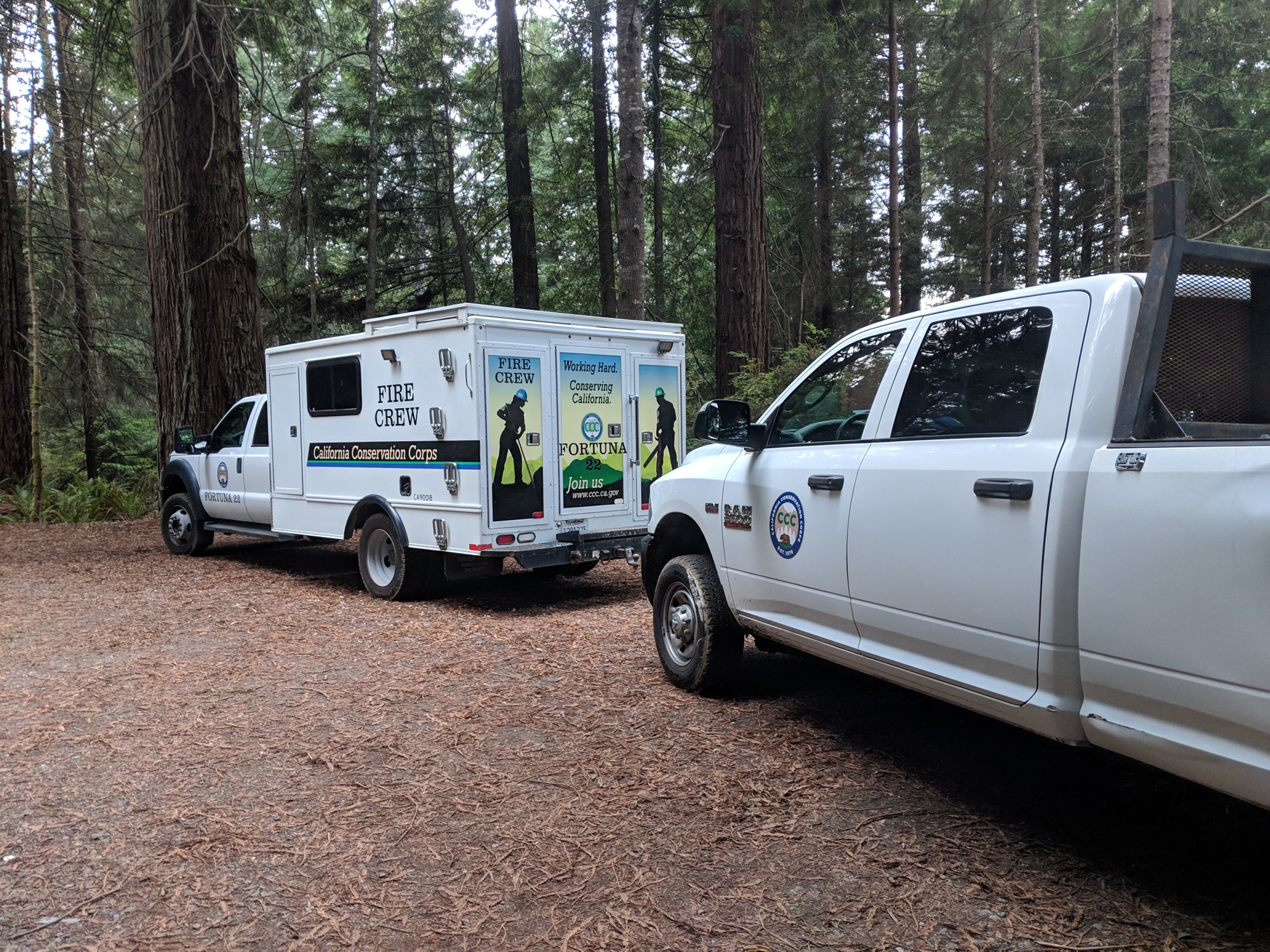
    Over winter break, teams of city-directed California Conservation Corps (CCC) work crews destroyed three popular unsanctioned bike trails in Arcata city forests. They were the lifeblood of the community forest for generations of bike riders. Then, in a day, they were gone.

    BEFORE: The lines of the illegal trails were sculpted from hours of shovel work into functional works of art for bikes to flow over. | Photo by Jett Williams

    The crews were thorough, ensuring that the lines would not be easily rebuilt. They dug up and flattened berms and jumps, laid logs and planted ferns in the trails. The idea was to let the forest reclaim what had been there, leaving no trace of trail behind.

    Darius Damonte is the natural resources crew leader for Arcata’s environmental services. He also rides mountain bikes. Damonte said that the trails had been slated for destruction for years, but the recent government shutdown allowed the city to execute their plans.

    “With the government shutdown, some of the federal contracts that the CCC had fell through,” Damonte said. “We’ve got a pretty good reputation with [them], so they sent us a bunch of free crew time.”

    The three trails each had their own distinct personality. ‘Sam’s trail’ was the oldest, built before the city owned it. ‘Sam’s’ had hosted several HSU collegiate cycling downhill races, during which it supported upwards of 600 runs over a few days time.

    ‘Loam’s Palace’ had been around for many years as a fast bomb line. The trail was a local favorite, in addition to hosting many bike races and rides over the years.

    ‘Road Dome,’ ‘Joey’s Trail’ or ‘Nino’s Favorite’ was a line running parallel to Fickle Hill road, and saw huge strides in development the month before its destruction from a group of student trailbuilders. The team constructed sweeping berms and jumps, leading many bikers to call this trail, at the time, the best in the forest.

    AFTER.jpg AFTER: The trails are almost unrecognizable, with the berms destroyed and branches laid across the line. Local rider Lucas Perez surveys the damage. | Photo by Jett Williams

    One of the builders is forestry minor Ian Wilson. Wilson said that the motivation for building came from wanting more out of a trail than what the community forest provided.

    “We wanted to build our own trail, or trails, that we could have fun on,” Wilson said. “There are fun trails, but it’s not the kind of riding that we’re into.”

    The riding that Wilson’s into includes faster speeds and more intense, bike-specific features. Not for everyone, but the demand is there. Over 100 different riders had put runs in on ‘Road Dome’ before it was decommissioned.

    [perfectpullquote align=”right” bordertop=”false” cite=”Ian Wilson” link=”” color=”” class=”” size=”18″]”Essentially we’re only moving stuff if it’s in the way or prevents a hazard. It doesn’t seem right to go and f-ck up someone’s private property.”[/perfectpullquote]

    Wilson said when him and his friends build, they ensure that their work isn’t hurting the ecosystem.

    “Essentially we’re only moving stuff if it’s in the way or prevents a hazard,” Wilson said. “It doesn’t seem right to go and f-ck up someone’s private property.”

    Wilson and many other local riders want to see more bike-specific trails in the community forest. As it stands, there are no bike-specific lines, although several of the multi-use trails have mountain-bike friendly corners and flow.

    Damonte knows how unenthusiastic the city can be towards the interests of mountain bikers, oftentimes dragging its feet for no reason.

    “I’ve seen it the whole time I’ve been with the city. Mountain bikers try to get stuff done, and want to build what we want to ride, but the city’s been unable to accommodate them,” Damonte said. “I don’t understand why the system is so lethargic.”
    Steven Pearl is an HSU cycling alumni and a member of the Redwood Coast Mountain Bike Association (RCMBA), the local mountain bike advocacy group. He thinks the solution to the current issue is cooperation between motivated trailbuilders and the city, but doesn’t advocate for illegal trailbuilding.

    “It doesn’t help the broader mission of the mountain bike club, which is to bring mountain bike trails into the community forest,” Pearl said. “When the ACF associates mountain biking with something that’s illegal and not well-thought-out, it creates more work for us and we become guilty by association.”

    At the end of the day, all riders share a common goal of seeing more trails. Despite the disheartening destruction of legacy trails that have been around for years, all of these riders remained optimistic about the future of Arcata’s mountain bike scene.

    “I think that mountain biking is here to stay, and it can create a destination-type situation for the city,” Damonte said. “We’re always going to have illegal trailbuilders, until we build what the community wants to ride.”

  • Food for the soul

    Food for the soul

    The Arcata community and Humboldt students come together for an Equity Potluck

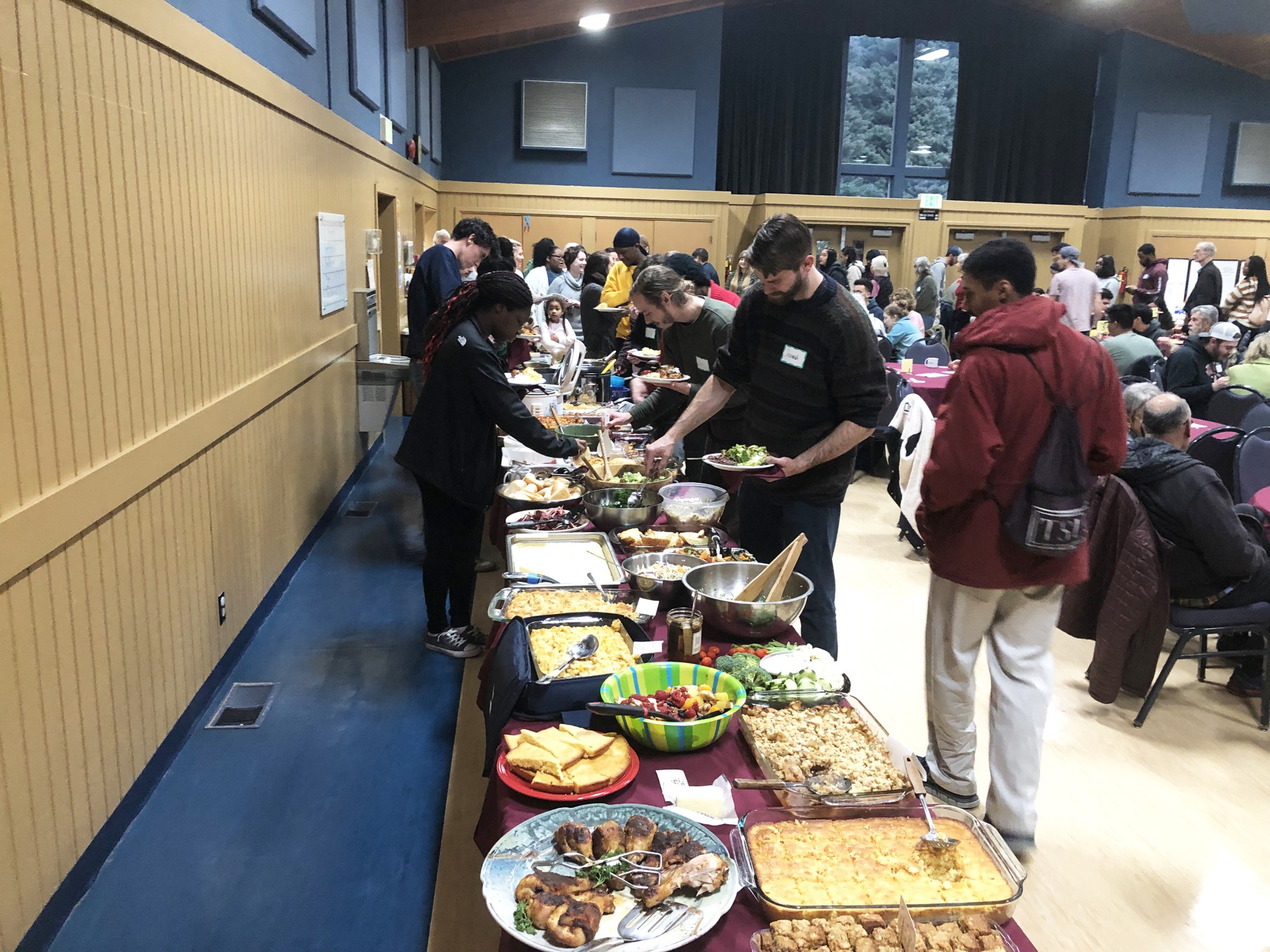
    The Equity Arcata’s “Home Away From Home Potluck” brought many people within the community of Arcata. The potluck, organized by community members of Arcata, invited HSU students to enjoy a free soul food meal.

    IMG_1654.jpg
    Free donated house goods for the students that attend HSU. | Photo by Delaney Duarte

    The event was located at the Neighborhood Center on D St. in Arcata from 5-7 p.m. on Feb. 10. Community members brought one soul food dish of their choosing to put out for the students, they also collected donations of household items to give out to the students.

    [perfectpullquote align=”right” bordertop=”false” cite=”Christian Boyd” link=”” color=”” class=”” size=”17″]”A lot of students don’t get off campus. So when they come to these events…they feel even more welcomed into the community.”[/perfectpullquote]

    Christian Boyd, a second year student at HSU majoring in political science, is the youngest diversity coordinator for Equity Arcata. She recruited the majority of students to come to this event.

    “This event is to create a more equitable space between community members and students, mainly for students of color to get a feel of the community and who’s apart of the community,” Boyd said. “A lot of students don’t get off campus, so when they come to these events and meet community members and see what they do for them, they feel even more welcomed into the community.”

    IMG_5120.jpg
    Students and community members indulge in food and conversation on Feb. 10. | Photo by Dajonea Robinson

    There were over 100 students that attended the event. Some students even shared seating because there weren’t enough chairs for all of them.

    Wesley Chesbro, a 1974 HSU alumni, is a volunteer co-coordinator for the Equity Arcata organization. Chesbro said that the potlucks started in the fall of 2017 and typically 30-40 community members volunteer and 75-150 students participate.

    “A group of community members had felt that it is important to show in a real way that students of color not only belong here, but we really want them here,” Chesbro said. “It is said that food is love so it is a way of showing our love and appreciation that without the students we would be nobody.”

    IMG_1684.jpg
    HSU students lined up to choose their likings. | Photo by Delaney Duarte

    The organization had live music and raffles as entertainment for the event. The event had a variety of soul food such as sweet potatoes, ham, cornbread and much more. Afua Mensah, a second year student at HSU who is majoring in international studies, attended the event to meet the people who make up the community of Arcata.

    “It was really nice meeting new people from the community, we usually don’t get that opportunity since we all sit with our friends or students that attend the school,” Mensah said. “I enjoyed the food so much, but other than the food the music was most enjoyable, especially the rap, which was really powerful and moving to hear.”

    Image-1.jpg
    Nu Heavenly Tone singers took the stage at the Equity Potluck. | Photo by Dajonea Robinson

    This organization tries to welcome HSU students as much as they can to participate within the community. HSU students talked with local community members and got to know the city a little more. The Equity Arcata organization usually coordinates more than one potluck event a year, with the next event coming up sometime in March.

  • Any one of us

    Any one of us

    Humboldt State alumni gives voice to incarcerated women in play

    On an overcast afternoon with lightly peppered rain, the Siren’s Song Tavern in Eureka doubled as a rehearsal stage for the upcoming play “Any One Of Us: Words From Women In Prison.” Humboldt State University alumni and activist for formerly incarcerated rights, Vanessa Vrtiak, will direct Eve Ensler’s production for the second time in Humboldt County. The press release states the play “is a collection of stories from formerly and currently incarcerated women from across the nation moving forward toward healing, understanding and change with the goal of using their writing and voices to impact policy, laws and treatment of incarcerated women.”

    “These women are not defined by their crimes, but we hear news of some horrific crime and define someone solely on that,” Vrtiak said. “These issues trickle down and almost make re-entry impossible. We label constantly because it’s so easy to cast stones before we know who they are.”

    VV1.jpg
    Caterina Keen, Megan McAllister, Michelle “Chelly” Purnell, Vanessa Vrtiak, Nezzie Wade, and Klark Swan at rehearsal for the play “Any One Of Us” at Sirens Song Tavern. | Photo by T. William Wallin

    Vrtiak first directed the play in 2011 with five shows and is excited to be creating it again. After rehearsal she said it feels more intense than before because of where the state of the country is, but believes it’s the right time to be performing.

    [perfectpullquote align=”left” bordertop=”false” cite=”Nezzie Wade” link=”” color=”” class=”” size=”18″]“What these women have been subjected to it’s amazing they’re even alive to be incarcerated.”[/perfectpullquote]

    “Still after all this time there’s a lack of support and resources for formerly incarcerated individuals in the community,” Vrtiak said. “I know how powerful and poignant this play is. It’s dark but there is hope in this play.”

    Community activist and founder of the Affordable Homeless Housing Association (AHHA), Nezzie Wade, has performed with Vrtiak before and said the acting in “Any One Of Us” uses criminal justice dialogue to bring light to all of our systems of court and prosecution. The stories are heavy and link the correlation between women in prison and the violence they have endured.

    “Peeling back the layers of these women is very moving,” Wade said. “But what these women have been subjected to it’s amazing they’re even alive to be incarcerated.”

    Wade, who works closely with the homeless population in Humboldt County, said we use incarceration as a tool to manage and store people and this play sheds light on our current system.

    “It’s become so easy to dehumanize people and detach,” Wade said. “We want a community that cares deeply about the situation.”

    Actress and HSU alumni Michelle “Chelly” Purnell agrees with Wade and said she is acting in the play because there aren’t many people of color in Eve Ensler’s plays.

    “They aren’t intersexual in Humboldt County,” Purnell said. “There should always be a person of color in those works because there isn’t any.”

    For Purnell this play reaffirms how important art and activism is to allow voices to be heard.

    [perfectpullquote align=”right” bordertop=”false” cite=”Michelle Purnell” link=”” color=”” class=”” size=””]”Art is activism in every shape and form.”[/perfectpullquote]

    “We don’t think about how people get to where they are,” Purnell said. “We need to ask: ‘What has happened to them that we could have changed?’ Art is activism in every shape and form.”

    Vrtiak said this play will be a kick-off for a bigger project in the community and is only the beginning. She is starting Humboldt County Re-entry Initiative, a non-profit that will benefit formerly incarcerated individuals in the community.

    “The money from the play will go to formerly incarcerated individuals to be reintegrated back into the community,” Vrtiak said. “We have a lot of work to do in the community with incarceration, homeless, people of color and the list going on and on and on.”

    IMG_9801.jpg
    Nezzie Wade, Michelle “Chelly” Purnell, Vanessa Vrtiak, Megan McAllister, Caterina Kein, at rehearsal for the play “Any One Of Us” at Sirens Song Tavern. | Photo by T. William Wallin

    “What we say on stage helps the community to engage and understand what happens in the criminal justice system,” Wade said.

    Performance Dates:

    March 23, 7 p.m. at The Sanctuary in Arcata

    March 24, 5-9 p.m. at The Sanctuary in Arcata

    April 5, 7-9 p.m. at the Siren’s Song Tavern in Eureka

    April 19, 6-9 p.m. at the Eureka Women’s Club, the dinner starts at 6 p.m. and the show starts at 7 p.m. *This show includes a dinner*

    General Admission: $12, $10 with a valid student ID

    The April 19 show is $25, which includes a dinner before the performance.

    Tickets on sale: Feb. 1, at Wildberries Marketplace.

    Tickets are also available online at: brownpapertickets.com

  • Blotter bytes

    Blotter bytes

    The Rolling Count

    As mentioned in a previous article, it is still illegal to possess weed on campus. Since the new year, four people have been charged with marijuana possession on campus, two of them being for individuals between the ages of 18-20. Although it happened last year, it is worth noting that there were 22 cases of either paraphernalia or “contraband” being seized in 2018. “Contraband” can be considered bongs, bowls, pipes, grinders, you know all the things needed to “blow ‘dro”, “puff cheeba”, “blaze up” or whatever else you call it.

    As part of this series, The Lumberjack will be keeping track of all marijuana possession charges, as well as paraphernalia and “contraband” charges. So far the “Rolling Count” for possession charges is at four and the the “Rolling Count” for paraphernalia and contraband is at zero.

    “Hollerin’ ‘hootie hoo!’ when we see the cops”

    Monday Jan. 28

    • Ew what is that?!?!—Bloody tissues were found along side a blanket near the Rohner Admission Center around 9:00 a.m., however the owner of the bloody tissues and blanket were nowhere to be found.
    • Someone stole something—A petty theft of an item valued over $50 was taken from the Music B building at around 1:30 p.m. hopefully the item will be returned in the near future.

    Tuesday Jan. 29

    • Someone buttdialed the cops—This happens way too often as you will see in future Blotter Bytes.
    • You can’t smoke here bro!—UPD was called to respond to multiple reports of someone smoking on campus. Listen up folx, HSU is a no tobacco campus, puff that stuff elsewhere.
    • A case of mistaken identity (aka fraud)—A camera was previously checked out from the Library using someone else’s ID and was not returned and was reported at 8:19 a.m. as fraud.
    • A trespassing charge was issued to a man “asking the housing department desk for info regarding a homeless shelter.” It is shameful to think that when a person was asking for help, he was detained and arrested instead. Shame on the powers that be.

    Wednesday Jan. 30

    • The skatepark is that-a-way homie!—Someone called the cops to report “skateboarders creating a hazard to pedestrians.” Skateboarding is not a crime…unless UPD catches you.

    Thursday Jan. 31

    • An issue worth addressing—Some of our more marginalized and needing counterparts call our streets, parking lots, forested areas and underpasses home for the night. UPD was called because of a camping violation under the underpass that leads from campus to G Street. The individual was let go without a ticket.
    • Another unneeded call to 911—Arcata Police (UPD and APD work together sometimes) responded and the caller said it was an accident.
    • No Fly Zone—A man was flying a drone around campus at 11:46 p.m. UPD responded and told the individual to land his aircraft, because people thought that aliens were coming. JK JK aliens aren’t coming here, he just didn’t have the proper paperwork.

    Friday Feb. 1

    • Nothing too substantial happened. Just another unneeded 911 call (I told you this happens a lot), someone drew something on a “Telecom box” outside of Maple Residence hall and some people were pulled over for not stopping at a stop sign. I thought Fridays were supposed to wild.

    Saturday Feb. 2

    • Umm excuse me, but you don’t live here—“Two suspicious subjects” were asked to leave the Sunset Residence hall at around 10:00 p.m.
    • Drug Activity! (calm down it’s just weed)—Someone was cited for 11357 (a)(2) at around 10:15 p.m. 11357 (a)(2) is written out for marijuana possession for adults ages 18-20.
    • What the eff is that smell?—A burning smell was reported in Fern Residence hall at 3:14 p.m. Turns out nothing was on fire but a fan in one of the bathrooms stopped working.

    Sunday Feb 3.

    • Super Bowl Sunday! Things are going to get lit AF for sure, right?!?! Turns out not really. Just a couple of people got pulled over and someone accidentally went into the wrong room.
  • Transgender is not a trend, it’s tough

    Transgender is not a trend, it’s tough

    Transgender professor identifies how legislation hurts the trans community

    Dr. Loren Cannon, an award-winning HSU philosophy professor with numerous published essays, presented a talk focused on trans-directed injustice to a room overflowing with students and community members on Thursday, Feb. 7.

    HSU students Elijah Patterson and Summer Gilstrap, who identify as trans, were inspired by Cannon’s experience and wanted to show their support.

    “[Cannon’s] a successful, fully transitioned male and it’s a goal [for me],” Patterson said.

    IMG_2699.JPG Students and community members gather to hear Loren Cannon talk about trans injustice on Thursday, February 7. | Photo by Christina Samoy.

    Cannon believes the Obama administration had an understanding of Title IX, a law that protects people from being sexually discriminated against, which he said the Trump administration does not.

    “Title IX should be interpreted how the Obama administration did,”Cannon said. “They did it correctly.”

    [perfectpullquote align=”left” bordertop=”false” cite=”Summer Gilstrap” link=”” color=”” class=”” size=”18″]”It’s a blatant attack against trans people. They’re not interested in protecting people.”[/perfectpullquote]

    Gilstrap, a political science major who identifies as a trans woman, agrees that the Trump administration is silencing trans people, not allowing them to be heard.

    “It’s a blatant attack against trans people,” Gilstrap said.. “They’re not interested in protecting people.”

    After showing “Keeping Massachusetts Safe,” a commercial made to inflict fear that trans people will assault cisgender people in restrooms, Cannon shared a story where he found himself in a similar situation.

    A couple months into transitioning, while teaching at Arizona State University, Cannon went to use the restroom, not knowing two little girls were in the stall next to him. A woman ran out alerting the girl’s fathers that a man, Cannon, was in the restroom. Cannon, gender ambiguous looking at the time, tried to look as womanly as possible, smiling as he exited.

    “I preformed femaleness well, so I didn’t get hurt, but the option isn’t always there,” Cannon said.

    Some people eventually choose not to go out because they can’t participate in society because they’re prohibited from using restrooms due to their gender identity. Cannon found studies showed trans people are likely to develop PTSD due to fear of bathrooms, which can lead to urinary tract infections.

    “A lot of other trans people have debilitating dysphoria around restrooms that can cause real psychological harm,” Gilstrap said.

    In response to a student asking how HSU can improve the safety of trans lives, Cannon said gender neutral bathrooms on the BSS side of campus is needed, as well as a LGBTQ+ center funded by professionals as a permanent position so administration can be there to advocate for LGBTQ+ people.

    IMG_2698.JPG Students and community members gather to hear Loren Cannon talk about trans injustice on Thursday, February 7. | Photo by Christina Samoy.
    [perfectpullquote align=”right” bordertop=”false” cite=”Neesh Wells” link=”” color=”” class=”” size=””]”There’s still a lot of things trans folks that are affected by. We just want to be respected as people.”[/perfectpullquote]

    While HSU has made improvements like allowing students to change their preferred name and pronouns in their student center, there are still improvements that can be made. Neesh Wells, a non-binary-identifying student, wants others to know that they don’t have to be afraid of trans folks or non-binary people.

    “There’s still a lot of things trans folks that are affected by,” Wells said. “We just want to be respected as people.”

    Offering classes that bring awareness to the LGBTQ+ community more often in course rotations may help people from outside the community gain more knowledge about people within the community and the struggles they face.

    “I personally think it’s super important to continue involving folks who don’t identify as cis gender,” Wells said.

    Maral Attallah, who planned the event, pointed out that Lisa Bond-Maupin, the College of Arts and Humanities dean, was the only university administrator to attend the talk. Attallah, like many other supporters, highlighted the importance of representation and support from allies outside of the community to help advocate for issues the LGBTQ+ community faces.

    Having representation is important for groups who don’t always feel welcomed. Giving Cannon a platform to share his stories and knowledge allows others to use that safe space to share their own thoughts and experiences.

    “It’s inspiring to see someone be successful, who I can relate to,” Patterson said.

    Correction Feb. 20 5:25pm: This article previously listed Lisa Bond-Maupin as the only faculty in attendance. 

  • Yellow vests in the quad

    Yellow vests in the quad

    Clubs and activities fair disrupted by Party for Socialism and Liberation

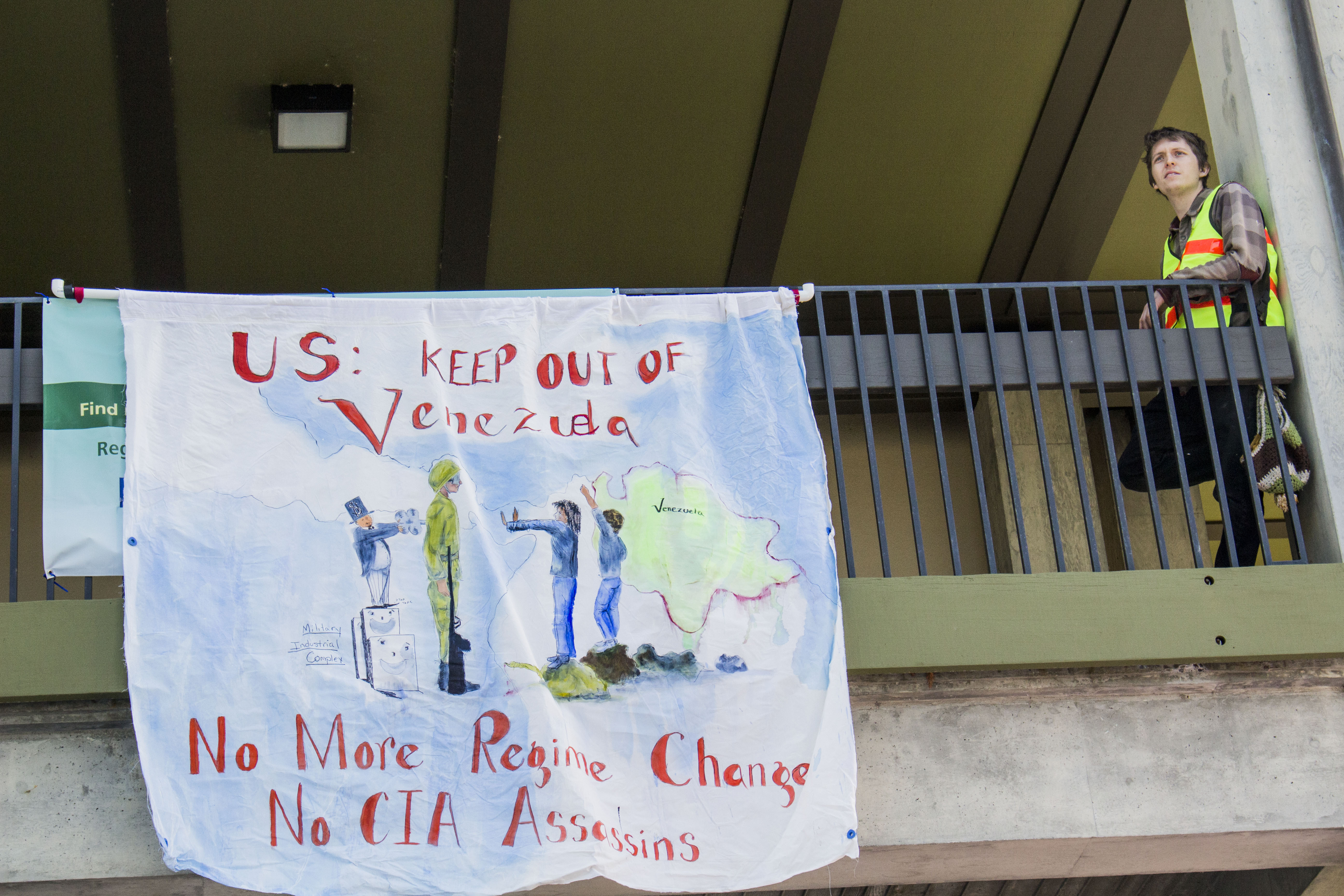
    Beneath scattered clouds and a radiant blue sky, HSU’s clubs and activities fair kicked off with students posing in yoga postures, walking along slacklines, juggling pins…and dropping an eight foot handmade banner protesting US involvement in Venezuela. The sun glared off yellow vested activists as they went around passing out fliers titled “Oppose the US-backed coup in Venezuela.”

    IMG_9900.jpg Nathaniel McGuigan, member of the Party For Socialism and Liberation, handed out fliers calling for oppostion of American involvement in Venezuela during clubs and activtites fair at HSU on February 6th 2019. By T.William Wallin

    “We’re here to disrupt this event and pass out information,” Nathaniel McGuigan, member of the party for socialism and liberation, said. “This is basically to tell people why to back Venezuela, to defend the Bolivarian revolution, the Venezuelan people, and president Maduro.”

    It’s of no surprise that the American government has had its hands in Latin America for decades, trying to influence its agenda by any means. They did it before with Guatemalan president, Jacobo Arbenz, in 1954, as well as Chilean president, Salvador Allende, in 1973, not to mention Ronald Reagan and the Contras in Nicaragua.

    Recently the democratically-elected government of Nicolas Maduro broke relations with the US government and ordered the removal of their embassy. The Trump administration is backing a member of the Popular Will party who gained no votes, Juan Guaido, and declaring him president even though Maduro was re-elected last year with 67 percent of the vote.

    “Students should support the revolution and as working class people it’s our duty to stand up to other countries sovereignty,” McGuigan said. “We oppose countries in power that overthrow regimes that benefit their people.”

    IMG_9907.jpg Simone Rani McGowan, member of Earth Guardians, and Nathaniel McGuigan, member of the Party For Socialism and Liberation, handed out fliers calling for oppostion of American involvement in Venezuela during clubs and activtites fair at HSU on Feb. 6. Photo by T.William Wallin

    Standing next to McGuigan, yellow vest included, was Simone Rani McGowan, an environmental studies major and member of the Earth Guardians. McGowan said her club and the PSL team up quite often, usually raising awareness on tuition struggles and campus climate, but with heavier topics as well such as marching in solidarity with the Honduran caravan.

    “This whole idea is to support community and to remind people of the compassion needed in these issues,” McGowan said. “Every day we have to reconnect with our humanity. It’s important to educate our youth in resistance.”

    Chad Friefeld, member of Climate Change Club, agrees with McGowan and said that one of the main things for students to know is American history is full of examples of US corrupted involvement in latin america.

    “We are trying to break through the western capital media which is not portraying the truth in Venezuela,” Friefeld said. “We want to talk to people about this coup and that the Trump administration and Venezuelan opposition is not democratic. We are standing in solidarity to help spread the word.”

    IMG_9895.jpg A handmade sign opposing American invovlement in Venezuela was hung above the clubs and activities fair at HSU on February 6th 2019. By T.William Wallin

    Among the handful of yellow vests and crowd of students tabling was UPD officer Chance Carpenter. Carpenter was at the event talking with all the clubs and opening up for any questions or comments to be addressed. Because it was Wednesday, it was Carpenter’s shift but he said he was the face of UPD for the day and acting as the safety advocate. When asked about the PSL banner, Carpenter said it was above his pay raise for a comment but he does like free speech.

    “I certainly do like people exercising their free speech,” Carpenter said. “I’ve had to actually protect people in the past on campus who had conflicting difference with other groups.”

  • OPINION: Modern day slavery

    OPINION: Modern day slavery

    Why we need to abolish prisons and stop talking about reform

    In America we have an inhumane amount of people rotting away between cold concrete walls and steel beam doors. I was one of them, walking through the rotating door between jailed and released over five years. The last time was a year’s conviction in a correctional facility. A short stint compared to the 2.2 million people who are currently housed in US prisons, a number that exceeds that of the strictest totalitarian countries. Ironically, we claim to have a system based on morals and principles that promote freedom and democracy.

    The Sentencing Project, which is a non-profit organization that works for a fair and effective U.S criminal justice system, has found a 500 percent increase in incarceration in the last 40 years, yet our crime rates have not changed. Why then, have we gone from less than 300,000 people housed in prisons in the 70s to where we are now?

    There are many sufficient answers; a modern-day slavery system that flies under the radar because treating criminals like slaves is legal. I could go on about how we got here, but that wouldn’t matter because we’re already here. What we should consider now is who’s in our prison system, what’re their barriers to reentry into society and what other avenues are there besides ruining the lives of those who enter the criminal justice system?

    Of the US population, 37 percent are people of color. Of the population of US prisons, 67 percent are people of color. This comparison is a red flag. There is a ridiculous over-representation of people of color in the prison system. The NAACP has found that both African-Americans and Caucasians have the same rates of drug use, yet African-Americans are six times more likely to be imprisoned for drug charges. Overall, the incarceration rate for African-Americans is five times the rate of Caucasians.

    Our prison system is a racist institution whose modus operandi is profit over people and discrimination. There are prisons that’ve banned Michelle Alexander’s “The New Jim Crow” but allow Adolf Hitler’s “Mein Kampf” along with other white nationalist claptrap. Are you kidding me? There is no “prison reform” in America. Laws and policies have changed through the decades, and the crisis only grows in the numbers of lives lost to the system.

    Ruby C. Tapia, who co-edited “Interrupted Lives: Experiences of Incarcerated Women in the United States” said, “Reforming the prison entails changing its existing practices to make the system a better one. Abolishing the prison entails dismantling it wholesale. Reformers object to how the prison is administered. Abolitionists object to the prison’s very existence.”

    The system itself doesn’t work in a way where reform is even achievable. We must abolish the very existence of the prison model. In the 60s and 70s Attorneys General and Republican congressmen were many of those arguing of the immorality of prisons, and we need to remind those in government of that.

    The Bureau of Justice Statistics found that within three years of release, 67.6 percent of people get rearrested, within five years 76.6 percent are rearrested and of all those rearrested, half of them are rearrested within their first year. Of those rearrested, 77.6 percent are drug offenders. If our prisons were built to reform and restructure those who enter their hellish gates, then our recidivism rates would be far lower or, should I dare sound optimistic, non-existent.

    The function of a prison is to take a “criminal” out of society, which is called incapacitation, for however long and then release them back better than when they came in, which is called rehabilitation. The Bureau of Justice Statistics found that 95 percent of those in prison will be released. If that is the case then the prison model is failing in rehabilitation if over 60 percent of those released return.

    One of the reasons for this recidivism is that once released, there is a laundry list of barriers that prevent one from integrating back into society. With this comes the revoking of many of the rights and privileges of those who have served their time. This is clearly a system setting up individuals for failure. Voting, government assistance, financial aid for school, employment, housing. Every single one of these is in jeopardy or stripped from someone trying to fit back into society. One never leaves prison without carrying a sign that reads “I’ve been to prison” for the world to see. The US has set up everyone being released for defeat.

    Instead of prison we need to find a rehabilitation system that creates pathways to success. We need to put money meant for education actually into education, on all levels. We need to start programs that direct more services to poor urban areas that suffer the most and all but guarantee a future prison sentence for the inhabitants.

    We need to separate those suffering from mental illness, in any form, from the criminal justice system and place them back into mental health care services. We need to work on destroying the class line and creating a lessened gap between lower, middle and upper. By destroying the existing prison system that we have, we can build institutions built on compassion, empathy and equality. Systems in which people get cared for instead of forgotten.

    We should all think of what the creator of Surrealism Andre Breton said of imprisoning people: “Unless you’ve been inside a sanitarium you do not know the madman are made their, just as criminals are made in our reformatories.”

  • OPINION: Fake service dogs a real problem

    OPINION: Fake service dogs a real problem

    Disguising your pet as a service dog is not only illegal, but a danger to those who actually need them

    Service dogs, defined by the Americans with Disabilities Act, is a “dog that has been individually trained to do work or perform tasks for an individual with a disability. The task(s) performed by the dog must be directly related to the person’s disability.”

    While you may miss your pup during school, bringing an untrained service dog on campus is dangerous to a trained service dog and their handler, sometimes referred to as a team. Not only are service dogs trained to alert and task to certain triggers, when untrained dogs are in the area acting up, it can distract a service dog from alerting their handler and can potentially be life threatening.

    Not all disabilities are visible, so you should not automatically assume that because you can’t see something “wrong” with a person, the service dog is fake.

    If you are unsure if the dog is a service dog, you can ask them two questions defined by the ADA, “ (1) is the dog a service animal required because of a disability? and (2) what work or task has the dog been trained to perform? Staff are not allowed to request any documentation for the dog, require that the dog demonstrate its task, or inquire about the nature of the person’s disability.”

    IMG_0030.JPG
    Christina Samoy waits for Kai, the service dog in training, to touch her hand with her nose on Sunday, February 3. | Photo by Bowie Cargile

    For those who are in need of a service dog, paying an organization to fully train a dog can be thousands of dollars. “Organization-trained service dogs can cost up to $25,000,” according to the American Kennel Club.

    Self training is an option. The only risk with self training is that not all dogs are suitable for working and it may take years for a dog to be fully trained. The AKC estimates “the dropout rate for organization-trained service dogs can be as high as 50 to 70 percent.”

    If you see someone training their dog in public or working with their service dog, ask to pet their dog before assuming you can. Although the team is in public, it does not mean you have the right to pet their working dog.

    Petting a dog when uninvited can be triggering for some when strangers get too close. It is extremely distracting to a team that is training in public when every few minutes someone asks to pet the dog or makes sounds to get the dog’s attention, so be mindful and wait until given permission.

    IMG_0023.JPG
    Kai looks back while practicing her wait command during training on Sunday, Feb. 3. | Photo by Bowie Cargile

    While Humboldt State University’s policy “strongly encourage[s] handlers to use an identifying vest, tag, leash, or other visible method to indicate to the general public that the animal is a service dog,” they are not required by the ADA.

    At the end of the day, a service dog and their handler is a team that would like the same respect as everyone else. If you get to know the dog’s name, make an effort to know their handler’s name.

    There’s no need to feel like you can’t make eye contact with the team, but just remember that when the team is working, it’s best not to distract them.

    If you’ve been given the option to have an emotional support animal, know the ADA does not give your animal the same access that service animals have.

    Many landlords have had potential renters lie about their animal being a service animal, so when people with actual service dogs apply for the space, they are sometimes rejected or are expected to pay additional rent for their animal, which is illegal under the Fair Housing Act. However, landlords can ask for a pet deposit to cover any damages that may be done by the service animal.

    The next time you think about bringing your pet to class or other areas where pets aren’t allowed, consider leaving your pet at home for the safety of others. If you aren’t in need a service animal, don’t buy a vest and put it on your pet so you can take them into public spaces.

    IMG_6439.JPG
    Christina Samoy and Kai, a service dog in training, take a break from their training session on Sunday, Feb. 3. | Photo by Bowie Cargile
  • EDITORIAL: Entrapment of undocumented students is not okay

    EDITORIAL: Entrapment of undocumented students is not okay

    The University of Farmington was created by the Immigrations and Customs Enforcement agency in order to capture undocumented students

    Recently, the Immigration and Customs Enforcement agency was discovered to have made a fake University in order to capture students who were illegal immigrants. Immigrants who signed up were promised asylum to the United States through their student visa, even if their visa was expired. However, instead of being given an education and a stay at the United States, they were detained by ICE and deported back to their country. The discovery of the fake college was found by The Detroit News.

    This operation has been going on since 2015, and ICE did not specify how many students they have detained. A professor from San Francisco University School of Law, Bill Ong Hing, called this tactic a form of entrapment. Of those who were involved in the sting operation, eight individuals were arrested by authorities for committing visa fraud.

    When it comes to entrapment cases, some law enforcement agencies have practiced this tactic for years. In 2014, a high school student was arrested for buying weed from an undercover cop, which also lead to his permanent expulsion from the high school. Jesse Snodgrass, the high school teen, said that the undercover cop befriended him for months, and then pressured him to buy weed.

    The use of entrapment is an unfair tactic to use on people who are unaware and even taken advantage of. There’s no guarantee on whether the people who were detained will be sent back to the United States, while Many of the students that were attending the school legally came to the United States with an F-1 visa. The fact that the people who were detained by ICE were students seeking an education, is where their actions were deplorable.

  • Slackjack Sunday

    Slackjack Sunday

    The sport where slacking off and eating is expected and encouraged

    Levitating above the ground on a line not much wider than your big toe, slackliners use their arms and core to maintain balance while walking along their line suspended between two trees.

    Meet the Slackjacks, a new club devoted to sharing the sport of slacklining, not just to HSU students but to the community at large. Established last fall by club president Amanda McDonald, the young club has already partnered with the Trinidad Coastal Land Trust in an effort to spread environmental awareness and protect their slacklining spots.

    “We are all environmental stewards, everyone here loves nature,” McDonald said. “The Trinidad Coastal Land Trust approached us after seeing one of our high lines on their beaches.”

    Every Saturday, the Slackjacks have stewardship work day, where they volunteer at the Trinidad State Beach aiding in restoration work.

    “They [Trinidad Coastal Land Trust] love what we do and we embody their mission,” McDonald said.

    Besides the physical preservation work, the Slackjacks impact and connect to the community through the practice of slacklining. Every Sunday, the club sets up in the Arcata Plaza and opens up their lines to the people.

    “Slack Sunday isn’t something I can take credit for as a club,” McDonald said. “The Humboldt Slackers are not associated with the school, but they are a group of friends, maybe alumni now, and they started Slack Sunday. It’s all about the young kids and elders, and just holding their hand.”

    The connection created between the Slackjacks and the community is far deeper than the physical linkage of hands. Slackliners can enter a state of mind called “the flow state.” In this state of mind one experiences:

    “Heightened awareness, it feels easy, and you totally lose sense of time,”McDonald said.flow.jpg

    Liam Murray-DuMond, is the treasurer of the Slackjacks, and describes the insane euphoric feeling associated with the flow state.

    “When you find your flow, I’ve had moments where I black out,” Murray-DuMond said. “I literally don’t remember walking. It’s the highest you can be without doing drugs.”

    The flow state occurs when one is faced with a challenge that adequately correlates with the level of skill of the slackliner. This perfect balance in challenge and skill causes one to drift and experience the effects of the flow.

    “I’ve seen kids in it when they slackline for the first time, they click with it,” McDonald said. “They want to keep trying and you can see they are getting exposure and want to latch onto it. Kids are very profound with wanting to keep slacklining.”

    Slacklining is a physically demanding sport. Buddy Mitchell, a transfer student at HSU and member of the Slackjacks, describes the effect it has on the human body.

    “Slacklining is definitely a sport,” Mitchell said. “You sweat, your arms get tired, your tummy gets tired and your core is sore the next day, and your back and your legs.”

    While slacklining posesses the physical exertion of other athletic sports, it maintains a heavy emphasis on social interaction and connecting with the community.

    “Since there can only be one or two people on a line, a lot of it is sitting down in the park and eating,” jokes Mitchell.

    The Slackjacks embrace their club as more of a community of friends. Wanting nothing to do with exclusiveness, the club is constantly reaching out to the community and encouraging others to slackline.

    [perfectpullquote align=”left” bordertop=”false” cite=”Liam Murray-DuMond” link=”” color=”” class=”” size=”18″]”It’s the highest you can be without doing drugs.”[/perfectpullquote]

    “I absolutely wanted a club, it provides this,” McDonald says as she looks around the room of members enjoying their Friday potluck. “Otherwise we don’t have this. By not having a club, it would be restricting us from tapping into the community, and all the resources HSU provides, like the ability to create space, education and community.”

    With a goal of integrating slacklining into the normalcy of society, McDonald explains how regardless of their positive presence in Arcata, they still receive pushback.

    “It’s hard to break through. When climbing evolved into society, people did not like climbers, it was taboo, same with skateboarding in the 90’s, slacklining is exactly like that,” McDonald said. “We’re stuck in this transitional time period, but we want to keep our wholesome values. We don’t want to be non-welcoming or snobby.”

    Regardless of the challenges, the Slackjacks continue to practice and share the benefits of their sport.

    “I slackline for the feeling. It’s pretty hard to describe, but once you do it you just want to be in that moment and have that feeling as much as possible,” Murray-DuMond said.

    Slacklining is one addictive activity that serves not only the individual but the community at large. With a constant emphasis on welcoming others to practice and preserving the communal values they identify with, why wouldn’t you slackline?

    “It’s fun, a great way to spend the afternoon, or morning, or evening,” Buddy said. “I can’t really put it into words, I do it for different reasons. Mostly, it’s very social, probably the most social thing to do, and the easiest way to make friends.”

    Between Friday club meetings in Siemens hall, Slack Sundays in the Arcata Plaza and environmental steward work Saturdays, the Slackjacks are hard to miss.

    “I know we look crazy but come try!” McDonald jokes.

  • OPINION: Parking pains

    OPINION: Parking pains

    What are students doing to avoid parking on campus?

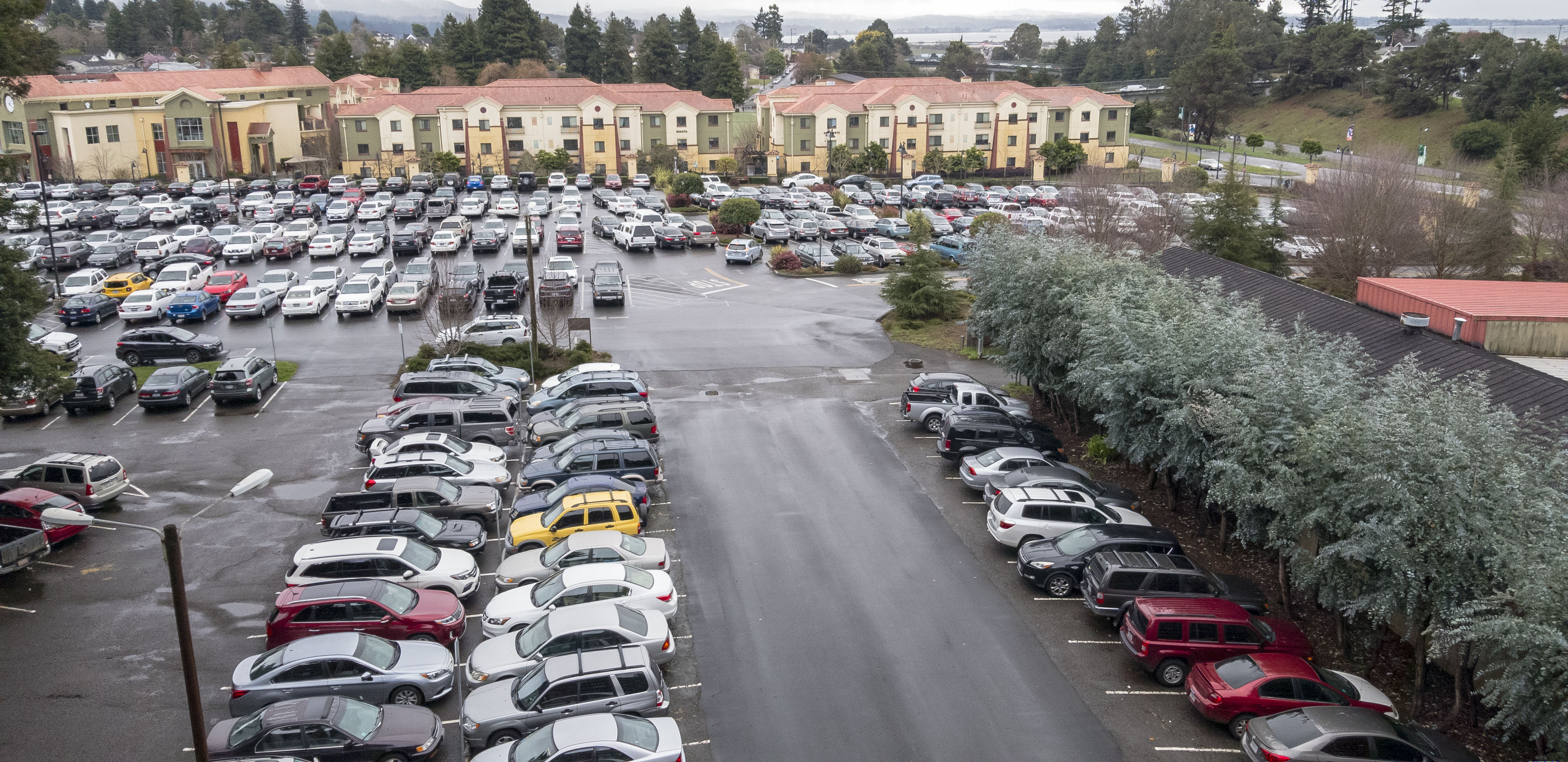
    One thing that I was most shocked about after moving off campus was the impossibility of parking. I had heard rumors here and there but it never settled on me, the idea of living off campus sounds great, right? Little did I know that part of adulting here at Humboldt State was that you had to suffer through a shortage of parking.

    I live in McKinleyville, and I had to learn to plan my whole morning around parking. I wake up early and I leave at least an hour before my class so that I have enough time to find a spot. Some mornings are smoother and it will take me about fifteen minutes, but more often than not there are mornings where I’d rather walk on bare feet from McKinleyville to campus. The more people I met at HSU, the more I’d learn their strategies to avoid the dreaded daily task.

    I spoke with some students about this issue and here are their thoughts. As I asked these students about parking and driving to school, their first initial reaction would be a sigh or a sound of frustration.

    Justin Eicher, is one of many students who chooses to bike to school.

    “I park far away [from school] and bike from there to avoid this crap,”Eicher said. “That’s honestly the way to do it.”

    I was surprised to hear that a fair amount of the students that I talked to had a pretty similar trick. Based off of the people I briefly interviewed, a good number of students live within range of HSU and will walk or bike, on the other hand, many students drive to a certain location and bike or take public transit to school from there. I have found myself considering the same thing on the worst of days, it sounds so much easier to go and park at a friend’s house who lives near a bus stop and go from there.

    “On the days that I have to be at school all day, I will drive from my house to the bus stop in Eureka where I live, and take the bus to school,” Evan Goetz, a forestry major at HSU, said. “It saves me the effort and money to make the trip.”

    The issue of parking has become a game of how to avoid it or how to get there early enough to grab a spot. The students that have class at 8 a.m. tend to get the better end of the stick, but the rest of the students that don’t have a class that early need to plan accordingly.

    “I have to go to a friend’s house who lives closer to school than I do, park at their house, and take the bus with them so I don’t have to deal with parking at HSU,” Lauren Gaul, another student who lives in McKinleyville, said.

    Respectfully, limited parking should encourage more carpooling to and from campus, and many of the students that I talked to said they rode their bike for environmental reasons. The strategies that some of these students have are logical, but some have to go out of their way to avoid parking. Students find what works best for them whether they like it or not.

  • Astrology versus Astronomy

    Astrology versus Astronomy

    Similar origin stories don’t change the fact that one tends to be taken more seriously

    Astrology is the study of how the planet’s movements affect our human sphere. Astronomy is the study of celestial objects and these objects are said to surround earth. Both of these fields originated from our ancestors’ observations of the skies.

    Astrology was first recorded in about 3000 B.C., by the Mesopotamian Babylonian people. They believed the stars and planets represented the heavens and used their observations of the sky to create the Zodiac. The Greeks continued these advancements by linking constellations to the planets. The ancient civilizations would use their observations to make decisions about their lives. The Indian civilization created what we use today for astrology predictions in about 1000 B.C.

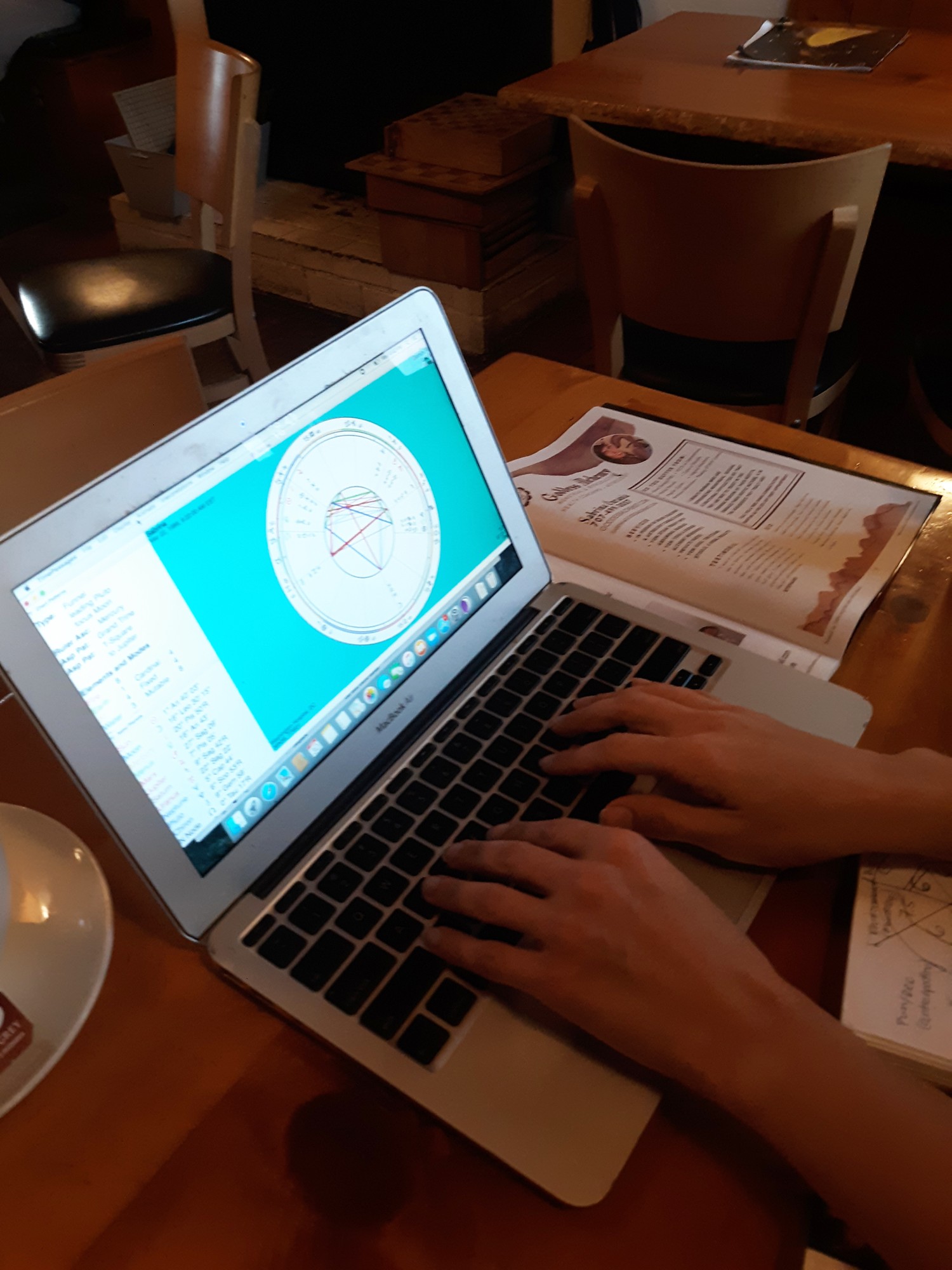
    Sabrina Ourania is an astrologer at the Arcata Healing Center and has been studying astrology for 10 years. Ourania described how people could have perceived the stars. She said that some people felt that astrology is the divine celestial realm where different gods live.

    “It’s predictable, the sun always rises, the moon is always up,” Ourania said. “It was such a contrast to what the experience was on earth, it brought a lot of awe and admiration and devotion.”

    20190130_164057.jpg
    Sabrina Ouriana, owner and astrologer at Godless Alchemist. | Photo by Maia Wood

    People are still just as interested in how our sky affects us on the inside. According to a Gallup Poll, 25 percent of Americans believe in astrology. The field is more popular now than ever. Though, science has debunked most of the predictions in astrology, people are more connected to these ideas.

    Humboldt State’s astronomy professor, Ryan Campbell said that people want to believe in astrology because it’s fun.

    “People want to believe in astrology because it’s comforting, we engage in motivated reasoning to reach conclusions that we want to reach,” Campbell said.

    20190129_144708.jpg
    Ryan Campell, Humboldt State University physics and astronomy professor. | Photo by Maia Wood

    With astrology being used as a way to experience the world around them, it makes sense that some of these traditions would still be used today. This said, the Greeks and Mesopotamians had very little understanding of modern day science. Why are these traditions still being used in our modern societies?

    For Ourania, astrology is more than science can explain.

    “I see it as a deeper lay of reality and has a lot do with our own psyche,” Ourania said. “We’ve taken the experiences of our psyche and have projected them onto these planetary bodies.”

    Humboldt State students Norma Warren and Trena Neel agree with professor Campbell. Astrology is not something to believe in but is just something fun.

    “I believe that astrology is something that people believe in, but I don’t treat it as good model about making predictions about the universe,” Campbell said.

    Astronomy and astrology were very closely related throughout history. According to Ourania, many of the great astronomers such as Kepler and Galileo were also astrologists. To fund their discoveries, they would make predictions for wealthy individuals.

    “Back then there were not universities offering grants for new discoveries. But was happening wealthy patrons or leaders were coming to know, should they go to war etc. Astronomers day jobs were astrologers, because that is what they were getting paid to do,” Ourinia said.

    This close tie to astronomy is what keeps astrology alive today. As we try to move forward in advancements in how we perceive the world, it makes it hard to let go of some traditions. As a science-based society, we can appreciate the past while still having a health perception of reality.

    “The history of astrology and astronomy are really tied and I appreciate the historical background that came out of astrology, but I think we have better models now,” Campbell said.

  • #HorrorStories: Roommates

    #HorrorStories: Roommates

    “He sleeps in his underwear!”

    You and your roommate won’t always be two peas in a pod. We asked Humboldt State University students their worst roommate experiences. Tell us your horror stories in the comments to be featured in other videos.

  • A farmer’s purpose

    A farmer’s purpose

    The Diekmeyer family opens up about farming in Humboldt

    Amy and Fred Diekmeyer, owners of Luna Farm, recently moved into their new 26 acre plot of land in Redcrest that provides organic fruit and vegetables for local community members. The Diekmeyers fell in love with the local climate and became inspired to start their own business.

    “Everybody was growing weed around here and we didn’t want to grow weed,” Amy Diekmeyer said. “We wanted to grow something because we were into plants so we just got into growing food.”

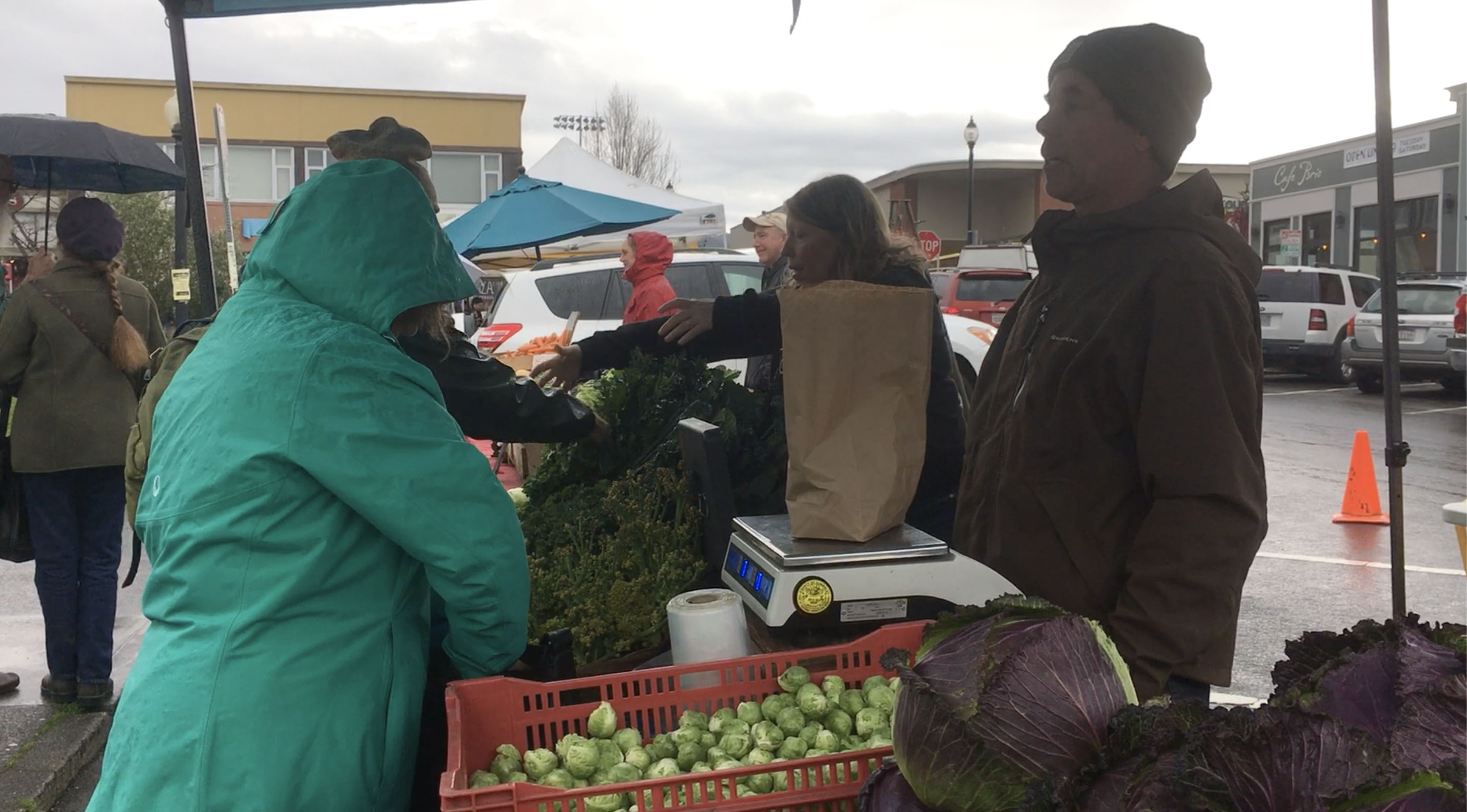
    Screen Shot 2019-02-02 at 6.10.30 PM.jpg Fred Diekmeyer handing money back to customer at the Luna Farm stand at the Arcata Farmers Market on Saturday, Feb. 2. | Photo by Christina Samoy

    Fred Diekmeyer was offered a farming job in his late 20s. During that time he learned organic growing practices and gained experience in harvesting produce. After years of working various jobs, Diekmeyer found to prefer the hard labor, and came to find that farming was the most worthwhile job he’s ever done.

    [perfectpullquote align=”right” bordertop=”false” cite=”Amy Diekmeyer” link=”” color=”” class=”” size=”18″]”Humboldt has this great food thing going on, everyone’s interested in nutrition.”[/perfectpullquote]

    “Working with plants is very rewarding,” Fred Diekmeyer said.

    Julie Slater North, a social work lecturer at HSU, attends the Arcata farmers’ market every week with her family and frequently shops at the Luna Farm stand. She browses every stand, but makes an effort to visit Diekmeyer’s stand because she knows they have high quality produce.

    “[The farmers’ market] is the highlight of our community,” Slater North said.

    IMG_2581.JPG Ivy Matheny North, Julie Slater North, and their child gather in front of the Luna Farm stand at the Arcata Farmers Market on Saturday, Feb. 2. | Photo by Christina Samoy

    Amy Diekmeyer enjoys growing food for her family and community because she loves to cook and knows that she’ll have something good to eat every night.

    “Humboldt has this great food thing going on, everyone’s interested in nutrition,” Amy Diekmeyer said.

    With students coming to Arcata from all over the country, having a farmers’ market so accessible may feel overwhelming and new. Resources like Oh SNAP can help students apply for CalFresh points that can be used at the Arcata farmers’ market to purchase produce.

    “The vast majority of us are thrilled to have students in our community and we want to welcome them here and help them be a part of our community,” Slater North said.

    Screen Shot 2019-02-02 at 5.55.06 PM.jpg Fred Diekmeyer, owner of Luna Farms at his stand during the Arcata Farmers Market on Saturday, February 2. | Photo by Christina Samoy

    While Fred Diekmeyer prefers summer, because he loves hot crops like tomatoes and hot peppers, nothing is more important than connecting with locals.

    “I like to be in the cycle of producing food, it’s a nice connection to society,” Diekmeyer said.

  • Celebration of a civil rights hero

    Celebration of a civil rights hero

    Fred Korematsu Day Of Civil Liberties celebrated at Humboldt State

    January 30 marked the 100th birthday of civil rights hero Fred Korematsu. Students, alumni, faculty and community members filled the fishbowl of the library at Humboldt State University to celebrate the national civil rights hero who refused to go to the government’s incarceration camps for Japanese Americans. Kumi Watanabe-Schock, HSU’s library media coordinator, coordinated the event and said it started because Karen Korematsu, Fred Korematsu’s daughter, visited HSU in 2012.

    “This is an annual event and the fifth time we’ve done it,” Watanabe-Schock said. “We usually get a huge turn out and a lot of the Japanese community members attend too.”

    Watanabe-Schock credits the films they show and the facilitators they have for such a big crowd. This year criminology and justice studies professor, Michihiro Clark Sugata, and critical race, gender and sexuality studies professor, Christina Accomando, hosted the event. The film shown was “Resistance At Tule Lake,” a first hand account of survivors who were incarcerated at the largest and longest active concentration camp in northern California.

    fredkormatsu.jpg
    Day of Civil Liberties Event in the fishbowl on Jan. 30. | Photo by Tony Wallin

    “It was very refreshing to watch a documentary that was told by first hand accounts of people who were in the camps,” Michel-Ange Siaba, criminology and justice studies sophomore, said. “[Michihiro] Clark made a strong point in my class that the movie showing had something new to bring. I wanted to learn something new and I did.

    Fred Korematsu Day of Civil Liberties is celebrated because he defied the order of Executive Order 9066, which authorized the U.S. military to remove over 120,000 people of Japanese descent, the majority of whom were American citizens, from their homes and forced them into American prison camps throughout the United States. Korematsu was ultimately arrested and convicted, but appealed his case all the way to the Supreme Court. In 1944 the Supreme Court ruled against him, stating it was legal to imprison Japanese-Americans for military necessity. It wasn’t until 1983 that Korematsu’s conviction was overturned in federal court in San Francisco.

    “This is a clear example of how the government’s backward tactics were used to badly treat the Japanese,” Siaba said. “It’s very sad, but it’s an eye opener. That is my biggest take away from today.”

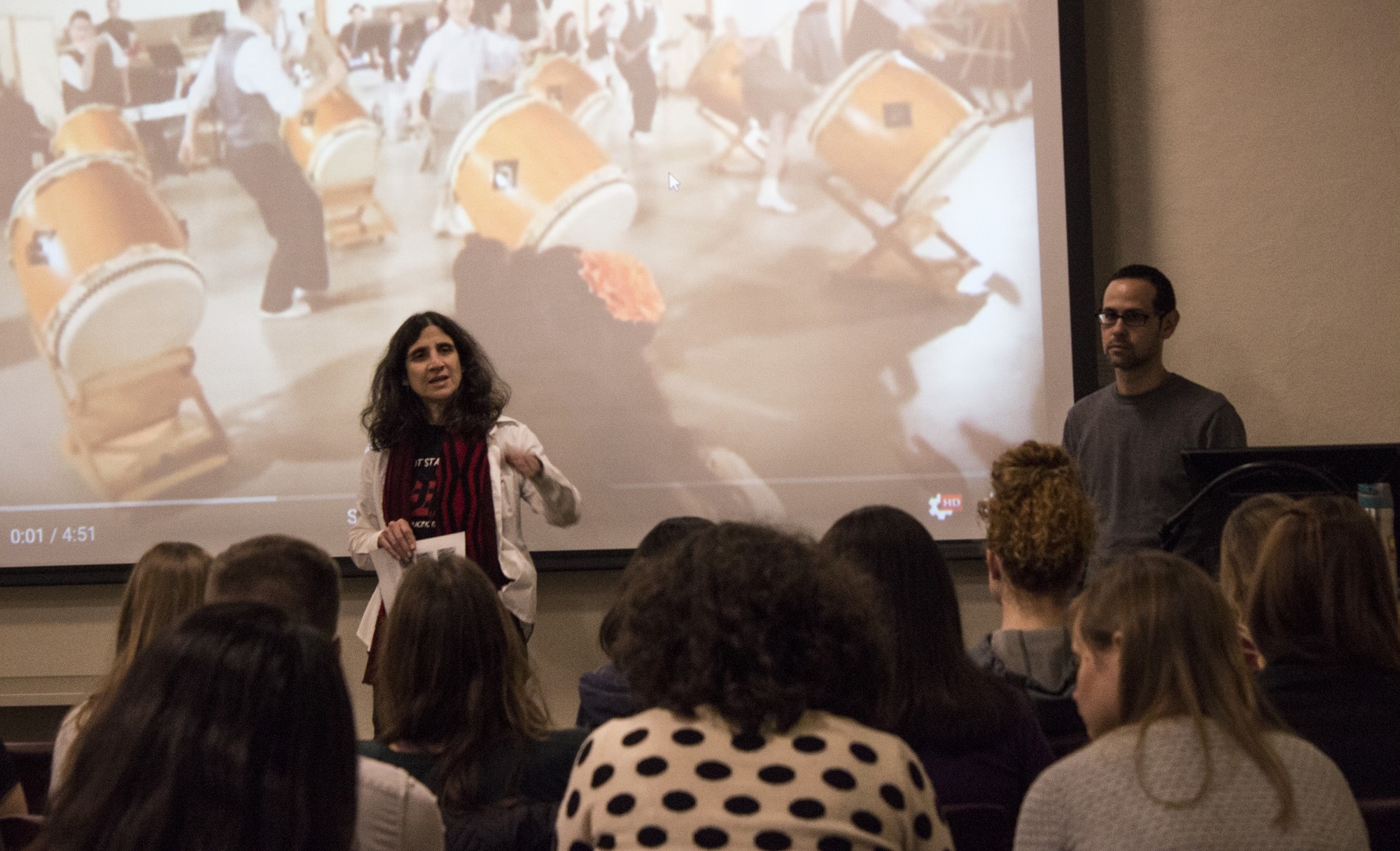
    Franco Imperial was a special guest at the event promoting San Jose Taiko’s symposium show coming to Humboldt County next year. Imperial has been with San Jose Taiko since 1998 and has played alongside survivors of concentration camps. Imperial was invited by Amy Uyeki, a visual artist in Arcata and contributor to the documentary “Searchlight Serenade.”

    “In Humboldt County there is interest (in Taiko) and an audience that’s curious and younger,” Imperial said. “It’s up to our generation to carry on the story and to do it in conjunction with Humboldt and the community is exciting and important.”

    fredkormatsu2.jpg
    Franco Imperial, drummer for San Jose Taiko, was a special guest at Fred Korematsu Day Of Civil Liberties promoting San Jose Taiko Symposium coming to Humboldt County in 2020. | Photo by Tony Wallin

    San Jose Taiko is a performance art company that Imperial said toured through Humboldt in the early ‘90s but the symposium show will be the first one outside of San Jose. Imperial said the show coming next year will be a living story and involve the entire audience.

    “Next year will be an immersive theatre experience,” Imperial said. “The audience isn’t passively sitting in their seats, they are in the middle of the action and drama and music and dance. They are surrounded by it all, a totally different experience. It’s for the audience to connect with something deeper.”

    Watanabe-Schock said this year was especially exciting because they had Imperial as a guest.

    “Because (Amy) Uyeki is both connected to the event every year and with Imperial we can talk about Taiko and Japanese internment camps together,” Watanabe-Schock said. “The Japanese community will be getting together to talk about the Taiko project.”

  • Are birds real?

    Are birds real?

    Investigating and debunking the internet trend claiming birds aren’t real

    Since the government shutdown, the skies have been quiet. The previously pervasive and never ceasing song of birds rang out in Arcata, but today that song has quieted.

    A conspiracy theory of sinister government surveillance has spread across the internet. A bold claim, “Birds Aren’t Real” is a movement attempting to spread their truth about birds; they believe birds (particularly pigeons and turkeys) are government drones who have been surveying the American people since 1959.

    BirdsAren’tReal”Prototype”.JPG
    Birds aren’t real “Prototype.” | Photo courtesy from Birds Aren’t Real Instagram page

    The fossil record shows birds have been a diverse part of the natural environment for approximately 66 million years. The Cretaceous-Paleocene extinction event was when a massive meteor hit the earth and wiped out three quarters of all life on the planet. The event challenged dominant dinosaurs and other land dwelling animals to the point of extinction, but birds took advantage of their ability to fly and spread across the world.

    Today, we are faced with a story satirically written on the Birds Aren’t Real website. Delving into the “history” section, we learn about the CIA plot to cause the mass destruction of birds using poison water deployed from unmarked B-52 bombers. Nestled within this history section it’s written: “On June 14, 1959, the CIA secretly began ‘Water the Country.’ Within the next six years, 72 percent of the bird population was wiped out. During this nightmare event, the first few bird prototypes were released by the hundred thousand.” If true, the operation destroyed the 200 – 400 billion birds who inhabited the planet. An absolute travesty.

    We decided to get to the bottom of the issue and find out if birds are, in fact, real. The hypothesis is that a real bird would be made of flesh and blood, whereas a surveillance drone would be made of metal and silicon. The Humboldt Wildlife Care Center (HWCC) was more than happy to talk to me about the birds they help. I met Monte Merrick, a volunteer at HWCC. He had just finished doing an autopsy on a robin who had been hit by a car earlier that day. It was a sad situation- the bird died due to its injuries. Merrick was solemn as we talked about the topic, but he explained that one of the first things you notice when you cut open an animal is that it has a skeleton analogous to ours.

    “We have lots of empirical evidence that birds are real,” Merrick said.

    MonteMerrick.HEIC.jpg
    Humboldt Wildlife Care Center volunteer, Monte Merrick. | Photo By Collin Slavey

    The Humboldt Wildlife Care Center helps treat approximately 1200 animals per year. Seventy-five percent of those are birds. Merrick was very confident that birds are real, claiming “It’s not really a question, it’s knowledge.”

    As the federal government comes back online and birds continue to sing, seek out these beautiful animals. Visit the Arcata marsh any time of day for a chance to see the majestic great egret and listen for duck calls at Allen Lake. You may want to keep an eye on those pigeons, though.

    For more information please visit Birds Aren’t Real website.

  • Superdome swindle

    Superdome swindle

    Referees shaping the NFL is ruining its future

    The most blatant missed penalty in NFL Playoff history occurred in the NFC Championship game (the game before the Super Bowl) with one minute and 46 seconds left. It occurred on third and ten at the five-yard line, when as Drew Brees threw a pass down the sideline to Tommy-Lee Lewis, Nickell Robey-Coleman hit Lewis straight in the face before the ball got to him.

    In the NFL officiating rulebook this play was a penalty for helmet to helmet and also a penalty for pass interference. This penalty would have given the ball to New Orleans inside the five-yard line while the Rams had one timeout remaining, the Saints would have run out the clock and kicked the game-winning field goal with little time remaining.

    Neither penalty was called as 75,000 people in the Superdome in New Orleans all saw the same thing, while four referees who live in Southern California did not. This penalty was so obvious, but a hit to the face of Tom Brady in the AFC Championship in Kansas City, which did not seem like it was even the call to make was called, which led to the Patriots making the Super Bowl. Senior Vice President of Officiating Al Riveron talked to the head coach of the Saints minutes after the game ended and explained to Payton that his crew missed the call and potentially cost the Saints the opportunity to go to the Super Bowl.

    “The reason they didn’t call that penalty was because they wanted to build the fan base in Los Angeles, and make more money,” John Park said. “Flying from Los Angeles instead of from New Orleans would make them more money.”

    Even the player Nickell Robey-Coleman that committed the act admitted and said, “Yes, I got there too early. I was beat, and I was trying to save the touchdown.”

    There were a lot of penalties throughout the game but only one ended the game and decided it. The worst missed call on the Saints was the missed face mask on Goff that would have given the Rams the ball at the 1-yard line and the Rams a lead of 24-20.

    The penalty on the next drive was the missed one that Robey-Coleman committed that wasn’t called. This could have set up the Saints for the game-winning touchdown to take a 27-24 lead with under 30 seconds remaining and no timeouts for the Rams.

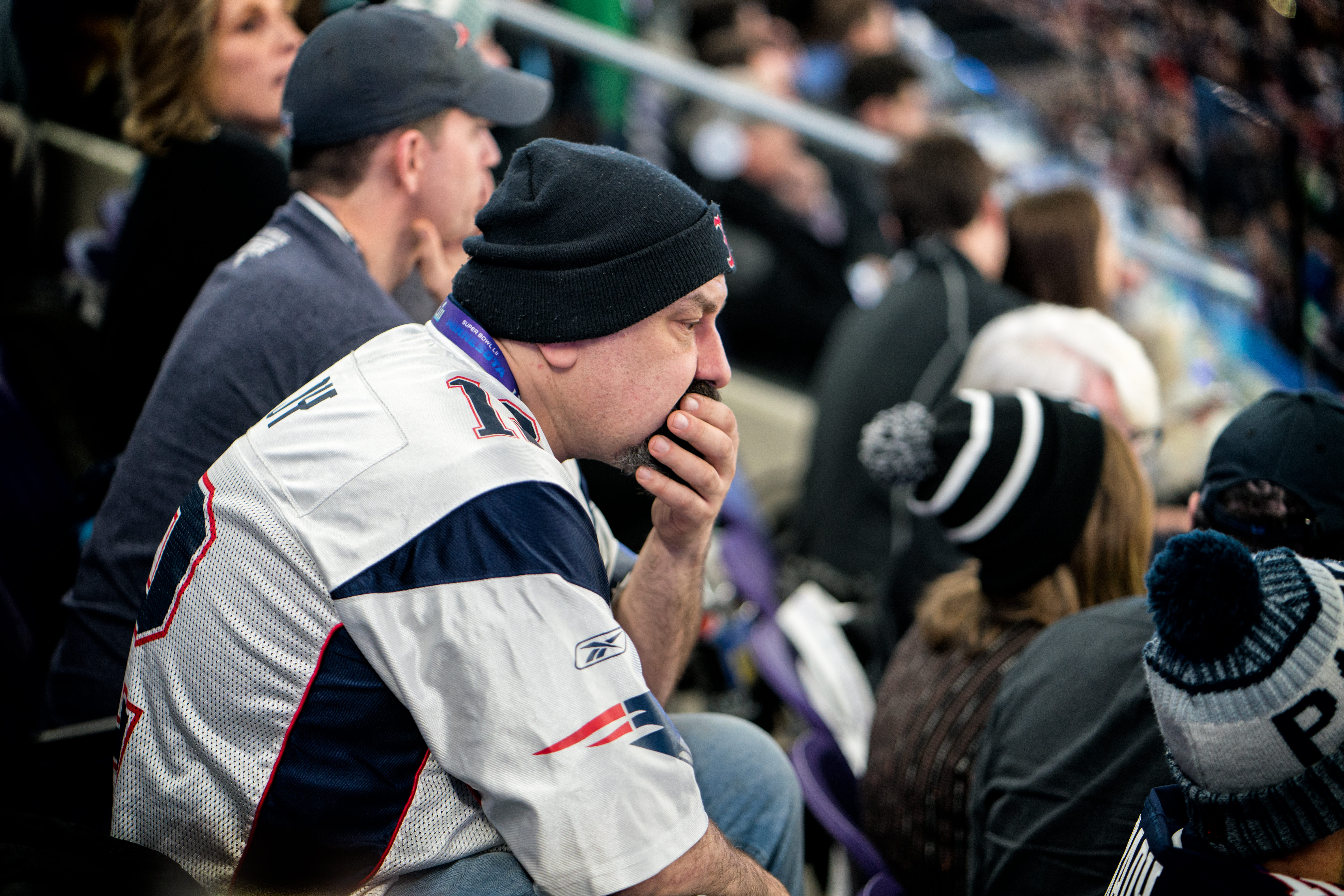
    If the integrity of the game can’t be upheld then do us fans still want to watch a game that is not executed to the best ability, with implications from outside forces (refs) deciding the outcome of the game? Not just Saints fans, but all football fans should be upset with a call (or no call) that decides who’s going to the Super Bowl.

  • Wing Eating Contest at Six Rivers Brewery

    Wing Eating Contest at Six Rivers Brewery

    For 14 years, Six Rivers Brewery has been the host of the Wing Eating Contest during halftime of the Super Bowl. This year, our very own staff member, Cassaundra Caudillo participated. Although she didn’t win, she showed Lumberjack pride as she finished off seven chicken wings.

    The winner was Tommy Hernandez, he has been the winner for three years but this was his second year in a row. He devoured 15 chicken wings in the three minutes.

  • Tigers zero, Jacks rugby heroes

    Tigers zero, Jacks rugby heroes

    Jacks triumph in the Redwood Bowl

    The Jacks dominated scrum set pieces winning all seven keeping the ball in possession for its high-powered offense. Restarting play using the scrum, the forwards packed closely, head down, and engaged the other team, gaining the ability to swing the ball out to a potential line breaker. A series of excellent passes and jukes found HSU with a 2-on-1 advantage looking to score.

    2.jpg
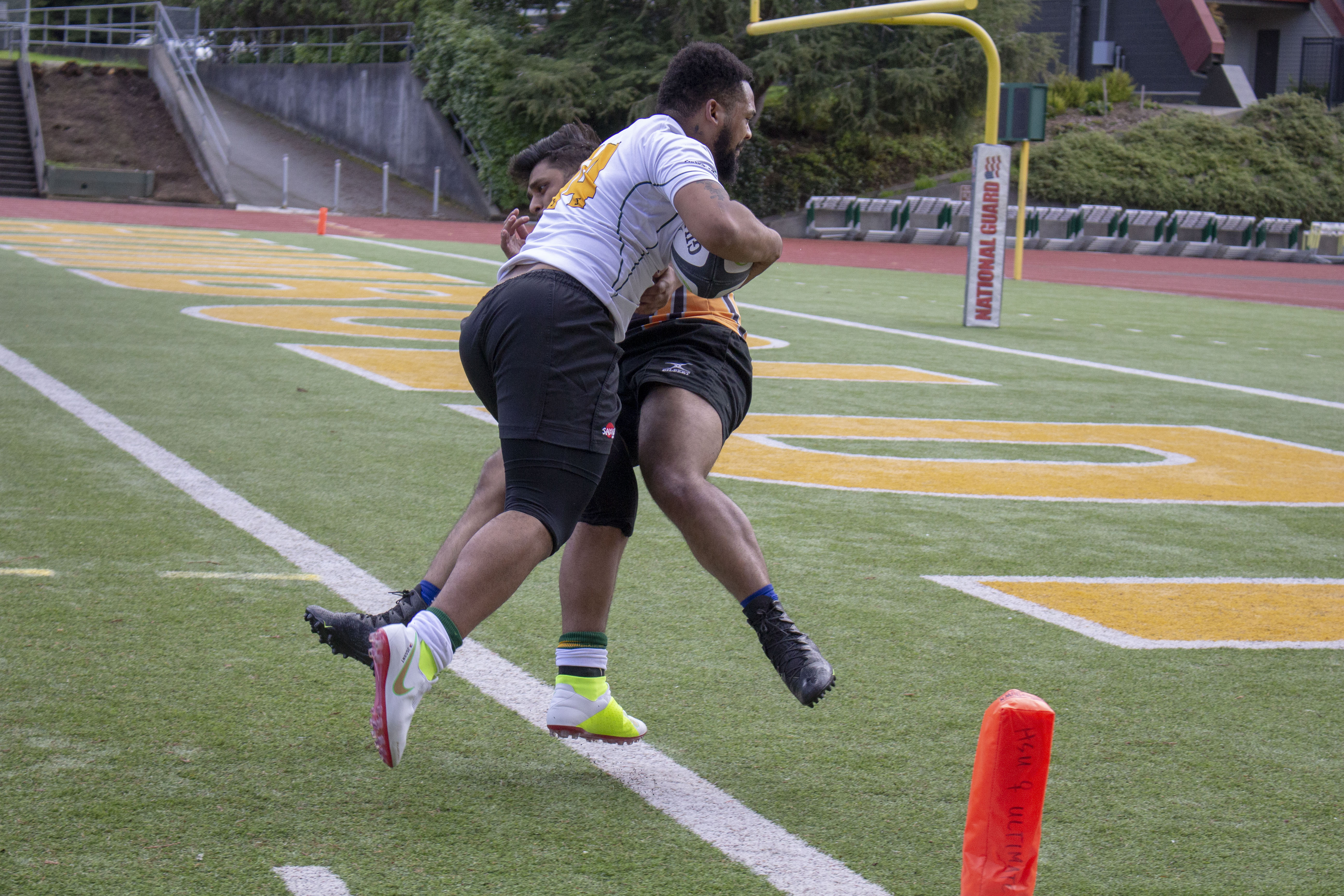
    Adonis Johnson picks up a loose ball resulting in a turnover for the Tigers. | Photo by Matt Shiffler

    Senior number 14 Adonis Johnson caught the high pass and secured the ball. Johnson didn’t pass and instead just kept running full speed ahead, straight for the UOP player and try line.

    ”I saw him and I was thinking, I’m going to run him over,” Johnson said. ”And I did but somehow he kicked the ball out of my hand as he fell backward.”

    The offense was led by Johnson, who would score 12 total points in the 38-0 shutout against the University of the Pacific Tigers in the Redwood Bowl on Feb. 2.

    The Jacks played an effective first half, putting 19 points on the scoreboard. These points came from field awareness and handling the ball quickly off of passes. This edge helped momentum and was able to showcase the speed of center all-league selection number 15 Dalvin Jamal-Milton. Jamal-Milton was on full display as he caught a pass, made one Tiger miss breaking their line, and rocketed down the near sideline. With two Tigers to beat, Jamal-Milton threw a forearm that stopped the incoming tackler in his tracks. The second Tiger was too late or didn’t want to get the same outcome and Jamal-Milton tiptoed past the line for his first try of the game.

    “Our team is aggressive this year,” coach Greg Pargee said. “We play as a team and we are looking 100% better than we were this time last year.”

    The UOP squad had size but couldn’t keep pace with the Jacks in the second half. During loose play, HSU was able to steal nine of the Tigers possessions. Many of these came deep down the pitch, forcing the Tigers to lose clock and energy with zero points in return. When the Tigers finally broke out with big runs past the Jack’s line Jamal-Milton was there cleaning up in the open field, with chase-down tackles and monster hits. Number 12 of the visiting Tigers found space to run outside multiple times and you could see him scanning, trying to find where Jamal-Milton was flying in from.

    The Jacks offense closed out the game with another 19 points. Try scorers for the Jacks were Adonis Johnson (2), Cameron Arnold (2), Dalvin Jamal-Milton (1), and Cameron Whitney (1).

    “We were able to see mistakes early and coaching was great,” senior center and rugby club vice president Andre Hascall said. “Big positive is that 38-0, got to love that.”

    3.jpg
    The referee calls out instructions during a scrum between HSU and UOP. | Photo by Matt Shiffler

    It’s early in the season but the Jacks can’t help but be excited with returning players like Dalvin, Adonis, flanker Thomas Bradley, Cameron Whitney, and two props Colin Coletto and Joseph Johnson. To add more depth to the already impressive roster three former HSU football players, Tumanako Te’i, Jason Uipi, and Latufeao Kolopeaua, took their tackling from the gridiron to the pitch.

    National championship aspirations are on everyone’s mind from both players and coaching staff. Last year the Jacks were able to reach the regional championships but fell to Mira Costa. The Jacks are celebrating 45 years of rugby in the redwoods and coach Vince Celotto played for the Jacks in the 1980s when they competed against top schools and old division-I rivals.

    When asked about the possibility of HSU turning club rugby into one of its official sports to fill the void created by the loss of the football program.

    “We’re like the kids in an amicable divorce. Community and administration are at odds right now and we’re just trying to make it clear to everyone that we want to win a national championship this year,” Celotto said. “We understand the commitment and our trip is to make these guys the best rugby players they can be, some people want to see us succeed and others want to see us fail.”

    Come support Jacks rugby as they face the Otters of Monterey Bay this weekend at 1 p.m. on the College Creek Field.

  • Administration hosts open forum

    Administration hosts open forum

    Community expresses expectations for incoming president

    The president of Humboldt State University makes a salary of nearly half a million dollars and yet 20 percent of our university students are homeless.

    This was just one of many comments expressing neglected issues from the community during the presidential forum held at the Kate Buchanan room on Feb. 4.The event was filled with people in powerful positions that ranged from the Arcata Police Department’s Chief of Police to the Chairman of the Karuk Tribal Council to the Board of Trustees Member for The California State University, Peter Taylor.

    “The meeting today is going to be focused on hearing from all of you students, faculty, staff, and the community,” Taylor said to a nearly filled room. “Your all represented on this committee but it’s important for all of you in the hall today to share with us your perspectives on helping us finding the best and most successful next president for Humboldt State University.”

    IMG_9843.jpg
    Yadira Cruz, representing HSU students, and Timothy White, chancellor of CSU system, were taking notes as community expressed what a the new HSU president should like during the presidential forum in the Kate Buchanan room on Feb. 4. | Photo by Tony Wallin

    Lisa Rossbacher, the current president of HSU, announced Oct. 1, 2018, that she would be retiring after a short lived and controversial presidential term. Among the controversies, Rossbacher was asked to step down from her position by Charmaine Lawson while speaking in front of the CSU Board of Trustees. Lawson’s son, David Josiah Lawson, was stabbed to death at an off campus party and Rossbacher was criticized for her lack of responsiveness to one of her students being murdered. Failing to even reach out to Lawson after the tragedy. Earlier in 2018 the NAACP asked HSU to cease all efforts to recruit students of color until certain conditions are met, including ensuring that sufficient support systems are in place so “students of color thrive in this community.”

    [perfectpullquote align=”right” bordertop=”false” cite=”” link=”” color=”” class=”” size=”18″]Please, I urge you to find somebody who cares about students and cares about these issues.[/perfectpullquote]

    “We want the students to do well and succeed,” Lisa Pelicher, member of Justice For Josiah, said to the forum panelists. “They’re not going to succeed if they are ending up homeless and they are not going to succeed if we aren’t addressing safety issues like in the Josiah Lawson case.”

    Pelicher’s voice was raised in passion when addressing the neglect she has seen from the university. She said that she was outraged about the disconnect between the university and the community. Pelicher has been involved in multiple community organizations structured around important social justice issues such as the NAACP and Housing Equity Group in Arcata. She has written in the past to CSU Chancellor Timothy White addressing these issues without response.

    “I have asked if a couple of buildings could be opened up or we could have an emergency transitional shelter,” Pelicher said. “I know you’re doing studies and everything but the time for studies has passed. I do not want to hear of one single student having to sleep in our community forest or in their car. Please, I urge you to find somebody who cares about students and cares about these issues.”

    IMG_9849.jpg
    Community members filled the Kate Buchanan room during the presidential forum and voices their opinions on what a new HSU president should look like on Feb. 4. | Photo by Tony Wallin

    Other members of the community voiced similar concerns. The common themes were that the current administration has not listened, they are failing at safety, not meeting the basic needs of food and shelter, and mostly they have not been doing enough for students of color in a mostly white populated area. Fabian Cuevas, a senior in political science, was one of the students to address this very issue and to call out the president and current administration for not paying attention when they speak.

    [perfectpullquote align=”left” bordertop=”false” cite=”” link=”” color=”” class=”” size=”15″]We like to say Humboldt State is such a progressive campus and Humboldt County is such a progressive area, but there are still a lot of issues that affect many residents here in our community.[/perfectpullquote]

    “We don’t feel that connection and the safety that we are eager for and that we demand as students here,” Cuevas said. “ Not just people of color, but as humans that are falling victim to a lot of crisis and a lot of issues that not only affect our university but our community, our country, our state, our nation, and overall the whole world.”

    Cuevas went on to tell the panel that President Rossbacher has never gone to their rallies or events and never reaches out her support. He said he thinks a president should be a symbol for what this university stands for instead of a person looking at students economically as clients.

    “Unfortunately, the truth is we like to say Humboldt State is such a progressive campus and Humboldt County is such a progressive area but there are still a lot of issues that affect many residents here in our community,” Cuevas said. “We need at this university a president that identifies that truth and recognizes what we go through. To speak to us directly and offers us that safety net.”

  • A Grateful Dead dance party

    A Grateful Dead dance party

    Humboldt Brews welcomes Arcata Dead Heads to dance the night away

    On Saturday night, Feb. 2, local Grateful Dead fans gathered at Humboldt Brews (HumBrews) in Arcata to experience good food, drinks and a psychedelic light show while the Grateful Dead blasted in the background.

    Will Ozone was one of the few fans who attended this event, hoping to enjoy a welcoming environment while listening to a personal favorite. Ozone heard of The Grateful Dead back in 1982 at the age of 14. While he was drunk; he thought he was listening to “slow country music” and didn’t get into to it at first. Later, Ozone went to college at Lafayette, in eastern Pennsylvania, where the “hippy” scene was huge in the Northeast and acid was used by almost everybody. Thus sparking an interest with the band once again.

    “It was all about the acid, and you know like ‘seeing God’ and everything, and seeing the shows,” Ozone said.

    IMG_9770.jpg
    Found footage from the 80’s and 90’s being shown throughout Hoff’s presentation. Saturday, Feb. 2. | Photo by Skylar Gaven

    Like many others, Ozone spent the rest of the night smiling, laughing and taking advantage of the dance floor. Visual effects and video were provided by the host of the late-night event, “Marmalade Sky,” also known as Fred Hoff.

    Fred Hoff is a fellow “Dead Head” who has seen the band in concert over two hundred times, and has met multiple members once or twice over the years. He made “tie dyes” back in the day and would sell them at Grateful Dead concerts. Hoff traveled from southern California up to Oregon, back and forth just to see one band.

    “I still would’ve been at it if they were still playing; it’s like a drug, it’s addicting, that whole like seeing America on the road, seeing new people, and you’re seeing music; it’s just totally addicting, completely,” Hoff said.

    1c68f938-15e2-45df-91c3-d3eb1e3fa053.jpg
    Fred Hoff (“Marmalade Sky”) managing each visual effect as the videos continue to play during the show. Saturday Feb. 2. | Photo by Skylar Gaven

    Hoff created a ‘light show’ that lasted for almost four hours; filled with old camcorder recordings he found through the internet of Grateful Dead concerts, and his own visual effects that he made or recorded to go in the background of the videos.

    “When the Grateful Dead used to play stadiums and different venues, somebody back in the 80’s and the 90’s snuck in one of those old camcorders and set up there and filmed the whole show,” Hoff said. “That’s one of the cool things about the ‘Dead Scene’ is that they allowed all that stuff to happen, they looked the other way.”

    IMG_9808 (1).jpg
    An open dance floor for local “Dead Heads” to show off their moves, as old footage plays in the background. Saturday, Feb. 2. | Photo by Skylar Gaven

    “It’s cool, you don’t see that kind of video everyday,” Ozone said. “I see a lot of different ones, this one’s kind of unique, you know?”

    Hoff has been producing and hosting extraordinary ‘light shows’ like this at Humboldt Brews since the early 2000’s. He mentioned that him and the owner of this Arcata pub used to play in a band together. To this day the owner continues to let events like these take place because of his love for music.

    “He has given me the chance to do this Grateful Dead night right? And I’ve done it for like the last 10 years, and I try to make it better, put more stuff into it, more set up, because when I first started doing it none of that stuff was set up; the walls, all of the backdrops, all that stuff we put up and left in there we just keep adding to it, making it better each time; and then when bigger bands come into town, he usually hires me to do that,” Hoff said. “I have it all set up and just bam, go for it.”

    HumBrews offers a variety of interesting events and live shows for Arcata residents to check out. Humbrews employee Paul Roach explains how each showing has a different turn out depending on who is playing. Regardless, Humbrews still continues to carry out lively entertainment for all adult ages, younger or older.

    “We probably got three to five shows a week,” Roach said.

    d158bef3-48f8-4b3b-aedc-f5f20faa6377.jpg
    Psychedelic effects in the background of footage created by Fred Hoff. Saturday, Feb. 2. | Photo by Skylar Gaven

    The Grateful Dead Dance Party was a nice example of how an inviting venue can bring back a nostalgic setting for a small community of “Dead Head” hippies.

    Hoff was thrilled to bring back the Grateful Dead experience to Humbrews, as the band truly meant something special to him.

    “It was just endless, cause they played like every season; there would be at least 25 shows,” Hoff said. “It was a trip.”

  • OPINION: The Super Bowl was disappointing

    OPINION: The Super Bowl was disappointing

    Patriots and Brady earn 6th Super Bowl in low scoring game but did they play the right opponent?

    The New England Patriots tied the Pittsburgh Steelers with the most championships in NFL history with six, beating the Los Angeles Rams 13-3 in Super Bowl 53. Patriots were led by five-time Super Bowl winner Tom Brady, age 41, while the Rams were led by the 24 year old Jared Goff. It was the largest age gap between starting quarterbacks in Super Bowl history.

    John Park, a business major at LA Harbor Community College, said that,“The game was a good defensive battle. The Patriots got more pressure on Goff and made him make crucial mistakes. Not the most exciting game but still good.”

    The Rams had a potent offense coming into the game that was steered by running backs Todd Gurley, who was held to just 35 yards rushing, and C.J. Anderson, who had just 22 yards. Wide receiver Brandin Cooks had 120 yards but had two crucial dropped passes that in the end would be massive. Fellow WR Robert Woods was held to just 70 yards on five catches. Their defense, led by Defensive Player of the Year Aaron Donald who had 20.5 sacks on the year, and Ndamukong Suh, was for the most part good at containing Brady. Although they couldn’t come up with the stop down the stretch when they needed it.

    Screen Shot 2019-02-04 at 4.57.37 PM.png
    Quarterback Jared Goff of the Los Angeles Rams.
    (Associated Press)

    Olivia Gainer, a Philosophy major at HSU, said that, “I personally don’t like the NFL based on the statistics of bodily & mental harm to the players as the foundation to the game. But, it was a really uneventful Super Bowl, not worth what the players put their body through for the incentive of profit.”

    Patriots’ offense was star studded with running back Sony Michel who had 94 yards rushing and the only touchdown in the whole Super Bowl. Along with tight end Rob Gronkowski who made the biggest catches of the game down the stretch as he had 87 yards receiving. The MVP of the Super Bowl was receiver Julien Edelman who posted 141 yards on 10 catches, he was unstoppable from the slot position making big catch after big catch for Brady.

    Patriots’ defense was a great group that contained Goff and the Rams, led by linebacker Donta Hightower, who posted two huge sacks, along with corner-back Stephon Gilmore, who made the biggest defensive play of the day with the interception on Goff with four minutes left. The whole night the Patriots’ defense shut down Goff and the offense, making stop after stop on third down, giving Brady and the Patriots their sixth Super Bowl.