The Lumberjack


Students Serving The Cal Poly Humboldt Campus and Community Since 1929

Month: March 2025

  • Bravery in community and visibility

    Bravery in community and visibility

    Cal Poly Humboldt’s trans community finds determination under the Trump administration

    By Griffin Mancuso

    1.6 million people over the age of thirteen identify as transgender in the U.S. according to the Williams Institute, making up 1.9% of the U.S. population. This community, despite its size, has been the target of several executive orders and legislative changes within the first few weeks of Donald Trump’s second term as president. 

    These executive orders include the government only recognizing two unchangeable sexes — male and female — and requiring all incarcerated transwomen to be moved to men’s prisons, defunding gender-affirming care for anyone under 19, setting the stage for another trans military ban and preventing schools from supporting students who are socially transitioning.

    While many groups have filed lawsuits over these executive orders, they have already resulted in changes within federal agencies. U.S. citizens can no longer renew passports with an X gender marker — meant to indicate a non-binary gender identity — or a marker that doesn’t match their assigned sex at birth, and federal employees are required to remove pronouns from their online profiles. Mentions of trans people and public health information related to the trans community are being wiped from government websites.

    Reactions from Students

    With the frequency of executive orders published by the Trump administration, many trans and queer students have struggled to keep up with the continuous media coverage of them. Ro Meisler, an interdisciplinary studies major, wasn’t surprised by the content or volume of the executive orders but was concerned about the wave of hate against the trans community on social media.

    “I think a lot of people are spoon-fed hateful opinions from huge media corporations and are fed a single view of how trans people are corrupting the youth and all this shit,” Meisler said. “But I think most people are not actually hateful people.”

    Meisler described trying to balance her emotional well-being and staying informed on the actions of the government.

    “I go back and forth between being really up to date and being too overwhelmed and not wanting to be up to date,” Meisler said.

    Psychology major Lee Checa Valdez was not only unsurprised, but expressed frustration at the number of voters who didn’t listen to warnings about the potential impact of the executive orders.

    “Since before this election, we’ve been telling people to do their research, and no one really listened,” Checa Valdez said. “And trans issues aside, there are things being put in place [that are] affecting lower-class people, middle-class people and a lot of people who did vote for the current president.”

    Shock and Awe and the Politicization of the Trans Community

    Political officials have introduced an increasing number of anti-trans bills over the last several years. In 2024 alone, 674 bills were proposed targeting trans people in categories like healthcare, education, sports and bathrooms, but only 50 of them passed. Executive orders cannot override existing federal laws, but even when bills or executive orders do not become laws, they can still benefit the politicians behind them.

    Loren Cannon, a lecturer in philosophy who specializes in trans and legal theory, described how Trump’s executive orders can curry favor with his voters and political allies.

    “What it can be used for is for that politician later to say to constituents who have been bought into this anti-trans rhetoric that, ‘Oh, see, I am against trans people, so you should vote for me,’” Cannon said.

    Checa Valdez noticed some similarities between the actions of the Trump administration and dictatorships and fascist regimes throughout history.

    “They like to focus on the ‘other than’ group, like black and brown people, queer and trans people, disabled people, is always where they start,” Checa Valdez said. “What a lot of white people don’t realize is that the things that they’re putting in place to get us kicked down further affects them as well in the long run.”

    Elias Pence is deeply ingrained in the queer campus community through the Eric Rofes Multicultural Queer Resource Center (ERC), the Gender Diversity Task Force (GDTF), the Queer Student Union (QSU) and as a fellow for the Office of Diversity, Equity and Inclusion. Pence is assisting in the creation of the Queer Center for Academic Excellence (QCAE), which will act as an umbrella for the ERC, GDTF, QSU and host up-to-date information. He also emphasized how he doesn’t want to alarm students and instead wants to focus on helping them protect their peace.

    “What we’re facing is people trying to scare and demoralize us by flooding the zone with shit, right?” Pence said. “We need help parsing it out and seeing, you know, what do we need to move on? What do we need to be afraid of? You know, who is most impacted by these things, and what sort of resources can we muster?”

    Response and Resistance

    On a national level, several groups have filed lawsuits in response to Trump’s executive orders. For instance, the executive order targeting federal funding for gender-affirming care for transgender youth was blocked by a federal judge’s ruling in Seattle on Feb. 28. Organizations like GLAD Law, the National Center for Lesbian Rights, Lambda Legal and the American Civil Liberties Union have already joined the growing collection of lawsuits.

    In Humboldt, many groups on campus are adjusting their resources to offer additional support and respite for trans and queer students. In response to the executive orders, the ERC has started hosting more events for students to relax and find community, along with providing more political updates and resources in their newsletter. Ayan Cabot, Outreach Director for the ERC, described how he and other staff are adjusting to meet students’ needs.

    “I think the most important thing that I always encourage within our staff is to just listen,” Cabot said. “I think that’s the best thing we can do, instead of imposing our ideas or beliefs onto the students. I think a lot of students sometimes just really need to decompress and feel other thoughts.”

    The LGBTQ+ organizations on campus host a variety of resources that students can use, including a gender-affirming closet, mental health resources, events and more. One of Pence’s goals with the future QCAE is to provide additional resources to trans and queer students with intersectional identities.

    “[We’ll be] cognizant of that and making sure that we’re not artificially separating issues, right?” Pence said. “If you’re trans and undocumented in your body, those things exist, we can’t separate it. It’d be like cutting you in half.”

    Pence is hopeful for the new resources available through the queer cultural centers and admires the bravery and resilience of the queer community on campus. He appreciates the support of admin like Chrissy Holliday and Jenn Capps and also encourages others to use their privilege to assist in that effort.

    “It’s tough to acknowledge your privilege and flex it,” Pence said. “Now’s the time to flex it — flex it for someone who doesn’t have it. You know that bravery that you’ve got in your pocket? Be there for someone else, step up for someone else, protect someone else, make someone else feel seen.”

    Eduardo Cruz, newly appointed A.S. president and liaison for the ERC, is working with the ERC to develop a resolution supporting trans rights and resources through the California State University system in response to Trump’s executive orders.

    “I would feel like it’s really important to always reinforce [trans] rights and the protections here on campus, and regardless of who’s in administration,” Cruz said. “We’re gonna fight hard to protect their rights, and that they will be heard and that they’ll be seen, and that there’s a place for them on this campus.”

    While many groups and individuals on campus are working to provide more security for trans students, Cannon emphasized the importance of finding support within community and self-care due to the uncertainty of the future under the Trump administration.

    “We gotta realize this could be for the long haul, right?” Cannon said. “This could be two years of dealing with really worrisome news every day, or it could be 12. We gotta stay the course. Organize, stay the course and make sure we feed those parts of ourselves that need feeding as we go through this because it is serious, right? People are going to be writing books about this for years to come.”

  • Reel Talk with Julia

    Reel Talk with Julia

    In Paddington in Peru, maybe the road to El
    Dorado was the friends (bears?) we met along the way

    By Julia Kelm

    Paddington in Peru (2025) is the newest installment of the Paddington trilogy, featuring Ben Whishaw reprising his role as Paddington Brown, the very polite, marmalade-loving bear. The tale follows Paddington and the rest of the Brown family as they go on a trip to Peru to find Paddington’s aunt, who has mysteriously disappeared from the home for retired bears.

    I saw this film at the Minor Theater in Arcata. They were kindly giving out free posters of Paddington in Peru, so I obviously took one. It now resides in my room next to a poster of Bob Dylan — as they intended, I’m sure.

    This movie had a pretty high bar to reach following Paddington 2 (2017) — which it did not meet, unfortunately. However, that does not mean that this movie was not fun or as full of heart and whimsy as the first two.

    Paddington in Peru is basically a fish out of water story, taking Paddington out of London and into the jungles of Peru. It was still entertaining, don’t get me wrong. 

    For me, what makes Paddington so endearing is its cozy cottage core vibe, something the other previous two films did so well.

    Outside of the general plot of the film, Antonio Banderas and Oliva Colman deliver a memorable and stellar performance.

    Banderas plays the ship captain, Hunter Cabot, who is haunted by his past ancestors — who are also played by Banderas — and has a desire to find the treasure in the mysterious El Dorado. He’s just so silly and goofy in this movie, and the recurring theme of characters wanting to eat Paddington is also amusing.

    Colman, who plays the suspicious nun working at the retired bear’s home, is probably one of the finest living actresses still performing. Somehow, she always gives an amazing performance, even in less serious films like Paddington in Peru.

    A notable part of the film, and something I found surprising, was its unexpected core message of adoption, being an immigrant and the lost heritage that communities often face when assimilating. 

    Something that is often overlooked about Paddington is his Latino roots. Considering how extremely British he is, it’s very easily forgotten. 

    Paddington in Peru focuses a lot on Paddington’s lore, with the ending showing us exactly where Paddington came from and reconnecting him with his culture to an extent. 

    Immigration really shouldn’t be politicized, but this film’s messages seem important — especially right now. 

    I should also point out that this film is viewed through the lens of the colonizing British, so take all that with a grain of salt. I think it’s worth mentioning for a kid’s film, these messages are leagues ahead of the AI crap kids are probably watching instead. 

    If you’re already a fan of Paddington, then you will likely have a delightful time watching this film. If you haven’t seen anything from Paddington, then a movie marathon should definitely be on your calendar. 

    Julia is a journalism major at Cal Poly Humboldt. She loves film and is a regular on Letterboxd. To quote Robin Williams in her all-time favorite movie, Dead Poets Society, “The powerful play goes on and you may contribute a verse. What will your verse be?”

  • Jacks hack their way to victory in Blackout Night basketball game hosted by Umoja Center

    Jacks hack their way to victory in Blackout Night basketball game hosted by Umoja Center

    By Barley Lewis-McCabe

    With 20 seconds on the clock, the women’s team was down by two points,  Lumberjack Arena was filled with an array of people shouting “DEFENSE DEFENSE DEFENSE.” The Jacks called time out to draw up a play, and the energy in the stadium was palpable. With 10 seconds left on the clock, sophomore Kyori Lloyd took the ball up the court and drilled a 2-pointer to tie the game. 

    On Thursday night, the campus celebrated the blackout basketball game, presented by the Umoja Center for Pan-African Student Excellence. The event consisted of back-to-back games against Cal State San Marcos, starting with the women’s team and ending with the men’s.

    The women’s team kicked off the event with strong defense, but it wasn’t enough to escape the Cougars’ claws. With half a second left in the game, San Marcos scored a buzzer-beating layup to win in a nail-biting 55-57 game.

    Coming into the second game, it was clear the Jacks and the audience were ready for redemption. 

    The smell of popcorn wafted through the stands. The men’s team had a noticeable pep in their step as they pushed through the Cougars’ defense early in the game, though San Marcos maintained a strong offensive performance. 

    At halftime, the Umoja Center celebrated esteemed Black staff and faculty, calling them onto the court and handing out gift bags to the sound of the audience’s applause. During Black Liberation Month, the Umoja Center held a series of events to celebrate Black excellence, from karaoke to cooking and more, all with the intent of uplifting the Black community at Humboldt. Program Coordinator for Umoja, Alexus-Harrelle Deshazier, spoke highly of the events highlighting Black students. 

    An opponent player in a blue jersey runs across the court dribbling a basketball low to the ground while a Humboldt player runs beside him. In the foreground, another Humboldt player is watching the ball.
    Photo by Barley Lewis-McCabe: Bottom: San Marcos’s Donovan Watkins (blue jersey) takes the ball from Humboldt’s Josiah Sanders (left) and Aiden Fowler (middle).

    “I think at Humboldt specifically, we really need to be able to see ourselves. If we can’t see ourselves, we can’t be ourselves,” Deshazier said. “And having more events outside of February and having people support those events is really important to that. Not just for our Black students and their retention or graduation, but really for their overall enjoyment.”

    As the second half of the game began, the Jacks cut through San Marcos’s defense like an axe chopping wood. The Cougars were getting lethargic, missing more shots and getting less defensive stops. As the marching band’s tempo picked up the players found their groove, preventing San Marcos’s attempts at making a comeback and keeping strong possession of the ball. 

    As vigorous as San Marcos’s efforts were, they weren’t enough, as they repeatedly missed their free throws, which became their main option for getting on the board. The final buzzer rang through the air and the stands erupted with cheers and applause. The men’s team won in a 78-59 blowout, and will move on to the finals this week.

    Barley is a freshman journalism major, photojournalist, and untraditional reporter, they like to cover interesting stories that center on social change, and human impact.

  • Student Spotlight: Psychology students commended for research work

    By Ursula Newman

    Psychology continues to be a popular major at Cal Poly Humboldt, with it ranking 3rd behind biological sciences and mathematics for number of full-time students enrolled. The university’s Full Time Equivalent Student (FTES) enrollment report shows that it has maintained its popularity across the last decade. As a result of thoughtful research, innovation, and academic excellence, students Harmony Tryon and Povheng Yam have recently been celebrated by the psychology department. These are just two of the many outstanding psychology students on campus who have been recognized for their work recently, earning nominations and awards for their contributions to the field and the campus community.

    Harmony Tryon, who has long blonde hair and grey and beige glasses, poses in front of a blurry background with greenery next to a sidewalk.
    Photo Courtesy of Harmony Tryon | Junior Psychology Major Harmony Tryon

    Harmony Switzer-Tryon

    In October of last semester, Tryon presented at the Society for Advancement of Chicanos/Hispanics and Native Americans in Sciences (SACNAS) National Diversity in STEM Conference, presenting her research that explored the relationship between narcissistic mothers and their children’s emotional intelligence scores. Tryon is a third year psychology undergraduate student, and Humboldt local. Her research project was facilitated by the McNair Scholars Program.

    “This summer I conducted my own research study under the mentorship of Dr. Gregg Gold, and the McNair Scholars Program Summer Research Institute,” Tryon said. “My research interests involve investigating the lifelong impacts of childhood trauma on mental health, well-being, and relationships in adulthood. I’m also passionate about developing K-12 intervention and prevention programs to promote resilience from a young age.”

    Her study titled “Emotional Intelligence Scores of Adult Children of Narcissistic Mothers” investigated a niche, yet never investigated area. The findings of the study showed a moderate and significant correlation. Harmony clarified, explaining that the more narcissistic participants’ mothers were, the lower their emotional intelligence score was. In October, Tryon presented a poster at the SACNAS, as one of 1,082 student posters and graduate student oral presentations. For her work she received an Outstanding Research Presentation Award, and judges noted her depth and breadth of knowledge in her research area, clear communication skills, and her ability to capture audience attention.

    Povheng Yam, a Cambodian man wearing a blue dress shirt and black plants, walks behind a green, spiky plant with small purple flowers in front of a colorful building in Battambang.
    Photo Courtesy of Povheng Yam | Psychology graduate student Povheng Yam

    Povheng Yam

    Recently nominated for the 2024 graduate student spotlight, Yam joined the graduate program early for academic research psychology through the blended path program.

    “Seven years ago, I was a high school student in Cambodia, living in Battambang City, a place where art thrives, delicious food is everywhere and golden rice fields stretch across the countryside,” Yam said. “The idea of leaving Battambang to pursue an education in the U.S. had never crossed my mind until it became a reality. With tremendous support, I graduated from St. Bernard’s Academy, transferred to the College of the Redwoods and am now at Cal Poly Humboldt. Through the blended pathway, I was able to join the Academic Research Psychology Program early, gaining invaluable experience as a graduate student.”

    His research examines factors that influence human stress response, from a neuroscience and endocrinology perspective. Yam’s work in the Behavioral Endocrinology Research Lab (BERL) as a research assistant kick-started his passion for research. Through the experiences there, he found inspiration for his thesis project.

    “Beyond research, I have taken on leadership roles in the lab,” Yam said. “As a former lab secretary, I maintained detailed records and ensured clear communication among lab members. Now, as the lab manager, I support Dr. Amanda Hahn in overseeing research projects and mentoring research assistants. This role has been deeply rewarding—not only do I get to explore my academic interests, but I also have the opportunity to support students in their journeys, just as I was once supported.”

    Yam expressed gratitude for being nominated for the Graduate student spotlight, and said it was a surprise. The support he has received throughout his academic journey has motivated him and helped him succeed.

    “I especially want to thank my advisor, Dr. Amanda Hahn,” Yam said. “My mentor, Dr. Amber Gaffney, my family, and many others for their unwavering support throughout my personal and academic journey.”

    Highlighting student achievements showcases the meaningful contributions that are being made in the psychology department. Congratulations to these two hardworking students!

    Ursula Newman is a journalism major and Humboldt local. You can find her all over town doing all kinds of things, and talking to all sorts of people.

  • I didn’t enjoy Captain America: Brave New World and I’m tired of pretending I did

    I didn’t enjoy Captain America: Brave New World and I’m tired of pretending I did

    By Kaylon Coleman

    Before I start off this review, I want it to be known that I am a huge Marvel Cinematic Universe fan. I have kept up with all the movies, all the shows — except for What If…? — and have participated in and won multiple MCU-related trivia competitions. So when I say Captain America: Brave New World is incredibly bland, it’s coming from someone who’s been around the block. I’ll admit that I even beefed with someone in the Instagram comment section about what a letdown this movie was. Now don’t get me wrong, bland doesn’t necessarily mean bad. That title is reserved for movies like Thor: Love and Thunder and The Marvels. And while not an upright dumpster fire of a movie, I still left Brave New World disappointed — and, actually, a little peeved off. 

    Going into this movie, I had already seen its “rotten score” on Rotten Tomatoes via the critics. I really didn’t want to believe them and wanted to be met with a spectacle that reflected the feeling and atmosphere I got from the trailers. But alas, Marvel has once again let me down by meeting my subpar expectations.

    To start off, however, I’d like to highlight a couple of the things I did like about this movie. Carl Lumbly’s portrayal of Isaiah Bradley was incredible in my opinion. His relatively short screen time made each appearance on the screen that much more impactful. He genuinely tugged on my heartstrings and I feel like his performance is worthy of an award of some kind. 

    I love Anthony Mackie — it was great to see him take on the role of Captain America on the big screen, and in Black History Month, no less. Chris Evans left some pretty big shoes to fill, but what’s great about Mackie’s performance is that he isn’t trying to be Chris Evans’ Captain America. He’s embodying his own version of the character, which I feel was reflected pretty well in the film as well.

    Lastly, the onscreen chemistry between Danny Ramirez — who plays Joaquin Torres, the new Falcon — and Anthony Mackie was fun to see. I’m still trying to care for Joaquin as a character, but this movie was a step in the right direction. It was also fun seeing Harrison Ford in the MCU. 

    Now that that’s out of the way, let’s get into the multitude of reasons why this movie let me down. Minor spoilers ahead. 

    Right from the jump, we’re greeted with what is probably the most cliché and irritating way to give an exposition dump in my opinion — a news segment where the anchors talk about events that have happened in the past. This trope is just so unoriginal and bland, and when I see it, it makes me think that either the writers don’t trust their audience enough to know the context of the movie they’re walking into, or they just don’t care to keep up with all the movies and TV series writers are pumping out.

    I also feel like the movie was leading up to nothing. The whole movie follows Sam as he tries to uncover the mystery of who was behind the attempted assassination of the president, and framing of Isaiah Bradley, which viewers may or may not have already known was the Leader going into the movie. So, by the time Sam figures his plan out and the Leader is arrested, we’re left with one last act in the movie where we figure out what the Leader was truly up to, which was creating Red Hulk. The only problem is everyone also knew Red Hulk was going to be in the movie. So if you’re structuring your movie as a mystery thriller where the true intentions of the bad guy aren’t revealed until the very end, but we already knew what the plan was, how does that entice and intrigue the audience?

    Not to mention, Red Hulk got a grand total of probably five minutes of screen time, and who knows when we’ll see him again. It took over a decade and a half for them to follow up on the Leader, and four years for them to follow up on the Falcon and the Winter Soldier series/The Celestial from the Eternals.

    There are a couple more minor details that just didn’t sit right with me, but the last major one was how there was no faith in this movie from Marvel Studios, which plays into a bigger theme overall. A repeated pattern I’m noticing from the studio is they like to bank on previous projects or people — a.k.a. nostalgia factor — to try and curry favor with the audience. Why reveal that Liv Tyler would reprise her role as Betty if it were for a split second? Why show that Red Hulk was in the movie if the whole plot leads up to their reveal? All these properties coming out such as Secret Invasion or this movie are being described as having “Winter Soldier vibes,” (which is arguably one of the best MCU movies to date), when in reality the studio sets insanely high expectations, just for them to fall flat footed trying to replicate that same magic, leaving their audiences disappointed.

    The general consensus for the movie seems to be that people are enjoying it, and if you’re one of those people, I’m happy to hear that, in all honesty. It puts more steam under Marvel’s coals. I just hope to see more heart in future MCU projects. Hopefully The Thunderbolts will satiate my expectations.

    Kaylon Coleman is a junior journalism major with a concentration in news and a minor in Psychology and Communications. He is the Social Media Assistant Manager for LJ. He is also the president of the Black Student Union at CPH, social media coordinator for the Umoja Center, and a part-time radio DJ.

  • University releases After Action Reports detailing response to 2024 pro-Palestine occupation and protest

    University releases After Action Reports detailing response to 2024 pro-Palestine occupation and protest

    Wellbeing and Stewardship Team formed to facilitate conversations

    By Savana Robinson

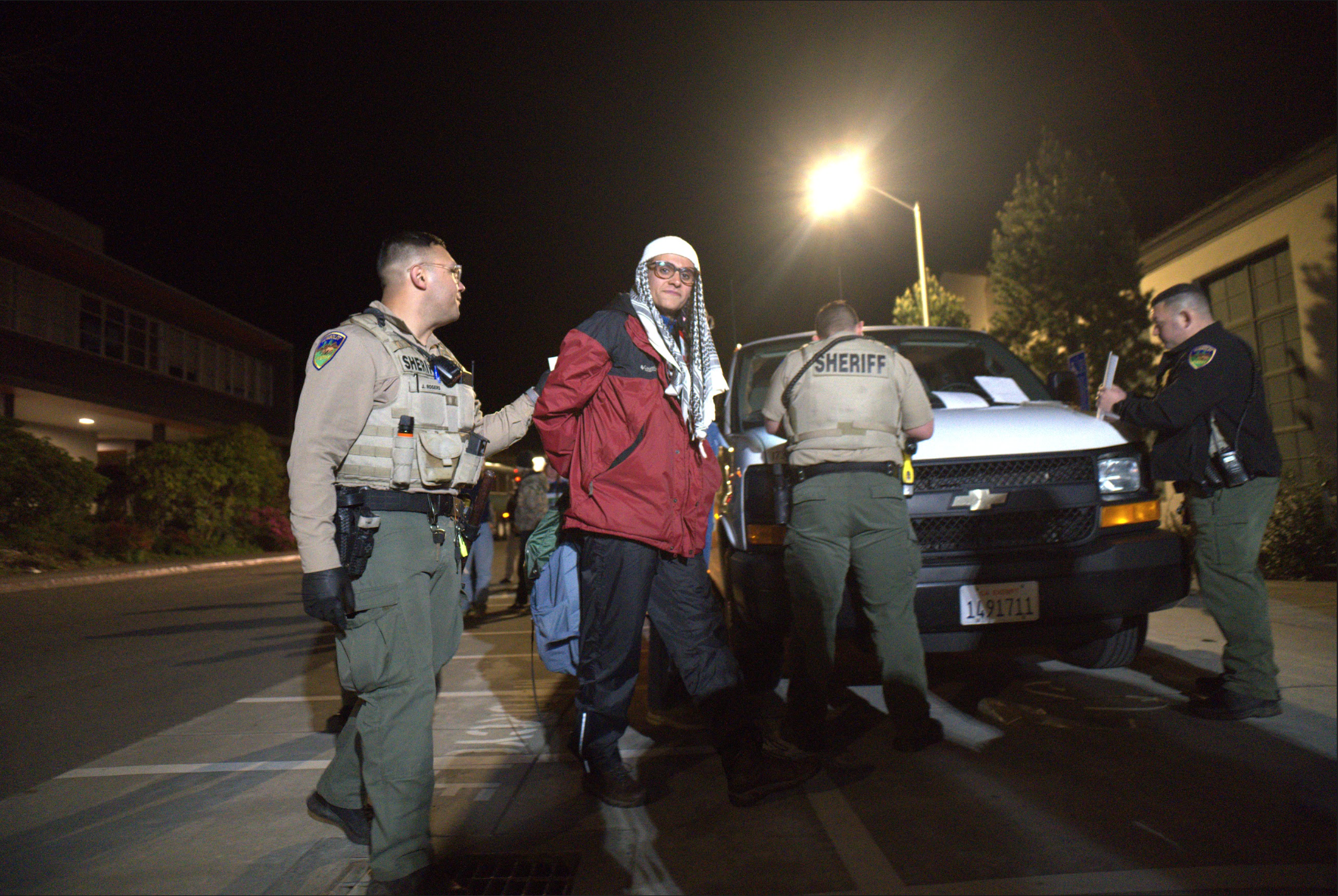
    Cal Poly Humboldt’s response to the pro-Palestine protest that occupied Siemens Hall from April 22 – 30, 2024, and ended in 32 arrests, was met with disapproval from the campus community. Just before the following semester, the university updated its Time, Place and Manner policy, which imposed restrictions on amplified sound and public access to campus. This was met with disappointment from activists and students alike.

    Emergency Operations Center and Policy Management Group

    When the protest first unfolded, the university activated its Emergency Operations Center (EOC) as required by the CSU Emergency Management Policy (EMP) and California’s Standardized Emergency Management System.

    “Those who serve on the EOC are trained employees who represent departments from across campus. Under this structure, they are tasked with making recommendations on operations, planning, logistics, administration and communications to the decision-making body called the Policy Management Group (PMG),” the EOC After Action Report (AAR) read.

    The university’s Emergency Operations Plan and Guidelines state that the PMG approves policies concerning emergencies before they occur. The plan and guidelines also clarify that the PMG does not take part in operational aspects of emergency responses, meaning they only make decisions with the advice of the EOC.

    After Action Reports

    The CSU EMP also requires that the university compile an AAR, a document detailing findings and insight gained as a result of the incident. Cal Poly Humboldt began its compilation of two AARs in late summer 2024, according to an email written by Acting Vice President for Administration and Finance, Mike Fisher, in response to a request to university marketing and communications for an interview. One report was for the EOC, and another was for Incident Command (IC) — the university’s emergency personnel, law enforcement and on-scene command. The process involved interviews with people involved in the EOC and IC along with the help of California Office of Emergency Services. The report was finished in November 2024.

    “The After Action Reports (EOC and IC) are based on the perspectives of those who were involved with the operational processes and structures and provided a starting point for a broader conversation,” Fisher said in the email.

    Wellbeing and Stewardship Team meetings

    On Jan. 21, the university sent an email to the campus community with both AARs linked. Along with the documents, the email introduced the members of the Wellbeing and Stewardship Team and announced five meetings to be held on campus involving the team.

    “The purpose of these conversations is to reflect together on the events of April 2024 and their impact on our campus and community,” the email said. “Our primary focus is to listen to your experiences, concerns, and ideas. We will share resources and information that are available, including mandated, operationally focused after-action reviews.”

    Aimed at engaging the campus community in conversations about the April 2024 protest, the meetings were held earlier this semester and included University Senate and Associated Students meetings and campus and staff council open forums. Three of these meetings offered world café-style community conversations, which were facilitated breakout group sessions that emphasized listening and participation from everyone in each group.

    “There have been many different lived experiences from individuals shared in our community conversations, including those facilitated by the campus wellbeing and stewardship group. These include a range of feedback from the campus community,” Fisher said. “This is important because these conversations provide a more inclusive picture of what happened and can help us learn from the event and improve our emergency response efforts.”

    Rouhollah Aghasaleh, assistant professor and University Senate faculty representative for the College of Professional Studies, was arrested at the protest in 2024. At the Jan. 28 University Senate meeting, they offered a framed photograph of their detainment to the Wellbeing and Stewardship Team.

    Reception of the After Action Reports

    Aghasaleh took issue with the AARs because neither said who specifically was in the EOC or PMG. Each AAR said the PMG was comprised of the President’s Advisory Team, University Council and government relations. According to the university’s most recent Emergency Operations Plan and Guidelines linked on the university website, dated Oct. 2018, the PMG consists of the president, provost, the executive director of the office of diversity, equity and inclusion, chair of the academic senate, associated student president, legal advisor, public information officer and vice presidents of academic affairs, administration and finance, student affairs and advancement.

    “Those two reports are not only insufficient but also are insulting our intelligence, our being. I spoke about this at some smaller meetings. There are concerns about if those members become known, then they might become attacked, or become targeted,” Aghasaleh said. “And I understand that’s a reality, and that’s unfortunate, but it’s important to remember what they did, like for instance, my own case, being suspended for five months.”

    Aghasaleh pointed out that the event summary of each AAR was only seven paragraphs long. Upon further inspection, the two summaries were identical save for one term in the last sentence of each, where it says EOC/IC was deactivated on May 20. 

    Strengths and areas for improvement

    Following the event summary, both AARs laid out what the EOC and IC did well and what they could have done better in response to the protest. The EOC AAR claimed three strengths and six areas for improvement, while the IC AAR listed three and five, respectively. For example, the EOC AAR noted that their good local relationships helped with resources and assistance. Both reports also had plans for addressing each issue, some of which have been accomplished. The report listed improving the IC and EOC interface as something that could be improved upon, which, according to the report, has been completed.

    “On the night of April 22 in particular, poor communications between the IC and EOC led to inter- and intra-team information gaps and consequently to tactical errors and inadequate operational planning,” the EOC AAR read. “The IC/EOC interface was not fully established until an IC Coordinator was assigned two days into the incident.”

    One of the strengths listed in the IC AAR was that no injuries were reported as a result of the 32 arrests made in the early hours of April 30, 2024. Areas for improvement included bettering management of public relations and technical issues with body-worn cameras. Dealing with both issues is in progress.

    Fisher noted that the AAR is only part of the story.  

    “I think this is a single reference point of a much more complex experience of an incredibly impactful event on campus,” Fisher said. “There is much more to learn beyond this report and I am encouraged by community conversations I have been a part of and I look forward to more.”

    Why form a Wellbeing and Stewardship Team?

    The organization of the team was first promised in a statement signed by university Interim President Michael Spagna, which was sent to all of campus via email on Oct. 29, 2024. According to the email, the team was formed to facilitate productive conversations and build trust.

    “We have work to do as a community to fulfill our potential. Some of that work is in progress, while much else remains to be done. To those who have expressed the need for more inclusive decision-making processes, we hear you,” Spagna’s statement said. “Over the last few weeks, we have been leaning on the collective expertise of our campus community, empowering students, faculty, and staff to help us reflect on and learn from the past and to build a safer, more supportive environment.”

    The Wellbeing and Stewardship Team saw potential in the conversations that took place in the meetings. From the same request for an interview to university marketing and communications, the Wellbeing and Stewardship Team responded collaboratively via email.

    “The conversations that have happened so far have given us valuable insight into how campus leadership handled the events and how the campus community felt about their response. Based on the feedback we received, we get the sense that these meetings created a meaningful space for some participants to share how the events affected their studies, work, sense of safety, and connections to both their close groups and the larger campus community,” the Wellbeing and Stewardship Team wrote. “We feel like there’s interest and value in continuing this dialogue – and finding ways for campus groups to come together and shape what we want our future to look like.”

    Moving forward

    Aghasaleh noted that the university may have the right intentions in its efforts to build trust back up between the university and the campus community.

    “I think there is some genuine intention to make things right, especially after President Spagna took the lead,” Aghasaleh said. “I do hear them having some genuine conversation to find ways to make things right.”

    Aghasaleh noticed a strain on the university’s relationship with students, which will not go away on its own.

    “I am very concerned right now with this widening gap between admin and students on campus … By giving ourselves more time, things are not going to get easier. I’m pretty sure some tensions will come up pretty soon, and I know we are not prepared,” Aghasaleh said. “We have not learned our lessons from last year.”

  • Eureka Theater hosts 10th annual Oscars party, proving local theaters matter

    By Julia Kelm

    Guests began to gather into the Eureka Theater, showing up in their finest tuxedos and lavish furs to enjoy the 97th Oscars ceremony. Although the weather was less than pleasant, they were not deterred by the spectacle that was waiting behind the theater’s doors.

    As guests strolled the red carpet into the historical theater, they had their photos taken by a professional photographer. Many of them posed as if they were about to win an Oscar of their own.

    People filled the lobby, enjoying various types of hors d’oeuvres served by the Eureka Theater volunteers and ordering drinks from the bar.

    Those who purchased a VIP ticket enjoyed a special lounge with a more private bar — in addition, they had access to the stunning vintage apartment fitted with mid-century modern style furniture and celebrity portraits.

    The guests were also fed a respectable meal of sandwiches, meatballs, artichoke dip, and chocolate-covered strawberries as they sat down for the Oscars ceremony. 

    The main event of the night was full of more delights than disappointments, having practically no drama — outside of Adrian Brody’s undeserving win as Best Actor and substanceless five-minute speech.

    Conan O’Brian was a fantastic host with plenty of funny bits, and he even called out Karla Sofía Gascón for her problematic tweets in his monologue, who was nominated for best actress for Emilia Pérez (2024).

    Anora (2024) surprisingly swept most of the categories, taking home five Oscars, including Best Director and Best Picture. Sean Baker, director of Anora, gave an incredible and important speech about the importance of going to your local theaters for movies. 

    “We’re all here tonight and watching this broadcast because we love movies,” Baker said in his speech. “Where did we fall in love with the movies? At the movie theater.” 

    He went on to emphasize what many of us film buffs know; there is no better place to enjoy a film than at the movie theater, and there is no better place to watch a film than your unique local theater.

    “Right now, the theater-going experience is under threat,” Baker said. “Movie theaters, especially independently owned theaters, are struggling…We lost nearly 1,000 screens in the US, and we continue to lose them regularly. If we don’t reverse this trend, we’ll be losing a vital part of our culture.” 

    This felt so impactful and almost brought me to tears. I was literally sitting in one of those historical independent theaters that are so important to global society and culture and still in desperate need of public support. 

    If you love movies, go to your local theater, whether it be the Eureka Theater, the Minor, or your hometown Regal or AMC. Theaters are what keep film alive, and the home experience can never quite reach that magical feeling you get when you’re in a room full of strangers sharing the same screen. 

    Julia is a journalism major at Cal Poly Humboldt. She loves film and is a regular on Letterboxd. To quote Robin Williams in her all-time favorite movie, Dead Poets Society, “The powerful play goes on and you may contribute a verse. What will your verse be?”

  • Plant of the Week: Local botanizing in the Arcata Community Forest

    Plant of the Week: Local botanizing in the Arcata Community Forest

    By Jess Carey

    Legend has it that long ago, a poor young man fell truly, tragically in love with the most beautiful princess in all the land. He scoured his savings and sold what little he owned to buy her gifts of slippers, jewelry and rabbits. He traveled many miles to her palace, where he confessed his love at her feet. She denied him reciprocity and took the gifts greedily. He was left alone and destitute. Heartbroken, he stabbed himself in the chest with his knife, and the first bleeding heart flower grew from the dirt where his corpse lay. The story traces back to a Japanese legend, as different species of Dicentra are native to California’s western neighbor. 

    Dicentra formosa, or Pacific Bleeding Heart, will be blooming soon. The plant, of the poppy family,  flowers from March to early summer and dots the redwood forest with its delicate pink blooms. Its uniquely shaped inflorescences are a striking pink to lavender hue and balance in clusters atop long drooping stalks, like tiny hearts on a stick. A darker streak cuts each flower in half and looks suspiciously similar to dripping blood. The plant’s delicate and feathery leaves are cilantro-like in color and texture, but less tasty and unfortunately toxic. As summer approaches, the petals will wither away as a legume-like capsule fruit takes their place. The fruit will eventually dry up and split open, revealing seeds that have a special oil-rich coating that attract ants to aid in their dispersal. You can find Dicentra tracing up hillsides in the redwood forest, following trails of moisture in the troughs of streams. The plant also grows around campus, particularly abundant throughout the grounds of the residence halls that are nestled in the redwoods.

    Jess Carey is a senior at Cal Poly Humboldt, majoring in biology and double minoring in botany and journalism, and the science editor for The Lumberjack. They are passionate about telling stories that are relevant to the community, branching their interests in science, music, and the arts.

  • Fly, eagles, fly! Wildlife biologists revive beloved bald eagle nest cam in Faye Slough

    Fly, eagles, fly! Wildlife biologists revive beloved bald eagle nest cam in Faye Slough

    By Nick Escalada

    Picture this — you are suspended 100 feet in the air, overlooking a beautiful inlet of the Pacific Ocean teeming with wildlife. Shorebirds chirp down below, chorus frogs serenade you from all directions and crisp North Coast rainfall washes over your senses. Suddenly, a massive shadow enshrouds you, and your eyes dart up to meet the 7-foot wingspan of a brown and white raptor as it touches down within arm’s reach. While this might sound like every wildlife major’s perfect fantasy, you won’t have to limit this scene to your imagination for much longer.

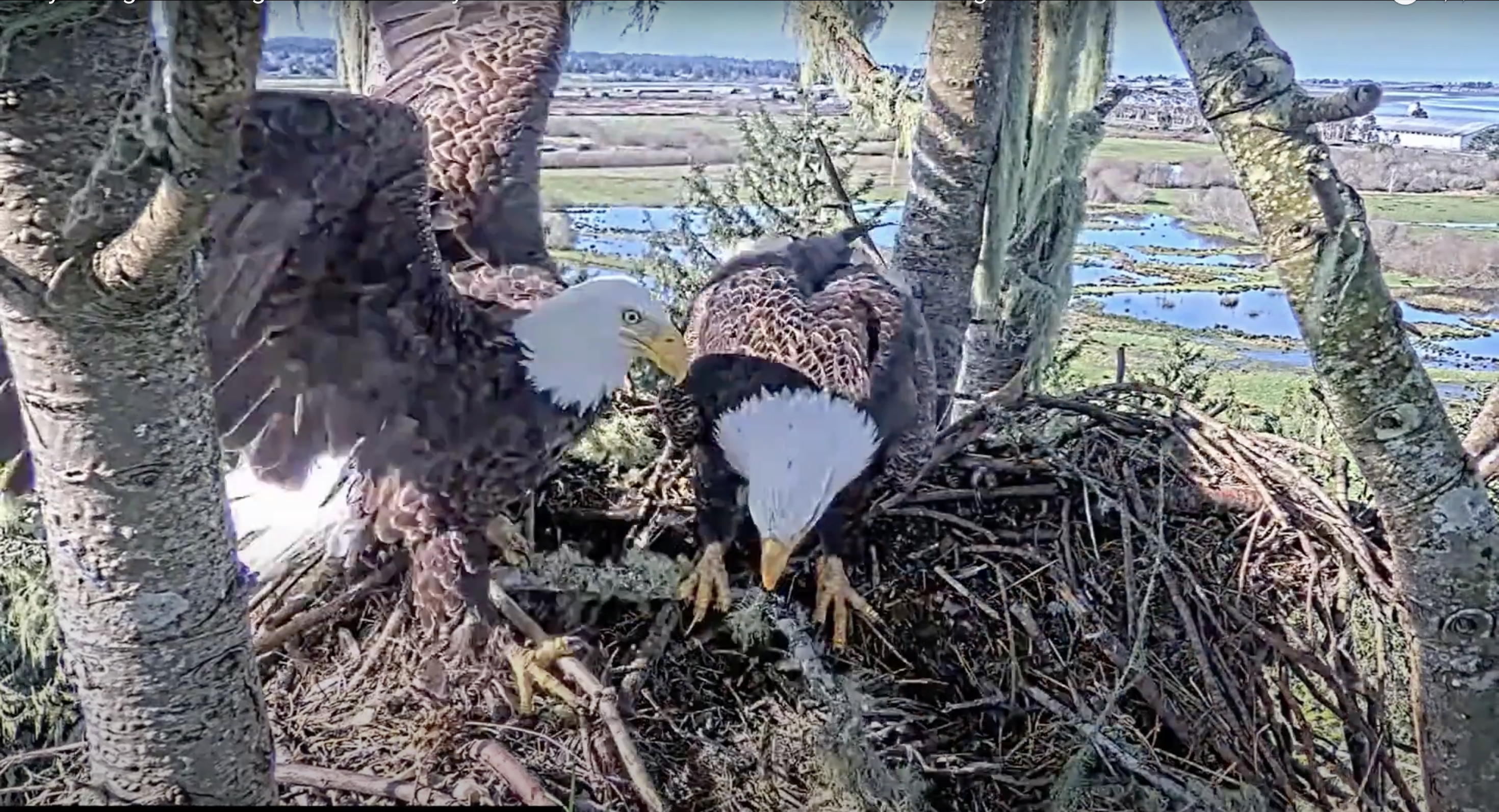
    Climbing Biologist and Sequoia Park Zoo Director Jim Campbell-Spickler partnered with Dr. Peter Sharpe of the Institute for Wildlife Studies to re-establish Humboldt’s locally renowned bald eagle nest cam livestream. Formerly known as Humboldt Bay Eagle Cam, the Faye Slough Eagle Cam is now situated at a promising new nest site by the wildlife area of the same name. 

    The starring couple, known only as Mr. and Mrs. Humboldt Bald Eagle (HBE) were first observed in 2006 and were eventually the subjects of an initial livestream backed by the Humboldt Wildlife Care Center and Sequoia Park Zoo. The pair gained swaths of admirers on Facebook once they began rearing chicks, but they eventually abandoned their nest in 2016 and were not seen again. That was until two years ago, when a resembling couple was spotted building a home atop a 110-foot grand fir near Fay Slough.

     “It’s a great territory for them to hold,” Campbell-Spickler said. “And Fay Slough is amazing, so you can see they’re just hunting that area. It’s a great view.”

    Like most birds, bald eagles are highly selective with the areas in which they choose to breed and raise their young. These doting parents often abandon fully built nests for reasons ranging from structural integrity to exposure to predators, but recent observations have the biologists hopeful that this pair is here to stay.

    “This is about the time of year when we’d expect them to show up and start exhibiting courtship behavior,” Campbell-Spickler said. “[They’re] starting to really solidify that bond that they have for the breeding season, and we’re starting to see that behavior. It’s really early, so we’re watching very closely to see what happens. It’s like a soap opera.”

    Even as apex predators, building a homefront in the treetops is no easy feat. A portion of the nest broke off during last week’s storm series, which has impeded the HBE’s construction progress a fair bit. On top of that, turf wars with other large birds of prey make early nest life a constant uphill battle.

    “We watched the male who was roosting at the nest site one night get tagged pretty hard by a horned owl,” Campbell-Spickler said. “We are hearing red-shouldered hawks and red-tail hawks aggressively calling in the area, meaning that this is not just a territory held by bald eagles.” 

    Despite sitting over 100-feet off the ground, both nests from the current and original livestream have occasionally housed numerous creatures beyond their original avian architects. So far, the phenomenon has brought up Pseudacris regilla, the Pacific chorus frog, and Aneides vagrans, the wandering salamander.

    “A neat feature of our area is that these big nests just sponge up water and can support what are mostly considered terrestrial amphibians,” Campbell-Spickler said. “We did have our first frog observation the other night, with these warm, rainy conditions coming in. As far as I know, it’s not something that’s been discussed in literature yet. They seem to cohabitate, just unaware of each other.”

    It’s apparent that bald eagle nests like these invoke as much joy and wonder in seasoned biologists as they do the casual birdwatcher or passerby. After all, the birds were a much rarer sight in Humboldt only a couple decades ago due to the uncontrolled logging and hazardous waste disposal of the county’s past.

    “What we know is that in the lower 48 [states], Eagle numbers just crashed,” Campbell Spickler said. “Populations remain somewhat healthy in Alaska, but it’s some over the last several decades that we’ve seen this recovery in all of North America, so our region shows the same. There’s recovery. There’s a lot more young that are being produced, and it’s great to see. You wouldn’t see eagles flying around 20 years ago. But if you drive up to 101 North, you will see them at the lagoons, and they’re not uncommon anymore.”

    The Fay Slough Eagle Cam is now live on Sequoia Park Zoo’s YouTube channel, Redwood Zoo. Highlight clips and pictures of the eagles are posted regularly to the Facebook page Fay Slough Bald Eagles, which boasts a lovely community of fans. You can even watch the drama unfold on a 65-inch screen on your next visit to the zoo in Eureka!

    Nick Escalada is a sophomore minoring in journalism who reports on happenings of all sorts. As a wildlife major, he enjoys nature-related pieces. On his off days, you can find him taking a hike behind campus or collecting shiny stuff on the beach.