The Lumberjack


Students Serving The Cal Poly Humboldt Campus and Community Since 1929

Category: News

  • HSU community petitions to Push Pause on projected cuts

    HSU community petitions to Push Pause on projected cuts

    The California Faculty Association has received more than 3,000 signatures pushing for Humboldt State to hold off on making budget cuts during the current pandemic. The petition has grabbed the attention of many among the greater HSU community. On Feb 18, a meeting organized by the HSU chapter of the CFA was held over Zoom to discuss the ramifications of the class and faculty job cuts including the impacts that they would have on both students and faculty.

    Nicola Walters, a lecturer in the politics department and the organizing chair of the Humboldt CFA, spoke on her experiences over the years as both a student and now a faculty member at HSU. Frightened by what she is witnessing all around her, she wants to fight for what is right.

    “I’ve also sat in countless department meetings and watched the people who taught me, who I look up to, who make this university a place worth attending left bewildered and broken by administrative agendas that herald shared governance, but instead demand cuts to programs, classes, and jobs,” Walters said. “I’ve listened to my colleagues describe feeling disposable, exhausted, terrified, and traumatized while we grapple with overhauls to our campus.”

    Walters remarked on the contrast of HSU receiving lots of federal funding as of late against HSU slashing jobs and classes.

    “Putting profit over people’s jobs doesn’t fit with our university or our community,” Walters said. “Our campus isn’t adverse to change, it’s adverse to practices that violate trust and perpetuate cuts against our campus community. Implementing changes while faculty are unable to protect their interests is an administrative strategy and is not the way forward.

    Another key speaker was Dr. Cutcha Risling Brady, an associate professor and department chair in the Native American Studies department. Brady talked about the impact that any additional cuts would have on students. More specifically, she introduced the idea that students are feeling out of control because they are already dealing with family deaths and other hardships during the pandemic but to see faculty and staff that they rely on for support is next level unacceptable.

    One of these students, senior communication major Anastasia Tejada, is concerned that one of the closest allies in her department, lecturer Leslie Rossman, could very well have her position cut in due time. Rossman helped Tejada get into a graduate school at the University of Nevada, Reno, and secure funding for it.

    “That would not have happened without her support and guidance,” Tejada said. “I would not know where to start and in all honesty, I probably wouldn’t be headed into higher education if it was not for her.”

    Tejada was not surprised that HSU president Tom Jackson was not in attendance for the Push Pause meeting and thinks it is reflective of his entourage as a collective.

    “He has been very silent this entire time he has been missing,” Tejada said. “From almost every important conversation, the fact that he couldn’t even show up to listen just proves the point that the administration does not care about its lectures or faculty.”

  • Charmaine Lawson and the Eureka NAACP announce the third annual David Josiah Lawson Memorial Scholarship

    Charmaine Lawson and the Eureka NAACP announce the third annual David Josiah Lawson Memorial Scholarship

    As we approach the third anniversary of the death of David Josiah Lawson, his mother encouraged Humboldt County’s Black, Brown and Indigenous college-bound seniors to apply for his honorary memorial scholarship.

    “Students and parents, I know that this year was tremendously difficult with the pandemic,” Charmaine Lawson said through a video posted on the Justice for David Josiah Lawson Facebook page on Feb. 8. “But, I know for the students it was even more difficult.”

    Charmaine Lawson said how grateful she felt for the Eureka NAACP continually working to provide opportunities for students through the memory of her son, David Josiah Lawson.

    After the morning of April 15, 2017 when Josiah Lawson was fatally stabbed during an altercation at an off-campus house party, his mother has worked tirelessly to hold those involved accountable. Charmaine Lawson continues to travel from her hometown of Perris, CA to Humboldt County where she speaks with crowds of hundreds of people, demanding justice for her son.

    The Eureka NAACP first announced the scholarship at a Martin Luther King Jr. holiday celebration in January 2018. The scholarship is available for Black, Brown and Indigenous high school seniors in Humboldt County.

    Three scholarships are awarded each year. Two are awarded to students planning to attend a four-year university and the other one is awarded to a student planning to attend a two-year community college. Each scholarship is a one-time award of $500.

    “Both of my children, DJ and Anthony, received several scholarships throughout their high school years,” Charmaine Lawson said in a press release by Eureka NAACP that announced the first set of scholarship recipient winners back in 2019. “They felt very honored and blessed to receive financial assistance from different organizations.”

    It is through the David Josiah Lawson scholarship, vigils, food and coat drives, along with many other charitable acts, that Charmaine Lawson finds ways to honor her son.

    Last June, hundreds of people congregated on the Humboldt County Courthouse steps for the 38-month vigil for Josiah Lawson. The wound of the racial injustice that Josiah has suffered felt fresh to those in attendance.

    Mireille Román is a student at HSU, majoring in English writing practices and critical race, gender, and sexuality studies with an emphasis in ethnic studies. She spoke at the vigil about her frustrations regarding HSU’s response to the death of Josiah Lawson, questioning what the university has even done to honor their former student through the injustice that he has and continues to receive.

    “There’s not a building or area dedicated to Josiah that says, ‘We see you,’” Román said as she stood in solidarity with the Lawson family.

    Anthony Lawson, brother of Josiah Lawson, has consistently been alongside his mother in their fight to bring justice to their family. He has valued the obstacles that him and his family have had to endure, pushing himself to persevere and succeed.

    The CSU Board of Trustees honored him as the 2020 winner of the Chancellor Emeritus Charles B. and Catherine Reed Scholarship for his University, CSUN. It was there where Anthony Lawson honored his brother and reflected on all the ways that he and his family have accomplished over the past couple of years.

    Although Charmaine Lawson is inevitably compounded by grief through the failures of Humboldt’s judicial system, she feels like keeping his name alive by helping others is what best reflects the kind of character that was Josiah Lawson.

    “It’s scholarships like the one that my mom started at Humboldt that benefit other students who are struggling financially and we just want to show them that we aren’t just there for our family, we are there for the entire Humboldt community,” Anthony Lawson said to the CSU board of trustees.

    More details on the scholarship: https://acc2b65b-de53-412f-afe1-dfb07c852025.filesusr.com/ugd/62031f_af9fd1c39e6d48bfa201a1f2cd986aa8.pdf

  • HSU Students and Professors Plunge Into Peruvian Water Project

    HSU Students and Professors Plunge Into Peruvian Water Project

    Zurite, Peru — a tiny town nestled in between ginormous mountains in the heart of Peru. For many in this agriculture-based community, getting water on a regular basis had been a struggle due to constant landslides and other factors out of their control. Bonanza en Los Andes sought to fill that void.

    A several-year-long project that wrapped up funding in December of 2020 involving students and professors from the College of Natural Resources and Sciences at HSU. The group was twenty members strong and helped plan, design, and build irrigation canals connecting the mountains to Zurite. The project wrapped up funding in December of 2020. One of these students, geology graduate student Wyeth Wunderlich, helped oversee the technical side of things.

    “Our goal is to say ‘Okay — this is an agrarian town that relies heavily on agriculture,” Wunderlich said. “So how do we connect the water resource availability upstream basically up in this watershed with what the water resource demands are in the community?”

    Wunderlich explained that around the world, water resources are incapacitated to an extent and there is not a lot of knowledge on how these hydrological systems operate. For him, this is where his wheelhouse comes into play but he did not want to be too aggressive.

    “We don’t want to tell anyone what to do, but if we can develop good quantitative estimates of what happens when and where in the landscape water is coming from,” Wunderlich said. “Then hopefully it can help inform management decisions for Zurite and other communities like Zurite.”

    Wunderlich would like to take what he learned from Bonanza en Los Andes to future endeavors.

    “I hope to bring the same skill set that I’ve used here in the project with Zurite and the Ramuschaka watershed to our local water and groundwater-surface water systems here in Humboldt and the California coast,” Wunderlich said.

    Jasper Oshun, a geology professor, was the principal investigator for this project. He emphasized the value of forming bonds across cultural boundaries.

    “It’s important to foster these types of relationships between college and younger students in terms of providing the opportunity for students to travel in see the similarities and differences in different parts of the world,” Oshun said.

    Staying on the same topic, Oshun appreciated the collision of different disciplines at HSU when it came to this project.

    “These types of environmental issues — issues of water, issues of water quality and quantity or land management — they all require a diverse set of viewpoints in terms of the stakeholders involved in the differences of science,” Oshun said. “And people need to come together on the same page and there’s a lot of value in having different perspectives.”

    As someone who wrote the grant for this project, Oshun is frustrated that there aren’t more opportunities for his students in the College of Natural Resources and Sciences to travel abroad.

    “I think it’s not necessarily on the radar of students in CNRS that there is an opportunity for them to travel abroad,” Oshun said. “And that their skills are valued or their skills could be immediately applied in a way that could benefit a community.”

    Nolan Marshall, a senior and geology major, was a major force in Bonanza en los Andes. In addition to drafting geologic maps, taking stream discharge measurements, cataloging soil samples and testing them in his critical zone lab for water content, Marshall also created 2-dimensional cross-sections of peatlands. He is grateful to have had the opportunity to take part in a bridge-building project with the local Peruvians.

    “They were not only a joy to be around but local professionals and students contributed so much to the project — it wasn’t possible without them, ” Marshall said in an email interview. “One of my favorite work days was when I logged core with the all Peruvian drill crew. I’ll never forget it. “

  • Student leaders and staff fight for a safe campus

    Student leaders and staff fight for a safe campus

    Editors Note: This article was originally published on Dec. 12, 2020

    In the year 2020, with racism, sexism and homophobia alive and well, existing in this country as part of a minoritized group continues to add extra layers of suffering to life.

    Sophomore and Vice President of the Queer Student Union Adrian Black joined the club immediately upon learning about it their freshman year. Black identifies as transgender, queer and said they came out quickly after discovering who they were through conducting online research.

    “I just felt like I needed to get it out as soon as possible,” Black said. “I think [coming out] definitely enabled me to embrace more of my genuine self. I definitely felt like I was being sort of dishonest in the way that I was presenting myself to other people and after coming out I sort of slowly began to just be who I wanted to be and who I felt like I was rather than what other people wanted from me.”

    For QSU Treasurer Claire Rogers, it took a bit longer to come to terms with her identity as a lesbian and even longer to share it with her loved ones. While she expected her group of mostly queer friends to be accepting, Rogers was nervous about the reaction she would receive from her family.

    “It took a while just for me to be able to put a label on what I was experiencing and it took me a while to be comfortable with a label,” Rogers said. “I felt very shut off from my sisters and my parents before I came out because there was this huge part of myself that I would avoid telling them about.”

    Rogers sought communities of people experiencing similar awakenings in her high school LGBT club and again in the HSU QSU club. With operations taking place entirely virtually this semester and an entirely new staff of student leaders, the transition has been slow but relatively smooth according to Rogers. Members maintain virtual contact on Discord and over Zoom, however, the lack of structure in past meetings that allowed members to move around and engage in several conversations has been replaced by a single channel of communication where it’s easy to become drowned out.

    “That really casual kind of interaction has mostly been maintained through our Discord server and even that isn’t quite the same because it’s over text,” Rogers said. “I don’t know if either of them is worse or better than the other but it’s a different quality than the previous structure or lack thereof that we need to have.”

    Rogers feels mostly comfortable in Humboldt outside of the community created within QSU, however, the idea that there are people out there harnessing hatred towards people like her for simply wanting to be who she is upsets her.

    “It doesn’t come up a lot. So, when it does come, it’s definitely jarring,” Rogers said. “It’s mostly been fine I guess but it’s still something that I’m aware of and it definitely has an impact.”

    Janet Winston, professor of critical race, gender and sexualities studies, believes HSU has a long road ahead in the effort to provide an entirely safe and comfortable campus for all of its students.

    “There are lots of initiatives [on campus], but there’s also a lot of direction based on trying to protect the university as an institution from lawsuits,” Winston said. “The thing that has been most striking to me and most frustrating is the lack of institutional commitment in the form of material resources to a professionally staffed queer resource center – which is something that I and many of my fellow faculty, staff and students have been working on for over 10 years.”

    Winston was the first faculty advisor for the Eric Rofes Multicultural Queer Resource Center before it was defunded by administration “on the grounds that there’s some kind of legal risk in the campus paying students in this center,” Winston said.

    Having taught queer studies since the 90’s, Winston said because the field is constantly evolving, she had to reinvent her curriculum each time she would teach a course.

    “The field is changing,” Winston said. “There’s an explosion of amazing literature and I want to still connect students to the past and to foundational theories like Barba Smith’s book “Ain’t Nobody Gonna Turn Me Around,” so that they can see the longevity and the kind of radical things that were being done in the 70’s, but also, I want to stay on top of what’s happening in terms of queer literature and queer theory. It’s challenging but it also is very exciting.”

    As a member of the LGBTQ+ community, Winston discovered a great deal of her identity through reading books like “This Bridge Called my Back: Writings by Radical Women of Color” that challenged her to become conscious of her intersectional identity in ways she hadn’t considered before.

    “[Those experiences] formed the foundation for what I bring to all of my classes – that it’s going to be intersectional, that we’re going to look at ourselves and our own social positionality and the privileges that we have and the oppressions that we face because of our identities,” Winston said.

    Winston believes society is plagued by compulsory heterosexuality, which reinforces the notion that we ought to be punished for not conforming to the narrative society provides.

    “My goal for [my classes] is that people who identify as queer or some version of that see themselves reflected in the literature and also feel challenged by the literature to rethink their own notions of identity,” Winston said. “For students who don’t identify as queer, [my goal is for them] to really expand thinking about the frameworks within which they conceptualize their own gender and sexual identities and unsettle that sense of the normative.”

  • Kinesiology department teaches students about at-home ergonomics

    Kinesiology department teaches students about at-home ergonomics

    Since the transition to a mainly virtual learning environment, people nationwide have felt the physical and mental tolls of it. Humboldt State students and faculty are no exceptions to this matter. A recent study by Dr. Whitney Ogle, a professor in the kinesiology department, found that HSU students were rating their mental health and physical wellbeings a three out of five or lower.

    But Ogle has done more than that — she and her kinesiology students have been making a series of short videos that inform on different ergonomic practices centered around working at home. It all grew from Ogle’s desire to find an adequate physical working space to make it so her body would not be aching all the time.

    Between switching out desk chairs and trying to work from different locations around her house, Ogle was doing everything she could to make her life more comfortable in a time where nobody could work in-person. But then it dawned on her — maybe she could turn her experiences into educational content.

    “I knew that since everyone was going to working from home, everyone’s ergonomic workspace was going to be totally different and I didn’t know that there was anyone on campus who was able to actually evaluate people’s home life,” Ogle said. “So I thought ‘Gosh, like I have a little bit of this experience and I’m part of the biomechanics lab’ and so I was like ‘All right — we could probably help out the university somehow with their understanding of the human body.’”

    Ricardo Sanchez is one of the students recruited by Dr. Ogle to help with this project. A first-year graduate student in the kinesiology program, he was tasked with coming up with a plan for executing such an endeavor.

    “I was like ‘Everyone goes on social media. That’s one thing that people kind of have a hard time putting down so if anything wouldn’t that’d be pretty cool to spread information through there,’” Sanchez said. “It’s quick, it’s easy, and you can get a good amount of information in a little bit of time.”

    Sanchez realized that creating informative videos to post on social media was the way to go. After presenting it to Ogle, he began working on the videos with other undergraduate kinesiology students like senior Lacey Bruhy-Jimenez, who most notably produced a video showcasing mini-resistance bands for your fingers.

    “It helps to build up the muscles in your hands, because when you’re typing and stuff and when you’re constantly holding a pen or something, your muscles — they stay in that same place all the time, so they’re not experiencing the other movements that they can do,” Bruhy-Jimenez said. “These things just kind of help with those muscles that aren’t being used all the time to help build them up so that way they don’t get weak and you can have them for longer.”

    Ogle stressed the importance of stretching your mind and body beyond the confines of a work station.

    “We need to get ourselves out of the positions that we’re typically in all the time, so if we’re at a computer we’re like kind of leaning forward all the time,” Ogle said. “So like thinking about how can we get out into this plane, how can we go into more extension anytime that we’re out at the desk.”

  • Arcata’s fourth annual State of the City presentation

    Arcata’s fourth annual State of the City presentation

    At this year’s State of the City Arcata, presenters reflected on the current state of Arcata and what the future of the city will look like after 2020’s year of challenges.

    The presentation featured several representatives from the city of Arcata, Equity Arcata and Humboldt State University. Each presenter reflected on the outcomes that stemmed from the past year and what it meant for the community going forward.

    “I’m going to share some perspectives that we learned in 2020,” said Karen Deemer, Arcata city manager.

    Deemer highlighted the importance of the spirit that was seen throughout the community as the pandemic hit during March of last year. As businesses closed and some chose to stay open, the Arcata community made a concerted effort to buy locally.

    As the pandemic was disrupting the norms of society and affecting businesses, it was also highlighting deeper societal problems within Arcata.

    Christian Boyd, the racial equity intern for the city of Arcata, and Janaee Sykes, the student intern for the Office of Diversity, Equity and Inclusion on campus, represented Equity Arcata. They spoke about the importance of resources for BIPOC within the Arcata community.

    “COVID-19 brought racial disparities seen throughout the nation to the forefront of society,” Boyd said.

    Sykes said from the death of George Floyd to racist videos on campus and then the racial tension that surrounded the election, many Arcata residents reported feeling uncomfortable within the community.

    Equity Arcata was established in 2017 after community members met with student focus groups to hear out their issues and create solution-based strategies.

    Sykes said that after the murder of David Josiah Lawson in April 2017, it amounted to a breaking point for the Arcata community and the county. The tragedy opened many eyes to the deep-rooted issues of racism and discriminatory acts against BIPOC in the community.

    “Arcata Chamber of Commerce is committed to working with Equity Arcata and working to make Arcata a more prosperous and welcoming place for all the community,” Molly Steele, executive director of the Arcata Chamber of Commerce, said as Equity Arcata closed their portion of the event.

    HSU President Tom Jackson and Jenn Capps, the provost and vice president of academic affairs at HSU, spoke about the current state of the university, as well as plans for the future, specifically on becoming a polytechnic school.

    “We have been operating in emergency mode as a university,” Jackson said. “We are really trying to work on building infrastructure first then building for the future.”

    This includes planning for the fall semester and what that looks like amid vaccination distribution. Jackson emphasized that although the collective notion is that everything should be okay in the fall, science and technology are telling us to remain cautious.

    The university is trying to plan the best fall semester that it can, but it is very reliant on keeping the community and students safe.

    As for what the university’s plans are for the long term, Capps presented the projected timeline of the polytechnic self-study that will be conducted throughout this next year.

    “A lot of what is a polytechnic is already HSU,” Capps said.

    There are already two polytechnics that have been designated in the CSU system, but none that already exist in the Northern part of California. HSU would represent the region as a polytechnic through a collaborative approach with Humboldt County, the campus community, and the CSU Chancellor’s Office.

    Consultation of the Polytechnic Self-Study is expected to start at the beginning of March and continue throughout the summer. The expected due date for the completion of the self-study is Sept. 1.

  • Updates on Testing and Vaccinations for COVID-19 at HSU

    Updates on Testing and Vaccinations for COVID-19 at HSU

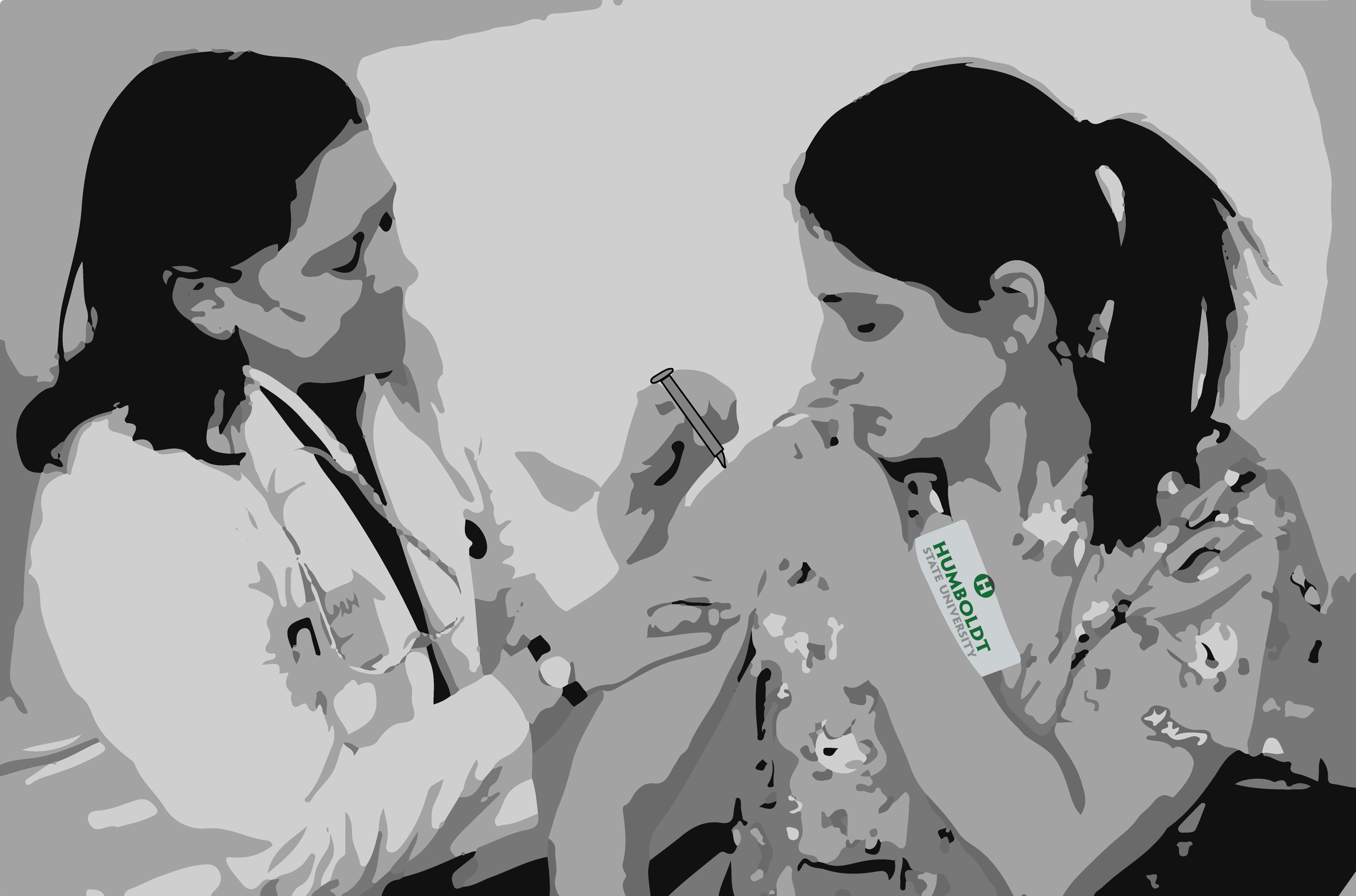
    Coronavirus testing will be available for all HSU students and employees in a matter of days. Here are some details on testing and vaccinations for students at HSU.

    Testing

    Beginning this month, Humboldt State, in cooperation with HealthQuest, will be offering free coronavirus tests on campus for all HSU staff, faculty, and auxiliary employees. An HSU ID will be needed when it comes time to take the test but HealthQuest will only bill insurance directly, so there is no need to worry about paying up-front.

    Students who are residing on campus will be tested when they move in and then again seven to 10 days later. These students will be contacted by Housing regarding arranging testing appointments.

    Athletes will be frequently tested as mandated by NCAA and County Public Health protocols.

    Vaccinations

    The University is currently working with County Public Health on plans to give out the vaccine to all HSU staff, faculty, and employees who would like to receive the vaccine when available. HSU aims to administer vaccinations to students when allowable based on state and county prioritization and vaccine availability.

    Additionally, all Humboldt County residents who want to be given the COVID-19 vaccine are able to submit their contact information through an online interest form to be alerted when doses are available for their tier.

  • Newly assembled trans task force takes shape

    Newly assembled trans task force takes shape

    With campus’s shift to almost pure online learning since the spring semester of 2020, new and concerning problems have arisen for the transgender population of HSU.

    “Don’t feel gaslighted into thinking this is the best you get,” AM Hueber, member and HSU undergraduate, said for transgender students at HSU.

    Canvas and Zoom class spaces, compared to in-person classes, often have a more painstaking process of correction towards the offender. These struggles join the decades-long “whisper culture” on campus regarding where safe spaces and faculty members for transgender students reside.

    Inspired by HSU student and AS Board Member Roman Sotomayor, in a presentation he held the fall semester of last year, the task force began as a small group of impassioned students and professors alike driven to change the social climate and resource accessibility for their trans peers. Now under the formal name of the Transgender, Nonbinary, and Gender Non-Conforming Task Force, members have begun the steps in helping facilitate and provide for the goals of this already over 30 members strong organization.

    Hueber hopes to see the many plans coming out of the group come into fruition along with the future of a strong physical space presence after the effects of the COVID-19 pandemic are over. They expressed that the university has a long road ahead if it hopes to regain its 2012 title of being “one of the most LGBT+ inclusive universities in California.”

    Jenn Capps, Provost in Academic Affairs, expressed how the group has already begun to host faculty training for many of the departments at HSU. Many members of faculty were willing and wanting to learn how to provide properly for their transgender student but often lacked the knowledge and know-how to do so. Other resources the group is currently working to provide include the possibility of legal name-change workshops, trans support hotlines, advocacy reach teams, and a database of trans literature accessible to all students.

    “At HSU we aspire to be an open and welcoming space for our students. Specifically for transgender, nonbinary, and gender non-conforming students. You are important and this is important and near and dear to my heart,” Capps said with a nod of agreement from fellow member Elias Pence.

    “You are not alone,” Pence said. “We are everywhere. We are students, we’re staff, and we are faculty.”

  • COVID-19 Testing for Move-in Day

    COVID-19 Testing for Move-in Day

    Move-in day is Feb 19, and the Student Health Center is preparing to test the many students returning to campus after winter break. Due to the sharp rise of COVID-19 cases in California at the end of 2020, the school pushed back the date for students to return to their dorms. Now, hundreds of students from all over are returning to HSU and the Student Health Center is getting ready to test all of them, particularly if the planned return to limited face-to-face classes begins in the fall semester.

    According to HSU spokesperson Grant Scott-Goforth, the school has been testing constantly to keep an eye on campus COVID-19 cases.

    “They have been administering a few hundred tests per week, but that’s expected to go up as students move back and face-to-face classes commence,” Scott-Goforth said. “The Health Center has conducted a total of 5,013 tests since they began testing.”

    All this comes not long after a new strain of the virus, which is more contagious, was first reported in Humboldt County. While Humboldt had been lucky enough to have relatively low rates of positive cases, those numbers have steadily increased and pushed the county into the highest restrictive COVID tier. This comes at a time when many still do not qualify for vaccines and those who do have difficulty getting them.

    HSU is anticipating about 350 students which may increase the number of positive significantly. According to Scott-Goforth the positivity rate on campus is relatively low.

    “The positivity rate is 1.3% among students, and has increased slightly since testing began,” Scott-Goforth said. “For comparison, the positivity rate for Humboldt County is 4.03% and statewide it’s 6.9%.”

    Continued lockdown means the negative effects on students’ mental health are likely to continue as well. According to Student Health Operations Coordinator Elizabeth McCallion. The counseling office is maintaining several programs made to help students deal with stress and to socialize with other students on campus.

    “We have two support groups that students moving back on campus would particularly benefit from,” McCallion said. “The first is Breaking Isolation, which is focused on finding support, connection, and understanding in this time of social distancing. The second is the living on-campus support group, which is a great group for building community with others living on campus.”

    The links to both support groups can be found on the Counseling web page.

    Despite the risks and challenges of living on campus during the pandemic, many students remain hopeful that the school will provide adequate safety precautions to keep them from getting sick or helping them if they do with quarantine rooms and medical care. HSU student America Hernandez thinks the school is doing a decent job at keeping students safe.

    “I do think they are doing a good job,” Hernandez said. “Since they require COVID tests to move in and encourage self-evaluation of symptoms.”

  • Building Relationships Through ‘College Chats’

    Building Relationships Through ‘College Chats’

    The Humboldt County Office of Education is hosting Zoom sessions for high school and College of the Redwoods students, parents and anyone interested in learning more about HSU programs.

    These events are usually held in person every year but due to the COVID-19 pandemic, they are now happening online on Wednesdays from 12–12:45 pm.

    Jim Ritter is the HCOE College Connect Coordinator and the main host of the sessions.

    “College Chats are meant to be casual, and give students an opportunity to learn about subjects on the university level,” Ritter said.

    Ritter explained how College Chats can help students start to build relationships with HSU professors whom they might have a class with someday.

    “I think it is important for high school students to get accurate information about what they can expect in college,” Ritter said. “A really good way to do that is for the students to speak directly to professors and lecturers who teach in different majors. College Chats are perfect for helping this happen.”

    Even though these events are usually held in person each year, there are still positives that have come out of the situation. It has allowed students and parents from all over the community to join the meetings. The first event held on February 3 focused on kinesiology and was attended by students from Hoopa, Academy of the Redwoods, Arcata and Six Rivers High School.

    Every week there is a new HSU faculty member joining as a guest based on different majors. For the first session Justus Ortega, kinesiology department chair, joined to talk about his subject of teaching.

    “[College Chats] allow students and the department to discuss solutions to some of the hardest and most pressing issues that people face today including racism, social injustice and food security,” Ortega said.

    Jana Ashbrook is an Early Assessment Program Coordinator at HSU and the co-host of the events. She loves helping the students and cheering them on by sharing tips.

    “It seems the more time and experiences students get exploring and researching different careers and college majors, the more confident they feel in their college decision,” Ashbrook said.

    After experiencing the first session, Ortega has learned that the events are valuable for both students and parents to not only learn about different majors offered but also build relationships throughout the HSU community.

    “This event opened my eyes to each individual’s needs and concerns, and allows me to work with other faculty in our department, as well as other campus resources, to develop strategies that support each individual’s needs to achieve success and happiness at HSU,” Ortega said.

    Spring Semester 2021 College Chat schedule, Wednesdays from noon–12:45 p.m. on Zoom:

    • February 10 — HSU Psychology

    • February 17 — NO CHAT, President’s Week

    • February 24 — College of the Redwoods Nursing and Dental Programs. (This chat will run 1 hour from noon-1 p.m.)

    • March 3 — HSU Theatre Arts, Film, & Dance

    • March 10 — HSU Economics

    • March 17 — HSU Native American Studies

    • March 24 — HSU Art

    • March 31 — HSU Geology

    • April 7 — HSU Oceanography

    • April 14 — NO CHAT, spring break

    • April 21 — HSU International Studies

    • April 28 — HSU Critical Race, Gender, & Sexuality Studies

    • May 5 — HSU Child Development

  • $11 Million of Uncertainty: HSU receives an additional federal stimulus package

    $11 Million of Uncertainty: HSU receives an additional federal stimulus package

    On Feb. 4, Humboldt State University released a press release saying that the institution has been granted another $16 million in federal stimulus funds. At least $5 million is specifically designated for emergency financial aid grants for students. How the remaining $11 million is going to be used has yet to be determined.

    According to Enrollment Management Director Jason Meriwether, the money designated for students can be requested now by students who are in need of financial relief. Students who do want to request the fund immediately can contact Peggy Metzger, Humboldt State’s financial aid director. An email will also be sent out to students notifying them that they can ask for emergency funding.

    “The funds are an incredible resource for our campus to enhance safety protocols, evolve instructional space and technology, expand student support, and improve operational efficiencies,” Interim Vice President for Administration & Finance Sherie C. Gordon said in a press release.

    The university is seeking the help of key staff, faculty, and student groups across campus to ensure a unanimous decision on where the funds are going to be allocated.

    The request for the campus community’s help comes as groups across campus feel indifferent about the allocation of these funds.

    On Dec. 9, 2020 Humboldt County’s Faculty Association launched a campaign to push pause on cutting classes or faculty positions in the midst of the COVID-19 pandemic.

    The campaign also addressed that planning for budget cuts two years from now is premature because the Biden administration may approve a stimulus package before the end of the school year that could have the potential to make a financial difference for HSU.

    Grant Scott-Goforth, HSU’s communications specialist, responded to questions regarding how these one time resources could be used to potentially tackle HSU’s budget deficit and allow them to make adjustments to the $20 million reduction plan.

    “The $20 million budget shortfall makes ongoing spending reductions necessary,” Scott-Goforth said in an emailed statement. “The CARES funding is intended to support students and to offset losses and pandemic related costs.”

    Each university in the CSU has felt similar losses to HSU. CFA members within each institution are challenging their administration to take advantage of allocated funds in equitable ways with faculty and staff in mind.

    On Feb 4, the United Students Against Sweatshops student organization held a CSU statewide call to stand in solidarity with CFA members. The importance of students and faculty coming together was emphasized throughout.

    The group discussed the need for Chancellor Joseph I. Castro to put an end to layoffs across the CSU as they highlight the CSU’s $1.7 billion in surplus funds.

    “The spin they try to do with this money is that they will never say it is a surplus, they will always say that it is a designated balances and reserves,” Alex Vermie, one of the panelists on the call who was representing as a research analyst for Teamsters Local 2010 said.

    The pandemic has caused universities across the CSU to suffer unpredictable losses. HSU is currently in a position to use the additional $11 million to help support students, as well as tackle a multitude of pandemic related issues.

    The University is taking input through Feb 28 and will announce the final decisions in the first week of March.

  • Black Liberation Month Speakers

    Black Liberation Month Speakers

    February 4 marked the first of five events meant to celebrate Black History Month. Due to Covid-19 restrictions, the speakers cannot be on campus but each Zoom meeting is open for registration. Coordinator Douglas Smith and the students at the African American Center for Academic Excellence (AACAE) have brought together the speakers this Black History Month with the theme of different methods of liberation.

    “The theme is mapping routes of liberation with the idea that there are different routes for us individually or as a community,” Smith said.

    The AACAE, in conjunction with Center Arts, puts together their monthly speakers each year largely through the efforts of members of their student staff, like Imari Washington.

    “When we initially chose our guest speakers, we tried to choose individuals who we thought Black/African American students would benefit most from,” Washington said. “We are very big on supporting our students in personal development, mental well-being, and academic success at the center.”

    The first of the month’s speakers was Dr. Safiya Noble, Associate professor at UCLA and author of the bookAlgorithms of Oppression: How Search Engines Reinforce Racism.” Information technologies open worlds of information to people that may otherwise be out of reach, but as Noble states, these technologies do not develop in a vacuum, they contain the same biases as the people who created them. While they seem impartial and mathematical and separate from the personal bias of individual people, technology is still designed by people who themselves may have racist bias, or in the cases of algorithms like Google will begin to take on the racial bias that exists in society and in doing so reinforce it. As this technology has advanced, it has created new avenues for discrimination rather than providing liberation.

    “We have more data and technology than ever,” Noble said. “And with it more social, political, and economic inequality and injustice to go with it.”

    Along with containing all of their own biases, Noble says the over-focus on technology creates a situation where what would otherwise be public goods like libraries, open meeting places, or other public institutions are replaced by technology-based solutions, which are privately controlled by a single company and so are subject to any kind of change they see fit without any real avenue for public complaint other than speaking out against the service itself.

    Noble says this tech can’t really fix social inequality on its own it’s just a tool, but they occupy so much of our world that they seem to leave no room for other avenues for finding solutions to social problems. Worse, they force people to work within their confines and therefore limit what people can actually do and instead funnel people into the profit-driven patterns of the medium itself.

    “Social inequality will not be solved by an app,” Noble said. “What we see are these technologies displacing our ability to adjudicate our lives without them.”

    Other speakers for the month include; Director of Campus Life at GVSU Dr. Kyle Boone presenting “The Grey Area: Creating a Space for the Engagement of Black Students”, Farm Manager at Soul Fire Farm and food sovereignty activist Leah Pennimen with “Liberation on the Land” about Black land reclamation, Author and CEO Ja’Net Adams with “Going Deeper than Google: How the History of Black Wealth Can Help Close the Racial Wealth Gap of Today” and Psychology Professor and mental health expert Dr. Nina Ellis Hervey. The events will be going on until February 27, and are available for registration on the Virtual Quad or on the AACAE web page.

  • HSU is in search of a new VP for Administration/Finance

    HSU is in search of a new VP for Administration/Finance

    In the third week of the spring semester, HSU held an open forum for the final four candidates for the vice president of administration and finance position. The school welcomed students, faculty and staff to join the live Zoom meetings to meet the finalists who were selected by the search committee.

    The vice president for administration and finance is responsible for reporting to the university president and in collaboration with colleagues across the campus, the incumbent is responsible for the administrative leadership, management, and oversight of the university’s division of administration and finance.

    Each candidate had one hour via Zoom to present their resumes, answer questions and explain their intended approach to the position.

    Candidate Sharooz Roohparvar elaborated on his transparency in handling school budgets and putting student interests first.

    “I believe that my position and everything in the institution is subject to public records requests, so there’s no reason for anybody to keep anything hidden,” Roohparvar said. “I start every conversation with how does this initiative serve students? And how does it improve that college going experience? Really at the end of the day, we’re here to serve those students.”

    Andrew Boyd, another contender, put an emphasis on his prior work at Humboldt State University in the design department, dealing with financing projects and environmental impact on campus.

    “There’s so many opportunities at Humboldt State to think creatively around how we set up the ecosystem and how to partner with the town of Arcata,” Boyd said. “Ideas for strategic planning or where we are in leaning into that is something that I think is critical for the growth of the institution is something that I would look to try to facilitate as a CFO.”

    Candidate Doreen Ferrington shared how her experience at John Hopkins School of Public Health in the dean’s office and as business operations officer at the Architect of the Capitol has led to her diversity in dealing with different groups including staff, students and faculty.

    “I had the opportunity to interact with a variety of individuals across the university and it enabled me to understand university operations and the pain points that each division was experiencing at that time,” Ferrington said. “I can reach out to faculty, I can talk to students, I can walk the hallway and talk to talk to the staff about their experiences. I can go to the cafeteria or the dorms and see what it’s like for the students to be on campus and I can engage.”

    Kathy J. Johnson, Vice President for Finance & Administration at Black Hills State University in Spearfish, South Dakota reiterated her understanding of the school systems and student success.

    “I’ve been a part of students earning nearly 12,000 degrees in my tenure. I love higher education and all the opportunity and hope it provides to the students.” Johnson said. “I lead the division, with full focus on students from ensuring they have the proper resources and learning materials available in the university bookstore. To the best technology infrastructure and classroom technology, we can afford a safe, clean, diverse, inclusive, and sustainable campus.”

    With HSU receiving $16 million in funding via the CARES Act, eyes are on the administration to use the money responsibly. $5 million has been allocated to students experiencing financial burden while the other $11 million is to be distributed in school funding for classes, faculty and staff.

    With the election of a new vice president for administration and finance, the candidatewho gets the job will be responsible for overseeing the distribution of funds to benefit the future of the school.

    “The funds are an incredible resource for our campus to enhance safety protocols, evolve instructional space and technology, expand student support, and improve operational efficiencies in ways which can innovate how we teach, learn, work and engage,” Sherie C. Gordon, Interim Vice President for Administration & Finance, said.

  • Composting at HSU

    Composting at HSU

    Students at HSU are working to find a solution to the food waste on campus. Kimberly Cossio reports.

  • New Covid Strain Touches Down in Humboldt

    New Covid Strain Touches Down in Humboldt

    Humboldt County is one of the most isolated counties in California. From this came low numbers of coronavirus cases, a luxury that other counties in the state didn’t have. That has all changed recently. Cases have shot up in every county in California and now there is a new coronavirus strain making its way around.

    Known as L452R, this variant largely remains a mystery to local health officials and there has only been one confirmed case for this new strain in Humboldt County as of publication.

    Humboldt County Health Officer Dr. Ian Hoffman believes that while the new variant may be unique, it is not necessarily more dangerous than other current strains.

    “I think from just knowing about the other variants, symptomatology should be the same. The UK variant doesn’t show any worse outcomes, it’s just more transmissible,” Hoffman said in a video interview with the Humboldt County Department of Human Health and Services.

    Clairissa Keesey, an HSU senior and a studio art and business marketing double major, is on edge about possibly contracting the new coronavirus strain given her job.

    “I’m a healthcare worker, I work with direct patient contact as a caregiver, so it definitely makes me nervous,” Keesey said. “But I just got the vaccine so I’m hoping it works.”

    The guidelines and practices surrounding coronavirus in Humboldt County remain steadfast.

    HSU’s Campus COVID Safety Coordinator Jennifer Sanford outlined some of the ways that HSU is readying itself for the onset of the L452R variant.

    “The campus emergency team, and advance planning team both meet twice weekly and continue to be responsive to new developments in terms of campus plans,” Sanford said in an email interview. “We are keeping an eye on the new strain and other happenings and these will be considered in plans concerning the current semester, summer, and fall.”

    On a county-wide level, Dr. Ian Hoffman doesn’t foresee any new rules being enacted, even with the arrival of this new strain.

    “There should be no change in our practices because the things that we do to prevent the new strains are the exact same things we do to prevent the old strains,” Hoffman said. “So that would be: distancing, masking, avoiding gathering, washing hands.”

    For Sanford and her group, the landscape of the situation is constantly evolving and thus they need to be ready for anything.

    “In a nutshell, plans adapt as new information comes to light,” Sanford said in an email interview. “Lots of on-campus testing will continue moving forward and we are looking now at how to get the vaccine out to the campus community in an efficient manner as soon as it is available.”

  • Nina G uses comedy to start conversations

    Nina G uses comedy to start conversations

    On Jan. 28, HSU students were able to tune into a virtual event held by the SDRC where comedian Nina Ghiselli, better known as Nina G, provided laughs and a deeper insight into how she got to where she is today.

    Nina G, a comedian, professional speaker and author of “Stutterer Interrupted” reflects on the importance of student resources for students with disabilities.

    “It was resources like those provided by the SDRC that allowed for me to get through school,” Nina G said as she reflected on the struggles that she faced in grades K-12.

    When she was eight-years-old, Nina G was diagnosed with dyslexia and accommodations became essential for her progress in school. It was not until eighth grade, after receiving a failing grade in her math class for only doing half the work, where she recognized the lack of awareness surrounding the accommodations set for those with disabilities.

    Heather Hollingsworth is a first year transfer student at HSU and resonated with Nina G when it came to the lack of understanding when it comes to accommodations.

    “Some of the professor’s excuses are that accommodations give me an unfair advantage”, Hollingsworth said. “It would be too much work on their part, they do not think I need them, and lastly, my favorite, that I need to find a way to get over my disability and stop using it as an excuse to be lazy.”

    Back in October of 2017, the SDRC launched a “1 in 10” campaign. It was an effort to spread awareness about the amount of students with disabilities on campus, encouraging inclusion and acceptance. The campaign expressed that although disabilities are not always apparent, they are still widely present among the student population.

    Kim Coughlin-Lamphear, a student access advisor for the SDRC, feels like it is important that students at HSU keep in mind that the SDRC makes up 10% or more of the student population at times.

    “We are really trying to take away the negativity surrounding disabilities,” Coughlin-Lamphear said. “The usual, visual picture that students will have is someone who has a physical disability that you can make note of, but that is not always the case.”

    The reality of living with a disability is diverse and Nina G focuses on that, along with other stigmas surrounding the misconceptions that society has when it comes to understanding and including people with disabilities. Her journey of being a stuttering comedian is continuously a work in progress as Nina G constantly wants to improve her art and reach more audiences. She wants to continue to bring awareness, while also using humor as an unconventional approach to tell her story.

    For the SDRC it is important for the students at HSU to have a deeper understanding of where everyone is coming from and encourage inclusivity across campus.

    “For any individual, there’s this notion about being included, of being understood,” Lamphear said. “So having someone who promotes that understanding and inclusiveness is what Nina brings forward for a lot of people.”

  • The Biden Administration’s Long Road to Student Loan Relief

    The Biden Administration’s Long Road to Student Loan Relief

    President Joe Biden leaves his first day of office with continued pressure to follow through with his proposal to relieve $10,000 off all borrowers’ debt following his extension of the nearly year long federal student loan freeze through September 2021.

    At the beginning of the COVID-19 pandemic in March, Biden took to Twitter to share his thoughts on the first stimulus bill, where he also urged that some sort of student loan relief should be included within it.

    It's simple: The White House and @senatemajldr have tried to put corporate bailouts ahead of families.

    No bill should pass without conditions on corporations to ensure the help they get goes to their workers, not their CEOs. No blank checks.

    No bill should pass without immediate, generous relief for workers who are losing jobs and hours, small businesses losing revenue, and communities facing emergency needs.

    Additionally, we should forgive a minimum of $10,000/person of federal student loans, as proposed by Senator Warren and colleagues. Young people and other student debt holders bore the brunt of the last crisis. It shouldn't happen again.

    We should also increase monthly Social Security checks by $200/month, as proposed by Senator Wyden and colleagues. Seniors and people with disabilities are uniquely at risk right now.

    In this moment of crisis, we should be sending federal resources to those who need it most. It's not just good economics — it's the right thing to do. We have to get this right.

    Originally tweeted by Joe Biden (@JoeBiden) on Sunday, March 22, 2020.

    Within his first day of office, Biden made progress with his proposition to tackle the student debt crisis through addressing the issue within one of the 17 executive orders made. This consisted of extending the pause on interest and principal payments for student loans through Sept. 30.

    Following this busy first day, many members of Congress are pushing Biden to do more. The likes of Senator Elizabeth Warren and Senate Minority Leader Chuck Schumer are leading a group of other influential Democrats in pursuit of asking for $50,000 of forgiveness per each federal student loan borrower. A few of the more progressive members of Congress, such as Congresswoman Alexandria Ocasio-Cortez and Sen. Bernie Sanders, are calling for complete cancellation of student debt. As COVID-19 cases are on the surge, they collectively believe that tackling the burden of student debt is essential to combat the financial hardship that citizens are going through.

    Lily McIntire received both her Bachelors and Masters degrees studying Biology at HSU. She is currently in the process of obtaining her PhD in Ecology at San Diego State University.

    In regards to what she hoped for student debt forgiveness with this new administration, McIntire was apprehensive. She explained that the accumulation of the student debt crisis has always been a looming issue, but the pandemic has made it more of an upfront issue.

    “I’ve been in school continuously, so I’ve been in deference,” said McIntire when asked how the burden of student loans has affected her personally. “However, they have stopped interest fees until September too, which is a huge relief for me because a lot of my debt from grad school was unsubsidized.”

    According to data that was crunched by the Department of Education, the average debt for an HSU graduate student is around $20,000. However, only around 26% of these students are making some progress toward repayment.

    Peggy Metzger is the Director of Financial Aid Services at Humboldt State and feels enthusiastic about the change that the Biden Administration has the potential to make for recent graduates.

    “There are a lot of students at the University that are out there with a debt of $10,000 or less,” said Metzger. “The amount of students that would be able to wipe out their debt completely is quite large.”

    Metzger also said that the relief of student loan debt could potentially help graduates focus on obtaining their first job or buying that first house. It would allow them to get a better start in life.

    Karolyn Fagundes is currently a graduate student at HSU who is in the process of obtaining a masters in forestry and has thought little about her student debt situation post-graduation.

    “I’m pretty deep in student loan debt, but I don’t know how it’ll affect me after graduation,” said Fagundes.

    Fagundes explains how the idea of being in debt is not entirely concrete since she has yet to make any payments. However, she feels skeptical about the current administration’s capabilities to make a real difference when it comes to student loan debt. Like many, Fagundes is questioning whether this first executive action made by the Biden administration is setting the tone for further progress with student loan forgiveness.

    “In the coming days and weeks we will be announcing additional executive actions that confront these challenges and deliver on the President-elect’s promises to the American people,” White House Press Secretary Jen Psaki said in a statement on a press call the on Jan. 19 before inauguration day.

    In the coming months, the Biden administration is going to be watched closely as they are expected to make longer strides toward combatting many pressing issues during such a vulnerable time. The student debt crisis is currently on the hot seat and Biden’s exact plan of action is still unclear for many.

  • New funding aims to reduce turnover in special needs teaching program

    New funding aims to reduce turnover in special needs teaching program

    The HSU special needs teachers program was awarded a residency grant worth about $200,000 per year. This covers the resident education fees and any other fees within the program. The administration of funds are from the Humboldt County Office of Education as well as partner Humboldt State University. A major part of this program is to reduce the turnover or drop of special needs teachers in Humboldt County.

    The four individuals partners are David Ellerd, a professor and program leader, program coordinator Bernie Levy, Colby Smart, superintendent of educational services, and Jenny Bowen, Director of Personnel Services Humboldt County Office of Education.

    The grant was first established three years ago when Ellerd, among other members, wrote the grant to provide funding for local schools that were having issues getting special needs teachers as well as having them stay for five years. Levy, the program coordinator, wanted to help with getting school teachers and credentials for those teachers.

    “Apart from being a resident, they have the opportunity to continue working and most people in this program are already working as a classroom aid and they were ready to sort of taking the next step,” Smart said.

    “It provided funding for the residency program for ten residents,” Levy said. “It could be ten different schools, it could be less spending on how many residents in a particular school for five years.”

    Prior to this program, there was a mentoring program established but had little success and high turnover in teachers.

    “They found over the years in research that retention rates for special education using the internship model have been huge turnovers, in other words, you might get a teacher staying in the profession one or two years and then leaving prematurely,” Levy said.

    Since the partnership with HSU has simplified credentials and residency, this program has been a great success in helping the community. Smart has seen great success in this program and even more than ten residents apply.

    “Part of the agreement is that the student will teach in the district for four years,” Smart said. “That’s really the goal, we really try to match residents with school districts who are looking for or needing additional special education teachers.”

    With this program’s success, there have been a few complications in the program regarding the pandemic, but some new opportunities as well.

    “One of the benefits with virtual instruction is that we realized that we can deliver our course work to outlying areas where the folks can’t leave their school to come to Humboldt,” Ellerd said. “One of the things we have been discussing is being able to continue to deliver our course work online so those folks in the outer areas will be able to participate in the program.”

    The overall goal is to help students get the credentials they need to become special education teachers and stay in that district to stop the turnover in Humboldt County.

    “Primary goal of this program is to build up and promote special education in our community,” Smart said.

  • Huffman addresses US Capitol attack in virtual town hall

    Huffman addresses US Capitol attack in virtual town hall

    The Capitol in Washington D.C. was met with an angry mob of President Trump supporters on January 6. While Congress was in session to certify President-elect Joe Biden’s electoral victory, the group stormed the Capitol in an attempt to stop the electoral count.

    U.S. Representative for the 2nd Congressional District, Jared Huffman, held a live stream via his Facebook page on January 12 to address the attack and plans moving forward. Huffman is the representative for Northern California’s coastal region which spans from San Francisco to the Oregon border.

    “When that disgraceful mob stormed the Capitol and literally took it over for a few hours, where no help was coming and they had control of the place, that’s just a wake-up call for all of us. It speaks to the level of violence and insurrection that we all saw with our eyes and ears,” Huffman said.

    The mob broke into the Capitol building looting and vandalizing as a sign of defiance to the election results. Trump has repeatedly accused the election of being rigged in Biden’s favor, demanding recounts and overturns of results to no avail.

    Though the riot at the Capitol has captured the attention across the world, the FBI has warned states across the country of possible violence in the coming days.

    Huffman alluded to the idea of local and state violence in response to the days leading to Biden’s inauguration.

    “The intelligence suggests that the threats of violence are not going to be limited to the Capitol,” Huffman said.

    Danny Kelley, the Chair of the Humboldt County Democratic Central Committee, commented on the vandalism that had taken place at their headquarters where a window was destroyed on the same day as the Capitol attack.

    Kelley said that though they could not confirm who was responsible for the vandalism, they can assume it was an action in the spur of the moment.

    “It is clear that the vandalism at our headquarters was random and unplanned, but it is also clear that it was spurned by an intense personal belief based on the lie that the election was stolen,” Kelley said.

    The Democratic committee was able to repair their window the same day with the help of a local business. The vandalism that occurred is not deterring the local office from reaching out in the community to help cultivate a space for the Democratic party.

    “Destruction like this has happened to the local Republican headquarters many more times than it has happened to us. Thoughtless acts like this can’t stop us,” Kelley said.

    In plans of moving forward and protecting democracy on a local level here in Humboldt, there are many groups and organizations to get involved with across the political spectrum. As for the Humboldt County Democratic Central Committee, Kelley encouraged students to get involved in local politics.

    “We need students to get involved with the Humboldt Young Democrats and to step up and become members of our Central Committee,” Kelley said. “There is so much work to be done and so many opportunities for grassroot leadership to really make a difference.”

  • MLK day of service zoom event

    MLK day of service zoom event

    MLK day of service is a national initiative. This year at HSU there was an event hosted via Zoom for Martin Luther King Jr. that began with a keynote speaker, LaTosha Brown and continued into two breakout rooms with workshops such as Art and Community Activism by Aundrea Stuckey from Youth Art Will Succeed (YAWS).

    Prior to the event, Molly Kresl, the student life coordinator, was excited about the event still going on regardless of not being able to host it in person due to the pandemic protocols.

    “Last year we did MLK day of service and we had three different volunteer sets and over a hundred people to volunteer and eighty participated,” Kresl said. “It was totally successful and we were so happy.”

    Kresl wanted to continue the event virtually to allow the community to be able to participate in the event from the safety of their home and still get a meaningful experience.

    “Us being in a virtual semester, we wanted to continue the tradition because it is a brand new tradition, we think it is a really valuable and important event,” Kresl said. “So we had to kinda reinvent what it looked like.”

    Towards the end of introductions, a slide was dedicated to labor and land recognition such as native land in Humboldt county and acknowledging the labor that built this country.

    LaTosha Brown was the first keynote speaker and spoke about what MLK day means, the work she has done for Black Voters Matters, experience, and motivating the audience. In the beginning, she sang a song and spoke on the impact of the song.

    “A song in their heart, they had hope,” Brown said.

    Brown’s speech related to addressing those who have been affected by COVID-19 and this year in general.

    Within the break, there was an option to join breakout groups composed of participants and main speaker interactions through the chat and aloud. Most of the content of the breakout rooms was back and forth conversation and understanding the importance of MLK day.

    Stuckey’s breakout room focused on subjects within the art community and involvement with POC artwork in Humboldt county.

    “Where do you see black art? Black people?” Stuckey said.

    The second breakout room was dedicated to discussion between participants and main speaker Ron White from the Humboldt Area Foundation discussing his presentation “The Salvation of Democracy: Civic Engagement of the Dispossessed.” Sarah Hammoudi, a senior bachelor’s social work major, attended the second breakout session with White and was a participant for the event.

    “I then attended the workshop held by Ron White on civic engagement and it was an amazing opportunity,” Hammoudi said. “I was even able to speak in a small breakout group with him which gave me even more insight and inspiration.”

    Overall the end of the event ended with questions from participants to the main coordinators and speakers and leveled into a deep discussion.

    “LaTosha Brown, the keynote speaker, was absolutely inspiring and provided amazing insight,” Hammoundi said. “ She said ‘we are called to evolve’ which makes me remember despite how unpredictable the past year’s circumstances have been, we surely can be a piece to making real change one day.”

    Hammoundi was inspired not only by Brown but also the event, the other speakers, and the meaning behind the day itself.

    “MLK day to me definitely is a reminder to do good for others as you wish to receive,” Hammoudi said.

  • Backcountry Horsemen of California kick off food drive on horseback

    As a part of the Food For People food drive the volunteers trotted through Old Town Eureka

    All photos by Thomas Lal

  • McKinleyville launches the first Christmas lighting contest

    McKinleyville launches the first Christmas lighting contest

    McKinleyville plans its first Christmas lights, house decorations and door decorating contest.

    McKinleyville will host their first Christmas lighting contest. The contest consists of Christmas lights and Christmas decorations on McKinleyville houses. The contestants are judged based on inflatables, Christmas lights and Christmas decorations.

    The Christmas lighting contest, will have a map drawn out of all participating homes. There will be first, second and third placements with prizes. Participating in the event is free and the event itself will take place Dec. 23, 24, and 25 from 6 to 9 p.m.

    Keith Ownsbey was the first to launch the idea and hopes the event can become an annual tradition. Ownsbey started a Facebook page dedicated to the idea and posted his contact information for those interested in participating and volunteering.

    “I was bored,” Ownsbey said. “I decided to make a post on the local Facebook page and said ‘hey this is who I am, my family and I are lucky enough to call this community our home and I plan on decorating a lot this year and I wanted to put on a Christmas lighting decorating contest.’”

    The event will be following COVID-19 protocol by looking at Christmas lights within the McKinleyville area. The event is being held over a three-day span, rather than one giant event on a single day, as another COVID-19 safety precaution.

    The Christmas light contest is only happening locally in McKinleyville, but the Christmas door decorating contest is available throughout Humboldt County, so more people can participate.

    “Not everybody can drop two or three grand on a bunch of stuff,” Ownsby said. “But almost everybody can decorate a door and send in a picture.”

    Local community members and businesses who wished to contribute to the event offered prize money and donations.

    “All the prize money coming solely from the community members, business and donations,” Ownsbey said. “That’s what we are gonna use for the awards.”

    Cyndi Bainbridge, the treasurer for McKinleyville’s Lions Club, is excited about participating in the event. The Lions Club is a community and worldwide known club that partnered with Ownsbey to help out with the Christmas event.

    “I talked to the Lions Club,” Bainbridge said. “The president felt it was a really good idea to get behind something like that.”

    The Lions Club, by partnering, has helped with donations and credibility regarding the event. COVID-19 has taken a lot from communities this last year, Bainbridge is hopeful the outcome of this event can change that.

    “The community needs this,” Bainbridge said. “It’s been a hard year, we are the type of community that likes to come together and be involved.”

    Kacy Tonkin is a participants in both the Christmas lights and door decorating contest. Once she found out about the event, she messaged Ownsbey asking to participate because she enjoys the Christmas season a lot.

    “I am super excited,” Tonkin said. “Personally I really enjoy driving around at Christmas time looking at lights, and I think less and less people were decorating, so this kind of gives them the incentive for people to decorate.”

    Tonkin mostly decorates inside her home, she’s excited to decorate the outside and help bring cheer regardless of the contest.

    “Gives people something to do,” Tonkin said. “I think that more than any monetary gain, I think just the joy or the happiness it brings people.”

    The deadline to sign up for the event is Dec. 15. The deadline for door decoration contest will be Dec. 22. To participate or ask any questions, reach out to the Facebook page, 1st Annual Mckinleyville Lighting Contest.

  • Students for Quality Education statewide Abolitionist Meeting

    Students from different CSU locations demanded changes and ideas on how to accomplish them

    Hosted on Zoom Fri., Nov. 13 by Faith Garcia from California State University San Marcos, SQE held a statewide abolitionist meeting.

    The meeting consisted of 65 students from different locations within the CSU system. The meeting began by going over the Key Principles of Freire to discuss popular education, including learning from social realities to make actual change, the importance of respect and dialogue and actually committing to change.

    Adela Gutierrez-Diaz, a CSU student leader, expressed the need to be aware of an injustice and the call to action.

    “Start with issues that carry fear, anger, sorrow, hope,” said Gutierrez-Diaz.

    The discussion examined how to build a new future, to make a difference and accept that emotions will come into play. For this reason, dialogue is even more important and needs to stay open and available.

    “Everyone can learn from each other,” Gutierrez-Diaz said. “Folks have different perspectives rather than more knowledge.”

    Students should search for solutions considering both fact and emotion, as well as reflecting on what had occurred and what could be learned and made better.

    “Use what you learn to change the world because we truly have no choice at this point,” Gutierrez-Diaz said.

    The discussion began with things students had seen from police within their own lives, or through others, and why they hated them.

    They shared instances of mistreatment of the LGBTQ+ community, watching family being unfairly treated or killed, or the way police profile and target communities differently.

    “They treat people like they’re straight up above everyone,” said Andy Aleman-Alvarez from CSU Los Angeles.

    This led to other issues, such as problems within their own communities. Many expressed homelessness as a main problem. Arcata and the HSU community also consistently struggle with homelessness.

    Students mentioned getting School Resource Officer’s out of schools, the access to healthcare and its expenses, prison and unfair treatment, and student debt.

    “I already have debt for my graduate degree,” said Silvia Angulo from CSU Los Angeles.

    Students were not just speaking about issues but finding ways to address problems and plan to do something about it, talking specifically about the risks associated with being outspoken.

    “You need to be willing to lose something,” said Louise Barros from CSU Stanislaus.

    Reforming institutions founded on white supremacy was a heavily discussed topic. The goal moving forward is creating alternative systems and finding other ways for the people to do it themselves.

    “Power can come from all of us supporting one another,” said Nia de Jesus from CSU Stanislaus.

    Led again by Guterriez-Diaz, students engaged in group grounding exercises to calm down after the discussion. Instructed to put their feet on the ground, relax their jaw. loosen their shoulders and breathe in peace, breathe out justice.

    “These conversations can make you very tense very fast,” Guterriez-Diaz said.

    After the grounding exercise, three breakout rooms were created where students could reach out to the Campus Contact, CSU Board of Trustees or State and Local Governments. Contact information and scripts were provided to aid students, as well as access to graphics that could be posted on their social media.