The Lumberjack


Students Serving The Cal Poly Humboldt Campus and Community Since 1929

Category: News

  • HSU Considers UPD chief candidate: Jason Wade

    HSU Considers UPD chief candidate: Jason Wade

    Captain of the University of Oregon police department, Jason Wade, puts his hat in the ring for UPD chief at HSU.

    Following the retirement of former chief, Donn Peterson, in the end of May, the University Police Department has begun its official search for a new chief. Current captain of the University of Oregon Police Department, Jason Wade, is one of the two candidates currently in contention for the position.

    Wade has more than 20 years of experience in law enforcement, working primarily for the University of Colorado, Boulder Police Department and for the past six years with the UOPD. In his time with the UOPD, Wade has served as an instructor and director for their cadet academy, developed their body camera program and served as the internal affairs investigator managing the background process for new employees.

    In today’s atmosphere of nation-wide calls for radical change regarding the country’s law enforcement system, Wade believes that rather than defund police departments, we need to re-think them.

    “The police in the past were seen as the catch all. You know, if you have a problem you call them,” Wade said. “And the expectation was that they were able to respond and serve equally no matter what.”

    Wade is of the mind, not every call for service requires the response of a police officer and that many non-violent calls would be better handled by mental health professionals.

    “The police still are responsible for enforcing the laws and keeping people safe but how can we better address those issues,” Wade said. “That’s one of the largest levels of police reform, is the calls for service and how we respond with what we respond with.”

    According to Wade, the benefit of having a campus police department, in specific, is the collaboration with the university that wouldn’t take place with a city department.

    “The campus police department can be brought forward to help the campus,” Wade said. “We can be trained. We can work with the campus to develop the department that the campus needs.”

    Campus police departments can also be held to a higher level of accountability by the university. Given the job, Wade plans to implement the policy work groups system currently in place at the UOPD.

    The system involves reading every new policy or change in policy at the UPD to a community panel made up of students, staff and faculty of the university who are given the opportunity to weigh in on each policy.

    “At some level there has to be oversight that allows the community to see what occurs behind the walls of a department,” Wade said. “So, they know that if a complaint, an allegation of misconduct or something is going on inside the department, that it’s being handled and handled appropriately – and if there is misconduct, that we’re taking measures to not let it happen again.”

    When Wade started as a young police officer, he said it was all about how many tickets he would write, how fast he could drive and the fancy gadgets he got to play with.

    “That was the mindset back in the late 90’s,” Wade said. “There were problems then, but we didn’t address them. We didn’t have the concepts of implicit bias training or crisis intervention training. I’ve seen change occur, but we’re not there, where we need to be, yet.”

    Ultimately, Wade believes, rather than acting in the interest of whoever is in power, a UPD has to hold the best interest of the entire community above all, in order to succeed in creating a safe learning environment for students.

    “This should never be the ‘Jason Wade’ Police Department,” Wade said. “Because that will not be successful.”

  • Drastic declines in the 2020-21 budget update

    Drastic declines in the 2020-21 budget update

    A quick and easy breakdown of how the university was impacted by budget cuts.

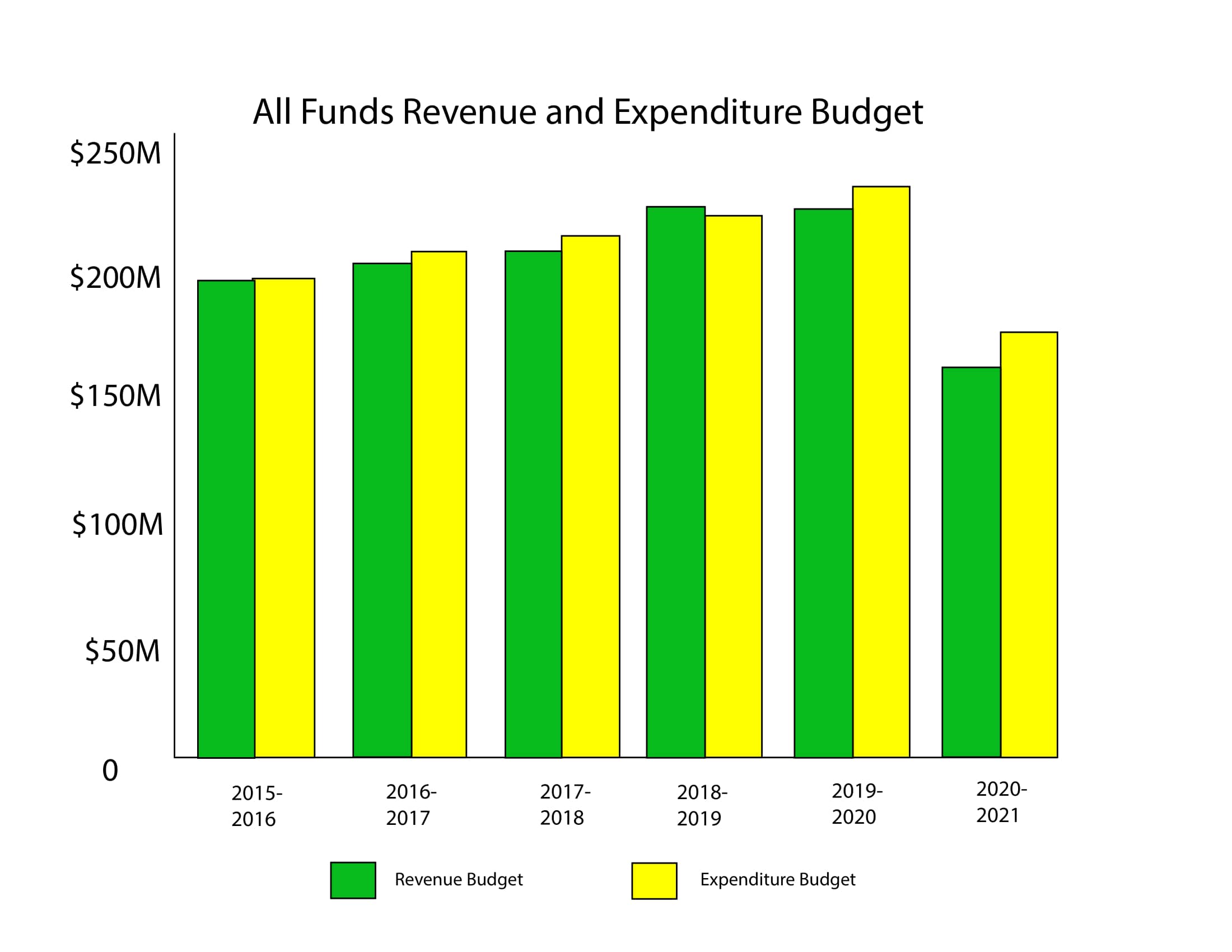
    The budget for this academic year was released on Sept 15. There are two sets of budgets laid out, the University Operating Fund and the All Funds Budget. Each budget provides the expenditure and revenue breakdown.

    The All Funds budgets dates back to the 2015-16 academic year to display all changes that the budget had gone through throughout the last five years.

    Both the Expenditure and Revenue All Funds budgets have significantly decreased in various ways.

    The budget released this past week does not reflect any Center Activities, Center Arts or HSU dining services funds.

    The revenue budget, is based on how Humboldt state University receives its money, is $164.6 million. According to the 2020-21 All Funds Revenue budget, this was decreased by $58.2 million. This is the first major decrease since 2015 and the lowest the budget has ever been since the last recorded academic year, 2015-16.

    Educational Appropriations, which is just another way of saying state and local funding, make up over 50 percent of HSU’s revenue. The amount of appropriations received for the 2020-21 academic year is $85.6 million, resulting from a $5.1 million decline. This is the first reduction recorded since the 2015-16 academic year.

    A quarter of the revenue comes from higher education fees, which includes tuition, student health, AS fees, graduation fee, etc. This portion stands at $42.2 million which is an $8.2 million decrease from last year. This could be the result of COVID-19 causing drops in enrollment.

    The expenditure budget, which is the budget based on what the university will spend their money on, is $180.5 million. According to the All Funds Expenditure budget, this was decreased by $43.8 million. This is the first reduction in the budget since 2015 and the lowest the budget has been since the last recorded academic year, 2015-16.

    The salaries and wages of HSU employees reflects 44.5 percent of the budget. These include not just tenured professors and lecturers but also department chair members, assistants, teaching associates, support staff and the university president.

    The Regular salaries and Wages budget did have an overall decrease of $8.9 million. With the budget dropping across the board, the president managed to increase his salary by $10,000.

    This is also the first time the revenue budget was significantly smaller than the expenditure budget since 2015. The usual trend is having the numbers very close in amount with a maximum $5 million gap. This year’s budget has a $15.9 million gap.

  • Flaws within Title IX risk students security and protection.

    Flaws within Title IX risk students security and protection.

    HSU student shares their experience of sexual assault from a non-student member within their club.

    Title IX is a federal law protecting students from facing discrimination within any federally funded academic institution. Title IX prioritizes the significance of equal treatment of students, however, flaws in the investigation process leave some students feeling abandoned. 

    David Hickcox is the Title IX coordinator at HSU. When the Title IX office conducts an investigation into a sexual assault, they’re required to remain impartial through the process.

    “I think it’s human nature to want to assume that every person bringing a report is telling the truth,” Hickcox said. “In some cases, it’s pretty clear cut that the person accused is responsible for that behavior, but I can’t rush to judgment. I can’t start treating that person unfairly and not giving them access to advice.”

    In a Title IX investigation, an investigator will be assigned to conduct interviews with the parties involved and witnesses willing to cooperate. They will also gather any relevant documentary evidence they can, including text messages, social media posts are collected. The investigator will then present the evidence to both parties, allowing for any questions, before writing up a report with their findings.

    Prior to 2019, Title IX investigations were entirely done on paper by a single investigator. A CSU-wide policy change requires that all students be given access to a live-hearing, with the opportunity to question and respond to evidence used in the investigation before a finding is made.

    In the case of non-students who participate in campus activities like rec-sports and clubs, the Title IX office has almost no jurisdiction as they’re only able to investigate students or staff members.

    “I can’t compel a member of the community to come on the campus and talk to me and give me an interview statement,” Hickcox said. “I can with a student, because guess what, I can put a hold on your student account and you won’t be able to progress in your degree.”

    An HSU student-member came forward, wishing to remain anonymous. They shared their experience of being sexually assaulted by a non-student club member and demanded accountability and reform within club policy to exclude non-student members from joining.

    “I read through a couple of cases where it was pretty clear that the students had lost faith in the process, because it was taking so long.”

    David Hickcox

    Hickcox hasn’t found there to be a disproportionate number of sexual-misconduct cases coming from the clubs department, and doesn’t believe non-student members should be excluded.C

    “I think that might be a bit like the sledgehammer on the fly,” Hickcox said. “But I think we could definitely target that behavior.”

    Through auditing cases, Hickcox discovered the office wasn’t properly following through with several victims. He took his concerns to the HSU Chief of Staff.

    “I read through a couple of cases where it was pretty clear that the students had lost faith in the process, because it was taking so long,” Hickcox said.

    California State University executive order 1068 allows for non-students to become non-voting members of clubs on campus, provided they constitute less than 20 percent of each club. 

    Molly Kresl is the office of student life coordinator and oversees the clubs department. Kresel says this is a prevalent issue that’s been happening at the CSU level for a while now, claiming non-student members pose a higher risk.

    “It is because of push back from student groups who rely on their alumni and community members to support their events and outreach that we permit the 20 percent max non-student membership,” Kresl said.

    It’s ultimately up to each club to allow or not allow non-students to become members. Kresl works with clubs to put together plans of action to address problematic non-student members. Students can obtain a no-contact-order against another student or non-student.

    Under CSU executive order 1095, all campuses are required to have a survivors advocate – a person to whom students can confidentially report sexual-assault, without any obligation to report to the University.

    Rather than hire a single advocate to work from within HSU, the University has been contracting the local North Coast Rape Crisis Team. The NCRCT provides victims with a 24-hour hotline, one-on-one counseling and general advocacy.

    Paula Arrowsmith-Jones is the community outreach coordinator of the NCRCT. Her job is to hear, believe and support victims of sexualized-violence.

    “Our services are available to any person of any age or gender,” Arrowsmith-Jones said. “Who has ever in their lifetime been impacted by some form of sexualized-violence.”

    HSU’s Title IX office has recently been granted two new full-time positions, tripling the size of their department and expanding their opportunities to stop, remedy and prevent sexual misconduct on campus.

    “No one should ever have to go through the betrayal and violation that an assault invokes,” Anonymous said. “It’s not just physical – it’s also an overt psychological trespass that forces you to question the entire relationship you thought you had with the person who assaulted you. It’s a form of injustice on the interpersonal level, a trickle-down of our society’s attitude and response toward sexual assault, and it needs to be addressed.”

    Humboldt Domestic Violence Services24-hour crisis line: (707) 443-6042
    North Coast Rape Crisis Team24-hour crisis line – (707) 445-2881
    Humboldt County Mental Health720 Wood Street, Eureka, CA 24-hour crisis line – (707) 445-7715
  • House Hunting in the heat of COVID-19

    House Hunting in the heat of COVID-19

    Housing struggles at Humboldt State continue to be a problem for students

    Homelessness at Humboldt State University is a major issue. The mess is only becoming more muddled and students are left to fend for themselves.

    Senior at HSU majoring in history, Alfred Silva, is mostly living out of his car. His housing search has been limited because he owns a dog and because he’s a single male, which according to Silva is unattractive to landlords. Not having an address has proven particularly challenging for him.

    “I need to take medication all the time,” Silva said. “Now I don’t have anywhere for my medication to be mailed to my house. So, I gotta figure out other ways to get it. I gotta go to the doctor’s office and bug them there and it’s kind of hard.”

    Silva has been looking for alternative methods of living including camping, but hasn’t had any luck.

    “I can’t find anywhere to camp,” Silvia said. “The only place I found that will allow me to sleep is the back of the HSU parking lot.”

    If anything, Silva believes COVID-19 has attracted more people to Humboldt than in past years, and that’s become a big roadblock for him when it comes to finding a home.

    “I think the influx of people coming into town right now is just ridiculous,” Silva said. “It’s like you got people that are not even students – many, many, many people that are not even students – they’re just flooding the place right now.”

    On the flipside, Silva believes the landlords are as equally guilty in manufacturing the housing crisis in Humboldt County.

    “It kind of hurt their wallets a lot because they’re relying on HSU students to pay rent all this time and then when they took off and that happened, it really hurt them,” Silva said. “So now they’re just trying to survive like everyone else but charging rent. When one person’s drowning, they’ll do anything to survive. They’ll even drown another person.”

    In a similar situation, HSU senior and biology major Grace Rhoades, moved back up to Humboldt because of a job opportunity they got working for one of the labs at HSU. Landing secure housing has been difficult, but they’re grateful to be subletting a friend’s house until the end of the month.

    “There’s just a lot of applying for things, application fees,” Rhoades said. “With COVID, you don’t even really get to see anything or meet anybody in person, you just pay the fee and then like maybe a third of the time they get back to you about the status of your application.”

    Even with a roof over their head, Rhoades is still feeling the anxiety of not knowing where they’ll live next month.

    “I’m definitely a homebody, I like to know that I have a place,” Rhoades said. “I’ve kind of moved away from home and that’s not really much of an option anymore.”

    HSU Off-Campus Housing Coordinator Chant’e Catt recognizes how students are being affected by COVID-19 and finding housing.

    “What’s been really hard is students who moved out of town needing people to take over their leases and landlords not being really flexible sometimes with that,” Catt said.

    For Catt, another issue that arises is between roommates because of disputes over the extent to which they will abide by COVID-19 rules while sharing a communal living environment.

    “People have wanted to break their leases because their roommates don’t respect the restrictions around COVID,” Catt said. “Which puts them in precarious situations where they have to find a new place to live or find somebody to replace their roommate, which could put them into situations where they can’t pay rent.”

    Catt has her doubts surrounding the idea that COVID-19 contributed to homelessness at HSU.

    “I don’t know if COVID changed anything,” Catt said. “I feel like it’s all the same and that’s because it’s always been so bad.”

  • Humboldt County’s public health officer

    Humboldt County’s public health officer

    Dr. Teresa Frankovich resigns after 8 months

    Dr. Frankovich took on the role of Humboldt countries public health officer back in Jan., less than a month before the county reported its very first case of COVID-19.

    Frankovich submitted her resignation to the Board of Supervisors, which will take effect when the new replacement is hired.

    Frankovich says that due to the emergence of COVID-19 and the amount of responsibility it requires, the health officer position has changed from the part-time position to a full time commitment.

    She added that it makes the most sense to plan for a replacement when we are in a fairly stable position.

    “I am grateful for the opportunity I have had to witness, first-hand, the integrity and commitment of an amazing team and for the incredible support of many of our elected officials and community members, who embody the best of what drew me back to Humboldt,” Frankovich said.

    Moving forward, Dr. Frankovich plans to work in a part-time capacity under the new Humboldt County Deputy Health Officer, Dr. Josh Ennis.

    Dr. Frankovich released a letter to residents regarding her full resignation that can be viewed online.

    https://humboldtgov.org/DocumentCenter/View/88983/SEP2-Letter-of-Resignation-PDF

  • Legal doubts over HBAC misuse

    Legal doubts over HBAC misuse

    Students and faculty voice discontent with treatment of Aquatic Center

    The Humboldt Bay Aquatic Center continued to be a pressing topic in University Center Board meeting.

    At the Sept. 10 UC Board meeting, members of the board including Faculty Representatives Steve Martin and Mark Rizzardi showed continued frustration at the decisions made by members of HSU Administration that affected the Aquatic Center.

    According to Martin, moving the Office of Alumni & Engagement and the HSU Foundation into the HBAC office spaces, displacing employees happened without approval of the UC Board.

    An anonymous source close to the situation said, “Of the inside office space, they’ve taken over about 95 percent.” The problem is, according to the source, HSU is now accumulating the spaces outside.

    Acting Interim Executive Director Todd Larsen claimed he visited the center to talk to employees and listen to concerns, but did not speak further on the matter or address any issues brought up by members of the public during the meeting.

    The anonymous source stated that while Larsen did meet with members of the HBAC to discuss the possible solutions and issues occurring, he also sent out an email that stated he wanted full control of the situation.

    “An email went out saying not to talk to the media,” the source said. “That Larsen wanted to control everything we were discussing.”

    Mairead Sardina, operations supervisor at the HBAC, said during the Zoom meeting that the UC Board’s lack of leadership on the issue was discouraging.

    “The Aquatic Center has major changes happening and the Board is yet to address that,” Sardina said. “It is very important that we feel that there is not this apathy or lack of urgency that are everyday affecting our staff members.”

    Sardina said that while she has been working with Larsen to find a proper balance, there is simply not enough space to allow external programs within the HBAC and maintain the level of safety needed to operate.

    “They have taken all of the space upstairs and the downstairs front lobby office,” Sardina said. “At first I was told that my new office was the maintenance closet, which was just truly OSHA unsafe. I really, truly do not believe that it is not safe for this city to be putting people out on the water without an office that overlooks the water and the dock.”

    Sardinia’s sentiments were reinforced by the anonymous source, who called the HBAC a command center. Working with both the city of Eureka and the state of California to teach proper boating, waterway safety and acting as onsite lifeguards, the HBAC struggles to remain in active command when faced away from the water.

    “This is a command center. We can’t command if we are facing the road,” the source said. “HSU cannot afford to lose one more student.”

    Associate Professor Genevieve Marchand said that she was also surprised about the lack of action but focused on the safety risks posed to students and the community due to the changes.

    Marchand worked with Center Activities and the Aquatic Center to create the the Outdoor Assistantship Program, where students can learn valuable skills like boating safety and making risk management positions.

    “In this case, we are talking about the life of people and the future employment of our students,” Marchand said. “I feel like it has been completely disregarded.”

    According to Rizzardi, the University’s disregard of safety protocol may be in direct violation of the agreement made between the city of Eureka and HSU.

    The agreement created and signed in 2003, stated that the HBAC, then known as the Boating and Instruction Safety Center, would be leased to the university on the agreement that they use to space “…to provide a program of boating and water safety instruction and other educational uses to students, faculty and staff of Humboldt State University and boating and water safety instruction to the general public.”

    Recreational use of the space can only occur when it does not interfere with the ability to teach the needed lessons.

    The lease also stated that HSU could not “…assign, sublease, or otherwise convey ant interest in this Lease…” without the prior consent of the city. In addition, any organization that the city does consent to occupy space within the HBAC must adhere to the same rules as HSU itself.

    “As far as I can tell, we are in total violation of that agreement right now,” said Rizzardi. “I think this seriously needs to be looked into.”

    If the City of Eureka finds that the contract has been violated, they are allowed to take legal action against HSU, including fines and the possibility of voiding agreements.

    The Property Management Division of Eureka was reached for comment, but did not respond in time of writing this article. No members of the Board of Directors or HSU administration stated if the required written notice of changes were given to the city.

  • More Layers, More Protection?

    More Layers, More Protection?

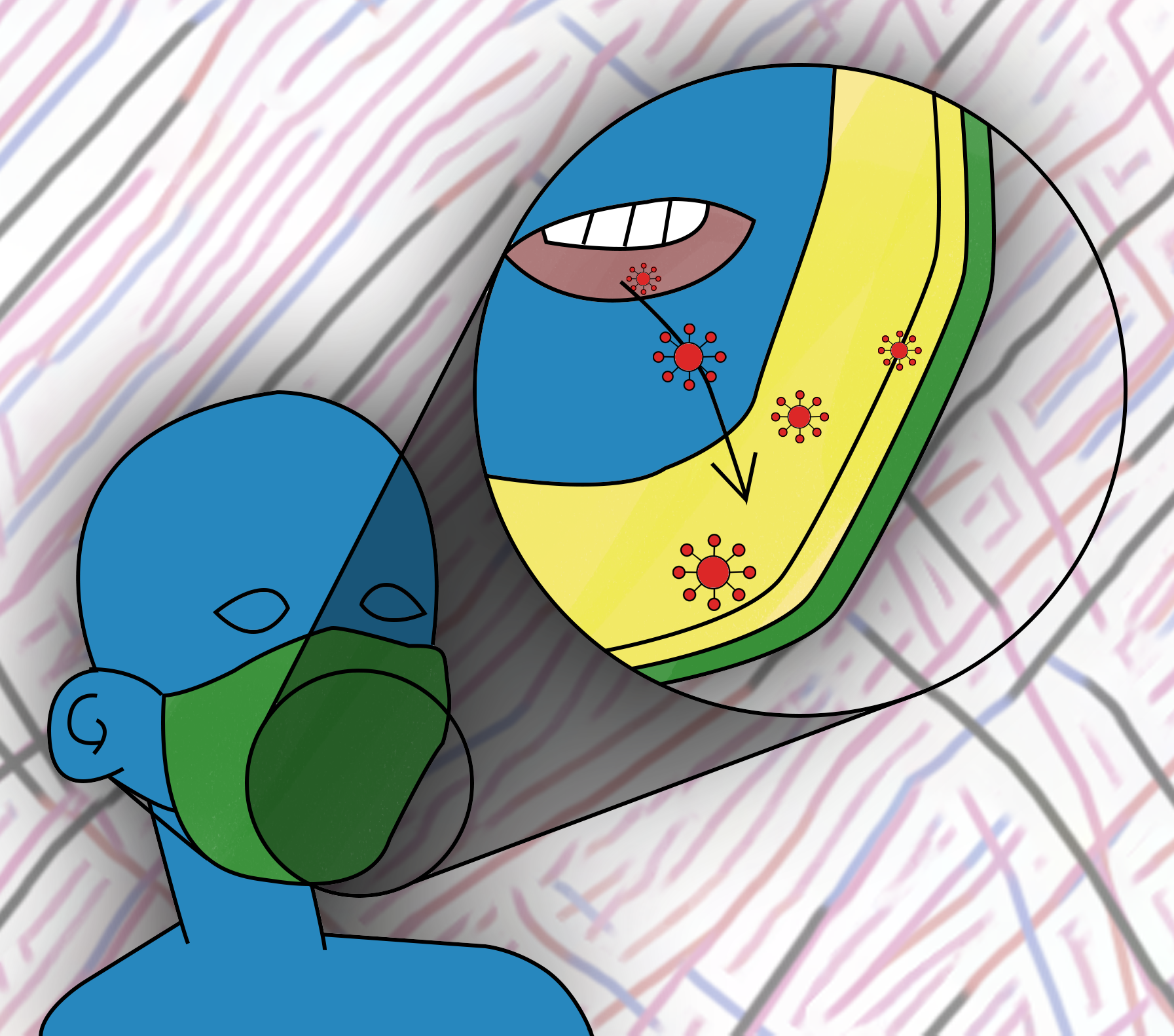
    Humboldt State demands double masking on campus, does more layers equal more protection?

    You’ve probably read the headlines: Wearing a Mask Prevents the Spread of COVID-19. But which mask you choose could affect how protected you and others really are.

    Masks were first mandated in Humboldt County on April 24 when Health Officer Dr. Teresa Frankovich introduced an order requiring all members of the public wear facial coverings while inside a facility other than their residence. Since Humboldt State University was required to close campus prior to that, the university announced safety precautions on Aug. 4, which included wearing face coverings with at least two layers of 100% cotton. This was done in conjunction with the reopening of campus for the fall semester.

    The Centers for Disease Control and Prevention (CDC) urges people to wear masks with at least two or more layers of washable, breathable fabric. Masks need to be worn covering both your mouth and nose at all times.

    Director of News and Information Aileen Yoo stated, “HSU is following recommendations from the CDC. Its website is also a great resource for information on different types of protective gear.”

    Karen Wilkinson, Joint Information Center representative, said, “The county looks to the California Department of Public Health and the CDC for guidance.”

    According to the Association of American Medical Colleges (AAMC), “studies have shown a double-layer cloth face covering was significantly better at reducing the droplet spread caused by coughing and sneezing, as compared to a single-layer one.”

    Mark Wilson, a microbiology professor at HSU believes that “the main goal of mask wearing is to reduce the emission of droplets and aerosols from a person infected with the coronavirus, by trapping emitted droplets in the fabric. Mask-wearing can reduce the transmission of airborne diseases like coronavirus.”

    Wilson added that when deciding on the type of masks, “the tighter the weave of the material, and the more layers it has, the more effective it will be at filtering out particles.”

    May Chu, an epidemiologist at the Colorado School of Public Health, as quoted by NPR said, “a good option is a mask made of two layers of a tight-weave fabric with a built-in pocket where you can place a filter.”

    A University of California, San Francisco article reported that based on a simulation, researchers predicted that 80 percent of a population who wear masks would reduce the spread of COVID-19 more than being on lockdown. Further, the Institute for Health Metrics and Evaluation projected that 33,000 deaths could be prevented by October 1 if 95 percent of the population wore masks in public.

    Many researchers have looked into N95 masks which are made out of many layers of fine polypropylene fibers. They are able to block at least 95% of small airborne particles but only when worn correctly. Though they are proven to be effective, the short supply should be reserved for medical professionals and first responders.

    A recent Duke study rated a fitted N95 and a three-layer surgical mask as the top two protectors, followed by two layer cotton masks.

    According to an article by Science Daily in July, a team of Australian researchers did a study comparing the effectiveness of single and double layer cloth face coverings. They used LED lighting to film the airborne droplets. Their results showed that double layer face coverings prevented more droplets from spreading.

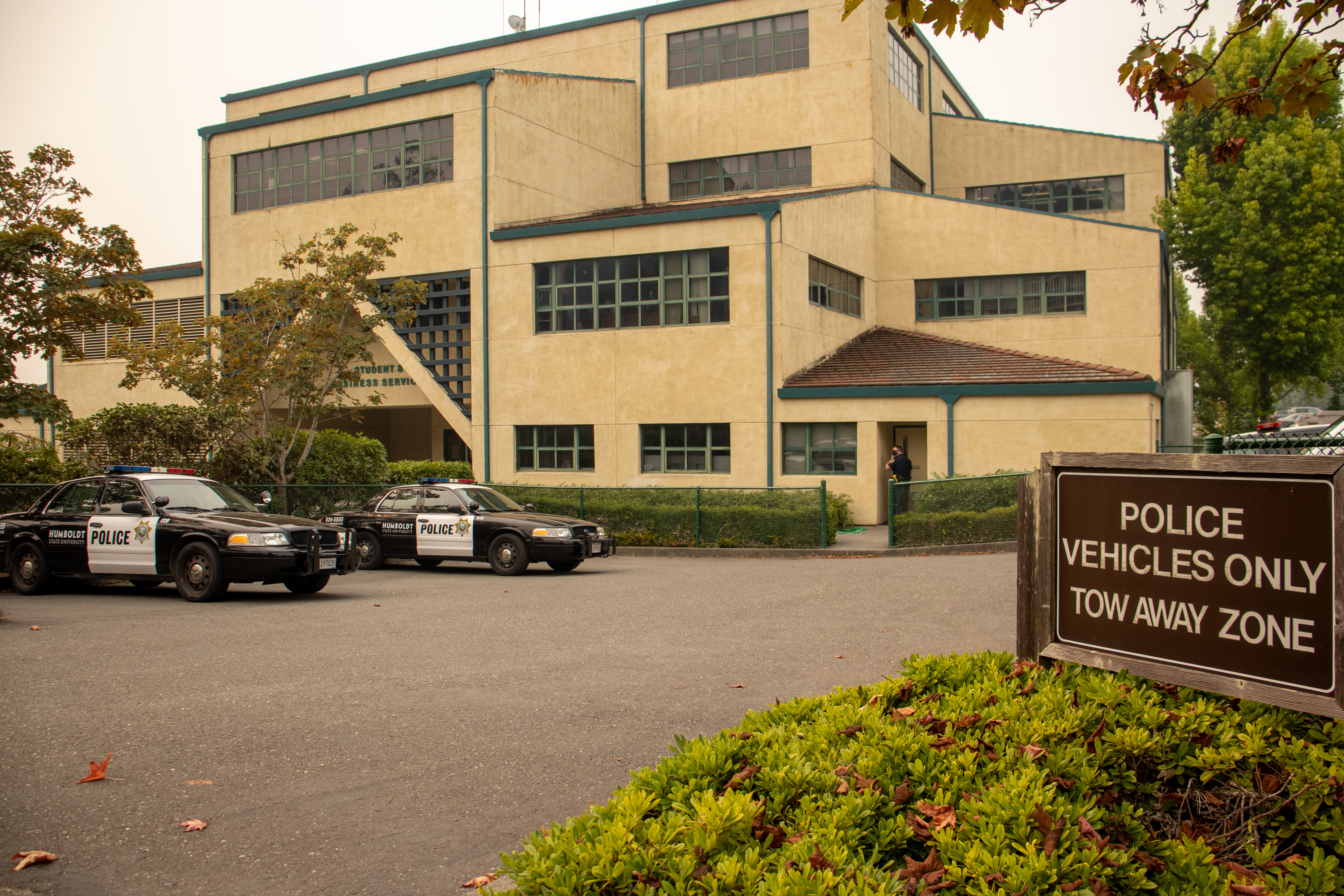
    HSU students can be provided with double layer masks at the campus Police Department, the first floor of Student and Business Services building, Jolly Giant Commons, College Creek Market and the Parking Kiosk.

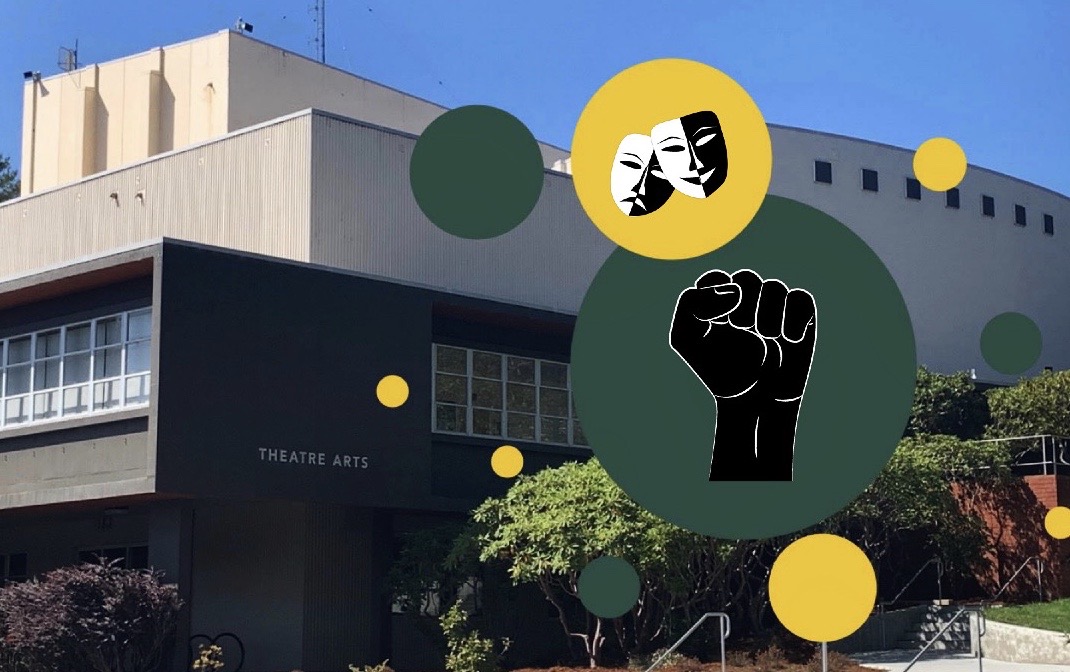
  • Humboldt State Students Voice Concerns Over Racial Casting

    Humboldt State Students Voice Concerns Over Racial Casting

    Students come forth after witnessing and experiencing racial typecasting within Humboldt State’s Theater Department.

    While COVID-19 leaves the world silent, Humboldt State University theater students are trying to raise their voices and create change. Reports of racial typecasting and the wrong types of inclusivity began to surface and the students decided to work together to create a better program for future students.

    “We’ve definitely had issues in terms of racial casting,” said senior theatre major Jaiden Clark. Clark is President of Alpha Psi Omega, a theater based fraternity at HSU.

    “The higher ups in the department and the faculty try to be inclusive in the wrong ways,” said Clark.

    Part of the issue was the selection of shows. According to Clark, there is a volunteer committee where students and faculty pick which shows will be done. Although it is voluntary, Clark mentioned in a few cases of shows being catered to people who are in the committee.

    “Anyone needs to be able to have a say,” said Clark. “I think it would cool to have a more democratic system.”

    HSU senior AJ Hempstead, a double major in theatre and religious studies, has faced discrimination when accepting roles for shows.

    “People are trying to be more inclusive, especially at HSU, I get more roles,” said Hempstead. “I was offered a role because of my acting level but also because they needed someone with a specific skin color.”

    “I would really like to see shows where it doesn’t matter the race or gender of the actor playing the role,” said Clark.

    Clark and Hempstead both agreed they wanted to see more shows being chosen that had characters that could be played by anyone, so the audience is sent a more equal message.

    “Colorblind casting is not actually a thing, there’s no such thing as colorblind anything because people are going to see.”

    Jaiden Clark

    “What are they doing, what messages are being sent here and where are those messages coming from,” said Hempstead.

    Hempstead wants the audience to look at what was represented onstage and think about the decisions that were made with casting, rather than produce shows that had to have a certain type of person.

    “Colorblind casting is not actually a thing, there’s no such thing as colorblind anything because people are going to see,” said Clark. He noted the faculty needs to be more color-conscious instead.

    Hempstead’s idea for improvement involved wanting to see a more active teacher assistants program where higher level students could help teach other students along with professors.

    “Teachers aren’t the enemy in any of this that’s happening,” Hempstead said. “We want to work with them as much as possible. We empowered our students, we empowered our community and that didn’t mean taking power from them. I see that power struggle.”

    Clark agrees with Hempstead, believing that open discussion can alleviate feeling uncomfortably and create progress.

    “It’s a really important time for people to talk about what worked and what they liked and what made them uncomfortable and what shouldn’t be done again,” said Clark. “When change is needed in the theatre industry, you have to start in universities. If we are behind Broadway, then we have to catch up because our people are just the people who aren’t there yet.”

    Associate Professor and Theatre Program Leader Troy Lescher responded to the rumored racial typecasting in an email. He asked for clarification if it were about racial representation onstage.

    “These processes are imperfect and are very prone to mistakes. Theatre is also a living art that relies on human storytellers,” Lescher said in an email. “Race, gender, age, physical attributes and vocal qualities are among dozens of casting considerations that impact representation onstage.”

    In response to what HSU is doing to ensure racial typecasting will not continue, Lescher said he would listen to a student if they felt racially typecast and would try to find an alternative learning opportunity for them with the director.

    “Afterward, I would bring this matter to the Season Selection Committee (which is composed of faculty, staff, and students) so that we could collectively work to strengthen our process,” Lescher said in an email.

    Lescher acknowledged the challenge of racial representation in casting and believes the program is guilty of not following through.

    “I believe there have been instances when our program has not exercised the cultural competence necessary to best support our students and their learning,” Lescher said in an email. “Critical awareness of and cultural sensitivity to matters of representation are important to our program and we continue to learn and to strengthen.”

  • Tension and Fear Among the Board of Directors

    Tension and Fear Among the Board of Directors

    A tense emergency Board of Directors reveals conflict between faculty and Administration.

    Tempers flared when an emergency Zoom meeting by the University Board of Directors turned into verbal arguments and accusations between several members on the call.

    The Aug. 28 meeting held by the University Center Board of Directors and open to the public originally set forth to tackle various agenda items and approve of new members.

    The two items that took up a majority of the meeting, however, where the firing of the UC’s legal counsel and changes the administration has made that affect facilities managed by the group.

    When the meeting was opened to public comment, student employees of the Humboldt Bay Aquatic Center stated that they were being asked by HSU to leave their offices. Center Activities Manager Bridget Hand confirmed this information, stating that employees were given little notice to clear their offices.

    Vice President of Enrollment Management Jason Meriwether and Acting Executive Director Todd Larson stated that the reason for departure was so that the building could prepare for renovations. Meriwether said that the space may be used for other departments in the meantime.

    Gracie Olivia, a student employee at HBAC, said that the job offered leadership roles and was a vital part of the community.

    “I want the board and everyone attending this meeting to understand the importance of the Center,” said Olivia.

    “Why are wholesale changes being made before the program review? The loss of HBAC as a public facility is a real loss to the community.”

    Financial Officer Gregg Foster

    With no office to operate out of, both Olivia and Hand noted that they would not be able to offer equipment rentals.

    Faculty Representative Steve Martin and Financial Officer Gregg Foster expressed confusion and anger at the circumstances. According to them, the UC board was uninformed of the entire situation.

    “Why are wholesale changes being made before the program review?” said Foster in the Zoom chat. “The loss of HBAC as a public facility is a real loss to the community.”

    In an email, Martin continued to express his frustration at the situation.

    “I’m concerned that employees of HBAC say that they can’t provide services to students safely and effectively because of the changes that were implemented over the summer, said Martin. “Changes that were implemented without first consulting the University Center Board.”

    Meriwether expressed his surprise with the board, stating that proper written notice was provided to former UC Executive Director Dave Nakamura. Martin said during the call that Nakamura was fired by the administration before being able to properly brief the UC Board.

    Further complicating the matter was the lack of legal representation for the UC Board regarding these actions, as the attorney for the group had been let go by Larson.

    The attorney from Erikson Law Firm, which had represented the UC Board of Directors since 2017, had refused to help draft a proposal with Larson to present to the Board. Larson also said the attorney had also violated a written contract agreed upon by the two, which to Larson “raised some red flags.”

    Foster, Martin and other members of the Board said that this was a decision that should have been run solely by the Board itself.

    Martin said that even if the action was legal, it raised moral and ethical flags about Larson and his actions put the board in a state of unease.

    These actions have created a fear among faculty members outside the board as well, that discouraged faculty members from speaking up.

    “Like everyone else in my position, we fear retaliation from an administration that is overreaching and abusing their power,” said one source close to the situation, who wished to remain anonymous. “If you are receiving PC responses from others, it’s because we are all very worried about what we are witnessing. We have been given specific language to use when speaking with the media and that language only reflects that of the administration’s story.”

    The next UC Board meeting is scheduled for Sept. 10.

  • HSU student journalist travels to Portland to capture Black Lives Matter Protests

    Kris Nagel captures chaotic social demonstrations with photojournalist and professor Mark Mckenna

  • HSU Cultural Center Budget Slashed

    HSU Cultural Center Budget Slashed

    Associated Students leaves student body devastated after significant reductions in cultural center’s budget.

    Two months ago, Associated Students released its proposed budget for the 2020-21 school year at Humboldt State University. Included in this budget were major budget cuts to on-campus cultural centers such as the Multicultural Center and the Eric Rofes Multicultural Queer Center.

    For the budgeting process to begin, A.S. applications are submitted by various campus-based clubs to the A.S. Finance Committee, previously known as the Board of Finance. From there, the committee reviews all the incoming applications and after holding public appeals, creates a Recommended Budget that is sent over the A.S. Board of Directors, a mix of A.S. elected representatives and faculty advisers. The Board of Directors then holds another round of public appeals, drafts a revised Recommended Budget and sends it over the A.S. president, who promptly turns it over to the campus president for official approval.

    David Lopez, the Associative Vice President of A.S. and a sophomore at HSU, emphasized that he still greatly values the cultural centers but they will be funded differently.

    “We really appreciate them for the work they do,” Lopez said. “So to make sure that they continue to do that work still because we’re not funding them, we’re doing it through the clubs grant, and we’re forming this grant process to be as neutral as possible with funding student organization needs.”

    Lopez is personally leading the charge for these new clubs grants, which aim to support student organizations like the Asian Desi Pacific Islander Collective and the Women’s Resource Center in a reduced capacity.

    One thing that factored into the decision by Associated Students to sever the cultural centers’ funding was the Apodaca v. White lawsuit that took place between a pro-life student organization at CSU San Marcos and CSU San Marcos’s Associated Students. The pro-life student organization claimed that it was being discriminated against by CSU San Marcos because requested funding for a pro-life speaker was denied while other groups were recieiving the same funding. The final ruling by a federal court was in favor of the student organization, arguing that the funds that come from student fees need to be allocated in the most viewpoint neutral way possible. The CSU Chancellor’s office has yet to clarify what this means.

    For Lopez, this new funding procedure is radical but also necessary given the circumstances.

    “We’re supporting the greatest amount of viewpoints and opinions possible,” Lopez said. “The plan for this club grant is to further diversify the opinions on campus per Apodaca v White and to err on the side of caution while awaiting the Chancellor’s interpretation of Apodaca v White.”

    Lopez recognized that he and his staff are working with a limited financial capacity and therefore need to distribute funding in a way that will keep clubs satisfied and avoid a lawsuit of their own.

    “What’s happening is we’re being faced with the choice of either becoming a club or becoming absorbed into an administrative or academic department.”

    Amanda Huebner

    “Our total budget is less than eight hundred thousand dollars,” Lopez said. “Meaning that by not funding in a viewpoint neutral manner, we are potentially risking over a fourth of our budget, a fourth of student fees that could go to things like our Club Grants Committee or that could go to other campus resources if we were to risk not funding in a most neutral way possible.”

    Celene Gonzalez is an HSU grad student in the psychology program and an El Centro employee. She has worked closely with the cultural centers and has seen their collective downfall over the years.

    “What gives me hope in what I had seen in that time is that students were getting really connected with each other,” Gonzalez said. “They were finding their communities. It is not shocking to me that the school felt the need to kind of push that down a little bit.”

    Gonzalez is disheartened by the disconnect that has been formed between her and these students through said budget cuts.

    “I feel like our work gave us a way to connect with one another and I feel like our activism gave us a way to connect with one another,” Gonzalez said. “That it’s going to be hard to maintain and it’s going to be hard to ask of them when I know that they aren’t being compensated for that work.”

    The Eric Rofes Multicultural Queer Resource Center is getting hit hard by the extreme budget cuts. Concerned about the future of her cultural center, Amanda Huebner, a rangeland and social sciences senior and an employee at the ERC, wants to see it remain in the state that it’s in already.

    “What’s happening is we’re being faced with the choice of either becoming a club or becoming absorbed into an administrative or academic department,” Huebner said. “So I think there has been dialogue by students in the past that this would be a bad move being absorbed by a department or by an administrative department because it would make the group not be as student-run.”

    In other words, the absorption of the ERC into another department would be ill-advised because there would be more faculty interference in how it would be managed, and that wouldn’t align with the goal of this cultural center of being a student-led one.

    Student leaders like Katherine Nguyen who work in the cultural centers are frustrated with the fallout from all of this. Nguyen doesn’t feel like the administration cares about its marginalized students.

    “Are you going to be supporting your cultural centers, are you going to be supporting your students?” Nguyen said. “I’m not confident about that and I’m tired of just being told by admin, like: ‘Oh, you got it wrong, like we actually care about you. We’re going to figure out a way,’ but it’s like if you did, why didn’t you make a plan? Show that you’re invested in students.”

    When it comes to the shrinking budgets for the various cultural centers, neither the students nor the administration can be totally satisfied. After the Fall 2020 census, the A.S. cumulative budget will be reevaluated.

  • Anti-Immigration Graffiti Found In Arcata Plaza

    Anti-Immigration Graffiti Found In Arcata Plaza

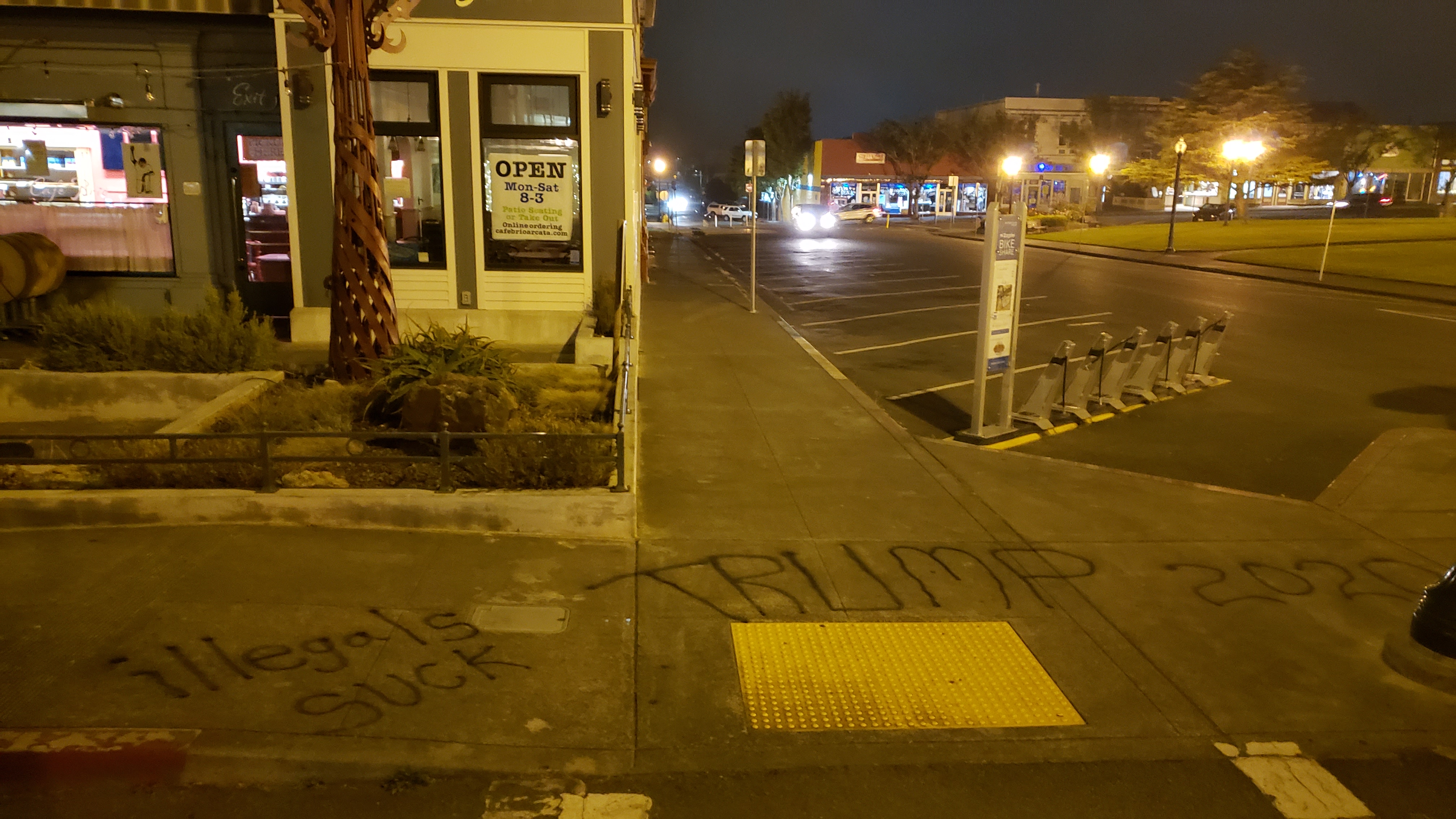
    Anti-immigration graffiti was spray painted outside the corner of Cafe Brio and The Heart Bead store in the Arcata plaza.

    “Trump 2020” as well as “Get out of America” were plastered around the sidewalks just outside of Cafe Brio and Heart Bead. It was reported to APD by Heart Bead store owner, Kim Alveraz, on Aug. 16 and the graffiti was later washed off on Aug. 18.

    APD sergeant, Brian Hoffman, said that the anti-immigration messages were not a hate crime. The APD said that they are not able to open an investigation until suspects are reported. If anyone does witness vandalism or have information on a possible suspect(s), it can be reported to APD at 707-822-2424.

  • Humboldt State Proceeds with In-person Instruction

    Humboldt State Proceeds with In-person Instruction

    With President Jackson and Dr. Frankovich at opposite ends of agreement on in person classes, students caught in the middle feel COVID-19 is inevitable.

    As Humboldt State University moves forward with a hybrid fall 2020-21 semester, starting online before transitioning to an in-person format from Sep. 8 until Nov. 6, community leaders are unsure about the future safety of students on campus.

    In a recent set of emails between HSU President Tom Jackson and Humboldt County Health Officer Dr. Teresa Frankovich, made available via Freedom of Information Act requests to the Lost Coast Outpost and North Coast Journal, at times the two leaders appeared at odds with how to proceed with the semester.

    Frankovich stated concerns with students returning to dorms and classes, mainly that enclosed shared spaces like dorm kitchens and bathrooms presented an increased risk of spreading infection. Frankovich asked for a possible pause to the start of the semester, so that COVID-19 testing labs within the county could properly prepare for the increased influx of new and returning students.

    Jackson replied within the same email chain initially with confusion about the timing of the sudden request before attempting to reassure HSU was following all local and state ordinances regarding proper social distancing and safety.

    During the Aug. 18 media availability briefing, Frankovich addressed the emails stating “Let me make one thing clear: This is not a case of ‘othering’. It is a case of trying to make safe choices for the entire community in the midst of a pandemic. This is about trying to juggle competing needs for testing resources across skilled nursing facilities, agricultural settings, tribal communities, local public schools, businesses and organizations, and the community as a whole.”

    Frankovich also reiterated that the Humboldt County Health Office was still confident in HSU’s plans and ability to handle the situation, praising the HSU planning team for their continued effort.

    “I think they’re working on constructing an environment that is as safe as possible considering the pandemic that we’re in,” Frankovich said.

    Those plans were put to the test when on Aug. 17, as students began moving into the dorms, a campus-wide email was sent out stating that HSU had it’s first confirmed COVID-19 case.

    By the end of the week, two more students and a faculty member tested positive as well, though emails state that the faculty member’s case was not connected to student move-ins.

    While the identities of those who tested positive are being withheld for privacy, an email notification sent out on Aug. 20 said “HSU is working closely with Humboldt County Public Health, which will determine whether there are members of the campus community who need to be advised of their contact with affected people.”

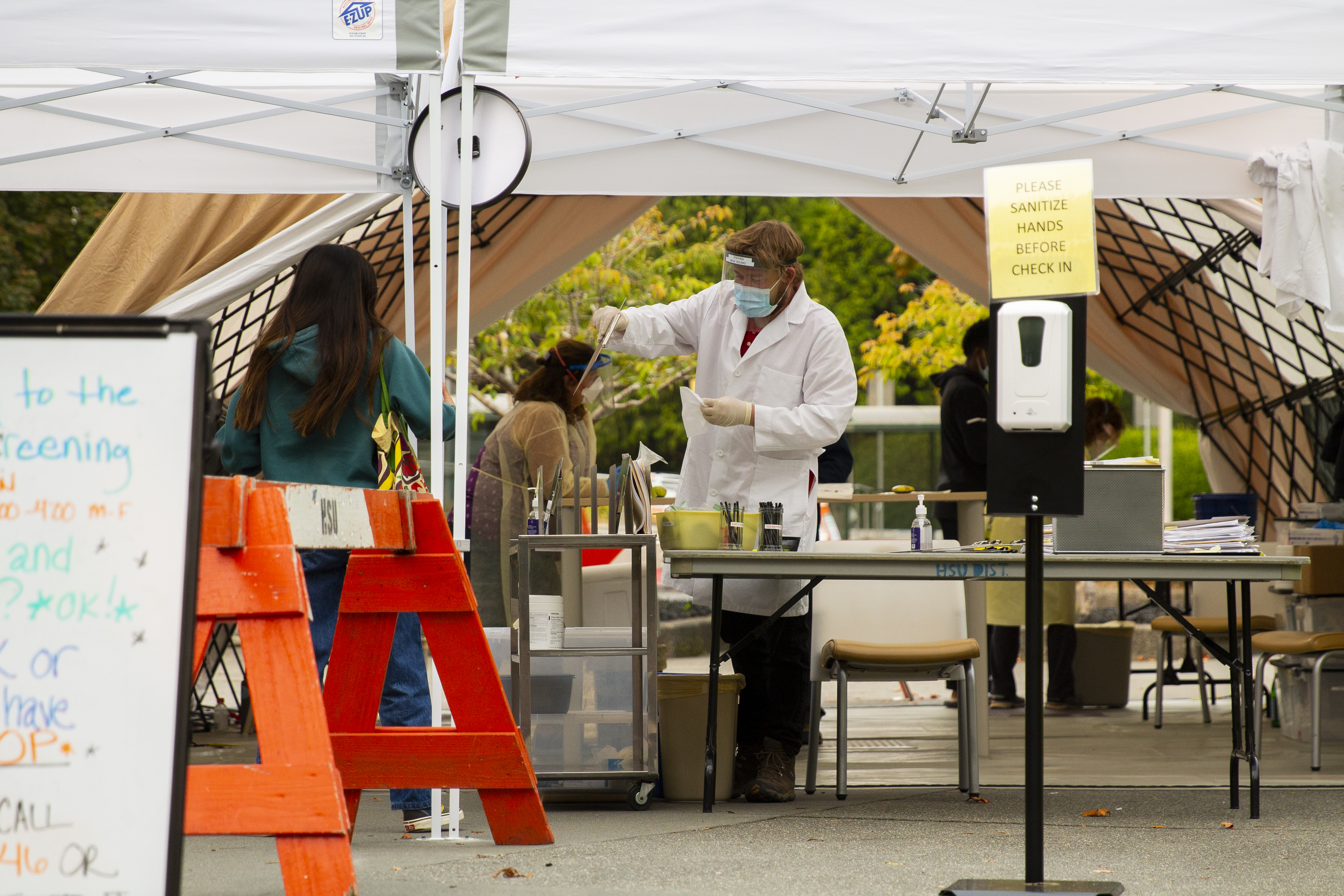
    Testing will continue for students who have moved in during a fourteen-day quarantine period to ensure safety.

    Blake Hefner, a biology major and resident advisor for the College Creek dorms, expressed both concern and hope after reading the initial emails regarding the first confirmed case.

    “If they’re willing to bring students during a pandemic, we are going to see how they are going to handle that and how they are going to value our lives,” Hefner said.

    Lori Alcantara, a journalism major, said that as soon as she saw the email, she went to show her roommate.

    “We were both kinda surprised that it was so quick,” Alcantara said. “At the same time, I feel relieved that they’re keeping track and not just trying to pretend that it isn’t happening.

    Alcantara felt comfortable with the idea of in-person classes, trusting the students around her and the university to accept the new social responsibility of sanitizing workplaces and classrooms. Alcantara had one in-person class for the fall semester and stated that the professor had already reached out and reassured students that proper cleaning will occur before students arrive and when they leave.

    “I think what will matter then will be everyone’s ability to clean after themselves, use hand sanitizer and wear their masks,” Alcantara said. “I think if everyone could do that… then I’m not particularly worried.”

    Frankovich said during her media availability briefing that “…the presence of this case doesn’t change our plan going forward except that we want to make sure we are doing the testing and trying to monitor progress on isolation quarantine should it occur.”

    Hefner felt that the cases meant that students had to step up to the occasion and help shoulder the responsibility and pressure.

    “It’s a lot of realizing that this is bigger than us as people,” Hefner said. “Moving back means you’re part of a community now, and being part of that community you have to respect the guidelines that are going to take place.”

  • Humboldt State Students Stand Up And Stand Out Against Racism

    Humboldt State Students Stand Up And Stand Out Against Racism

    Actions are being taken to bring about change in a country dominated by racism and police brutality

    Fueled by the Josiah Lawson case and the George Floyd murder, Humboldt State University students are taking to the internet and the streets in protest of systemic racism. Students and community members alike are actively displaying their pent-up anger and fear surrounding being marginalized.

    Kiara Mixon, a fourth-year psychology student, has been trying to educate herself and those around her about what’s going on. Namely, she has been sharing different resources with people who are unaware of the Black Lives Matter movement and watching documentaries about racism to get a deeper insight into it.

    While she hasn’t really been going out in the streets and protesting, she has still seen both sides of the movement.

    “I see people who are of color protesting and, truthfully, it means a lot that those people are standing up when it’s an issue for them as well,” Mixon said. “But I’ve also had people who aren’t really speaking up or haven’t said anything or don’t really have a personal opinion on the matter and that makes me a little bit uncomfortable because you never know where they’re standing.”

    Senior psychology major Edwin Rosales has become more outspoken and animated in the wake of the revamped BLM movement. He lives with his mother’s side of the family and has gone back and forth with them about everything going on.

    “After talking with them, it’s kind of difficult to talk to them about it because they’re very, you know, still in the olden ways and are very ignorant about it,” Rosales said. “So, I’ve had to be outspoken about it and be like ‘You know what? You’re not understanding the cause’ or having to explain to them what it is.”

    Rosales has carried his new-found, forthright persona around racism into the land of social media as well.

    “I never really posted about that stuff,” Rosales said. “I’m not helping if I don’t say anything, and so if I am posting about something, maybe someone will read it and maybe someone will help in some way.”

    Julianne Blandford is a senior majoring in child development. She is feeling a lot of mixed emotions in the midst of the string of racist events that have occurred from the George Floyd murder to the leaked video of three HSU students making racist taunts toward Black people. She is attending protests and doing everything she can to move the conversation about racism along.

    “It is my time to sit down and listen and also stand up for those who can’t speak,” Blandford said.

    Blandford recognizes her own status but also wants to work with those who are being suppressed.

    “I’m seeing it as an opportunity to continue to create change, create a more peaceful place to live, create new systems that aren’t founded upon racism, and a world where no-one has to live in fear,” Blandford said.

    “We need to redistribute resources and really build communities.”

    Dr. Ramona J.J. Bell

    Dr. Ramona J.J. Bell, a critical race and gender studies professor, believes that there are a number of factors to look at that are feeding into a racist America.

    “We’re a country where we put so much money into our military, but there’s people without health care, so we concentrate on, you know, defending the country,” Bell said. “But we have to reconfigure and reimagine what that really means to defend the country, to defend America.”

    Bell emphasized the importance of unifying communities in a country where the opposite is happening at the hands of the police.

    “We need to redistribute resources and really build communities,” Bell said. “When you are killing black folks in communities and the police are killing us, that’s not building our community — that’s killing our community. So we have to look at ways in which we can build America because our country was built off the backs of Black people, particularly during the Holocaust of enslavement.”

    Bell recognized a need for change in America when it comes to race and embraced the protests that have spawned from it.

    “We have to revisit America’s notion of belonging and we have to revisit race in America,” Bell said. “There’s never been a real conversation about race and racism in America. And I think the protests going on all over the country, all over the world are telling us something’s wrong and it needs to be fixed.”

    More than anything, Bell emphasized that we are all in this fight together, no matter the color of your skin.

    “That’s part of the fight. That’s part of the struggle to get people to understand that Black lives matter,” Bell said. “It’s about letting us be free to live lives like America has promised.”

  • Racist Social Media Post Leads to Student Suspensions

    Racist Social Media Post Leads to Student Suspensions

    Two Humboldt State University Students are Suspended from Campus Organizations

    A video depicting three Humboldt State University students using the N-word multiple times and bullying a student’s skin was posted to Instagram. HSU’s administration released an official statement suspending two of the students from participating in their campus organizations.

    The video was posted to an Instagram account run by HSU student, Victoria,“Vicky,” Ah-You. She posted the video June 3, the day it was sent to her from a friend, who preferred to remain anonymous. Ah-You stated that the video was recorded prior to her post and hesitated when originally sent it.

    “I can’t reveal my source but a friend of mine sent it[the video] to me to use my platform to speak. She was too afraid to use her own platform,” Ah-You said. “I believe the video was made at the end of 2019 but it was never spoke on because people felt uncomfortable.”

    Ah-You’s intention behind posting the video was to expose the behavior occurring towards people of color in Humboldt County.

    “I released the video because I am tired of being silent myself and I know a lot of my brothers and sisters, Black and of color, out here at Humboldt University are afraid as well,” Ah-You said. “So I released the video to make a solid statement that we won’t stand for it no longer.”

    Marley Peri, William Blohm and Vincenzo Jardino were the students shown in the racist video. Peri and Blohm participated in extracurricular activities, such as HSU Spirit Squad and the Chi Phi fraternity. Both were suspended from further participation.

    After the video was posted, Peri and Blohm deleted their social media accounts after being tagged and identified as the people responsible for the racist behavior.

    “If I’m being honest, I understand why the students took down their social media accounts. It caused a lot of outrage,” Ah-You said. “They received a lot of threats and I didn’t put that out there for them to receive threats. I put that out there for them to be checked. I think it was very cowardly to take down their accounts because if you’re going to make a creative video stating those racial slurs, you should be willing to stand behind it and stand on it.”

    Ah-You stated that Peri posted an apology on Twitter but believes that’s not enough. Ah-You and her friends have also reached out to HSU Spirit Squad and Chi Phi fraternity but got no response from them either.

    The current consequences for the students is suspension from campus activities. Ah-You believes the students deserve harsher punishment. She feels that HSU needs to do more to show their support to their students of color.

    “Their actions send a statement out loud whether they know it or not. They do not stand with us in solidarity and they do not support my Black brothers and sisters out here.”

    Victoria Ah-You

    “If you’re asking me if I think the students should be expelled, I do,” Ah-You said. “This is not the first rodeo. I don’t know these students but I can understand a mistake but just as my Brown brothers and sisters and my Black community has to stand behind our mistakes, they need to stand behind theirs too.”

    Ah-You is disappointed in HSU administration’s efforts to combat the social media post. She believes the current handling of the situation is not enough and doesn’t justify the severity of pain this video has caused the community.

    “Their actions send a statement out loud whether they know it or not. They do not stand with us in solidarity and they do not support my Black brothers and sisters out here,” Ah-You said. “It’s been an ongoing issue. This video is just part of it. It’s been going on forever. I’ve been out here going on seven years and it’s just been going.”

    HSU Vice President of Enrollment Management Dr. Jason Meriwether commented on the issue stating that the recent response from the student body and Arcata community is acknowledged by administration especially due to the current Black Lives Matter movement happening within our country. However with the investigation still ongoing, not much can be said.

    “I understand the deep sense of hurt and pain caused by racist systems, language, and behaviors,” Meriwether said in an email. “Our students and campus community feels this right now due to the current national landscape, the very real history of racism, and even more from having this happen within our campus community. I cannot address the specifics of the current investigation or ongoing conduct process beyond the statement.”

    Currently, the two students remain suspended from campus organizations. Micaela Harris, an HSU student athlete, unhappy with the current consequences, organized a petition on Change.org demanding the students be expelled from school. A week after the petition was created, more than 21,000 people have signed. That’s more than double the size of HSU’s student body.

    “The goal behind it[the petition] is to show HSU that this type of behavior should not ever be tolerated,” Harris said in an email. “High schools are expelling their students for doing the same thing, yet a university isn’t? Humboldt is one of the cheaper universities to go to so this means it is extremely diverse. It should be a safe place for students of color and this type of behavior should not be tolerated.”

    Meriwether has confirmed that HSU administrators are aware of the petition and are taking it into account with the ongoing investigation.

    HSU AS President Jeremiah Finley responded to the recent incident, acknowledging the petition and expressing his outrage and sympathy with fellow HSU students who feel the suspension is not enough of a consequence.

    “I would say I’m outraged as well, and their outrage is valid,” Finley said in an email. “As the Leader of the Student union, I often try to understand the diverse opinions of our students before inserting my own, but so for me, it is clear from the outcry and petition going around that the vast majority of students will not tolerate this type of behavior here at HSU.”

    Finley elaborated on the enhanced responsibility and duty of students who partake in extracurricular campus activities and organizations, stating that students are held to high standards when they choose to participate.

    “Students in organizations around campus are held to a higher standard,” Finley said in an email. “From clubs to our Greek Orgs, sports teams and Associated Students. Still, these students and their situation exceed the internal workings of their organization, and the final outcome needs to be resolved at the HSU level.”

    Finley believes that the responsibility of the Spirit Squad and Chi Phi fraternity is to keep their participants and members in check. Such as monitoring their behavior and attitude towards others, as it not only represents their organization and its values but HSU’s as well, both on and off campus.

    “The responsibility that falls on them[HSU organizations] is not condoning it in any way, as well as ensuring that the atmosphere they have doesn’t make it possible for that type of behavior to occur,” Finley said in an email. “Finally calling out any type of microaggressions and racist remarks where they can.”

    Both HSU Spirit Squad and the Chi Phi fraternity failed to respond to requests to make a comment.

    The recent social media frenzy has also stirred up racial tensions happening within HSU and the Arcata community, specifically the memory of the Josiah Lawson case. Protests, public demonstrations and marches have been the community’s response to the exposure of the racist behavior.

  • Humboldt State’s Hybrid Instruction Request Approved for Fall Semester

    Humboldt State’s Hybrid Instruction Request Approved for Fall Semester

    On May 21, Humboldt State University sent out an email announcing that it would be submitting a proposal to the CSU system requesting for a hybrid learning environment where there would be a mixture of face-to-face and online instruction. June 6, another email was sent out confirming that HSU would be able to operate virtually and in-person as needed.

    According to the official HSU email, “the University’s academic program has perhaps the highest proportion of courses with a hands-on component in the CSU.”

    About a quarter of all HSU courses involve labs and other activities and experiences that can’t really translate online and half of those course sections are able to be taught in-person this upcoming fall.

    Regarding all other courses that involve less tangible experiences, like lectures and seminars, they will continue to operate online.

    Following the acceptance by the CSU system, HSU can now ramp up its thorough planning process beginning this summer. HSU is also considering a return to a fully online learning environment if things worsen. For now, it will be a hybrid of face-to-face and online instruction.

    As for the details of HSU’s plan for the fall semester:

    Health and Safety

    Steps will be taken to ensure the health and safety of people on campus like limiting capacity and mandating face coverings for all who step foot on HSU turf.

    Social Responsibility

    Students and faculty will be expected to be socially responsible when returning to campus and remain vigilant in keeping themselves safe.

    Schedule

    Courses taught in a face-to-face manner will start and finish with virtual interactions to go over safety measures, and all face-to-face parts of courses will start after the initial virtual interaction and end on Nov 6. just in time for the second virtual interaction.

    Housing

    The combined capacity in HSU’s residence halls will not exceed 1000 students and students will be placed in single-occupancy rooms. Dates and times for moving in will be spread out.

    Dining

    Dining services will not be as frequent on campus. Takeout and food-delivery will be available to students but buffet-style and self-serve food will not be.

    Faculty and Staff

    A majority of employees will continue to telecommute. Workers deemed essential will come back to campus to work more regular hours. Employees over the age of 65 will continue to telecommute as well.

    Athletics and Recreational Activities

    HSU will enact a four-stage plan intended to gradually allow student-athletes and related staff to come back to campus. The availability of recreational activities will increase in conjunction with the availability of recreational activities in the county.

  • Protestors Make Themselves Heard in Arcata

    Protestors Make Themselves Heard in Arcata

    A photo essay of the Arcata protests: fists high and voices raised


  • Protests Occur in Arcata After George Floyd’s Murder

    Protests Occur in Arcata After George Floyd’s Murder

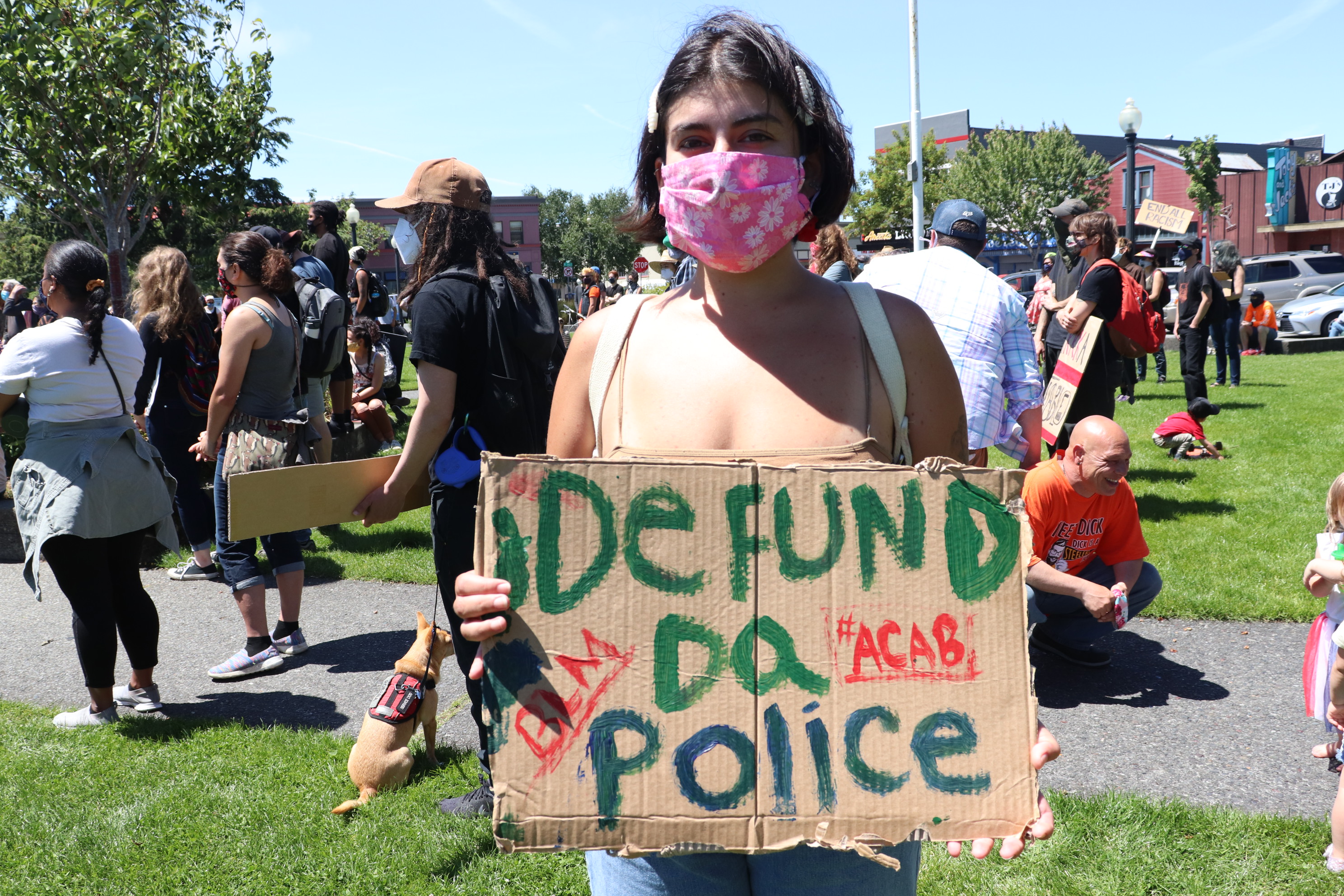
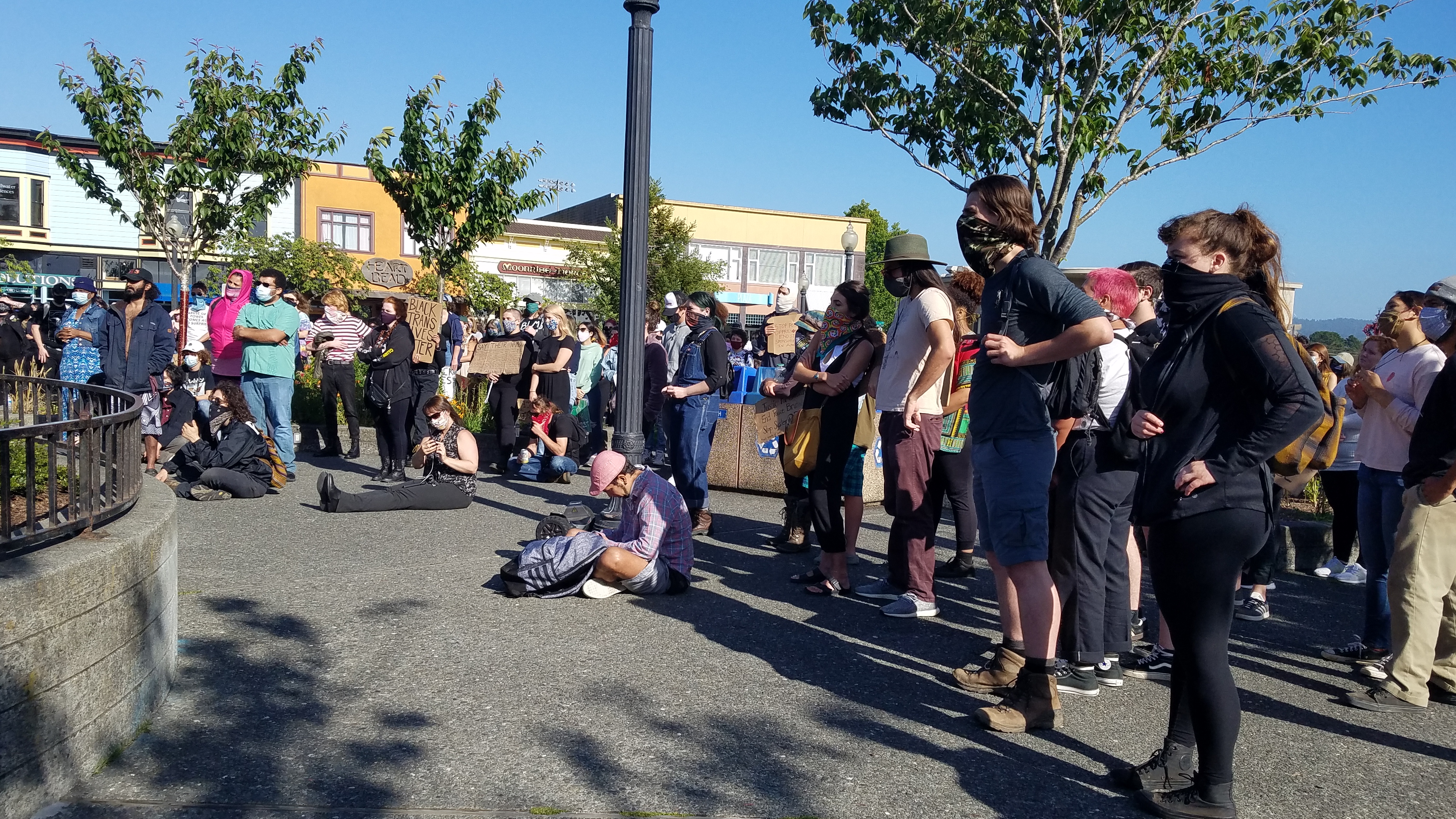
    Protesters gathered at Arcata City Hall and the plaza to speak out against police brutality and racism

    Peaceful protesters gathered in Arcata on June 1 to continue their demonstrations against police brutality and racism across the nation. People gathered around Arcata City Hall, bringing signs and wearing facemasks while listening to members of the community speak.

    Demonstrators spilled off of the lawn and into the streets, taking a moment of silence in remembrance of George Floyd and Black lives that have been unfairly and unjustly taken in police custody.

    A moment of silence for George Floyd outside Arcata City Hall on June 1 | Video by Thomas Lal

    As demonstrators marched toward the plaza, they chanted in unison, “no justice, no peace,” which quickly became a rallying cry across the country.

    Protesters marching to the Plaza, chanting “No Justice. No Peace” on June 1 | Video by Thomas Lal

    There was no police present at the gathering which encouraged community members to stand up and share their stories in the center of the plaza where the President McKinley statue used to be. Community members rallied together and demanded for better education on racial issues and systemic injustices. Allies were called upon to do more than simply showing up to rallies and to exercise their rights to reinforce just advocacy.

  • Eureka Protests Erupt After George Floyd Murder

    Eureka Protests Erupt After George Floyd Murder

    Eureka protesters gathered in front of the Humboldt County Courthouse

    Hundreds of community members gathered in the rain outside of the Humboldt County Courthouse, Sat. May 30, to protest the death of George Floyd who was murdered while in police custody in Minneapolis, MN. From 3 to 10:30 p.m. demonstrators marched through Eureka up to the Slough Bridge, back through town and then down Broadway. Law enforcement was largely cooperative with demonstrators, blocking intersections as people made their way through traffic. Chants could be heard the entire way even as groups split up and went to various parts of the city. 

    As the group returned to the courthouse tensions flared at the sight of several police vehicles, which were soon removed from the scene. Eureka Police Chief Steve Watson was present at the protest and spoke with demonstrators as the crowd dispersed and headed away from the courthouse. These demonstrations in Humboldt are some of countless that have sprung up across the nation following Floyd’s murder. 

  • Humboldt State President Speaks on Fall 2020 Instruction

    Humboldt State President Speaks on Fall 2020 Instruction

    President Jackson speaks with Faculty Senate over virtual teaching

    Editor’s note: Grace Caswell is a student of Journalism Department Chair Vicky Sama. Almost the entire staff of The Lumberjack has also had Sama as an instructor in journalism courses.

    Tuesday, May 19, President Tom Jackson of Humboldt State University resurfaced from his hiatus to discuss the fall 2020 semester instruction plan with the Faculty Senate due to COVID-19.

    The transcripts of the meeting between Jackson and HSU Faculty Senate were provided in an email by Journalism Department Chair Vicky Sama. The meeting regarding online instruction for the Fall 2020 semester built off of CSU Chancellor’s Timothy White’s recent statement.

    “The chancellor’s statement last week, which we were pretty sure was coming, we knew that was the direction he wanted to take, that leads us in this position as a university that we are 100% virtual,” Jackson said in the email transcripts. “That’s done. We are 100% virtual but we also knew we would have an opportunity to ask for an exception.”

    The exception will be sent to the Chancellor requesting face-to-face instruction for classes that are unable to make the direct translation to online instruction. About a quarter of HSU’s classes are hands-on courses, Jackson provided examples that would be included in the request.

    “We are preparing a request, in response to the Chancellor’s statement, that HSU be allowed to establish a hybrid approach to instruction in the fall.”

    HSU Interim Provost Lisa Bond-Maupin

    “One of which was our labs– labs activities-based work– studio, art, ceramics– those elements that can’t easily be converted to a virtual modality but is a really strong core of who we are as a university, could be a reason to make an exception,” Jackson said in transcripts. “Another one, in general, would be the continuation of very specific research or farms or agriculture, forests, oceans, rangelands, other things like that.”

    The request is almost finished and asks that HSU be considered for hybrid instruction. HSU Interim Provost and Vice President of Academic Affairs Lisa Bond-Maupin stated that the request for hybrid instruction would still operate and emphasize online curriculum with little in-person contact.

    “We are preparing a request, in response to the Chancellor’s statement, that HSU be allowed to establish a hybrid approach to instruction in the fall,” Bond-Maupin said in an email. “That would include virtual instruction, and very limited face-to-face instruction where it’s safe to do so per county health guidelines. This planning requires extensive work, and no final decisions have been made yet.”

    Jackson elaborated on Bond-Maupin’s emphasis of following and abiding by county health guidelines. Fall instruction really depends on the Chancellor’s decision to approve or dismiss HSU’s exception request which is estimated to take a day or two. Then, if permitted by the Chancellor to proceed, a chain of discussion will occur between administration, faculty and department chair members.

    “With that decision we will know if we are 100% virtual or if we have been permitted to develop face-to-face curriculum based upon on our request,” Jackson said in the email transcripts. “It then shifts to the faculty and the chairs of those specific sections, which are 593, as far as lab-based activities going into the fall, that’s a rough number, and it may change here or there. And then specifically what items need to be taken care of in terms of a safety protocol in accordance with public health, and that will occur very rapidly over the summer.”

    Over this coming summer, HSU will enact development plans for professors and lecturers. Those teaching lecture classes that can operate in tandem with online instruction will continue developing those skills. Those who teach labs or studio classes have a chance of having to develop hybrid teaching methods over the summer.

    “If you’re scheduled to teach a lecture class, the answer is already there. We’re in virtual mode,” Jackson said in the email. “But if you’re scheduled to teach a lab or studio art or something like that then I encourage you to give it some thought and chat with your chair because there is a 50-50 chance.”

  • COVID-19 Cancels Fall 2020 Face-to-Face Instruction

    COVID-19 Cancels Fall 2020 Face-to-Face Instruction

    Face-to-face instruction for Humboldt State’s fall 2020 semester has been canceled due to COVID-19. California State University Chancellor Timothy White announced Tues. May 12 that instruction will primarily be offered online. A virtual plan is expected to be implemented into the entire CSU system as the possibility of a second COVID-19 wave of cases is predicted.

    “Our planning approach will result in CSU courses primarily being delivered virtually for the fall 2020 term,” Chancellor White writes in a CSU press release. “With limited exceptions for in-person teaching, learning and research activities that cannot be delivered virtually, are indispensable to the university’s core mission and can be conducted within rigorous standards of safety and welfare.”

    Academics that can not make the direct translation to an online format, such as artistry and laboratory classes, will be conducted through a hybrid approach which limits in-person contact as much as possible and continues to emphasize online instruction. 

    HSU, along with other CSU systems, are subjected to differing class standards based on the level of necessity placed behind face-to-face instruction. The fall semester is projected to primarily remain online, however, updates and further information will be announced later in the week.

  • KRFH Survives the COVID-19 Shutdown

    KRFH Survives the COVID-19 Shutdown

    The Student-Run Radio Programs Remain on Air

    Despite in-person instruction coming to a halt in the wake of COVID-19, student-run radio shows are still an option for KRFH students. For students not interested in going to great lengths to produce a weekly show, there is an alternative.

    When Humboldt State University first transitioned to online instruction following spring-break, KRFH students were given the option to continue doing shows, as long as they comply with strict CDC regulations. This includes leaving three-hour gaps between shows, having only one student in the booth at a time and wiping down everything inside the booth before and after shows.

    The new protocol lasted less than two full weeks before students were no longer allowed back in the booth. Instead, they were given the option to pre-record shows.

    Ayrton Flaherty has a show with Debate Team coach, Aaron Donaldson, called “Debate and the News.” It was the first show at HSU to utilize Zoom while broadcasting live over the air-waves having Donaldson contribute from the safety of his home and Flaherty sit in the booth for their final live shows of the semester.

    “It’s hard to do radio if you’re not in the station,” Flaherty said. “I guess cause we do a talk show, we’re able to get away with that. Because, rather than having music and occasionally talking, it’s talking and occasionally having music for us.”

    Flaherty has found pre-recorded shows to be far more forgiving, with options to edit and re-take segments. However, they have created hours of post-production time that wouldn’t exist with live shows, in addition to hours they spend on pre-production. But, both Flaherty and Donaldson believe their show is worth the effort.

    “I think all the DJs feel a little bit of a responsibility to stay involved, because otherwise there’s the chance that KRFH could get shut down if people aren’t showing interest.”

    Shelley Magallanes

    “This education is as important as ever,” Donaldson said. “The resources, as always, are very vulnerable and threatened, and students should get involved if they think it’s important.”

    Shelley Magallanes hosts multiple shows on KRFH and they completely agree with Donaldson. Magallanes only intends to attend the class if it’s offered in-person next semester, although, they still might sign up if the program is in danger.

    “I think all the DJs feel a little bit of a responsibility to stay involved, because otherwise there’s the chance that KRFH could get shut down if people aren’t showing interest,” Magallanes said.

    They don’t think the course should be offered next semester if students can’t meet in person, unless that would put the future of the program in jeopardy.

    “If we’re just doing it the way we’re doing it right now,” Magallanes said. “Then the main reason to hold onto the class is just to ensure that later semesters, it still gets put on.”

    Anwaar-Khabir Muhammad is in his first semester with the radio and based on his experience, he doesn’t think the course should be offered next semester unless classes resume in-person and on campus.

    “The radio station in and of itself is the learning experience,” Muhammad said. “I understand trying to maintain a sense of familiarity, but if that maintenance comes at the expense of the student’s overall learning experience, don’t do it!”

    Alice Peterson won best show at KRFH last year with her program, “Ear Hugs.” The program mixes lighthearted discussion with relaxing tunes.

    “Sending out your part and being a storyteller and providing that comfort and that service,” Peterson said. “It just makes you feel good.”

    Since live shows have been taken away, Peterson forgets to attend her Zoom classes and turn in her alternative assignments, which are a five-minute weekly update that are aired on KRFH of students describing how they are navigating their lives through these stressful times.

    “I kept forgetting to do my recording,” Peterson said. “Which was weird for me, because with the radio shows I never missed a show.”

    As a result of missing classes, Peterson was unaware of the option to produce pre-recorded shows. As a senior without a graduation, she takes solace in the fact that she can at least put on a final show.

    With administration still waiting to make an official decision about how classes will be conducted next semester, the future of KRFH remains uncertain and at risk.

  • California Universities Update Travel Suspension

    California Universities Update Travel Suspension

    The CSU Travel Suspension has just been extended until July 31

    The California State University travel suspension for all international and non-essential domestic travel has officially been extended until July 31, according to an update email from the CSU Chancellor’s office on April 29.

    The update also says that the determinations are made with guidance from the CDC and the US State Department. At the time of the update, the State Department had issued a level 4 Travel Advisory to worldwide travel. Level 4 advisory is a warning level caused by a higher likelihood of life-threatening risks.

    “We regularly monitor data from local, state, national and international agencies and organizations,” wrote the Chancellor’s office. “And may modify the temporal or geographical restrictions in this directive if warranted by future developments.”

    A plan to reevaluate the restriction has been projected to be in discussion again by mid-June.

    The campus presidents are allowed to make exceptions to this rule but only for “extenuating and compelling circumstances.” The authority of these decisions cannot be delegated. Factors for contributing to these exceptions are:

    • Necessity of the proposed travel, including consequences of postponing travel.
    • Needs and preferences of the individual.
    • Availability of safe and secure shelter at the destination.
    • Availability of appropriate medical care at the destination.
    • Availability of transportation, services, and other necessities at the destination.
    • Assessment of risks associated with traveling versus risks of remaining in place.
    • As well as “other relevant factors as determined by the president.”

    The update also clarified what will happen for an essential traveler is allowed.

    “Individuals granted exceptions to travel must observe local health guidelines upon their return. Presidents who grant an exception to the travel suspension must create a written memorialization of how the circumstances were extenuating and compelling, using the factors above.” said The Office of the Chancellor’s COVID-19 update.

    The update ends saying that circumstances and conditions may change at any time and the Chancellor’s office will provide updated information as it becomes available.