The Lumberjack


Students Serving The Cal Poly Humboldt Campus and Community Since 1929

Category: Editorial

  • EDITORIAL: Steps toward reparations

    EDITORIAL: Steps toward reparations

    One week of restitution is simply not enough

    Last week was Indigenous Peoples Week at Humboldt State University. Next month will be Native American History Month. But Indigenous people exist all the time and live their lives everyday. It’s not enough to be recognized for a limited time of the year.

    Instead, all states should stop recognizing Columbus day, historically offensive symbols should be moved or removed and everyone should remember to include the injustices of indigenous peoples in conversations of the past.

    Christopher Columbus wasn’t a hero, he’s a lot worse than the majority of people imagine. He was a slave trader and sought out gold. Columbus and his crew took over modern Bahamas and Cuba, raped the women and children and killed the men in grotesque ways. The Pope decided their land was empty because only Christians could own land. This is only a brief blip in the brutal history colonializers had committed against the Indigenous people.

    Andrew Jackson pushed for the Indian Removal Act, displacing the Cherokee, Choctaw, Chicksaw, Creek and Seminole people from the Georgia/Florida land and forcing the entire tribe to walk to Oklahoma in the peak of a cold, snowy winter and killing almost 4,000 people.

    Fast forward to this millenia, the Internet has videos from the No DAPL protests in 2016 featuring militia shooting tear gas and rubber bullets at American Indian protesters.

    There’s a lot of history that Americans aren’t willing to learn about or teach their children in K-12 schools.

    No amount of guilt will help heal the generational trauma millions of American Indians live with in their DNA. There are some things people can do to help recognize Indigenous people in their life.

    An effective local effort is to vote no on measure M. If passed, Measure M will prohibit modification or destruction of the McKinley statue at the heart of the Arcata Plaza. The man who paid for the statue, George Zehndner, owned a young American Indian girl named Lucy. Lucy was among many young children who were sold as slaves in the Northern California area, after their parents were killed by citizens or their slave owners.

    Another action people can take is to know when it’s appropriate to bring up American Indians into intersectional conversations. Be inclusive when talking about minorities and injustices.

    People believe Indigenous people want reparations or justice for getting their land stolen, having their people massacred and having their culture appropriated. However, reparations for Indigenous people begins with remembering a history that has been erased.

  • EDITORIAL: Seriously, go vote

    EDITORIAL: Seriously, go vote

    Register to vote, re-register to vote or simply vote. If you have to register or are registered to a different county, register here and register now. The deadline to vote in the midterm elections is Oct. 22.

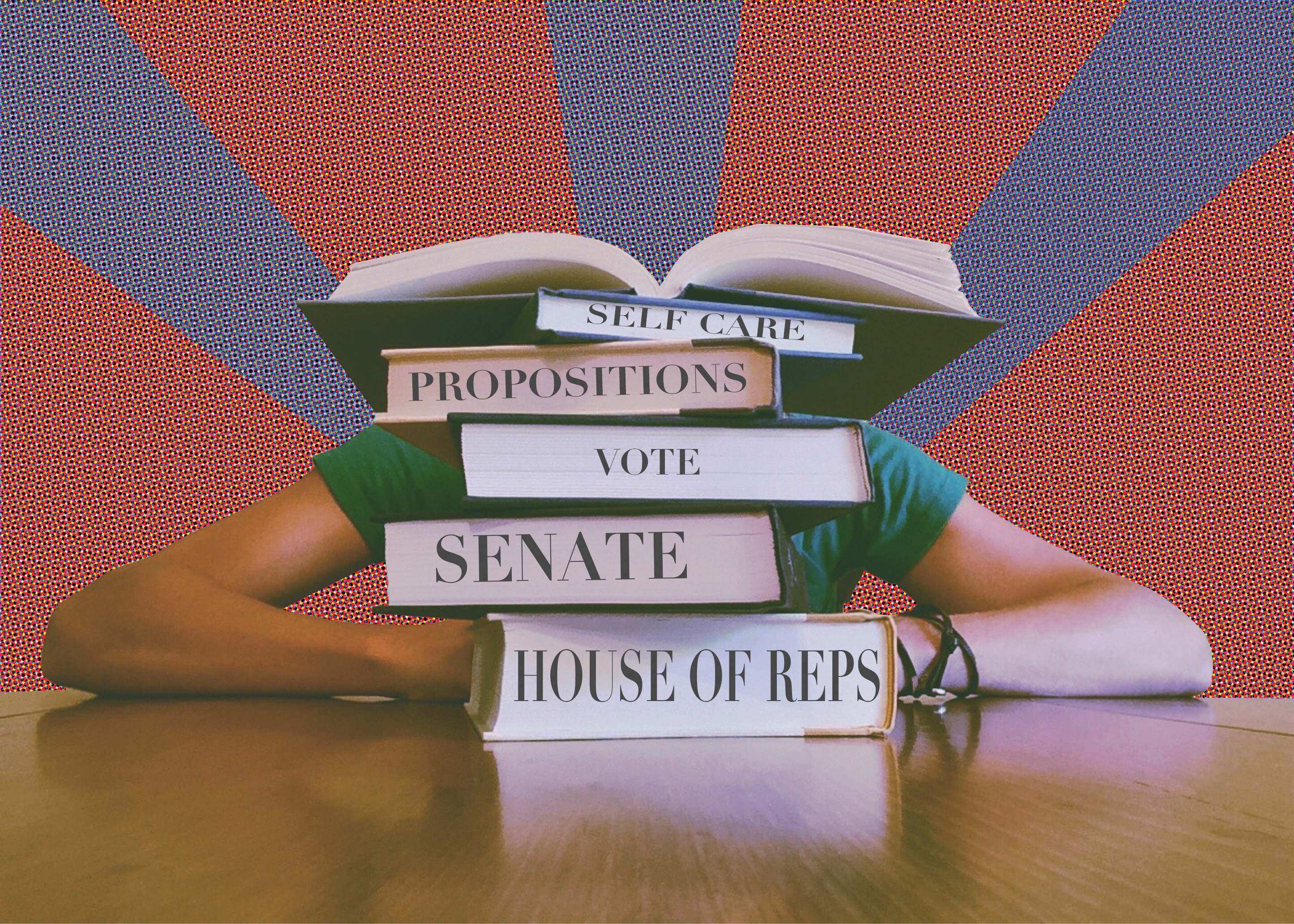
    Vote in the midterm elections on Nov. 6, on your local ballot measures and on your national representation. Too often voters forget there are branches to the government that aren’t presidential.

    Out of the eight measures on the ballot in Humboldt county, we urge you to pay special attention to Measure M and Measure K. When the time comes, Humboldt county voters should vote against Measure M.

    Measure M is a petition initiative to protect the President William McKinley statue from any “modification and/or destruction of the President William McKinley Statue and its base and/or the relocation from its historic place in the center of the Arcata Plaza.”

    The city of Arcata already voted to remove the statue on March 21, based on the fact that Arcata is on Wiyot land and the statue serves as an ugly reminder of a Confederate past.

    But the statue is considered a historic feature of the Arcata plaza and could cost up to $65,000 to relocate. If passed Measure M would not allow the statue to be removed.

    Removing Mckinley would make Arcata the first city to remove a presidential monument.

    Arguments filed in favor of and against the measure are filed on the City of Arcata website for consideration.

    Another measure Humboldt voters must consider is Measure K.

    Measure K is a petition initiative to make Humboldt county a sanctuary county.

    A yes vote on Measure K favors preventing “local law enforcement agencies from cooperating with federal immigration officials,” making Humboldt County a sanctuary county.

    A no vote on Measure K would essentially allow local law enforcement agencies to cooperate at will with federal immigration officials.

    We urge Humboldt voters to vote yes on Measure K to ensure Humboldt is a safe community for everyone.

    Grassroots group Centro del Pueblo has been promoting the initiative since 2016 and successfully passed sanctuary status for Arcata according to their Measure K website.

    The full measure addresses restrictions and permissions of what law enforcement and county employees can do in regards to cooperating with federal immigration enforcement. It also prohibits the use of county funds to aid immigration enforcement. It also addresses county protocol for “welfare of children of deported parents.”

    The measure also states that the measure would not prevent county employees or police officers from outright disobeying the law or responding appropriately in an emergency.

    The Eureka Times-Standard has reported the measure would cost the county $300,000.

    Alternatively, KHSU reported this is a skewed idea of what the measure will cost the county, according to lawyer and advocate Erick Kirk.

    We urge voters to read the measure for consideration.

    Finally, vote because this is when it matters nationally. Republicans currently hold majority votes in both the House of Representatives and the Senate. According to Ballotpedia, all 435 lower House of Representative seats and 35 Senate seats are up for grabs.

    After the current Senate confirmation of Brett Kavanaugh into the Supreme Court, we strongly believe a shift in political majority can not come soon enough.

    This election has the potential to shift the power of the majority vote in both the House of Representatives and the Senate from Republican to Democrat.

    According to the Guardian, “the Democratic party is defending 26 seats (including two independents, who usually vote with them) while the Republicans only have to defend nine.”

    It takes 51 seats to control the majority in the Senate and 218 to control majority vote in the House of Representatives.

    Voters across the nation have the opportunity to greatly influence the shift of power in Congress. The President is only one branch of our government. The Senate and House of Representatives make up the law making branch of our government.

    And for those who do not agree with us, go vote about it.

    For more information on what’s on the Nov. 6 ballot visit the Midterm Congressional, State, and Local Elections page on the http://usa.gov website.


  • EDITORIAL: Go beyond denying Kavanaugh

    EDITORIAL: Go beyond denying Kavanaugh

    Clean up the Supreme Court

    The Lumberjack editorial board recognizes this situation can be difficult and would like to remind readers that the North Coast Rape Crisis team has a 24-hour hotline and is willing to listen at any time, no matter how long ago an incident happened. You can reach the NCRC hotline at 707-445-2881.

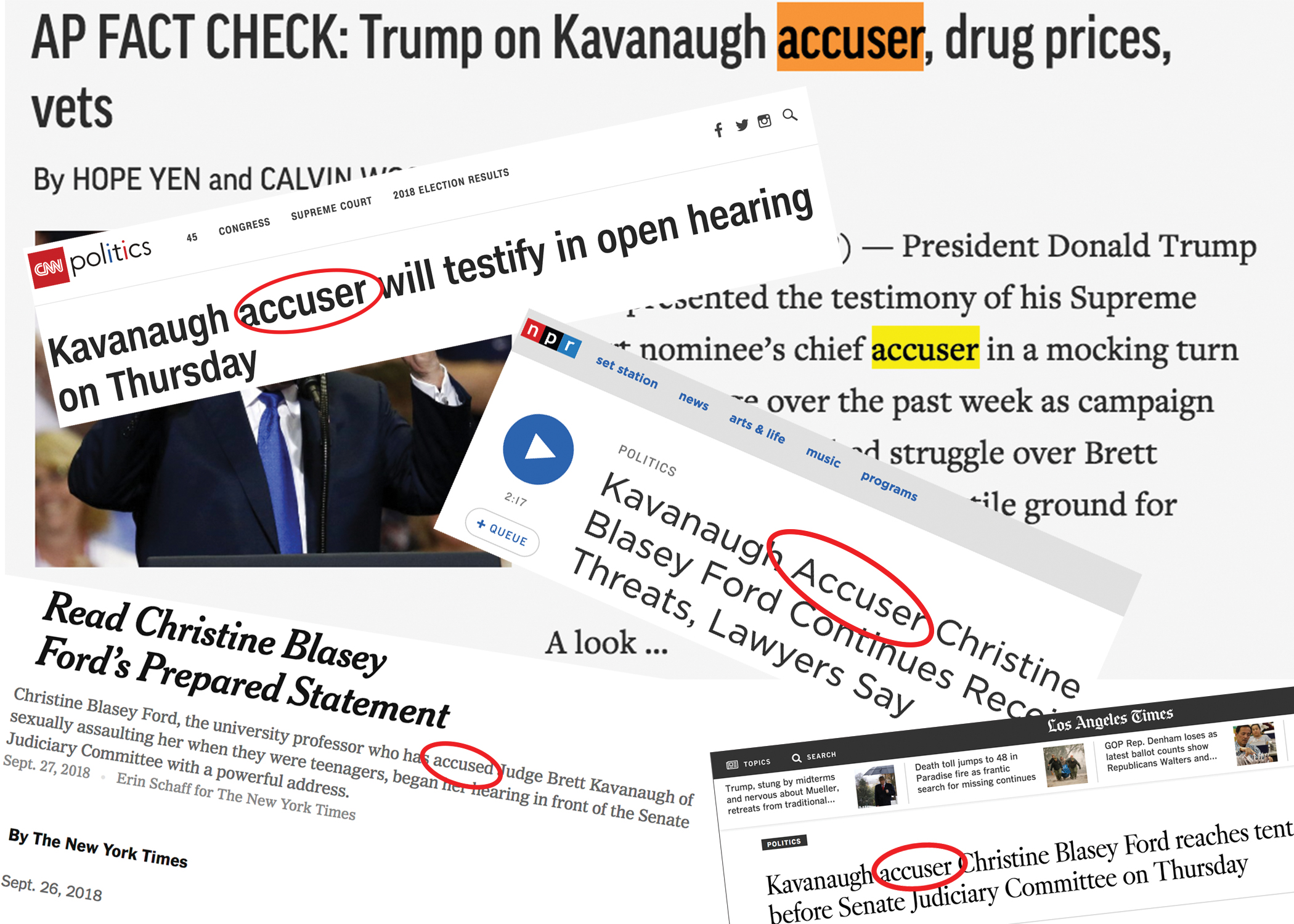
    Supreme Court nominee Judge Brett Kavanaugh and Christine Blasey Ford testified in front of the Senate Judiciary Committee on Sept. 27 based on Blasey Ford’s accusation of sexual assault against Kavanaugh from their high school days. Blasey Ford is one of three women who have come forward with allegations against Kavanaugh.

    The details of the accusations and hearing possess eerie parallels to the 1991 hearings of Supreme Court Justice Clarence Thomas during his vetting process.

    Even though Thomas made it through in spite of sexual harassment allegations against him, the Senate should not allow Kavanaugh to join him on the Supreme Court of the United States. In fact, while we are on the subject, it’s time the Senate cleans up the SCOTUS and get rid of Thomas as well.

    Twenty-seven years ago, Law professor Anita Hill came forward with sexual harassment allegations against Thomas while they worked at the Department of Education and the Equal Employment Opportunity Commission. Thomas was Hill’s supervisor and Hill ended up working under him for quite some time in spite of his behavior.

    Some differences between the incidents include age differences at the time of each incident respectively and the type of harassment differs between physical, verbal and repetitive.

    Both men served as judges on the U.S. appeals courts in Washington and were surrounded by beginning whispers of sexual harassment against them when they were nominated, unknown to the public at first.

    Both women were hesitant to come forward publicly and took time to do so and by another eerie coincidence are professors.

    The loudest similarity between the two and probably any sexual harassment allegation is this idea that a woman has come forward with the intent to smear or ruin the life of the person they are accusing.

    There is no better time than when a predator is about to step into a position of power to address their nature and history of harassment. There is also never a bad time, nor is it ever too late, to call them out for being predators and to serve justice where it’s deserved.

    The #MeToo movement has begun to dismantle and expose predators in prominent positions and change the conversation and narrative surrounding sexual misconduct.

    Senator Lindsey Graham, a republican senator representing North Carolina has not only released statements in support of Kavanaugh but has made it aggressively clear that some of the narrative surrounding sexual misconduct has a ways to go.

    “What you want to do is destroy this guy’s life, hold this seat open, and hope you win in 2020,” Graham said in response to questioning of Kavanaugh from Illinois Democratic Sen. Dick Durbin. He has also insisted President Donald Trump renominate Kavanaugh if the vote fails.

    Per article three section one of the constitution, Supreme Court justices and judges and lower courts “shall hold their offices during good behaviour.”

    This vague and open ended statement leads to the terms of the Supreme and lower court justices and judges serving for life. Instead of interpreting this section to mean during moral or ethical behavior, it has instead dictated a timeline.

    If Kavanaugh is in fact chosen to fill the SCOTUS seat available by the Senate, our last hope will be for that same Senate to impeach him. The only instance in which a SCOTUS justice can be removed against his or her will.

    Even so, the impeachment of a SCOTUS justice happened over party bias and the last time it happened was in 1804. Justice Samuel Chase was acquitted by the Senate even still and continued as a justice until his death anyway.

    Realistically, Republicans hold the majority vote in the Senate and have probably already made up their mind. It will not be surprising if Kavanaugh is still accepted as the next SCOTUS justice, especially when the man who nominated him has his fair share sexual harassment allegations stacked against him and sits in the oval office.

    Democrats have demanded the vote be delayed until the FBI can investigate and Majority Leader Mitchell McConnell has stated that the voting will happen this week as planned.

    This is our plea to the Senate to surprise us. To hear the voices of these survivors and strongly consider the character of the man they are about to vote into a position of power. It is never too late to decide history should not repeat itself.

  • NY Times right to grant anonymity

    NY Times right to grant anonymity

    Readership should consider placing trust in  journalism standards for anonymous sources

    Lack of transparency, bad reporting and a number of circumstances contribute to the public’s diminishing trust of the media.

    In spite of this, the New York Times ran a submitted piece from an anonymous senior government official vowing to “thwart” parts of President Donald Trump’s “agenda and worst inclinations.”

    By doing so the NY Times has asked its readership to put their trust in them and their vetting process for anonymous sources, and we think you should too.

    Granting Anonymity

    Granting a valuable source anonymity is not unheard of. Consider the most famous example of the Watergate scandal in the early 1970’s.

    Washington Post reporters Bob Woodward and Carl Bernstein relied on information from a source they called ‘Deep Throat’ after a break-in of the Watergate complex offices of the Democratic National Committee in Washington and the unfolding of events afterwards.

    Woodward and Bernstein protected ‘Deep Throat’ for 33 years until a Vanity Fair article revealed him to be Mike Felt, a former associate director for the FBI. The result of using an anonymous source with vital information eventually led to the resignation of former President Richard Nixon after exposing his administration’s inappropriate abuse of power.

    The Washington Post relied on the integrity of these reporters and the source as well as put their brand and reputation on the line based on the right of the public to know. News organizations must heavily weigh and debate the importance of the public’s right to know against the the individual harm to the source in revealing their identity.

    Alternatively, journalists have a responsibility to also consider the agenda of the source and their motives for requesting anonymity.

    Codes of Ethics

    This ethical dilemma is one journalists encounter consistently: the public’s right to know the truth versus a responsibility to minimize harm. Because of this, stated ethical practices and codes exist to guide the decision making process on reporting responsibly.

    The Society of Professional Journalists Code of Ethics lays out four main standards for ethical journalism: Seek Truth and Report It, Minimize Harm, Act Independently and Be Accountable and Transparent.

    Though minimizing harm can be applied in multiple ways to using an anonymous source, the SPJ outlines their anonymous source standards under the responsibility to seek truth and report it.

    The SPJ states: “Journalists should: Consider sources’ motives before promising anonymity. Reserve anonymity for sources who may face danger, retribution or other harm, and have information that cannot be obtained elsewhere.”

    Other publication style guides and organization standards for dealing with anonymous very closely mirror these values such as AP Style’s guidelines which stress that the material is in a position to have this factual information that is vital to the news report. For comparison, the SPJ website provides a list of journalism ethics codes from around the world.

    The NY Times Opinion Piece

    The opinion piece is a unique article under which anonymity has been granted. Different media organizations follow set codes or write their own and the New York Times does not necessarily have to adhere to the ones mention, but does have its own standards of ethics. Under the AP Style publishing the opinion would not be advised simply because it is not hard news.

    The New York Times prefaces the piece by stating publishing an anonymous op/ed is a “rare step.” They also opened up a form allowing readers to submit questions, comments and concerns about the piece where an editor answered some responses for clarification and transparency.

    The piece was published Sept. 5 and by Sept. 6 the NY Times published a story covering how Trump’s “almost entire cabinet and leadership team…pleaded not guilty” to plans to act against him.

    The article explicitly depicts the story unfolding as a result of publishing the letter as well as the exclusivity of knowledge of the author.

    “The author, whose identity is known to The Times editorial page department but was not shared with the reporters who cover the White House…” the article said. “Describes him or herself as one of many senior officials in the Trump administration who are “working diligently from within to frustrate parts of his agenda and his worst inclinations.”’

    The article comes at a time when the risk of using an anonymous source is often too big to take and it is worth noting the bold decision of the NY Times to move forward in doing so. Understanding the process they and other journalists go through should imply the weight and seriousness of what this high ranking government official had to say, even if it was presented under anonymity.

    Consider the process journalists are supposed to take when dealing with a dilemma of this nature. We believe this gives the author some credibility if the NY Times has risked their brand and reputation to give this source a platform against their own administration.

  • EDITORIAL: Modern Day Battle of the Sexes

    EDITORIAL: Modern Day Battle of the Sexes

    Sexism runs rampant in the professional tennis world and what happened to legendary player Serena Williams on Sept. 8 is proof.

    A showdown between Williams and Naomi Osaka in the U.S Open culminated with tears running down both women’s cheeks for very different reasons.

    In the heat of the match, with both competitors fighting fiercely for a Grand Slam Finals victory, Williams was given code violations by umpire Carlos Ramos.

    First, Ramos handed Williams a violation warning for coaching after he believed Williams’ coach, Patrick Mouratoglou, gave her signals from the bleachers.

    The next violation came when a clearly frustrated Williams smashed her racket on the court and she was handed a point penalty. The line of sexism was crossed when Ramos docked Williams an entire game for calling him a “thief.”

    “You stole a point from me and you’re a thief,” Williams told Ramos.

    The International Tennis Federation released a statement in support of Ramos’ decision to penalize Williams:

    “Carlos Ramos is one of the most experienced and respected umpires in tennis. Mr. Ramos’ decisions were in accordance with the relevant rules and were re-affirmed by the US Open’s decision to fine Serena Williams for the three offenses.”

    After the match, Williams told reporters that Ramos’ calls were clearly rooted in sexism.

    “I’m here fighting for women’s rights and women’s equality,” Williams said. “And for me to say ‘thief’ and for him to take a game, made me feel like it was a sexist remark. He’s never taken a game from a man, because he said thief. For me, it blew my mind.”

    We should be talking about Osaka and her dream of beating Serena Williams in a Final coming true. Yet, we have to address the elephant in the room once again.

    Williams was fined $17,000 by the U.S Open for the violation but her male counterparts have come to her defense.

    <blockquote class=”twitter-tweet” data-lang=”en”><p lang=”en” dir=”ltr”>I will admit I have said worse and not gotten penalized. And I’ve also been given a “soft warning” by the ump where they tell you knock it off or I will have to give you a violation. He should have at least given her that courtesy. Sad to mar a well played final that way. <a href=”https://t.co/xhBzFZX8Wq”>https://t.co/xhBzFZX8Wq</a></p>&mdash; James Blake (@JRBlake) <a href=”https://twitter.com/JRBlake/status/1038619979938189313?ref_src=twsrc%5Etfw”>September 9, 2018</a></blockquote> <script async src=”https://platform.twitter.com/widgets.js&#8221; charset=”utf-8″></script>

    <blockquote class=”twitter-tweet” data-lang=”en”><p lang=”en” dir=”ltr”>I’ve regrettably said worse and I’ve never gotten a game penalty</p>&mdash; andyroddick (@andyroddick) <a href=”https://twitter.com/andyroddick/status/1038642213427789826?ref_src=twsrc%5Etfw”>September 9, 2018</a></blockquote> <script async src=”https://platform.twitter.com/widgets.js&#8221; charset=”utf-8″></script>

    Just in the last few months, there have been other instances where female tennis players were treated differently than the males.

    French tennis player Alize Cornet was handed a violation for briefly taking her shirt off on the court. She had been in the locker room to change during a 10-minute break and when she returned to the court she realized her shirt was on wrong and fixed it.

    Tennis pro John Isner changed his shirt 11 times during his match against Juan Martin del Potro. Novak Djokovich, one of the game’s elite players, sat shirtless for several minutes while waiting for his opponent to return from a break. Neither player was penalized.

    Earlier this year, in her first match since giving birth to her first baby, Williams wore a full body all-black catsuit at the French Open that helped her blood circulation after having a rough birth.

    French Tennis Federation President Bernard Giudicelli made an announcement banning Williams’ catsuit and introduced a new dress code that banned players from wearing form fitting clothes.

    Williams responded in perfect fashion by wearing a $500 Louis Vuitton tulle skirt (tutu) for her first match at the U.S Open.

    Tennis has a long way to go in achieving equality for women at every level. The most polarizing and dominant player in tennis shouldn’t have to be in this fight but she is. Now that the GOAT has spoken up for women’s rights in a game ruled over by men, maybe the road will be easier for the next generation of women in sports. We can only hope.

  • EDITORIAL: Replace or mediate

    EDITORIAL: Replace or mediate

    Administration must take KSHU advisory board and community demands seriously

    Listeners, staff and volunteers of community of the non-commercial public radio station KHSU have spoken.

    They demand a replacement for the Humboldt State University appointed general manager Peter Fretwell and a change in character of his supervisor, University Advancement Vice President, Craig Wruck.

    HSU should adhere to their concerns and demands immediately, or at least take active measures to find some middle ground.

    After the sudden firing of KHSU’s program operations manager Katie Whiteside, KHSU has been vocal about what feels to them like a “hostile takeover.” A little over a month after Fretwell fired Whiteside, the KHSU advisory board submitted a letter to administration in which they present a vote of no confidence against Fretwell, respectfully asking him to step down.

    Soon after, Wruck attended the July advisory board meeting to face feedback and questions from the community. Fretwell, however, was not present per Wruck’s request.

    After over two hours of back and forth over several issues between the community, the station and Wruck, he confirmed that Fretwell’s position is not in danger.

    “At this point Peter is meeting my expectations and his job is not in jeopardy,” Wruck said.

    This is a blatant disregard of community voice and of the people the radio station is meant to serve. HSU has done nothing

    According to the KHSU website, “HSU provides approximately 20 percent of KHSU’s cash revenue… HSU also provides facilities and other significant administrative in-kind support for station operations.”

    This means that HSU serves as a sort of a glorified landlord that deals with some management of operations and staffing. The history and relationship of KHSU and the university is more closely tied than just landlord and tenant, however the station was created primarily to serve the community.

    Now it receives the majority of its funding from the community instead of depending solely on HSU to run smoothly.

    “Contributions from listeners, businesses and local organizations account for the remaining 64 percent of the station’s annual operating budget,” their website said.

    This station is the blood, sweat and tears of minimal staff, mostly volunteers, dedicated listeners and strong and unyielding community. A lot of those who currently work for or worked for KHSU are Humboldt State alum. They want transparency from the university and a sign that their voices are being heard and most of all they want action.

    Tensions between KHSU and the university have only grown worse since Whiteside’s firing. At the July 27 KHSU advisory board meeting, community members called out the university for its lack of transparency and lack of response to their concerns.

    Between the firing of Whiteside and the last advisory board meeting, allegations of abusive behavior and a hostile work environment have surfaced from staff at KHSU against both Fretwell and Wruck.

    Though letters have been sent to Humboldt State University President Lisa Rossbacher, not much as been done in the way of addressing the fighting between Wruck, Fretwell and KHSU.

    Feedback against the way business is being handled at KHSU has grown even more tense with the added allegations of aggressive behavior in addition to a requested audit of the station, a suggested change to the mission statement and values and a transition toward new technology.

    It is not immediately clear if Wruck and Fretwell will pause, take a step back and begin to listen and respond with empathy. Both men remain in their positions and are still responsible for running a station that is losing or has already lost faith in them.

    Before relations between the university and KHSU staff, volunteers, sponsors and listeners worsen, HSU needs to make some changes or take active measures to mediate issues between their chosen leadership and the community.

  • Administration’s feigned empathy, not enough

    Administration’s feigned empathy, not enough

    Humboldt State University must strongly consider the Eureka NAACP chapter’s letter about recruitment of students of color.

    The Eureka NAACP posted a press release on April 26 insisting the college stop sending recruiters to minority-majority communities for the sake of the money these students bring the college.

    Colleges will receive access to certain federal funding based on a number of reasons, one of those is the amount of diversity in student enrollment. For example, Humboldt State is a Hispanic-Serving Institution.

    According to an article in the Sacramento Bee, to be a Hispanic-Serving Institution means the college’s demographic is at least 25 percent latino. The government awards this title and this allows the college access to “new programs and millions of dollars in targeted grants.”

    Therefore the ENAACP asks that HSU stop recruiting students of color for the sake of access to this type of funding, claiming it is misleading to gather students to a toxic environment.

    The ENAACP continues to present several reasonable demands in addition to ceasing minority-majority recruitment.

    The ENAACP asks of HSU to:

    • “Honor the experiences of students of color by confronting its institutional racism and actively engaging with the campus community, the City of Arcata and the surrounding communities in speaking to the racism that students experience.
    • Ensure that support is in place so that students of color thrive in this community.
    • Provide budget for permanent staff and student support for the Cultural Centers for Academic Excellence
    • Transparency concerning the climate of racism in Humboldt County be the top priority in recruiting and marketing
    • Do more to serve our diverse population of students with appropriate funding and staffing for the programs that serve them
    • Prioritize hiring more faculty of color, and training current faculty and staff in “cultural competency””

    We believe that these are reasonable requests to follow and that HSU must act accordingly.

    Though the demand to cease recruitment of students of color is extreme, we believe it is rightfully based off of the reality of the discriminatory climate in Humboldt county. The organization is not without proof.

    “Students of color at Humboldt State University have shared with us their experiences of racism in many forms including micro-aggressive behavior in HSU classrooms, overt racism on the streets, systemic racism in the pursuit of housing and employment, and institutional racism in the form of more punitive measures than their white counterparts,” ENAACP said in the press release. “We hear them.”

    However, it seems that HSU is quick to defend and less quick to act. In a response letter, HSU President Lisa Rossbacher expressed minor empathy for the basis of these demands and proceeded to insist HSU is doing what it can.

    “I disagree with many of the statements in the letter, but I do agree with the larger point that HSU and the North Coast need to do more,” Rossbacher said. “Our country struggles with a history of racism and racial inequality on the national and local levels. We must find ways, and work together, to create a brighter future for all our students.”

    This is an indirect response to a list of clearly well made ideas and initiatives that the college could easily adapt to. Although Rossbacher agree’s, she does not address these bullet points and does not respond with any implications of having an actual plan to address the major issue of racism, just keeps insisting more must be done.

    For example, Rossbacher has been consistently missing from discussions on dialogue and protests over the murder of HSU student Josiah Lawson. April 15 marked a year since his death and his case remains unsolved. When students gather in remembrance and protest of his death, Rossbacher is consistently nowhere to be found.

    The press release also addresses the lack of presence from administration, stating that “there has been no consistent presence of HSU administrators at the monthly vigils organized and facilitated by the students and Charmaine Lawson, the mother of David Josiah Lawson.”

    They also note the lack of regular presence of administration at the monthly Dialogue on Race meetings and recognizes that this is unacceptable.

    Though we do not believe HSU should stop recruiting in the middle of a budget crisis, we do believe HSU and its admins and leaders, such as Rossbacher, should stop responding with feigned empathy, she should start acting and start showing up to represent the students of color that represent the institution.

    We, as HSU students who have experienced this discrimination and have heard the stories of discrimination against our peers, are angry. We are tired of repeating ourselves. The toxic and racist climate of Humboldt county and Humboldt State University must be acted upon immediately.

  • Leadership should be accountable in response to racism

    Leadership should be accountable in response to racism

    More than 8,000 Starbucks coffee shops will be closed on May 29 to train employees on “implicit bias,” as opposed to explicit racism, and “promote conscious inclusion,” according to their press release on April 17.

    The racial bias training, scheduled for nearly 175,000 Starbucks employees, is a grand publicity stunt that will prove to be futile in the short run. When the smoke clears, and it’ll clear fast, Starbucks will be business as usual, and racism in the U.S. will be the same as it ever was.

    In fairness, Starbucks CEO Kevin Johnson wasted no time in personally addressing the issue in light of the incident. Johnson ultimately put himself in the hot seat, rather than refer to a spokesperson.

    President of Humboldt State University, Lisa Rossbacher, could learn something from Johnson.

    Rashon Nelson and Donte Robinson were arrested at a Starbucks coffee shop in Philadelphia on April 12. The reported scenario allegedly goes like this: two black men walk into a Starbucks for a business meeting involving an ongoing real estate deal with investor Andrew Yaffe. While waiting for Yaffe to arrive, Nelson asked to use the restroom, but was denied by the manager, who is white. The manager asked if they wanted to order drinks, but they said no. The manager then called the police for assistance to remove Nelson and Robinson from the cafe for trespassing, which was promptly granted.

    According to calculations by financially-focused media company Bloomberg, Starbucks is expected to lose $16.7 million on training day, a relatively small loss of profit compared to their average $20 billion in revenue (an approximate average of Starbucks revenue between 2015 and 2017).

    If you’ve been following the local news about David Josiah Lawson and Humboldt State University’s budget cuts, Rossbacher was absent during rallies and community events of critical importance this semester, including the budget cuts walkout on March 21 and the one-year vigil of Lawson’s murder on April 15.

    Starbucks can implement strategies and enforce new policies, but racism will prevail in the long run. This is the America we have lived in for a long time, which is apparently accentuated in the days of the Trump administration. We can write dozens of editorials protesting racism, but in the grand scheme of things, racism is too deeply rooted in the U.S. to overcome as a nation. It’s only a matter of time before the next person of color gets arrested at a bourgeois, corporate establishment and receive the highly-ratable spotlight by the mainstream media.

    At the very least, the CEO is ensuring his company is responsible for addressing the issue without delay, and Johnson himself is making the attempts to be present and accountable.

    Rossbacher’s absence reduces her credibility amongst students, regardless of deans or the provost speaking on her behalf. Not just credibility, for her sake, but trust in the institution as a whole, especially for people of color. As we wrap up the spring semester, we urge Rossbacher to be more present in the future.

  • Trust in police weakens as Chapman resigns

    Trust in police weakens as Chapman resigns

    As students, we have reasonable expectations of safety so we can focus on academic success without fear. This is not the reality for Humboldt State University students of color, both on campus and in the community. Both the Arcata Police Department and HSU have a long way to go to gain the trust of students of color.

    The recent resignation of APD police chief Tom Chapman only worsens public confidence in local law enforcement.

    A good deal of community members, including HSU students, are aware that 19-year-old HSU student David Josiah Lawson was murdered at an off-campus party in Arcata on April 15, 2017.

    McKinleyville resident Kyle Zoellner was arrested at the scene of the crime, but released on May 5, 2017, due to lack of evidence connecting him to the murder.

    There is a clear and serious disconnect within our community regarding racial diversity. Because Lawson is black and Zoellner is white, racial tensions tightened in the community. And as one group tries to engage with the community about race and public safety, others view such meetings as a way to promote white guilt.

    To this day, no one is in custody of Lawson’s open homicide case.

    Former FBI agent Tom Parker, who offered his investigative services on the Lawson case for free, resigned on April 9. According to the North Coast Journal, Parker said a lack of trust and cooperation by the APD led to his decision to resign.

    “It was clear they were holding back things and not telling me the truth,” Parker said. “They had things going on and they wouldn’t tell me what they were.”

    Chapman announced his resignation the following day without reason.

    Following a press release by the City of Arcata announcing Chapman’s resignation, Arcata City manager Karen Diemer followed up with local media concerning both departures.

    “[Chapman’s] decision does not stem from any one single thing,” Diemer said. “It is a combination of personal reasons and professional judgement on what he believes is best for the department and himself.”

    In regards to the Lawson case, Diemer said the APD continues the investigation without Chapman.

    “The investigative team for the David Josiah Lawson case is solidified with members of both the Arcata Police Department and District Attorney Investigators office,” Diemer said. “This team will stay in place and focused on the case through its completion.”

    Parker’s claim that the APD withheld information raises major concerns. While it’s reasonable to conceal information from the public during an open investigation, why wasn’t the APD willing to cooperate with Parker?

    Also suspicious is the timing of Chapman’s resignation. Why did Chapman resign the day after Parker terminated his contract with the APD and just five days before the one-year mark of Lawson’s death? Coincidence would be an unbelievable excuse.

    While there’s only so much we can do in a case like this, we can demand more from from our law enforcement and other officials. Check with the City of Arcata, the Arcata Police Department and the Division of Student Affairs at HSU about the investigation. Don’t just do it once, but follow up as well.

    We must stand in solidarity of not just the Lawson case, but for students of color. By remaining quiet, local law enforcement will prioritize less pressing issues and no progress will be made. We need to stand up for ourselves because the ones who should protect and serve us are stepping down.

  • Consuming news safely

    Consuming news safely

    Sorting through the mainstream, and now local media

    When you turn on your local news TV station, you expect a solid mix of local and national news, and a variety of messages between stations.

    The news coverage from one area to the next will differ based on location.

    What you don’t expect is to be able to watch hundreds of news anchors, ironically reading the same script, on hundreds of different channels, about the importance of varied news sources and supported communities, like the companies owned by Sinclair Broadcast Group.

    Recognizing and understanding how to sort through the news, and have a well-rounded idea of what is happening, is important to processing the information you consume. Here are two important parts of journalism and fake news you should understand when consuming information.

    Understanding journalism objectivity

    Before diving into how to fact check and navigate the media, it is important to understand that objective journalism is incredibly hard, if not impossible, to achieve.

    People are inherently biased and influenced by the world around them. Journalists do their best, however, to inform the public, simply for the sake of the public.

    However, it is equally as important to understand that when it comes specifically to the news facet of journalism, journalists study, and are taught, to present the facts of a story from either side.

    This does not mean journalists agree with the information they have been given, but instead are presenting this information to the reader or viewer with as much objectivity as they can manage.

    The Society of Professional Journalists code of ethics is one of the most prominent professional ethics guidelines journalists follow, and sets the tone for what real journalism is supposed to be. These ethical principles exist to promote clear and concise reporting with four main facets: to seek the truth and report it, act independently, minimize harm and be accountable and transparent.

    For example, mainstream media outlets being owned by giant companies allows an argument to be made that these outlets are not independent, though they should work this way.

    Consider the case of Sinclair pushing right-based opinions and scripts to their newscasters across multiple local news stations. Sinclair also released a video in an attempted act of transparency, trying to inform the public why this script was given out. Deadspin, who released the compiled video footage of news anchors reading from their script, also provides this video in order to provide more detail to their story. This style of reporting leans toward writer bias, and is a little less formal than other outlets.

    In order to rise above the many messages media on all formats is designed to present to you, start with skepticism, and then some careful consideration. Make sure you’re digesting factual information, as opposed to fake news or misinformation.

    There are websites that specifically try to sort through political fact and fiction like the website Politifact.com. Politifact aims to provide fact-checking based journalism with principles based on “independence, transparency and fairness through reporting and clear writing.”

    Fake news in itself could be considered an oxymoron. News must be factual to be news. However, as the word of the year, and the biggest threat to our democracy today, knowing when you’re being fooled is vital.

    Skepticism and careful consideration

    As declared watchdogs of those in power, and also those who abuse their power, journalism is easily considered to be shady. The idea that journalists are out to dig up dirt and expose powerful or public figures for joy is an easy mistaken thought process to fall into.

    When you hear something on the news you find to be negative or shocking, understand there are news determinants that allow journalists to consider what is noteworthy and important for the general public to know.

    We take it upon ourselves as journalists to study these determinants seriously and with practiced objectivity. Knowing trust in the media is at an all time low, we encourage you to refer to other news sources when this happens.

    Use your skepticism of what you’ve heard reported and consider other articles or broadcasts on the same subject. Different reporting might present different facts. Even after studying a variety of sources, you as a reader or viewer may only have a small piece of the picture still. We as journalists have also considered multiple sources before presenting information so we are not failing our public by reporting on rumors or false information.

    Some websites exist to make this easier for you, such as Media Bias/Fact Check. This website lists specific sites and news sources that are either politically left-biased, centralized, right-biased or left-center and right-center-biased. You can find a list of questionable sources here as well. If you see a source on this list, they may not be the most trustworthy news outlet to refer to.

    Politifact, an outlet centered around fact checking, provides a truth-o-meter that follows the specific decisions and promises of politicians by following their actions and reporting back to inform the public whether their actions align with their words.

    The sources provided here are merely suggestions and are not an end all to fact-checking sources.

    Practicing the ability to step outside your own bias and recognize that of some media outlets to compare and contrast information is important to democracy.

    Always double check where your information is coming from and who might be influencing the message.


  • Protect your profile

    Protect your profile

    In light of data breaches, maintain some privacy.

    Facebook gives away your information. Twitter, Instagram and Google do it too. So do most of your other social media apps and websites.

    Everything you search, click or talk about ends up being sent somewhere to someone and it’s usually to advertisers, sometimes it is to a political research company like Cambridge Analytica.

    After the Cambridge Analytica breach of Facebook information of over 50 million users, the time to understand your Facebook settings is now. Social media is a giant presence in our daily lives and though taking back some privacy seems difficult, it is not impossible.

    According to the Guardian, Facebook used to be able to ask for your information, but it really has access to all of your friends’ information as well, just by taking a quiz. They no longer allow this to happen, but you can still make sure you’re not sharing more than you want with others.

    “That means that around 300,000 people could sign up for a personality test quiz, and in the process hand over information of 150 times that number,” The Guardian article said.

    The Guardian goes on to explain that you’re probably handing over more information than you bargained for, even though they no longer mine you for your friends’ information.

    When you sign into your Facebook account, go up to the top right of your screen and hit the drop-down arrow. In that drop-down menu, click on settings and find your “Apps and Advertising” pages on the left hand side.

    This is where you can control some of what you share with advertisers and pages that are data mining your info, and still find out which Gilmore Girls character you’re most likely to fall in love with.

    On the apps page, sort through the lists of apps accessing your info and change permissions or delete access entirely. On this page you can also change how you interact with these apps, pages and games that ask for you information as well as change privacy settings on older versions of Facebook. You can also deny pesky game request notifications here as well.

    Accessing the ads page will neatly lay out the information ads are using to cater to you, what business you’ve interacted with and what ads you do or don’t want to see. Spend some time checking out these settings, and figuring out what does and does not bother you.

    If you’ve got extra time, Facebook also has an informational page on why advertising is important and what advertisers are looking for when they get your information. There are more options here to adjust your advertising experience.

    The reality is, escaping social media data mining is difficult for a generation who is always tuned in and constantly sharing. These are some options on how to combat your information from being too available on Facebook, and protecting what Facebook does and does not offer to third parties.

    Just like writing something on paper, the internet is permanent. You can remove your information from your profile as well, but these social media apps and programs will still have this information on file.

    A more extreme and definite alternative? Delete Facebook and your other social media apps. We as journalists do not fully stand behind deleting social medias in order to stay informed.

    However, we believe there are benefits to maintaining privacy or removing yourself from social media. We also understand it is difficult to remain informed in today’s digital era when you make these decisions.

    Explore the settings in other social media apps, and discover how much of you they are giving to outside companies and take back some of your privacy.

  • She can breastfeed her child and serve the general public

    She can breastfeed her child and serve the general public

    She can run for office, but she can’t breastfeed her child in public without sexualization and aggressive backlash.

    It’s not a new argument or idea that the stigma behind women breastfeeding in public needs to change. If women are expected to be the primary caregivers of their children, we should respect their power in politics as mothers.

    Women are changing the way the public views their everyday lives, and they’re starting with their campaign ads.

    Krish Vignarajah, previously Michelle Obama’s policy director, is running for governor of Maryland. She is the only woman running in Maryland’s Democratic primary for governor, and she is presenting her motherhood and womanhood as one of her biggest assets.

    “I am no man,” she said in her campaign ad while breastfeeding her child. “I am a mom. I am a woman, and I want to be your governor.”

    Right behind Vignarajah is Kelda Roys, a Democratic candidate running for governor of Wisconsin. She too has been open about her daily life and responsibilities as a mother in her campaign ad where she discusses her work on banning a harmful chemical from baby bottles and sippy cups in the state of Wisconsin while breastfeeding her child.

    Roys said the moment was unscripted and she decided to keep it in the final cut. She also said she is used to the negative backlash she has received in response to the video.

    “You know what’s funny?” Roys said in a Fox article. “As a woman who has been in public life, I was the head of NARAL Pro-Choice Wisconsin and I was in the Assembly — I’m used to that kind of really disgusting, sexist language.”

    In general, however, Roys said she was met with positive reactions from men and women.

    These women should not be met with cringes or shaming. Their openness and transparency should be met with applause, admiration and support. Both these women are trying to express the need for women, including mothers, in politics.

    “This is my life,” Vignarajah said, as reported in a Baltimore Sun article. “It’s what moms have been doing forever, juggling work and getting things done. When women serve, you have better outcomes.”

    Both of these women have been met with negative backlash in YouTube comments that imply extremities such as exploiting children and womanhood for political gain.

    A user by the name of Barron Trump commented on the Vignarajah ad.

    “You literally stole a Lord of the Rings quote. Nobody cares if you have boobs and children. You’re literally doing what women should do, and have been doing, for 10,000’s of years.”

    A user by the name of Scalene Bandito commented on Roy’s video.

    “What is the point of aggressively breastfeeding? Congrats on your plastic reform bill or whatever. Should I release a campaign ad where I just start shaving right in the middle of it? I think I’d beat you!”

    Promoting family values is not a new technique to political campaigning. Pushing their gender and roles as mothers is strategic for their campaigns.

    If you can sexualize the act of breastfeeding, allow them to normalize it. If you can allow male candidates to promote their family values, allow them to normalize their maternal values as benefits.


  • Year of the women 2.0

    Year of the women 2.0

    2018 is looking to be another year for woman in politics. Why stop now?

    1992 has often been declared as the last “Year of the Woman” for politics.

    According to the United States House of Representatives History, Arts & Archives website, “a record 71 California women were nominated to run in the fall elections for federal and state offices” in 1992.

    Now, according to Politico, a whopping 575 women “have declared their intention to run for the House, the Senate or governor.” But why stop there?

    The increase in political interest from women should encourage younger women to step forward more than ever before. Women starting college should even plan to run for government offices.

    Most government offices have age minimum requirements for candidacy.

    According to the U.S Legal website, “in the U.S., a person must be at least 35 years of age to be president or vice president, 30 years to be a senator or 25 years to be a representative, as specified in the U.S. Constitution.”

    The average age of college students is 18-24, and last fall, according to the National Center for Education statistics, an estimated 11.5 million women attended college this academic school year. That’s 11.5 million potential representatives. This doesn’t include women above the 24-year-old mark.

    For even slightly older students, opportunities as a senate, president or vice president, might already be available. Though the number of women declaring their intentions to run for office has increased since 1992, the fire needs to be fueled more.

    “Women make up only about a fifth of Congress, despite comprising half of the population,” Politico reported. “And only six states have women as governors, while 22 states have never had a female chief executive.”

    Change is coming slowly but surely as women see around the political shortcomings.

    In an article in the New York Times, several women decided to become politically involved after seeing, hearing and experiencing these shortcomings.

    “None of the women had seriously contemplated entering politics before,” the article said. “They had no money or organization. But they were dismayed with the direction of the country, they said, starting with the election of President Trump, and finally decided to act.”

    Currently, the youngest member of Congress, Elise Stefanik, is 34 years old. Though 10 years above the minimum, this should be seen as encouragement.

    Young age does not mean ignorance, and experience must start somewhere. Getting involved politically is a way to create change for anyone. Increasing women’s representation in local and federal government has never been more important.

    There’s guidance for you if you’re interested, yet hesitant. She Should Run is a non-partisan group that jump starts women on their path to running for office and directing them toward starting campaigns.

    Even if becoming involved seems a long way off, the time to start is still now, during the year of the woman 2.0.

  • EDITORIAL: FCC aims to impose internet road blocks

    EDITORIAL: FCC aims to impose internet road blocks

    Why you need to pay attention to net neutrality regulations.

    Since its introduction to the general public in 1990, the internet became a powerful tool by placing the world at the fingertips of the average American. Information to almost anything is now a click, a Google search and a Wi-Fi connection away.

    Now, the internet is a colossal asset in the everyday life of the consumer. However, the Federal Communications Commission wants to repeal previous regulations that allow the internet to remain free and open. This will make your internet access slower, limited and expensive. Understanding net neutrality and fighting back is vital to keep the internet a free and open method of exchanging of ideas.

    What’s going on?

    When we open up our browsers on our desktops, laptops and mobile devices, we expect quick and easy access to whatever website or information we seek, and maybe a Wi-Fi hotspot. With current net neutrality regulations from the Obama-era in place, we can rely on our internet service providers to not interrupt that flow of information or require us to pay more to access faster connection and specific streaming services or sites.

    On Dec. 14, 2017 the FCC, led by chairman Ajit Pai, voted to repeal the 2015 regulations on internet. Pai was appointed by President Donald Trump in 2017 and formerly worked as a Verizon lawyer. Pai is responsible for introducing the idea that by creating internet fast lanes, the internet will thrive.

    With current net neutrality rules in place, the internet is already able to thrive as a free market. The most prominent argument against repealing this level of neutrality is that the FCC would be infringing on free speech by putting a price on access.

    What does that mean?

    According to the Washington Post, internet providers such as Verizon, AT&T and Comcast will have the ability to charge for speed without regulations in place. Streaming companies like Netflix or Hulu will most likely be asked to pay for access to these fast lanes and in turn, end up increasing their prices.

    This means not only will we as consumers pay for internet packages that allow us minimal access, but now we will also have to pay for fast and reliable connection to only parts of the internet. This also creates a similar situation to when big businesses drown out small businesses. Websites and streaming services that can not afford to pay for these faster lanes of internet connection will be drowned out by companies that can afford it.

    Shady business

    According to the Pew Research Center, in a study on the feedback the FCC collected from the public reported that results of their surveying came “inaccuracies and duplicates.”

    The report also stated that many of the submissions recorded “seemed to include false or misleading personal information,” cotinated “clear evidence of organized campaigns to flood comments with repeated messages” and “often thousands of comments were submitted at the precisely the same time.”

    This was in addition to the email validation process set up by the FCC only working about three percent of the time. The report stated that even emails such as “example@example.com” made the cut for public comment on net neutrality.

    The FCC is not only making unconstitutional steps toward limiting the flow of information and placing the power of those limits in the hands of corporations, but they are playing dirty to do it.

    How you can fight back

    The states are just beginning to take action, but you can too. On March 5, Washington became the first state to fight back against the FCC on repealing net neutrality.

    According to the New York Times, Gov. Jay Inslee signed a bill preventing internet providers from “blocking and slowing down content online.”

    On a smaller level, as a citizen, you can voice your opposition by visiting websites that help you locate your House of Representatives and Senate representatives. Write to them and express your opposition to what the FCC is doing and encourage them to act against these changes. In turn, getting involved locally will encourage more states to join Washington in passing state legislatures that disagree with the limitations the FCC wishes to implement.

  • Keep the dream alive

    Keep the dream alive

    Immigrants are the backbone of the United States, but anti-DACA protesters think they could do without them entirely.

    The Deferred Action for Childhood Arrivals, a polarizing immigration policy that allows certain individuals to enter or remain in the United States, was established by the Obama administration on June 15, 2012.

    Those who meet the guidelines for DACA receive a renewable deferred action, or immunity from deportation, for a period of two years and a work permit.

    According to a Sept. 4, 2017 report by the U.S. Citizenship and Immigration Services, there are approximately 690,000 active DACA recipients, or Dreamers, of which about 548,000 are from Mexico. Trump repealed the DACA policy on Sept. 5, 2017, announcing the termination of the policy on March 5.

    However, the Supreme Court announced on Monday that they refuse to take up the case, leaving the fate of Dreamers in limbo once again.

    Center of American Progress said our country is estimated to lose $434 billion annually in gross domestic product if Congress decides to put a fork in DACA. What this means is the cost of goods and services would eventually rise with the success of mass deportation of immigrants. Inflation would further burden lower and middle class Americans who make up the better part of the U.S., while wealthy elites remain virtually immune to financial setbacks. In other words, economic inequality would worsen as a result of deporting Dreamers.

    Deporting Dreamers would diminish diversity, which would favor white nationalists who wish to establish cultural dominance. Further, the lack of culture in the United States would ruin the overall character of our country, replacing our melting pot for something less palatable.

    Despite the widespread fallacy that immigrants take away jobs from American citizens, or overindulge in government benefits, the truth is immigrants contribute to economic growth.

    “Immigrants contribute mightily to the economy, by paying billions in annual taxes, by filling low-wage jobs that keep domestic industry competitive and by spurring investment and job-creation, revitalizing once-decaying communities,” Douglas P. Shuit and Patrick McDonnel of the L.A. Times said. “Many social scientists conclude that the newcomers, rather than drain government treasuries, contribute overall far more than they utilize in services.”

    But intolerance carries on as the Trump administration and anti-DACA hardliners push to bring an end to the DACA policy, which would result in the wrongful deportation of people who enhance the wellbeing of Americans. Undocumented immigrants who commit heinous crimes do exist, but that is far from the majority of law-abiding immigrants who are trying to make better lives for themselves in the land of the free.

    While the fate of Dreamers remains uncertain, pro-DACA supporters are urged to get involved. Reliable resources to protect Dreamers are available online, including American Civil Liberties Union and National Immigration Law Center. United We Dream is the largest immigrant youth-led network in the country. They offer tools and strategies to take action, such as launching grassroots campaigns or signing a petition to Congress that endorses DACA.

    Power in numbers can make a difference, as we recently witnessed on a local level with the removal of the McKinley statue. Educate yourselves with immigration policies, pertaining specifically to DACA, so you can stand up for what is right if you run into anti-DACA supporters.

    The U.S. Immigration and Customs Enforcement, or ICE, has been raiding immigrants under the dominance of federal law, including Dreamers in sanctuary cities. Another way of supporting Dreamers is assisting them in the event of a raid, such as translation or explaining their rights. Understanding immigration policies during such a confrontation could make a world of a difference.

  • Keep your thoughts and prayers

    Keep your thoughts and prayers

    We call b.s. too.

    Your thoughts and prayers are not enough to encourage gun law reform. By getting involved in local politics and deciding what shape you want gun reform to take, you can make a difference.

    Nikolas Cruz was arrested by police as he walked through a residential street on the afternoon of Feb. 14. According to the New York Times, Cruz had ample time to visit a Walmart, buy a drink from Subway and visit a McDonalds before he was apprehended for shooting 17 high school students at a school he was expelled from. The Marjory Stoneman Douglas High School shooting has placed eighth among the top 10 deadliest shootings in United States history, according to the L.A. Times.

    MSD High School student Emma Gonzalez gave a speech on Feb. 17 at a gun reform rally where she addressed lawmakers and politicians. In her speech featured on CNN, Gonzalez claims that she and her fellow students are done dealing with the government, there will be change.

    “We call b.s.,” she said.

    “And maybe the adults have gotten used to saying, ‘It is what it is,’ but if us students have learned anything, it’s that if you don’t study, you will fail,” Gonzalez said. “And in this case, if you actively do nothing, people will continually end up dead, so it’s time to start doing something.”

    We claim the individuals who commit these mass shootings are mentally ill, suffer from extenuating circumstances or troubled upbringings. We claim and discuss how easy it is to obtain guns in different areas. Then we take to social media in masses and we send out our anger, our rage, our thoughts and prayers in a Tweet, a Facebook or Instagram post. But what does sending out our thoughts and prayers do but perpetuate the problem?

    The hypocrisy in response from bystanders, politicians and lawmakers is staggering. Even the President of the United States Donald Trump has done nothing but express his sentiments and find a way to make this issue about his agenda, simply to avoid taking action. The president is also responsible for signing a bill last year that removed an Obama administration order to allow the Social Security Administration to release mental health information that would be included in background checks, prohibiting those with some mental illnesses from purchasing guns.

    The same way Gonzalez and the other children of MSD High School are furious and want results, so should you.

    The first step to promoting gun reform as a citizen is to decide what shape and direction you want your efforts to take. Understanding what kind of reform you’re looking for can shape where or how you get involved locally. Establishing some focus on reform can also come from where you end up donating your time or money.

    Start by donating or volunteering your time with organizations that advocate for gun control, such as the Coalition to Stop Gun Violence, Moms Demand Action, Giffords Law Center to Prevent Gun Violence or the Brady Campaign to Prevent Gun Violence. Do not donate blindly, and use discretion when choosing where you want your time and effort to go.

    Next, contact those who influence legislation on gun reform. By reaching out to your state representatives or members of congress, you can voice your take on gun reform and how you wish for your representatives to make their decisions.

    The representative for Humboldt County is Jared Huffman. Go to his website for contact information and reach out. Formatting a letter is easy, especially with multiple online templates. Write your own letter, find an advocacy site or contact his office directly via phone.

    If you are not sure of who your representative is, use a simple website like whoismyrepresentative.com to find out who you should contact on a local or congressional level. Register to vote in your area and pay attention to local legislation.

    The reality of the fallout of these shootings is that no matter how often they happen, the motivation to act is lost soon after. We must stop waiting for the next shooting.

    Action and reform must happen for change to happen. Conversations about gun reform are no longer enough.

  • Swipe right on self-love

    Swipe right on self-love

    Don’t cheat yourself, treat yourself.

    Whether you’re dating or single, you should actively practice self-love for healthy relationships and interaction with others.

    Dating is complicated. If you’re swiping, texting, snapping or sliding into the DMs, navigating the dating culture requires a lot of time, energy and self-love.

    Single and ready to mingle, sort of…

    Dating without the integration of social media was bad enough. Now you’re connected and available on multiple platforms.

    As a single individual looking for the companionship of others, apps like Tinder or Bumble can place extra pressure on your dating timeline. These apps allow access to a wide range of people with different personality types and preferences. Not everyone is kind or understanding. This often leads to strangers lashing out at you, because your interests or schedule don’t align.

    Take some time to remember that you are allowed to say, “No, I can’t hang out this day,” or “I had some obligations and was not able to respond right away.”

    Do not ever feel compelled to apologize for being busy or not responding before you’re ready, unless you mean it. Social media has created a demand for immediacy that is not always reasonable.

    Self-love can also be very physical and intimate. Masturbation, often a taboo subject, can be considered fulfilling needs and confidence. This means taking the term “self-love” literally and exploring safe options on pleasuring yourself. For the inexperienced or shy, the beginning stages of this could be a research stage for what works. As an article on This Body Is Not an Apology states, just orgasming from masturbation is like “scratching an itch.” Explore other options to pleasuring yourself, and open your mind to considering this method as a form of self-love.

    Another option to explore is exercising. Exercising can blow off steam and increase self-confidence. It is also a great way to combat depression and relieve dating frustrations. Incidentally, don’t do anything you’re not comfortable with and take it easy. After all, this is about making yourself feel better.

    What’s also available on a local level are workshops designed to promote communication skills between friends and couples.

    Humboldt State Health Educator Ravin Craig, who created and runs the Peer Health Education program, said there are several workshops put on through the library that are designed to do just this.

    She said one of these is focused on relationships and communications with friends as well as sexual partners.

    Taken and confident, kind of…

    Even in a relationship, self-love is necessary and promotes positivity in a relationship. Maintaining individuality is important towards promoting self-love and a healthy relationship. This doesn’t mean isolating yourself, but it does mean knowing your boundaries.

    Craig said it’s hard to be in an effective relationship where you can give something to someone else, but can’t give it to yourself first.

    Self-love is often proven to benefit relationships. According to an article on goodthereapy.org, research has shown that practicing self-love is likely to improve well-being in the context of interpersonal relationships.

    Developing positive habits and relationship communication between you and your partner can also lead to self-love. Taking time to be your own person and understand what makes you happy can also promote self-love and in turn strengthen your relationship.

    In between and fluid, maybe…

    Maybe you’ve mastered the dating scene, but your confidence still gets low. Taking similar breaks and efforts to improve your self-love is important.

    Craig said students looking for help with self-love practices should consider Community Care Workshops on campus. During these workshops, students are encouraged to “build their board of directors.”

    Craig describes this board as the people you can trust to help guide your relationship when suffering from the dating scene or relationship blues. Finding trusted peers who are able to lift you up and think are important.

    At the end of the day, choosing healthy and positive practices of self-love is up to you. Sometimes it takes understanding that you need the help of others, a break or space. Be aware of when dating might be too much and recognize when you need to make some time for yourself.

    Utilize on campus resources or turn to your most trusted friends. More importantly, swipe right on self-love.

  • Art for students’ sake

    Art for students’ sake

    Humboldt State University must not pull funding and close the Third Street Gallery in Old Town Eureka, which has provided local art to the community for 20 years.

    As reported in the Lumberjack, by Ahmed Al-Sakkaf on Jan. 16, Humboldt State must perform budget cuts that require slashing a third of the budget used to keep the gallery open.

    The art gallery has been open and providing Humboldt State students with hands-on career experience on multiple levels. The gallery allows students the opportunity to curate exhibitions and work in professional settings, as well as organize and present art to the community.

    The space is vital to giving students an idea of the business relationship they must facilitate early in their artistic or curating careers.

    For a professional-in-training seeking to promote their works and talents into the community, galleries like Third Street Gallery are a vital stepping stone to professional work.

    As stated on the HSU Art Galleries web page, this art gallery provides “students at all levels and disciplines” the opportunity to contribute “through internships, work-study jobs, student exhibitions, and interactions with featured international, national, and regional artists.”

    Finishing school leaves students searching for jobs that hire based off previously acquired experience.

    Unfortunately, studying for the career you want is almost never considered to meet the required experience standards. Without these opportunities, the budding Third Street Gallery art and exhibition curators must work even harder to land their first job or show.

    According to The Working Artist, promoting art in a gallery is about who you know. Developing a relationship with a gallery is important to getting your foot in the door as an artist. Allowing the gallery to be lost as a resource to students would be the equivalent of ending a 20-year relationship with the community.

    The university should explore and strongly consider other options on how to cut funds or seek budget cuts in other places. Even cutting back on what is provided on campus and putting more resources toward the Third Street Gallery would be more beneficial to aspiring artists and curators.

    It can be argued that removing this gallery will just move the opportunity on campus, and there is no loss of hands-on work. However, removing student work from a venue accessible to the local community instead of the college community would be a giant disservice to artists and curators.

    Subjecting this important, career-motivating venue to budget cuts and its inevitable closure is unacceptable.

    As gallery director Jack Bentley said to the Lumberjack newspaper, the proposal to close the gallery would be “very short-sighted.”

  • Alternative road to recovery

    Alternative road to recovery

    Humboldt County should reconsider establishing supervised injection facilities (SIFs).

    The subject matter is polarizing. The simplified idea of a SIF is to administer drugs with clean needles and controlled dosages. Counseling and other services are offered throughout the process. The objective is to wean users off drugs. You’re essentially fighting fire with fire, but under careful supervision.

    Philadelphia is becoming the first in the nation to open facilities that will allow drug users to inject under supervision. City officials approved the controversial proposition on Jan. 23, but supporters face further challenges to turn the idea into a reality. These include ordinance approvals, carefully selected operating sites and funding. Seattle and San Francisco are among other cities in the United States striving to open safe spaces.

    There are approximately 100 sanctioned SIFs located around the world, including countries in Europe. Concluding from more than a decade of studies, the European Monitoring Centre for Drugs and Drug Addiction (EMCDDA) said SIFs reduced the rate of addiction, overdose deaths and HIV transmission caused by sharing needles.

    The agency references an evaluation study in Barcelona, Spain.

    “A fourfold reduction was reported in the number of unsafely disposed syringes being collected in the vicinity from a monthly average of over 13,000 in 2004 to around 3,000 in 2012.”

    Contrary to years of quantitative research, naysayers argue that opening SIFs will lure more addicts into cities, normalize drug usage and increase crime. Further, some opponents of the idea perceive drug addiction as an immoral weakness, rather than a pervasive medical issue.

    We can’t begin to eradicate the problem unless a shift in perspective is made about the complexities of addiction, including outside factors such as economic inequality.

    It does not take long for new Humboldt residents to realize there is a drug problem in this area. On the other hand, locals are very much aware.

    Treatment centers and services help to a degree, but the truth is the rate of overdose deaths in Humboldt is still above average in California.

    “Of the nearly 340 accidental deaths recorded by the county between 2010 and 2015,” Will Houston of Eureka Times-Standard said, “nearly two-thirds were caused by overdoses, according to [Humboldt County] Coroner’s Office data.”

    A reevaluation of the costs and benefits of supervised injection sites may prove to be a worthwhile investment for the future of Humboldt.

  • EDITORIAL: Understanding consent first

    EDITORIAL: Understanding consent first

    Sexual harassment can be difficult to understand and process on any level: as a victim, as an offender and even as a bystander. Treating sexual harassment allegations with discretion and well-researched judgment is vital. However, they must begin with an understanding that there is no clear interpretation for what defines consent.

    Movements such as #MeToo and #TimesUp that highlight sexual assault, misconduct and harassment in the entertainment industry are proving that awful behavior does not just happen to private citizens, but to public figures as well.

    What these movements should do is make conversations about sexual harassment and assault easier, as well as give victims the confidence and empowerment to speak up.

    What these movements should not do is create an opportunity for the media or the general public to interpret the definition of the word consent. Full consent is one big, sober y-e-s. The second any hesitation, discomfort or change of mind occurs, consent is lost. This should be the only way consent is observed in the face of any story, no matter how large or small. The most important thing to consider when assessing these situations at any level is that affirmative consent is not up for debate.

    After grasping this point, we can attempt to break down a situation and understand what happened. In the instance of comedian Aziz Ansari and his encounter with a woman anonymized as Grace, this is extremely important to understand. The feminist site Babe.net reported on Grace’s date with Ansari in a way that lumped him in with repeat offenders such as Harvey Weinstein and Roy Moore. Though his behavior was wrong, it is still worth noting that this man, unlike that of Weinstein or Moore, was allegedly unaware of his aggressive behavior. Ansari was not fully aware of his alleged wrongdoings after she had expressed it via text the next day. Readers can hate him, believe him, not believe him or react how they please. What they should not do is attack Grace for her decision to speak up. Her decision to speak up was warranted, because she felt that the date was terrible and therefore changed her mind. Nothing can change her firsthand experience that night.

    What can be done after understanding consent is to process Ansari’s decisions and pay attention to what he decides to do next as a self-proclaimed male feminist. What can also be done as a bystander is to know the difference between assault and harassment without believing that one is more okay than the other. Instead, try to find ways to minimize the opportunities of both offenses.

    Understanding the problem with Ansari’s behavior towards Grace involves his disregard for his celebrity status and the kind of influence he may have on others. The problem was that he needed a better understanding of affirmative consent. This is where there are clear differences between Ansari and Weinstein.

    Most of us are bystanders to these movements and celebrity allegations. As such, we have an obligation to seek out and recognize affirmative consent. Further, we need to intervene when others fail to acknowledge it. Practice good judgment when examining these situations only after understanding consent.

  • Smoker discretion advised

    Smoker discretion advised

    Smoking marijuana recreationally is now legal in California. However, before you take your stash with you as you head out the door, take caution. Changes to marijuana legislature is happening on a state level, not a federal level. When it comes to which laws carry more weight, federal trumps state.

    California voters passed Proposition 64, also known as the Adult Use of Marijuana Act, to begin the process of governing the drug on Nov. 9, 2016. The legal sale and taxation of recreational weed took effect on Jan. 1, 2018.

    Smokers who believe they can just light up wherever they please should slow down and consider legal limitations.

    Smoking At School

    Public colleges are state-funded and federally funded. This means you’ll get into trouble if you bring your legal weed with you to school grounds, according to USA Today. In fact, most students are receiving frantic e-Memos from their school’s administration ensuring students who come back from winter break that weed is still not allowed on campus. How diligent campus safety is is another story. Try not to be to angry with your college campus as it needs money to function and runs the risk of having federal funding pulled completely. This is especially true if they allow their students to smoke marijuana freely and not abide by federal law.

    Smoking at Work

    In a nutshell, if you can’t show up to work drunk, you also can’t show up to work high. Whether one is safer than the other is not the question here. Both are considered the same level of being under the influence. Your boss still has every right to fire you if you show up under the influence, even if it is for medicinal purposes. A company can still deny you employment if you decide to fail their mandatory drug test, because you did not want to stop smoking. There is no legislation stating businesses should follow suit with state law and federal jobs will definitely not allow recreational use of marijuana.

    Smoking in Public Places or While Driving

    This is a similar story to work and school. Medical marijuana cards may have granted some freedom here, but smoking in public or while driving has always been a risk weed smokers take when they travel. Even though weed is open to all to smoke recreationally, not just those with a medical marijuana card, it should be kept at home for recreational use. According to Politifact, taking it on the road under the new law is like having an open bottle in your car. If you can’t drink in public, you shouldn’t be high in public. Both are disturbances of the peace or driving under the influence, violations that warrant a police citation. Just like driving with an open container, you’ll face probably face some trouble if you get pulled over if your weed is not sealed. Legal weed must be in a sealed container. If that container is not sealed, it must be locked away somewhere, such as the trunk of your car. With the legalization of marijuana comes extra attention. Law enforcement will be looking for marijuana violations to a greater extent, especially when it comes to driving under the influence, according to Shouse Law Group and California Vehicle Code.

    The law itself will change and adapt as the state and federal law differences sort themselves out over time. Practice smoking discretion before smoking as you please.

  • Big Brother is still watching you

    Big Brother is still watching you

    Personalized ads, location tracking services and obsessive use of social media. Technology is on track to outgrow human intelligence as it continues to ingrain and spread itself throughout our increasingly globalized society. In recent years, George Orwell’s “1984” about a dystopian world of mass surveillance has become our reality. What feeds Big Brother’s insatiable desire for global brainwashing and espionage is our growing dependence on technology.

    The current world population of 7.6 billion is expected to grow to 9.8 billion by 2050. Consequently, the growing population ensures that there will be future consumers to continue the dependence on technology. Overpopulation in combination with more smart phones, computers and other surveillance devices means that there will be more documentation of our private lives.

    Digital technologies are woven into our classrooms, offices and personal lives. We rely on it for communication, GPS and a myriad of other apps that make our lives easier. But Big Brother is tracing everything we do on these devices. Information is mined, processed and sent to ad agencies to seduce us with products we don’t need. Moreover, consumerism distracts us from the issues happening all around us every single day. A population of latent minds is exactly what Big Brother wants.

    “We are governed, our minds are molded, our tastes formed, our ideas suggested, largely by men we have never heard of,” said propaganda expert Edward Bernays.

    This is happening without our consent and with little concern to us. Civilization is full of sheeple conforming to Big Brother’s values, agenda and desires. The future isn’t looking so bright either. Some futurists predict artificial intelligence dominating the human race. Unless tenacious, drastic and global measures are taken, we will inevitably succumb to its irresistible powers. Until then, Big Brother is still watching you.

  • Hit the road, Jacks

    Hit the road, Jacks

    Finals are upon us, but so is winter break. It’s time to make travel plans again.

    Some people huff at the thought of making travel arrangements, especially since many of us just got back from a long-awaited and well-deserved Thanksgiving break. Needless to say, we’re also readjusting to the home stretch of this semester.

    In spite of that, we encourage you to invest some of your downtime thinking about the places you’ve always wanted to visit and make it happen during winter break. Write down the destinations, pull up Google Maps or TripAdvisor and start researching your fantasy voyage. The simple act of routing that one landmark you must finally check out with the restaurant you need to try could be more fun than you expected. The ultimate goal here is to try new things in new places and maybe meet inspiring people along the way. This can be anywhere between the pub down the street you’ve been meaning to visit or backpacking through Europe. Either way, you’d essentially step outside of your comfort zone and gain new experiences. These are two invaluable components of growing up and expanding your mind in a world full of narrow-minded blockheads.

    A few of us are strapped for cash or don’t drive, but don’t fret. It’s not completely hopeless.

    Humboldt State’s Homeward Bound Bus Charter Program “provides students with discounted round-trip transportation from Arcata directly to San Francisco or Los Angeles.”

    If that doesn’t work for you, consider HSU’s carpool program, JackPass, Zagster, Zimride and Zipcar. Visit parking.humboldt.edu for more details.

    The pressures of finals will surely stress us out, but there is a light at the end of the tunnel. Plan accordingly and don’t forget about the potential road constructions due to winter conditions. Good luck, safe travels and enjoy your upcoming adventures.