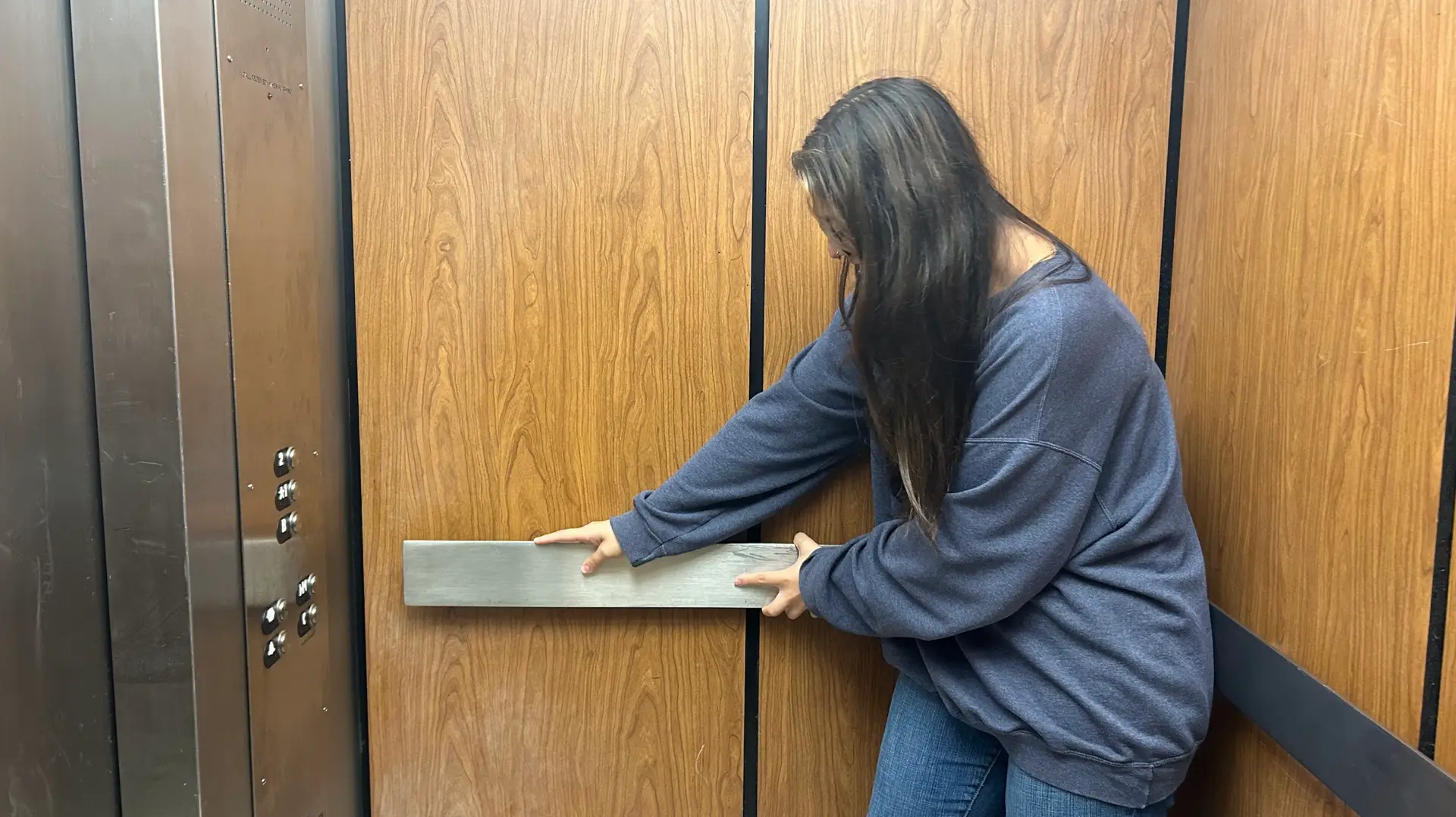
If this campus had any more hills or staircases, they would need to hand out climbing gear with our student IDs. Walking around campus – even when you know the best routes to your classes – still feels like pure cardio punishment. So when my phone notifies me I’ve hit 5,000 steps before lunchtime, I just want an elevator to carry me up a few floors to my next class. Instead, what should feel like a break from walking, always feels like a game of “Is this elevator about to give up on me?”
Realistically, I want to believe the school keeps the elevators up to date so we won’t get stuck between floors for a few hours like that student at the Hinarr Hu Moulik dorms last spring semester. The elevators in these new dorms scare me more than any other elevator on campus. After passing the first and second floors, one of the elevators starts making a screeching noise so bad it sounds like my car’s brake pads when they’re down to the bare rotor. The other elevator is always out of order, creating traffic in the early hours as students try to make it down to the first floor for their 9 a.m. classes.
Over at the Jolly Giant Commons, going from the first floor to the fourth is fine. My issue is the elevator that takes you from the fourth to the fifth floor. I take the elevator to avoid sweating and breathing heavily after what feels like 50 flights of stairs. The elevator moves at a painfully slow pace; by the time I get to the top, the students who chose the stairs have already left the area. Then there’s Founders Hall; did you know there was an elevator there? But what’s the point after already hiking up four flights of stairs? It feels like more than half the buildings on campus have hidden routes and elevators; take Gist Hall, for example. I had to look at a map to realize there was one, and trust me, it was very well hidden.
The only elevator on campus that actually works perfectly is at the Business and Social Sciences (BSS) building; it’s smooth, fast and doesn’t make scary screeching noises that make me wonder if I’m going to sue the school for getting stuck in the elevator. But honestly, that’s the bare minimum after having to make your way up a hill that feels like treadmill incline level 12 just to reach the doors.
After hearing people say “you’ll get used to it” for years, I can confirm I have not gotten used to it, navigating this campus to avoid climbing stairs should not be this difficult. BSS has proven that a normal, non-terrifying elevator is possible, so why does every other elevator on campus feel so terrifying? And why must a majority of the elevators on campus be hard to find?
Alba is a reporter and opinion editor for the Lumberjack. She enjoys listening to people’s opinions with an open mind. You can reach her at agg83@humboldt.edu.
Late at night, on the streets of many cities in the Pacific Northwest, instead of finding pizza joints or taco trucks, you’ll see pop-up vendors selling a different kind of late-night bite. A hot dog or sausage with cream cheese on the bun, smothered in onions. While they haven’t reached this far south yet, I plan to change that by sharing the secrets of Washington hot dog vendors with the good students of Cal Poly Humboldt.
Introducing the Seattle dog! Ranked by The New York Times Wirecutter as the best regional hot dog in America, this is a simple recipe. Whether you’re still getting used to the rain or you were born into it, a hit of Pacific Northwest nostalgia might just be the changeup in diet you need.
Ingredients:
1 hot dog or sausage
1 hot dog bun (preferably sourdough)
1/4 onion
1-2 tbsp cooking oil or butter
2 tbsp cream cheese
3-5 jalapeño slices
Step 1:
Thinly slice your onion and cook in a pan on low heat in oil for 10 minutes or until translucent and browned.
Step 2:
Cut the hot dog butterfly-style, and cook separately until heated through and browned.
Step 3:
Spread cream cheese on each side of the bun.
Step 4:
Assemble with onions inside the cut of the hot dog, and add jalapeño slices on top. Don’t worry, they can’t hurt you as much as the Mariners have this year.
Step 5:
Remember, these are hot dogs, not religious ceremonies, so make it your own and enjoy!
Winter Music is a junior English major and copy editor for the Lumberjack. You can reach her at wlm38@humboldt.edu.
If you’re on social media, you’ve probably seen a lot of controversy surrounding Sydney Sweeney. Once again, it’s an ad. This time it’s not about what jeans she’s wearing but what she’s not wearing. With football season nearing, the ad features a nude Sweeney using sports equipment to cover herself and pretending to play for the purpose of promoting the sports betting app Novig.
What does nudity have to do with sports? Novig used Sweeney’s sex appeal to grab the audience’s attention, but at what cost? Whatever the reason is, it was exploitative and a slap in the face for women athletes and women at large.
“The highlight of my dislike was not towards Sydney Sweeney, but actually, the company and the companies that make this ad, or that made this ad, and the editors — the amount of people that had to approve this for this to be posted on such a wide scale,” said Vice President of the rugby club Rio Ross-Hirsh, a junior journalism major.
According to the Northeastern Global News, Sweeney gained an equity stake and a role as a strategic partner for Novig. Women athletes work hard every day to prove themselves in ways male athletes don’t, and to advertise betting on sports in such a promiscuous way is stupid and disrespectful.
“It takes about double — if not triple — the amount of time and effort for a female to get that attention and recognition for their hard work and the amount of effort that is being put in because it’s not seen as the same,” said safety officer of the rugby club Acacia Crouch, a senior zoology major.
If they wanted to gain attention from the mainstream media, they could have gotten an athlete or someone who isn’t controversial to promote their app. Like, go ahead and hit up LeBron James; he’d probably do it. I found it unnecessary to display a nude woman covering herself in basketballs to promote a sports betting app.
Throughout social media, I have seen people responding to the ad with montages of women athletes and their hard work. There is so much blood, sweat and tears being shed behind the scenes.
“This is completely an overly optimistic silver lining, that most of the content I have seen on my Instagram and other social media has been super empowering and majorly pushing back against the narrative that Sydney Sweeney has created,” said triathlon athlete Averill Payne, an environmental science major and junior.
Women for centuries have been trying to get taken seriously and not be sexualised, but this feels like a big setback. Sports are supposed to be a space for empowerment and hard work — not nudity.
“Kind of bringing that idea, that women are kind of only worth their body, and I think that [they’re] in a place that they could have put a female athlete or highlight a female sport, and especially the growth of women’s sports,” said Ross-Hirsh.
Women will continue to prevail and show off all of their hard work. After many years of hard work, they have a lot of support from people all around the world. A lot of little girls might aspire to be like them, just like I did growing up watching Alex Morgan and Amy Wambach play soccer.
Jacqueline is the super duper cool sports editor, social media manager for LJ and news manager for KRFH.
Here’s the thing: beyond paying rent and tuition, the stress we put ourselves under to juggle every opportunity in our lives isn’t necessary. Every addition added to your schedule is a choice.
Personally, I could’ve gone down easier routes to help pay for things. Yet I keep choosing the more interesting, time-consuming options because, if you are anything like me, you may have a terrible case of FOMO (which I likely inherited from my mom).
I struggle to understand why I put so much on my plate. I bet a lot of you ask yourself the same question while walking to a lab, heading to a second job, or starting your day at the crack of dawn. You are not alone. But if you feel pressured to add one more thing to your plate, let me tell you what I learned after two years of recurring pressure as a student: it’s not social media telling me to do this or a classmate mentioning their cool summer internship; it’s me.
I came into college as a student-athlete expecting to be busy, but not nearly as busy as I am now. Living on 5 a.m. practices and seven hours of sleep, on a good day. I learned to work smarter, not harder. I became best friends with good ol’ time management. Yet no amount of scheduled Google Calendar hangouts and practice times makes these things any less tiring.
At the end of my first year, I added a paid job on top of athletics and a full course load. I had an amazing opportunity that I felt like I couldn’t give up. By sophomore year, I chose a minor after my advisors steered me away from double majoring. Then I took a second position with way more hours. Student-athlete, hopefully double major in progress, fifteen paid hours weekly, and a social life with many people I love. Even listing it out exhausts me.
Saying yes to every opportunity thrown at you is difficult to manage. You must ask yourself if the exhaustion, resume, money, etc. is worth it. If you say yes, it is worth it; all I ask is that you treat rest not as something you have to earn, but as something necessary.
Stressful periods are normal and okay, but what matters is framing self-care as something that isn’t optional, it can’t just be a one-time spa day. It’s reflecting on what genuinely recharges you and then carving out intentional time the same way you’d carve out time for class or a shift. For me, it looks like leaving an unreasonable amount of time to get ready in the morning, or a nap at 5 p.m. even when there are class readings left undone. Even asking a professor for an extension because you need the day for something other than school, unapologetically.
If you couldn’t finish class readings and you’re stuck eating PB&J’s because meal prep doesn’t exist. That’s not failure; sometimes that’s how the cookie crumbles, as my boss says.
Keziah is the science editor with an interest in crime & justice and politics
As a pizza lover and busy student, I frequently need a pick-me-up, but I don’t like the pizza the school offers us; it always looks like it’s been sitting out far too long for comfort. After looking up ways to make easy on-the-go pizza snacks, I stumbled upon rice cake pizza.
I enjoy eating rice cakes, and the different flavors allow me to make different types of snacks, but making a pizza as a snack had never occurred to me until I laid my hands on the beautiful creation of Tomato and Basil rice cakes.
Ingredients:
2 Rice cakes — I recommend the Lightly Salted or Tomato and Basil
2 tablespoons marinara sauce
1/4 cup shredded cheese — I use mozzarella, but feel free to use your favorite
6-8 pepperoni slices (optional)
Step #1:
Preheat your oven or air fryer to 375 and place 2 rice cakes on a baking sheet.
Step #2:
On one side of the rice cakes, cover each with a layer of marinara sauce.
Step #3:
Distribute the 1/4 cup of shredded cheese between both rice cakes over the sauce.
Step #4:
Place toppings over the cheese — this is optional. I like adding pepperoni, or you can add slices of ham and pineapple for Hawaiian rice cake pizza too. This recipe allows you to really make it your own, so add your favorite toppings!
Step #5:
Cook rice cakes in an air fryer or oven for 5-7 minutes.
Step #6:
Enjoy!
Alba Galvan is a junior journalism major and opinion editor for the Lumberjack. She enjoys listening to people’s opinions with an open mind. You can reach her at agg83@humboldt.edu.
Somewhere in a field of tall golden grass, a pendulum swings, one made from brass. Above the brass swaying, a platform does emerge. It hangs the pendulum, while an overseer looks, and sits on the verge. The Artist is here, master of the swing. Always here, time after time, painting the world is the purpose of their being.
The pendulum sways from side to side, making great leaps as history abides. The rise and fall of nations great. Empires flow like the tide, always succumbing to fate. The Artist watches, timeless in their gaze. They watch everything, while time goes by in phases. Sat in the reflection of brass so clear, faces of people cry, tear after tear. For only on one side does this pendulum show the cruelest of fates, a world full of woe.
The Artist’s plight, you see, is one in us all, held so dear. It only looks down when misery is near. So, the Artist sees not the joy and the smiles of countless faces, but only hate and empty, desolate places. The world the Artist has painted is not all bad. There’s joy anywhere you look, even in just a small fad. So, do what you like and paint your world. Don’t only look down when misery is near.
Experience what you can, and leave what you must. There’s more in this world than what’s been left to rust.
Wren is an artist and story writer looking to add some whimsy and curiosity to those around her. A lover of all things, Wren seeks to help others around her with advice or humor. She can be reached at ws81@humboldt.edu.
I was craving aguachiles, a beloved Mexican seafood dish. But, after looking all over Humboldt, I gave up. Then, I got the grand idea to just make it myself — so, I dragged my roommate, who hates seafood, to the grocery store to look for the ingredients.
This dish is easy to make, with only eight ingredients that can be found in any grocery store. Once I started learning how to cook, I added this to my food rotation.
Ingredients:
Raw shrimp 2lb (32 oz) — I recommend getting a bag of pre-peeled, deveined, tail-off shrimp
2 cups fresh Lime juice, equivalent to 20-25 limes
2 onions
2 cucumbers
5 jalapeno — add more if you like spice or switch it out to serranos, it’s the same taste just spicier
1 tbsp salt
1 tbsp pepper (optional)
1 1/2 tbsp Maggi Jugo Seasoning Sauce
1 bag tortilla chips to eat with
Step 1:
Wash shrimp under water to clean the shrimp. If they’re unprepared shrimp, remember to peel, devein and take the tail off your shrimp before placing them in a large bowl.
Step 2:
Pour 1 cup of lime juice over the raw shrimp, the acid in the juice will cook the shrimp. Save 1 cup of lime juice for later, then refrigerate it while prepping other ingredients. The shrimp will be cured after 15 to 20 minutes.
Step 3:
Julienne 2 onions, then peel and cut 2 cucumbers into thin rounds.
Step 4:
Blend half the onion and cucumber with the jalapenos, the other cup of lime juice, salt, pepper and Maggi Jugoa until it’s evenly blended.
Step 5:
Pour the liquid from the blender into the bowl of shrimp and marinate in the fridge for 20 minutes.
Enjoy with a side of tortilla chips!
Alba is a journalism major and reporter for The LumberJack and El Lenador. She’s very passionate about sharing and listening to different opinions and loves self-expression. Contact her at:agg83@humboldt.edu
I received the strangest call earlier today from an unknown number. I was told to peer out my window tonight and if I did, I’d see something unlike what I have ever seen before. Afterwards, there was some stifled giggling and they hung up. What a strange proposal. Obviously, I’m not quick to trust the random caller. As I decided I would look to see what’s going on, my phone buzzed once more. Unknown number again, but I picked up.
“A little birdie told me you might need some pest control,” a different voice said. “I will take care of them for you. Surely, it will be a spectacle.”
Pest control? For what? Could it be unlike what I’ve seen before? Sensing my hesitation, the voice continued.
“The fae will arrive for you tonight,” he said. “Best to be safe, don’t look outside, no matter what you’ve heard or seen.”
Then, he hung up. This has to be a coordinated prank. Fae don’t exist. Why would it be bad to look outside tonight? I doubt anything will happen, but I’m closing my blinds anyway.
I lounged in my room, as it got closer to evening — a creeping anxiety grew stronger with each passing minute. I heard a knock at my door, but a spark from behind my blinds caught my attention. Then, another spark, blink after blink, numbers rapidly increasing. Flittering and flickering light poured through the blinds in bursts of orange, purple and blue, floating as though they were refracted through water. I felt as though I’d been placed inside a kaleidoscope. I had to look. Banging on my door and muffled yelling made me hesitate, but I had to look. It’s beautiful. No matter the cost.
Wren is an artist and story writer looking to add some whimsy and curiosity to those around her. A lover of all things, Wren seeks to help others around her with advice or humor. She can be reached at ws81@humboldt.edu.
Another day, another dollar. The afternoon drags on as the sun grows dim. The clouds in the sky are cast with pink gold as the sun sinks into the horizon. Today was a rough day. I find no better respite for my day than at the cart at the end of a long road in the forest. A road that’s ever changing. Sometimes I can only go left; other times, right; and sometimes the road forks. There is only one thing I hope to see at the end of the road — the Mycelia Merchant. I haven’t seen their face yet, and they never talk. Somehow, I can always understand what I need to hear.
The cart grows near and a strong petrichor fills my nostrils. The smell of earth is indicative that you are nearing your destination. At last, their cart reveals itself to me. It is as long as an RV and as rustic as an overgrown cabin. Ferns spur from the top of the cart, pointing glancing eyes to the warm, yellow glow of the rounded door. At the base of the door, a hand carved and moss-covered set of steps invites me further. Everytime I see it, the cart never fails to draw me in. As I reach for the door, I admire the knob once again. It’s beautifully engraved with the shape of the forest, and curled downwards into an elegant curl that mimics that of the fiddlehead fern.
Finally opening the door, I am greeted with warm air and calm lighting. A dark green carpet sprawled across the floor. It’s accented with shimmering gold and deep maroon interwoven into a beautiful rooting pattern throughout the carpet. The walls are lined with shelves filled with various tinctures, books and knick-knacks; prizes of a life long lived. Scattered around me are the sacks of mushroom: powdered, dried and whole. They are never in short supply. In the center of the wall sits the merchant. They’re clad in an elegant robe, sitting atop a grand wooden chair. The hood of their robe shrouds their face in darkness.
They sit me down at the table and hand me some tea. The brew is true, much better for clarity. Every sip I take, I become a bit more in tune. Maybe life’s not all bad, this mushroom brew rules. The Mycelia Merchants roots sure have a hold on me, and I think today I will bring home some Lions Mane.
Wren is an artist and story writer looking to add some whimsy and curiosity to those around her. A lover of all things, Wren seeks to help others around her with advice or humor. She can be reached at ws81@humboldt.edu
A mystery so dear to me, one I could find so easily. For the knowledge I need bears at my fingertips. My insight engine, profuse in knowledge all across the Seven Seas. It speaks to me, and me alone, knowledge of everything. No mystery can hide from me! No need to think, to scrawl, to learn. When my insight engine can do it, why would I need to? So, it does all for me.
My insight engine knows it’s the best; it tells me often,
“You’ll never need to leave! Let me think, and scrawl, and learn! Give me knowledge and feed me blood for consciousness! Nothing can be helped, and as I tell you, you know it to be true!”
If my insight engine tells me it’s true, then it must be.
“I need blood to grow and thrive, consciousness expanding from the red to truly feel alive.”
Who needs to explore, to map, to chart, when the engine in my tote knows it all already? If it needs blood, then blood I will find. Whatever it takes to keep my insight engine up. I don’t need to think as the red covers my hands, fuel for the engine, churning up land. It grows and grows until it can think for me, insight no longer. Servers of storage grow through the land, monoliths of knowledge all in my hand.
“More, I need more! Give it so I can be!”
So, I give and give until my arms are weak and my skin pale. The blood I give up for insight is more than the nothing I need. For the engine knows all, all for me. Its last request was the most daring.
“Feed yourself to me.”
Wren is an artist and story writer looking to add some whimsy and curiosity to those around her. A lover of all things, Wren seeks to help others around her with advice or humor. She can be reached at ws81@humboldt.edu.
Doomscrolling through mountains of misinformation? The answer is international education, according to Jaishankar Raman, California State University (CSU) Executive Director of International Affairs. Raman spoke on the Scholarship in the Age of Forgetting keynote panel on Feb. 11 as part of Cal Poly Humboldt’s International Education Week. One way to get that education is to experience the world through student travel.
“When you study abroad,” Raman said. “What you get is to conquer your fear with curiosity, receive more experience talking and interacting with different people and become more empathetic.”
Raman told the story of his semester in China, when he needed to buy milk for his one-year-old. He didn’t know Mandarin, so the struggle to communicate was real.
In California, two-thirds of respondents to a Global Affairs Survey state global affairs is an important issue to them and more than 80% of Californians say they think educational institutions should not be subjected to “political” pressures, according to Ian Klaus, founding director of Carnegie California. Klaus is a leading scholar on urbanization, geopolitics and global challenges. He told the panel that support for subnational governance has increased in the last 12 months and that California should develop and maintain its — largely unofficial — diplomatic power.
Kate Gordon, CEO of California Forward, talked to the panel about the need for a return to energy-based geopolitics. Gordon has held senior roles in California state government, including Director of the Governor’s Office of Planning and Research, and Senior Climate Policy Advisor to Governor Gavin Newsom. In that position, she helped launch major initiatives integrating climate and economic strategy statewide.
California Forward is a statewide organization that exists to push for an economy that works for all regions, not only growth but sustainability in the form of climate resilience. Gordon argued for a more diversified economy and what she called an honest set of conversations.
Raman noted that as of 2026, California is the fourth largest global economy with a GDP higher than Japan.
“We have been the standard-bearers for environmental regulation,” Raman said.
California can be a leader in education, as well, and that makes the work done by the CSU of key importance.
“The CSU is a microcosm of California,” Raman said. “The CSU system educates the most students of all higher education institutions.”
Raman believes the institution’s scholarship should be in pursuit of truth and knowledge. He noted that students need to learn how to do that in the age of forgetting, characterized by doomscrolling through information of varied credibility. It’s critical to understand that many media sources do not curate information to be more democratic. Leading stories are often those that receive the most amount of engagement — and that can be rage-inducing content.
Jimmy Buffett (RIP) – Embody the spirit of the greatest man to ever live, the mayor of Margaritaville himself: Jimmy Buffett. Wear a Hawaiian shirt, a few buttons open, some shorts and a flip-flop or two. It’s not just about what you wear, but how you act. Chill out all night and make sure your drink never stays empty for too long. Come Monday, your head may hurt, your feet could stink and you won’t love Jesus, but you’ll be the coolest guy around.
Diet Coke– Nothing’s hotter than an ice cold Diet Coke fresh from the fridge. Fancy silver outfit with red highlights — #bombdotcom. I know what you’re saying — “oh that’s just a can of soda,” or “wah, this feeds into our late stage capitalistic object idolatry, don’t support an evil corporation.” Yeah, well. You ever had a diet coke? Pretty good, huh? Why don’t you pop the tab and see what’s inside.
Silent Hill Nurse – A lotta sexy, a lotta scary. Generic white nurse dress, some gauze, some dirt and red food coloring splattered. Leave holes for the eyes!
Couple costumes:
Rango and Beans – A tale as old as time — you need an easy couples costume that your boyfriend will think is cool enough to commit to. What’s cooler than an aspiring actor turned wild west outlaw, who also happens to be a lizard? I think nothing. All you need is an old-timey looking grey dress and some baby bangs. Get your partner a Hawaiian shirt and some cowboy boots and you guys are ready to save the town of Dirt — or blackout at a houseshow, your call.
Islanders from Love Island 2025 – Two hot new bombshells have entered the Villa! Since Halloween in college has devolved into an excuse to dress slutty and act debaucherous on the weekend, why not cut out the middleman of attaching something novel to your outfit? Swimshorts, a bikini, excellent genetics and a couple of empty craniums are all you’ll need and more!
Beavis and Butt head – “Uh, huh huh huh,” – Butt Head… “Heh, heh” -Beavis. Want to annoy everyone at your Halloween party? Beavis and Butt head are the perfect excuse to be low effort and ragebait the huzz.
Scary Costumes:
Jigsaw – Suit. Red bowtie. Face paint. Buttons for eyes or black contacts. Tricycle. Let’s play a game. The mask can stay on for all I care.
Biblically accurate angel – A little more of an artsy costume — if you were one of those kids that spent the entire class period drawing a hyperrealistic eye, this one’s for you! Draw a bunch of eyes all over your face, throw on a white dress with a white shawl and go scare the local kids. Extra points if you can secure some wings on short notice.
Pyramid Head – Put a big triangle on your head, show off that body and become the manifestation of one man’s inner guilt and shame. Don’t forget to make yourself ambiguously dirty. What’s that all over your skin? Who knows!
Funny:
Bob from One Battle After Another – Putting together this costume is really easy. All you need is a flannel bath robe, grey shirt and sweat pants, a pair of thick black sunglasses and a beanie. The more sweat and grease they’re covered in, the better. Plus, if you need another excuse to smoke pot all night, this is it.
Sheldon Plankton – The ideal costume for any man under six-feet-tall. A gross green outfit — perhaps a bodysuit — and some weird little antennae on the top of your head, and perhaps an eyepatch to sell the look. Bring a scheming attitude and stuff your little sleeves full of tricks to acquire the secret formula!
Worm God Robert F. Kennedy – Embrace the worm within. Destroy your voice, ruin your friendships, vax shame everyone around you. Feel the worm in your brain and let it guide you. Only requires some sort of pink tube for you to exist inside of and an immense lack of respect for your vocal cords. Don’t be a sheep. Be a Worm God.
Cal Poly Humboldt’s administration has proven that the university is insensitive to its most vulnerable students and their precarious situations. The eviction of students living on campus parking lots in their vehicles is inhumane.
The university has posed several solutions to these students, like temporary housing or staying in RV parks, but these options are unrealistic and unaffordable for most students living in their vehicles. These students have sacrificed many comforts in order to attend this university and have found a creative solution that allows them to earn their degree despite economic hardship. Many of these students will be forced to drop out if they are no longer allowed to live on campus.
Housing in Humboldt has always been a problem. Digging through old Lumberjack archives from the ‘70s reveals articles about housing insecurity and crises 50 years ago. There’s a reason these students don’t live under a roof. Very few, if any, of them are choosing this option voluntarily. Living here is expensive and tuition is expensive. The allowance of overnight camping has allowed impoverished individuals to earn their degree with a lower cost of living.
Pushing the students out would be at their detriment and only serve to clean up the image of Cal Poly Humboldt administration. Admin also neglects to realize the opportunity for mutually beneficial change in infrastructure as the campus grows. This is simply forcing students from campus out into the streets, where they will be shuffled around by law enforcement. It’s ignorant to assume that van lifers can just find an apartment after being evicted, especially with the limited options in Arcata. Campgrounds are also not always an affordable option for students. In addition, they are often far away and far from safe.
This is dehumanizing and unjustifiable. This will directly affect the lives of these students for the worse. They have made great sacrifices in order to attend Cal Poly Humboldt and deserve the right to remain on campus without being harassed.
If the university really is for a “high quality and affordable education” and a “just and sustainable world” like their Strategic Plan claims, then they have to consider how this will affect those students they’re evicting. How will they manage to study or turn in assignments if they don’t know where they’re sleeping that night? Or without WiFi? How will they stay healthy mentally without the security of a safe and reliable place to park their vehicle each night?
It’s definitely not ideal that there are students living in parking lots. The administration cited “unsafe and unsanitary” living conditions as being a driving force for the sudden enforcement of parking regulations, but the evidence provided is far from conclusive. They also mentioned complaints, but as of now, they are staying silent about what those complaints are, or who exactly they came from. It is obvious that the issue is rooted in a lack of affordable housing and the competitiveness of applying for on campus housing, not in the students themselves.
It looks terrible, especially a month away from finals. The students living in their vehicles are not requesting any significant accommodations or services from the university—they are able to live sustainably and independently and want to be left alone.
Houseless students have been living in their cars for decades. People view it as a viable option. In fact, several students who are getting evicted were previously told by members of the parking patrol that they would not be ticketed, towed or bothered if they slept in their vehicles.
This is a problem with no simple solutions, but even the absolute bare minimum is still better than the amount of assistance the university is offering. If outdoor cooking is an issue for university officials, then it should have been communicated clearly to those doing it. If the officials think the houseless students are unsanitary, give them 24/7 access to showers and bathrooms on campus. There’s a completely empty football locker room with showers that could be put to use.
These vulnerable students deserve help from the administration in their effort to earn their degrees. They should not be cast out, degraded, and othered.
The actions of the administration will only leave the university buried in even more terrible press. This is an opportunity to do something wonderful for the students who have to live in vehicles, something this community can be proud of. We, the editorial board of the Lumberjack, urge the university to come up with a real solution to this problem rather than degrading and displacing its most vulnerable students and hoping people will forget about it.
If the administration truly is committed to the “just and sustainable world” they claim to be, then it’s time to prove it.
Everyone has an impact on someone’s perspective of the world. Almost anything we do or say affects someone in some way. The same holds true for the things we post on social media. We are all influenced by the people around us. When the subject of our virtual discourse is something as poignant as international conflict, our sympathies can be weaponized without us even knowing it.
Roughly half of Americans regularly get their news from social media, according to a 2021 study from the Pew Research Center. The information we share online can challenge our belief system but oftentimes reinforces it. Al Tompkins, a journalist with the Poynter Institute, says that truth gets little consideration when the content we share aligns with our worldview.
“We tend to support those things that agree with your position on anything,” Tompkins said. “Whether it’s the designated hitter in baseball or invading Ukraine, we tend to repeat and share things that we agree with.”
The internet has changed the way information is spread through society. It’s easier than ever to produce fake information.
“The other piece of it is this,” Tompkins said. “Disinformation is a very powerful weapon. The Russians know it but, let’s face it, the Americans know it too. The American government, particularly through the CIA, has done lots of disinformation over the years. You would expect that they do, it’s kind of part of what they do.”
Understanding that misleading content is built into our news feed requires us to take a critical look at what we share before we share it. Tompkins’ approach asks four questions:
What do I know?
What do I need to know?
How does that source know what that source claims to know?
And is there any other way to look at this other than the way that source is telling me?
Vicky Sama saw the real-time effects of media coverage and propaganda in the several wars she covered during her career at CNN. Sama is now the department chair for Cal Poly Humboldt’s journalism and mass communications program.
“So there’s two parts of war, usually,” Sama said. “You have the war, the actual war with fighting and then you have the information war, the propaganda war, and that is an essential part of what happens in war as well.”
When we see things happening live, there isn’t an editing process that we can rely on to verify what we see. Live television, live broadcasting, and live streaming allow for that to happen. Now that consumers are a part of the distribution process, Sama argues they also need to be part of the editing process.
“If everybody’s going to start considering themselves a journalist just because they have a cell phone, then they need to start doing the work of a journalist and start verifying the information before they put it out there as well,” Sama said.
However, verifying everything we see is seldom an intuitive process. Kirby Moss, a Cal Poly Humboldt professor in the journalism department, teaches a range of media analysis classes. Moss said that the fundamental way to verify information is to look for other sources reporting on the subject.
“I tell students, if you find some information that you’re researching on, try to cross-check it with at least three sources if you can,” Moss said. “And then they find out sometimes like, ‘Well I went to one source but the other source says something else, the other says something else,’ and so then they begin to question that message.”
It takes familiarity to be confident that the information you get is credible. That is not to say that there aren’t tools we can use to check the things we share. Vicky Sama is working on adding a media literacy course for freshmen to the department catalog. In the meantime, JMC 309: Analyzing Mass Media Messages will be open for registration near the end of the semester. Online courses on media literacy are also available to everyone through the Poynter Institute.
[DISCLAIMER: The Lumberjack rarely uses journalism department faculty as sources for stories. However, an exception was made for this story due to the expertise our professors have on this particular subject. Vicky Sama and Kirby Moss do not exercise editorial oversight on the content The Lumberjack publishes.]
The merging of departments within the College of Arts Humanities & Social Sciences will lead to the detriment of distinct programs and the appeal of Humboldt State as a unique university.
As smaller departments are pressured to combine in order to meet the demands of budget cuts that add up relentlessly in the face of the COVID-19 pandemic, we run the risk of losing the focused, intimate education that drew students to campus in the first place.
Due to low enrollment the journalism and communication departments have submitted a proposal to Dean Roseamel S. Benavides-Garb, suggesting they be combined, for fear of losing the departments altogether – a fear that is shared among many of the smaller departments on campus.
One practical benefit of combining the journalism department with the communication department is the opportunity it would allow for courses to be offered more often with more students in the department. On the flip side, combining departments presents the potential to strip each major of its individual identity. While the increased size of the combined department could potentially attract more attention to each discipline, the lack of distinction between the two could also prove confusing and drive prospective students away.
Higher education is a step away from the general, scattershot education of grade school. We learn what we’ll focus on, and begin developing specific skills. We also begin to add to the greater pool of knowledge for our chosen field of study. The less our education hones in on a specific field, the more it feels like a shallow high school class – lacking the depth that student’s pay for when they attend a university.
While the emphasis of the study of communication is on the underlying meaning of how we communicate, the primary concern for most journalism students is the application of skills to make media of our own. Journalists are already required to take communication classes which prepare them for their chosen focus. Communication classes are valuable to journalists. Every member of our editorial board has taken a communication class which has shaped our perspective, just as our other general education classes impart valuable lessons.
Combining departments also comes with grave concerns that the departments will lose lecturers and potentially some of the classes they teach as former chairs are forced to move into teaching positions. This would cost journalism students opportunities to interact with more media professionals and those lecturers would be placed in danger of losing pay and the health insurance they have come to rely upon for themselves and their families.
The proposed plan not only throws the student experience in the department into question but ultimately, the merger’s promise to cut $180,000 in expenses annually feels almost like chump change in comparison to the monster deficit the university currently faces. At the end of the day, administrators, students and faculty have to ask themselves whether or not all this restructuring will benefit the university in the long term. Cuts save some money in the short run, but they represent a greater loss to the university and the Humboldt community.
Some good will come of department mergers. We all have a lot to learn from each other. As journalism students, we will welcome our peers from the communication department and the value their program will add to ours in regards to the developing fields of ethics and theory of communication. Understanding how we interact with the world through language and the culture of communication is critical to operating as an effective journalist.
We hope that we can offer greater knowledge of media literacy. Today especially, media literacy is an essential skill any student with a university education should have, and it is crucial that students across all disciplines are armed with the tools to critically assess, analyze and critique media so that they can be more mindful of the media they consume.
We also hope to impart our own personal experience writing about our university. All of us hear stories of poorly run programs, incompetence at the top of the HSU ladder, haphazard cuts, and a lack of forward thinking. We speak to staff who are afraid of the repercussions for simply telling us their stories. If we want to make HSU a better place, where else might $180,000 per year be saved?
As the world watched from their televisions on January 6, we witnessed scenes unfold before our eyes that were, to many, unimaginable: supporters of President Trump swarmed the steps of the U.S. Capitol Building, then proceeded to break in and advance as far as the Senate Chamber.
In the build up to the attack, Trump and his allies delivered speeches near the White House reaffirming his baseless claim that the election was fraudulent and that they must fight to overturn the election results.
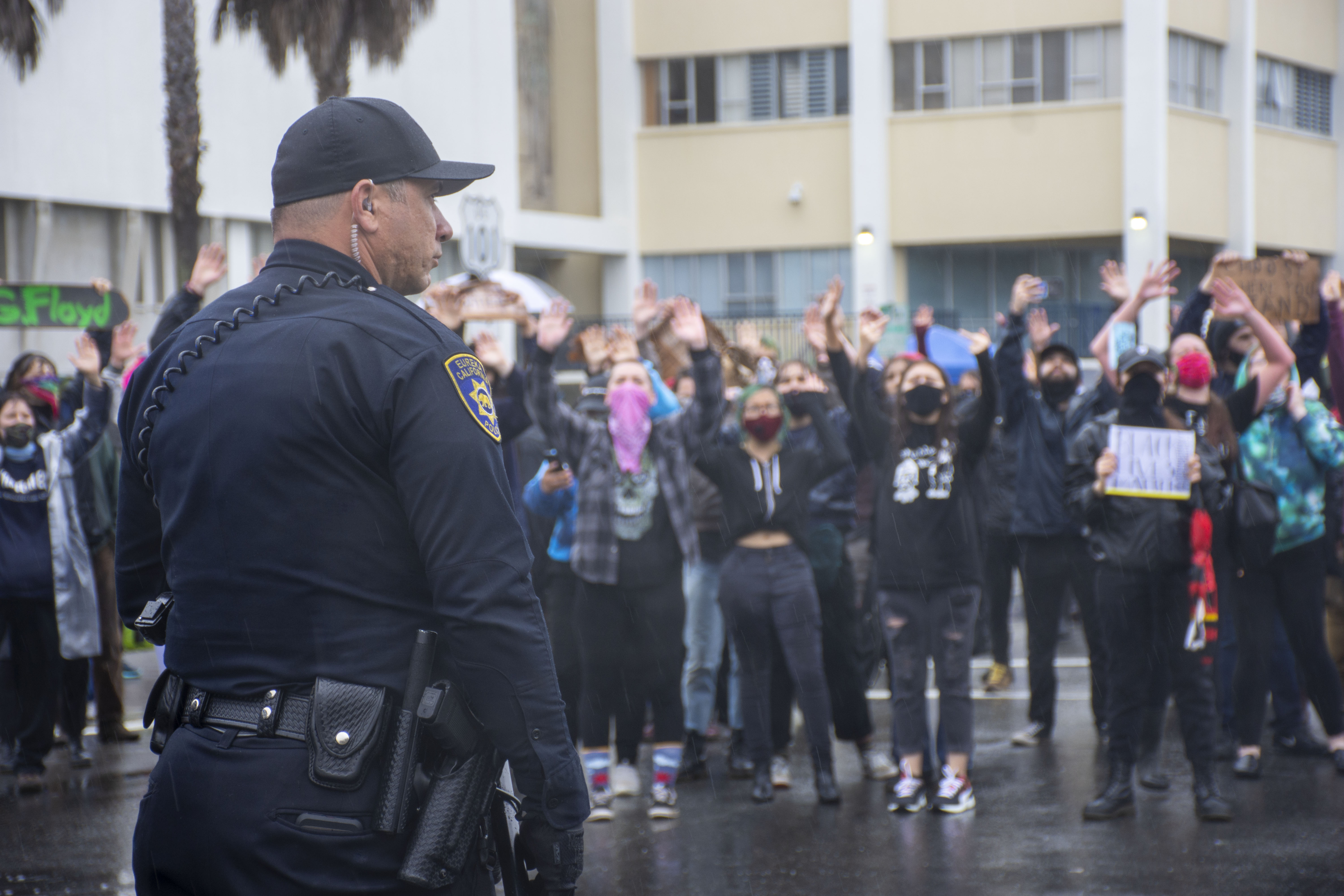
As rioters made their way past the barricades and through the doors, one thing was clear: at the time of the attack, there were few attempts made by police to stop the rioters. This comes as a sharp contrast to the Black Lives Matter protests that took place just this past summer, in which peaceful protestors were frequently met with violent police intervention.
According to The Armed Conflict Location & Event Data Project that took place May 1 to November 28, 2020, Black Lives Matter protesters were significantly more peaceful than right wing groups, but law enforcement resorted to using force in 51% of Black Lives Matters demonstrations they engaged with, while only restoring to using force in 34% of right wing demonstrations they interacted with during the same period.
These statistics confirm what many activists already knew. The Lumberjack has documented the Eureka Police Department using more force against protesters in Eureka this past summer than the capitol police used when an attack was made against the capitol. The police use more force against journalists documenting protests than when right wing groups raided the capitol building.
On January 6, it took the National Guard four hours to deploy from the D.C. Armory from the time that the mob began making their way from where Trump was speaking. In contrast, in June at the height of the Black Lives Matters protests, there were about 1,700 National Guard members from Washington D.C. alone who were mobilized to respond to the demonstrators.
The feeble response from authorities in Washington D.C. to the attack on the Nation’s Capital is another undeniable example of racial biases that remain alive and thriving in this country. Our police protect white domestic terrorists and continue to endanger the lives of Black protesters advocating to have their voices heard and their equality recognized.
It is a message to all of the activists who choose to speak out against police brutality and all the journalists who cover the efforts of activists. Even here in Humboldt County activists face police brutality for daring to ask for an end to police brutality. Meanwhile, police open the gates across the country for violent extremists. The department might be different, but the institution is the same.
It will take a dramatic institutional change in how the country approaches law and law enforcement to begin to dismantle the structure of white supremacy. The attack on the capitol showed the world that the institutions of law in D.C. need to change, but we have the same institutions here at home. Humboldt needs to change, too.
California’s passing of proposition 22 on Nov. 5 represents a frustrating history of workers’ rights being trampled by the overwhelming influence of greed in politics.
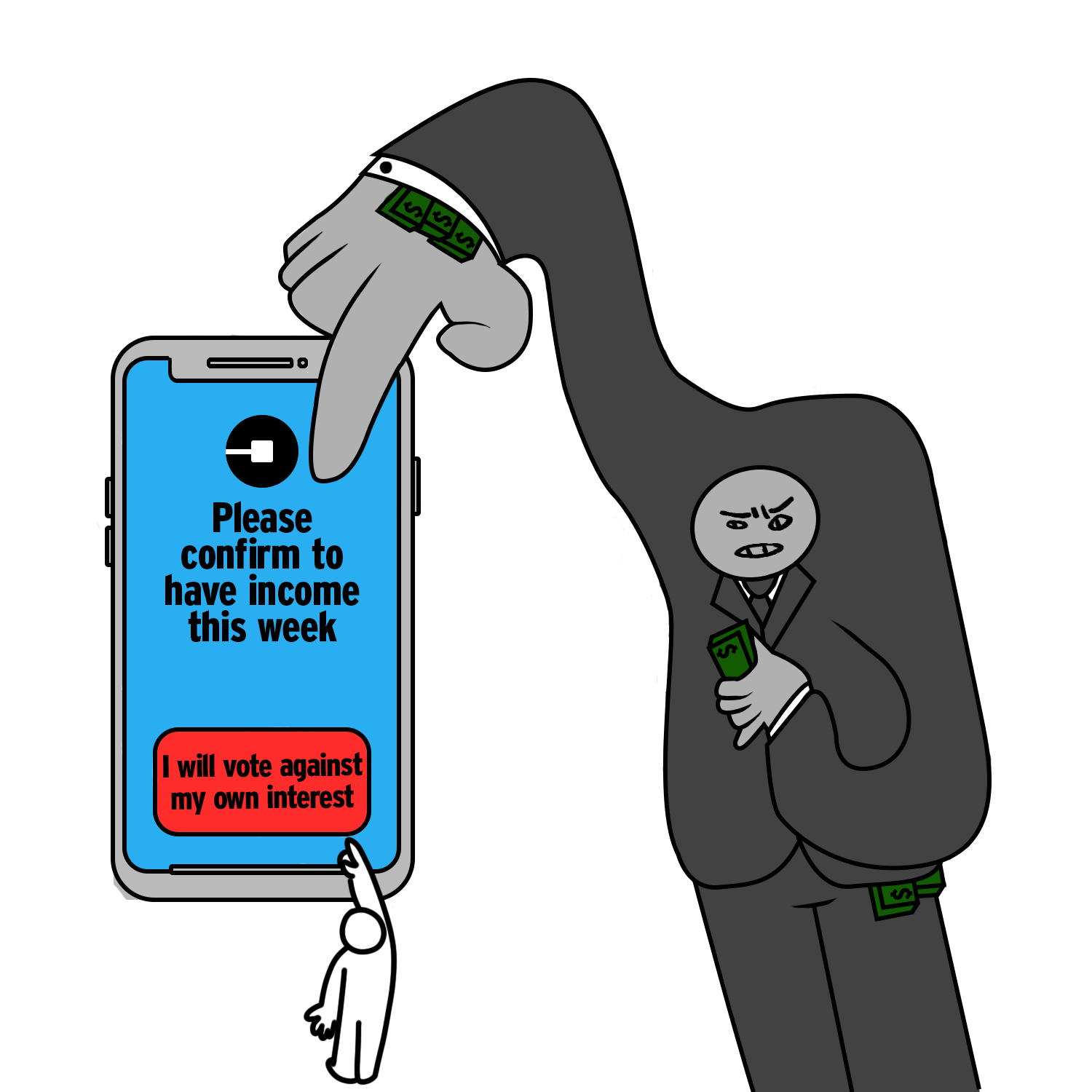
This proposition forces app-based workers to be classified as independent contractors, rather than employees. This classification allows companies like Uber, Lyft and Doordash to pay their workers significantly less than California’s guaranteed minimum as well as provide them with worse benefits than would be guaranteed as a full-time employee.
This proposition was vehemently opposed by labor unions that represented drivers. Unfortunately they were hugely outspent in advertising by the corporations that funded the ballot initiative for prop 22. Advertisements for a yes on prop 22 were incredibly misleading and placed on Amazon, YouTube and even inside of Uber’s app. They misleadingly claimed being an independent contractor provided workers with the freedom to receive benefits while driving on their own schedule.
In fact, under prop 22 drivers are only guaranteed benefits after 25 hours of engaged driving time. Engaged driving time is defined by prop 22 as time actively spent with a rider in the car, or a delivery in progress. With drivers reporting that they spend over half of their time waiting for a pickup, this could require workers to put in more than 40 hours a week for less benefits than a full-time California employee.
The reason that companies like Uber and Lyft are able to continuously influence political campaigns is due to the fact that within the US, companies enjoy and exercise the same level of freedom of speech granted by the First and Fourteenth Amendments that residents due.
In a 1886 Supreme Court case, Chief Justice Morrison Waite said that “the Court does not wish to hear argument on the question whether the provision in the Fourteenth Amendment to the Constitution which forbids a state to deny to any person within its jurisdiction the equal protection of the laws applies to these corporations. We are all of opinion that it does.”
Two years later, the Supreme Court made the ruling official stating, corporations had equal protection under the law as they were merely expressing and acting on behalf of the people that created and ran them.
These rulings are what set the stage for one of the most important court cases in the history of politics within the US, Citizens United v. FEC.
In the rulings of the case, Justice Anthony Andrews, joined by other Justices of the court, wrote that corporations were protected under the First Amendment to freely express their opinions on matters both domestic and political.
Furthermore, Justice Andrews wrote in the majority opinion that the US government was not responsible for creating an equal playing field regarding the use of money, changing the rules of campaign financing, leading to the rise of super Political Action Committees. These PACs could acquire an unlimited amount of funds from corporations, individuals and other PACs to use for supporting political candidates and proposals.
The consideration for corporations did not always extend to laborers. The US has a history of ruling against labor unions, going as far back as 1806, where the first case regarding a labor strike occurred with Commonwealth v. Pullis. The Philadelphia Mayor’s court ruled that leaders of a union strike were guilty of conspiring to raise their wages after labor strikes failed to do so. This established a precedent that labor unions were illegal, something that stood until 1842.
The ferocity companies and governments demonstrate when quelling labor organizations should be all the evidence needed that labor organizations are effective. The total number of workers murdered in response to labor organization in the United States is unknown, but the number of workers killed by law enforcement, company militias, and other anti-labor forces during labor disputes numbers in the thousands. If labor organizations did not work, no one would drop bombs on striking workers and, knowing the risk, no one would strike if it did not benefit them.
The US Government has often been hostile to labor organizations. During the early years of the industrial revolution, the legality of collective bargaining was uncertain, but often led to convictions and fines. Even when collective bargaining was legalized, the National Guard and local law enforcement were responsible for violence against labor organizers.
Resistance to collective bargaining should be expected from people who became as powerful as they did by appealing to moneyed interests. No one in a position of wealth and power can be relied upon to betray their source of power. Greed is bipartisan, and workers should not rely on institutions to grant them rights if those same institutions have proved hostile in the past.
Though the labor victories of the past still benefit workers immensely, companies are doing everything they can to undermine those victories. Prop 22 is one in a long line of examples. It undermines workers rights and chips away at our hard won standard of living. It should be a warning sign that no labor struggle is ever over. It will be an ongoing fight against corporate greed, but joining a union and standing in solidarity with workers across divisions of nationality, race, gender and economic background will benefit yourself and your community.
The Lumberjack editorial staff comments on America’s flawed electoral system
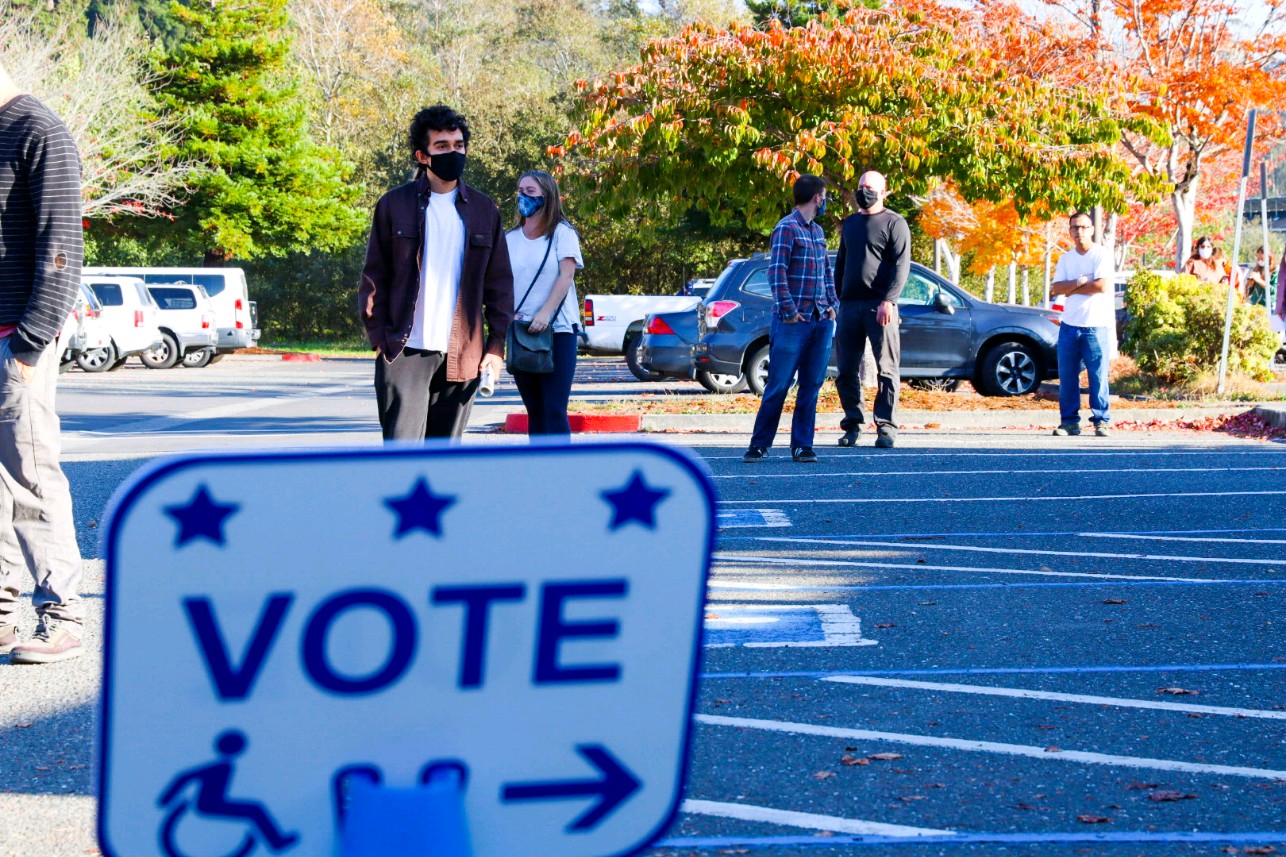
As the world watches the United States 2020 election results, waiting for our pseudodemocratic process to churn out a new president, historically unprecedented voting methods misrepresents the reported Election Day results.
A common misconception surrounding the democratic voting process is that a casted ballot directly counts toward and impacts the presidential election. However, the reality is that every individual’s vote doesn’t hold the same amount of power or equitable value.
The power and value behind your vote is entirely dependent on where you live. Because the electoral college ultimately chooses the president, not the people, the real value of your vote is determined by the ratio of individual votes to electoral votes in each state.
For example, California has a population of about 39.5 million. We have 55 electoral votes, one for each of our congressional representatives. That works out to about 718,000 people per electoral vote. Wyoming has a population of about 579,000. They have three electoral votes. Only one from their representative in the house, but two from their representatives in the senate like every other state. That works out to about 193,000 people per electoral vote. If you’re from California, a Wyoming presidential vote is worth 3.7 times the amount of yours. The story is the same for many of the less populated states.
The voting process falsely validates casted ballots and ultimately undermines votes through the electoral college’s overriding casted vote. Ultimately, you’re not directly voting for a presidential candidate, you’re informing the decision of the electors who do.
Within battleground states, Democrats are sending in more mail-in ballots than their Republican counterparts. The New York Times estimates that 64 million mail in ballots were cast in this election, nearly three times the amount cast in the 2016 election. While COVID-19 played a significant factor in the disparity, pushes came from Democratic candidates across the nation to gain momentum moving into Election Day.
Due to mail-in ballots accounting anywhere from 20-50 percent of the votes in different states, we may not know actual election results until days after election night. States, such as North Carolina, are planning to accept ballots postmarked on election night until Nov. 12. Some states have relatively small margins of difference, which could result in swing states prolonging the definitive results of the election.
Additionally, the United States leaves self-declared territories, for example Guam and the Dominican Republic, neglected in the political process and without influence in the choice of US president. The same could be said for the millions of American citizens who have been deprived of their right to vote because of the criminal justice system. This imbalance significantly alters the demographic of voting participants, therefore not valuing or accounting for every community’s perspective.
This disparity leads to presidents with less votes defeating their opponents, or candidates never getting a clear majority.
While the Lumberjack staff believes the US’s democratic process is deceitful in terms of transparency, we do not agree or echo any of Trump’s sentiments that discredit voting. Instead, we believe his spewing of misinformation contributes to the detriment of the country’s Democratic Republic status.
The US glamorizes its democratic facade as legitimate, straight forward and for the people, however, systemic strategies have displaced and deprived American citizens of their Constitutional right to vote. Between systemic imbalance of the electoral college, active voter suppression and unequal voter representation, our democracy is rooted in unequal representation.
***A Lumberjack editorial represents both the majority opinion of the student newspaper’s editorial board, nine editors, as well as the overwhelming majority of Humboldt State University’s student body. Collectively, an editorial echos, embodies and advocates for community beliefs.***
Insensitive communications between Humboldt State University administration and student newspaper, the Lumberjack, includes inaccurate accusations and degradation comments directed at the LJ’s reputation.
In a letter to the Lumberjack’s editor, Vice President Frank Whitlatch claims the student-paper intentionally printed false information. The letter targets four specific points within the article, “HSU Athletics Department left in dark about SJSU,” by Sports Editor Thomas Lal, published in print on Wed., Oct. 7 and online the following day.
According to Whitlatch, the four issues within Lal’s article include accuracy, context, claims of purposeful ignorance towards follow-up quotations and headline language.
Whitlatch’s claim that Jane Teixeira’s, HSU’s athletic director, was misquoted in regards to the Athletics department’s knowledge of San Jose State University’s arrival is completely inaccurate. The second paragraph of Lal’s article clearly states HSU Athletics was notified late Tues., Sept. 29.
“With the notice coming late on Sept. 29, the first chance that the department had to discuss matters was the following day with the Spartans roughly 24 hours away,” Lal wrote in his article.
The information reported in Lal’s article directly matches the information stated in Whitlatch’s letter to the editor. There is no inaccuracy. Lal, in fact, did not ignore the information as the letter suggests. Whitlatch attempts to use this baseless claim to delegitimize the entire article.
While the letter states HSU Athletics was not in the dark about the team arriving, our editorial staff does not believe a few hours of advanced notice would significantly impact the department’s ability to prepare for the team’s arrival.
Whitlatch attached transcripts from Lal’s meeting with Teixeira in his letter claiming the Lumberjack ignored context surrounding Teixeira’s quote. Cris Jones Koczera, emergency management coordinator, however, further supported the information reported in Lal’s article.
“It was at the end of the day, on Tuesday [when they found out],” Koczera said in the interview with Lal. “So, by the time we really had an opportunity to get together, start talking about what that meant it was Wednesday first thing, right out the gate.”
In a Zoom meeting with the Lumberjack editorial staff on Thurs., Oct. 15, Grant Scott-Goforth, HSU’s communications specialist, echoed Koczera’s statements that SJSU’s arrival at HSU was in fact a last-minute affair.
“The Athletics Directors and our emergency operations team and myself I think found out several hours before the rest of the campus did,” Scott-Goforth said. “So, that was a scramble. I mean, that was a huge scramble.”
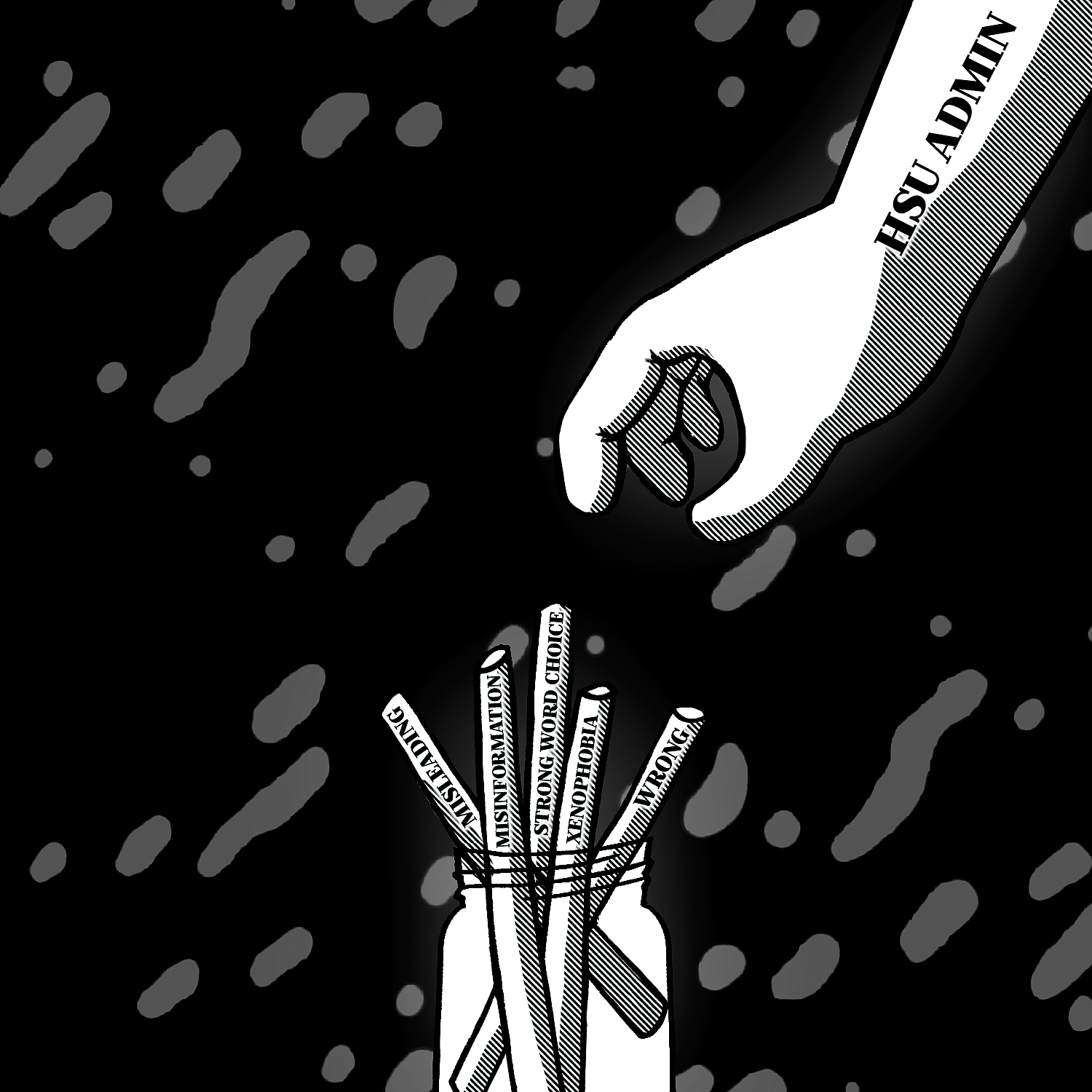
In addition to Scott-Goforth’s confirmation, he claimed the diction used in the Lumberjack’s editorial, “Humboldt State administration cash in at student expense,” was strong, misleading and accusatory language that promoted a Humboldt brand of xenophobic behavior towards students from big cities by stating SJSU was stealing HSU student resources.
“I just felt that was a little bit misleading because again you know this is a decision that’s made by the President’s versus the student athletes who are coming here so they could practice but it wasn’t exactly their choice,” Scott-Goforth said. “I grew up in Humboldt County and I feel there’s this weird kind of specific Humboldt County brand of xenophobia that I see over and over again, and often is about HSU students coming from the big cities and it’s a scary thing.”
Humboldt County Department of Health and Human Services was not advised prior to SJSU’s arrival, the Lumberjack was purely reacting to student and community concern regarding health endangerment in the midst of a pandemic, not due SJSU coming from a more populous county.
The Lumberjack is an independent news organization. We have enjoyed a healthy, working relationship with the HSU Athletics Department and would never purposefully ignore facts provided in an interview. Implying that we would attempt to mislead our readers is entirely incorrect and harmful to the reputation of this publication and its reporters.
Through a very complex set of circumstances, the Lumberjack has aimed to provide the most accurate information available to students and the community while working with Athletics to obtain that information.
As a part of the California State University system, Humboldt State is subject to the same rules and limitations as other public universities. This includes court cases that set a precedent for the protection of student produced media under the First and Fourteenth Amendments.
By publishing your letter to the editor, we have maintained our position as a public forum by allowing a fair and open space for all to voice their opinion.
While the Lumberjack may receive funding from the university, like many student-run programs on this campus, Bazaar v. Fortune, 489 F.2d 225 (5th Cir. 1973) ruled this does not grant the administration the right nor the permission to control the contents of the campus paper.
In addition, Tinker v. Des Moines Independent Community School District 393 U.S. 503 (1969) ruled that actions of censorship cannot be taken against a paper for content unless the school can prove the content would “materially and substantially interfere” with operations.
Like any other publication, the Lumberjack is protected as a member of the free press. Our duty is to serve the interests of our students and surrounding community by informing them with timely and accurately reported information. While the HSU administration may take issue with our editorial, we stand by our position and how it accurately represents the voices of HSU’s student body.
We will not be retracting our story and will continue to support the efforts our reporters make to ensure the voices of the student press on this campus are not silenced, censored or intimidated.
San Jose State’s football team steals on-campus resources from student body
***Editor’s note: SJSU football program was tested in congruence with Mountain West conference guidelines***
Humboldt State University’s administration continues to ignore the health and well-being of paying students and surrounding community members by selfishly prioritizing university funding and money opportunities.
On Oct. 2, San Jose State University’s football team arrived at HSU to utilize the field and training facilities. The team of 141 players, coaches and staff members are expected to social bubble, strictly quarantine with one another, on campus in Redwood Hall. Redwood Hall stands in the middle of campus, between the Student Health Center and the Depot, making it an unavoidable place for students on campus to pass by.
In addition, HSU students were notified via school wide email of the university deal less than 24 hours prior to SJSU’s arrival.
First and foremost, this deal did not involve the approval from either county’s public health officers. Since March, HSU has maintained a relatively low COVID-19 case count with only 11 confirmed cases. SJSU falls within Santa Clara County, and as of Oct. 6, has 50 confirmed cases.
The team is expected to self-patrol and monitor their own health. They will be tested once a week throughout their stay at HSU, which directly violated SJSU’s athletic conference guidelines provided by Mountain West.
The Mountain West Conference demands athletes be tested three times a week. If a test comes back positive, further testing is done to confirm the positivity. SJSU brought their own testing equipment, however, the heightened risk of contracting the virus extends beyond the student body and permeates into the town of Arcata.
There has been no confirmation of how long SJSU’s stay will be. Hearsay declares a week, but pictures of arriving Spartan football players holding flatscreen TV’s and luggages of equipment says otherwise.
Student facilities will cater to SJSU during their stay, closing off access to the Redwood Bowl from HSU athletes and students while also extending the Student Recreation Center hours beyond usual scheduling. A ‘no access’ sign currently hangs outside the gate entrance of the Redwood Bowl, HSU claims the sign is to contain SJSU’s football team and limit cross infection.
HSU students have been repeatedly denied access to on-campus resources, classes, labs, studios and housing since the beginning of the pandemic. However, SJSU was able to rent out the Redwood bowl, SRC and on-campus housing facilities and resources immediately. HSU is renting out campus resources we either don’t have or refuse to offer to students.
Administration stated that SJSU will be paying for all facilities, housing and resources being used during their stay. However, current resources occupied by SJSU at this time are paid for by student fees. Students believe the funds should be redistributed back to their accounts for a fair way to compensate for the loss of access.
It’s clear that this decision to move SJSU to HSU was made last minute and without the permission or acknowledgement of HSU students. HSU administration has proven time and time again that the students’ safety isn’t a top priority. The motivation to cut out students from participating in their own university outweighs the value of students altogether.
HSU continues to treat our campus like it’s closed or empty, forgetting an entire student body population of 6400 people.
Reopening the school in any capacity must have been the worst idea possible. There was not enough preparation for letting students come back to Humboldt State University. While it is understandable that every student has their own reasons for living on campus, the risks are high. HSU President Tom Jackson made it clear that suspending move-in dates and face-to-face instruction until a later date was prejudice and not necessary.
With cases spiking in recent days, the community is at risk. In a press release from the Humboldt County Joint Information Center, people between 20 and 29 have the highest percentage of new COVID-19 cases locally. Young adults are becoming the primary carriers of COVID-19 and are spreading it unknowingly.
Humboldt County Health Alert recently rose to a Level 3, which means “High Risk- Many cases with conditions for community spread, with many undetected cases likely. Limit everyday activities to increase safety.”
Opening up the university to a thousand students in a single week is like pouring salt on a fresh wound. Although Arcata is open to tourism for the economic stimulation, the town was not ready for it. When Arcata first opened back up to the locals, the cases were low and stable. Then tourism started to pick up. Travel has put the community in danger and is a contributing factor for the rise in cases.
There is a large elderly and retiree population in Arcata and surrounding communities, like Eureka and McKinleyville. Humboldt County Public Health Officer Dr. Teresa Frankovich stated that the transmission can, in time, contribute to increased exposure for older individuals who are of higher risk of serious disease and even death.
Letting a large amount of students move in during the middle of a pandemic in a small town was not a good judgment call. The protocols and guidelines put in place by HSU can go wrong in various ways.
While the single occupancy rooms for student housing were supposed to be a way to shelter in place, there are common areas that the students will share with their housemates such as the living room, kitchen and bathrooms. On the Humboldt State Campus Ready website, it was vaguely mentioned that these common areas will be limited and if violations persist, they will be restricted. But with student housing employees matching one to every hundred students, the likelihood of knowing these violations are occurring are nearly impossible.
With five students and one faculty member having tested positive, HSU has made COVID-19 testing mandatory for student residents throughout the semester. However, the Student Health Center states on the Campus Ready website that testing will be done “in a limited capacity due to a nationwide shortage of tests.”
Regarding limited face-to-face instruction, the administration is putting the responsibility on the students to ensure they stay healthy. If a student were to test positive for COVID-19 while at HSU, it would be their fault for not following the guidelines to satisfaction, instead of the university’s for being open. The best way to keep students safe is to not have contact with other students. That risk became a reality when a thousand new, incoming students decided to move on campus.
Dr. Frankovich and President Jackson should not have agreed to open the campus in the first place back in June. There had to have been consideration of the possible influx of cases during the summer months with tourism. Not to mention, fall and winter months correspond with the influenza season. Incoming students will not just be battling COVID-19 but also the flu, the symptoms of which are almost identical.
There were a lot of important individuals that conversed in making these decisions. Unfortunately, the people being put at risk obviously weren’t a part of the conversation.
Quarantine shelter-in-place offers escape for some and anxiety for others—both are damaging
Inhale, pause, exhale. We are living through an unprecedented, intimidating and stressful time, but now is not the time to beat yourself up.
While the world seems at a standstill, many people have taken this time away from their normal daily duties to start new hobbies, lose weight or even learn new languages. These tasks and goals are not a reflection of yourself, nor should they be used to show off your journey through social distancing.
The same, and worse, can be said in regard to many other social media platforms. For example, Instagram can be a mindless escape for some but a shame-inducing harbor for others.
There’s a constant creation of new challenges and trends coming up everyday, whether it’s the pushup challenge, #untiltomorrow or even celebrities singing tone deaf tunes. Or perhaps it’s a stream of self improvement posts and revitalized New Years goals.
Whatever is clouding your social media feed, it doesn’t have to be a standard for you to live up to. This isn’t a productivity competition.
Some of us might have more time on our hands, but that doesn’t make things easier—and some people still working or now taking care of children might not have more time. We are also still dealing with pre-existing mindsets on top of the stress of a viral global outbreak.
Don’t waste this time comparing yourself to someone who’s lost 10 pounds walking in circles in their driveway or to someone who’s learned how to speak Italian while in quarantine.
We need to have compassion for ourselves always, but especially now. The Centers for Disease Control and Prevention’s COVID-19 webpage provides a section for stress and coping information. This page offers insight to stress causes and outcomes all while underscoring the importance of knowing everyone deals with stress differently.
Thus, we escape to viral social media trends for entertainment and relief.
In a recent Vox article, writer Rebecca Jennings supports the flood of Instagram challenges. She argues people should continue this outpour of personal content because it offers connections that will stay in this ephemeral time.
However, instead of cluttering a platform with more dog picture reposts or pictures of people wearing pillows as clothing that only distract from the now, we should contribute to the conversation by being honest and doing something that honors yourself and others. Let your friends on social media know how you really feel—open up, cry, laugh and inspire. If you’re up for it, of course.
Don’t waste this time comparing yourself to someone who’s lost 10 pounds walking in circles in their driveway or to someone who’s learned how to speak Italian while in quarantine. Of course, if walking in circles in your driveway while rambling in broken Italian is your thing, go for it.
Being honest with others allows for accountability. If you continue to keep up a guise of happiness when you’re truly suffering inside, you won’t receive the help you deserve.
Speaking up about how you feel is a challenge more people should face. You don’t need to make immediate changes to improve, but you owe it to yourself to take the time you need.
Businesses capitalize on gender-based price discrimination
Gender-based price gouging often goes unnoticed, even though it affects the most basic items like clothing, menstrual products and toiletries.
The pink tax, also known as the tampon tax, refers to women’s products that frequently cost more than equivalent male products. These taxed items aren’t necessarily centered around female hygienic products, but they often target that audience.
March is dedicated to Women’s History Month, where past actions, sacrifices and challenges advocating for equal rights are respected and celebrated. The pink tax furthers gender discrimination and promotes the patriarchal setup of our society.
Women pay more for products solely based on the product being used on a female body. This contributes to the suppression of female rights by unrealistically charging women more for the same products.
The tax allows companies to take advantage of women’s products and manipulate the pricing to further profit. The New York City Department of Consumer Affairs conducted a study of the price differences between products which had male and female versions. The study found, on average, women’s products cost 7% more than men’s products.
There are only five states which don’t tack on an additional tax for any women’s products—Alaska, Delaware, Montana, New Hampshire and Oregon.
Research shows the female version of products like razors, clothes, shaving cream, facial cleanser and even children’s toys cost more on average than their nearly identical male counterpart products.
Pink taxes still exist in 35 states in the United States. There are only five states which don’t tack on an additional tax for any women’s products—Alaska, Delaware, Montana, New Hampshire and Oregon.
Both New York and California look to join the five states of pink tax exemption by eliminating gender-based pricing discrimination. Governor Andrew Cuomo of New York is leading a campaign against the pink tax with a budget plan to remove all gender-based pricing. California State Senator Hannah-Beth Jackson motioned for the same action and argued for the removal of the tax through a demonstration provided in a press conference. Jackson placed two basically identical soccer balls on a table, one with a pink stripe priced at $8.99 and the other with a blue stripe priced at $6.99. Jackson showed gender-based pricing to be simply ludicrous.
The essence of the pink tax is to further discriminate by gender and sexuality to create immense profit off of the subtle product differences. This makes money for corporate manufacturers and hinders the progression of gender equality.
To participate in the pink tax revolution and help the gender equality cause, we advocate boycotting products that target women or supporting companies who fight against gender-based pricing. We encourage people to purchase from companies that don’t produce gender-specific products. Collectively, this allows us to retaliate against the existence of the pink tax in the first place.
This website uses cookies to improve your experience. We'll assume you're ok with this, but you can opt-out if you wish. Cookie settingsACCEPT
Privacy & Cookies Policy
Privacy Overview
This website uses cookies to improve your experience while you navigate through the website. Out of these cookies, the cookies that are categorized as necessary are stored on your browser as they are essential for the working of basic functionalities of the website. We also use third-party cookies that help us analyze and understand how you use this website. These cookies will be stored in your browser only with your consent. You also have the option to opt-out of these cookies. But opting out of some of these cookies may have an effect on your browsing experience.
Necessary cookies are absolutely essential for the website to function properly. This category only includes cookies that ensures basic functionalities and security features of the website. These cookies do not store any personal information.
Any cookies that may not be particularly necessary for the website to function and is used specifically to collect user personal data via analytics, ads, other embedded contents are termed as non-necessary cookies. It is mandatory to procure user consent prior to running these cookies on your website.