The Lumberjack


Students Serving The Cal Poly Humboldt Campus and Community Since 1929

Tag: Arcata

  • City destroys legacy bike trails

    City destroys legacy bike trails

    Several popular unsanctioned trails were decommissioned, but mountain bikers remain optimistic

    Over winter break, teams of city-directed California Conservation Corps (CCC) work crews destroyed three popular unsanctioned bike trails in Arcata city forests. They were the lifeblood of the community forest for generations of bike riders. Then, in a day, they were gone.

    BEFORE: The lines of the illegal trails were sculpted from hours of shovel work into functional works of art for bikes to flow over. | Photo by Jett Williams

    The crews were thorough, ensuring that the lines would not be easily rebuilt. They dug up and flattened berms and jumps, laid logs and planted ferns in the trails. The idea was to let the forest reclaim what had been there, leaving no trace of trail behind.

    Darius Damonte is the natural resources crew leader for Arcata’s environmental services. He also rides mountain bikes. Damonte said that the trails had been slated for destruction for years, but the recent government shutdown allowed the city to execute their plans.

    “With the government shutdown, some of the federal contracts that the CCC had fell through,” Damonte said. “We’ve got a pretty good reputation with [them], so they sent us a bunch of free crew time.”

    The three trails each had their own distinct personality. ‘Sam’s trail’ was the oldest, built before the city owned it. ‘Sam’s’ had hosted several HSU collegiate cycling downhill races, during which it supported upwards of 600 runs over a few days time.

    ‘Loam’s Palace’ had been around for many years as a fast bomb line. The trail was a local favorite, in addition to hosting many bike races and rides over the years.

    ‘Road Dome,’ ‘Joey’s Trail’ or ‘Nino’s Favorite’ was a line running parallel to Fickle Hill road, and saw huge strides in development the month before its destruction from a group of student trailbuilders. The team constructed sweeping berms and jumps, leading many bikers to call this trail, at the time, the best in the forest.

    AFTER.jpg AFTER: The trails are almost unrecognizable, with the berms destroyed and branches laid across the line. Local rider Lucas Perez surveys the damage. | Photo by Jett Williams

    One of the builders is forestry minor Ian Wilson. Wilson said that the motivation for building came from wanting more out of a trail than what the community forest provided.

    “We wanted to build our own trail, or trails, that we could have fun on,” Wilson said. “There are fun trails, but it’s not the kind of riding that we’re into.”

    The riding that Wilson’s into includes faster speeds and more intense, bike-specific features. Not for everyone, but the demand is there. Over 100 different riders had put runs in on ‘Road Dome’ before it was decommissioned.

    [perfectpullquote align=”right” bordertop=”false” cite=”Ian Wilson” link=”” color=”” class=”” size=”18″]”Essentially we’re only moving stuff if it’s in the way or prevents a hazard. It doesn’t seem right to go and f-ck up someone’s private property.”[/perfectpullquote]

    Wilson said when him and his friends build, they ensure that their work isn’t hurting the ecosystem.

    “Essentially we’re only moving stuff if it’s in the way or prevents a hazard,” Wilson said. “It doesn’t seem right to go and f-ck up someone’s private property.”

    Wilson and many other local riders want to see more bike-specific trails in the community forest. As it stands, there are no bike-specific lines, although several of the multi-use trails have mountain-bike friendly corners and flow.

    Damonte knows how unenthusiastic the city can be towards the interests of mountain bikers, oftentimes dragging its feet for no reason.

    “I’ve seen it the whole time I’ve been with the city. Mountain bikers try to get stuff done, and want to build what we want to ride, but the city’s been unable to accommodate them,” Damonte said. “I don’t understand why the system is so lethargic.”

    Steven Pearl is an HSU cycling alumni and a member of the Redwood Coast Mountain Bike Association (RCMBA), the local mountain bike advocacy group. He thinks the solution to the current issue is cooperation between motivated trailbuilders and the city, but doesn’t advocate for illegal trailbuilding.

    “It doesn’t help the broader mission of the mountain bike club, which is to bring mountain bike trails into the community forest,” Pearl said. “When the ACF associates mountain biking with something that’s illegal and not well-thought-out, it creates more work for us and we become guilty by association.”

    At the end of the day, all riders share a common goal of seeing more trails. Despite the disheartening destruction of legacy trails that have been around for years, all of these riders remained optimistic about the future of Arcata’s mountain bike scene.

    “I think that mountain biking is here to stay, and it can create a destination-type situation for the city,” Damonte said. “We’re always going to have illegal trailbuilders, until we build what the community wants to ride.”

  • Building bridges and breaking down barriers

    Building bridges and breaking down barriers

    The Arcata Police Department hosted a Sunday barbecue

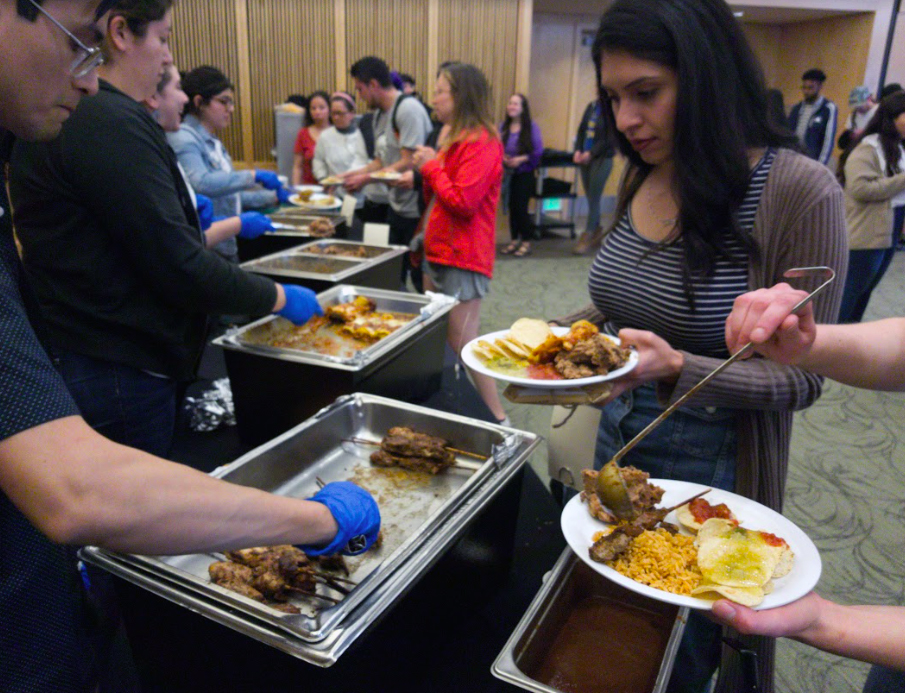
    Nearly 50 people turned out for a community barbecue put on by the Arcata Police Department on Sunday afternoon. From 11 a.m. to 1 p.m. APD officers manned a grill in the Humboldt Plaza Apartments, building relationships while serving laughs, hot dogs, chips and refreshments.

    “We’re out here building relationships with the community,” Sergeant Brian Hoffman said. “We are trying to build trust, but it is not always so easy. We are laying the foundation for the future.”

    IMG_3272.jpeg
    Sergeant Brian Hoffman mans the grill during the Arcata police department’s community barbecue at the Humboldt Plaza Apartments on Sunday Jan. 27. | Photo by Freddy Brewster

    Two weeks prior to the event, APD officers walked throughout the apartment complex introducing themselves and asking tenants how they felt about a community barbecue. Chysha Williams, a resident of the Humboldt Plaza Apartments, welcomed the event as well as the opportunity to meet those in charge of keeping the community safe.

    “It is important to know who is here to protect you, and to know that they are good guys,” Williams said. “These events are good because if there is a bad situation, we’re not afraid to call the police.”

    IMG_3306.jpeg
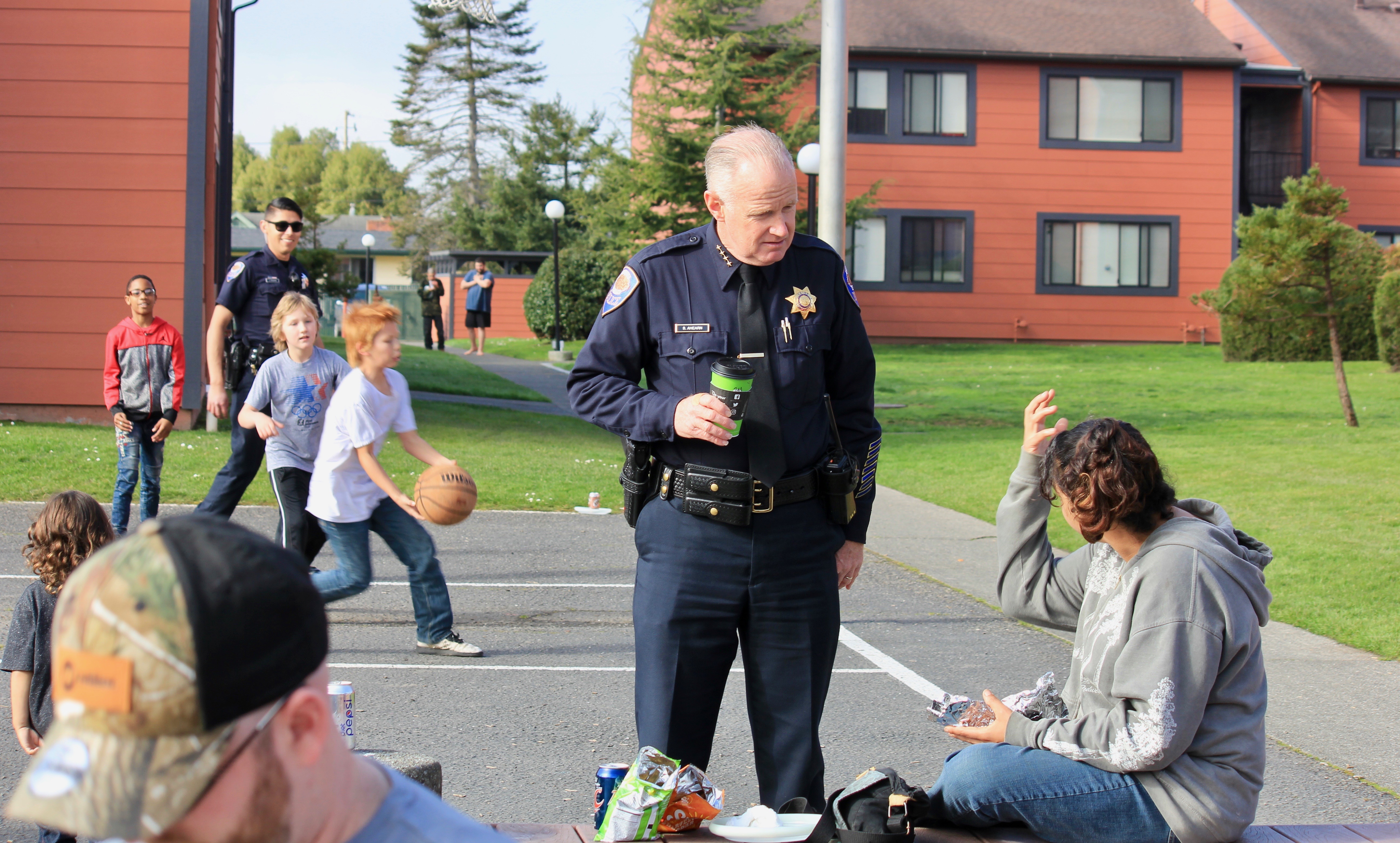
    Arcata Chief of Police Brian Ahearn chats with Chysha Williams during the community barbecue put on by the Arcata Police Department at the Humboldt Plaza Apartments on Sunday Jan. 27. | Photo by Freddy Brewster

    The barbecue is part of an enhanced community outreach program that the APD is using to break down barriers in the community. A rise in the amount of violent crime in Arcata, as well as the murder of Josiah Lawson and the handling of that case have contributed to a tense atmosphere. Police Chief Brian Ahearn was recently hired after the former chief abruptly resigned about one year after the death of Lawson.

    “Having a community event, such as a barbecue, sort of tears down those walls that have divided us over the years and it gives the people a chance to get to know us,” Ahearn said.

    IMG_3251.jpeg
    Officer Heidi Groszmann hands out chips during a community barbecue at the Humboldt Plaza Apartments on Sunday Jan. 27 | Photo by Freddy Brewster

    Chief Ahearn moved here from the San Diego area, where he spent nearly 30 years working in law enforcement. He has been giving a lot of focus to rebuilding trust in the community and has been in attendance at a number of community events such as a vigil for Josiah Lawson and the Martin Luther King Day march. During the barbecue, Chief Ahearn offered praise to a new officer, Chris Rogers.

    “You’re on the right track and your heart is in a good place,” Chief Ahearn said to Rogers. “I sleep well at night knowing there are good cops like you.”

    IMG_3293.jpeg
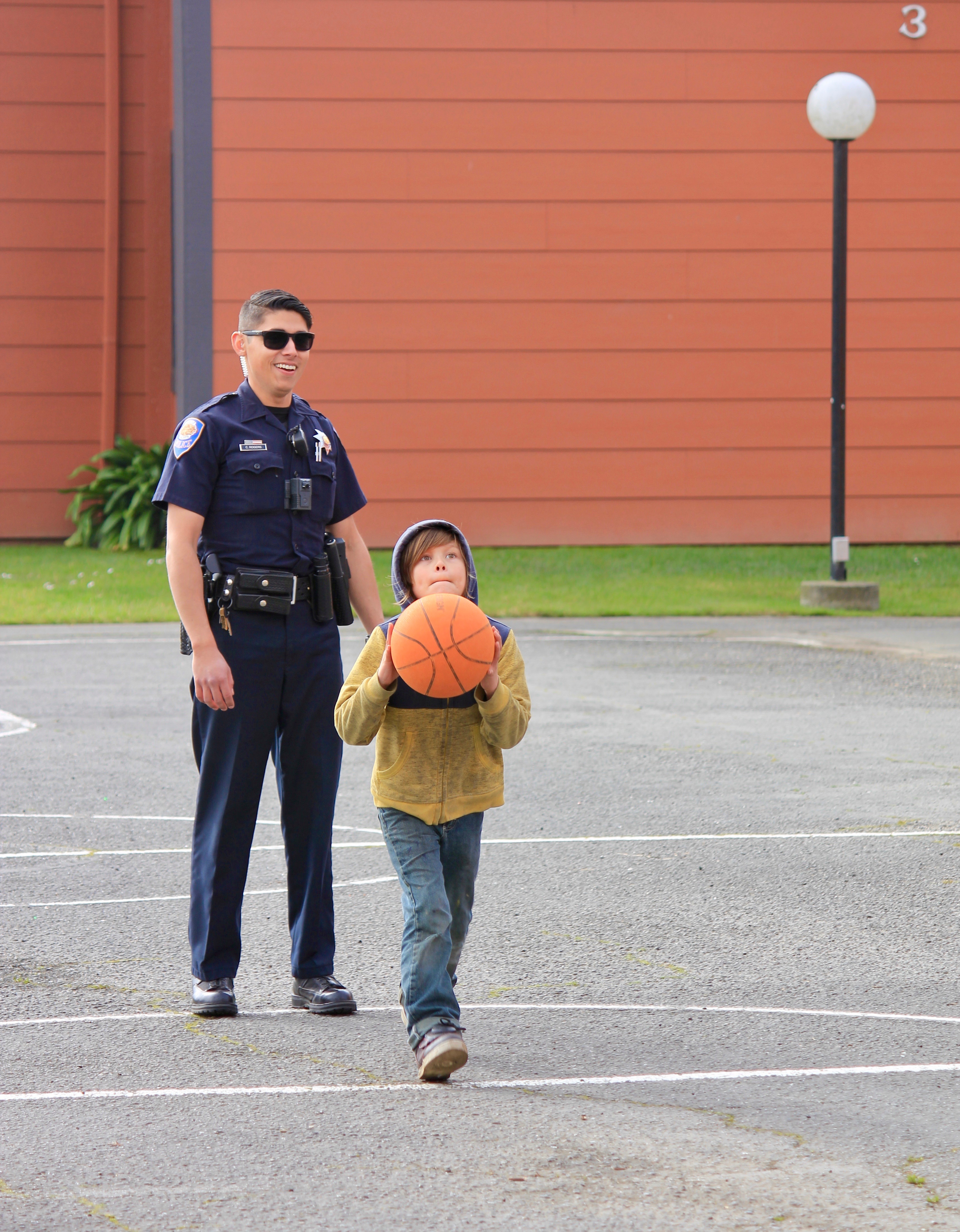
    Officer Chris Rogers plays a game of “knockout” with the children of the Humboldt Plaza Apartments during Sunday’s community barbecue. | Photo by Freddy Brewster

    Rogers is a recent graduate from Humboldt State where he earned a degree in biology. He has only been with the APD for seven months but doesn’t shy away from interacting with the community. During the barbecue, Rogers played basketball with the kids and felt that it was a positive way for officers to interact with the youth.

    “We’re here to show the kids a different side of the police,” Rogers said. “There is more to policing than just enforcement.”

  • The Village is back

    The Village is back

    Controversial student housing gets another attempt in Arcata

    In August of last year Arcata City Council voted against a proposed housing development called Village Student Housing Project, or simply “The Village.” Although the city council opposed The Village project, they reserved the notion that if changes were made in development plans they would reconsider, that time has come.

    “What we are trying to do on the 30th is to bring community back together,” David Loya, director of community development for Arcata, said. “We want to get a sense of the concerns with the council and provide a working environment so our community can provide feedback to the council.”

    Humboldt County, along with the entire state of California, is falling short for affordable housing while the wealth gap between rich and poor grows larger. According to the nonprofit Housing Association of Northern California, the state is short of 1.5 million affordable rental homes. Humboldt County needs 3,300 new housing units with 1,300 of those being for low-income residents, according to the California Department of Housing and Community Development. Loya said the staff at Arcata City Hall is excited to continue dialogue on The Village and that they support the project because of the housing crisis we are in.

    “Students can’t find housing in Arcata,” Loya said. “They look to McKinleyville or Eureka and the city needs to play a role in fighting for student housing.”

    The Village’s proposal was brought before the city council six times before being shut down by a split vote of two for and two abstaining with one vote absence. The city council received hundreds of letters and tens of hours of public testimony from divided community members. The original development plan for The Village was to be an off-campus student-only housing project, but city council members wanted the project to integrate more than just HSU students.

    City council member Susan Ornelas said in a letter written to The Village developer, David Moon, that “while we need student housing, we need every kind of housing in this community. We need professor housing, we need millennial professional housing, we need housing for young families.” Loya said Ornelas had discussions almost immediately with AMCAL after the project was opposed, addressing concerns with marketing housing instead of only student housing.

    “The project was critiqued by quite a bit of people because of its expense,” Loya said. “But the reality is it’s expensive to live anywhere in Arcata with the average rent being $600-650 per room. The apartments on Foster Ave. are upwards of $800 which isn’t really affordable to students, but that’s where they’re finding to live.”

    According to the City of Arcata, the project owner has reconsidered its development plans and has modified the project to include both open market and student oriented development as well as other “substantial changes.” Loya said the meeting will be open to the public and the developers will be there to answer questions.

    “We would love to hear students talk at the meeting and tell us any ideas they have about the project,” Loya said.

    City council meeting on The Village will be January 30, 2019 | 5:30 – 7:30 p.m. | Arcata City Hall Council Chamber | 736 F Street

  • They mean business

    They mean business

    Two former Humboldt State students run their own companies

    Over the past year, two former Humboldt State University students Oscar Perez and Tex Keith created and manage their own Humboldt County based companies at the ages of just 23 and 21.

    Perez and Keith started off as football players for the HSU Lumberjacks but then decided earlier in the year to take a break from enrolling in classes in order to pursue their careers. Though both men’s companies are vastly different, they both enjoyed the idea of being their own boss.

    “Seeing the way my old boss ran his shop looked really fun, but I’ve never liked authority,” Perez said.

    Oscar Perez story.jpg
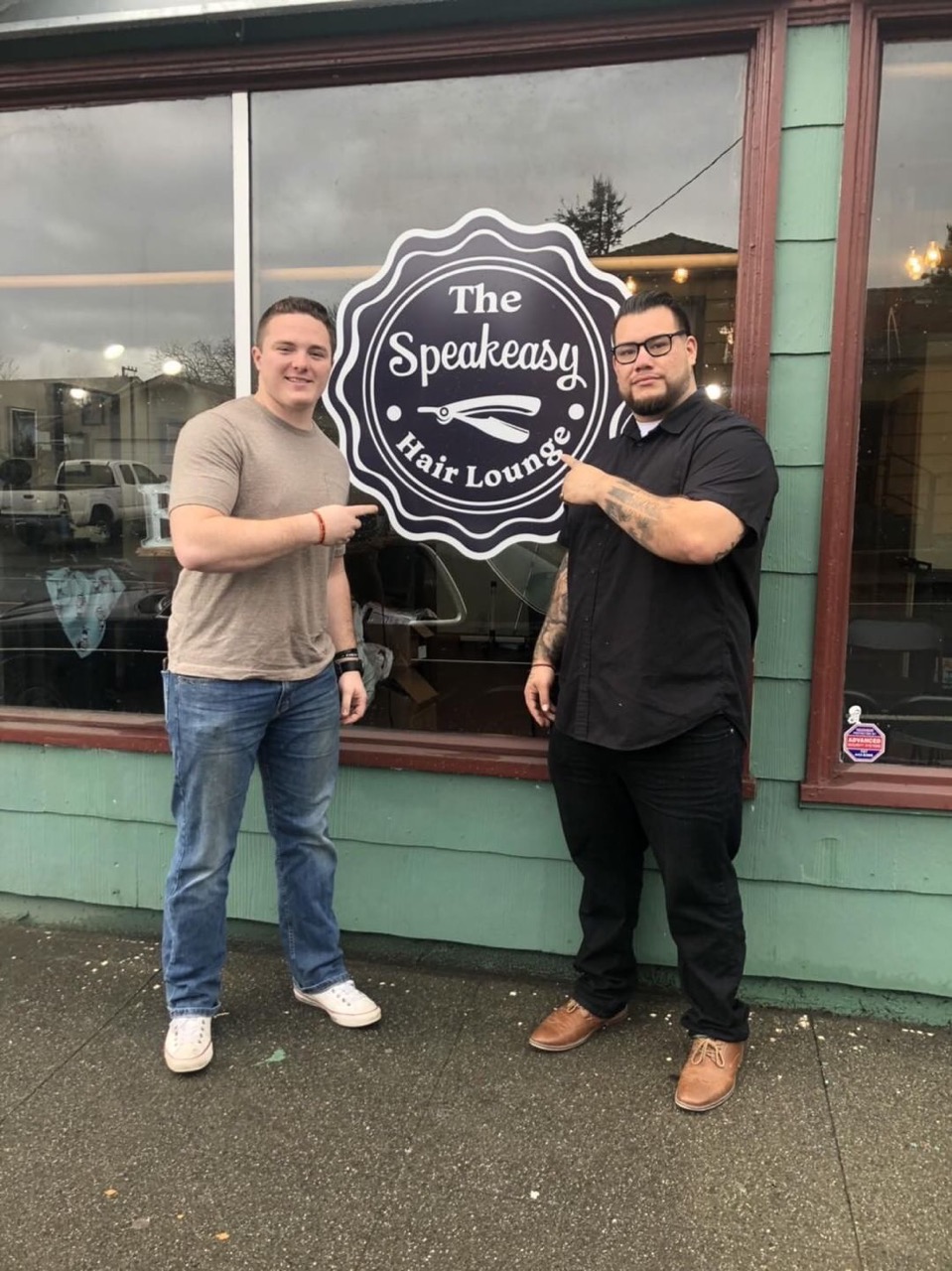
    Oscar Perez, owner of The Speakeasy Hair Lounge on K street in Arcata gives client a haircut on Nov. 29. Photo by Amanda Schultz

    Since freshman year of high school, Perez had always had a passion for cutting hair as a barber. He knew he wanted to one day open his own barber shop. It wasn’t until just a couple of months ago when Perez spontaneously decided to take a chance as he found a storefront available in a popular location in the middle of Arcata on K street. A month and a half later, The Speakeasy Hair Lounge opened up on Oct. 2.

    “I’ve always dreamed of opening my own shop,” Perez said. “The opportunity came up quick. I saw the shop and just ran with it.”

    As CEO of Inertial Media, Keith also manages a corporation within Humboldt. This business maven and marketing agency provides expert consulting, brand strategy, and social media management to help their clients. As Inertial Media grew larger Keith became more successful. Keith was awarded top 10 entrepreneurs and had his company featured in Entrepreneur Magazine.

    “I’m using this as momentum to keep on growing and helping out other people,” Keith said.

    As a college athlete, Keith had hopes of starting a career in the NFL. It wasn’t until after buying two laptops with extra financial aid money and discovering digital marketing did he make the decision to commit most of his time toward business.

    IMG-7326.JPG
    Former HSU student Tex Keith is the new CEO of Inertial Media. Photo courtesy by Tex Keith

    As Keith learned more about marketing, he was sought out by one of the most successful self-made entrepreneurs in America, Tai Lopez.Keith continued to learn and grow in Lopez’s program which ultimately landed him a spot in Tai Lopez’s Exclusive 300 Group which consists of his best students. Keith is also planning to teach in one of Lopez’s upcoming courses.

    “Going from seeing his YouTube videos in 2015, to being in them is pretty cool,” Keith said.

    Keith has strengthened his team at Inertial Media by hiring other young like-minded marketers and brokers to keep things running smoothly. Perez also hired like minded barbers with similar hair cutting styles.

    “I have a barber from Florida, Central California, and Riverside,”Perez said. “I never actually met any of them. I hired them through Instagram and gave them my pitch.”

    Efrain Rosario is one of The Speakeasy’s barbers. Perez first saw Rosario’s barber skills as he posted pictures of his work on social media. After a few conversations, Rosario was convinced to stay in Humboldt County for a fresh start in the industry after moving from Florida.

    “My experience working here so far has been pretty fruitful,” Rosario said.

    Both companies have plans to expand and further their business along in the future. Perez and Keith have put in countless hours and given up many nights of sleep to get these companies to where they are today. The grit and determination of these two men have started to inspire others to also follow their dreams of starting up a business.

    “Don’t hesitate,” Perez said. “Ride with the momentum and just go for it.”

  • Something in the sauce: Humboldt Brews

    Something in the sauce: Humboldt Brews

    Humbrews’ wings make students’ stomachs happy 

    Arcata can get fairly chilly once the sun goes down. In response, many flock to Humboldt Brews on Saturday nights for drinks, food and to hang with friends.

    Located on 856 10th St., Humboldt Brews (or Humbrews for short) is a great place to immerse yourself in the Arcata lifestyle. With 25 beers on tap, award winning hot wings and a banquet room/nightclub for shows, there aren’t many places around to get a more complete college town vibe.

    As you walk in, there is an instant feeling of Humboldt State University as many of the patrons are wearing HSU gear while they wait for their drinks. There are sports broadcasts on all televisions with a distinct focus on the Bay Area’s teams like the Golden State Warriors or San Jose Sharks.

    Not too many people yet as its only 7 p.m. but the servers do well in making sure everyone has their drinks filled. Along with a pool table, seating for the restaurant and even some old school arcade games, Humbrews has everything you’d want from a college bar. The bar transforms from a mellow early dinner setting to a more energetic “party” setting as more people start to pile in to escape the cold.

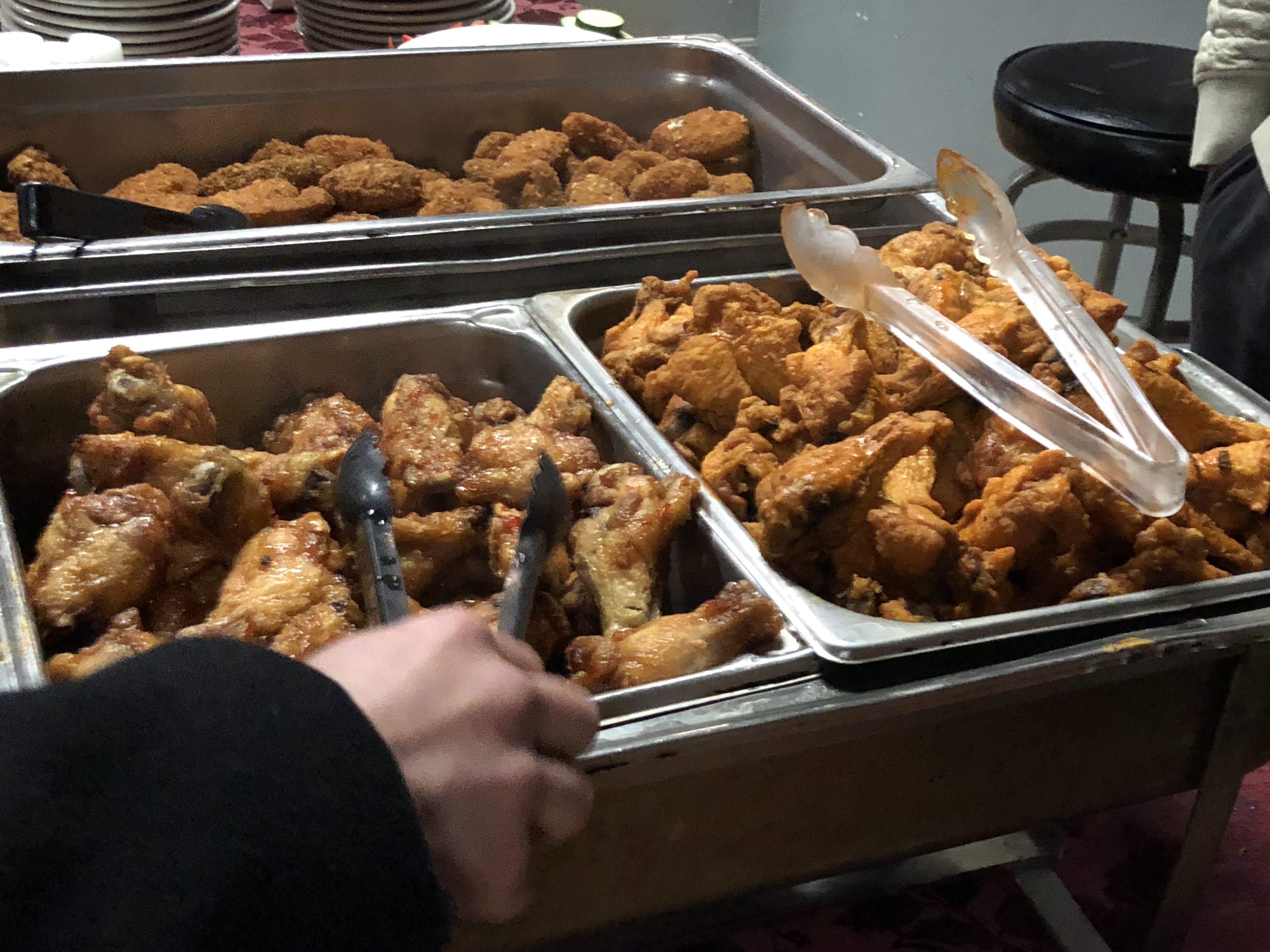
    What better way to warm up from the cool breeze than with hot wings?! Humbrews offers a basket of wings including a side of french fries and some celery as a palate cleanser for $10. The sauces vary depending on the bravery of the customer, but for the fan of traditional wings you can’t go wrong with the hot buffalo sauce. A perfect amount of spicy earns this wing its “award-winning” title as soon as you take a bite.

    Portions are sized reasonably to what you’re paying and you’ll have extra hot buffalo sauce to dip your fries in after. This goes great while treating yourself or watching a game with friends on the large projector screen in the back of the restaurant.

    For those who dare, you can also try Humbrews’ handmade “Suicide Sauce” which is made from many different spices including the notoriously hot “ghost pepper” for an extra $2. Ask for the “Suicide Sauce” on the side to enjoy at your own pace. If you don’t mind sweating through your shirt, this sauce will definitely have you breathing fire.

    Ordering a pound of wings ($12) with a side of “Suicide Sauce” can be fun with a large group as everyone grabs a wing and a dab of sauce to see who can ride the bull without getting kicked off. Wash it down with one of Humbrews’ many beers or ciders. One of the best is from Eureka’s own Humboldt Cider Company called Hibiscus Hemp Cider. A pint of Hibiscus Hemp cider ($6) along with a pound of wings will have you full and feeling good all for under $20.

    Humbrews sets itself apart from other Arcata bars with its variety of quality food choices and upbeat vibe. It is also well lit so you don’t get the creepy, “dingy” feeling that other Arcata bars give off. It’s open daily at 11:30 a.m. until 2 a.m. on most nights. Stop by after class and you might be able to catch happy hour from 3 p.m. – 6 p.m. for drink specials.

    Overall, Humbrews is a staple bar for the HSU student or any Arcata resident with its exceptional drink choice and consistently well-made food, not to mention the hottest wing sauce you can find in Humboldt County!

  • Lumberjacks lose heartbreaker at home

    Lumberjacks lose heartbreaker at home

    Threes don’t fall for the Jacks as they drop first game of the season. 

    Lumberjacks forward Isa Conde scored 26 in a comeback effort by the Jacks versus the Concordia (Ore.) Cavaliers but fell just short in the game’s final seconds.

    The Jacks (2-1) fell to the Cavs (4-1) 72-71 at Lumberjack Arena on Nov. 20 but were able to mount a comeback after trailing by 18 early in the game. Isa Conde began to find her groove thanks to some trips to the free throw line and the buckets began to fall.

    “We shouldn’t be in these situations,” Conde said. “We should be the ones forcing teams to fight back and we just need to work on our starts.”

    Defense has been an issue for the Jacks as they are allowing 71.6 points per game but this team lives and dies by the three and they fell on their own blade against the Cavs.

    The Lumberjacks shot over 10 percent worse from three-point land against Concordia than their season average of 32 percent. To make matters worse, the Jacks couldn’t pull down any boards and were outrebounded by 15.

    Down 23-6 in the first quarter, the Jacks began to chip away at the lead. They found their way back into the game as they began to force some turnovers. Down by just four with 2:16 left, Conde drove to the bucket and got the and-one to bring the Jacks within just a point. Conde led all players with 16 points the first two quarters and her team trailed by only three at halftime.

    “I thought Isa just played her tail off on both ends of the floor tonight,” Jacks head coach Michelle Bento-Jackson said. “She’s trying her best to lead us in all areas and not just scoring but keeping us together and being vocal.”

    The Cavs were able to get out to an eight-point lead in the third quarter but the Jacks remained poised and kept making plays to keep the game close.

    WBB-8
    Lumberjacks junior forward Alexia Thrower puts the post-move on the Cavaliers defender during the Jacks 72-71 loss to the Cavs on Nov. 20 at Lumberjack Arena. | Photo by Lauren Shea

    Jacks newcomer Alexia Thrower has been a revelation for the Jacks. She’s already recorded two double-doubles in the first three games of the season with averages of 17 points and 9.6 boards per game.

    “We came in and played stronger in the second half, “Thrower said. “It was enough to give us a kick start.”

    The fourth quarter was not to be missed. The Jacks fought their way back to make the game competitive but they wanted a win. Every time the Jacks came close, the Cavs hit another shot to extend their lead.

    Down 68-65 in the game’s final minutes, Jacks junior guard Tyra Turner was able to get by her defender to make the layup plus a foul. Turner knocked down the free throw and tied the game at 68.

    With the Cavs in the penalty, Alexia Thrower was sent to the line for two. She knocked down both to give the Jacks their first lead since the first minute of the game.

    With just 11 seconds left, Cavs guard Kizzah Maltezo was fouled by the Jacks Jovanah Arrington. Maltezo made both to put the Cavs up one. With a chance to win the game, Turner missed a 3-pointer as time expired, handing the Jacks their first loss of the season.

    “Im glad that our team had the resilience to fight back,” Conde said. “But at the same time it would be cool to have came out victorious.”

  • Hypnotic Halloween at Arcata Plaza

    Hypnotic Halloween at Arcata Plaza

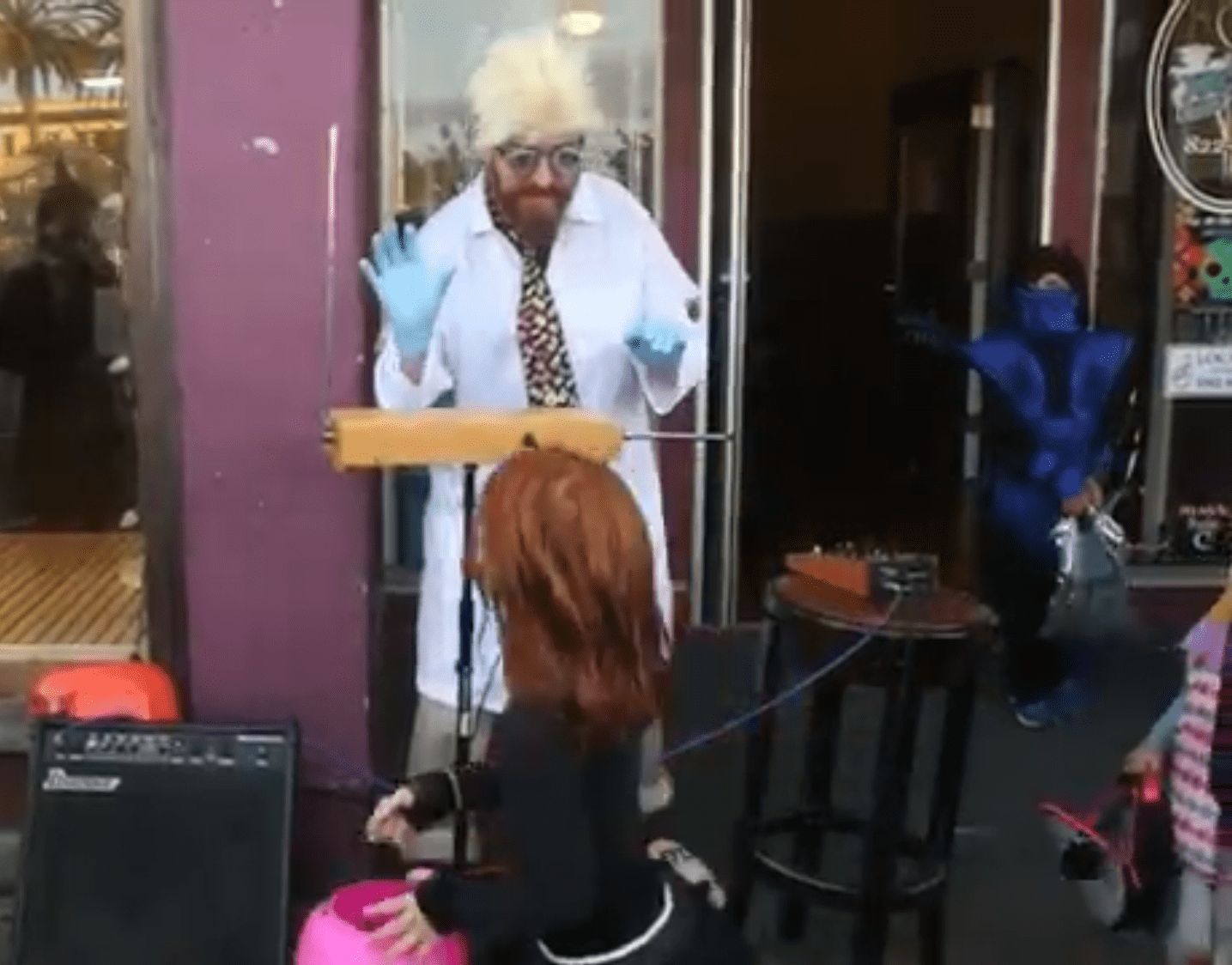
    Theremin player gets spooky on Halloween

  • Letters to the Editor: Vote No on Measure M and Remove McKinley

    Letters to the Editor: Vote No on Measure M and Remove McKinley

    One reader shares his opinion on Arcata’s statue of William McKinley

    The fight to remove the McKinley Statue from the Arcata Plaza has been a long fought battle. The McKinley Statue represents William McKinley, the 25th President of the United States, who gave birth to U.S. imperialism through genocide and colonized over 7,000 islands in both the Pacific and Caribbean by instigating the Spanish-American War and the Philippine-American War. Domestically, McKinley had a similar impact among the Native American community through breaking up several tribes, abandoning the African American community during times of race riots, and driving the U.S. into a depression.

    The current movement to remove the McKinley Statue was launched by Seventh Generation Fund for Indigenous Peoples because the Arcata Plaza is the same site where indigenous peoples were sold into slavery. Grassroots activism, led by the Historic Justice Alliance, successfully pressured Arcata City Council to vote to remove the McKinley statue on Feb. 21, and began the removal process. Following the vote, a small group of reactionaries organized a petition to keep the McKinley Statue, which was approved for the Nov. 6 ballot as Measure M.

    So what does Measure M do? If Measure M goes to a “Yes” vote it would do several things. First, it would overturn the Arcata City Council decision and keep the statue. Second, it would prevent any future modification of the statue. Third, it prevents Arcata City Council from having any future say on the McKinley Statue despite being the original body that erected the statue. Lastly, if the statue comes down before Nov. 6 then the Arcata City Council is legally obligated to put it back up.

    For students, this means that the next step in removing the McKinley Statue is going to the local polls where we have the power to influence the policies that affect future students. Currently, the Vote No on Measure M campaign is endorsed by more than 40 community organizations, including the Wiyot Tribal Council. Students are encouraged to vote “No” on Measure M on Nov. 6 by registering to vote by Oct. 22 in Arcata at https://registertovote.ca.gov.

    Nathaniel McGuigan

    Regional Mecha Co-Chair Northern California Minister of Communication

    Humboldt PSL Email: nam449@humboldt.edu


  • Cheap beer, cheap pizza, and free tunes

    Cheap beer, cheap pizza, and free tunes

    Student shredders take first flight at Jam’s Pint Night

    Icarus & Suns, a three piece band featuring Miles Oliart on drums, Nick Redfern on bass and Rahkiv “Rah” Lewis on guitar, played their first show at the Jam in Arcata last night.

    “We’re progressing and going somewhere now,” Oliart said. “I’m super stoked about the situation.”

    The group takes influence from a number of genres; citing musicians like Jaco Pastorius, Jimi Hendrix and Django Reinhardt as some of their favorite artists.

    “I honestly get my rhythm from Gabriela Quintero,” Lewis said. “She came to campus this semester, but I missed it and was bummed!”

    The Jam has been holding shows in Arcata for more than 30 years, claiming that the Foo Fighters played their first show at the bar on Feb. 23, 1995.

    The Foo Fighters actually played their first show days before on Feb. 19, 1995 in Seattle, Washington, but you can see how the legend would help shape the Jam’s persona for eager young musicians like Icarus & Suns.

    SB.IMG_8288
    Rahkiv Lewis and Miles Oliart, of Icarus & Suns, rock The Jam’s stage during their last Thursday Pint Night show at The Jam in Arcata on Oct. 11. | Photo by Sean Bendon

    Icarus & Suns has only been practicing for a month or so, but the trio already seems to have found their rhythm, playing nearly 40 minutes of downtempo Latin-influenced songs to a packed house on Thursday night.

    “We have three hours [of songs] or something ridiculous like that,” Redfern said.

    Although the band was limited to a 30 minute set, it didn’t take long for the crowd to get in groove with them.

    “Cheap beer, cheap pizza, and free tunes,” said crowd member Connor West. “People are out here having a good time.”

    The name for Icarus & Suns comes from the myth of Icarus and Daedalus attempting to escape Minos maze in Greece with wings made of wax and feathers. Icarus gets carried away with his ability to fly and goes too close to the sun, melting away his wings and sending him to his death below.

    “I wanted to remind myself not to fly too close to the sun,” Redfern said. “Hopefully we don’t melt away.”

  • Moon Cycles mentality

    Moon Cycles mentality

    Small Arcata bicycle shop with good intentions 

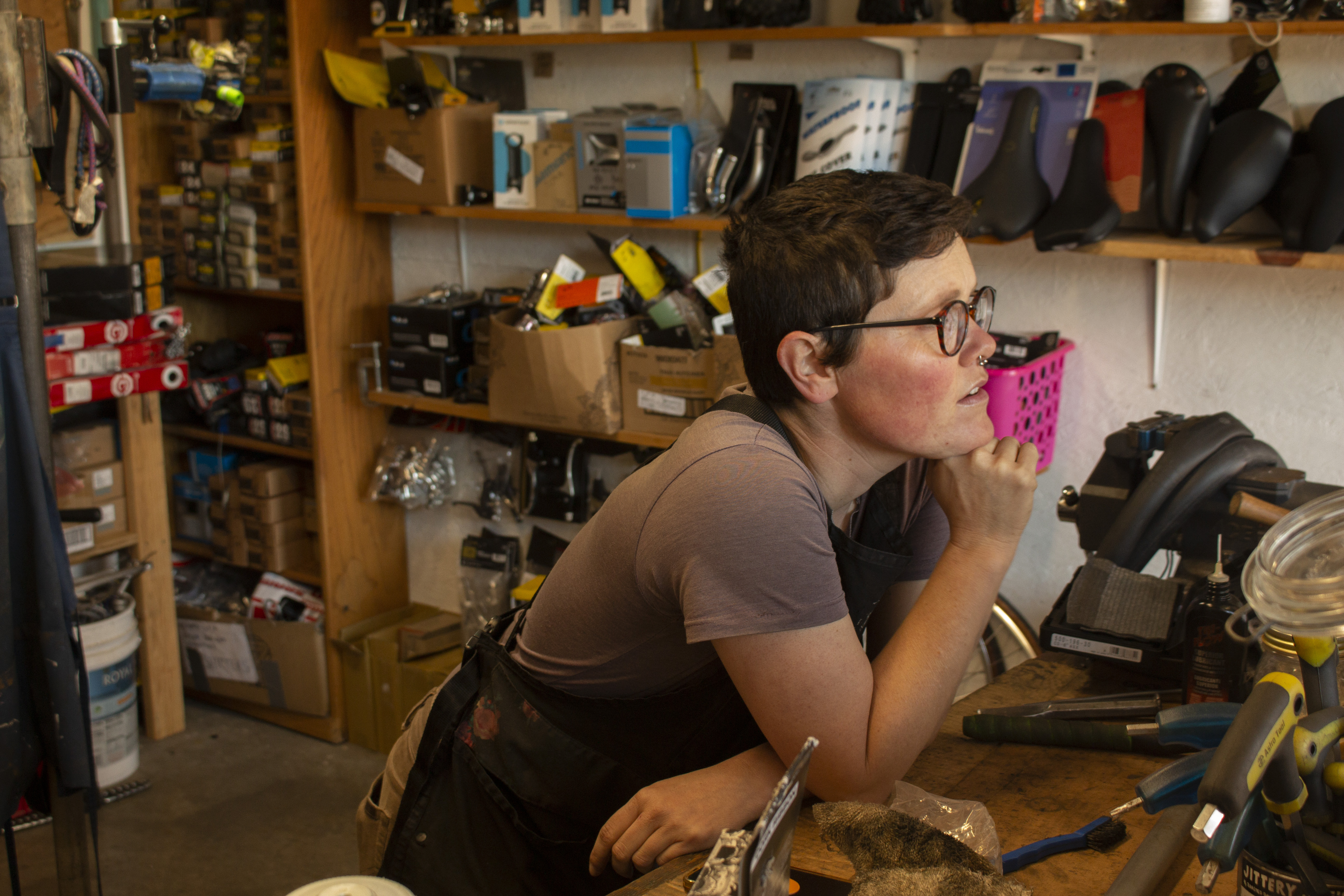
    When Sage Saatdjian and Sprout Page teamed up in 2016 to create Moon Cycles, much more was being made than a bike and roller skate shop. A whole change in culture toward bike repair was stirring.

    “We strive on being a comfortable space for everyone, especially women and queer folks, to serve the average cyclist” said Saatdijan. “We can do the fancy and expensive repairs if we need, but we want to help fix what needs to be fixed.”

    Sage and Sprout prides Moon Cycles and their mission on a consent-based policy between their customers to ensure transparency in what they’re doing to their bikes and if that’s what they want.

    “We don’t do anything without bringing it up with people first,” Sprout said.

    Most people can relate to being at a mechanic and not knowing what questions to ask or how to negotiate pricing. Moon Cycles wants to eliminate that discomfort from the bike shop experience as a whole, especially for women.

    “The culture at a lot of shops, no matter the trade, is not welcoming to anyone that isn’t a conventional male,” said Page.

    With most shops not paying much attention to what the customer really wants, Moon Cycles makes sure to always keep their customers in the know.

    “A majority of places assume you want your bike back to perfect brand new condition, but most people just want it to work and be safe,¨ says Saatdjian. ¨If you don’t care that the gears shift well and just want it to be safe, we can do that while working within your budget.¨

    Saatdjian and Page both have heard enough stories from customers coming in, saying that they feel other bike shops are taking advantage of them.

    “Customers say other places have asked absurd prices for repairs or simply said that some very normal repairs can’t be done,” said Saatdjian. “You get talked to like a baby and people don´t feel respected or listened to.”

    Moon Cycles, on the other hand, is putting the power in the hands of the customer.

    “We want to be a different place where people aren’t taken advantage of or talked down to” said Page. “We are even looking forward to doing some workshops to teach people how to ride a bike because not everyone can.”

    Saatdjian also looks forward to having group bike rides in the future and mechanical workshops on bike repair for women first, then opening it up to everyone.

    Until then, Moon Cycles is setting the standard for bike shops here in Arcata. You can give them a visit at 1905 Alliance Road.

  • New coaches, same support system

    New coaches, same support system

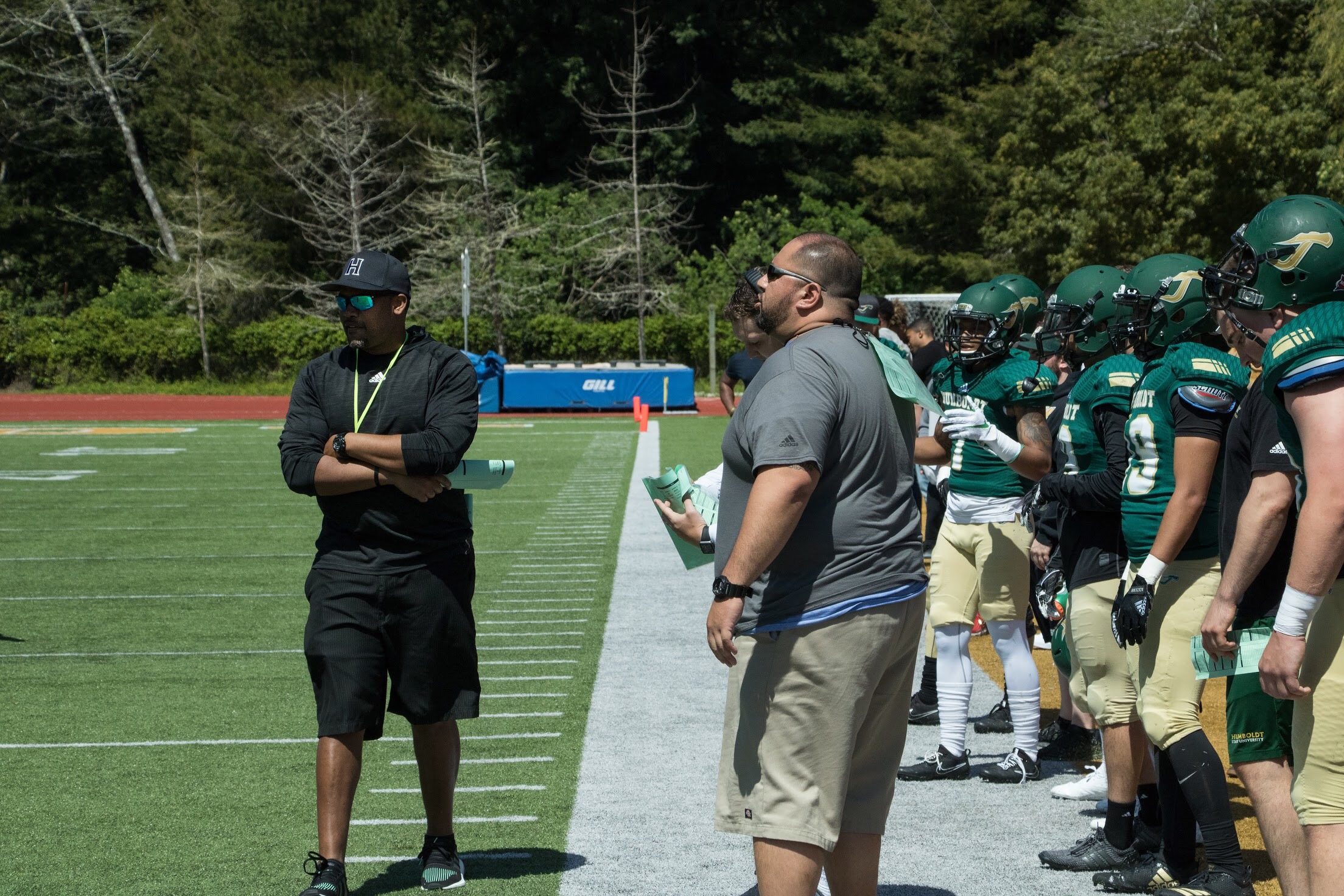
    Failure is not an option for coach Mason Mitchell. He plans on pushing the football program in the right direction with the continuous support of the community and the Humboldt State University student body.

    “It is more than just being able to put something on your resume,” Mitchell said. “I am here to help push this program in the right direction, and help continue its success.”

    Mitchell was hired as the defensive line coach on March 22 by interim head coach Damaro Wheeler. He was previously at American River College in Sacramento, where he helped more than 45 defensive linemen move onto the four-year level within a five year time period.

    As of the 2018 spring semester, the Lumberjacks have hired three new coaches and six others have volunteered to help coach throughout spring ball, and possibly the fall season.

    These volunteer coaches have been out on the field at 6 a.m. several times a week to help conduct spring practices. They have also been in the football offices daily to help with logistics for the success of the program.

    The work that they have already put in has shadowed the commitment from the community in fall of 2017 in keeping the program alive and successful.

    Lucas Govan has volunteered with the Lumberjacks since fall 2017, and is an HSU alum.

    “The comradery that comes with [HSU Football] is special,” Govan said. “There is no place really like it.”

    As a former Jacks player, he mentions how neither the players nor coaches would be where they are, and as successful as they are, if it weren’t for the support from the community and student body.

    The Lumberjacks hold a very reliable stance with their community, alumni and student body, given that they have helped sell out the Redwood Bowl and raised $500,000 during a time of need.

    “I was a lead in trying to raise the money,” HSU alum and booster Jim Redd said, “but there were about 250 donors that came up with the $500,000.”

    It is the 250 donors who made it possible for these young men to get back in the Redwood Bowl this spring, as well as allowing the new coaches to step in and pick things right back up in preparation for a successful fall 2018 season.

    After a successful inter-squad spring game, The Lumberjacks will take a quick summer vacation before they begin to prepare for their first season game in Wichita Falls, Texas against Midwestern State University on Sep. 1.

    “We want everyone to continue to come out and support us,” Mitchell said, “But with that, we want them all to understand how important their support is for us.”

  • Q-Fest celebrates queer and trans people of color in the arts

    Q-Fest celebrates queer and trans people of color in the arts

    Humboldt State senior Jonathan Salinas is no stranger to discrimination in this community. Salinas was even told once to move out of Humboldt by a community member. Though moments like this dishearten Salinas, helping organize events like Q-Fest inspires him.

    “It lights the fire in me again,” events director for the Eric Rofes Multicultural Queer Resource Center Salinas said.

    Students of the Eric Rofes Center and the Multicultural Center organized Q-Fest at Humboldt State University from April 16-20. This year’s celebration focused on queer and trans people of color in the visual and performing arts.

    “Because of a lot of the tension that’s been going on in the community around issues of race, we wanted to focus on people of color,” Salinas said.

    Q-Fest started out nine years ago as a queer film festival. It has now expanded into a series of events including a film showing of “Pick Up the Mic,” workshops with Arisa White, a QTPOC panel, QTPOC self-care and zine making workshop, a student showcase and more.

    Eric Rofes Center fiscal director, Neesh Wells, became involved in Q-Fest for the first time this year. Wells said they wanted to expand to include queer artists and students this year, because there is not always a lot of respect paid to them.

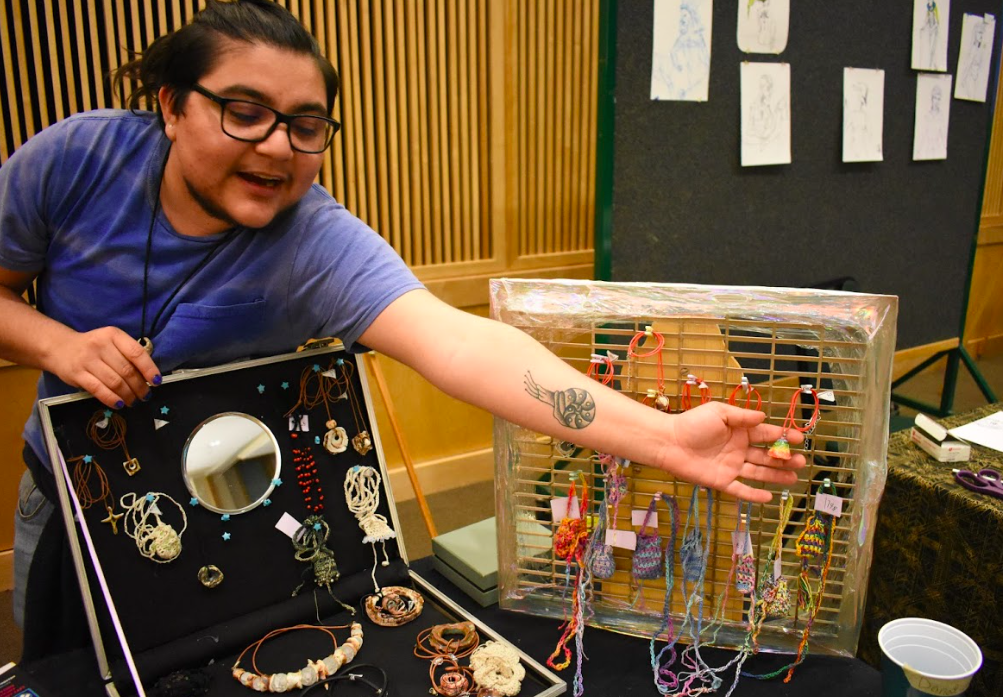
    Wells helped organized the self-care and zine making workshops as a space for queer folks to help develop their words and identities.

    “A lot of our allies don’t acknowledge that there are many facets of our identity,” Wells said.

    Wells defined self-care as “providing the time for one’s self and engaging in activities that help prevent exhaustion,” and said it can be as simple as checking in with yourself, making sure you eat and drink enough water.

    Wells finds creating spaces like this to be especially important, not only at Humboldt State, but in the community as a whole where there aren’t as many resources for queer folks and people of color as there are in big cities.

    Photo by Megan Bender.

    “The biggest difference for me, being in Humboldt, is a lot of the spaces have been spaces I’ve had to make on my own. It can be very difficult. There’s not only a lack of resources, but a lack of funding,” Wells said. “I don’t feel compelled to seek out a community outside of HSU and I think that’s very telling.”

    Wells is not the only person who feels there is a lack of resources for queer folks in the community. The Eric Rofes Center and Q-Fest aim to provide that needed support.

    “We just want to put out resources for students who feel like they don’t have anything,” volunteer and resources director for ERC Belen Flores said. “We don’t want them to be scared. We want to show them that it’s going to be ok and that we’re here to help.”

    Flores contacted this year’s keynote speaker for Q-Fest, poet and writer Arisa White. White and fellow poet Europa Grace hosted a workshop on Thursday afternoon and a poetry reading and talk on Thursday night.

    Q-Fest ended with the student showcase, a gallery and performance featuring work by queer artists. The event included tables with queer literature, information on safe sex and an array of student art.

    Luciano Duran, a 23-year-old HSU art major, displayed portrait photographs and an original zine.

    “[It’s] to address the theme of being gay and coming out and owning your identity,” Duran said. “Art is a coping mechanism for a lot of us.”

    Salinas was please with the turnout of Q-Fest, which increased since last year. Salinas said it is the hard work and passion of the students that make events like this possible.

    “These are some of the most dedicated students you will ever see,” Salinas said. “Fuck administrators. Because they’re not going to do it. So we’re going to do it.”

  • Celebrating five years of El Leñador

    Celebrating five years of El Leñador

    El Leñador has been publishing monthly bilingual stories for Humboldt State University since 2013. El Leñador has given a voice for the people whose voices are never heard, and its staff has been carrying on that drive to serve the community for five years.

    Diana Borman and Caroline Moira are students at HSU and read El Leñador in their spare time.

    “It gives a platform for Latino and Hispanic voices to be heard,” Moira said. “It also gives voices to people of color in general, which is something that is needed in this time we are living,” Borman said.

    April 19 marked El Leñador’s fifth anniversary. To celebrate, they offered free food and a place to hang out and learn the progress that El Leñador has made over the years.

    Hector Arzate is the current editor-in-chief.

    “I never imagined being involved in El Leñador,” Arzate said. “I went into the publication voluntarily, but it led to me overseeing the bilingual newspaper.”

    Many were in attendance of the celebration. Some were even former editors of El Leñador.

    Sam Armanino was a photo editor for El Leñador in 2016. He is now working as social media coordinator for the North Coast Journal.

    “There is a lot of room for creativity in a student-run publication,” Armanino said. “Working for El Leñador was a great experience.”

    Another editor from El Leñador who attended the event was Carmen Peña-Gutiérrez. She was editor-in-chief of the newspaper in fall 2017 and is now working as workshop organizer for the Check-It program.

    “I’m very happy to see that El Leñador has grown to become a news source for people,” Peña-Gutiérrez said. “What helped me write stories for El Leñador was helping the community that is underrepresented be heard.”

    Meg Bezak was announced to be the next editor-in-chief of El Leñador for fall 2018.

    “I’ve had two years of involvement in El Leñador,” Bezak said. “I fell in love with El Leñador. The staff has been exceptional and supporting.”

    El Leñador’s advisor, Andrea Juarez, has been involved with the newspaper since 2015.

    “The goal of this newspaper is to allow students to tell the stories they want to share,” Juarez said. “The students who write for El Leñador are getting experience for their careers.”

    In the future, one of the changes El Leñador wants to make is to create more multimedia content for their website, as well as expanding their staff. One thing that won’t change for El Leñador is providing stories for the community.

    “This job has a lot of big shoes to fill,” Arzate said.


  • Upset mothers march to Arcata City Hall

    Upset mothers march to Arcata City Hall

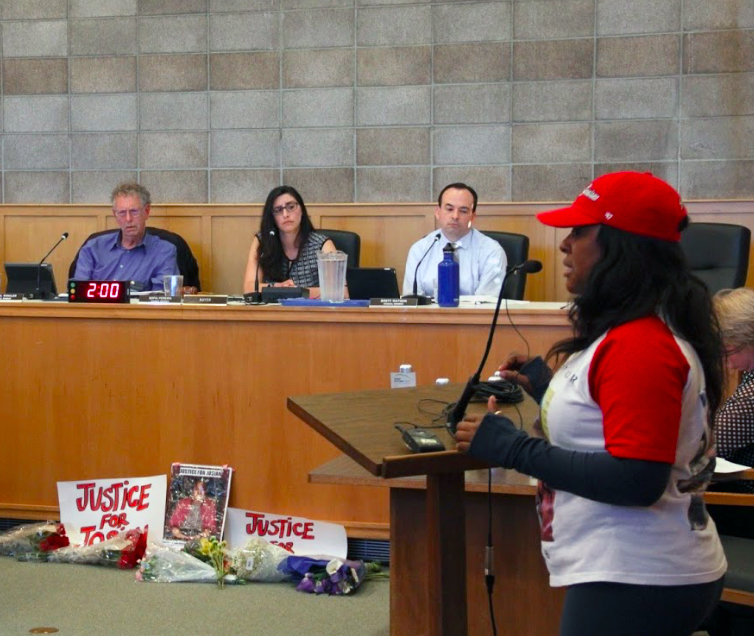
    Angry mothers, students and community members all marched in solidarity with Charmaine Lawson from Humboldt State’s Library Circle to Arcata City Hall demanding Justice for Josiah on April 18.

    Just a few days after the one-year anniversary of the death of HSU student David Josiah Lawson, who was fatally stabbed at an off-campus party on April 15, 2017, people are impatient for answers.

    “We demand justice for Josiah and we want Tom Parker back,” Charmaine Lawson said.

    Tom Parker is a retired FBI agent who was brought up to privately inspect the case for the last eight months. He resigned last week.

    The march made its way from HSU to City Hall through F Street. The city council was meeting that day and the shock could be seen on their faces when up to 100 people marched into the hall chanting, “Justice for Josiah!”

    The mayor of Arcata, Sofia Perreira, was in attendance, as well as city council members Brett Watson, Paul Pitino and Michael Winkler.

    The forum opened up for members of the public to address the board and a line started to form.

    “There is a killer on the loose and if I feel unsafe as an old white lady, how are these students of color supposed to feel safe?” Arcata resident Denny Dorsett said.

    As many other people came up to speak their minds, the energy in the room began to grow more charged.

    “I grew up in this place and I don’t feel safe anymore. Why are you not trying to protect me?” Faith Shaineider, an Arcata High School student who came to show her support said.

    Shaineder’s mother, Zera Starchild, was also in attendance and had some heavy words to deliver.

    “This town has already changed because of this,” Starchild said. “Arcata will never be the same again.”

    While many brought up concern for their own safety, others brought up different reasons justice needs to be served.

    Leslie Rodelander is a grant analyst at the Sponsored Programs Foundation at HSU.

    “If compassion doesn’t move you, hopefully economics will,” Rodelander said. “I see the sheets, and the number of students coming to HSU is dropping and will continue to drop if this does not get fixed.”

    After every other person spoke their mind, it was Charmaine Lawson’s turn. Mayor Perreira did not impose a time restriction on Charmaine Lawson as she had on everybody else, so she was able to deliver a powerful message.

    “I demand Tom Parker back. Call him in the morning Sofia,” Charmaine Lawson said. “If the roles were reversed, I know my son would be sentenced already. I need to know what happened to my son!”

    Cheers and applause could be heard around as people shared their support.

    After hearing from everybody who wanted to speak, Mayor Perreira motioned for a 10-minute recess, during which she approached certain members of the audience. In a strange turn of events, Perreira returned from the recess and adjourned the meeting. People tried to figure out why, but were given no answers.

    It has been over a year since Charmaine Lawson lost her son and the case is still wide open.


  • Records rule again

    Records rule again

    The tables have turned in favor of vinyl records. While CDs and cassettes reigned king in the 1980s and 1990s, it was the rise of digital downloads and online streaming services in the 2000s that inexplicably aided in the resurgence of records. Today, records are outselling digital downloads for the first time since 2011.

    “Vinyl sales were up 10 percent to $395 million — a ‘bright spot among physical formats,’ the [Recording Industry Association of America] noted [in a 2017 year-end revenue report],” Derek Hawkins of The Washington Post said. “The outlook for digital downloads is bleak. This is the third year in a row they’ve posted double-digit declines, according to the RIAA.”

    As Apple commercialized MP3 downloads in the early 2000s, CD sales began to drop. Though cassettes are making a comeback in some areas now, thanks to record labels like Burger Records, they lost their popularity more significantly by that time as well.

    Making our way into the 2010s, millennials caught on to the joys of listening to records as download and streaming services continued to revitalize the music industry. In fact, a great deal of new records these days include free download cards — a good incentive to get the best of both worlds, that is, a tangible medium and a digital download of an album.

    Record Store Day is a global event that has happened every April since 2008. Independent record shops from all over the world participate by selling limited edition records made exclusively for Record Store Day.

    “This is a day for the people who make up the world of the record store—the staff, the customers and the artists—to come together and celebrate the unique culture of a record store and the special role these independently owned stores play in their communities,” the Record Store Day website wrote.

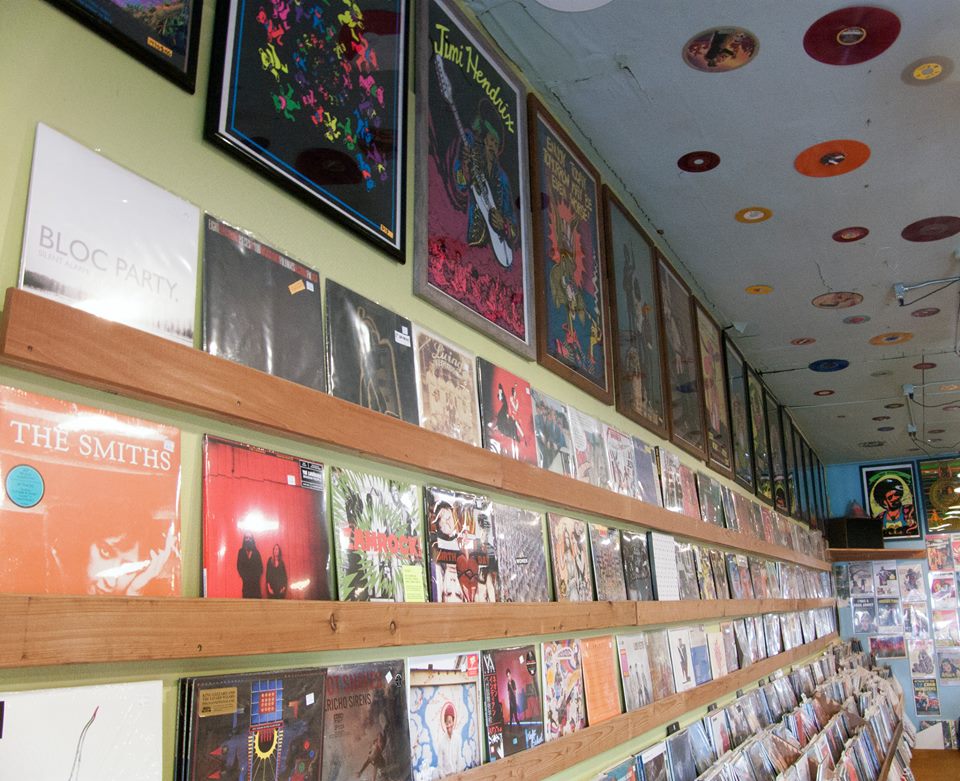
    While it’s slim pickings in Humboldt County, People’s Records in Arcata carries a wide selection of outstanding records year-round. From 11 a.m. to 6 p.m. on Saturday, April 21, People’s Records will offer this year’s exclusive Record Store Day selections, and they’ve made extra room for more records.

    “We will have many of the limited edition Record Store Day items, plus we have expanded and knocked down a couple walls in the store to accommodate 1,000 new records in our stacks,” People’s Records wrote on their Facebook page.

    People’s Records in Arcata. Photo by Matthew Hable.

    Generally speaking, there is nothing wrong with digitalized music. The average human ear can’t detect the sample rates of professionally processed digital audio, nor can they make out the subtle differences in sound of analog waves, aside from the record’s “warmth” people commonly claim to hear in contrast to MP3s or WAV format.

    However, what sets records apart from other formats is their level of interactivity and the way they appeal to the senses. The process of taking a record out from its sleeve, placing it on a turntable, carefully dropping the needle on the record and even the smell of records makes it that more special.

  • Trust in police weakens as Chapman resigns

    Trust in police weakens as Chapman resigns

    As students, we have reasonable expectations of safety so we can focus on academic success without fear. This is not the reality for Humboldt State University students of color, both on campus and in the community. Both the Arcata Police Department and HSU have a long way to go to gain the trust of students of color.

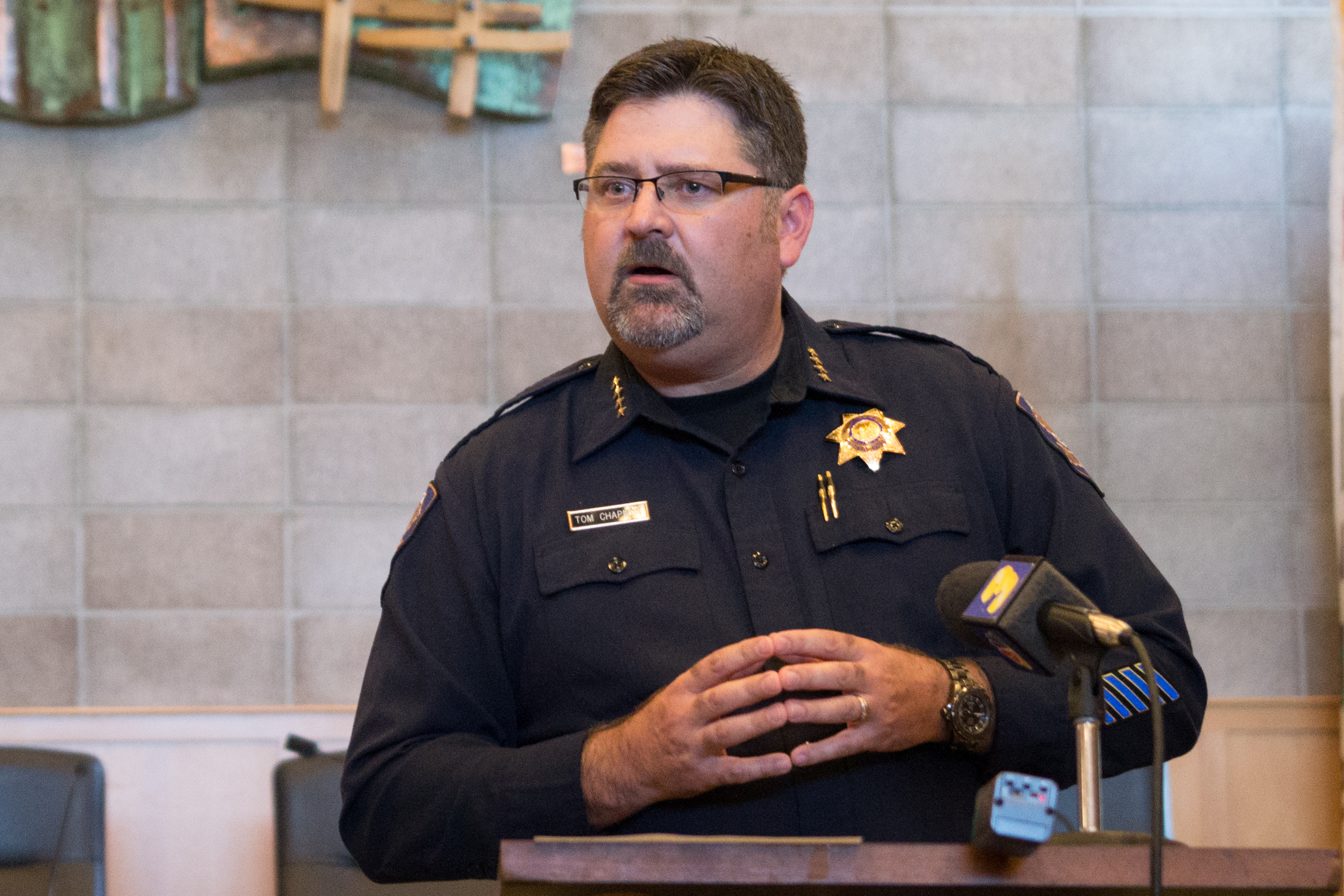
    The recent resignation of APD police chief Tom Chapman only worsens public confidence in local law enforcement.

    A good deal of community members, including HSU students, are aware that 19-year-old HSU student David Josiah Lawson was murdered at an off-campus party in Arcata on April 15, 2017.

    McKinleyville resident Kyle Zoellner was arrested at the scene of the crime, but released on May 5, 2017, due to lack of evidence connecting him to the murder.

    There is a clear and serious disconnect within our community regarding racial diversity. Because Lawson is black and Zoellner is white, racial tensions tightened in the community. And as one group tries to engage with the community about race and public safety, others view such meetings as a way to promote white guilt.

    To this day, no one is in custody of Lawson’s open homicide case.

    Former FBI agent Tom Parker, who offered his investigative services on the Lawson case for free, resigned on April 9. According to the North Coast Journal, Parker said a lack of trust and cooperation by the APD led to his decision to resign.

    “It was clear they were holding back things and not telling me the truth,” Parker said. “They had things going on and they wouldn’t tell me what they were.”

    Chapman announced his resignation the following day without reason.

    Following a press release by the City of Arcata announcing Chapman’s resignation, Arcata City manager Karen Diemer followed up with local media concerning both departures.

    “[Chapman’s] decision does not stem from any one single thing,” Diemer said. “It is a combination of personal reasons and professional judgement on what he believes is best for the department and himself.”

    In regards to the Lawson case, Diemer said the APD continues the investigation without Chapman.

    “The investigative team for the David Josiah Lawson case is solidified with members of both the Arcata Police Department and District Attorney Investigators office,” Diemer said. “This team will stay in place and focused on the case through its completion.”

    Parker’s claim that the APD withheld information raises major concerns. While it’s reasonable to conceal information from the public during an open investigation, why wasn’t the APD willing to cooperate with Parker?

    Also suspicious is the timing of Chapman’s resignation. Why did Chapman resign the day after Parker terminated his contract with the APD and just five days before the one-year mark of Lawson’s death? Coincidence would be an unbelievable excuse.

    While there’s only so much we can do in a case like this, we can demand more from from our law enforcement and other officials. Check with the City of Arcata, the Arcata Police Department and the Division of Student Affairs at HSU about the investigation. Don’t just do it once, but follow up as well.

    We must stand in solidarity of not just the Lawson case, but for students of color. By remaining quiet, local law enforcement will prioritize less pressing issues and no progress will be made. We need to stand up for ourselves because the ones who should protect and serve us are stepping down.

  • Out of the darkness comes light

    Out of the darkness comes light

    Survivors of sexual violence share their experiences through the events of Take Back the Night

    Take Back the Night delivers the message that domestic partner violence, intimate partner violence and other types of violence will not be tolerated.

    Xochitl Cabrera runs the Humboldt State’s Women’s Resource Center, which hosts Take Back the Night every year.

    “Sometimes people don’t need you to help them, you may need to take a step back. Some people just need to heal themselves,” Cabrera said.

    The Women’s Resource Center is a campus resource for people who need a safe place to study or find the help you need for survivors of sexual violence experiences.

    “The Women’s Resource Center knows that sexual violence and domestic violence happen all of the time, but it is up to the survivor to reach out to the Women’s Resource Center,” Cabrera said. “Take Back the Night is not for everyone. People tend to avoid the trauma it brings up.”

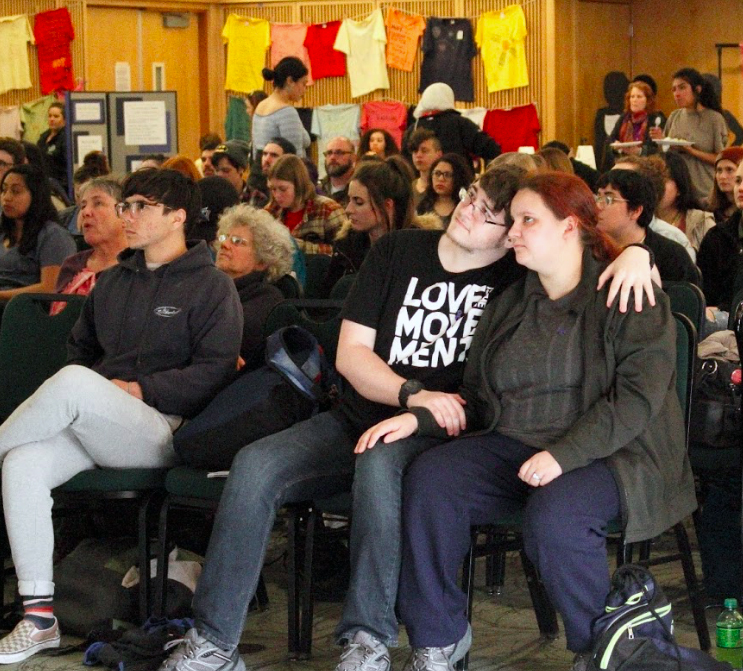
    Hanging on the walls of the Kate Buchanan Room are T-shirts from survivors of sexualized violence and friends of people who died from sexualized or domestic violence. The T-shirts had messages written telling of horrible acts of sexualized violence from family members, friends and others.

    “The T-shirts are difficult to look at, but their story needs to be heard. They are not nice. It is painful but necessary,” Jodie Huerta, HSU sociology major, said.

    Messages written on T-shirts decorating the walls of the KBR. Photo by Ahmed Al-Sakkaf.

    Assistant professor of Native American studies Cutcha Risling-Baldy was the guest speaker for Take Back the Night. Risling-Baldy’s talk was based on systemic violence toward people of color. Before her talk on missing and murdered indigenous women, Risling-Baldy acknowledged the death of HSU student David Josiah Lawson.

    “If David Josiah Lawson were not a person of color, his death would be on the news every day,” Risling-Baldy said.

    The Native Americans view domestic violence differently.

    “In an interview with a Wiyot woman, the anthropologist asks what happens if a man rapes a woman,” Risling-Baldy said. “The Wiyot woman replies, ‘That never happens.’ Asked why it never happens, the Wiyot woman said, ‘Because that person would be killed.’”

    Speaking out can trigger traumatic experiences for people.

    “People choose to come if they feel comfortable speaking on their testimony, and they choose not to come because they don’t feel comfortable speaking on their testimony,” Cabrera said.

    Some of the speak-out testimonies were about sexual violence that occurred during childhood and adolescence, while some of the testimonies were about sexual violence that happened at HSU. Sexual violence happens to HSU students, for which most of us are unaware.

    “Everybody knows that sexual violence is happening, but nobody is doing anything about it. It is just getting swept under the rug,” Grace Lamanna, HSU recreation major, said.

    People tend to restrain themselves from being in these spaces, because of the trauma it brings to them.

    “Some folks don’t feel safe in this space, because they don’t identify with domestic violence and sexual assault. People feel like they are taking up space and say, maybe this isn’t the space for me, I’ll take a step back,” Cabrera said. “That’s totally fine, because we want to prioritize those individuals that have experienced sexual assault and sexual violence at some point in their lives. That is what this space is mainly for.”

    Students hold hands in a circle behind the McKinley statue on the Plaza. Photo by Ahmed Al-Sakkaf.

    HSU sociology major Omar Miranda helped as a monitor for the Take Back the Night march as part of his class.

    “I feel like I made a difference. Big or small. Something small to me could make the biggest difference to the survivors,” Miranda said.

    The survivors gathered after the speak-out for the Take Back the Night march. Marchers wore orange safety vests, gathered in groups of five and were assigned a monitor. Monitors had received tactical training for this march and could protect the group if some danger presented itself.

    The marchers left school chanting, “Hey! Ho! The patriarchy has got to go!”

    The marchers went from school to the plaza downtown and were heckled by a few passersby in cars, as well as people along the route.

    On the plaza, the Take Back the Night members and public in attendance gathered in a memorial for the people who have died from sexualized and domestic violence. In silence, the less fortunate victims of this violence were honored.

    As the Take Back the Night march left the plaza, the declarative chanting could be heard echoing off buildings and down alleyways.

    “Take back the moon, take back the stars, take back the night because the night is ours!”

  • Letter to the editor

    Letter to the editor

    New Student Housing Community in the Works for Lumberjacks!

    Dear Editor:

    I’m pleased to announce that The Village, a new housing choice, is in the works for students attending Humboldt State University. As you probably know, HSU currently has room on campus for only about 25 percent of the students enrolled, which has made it difficult for HSU students to find housing year after year.

    According to a report funded by HSU, the Arcata housing market is so constrained, some students sleep in their cars or camp in the woods while they look for housing. There is currently demand for roughly 800 new student housing beds in order to address students’ housing insecurity and to support their academic pursuits.

    After various inadequate attempts to increase housing options, the city is now on the verge of having the most viable new housing choice for students in many years.

    The Village isn’t just another apartment building, it is planned as a purpose-built student housing community only half a mile from campus that specifically meets students’ needs with academic amenities such as spacious study rooms, computer lab and presentation room for individual or group study and collaboration, a fitness center with on-demand fitness programs, outdoor community space and secure covered bicycle parking. The Village will also have 24-hour professional on-site management, as well as peer mentorship from resident assistants that will be responsive to students’ needs. This property will also include many sustainable features including solar power, a bicycle-share program and electric vehicle charging stations, and will be built to environmentally conscious Leadership in Energy and Environmental Design (LEED) Silver standards.

    The Village will help improve the reputation of the Arcata community by creating more healthy competition in the housing market and energizing the local economy that is largely fueled by HSU and its students, and will introduce more diversity into the housing mix to reflect the diversity of today’s students and their needs.

    Despite the many positive benefits The Village will bring to the community, there are those who are actively trying to prevent current and future Lumberjacks from making The Village their home while attending HSU.

    If you are in support of the positive housing choice The Village will offer to HSU students and the community of Arcata and want to find out more, please visit this website: https://www.thevillagearcata.com/. You can also contact the Arcata City Council and let them know you support more student housing in Arcata, especially purpose-built student housing communities like The Village.

    It’s all about choices. Your support of this project can help ensure The Village is able to offer HSU students an exciting, new place to call home, and one that HSU students deserve.

    Percival Vaz
    Chief Executive Officer
    AMCAL Equities, LLC

  • A labor of love

    A labor of love

    Humboldt Homebrew Festival

    Kristina Watson served a lot more than just beer at the eighth Humboldt Homebrew Festival on April 7 at the Arcata Community Center.

    Watson was one of seven brewers from Triple Junction Brewing, who were one of 69 groups and individuals who served their best homemade and unique beer, cider and kombucha recipes.

    For Watson’s first time pouring at the festival, she showcased a juniper based Sahti-Graha beer based off a Finnish recipe.

    “Sahti recipes are traditionally passed down from Scandinavian mothers to their daughters,” Watson said. “So this is kind of like a women empowerment beer.”

    Watson said the juniper she used to make this beer came from her grandmother’s tree, who passed away recently. She said being at this festival is always awesome and it’s neat to to get the opportunity to showcase beers and talk with other brewers.

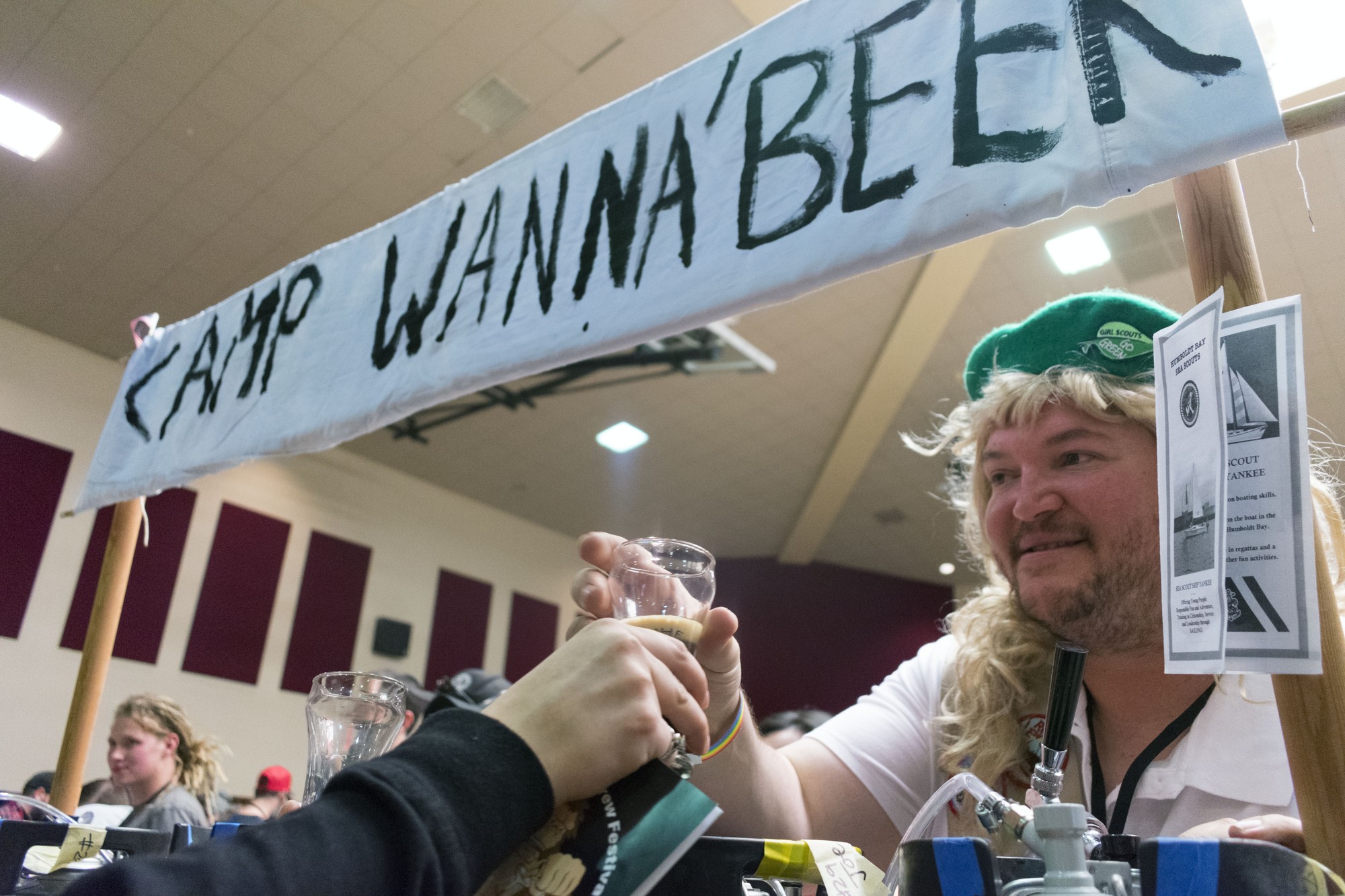
    Brewer Joseph McKinzie brought three beers based off Girl Scout cookies, and he and his crew played the part. Each pourer, including McKinzie himself, was dressed as a Girl Scout at a booth titled “Camp WannaBeer.”

    The festival serves as a benefit for the North Coast Professional Chapter of Engineers Without Borders organization in the Humboldt area. They also work directly with the Humboldt State University EWB chapter and sometimes hire students.

    EWB’s mission is to partner with developing communities to try and improve their way of life. EWB volunteer Patrick Sullivan said the festival came about as a result of a lot engineers who are also brewers combining their passions.

    “I like to tell my friends that we are turning beer into water,” Sullivan said.

    Sullivan said he is grateful for the support of the brewers and volunteers who make the benefit possible.

    Meanwhile, brewers and attendees alike enjoy the variety found at the Humboldt Homebrew Festival. Brewer Pete Carlson said the festival showcases rare beers that you’ll never find again.

    “This is my favorite festival in the area,” Carlson said. “Period.”

    Attendees like Britney Newby and Shannon Mondor dubbed this their favorite festival respectively.

    “It is a real privilege to try a homebrewer’s labor of love,” Newby said.

    Every attendee receives a meal ticket, a tasting glass and bottle caps for voting at the door. Brewers received playing cards to vote with as well. At the festival’s close, three recipes were named Best Damn Beer, Brewer’s Choice and Best Damn Cider.

    Brewer Dave Breyer and the Oh My Goodness Rye Whiskey Brown Ale won Brewer’s Choice. Brewer Ira Salmon with a Mango Sticky Rice won Best Damn Beer and Joshua Holland and John Tremblay and their New Pilgrim Pineapple Cider won Best Damn Cider.

    You can find more information about the Humboldt Homebrew Festival at http://www.humboldthomebrewfest.com.

  • Justice for Josiah rally

    Justice for Josiah rally

    On April 5 at 1:30 p.m., students at Humboldt State left class to attend a rally on the UC quad in remembrance of David Josiah Lawson, a student who was stabbed to death at a party in Arcata almost a year ago.

    “It’s been a year, and that is fucking ridiculous,” Barbara Singleton, president of the Black Student Union at HSU said.

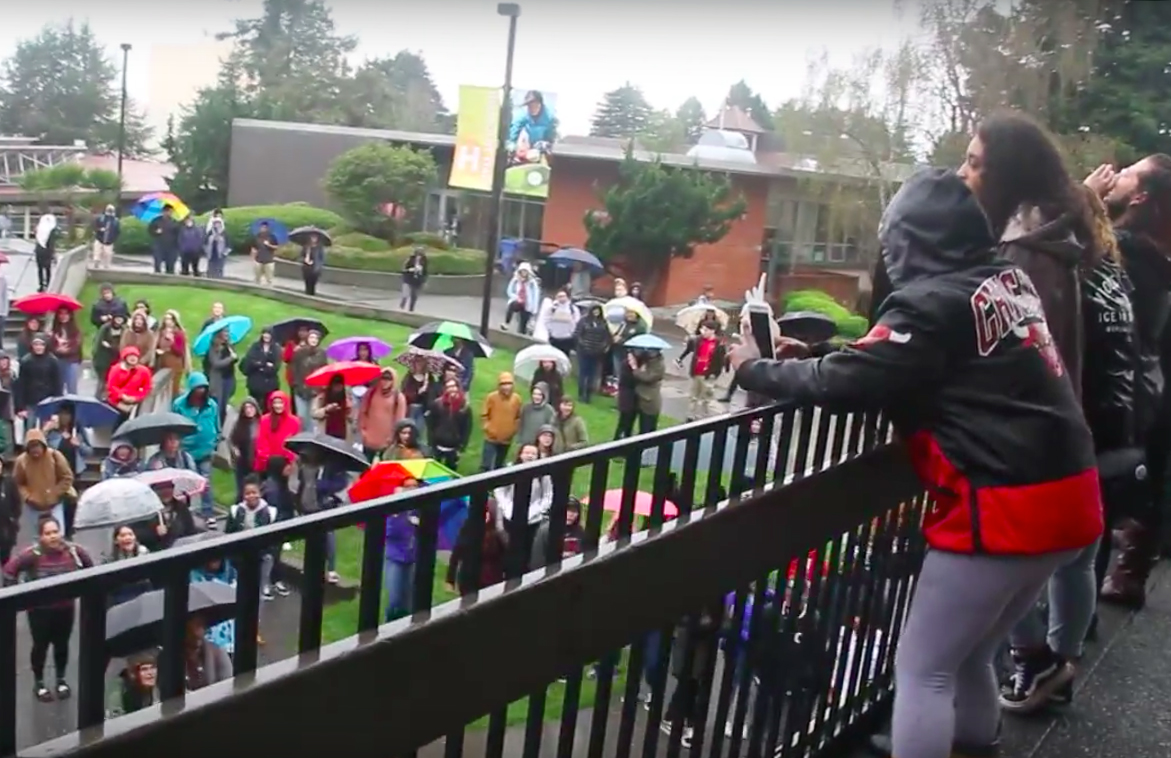
    Singleton stands on the second floor of The Depot, surrounded by a crowd of students who all left class as a part of the student-led walkout for safety in honor of David Josiah Lawson. The rain pounds down relentlessly, seemingly undetturent to all in attendance. The walkout is a part of 12 days of events being hosted in honor of the anniversary of Lawson’s unsolved murder.

    Video by Surya Gopalan.

    A year ago at a party in Arcata, Lawson, a black HSU student, was stabbed to death. There are currently no persons in custody. Students walked out of class at 1:30 p.m. on April 5 to be present at the 2 p.m. rally to bring justice to Josiah and demonstrate for student safety.

    Kalyn Garcia, 18, social work major, left class to be present at the rally.

    “I think that it is way bigger than Josiah,” Garcia said. “Any black, Mexican or children of color should not be concerned to leave their house.”

    As the rally began, two students, Singleton, as well as Daniel Segura, 23, a critical race, gender and sexuality studies major, began leading the rally. They began by explaining there have been rumors about the Justice for Josiah movement being involved in illegal or destructive activities, and that they do not condone any violence or illegal actions.

    Angel Sylva then performed a poem she wrote for Lawson, which will be performed again on the vigil held for Lawson on April 15.

    “If it happened to one of us, it can happen again,” Sylva said.

    With no sound equipment available to students after 1:00 p.m., due to campus policy, Sylva projects her voice as her only tool to spread her message to students.

    Students then began calling out the members of administration in the crowd. Alex Enyedi, the provost of HSU, as well as Wayne Brunfield, the interim vice president of Student Affairs, were two of the members of administration in attendance.

    “They have been silent this whole 12 months,” Singleton said.

    Singleton directly addressed HSU administration, the Arcata city council and the police department.

    “They have blood on their hands,” Singleton said.

    The crowd screamed for administration to speak, one individual saying, “It’s fucked up for you to be here and not say anything.”

    Eventually, Enyedi took the stage after much student call-out. He thanked the crowd for the opportunity to speak, then began.

    “Students are told you need to be patient, but I get it. How long should you be patient for?” Enyedi said. “I share your frustration, I share your impatience. It shouldn’t take this long.”

    Enyedi is not the one the students want to hear from. The question on everybody’s mind is where is Lisa Rossbacher, president of HSU? Students call out to Enyedi, demanding answers.

    “I’ll tell her you’re unhappy she isn’t here,” Enyedi said.

    A voice from the crowd screams, “We aren’t unhappy, we’re angry!”

    President Rossbacher never showed up.

    Brumfield was not getting away with silence either. Singleton and Segura called from the stage, “Wayne, where are you?”

    Brumfield did go up to the stage and approved students to use a megaphone, but never addressed the crowd. Many continued asking why he did not speak.

    When asked, Brumfield spoke of a racial equity plan he says he is currently working closely with students on. He said students deserve a voice in how equity and inclusion are happening in the community.

    “We’re working with the two chiefs of police, students and community members to look at policies of police reacting to students, both on and off campus,” Brumfield said. “I think we are moving in the right direction.”

    As the rally continued, a song written about Josiah was performed and then different chants were yelled throughout the crowd.

    The event coordinators then relayed the message of future events and concluded the event, inviting students to continue their activism and presence in the coming weeks.

    “The Justice for Josiah movement is very peaceful,” Singleton said.

    At one point in the rally, a group of people visiting for spring preview walked past the UC quad.

    “Anything they tell you will not justify his murder,” Segura said to the passersby.

    Segura, being in his 10th semester at HSU, he says he has seen how the administration deceives students. He said HSU goes down south and recruits students of color without disclosing the violence toward people of color that has happened in the area.

    “How are we supposed to welcome students of color when they trick you?” Segura asked.

    This article has been updated from its original version on Monday, April 9 at 5:58 p.m.

  • Lumberjack editors meet with Rossbacher, part II

    Lumberjack editors meet with Rossbacher, part II

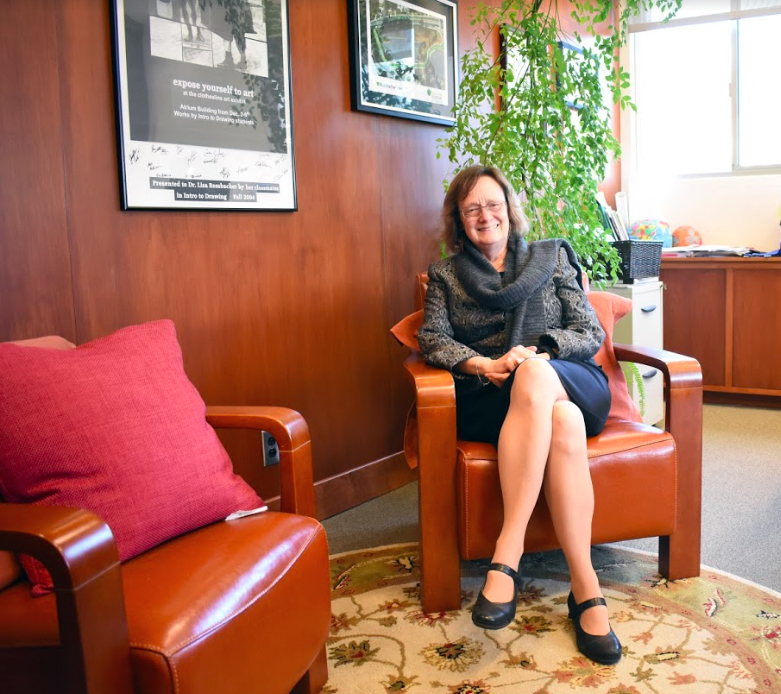
    The Lumberjack editors met with the president of Humboldt State University, Lisa Rossbacher, on March 23. The Q&A was largely centered around budget cuts and social issues that impact the local community, especially HSU students.

    This is part II of the meeting which mostly concerns social issues. Part I, which focuses on HSU budget cuts, can be found HERE.

    On social issues:

    Lora Neshovska (managing editor): “There are students facing homelessness and discrimination. How can we address social justice issues of students beyond our financial worries?”

    Rossbacher: “I think there are a number of things the university is doing to help with those basic needs that are really the underpinning to ensure student success. There’s a whole program happening here, many of them under the umbrella of Oh SNAP! Things like the food pantry that we have [or] students having access to EBT.

    We were one of the first campuses in the country to provide that kind of access. That started in late 2016 [and] over seven million tons of food have been redistributed on campus that would otherwise have gone to waste, so that helps. Some of the community meals that are being prepared – that I know Wayne Brumfield always cooks for – that sort of thing, being able to redirect J-points that are left over to help other people. Those are some examples in terms of food security. We just got some money from the chancellor’s office that will help us do more in terms of just food security on campus.

    In terms of housing, it’s a real issue because [of] where we’re located, the limited houses in stock that we have here. We’re doing some things with that, too. One of them is, I’m sure you know, Chante Catt has been hired as a homeless student advocate. She was involved in that organization of homeless student advocates, but she’s now officially working so that students who are in need of housing can contact her. I know right after she started doing that, immediately she placed four people. So that helps, too.

    We’re looking at the possibility of building new student housing. The university is looking at new residence halls off campus, and then there’s this outside developer who’s looking at The Village. Whatever it takes to get affordable, safe [and] not-too-far-away housing for students is a good thing.

    There’s also a program that we’re starting up in conjunction with some agencies within the area. I think it might be called the ‘nest program’ or ‘silver nest program,’ where there are seniors in the community who have a bedroom [and] extra space who would really like for company, for safety [and] a little bit of help around the house, who are willing to rent those spaces to students. That becomes a real collaboration with the larger community in a way that addresses multiple needs.

    I know it’s incredibly frustrating. I mean, I’m incredibly frustrated by seeing all the basic needs that we have here at Humboldt that are not being met. It’s sort of good news and bad news that we’re ahead of the curve of the system. We get pointed to as a place where we’re doing a really good job of trying to address those needs, which is good that we’re being proactive about it and making change. But if we’re among the leaders, we look at our frustration and the problems we still have, it makes you worry about other campuses.”

    Stella Stokes (life and arts editor): “I am an ITEPP student and my parents, who are HSU alumni, were also ITEPP students. There was an article about you in the Lost Coast Outpost on Feb. 7 that said ‘Rossbacher has been appointed to lead an initiative to increase the number of students from Tribal Nations who enroll and graduate from the California State University system.’ Why were you appointed over someone who is indigenous?”

    Rossbacher: “That roll is for president in the Cal State system. In fact, some people saw that and said, ‘Wait a minute, we thought Leo Canez was doing this, because he’s our new Native Recruiter.’ This is part of an initiative that was an across-the-sea issue, and it has representatives from more than half of the campuses. Adrienne Colegrove-Raymond has been a representative at HSU to this group. I convene the meetings, but I’m not responsible for this alone. It’s with a whole group of people.

    This statewide group will be meeting here on campus on April 4. The people can come to that. [People] from all over the state will be able to participate in the California Indian Conference, which is also here on campus [on April 5 and 6]. What we really hope is they stay until [April 7], which is when Big Time is. We actually have four days of Native American events happening.

    Back to your question of why I was appointed. Ultimately, when the chancellor asked me to do that, it came down to the two presidents at the campuses that have the largest Native [American] communities around them. It was Humboldt State and San Marcus. Humboldt State has the highest percentage of Native American students of any campus in the system. It’s not the largest absolute number, but we have the highest percentage. We have strong connections with the Native [American] community. It came down to the two of us who were presidents of those two campuses. We talked together and both us said to the other, ‘If you want to do, I’ll be happy to help you.’ We were trying not to step on each other’s toes. She said, ‘I’m really overcommitted right now. I will be glad to help you, but I’d appreciate it if you would do it.’ I said, ‘Of course.’

    Also, I didn’t know this before, but Rollin Richmond, who was the president before me, was in the same role for a number of years. So there’s a history of Humboldt State being in this role.”

    Ahmed Al-Sakkaf (news editor): “Rumor has it you live in Kansas. For the record, where do you live?”

    Rossbacher: “I live in McKinleyville.”

    Megan Bender (opinion editor): “Around 2016, you had issued a statement that was taken badly by the HSU community. You also issued an apology statement afterward. How can we address that to [David Josiah Lawson‘s] situation. People are frustrated by the inadequate support of the community, as well as HSU. What are you doing to create change in the right direction, as far as racism is concerned?”

    Rossbacher: “Let me back up just a minute to talk about when Josiah was killed. The university did everything we could to support his friends [and] his family. We worked closely with the police department to be sure that they were having access to witnesses or anyone who could help solve this murder. We’ve all been frustrated by what feels like a lack of progress.

    I ask, and I know I’m not the only one, the people in the city of Arcata about what’s going on, where are we and is there anything we can do to help? It’s a terrible tragedy. It’s something that affects so many of us, myself included every day. I think about wishing there was something we could do. I sat through every preliminary hearing.

    Ultimately, right now, it’s [on] law enforcement. It’s a criminal justice case. It’s something we can’t actually do anything about. It’s not in our hands. I asked as recently as last Friday, ‘When are we going to know something?’ It’s hung up in the process. You have as much information as I do. It’s highest priority for us. It’s not necessarily highest priority for the state to process the evidence, because there’s no one being held waiting for a trial. That’s what gives other cases a higher priority. We’re living with it every day. It’s just the way the process works.

    I want to make another point. I believe deeply in justice for Josiah. I think about it in two different ways. Actually, it’s two forms of the same way.

    One of them is resolving the case, figuring out what happened and just getting closure on that. Until that happens, it’s so hard for the community, for his family and for his friends. So there’s that aspect of justice. But I look at it from a bigger picture, too. I think what justice for Josiah should also mean to us is making sure that we have, as a larger community, a situation that is equitable, just and fair. [A situation that is] devoid of any discrimination – racial, ethnic, gender inequities or injustices. I think a piece of that, which is something I’ve been committed to involves some aspect of working with people on campus or in the city of Arcata. I see that as a long-term, systemic solution to the question of, ‘Where is the justice for Josiah?’

    If we could create a just, equitable [and] fair community in this region together, that would be a fitting tribute to Josiah and what he would’ve done with his life. I see justice for Josiah in a couple of dimensions, but I think there’s a big picture where the world will continue well beyond when the case is actually resolved.”

    Neshovska: “Do you think there’s racism in Humboldt County?”

    Rossbacher: “I think that in any environment where we have such different demographics, it’s inevitable. No, it’s not. I take that back. It’s not inevitable. Yes, and I have seen evidence of that myself. Demographics of the student population of Humboldt mirrors the state of California. The student population of Humboldt is similar to the demographics of this state. The demographics of Arcata and Humboldt County are very different.”

    Neshovska: “Isn’t there more than three percent of black people in California though? There’s only three percent here.”

    Rossbacher: “I know, yes.”

    Neshovska: “So it doesn’t exactly mirror the state of California.”

    Rossbacher: “Yes, I take your point.”

    Stokes: “One of the main problems about Josiah’s death is that students of color fear for their own lives or feel uncomfortable. They stop going to parties, some are just scared. How do you keep students of color safe?”

    Kyra Skylark (science editor): “To add on to that question, you said that affordable and safe housing is one of your main goals. I personally know friends who went to that party [where Josiah was murdered] and left the school afterward. People don’t feel safe, specifically students of color, which is why they fought for the Arcata council meetings to talk about why they don’t feel safe. What do you think we should be doing as Humboldt State to better address this issue? Why haven’t you gone to more of those meetings to hear students?”

    Matthew Hable (editor-in-chief): “The one-year vigil for Josiah is next month. Do you plan on attending?”

    Rossbacher: “Yes. There are two parts – there’s on campus and off campus. What I hear is that students are more likely to feel safe on campus than they do off campus.”

    Skylark: “Personally, as someone who has lived on campus during the last election, I got to hear ‘kill the fags’ and ‘reinstate Jim Crow.’ I did not feel safe on campus.”

    Rossbacher: “I understand. And yet, we’re a campus where we have to protect free speech. You all know that more than most. One of the aspects of creating safer spaces has to do with lighting. I know Wayne Brumfield has been doing walks around campus to identify places that need better lighting. We installed some of those over the winter break. There’s an interesting conversation with the City of Arcata about that, because they have ordinances about – it’s a dark city – as a way to not create light pollution. But the negative affect of that means we have less lighting, therefore areas that feel less safe. The city is working through that.

    There’s also an interesting set of conversations about surveillance cameras. There are a couple of dimensions to that. One of them is that if the police do it, particularly in Arcata, they have to maintain some of that tape for five years. And a lot of the businesses around the plaza, they particularly like to have surveillance cameras. The city sees real value in having the individual businesses, having their own cameras, because they can control them. They only have to keep them for a week or something. That’s enough time for the police to say, ‘We want to see what happened last night or even last week without having to keep the data for five years.’

    Meanwhile, the staff on this campus do not want security cameras, because they think – and this is the unions – they think the surveillance footage is going to be used to see if they’re actually doing their jobs, [as a way] to spy on them. [We have] all of these different dynamics working. That’s not the only solution, but it’s an example of the kind of complexities we get into. That doesn’t fully answer your question?”

    Skylark: “I don’t think that fully answers my question. There are issues on a social level that are making people feel unsafe. What is the school doing to make people feel safe on a social level? What are you doing to create change on an educational level?”

    Hable: “Are you saying there’s a lack of engagement right now?”

    Skylark: “Yeah.”

    Rossbacher: “We’ve had some events that addressed that. We had a day-long session last summer that really got into many of those issues.

    Skylark: “But no one is here during the summer. Those events are missed by the majority of the people.”

    Neshovska: “I think it’s also important to note that, not only as a president of our university, as a university as a whole, how do you make yourself available to these people who genuinely fear for their lives and want to be heard by somebody of power? They want somebody like you to hear them out and for you to say, ‘I’m here for you and I understand.”

    Rossbacher: “I seek out those stories. I listen to them carefully. I’ve been doing a lot of reading. I can share my recent readings with you, both books and articles on it.

    I made sure back in January, the leadership of the university went through micro-aggression workshops. It’s about awareness, how to counteract and keep that from happening. It started out [by] asking faculty and staff. I knew the way to bring credibility to that is to not only say that ‘I’ve done it,’ but that the senior leadership team, vice presidents and all the deans went through that. It was taught by Christine Mata and Roger Wang. It touched on micro-aggressions and white fragility. So I, as Lisa Rossbacher, also participate in the community dialogue on race. I learned a lot from those opportunities, too. I make it a point of going to sessions I know are going to make me feel uncomfortable. They say you should do it at least three times a week. You put yourself in uncomfortable situations.

    In a larger context, we are a place that’s about education. One of the things I value most about the opportunity to work in the university is the chance to learn. I’m around smart people who have a lot to teach me. There’s a lot I can learn. If I’m not putting myself in the kind of position that you as students, where you’re being asked to put stuff out there and being evaluated on it – that’s why I write as much as I do. You write, you’re putting it out there and people are going to criticize it. It’s just a reminder of what students do every day. I’m a student, too.”

    Bender: “Is there anything you think we missed that you would like to share with us?”

    Rossbacher: “We have spent literally years building up to the visit that we had this week.”

    Bender: “So that exit interview is a summary and they’ll be giving you another report later?”

    Rossbacher: “It was an oral summary. They said we’ve got some things we want to – [they provided] accommodations and recommendations. There are some things we’re doing really well and some things that we need to work on. Diversity was one of those [things we need to work on].

    Al-Sakkaf: “People were banging on the door at Siemens Hall during the WASC meeting. How did they feel about that?”

    Rossbacher: “They were a little worried. They are all experienced people, and they work on campuses where student feel strongly about issues as well. They said, ‘We were surprised, but we weren’t surprised.’ They took it in stride.”

    Bender: “Do you think some budget suggestions will come out of this report?”

    Rossbacher: “I think what they will say is the university needs to have a sustainable budget. We need to balance our budget and figure out how we’re going to move forward. I’m sure they’re going to say that.

    Neshovska: “How long can we go with this budget deficit? What happens if we don’t solve the budget?”

    Rossbacher: “We will solve it.”

    Gabe Rivera (sports editor): “Is there a person you normally contact to inquire about Josiah’s case? Who is that person?”

    Rossbacher: “I talk to lots of people. I talk to Tom Chapman, the chief of police of Arcata.”

    Neshovska: “In 20 years, is my degree going to be useless? What’s going to happen if the budgets cuts aren’t resolved?”

    Rossbacher: “We’re going to solve this problem. One of the things we haven’t talked about is the need to increase enrollment. That’s not going to solve all of our problems. It’s going to help with a lot of them. I want to assure you that this is not a limited growth. I’ve done an analysis that’s still being worked on, that’s still very much a draft. I want to know what the carrying capacity is for the campus for enrollment, taking a lot of different dimensions. In the big picture, what that tells us is 8,000 is probably about the right number, [which] is a little bit more than what we have now. Our goal is to grow back up that size, but not way beyond that. The goal is to have 15,000 students, and that is not the case.”

    Neshovska: “That sounds complex. We want to increase enrollment, but we don’t have student housing. We need more money to increase safe and affordable housing, but we need to increase enrollment to solve the budget crisis.”

    Rossbacher: “Increasing retention rate is probably the most important thing you can do for enrollment right now. Partly, it’s bringing in new students. Even more important is keeping the students who are here.”
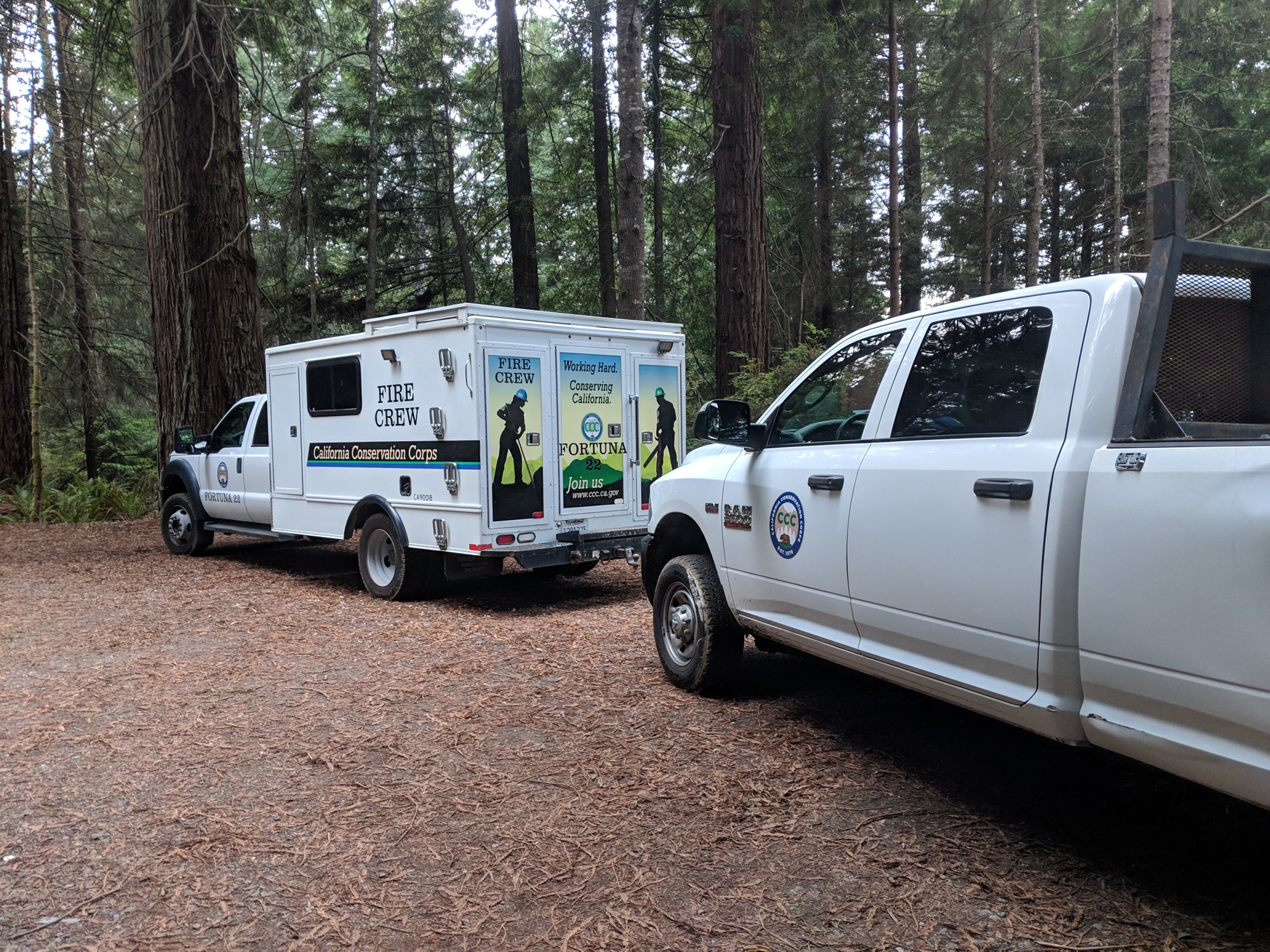
  • “If you can’t be rational, at least be real”

    “If you can’t be rational, at least be real”

    A conversation with science and beer.

    Pythagoras, the Greek philosopher and mathematician, died from an angry mob because he refused to cross a field of beans.

    Followers of his cult, the Pythagoraeans, believed all numbers were either whole or ratios of whole numbers, which means they have either terminating or repeating decimals. To a Pythagorean, a number such as 1.1234567891011… did not exist. The Pythagoreans believed this so strongly that they killed Hippasus, a fellow Pythagorean, by throwing him into the ocean when he proved the square root of two is an irrational number.

    The square root of two’s origin story was presented by Jeff Haag, a professor from the math department, as part of his talk, “If You Can’t Be Rational, At Least Be Real,” at Blondie’s Science on Tap event on March 7 in Arcata. This is Haag’s second time presenting at Science on Tap.

    ”My primary goal for coming back is to spread the joy of mathematics,” Haag said. “I want to take every opportunity to help people understand simple things deeply. I also enjoy coming back for the free beer!”

    Science on Tap is a monthly public science talk hosted at Blondies. Attendants can be found drinking beer and munching on snacks while learning about a new science-related topic. C.D. Hoyle from the physics and astronomy department brought Science on Tap to Humboldt State.

    “I first got into Science on Tap because there was one at University of Washington where I went to graduate school,” Hoyle said. “I started the first Science on Tap at HSU in Dec. 2011. There was a huge turnout for the first one. Someone from NOVA the TV show came up to help us promote the event as part of their Cosmic Cafe program.”

    Chris Harmon, a professor from the chemistry department, was fascinated with Science on Tap when he first arrived at HSU.

    “I really thought that Science on Tap is what science [communication] should be — having fun with a broad audience about science topics, and not just learning about these topics in class,” Harmon said. “When [Hoyle] went on sabbatical, I took over with organizing the talks and I enjoyed being involved.”

    Harmon and Hoyle, now co-organizers of these talks, credited Johanna Nagan, the owner of Blondies, for providing the means necessary to make Science on Tap happen.

    “Blondies helped to promote our event on their websites,” Hoyle said. “Johanna installed a projector screen system so we don’t have to bring our equipment over for the talks anymore.”

    Now in its seventh year, Science on Tap continues to receive strong support from students, faculty and community members.

    “Blondies would often get calls from community members who want to know when the next Science on Tap is scheduled. We usually have a full room at every event,” Hoyle said. “When I send out talk invitations to faculty, I get volunteers pretty quickly.”

    Harmon is one of the faculty who has given a few talks at Science on Tap.

    “I think that preparing for a Science on Tap talk is more difficult than preparing for a seminar at a conference or for class,” Harmon said. “I have to engage a broad audience without leaving out the experts in the audience. Even though this is challenging, I find it to be really fun as well.”

    John Rosa, a HSU biology alumnus (‘79) and community member, has regularly attended Science on Tap for the past three years.

    “The talks at Science on Tap do make sense to me, and I feel that I actually learn more when I don’t know anything about the topic to start,” Rosa said. “There was a talk about stem cell biology by Dr. Amy Sprowles that I found really interesting. There was also a political science talk on how science is having a tough time in the current politics that I enjoyed.”

    Hoyle believes public science communication avenues such as Science on Tap are important in today’s political climate.

    “In the past couple years, science has been under attack by politicians,” Hoyle said. “Public exposure to how evidence-based science works and the confidence limits in science will lead to more sound decision-making.”

  • People of Arcata share what they’d like to see in the plaza

    People of Arcata share what they’d like to see in the plaza

    Arcata City Council votes to take down the statue of past President William McKinley on Feb. 21. Lumberjack reporter Dajonea Robinson asked the people of Arcata what they’d like to see in place of it.