The Lumberjack


Students Serving The Cal Poly Humboldt Campus and Community Since 1929

Tag: Arcata

  • McKinley statue is no more

    McKinley statue is no more

    The Arcata City Council votes to remove the McKinley statue on Feb 23. amid strong support from the community.

    Footage by Stephanie McGeary and Garrett Goodnight. Edited by Stephanie McGeary.

    “Hey! Ho! McKinley’s got to go!” Humboldt State students shouted as they marched to the Arcata Plaza on Feb. 23. Supporters stood up for their support of the removal of the McKinley statue and Jacoby Building plaque. A crowd of people then crammed into City Hall to participate in the city council meeting where the council voted to remove the statue.

    “It’s like pulling the thorn out of a festering sore,” 64-year-old activist Fhyre Phoenix said.

    Phoenix was among the many who came to show his support for the removal of the statue, which he has been protesting for several years. Since December, Phoenix spent 26 days on the plaza demonstrating against the statue.

    “My goal was to start a conversation with 100 people every day I was there,” Phoenix said. “I found the response overwhelmingly positive. I had 15 positive responses for every one negative.”

    A crowd of people making their way to Arcata Plaza on Feb. 21. to participate in the decision to remove the McKinley statue. Photo by Patrick Maravelias.

    Among others supporters were the people of the Weott, Yurok and Pomo tribes, the Seventh Generation Fund for Indigenous Peoples, Earth First, Humboldt Unitarian Universalists Fellowship and HSU students.

    Elijah Lechman, 25, is the board of directors representative of Associated Students. Lechman says the Historic Justice Alliance, a group which includes Seventh Generation, HSU’s Movimiento Estudiantil Chicano de Aztlan, or MECha, and AS Lobby Corps, worked hard to get the word out about this pivotal moment. Lechman says it doesn’t matter if there are plans to replace the statue with something else. The bottom line is it needs to be removed.

    ”It’s distressing people having it there and it would be hurting no one to have nothing there,” Lechman said.

    Chris Peters, president and CEO of Seventh Generation Fund for Indigenous Peoples, spoke during the rally on the plaza of his concern that the city would try to delay this issue again.

    “They raise issues of cost and environmental impact reports,” Peters said. “We need to make a firm stand that we are adamant.”

    Cost issues were presented during the council meeting. City manager, Karen Diemer, estimated the cost to remove the statue at roughly $65,000.

    The decision to change the Jacoby Building plaque, however, seemed easy to agree on. Owner of Jacoby Storehouse Bill Chino agreed to help cover costs for that project.

    The main issue of the meeting was voting on the removal of the statue. Although member Paul Pitino voiced clear support, other council members were on the fence about the issue. There was the discussion of placing the issue on a ballot, to have the public vote in November. Mayor Sofia Pereira did not support this option.

    “I think we lose the nuance of people’s perspective on it,” Pareira said. “As a council, we should give our best effort to resolve it at this level.”

    In the end, the city council did resolve the issue. In a vote of four to one, the council voted to remove the McKinley statue from the Arcata Plaza.

    The estimated $65,000 cost still presents an issue, but Phoenix offered to help run the campaign to earn the funds. The project is currently in the early stages.

    Phoenix said the community support will make this an achievable task.

    “People who want to help move forward can donate to the campaign,” Phoenix said. “This is for people who didn’t make it to the rally or to the meeting to show support. Here’s your chance to make a mark.”

    People interested in contributing can inquire by emailing fhyrephoenix@gmail.com.

    This story has been changed from its original version on Feb. 27 at 4:22 p.m.


  • Man on Street: The McKinley statue

    Man on Street: The McKinley statue

    Humboldt State University students were asked a single question regarding a controversy surrounding the Arcata community: the presence of the McKinley statue.

    The results were rather polarizing:

    Video by Garrett Goodnight.
  • Future housing developments for students in Arcata

    Future housing developments for students in Arcata

    As the busy students of Humboldt State University get back into the swing of things, some students are in the unfortunate situation of being homeless.

    While many think no actions have been taken, it is easy to notice the many construction projects that have popped up around town.

    The one closest to campus is located on Foster Avenue. These buildings are beginning to catch attention.

    According to Alyson Hunter, City of Arcata’s senior planner, this construction is part of a project known as the Sunset Terrace Apartments.

    “The city had known the developer’s plans for the site long before construction started,” Hunter said.

    Construction began in 2014 in several phases. The property developer, Kramer Investment Corp., posts pictures of the construction process on their website.

    It is going to be a 142-unit apartment complex consisting of solely one bedroom and one bathroom units.

    While Alex Hunt of Kramer Investment Corp. was unable to release more information, he said that the first phase was nearing completion.

    “We’ll have to coordinate with PG&E to finish the first phase,” Hunt said.

    At this point, rent prices are unknown, but residents of other properties managed by Kramer Investment Corp. say similar units go for around $700 per month.

    Recent HSU graduate Nathaniel Matteson had been homeless for three months last semester.

    “I was looking really hard and I could not find anything,” Matteson said. “It would have been really nice to have something like this as an option.”

    Future students of HSU may not have to worry about housing as much as students are today, as this project is not the only one in the area. On Feb. 13, a city council meeting will be held to discuss further steps on what is known as The Village Student Housing Project.

    According to City of Arcata’s website, it is proposed to house 800 beds specifically for students. It will be a multi-story complex at the end of I Street and St. Louis Road, which is across the freeway from campus.

    These projects could make housing a smaller problem than it is among the students at HSU. As for now, the eventual completion and opening of the Sunset Terrace Apartments will decide whether homeless students will have some relief of trying to find a place to live.


  • Restaurant review: The Burger Joint

    Restaurant review: The Burger Joint

    One of Arcata’s latest restaurants launched their soft opening on Feb. 1: The Burger Joint.

    Owners Halleh Paymard and Will Hauser have a good thing going. The marquee above the front entrance grabs your attention. Once you’re hooked, you can’t help but scope the scene.

    The front entrance of The Burger Joint in Arcata on Feb 2. Photo by Matthew Hable.

    The decor has a warm industrial chic look. Once you step inside, the ordering counter, lined with about a dozen draft beers, pulls you in. Communal tables and a bustling open kitchen are apparent, too. The spacious patio is perfect for a burger and a beer on a sunny afternoon. As a bonus, two classic arcade games, Street Fighter III and BurgerTime, are located in the back of the restaurant.

    Michelle Pipitone, mother-in-law of co-owner Hauser, is putting together handmade wreaths on the patio. Pipitone says the wreaths are just some of the adornments they plan on adding to the overall aesthetic of the restaurant.

    Burger Joint employee Loren Palmisano suggests one their signature burgers.

    “I recommend The Classic,” Palmisano said.

    The Classic consists of a little over five ounces of grass-fed beef, Loleta cheddar cheese, bacon, lettuce, tomato and house sauce in between Beck’s Bakery buns. The order arrives with a side of coleslaw, as requested, in less than 10 minutes.

    The burger was love at first bite. The juicy, medium-well patty is savory, accentuated by the buttery brioche-like buns. In addition, the vegetables were remarkably fresh. The freshness of the slaw was no exception, but it tasted more like a lightly dressed cabbage salad than your average slaw.

    HSU alumni and lifelong vegetarian Ariana Hendren is impressed with the house-made veggie burger and her side of sweet potato fries.

    “Compared to other veggie burgers I’ve eaten,” Hendren said, referring to the texture of the veggie patty, “it doesn’t feel like it’s about to fall apart.”

    Paymard, who also owns T’s Cafe North in Arcata, looks forward to the grand opening, which will be announced to the public soon.

    Burger Joint is located at 835 J Street in Arcata, right next to Dead Reckoning Tavern and behind North Coast Co-op. For more information, visit facebook.com/theburgerjointarcata.


  • Endangered species lives in Arcata

    Endangered species lives in Arcata

    Did you know there are nine endangered species that live around Arcata? Every species is important for a habitat to thrive. The food chain is more like a food pyramid that every species has a specific role to maintain. Of course, some play larger roles than others.

    Some species play a crucial role in keeping the habitat healthy. These species are called keystone species. They are named after a keystone of an arch – without it, the structure would be unstable. Keystone species can be any species no matter the genus or size, as long as it plays a specific important role in helping the environment thrive. That is why it is important to maintain biodiversity in ecosystems, because each play an important part in letting the whole system thrive. Areas known as critical habitats represent zones of where a specific species thrives best and areas important to protect.

    The Point Arena mountain beaver is thought of as one of the most primitive living rodent species, because it has similar behavior and characteristics to some ancient mammalian species. They have been referred to as a living fossil.

    The Point Arena mountain beaver has no designated critical habitat, but they are known to survive along the Pacific coast of North America and thrive in moist forests. They survive mostly underground and tend to be more active at night than during the day. These beavers differ from normal beavers in that they are not aquatic, although they do swim. The most obvious and unique characteristic special to this type of beaver is its black color.

    Gregory Schmidt, biologist at Arcata’s U.S. Fish and Wildlife Service, was able to provide more detail on the Point Arena mountain beaver.

    “They’re pretty unique in that they can eat almost any plant, even poisonous ones,” Schmidt said. “They can survive on plants that would kill most other mammals. For example, poison hemlock.”

    Their bodies have a high tolerance for toxins and heavy metals in their bloodstream that allows them to consume a variety of poisonous plants. They require a large variety of different plant species considering they get most of their water from vegetation.

    “Habitat loss due to agriculture and urbanization are the two main threats to their long-time liability,” Schmidt said.

    Their reproduction rate has slowed immensely due to deforestation, causing loss of habitat and urbanization of the area. All the loud noises and human activity scares the beavers, causing them to run and hide, rather than mate and reproduce like they normally would.

    Another threat to the mountain beaver is livestock. Cattle farming threatens beavers, because they tend to crush the beaver burrows, which can be as deep as two feet underground.

    The Arcata Fish and Wildlife website says, “Activities that produce loud noise or ground vibration, such as directional boring, road or building construction, timber harvest, and mineral extraction, that are to occur in or near occupied mountain beaver habitat should be conducted outside of the mountain beaver breeding season.”

    They also say to carefully manage livestock grazing in areas near potential beaver burrows. The current population of the species is unknown, and they are more rare in urban habitats. Some places, such as the Arcata Marsh, ask visitors to report the sighting of any beaver in the area for research and statistical purposes.

    The Point Arena mountain beavers were placed on the endangered species list in 1991 and again in 1995, when a fire killed approximately 98 percent of their species. A recovery plan for the species was published in 1998. According to The UICN Red List of Endangered Species, their population was under five thousand individuals after the fire, but its current population ranges from ten thousand individuals to one million. It is still on the endangered species list under least concern.

    The Behren’s Silverspot Butterfly and the Lotis Blue Butterfly are both endangered species that live within the local Arcata habitat.

    The Behren’s Silverspot Butterfly: Speyeria zerene behrensii, has a yellow-brown color with black and silver dots. They live along the northwest pacific coast, extending to Mendocino County, areas south of Salt Point, and around some parts of Sonoma County. This species has been endangered since Dec. 5, 1997, but the latest recovery plan was approved by the U.S. Fish and Wildlife Services March 2016. Within the plan there are four main goals, “1. Protect habitat, 2. Determine ecological requirements, population constraints, and management needs, 3. Monitor population status and habitat, 4. Undertake public information and outreach programs.”

    Clint Pogue, Botanist from the U.S. Fish and Wildlife Services said, “Partially due to the rarity of the subspecies, the ecological role of Behren’s silverspot butterfly is poorly understood. However, butterflies are essential components of their natural communities by acting as pollinators.”

    This species is being threatened by overcollection, mass livestock grazing, and loss of habitat due to invasive plant species and human urbanization.

    “These butterflies play a vital role for conservationists, because the presence and trends of these butterflies help indicate health of the ecosystems and natural communities in which this subspecies is found,” said Pogue.

    The endangered Lotis Blue Butterfly: Lycaeides argyrognomon lotis, has been listed since June of 1976 and not much is known about this rare species.

    “The true distribution of the Lotis Blue Butterfly prior to European settlement of North America is not known, however records of the subspecies indicate that it had previously existed in Mendocino, Sonoma, and possibly Marin counties,” Pogue said. “The last detection of lotis blue was in Mendocino county in 1983.”

    Their bodies are small and blue, outlined slightly with black, and with a furry yellow border around its wings. It is thought that the Lotis Blue Butterfly thrives in wet bogs and around pine trees. However, specific details about the conditions in which this butterfly thrives have yet to be determined because the lack of knowledge of the plants consumed by them, particularly as caterpillars. Knowing what the caterpillars eat can help in finding a habitat. If researchers knew more about the lotis’ diet, scientists could better predict the surrounding conditions in which both the plant and butterfly thrive in.

    According to the U.S. Fish and Wildlife Service, the Lotis Blue Butterfly may be the rarest butterfly species in North America. Due to how little is known about the Lotis Blue Butterfly, the main threats to this population remain somewhat unknown as well. It is predicted its largest threats are drying climate, fires, and disturbances caused by urbanization and construction. The most important thing to do regarding the conservation of this species is to find a critical habitat for the species. When a habitat is found, it can be studied and protected to start the conservation of the species. The latest recovery plan for the Lotis Blue Butterfly was initiated in April 2016 and calls for identification of a crucial habitat for this butterfly species.

    There are six endangered species of plants listed on the U.S. Fish and Wildlife Service’s website specific to Arcata: The Kneeland Prairie penny-cress, the McDonald’s rock-cress, the Western Lily, the Beach Layia, the Menzies’ Wallflower, and the Howell’s Spineflower. Some plants play a huge part in maintaining a stable ecosystem. Many plant species are being affected by invasive species that often cause ecological damage because they out-compete native species. A highly invasive species that is located along the coastlines of Humboldt County is the European Beachgrass,

    Dr. Matt Johnson, Wildlife professor at Humboldt State University, said “The beachgrass totally takes over and grows as a thick dense grass that just out-competes everything else. Almost nothing else grows there.”

    The Kneeland Penny-cress: Noccaea fendleri, was listed under the Endangered Species Act in February 2000. The designated critical habitat for this species of plant spans across 74 acres of Humboldt County and they are estimated to have almost 9,000 individuals. The penny-cress is an herb related to mustard grass and it has white flowers that rest on skinny green stalks around three to five inches in height. The latest recovery plan was updated in April 2012.

    According to the U.S. Fish and Wildlife Services, the plant only grows on serpentine soils derived by certain rocks along the coast of Northern California. Characteristics of the soil make it almost impossible for species to grow, unless they have adapted to do so, like the Kneeland penny-cress.

    One of the largest threats to this species is loss of habitat due to construction. The habitat for this plant has been steadily in decline. A main goal in conservation efforts for the penny-cress calls for the restoration of serpentine soil to give the species somewhere to thrive. Other threats include overgrazing and wildfires. One roadblock for the conservation process is landowners. There has been trouble in the past getting permission from landowners to study and develop a conservation plan. The species was last surveyed in 2002 due to the landowners not allowing people to study the plant.

    Another local endangered species of the mustard family is the McDonald’s rockcress: Arabis macdonaldiana. This species has been endangered since Sep. 1978, and was first discovered in Mendocino County in 1902. One interesting characteristic of the McDonald’s rockcress is its lifespan, they can live to be 30-50 years old.

    This plant thrives in soil that from certain rocks as well. These soils tend to have high concentrations of nickel, copper, chromium, and iron. For this reason, they became threatened by mining industries. Nickel mining became a huge threat because it took the soils in which these plants thrive. This species also lacks a designated critical habitat and because of that, there is difficulty estimating their population.

    On top of all that, this is a rare species. This species’ recovery plan calls for protection of land where this specific species can thrive. This plan was last updated in 2013.

    The Western Lily is yet another endangered species without a specific known critical habitat. The Western Lily: Lilium occidentale, can grow to be five feet and has red and pink petals that bulb down over the flower.

    “Plants such as the Western Lily help stabilize soil and function within natural communities by providing nectar for insects and birds,” said Pogue. “For conservationists, Western Lily helps indicate areas of high ecological integrity.”

    They have been on the endangered species list since 1994, and their estimated population is around 7,500 individuals, with their largest population currently residing in Crescent City. Many scrubs and trees have begun to dominate their habitat making it impossible for the Western Lily to thrive in certain areas.

    “Western lilies occur in early successional bogs, poorly drained coastal scrub, and spruce forests within a few miles of the coast from south-central Oregon to just south of Eureka, CA,” said Pogue.

    Urban development and agriculture in our area have posed a threat to this lily as well. Cranberry agriculture has become one of its most significant threats. In 1991, unpermitted cranberry agriculture significantly destroyed populations around Brookings, Oregon. Overgrazing by livestock and wildlife also threaten the species and its population is estimated to remain in decline.

    Greg O’Connell, Co-chair of the North Coast Chapter of the California Native Plant Society, was able to speak on the issue of overgrazing.

    “One of the restoration efforts that have been done for the western lily was goat grazing,” said O’Connell.

    They were brought in to chew back shrubs to create open habitat again. The latest recovery plan, published in 1994, intends to protect areas in which the Western Lily thrives. The plan hopes to set up 20 populations of protected land with at least one thousand plants each.

    The Beach Layia: Layia carnosa, is a succulent that lives along the coast of northern California. This short, thick plant has small flowers that bloom white and yellow, flowering more in moist habitats. Not very much is known about the reproduction of these plants and their population numbers tend to fluctuate a lot throughout the year.

    The Humboldt Bay hosts the largest population, due to the area having the best quality conditions for this plant to thrive. There have been no official estimations regarding the species’ total population. One big threat to the beach layia is invasive species.

    Certain non-native plants, such as European beachgrass, dominate critical areas where the beach layia normally thrives. Construction and traffic on the beach also damage habitats where this species is supposed to thrive. The last update to its’ recovery plan was in 2012 and it calls for the protection of designated areas along the beach, and the elimination of invasive populations of species like European beachgrass.

    The Humboldt Bay Wallflower, or the Menzies’ Wallflower: Erysimum menziesii, thrives along the coast of northern California as well. This species was discovered in the late 1700s, and was listed as endangered in 1992. These plants tend to be short and have short lifespans as well. The wallflower dies after it releases its seed which contributes to their short life. It’s a member of the mustard family and has one subspecies specific to the Humboldt Bay.

    The Humboldt Bay wallflower is pollinated by local solidarity bees that do not live in a hive, instead they make burrows under the sand. The Humboldt Bay wallflower thrives in dune habitats, where the solidarity bees thrive as well.

    This subspecies is estimated to have 30 thousand individuals. Threats include invasive species, herbivore grazing, mining along the beach, and offroad vehicles. Studies show that the threats to the Humboldt Bay wallflower have decreased a decent amount, meaning this subspecies has a chance and it is making a comeback.

    The latest update to its recovery plan was in 2008 and calls for partnerships between California State Parks and other managements, so that organizations can work together to create more suitable habitats. This collaboration would plan for the management of invasive species, designated habitats, and a way to reduce the impact of deer predation.

    Howell’s spineflower: Chorizanthe howellii, is a member of the buckwheat family and is found within parts of Humboldt and Mendocino counties. This plant has a very distinct appearance, growing only to be one to four inches tall. The small plants have a spherical appearance similar to a dandelion, with spikey-looking flowers that are tan and light brown. The rounded flower spreads its seeds relying on passing animals, wind, and other things that the seeds can catch onto, land somewhere and grow. No official estimate for the population of this species has been established, but through studies the species’ population is believed to have had three million individuals in 2002.

    The main threat to Howell’s spineflower is the invasiveness of iceplant, Carpobrotus spp tend to thrive and take over areas where the spineflower should thrive. Other dangerous plants to this species include European beachgrass and burclover. Human disturbance has had a huge impact on their population as well. Small disturbance is good for the population because it can potentially help spread seeds, but larger disturbances often disrupt the habitat.

    Due to the impact of human disturbance, people tend to do more damage to the spineflower’s habitat. In 2011, the Howell’s spineflower recovery plan was updated. It calls for protection of important ecosystem in which the spineflower thrives, removal of invasive species, regulation on disturbances, and an accurate estimation of their remaining population.

    While it may seem like there are a larger amount of endangered species specifically within our small area but,recovery plans are set up and people are working to restore proper ecosystems; because of this, some of these species are making a comeback.

    Support for species through collaboration between parks, organizations, agriculture, and private owners, these species still have the ability to thrive. People need to know about the importance of biodiversity and its role in creating a healthy, sustainable ecosystem where more species can succeed. With recovery plans set in place, many of these species have the chance to repopulate. If humans go about it the right way, it doesn’t have to be too late for any of these unique species.

  • Humboldt Pride

    Humboldt Pride

    Humboldt Pride took place in the Arcata Plaza this year. Leading with the Pride Parade and culminating in the town square for a free open-mic, a drag lip-sync performance, live music, and other presentations. While a smaller event then previous years, it was still lively and filled the square with color.

  • Church doors mysteriously catch fire

    Church doors mysteriously catch fire

    By| Bryan Donoghue

    A fire sparked on the doorstep to the Arcata Presbyterian Church on G Street and 11th last night, and at the moment, it’s a mystery as to how it began.

    “All I can really give you right now is that we’ve had a fire it’s suspicious in nature it is out we have confirmed that the building is no longer in danger, that’s why we’ve been sending resources home and right now we’re coordinating an investigation with Arcata Police,” Chief Rene Campbell, director of Division 1 for the Arcata Fire District said. File_002.jpeg

    According to Campbell, the firefighters on the scene were very aggressive in dealing with the fire and were first on the scene, just in time to contain it.

    “Obviously this is not only a significant historic piece in our community but a very large building could be very dangerous,” Campbell said.

    Thankfully, the Arcata Fire District received plenty of support. Neighboring agencies joined in to help at a crucial moment to contain the fire.

    “We went big on this just because of the building it was,” Campbell said, “We had every department basically around us coming in immediate need.”

    “Great coordination and teamwork by our Fortuna ECC, the command center, the dispatch, units that were listening to the scanner were gearing up, so I mean just everyone did their job tonight and I’m thankful for that,” Campbell said.

    The elders of the church watched from Wells Fargo on the other side of G Street as the fire crew went in and out of the building.

    “We’re elders for the church, we’ve been with the church for years,” said Stephanie Witzel, treasurer for the church. “There’s a few of us down here from the church so we’re just down here to see it, and thinking about how to secure the building.”

    “We’re just thankful that this is all that happened,” said Joan Tempas, the Clerk of Session for the church. “It’s always a concern because of people that sleep in and out, and around the church and stuff, and just always being aware that the church is 100 years old.”

    Undoubtably the doorway into the church has been scorched, but the elders of the church are looking forward to the support they’ll receive from people willing to help.

    “It’s really the pitts.” Witzel said. “But hopefully it’s just gets localized and get it boarded up and call on people we know to help us out.”

    Community efforts to help the church are openly welcomed. There is plenty of clean up needed to bring the church back to it’s normal state.

    “We can probably use help from other people. If people want to help out, call the church and see what they can do,” Tempas said. “But you know, it’s great to have people be concerned, it really is. It’s a landmark here.”

    The church will not be hosting any services tomorrow. According to Tempas, Pastor Daniel Link also preaches out at Bayside Church in Jacoby Creek Road. Tempas, Witzel and the other elders will be going out there today and holding there services at the Bayside Church.


  • Frustration is not hostility

    Frustration is not hostility

    By | Reza Sadeghzadeh

    It has been almost five months since the death of David Josiah Lawson. Yet, there are still some controversial questions lingering in the minds of students regarding Arcata’s first responders that handled the emergency call on the morning of April 15. Namely, why did it take so long for the medical responders to show up to the scene?

    As we all know, this horrendous incident took place on Spear Ave., which is right around the corner from Mad River Community Hospital. However, the ambulance arrived on the scene about 25 minutes after the arrival of law enforcement. The justification for the tardiness of the medical responders was based on the alleged hostility of the crowd.

    During Kyle Zoellner’s preliminary hearing, an Arcata police officer said in their testimony that the hostile crowd of students at the time law enforcement arrived was using offensive language such as “fuck the police,” but their claim lacked validity. The words used by some of the individuals at the time did not provoke any threatening actions towards the police officers and their colleagues. Thus, they misread the frustration and worry of the students as hostility. Even though I have a tremendous amount of respect for the Arcata Police Department, I would argue that on the morning of April 15, some of the police officers forgot their top priority, that is to serve and protect the ones in need.

    One thing that the community of Arcata needs to be aware of is the decrease in enrollment at HSU, which ultimately affects Humboldt County. I would encourage the city officials to work with the university to create an environment where every student feels safe and receive adequate attention during an emergency. What happened to Josiah is unacceptable and what is even worse is that there have been no official discussions about the faults of the first responders. I advise the university and the community of Arcata to maintain his legacy as an admired student leader who had great intentions. Lastly, my heart and prayers go out to Josiah’s family and friends.

  • Being in the know about D.A.C.A.

    Being in the know about D.A.C.A.

    By | Charlotte Rutigliano

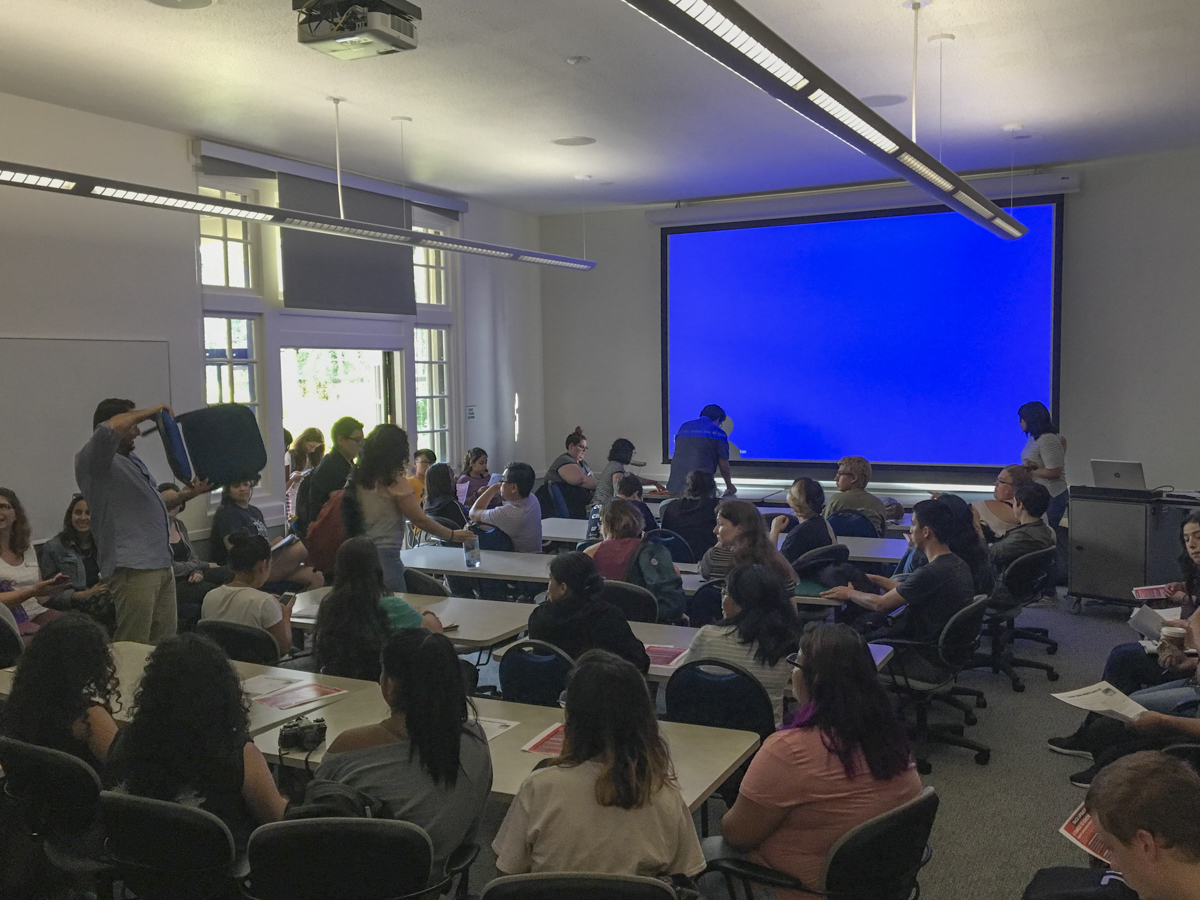
    After an emotional rally for the Deferred Action for Childhood Arrivals (DACA) Programs held in the UC Quad on Tuesday, September 5, students and staff piled into a small conference room in Nelson Hell East, most having to stand or sit in the hallway, to hear a presentation by Student Without Borders.

    IMG_1645.JPG
    Students and staff outside Nelson Hall East room 106 Photo credit: Charlotte Rutigliano
    The presentation covered constitutional rights, the rights people have when dealing with the U.S. Immigration and Customs Enforcement (ICE), and what resources the university has to help and protect DACA students.

    Karla Sanchez, a student coordinator with Student Without Borders and a DREAMer, started off the presentation with the constitutional rights held by people living in the United States. She then talked about what to do if stopped, approached or arrested by an ICE agent.

    IMG_1642.JPG
    Nelson Hall East Room 106 pack with students and staff bringing in more chairs

    “If you are stopped you don’t have to say anything,” Sanchez said. “Just tell them your name and that you do not want to talk to them.”

    Sanchez warned to not show any aggression because it can be used against you.

    “Remain silent, don’t sign anything and ask to speak to a lawyer,” Sanchez said. “Always have a plan, memorize numbers, family members, lawyers or doctors, and always have copies of any documents.”

    According to Sanchez, the last day to apply for DACA renewal is October 5, 2017, but only if the current DACA paperwork expires before March 8, 2018.

    After Students Without Borders concluded the presentation, they opened the floor up to questions and comments.

    Vice President of Student Affairs W. Wayne Brumfield said that we’re in the beginning of this and that there is a lot of uncertainty, but he was putting together a forum for DACA students with an immigration lawyer to help students get more information.

    “The entire campus community is behind you and will do everything within our legal rights to protect you,” Brumfield said.

    Students Without Borders wrapped the forum by letting people know about the march in Fortuna on September 19 at 8 a.m., starting at the Veterans Memorial Building. The march organizers are pushing the City of Fortuna to pass an ordinance making it a sanctuary city. Students Without Borders also hopes to have the entire county pass an ordinance to make it a sanctuary county.

  • Arcata Plaza shooting suspect identified

    ArcataShooting_Web
    Arcata Plaza | Photo by Don Forthuber

    By | Robert Brown

    While investigating a report of a fight in downtown Arcata, Saturday morning at 1:27 a.m., officers from Arcata police and Humboldt State University police approached 26-year-old Erwin Eugene Sweat, Jr., who was sitting in a nearby car.

    A dash camera recorded Sweat getting out of the car and firing two shots at the officers, one hitting University police officer Louis Altic in the right leg. Both officers Altic and Arcata police officer Matthew O’Donovan shot back, firing nine rounds, hitting Sweat.

    Officer’s immediately performed CPR on Sweat, Arcata ambulance took him to Mad River hospital where he died of his wounds. Officer Altic was taken to Mad River Hospital, was treated and released. Both officers have been placed on administrative leave, which is the protocol for officer involved shootings.

    A multi-agency team of local law enforcement agencies known as the Humboldt County Critical Incident Response Team (CIRT) is leading the investigation.

    Anyone with any information about this case, please call the Arcata Police Department at (707) 822-2426.

  • It’s hot in Arcata

    It’s hot in Arcata

    By|Ian Benjamin Finnegan Thompson

    Last Saturday was the hottest day in Arcata since 1983 according to intellicast.com. Dozens of residents flocked to the Mad River to escape the heat. The immense heat and smoke from the inland wildfires didn’t stop people from enjoying the outdoors.

  • Parking & Commuter Services offer solutions to the parking problem

    Parking & Commuter Services offer solutions to the parking problem

    Students, faculty and staff are once again irritated with parking, even with the dip in enrollment this semester. Students who purchased the semester permit for $157.50 or the fall and spring permit for $315.00 are particularly vexed when they can’t make use of it consistently. The fact is Parking and Commuter Services oversells permits. TallChief Comet, Administrator of Parking & Commuter Services, says that when one flow of users hop into their vehicles and vacate space, the next flow of users compete for parking. In other words, the ratio of permits sold balances out with the inevitable schedule turnarounds. Additionally, the chances of developing more parking lots in the future are close to zero. In light of this recurring issue, Parking & Commuter Services encourages alternative modes of transportation to not only lower costs and reduce stress, but to reduce the carbon footprint. Alternatives include the JackPass, which offers free access on the Redwood Transit System, Eureka Transit System and Arcata and Mad River Transit System buses during the fall and spring semesters. Parking and Commuter Services are working with the City of Arcata to implement bike sharing-service Zagster next fall. Also, reconstruction of the G14 and G15 parking lots below the Behavioral and Social Sciences building will slightly increase the number of parking spaces and incorporate “smart” parking technologies to name a few improvements. The smart technology will involve space sensors that will allow permit owners to monitor parking space availability. Reconstruction is expected to start next summer and end before the subsequent fall semester. Vehicle owners who commute to the university within a mile or two of their residence should consider walking to school or taking advantage of said alternative modes of transportation. Participate and reap the rewards of sustainable practices in no time, including the cost of gas. Parking is likely to be an issue for years to come so students, faculty and staff must accept it for what it is and learn to work with the system until further changes can be enforced. In the meantime, there are underused programs available and other sustainable ways to get around town. Use the resources that are available to you. Visit parking.humboldt.edu for more details. Ride on.


  • Yes! The Y.E.S. House is open

    Yes! The Y.E.S. House is open

    By|Michelle Meyers

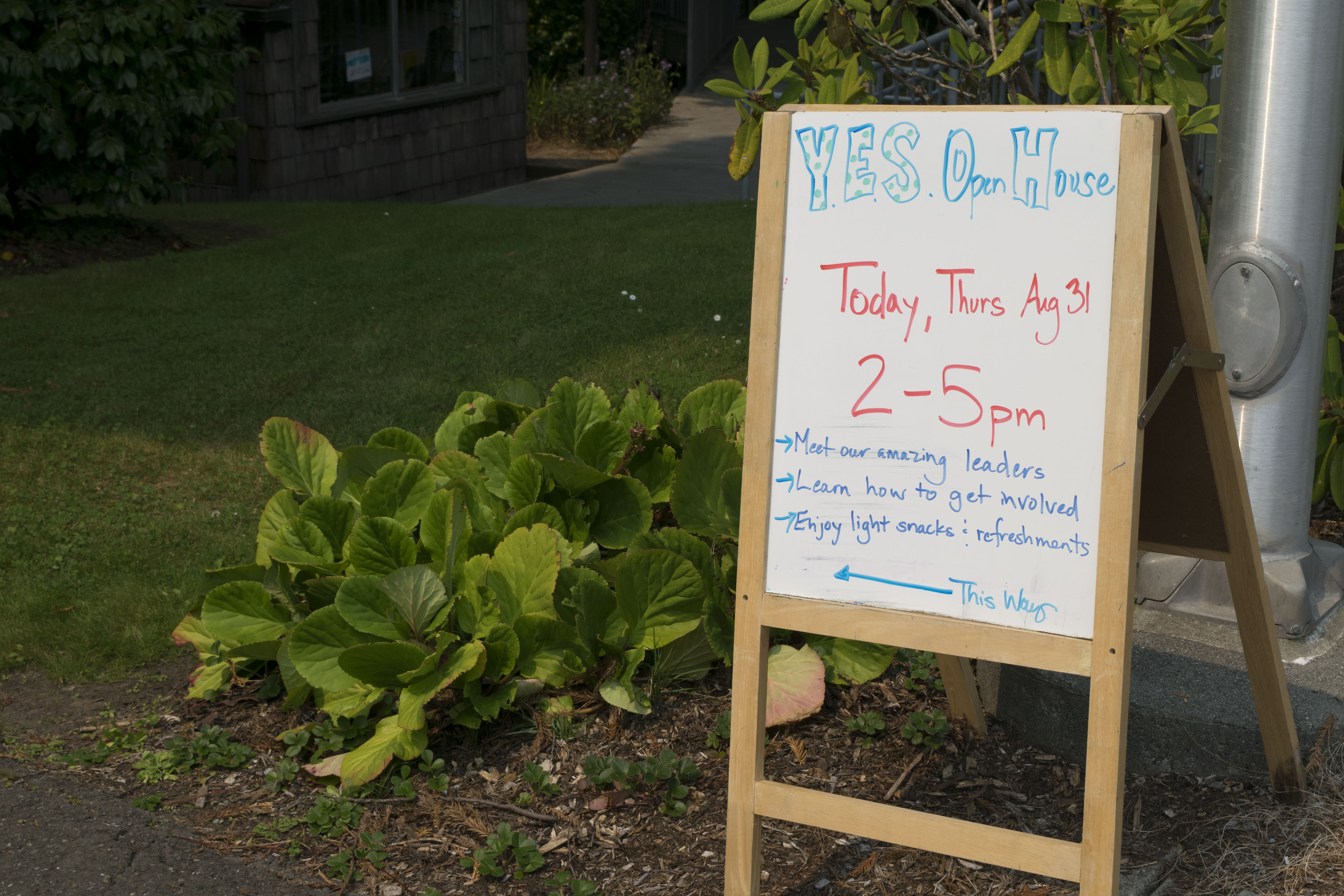
    Thursday, Aug. 31, the Youth Educational Services house on campus, Y.E.S. House, held their open house for students and other members of the community to come and see what the Y.E.S. House has to offer.

    DSC_0094.jpg
    Photo credit: Michelle Meyers

    The Y.E.S. House is a completely student run program of the Associated Students of Humboldt State University and is under the department of Student Affairs. Since 1968, the Y.E.S. House has played a vital role in supporting students in becoming active members in their community and initiating social change by creating and implementing volunteer programs that serve the needs of the community.

    This Way.jpg
    Chalk leading the way to the yes house. Photo credit: Michelle Meyers

    Currently, there are 13 different volunteer programs at Y.E.S. and each of them works with a different population within our local community. Their purpose is to offer support for any kind of needs they may have that arise.

    New Games is one of the programs at The Y.E.S. and has been around since 1991. Cori Simons, a Child Development major at HSU and the newest Program Director of New Games explains that the program was created with the intention to promote “non-violence, non-competitiveness in children, and positive relationships between college students and children” through a wide range of team building games.

    Cori Simons- New Games Program Director.jpg
    Cori Simons, New Games Program Director. Photo credit: Michelle Meyers

    Simons said that New Games is still seeking volunteers and will eventually be hosting rummage sales and games days on the quad.

    “We play a lot of improv games,” Simons said.

    Cindy Xiong, freshman Wildlife major at HSU said that she stopped by the Y.E.S. House during her freshman seminar after her professor instructed her group to ask around and see what the campus has to offer.

    “They told us about all of these different volunteer opportunities, and some of them interested me,” said Xiong, “As a Wildlife major, I wanted to do something that involved being outdoors.”

    Xiong, who signed a volunteer slip, also expressed interest in the Environmental Education Program at the Y.E.S House.

    Critical Race, Gender and Sexuality Studies major Oliver Winfield-Perez is the new Program Consultant at the Y.E.S House. He first joined as a volunteer for the Queer Mentoring and Advocacy Program because he wanted to work with queer youth in the community.

    “Once I joined I found a very close knit sense of community within Y.E.S, I found friends,” said Winfield-Perez.

    During his experience at the Y.E.S House working as a volunteer in the community and within his program, he said that he was able to develop certain professional skills, leadership skills,and social skills, which gave him the motivation to become a director for that program and then eventually apply for a position as Program Consultant.

    “This year our theme is Empowerment and Activate,” said Winfield-Perez.

    Winfield-Perez said his biggest role as the program consultant and the main focus of the Y.E.S. House is to promote community organizing on and off campus. They are also working to make HSU more inclusive.

    “We are also really trying to support our student leaders, foster leadership, foster professional skills and communication skills within our students,” Winfield-Perez said, “and also create a sense of community and a support system for students on campus.”

    According to Winfield-Perez, a good amount of students at HSU who have to fill a certain amount of hours for service learning come to the Y.E.S House to help meet that requirement.

    “We’re really into service learning. Through our work of engagement within the community, we’re experiencing all of these things, so when we come back to the meetings, they reflect on what happened during times when they were in the community, what they enjoyed, what could be worked on, and then we take that knowledge and try to just apply it in different settings and, or apply it in the future,” said Winfield-Perez.

    To submit a volunteer application with the Y.E.S House, you can complete the online volunteer contract located on their website.

    http://www2.humboldt.edu/yes/

    How to Contact The Y.E.S. House

    House 91
    Humboldt State University
    Arcata, California 95521
    Phone: (707) 826-4965
    Fax: (707) 826-5558

    E-mail: yes@humboldt.edu

  • California State University enforces system-wide smoking ban on every campus in California

    California State University enforces system-wide smoking ban on every campus in California

    By|Robert Brown

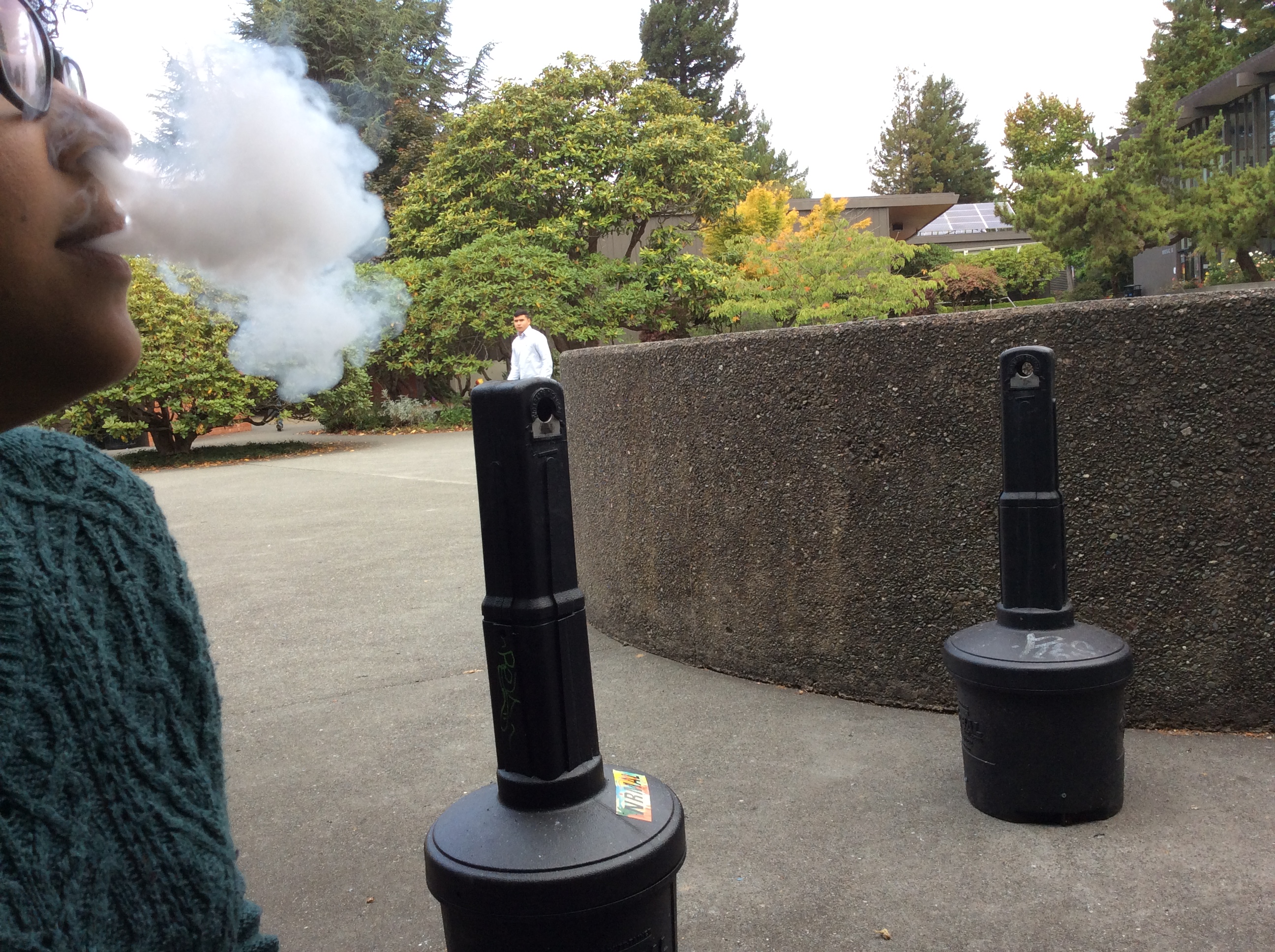
    Beginning with a letter originally issued by CSU President Mark Yudof in 2012 and ending with an executive order, the university system adopted the new policy. Each campus president is being asked to comply with the system-wide policy and create a smoke-free campus by creating a task force, including a student representative that will serve on the Smoke and Tobacco-Free Policy Task Force to ensure the campus is moving forward. Over 1,500 other colleges and universities nationwide have already gone smoke and tobacco free.

    image.jpeg
    A designated smoking area on HSU campus.

    Kim Comet, HSU Director of Risk Management and Safety Services, said the smoke and tobacco free policy is per executive order from the Chancellor’s Office.

    “It applies to all CSU campuses,” Comet said. “Smoking has to occur off of campus.”

    The U.S. Department of Health and Human Services created the Tobacco-Free College Campus Initiative (TFCCI) to promote and support the adoption and implementation of tobacco-free policies at universities, colleges and other institutions of higher learning across the United States. Enforcement of the new policy will be primarily focused on educational campaigns, outreach programs and the promotion of tobacco treatment options, including resources and referrals for quitting.

    “We will mostly be dealing with the policy in the form of education and monitoring,” Chief of University Police Donn Peterson said.

    “We will not be the smoking police and will likely refer cases to the appropriate authorities for administrative action once the ban takes place after September 1,” Peterson said, “maps located online and all around campus can be quickly referenced to determine campus boundaries.”

    According to the Center for Disease Control, tobacco use is the leading preventable cause of death and is responsible for 443,000 deaths per year in the United States, with an estimated 49,000 deaths annually due to secondhand smoke exposure.

    HSU Director of Housing and Residence Life Steve St. Onge said, in regards to smoking in the residence halls, the school has never allowed smoking in any campus housing facility.

    “What has changed is that the smoking gazebos, which had been designated as smoking areas are no longer available for students, faculty or staff to use as designated campus smoking areas,” St. Onge said.

    Students have voiced concern over the amount of trash and litter that could increase due to the smoking ban, saying students will not quit smoking and will more than likely resort to becoming sneaky, trying to hide and smoke, which will lead to cigarette butts being thrown on the ground instead of in proper receptacles. Also, the lack of a safe environment on campus to smoke may cause students to walk off campus and put themselves at risk of violence or assault.

    HSU student Elena Rios said you can’t force people to stop a habit they have had for awhile.

    “As a smoker, you are bombarded with why smoking is bad. People do it all the time, they try to get you to quit,” Rios said. “They tell you reasons why you should quit. It’s your life and you should be able to make your own choices. It’s a civil liberty. I think it’s funny to ban smoking outside.”

    According to the CSU website, a cornerstone of the California State University and higher education is the principle of one’s individual freedom to learn, teach, work, think, and take part in their intellectual and career endeavors in a fulfilling, rewarding, safe and healthy environment.

    “I can understand banning smoking in certain areas,” HSU student Alex Pickering said, “if they gave us another solution or something. Just give us another area to smoke.”


  • A beard trend

    A beard trend

    By Juan Herrera

    Imagine having to go through the process of searching for products just to grow facial hair, or having to beg to your barber to create a beard that isn’t there. All of that, just to fit in. Many men do this constantly to have a beard like their friends.

    Jesus Hernandez, an HSU student and a barber for the last four years has noticed an immense amount of his clientele switch from a clean shaven beard to a full grown out beard.

    Jesus Hernandez
    Jesus Hernandez, HSU student and barber, cutting up one of his clients.

    “Those who couldn’t grow out a beard seeked for a product that would give them the beard they want.” Hernandez said. “I started noticing clients who have always been clean shaving even try to have me line up their stubble.”

    Hernandez said that ever since the big boxing match between Floyd Mayweather and Connor McGregor, some of his clients started to come in and ask for the “McGregor” hairstyle. The “McGregor” hairstyle consists of a clean short hair cut with a big bushy beard.

    More often than not you can walk into any room and half of the men, if not more, have some sort of beard. Is this a coincidence? Or is it just a trend?

    Humboldt State senior, Tony Robinson, said how he has noticed the drastic changes of his peers with beards over the past two years.

    “First I’ll start off by saying that I ain’t hating because I myself have a beard, but damn man! Everyone and there mom has a beard now, literally!” Robinson said. “I remember back in freshman year no one but ME had a beard, now everyone just wanna copy me man.”

    Robinson said he believes everyone is trying grow a beard to be more likable and look more intimidating.

    Diego Gonzalez, 28, says that his beard makes life easier. He doesn’t have to waste time shaving.

    “When I’m in a rush I just kinda let it go however,” Gonzalez said. “Usually when I have a presentation I put like beard oil or stuff like that.”

    Products such as beard wax or oil are often used to style beards. A beard is a part of a person’s identity and can grow and be trimmed along with their changing interests and needs.

    “I had it thinner, I had a really long beard too,” Gonzalez said. “I’m a wrestler so it would always get in my way, so unfortunately I’d have to trim it.”

    Elizabeth Laney, a Eureka local, said she is use to more men having beards than not but still has noticed it’s been more then usual in the past couple years.

    “Personally I love a man with a nice thick beard, so I think there’s nothing wrong with a beard trend happening,” Laney said. “And for all you guys out there trying to grow beards over the years, just stop, you probably look way cuter shaved.”

    Laney said that because she has grown up in Humboldt County she will always have a soft spot for beards.

    According to the New York Times article “Are Men More Desirable With Beards”, Laney isn’t the only person who loves men with beards. In the article it shows a university in Australia did a study asking 8,520 women if they preferred men with a beard and more than 70 percent said yes.

    Tony Robinson had one last thing to say to men out there with beards.

    “If it ain’t there don’t force something to happen, but if it is rock that fresh beard like there’s no tomorrow.” Robinson said.

  • Making recycling an art

    Making recycling an art

    By Juan Herrera

    2500 degrees fahrenheit. That’s the heat it takes to perfectly mold glass into the shape your heart desires.

    Fire and Light is a local company in Arcata that hand crafts an array of colored glass tableware. This local company puts on Hot Glass Tours that allows you to be up close to watch the process it takes to make these fascinating pieces.

    worker 1
    An employee of Fire and Light getting melted glass from their furnace. Photo credit: Juan Herrera

    John McClurg, the president of Fire and Light, discusses the tour and some about his product.

    “These tours give people a small sense of how long and hard the process is to making hand crafted objects,” McClurg said. “It also brings light to how much we actually do recycle when making our products.”

    JHMillCreekGallery_Web-3.jpg
    Some of the many finished products that Fire and Light hand crafts. Photo credit: Juan Herrera

    The tours take place Monday through Friday, at 10 a.m., 12 p.m., and at 2 p.m.. According to McClurg the tours have been great for his company as well as to the community members.

    Fire and Light purchase their used glass from the Arcata Community Recycling Center to make everything made out of the community’s glass. According to McClurg they are the first glass company to use all recycle objects to make their product in the United States.

    Kelli Welch, an employee of Fire and Light, discussed her role in the business and about some of her favorite hand made pieces.

    “I pretty much help wherever needs to be helped, but mostly I set up the display store and help costumers here,” Welch said. “Helping here in the store makes it hard to narrow down a favorite, but I have a special liking to the foot bowls we make.”

    JHMillCreekGallery_Web-2.jpg
    An employee of Fire and Light getting ready to mold a cup with melted glass Photo credit: Juan Herrera

    According to Welch the ideas of what to make come from the community and shows they attend out of the state. Welch mentioned how she came up with a heart shaped design glass that they now create. Fire and Light’s showroom is open Monday through Friday from 9 a.m. to 5 p.m., located at 100 Ericson Ct, Suite 100A in Arcata.

    During the tour Humboldt State graduate, Lorea Euskadi, said how this was not her first time on the tour and describes her top three favorite pieces.

    “I’ve been living here for about 5 years now. This is my fourth time touring this place, and the products just keep getting better and better,” Euskadi said. “It’s so hard to pin point favorites here but if I had to only keep three they would be my dogs custom bowl, my favorite soup bowl and lastly my crazy multi-colored vase.”

    According to Euskadi, if you haven’t been to the Fire and Light tour or store, you are severely missing out on an awesome art form.

    “I honestly look forward to it every year and encourage more people to come on down and join in on the action,” Euskadi said.

  • Jacks win big in home opener

    Jacks win big in home opener

    The Lumberjacks’ women’s volleyball team opened its season at home with a bang on Thursday, Aug. 31, handling the Academy of Art Urban Knights 3-1(25-17, 25-15, 22-25, 25-21).

    Alex Lolland, senior and outside hitter, had a night to remember on what was also her 21st birthday. Lolland had a team high 16 kills. Six of them came in a crucial period when the Lumberjacks were in danger of losing a second straight set.

    LSvolleyball1
    Alex Lolland going towards the ball in the HSU Lumberjacks Arena on Thursday, August 31st. | Photo by Lauren Shea

    Humboldt’s use of the drop shot was evident in the first two sets as they repeatedly were able to fool the opposing teams blockers with smart plays, great digs and teamwork. The team won by a combined 18 points in overall set play.

    “I used to be a big hitter that used to go up and swing at everyone, but you have to realize between a big fancy swing versus an easy tip is a point-to-point,” Lolland said. “Coach Kelly and Greg have definitely been implementing that in me to be a wiser player.”

    The Academy of Art settled down in the third set from what looked like early game jitters and rallied behind strong serving and defense at the net. The Lumberjacks were able to keep the set competitive and went up 20-18, but the Urban Knights held their composure and closed it out on a 7-2 run, winning the third set 25-22.

    LSvolleyball2
    Lauren Reid and Savannah Horton block a spike from Academy of Art in the HSU Lumberjacks Arena on Thursday, August 31st. | Photo by Lauren Shea

    Knights head coach, Ray Batalon wants his team to start doing the small things right early in the season.

    “We were pretty tentative in the first two sets,” Batalon said. “Once we started to serve a little more aggressively and force Humboldt into some bad situations it gave us a few more opportunities.”

    The fourth set remained a competitive one as both teams were fighting to keep their record clean in the first game of the season. The Lumberjacks rallied with a 7-1 run but the Knights quickly responded with a 6-1 run of their own. Tied 19-19, HSU was able to close out the set on a 6-2 run giving the team (1-0) its first victory of the season.

    Senior setter, Jessica Lammers, and junior setter, Taylor Yancey, each finished with over 20 assists on the night. Lammers and senior libero, Nicole Bianchi, had 13 digs a piece.

    HSU head coach, Kelly Wood, is happy with the result of the home opener but knows there is still work to be done.

    “In those first two sets we played really well but Academy of Art gave us a lot of our points in those first two sets but we were playing very well on our side of the net,” Wood said. “Playing at a consistent level throughout every set is something that will make us very hard to beat.”

    LSVolleyball4
    Alex Lolland spikes the ball to the other team Academy of Art in the HSU Lumberjacks Arena on Thursday, August 31st. | Photo by Lauren Shea

    HSU and Academy of Art meet up for the rematch Friday Sep. 1 at Lumberjack Arena. First serve is scheduled for 3 p.m. and HSU students, faculty and staff receive free admission with campus ID.


  • Put em’ in a cage they say!

    Put em’ in a cage they say!

    By Phillip Santos

    The HSU campus is not a zoo. After attending this university for almost four years I’m inclined to disagree with that statement for a variety of reasons, but those who carry that sentiment have made their voices heard. Last semester the HSU Senate passed a draft resolution banning all animals except service animals from campus buildings. Who does this policy affect? Everyone really, but three groups in particular.

    The first group is made up of those who have certified service animals. Service animals go through a vigorous training regiment and are considered “working” animals who assist people with disabilities. Various examples include calming individuals with PTSD, alerting others if the owner is having a seizure, etc. Service animals are trained to perform a task specifically related to the disability the owner has.

    IMG_20170831_165334161.jpg
    Michelle Meyers with her seizure alert dog, ” Roody.”

    The second group is made up of the people who have emotional support animals. There are a few distinct differences between emotional support animals and service animals, but I will only outline two. The first is that emotional support animals are intended to help treat persons with psychological and emotional disorders. Whether or not these qualify as legitimate disabilities is something that mainstream society continues to argue about. The second difference is that emotional support animals don’t go through a vigorous training program, they are essentially prescribed by a licensed medical professional as a way to ease the symptoms of the patient’s disorder.

    IMG_20170831_164941367.jpg
    Kimber Nguyen and her emotional support anima, “Duke.”

    The third group is probably the largest of the three. These are the people who bring their pets to class because they can. When a dog jumps up onto a food surface in the Depot or leaves behind a steamy pile of excrement, these are the people that passerbys think of. Based on the comments made during the HSU Senate meeting when this resolution passed, this is the group that is being targeted by the new pet policy.

    The problem with this policy is that it uses broad measures to target a specific group of people and in the process, causes substantial damage to students with real and pressing needs. These are the students who depend on emotional support animals to make it through a tough class, or to even get there in the first place. Companionship is a powerful thing that enables human beings to do incredible things, but it’s at times necessary to achieve the ordinary. Because sometimes the ordinary becomes the impossible, but an impossible that can be diminished by a familiar friend doing what any friend would do, which is to offer support.

    This policy is also cruel towards the emotional support animals themselves. The policy mandates that emotional support animals be caged or kenneled while their owners are in class. Does anyone have class all day? Both the owner and the emotional support animal lose out in this arrangement. But this collateral damage is readily accepted in an environment where members of the HSU campus are tired of dealing with students who have abused the tolerance towards animals on campus.


    One of the worst things about this policy is that it doesn’t have to be crafted this way. Emotional support animals can be allowed in classrooms, and they should be. But the easiest solution to the host of issues that animals on campus have created is the current version of this policy. Supposed “modest revisions” are being made, but I’m skeptical that will amount to more than the correction of a typo.

    The other awful aspect of this policy is the lack of student input. During the HSU Senate meeting when this draft resolution passed, multiple Senate members expressed the need for student input to formulate a better pet policy. When it comes to this policy, it’s not that the HSU Senate isn’t listening, it’s that the student body isn’t talking. Don’t “sit down, be humble” stand up, don’t mumble!

    Through a variety of voices and action, HSU students and staff have created amazing programs and initiatives to address a variety of issues and interests such as : Check It (a nationally renowned movement to eradicate sexual assault and violence), KRFH (a FM college radio station that reels in awards every year), and WRRAP ( a waste reduction program which has reduced waste by 50% since 1996!). There is no reason that animals on campus cannot be met with the same type of creative and effective measures, but there is an explanation as to why that isn’t happening – I’ll let you finish that thought.

  • We are still in

    We are still in

    Mayor, governors, college and university leaders, businesses and investors are coming together to declare that they will still support the Paris Climate Agreement to combat climate change. President Trump’s announcement to withdraw the U.S. from the Paris Climate Agreement was met with widespread criticism, and local and state governments are taking responsibility to decrease greenhouse gas emissions in response. Susan Ornelas, the mayor of the City of Arcata, gives her thoughts on this growing international community known as We Are Still In. BDSusanOrnelas.jpeg

    Q: When did you first hear of We Are Still In? Was there an envelope in the mail?

    A: No, I came across it on Facebook or the internet. I just saw that, and saw that mayors were signing on and I thought while looking at the Paris Accord, “Well the city of Arcata has internal documents that direct us to do these things already!” So it wasn’t a big decision to have to make, it was kind of like, “we’re in!” We’re already in, and I just thought about the citizens and that they would like to see the city of Arcata on this list. So I just contacted the city manager and Mark Andre (Director of Environmental Services) and said, “yeah, lets sign up, let’s get our name in there.”

    Q: How was it implemented? How did you get your name signed on?

    A: Well we just wrote a letter based on, we have kind of a legislative platform that if things come up that fit the platform that we already approved, the mayor could just send a letter. So I just sent a letter saying the City of Arcata is still in on the accord, and like I said, and internally I knew that our policies were already working towards these things so wasn’t too difficult to do.

    Q: What has the city and university done to contribute to the “We Are Still In” agreement?

    A: The city and the university are working well together right now which is a contribution in itself. We have a lot of good coordination and the university has made some strides I feel like. The city has made strides like years ago and we’re still making further strides into zero waste and understanding that…The university did the whole sustainability analysis of themselves…that whole effort of reducing waste, more sustainable systems, less carbon use, you know. I think as a society many of us are trying to reduce our carbon use. Transportation is one of the biggest challenges for this county.

    Q: Like moving to the autonomous car?

    A: Yeah that will help, although you really have to look at where you’re getting your electricity and is that a good source. Is that a carbon free source, is that non-polluting as much as possible. It’s good that solar has gotten as inexpensive as it has.

    Q: Is that probably going to become the norm at some point?

    A: “Yeah, and then do you know about the Community Choice Energy Program? That’s another thing the city of Arcata is involved in. The whole county is actually involved in this…. So the Community Choice Energy Program is that Humboldt County now runs or purchases its own energy. It’s still run through PG&E but it’s called Community Choice Energy…. But this also goes in with the whole Paris Climate Accord because the county now is choosing more renewable sources of energy and investing in local solar arrays and things like that. So that’s what called a Joint Powers Agreement, a J.P.A., which means the county and the cities have joined together and we all sit on a board, and we’re overseeing this Redwood Coast Energy authority purchasing now energy for the county, and we’re getting it a little cheaper, and we’re emphasizing renewables. So that’s another way that we’re working to sort of you know weave ourselves out of carbon. And then another thing that I would say that the City of Arcata does is we study some carbon sequestation in like marsh lands because that’s another good source of carbon sink. So the City of Arcata is investing in marsh lands now, working with the university, with students doing studies and things of carbon sequestration in marsh lands. That’s another thing that we’re interested in that we work towards. We see the value of them. I mean there used to be people would just drain marsh lands and farmed it, but we see the value in them for bird habitats for ecosystem diversity and…

    Q: Kind of like estuaries?

    A: Yeah kind of like estuaries. You know a marsh land, yeah.

    Q: In your opinion why do you think We Are Still In holds such significance for our community?

    A: Well you know I think because Arcatans really take pride in their environmental stances and they wanted to feel like they supported this. They didn’t want to just give this up after the whole country had, you know, promised to join and then we pulled out, and I think there’s something powerful about all these mayors getting together because the mayors are closer to the people and they’re joining forces and saying whatever is going on at this level we’re still doing this. We still believe that we want to make sure we leave something for our children and things like that. So I think the mayors are speaking more for the people and that’s also kind of heart warming but also powerful stance. I think people liked that too. I think it’s important and people want to feel that we’re not going backwards, you know, I think that would be depressing for people. There’s ways we’re feeling like were watching our society and we are going backwards. But with this particular thing with the mayors coming forward and you know, saying “no, we’re still in”, that at least didn’t go backwards for people.

  • Welcome to Arcata

    Welcome to Arcata

    By|Ian Benjamin Finnegan Thompson

    Welcome back students and staff. For those who are new to HSU here are photos of some cool spots in Humboldt County. There’s photos of places to savor the sunset and immerse yourself in nature, photos of spots to skate and do other recreational activities, some great places to study, eat and relax.


  • Looking for answers

    Looking for answers

    By Curran Daly

    David Josiah Lawson died in the early morning hours of April 15, after a fight and stabbing at an off-campus party. On May 7, Judge Dale Reinholtsen ordered the release of Kyle Zoellner, a Mckinleyville native detained shortly after Lawson’s death, citing the prosecution’s insufficient amount of evidence to proceed to trial.

    Since then Humboldt State students left Humboldt County and four months have passed since Lawson’s death. As students return to the University and the surrounding area, the case is still unsolved and local law enforcement and the Lawson family are still searching for answers.

    A vigil to mark four months since Josiah’s death was held in the Arcata Plaza on August 15. At the Vigil, Arcata City Mayor Susan Ornelas fielded questions from community members about the case and the safety of people of color in the community.

    During the vigil it was revealed that a retired FBI investigator was to arrive in Arcata on August 16, to assist with the case. The investigator was brought to the city’s attention by the Lawson family’s legal representation and a contract had recently been agreed to between him and the City of Arcata.

    Mayor Ornelas also spoke of the role of the Justice Department in the investigation.

    “I hate that this is taking so long,” Ornelas said. “The city and I personally contacted the Department of Justice and they can only help us with the forensics of this case.”

    Forensic evidence was recently returned to the Arcata Police Department from the United States Department of Justice.

    At an Arcata City Council meeting on August 2, Ornelas relayed a message from Arcata Chief of Police, Tom Chapman.

    “The investigation is open and ongoing, additional witnesses have recently come forward,” Ornelas said. “We are beginning to recieve forensic testing results from the Department of Justice.”

    The City Council recently approved a community reward program for information leading to the arrest and conviction of the person responsible. The program was announced in a press release on August 1, from the City of Arcata that also confirmed the involvement of an outside agency.

    “Chief Chapman also confirmed that an outside agency from a large city that did not want to be named has committed two experienced homicide detectives to the Lawson case,” according to the press release. “’It’s not uncommon for agencies to take a look at an investigation from the outside, and looking at the investigative steps, make a determination if there is something more that can be done,’ said Chapman. ‘That is in process.’”

    Anyone with additional information is asked to contact the Arcata Police Department  at (707) 822-2428. The Lumberjack will continue to stay up-to-date on the progress of the investigation into David Josiah Lawson’s death.

  • Lost Lumberjacks

    Lost Lumberjacks

    By Curran C. Daly

    Sadly, a few members of the Lumberjack family will not be returning to HSU this fall.

    John Vayo

    John Vayo_Web
    Photo provided by Humboldt Area Center for Harm Reduction Facebook page.

    John Vayo passed away on July 2, 2017. He was entering his last year in the undergraduate Social Work program.

    “John struck me as a ‘would give you the shirt of his back’ kind of person—this is not a phrase I use very often—I found that hopeful and inspiring. John was deeply committed to the values and practices of harm reduction and, though he had already done a lot of good, would have gone on to shape our human service community in seriously positive ways,” said Ronnie Swartz, Social Work department chair and a personal friend of Vayo’s.

    Vayo will be missed around campus and in the community. He was an avid outdoorsman and volunteered with the Humboldt Area Center for Harm Reduction. Vayo is survived by his son Aiden. Vayo was 38 years-old.

    Michelle Lane

    Michelle Lane, Business, professor, portrait,
    Photo provided by Humboldt State Business Department.

    Michelle Lane passed away on August 7, 2017. She was an Associate Professor in the university’s School of Business.

    “Michelle was very pleasant and always smiling. She was always helping students and faculty beyond what was necessary,” said Hari Signh, professor and department chair of the School of Business. “Her most important legacy was helping the students succeed.”

    Lane helped launch the M.B.A. program for the School of Business five years ago. She was a big advocate for sustainability. Lane loved animals and was on the Board of Directors for the Sequoia Humane Society. She is survived by her husband, three children and three grandchildren.